When I first started watching alternative history Youtube channels I was skeptical, and I still am. I want the truth, not more redirection. Not more fantasy. Not more illusion. Not more heavily curated or mediocre nonsense.
So far, I don’t sense I’ve found it, but I’ve become ok with never finding it. I’ve resigned myself to what’s as close to the truth as I’ll be able to manage to get to in this lifetime, which is: I’ll never know the truth, but I may be able to manage truth-adjacent with enough study and discernment. I can confidently opt-out of the lie, permanently. That’s a big improvement to the path of blind acceptance I was, and most are, still on.
The first step toward truth was achieved pretty easily, it began with calling bluffs. As long as I don’t allow it to frustrate me, which isn’t exactly easy, this alone feels pretty empowering. For me, as usual, I had to experience it directly, no Youtube influencers, no professors, no self-styled experts can convince me, not without applying my own eyes and ears and reason.
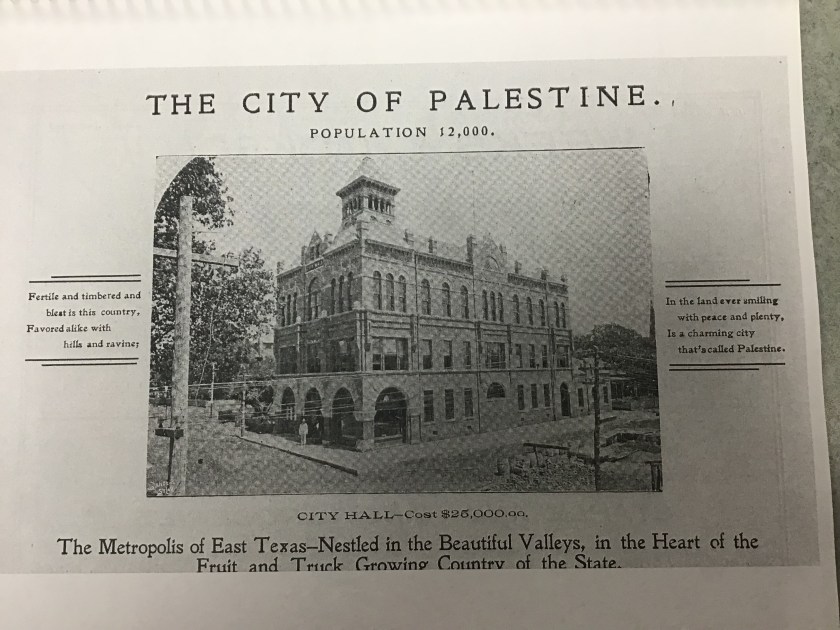
I looked to the architecture because that’s what’s visible, and only then to the official history, because that’s what’s accepted as truth. I started in my own neighborhood, that is, the small city closest to us, called Palestine. It’s actually easier I think to consider the small city, rather than the large ones, because there’s been less tampering more likely, more holes in the narratives that can be more easily noticed by the novice.
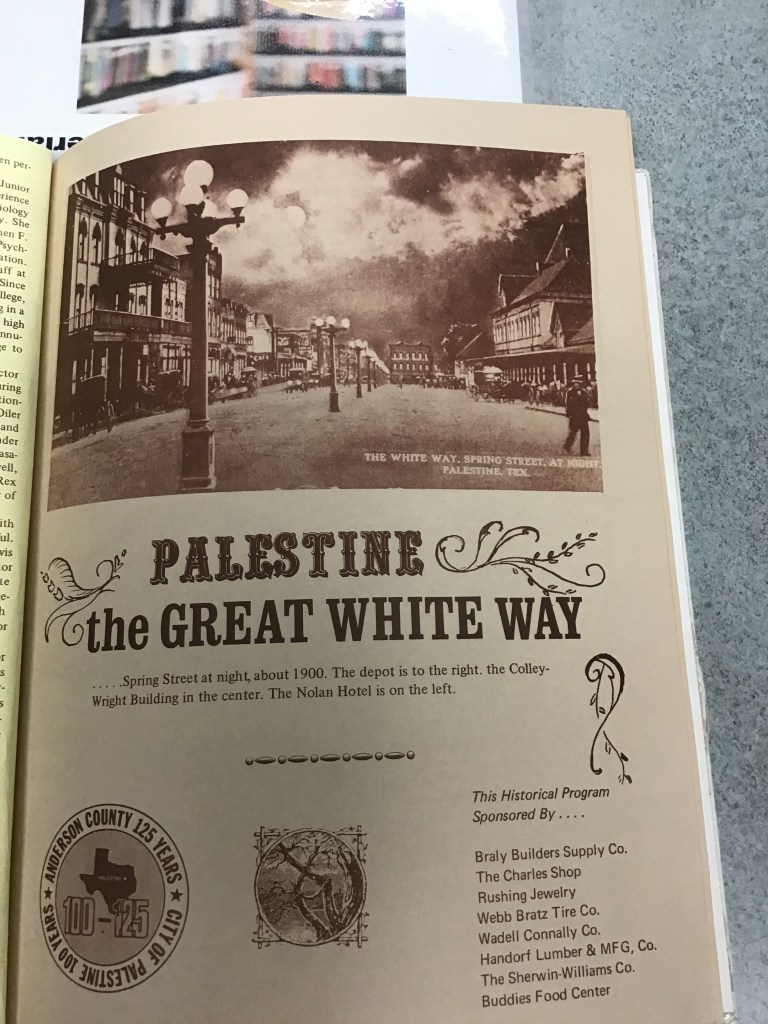
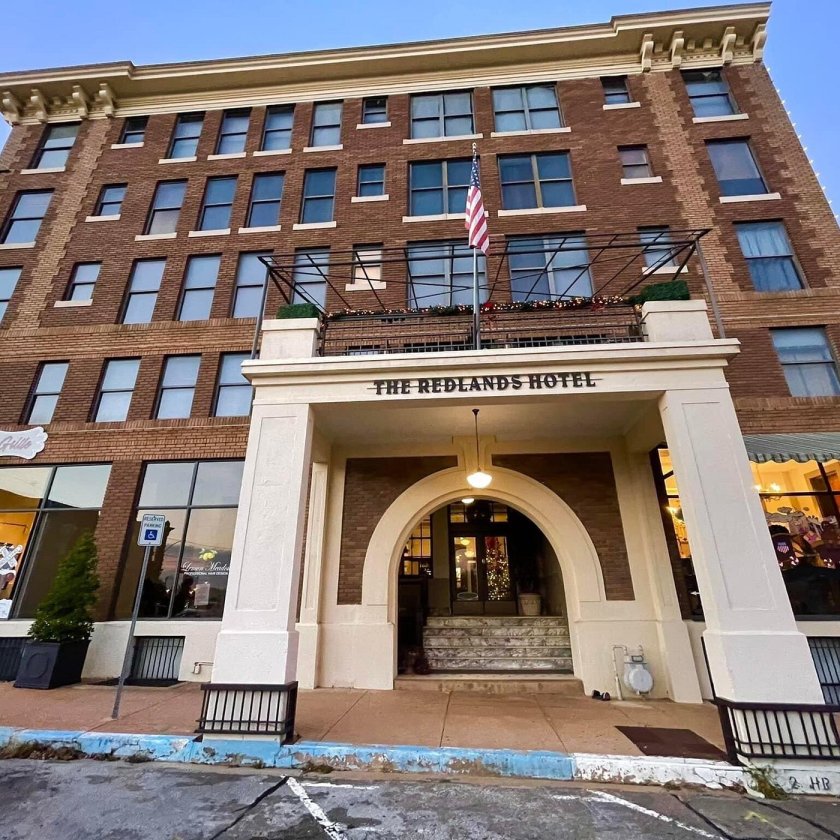
Like, the story of the popular Redlands Hotel, where I sometimes go for lunch on my rare trips to town. It’s a lovely old building that they’ve done a relatively decent job of keeping up, especially considering the condition of the vast majority of the downtown area.
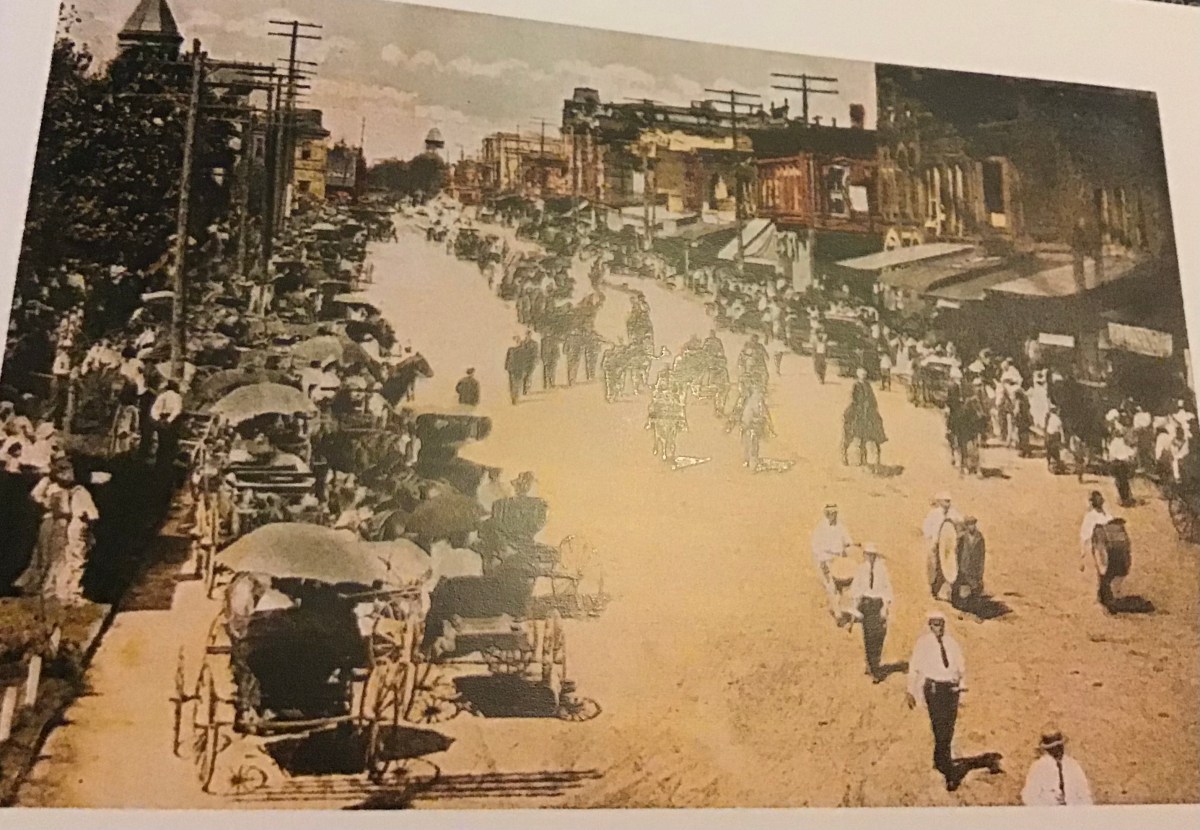
Interestingly, they have a panaramic photo of the early years of the city on display. As you follow the railroad tracks from left to right in the photo, you end up at graffitti painted on the side of a building. That is, the word OWL.
That’s my cue to start calling bluffs.
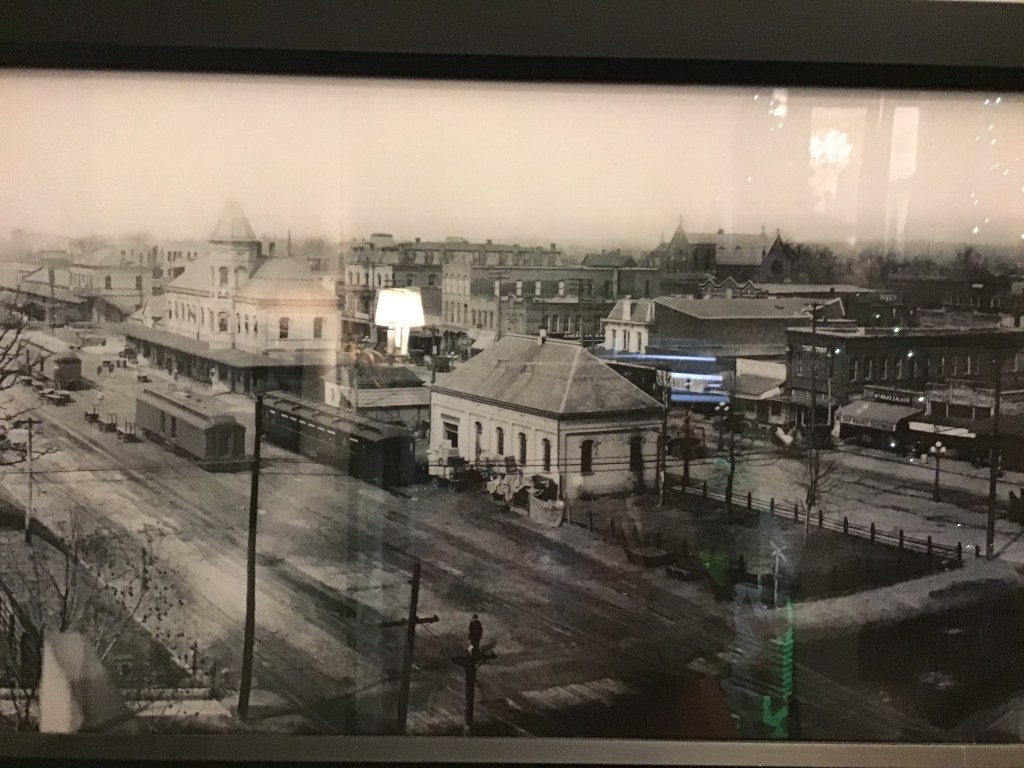
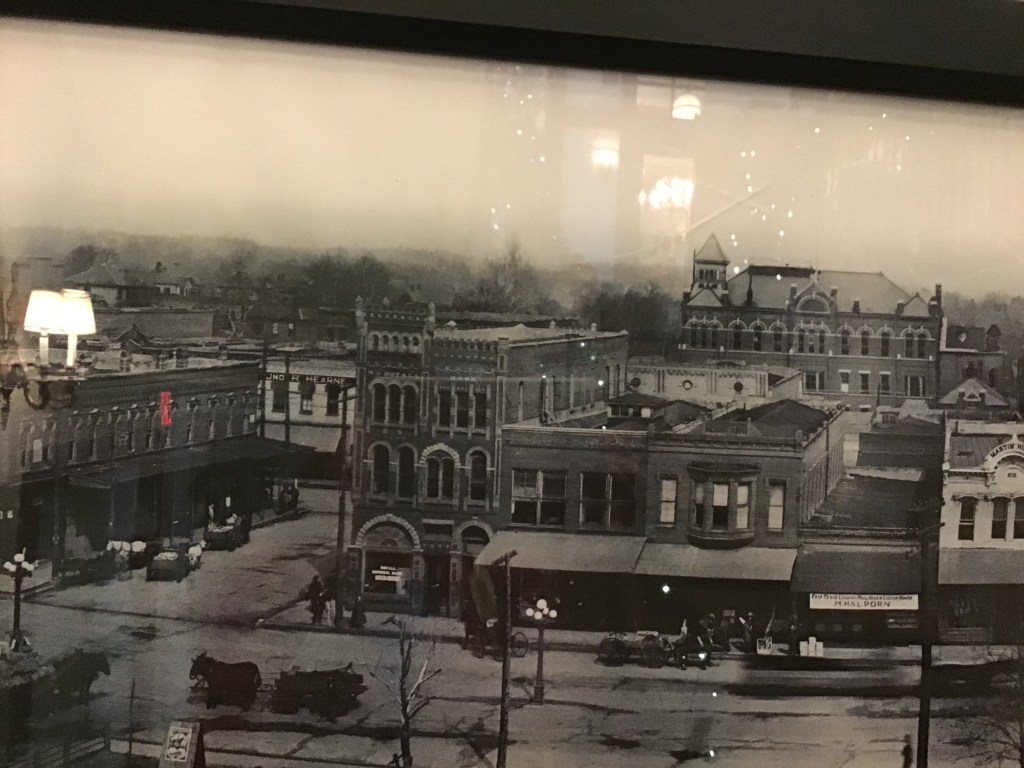
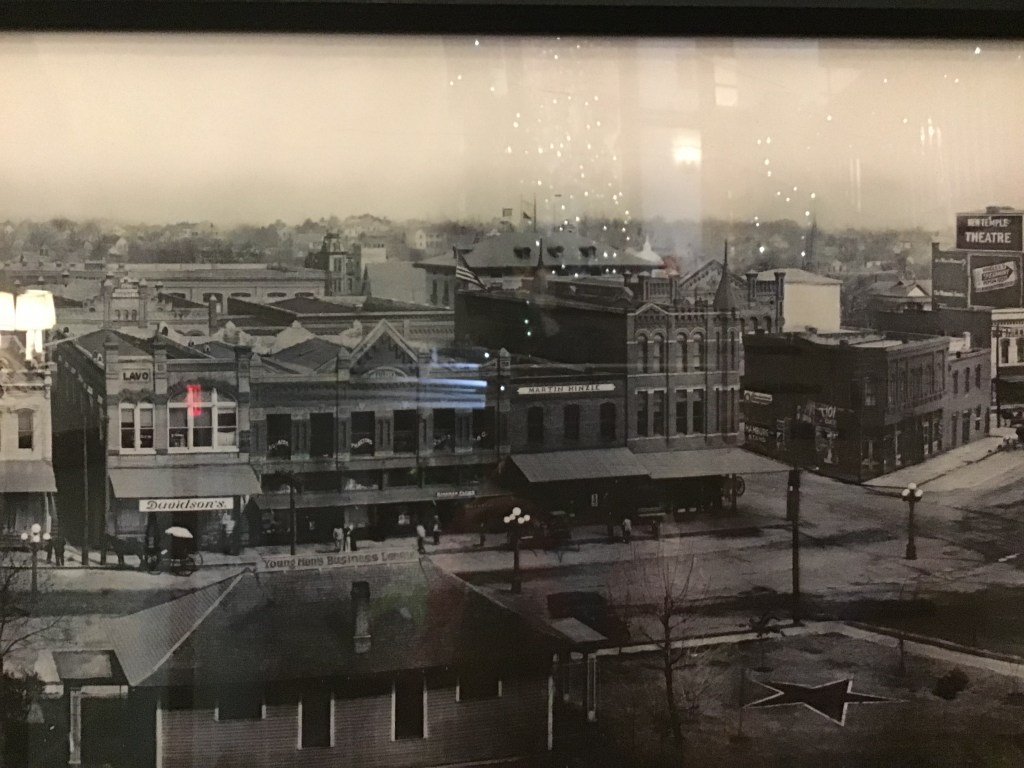
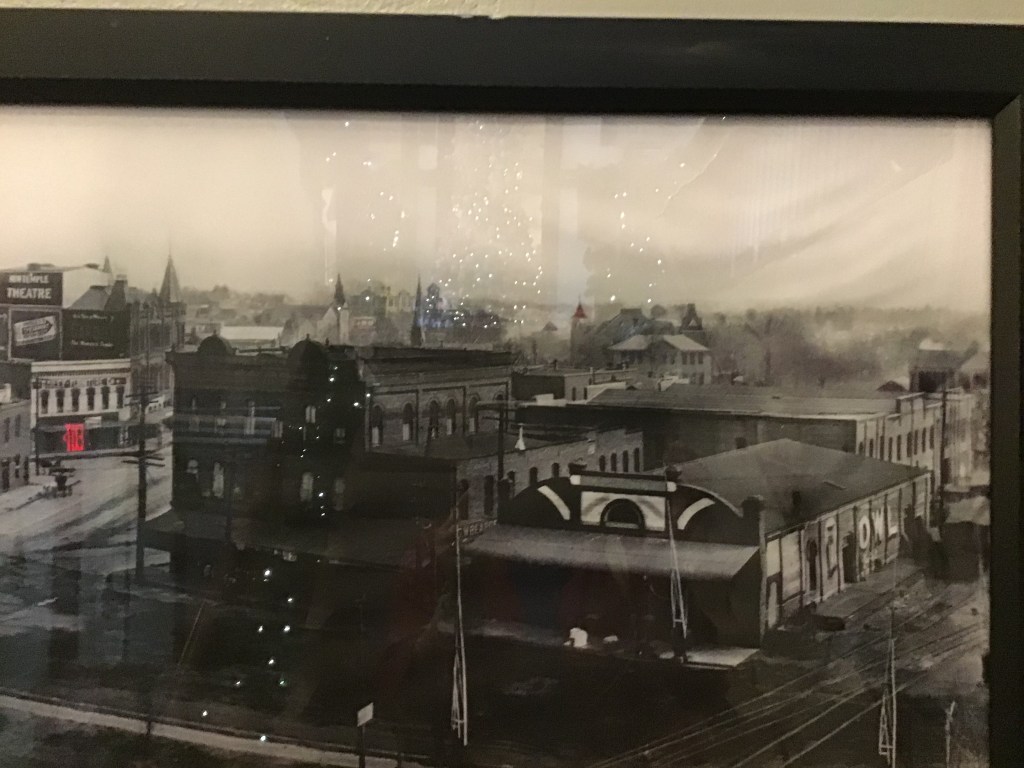
The owners of this hotel are deep into the official history, which is superficially helpful. As it goes, in 1914 when stockholders rushed to build the brown brick building, it was oxen that delivered the sand for the concrete. That is, sand from the Trinity River, 30 miles away. Are you kidding me?! That’s a pretty big bluff.
And even with that serious transport challenge, on supposed dirt roads, they managed to complete the five story building in a year. Apparently dirt roads weren’t effected back then by rain or snow, neither were the human builders, or the oxen. Amazing.
Even more amazing was that another striking building was going up on the other side of town, that is, the County Court House. The two structures apparently shared Italian artisans who installed hexagon tile to both buildings.
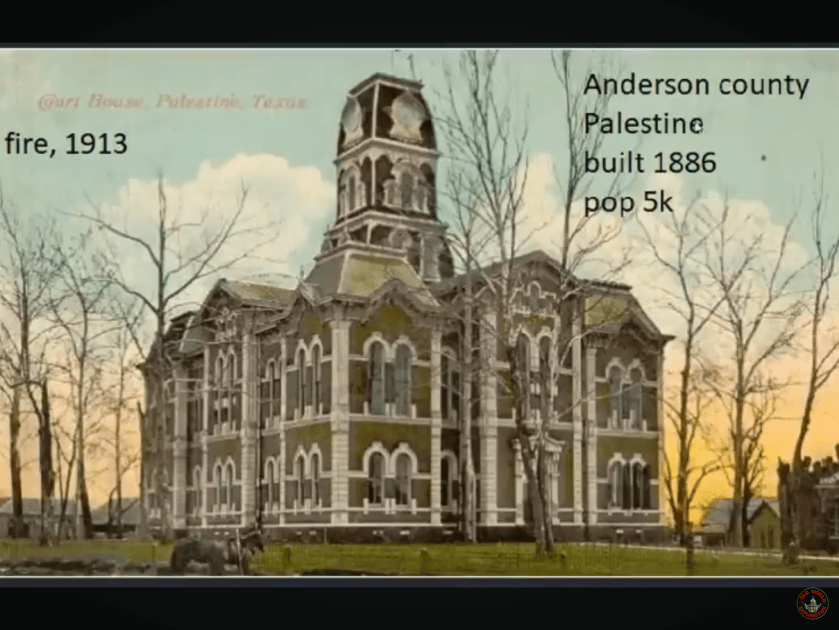
“Considered one of the most modern constructions of its era, and built to withstand the challenges of time, its walls are made of concrete, masonry blocks, sheetrock, and metal studs—evident in the structure today.”
My those were some busy boys and oxen!
In fact, with just a bit of digging, we learn there was in fact another town at the Trinity River junction where the cherished sand came from, now missing from both the land and the history books. But, there remains one hand-drawn map available in the archives, Magnolia was the town’s name, and it was apparently so bustling with commerce and activity according to one source that they called it the ‘St. Louis of the South”.
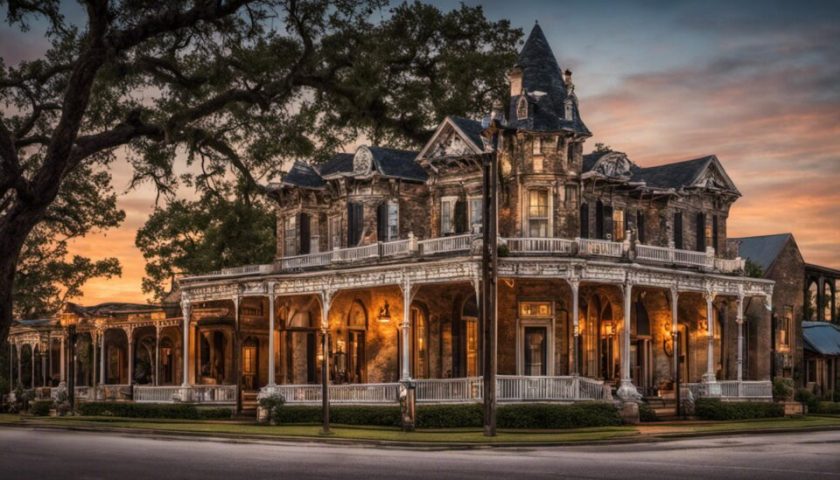
“Magnolia was established in the early 1840s as a Trinity River cotton port and was named for a large magnolia tree in the center of the townsite. Magnolia had a post office from 1851 to 1871. William A. Haygood was one of the principal property owners in the community and operated cotton gins, a hotel, a livery stable, a general store, a blacksmith shop, and a local ferry. Among other businesses in the community were a drugstore and John McClannahan and son’s warehouse. Magnolia was reported to have a population of 800 at its peak around 1863, when the town had thirty-three blocks of residences and businesses. Most shipments from the port went to Galveston, but on May 5, 1868, a steamboat traveled up the Trinity to Dallas. After it was bypassed by the International and Great Northern Railroad in the 1870s, Magnolia declined rapidly. By the 1930s it was no longer shown on the county highway map, though its name was preserved in that of the two schools that stood on the site of the former town. In 1932 the Magnolia school for whites had an enrollment of forty-three and the Magnolia school for blacks, thirty-four. A 1982 map showed only the Magnolia Cemetery at the townsite.”
Magnolia, Texas
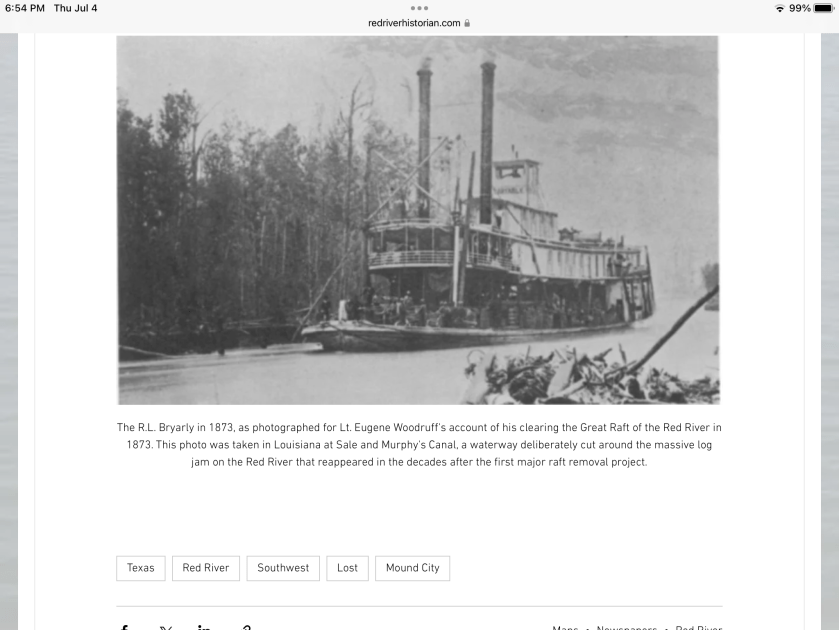
Nothing remains of this supposed river hub besides the hand-drawn map of the area where it was supposed to have been, where is now located some simple family houses, an intersection and the cemetery. I couldn’t even locate the river, or the supposed subsequent railroad.
Several other beautiful structures were also said to have been destroyed in this small city of Palestine not long after they were constructed.
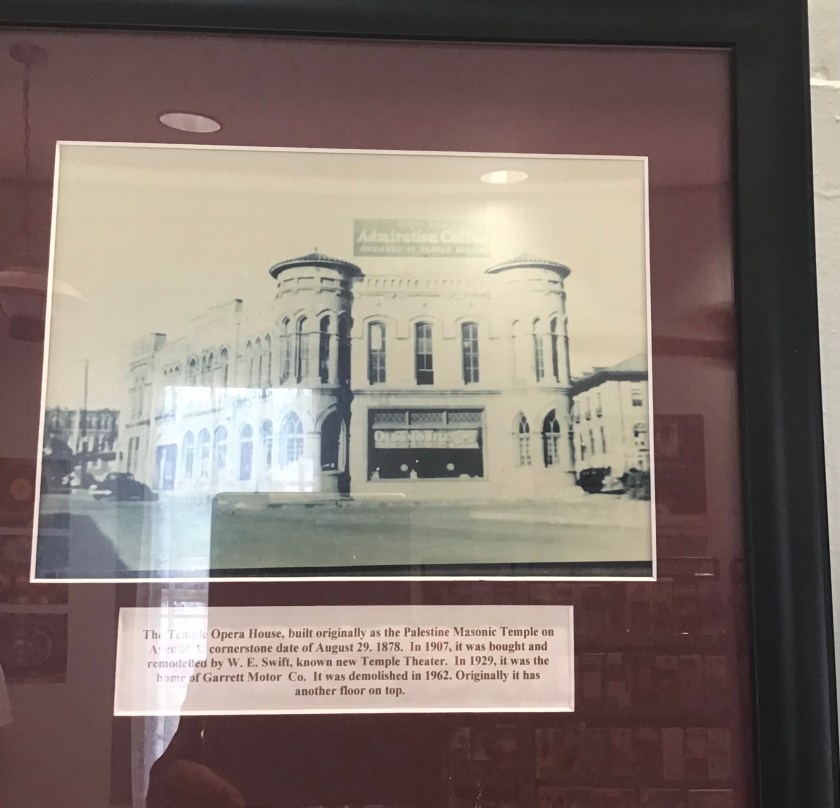
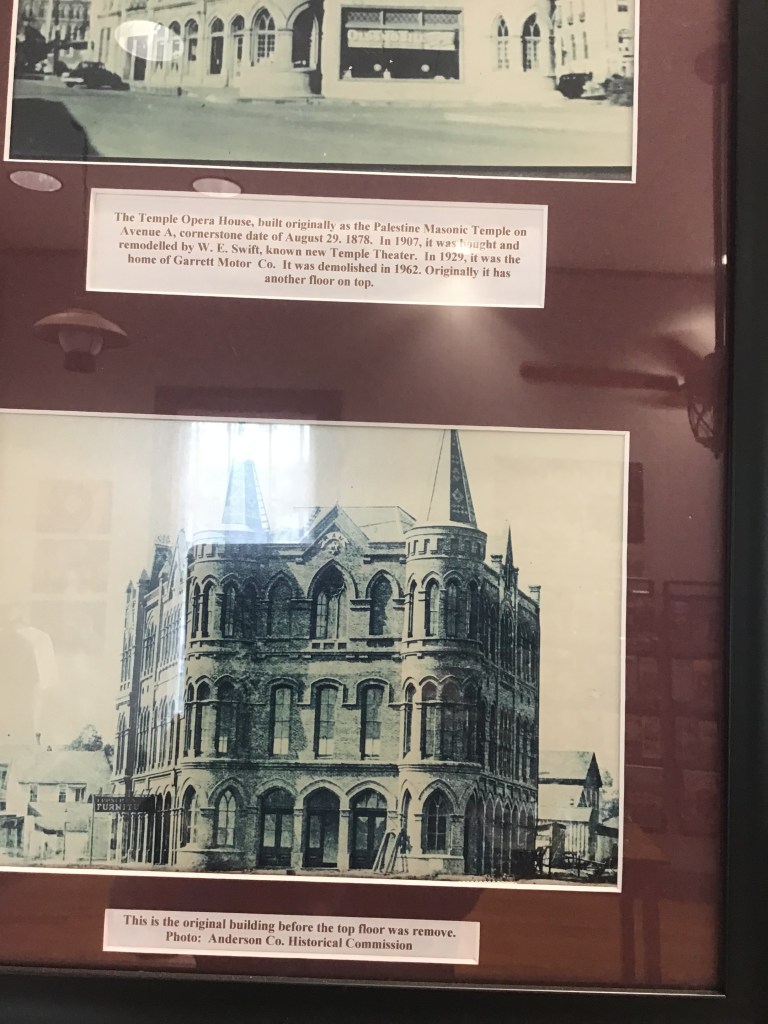
The Temple Opera House was built originally as the Palestine Masonic Temple with the cornerstone date of August 29, 1878. In 1907, it was bought and remodeled by W.E. Swift and known as the New Temple Theater. In 1929, it was the home of Garrett Motor Company, Palestine’s first Ford Motor Car Agency. It was demolished in 1962. It originally had another floor on top, but this was removed at some point.
At some point? Not even the official historians can tell us more specifically.
Exquisite building of multi-functions which didn’t have enough value to the small city to remain for a full century. The small box building housing a liquor store in that location now is so much better, I’m sure.
The “Railroad YMCA Building” was another one.
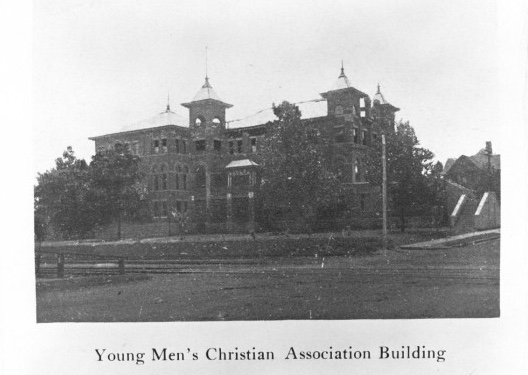
The Railroad YMCA opened in April of 1903 and continued as the YMCA until the building burned in the mid 1950’s. Interestingly, there seems to be no recorded photos available of this horrid fire event of a huge BRICK building. Nothing to see here! (In fact, I believe this to be another building altogether, more on that in a future post.)
As I searched the stacks of the local history at the library I was surprised to find several ‘fake books’ — that is supposed local history written by a source who cannot be located and is listed in the local phone book with phone numbers that don’t work and at addresses which never existed. Three different phone books, three different addresses, I actually went to all of them personally. Nothing. The books appear to be written by AI! I brought this to the attention of the library board, and no one cared. At all. I never heard back, though I went personally to the board meeting with evidence in hand. They didn’t even care to know which books it was with these obvious falsities, possibly written by an unaccountable AI, and sitting in their stacks posing as actual local history written by a fake person.
And now I feel frustration setting in, so enough for now, to be continued . . .


Fascinating discoveries and reflections, Mishelle. Your post reminded me of one of my favorite quotes.
“Doing research is, in many ways, like taking a descriptive and explanatory snapshot of empirical reality. For each particular photograph, the investigator must decide what kind of camera to use, what scene on which to focus, through which filter, and with what intent.” (Benjamin F. Crabtree and William L Miller, eds., Doing Qualitative Research, 2nd ed. Thousand Oaks, CA: Sage Publications, Inc., 1999), 3.)
History, like research in general, is always framed through the lenses of the historian – perhaps they’re even unaware of their real agenda. And who knows what that means for an AI author and “repurposer” of images?! 🤣
LikeLiked by 1 person
Thanks for sharing Carol, very apropos! It’s definitely something to consider which is not taught to the average student–scholars are not objective, or necessarily ethical, even when they try. We were certainly not taught to question authority or that there may be an unspoken, or hidden, agenda. It is the ‘voices from the margins’ who warn us and hope we can hear.
LikeLiked by 1 person
Great pictures. Interesting how they accomplished building some of these structures so long ago & now we seem to have trouble constructing simple houses. One thing that always jumps out to me is how the people are dressed compared to some of the things people wear today like P. Js to go shopping & ragged, dirty pants dragging on the ground. (Don’t know how to do simple sewing to shorten the pants.)
LikeLiked by 1 person
If you look at how folks were dressed during the World Fair exhibitions you could make a very good case for global warming! 😆 Can’t imagine a full length garment, petticoat, gloves, fashion hat, in the heat of the day in the midwest summers that’s for sure.
And that actually ties in with my previous post about the radiative cooling, because maybe these structures were capable of temperature regulation even in the surrounding environment. More coming on that soon. Thanks for reading and commenting!
LikeLike