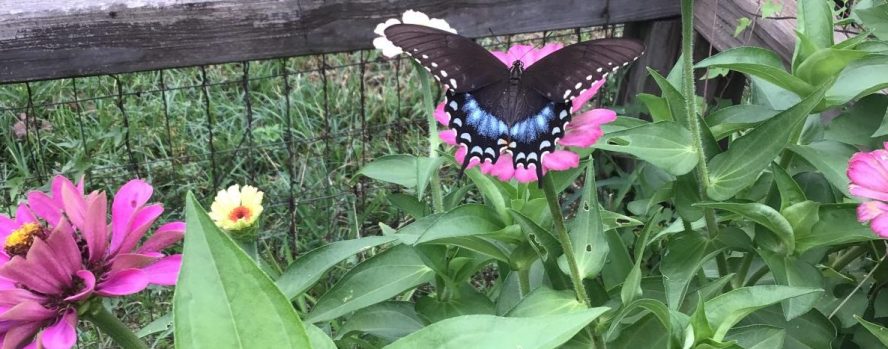

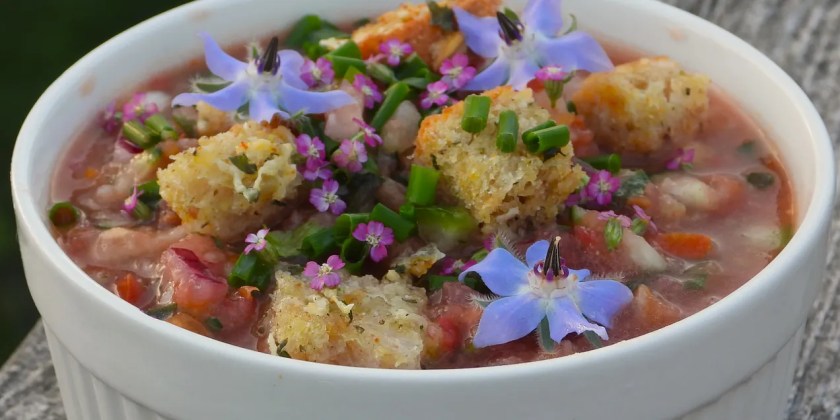
I wrote about Gavin’s book and gift of seeds recently, and now I’d like to share a bit about the recipes and his approach to gardening, food, cooking and life in general that I align with so much I can easily overlook our superficial differences–like we’re at nearly opposite ends of the gardening calendar, we’re decades apart in age, and I would normally never buy a vegetarian cookbook.
But as I already said, it’s much more than a cookbook. And I have too much respect for Gavin’s work to shun it just because it’s vegetarian! 😆
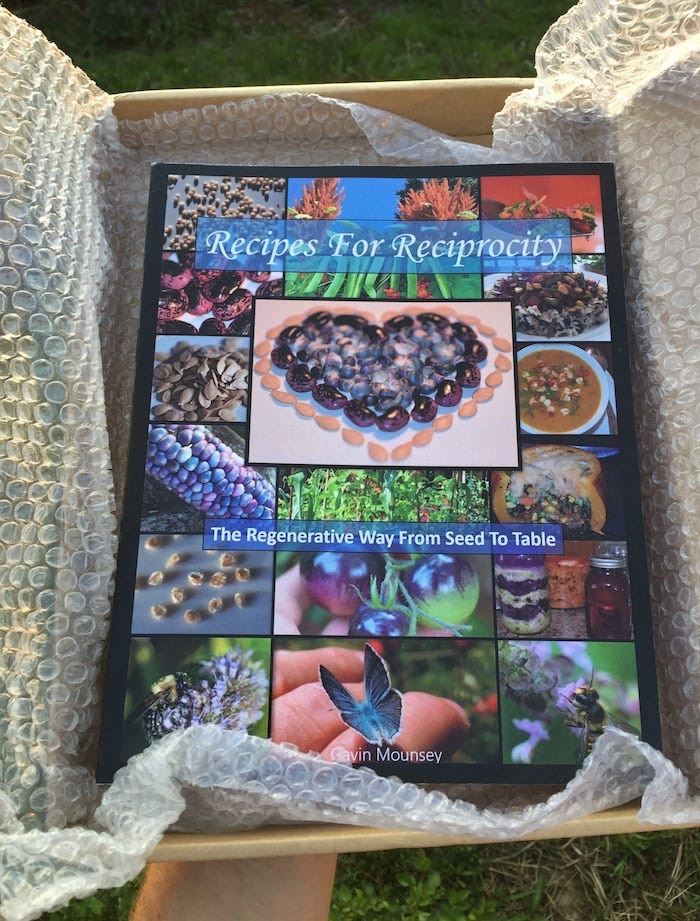
https://kenshohomestead.org/2025/07/07/gavins-reciprocity/
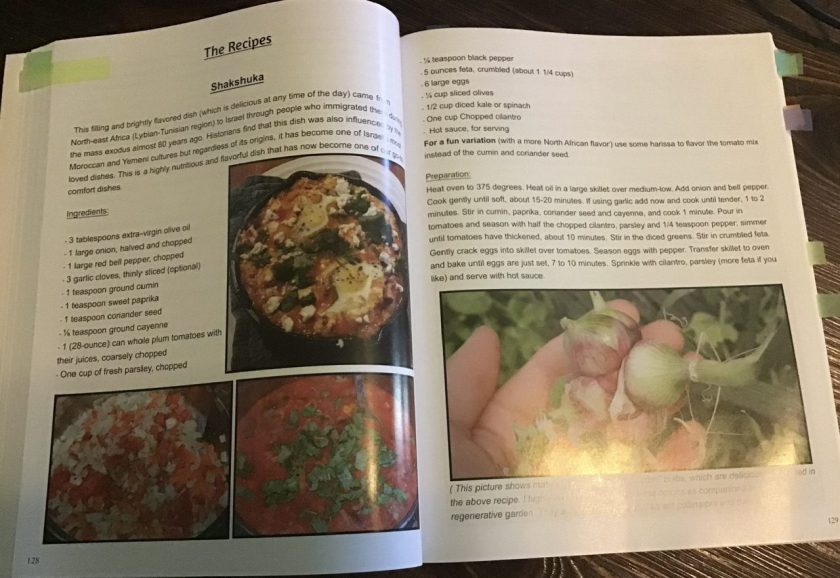
I’ve got a dozen pages marked of delicious-looking dishes I can’t wait to try. A number of dishes are already on our regular routine, like sourdough pancakes, heuvos rancheros, enchiladas with salsa verde and refried beans, and Greek salad (and we make it with homemade feta!)
We do eat a lot of vegetables and we always have salad daily and I’ve gotten plenty of new ideas–combinations I hadn’t considered, like a zucchini salad with mint–I’m often wanting to use more mint, it grows like crazy here.
The recipes are very adventurous too, drawing from diverse cultures and culinary traditions–Ethiopia, Morocco, Bali, Mexico, Greece, Thailand –which I truly appreciate, because we tend to get stuck in a bit too much of a routine sometimes. When the garden produce is rolling in by the wheelbarrow, there’s not much time to get creative.

(Photo credit: Kath-UK)
In fact, on the things that really matter, we agree completely.
Like on the importance of fermented dishes, and especially sauces, because the ones that are mass-produced are full of chemicals and highly processed garbage. It’s hard not to sound preachy, maybe even impossible, when telling folks how terrible their diet most likely is. But it’s the plain and simple truth.
I still go to the grocery store from time to time and I see what’s available and what’s in most folks’ carts and it’s pretty hard not to get judgy and to bite my tongue!
The difference a few dietary adjustments can make over time is really impressive–and it starts with naturally-grown fresh food.
Considering the vast majority of folks are outsourcing their health to Big Ag, Big Food and Big Pharma it’s not any wonder why our societies are collapsing under the weight of it all!

“In the past hundred years or so most people have forgotten about those ancient fermentation practices because of the advent of ‘instant gratification’ mass-produced products has allowed for entire generations of people to become completely dependent on corporations that supply them with the ‘food’ they need to survive. These ‘ultra-pasteurized’, pre-packaged, chemical-laden ‘food products’ are devoid of life, contain very little if any nutrients and are produced in ways that cause much damage to the planet’s ecosystems. Though eating prepackaged factory food (with unpronounceable ingredient lists) might be considered by some as ‘normal’ by today’s standards, it is certainly not a ‘norm’ that is conducive to longevity, sustainability or common sense.”

With thanks once again to Gavin, for his great many gifts, and for sharing them so graciously and generously. I’m already looking forward to his next book!


I am honored to be featured on your website once again my friend!
I love those memes!
Thanks so much for the kind words about my photos and writing.
Re: the recipes in the book not calling for meat based ingredients.
I just wanted to make sure it is clear that I did not exclude meat based recipe from my book as some sort of ideological statement or to pressure others to choose a diet that I enjoy, rather, the recipes reflect my currant preferences and the realistic ingredient source potential (given my current living situation, the fact that no regenerative livestock operations are nearby and the fact that one of the central pillars of my book is about eating and living regeneratively). In other words, as I touched on in this essay https://gavinmounsey.substack.com/p/the-spiritual-poverty-of-statism , I am not ideologically/philosophically opposed to eating all meat in theory, it is more a matter of me wanting to either take responsibility for the hunting/livestock raising/slaughtering myself or to know a local regenerative farmer well enough to ensure I know how the animals lived and died. Given I cannot engage in any of those options within reason currently, I currently do not eat meat.
I see plants and fungi as sentient beings deserving of respect just as I see animals so I do not buy into the vegan virtue signalling propaganda but rather I choose to knowingly take a life in a way that expressed respect, reverence and thinking of the 7th generation that comes after me (this applies whether that being is a plant, fungi or animal).
“Vegans (Vegetarians) and Beef eaters can live regeneratively or they can be devout statists and follow blindly as multi-generational racketeering operations continue to pillage the Earth.” (from post linked above)
The original final draft of Recipes For Reciprocity had a handful of recipes that include meat as an ingredient but they were cut due to me listening to the suggestions of my editor (and choosing those among the recipe to cut for printing budget limits).
I`ll share links to a couple of the recipes that were cut below for you meat eaters out there! Though, as texasrich3 rightly pointed out, the vast majority of vegetarian main dishes can have meat added and will work out great.
One of the recipes below is one I used to help my grandparents prepared for their guests at their bed and breakfast when I was little.
Hope you life these recipe and will give them a try 🙂
Pink Geranium lamb recipe:
https://archive.org/details/pinkgeraniumrecipe
Wor Wonton Soup:
https://archive.org/details/wor-wonton-soup
Enjoy!
and thanks again.
LikeLiked by 1 person
Thanks Gavin, for the clarification, link to article, and the extra recipes!
It’s a good thing you’re willing to take the time to clarify, too, I appreciate that. Of course I already know you are not ‘politically vegan/vegetarian’ because that would be too much for me! This politicizing of everything–from weather to food to sex–holy moly, drives me nuts and is so toxic!!
And it certainly is a most disastrous function of the State and not at all a necessary feature of civilization. I really hope collectively we can learn that before it’s too late.
In the meantime though, it is important to be clear about where we stand, because it’s so easy to misunderstand and make false assumptions. I can respect that folks in Texas, and other places considering themselves ‘cattle country’ would get apprehensive if they thought a well-meaning cookbook author had aims to judge and social engineer away their livlihoods. It is a serious threat what the global political apparatus is trying to accomplish and it’s going to continue to shake folks up.
I know, and you know, that is not either of our goals at all when trying to promote ACTUAL sustainability and good health for all life. We can keep repeating that as often as we can find the time and attention so as to not add to the current conflict and confusion.
LikeLike
My pleasure! The Wor-wonton takes some patience, but man is it tasty!
Re: Cattle Country and livelihoods.
It is worth noting that regenerative pre-colonial animal husbandry practices (not just based in Turtle Island, but pre-colonial indigenous European regenerative agroforestry/livestock farming systems as well) are more productive (which can translate into more profitable if one is into that sort of thing) than modern conventional livestock operations ( even mono-culture supported, feeding lots/factory farms which sacrifice land, human and animal health in the name of profits first). So, for anyone educating about regenerative farming practices, for those willing to put in the work, the social engineering impact of such works leads to increased livelihoods, not decreased. That applies whether on is growing vegetables, nuts, fruit or raising animals.
Re-introducing the Buffalo / Oak, Hickory, Chestnut Savannah food forest based animal husbandry system of pre-colonial Turtle Island is problematic due to the priorities of many private property owners likely not being compatible with roaming herds of large animals, but there are some smaller scale European based regenerative food forest / animal husbandry models worth learning from and which are applicable and scalable here.
Here are some examples of ancient European Regenerative Farming Practices (incase you are unfamiliar and so your readers here may benefit from the info if they are not):
https://www.shelterwoodforestfarm.com/blog/the-lost-forest-gardens-of-europe#The-Domesticated-Forest-Garden=
https://web.archive.org/web/20170207044149/http://www.doctorrange.com/PDF/Dehesa.pdf
Yes well said regarding the political psyops being pushed out on these topics, it certainly does muddy the waters for many.
I appreciate the thoughtful response and look forward to hearing how you like Shakshuka 🙂
LikeLiked by 1 person
Excellent G, thanks for more resources. I was just browsing the first link–fascinating, sounds like a fantasy world!
“This style of growing is called coltura promiscua – “mixed cultivation” – a practice with roots that run deep in these hills. It is one of a handful of truly indigenous systems of farming remaining throughout Europe, adapted and perfected over thousands of years from the earliest hunter-gatherers through to the present day. It has shrugged off extreme climate change events, countless wars and invasions, pestilence and plagues, cultural erasure and colonization. This is the kind of farming system that is needed in the 21st century: a fully-integrated three-dimensional farm ecosystem that supports people and animals, provides staples and specialty products, increases local biodiversity, and does not require chemicals or elaborate technology.”
Makes me want to sell the homestead and move to one of these places! A visit to such a place must go on my bucket list.
😍
LikeLike
What nonthinkers don’t realize is that you can make any great veggie recipe & adapt for meat eaters is to make it & add the meat of your choice. Easy. & vegetarians usually go all out for flavor & come up with ideas to use up all those extra garden vegetables. This is one book I don’t have even though I have many vegetarian cookbooks. Looks interesting.
LikeLiked by 1 person
Yes agreed, different ways to develop the flavors without meat, good tricks to know. Thanks for stopping by!
LikeLike