What’s Been Lost III

When I first started watching alternative history Youtube channels I was skeptical, and I still am. I want the truth, not more redirection. Not more fantasy. Not more illusion. Not more heavily curated or mediocre nonsense.

So far, I don’t sense I’ve found it, but I’ve become ok with never finding it. I’ve resigned myself to what’s as close to the truth as I’ll be able to manage to get to in this lifetime, which is: I’ll never know the truth, but I may be able to manage truth-adjacent with enough study and discernment. I can confidently opt-out of the lie, permanently. That’s a big improvement to the path of blind acceptance I was, and most are, still on.

The first step toward truth was achieved pretty easily, it began with calling bluffs. As long as I don’t allow it to frustrate me, which isn’t exactly easy, this alone feels pretty empowering. For me, as usual, I had to experience it directly, no Youtube influencers, no professors, no self-styled experts can convince me, not without applying my own eyes and ears and reason.
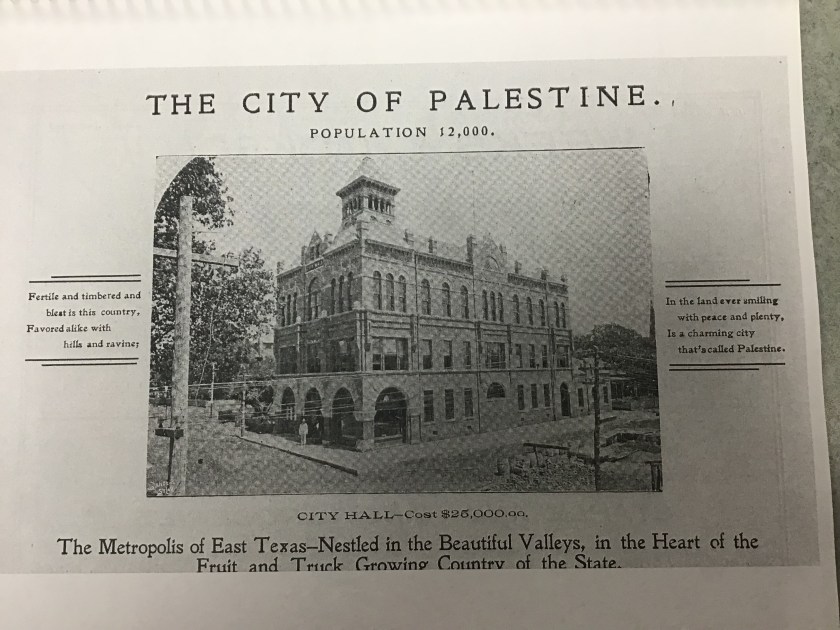
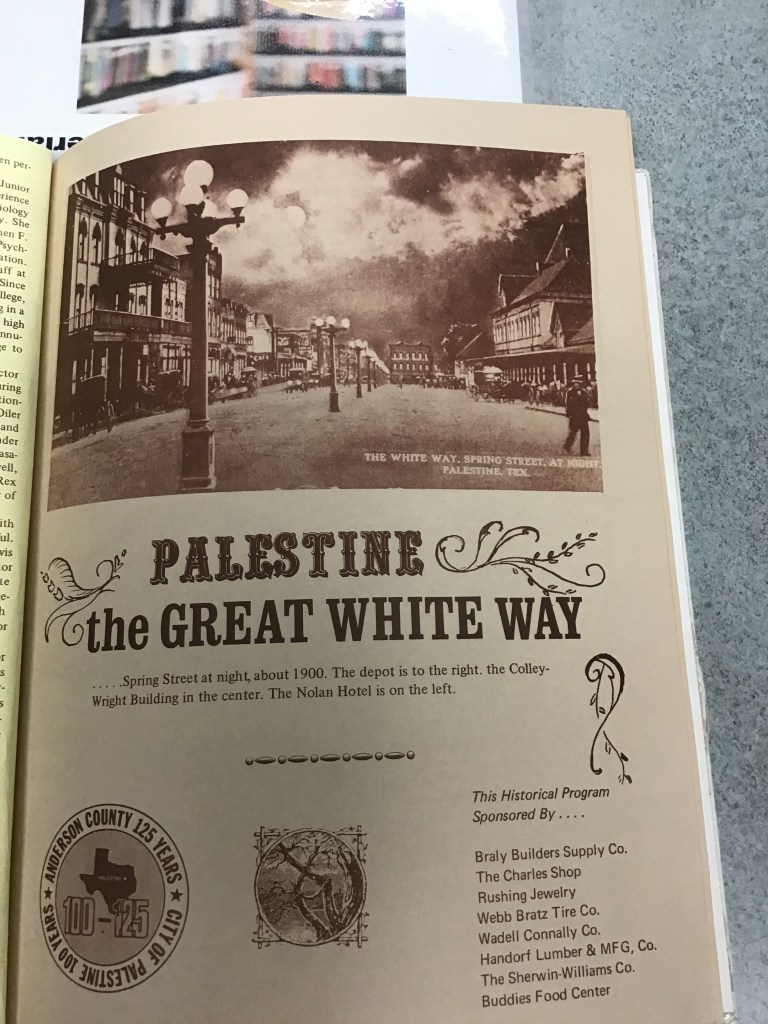
I looked to the architecture because that’s what’s visible, and only then to the official history, because that’s what’s accepted as truth. I started in my own neighborhood, that is, the small city closest to us, called Palestine. It’s actually easier I think to consider the small city, rather than the large ones, because there’s been less tampering more likely, more holes in the narratives that can be more easily noticed by the novice.
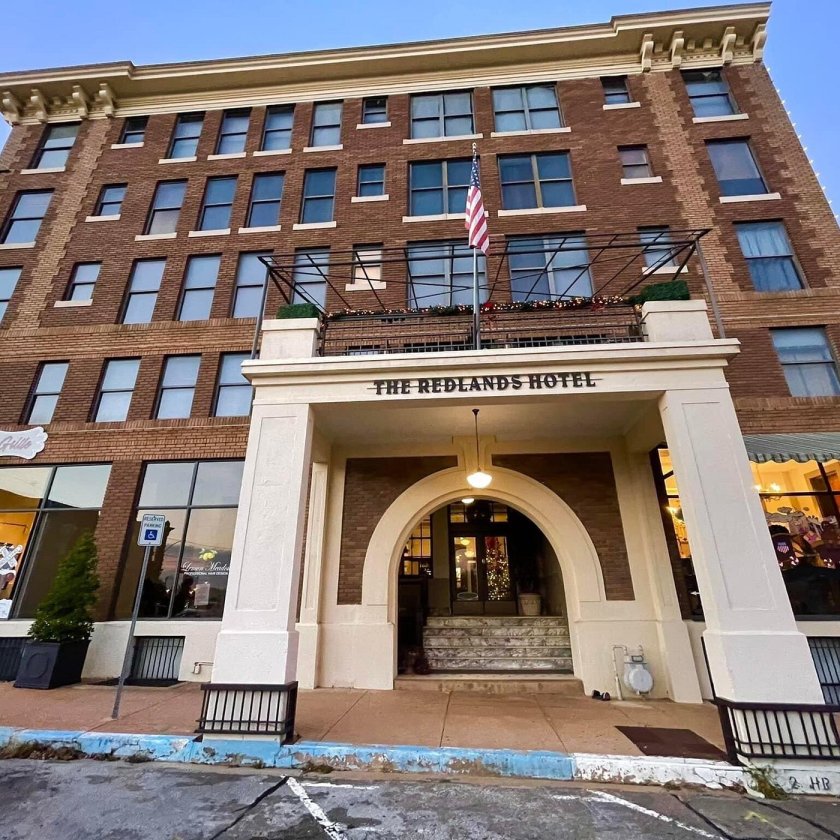
The well-maintained Redlands Hotel today.

Like, the story of the popular Redlands Hotel, where I sometimes go for lunch on my rare trips to town. It’s a lovely old building that they’ve done a relatively decent job of keeping up, especially considering the condition of the vast majority of the downtown area.

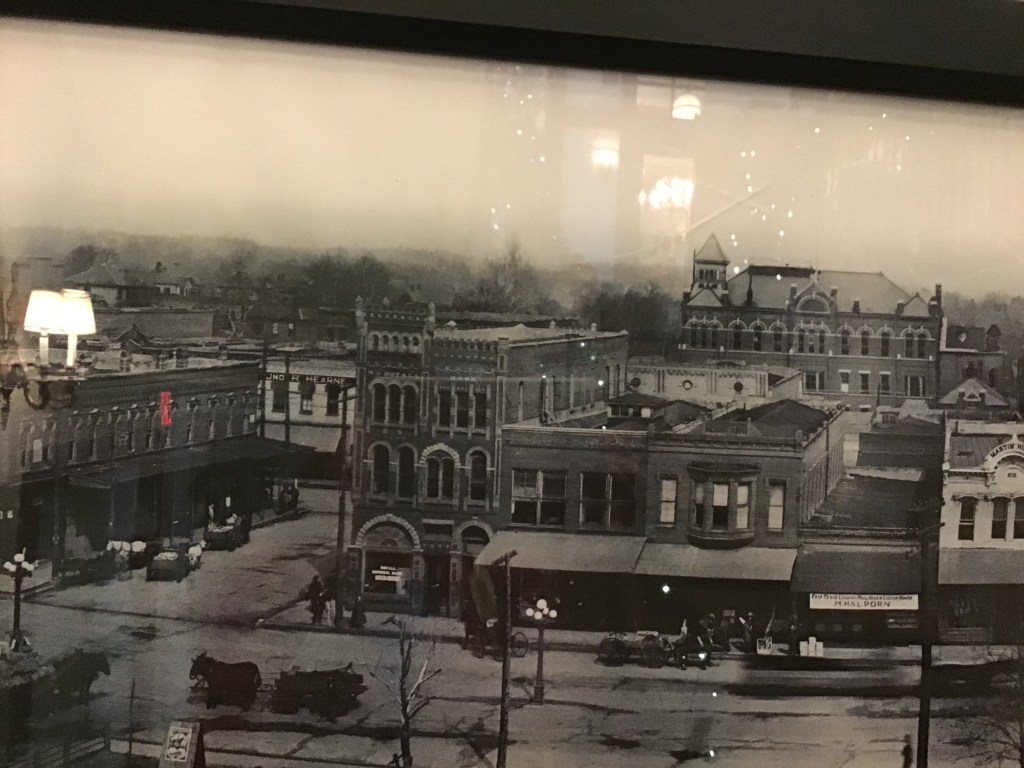
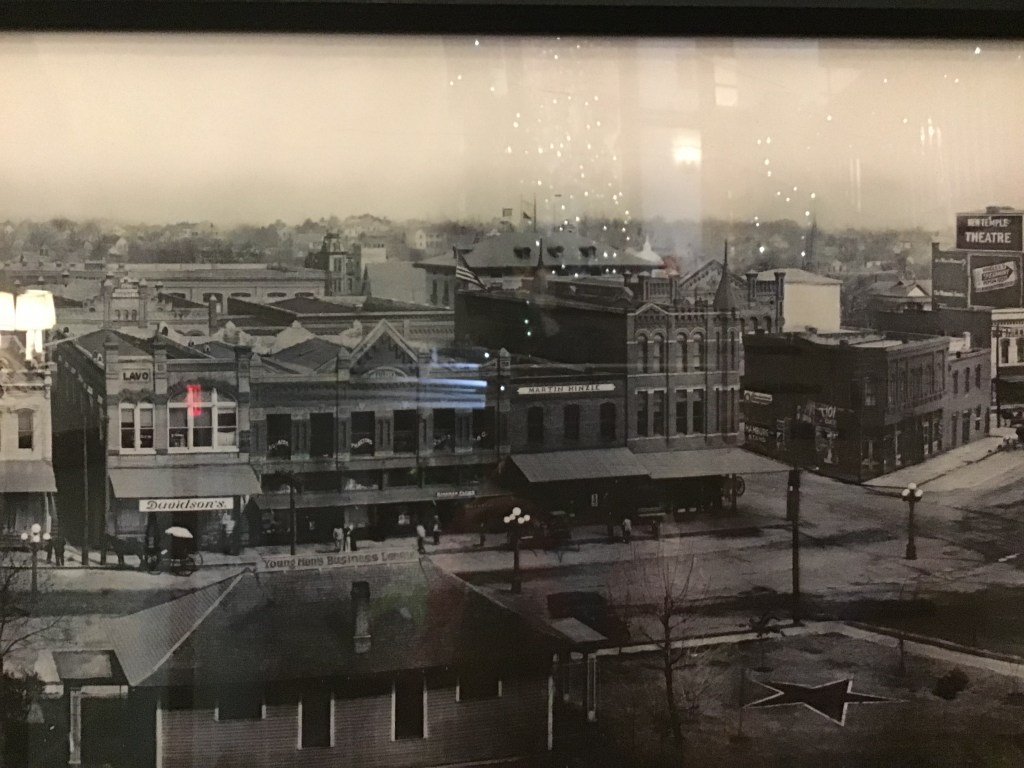
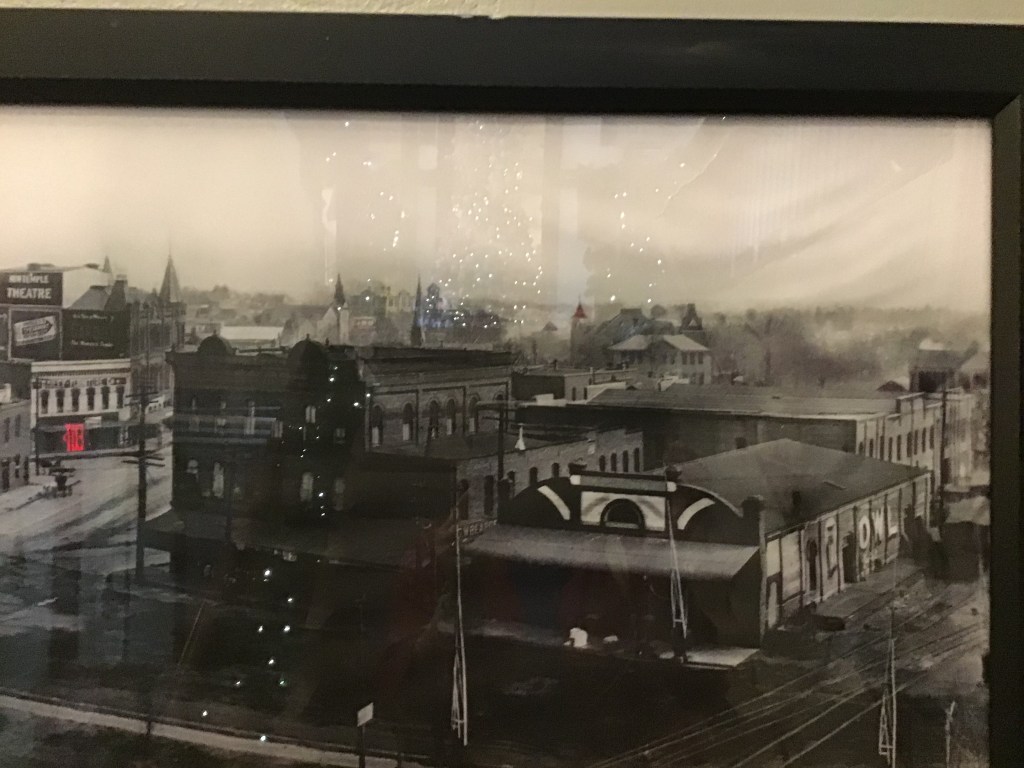
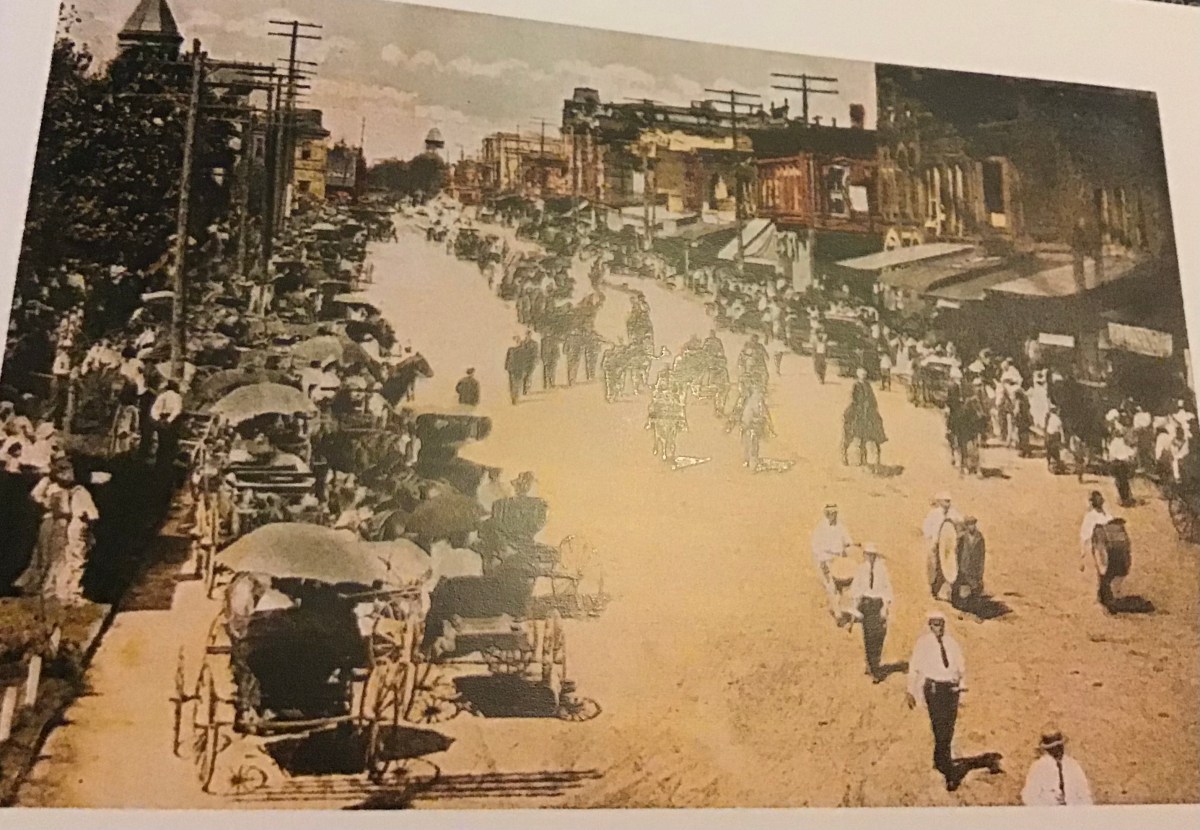
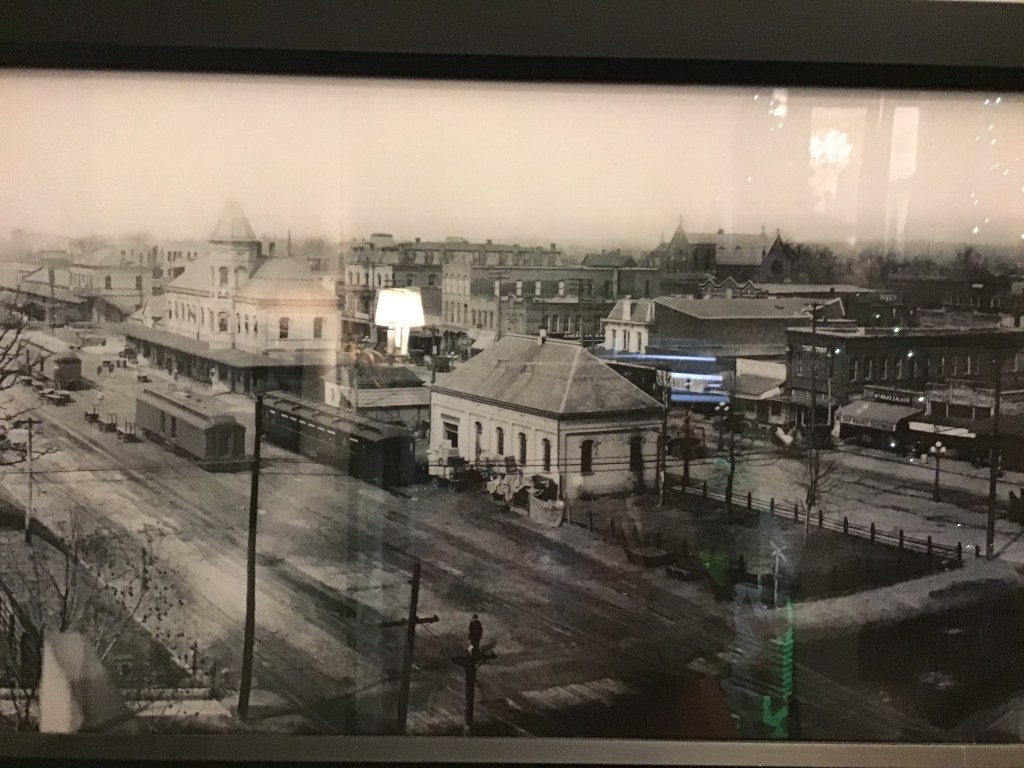
Interestingly, they have a panaramic photo of the early years of the city on display.  As you follow the railroad tracks from left to right in the photo, you end up at graffitti painted on the side of a building.  That is, the word OWL.

That’s my cue to start calling bluffs.
The owners of this hotel are deep into the official history, which is superficially helpful. As it goes, in 1914 when stockholders rushed to build the brown brick building, it was oxen that delivered the sand for the concrete. That is, sand from the Trinity River, 30 miles away. Are you kidding me?! That’s a pretty big bluff.

And even with that serious transport challenge, on supposed dirt roads, they managed to complete the five story building in a year.  Apparently dirt roads weren’t effected back then by rain or snow, neither were the human builders, or the oxen.  Amazing.

Even more amazing was that another striking building was going up on the other side of town, that is, the County Court House. The two structures apparently shared Italian artisans who installed hexagon tile to both buildings.
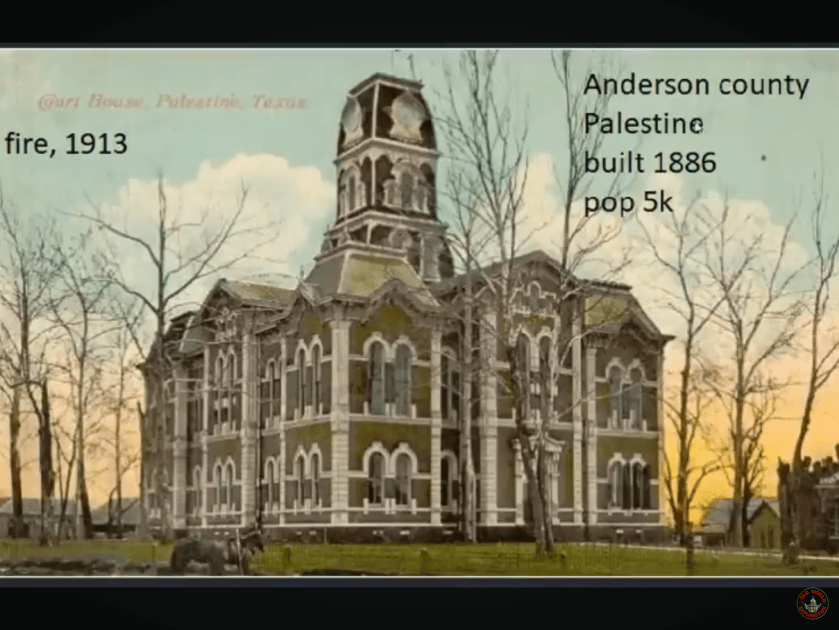
The original burned court house, depending on which source cited. Another source states the original courthouse was a small building made of wood.

“Considered one of the most modern constructions of its era, and built to withstand the challenges of time, its walls are made of concrete, masonry blocks, sheetrock, and metal studs—evident in the structure today.”

My those were some busy boys and oxen!

In fact, with just a bit of digging, we learn there was in fact another town at the Trinity River junction where the cherished sand came from, now missing from both the land and the history books. But, there remains one hand-drawn map available in the archives, Magnolia was the town’s name, and it was apparently so bustling with commerce and activity according to one source that they called it the ‘St. Louis of the South”.
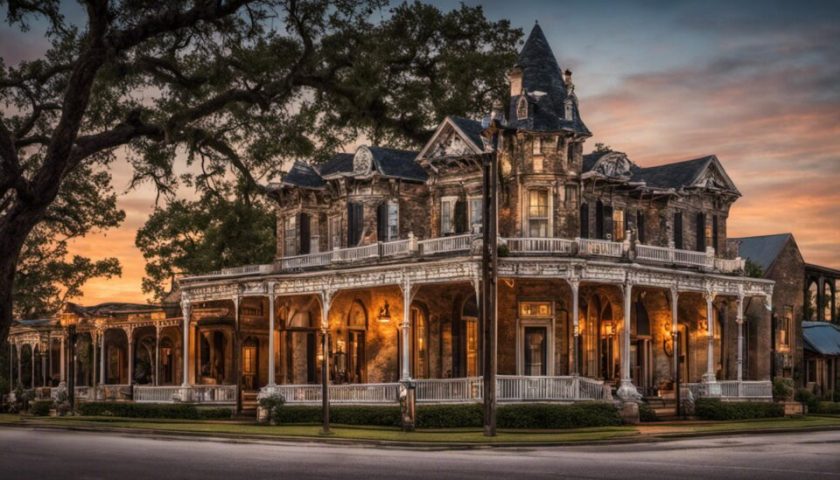
One of the many demolished structures of the non-existent town once called Magnolia, according to the official history.

“Magnolia was established in the early 1840s as a Trinity River cotton port and was named for a large magnolia tree in the center of the townsite. Magnolia had a post office from 1851 to 1871. William A. Haygood was one of the principal property owners in the community and operated cotton gins, a hotel, a livery stable, a general store, a blacksmith shop, and a local ferry. Among other businesses in the community were a drugstore and John McClannahan and son’s warehouse. Magnolia was reported to have a population of 800 at its peak around 1863, when the town had thirty-three blocks of residences and businesses. Most shipments from the port went to Galveston, but on May 5, 1868, a steamboat traveled up the Trinity to Dallas. After it was bypassed by the International and Great Northern Railroad in the 1870s, Magnolia declined rapidly. By the 1930s it was no longer shown on the county highway map, though its name was preserved in that of the two schools that stood on the site of the former town. In 1932 the Magnolia school for whites had an enrollment of forty-three and the Magnolia school for blacks, thirty-four. A 1982 map showed only the Magnolia Cemetery at the townsite.”
Magnolia, Texas
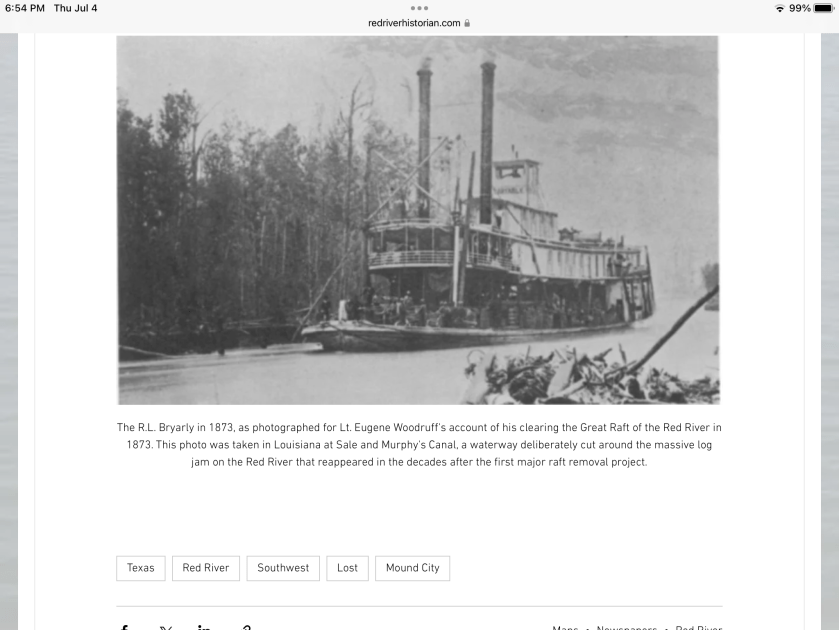
This is the sort of vessel which would have been traveling the Trinity River through Magnolia.

Nothing remains of this supposed river hub besides the hand-drawn map of the area where it was supposed to have been, where is now located some simple family houses, an intersection and the cemetery. I couldn’t even locate the river, or the supposed subsequent railroad.

Several other beautiful structures were also said to have been destroyed in this small city of Palestine not long after they were constructed.
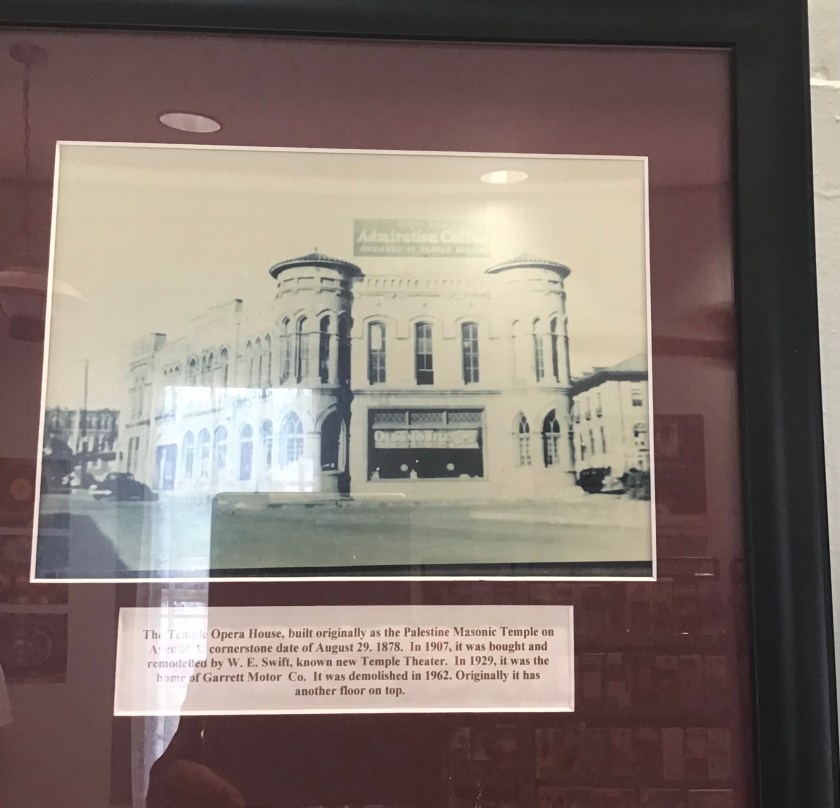
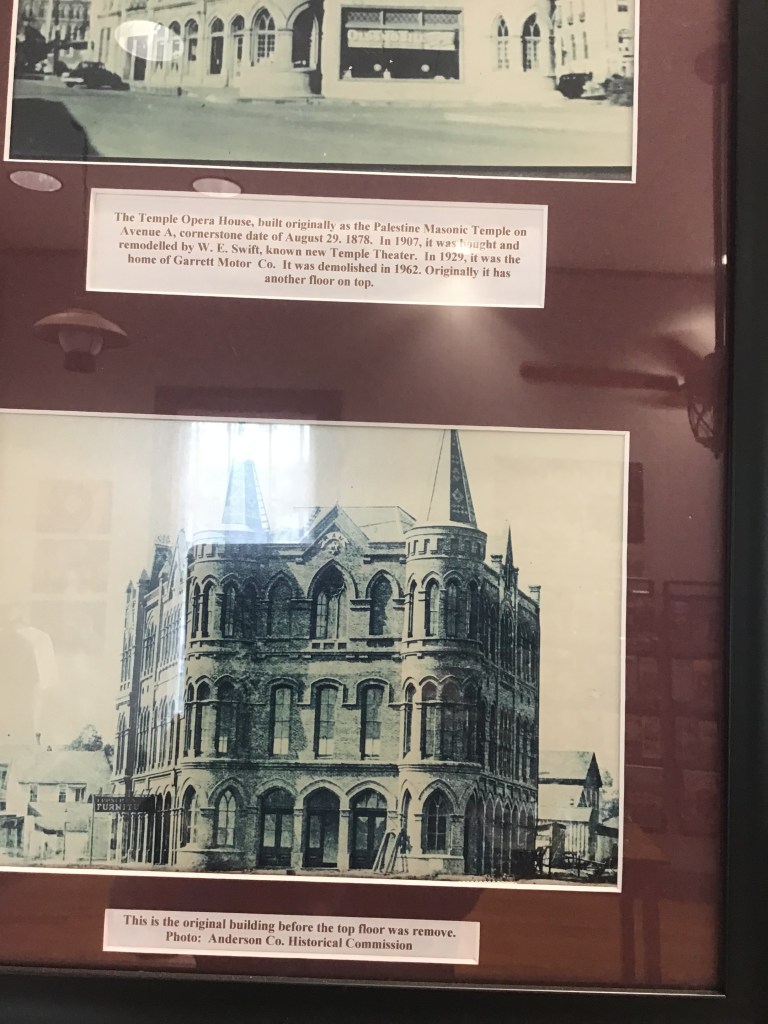
The Temple Opera House was built originally as the Palestine Masonic Temple with the cornerstone date of August 29, 1878. In 1907, it was bought and remodeled by W.E. Swift and known as the New Temple Theater. In 1929, it was the home of Garrett Motor Company, Palestine’s first Ford Motor Car Agency. It was demolished in 1962. It originally had another floor on top, but this was removed at some point.

At some point? Not even the official historians can tell us more specifically.

Exquisite building of multi-functions which didn’t have enough value to the small city to remain for a full century. The small box building housing a liquor store in that location now is so much better, I’m sure.

The “Railroad YMCA Building” was another one.
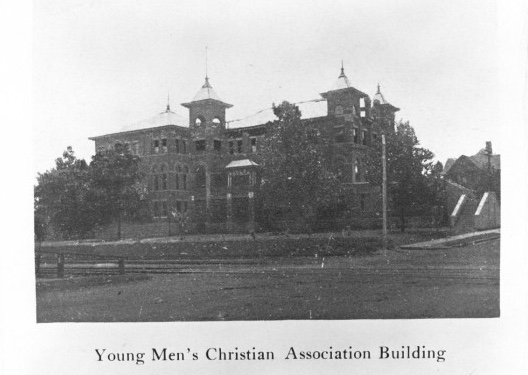
The Railroad YMCA opened in April of 1903 and continued as the YMCA until the building burned in the mid 1950’s. Interestingly, there seems to be no recorded photos available of this horrid fire event of a huge BRICK building. Nothing to see here! (In fact, I believe this to be another building altogether, more on that in a future post.)

As I searched the stacks of the local history at the library I was surprised to find several ‘fake books’ — that is supposed local history written by a source who cannot be located and is listed in the local phone book with phone numbers that don’t work and at addresses which never existed.  Three different phone books, three different addresses, I actually went to all of them personally.  Nothing.  The books appear to be written by AI!  I brought this to the attention of the library board, and no one cared.  At all.  I never heard back, though I went personally to the board meeting with evidence in hand.  They didn’t even care to know which books it was with these obvious falsities, possibly written by an unaccountable AI, and sitting in their stacks posing as actual local history written by a fake person.

And now I feel frustration setting in, so enough for now, to be continued . . .
Free Speech Is Useless

Free speech is useless in a country in ruins.

Accepting the unacceptable. We all must learn to do it, they say. It’s the Gospel of all Gospels. Humility. Here we must go into the higher realms of consciousness. Those feared and revered and most hallowed of places where we learn how to bow gracefully. Where we learn our pride is misplaced. Where we learn to swallow our tears. Where we learn to stifle our voices and especially to keep with the program.

Did you learn all the right tricks? Do you still pledge allegiance to the flag on cue? Do you still believe the hollow rituals and shapeshifting lies?

Lucky you! Here’s to the happy few!

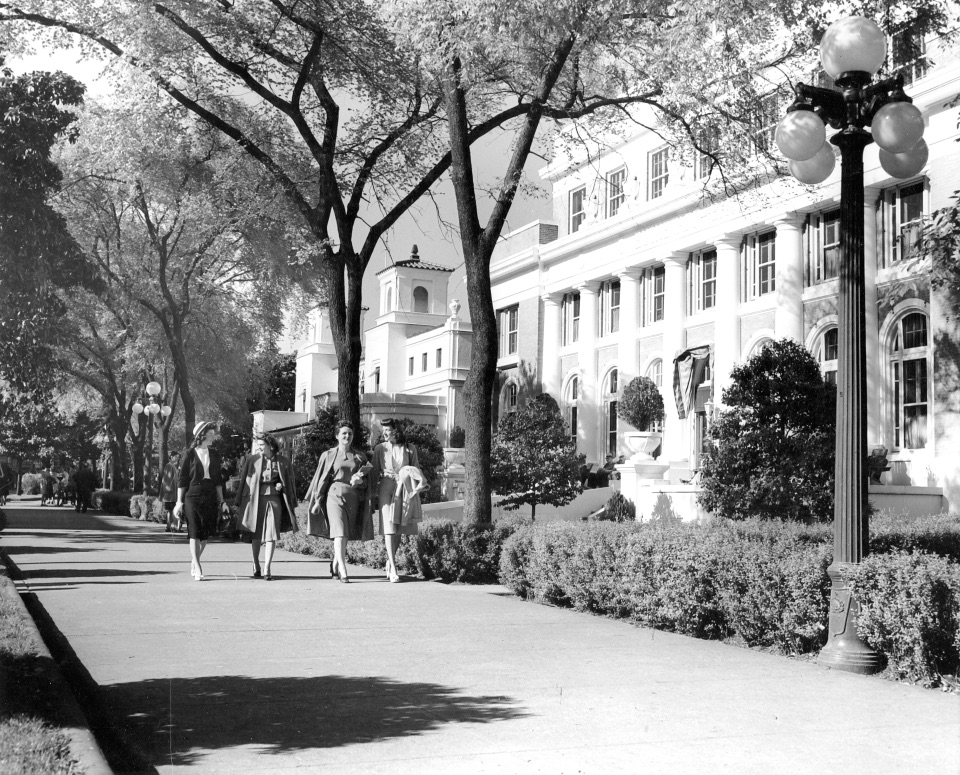
Historic picture of Bathhouse Row, Hot Springs, Arkansas

A short trip to Hot Springs, Arkansas and I’m deep in the sticks, and deep into pondering the relevance of free speech. Why? Because I realize you can’t have free speech in a nation if you don’t have free speech in your own family.

It’s more than freedom of speech, it’s freedom of thought, which begets freedom of information, which begets freedom of ideas freely circulating, because one hardly exists without the others.

We don’t have that and we need everyone to stop pretending that we do.

It’s much more all encompassing than I think most folks realize. It begins in the family, because it begins in consciousness, which is something that is exceptionally easy to limit. Especially when we are very young. A few simple lies of omission and generations are easily compromised.

Imagine what chaos the biggest lies create.

It’s happening in the micro and macrocosms simultaneously, filling up, in and through, the waters of life, saturating the atmosphere itself, all has been compromised. It would seem not just the walls, but even the air, have ears.

Through the Smart Dust?
https://zerogeoengineering.com/2024/the-atmosphere-as-global-sensor/

I learned a new word on the roadtrip there while listening to a podcast:
Iatrogenesis – from Wikipedia

“Iatrogenesis is the causation of a disease, a harmful complication, or other ill effect by any medical activity, including diagnosis, intervention, error, or negligence.[1][2][3] First used in this sense in 1924, the term was introduced to sociology in 1976 by Ivan Illich, alleging that industrialized societies impair quality of life by overmedicalizing life. Iatrogenesis may thus include mental suffering via medical beliefs or a practitioner’s statements. Some iatrogenic events are obvious, like amputation of the wrong limb, whereas others, like drug interactions, can evade recognition. In a 2013 estimate, about 20 million negative effects from treatment had occurred globally. In 2013, an estimated 142,000 persons died from adverse effects of medical treatment, up from an estimated 94,000 in 1990.”

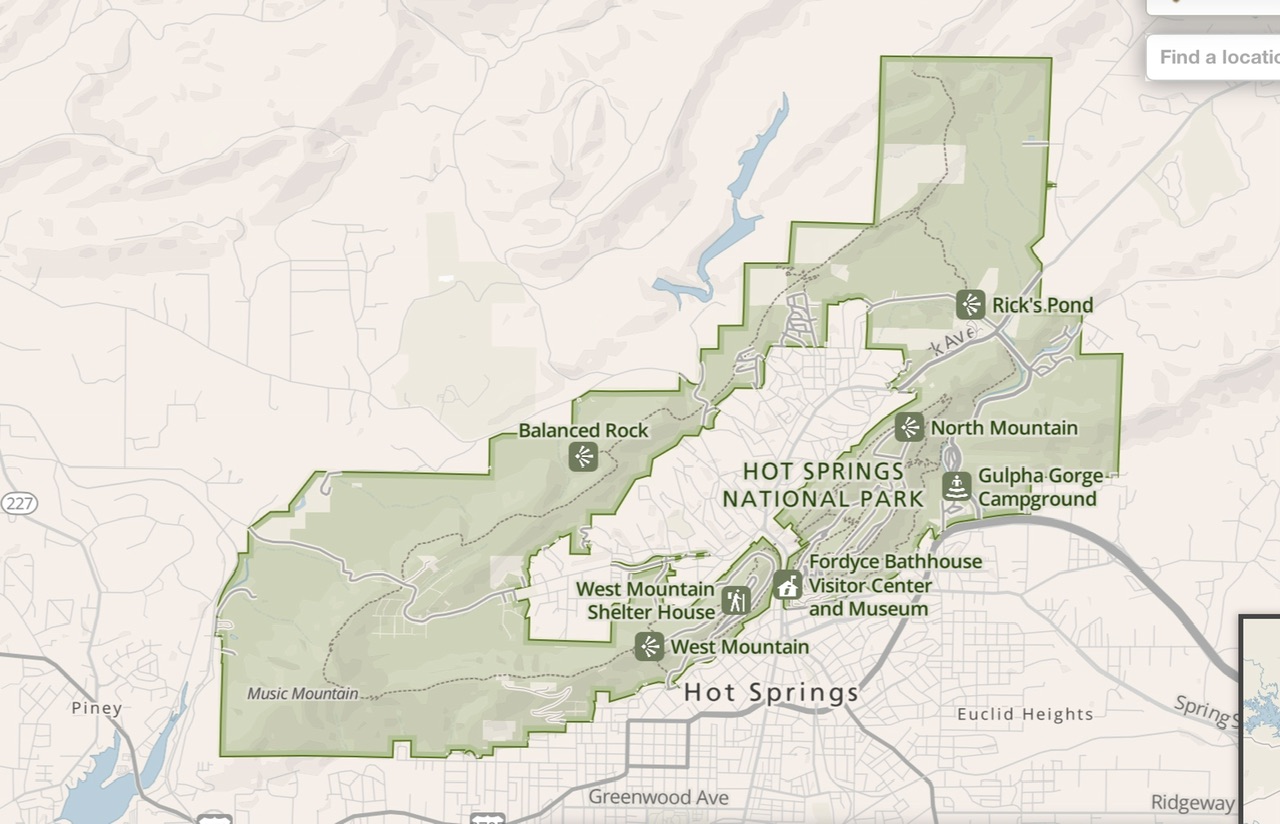
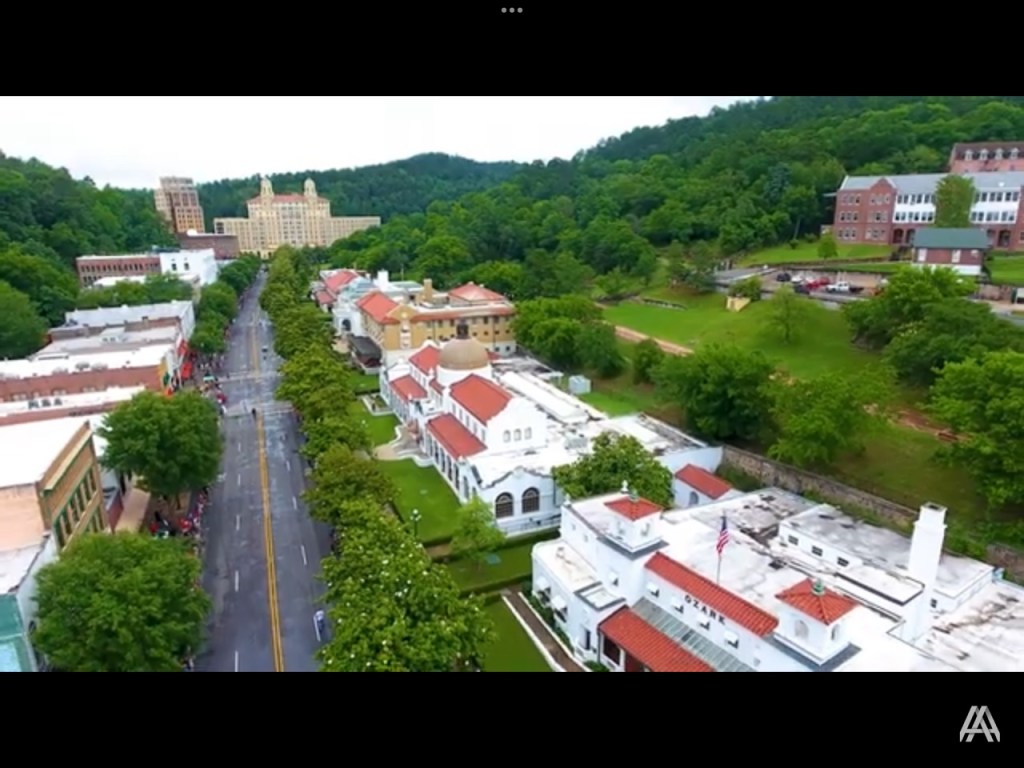
In Hot Springs I’m headed directly to Bathhouse Row in the National Historic Landmark District, part of the Hot Springs National Park, alone, for a bit of site seeing. Back in my heavy travel days I often traveled alone and I don’t mind it, I actually rather like it, in moderation. It does get lonely, and sometimes awkward, but that’s balanced with the reality that I’ve known very few people in my life who appreciate the same types of exploration that I do.

A National Historic Landmark District nestled inside a National Park, that’s an awful lot of ‘protection’.

Bathhouse Row—Where our ancestors once turned to bathing in mineral springs and walking in wooded mountains to restore health. How silly!

More online historic photos of Bathhouse Row

I like visiting odd and anomalous sorts of places off the beaten track. I like old architecture and ruins. I especially like the places where city and nature become fused.

Hot Springs, Arkansas is definitely one of those places. And so much more. Bathhouse Row was once a spa destination for the rich and famous and boasted healing springs on par with the greatest European spa cities, like Karlovy Vary and Baden-Baden.

That was definitely boasting, I’ve been to many of them. But, there’s no doubt in its heyday it was very impressive. Especially considering Arkansas has for a century at least been considered a hillbilly-type haunt in the middle of the ‘flyover states’ and certainly not a hotspot for anything, except maybe the Dixie Mafia.

But, like in so many other places, something very strange is happening with the history, and I don’t mean the tall tales of gangster stories and bizarre wax museums and outrageously lame ‘haunted house’ tours meant to sell over-priced tickets to the vaudeville-loving masses.

What I really want to know is: What are they actually still hiding here in plain sight? And how is it they are still able to get away with tearing down pristine architecture and carting away the evidence unquestioned, even in the protected area of a National Park, which is Bathhouse Row?

So I started to do a bit of digging.

“The Bathhouse Row cultural landscape is located along the foot of Hot Springs Mountain. It is identified it as one of six landscape character areas within the 18-acre Reservation Front. The cultural and natural features of the surrounding areas are evidence of the historic recreational and spa experience that have brought visitors to Hot Springs since the 1830s. Bathhouse Row is historically designated as an “architectural park” in which the buildings and landscape were designed to be a cohesive unit.”

“According to the National Historic Landmarks Program the status of Bathhouse Row was threatened as most of the historic bathhouses were vacant and are not being maintained. Some have had “damaging uses” contributing to the severe physical deterioration of the majority of the historic bathhouses. Bathhouse Row was added to the National Trust for Historic Preservation list of “11 Most Endangered Places” in 2003. It was removed in May 2007 because the National Park Service began to rehabilitate the buildings. Hot Springs National Park now rents the renovated structures to commercial enterprises who submit an approved request for qualifications. The restoration of Bathhouse Row and commercial leasing of public structures has become a model for similar projects across the country.”

In 2007 the NPS began to rehabilitate the buildings? You mean, like, these abandoned buildings I photographed a few weeks ago? Of which there were plenty more.

Very clearly not being renovated, not even a little!

So, they say Bathhouse Row will be a model for similar projects across the country, eh? My guess that is a model for how to. . . stall, defraud, gaslight, loot, and plunder, all while spinning a positive image of public care and service.

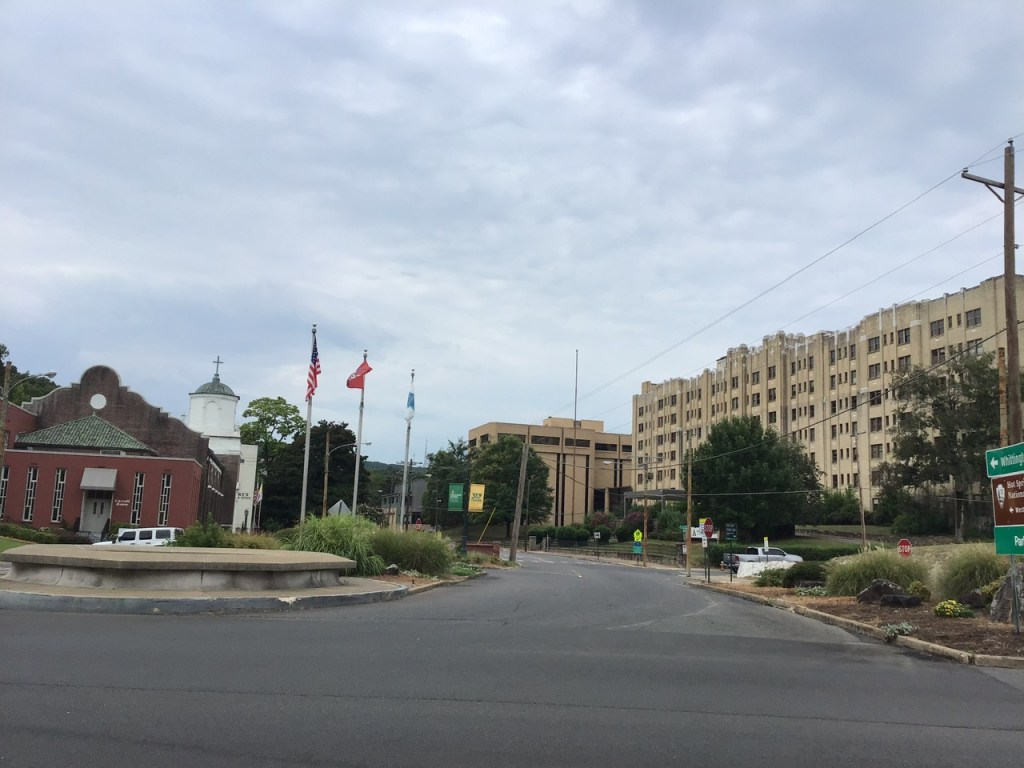
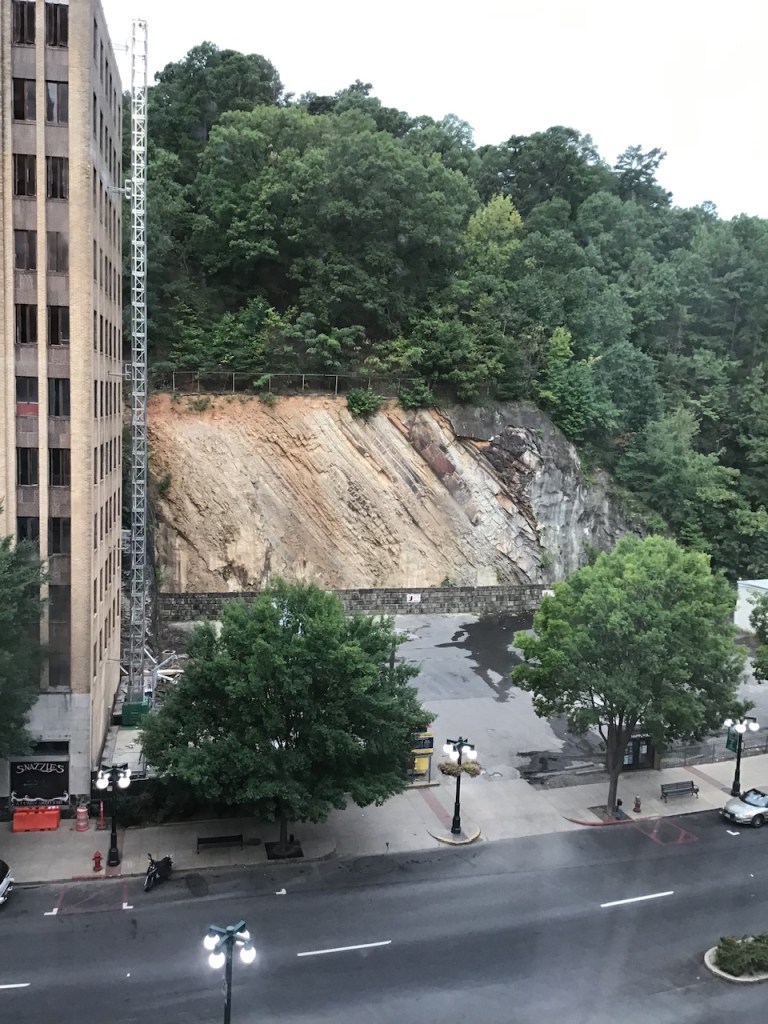
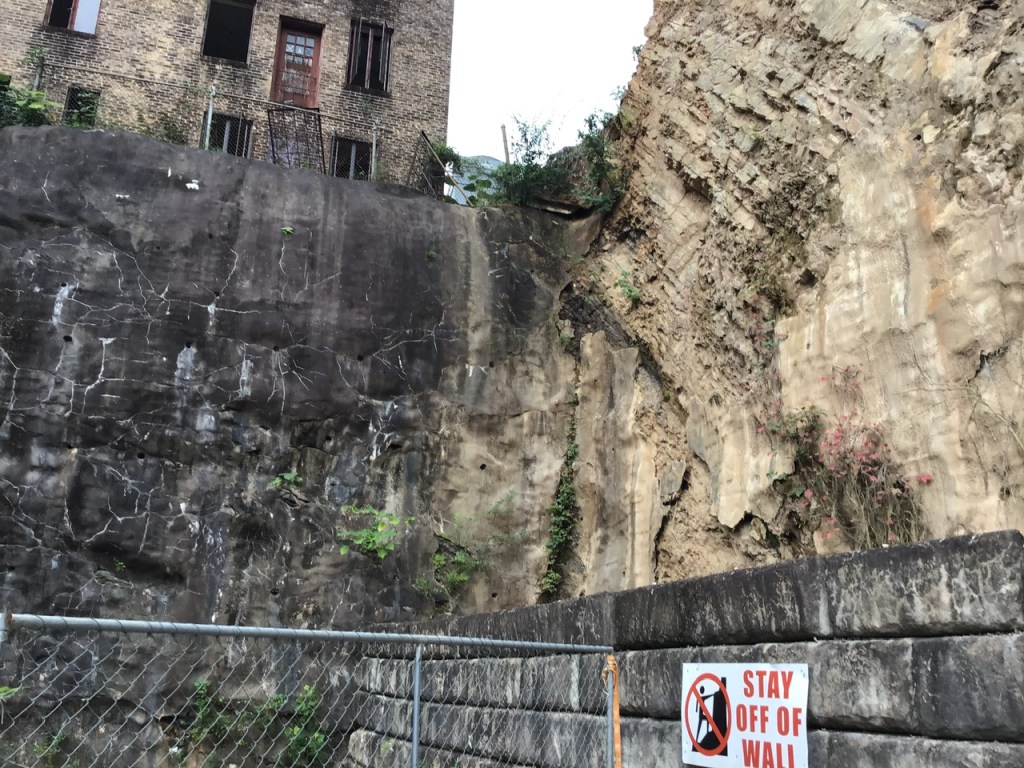
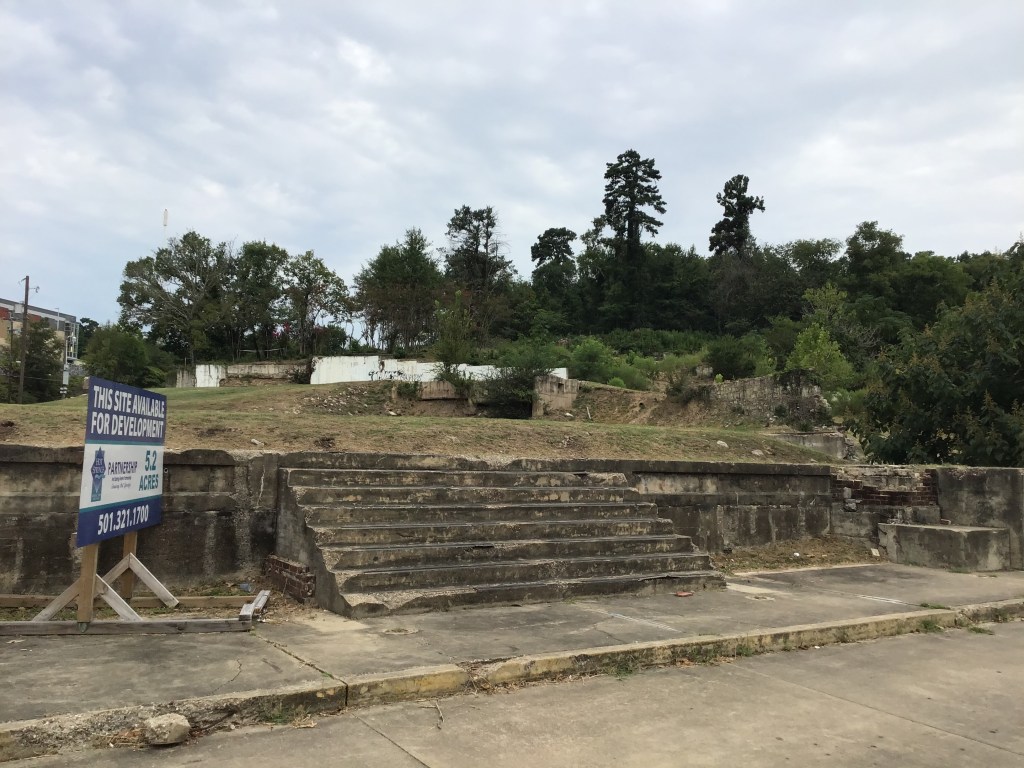
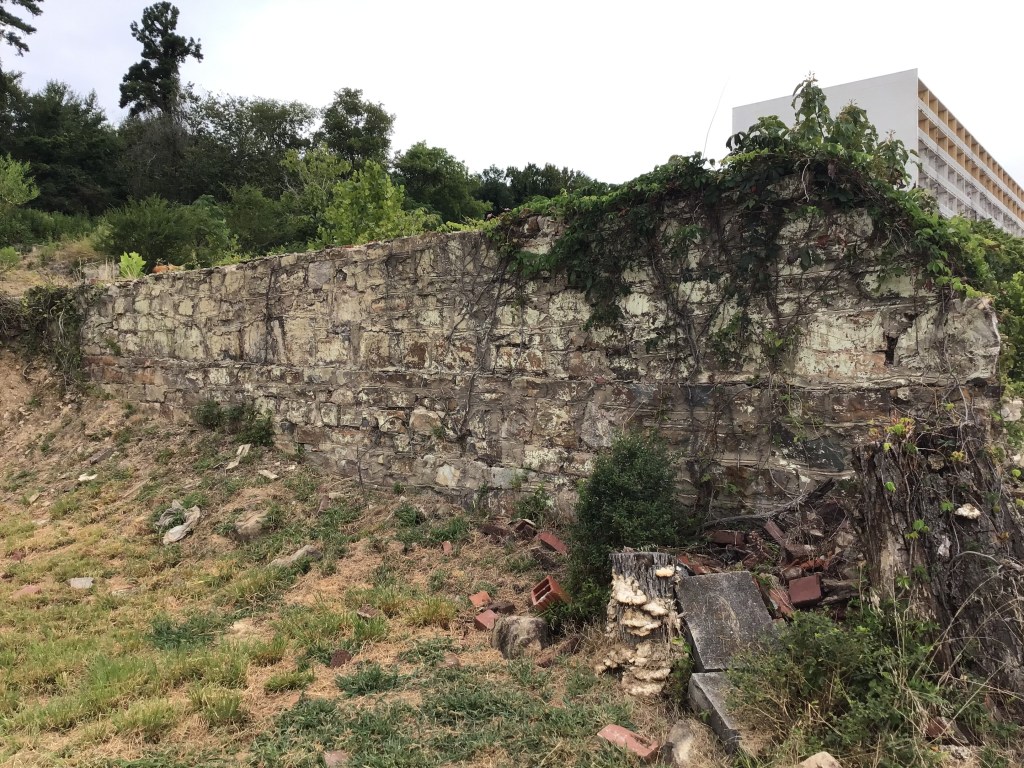
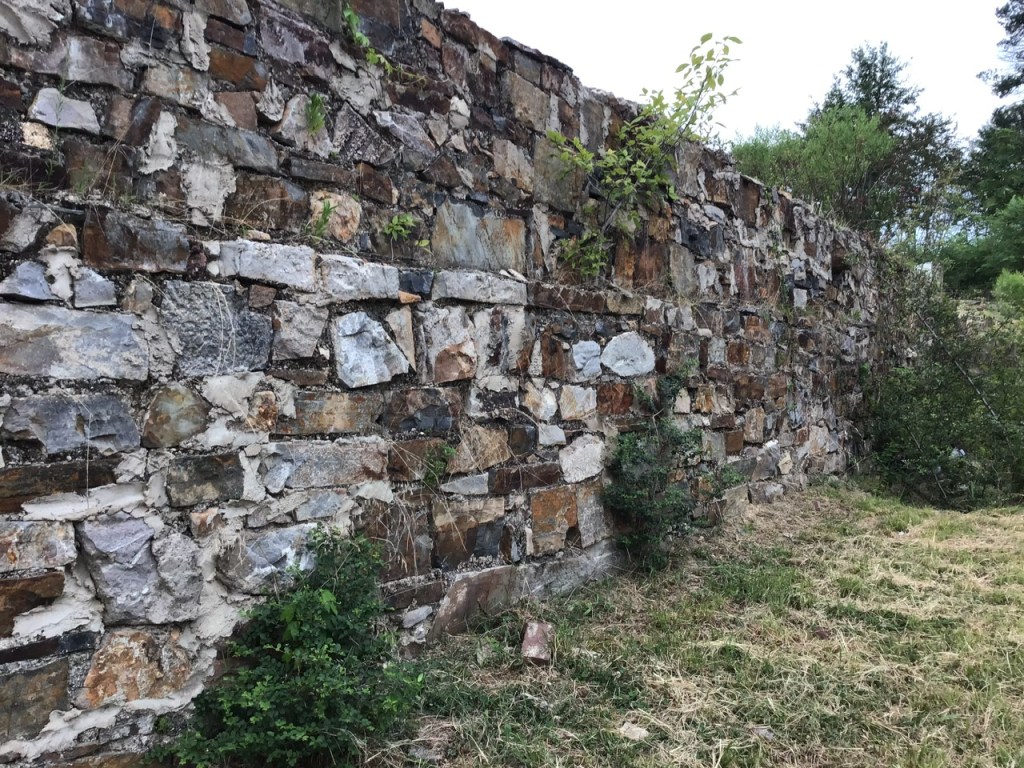
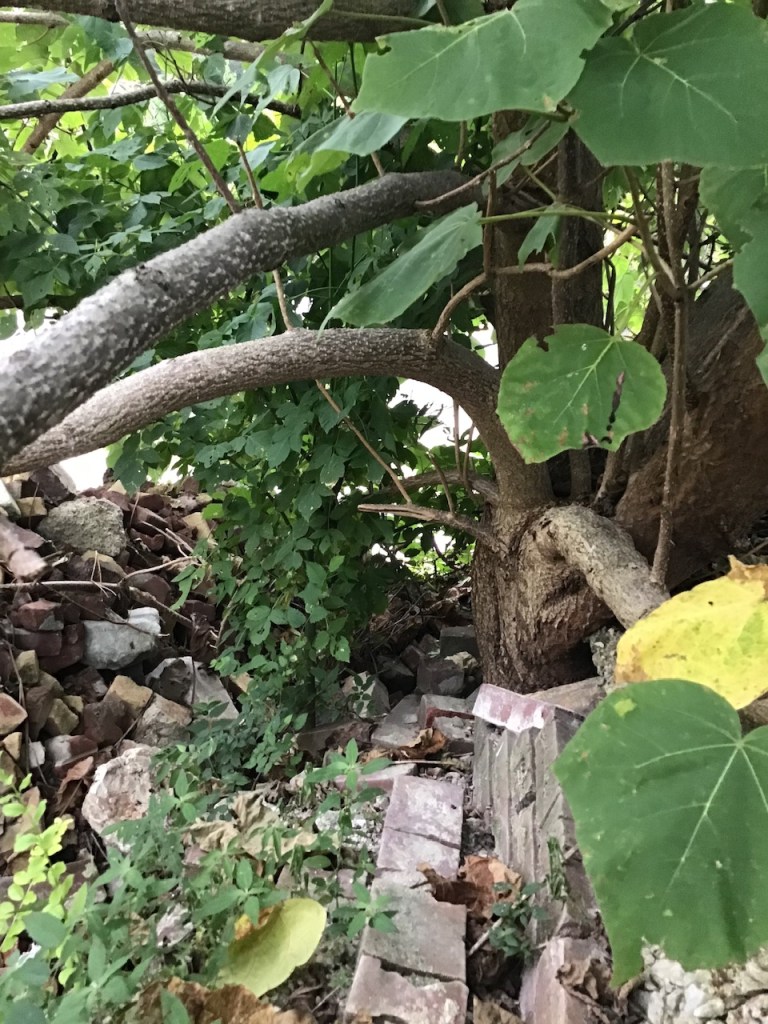
As a case in point there’s the demolished Majestic Hotel Resort Complex where I walked among the ruins.

There’s even been a documentary on the ‘controversial’ decision to demolish it by a young filmmaker who is making his career in filming abandoned buildings. He certainly has a long and busy career ahead of him! The Abandoned Atlas Foundation.

So I paid the few dollars to watch his story about the destruction of the once glorious Majestic Hotel and the (pathetically meager) attempt of a few locals to stop it.

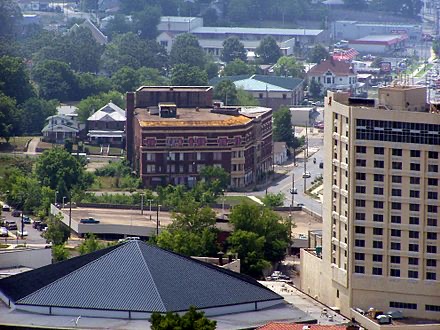
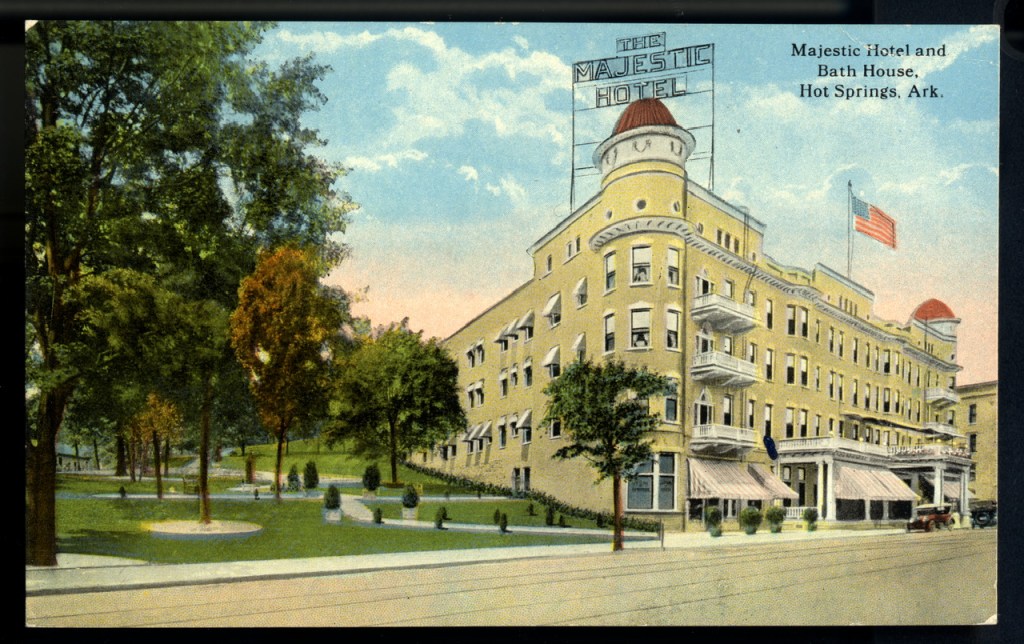
An online historic photo of the multiple-acre Majestic Hotel Complex

A few interesting points I learned from the film:

The Majestic was sold for $1.00 (One Dollar) with the legal agreement that it would be repaired and reopened within a few years. That did not happen, though no problem for the buyer, he incurred no punishment and resold the abandoned buildings for a cool $2 mill. What does he care?

Our hands are tied, a few locals cry! The city is run by the mafia!

Apparently the city has always been run by the Mafia. Which makes perfect sense right, because the official story is the city went into major and rapid decline as soon as gambling was made illegal. So, we went from pristine health resort, to rich and famous gambling haven, to neglect and dilapidation within just a few decades.

My those gangsters and gamblers were sure able to fill a lot of hotels!

Seeing what an enormous challenge they had to save this architectural gem, they bring in the big guns to fend off this centuries-long all-powerful Mafia, which apparently still runs this neglected National Historic treasure that is Bathhouse Row in the middle of a National Park: An Asian ‘local’ historian who barely speaks English, a novice documentarian who waxes romantic over logoed plastic pens from a decade ago, a full-time nurse wannabe local politician, and some clueless young architecture students from another state.

Brilliant! I can’t believe that didn’t work!

The documentary does not answer any of the questions I would’ve asked, but then, they never do. Questions like:

What happened to all those red and yellow bricks? As well as all the other artifacts, that is, besides those awesome plastic pens the filmmaker found. And, where did the materials come from to build all that in the first place? That’s an awful lot of infrastructure to build into the sides of mountains at a time when local folks were mostly moving around in horse-drawn carts.

And why were They (the Mafia?) so keen on destroying it all? What do they care about some old buildings anyway, considering demolition costs are super expensive?

While the documentarian gushes at his found pens, he misses every other clue and congratulates himself and his fellows for creating an everlasting tribute to yet another ruined structure.

Poor sod, didn’t you ever learn you must . . .
Follow the yellow brick road?

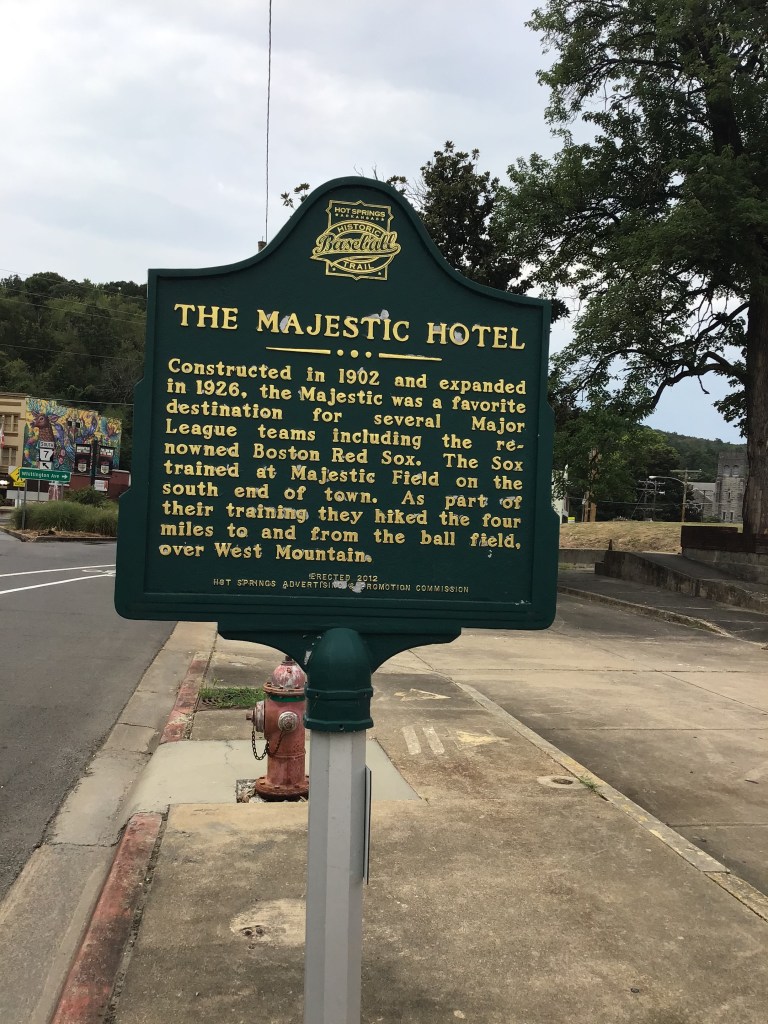
“Originally named the Avenue Hotel, the Majestic was built in 1882 on the site of the old Hiram Whittington House. The Avenue Hotel was notable for its amenities such as streetcar service to transport guests to and from the bath houses every five minutes. In 1888, the Avenue Hotel was renamed the Majestic Hotel after the Majestic Stove Company of St. Louis, Missouri, though the precise connection is unclear.”

(Since it’s so unclear, good thing you chose to include it in your online information encyclopedia, such a fascinating unclear detail!)

Majestic Hotel – Encyclopedia of Arkansas

Free speech can’t save us now, because there’s not enough people willing, or capable, of speaking freely from a place of wisdom and clarity. Just look what passes for encyclopedic facts these days.

The confiscated bricks, like our confiscated history, may as well be ground into the Smart Dust eternally absorbing the consciousness of the masses.

As we watch and record the destruction of our country
As we wonder, how it has come to this
As we wait for the next shoe to drop
And the next
Still, we remain
Still
As the deer in headlights
Still
As he charmed by the snake
Still
As she alarmed by her fate

Doomed
As we watch and record the destruction of our lives
As we wonder
Still
As we stop wondering
Still
We remain
As the fox wanders by . . .

A fox occupying the ruins of the once Majestic Hotel and Bathhouse

ALL For Sale

When I lived in Europe in the 90s it was not too uncommon to see an amazing castle for sale for a pittance. I do mean a real castle, or a vast country estate that included a structure that once was a castle.

And I do mean a pittance, as in, they were not able to give these places away.

Vauburg, France (not my image), bit of a multi-generational hodge-podge.

Sometimes that was because they came with strings attached, so I can understand. Or it was designated for a specific purpose or with strict regulations. You had to restore it, for example, which was something that cost so much that the just wealthy could not afford it.

I had a French boyfriend for a while, who boasted some aristocratic lineage and took me to the castle where his aunt still lived. I marveled at the exquisite property and at the lingering formality of his kin who addressed each other, that is as husband and wife, in the formal, using ‘vous’.

Maybe the uber-wealthy could afford it, if they cared to, but they just didn’t have the interest?

Or, which I’m actually more inclined to think these days, even with their fortunes, they would not be able to restore it. Because the skills to accomplish such an extraordinary endeavor have been lost to time.

A single example of the dozens of architectural marvels which have been destroyed in our little city, with more on the chopping block all the time.

In those days I dreamed of becoming a travel writer, or a writer of historical fiction. So, it’s not a huge stretch for me now to covet an interest in such parallel stories here, today, locally.

This is the closest real city to us, Palestine. What I’d call a small city today, though growing steadily. It was never more than a small city, as far as population goes. Just how it amassed such an amazing amount of great architecture is a real mystery to me. Though there are official stories.

I knew there was some interesting history there, and all around here, but it’s not like I’ve had a lot of time for exploring such idle pastimes, with all the work trying to build up a homestead.

But lately I’ve been squeezing in some time and loving it!

And of course, you’ve got to blossom where you’re planted. I used to tour every castle or abbey or old walls or ruins I could find, whether in the Old Town of any European city or hamlet, or a day hike away from the nearest bus stop.

This Old World has entered center stage for me again thanks to the Cyber World, which is really kinda crazy. But, true.

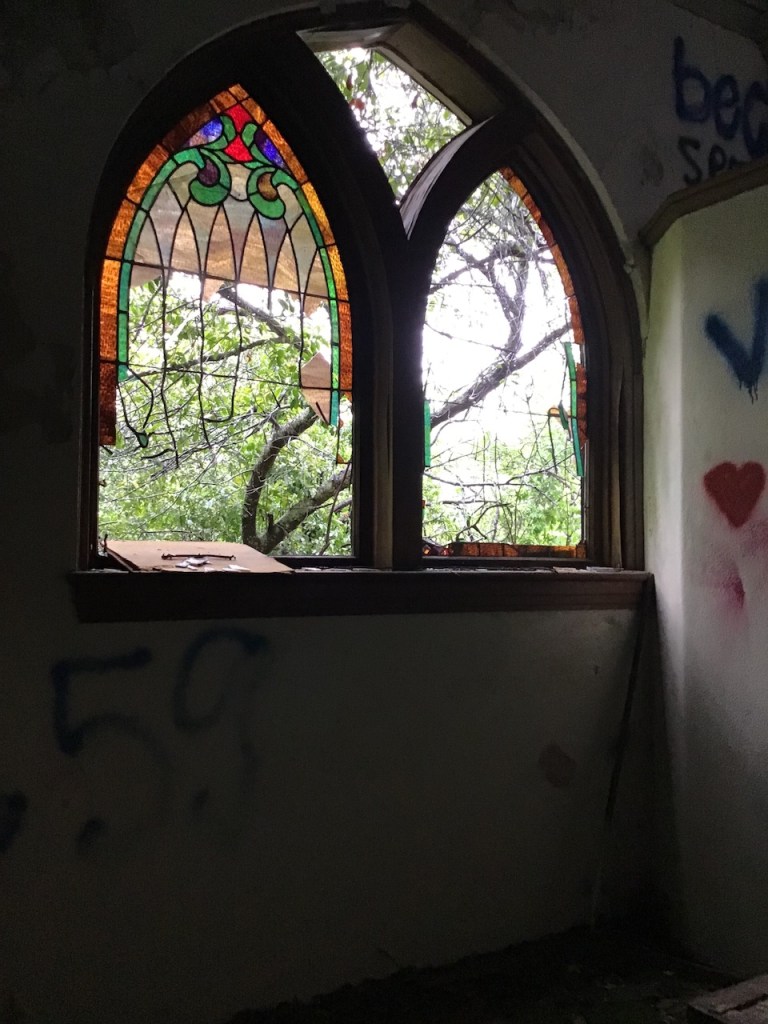
I’ve seen this old church for sale the last few times while driving through the downtown streets marveling at the old buildings.

I stop for lunch, and at a favorite antique shop, where I see tourists, which I find delightful. Though they only have much interest in the antique shops and the cafes and the provided entertainment. Still, it’s fun hearing German in the tourist office and hearing ladies from places all around the region, even in a rainstorm, there to peruse what our little city has to offer.

I was a novice travel writer, until I met the love of my life, who I managed to lure from the beaches of Thailand to a trailer park in Mena, Arkansas.

Hubby and I at ‘Roman ruins’ in Spain 2003—note our cute matching outfits—that was not planned.

And look who returned the favor by luring me into the deep woods of East Texas to spend an exceptional amount of time doing menial labor. 😏

I was also a beginner tour guide, Mayflower Tours. I lasted about two weeks, until I realized how unsuited I was to a job hosting a bus full of retirees for four-day trips to and around Branson, Missouri three times a month.

I think they weeded out a lot of us that way. There must be a trick to how many bossy seniors and cowboy theaters can be stomached for minimum wage, but I couldn’t figure that out quite fast enough. Another potential career option in the toilet.

And yet . . .

When I see precious gems like this my imagination sparks just like those days in Spain, France, Germany, UK, Czech Republic, Poland . . . Ok, everywhere, just about everywhere. I was very much a Europhile. Still am.

And yet . . .

I’m so struck by the lack of general interest. And knowledge. And, frankly, care.

I see the collapsing remnants of a structure worth saving. I see a history worth understanding and passing forward.

That’s the shot to inspire a buyer’s creative juices? Yikes. What about its real history, does anyone care? And, where’s the roof?

But the Realtors, who are there to sell this precious gem, see little of that world, neither the past nor the true potential. It’s such a shame. Such a very common, and so very confusing, big fat shame.

Will it become an ‘event venue’ as they suggest? It’s hard to imagine the kind of events that would make such a renovation effort worthwhile, or particularly palatable. Is there even such skilled workmanship available today?

Dare I question, true philanthropy, if it ever existed at all, is it dead?

There are many such gems in our little city, which suggest but mere clues to the true treasures in our midst, in plain sight—all teetering in a world of nearly forgotten but, dare I hope, at least a cyber-revival?

A taste of the hidden history in plain site, he’s getting to all the states eventually, and beyond, one of a great many channels sparking my renewed interests . . . 😁