The Swiss Colony has still not answered my questions concerning which “enzymes” and “cultures” are used in their cheese, or who manufactures them.
This is as close to a direct answer as they have come, after four attempts for clarification on my part.
“We do not give out our manufacturing information, as these may change depending on availability.
We hope this information is helpful to you.”
Let’s compare this to what is required, by law, for a small licensed dairy in most US states.
They are the most stringent laws for just about any product sold in our country, with hefty fees, regular inspections, strict requirements for what can be produced and how, and to boot, with the name and the address of the farm (which in most cases means the farmer’s home address) to be printed on every label.
Imagine if the CEO of every giant food conglomerate in this country was required to put their home address on everything they sold?
Of course, that could become very confusing, which address would they choose with multiple McMansions to choose from?
Yet if you talk to the average consumer at the grocery store their assumption would most likely be that cheese bought by a local seller at the farmer’s market is of more questionable safety than the big name brands they’ve come to know, and trust.
Completely misplaced trust, created by fraudulent marketing practices and unfair laws in a food system that has been duping the public for half a century plus.
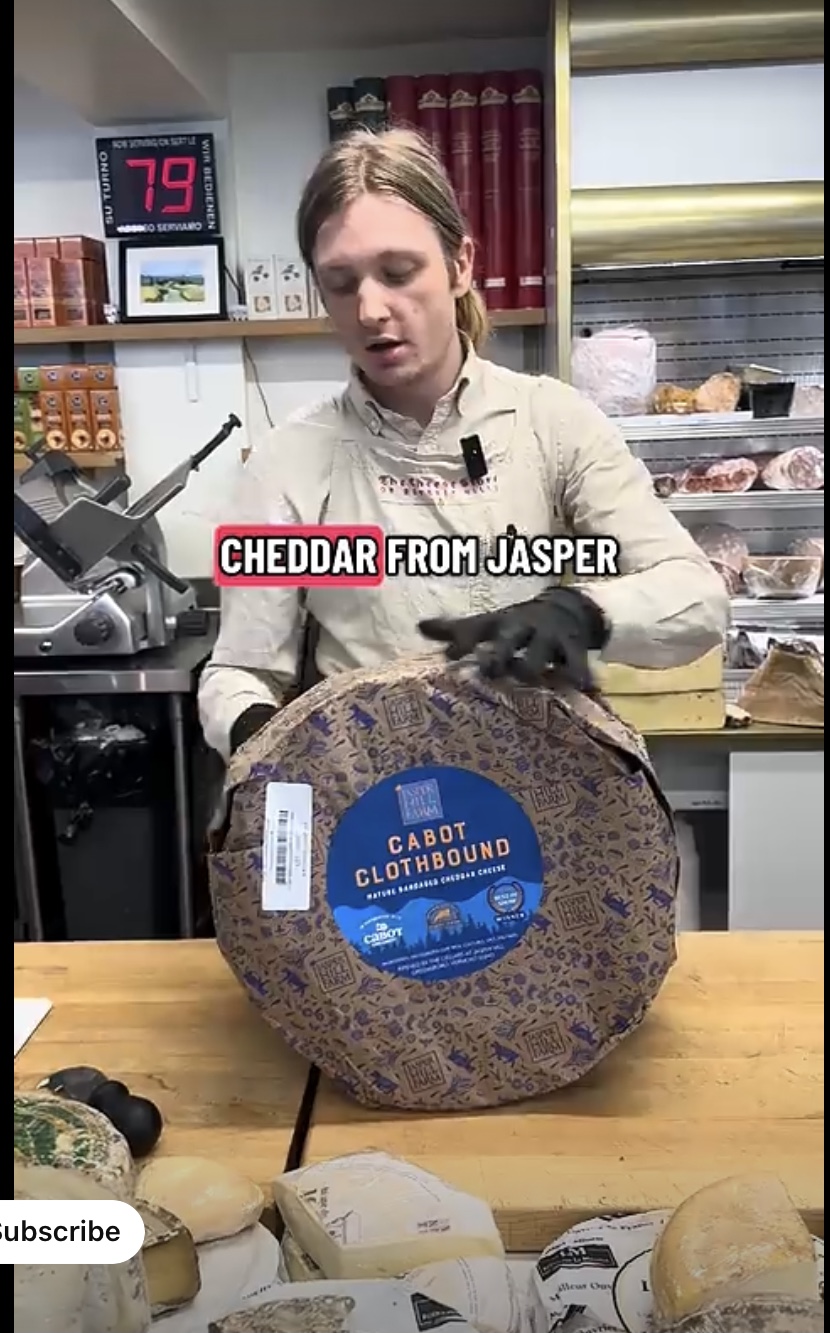
This goes for more upscale choices as well. Here is one from the Cheese Store of Beverly Hills: The Cabot Clothbound Cheddar from Jasper Hill Farm in Vermont.
Looks very traditional in its cloth binding, which is laudable. I also cloth bind cheddars. And I’m not pleased to still be relying on plastic in many cases to make and age other cheeses, but it works and it’s readily available and relatively cheap, so until I can find another way, that’s my lot. But, I’m always looking for better, more traditional options.
On the Cabot Cheddar we have the typical ingredient list: pasteurized cow’s milk, starter culture, vegetable rennet, salt.
Are they required to declare their rennet and cultures are produced in a lab and have nothing to do with any farm? No. Is the consumer privy to who manufactures those ingredients, or where? No.
Though they do make a good show of cutting that big impressive cheese!
While I’m sure it’s healthier and tastier than the likes of The Swiss Colony cheeses, the label is still misinforming the consumer who probably assumes vegetarian rennet comes from vegetables and starter cultures come from other milk products on their farm, as once was the case with all cheeses.
In related Ag news, why is the news never good?
From the Farm & Ranch Freedom Alliance:
Act Now: Tell Congress to Stop Catering to Corporations
The US House of Representatives is expected to vote on the Farm Bill this week!
From AI: The Farm, Food, and National Security Act of 2026 is a comprehensive farm bill that aims to address agricultural and food policy in the U.S. It was reported out of the House Agriculture Committee on March 5, 2026, and includes provisions for nutrition assistance, crop insurance, and conservation programs, reflecting a significant update since the last farm bill in 2018.
Spoiler alert, not a peep is written about fake cheese or lab-produced cultures and rennet. It’s not even on their radar.
“Overall, the bill continues much of the flawed status quo in our food and agricultural system. There are a few important bright spots – in particular, the inclusion of a pilot program version of the PRIME Act. But unless two key amendments are adopted, the bill as a whole moves us in the wrong direction by putting even more power in the hands of large corporations … and putting your operation, your land, and your local decision-making at risk. There’s also a third important amendment, to empower consumers to support American-raised meat.
The Bottom Line:
This bill, as written, sticks farmers with more risk, less local control, and a system that favors consolidation.
That’s not a compromise—it’s a step backward.”
And from another source:
“Amidst rising farm bankruptcies and unprecedented economic and policy instability, the House bill chooses more of the same, neglecting the kinds of investments and policies that our farmers not only deserve but desperately need,” Mike Lavender, policy director at the National Sustainable Agriculture Coalition, said in a statement.
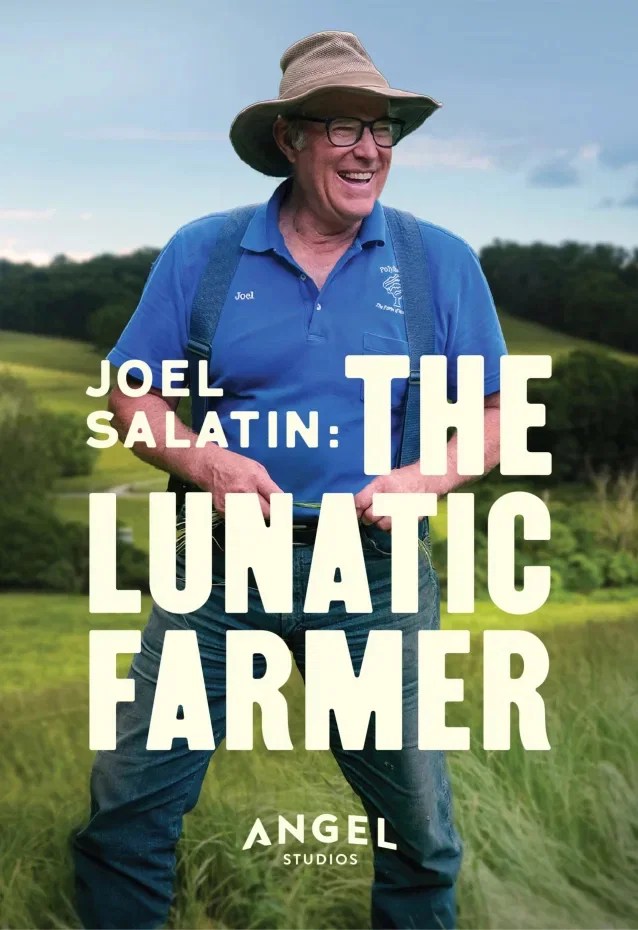
Lunatic Farmer Joel Salatin was one of the speakers at the People vs Poison Rally at the US Supreme Court to influence the votes.
The primary talking points are around glyphosate and similar pesticides and herbicides.
He says:
“The real question is what protocols would return the North American landscape to its pre-European productivity and abundance? You see, 500 years ago this landscape produced more food than it does today, even with tractors, fertilizers, chemicals and new plant varieties. Of course, it wasn’t all eaten by people.”
I like reading his commenters, because there’s always a few I agree with and I so appeciate finding like-minds. This one comes from Diane B. :
“So truthfully and eloquently stated. Sadly, SCOTUS is corrupt and mostly bought along with the rest of the government. We would be far better off if none of them existed. Government has proven it can only be dysfunctional. We don’t need to be governed. We need your speech circulated to the entire population, most will understand, and we need strong men and women who will stand up to corrupt corporations (without a government involved).”
“If you don’t read the news you’re uninformed, if you read the news you’re misinformed.” Mark Twain
The same can be said for labels. While our “health freedom” advocates go after the most obvious chemical concoctions, or suffle around useless info about calories and so-called vitamins, folks who really do care about their health are getting duped by seemingly healthy foods.
I believe we all know that counting calories is a fool’s errand. But for those who might still not get it, here’s a 2nd grade level demonstration.
This is what 400 calories looks like. Same number. Two completely different outcomes. pic.twitter.com/vGikDBvjGn
Now let’s get to the graduate level. Enzymes and cultures and rennet, are they all the same? The modern cheesemakers would like you to believe they are, but they are certainly not.
My issue is with the deception, just to be clear, that is always my issue. If folks choose, with proper information and informed consent, to consume chemicals and lab-made food, I have no problem with that. As the kids like to say, “You do you!”
But this is not what’s happening. These foods are being forced on consumers under an illusion of choice. We are not even privvy to proper food labeling and cheese is a prime example.
Most cheeses sold today will have the same ingredient list as I do when making a 100% natural cheese: milk, culture, rennet, salt. Looks simple enough, but it is far more complex than that.
Pasteurized milk or raw milk? Natural cultures or lab-produced cultures? Animal rennet or the ‘new’ so-called vegetarian rennet?
all cheeses are not created equal!
Already we enter deceptive marketing practices on the topic of rennet, because most folks don’t know what it is or how it is acquired in nature.
So the manufacturers of vegetarian rennet are relying on consumer ignorance rather than informed consent.
I claim this because they are insinuating, by appealling to vegetarians, that it is more humane than animal rennet. When it comes to the modern abhorent feed lots and poor treatment of animals ina factory-farm setting I suppose they could be correct.
But in traditional dairy farm protocol this is completely false. Hubby jokingly calls it “male privilege” because the practice is, only females are raised to maturity. Boys are sold, castrated or not, or raised separately to be slaughtered for meat after a couple years in the field.
Natural rennet is acquired by extracting the abomasum of the young ruminant animal’s stomach, which we have done here on the wee homestead, if you want to check it out.
For the average farm this is not an issue, as there are plenty of males which can be slaughtered for this purpose. Not that it takes more than one, because it will last a VERY long time, as is proven in “3rd world” dairy operations still today. This is a process called ‘backslopping’ where a rennet-culture solution are reused for an entire season, similar to how sourdough starters are “grown” and reused.
But when it comes to huge dairy operations with fancy equipment and many rotating employees and assembly-line production this doesn’t work. It’s not consistent and reliable enough, there are too many variables in such a living product and as the old adage goes, too many hands spoil the broth.
For the giant manufacturers these lab-created cultures and vegetarian rennet are a necessity–for them, not for the consumer. However, their aim is to make it appear as if they are doing it for “consumer choice”. Even as the consumer has no choice!
Vegetarian rennet is now the norm, used in the vast majority of cheeses sold in the US. The same goes for the added starter cultures and “enzymes” used for flavoring and consistency, all produced in a lab. As they are showing images of happy cows on lush green fields and quaint farmhouses on their labels and websites, this image is as deceptive and manufactured as those ingredients.
While conscientious consumers rightly raise concerns over animal welfare and antibiotics in their milk, they’ve barely scratched the surface of the issue. Even the “organic” label here is deliberately deceptive.
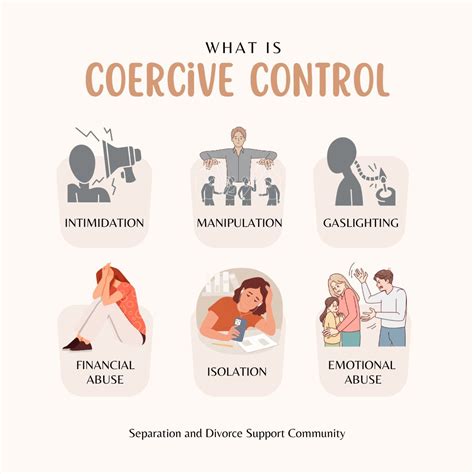
Rather than be honest with consumers, instead we get gaslit. We are suddenly dealing with “allergies” and “intolerences” where none existed before. We are informed we must take special “enzymes” if we insist on eating dairy foods. We are directed to the new dairy-free products made by the same manufacturers and also produced in a lab.
And when we try to do our due diligence to understand what is in our food and why it now causes us health problems, as I have, we are given the runaround.
I’ve been on the runaround track for a week now by the Customer Service department of the popular brand Swiss Colony, a major seller of cheeses and meats. They are clearly trying to run me down by being avoidant and evasive about a very basic question–what’s in your cheese?
After reading all the information on their website and getting no answers, I contacted them directly. Yes, they use “vegetarian” rennet, which I already knew from their Q&A section.
Screenshot
My initial inquiry:
Hello, please inform me of the complete ingredient list for your Baby Swiss Cheese, meaning the specific types of cultures and enymes being used, and if possible, the manufacturers’ names for those and as well as your vegetarian rennet. thank you,
Their reply:
Thank you for contacting Customer Service.
We have forwarded your inquiry to the proper department and will reply with an answer as soon as we receive the information.
We appreciate the opportunity to be of service.
Then, the next day:
Our Baby Swiss uses vegetable rennet. Please see below for the requested list of ingredients.
So, the obvious assumption here is, if you have allergies to this product, it’s because you have milk allergies. Then you get their list of solutions to your problem, links to all their “alternatives”.
Dairy-Free, Vegan Mozzarella Cheese That Melts Perfectly, Plant-Based, 7 oz 6-PACK, Lactose Free Cheese with No Allergens, Non Dairy Cheese.
Never Better Foods Plant-Based Shredded Cheddar & Mozzarella Cheese Blend, 6 Pack (6 x 7 oz Bags), Dairy-Free, Vegan, and Allergen-Free, Ideal for Cooking, Melting, and Meal Prep
Empasta Vegan Cheeze Sauce – Dairy-Free, Gluten-Free, Nut-Free, Soy-Free – Creamy, Easy Melt, Low-Calorie Cheese Sauce Alternative for Dips, Pasta, Nachos, Burgers, Veggies & More – 12oz sustainable jar (Smoked)
Clearly they did not answer my direct questions, so I tried again. And again. And again. And I’m still waiting for my answers.
I will return with their answer, if I get any, in the next post, along with a more upscale brand, to demonstrate more money doesn’t always mean a more natural product.
It was too much news last time for one post, and I didn’t care to skimp on the cheese bragging, especially!
But then I got sent off on a cheese tangent when trying to simply explain why most commercially-produced cheese on grocery store shelves should not even be called real cheese anymore.
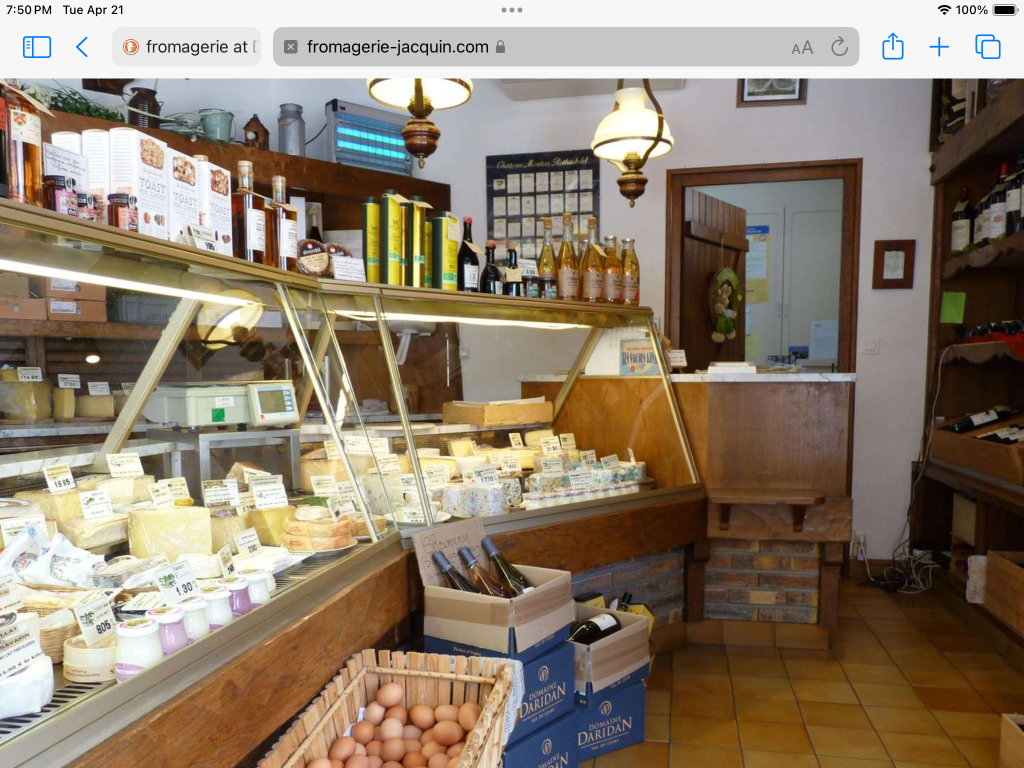
In fact, maybe even some of these fabulous-looking cheeses from traditional French fromageries like I used to love to frequent might also make the fake food list. I sincerely hope not, but France, like all of ‘the West’ are increasingly subjected to the same chemical onslought as we are in the US.
Making cheese is the best thing I’ve ever done. In my life, without exception. Thanks to it, I have uncovered some of the rarest, most simple, deepest and most common of universal life lessons.
No offense to Handy Hubby, marrying him is definitely a close second. 😆
I’ve heard similar magnanimous claims recounted only through such trials and tribulations as come through miracles such as child birth and motherhood. But I have not been a mother.
Don’t cry for me though, because I found cheese!
From it I’ve delved into the practicalities–the art, the craft–of the most delicious hobby I can imagine. I have also been either introduced, or expanded my knowledge on topics as diverse as vaccines, germ theory, pleomorphism, alchemy, modern chemistry, even math–some things which I rejected with ease or sometimes ferocity–which now claim me, my mind and passions and preoccupations, like one conquered, lured and pushed, exposed and protected, by some ultimate wisdom.
Anyone who knew me in my younger years would be surprised, I’m sure, as my sister was, that I would willingly and repeatedly entangle my brain with math and science. Not that either is entirely necessary for traditional cheesemaking.
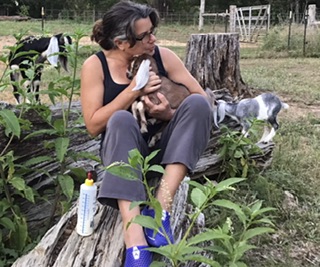
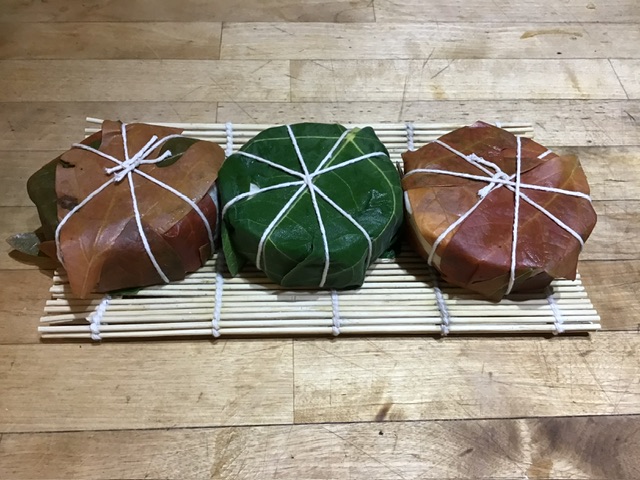
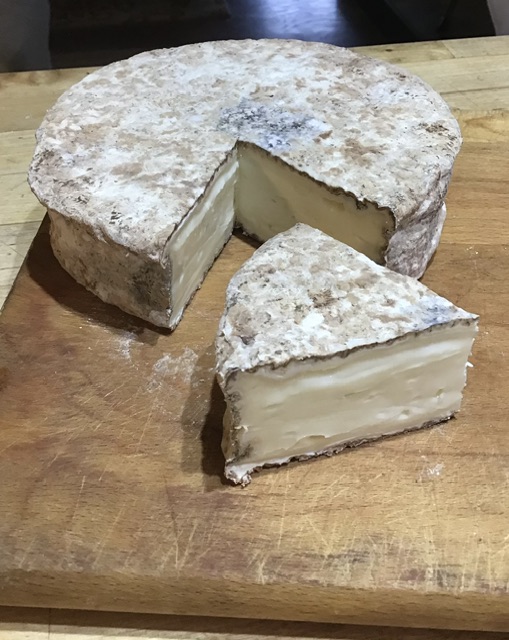
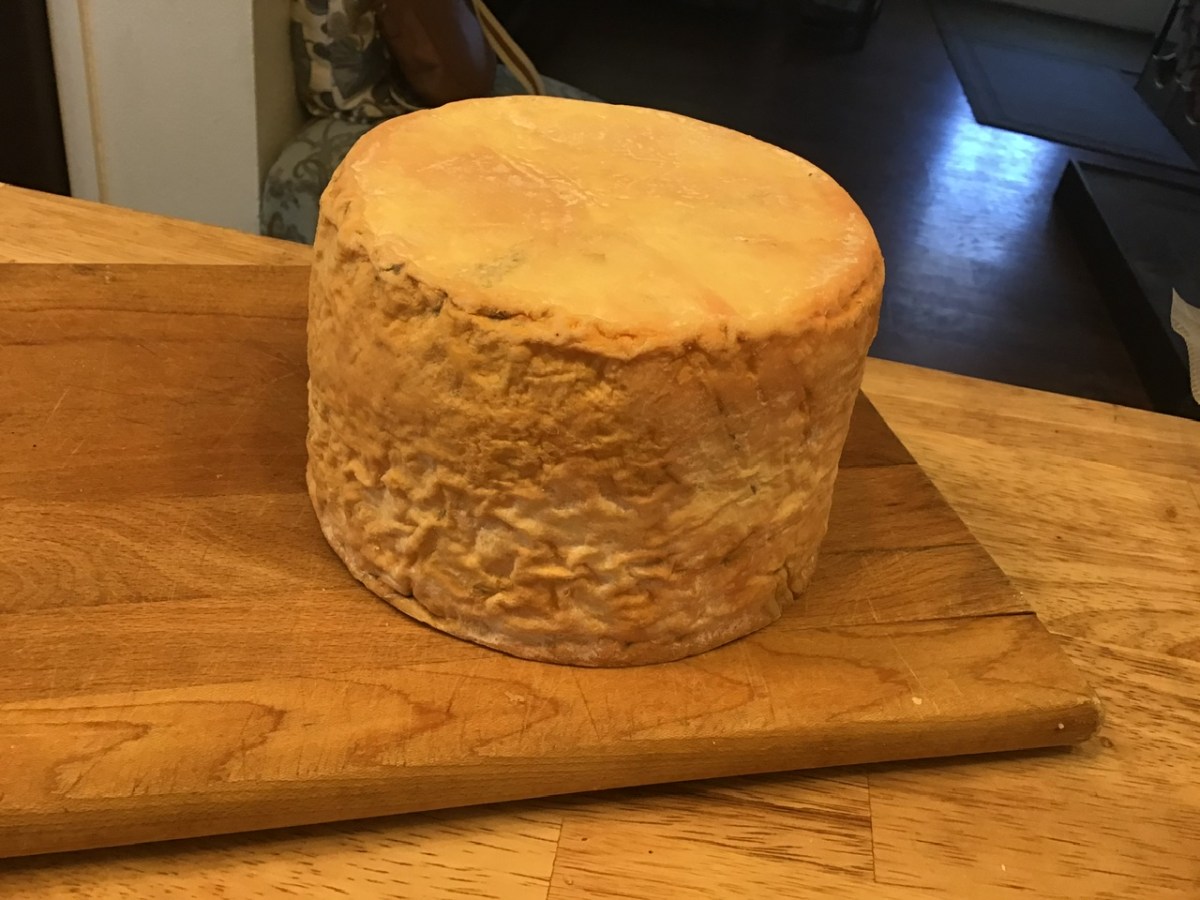
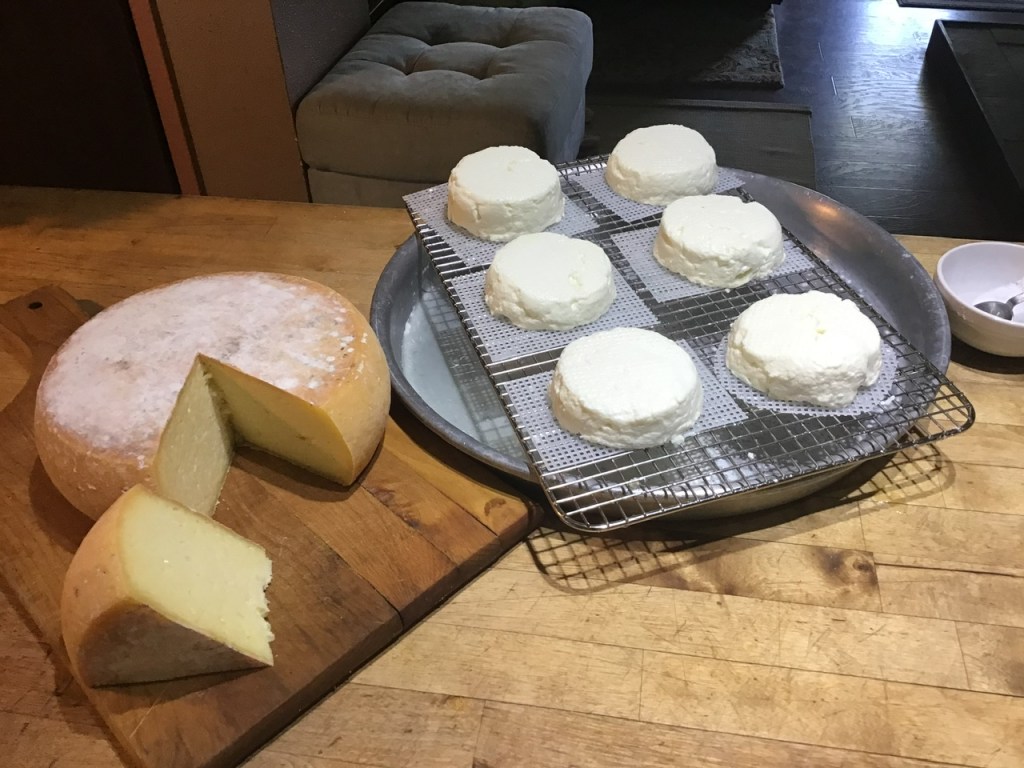
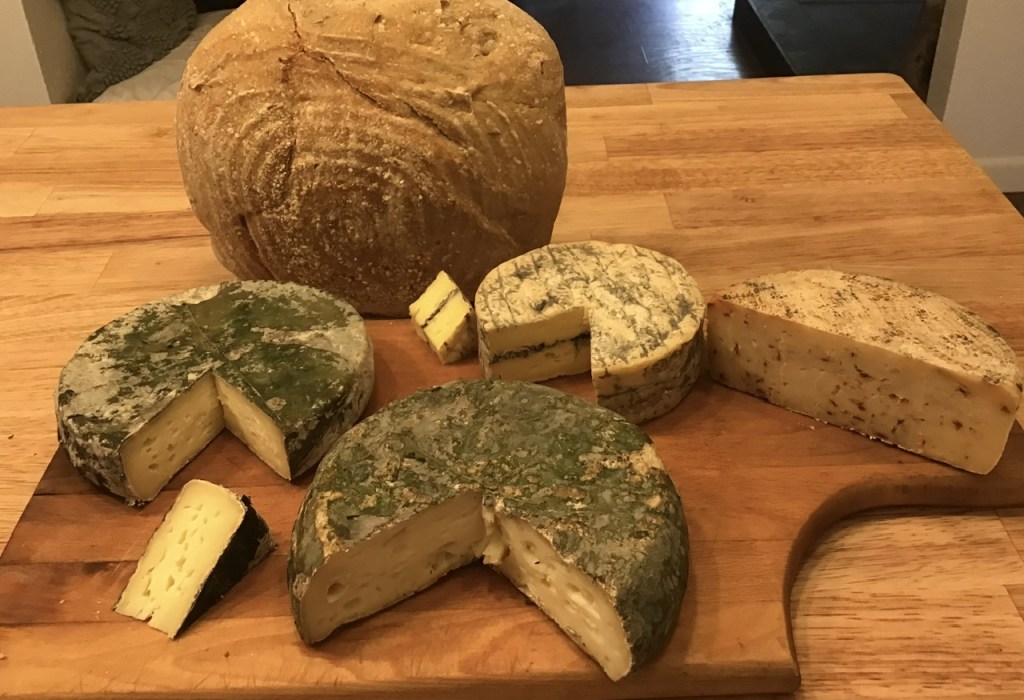
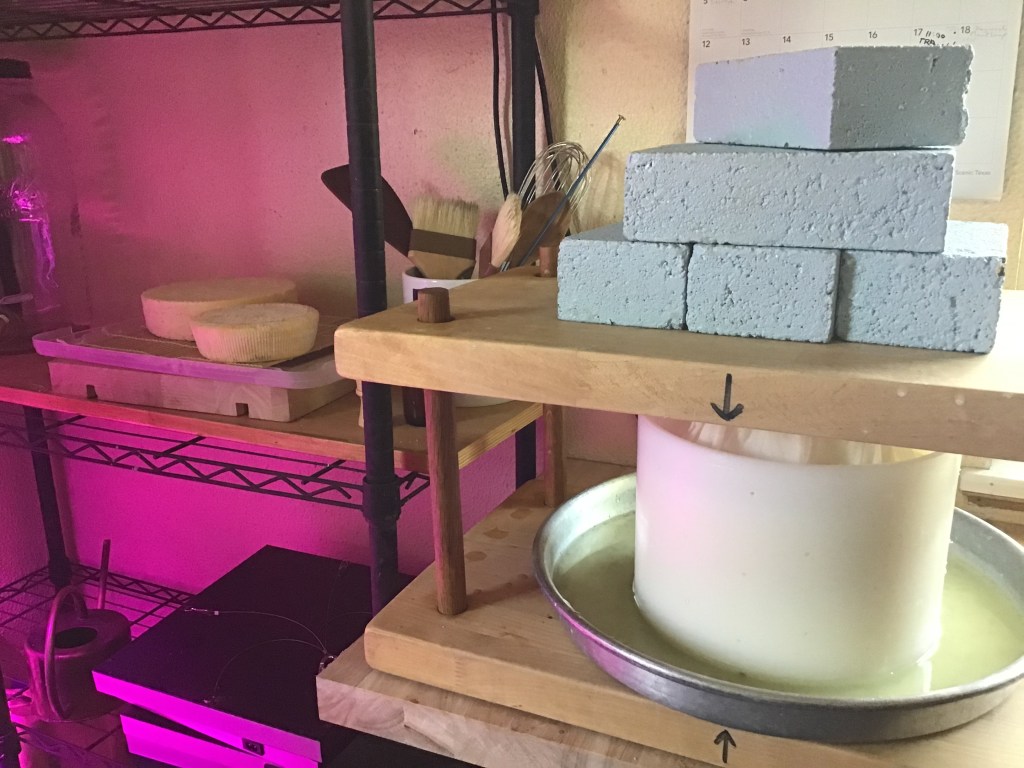
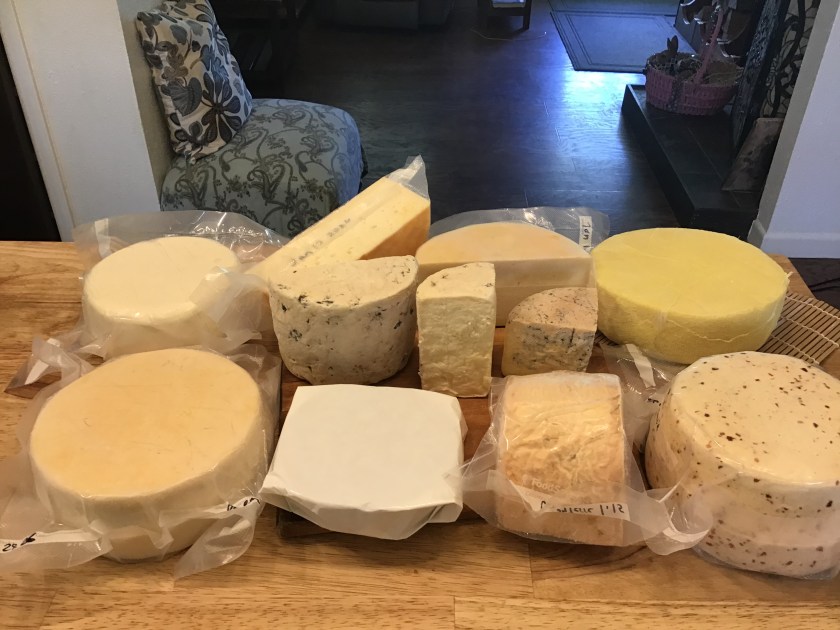
Every cheese pictured here, and plenty more that are not, I’ve made with the same 4 ingredients: locally-sourced raw milk, our own animal rennet, clabber and salt.
From David Asher’s fantastic tome, Milk Into Cheese: The Foundations of Natural Cheesemaking Using Traditional Concepts, Tools, and Techniques
Most commercial producers of cheese believe that packaged starters are the only option for cheese’s proper production; that milk is deficient in the appropriate microbes and rich in dangerous ones; and that they are incapable of realizing the work that is normally done by trained microbiologists. DVIs (Direct Vat Innoculants–freeze-dried starters) are considered the only acceptable way to safely make cheese, and the most convenient option for producers, big or small.
He’s too polite and wise to say the industry has been completely captured, but I do believe he’d agree with me on that!
Industrial starters are by and large produced by multinational corporations. Danisco, the most prolific starter producer, is based in Denmark and is a subsidiary of DuPont. This corporation and others like it profit off cheesemakers’ demand for a product that they do not truly need.
Industrial starters are monocultures of microorganisms that have no precedent in nature and need perfectly sterile environments in order to function correctly. They are out of touch with the reality of cheese, which needs dozens if not hundreds of species of microbes to evolve according to their safest and most flavorful pathways.
The deception on the foundational level, resting on disproven science from the early 1900s, is bad enough. But the consumer sees none of that, instead being swept up in extremely dubious marketing practices that call these starters natural and necessary.
And that’s even before we delve into the mass manufacturing of “vegetarian rennet” –that is the lab-derived coagulant now used by the vast majority of cheesemakers large and small around the West and perhaps the world, which also also claims to be natural.
Four ingredients. Just think about that for a moment, please! That is all it takes to delight, and/or to disgust, in a thousand different ways.
Labeling, on cheeses as on GMOs, is simply another way to con the consumer. The process is as important as the ingredients and changing the meaning of words is par for the course. More on that next post as I delve into the “Nutrition” label of a popular cheese brand.
Fermentation and the art of putrefaction is the process. Technically putrefaction is the wrong word, though it does sort of work!
Affinage is the correct term for the fine craft of cheese maturation. According to AI the difference is:
“Putrefaction refers to the decomposition of organic matter, which can negatively affect cheese quality, while affinage is the controlled aging process that enhances the flavor and texture of cheese. Proper affinage prevents undesirable putrefaction by managing environmental conditions and microbial activity during cheese maturation.”
So it’s basically desirable putrefaction. It’s like the difference between a weed and an herb, it depends on whose garden it is.
But still, think about that! Like aging fine wines and wiskeys, even hot sauces, this is proper fermentation, where territory REALLY matters. Where some old-school crafters even insist no one else can touch their concoctions or they’re immediately spoiled. True story!
It’s POD taken to an extreme unknown even to our own extreme-loving culture.
POD, or DO (designation of origin) is to the cheese world what Provenance is to the art world. It is, literally, about ‘savoir faire’ (know-how) –being able to trace the work, the process, back to its source.
Perhaps so that industry can try to capture a piece of that magic? Individual and smallscale crafters in the market are not allowed the same right to privacy as the Big Food manufacturers, who routinely get to claim “proprietary” status whenever they care not to divulge their special little secrets.
Aging cheese, affinage, is an art, craft, indeed a profession, so ancient it predates our recorded history. It has nothing at all to do with commercial pasteurization, or chemically-adulterated cheeses, which has absolutely compromised the craft. Which has been further compromised by a negligence of public health standards and an indifference to territory and creating a GloboGlob culture that is so synthetic it now considers consuming chemicals as food ‘natural’.
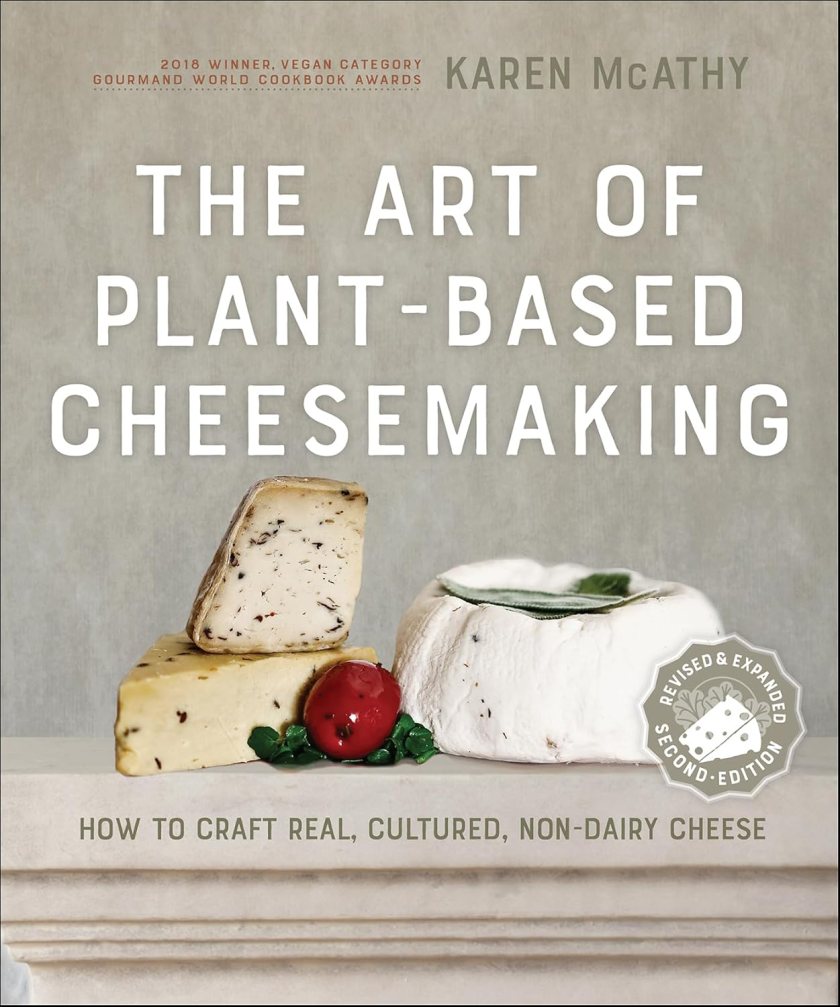
And if you are among the great many who are allergic, they don’t tell you it’s because they’ve completely adulterated the ingredients, the process, and even the meaning of words, oh no, they tell you ‘plant-based cheese’ is the next great thing they’re creating just for you!
The new ‘art’ eh? I think not. But time will tell.
Our tastes tell us a much bigger story than our grocery stores care to oblige. And the ever-increasing health consequences and debilitating diseases point to our palates and our plates, which should take their rightful place at the top of that pyramid of problems.
Cheese is full of life and how each cheese is treated determines its outcome. Kind of like children too. It is not a source of disease, though like rearing anything, it can be a source of dis-ease!
I also feel such a drive to protect these precious processes. The downright bastardization of what’s considered natural in these times is only escalating toward greater absurdity. “Natural” and “only possible to manufacture in a lab setting” should not be synonomous!
If that makes me a food snob, I am pleased to claim the title! We’ll need an army of Queen Food Snobs to push back against this crazy.
And now they’re finally realizing climate change is the red herring of geoengineering. Finally. Finally, too late? Any mention of those of us screaming this for the last decade plus? Any apology forthcoming? Any change of heart or personal accountability? You decide, does she look ashamed as she giggles, talks in an ultra-feminine child voice and repeats ‘um’ over and over? Do you see remorse on her face as she confesses? I sure don’t!
“This is just mediocre banter about the lives of tech wives.” says one commenter who is spot on.
Soon it will be a new TV series I expect!
Real Housewives of Silicon Valley
Oh wait, that’s already a show. She’s probably on an audition!
“Anarchism is not a romantic fable but the hardheaded realization, based on five thousand years of experience, that we cannot entrust the management of our lives to kings, priests, politicians, generals, and county commissioners.”
~ Edward Abbey
What Anarchy Is:
I tire of constantly having to explain what anarchy is and what it is not. I tire of having to explain our language to those who seem never to have the time or inclination to study and learn it on their own, and without prejudice. Words mean things, and cannot be arbitrarily changed, or altered to suit a mood, an agenda, or be used improperly in order to create out of thin air, a State or political narrative, or to advance any particular agenda. To begin my comments, I will clarify that the word anarchy simply means no rule – no rulers, and therefore, no master or government; period.
If one is to go to most any modern dictionary, or look at dictionary synonyms, the list is common. The synonyms used to describe anarchy are: chaos, confusion, disorder, lawlessness, nihilism, rebellion, riot, turmoil, disorganization, insurrection, mutiny, revolution, tumult, mobocracy, mob rule, non-government, reign of terror, and unrest. Only one of these terms is correct; all the others are false, and have been intentionally manufactured to change the true meaning of anarchy. Non-government (no government) is the only correct synonym used, but all other descriptions are what most any would not only find if searching for the meaning of anarchy, but what they would also believe. Of course, few would search out the true meaning by going to the Greek root system of our language, and of course, that is by design as well. Why else do ‘public’ (government controlled ) schools (government indoctrination training centers) exist?
The refreshing article coincided with an ‘interesting’ new documentary on my long-time favorite conspiracy theory–the weather.
Climate Trails, which can be streamed for the price of a Starbuck’s latte, on Amazon.
What got me to find this latest gem is that I was curious and went looking for the first ‘chemtrail’ whistleblower I’d found, round about 2014. She had been threatened and forced out of the Air Force in 2010 and I’d been really moved by her story.
USAF Environmental Specialist and Air Force ‘chemtrail’ whistleblower interviewed in 2014, threatened and forced out in 2010.
Kristen Meghan
It also includes the courageous activist, Kathryn Saari, who I wrote about a year or so ago, called MellowKat on her Substack.
A very ‘interesting’ documentary, and by that I mean curious. Perhaps meant to create cognitive dissonance by simultaneous clips of a cursing Anarchist with a well-meaning Kentucky politician, both trying to address the geoengineered atmosphere. Perhaps with the ultimate ‘come together against this evil’ intention.
Of course we all already know the UK admitd it’s going to dim the sun, and Bill Gates can’t wait to make more billions poisoning more populations in more ways.
I learned that 32 states now have some legislation in the works against weather modification/geoengineering and while I have said in the past this is pointless, the states have zero jurisdiction over this level of operations, I think I was underestimating the overall strategy, perhaps being that I’ve always been a big hater of games.
It is raising awareness. It’s not that I’m not thrilled for that, I absolutely am!
My concern though is, by raising awareness, are we raising more folks who really care about the environment and want to stop these persecutions of the natural world? Or, are we just creating more markets for the great many who choose to profit off our serious problems?
A combo post–a bit of Homestead Happenings with a bit of my favorite conspiracy theory.
We are having our New Normal weather whiplash where 1/4 of the population pretends the weather has always been like this; another 1/4 couldn’t care less about it, normal or otherwise; 1/4 who think it’s all manmade, but not by tech, by carbon pollution; 1/8th who LOVE the idea of man controlling the weather; and the final 1/8th who believe one of the following: it’s NAZIS controlling the weather, aliens are controlling the climate, a global ice age is coming, too many paranoid plebs are actually causing climate change through their malignant minds, or, the world’s militaries have been using weather tampering against the public for many decades.
23 February 2026 | ZEROGeoengineering.com | Report below published in 2021 by the Land Forces Academy Review evaluates the use of weather influencing technologies and their impact on global security. The authors discuss potential damage resulting from weaponized weather changing activities: “artificially increasing the level of precipitation in order to cause floods and paralyze the enemy’s transport communications; artificially reducing the level of precipitation, in order to cause drought in enemy territories and difficulties in the supply of fresh water; the creation of unfavorable weather conditions that impede the conduct of hostilities (increased wind speed, deterioration of visibility); violation of radar and radio communication by direct impact on the Earth’s ionosphere. The use of technologies for changing the weather for military purposes leads to the destruction of infrastructure, paralysis of the economy, losses in agriculture, disruption of the work of state and commercial structures, mass casualties, large financial losses and demoralization of the local population.” Olena Shevchenko and Kira Horiacheva, Impact of Weather Change Technologies on Global Security, Land Forces Academy Review, Vol. X XVI, No. 4(104), 2021, DOI: 10.2478/raft-2021-0042
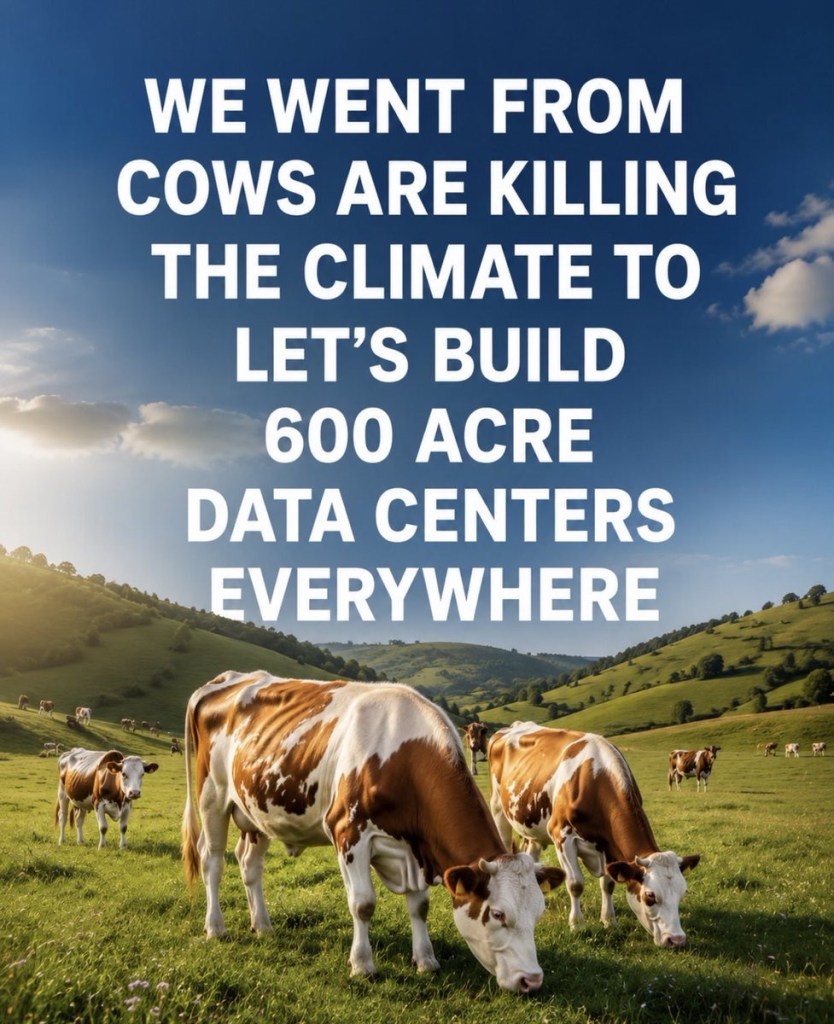
“increased wind speed?” check “unfavorable weather conditions?” check “artificially reducing the level of precipitation, in order to cause drought?” check “demoralization of the local population” check, check and check! Well they can certainly count me in! It’s indeed demoralizing to see the bumblebees out because it’s over 80 degrees for a week and all is blooming, only to then frost and kill all the buds. Including the fruit trees. Or to be told by a young gardener that ‘winter is our dry season’. What? Since when?! So I guess all seasons now are our ‘dry season’. Except for when it suddenly floods in one county while the neighboring county stays bone dry. Or the crazy winds that make these sudden and highly unnatural shifts with storm-level gusts that continue for days making any outdoor activity really unpleasant, if not impossible. Soon every five mile radius will have its own climate, and the technocrats will cheer, even if it makes vast swaths of the world uninhabitable by all but the scorpions and robots and data centers.
Can you see the honeybees on the henbit? The henbit does really well as a groundcover even through our last ‘wintery mix’ (used to be called snow). They also like the other early bloomers and I LOVE to see them. But, for bee sustainability it’s not a good thing, necessarily. If they build up their colonies too quickly too early there will be a lot of starvation of the young brood if (when) the temperatures plunge again killing off the buds.
Until that time I guess we’re stuck here counting our blessings.
We did get that frost, and now we’re going right back up to the 80s.
A few garden blessings doing well, one box under protection with lettuces, radishes, the last of the crucifers, some parsley and cilantro
Crucifers, like many veggies, do not like weather whiplash
Atleast if we can share some credible and valuable information while it’s available to us, the next generation might know more what they are in for when they move to the country thinking they’ll start a farm or homestead in order to escape the rat race. Newsflash, you might want to research underground gardening, because between the inclement weather and the cost of energy you won’t be able to garden, indoors or out!
It really helps to start seed indoors, an extra protection from weather whiplash season, but it’s not exactly economical these days. Growing here are lots of tomatillos, my garden mission this year, and more broccoli, flowers, squash and lettuce.
Everybody’s doing it, nowhere to escape!
Oldfield, J. D., & Poberezhskaya, M. (2023). Soviet and Russian perspectives on geoengineering and climate management. WIREs Climate Change, 14(4), e829. https://doi.org/10.1002/wcc.829
“Soviet science contributed significantly to our understanding of anthropogenic climate change and, as part of this, played a central role in the emerging science underpinning climate modification and geoengineering initiatives. A key focus of discussion was the use of stratospheric aerosols linked to the innovative ideas of Mikhail Budyko and colleagues. This work had its origins in what has been termed the theory of aerosol climatic catastrophe, which gained prominence in the Soviet context during the early 1970s.”
Onions also don’t like weather whiplash, but we usually get a decent crop I finally got most of the strawberries replanted. They multiplied like rabbits last summer and I gave wheelbarrows full to the neighbors and still plenty went into the compost. It’s taken quite a lot of effort to get the strawberries to multiply during our summers, but I think I finally figured it out. We’ll have to wait and see how well they produce in a couple of months. I’ll keep y’all posted!
Thanks for stopping by, and be sure to watch your skies!
We’ve all heard the expressions: “History is a set of lies agreed upon” and “History is written by the victors” and most have come to accept these tropes.
But what they may not have considered is when the history is that flexible, all those academic fields which are history adjacent–like anthropology, sociology, philosophy, literature, all cultural studies, even linguistics– become subject to those authoritarian whims and fashionable irregularities.
Generalization, subjectivity, distant observation, even making obvious comparisons across vast and complex measurable units–ie. pattern recognition–is not just discouraged, it’s potential grounds for dismissal. It’s considered sloppy, unprofessional, unacademic. Pseudo-subjects and conspiracy theory.
Academics are especially vulnerable to such manipulations as their fields are controlled in a strict hierarchical system and their studies, even as tenured professors, tend to stay very narrow in scope. They do not need to strive for a cohesive worldview in their academic work as they are mostly employed to measure the minutia, to dig deep into one tiny corner of the field, as has been the case with the historical and architectural world of the Mound Builders.
What the volumes of academic work on these cultures tend to do is narrow in so microscopically as to make all similarities irrelevant and cross-cultural observations inadmissable. They debate ad nasauem around shards of pottery found just beneath the surface of their archeological sites and the thousands of ways these tiny artefacts differ from one locale to the next.
There are literally thousands of pages published on comparisons and categorizations of tiny fossils and shards of the various Mound Builder tribes of the Americas. Specific measurements are taken of the space between the decorative lines and their width, length and coloration. All is catelogued in such microscopic detail as to bore to tears all but the most myopic of minds.
Truly, it is a form of academic gaslighting. Keep searching right here, right in this tiny framework where we’ve given the appropriate boundaries and designations. Don’t broaden, don’t do your own investigations, don’t venture out of your assigned territory, all alien parameters will be squashed with contempt and mockery and quite likely, career death.
Observe, very closely, and question every narrative.
That singular, rigid, hierachical model has been demolished with the Internet and for me, who formally studied and taught for four decades the very subjects now being shamelessly dismantled, I couldn’t be more pleased about it.
Actually, I could be. If there was a guarantee the ends would somehow justify all these means–as in the decades of lies and indoctrination and then subsequent ripping away of those foundations and the now erupting attempts to filter the masses into new molds for better slave management and more prosperous slaveholders–then I would certainly be more pleased.
But I’m not so naive as to think there’s ever any such guarantees. (As an entertaining aside, James Corbett here at his comedic best with more on our system of modern slavery.) https://youtu.be/ZjwO9_3g4xQ?si=8u5_OumKlk-LOMub
But my topic today is a continuation of the last What’s Been Lost new Kensho series. And say what you want about formal education, I’ve experienced the pros and the great many cons, but for all those naysayers and critics, my serious education these days comes from Youtube, mostly. I know, right?!
Don’t knock it ’till you try it, there are some really amazing teachers there (they call them creators now, which is nice) and I’m not watching them to buy into any of their conclusions, but just to appreciate their work, collect their evidence, and consider, that’s all.
There are relatively few in my life who care about this stuff at all, so I’m grateful for the company and impressed with their body of work. Yes, I do understand some of them are part of a big club, and I’m not in it. I don’t mind. And I’ve got no where else to go, and I’ve got a bit of time and loads of interest.
So for those others who might be interested in exploring and considering with me, we continue in search of what’s been lost.
Last time I shared about the Yakhchal, a common radiative cooling system used from ancient times, still in operation in parts of the Middle East, and perhaps close by as well, as close as Dallas.
Now I will introduce another thread to this story, the so-called Mound Builder ‘indigenous’ tribes of the South, officially referred to as having been ‘occupying’ these lands before the arrival of the Europeans.
A recent video by Jarid Boosters was perfectly timed and is well worth a complete viewing. In it he considers one such Mound Builder culture in present-day Moundville, Alabama, once called the Kingdom of Pafalaya, which includes Fort Morgan. Most of these sites are former military installations and are owned by universities and used as tourist traps now. Some of them are privately owned, all have vast areas not open to the public.
We have one very close to us as well, known as Caddo Mounds, which I’ve written about briefly before, after a sudden (manufactured) tornado hit during their cultural ceremony, destroying much property, killing one and injuring many. The site has since been upgraded and reopened, though there is little to see besides some very basic ‘replica’ huts and of course, a large gift shop.
What I propose has happened with these sites is a deliberate militarized program of generational amnesia.
“Generational amnesia refers to the phenomenon where each generation forgets important knowledge and experiences from previous generations, leading to a distorted understanding of the past and the environment. This can result in a lack of awareness about changes in society and nature, as new generations accept their current conditions as the norm without recognizing what has been lost.”
They tell us ‘Generative AI’ will solve this mounting modern social problem. Promises, promises. Let’s not wait on those any longer.
For a bit of background, Mound Builders refers to ‘prehistorical’ cultures of the ‘ancient’ South. For our purposes, ‘prehistorical’ refers to the most recent rewriting of history, or ‘reset’ as many interested in these topics are calling it; and ‘ancient’ refers to the ‘Roman’ era and all those pre-dating it. In this version of history we examine especially the period of the so-called “Civil” War, or the war between the states, or the war of Northern agression, or whatever other term seems appropriate for that period of time when much of the southern US was destroyed and their history re-written by the victors.
At this time the official narratives went under the command and control of the military, if they weren’t there already. In my estimation we have always been a military industrial complex, this wasn’t a new phenomenon predicted by another puppet president.
There are other ‘fringe’ channels that deal more specifically with military history, that is not my main interest, one I could recommend for this angle would be that of a former history academic: https://youtu.be/LqiZPX0Ordc?si=IOKaZQ7FT2Bjr7Wg
In fact, there are so-called Mound sites all over the South, and I’d suggest many of them are as yet ‘undiscovered’ because they sit on private property where even the land owners have no idea what’s beneath them.
In nearby Nacogdoches there is another ‘curated’ Mound site:
“Excavations at the Washington Mound site have uncovered the archeological remains of a large Middle Caddoan period (ca. A.D. 1250-1350) mound complex in south-central East Texas. The investigations of this heretofore unknown complex indicate that there was a significant post-Alto phase culture in the region that may have had a significant impact on subsequent regional Caddoan manifestations.”
While there are teams of academics studying the tiny differences in the fossils on the surface and money rolling in from the tourist trade, and grants galore for those academics willing to tow the official line, the accepted narrative framework gets further cemented into the public consciousness.
The new Southern history started in 1888 or thereabouts, with 1933 appearing oddly often. The commonalities of these sites, like the ‘charcoal-filled pits’ and ‘post holes’ are left as side curiousities or mysteries or given barely-plausible labels like ‘ceremonial spaces’ or ‘burial grounds’.
According to Wiki we see some typical features, like the involvement of the Smithsonian Institution, and a minimum of curious names and the all-important dates to keep our minds distracted from the bigger picture:
The earliest recorded written mention of the mounds was in 1779 by Athanase de Mézières, who traveled from Louisiana to San Antonio in the employ of the Spanish government. In 1919 American James Edwin Pearce was the first professional archeologist to record the site for the Bureau of Ethnology (Smithsonian Institution). In 1933 archeologist E. B. Sayles concluded that the site was a Caddo mound center, after conducting surface collection of artifacts at the location. The first scientific excavations were conducted from 1939 to 1941 by H. Perry Newell, a University of Texas archeologist with the federal Work Projects Administration in the government of President Franklin D. Roosevelt. When Newell died, archeologist Alex D. Krieger took over investigations at the site and concluded that it had been a major Caddo site. Further excavations in the 1960s and early 1970s by Dee Ann Story pinpointed the timeline of the site to 780 and 1260.
Following military service, Tunnell returned to Texas and began working with archeologist Ed Jelks on the Texas Rivers Basin Survey project funded by the Smithsonian Institution. Their first investigations took place along the McGee Bend of the Angelina River in East Texas, later impounded as part of Sam Rayburn Reservoir. He also worked in the Lake Amistad area along the Rio Grande.
As State Archeologist, Tunnell participated in scientific investigations at the Alamo and other important Spanish Colonial mission and presidio sites in Texas, directed archeological excavations at the ancient Folsom-age Adair-Steadman site, and braved the waters of the Rio Grande in order to record the archeological resources present in the canyons of the Big Bend region. He battled commercial salvagers to retain the 1554 Spanish shipwreck artifacts for the State of Texas and was instrumental in the development of the Antiquities Code of Texas, the legal tool to protect historic resources on public (state) land, including submerged shipwrecks. His films and audiotapes documenting the work of numerous folk artisans and craftsmen in the Texas-Mexico border region may well represent the only records of the practitioners of many vanishing crafts and arts. In 1981, Tunnell became THC executive director, a position he held until his retirement in January 1999. Through his decades of state service, Tunnell traveled to all 254 Texas counties and developed lasting friendships in all regions of the state. Tunnell passed away suddenly at his home on April 13, 2001.
His name was Tunnell, former military, and her name was Story. Isn’t that special. He liked to talk about Arts & Crafts. But not so much about Antiquitech.
Screenshot
What I wonder is, do the actual tunnels tell another story?
We’ve got mounds and post holes and charcoal-filled pits; we’ve got vast stone walls covered over by lakes and resevoirs and now deemed ‘legend’; we’ve got historical timelines that have clearly been ‘revised’, many times; we’ve got buildings and other structures that make no sense, but get little attention.
The burying of the past continues, the generational amensia widens, and aside from a few Youtubers and their marginalized audiences, I wonder if anyone else really cares.
Just in case you are one of the few who do, thank you, and you’re welcome.
More on the vast and ubiquitous caves and caverns of Texas and the mid-West on a future journey.
You don’t know, because it was taken long before you were born. Your father, your grandfather, ditto. Your child will know less, her child lesser still, what’s been lost.
Someday she might try to dig it up, maybe because life no longer makes sense to her.
So hideously ugly, there’s got to be a better way!
In confusion and rejection of the dystopian present she senses roots calling from the past, something deeper was once here, something grander, was it an alignment, a race, an epoch, antiquitech, infrastructure, what?
What’s been lost? Where has it gone? Who took it? Who continues to take it?
A new series for Kensho, Starting now . . .
What does ancient Persia and modern Texas have in common? The Ice House.
If I said that to a Texan they’d think I meant the popular outdoor beer gardens, and their version of history would go back to the early 1900s and they’d think that was old. Perhaps they’d offer some local trivia or home-spun yarns, like the original Texas Ice House was the first ice manufacturing company, which is now claimed to be have been merely an ice storage facility, which later became the modern day 7-11 francise. There is, like most home-spun yarns, some truth in that story. And much redirection and fabrication as well. Perhaps to keep your eyes of our own ancient history.
More from Wiki: In some parts of Texas, especially from San Antonio and the Texas Hill Country down to the Mexican border, ice houses functioned as open-air bars, with the word “icehouse” becoming a colloquialism for an establishment that derives the majority of its income from the sale of cold beer.[24] The distinction between South Texas ice houses and ice houses of other parts of the state and the South has been connected to the Catholicism of the region, a deeper-rooted Mexican culture, and the influence of German immigrants.
A nice find from a local antique shop. I believe some of the old buildings in the nearby small city of Palestine once used this radiative cooling system.
I believe it begins in Persia, still home to many ice houses, called Yakhchal. Alternative energy in the modern Western sense is really ugly, cumbersome, expensive, destructive, in comparison. Yet, there is evidence that the Yakhchal was once more widespread than just in the ancient, or modern, middle east.
The yakhchal is used for preserving and storing food, cooling structures, even making icy sweets. It works through radiative cooling, which existed in ancient times, still is in existence in remote areas today, and yet, it’s not the norm here, in the modern and advanced industrial West. Why?
The dome of an ice house in Italy.
That they propose it now to cool the entire planet with this line of tech means they think they can scale it that far up, yet they can’t manage to scale it back down, again. How can that be?
What is the difference between the common springhouse and an icehouse, which is the Yakhchal? My neighbors once had a springhouse, but I’d only know that because he told me himself, before he died, at over 90 years old.
Where else would such useful information be kept, I wonder? How will the next owners know there was once a springhouse there, one that might even be restored to a functioning status, when I see on their real estate listing that not even the grandchildren seem to know or care about this old feature? Who cares now, right, because we have the water co-op and the electric company we can pay each month.
I believe a case could be made that the very common structures once known as springhouses were the vernacular equivalent of the ice house.
Much is written about ancient Persian architecture in this work from 1887 by “Madame” . I can’t help but wonder, similar to how the meaning of Ice House changed in Texas, did the meaning of Madame also change? ‘Cause Dude does NOT look like a lady!
Three main types of Yakhchals exist: vaulted, underground, and roofless, each adapted to different climatic conditions.
Passive cooling so common and effortless that even poor people could afford ice: (PDF) Yakhchal; Climate Responsive Persian Traditional Architecture
Mehdipour, Armin. Yakhchal; Climate Responsive Persian Traditional Architecture.
Yakhchāl – Wikipedia The Mughal emperors also recorded to adopt the technology of Yakchal. Humayun (r. 1530–1540, 1555–1556) expanded ice imports from Kashmir to Delhi and Agra, insulating blocks with straw and saltpetre to slow melting, a Persian technique. Early Baraf Khana (underground pits) stored ice, adapted from ‘yakhchāl’ for preservation.[4] Akbar (r. 1556–1605) organized ice transport from Kashmir to Delhi, Agra, and Lahore via a 14-stage relay system, delivering ice in two days using saltpetre. The ab-dar khana at Fatehpur Sikri used sandstone cisterns and qanats, resembling yakhchāl, to cool water and make sherbets and early desserts.[5] During the era of Jahangir (r. 1605–1627), Tuzuk-i-Jahangiri describes baraf khana as insulated cellars storing ice for palace cooling, food preservation, and kulfi, a frozen milk dessert with pistachios and saffron. Ice was harvested in Lahore from shallow ice pans and stored in straw-lined pits.Shah Jahan (r. 1628–1658).[6] Shah Jahan built a baraf khana in Sirmaur to supply Agra and Delhi’s Red Fort. These underground structures with thick walls stored ice for drinks, food, and kulfi, symbolizing imperial luxury.[7] Although many have deteriorated over the years due to widespread commercial refrigeration technology, some interest in them has been revived as a source of inspiration in low-energy housing design and sustainable architecture.[8] And some, like a yakhchāl in Kerman (over a mile above sea level), have been well-preserved. These still have their cone-shaped, eighteen meter high building, massive insulation, and continuous cooling waters that spiral down its side and keep the ice frozen throughout the summer.
A ‘wind catcher’ tower
What we see as far as typical architectural features of the Yakhchal are domes, sometimes occuring with minerets, or spires, and sometimes with bells associated as well. Underground gardens are also a feature in the more elaborate designs.
Interestingly, Dallas has such an architectural gem, though I’ve not found any mention of the yakhchal or ice house technology mentioned in the literature.
The celebrated architect of the famous underground Dallas square.
From Wiki: Thanks-Giving Square – Wikipedia
The Square is set fifteen feet below ground level with a four-foot wall blocking the sight of automobiles to create a serene, green island. Water plays a prominent role in the landscape, with active fountains masking city noise.
Sitting amid the steel and glass skyscrapers of the Dallas business district, Thanks-Giving Chapel’s white spiral building is a beautiful—and unusual—sight. A curvilinear chapel resembling the 9th century Al-Malwia (snail shell) freestanding minaret of the Great Mosque of Samarra, Iraq, built by the Abbasid caliph Al-Mutawakkil, is not a building a visitor to Dallas expects to see. Another pleasant surprise is the Qur’anic verse “Grateful praise is due to God alone, the Lord and Nourisher of the worlds” engraved on a granite column at the entrance to Thanks-Giving Square. A portion of Psalms 100 appears on the Wall of Praise, also at the square’s entrance.
In 1971, the Dallas-based nonsectarian Thanks-Giving Foundation hired renowned American architect Philip Johnson to design a chapel that would celebrate the value and spirit of the institution of thanksgiving. Completed in 1976, Johnson’s white marble aggregate building dominates the three-acre triangular site that is dedicated to spiritual reflection. A sloping bridge built over a cascading waterfall connects the courtyard to the chapel. From his study of art history, Johnson was inspired by the spiral form of the Samarra minaret—which is similarly connected to the Great Mosque by a bridge.
“The spiral design perfectly conveys the foundation’s dual mission of offering a place for all people to give thanks to our creator and celebrating the value and spirit of thanksgiving for both sacred and secular cultures throughout the world,” Tatiana Androsov, Thanks-Giving Square’s president and executive director, told the Washington Report on Middle East Affairs.
Inside the chapel, a visitor’s attention is immediately drawn to the Glory Window (above), a multi-colored stained glass ceiling created by Gabriel Loire. This striking creation was memorialized in a United Nations stamp in 2000, the International Year of Thanksgiving. In one area of the room is a large white Carrara marble cube mounted on a sandstone circle made of local Austin stone. The cube is symbolic of the unification of mankind; the circle symbolizes eternity.
During the week, the chapel is a convenient and tranquil location in an otherwise busy city for Muslims working in the downtown business district to pray. “Although there are 22 mosques in the Dallas area, many Muslims working in this part of town like to come here, especially for Friday prayers,” Androsov explained. Visitors from Europe, the Middle East, Asia and Africa come to the chapel as part of the U.S. State Department’s International Visitor Leadership Program, she added. The Thanks-Giving Foundation is a Department of Public Information NGO with the United Nations. For more information, visit www.thanksgiving.org.
Thanks for joining me on this little journey through time and space!
domes and spires everywhere back then!
One last deep speculation–could this ancient architectural tech also relate to the so-called Mound Builder indigenous tribes all over the Americas?
“Papers, please!” was a running joke among Western expats living in Eastern Europe. I wonder how many of them now carry a permanent spying device with great pleasure or perhaps even cheerfully signed on to the digital passport program, first in line, buying into the ploys of safety and convenience.
The Globe was supposed to move in the other direction entirely! We won the Cold War, supposedly, in order to NOT be treated like the perpetual citizen-criminals of Kafka’s stories.
Eastern Europe in 1989 was a surreal place for a young university sophmore voyaging long distances by train alone for the first time. It was at once charming and derelict, welcoming and suspicious, familiar and mysterious.
On the one hand I never felt physically threatened, not even as flaneuse on the city streets at night. On the other hand the decrepid state of the infrastructure whispered danger somehow, because neglect itself is a dark force.
On the one hand the relative poverty was palpable, though my midwest suburban upbringing was middle class, great food variety and consumer goods were far more available. On the other hand their resourcefullness has had a lifelong impact on me and was my first critical look at the innate and corrupting consumerism of my little world.
I didn’t speak the languages and there were very few English speakers. I got by, barely, with French, rudimentary German and smiling, mostly. Americans were considered automatically suspect, so some travelers would claim to be Canadian at any venue not requiring their passports.
Already on the issue of passports I was laughingly naive.
A variety of stamp collecting, or paving the way for the Global digital gulag? It was an especially exciting moment in the expats life when your passport got so full of stamps you had to go pronto to the nearest embassy to get new blank pages stapled into the back of the official document.
Interestingly, while Americans were considered automatically suspect, there was still a sort of cult following that adored America and those who were positively thrilled to meet one, and I made it a point of meeting those unique sorts.
I went on to be a Peace Corps volunteer there a few years later precisely because of my immediate attraction to this region. I felt compelled to know it better and the fact I had the opportunity to spend three more years there, mostly in Czech Republic, but traveling the region extensively, was in fulfillment of my deepest desires and longings at that time.
For all that I loved it, there I also felt my greatest repulsions.
The dystopian Kafkaesque bureaucrocy I experienced was not just fiction. The general acceptance of the populace, while not exactly Stolkholm Sydrome toward their Soviet occupiers, was still a quiet resignation which struck me as particularly pathetic considering their far more astute knowledge of history.
My old passports are the best symbol with which I can try to express my current level of despair seeing my greatest repulsions come to fruition all around me, even as we ‘the Capitalist West’ were the supposed winners of the Cold War.
What did we win? A military industrial complex acting against the best interests of its people. A Corporatocracy run by corrupt public-private partnerships which pretends not to be a fascistic system. Progress that is defined entirely by blind acceptance of anything stamped with the Technocrat seal of approval. Endless paving over of the countryside for roads and minimalls and condos and tourist traps in the ugliest construction ever known to ‘civilized’ man.
Civilization itself has morphed into something totally uncivil, hideous and expanding entirely out of control.
I, like many other intrepid travelers, thought of the passport merely as the modern equivalent of the old travel trunks stamped fashionably with destinations. We thought of them as a collection of strange signs and symbols we’d forever associate with our new memories of far-off places. They were the paper images of our wanderlust we planned to show one day to the grandkids, not knowing they would be holding a digital scrolling device we’d rarely be able to pry from their clutches.
Just a decade ago this was all ranch land
“Once traditional farming systems have been destabilised by the debt-trap of subsidised loans, structural adjustment policies, corporate input regimes, global supply chains, patented seeds and monocultural production, mass migration to cities becomes an inevitability engineered from above. The city thus absorbs the displaced because the countryside has been systematically stripped of opportunities or carved up for infrastructure or real estate schemes.”
What if we’d been given the actual choice, not the strategically invented one, between our current paradigm of progress as a global militarized surveillance state and the ‘stagnation’ where the Eastern Bloc resided for half a century?
This, or this?
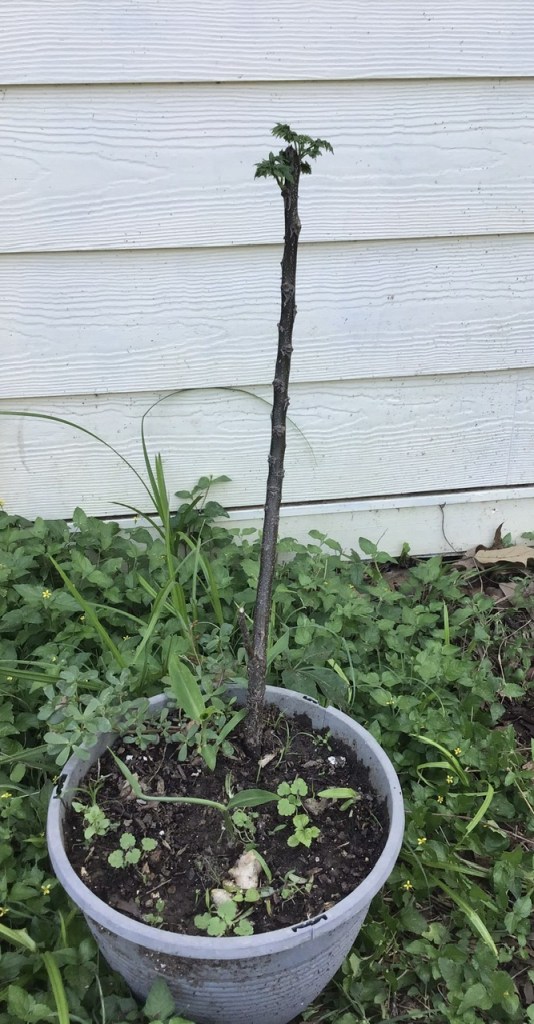
Electric prison bars or progress?
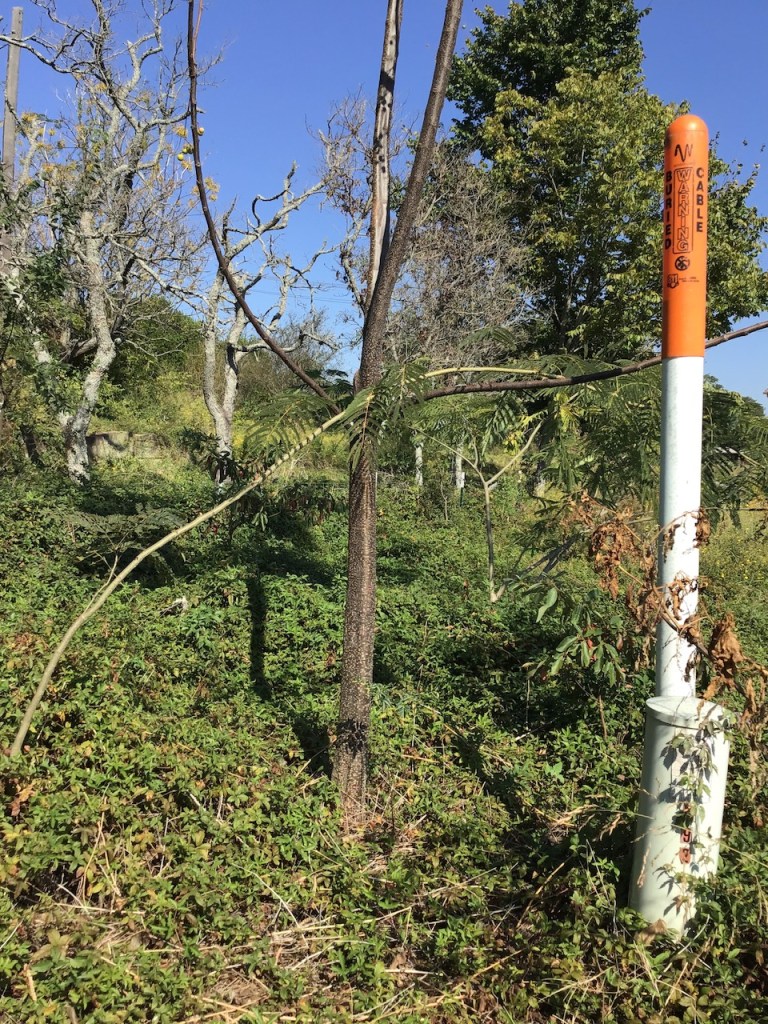
Do folks really think WHEN this whole shitshow goes tits-up there will be government funding for the clean-up and restoration of this once beautiful land?
That I don’t want this EVER, for ANYONE makes me some kind of bitter-clinger communist?
“ALA’s annual State of the Air report found that 156.1 million people—46 percent of the population—now live in counties with failing grades for ozone or particle pollution, nearly 25 million higher than last year. Previously less-affected areas, such as Minneapolis, saw significant spikes in unhealthy air days tied to climate-exacerbated wildfires and particle pollution, such as dust.”
Universities funded by public-private partnerships clandestinely tamper with our atmosphere using euphemistically-named scientific jargon like ‘Plume dispersions’ as if this is not mass poisoning?
A hellscape of ‘progress’ in the form of the most ugly, extractive and intrusive landscapes imaginable?
How did ‘WE’ win in this global game that began long before I was born?
What kind of twisted minds call this progress? We have 70 years of documented atmospheric tampering while officialdom continues in denying its impact, which is now going into overdrive while the voices of the livid citizenry, especially those losing their livliehoods in the rural regions, get squashed. Same as it always was.
“Similarly, Gerard Winstanley, writing in the 17th century, envisioned a society in which land and labour were shared as a common good, not commodities to be exploited. His insistence on communal responsibility and ecological justice underscores the radical, enduring potential of agrarian ethics against the logic of extraction and profit.
In this light, the critique of urban-centric development becomes more than an economic critique. It represents a challenge to the very definition of progress. The rejection of the celebratory narrative of neoliberal modernity is a philosophical insistence that a society cannot be judged by its technological prowess while its ecological foundations crumble and its people are alienated from the sources of life.
The modern city, therefore, becomes a battleground where two visions of civilisation confront one another: the dominant model of corporate-led, centrally managed growth and the fragile but persistent ethic of stewardship, locality and shared responsibility. As made clear in my new open access book, The Agrarian Imagination: Development and the Art of the Impossible (available here), genuine human development cannot be measured by urban skylines or GDP figures but by the survival of relationships between people, land and community that give meaning to life.”
Handy Hubby is a veteran in common parlance, but I’m so glad he doesn’t go around announcing that to strangers like a child desperate for recognition and approval.
We get a discount at Lowe’s, so that’s pretty cool, because we spend loads of money there. It makes perfect sense that corporations reward veterans, because that’s who veterans serve.
Hubby joined the military because he wanted to expand his opportunities, same as many young people today.
Instead of celebrating Armistice Day, we celebrate Forever War.
Retired Lieutenant Colonel (USAF) Bill Astore writes:
“Sadly, as we raise more troops and fight more wars, we seem committed to the opposite. Our military just enjoyed its best recruiting class in years. This “success” is not entirely surprising. It’s no longer that difficult to fill our military’s expanding ranks because many of our young men and women simply have little choice but to enlist, whether for economic opportunity, money for college, or benefits like free health care.”
I served in the Peace Corps, but only one person has ever thanked me for my service, a stranger who didn’t know what the Peace Corps was, but everytime he heard the word “corps” was conditioned to reply with the proper canned reply, “Thank you for your service.”
Everyone knows the Peace Corps is for idealistic, lazy losers, unlike the military, which is for tough, courageous go-getters. Hollywood tells us so.
You want to joing the Peace Corps? What are you some sort of bleeding heart liberal hippy?!
“Since a very young age we are indoctrinated into the idea that wars are the story of “good” guys vs “bad” guys, that we are (of course) on the “good guys team” and the reason that the poor people from our country were (and continue to be) sent to other countries to kill other human beings with technology designed to end sentient life is so that we can “bring them democracy”, “protect our freedoms” and “ensure regional stability”. The truth is nothing even close to that comforting fairy tale.”
The Peace Corps volunteers don’t get included in Veterans Day, which used to be called Armistice Day, to remember the fighting that ENDED.
Once the wars became continuous they had to change the name.
I supported the Peace Corps for over two decades after I returned home, through financial donations, writing articles for their sites and singing their praises whenever I had occassion to do so. I stopped supporting them once I realized they’d turned pro-war.
Hollywood creations and fictional characters like the veteran Jack Reacher are worthy of the fandom of grown adults because that definitely has no resemblance to grown adults worshipping comic book figures like Superman or Robinhood as if they are real people.
“Collectively, we Americans tend to suppress whatever doubts we have about the wisdom of our wars with unequivocal statements of support for our troops. And on days like Veterans Day, we honor those who served, and especially those who paid the ultimate price on the battlefield.
Yet, wouldn’t the best support for our troops be the achievement of the dream of that grizzled vet who cut through a young man’s fog thirty years ago? Shouldn’t we be working to achieve a new age in which the rosters of our local VFWs and Legion posts are no longer renewed with the broken bodies and shattered minds of American combat veterans?”
“Working Towards Peace: Imagine if Veterans Day Became Obselete” Bill Astore, Bracing Views substack.
“There is no honor in tax-payer funded organized murder for profit: War is still a racket” Gavin Mounsey substack
“On November 11th, a day when we have been conditioned to glorify war as “necessary and honorable” let us take an honest look at the true nature of (and profiteers) of Modern Warfare”