Sassafras
Sassafras albidum
I’ve written several times about this tree in past posts and have been meaning to include it in the Herbal Explorations for some time. Thanks once again to Gavin Mounsey for putting a bee in my bonnet! His contributions are featured below.
A quick peak at a couple of those previous posts of mine to set the stage:
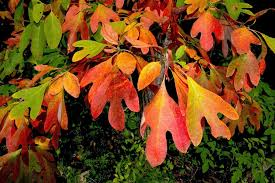
One of my favorite trees, the Sassafras, is flaming red now, one of the few to have changed so brilliantly in this unusually warm and dry fall in East Texas. Between now and winter is the best time to clip the leaves and dig up the tenacious roots so as to indulge in a couple of our ancestors’ favorite libations—root beer and Sassafras tea. Gumbo filé is also made from it, which is an essential ingredient in some Cajun cooking.
Our ancestors adored it, science calls it a carcinogen. At the same time vast groves of it are grown in regions of the globe more easily controlled, in order to mass extract their saffrole to make a highly concentrated and synthetic version of the popular street drug called ecstasy.
https://kenshohomestead.org/2016/11/11/science-fraud-and-fantasy-part-1/
A quite undermined tree of the South, considering its illustrious origins and conspiratorial fate. It is a tree widely cultivated in Asia-Pacific as an essential ingredient to the popular drug, or versions of it anyway, generally called “ecstasy”.
At first, like cannabis, it was classified among the most harmful of substances by the FDA, though our ancestors had previously been very acquainted and attached to these and so many other suddenly ‘dangerous’ plants. Then while they were deemed “carcinogenic” by our government, simultaneously expanding was its cultivation in foreign countries for the manufacture of street drugs. This was actually before “Poppy Bush” but perhaps setting that very precedent for the former president?!
While I’ve no idea how to make the popular street drug, I can assure you it makes a deliciously fragrant tea, traditional root beer, and gumbo filé powder.
https://kenshohomestead.org/2018/04/19/more-foraged-favorites/
As for the drug version, I did come across this for any who wish to research further along those lines.
“The most common synthetic routes for production of MDA, MDMA, MDE (MDEA), and MDOH are from the precursor MDP-2-P. To get MDP-2-P first a natural source of safrole is acquired. Safrole can be extracted from sassafras oil, nutmeg oil, or several other sources which have been abundantly documented in Chemical Abstracts over the years. The safrole is then easily isomerized into isosafrole when heated with NaOH or KOH.”
Zubrick, James W. “The Organic Chem Lab Survival Manual: A Students Guide to Techniques.” ISBN #0471575046. Wiley John&Sons Inc. 3rd ed.
Some partial information from The Druid’s Garden, visit her post for much more!

“Sassafras has been called by many names and these names help teach us some of her power: auge tree, saxifrax, cinnamon wood, cinnamonwood, saloop, smelling stick, chewing stick, tea tree, winauk (Native American in Delaware and Virginia); Pauane (Timuca Indians); Kombu (Choctaw); and weyanoke (Algonquin).
Sassafras is typically a fairly small tree, growing 20-40 feet in height with a trunk 1-2 feet in diameter in the northern end of her range. In southern portions of its range, she can grow much larger, up to 100 feet high. Her wood is soft and light-colored with a faint aromatic Sassafras smell. Her wood is brittle, coarse-grained, and rot-resistant although it is not very strong. Typically, her wood has been commercially used for posts and lumber, but wood carvers also enjoy working with it. Sassafras is dioecious, that is, the male and female flowers appear on separate trees. The females will eventually have fruits ripen (which occur around midsummer) whereas the male trees will not.”
Medicinal Uses of Sassafras
“Sassafras Root Spring Tonic: As described above, the Sassafras was taken internally for a variety of healing purposes throughout the ages. Traditional herbalism recognizes Sassafras as a “spring tonic” or “blood purifying” or “blood thinning” herb and is used in the spring in quantity for this purpose. In 1830, Constantine Rafinesque wrote, “The Indians use a strong decoction to purge and cleanse the body in the spring” (Quoted in Wood, 315, New World Herbs). Wood notes that it “promotes clear thining in old age from good circulation to the brain, to improve the peripheral circulation to rid the joints of arthritic depositions, and to promote diuresis” (316). Euell Gibbons in Hunting the Wild Asparagus notes that traditionally, Sassafras Root tea was made with maple sap water for spring tonic. He noted that even in the 1950’s, when he wrote his book, that many folks still drink Sassafras tea “as a spring tonic, believing that it thins the blood and prepares the body to better stand the coming heat of summer.” Gibbons offers this medicinal tea: 3 tablespoons of honey, 3 tablespoons of vinegar (I would suggest a fire cider here) and 1 quart sassafras tea. Chill and serve as a spring tonic.
“Blood and Circulatory System: Today, herbalists recognize sassafras root as a warming, spicy, and aromatic herb that functions as an alterative (tonic) for the liver with mild antiseptic qualities. It has a specific action on the blood and circulatory system, stimulating blood flow and enhancing periphery circulation.”
Gavin Mounsey offers more interesting info in his recent note:
“The small tree known as sassafras (Sassafras albidum) was once one of the most prized plants of Turtle Island (aka “North America”). In 1565, Francis Drake returned to England with a cargo hold full of sassafras roots, and set off something of a craze for sassafras tea, or saloop. By the next century it had become a major export item, almost equal in value to tobacco. Europeans accepted the claims of most eastern Native American tribes about its effectiveness as an all-purpose medicine and tonic, and that combined with its wonderful taste and aroma — Thoreau called it “the fragrance of lemons and a thousand spices” — eventually guaranteed its place as the root in root beer. John Lawson, an early explorer of the southern Appalachians, wrote in 1709, “Sassafras was a straight, neat little tree… treasured by the Indians for its aromatic roots, from which, when pounded, a potion can be brewed to refresh or cure, according to his needs.”
“Early colonists consumed a lot of beer, and it probably didn’t take long before someone got the bright idea of adding sassafras roots to the mix of herbs and spices typically added for flavor and medicinal effect. It might seem strange to think of beer as a health drink, but for many centuries, it was far safer to drink than most available sources of fresh water, being first subjected to a prolonged boil and then made alcoholic. Weak beers were consumed in roughly the same quantities as Americans today drink Coke or Pepsi, but with less serious health risks, since the sugar was all turned into alcohol (and medicinal phytochemicals can be effectively preserved and delivered in a bioavailable format in naturally fermented alcohol based beverages).
“The modern herbalist Stephen Harrod Buhner (Sacred and Herbal Healing Beers, Brewers Publications, 1998) has this to say about brewing with sassafras:
“Sassafras was the original herb used in all “root” beers. They were all originally alcoholic, and along with a few other medicinal beers — primarily spruce beers — were considered “diet” drinks, that is, beers with medicinal actions intended for digestion, blood tonic action and antiscorbutic properties. The original “root” beers contained sassafras, wintergreen flavorings (usually from birch sap), and cloves or oil of cloves. Though Rafinesque notes [in 1829] the use of leaves and buds, the root bark is usually used, both traditionally and in contemporary herbal practice.
“Beer” was used loosely to refer to a variety of lightly alcoholic drinks made with whatever sugar was on hand; both the recipes Buhner offers, for example, use molasses instead of malted grain, as does this one I found in The National Farmer’s and Housekeepers Cyclopedia from 1888:
“Root Beer.—To make Ottawa root beer, take one ounce each of sassafras, allspice, yellow dock, and wintergreen, half an ounce each of wild cherry bark and coriander, a quarter of an ounce of hops, and three quarts of molasses. Pour boiling water on the ingredients, and let them stand twenty-four hours. Filter the liquor, and add half a pint of yeast, and it will be ready for use in twenty-four hours.
“I was excited to see the mention of wild cherry bark — something I had considered using in my own brewing, but hadn’t found any actual mention of until now. I have brewed with all the other substances mentioned, though not all at the same time. (I wasn’t terribly thrilled with the flavor of yellow dock in beer.) But I’m more of a purist than Buhner: I do insist upon using malted grain (or malt extract) as the primary source of sugar, though I will use molasses or honey as adjuncts, in small quantities.
“And I feel the early colonists probably made their root beers, spruce beers, and other healthful brews with malt, too, whenever they could. From an early date, many larger farmhouses had their own brewing operations, and taverns brewed beer in every town and village, first with malts imported from Europe, but quite soon from locally grown grain. A 1685 report from William Penn suggests that malt was substituted for molasses as soon as real brewing became practical:
“Our Drink has been Beer and Punch, made of Rum and Water: Our Beer was mostly made of Molosses, which well boyld, with Sassafras or Pine infused into it, makes very tollerable drink; but now they make Mault, and Mault Drink begins to be common, especially at the Ordinaries and the Houses of the more substantial People.
“In 1750, the Swedish botanist Peter Kalm, interviewing a nonagenarian for his book Travels in North America, learned that the early Swedish colonists of what is now eastern Pennsylvania, Delaware and New Jersey had been “plentifully provided with wheat, rye, barley and oats. The Swedes, at that time, brewed all their beer of malt made of barley, and likewise made good strong beer.” And of sassafras specifically, he wrote, “Some people peel the root, and boil the peel with the beer which they may be brewing, because they believe it wholesome.” He adds: “The peel is put into brandy, either while it is distilling or after it is made.” Nor was ordinary tea neglected: “An old Swede remembered that his mother cured many people of the dropsy by a decoction of the root of sassafras in water drunk every morning.”
“Kalm also mentions the preservative and antiseptic properties of sassafras, which must’ve played a role in its popularity as a brewing ingredient as well (hops were far from the only herb understood to help keep beer from going “off”):
“Several of the Swedes wash and scour the vessels in which they intend to keep cider, beer or brandy with water in which sassafras root or its peel has been boiled, which they think renders all those liquors more wholesome. Some people have their bedposts made of sassafras wood to repel the bed bugs, for its strong scent, it is said, prevents vermin from settling in them. … In Pennsylvania some people put chips of sassafras into their chests where they keep woolen stuffs, in order to expel the moths which commonly settle in them in summer.
“A slightly later (and much more famous) botanist-traveler, William Bartram, mentioned a very different root beer formula from the standard recipe, which makes me wonder how many other sassafras-based concoctions might have been made at one time. Writing about a southern Appalachian plant now known as Bignonia capreolata or crossvine, he wrote, “The country people of Carolina chop these vines to pieces, together with china brier [i.e. Smilax pseudochina] and sassafras roots, and boil them in their beer in the spring, for diet drink, in order to attenuate and purify the blood and juices.”
“Lo how the mighty have fallen. Safrole, the active compound in sassafras, has been banned by the U.S. Food and Drug Administration since 1976 as a supposed carcinogen, and as a consequence sassafras may no longer be prescribed by herbalists, though commercial brewers and root beer manufacturers may still use a safrole-free extract. For the homebrewer willing to ignore the FDA’s finding — which even the very conservative Peterson Field Guide to Medicinal Plants and Herbs of Eastern and Central North America rejects as absurd — it’s a matter of locating a thick stand of sassafras on some dry ridgetop and getting permission from the landowner to dig a few roots.
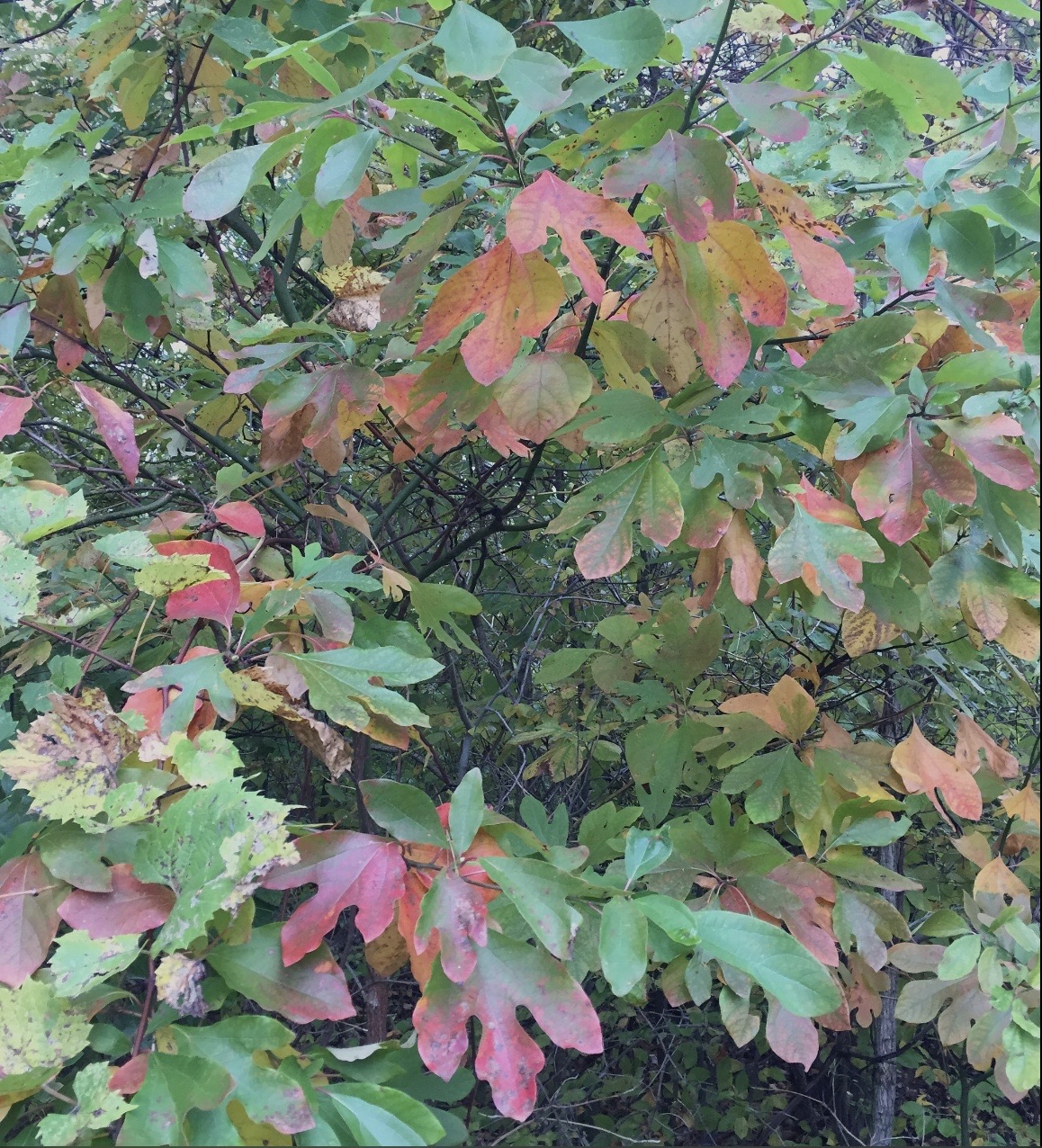
“The tree grows like a “weed”, and with its distinctive leaves it’s impossible to mistake for anything else. How will you be able to tell if a given root is sassafras, and not from a neighboring tree? Just scratch and sniff. If it has “the fragrance of lemons and a thousand spices,” you’ve hit pay dirt.
“This species along with a handful of others will be introduced to several community food forest projects I have in the works intended to both provide habitat for displaced Ontario Carolinian forest non-human inhabitants while also providing food, medicine and materials for humans in a regenerative way.”
That’s so great to hear, Gavin, let’s set The Science straight! 😊


One thought on “Sassafras Tree”