

Maclura pomifera (Moraceae family) has a great many common names besides Osage Orange: bois d’arc, bodark, horse apple, hedge apple, murier du Texas
It’s in the same family as mulberry and has a similar growth habitat and widespread adaptability.
For our ancestors it was a highly prized tree that went out of favor in late Colonial times after the widespread use of barbed wire and later heavy harvesting machinery. Before that time it had multiple crucial uses as a wind break, in preventing soil erosion and especially for creating living hedges for livestock containment. It was also used for it’s very hard but flexible wood in making bows and rot-resistant building materials.
It was also used as a rodent and insect repellant and many still use it for this purpose.
But here we are most interested in its many medicinal uses.

There are plenty of anecdotal stories of cancer cures, like this one:
Randy-Wilson
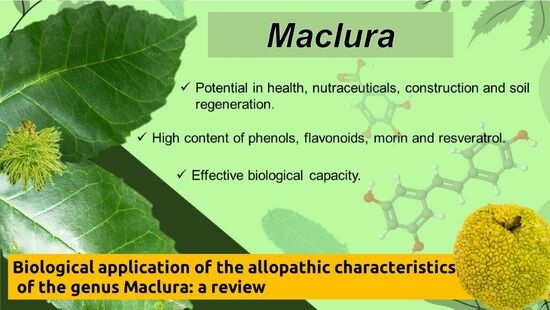
Biological Application of the Allopathic Characteristics of the Genus Maclura: A Review
“The fruit of M. pomífera has shown an effect on human cancer cells (kidney, lung, prostate, breast, melanoma, and colon) as an inhibitor of histone deacetylase (HDAC) via the prenylated flavonoid pomiferin, showing antiproliferative activity in the six cell lines evaluated [23]. In this sense, the compound pomiferin (contained in the fruit of M. pomífera) has been shown in tests with cancer cells to behave as an inhibitor of cancer stem cells from a human glioma [22], showing a reduction in the expression of genes associated with stamina (the ability of the cell to reproduce repeatedly and form stem cells). Also, M. pomífera has been helpful as a marker in the diagnosis of cancer since it allows the distinguishing of patients with prostate cancer from those patients who present benign prostatic diseases and normal subjects, this being through the high affinity of the sera of patients with prostate cancer towards the M. pomífera lectin [21].
Additionally, the fruit, bark, leaves, root, and seed have been reported to have a high content of oils, sugars, and compounds such as isoflavones, xanthones, triterpenes, and stilbenes, with isoflavones being the most representative [15].”
“The seeds are edible and the heartwood, bark and roots contain many extractives of actual and potential value in food processing, pesticide manufacturing, and dye-making. Various parts of the Maclura species are used in folkloric medicine worldwide. Decoction prepared from the roots of M. pomifera is used for the treatment of sore eyes by Comanche Indians in the North America (Carlson and Volney, 1940). The bark of Maclura tinctoria has been reported to be used against toothache by Kaiowa and Guarani indigenous people living in the Caarapo Reserve in Brazil as well as the in the other parts of Amazon region, it was also recorded to be used in Southern Ghana for dental health (Elvin-Lewis et al., 1980, Elvin-Lewis and Lewis, 1983, Bueno et al., 2005).
The fruit of M. pomifera is also well-known for its rich isoflavonoid content as well as a content of xanthones (Delle Monache et al., 1984, Delle Monache et al., 1994, Toker and Erdogan, 1998). Several biological activities of the plant were reported up to date including antimicrobial, estrogenic, anti-inflammatory and antinociceptive activities (Mahmoud, 1981, Maier et al., 1995, Küpeli et al., 2006). Antioxidant activity of the major flavonoids of M. pomifera has also been studied (Tsao et al., 2003, Vesela et al., 2004).”

Native Americans used M. pomifera for the
treatment of cancer [2]. In Bolivia, the plant sap is used for the treatment of tooth pain, and the bark and leaves are used for uterine hemorrhage [3]. Comanche Indians in North America used the Osage orange roots decoction to treat sore eyes [4]. M. pomifera and its components possess
several biological activities including cytotoxic, antitumor, antibacterial, estrogenic, antifungal, antiviral, and antimalar-ial activities [5–13]. Recently, isofavones isolated from Osage orange have been demonstrated to protect brain cells, or neurons, from the toxic effects of amyloid beta peptide, which is believed to be responsible for the degeneration of neurons in Alzheimer’s disease patients.”
M.pomifera produces several secondary metabolites belonging to diferent chemical classes including prenylated favonoids. Teprenylated favonoids possess diferent biological activities such as antifungal, antibacterial, antitumor, and antioxidant activities.”
We have a few still around in our area and I’ve been propagating them from seed in the hope of creating a living hedge. Unfortunately our summers have been so severe lately I’ve only managed one survivor, now 3 years old. I’ll keep trying!

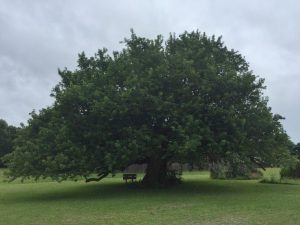
A very old specimen at a neighbor’s house in East Texas.

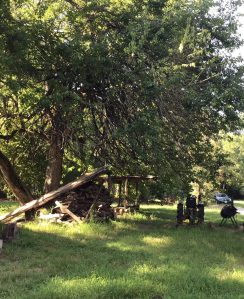
Spring 2023
A beautiful shade tree with so much to offer, I hope it becomes popular once again in our countryside.
A couple more impressive Bois d’arc photos from the Internet:


Look at the plants that are close the poison ivy. you might not have jewelweed but you will have a plant close by that is the ”cure” for poison ivy. i don’t remember where i read it but where there is a poison plant there is a cure close by. one that hurts….one that heals….i am sure it is your area is different. something else will be there i am sure. something we don’t have but you do! or so the legends go! i think it is probably pretty close to truth.
every area has the plants, animals and trees that will be food, medicine, and over all health. not every area is the same. like local honey being great for allergies. the plants in that area the bees gather and provide the cure.
what works for us won’t work for someone else. have to study what is close by. that is what i try to do though a lot of things i have not yet identified. i like figuring things out myself. i know i can ask someone but i don’t want to. i want to figure it out on my own. it is how i learn best.
LikeLiked by 1 person
the only thing i don’t like about the trees is the thorns. like all orange trees they have thorns. take a seed out an orange you buy and plant it in a pot. it will grow. i have done that with an orange and lemon seed from a common fruit from the store and grew them until they got too big and had to be moved elsewhere. they have thorns. the lemon and the orange as well. just like the osage orange.
all my animals eat the fruit. though some people will say they can choke on it and kill the animals. i am sure they could if that was all there was to eat in the field which some places do around here. like to make their animals eat rocks. never had it happen and it is a good source of nutrients. i have frozen them and eaten it myself. sticky sap
and not very tasty.. i have taken pieces and dehydrated them and powdered it and put a sprinkle on my cereal in the morning.
the fruit smells so good i place it in a plastic dish. the sap is like stone when hardened really difficult to get of of ornamental dishes so use something you can throw away. or reuse next year. and eventually throw away but the whole house smells like oranges. i love it.
my friend swears it chases away spiders in the fall but then spiders leave anyway in the fall so it could be coincidences.
the male tree has no thorns…only the female! my animals use it for shade as it is dense almost completely dark underneath and cool in the summer. if ever i am missing an animal i check our grove of these trees first. we are blessed we have them all over. we have the black locust as well and they are nasty trees….thorns all over the bark top to bottom and a tree that says STAY AWAY FROM ME!! and thorns long enough to be a needle. and thick enough you could probably use it as a knife in a pinch. big long beans off those trees the deer and wildlife like them.
i don’t get close enough to those trees for that. they drop those spines around the base of the tree so don’t go near one barefoot. i had a spine in my foot through my boot! it was 1/4 of an inch in my foot. and 1/2 an inch still stuck in the boot. strong and nasty thorns. had to stop, pull it out. doctor my foot and move on!! when your in the woods you don’t have much else to do.
i like the osage orange trees much better!! excellent information your providing and the links i have never seen that info before and i am grateful you found it!! searching the web these days is almost impossible with the A.I censors blocking info. your a genius about digging through their attempts to stop info from flowing.
LikeLiked by 1 person
Yes, the thorns are bad! We have wild pears that also have thorns, never heard of this before, but I guess it used to be very common?
Thanks for kind words, H, and adding good info to the mix! It has become MUCH more difficult to find good info online anymore. And unfortunately, it’s getting harder to post on WP too, so many issues with the editing, have mistakes I can never fix, photos not aligned, constant problems lately. I keep trying their fixes from the Help Center, but no luck so far.
I remember years ago you mentioning how much you liked the Osage Orange, that’s what first put it on my radar. You had been following a site then, but I forget her name and don’t know if she’s still around, I believe her channel name had ‘horse’ in it, and then she got kicked off YT and was on Bitchute for while. Do you recall?
One trick if you are searching for better info—try Google Scholar—a lot of it is paywalled, but with some patience you can usually find some good literature/studies that are fairly current. Certainly proving that Science is still very interested in these old folk remedies they’ve spent a century maligning. 😏
LikeLike
magical hoof i think it was. it was on bitchute but all the herbal info she had has been lost.
spice bush is another one we have and i use regularly in place of all spice. and wild plum. sweetest fruit!! tiny but sweet. we have two wild groves of those we nurture.
the best salve i have ever made is from plantain and jewelweed. with olive oil and bees wax for making it harder like a lip balm.
LikeLiked by 1 person
We have neighbors with spice bush and wild plum, been trying to propagate them. Will have to keep trying!
I keep looking for jewelweed around here, don’t think we have it. Pity, because we have plenty of poison ivy.
LikeLike