It’s Shoulder Season on the wee homestead, and by that I mean a few things.
Shoulder season, for those who maybe new to the phrase, has a specific meaning in tourist trades, meaning between high season and low season. Savvy travelers and those who dislike crowds or who are just cheap or nearly broke try to travel in the shoulder season.
As far as I know it doesn’t have a parallel meaning in the gardening world.
But for me it does. It’s the time we move between seasons in the garden and since we garden all year, it happens twice, once in Swelter Season (now) and once in YoYo Season (formerly known as winter).
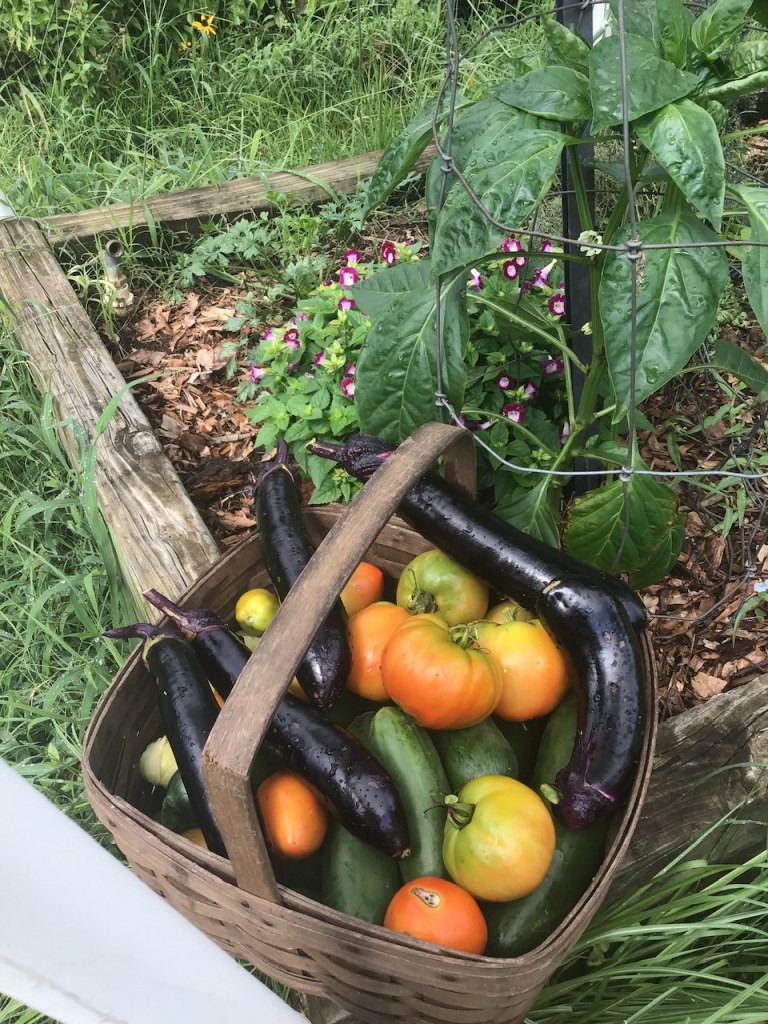
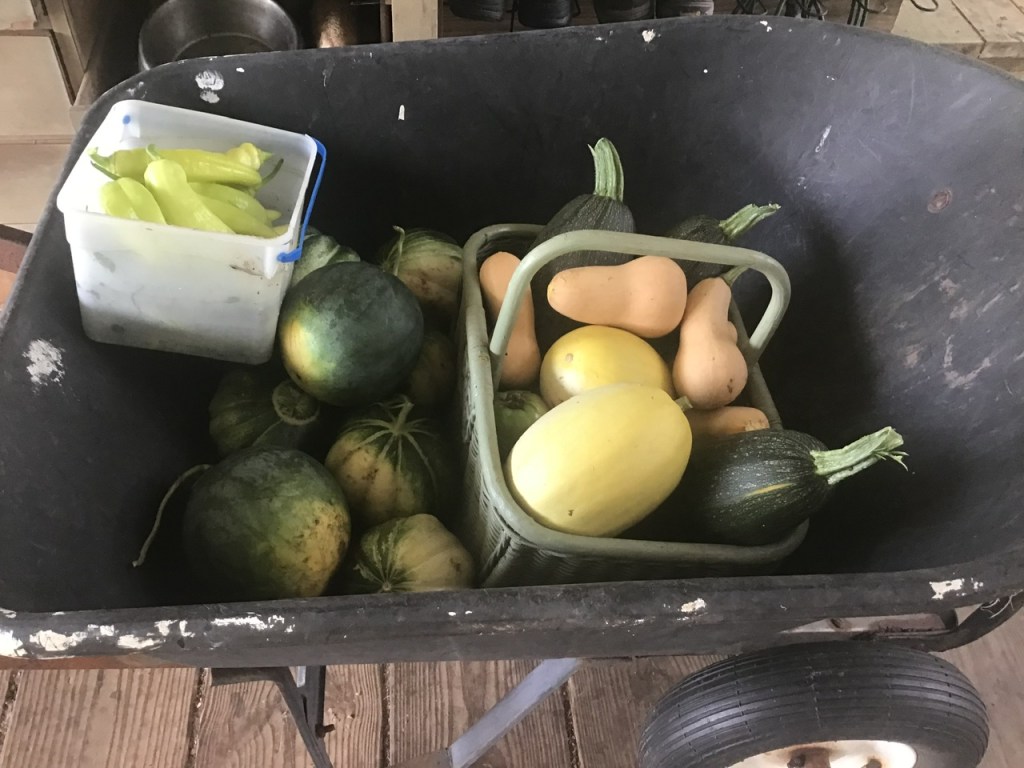
The key summer crops in the garden are either long gone–onions, garlic, crucifers, or mostly dead–tomatoes, squash, melons. And normally the cucumbers too, except those are, so far, successfully secession planted, with the new generation just coming up as the last one is dying. Good timing there, tiny bow to me!


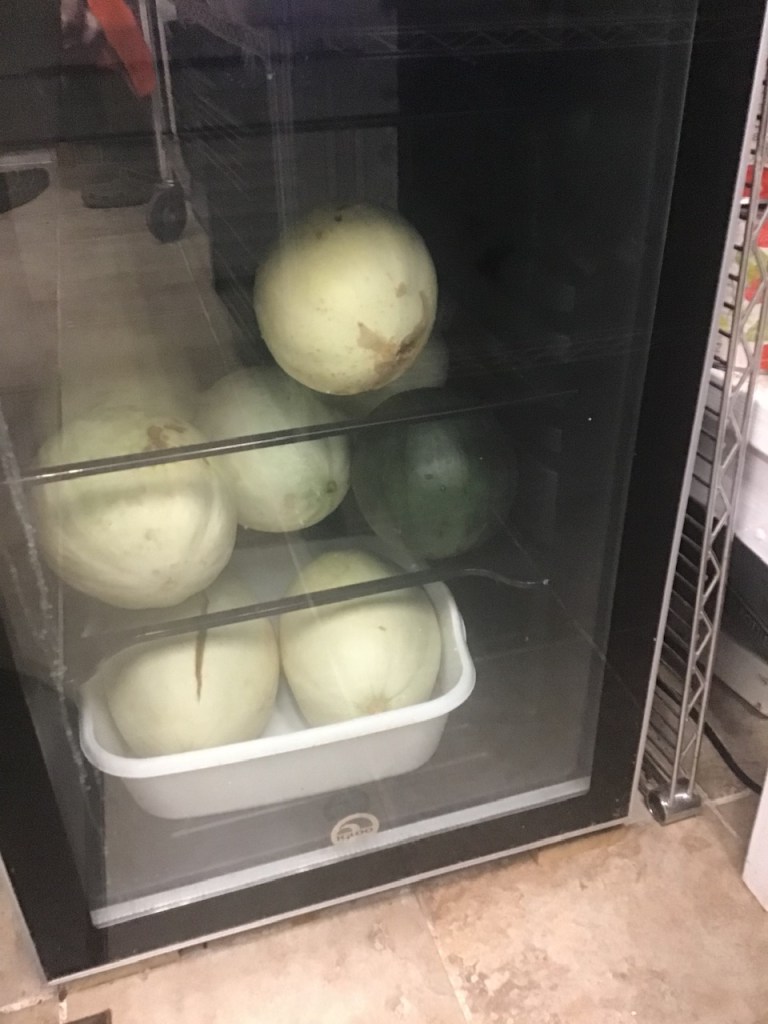
And big bow to Handy Hubby for growing this 27 pound beauty!



While it could be Vacation Season for some more sane types, for us it’s the work of Shoulder Season. We keep the minimum that will survive our high heat for the next two months and baby most of them best we can.
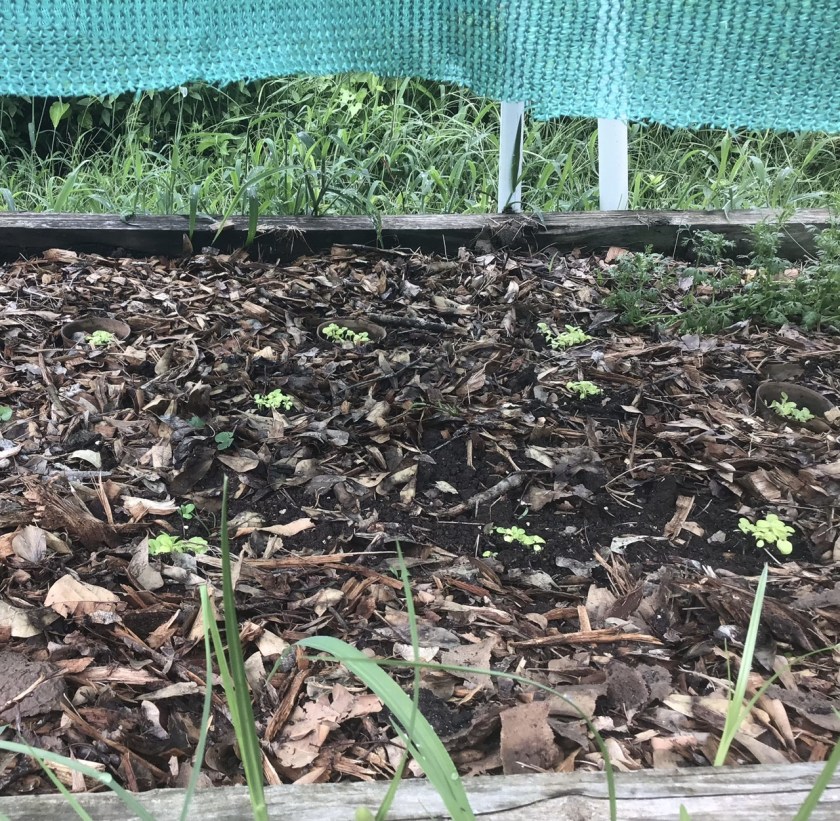
But under lights inside the fall/winter garden is on its way. There’s already another crop of tomatoes coming up, as well as broccoli, cauliflower and arugula.


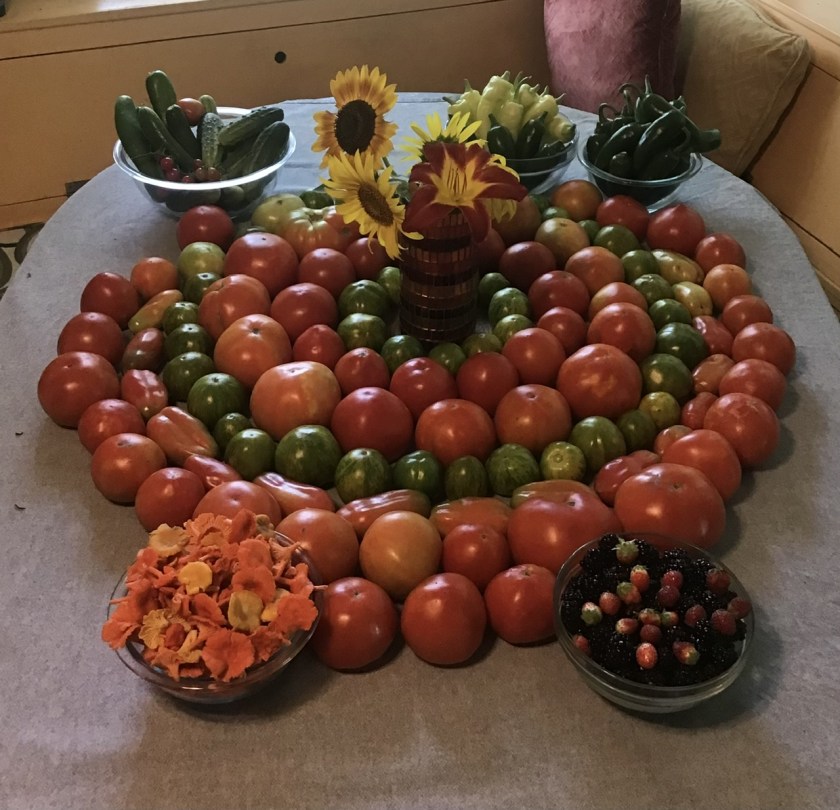
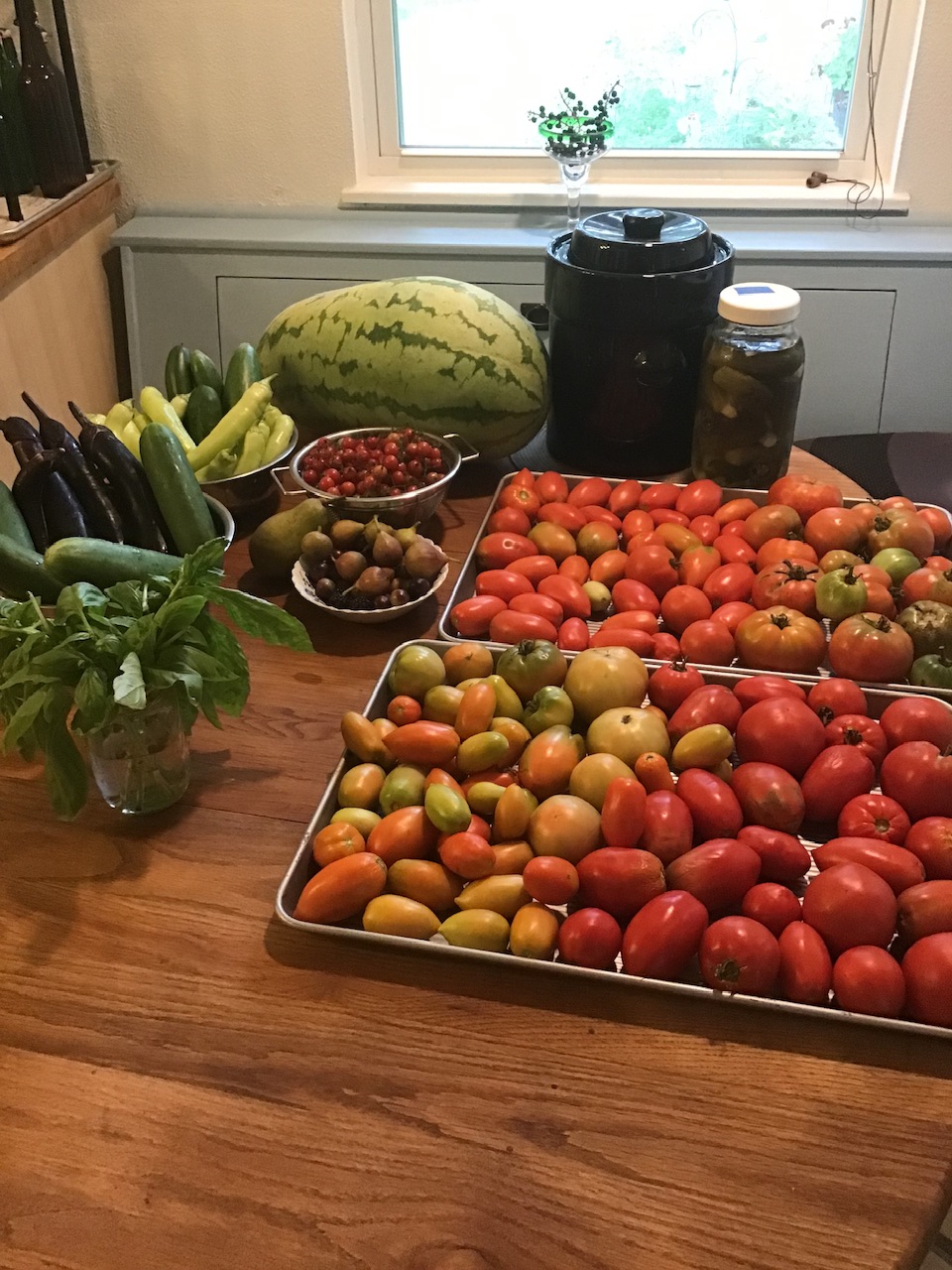
There’s processing to be done still, the marinara stockpile is done thanks to Hubby, but there’s still ketchup and bar-b-que sauce. And we still call this a bad tomato year!

Ah, the gifts and curses of relativity. And surplus.
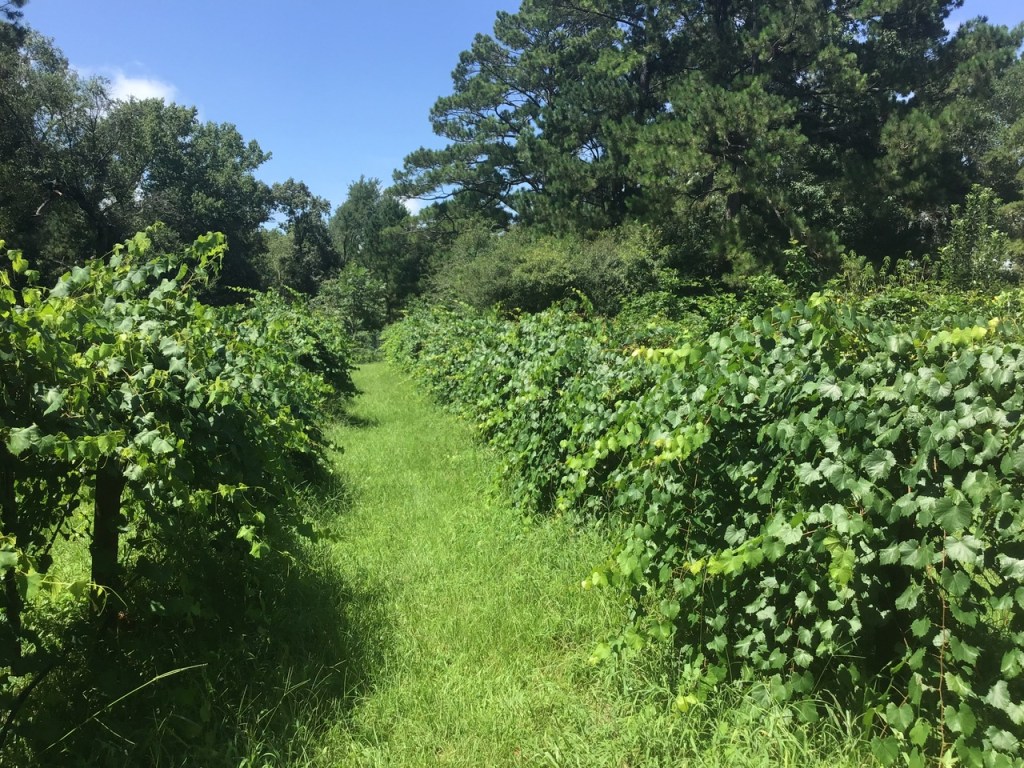
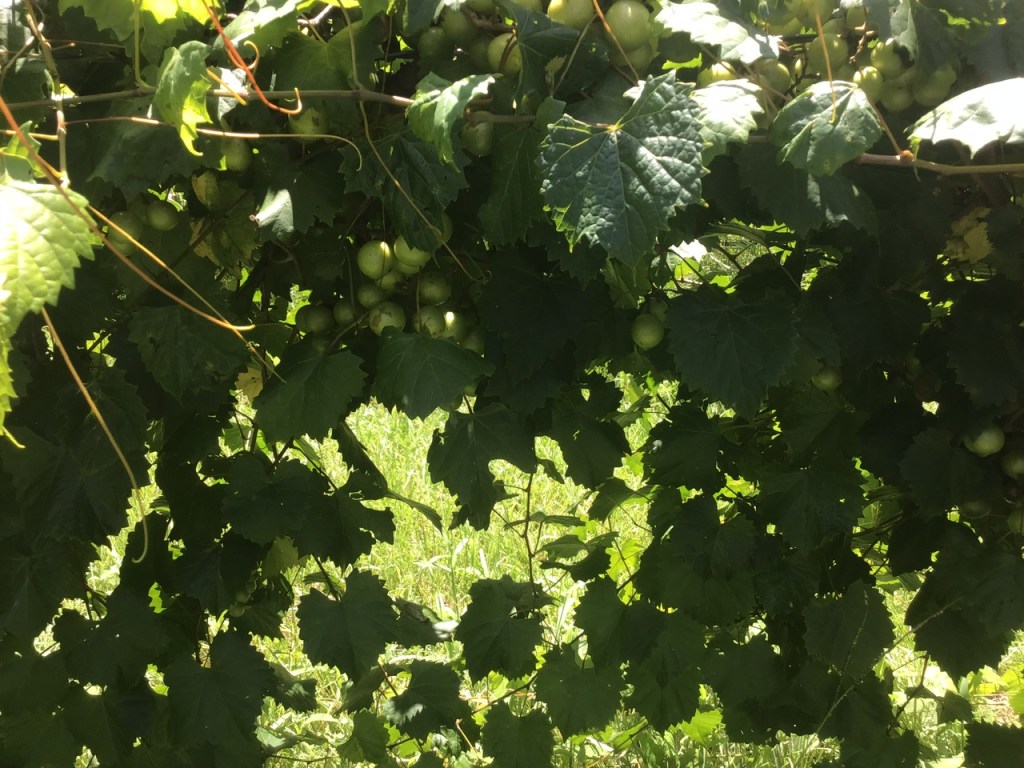
The pears are looking promising, and the grapes–which will be the next big project–wine and cider-making season. Blackberries and pears are our easiest fruits here; everything else seems to struggle. Though we have had years of good figs, and some neighbors still do. The grapes are looking good too, but there’s no guarantee.

And I think I finally got the trick for strawberries. It seems most everything that is most delicious is high-maintenance. What can -we do, if we like high maintenance produce but to contend with the high costs of creating them?
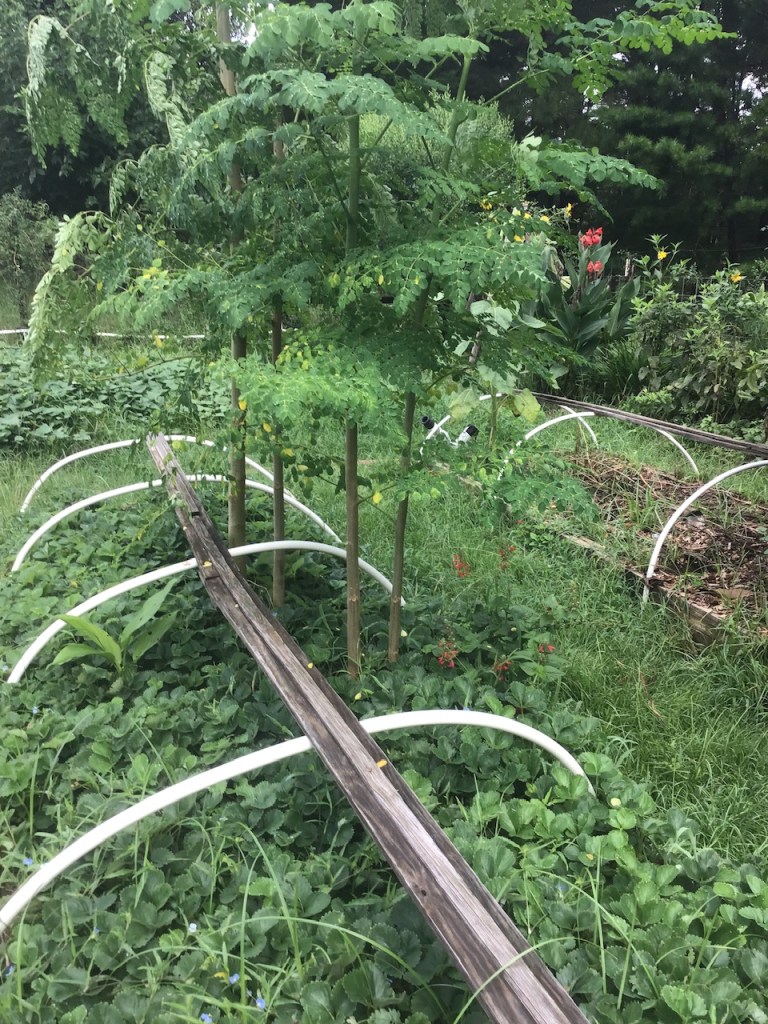
I’m planning for more low-maintenance in future, but those might be high hopes.
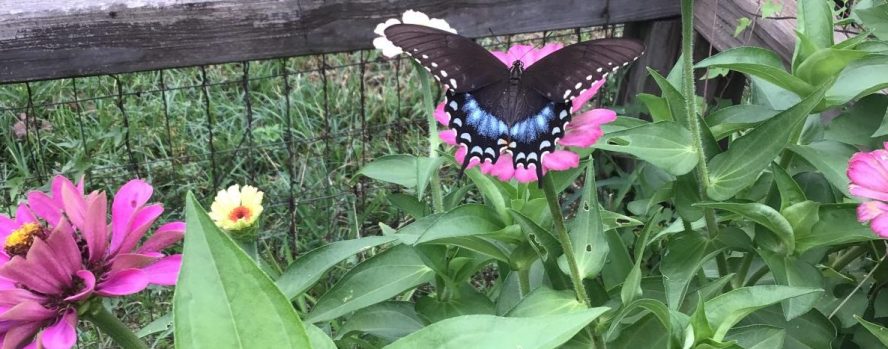
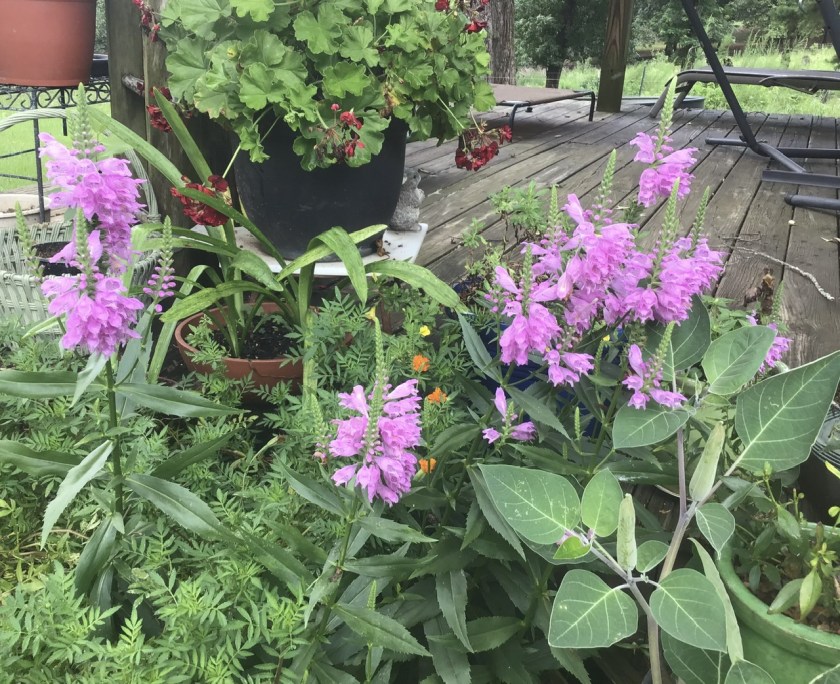
Because, my choice would be to spend my dwindling number of pain-free hours working with the flowers!
Which brings up my other meaning for Shoulder Season.
So much shoulder pain! And I am not good at staying stationary, it drives me nuts actually. So it’s between physical anquish, or mental, and I do far better with the former.
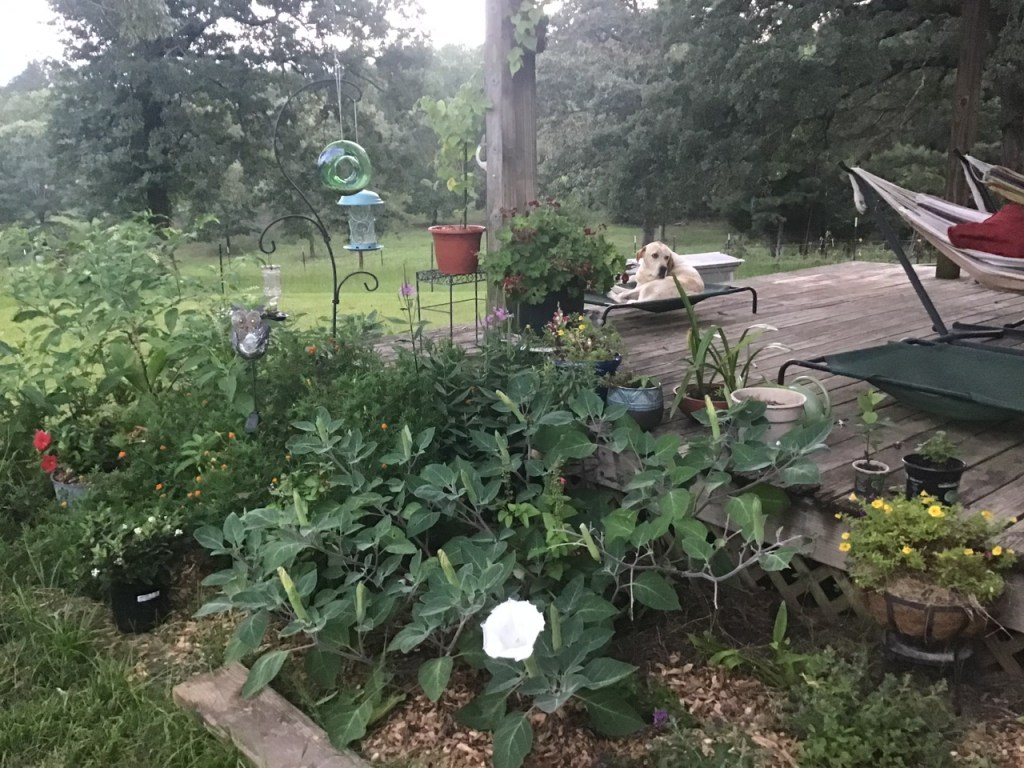

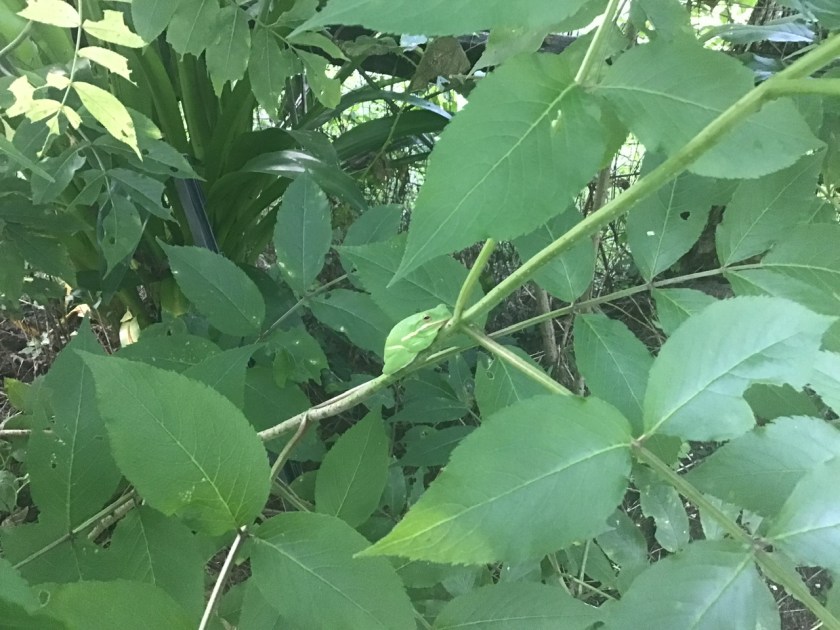
It’s as unwelcome a kinked, knotted, crippling invasion as this mystery fruit I posted about last year. I unknowingly caused quite a crisis in the garden and lost almost all the melons I planted.
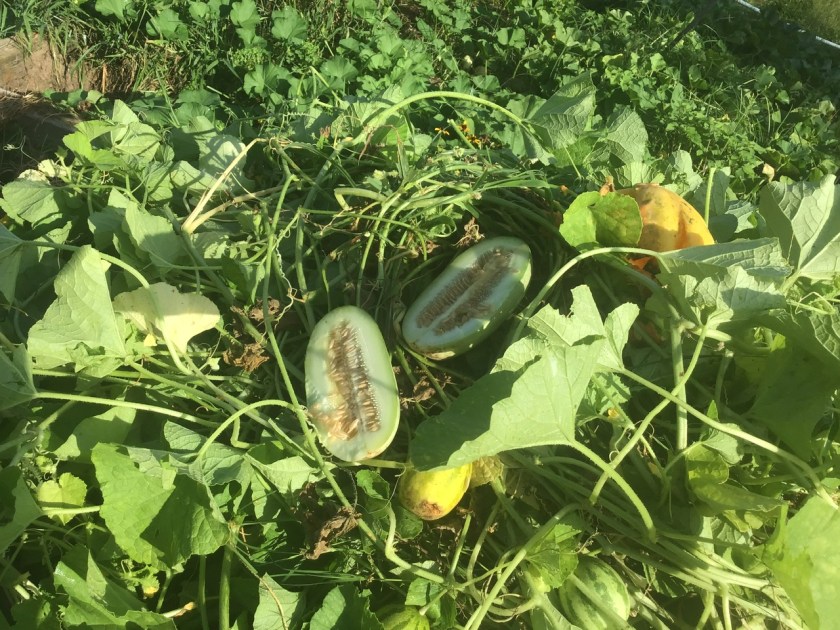
Just when I was insisting to Hubby we need to be thinking about reducing our garden plots in order to reduce our workload and water usage, I stand corrected. The orchard squash didn’t produce well at all, for some unknown reason; the garden melons were choked out by the wild cucumber; so without the third space we’d have no watermelons or honeydews, which would mean a mostly melonless summer after lots of work and wait, as the main garden produced about half a dozen sub-par cantaloupe.
A sweet, cold watermelon is the best morale booster in the hot, humid Texas summer garden jungle!

Wild cucumber vs melons and the melons lost bad. I have still not been able to figure out what these things are, which I brought into the garden under false pretenses. I have heard suggested they may be lemon cucumbers or mouse melons, but they are not the right size, shape or color for either of those.
I really get the frustration of invasive species now. I realize I’ve been a bit cavalier on that front in the past, for good reason, but I have definitely been humbled this time as these bitter, seedy imposters are still popping up everywhere.
Please, give me an invasion of the supposedy invasive Mimosa trees, and I’d be thrilled!
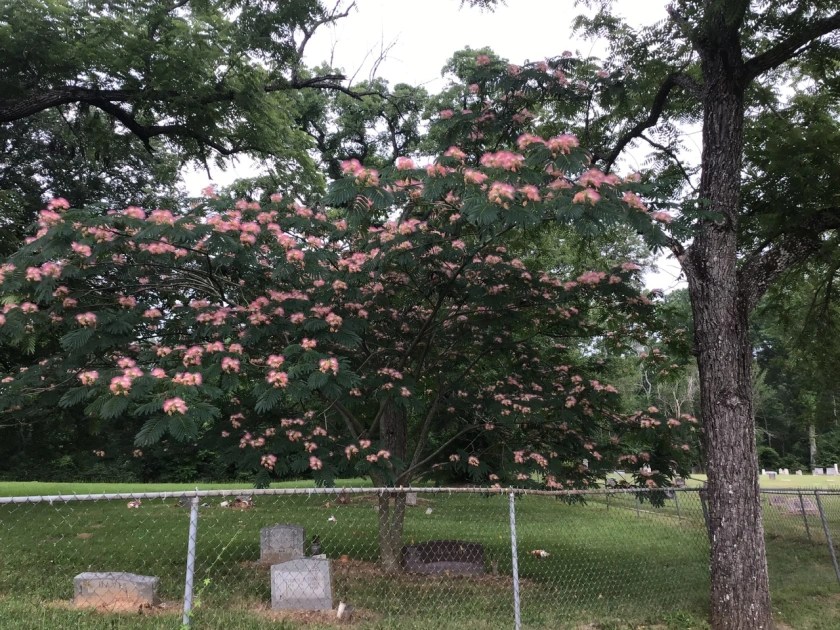
The plants that thrive here in the long high heat and humidity are so impressive, even when invasive, but it helps my morale considerably to consider the non-invasive ones as often as possible.


The sweet potatoes are almost effortless. Once they get established and as long as they get a good head start over the bindweed (another ‘invasive’ relative) they are pretty reliable. Eggplant and okra are others, and we’re learning to like eggplant. Maybe even a lot.


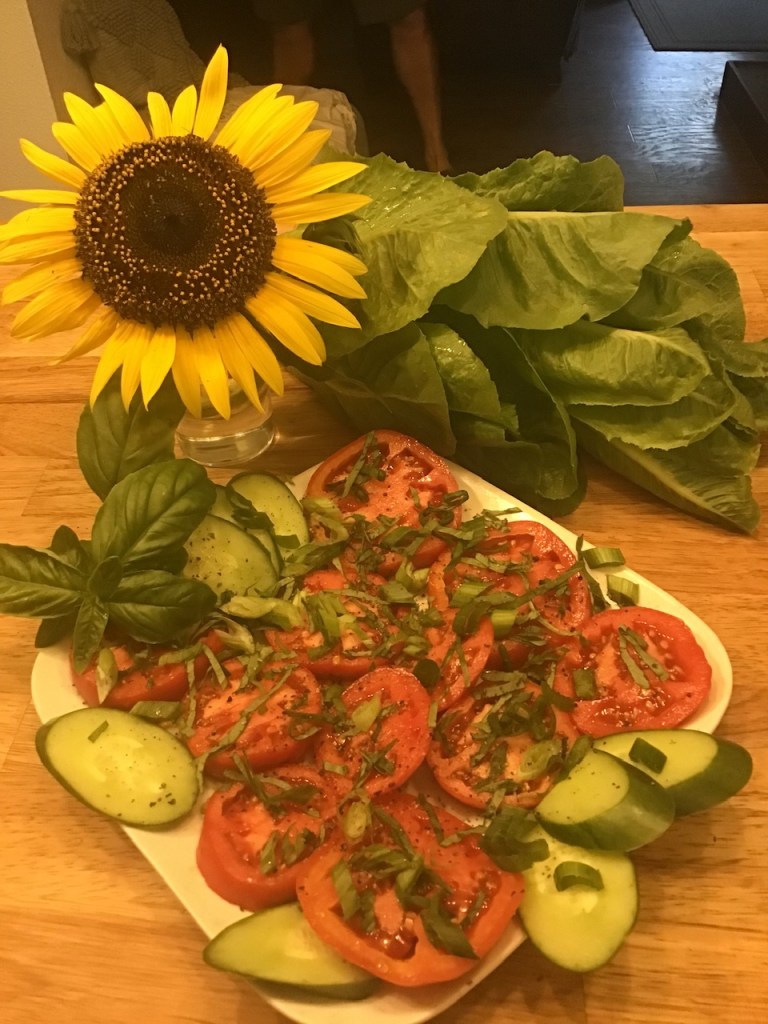
The bountiful basil takes center stage as the parsley, dill and cilantro take early retirement and don’t even bother to seed, it’s so damn hot.
Whether and which tomatoes will survive, or thrive, from one year to another is anyone’s guess.
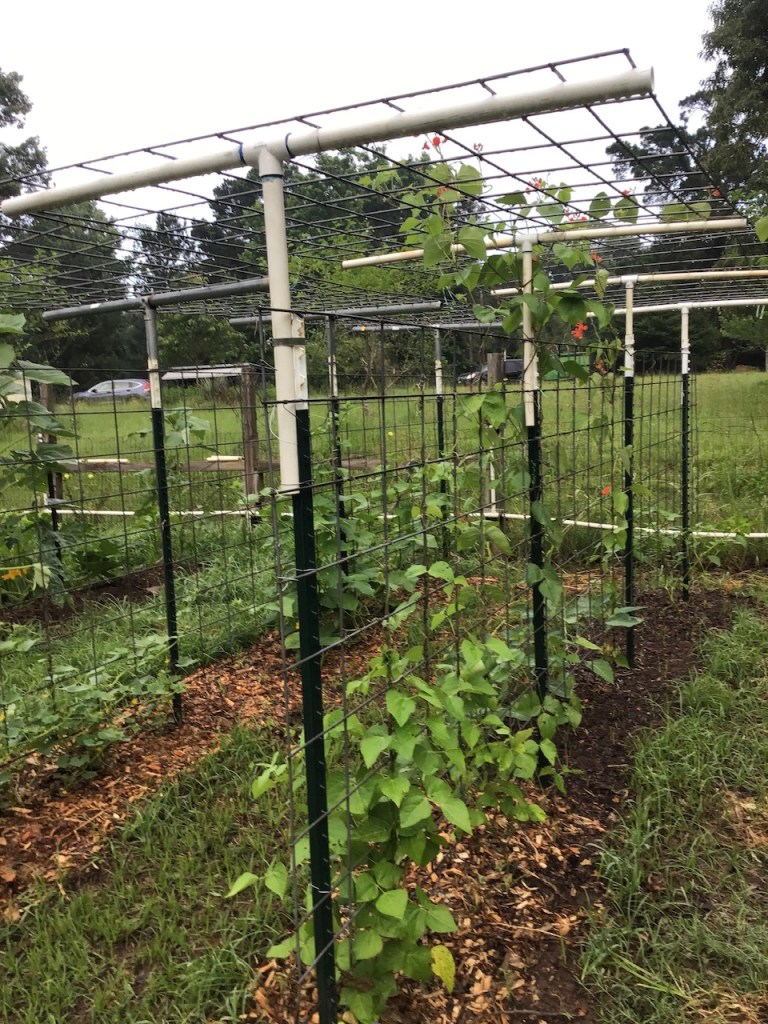
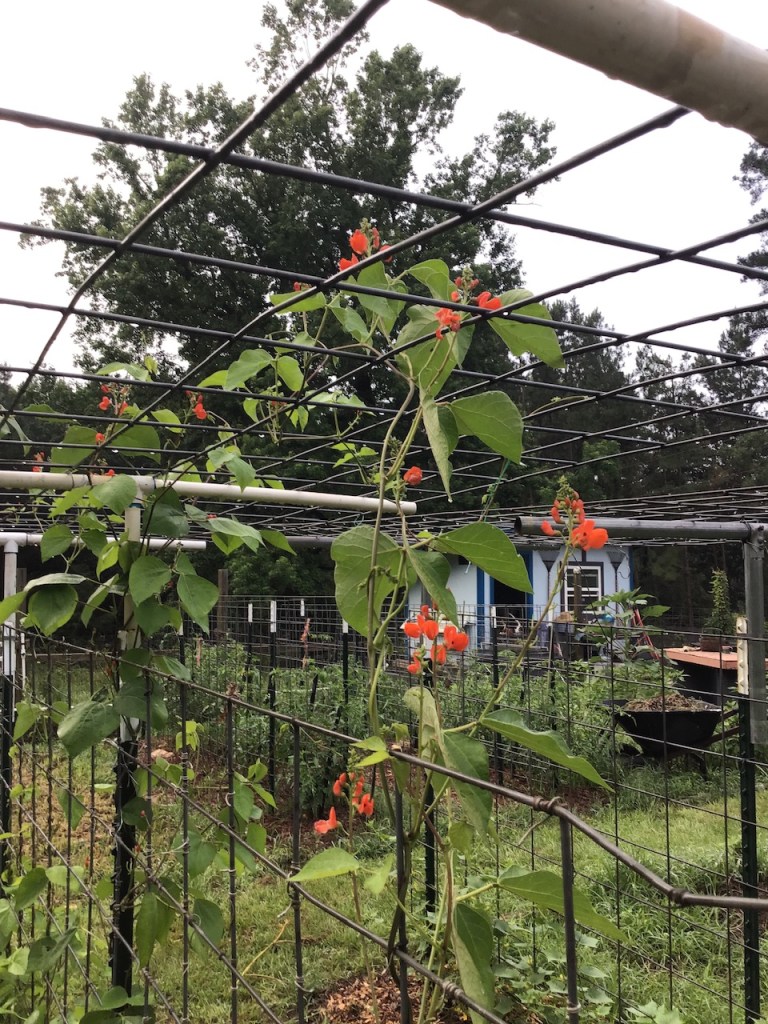
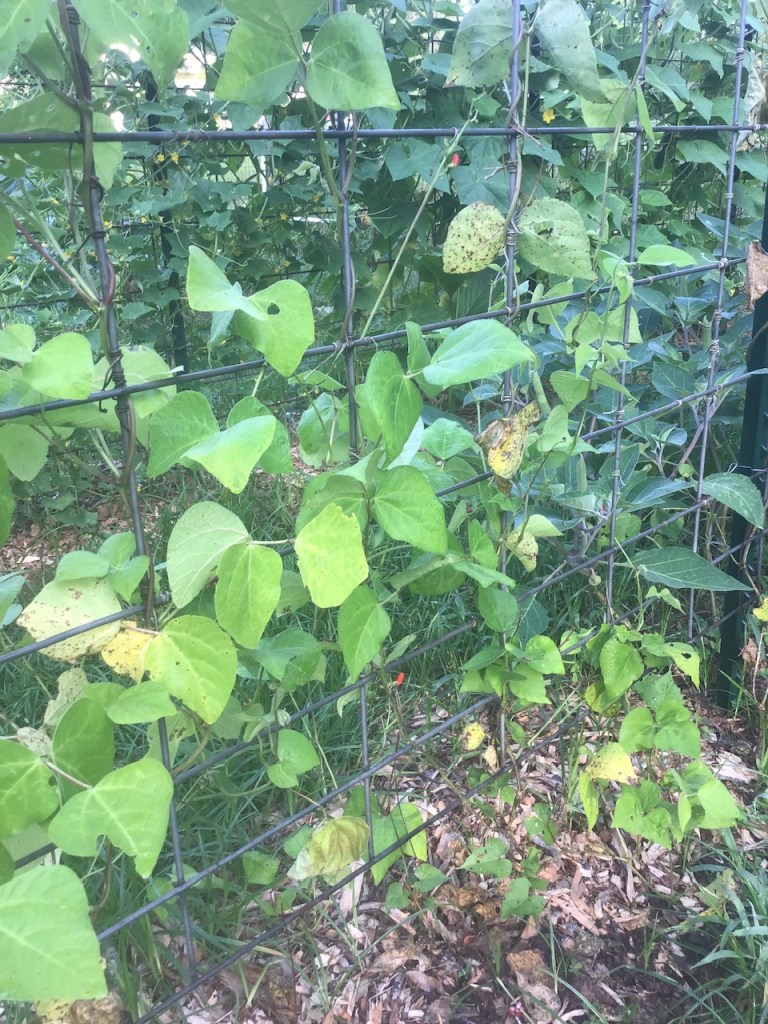
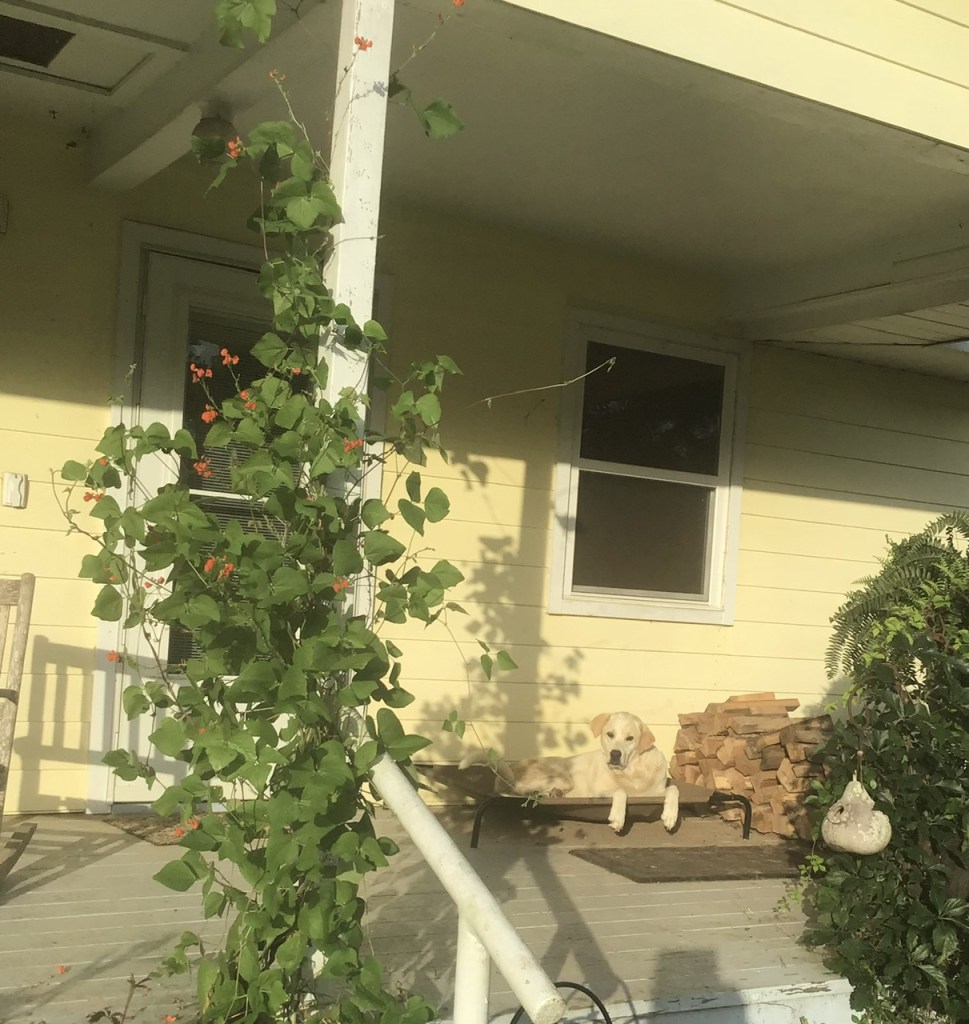
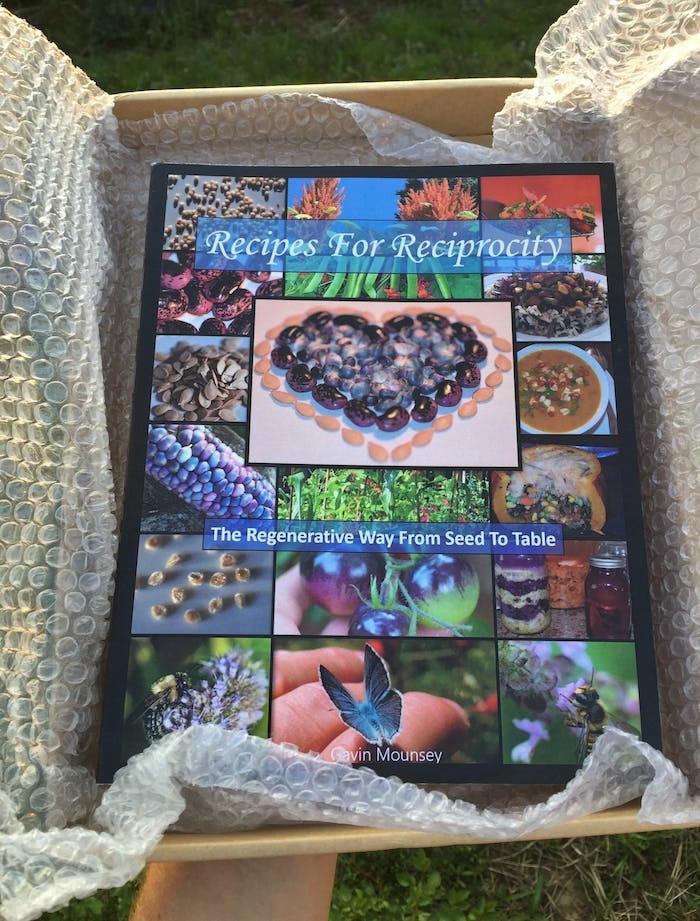
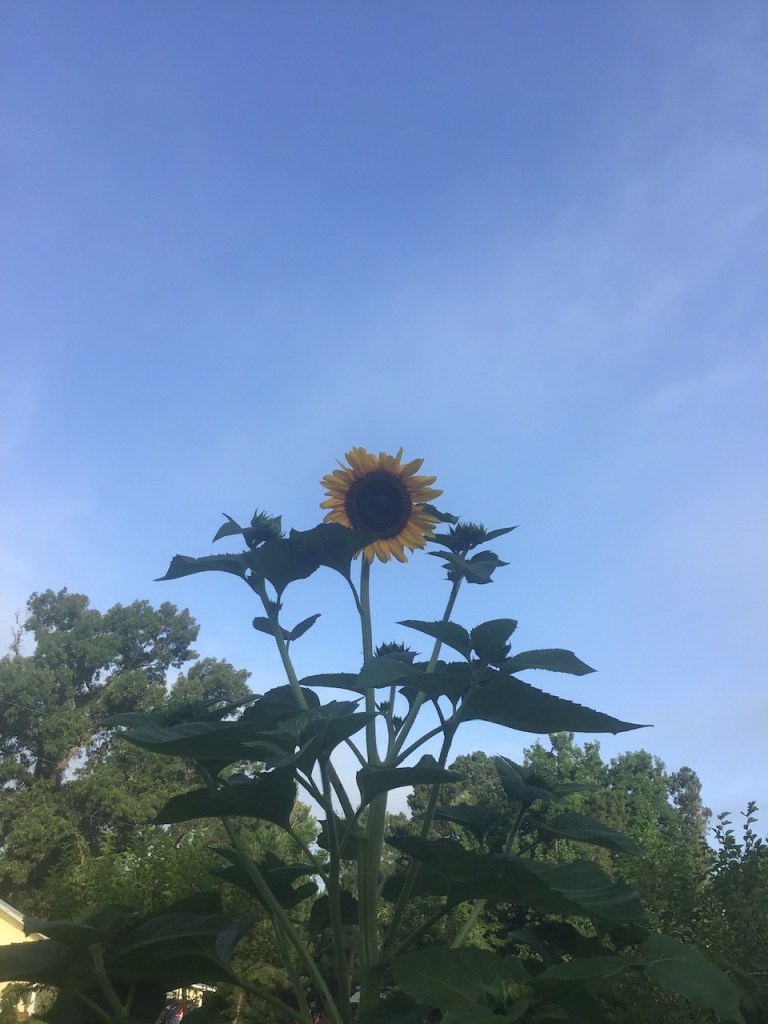
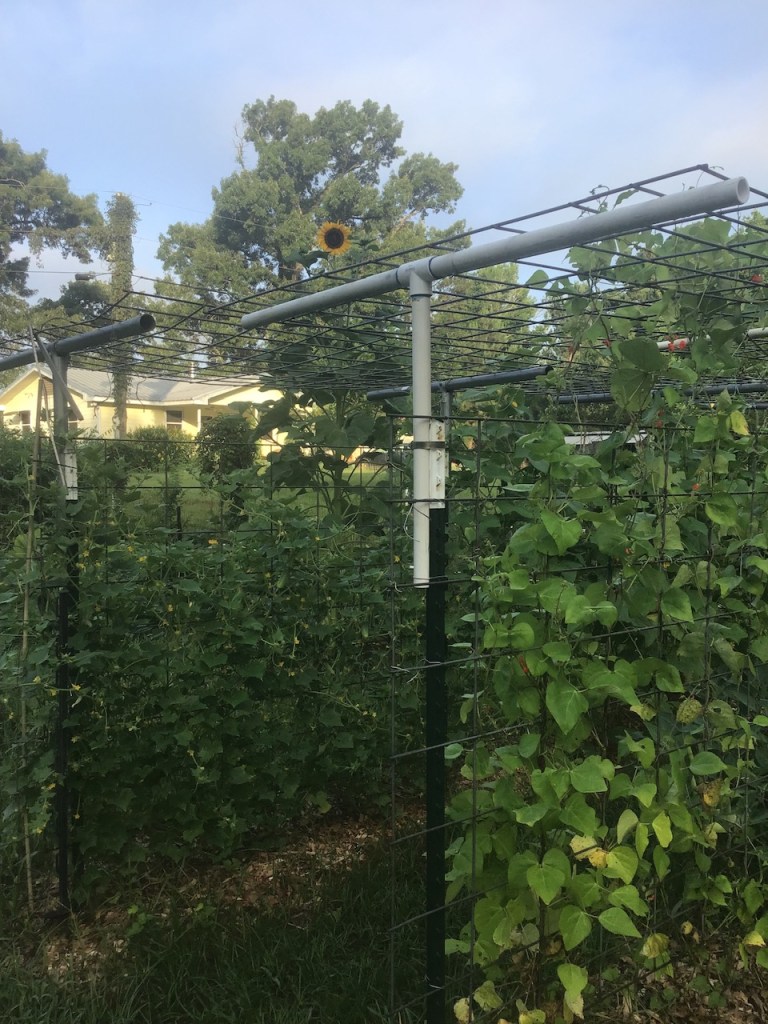
Gavin’s seeds, the Scarlet Runnerbean (barely) and Black Hopi Sunflower, are hanging on still, very impressive.

The two out of three citrus planted last spring are doing well–they look healthy and their growth has more than doubled since spring.
The poke weed, the datura, don’t get me started, such beautiful and amazing plants!
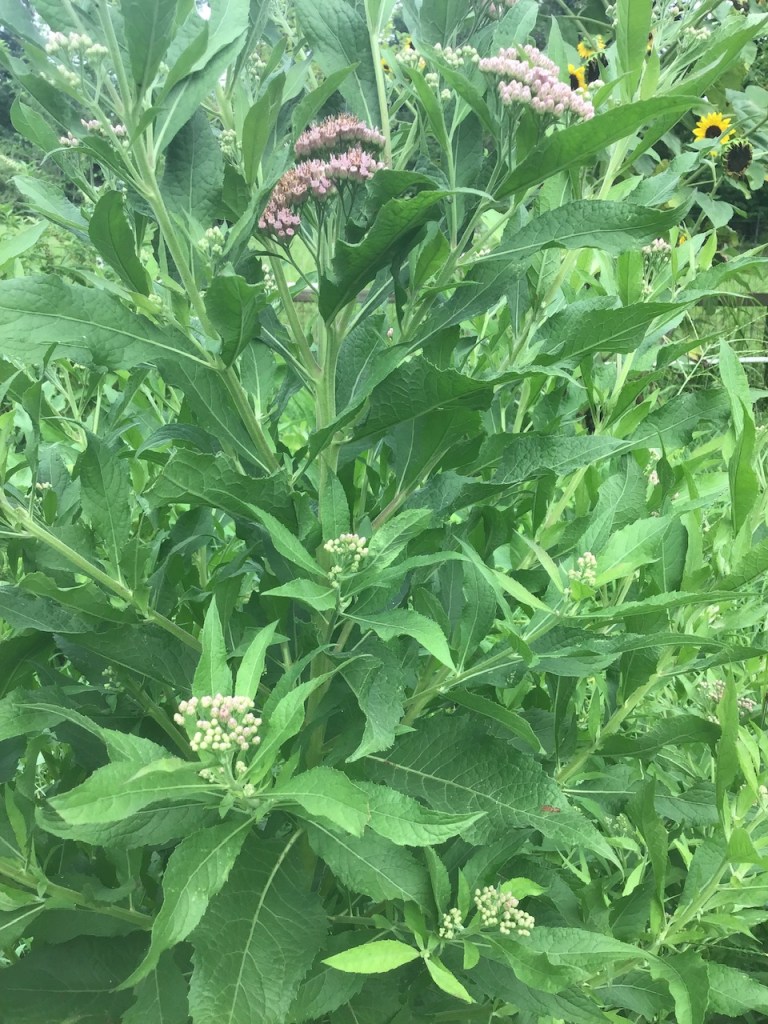
But, the mystery weeds, what are these?

Thanks for stopping by!