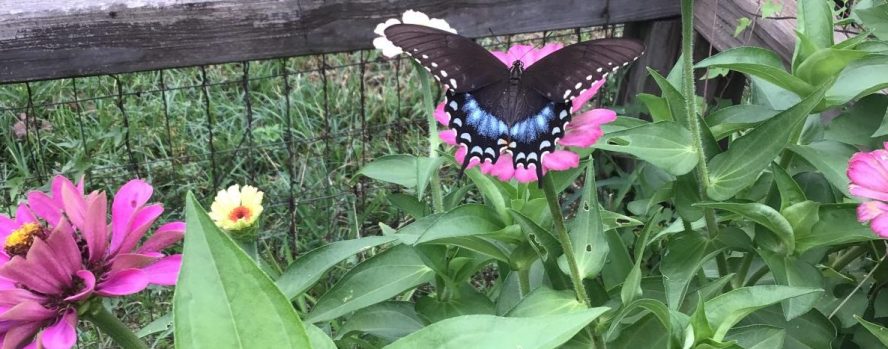

A sudden mini-miracle has occured and has turned the month I completely intended to be an exceptionally lazy one into a whole big mess of work.
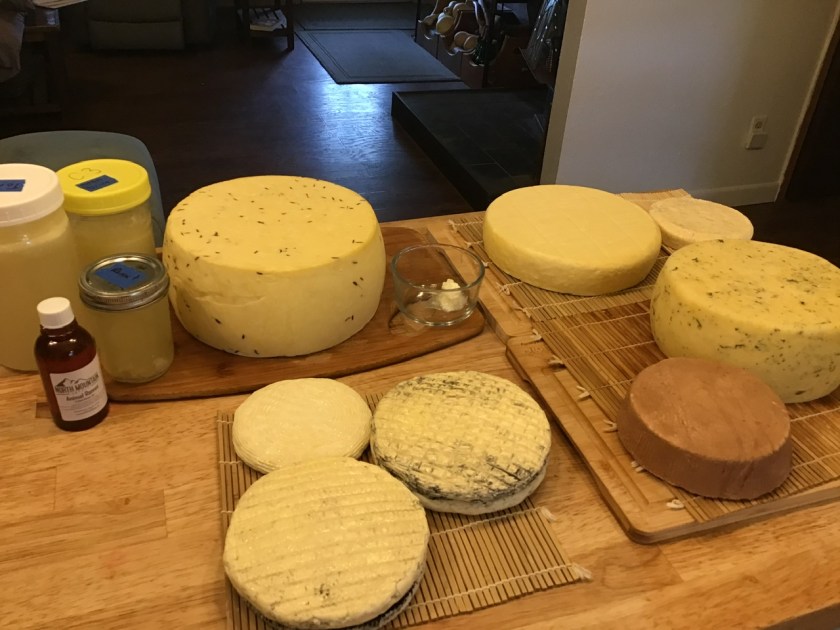
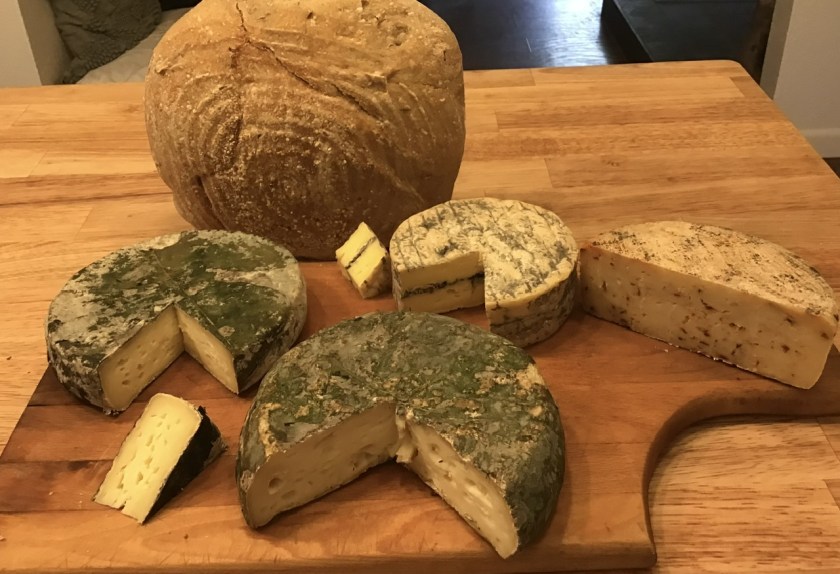
A portion of the cheeses I’ve made in the last two weeks, the largest was from 9 gallons, which was transformed into a Caraway Gouda. The smallest was made right in the half-gallon Mason jar with milk directly from the cow, never cooled and ‘backslopped’ from our own homemade goat rennet. Backslopping was a traditional method used on the farm to carry the culture and rennet combination from day-to-day, similar to keeping a fresh starter culture for sourdough bread.
While it’s work I love, the problem-solving has been endless and my shoulder is an on-going issue. After such a long search, this was so unexpected and has caught me off-guard, unprepared and re-injured. Why am I not surprised?
My milk-quest for cheesemaking has been a decade-long challenge. For the briefest of run-downs I’ve watched raw milk prices double in that time, tried and failed at goat rearing, and for the past couple of years I’ve been herdshare hopping, with prices far too high for cheesemaking.
A few weeks ago I tried another herdshare–closer, nicer, and so much cheaper. Finally, I can make cheese to my heart’s content, to hell with my aching shoulder! And thanks to Hubby on early retirement, who is willing and available for all the heavy lifting.
And who also helps with the redneck innovations–having just made me a new collapsible cheese-hanger unit and also made my cheese-press.

I’ve even been able to experiment again it’s so reasonable, at just $3.50/gallon. Not since the goats have I managed to pay so little for such cheese pleasures. My new milk lady is short on customers, half her milk is going to her neighbor’s pigs every day.
All I can think is, how crazy is that? That precious milk goes to the pigs, because it’s illegal to sell it anywhere but at her farm and to process it into cheese to sell is also illegal. While I can imagine those are some very happy pigs, I still wish I could sell cheese.
Actually, not so much the selling part, just the making part. I do often give it away as gifts and I get rave reviews. I’m often asked why I don’t sell it at the Farmer’s Market, because so few know how illegal it actually is. The requirements for licensing are very strict, not a chance a home kitchen would pass, (Great Dane not included!) and even with all the proper paperwork and a professional kitchen, many cheeses are still illegal to sell.
Various whey beneficiaries on the homestead:


I don’t want to run a cheese business anyway. I want a HWB (Hobby with Benefits) with those benefits being financial as well as delicious.
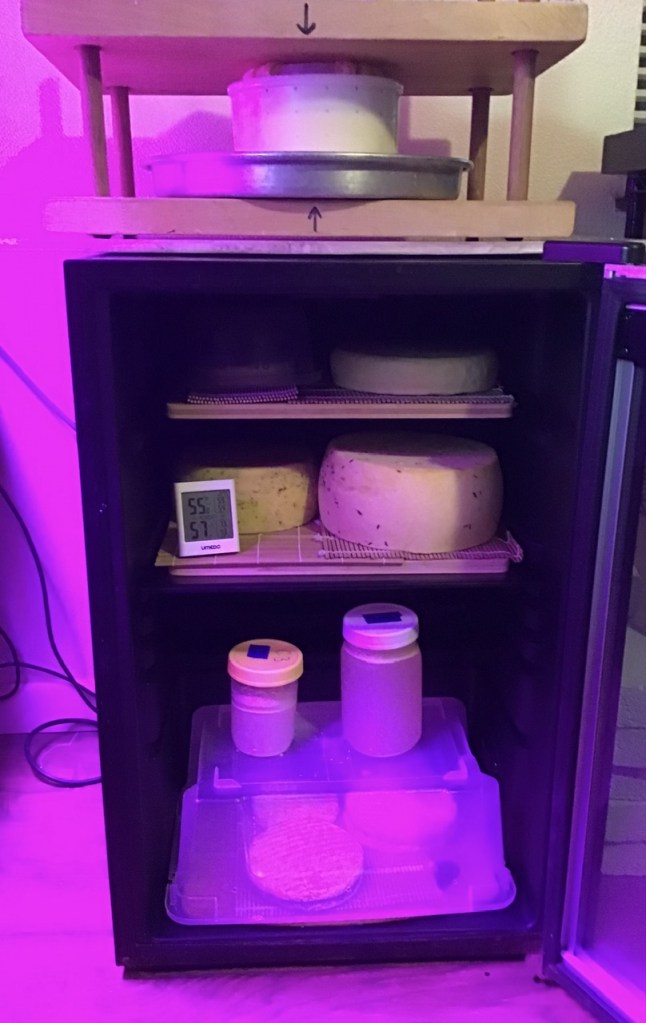
For now, I’m already out of room in my mini-aging fridge. I bought a second one, but once I got all the cheeses in it I had an impossible time getting a steady temperature. I gave up after 3 days of trying, to a mess of 70 degree cheeses sweating and dripping and starting to smell bad. The fridge regularly swings by 30 degrees, a cheesemaking nightmare.
I can work with a steady 50-55, and control humidity using plastic bins, not exactly a cave in the Loire Valley, but I can make it work well enough for a short Redneck affinage.
The non-existent affinage fridge of my dreams would be humidity controlled. The one that’s close enough costs a mere $700 and has temperature control in two sections (nice!). It’s technically for wine but home cheesemakers who can afford it often convert them with great success, or so I’ve read.
Let me just put that up on my vision board and see if it arrives in a timely fashion!

Despite the struggle for a reliable raw milk source I have come to the wonderful place in my cheesemaking skills that I no longer follow recipes. I still read plenty of recipes, of course. But I read them to glean new techniques, learn cultural differences and especially pre-industrial methods, and imagine new combinations, in order to try them in my own way, like the rest of our cooking here. Hubby works the same way with his culinary craftiness.
It is the key to turning cooking from drudgery to joy, imo. It’s ‘the zone’ like they talk about in sports, or artists in their creative flow. Who wants to do that in their sterile industrial kitchen rather than in the comfort of their own home? Some, I know, but definitely not me.
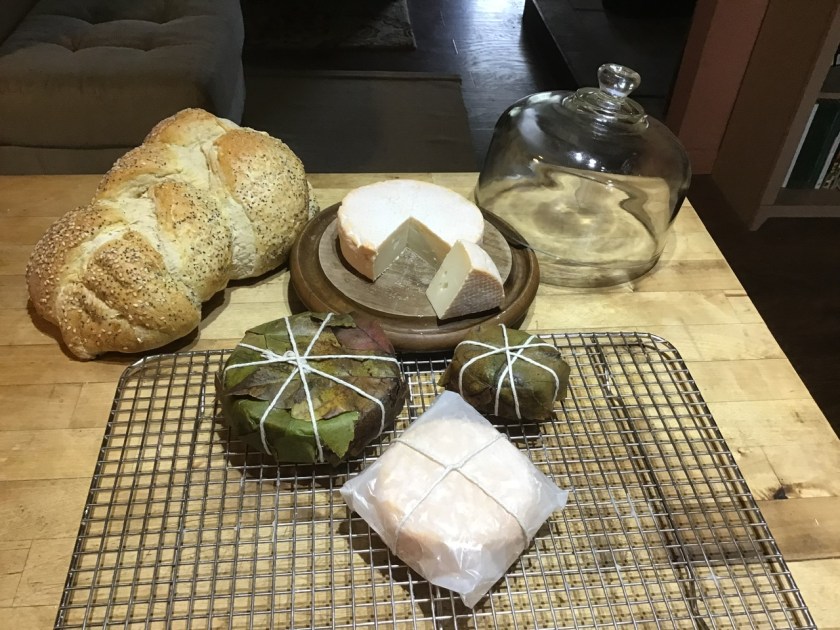
Turning a favorite hobby into a business is the joy-killer. Being well-rewarded for a favorite hobby is the goal. That’s magical like milk transforming into 1,000 cheeses is magical. Some call it alchemy, but really it’s just fermentation, maybe the most ordinary and natural process in the world.
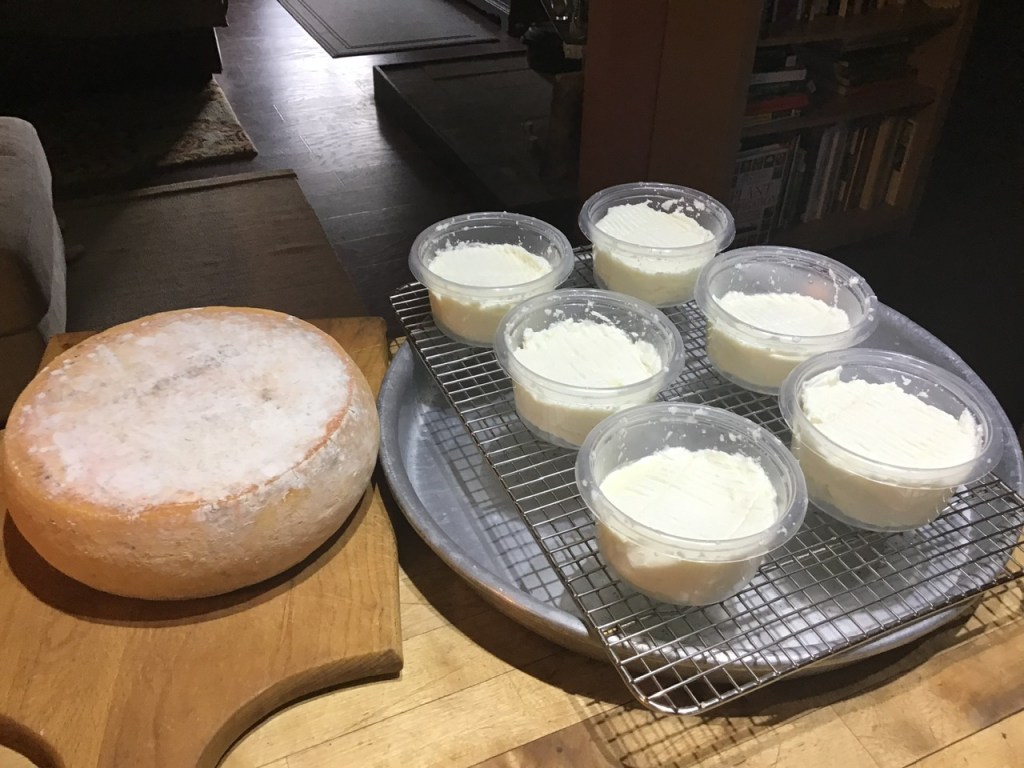
Cheesemaking is also economical and beneficial to more than just our health and palette. The dogs and the pigs get all the whey after the ricotta is made–whey ricotta is a delicious ‘by-product’ from making hard cheeses. So from each gallon we get the heavy cream for coffee and ice cream, milk for cheeses, and whey for other recipes and very contended critters.

The critics of course think it a lot of wasted work when cheese from the grocery store is cheap and plentiful, and there’s a growing network of artisanal cheesemakers who craft excellent cheeses (for a hefty price). I’ve had plenty of such cheeses and they are indeed delicious and worth the money.

But, they are all subject to the laws, which usually means: pasteurization, medicated animals, artificial lab-produced rennet (brought to you by Pfizer!), and freeze-dried cultures, also lab-made.
All that is exactly what I’m trying to get away from, in order to craft the most natural, local cheeses as possible. It’s an impossible task while remaining inside the laws.
Yet, there are folks still alive today who can remember when the laws weren’t so intolerably squashing to taste, creativity and economy. Just as there are old-timers here in Texas who can remember the days when they were allowed to raise, kill, process and sell their own livestock to the public, there are cheesemakers up north (no traditional cheese country in the south, too hot) who can still remember a time they could sell their handmade cheeses produced on farm in their own kitchens. Now most cheeses sold in this country are essentially fake, already lab grown, like the ‘meat’ they keep trying to push on the public.
Somehow there are still the majority who continue to call this freedom and progress.


Give me home “grown” cheese at a fair price – or give me death.
But in the meantime I’ll have to get (fake) store bought crap or get nothing at all. 😔
LikeLiked by 1 person
The choices we are forced to make in our condition of freedom and prosperity! Still, it’s always nice to hear from a man with good taste.
LikeLiked by 1 person
Wisconsin makes cheese. The grocery store carries cheese. I shop at the grocery store. It is a beautiful thing.
LikeLike
I imagine Pfizer and Globo-Ag appreciate your loyalty.
LikeLike
My goal is to self embalm before I die. You know, make life easier for the Coroner. 🙂
LikeLike
Your sacrifice will be rewarded in the Afterlife, I’m sure.
LikeLiked by 1 person
Remember: While you may feel the desire to self embalm – the coroner will still expect full price, whether she does the work or not. *** till we meet again
LikeLiked by 2 people