Industrial vs Traditional Cheesemaking

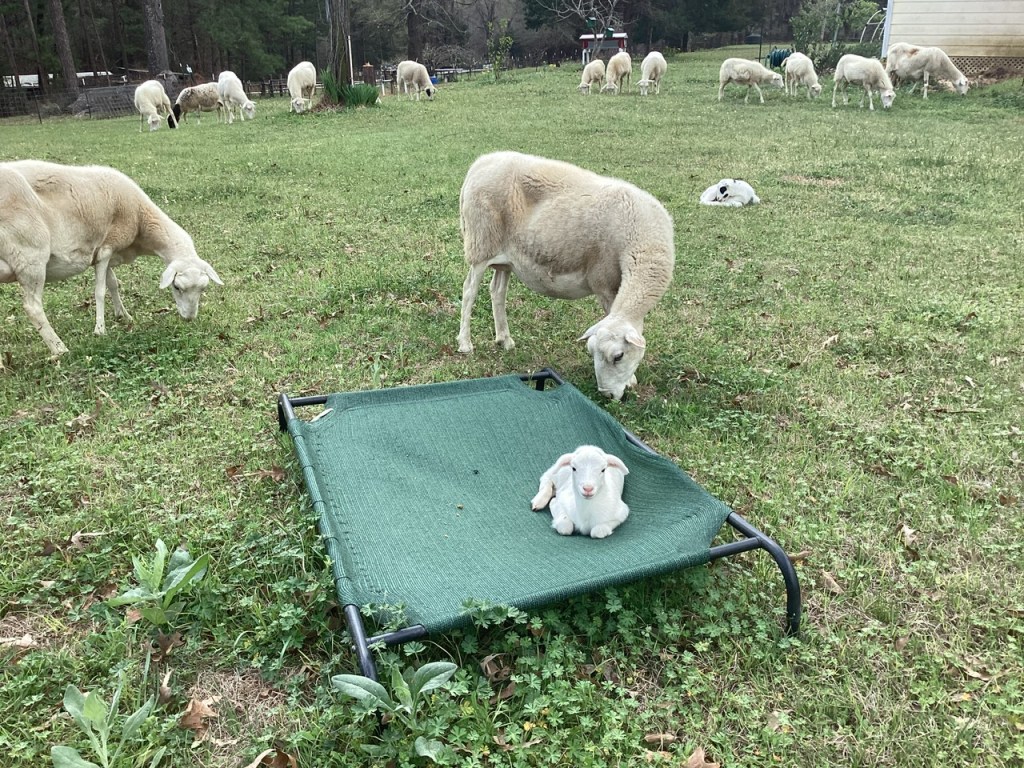
Such a synchronistic interview popped into my feeds, which I just have to share. Not only is our wee homestead full of young blood sucking down mamas’ milk, but I’m also teaching another cheesemaking workshop this week.

So, milk is big on my mind, nothing unusual there.
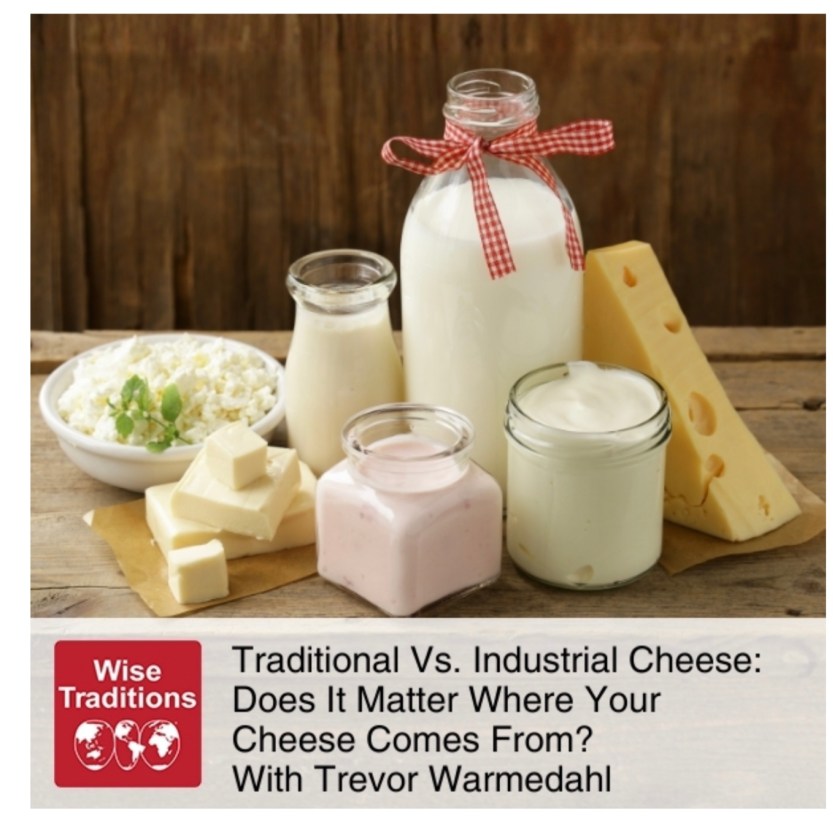
This interview from Weston A. Price is priceless! It really is such an awesome feeling for me when a new and powerful voice comes on the scene repeating what I sincerely believe and what we have been diligently cultivating on the wee homestead. We are losing too much of great value in our blind rush toward ‘progress’. We’ve got to work harder to keep hold of our wise traditions, or they will be lost forever.
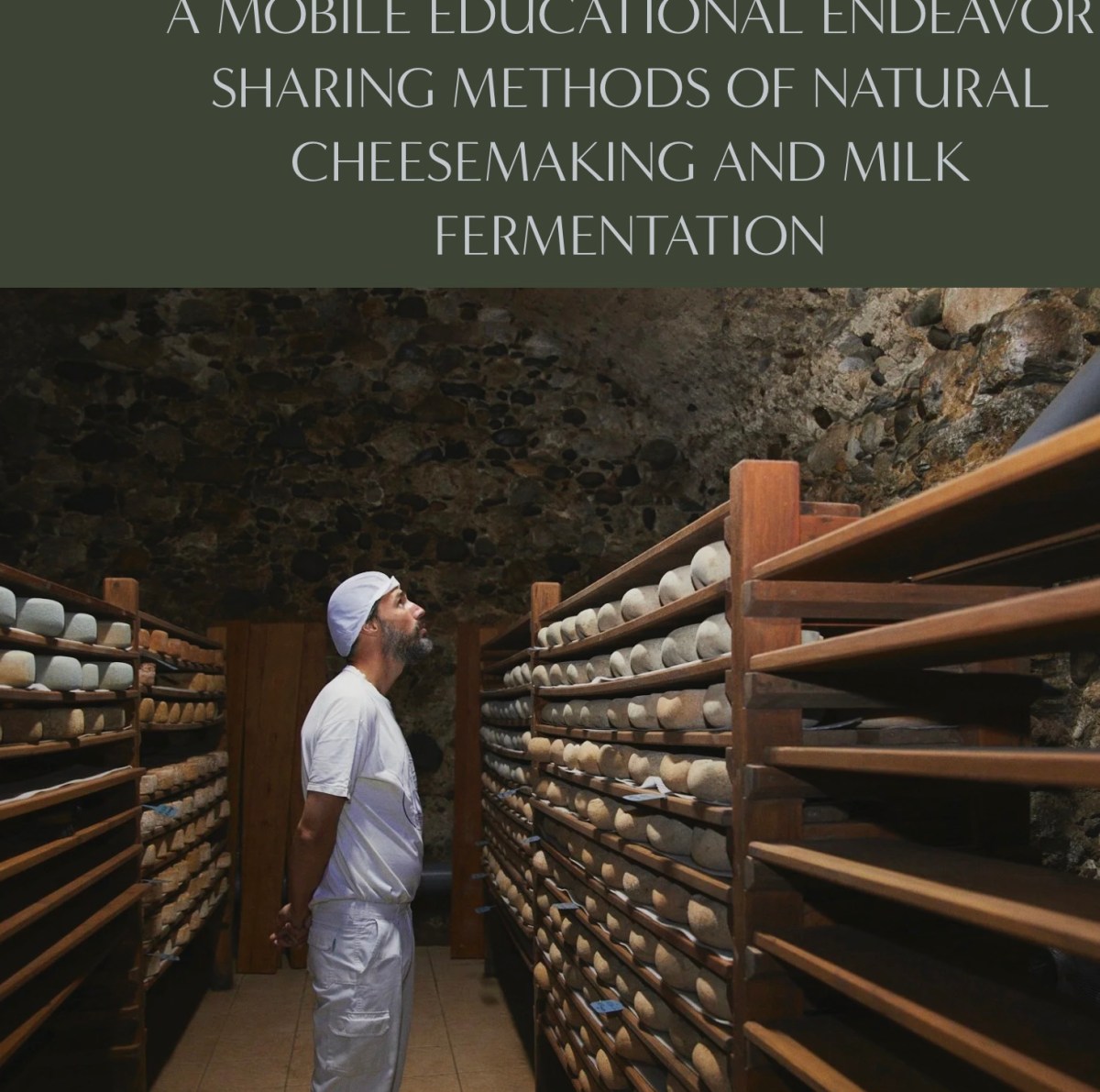
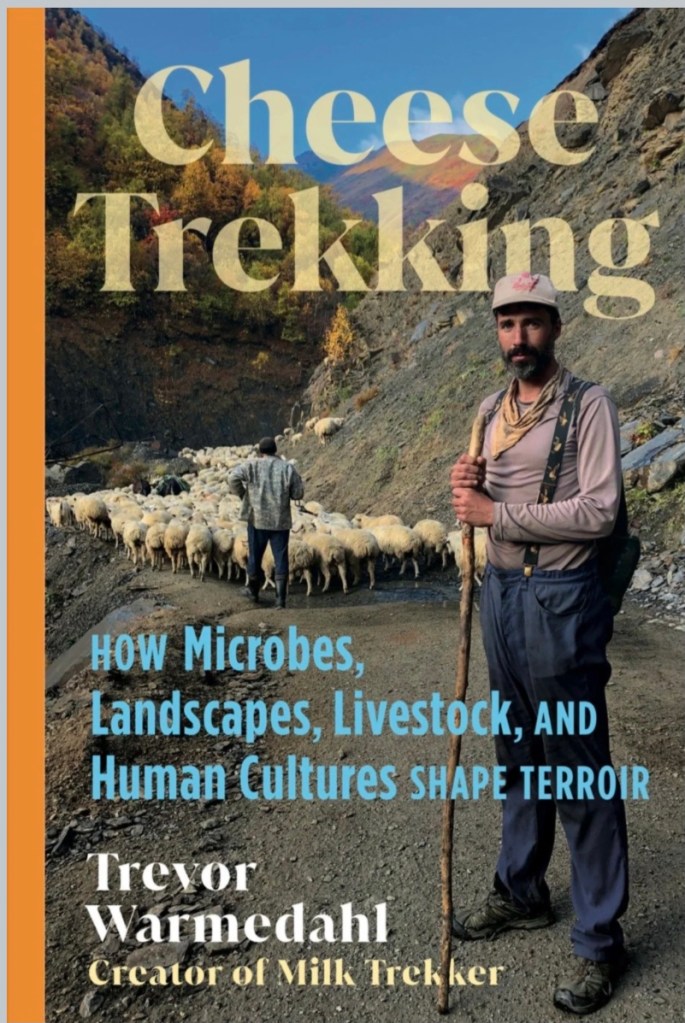
This traditional cheesemaker, Trevor Warmedahl, follows the David Asher school of ‘black sheep’ cheesemaking and is doing such an inspiring job of it.

He discusses the on-going rennet controversy, which I’ve also mentioned, here https://kenshohomestead.org/2024/03/04/cheese-brought-to-you-by-pfizer/

Clearly this issue is getting lots more attention lately, but it has been on the radar of many cheese-lovers since the 90s, including yours truly, because I was so peeved to have to give up cheese, because I was suddenly ‘lactose-intolerant’, like loads of other people. But at that time it was only in the U.S. I couldn’t eat breat or cheese, not in Europe.

Today in Europe they have also been inundated with ‘vegetarian’ rennet and glyphosate and other chemical industrial products and processes, and when it comes to cheese, the vast majority are not labeled as such. I got suspicious, started asking a lot of uncomfortable questions, and found out A LOT about GMOs and our body’s reaction to them.

The interview summary and link for anyone interested in some fantastic cheese talk (he even talks about the maggot-ripened cheeses I’ve mentioned quite a few times on this blog!)

Traditional cheesemakers respect the process of cheesemaking. They honor the environment, the animal, its milk and traditional techniques – all of which lead to delicious, nutritious cheese. Industrial cheesemaking, in stark contrast, emphasizes sterile conditions, uniformity, and artificial inputs (including GMO-derived rennet). The cheese that results from the conventional approach is consistent… but misses a lot in terms of flavor profile and nutrients.
 
Trevor Warmedahl is a cheesemaker, fermentation educator and the author of Cheese Trekking. Today, he takes us on a cheese adventure, as we gain insight on traditional, artisanal cheesemaking. He gives us pause about what is in our fridge and where it comes from.
 
Trevor has trekked all over the world, working alongside artisanal cheesemakers, so he understands and shares the importance of working with (instead of against) microbes and nature. He describes cheeses you may have never heard of, along with unique approaches to making them. Trevor also helps us take stock of what has been lost in our modern approach to cheesemaking.
 
Visit Trevor’s website: sourmilkschool.com
https://www.sourmilkschool.com/

Listen to the interview:

Milk Into Cheese

Just some cheese talk this post, plus a bit of a book review and a delicious recipe for Blackberry Ricotta Cake.

David Asher’s latest book arrived and I’ve been devouring it, as well as a whole lot of cheeses. He dives deep not just into the biology, ecology and history of cheesemaking, but the dairy and fermentation traditions that continue today around the world. Really fascinating!

Since the beginning of August, when I found a raw milk lady with a surplus willing to work with a renegade cheese lady, that’s me, I’ve been my own milk lab*.

5 gallons of warm milk spoiling on the table. πŸ˜† Plus a ‘failed’ pressed ricotta, used too much vinegar, but it will still be good further dried and crumbled on salad like feta.

Together we settled on a suitable style and schedule that’s been rather rigorous for me, 5 gallons twice a week, right from the barn to my containers. Not even chilled. (I can see my mom in my mind’s eye trying to hold the grimace from her face! πŸ˜†)

A very hot Pepper Jack before its tallow rub before aging several months.

But I’m in hog heaven! It’s brilliant to have top-quality raw milk for a cost so reasonable I can afford to experiment again, because that’s my favorite part. It still feels like a mini-miracle after searching and pining for so long. Plus, my milk lady is arranging for me to teach a workshop again very soon at her church. (I wonder if their grimaces will match my mom’s?!)

My raw milk lady winces at the idea of making clabber cheese too, and I bet most others would as well. Sitting warm milk out on the counter for a few days would scare Brits and Yanks, equally I expect, because our unusual cheese habits in America came from them, mostly.

The vast majority of the rest of the world, Europe included, drink fermented milk and eat raw fresh cheeses, as well as cooked and aged cheeses. Velveeta, like Squeeze Parkay and American cheese slices are a true embarassment to culinary culture and it’s a shame more Americans can’t see that. But I think it’s changing.

It’s our obsession with pasteurization and refridgeration that both giveth and taketh away in the realm of cheesemaking.

Sweet cream and fresh milk are far from the norm, and came about with industrial-level and widespread home-use of refridgeration. Cooling milk should really be considered as less than ideal, it begins the de-naturing process, which continues when we then must re-heat to an optimal temperature for cheesemaking, which is about 93 degrees, the same as it comes out of the cow.

Not that I ever care to live without refridgeration, mark my words! I LOVE all our costly cooling devices. Still, I really do want to know what the most naturally produced cheeses taste like, and I have that rare opportunity now.

The other problem that gets solved by not chilling the milk before cheesemaking is re-heating the milk adds about an hour to the process, because it must be done slowly and evenly, which requires stirring, or using a water bath.

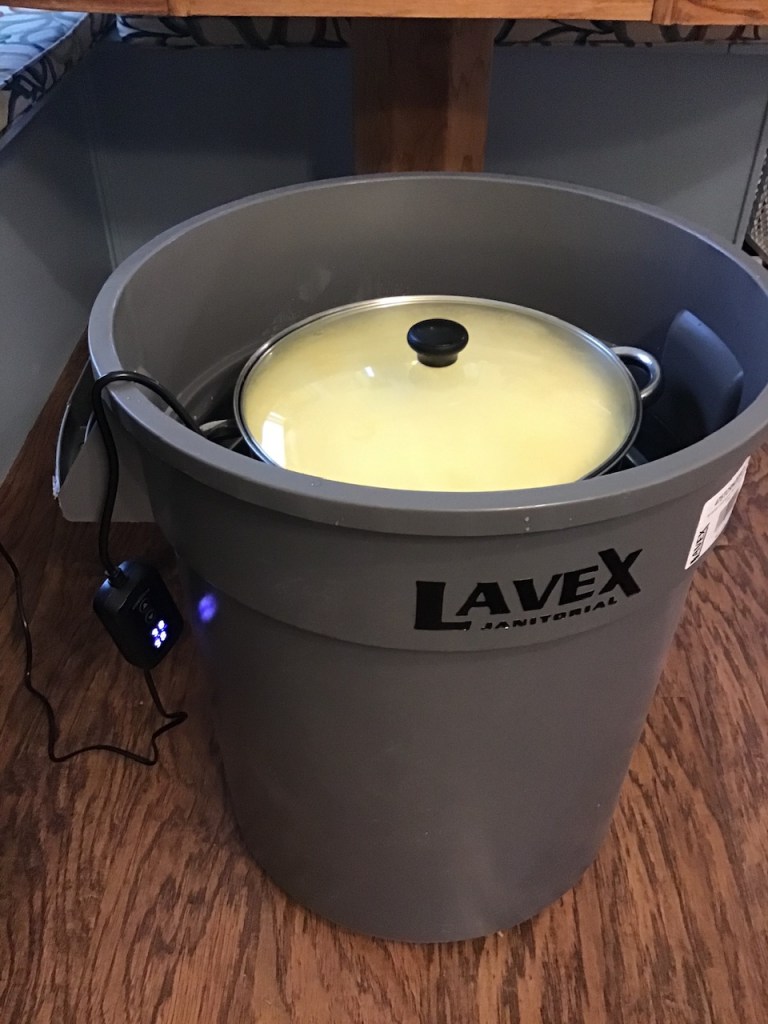
Hubby’s Redneck solution–Water bath in a garbage can, equipped with a fish-tank heater and oscillator, and now on casters for easy storage. Wow!

Just as Hubby tries diligently to solve all my complicated problems with custom redneck solutions, the temperature challange got him thinking creatively on my behalf once again. Not to mention the fact (I’m sure) that I’m taking up way too much prime kitchen space and time. Did I mention we have a small kitchen in a small cottage?

As a bonus from cheesemaking we have loads of ricotta, made with the whey after the curds are removed. I mentioned whey cheeses last time, which are most delicious pressed and soaked in cider or wine, mixed with herbs on crackers, in pasta sauces or salad dressings, but ricotta also freezes well. It also has to be made the same day, another reason for as many shortcuts as possible in the overall process.

And still, with all those possibilities, it’s proving a challenge to keep up with all the ricotta. My scheme is to create something so delicious the neighbors will start taking it off our hands.

So here’s one more tasty solution.

I like it dark, but you don’t have to. 😁

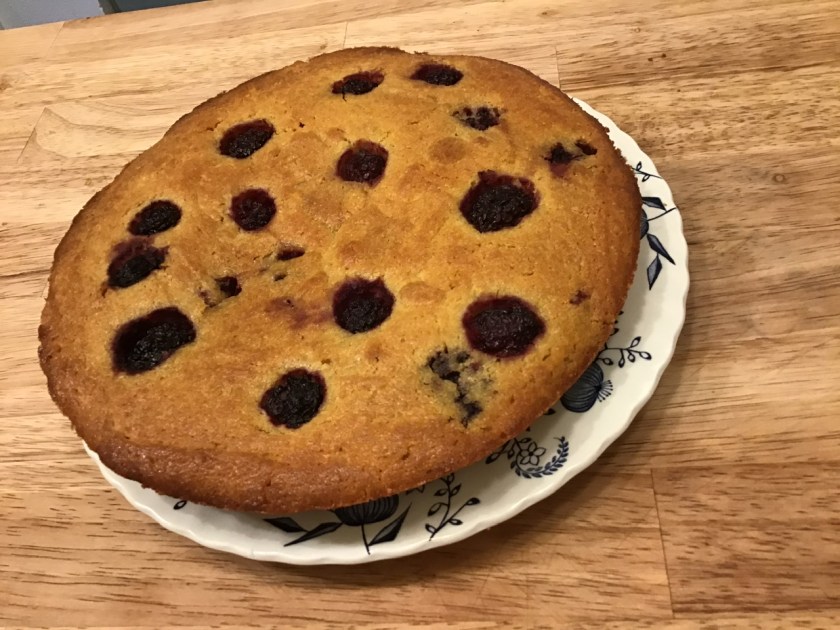
Blackberry Ricotta Cake
(or blueberry, rasberry, whatever berry)

1 1/2 cups soft wheat (sifted)
1 cup sugar
2 teaspoons baking powder
1/2 teaspoon salt
3 large eggs
1 1/2 cups ricotta
1/2 teaspoon vanilla
1/2 cup butter, melted
1 cup frozen blackberries (only slightly thawed)

350 oven, pie pan greased/floured.
Whisk flour, sugar, baking powder and salt, set aside.
Wisk eggs, ricotta, vanilla in separate bowl. Combine both and mix until just blended. Fold in butter. Fold in 1/2 berries, top with remaining berries.
check at 45 minutes.

Good plain as a coffee cake or with ice cream or whipped cream for dessert. πŸ˜‹

*milk lab is actually David Asher’s site, not in my kitchen! πŸ˜‚
David Asher is a Natural Cheesemaker, bringing the traditions of dairying, fermentation and coagulation back into this age-old craft. A former farmer and goatherd from the west coast of Canada, David now travels widely, sharing a very old but also very new approach to cheese production. Through teaching about the use of in-house starter cultures and natural rennet from calves and kids, David helps cheesemakers around the world reclaim their traditional cheeses. He also explores the relations of all food fermentations, and the important role of small scale and traditional food production in our modern world. David is the author of ‘The Art of Natural Cheesemaking’ and the upcoming ‘Milk into Cheese’.

David Asher’s Milklabhttp://www.milklab.ca/

Thank you sir for another most excellent book!