
Back to this unpleasant subject again. It’s been a very long loop; I haven’t considered it much since first attempting to barter goods from the wee homestead.
It’s something we really do take for granted in our modern economy, whether one takes that as an inherent good or evil.
The good part is that it’s comfortable and I prefer it, on the surface. I hate bartering. I SO suck at it. I suck at it for reasons that are so deeply-seated (seeded?) that no logic can ever possibly be applied.
On travels to some countries barter was the norm and I was told to keep practicing as I’d get better at it. Some seem to enjoy it. These sorts always baffled me. They say, “Treat it like a game!” But that is really stupid, isn’t it, because I did not go out shopping in order to play a game. I already don’t like shopping much, to think I’d like it more by making it game-like is to make it ever closer to hellish.
So while it may not sound like it, this is the good side of money. It took me a long time to learn that. Not until I had to consider such exchanges as, which was of better or equal value, the handcrafted Top bar beehive, or the wormy, bossy, but still a good milker, Summer, a 7-year old goat?
Money, in partnership with “the Market”, make such exchanges far more simple. Since none of us has a crystal ball, and I have no idea how long Summer will live and there are no guarantees, and my friend has no idea if she’ll enjoy beekeeping, or be able to keep bees alive in our chemskies and YoYo climate, our exchange is made more simple by imagining what would be the ‘market value’ of each of our offerings.

The dark side of money it seems to me relates quite easily to the dark side of most things—like religion, or science, or even education—it provides, by its very nature, an endless potential for ‘middlemen’. It becomes a profession, then a vast sea of professions, then an institution, then an institution ‘too big to fail’.

It’s convenient and comfortable, no doubt about it. It’s easy enough for a child to use, but complex enough to build empires upon. Try to imagine living without it.
Do we really consider how we, as individuals, would place value upon goods and services anymore?
What about once money is replaced with tokens. It’s pretty much the same thing already, right? Tokens as a medium of value exchange—your massage is worth 2 dozen yard eggs. Right?
Well, the market value of your massage today is 20 tokens, but the value of my eggs is 10 tokens, today, and 15 tokens last week, and is projected to be 25 tokens tomorrow. That’s the real problem with the market, right? For you and I, as individuals deciding value between us, the eggs and massage exchange didn’t fluctuate vastly over a matter of days, or even weeks. It’s pretty steady, really. You use 2 dozen eggs per week, I like 1 massage per week, stable value exchange.
But I’ll bet you 5 economists in the room with us would tell us 50 ways it’s not really a stable value exchange. And, why be stable at all if there might be a profit to make? Then a dozen lawyers will tell us why those economists are right. And a nation full of universities will continue to produce a fat muffin top of middlemen to stuff between every simple interpersonal transaction in every tiny hamlet around the world.
I’m bothering to restate the obvious at this moment because I’m trying to re-assess the value of technology in my life. It started with the recurring headaches of social media many years ago, then moved to Smart phones, and lately it’s WordPress.
Then a cyber-friend shared a dream, which caused this spark of inquiry.
“Imagine if we could create an Agrarian world again, using technology as a tool to help us, but not control or surveil us.”
Can we make a more agrarian life through technology? Which I understand as, can technology help us to get back to basics? And by basics we mean an understanding of nature, an appreciation of its organic processes, a “re-enchantment” as I’ve heard it lovingly expressed, with the natural world. Working with our hands again, I presume, creating items of value to exchange with one another. A slower life perhaps, where we have the great luxury of time to enjoy our lives and our nature world to a greater degree than afforded to most in the modern world.

An ‘agora’ that’s not corrupted by fiat, usury, taxes, violence and coercion, perhaps?
Technology in our private life here on the wee homestead has benefitted us in a few crucial ways—helping us to learn new skills has been the most significant. But keeping us from feeling terribly remote and unconnected and uninformed has also been very important. I’ve made a few good friends thanks to the internet and I’m very grateful for that. Feelings of isolation and loneliness can be significant spiritual hurdles for some of us living rural for the first time.
And I have seen promising shifts over the years. Homesteading is clearly a bonafide cultural movement at this time, I think primarily thanks to technology, as oxymoronic as that sounds. Herbalism has become more appealing as Pig Pharma breathes heavier down our necks. Pockets of interest and learning are all over the cyber world, every craft, trade or skill imaginable is available somewhere with a few clicks, I’m sure.

But I have seen and heard some really concerning trends lately, which makes me realize that the time to be re-assessing the value of the tech in our lives is reaching a crescendo.
For example, the young entrepreneurial types who are coming in to fill the needs of the rural communities with essentials like raw milk, homegrown veggies at the farmer’s market, small service businesses and the like, well they aren’t like us in some really fundamental ways.
They trust The Science, for the most part, evident in their willingness to vaccinate, medicate, use the latest supplements and vitamins, and not question any of it. They also love the tech and fully embrace the insane trifecta of the Global Grid: Surveillance cameras, Smart phones and digital payment systems.
How is that value assessed? Who is benefitting more?
My guess would be, more often than not, the middlemen. Like any pyramid scheme a few must be making good for anyone else to follow. For a while.
Seems to me these young entrepreneurs are setting themselves up for certain failure. I met one of these ambitious young women last week on my quest for raw milk, now that my goats are mostly gone. I really miss making cheese. The price of raw milk, not even organic, has gone through the roof as demand has perked up—$11/gallon around here. It’s too much for us to afford.
What did I learn from this experience? Her surveillance cameras everywhere tell me she doesn’t trust her customers or neighbors. Her vaccination schedule tells me she does not do her due diligence in caring for her animals. Her price and her preferred payment by QR code tells me she prefers dealing with middlemen over direct transactions and getting to know her clientele.
I will not be doing any business with her, that’s for sure.
So, while I still have a lot to learn about assessing value, there is a point to this rather rambling post: The goat is dead, no bees have yet to make that hive a home—but no one else profited or lost from that private exchange—and our relationship stayed in tact to trade another day despite these apparent failures. I think nations have gone to war for less.
And that’s something so far social media, Smart phones, WordPress, and indeed money, all fail to assess a proper value.
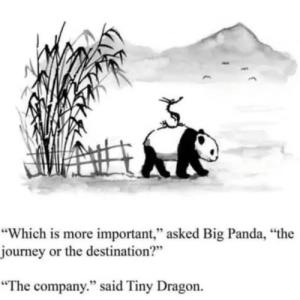
I’d love to hear any thoughts or ramblings about my cyber-friend’s dream, what do y’all think, is it possible? Would you want such a world?
“Imagine if we could create an Agrarian world again, using technology as a tool to help us, but not control or surveil us.”

