Homestead Happenings

It’s Shoulder Season on the wee homestead, and by that I mean a few things.
Shoulder season, for those who maybe new to the phrase, has a specific meaning in tourist trades, meaning between high season and low season. Savvy travelers and those who dislike crowds or who are just cheap or nearly broke try to travel in the shoulder season.

As far as I know it doesn’t have a parallel meaning in the gardening world.

But for me it does. It’s the time we move between seasons in the garden and since we garden all year, it happens twice, once in Swelter Season (now) and once in YoYo Season (formerly known as winter).

The key summer crops in the garden are either long gone–onions, garlic, crucifers, or mostly dead–tomatoes, squash, melons. And normally the cucumbers too, except those are, so far, successfully secession planted, with the new generation just coming up as the last one is dying. Good timing there, tiny bow to me!

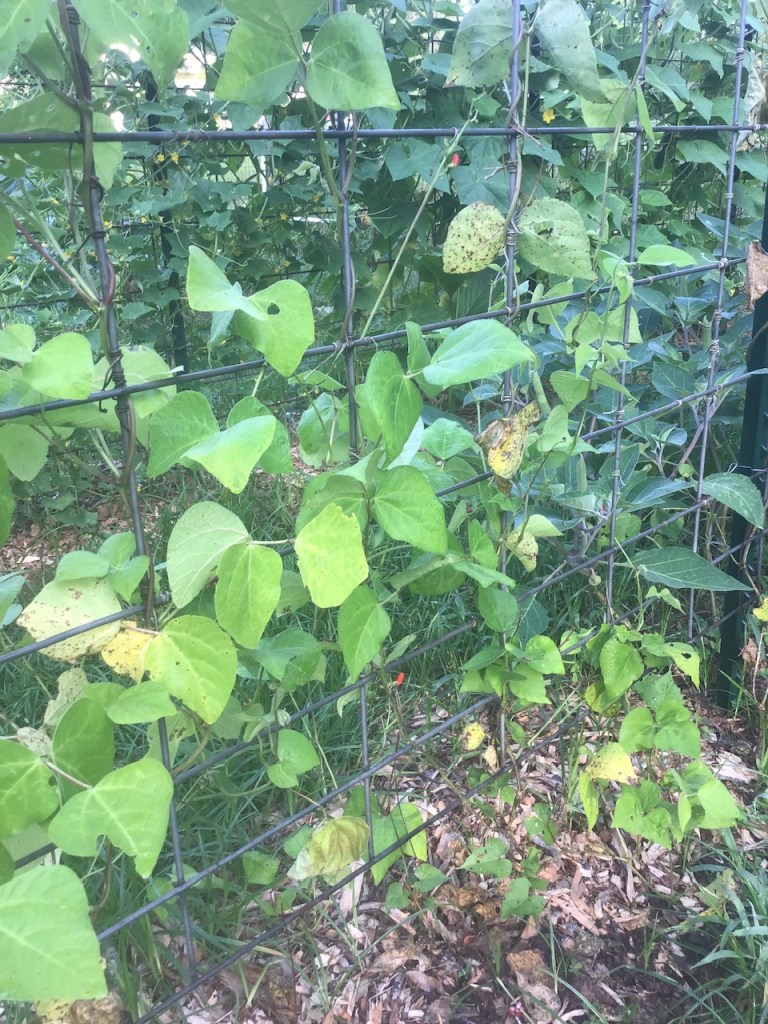
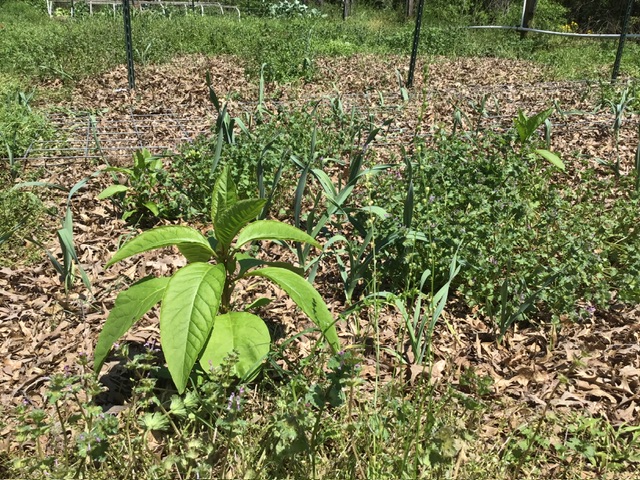
Old cucs on left, dying fast, on right a couple of tomatillos in the back, also dying and a volunteer datura, doing great.
New cucumber plants looking good, but will they produce?

And big bow to Handy Hubby for growing this 27 pound beauty!

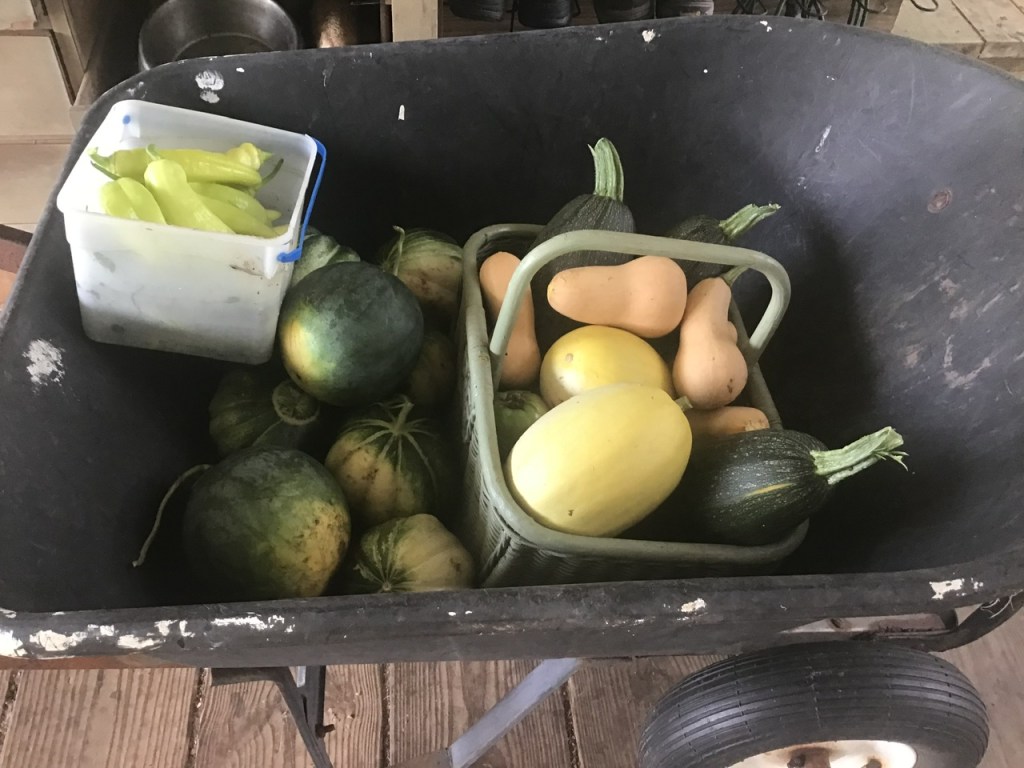
A nice variety of melons and squashes, we are quite pleased.
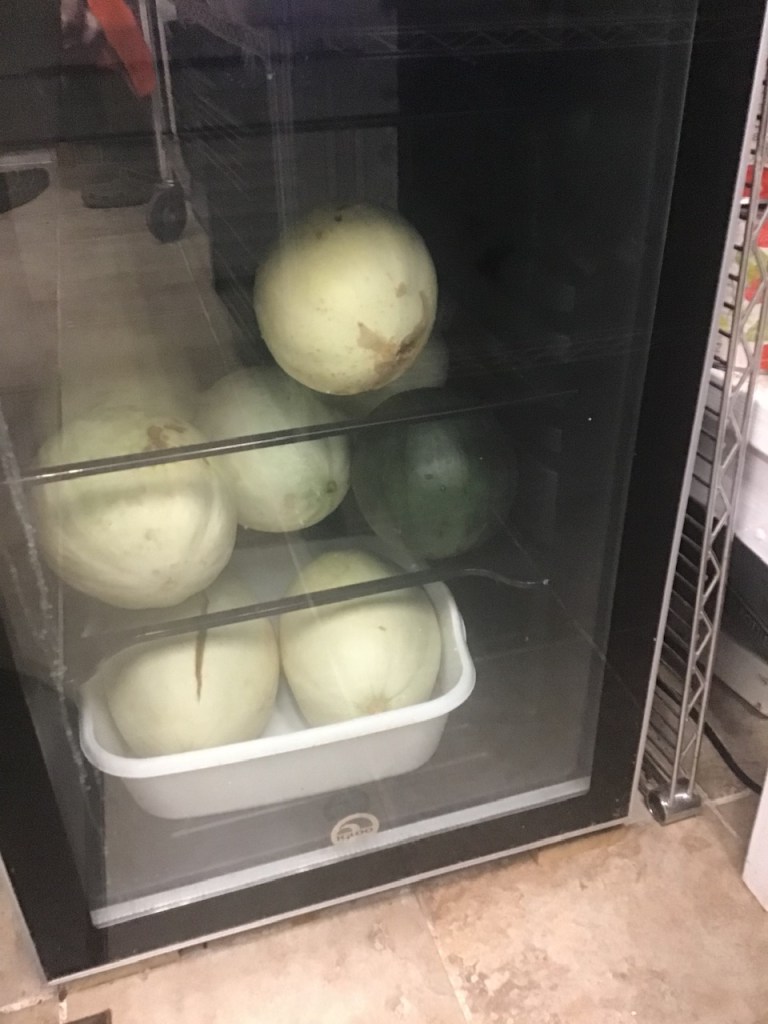
And still more, a mini-fridge of melon
And still more squash! And cider.

While it could be Vacation Season for some more sane types, for us it’s the work of Shoulder Season. We keep the minimum that will survive our high heat for the next two months and baby most of them best we can.

But under lights inside the fall/winter garden is on its way. There’s already another crop of tomatoes coming up, as well as broccoli, cauliflower and arugula.
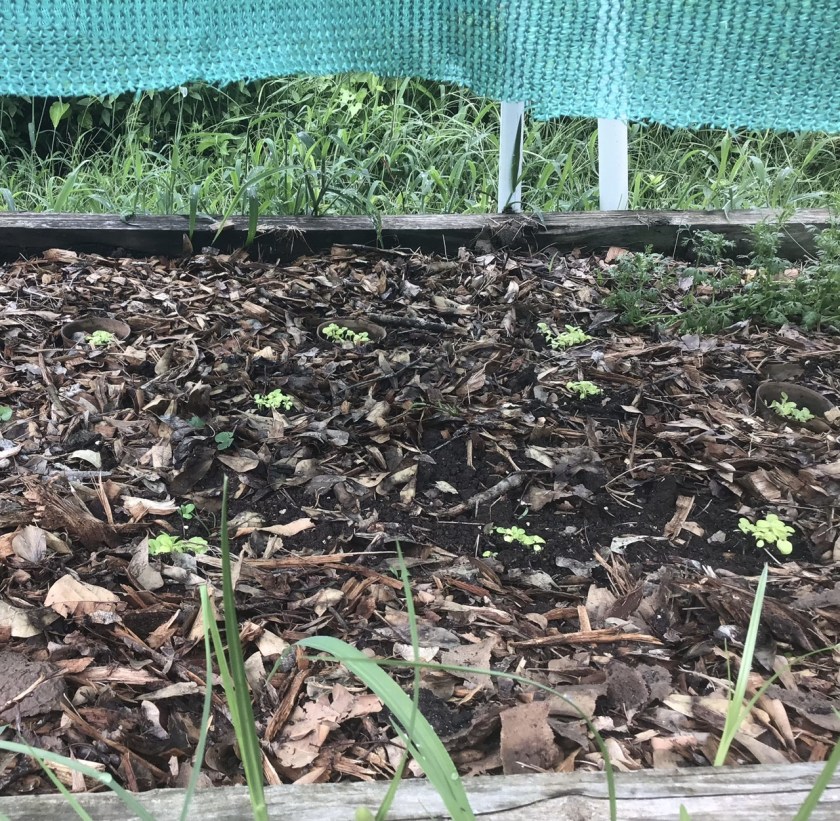
In the ‘babying’ bed I continue my lettuce experiment, starting romaine indoors under lights and moving under double shade cloth to transplant, then removing one level of shade cloth after a few days to adjust. They are still alive, yay!
Also in the ‘baby’ bed under shade cloth: some parsley barely hanging on, some dill trying to seed, 2 peppers, 2 dying tomatoes and lots of very happy basil.
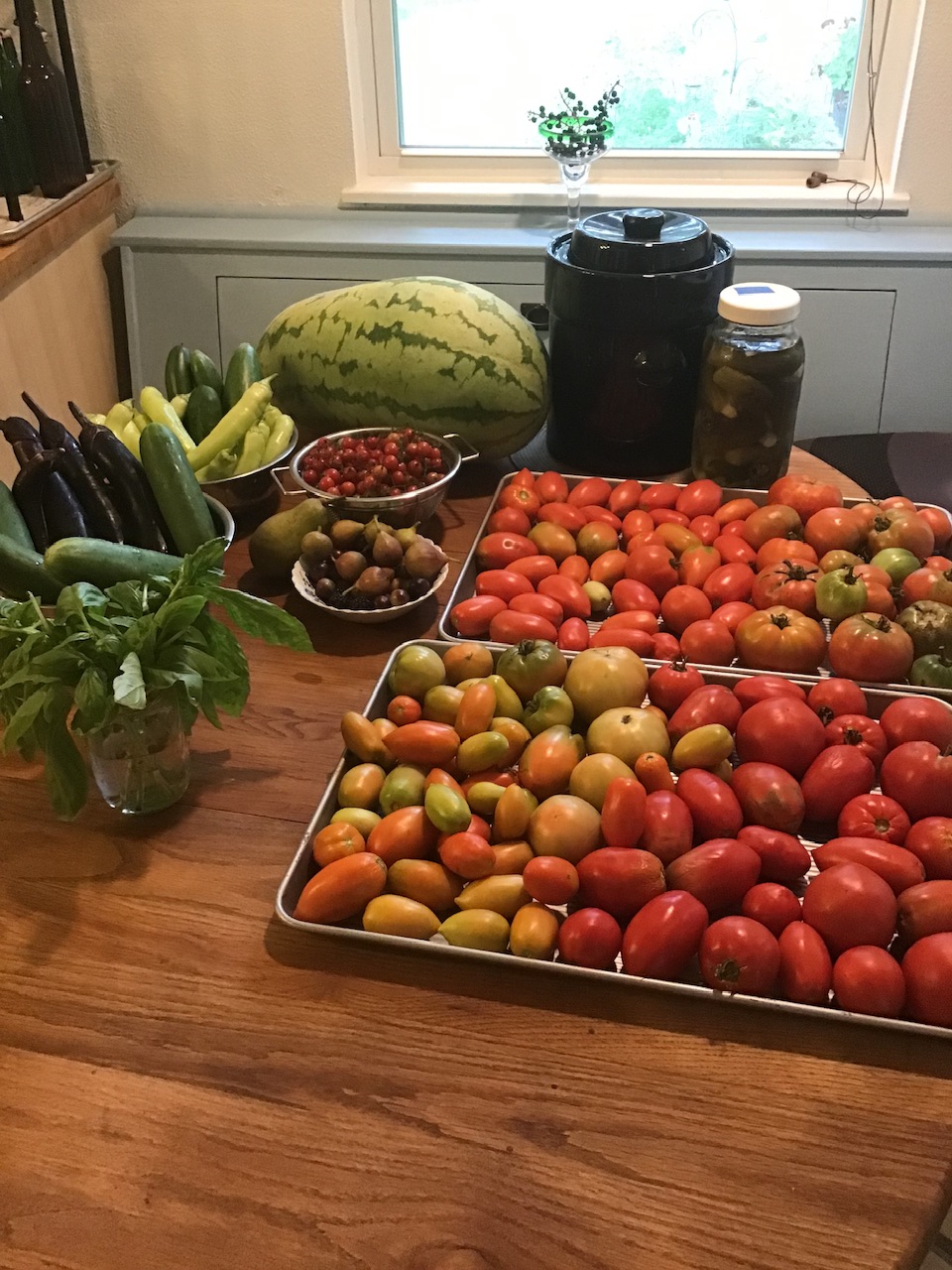
Tomatoes, peppers and basil for marinara. And in back left is cured lamb.

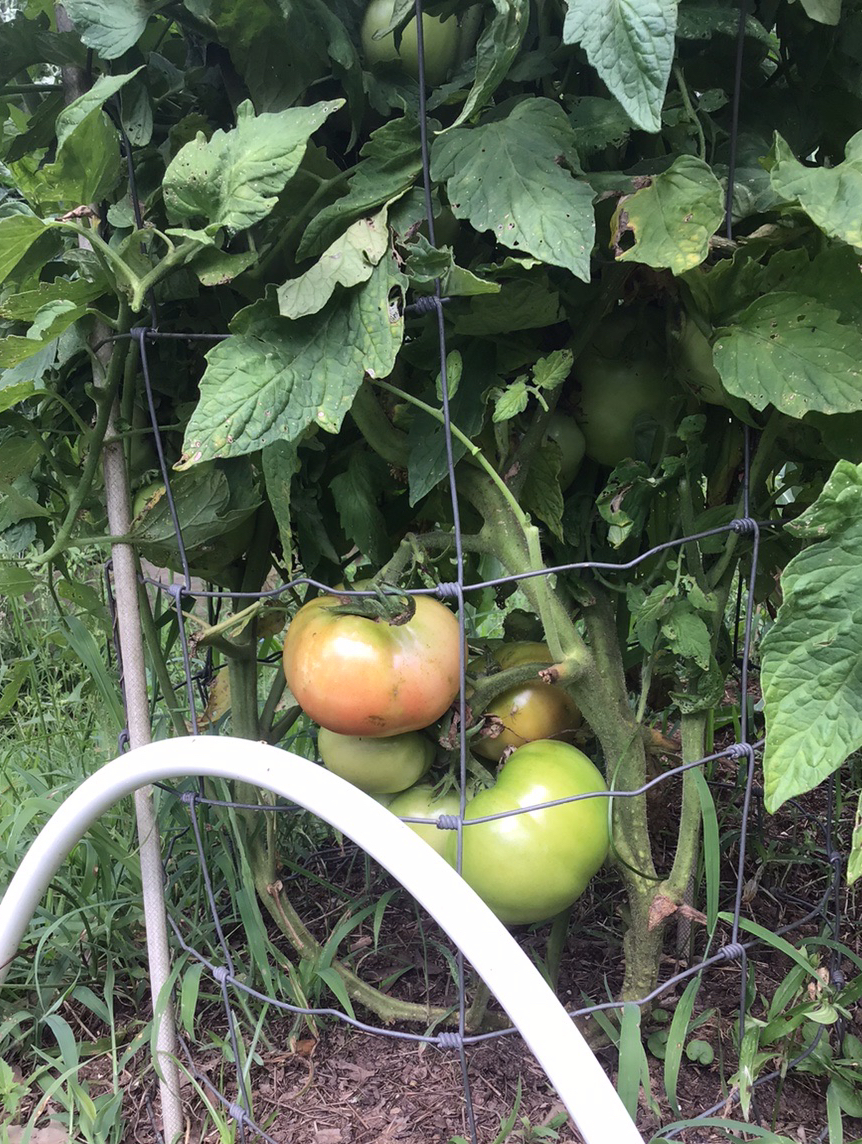
There’s processing to be done still, the marinara stockpile is done thanks to Hubby, but there’s still ketchup and bar-b-que sauce. And we still call this a bad tomato year!

stockpiling marinara

Ah, the gifts and curses of relativity. And surplus.

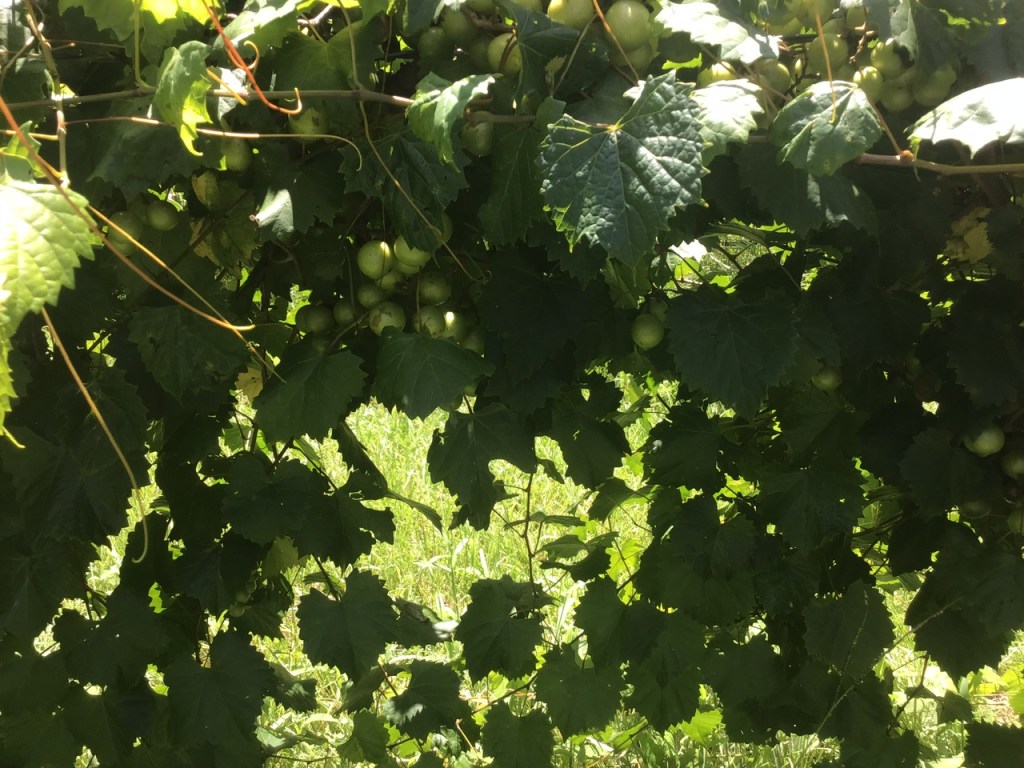
The pears are looking promising, and the grapes–which will be the next big project–wine and cider-making season. Blackberries and pears are our easiest fruits here; everything else seems to struggle. Though we have had years of good figs, and some neighbors still do. The grapes are looking good too, but there’s no guarantee.
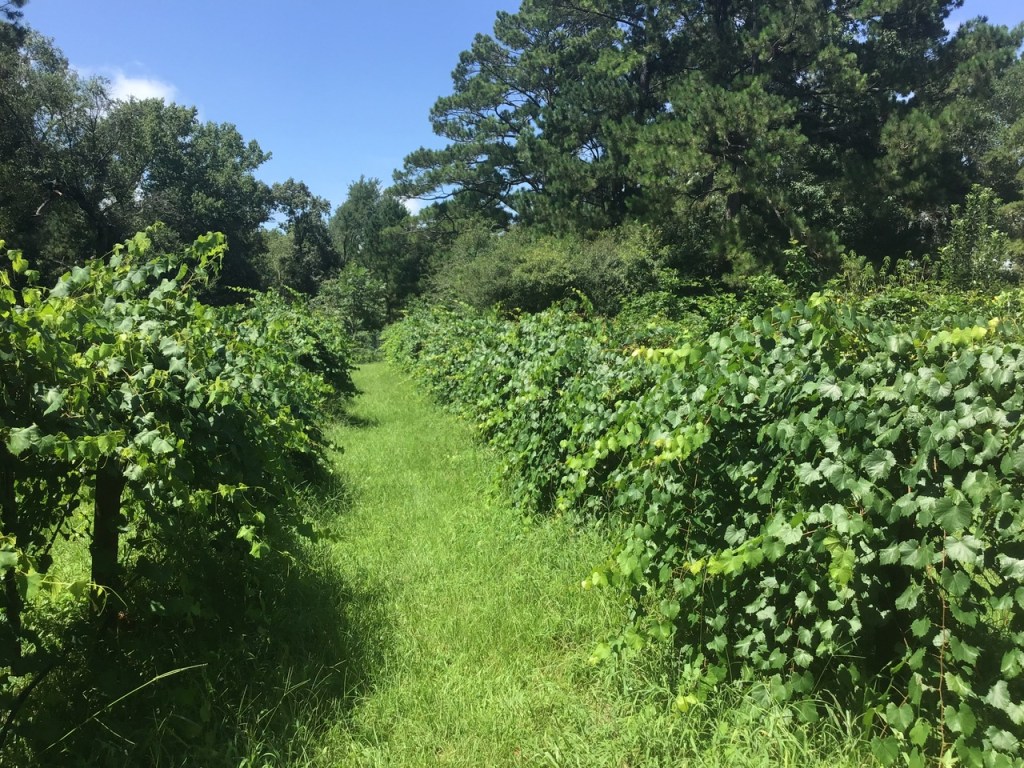
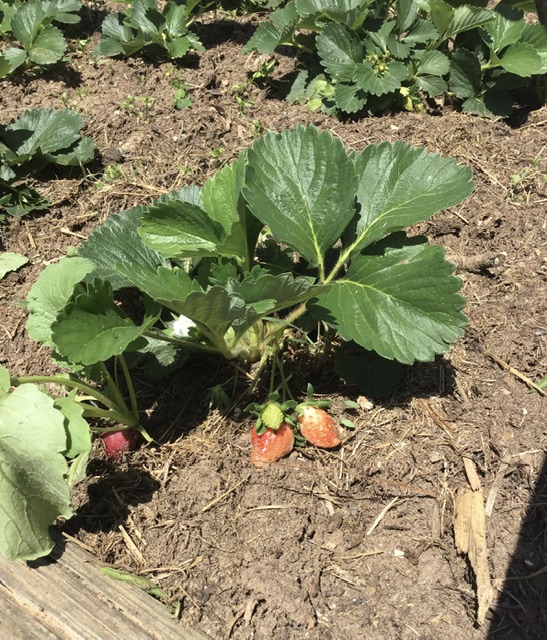
And I think I finally got the trick for strawberries. It seems most everything that is most delicious is high-maintenance. What can -we do, if we like high maintenance produce but to contend with the high costs of creating them?
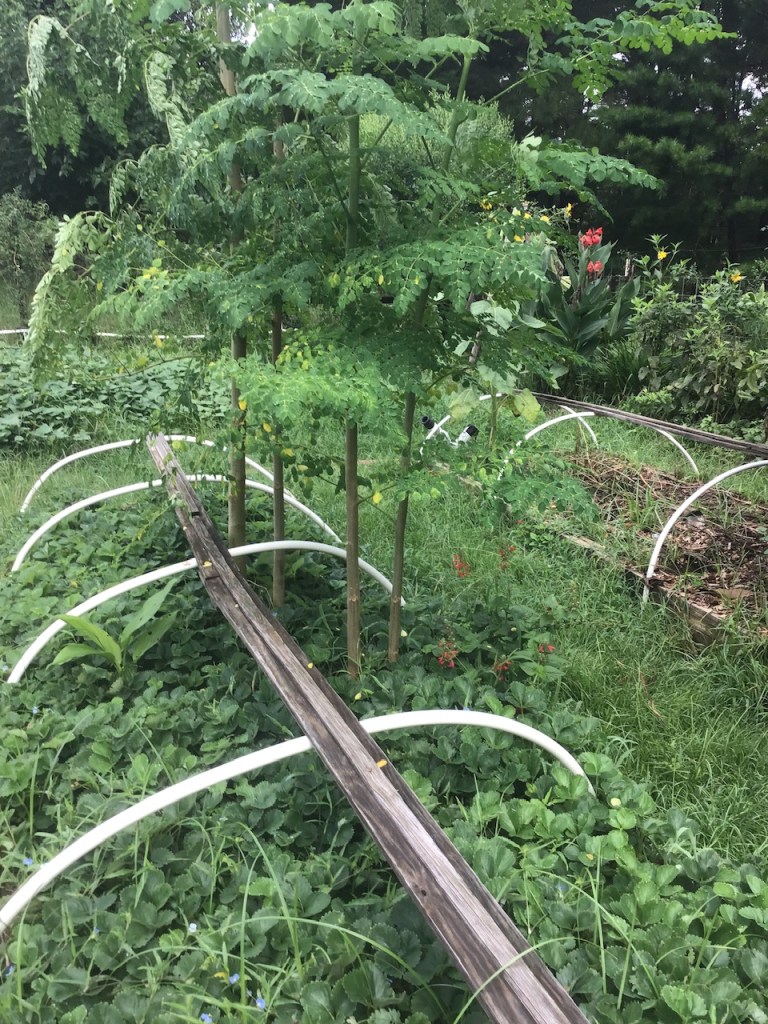
Many years of failed strawberries, but this year was a great success in comparison. Now the runners are going crazy and taking over this bed, so next year promises to be better still.

I’m planning for more low-maintenance in future, but those might be high hopes.

Because, my choice would be to spend my dwindling number of pain-free hours working with the flowers!
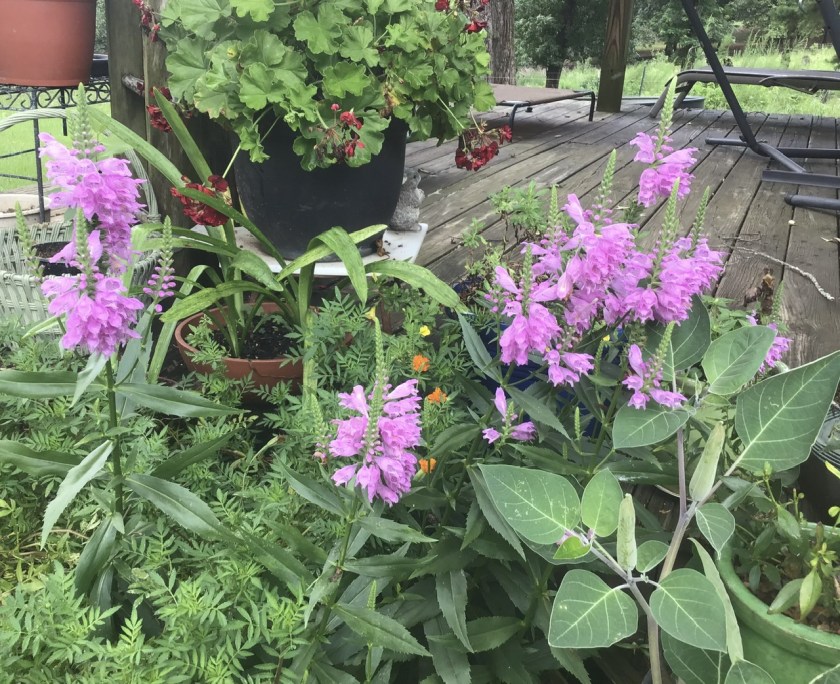
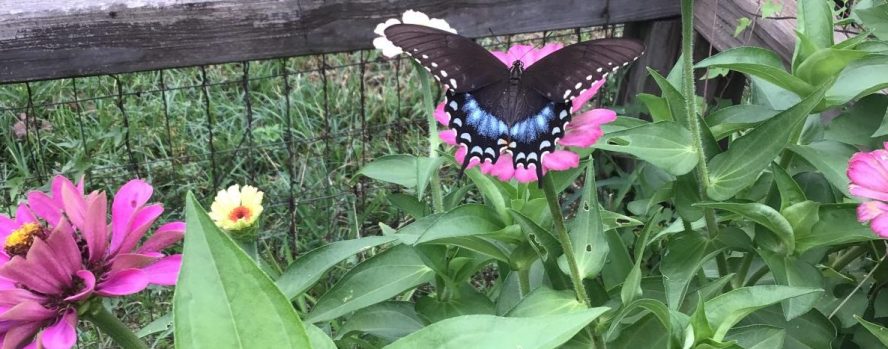
I’ve seen a few butterflies and bees on the pink ‘Obedience plant’, such a welcome sight!

Which brings up my other meaning for Shoulder Season.
So much shoulder pain! And I am not good at staying stationary, it drives me nuts actually. So it’s between physical anquish, or mental, and I do far better with the former.
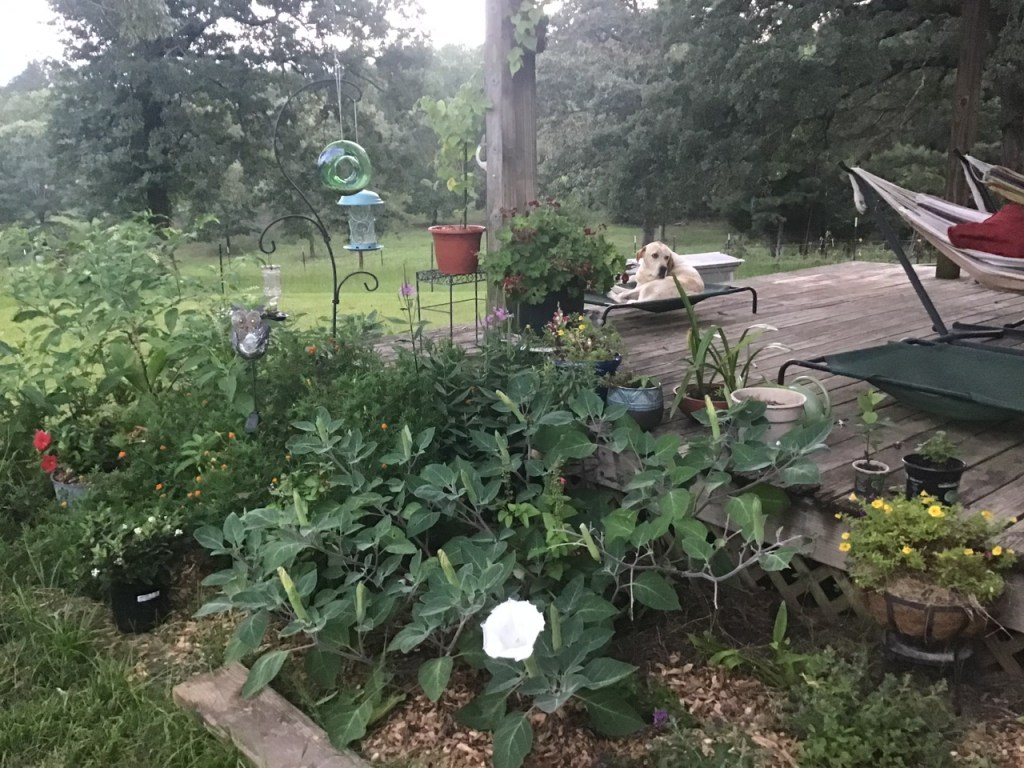
It’s as unwelcome a kinked, knotted, crippling invasion as this mystery fruit I posted about last year. I unknowingly caused quite a crisis in the garden and lost almost all the melons I planted.
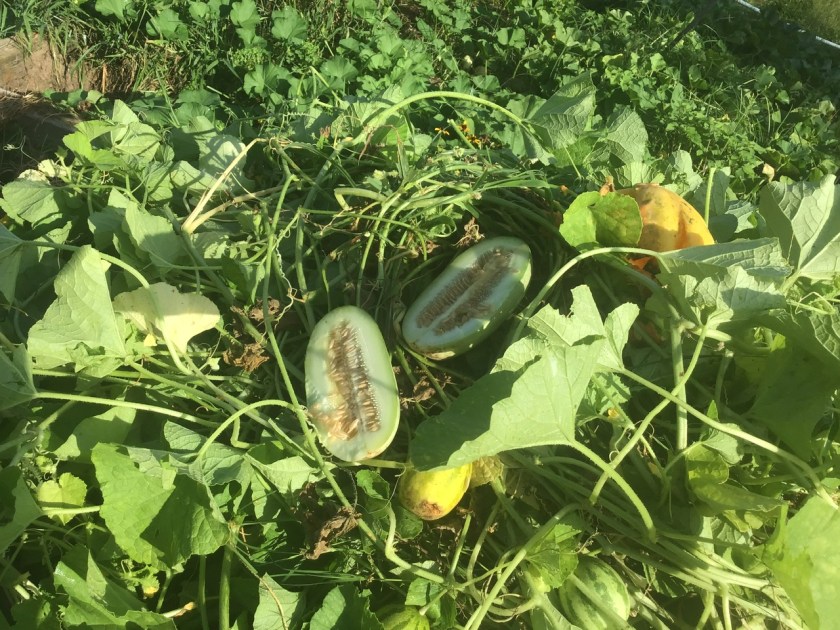
What is this imposter which choked out all my melons?!

Just when I was insisting to Hubby we need to be thinking about reducing our garden plots in order to reduce our workload and water usage, I stand corrected. The orchard squash didn’t produce well at all, for some unknown reason; the garden melons were choked out by the wild cucumber; so without the third space we’d have no watermelons or honeydews, which would mean a mostly melonless summer after lots of work and wait, as the main garden produced about half a dozen sub-par cantaloupe.

A sweet, cold watermelon is the best morale booster in the hot, humid Texas summer garden jungle!

Two wheelbarrows full of vines and fruit the pigs don’t even like.

Wild cucumber vs melons and the melons lost bad. I have still not been able to figure out what these things are, which I brought into the garden under false pretenses. I have heard suggested they may be lemon cucumbers or mouse melons, but they are not the right size, shape or color for either of those.

I really get the frustration of invasive species now. I realize I’ve been a bit cavalier on that front in the past, for good reason, but I have definitely been humbled this time as these bitter, seedy imposters are still popping up everywhere.

Please, give me an invasion of the supposedy invasive Mimosa trees, and I’d be thrilled!
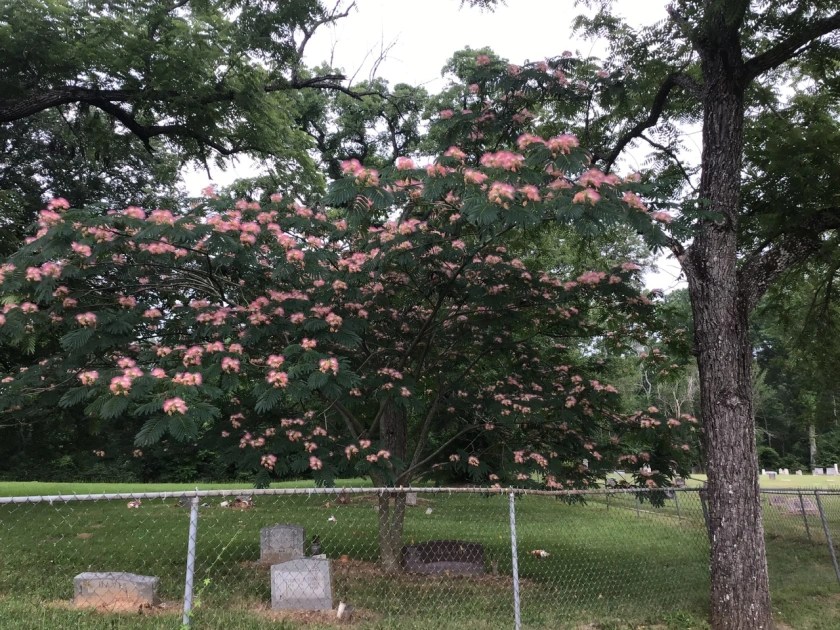
You have my permission to invade my gorgeous Mimosa!

The plants that thrive here in the long high heat and humidity are so impressive, even when invasive, but it helps my morale considerably to consider the non-invasive ones as often as possible.

The sweet potatoes are almost effortless. Once they get established and as long as they get a good head start over the bindweed (another ‘invasive’ relative) they are pretty reliable. Eggplant and okra are others, and we’re learning to like eggplant. Maybe even a lot.

The bountiful basil takes center stage as the parsley, dill and cilantro take early retirement and don’t even bother to seed, it’s so damn hot.

Whether and which tomatoes will survive, or thrive, from one year to another is anyone’s guess.

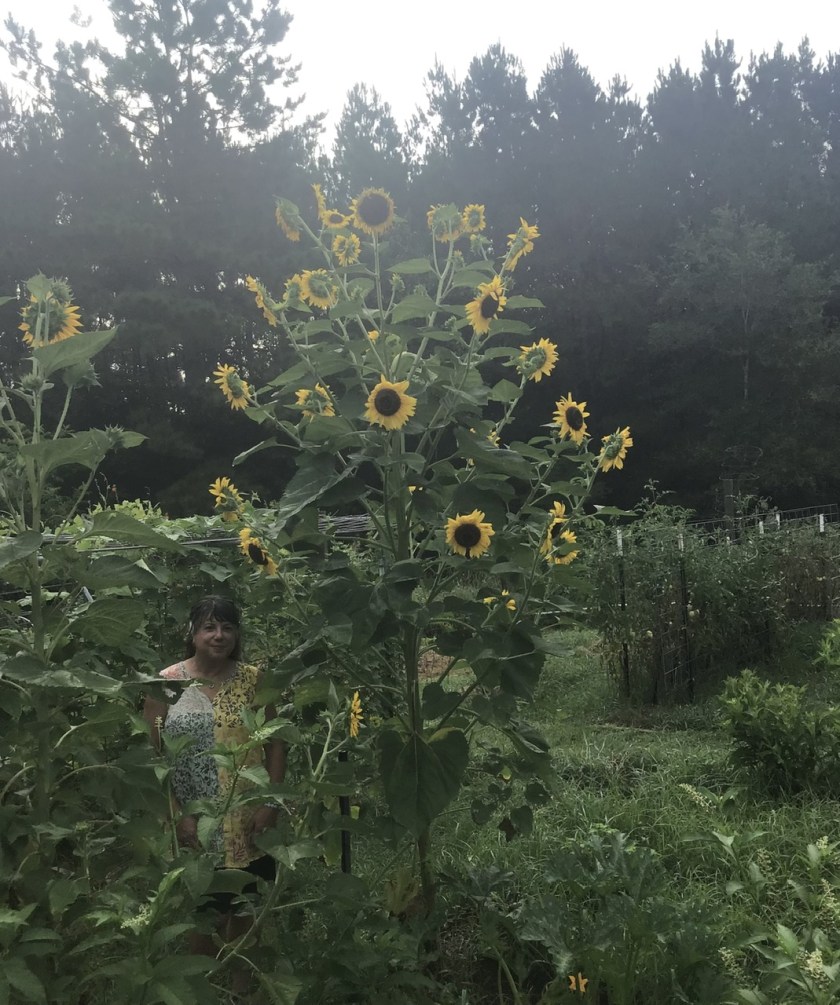
Gavin’s seeds, the Scarlet Runnerbean (barely) and Black Hopi Sunflower, are hanging on still, very impressive.

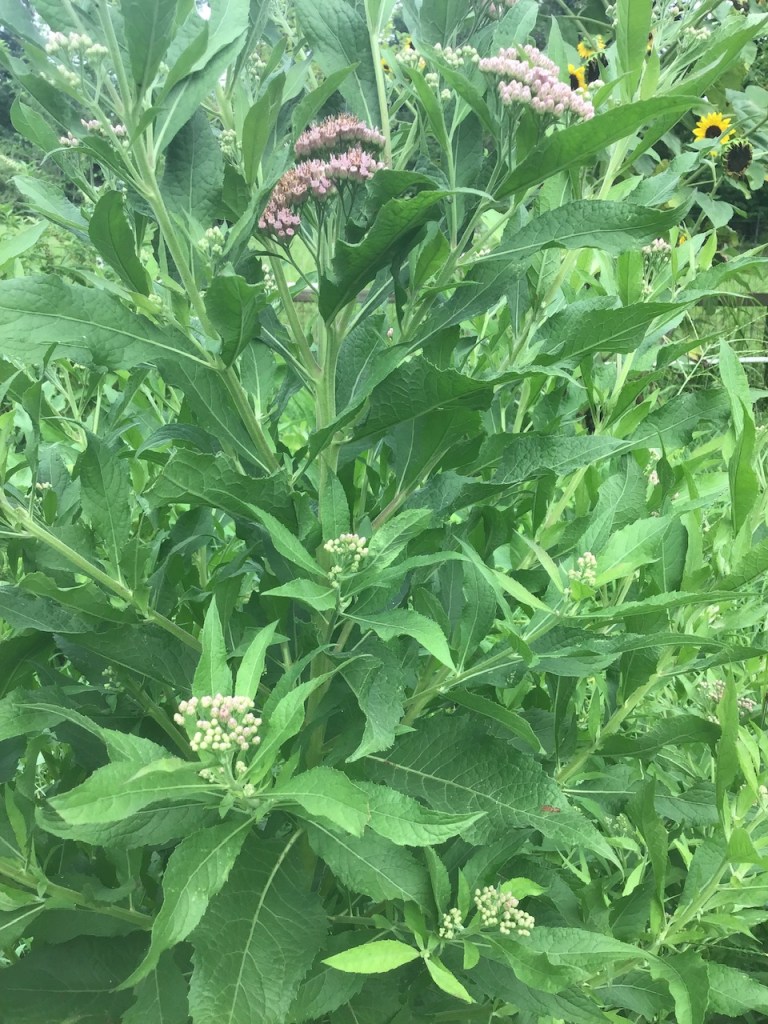
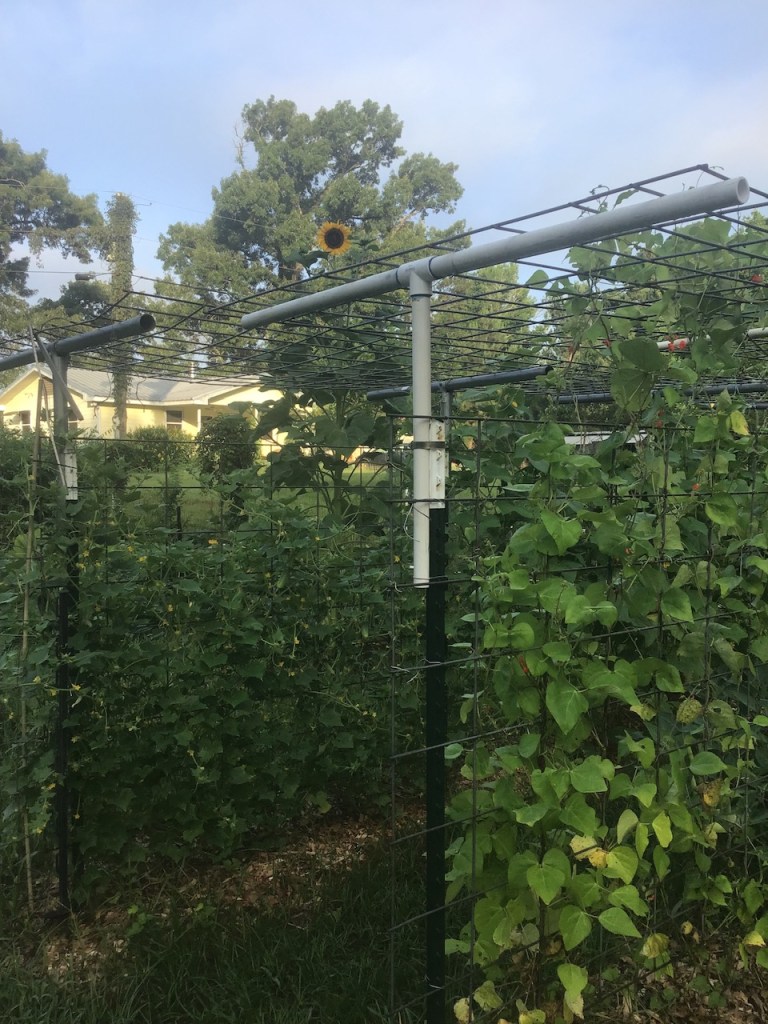
The black Hopi sunflower behind a mystery weed that smells medicinal. Any idea what it is, anyone?

The two out of three citrus planted last spring are doing well–they look healthy and their growth has more than doubled since spring.

The poke weed, the datura, don’t get me started, such beautiful and amazing plants!

But, the mystery weeds, what are these?

Inquiring minds want to know!

Thanks for stopping by!

Gavin’s Reciprocity

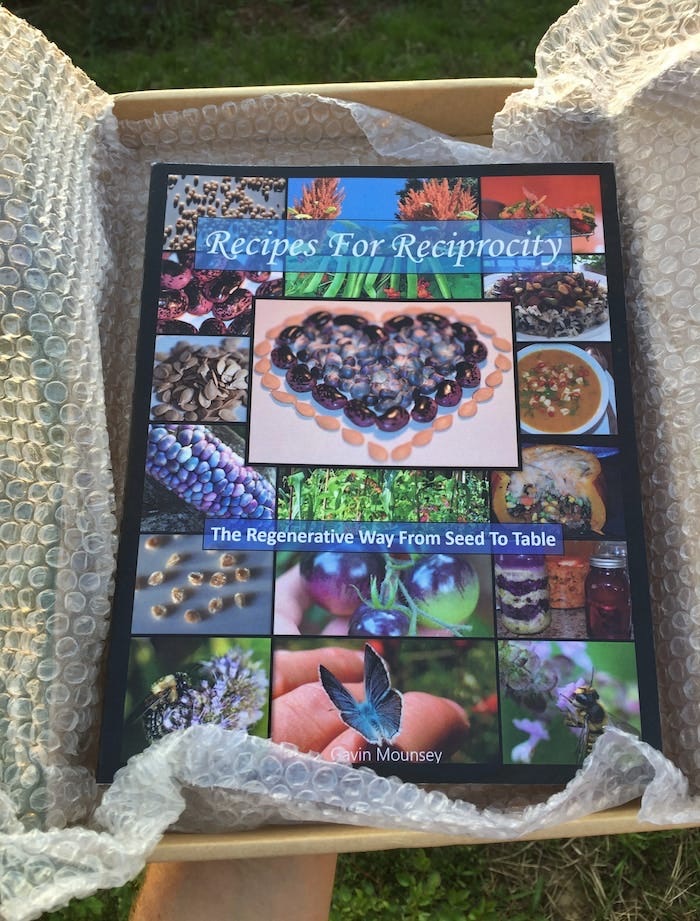
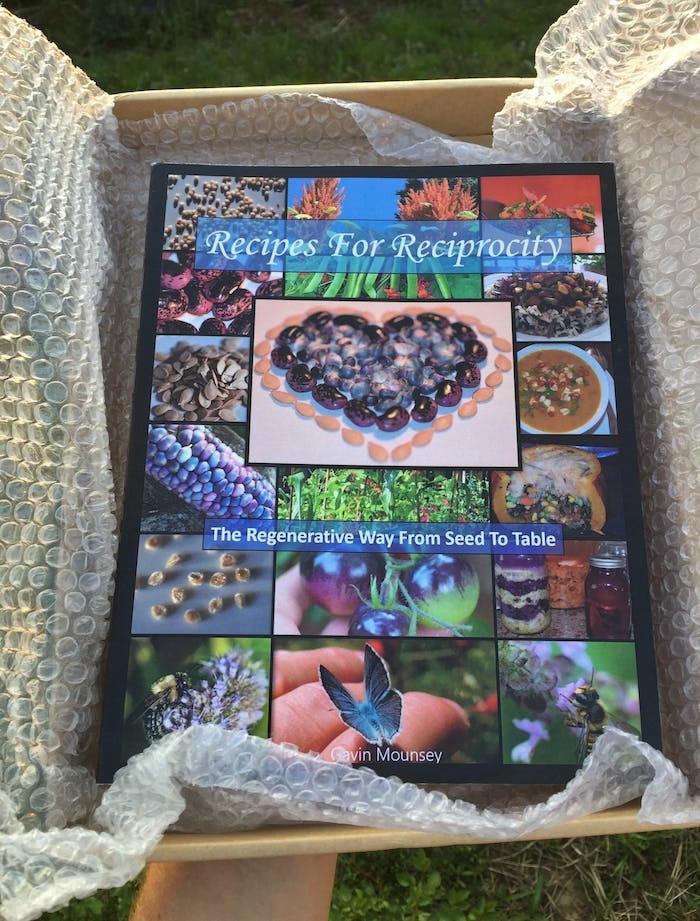
I’ve had a bit of challenge trying to simply label Gavin Mounsey’s book, “Recipes For Reciprocity: The Regnerative Way From Seed to Table” because it’s so much more than a cookbook. I have a great many cookbooks and my favorite type are what we might call ‘narrative cookbooks’ (though there may be an official sub-category name that I don’t know)–these are the kind where there’s a very present narrator telling you stories about the foods, and the places, and the people associated with the recipes and the author’s life. I might be inspired enough to write one of these myself someday.

Gavin’s book is not that, yet it is even more still. Rather than try to say it better myself, and fail, here’s an excellent description from the back cover:
“This book is a magnificent achievement. It can help you learn pracical ways to grow and cook mouthwatering food-as-medicine, and build deeper and stronger community, but it is so much more than that. Gavin has written a love letter to humanity and the living world and a manifesto for workable hope, all with an unflinching honesty about the crises we face. Gavin uses the nuts and bolts skills in the garden and kitchen as a launchpad to reimagine our place in the world, and the result is a solid foundation in the chaos. His hope and love are infectious, and the applied knowledge shared in his book is encyclopedic. I highly recommend it to you.” ~ Jason Padyorac

Along with the two books, one I gave to a friend, Gavin sent lots of seeds, some I’m already growing, others I can’t wait to try.

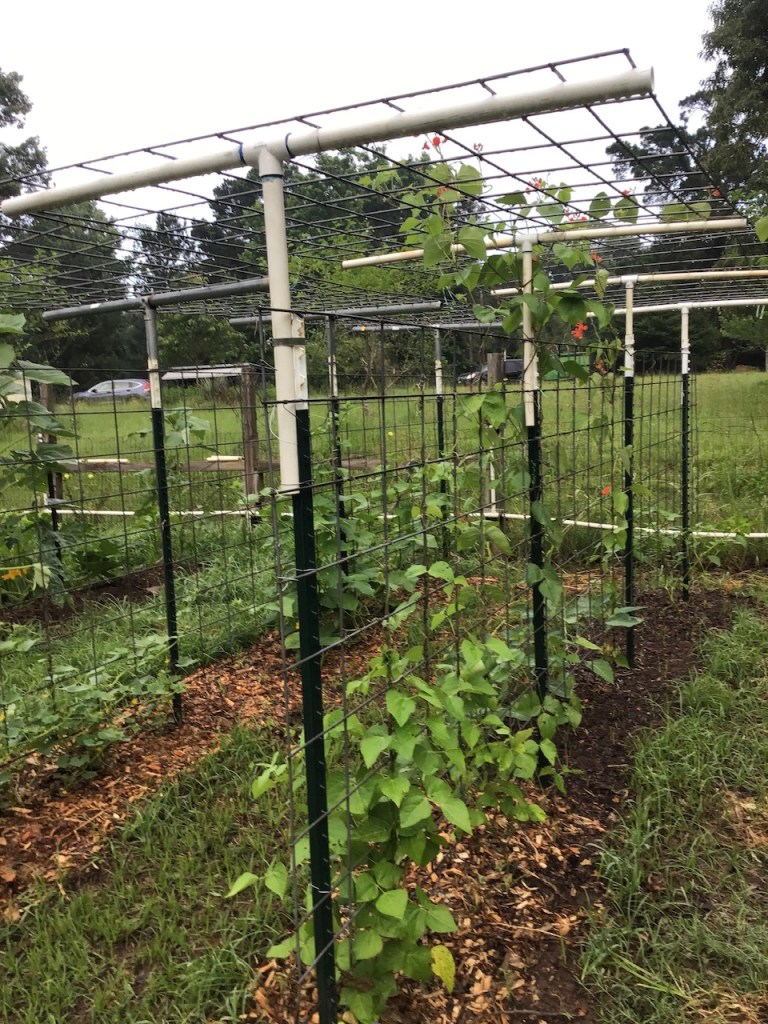
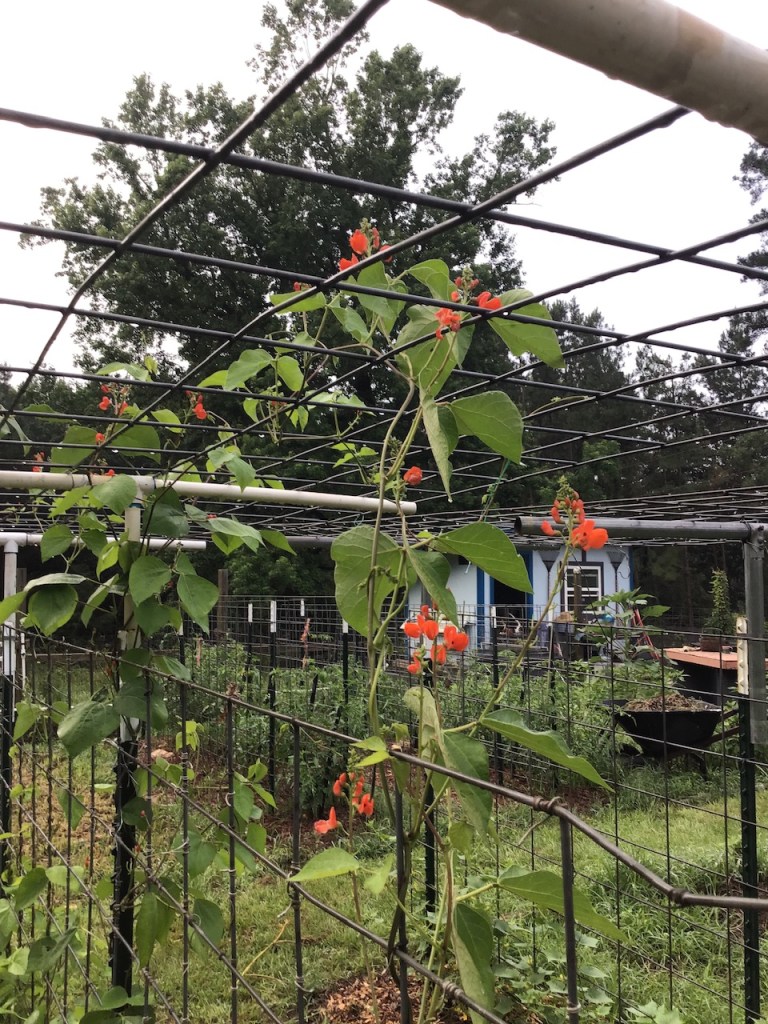
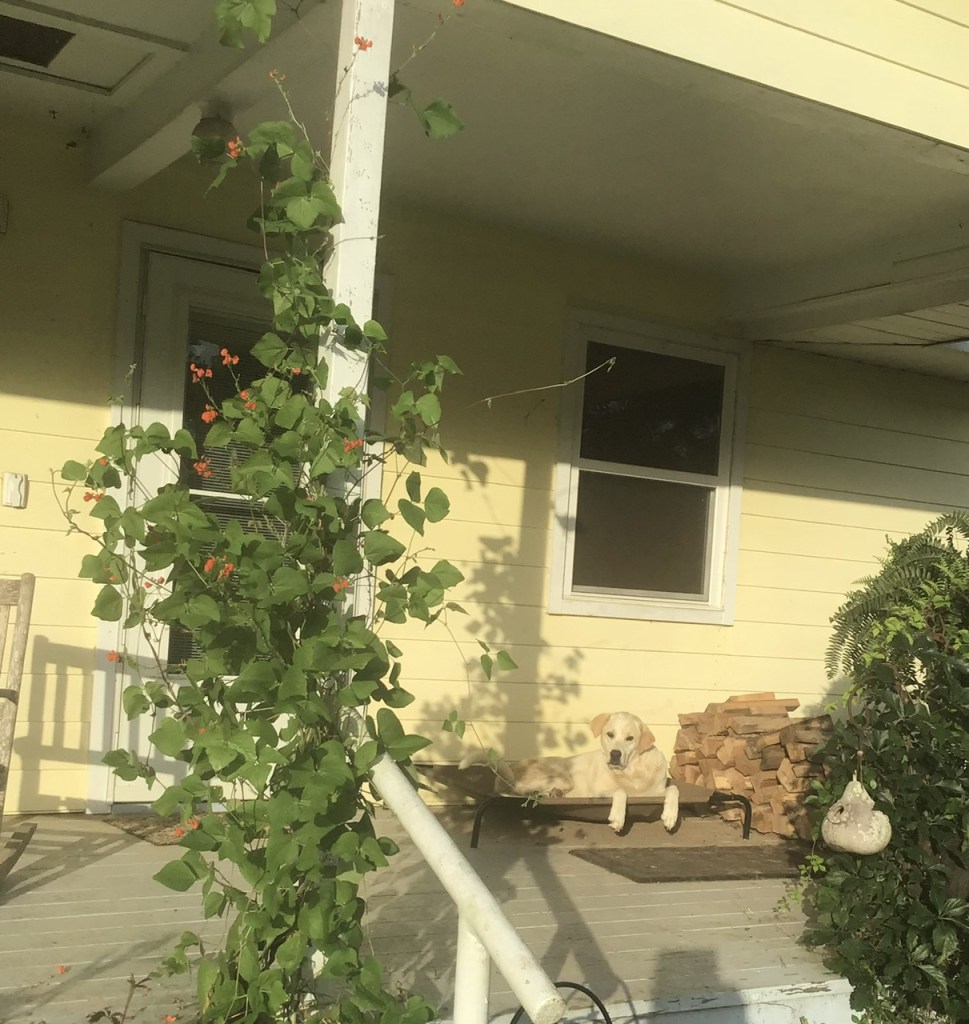
Scarlet Runner Bean in early summer, now dead.

So far I’ve planted the Scarlet Runner Beans and the Black Hopi Sunflowers.

Gavin:

“These beans are among my all time favorites for their versatility in the kitchen and beauty as well as productivity in the garden. They are an amazing companion plant due to the plant’s roots having the ability to associate with rhizobia (nitrogen fixing bacteria) which not only allows this plant to fertilize itself by pulling plant food from the air, it also means this plant can help fertilize its meighboring plants with excess nitrogen. On top of that amazing benefit the scarlet runner bean has beautiful red flowers that attract pollinators such as ruby-throated hummingbirds and bumblebees.”

It is amazing to see how many fantastic plants can flourish in such varied climates. Because Gavin is in Canada and I’m in Texas I didn’t expect to find so many parallels in what we plant in our gardens, though certainly the timing and special needs vary quite a bit. The scarlet runner beans I’ve planted in full sun are perishing. But the others I planted which is shaded during the intense mid-day heat are hanging on. They’ve not produced yet, but I’m still hopeful and I like them anyway. I’m sure if there is any production and I can save the seed, it will acclimate to our area. Unfortunately, after a promising spring, the bumblebees and butterflies have been depressingly scarce in the garden lately.

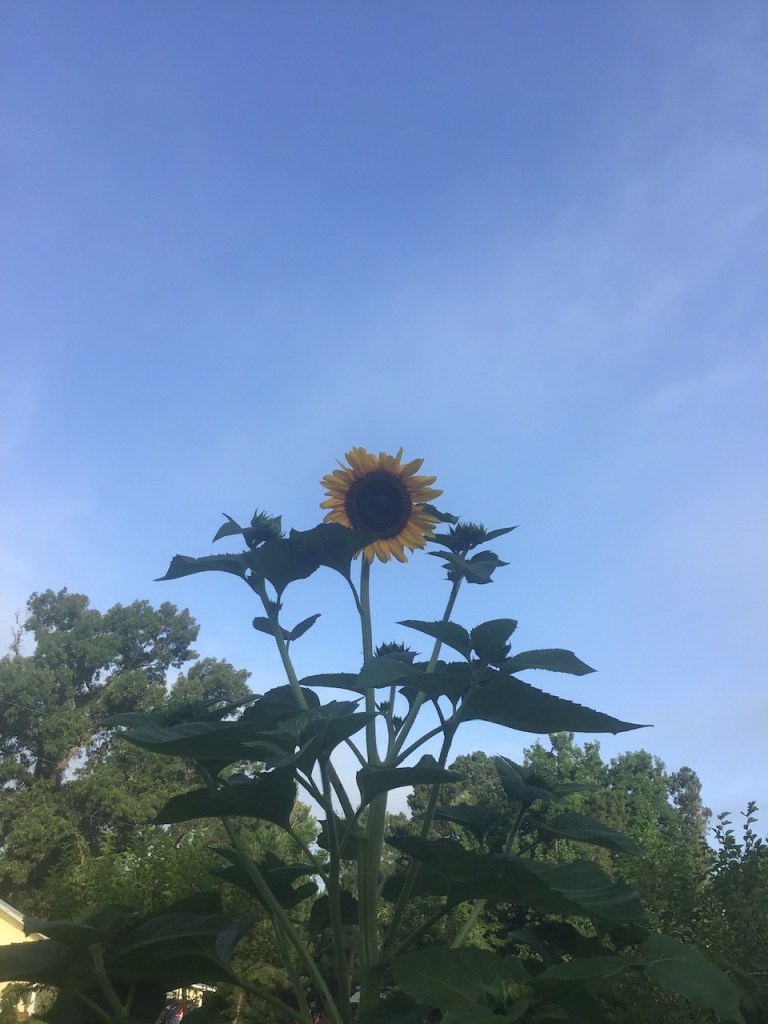
Gorgeous! Ugly pity for the chem-sky.

The Black Hopi sunflower has been the piece de resistance. It’s gorgeous and taller and fuller than any I’ve ever seen. I had several planted in several spots, and most of them got damaged in the high-wind storms we’ve had. But not this magnificent giant!

Gavin’s reciprocity in action is so inspiring, which is why I wanted to spend a couple of posts sharing about his book. Regular readers will probably remember I’ve shared some other of his work here in the past, especially in our Herbal Explorations pages, which come from his Substack newsletter.

In another post I’ll dive into a few of the recipes, but for now I’d like to expand on a few quotes which so align with my own learning and experience growing a garden and cooking seasonally from scratch. It has absolutely been the most rewarding journey of my life, with plenty of hope remaining for more of the same in the future.

From the section: Reciprocity in Action
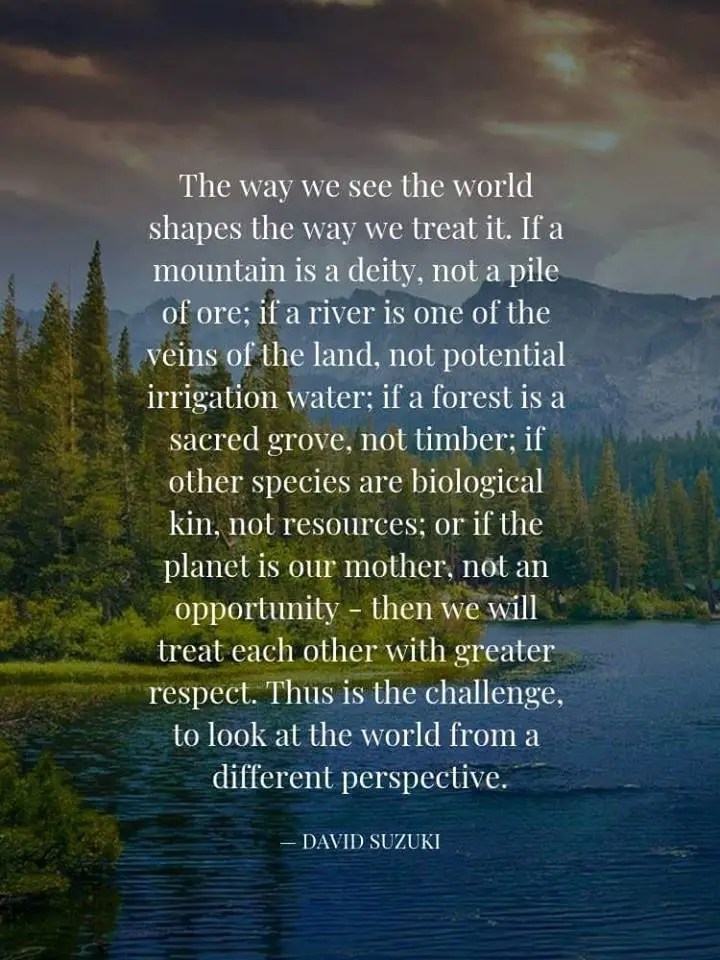
“Choosing to give our attention to nature is also a form of giving back. Observing and paying attention to the cycles and living systems in nature involves giving our time and our thoughts. When we closely observe nature we inevitably come to perceive countless expressions of beauty through our perceptions of the form, color, sound, scent, textures, tastes and relationships that are all around us. This leads us to caring, feeling gratitude for and feeling compelled to protect the amazing gifts nature shares with us. From the place of gratitude we engage in one of the most meaningful and powerful acts of reciprocity. We open our hearts, we feel content . . . we practice self-restraint, we choose to live more consciously and aware of how our life choices impact the living planet that sustains us and showers us with endless gifts.”

Gavin most certainly has an eye for beauty, his photography is stunning.

(3) The Jubilation Of June – by Gavin Mounsey

https://gavinmounsey.substack.com/p/the-jubilation-of-june-d41

I know how daunting it can seem to dive into a new hobby like gardening, or even cooking nowadays, but there’s so many smaller and easier things that take so little effort or knowledge that might be just the momentum for many to kickstart a healthier life and society.

Just observing. I couldn’t agree more. It really does start that small and simple and while I have read loads of books on gardening and cooking and many adjacent subjects, I’ve learned far more from observing. Taking notes helps too, but considering how bad I am at that, it must not be totally necessary.

The other few very simple things that require no gardening and very little cooking is compost and ferments, both which Gavin discusses in the book.

Why those two, you might be wondering? Because in my experience, composting makes you far more conscious of waste, and fermenting shifts your attention to the weather and seasons. Both of these processes have enriched my life and health and outlook far more than I could’ve ever imagined.

A window sill of herbs would be enough to use up the compost produced by the average small household. Or donate it to a friend who gardens if you have such a black thumb or really no space. And who knows, maybe she’ll reciprocate with a zuccinni or two.

I had no idea what eating seasonally meant. Really. Until I went to the farmer’s markets in France on a high school exchange program, I had zero clue produce even had seasons, and considering how much is grown indoors today, that’s probably become more normalized than ever.

Considering I grew up eating like the vast majority of Americans–fast, frozen, canned, bagged–I know what easy looks like, and this is pretty darn easy. The shift really is more in attitude and attention.

Now I long for cucumber season as I long for tomato season as I long for melon season as I long for radish and lettuce season. It’s become that nuanced and I love it. Sure, there’s some cross-over and we can and ferment to save the bounty. But that limited time window of bounty becomes a season within a season, with all that entails–a change in primary food and focus–all with their unique gifts and challenges.

Surplus requires work, work requires rest and creates reward. 😊

The ebb and flow of surplus and scarcity becomes natural again, each bringing its own unique gifts and challenges.

My influences growing up–that of media, education, environment–worked synergistically as detachment mechanism. Nature was that which we were being systematically detached from, and that trend has only exaccerbated, to the growing dis-ease of ourselves and our environment.

“Within the last century, healthy, natural, organic food has been made more difficult to produce because of the chemical pollution, at first, and genetic pollution, more recently. A handful of companies have spread these toxins across our planet diverting US$ 400 billion of public money to subsidize their high cost chemical commodities to make them artificially ‘cheap’. The costs of this ‘cheap’ food are astronomical in terms of the health of people, the ecological damge it causes and its exploitation of farmers. If the true costs of chemical food were taken into account it would be unaffordable. Insead of subsidizing chemical food and creating epidemics of food-related diseases, public money, used for nourishment and the protection of public health through organic food, would save us billions in health care. Denying people their right to healthy, poison-free food by manipulating laws, policy, science and the use of public money to impose a non-sustainable, unhealthy food is food-dictatorship.”

to be continued . . .

Thanks for reading!

Homestead Happenings

It’s been so long since an update I don’t know where to start. Or where to end, or what to include. But I figure there have got to be a few readers out there hankering for some other news besides the shitstorm coming at us from the global mafia and the media cartels.

Mostly done, finally!

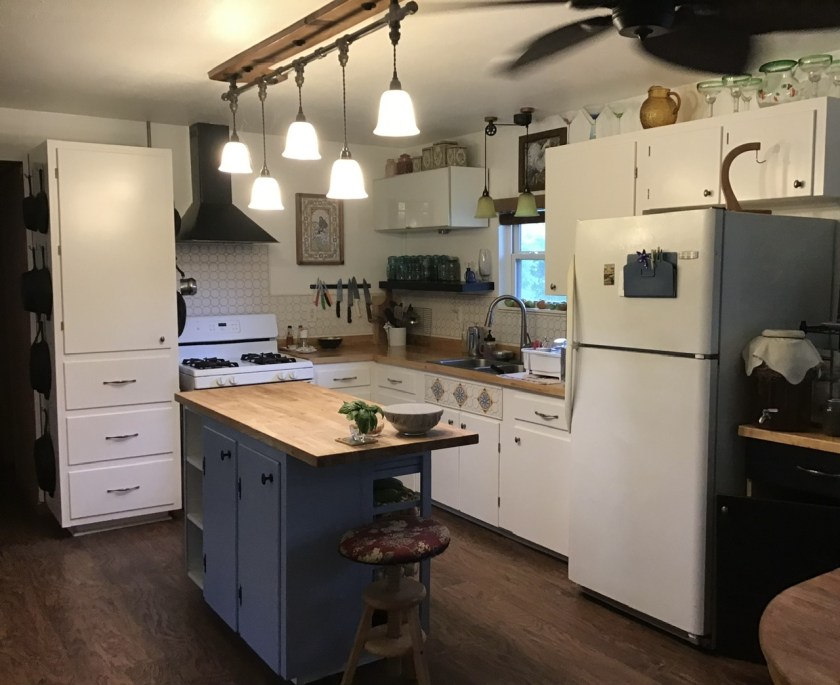
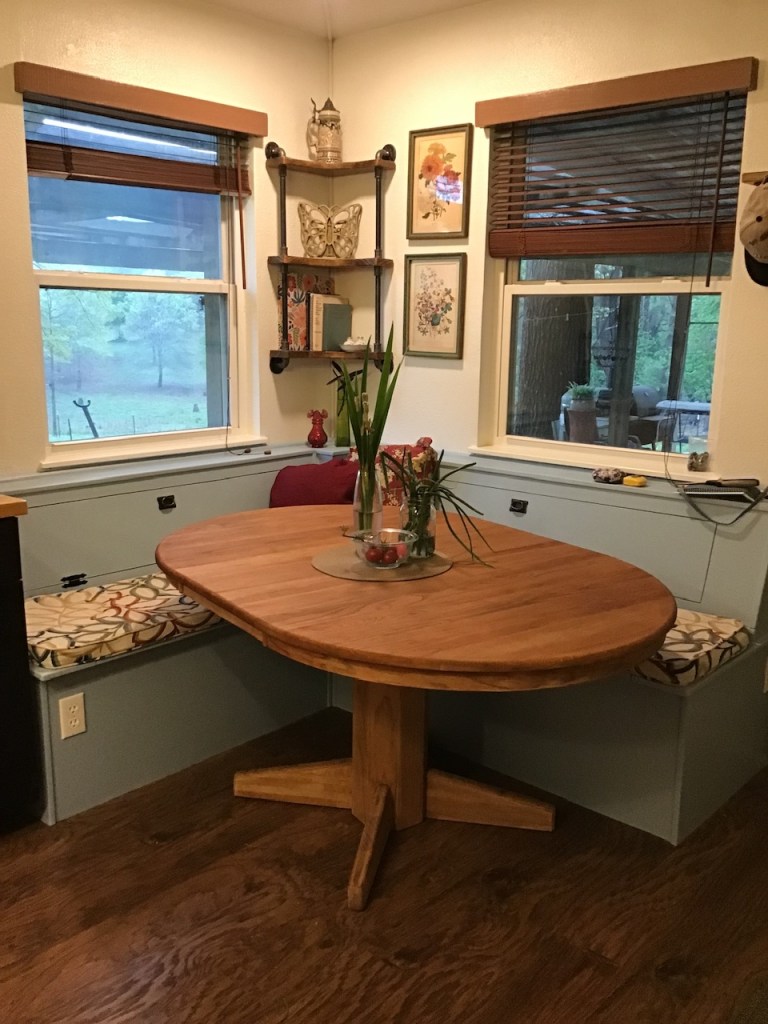
In my last update we’d started remodeling the kitchen. That was a very big DIY job, it took a very long time, and we’re still not totally finished. But we are very pleased with the results that were easy on the budget and tested our creativity, skill and resourcefulness.

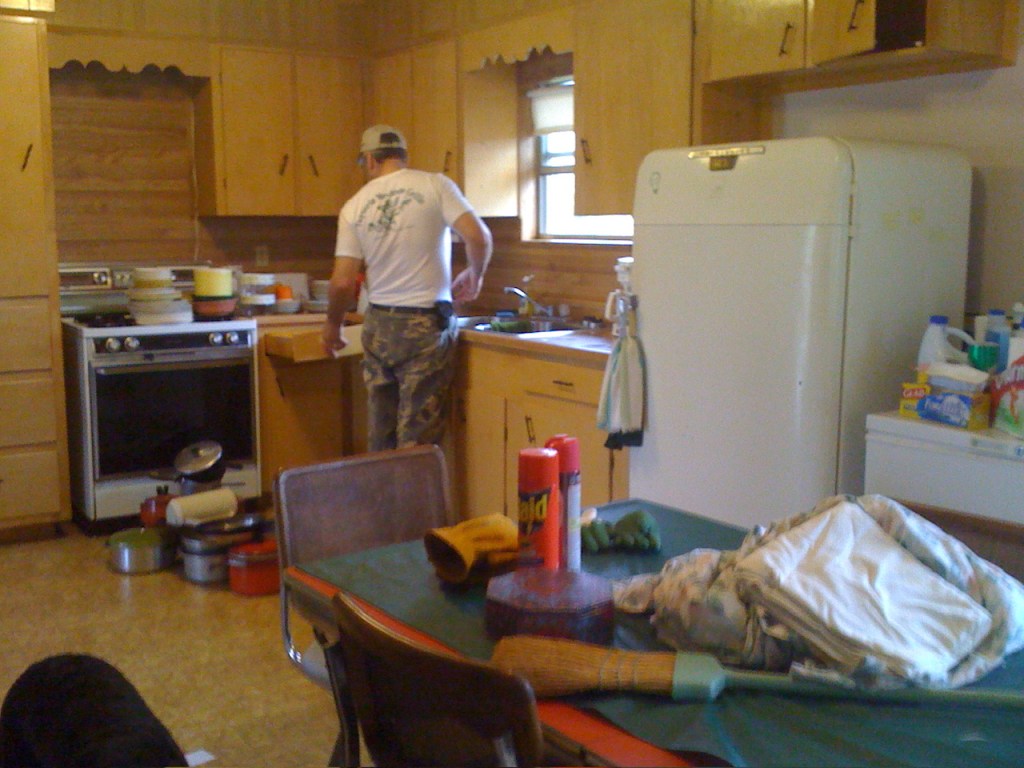
I thought I’d include our first time redoing the kitchen, in 2009 when we first moved in, with the previous owners’ belongings to haul away before we could begin. It had been empty for many years and the mice and roaches had taken over. It was a disgusting experience, the worst of which we got to avoid this time, so that was a bonus.

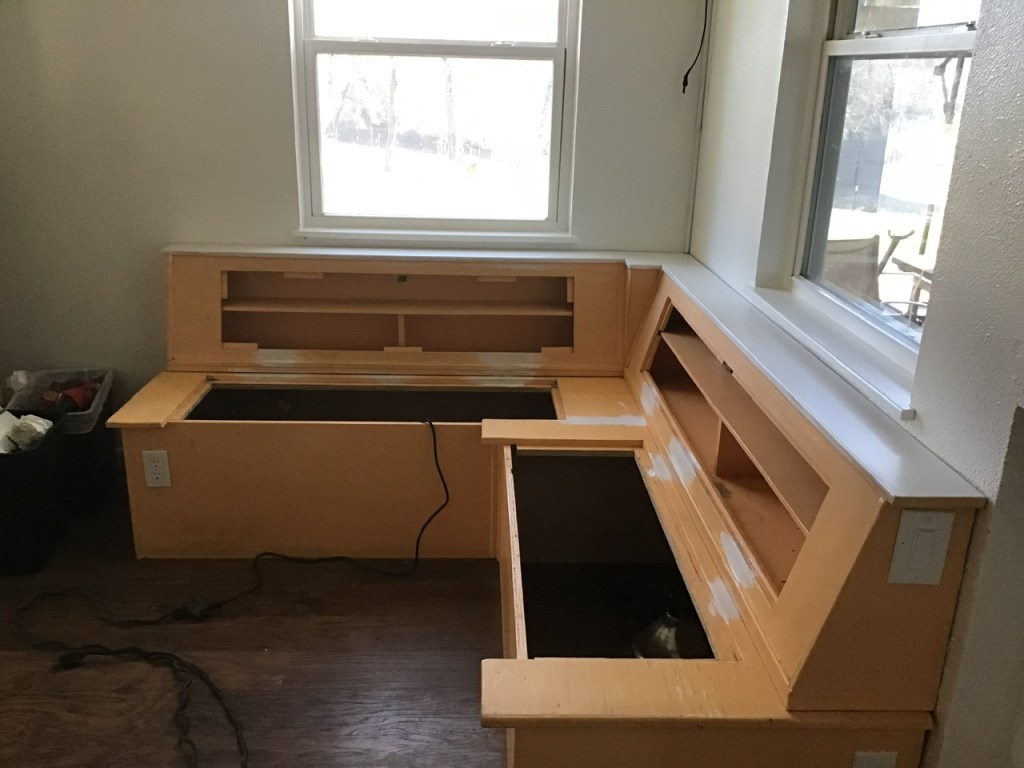
This time we also repainted the ceiling and walls and all the cabinets as well as the breakfast nook bench and storage unit Hubby had built previously. He also replaced the countertops and handcrafted new lighting and shelves, expanding on the same ‘steam-punk’ style as he used on the entryway table he built last year.

Work in progress:

After way too many lost hours, I was not always a happy DIYer! But I am pleased with the result.

I spent a lot of time stripping and re-staining the kitchen table. I still want to dress-up the windows treatments and paint the doors and bases of the table and stool. But then we got too busy and had to devote our time to the garden and orchard.

The cucumbers and zuccini that were badly damaged by hail in late spring did make a bit of a comeback, but now are succumbing to the heat.

Unfortunately and as usual, a lot of the time devoted to the garden gets wasted because of crazy weather. This year has been no different and we had a lot of rain at the wrong time for some crops at some stages. The older peppers did fine with it, but the younger ones look terrible and are not recovering. Same with the tomatoes. The heirloom Scarlet Runner bean is struggling and not producing, but is still quite pretty as an ornamental.

I’ll be writing about those seeds, as well as the ones that grew this great big beautiful Black Hopi sunflower (the tallest I’ve ever seen!), in an upcoming post about Gavin Mounsey’s book Recipes for Reciprocity, because the seeds came from him.

These cucumbers were just the right age for survival and are going strong now.

I’ve gotten good at succession planting over the years for the reason of crazy weather. In very early spring I try to get tomatoes, flowers and herbs started, but am often disappointed by late frosts. Days of heavy rain and high humidity with overcast skies can easily cause damage to younger more vulnerable plants in early summer. By this time of mid-summer I’m sowing more cucumbers, herbs, and sometimes beans, but it’s often already too hot for them to get established. At this point, we get what we get until fall brings more hope.

But of course I can’t be satisfied with that and am always experimenting. Often it’s fall tomatoes or melons, which rarely work out. This year it’s the challenge of romaine lettuce through summer. I seriously doubt it’s possible, but I’ve got a tray that has just germinated under lights inside to give it a try. I’ll put them in a shaded box, with plenty of hardwood mulch in an attempt to keep the roots cooler. It’s been in the 90s everyday lately, humid and not cooling off much at night, but there’s still some growing that wasn’t smashed by the heavy rain and hail a couple of weeks ago.

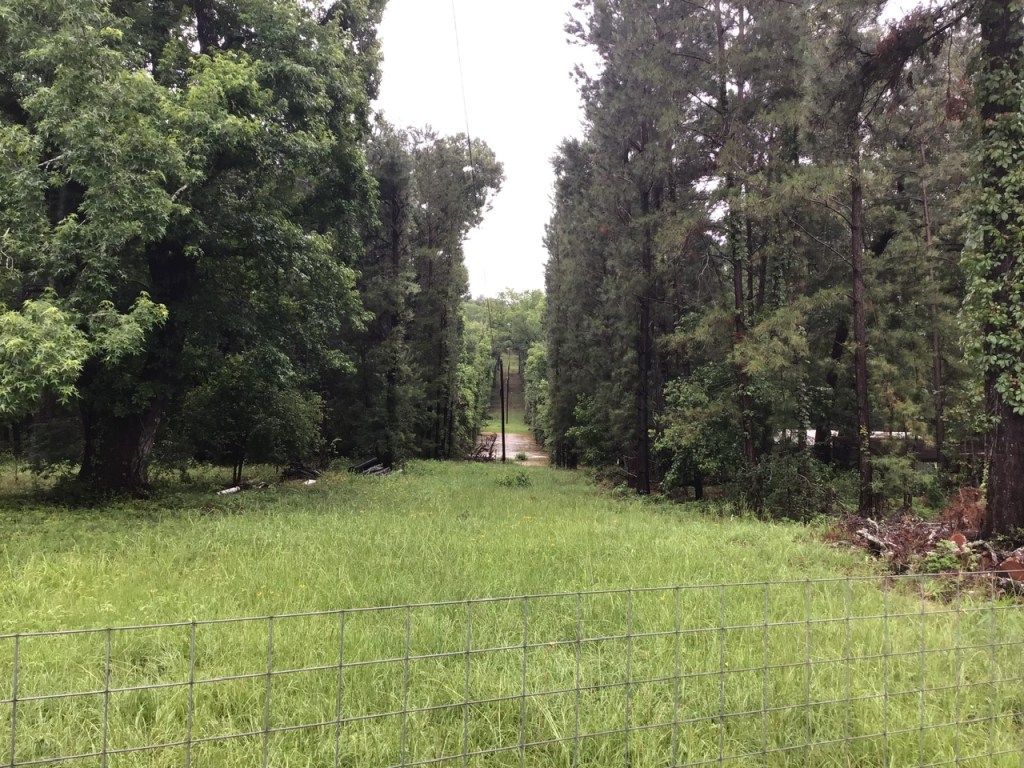
Left photo is view from garden, normally the creek is not visible at all. Right photo is walking along the power easement to the very flooded creek banks.

We also had another big oak tree die suddenly in the prime of life. The last one was just taken (partly) down by the electricity company’s crew because it risked falling into their cables. The latest one Hubby will have to fell himself, before it comes down on the fencing. That will probably be after he fixes his bridge to nowhere that he just built last year in response to flooding and was nearly taken out by this year’s repeat performance.

Sudden Oak Death Syndrome?

In the last two years, with no tornados or hurricanes to blame, we’ve had three large trees right around us flash out dead in a matter of days. Rather disconcerting to me, to say the least.

No such bounty this year I fear.

Still, let’s end on a positive note. Some years are better than others. We had an inexplicably bad blackberry year, but this year was excellent. Hubby made blackberry wine with much it, which was much better tasting as a young wine than the one I tried to make and age last year. Some years we have amazing tomatoes. Other years it’s great melons. Maybe this year it will be spectacular grapes?

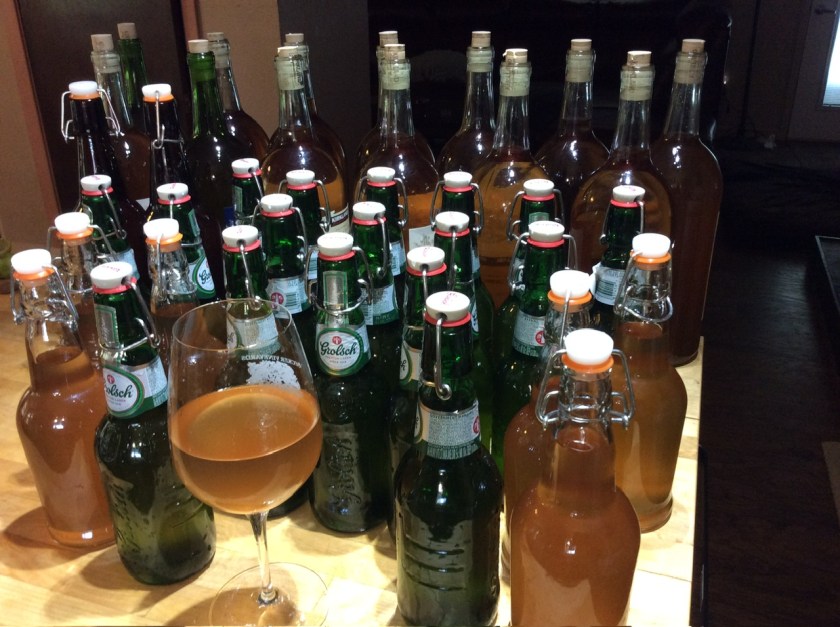
It doesn’t take much for fabulous meals when food is fresh. Fermented herbs and veggies add flavor and nutrition with just a little garden surplus or foraging time. The chanterelles always do better with lots of rain. Hubby’s delicious young blackberry wine makes such a refreshing spritzer when mixed with kombucha.

Eating seasonally from our land is so rewarding even when we don’t have a bumper crop.

I have a long list of content coming up during the swelter season, so all the more excuse to stay indoors. Thank Man for air condition! 😆

And thanks for stopping by!

Beauty & Bounty

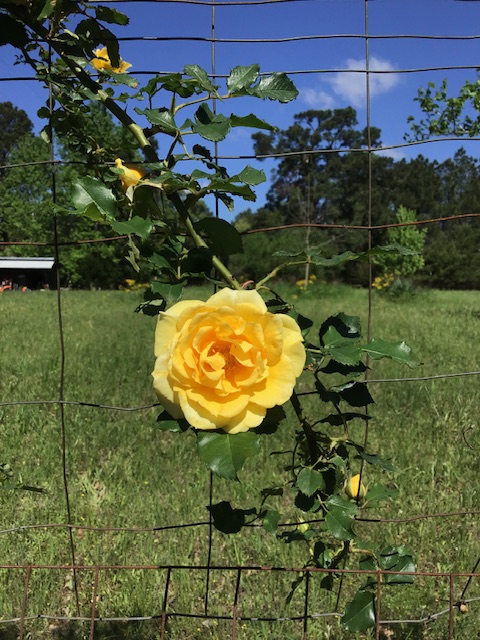
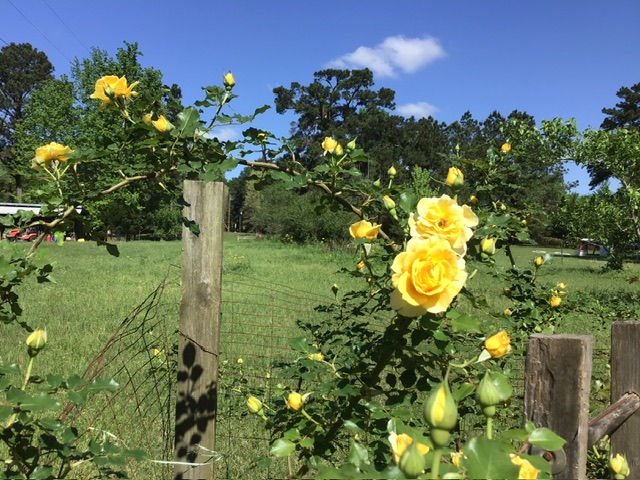
Such a busy time of year already, made busier with our remodeling projects, but we always make time to stop and smell the roses.

And bow to the weather gods, or geoengineers, who have spared us this time, and after so much barking, we are grateful there was no bite. Before I sing our praises, let me acknowledge those further north who are biting the bullet this time around. Our picture perfect skies are so very rare, I don’t like to think about all that means.

We did prepare all we could for the worst, annoying as that was. Out came the row cover fabric again and the wheelbarrows full of logs to hold it down, after just having cleaned all that up and took it to storage the week before.

We expected a frost for sure.

All the pots had to be gathered to cover all the peppers and tomatoes. And considering it was so hot and humid and over 8o degrees when we were doing all of this, it felt more incongruent than snow along the coast of the Gulf of America. 😂

But, I can’t complain, because as I just said, we got very lucky. No hail, tornados, landocaines, flooding and we just barely scratched by the frost threshold.

Just look at that sky! I can’t tell you how long it’s been since seeing such a sight!

There is so much beauty and bounty, in nature, and in cyberspace too!

Just yesterday I was scrolling through my Youtube feed and about every 100 suggestions up pops a true gem, like this old Mexican lady cooking her heart out and sharing it with the world. This is the very best of the power that’s right at our fingertips, I truly believe that: The world’s people sharing about their cultures. The cuisines, the histories and myths, the music, the dance, the landscapes, the languages, the gardens, the architecture–and the ordinary folks sharing them. Unfortunately, as the AI gods have demonstrated, for every such miracle there are about 100 curses.

Make food not war!

There are the tiniest gems not to be missed through all the noise and all the neon glare.

And it seems like they are beckoning me to slow down and notice them.

What would you rather do . . . follow me around the garden, or do more of that thing you call work?

A plot of volunteer poke weed and garlic, as if they’re just screaming, we are here for your good health, so happy to be here, we keep returning for you!

Sometimes, when I least expect it, we learn how to grow together better. Like I was thinking of the old Southern trick to set out red-painted pebbles to fool the birds into keeping off the strawberries. I thought, I bet some well-placed breakfast radishes would have the same effect, and sure enough, it’s working. The birds have moved off that bed ever since those radishes started showing their little red tops, and bonus, we adore radishes, maybe even as much as strawberries.

We have been eating giant salads every day, with enough surplus for our neighbors.

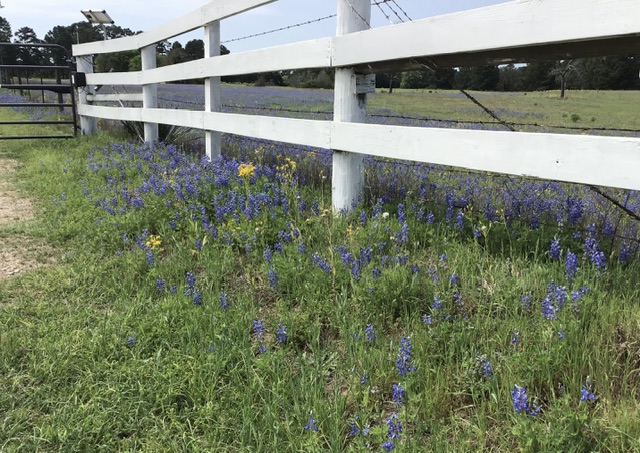
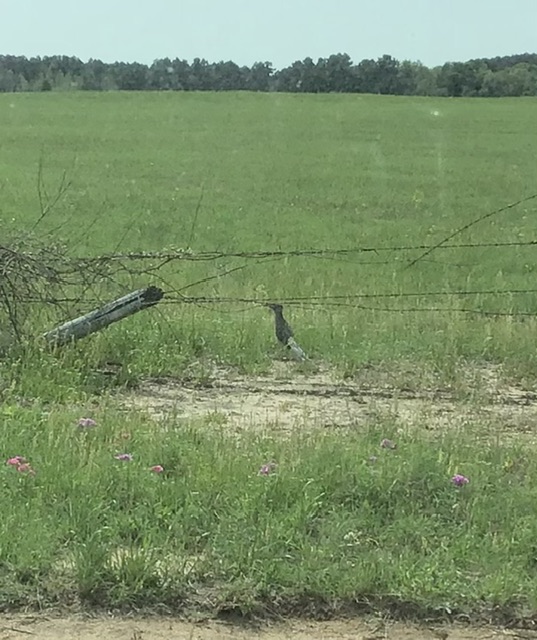
Along the country roads all is flourishing. The bluebonnets are brilliant and I even caught a roadrunner, just barely.

Such gifts of beauty and bounty! What a precious, ephemeral time to infuse their bursting energy into our year ahead. What we put into it is what we’ll get out of it, just like life.

I hope your spring is being beautiful to y’all, too! Thanks for stopping by!

Homestead Happenings

A few updates from our very busy and already very hot summer. We’ve got bad news about the blackberry issue mentioned last month; a brief report on what Handy Hubby has deemed our ‘ Summer Sausage-fest’; some harvest and critter happy snaps; and a really funny question. Ending, like the beginning, with my favorite flower.

Kakai hull-less pumpkin

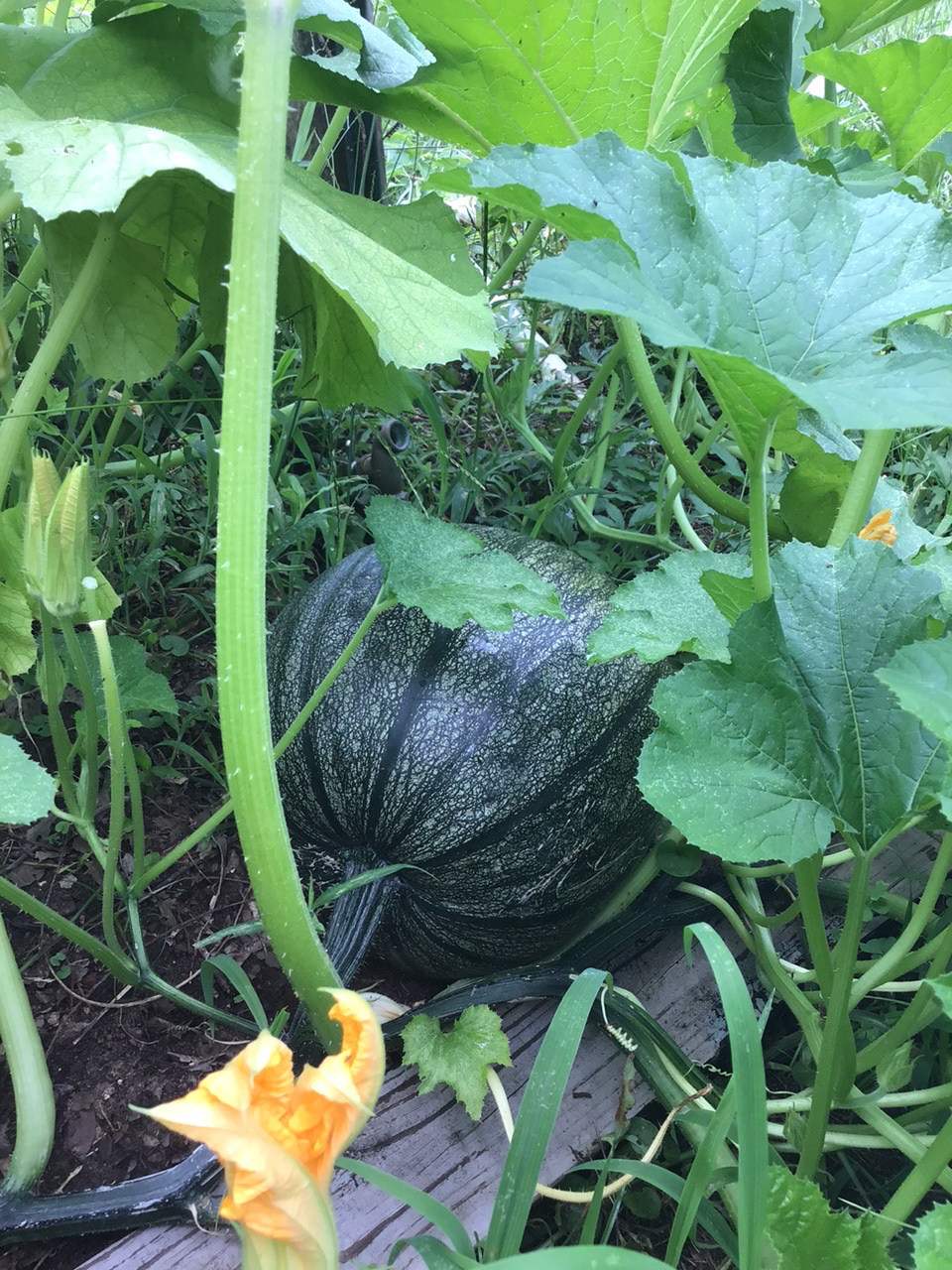
Novice seed-saving mistake on my part—don’t plant Kakai pumpkins next to zucchini. Even though one is a winter squash and the other a summer squash, they are both part of the same family: Curcurbita pepo.

According to Southern Exposure Seed Exchange “Curcurbita pepo: Most zucchini and summer squash are of this species. Winter squash varieties do not store well and are best eaten within a few months of harvest, but also need less time curing to sweeten up. Best planted in monthly successions throughout the summer due to vine borer susceptibility. If you have trouble growing these squash, try luffa gourds or Tromboncino summer squash as a substitute for zucchini.”

Squash, Pumpkin, & Zucchini Growing Guide

I planted these pumpkins for the first time because a friend gifted me the seeds. The seeds are so delicious I decided to try them even though I’ve not had success growing pumpkins in years past.

Well, these are a big success! Except, now those seeds have surely been cross-pollinated with the neighboring zucchini, which according to this farmer, means the seeds will no longer be hull-less, defeating the whole purpose of planting this variety of pumpkin.

Don’t I feel dumb!

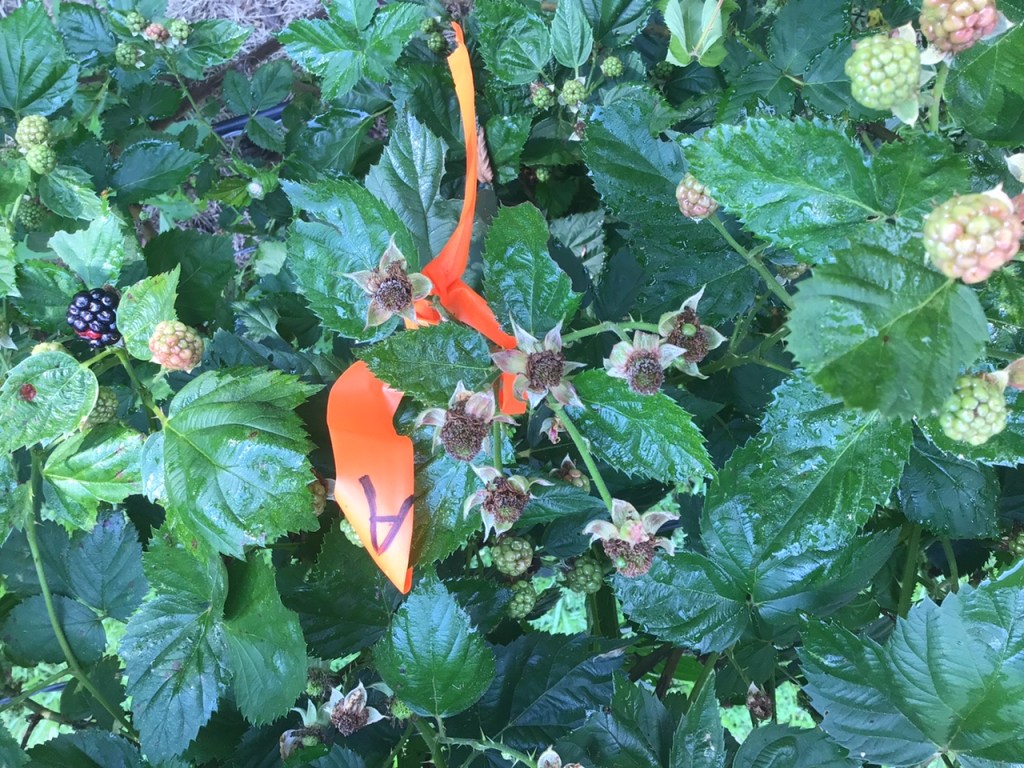
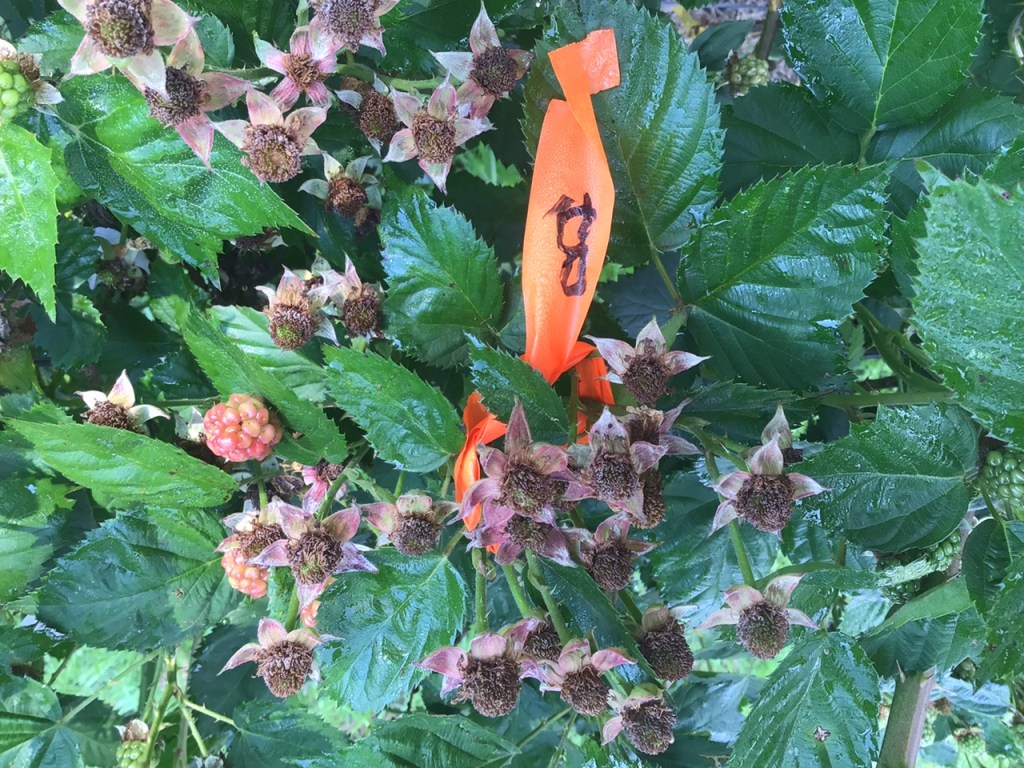
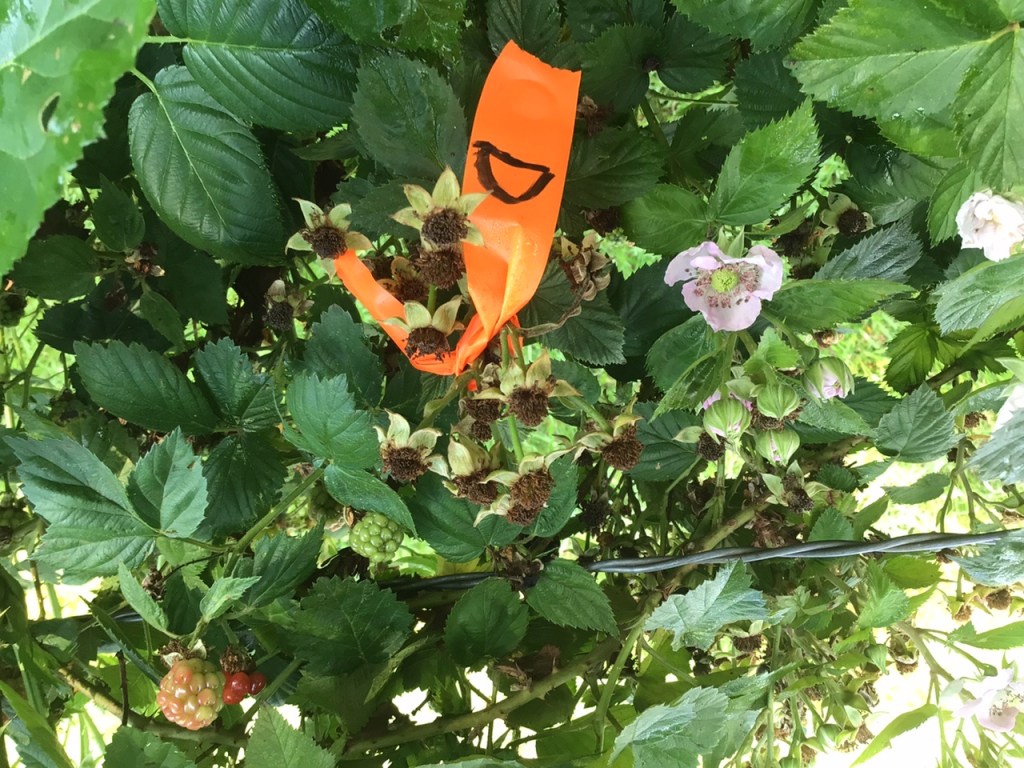
And dumber still! We are no closer to solving the blackberry issue. Hubby did some scientific-like sleuthing to eliminate potential variables. One commenter on a forum said what we were seeing was totally normal blackberry development and we just had to wait a bit longer for our huge harvest.

So, Hubby took some before and after photos, about two weeks apart. As hopeful as we were that he was right, we were skeptical, and he has now been proven to be wrong. Unfortunately for us, the mystery remains and the blackberry harvest is puny.

But, we have been blessed with a few weeks of prolific chanterelles, which we love, though their tiny size requires some patience while picking. I’ve tried them preserved in oil for the first time and we’ve been enjoying them in crepes, omelettes, soup and sauces.

Chanterelles and while foraging for them we find
Not-Bert ducking and covering! 😆

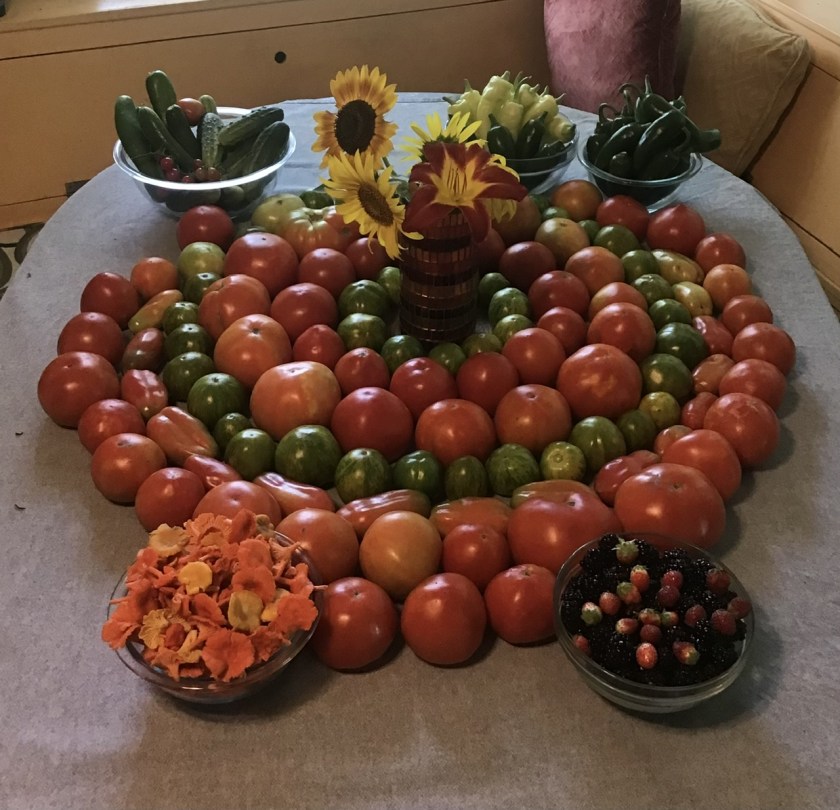
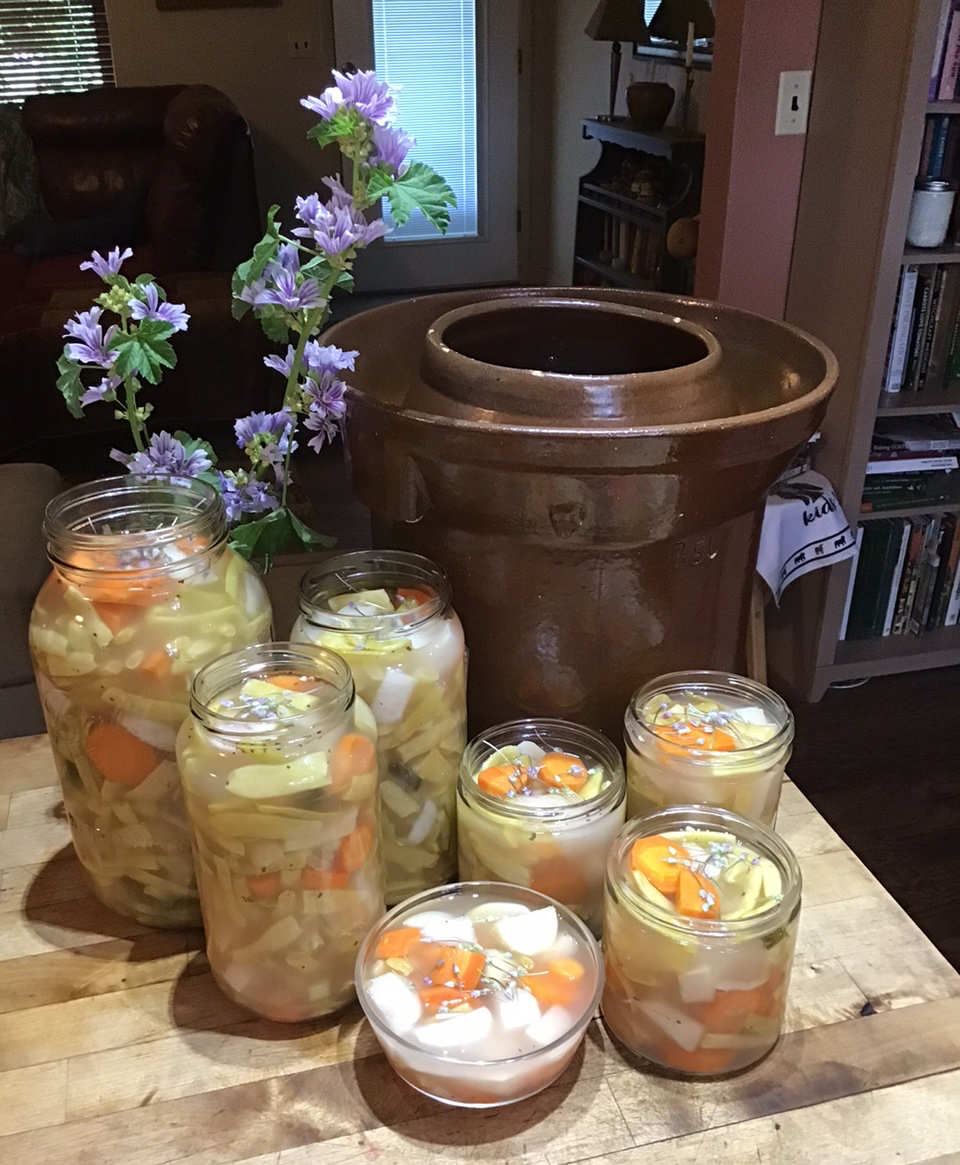
We’re also getting a bumper crop of tomatoes and peppers, with Hubby continuing to pressure can while I remain fixated on fermenting.

On left Pressure canning carrots, green beans, banana peppers and jalapeños;
fermenting the same on right.

Harvest Art!

We rarely eat an entirely vegetarian meal, but with so much produce I thought I’d challenge myself to use every vegetable in one meal. As it’s so rare I thought I also better commemorate it with a photo!

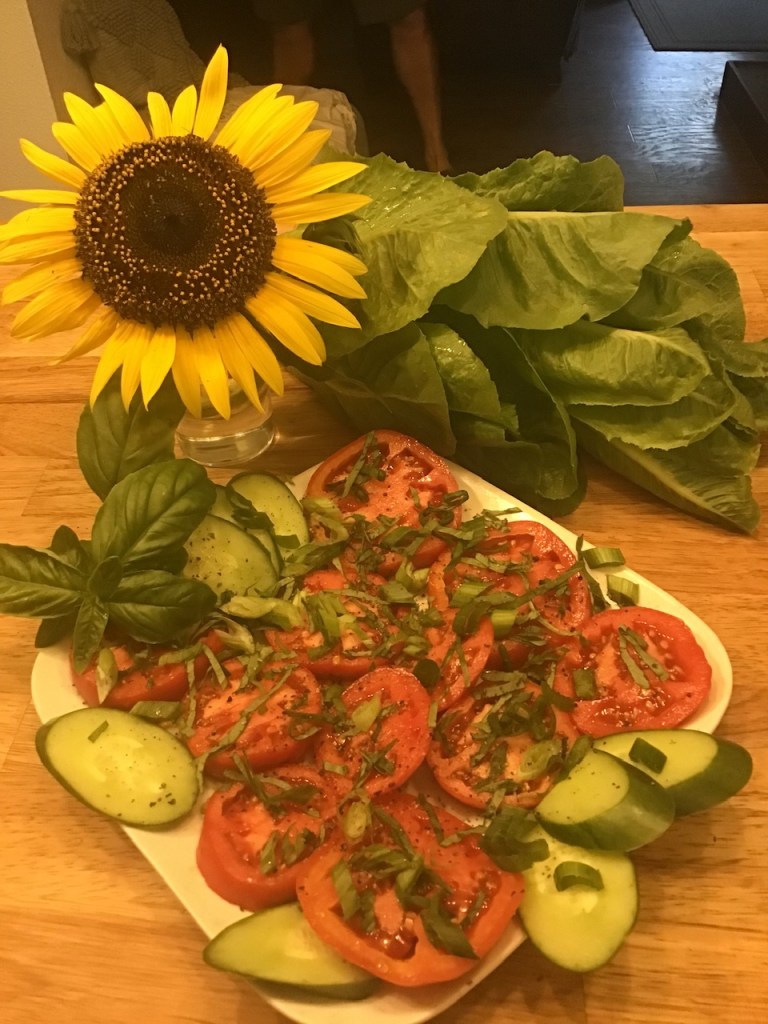
Tomatoes topped with my own aged chèvre; cucumber and corn salad with salsa verde; veggie casserole au gratin; kombucha cocktails

More garden happy snaps.

Because obviously we have a lot more seeds than sense or cents, Hubby decided we didn’t have nearly enough to do with a huge garden, an orchard and squash plot, and a menagerie of critters, so he planted a separate melon maze as well! It’s actually pretty impressive and already producing, but we’ll see with this heat and drought how well it does. We were hoping the ‘El Nino’ predictions would be correct and we’d be wetter and cooler this year—so far, not panning out!

Hubby’s ingenious companion planting—esthetically pleasing and practical— sunflowers helping to shade the melon mounds.

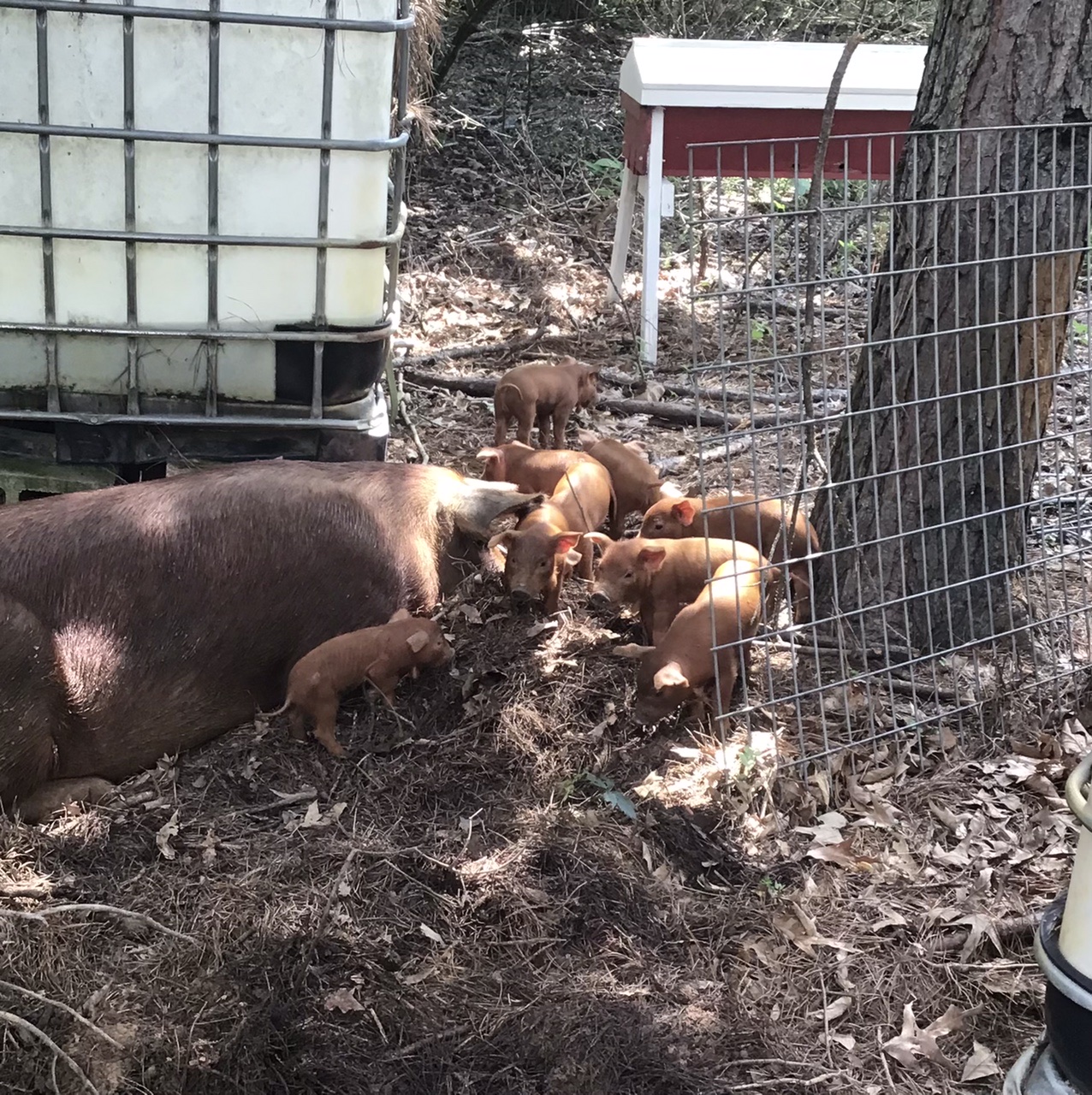
Patty’s first litter: 9 males and only 2 females!

And still dumber still!! We’ve been gifted an unwelcome ‘Sausage-fest’ this year as far as livestock goes. A whopping 80% male birth rate among pigs, goats and sheep.

Of this year’s kids: 1 female, 4 male

Of course, all the critters are cute little blessings, but no one really wants a Sausagefest.

However, Hubby did take the next big leap in livestock rearing and learned to castrate the piglets. He’s been avoiding that like the plague for YEARS! The lambs and kids are pretty easy and he’s been doing that since the beginning. But piglets are a different story.

I’m too squimish for all of it, so he never got any pressure from me to buck up, I’m not that big of a hypocrite. The nudge actually came inadvertently from a timely email from a friend who didn’t even realize at the time our current Sausagefest challenge.

I think it was seeing a girl do it, alone, that put the final bee in his bonnet! Or, is that spur in his boot, since this gal was demonstrating the ‘Boot method’.(We’re not on FB, so couldn’t see the entire post, but here’s the link, if you dare.) https://www.facebook.com/100064629581910/posts/in-the-past-ive-struggled-to-castrate-piglets-for-a-few-factors-i-took-an-old-ti/632005412297106/

He did the deed and it was a full success, bravo brave man! A real homesteading hero! 🤗

Now for the funny question, which sprouted from a favorite blogger’s recent post.

Plans for the Weekend? – Dispatches from the Asylum


In it we are presented with the ‘13 Do’s and Don’ts’ from the CDC about survival after a nuclear attack. It’s even funnier than the original!

From the life-saving list:
Do take a shower, but don’t use conditioner on your hair.
That’s even better than Duck & Cover!
Yes, you read that right! There’s our tax dollars hard at work to keep us safe.

I laughed so hard I wanted to include it somehow in our ‘Funny Friday’ post, but decided it really needed a whole section devoted to it.

So, before you click the link to look it up in order to verify (or afterward, if you promise to come back and reply!) here’s my question.

Can you guess why hair conditioner should not be used in the aftermath of a nuclear attack according to the experts?

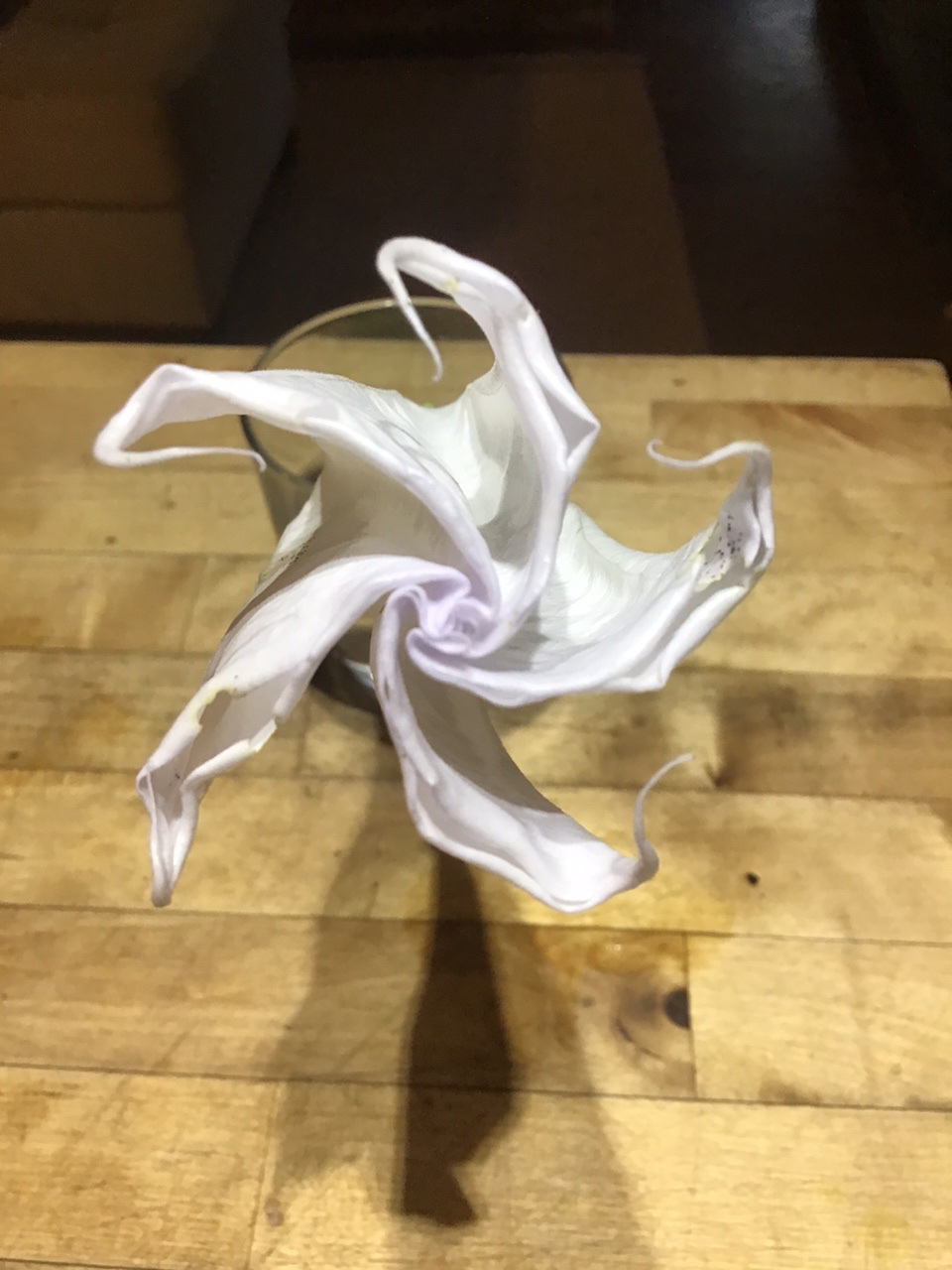
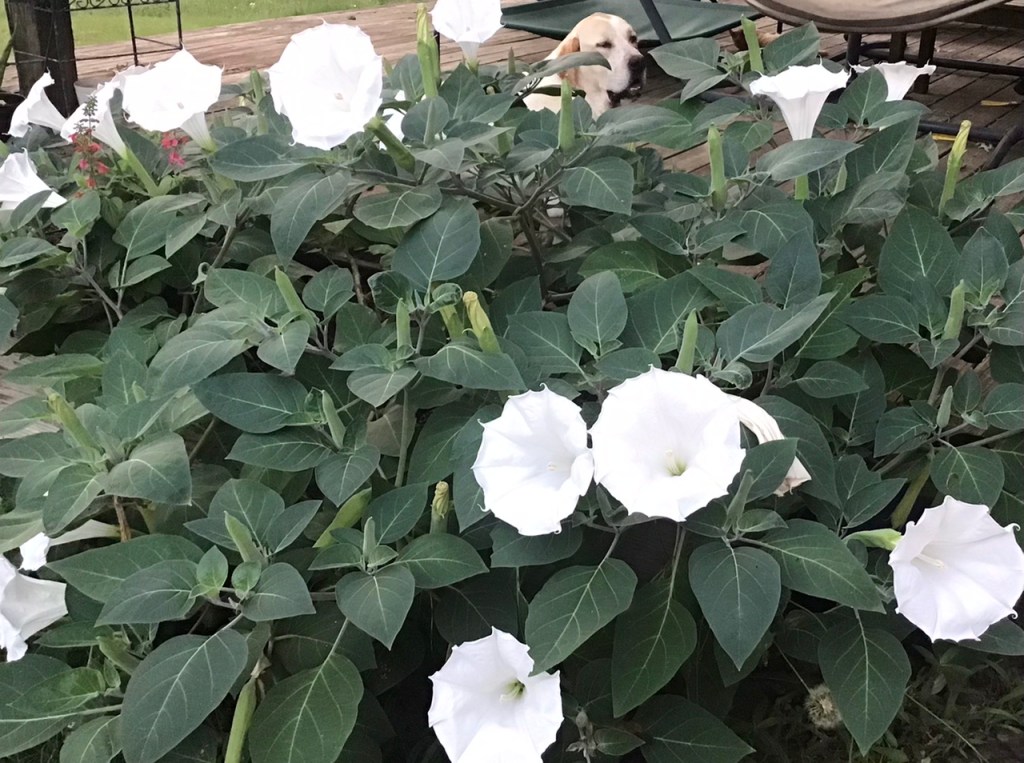
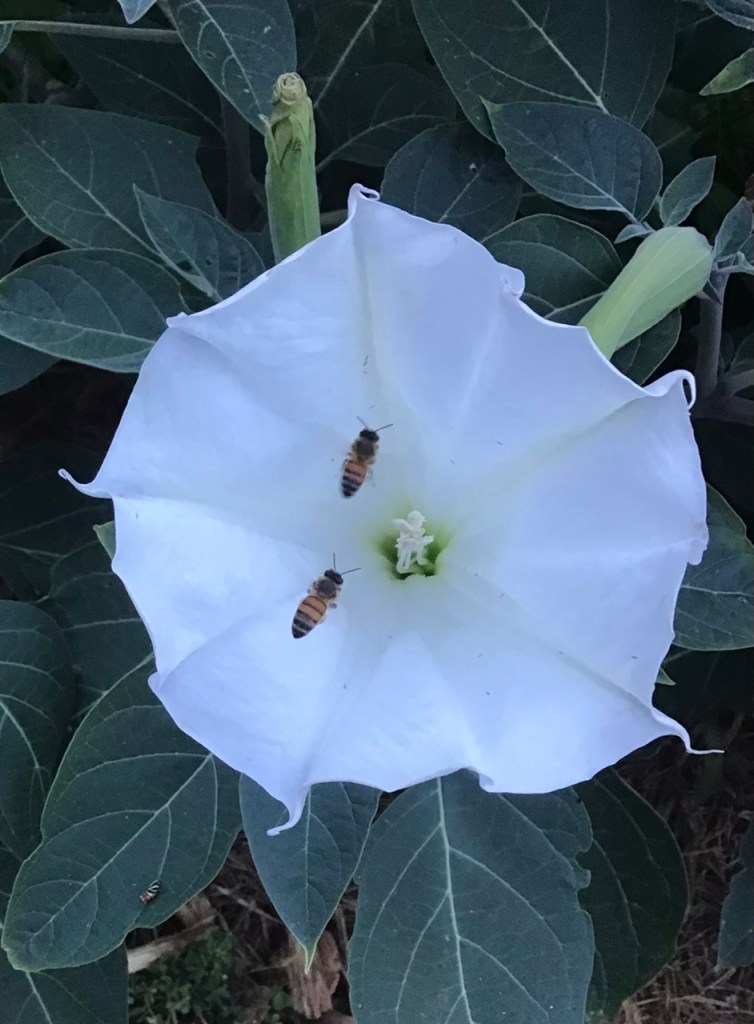
Finally, the gorgeous, sublimely-scented Datura to leave us with some beauty and grace to cleanse the palette from the bad hair days certain to haunt us for decades after nuclear destruction. 😂

Thanks for stopping by!