Feeling Churlish

Churlish:
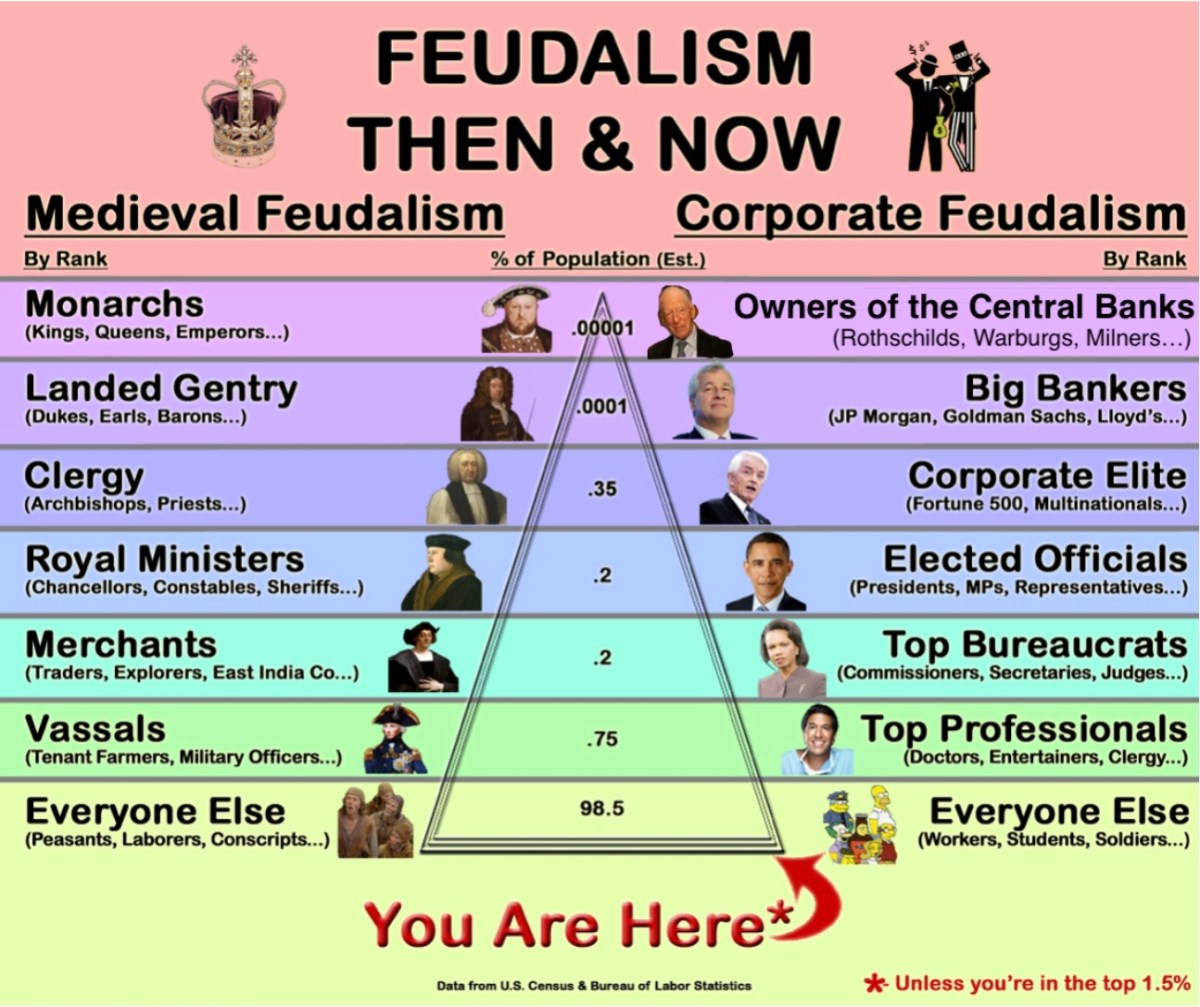
“boorish, rude, uncivil, peasant-like, difficult to work with”

I like it, a lot! As a word it’s just fun, like most words that end with ‘ish’. I often put ‘ish’ on the end of words, adding a connotation of ‘sort of’, it’s quite common.
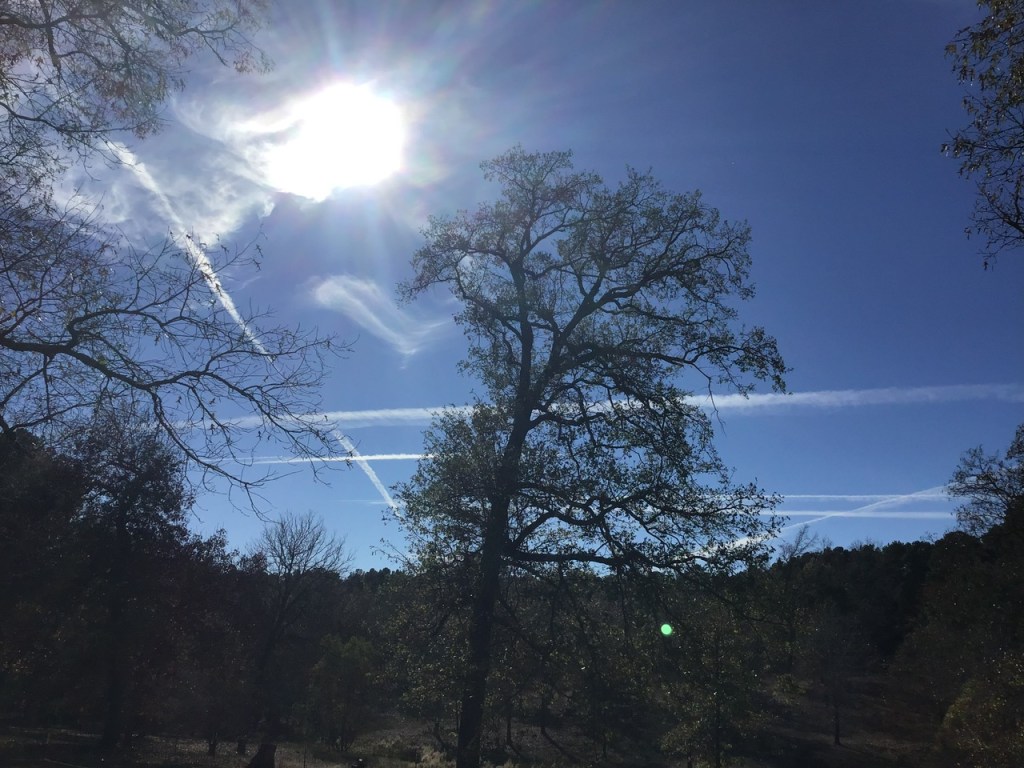
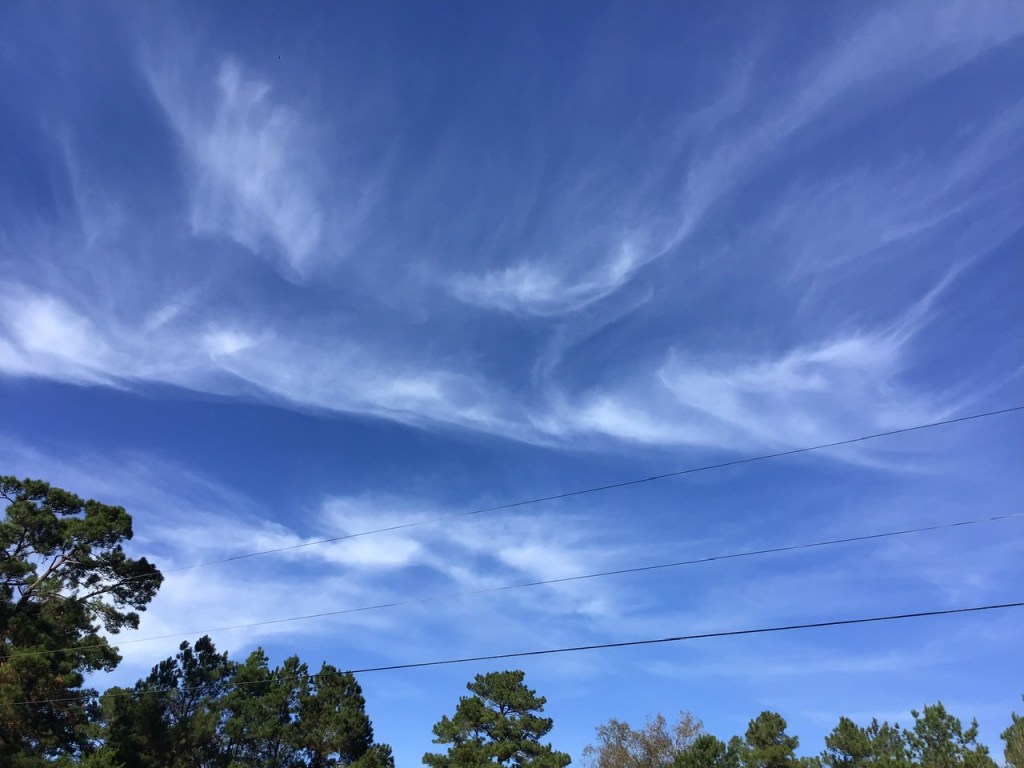
“Fun-ish” not quite fun (like living under a chem-sky producing Yo-Yo weather); Slave-ish is in the vicinity of slavery (like paying income tax and having zero say in your own government).

I have a new cheese I call “Swissish” since it’s in the Swiss style, but obviously, I’m not in Switzerland. It’s just a really handy little diminutive.

But, what is a ‘Churl’ you might wonder? It’s a good question because the meaning has changed over the centuries quite significantly.

A churl is a peasant, or a rude, boorish or stingy person. In English history it meant — “A freeman of the lowest rank”.

I believe that label suits me! Well, not exactly the ‘freeman’ part, but I can relate to the peasant part. I haven’t always thought of myself as a peasant, but since becoming one I’ve definitely adopted some of their so-called uncivil, rude and boorish behaviors.

In many ways it works like the term ‘country dumb’ like in the great work of fiction by Jaroslav Hasek, “The Good Soldier Svejk.” The beauty of being churlish is a direct parallel, because you never can tell when it’s an act, and for what purpose. Playing dumb, or churlish, can be very effective.

Hasek’s narrative, along with the character of Svejk, was most certainly the inspiration for the well-known American television sitcom Hogan’s Heroes.

The original Sargent Schultz and company

That makes perfect sense, because those behaviors go hand-in-glove with how much respect one has for those who would have us all be feeble, pleasant and co-operative workers, loyal citizens of party politics, and happy, obedient tax cattle, unable to accumulate inter-generational wealth, just like peasants and slaves.

I’ve been saying for decades we are slaves on a corporate plantation and not citizens in a so-called free country, and whether you call it a republic or a democracy completely misses the point. We are forced to pay taxes while having zero control over what those taxes fund, that’s a slave system we cannot opt out of, so I really never needed to read any so-called legal codes or any essays of the great thinkers who’ve already noticed this a century ago, because it’s painfully obvious.

For those who need more proof, here’s another good one rehashing the same points again with excellent clarity, for the hard of thinking.

BUT INCOME TAX FUNDS THE SERVICES WE NEED!
Mark Everson, IRS Commissioner, stated he has been paying his taxes ever since he had his first job and that it’s a “fundamental construct of our nation that those of us who expect and demand services from our government… we must pay for those services,” therefore, there is an obligation to contribute. Ok, great! I like services, and I do believe people should pay their fair share for services they use. So how about we play a little game of “trust but verify” by looking at how our services are funded:
PROPERTY TAXES are primarily used to support local services such as public schools, police and fire departments, road maintenance, libraries, and sanitation services. (check all of those off the list)
SALES TAX funds a variety of public services, including education, healthcare, transportation, public safety, and infrastructure projects. (add a whole bunch of checks.)
SCHOOL TAXES are paid by everyone, even people without children. We are told the school tax funds are primarily used to finance public education, covering expenses such as teacher salaries, school facilities, educational materials, and student services. (check, check, check.)
ROAD TAXES are funded through taxes on motor fuel, such as gasoline and diesel taxes, as well as vehicle registration fees and tolls.
LICENSE PLATE TAXES fund state transportation projects, including road maintenance and infrastructure improvements.
CAR REGISTRATION TAX funds various state and local services, including road maintenance, public transportation, and infrastructure improvements. (Sure are a lot of roads and a whole lot of money going toward them.)
I figured I’d throw this one in here: Utility companies are funded through banks and investors, then they rape us on services (seriously, look at your electric bill). The astronomical rates we pay are set by our so-called “elected officials”. Point being, the utility companies don’t need taxes, but sometimes our governments choose to hand them money. This is a huge, rigged monopoly game.
BUSINESS INCOME TAX, meaning the legal tax on profits derived from the sale of goods over cost, is what funds the government. Again, this tax on profits is 100% legal. If you own a business, you owe taxes on the profits (gains) you generate. This includes stock market gains or gains from other financial investments.
As you can see, there is nothing on our list that requires the sample server at Costco to pony up 20% of her weekly paycheck to fund. This is why the Grace Commission, officially known as the Private Sector Survey on Cost Control (established by President Ronald Reagan in 1982 to identify waste and inefficiency in the US federal government) produced a shocking report. When referring to income tax collected from every working individual in the United States, they stated, “100% of what is collected is absorbed solely by interest on the federal debt; all individual income tax revenues are gone before one nickel is spent on the services taxpayers expect from government”. Folks, 100% of what we give the government out of our paychecks is being handed to the banks as interest payments – that means all of our taxes become the bank’s profit. People don’t understand how the Rothschilds, the Morgans, and so on run the world; it’s because the entirety of what we pay is funneled to the banks, and they own the banks. G. Edward Griffin, author of Creature from Jekyll Island, stated,
“The main purpose of the income tax is not to raise revenue but to redistribute wealth to control society.”

SLAVERY
Listen closely: “Article 1 (1) of the 1926 Slavery Convention defines slavery as ‘the status or condition of a person over whom any or all of the powers attaching to the right of ownership are exercised’. This definition signifies that a person is considered a slave when another individual holds absolute control over them, treating them as property or chattel, and depriving them of personal liberty and most rights ordinarily held by free persons. The exercise of these powers includes control over the person’s life, labor, movement, and private affairs, with the intent of exploitation.” We work to obtain money in pursuit of life, liberty, and happiness. We are then forced, against our will, to hand the mafia a never-ending portion of our money. If we don’t, our possessions that we have rightfully earned are seized, or we are jailed. It is the definition of slavery. The worst part is, in this case, the government doesn’t even “need” this money. It doesn’t go toward making our cities beautiful and making our water clean. It is all handed to the banks – but it’s way worse than this.
According to Bilderberg, the IRS makes available to the programmers of society “much information” which they can then use to create situations that allow them to maintain control over us. To quote Bilderberg, “This information consists of the enforced delivery of well-organized data contained in federal and state tax forms, collected, assembled, and submitted by slave labor provided by taxpayers and employers.” They go on to say, “Furthermore, the number of such forms submitted to the I.R.S. is a useful indicator of public consent, an important factor in strategic decision making….” They add, “When the government is able to collect tax and seize private property without just compensation, it is an indication that the public is ripe for surrender and is consenting to enslavement and legal encroachment. A good and easily quantified indicator of harvest time is the number of public citizens who pay income tax despite an obvious lack of reciprocal or honest service from the government.” So, they laugh at us for being so gullible that we pay into their wretched system, yet if we resist and don’t pay, they seize our assets and force us to waste our lives behind bars instead of spending time with those we love. The one thing I agree with them on is that this is slavery.
Bilderberg, when discussing the political landscape of America, stated that both lawyers and CPAs (accountants) are [unknowingly] licensed spies and saboteurs. These individuals are overseen by judges, “who shout orders and run the closed union military shop for whatever the market will bear” and “the presidential level of commander-in-chief is shared by the international bankers.”

To end on a good note, here’s the young and gorgeous Helena Bonham Carter in my favorite film, “Room With a View” who after playing Beethoven gets peevish, naturally, but not to be confused with churlish.

Assessing Value

Back to this unpleasant subject again. It’s been a very long loop; I haven’t considered it much since first attempting to barter goods from the wee homestead.

It’s something we really do take for granted in our modern economy, whether one takes that as an inherent good or evil.

The good part is that it’s comfortable and I prefer it, on the surface. I hate bartering. I SO suck at it. I suck at it for reasons that are so deeply-seated (seeded?) that no logic can ever possibly be applied.

On travels to some countries barter was the norm and I was told to keep practicing as I’d get better at it. Some seem to enjoy it. These sorts always baffled me. They say, “Treat it like a game!” But that is really stupid, isn’t it, because I did not go out shopping in order to play a game. I already don’t like shopping much, to think I’d like it more by making it game-like is to make it ever closer to hellish.

So while it may not sound like it, this is the good side of money. It took me a long time to learn that. Not until I had to consider such exchanges as, which was of better or equal value, the handcrafted Top bar beehive, or the wormy, bossy, but still a good milker, Summer, a 7-year old goat?

Money, in partnership with “the Market”, make such exchanges far more simple. Since none of us has a crystal ball, and I have no idea how long Summer will live and there are no guarantees, and my friend has no idea if she’ll enjoy beekeeping, or be able to keep bees alive in our chemskies and YoYo climate, our exchange is made more simple by imagining what would be the ‘market value’ of each of our offerings.

The dark side of money it seems to me relates quite easily to the dark side of most things—like religion, or science, or even education—it provides, by its very nature, an endless potential for ‘middlemen’. It becomes a profession, then a vast sea of professions, then an institution, then an institution ‘too big to fail’.

It’s convenient and comfortable, no doubt about it. It’s easy enough for a child to use, but complex enough to build empires upon. Try to imagine living without it.

Do we really consider how we, as individuals, would place value upon goods and services anymore?

What about once money is replaced with tokens. It’s pretty much the same thing already, right? Tokens as a medium of value exchange—your massage is worth 2 dozen yard eggs. Right?

Well, the market value of your massage today is 20 tokens, but the value of my eggs is 10 tokens, today, and 15 tokens last week, and is projected to be 25 tokens tomorrow. That’s the real problem with the market, right? For you and I, as individuals deciding value between us, the eggs and massage exchange didn’t fluctuate vastly over a matter of days, or even weeks. It’s pretty steady, really. You use 2 dozen eggs per week, I like 1 massage per week, stable value exchange.

But I’ll bet you 5 economists in the room with us would tell us 50 ways it’s not really a stable value exchange. And, why be stable at all if there might be a profit to make? Then a dozen lawyers will tell us why those economists are right. And a nation full of universities will continue to produce a fat muffin top of middlemen to stuff between every simple interpersonal transaction in every tiny hamlet around the world.

I’m bothering to restate the obvious at this moment because I’m trying to re-assess the value of technology in my life. It started with the recurring headaches of social media many years ago, then moved to Smart phones, and lately it’s WordPress.

Then a cyber-friend shared a dream, which caused this spark of inquiry.

“Imagine if we could create an Agrarian world again, using technology as a tool to help us,  but not control or surveil us.” 

Can we make a more agrarian life through technology? Which I understand as, can technology help us to get back to basics? And by basics we mean an understanding of nature, an appreciation of its organic processes, a “re-enchantment” as I’ve heard it lovingly expressed, with the natural world. Working with our hands again, I presume, creating items of value to exchange with one another. A slower life perhaps, where we have the great luxury of time to enjoy our lives and our nature world to a greater degree than afforded to most in the modern world.

A ‘re-enchantment’ with nature, I like the sound of that.

An ‘agora’ that’s not corrupted by fiat, usury, taxes, violence and coercion, perhaps?

Technology in our private life here on the wee homestead has benefitted us in a few crucial ways—helping us to learn new skills has been the most significant. But keeping us from feeling terribly remote and unconnected and uninformed has also been very important. I’ve made a few good friends thanks to the internet and I’m very grateful for that. Feelings of isolation and loneliness can be significant spiritual hurdles for some of us living rural for the first time.

And I have seen promising shifts over the years. Homesteading is clearly a bonafide cultural movement at this time, I think primarily thanks to technology, as oxymoronic as that sounds. Herbalism has become more appealing as Pig Pharma breathes heavier down our necks. Pockets of interest and learning are all over the cyber world, every craft, trade or skill imaginable is available somewhere with a few clicks, I’m sure.

But I have seen and heard some really concerning trends lately, which makes me realize that the time to be re-assessing the value of the tech in our lives is reaching a crescendo.

For example, the young entrepreneurial types who are coming in to fill the needs of the rural communities with essentials like raw milk, homegrown veggies at the farmer’s market, small service businesses and the like, well they aren’t like us in some really fundamental ways.

They trust The Science, for the most part, evident in their willingness to vaccinate, medicate, use the latest supplements and vitamins, and not question any of it. They also love the tech and fully embrace the insane trifecta of the Global Grid: Surveillance cameras, Smart phones and digital payment systems.

How is that value assessed? Who is benefitting more?

My guess would be, more often than not, the middlemen. Like any pyramid scheme a few must be making good for anyone else to follow. For a while.

Seems to me these young entrepreneurs are setting themselves up for certain failure. I met one of these ambitious young women last week on my quest for raw milk, now that my goats are mostly gone. I really miss making cheese. The price of raw milk, not even organic, has gone through the roof as demand has perked up—$11/gallon around here. It’s too much for us to afford.

What did I learn from this experience? Her surveillance cameras everywhere tell me she doesn’t trust her customers or neighbors. Her vaccination schedule tells me she does not do her due diligence in caring for her animals. Her price and her preferred payment by QR code tells me she prefers dealing with middlemen over direct transactions and getting to know her clientele.

I will not be doing any business with her, that’s for sure.

So, while I still have a lot to learn about assessing value, there is a point to this rather rambling post: The goat is dead, no bees have yet to make that hive a home—but no one else profited or lost from that private exchange—and our relationship stayed in tact to trade another day despite these apparent failures. I think nations have gone to war for less.

And that’s something so far social media, Smart phones, WordPress, and indeed money, all fail to assess a proper value.

I’d love to hear any thoughts or ramblings about my cyber-friend’s dream, what do y’all think, is it possible? Would you want such a world?

“Imagine if we could create an Agrarian world again, using technology as a tool to help us,  but not control or surveil us.” 

How long before this field gets paved over for yet another Vape Shop, or Dollar Store, or Walgreens? Is it considered an improvement if it’s a Smart Farm run from Brussels by robots?

The Myth of ‘Market-Driven’

We were taught in Economics 101 that we live in a market-based economy in the USA. They sometimes threw around the word ‘free market’ as well.

We were also taught it was our prosperity that allowed for so many choices in our free country, which itself was thanks to our progress.

Wonderful words that sound magical together: Progress and Prosperity

And this could almost make sense, it’s not exactly a lie, so it could almost be true.*. Except, we were taught another thing at the same time: We were taught that it is the customers who drive the market.

Now the lie becomes recognizable, because we can easily point to thousands of examples as to how it is not the case that the consumer drives the market.

Here are some of my preferred examples. Feel free to add more in the comments.

The Illusion of Choice

It’s not just thousands of breakfast cereals made up of the same toxic ingredients, but most of the food products available to the average consumer these days.

How about the good ole landline? Soon to be gone the way of the pay phone.
We are told that folks just don’t want landlines anymore and so they will begin to discontinue them. California recently had a public backlash, but it won’t matter in the long run. Landlines will be discontinued for the plebs. That is those who haven’t already happily switched to a Smart surveillance system they carry everywhere.

In some cases, probably many, this will happen by forcing (coercing) customers into canceling their service. This is just ‘anecdotal evidence’ as they always say, whereas they have ‘the data’ which says the opposite.

It’s not that landline service has become increasingly poor over the last decade while the costs keep rising, as has happened to us and our neighbors. No, it’s market-driven scientific data that claims folks don’t want them anymore.

Lightbulbs. Low-flush toilets and low-flow shower heads. Wood-burning appliance restrictions and prohibitions. Gas can safety features. Smart washing machines. Electric cars. Sustainable Everything driving up energy costs. “Sin” taxes.

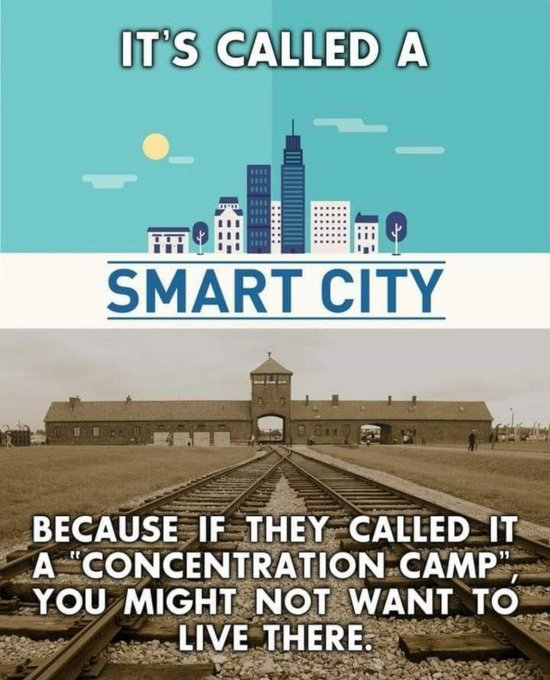
Your market-driven choice: Smart City or poverty

I have met very few folks who wanted any of these market-driven signs of our ever-improved Progress and Prosperity. But again, anecdotal.

Because they are ALL for the Environment, or our own good, of course. And the data says we want it.

Everything I want to do is illegal, like:

Sell raw milk Camembert at the Farmer’s Market (or anywhere else), distill our own whiskey, grow hemp, sell pork chops to our neighbors, refuse to pay taxes that fund wars and bail-out bankers or funds the research that floods our fields.

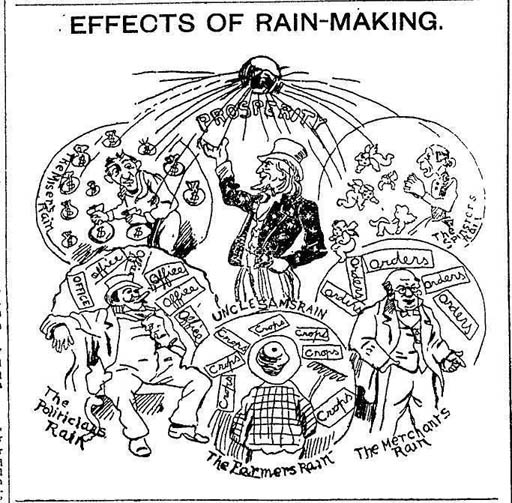
Behold the market-driven forces of weather modification!

But we are driven into Progress on the Big Bus of Bullshit called Prosperity (undefined term) by unseen forces (mostly unelected and completely unaccountable). Like magic!

Which brings me to my most obvious market-driven fantasy.

More like: Encyclopedia of Useless Myths


Out-of-print books

This one really aggravates me!  There are plenty of glaring examples of the deliberate dumbing down of our media and our educational content. Here’s just one perfect example because it’s fresh on my mind from just today.

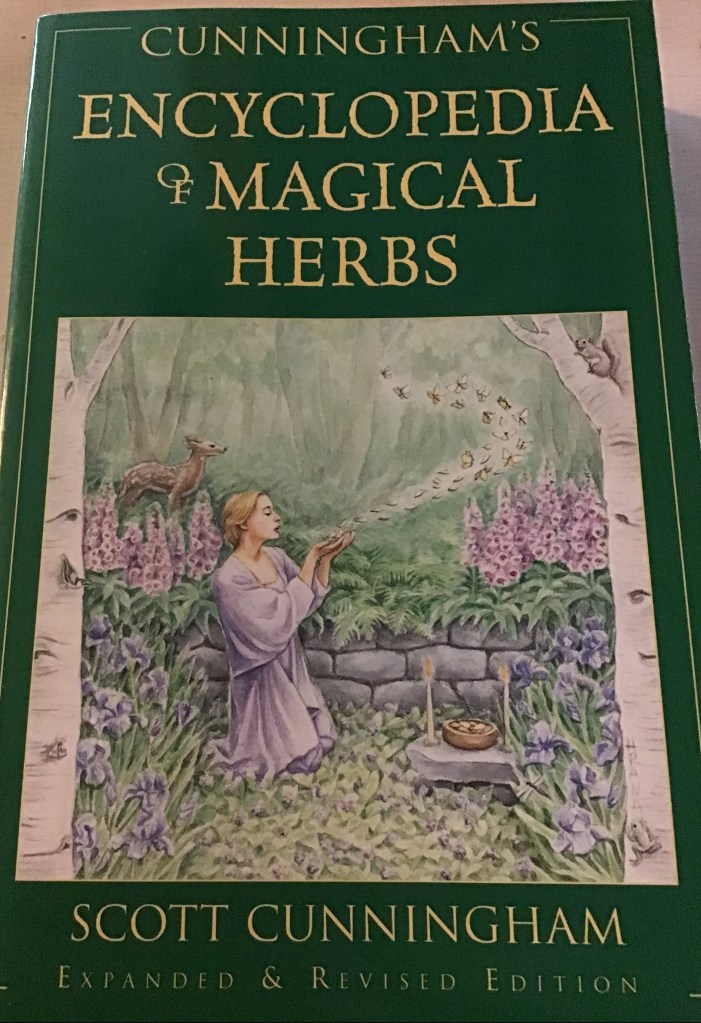
This book of utter herbal nonsense which I should probably burn on principle, is on its 22nd printing—Cunningham’s Encyclopedia of Magical Herbs.

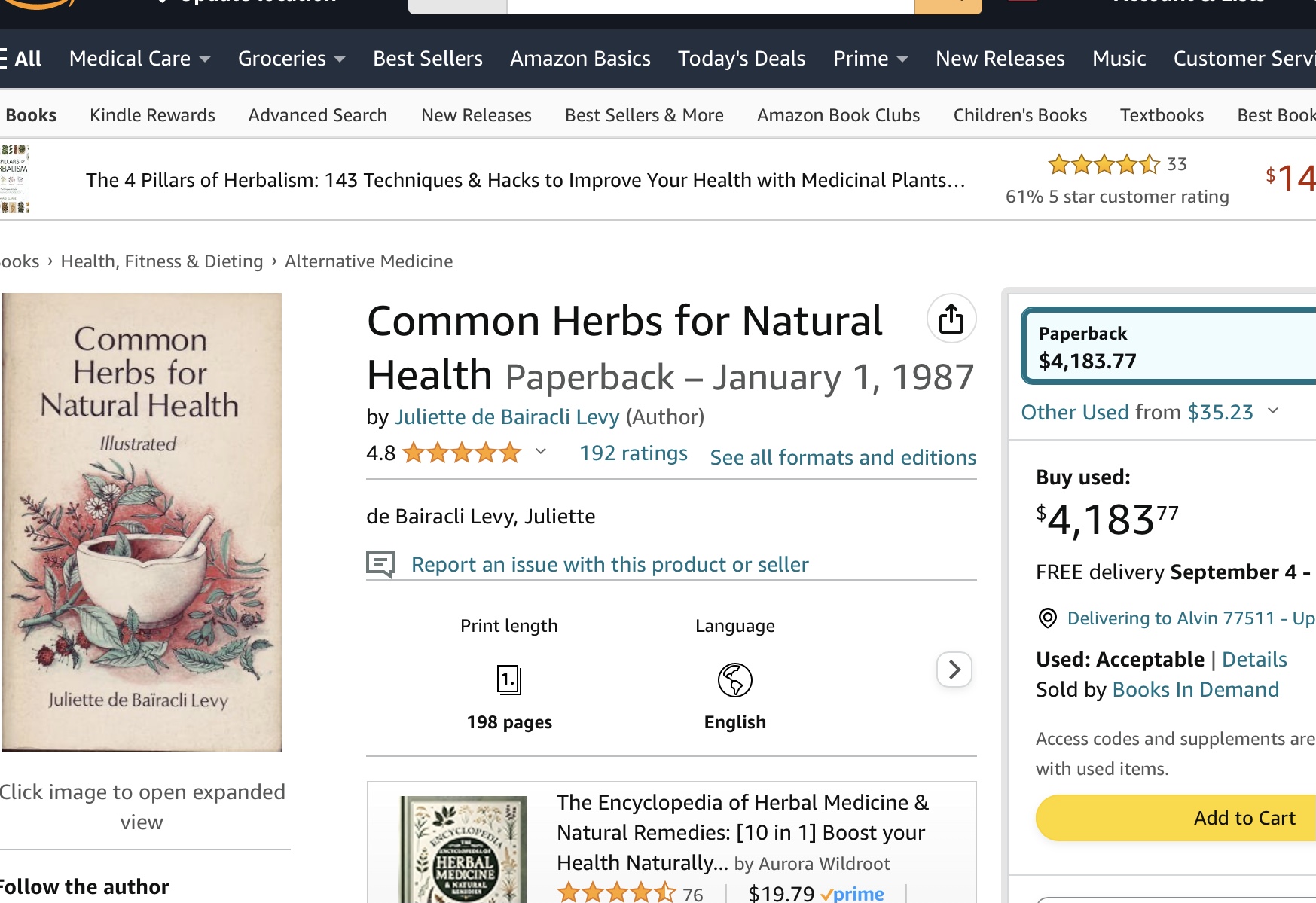
While Juliette de Bairacli Levy’s books of serious research and immense practical value are mostly out of print, or hard to find, in poor condition and/or expensive, or only available to read online (which I truly dislike, but there are no good public libraries around anymore and books are ridiculously over-priced and of course, I want to do my part for the trees. 😂)

A collector’s copy worth thousands proves there’s no interest whatsoever from the free market.

Why learn the practical magic of the actual benefits and remedies of the common Comfrey when it is demonized by Big Pharma and cajoled and belittled into its ‘fairy magic’ properties thanks to ‘trendy’ books dominating the marketplace, repeating drivel like:

Worn or carried, Comfrey protects and ensures safety during travel. Also, tuck some into your suitcases so that they aren’t lost or stolen.”

Ah brilliant, so helpful! Our ancestors must’ve been loading up those trunks and buggies with their comfrey leaves. Is Cunningham’s book really worthy of 22 continuous reprints?

Or do folks buy this book for the same reason I did, because they were so desperate to learn practical wisdom about how our ancestors used herbs that they foolishly believed such a popular book must have something of value besides the pretty cover. Fool me once . . .

And in the meantime, arrest that old Amish man who fraudulently claimed his comfrey salve cures skin cancer (surely killing or maiming millions).

Samuel Girod Sentenced To 6 Years In Prison – Amish America

*Market-driven I’ve come to realize is a kind of Newspeak, because it has a double-meaning, similar to “stakeholder capitalism”—the market is not meant as in the agora, the market-place, you and I, but as in the stock market.