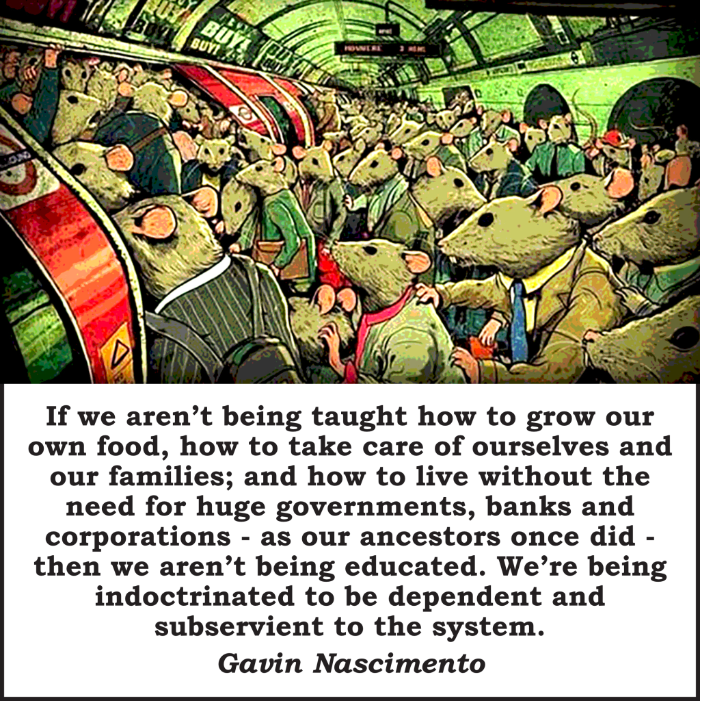
Farmer or Pharmer?

A few choice quotes from Juliette de Bairacli Levy who did not mince words about her views on modern medicine.

This excerpt is from 1952! It’s astounding to me that it’s only gotten worse in the last 70 years. They keep doubling-down, and the public keeps buying it up.

“The present-day farmer has been educated to consider disease as inevitable and the only scientific cure as being in the artificial remedies of the modern veterinary surgeon who through over-rigid orthodox training and himself under the influence of advertisement, is too often a mere vendor of the products of the vast and powerful chemical and serum manufacturers.  For the vested interests in modern medicine are stupendous.  Businessmen who have never owned an animal fatten like breeding toads upon the ailments of farm stock which need not know sickness at all if they had daily access to the herbs of the fields.  The true farmer should cultivate his own medicines in his own fields, and he should not consider himself as being a farmer if he has to resort to outside help for keeping his animals in health, and healing them when in sickness.  Science is providing the ruination of true farming; the only thing that I, and countless others, have noted as flourishing alongside science, is disease!—disease of the earth, disease of crops and disease of the animal and people who feed on the diseased produce.”

“Professor Szekely had declared emphatically, that the curing of the ailments of his patients is often a simple task in comparison with the freeing of their bodies from the accumulations of chemical drugs lodged in their tissues — the drugs derived from orthodox medical chemo-therapy, and from the poisons sprayed upon fruits and vegetables by the modern farmer, or placed in tinned and bottled foods as preservatives.  Many of his patients are Americans, and in present-day America the chemist seems to be running amok, spraying and poisoning everything edible.”
~Juliette de Bairacli Levy, 1952, The Complete Herbal Handbook For Farm And Stable
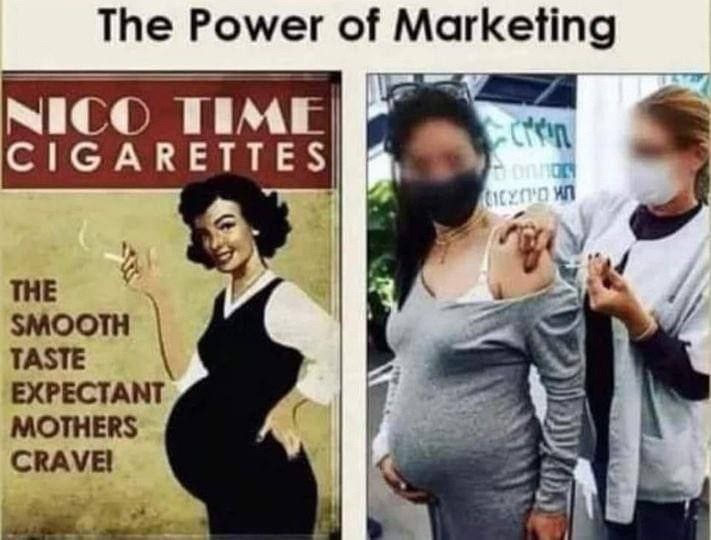
The influence of advertisement, you say? Naw, can’t be that!
An Inspiring Herbalist

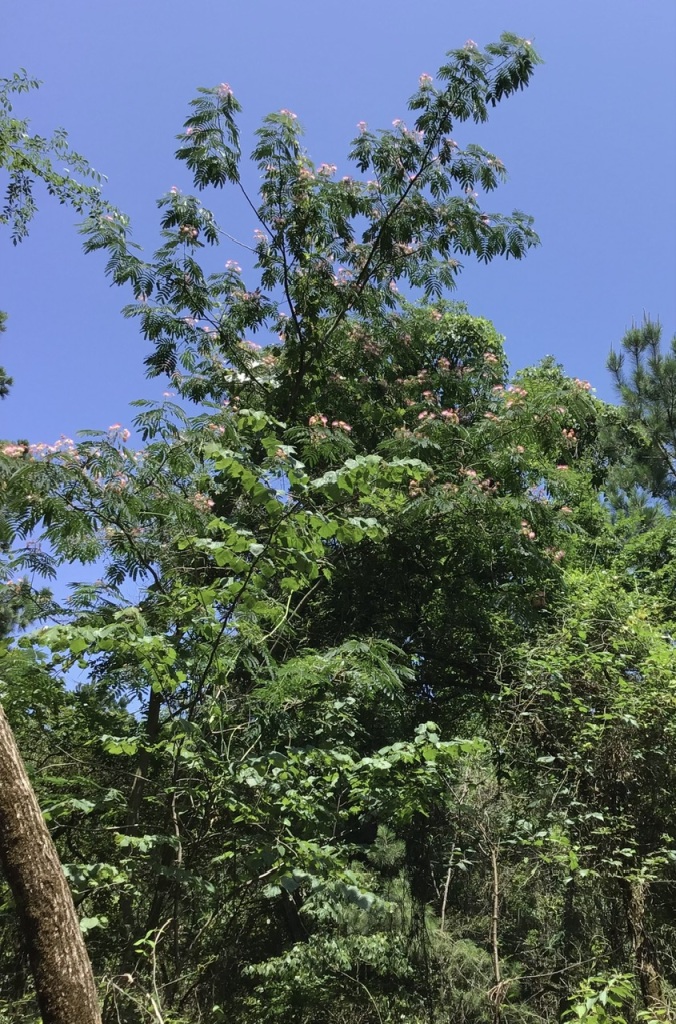
I’ve been working bit by bit on the Herbal Explorations pages and hope to add several more medicinal plants very soon—including the lovely Mimosa tree and the very popular Chasteberry—both which grow wonderfully here, even in the extreme heat and drought.

The mimosa tree and flower, (on the left) rising above the canopy along the road and full of butterflies, which unfortunately were too far up to catch with my camera. In the middle photo a fine specimen from our neighbor’s garden, where I gathered some blossoms for kombucha. They smell delightful, a bit like honeysuckle.

Also in our neighbor’s garden near the mimosa tree—I just love old hodgepodge structures like this!

It’s not giving up yet!

Also coming soon: Above, the chasteberry in our garden, also commonly called monk’s pepper or Vitek, which has a completely different scent, but one I adore so much I’m hoping to make soap with it some day very soon. And the bees love it, too!

Aspiring herbalists (like me!) must find inspiring teachers!

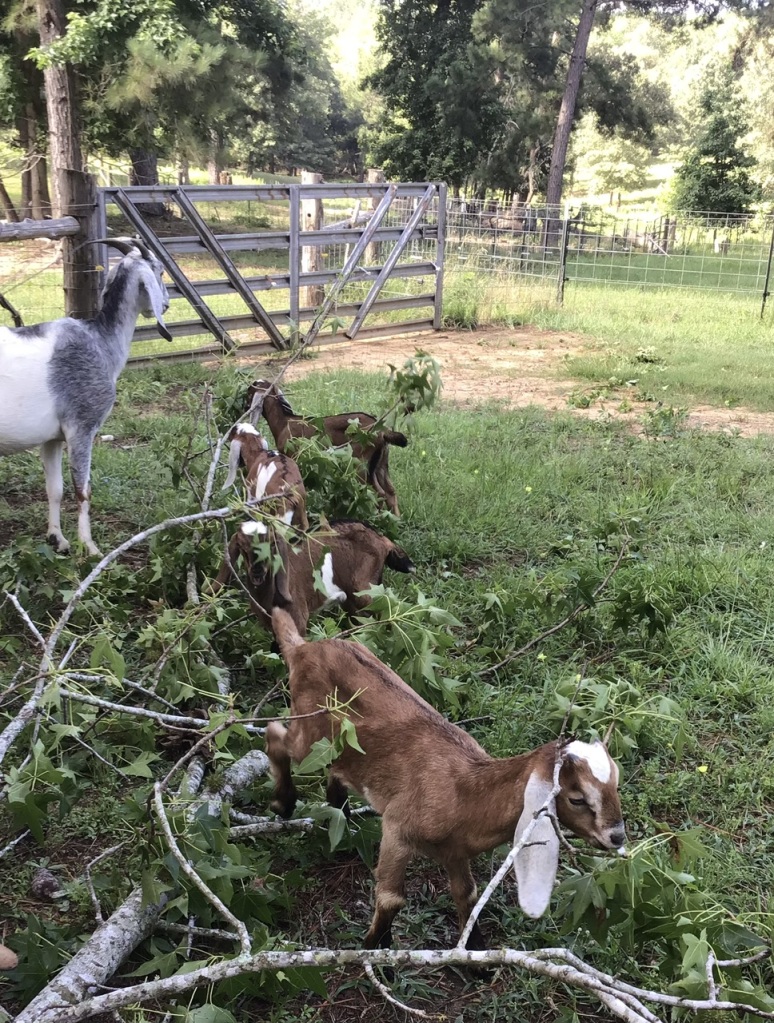
A big motivator for me to learn herbalism has been our critters. They all have special needs! It’s hard not to worry about them, but I’d rather have faith in nature than in Big Pharma.

I am way out of my depth, but I know one thing for sure: the pharmaceutical model of our modern-day veterinarians is not for me. Not for animals, not for people.

Information that eschews this model is not easy to come by, so when I find something or someone special, I hone in.

I’ve found this book helpful, so I looked to see what else I might find from this author, and wow, is she ever fascinating.

From the foreword: “Such ailments as the now prevalent ones of scrapie in sheep and ‘mad cow’ in cattle are not going to find a place in this Herbal Handbook for Farm and Stable, despite the fact that many thousands of cattle in the UK have now been diagnosed as suffering from Bovine Spongiform Encephalopathy (BSE). My book teaches natural care of animals and totally shuns their exploitation (wherein they are treated as machines, instead of as living, sensitive and loving creatures).

This book wholly condemns the force-feeding of unnatural foods to any creatures. If a diet is unnatural, disease will keep company with those subjected to it: that is a fixed law. I state force-feeding because, when animals through hunger are driven to eat foods entirely unnatural to their species, such as giving meat offal to cows and sheep, that, to me, is force-feeding. . . As I write this, when visiting England, television is showing cats suspected of having a similar disease to BSE in cattle. I do hope this fear proves to be unfounded. In any case, it is terrible that human acceptance and connivance in forcing the unnatural on our domestic animals bring much misery, pain and fear, all of which could be avoided.”

This book was published in 1952, and she has several others about dogs and cats.

I wonder what she would’ve made of our new bird flu?!

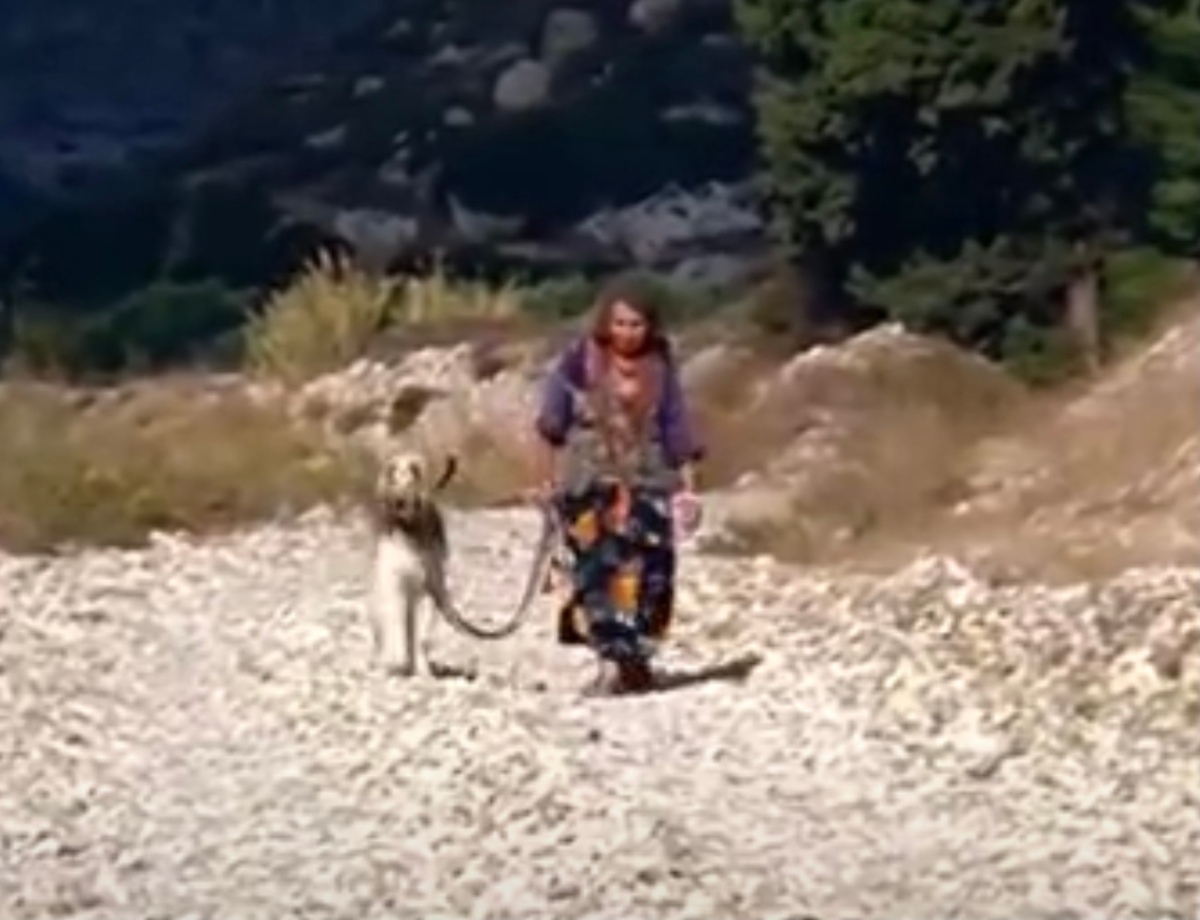
She lead quite the unique life, having been born into wealth, but choosing to live a simple life, exploring nature, living as a nomad among gypsies in many countries, and learning their ways.

There’s a documentary about her life and work, and though I haven’t found a full copy yet, here’s a good clip.

I looked for some of her other books as well, seems they are mostly out of print, so I was so pleased to find this one painstakingly retyped by another WP blogger.

As Gypsies Wander

A sister wanderer, the teacher I seek, here we meet beyond time and space, and thanks to the efforts of a great many who remain unknown.

How grateful I am to find you!