The Pleasure Principle

A post for Valentine’s Day, something I’ve never done before, as far as I recall.

I imagine it as an Ode to Narcissus, which is my own personal meaning attached to this holiday.  Through the Greek myth we are told that Narcissus fell in love with his reflection in a pool of water and up to modern times there are myriad explorations for what that represents.

The most well-known today, coming from Wiki:

The myth had a decided influence on English Victorian homoerotic culture, via André Gide‘s study of the myth, Le Traité du Narcisse (‘The Treatise of the Narcissus’, 1891), and the only novel by Oscar WildeThe Picture of Dorian Gray.

Most often in our modern era it’s considered a negative thing—a forsaking of the beloved or even God, or the destructive self-love of a tyrannical ego, or the folly of youth.

Echo and Narcissus, oil on canvas by Nicolas Poussin, 1627 (Louvre, Paris)

But for myself, I imagine its original intent as being more pure and innocent.  I don’t imagine the Greek myths were to be taken as literal stories of living people and Gods, but rather the mysteries and processes of Nature.

Eros is Cupid, but I imagine that what’s being unveiled between these 3 figures is depicting the process, the mystery, the intimate and delicate balance with Cupid (Eros) manifesting through  Narcissus’ love of beauty and pleasure.   

That something bigger than we mere mortals is occurring when we fall in love, sometimes even against our own will, awakens and evokes the spirit of Eros.  A natural force so powerful we think of it as a drug, capable of making us behave in uncharacteristic, undesirable and even dangerous ways.

Narcissus is in love with love, which is to say, in love with life.

In the water, a classic symbol of emotion, he truly saw himself in the spirit of divine love.  

The latest modern remaking of The Picture of Dorian Gray.

What came after that initial myth were the modern cultural assaults and chronic misunderstandings cursing him with egoism, arrogance, selfishness, cruelty, taken to the extremes of self-absorption, self-loathing and eventually self-destruction, as in The Picture of Dorian Gray.  Eros as uncontrolled self-obsession.

My belief is that to fall in love with anything, or anyone, is to fall in love with oneself; that is, an aspect of one’s own reflection.  Just as Narcissus is our first flower to appear in spring (it’s blooming right now in fact) Narcissus symbolizes the coming reawakening of all our natural pleasures as spring approaches and life is renewed.  

Before the Easter ritual of fecundity, first the pair must meet, and fall in love.

In celebrating the courting rituals, it’s the one holiday that’s not considered a family affair, and conjures an atypical respect for intimacy in our mass-loving modern culture.

To me it is a holiday of guilty pleasures, quirky pursuits, strange beliefs and peculiar tastes. 

What’s your pleasure?  Do you indulge it enough?  Or perhaps, too much?  Narcissus wants to know!

Do you prefer the cake or the icing?

Immediate reward or delayed gratification?

Are you the driver or the passenger?  

Is ‘fun’ the same as pleasure?  

Is your pleasure a particpatory adventure, or to be delivered on a silver tray?  

Active or passive?

Photography or painting? Reading or writing? Listening or singing?Watching or playing? Cooking or eating?  Looking or being seen?

Is there one without the other?  Is there the other without the one?

A personal story of guilty pleasures.

A fine restaurant, with a fine atmosphere, and fine company, is my guiltiest pleasure of all.  I’d spend lavishly without reserve, relish with abandon, obsess over every detail, waste hours, or weekends without a second thought.  Dionysus takes the reigns when I experience such exquisite care, such regard for pleasure and beauty, I’m easily swept away.  (And unfortunately, just as easily disappointed.). 

Hubby did not know that about me.  How could he possibly, he’d only known me a week or so.

Perhaps it’s not such an unusual thing, considering the love affair with food that’s shared across seemingly all cultures, if not always appreciated to the same degree with all people.

I’ll forever cherish the singular date when Hubby won me over, especially because I know the chances of something remotely similar ever happening again are microscopic.  It was one of those one in a million evolutionary occurrences, kind of like the Big Bang.  

As we all know, it just takes one miracle.

He planned it to the letter—chose the best restaurant, actually went there in advance to choose the best table overlooking the water, spoke to the chef personally, tipped the maitre’d in advance.

Who does that?  I mean, I would probably, but who else?  Only in the movies, right?

It wasn’t on Valentine’s Day, there was no chocolate or champagne.  But I did drink too much, and he swiftly transformed into my white knight on a scooter.  He was the crafter of the most perfectly romantic night of my life.  And romantic is not something he’s ever aspired to, by any standards, and by his own admission. 

Like I said, just one miracle. Perhaps a little help from Cupid?

I was ho-hum before that.  Not that he wasn’t a good catch, of course.  Certainly loads of divorced 30-something women are attracted to a man who finds it to be bragging material that his belongings fit into a backpack with few aspirations besides spending half the year in a hammock on a Thai beach.

We had a lot in common, as in we were both fairly uncommon vagabonds.  Not trust-fund kids or military brats, that was most common in the ex-pat scenes in those days.  We worked and scrimped and hustled and snubbed our noses at such privilege, when we could afford to.  Otherwise we enjoyed their parties and their company and their contacts.

We met at one such fancy affair, and he wasn’t my type, that’s how I saw it in the moment.  Not because of any of those previously mentioned assets, those I actually found pretty charming, especially that he would be bragging on them with a woman he’d just met.  I was far more impressed with his stories of rugged adventure than any of other’s comfort and privilege.

Not our photo, though we do have great ones, somewhere. This one is from kingscup.com

But I was just barely out of another failed relationship; I just wasn’t on the market, according to me. 

He perceived otherwise.  I dare say, I have never been pursued with such seemingly carefree precision.  He is/was not ever a lady’s man, had less relationship experience than me, and was not there looking for love.

It didn’t help that my just-failed relationship was with a photographer, and that he was there as another photographer’s assistant.  Of course I noticed he was fit and handsome and friendly and funny.  I imagined we could become friends, maybe even friends with benefits.  My imagination stopped there.

This is a stock photo, the resorts we stayed in were even more glorious.

We bumped into each other often, as would be expected, since we were all covering the Phuket King’s Cup Regatta.  They had us all staying in top resorts, sailing the seas by day and attending parties every night.  It was amazing and overwhelming and so deliciously extravagant and foreign. 

Even under such conditions, he was able to corral my attentions, redirect my intentions, and totally capture my life’s trajectory (as dismal as that was looking at the time considering I was living in an old, drafty single-wide in my dad’s trailer park in Mena, Arkansas.)

Though I’m sure he won’t admit it and questions who was doing the seducing, I will still insist, it surely wasn’t me.  Narcissus, perhaps? 

We are told it’s human nature to pursue pleasure and to recoil from pain.  But all around us we have plenty of evidence that’s not the case at all.  In honest observation it looks much more true that pain and pleasure have a very mysterious relationship that is quite unique to each individual.  

I personally will not allow the Dorian Gray’s of the world to eternally spoil the beauty of Narcissus, so I celebrate Valentine’s Day as a gateway into the new season’s promise of pleasure.

Happy Valentine’s Day to all the Lovers of Love, Beauty, Pleasure and Life!

A Case for Applied Bitterness

The Promise and The Fantasy: It is said Love is God’s weapon.

Revelation 21: 1-6
“Then I saw a new heaven and a new earth, for the first heaven and the first earth had passed away, and there was no longer any sea. I saw the Holy city, the new Jerusalem coming down out of heaven from God, prepared as a bride beautifully dressed for her husband. And I heard a loud voice from the throne saying, “Look! God’s dwelling place is now among the people, and he will dwell among them. They will be his people, and God himself will be with them and be their God. He will wipe every tear from their eyes. There will be no more death or mourning or crying or pain, for the old order of things has passed away. He who was seated on the throne said, ” I am making everything new!” Then he said, “Write this down for these words are trustworthy and true.” He said to me: “It is done. I am the Alpha and the Omega, the Beginning and the End. To the thirsty I will give water without cost from the spring of the water of life.”

The Promise and The Fantasy: An end to all pain, suffering, sacrifice.

“Man will oppose everything except a Hand Extended, … he will stand up in the face of every hazard except Lonely Time; that for the sake of his poorest and shakiest and screwiest principle he will lay down his life, endure pain, ridicule, and even sometimes, that most demeaning of American hardships, discomfort, but will relinquish his firmest stand for Love …
Love — or the fear of Not Having It, or the worry of Not having Enough of It, or the Terror of Losing It — certainly does conquer all.”
~Ken Kesey, Sometimes a Great Notion

Repeat after me: I believe in LOVE!

Repeat after me: I believe in LOVE!

The New Age Movement:
Love as weapon of coercion and behavior modification

Benjamin Creme (1922-2016), Aquarian Age conspiracist
From Wiki:

“Creme said that he was first contacted telepathically by his Master in January 1959, when Creme was asked to make tape recordings of his Master’s messages.[19] Creme first began to speak publicly of his mission on 30 May 1975, at the Friends Meeting House on Euston Road in London, England.[20][21] His central message announced the emergence of this group of enlightened spiritual teachers who would guide humanity forward into a new epoch, the Aquarian Age of peace and brotherhood, based on the principles of love and sharing. At the head of this group would be the one who occupies the office of the Christ, Maitreya, the World Teacher,[1] expected by all the major religions as their “Awaited One”: the Christ to the Christians; the Imam Mahdi to the Muslims; the Messiah for Jews; and the 5th Buddha (i.e., Maitreya) for Buddhists. As early as 1982, however, Creme emphasized that Maitreya would reveal himself fully only when Humanity began to live in right relationship to one another – most notably, by living in peace, and by beginning to share the world’s resources more equitably.[22][23]

Creme asserted that Maitreya was the World Teacher for the Age of Aquarius, and that during the transition of one astrological cycle to another humans undergo a quickening of their evolution, while experiencing crisis after crisis.[45]”

At the end of George Orwell’s 1984, broken, humiliated, every bit of his humanity smashed, Winston waits for the bullet in the back of the head and thinks, “He had won the victory over himself. He loved Big Brother.

Become the weakest, most vulnerable, most obedient and acquiescent version of yourself, and then the world will be peaceful.

Love one another blindly in a thick global stew of brotherly affection, and then the world will be free of war.

Lay down your weapons and your sour pusses, and then the world will be free of crime.

Give all your worldly goods away, and then the world will be free from exploitation.

Spread all your love all around everywhere all the time, give it all you’ve got—mind, body, soul—And then we will all live as One.

Still This Love Crap

Have you ever experienced unrequited love? Ever love someone who was so out of your league they didn’t know you existed? Ever been horribly, unfairly, unceremoniously jilted by a lover? Ever love someone for years who treated you like shit most of the time? Ever love someone who turned out to be completely different than the one you thought you fell in love with?

Ever tried to muster up feelings of love for someone or something you did not, could not, love?

And yet still, despite its ephemeral nature—from its meaning, to its translation, to how it is individually experienced—some of our greatest thinkers, philosophers, social critics, poets, not to mention a good chunk of pop culture, still repeats “Love is the answer.”

We should love everyone and especially nature. That’s what’s wrong with the world, they insist, not enough love. And every time I hear this, I roll my eyes, even when it comes from someone I love.

https://www.bbc.co.uk/sounds/play/b08njtjg

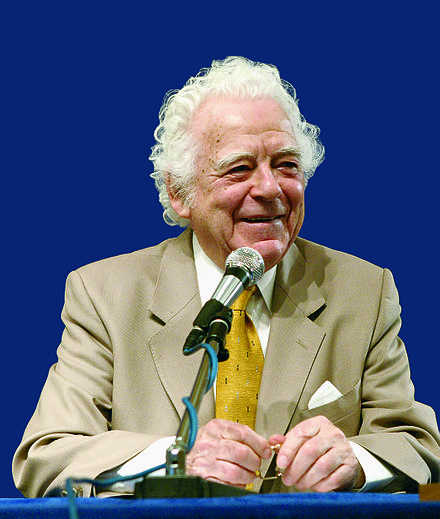
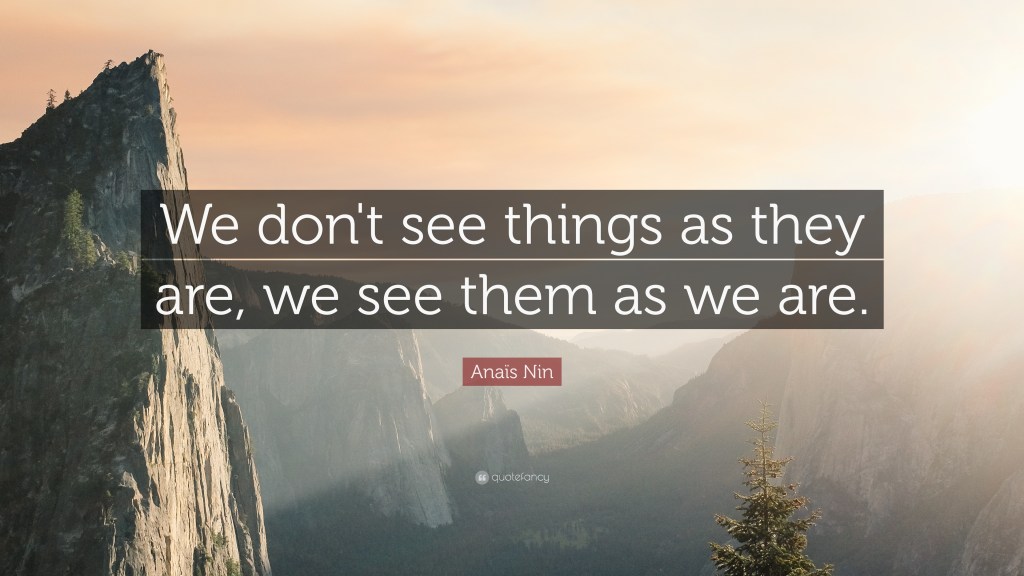
Most recently I heard it in an interview coming from Wendell Berry (link). How someone so inspiring, who has led such a charmed and wholesome and respectable life, who now at an advanced age seems so wise, could repeat such nonsense confirms for me only one thing: “We don’t see things for what they are, we see them for what we are.”

Love is the answer to the West’s problems, they say, because you take care of what you love. And the younger thinker and social critic Paul Kingsnorth agrees with him.

How lovely.

Now here’s a homework assignment I’d love to give to these fools. Kingsnorth likes to study tribal cultures, which I think is really cool. He likes them because they have a solid home in nature, unlike Westerners. And I agree. So, I think he should ask all those tribal folks their opinions about this ‘love’ solution so many Western thinkers keep harping on about.

My bet is, it doesn’t translate. At all. I bet he’d have to write an entire essay for them about what he means by love in the first place, let alone how he expects that will solve anything.

How do you make someone love you? Or care about you? I have a difficult time imagining a more monumental task. And yet, somehow those who care about nature are tasked with getting those very great many, like the Technocrats and their vast entourages, to not only love it, but to respect it, to care for it, to nurture it even. Seriously?

What a debilitating delusion they are spewing. And not just once or twice out of an understandable desperation. But constantly, for decades now.

Yet to call it out for the obvious shallow fantasy that it is, I become the bitch.

Well then, so be it. Let me play that role for a minute or two right now.

Imagine Mother Nature is your very own mother. Maybe you love your mother, let’s give it the benefit of the doubt. You love her, but your sisters love her more. And your mother and your sisters are screaming at you—“You don’t love me!” “You don’t care about me!” “You are exploiting me and you must stop!”

How will you respond to their shrieks and demands of love and care? Deny your lack of love, perhaps? Maybe yell back that they are all wrong about you? Maybe ask what they mean by that?

You might be so sure of your love that you ask what you can do to prove it?

Maybe Mom replies she wants you to write her a poem professing your loving feelings. So you do. You go even further, and you write 10 poems and throw in a tediously long essay to boot. And you’re very proud of your efforts and you feel you’ve really captured the intense love you have for her.

And she says she likes them, even the tediously long essay. In fact, everyone who loves her also agrees how perfectly you’ve captured those feelings of love through your words. Astonishing.

But, after all, those are just words, and you said to love her is to care for her, so she wants to see some action.

So with the same zeal you wrote the ten poems and tediously long essay you tackle the part where your loving words become caring actions.

You chop wood and carry water for her. You refrain from any negativity in her presence, because she doesn’t like it. You insist that everyone in her company, through shame or coercion or even force, abide by her rules and preferences.

At long last, she is satisfied with your efforts. You can feel the power of her appreciation filling your heart and coursing through your veins.

She tells you, “Child, you are a true master of loving care!”

“Except, you see, there’s so many children over there who don’t love me. And their lack of love for me is upstaging your love. Their lack of love is demonstrably more powerful than your true love. What can you do about this?”

And you reply, “Great Mother, don’t you worry, I can make them love you like I do!”

Really? Can you? What makes you so sure about that?

You read them your poems, and they smirk. Then they read your tediously long essay and shrug. You show them your admirable work in fetching wood and carrying water for your Great Mother, and they respond by clear cutting your forest and damming your river.

Then they tell you their favorite joke, laughing all along.

The joke goes like this: There were these three dudes on a yacht. One was an American, another was Russian, and the third one was Mexican. They were all drinking and getting boastful as drunken men like to do.

The Russian said, “In my country, we have so much vodka we can afford to throw it away!” And he takes a full bottle of vodka and throws it into the ocean.

They all laugh harder. So, the Mexican says, “In my country, we have so much tequila we can afford to throw it away!” And he takes a full bottle of tequila and throws it overboard.

And they all laugh harder still. Then the American says, “Well, in my country we have so many . . .

And he picks up the Mexican and throws him overboard.

The Russian and American look at each and howl with laughter. And the American blurts out between guffaws, “Tough love!”

To The Holy Spirit

O Thou, far off and here, whole and broken,
Who in necessity and in bounty wait,
Whose truth is light and dark, mute though spoken,
By Thy wide grace show me Thy narrow gate.

Wendell Berry