Heaven in Hell

I will be accused of being hyperbolic. Melodramatic. Perhaps I complain too much. Might my standards be too high?

It’s not that bad, they will say, or think. You still have a house and a husband and a relatively stable life. Just think of those miserable folks in . . . And all those who . . . And don’t forget the starving children in . . .

All over the place. Like, seriously, all over the god-damned place, and still everywhere, also, simultaneously, I hear such minimizing, avoidance, redirecting, marginalizing ‘advice’ from those high on their horses.

So if my experience, this time, is not as hellish as the last time, or as his or her or their experiences, on our vast continuum of hellishness, I should just move on. Get over it.

No matter how hard it gets, the social contract requires you stay positive, hopeful, forever gazing over the rainbow at the future potential for success, and perpetually focused on the life lesson.

It’s not hard, it’s challenging. It’s not a problem, it’s an opportunity. It’s not theft, it’s redistribution. It’s not a real lie, it’s a lie of omission. It’s not a failure, it’s a stepping stone. You’re not beat, you’re regrouping.

I still get counseled from others, unwanted advice (well-meaning I’m sure in their own minds) on how to see the bright side.

As if I don’t know how to do it! I was born and raised painting a silver lining on every cloud. I’m American, we’ve written nearly every script on this bullshit.

But, I grew up and got over it.

I was also a teacher for 20 years and sometimes I was actually a good one. Ok, maybe only occasionally, but that counts.

When I was good it was because I was tough, but fair. Not nice. Not compromising. Not lenient or understanding. Not painting rosy pictures or being sweet and kind.

And in such moments of lucidity it became very obvious to me that most students fail due to one thing: unrealistic expectations.

Our culture is saturated with them. Because it’s really, really good for business.

Lots of students sincerely wanted to learn the foreign language I was trying to teach them, and certainly had the smarts to do so because it’s not difficult, even a child can do it. And almost always does!

Photo by Anastasia Shuraeva on Pexels.com

But they bought the hype of some advertisement or second hand story from a braggart who swears anyone can learn a language in three months by listening to tapes on their work commute. They bought the expectation the process would be smooth sailing all the way.

They are a lot like these types who are constantly insisting everyone see the bright side of every situation. They’re all like mood police. Like moms who make kids ‘kiss and make up’ while they’re still seething inside. Emotional bullying based on unreasonable expectations. It reminds me of an awful photo I once saw of a child model posing for the camera with a forced smile on her face though her eyes were red and puffy from crying.

So, with all that out of the way, this summer has SUCKED for me.

There, I’ve said it. I haven’t written a Homestead Happenings in months in order to avoid having to try to make it palatable for readers. I know how to paint the silver lining on it. But, it also irritates me that those are the only kinds of stories we’re allowed to tell in mixed company. If there’s not some triumph over adversity, keep it to yourself.

If there’s not gratitude somewhere for the gift of life, no one wants to hear it. Stop whining. Get over it. Make lemonade.

I know. I can hear it.
resilience in the face of adversity

Repost by Kyle Young, the secular heretic

An excellent article, rather long with multiple tangents, but well worth the read. He covers quite a bit of weather terrorism, and the completely justified outbursts about the globalist disaster capitalism, but that’s not the part that most interested me today.

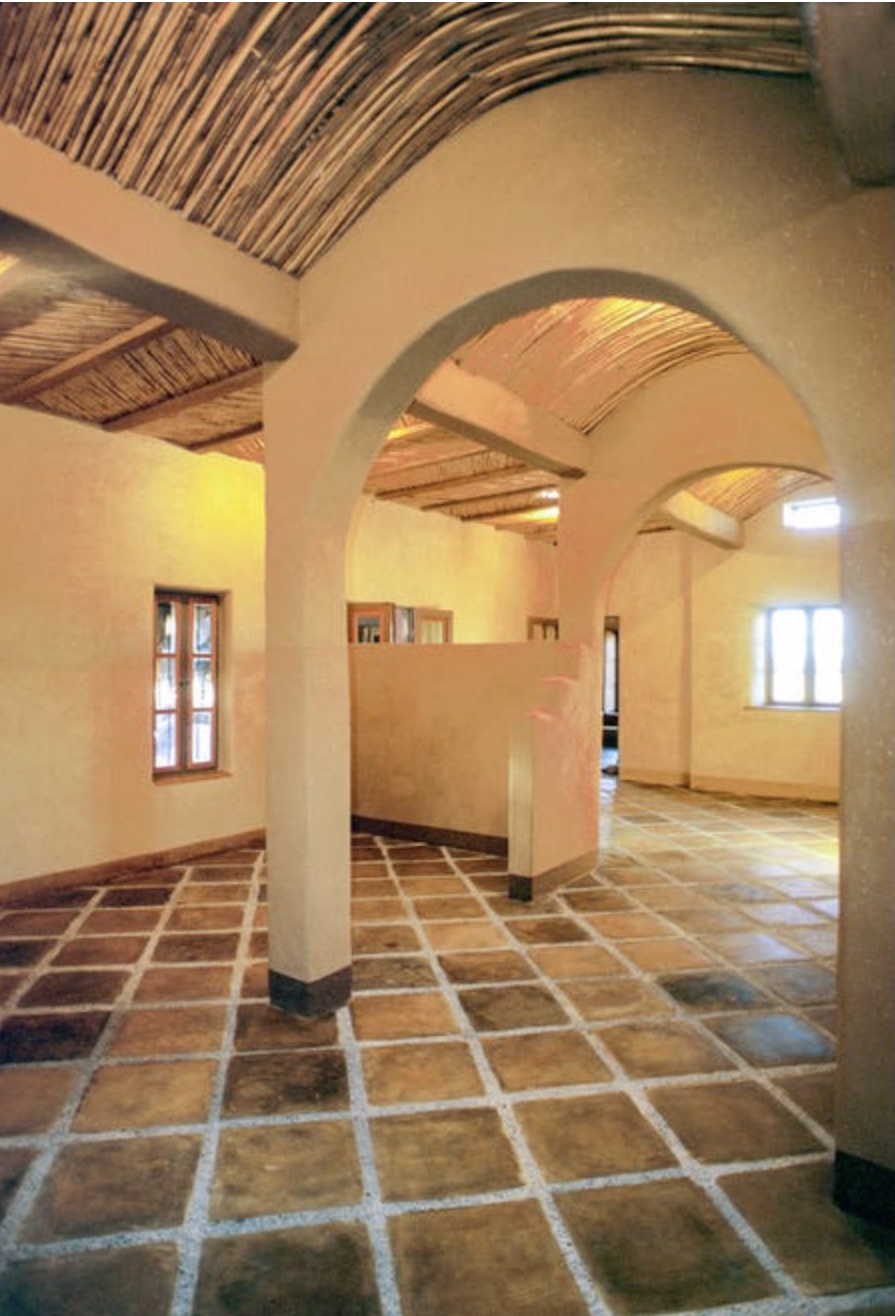
He also talks about rebuilding. He’s got some fantastic inspiration on what true resilience looks like, and it’s not even close to what’s being sold as our only options after a crisis.

I’d LOVE to rebuild in such a way right here, right now.

But another weather disaster is not what we want to force that to happen, thanks anyway weather terrorists!

resilience in the face of adversity

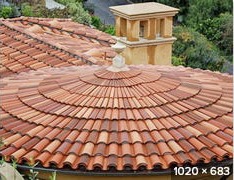
“a typical new house built in the US is made with energy intensive (and very pricey) materials that come from all over the world, materials that have nothing to do with blending into the local environment. Additionally, most of those imported building materials are toxic. The end result is a butt-ugly house that’ll be outgassing toxic fumes into the living space for decades. To make mater worse, it’ll look and feel completely foreign to its location. The only people who benefit from such a house are the globalists who control the globalist building material supply chains and write the costly, globalist building codes.

The reason so many butt ugly, toxic, expensive houses like this get built is because the same globalists who get local authorities to impose national building codes that require their toxic globalist building products – codes and products that give no consideration to local conditions and resources – are the same globalists that provide the textbooks and pay for architectural curriculum’s at universities that dole out the architectural degrees we are told are needed to design a house. The traditional concept of vernacular architecture – buildings made from local resources that allows them to blend well into their location – was long ago tossed aside in most modern architectural university programs in favor of driving up costs to increase globalist profits.

The house construction industry is as big of a toxic, globalist rip-off as the pharmaceutical industry.

Now we have FEMA moving in to “assist” with rebuilding. Right. One thing we can count on is that anything FEMA does will be closely linked to the industrial housing complex. That means toxic building materials that have nothing to do with the local vernacular will reign supreme.

Be forewarned – anyone who signs up for housing relief help from FEMA will be locked into the toxic, industrial housing complex.

Thankfully, as of right now, building a house doesn’t require one to be dependent on university trained architects or the toxic, globalist building supply chain.

Let’s get into that.

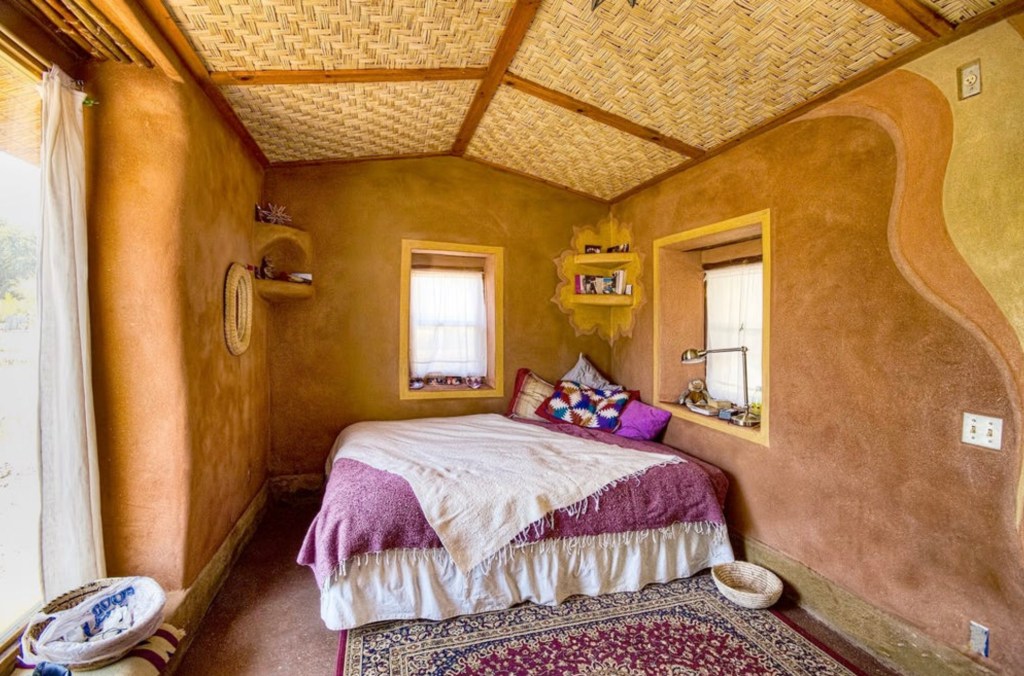
Three wonderful building resources are in abundance Western NC: stone, trees and bamboo. The stone and trees are native, most of the bamboo was introduced long ago. As I pointed out in the following post, one of the benefits of building with native resources is that you end up with a home that blends in with the native landscape – it looks like it belongs there because it is made of materials from that place. That is the essence of vernacular architecture. Another benefit of building with local resources is that, in the event of another disaster, the resources needed to do repairs are readily available from your native ecosystem.

No, these techniques may not work everywhere, and they shouldn’t. That’s what makes vernacular architecture so unique. It all depends on the natural resources available in your area. You want your home to blend in with your region, not my region. Don’t let a globalist suit sitting in a distant tower in New York City tell you how to build a house in Florida, North Carolina or New Mexico.

I once picked up a hitchhiker from England. He had already been traveling around the US for 3 months. He was a recent graduate with a degree in architectural. He was understandably disappointed with the architecture in the US, saying it was all very homogenous. He was right, of course. That’s what comes with globalism’s shortsighted, one size fits all, economy of scale mentality. Local resources and landscapes are not on the radar of most university architectural programs in the US. In the same way that modern doctors know nothing about nutrition, modern architects know nothing about vernacular architecture.

He told me that if someone were to blindfold him and take him to any rural area of England and removed the blindfold, he could tell where he was just by the vernacular architecture of the place. That is the epitome of resilience in home construction. It’s also the epitome of pride of place and a sense of community, all of which are lacking under the strong arm of the centralized, globalist technocracy in the US.

Those recovering from disasters have a choice: They can take the convenient route and sign their life away for government aid, once again becoming addicted to the cheap, toxic, pablum of globalist syphilization, and hope that another disaster doesn’t affect them or their childrens grandchildren.
Or, they can become resilient.

What’s old is new again.
Go local.
Be free.”

Breathe in Beauty

Nature is not perfect, nor perfectible. But whether in chaos or order there can always be found magnificent beauty that heals, energizes and inspires.

I don’t like to see folks high on false Hopium when they face troubled times.  I don’t like political slogans or wistful mantras about Hate or Love.  

I wish all mankind could feel what I feel, see what I see, touch what I touch, so that the wholesome Hopium of pure life filled them each day with all the sense of wonder and potential, or challenge and purpose, they try forever in vain to find in others’ words and buying things.

And they would know to micromanage Life is antithetical to our raison d’etre, not to mention a hard lesson in futility.

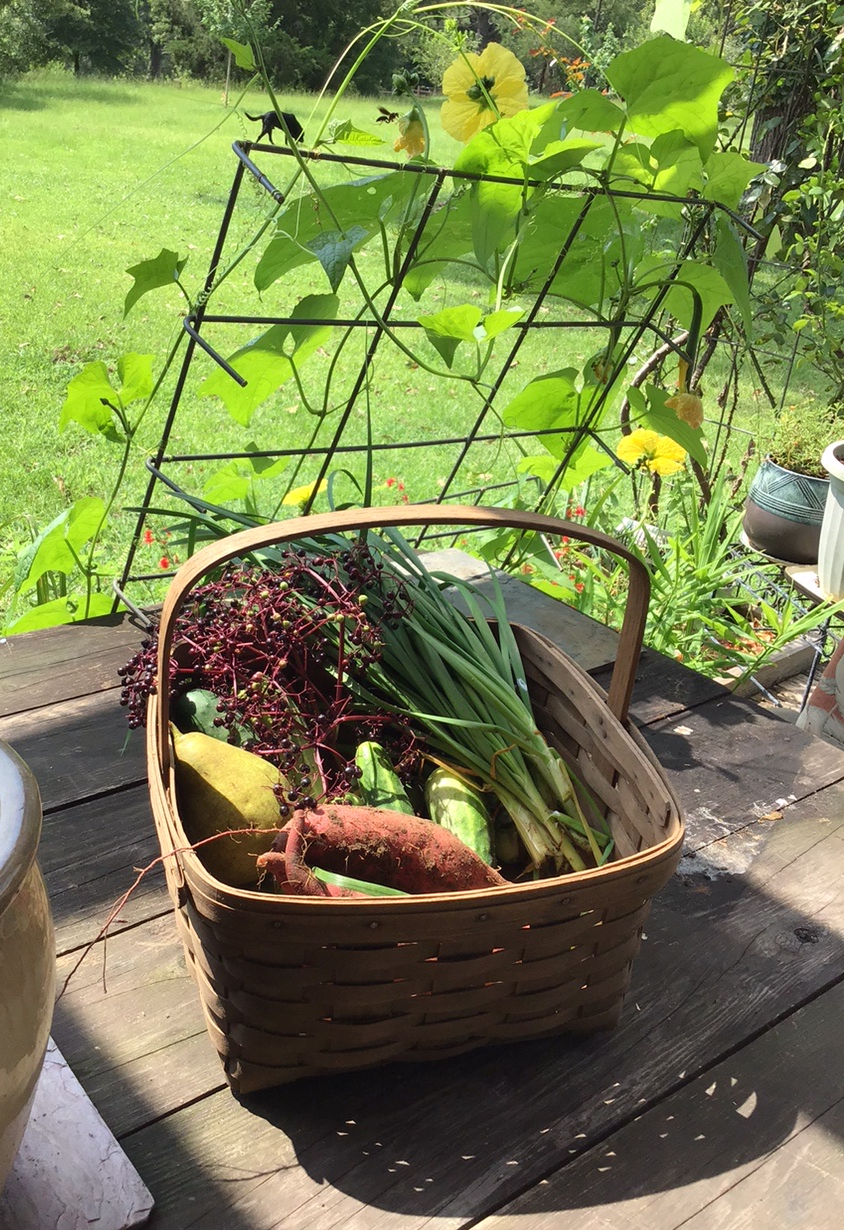
Co-creating beauty and abundance, participating directly in our daily sustenance, living reciprocally between the heavens and the soil is a marvelous feast of the mind, heart and soul.

Nature does not long to be worshipped, or revered, or admired from afar, or just replicated in images. It is us, it is ours to be truly seen and felt, up close and very personal, not as masters or servants, but as partners, in divinity.

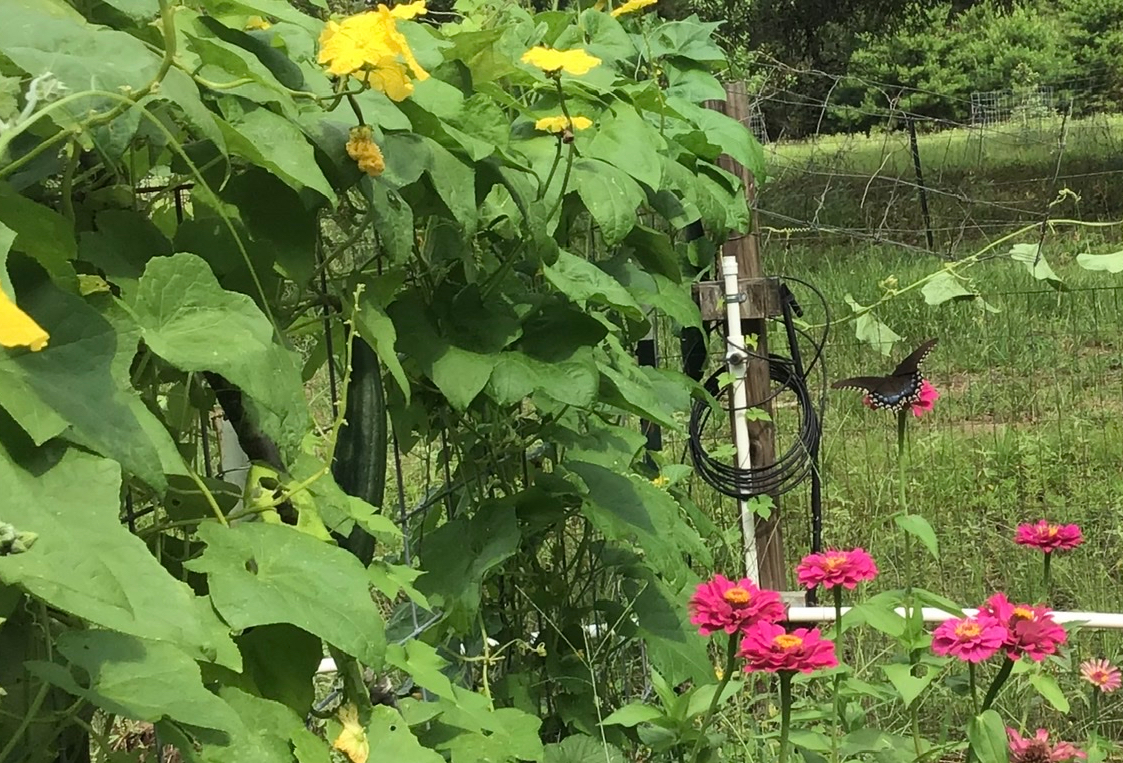
To work with nature, really work WITH it and IN it, is to spend your days suspended in magic.

Try one minute of bee zen. Can you hear their successful model of a happy colony? Contrary to popular lore, the worker bees control the queen, not the other way around. Can you sense their contentedness in maintaining their colony as instinctually as every Superorganism does?

Just like the human body, if left to its own devices, it knows just what to do.

One minute of bee zen