What’s Been Lost III

When I first started watching alternative history Youtube channels I was skeptical, and I still am. I want the truth, not more redirection. Not more fantasy. Not more illusion. Not more heavily curated or mediocre nonsense.

So far, I don’t sense I’ve found it, but I’ve become ok with never finding it. I’ve resigned myself to what’s as close to the truth as I’ll be able to manage to get to in this lifetime, which is: I’ll never know the truth, but I may be able to manage truth-adjacent with enough study and discernment. I can confidently opt-out of the lie, permanently. That’s a big improvement to the path of blind acceptance I was, and most are, still on.

The first step toward truth was achieved pretty easily, it began with calling bluffs. As long as I don’t allow it to frustrate me, which isn’t exactly easy, this alone feels pretty empowering. For me, as usual, I had to experience it directly, no Youtube influencers, no professors, no self-styled experts can convince me, not without applying my own eyes and ears and reason.
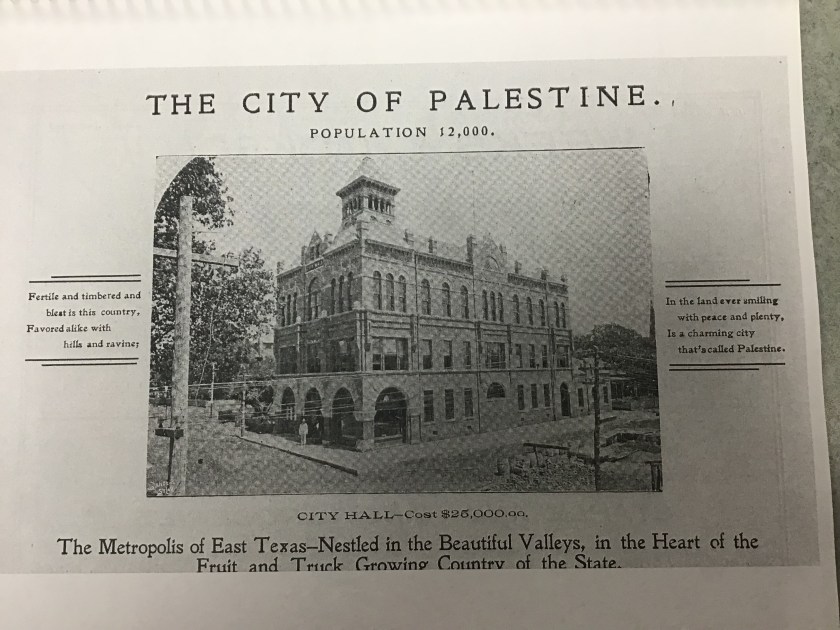
I looked to the architecture because that’s what’s visible, and only then to the official history, because that’s what’s accepted as truth. I started in my own neighborhood, that is, the small city closest to us, called Palestine. It’s actually easier I think to consider the small city, rather than the large ones, because there’s been less tampering more likely, more holes in the narratives that can be more easily noticed by the novice.

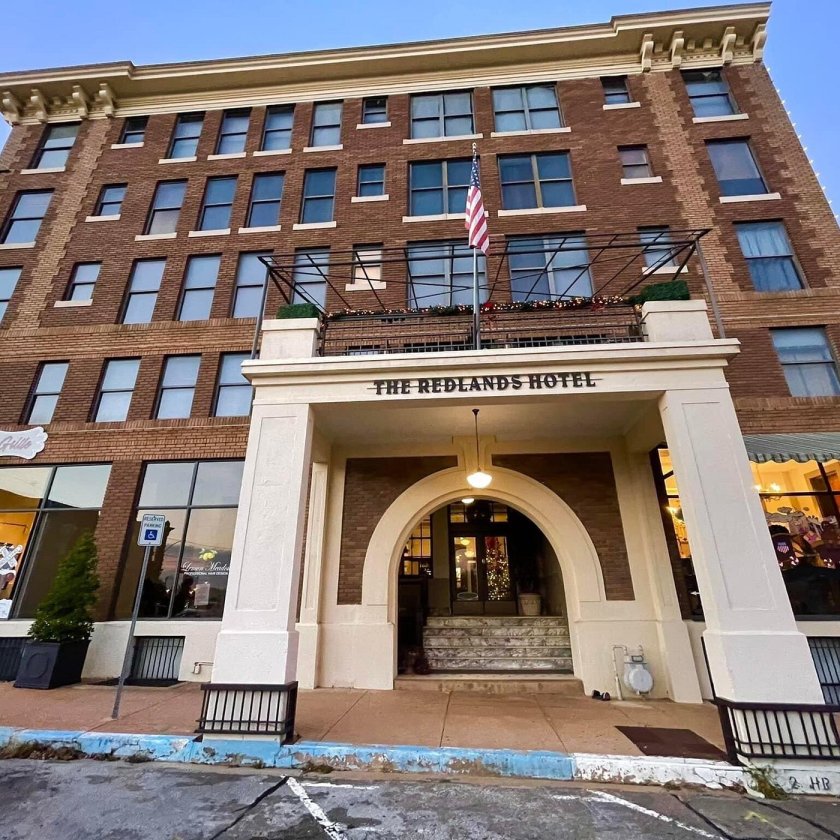
The well-maintained Redlands Hotel today.

Like, the story of the popular Redlands Hotel, where I sometimes go for lunch on my rare trips to town. It’s a lovely old building that they’ve done a relatively decent job of keeping up, especially considering the condition of the vast majority of the downtown area.

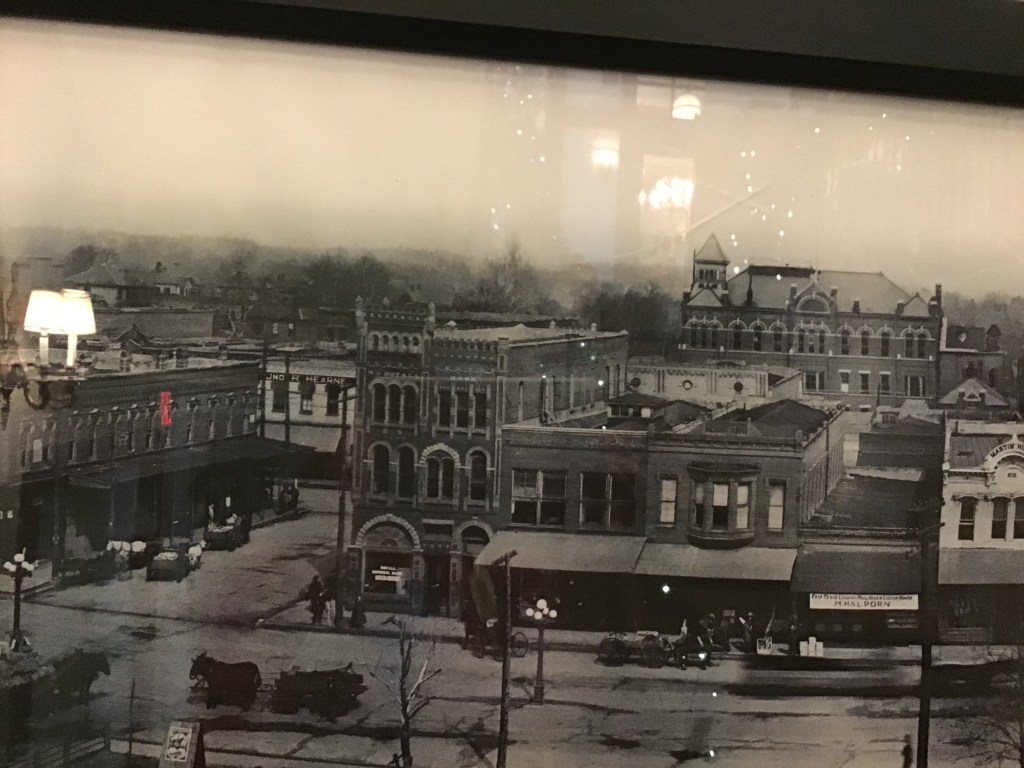
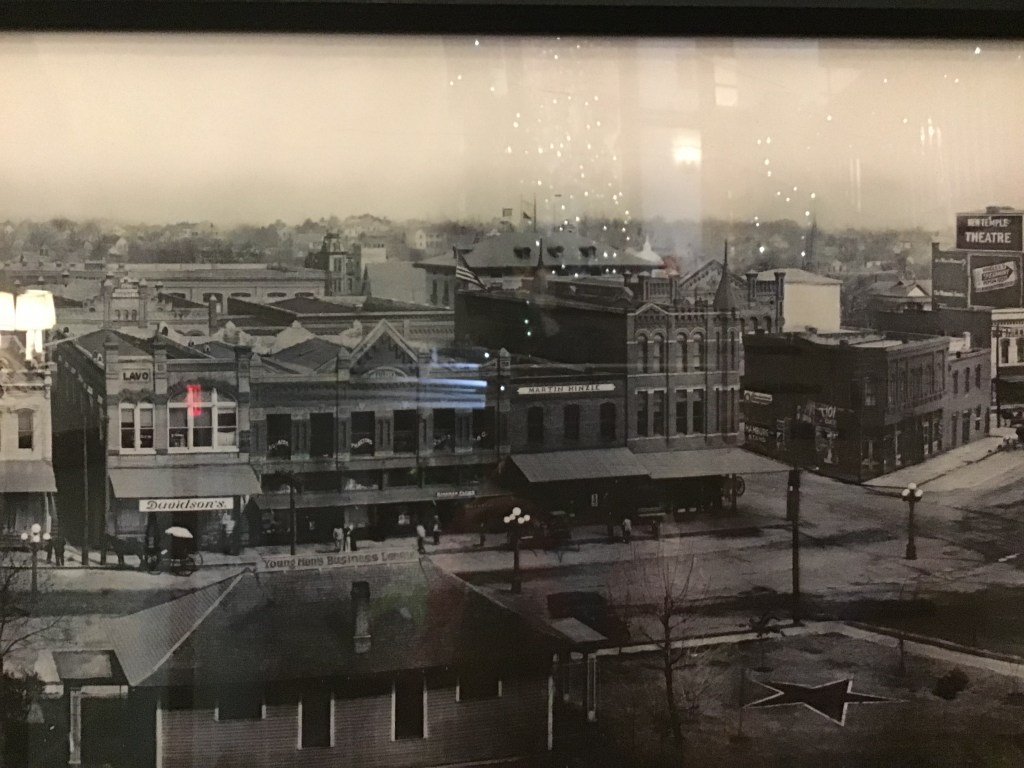
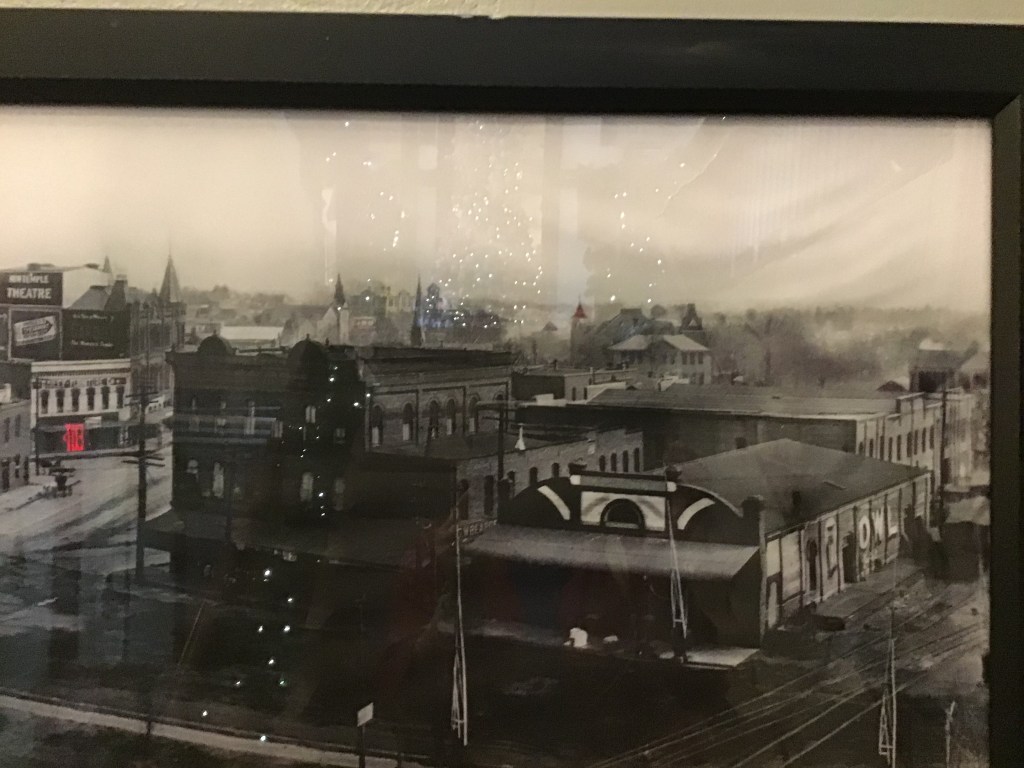
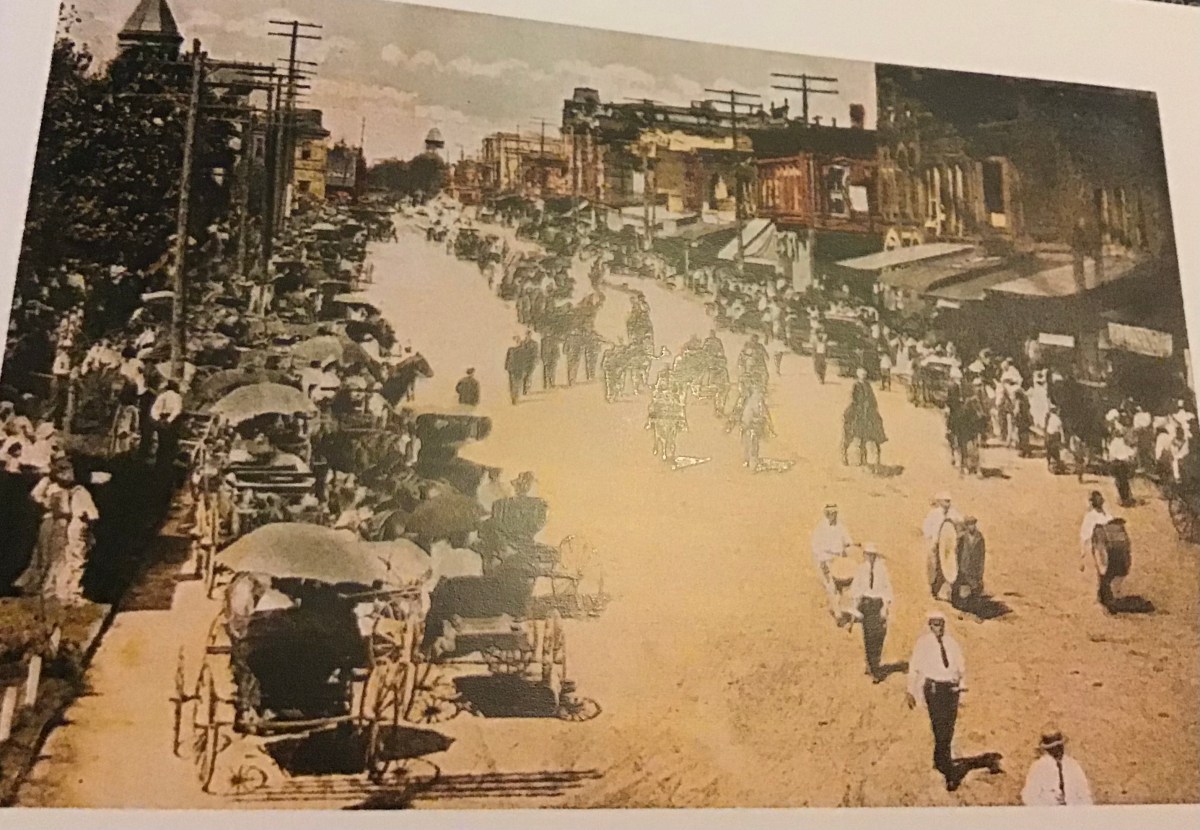
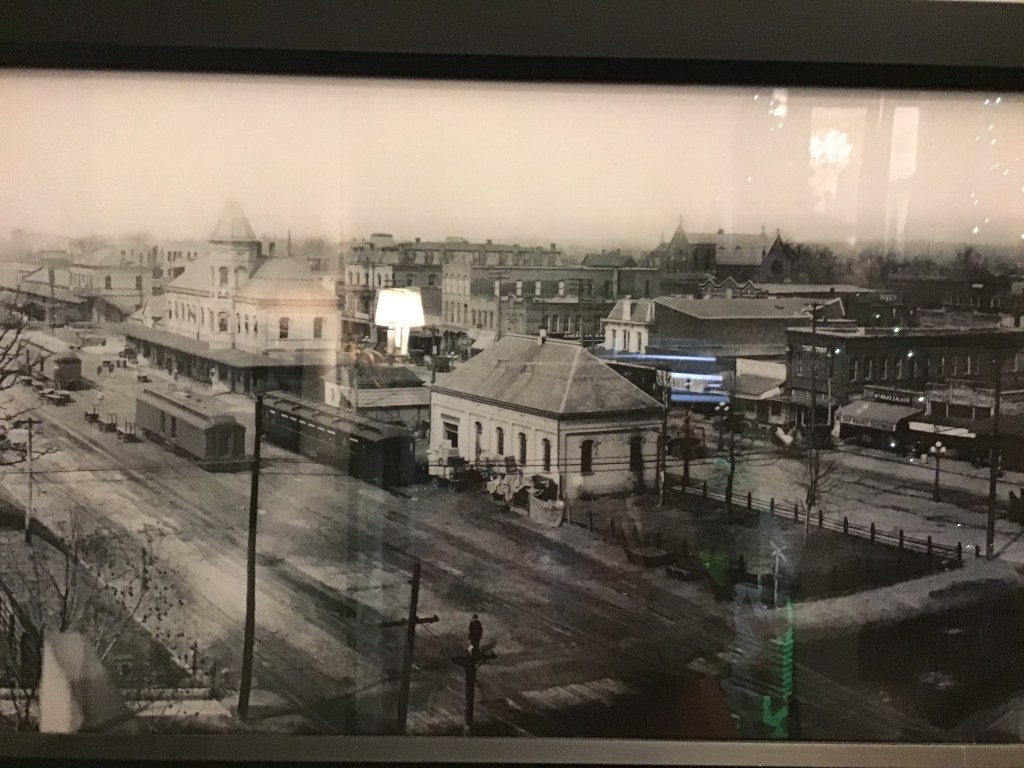
Interestingly, they have a panaramic photo of the early years of the city on display.  As you follow the railroad tracks from left to right in the photo, you end up at graffitti painted on the side of a building.  That is, the word OWL.

That’s my cue to start calling bluffs.
The owners of this hotel are deep into the official history, which is superficially helpful. As it goes, in 1914 when stockholders rushed to build the brown brick building, it was oxen that delivered the sand for the concrete. That is, sand from the Trinity River, 30 miles away. Are you kidding me?! That’s a pretty big bluff.

And even with that serious transport challenge, on supposed dirt roads, they managed to complete the five story building in a year.  Apparently dirt roads weren’t effected back then by rain or snow, neither were the human builders, or the oxen.  Amazing.

Even more amazing was that another striking building was going up on the other side of town, that is, the County Court House. The two structures apparently shared Italian artisans who installed hexagon tile to both buildings.
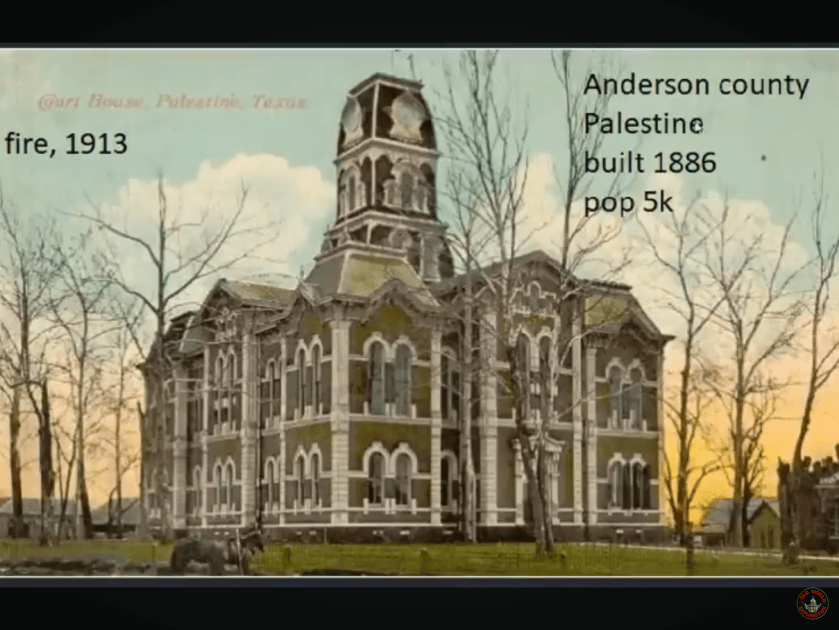
The original burned court house, depending on which source cited. Another source states the original courthouse was a small building made of wood.

“Considered one of the most modern constructions of its era, and built to withstand the challenges of time, its walls are made of concrete, masonry blocks, sheetrock, and metal studs—evident in the structure today.”

My those were some busy boys and oxen!

In fact, with just a bit of digging, we learn there was in fact another town at the Trinity River junction where the cherished sand came from, now missing from both the land and the history books. But, there remains one hand-drawn map available in the archives, Magnolia was the town’s name, and it was apparently so bustling with commerce and activity according to one source that they called it the ‘St. Louis of the South”.
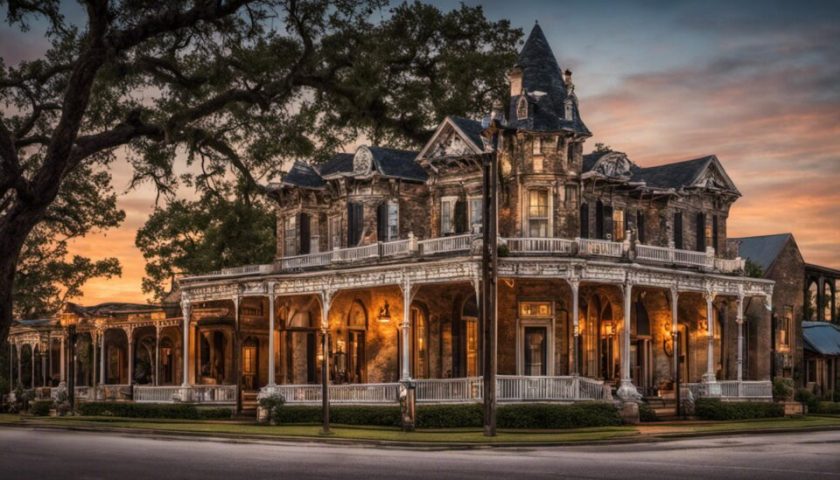
One of the many demolished structures of the non-existent town once called Magnolia, according to the official history.

“Magnolia was established in the early 1840s as a Trinity River cotton port and was named for a large magnolia tree in the center of the townsite. Magnolia had a post office from 1851 to 1871. William A. Haygood was one of the principal property owners in the community and operated cotton gins, a hotel, a livery stable, a general store, a blacksmith shop, and a local ferry. Among other businesses in the community were a drugstore and John McClannahan and son’s warehouse. Magnolia was reported to have a population of 800 at its peak around 1863, when the town had thirty-three blocks of residences and businesses. Most shipments from the port went to Galveston, but on May 5, 1868, a steamboat traveled up the Trinity to Dallas. After it was bypassed by the International and Great Northern Railroad in the 1870s, Magnolia declined rapidly. By the 1930s it was no longer shown on the county highway map, though its name was preserved in that of the two schools that stood on the site of the former town. In 1932 the Magnolia school for whites had an enrollment of forty-three and the Magnolia school for blacks, thirty-four. A 1982 map showed only the Magnolia Cemetery at the townsite.”
Magnolia, Texas
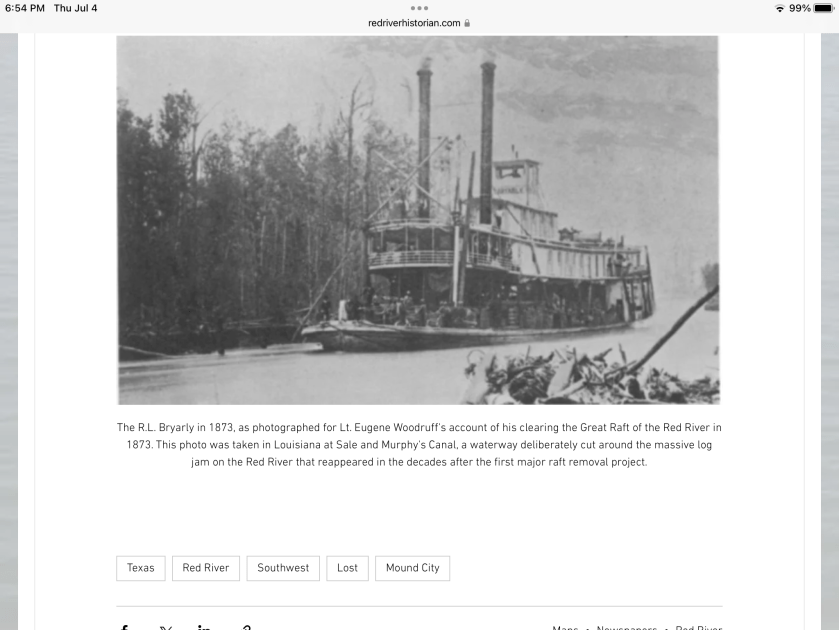
This is the sort of vessel which would have been traveling the Trinity River through Magnolia.

Nothing remains of this supposed river hub besides the hand-drawn map of the area where it was supposed to have been, where is now located some simple family houses, an intersection and the cemetery. I couldn’t even locate the river, or the supposed subsequent railroad.

Several other beautiful structures were also said to have been destroyed in this small city of Palestine not long after they were constructed.
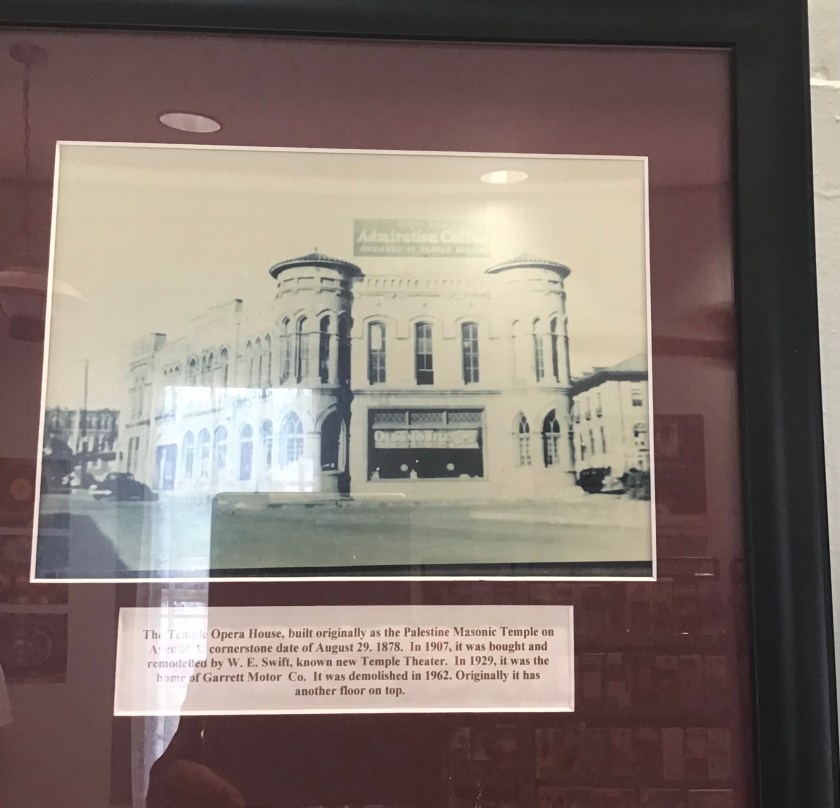
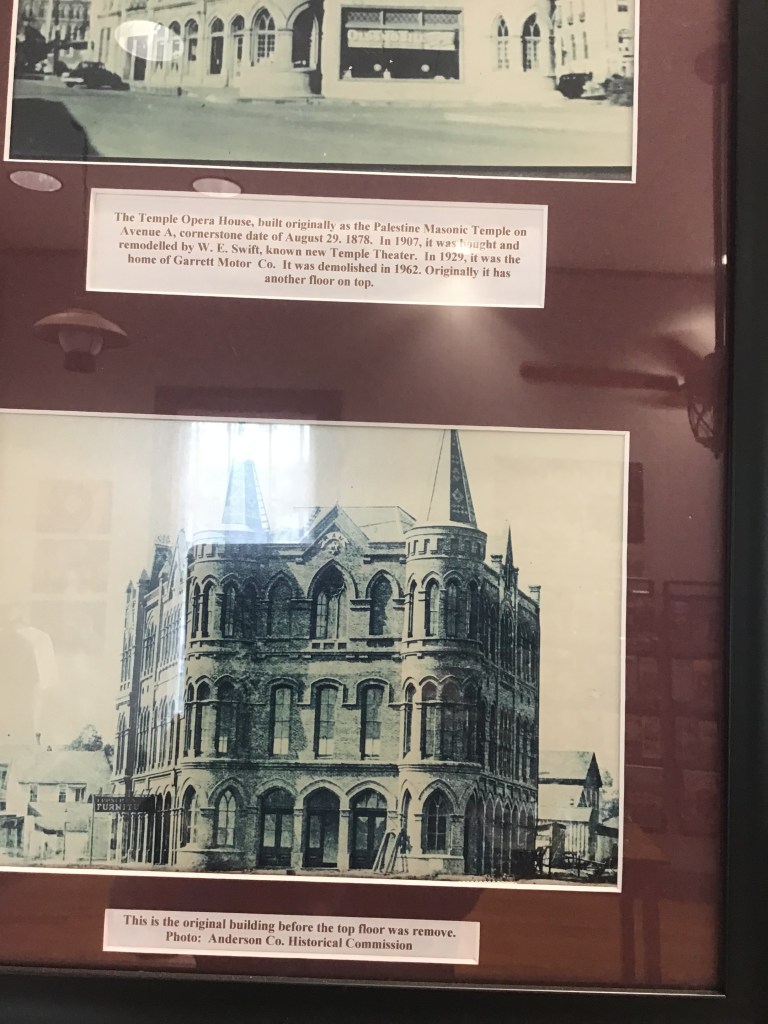
The Temple Opera House was built originally as the Palestine Masonic Temple with the cornerstone date of August 29, 1878. In 1907, it was bought and remodeled by W.E. Swift and known as the New Temple Theater. In 1929, it was the home of Garrett Motor Company, Palestine’s first Ford Motor Car Agency. It was demolished in 1962. It originally had another floor on top, but this was removed at some point.

At some point? Not even the official historians can tell us more specifically.

Exquisite building of multi-functions which didn’t have enough value to the small city to remain for a full century. The small box building housing a liquor store in that location now is so much better, I’m sure.

The “Railroad YMCA Building” was another one.
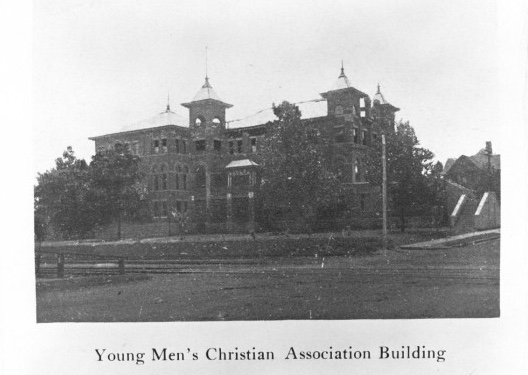
The Railroad YMCA opened in April of 1903 and continued as the YMCA until the building burned in the mid 1950’s. Interestingly, there seems to be no recorded photos available of this horrid fire event of a huge BRICK building. Nothing to see here! (In fact, I believe this to be another building altogether, more on that in a future post.)

As I searched the stacks of the local history at the library I was surprised to find several ‘fake books’ — that is supposed local history written by a source who cannot be located and is listed in the local phone book with phone numbers that don’t work and at addresses which never existed.  Three different phone books, three different addresses, I actually went to all of them personally.  Nothing.  The books appear to be written by AI!  I brought this to the attention of the library board, and no one cared.  At all.  I never heard back, though I went personally to the board meeting with evidence in hand.  They didn’t even care to know which books it was with these obvious falsities, possibly written by an unaccountable AI, and sitting in their stacks posing as actual local history written by a fake person.

And now I feel frustration setting in, so enough for now, to be continued . . .

Disenchanting Enchanted Rock

I was so excited when I found ‘an expert’ on Enchanted Rock, who had written an entire book on the monument and its surroundings and has a website too, with lots of details. I was sure to have found a great source, I thought.

Click pic for my previous post about Enchanted Rock called “My favorite Enchanting photo”

And with a name like Kennedy, it’s gotta be good, right?

In the spirit of disobedience, in a word, no. Two words: Hell, no! Three words: Big, Fat, Disappointment!!

Wow, I didn’t realize anyone can just throw any piece of nonsense together and call it history. Or anthropology. Or pretty much any ‘science’.

Way to spoil a miraculous destination, Kennedy, thanks bunches.

But I can’t really blame him alone, it’s more than a trend. The dumbing down of the public has been documented for decades, and this sort of material that is supposed to pass as educational is a perfect case in point. So, let’s take a few pokes at it from a few of those many angles.

The History of Enchanted Rock in the Texas Hill Country by Ira Kennedy self-published in 2010 naming it https://www.amazon.com/HISTORY-ENCHANTED-ROCK-TEXAS-COUNTRY/dp/1456818783
“The Sacred Landmark of Central Texas”.

It is not sold as a children’s book and costs $21.99. According to the the Amazon page Ira Kennedy is:

“Considered as the state’s leading authority on Enchanted Rock, the sacred mountain of Central Texas, Ira has assisted the author’s of several published books, articles and the Thomas Evans mural of Enchanted Rock in the Austin-Bergstorm International Airport. IN 1992, Ira was awarded a Certificate of Appreciation from the Texas Parks and & Wildlife Department for providing numerous educational talks at Enchanted Rock Natural Area.” And it goes on.

The first Amazon review looked promising.
“Ira Kennedy is the world expert, in the opinion of many, of this beautiful Texas natural treasure. His knowledge comes from spending a great deal of his life on or near the rock. Ira is a creative genius and humble man who has written this amazing book, sure to answer all your questions about this geological wonder. Beautifully illustrated by Ira, you will keep this book among your special collections.”

The ‘book’ itself looks more like a coloring book. There are no references or citations, no bibliography or notes. While the author states he did multi-disciplinary research and himself has an advanced degree and was employed in Naval intelligence as a cryptographer, he must seriously understand what an ‘expert’ text would look like, and this one is the polar opposite of scholarly.

I can only assume ‘expert’ has taken on a new meaning sometime around the year 1999.

Let’s set the tone with his “Brief Historical Timeline” which begins his story in 12,000 B.C. and ends in 1978. With only a smattering of centuries missing, bless his heart!

We learn of a dubious-looking character named Jack Hays who was ‘an enigma’. We learn about a William Kennedy and his ‘flower-spangled’ landscape and ‘lost mines’ the ‘fueled the imaginagtion’. We learn about some immigrants from Germany in the 1840s.

We have the ‘First People’ myths and ‘The Imaginary Frontier’ of the Spanish explorer Alvar Nunez Cabeza de Vaca, who passed right through Mason County in the sixteenth century. And some childish stick figure drawings, some arrowheads and feather headdresses.

Later in the book are some drawings of angry indians who we learn may or may not have practiced human sacrifice.

And that about sums up my waste of money and time! Alas, the journey of discovery continues.

Poor, misunderstood ‘Enchanted Rock’ — I don’t even like your name anymore, so I think I’ll find a new one. And a new history to go with it. It would surely be better footnoted than this toilet paper, and good bit more entertaining I expect too!

I dare say, you there, intrepid traveler, can you smell anything beyond the boulders of bullshit?

Between Intrepid and Genteel

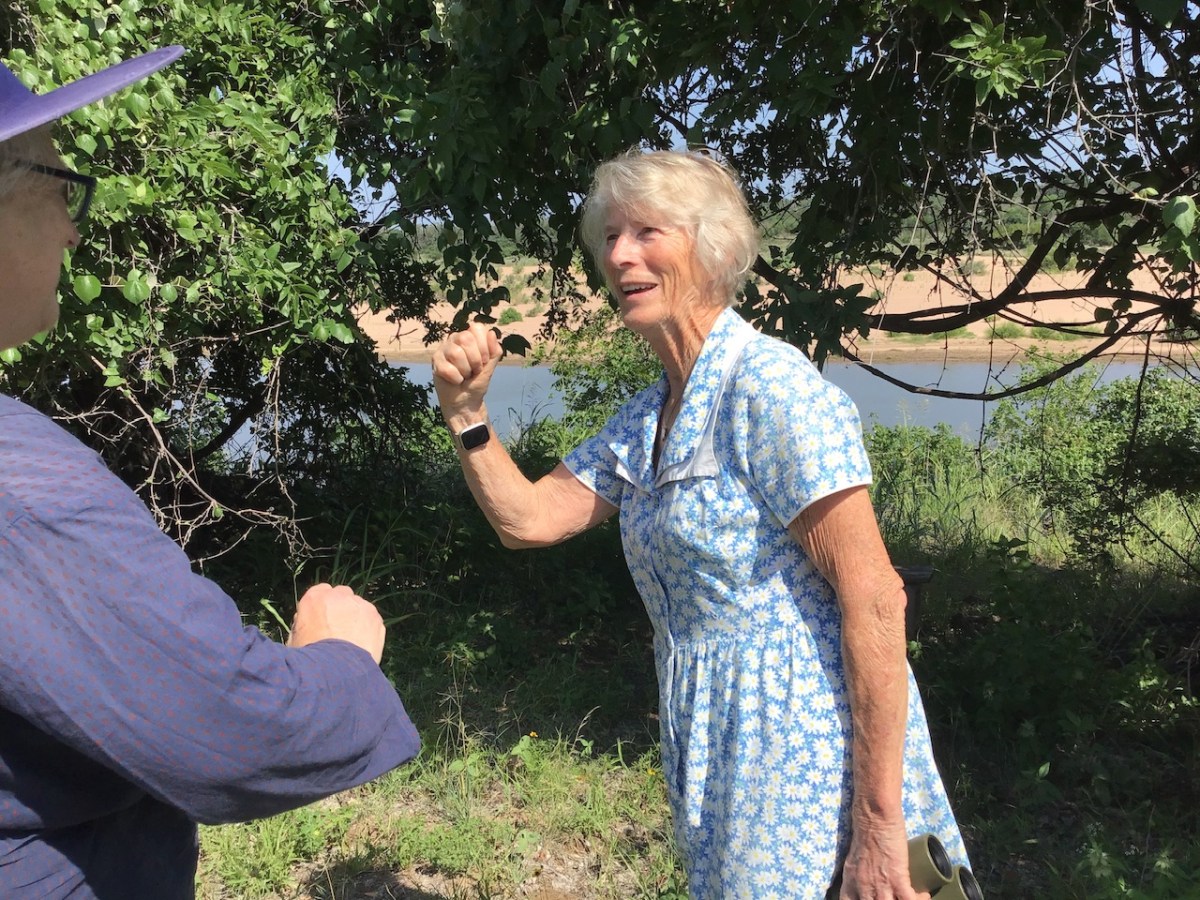
From Kenya to Llano, Berit pictured with Kath, visiting from the UK

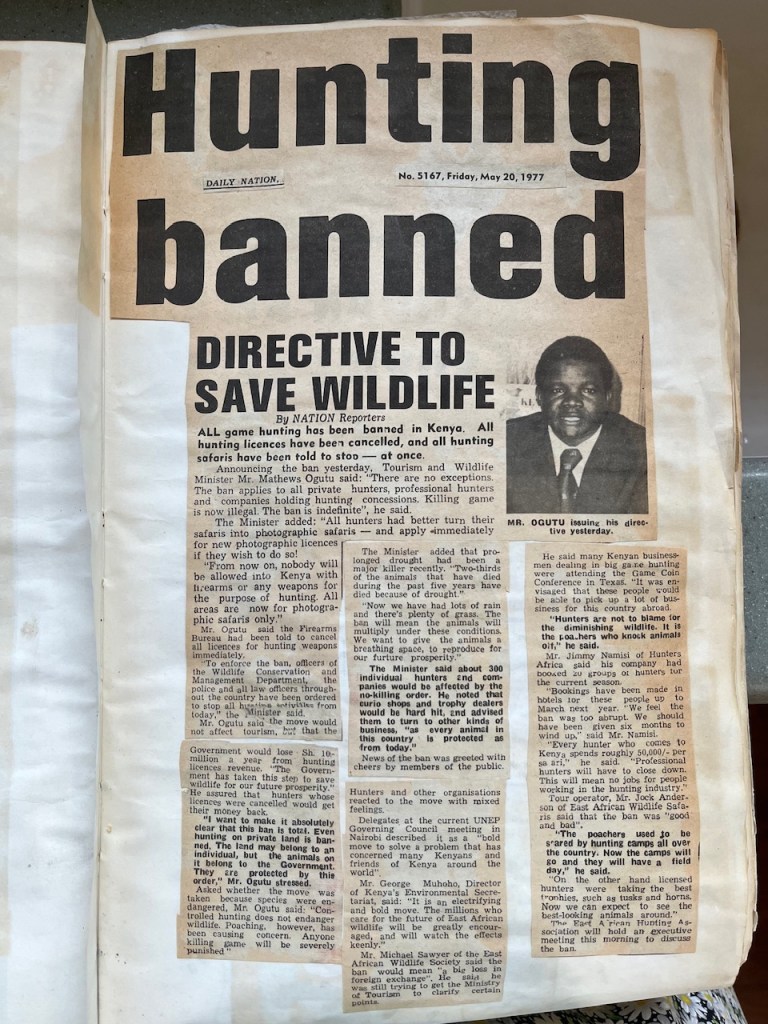
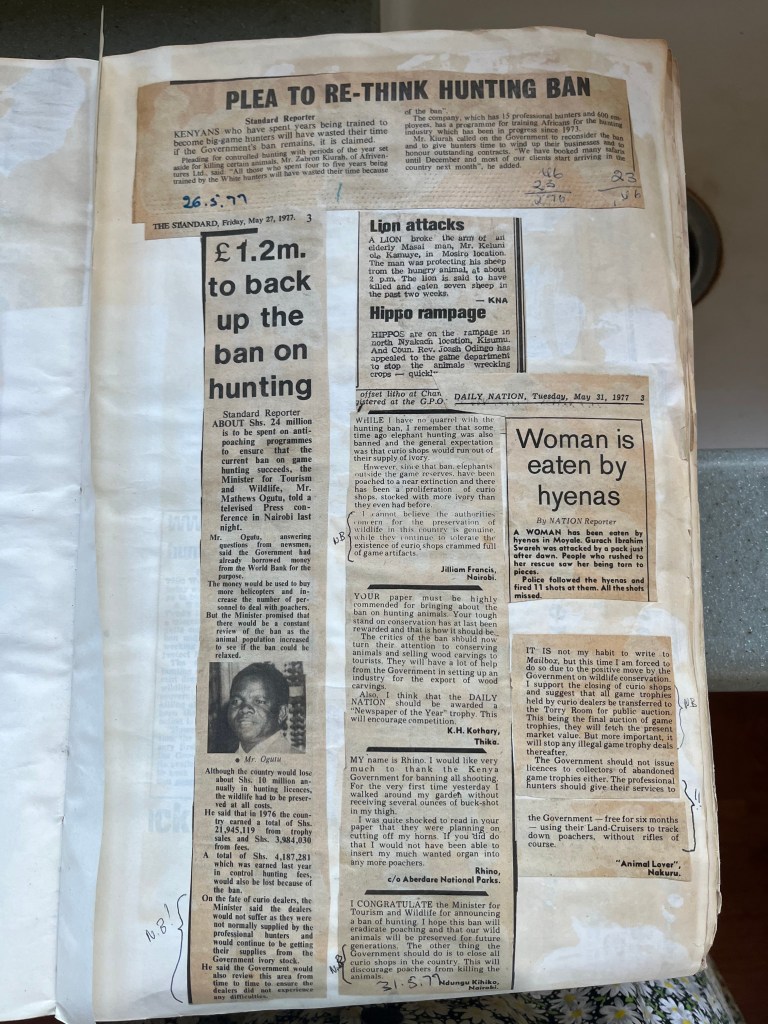
Hunters often get a bad rap and it’s not always for good reason. I had a chance to learn something about this on a recent trip to the Texas Hill Country where I was led to question the difference between a hunter and a poacher.

Before assuming this is a niche topic and of little interest to the vast majority of folks whom are neither hunters nor poachers, consider it’s a matter of philosophy as well, along with colonialism, globalism, human nature and modern life.

A wall of hunting ‘trophies’ not uncommon in Texas homes.

Mostly they have much in common, the hunter and the poacher. There is a similar skillset, clearly, but one I know nothing about, so I’ll leave that to the hobbyists and professionals. As strictly an occassional observer I imagine it to require more patience than I’ve ever mustered, more tenacity than most and more courage than the vast majority.

We might say the poacher is lawless and greedy and violent, and in some cases that may well be true. It may also be true that some hunters share such qualities as well.

But again, I’m coming to this as a complete outsider to their world, strictly an observer, and occasionally a beneficiary.

The differences between the hunter and the poacher must lie somewhere between intrepid and genteel, I figure. And so it is most apropos that I should think of it with a hunter who fits the bill for both adjectives.

Our hunter in question, Berit, at her home in Llano, Texas

I’d never have taken this fair, mild-mannered, small and slender woman as a big game hunter, that’s for sure, and I suspect that made her something of an attraction at her home in Kenya, kind of like a pretty little sparrow among bulls. Though looking at the full and adventurous life she’s led, we mustn’t think a sparrow at anyone’s mercy.

A beautiful display of African artefacts collected during their time there.

I met her with her second husband, an avid big game hunter, but her first husband was a professional one.  They had a business together leading safaris until the laws were changed in an instant, hunting banned by the government, their livelihood lost.

Neither were Americans, but he had a prospect in Texas. So, with young children in tow, they moved to the Hill Country, to Llano, and started anew.

That was in 1977. It is still illegal to hunt in Kenya.

What’s more interesting, Kenya has remained on the fast track ever since, to full-tilt modernization. They have been an international fore-runner for all the Global Village United Nations WEF grand schemes for their ideal Future: ESG scores, vaccines, digital IDs, carbon credits.

That’s the great gift of compliance. Or, as the old adage goes, “Give the devil a finger . . .”

“Esc’s analysis, backed by meticulous documentation, sets the stage for understanding a system already operational, where resistance is economically suicidal and socially ostracized. Esc details how development programs in nations like Kenya test governance technologies—digital IDs, carbon credits—later exported to the West, ensuring global compliance under the guise of progress. The Earth Charter, as esc notes, serves as a global constitution, subordinating individual rights to expert-defined collective responsibilities, a theme echoed in The Invisible Empire’s critique of sustainability metrics overriding democratic will. We need to recognize this system before the window for democratic resistance closes, as each institutional capture—from ESG compliance to AI-driven surveillance—tightens the web.”
The Complete Architecture – by esc

“For 130 years, a coordinated network of institutions has been systematically replicating the same control structure across every domain of human life – from healthcare to education, from banking to environmental policy. This structure, originally perfected in British banking, creates the appearance of local autonomy while concentrating ultimate decision-making power at higher levels run by credentialed experts.
The breakthrough came when science claimed moral authority over all aspects of human experience through the 1986 Venice Declaration, positioning scientific expertise not just as informing ethical decisions, but as the source of ethics itself. This created the intellectual foundation for what we now see operational: a system where questioning expert consensus isn’t just wrong – it’s scientifically illiterate, ethically irresponsible, and potentially pathological.”

How close is your country’s hunting policy to Kenya’s?
Is hunting policy about creating the lines between hunter and poacher, or obscuring them? Because, if everything is forbidden except to a tiny few, aren’t we pretty much all destined to become poachers?

“And the pity is that it will do nothing for the wildlife, controlled licensed hunting has never been a threat to wildlife. When elephant hunting was closed a few years ago, I wrote to the East African Standard and pointed out that poaching was the problem, not licensed hunting, and that if poaching were not stopped, the elephants would disappear anyway, whether licensed hunting were allowed or not. Unfortunately I have been proved right, and since that time the elephants have been exterminated all over large areas of Kenya. For this licensed hunting can in no way be blames, as legal hunting of elephants was closed.” Finn, Berit’s husband

Should hunting be allowed in Kenya? | davidlansing.com

“When I was in Kenya a few years ago I stayed on the edge of the plateau overlooking the Mara. About a mile away one night, a leopard broke into a Maasai boma and killed a cow. The game officials came by two days later, photographed the pug marks on the ground and the carcasses, payed the elder a pittance for his loss, reminded them that they were forbidden to kill the leopard, and disappeared. A couple of nights later, it happened again. So they staked out a goat and speared the leopard to death and buried him. That same leopard could have brought in tens of thousands of dollars in fees to Kenya and the local economy – now it’s a skeleton. When the wild game is seen only as a nuisance and is not allowed to pay its own way in a crowded land, it will always end like that.”

To be continued . . .

Feel free to chime in below!

Llano, Texas May 2025

Shitty of San Antonio

Now in my top 3 Shittiest of Shitties Official List, the once unique and charming San Antonio is now the official Theme Park capital of the U.S. I didn’t just make that up either, and apparently, they consider this a good thing.

My top-listed shitty is Bangkok followed by Warsaw, for orientation sake.

San Antonio, like the other two, had such potential at one time. Historically fascinating with magnificent old world architecture buried in a tragic mess of the modern world.

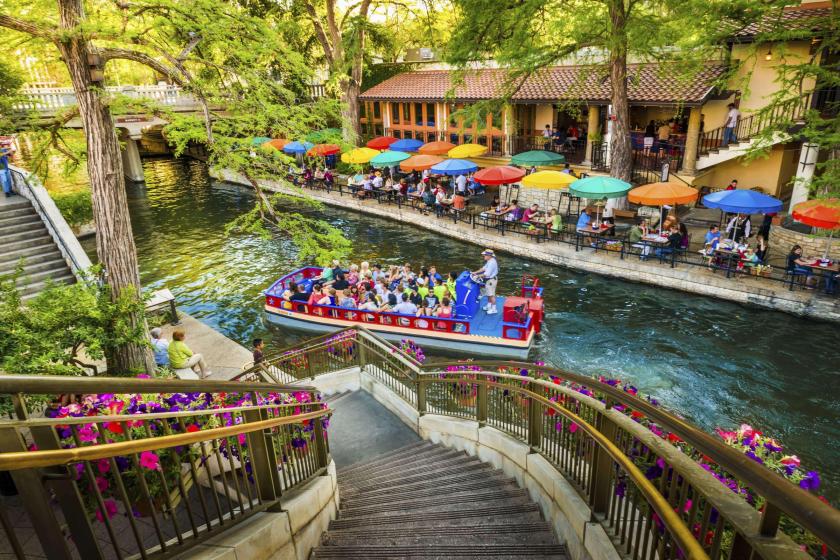
The Riverwalk was desert hot in May and nearly impassable through the crowds. Just five years before, when Hubby and I visited for Christmas holiday lights, it still had some appeal.

Now the city boasts 17 theme parks, one per 27 square miles. This does not include the many other paid attractions, like State Parks, caves and caverns in the surrounding area.

San Antonio‘s theme parks invest in new attractions for 2025

“San Antonio is known as the “Theme Park Capital of Texas” for good reason, with its 663 combined acres of attractions and entertainment parks. And nearly every park is undergoing multimillion-dollar expansions for 2025.”

Surprise, surprise, the shitty is constantly flooding now.

It begs the question: Is a shitty still a shitty without a shitty theme park?

Disneyland, Disney World, Six Flags, Dollywood, Wisconsin Dells, Schlitterbahn, Universal Studios, Sea World, Busch Gardens, Cedar Point, HersheyPark, and on and on it goes.

In the decade since Hillary Clinton made this declaration, already hilariously ironic when she said it, the theme park industry in America has grown 43%.
A Look at a Thrilling Industry: Amusement and Theme Parks : Spotlight on Statistics : U.S. Bureau of Labor Statistics
The average annual pay is $36,000
Prices for food and beverages up 62%

Yet again and again I hear from the ‘pro-development’ right and left alike that in the U.S. we’ve only had development of 5% of our land and resources. I don’t know where this statistic comes from, because those who quote it never provide their source material. I can say I think it’s more shitty nonsense.

But, if it is true, I’ll yell an enthusiastic ‘Thank the heavens!’ Because what we do in the name of development in this country is a travesty to reason and a tragedy to nature.

At least 8 dead in San Antonio after months of rain fell in hours
Months worth of rain on Wednesday night led to multiple water rescues in San Antonio, where at least eight people were killed by floodwaters.
By Jesse Ferrell, AccuWeather meteorologist and senior weather editor
Published Jun 12, 2025 9:09 AM PDT | Updated Jun 13, 2025 12:39 PM PDT
https://www.accuweather.com/en/weather-news/at-least-8-dead-in-san-antonio-after-months-of-rain-fell-in-hours/1783936