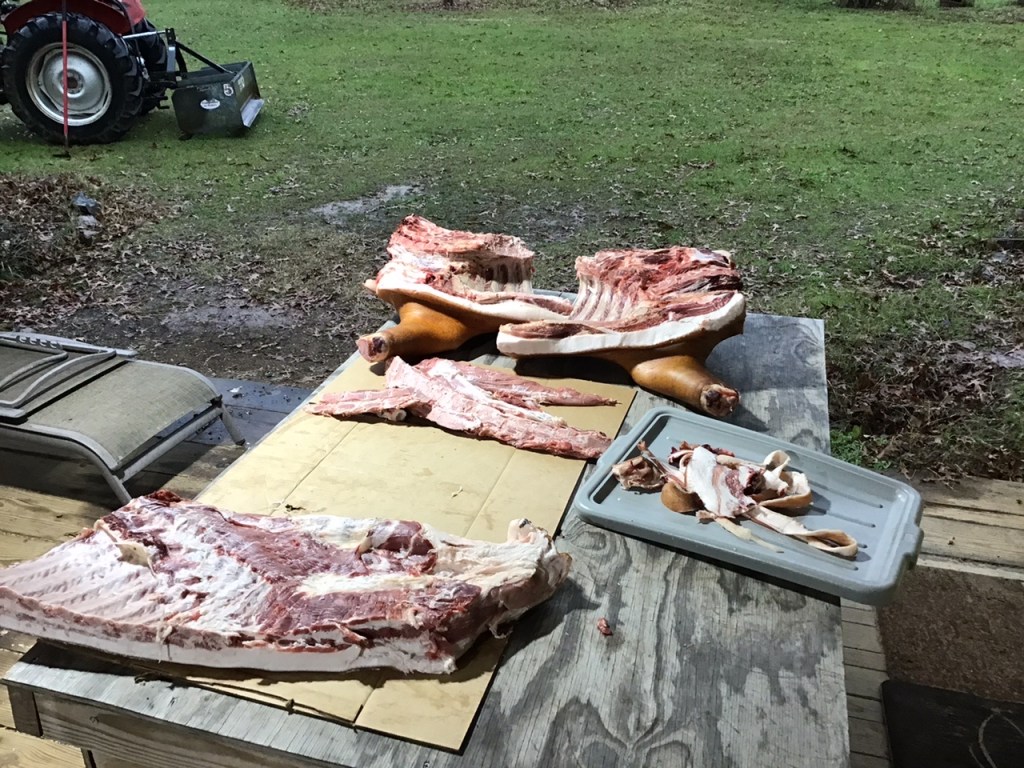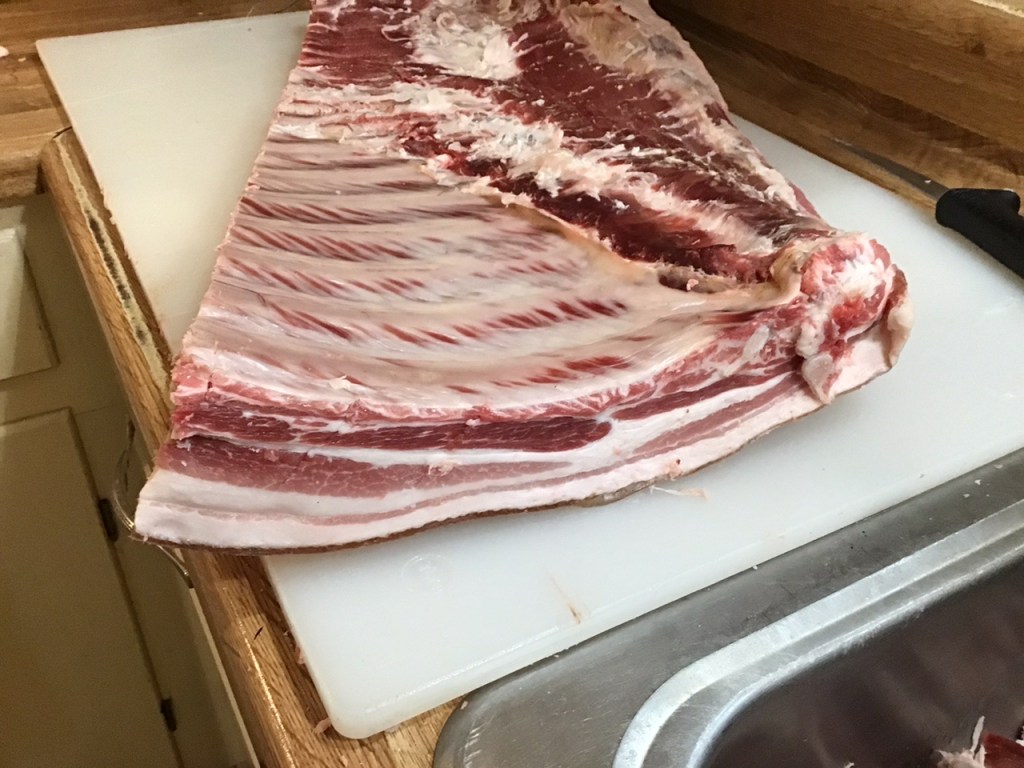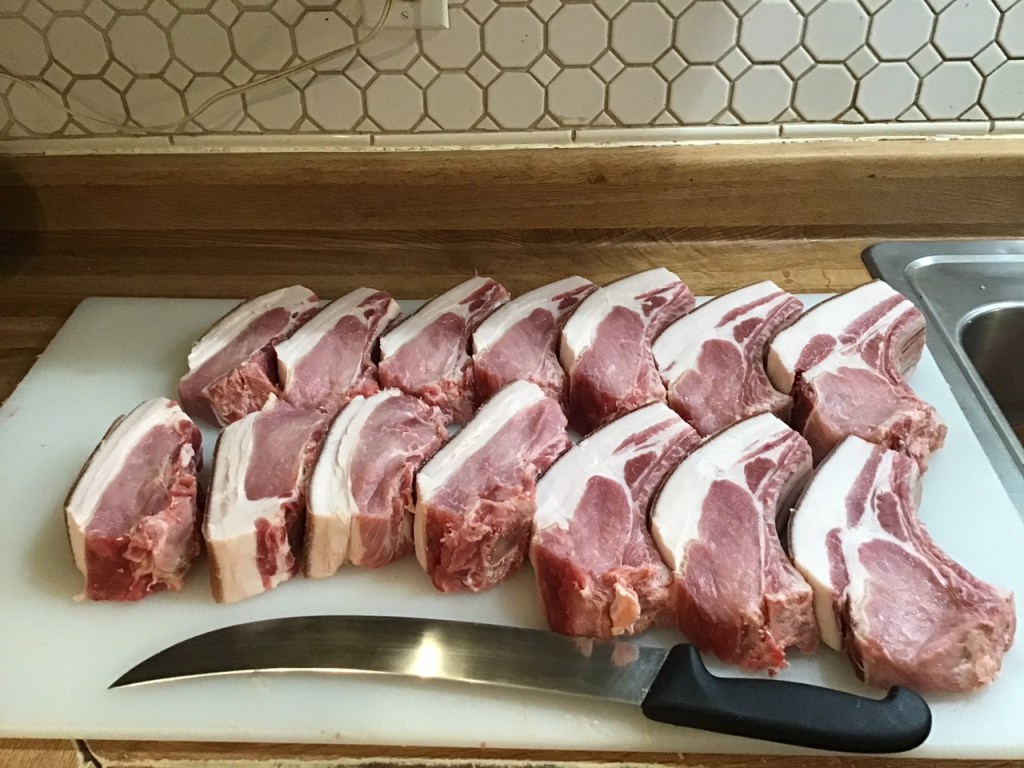
Of Pigs & Life

This post is not for most vegetarians or vegans, or anyone easily shaken by reality. Graphic images and musings on the cycle of life will be presented with impunity.

This post is for those who:
~Love bacon;
~May ponder the ethics of eating meat, perhaps even to the point of reading such books as The Omnivore’s Dilemma;
~Think we’re crazy for doing such monumental tasks ourselves, instead of going to the grocer or butcher like normal folk.

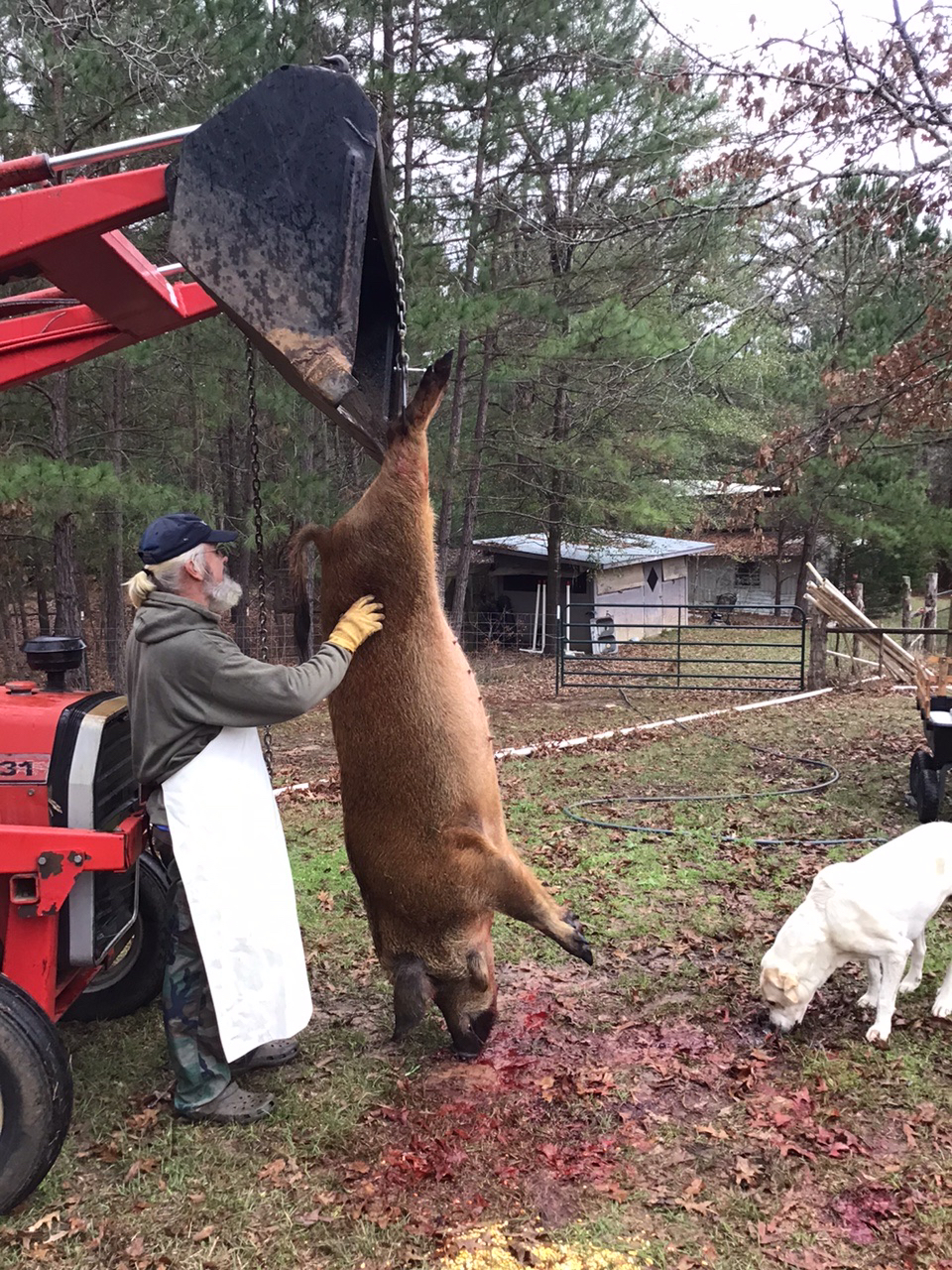
Before getting into the boring stuff, let me start with a virtual standing ovation and huge ego-stroke to MY MAN!

That’s one giant hog for one middle-aged mere mortal!

And, just a bit of backstory for nostalgia’s sake. Mama Chop and Papa Chop were our first pigs. They are Red Wattles, a heritage breed that we bought from friends as a breeding pair about 7 years ago. We would’ve kept Mama Chop as a breeder indefinitely, except for one major problem—as sweet as she was, she kept squishing her piglets, no matter what we did to try to prevent it. And, try Hubby did, repeatedly, for several years, to no avail.

Something else peculiar about Mama Chop, which I have not noticed with any of our other pigs: She smelled fantastic. I’m talking about her natural aroma, not her cooked flesh full of seasonings, which is also proving to be delicious. I mean her living self—just being in the vicinity near her—she smelled like maple syrup. That may sound crazy, but it’s absolutely true.

Fortuitously, Mother Earth News has a feature story about this breed in their current issue. “Grandma and Grandpa’s Red Wattle Hogs” by Amanda Sorell.
“Red Wattle hogs are immense, reddish pigs with fleshy appendages that dangle from each side of their necks. Their up-turned noses and upright ears with drooping tips give them a friendly demeanor that matches reports of the breed’s charm.”

“According to The Livestock Conservancy (TLC), this pig’s gentility lends itself well to small-scale, independent producers, and its foraging skills make it suitable for pasture production. Further, this hardy breed is adaptable to a wide range of climates, and it grows rapidly—usually reaching maturity between 600-800 pounds, but individual hogs can weigh as much as 1,200 pounds.”

Red Wattle Hog Stewardship – Mother Earth News

That’s a whole lotta pork!

Thank you for our blessings, Mama Chop!

We don’t know how much she weighed in at slaughter time, but here’s Hubby’s approximation of her results:
150 – 200 pounds of meat for our consumption, that is approximately:
25 # chops
40 # sausage
36 # ham
20# bacon
15 # hocks
20# stew meat
10# in pressure canned
2 gallons bone broth
3 gallons rendered lard
Plus dogs get ~40#s of scraps…..skin, lungs, ears, liver.

Wow, right?!
But, it’s SO MUCH WORK! He is one man in one small kitchen with one unskilled helper. That’s me. I’m the equivalent of his Girl-Friday (aka Galley Slave) — on call, doing what I can in wrapping and cleaning and cooking. The bulk of the work falls on him and he does it like a true stoic.

But what about the bang for the buck? Most folks who raise their own pigs don’t do their own slaughtering, for myriad reasons. It is a highly-skilled process that requires significant strength and time and at least some basic equipment.

It’s now 10 days since she was slaughtered, that makes: 2 days to hang, initial butchering one day, hams and bacon curing for 5 days, a day for making and packaging sausages, a day for smoking, a day for roasting bones, making broth, canning meat and broth.

However, it’s not only costly to go to a professional processor, it’s also a lot more stress on the pigs, as you’ve got to load them into a trailer and drive them quite a distance, sometimes as far as 2 hours away, plus reserve your slot months in advance (whether or not your pigs are ready), all which can affect the final flavor of the meat. We’ve heard many complaints from friends about this process.

Another significant drawback to this expensive convenience is typically, depending on the processor, you will forfeit many valuable parts, including the organ meats, the leaf and regular lard, the bones, including all the trimmings that go to the dogs, not to mention to the vultures, coyotes, and the bugs and soil as the entire animal never leaves our land.

Such is the cycle of life and this makes so much more sense than concentrating carcasses and waste in one place. We, and our neighbors and friends and pets and land are the direct beneficiaries of our labor, and that degree of skill and self-reliance makes me super proud. And when I’m proud, Hubby’s pleased, and so it goes the bitter-sweet circle of life!

Counting Blessings, Cutting Loses, Culling Critters

A respite from the heat, but still no rain. We surveyed our fenced land for grazing and have come to the sad conclusion that our intention last year to grow the herd will not be achieved in the near future.

Seemed like the right thing to do, growing the herd, considering food inflation and especially high meat prices, and the fact that Hubby is here full-time now, and that more bartering/trading could be in the foreseeable future. But, the parched land screams otherwise.

Between the steeply rising cost of feed and the meager forage available, and no guarantees the stranglehold of the weather terrorists will let up any time soon, we come to some difficult decisions.

We will wait another year to freshen the goats, drastically reduce the number of sheep, and breed back only one sow. We will maintain the poultry flock as-is for the most part, but had hoped to add ducks once again to the mix. No rain means fewer bugs means more supplemental feed. So that plan is not looking too good now either.

Planned building projects are also getting postponed. A ‘milking parlor’ was on the list, some much-needed repairs to the deck, rebuilding the greenhouse, a field shelter for the herd, and on and on, plans are easy, implementation, not so much!

We are blessed with an already achieved minimalism: Living seasonally, frugally, well-acquainted with the boom-bust cycles of our overlords and still small enough to be flexible, and with enough local support to know we’ve got each other.

Our most crucial long-term goal remains: Growing our own feed—perennials as well as annuals.

We hear the word ‘sustainable’ repeated multiple times a day these days, but there’s rarely anything truly sustainable being suggested.

It’s 99% hype and green washing. But actual sustainability does exist, and the more self-reliant we can be, the closer we are to achieving it.

How do we measure up?

And it’s not like there’s not plenty for us still to do and learn here, even with squeezing the belt tighter.

I’m still very interested in herbalism, especially as it pertains to our local environment. The best things in life are free, or nearly so, no?!

And while I do appreciate the allure of the consumer life, I’m far more fascinated by the natural world all around me. It’s always a matter of slowing down, observing ever more closely, teasing out the potential of all that is all around me, and some of that certainly means our local community, but that doesn’t just mean the people.

I’d love to learn more wild crafts, as well as more fine art tuning; more science, and more speculation; and much, much more about where and how these endeavors mesh.

There is a different brand of “More!”, isn’t there, than the furious Billy Idol sang about?

Or, maybe it’s all the same, in the midnight hour?

Squash Mysteries

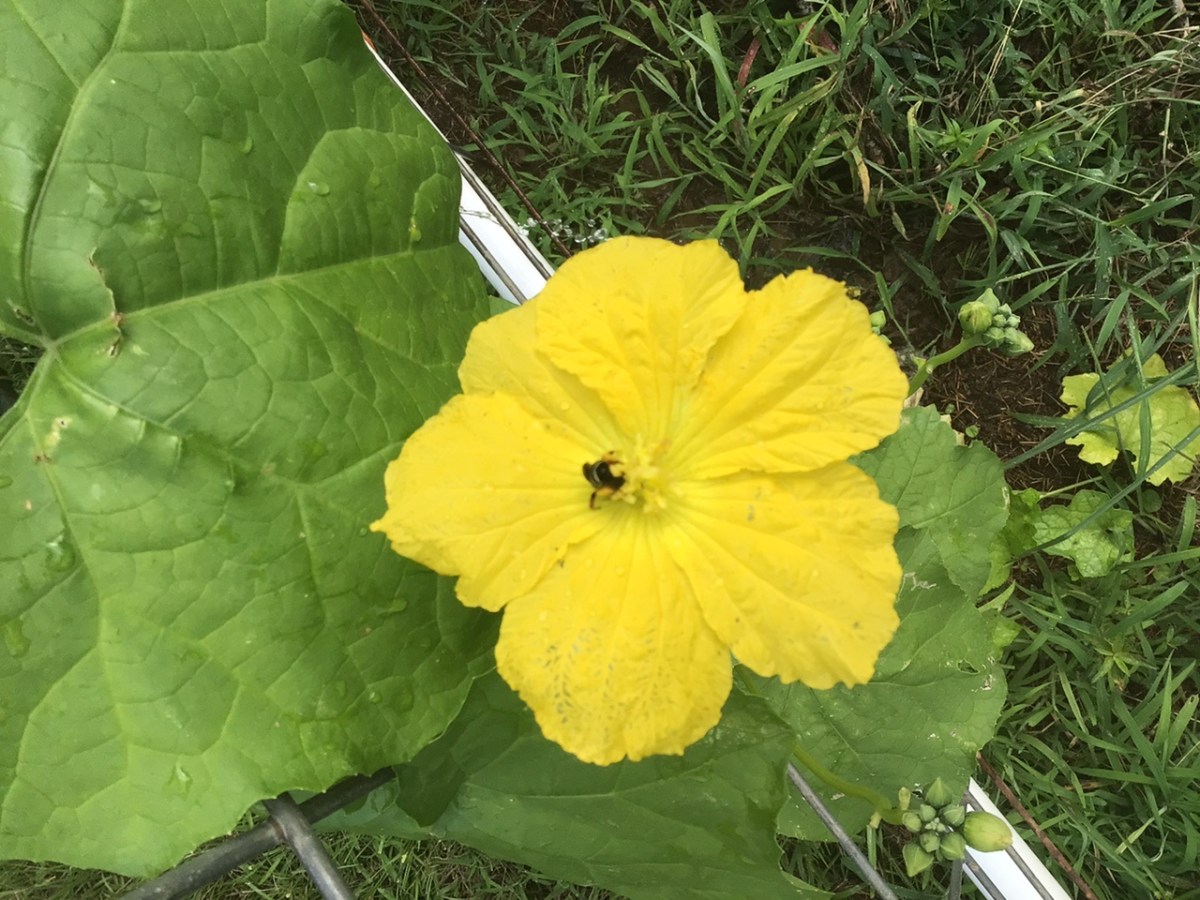
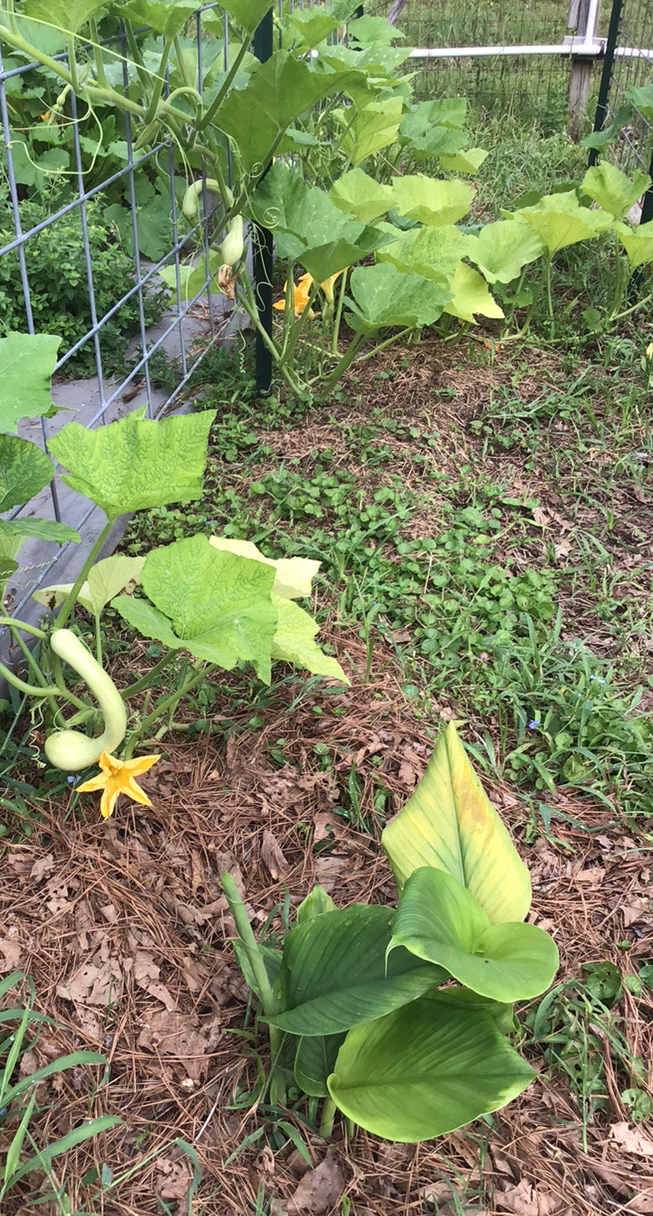
Hey, you bee, you got my cucumber in my Trombetta!
Right?!

Some interesting twists and turns in the garden, as usual.

I did realize that cross-pollinating between cucumbers and squash do occur. It’s result is sometimes ‘parthenocarpic’, fruit that is seedless.

But, different fruits off the same plant?
This is news to me.
But, I’ll bet the Robo-Bees in the future technocrazy will have an ap for that!

These really did come off the same plant, same age, Hubby just happened to harvest some before I got a side-by-side photo. Next time.

I have the big seed-saving goals this year, but there is a learning curve for sure.

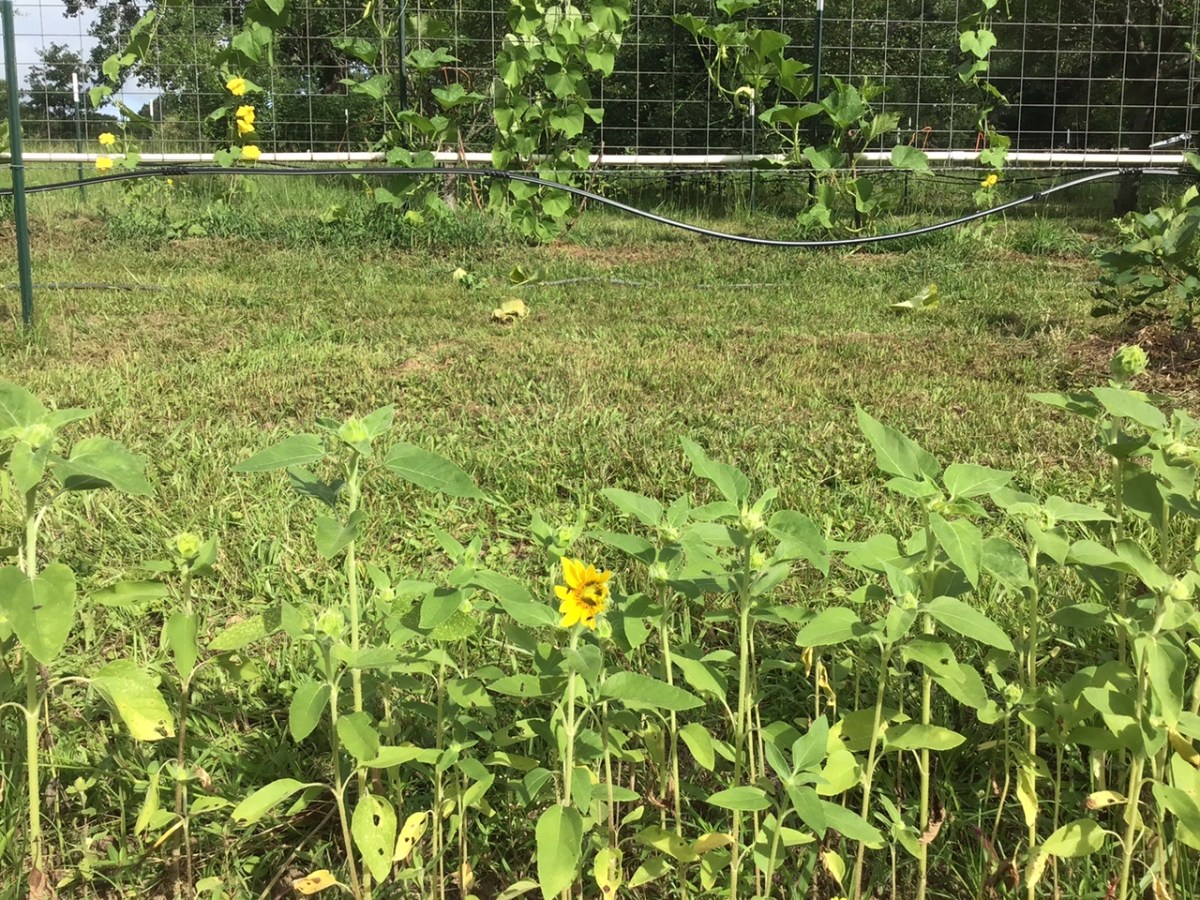
Because of space requirements, and that learning curve that seems to be getting steeper by the month, I decided to start with just a few crops. I already do most of the herbs, and the other easy stuff, like okra and sunflowers. I’ve ventured slightly into peppers and tomatoes, with negligable results.

Cucumbers, melons and squash are all in the ‘challenging’ category. I thought I planned correctly when I put the ones I want to seed-save at opposite ends of the garden, but then. . .

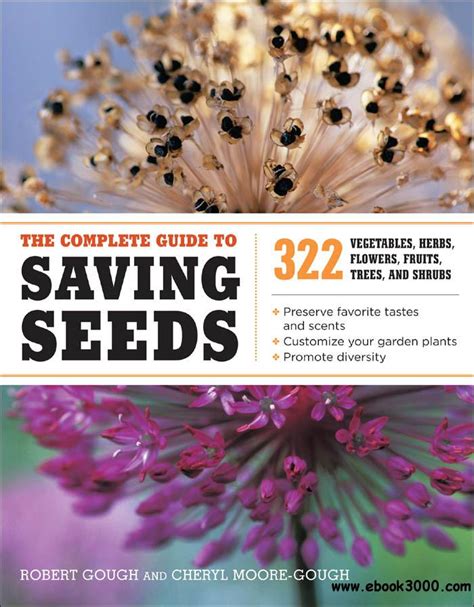
In my reference book, The Complete Guide to Saving Seeds by Robert & Cheryl Gough, it seems pretty hopeless. “Recommended isolation distance for varieties that can cross-pollinate is 1 1/2 to 2 miles; recommended isolation distance for other Cucurbita species is 1/4 mile.”

As in, Miles?! Oh my.

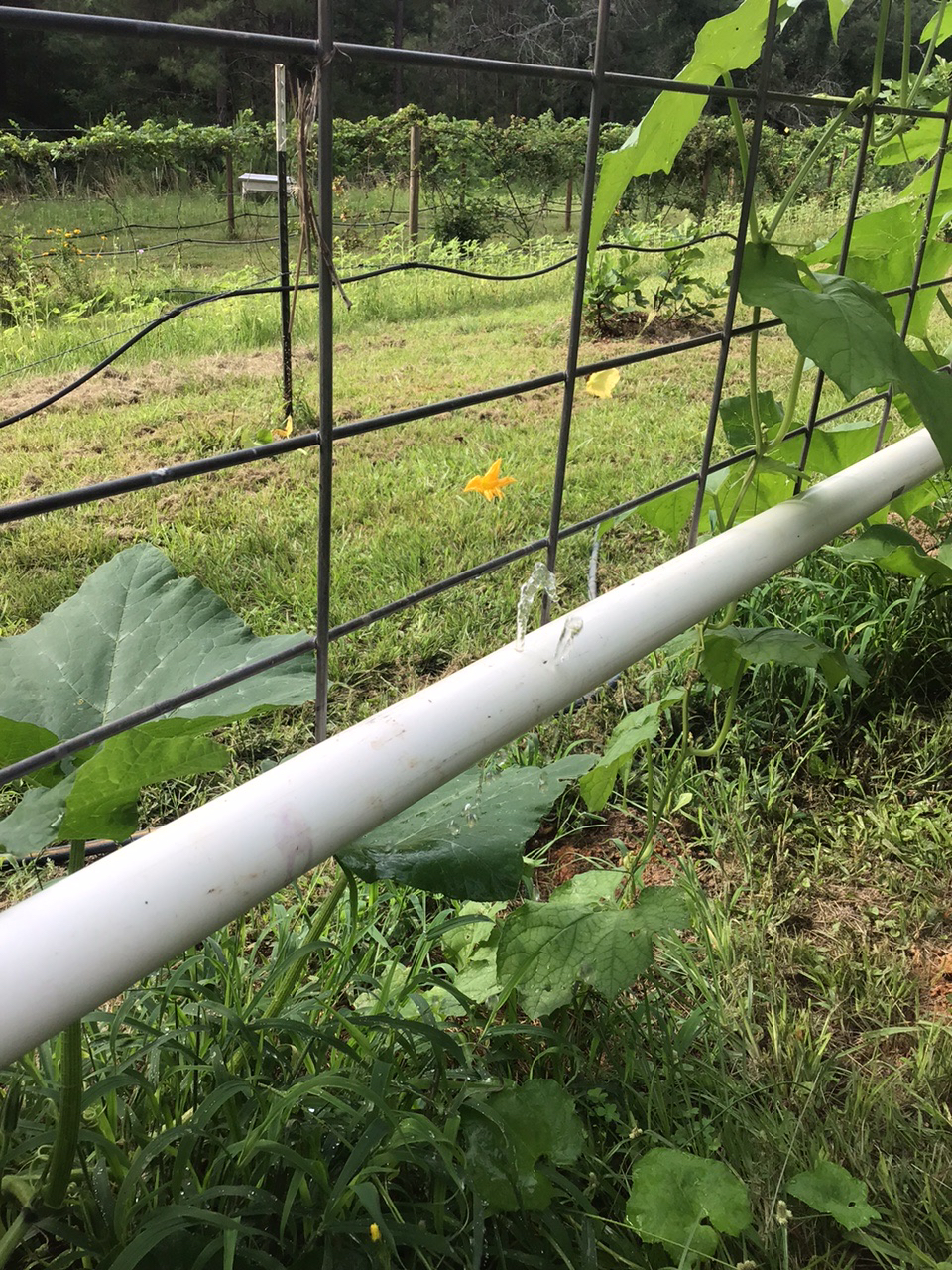
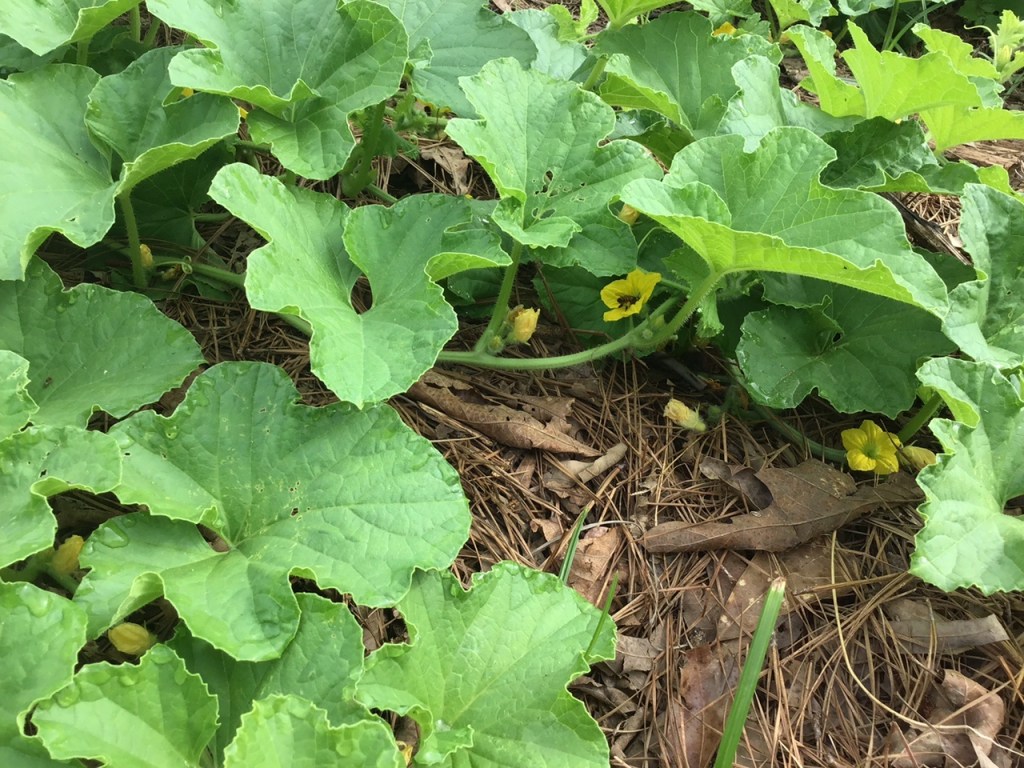
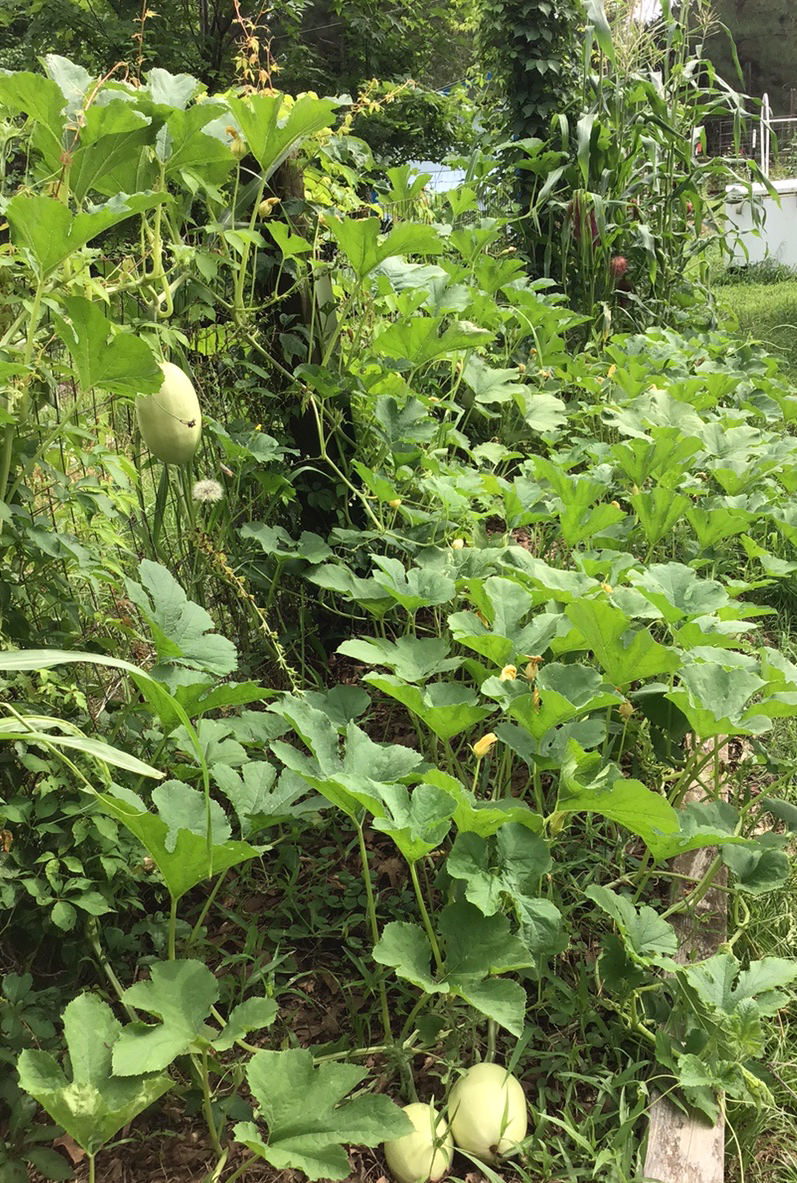
And furthermore, there’s another squash mystery. I’ve got zucchini right by Trombetta, as already mentioned. Yet the zucchini leaves, which look gorgeous, better than I’ve ever seen them, are flowering, and not producing. Yet the cucumbers and Trombetta are producing like crazy, and the Trombetta leaves are not really looking too good.

Any gardener, myself included, would immediately claim a gorgeous zucchini plant flowering just fine, but not producing, is the result of poor pollination.

But, I know, that’s highly unlikely. First, I’ve seen bees on them. Second, the nearby Trombetta and cucumber, also bee-pollinated, are producing just fine.

So, what gives?

And furthermore, more, why does spellcheck capitalize Trombetta and not zucchini?

I’m open to facts, theories, or random guesses.

Trial & Many Errors

There’s the good kind of failures—like those you are able to remedy; And the bad kind—like those you can’t control; And the worst kind—like those you could control, if only you could figure out what went wrong.

We have a collage of all 3 today!

Failed cheeses, failed fruits, and sun scorch.

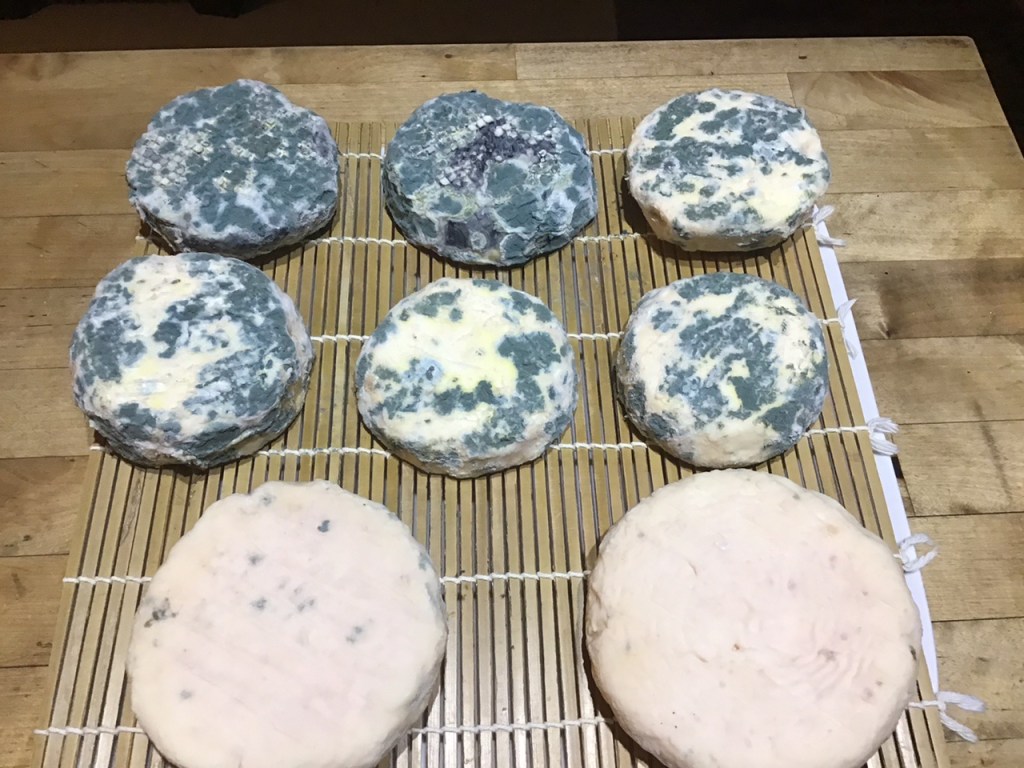
Penicillium roqueforti has dominated my Little Turds and now we have little blue turds, which is a big fat failure.

This is the most aggressive cheese fungus and once the spores get started it’s extremely difficult to correct the issue. As much as I love blue cheese, this is not the process for making it. As a surface mold it does not taste good, it’s the veining of the blue cheese that brings out the nice flavors. I don’t make blue cheese, because in order to make other cheeses you must exclude the blue to get the white (geotrichum candidum),or any others, to dominate.

Even a hobbyist will quickly learn that you need a separate space, equipment and unique aging fridge just for the blues. This particular invasion happened very quickly, in just 2 days, because a beverage fridge does not make a very good aging fridge for cheeses. But, it’s all I’ve got. The temperature varies unexpectedly and you can’t control the humidity. Sure, a lot of cheese makers out there claim there are certain tricks for modifying the humidity levels of the mini-fridge, but they just don’t work, or they are far too high maintenance for me.

The fridge got too cold by just a few degrees, and this was the result. The two without any blue are from an older experiment, also failed, because their white fungal coat is not thick enough. I’m hoping a snug fig wrapping will magically transform the problem. But, I doubt it.

Wrapped in fig leaves (with a bit of sage on one too, to cover the naked parts) back into their Tuperware-fashioned high-humidity space, and back into the aging fridge.

As for the little blue turds, I’m going for maximum shock treatment, just to continue the experiment at this point, because I think they are beyond repair. I have them at room temperature now and I might even try spraying on some geotrichum candidum, just to see what happens.

The orchard is a continual string of failures, the nectarines being just the latest one. We’ve planted so many fruit trees in there we’ve lost track. We planted a couple of plums, one that actually produced for a couple of years, then both suddenly died. The grapes are looking terrible this year, the apples hardly ever bloom and never produce any fruit, the peaches die a year or two after planting, and now we finally got some nectarines and they look like this. The worst part is, once you cut out all the bad parts, the few nibbles of good fruit you have left are absolutely delicious.

Oozing and pock-marked and tiny. ☹️

We’ve got one reliable pear tree, another two that get a great crop about every 3 years. And the figs, my favorite, that are on some boom-bust mystery cycle we haven’t figured out.

Hubby is beyond frustrated with the fruit trees, so he’s got a mini-project filling up the orchard now, his own hog feed production line.

I think he’s trying to teach those miserable fruit trees a lesson by planting a thriving row of squashes between the rows as feed for the pigs. The cost of feed is getting crazy! And of course, we’d much rather feed the pigs off the land. Trombetta and chayote squashes, and luffa, are growing great and will soon make for some happy pigs.

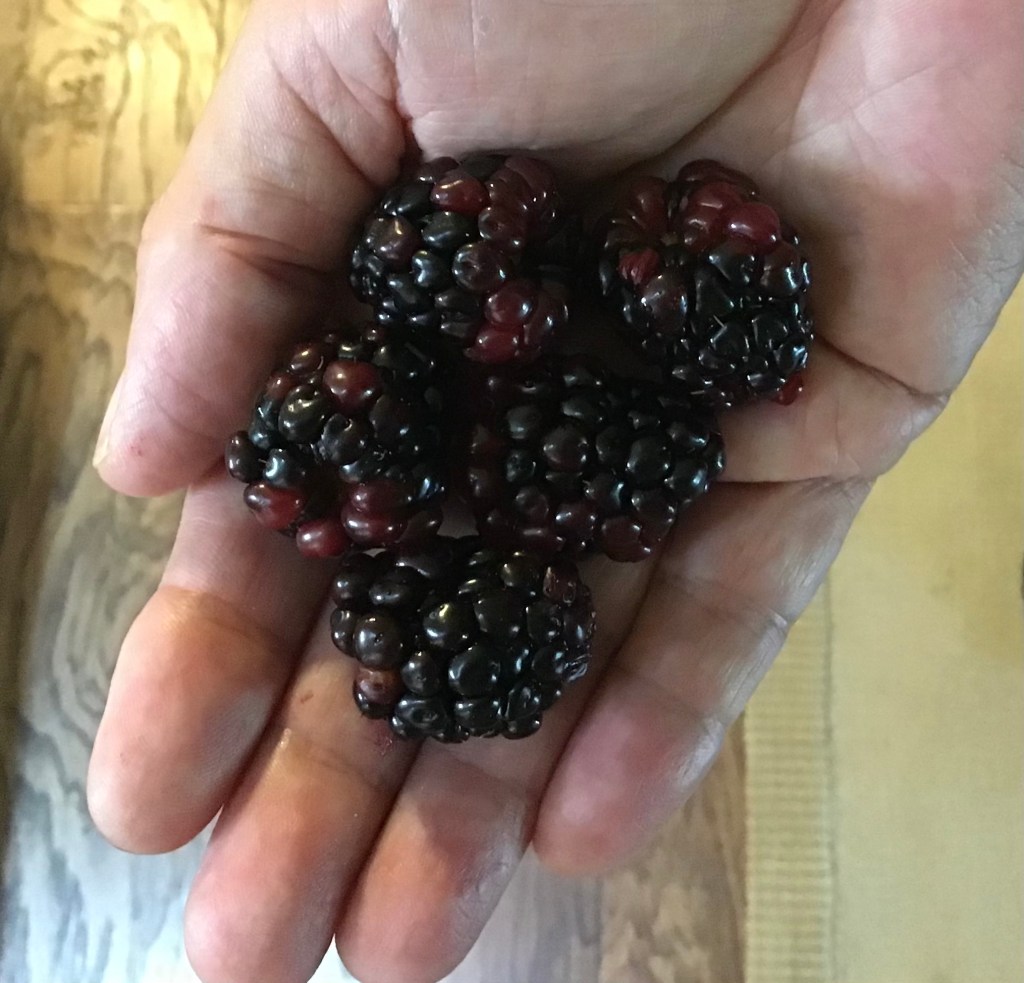
Luckily we at least have some giant blackberries to soothe our disappointments a bit.

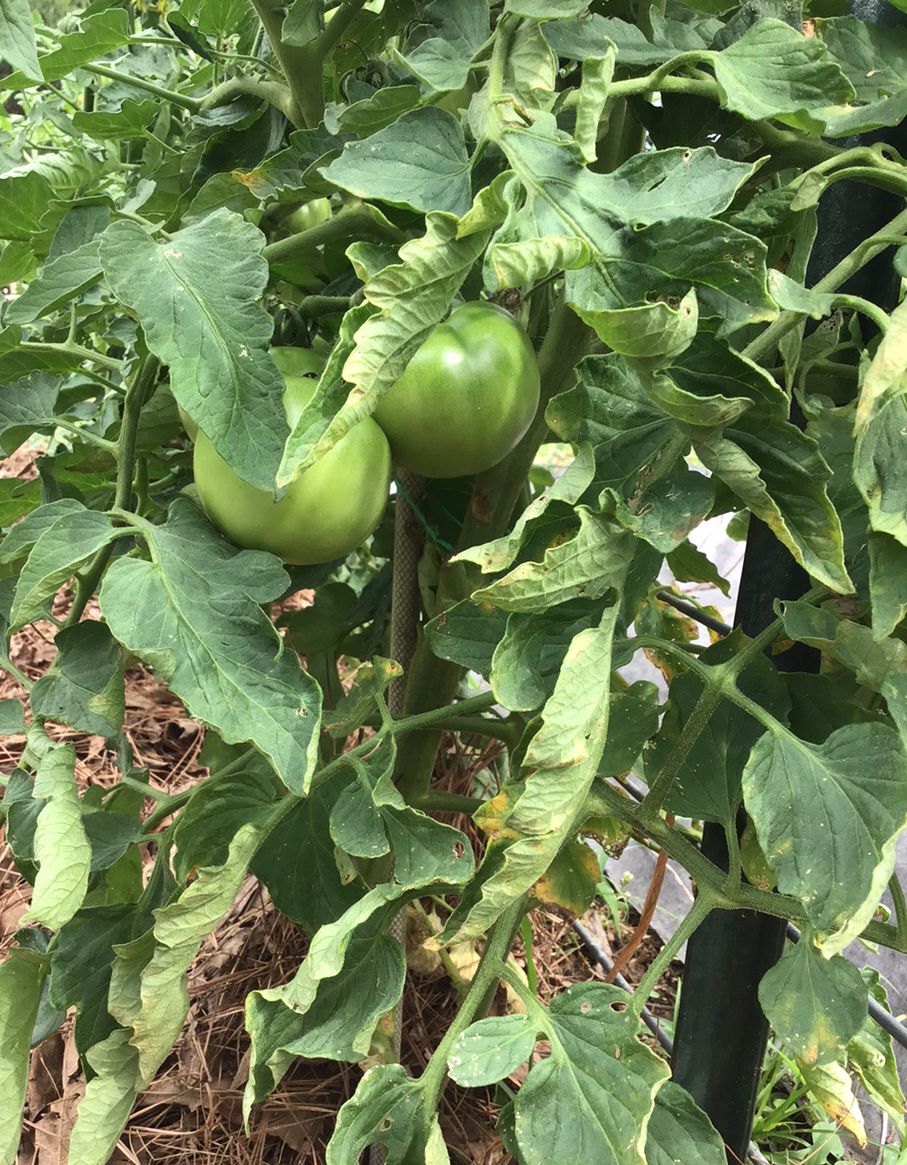
While the garden is still hanging in there despite intense heat and very little rain, the signs of stress have already started. Even heat lovers like the turmeric are getting sun scald. The leaves of the tomatoes and tomatillos are looking equally sad. I’ve covered what I can with shade cloth and screening, and I’ve got my fingers crossed, and that’s about all I can do about that.

Sir Turmeric has a sunburn and Trombetta’s leaves are looking sad.

If the melons disappoint me again this year, at least I can feel better knowing the bees were very pleased. That is, except for the little bitch who stung me on the middle finger while I was harvesting cucumbers. The simplest of all these problems to solve—must wear gloves now while harvesting.

The Noir des Carnes cantaloupes alive with so many buzzing bees!

Oh, and last but not least, the shallots never bulbed. No idea why. I bet Bubba knows, but he’s not talking.

Homestead Happy Snaps

I have so very much I could be reporting on from the wee homestead, but I only have the energy to share some photos, a couple short vids and a few brief comments.

We’ve got some really weird weather that has us back in long sleeves and pants after a few weeks of blistering heat. I have no time to get started down that fool’s path at the moment. Moving along.

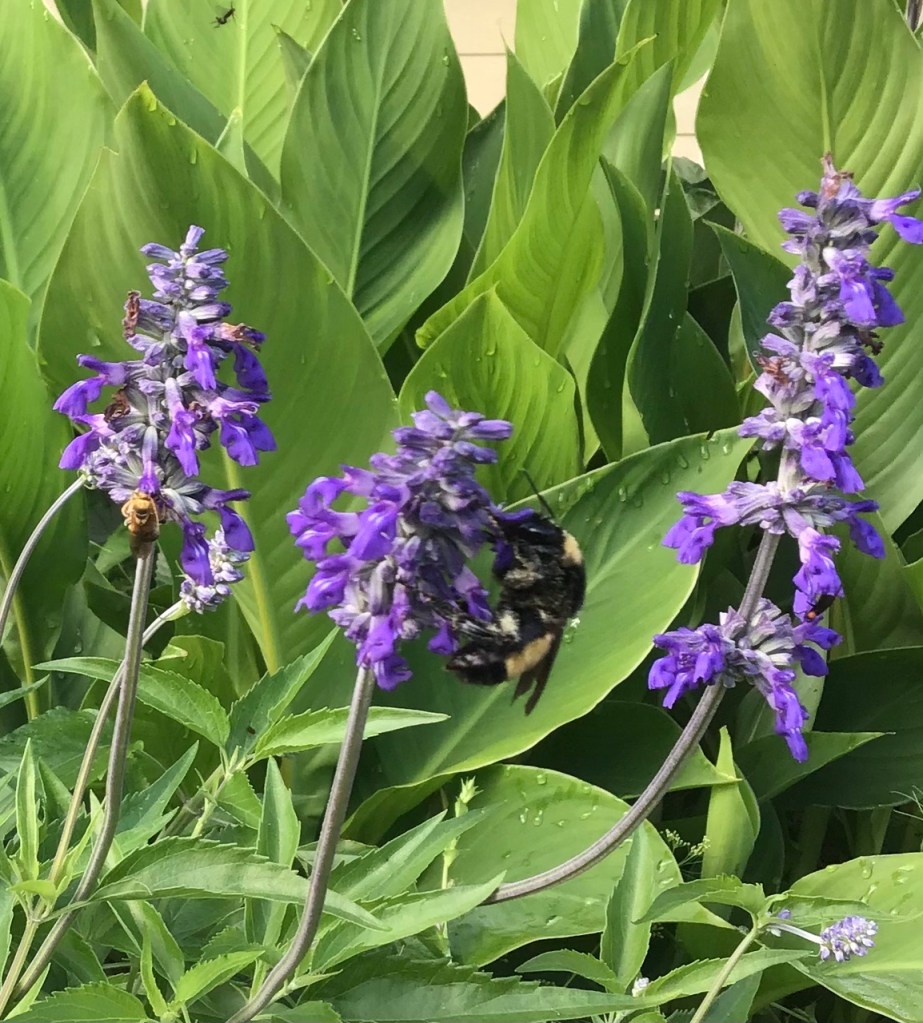
The bees have finally graced us with their presence in the garden, I was getting a bit worried! They are all over the cucumbers, which we’ve just started harvesting.

They also found the cantaloupe at last, thank goodness, this is my primo experiment for this summer. This is a true heirloom French cantaloupe, Noir des Carmes, which you can’t buy anywhere in these parts. I learned from the seed catalogue that what we call cantaloupe in the U.S. was renamed, these ’muskmelons’ in green or orange (with the ‘netted’ skin) are not the original cantaloupe, which does not ship well, and so was never popularized here.

“Noir des carmes” cantaloupe, named after the Carmelite monks.

Hubby had some surprising success with peas in his ’gorilla garden’ — a new experiment. We were gifted a garbage bag full of seeds, some of them 8 years old, which I thought would be useless. He threw them down in a spot he’d roto-tilled for the purpose, mixed up all the cool-season seeds together and broadcast them, watered them a couple of times, and we actually got a big bowl of peas out of the effort. I so love fresh peas and they are not always a reliable crop around here. He planted them later than advised too, so I was very surprised he got anything at all. He estimates germination at about 20%.

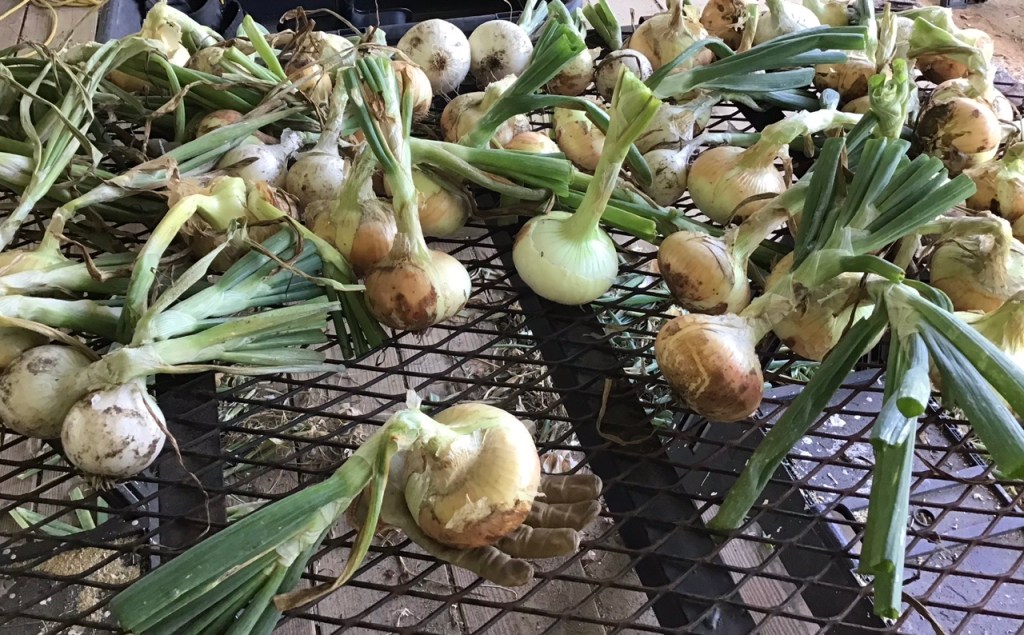
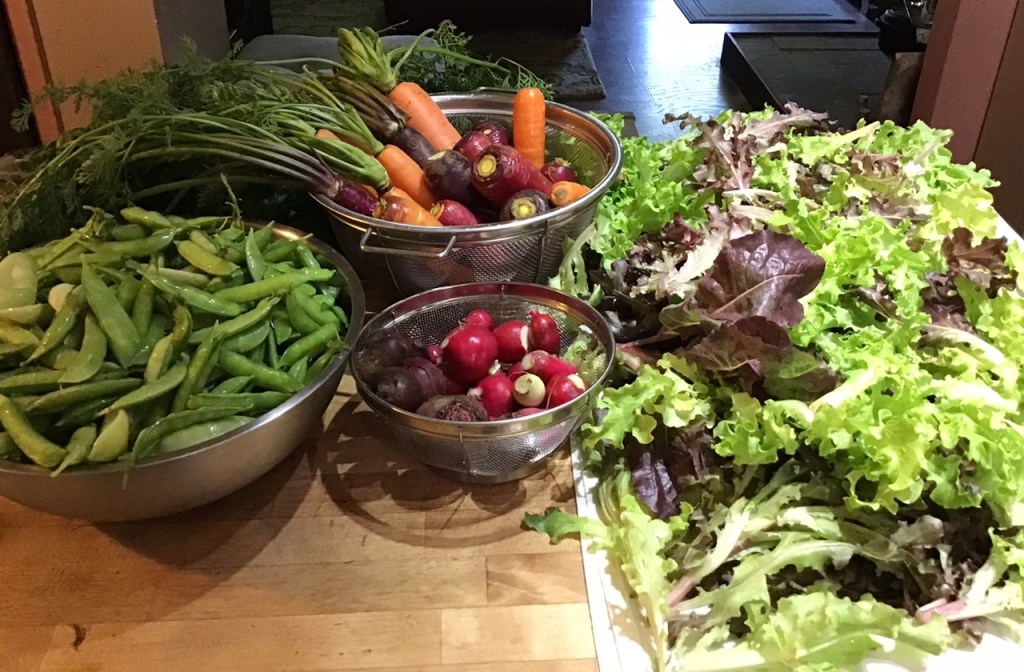
We got a great harvest of onions and canned up a couple of batches of French Onion Soup, mmmm. I have my glove under one in the middle photo to show their nice size. It was our best onion harvest to date, and I think that is owed to all the sheep poop and the mild winter.

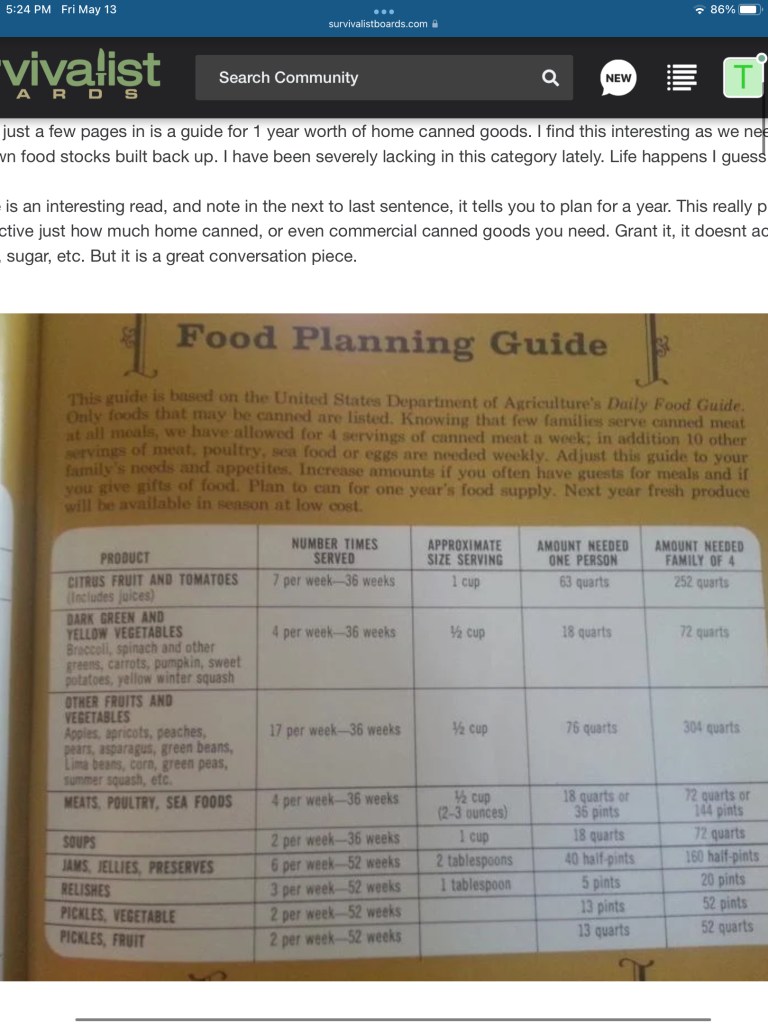
I was proudly exclaiming to Hubby some kudos on our team effort with pressure canning the soup when he had to burst my little bubble by explaining how that makes us one teeny-tiny fraction closer to the recommended annual Ball Blue Book chart from 1966.

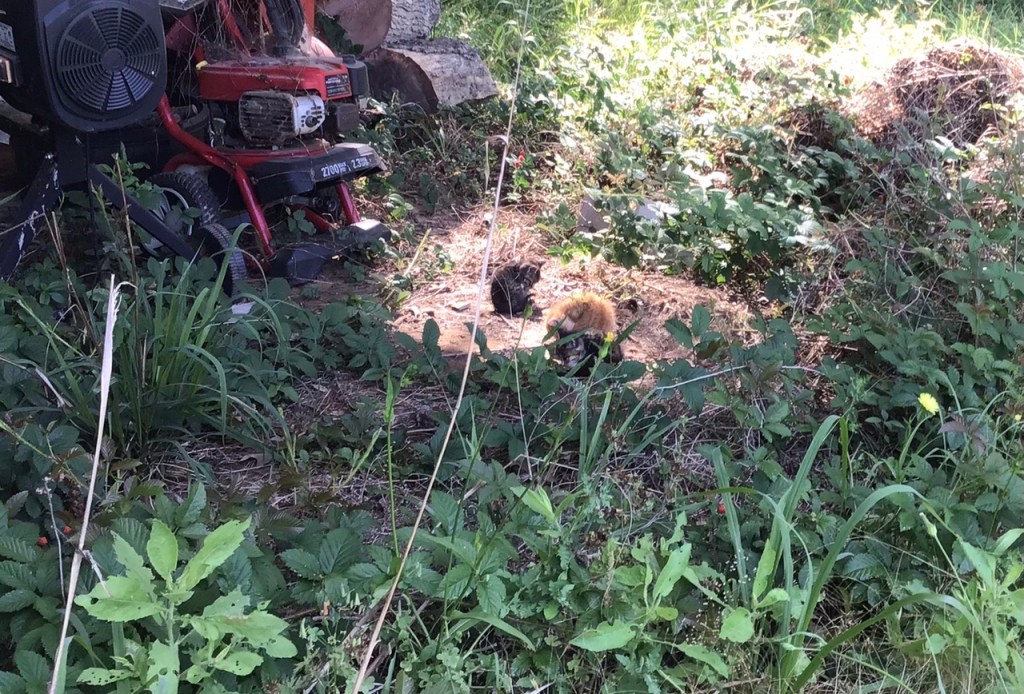
We have kittens! We just happened upon them in the old tractor barn while gathering dewberries.

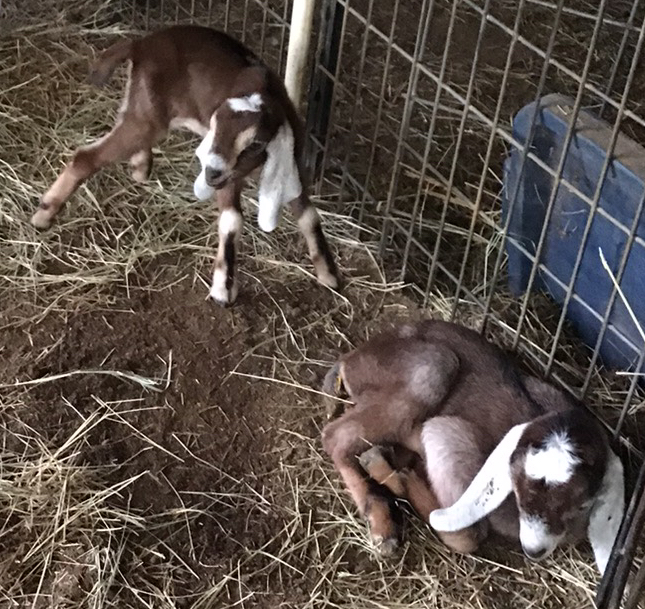
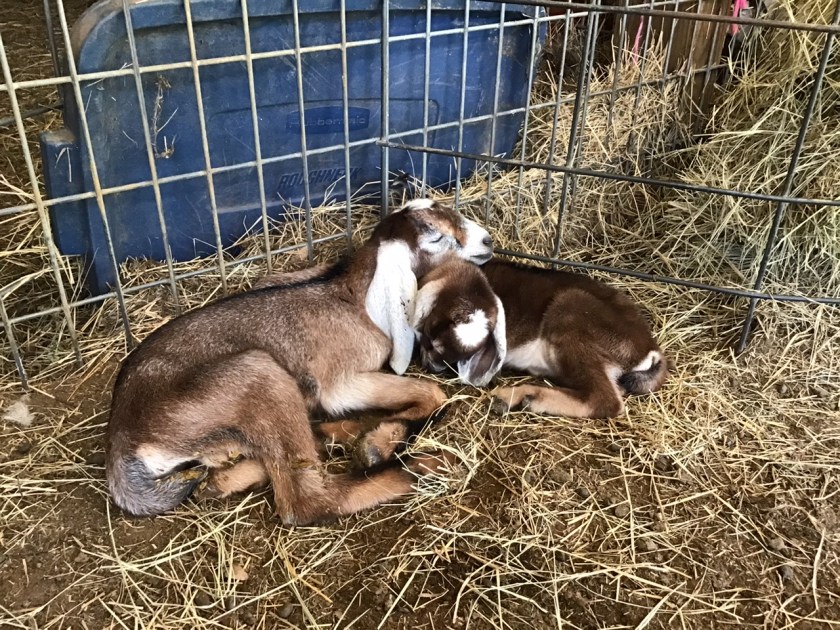
The kids are growing SO fast!

They are following mamas into the woods, playing and jumping around and are so fun to watch.

Once again, I did not mean to hit ’slow mo’ on this short vid, but it’s a good thing I did, because you can really see the ‘look’ of triumph in Walnut’s demeanor after she bullied tiny Athena. I guess goats are something of a belligerent species!

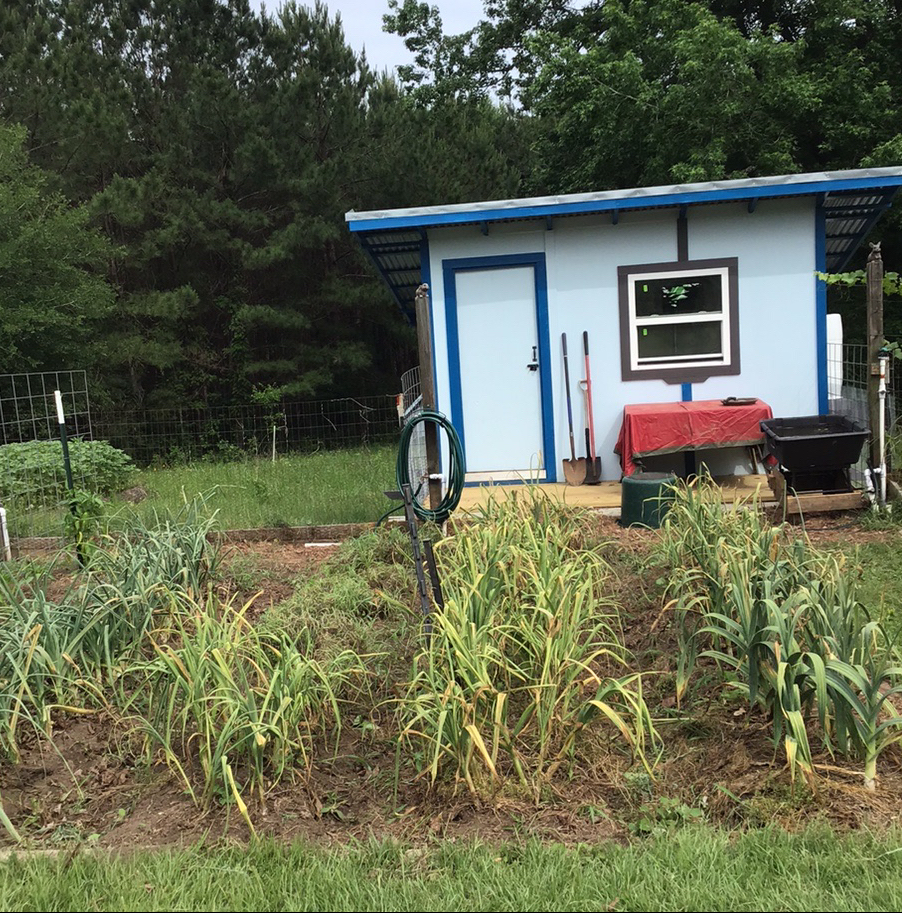
And to end, the best part, my new She-shed, thanks to Hubby, which will get an entire post of its own very soon!

Garlic still to be harvested in front of my recycled garden shed—
Oh the joys of being at the top of Hubby’s to-do list!

Kids, Kombucha, Bees & Cheese 

What better day to ponder than Mother’s Day why kids are so darn cute?!

The newest kids, born yesterday, Phoebe’s firsts—Hercules & Zena—notice he is twice the size of her!

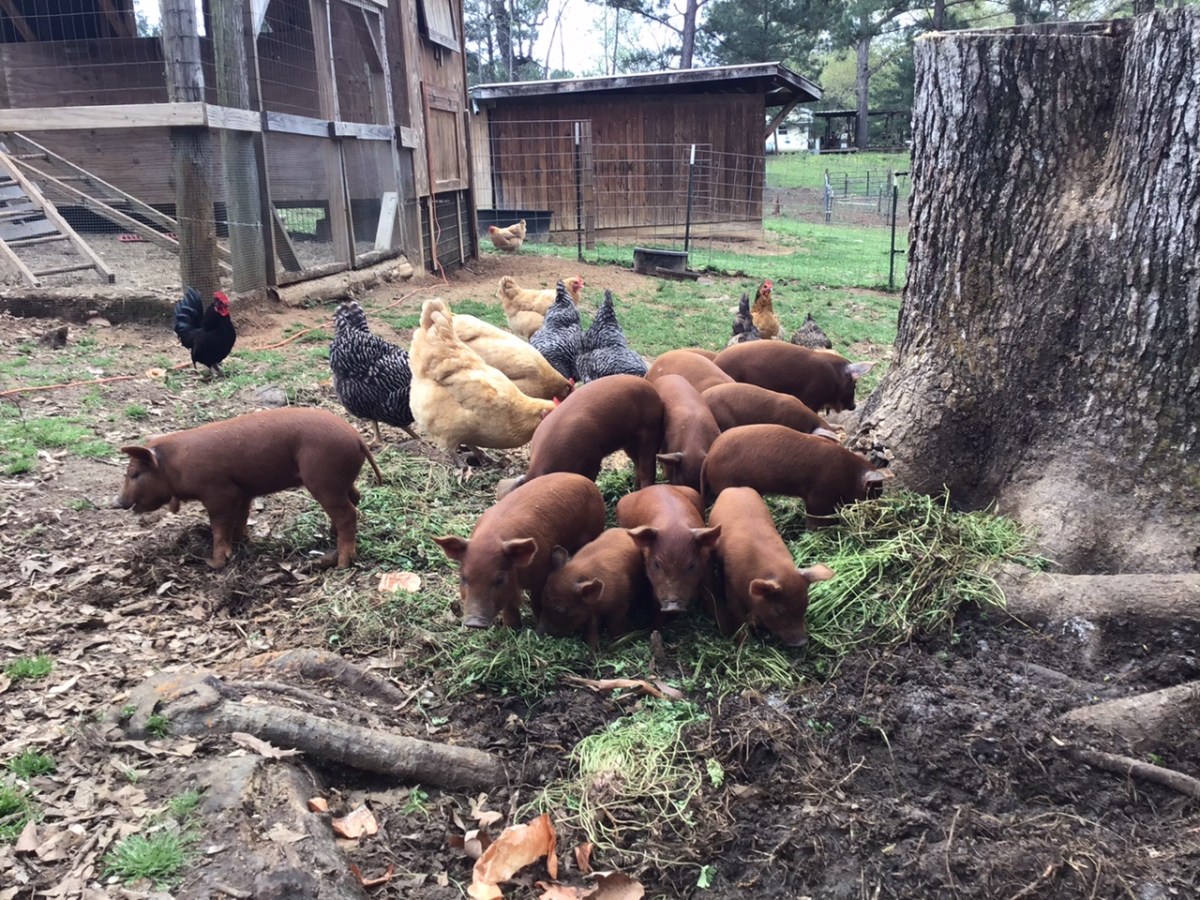
We’ve bartered or sold most of our piglets already. We’re not on social media where such information is exchanged, but it certainly does seem the homesteading community in our area is growing rapidly. Yippie!

One family who came by insisted we were under-profiting from our piglets. Their 11-year old daughter offered her mom to pay us $50 more than we were charging, ‘for the cuteness factor’. Aren’t kids precious!

In not-so-cute news, the swelter season has started abruptly. Bye, bye beets and broccoli, before your time, because I think not even the shade cloth can save you now. The last rain that was hyped on about for days, that flooded some areas and caused tornadoes in others, yielded us a whopping 1/4 inch, not even enough to penetrate the mulch layer.

Of course I’m happy we didn’t get hit with another tornado, but I can still be miffed I have to start watering the garden. Half my roses haven’t even bloomed yet, or the zinnias. The parsley and celery have gone to seed before I got a decent harvest from them and the lettuce will soon follow, no doubt.

The bees are feeling it, too. I checked these hives last week and they were just half-full, yet the bees are bearding. Unfortunately, the swarm we got a couple of weeks ago left after only one day, unhappy with the digs I’d offered apparently. Now it’s already too hot for me to do the splits I’d planned. Better luck next spring.

I’m so pleased to be getting any strawberry harvest at all, they’ve never done well before. Then I saw this video and quickly got a reality check.

Hubby tried to make me feel better by saying those were probably grown in California and loaded with pesticides harvested by illegal aliens. He’s mentioned before something is off about this (Fabulous!) channel. It must be CGI, or heavily staged, or something. Never has a country cottage been so clean and picturesque. Where’s the chicken poop on the table and the flower pots dug up by the puppies? Good questions!

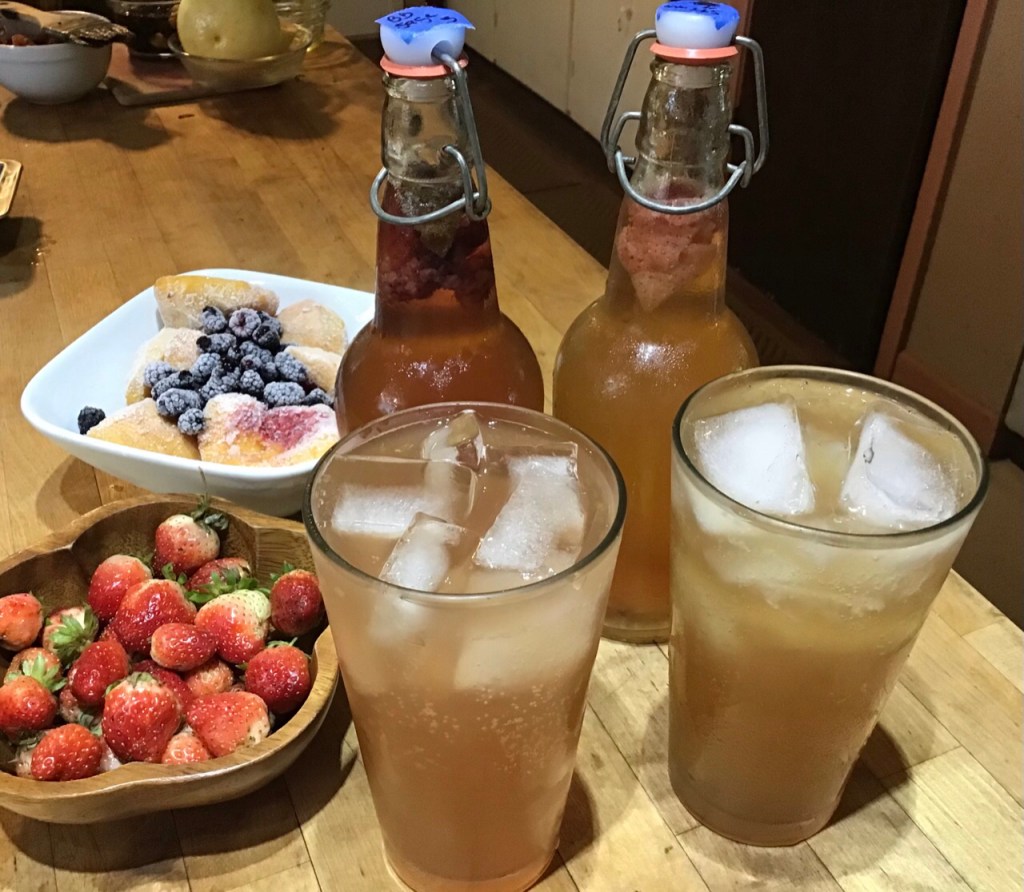
By ‘doing well’ I see I need to learn a thing or two about growing strawberries. They are too crowded and between the humidity and the wet mulch they are mostly half-rotted by the time they get ripe. I’m really loving the strawberry kombucha though! As well as the blackberry, and mulberry. I’ve started making the kombucha tea from yaupon, which grows like a weed around here. It’s delicious and sweeter than the store-bought green tea I usually use.

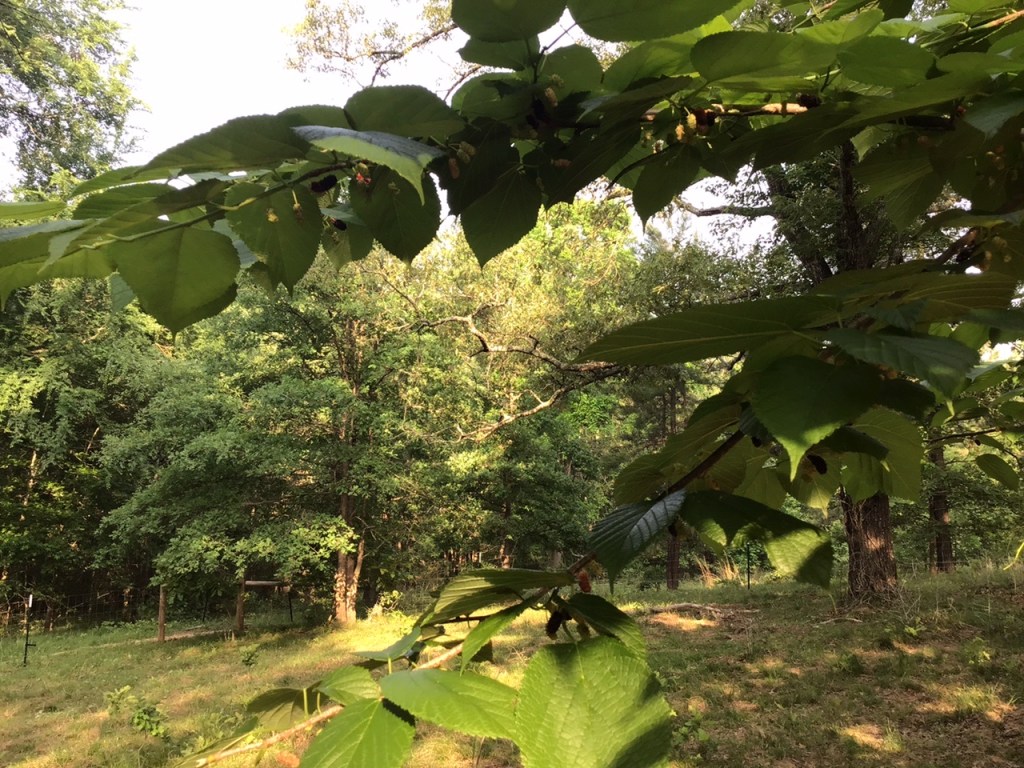
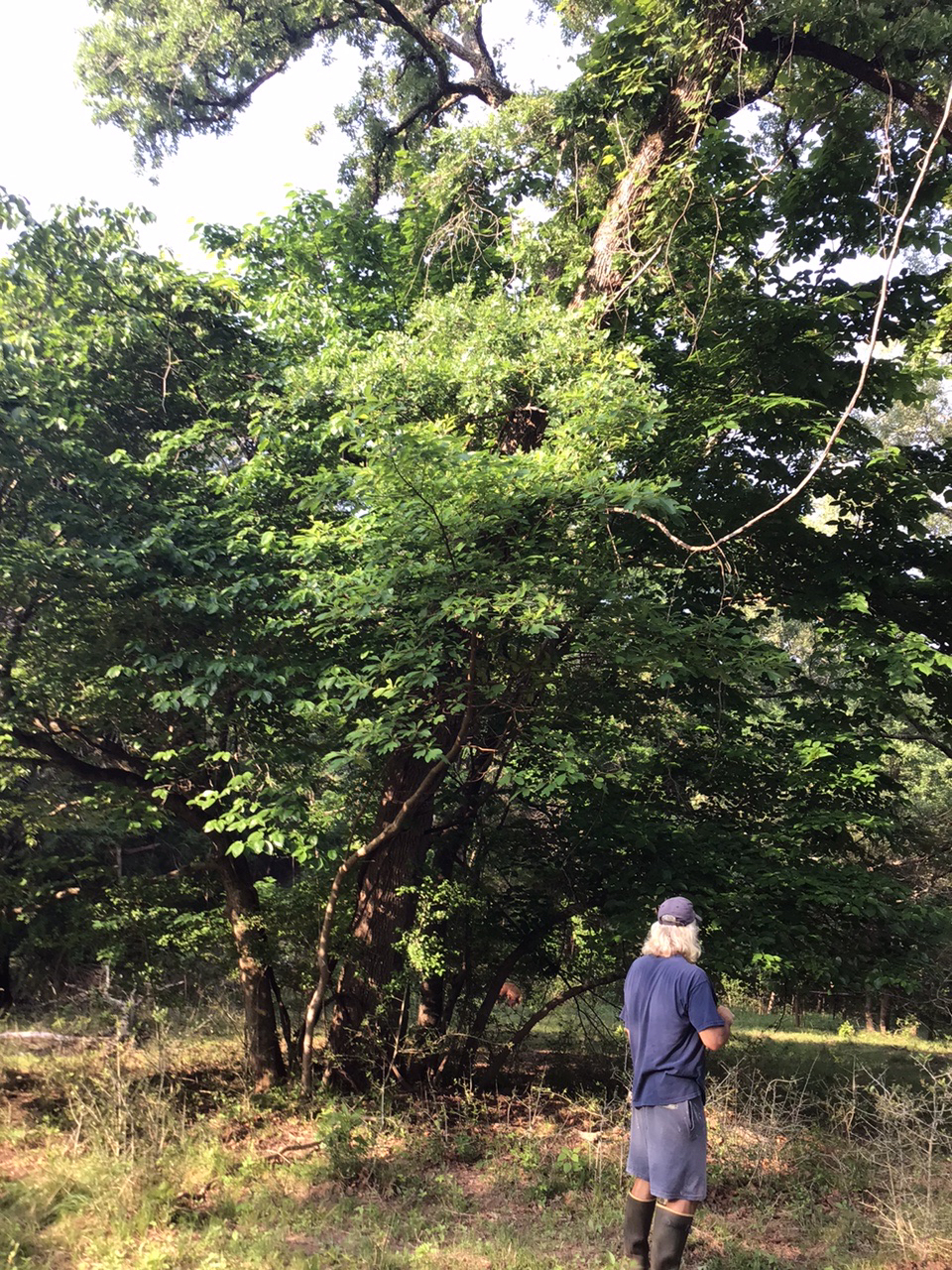
And speaking of mulberries, what a great surprise, Hubby found a full grown, wild mulberry tree in a spot we walk by regularly and never noticed before. What a treasure hidden in plain site!

More mulberries, please!

And this post has reached my attention span limit, so I leave the cheese to the next post. It’s gonna be a good one all on its on, really! Stay tuned!

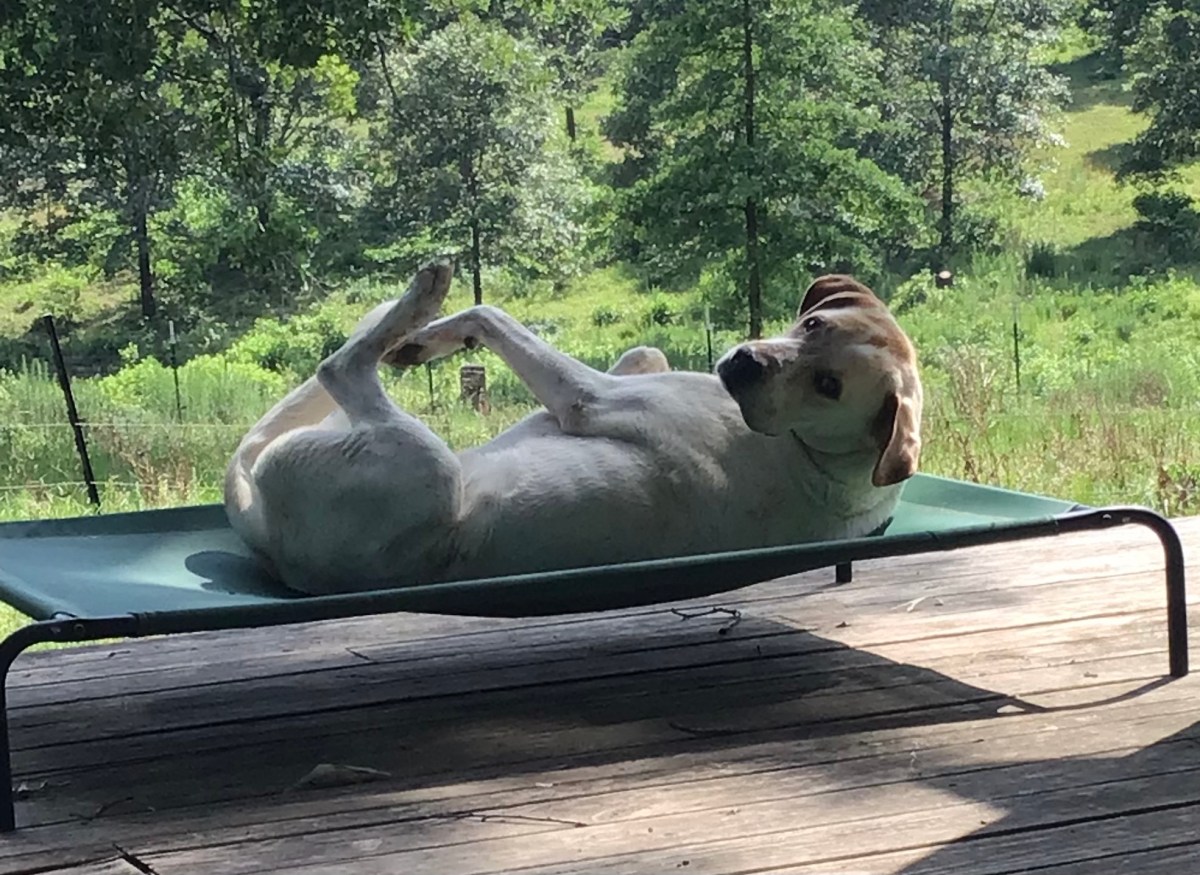
Instead I exit abruptly, like spring has done in East Texas, with this quick lesson from Bubba in best yoga techniques.

The ’Just Chill’ technique ala Bubba

Brief Plant Profile: Sweet Potato

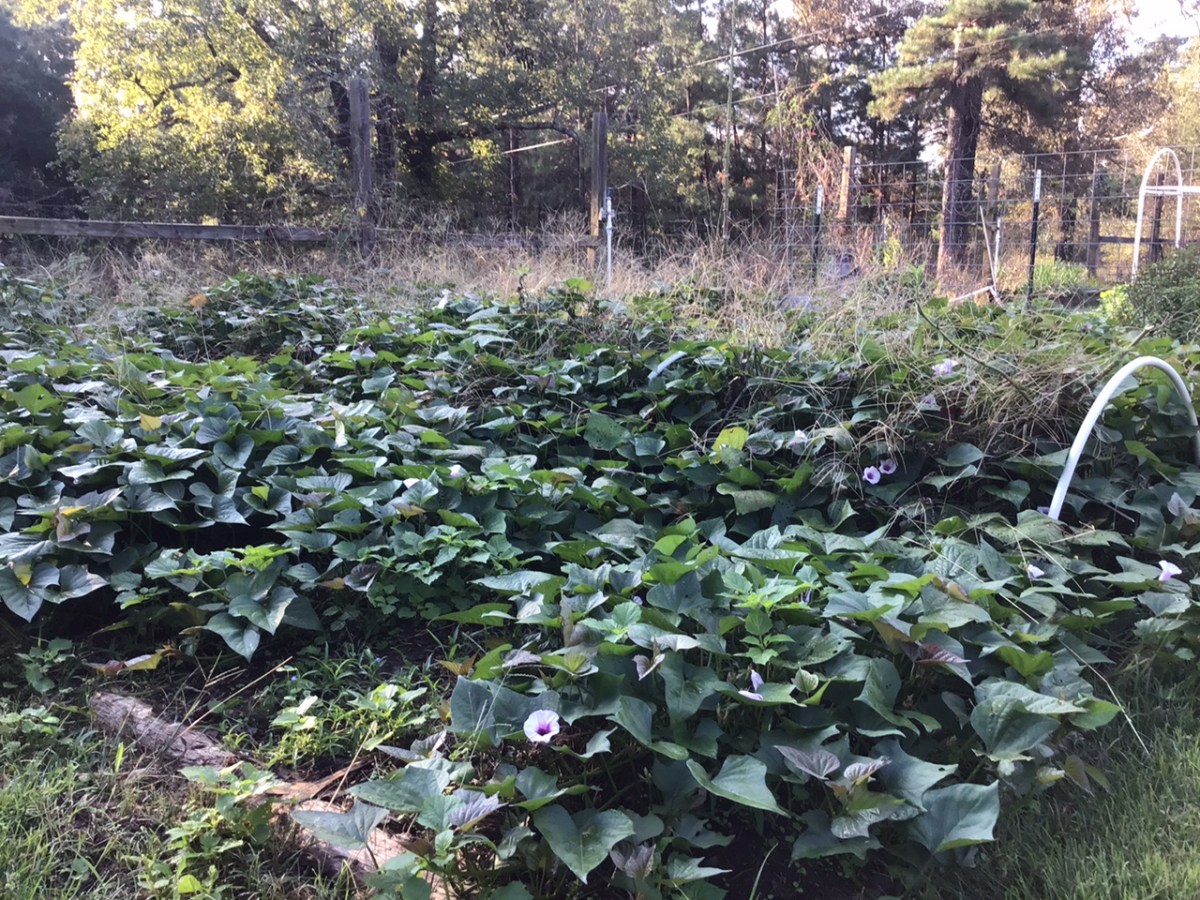
I’ve got sweet potatoes on the brain since I’m just fixing to plant them. I’ll continue planting them for another month or so as they are such heat lovers they’ll thrive all summer long, with supplemental water, and they have numerous benefits.

The biggest benefit, besides doing well in the heat, is that they are vigorous enough to out-compete the many grasses that try (and too often succeed) to take over the summer garden. Additional benefits are that the leaves are edible and delicious, few pests bother them too much, and all the critters love the surplus. Plus, they are so easy to grow you can start them right in your kitchen and have dozens of plants from just one potato.

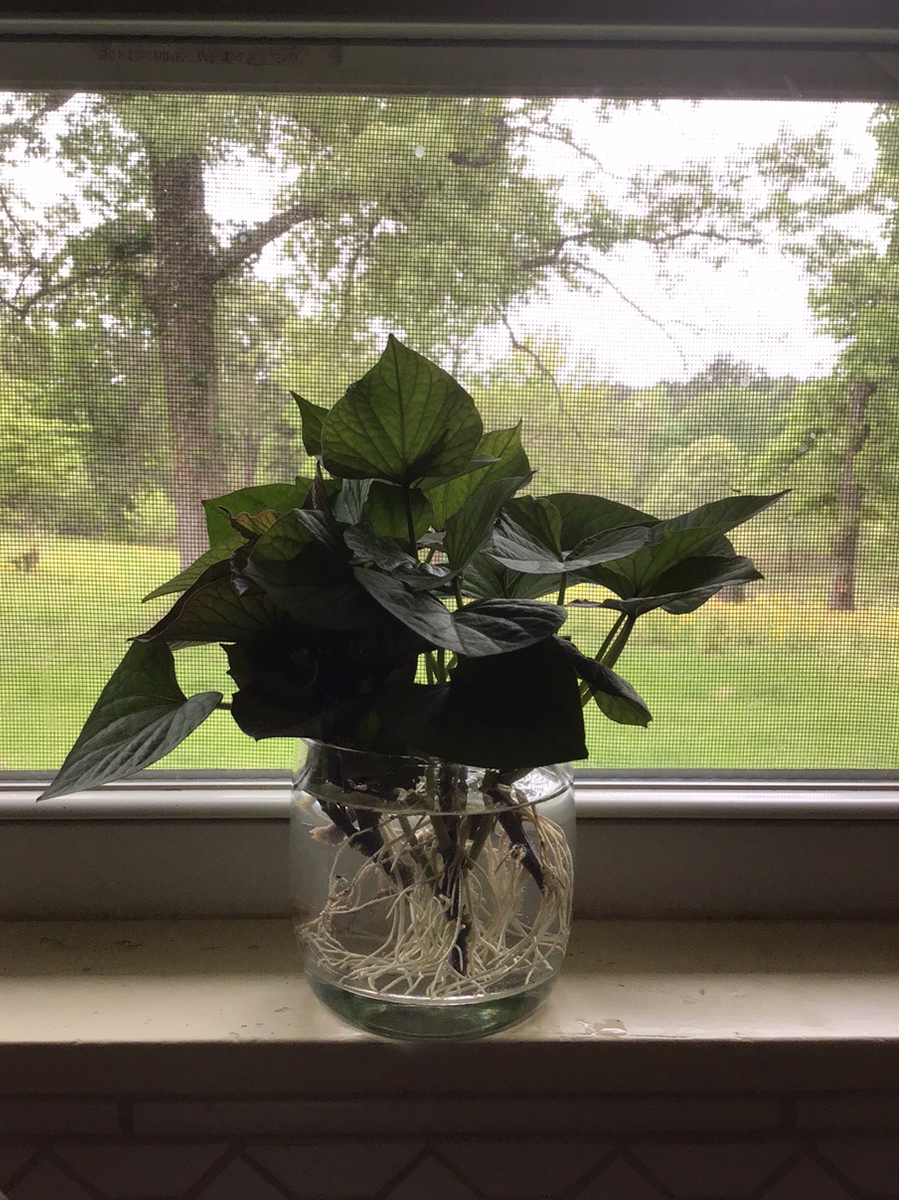
There are several methods for growing the ‘slips’ which you then plant in the garden. It seems the most popular way is to suspend your potato in a jar of water then snap each new vine off when there’s about 4 or 5 leaf sets, then plant it.

I prefer another method because when those vines get taller they don’t do so well with the wind when you first put them in the ground and they dry out faster. I lay them first flat in a tray and cover them most of the way with loose soil. Once they get 2 or 3 leaf sets I snap those off and put them in water for a week or so to grow roots. The short vine with many roots transplants much better in our climate than the long vine with no roots.*

These are from last year’s harvest, under lights in the corner, but a sunny window would work as well, especially with a heat mat.

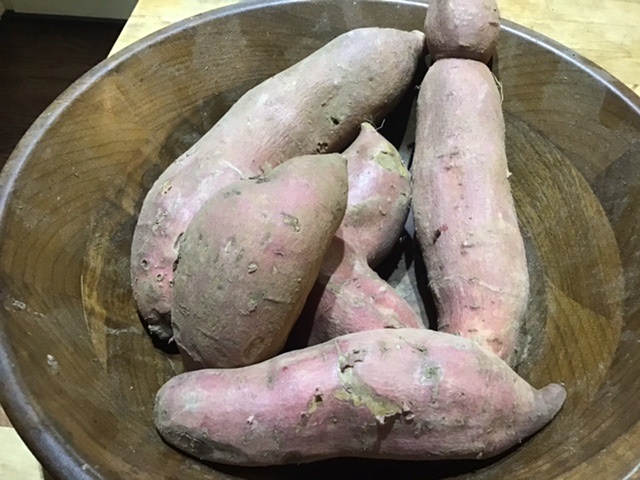
Not exactly attractive, but very tasty! Some of our favorite ways to enjoy them are as a crust for quiche, in a roasted veggie medley tossed with plenty of olive oil or pork fat, and mashed with turnips and butter.

I prefer to tone down their sweetness rather than accentuate it, but lots of folks prefer the opposite, like the popular Thanksgiving dish topped with marshmallows or baked in a pie. They also do very well as a thickener for soups and sauces. To further tone down the sweetness you can avoid the curing process and move them straight indoors to overwinter.

For more growing tips and cooking ideas, here’s a good site:

Morag Gamble, Our Permaculture Life

* Another tip for Southern gardeners is to grow your own slips rather than order them. I wanted to try some different varieties I saw in the catalogues and tried for several years to get a good crop and they failed every time. The vines went crazy, but no tubers grew at all. I tried to discover why this was, but never could find an answer. My only guess is that coming from a more northern climate disrupted their growth somehow? Not only that, but they are obscenely expensive considering how easy they are to grow! I was not at all pleased to waste so much time, space and money for those failures. But, lesson learned and now I waste no money on them at all!

Homestead Happenings

Holy Moly, when you’re hot, you’re HOT!

And, it seems to me, the only way to really know that, is to have known how very low you can go, when you’re really not, hot.

Mamas and babies are all doing great and our semi-feral cat, Skittles, has just had TicTacs, though we can only hear them so far, somewhere, under the floorboards of the old tractor barn where she’s taken up semi-permanent residence .

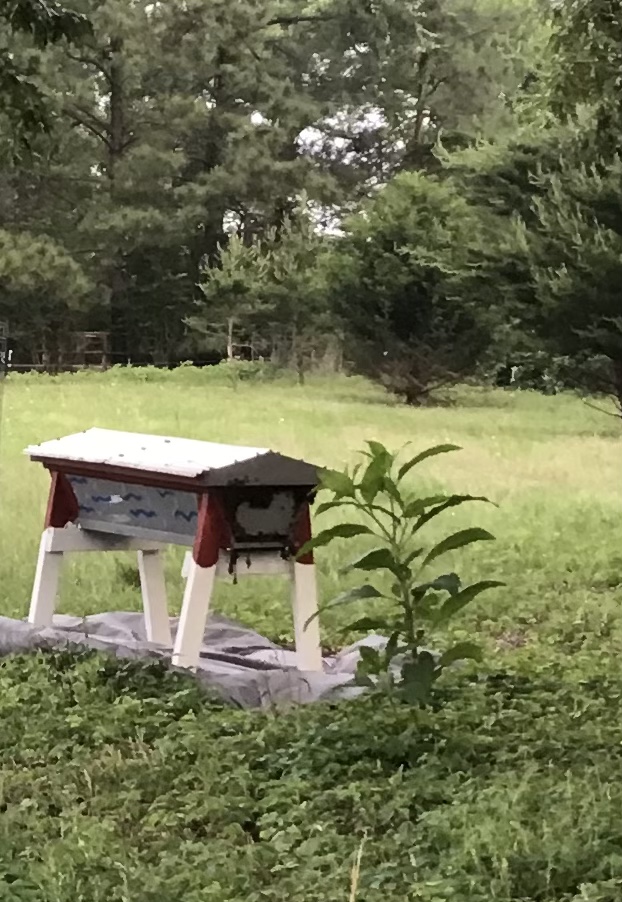
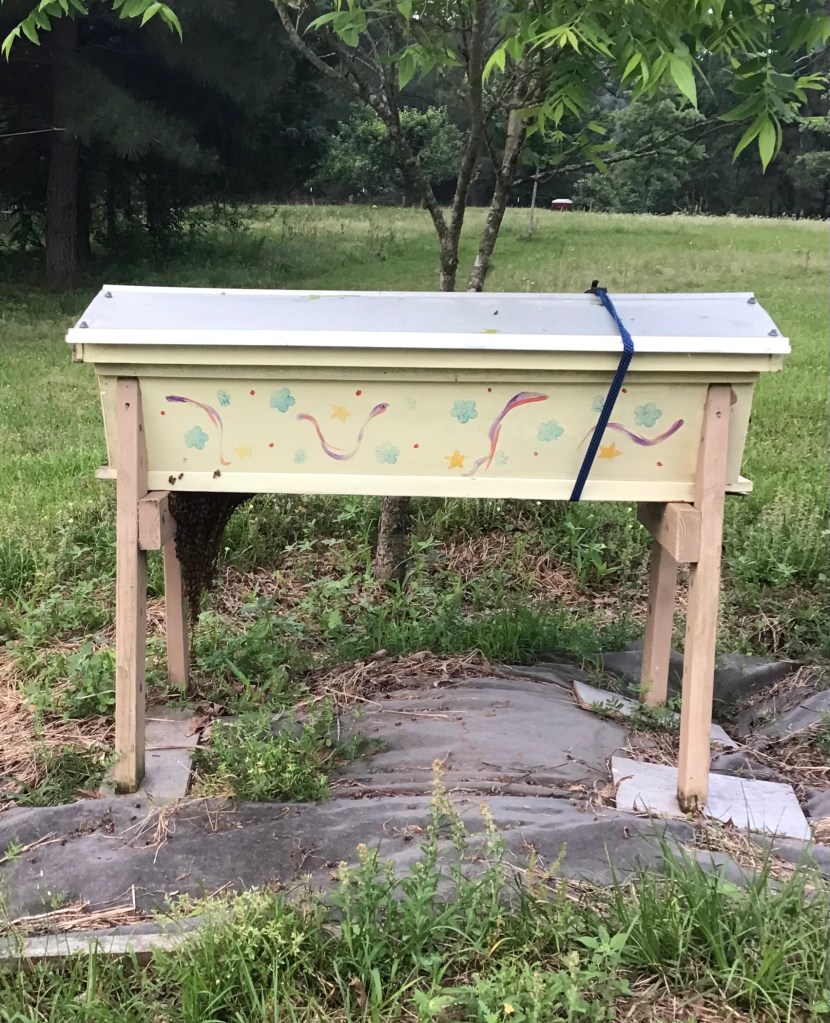
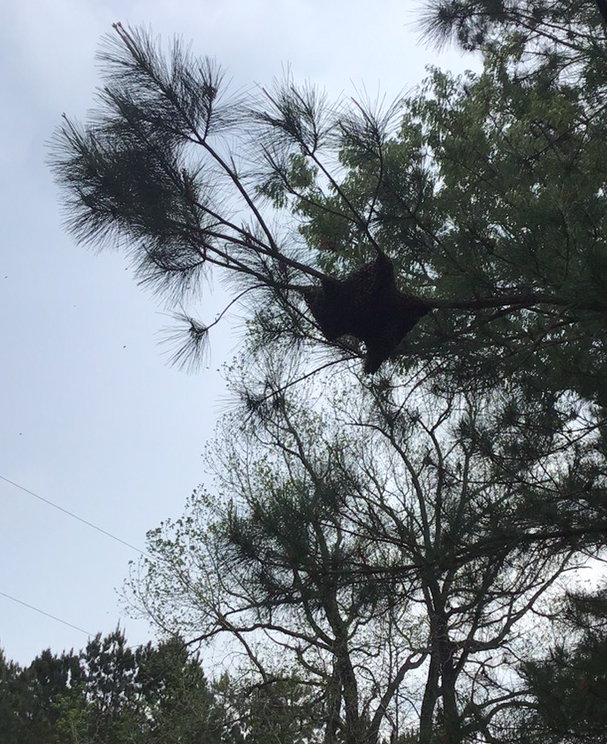
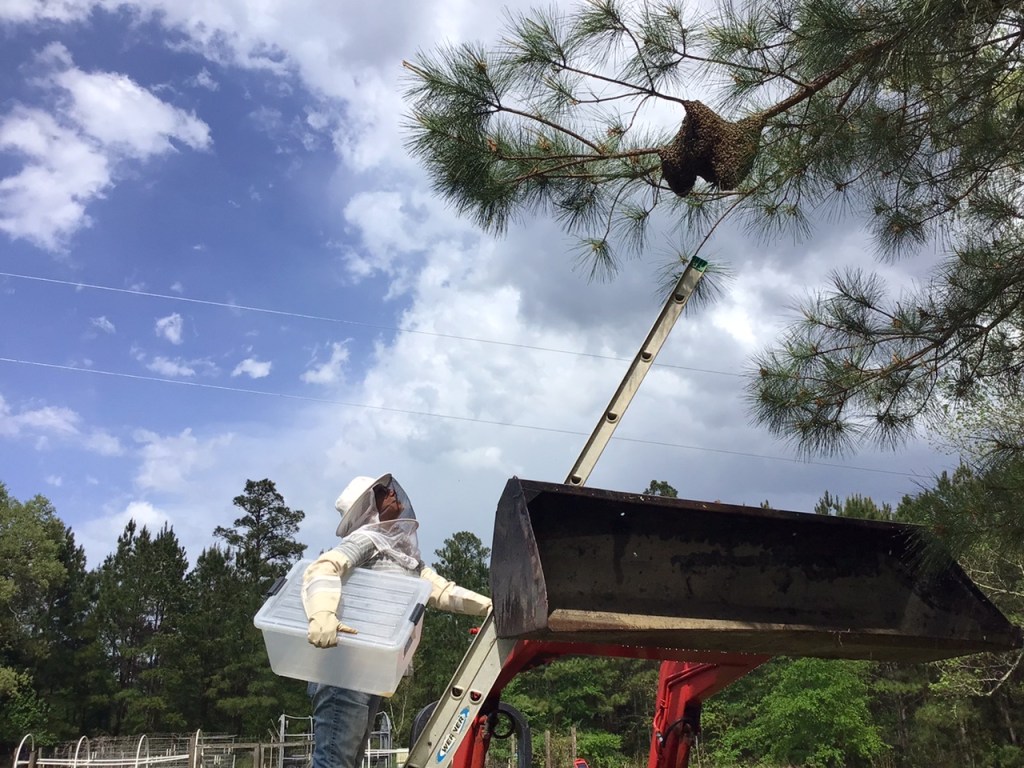
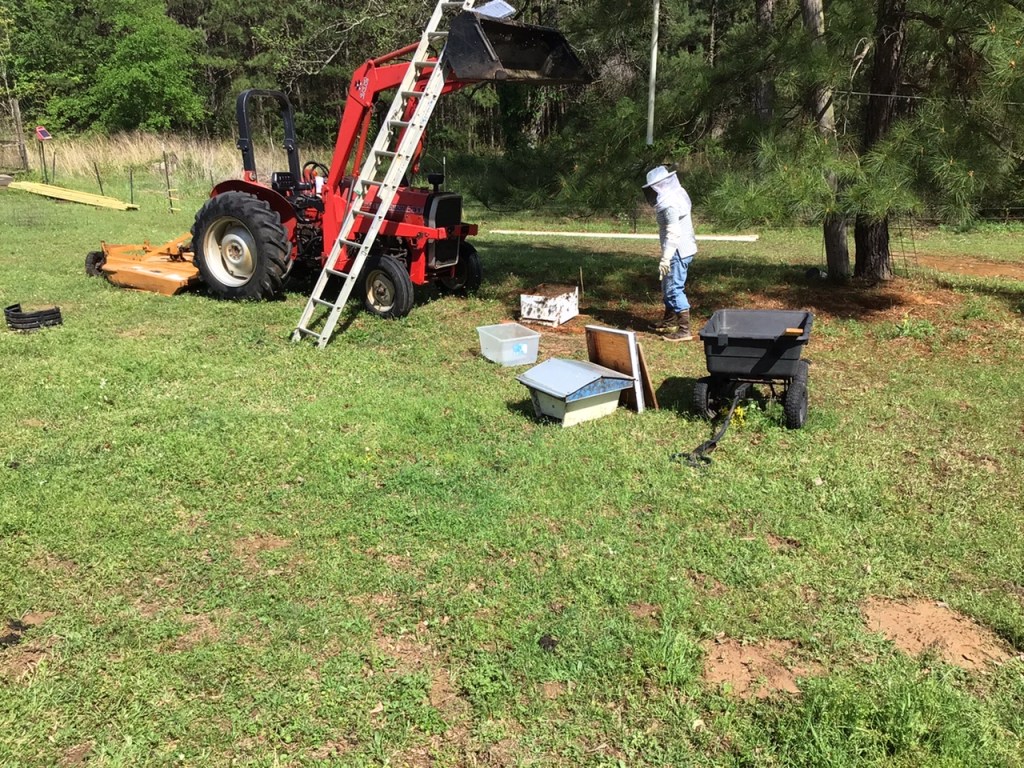
And . … We just got our first swarm! I’m extra excited because it’s off our ‘Ninja’ hive, our strongest colony. And a bit of an odd story about that. I ‘sensed’ it, before I saw it. I know, sounds crazy! I did suspect they’d swarm this season, because they didn’t last year, as far as I know.

All settled in already, after just a couple of hours!

I call them the Ninja hive because they are right by the house, always very active, regularly fighting off robbers and just generally busy, but never aggressive toward us. We can even mow right around them with no problem.

Because I like their temperament so much I have taken splits from them in the past hoping to spread their lineage far and wide. Funny thing is, they were the brand new hive that got flipped over during the tornado several years ago and they were so weak I thought they wouldn’t even make it through the summer.

This afternoon I had a sense, all of the sudden, that they’d swarmed, and I looked out the window, and there was their swarm!

Bad photo I know, but just to show the location, right above the power lines in the nearby pine tree.
Didn’t bother to edit this after all, I’ll learn someday soon though, really!

Mama Chop went for an excursion and I figured she’d go right to her daughter’s place, which she did. Virginia was nursing at that moment and one piglet had strayed through the fence into the orchard and couldn’t figure her way back in and was NOT AT ALL happy to be missing her breakfast! (Actually, it could very well be a ’he’ and probably more likely since the boys are typically first to venture off).

We traded a couple piglets once again with a farming friend for our next breeding ram. We named him ‘Terdeau’, HeHe, can you guess why?!

More news soon, stay tuned!

Homestead Happenings

We have some happy snaps, one minute of piglets’ bliss and a couple garden successes to share today.

Mamas and piglets are venturing out already and enjoyed their first spa day. Unfortunately, Mama Chop did still squish two of her wee ones despite Hubby’s extra efforts, so both Mamas are now with seven. Virginia has proven to be the better mother, but we prefer Mama Chop’s personality. But, it’s not about us. Sadly this will probably be Mama Chop’s last hurrah.

Mama Chop with her Lucky 7
Our semi-feral cat, Skittles, is becoming more domesticated now that there are only two dogs who chase her off. That is, if you call hissing and snarling for her supper domesticated! 😳

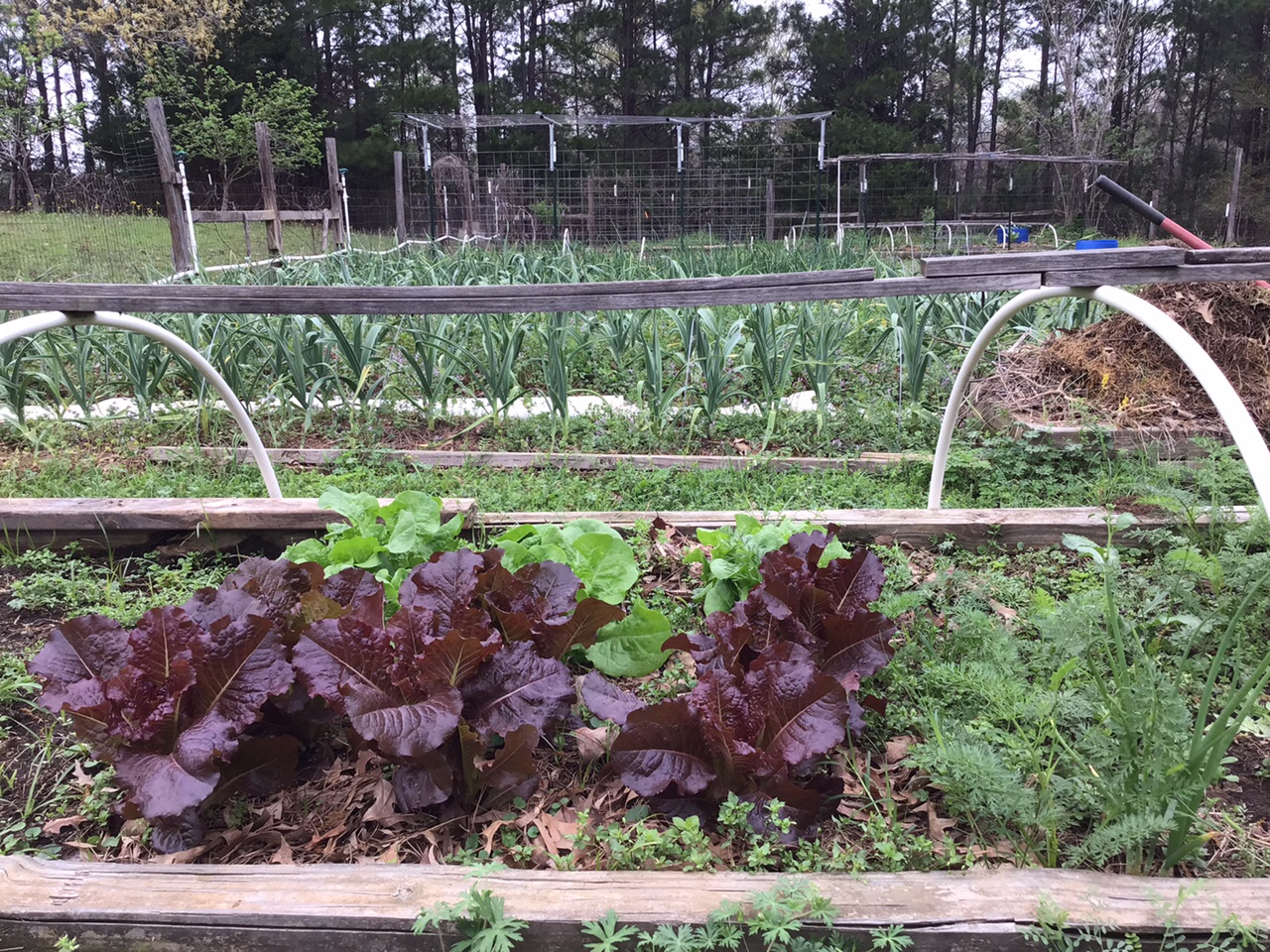
Moving on to the garden I’m pleased to report good news. The alliums are looking amazing, the best ever at this time of year., I expect that is due to our very mild winter and an extra helping of sheep poop. I love this time of year when chopped green onion can top every savory dish. Also, unlimited lettuces, for a limited time only. Once the heat sets in there are only a few varieties that survive, arugula and oak leaf primarily, and even those still have a tendency to get too hot or bitter and bolt quickly.

Here we’ve got garlic, elephant and a few varieties of hard neck, plus white, red and yellow storage onions, shallots, and a pearl onion perennial that I highly recommend for hot climates (Bianca di Maggio). I’ve tried every type of popular perennial onion and this is the first time I’ve gotten them to last, relatively carefree, for two full years. Normally they do not last the summer. That could also be because these I grew from seed instead of getting sets.

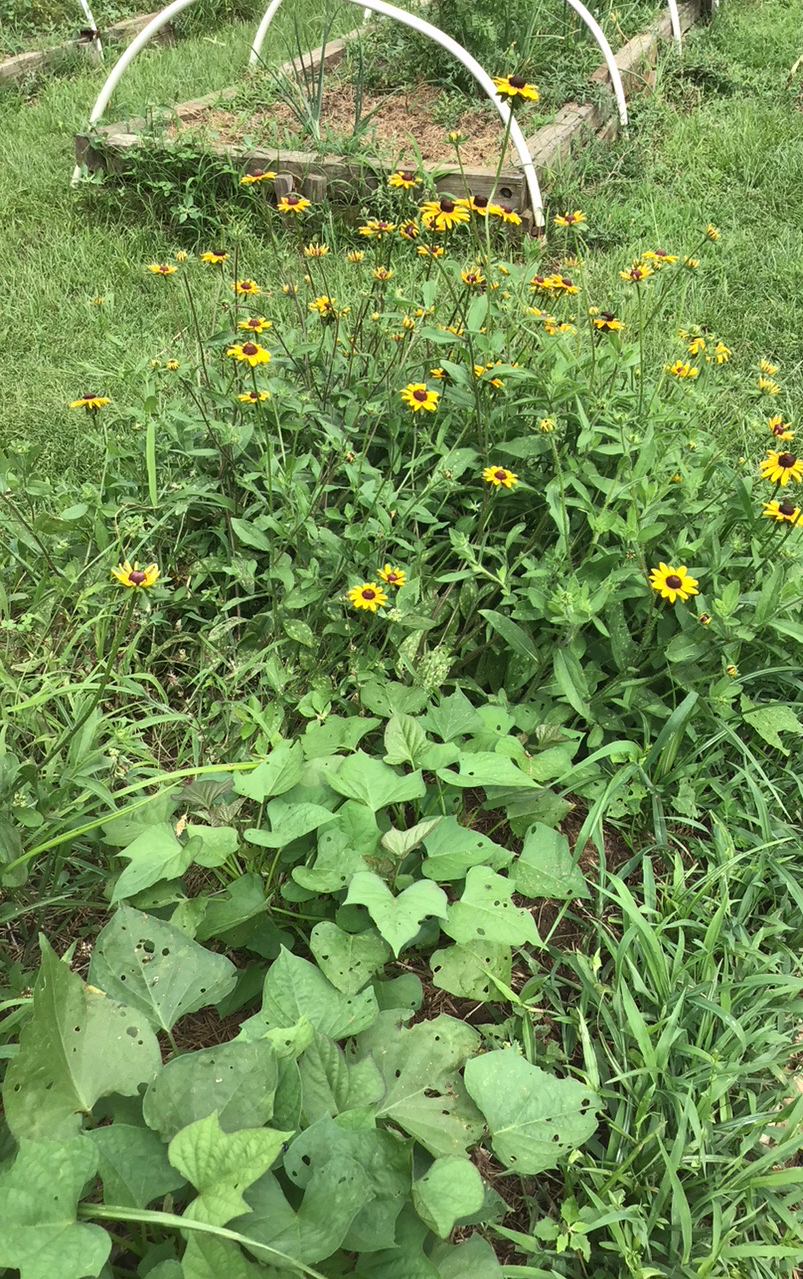
Seed saving and propagation are big on my garden plans lately, not only because of the high costs we’re seeing. Some seeds naturalize very quickly to their environment and I’m regularly impressed at all the volunteers that have found their way into the garden over the years—including tomatoes, wild carrot, datura, tomatillos, jumping jacks, Malabar spinach and collards/kale. In some cases I’m planting these purchased seeds and they don’t do that great the first year, but the volunteers that come back thrive with no care and even competing with some of our very pernicious grasses. Nature is so amazing!

Tis the season for pokeweed, a new and reliable favorite—that poor maligned and misunderstood plant I wrote about last year. We ate the greens all summer, the berries all fall and winter . … and we’re still alive . … go figure! So much mis-and dis-information out there on this delicious, nutritious and versatile, once upon a time Southern staple, that ‘science’ has tried to steal from us.

Two more such successes are strawberries and chayote squash. These are definite testaments to the old adage: “If you don’t succeed, try, and try, again!”

Why, oh why do you let weeds grow in your garden!? Oh let me count the ways . … the bees, the seeds, and, seriously how much time do you think I have?! Actually though, there’s a very good short answer for that—when you allow the deeply-rooted ’weeds’ to work among your short-rooted annual crops you have a magnificent force of nature at your fingertipes—those long tap-roots bring nutrients up from the depths in order to feed your fancy annual crops their otherwise lacking essential minerals.

The chayote squash, pictured left, I’ve tried to get established a minimum of five times. Even this time, the one I expected to live has died and the one I expected to die has come back with impressive gusto. This is why the plants I really want to work I place in different spots of the garden, just to see, as extra insurance, even though this is often inconvenient and seemingly counter-intuitive.

Same thing with the strawberries. Texas gardeners don’t have an easy time with strawberries or blueberries, they both prefer cooler climates. Most gardeners here who are serious about strawberries either buy new plugs each fall for the spring crop or dig up their crop and store them in the fridge all summer until the fall planting. This is too much work and/or expense for us here, yet I’d love to have at least a small, but reliable, crop of strawberries. This time did the trick so far, but only time will tell. At least I’ve got them not only surviving the summer, but also spreading. I used a couple of folk tricks I heard over the decades. One is from Finland—put them with the asparagus, I was told. But alone that did not do the trick. So, I tried them where the asparagus had been, but also where the Indian strawberries had been growing wild. Success! So far . …

Homestead Happenings

Huge days on the wee homestead! The pigs and sheep have all had successful births without a single hitch. Mama Chop did lose a couple, but she has such large litters that’s not such a bad thing. We were very concerned about her as she crushed her last two litters, literally, not in the new way of the term—She crushed it! Nope, in the old way, as in she smooshed them all.

Hubby was able to prevent that sad ending this time by clearing out her corral space of every last twig. She was in the habit of building huge nests, full of branches and twigs and so steep the piglets would roll right off it, falling between branches and getting pinned whenever she moved around. We were worried with another total loss we’d have to get rid of her because we like her so much, she’s so gentle and good-natured. She loves company and will even go on walks with us. It is truly amazing how graceful these huge creatures are around those tiny, squirmy little things!

I did not mean to hit ’slo-mo’ during this video, oops! Need to work on my skills.

Virginia had a similar setup to Momma Chop, but she wanted nothing of it. She went off into the woods to build her own nest, her way. Luckily she doesn’t have such a penchant for branches and twigs. She’s got more of the wild side in her attitude as well as her nesting preferences. And she certainly does not appreciate prying eyes and will come after anyone who gets too close to her brood!

Peek-a-boo! Yes that is Hubby running away from one irritated mama!

Watching the little lambs play, and sleep, is so cute. But I expect when the kids come next month we’ll really be in for a comic treat! It will be our first experience with goat births and I hope it goes as smoothly as the sheep did this time.

Getting friskier by the day!

We have a new visitor to the garden which surprised us.

It’s been there every day now for about a week and I’ve never seen one like it around here before. It flies just like a hummingbird and had us quite confused. It was darting all around so fast and so far that it took me about 10 minutes and 30 attempts to get one decent shot of it. After some searching we learned it is some kind of hawk moth. Fastest moth in the west? Sometimes I undervalue the usefulness of the Internet, I might’ve been left baffled on that simple identification for a lifetime!

Not to mention the joy of sharing these simple pleasures with y’all!