A few choice quotes from Juliette de Bairacli Levy who did not mince words about her views on modern medicine.
This excerpt is from 1952! It’s astounding to me that it’s only gotten worse in the last 70 years. They keep doubling-down, and the public keeps buying it up.
“The present-day farmer has been educated to consider disease as inevitable and the only scientific cure as being in the artificial remedies of the modern veterinary surgeon who through over-rigid orthodox training and himself under the influence of advertisement, is too often a mere vendor of the products of the vast and powerful chemical and serum manufacturers. For the vested interests in modern medicine are stupendous. Businessmen who have never owned an animal fatten like breeding toads upon the ailments of farm stock which need not know sickness at all if they had daily access to the herbs of the fields. The true farmer should cultivate his own medicines in his own fields, and he should not consider himself as being a farmer if he has to resort to outside help for keeping his animals in health, and healing them when in sickness. Science is providing the ruination of true farming; the only thing that I, and countless others, have noted as flourishing alongside science, is disease!—disease of the earth, disease of crops and disease of the animal and people who feed on the diseased produce.”
“Professor Szekely had declared emphatically, that the curing of the ailments of his patients is often a simple task in comparison with the freeing of their bodies from the accumulations of chemical drugs lodged in their tissues — the drugs derived from orthodox medical chemo-therapy, and from the poisons sprayed upon fruits and vegetables by the modern farmer, or placed in tinned and bottled foods as preservatives. Many of his patients are Americans, and in present-day America the chemist seems to be running amok, spraying and poisoning everything edible.” ~Juliette de Bairacli Levy, 1952, The Complete Herbal Handbook For Farm And Stable
The influence of advertisement, you say? Naw, can’t be that!
I’ve been doing lots of research concerning the goats and so appreciate the kind help and suggestions from others.
It really is a quandary just like I went through with the bees. Treatment-free types are the anti-Vaxxers of the animal husbandry world, getting similar treatment from the established voices—that is cursed, mocked, belittled and silenced.
And that’s not the worse part, not for me anyway.
It’s far worse not being able to find honest, untainted information. The goat world, like the bee world, is dominated by the industry standards, which has penetrated into every conceivable space of our reality.
In the U.S. that means public-private partnerships that wholly infiltrate the information and therefor the society through the university system and popular organizations like the 4-H club.
Many of our best and brightest agriculture enthusiasts start very young, showing animals and winning awards based on criteria that then get distributed into general farming life. Very little attention is paid to the actual results of this process, not even the simple stuff—like considering whether purebreds are really the best option when stellar looks and trainability aren’t the owners’ top priorities.
Which got me thinking . . .
Might we make an analogy that it’s kinda like ZaZa Gabor playing a starring role in a film like Deliverance?
In other words, are we trying to raise the equivalent of thousand dollar racehorses in two-bit barns? Is that the problem? Or part of it?
“I get allergic smelling hay! I just adore a penthouse view, darlin’ I love ya, but give me Park Avenue!”
My goats hate the rain (makes for a bad hair day?), and would prefer all their meals to be served to them promptly, 3 meals plus snacks, in their communal space (breakfast in bed), with minimal foraging required (just enough to stretch their legs and ease any boredom) plus they need regular brushing (all natural boars hair brush) and their hooves trimmed (mani-pedi), and routine expensive toxic treatments (Botox).
We get frustrated, obviously, but whose fault is it really?
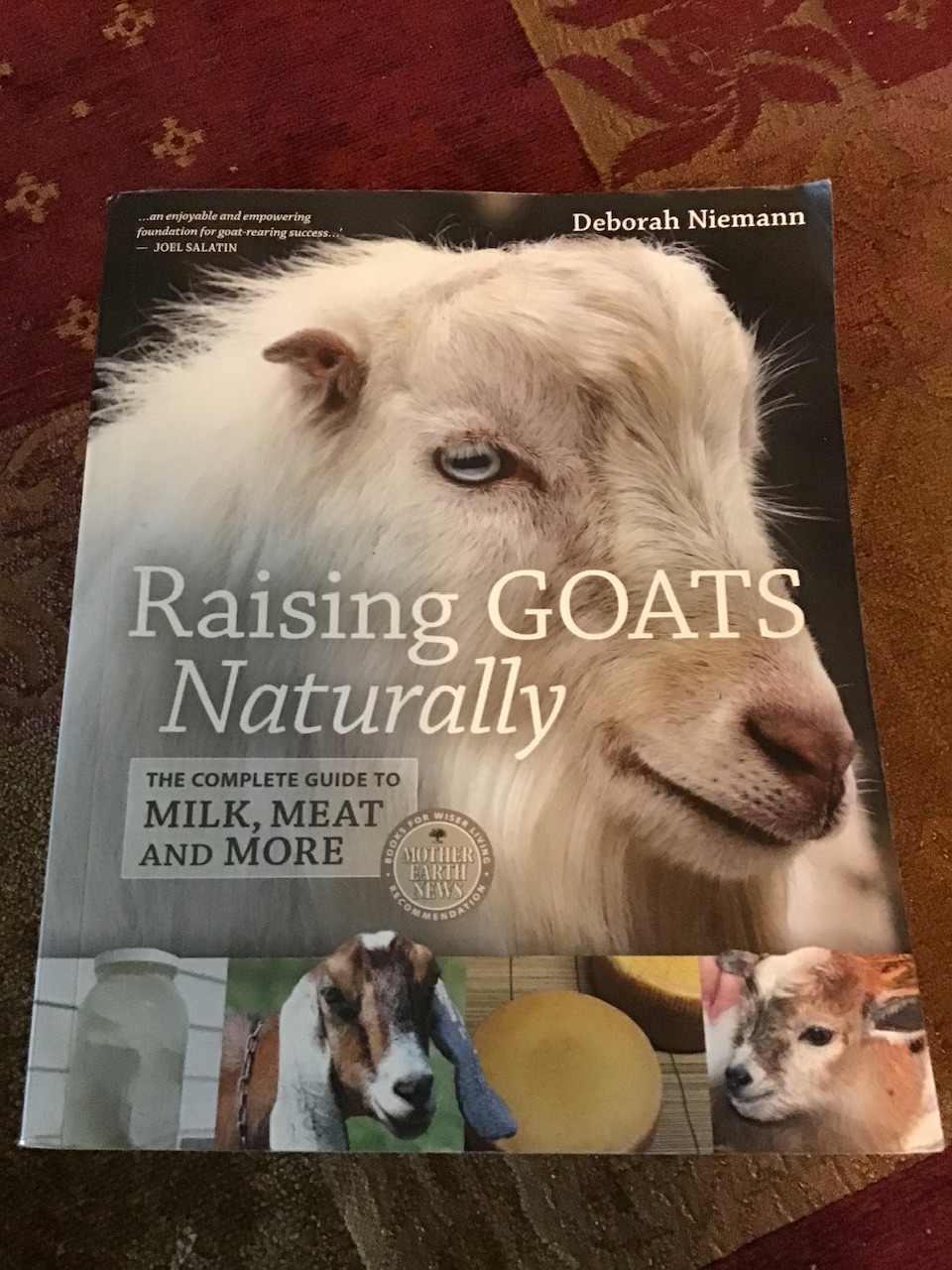
When I got into this I went for the most popular and trusted source who was calling her style ‘natural’.
That’s for me, I want natural!
The most popular ‘natural’ goat rearing book on the market and she has a YT channel.
I’m not saying this is a bad book, I’ve certainly learned a lot from it, but knowing what I know now, I don’t call it ‘natural’ anymore.
These farmers and breeders may be on the path less traveled, but they are most certainly not off the Big Pharma Ferris wheel. And personally, I find that poor word choice to be deceptive.
For example, they advise breeders to cull rather than to risk populating the community of farmers/homesteaders with genetically inferior animals, which sounds like the wise and conscientious choice to make. Right?
Clearly a diligent and conscientious goat farmer/breeder concerned about good health in humans and animals, yet still considering the most natural methods as including enormous amounts of processed inputs and Big Pharma treatments.
However, they’re advising culling the animals which are not responding to the poisoning protocol, not only the ones who are truly resistant to the parasites. And as for true resistance, could they really know which ones, since they’ve been dosed at birth through the milk or, even more likely, in utero?
Yes, the ‘natural’ methods they espouse still include dosing the goats with drugs, just not so indiscriminately, which they at least recognize has caused a huge issue of drug-resistance in the goat-rearing community. They still rely on highly processed feed, hay that’s been sprayed, and they recommend medicated feed for kids. Many of them also advise vaccination.
This is what passes for ‘natural’ now.
So, for the barber pole worm, the notorious sheep/goat killer, which was the most likely culprit in Bluebonnet’s demise, the issue is said to be that these awful worms cause anemia. But, listed on the side effects of the popular dewormers in use is also anemia.
Hmmm. Which came first, the chicken or the egg?
Ivermectin—the infamous horse dewormer both celebrated and cursed during the Convid—has a shockingly long list of potential side effects. Interestingly, in all the social media arguments back and forth among suggested protocols and what or whom was being censored and why, I don’t recall that list coming up anywhere.
These above-linked articles show studies proving its toxicity, but when it comes to the studies themselves, I don’t have much faith in them either. The kinds of studies I’d like to see are those that are appropriate to their environment, and no one does those kinds of studies. No one in farming is dosing their rabbits every single day with Ivermectin in a lab setting. What we need are multi-generational studies with real control groups in natural settings, as in real nature. Science doesn’t do that, yet somehow we accept they are ‘controlling’ inputs and outcomes, and that those results are remotely relevant to the average user, that is, those of us not living in a lab.
Besides Ivermectin, Safe-guard is another farm favorite in these parts.
The following comment comes from my dear friend Kath, a certified herbalist who was also previously a professional nurse in the UK.
Safe-guard:
“I can’t quite believe how bad this drug is! Taken from this article: https://www.ncbi.nlm.nih.gov/pmc/articles/PMC9413524/ ‘When fenbendazole was last reviewed (15 years ago), the literature supported the drug’s lack of toxic effects at therapeutic levels, yet various demonstrated physiologic effects have the potential to alter research outcomes. Although more recent reports continue to reflect an overall discordancy of results, several studies support the premise that fenbendazole affects the bone marrow and the immune system.’
‘. . .lengthy and expensive treatment regimens. including the use of fenbendazole and mechanical disinfection, that may fail due to inadequate ovicidal effects.’ (Ie: won’t kill the worm eggs)
So, step one: Kill a few worms. Weaken the animal. Don’t properly kill the worm eggs. Re-emergence of worms when these eggs hatch. Weakened animals can’t fight off new worms. More drugs. Vicious cycle.
So, companies which make & market this drug very conveniently refer to the old research which states no side effects expected & ignore the possibility & reality of new research showing significant risk. Hmm 🤔
Basically use of this drug this means causing ongoing serious depletion in overall resilience & significantly increased susceptibility to further parasite infestation & whatever-it-is that we used to call infections. Worse potential recovery from anything. And all from a drug whose stated purpose may fail!
So, what to do imo is to work to build resilience by nutrition, herbs & healthy living & maybe try to introduce some wild blood when freshening.
I think this drug is an agenda in itself – not only for animals but humans too. Heavily publicised on Google as an amazing off-label cancer cure. I’ve met people who have been persuaded to take it! That’s right – make their own chemo cocktail!
It’s an agenda because I know how heavily ptb come down on any complementary health practitioner making public statements about cancer cure. It’s literally against the law.
And they put it in animal feed too. It’s a very shortsighted & stupid approach.”
Short-sighted, I couldn’t agree more!
Another popular dewormer: Cydectin From Drugs.com
‘Not for use in female dairy cattle 20 months of age or older (including dry dairy cows), veal calves, and calves less than 8 weeks of age.
For Treatment of Infections and Infestations Due to Internal and External Parasites of Cattle.’
Kath: “This ‘who not to give it to’ suggests it’s toxic to humans & cattle/goats – they wouldn’t make a statement about veal calves if it was a safe thing for humans (or animals) to ingest. Funny how they can balance the illogic of ‘don’t give to babies’ & ‘dose babies by mother’s milk’.
The type of nerve receptor that are targeted by this drug are only found in invertebrates – creatures that don’t have a skeleton. So drug companies have jumped to the assumption that it will paralyse (& kill) only parasites/insects. However – & this is important – the target receptor in invertebrates is very similar to the mammalian – human & animal – receptor for glycine – an important neurotransmitter. Chances are that this drug & its family are at least partly responsible for human & animal depletion & neurological problems, perhaps even paralysis, in goats by direct dosing & in humans via eating meat& milk products/drinking milk from dosed animals.”
Seriously! And they have the nerve to call these treatments ‘natural’ and of course, that old reliable, safe and effective!
(Thank you so much Kath for your addition to this post and to Highlander in last post’s comments for your help and advice, I’m very grateful for your efforts and experiences!)
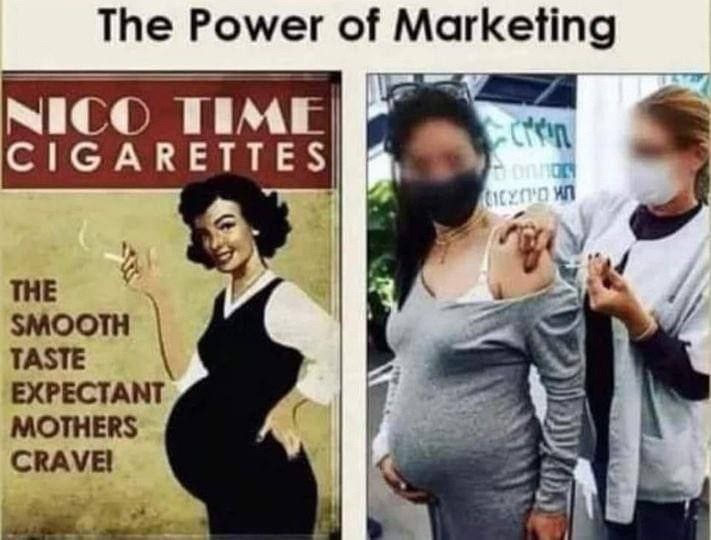
New marketing suggestion for the CDC:
Hey Moms! If your kids get all their shots on schedule, you’ll look just like Za Za!* 😆 *Results may vary. Consult your pediatrician. (Who, by the way, did a hell of a good job dressed as a pig at last year’s luau in Vegas at our promotional conference that counts as continuing education credits and gets billed to the State. Remember Rule #1: What happens in Vegas, stays in Vegas!) 😉 1
It’s been a challenging month on the wee homestead. We’ve had some successes and I am still hopeful for more positive outcomes, but I focus on them overly, because I’m being a bit avoidant, because really, I’m still concerned.
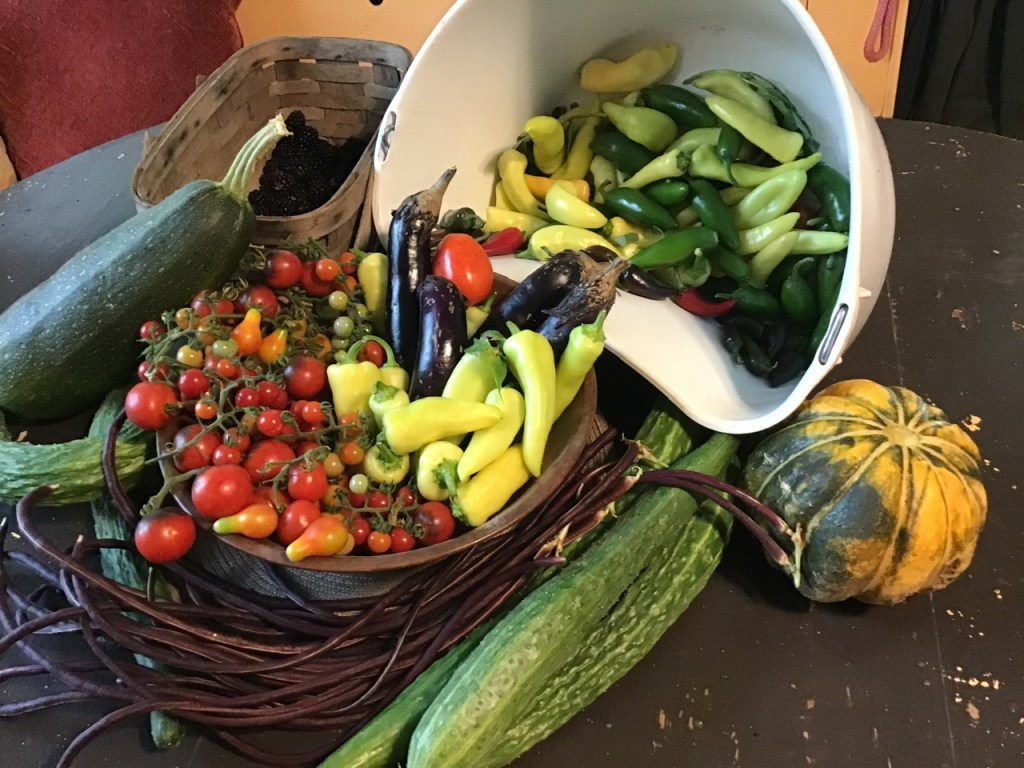
The determinate tomatoes are long gone already, but Hubby’s made many delicious jars of puttanesca and salsa for our future enjoyment. Must keep up morale!
So I’ll share about that this post, along with some happy snaps and surpluses, to help the medicine go down. I know it’s part of the lifestyle. Life, that is.
Yes, I’ve gotten better at it. That is, the death part of life. But also, we must understand our own limitations, and for that we must first broach them.
So if there are still any rose-colored glasses sort of readers remaining here, armor up.
Bye, bye Bluebonnet.* (I share more about my observations on her death at the end, for those who choose to go there.)
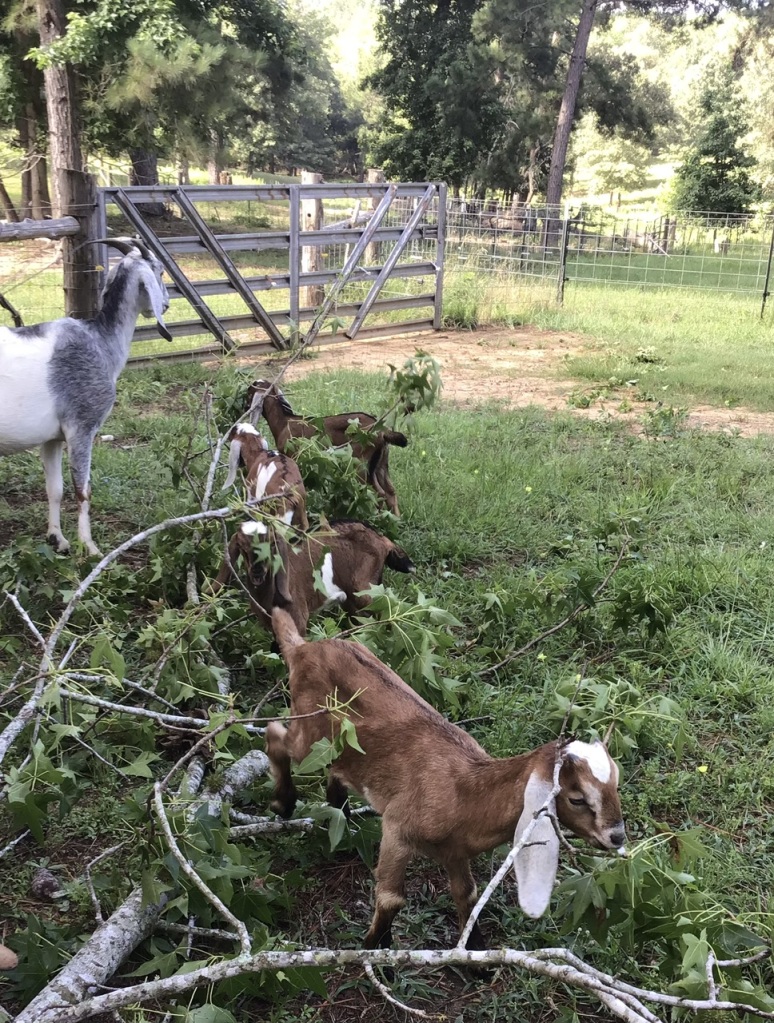
I’m so sad to say we’ve lost one of our new mamas, and her mama, our herd queen Summer, has also been very ill. Several of the does are too thin and are not producing enough milk. This all happened quite suddenly. I was training them on the milk stand for a month, even getting a bit of milk from one, I had high hopes of daily cheese-making by now.
Summer and her daughter Bluebonnet, who I figured would one day replace her as herd queen.
The learning curve is so very high and I’ve set myself impossible standards. I do understand that, though that understanding changes little.
I want a treatment-free herd, or no herd at all. Like with the bees, which took me years of failures, I simply cannot stand the industry standard. I cannot abide such total reliance on pharmaceuticals and exotic inputs from far-off lands. I cannot trust the science. I refuse to believe the only way to raise healthy pets and livestock is to poison them with vaccines and parasite treatments and feed them full of processed foods.
There has got to be another way! A much better way!
And I aim to find it.
We are not directly poisoning our garden and still have plenty of success despite the manufactured crazy weather.
I truly believe a large part of the problem is the processed foods causing the need for the supplemental treatments. It’s a vicious cycle and I want off, and I want ALL I see around me every day off it also, including the land, the water, and the air and ALL the critters!
Is that so much to ask?!
But I already know the drill, thanks to the bees. Every professional and expert says that’s impossible. Like with the gardening when we first got here. Every farmer, every gardener, every Farm & Ranch professional, repeating—You’ve got to spray. You’ve got to treat.
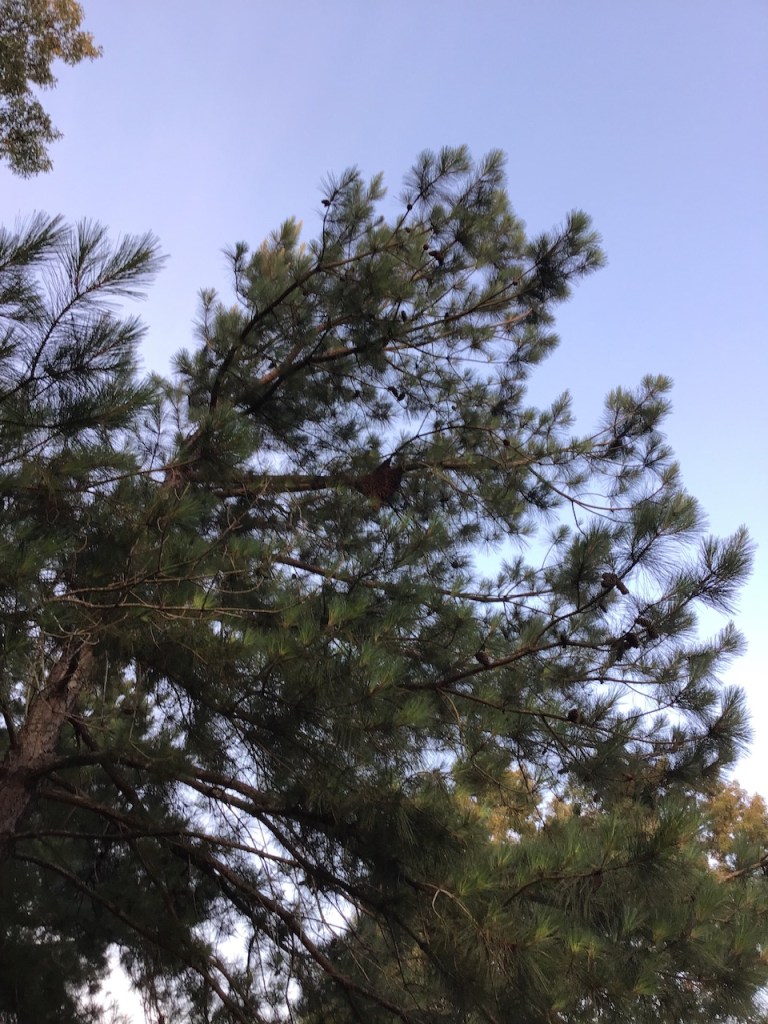
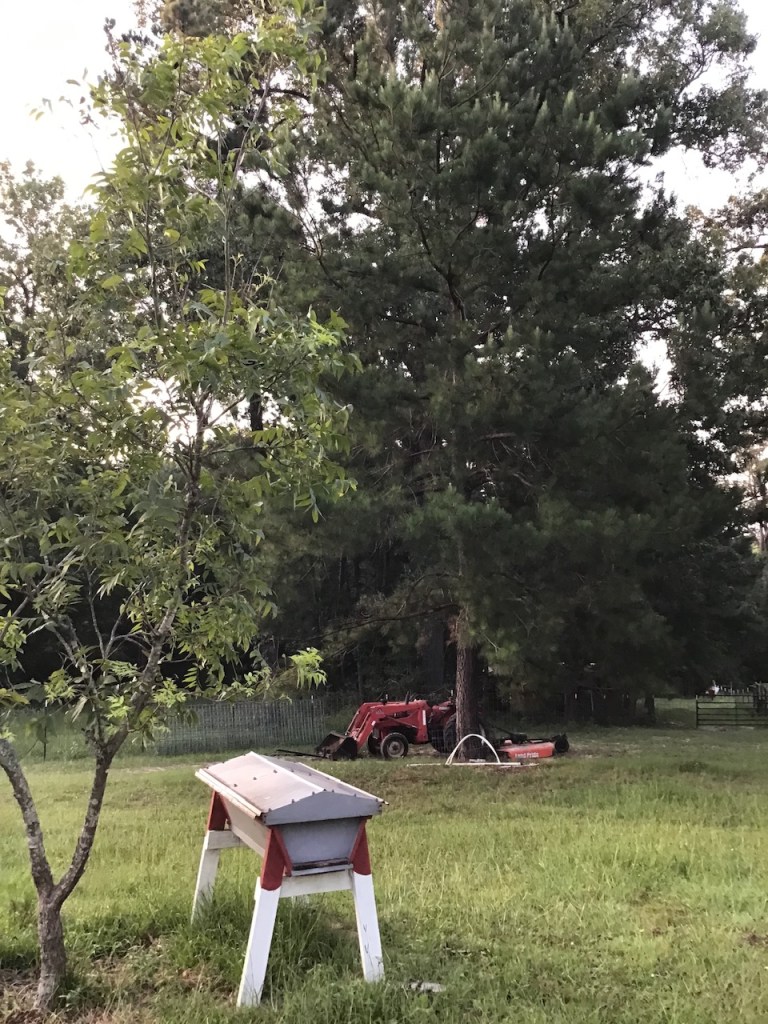
There’s a swarm up there, can you see it?It came off this hive and we watched it, amazing! The large pine in front of the tractor is where it stopped. Too high up to catch, but I’m happy to report another totally treatment-free colony repopulating the county.
“Here, follow this quarterly poisoning routine, and all will be well.” NO!
Is it any wonder they all readily accept without objection whatever the hell is being sprayed over our heads at regular intervals?
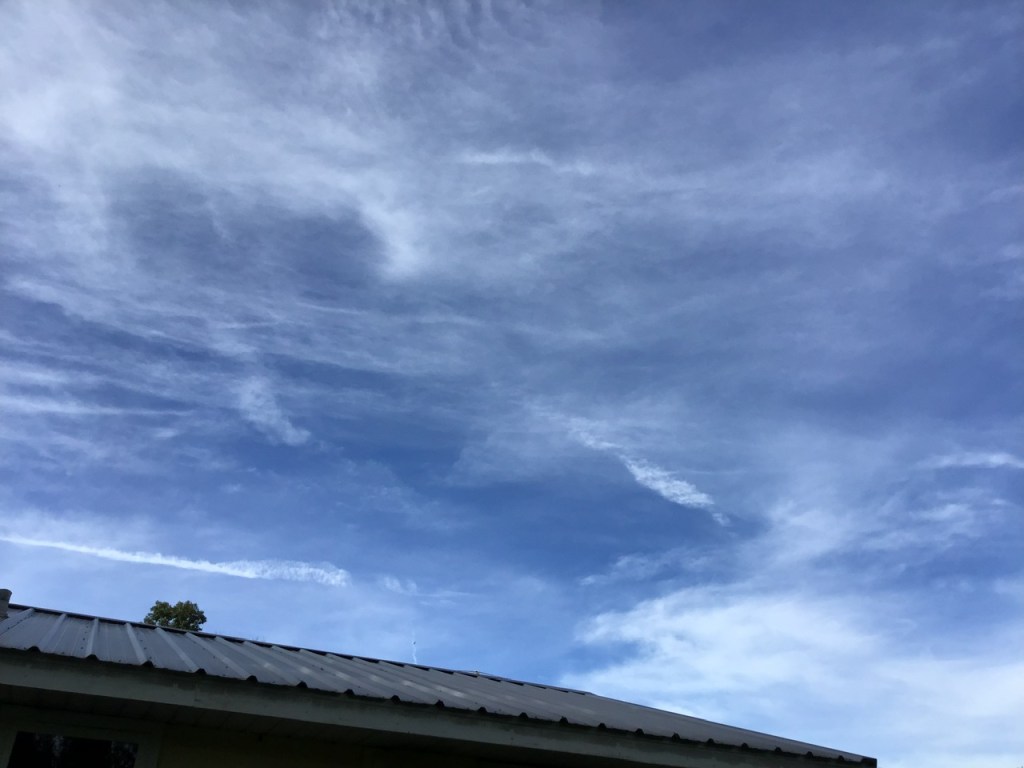
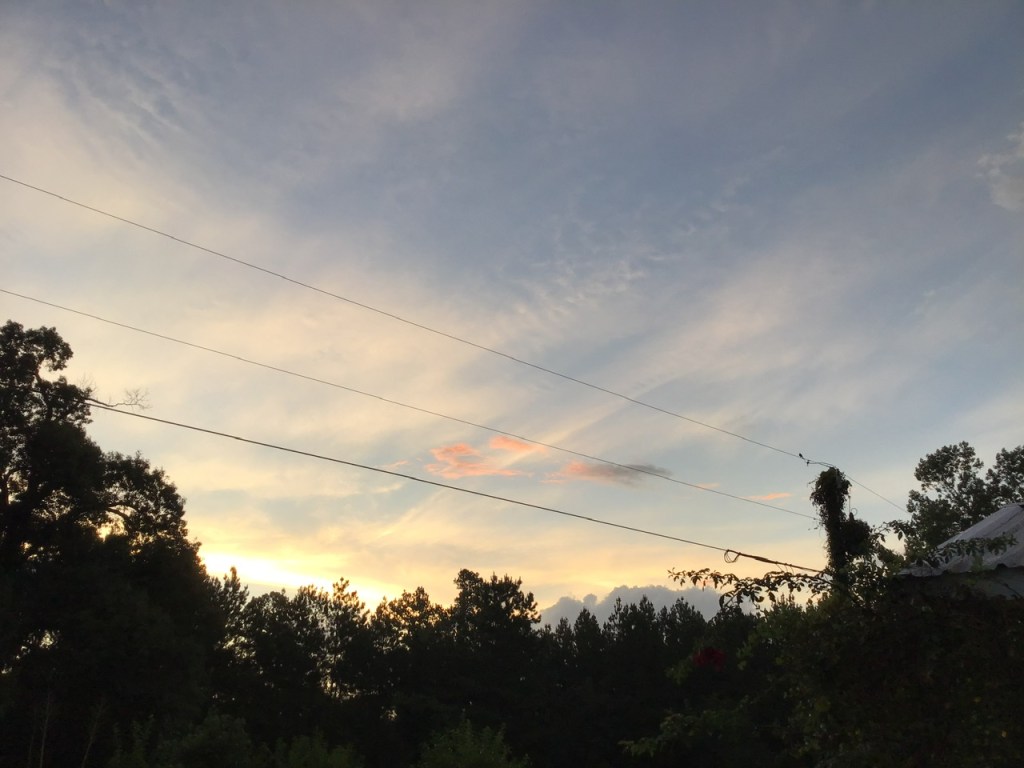
The latest geoengineered filth-filled skies over our property.
We’re not giving up yet. As long as we have irrigation it will be a jungle out there. But without it we’d be screwed, that’s for sure. It hasn’t rained for nearly 3 weeks.
(Photos below Left to Right) The datura is a blessed monster. The sweet potato vines are prolific and a favorite snack of Summer’s. The melons and green beans are thriving. The indeterminate tomatoes and some of the peppers are doing fairly well under the shade cloth and I’ve been succession planting the cucumbers.
From the front: New cucumbers coming up with purslane to help cool the roots and shading from above, old screens protecting some struggling Romaine lettuce, and a growing grove of well-watered elderberries.
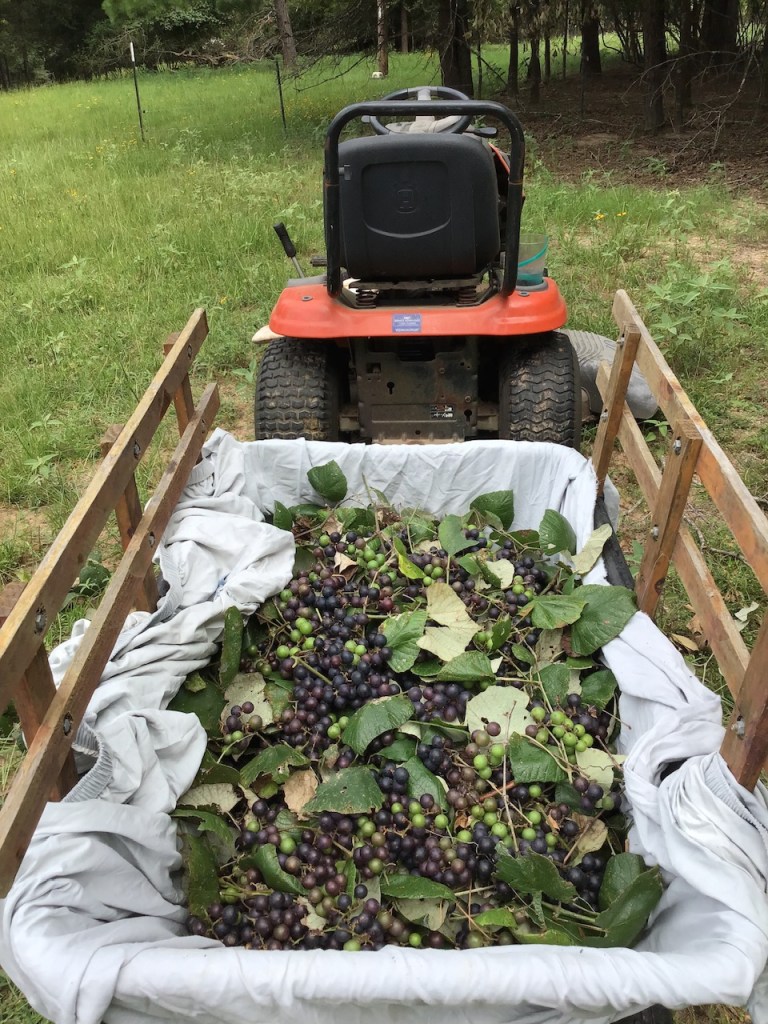
We’ve also been lucky to get some wild grapes, which are now fermenting along with the mead and the blackberry and mulberry wines.
He is literally Hubby’s Shadow!
It’s not an easy life, but it’s a life well-lived. Our first figs of the season, along with our last blackberries.
A Czech classic—so simple—Bublanina, made with blackberries or any number of fresh fruits in season. (Comment below if you want the recipe and I’ll post it. )
*The observation which I’ve found most interesting from Bluebonnet’s death, was that her kids adjusted immediately. She died the evening of the full moon last week. She left the corral with the rest of the herd in the morning, she seemed to be improving, I thought. But then in the afternoon she planted herself under a tree on a hill and wouldn’t leave, even when evening came and the rest of the herd returned to the corral. I went and sat with her there at sunset and stroked her neck and she laid her head on my shoulder. I wanted to be hopeful, but I felt she knew, and I felt horribly helpless. I hope that the feeling of helplessness is the worst feeling in the world. The next morning I woke before dawn and I went back to the tree in the dark, the full moon shining on her corpse.
There was a bit of relief for me that her kids adjusted so quickly. I find it odd really, it was like an immediate weaning. While her mama, Summer, is so ill she stopped producing milk, but her kids are still so attached to her their health is also suffering because they won’t go out and eat with the rest of the herd or accept being bottle fed. I’ve been mixing them special feed dosed with milk replacer and they are doing ok, and Summer today joined the herd again to forage, which I’m praying is a good sign. 🙏
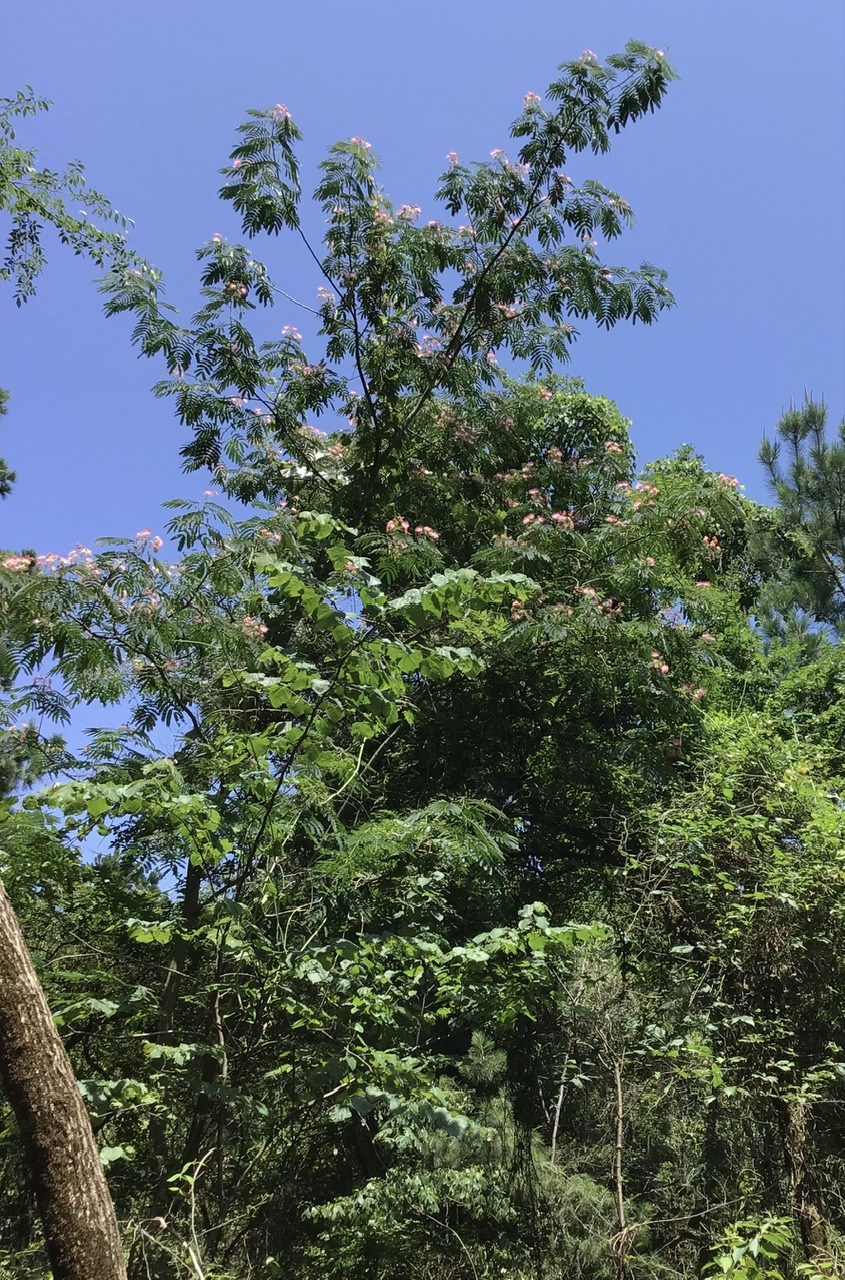
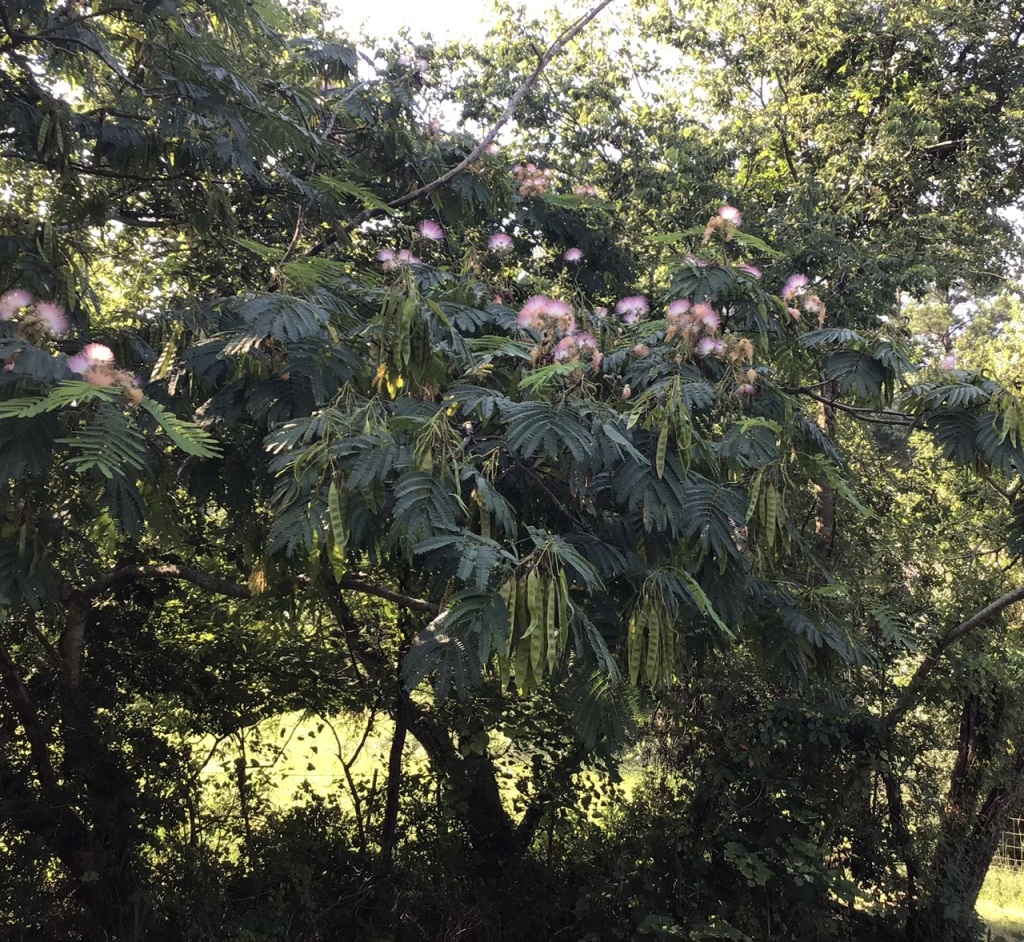
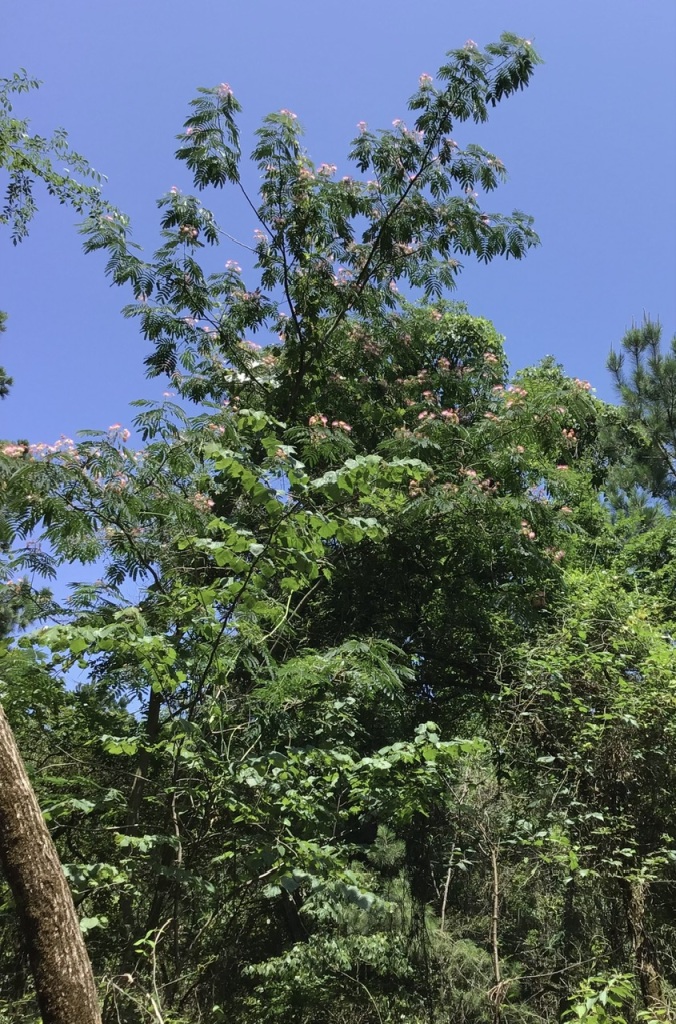
The gorgeous Mimosa tree is considered an undesirable and invasive species by many US experts, if you can believe that!
But to herbalists worldwide it’s a treasure. And to butterflies and bees it’s a feast!
In the ditch, in the garden, or rising above the canopy and full of butterflies, it’s a striking specimen.
Another much maligned and misunderstood plant joins our growing list today. Hard to imagine calling this beauty a ‘trash tree’, but a great many experts call it that, and worse.
The Mimosa tree . . .
“Is another dog. Although beautiful when healthy, it never is. The root system is ravenous and destructive, and the tree is highly vulnerable to insects and disease. Shallow, destructive root system. Not even good for fire wood. Destructive roots, short-lived, crowds out good plants. Not a good tree for Texas,” he resolutely concludes.
Texas Gardening the Natural Way: The Complete Handbook by Howard Garrett “The Dirt Doctor”
Garrett is considered the foremost organic gardening expert in these parts, he has a popular radio show, has published several books and he has his own organic product line. He was the first gardener I learned from when I started gardening here.
And worse, he convinced me! I wanted one from the first moment I gazed upon it, but I resisted, for over a decade.
Luckily in recent years I’ve revisited that poor choice and lazy thinking to discover how wrong these experts can be.
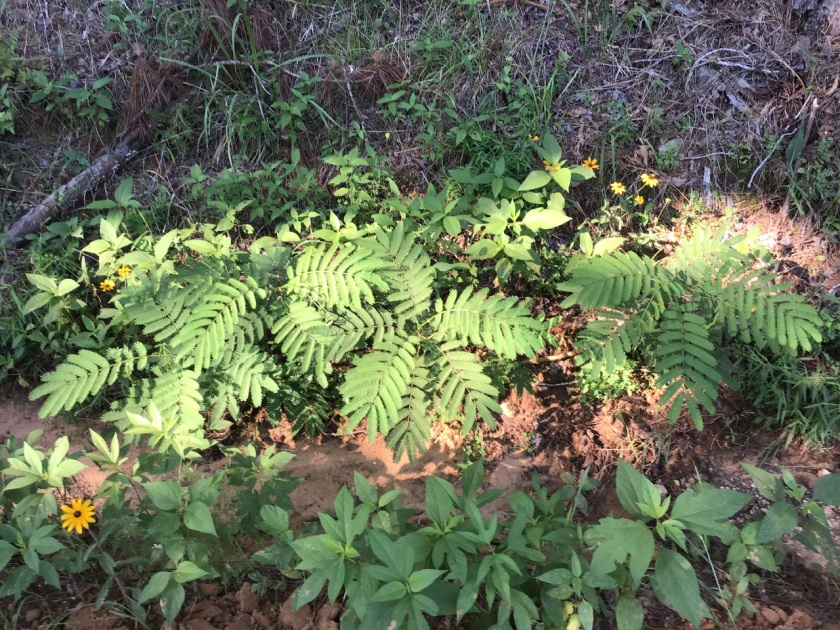
Baby Mimosa growing in the ditch near our house. I dug them up and planted them in our garden. The trick to getting them started is lots of water, but they will become drought tolerant with age. The growth habit is similar to Elderberry in our region.
What a (typical) shame to learn how very wrong they can be! Along with Wikipedia and a great many other popular info hubs.
“In the wild, the tree tends to grow in dry plains, sandy valleys, and uplands. It has become an invasive species in the United States, where it has spread from southern New York, New Jersey and Connecticut, west to Missouri and Illinois, and south to Florida and Texas. It is cultivated in California and Oregon. Its seeds are wind-dispersed and numerous, and they are fertile even over long periods of drought. Each pod, which resembles a flattened bean pod made of paper, holds about 8 seeds on average. The pod bursts in strong winds, and the seeds can carry over surprisingly long distances.”
It is certainly for the ‘mess’ they create with their seed pods that some may not find them suitable for their yard or garden. And naturally, farmers and ranchers malign any plants which dare to interfere with their livestock management preferences.
But, venture away from those slanted sources and the light shines on this ancient medicinal treasure.
Mimosa—The ‘night sleeper’ so nicknamed in Persian thanks to its usefulness as a cure for insomnia, among its many other medicinal and practical uses.
A bit of history: “The stem bark has been used as a sedative for hundreds of years as recorded in the Pharmacopeia of the People’s Republic of China(Nehdi 2011, Zheng 2006, Zheng 2010) and as an anti-inflammatory agent for swelling and pain in the lungs and to treat skin ulcers, wounds, bruises, abscesses, boils, hemorrhoids, and fractures, as well as to remove carbuncles. The dried stem bark is used as a tonic in China and Japan.(Ikeda 1997) Indigenous people living in the southern mountainous region of Korea prepare the root as an infusion for bone diseases.(Kim 2011) In India, a chloroform and methanol seed extract has been used to treat bronchitis, asthma, leprosy, and glands infected by tuberculous.(Gautam 2007) A bark extract to treat insomnia, diuresis, asthenia, and confusion has been used in Asia.(Nehdi 2011) The plant’s flowers have been used to treat symptoms associated with palpitations, anxiety, depression, and insomnia.(Nehdi 2011, Samwald 2010) It’s common name of Shabkhosb (good night’s sleeper) in Iran is indicative of its use to treat insomnia.(Ebrahimzadeh 2017)
Mimosa are used in gardens for ornamental purposes, in sandy areas to prevent erosion, and along roadways.(Chang 2011, Irwin 2003, Nehdi 2011, Pardini 2007)”
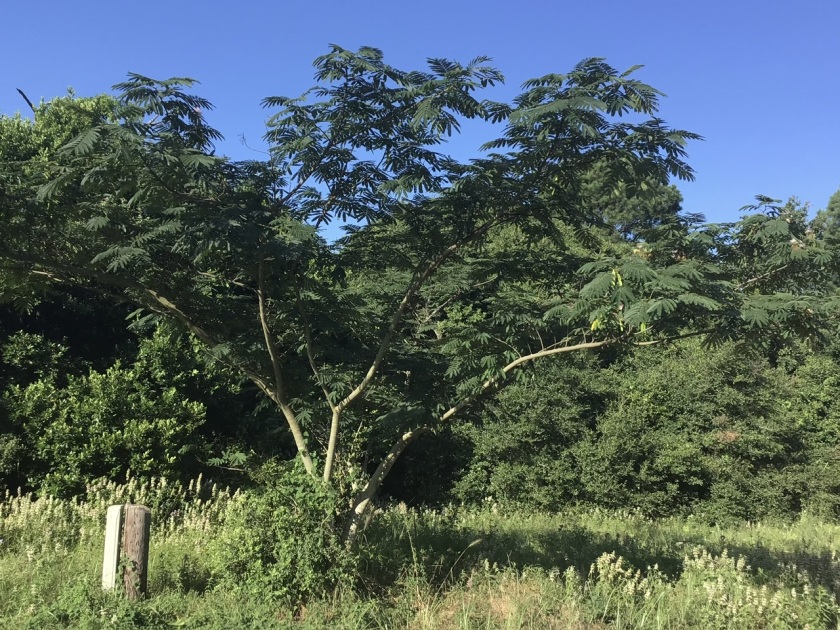
A Mimosa tree on a country road in East Texas just after its bloom cycle in late June.
“Albizia belongs to Mimosoideae and are native to Asia and Africa. It is a kind of multifunctional trees and they are always planted as ornamental trees. In addition to using it as foliage, green manure and timber for furniture production, the bark of Albizia is herbal medicine and the seeds are a source of oil. There are about 150 species in the genus and 17 of them can be found in the southern regions of China. Albizia julibrissin and Albizia kalkora are two familiar species, which are planted in China from tropic to temperate zones [69]. Although Albizia spp. are of great importance, little was known about the diversity of their microsymbionts. de Lajudie et al. [15] found that two strains isolated from Albizia falcataria grown in Brazil were Bradyrhizobium; Chen and Chen [5] classified five strains isolated from Albizia julibrissinin China as Bradyrhizobium sp. and Rhizobium sp. These results indicated that Albizia trees nodulated with both fast-growing and slow-growing rhizobia.”
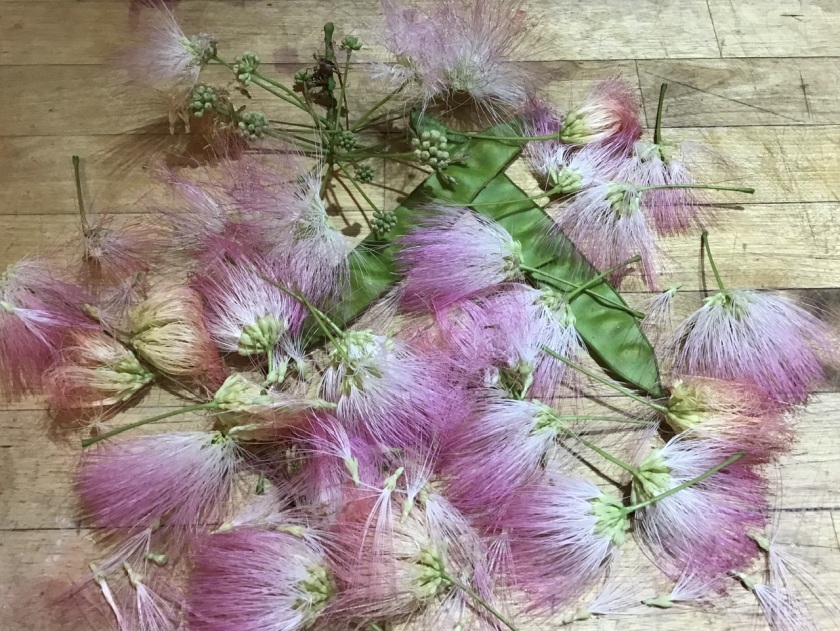
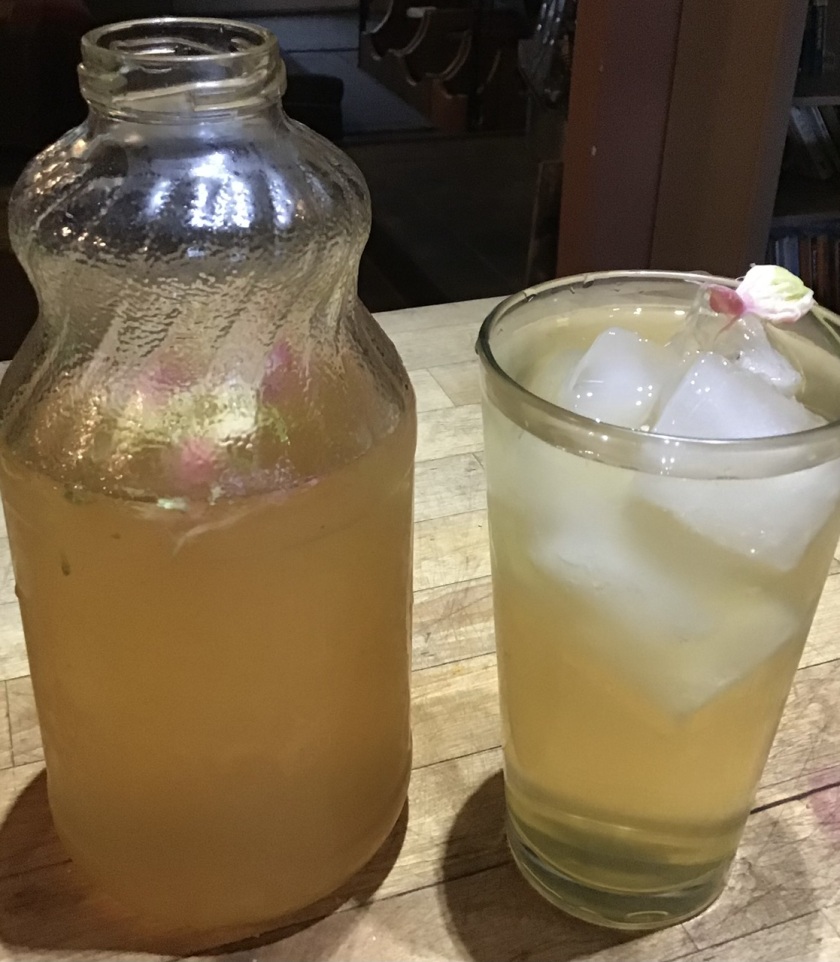
The petals make a delicious and refreshing flavoring for tea or Kombucha— a unique taste reminiscent of nectarines.
Gavin Mounsey, author of Recipes for Reciprocity, recently shared some of his knowledge and links about this amazing tree, which he’s cultivating in his food forest designs all the way up in Canada:
“Another interesting fact about this tree is that it is being investigated for it’s potential in Phytoremediation (for both heavy metal soil remediation and for it’s photocatalytic activity for cleaning up toxins humans put in the air) and a more specialized field in what is called “Phytomining” (it is a nasty industrial process used for profit but it hints at more holistic applications of this species for real time remediating/mitigating of geoengineering heavy metals in the air and soil.” (Read more: Regenerative Agriculture: Solutions Watch at Corbett Report)
The pods are plentiful and can be used for animal feed, according to TCPermaculture.
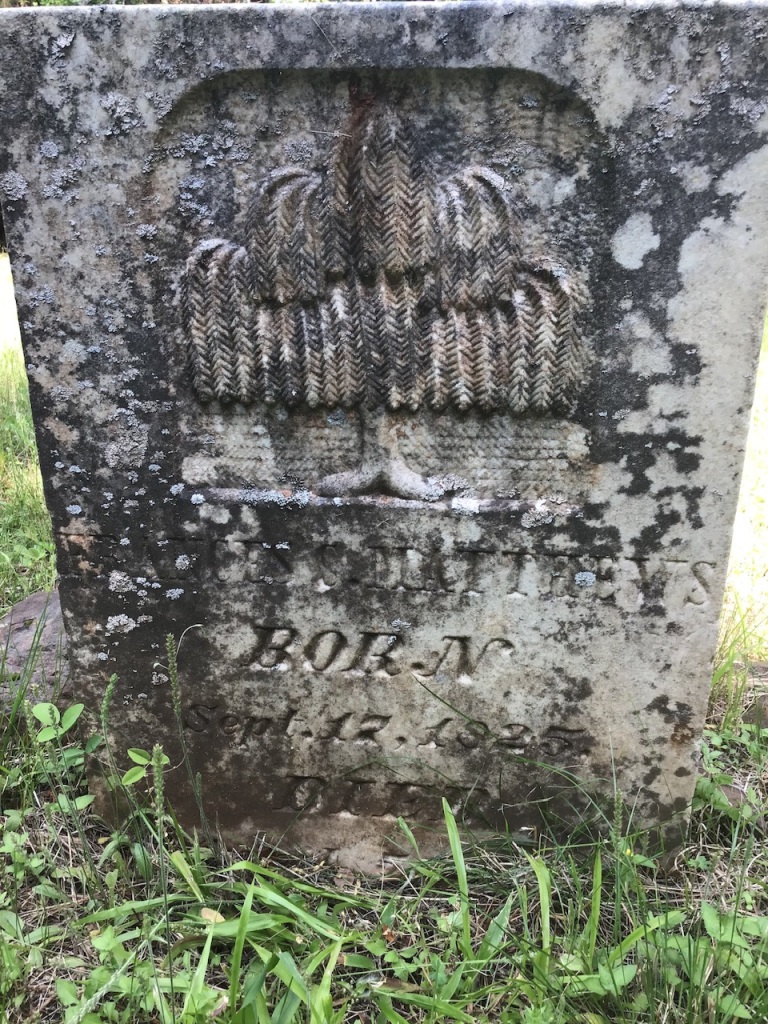
It’s notable umbrella shape when provided with plenty of space has me wondering if it might be the tree represented on some old gravestones in our area.
Mimosa? Are our ancestors trying to tell us something?
I’ve been working bit by bit on the Herbal Explorationspages and hope to add several more medicinal plants very soon—including the lovely Mimosa tree and the very popular Chasteberry—both which grow wonderfully here, even in the extreme heat and drought.
The mimosa tree and flower, (on the left) rising above the canopy along the road and full of butterflies, which unfortunately were too far up to catch with my camera. In the middle photo a fine specimen from our neighbor’s garden, where I gathered some blossoms for kombucha. They smell delightful, a bit like honeysuckle.
Also in our neighbor’s garden near the mimosa tree—I just love old hodgepodge structures like this!
It’s not giving up yet!
Also coming soon: Above, the chasteberry in our garden, also commonly called monk’s pepper or Vitek, which has a completely different scent, but one I adore so much I’m hoping to make soap with it some day very soon. And the bees love it, too!
Aspiring herbalists (like me!) must find inspiring teachers!
A big motivator for me to learn herbalism has been our critters. They all have special needs! It’s hard not to worry about them, but I’d rather have faith in nature than in Big Pharma.
I am way out of my depth, but I know one thing for sure: the pharmaceutical model of our modern-day veterinarians is not for me. Not for animals, not for people.
Information that eschews this model is not easy to come by, so when I find something or someone special, I hone in.
I’ve found this book helpful, so I looked to see what else I might find from this author, and wow, is she ever fascinating.
From the foreword: “Such ailments as the now prevalent ones of scrapie in sheep and ‘mad cow’ in cattle are not going to find a place in this Herbal Handbook for Farm and Stable, despite the fact that many thousands of cattle in the UK have now been diagnosed as suffering from Bovine Spongiform Encephalopathy (BSE). My book teaches natural care of animals and totally shuns their exploitation (wherein they are treated as machines, instead of as living, sensitive and loving creatures).
This book wholly condemns the force-feeding of unnatural foods to any creatures. If a diet is unnatural, disease will keep company with those subjected to it: that is a fixed law. I state force-feeding because, when animals through hunger are driven to eat foods entirely unnatural to their species, such as giving meat offal to cows and sheep, that, to me, is force-feeding. . . As I write this, when visiting England, television is showing cats suspected of having a similar disease to BSE in cattle. I do hope this fear proves to be unfounded. In any case, it is terrible that human acceptance and connivance in forcing the unnatural on our domestic animals bring much misery, pain and fear, all of which could be avoided.”
This book was published in 1952, and she has several others about dogs and cats.
I wonder what she would’ve made of our new bird flu?!
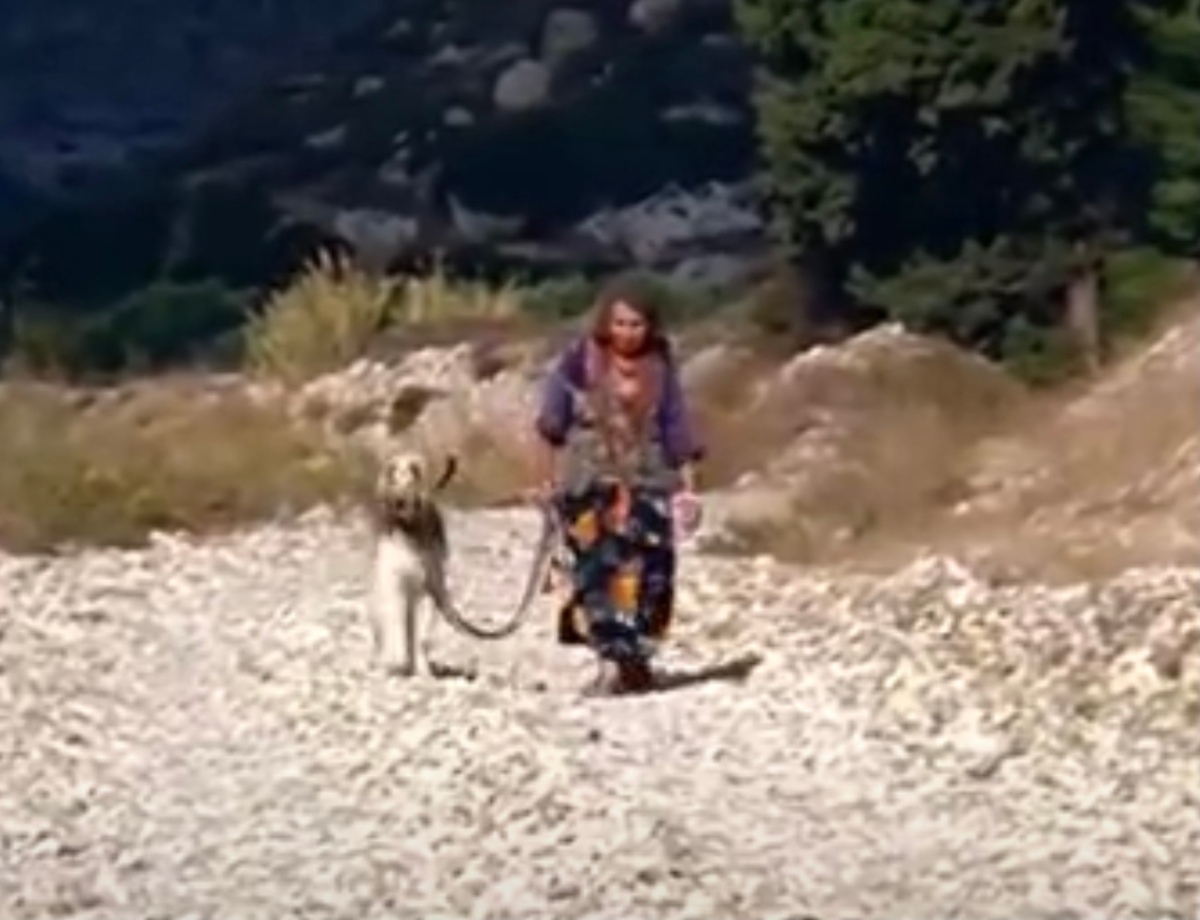
She lead quite the unique life, having been born into wealth, but choosing to live a simple life, exploring nature, living as a nomad among gypsies in many countries, and learning their ways.
There’s a documentary about her life and work, and though I haven’t found a full copy yet, here’s a good clip.
I looked for some of her other books as well, seems they are mostly out of print, so I was so pleased to find this one painstakingly retyped by another WP blogger.
“Oncology at the end of the twentieth century and early 21st century runs unethical trials with inappropriate control arms, poor post protocol care, bad crossover, and many other games, which makes companies rich and people poor. Cancer doctors take payments for these companies and go along with this narrative. The system is so rotten and corrupt and pervasive we can’t even recognize it as such.
History will view these are dark days. Where marginal drugs were given to dying people, government taxing poor people to pay for it, and doctors captured by companies to push these products, and everyone patting themselves on the back and the US bankrupts itself with inappropriate, harmful, useless care.”
“While I do recognize that some of allopathic medicine’s contributions to trauma care are noteworthy and worth preserving in some format, I also see that at it’s heart, the Germ Theory mentality that pervades the medical academic establishment (no matter how well intended by individuals in those systems) is not about healing, but is in fact, antithetical to life.
The machine thinking of Allopathic medicine which treats the human body as a molecular machine in need of being kept sterile and well greased by an array of chemicals and synthetic lab made substances is like the modern government funded environmentalist program that tries to quantify everything down to carbon units, obsessing over limiting them or sequestering them with more machines, while avoiding/ignoring the fact that it is machines that decimated the environment in the first place and continue to (whether they are lithium powered or gas powered) and not even beginning to take into account other variables such as the massive influence that old growth forests (or the lack thereof) have on hydrological cycles as well as carbon cycles.
It is like the machine thinking of the Big Ag Chemical companies and conventional GMO monoculture farmer who, when faced with diminishing returns due to soil erosion, nutrient leaching, desertification, decreasing mineral and nutritional content in crops (due to soil depletion brought about by extractive and exploitative farming practices) and facing herbicide resistant “weeds”, decides to double down and create even more powerful machines to till the soil harder, faster, inculcate the crop plants with an ever more potent array of synthetic chemicals and petroleum based NPK to keep them alive (on the equivalent of a combination of life support and hard drugs) and decides to create and use even more potent biocides and herbicides to kill all life in the soil in order to squeeze increasingly meager returns out of an abused and dying landscape.
Those are systems of machine thinking, treating living complex systems that are defined and only capable of being healthy, stable and resilient by the myriad symbiotic relationships woven within and around them as simple machines. Both involve one dimensional ways of thinking attempting to understand, heal and make whole multi-dimensional entities.
The “trust the science” proclaiming doctor attempting to treat anti-biotic drug resistant bacteria infected wounds with more and more powerful anti-biotic drugs is like the techno-optimist self-proclaimed environmental activist cheering for more machines (perhaps lithium powered machines) to be built which are supposed to solve the problems created by the previous machines.”
“While the US is spending more money than any other country on the healthcare of its citizens, we are seeing the exact opposite return for our money, as reflected in the leading causes of deaths in the US. In 2016, a study by Johns Hopkins examined data over an 8-year period and estimated that more than 250,000 people are dying every year from medical mistakes. These are known as iatrogenic deaths, which means that they are deaths caused by those who are supposed to be healers. There are other studies that estimate the number of iatrogenic deaths even higher at 440,000. Whatever the true number is, these estimates place iatrogenic deaths as the third leading cause of death in the US behind cancer (around 580,000) and heart disease (around 600,000), and above respiratory disease (around 150,000). With dangerous heart disease medications (statins, beta blockers, ACE inhibitors, diuretics, etc.), along with toxic antibiotics/antivirals, harmful opioids, poisonous vaccines, deadly chemotherapy and radiation therapies, and unnecessary invasive interventions and surgeries that can all lead to deaths that are subsequently blamed on invisible pathogens and/or the underlying health conditions, the argument could very easily be made that iatrogenic deaths are the leading cause of death in the US.
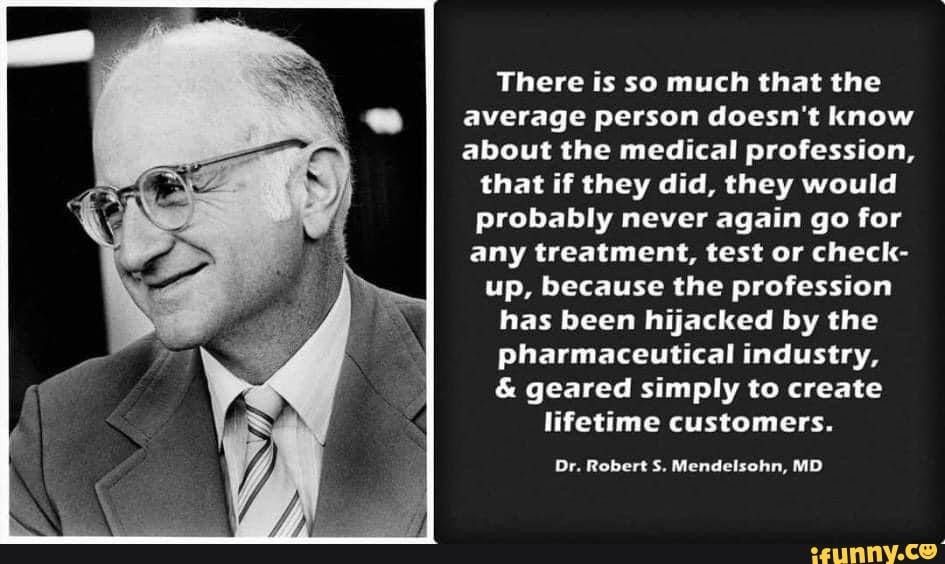
These are wholly preventable deaths that are a direct result of a corrupt healthcare system that is not designed to protect health, but rather keep people as customers returning to the pharmaceutical industry for life. It is a system that was established in the early 1900s by special interests using massive amounts of money flowing in from the Rockefeller and Carnegie families. I previously wrote about the destruction of the homeopathic healers by the robber barons and the real snake oil salesmen of the past which resulted in the establishment of a system that aimed to sell petrochemical poisons as “cures.” It is a system designed to keep people weak and sickly utilizing drugs for invisible fictitious pathogens that are a means to cover up real environmental causes of illness and disease. Following the 1910 Flexnor report, financed by both of the wealthy industrialists Rockefeller and Carnegie, the entire medical educational system was overhauled and restructured away from holistic and natural therapies (such as homeopathy, herbal medicine, essential oils, chiropractic care, and naturopathy) and towards a system of invasive surgeries and petrochemical “cures.” The Flexnor Report recommended the closing of more than one-half of the medical schools, many of which were homeopathic and alternative medicine practices, based on ancient healing traditions, that were in direct opposition to the desired goals of the wealthy businessmen. The report called for a specific program and curricula to be adopted by all remaining, as well as any future, medical schools. Most importantly, it stipulated that all schools must undergo regular reviews in order for the renewal of their long-term accreditation following the initial approval by the American Medical Association (AMA). In other words, in order to remain a medical school and to receive funding, all schools needed to adopt the new medical system that was built upon the new germ “theory” of disease popularized in the late 1800s and the emergence of petrochemical medicines as a form of treatment. All alternative schools that did not wish to play ball were forced into closure. The AMA was given full control over what would be considered medicine as well as those who could practice it.”
Almost entirely happy snaps and almost no complaining at all, really! The garden is mostly great, the weather mostly fine, summer in full swing already, ready or not.
It’s been busy around here, as usual. But, busy in the country way, which is very different. Our preservation season has already begun, and it’s fixing to get very busy very soon. I have mixed feelings about that, but here it is anyway.
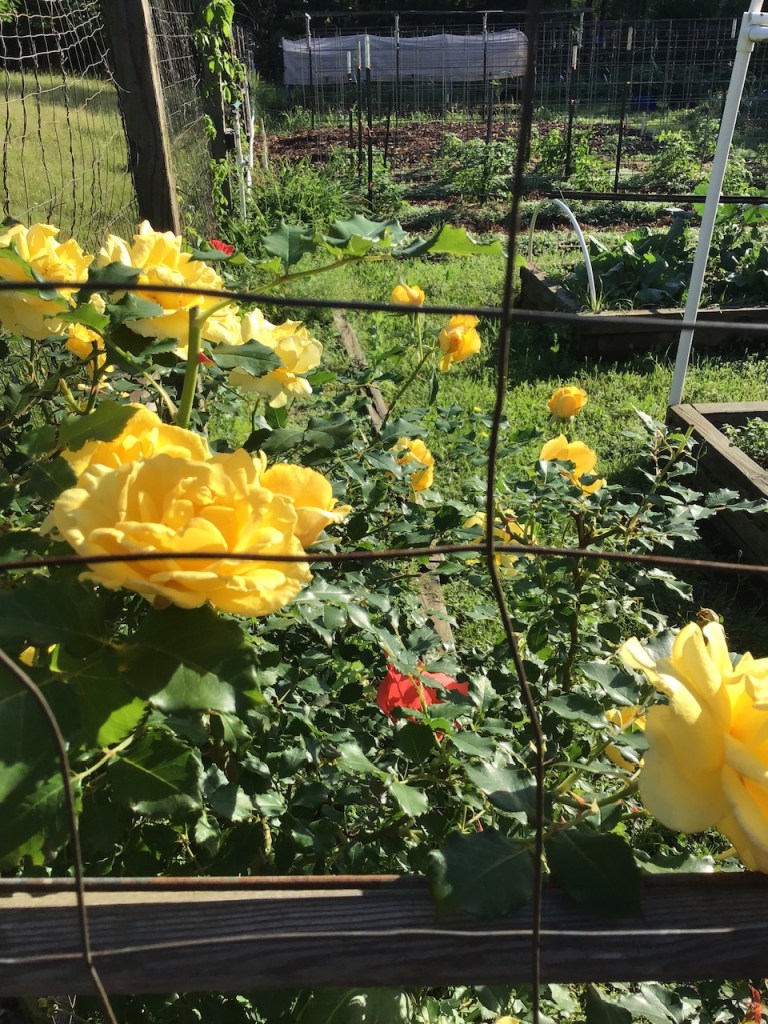
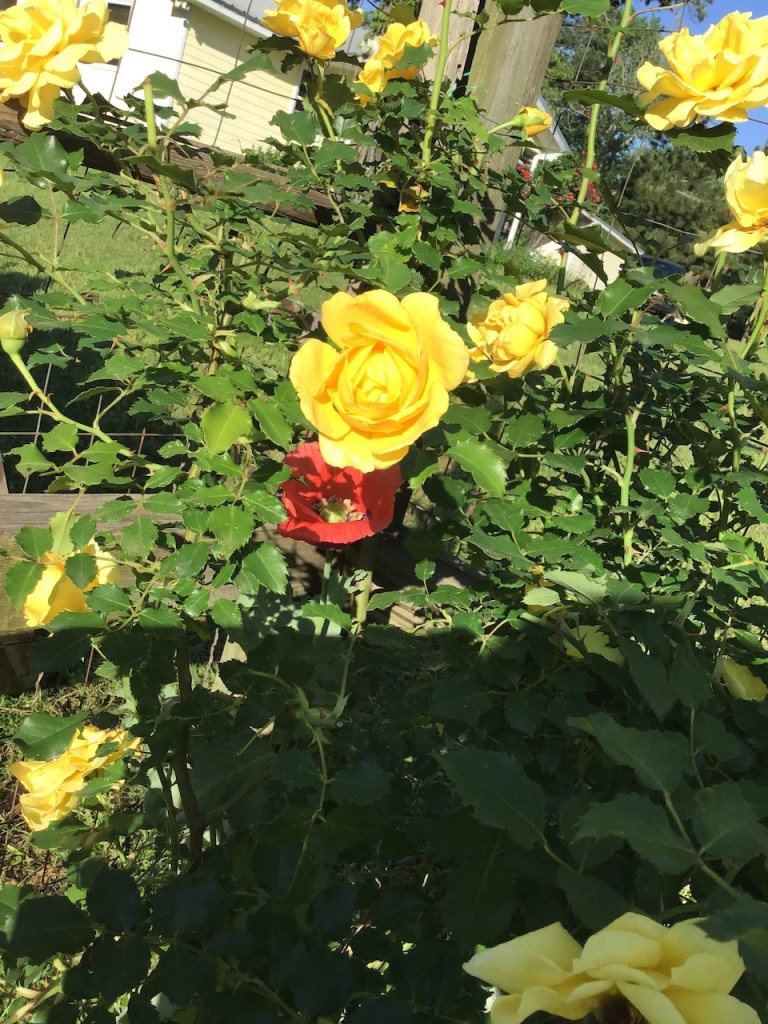
I’ve been saving the rose petals for drying and kombucha after admiring their scent and beauty in many lights and angles.
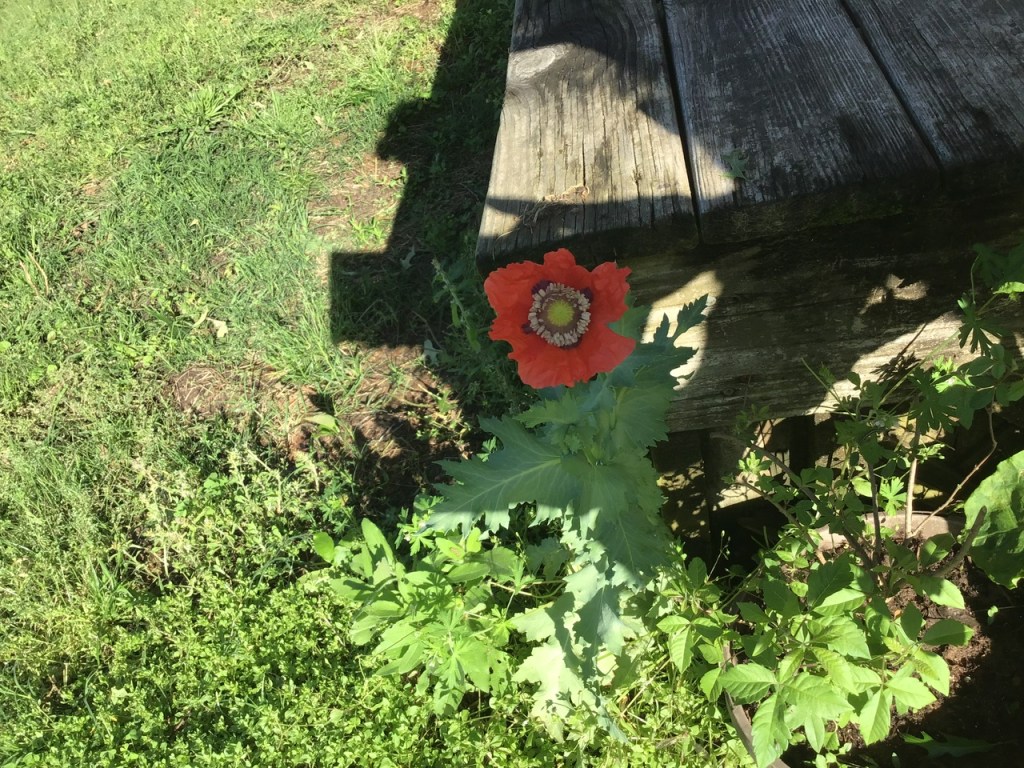
The poppies continue to pop up in random places, among the roses and in cracks and crevices, like dandelions.
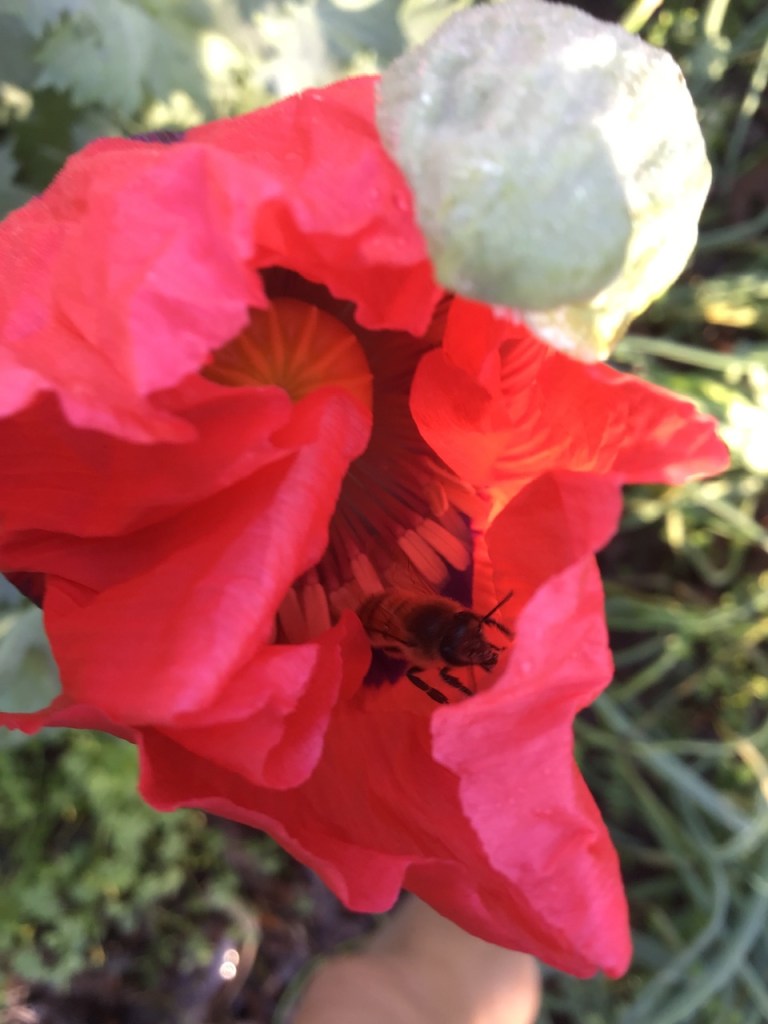
And the bees love them as much as I do.
Another rose variety, the thornless Peggy Martin, I just planted last year, is now getting its first blooms.
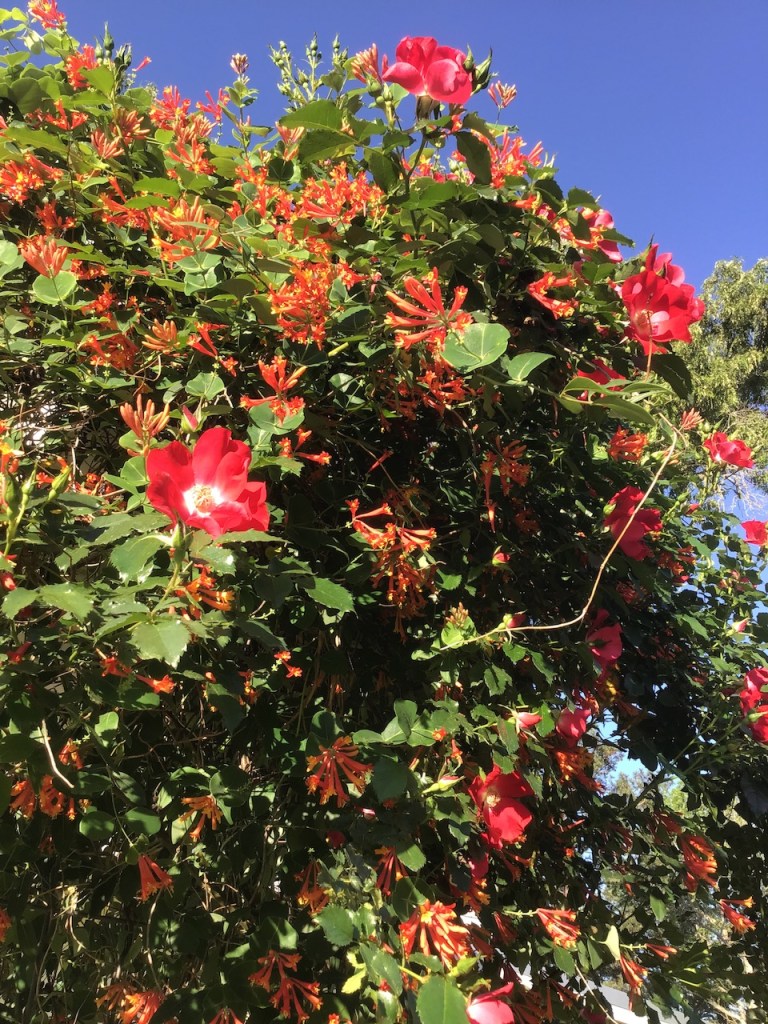
I’m so very pleased with the transition from cool-season coral honeysuckle blooms to the Dortmond rose takeover, lovely! I especially like the short spell they co-habitat.
The wattle fence I began with the best intentions is languishing due to too many other priorities. It has been a sheep deterrent at least, since the mamas and lambs have taken over the front yard. And even Shadow doesn’t dare stand in their way!
This is where the citrus will go, my new big project. I’m even considering throwing an avocado in there too. I know, very ambitious! But, I want to give some of the new methods a try and it seems like a good time. This side of the house is ideal, the house breaking the north wind and the heavy late afternoon sun. Plus, there’s the extra warmth accumulated in the walls of the house to help in cold snaps, along with the extra heating and draping methods that seem to be working for others.
Ooohhh, anticipation!
Just like the tomatoes and cucumbers coming so soon, right around the corner, and I can hardly wait. The last fermented cucumbers we used up a week ago, amazingly, and they were still crispy and flavorful. I plan to continue and expand my fermenting efforts this summer and fall. More herb pastes, more tea blends, more spice mixes.
The lambs are still doing fine, my how fast they grow.
Spring lambs on springs! 😆
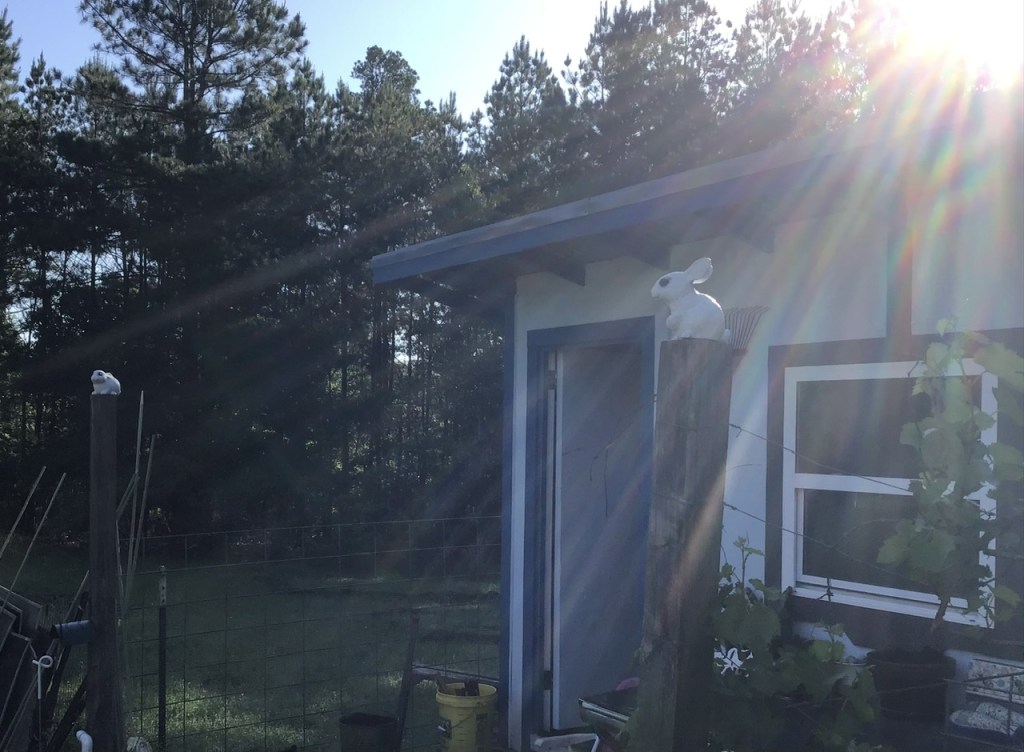
My garden mascots, two white rabbits.
And my single complaint—the spray continues to ruin our beautiful days.
Is this why we can so clearly see these colors, because we have an atmosphere saturated with reflective particulate matter?
Cool pic, or chem-filled haze?
“I’m no prophet Lord, I don’t know nature’s ways.” ‘Anticipation’ by Carly Simon
The exciting season continues! Mostly plant talk this post. And, we’ve got our first lambs, I’m workin’ my first wattle fence, there’s some flower photos and fancy garden plans.
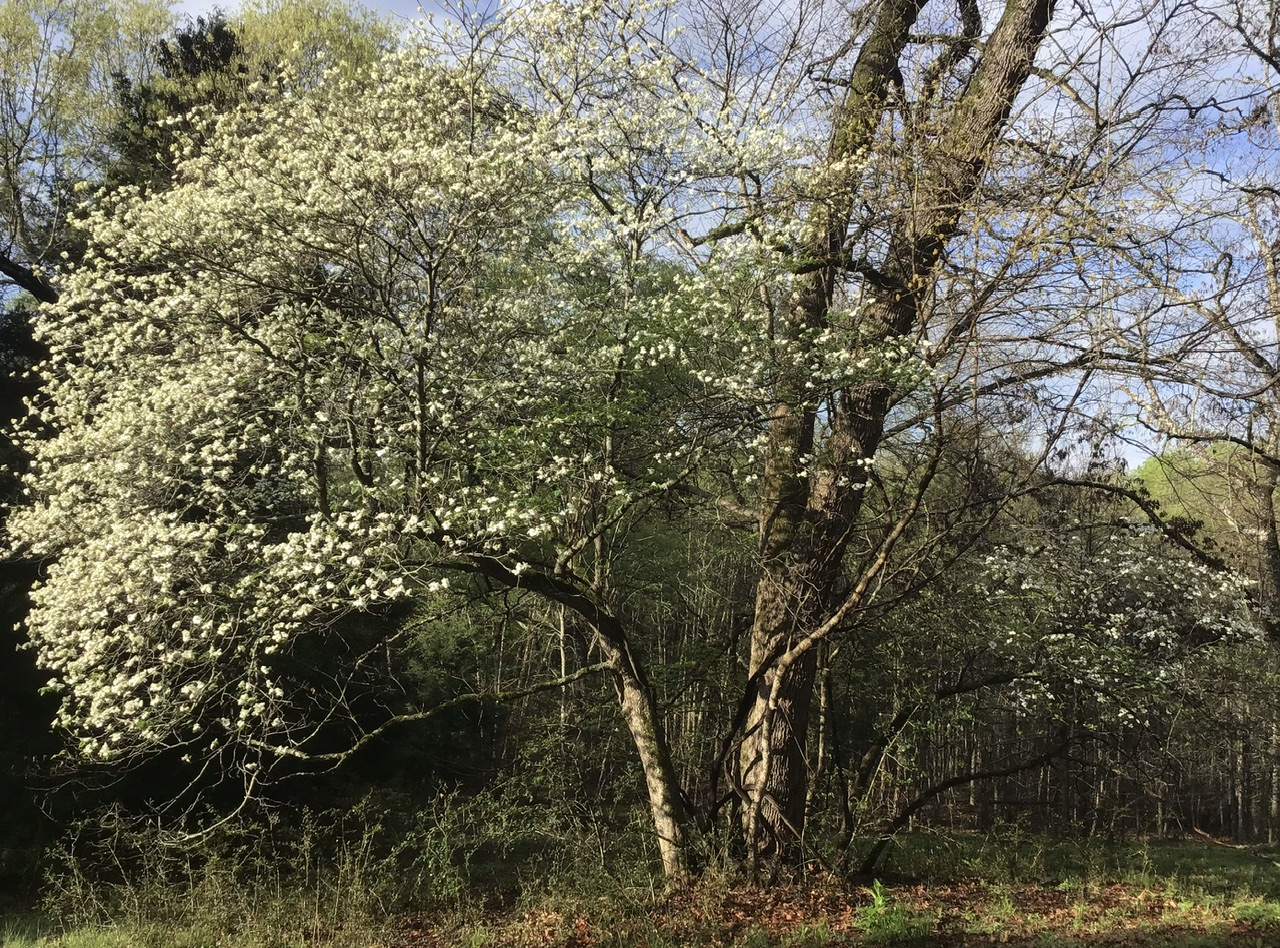
A first-time mama is the first to drop a perfect set of twins!Dogwoods blooming beneath oaks
Trumpet, or coral, honeysuckle on our front porch usually attracts hummingbirds by now. It’s looking gorgeous and I’m quite proud of it because it’s one I propagated from the wild. But, where are our feathered friends?
Seed saving has definitely upped our game in the garden. Buying seeds is certainly far easier than saving them. Where we once just had to plan one large garden space, now there are three. It feels like juggling! You’ve got to keep all the spaces perfectly coordinated. I had to make a chart. I am not a chart sort of person. I’m the kind of person who instantly glazes over at the mere inclusion of a chart in any piece of literature.
So really my chart was more like a list of do’s and don’ts in a useless graph format. Don’t plant the pumpkins with the zucchini. Don’t plant the luffa with the Trombetta. Do plant different varieties of cucumbers, peppers, melons and watermelons at least 1/2 mile apart. (Is that even possible?) Musk melons and watermelons are safe to plant together, but French cantaloupe most certainly cannot be planted with American varieties or with green melons.
And that’s just the summer season’s produce, there’s a whole different set of charts for the winter veggies.
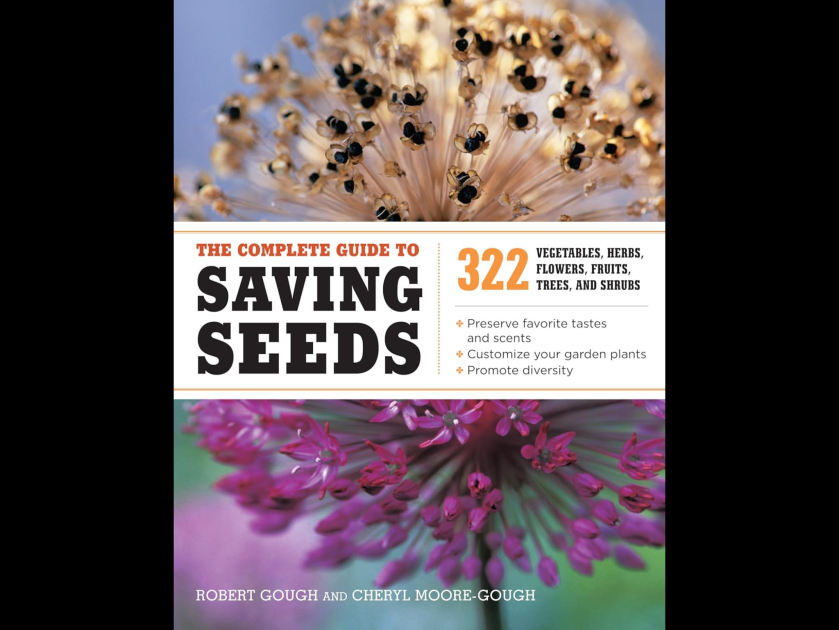
Luckily, I’ve got some good guidance in a great book and, even better, some bigger minds to follow in the form of Gavin’s Newsletter. He’s just started a book club and his first book up for April just happens to be the one I’m reading.
Why save seed? From the book we learn a few good reasons: *selecting for specific traits, *preserving diversity, *saving money, *creating superb plants, *And, going on an adventure. “The art of saving seeds may so intrigue you that you’ll branch out to your own plant-breeding adventures with such long-term seed-saving projects as growing oaks from acorns.”
Perhaps that could be me! Or perhaps I should’ve started this about 30 years ago.
But, those do all sound like good reasons to me, plus I’ll add one more. It’s a good way to exercise your body and your brain at the same time.
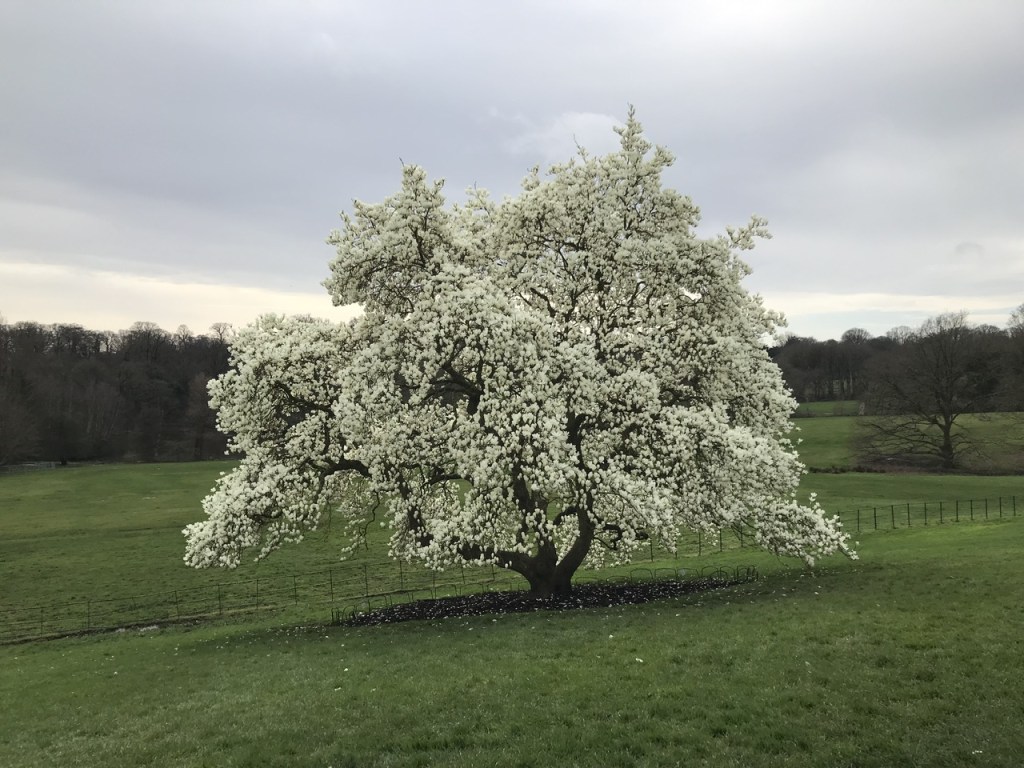
But, propagating something so slow-growing from seed at this stage of life, I think I’ll need more bang for the buck than an oak. Like, this magnificent magnolia!
(Photos sent by a friend in UK, wow, what a specimen!)
Of course, not all seed saving is complicated. After all, it used to be something every farmer would do, and their children, too. If I’d grown up doing it I’d probably think I’m making much ado about nothing.
In particular, most of the common herbs we love—dill, cilantro, basil, parsley couldn’t be easier—let them go to seed, collect the seed once dry, keep in a paper bag over winter, and sprinkle back out in spring.
Easy-peasy, leaving more time for flowers!
More flowers, herbs and medicinals has been the big goal besides seed saving. I’ve always liked hollyhocks and other traditional ‘cottage garden’ favorites. How fortunate for me to find one I’ve never heard of before, with a really cute name.
Inspiration photo only, real or photoshop, no clue
Flower name: “Kiss me over the garden gate” Latin name: Persicaria orientalis (formerly Polygonum orientale) is an annual member of the buckwheat family. The tall plants produce pretty pink pendulous blooms.
I’ve just planted it under the bedroom window inside my work-in-progress wattle fence.
What’s a wattle fence?
I had no idea what that was until I read about another blogger, Re-Farmer, building one. It looked like a fun and do-able project perfect for a precision-challenged person like myself.
And it is! There are lots of YouTube videos on the process, but I think this one was the best—a much taller and longer wattle fence than I’ve tried to produce, but who knows, as my skills develop I could step it up a notch. 🤔
The other big garden plan this year are a few citrus trees. We’ve been wanting them for a long time, but all fruit trees are a challenge here with our crazy weather. (And it’s not just us! All kinds of complaints about it from YouTubers and neighbors alike. It didn’t used to be like this.)
Anyway, this guy’s got some great suggestions and solutions and we so love our citrus, so we’re going to make an investment toward our citrus-filled future with Myer’s lemon, Mexican lime and Satsuma orange.
Another small plan is more peppers, specifically seasoning peppers, also called spice peppers (though they aren’t always spicy as in hot), like pimiento’s and such.
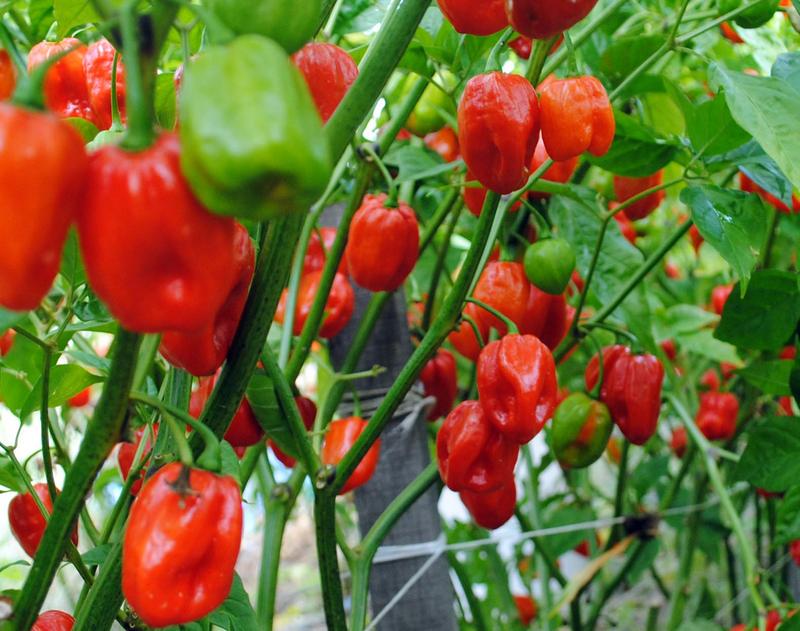
As much fermenting as I’ve been doing I see they are an excellent addition to all kinds of dishes. Plus, peppers do pretty well here usually, and they harvest in fall when there’s little else happening, and they are lovely little plants some folks grow just as ornamentals. Four excellent reasons to squeeze them into the rotation. Here’s one variety I’m trying:
“(C. chinense) 99 days. (green > orange-red > red) [Venezuelan heirloom. Seed source from Donna Hudson in TN.] Has the same shape, size, color and aroma as Habanero, but is sweet, spicy, and delicious, with only a trace of heat. Highly aromatic fruits; their flavor is unusual and complex, with overtones of black pepper and coriander, and undertones of other spicy flavors. An excellent choice for sautéed vegetables, rice and bean dishes, paprika, or herbal vinegars. The thin-walled pendant fruits are 1 x 2 in., tapering at both the stem and blossom end. Plants have good foliage cover and bear at 18 in. high. Seedlings grow slowly at first, but grow rapidly later in the season to 48 in. or more.”
Like I said, it’s the exciting season on the wee homestead!
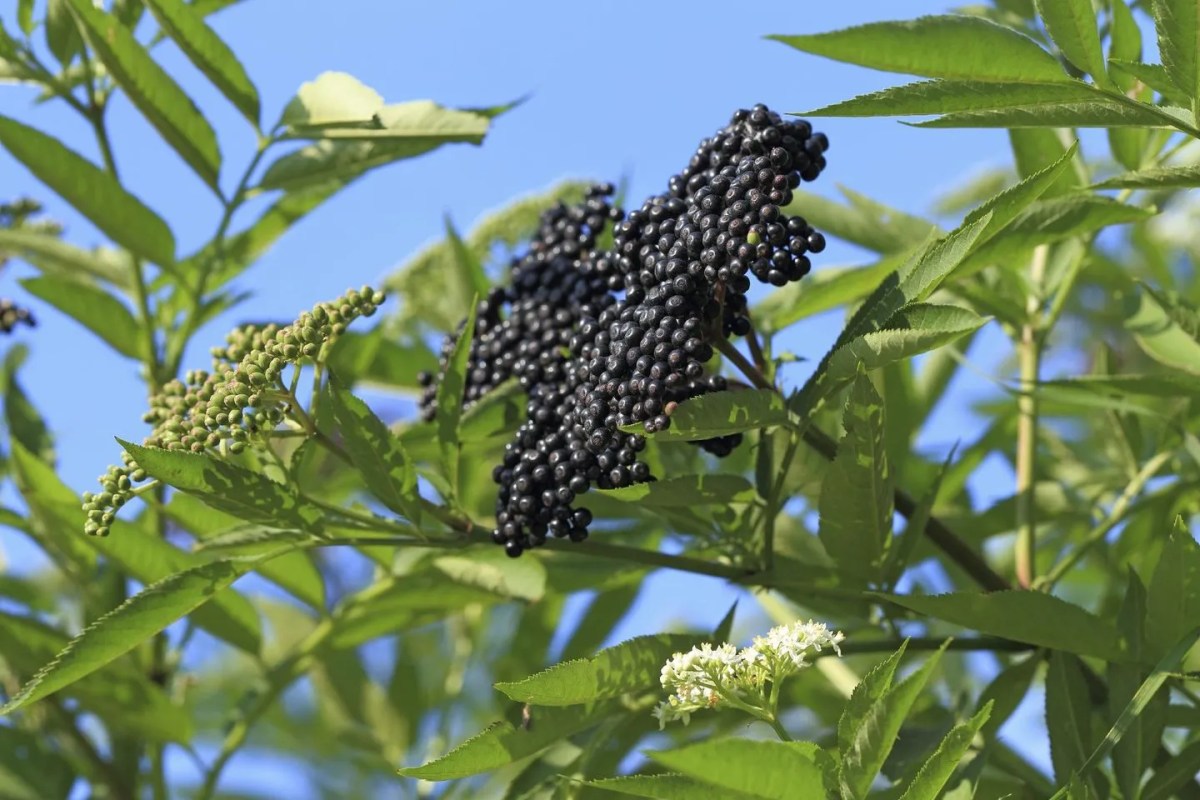
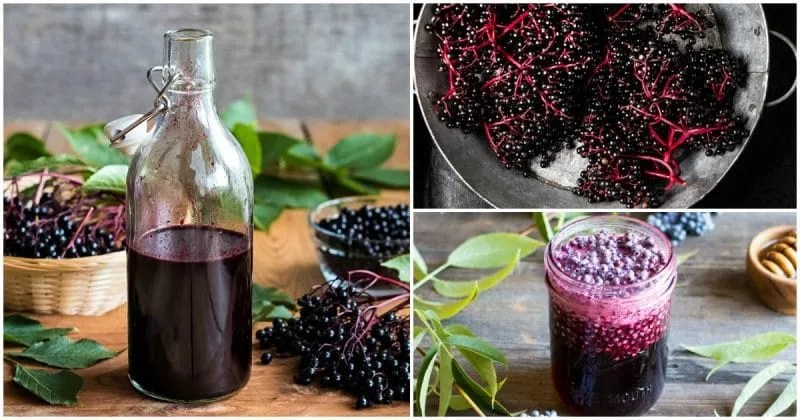
I’ve just added a new page to our Herbal Explorations section, Elderberry, thanks to Gavin Mounsey’s excellent work.
This is only an excerpt, so I encourage a full reading of his article!
Medicinal use of Elderberry:
Elder has a very long history of household use as a medicinal herb and is also much used by herbalists. The plant has been called “the medicine chest of country people”. The flowers are the main part used in modern herbalism, though all parts of the plant have been used at times. Stimulant. The fresh flowers are used in the distillation of “Elder Flower Water”. The flowers can be preserved with salt to make them available for distillation later in the season. The water is mildly astringent and a gentle stimulant. It is mainly used as a vehicle for eye and skin lotions. The dried flowers are diaphoretic, diuretic, expectorant, galactogogue and pectoral. An infusion is very effective in the treatment of chest complaints and is also used to bathe inflamed eyes. The infusion is also a very good spring tonic and blood cleanser. Externally, the flowers are used in poultices to ease pain and abate inflammation. Used as an ointment, it treats chilblains, burns, wounds, scalds etc. The fruit is depurative, weakly diaphoretic and gently laxative. A tea made from the dried berries is said to be a good remedy for colic and diarrhoea. The fruit is widely used for making wines, preserves etc., and these are said to retain the medicinal properties of the fruit.
Some of the medicinal benefits of Elderberries include:
One of the most well-studied elderberry syrup benefits is its powerful immune-boosting properties. The berries contain chemical compounds called anthocyanidins, which are known to have immunostimulant effects.
Research actually shows that elderberry is a safe, efficient and cost-effective treatment for the common cold and flu. A 2021 systematic review screened 1,187 records and five randomized trials on elderberry for the treatment or prevention of viral respiratory illness. Researchers found that elderberry may reduce the duration and severity of symptoms related to colds and influenza, and there’s no evidence that it overstimulates the immune system.
A 2016 study published in Nutrients showed that elderberry supplementation was able to reduce cold duration and symptoms in people using air travel. People using this herb from 10 days before travel until four to five days after arrival overseas experienced, on average, a two-day shorter duration of their colds as well as a noticeable reduction in cold symptoms.
Several studies have found benefits to support the use of elderberry syrup for flu symptoms as well. Specifically, the flavonoids in the extract bind to the H1N1 human influenza virus as well as the H5N1 avian influenza virus.
A 2009 study randomized patients into two groups. One group was given four doses of 175-milligram proprietary elderberry extract daily, and the other group received a placebo for two days. The group treated with the extract showed significant improvement in most flu symptoms, while the placebo group showed no improvement in symptom severity. Researchers conclude that the extract is effective in controlling influenza symptoms.
The group treated showed significant improvement in most signs of flu, while the placebo group showed no improvement in symptom severity. Researchers concludedthat the extract is effective in controlling influenza symptoms.
Another study published in the Journal of International Medical Research referenced above suggests that when elderberry is used within the first 48 hours of the onset of signs of flu, it can shorten the duration of flu symptoms by an average of four days.
With elderberry’s anti-inflammatory and antioxidant properties, it makes sense that it can help treat sinus issues. A sinus infection is a condition in which the cavities around the nasal passages become inflamed, and this antiviral herb has promise as a sinus infection natural remedy.
A study conducted by the Institute of Complementary Medicine’s Department of Internal Medicine at the University Hospital in Zurich, Switzerland examined the use of a product called Sinupret, which contains elderberry extract. The researchers used Sinupret to treat bacterial sinusitis along with an antibiotic (doxycycline or vibramycin) and a decongestant. Interestingly enough, those who took the combination did better compared to those who did not take Sinupret at all.
In addition to using elderberry syrup for colds, the flowers of the elder plant are also known to be an effective herbal allergy remedy. Since allergies involve an overreaction of the immune system as well as inflammation, the herb’s ability to improve immune function and calm inflammation can help provide allergy relief.
Some herbalists put black elder flower on the list of most effective herbs used for treating hay fever-like symptoms. It can be used for allergies on its own or in combination with other herbs and natural remedies.
Edible berry extracts like elderberry extract are rich in anthocyanins and have been shown to have a broad spectrum of therapeutic, pharmacologic and anti-carcinogenic properties. In vitro studies specifically indicate that the elderberry has some chemopreventive properties, which can help inhibit, delay or reverse cancer formation.
One study published in the Journal of Medicinal Food compared the anticancer properties of European and American elderberry fruits. European elderberry (Sambucus nigra) is known for its medicinal use and contains anthocyanins, flavonoids and other polyphenolics, which all contribute to the high-antioxidant capacity of its berries. American elderberry (Sambucuscanadensis) has not been grown or promoted as a medicinal plant like its European relative.
This study tested extracts of both berries to assess anticancer potential and found that both demonstrated significant chemopreventive potential. Additionally, the American elder extract showed inhibition of ornithine decarboxylase, which is an enzyme marker related to the promotion stage of cancer formation. Thus, elderberries show potential as cancer-fighting foods.
Although studies have found mixed results, some research suggests that elderberry extract may improve heart health. For example, one animal model showed that giving mice with high cholesterol and HDL cholesterol dysfunction anthocyanin-rich black elderberry extract helped reduce hepatic cholesterol levels and improved HDL function. This may be due to the presence of anthocyanins, which are polyphenols that have demonstrated antioxidant and anti-inflammatory activities.
Another study found that elderberry extract may have beneficial effects on high blood pressure. When polyphenols extracted from the plant were administered with renin inhibitors to rats with hypertension, they reduced arterial pressure.
Researchers suggest that using polyphenols to lower blood pressure may also help reduce the side effects of blood pressure-lowering medications and improve overall quality of life.
The calcium, iron, and potassium in the berries are known to strengthen bones and increase bone mineral density, cutting the risk of osteoporosis as a result.
Experiments show the benefits of natural polyphenols extracted from the Elder (Sambucus nigra) fruit on osteoporosis regression. Extremely low bone mineral density is improved by polyphenol delivery. Thus, a dietary intake rich in natural polyphenols helps lead to the regression of osteoporosis. Osteoporosis regression due to the Sambucus nigra extract shows us how powerful these berries are for preventing bone degradation and speeding up bone healing.
Being rich in vitamins A and B6, elderberries can help prevent serious vision ailments like glaucoma and macular degeneration. The antioxidant activity of elderberries also helps ensure vision health in the long run.
One study talks about how the anthocyanins in berries (including elderberries) can help treat cognitive impairment and the resultant conditions like Alzheimer’s.
Elderberries are also replete with quercetin, which is an important flavonoid critical for brain health. Quercetin reduces the harmful inflammation at a cellular level. It also activates the mitochondria in your cells – which are powerhouses that boost cell health.
As mentioned above, Mitochondria are the powerhouses of your cells, generating energy to fuel your cells’ biochemical reactions. Via optimizing their function and promoting their rates of regeneration within your body you are building a solid foundation for health, vibrancy and longevity from the cellular level up.
Sufficient mitochondrial biogenesis (the process by which cells increase mitochondrial numbers) is necessary for efficient cell function and haemostasis, which is dependent on the regulation of ATP generation and maintenance of mitochondrial DNA (mtDNA). These procedures play a primary role in the processes of inflammation, aging, cancer, metabolic diseases, and neurodegeneration. Polyphenols (such as anthocyanins) are considered as the main components of plants, fruits, and natural extracts with proven therapeutic effects during the time. These components regulate the intracellular pathways of mitochondrial biogenesis.
The studies available also support the ability of anthocyanins to prevent damage to mitochondria and to sustain its function. Berry extracts also demonstrated positive outcomes in different models of neurodegeneration, endothelial dysfunction, myocardial damage, metabolic disorders, longevity, and cancer. At the molecular level, major anthocyanins can modulate the expression and activity of mitochondrial proteins, apoptotic and biogenesis factors, antioxidant defenses, inflammation, and the AMPK pathway. Noteworthy, anthocyanins could balance abnormalities in ROS production, respiration, and mitochondrial fragmentation in cells exposed to toxicants or oxidizing agents.
…..
Here on the wee homestead I use elderflowers and elderberries in kombucha with delicious results! I’ve also made syrup and St. Germain.
Please visit Gavin’s full article for so much more on this ancient medicinal plant, including history, myth and folklore, habitat, recipes, and beautiful photography.
Elderberry blossoming in the garden with pumpkin, inviting lots of pollinators.