Disenchanting Enchanted Rock

I was so excited when I found ‘an expert’ on Enchanted Rock, who had written an entire book on the monument and its surroundings and has a website too, with lots of details. I was sure to have found a great source, I thought.

Click pic for my previous post about Enchanted Rock called “My favorite Enchanting photo”

And with a name like Kennedy, it’s gotta be good, right?

In the spirit of disobedience, in a word, no. Two words: Hell, no! Three words: Big, Fat, Disappointment!!

Wow, I didn’t realize anyone can just throw any piece of nonsense together and call it history. Or anthropology. Or pretty much any ‘science’.

Way to spoil a miraculous destination, Kennedy, thanks bunches.

But I can’t really blame him alone, it’s more than a trend. The dumbing down of the public has been documented for decades, and this sort of material that is supposed to pass as educational is a perfect case in point. So, let’s take a few pokes at it from a few of those many angles.

The History of Enchanted Rock in the Texas Hill Country by Ira Kennedy self-published in 2010 naming it https://www.amazon.com/HISTORY-ENCHANTED-ROCK-TEXAS-COUNTRY/dp/1456818783
“The Sacred Landmark of Central Texas”.

It is not sold as a children’s book and costs $21.99. According to the the Amazon page Ira Kennedy is:

“Considered as the state’s leading authority on Enchanted Rock, the sacred mountain of Central Texas, Ira has assisted the author’s of several published books, articles and the Thomas Evans mural of Enchanted Rock in the Austin-Bergstorm International Airport. IN 1992, Ira was awarded a Certificate of Appreciation from the Texas Parks and & Wildlife Department for providing numerous educational talks at Enchanted Rock Natural Area.” And it goes on.

The first Amazon review looked promising.
“Ira Kennedy is the world expert, in the opinion of many, of this beautiful Texas natural treasure. His knowledge comes from spending a great deal of his life on or near the rock. Ira is a creative genius and humble man who has written this amazing book, sure to answer all your questions about this geological wonder. Beautifully illustrated by Ira, you will keep this book among your special collections.”

The ‘book’ itself looks more like a coloring book. There are no references or citations, no bibliography or notes. While the author states he did multi-disciplinary research and himself has an advanced degree and was employed in Naval intelligence as a cryptographer, he must seriously understand what an ‘expert’ text would look like, and this one is the polar opposite of scholarly.

I can only assume ‘expert’ has taken on a new meaning sometime around the year 1999.

Let’s set the tone with his “Brief Historical Timeline” which begins his story in 12,000 B.C. and ends in 1978. With only a smattering of centuries missing, bless his heart!

We learn of a dubious-looking character named Jack Hays who was ‘an enigma’. We learn about a William Kennedy and his ‘flower-spangled’ landscape and ‘lost mines’ the ‘fueled the imaginagtion’. We learn about some immigrants from Germany in the 1840s.

We have the ‘First People’ myths and ‘The Imaginary Frontier’ of the Spanish explorer Alvar Nunez Cabeza de Vaca, who passed right through Mason County in the sixteenth century. And some childish stick figure drawings, some arrowheads and feather headdresses.

Later in the book are some drawings of angry indians who we learn may or may not have practiced human sacrifice.

And that about sums up my waste of money and time! Alas, the journey of discovery continues.

Poor, misunderstood ‘Enchanted Rock’ — I don’t even like your name anymore, so I think I’ll find a new one. And a new history to go with it. It would surely be better footnoted than this toilet paper, and good bit more entertaining I expect too!

I dare say, you there, intrepid traveler, can you smell anything beyond the boulders of bullshit?

Between Intrepid and Genteel

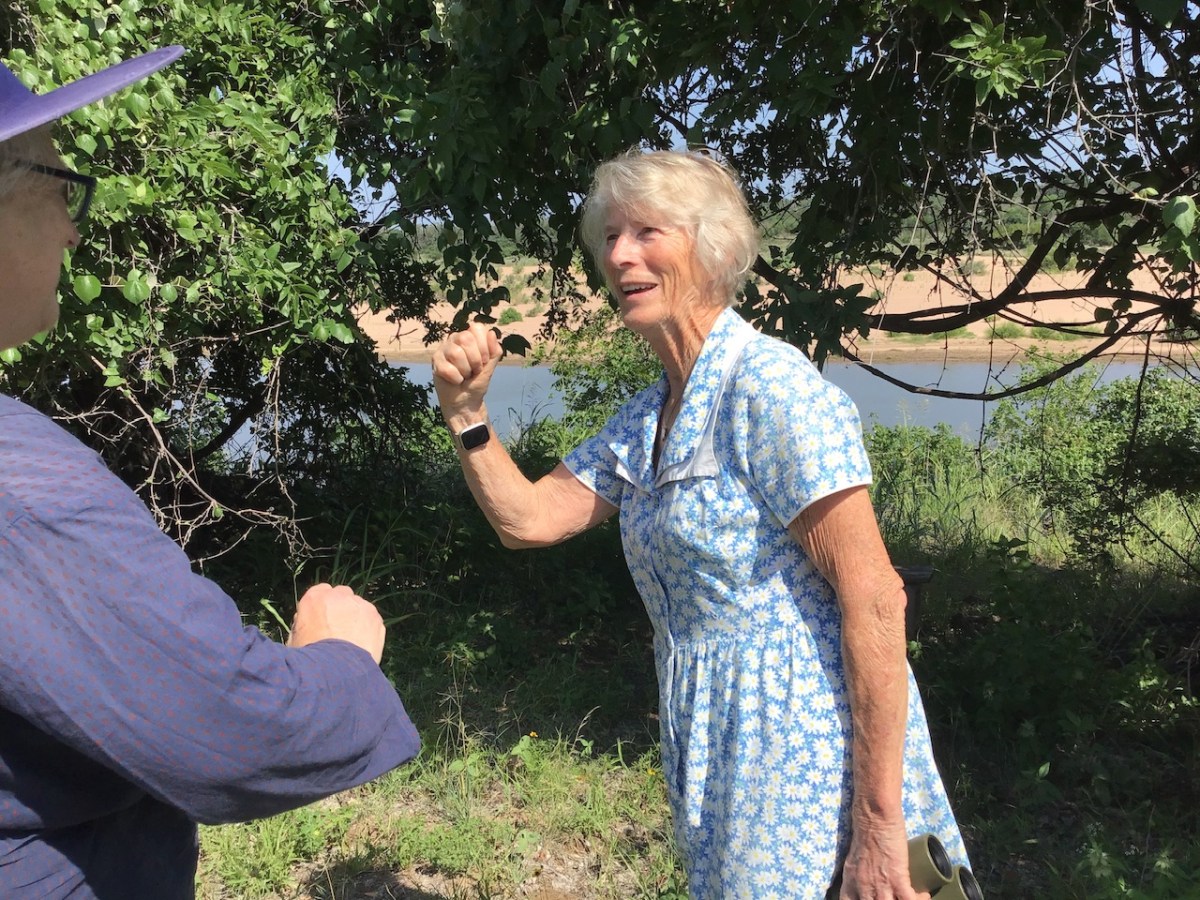
From Kenya to Llano, Berit pictured with Kath, visiting from the UK

Hunters often get a bad rap and it’s not always for good reason. I had a chance to learn something about this on a recent trip to the Texas Hill Country where I was led to question the difference between a hunter and a poacher.

Before assuming this is a niche topic and of little interest to the vast majority of folks whom are neither hunters nor poachers, consider it’s a matter of philosophy as well, along with colonialism, globalism, human nature and modern life.

A wall of hunting ‘trophies’ not uncommon in Texas homes.

Mostly they have much in common, the hunter and the poacher. There is a similar skillset, clearly, but one I know nothing about, so I’ll leave that to the hobbyists and professionals. As strictly an occassional observer I imagine it to require more patience than I’ve ever mustered, more tenacity than most and more courage than the vast majority.

We might say the poacher is lawless and greedy and violent, and in some cases that may well be true. It may also be true that some hunters share such qualities as well.

But again, I’m coming to this as a complete outsider to their world, strictly an observer, and occasionally a beneficiary.

The differences between the hunter and the poacher must lie somewhere between intrepid and genteel, I figure. And so it is most apropos that I should think of it with a hunter who fits the bill for both adjectives.

Our hunter in question, Berit, at her home in Llano, Texas

I’d never have taken this fair, mild-mannered, small and slender woman as a big game hunter, that’s for sure, and I suspect that made her something of an attraction at her home in Kenya, kind of like a pretty little sparrow among bulls. Though looking at the full and adventurous life she’s led, we mustn’t think a sparrow at anyone’s mercy.

A beautiful display of African artefacts collected during their time there.

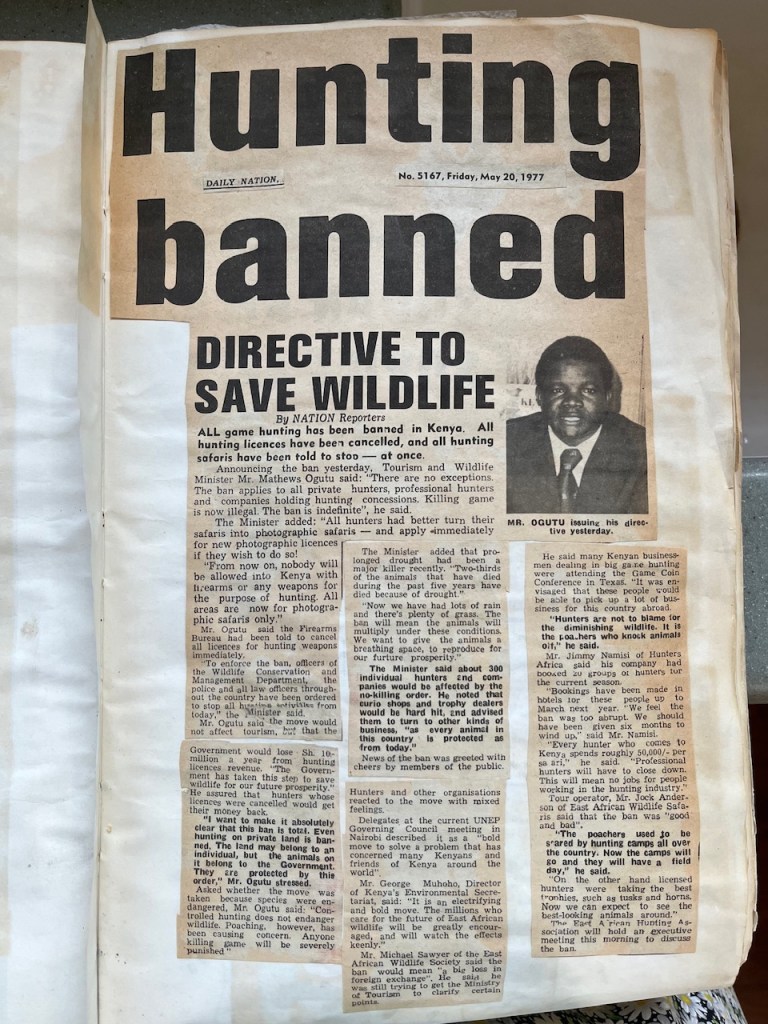
I met her with her second husband, an avid big game hunter, but her first husband was a professional one.  They had a business together leading safaris until the laws were changed in an instant, hunting banned by the government, their livelihood lost.

Neither were Americans, but he had a prospect in Texas. So, with young children in tow, they moved to the Hill Country, to Llano, and started anew.

That was in 1977. It is still illegal to hunt in Kenya.

What’s more interesting, Kenya has remained on the fast track ever since, to full-tilt modernization. They have been an international fore-runner for all the Global Village United Nations WEF grand schemes for their ideal Future: ESG scores, vaccines, digital IDs, carbon credits.

That’s the great gift of compliance. Or, as the old adage goes, “Give the devil a finger . . .”

“Esc’s analysis, backed by meticulous documentation, sets the stage for understanding a system already operational, where resistance is economically suicidal and socially ostracized. Esc details how development programs in nations like Kenya test governance technologies—digital IDs, carbon credits—later exported to the West, ensuring global compliance under the guise of progress. The Earth Charter, as esc notes, serves as a global constitution, subordinating individual rights to expert-defined collective responsibilities, a theme echoed in The Invisible Empire’s critique of sustainability metrics overriding democratic will. We need to recognize this system before the window for democratic resistance closes, as each institutional capture—from ESG compliance to AI-driven surveillance—tightens the web.”
The Complete Architecture – by esc

“For 130 years, a coordinated network of institutions has been systematically replicating the same control structure across every domain of human life – from healthcare to education, from banking to environmental policy. This structure, originally perfected in British banking, creates the appearance of local autonomy while concentrating ultimate decision-making power at higher levels run by credentialed experts.
The breakthrough came when science claimed moral authority over all aspects of human experience through the 1986 Venice Declaration, positioning scientific expertise not just as informing ethical decisions, but as the source of ethics itself. This created the intellectual foundation for what we now see operational: a system where questioning expert consensus isn’t just wrong – it’s scientifically illiterate, ethically irresponsible, and potentially pathological.”

How close is your country’s hunting policy to Kenya’s?
Is hunting policy about creating the lines between hunter and poacher, or obscuring them? Because, if everything is forbidden except to a tiny few, aren’t we pretty much all destined to become poachers?

“And the pity is that it will do nothing for the wildlife, controlled licensed hunting has never been a threat to wildlife. When elephant hunting was closed a few years ago, I wrote to the East African Standard and pointed out that poaching was the problem, not licensed hunting, and that if poaching were not stopped, the elephants would disappear anyway, whether licensed hunting were allowed or not. Unfortunately I have been proved right, and since that time the elephants have been exterminated all over large areas of Kenya. For this licensed hunting can in no way be blames, as legal hunting of elephants was closed.” Finn, Berit’s husband

Should hunting be allowed in Kenya? | davidlansing.com

“When I was in Kenya a few years ago I stayed on the edge of the plateau overlooking the Mara. About a mile away one night, a leopard broke into a Maasai boma and killed a cow. The game officials came by two days later, photographed the pug marks on the ground and the carcasses, payed the elder a pittance for his loss, reminded them that they were forbidden to kill the leopard, and disappeared. A couple of nights later, it happened again. So they staked out a goat and speared the leopard to death and buried him. That same leopard could have brought in tens of thousands of dollars in fees to Kenya and the local economy – now it’s a skeleton. When the wild game is seen only as a nuisance and is not allowed to pay its own way in a crowded land, it will always end like that.”

To be continued . . .

Feel free to chime in below!

Llano, Texas May 2025

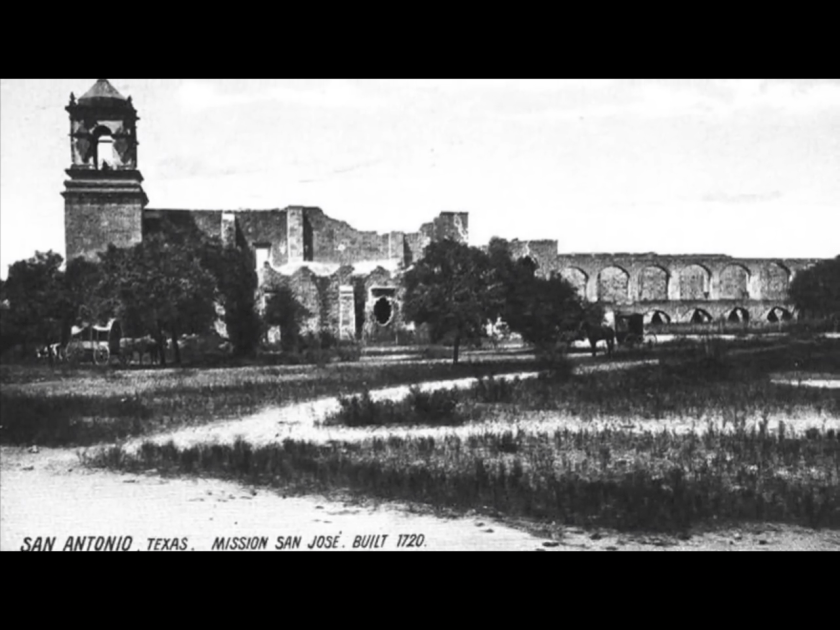
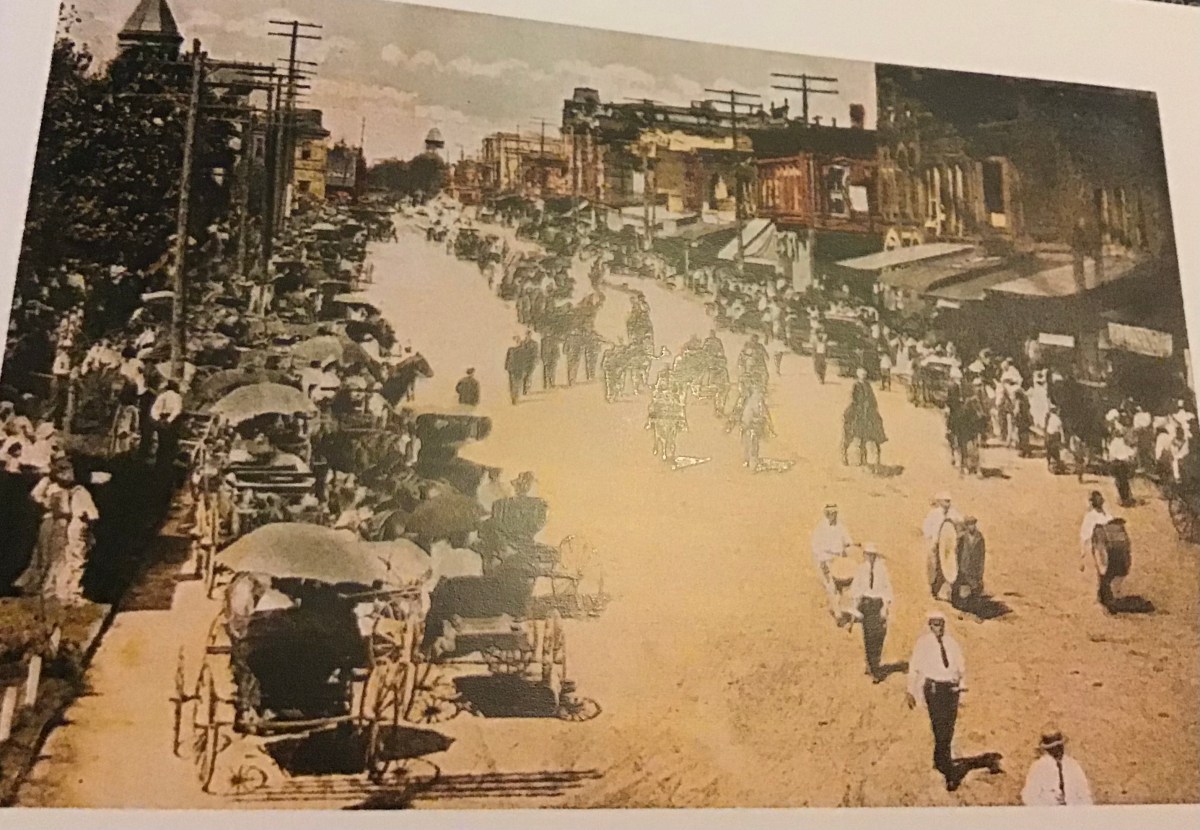
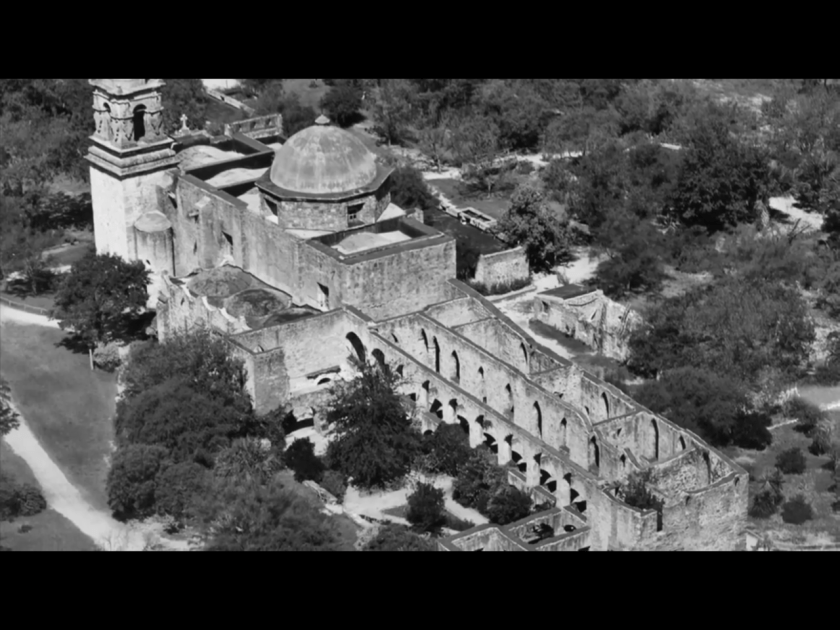
Old World San Antonio

Remember the Alamo? Like the Moon Landing, created in a Hollywood studio?

The Alamo, just 1 in 36 ‘Missions’

Burned, moved, now surrounded by Sea World and dozens of other theme parks in New World San Antonio. They call it modernization and it’s apparently a great improvement.

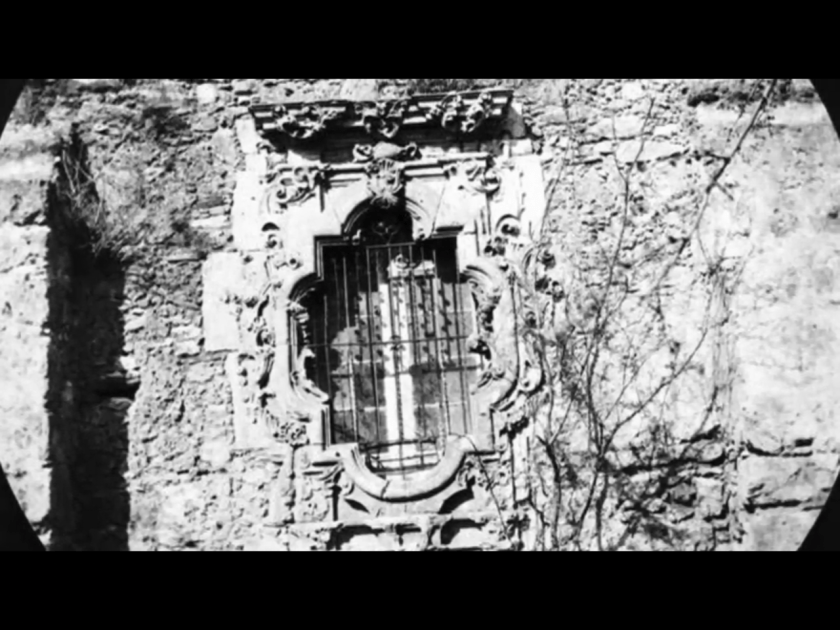
What has been lost? What has been dis-covered and then re-covered, perhaps again and again? Perhaps deliberately covered in myths so deep we’ll never find the truth again.

“. . . simplicity derived from the earth itself . . .” 😆

According to official history from 1974, we have a what I would call a tall tale; a fish story some might call it, told to a captive audience without a clue about fishing, they’re just there for the tale.

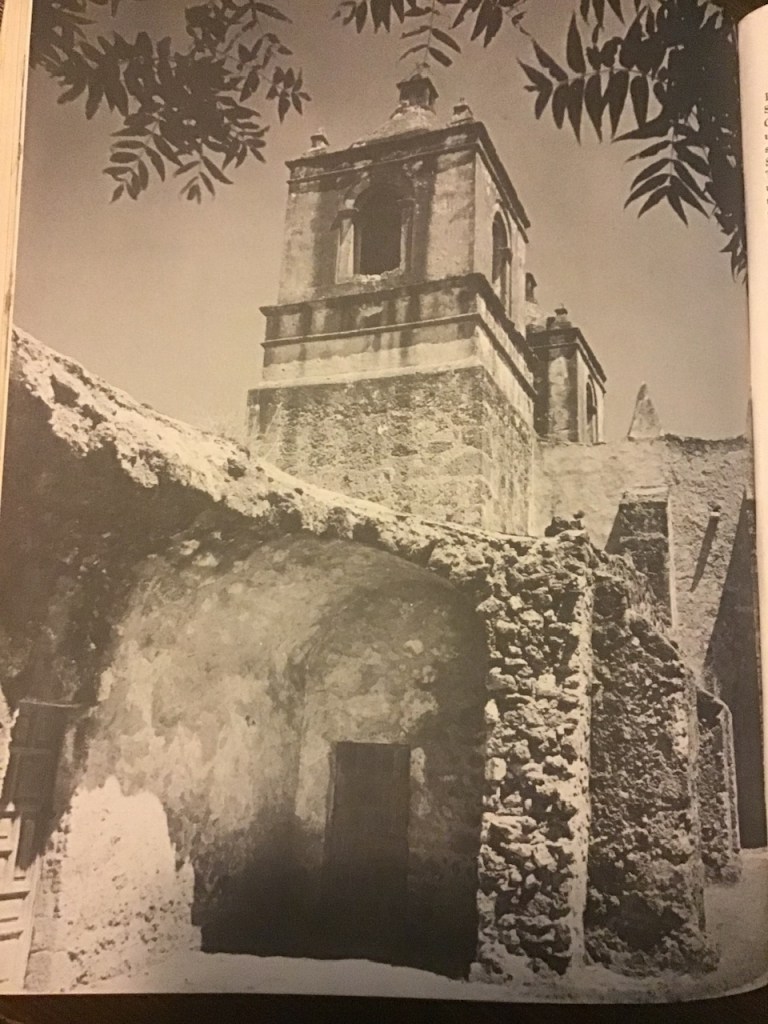
“Easterners, with largely Anglo-Saxon traditions behind them, beheld in mission ruins the remnants of a culture far removed from their own: Iberian, Holy Roman Catholic, Mexican, American Indian. And in the massive architecture they saw an elemental simplicity derived from the earth itself, with here and there splashes of color and design Moorish in origin. To the unlearned, those familiar with prim white New England and Deep South churches with thin spires and neatly kept churchyards, the solid bulk of the missions with their tremendous courtyards and surrounding walls was at once alien and awe-inspiring. These were not churches as Easterners knew them, but fortresses and places of learning and of toil under the sun. The Spanish missions were all these, and more; they represented a great religious and political ideal launched by a great nation now on the wane. They were visible evidence of Iberian penetration of the North American continent.

From the last of the seventeenth century through the end of the eighteenth, thirty-six missions were built in Texas alone, and there were a great many more scatter throughtout Arizona and New Mexico. The cost in sweat and blood was high; eighty-one Franciscan and Jesuit missionaries were killed during the period by those very men whose souls the friars had come to lead into salvation. The friars, barefooted, armed only with the cross and an unshakable faith, marched across burning deserts and through snowy mountain passes to bring Christianity to aboriginal tribes whose beliefs were as deeply ingrained as the missionaries’ own. Ultimate success eluded the strongest efforts of these enduring men wearing robes of gray wool, yet they achieved more than they had dared hope when they embarked upon uncertain voyages from distant Spain, or from remote areas in the wilds of Mexico. They had many rivers to cross, many burdens to bear. How these men of God, keen of intellect and tough of body, endured under conditions few men today could tolerate, is one of the great sagas of the past few centuries.”

Sagas indeed . . .
However, when logic is applied to such sagas, they appear as porous as this Enchanted Rock.

Amazing!

Those with interest in such fringe topics probably already know there’s a vibrant ‘community’ online questioning such official narratives. They are in my top 3 favorite things about Youtube. I especially appreciate when they aren’t trying to sell another story, but rather just presenting evidence to offer food for thought for the curious.

And of course, fodder for those who think they can craft a better story . . .

Shitty of San Antonio

Now in my top 3 Shittiest of Shitties Official List, the once unique and charming San Antonio is now the official Theme Park capital of the U.S. I didn’t just make that up either, and apparently, they consider this a good thing.

My top-listed shitty is Bangkok followed by Warsaw, for orientation sake.

San Antonio, like the other two, had such potential at one time. Historically fascinating with magnificent old world architecture buried in a tragic mess of the modern world.

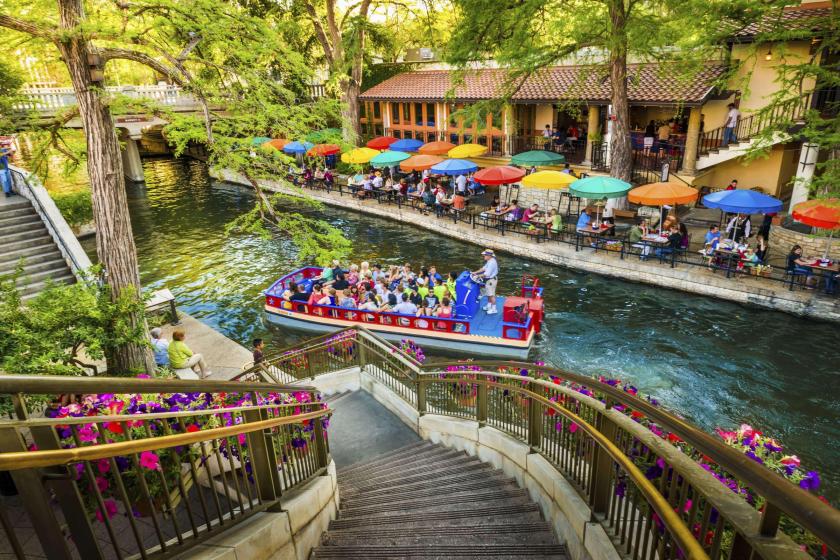
The Riverwalk was desert hot in May and nearly impassable through the crowds. Just five years before, when Hubby and I visited for Christmas holiday lights, it still had some appeal.

Now the city boasts 17 theme parks, one per 27 square miles. This does not include the many other paid attractions, like State Parks, caves and caverns in the surrounding area.

San Antonio‘s theme parks invest in new attractions for 2025

“San Antonio is known as the “Theme Park Capital of Texas” for good reason, with its 663 combined acres of attractions and entertainment parks. And nearly every park is undergoing multimillion-dollar expansions for 2025.”

Surprise, surprise, the shitty is constantly flooding now.

It begs the question: Is a shitty still a shitty without a shitty theme park?

Disneyland, Disney World, Six Flags, Dollywood, Wisconsin Dells, Schlitterbahn, Universal Studios, Sea World, Busch Gardens, Cedar Point, HersheyPark, and on and on it goes.

In the decade since Hillary Clinton made this declaration, already hilariously ironic when she said it, the theme park industry in America has grown 43%.
A Look at a Thrilling Industry: Amusement and Theme Parks : Spotlight on Statistics : U.S. Bureau of Labor Statistics
The average annual pay is $36,000
Prices for food and beverages up 62%

Yet again and again I hear from the ‘pro-development’ right and left alike that in the U.S. we’ve only had development of 5% of our land and resources. I don’t know where this statistic comes from, because those who quote it never provide their source material. I can say I think it’s more shitty nonsense.

But, if it is true, I’ll yell an enthusiastic ‘Thank the heavens!’ Because what we do in the name of development in this country is a travesty to reason and a tragedy to nature.

At least 8 dead in San Antonio after months of rain fell in hours
Months worth of rain on Wednesday night led to multiple water rescues in San Antonio, where at least eight people were killed by floodwaters.
By Jesse Ferrell, AccuWeather meteorologist and senior weather editor
Published Jun 12, 2025 9:09 AM PDT | Updated Jun 13, 2025 12:39 PM PDT
https://www.accuweather.com/en/weather-news/at-least-8-dead-in-san-antonio-after-months-of-rain-fell-in-hours/1783936

My Favorite Enchanting Photo

I’ve gazed at it for what seems like hours, though its magic is hardly captured there. It is just reminiscent of the awe I felt.

That I took it, that’s fine enough for now. I’ll be back, no doubt about that. I’ve no idea still what I’ve seen, only that I don’t see what they say I should see.

This is the One! Amazing!

That we traveled so many miles, and after plenty of discouragement, to get so very fortunate in the end must’ve added to the enchantment. I will cling to it, for a long time to come, I’m sure.

Intrepid traveler, Kath

To be in good company, that helps, always. But I expect next time I’ll go alone, and I’ll stay a good long while, hoping that maybe a few more of its mysteries might come to present themselves to me. That’s how it seems to work.

If I’m patient enough, keen enough, present enough . . .
Perhaps.
Maybe. Or maybe not.
Already there are many obstacles.

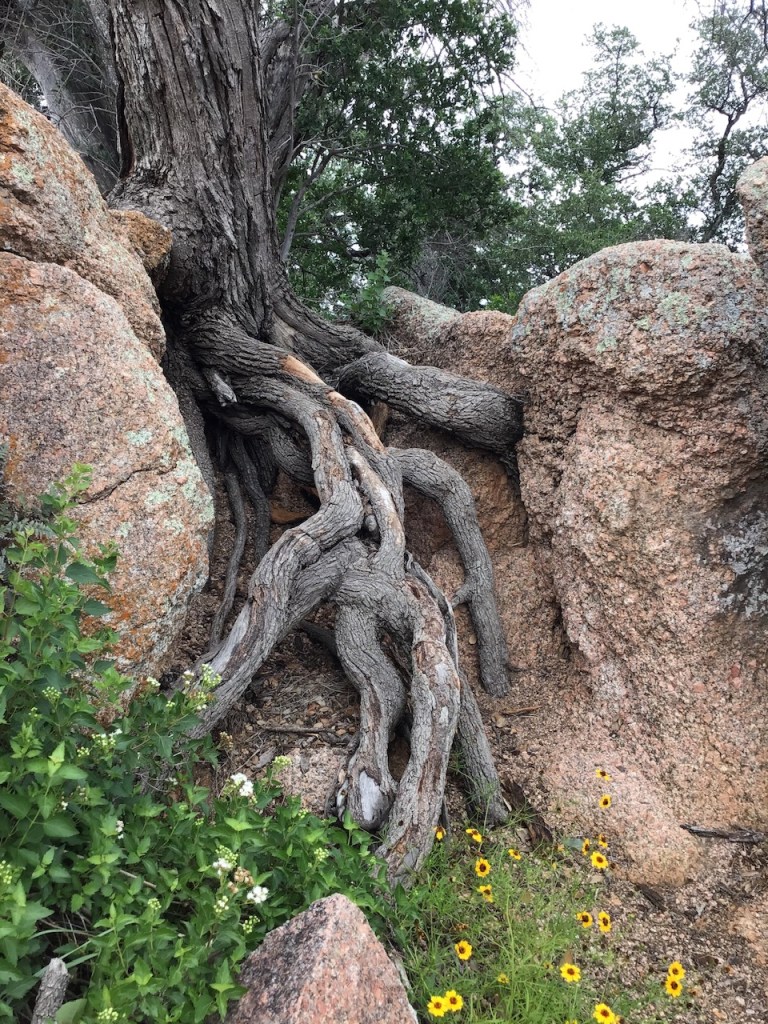
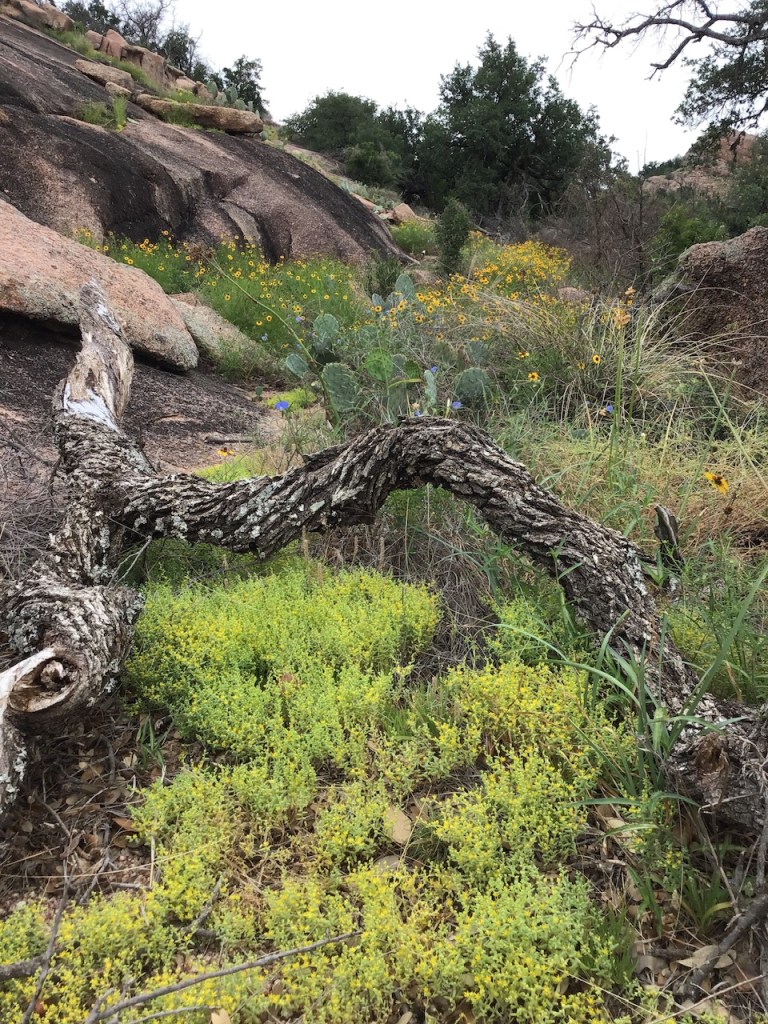
If only they would be, these many obstacles, as permeable as these rocks are to these roots.

If only I could hear their stories and know they were real.

If only I knew. What would I do?

Creep among the rocks, disguised, like these little guys?

You can’t see me . . .

Or mock its odd monochromatic effect with bold color displays in every shallow pool or crevice?

What makes a sight worthy of seeing? Is worth only weighed in the eye of the beholder? How many eyes does it take to spoil a place?

Enchanted Rock is a pink granite mountain located in the Llano Uplift about 17 miles (27 km) north of Fredericksburg, Texas and 24 miles (39 km) south of Llano, Texas, United States. Enchanted Rock State Natural Area.

I don’t know much about rocks, but granite is one we’ve all heard of, thanks to its continued popularity in building, from the popular household granite countertops to Mount Rushmore and the Red Pyramid in Egypt.

This is said to be a testament to its durability, longevity, and resistance to weather.

According to Wiki, it’s quite hard:

“Granite is nearly always massive (lacking any internal structures), hard (falling between 6 and 7 on the Mohs hardness scale),[1] and tough. These properties have made granite a widespread construction stone throughout human history.”

Which makes me all the more curious about the intimate relationship between those roots and rocks. According to the official history, we’re only seeing the proverbial tip of the iceberg.

“Enchanted Rock is a small speck compared to the huge underground rock that spans over 100 square miles. That’s almost four times as big as Manhattan!”

It’s quite hard, and yet it ‘sheds’ kind of like a glacier ‘calves’?
“Eventually, weather and erosion shaped these rocks into the odd shapes you see today.”

How odd!

So, what kind of weather and erosion causes a lozenge shape? Inquiring minds want to know!

A partial official explanation can perhaps be found within worldwide examples of batholiths:

“Batholiths exposed at the surface are subjected to huge pressure differences between their former location deep in the earth and their new location at or near the surface. As a result, their crystal structure expands slightly over time. This manifests itself by a form of mass wasting called exfoliation. This form of weathering causes convex and relatively thin sheets of rock to slough off the exposed surfaces of batholiths (a process accelerated by frost wedging). The result is fairly clean and rounded rock faces. A well-known result of this process is Half Dome in Yosemite Valley.”

That explains the ‘thin sheets’ perhaps, and the rounded rock face, but not so much the lozenges. And the root-rock infusions!

Continuing with Wiki:

Lanite, a rare type of brown rhyolite porphyry with sky-blue quartz crystals and rusty-pink microcline feldspar, is found nowhere else in the world except in Llano County. Llanite can be found along a highway cut 9 mi (14 km) north of Llano on Texas 16. The largest piece of polished llanite in the world can be seen at the Badu House.

The Llano Uplift, a roughly circular geologic dome of Precambrian rock, primarily granite, covers about 50 miles along Texas Highway 29 and was 1.5 billion years in the making. Call it Rock Heaven: Geologists identify 241 rocks and minerals in Llano County, including llanite, a blue-specked dark granite found nowhere else in the world.”
Travel: Rock Heaven in Llano|April 2018| TPW magazine
Lovin’ Llano | October 2008 | TPW magazine

But apparently it was not the discovery of granite, but rather that of iron ore that transformed Llano into a boom town.

“Newspapers spread the word about Llano, recklessly playing up the magnitude of the region’s mineral resources. “Llano iron ore is the finest on the continent,” one story claimed. “Iron Mountain will produce 2,000,000 to 4,000,00 tons annually after the first year.”

“Little visible evidence remains of the Llano iron boom. A 1906 tornado destroyed some of the boomtown buildings north of the river. Other structures suffered a more mysterious fate.
“A number of buildings on the north side burned,” JoAnn McDougall explains. “The owners did it to collect insurance money. They needed cash and didn’t see any other way to get it. So many buildings burned, the insurance companies stopped insuring buildings in Llano, at least for a while.”
The Badu Building

The Badu Buildinghttps://rockandvinemag.com/2024/02/the-badu-building/

According to Wiki:
The geology of northeast Africa is very similar to that of Texas, and many of the two regions’ minerals and fossils are only found in these two locations.[2] A dike of llanite crops out on Texas State Highway 16 about nine miles north of the town of Llano.[3]
Llanite, which is similar to granite, is very strong, with a crushing strength of 37,800 lb/in2 or 26,577,180 kg/m2.[4] The mineral is also very similar in appearance to pietersite

Enchanted Rock was the absolute highlight for me on this road trip, and we almost didn’t make it. For one thing, I almost might not have been able to muster any enjoyment from it at all, being that I was wickedly hung over.

A hangover that dissippated in an instant, in a sudden and unexpected weather shift. The day before I’d been suffering in intense heat walking in a shadeless midday scrubby desert and I was attempting to muster the strength for the same again. For the first 45 minutes of the drive it was not looking promising. What fortune came then, in the last 10 minutes before the entrance, was the most welcome of weather whiplash …

Except that meant the main path of the Enchanted Rock might have to close any minute. Any amount of rain makes the rocks very slick, and they want no accidents. Best get climbing quick!

To be continued . . .

For more Enchanted Rock fact and fiction, begin at the 1:06 mark.


https://youtu.be/OO61UcJMHGw?si=4x33GYsB9oI3lbuF

Hard Lessons

Sometimes it takes 20+ years to learn the lesson of one moment.

“Jste zdrava?!”

“Are you quite well?!” (Lost in translation.)

It was not a friendly inquiry. So naturally, I was immediately put off. My Czech was mediocre and I was confused, I took it more literally.

Am I healthy? Why on earth is she asking me that? Why is she shouting and waving her arm?

I understand now she meant that facetiously. Like an Old Southern Belle might drawl from her wraparound porch, “You from around here, Darlin’?” Right before she pulled a shotgun from behind her skirts.

Maybe I should consider myself lucky she couldn’t possibly have a shotgun when and where she was living in Prague.

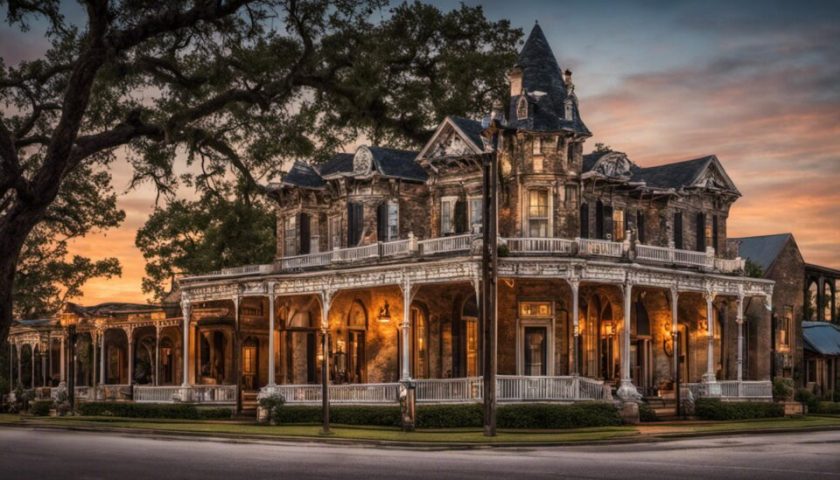
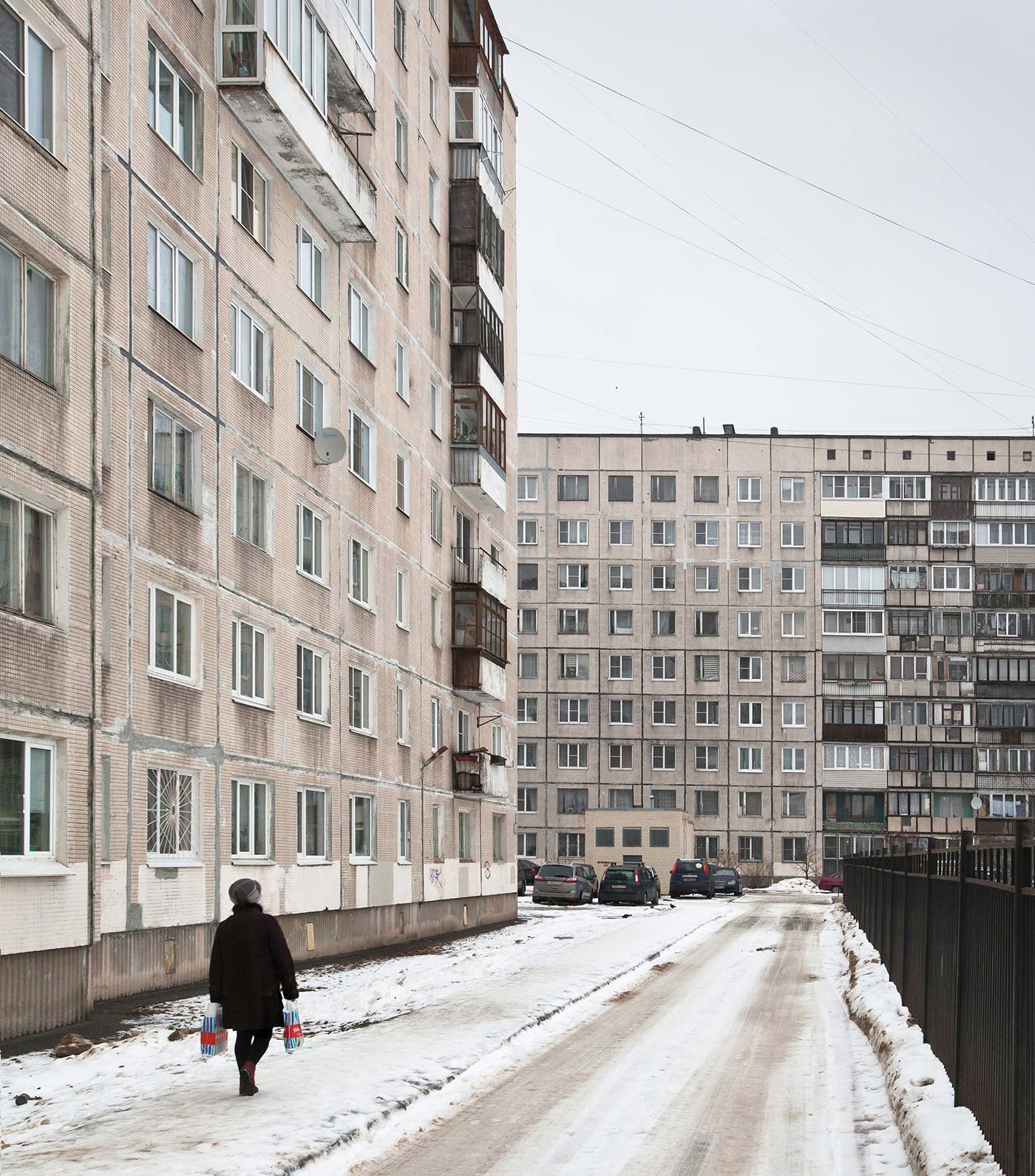
Her home looked very much like an antebellum plantation home, not so different from the one above, but only a quarter of one, and with just two pillars. With a large front and back yard, and beautiful fruit trees full of plums, which stuck out even in this neighborhood of nicer homes compared to the typical panelock housing found just a block away.

Soviet era ‘panelock’ housing

That I’d be inclined to take a photo should be logical, at least that’s how it seemed to me at the time.

Should I have told her I was perfectly healthy, 25, in my prime, one might say.

Me, always curious, at a pub in Jihlava, Moravia, current day Czech Republic, 1994

“No taking pictures here!” More hollering and waving.

Now that time I did understand without any additional effort. I put down my camera, I apologized, and I moved on to the next house, where I took more pictures unencumbered by any screaming women.

Prague in 1999 was already transformed from that of 1992, at least I could see it clearly.

Of course it’s different if you live there, even rapid change can seem incremental when one is concerned with the quotidian. Foreigners have a different perspective.

I looked like a spy to her, I get that now. It’s not that I wasn’t used to paranoia, it was permeating the place, always.

It’s just I didn’t recognize what paranoia like that would feel like until decades later, in my own country.

Yes, the United States, where we are told we are free. Of course you can take a photo of my beautiful house, I take great pride in it!

Adjusting to insanity. That’s what that woman had done. The more one is required to adjust to insanity, the more paranoid one becomes.

She saw me as a spy, not as a clueless and curious American interested in architecture.

“Are you quite well?” Was most likely a candid and covert admission that she was in possession of illegally inherited property. Or if not illegally obtained, then certainly not conforming to the current and always shifting proper codes.

Under Soviet governance no one was allowed a large house without subdividing, everywhere, not just in the large cities. There was a housing crisis. Everywhere. Even country estates and cottages had to be confiscated. Collectivized, euphemistically speaking. Then, Privatized, once again. The hand that washes the back . . .
Repatriated? Potato-Potato. Musical chairs?

You really think it’s different here now? Don’t dig too deep.

In fact, you’re not allowed to be a curious American in America either. Little did I realize. Try talking about the weather. Ask a few questions. Don’t stop when you get the first rebuff of redirection and discomfort. Press on.

You want to see how much America TODAY is like the Soviet Union?

Why is it 99 degrees in mid October in East Texas? Why hasn’t it rained for 2 months?

Climate Change is a scam? I agree.

Why are there hurricanes in the mountains of Southern Appalachia? Climate change is a scam? I agree.

Why are there so-called Northern Lights in the south?

Climate change is a scam. I know.

Where do you think this is going? What do you think they are up to? Why don’t you ask some questions? What are you so afraid of?

Press on. I dare you. Do we own our air space? Who has taken over our atmosphere? Who is complicit?

No taking photos here curious American spies!