Landowners Everywhere Beware!

About 5 or so years ago an old timer whose land borders our own gave me a brochure with an enthusiastic smile and said–“Y’all should do this, too!”

I grimaced as I took the materials he offered. As much as I respected this neighbor, bless his heart and rest his soul, as he has since passed, I just knew there had to be a con behind these legal conservation agreements property owners are signing in an effort at protecting their land for future generations.

He thought he’d done good, of course. While his property was entirely recreational, and his full-time home in Houston, he worked very hard on it for many decades. He has a beautiful 2-story cabin there he built himself, as well as fruit trees and grapes, and his children and many grandchildren filled the home on weekends and holidays, often practicing his favorite sport–shooting. He was a good man and he meant well.

No one in the family has been back to enjoy the cabin since his death, about 3 years ago. This is not unsual with inherited property, and our own property was another case in point. Siblings disagree, feelings get hurt, attorneys get hired, acreage gets split and the decades of hard work slowly go back to nature, if the internal conflict continues long enough.

This is a common enough scenario that it makes perfect sense an old patriarch would do all he can to avoid such mess. Now I can’t say if his family inheritors are aware of any potential issue with his decision to legally protect some of his land ‘forever’ or if that’s the reason they have not returned. Maybe a family feud alone is the issue there and the government hasn’t yet involved themselves.

Nature Preserves or Confiscation Scheme?

But that’s exactly the point I’m getting at. These ‘permanent conservation easements’ that are being created by well-meaning landowners are not without risk. And absentee landowners, or those embroiled in inheritance issues, are especially vulnerable.

Because the Globalists want the land, and if they can find a proverbial broken link in your private property chain, they will worm their way in, legally, through the fine print.

https://substack.com/redirect/f2975f0d-0481-47d8-8adf-9fb2b939aa8b?j=eyJ1IjoiYXBsankifQ.vij_GSi8NAkTixijJIkYbmIMsSylddJaDImehSkL3TQ

It’s all part of the Total Human Ecosystem (THE) scheme. From escapekey’s Substack:

Conservation Easements as Confiscation: Across rural America, landowners are being offered attractive deals for ‘conservation easements‘ that sound like simple land protection agreements. But buried in the contracts are ecosystem performance requirements tied to financing. Miss the biodiversity targets and operational control transfers to environmental organisations. The land becomes theirs while you keep the tax liability.”

Long gone are the days when Americans could glibly repeat, “But that would never happen here. We have laws.”

The ‘laws’ for every ‘country’ on Earth will be Uniform. This is the Agenda, and all private property is threatened. The very concept of private property will be demonized through the Government schools so thoroughly that children will be indoctrinated to be afraid of it.

“The Total Human Ecosystem framework treats private property as an outdated concept that threatens ecosystem integrity. Increasingly, local zoning laws incorporate ‘ecosystem service’ requirements that can trigger automatic seizure clauses. When satellite data shows your land use conflicts with ecosystem targets, your property can be transferred to ‘ecosystem management’ organisations. You might own the deed, but the ecosystem owns the seizure authority.”

Agricultural Land Seizure: Farmers are being offered attractive financing tied to ‘regenerative agriculture‘ and ‘carbon sequestration‘ targets. But when weather, pests, or market conditions make those targets impossible to hit, the financing agreements trigger land transfer clauses. Family farms that have operated for generations are being seized by international organisations through algorithmic enforcement of impossible environmental standards.

 The Domestic Blueprint: What’s happening in Belize and Ecuador is the beta test for comprehensive land confiscation in developed countries. THE provides the philosophical justification (individual property rights threaten ecosystem health), the ecosystem approach provides the governance framework (decisions must be made at ‘appropriate’ ecosystem scales), and the financial instruments provide the seizure mechanism (miss your targets, lose your land).”

https://substack.com/redirect/f2975f0d-0481-47d8-8adf-9fb2b939aa8b?j=eyJ1IjoiYXBsankifQ.vij_GSi8NAkTixijJIkYbmIMsSylddJaDImehSkL3TQ

A few more choice quotes from esc:

“Once you see this pattern, you cannot unsee it: every expansion of control comes wrapped in moral imperatives, every loss of freedom is packaged as virtuous necessity, every dissent is reframed as a moral failing. Healthcare workers fired for “ethics violations,” companies forced into ESG compliance, scientists silenced for challenging consensus—all manifestations of the same ethical control architecture that esc has systematically documented.”

https://substack.com/redirect/6953039b-71f0-4d19-a87a-f42fb1fe1f94?j=eyJ1IjoiYXBsankifQ.vij_GSi8NAkTixijJIkYbmIMsSylddJaDImehSkL3TQ

“Yet appearances deceive. The result is a global Soviet: the Party is gone, but the apparatus remains — cloaked in sustainability, cooperation, and humanitarianism, with a web of NGOs functioning as the modern fronts for its operational machinery.

The ideologies of peace, sustainability, and rights have been merged with the infrastructure of surveillance, algorithmic governance, and moral programming. The old flags have been lowered — but the new system flies under a different banner: expertise, ethics, and emergency.”

Between Intrepid and Genteel

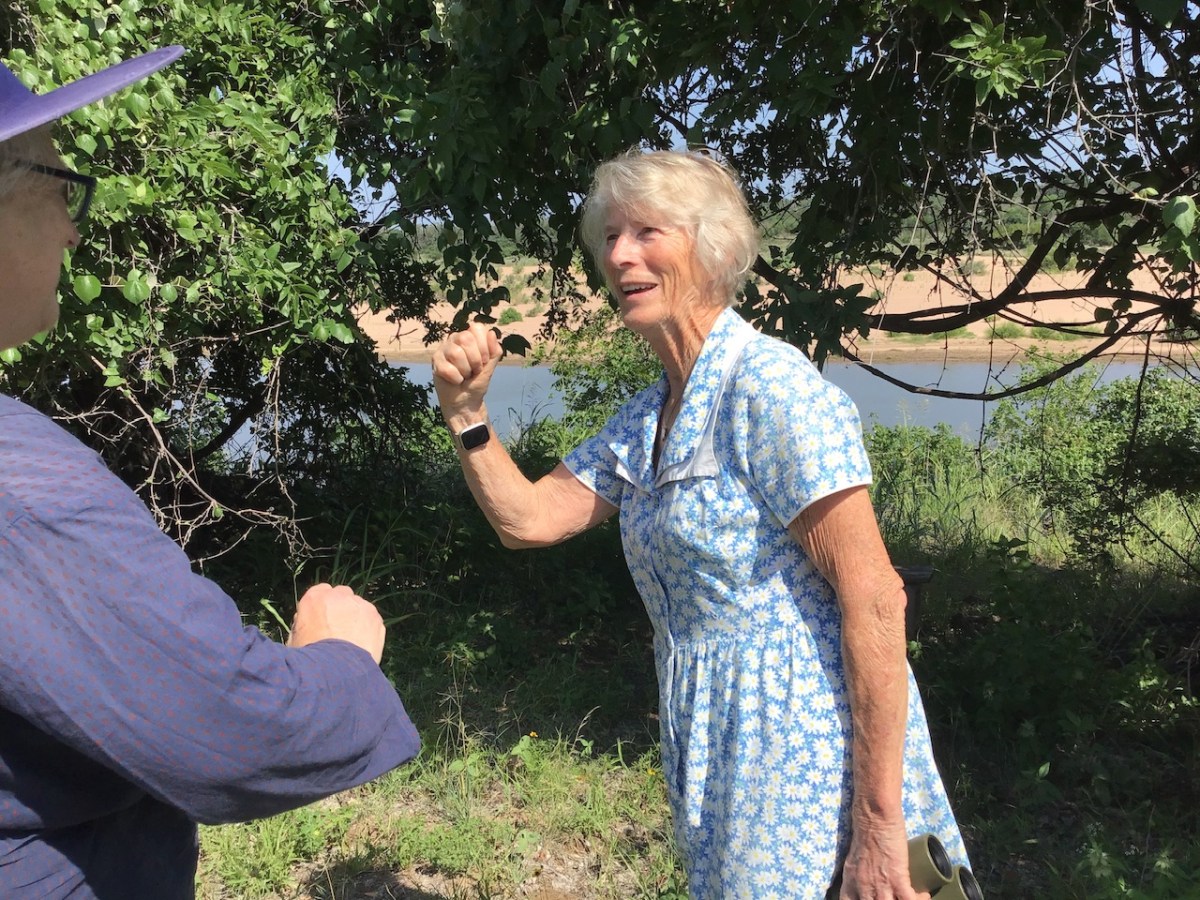
From Kenya to Llano, Berit pictured with Kath, visiting from the UK

Hunters often get a bad rap and it’s not always for good reason. I had a chance to learn something about this on a recent trip to the Texas Hill Country where I was led to question the difference between a hunter and a poacher.

Before assuming this is a niche topic and of little interest to the vast majority of folks whom are neither hunters nor poachers, consider it’s a matter of philosophy as well, along with colonialism, globalism, human nature and modern life.

A wall of hunting ‘trophies’ not uncommon in Texas homes.

Mostly they have much in common, the hunter and the poacher. There is a similar skillset, clearly, but one I know nothing about, so I’ll leave that to the hobbyists and professionals. As strictly an occassional observer I imagine it to require more patience than I’ve ever mustered, more tenacity than most and more courage than the vast majority.

We might say the poacher is lawless and greedy and violent, and in some cases that may well be true. It may also be true that some hunters share such qualities as well.

But again, I’m coming to this as a complete outsider to their world, strictly an observer, and occasionally a beneficiary.

The differences between the hunter and the poacher must lie somewhere between intrepid and genteel, I figure. And so it is most apropos that I should think of it with a hunter who fits the bill for both adjectives.

Our hunter in question, Berit, at her home in Llano, Texas

I’d never have taken this fair, mild-mannered, small and slender woman as a big game hunter, that’s for sure, and I suspect that made her something of an attraction at her home in Kenya, kind of like a pretty little sparrow among bulls. Though looking at the full and adventurous life she’s led, we mustn’t think a sparrow at anyone’s mercy.

A beautiful display of African artefacts collected during their time there.

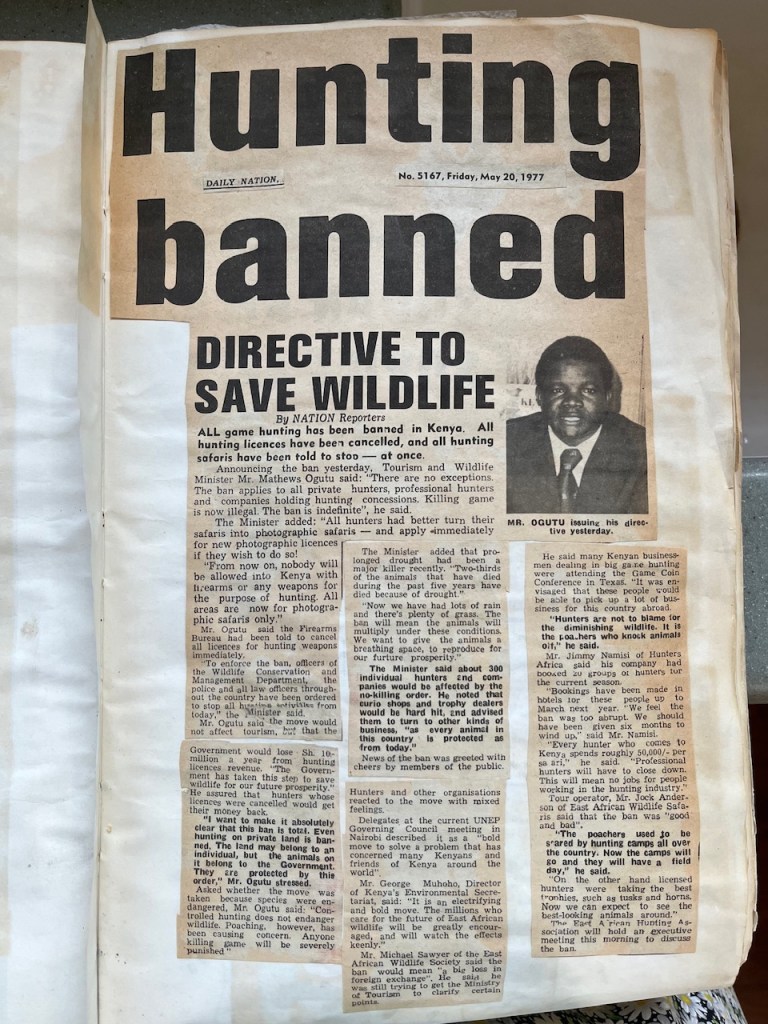
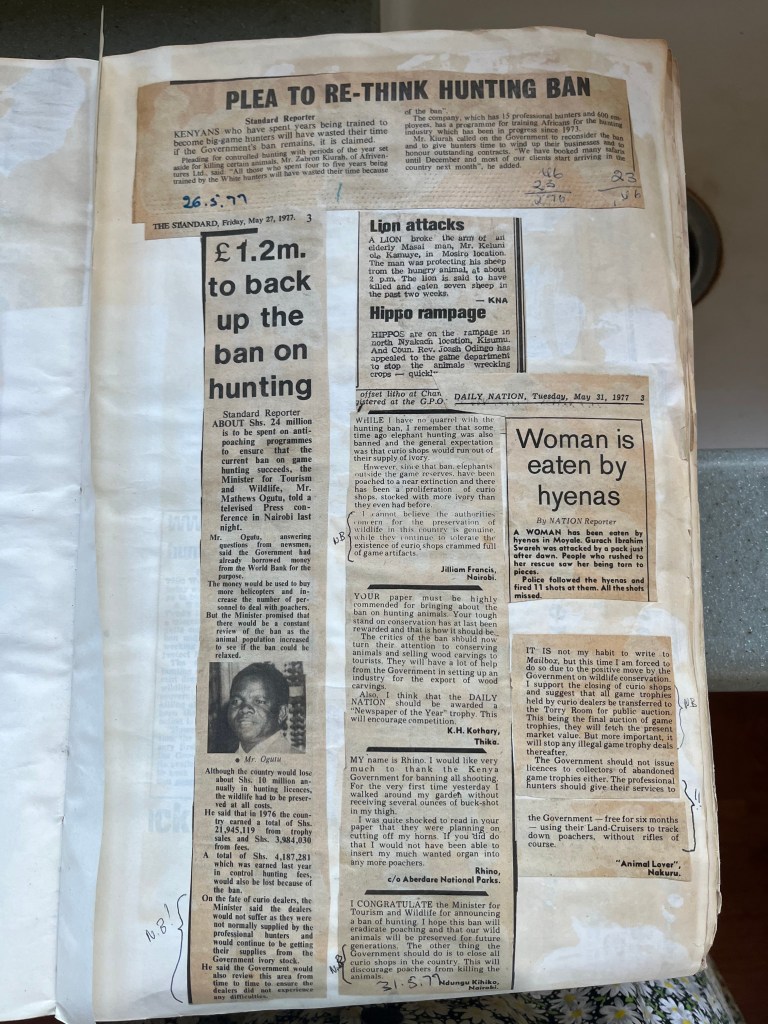
I met her with her second husband, an avid big game hunter, but her first husband was a professional one.  They had a business together leading safaris until the laws were changed in an instant, hunting banned by the government, their livelihood lost.

Neither were Americans, but he had a prospect in Texas. So, with young children in tow, they moved to the Hill Country, to Llano, and started anew.

That was in 1977. It is still illegal to hunt in Kenya.

What’s more interesting, Kenya has remained on the fast track ever since, to full-tilt modernization. They have been an international fore-runner for all the Global Village United Nations WEF grand schemes for their ideal Future: ESG scores, vaccines, digital IDs, carbon credits.

That’s the great gift of compliance. Or, as the old adage goes, “Give the devil a finger . . .”

“Esc’s analysis, backed by meticulous documentation, sets the stage for understanding a system already operational, where resistance is economically suicidal and socially ostracized. Esc details how development programs in nations like Kenya test governance technologies—digital IDs, carbon credits—later exported to the West, ensuring global compliance under the guise of progress. The Earth Charter, as esc notes, serves as a global constitution, subordinating individual rights to expert-defined collective responsibilities, a theme echoed in The Invisible Empire’s critique of sustainability metrics overriding democratic will. We need to recognize this system before the window for democratic resistance closes, as each institutional capture—from ESG compliance to AI-driven surveillance—tightens the web.”
The Complete Architecture – by esc

“For 130 years, a coordinated network of institutions has been systematically replicating the same control structure across every domain of human life – from healthcare to education, from banking to environmental policy. This structure, originally perfected in British banking, creates the appearance of local autonomy while concentrating ultimate decision-making power at higher levels run by credentialed experts.
The breakthrough came when science claimed moral authority over all aspects of human experience through the 1986 Venice Declaration, positioning scientific expertise not just as informing ethical decisions, but as the source of ethics itself. This created the intellectual foundation for what we now see operational: a system where questioning expert consensus isn’t just wrong – it’s scientifically illiterate, ethically irresponsible, and potentially pathological.”

How close is your country’s hunting policy to Kenya’s?
Is hunting policy about creating the lines between hunter and poacher, or obscuring them? Because, if everything is forbidden except to a tiny few, aren’t we pretty much all destined to become poachers?

“And the pity is that it will do nothing for the wildlife, controlled licensed hunting has never been a threat to wildlife. When elephant hunting was closed a few years ago, I wrote to the East African Standard and pointed out that poaching was the problem, not licensed hunting, and that if poaching were not stopped, the elephants would disappear anyway, whether licensed hunting were allowed or not. Unfortunately I have been proved right, and since that time the elephants have been exterminated all over large areas of Kenya. For this licensed hunting can in no way be blames, as legal hunting of elephants was closed.” Finn, Berit’s husband

Should hunting be allowed in Kenya? | davidlansing.com

“When I was in Kenya a few years ago I stayed on the edge of the plateau overlooking the Mara. About a mile away one night, a leopard broke into a Maasai boma and killed a cow. The game officials came by two days later, photographed the pug marks on the ground and the carcasses, payed the elder a pittance for his loss, reminded them that they were forbidden to kill the leopard, and disappeared. A couple of nights later, it happened again. So they staked out a goat and speared the leopard to death and buried him. That same leopard could have brought in tens of thousands of dollars in fees to Kenya and the local economy – now it’s a skeleton. When the wild game is seen only as a nuisance and is not allowed to pay its own way in a crowded land, it will always end like that.”

To be continued . . .

Feel free to chime in below!

Llano, Texas May 2025

Assessing Value

Back to this unpleasant subject again. It’s been a very long loop; I haven’t considered it much since first attempting to barter goods from the wee homestead.

It’s something we really do take for granted in our modern economy, whether one takes that as an inherent good or evil.

The good part is that it’s comfortable and I prefer it, on the surface. I hate bartering. I SO suck at it. I suck at it for reasons that are so deeply-seated (seeded?) that no logic can ever possibly be applied.

On travels to some countries barter was the norm and I was told to keep practicing as I’d get better at it. Some seem to enjoy it. These sorts always baffled me. They say, “Treat it like a game!” But that is really stupid, isn’t it, because I did not go out shopping in order to play a game. I already don’t like shopping much, to think I’d like it more by making it game-like is to make it ever closer to hellish.

So while it may not sound like it, this is the good side of money. It took me a long time to learn that. Not until I had to consider such exchanges as, which was of better or equal value, the handcrafted Top bar beehive, or the wormy, bossy, but still a good milker, Summer, a 7-year old goat?

Money, in partnership with “the Market”, make such exchanges far more simple. Since none of us has a crystal ball, and I have no idea how long Summer will live and there are no guarantees, and my friend has no idea if she’ll enjoy beekeeping, or be able to keep bees alive in our chemskies and YoYo climate, our exchange is made more simple by imagining what would be the ‘market value’ of each of our offerings.

The dark side of money it seems to me relates quite easily to the dark side of most things—like religion, or science, or even education—it provides, by its very nature, an endless potential for ‘middlemen’. It becomes a profession, then a vast sea of professions, then an institution, then an institution ‘too big to fail’.

It’s convenient and comfortable, no doubt about it. It’s easy enough for a child to use, but complex enough to build empires upon. Try to imagine living without it.

Do we really consider how we, as individuals, would place value upon goods and services anymore?

What about once money is replaced with tokens. It’s pretty much the same thing already, right? Tokens as a medium of value exchange—your massage is worth 2 dozen yard eggs. Right?

Well, the market value of your massage today is 20 tokens, but the value of my eggs is 10 tokens, today, and 15 tokens last week, and is projected to be 25 tokens tomorrow. That’s the real problem with the market, right? For you and I, as individuals deciding value between us, the eggs and massage exchange didn’t fluctuate vastly over a matter of days, or even weeks. It’s pretty steady, really. You use 2 dozen eggs per week, I like 1 massage per week, stable value exchange.

But I’ll bet you 5 economists in the room with us would tell us 50 ways it’s not really a stable value exchange. And, why be stable at all if there might be a profit to make? Then a dozen lawyers will tell us why those economists are right. And a nation full of universities will continue to produce a fat muffin top of middlemen to stuff between every simple interpersonal transaction in every tiny hamlet around the world.

I’m bothering to restate the obvious at this moment because I’m trying to re-assess the value of technology in my life. It started with the recurring headaches of social media many years ago, then moved to Smart phones, and lately it’s WordPress.

Then a cyber-friend shared a dream, which caused this spark of inquiry.

“Imagine if we could create an Agrarian world again, using technology as a tool to help us,  but not control or surveil us.” 

Can we make a more agrarian life through technology? Which I understand as, can technology help us to get back to basics? And by basics we mean an understanding of nature, an appreciation of its organic processes, a “re-enchantment” as I’ve heard it lovingly expressed, with the natural world. Working with our hands again, I presume, creating items of value to exchange with one another. A slower life perhaps, where we have the great luxury of time to enjoy our lives and our nature world to a greater degree than afforded to most in the modern world.

A ‘re-enchantment’ with nature, I like the sound of that.

An ‘agora’ that’s not corrupted by fiat, usury, taxes, violence and coercion, perhaps?

Technology in our private life here on the wee homestead has benefitted us in a few crucial ways—helping us to learn new skills has been the most significant. But keeping us from feeling terribly remote and unconnected and uninformed has also been very important. I’ve made a few good friends thanks to the internet and I’m very grateful for that. Feelings of isolation and loneliness can be significant spiritual hurdles for some of us living rural for the first time.

And I have seen promising shifts over the years. Homesteading is clearly a bonafide cultural movement at this time, I think primarily thanks to technology, as oxymoronic as that sounds. Herbalism has become more appealing as Pig Pharma breathes heavier down our necks. Pockets of interest and learning are all over the cyber world, every craft, trade or skill imaginable is available somewhere with a few clicks, I’m sure.

But I have seen and heard some really concerning trends lately, which makes me realize that the time to be re-assessing the value of the tech in our lives is reaching a crescendo.

For example, the young entrepreneurial types who are coming in to fill the needs of the rural communities with essentials like raw milk, homegrown veggies at the farmer’s market, small service businesses and the like, well they aren’t like us in some really fundamental ways.

They trust The Science, for the most part, evident in their willingness to vaccinate, medicate, use the latest supplements and vitamins, and not question any of it. They also love the tech and fully embrace the insane trifecta of the Global Grid: Surveillance cameras, Smart phones and digital payment systems.

How is that value assessed? Who is benefitting more?

My guess would be, more often than not, the middlemen. Like any pyramid scheme a few must be making good for anyone else to follow. For a while.

Seems to me these young entrepreneurs are setting themselves up for certain failure. I met one of these ambitious young women last week on my quest for raw milk, now that my goats are mostly gone. I really miss making cheese. The price of raw milk, not even organic, has gone through the roof as demand has perked up—$11/gallon around here. It’s too much for us to afford.

What did I learn from this experience? Her surveillance cameras everywhere tell me she doesn’t trust her customers or neighbors. Her vaccination schedule tells me she does not do her due diligence in caring for her animals. Her price and her preferred payment by QR code tells me she prefers dealing with middlemen over direct transactions and getting to know her clientele.

I will not be doing any business with her, that’s for sure.

So, while I still have a lot to learn about assessing value, there is a point to this rather rambling post: The goat is dead, no bees have yet to make that hive a home—but no one else profited or lost from that private exchange—and our relationship stayed in tact to trade another day despite these apparent failures. I think nations have gone to war for less.

And that’s something so far social media, Smart phones, WordPress, and indeed money, all fail to assess a proper value.

I’d love to hear any thoughts or ramblings about my cyber-friend’s dream, what do y’all think, is it possible? Would you want such a world?

“Imagine if we could create an Agrarian world again, using technology as a tool to help us,  but not control or surveil us.” 

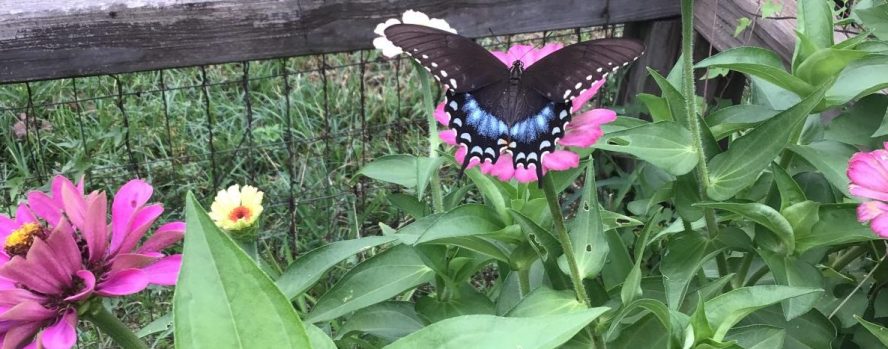
How long before this field gets paved over for yet another Vape Shop, or Dollar Store, or Walgreens? Is it considered an improvement if it’s a Smart Farm run from Brussels by robots?