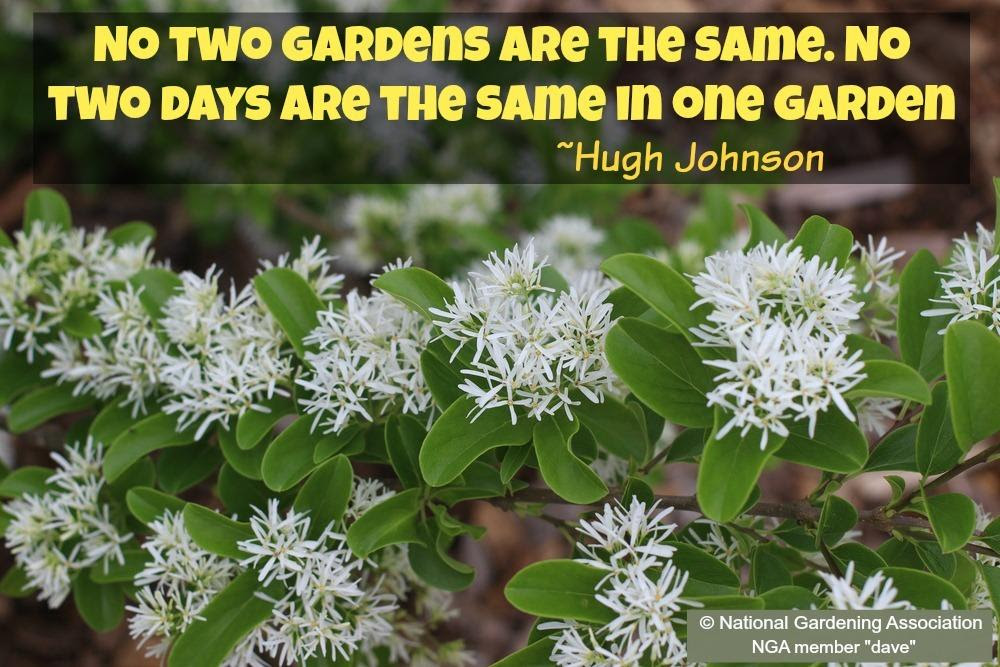
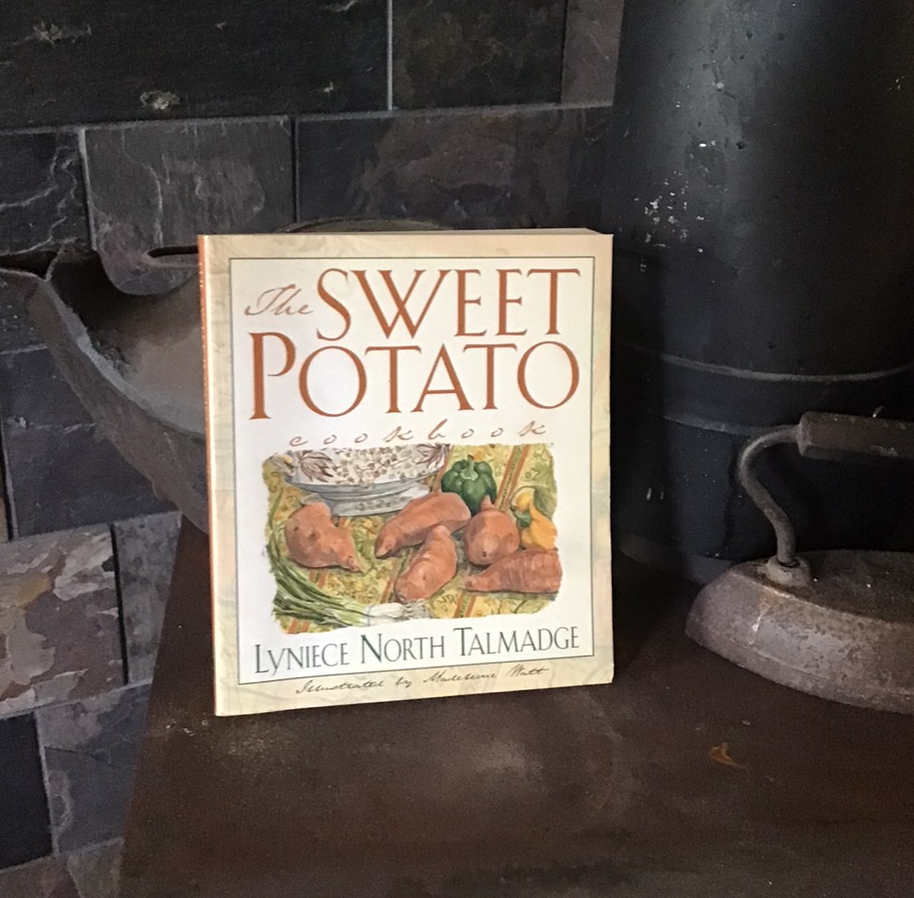
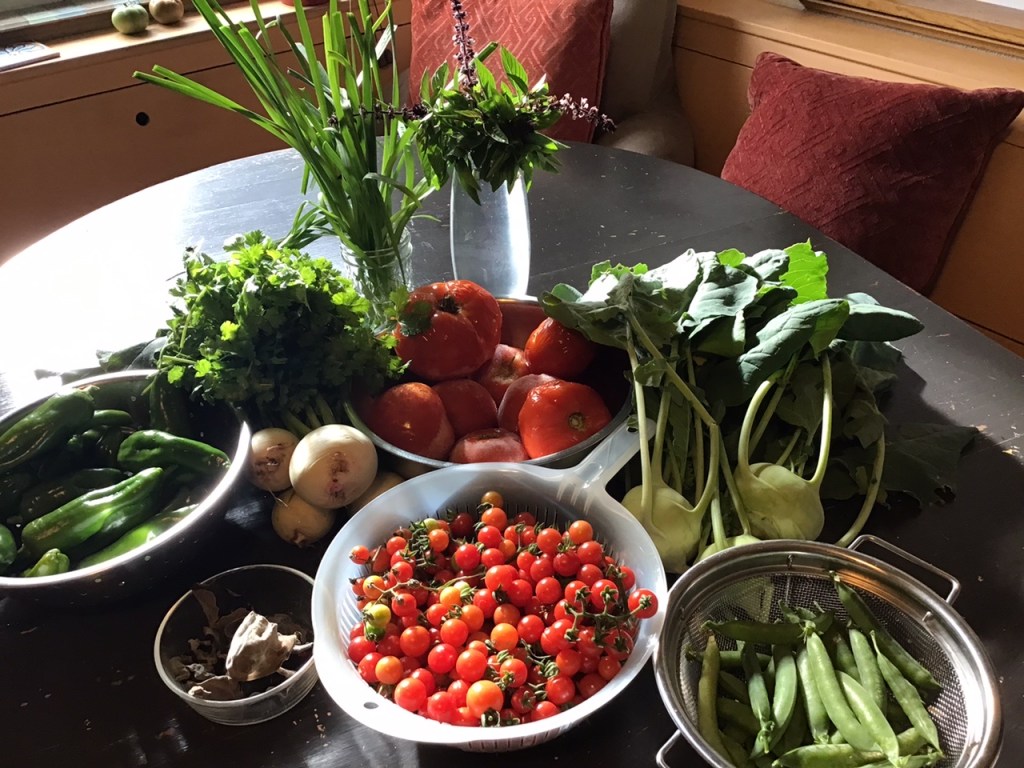
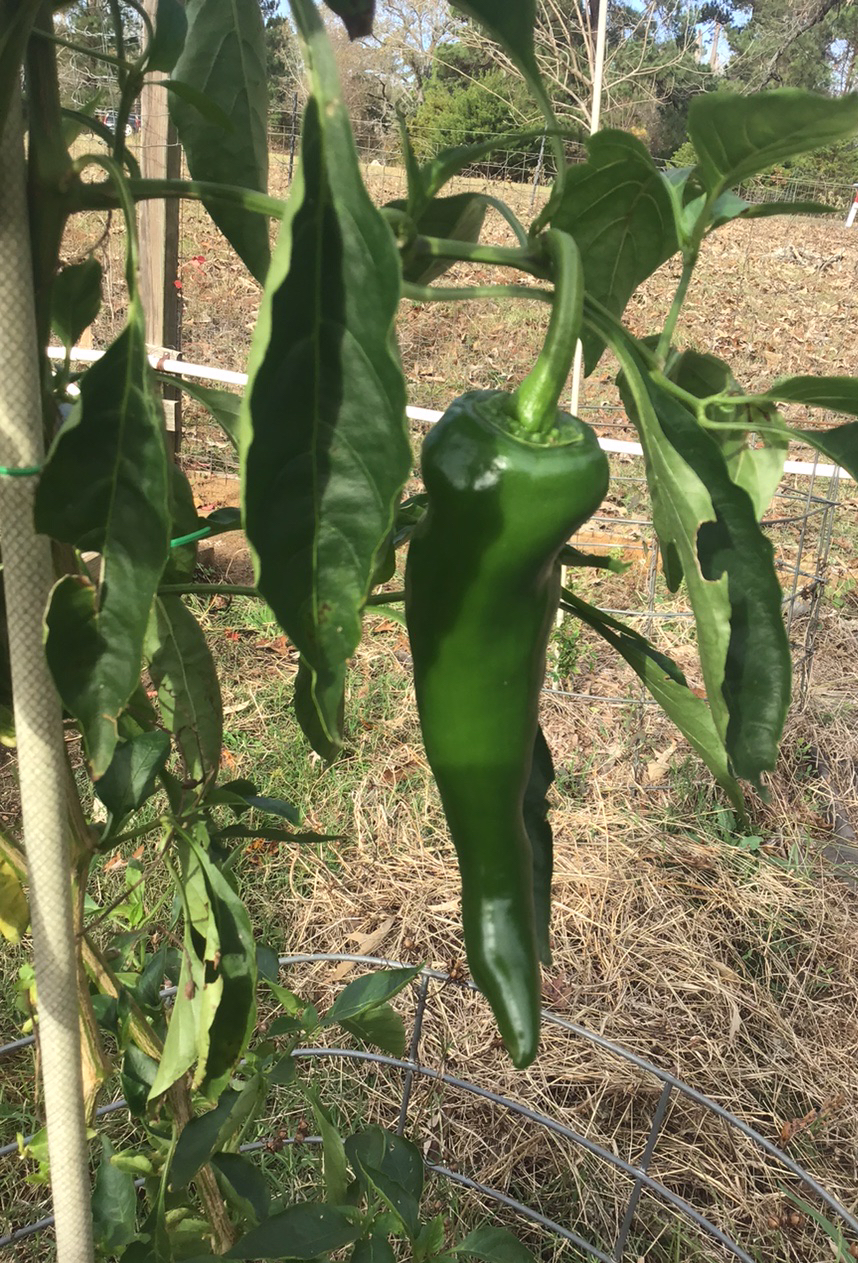
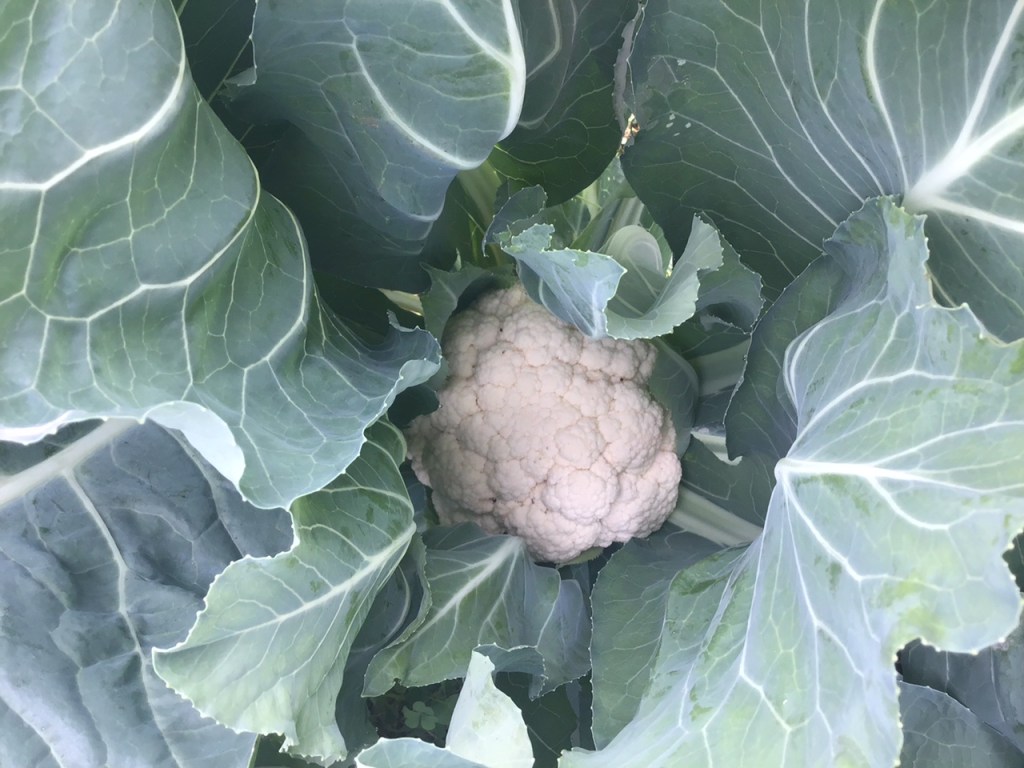
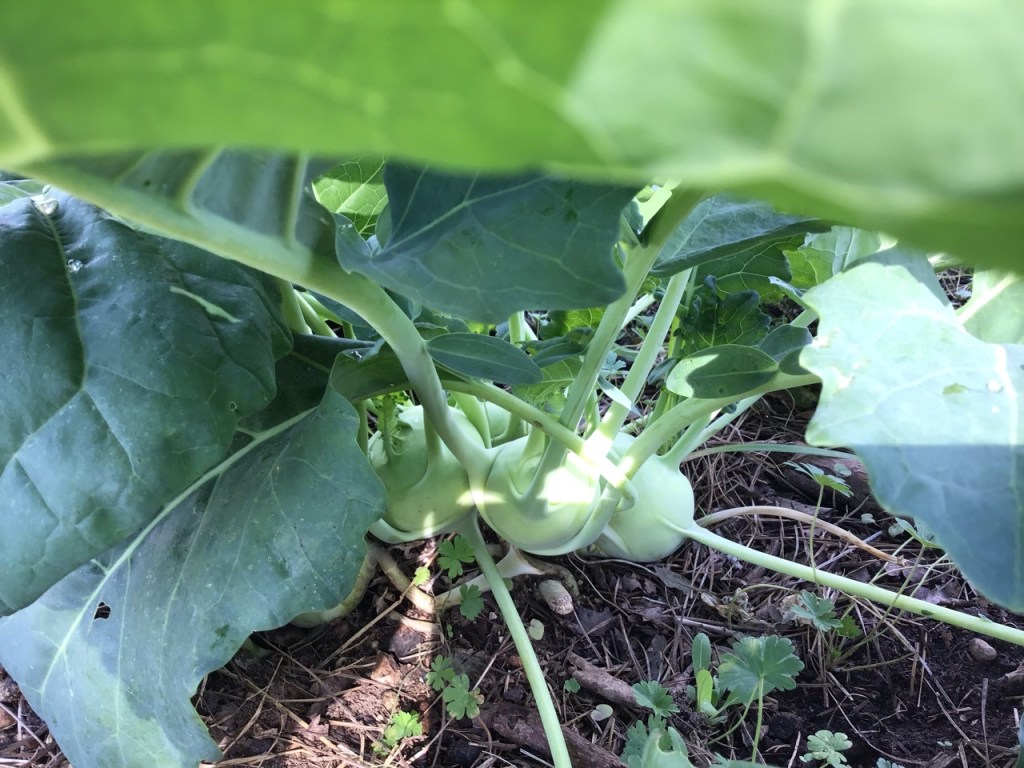
“He is grumpy and coarse and all the things I was warned about. He takes his contest with nature very seriously and finds no comfort in its unpredictable forces. Like most gardeners, he never vacations. In winter when all is quiet and still, he would much rather spend his time fretting—about the fruit trees budding, about the relentless springs frosts that may or may not come, about the sun and the moon. Gardeners, I discovered, are tough, content to be grim”
The Cook and the Gardener: A Year of Recipes and Writings From the French Countryside by Amanda Hesser, 1999
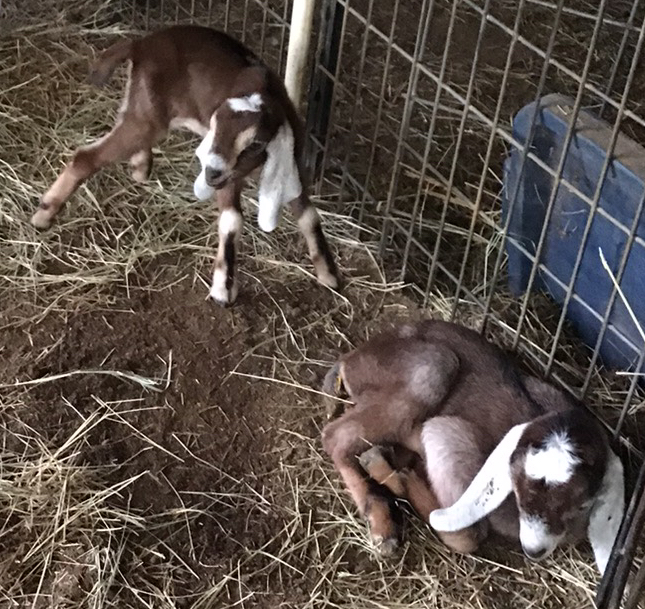
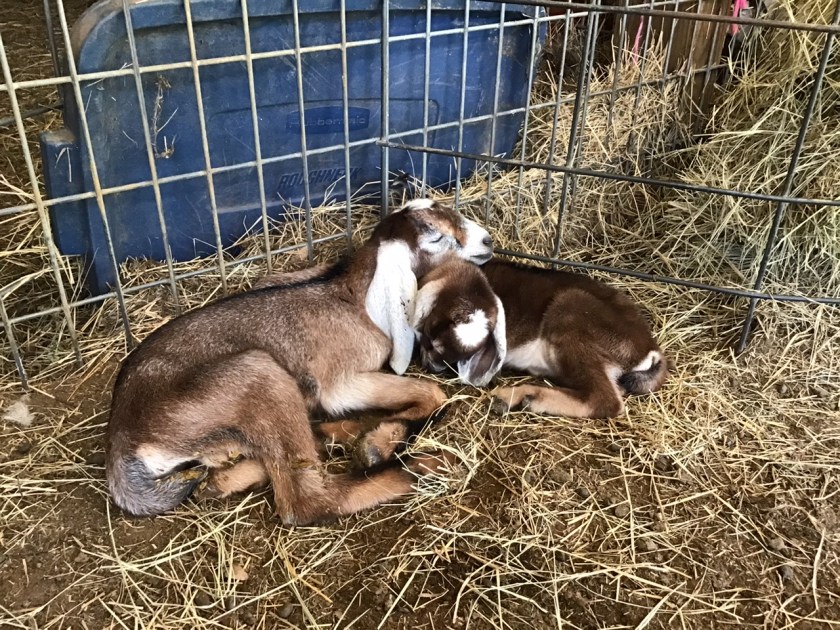
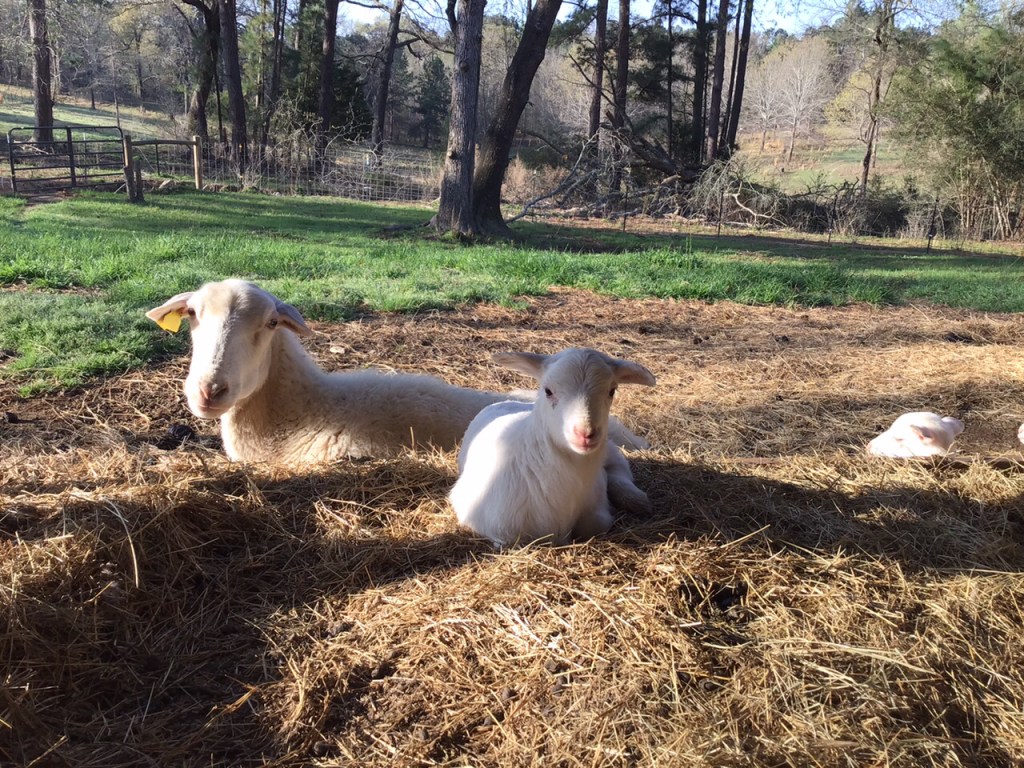
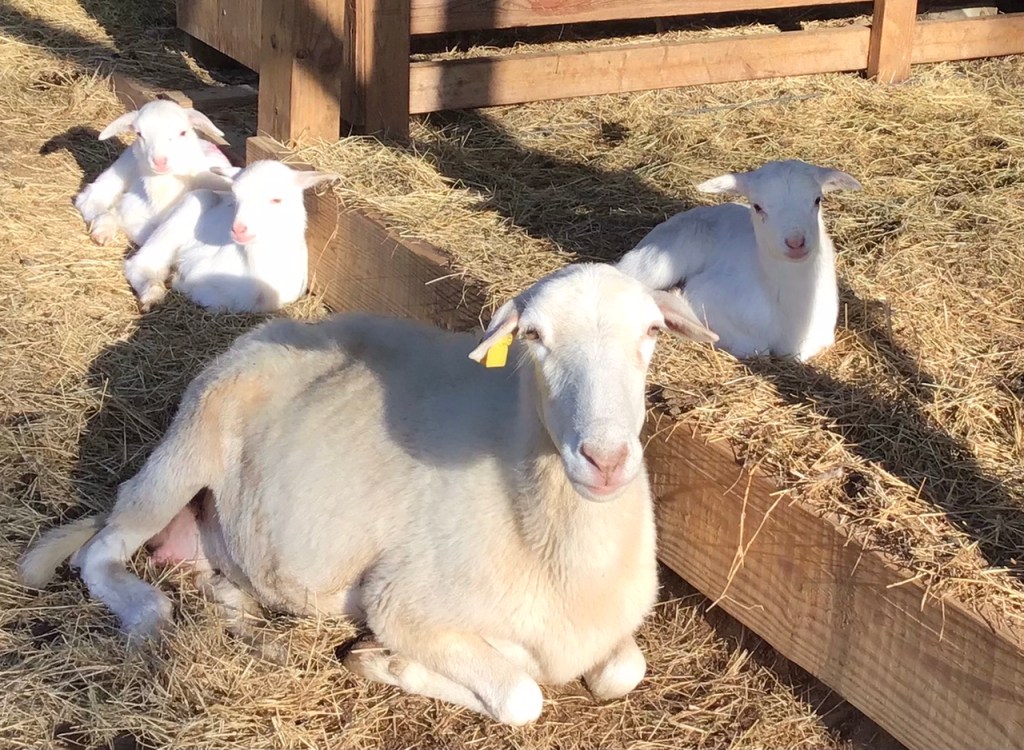
What better day to ponder than Mother’s Day why kids are so darn cute?!
The newest kids, born yesterday, Phoebe’s firsts—Hercules & Zena—notice he is twice the size of her!
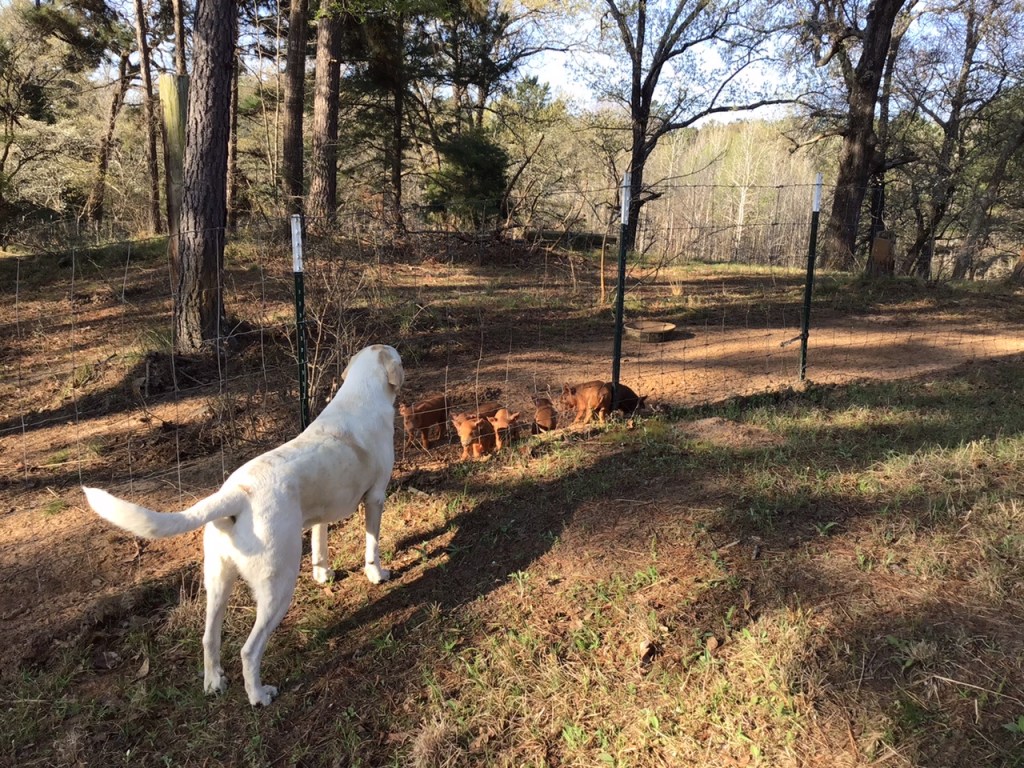
We’ve bartered or sold most of our piglets already. We’re not on social media where such information is exchanged, but it certainly does seem the homesteading community in our area is growing rapidly. Yippie!
One family who came by insisted we were under-profiting from our piglets. Their 11-year old daughter offered her mom to pay us $50 more than we were charging, ‘for the cuteness factor’. Aren’t kids precious!
In not-so-cute news, the swelter season has started abruptly. Bye, bye beets and broccoli, before your time, because I think not even the shade cloth can save you now. The last rain that was hyped on about for days, that flooded some areas and caused tornadoes in others, yielded us a whopping 1/4 inch, not even enough to penetrate the mulch layer.
Of course I’m happy we didn’t get hit with another tornado, but I can still be miffed I have to start watering the garden. Half my roses haven’t even bloomed yet, or the zinnias. The parsley and celery have gone to seed before I got a decent harvest from them and the lettuce will soon follow, no doubt.
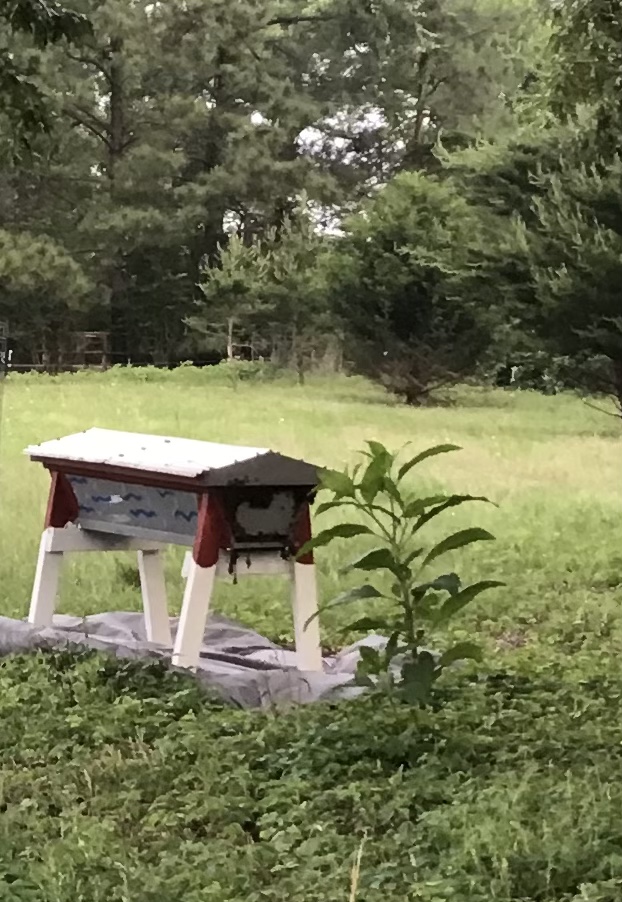
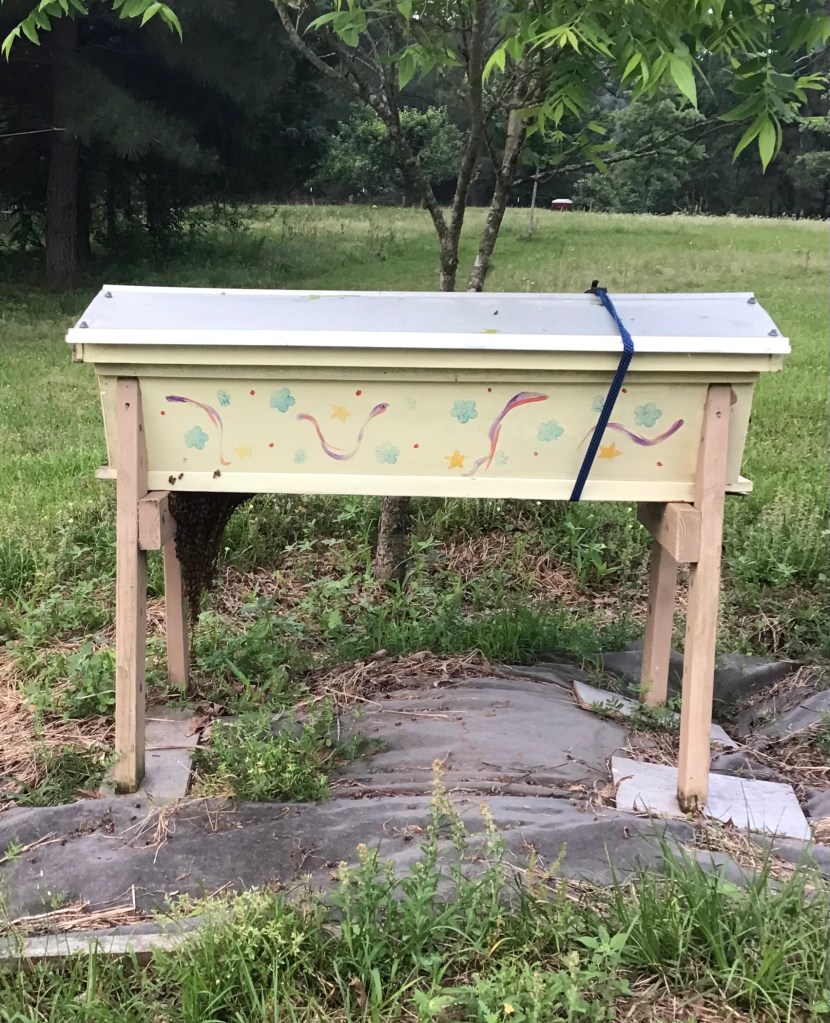
The bees are feeling it, too. I checked these hives last week and they were just half-full, yet the bees are bearding. Unfortunately, the swarm we got a couple of weeks ago left after only one day, unhappy with the digs I’d offered apparently. Now it’s already too hot for me to do the splits I’d planned. Better luck next spring.
I’m so pleased to be getting any strawberry harvest at all, they’ve never done well before. Then I saw this video and quickly got a reality check.
Hubby tried to make me feel better by saying those were probably grown in California and loaded with pesticides harvested by illegal aliens. He’s mentioned before something is off about this (Fabulous!) channel. It must be CGI, or heavily staged, or something. Never has a country cottage been so clean and picturesque. Where’s the chicken poop on the table and the flower pots dug up by the puppies? Good questions!
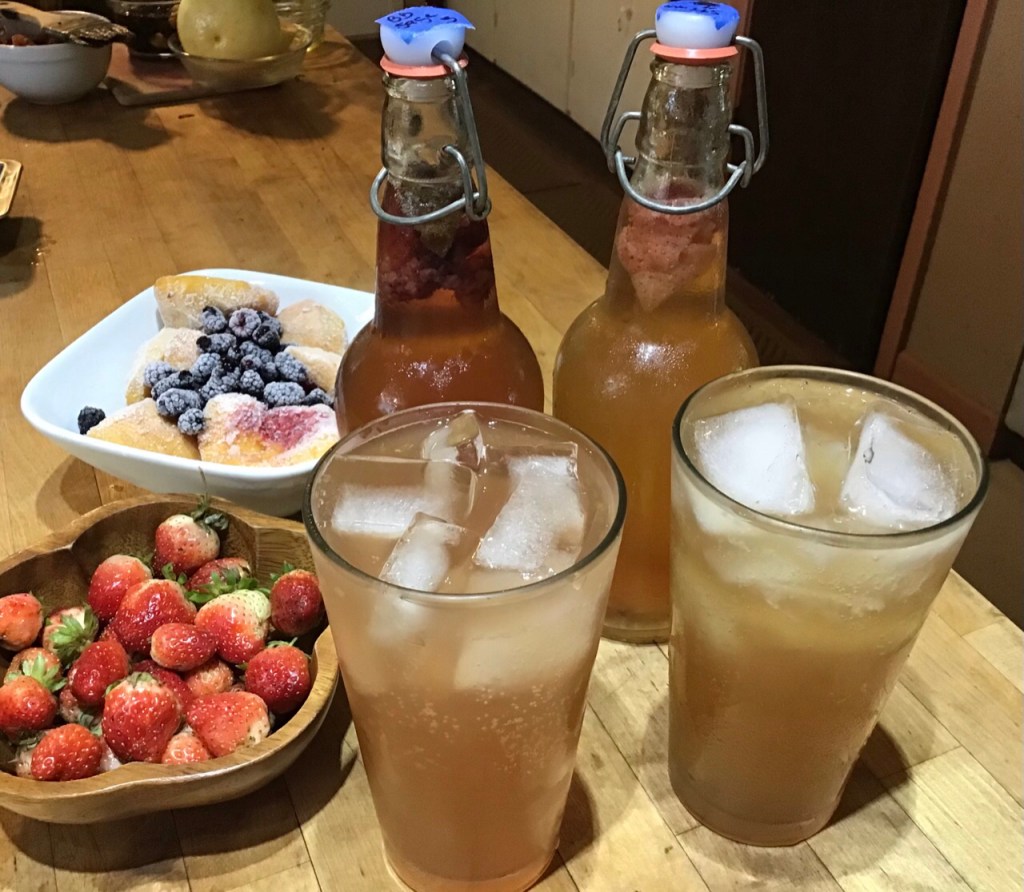
By ‘doing well’ I see I need to learn a thing or two about growing strawberries. They are too crowded and between the humidity and the wet mulch they are mostly half-rotted by the time they get ripe. I’m really loving the strawberry kombucha though! As well as the blackberry, and mulberry. I’ve started making the kombucha tea from yaupon, which grows like a weed around here. It’s delicious and sweeter than the store-bought green tea I usually use.
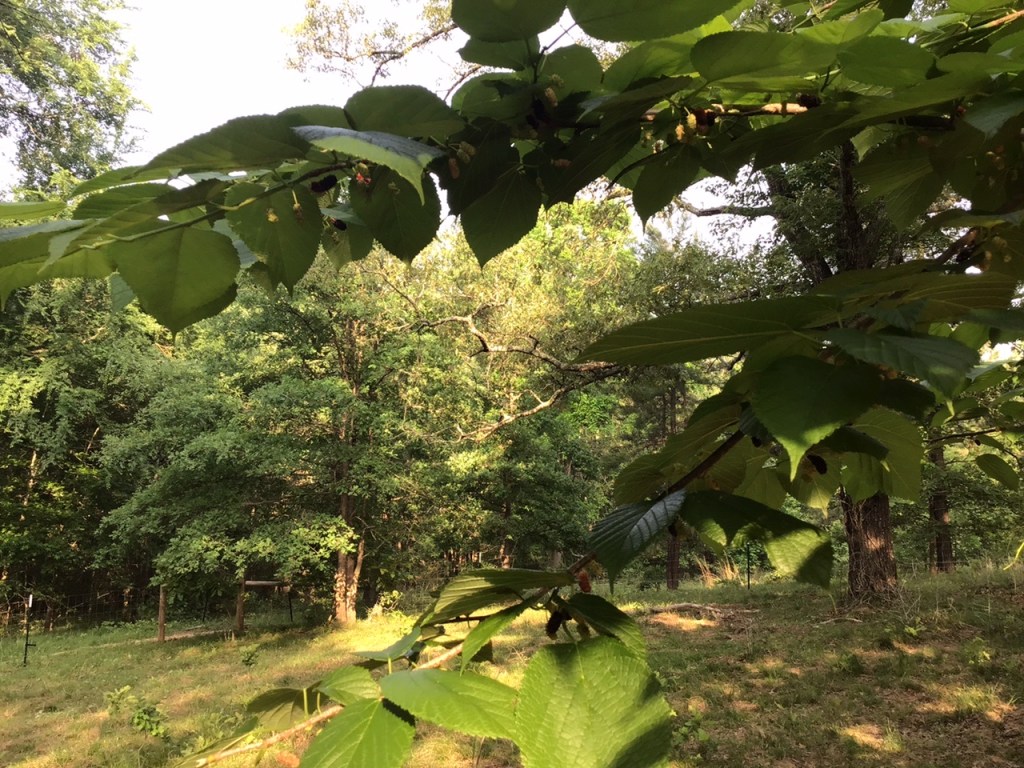
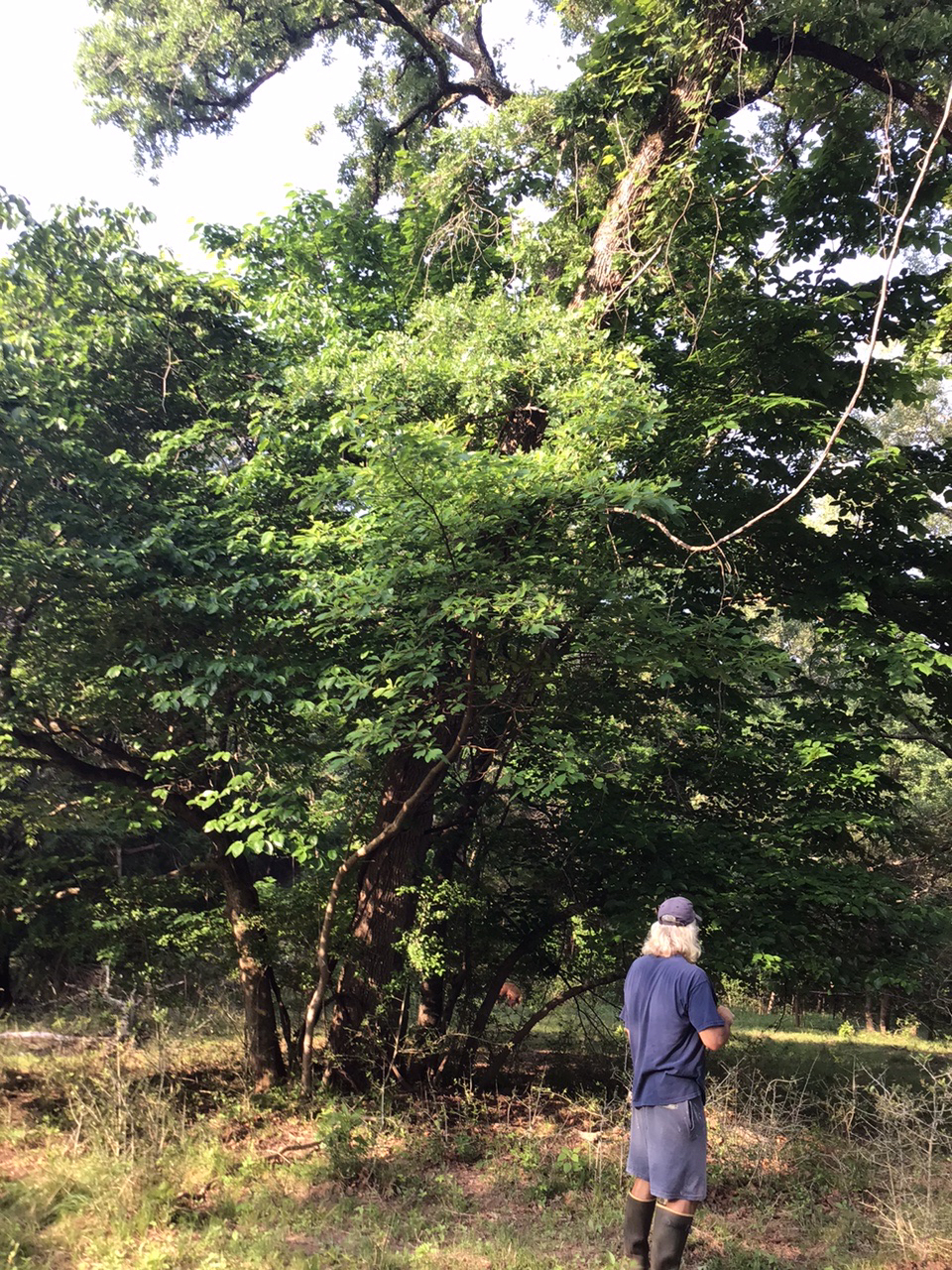
And speaking of mulberries, what a great surprise, Hubby found a full grown, wild mulberry tree in a spot we walk by regularly and never noticed before. What a treasure hidden in plain site!
More mulberries, please!
And this post has reached my attention span limit, so I leave the cheese to the next post. It’s gonna be a good one all on its on, really! Stay tuned!
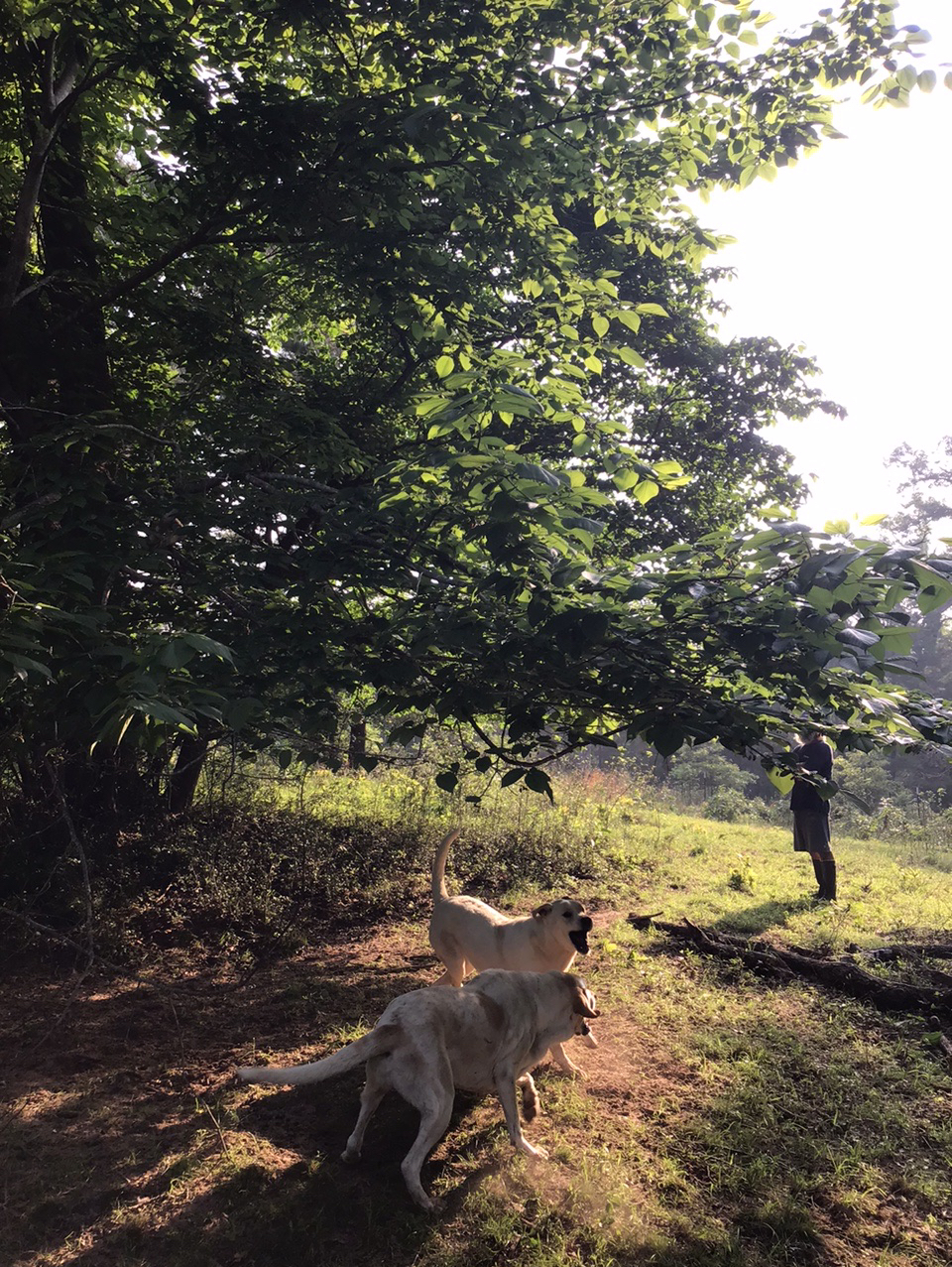
Instead I exit abruptly, like spring has done in East Texas, with this quick lesson from Bubba in best yoga techniques.
I’ve got sweet potatoes on the brain since I’m just fixing to plant them. I’ll continue planting them for another month or so as they are such heat lovers they’ll thrive all summer long, with supplemental water, and they have numerous benefits.
The biggest benefit, besides doing well in the heat, is that they are vigorous enough to out-compete the many grasses that try (and too often succeed) to take over the summer garden. Additional benefits are that the leaves are edible and delicious, few pests bother them too much, and all the critters love the surplus. Plus, they are so easy to grow you can start them right in your kitchen and have dozens of plants from just one potato.
There are several methods for growing the ‘slips’ which you then plant in the garden. It seems the most popular way is to suspend your potato in a jar of water then snap each new vine off when there’s about 4 or 5 leaf sets, then plant it.
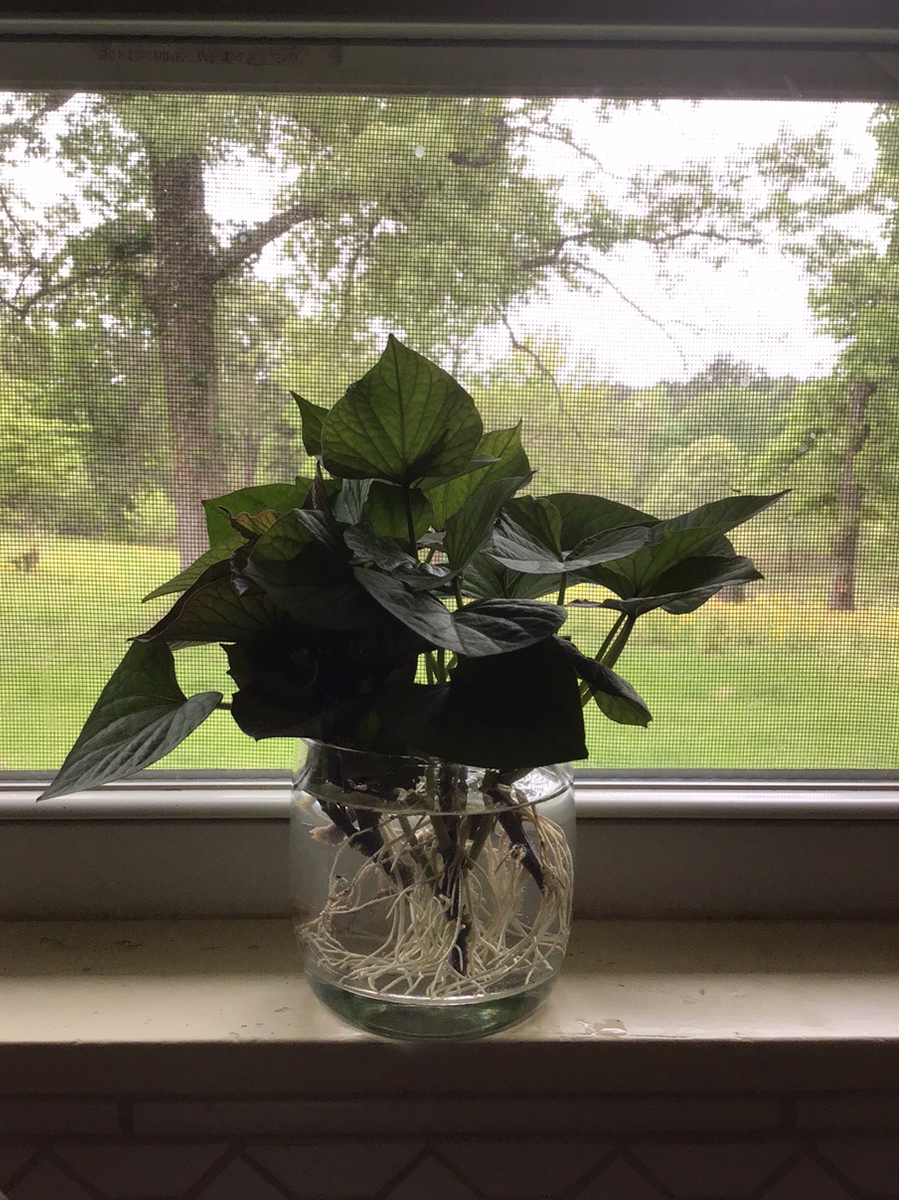
I prefer another method because when those vines get taller they don’t do so well with the wind when you first put them in the ground and they dry out faster. I lay them first flat in a tray and cover them most of the way with loose soil. Once they get 2 or 3 leaf sets I snap those off and put them in water for a week or so to grow roots. The short vine with many roots transplants much better in our climate than the long vine with no roots.*
These are from last year’s harvest, under lights in the corner, but a sunny window would work as well, especially with a heat mat.
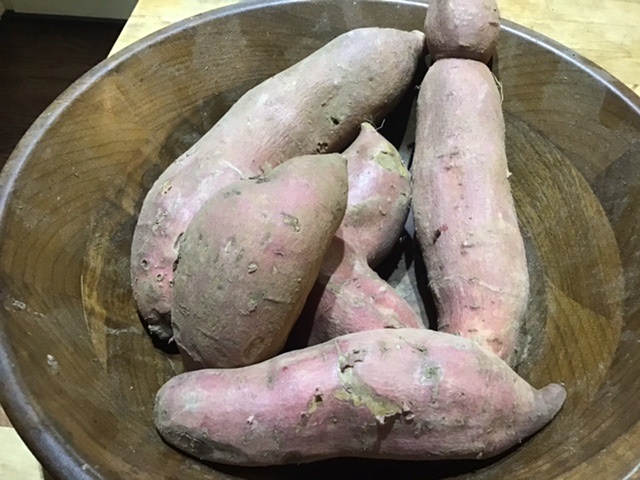
Not exactly attractive, but very tasty! Some of our favorite ways to enjoy them are as a crust for quiche, in a roasted veggie medley tossed with plenty of olive oil or pork fat, and mashed with turnips and butter.
I prefer to tone down their sweetness rather than accentuate it, but lots of folks prefer the opposite, like the popular Thanksgiving dish topped with marshmallows or baked in a pie. They also do very well as a thickener for soups and sauces. To further tone down the sweetness you can avoid the curing process and move them straight indoors to overwinter.
For more growing tips and cooking ideas, here’s a good site:
* Another tip for Southern gardeners is to grow your own slips rather than order them. I wanted to try some different varieties I saw in the catalogues and tried for several years to get a good crop and they failed every time. The vines went crazy, but no tubers grew at all. I tried to discover why this was, but never could find an answer. My only guess is that coming from a more northern climate disrupted their growth somehow? Not only that, but they are obscenely expensive considering how easy they are to grow! I was not at all pleased to waste so much time, space and money for those failures. But, lesson learned and now I waste no money on them at all!
We have some happy snaps, one minute of piglets’ bliss and a couple garden successes to share today.
Mamas and piglets are venturing out already and enjoyed their first spa day. Unfortunately, Mama Chop did still squish two of her wee ones despite Hubby’s extra efforts, so both Mamas are now with seven. Virginia has proven to be the better mother, but we prefer Mama Chop’s personality. But, it’s not about us. Sadly this will probably be Mama Chop’s last hurrah.
Mama Chop with her Lucky 7Our semi-feral cat, Skittles, is becoming more domesticated now that there are only two dogs who chase her off. That is, if you call hissing and snarling for her supper domesticated! 😳
Moving on to the garden I’m pleased to report good news. The alliums are looking amazing, the best ever at this time of year., I expect that is due to our very mild winter and an extra helping of sheep poop. I love this time of year when chopped green onion can top every savory dish. Also, unlimited lettuces, for a limited time only. Once the heat sets in there are only a few varieties that survive, arugula and oak leaf primarily, and even those still have a tendency to get too hot or bitter and bolt quickly.
Here we’ve got garlic, elephant and a few varieties of hard neck, plus white, red and yellow storage onions, shallots, and a pearl onion perennial that I highly recommend for hot climates (Bianca di Maggio). I’ve tried every type of popular perennial onion and this is the first time I’ve gotten them to last, relatively carefree, for two full years. Normally they do not last the summer. That could also be because these I grew from seed instead of getting sets.
Seed saving and propagation are big on my garden plans lately, not only because of the high costs we’re seeing. Some seeds naturalize very quickly to their environment and I’m regularly impressed at all the volunteers that have found their way into the garden over the years—including tomatoes, wild carrot, datura, tomatillos, jumping jacks, Malabar spinach and collards/kale. In some cases I’m planting these purchased seeds and they don’t do that great the first year, but the volunteers that come back thrive with no care and even competing with some of our very pernicious grasses. Nature is so amazing!
Tis the season for pokeweed, a new and reliable favorite—that poor maligned and misunderstood plant I wrote about last year. We ate the greens all summer, the berries all fall and winter . … and we’re still alive . … go figure! So much mis-and dis-information out there on this delicious, nutritious and versatile, once upon a time Southern staple, that ‘science’ has tried to steal from us.
Two more such successes are strawberries and chayote squash. These are definite testaments to the old adage: “If you don’t succeed, try, and try, again!”
Why, oh why do you let weeds grow in your garden!? Oh let me count the ways . … the bees, the seeds, and, seriously how much time do you think I have?! Actually though, there’s a very good short answer for that—when you allow the deeply-rooted ’weeds’ to work among your short-rooted annual crops you have a magnificent force of nature at your fingertipes—those long tap-roots bring nutrients up from the depths in order to feed your fancy annual crops their otherwise lacking essential minerals.
The chayote squash, pictured left, I’ve tried to get established a minimum of five times. Even this time, the one I expected to live has died and the one I expected to die has come back with impressive gusto. This is why the plants I really want to work I place in different spots of the garden, just to see, as extra insurance, even though this is often inconvenient and seemingly counter-intuitive.
Same thing with the strawberries. Texas gardeners don’t have an easy time with strawberries or blueberries, they both prefer cooler climates. Most gardeners here who are serious about strawberries either buy new plugs each fall for the spring crop or dig up their crop and store them in the fridge all summer until the fall planting. This is too much work and/or expense for us here, yet I’d love to have at least a small, but reliable, crop of strawberries. This time did the trick so far, but only time will tell. At least I’ve got them not only surviving the summer, but also spreading. I used a couple of folk tricks I heard over the decades. One is from Finland—put them with the asparagus, I was told. But alone that did not do the trick. So, I tried them where the asparagus had been, but also where the Indian strawberries had been growing wild. Success! So far . …
Busy days on the wee homestead as spring moves in. The seasons change, alas the chemtrails do not. The weather whiplash as well. But I must admit, I take quite a bit of hope and satisfaction that in the many years I’ve been bitchin’ about this, folks seem to finally be taking some serious notice. Either that, or my scope is conveniently narrowing. No matter. However the media tries to distract us, what’s truly important is happening in and all around us, not out there somewhere.
Insert ’gross face’
Handy Hubby has been busy in the back 40 clearing more pasture and getting the various spaces ready for the soon-to-be coming babies—piglets and lambs and kids and chicks. I’ll be posting lots of those pics when the time comes!
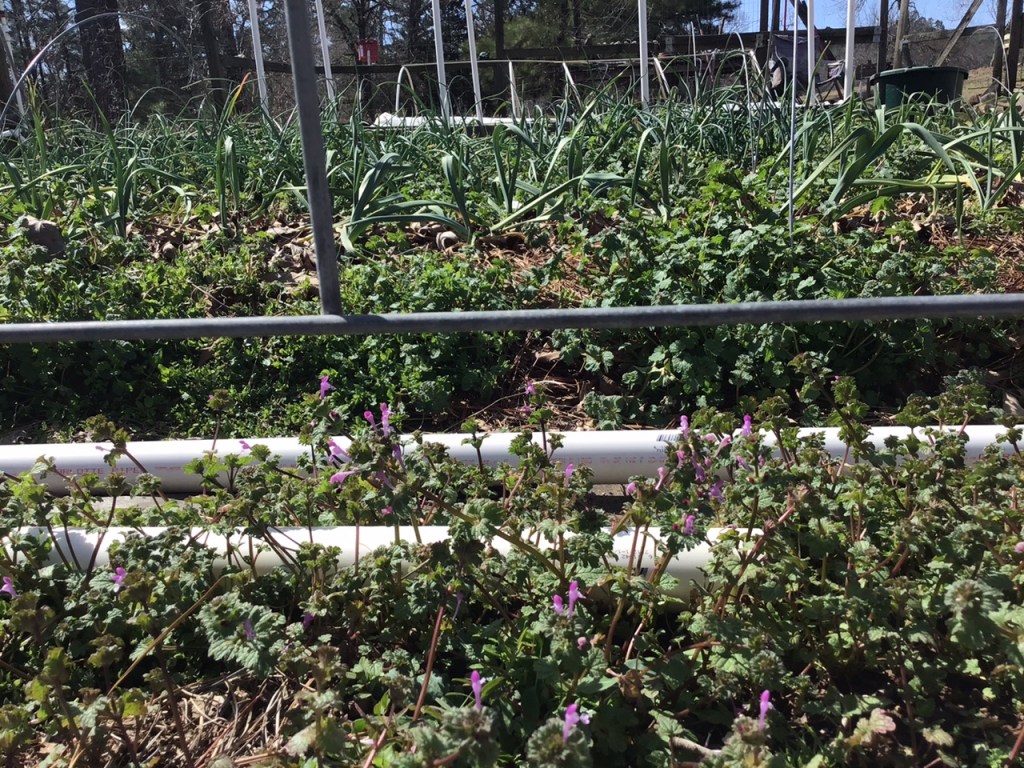
I’ve been busy in the garden and the bees are just starting to get busy, too. Only one colony failed over the winter, so that’s looking promising. We have loads of henbit blooming, but the bees seem to be preferring the chickweed so far. I have seen them enjoying the henbit on other occasions, so I keep plenty of it around. Such fickle little fairies. 😇
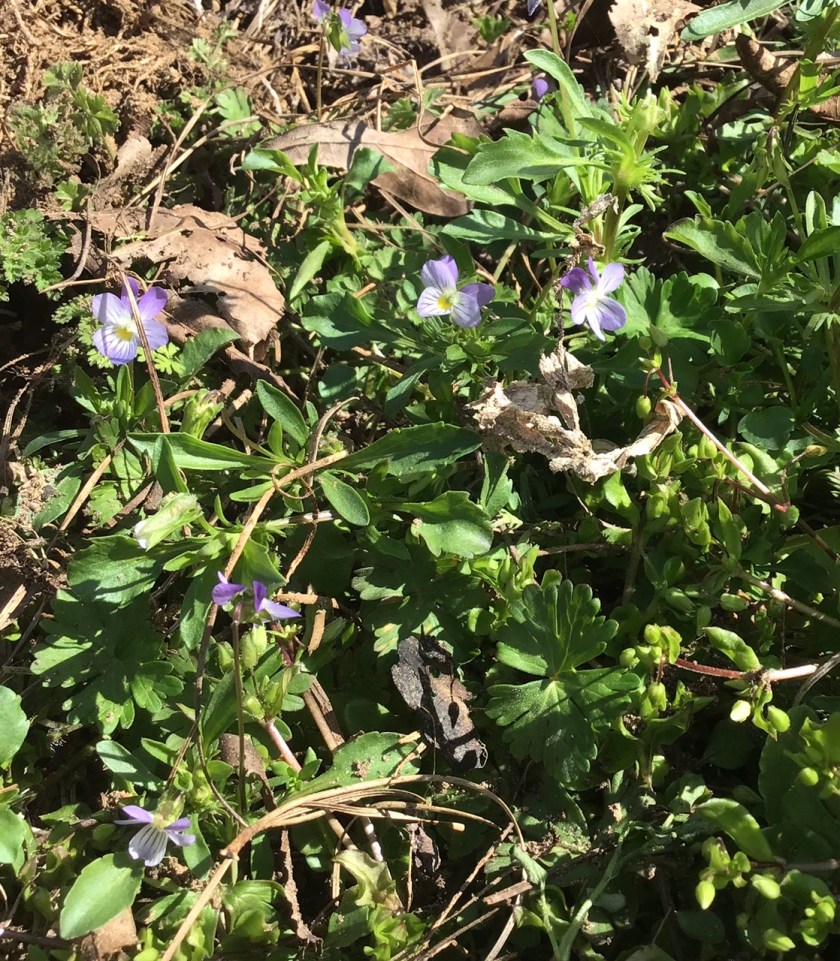
Chickweed and henbitWild violets, deliciousHenbit and garlic
The perfect pesto can be created from those three ’weeds’—henbit, chickweed and violets. It takes some patience, but it’s well worth it.
The box that kept us in salad fixings all the cold season, covered with row fabric on the frosty nights and days.
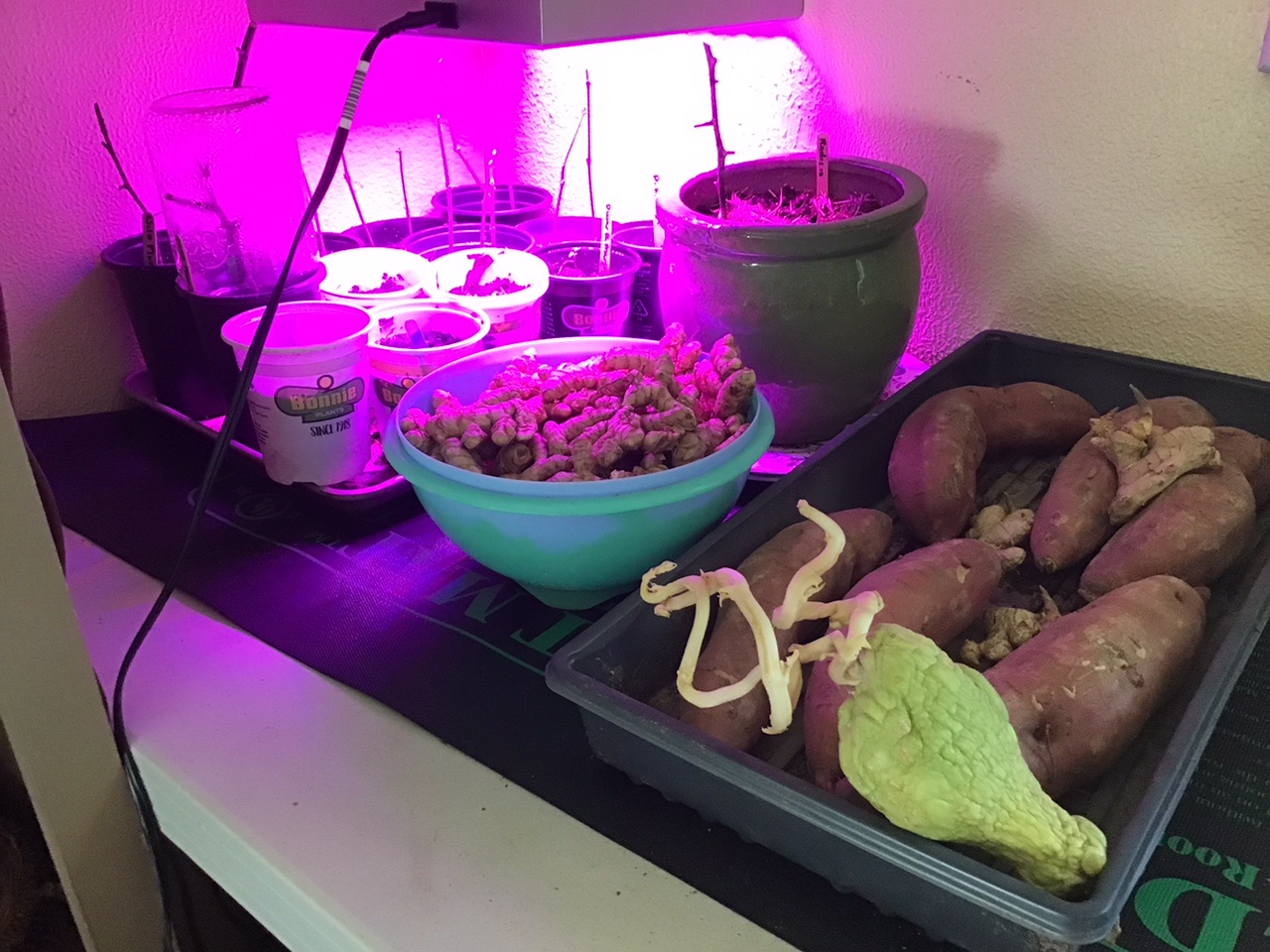
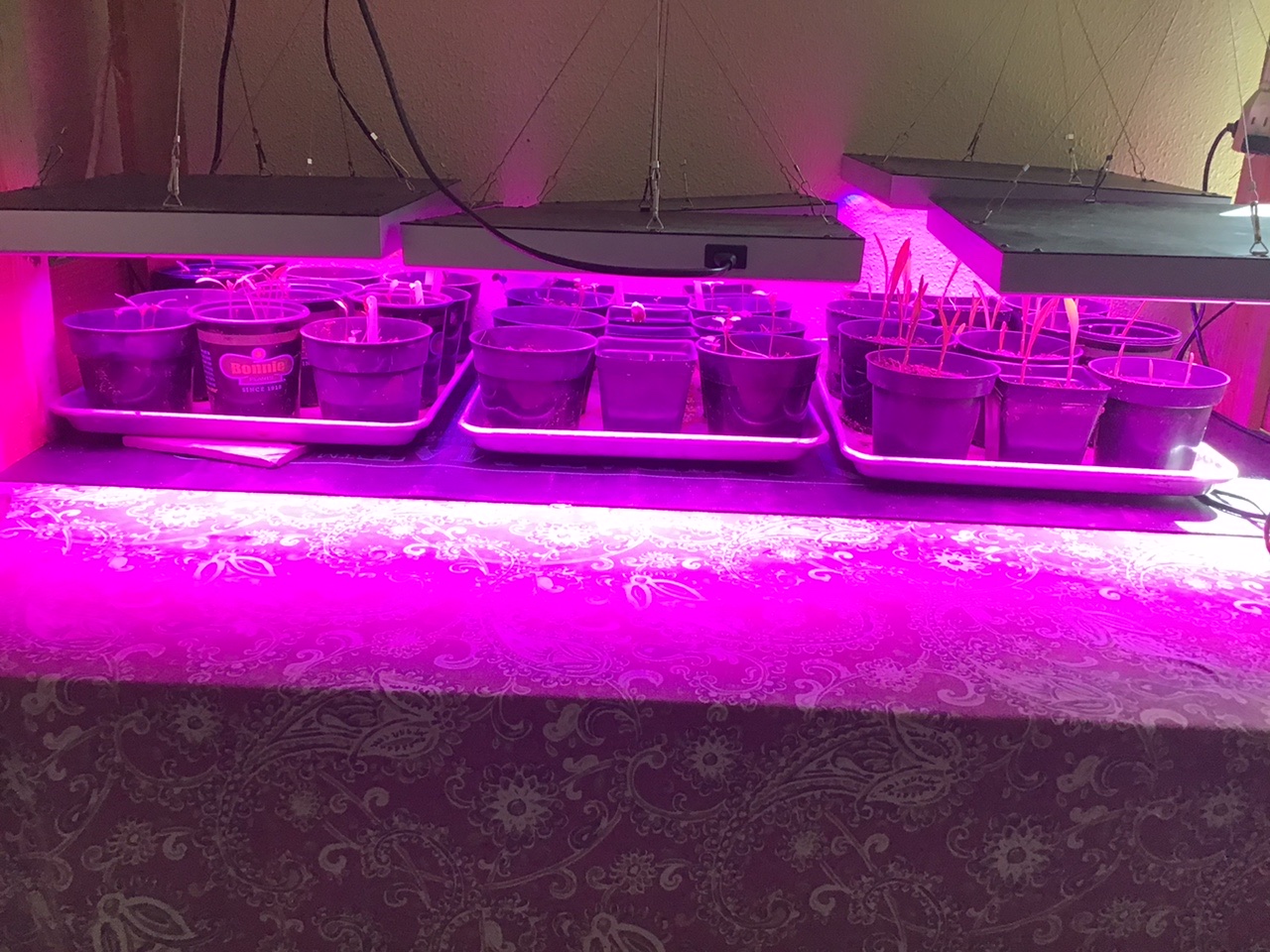
I’m pleased that the avocado and mirliton squash I over-wintered inside did really well. Of course, I’m not counting my fruits before they hatch! I’m also trying sweet corn inside under lights for the first time. We often go so quickly from frost to 90 F degrees that it’s a ’beat the clock’ situation. In the middle photo are the sweet potatoes, ginger, tumeric and another mirliton warming up on a heat mat before putting them in soil to warm some more under lights before transplanting.
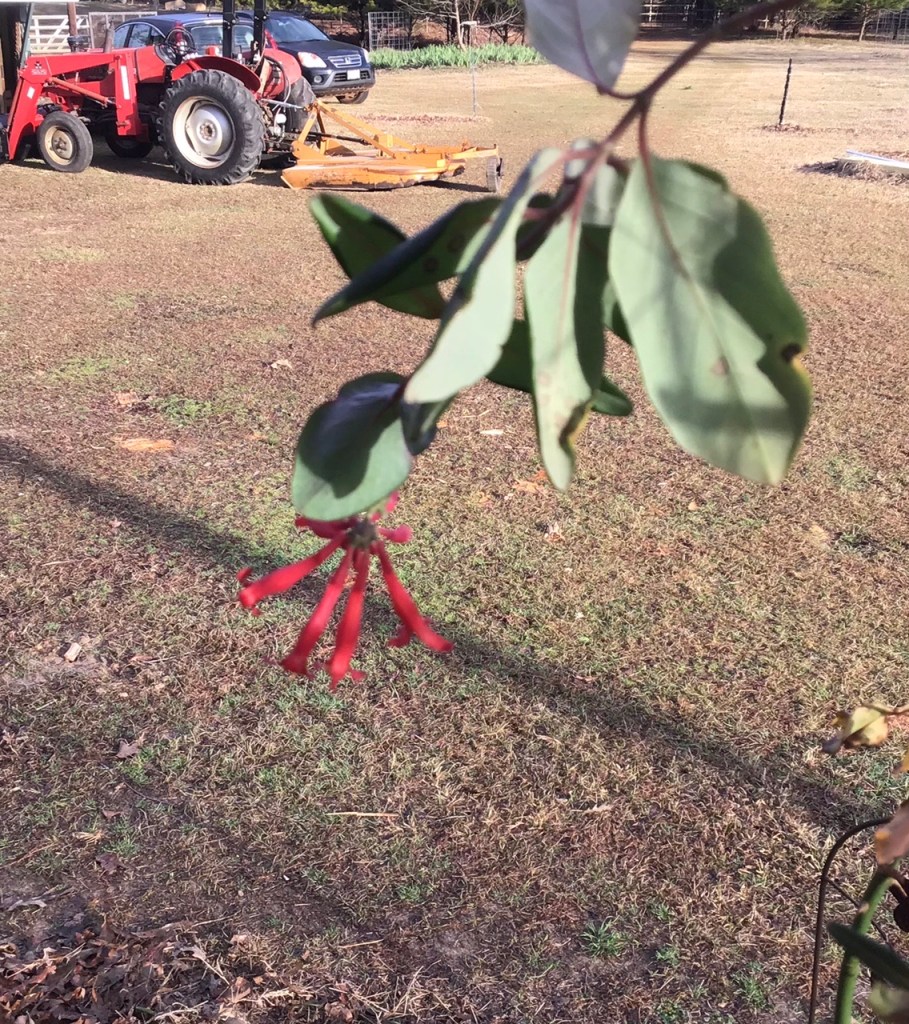
Coral honeysuckle—kinda proud of this one because I propagated it from one found in the woods. I’m experimenting with a lot of propagation ‘from the wild’ these days, time will tell, I mostly fail so far. Hubby’s old tractor in the background, it’s seen an enormous amount of work but keeps on ticking, with constant upkeep and much frustration on Hubby’s part sometimes. 😩
Garlic, shallots and a few types of onions going strong! That’s row cover on the right of the photo, for the weather whiplash. On the right you can see the garden from a distance, completely fenced, with a makeshift green house (the cover destroyed during the tornado a couple years ago) that will soon make it to the top of Hubby’s to-do list, I hope! 😏
It’s been unseasonably warm for us so far, with regular episodes of more mild weather whiplash than in recent past years. I suspect that’s about to change, so here’s the garden as it’s growing now.
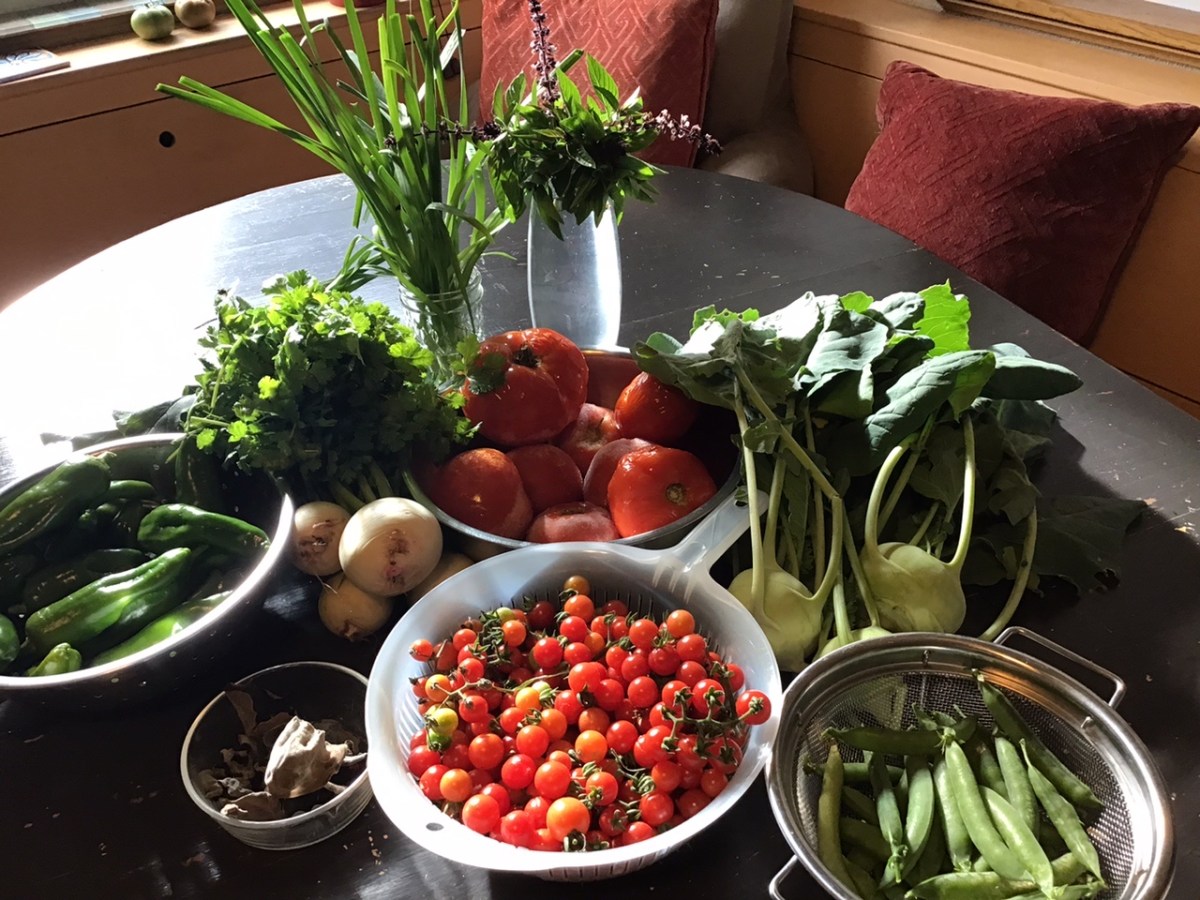
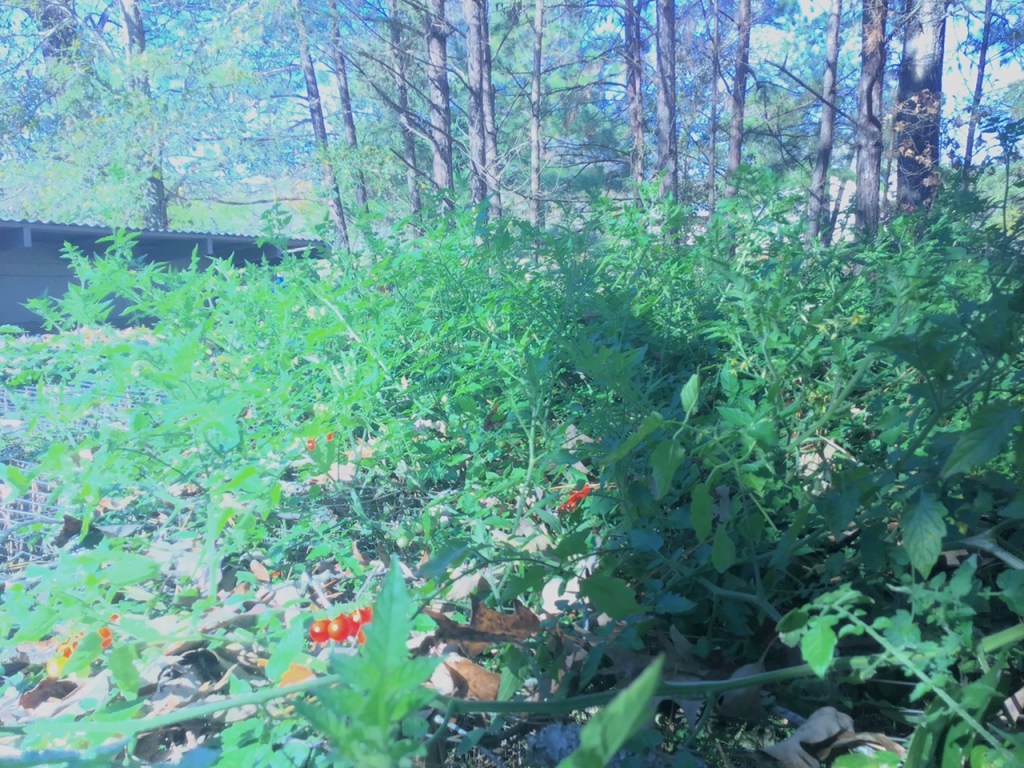
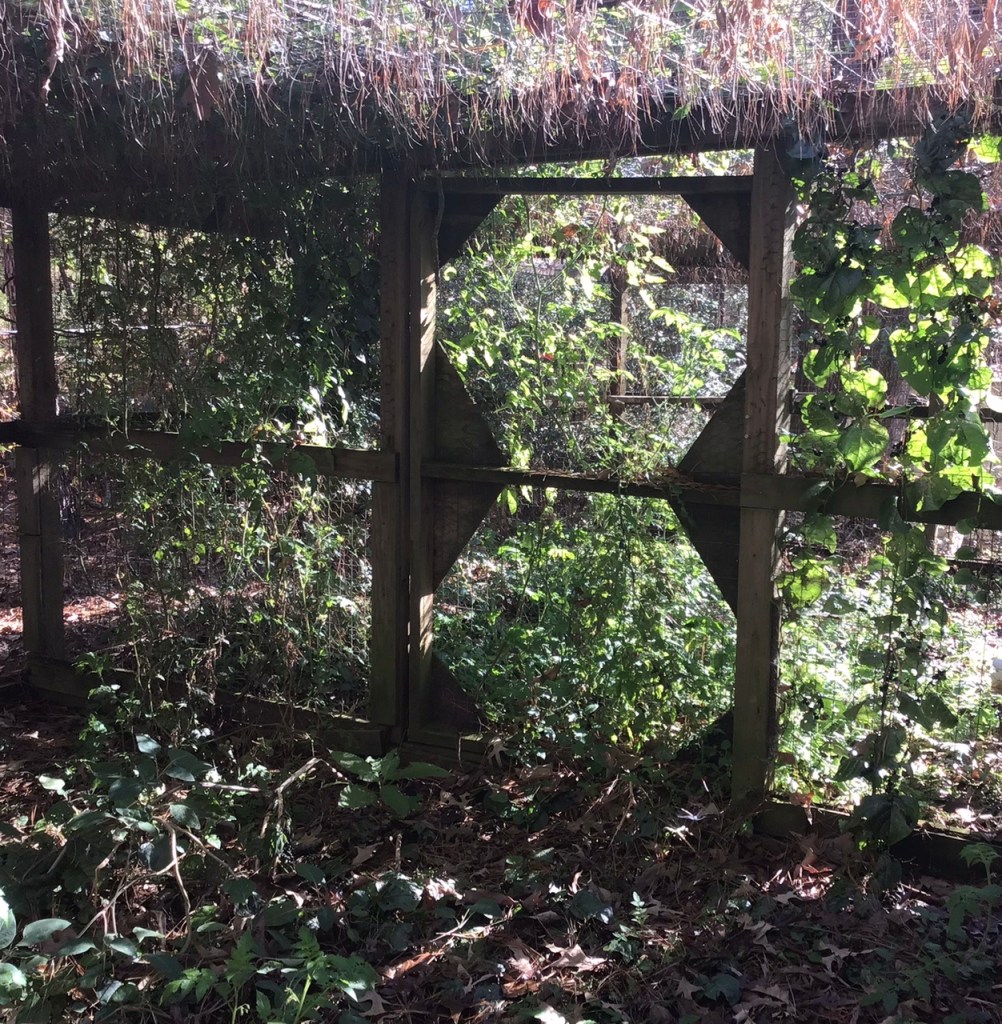
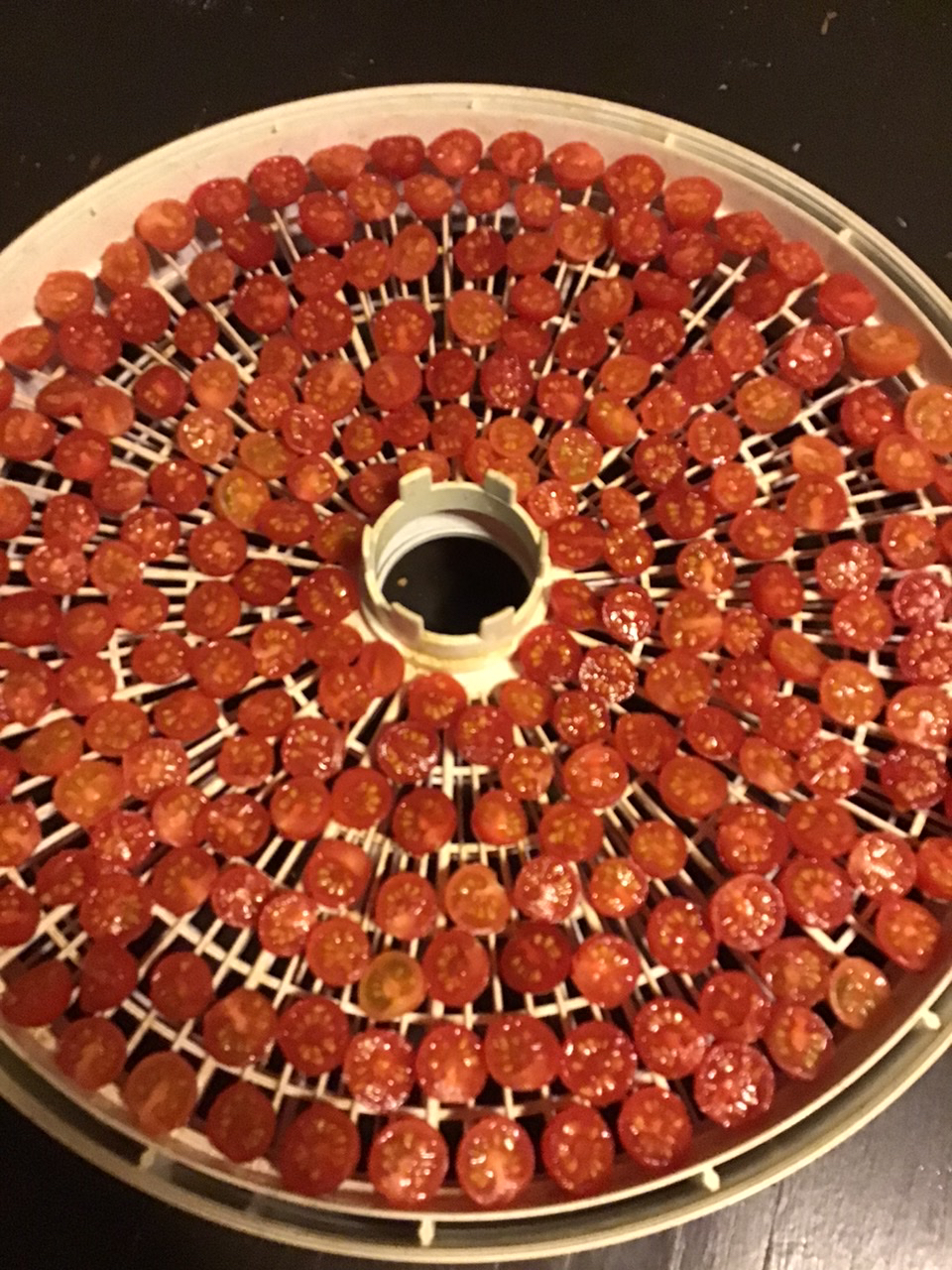
It’s a first for fresh tomatoes in December around here! We are still harvesting from the ‘volunteer’ tomato jungle growing in the duck coop. It looks so pretty and is producing much more than we can munch. Even though it’s tedious work, I dry them. They come out delicious that way and can be added to all sorts of dishes or made into a pesto.
The large tomatoes pictured here are previously frozen. Freezing the surplus in summer solves one big problem around here: the tomatoes come ripe after the cilantro has gone to seed. To me, salsa without cilantro is like a bed without pillows! Now the cilantro is growing like gangbusters, and we still have fresh peppers (another first!), so we get nearly fresh salsa in December too.
With the peppers still growing strong that means in 20/20 hindsight I should not have moved a couple of them last month to winter them indoors after all. Where’s my crystal ball when I need it most?!
Turnip greens are growing faster than I can keep up! I over plant so the sheep and goats get some extra greens and the pigs love the roots.Happy garlic started sprouting All our favorite fall crops are doing fabulously! I plant very heavily then thin when they are still small, but big enough to enjoy. Can’t do that on a factory farm! I also don’t weed out the ’weeds’ —like chickweed and hen-bit—unless they are badly encroaching on the crops. They are edible after all and once they flower the bees love them too, at a time when very little else is available to them. This has the added benefit of habituating the bees to scout the garden all year round.
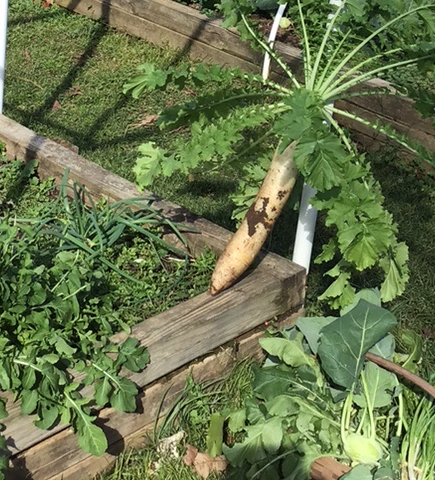
Now that’s a radish! I love all radishes, but the Korean radish is seriously impressive.
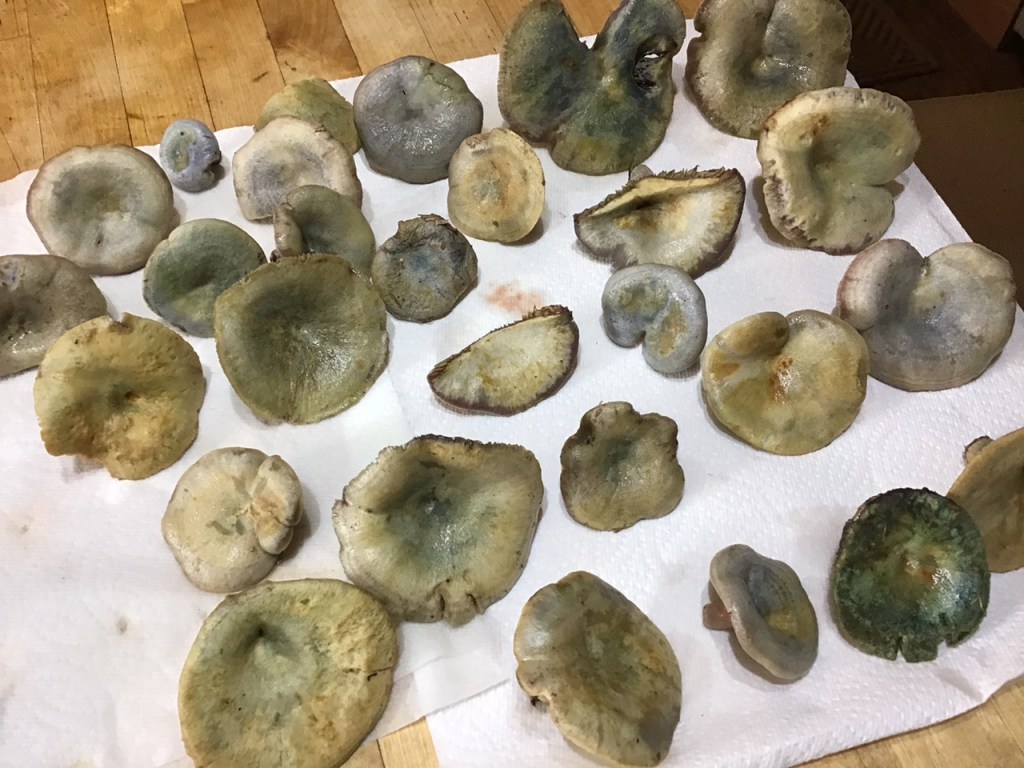
The mushrooms continue to marvel me! First we had chanterelles nearly all summer, now we have delicious ’wood blewits’ (clitocybe nuda—ok that sounds a bit pornographic, no?!) and tabescens, and lactarius paradoxus. Also pictured are either the hallucinogenic ’laughing Jims’ (Gymnopilus spectabilis) or the highly toxic ’Jack-o-lanterns’ (Omphalotus olearius). The latter I give to a friend who uses them to dye yarn. The former, if I were 100% sure of my identification, I might be inclined to try! Apparently you can tell from the spore print color, either orange or white. But, what about when it comes out whitish-orange? Too risky for me!
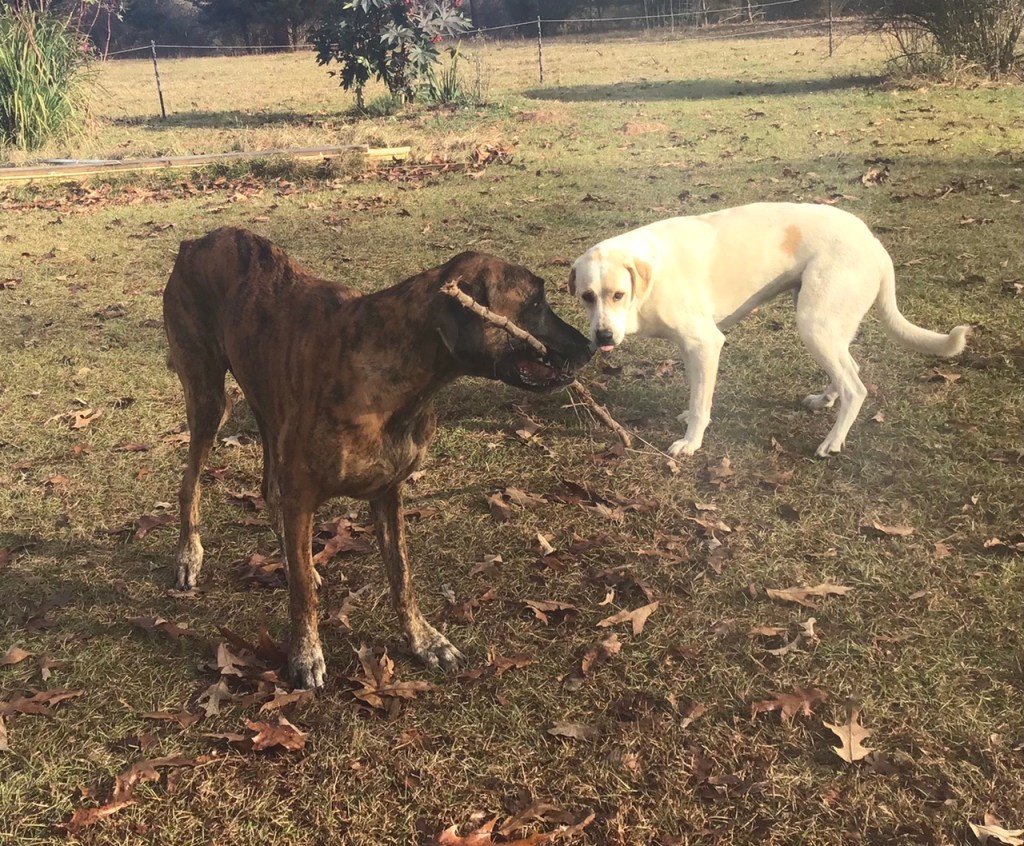
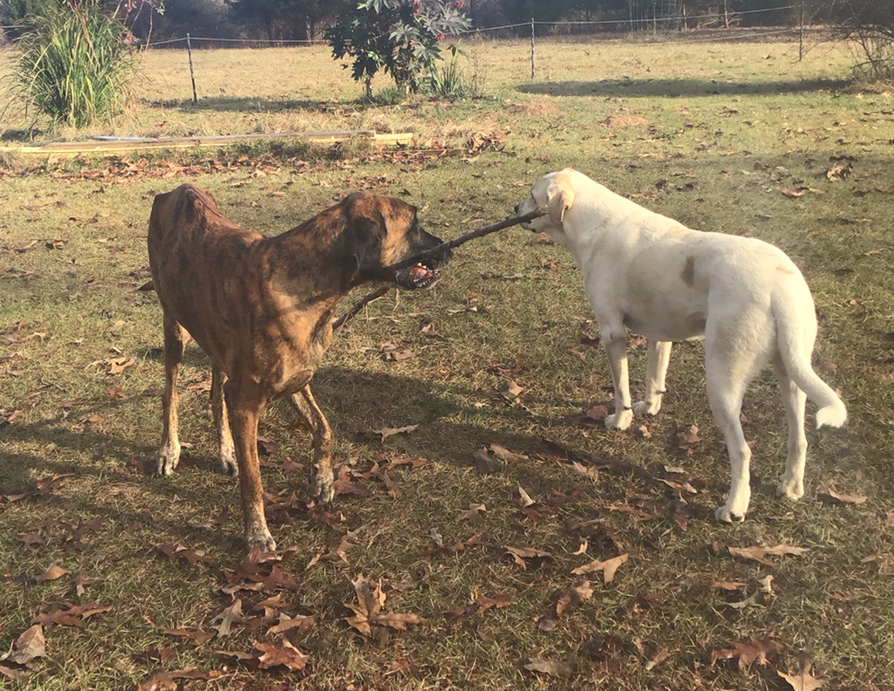
The cooler temperatures make even our old dogs feel a little frisky!
Play time!Who’s gonna take me on!Come on, chump, make my day!Just as I expected, you wouldn’t dare! 🙂
I would also have been speechless at the response to his question at that California conference!
I’d love to hear what y’all think, too. 🙂
Second Amendment for Food
A ballot initiative you may not have heard about in Maine late Tuesday created unprecedented freedom for voluntary food commerce. This first-of-its kind constitutional amendment does what the U.S. Bill of Rights failed to do: guarantee citizens the right to choose their food.
The measure added language to the state constitution providing that individuals have a “natural, inherent, and unalienable right to food, including the right to save and exchange seeds and the right to grow, raise, harvest, produce, and consume the food of their own choosing for their own nourishment, sustenance, bodily health, and well-being, as long as an individual does not commit trespassing, theft, poaching, or other abuses of private property rights, public lands, or natural resources in the harvesting, production, or acquisition of food.”
What this does is give the individual legal standing to sue any entity–including a government entity–that stands in their way of acquiring the food of their choice from the source of their choice. This language has been championed by the Farm to Consumer Legal Defense Fund for years and it’s truly wonderful to see that a state has finally adopted it into its constitution.
Both the Farm Bureau Federation (you know, that outfit that says it’s a friend of farmers?) and the Maine Dairy lobby fought aggressively against it, charging that it would undermine food safety. That’s always the argument, that choice is too risky. Somebody might get bad milk, rotten chicken, or spoiled porridge. Yes, that’s possible, but it’s also possible they’ll be able to get better milk, better chicken, and better porridge than heretofore available due to burdensome government regulations.
I’m thrilled over this development and anticipate Maine now leading the nation in local food commerce. It’ll be interesting to see if the federal government attacks the state like it did with the Food Sovereignty Act several years ago. At that time, the federal government said that if the state didn’t rescind that freedom, it would pull all inspection from the state and nothing would be able to move outside state lines. Maine buckled.
Let’s hope Maine holds firm this time around because the same opposition is still very much in power, both at the industry level and the bureaucratic level. Lest you think this is all academic, let me relate a quick story. Several years ago I was speaking at a college in California and had about 300 people in a lecture hall. I asked them “how many of you think that a government food safety official should inspect carrots and beets harvested from your own garden before you can eat them?” One-third of the hands went up. I’ll never forget the moment. I literally was speechless (that’s a big deal for me) for a bit, trying to metabolize this reality.
Are you in agreement with what Maine just did, or do you think this will fill the hospitals with folks suffering from tainted food?
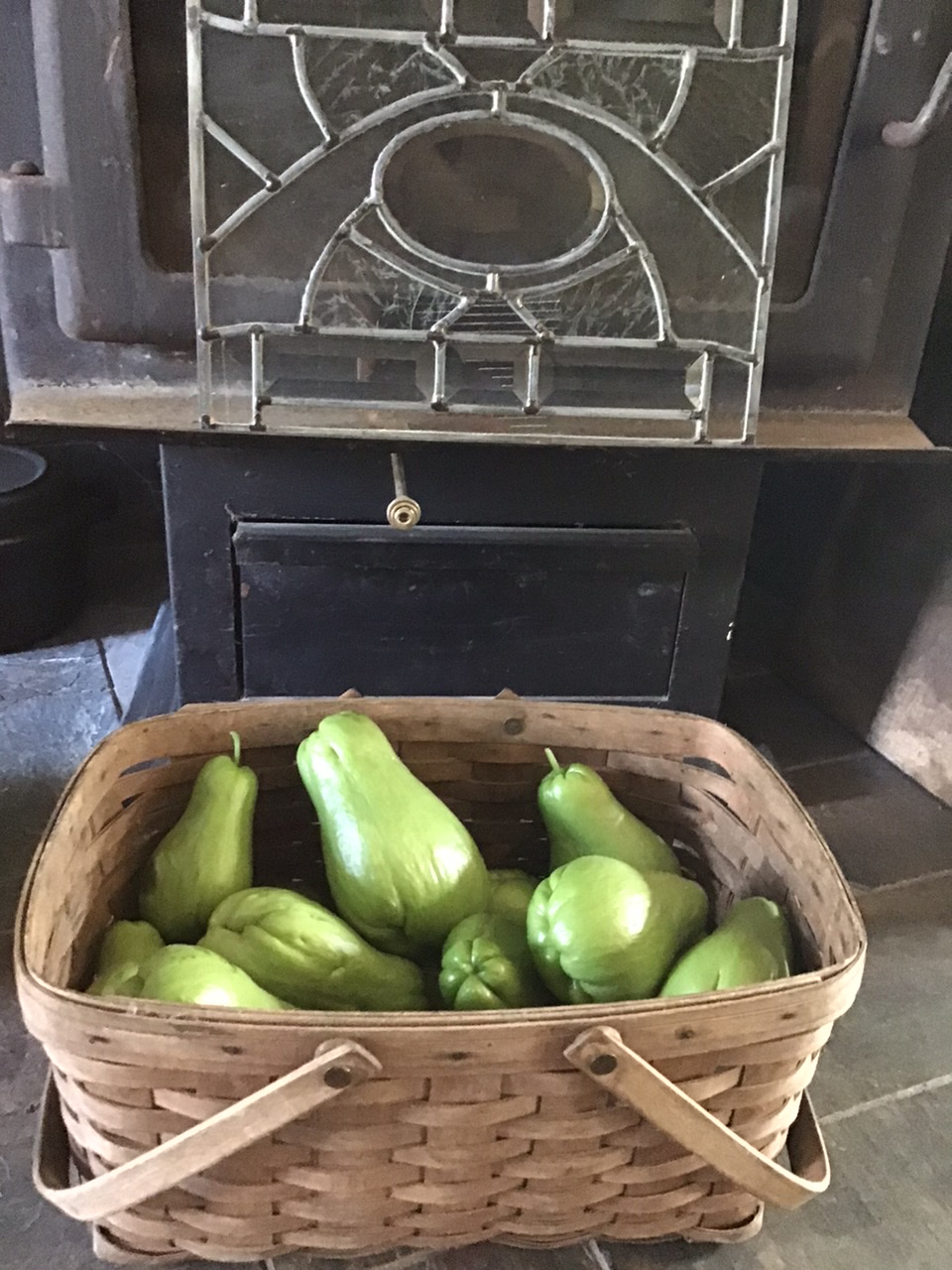
This post is just a quick plant profile because I’m so very pleased we’ve finely been successful growing this impressive and delicious squash. We’ve tried at least five times previously and they never lived through the summer and died long before producing fruit in early fall. I wish I knew how we got lucky this time!
A perennial with leaves, fruit and root all edible. One plant can easily produce 100 fruits a year. It’s a day-length sensitive plant grown in tropical and subtropical areas.
In Zone 8 it can come back from the roots if well-mulched. Fingers crossed here! It was first domesticated in southern Mexico and Central America. The fruits are used raw like a zucchini or cucumber, or cooked like potatoes.
It’s a very popular vegetable in Creole cooking. It’s used in fritters, stuffed, pickled and smothered.
We’ll be trying all of those!
Sources: Perennial Vegetables by Eric Toensmeier Louisiana Real & Rustic by Emeril Lagasse
No politics or unpleasant ponderings this post, I promise!
Just some homesteady happy snaps and a well wishing for a wonderful weekend. 🙂
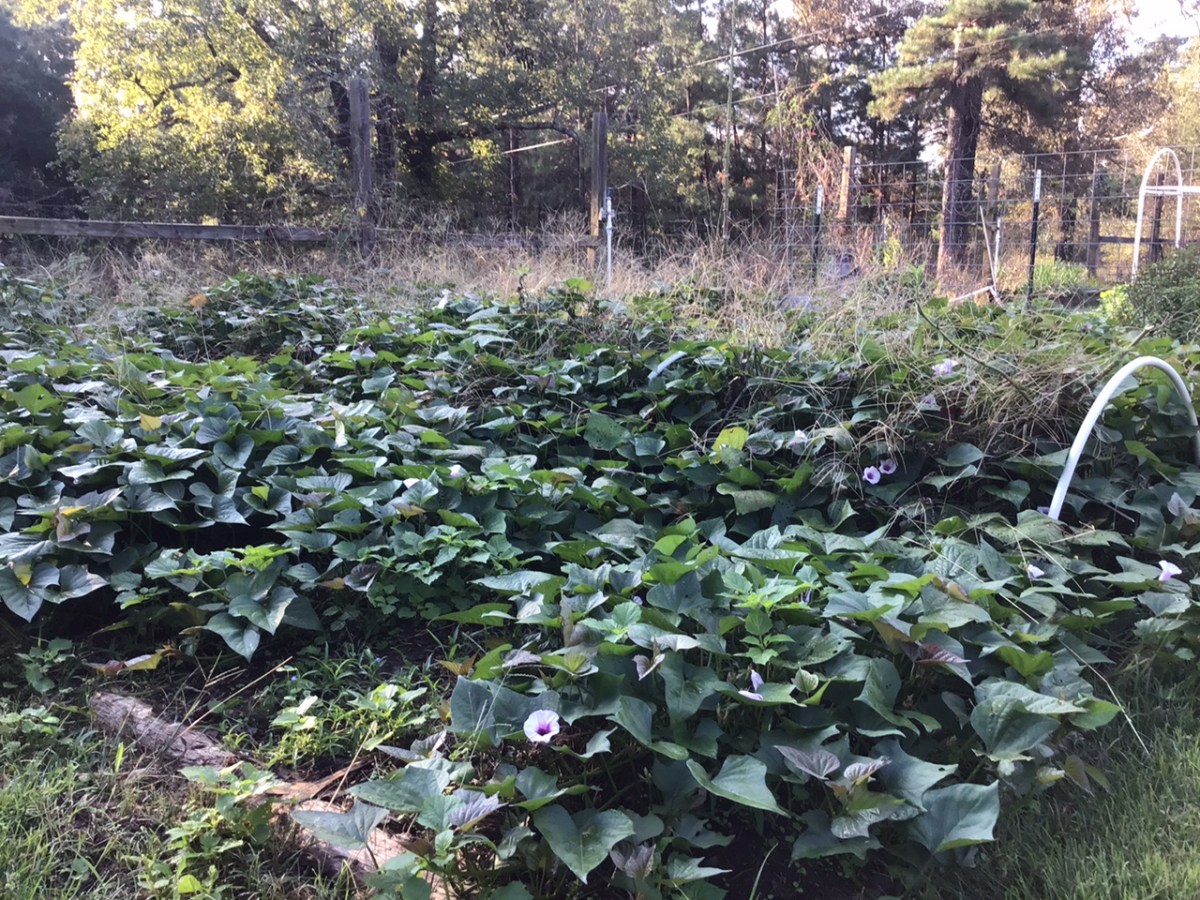
A sea of sweet potatoes soon to be harvested.Mexican tarragon—an attractive replacement for French tarragon that does much better in the South.
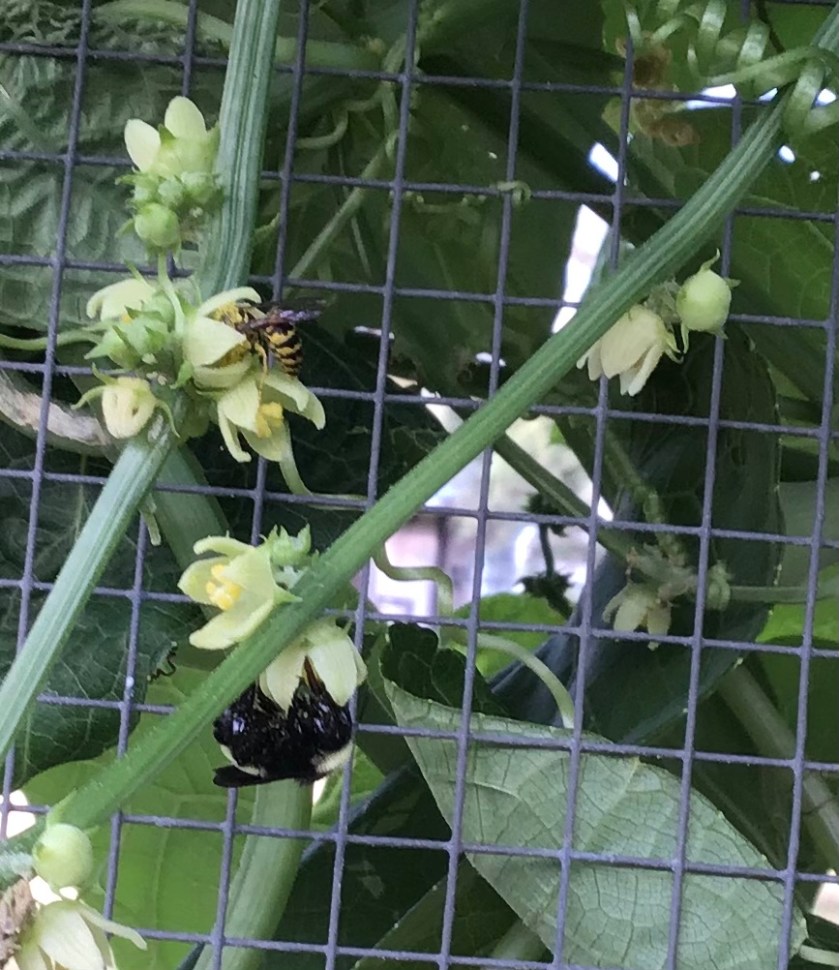
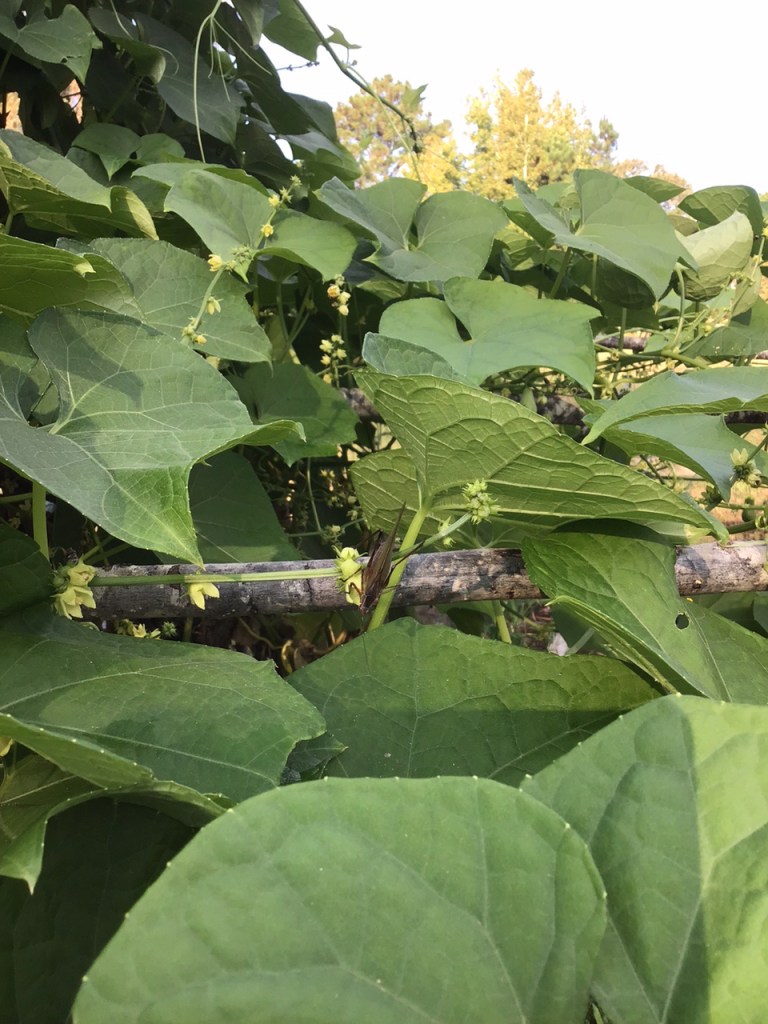
So excited for the mirliton (chayote squash)! It’s growing like mad, covered in flowers and fruit and providing perfect habitat for bees, wasps, crickets, etc.
Volunteer cherry tomatoes thriving on the old duck coop! We’ve never had tomatoes last all summer before, but now I can see how nature would have it done. This is almost an entirely shaded space and the entire coop is filled with volunteers: malabar spinach, datura, and these delicious little morsels.
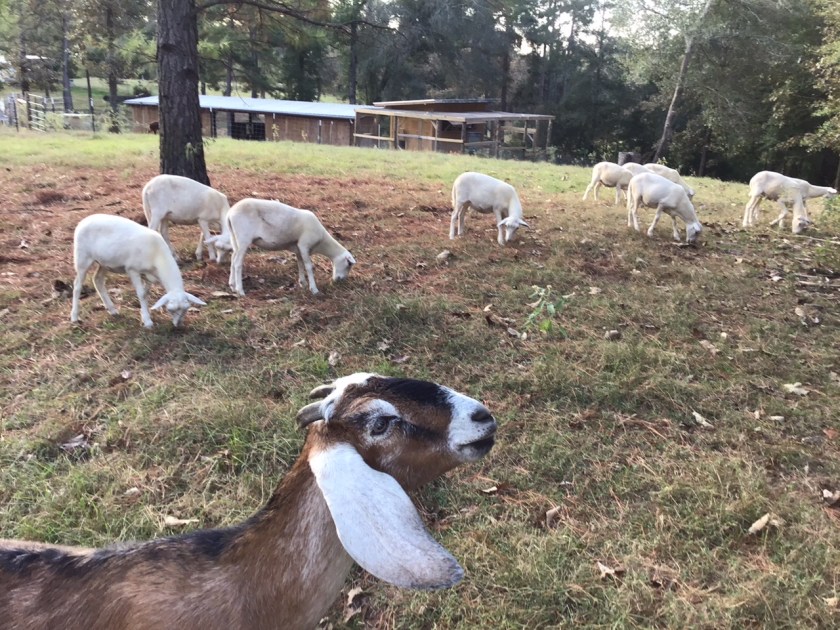
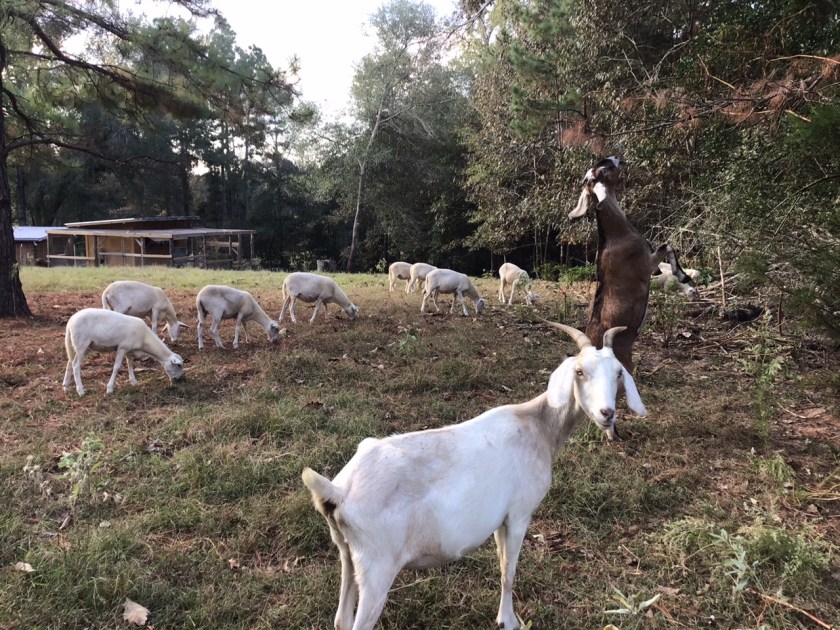
Time to wean the lambs. It was a loud couple of days as mamas and babies were separated, but with Summer as surrogate herd Queen everyone has mellowed down again. Phoebe, the goat pictured on the left, will have her first mating encounter next month. Her sister, Chestnut, jumped the gun, by jumping the fence to be near the rams, the little hussy! FYI—a goat crossed with a sheep is a Geep, very rare and not very desirable.
Drum roll, please, for this next rare shot . . . A Skittles sighting!
Our barn cat, Skittles, who we see about once a week and lives mostly in the trees.
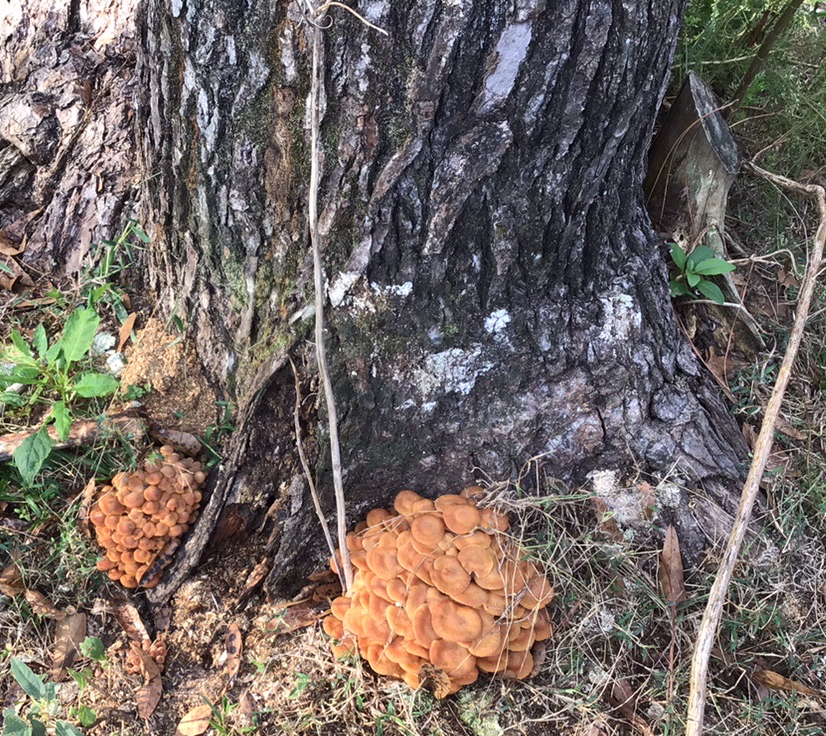
Mystifying mushrooms! These are quite common, honies (armillaria tabescens) claimed to be good by a good many foragers, but we haven’t tried them yet, because my mushrooming buddy and her husband got wretchedly ill on them once. Oops, I promised no unpleasantries. 😉
Buttercup paying homage to the pack leader, Tori, she does this multiple times a day.
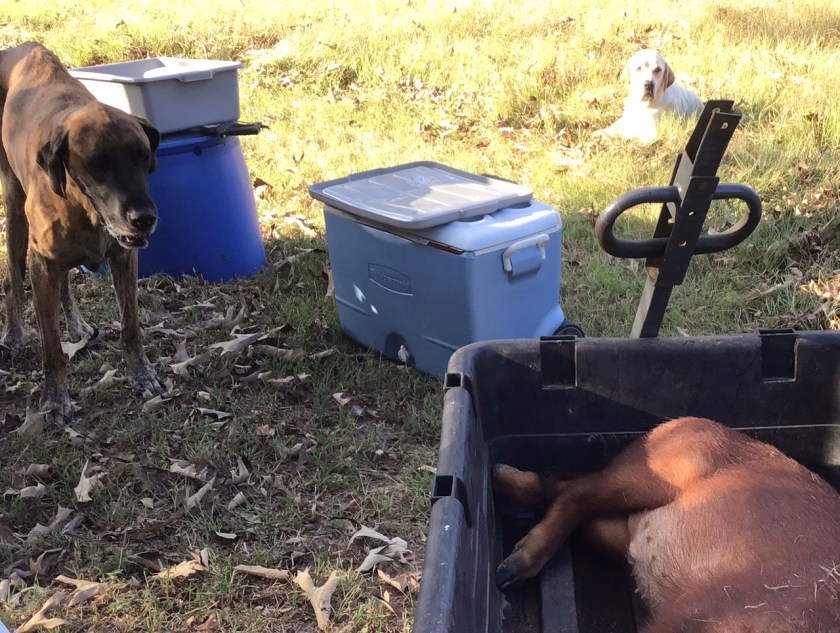
I suppose these next snaps might be unpleasant to some, sorry! I do get that, I felt that at first too, but I was gradually desensitized as I realized how much economic sense it makes, what an amazing skill it is, and especially how magically delicious it is.
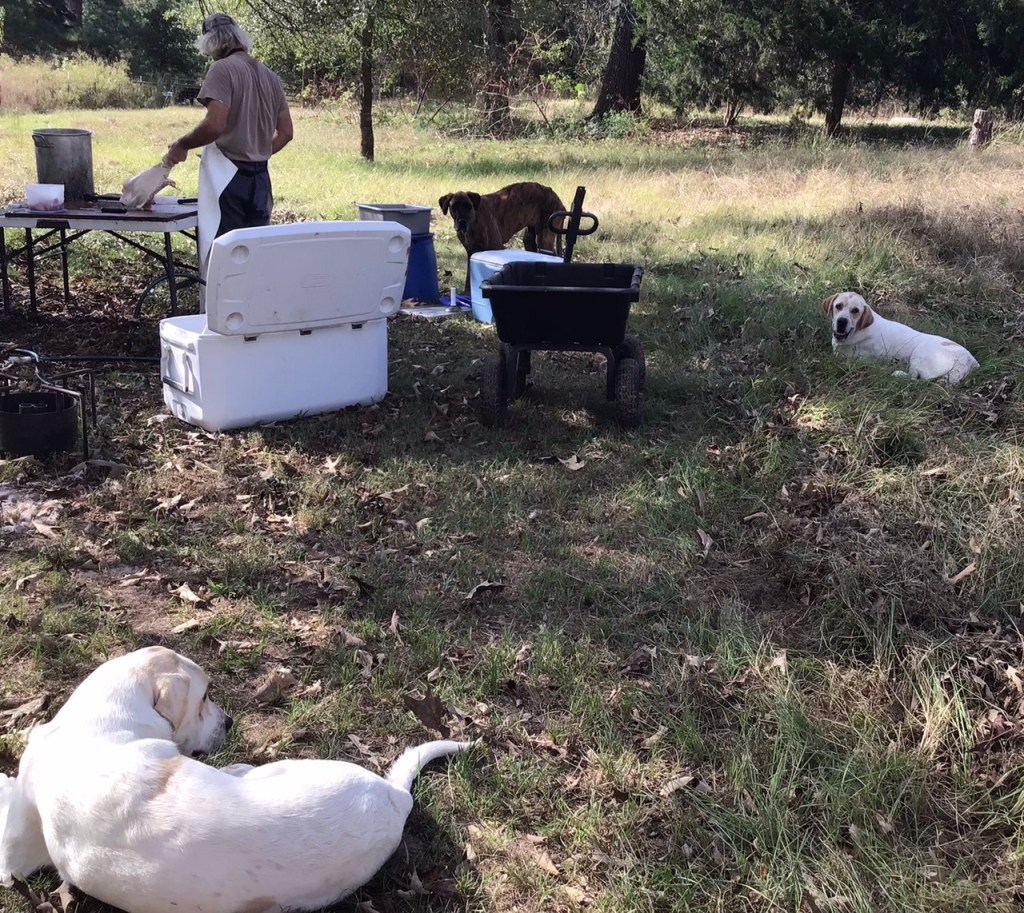
Always an attentive audience at slaughter time.
Our favorite foraging expert who we forayed with nearby this past spring has a great new website all about medicinals. Here’s a short podcast about it, and reminding me that now is the time I should be collecting some goldenrod before winter! Medicine Man Plant Co
We’ve been at this about a decade now, learning by trial and error. Because of a major health crisis in the family, I’ve been introspecting even more than usual these days. That’s why I haven’t been posting much lately.
I thought it high time to deeply consider what our own health futures might hold, Hubby and I, while we are not under the immediate duress of old age and poor health. Health is one of the main reasons why we committed to this homesteading lifestyle. Other reasons are political, esthetic, quality of life and, for me at least, a sense of urgency to hold on to something precious for future generations—nature—before it slips completely from our lives.
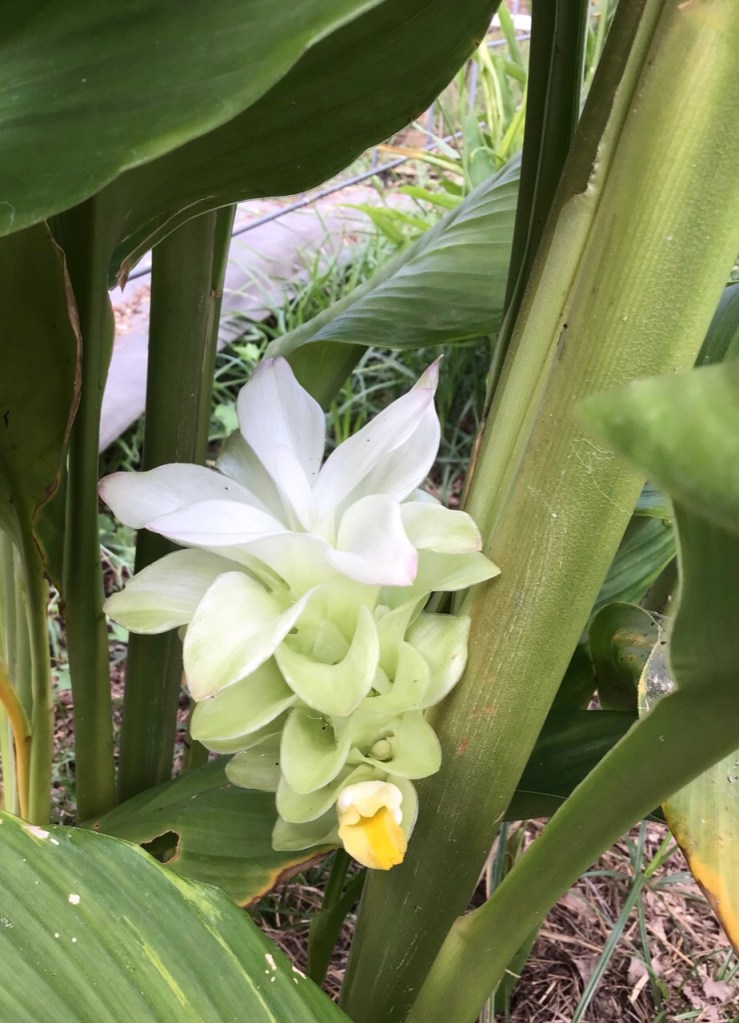
Tumeric flowering, didn’t know they do that!
Watching the impact of the Scamdemic not only on the economy, but also on our ‘health care’ system has demonstrated unequivocally that, despite the challenges and hardships, we’ve made the right choice.
Our ‘health care’ system, which is actually a disease promoting system, is beyond hope, in my estimation. (This one’s surely gone viral by now, but in case you haven’t seen it yet, it’s brilliant!) The DEVOLUTION of covid vaccine efficacy
I truly believe the only way out of the mess this country has become is by reclaiming our natural rights back from the government.
However, that first means reclaiming our natural responsibilities—those ‘unpleasant’ aspects of life we’ve come to outsource to the government (and their corporate partners in crime) in the first place, which has made it ridiculously powerful, as all governments (and their co-conspirators) are wont to be.
We are trying to accomplish that by first demonstrating to ourselves, and then hopefully to others, that such a thing is possible, and also desirable.
But what if, due to our increasing age, we had to choose? Limited strength, mobility issues, cognitive decline, all are serious potential threats to our continued lifestyle here.
Considering this I’ve made a few lists, ranking our current activities against future realities based on: Required inputs, health impact, pleasure principle, and bang for the buck.
It isn’t pleasant. I don’t want to give up any of it, ever! Bees, chickens, pigs, sheep, goats, veggie garden, fruit orchard . . . . But, here goes.
Kombucha, no caveats, it stands alone. If you can make tea you can make kombucha. It’s healthy, it’s fun, it’s delicious. Hubby no longer drinks beer or soda thanks to this amazing beverage, better for health and finances for us, and far better for the environment too, with almost no waste.
Sourdough bread, and already we have caveats. I know loads of folks think they are gluten intolerant; I used to think I was too. Grains properly prepared are nothing like most store-bought breads, for health and taste. Around these parts you can’t even find good bread. In other locales you may be able to find it, but I’d guess the prices are scary. Making your own sourdough bread is time consuming, but it’s not difficult. Same goes for sourdough cookies, brownies, pizza crusts, etc. And, let’s face it, gluten-free products are not tasty, so there’s some extra incentive.
Raised garden beds, and more caveats. Starting to garden at an advanced age is probably not going to be too successful. Of all we do here it claims the prize of Most: most expensive, most labor intensive, most greatest learning curve, most unreliable results. Still, I love it! So, continuing to garden with some foresight and adjustments is perfectly doable. I insist!
That short list makes me sad. It’s the bare bones and I hope such sacrifices will never be required of us—no more chickens, goats, big dogs, great big garden?!
I don’t even want to consider it, but there it is.
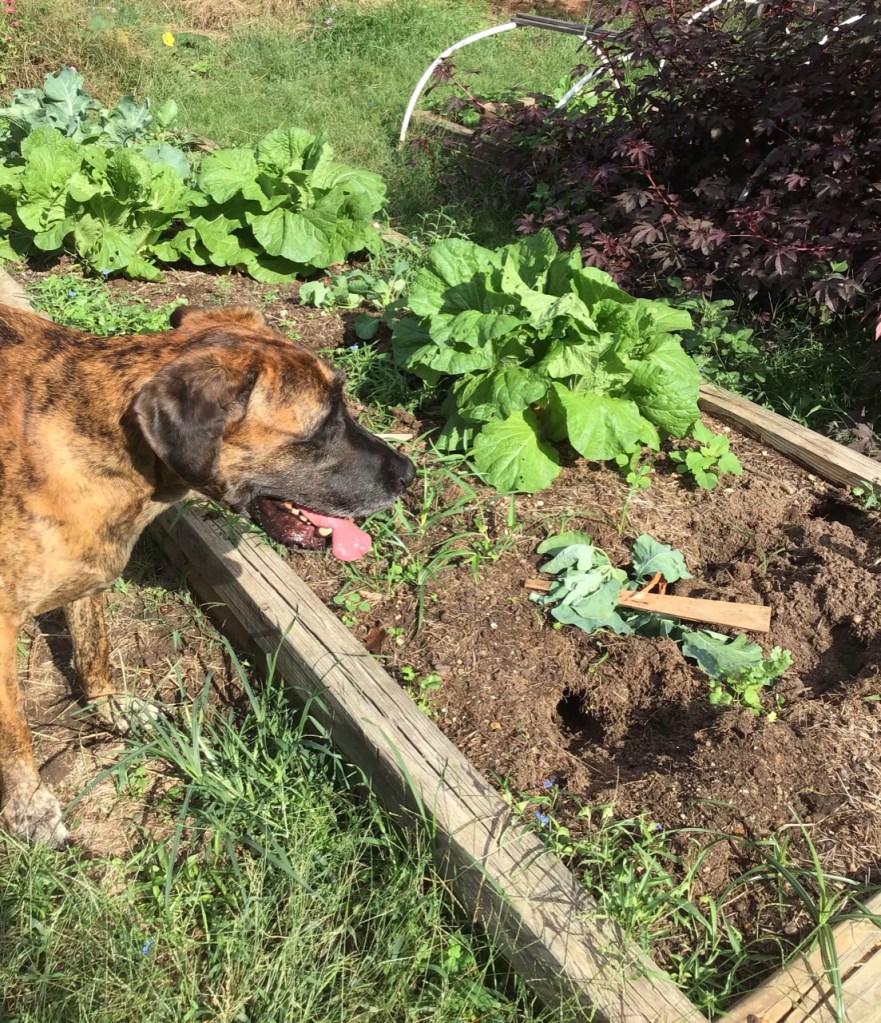
Tori surveying the gopher damage. Bad rodents!
There are also many projects still on my list to successfully accomplish, which are in trial and error mode now. Like making all our own body care and household cleaning products and herbal medicines. Hubby has future hopes of making furniture, if his current to-do list will ever allow it. No time for poor health here!
So, another short list is in order. The three things, in addition to those above, that I hope and pray we never get too old for: 1. Bees — not even for the honey necessarily 2. Chickens — they are easy enough to manage, but they attract predators 3. Goats — mostly for the cheese making, but they’re pretty good company too
And the three things we would most likely not be able to continue into old age: 1. Slaughtering — tough work, no doubt about it 2. Orchard — even established ones are a lot of work 3. Pigs — high maintenance, yes, but so delicious
We have no intention of ever rejoining urban life. And as far as intentions go, avoiding nursing homes and hospitals is right at the top of that list as well.