Gavin’s Reciprocity

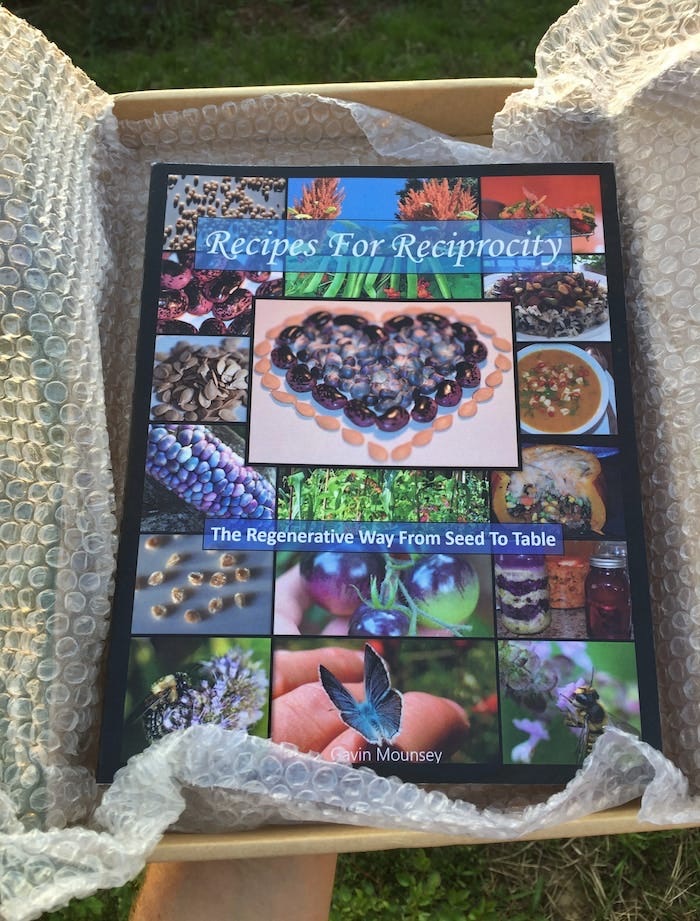
I’ve had a bit of challenge trying to simply label Gavin Mounsey’s book, “Recipes For Reciprocity: The Regnerative Way From Seed to Table” because it’s so much more than a cookbook. I have a great many cookbooks and my favorite type are what we might call ‘narrative cookbooks’ (though there may be an official sub-category name that I don’t know)–these are the kind where there’s a very present narrator telling you stories about the foods, and the places, and the people associated with the recipes and the author’s life. I might be inspired enough to write one of these myself someday.

Gavin’s book is not that, yet it is even more still. Rather than try to say it better myself, and fail, here’s an excellent description from the back cover:
“This book is a magnificent achievement. It can help you learn pracical ways to grow and cook mouthwatering food-as-medicine, and build deeper and stronger community, but it is so much more than that. Gavin has written a love letter to humanity and the living world and a manifesto for workable hope, all with an unflinching honesty about the crises we face. Gavin uses the nuts and bolts skills in the garden and kitchen as a launchpad to reimagine our place in the world, and the result is a solid foundation in the chaos. His hope and love are infectious, and the applied knowledge shared in his book is encyclopedic. I highly recommend it to you.” ~ Jason Padyorac

Along with the two books, one I gave to a friend, Gavin sent lots of seeds, some I’m already growing, others I can’t wait to try.

Scarlet Runner Bean in early summer, now dead.

So far I’ve planted the Scarlet Runner Beans and the Black Hopi Sunflowers.

Gavin:

“These beans are among my all time favorites for their versatility in the kitchen and beauty as well as productivity in the garden. They are an amazing companion plant due to the plant’s roots having the ability to associate with rhizobia (nitrogen fixing bacteria) which not only allows this plant to fertilize itself by pulling plant food from the air, it also means this plant can help fertilize its meighboring plants with excess nitrogen. On top of that amazing benefit the scarlet runner bean has beautiful red flowers that attract pollinators such as ruby-throated hummingbirds and bumblebees.”

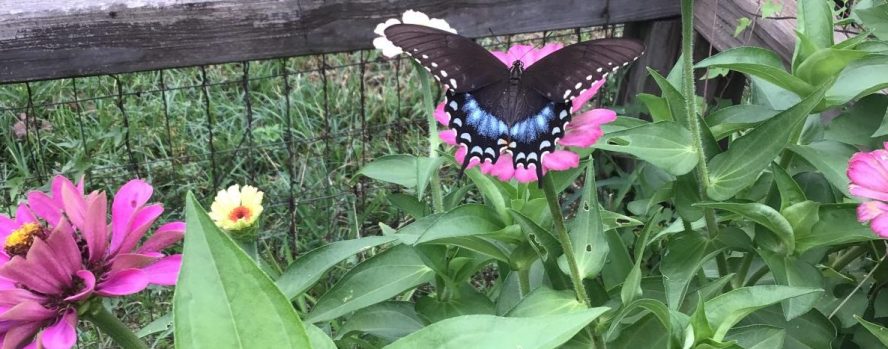
It is amazing to see how many fantastic plants can flourish in such varied climates. Because Gavin is in Canada and I’m in Texas I didn’t expect to find so many parallels in what we plant in our gardens, though certainly the timing and special needs vary quite a bit. The scarlet runner beans I’ve planted in full sun are perishing. But the others I planted which is shaded during the intense mid-day heat are hanging on. They’ve not produced yet, but I’m still hopeful and I like them anyway. I’m sure if there is any production and I can save the seed, it will acclimate to our area. Unfortunately, after a promising spring, the bumblebees and butterflies have been depressingly scarce in the garden lately.

Gorgeous! Ugly pity for the chem-sky.

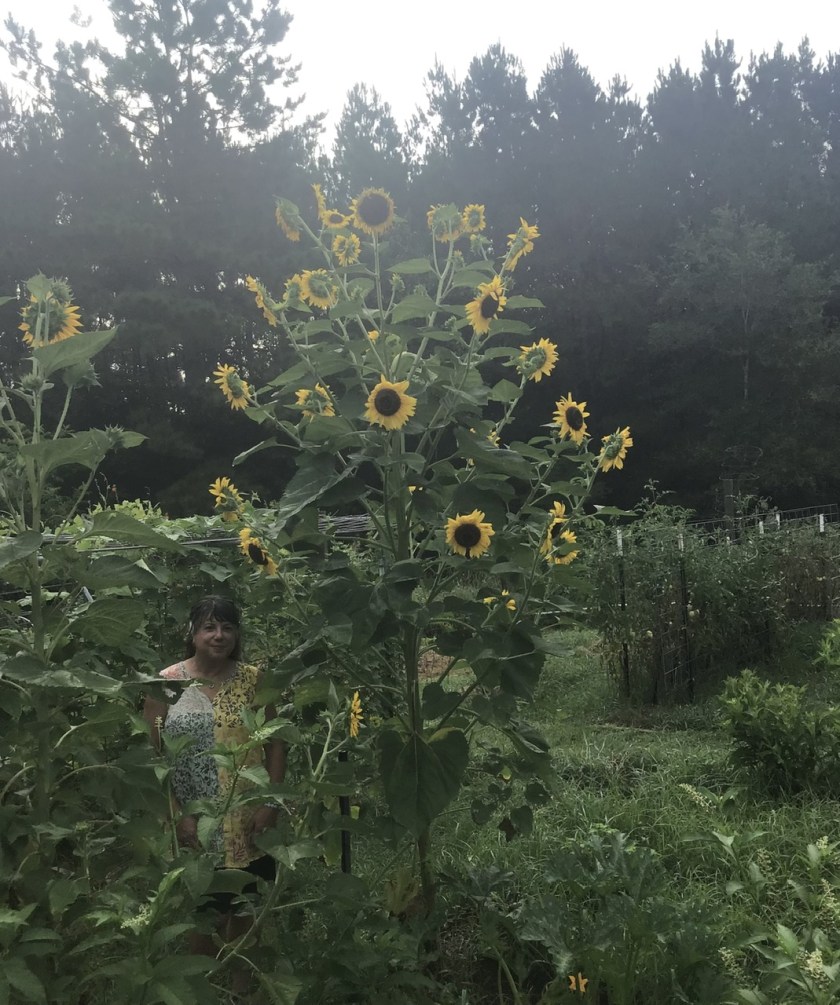
The Black Hopi sunflower has been the piece de resistance. It’s gorgeous and taller and fuller than any I’ve ever seen. I had several planted in several spots, and most of them got damaged in the high-wind storms we’ve had. But not this magnificent giant!

Gavin’s reciprocity in action is so inspiring, which is why I wanted to spend a couple of posts sharing about his book. Regular readers will probably remember I’ve shared some other of his work here in the past, especially in our Herbal Explorations pages, which come from his Substack newsletter.

In another post I’ll dive into a few of the recipes, but for now I’d like to expand on a few quotes which so align with my own learning and experience growing a garden and cooking seasonally from scratch. It has absolutely been the most rewarding journey of my life, with plenty of hope remaining for more of the same in the future.
From the section: Reciprocity in Action
“Choosing to give our attention to nature is also a form of giving back. Observing and paying attention to the cycles and living systems in nature involves giving our time and our thoughts. When we closely observe nature we inevitably come to perceive countless expressions of beauty through our perceptions of the form, color, sound, scent, textures, tastes and relationships that are all around us. This leads us to caring, feeling gratitude for and feeling compelled to protect the amazing gifts nature shares with us. From the place of gratitude we engage in one of the most meaningful and powerful acts of reciprocity. We open our hearts, we feel content . . . we practice self-restraint, we choose to live more consciously and aware of how our life choices impact the living planet that sustains us and showers us with endless gifts.”

Gavin most certainly has an eye for beauty, his photography is stunning.

(3) The Jubilation Of June – by Gavin Mounsey

https://gavinmounsey.substack.com/p/the-jubilation-of-june-d41

I know how daunting it can seem to dive into a new hobby like gardening, or even cooking nowadays, but there’s so many smaller and easier things that take so little effort or knowledge that might be just the momentum for many to kickstart a healthier life and society.

Just observing. I couldn’t agree more. It really does start that small and simple and while I have read loads of books on gardening and cooking and many adjacent subjects, I’ve learned far more from observing. Taking notes helps too, but considering how bad I am at that, it must not be totally necessary.

The other few very simple things that require no gardening and very little cooking is compost and ferments, both which Gavin discusses in the book.

Why those two, you might be wondering? Because in my experience, composting makes you far more conscious of waste, and fermenting shifts your attention to the weather and seasons. Both of these processes have enriched my life and health and outlook far more than I could’ve ever imagined.

A window sill of herbs would be enough to use up the compost produced by the average small household. Or donate it to a friend who gardens if you have such a black thumb or really no space. And who knows, maybe she’ll reciprocate with a zuccinni or two.

I had no idea what eating seasonally meant. Really. Until I went to the farmer’s markets in France on a high school exchange program, I had zero clue produce even had seasons, and considering how much is grown indoors today, that’s probably become more normalized than ever.

Considering I grew up eating like the vast majority of Americans–fast, frozen, canned, bagged–I know what easy looks like, and this is pretty darn easy. The shift really is more in attitude and attention.

Now I long for cucumber season as I long for tomato season as I long for melon season as I long for radish and lettuce season. It’s become that nuanced and I love it. Sure, there’s some cross-over and we can and ferment to save the bounty. But that limited time window of bounty becomes a season within a season, with all that entails–a change in primary food and focus–all with their unique gifts and challenges.
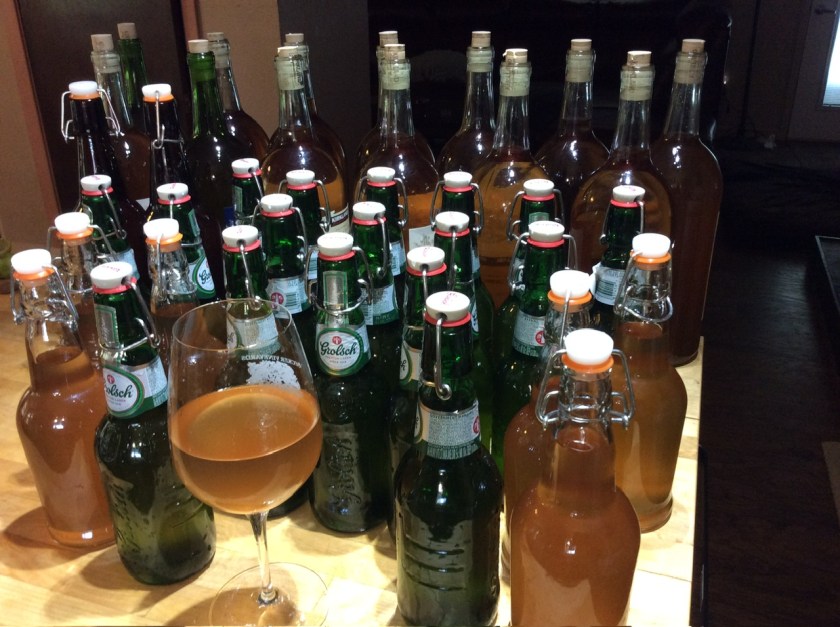
Surplus requires work, work requires rest and creates reward. 😊

The ebb and flow of surplus and scarcity becomes natural again, each bringing its own unique gifts and challenges.

My influences growing up–that of media, education, environment–worked synergistically as detachment mechanism. Nature was that which we were being systematically detached from, and that trend has only exaccerbated, to the growing dis-ease of ourselves and our environment.

“Within the last century, healthy, natural, organic food has been made more difficult to produce because of the chemical pollution, at first, and genetic pollution, more recently. A handful of companies have spread these toxins across our planet diverting US$ 400 billion of public money to subsidize their high cost chemical commodities to make them artificially ‘cheap’. The costs of this ‘cheap’ food are astronomical in terms of the health of people, the ecological damge it causes and its exploitation of farmers. If the true costs of chemical food were taken into account it would be unaffordable. Insead of subsidizing chemical food and creating epidemics of food-related diseases, public money, used for nourishment and the protection of public health through organic food, would save us billions in health care. Denying people their right to healthy, poison-free food by manipulating laws, policy, science and the use of public money to impose a non-sustainable, unhealthy food is food-dictatorship.”

to be continued . . .
Thanks for reading!

Herbal Explorations: Lemon Balm

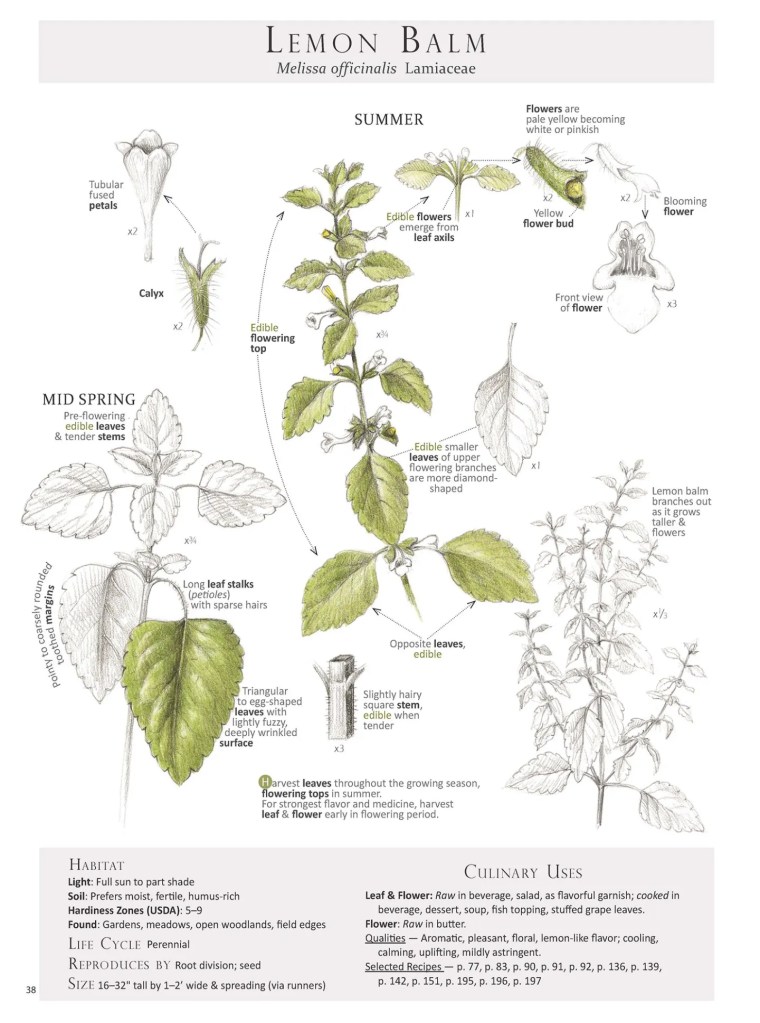
Lemon Balm — Melissa Officinalis

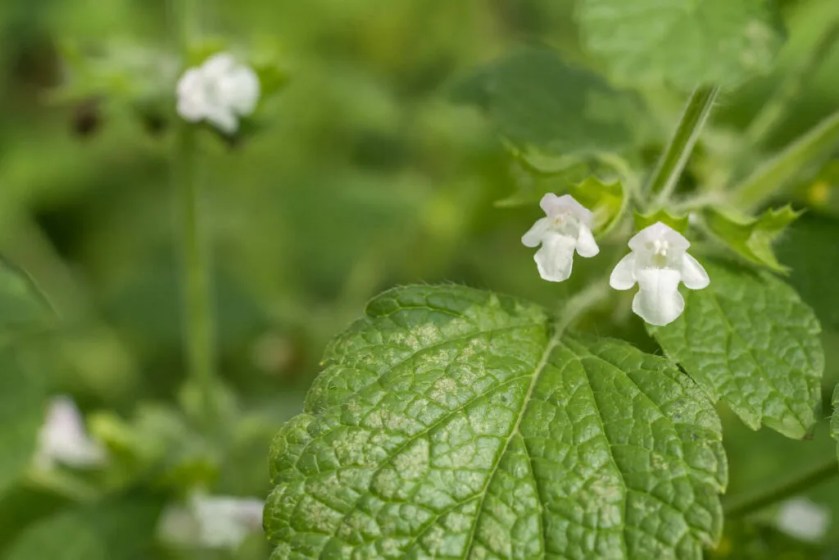
I’m adding another from Gavin’s Newsletter to the Herbal Explorations pages—the very popular Lemon Balm. Gavin does such a thorough job of covering it and I’m excited to start working with it more. I grow it, like mint, mostly for the bees, but like mint, I don’t use it nearly enough.

I’ve copied some favorite parts from his article below, but I’m sure I’ll be referencing it again directly in the future.

I really recommend viewing his full post and would love for any readers to add your own experiences with growing and using lemon balm as well, here in the comments section.

Gavin on YouTube: https://youtu.be/nmDxGzxVEtk?si=M1k77IjsMEUZHC5S

“I love this plant as it is very easy to grow (in fact, it now grows itself in our garden without any assistance) it provides forage for native pollinators while repelling mosquitoes and provides a long list of medicinal benefits.
Lemon balm’s pain-relieving properties may make it an ideal choice for relieving muscle and toothache pain. In addition to drawing on its relaxing properties, this home remedy targets inflammation in the body.

“The leaves of lemon balm contain potent astringent and antibacterial properties useful for many things including cleansing wounds and pores to reduce blackheads. Due to rosmarinic acid, one of lemon balm’s key antioxidant ingredients, the herb also benefits the complexion.
On top of all that, this herb is versatile in a culinary sense (providing fresh and enlivening flavors and aromas that lend themselves to enhancing creations in the kitchen).

“In the late 14th century, the nuns of the Carmelite Abbey in France began to make a “miracle water” using the lemon balm found in the monastery’s gardens. This is known as Carmelite water, which consisted of multiple herbs and spices with Melissa officinalis always as the main ingredient. This “perfume,” as it was called, was very fragrant and it was used to cover body odors as people seldom bathed in those days. This formula was also called “Eau de Melisse,” and it was revered by kings and nobles as well as commoners. It became a popular cure-all for various ailments and was used both internally and externally. Nicholas Culpepper, the 15th century English botanist and physician, praised the virtues of Carmelite water writing: “It causeth the Mind and Heart to becom merry, and reviveth the Heart fainting to foundlings, especially of such who are overtaken in their sleep, and driveth away al troublesome cares and thought…

“By the middle ages it was cultivated throughout all of Europe.
Spiritually it is said in some cultures that lemon balm is known to balance feelings and emotions. It was used in ritual baths to invoke the Goddess, making you more appealing in the world of love and romance.
Lemon balm has been associated with the feminine, the moon and water. It was considered sacred in the temple of the ancient Roman goddess Diana.
It was first mentioned in medieval manuscript as “Herbe Melisse” in 1440. ( It’s botanical name, Melissa, stands for “bee” in Greek. Avicenna, a Muslim herbalist, recommended Melissa “to make the heart merry”.
The Swiss physician and alchemist Paracelsus (1493-1541) believed that lemon balm was an “elixir of life” and would increase strength and lengthen life.
After it’s introduction by settlers and subsequent naturalization (in what is now known as the United States) the Cherokee people used the herb as a remedy for fevers, colds, chills and typhus.”


“Lemon balm contains within it the virtues of a dozen other plants”
 
~ Hildegarde von Bingen
12th century mystic and healer of Germany

“Keep in mind that like mint, lemon balm grows incredibly fast in rich, well drained, moist soil that receives lots of sun. In the right conditions, it can even become massive. Once you discover all of the useful benefits of having this plant around, I’m sure you’ll be more than fine with that!

“Lemon Balm Repels Annoying Bugs
This herb has the ability to repel ants, mosquitoes, and flies with its high amount of compounds that resemble the scent of citronella.
Try making this easy herbal no bug balm to keep those pesky mosquitoes at range. Out on a hike and forgot to bring your bug balm? Find some lemon balm, crush the leaves, and rub them directly onto your skin! The same can be said of yarrow.

“As We Explored Above, Lemon Balm has Medicinal Benefits:
Not only is this plant great in the garden, but it’s also an excellent gem to keep in your herbal remedy cabinet.

“Ancient Greeks used lemon balm steeped in wine to relieve the symptoms of fevers. Put together your own ginger and lemon balm cold/flu syrup to relieve those same symptoms today.

“This super healing lip balm uses the antiviral effects of lemon balm to quickly clear up cold sores. You can also use it in an herbal salve to speed healing of minor wounds. Lemon balm may also reduce menstrual cramps and premenstrual syndrome when taken daily for a prolonged period of time.

Lemon Balm also Attracts Beneficial Wildlife.  

Traditional Medicinal Uses:

“Herbal Actions: Nervine: acts on the nerves. Sedative: calming agent. Mild Antidepressant: relieves feelings of depression. Mild Antispasmodic: reduces voluntary or involuntary muscle spasm. Carminative: gently calms the nerves. Lemon balm is a relaxing diaphoretic as opposed to a stimulating diaphoretic. Antiviral: destroys or suppresses growth of viruses, generally by supporting the immune system. Antioxidant: prevents free radical or oxidative damage.
Specific use for dyspepsia associated with anxiety and/or a depressive mood. It is indicated for someone with symptoms typical of hyperthyroidism (inhibits TSH binding to receptors): anxiety, restlessness, palpitations, headache, and excitability and also is a mild anti-depressant. It strengthens the brain and its resistance to stress/shock, and lifts the spirits. It has tonic effects on the heart and circulatory system and can be used topically for herpes and other viral infections. Can also be used topically for gout and internally for rheumatism and neuralgias.

Practical Uses:

“What do you do with lemon balm? The most useful parts of this plant (and the way it found its name) are the leaves.

Compounds are extracted from the leaves and used to make lemon balm oil, tincture, salves and various medicines.

You can use the leaves in combination with other powerful herbs such as Yarrow in order to make effective (all natural, non-toxic and skin enhancing) mosquito repellant. Here is a link to an example of one such recipe: https://thenerdyfarmwife.com/lemon-balm-bug-spray/

Some of the most popular lemon balm uses include using the leaves in the kitchen to make tea and flavor dishes, as well as to create perfume oils and insect repellents. Some people even use it to make homemade toothpaste.”

Gavin’s article continues with many more pages of useful details about Lemon Balm, including lots of recipes and more detailed medicinal uses, loads of links and references and excellent images.

Thank you for inspiring me once again, Gavin!

Homestead Happenings

This post we’ve got some happy snaps, the usual weather bitching, a bit of pre-planning and some good news on two healing fronts.

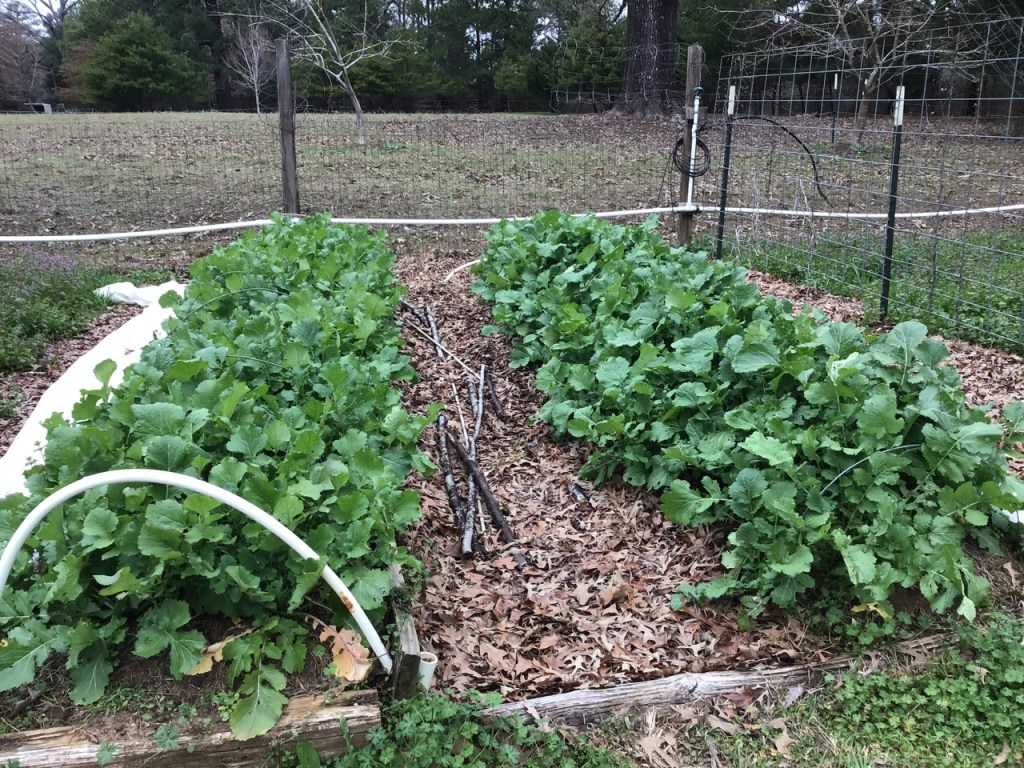
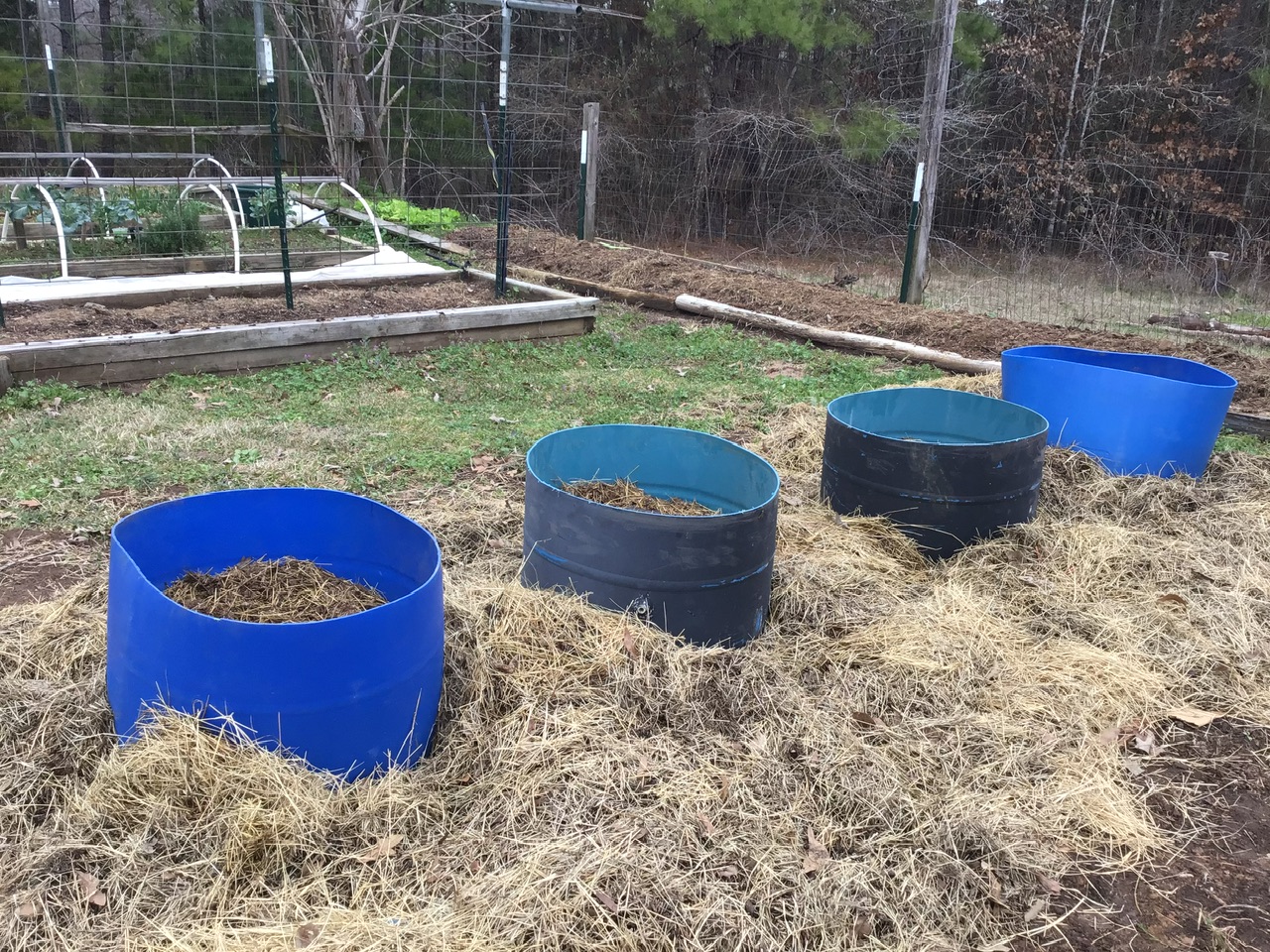
(From bottom left: mini-mustard greens and new lettuce germinated inside about to be transplanted to replace all we’ve eaten; several types of onions and elephant garlic (which does best here, by far); and turnips for us and the pigs. 😋)

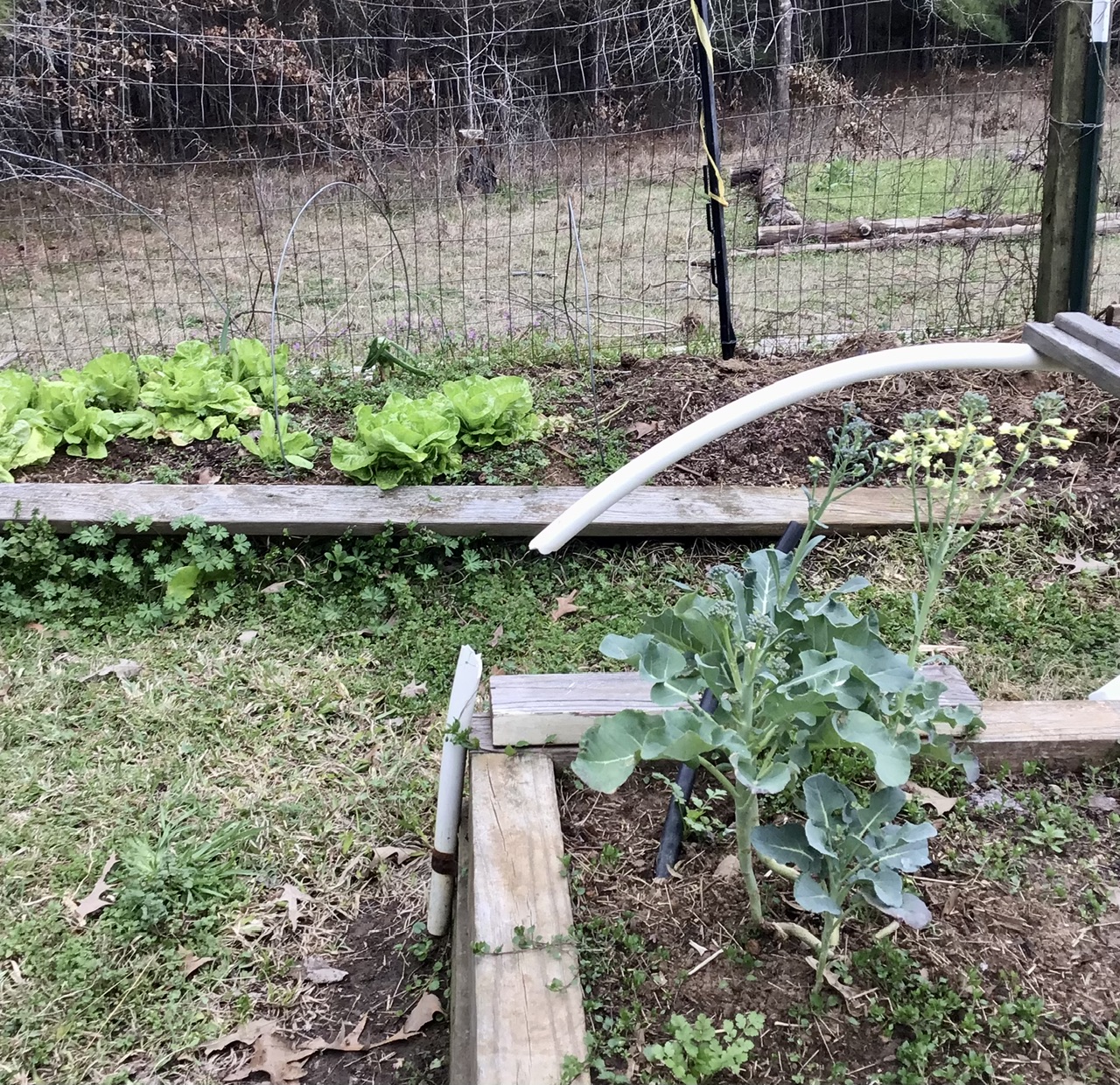
The cauliflower is long gone, the broccoli nearly so, but a new crop is already in the works inside on a heat mat. Succession planting has its limitations in our East Texas Yo-Yo Season (formally known as ‘winter’). Sometimes you get lucky with a warm stretch and get a nice surprise (yay, third times a charm, the carrot seeds finally germinated!) other times you get premature bolting (that dumb broccoli didn’t even produce a good head yet!).

Premature bolting 😖
But some nice butter lettuce still doing well by covering during cold swings

I do not appreciate it, and I think it stresses us all at some level, not just me, not just the more sensitive 4-legged and 2-legged, but all of life. Five warm days go by, in the 70s (but feeling hotter), with an unseasonal and hot stinking wind coming from the south, then suddenly, the very next day, it’s 40, lows in the 20s, and the dogs are shedding, also unseasonably.

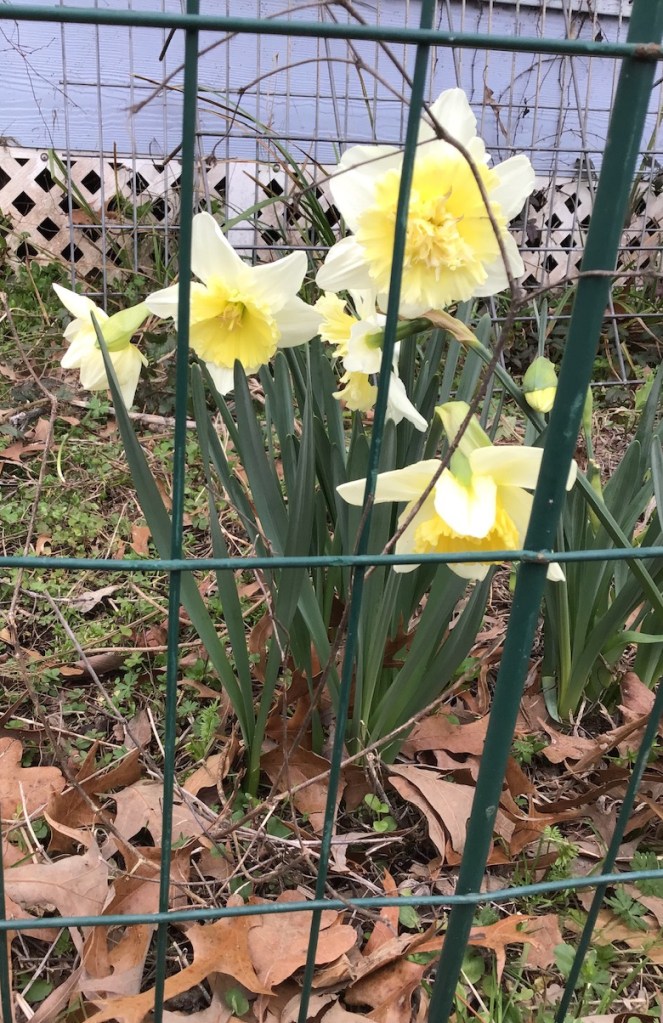
Yes, we get the surprise arctic chicks on occasion. It’s nice to see a bee or two about. We get early daffodils. But we also get another lost fruit crop because it is sure to frost and now, again, everything is blooming far too early.

And it seems to me, the more folks are catching on, the more the establishment pushes back, with the gaslighting and the misdirection and the normalizing.

Going back to the 1800s! And how’s that working out for us?

Despite the man-made manipulation, or maybe because of it, I’ve come to appreciate the old adage ‘Let nature take its course’ on a whole new level. We’ve had two overlapping critter health issues these last months, both with their unique challenges.

Shadow’s blood-spurting ear was by far worse, but still, in every case, I don’t like not knowing what to do, stressing about my lack of knowledge, feeling useless, and that’s how I felt during Chestnut’s ordeal as well.

Please allow my whine for just another moment, it’s been illuminating for me, in a way.

Self-reliance is a cornerstone goal for us. Relying on vet care is not an option for a number of reasons, beginning with the cost, ending with the lack of trust we have for the medical establishment, and with a very long and convoluted journey in between where we try to figure out how to bridge this enormous gap, with no training.

We are lucky for the internet, but you know how that goes. One problem, a dozen conflicting pieces of advice. We ask around as well, we are certainly grateful the many suggestions offered, but still it’s nerve-racking making ill-informed decisions, and no matter what anyone might pretend, health is not an exact, one-size fits all kind of science.

Chestnut was acting strangely, very suddenly. She went from just fine to a few hours later she was lethargic and not eating much and separated herself from the herd.

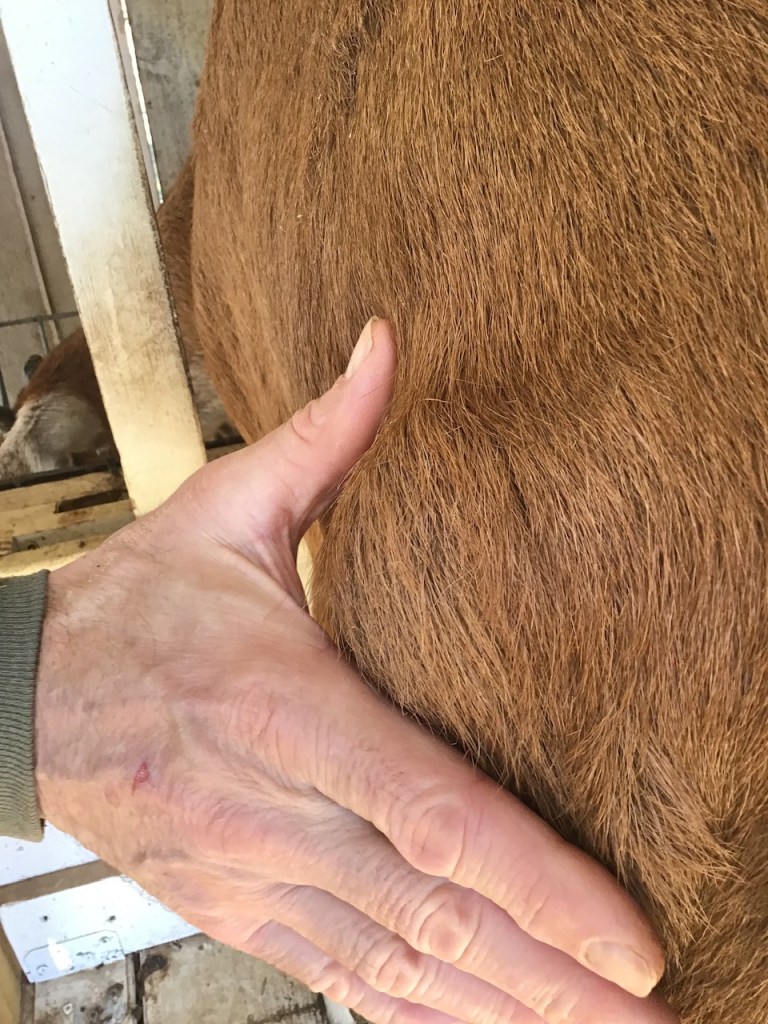
My goat friend suggested Ivermectin and it seemed to work fine. Then she quickly developed an abscess on her side. Related? No clue. It looked terrible, but it was not bothering her at all. I read lots of advice, but decided to let nature take its course after reading one description that sounded most similar to what I was seeing. Though they recommended lancing it at the end stage to avoid ‘infection’. (In the above photo you can see the ‘before and after’, the photo on right taken yesterday, sorry for the blurriness.). It got very large and it was not easy to do nothing!
It’s been over a month now, and it is healing nicely. Patience was the correct remedy, not lancing. I think we have an addiction to unnecessary interference in our culture.

The ordeal with Shadow was a serious challenge. You might recall the middle of the story from our last Happenings post. It started all the way back in November with a little nick on the tip of his ear. The cat?

Who knows, but it was shockingly difficult to get the blood flow under control.

We had much advice, some of it new and excellent (thanks again Kath and Zoe!), but wow, did that take some patience and perseverance, which mostly landed on Hubby, as per usual. (Male privilege! 😂)

Three months later and it is completely healed and all’s well that ends well, thank heavens!

What exuberance, no one around here can keep up with him! He runs circles around us all, then sits patiently by Hubby’s side until the next round.

We love potatoes so much we also buy them in bulk when they’re on sale and Hubby cans them up and they fry up in tallow so quick it’s like a delicious fast food that’s a cheaper and healthier alternative to the industrially processed varieties.

It is a long and labor-intensive project, that’s 45 pounds of potatoes there, it took him the best part of a day to do, but we’ll be appreciating the effort for 28 delicious meals. 😊

Looking ahead we’re doing a bit of planning—I’ll be giving another beginner’s fermentation course next month and Hubby’s got some good livestock trades in the works, we’re committed to foraging more for mushrooms and cultivating our own.

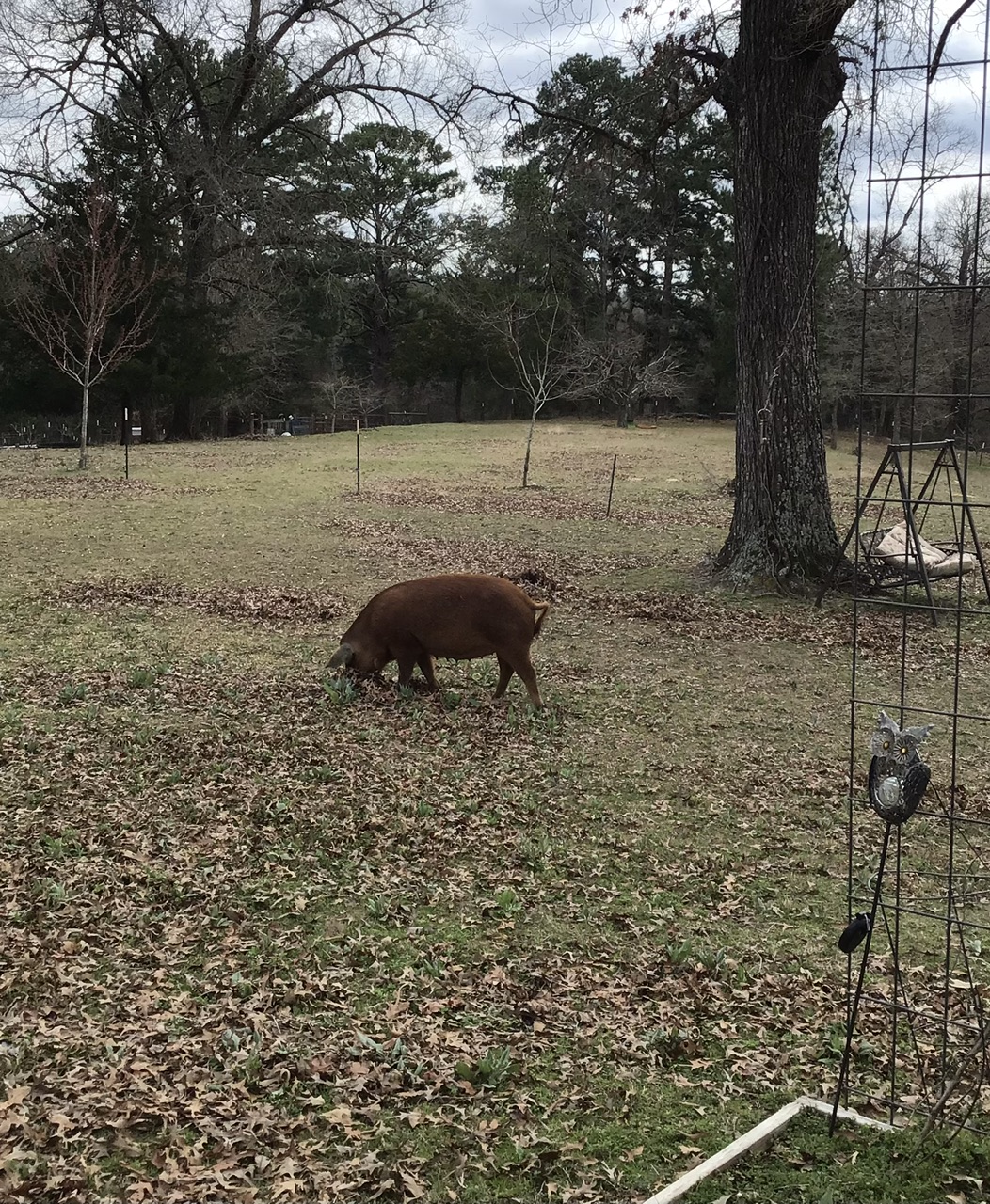
Patty, our mama-to-be, eating up the last acorns. Already many of her piglets claimed for bartering deals. 😁

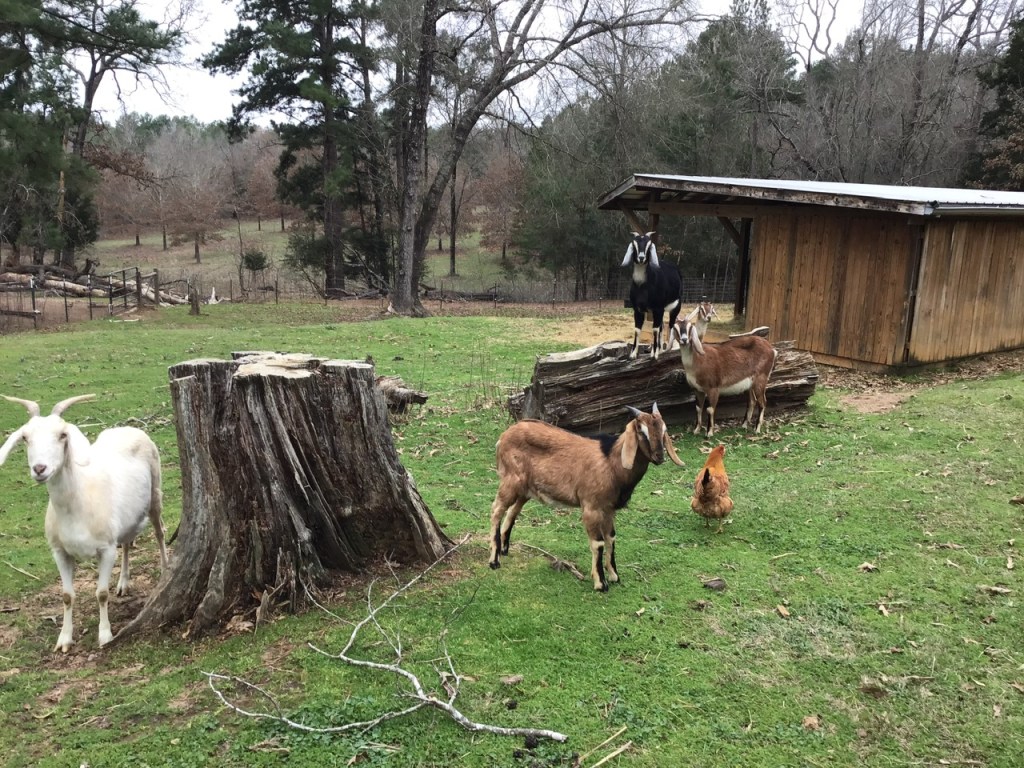
Here’s a current little visit with our herd, including, hopefully many healthy, expectant mamas with kids growing fine.

Not that little guy, he’s our first buck, we call him Teaky.

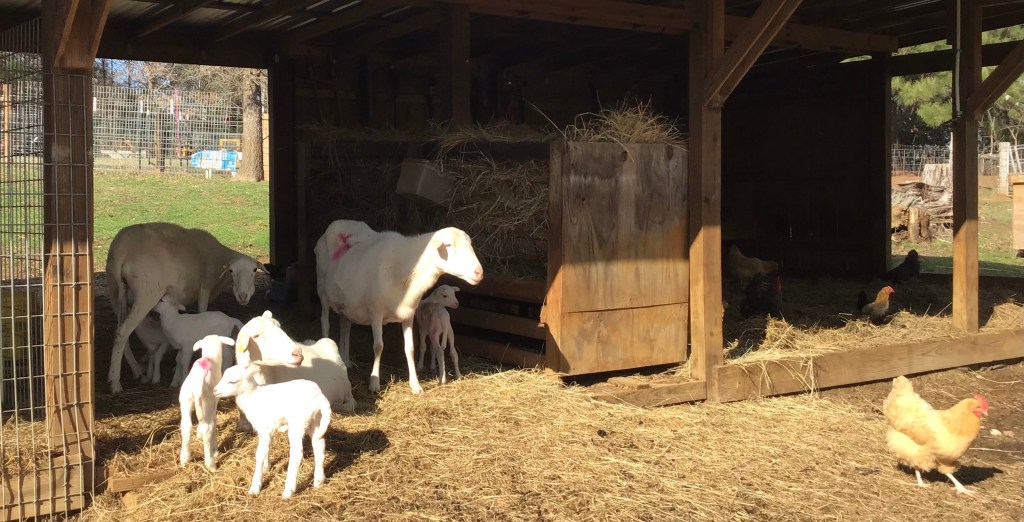
5 expectant mamas among our St. Croix-Dorper flock

Incorporating more permaculture design in the garden and orchard is an on-going big goal. We have a couple spaces empty and I’d love to try something really unique like this:

Permaculture-Inspired image I’m dreaming about!

Where I’d be including my fun garden-art projects, like these:

Lots of grand plans in the works, always, but it’s the simple things that make the hard stuff worth while.

Thanks for stopping by!

Plan Bee

Not bound to exploit. Not obsessed with production. No concern for profit extraction. Not driven by expansion. Treatment-free. Liaisez-faire. Non-industrial, anti-commercial beekeeping practices.

Beauty. Synergy. Cooperation. Respect. Reverence.

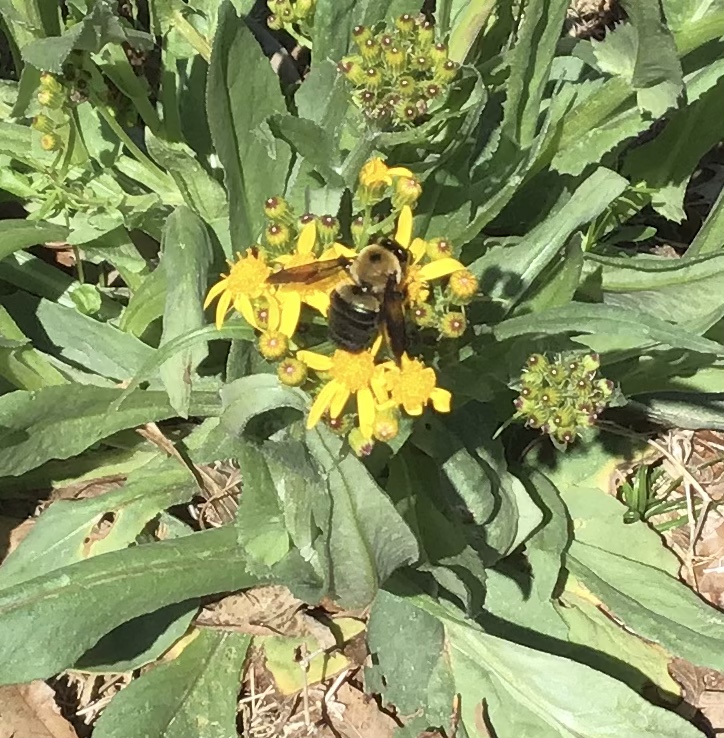
Not my bee, but the first native bee of the season enjoying the Texas squaw weed—plenty of forage for all around here!

If you guessed these unconventional methods are far from popular around here, you’d be correct.

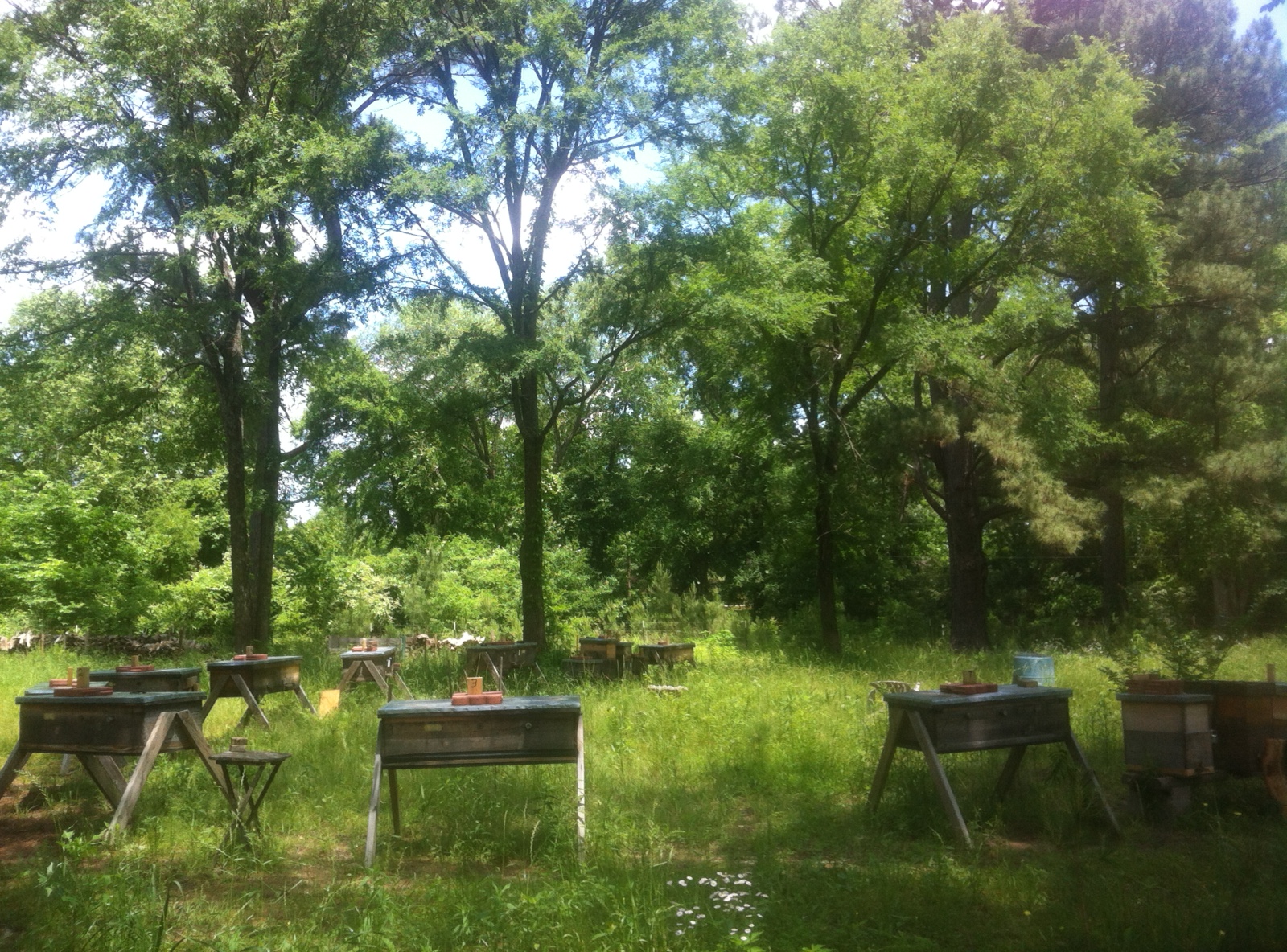
I don’t even have a bee yard. I do have 5 strong, sustained colonies (aiming for 7) scattered around several acres, which is the best beekeeping decision I’ve made in about 5 years.

It is the intense crowding of many colonies into one space that is so unnatural that it then commands chemical treatments for bee health. Artificial solutions are never the best solutions. I rarely even feed my bees, I consider that a treatment. On those rare occasions I do, because my observations have led me to suspect they are without reserves, sometimes I’ve been wrong, and the bees aren’t remotely interested in my offerings. They prefer to forage over taking my junk food.

Not my gorgeous photo, unfortunately!
Taken by a friend with the latest IPhone, WOW, color me impressed!

By observing intently over time and looking to mimic nature in every way possible, I’ve come to realize how hopeless is commercial-style beekeeping for the small holder, just like all our industrial ‘solutions’ are a never-ending Ferris wheel of problems and solutions, all the way around. Industry comes to drive the entire tradition-turned-enterprise right into the ground.

Well, no thank you! And I haven’t had to buy bees for several years now, thanks to my new-old methods, which is certainly another motivator for commercial beekeeper’s scorn, considering they often make a good chuck of their profits from returning customers—that is beekeepers who follow commercial methods even for their handful of hives—buying nucs and packages and queens from the ‘Big Guys’ who sell themselves as the experts on all things bees.

In other words, the beekeeping industry strongly resembles the pharmaceutical industry, and pretty much every other global commercial industry. One model for all endeavors. One noose for all necks.

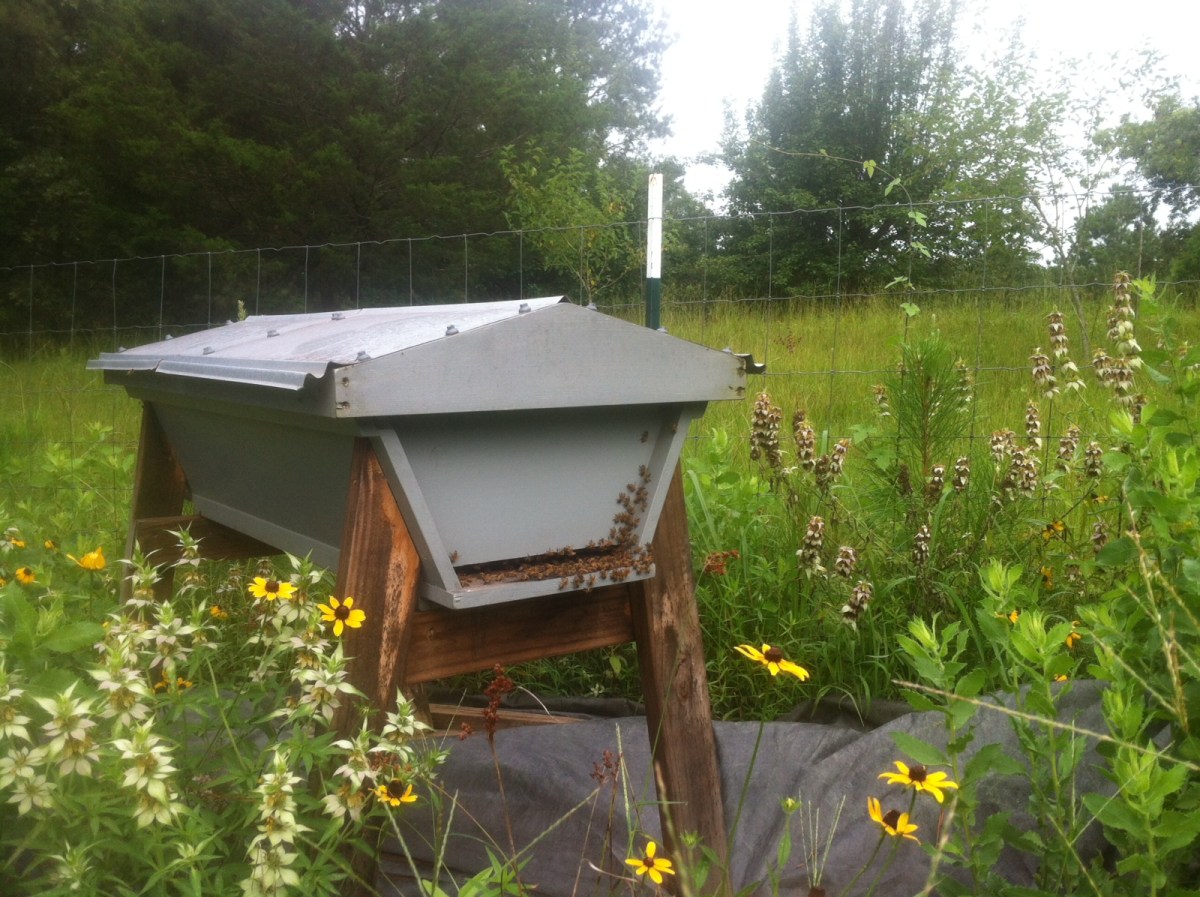
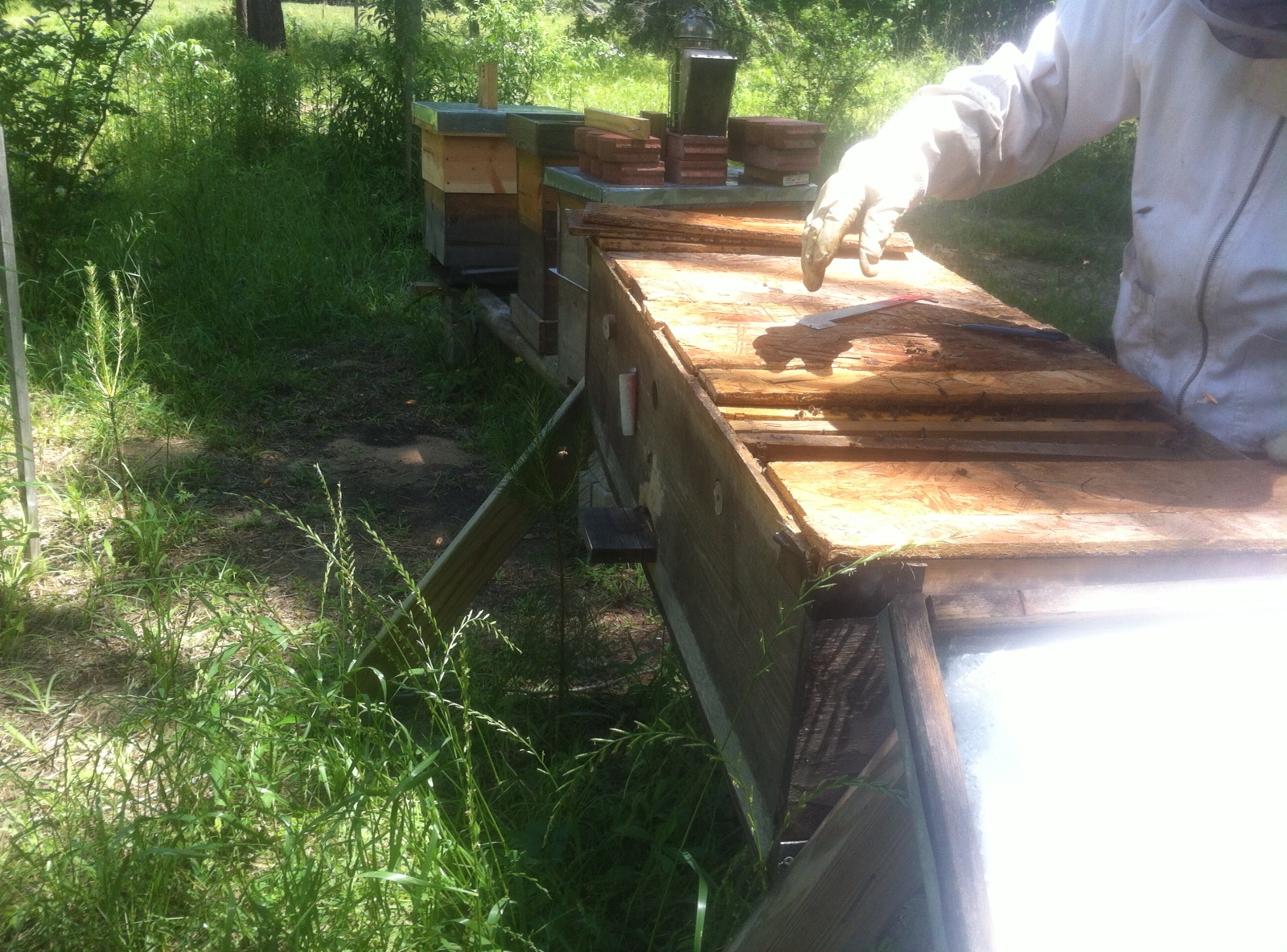
All but one of my hives is top-bar, another source for mocking by conventional beekeepers of all ages. But it does seem like alternative types are squeezing their way in through the cracks. And plenty of cracks there are. Not just top-bar fans.

Hard to tell from my bad photo, but this is an observation window on a top-bar hive. I hear other beekeepers pooh-pooh this regularly. I love it! And the bees don’t seem to mind either.

I’m not on any of the popular social media sites, but I know there are treatment-free groups, full of curious kindred spirits, some with bee-loving pseudonyms instead of their real names, like poor, paranoid anti-vaxxers. Oh, lovely lurkers, come out of the shadows to stake your claim! You dare to brave the bees’ stings, surely some stings of misplaced criticism can’t scare you away?!

The bees are just one of many bustling with spring’s promises.

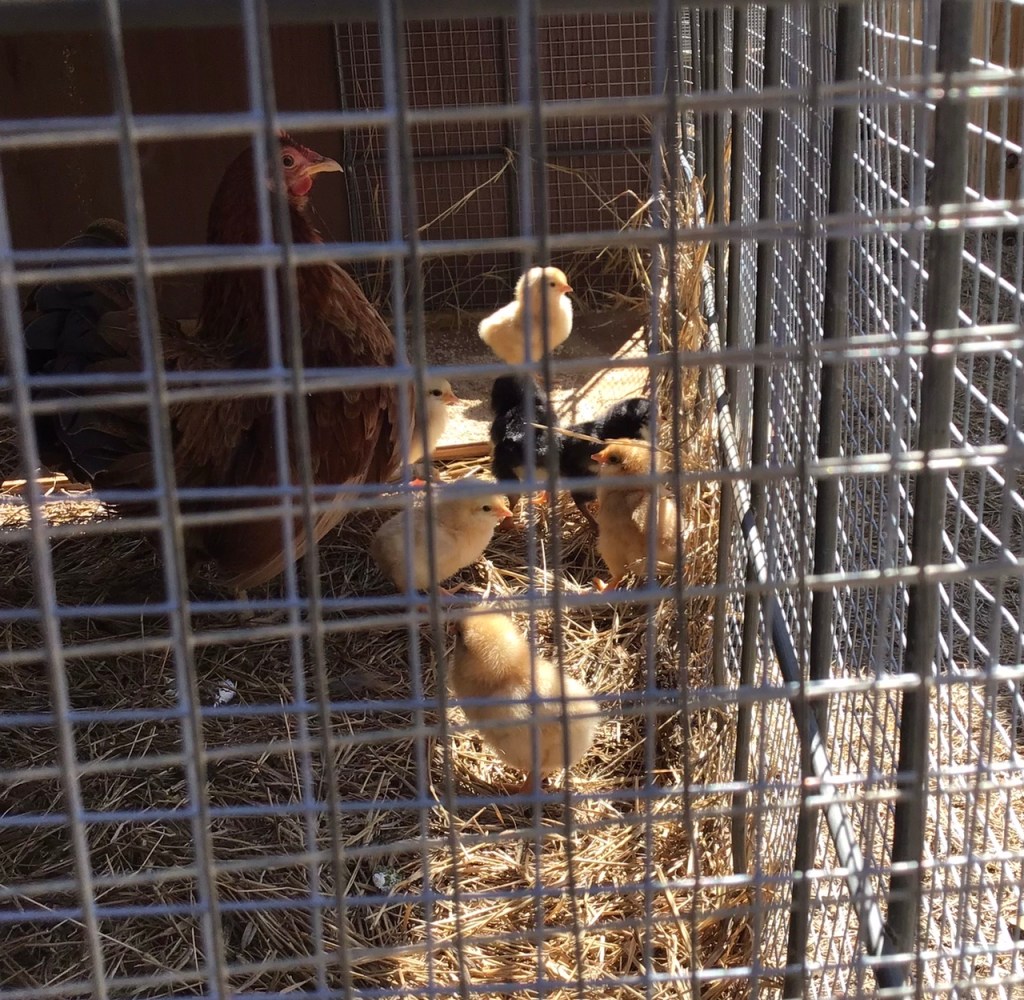
In other news, happy chicks are here, with no snakes in sight.
(In the new, ultra-high security coop within coop, 100% snake-proof. Right?)

We are still waiting on the piglets, the rest of the lambs, and the kids, while trying not to let our anticipation get the best of us!

Are dreams God’s way of diffusing our anxieties?

Homestead Happenings

Sanity still reigns on the wee homestead and I thought maybe a few of y’all might need a decent dose of it during these crazy dog days of summer amidst continued global chicanery.

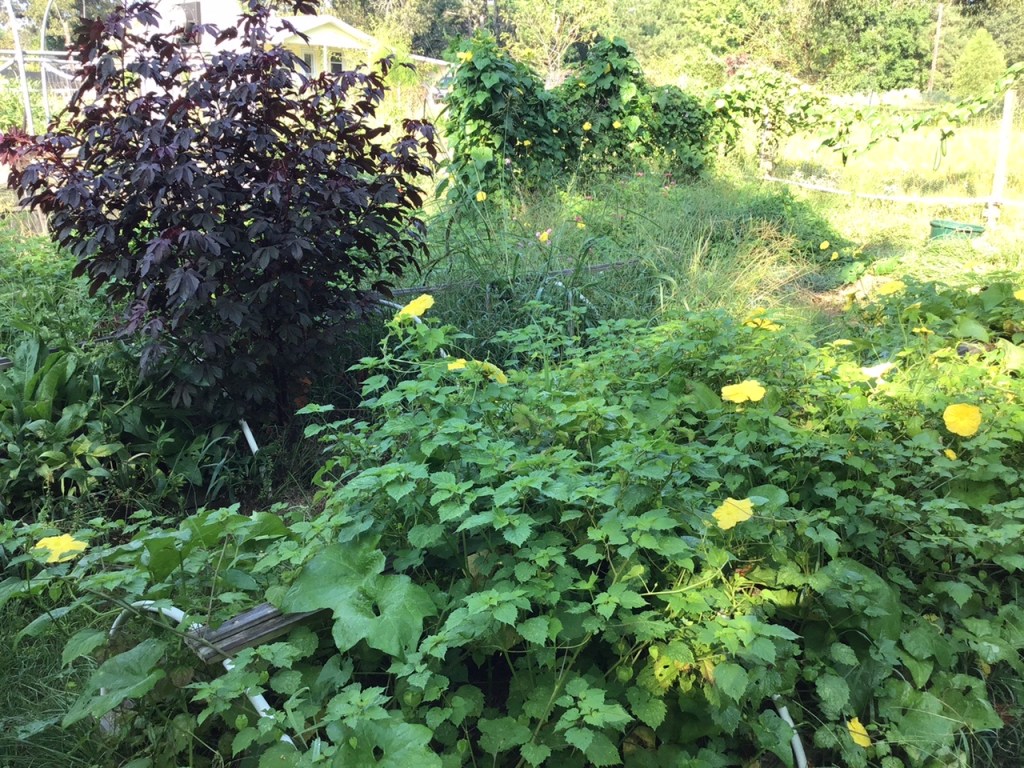
The garden looks more like a jungle, but there is a method to the madness. Mostly it’s called ‘too hot to bother’. Still, it looks better than it ever has this time of year (which is saying very little) so I’m proud of a few things worth sharing.

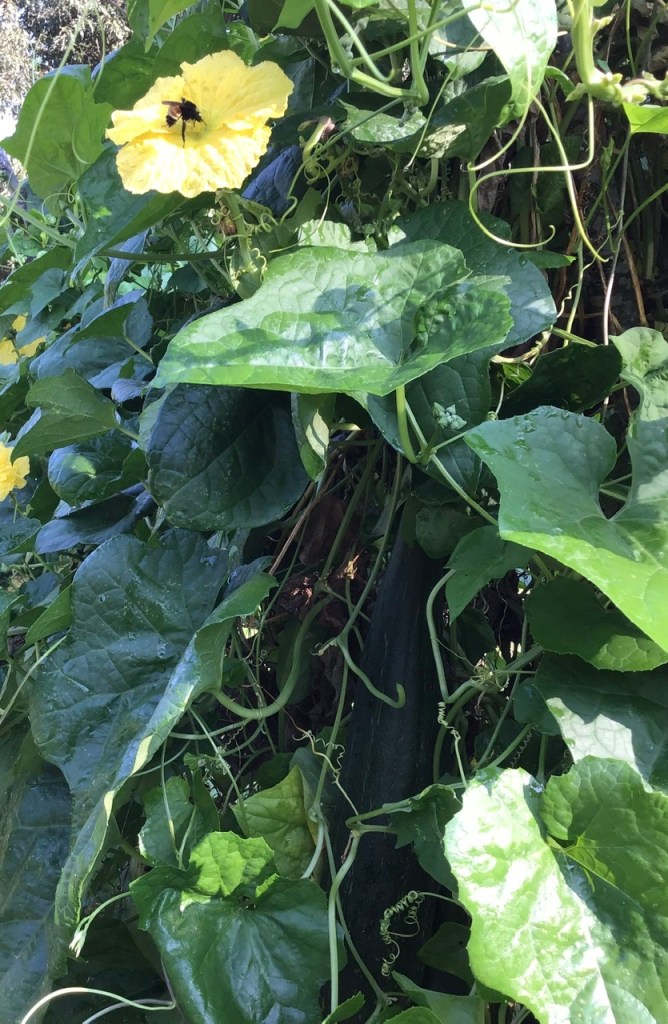
The pigs are eating well off the luffa, which does so well here it actually out-competes the grasses. I wish we liked to eat it too, but I do use the sponges. It’s widely consumed in some cultures, so I might keep trying recipes to see if anything can improve its very bland taste. Plus, the bees love it, so it’s definitely a keeper.

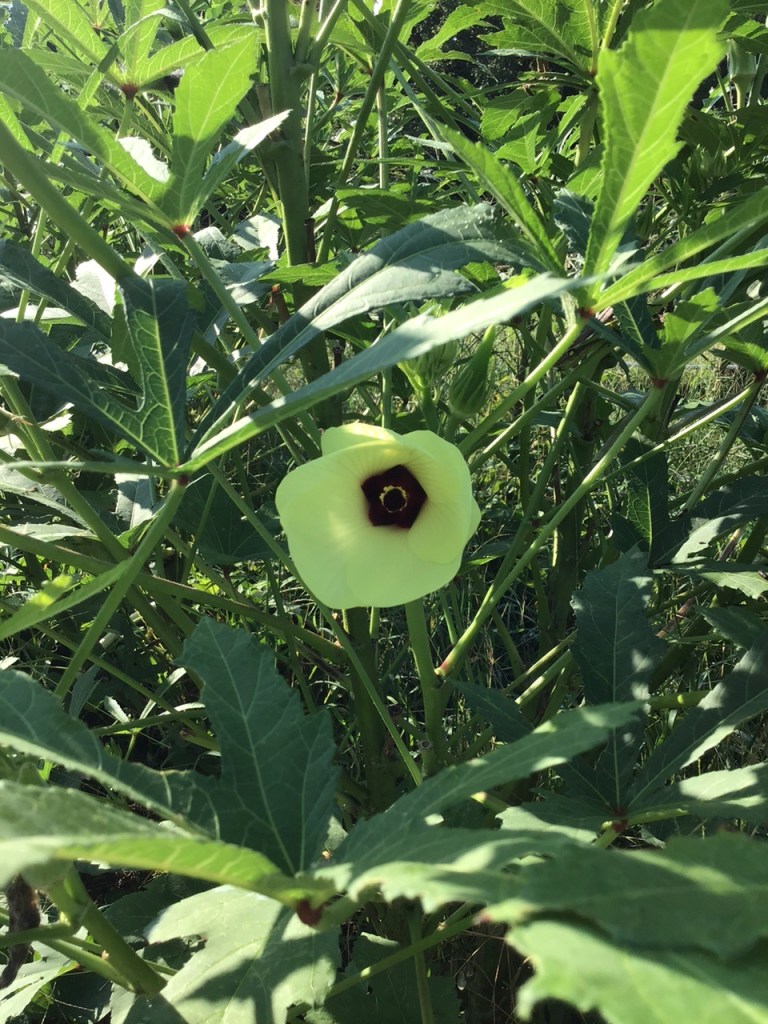
We’re pretty limited on the veggie harvest this time of year, which means eating okra almost daily. I’m really not a big fan and it’s not even a fun one to harvest. It’s prickly and the fire ants scout every inch of it waiting to fall into your gloves or onto your thighs as you cut the spears. Its only redeeming qualities, if you ask me, are that it thrives in the heat and the flowers are pretty.

It’s our first harvest of scuppernong grapes and I’ll soon be making some wine and jelly. I’m kind of sick of canning, after all the pickles and having tried several new canning recipes this year, but I must find the grit somewhere and get back to it. For my latest experiments we’ll soon be tasting pickled watermelon rind, melon butter, and some exotically flavored cucumbers. That’s in addition to all our usual staples of pickles and salsas and sauces.

Green scuppernongs, yum!

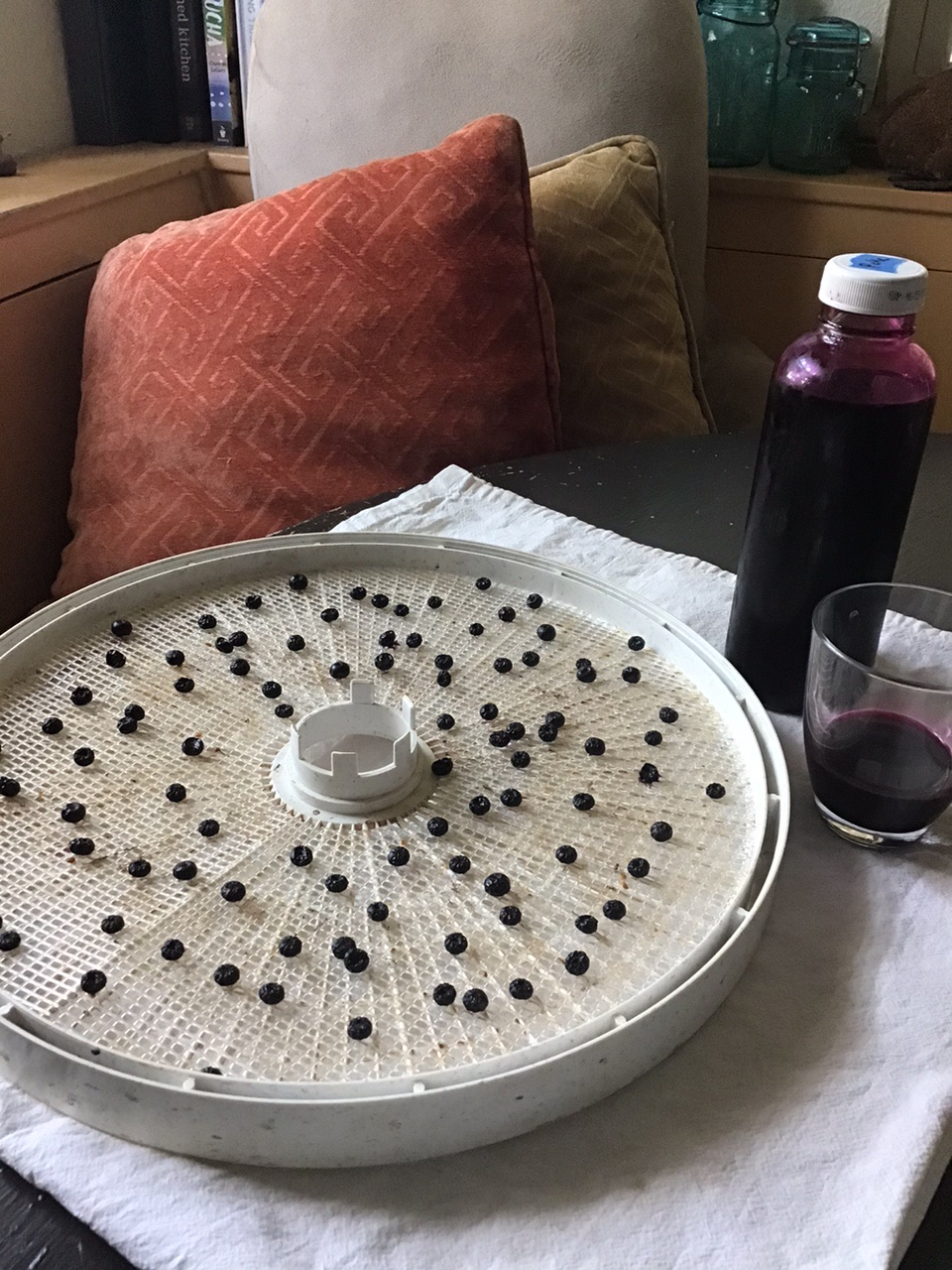
I’ve also made poke wine! It tastes pretty weird, but is supposed to be an excellent medicinal, so I thought it would be good to have on hand this winter. Despite popular hype, poke berries are not poisonous. Well, not exactly anyway. The seeds inside the berry are poisonous if chewed. You must extract the juice or swallow the berries whole.

Buttercup decorated with Poke berry splotches 🙂

Our pear harvest was quite small this year, but those will be processed soon too, into cider and preserves. My favorite, figs, have been doing better after a couple years of total failure. Too bad we eat them too fast to preserve them!

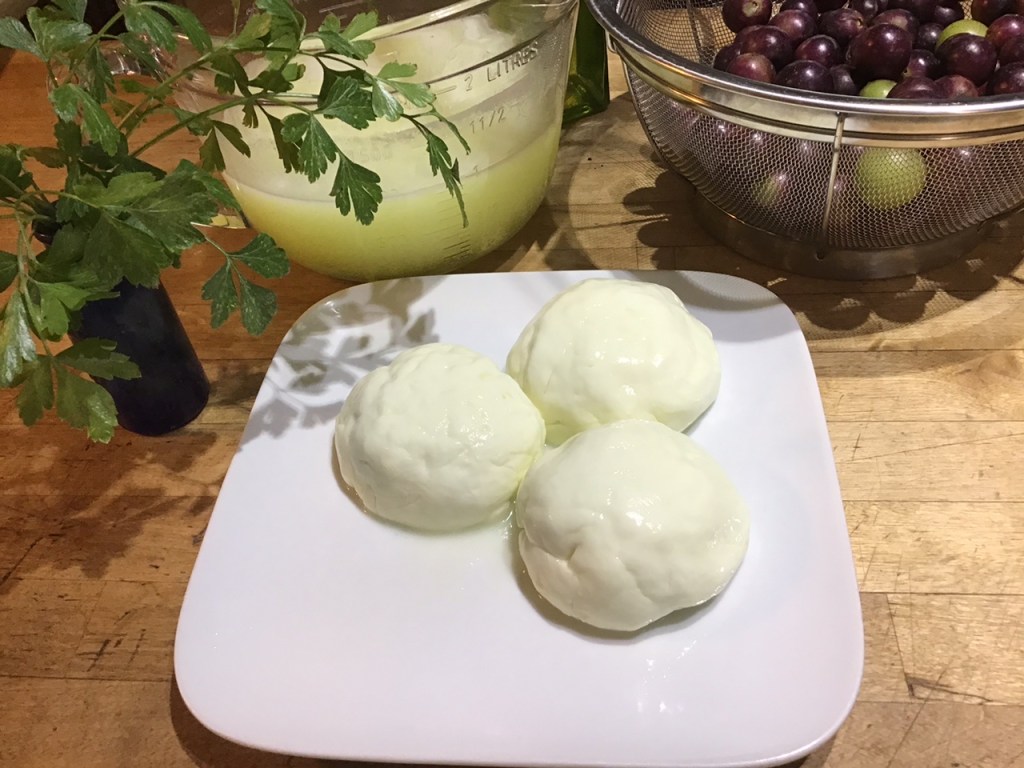
I’ve settled into a nice routine with milking our goat Summer and am extremely pleased with the cheeses I’ve been making. It took some getting used to, fitting it all into a workable new plan, after making mostly large-batch cheeses for several years. I’m using only traditional methods now too, so no more expensive cheese cultures to purchase.

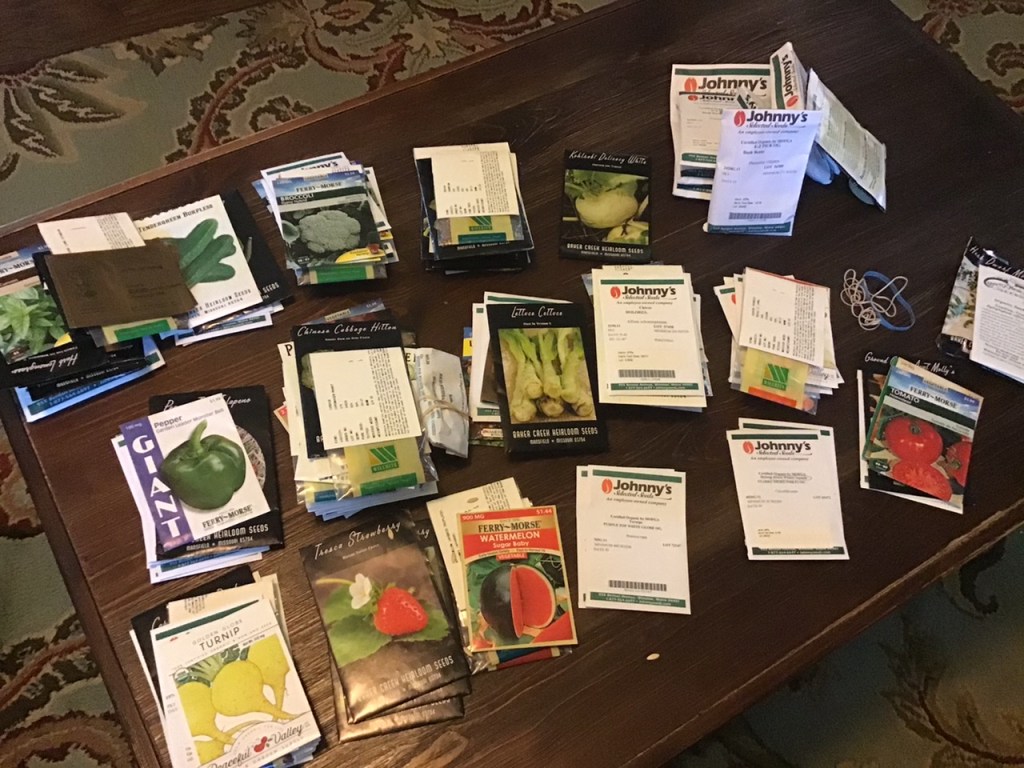
Organizing seeds and preparing the fall plantings are also in high gear. It’s a real challenge in 90+ degree temps to be considering the cool season crops. I’ve got some started indoors under lights and my direct sow method amounts to throwing a variety of seeds in the ground every week, waterIng liberally, and keeping fingers crossed. Usually, eventually, some seedlings get brave and make an appearance and if we’re lucky, will produce something before the first frost.

Handy Hubby’s still rockin’ the new utility room and it’s already looking fabulous! It’s been a 100% DIY project for him and he never fails to impress. Once done I’ll give him a proper staging and big kudos post.

Well, that’s all folks, thanks for visiting!

What is Osage Orange, and is it Edible? — Deep Green Permaculture

This is one of the tree varieties on our property I’m going to start propagating. Apparently there is a technique used by the early settlers when creating a living hedge with it that is fairly quick and easy, if I can steer clear of the vicious thorns.

Osage orange (Maclura pomifera), also known as Bois d’ arc, Hedge Apple or Horse Apple, is a member of the Moraceae family, to which figs, mulberries, breadfruit and jackfruit also belong, and is native to the south-central United States. This thorny, fast-growing, medium-sized tree or shrub which grows up to 20m (60′), tall, but is […]

What is Osage Orange, and is it Edible? — Deep Green Permaculture

How to Grow, Prune and Propagate Raspberries — Deep Green Permaculture

I just wanted to share this fantastic site, here’s just one of their high-quality articles, but there are many more of great value for beginners and old green thumbs alike!  I’m learning so much from them, yippie!! 🙂
Raspberries (Rubus idaeus) belong to the genus Rubus, along with other cane berries such as blackberries, boysenberries, lawtonberries, loganberries, marionberries, silvanberries and tayberries. What’s quite interesting is that the whole Rubus genus is part of the Rosaceae (Rose) family, to which almonds, apples, apricots, cherries, hawthorns, loquats, peaches, pears, plums, quinces, raspberries and strawberries also […]

via How to Grow, Prune and Propagate Raspberries — Deep Green Permaculture

Just Do Better

Happy Holidays, y’all!  The passing of this year is quite welcomed for us.  It’s been our toughest year on the wee homestead by far.  There were even a few times we discussed giving in and packing up.

We moved here in 2009, after Hurricane Ike, having purchased raw land in 2006, after Hurricane Katrina.  It’s the new normal, I guess, that our memory is set by weather disasters.  Now 2019 will be marked as the year of the manufactured storm bombs: crazy tornado and giant hail.

Judging from the amped-up geoengineering agendas, who knows what next spring will bring—floods, fires, more ‘tornados’, unprecedented lightening storms, maybe a land cyclone or two—certainly continued weather whiplash will remain on the menu.

https://youtu.be/z4cZEdhFnpM

I don’t imagine it’s possible to prepare for every potential catastrophe, but still, we’re staying put.  It’s not that we’re gluttons for punishment, or like to live dangerously, or are too stubborn to see the writing on the wall.  It’s not even that we’ve come too far to turn back now, having learned so many of the essential homesteading skills, having devoted so much blood, sweat and tears, not to mention $$, into this lifetime project.

55A3C5C3-4CD4-47E0-A362-B1D999FAC142
We bought the neighboring property that had a nearly abandoned cottage, hauled off the old junk and then the real work began—paint, windows, doors, siding, deck, etc. And after the tornado, a new roof.

It’s for love.  Love of the land, the nature, the work, the critters, the learning, the lifestyle, and of course, love for each other.  Where else would two such misfits fit except in the woods, I wonder?

When there’s no turning back, and as we’re too young yet to sit still, but too old to start over, the best option left is to up-skill.  So, that’s what we’re doing.

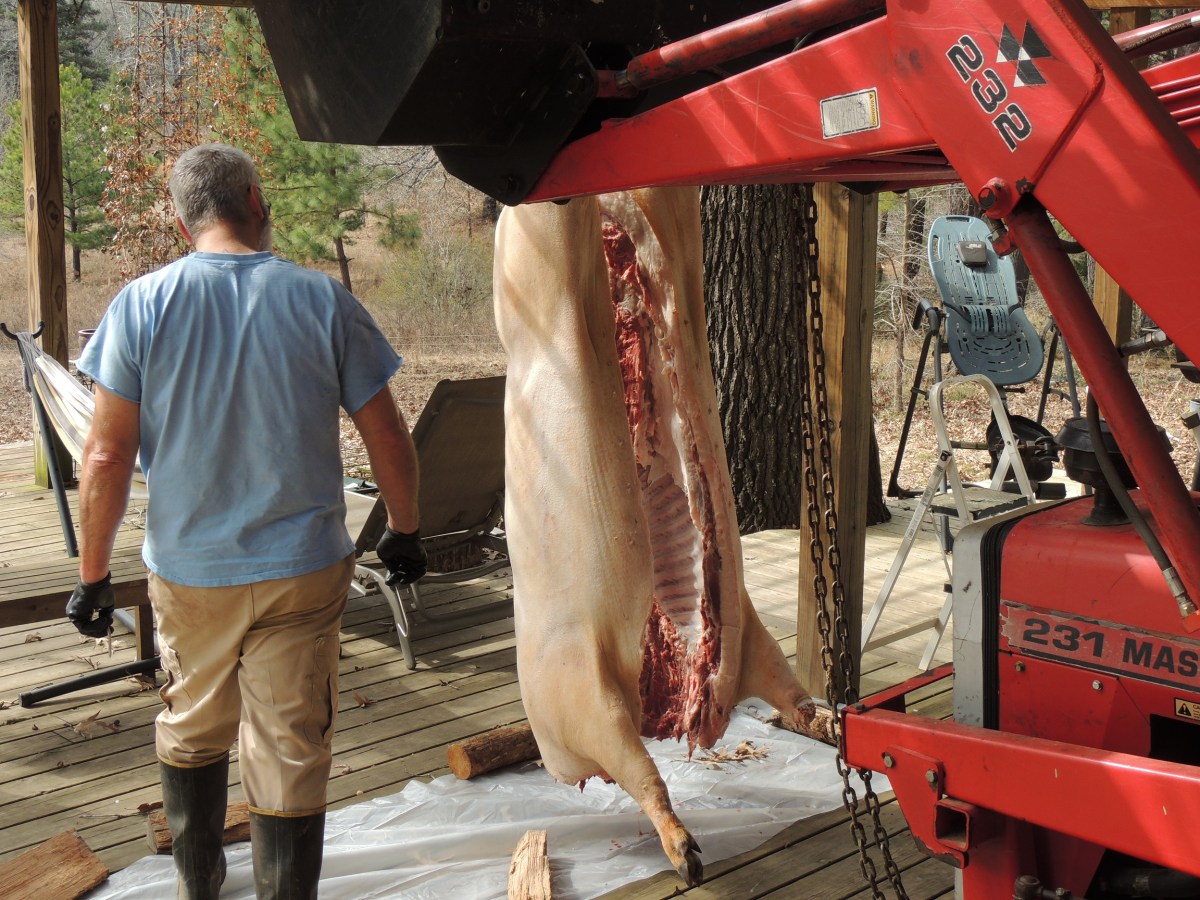
Handy Hubby has transformed his butchering talents from mediocre to practically professional with the help of the Scott Rea Project.  It is truly impressive, especially considering  what big jobs he makes work in our very small space.

I’m following his lead by upgrading my own culinary crafts to include more traditional fare, like offal, which really isn’t so awful at all!  This’ll be my last bad pun in this post, I promise, even though I find them offally hilarious.

I don’t really follow recipes, but I’ve been finding guidance and inspiration from Of Goats and Greens and Weston A. Price.  I recently made a rather delicious Lamb Liver Loaf and an offal salad of heart and tongue. (FYI, it does not taste like chicken.)

E6ADCA4F-0ECC-47D2-BA9D-AB120BA6AEE5
The upturned oaks have become the perfect microclimate for Jack-O-Lanterns (Omphalotus olearius), not edible, but an appreciated gift for a friend who dyes her own yarn.

93C5AD3D-517F-49A9-994F-CE1DC3749640
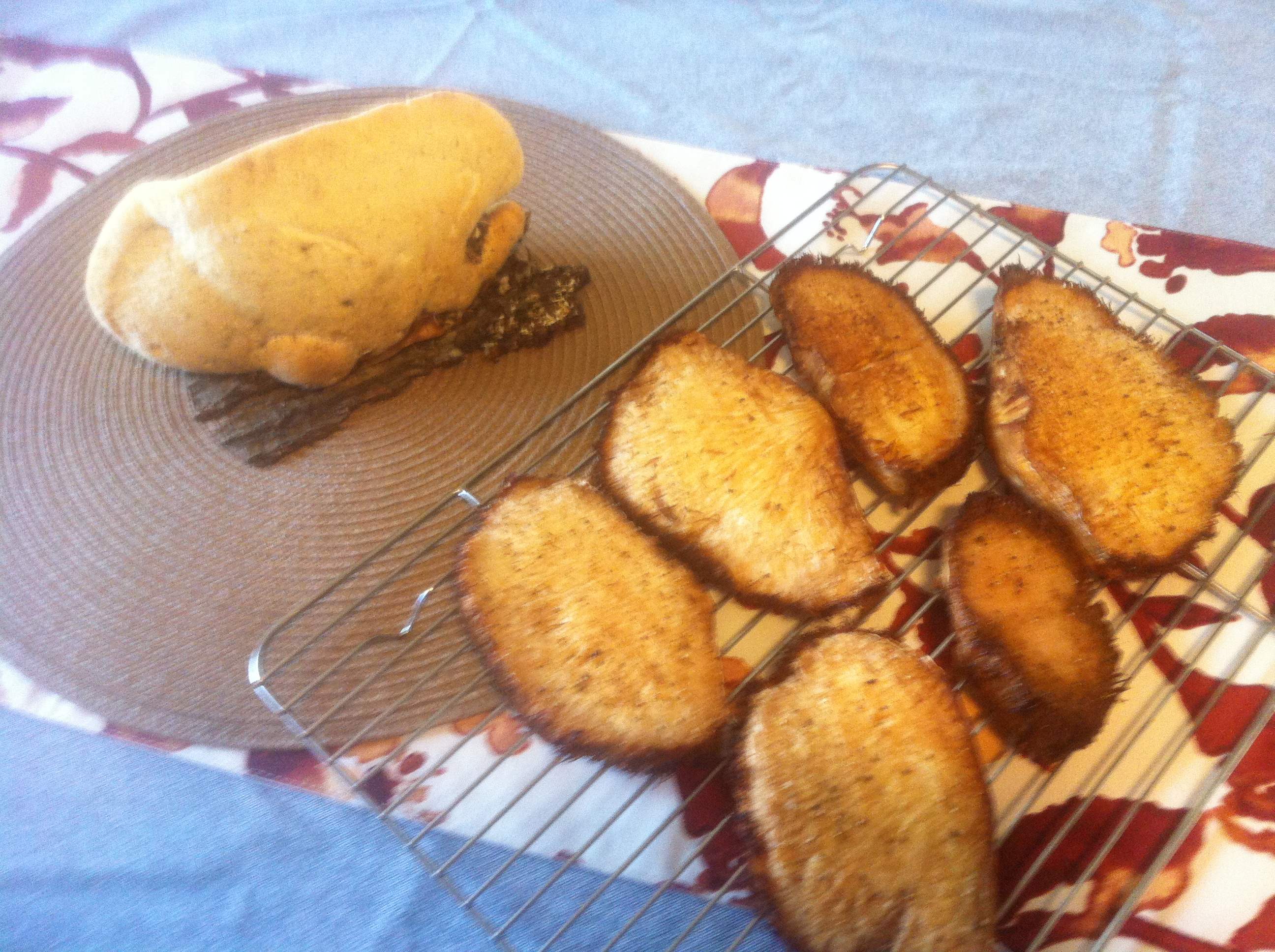
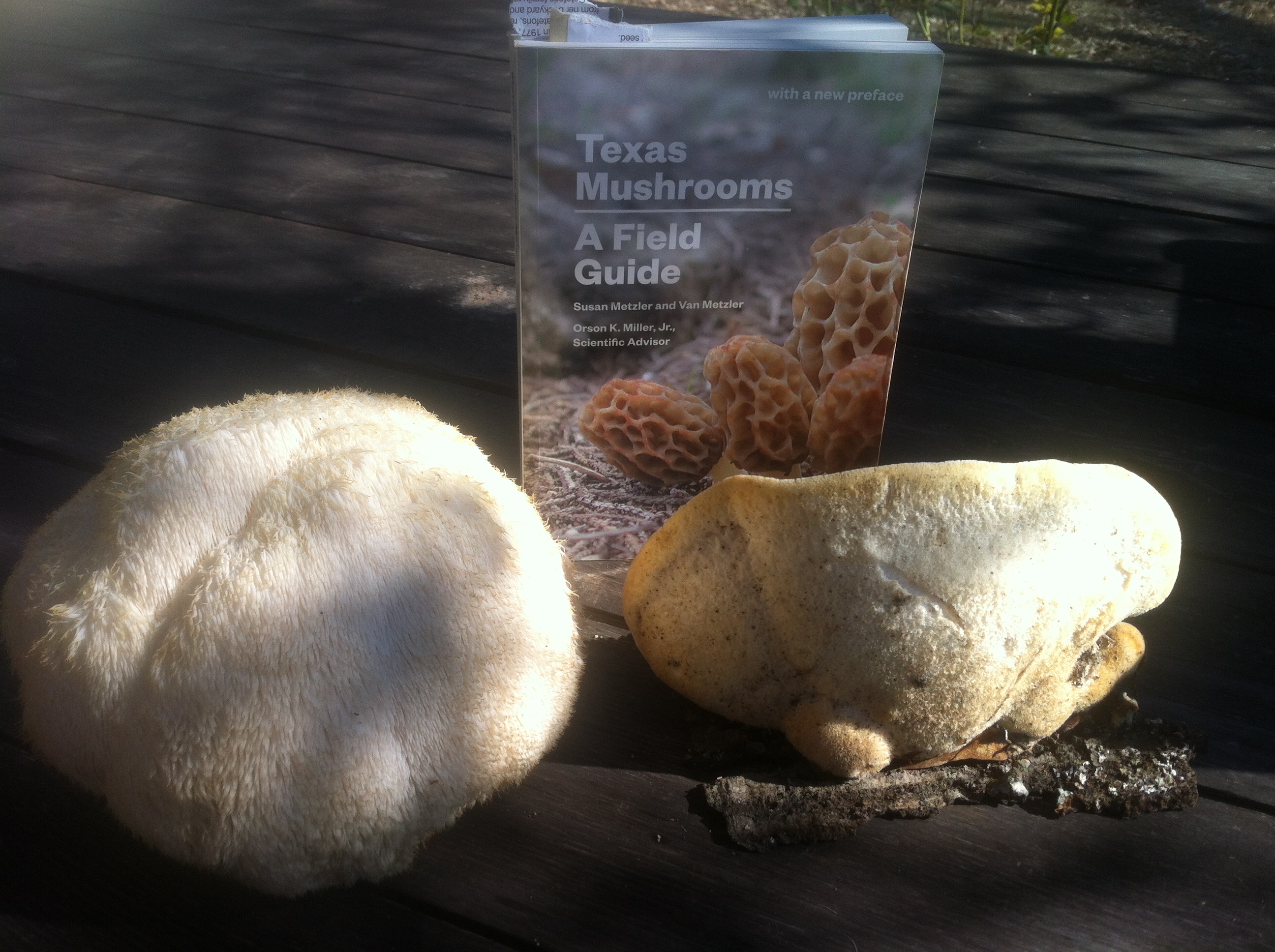
The hedgehog baked and the pulcherrimum as centerpiece

1C8BD3E2-C997-4537-A351-90281D4EF150
An edible favorite: the hedgehog (Hericium erinaceus). And a ‘steccherinum pulcherrimum’ which means ‘appearing beautiful’

I’ll also be doing more foraging with the help of The Forager Chef  and a bookshelf full of expertise on mushroom hunting, wild plants and herbs, traditional cooking and healing.  I’m more committed than ever in holding space for, and gaining knowledge of, the ancestral arts and crafts that were missing from my childhood, and indeed for most of us for many generations in this country.

I’m not going to share any lame platitudes about silver linings and growth opportunities, because that’s slave-speak socially engineered by the faux-authorities to assure the rabble don’t complain about their lot in life.  I intend to continue my fair share of complaining, and then some.

But, I will offer this cliché instead—It ain’t over ‘til the fat lady sings!  And this lady’s got no plans to plump up any further, or join the choir.

May all your storms be weathered, and all that’s good get better.  Here’s to life, here’s to love, here’s to you . . .”


It’s a Life Skills Problem

I couldn’t agree more with Max Igan when he repeats that losing our life skills is assuredly one of the most serious vulnerabilities of modern civilization.  

Of course, I can’t agree with his ‘no private property’ stance, but that’s another post.

https://youtu.be/WCEGxsuaYok

Igan’s outlook reminds me when I was first introduced to the theory of Spiral Dynamics, when my fellow students (mostly middle-aged women of a relatively superior income class) immediately ‘recognized’ themselves in the ‘highly evolved’ stage of ‘Turquoise’.  Big surprise. 

I was far too polite when I refrained from pointing out what was obvious to me even as a novice, having already been ploughing away on the wee homestead by then for several years.

Your Turquoise is built on a house of cards, Madame,” is what was obvious to me immediately, and which I longed to express.  If it were built on a house of sand you’d be far safer, I’d then add.

Even my favorite synopsis of this social theory fails to highlight the significance of ‘Beige’ — the foundations of civilization.  This stage is considered to be subsistence living, hand-to-mouth, barely advanced to basic tribal existence.

The theorist here, Don Beck, demonstrates respect, even some reverence to their ancient wisdom, but with the assumption, it seems obvious to me, that an evolved civilization has technological immunity to such bio-psycho-social devolution that would accompany this exceptional vulnerability of modern life.  

You think butchering and gardening, farming and foraging are skills beneath you, Family Silicon Valley?  

Or, in the tolerant, nostalgic age they are, at best, quaint lost skills to pine about and imitate in your Petri dishes? Ya’ll can’t possible recognize your feeble attempts bound to fail as you attempt to fit all of creation into your teensy-BIG Smart World?

Think again, former friends.  Here are the real skills armies and resilient cultures are built on.  

Here’s your reality, Family Turquoise, if the grid goes down, you can’t survive, not even for a fortnight.  Psychic breakdown would occur almost immediately, due to lack of any authentic earthly connections or spiritual foundations in your personal or family or community unit.

Then the true reality of your vulnerability would hit home for real.  You have NO LIFE SKILLS, at all! Not spiritually, not physically, not emotionally. 

Most Americans these days can’t even cook from scratch.  This skill was lost in barely two generations.  And what’s worse, they can’t even fathom what happens to the individual mind, let alone the family and in turn the collective consciousness, when faced head-on with annihilation.

The more ‘superior’ one calls themselves in the modern world is directly related to how vulnerable they really are.  Perhaps that’s what the well-quoted Bible translation meant in claiming, “The meek shall inherit the earth.”

As a wise woman in an era of uncertainty, who are you going to put your confidence in—the wealthy CEO of Fiction, USA with a San Francisco loft worth a few million on paper—or the ‘poor’ man who can trap, shoot, butcher and even cook the meat for your table?

bigchopsmoker

That the ‘A Class’ woman chooses poorly in this situation doesn’t surprise me at all considering our current state of affairs and the fact that of the many supporters as well as volumes discussing this social theory of Spiral Dynamics, I’ve yet to find one who gets the full nuance of Beige.

Modern folk just don’t want to go there.  It’s like the old lyrics, “How ya gonna keep them down on the farm once they’ve seen gay Paris?”  It’s hard work after all.

It’s not just whistling Dixie in your Tu-Tu, thanks anyway, Grandma.

1938 Mom - 4th-ice follies
Yeah, that’s Granny, the gorgeous one, 4th from the left.


So we get Soy-Boys who are good at sales, rather than competent men who can bring home the real bacon.  The ‘elite-class’ calls this ‘evolution’.  This is ‘spiritual’ advancement.  

Why might they promote this among the plebs and their entertainers? Heaven knows!

If one isn’t capable of hurting a fly, then we’ve evolved to societal sainthood, according to these shysters. This is their Utopia. 

As for the adult-children bolstering these Pied Pipers?  How long shall the competent among a functional colony support them, I wonder?

http://www.alt-market.com/index.php/articles/3969-why-is-the-elitist-establishment-so-obsessed-with-meat

Humpty Dumpty sat on a wall . . .
Humpty Dumpty had a great fall . . .

And I said, “Serves ya right, fat ass in fantasy land.”


For the LOVE of BEES

If you plan to join the growing number of hobby beekeepers the very first step should be to define your goals.  I learned that the hard way.

It’s a wonderful thing to see the popularity of beekeeping keeps increasing.  I love beekeeping for many reasons, but when I was first starting out the learning curve was very intimidating.  And that’s coming from someone who usually adores learning.  

Not only was there loads to learn about the bees themselves, but also about how to manage their colonies, which changes depending on your hive type, which is dependent on what your goals are as a beekeeper.

The first question to answer for yourself as a newbie is if you are interested in beekeeping as livestock or as habitat provider, or maybe both.

I had several mishaps in my first years because I hadn’t asked myself this most fundamental question.  I hadn’t asked myself this because in all the books, forums, courses and club meetings I’d attended, no one asked this question.  The general assumption is always that the beekeeper is interested in bees as livestock, because that’s what most want.

In this case, follow the commercial standards, using their Langstroth hives and peripheral equipment, their treatment schedules for pests and diseases, and their feeding programs and supplies, and you should be good to go.  You can buy nucs (nucleus colonies) in the spring, and if all goes well you’ll have some honey before winter.  This is by far the most popular route to take in beekeeping.

3D20AE9C-B664-4014-B63E-60DCE37A2BC9
Our only Langstroth hive on the homestead, bedazzled with old jewelry.

But it’s not for everyone, including me, which took me a few years to figure out.  Honey, pollen, wax, propolis, royal jelly, queen rearing, and other processes and products from beekeeping are the main goals of this style of beekeeping and there’s lots to learn from the commercial operators who have mastered many of these skills for maximum efficiency and profit.

However, if you are interested more in providing habitat and learning from the bees, and creating truly sustainable, long-term, self-sufficient colonies in your space, following commercial practices is really not the way to go, and can lead to a lot of expense, confusion and frustration.

In the hopes of encouraging more beekeepers to become honeybee habitat providers rather than livestock managers only, here are a few tips and resources.

0F66DEAA-3033-44FD-AECE-B91386C6AE8A
The bee yard of Dennis Kenney of Jackson-area Beekeepers Club, with his preferred horizontal hive style.  Horizontal hives differ from Top-bar hives in that they have full frames with foundation.  Benefits of full frames is ease of management and stability of comb.  Drawbacks would be the added expense and the artificial, manufactured foundation and its potential contaminants.

0A98CBDD-BF2C-478A-A48B-7CBF71767714

  • The conventional practice is to keep all your hives in a ‘bee yard’ for reasons of convenience and space.  This is antithetical to bee colonies’ natural proclivity to nest far from one another.  It creates problems of diseases and pests that spread rapidly in conditions of overpopulation, which is why so many treatments are needed, and then feeding when nectar/pollen flow is scarce, as well as being hyper-vigilant in your regular hive inspections to find issues immediately before they spread.  Now that I have spaced my 6 hives out around a very large area I’m having far more success.  But, only time will tell!

What else I’ve learned:

  • The typical Langstroth hive is made for easy transport and standardization purposes for the industry mainly, but they are not ideal for the honeybee habitat provider, because they are made with thin walls in order to be lightweight. This means they are poorly insulated and so not suitable for the long-term stability of the hive—getting too hot in summer in southern climates and too cold in winter in northern climates.  Our top-bar hives and nucs have thick walls and insulated roofs. 

  • If you want your bees adapted to your area and climate you don’t want to do the conventional practice of buying new queens every couple of years.  Ideally, you’ll want your colonies to produce their own queens.  Queen-rearing will remain an essential skill for a more advanced beekeeper, because occassionally you may still want to make splits to increase your numbers or to replace weak colonies, or to re-queen another hive displaying poor genetic traits. 
  • When the colonies are weak, depending on the issue, they may need to be culled. This is rarely suggested by professional beekeepers who promote regular treatments on which the weak colonies then become dependent, while still spreading their weak genes on to subsequent generations and their diseases and pests to other colonies.

Just like the faulty logic of ‘herd immunityin the vaccine debate among human populations, many commercial beekeepers use the same complaint about those of us who want go au naturel, that is, treatment-free, with our bees.

Many scientists and researchers are trying to raise public awareness that this is not how herd-immunity works, not in livestock or in humans, and I applaud their efforts.  I personally find referring to populations of people as a herd to be insulting.  I think it actually trains individuals through neuro-linguistic programming (NLP) to think of themselves and each other not as unique and separate individuals, but rather as cattle to be managed.

https://youtu.be/yROsPgbuh0U

  • You’ll also want to mostly forgo the conventional practice of swarm prevention.  The goal is for the bees to become self-sufficient, as in the wild, where colonies can live for decades with no hand from man to aid or to disturb.  Some of these colonies are enormous, like one we found in an old oil barrel, there for over 15 years and thriving with multiple queens in the same colony, which most likely swarmed annually.

Swarming is a natural, bio-dynamic process performing many different functions for the colony, hygiene being an essential one. Everything the beekeeper takes away from their natural processes is a stress on them which must then be alleviated by other, most likely artificial, means.

  • Plant perennial and annual crops the bees like for your area and climate.  Here in the south there are plenty of plants that bloom at different times most of the year, giving free bee buffets from early spring to late fall, like: bluebonnet, white clover, hairy vetch, wild mustard, vitek, morning glory, trumpet vine, yaupon, and lots of garden herbs and crops, too.  It is my greatest pleasure to harvest cucumbers, peas, beans and arugula surrounded by forging bees—they love them as much as we do!

65DA91CB-DB3F-4905-AC66-092D51484283

Experimenting and observing is the most fabulous feature of the honeybee habitat provider! 

I know a homeschooling homesteader with an observation hive in their house that the children treasure.  Not only do they learn from these fascinating creatures about how they operate in the hive, but how they are connected to the seasons and to their environment.  They’re learning constantly from the colonies’ successes as much as from their failures.

I practice slightly different techniques with each hive to discover which methods work best here on the wee homestead: one hive has a screened bottom board, one I keep with a reduced entrance all year, one’s in full-sun and another partial shade, and so on.  Not that this will necessarily solve the mystery of colony failure, but every bit of data helps!

Some unconventional resources:

Books

The Shamanic Way of the Bee: Ancient Wisdom and Healing Practices of the Bee Masters by Simon Buxton (2004)

The Dancing Bees: An Account of the Life and Senses of the Honey Bee by Karl von Frisch (1953)

Top-Bar Beekeeping: Organic Practices for Honeybee Health by Les Crowder & Heather Harrell (2012)

Natural Beekeeping: Organic Approaches to Modern Apiculture by Ross Conrad (2013)

Sites

Treatment-free Beekeeping YouTube Channel

https://www.youtube.com/channel/UCC_Yb2d_9M09hcaWlghVZDg

The Bee-Master of Warrilow by Tigkner Edwardes (1921)

https://archive.org/stream/cu31924003203175/cu31924003203175_djvu.txt

Biobees

http://biobees.com/library/general_beekeeping/beekeeping_books_articles/BroAdam_Search_for_Best_strains2.htm

Dr. Leo Sharashkin

horizontalhive.com