Some of us have known for decades what’s coming. Actually, what is here, already here, has been here, and has been destroying families and communities for two centuries, at least.
You need look no further than the “Civil” war to see it.
Others are just coming face to face with this reality now. It’s a horrifying reality for such folks, not only has their reality bubble been burst, but now they must face such dire facts while trying to fight for their homes, their properties, and their lives. Just as happened to the Southerners. Just as happened to the ‘Native Americans’. Don’t believe the war propaganda; every day is Groundhog Day. Every land grab scheme has been played before, now they just have fancier weapons to do their dirty work.
Waking up is hard to do in the best of circumstances, so I can imagine the hell when attempting to do so in the worst of them.
It’s not just the weather! I know, I’ve been focused on the weather for so long, it’s been my obsession, because trying to deal with it on a daily basis is no picnic.
I’ve also felt like the manufactured weather is like a baby step, a gateway, if folks would get their minds around that fact, and the very serious implications of it, then they would be better able to face the far more dire situation we are in.
Now that the cyber world is finally facing up to the manmade weather chaos, I feel it’s time to take the next step, because in fact, the reality of the situation is FAR worse.
During the series of tests at the High Energy Laser System Test Facility at White Sands Missile Range, the Demonstrator Laser Weapon System (DLWS), acting as a ground-based test surrogate for the SHiELD system, was able to engage and shoot down several air launched missiles in flight. The demonstration is an important step of the SHiELD system development, by validating laser effectiveness against the target missiles.
DEW—Directed Energy Weapons—are that reality. This is not a conspiracy theory. Those in the know, those in the positions of power in this country, they understand very well these weapons are real, and they are being used against us in this country as in many others.
This book is from 2003.
“Several nations are engaging in development and production of directed energy weapons. Recent scientific advances now enable the production of lethal lasers and high-powered microwaves. The current growth and development in this emerging area strongly suggests that directed energy weapons of lethal power will reach the battlefield before 2010. Since proliferation of lower power laser weapons has already happened, it is likely that proliferation of high power or high energy weapons will occur as well. This paper expands on this development and posits potential impacts on a plausible future battlefield, developed in part from the Alternate Futures of AF 2025, where all comers deploy lethal directed energy technologies. From these impacts, which span doctrine, organization, force structure, and systems design, this paper recommends changes to better posture the United States for this potential future.”
Who you vote for will not change this. This is being carried out from above our political class. As I asked in a previous post: Who owns our airspace?
“The NOAA Project Report below includes information regarding “Weather Modification experiments through electromagnetism” starting 01/05/2023 through 01/01/2026. The submitted application includes a World Economic Forum Global Weather Modification Alliance STRATEGIC INTELLIGENCE BRIEFING which discusses “manmade electro-magnetic storms which may render another region powerless to floods, extreme wildfires and hailstorms…”. The applicant states, “I created a Strategic Intelligence Map this year as well and sent it off to UNOOSA and the United Nations in hope to create a weather modification alliance…”
Who owns our airspace? Does this answer my question?
The ‘race for space’ is not about gifting the world with Internet. It’s the modern battlefield. All that sits below ‘space’ is the fallout zone. We are the fallout zone.
They don’t just want the most beautiful places either, the mountains and the coastlines. They want what is beneath our feet. In some cases, that means lithium and other desired minerals.
East Texas, along with a good chunk of the South is also lithium rich territory, not just our miserable neighbors living in the current hellscape called Appalachia.
“In this episode, we dive into a timely and fascinating topic: the growing importance of lithium extraction in the United States and what it means for mineral owners. In fact, long-time listener, Barb R. shared a news story about Standard Lithium Ltd’s discovery of the highest confirmed lithium grade brine in North America in Cass County, Texas. This discovery has sparked conversations about the ownership of lithium mineral rights and who owns the valuable minerals found in produced water and the potential impact on royalties. Whether you have minerals in the Smackover Formation or anywhere else in the United States, be sure to listen to learn how you can navigate this developing landscape to make sure you get paid for these valuable minerals.”
For those new to the topic of mineral rights here’s a noteworthy fact: Most mineral rights owners do not live on the property for which they own the mineral rights. And most land owners do not own mineral rights.
That means they, ordinary mineral owning Americans, profit, sometimes substantially, if the Public-Private partnerships drill on the land, even against the desire of the land owners.
Furthermore, if those mineral rights owners don’t know they own those rights (for example a death where those rights weren’t specified so the inheritor has no idea), or aren’t informed of the prospective drilling operations (because these international corporations are not always forthcoming), that money goes to the US federal government.
As the famous quote goes:
Thank you to The Tactical Hermit who has been covering the news of our fellows in our latest war zone. Follow link for more info.
I’ve written several times about this tree in past posts and have been meaning to include it in the Herbal Explorations for some time. Thanks once again to Gavin Mounsey for putting a bee in my bonnet! His contributions are featured below.
Photo credit: Gavin Mounsey
A quick peak at a couple of those previous posts of mine to set the stage:
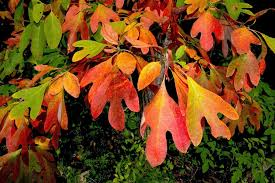
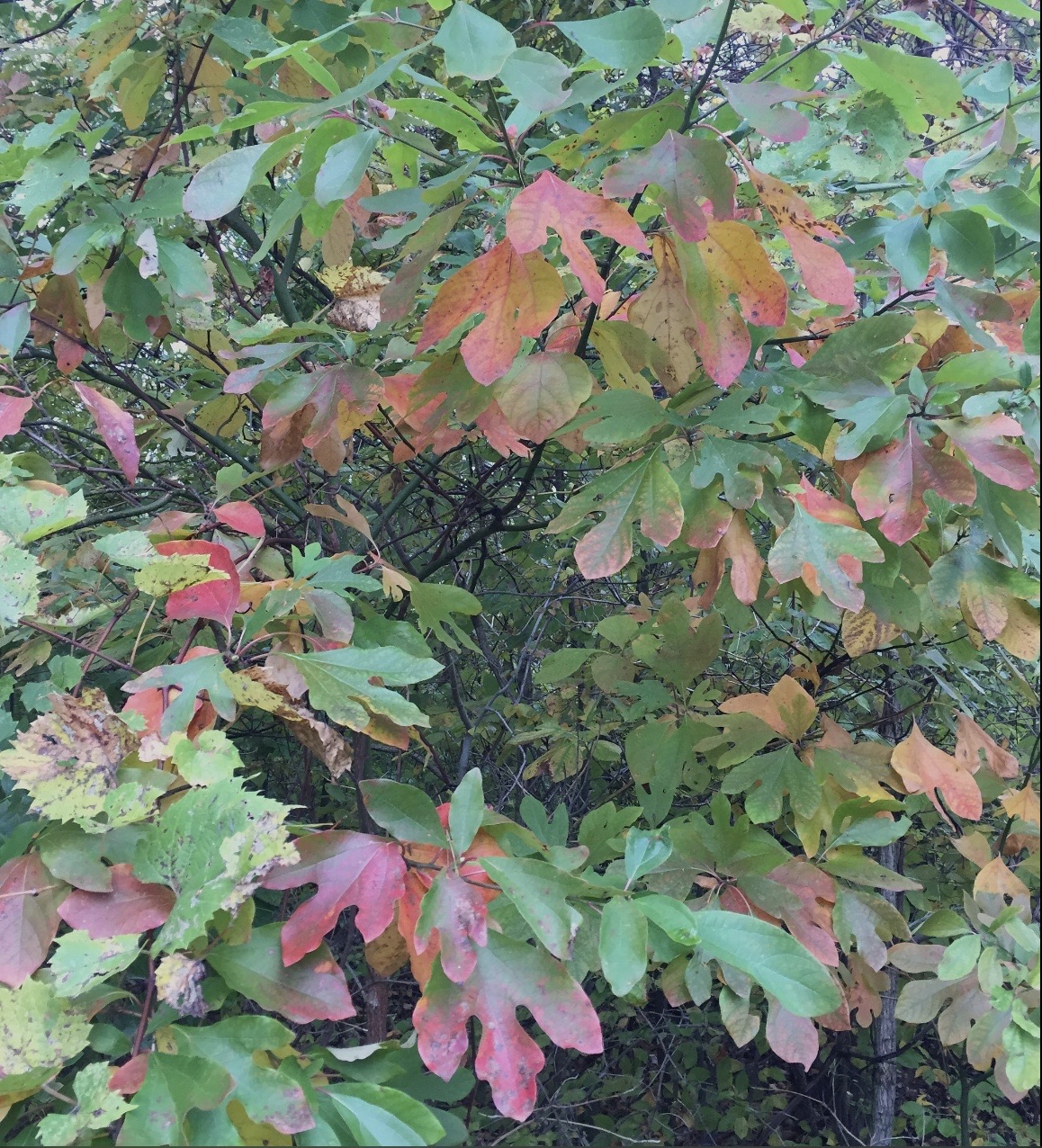
One of my favorite trees, the Sassafras, is flaming red now, one of the few to have changed so brilliantly in this unusually warm and dry fall in East Texas. Between now and winter is the best time to clip the leaves and dig up the tenacious roots so as to indulge in a couple of our ancestors’ favorite libations—root beer and Sassafras tea. Gumbo filé is also made from it, which is an essential ingredient in some Cajun cooking.
Our ancestors adored it, science calls it a carcinogen. At the same time vast groves of it are grown in regions of the globe more easily controlled, in order to mass extract their saffrole to make a highly concentrated and synthetic version of the popular street drug called ecstasy.
A quite undermined tree of the South, considering its illustrious origins and conspiratorial fate. It is a tree widely cultivated in Asia-Pacific as an essential ingredient to the popular drug, or versions of it anyway, generally called “ecstasy”.
At first, like cannabis, it was classified among the most harmful of substances by the FDA, though our ancestors had previously been very acquainted and attached to these and so many other suddenly ‘dangerous’ plants. Then while they were deemed “carcinogenic” by our government, simultaneously expanding was its cultivation in foreign countries for the manufacture of street drugs. This was actually before “Poppy Bush” but perhaps setting that very precedent for the former president?!
While I’ve no idea how to make the popular street drug, I can assure you it makes a deliciously fragrant tea, traditional root beer, and gumbo filé powder.
As for the drug version, I did come across this for any who wish to research further along those lines.
“The most common synthetic routes for production of MDA, MDMA, MDE (MDEA), and MDOH are from the precursor MDP-2-P. To get MDP-2-P first a natural source of safrole is acquired. Safrole can be extracted from sassafras oil, nutmeg oil, or several other sources which have been abundantly documented in Chemical Abstracts over the years. The safrole is then easily isomerized into isosafrole when heated with NaOH or KOH.”
Zubrick, James W. “The Organic Chem Lab Survival Manual: A Students Guide to Techniques.” ISBN #0471575046. Wiley John&Sons Inc. 3rd ed.
Some partial information from The Druid’s Garden, visit her post for much more!
“Sassafras has been called by many names and these names help teach us some of her power: auge tree, saxifrax, cinnamon wood, cinnamonwood, saloop, smelling stick, chewing stick, tea tree, winauk (Native American in Delaware and Virginia); Pauane (Timuca Indians); Kombu (Choctaw); and weyanoke (Algonquin).
Sassafras is typically a fairly small tree, growing 20-40 feet in height with a trunk 1-2 feet in diameter in the northern end of her range. In southern portions of its range, she can grow much larger, up to 100 feet high. Her wood is soft and light-colored with a faint aromatic Sassafras smell. Her wood is brittle, coarse-grained, and rot-resistant although it is not very strong. Typically, her wood has been commercially used for posts and lumber, but wood carvers also enjoy working with it. Sassafras is dioecious, that is, the male and female flowers appear on separate trees. The females will eventually have fruits ripen (which occur around midsummer) whereas the male trees will not.”
Medicinal Uses of Sassafras
“Sassafras Root Spring Tonic: As described above, the Sassafras was taken internally for a variety of healing purposes throughout the ages. Traditional herbalism recognizes Sassafras as a “spring tonic” or “blood purifying” or “blood thinning” herb and is used in the spring in quantity for this purpose. In 1830, Constantine Rafinesque wrote, “The Indians use a strong decoction to purge and cleanse the body in the spring” (Quoted in Wood, 315, New World Herbs). Wood notes that it “promotes clear thining in old age from good circulation to the brain, to improve the peripheral circulation to rid the joints of arthritic depositions, and to promote diuresis” (316). Euell Gibbons in Hunting the Wild Asparagus notes that traditionally, Sassafras Root tea was made with maple sap water for spring tonic. He noted that even in the 1950’s, when he wrote his book, that many folks still drink Sassafras tea “as a spring tonic, believing that it thins the blood and prepares the body to better stand the coming heat of summer.” Gibbons offers this medicinal tea: 3 tablespoons of honey, 3 tablespoons of vinegar (I would suggest a fire cider here) and 1 quart sassafras tea. Chill and serve as a spring tonic.
“Blood and Circulatory System: Today, herbalists recognize sassafras root as a warming, spicy, and aromatic herb that functions as an alterative (tonic) for the liver with mild antiseptic qualities. It has a specific action on the blood and circulatory system, stimulating blood flow and enhancing periphery circulation.”
Gavin Mounsey offers more interesting info in his recent note:
“The small tree known as sassafras (Sassafras albidum) was once one of the most prized plants of Turtle Island (aka “North America”). In 1565, Francis Drake returned to England with a cargo hold full of sassafras roots, and set off something of a craze for sassafras tea, or saloop. By the next century it had become a major export item, almost equal in value to tobacco. Europeans accepted the claims of most eastern Native American tribes about its effectiveness as an all-purpose medicine and tonic, and that combined with its wonderful taste and aroma — Thoreau called it “the fragrance of lemons and a thousand spices” — eventually guaranteed its place as the root in root beer. John Lawson, an early explorer of the southern Appalachians, wrote in 1709, “Sassafras was a straight, neat little tree… treasured by the Indians for its aromatic roots, from which, when pounded, a potion can be brewed to refresh or cure, according to his needs.”
“Early colonists consumed a lot of beer, and it probably didn’t take long before someone got the bright idea of adding sassafras roots to the mix of herbs and spices typically added for flavor and medicinal effect. It might seem strange to think of beer as a health drink, but for many centuries, it was far safer to drink than most available sources of fresh water, being first subjected to a prolonged boil and then made alcoholic. Weak beers were consumed in roughly the same quantities as Americans today drink Coke or Pepsi, but with less serious health risks, since the sugar was all turned into alcohol (and medicinal phytochemicals can be effectively preserved and delivered in a bioavailable format in naturally fermented alcohol based beverages).
“The modern herbalist Stephen Harrod Buhner (Sacred and Herbal Healing Beers, Brewers Publications, 1998) has this to say about brewing with sassafras:
“Sassafras was the original herb used in all “root” beers. They were all originally alcoholic, and along with a few other medicinal beers — primarily spruce beers — were considered “diet” drinks, that is, beers with medicinal actions intended for digestion, blood tonic action and antiscorbutic properties. The original “root” beers contained sassafras, wintergreen flavorings (usually from birch sap), and cloves or oil of cloves. Though Rafinesque notes [in 1829] the use of leaves and buds, the root bark is usually used, both traditionally and in contemporary herbal practice.
“Beer” was used loosely to refer to a variety of lightly alcoholic drinks made with whatever sugar was on hand; both the recipes Buhner offers, for example, use molasses instead of malted grain, as does this one I found in The National Farmer’s and Housekeepers Cyclopedia from 1888:
“Root Beer.—To make Ottawa root beer, take one ounce each of sassafras, allspice, yellow dock, and wintergreen, half an ounce each of wild cherry bark and coriander, a quarter of an ounce of hops, and three quarts of molasses. Pour boiling water on the ingredients, and let them stand twenty-four hours. Filter the liquor, and add half a pint of yeast, and it will be ready for use in twenty-four hours.
“I was excited to see the mention of wild cherry bark — something I had considered using in my own brewing, but hadn’t found any actual mention of until now. I have brewed with all the other substances mentioned, though not all at the same time. (I wasn’t terribly thrilled with the flavor of yellow dock in beer.) But I’m more of a purist than Buhner: I do insist upon using malted grain (or malt extract) as the primary source of sugar, though I will use molasses or honey as adjuncts, in small quantities.
“And I feel the early colonists probably made their root beers, spruce beers, and other healthful brews with malt, too, whenever they could. From an early date, many larger farmhouses had their own brewing operations, and taverns brewed beer in every town and village, first with malts imported from Europe, but quite soon from locally grown grain. A 1685 report from William Penn suggests that malt was substituted for molasses as soon as real brewing became practical:
“Our Drink has been Beer and Punch, made of Rum and Water: Our Beer was mostly made of Molosses, which well boyld, with Sassafras or Pine infused into it, makes very tollerable drink; but now they make Mault, and Mault Drink begins to be common, especially at the Ordinaries and the Houses of the more substantial People.
“In 1750, the Swedish botanist Peter Kalm, interviewing a nonagenarian for his book Travels in North America, learned that the early Swedish colonists of what is now eastern Pennsylvania, Delaware and New Jersey had been “plentifully provided with wheat, rye, barley and oats. The Swedes, at that time, brewed all their beer of malt made of barley, and likewise made good strong beer.” And of sassafras specifically, he wrote, “Some people peel the root, and boil the peel with the beer which they may be brewing, because they believe it wholesome.” He adds: “The peel is put into brandy, either while it is distilling or after it is made.” Nor was ordinary tea neglected: “An old Swede remembered that his mother cured many people of the dropsy by a decoction of the root of sassafras in water drunk every morning.”
“Kalm also mentions the preservative and antiseptic properties of sassafras, which must’ve played a role in its popularity as a brewing ingredient as well (hops were far from the only herb understood to help keep beer from going “off”):
“Several of the Swedes wash and scour the vessels in which they intend to keep cider, beer or brandy with water in which sassafras root or its peel has been boiled, which they think renders all those liquors more wholesome. Some people have their bedposts made of sassafras wood to repel the bed bugs, for its strong scent, it is said, prevents vermin from settling in them. … In Pennsylvania some people put chips of sassafras into their chests where they keep woolen stuffs, in order to expel the moths which commonly settle in them in summer.
“A slightly later (and much more famous) botanist-traveler, William Bartram, mentioned a very different root beer formula from the standard recipe, which makes me wonder how many other sassafras-based concoctions might have been made at one time. Writing about a southern Appalachian plant now known as Bignonia capreolata or crossvine, he wrote, “The country people of Carolina chop these vines to pieces, together with china brier [i.e. Smilax pseudochina] and sassafras roots, and boil them in their beer in the spring, for diet drink, in order to attenuate and purify the blood and juices.”
“Lo how the mighty have fallen. Safrole, the active compound in sassafras, has been banned by the U.S. Food and Drug Administration since 1976 as a supposed carcinogen, and as a consequence sassafras may no longer be prescribed by herbalists, though commercial brewers and root beer manufacturers may still use a safrole-free extract. For the homebrewer willing to ignore the FDA’s finding — which even the very conservative Peterson Field Guide to Medicinal Plants and Herbs of Eastern and Central North America rejects as absurd — it’s a matter of locating a thick stand of sassafras on some dry ridgetop and getting permission from the landowner to dig a few roots.
“The tree grows like a “weed”, and with its distinctive leaves it’s impossible to mistake for anything else. How will you be able to tell if a given root is sassafras, and not from a neighboring tree? Just scratch and sniff. If it has “the fragrance of lemons and a thousand spices,” you’ve hit pay dirt.
“This species along with a handful of others will be introduced to several community food forest projects I have in the works intended to both provide habitat for displaced Ontario Carolinian forest non-human inhabitants while also providing food, medicine and materials for humans in a regenerative way.”
That’s so great to hear, Gavin, let’s set The Science straight! 😊
I hear social criticism on occasion that the problem with cultures in the West today is a lack of moral courage among the people. We have traded our ethics and morality for comfort and convenience. And I think this is a very valid criticism.
But . . .
That does not strike the problem at the root. It is another effect, not a cause. Because in order to manifest moral courage there first must be moral indignation.
Where has that gone?
Those who I’ve witnessed as model-worthy examples of moral courage started off with anger, outrage even, against the injustices they were witnessing around them, in their institutions, their governments, their families.
They didn’t wait for orders from above. They didn’t look on their social media feeds for what should be outraging them. They looked around themselves, in their own lives, where they personally experienced the unfair treatment, or lack of concern, or outrageous injustice, or someone close to them experienced it, igniting in them the blue flame of anger, the righteous indignation, that is the sustaining fuel that feeds moral courage.
Several such individuals come to mind from the last years:
“In early 2020, the Canadian biostatistician Christine Massey realised that something was wrong with the COVID-19 story. She was motivated to commence investigations into virology and the claimed evidence for the existence of ‘SARS-CoV-2’. This led to the development of the Freedom of Information Act project that revealed more than 200 health and science institutions being unable to cite any valid scientific evidence for the alleged “virus”.
Over time the project has expanded to include other alleged “viruses” as well as evidence that any microbes, including bacteria, have been shown to be pathogenic in controlled scientific experiments. The conclusions from Christine’s research are clear: virology is based on pseudoscience and germ “theory” has been falsified. Her work has caught the attention of the establishment media and she even earned a typically-disingenuous “fact check” article recently.”
Moral outrage does not have to look or sound like a crazy woman screaming at the crowd, or making obscene gestures, or behaving like a scary lunatic.
It can be as calm and straightforward as Christine Massey and the Bailey doctors. It can strike at the lies in measured tones and with legal methods. It can be inspiring to others even as you work from the comfort of your bed while sipping tea.
Yet relatively few bother.
It’s remarkable to me that there are so many even now whose moral indignation is never sparked by the mess of the world around them. It’s never fueled by concern for others or for the future. It is as if they are comfortably numb.
It is indeed frustrating to have to live among so many such people. For every Christine Massey there are probably 10,000 soulless deadbeats. Maybe more.
That might sound pretty depressing, but on the bright side, that means just lifting a pinky finger to do the right thing is looking pretty heroic in comparison.
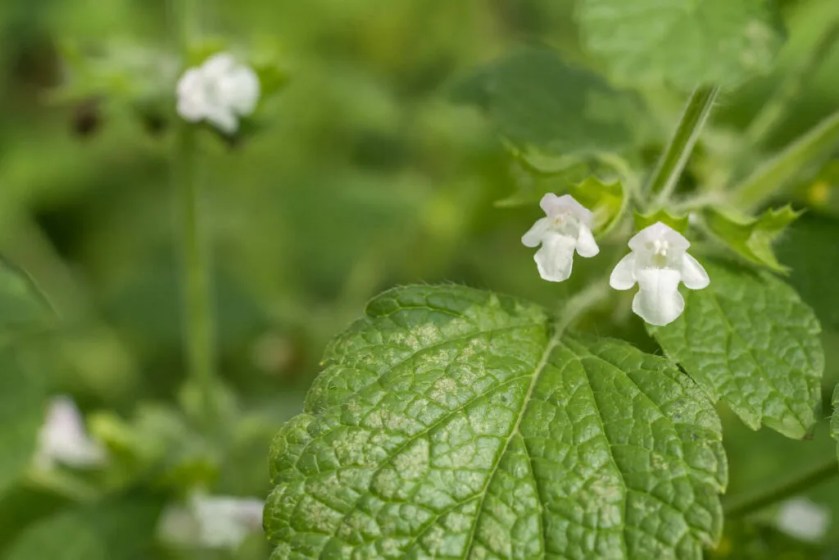
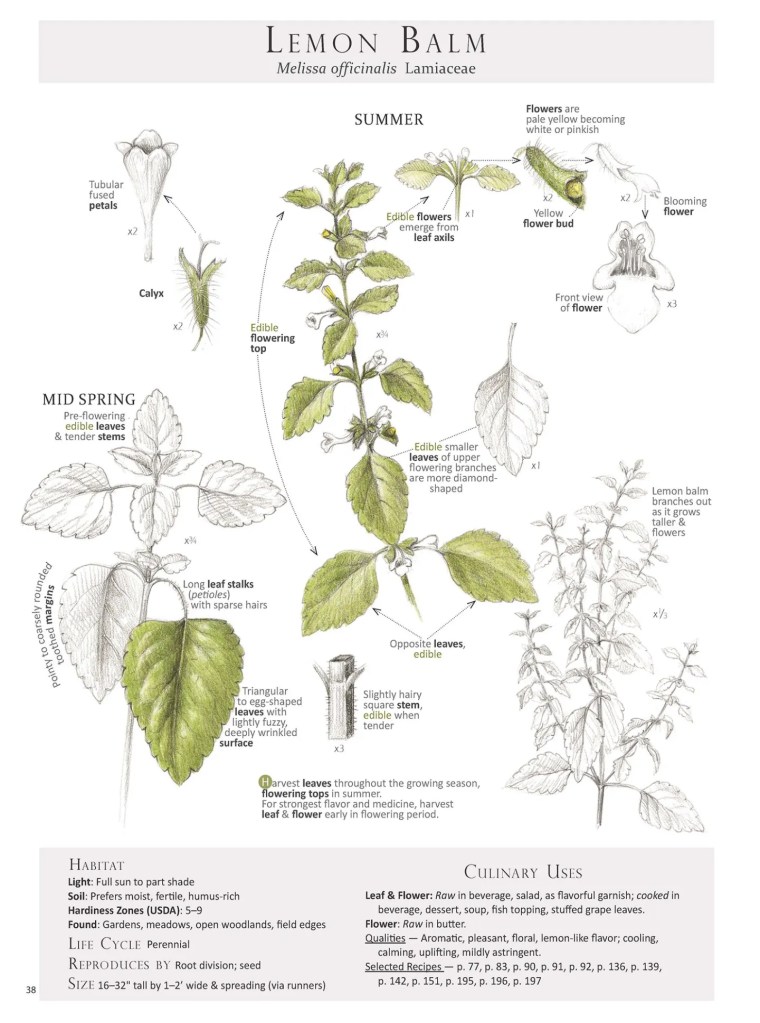
I’m adding another from Gavin’s Newsletter to the Herbal Explorations pages—the very popular Lemon Balm. Gavin does such a thorough job of covering it and I’m excited to start working with it more. I grow it, like mint, mostly for the bees, but like mint, I don’t use it nearly enough.
I’ve copied some favorite parts from his article below, but I’m sure I’ll be referencing it again directly in the future.
I really recommend viewing his full post and would love for any readers to add your own experiences with growing and using lemon balm as well, here in the comments section.
“I love this plant as it is very easy to grow (in fact, it now grows itself in our garden without any assistance) it provides forage for native pollinators while repelling mosquitoes and provides a long list of medicinal benefits. Lemon balm’s pain-relieving properties may make it an ideal choice for relieving muscle and toothache pain. In addition to drawing on its relaxing properties, this home remedy targets inflammation in the body.
“The leaves of lemon balm contain potent astringent and antibacterial properties useful for many things including cleansing wounds and pores to reduce blackheads. Due to rosmarinic acid, one of lemon balm’s key antioxidant ingredients, the herb also benefits the complexion. On top of all that, this herb is versatile in a culinary sense (providing fresh and enlivening flavors and aromas that lend themselves to enhancing creations in the kitchen).
“In the late 14th century, the nuns of the Carmelite Abbey in France began to make a “miracle water” using the lemon balm found in the monastery’s gardens. This is known as Carmelite water, which consisted of multiple herbs and spices with Melissa officinalis always as the main ingredient. This “perfume,” as it was called, was very fragrant and it was used to cover body odors as people seldom bathed in those days. This formula was also called “Eau de Melisse,” and it was revered by kings and nobles as well as commoners. It became a popular cure-all for various ailments and was used both internally and externally. Nicholas Culpepper, the 15th century English botanist and physician, praised the virtues of Carmelite water writing: “It causeth the Mind and Heart to becom merry, and reviveth the Heart fainting to foundlings, especially of such who are overtaken in their sleep, and driveth away al troublesome cares and thought…
“By the middle ages it was cultivated throughout all of Europe. Spiritually it is said in some cultures that lemon balm is known to balance feelings and emotions. It was used in ritual baths to invoke the Goddess, making you more appealing in the world of love and romance. Lemon balm has been associated with the feminine, the moon and water. It was considered sacred in the temple of the ancient Roman goddess Diana. It was first mentioned in medieval manuscript as “Herbe Melisse” in 1440. ( It’s botanical name, Melissa, stands for “bee” in Greek. Avicenna, a Muslim herbalist, recommended Melissa “to make the heart merry”. The Swiss physician and alchemist Paracelsus (1493-1541) believed that lemon balm was an “elixir of life” and would increase strength and lengthen life. After it’s introduction by settlers and subsequent naturalization (in what is now known as the United States) the Cherokee people used the herb as a remedy for fevers, colds, chills and typhus.”
“Lemon balm contains within it the virtues of a dozen other plants” ~ Hildegarde von Bingen 12th century mystic and healer of Germany
“Keep in mind that like mint, lemon balm grows incredibly fast in rich, well drained, moist soil that receives lots of sun. In the right conditions, it can even become massive. Once you discover all of the useful benefits of having this plant around, I’m sure you’ll be more than fine with that!
“Lemon Balm Repels Annoying Bugs This herb has the ability to repel ants, mosquitoes, and flies with its high amount of compounds that resemble the scent of citronella. Try making this easy herbal no bug balm to keep those pesky mosquitoes at range. Out on a hike and forgot to bring your bug balm? Find some lemon balm, crush the leaves, and rub them directly onto your skin! The same can be said of yarrow.
“As We Explored Above, Lemon Balm has Medicinal Benefits: Not only is this plant great in the garden, but it’s also an excellent gem to keep in your herbal remedy cabinet.
“Ancient Greeks used lemon balm steeped in wine to relieve the symptoms of fevers. Put together your own ginger and lemon balm cold/flu syrup to relieve those same symptoms today.
“This super healing lip balm uses the antiviral effects of lemon balm to quickly clear up cold sores. You can also use it in an herbal salve to speed healing of minor wounds. Lemon balm may also reduce menstrual cramps and premenstrual syndrome when taken daily for a prolonged period of time.
Lemon Balm also Attracts Beneficial Wildlife.
Traditional Medicinal Uses:
“Herbal Actions: Nervine: acts on the nerves. Sedative: calming agent. Mild Antidepressant: relieves feelings of depression. Mild Antispasmodic: reduces voluntary or involuntary muscle spasm. Carminative: gently calms the nerves. Lemon balm is a relaxing diaphoretic as opposed to a stimulating diaphoretic. Antiviral: destroys or suppresses growth of viruses, generally by supporting the immune system. Antioxidant: prevents free radical or oxidative damage. Specific use for dyspepsia associated with anxiety and/or a depressive mood. It is indicated for someone with symptoms typical of hyperthyroidism (inhibits TSH binding to receptors): anxiety, restlessness, palpitations, headache, and excitability and also is a mild anti-depressant. It strengthens the brain and its resistance to stress/shock, and lifts the spirits. It has tonic effects on the heart and circulatory system and can be used topically for herpes and other viral infections. Can also be used topically for gout and internally for rheumatism and neuralgias.
Practical Uses:
“What do you do with lemon balm? The most useful parts of this plant (and the way it found its name) are the leaves.
Compounds are extracted from the leaves and used to make lemon balm oil, tincture, salves and various medicines.
You can use the leaves in combination with other powerful herbs such as Yarrow in order to make effective (all natural, non-toxic and skin enhancing) mosquito repellant. Here is a link to an example of one such recipe: https://thenerdyfarmwife.com/lemon-balm-bug-spray/
Some of the most popular lemon balm uses include using the leaves in the kitchen to make tea and flavor dishes, as well as to create perfume oils and insect repellents. Some people even use it to make homemade toothpaste.”
Gavin’s article continues with many more pages of useful details about Lemon Balm, including lots of recipes and more detailed medicinal uses, loads of links and references and excellent images.
“We have created a hell on this earth for other creatures. Our abuse of animals is the final savagery; the final outrage of mankind in a long history of savagery and outrage. Instead of learning from other animals, instead of attempting to communicate with them, we abuse, torture and kill them. We diminish ourselves in a hundred different ways through our cruelty and our ignorance and our thoughtlessness. “Man’s inhumanity to man makes countless thousands mourn and his inhumanity to not-men makes the planet a ball of pain and terror,” wrote J. Howard Moore.
If man were truly the master of the universe, he would use his wisdom and his power to increase the comfort and happiness of all other creatures. But, tragically, man has used his wisdom and his power to increase their misery. Animal abusers imprison millions of animals in cruel and heartbreaking conditions and ignore their cries of pain and distress on the grounds that animals are not “sentient creatures.” What self-delusional nonsense this is. Sheep and cattle are left out in huge fields in cold, wet weather. They shiver and search in vain for shelter because all the trees and hedgerows have been removed to make the farm more efficient. The animal-abusing farmer cares not one jot for animals: he cares only for his profits.”
Delving deep Diving sweet Sipping sublime Nectars divine
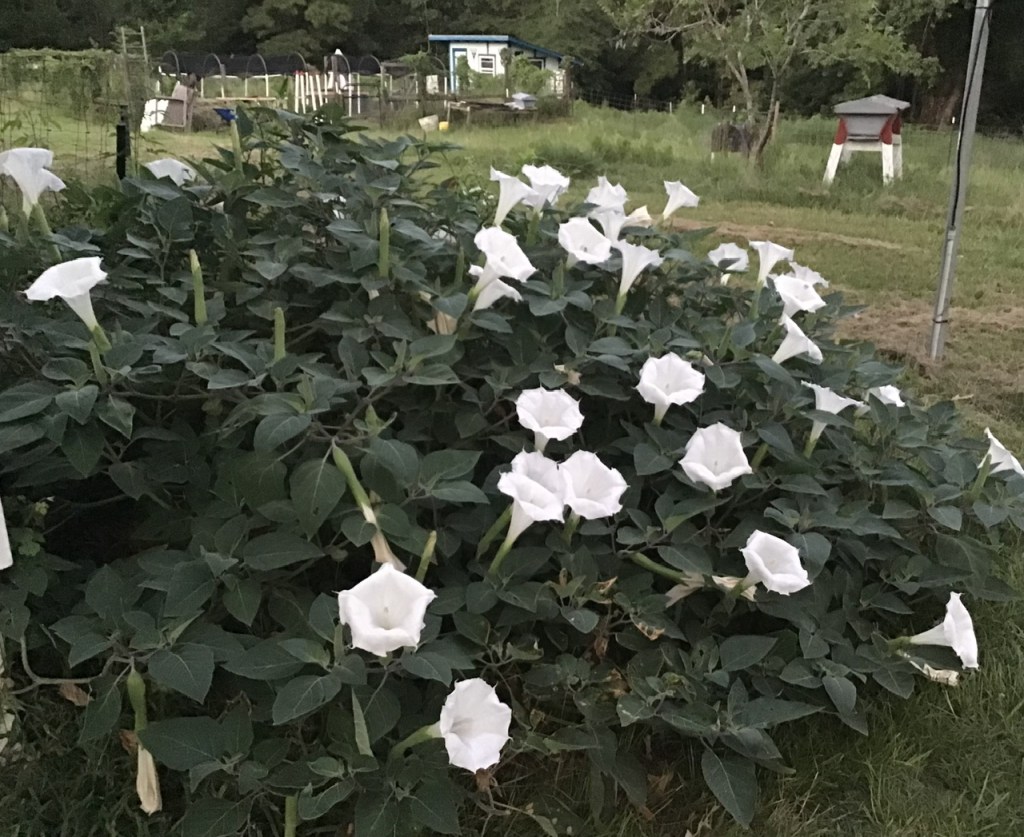
A one minute clip of Datura inoxia alive in the evening breeze covered in honeybees and dotted by the diving ‘tobacco hornworm’ moths (manducasexta) in a safe haven among the blossoms here on the wee homestead, of this ‘poison plant’ it loves so much, from the great many pesticide lovers who hate them so.
This posts aims to answer the question: Would there be anything redeeming about August in East Texas if it weren’t for the watermelons?
I repeat this every year. But I can’t help repeating it again. When we first came here and I’d spent my first August, I was mostly without Hubby because he would often get stuck offshore in the Gulf for bad weather or working over for vacationing colleagues. I swore I would find a way to travel in August, just like the French.
The heat is brutal, the garden mostly gone. Actually, it amazes me anything can survive out there, and yet, plenty of plants are thriving.
And now I can’t imagine having a happy vacation when we’ve got bushels of grapes to harvest and after that bushels of pears, which then must all be processed.
Into wine! I know I shouldn’t whine. It’s not every year we get either good grapes or good pears, and this year we’ve got both.
My wine lab, soon to be greatly expanding. 😊
Wine-making has proven to be a reasonable replacement for my sudden loss in cheese-making ability. That story has only gotten worse, so I’m going to avoid telling it, at least for now. Like I said, August is bad enough already.
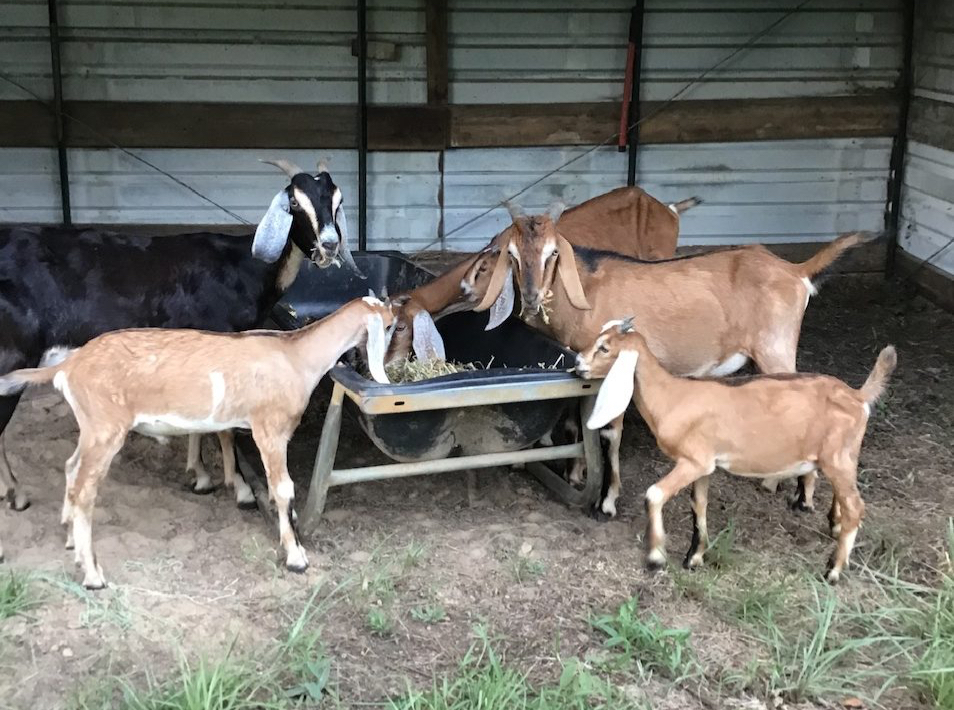
The healthy half of the herd.
While we have made hard cider from the pears and a bit of wine from grapes in past years, I really had no idea how versatile wine-making could be. Since last post I’ve added cantaloupe wine to the rows—joining Elderberry, Blackberry, Wild grape, and mead.
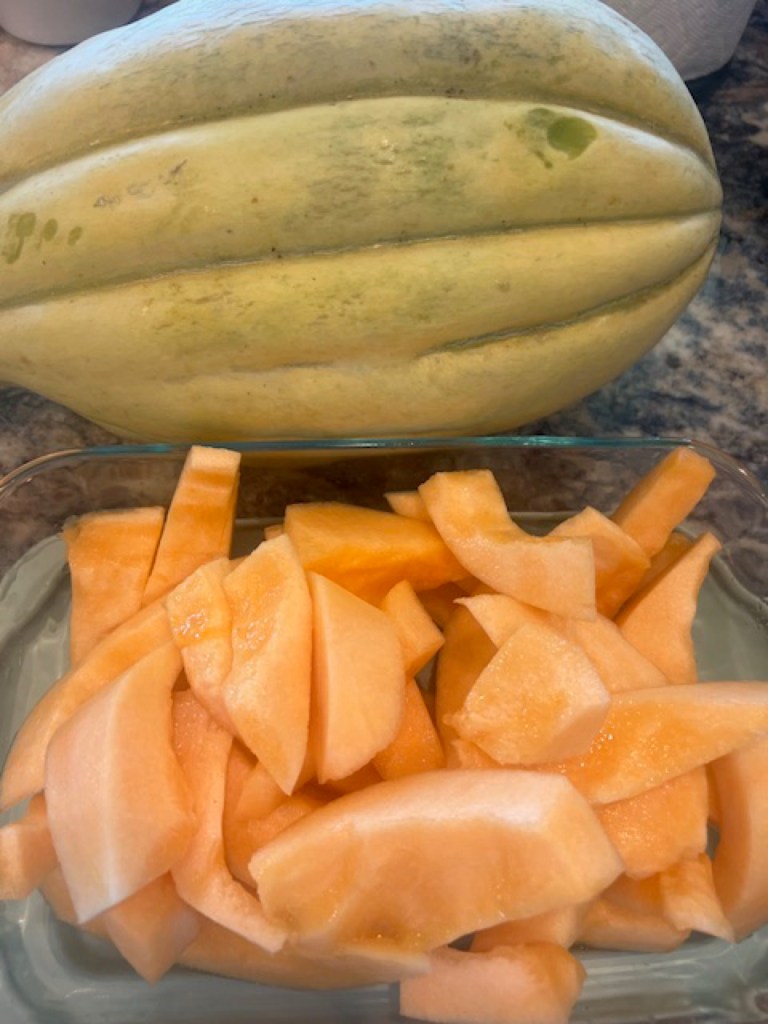
Cantaloupe wine? Who knew! But after giving these great big delicious 20- pounders to friends and eating them daily we still had so many and they were ripening so fast we had to do something. We forgot to keep track, but we had at least 15 of them, off only 3 plants.
‘Ole Tyme Tennessee’ melon
Enough to make 3 gallons of wine. I plan to make cider from it as well. Imagine all the fun we’ll be having wine tasting in December! (That’s exactly what I’m doing, a lot of imagining, to keep my mind off the miserable sweltering reality.)
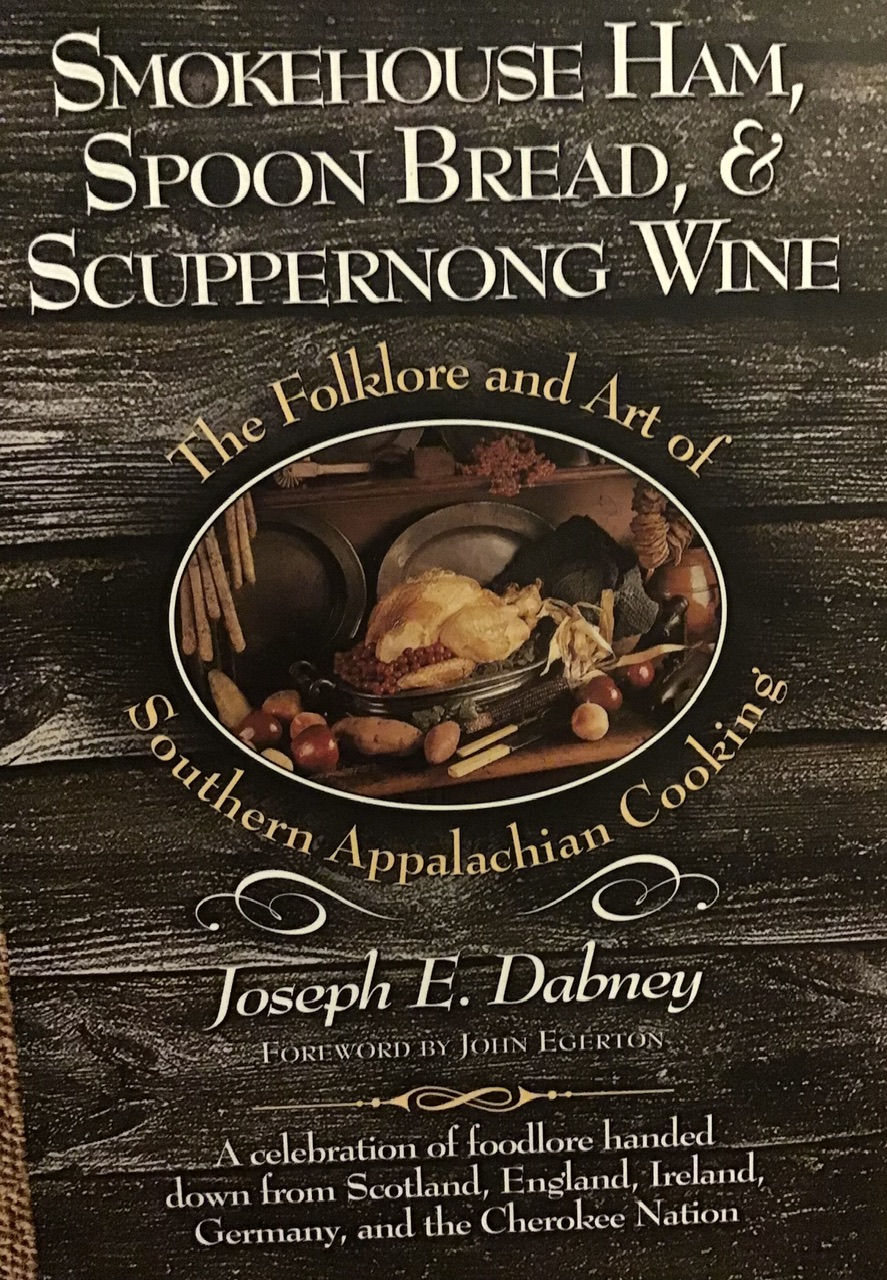
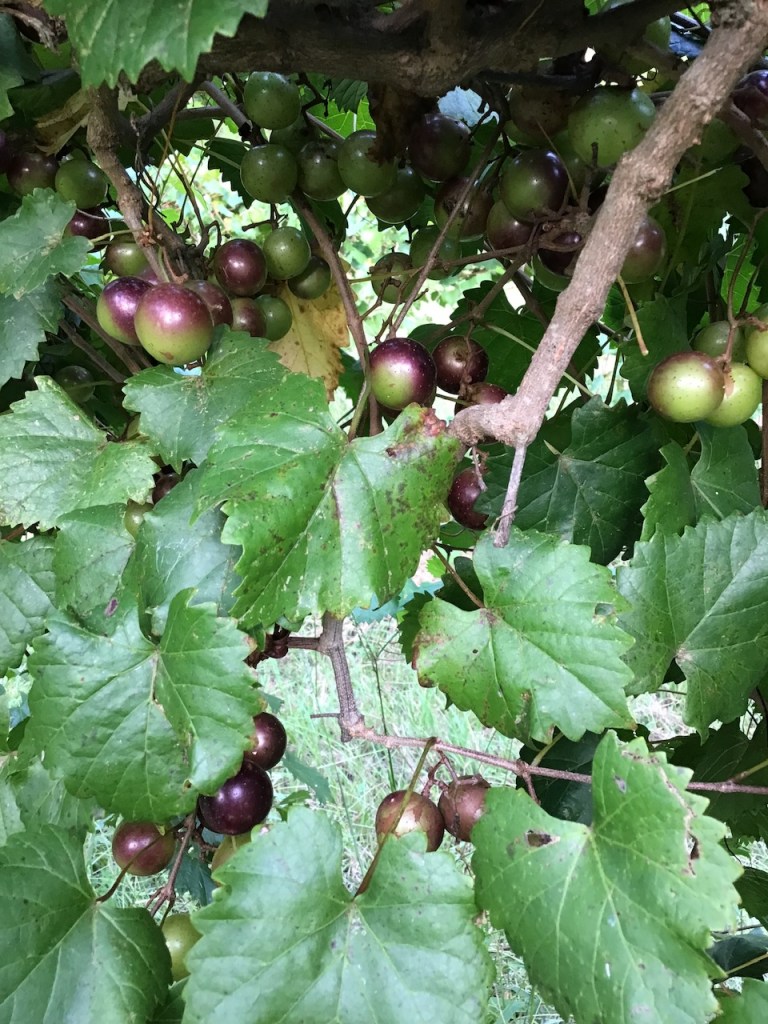
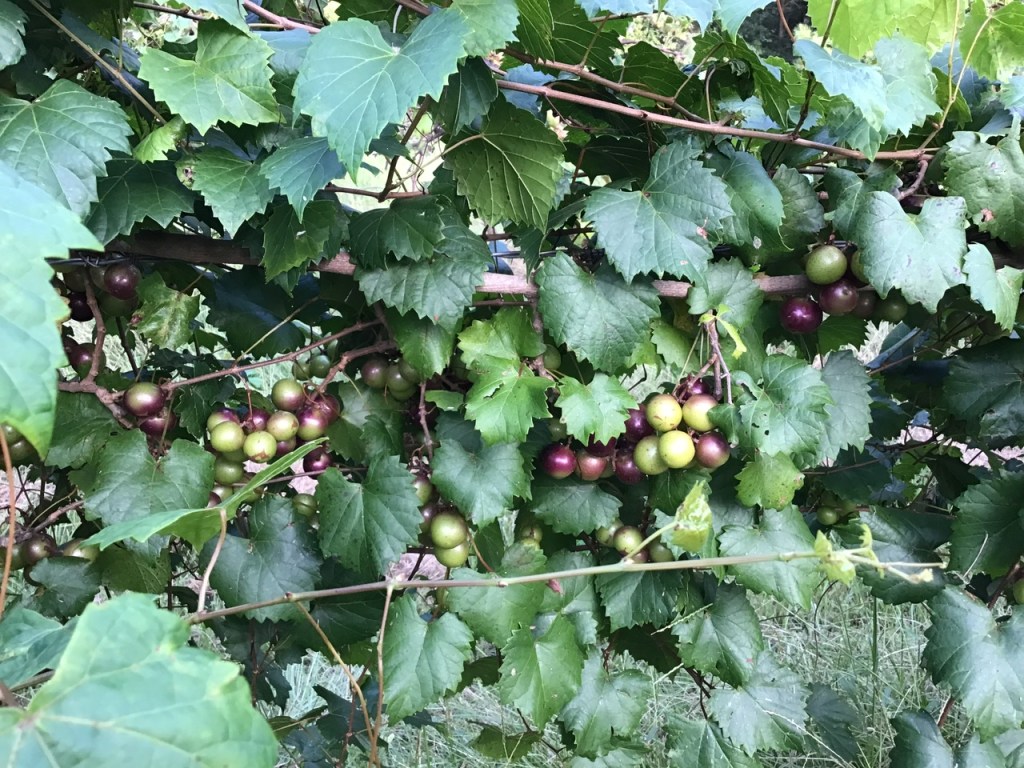
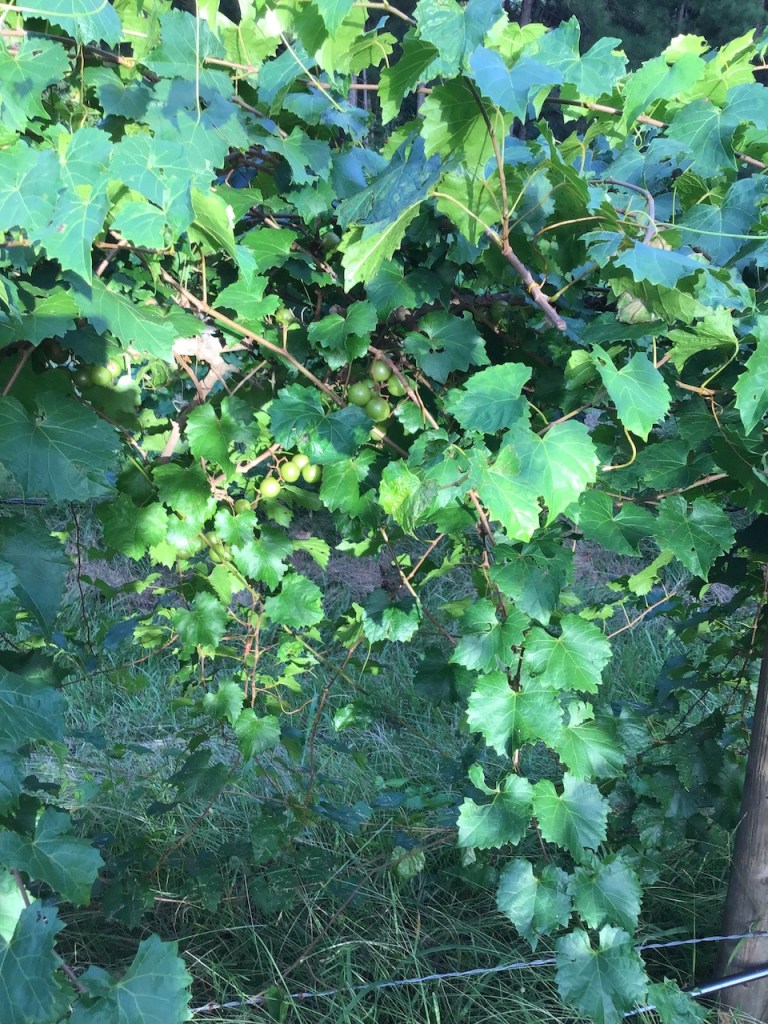
Now we’ve also got a couple buckets going of our cultivated grapes: white and red muscadines, sometimes also known as Scuppernongs.
“A glass of scuppernong wine is better for a body than a shot of penicillin.”
If you’re not from the Southern US you’ve probably never heard of Scuppernongs because they don’t have a good reputation among wine connoisseurs and don’t grow north of the Mason-Dixon line, as far as I know.
And they aren’t really suitable for table grapes either, unless your table allows for a lot of spitting.
Good enough for country wines, they say. So, good enough for me!
In fact they are really delicious. Beyond bursting with juicy sweetness, the green ones especially have varied and complex notes, sharp and earthy. The red ones have such an huge pop of intense grape flavor I’m reminded of manufactured fake grape flavors from childhood, Jolly Ranchers and Bubbalicious gum. Sad, but true, since I never tasted such fruit as a kid.
Except, that these have a tough skin and big seeds. And they are really a pain to harvest. If the weather were nice it wouldn’t be so bad at all. But the thing about muscadine grapes is they don’t ripen in nice clusters like the fancy grapes of more civilized peoples. 😆
Every other day we’re out there gathering these plump gems from under their enormous vines, one by one, little jewels among the masses of deep green leaves. They’ve done remarkably well this year, after a dismal last year, and a meager crop the year before, and just when we were starting to worry all our hard work planting them was wasted.
I wish we knew the trick, Hubby tends the vines and he did nothing different this year from the previous.
Our beautiful grape vines beneath a disgusting chem-filled sky.
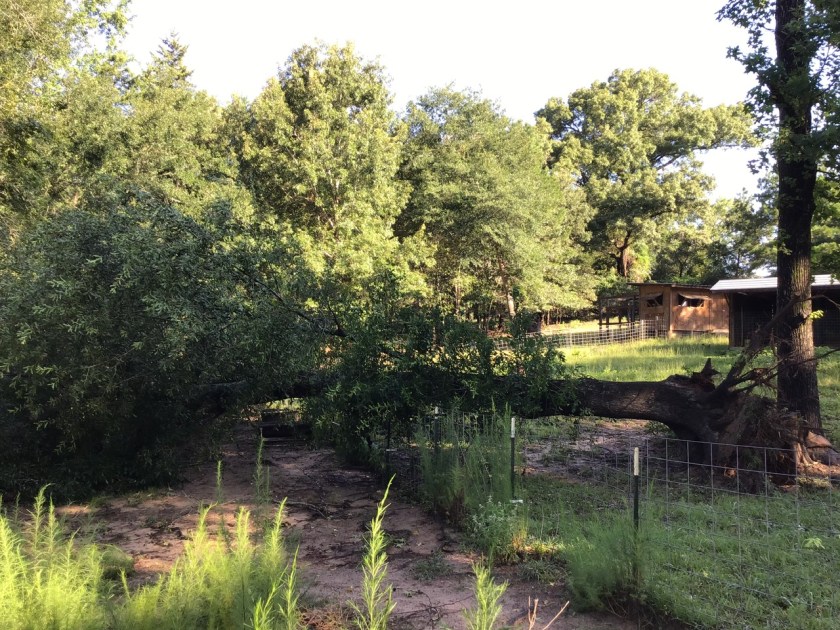
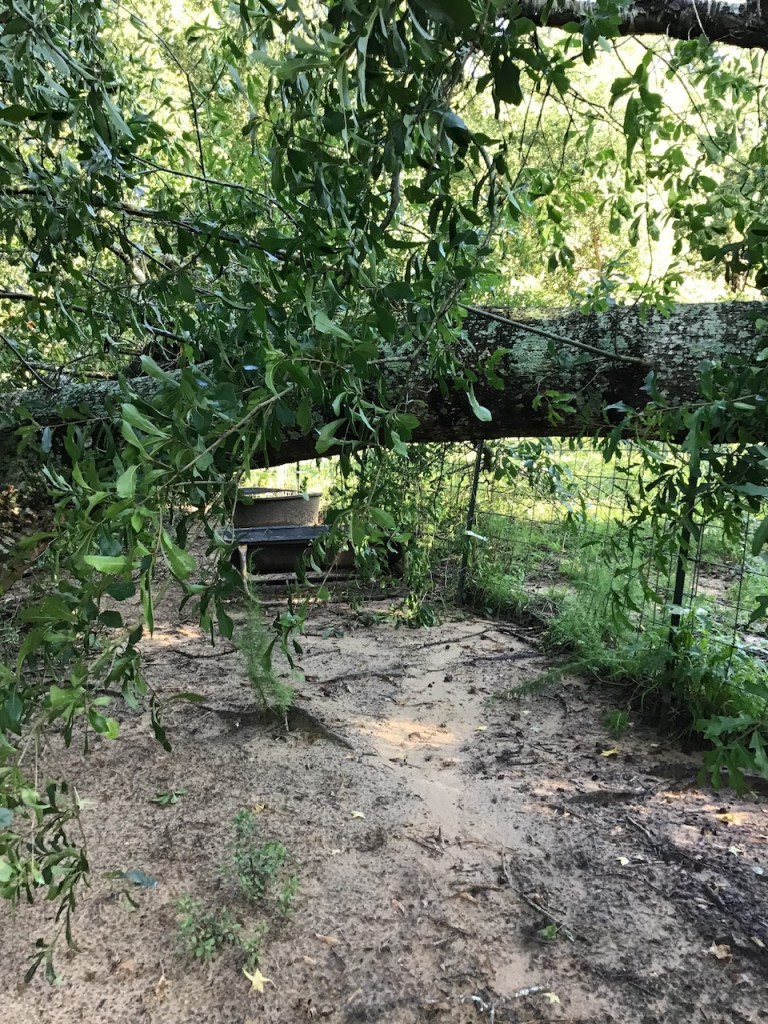
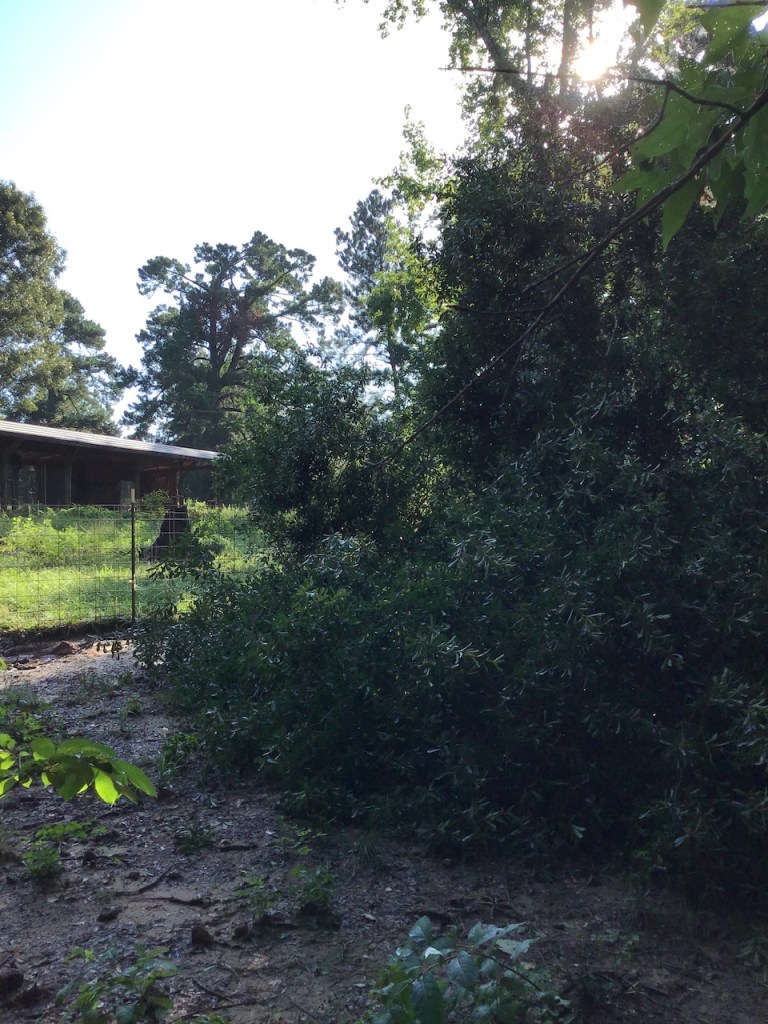
We did have the big rain with a nice temperature drop, which also brought down another big tree, right through a fence, as per usual. It seems we lose a big tree with every rain event these days.
Too bad, because that oak has been providing a lot of acorn forage for the critters in autumn. There are several other nearby mature oaks looking like they are also about to keel over.
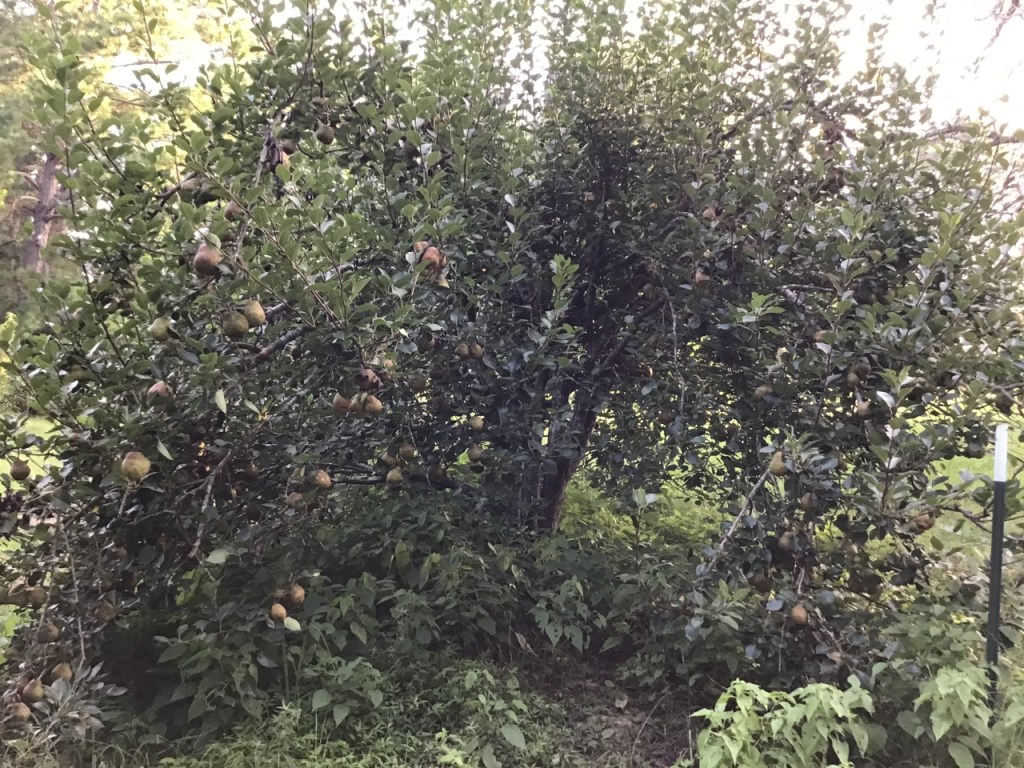
But, the pears have been spared and that will be our next big project in the blazing heat. Yay! 🤪
Three hard pear trees, two which were the only cultivated fruit trees here when we arrived, abandoned and still producing, bringing the feral hogs many happy meals. They produce prolifically when they produce, which is every 3 years on average. Plus one we planted in our still struggling orchard, it does really well most years, having gotten the regular run-off from our duck tub from it’s early years.
But the real pièce de résistance this year especially has been the watermelons.
They’ve not been as prolific as the cantaloupes, but they are some of the best I’ve ever eaten. Watermelons are Hubby’s preference, so he’s been in hog heaven every day, and the hogs are in a similar heaven with all the rinds they’ve been eating.
August has a few redeeming qualities after all. I don’t think I could make it through otherwise.
At sunset, within one hour they all open together while the bees get furiously busy. If you can’t catch the scent at just that initial pip of release, it’s instantly gone. Such an inimitable fragrance, enough to keep a woman longing, just long enough, that August might be gone again, and we’ll forget. It’s not so bad, right?
Until the next August.
Datura inoxia perhaps signaling the season of intoxia? Because we’re making lots of wine and it helps to get intoxicated to get through it? 😆
A few choice quotes from Juliette de Bairacli Levy who did not mince words about her views on modern medicine.
This excerpt is from 1952! It’s astounding to me that it’s only gotten worse in the last 70 years. They keep doubling-down, and the public keeps buying it up.
“The present-day farmer has been educated to consider disease as inevitable and the only scientific cure as being in the artificial remedies of the modern veterinary surgeon who through over-rigid orthodox training and himself under the influence of advertisement, is too often a mere vendor of the products of the vast and powerful chemical and serum manufacturers. For the vested interests in modern medicine are stupendous. Businessmen who have never owned an animal fatten like breeding toads upon the ailments of farm stock which need not know sickness at all if they had daily access to the herbs of the fields. The true farmer should cultivate his own medicines in his own fields, and he should not consider himself as being a farmer if he has to resort to outside help for keeping his animals in health, and healing them when in sickness. Science is providing the ruination of true farming; the only thing that I, and countless others, have noted as flourishing alongside science, is disease!—disease of the earth, disease of crops and disease of the animal and people who feed on the diseased produce.”
“Professor Szekely had declared emphatically, that the curing of the ailments of his patients is often a simple task in comparison with the freeing of their bodies from the accumulations of chemical drugs lodged in their tissues — the drugs derived from orthodox medical chemo-therapy, and from the poisons sprayed upon fruits and vegetables by the modern farmer, or placed in tinned and bottled foods as preservatives. Many of his patients are Americans, and in present-day America the chemist seems to be running amok, spraying and poisoning everything edible.” ~Juliette de Bairacli Levy, 1952, The Complete Herbal Handbook For Farm And Stable
The influence of advertisement, you say? Naw, can’t be that!
I’ve been doing lots of research concerning the goats and so appreciate the kind help and suggestions from others.
It really is a quandary just like I went through with the bees. Treatment-free types are the anti-Vaxxers of the animal husbandry world, getting similar treatment from the established voices—that is cursed, mocked, belittled and silenced.
And that’s not the worse part, not for me anyway.
It’s far worse not being able to find honest, untainted information. The goat world, like the bee world, is dominated by the industry standards, which has penetrated into every conceivable space of our reality.
In the U.S. that means public-private partnerships that wholly infiltrate the information and therefor the society through the university system and popular organizations like the 4-H club.
Many of our best and brightest agriculture enthusiasts start very young, showing animals and winning awards based on criteria that then get distributed into general farming life. Very little attention is paid to the actual results of this process, not even the simple stuff—like considering whether purebreds are really the best option when stellar looks and trainability aren’t the owners’ top priorities.
Which got me thinking . . .
Might we make an analogy that it’s kinda like ZaZa Gabor playing a starring role in a film like Deliverance?
In other words, are we trying to raise the equivalent of thousand dollar racehorses in two-bit barns? Is that the problem? Or part of it?
“I get allergic smelling hay! I just adore a penthouse view, darlin’ I love ya, but give me Park Avenue!”
My goats hate the rain (makes for a bad hair day?), and would prefer all their meals to be served to them promptly, 3 meals plus snacks, in their communal space (breakfast in bed), with minimal foraging required (just enough to stretch their legs and ease any boredom) plus they need regular brushing (all natural boars hair brush) and their hooves trimmed (mani-pedi), and routine expensive toxic treatments (Botox).
We get frustrated, obviously, but whose fault is it really?
When I got into this I went for the most popular and trusted source who was calling her style ‘natural’.
That’s for me, I want natural!
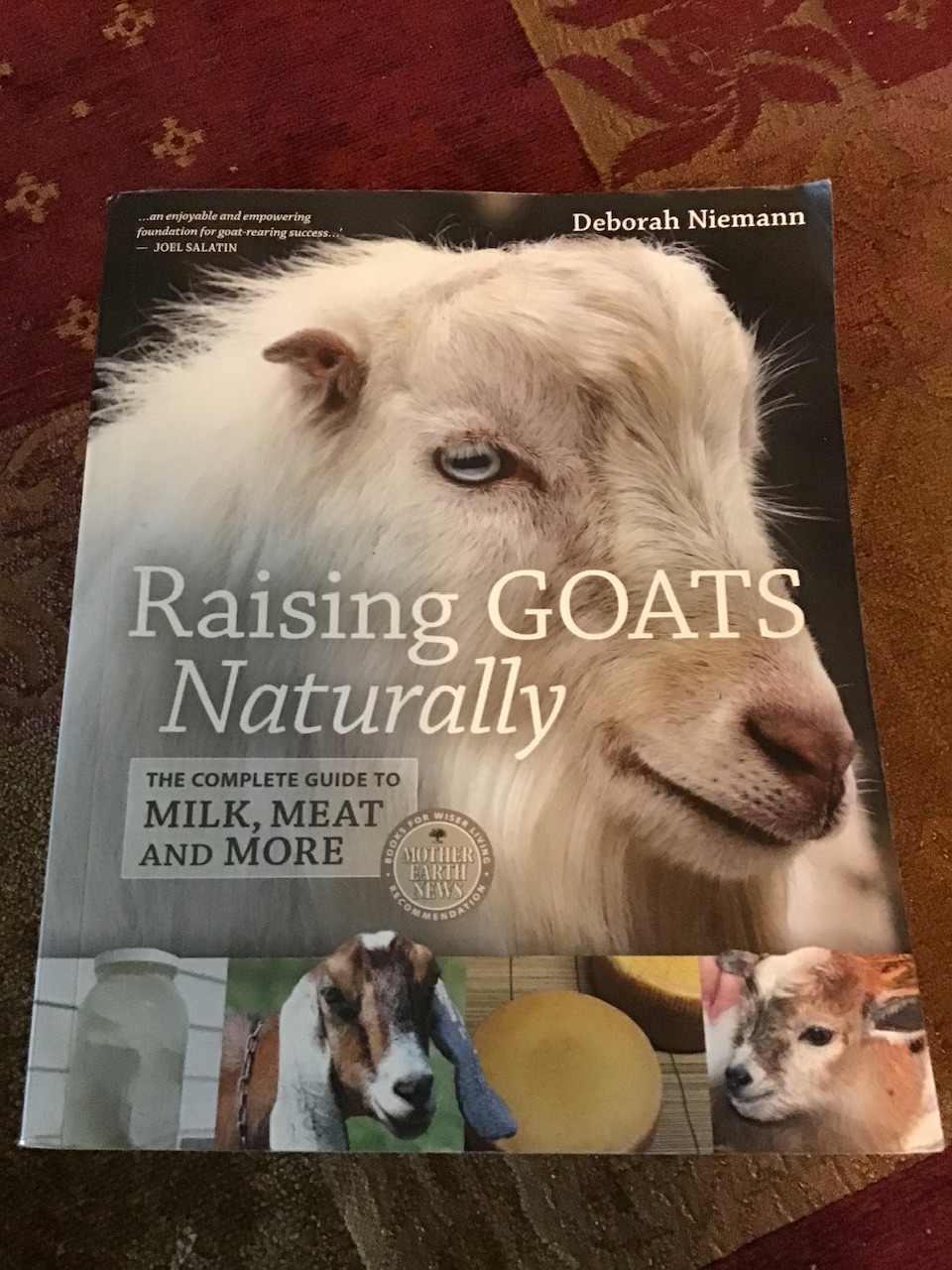
The most popular ‘natural’ goat rearing book on the market and she has a YT channel.
I’m not saying this is a bad book, I’ve certainly learned a lot from it, but knowing what I know now, I don’t call it ‘natural’ anymore.
These farmers and breeders may be on the path less traveled, but they are most certainly not off the Big Pharma Ferris wheel. And personally, I find that poor word choice to be deceptive.
For example, they advise breeders to cull rather than to risk populating the community of farmers/homesteaders with genetically inferior animals, which sounds like the wise and conscientious choice to make. Right?
Clearly a diligent and conscientious goat farmer/breeder concerned about good health in humans and animals, yet still considering the most natural methods as including enormous amounts of processed inputs and Big Pharma treatments.
However, they’re advising culling the animals which are not responding to the poisoning protocol, not only the ones who are truly resistant to the parasites. And as for true resistance, could they really know which ones, since they’ve been dosed at birth through the milk or, even more likely, in utero?
Yes, the ‘natural’ methods they espouse still include dosing the goats with drugs, just not so indiscriminately, which they at least recognize has caused a huge issue of drug-resistance in the goat-rearing community. They still rely on highly processed feed, hay that’s been sprayed, and they recommend medicated feed for kids. Many of them also advise vaccination.
This is what passes for ‘natural’ now.
So, for the barber pole worm, the notorious sheep/goat killer, which was the most likely culprit in Bluebonnet’s demise, the issue is said to be that these awful worms cause anemia. But, listed on the side effects of the popular dewormers in use is also anemia.
Hmmm. Which came first, the chicken or the egg?
Ivermectin—the infamous horse dewormer both celebrated and cursed during the Convid—has a shockingly long list of potential side effects. Interestingly, in all the social media arguments back and forth among suggested protocols and what or whom was being censored and why, I don’t recall that list coming up anywhere.
These above-linked articles show studies proving its toxicity, but when it comes to the studies themselves, I don’t have much faith in them either. The kinds of studies I’d like to see are those that are appropriate to their environment, and no one does those kinds of studies. No one in farming is dosing their rabbits every single day with Ivermectin in a lab setting. What we need are multi-generational studies with real control groups in natural settings, as in real nature. Science doesn’t do that, yet somehow we accept they are ‘controlling’ inputs and outcomes, and that those results are remotely relevant to the average user, that is, those of us not living in a lab.
Besides Ivermectin, Safe-guard is another farm favorite in these parts.
The following comment comes from my dear friend Kath, a certified herbalist who was also previously a professional nurse in the UK.
Safe-guard:
“I can’t quite believe how bad this drug is! Taken from this article: https://www.ncbi.nlm.nih.gov/pmc/articles/PMC9413524/ ‘When fenbendazole was last reviewed (15 years ago), the literature supported the drug’s lack of toxic effects at therapeutic levels, yet various demonstrated physiologic effects have the potential to alter research outcomes. Although more recent reports continue to reflect an overall discordancy of results, several studies support the premise that fenbendazole affects the bone marrow and the immune system.’
‘. . .lengthy and expensive treatment regimens. including the use of fenbendazole and mechanical disinfection, that may fail due to inadequate ovicidal effects.’ (Ie: won’t kill the worm eggs)
So, step one: Kill a few worms. Weaken the animal. Don’t properly kill the worm eggs. Re-emergence of worms when these eggs hatch. Weakened animals can’t fight off new worms. More drugs. Vicious cycle.
So, companies which make & market this drug very conveniently refer to the old research which states no side effects expected & ignore the possibility & reality of new research showing significant risk. Hmm 🤔
Basically use of this drug this means causing ongoing serious depletion in overall resilience & significantly increased susceptibility to further parasite infestation & whatever-it-is that we used to call infections. Worse potential recovery from anything. And all from a drug whose stated purpose may fail!
So, what to do imo is to work to build resilience by nutrition, herbs & healthy living & maybe try to introduce some wild blood when freshening.
I think this drug is an agenda in itself – not only for animals but humans too. Heavily publicised on Google as an amazing off-label cancer cure. I’ve met people who have been persuaded to take it! That’s right – make their own chemo cocktail!
It’s an agenda because I know how heavily ptb come down on any complementary health practitioner making public statements about cancer cure. It’s literally against the law.
And they put it in animal feed too. It’s a very shortsighted & stupid approach.”
Short-sighted, I couldn’t agree more!
Another popular dewormer: Cydectin From Drugs.com
‘Not for use in female dairy cattle 20 months of age or older (including dry dairy cows), veal calves, and calves less than 8 weeks of age.
For Treatment of Infections and Infestations Due to Internal and External Parasites of Cattle.’
Kath: “This ‘who not to give it to’ suggests it’s toxic to humans & cattle/goats – they wouldn’t make a statement about veal calves if it was a safe thing for humans (or animals) to ingest. Funny how they can balance the illogic of ‘don’t give to babies’ & ‘dose babies by mother’s milk’.
The type of nerve receptor that are targeted by this drug are only found in invertebrates – creatures that don’t have a skeleton. So drug companies have jumped to the assumption that it will paralyse (& kill) only parasites/insects. However – & this is important – the target receptor in invertebrates is very similar to the mammalian – human & animal – receptor for glycine – an important neurotransmitter. Chances are that this drug & its family are at least partly responsible for human & animal depletion & neurological problems, perhaps even paralysis, in goats by direct dosing & in humans via eating meat& milk products/drinking milk from dosed animals.”
Seriously! And they have the nerve to call these treatments ‘natural’ and of course, that old reliable, safe and effective!
(Thank you so much Kath for your addition to this post and to Highlander in last post’s comments for your help and advice, I’m very grateful for your efforts and experiences!)
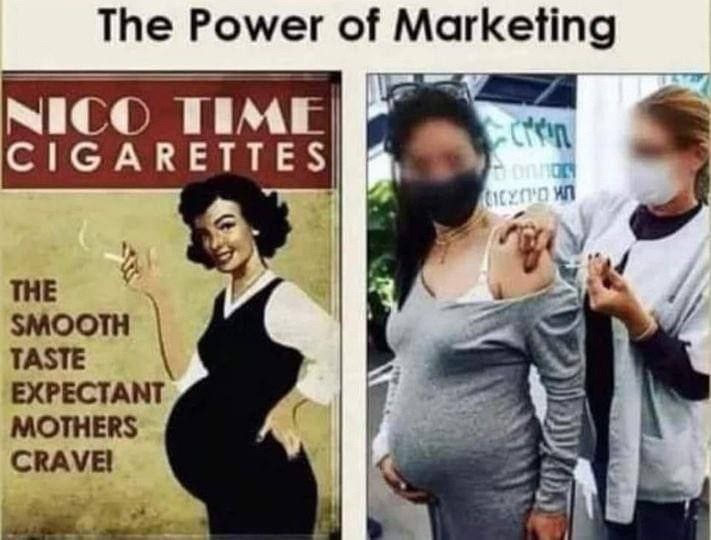
New marketing suggestion for the CDC:
Hey Moms! If your kids get all their shots on schedule, you’ll look just like Za Za!* 😆 *Results may vary. Consult your pediatrician. (Who, by the way, did a hell of a good job dressed as a pig at last year’s luau in Vegas at our promotional conference that counts as continuing education credits and gets billed to the State. Remember Rule #1: What happens in Vegas, stays in Vegas!) 😉 1