
I’ve been doing lots of research concerning the goats and so appreciate the kind help and suggestions from others.
It really is a quandary just like I went through with the bees. Treatment-free types are the anti-Vaxxers of the animal husbandry world, getting similar treatment from the established voices—that is cursed, mocked, belittled and silenced.
And that’s not the worse part, not for me anyway.
It’s far worse not being able to find honest, untainted information. The goat world, like the bee world, is dominated by the industry standards, which has penetrated into every conceivable space of our reality.
In the U.S. that means public-private partnerships that wholly infiltrate the information and therefor the society through the university system and popular organizations like the 4-H club.
Many of our best and brightest agriculture enthusiasts start very young, showing animals and winning awards based on criteria that then get distributed into general farming life. Very little attention is paid to the actual results of this process, not even the simple stuff—like considering whether purebreds are really the best option when stellar looks and trainability aren’t the owners’ top priorities.
Which got me thinking . . .
Might we make an analogy that it’s kinda like ZaZa Gabor playing a starring role in a film like Deliverance?
In other words, are we trying to raise the equivalent of thousand dollar racehorses in two-bit barns? Is that the problem? Or part of it?
“I get allergic smelling hay! I just adore a penthouse view,
darlin’ I love ya, but give me Park Avenue!”
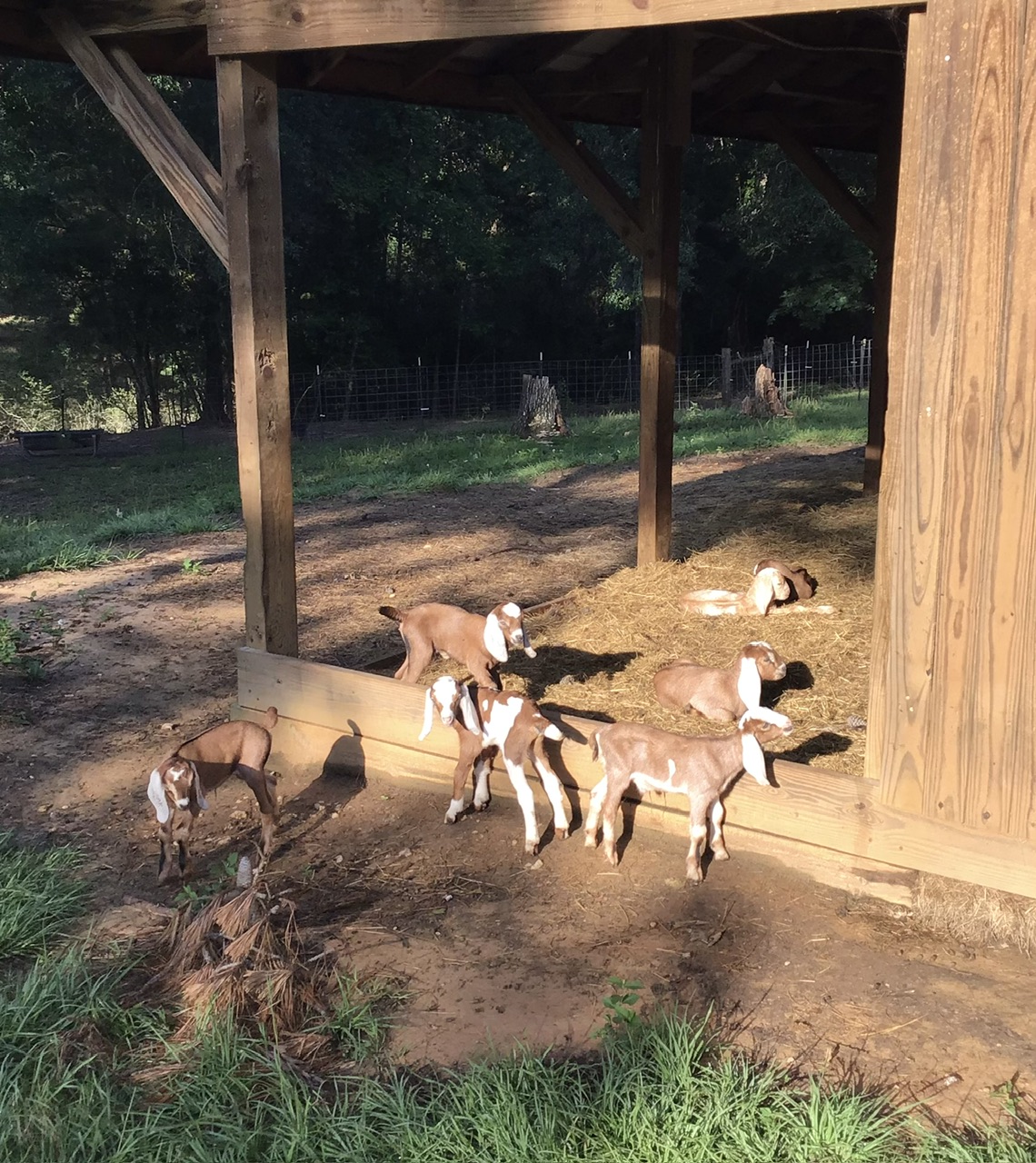
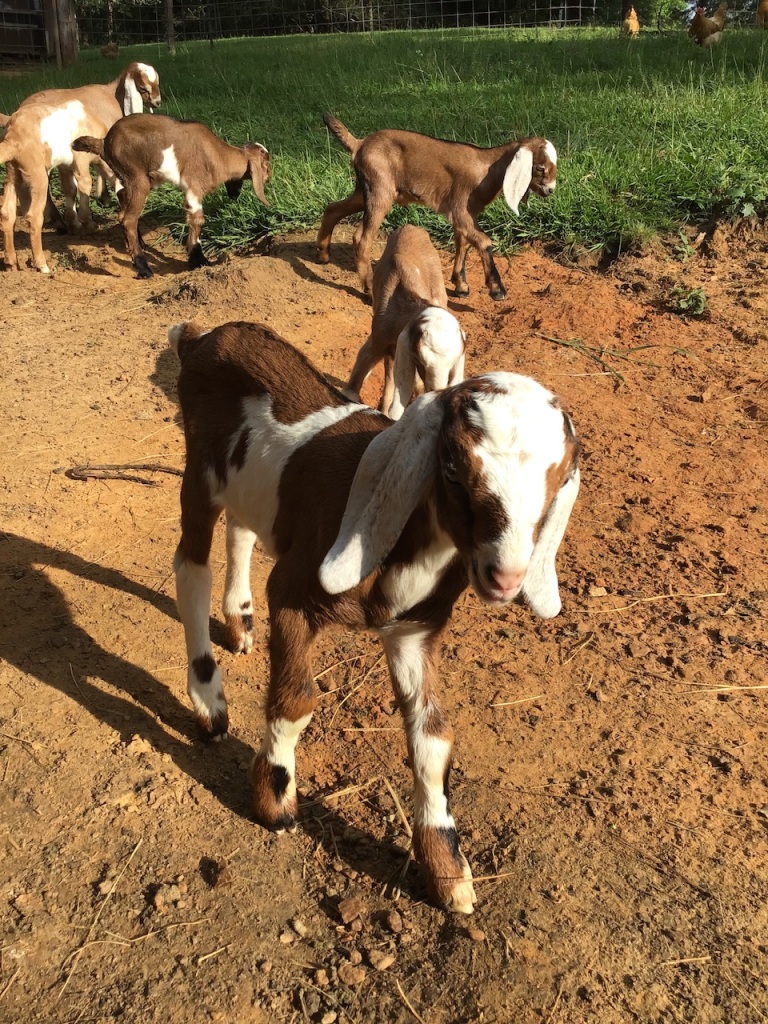
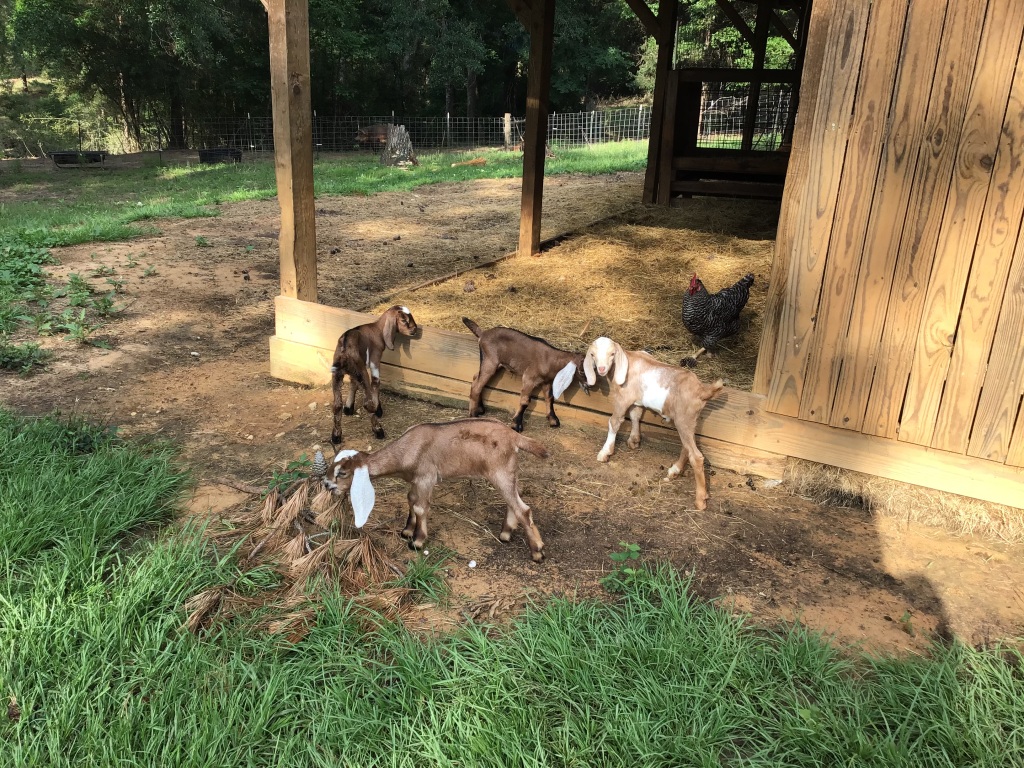
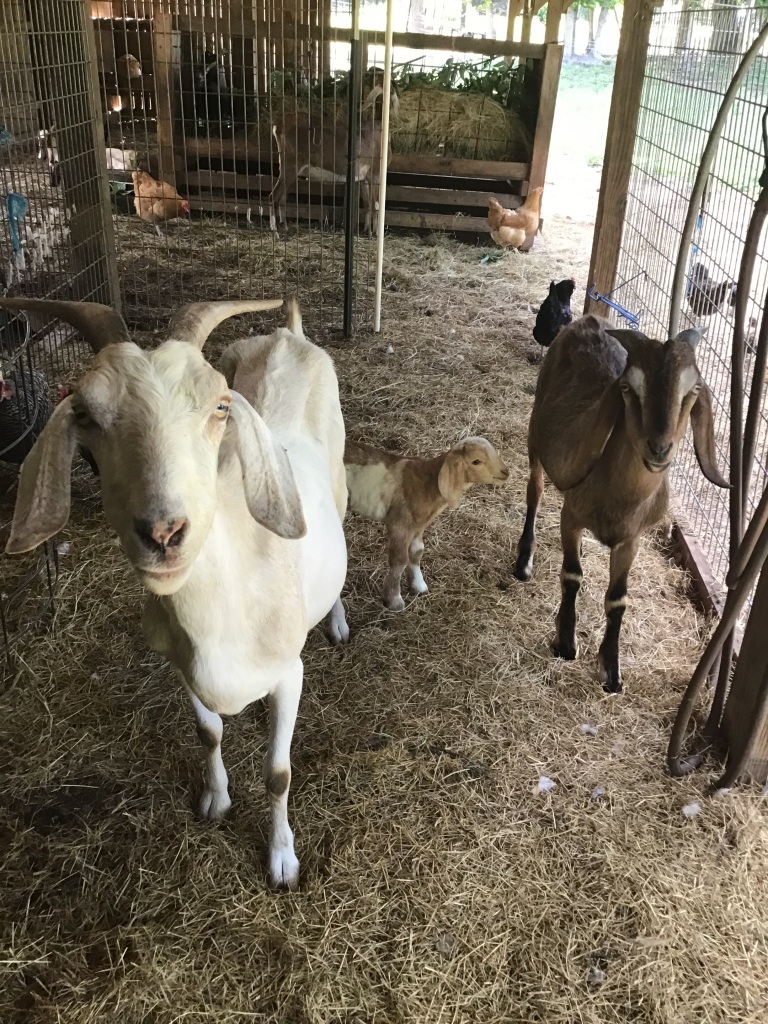
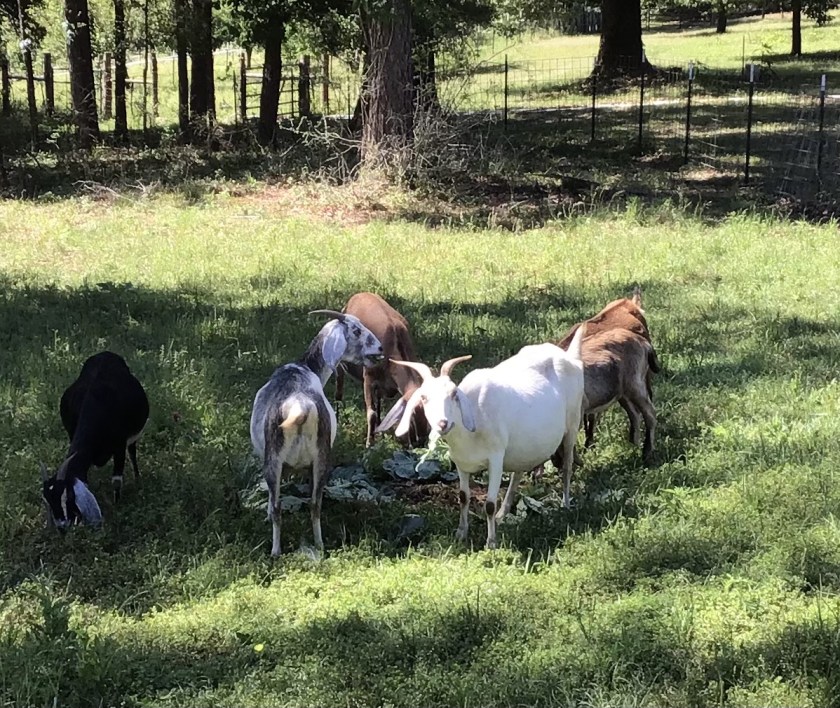
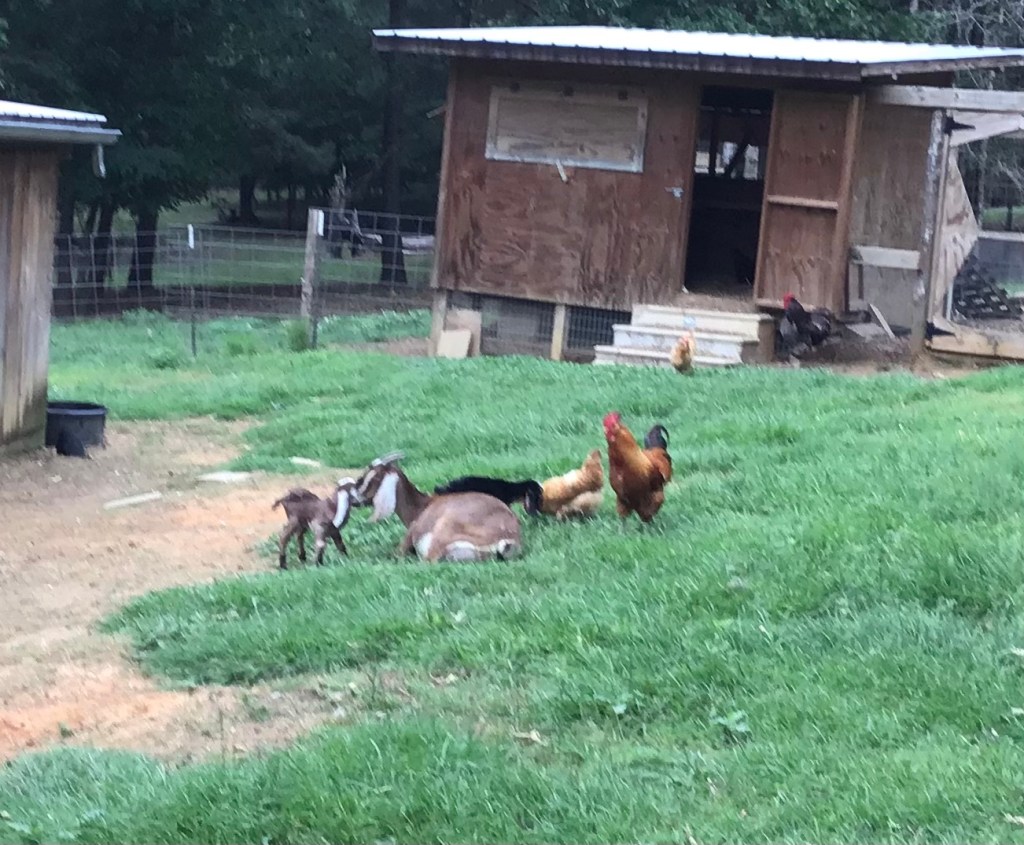
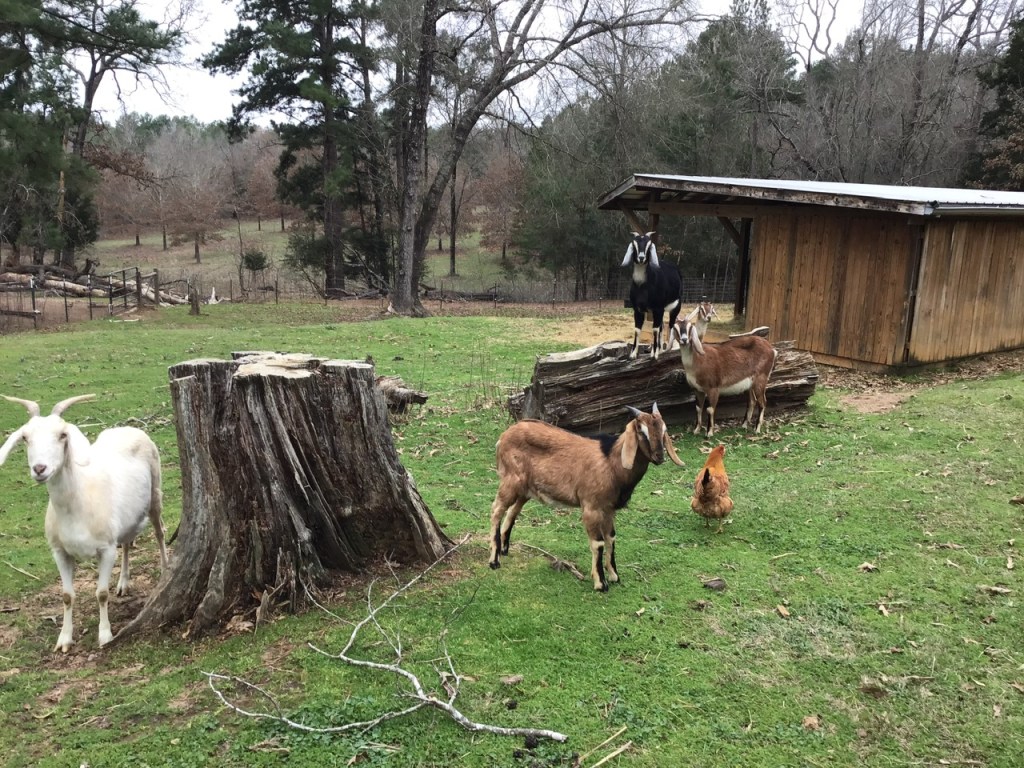
My goats hate the rain (makes for a bad hair day?), and would prefer all their meals to be served to them promptly, 3 meals plus snacks, in their communal space (breakfast in bed), with minimal foraging required (just enough to stretch their legs and ease any boredom) plus they need regular brushing (all natural boars hair brush) and their hooves trimmed (mani-pedi), and routine expensive toxic treatments (Botox).
We get frustrated, obviously, but whose fault is it really?
When I got into this I went for the most popular and trusted source who was calling her style ‘natural’.
That’s for me, I want natural!
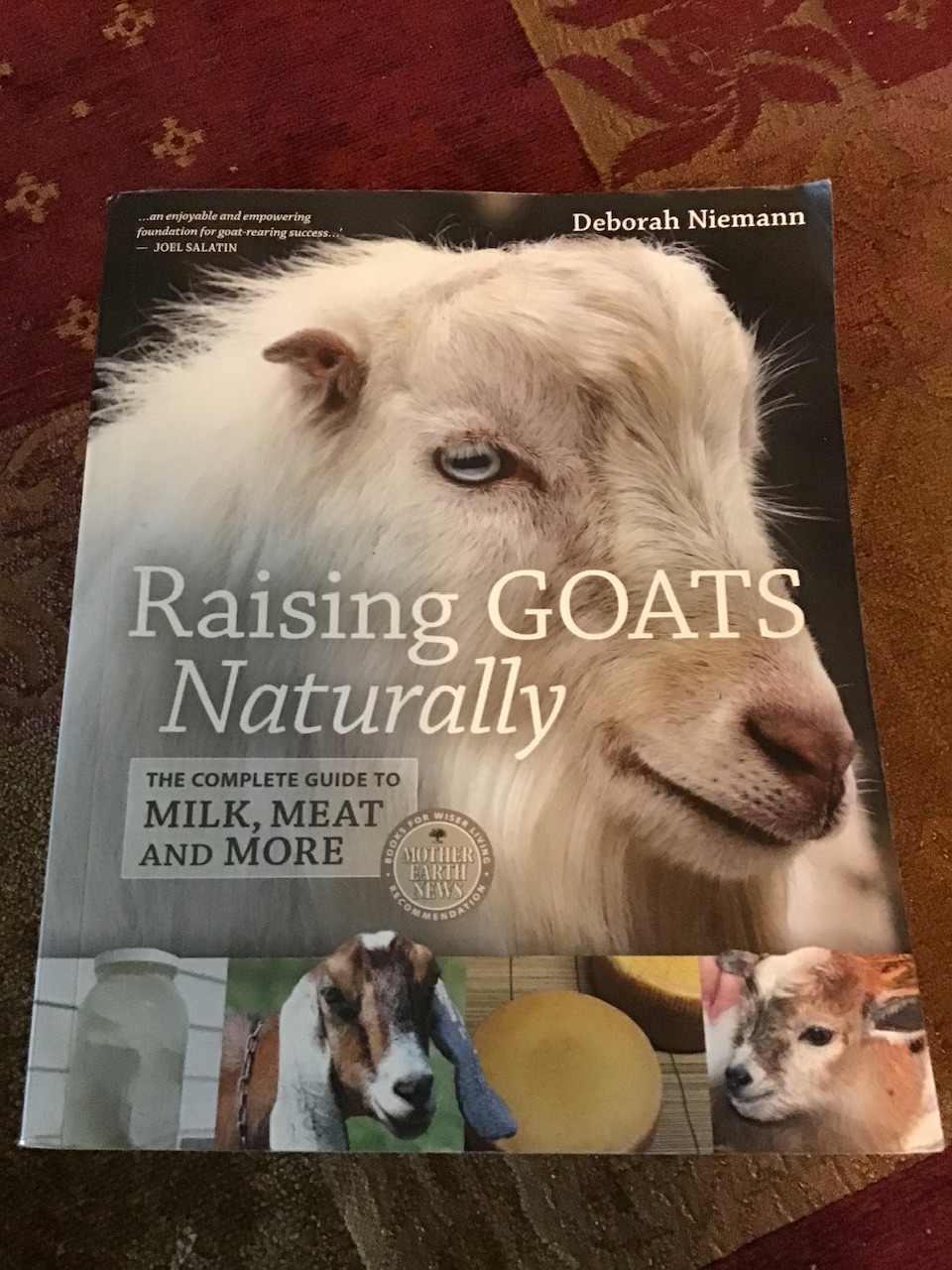
I’m not saying this is a bad book, I’ve certainly learned a lot from it, but knowing what I know now, I don’t call it ‘natural’ anymore.
These farmers and breeders may be on the path less traveled, but they are most certainly not off the Big Pharma Ferris wheel. And personally, I find that poor word choice to be deceptive.
For example, they advise breeders to cull rather than to risk populating the community of farmers/homesteaders with genetically inferior animals, which sounds like the wise and conscientious choice to make. Right?
However, they’re advising culling the animals which are not responding to the poisoning protocol, not only the ones who are truly resistant to the parasites. And as for true resistance, could they really know which ones, since they’ve been dosed at birth through the milk or, even more likely, in utero?
Yes, the ‘natural’ methods they espouse still include dosing the goats with drugs, just not so indiscriminately, which they at least recognize has caused a huge issue of drug-resistance in the goat-rearing community. They still rely on highly processed feed, hay that’s been sprayed, and they recommend medicated feed for kids. Many of them also advise vaccination.
This is what passes for ‘natural’ now.
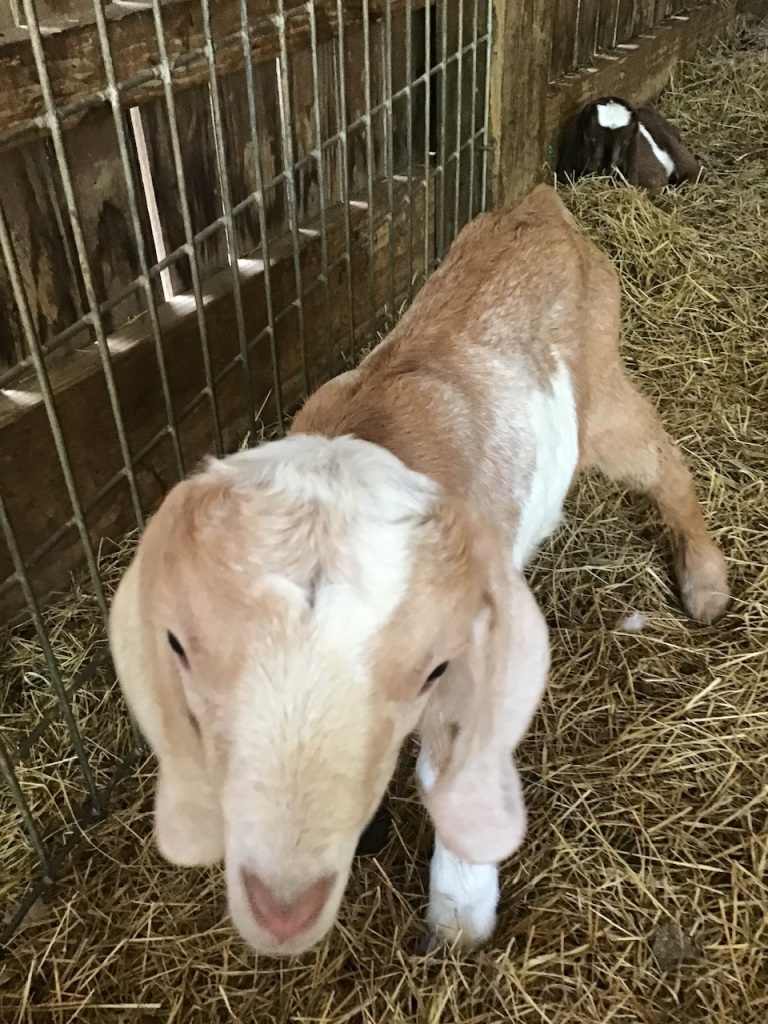
So, for the barber pole worm, the notorious sheep/goat killer, which was the most likely culprit in Bluebonnet’s demise, the issue is said to be that these awful worms cause anemia. But, listed on the side effects of the popular dewormers in use is also anemia.
Hmmm. Which came first, the chicken or the egg?
Ivermectin—the infamous horse dewormer both celebrated and cursed during the Convid—has a shockingly long list of potential side effects. Interestingly, in all the social media arguments back and forth among suggested protocols and what or whom was being censored and why, I don’t recall that list coming up anywhere.
https://www.drugs.com/sfx/ivermectin-side-effects.html
Since that time I have come across a couple of articles demonstrating how toxic the drug actually is, https://open.substack.com/pub/timtruth/p/ultimate-guide-to-anti-fertility?r=apljy&utm_medium=ios and https://open.substack.com/pub/chemtrails/p/ivermectin-and-population-control?r=apljy&utm_medium=ios though it remains exceptionally popular for horses, sheep, goats, and humans.
These above-linked articles show studies proving its toxicity, but when it comes to the studies themselves, I don’t have much faith in them either. The kinds of studies I’d like to see are those that are appropriate to their environment, and no one does those kinds of studies. No one in farming is dosing their rabbits every single day with Ivermectin in a lab setting. What we need are multi-generational studies with real control groups in natural settings, as in real nature. Science doesn’t do that, yet somehow we accept they are ‘controlling’ inputs and outcomes, and that those results are remotely relevant to the average user, that is, those of us not living in a lab.
Besides Ivermectin, Safe-guard is another farm favorite in these parts.
The following comment comes from my dear friend Kath, a certified herbalist who was also previously a professional nurse in the UK.
Safe-guard:
“I can’t quite believe how bad this drug is!
Taken from this article:
https://www.ncbi.nlm.nih.gov/pmc/articles/PMC9413524/
‘When fenbendazole was last reviewed (15 years ago), the literature supported the drug’s lack of toxic effects at therapeutic levels, yet various demonstrated physiologic effects have the potential to alter research outcomes. Although more recent reports continue to reflect an overall discordancy of results, several studies support the premise that fenbendazole affects the bone marrow and the immune system.’
‘. . .lengthy and expensive treatment regimens. including the use of fenbendazole and mechanical disinfection, that may fail due to inadequate ovicidal effects.’ (Ie: won’t kill the worm eggs)
So, step one: Kill a few worms. Weaken the animal.
Don’t properly kill the worm eggs. Re-emergence of worms when these eggs hatch. Weakened animals can’t fight off new worms.
More drugs. Vicious cycle.
So, companies which make & market this drug very conveniently refer to the old research which states no side effects expected & ignore the possibility & reality of new research showing significant risk. Hmm 🤔
Basically use of this drug this means causing ongoing serious depletion in overall resilience & significantly increased susceptibility to further parasite infestation & whatever-it-is that we used to call infections. Worse potential recovery from anything. And all from a drug whose stated purpose may fail!
So, what to do imo is to work to build resilience by nutrition, herbs & healthy living & maybe try to introduce some wild blood when freshening.
I think this drug is an agenda in itself – not only for animals but humans too. Heavily publicised on Google as an amazing off-label cancer cure. I’ve met people who have been persuaded to take it! That’s right – make their own chemo cocktail!
It’s an agenda because I know how heavily ptb come down on any complementary health practitioner making public statements about cancer cure. It’s literally against the law.
And they put it in animal feed too. It’s a very shortsighted & stupid approach.”
Short-sighted, I couldn’t agree more!
Another popular dewormer: Cydectin
From Drugs.com
‘Not for use in female dairy cattle 20 months of age or older (including dry dairy cows), veal calves, and calves less than 8 weeks of age.
For Treatment of Infections and Infestations Due to Internal and External Parasites of Cattle.’
Kath: “This ‘who not to give it to’ suggests it’s toxic to humans & cattle/goats – they wouldn’t make a statement about veal calves if it was a safe thing for humans (or animals) to ingest. Funny how they can balance the illogic of ‘don’t give to babies’ & ‘dose babies by mother’s milk’.
The type of nerve receptor that are targeted by this drug are only found in invertebrates – creatures that don’t have a skeleton. So drug companies have jumped to the assumption that it will paralyse (& kill) only parasites/insects. However – & this is important – the target receptor in invertebrates is very similar to the mammalian – human & animal – receptor for glycine – an important neurotransmitter. Chances are that this drug & its family are at least partly responsible for human & animal depletion & neurological problems, perhaps even paralysis, in goats by direct dosing & in humans via eating meat& milk products/drinking milk from dosed animals.”
Seriously! And they have the nerve to call these treatments ‘natural’ and of course, that old reliable, safe and effective!
(Thank you so much Kath for your addition to this post and to Highlander in last post’s comments for your help and advice, I’m very grateful for your efforts and experiences!)

New marketing suggestion for the CDC:

If your kids get all their shots on schedule, you’ll look just like Za Za!*
😆
*Results may vary. Consult your pediatrician.
(Who, by the way, did a hell of a good job dressed as a pig at last year’s luau in Vegas at our promotional conference that counts as continuing education credits and gets billed to the State. Remember Rule #1: What happens in Vegas, stays in Vegas!) 😉
1