What is the difference between Hope, and Hopium? There’s a fuzzy line and it’s very easy to misjudge, but it’s located somewhere between: “Yay, Trump will save us all from $11/dozen eggs!” And “We should start a chicken mega-ranch.”
If those two meet in the middle of the road, might creative minds find that they’ve absent-mindedly crossed with logic and conclude a few laying hens might be just the ticket? A bit of self-sufficiency, why not? After all, it’s not rocket science . . .
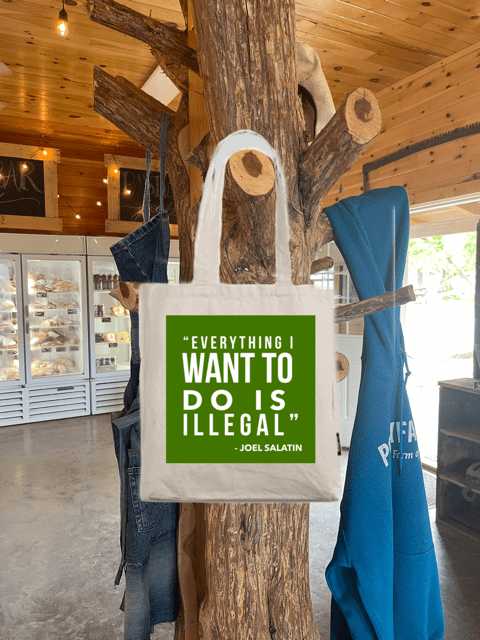
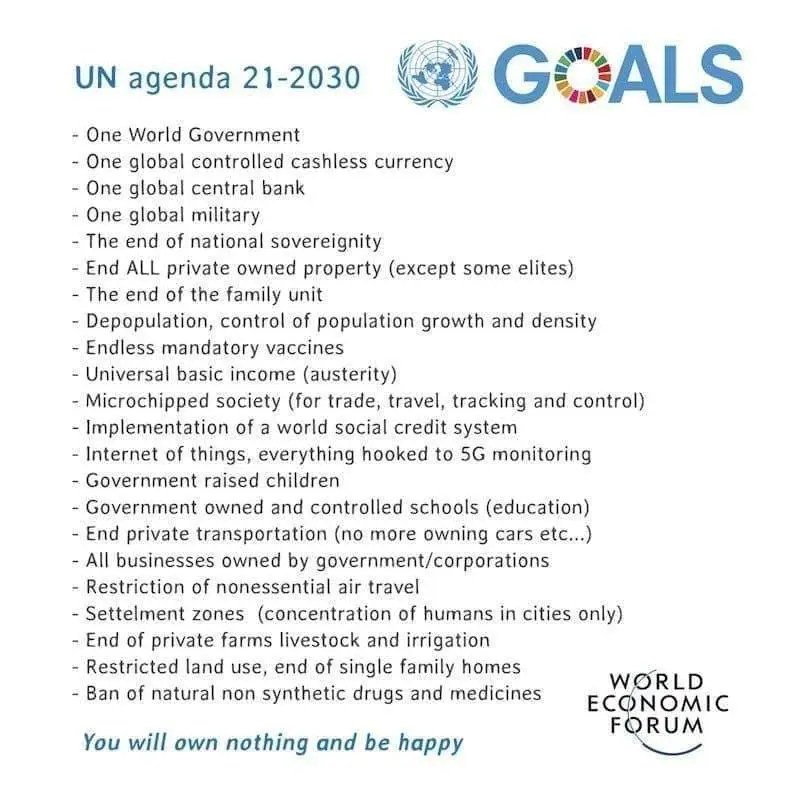
Joel Salatin exposes the WEF agenda! “Josh Sigurdson talks with Joel Salatin of Polyface Farms, an entrepreneur and farmer who for years has fought against Monsanto, factory farming and dependence pushing for people to homestead and/or farm and not be dependent on the system. We previously interviewed Joel in 2017 regarding Monsanto. Now, 8 years later, we delve into the massively expanded technocratic grid as more than ever, people are dependent on grocery stores, the grid and AI, weakened by design. The World Economic Forum agenda is to destroy self sustainability and make people weak slaves to technocracy. Eventually they want food rations and carbon credit scores. They’re already being rolled out to some degree and with the 2024 United Nations Pact For The Future, this problem is encroaching quicker than ever. The climate lobby attempting to bring down farms is more alive than ever. There are solutions however which Joel Salatin has spent decades teaching people. There is also a rumor circulating that Joel Salatin was picked to head the USDA. He explains this and more in this interview.”
Though it is the gateway livestock, and that’s official, I’ve even heard it repeated by the official fact-checkers at NASA.
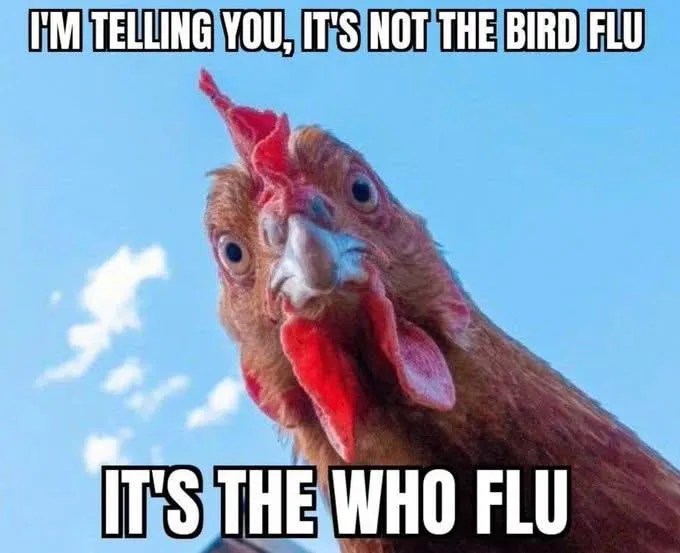
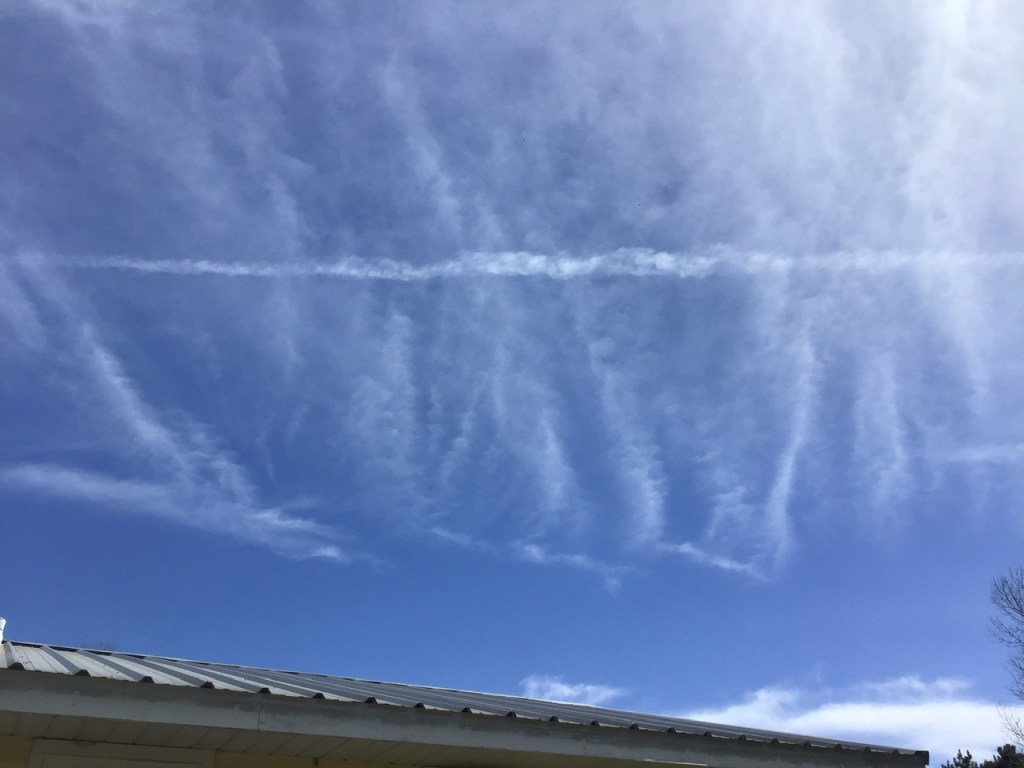
Don’t worry, more government will save us! They will VAXX this FLU away, similar to the way they spray on the weather!
Respiratory diseases? I can’t imagine how that might be happening! So baffling!
But as James Corbett points out, chickens are the simple solution, but not necessarily the Easy one.
Most folks will take the easy way out, drink the Kool-aid, puff the Hopium, and exclaim RFKJ is here to save the day. Cheap eggs and healthy injections on the way!
After my little lecture at the end of the last post about teaching the younger generations real life skills I was listening to an interview that gave a bit more perspective to that personal plea.
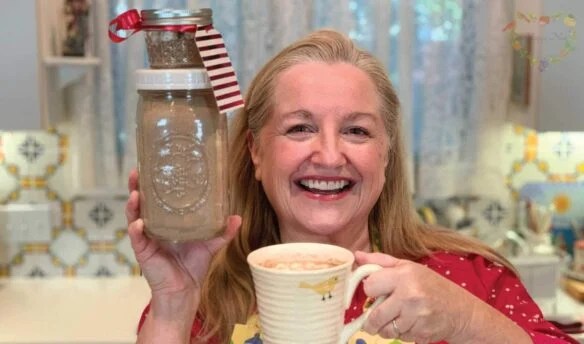
It’s with a 60 year old grandma trying to do exactly that on YouTube, and she’s got over a million subscribers, a huge website and a new cookbook. She is bursting with passion and purpose, but it’s well-tempered by her realization that in America, for most folks, we still have a very long way to go.
Folks are intimidated, she insists. And for those of us who have been doing it for the last decade already, we have a tendency to forget where we came from.
She is of the rare breeds who grew up cooking and eating this way, whereas her first students were her friends, who couldn’t even imagine making homemade bread at the time, let alone mastering sourdough. They never bought a whole chicken before, let alone broke the carcass down for a nutritious bone broth. They were not accustomed to shopping on a budget, or to filling their pantries with essentials for emergencies.
She really is the ‘Starting From Scratch’ guru, with the patience, positivity and personality it takes to succeed in such a position.
In a recent Wise Traditions interview, “Why Cooking Traditional Foods From Scratch Is Worth It”:
“Do you get overwhelmed thinking about making sourdough bread from scratch? Or homemade broths and soups? Mary Bryant Shrader of Mary’s Nest is a YouTuber and educator who has a knack for demonstrating how simple (and tasty and economical) traditional cooking can be! Today, she shares some of her own story (including successes and failures along the way) of how she got into becoming a “modern kitchen pioneer”. She goes over the biggest hurdles we face (like feeling too busy or too intimidated to get started), how to overcome them, and even what inspires her to keep going with traditional food cooking.” https://podcasts.apple.com/us/podcast/wise-traditions/id1072618042?i=1000681385872
Her YT channel has loads of content, not all for beginners either. Here’s an intriguing one I plan to watch: The 10 Best Survival Foods for your prepper pantry
If you’re one of those who believe the commercial hype, and think that all food is the same, and what nutrition you aren’t getting from your junk food diet is no big deal, because you take vitamins and supplements, here’s the really bad news from someone who once thought along similar lines, and paid dearly for those mistakes through his poor health at a relatively young age. Something we are witnessing far too often in this country.
Unlike our above super upbeat, positive Granny, Agent is snarky and sometimes downright intolerant—so, much more my style—except he doesn’t like to cook, poor fella.😆
“I get a lot of emails and questions about if a specific product is good to take – in my opinion it is all poison because nutrients come from clean foods, not bottles, but I don’t want you to take my word for it, I want you to know how to find out for yourself so nobody can ever dupe you again. With that being said, today I am going to show you how you can easily learn about any chemical in any product and its health effects, real safety data and more. You can then use the information you found to make an informed decision and never have to rely on a podcaster, famous doctor or Substack author again.”
Become your own master of health! YES, that’s the ticket!
“A Manufacturers Safety Data Sheet (MSDS or SDS) is the easiest way to get real information because, while Google can selectively show you search results to fit an agenda, and while doctors-turned-online-show hosts can recommend a product they are making a kickback off of, the MSDS can’t lie. The reason is because the manufacturer of the chemical must present honest information to avoid being sued out of existence by those who purchase their product and use it to manufacture supplements to sell to the plebs.”
He has a series of articles breaking down the reality of America’s most commonly used vitamins and supplements. You probably already know that some of the chemicals Americans consume routinely are banned in other countries. And A LOT of it comes from China and other far off places where we have little to no oversight.
Not that government oversight is on our side, at all! They pretend to be on our side, only to make more absurd and expensive regulations to ‘solve’ the problems they previously created.
This is a home kitchen, seriously? 🤪
As an example here’s a ‘solution’ of several states that is a complete non-solution for those who don’t like to cook and can’t afford to out every meal, yet are tired of the grocery store ready-meal options.
Micro enterprise Home Kitchen Operation (MEHKO), a way for the government to further interfere in your kitchen and your health.
Frequently Asked Questions — The COOK Alliance
How do you get a MEHKO permit? 1. Pass a Food Protection Manager Certification exam. 2. Submit your application, including your menu and a Standard Operating Procedures (SOP) form. 3. Pay the permit fee. 4. Schedule and pass a home inspection.
And once you do all that, you still cannot serve the most nutritious meals, because they are on the ‘dangerous’ list (with oysters!) including all raw milk products, smoked or cured products, any food that has been vacuum-sealed, and even homemade ice cream. So. Not. A. Solution.
But let’s at least try to end on a positive note today!
If you have plenty of money, live in a popular urban environment, frequent the very best grocery stores, but don’t like cooking, you have plenty of options available for healthy choices these days, because the ‘free market’ has answered the call and made available all kinds of healthy and natural pre-made meals.
If you live anywhere else in America, or are feeling the economic pinch as we are here, well . . .
May this Season’s Greetings lead to new paths of traditional healthy eating for you and your family!
Our Christmas watermelon—not exactly seasonal, but still pretty tasty!
“Oncology at the end of the twentieth century and early 21st century runs unethical trials with inappropriate control arms, poor post protocol care, bad crossover, and many other games, which makes companies rich and people poor. Cancer doctors take payments for these companies and go along with this narrative. The system is so rotten and corrupt and pervasive we can’t even recognize it as such.
History will view these are dark days. Where marginal drugs were given to dying people, government taxing poor people to pay for it, and doctors captured by companies to push these products, and everyone patting themselves on the back and the US bankrupts itself with inappropriate, harmful, useless care.”
“While I do recognize that some of allopathic medicine’s contributions to trauma care are noteworthy and worth preserving in some format, I also see that at it’s heart, the Germ Theory mentality that pervades the medical academic establishment (no matter how well intended by individuals in those systems) is not about healing, but is in fact, antithetical to life.
The machine thinking of Allopathic medicine which treats the human body as a molecular machine in need of being kept sterile and well greased by an array of chemicals and synthetic lab made substances is like the modern government funded environmentalist program that tries to quantify everything down to carbon units, obsessing over limiting them or sequestering them with more machines, while avoiding/ignoring the fact that it is machines that decimated the environment in the first place and continue to (whether they are lithium powered or gas powered) and not even beginning to take into account other variables such as the massive influence that old growth forests (or the lack thereof) have on hydrological cycles as well as carbon cycles.
It is like the machine thinking of the Big Ag Chemical companies and conventional GMO monoculture farmer who, when faced with diminishing returns due to soil erosion, nutrient leaching, desertification, decreasing mineral and nutritional content in crops (due to soil depletion brought about by extractive and exploitative farming practices) and facing herbicide resistant “weeds”, decides to double down and create even more powerful machines to till the soil harder, faster, inculcate the crop plants with an ever more potent array of synthetic chemicals and petroleum based NPK to keep them alive (on the equivalent of a combination of life support and hard drugs) and decides to create and use even more potent biocides and herbicides to kill all life in the soil in order to squeeze increasingly meager returns out of an abused and dying landscape.
Those are systems of machine thinking, treating living complex systems that are defined and only capable of being healthy, stable and resilient by the myriad symbiotic relationships woven within and around them as simple machines. Both involve one dimensional ways of thinking attempting to understand, heal and make whole multi-dimensional entities.
The “trust the science” proclaiming doctor attempting to treat anti-biotic drug resistant bacteria infected wounds with more and more powerful anti-biotic drugs is like the techno-optimist self-proclaimed environmental activist cheering for more machines (perhaps lithium powered machines) to be built which are supposed to solve the problems created by the previous machines.”
Some are shocked and appalled by this, as they should be, according to me. Others think it will be a fantastic improvement to human life, or a great way to make more fiat, or a solution to the burden on the caring professionals, or they love tech for tech’s sake, or whatever.
Those of us who love history and dwell constantly on the question ‘how has it come to this’ were well aware of this potential because we study the trajectory of modern life. I could begin with the first critics centuries ago, but for brevity sake, I’ll start instead with my own life, the only history available to me to know thoroughly enough.
Working mother, divorced parents, step parents, then step siblings, professional daycares, neighborhood babysitters, after school programs, junk food, convenience food, lots of TV. Family history of: diabetes, heart disease, obesity, cancer, vision problems, depression, eczema, alcoholism, Parkinson’s, and, you get the picture.
And I would not say my family life was bad. It was the typical American suburban life of a great many growing up in the 70s and 80s. Neither particularly good, nor bad, just normal. Normal, as in well-normalized.
Like most families my parents would joke about voting for the ‘lesser of two evils’. They probably learned that from their parents. My mom went to community college and got her degree once we were gone, in sociology. She worked full-time all her adult life and didn’t regret it. My dad remained ‘upwardly mobile’ as his Protestant father taught him to be.
In fact, we have retired before him, and he has just had his first heart attack.
They are both still with us, but they do not read this blog, so I could say whatever I wanted. 😏. But, that’s not the point of this particular post.
Let’s leave it at this—in hindsight, my unique perception of growing up this way is, in a nutshell—there was not a lot of parenting happening. The results of this having widespread and devastating effects.
It is from these original seeds of pseudocare that have been not only consistently irrigated in our own territories, but have been dispersed throughout the world these last five-plus decades which has ensured the trajectory to the ridiculous place where we now find ourselves: Drowning in pseudocare so deeply we can scarcely recognize what real care looks like anymore.
Another quick peak at the fruits those seeds have produced.
Yet even facing all of this, I’m still optimistic, as I have been all my life. Even at the worst of times, even during a few prolonged worst of times, I must’ve still learned something vital from my half-assed upbringing and collapsing culture.
So, here it is, in another nutshell:
Believe in yourself, believe it can change, but don’t practice in sidestepping the hard stuff. And the hardest of the hard stuff is care, real care—for yourself, for others, for the future—that is why we are here. How you go about that is your personal journey and your only real duty to discover and live. That is all there is to do in a life well-lived.
Which is why I want to once again quote an obvious example of someone doing exactly that, Gavin Mounsey, who is rocking the real care like a hurricane these days! Wait . . . What?? Ok, terrible simile aside . . .
I believe he knows what needs to happen next and is becoming the living manifestation of that in his own life first, and passing it around. Leading by example, it’s the only way. It’s the same cardinal rule as storytelling—Show, don’t tell.
“I want to give my energy to improving and increasing the resilience of my local community, not your hyper centralized one size fits all infrastructure.
“Freedom is not a consolatory prize that can be given to us to reward our obedience and capitulation to a system of violent coercion. It is not something that can be granted or provided to you by some government that wrote some thing on a piece of paper. Freedom is your birthright, and you either live it and embody it, or you allow yourself to be put in a mental cage by statists and other abusive institutions or individuals. My ancestors bloodlines are traced back to a people described in today’s terms as The Gaels. “Saoirse” is Irish Gaelic word for “Freedom”. Saoirse is an ancient concept that comes from the original Brehon laws of the Druidic (and eventually Celtic) world before the time of Christ. In the times when that word was created, my ancient ancestors lived without a centralized state, without prisons and without police.
“Saoirse means many things to different people. For some it means freedom to think, express and freedom to learn, for others it’s the freedom of imagination and the freedom of the spirit. And for some it also means freedom to set up parallel societies.
“This is one of the reasons that I included glimpses into two historical cultural cross sections of ancient cultures that existed without a centralized state and police/prison system in my essay as I feel that we can glean wisdom from stateless societies that existed for centuries to millennia in how to design more ethical, equitable, honest, Regenerative and practical ways to organize community, encourage amicable/respectful behaviour in humans and collaborate to leave this world a little bit more free and beautiful than it was when we got here after we are gone.
“With all that being said, I want to emphasize that I think that placing any culture, group of people or individual on some pedestal as pure is unhealthy. I feel we should be vigilant to make sure we are not romanticizing their past nor romanticizing the potential of their worldviews to provide solutions to the present challenges we face.
“The path to become connected to place with a reciprocal relationship, reverence and humility is the path to embrace indigeneity ourselves.
“It is a great starting point to create pockets of decentralized resistance to oligarchic / statist tyranny as growing your own medicine and veggies may appear harmless, but in a parasitic global plutocracy it represents a decisive action that severs the tentacles of tyranny in a critically important aspect of our lives (how we access food and medicine). Thus, it is a radical and revolutionary act that appears benign to the hubristic philanthropaths and demociders, serving as a sort of covert sedition in a world governed by parasites that want us dependent, gardening to grow or own food and medicine is like a hammer wrapped in velvet that knee caps big pharma’s plans to poison us slowly through dependence on their system for health care and also strikes the spine of the digital gulag system, breaking its back so it can no longer have any strength to influence our lives through controlling our access to food/medicine.
A better essay about the importance of self-reliance and health as the ideal antidote to modern societal tyranny I could not have written! And he has a YT channel. 😁
He was also kind enough to try to address our biggest garden nuisance within the scope of his permaculture lens. He offered many potential solutions, and bless his heart for the effort.
But I’ll just repeat my personal favorite: hot and spicy gopher wings. 🤪
What an example of authentic care—growing in the real and cyber worlds simultaneously—where even sassy meat-eaters and smart-asses and AI are welcome to stuff up their comments sections. Now that’s grace under fire!
Thanks to guys like these, in the coming decades I predict courageousfellowship will become the new sexy.
The material being taught to the professionals that most people consider to be experts in healing and human health has been corrupted by corporate propaganda.
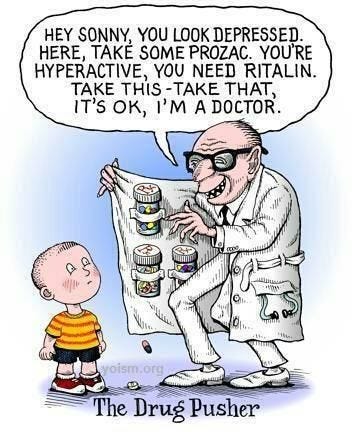
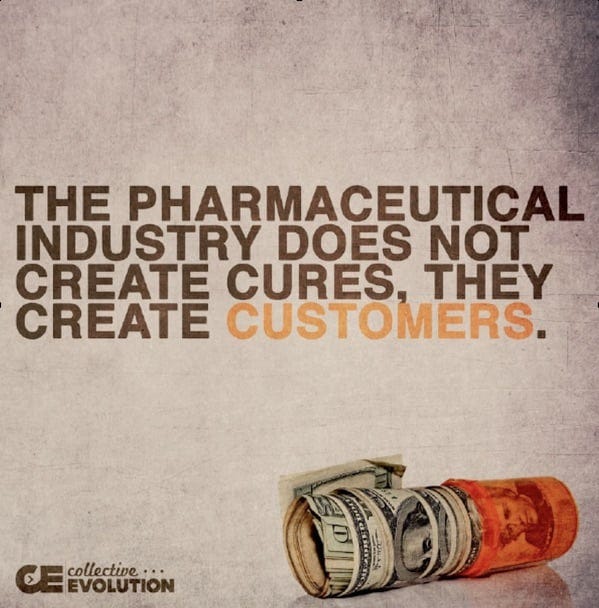
The medical education curriculum being taught in universities has been hijacked by big pharma. This is not a new phenomenon, the coup d’état which replaced natural medicine (that sought to address root causes of illness) with synthetic petroleum based medicine (that seeks to use petroleum derived patentable synthetic drugs to cover symptoms and create ‘return customers’) began over a century ago.
Here is a brief history that provides a summarized overview of how the hostile take over happened.
Founded in 1847, the American Medical Association is the largest association of physicians and medical students in the United States. Its stated mission includes “…lobbying for legislation favorable to physicians and patients, and to raise money for medical education.”
The AMA spends big money on lobbying. One of the AMA’s top lobbying firms, the McManus Group, also lobbies for PhRMA, Eli Lilly & Co, Merck and Pfizer. According to OpenSecrets.org, the American Medical Association comes in second in overall money spent on lobbying in the last 10 years with over $264 million. The health industry as a whole trumps all other industries including energy and finance in lobbying expenditure.
The AMA looks to legitimize its agenda through its Journal of the American Medical Association, JAMA, which is the most widely circulated medical journal in the world. JAMA receives major funding through its advertisers, many of which are pharmaceuticals. In addition, the American Medical Association has been accepting money from the Rockefeller (America’s first billionaire that made his fortune in Oil) and Carnegie Foundations from as early as 1910. In World Without Cancer, G. Edward Griffin makes the argument that the Rockefeller and Carnegie Foundations began to support the AMA in an effort to control the medical schooling establishment and to gain power over this “large and vital sphere of American life.”
The editor of JAMA is very influential, and has historically played a significant role in suppressing alternative health treatments. Morris Fishbein, editor of JAMA from 1924–1950, was directly engaged in suppressing Royal Rife’s cancer cure. In 1849, homeopathy was nearly as popular as allopathic medical practices. The AMA was able to use its position to squash what it referred to as “quackery” — stating that the public did not know what was good for it and that the medical establishment must have total control. At that point it called for control over all medical regulations and licenses. These regulations eventually lead to closing down of schools and almost complete suppression of the practice. Even today in parts of Canada and America some homeopathic practices are “underground.”
It was around the turn of the century that the AMA, the Rockefeller Foundation, and the Carnegie Foundation forged their partnership. They put their money into drug-based research (oil derived pharmaceuticals) and made that the main focus of “healthcare”—a move that turned “healthcare” into “sickness management.” The Rockefellers and other prominent banking elite (and the shareholders of their subsidiary pharmaceutical corporations) have been able to control and profit enormously from the drug industry.
Now, all medical doctors in the USA are trained in medical schools that are run and/or accredited/sanctioned by the AMA. Of 129 medical schools in America, only 22 require even what amounts to basic rudimentary courses in nutrition. Medical students are not trained to see the connections between many degenerative diseases and malnutrition. Instead they are taught only how to treat with surgical or pharmaceutical methods but do not cure or alleviate the root problem or ailment. Similar numbers are reflected in medical education here in Canada. In this way, they are assured of life-long customers. Surveys conclude that over 66% of all Americans regularly take prescription drugs (with only slightly lower numbers being reflected here in Canada as well).
Massive transnational pharmaceutical corporations (like Bayer) were not satisfied in only dominating what we are taught about medicine and what forms of ‘medicine’ we will have access to, they soon moved to take over the food production systems as well.
Just 50 years ago, some 1,000 small and family-owned seed companies were producing and distributing seeds in the United States; by 2009, there were fewer than 100.
Thanks to a series of mergers and acquisitions over the last few years, four multinational agrochemical/pharmaceutical firms — Corteva, ChemChina, Bayer and BASF — now control over 60 percent of global seed sales.
The slow march of seed consolidation suddenly turned into a sprint. Chemical and pharmaceutical companies with no historical interest in seed bought small regional and family-owned seed companies. Targeting cash crops like corn and soy, these companies saw seeds as part of a profitable package: They made herbicides and pesticides, and then engineered the seeds to produce crops that could survive that drench of chemicals. They make the petroleum based pharmaceutical drugs that your doctor will prescribe you when the toxic ‘food’ you eat results in degenerative diseases. At every turn, they make a profit (at the expense of the integrity of the biosphere and human health). The same seed companies that now control more than 60 percent of seed sales also sell more than 60 percent of the pesticides.
GMO byproducts degrade and deplete soils of vital minerals and beneficial bacteria, both of which protect crops from pests, viruses, and other threatening elements. Glyphosate which is used in conjunction with GMO seeds does not biodegrade, which means it is continually accumulating in the environment without restraint, perpetually altering soil composition and contaminating natural resources.
A handful of companies have spread these toxins across our planet diverting US$ 400 Billion of public money to subsidize their high cost chemical commodities to make them artificially “cheap”. The costs of this cheap “food” are astronomical in terms of the health of people, the ecological damage it causes and it’s exploitation of farmers. If the true costs of chemical food were taken into account it would be unaffordable.
If what we put into the soil is toxic, what we get out is toxic. Mission successful. Incidents of degenerative disease and cancer have skyrocketed since the above described ‘food’ and ‘medicine’ products became the norm. Life long return customers for the pharmaceutical industry are now plentiful.
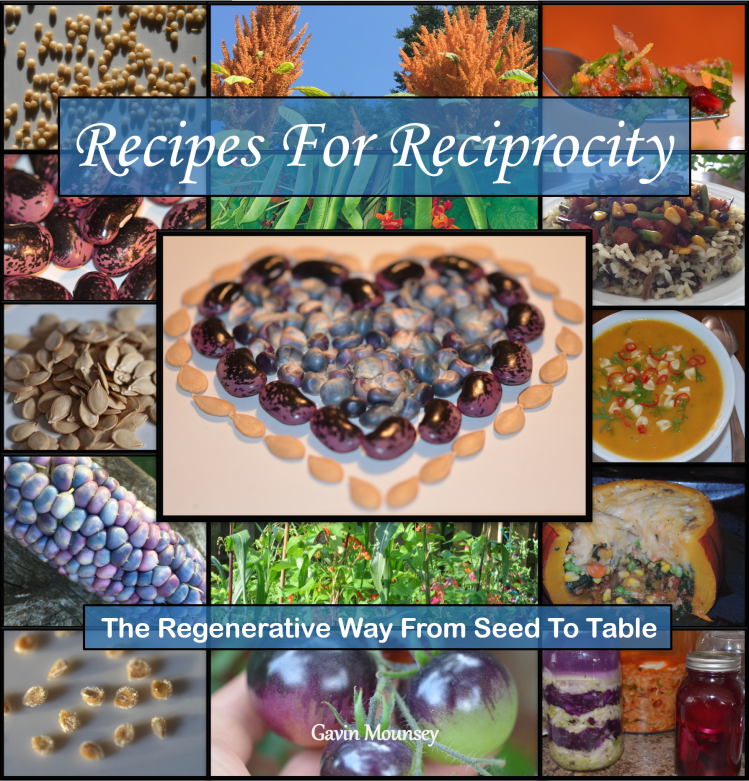
The article continues with more compelling evidence and ends with good intentions and creations—Gavin’s ferments and info about his book: Recipes for Reciprocity
I LOVE cheese day and it’s been a very long while.
It’s been several months since I’ve been milking our ‘old’ goat, Summer, and it will be a few months more before I start milking her again, along with Phoebe and Chestnut, intending that all will go well with their first kidding, and I will be able to train them on the milkstand, which will be as new to me as it is for them. Big intentions!
Friendly PhoebeChilly Chestnut
I’m not too worried about Phoebe, she’s much more tame and mellow and loves to be petted. Chestnut darts off as soon as you try to touch her and is even skittish when hand feeding.
The first lamb of the season has just arrived! Now that Handy Hubby is ‘retired’ he gets to handle all the stressful parts while I pop in for the awes and photo ops. Big win for me! It’s not that things are constantly going wrong, but it does take preparation and attention and concern, because sometimes things do go wrong.
But not this time! While Hubby runs around, making sure the little lamb latches on in due time, gets the feed and stalls prepped and ready for a bunch more births, I make cheese.
It’s a very slow process, traditional mozzarella, it takes all day. Yesterday I experimented with a new cheese of my own invention, which is just about my favorite thing to do in the world. I would bore you with the details, but I fear you’d be really bored.*
Another new Hubby project has been the ultra-high security broody fortress. Walls within walls. He’d finished the Tajma-coop and hoped our predator problems were solved. He’d planned for practically every type of previous invader—raccoons, hawks, possums, coyotes—with the exception of snakes. He’d hoped between one cat, 4 dogs and constant hoof traffic the reptilian raiders would retreat. No such luck. We lost lots of chicks and Bantams to snakes.
Surely this will be the ultimate solution?
Hubby sporting his wild side, which I much prefer to his straight-laced pilot persona. Though of course I have deep gratitude for his professional efforts too, not just the relieving of them, or we’d never be where we are now. (Thanks, Brandon?! And, where else shall I send the thank-you notes??)
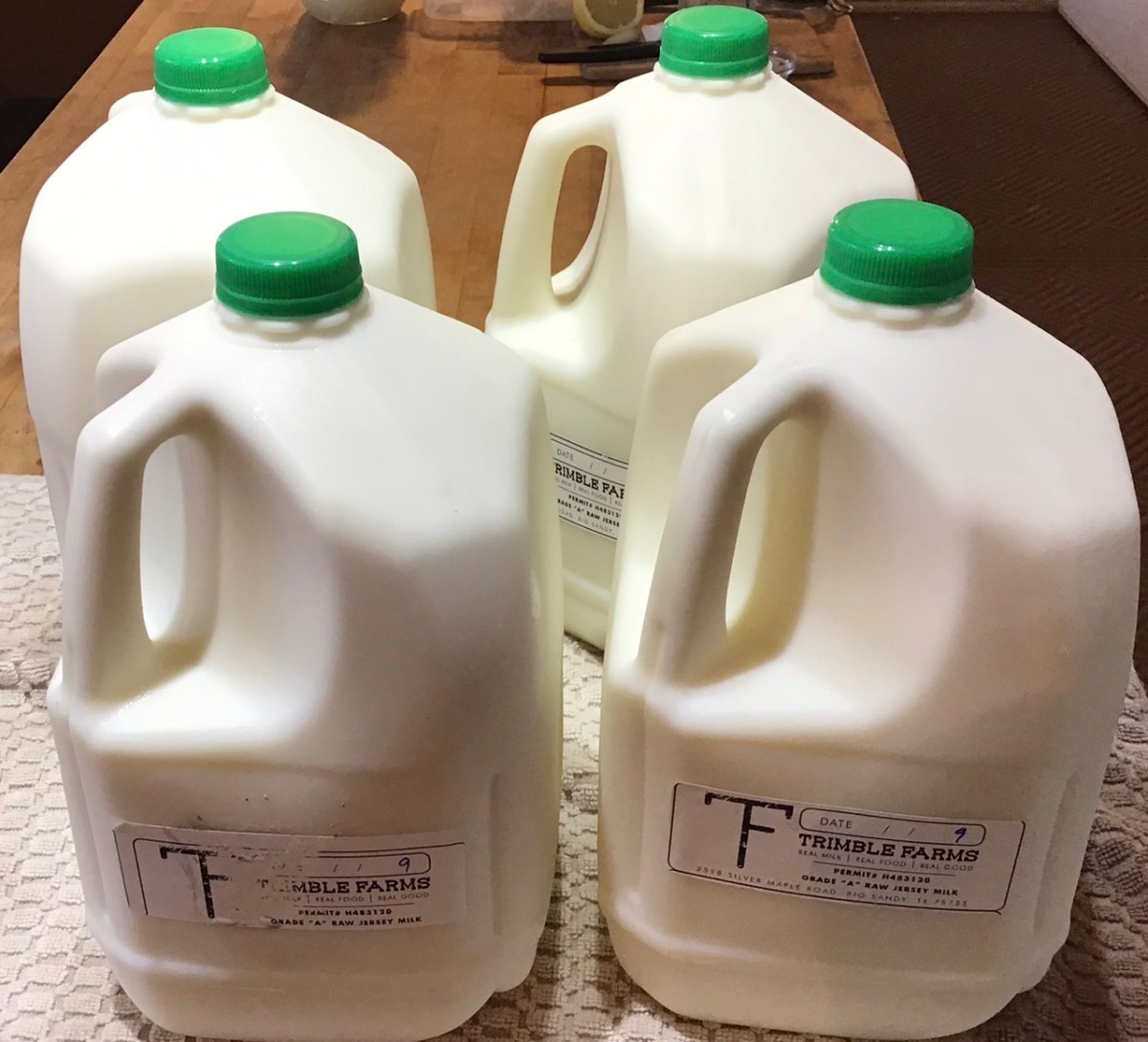
I used to have regular cheese days. I would drive four hours round-trip for the only raw milk available in the vicinity and get up to 20 gallons and have a cheese-making marathon for four days straight. It was perhaps a bit obsessive.
That was a few years ago, now it’s a real luxury. Since then the cost per gallon of raw milk at that farm has gone from $6 to $9. Add to that the cost of gas and time (and my personal waning energy), we really can’t afford it anymore.
Instead I’ll be milking goats and making mostly small batch cheeses, including all my favorites, which is pretty much all of them, especially Camembert, Muenster, and traditional styles of aged chèvre. I do believe I’ll be very satisfied with my new arrangement!
This time I got 10 gallons and a friend did the pick up, another win for me. She, like me, started making cheese and bread mostly out of snobbery—we are ‘foodies’ (I prefer the French term ‘gourmands’) and the selection of these staples in these parts was akin to an inner-city food desert. Industrially-produced, plastic-wrapped crap only, of the lowest quality.
Like I said, it’s a luxury at that cost, but from it we will get better cheeses, yogurt and buttermilk than money can buy.** Not only do we get the cheeses, but the whey goes to great use too, for ricotta, for soaking grains, and for the critters at just the time they are in need of extra nutrition.
Incidentally, mozzarella is not a raw milk cheese. Still, the flavor of the traditional home-made style is far superior to those which are industrially-produced, including the ‘fast mozzarella’ that most home cheese-makers prefer, since it takes about an hour versus all day. That version is also delicious, and I make it sometimes too, but the flavor and texture between the two is very different.
Our semi-feral cat, Skittles, comes around regularly now that our house dogs are no longer a constant threat. She’s getting her day in the sun at last, enjoying her curds and whey.
As there is a lot of kitchen downtime with traditional cheese-making methods, I make sourdough bread and pizza dough between steps.*** Or sometimes pestos, or condiments, or Kombucha (my latest fantastic flavor is pine needle), or soups and salads. Before I know it, an entire day in the kitchen has swooped by, me barefoot and content, and still in my pajamas.
And very happily not pregnant!
*Actually, I’d be happy to bore you in the comments section if you have any cheesey comments or questions.
**Sorry to say, but the raw milk cheeses you think you are buying at the grocery store are actually semi-pasteurized, they just changed the definition. As per usual.
***While listening to podcasts, usually. Richie Allen was on the list today, a good choice as it was a call-in show on the subject of prepping. https://podcasts.apple.com/us/podcast/the-richie-allen-show/id1090284266?i=1000553479020 I don’t identify as a prepper myself, necessarily, even though pretty much any American who looked at our lifestyle would say we are. The third caller on the show is a self-identified ‘doomsday prepper’ in Alaska. She was great, shared lots of good info and talked about how she grew up that way, as did her parents. I don’t really consider that ‘doomsday prepping’ either. This is a lifestyle to me, one that deserves to be continued through the generations, not just during precarious times, and I’m sure she would agree. Being prepared is important and I think everyone should make a concerted effort on that front, especially in times such as these. But I see this lifestyle is a special sort of calling and it’s not going to appeal to many folks, and it doesn’t have to. It’s enough for those so inclined to preserve it and to treasure it and to keep that flame of living intimately with nature alive. It sets an example that is much needed these days as it is not in the modern Western way of a recreational relationship with nature or the profit-driven exploitive relationship with it, but a real, old-fashioned, hands-in-the-dirt sort of cooperation. You’ve gotta really love it, really want it, or it will never work for you.