I grew up in the suburbs; I found it really boring; I watched a lot of TV, especially cartoons.
For better or worse, a good portion of my sense of justice came from Bugs Bunny.
Which is actually a lot more healthy than what passes for justice these days, I’d say!
During that time artificial reality did not blur so readily with actual reality. Now when I watch any media I see cartoons everywhere. I see cartoons when I look at people, too. So many have created caricatures of themselves it is clear there is too little authentic left to matter in them anymore. It’s like a return to the primitive, only plastic. Surface obsessed–the inner world collapsed in order to buttress the phony outer world of a manufactured jungle.
The following I copied and/or jotted down from still more media consumption, from a writer I imagine is real, who calls himself Stylman. Interesting name. I stopped following, despite his many wise expressions, when he wrote he thought the crazy weather is being controlled by the fears of the people who believe in geoengineering. A lunatic, obviously. And yet, some prescient views nonetheless.
“And it’s a road to nowhere—a few winners, millions of casualties, and an entire generation taught that their value lies in their ability to perform rather than create, to influence rather than contribute, to be seen rather than to matter.”
Now we live in an era where TikTok influencers who dance for thirty seconds make more than teachers, nurses, or the engineers who build our bridges. We’ve moved from celebrating skill to monetizing attention, from honoring achievement to rewarding performance and exhibitionism.
The fame machine isn’t just anti-human—it’s filling the void left by our disconnection from authentic community and natural guidance, while simultaneously being the logical response to living under constant surveillance.
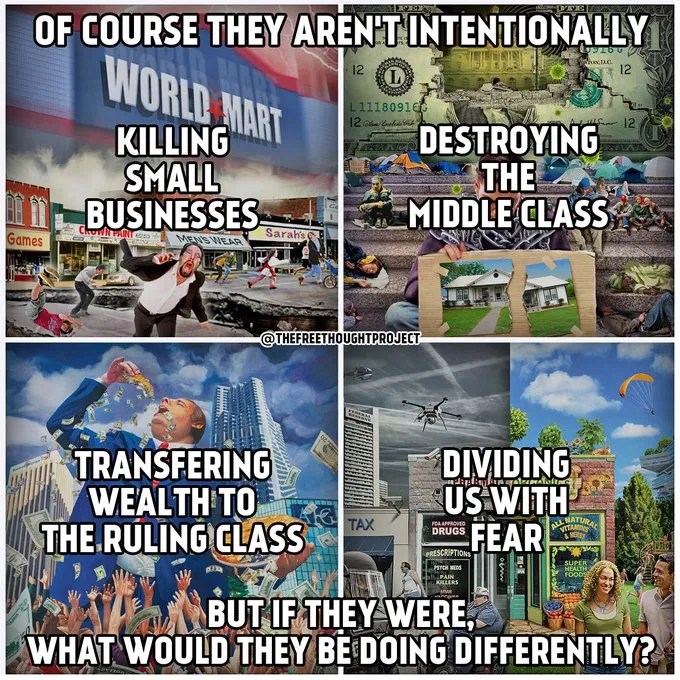
But this isn’t cultural drift – it’s social engineering. The same institutional forces that have systematically replaced real information, real money, and real community are now replacing authentic human development with performance for strangers. This reflects a broader pattern: we live in an era where every essential human system has been replaced with artificial substitutes designed to harvest our energy rather than nourish our souls.
We’ve built a system that teaches them to treat their lives like content. That tells them: if you’re not being seen, you’re not really here. That your private self has no value unless it’s validated by strangers. We’ve stripped away something essential—the right to exist without an audience.”
While I agree, it’s actually much worse, in my experience.
The invasion of privacy of public systems and the individuals willing to force this state on everyone have deeply influenced inter-personal relationships as well–corrupting them, disfiguring them into parallel invasions–where expectation, extraction, exploitation has become the nauseating norm, and accountability has become entirely absent.
The public and private realities mirroring each other. Recently when I was visiting a dear friend who is Uber-Tech-Attached I had a Truman Show Moment, where she was gushing over her new air-fryer and I got the uncomfortable and uncanny sense I was unvoluntarily in an infomercial.
It’s a very creepy feeling I knew she would not understand.
Folks are faking their way through life, and this will have continued disastrous consequences.
The invasions will continue, until the trespasses are rejected and honor is restored to privacy and to nature.
The dangers of such a system, where access is assumed–access to your private spaces, your private thoughts, from your micro-expressions to your quotidian habits–is a culture of mutual parasitism, not even close to mutual understanding. This is not a culture more connected, it’s a culture more devolved. Incapable of boundaries, non-chalant around respect and autonomy, mocking of custom and structure, collapsing into a decaying emptiness. The nothingness of perpetually dissolving illusions, like the garish carricatures of a cartoonish, substanceless life.
A life perpetually romanticising illusion.
Even as its entire life support system slips away.
I attract scorpions, I always have. It’s my sweet blood, I’m sure, I can be very irrestistible when I want.
There are a lot of us. You can imagine us as the frogs. Some of us let their hearts and wallets bleed out dry for stray cats, which then makes them act nasty toward fellow frogs. Others turn their skin to poison for protection, which doesn’t really work all that well, because it gets some scorpions really high.
And still others migrate to Florida, where they freeze in manufactured ice storms.
Scorpions on frogs has been a pretty common theme for a while. It’s so common in fact that a new language is being crafted as I live and breath, right now, in this very cyberworld, also manufactured by man, like the Florida ice storms.
In scorpion-speak, everything was working just fine until the frogs started complaining.
But, the message in the bottle is that there are far more frogs than scorpions and the messengers are dropping many truths right into our very laps all about them. All kinds of clandestine information is flowing, on how to uncover them, how to trap them, how to recognize the master scorpions and even how ship them off to a land far, far away.
It’s a very exciting time! It’s becoming fashionable even! Soon the frogs will be free from scorpion influence! Maybe even forever!!
I do tend to get too enthusiastic and hopeful, but the thing is, I really think it’s working this time. I think it might even be coordinated. But, you know, they call me a conspiracy theorist.
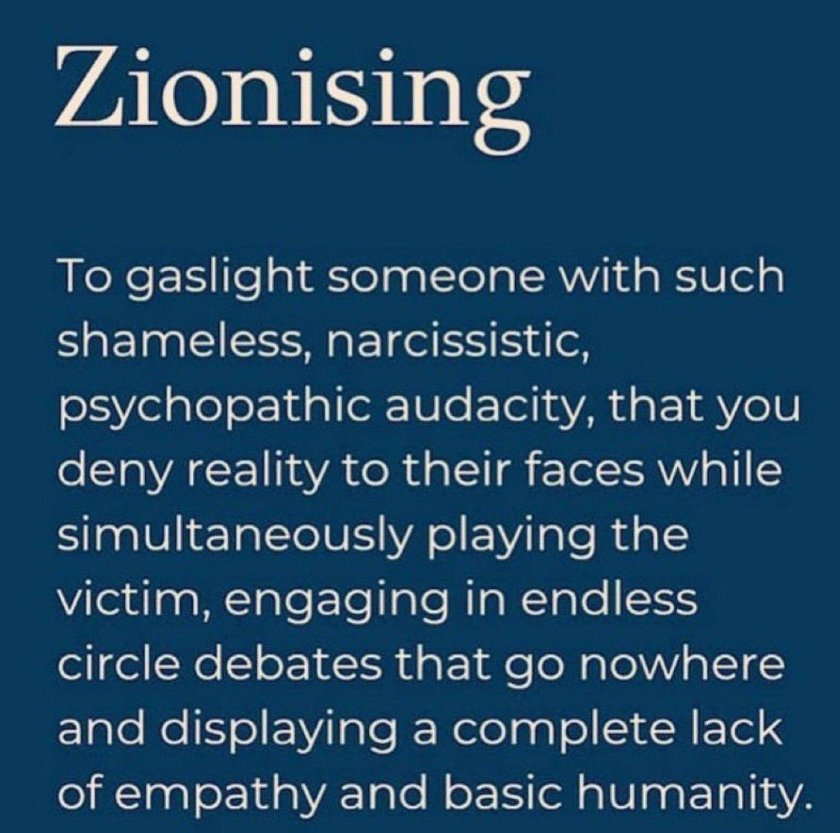
This time they’ve given us the words. The words are the map to the behavior. The behavior is the path to extermination. From what I’ve been able to work out so far, it’s a lot like used-car sales with them.
First, they get their foot in the door. Then, they try to sell you a lemon.
“Foot-in-the-door technique is a compliance tactic that aims at getting a person to agree to a large request by having them agree to a modest request first. This technique works by creating a connection between the person asking for a request and the person that is being asked. If a smaller request is granted, then the person who is agreeing feels like they are obligated to keep agreeing to larger requests to stay consistent with the original decision of agreeing.”
If you buy it, their quick onto your back, for as long as they feel like free-riding. They’ll expect you to cart them around everywhere without ever learning to paddle for themselves. They’ll expect to suck your life’s energy while you’re paddling them around, cooking for them, cleaning for them, while simultaneously entertaining them. When you complain you’re too drained and exhausted, they’ll snap at you that you are weak and that you should really try harder. Their drive matters far more than your fatigue.
Once they’ve got their claws in you, you’ll wish you were the frog freezing to death in Florida. They have all kinds of tricks, let me tell you!
If you try to pry them off your back once attached, here’s what you should expect to hear. They are, in fact, the true victims! They will actually try to persuade you this is true, even if they have to shapeshift before your very eyes, distort words just spoken, and throw you under the bus, all at the same time.
Indeed, Frog, why have you been so dissappointing a carrier? Why are you so cruel and malintentioned that your energy and vitality are not infinitely enduring? Why are you holding back?
You said you wanted me to be comfortable, Frog, and I am no longer, so fix it! I want more!
And you see I’m not capable of crossing the river by myself, it’s so obvious, what are you, some kind of a dumbass? I suppose you’d be fine if I just drowned. You’re just mean, that’s it. You pretend to be kind and caring, but you don’t care, you’ll just leave me by the side of the river while you go off with your other frog friends.
I know plenty of other frogs who will help me, you know. Not that I need help, of course. Just with this one little thing about getting across the river. And you won’t even do that. But, another will. They always do. You’ll see.
I don’t know, Scorpion, the frogs, well, they’re catching on to your tricks. They’re starting to collectively block you. That can’t be fun! The young scorpions, they’re getting more and more lazy and entitled, while the young frogs are getting wiser and craftier. I don’t know, but it doesn’t seem to be looking too good for your kind anymore.
One fellow frog has even started selling deep-fried scorpion chips, and I tasted one, and wow, are they tasty!
Character is what’s left when no masks hold. We recognize it most often in its absence.
Give a one power and watch, do they use it to make others more comfortable, or do they use it to dominate?
Here is a perfect example of a wolf preying on men who love it. Look at who she is being, not who she says she is. She’s a self-proclaimed coach, for men, who have been abused by narcissistic women.
She’s wearing a black neglige and has an eroticised naked woman in the very obvious background. Her career took off when she started focusing on wounded men. Big surprise!
Here is your wolf in lamb’s clothing, men. Why do you love her? She talks the talk, she looks the part, you fall for it, again, and again. A poser, pretending, while on the hunt.
She will poison every healthy relationship you have as you long for the fantasy she creates with her makeup and her emotional manipulation. She speaks of her own clientele as objects while buoying their egos without any context.
A true Machivallean artisan maneuvering in plain site and getting applauded for it!
Pro-tip: No serious woman wears a black neglige to make her intellectual point. She’s fishing for vulnerable men, beware.
Churlish: “boorish, rude, uncivil, peasant-like, difficult to work with”
I like it, a lot! As a word it’s just fun, like most words that end with ‘ish’. I often put ‘ish’ on the end of words, adding a connotation of ‘sort of’, it’s quite common.
Blanket of fake clouds get dispersed, weather changes, few notice or care.
“Fun-ish” not quite fun (like living under a chem-sky producing Yo-Yo weather); Slave-ish is in the vicinity of slavery (like paying income tax and having zero say in your own government).
I have a new cheese I call “Swissish” since it’s in the Swiss style, but obviously, I’m not in Switzerland. It’s just a really handy little diminutive.
But, what is a ‘Churl’ you might wonder? It’s a good question because the meaning has changed over the centuries quite significantly.
A churl is a peasant, or a rude, boorish or stingy person. In English history it meant — “A freeman of the lowest rank”.
I believe that label suits me! Well, not exactly the ‘freeman’ part, but I can relate to the peasant part. I haven’t always thought of myself as a peasant, but since becoming one I’ve definitely adopted some of their so-called uncivil, rude and boorish behaviors.
In many ways it works like the term ‘country dumb’ like in the great work of fiction by Jaroslav Hasek, “The Good Soldier Svejk.” The beauty of being churlish is a direct parallel, because you never can tell when it’s an act, and for what purpose. Playing dumb, or churlish, can be very effective.
Hasek’s narrative, along with the character of Svejk, was most certainly the inspiration for the well-known American television sitcom Hogan’s Heroes.
The original Sargent Schultz and company
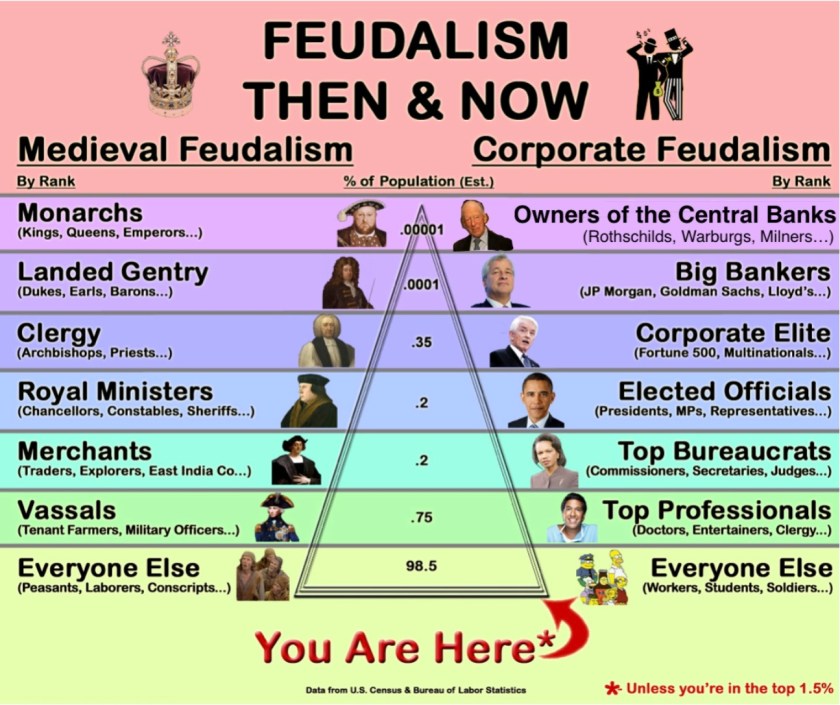
That makes perfect sense, because those behaviors go hand-in-glove with how much respect one has for those who would have us all be feeble, pleasant and co-operative workers, loyal citizens of party politics, and happy, obedient tax cattle, unable to accumulate inter-generational wealth, just like peasants and slaves.
I’ve been saying for decades we are slaves on a corporate plantation and not citizens in a so-called free country, and whether you call it a republic or a democracy completely misses the point. We are forced to pay taxes while having zero control over what those taxes fund, that’s a slave system we cannot opt out of, so I really never needed to read any so-called legal codes or any essays of the great thinkers who’ve already noticed this a century ago, because it’s painfully obvious.
For those who need more proof, here’s another good one rehashing the same points again with excellent clarity, for the hard of thinking.
BUT INCOME TAX FUNDS THE SERVICES WE NEED! Mark Everson, IRS Commissioner, stated he has been paying his taxes ever since he had his first job and that it’s a “fundamental construct of our nation that those of us who expect and demand services from our government… we must pay for those services,” therefore, there is an obligation to contribute. Ok, great! I like services, and I do believe people should pay their fair share for services they use. So how about we play a little game of “trust but verify” by looking at how our services are funded: PROPERTY TAXES are primarily used to support local services such as public schools, police and fire departments, road maintenance, libraries, and sanitation services. (check all of those off the list) SALES TAX funds a variety of public services, including education, healthcare, transportation, public safety, and infrastructure projects. (add a whole bunch of checks.) SCHOOL TAXES are paid by everyone, even people without children. We are told the school tax funds are primarily used to finance public education, covering expenses such as teacher salaries, school facilities, educational materials, and student services. (check, check, check.) ROAD TAXES are funded through taxes on motor fuel, such as gasoline and diesel taxes, as well as vehicle registration fees and tolls. LICENSE PLATE TAXES fund state transportation projects, including road maintenance and infrastructure improvements. CAR REGISTRATION TAX funds various state and local services, including road maintenance, public transportation, and infrastructure improvements. (Sure are a lot of roads and a whole lot of money going toward them.) I figured I’d throw this one in here: Utility companies are funded through banks and investors, then they rape us on services (seriously, look at your electric bill). The astronomical rates we pay are set by our so-called “elected officials”. Point being, the utility companies don’t need taxes, but sometimes our governments choose to hand them money. This is a huge, rigged monopoly game. BUSINESS INCOME TAX, meaning the legal tax on profits derived from the sale of goods over cost, is what funds the government. Again, this tax on profits is 100% legal. If you own a business, you owe taxes on the profits (gains) you generate. This includes stock market gains or gains from other financial investments. As you can see, there is nothing on our list that requires the sample server at Costco to pony up 20% of her weekly paycheck to fund. This is why the Grace Commission, officially known as the Private Sector Survey on Cost Control (established by President Ronald Reagan in 1982 to identify waste and inefficiency in the US federal government) produced a shocking report. When referring to income tax collected from every working individual in the United States, they stated, “100% of what is collected is absorbed solely by interest on the federal debt; all individual income tax revenues are gone before one nickel is spent on the services taxpayers expect from government”. Folks, 100% of what we give the government out of our paychecks is being handed to the banks as interest payments – that means all of our taxes become the bank’s profit. People don’t understand how the Rothschilds, the Morgans, and so on run the world; it’s because the entirety of what we pay is funneled to the banks, and they own the banks. G. Edward Griffin, author of Creature from Jekyll Island, stated, “The main purpose of the income tax is not to raise revenue but to redistribute wealth to control society.”
SLAVERY Listen closely: “Article 1 (1) of the 1926 Slavery Convention defines slavery as ‘the status or condition of a person over whom any or all of the powers attaching to the right of ownership are exercised’. This definition signifies that a person is considered a slave when another individual holds absolute control over them, treating them as property or chattel, and depriving them of personal liberty and most rights ordinarily held by free persons. The exercise of these powers includes control over the person’s life, labor, movement, and private affairs, with the intent of exploitation.” We work to obtain money in pursuit of life, liberty, and happiness. We are then forced, against our will, to hand the mafia a never-ending portion of our money. If we don’t, our possessions that we have rightfully earned are seized, or we are jailed. It is the definition of slavery. The worst part is, in this case, the government doesn’t even “need” this money. It doesn’t go toward making our cities beautiful and making our water clean. It is all handed to the banks – but it’s way worse than this. According to Bilderberg, the IRS makes available to the programmers of society “much information” which they can then use to create situations that allow them to maintain control over us. To quote Bilderberg, “This information consists of the enforced delivery of well-organized data contained in federal and state tax forms, collected, assembled, and submitted by slave labor provided by taxpayers and employers.” They go on to say, “Furthermore, the number of such forms submitted to the I.R.S. is a useful indicator of public consent, an important factor in strategic decision making….” They add, “When the government is able to collect tax and seize private property without just compensation, it is an indication that the public is ripe for surrender and is consenting to enslavement and legal encroachment. A good and easily quantified indicator of harvest time is the number of public citizens who pay income tax despite an obvious lack of reciprocal or honest service from the government.” So, they laugh at us for being so gullible that we pay into their wretched system, yet if we resist and don’t pay, they seize our assets and force us to waste our lives behind bars instead of spending time with those we love. The one thing I agree with them on is that this is slavery. Bilderberg, when discussing the political landscape of America, stated that both lawyers and CPAs (accountants) are [unknowingly] licensed spies and saboteurs. These individuals are overseen by judges, “who shout orders and run the closed union military shop for whatever the market will bear” and “the presidential level of commander-in-chief is shared by the international bankers.”
To end on a good note, here’s the young and gorgeous Helena Bonham Carter in my favorite film, “Room With a View” who after playing Beethoven gets peevish, naturally, but not to be confused with churlish.
Two parallel stories, one personal from two days ago, one political repeated through time and space.
Individual behaviors mirror political failures, or vice versa.
I went for a haircut at the only somewhat nice hotel in our closest small city. I haven’t had a professional haircut in over five years, it was my birthday treat to myself. My hair was really long and wild. I’d come to like it like that, though I knew it needed some taming. While working, Hubby and I kept professional-looking hairstyles, it was expected. Now that we don’t work for wages anymore, it’s kinda fun to let it all grow out, right before it all falls out in old age.
I told the stylist what I wanted. When I was young they called it the ‘long shag’; these days, according to my Youtube search, it’s called the ‘long wolf cut’. The stylist said she understood what I wanted–long layers. I even specified: “I want the waves and curls to be enhanced.” I was thinking–“Big 80s hair, Baby!” Why not! It’s my birthday celebration style, and that’s what I want!
The sytlist proceeded to chop over 6 inches from my hair, blow it dry to pin straight with the help of 3 stinky products, and then to top it off, tried to convince me that’s what I asked for.
Do you need a special license to notice these are not the same?
When I tried to explain to her that a “medium bob” cut is not the same thing as a “long wolf” cut, she started in on the gaslighting. She was very skilled at it.
Perception management is not the same as taking accountability.
My hair was so damaged, she had no choice. I wasn’t sitting straight and so she had to keep cutting. It was too puffy before, it was too frizzy before, it looks so much better now. “You look so pretty!” She kept repeating this, as I kept repeating, “Yes, it looks good, you are a talented stylist, but it’s not what I asked for!”
“The weakness of every utopia is the same. It demands that men believe what they can see with their own eyes to be false. The slogans change — “justice,” “progress,” “sustainability” — but the pattern does not. Sooner or later, the ration card, the empty shop, or the failed harvest breaks through the illusion. The lie may govern for a season, but reality always delivers the final verdict.”
Perhaps she only knows how to cut one style? Perhaps, and this is probably true, the short bob looks much better on me, objectively speaking, from a professional standard. Perhaps it is healthier looking and shinier and smoother now, all true.
“But you are still missing the point: It’s not what I asked for, and it’s not what I paid you to do!”
She refused to get my point. Flat out refused. I was not trying to get a refund or even a discount. I’d already tipped her, the transaction was complete. I just wanted her to recognize what she’d done.
We circled around her excuses, and I left, saying I’d return in 6 weeks, which obviously I never will.
“But populations are not passive. They respond not with submission, but with defense — of security, autonomy, and cultural identity. Citizens resist when they sense erosion of their freedoms, dilution of their traditions, or manipulation of their choices. The result is a Nash equilibrium: a tense standoff where each actor maximizes its own interest, constrained by the anticipated reaction of the other.”
Such is modern political life as well. Was she modeling the behavior of the politicians she sees on TV? Does she think, because she’s the professional, her opinion on what my hair should look like trumps my own, even though I’m not a child, but am in fact a middle aged woman who knows what she wants, has requested it clearly, and is paying her quite handsomely?
“Each generation births new architects of destiny — technocrats, visionaries, committees — convinced that this time, the blueprint will hold. That this time, the people will follow. That this time, the outcome will be different.
But history is not kind to central planners. Grand designs imposed from above, no matter how noble their language, inevitably collide with the stubborn complexity of human life. People are not data points. Cultures are not spreadsheets. Societies do not bend neatly to metrics and milestones.
Agenda 2030–2050, like earlier initiatives, assumes global consensus is possible, centralized governance will surpass local challenges, and large-scale ecological and social changes can occur without resistance. These are not lessons learned — they are lessons ignored.”
Lessons ignored, like my stylist. Her job is to do what I pay her to do, not to re-interpret my desires. Even when I expressed clearly, in a non-threatening manner, after paying her, that she did not give me the haircut I paid for, she refused to see her culpability. She blamed my hair and my poor posture.
Her insistance that I recognize and declare how pretty it looks is akin to the Soviet withdrawal from Eastern Europe as they were insisting how they deserve to be compensated for all the expertise they brought with their occupying forces and for the infrastructure they built. But of course, not to be held liable for all that they destroyed, lives nor infrastructure.
“Historical Lessons Attempts to impose totalizing visions from above have repeatedly failed. Examples include: • The fall of Robespierre (Boudoiseau, 2003) during the French Revolution (Britannica, 2003c). • The collapse of Ceaușescu’s regime in Romania (Britannica, 2003b). • The Nazi pursuit of Lebensraum (Britannica, 2003l), which ended in destruction. • Mao’s Great Leap Forward (Britannica, 2003e) and the Cultural Revolution (Lieberthal, 2003), which caused massive human suffering. Each case shows that utopias enforced by elites end in failure, often violently.”
“Socially, the plan underestimates resistance. People do not change because a summit declares it. Habits are resilient. Traditions run deep. When transformation is mandated rather than chosen, it breeds resentment, not renewal.”
The choices and desires of those paying for services must necessarily be a higher priority than that of those performing the services. That includes politicians, and hairstylists.
“4. Restructuring of Daily Life From how we travel to what we eat, the Agenda seeks to reshape daily habits in the name of sustainability. But these are not abstract metrics — they are intimate choices. Mobility restrictions, dietary mandates, and housing redesigns touch the core of personal freedom. The assumption that populations will comply quietly with lifestyle engineering is not just naive — it is politically combustible.”
“State incentives — subsidies, surveillance, social scoring — aim to steer behavior. But when these incentives clash with core values like freedom, identity, and sovereignty, they lose traction. Compliance becomes brittle. Trust erodes.”
I can’t help but wonder if her other clients have always bowed to her bullying style of perception management? Does she insist all her clients praise her work, whether or not they really liked the results?
Just grin and bear it, everyone?
“The Nash equilibrium here is not stable. It is volatile, held together by mutual constraint rather than mutual agreement. Elites cannot push too far without triggering rebellion. Populations cannot fully disengage without risking exclusion or punishment. Populations remain bound to the system because withdrawal carries a price — exclusion, punishment, loss of rights. The equilibrium holds only so long as resistance is isolated. But once enough people disengage together, the balance shifts: punishment loses its sting, and the system itself begins to collapse.”
I suppose only time will tell the truth. Eventually. If I ever run into that hairstylist next time I’m at the hotel I’m inclined to say: “I’m fine with it, it might even grow back before it all falls out. But just for the record, not everyone wants to look like your vision of the sleek middle-aged professional. Some of us have outgrown that look.”
“Agenda 2030–2050 treats the human species as a single actor, capable of coordinated transformation. But humanity is not a monolith. It is a constellation of cultures, histories, and identities. The anthropogenic hypothesis, when stripped of nuance, becomes a justification for centralized control — see here — a mandate for elites to redesign society in the name of planetary health — see here. This is where the danger lies. When ecological urgency overrides democratic process, when sustainability becomes a pretext for surveillance, when global goals erase local voices — the result is not cooperation, but coercion.”
The message is clear and ubiquitous in the modern world, that favorite word of religions, wanna-be warriors, social programmers and closet tyrants everywhere: Transcend.
Or suffer. Your choice.
Transcend pain, transcend discomfort, transcend ennui. Transcend mind, transcend body, transcend your very sex.
Jennifer Bilek might tell us a thing or two about that.
“The speed and coordination of this deployment—from zero “transgender children” before 2000 to their ubiquitous presence in schools and media within two decades—reveals orchestrated social engineering rather than natural cultural evolution.
The speed of normalization reveals coordination impossible through organic social change. Within two decades, major medical associations endorsed pediatric transition, schools implemented gender identity policies, and laws passed making it child abuse to question a minor’s gender identity. This transformation required massive funding, institutional capture, and media compliance—all documented in the money flows Bilek traces.”
Growth, like healing, does not happen on a fixed schedule, and sometimes it never happens. But, permanent medical interventions invented to create a profitable market out of confused and abused children is truly circling the drain.
It really irks me when those who call themselves and think of themselves as healers, use this form of gaslighting, which is actually perception management, in order to train ‘patients’ and the public how they should feel.
What’s actually happening at a fundamental level is cognitive and emotional dissociation. It makes the healer feel a lot bettter than the patient.
It’s an epidemic really. Magical thinking, positivity, silver linings, Hopium–they really only get you so far–which is to the next moment, where your mood or situation will have necessarily altered, but the REAL healing, the real growth, was simply relinquished to the back seat.
To rear it’s head another day. A day when most likely that fair weather friend or healer has moved on to greener pastures. More hopefully, the seeker has to. And by seeker I mean, the one looking for the healing.
It is the worst possible solution to be in because 99% of nitwits everywhere call themselves healers and having to navigate that at the precise moment of your own weakness is really shitty.
“Instead of ending these experiments, wealthy transsexuals like Martine Rothblatt began creating legal and linguistic frameworks to normalize their fetish. Rothblatt, who built satellite surveillance systems and founded Sirius XM, authored the first gender rights legislation and created ideological structures supporting body dissociation. The shift to “transgender” accomplished multiple strategic goals: it removed medical gatekeeping, expanded the market beyond surgical candidates, created ambiguity about what the term meant, and most crucially, included children.”
Soon, just another decade or so, this worst possible solution will be obvious to everyone with any cognitive function left. Because the endless loop between healers and patients will encompass the vast majority of the population. Wounded healers will become the most common archetype of the modern ages.
“Understanding the financial architecture behind gender ideology matters because it fundamentally changes how we perceive and respond to this phenomenon. When we recognize that the same billionaires funding gender clinics invest in artificial wombs, that the same foundations promoting “trans kids” advance transhumanist philosophy, that the same corporations threatening economic sanctions for “bathroom bills” develop human augmentation technology, the seemingly inexplicable suddenly becomes comprehensible. This isn’t about civil rights or social progress—it’s about market preparation for humanity’s technological transformation. Breaking the spell, as Bilek emphasizes, requires following the money. The trail leads from philanthropic foundations through medical institutions to tech companies, revealing coordinated investment in reshaping humanity’s relationship with biological reality. This essay traces that trail, examining how gender ideology serves as psychological and cultural preparation for transhumanism’s larger project: the transformation of human beings into technological substrate. What follows challenges comfortable narratives on all sides of the political spectrum. The evidence presented comes not from speculation but from documented financial transactions, institutional connections, and the explicit statements of the movement’s leaders. The patterns revealed demand we reconsider everything we think we know about why gender ideology emerged when it did, spread as rapidly as it has, and encounters such fierce protection from institutional power despite growing public opposition.
Children internalize this commodification through comprehensive indoctrination. They learn about “choosing” their sex characteristics like selecting avatar features in video games. School curricula teach about “families created through technology” and normalize the idea that biological parents are merely “genetic donors.” They see their bodies as collections of customizable parts rather than integrated biological systems. This dissociation from physical reality serves the larger project of normalizing human augmentation, genetic modification, and eventual merger with artificial intelligence.”
The Wounded Healer, the Autistic once called the Artistic? The previous victims of collective perception management, noticing.
Noticing no healing is happening. And calling out the so-called Healers.
“Agriculture is a major contributor to climate change and the devastation of the planet… The only way to fix this, the necessary step, is knowing what food is.”
Converting Food Tradition Into Science With The Periodic Table Of Food
This was an infuriating propaganda piece on behalf of the Rockefeller Cartel by Forbes magazine, sent by a friend who likes it when I’m infuriated. Bless her heart!
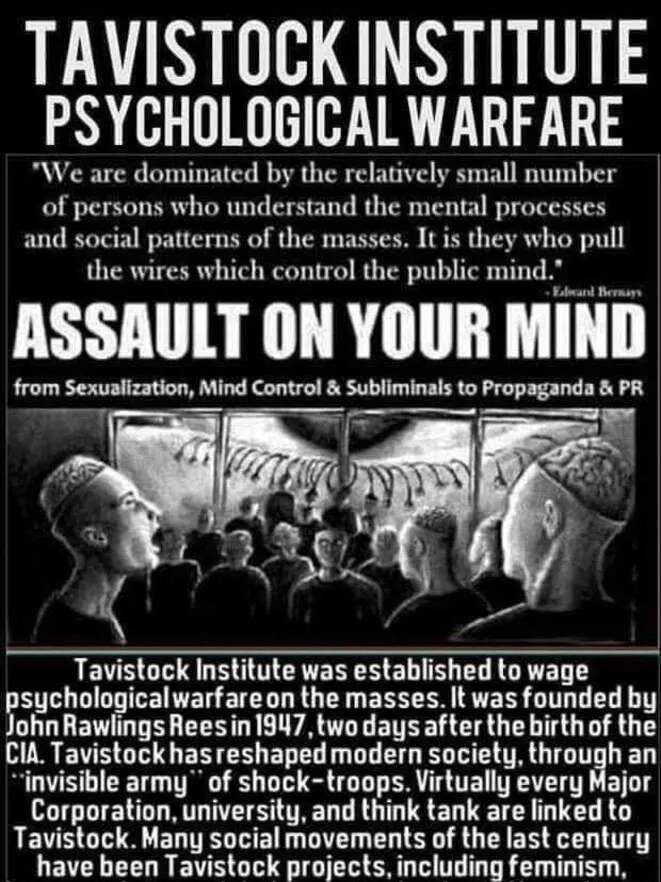
The article is the perfect example of the methods of ideological subversion being used on the public by the corporatocracy through the institutions.
The single quote above I take from the article, rather than quoting it further, is in order to not subject the reader to further mind poison. But rather instead, to offer an antedote.
How does it work? Why are they doing this?
While the excellent article below is a good means of demonstration, it’s first important to notice the labels themselves are meant to be flexible while still garnering a knee-jerk reaction: Communism, Capitalism, two opposing worldviews, that’s the framing.
Except it’s fake, a false dichotomy. These are economic views posing as worldviews for political purposes.
Often political purposes and religious ones overlap, which is why I avoid religion as well as politics when I’m trying to think logically!
The above quote works a similar frame: Science must know what food IS so that agriculture will no longer destroy the planet.
Except the only reason argriculture is destroying the planet is because it was taken over by BigAg MANY decades ago. Before I was born, actually, and I’m getting up there.
They fail to mention this piece of the puzzle, no surprise there. Many societies have thrived and still thrive on non-industrial agriculture to survive. Industry has ruined agriculture in this country, and many others.
Our brainwashing that it is our job to feed and police the world is the actual problem causing the devastion. The industrial-military global order is the problem causing the devastion.
95% of average folks are just pawns in this game.
Leave the terms ‘communism’ and ‘capitalism’ to the side for a moment and consider this:
“What Marx and Engels pioneered wasn’t specifically a political revolution — it was the rewriting of the moral code itself. The Manifesto operates as a systematic inversion of the fundamental value and structures that underpin social organisation. Every principle that helped stabilise bourgeois society — property rights, family inheritance, religious authority, national sovereignty — was methodically reframed through inversion; consciousness programming designed to make the existing moral operating system feel not just wrong, but obsolete.
Programming Permissible Thought Control the language and you control the range of permissible thought. The Communist Manifesto introduced this tactic with rhetorical inversions; ESG and global ethics continue it by redefining terms like ‘freedom’, ‘equity’, and ‘justice’ so that dissent itself becomes linguistically unspeakable. When ‘inclusive’ becomes the only acceptable alternative to ‘extractive’, when ‘sustainable’ becomes synonymous with ‘moral’, and when ‘science-based’ becomes code for ‘unchallengeable’, we’re witnessing linguistic capture similar to that Marx pioneered.
The genius lies not just in changing what words mean, but in making certain combinations of words feel impossible. Try arguing against ‘inclusive prosperity’, ‘women’s rights’, or ‘science-based sustainability targets’ without sounding backwards. The linguistic terrain has been so thoroughly mapped that opposition requires either accepting the loaded framework — or appearing to reject progress itself. It’s a steep uphill struggle, almost guaranteed to waste enormous amounts of time — even though these terms typically function to insert ideological blind spots ripe for later exploitation by full intent.”
Like the quote says–to solve the problem, we must know what food is. Imagine, we don’t even know what food is! We must have science explain food to us in order to not destroy the planet by eating.
esc continues . . .
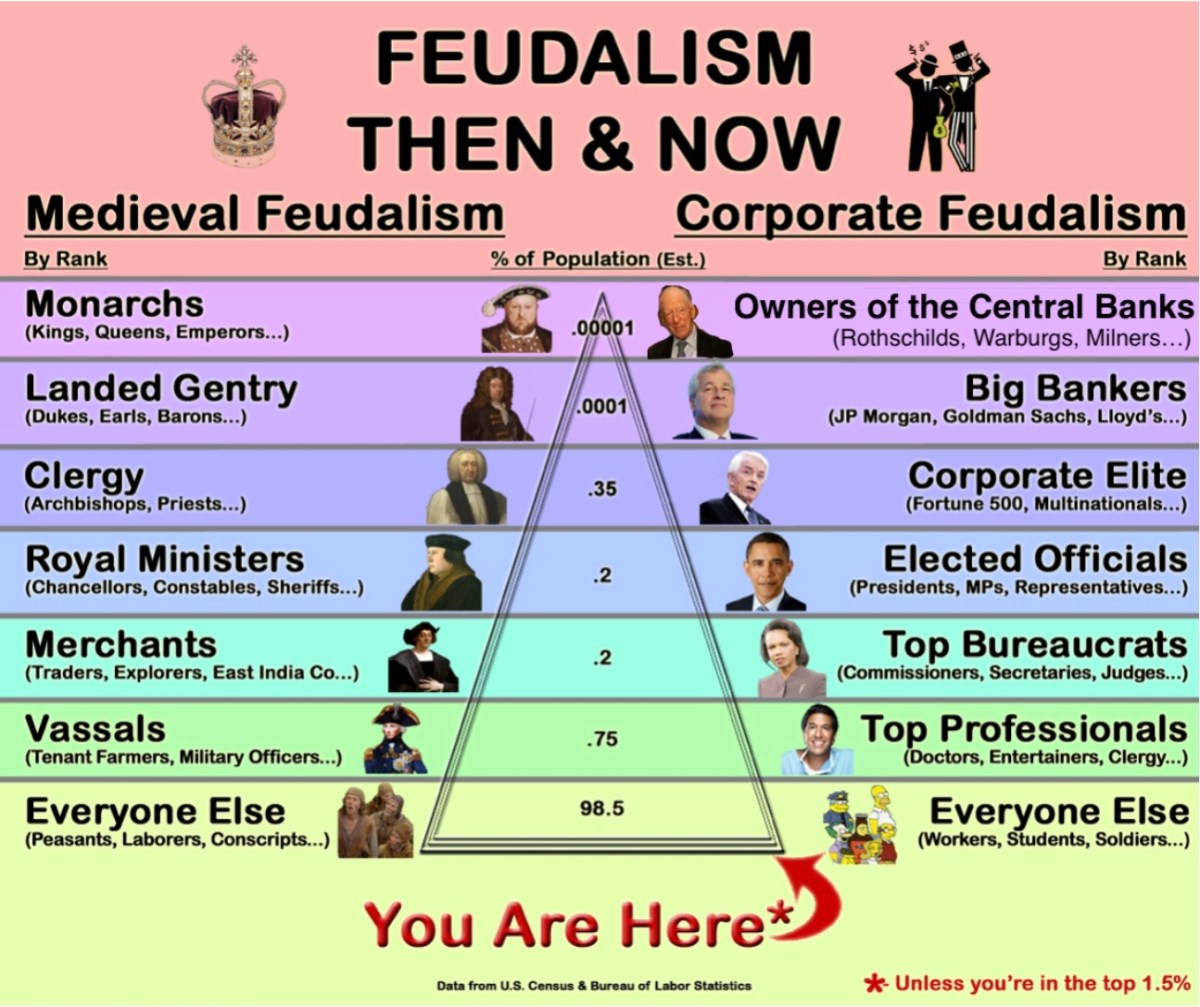
“Inclusive Capitalism as Semantic Cover for Stakeholder Feudalism ‘Inclusive capitalism’ — promoted by coalitions involving the Vatican, the World Economic Forum, and major central banks — promises to ‘make capitalism work for everyone’. The manipulative techniques are identical to the Manifesto: binary framing where ‘inclusive capitalism’ opposes ‘neoliberal greed’ with no middle ground allowed; euphemistic coercion where investors are ‘guided’ to ESG portfolios and non-compliance means exclusion from financial markets; sacred authority through alignment with religious institutions that sanctifies technocratic control; and guilt transfer where individual consumers — not megacorporations, nor central banks — bear responsibility for systemic problems. You get to keep the word ‘capitalism’… while losing actual market freedom. It’s semantic cover for stakeholder feudalism — the Financial Stability Board and the BIS become moral arbiters of capital allocation, yet you never voted for them.”
This ‘guy’ knows what he’s talking about, read him, not Forbes!
“Recognition and Resistance What we witness is the emergence of something historically unprecedented: soft totalitarianism with global reach, implemented not through revolutionary violence but through institutional coordination and moral manipulation. The most disturbing aspect is how voluntary compliance is manufactured through psychological techniques that make resistance feel not just futile but morally reprehensible. Unlike crude twentieth-century totalitarianism, this system preserves the language of freedom while altering its substance, claims scientific and moral authority rather than raw power, operates through persuasion and micro-incentives rather than force, and presents itself as evolution rather than revolution. Koestler⁶² warned that disembodied rational systems could turn pathological when disconnected from human meaning — today’s ESG frameworks automate that disconnection at global scale.”
I can relate, I fail them all the time. But that’s not this post.
Here we have two excellent essays that make me think, if this is the new level of social programming, I finally might abide!
Can they teach this in the schools? I might even go back to teaching! (Ok, let’s not exaggerate. We prefer our wee homestead life, even through the weather disasters, great many failures and physical pain.)
I’ve selected my favorite bits, there’s much more to appreciate on each of these Substacks, just follow the links.
The Coward’s Bargain: How We Taught a Generation To Live In Fear by Josh Stylman
“This wasn’t an accident or an overreaction. This was a stress test of how quickly a free society could be transformed into something unrecognizable, and we failed spectacularly. Anyone who actually followed the science understood the only pandemic was one of cowardice. Worse, most people didn’t even notice we were being tested. They thought they were just “following the science”—never mind that the data kept changing to match the politics, or that questioning anything had somehow become heretical. The beautiful thing about this system is that it’s self-sustaining. Once you’ve participated in the mob mentality, once you’ve policed your neighbors and canceled your friends and stayed silent when you should have spoken up, you become invested in maintaining the fiction that you were right all along. Admitting you were wrong isn’t just embarrassing—it’s an admission that you participated in something monstrous. So instead, you double down. You disappear when confronted with inconvenient facts.
Raising Prisoners And this brings us back to the children. They’re watching all of this. But more than that—they’re growing up inside this surveillance infrastructure from birth. The Stasi’s victims at least had some years of normal psychological development before the surveillance state kicked in. These kids never get that. They’re born into a world where every thought might be public, every mistake permanent, every unpopular opinion potentially life-destroying. The psychological impact is devastating. Research shows that children who grow up under constant surveillance—even well-meaning parental surveillance—show higher rates of anxiety, depression, and what psychologists call “learned helplessness.” They never develop internal locus of control because they never get to make real choices with real consequences. But this goes far deeper than helicopter parenting. The ability to hold unpopular opinions, to think through problems independently, to risk being wrong—these aren’t just nice-to-haves. They’re core to psychological maturity. When you eliminate those possibilities, you don’t just get more compliant people; you get people who literally can’t think for themselves anymore. They outsource their judgment to the crowd because they never developed their own.”
The COVID Conformity Test This is how totalitarian thinking takes root—not through jackbooted thugs, but through a million small acts of self-censorship. When a venture capitalist whispers his concerns about immigration policy like he’s confessing to a thought crime. When successful professionals agree with dissenting views privately but would never defend them publicly. When speaking obvious truths becomes an act of courage rather than basic citizenship. Orwell understood this perfectly. In 1984, the Party’s greatest achievement wasn’t forcing people to say things they didn’t believe—it was making them afraid to believe things they weren’t supposed to say. “The Party seeks power entirely for its own sake,” O’Brien explains to Winston. “We are not interested in the good of others; we are interested solely in power.” But the real genius was making citizens complicit in their own oppression, turning everyone into both prisoner and guard.”
Neutralization: How Bureaucracies Silence Dissent Through Legal Fuses and Narrative Control by Luc Lelievre
Institutional power rarely reveals its full mechanics in one stroke. Instead, it unfolds in sequences—calculated, procedural, and often cloaked in the language of neutrality. Neutralization, the fourth installment in Luc Lelièvre’s Unbekoming series, dissects this final movement in the choreography of bureaucratic suppression. Building on prior analyses—Heresy, which outlined how dissent is ideologically framed as deviant; Suppression, which explored institutional mechanisms of exclusion; and Omission, which detailed the structural design behind silencing—this essay turns its attention to the silent sophistication of neutralization: the use of legal fuses, narrative gatekeepers, and administrative dead-ends to reroute dissent and erase its public trace.
7. Administrative Gaslighting and the “Fuse Effect”: When Bureaucracy Becomes Theatre
Modern bureaucracies rarely operate through overt acts of repression. Instead, their preferred mode of silencing is procedural — a form of administrative gaslighting that cloaks itself in language of due process while subtly eroding the dissident’s credibility. This technique is not accidental; it is designed.
One illustrative method is what could be termed the “fuse effect”: low-visibility actors within the institutional machinery are positioned to execute decisions that carry legal or symbolic consequences, thus absorbing the potential fallout. These operatives — often legal clerks, junior lawyers, or regional representatives — function as buffers. When the dissident challenges a structural injustice, it is these intermediaries who respond, allowing higher-level decision-makers to remain untouched by controversy. The system insulates itself from reputational risk while continuing its work of marginalization.
But when these “fuses” begin to fail — either through overreach or exposure — institutions escalate. They deploy higher-profile agents, such as communications directors or legal executives, who are tasked with closing the file definitively. In my own case, the surprising intervention of a top-level official from a legal commission — someone with no adjudicative mandate — reveals just how far the institution was willing to go to protect the official narrative. Rather than engage the constitutional merits of my claim, it chose to obscure them through authority signaling and symbolic closure.
This bureaucratic theatre plays out under the guise of objectivity. But for those of us who have documented each step, the pattern is unmistakable: delegitimize the voice, dilute the argument, displace responsibility. These are not failures of oversight; they are evidence of design.
The question, then, is no longer whether the dissident is “right” or “wrong” by institutional standards. It is whether he can endure — and expose — the machinery that seeks to erase him. In that sense, the public record becomes not only a site of resistance, but a form of protection.
A flock, it is not. There will never be a revolution in America.
More like, when I say jump . . .
Kinda like Bugs Bunny getting his feet shot at while Yosemite Sam demands he ‘Dance!’. . .
It’s a relationship.
Americans will never revolt. They will never rebel. I’m not talking our military here, I’m talking the people, the masses, who will gladly vote for war if they are commanded by their team, but who will never en masse lift a finger in inconvenience to support it. A placard, perhaps. But not a pinky finger otherwise.
Why? This man nails it and it’s so spot on I fear reposting it. Truth bombs this huge are usually dropped by assets. Even listening can get you on a list, I’m sure. Because, America is so damn free.
But this murdering convert to Islam is correct nonetheless. Our guns can’t save us from, or in, this battle. We have already lost. We were conquered from within long before this current administration. We do not have the heart to rebel because rebellion and revolution require artists, the kind of artists, and warriors, who cannot be bought. We don’t have that, we haven’t had that for a long time now. We have conformity, collusion, corruption and therefore we’ve got what we deserve. Politics is downstream from culture.
Start at the 1:15 mark, it’s only about 10 minutes, and it’s brutal. Not for the feight of heart, I’m afraid, but absolutely the truth as I see it. Listen and weep, or not.
In our last post we took a look at Laurel Blair Salton Clark and learned that human bodies and space shuttles disintegrate at different laws of physics than CDs, which are now nearly lost to time, but apparently not to space.
Moving on to the hero of the story, we have Rich Husband, Commander of the mission. He had an illustrious career as a fighter pilot and astronaut and is accredited with a long list of honors and awards and even has a statue.
But what some may not know is he also was an actor. He played himself in a series called Our Jewish Roots in 2003. His wife, Evelyn, has also played herself in numerous programs. Unfortunately as miraculous as our cyber world is, I can’t find a way to view this episode; it doesn’t even seem to be available for purchase.
Rick Husband – IMDb
His also the subject of an episode about the failed Columbia mission, played by actor Brian David, born September 11, 1965 in Kansas City MO and appearing in 3 films in 2004, 2005, 2006 one quite popular. But he’s not in any recent films. Quite a handsome fellow, I wonder what happened to him.