It’s hot. It’s dry. It’s miserable. Every day we enter the garden and the orchard knowing we’ll find something else dead.
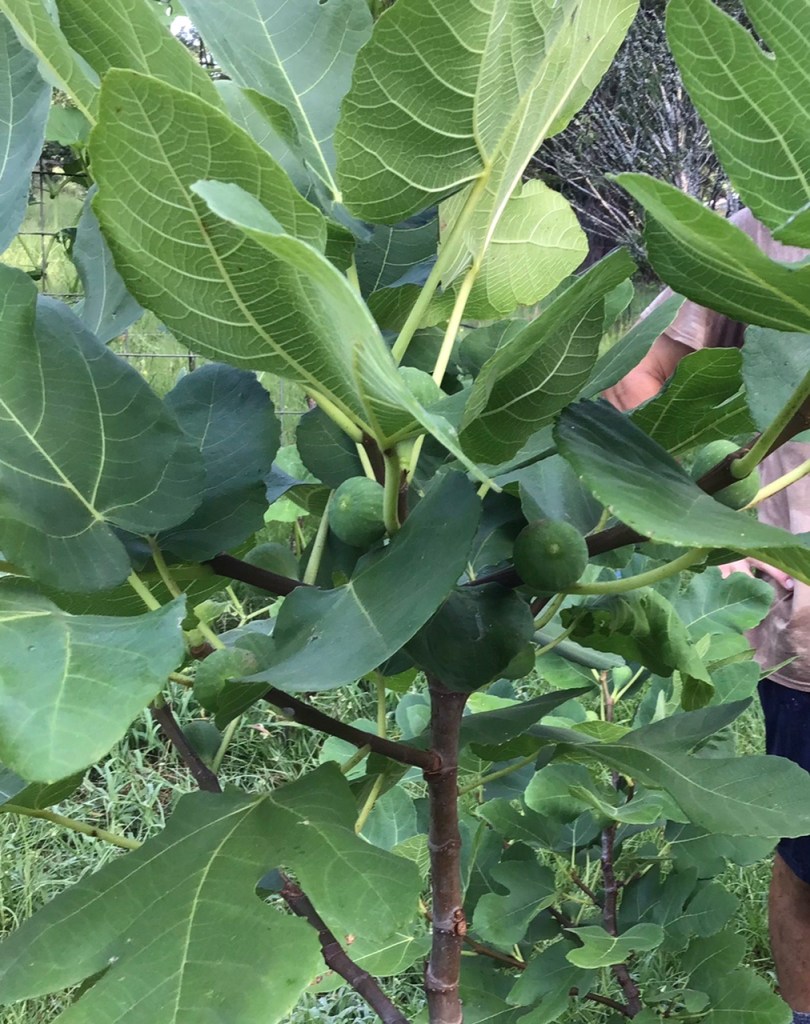
First it was the tomatoes, then the salad cucumbers and cantaloupe, now it looks like even the tomatillos are giving up before ever producing well. The squashes are all struggling and the peppers and figs are mostly stalled.
I wish that meant it was time to rest on our laurels and have some long, slow and sweet indoor days of movie marathons and Kombucha cocktails.
Cantaloupes out, Watermelons in. Still broccoli and carrots in this heat? Now that’s a big mystery.
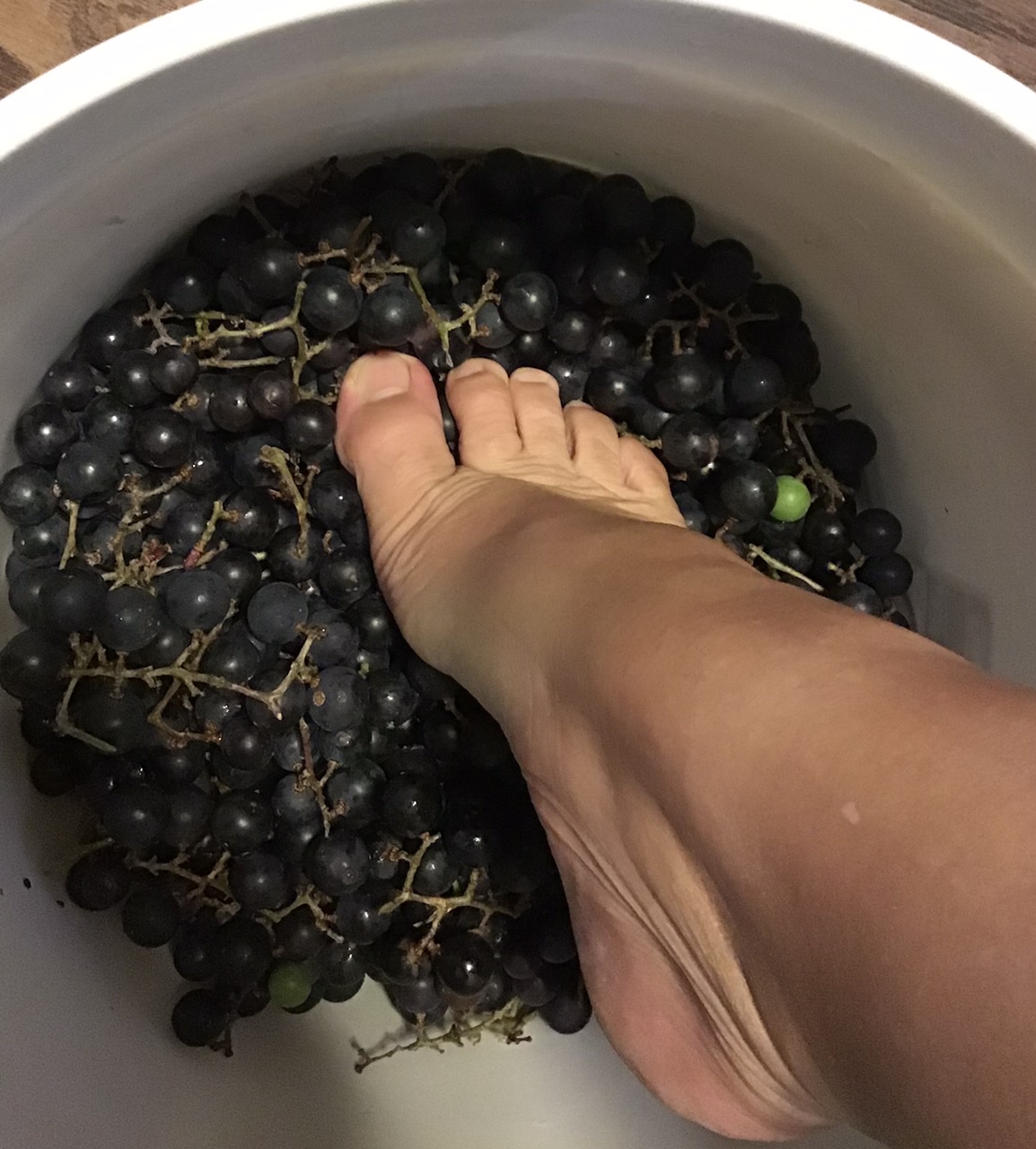
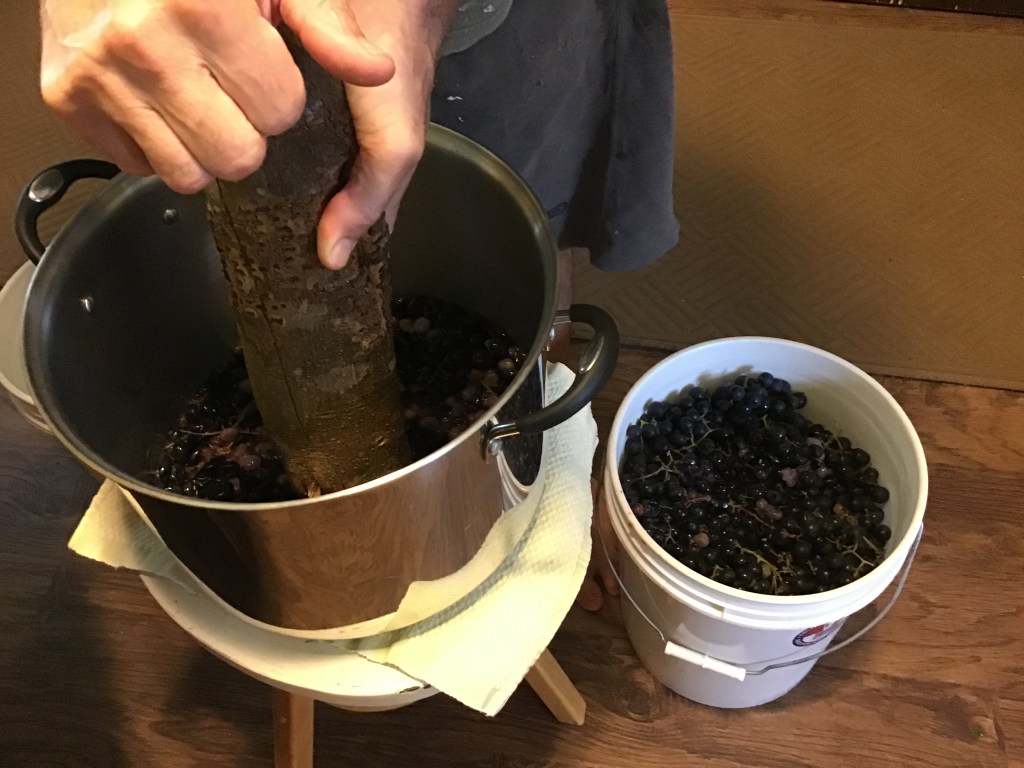
But no such luck, because it’s time for making wine!
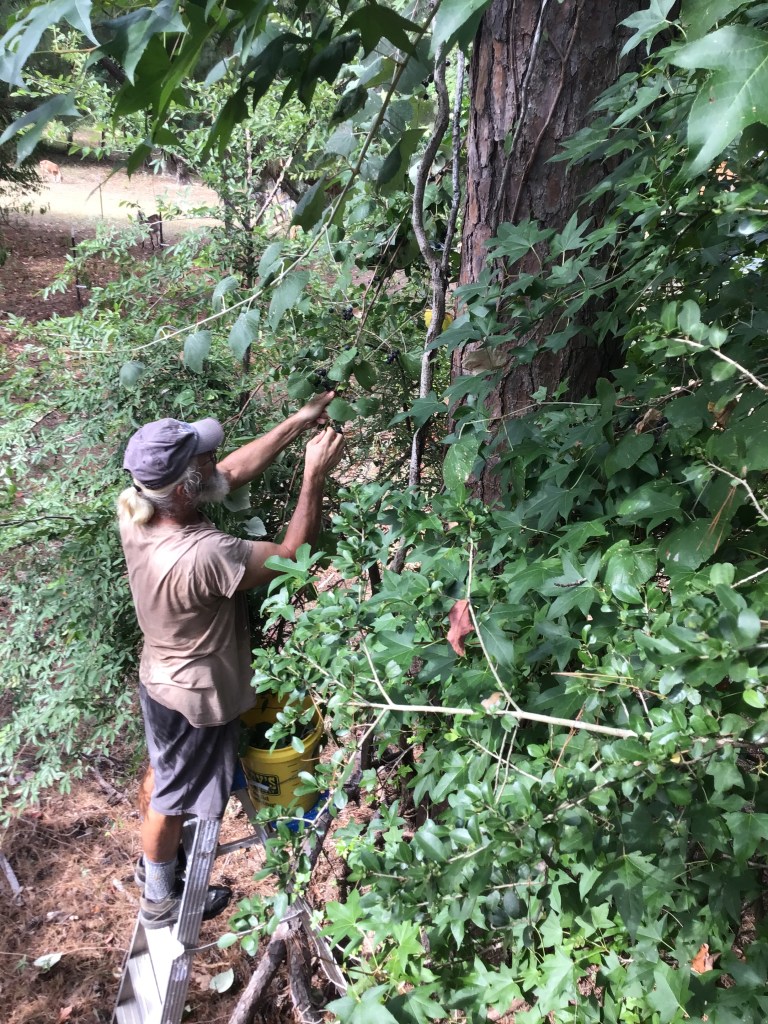
Our painstakingly cultivated Muscadine grapes are not doing well, we expect a minimal harvest, at best.
But, the native Mustang grapes are a lot tougher, apparently.
So, fortunately! We’re still able to make some wine and jam.
Did I mention it’s really F’ing HOT? And dry?
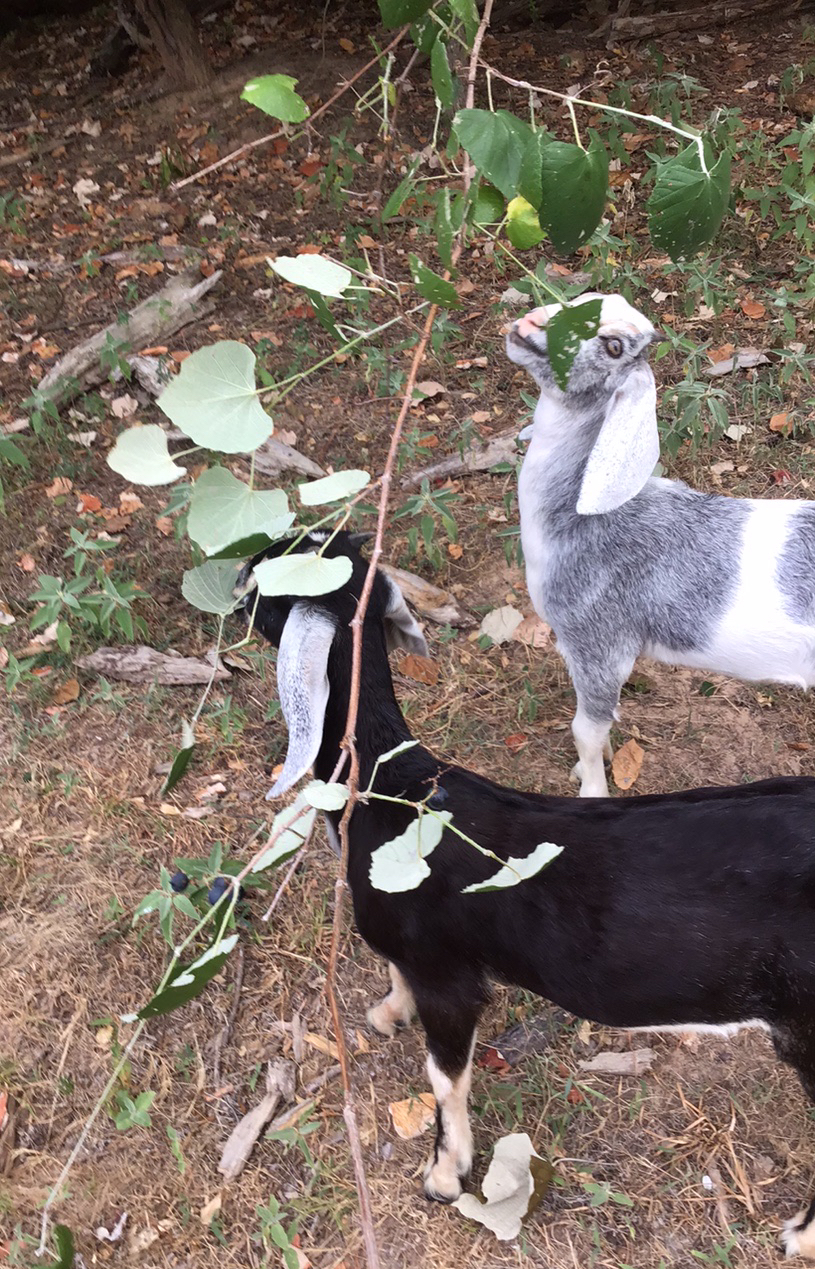
I’d whine a lot more, except I keep going back to the miracle of all the critters and plants who can take it so much better than we can. Though, I know they are struggling too, and are just less whiney than I am.
And just for those keeping track, the ‘chemtrails’ have not abated.
Drama in the canning community? This sounds serious. Especially now that it’s coming home to roost.
Or is that roast?
Yes, now that Hubby has enthusiastically taken up canning, there’s trouble brewing in Kensho paradise.
It’s not only that he dominates our small kitchen for hours on end, heats up the house with his fancy pressure canner, or is filling every conceivable space with his jars. It’s not even that’s he’s far better at it than I ever was.
No, I’m generous that way, perfectly willing to share in the glory.
I am, however, growing weary of his methodology. His modern, high-tech, USDA, strictly by the book, precision style is beginning to conflict with my laissez-faire, look how the old timers did it, just wing it attitude.
I suggested we try the ‘Open Kettle Method’, which for the record is taken directly from my 1933 Kerr Home Canning Guide.
He quips, “No way, it’s not approved.”
Huh?
And I’ve just learned we’re not alone in this clash. There’s some fiery online debate—wouldn’t you know it—as in politics, so in the kitchen.
They call themselves the ‘Rebel Canners’ and that’s got me quite intrigued. Those rascals are daring to question The Official Science! They must all have a death wish. Clearly they have they never heard of botulism.
It was no sooner than Hubby and I had a tiff over water bath timing that a YouTube video hit the top of my feeds.
How did they know?
A rebel canner, in the flesh.
She doesn’t look nearly as crazy as I thought she would. She brings up the Amish, who never pressure can.
Never! Not even for meat.
It’s positively scandalous.
Hubby tries to block out the insanity coming from the speakers. I tell him I want to try it. Meat, my dear, imagine, meat water bath canned!
Let’s go for it!
He looks at me with the same look as when I try a new foraged mushroom without proper identification. And I know just what that look means.
I can repeat the sentence for him, I’ve heard it so often.
“You go ahead, sweetie, someone has to live to tell the story.”
Just a wee hodgepodge of happy snaps and some light commentary for today.
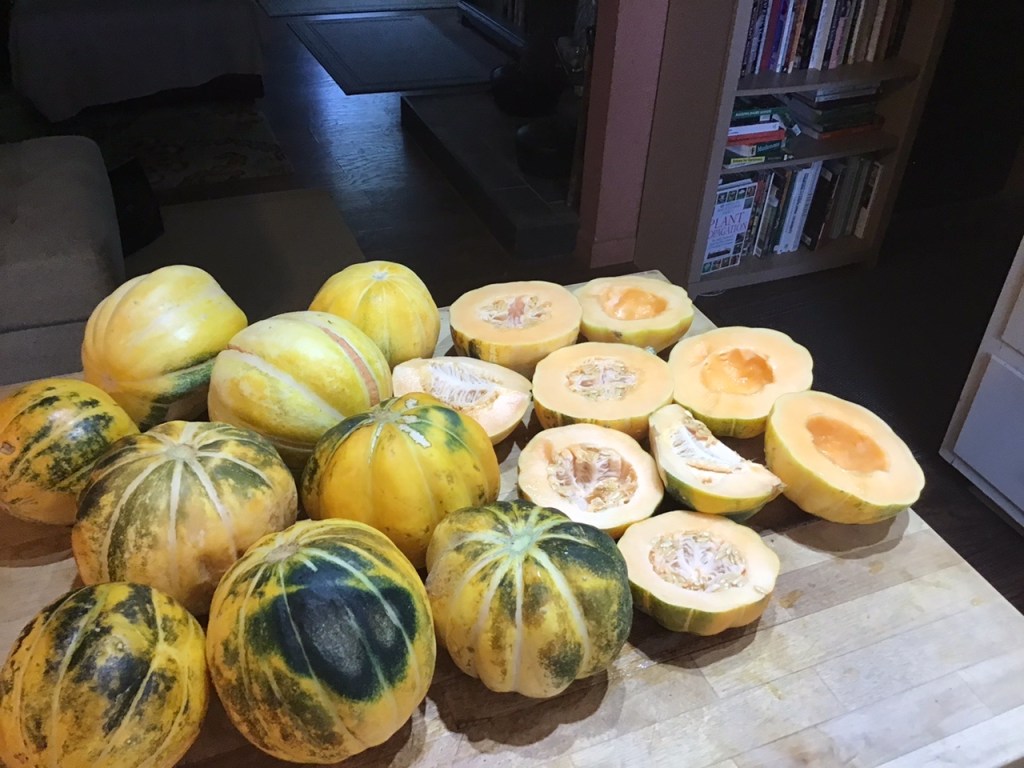
Our preserving efforts have been at fever pitch with bushels of cucumbers and melons coming in. The Noirs des Carmes cantaloupe that was my main prize experiment for this summer has been a success, for the most part. We’ve gotten loads of melons, way too many to count, and the majority of them have been good.
But many of them have ‘exploded’— and that’s not just split, but within a day, before even being fully ripe, they’ve blown open completely. Some are tasteless even though fully ripe. Some are softening while still small and unripe.
The pigs have been the great beneficiaries of these rejects. I do understand why this melon is not commercially available and is not a favorite at farmer’s markets either, even though when they’re good, they’re delicious. Though some of these issues could certainly be the extreme heat and drought, they do not last long once they are ripe. They must ripen on the vine, and once ripe they last only a few days before rotting.
For us they’ve been prolific and very tasty even under stressful conditions, so they will be a keeper. Needless to say, we’ve been eating A LOT of melon! Melon for breakfast, snacks, aqua fresca, desserts, juice, syrup, jam and smoothies.
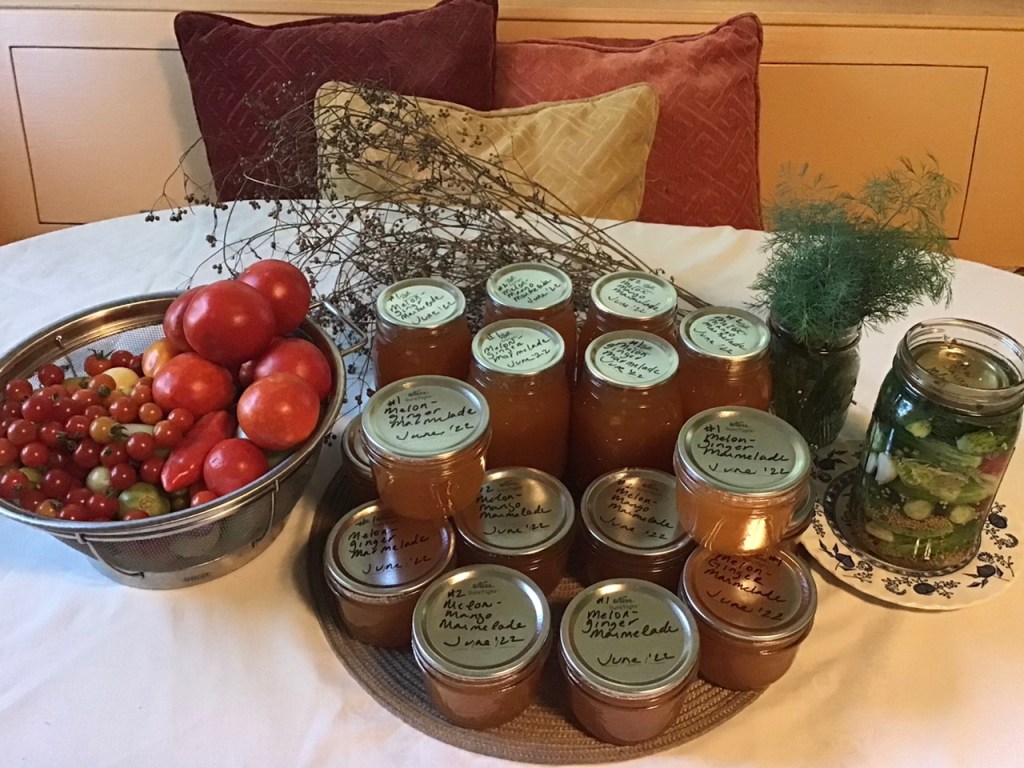
A small fraction of our harvest, preparing to make preserves.Our marmalade efforts were disappointing. Three different recipes, two with pectin, and none of them set! 😩 They are still delicious and will go to good use in desserts, kombucha and cocktails, but still, it’s not what we were going for. And, now I won’t give any of them as gifts, which was the plan. And, it’s annoying not knowing what happened. Old pectin, maybe? Anyway, I’m sure I’ll forget about all those ’ands’ this winter when the fresh melons are long gone and I’m pouring our yummy ginger-melon syrup over french toast! 😁
We’re trying to take advantage of the heat by trying out a recent gift, a sun oven!
Our place is so small and we love cooking, but it’s hardly economical heating up the whole house every afternoon, when it’s blazing hot outside, and while inside the air conditioning is blasting away.
Our first attempt, baking a spaghetti squash in our new sun oven.
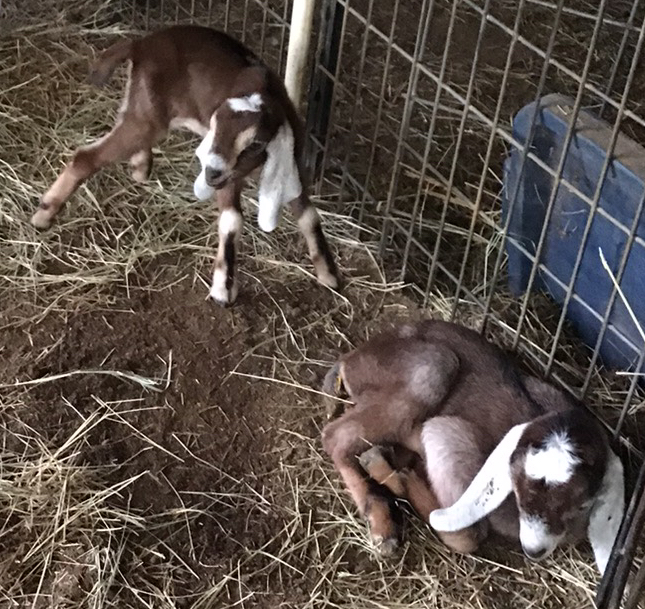
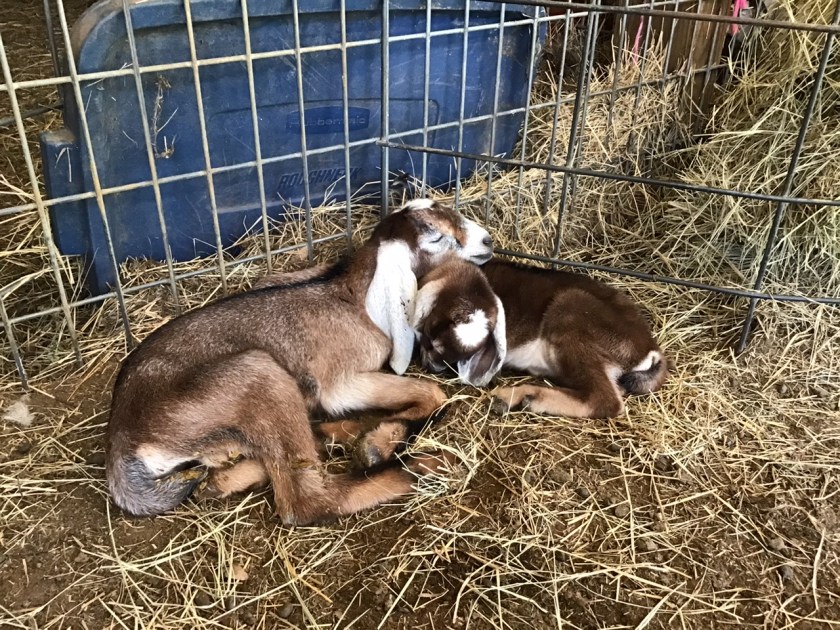
The kids are growing so fast! I’m slowly, gently trying to ween them. In this heat I don’t dare take too much milk for us, just enough for our morning coffee. But the daily training is still essential, for us all.
Around 5:00 am I separate mamas and kids for about 5 hours. The kids are eating grains and forage already, but they don’t like to be long off those teets, that’s for sure! By 9:00 they are wailing and it’s hard to listen to them while we’re working away outside, but it must be tolerated.
I train them on the milk stand and bring them a wheelbarrow full of sweet potato vines, which they devour.
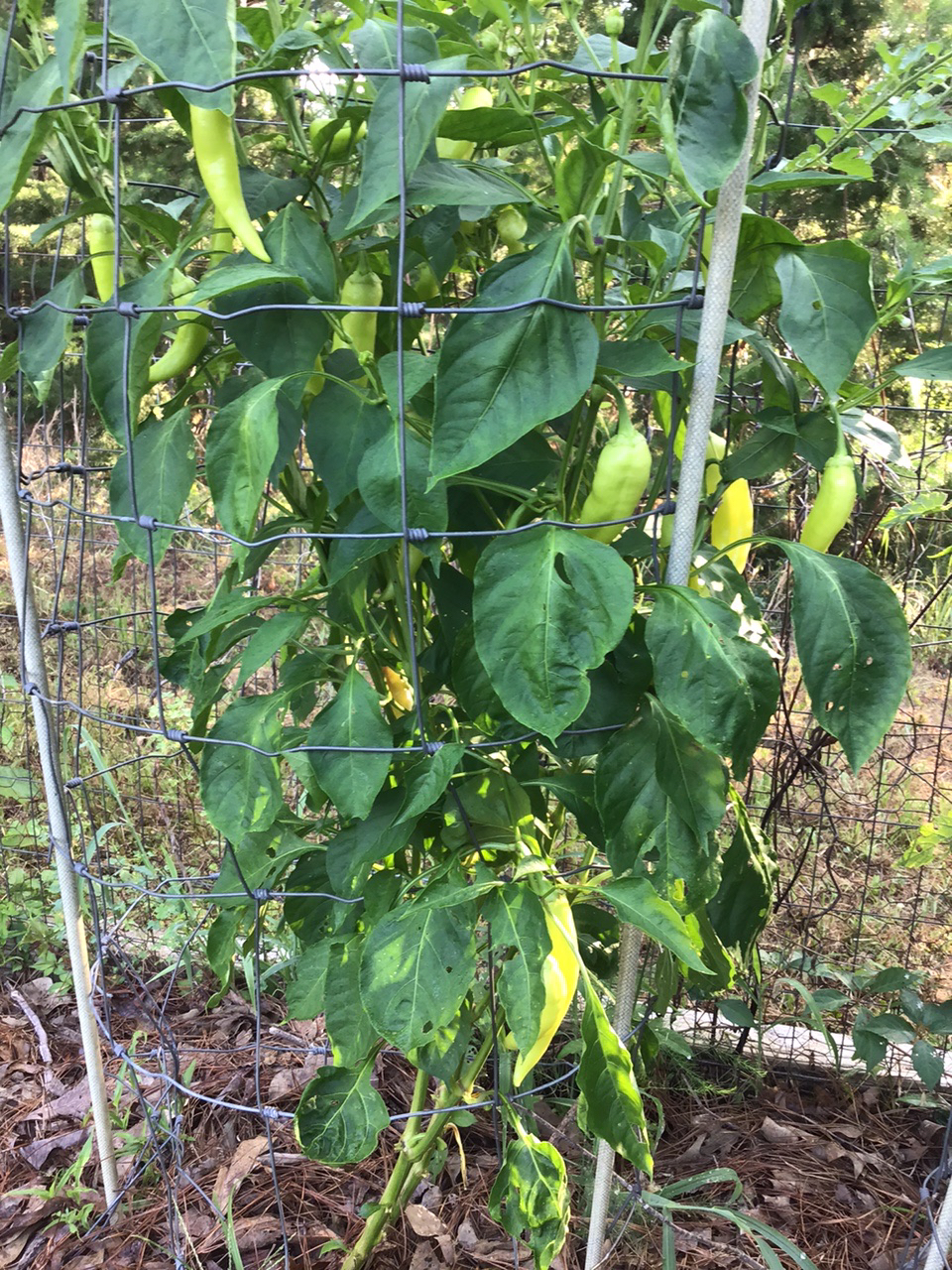
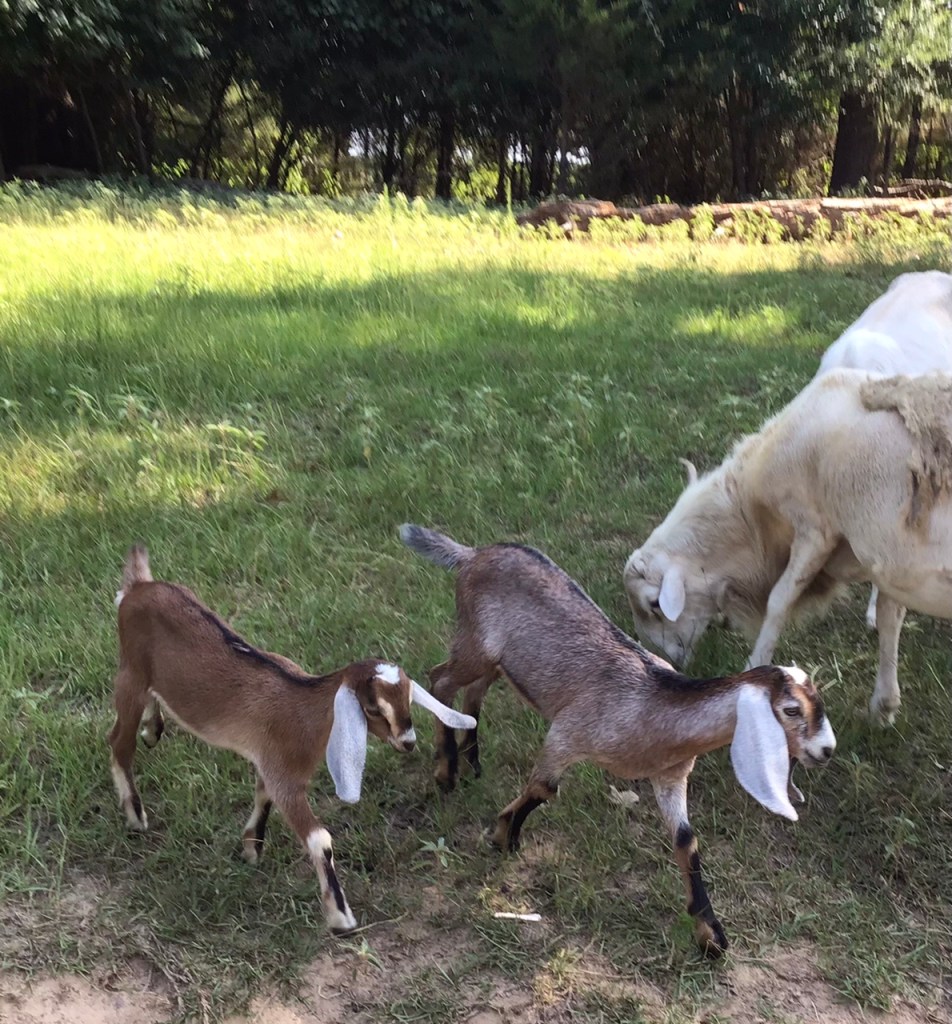
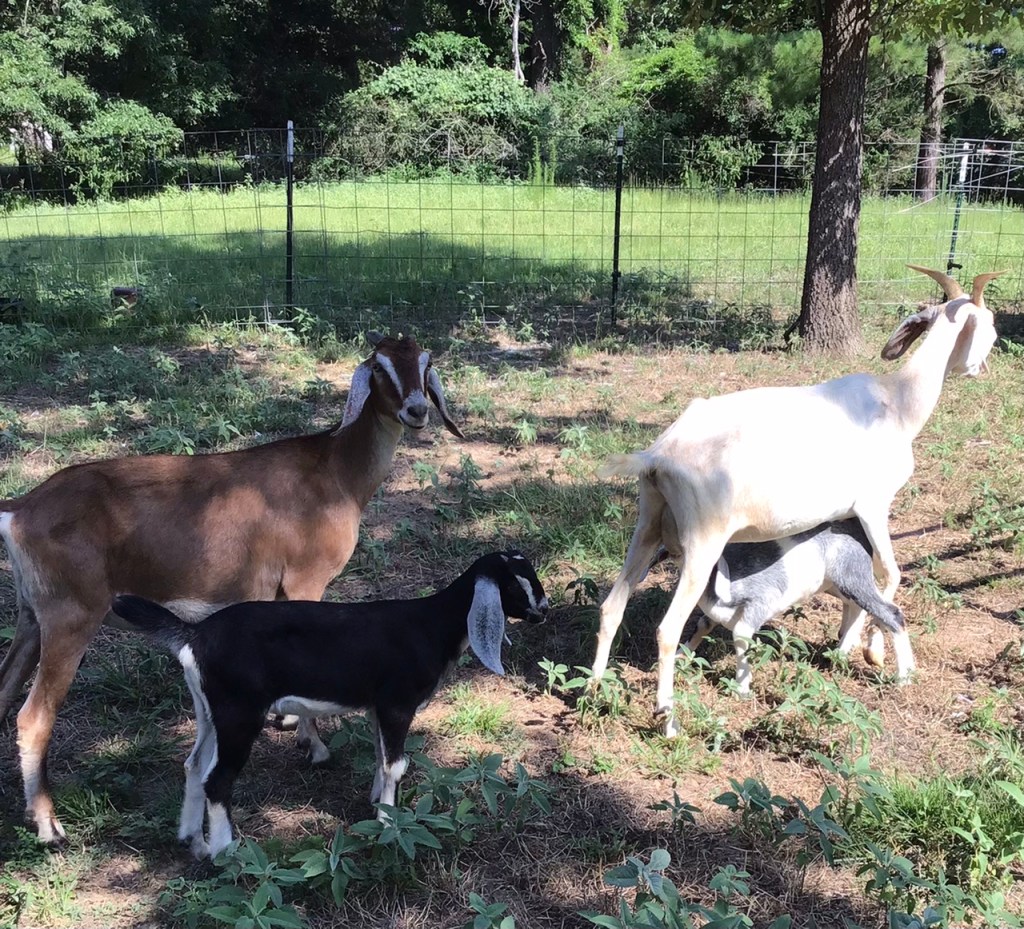
Lots of banana peppers and figs, but they seem to have stalled in their growing or ripening.Hercules and Athena in left photo; In right photo is Chestnut and Walnut on the left and Summer with Blue Bonnet nursing on her to the right. .
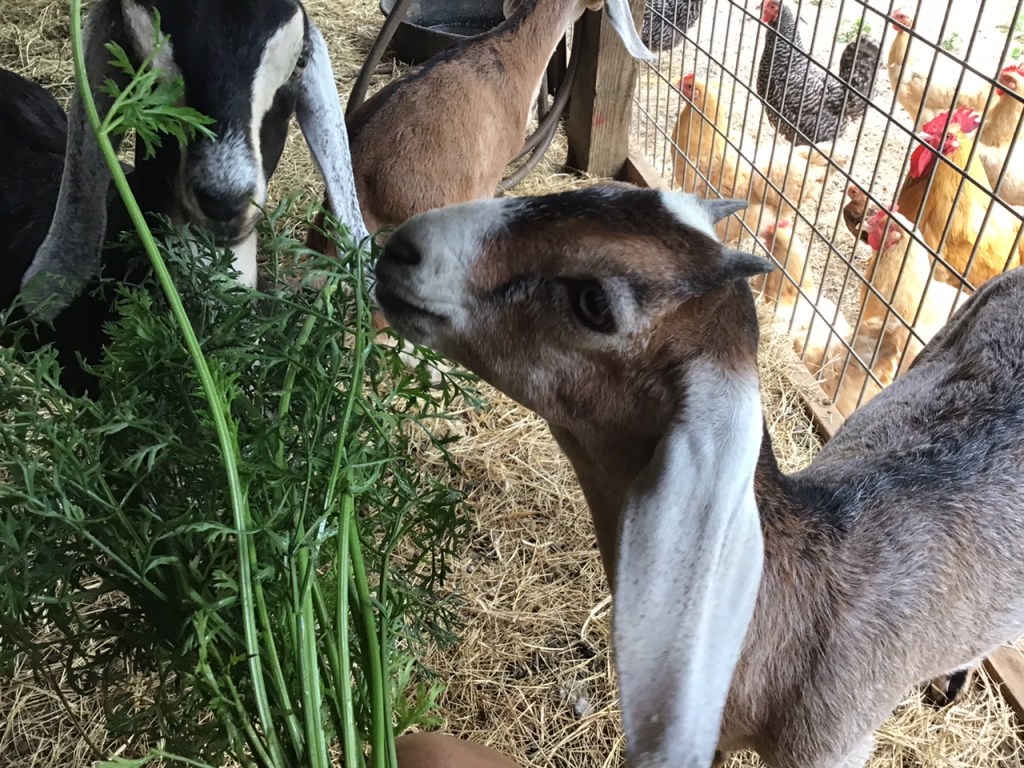
A few baffling successes have been carrots and broccoli that are still producing in this heat! This is a first for us. I guess I got the timing and variety just right, for once. They are both under shade cloth and not totally productive or tasty, but good enough for us and a very nice surprise.
I’ve started some seed trays of tomatoes and lettuce indoors for the fall garden. Fingers crossed, I’ve never had successful fall tomatoes so far, but you never know, considering those carrots and broccoli!
These really did come off the same plant, same age, Hubby just happened to harvest some before I got a side-by-side photo. Next time.
I have the big seed-saving goals this year, but there is a learning curve for sure.
Because of space requirements, and that learning curve that seems to be getting steeper by the month, I decided to start with just a few crops. I already do most of the herbs, and the other easy stuff, like okra and sunflowers. I’ve ventured slightly into peppers and tomatoes, with negligable results.
Cucumbers, melons and squash are all in the ‘challenging’ category. I thought I planned correctly when I put the ones I want to seed-save at opposite ends of the garden, but then. . .
In my reference book, The Complete Guide to Saving Seeds by Robert & Cheryl Gough, it seems pretty hopeless. “Recommended isolation distance for varieties that can cross-pollinate is 1 1/2 to 2 miles; recommended isolation distance for other Cucurbita species is 1/4 mile.”
As in, Miles?! Oh my.
And furthermore, there’s another squash mystery. I’ve got zucchini right by Trombetta, as already mentioned. Yet the zucchini leaves, which look gorgeous, better than I’ve ever seen them, are flowering, and not producing. Yet the cucumbers and Trombetta are producing like crazy, and the Trombetta leaves are not really looking too good.
Zucchini in foreground looking happy, Trombetta at left, yellowing
Any gardener, myself included, would immediately claim a gorgeous zucchini plant flowering just fine, but not producing, is the result of poor pollination.
But, I know, that’s highly unlikely. First, I’ve seen bees on them. Second, the nearby Trombetta and cucumber, also bee-pollinated, are producing just fine.
So, what gives?
And furthermore, more, why does spellcheck capitalize Trombetta and not zucchini?
I ran out of attention span last post before I got to talking about cheese. Now that we have three mamas in milk I’ll be having a ball experimenting with new cheeses, which along with kombucha experimenting, is my favorite homesteady sort of thing to do.
Gardening and cooking being not far behind, to be sure!
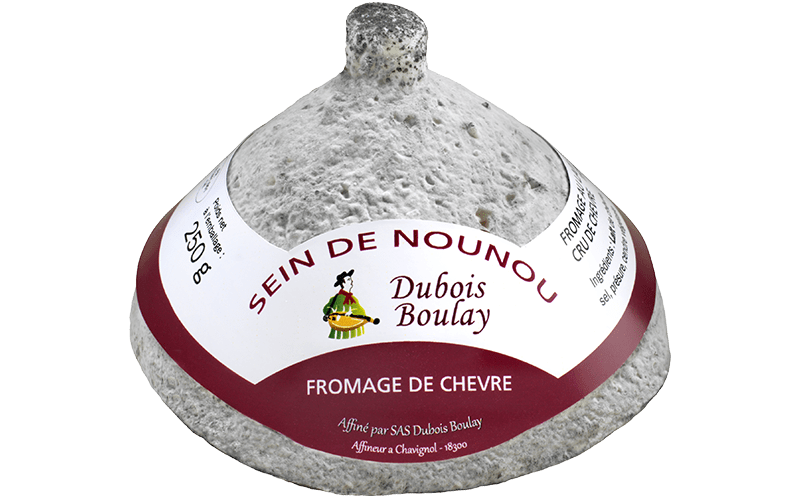
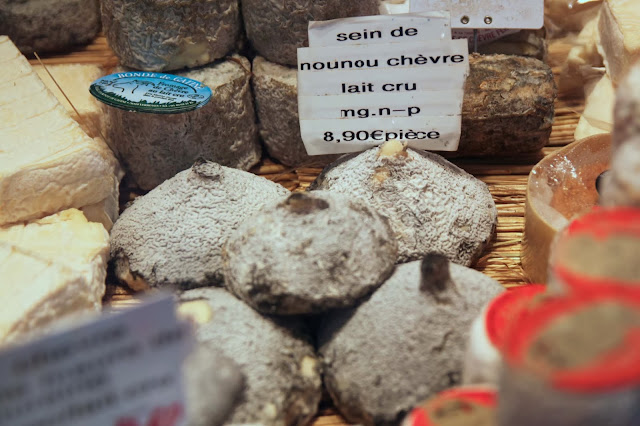
Aged chèvre (goat cheese) in the French tradition is made of the highest craft and care, even when they are whimsically-named, like Crottin (Little Turd) and Sein de NouNou (Wetnurse breast).
But here in the U.S., Land of the FreeTM, Velveeta is ‘safe’ for consumers and aged goat cheeses, ideal for homestead creation, are completely illegal.
Because they care so very much, right?
“Chèvre evolved in frugal farming households of the sort that continue to make it today. It is a cheese that’s very economical, in both time and ingredients; made on the family farm, where there are many chores to take care of and livestock to feed, a cheese that didn’t need much attention or many costly ingredients fit right in.”
That is in Central France and other locations where it’s not illegal to sell. These are cheeses that require few inputs and no regular purchases—you don’t need a cheese press, or any expensive cultures, or even rennet. Fig sap (or other coagulants like nettles) can easily be substituted for rennet as only a few drops are used to set a gallon of milk.
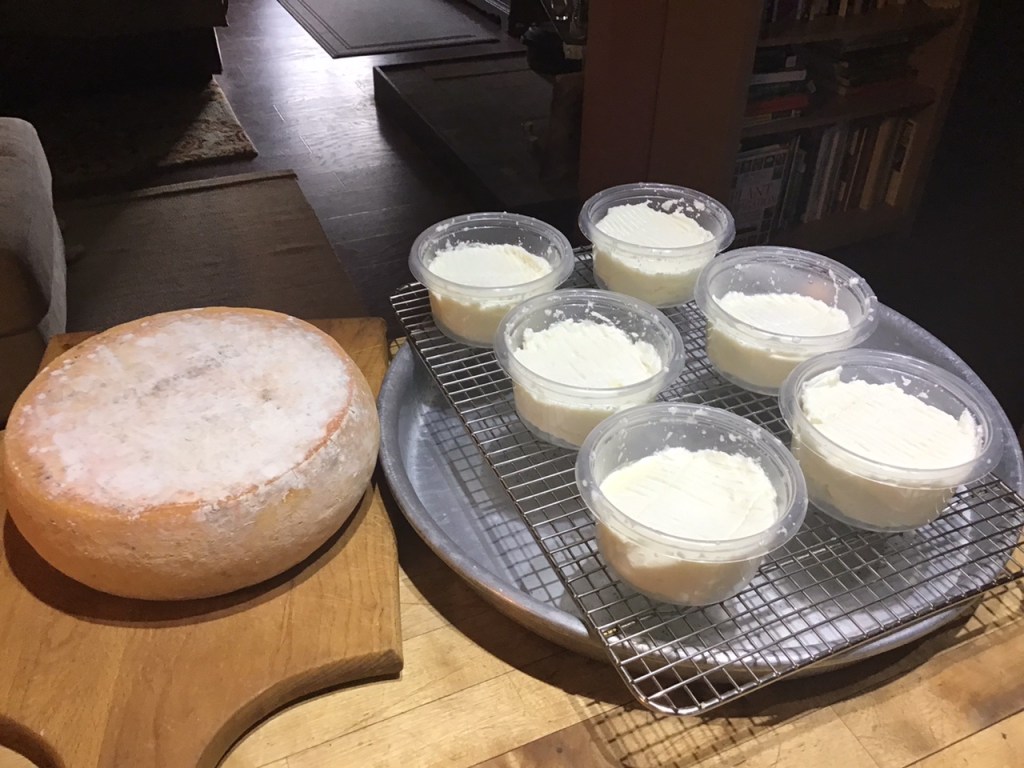
Straight from goat to curd is the best way to make chèvre, no refrigeration, no heating, at all. Pictured from left: 1. Straining the milk with fine mesh. 2. The soft curd, after sitting in the pot for two days, now draining in their forms, made from small tuperware poked with many holes. 3. After 24 hours of draining, sitting beside a homemade cheese ready to be cut: A signature Kensho cheese experiment.
These are also cheeses suitable to make in warm climates, similar to the more well-known goat cheeses like Feta or a fresh goat cheese. What makes the aged chèvre so unique is that it can only be made with raw milk. You may find hard raw milk cheeses in your grocery store or farmer’s market, like Gouda or Cheddar, these are pressed cheeses aged over two months, which are legal to sell with all the proper licensing. (I have NO interest in that!)
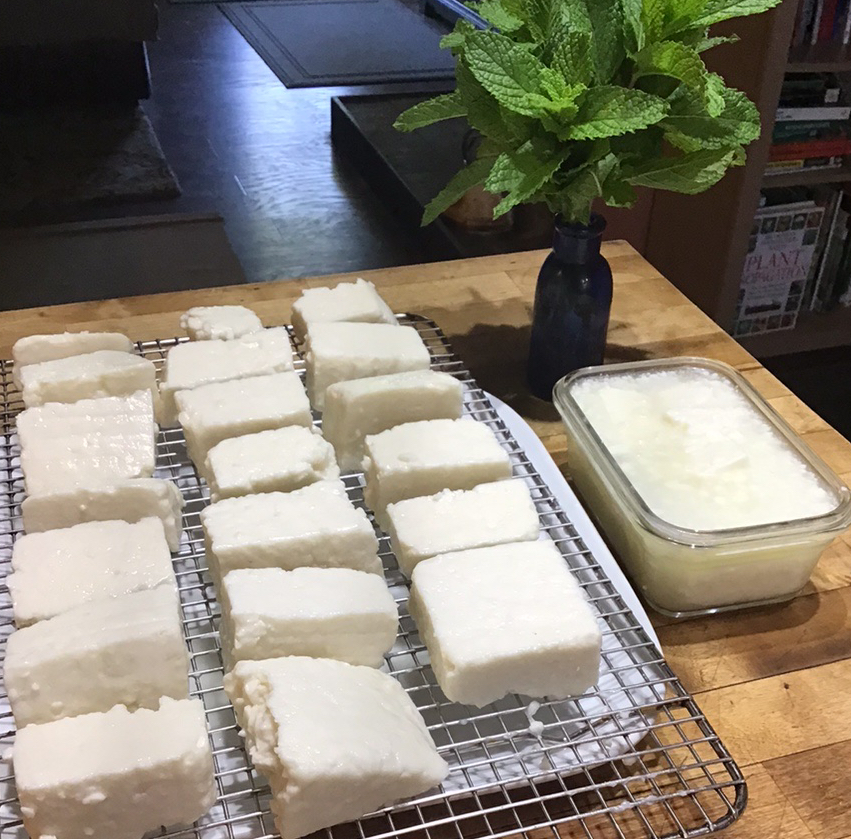
Feta, aged in salted whey for 2 weeks, some still soaking for a sharper flavor and others now drying for packaging in Foodsaver bags for longer storage.
These illegal aged goat cheeses sit at room temperature for about four days.
Imagine the horror the germophobes have with that!
You most certainly can’t do that with pasteurized milk. These cheeses were invented before pasteurization and before refrigeration and aged for a month or two in caves.
Mine will be aged in Tupperware bins inside a small beverage fridge I use for aging cheeses. (I would prefer not to use plastics at all, but they work just fine and I don’t have other options at the moment.).
I use natural cultures, not store-bought or freeze-dried, developed from previous cheeses, and stored in the freezer. Once the cheeses develop their fungal coat after a couple of weeks, they will be wrapped and aged for about a month.
Traditionally wrapping for these cheeses include leaves, like grape and fig, and even hornet’s nests. A few will also be coated with ash, instead of wrapping, like the traditional Sein de NouNou.
It is positively amazing how differently the cheeses will taste based on just a few variables in the process!
“Relatively unknown in North America, this class of cheeses includes some of France’s most famous fromages: ash-coated and pyramid-shaped Valencay; Sainte Maure—pierced with a blade of straw (the industrial version of Sainte Maure features plastic straws!); and small, moldy Crottin are all aged chèvre cheeses. Perhaps the only well-known North American aged chèvre is Humboldt Fog, a creamy, ash-ripened goats’ milk cheese from Humboldt County, California.”
(I’ve not looked into why or how the Humboldt Fog is legal to mass produce and sell. I plan to dig into that, but my initial guess is they’ve been able to either find a way to use pasteurized goat milk or they have a state-of-the-art affinage ‘cave’ where they can age it over two months without losing the creamy texture.)
“Goats are a belligerent species that have rejected the rigorous production regime thrust upon their bovine cousins. Unlike cows, who contentedly chew their cud in confinement and produce enormous quantities of milk year-round, goats refuse to be cogs in the machine of industrialized dairying.”
On left: Cutting into the last Kensho cheese experiment, aged two months, a washed-rind cheese similar to something between a Muenster and Gouda. Result: Delicious Success!
A most excellent resource, and the source of the above quotes:
Goats, a belligerent species? HA! The perfectly adorable non-conformists more like!
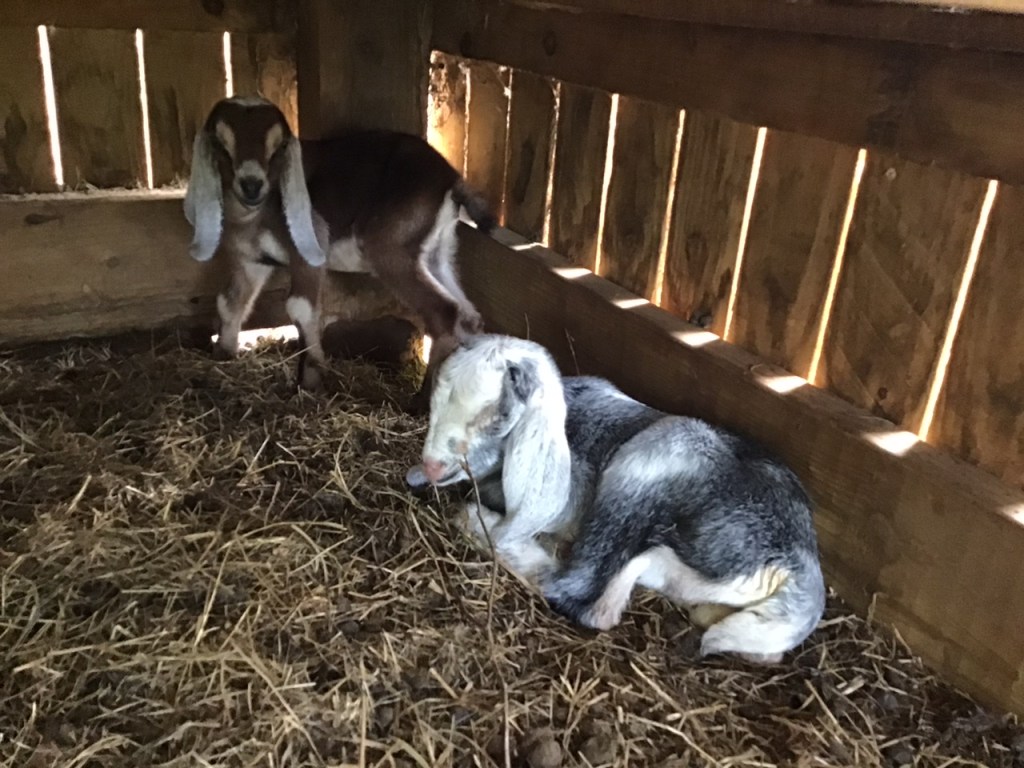
The latest and last addition to the herd this year (in the foreground) yet to be named, and already twice the size of our wee Athena (in the background, about 5 days old), formerly Zena, we decided we prefer the former. Any name suggestions on our newest? We are at a loss so far with this big girl who is sure to be a lifetime keeper! She came out huge and most active and ready to suckle immediately and play within 1 day!
What better day to ponder than Mother’s Day why kids are so darn cute?!
The newest kids, born yesterday, Phoebe’s firsts—Hercules & Zena—notice he is twice the size of her!
We’ve bartered or sold most of our piglets already. We’re not on social media where such information is exchanged, but it certainly does seem the homesteading community in our area is growing rapidly. Yippie!
One family who came by insisted we were under-profiting from our piglets. Their 11-year old daughter offered her mom to pay us $50 more than we were charging, ‘for the cuteness factor’. Aren’t kids precious!
In not-so-cute news, the swelter season has started abruptly. Bye, bye beets and broccoli, before your time, because I think not even the shade cloth can save you now. The last rain that was hyped on about for days, that flooded some areas and caused tornadoes in others, yielded us a whopping 1/4 inch, not even enough to penetrate the mulch layer.
Of course I’m happy we didn’t get hit with another tornado, but I can still be miffed I have to start watering the garden. Half my roses haven’t even bloomed yet, or the zinnias. The parsley and celery have gone to seed before I got a decent harvest from them and the lettuce will soon follow, no doubt.
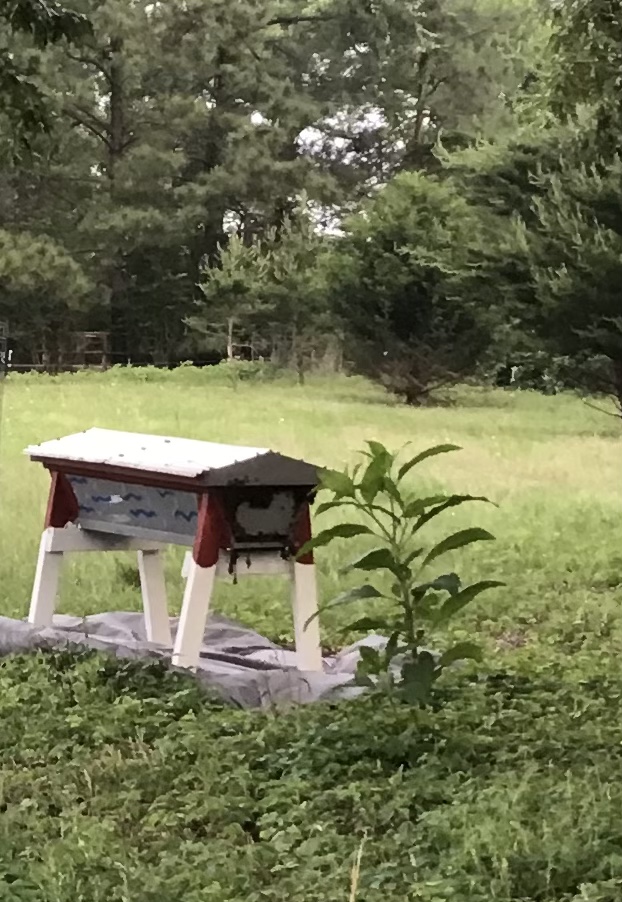
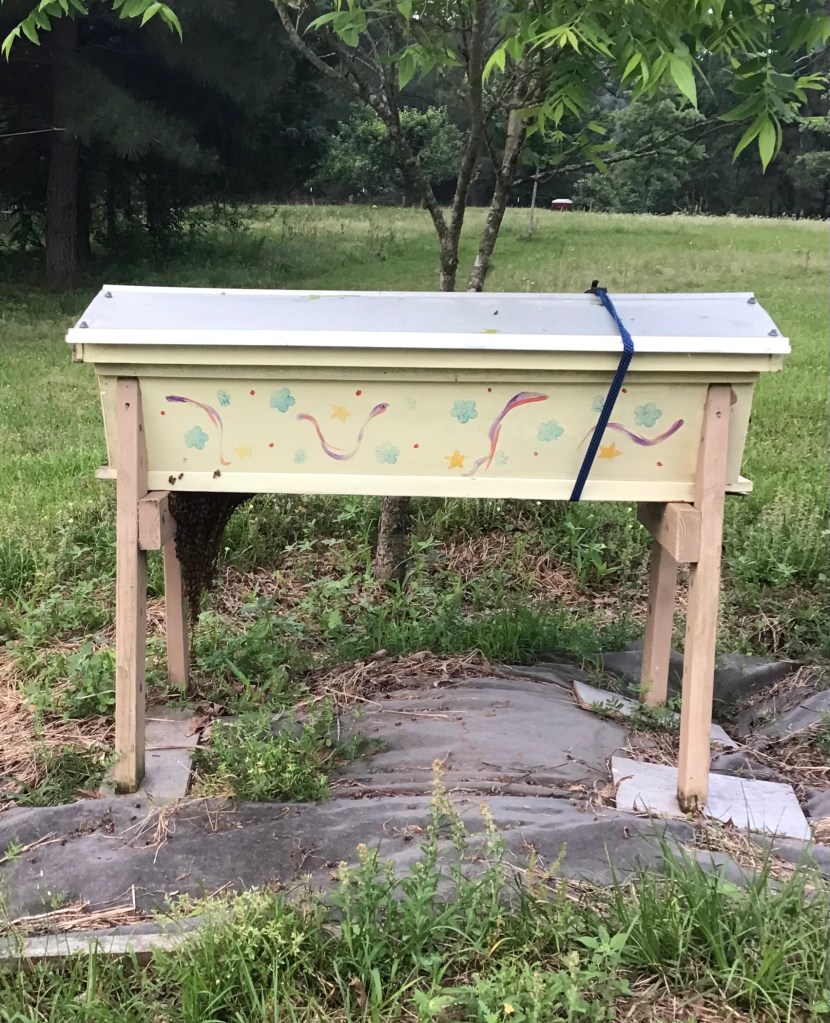
The bees are feeling it, too. I checked these hives last week and they were just half-full, yet the bees are bearding. Unfortunately, the swarm we got a couple of weeks ago left after only one day, unhappy with the digs I’d offered apparently. Now it’s already too hot for me to do the splits I’d planned. Better luck next spring.
I’m so pleased to be getting any strawberry harvest at all, they’ve never done well before. Then I saw this video and quickly got a reality check.
Hubby tried to make me feel better by saying those were probably grown in California and loaded with pesticides harvested by illegal aliens. He’s mentioned before something is off about this (Fabulous!) channel. It must be CGI, or heavily staged, or something. Never has a country cottage been so clean and picturesque. Where’s the chicken poop on the table and the flower pots dug up by the puppies? Good questions!
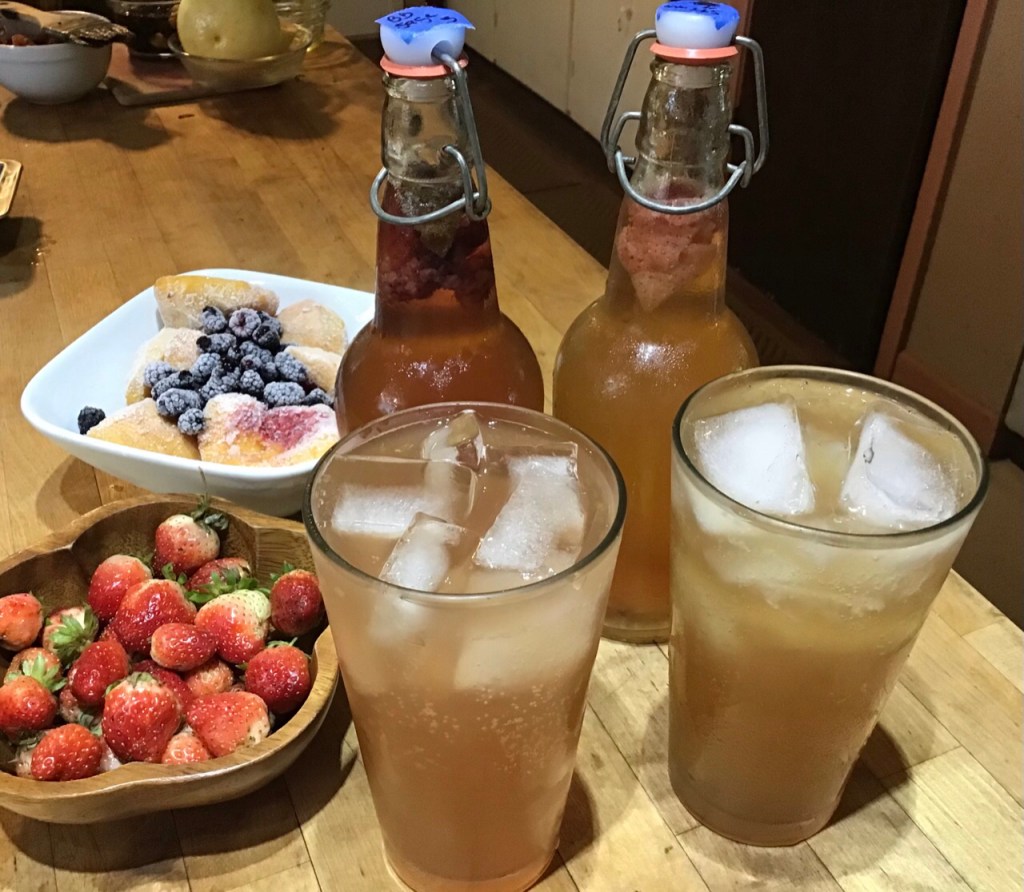
By ‘doing well’ I see I need to learn a thing or two about growing strawberries. They are too crowded and between the humidity and the wet mulch they are mostly half-rotted by the time they get ripe. I’m really loving the strawberry kombucha though! As well as the blackberry, and mulberry. I’ve started making the kombucha tea from yaupon, which grows like a weed around here. It’s delicious and sweeter than the store-bought green tea I usually use.
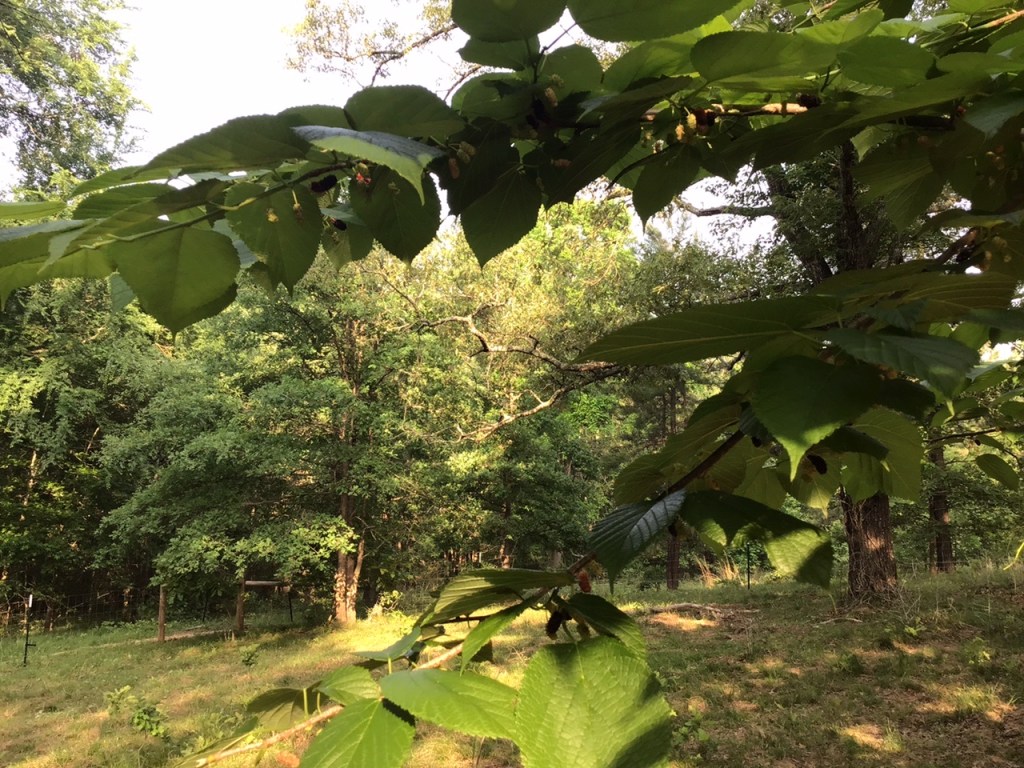
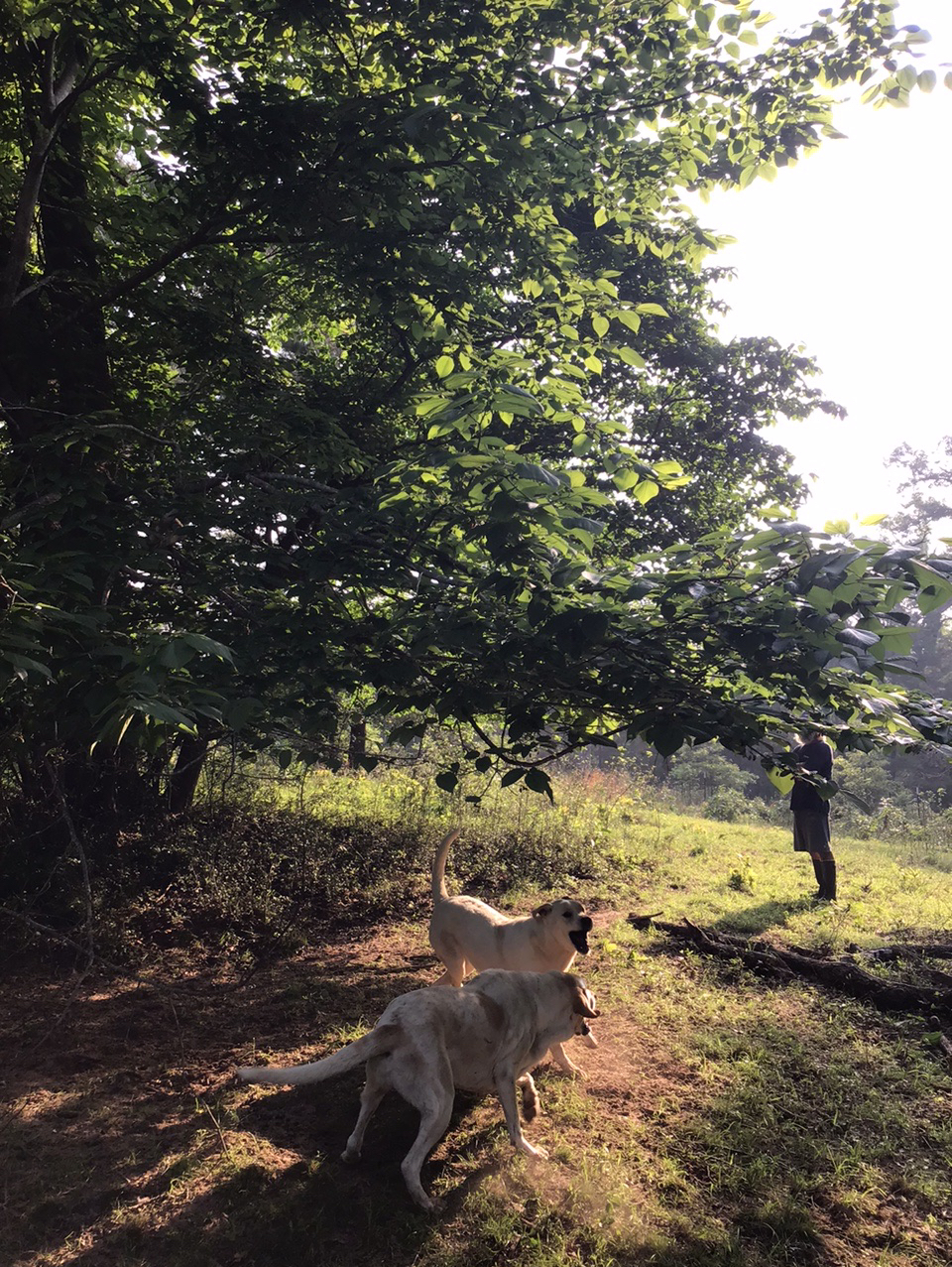
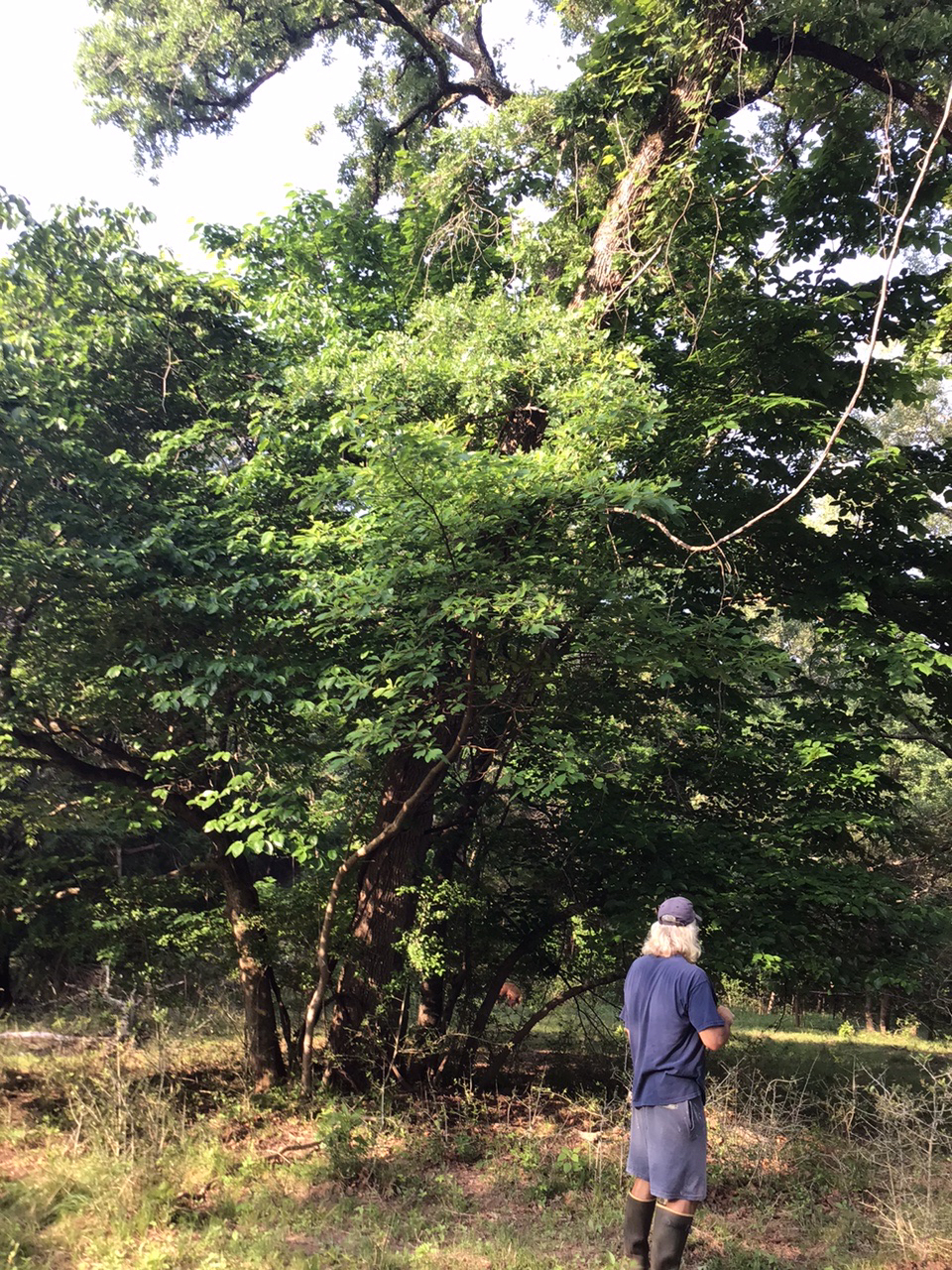
And speaking of mulberries, what a great surprise, Hubby found a full grown, wild mulberry tree in a spot we walk by regularly and never noticed before. What a treasure hidden in plain site!
More mulberries, please!
And this post has reached my attention span limit, so I leave the cheese to the next post. It’s gonna be a good one all on its on, really! Stay tuned!
Instead I exit abruptly, like spring has done in East Texas, with this quick lesson from Bubba in best yoga techniques.
Huge days on the wee homestead! The pigs and sheep have all had successful births without a single hitch. Mama Chop did lose a couple, but she has such large litters that’s not such a bad thing. We were very concerned about her as she crushed her last two litters, literally, not in the new way of the term—She crushed it! Nope, in the old way, as in she smooshed them all.
Hubby was able to prevent that sad ending this time by clearing out her corral space of every last twig. She was in the habit of building huge nests, full of branches and twigs and so steep the piglets would roll right off it, falling between branches and getting pinned whenever she moved around. We were worried with another total loss we’d have to get rid of her because we like her so much, she’s so gentle and good-natured. She loves company and will even go on walks with us. It is truly amazing how graceful these huge creatures are around those tiny, squirmy little things!
I did not mean to hit ’slo-mo’ during this video, oops! Need to work on my skills.
Virginia had a similar setup to Momma Chop, but she wanted nothing of it. She went off into the woods to build her own nest, her way. Luckily she doesn’t have such a penchant for branches and twigs. She’s got more of the wild side in her attitude as well as her nesting preferences. And she certainly does not appreciate prying eyes and will come after anyone who gets too close to her brood!
Peek-a-boo! Yes that is Hubby running away from one irritated mama!
Watching the little lambs play, and sleep, is so cute. But I expect when the kids come next month we’ll really be in for a comic treat! It will be our first experience with goat births and I hope it goes as smoothly as the sheep did this time.
Getting friskier by the day!
We have a new visitor to the garden which surprised us.
It’s been there every day now for about a week and I’ve never seen one like it around here before. It flies just like a hummingbird and had us quite confused. It was darting all around so fast and so far that it took me about 10 minutes and 30 attempts to get one decent shot of it. After some searching we learned it is some kind of hawk moth. Fastest moth in the west? Sometimes I undervalue the usefulness of the Internet, I might’ve been left baffled on that simple identification for a lifetime!
Not to mention the joy of sharing these simple pleasures with y’all!
I LOVE cheese day and it’s been a very long while.
It’s been several months since I’ve been milking our ‘old’ goat, Summer, and it will be a few months more before I start milking her again, along with Phoebe and Chestnut, intending that all will go well with their first kidding, and I will be able to train them on the milkstand, which will be as new to me as it is for them. Big intentions!
Friendly PhoebeChilly Chestnut
I’m not too worried about Phoebe, she’s much more tame and mellow and loves to be petted. Chestnut darts off as soon as you try to touch her and is even skittish when hand feeding.
The first lamb of the season has just arrived! Now that Handy Hubby is ‘retired’ he gets to handle all the stressful parts while I pop in for the awes and photo ops. Big win for me! It’s not that things are constantly going wrong, but it does take preparation and attention and concern, because sometimes things do go wrong.
But not this time! While Hubby runs around, making sure the little lamb latches on in due time, gets the feed and stalls prepped and ready for a bunch more births, I make cheese.
It’s a very slow process, traditional mozzarella, it takes all day. Yesterday I experimented with a new cheese of my own invention, which is just about my favorite thing to do in the world. I would bore you with the details, but I fear you’d be really bored.*
Another new Hubby project has been the ultra-high security broody fortress. Walls within walls. He’d finished the Tajma-coop and hoped our predator problems were solved. He’d planned for practically every type of previous invader—raccoons, hawks, possums, coyotes—with the exception of snakes. He’d hoped between one cat, 4 dogs and constant hoof traffic the reptilian raiders would retreat. No such luck. We lost lots of chicks and Bantams to snakes.
Surely this will be the ultimate solution?
Hubby sporting his wild side, which I much prefer to his straight-laced pilot persona. Though of course I have deep gratitude for his professional efforts too, not just the relieving of them, or we’d never be where we are now. (Thanks, Brandon?! And, where else shall I send the thank-you notes??)
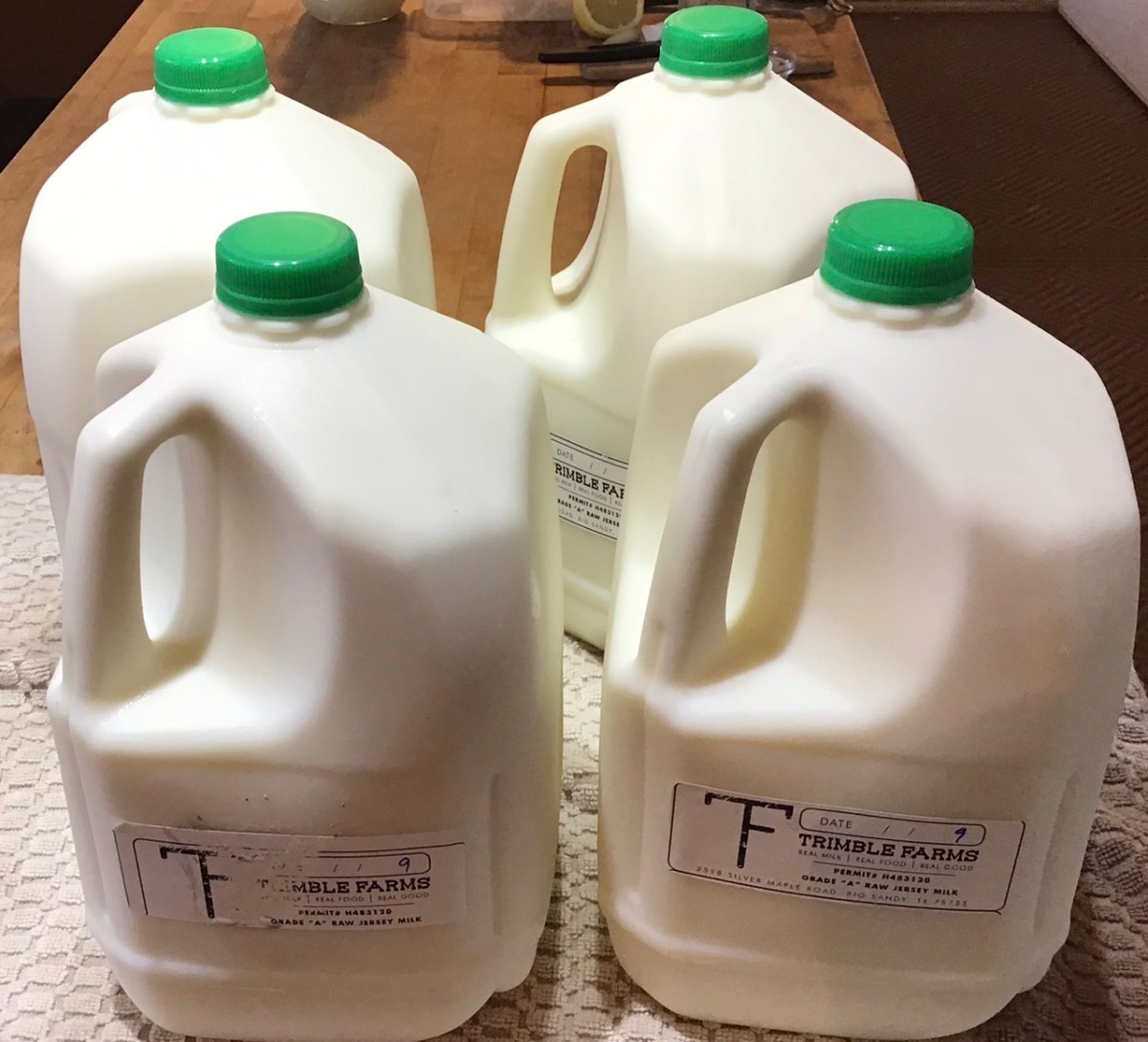
I used to have regular cheese days. I would drive four hours round-trip for the only raw milk available in the vicinity and get up to 20 gallons and have a cheese-making marathon for four days straight. It was perhaps a bit obsessive.
That was a few years ago, now it’s a real luxury. Since then the cost per gallon of raw milk at that farm has gone from $6 to $9. Add to that the cost of gas and time (and my personal waning energy), we really can’t afford it anymore.
Instead I’ll be milking goats and making mostly small batch cheeses, including all my favorites, which is pretty much all of them, especially Camembert, Muenster, and traditional styles of aged chèvre. I do believe I’ll be very satisfied with my new arrangement!
This time I got 10 gallons and a friend did the pick up, another win for me. She, like me, started making cheese and bread mostly out of snobbery—we are ‘foodies’ (I prefer the French term ‘gourmands’) and the selection of these staples in these parts was akin to an inner-city food desert. Industrially-produced, plastic-wrapped crap only, of the lowest quality.
Like I said, it’s a luxury at that cost, but from it we will get better cheeses, yogurt and buttermilk than money can buy.** Not only do we get the cheeses, but the whey goes to great use too, for ricotta, for soaking grains, and for the critters at just the time they are in need of extra nutrition.
Incidentally, mozzarella is not a raw milk cheese. Still, the flavor of the traditional home-made style is far superior to those which are industrially-produced, including the ‘fast mozzarella’ that most home cheese-makers prefer, since it takes about an hour versus all day. That version is also delicious, and I make it sometimes too, but the flavor and texture between the two is very different.
Our semi-feral cat, Skittles, comes around regularly now that our house dogs are no longer a constant threat. She’s getting her day in the sun at last, enjoying her curds and whey.
As there is a lot of kitchen downtime with traditional cheese-making methods, I make sourdough bread and pizza dough between steps.*** Or sometimes pestos, or condiments, or Kombucha (my latest fantastic flavor is pine needle), or soups and salads. Before I know it, an entire day in the kitchen has swooped by, me barefoot and content, and still in my pajamas.
And very happily not pregnant!
*Actually, I’d be happy to bore you in the comments section if you have any cheesey comments or questions.
**Sorry to say, but the raw milk cheeses you think you are buying at the grocery store are actually semi-pasteurized, they just changed the definition. As per usual.
***While listening to podcasts, usually. Richie Allen was on the list today, a good choice as it was a call-in show on the subject of prepping. https://podcasts.apple.com/us/podcast/the-richie-allen-show/id1090284266?i=1000553479020 I don’t identify as a prepper myself, necessarily, even though pretty much any American who looked at our lifestyle would say we are. The third caller on the show is a self-identified ‘doomsday prepper’ in Alaska. She was great, shared lots of good info and talked about how she grew up that way, as did her parents. I don’t really consider that ‘doomsday prepping’ either. This is a lifestyle to me, one that deserves to be continued through the generations, not just during precarious times, and I’m sure she would agree. Being prepared is important and I think everyone should make a concerted effort on that front, especially in times such as these. But I see this lifestyle is a special sort of calling and it’s not going to appeal to many folks, and it doesn’t have to. It’s enough for those so inclined to preserve it and to treasure it and to keep that flame of living intimately with nature alive. It sets an example that is much needed these days as it is not in the modern Western way of a recreational relationship with nature or the profit-driven exploitive relationship with it, but a real, old-fashioned, hands-in-the-dirt sort of cooperation. You’ve gotta really love it, really want it, or it will never work for you.
Busy days on the wee homestead as spring moves in. The seasons change, alas the chemtrails do not. The weather whiplash as well. But I must admit, I take quite a bit of hope and satisfaction that in the many years I’ve been bitchin’ about this, folks seem to finally be taking some serious notice. Either that, or my scope is conveniently narrowing. No matter. However the media tries to distract us, what’s truly important is happening in and all around us, not out there somewhere.
Insert ’gross face’
Handy Hubby has been busy in the back 40 clearing more pasture and getting the various spaces ready for the soon-to-be coming babies—piglets and lambs and kids and chicks. I’ll be posting lots of those pics when the time comes!
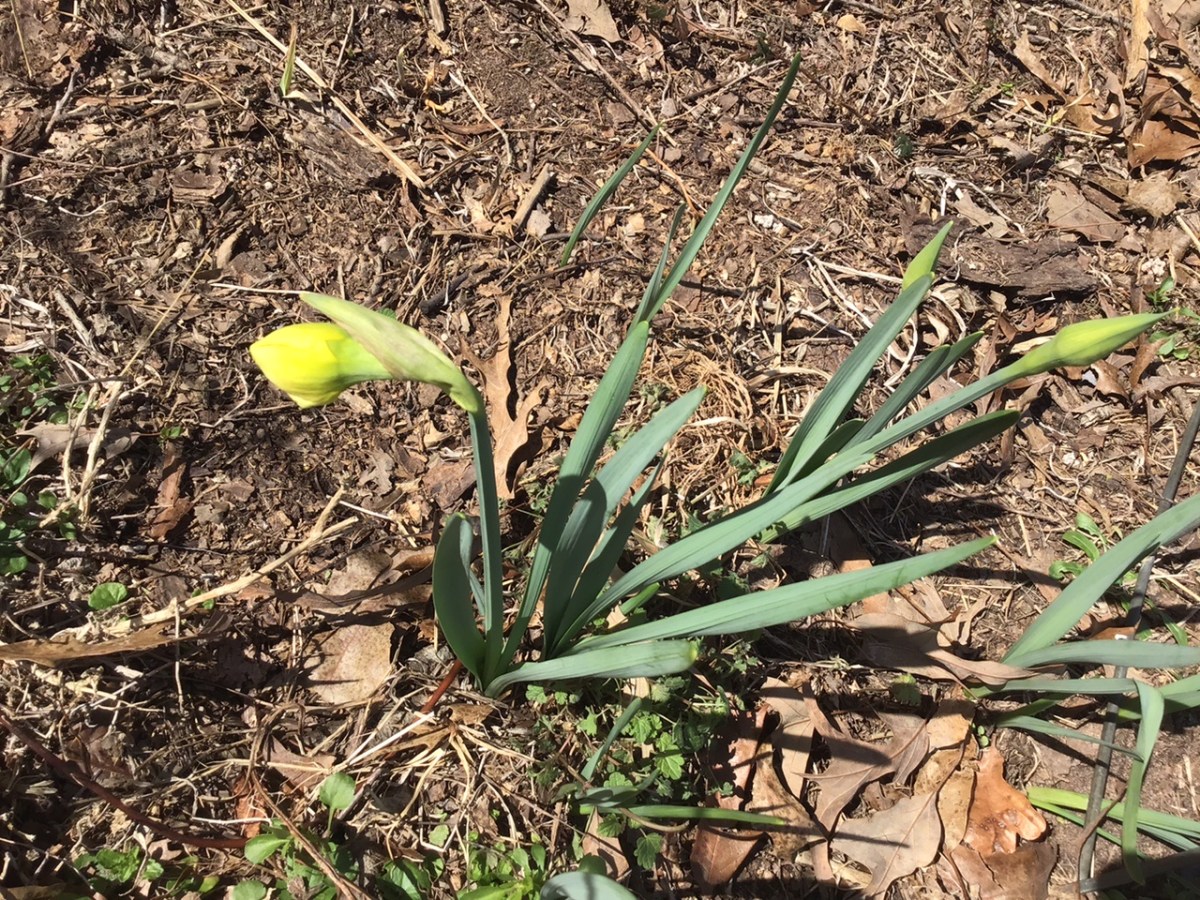
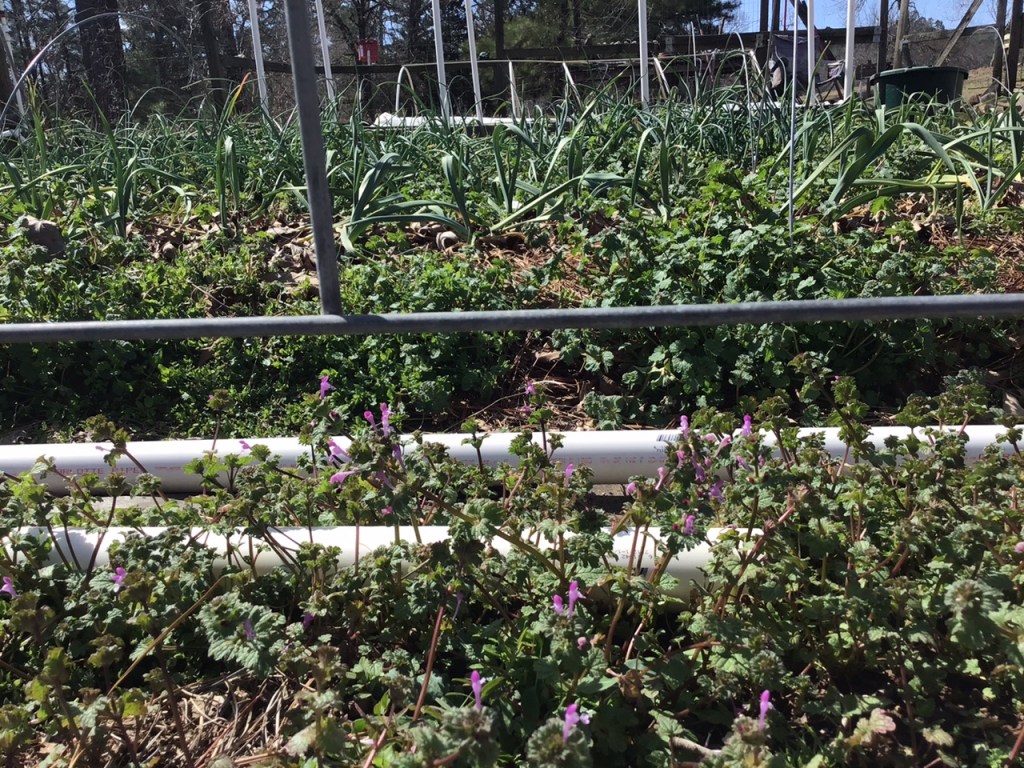
I’ve been busy in the garden and the bees are just starting to get busy, too. Only one colony failed over the winter, so that’s looking promising. We have loads of henbit blooming, but the bees seem to be preferring the chickweed so far. I have seen them enjoying the henbit on other occasions, so I keep plenty of it around. Such fickle little fairies. 😇
Chickweed and henbitWild violets, deliciousHenbit and garlic
The perfect pesto can be created from those three ’weeds’—henbit, chickweed and violets. It takes some patience, but it’s well worth it.
The box that kept us in salad fixings all the cold season, covered with row fabric on the frosty nights and days.
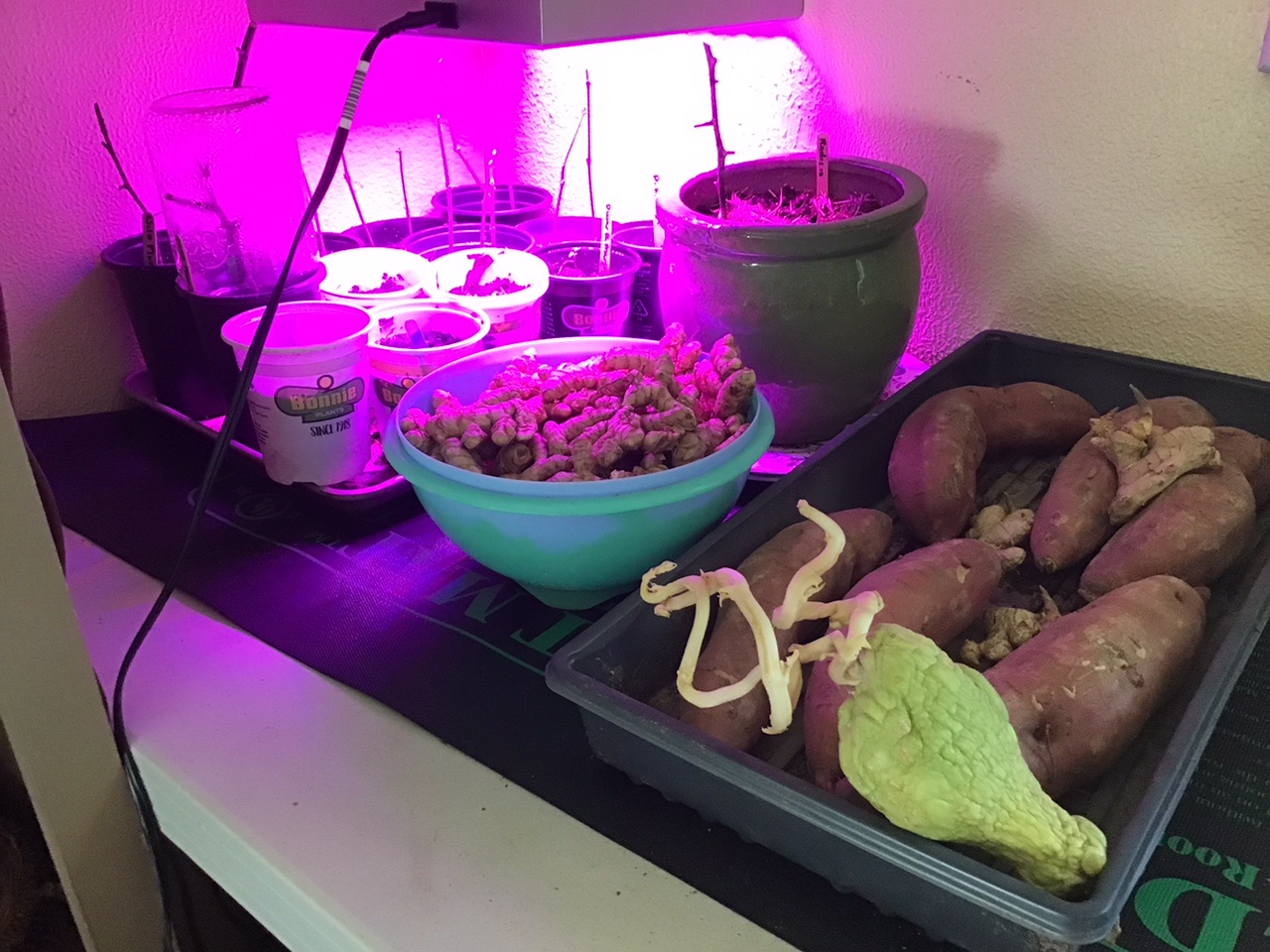
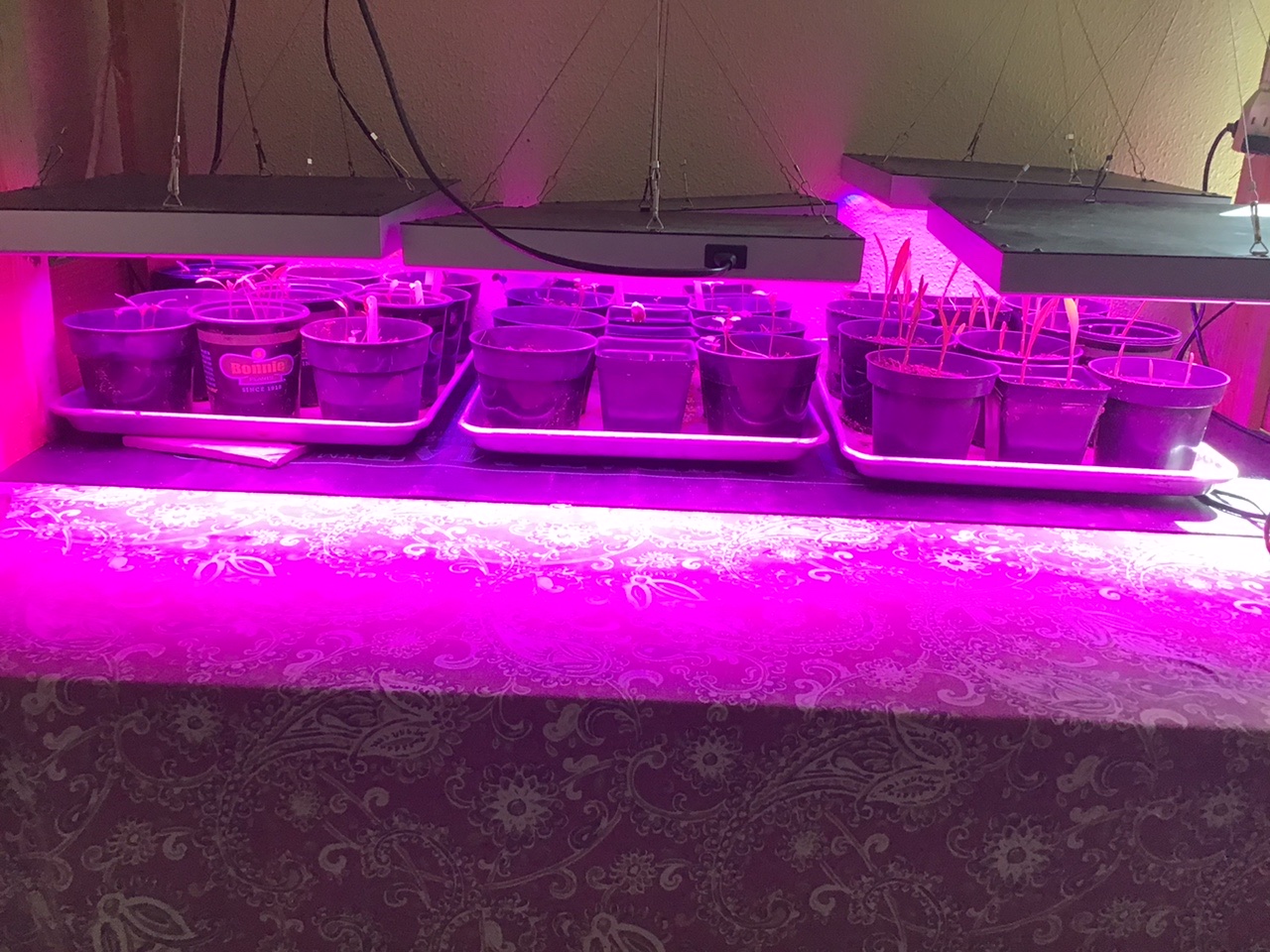
I’m pleased that the avocado and mirliton squash I over-wintered inside did really well. Of course, I’m not counting my fruits before they hatch! I’m also trying sweet corn inside under lights for the first time. We often go so quickly from frost to 90 F degrees that it’s a ’beat the clock’ situation. In the middle photo are the sweet potatoes, ginger, tumeric and another mirliton warming up on a heat mat before putting them in soil to warm some more under lights before transplanting.
Coral honeysuckle—kinda proud of this one because I propagated it from one found in the woods. I’m experimenting with a lot of propagation ‘from the wild’ these days, time will tell, I mostly fail so far. Hubby’s old tractor in the background, it’s seen an enormous amount of work but keeps on ticking, with constant upkeep and much frustration on Hubby’s part sometimes. 😩
Garlic, shallots and a few types of onions going strong! That’s row cover on the right of the photo, for the weather whiplash. On the right you can see the garden from a distance, completely fenced, with a makeshift green house (the cover destroyed during the tornado a couple years ago) that will soon make it to the top of Hubby’s to-do list, I hope! 😏
Quoted from the book Old Age Deferred by Arnold Lorand, M.D., 3rd edition, 1912 Carlsbad, Austria
He is considered to be a pioneer of modern geriatric medicine.
“Most of the evils that befall us in this world, including premature old age and early death, are, in our opinion, as we have often repeated, solely due to our own negligence; and to avoid such a fate we recommend the following precepts:
1.  To be as much as possible in the open air, and especially in the sunshine; and to take plenty of exercise, taking special care to breathe deeply and regularly.
2.  To live on a diet consisting of: meat once a day, eggs, cereals, green vegetables, fruit, and raw milk of healthy cows (as much as the stomach will permit); and to masticate properly.
3.  To take a bath daily; and in addition, once a week or once every two weeks, to take a sweat bath (if the heart can stand it).
4.  To have a daily action of the bowels; and in addition to take a purgative once a week if there is any tendency to constipation.
5.  To wear very porous underwear, preferably cotton; porous clothing, loose collars, light hat (if any), and low shoes.
6.  To go to be early, and to rise early.
7.  To sleep in a very dark and very quiet room, and with a window open; and not to sleep less than six to six and one-half hours, or more than seven and one-half, and for women eight and one-half hours.
8.  To have one complete day’s rest in each week, without even reading or writing.
9.  To avoid mental emotions, and also worries about things that have happened and cannot be altered, as well as about things that may happen.  Never to say unpleasant things, and to avoid listening to such, if possible.
10. To get married; and if a widow or widower, to marry again, and to avoid sexual activity beyond the physiological limit, as also to avoid a total suppression of the functions of these organs.
11. To be temperate in the use of alcohol and tobacco, and also in the use of coffee or tea.
12. To avoid places that are overheated, especially by steam, and badly ventilated.  To replace or reinforce the functions of the organs which may have become changed by age or disease, by means of the extracts from the corresponding organs of healthy animals; but only to do this under the strict supervision of medical men who are thoroughly familiar with the functions of the ductless glands.”
This doctor’s Wikipedia page directly contradicts what I have just taken from his book—not simply distorting his assertions, or cherry-picking quotes—by saying that this doctor promoted a vegetarian diet.