Gavin’s Reciprocity

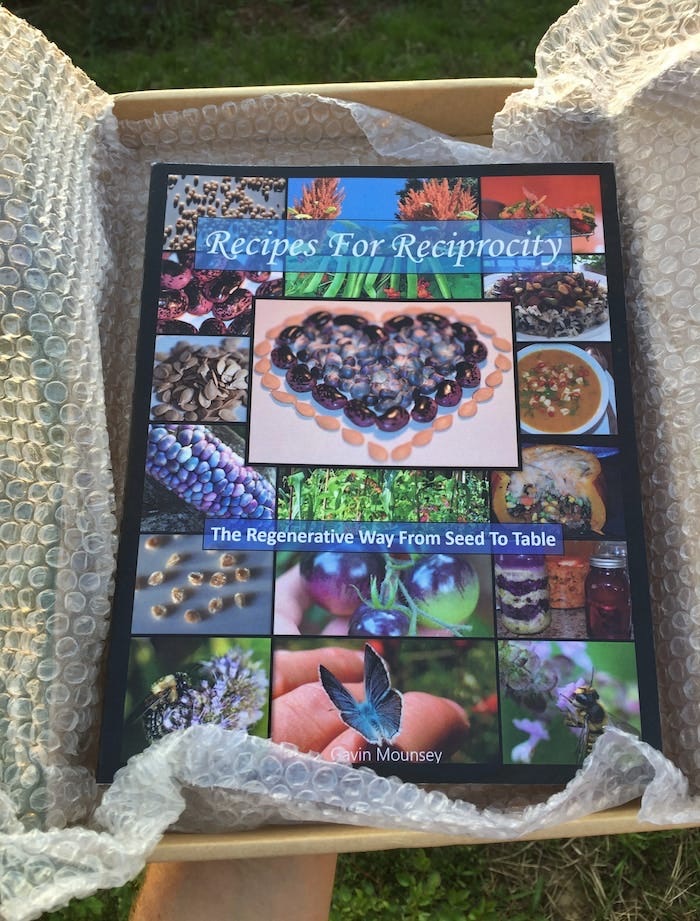
I’ve had a bit of challenge trying to simply label Gavin Mounsey’s book, “Recipes For Reciprocity: The Regnerative Way From Seed to Table” because it’s so much more than a cookbook. I have a great many cookbooks and my favorite type are what we might call ‘narrative cookbooks’ (though there may be an official sub-category name that I don’t know)–these are the kind where there’s a very present narrator telling you stories about the foods, and the places, and the people associated with the recipes and the author’s life. I might be inspired enough to write one of these myself someday.

Gavin’s book is not that, yet it is even more still. Rather than try to say it better myself, and fail, here’s an excellent description from the back cover:
“This book is a magnificent achievement. It can help you learn pracical ways to grow and cook mouthwatering food-as-medicine, and build deeper and stronger community, but it is so much more than that. Gavin has written a love letter to humanity and the living world and a manifesto for workable hope, all with an unflinching honesty about the crises we face. Gavin uses the nuts and bolts skills in the garden and kitchen as a launchpad to reimagine our place in the world, and the result is a solid foundation in the chaos. His hope and love are infectious, and the applied knowledge shared in his book is encyclopedic. I highly recommend it to you.” ~ Jason Padyorac

Along with the two books, one I gave to a friend, Gavin sent lots of seeds, some I’m already growing, others I can’t wait to try.

Scarlet Runner Bean in early summer, now dead.

So far I’ve planted the Scarlet Runner Beans and the Black Hopi Sunflowers.

Gavin:

“These beans are among my all time favorites for their versatility in the kitchen and beauty as well as productivity in the garden. They are an amazing companion plant due to the plant’s roots having the ability to associate with rhizobia (nitrogen fixing bacteria) which not only allows this plant to fertilize itself by pulling plant food from the air, it also means this plant can help fertilize its meighboring plants with excess nitrogen. On top of that amazing benefit the scarlet runner bean has beautiful red flowers that attract pollinators such as ruby-throated hummingbirds and bumblebees.”

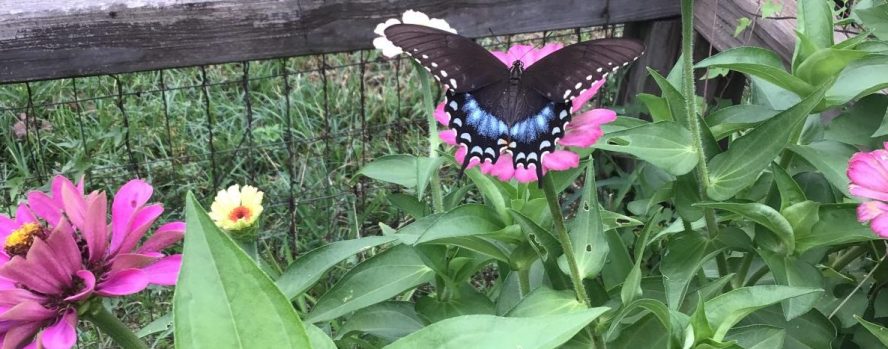
It is amazing to see how many fantastic plants can flourish in such varied climates. Because Gavin is in Canada and I’m in Texas I didn’t expect to find so many parallels in what we plant in our gardens, though certainly the timing and special needs vary quite a bit. The scarlet runner beans I’ve planted in full sun are perishing. But the others I planted which is shaded during the intense mid-day heat are hanging on. They’ve not produced yet, but I’m still hopeful and I like them anyway. I’m sure if there is any production and I can save the seed, it will acclimate to our area. Unfortunately, after a promising spring, the bumblebees and butterflies have been depressingly scarce in the garden lately.

Gorgeous! Ugly pity for the chem-sky.

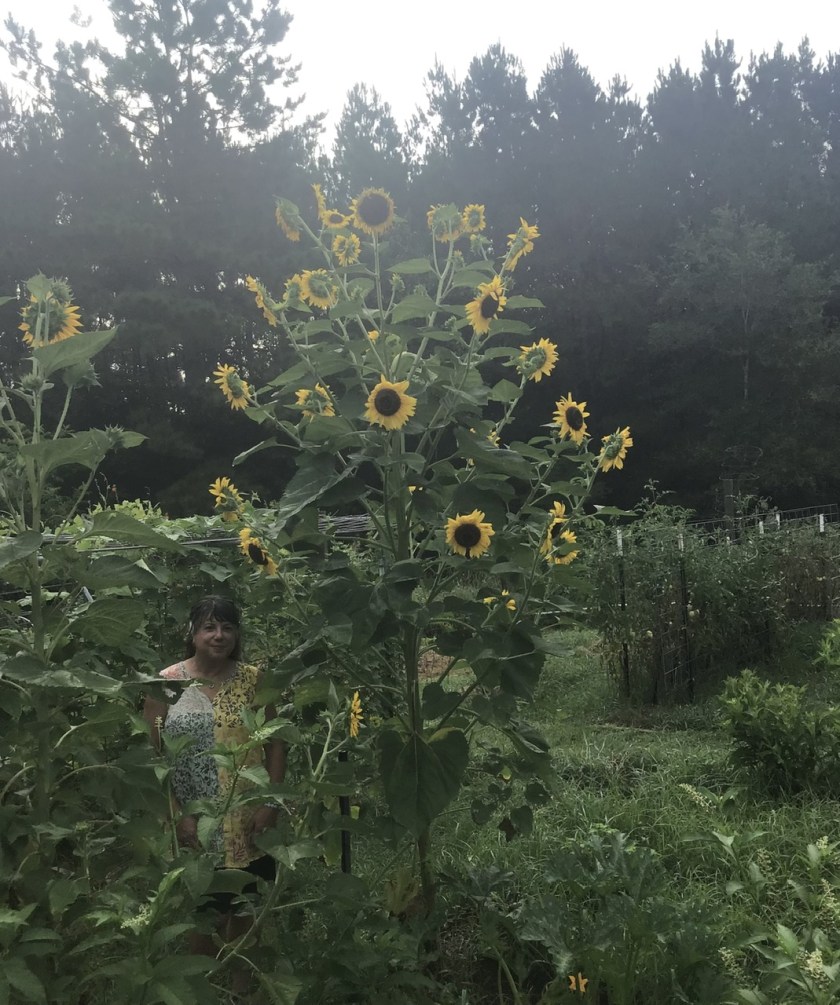
The Black Hopi sunflower has been the piece de resistance. It’s gorgeous and taller and fuller than any I’ve ever seen. I had several planted in several spots, and most of them got damaged in the high-wind storms we’ve had. But not this magnificent giant!

Gavin’s reciprocity in action is so inspiring, which is why I wanted to spend a couple of posts sharing about his book. Regular readers will probably remember I’ve shared some other of his work here in the past, especially in our Herbal Explorations pages, which come from his Substack newsletter.

In another post I’ll dive into a few of the recipes, but for now I’d like to expand on a few quotes which so align with my own learning and experience growing a garden and cooking seasonally from scratch. It has absolutely been the most rewarding journey of my life, with plenty of hope remaining for more of the same in the future.
From the section: Reciprocity in Action
“Choosing to give our attention to nature is also a form of giving back. Observing and paying attention to the cycles and living systems in nature involves giving our time and our thoughts. When we closely observe nature we inevitably come to perceive countless expressions of beauty through our perceptions of the form, color, sound, scent, textures, tastes and relationships that are all around us. This leads us to caring, feeling gratitude for and feeling compelled to protect the amazing gifts nature shares with us. From the place of gratitude we engage in one of the most meaningful and powerful acts of reciprocity. We open our hearts, we feel content . . . we practice self-restraint, we choose to live more consciously and aware of how our life choices impact the living planet that sustains us and showers us with endless gifts.”

Gavin most certainly has an eye for beauty, his photography is stunning.

(3) The Jubilation Of June – by Gavin Mounsey

https://gavinmounsey.substack.com/p/the-jubilation-of-june-d41

I know how daunting it can seem to dive into a new hobby like gardening, or even cooking nowadays, but there’s so many smaller and easier things that take so little effort or knowledge that might be just the momentum for many to kickstart a healthier life and society.

Just observing. I couldn’t agree more. It really does start that small and simple and while I have read loads of books on gardening and cooking and many adjacent subjects, I’ve learned far more from observing. Taking notes helps too, but considering how bad I am at that, it must not be totally necessary.

The other few very simple things that require no gardening and very little cooking is compost and ferments, both which Gavin discusses in the book.

Why those two, you might be wondering? Because in my experience, composting makes you far more conscious of waste, and fermenting shifts your attention to the weather and seasons. Both of these processes have enriched my life and health and outlook far more than I could’ve ever imagined.

A window sill of herbs would be enough to use up the compost produced by the average small household. Or donate it to a friend who gardens if you have such a black thumb or really no space. And who knows, maybe she’ll reciprocate with a zuccinni or two.

I had no idea what eating seasonally meant. Really. Until I went to the farmer’s markets in France on a high school exchange program, I had zero clue produce even had seasons, and considering how much is grown indoors today, that’s probably become more normalized than ever.

Considering I grew up eating like the vast majority of Americans–fast, frozen, canned, bagged–I know what easy looks like, and this is pretty darn easy. The shift really is more in attitude and attention.

Now I long for cucumber season as I long for tomato season as I long for melon season as I long for radish and lettuce season. It’s become that nuanced and I love it. Sure, there’s some cross-over and we can and ferment to save the bounty. But that limited time window of bounty becomes a season within a season, with all that entails–a change in primary food and focus–all with their unique gifts and challenges.
Surplus requires work, work requires rest and creates reward. 😊

The ebb and flow of surplus and scarcity becomes natural again, each bringing its own unique gifts and challenges.

My influences growing up–that of media, education, environment–worked synergistically as detachment mechanism. Nature was that which we were being systematically detached from, and that trend has only exaccerbated, to the growing dis-ease of ourselves and our environment.

“Within the last century, healthy, natural, organic food has been made more difficult to produce because of the chemical pollution, at first, and genetic pollution, more recently. A handful of companies have spread these toxins across our planet diverting US$ 400 billion of public money to subsidize their high cost chemical commodities to make them artificially ‘cheap’. The costs of this ‘cheap’ food are astronomical in terms of the health of people, the ecological damge it causes and its exploitation of farmers. If the true costs of chemical food were taken into account it would be unaffordable. Insead of subsidizing chemical food and creating epidemics of food-related diseases, public money, used for nourishment and the protection of public health through organic food, would save us billions in health care. Denying people their right to healthy, poison-free food by manipulating laws, policy, science and the use of public money to impose a non-sustainable, unhealthy food is food-dictatorship.”

to be continued . . .
Thanks for reading!

PseudoCaring

Soon the mainstream disease care system will be employing robots and AI-generated advice dispensers as nurses and surgeons. It’s happening already.

Meet Grace, the robot nurse that COVID created

Some are shocked and appalled by this, as they should be, according to me. Others think it will be a fantastic improvement to human life, or a great way to make more fiat, or a solution to the burden on the caring professionals, or they love tech for tech’s sake, or whatever.

Those of us who love history and dwell constantly on the question ‘how has it come to this’ were well aware of this potential because we study the trajectory of modern life. I could begin with the first critics centuries ago, but for brevity sake, I’ll start instead with my own life, the only history available to me to know thoroughly enough.

Working mother, divorced parents, step parents, then step siblings, professional daycares, neighborhood babysitters, after school programs, junk food, convenience food, lots of TV. Family history of: diabetes, heart disease, obesity, cancer, vision problems, depression, eczema, alcoholism, Parkinson’s, and, you get the picture.

And I would not say my family life was bad. It was the typical American suburban life of a great many growing up in the 70s and 80s. Neither particularly good, nor bad, just normal. Normal, as in well-normalized.

Like most families my parents would joke about voting for the ‘lesser of two evils’. They probably learned that from their parents. My mom went to community college and got her degree once we were gone, in sociology. She worked full-time all her adult life and didn’t regret it. My dad remained ‘upwardly mobile’ as his Protestant father taught him to be.

In fact, we have retired before him, and he has just had his first heart attack.

They are both still with us, but they do not read this blog, so I could say whatever I wanted. 😏. But, that’s not the point of this particular post.

Let’s leave it at this—in hindsight, my unique perception of growing up this way is, in a nutshell—there was not a lot of parenting happening. The results of this having widespread and devastating effects.

It is from these original seeds of pseudocare that have been not only consistently irrigated in our own territories, but have been dispersed throughout the world these last five-plus decades which has ensured the trajectory to the ridiculous place where we now find ourselves: Drowning in pseudocare so deeply we can scarcely recognize what real care looks like anymore.

Another quick peak at the fruits those seeds have produced.

Yet even facing all of this, I’m still optimistic, as I have been all my life. Even at the worst of times, even during a few prolonged worst of times, I must’ve still learned something vital from my half-assed upbringing and collapsing culture.

So, here it is, in another nutshell:

Believe in yourself, believe it can change, but don’t practice in sidestepping the hard stuff. And the hardest of the hard stuff is care, real care—for yourself, for others, for the future—that is why we are here. How you go about that is your personal journey and your only real duty to discover and live. That is all there is to do in a life well-lived.

Which is why I want to once again quote an obvious example of someone doing exactly that, Gavin Mounsey, who is rocking the real care like a hurricane these days! Wait . . . What?? Ok, terrible simile aside . . .

I believe he knows what needs to happen next and is becoming the living manifestation of that in his own life first, and passing it around. Leading by example, it’s the only way. It’s the same cardinal rule as storytelling—Show, don’t tell.

From Gavin’s book, Recipes for Recipocity

Here are few select quotes from his recent interview with the witty Russian correspondent and potential future Russian-American homesteader, Edward Slavsquat: The Revolution Will Involve Fermented Cabbage

“I want to give my energy to improving and increasing the resilience of my local community, not your hyper centralized one size fits all infrastructure. 

“Freedom is not a consolatory prize that can be given to us to reward our obedience and capitulation to a system of violent coercion. It is not something that can be granted or provided to you by some government that wrote some thing on a piece of paper. Freedom is your birthright, and you either live it and embody it, or you allow yourself to be put in a mental cage by statists and other abusive institutions or individuals. My ancestors bloodlines are traced back to a people described in today’s terms as The Gaels. “Saoirse” is Irish Gaelic word for “Freedom”. Saoirse is an ancient concept that comes from the original Brehon laws of the Druidic (and eventually Celtic) world before the time of Christ. In the times when that word was created, my ancient ancestors lived without a centralized state, without prisons and without police.

Saoirse means many things to different people. For some it means freedom to think, express and freedom to learn, for others it’s the freedom of imagination and the freedom of the spirit. And for some it also means freedom to set up parallel societies.

“This is one of the reasons that I included glimpses into two historical cultural cross sections of ancient cultures that existed without a centralized state and police/prison system in my essay as I feel that we can glean wisdom from stateless societies that existed for centuries to millennia in how to design more ethical, equitable, honest, Regenerative and practical ways to organize community, encourage amicable/respectful behaviour in humans and collaborate to leave this world a little bit more free and beautiful than it was when we got here after we are gone.

“With all that being said, I want to emphasize that I think that placing any culture, group of people or individual on some pedestal as pure is unhealthy. I feel we should be vigilant to make sure we are not romanticizing their past nor romanticizing the potential of their worldviews to provide solutions to the present challenges we face.

“The path to become connected to place with a reciprocal relationship, reverence and humility is the path to embrace indigeneity ourselves.

“It is a great starting point to create pockets of decentralized resistance to oligarchic / statist tyranny as growing your own medicine and veggies may appear harmless, but in a parasitic global plutocracy it represents a decisive action that severs the tentacles of tyranny in a critically important aspect of our lives (how we access food and medicine). Thus,  it is a radical and revolutionary act that appears benign to the hubristic philanthropaths and demociders, serving as a sort of covert sedition in a world governed by parasites that want us dependent, gardening to grow or own food and medicine is like a hammer wrapped in velvet that knee caps big pharma’s plans to poison us slowly through dependence on their system for health care and also strikes the spine of the digital gulag system, breaking its back so it can no longer have any strength to influence our lives through controlling our access to food/medicine.

A better essay about the importance of self-reliance and health as the ideal antidote to modern societal tyranny I could not have written! And he has a YT channel. 😁

He was also kind enough to try to address our biggest garden nuisance within the scope of his permaculture lens. He offered many potential solutions, and bless his heart for the effort. 

But I’ll just repeat my personal favorite: hot and spicy gopher wings. 🤪

What an example of authentic care—growing in the real and cyber worlds simultaneously—where even sassy meat-eaters and smart-asses and AI are welcome to stuff up their comments sections. Now that’s grace under fire!

Thanks to guys like these, in the coming decades I predict courageous fellowship will become the new sexy.

What Are Friends For?

One thing I never liked about teaching was being the center of attention. I was told I’d get used to it, but in 20+ years, that never happened.

It’s not that I’m a shy wall-flower, far from it. It’s also not that I didn’t appreciate that stage-ease in other teachers when I was a student. In fact, I rather liked it.

Still, I always felt like, if I could design my own classes they would never be lectures, never large groups. Even though some of my large lecture experiences as a student were very positive.

But, that’s because getting lost in the crowd is so easy.

Far more challenging is small group, low structure. It’s a very unique dynamic and my personal preference. It’s not necessarily conducive to many teaching tasks, but it does work very well for other things. Especially if your goals are real community ties over speculative market drivers.

After all, when you consider what motivates most teachers, money rarely tops the list. Small group, low structure is the least beneficial monetarily speaking, for obvious reasons. That’s probably why it’s so rare.

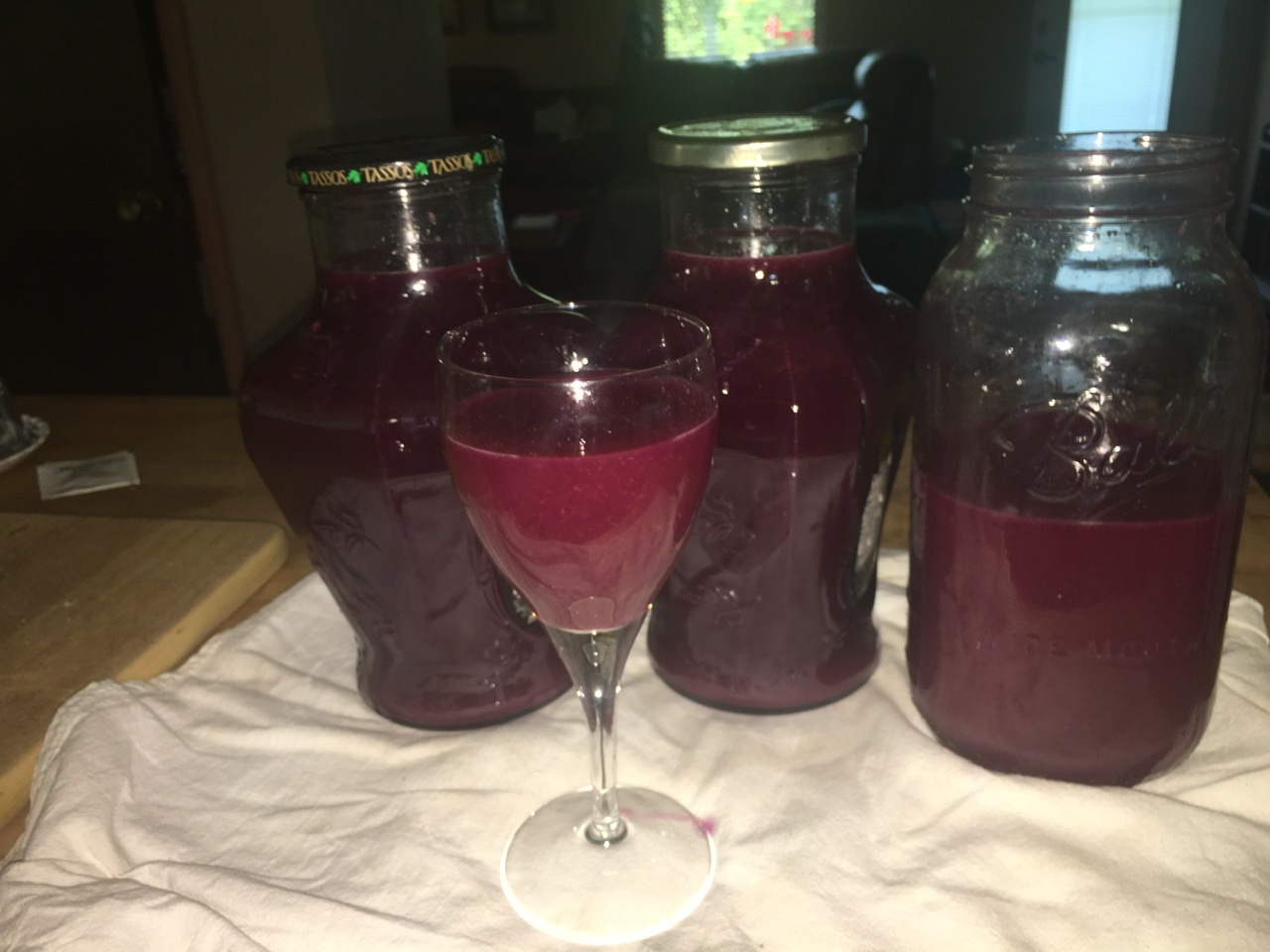
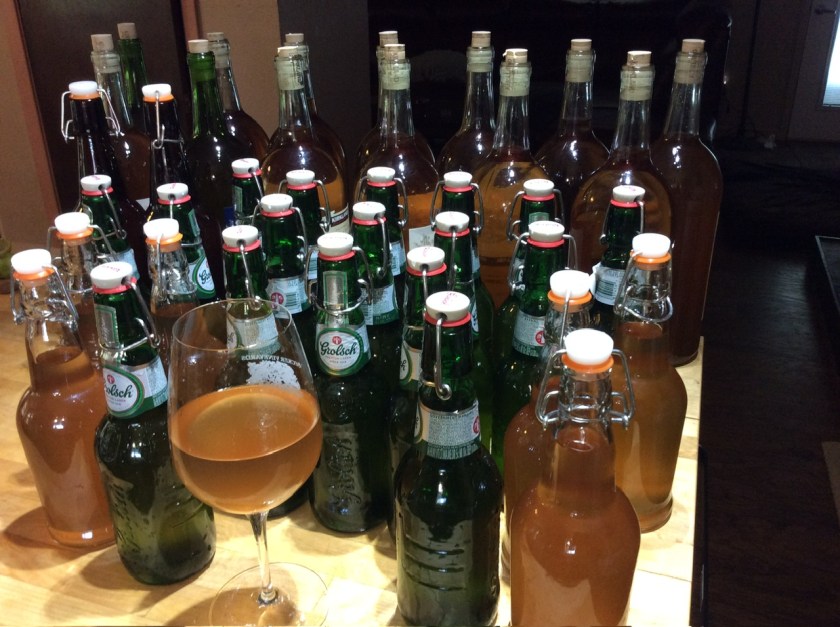
Seven ladies in my tiny kitchen, oh my. BTW, that’s Kombucha we’re imbibing, not beer!

Many hands make light work. I think that means not just a lighter work load. It’s also ‘light work’ as in, bringing the joy of community into our work and into our homes. Incorporating the unique contribution of each individual toward a common goal. It’s a beautiful thing. It’s pretty much the opposite of what incorporation has come to mean in modern parlance—which is more like automatons performing tasks to perfection at the command of a central authority.

“Um, excuse me, but your Shankleesh balls are not uniform!”

We are witnessing in our ‘Institutional Affairs’ that not only are we being conditioned to not discuss religion or politics, but it is becoming a requirement for receiving public funding.

While personally I’m ambivalent to these policies, because on the one hand I appreciate a separation between Church and State. Still, on the other hand I perceive what’s actually happening is an enmeshment of Globalist agendas with local affairs. An infiltration which began long ago that lately has been picking up pace.

Perhaps it is unfair that Christian-affiliated groups are getting squeezed out of public affairs. I can certainly empathize with their predicament and growing resentment. And yet, far more important to me is that I have encountered first-hand and through others’ stories that part of the means to this end is being achieved by categorically excluding crucial topics from public dialogue.

The de-platform and shadow banning and cancel culture that’s being most hyped online often excludes what’s been happening locally in folks’ churches, State-run organizations like the Master Gardeners, and State and church-affiliated out-reach programs and charities, not to mention in the schools.

This in particular makes small gatherings an essential part of a healthy public and community life. Feeling threatened by group-think and ostracized for a differing opinion occurs far less often.

Particularly, when we are gathered around wholesome work, like learning skills together, getting necessary things done, or just sitting on the porch—shooting the shit, so to speak—group identity is replaced by an individual-level camaraderie, where the label is not the first thing on everyone’s radar and money takes the back seat to true care. Christian, Buddhist, Atheist, Republican, Anarchist, whatever—these are the social constructs as much as gender identity or which church or which school or which job one has, if any at all.

Differences can be appreciated in a friendly and comforting surrounding rather than creating strict and professional-level hierarchies. Sure, it’s still great to have like-minds around, but they don’t have to be like-minds set in stone or the whole edifice risks collapsing.

When the goal is a better life, actually living it, politics is naturally relegated to the background, not because it’s a forbidden or contentious topic, but because in the manner of human relations it belongs in the background.

Or, even better, six feet underground!

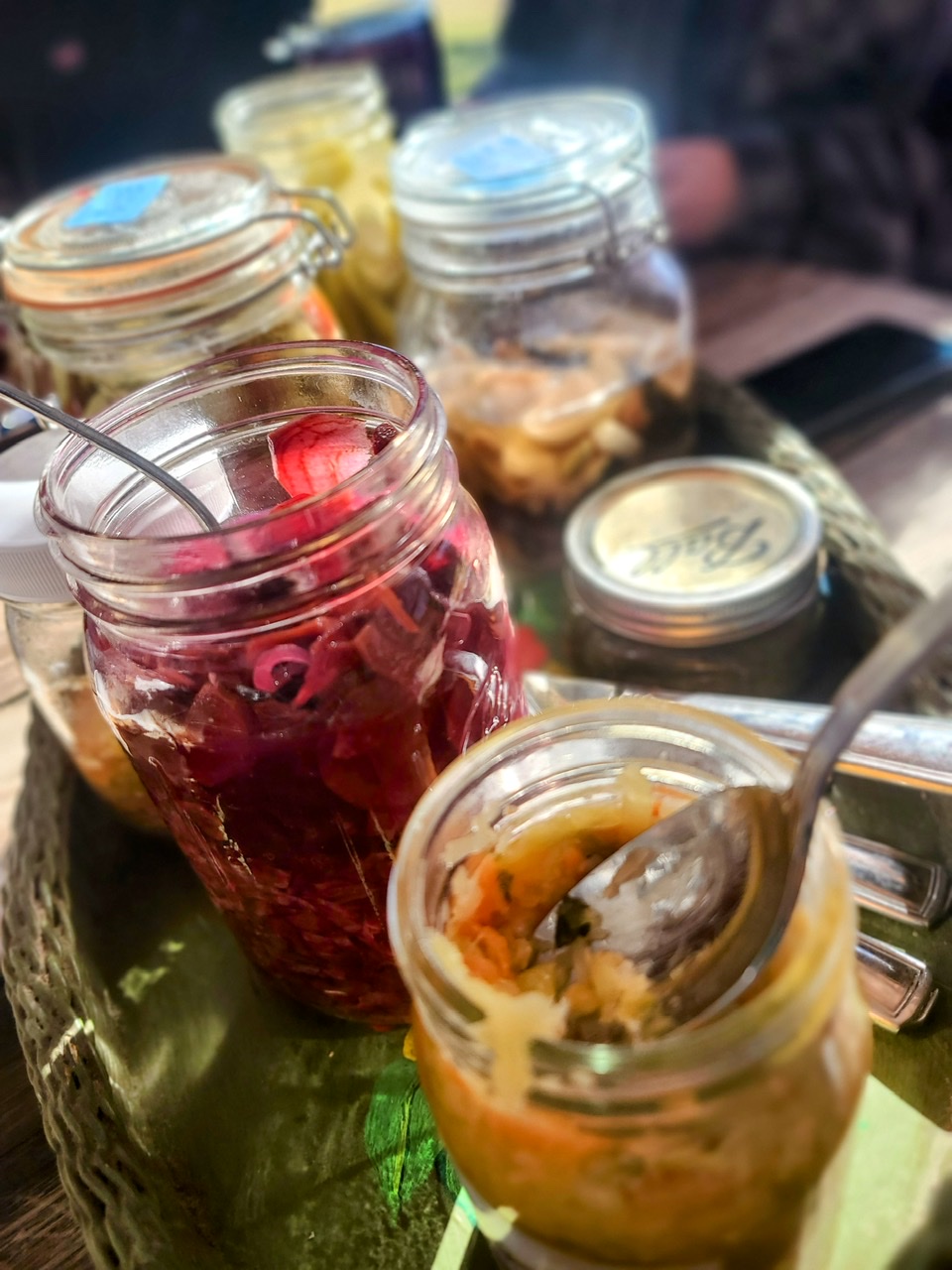
Lunch al fresco with lots of ferments to sample, yum!

And for these reasons, I feel charmed and grateful for the, so far, two ‘Fermenting Workshops’ I’ve hosted here on the wee homestead, with a lotta help from my friends.

Thanks and well done, Ladies! What lovely and wonderfully productive days—I look forward to many more!

All in a day’s work—West African Sweet Potato Ferment, Lemon-Dill Kraut and Shankleesh to take home for you and your family’s enjoyment !

A very special thanks to Nicole Faith, our supreme community organizer and A+ homesteading student, who also provided these photos, along with her exuberant enthusiasm and gracious courage. 😘

Food Matters

Can you tell who your ancestors were from the sorts of foods you like?

Folks say you develop a taste for the foods you grew up with and keep a sort of inner-scent nostalgia from childhood, like when Proust describes his semi-conscious love affair with Madeleines.

I’d say that’s only the surface layer of the story. The first time I smelled beans cooking from scratch, as in not coming from a can, I felt I was wafting on scented dreams that could not possibly have come from my own limited lifetime.

We didn’t eat sourdough or sauerkraut either growing up. We ate Oreos, McDonalds, KFC, TV dinners, mac & cheese, and we loved them. All the way through university I lived on mostly fast food and had little clue what cooking from scratch actually meant.

So, considering I was well-adapted to such convenience foods growing up and had developed such a taste for them that I craved them after moving to areas where they were not available, what gives?

Hubby had a much more traditional outlook from his childhood than I did. More than any other single influence in my move toward better nutrition, he was my inspiration. He introduced our household to fermented foods, and now I’m primarily the one who nurtures those crafts. His folks had already been gardening in his youth and still had a ‘subsistence’ mindset, and by that I mean they still ‘put up’ food, something that was unheard of to me growing up.

Do you eat to live or live to eat?

Breaking bread together still means something in our country, I think, but barely. Somehow even the traditional ‘pot luck’ is hardly lucky anymore when food sensitivities reign and diet dictocrats menace and folks’ general health is so poor who knows what will set them off the deep end.

New film: Like Beans for Beef? I don’t think so!

Sensual, comforting, beautiful, sublime, simple, food is far more than sustenance, just as depicted in a popular and a most favorite film of mine, Like Water for Chocolate. Can your mood affect your meal? Can your meal affect your mood? Any true cook or gourmand knows, indeed, it can, and often does. That is ‘the weather’ both inside and out, tempers the dish, for better or worse, and that’s a fact I’ll swear by.

Which came first: the cheese, the beer, the wine, the bread, the kraut or the Kombucha?

In Czech they say their beer is liquid bread. Fermentation is a key miracle of life that I had no idea existed until I was nearly 40. I’d visited caves in France where Champagne is aged and others where Roquefort is crafted and been to festivals where the ‘new wine’ and liters of beer were copiously enjoyed and obviously had eaten pickles in my lifetime, but none of these experiences cemented the notion of fermentation in my mind.

“In all raw whole foods, the food plays host to beneficial bacteria that are particularly suited to devouring it. These native cultures also help to transform the basic foodstuff into traditionally fermented foods: Cabbage contains all the bacteria it needs to become sauerkraut, wheat has all the bacteria and yeasts it needs to become bread (or beer), and grapes have all the culture they need to become wine. Milk is no exception: The native biodiversity of raw milk provides microorganisms that help infants digest their mothers’ milk (and cause the milk to decay if it is spilt); these microorganisms are all that the milk needs to become the many different styles of cheese.” The Art of Natural Cheesemaking: Using Traditional, Non-Industrial Methods and Raw Ingredients to Make the World’s Best Cheeses by David Asher

The first time I tasted Camembert with onions was in Germany, partnered with great beer, and it was instantly a favorite meal. At home I bought an American-imported version of both, but they were not the same. Once I started to make cheese myself I realized why, and also realized, I’d become a bonafide cheese snob. A freeze-dried culture is very different from a ‘territoire’ cultivated culture—as different as Velveeta is from the homemade ‘Mexican queso’ it’s supposed to imitate.

Generations upon generations of traditional cheese makers evolved the diverse methods of making cheese while carefully practicing their art. All classes of cheese were discovered by cheese makers long before they had a scientific understanding of the microbiological and chemical forces at play in its creation. Industry and science hijacked cheers making from the artisans and farmers some 150 years ago, and since then new new styles of cheese have been created; yet during that time hundreds, possibly thousands, of unique cheeses have been lost.” (Asher)

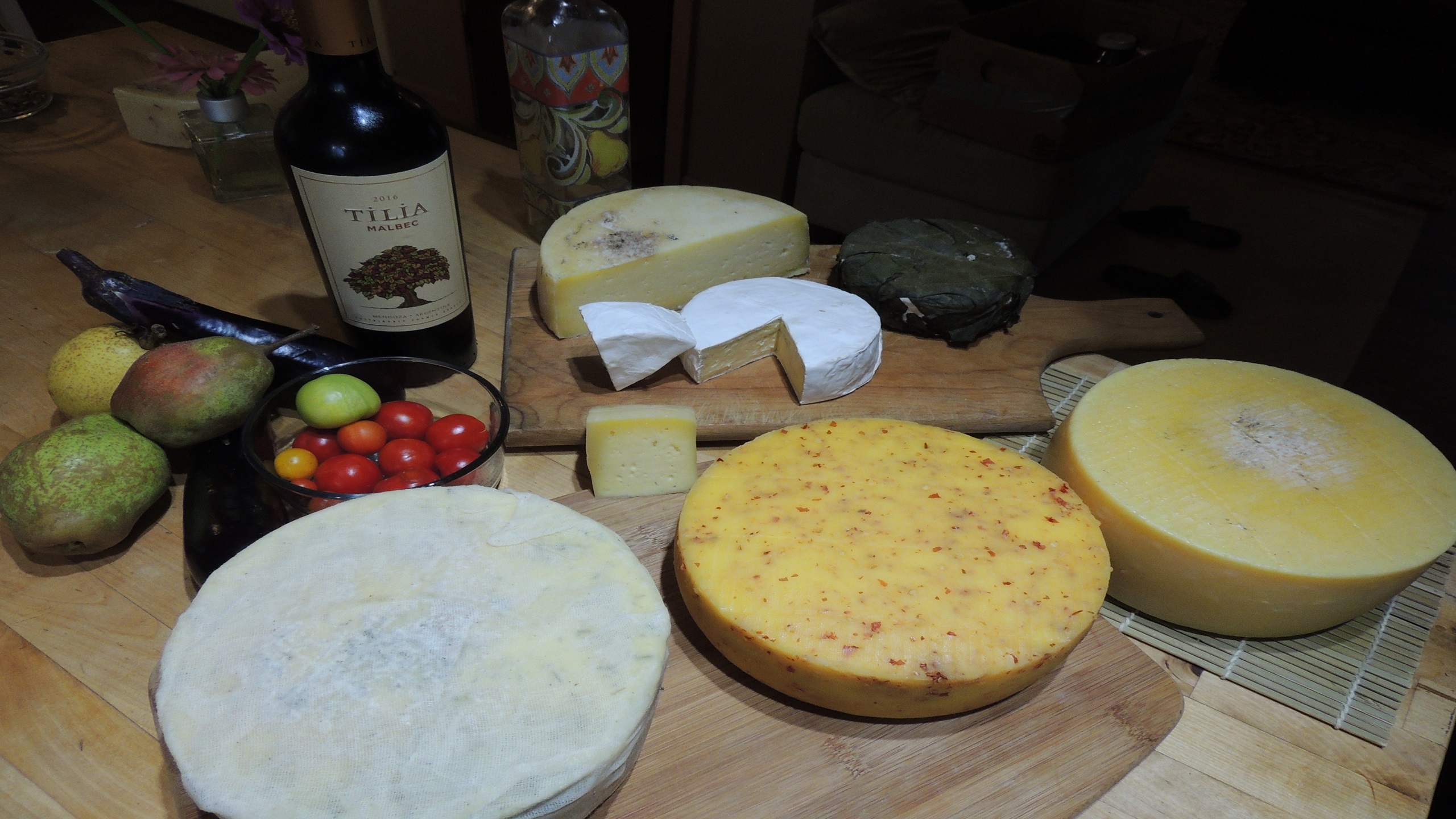
These cheeses were made from my own fungal cultures and have a far superior taste compared to the cheeses made with the typical freeze-dried cultures:
brevibacterium linens, geotrichum candidum, penicillin roqueforti

I know how bizarre this will sound to many, because that’s how it sounds to me, now. I didn’t even know vegetables had seasons and I’d never tasted cheese that wasn’t processed and wrapped in plastic, but I assure you, for a girl raised in the American suburbs this was/is typical.

I remember the first time a visiting Czech friend tasted an American beer, he remarked, “That’s an interesting beverage, not bad, but it’s not beer.” It was Budweiser, the ‘beer’ that was originally from Plzen, called Budvar. Even then, already as a ‘worldly’ adult, I didn’t fully grasp his meaning.

Now I understand he was noticing the obvious lack of real fermentation. Like breads made from instant yeast instead of natural yeast, or cheese made from freeze-dried cultures instead of natural cultures, there is most definitely a difference and once you are sensitized to it you cannot even refer to this difference as subtle. It’s glaringly elementary, yet it’s pitifully difficult to describe.

We grew up with artificial sodas like Coke, but we don’t drink them now, because once you master your own favorite Kombucha flavors, artificial flavors become unpalatable. Ditto on the artificial condiments—ketchup, mustard, mayonnaise, Tabasco—these all fared from real and healthy foods that once kept our ancestors thriving for centuries before science learned how to mimic them, but not in nutrition, only in taste, and even then, only sort of.

It’s similar to the modern rose that is hardly a rose but in looks alone. And even then, only sort of. Do modern cultivars creating the equivalent of fake boobs recall that roses, like boobs, once had a nutritive purpose that surpassed mere vulgar voluptuousness?

It would appear that no, they do not, because even here in the ‘rose capital’ of Tyler, Texas, boasting a very popular annual festival with a Queen and everything, I’d never have fathomed roses were once cultivated primarily for their hips.

Selective breeding and shortcuts require compromises that are most often not worth it once you develop refinement and can truly appreciate how unsurpassed is the luxury of time. Two days for decent bread, two days prep plus six months aging for a great Alpine cheese, a year for a drinkable wine, a century of painstakingly crafted cultivation for a beautiful yet still nutritious rose—when you nurture the sensitivity of your palate and your gut, you realize there really is a hierarchy of taste and fake is never going to be an adequate substitute.

I’ve set goals all my life, many of them I’ve achieved and many more I’ve not and many more still I decided were not worthy of achieving once within the goal posts. But there is always remaining this matter of food, and it always fits. Not the short-term convenience foods I grew up with, but a much wider tradition that settled into our lives rather organically and that reflects the ancestral wisdom I believe my own ancestors were mistaken to leave behind, which I feel very fortunate to have the time and inclination to revive and cultivate.

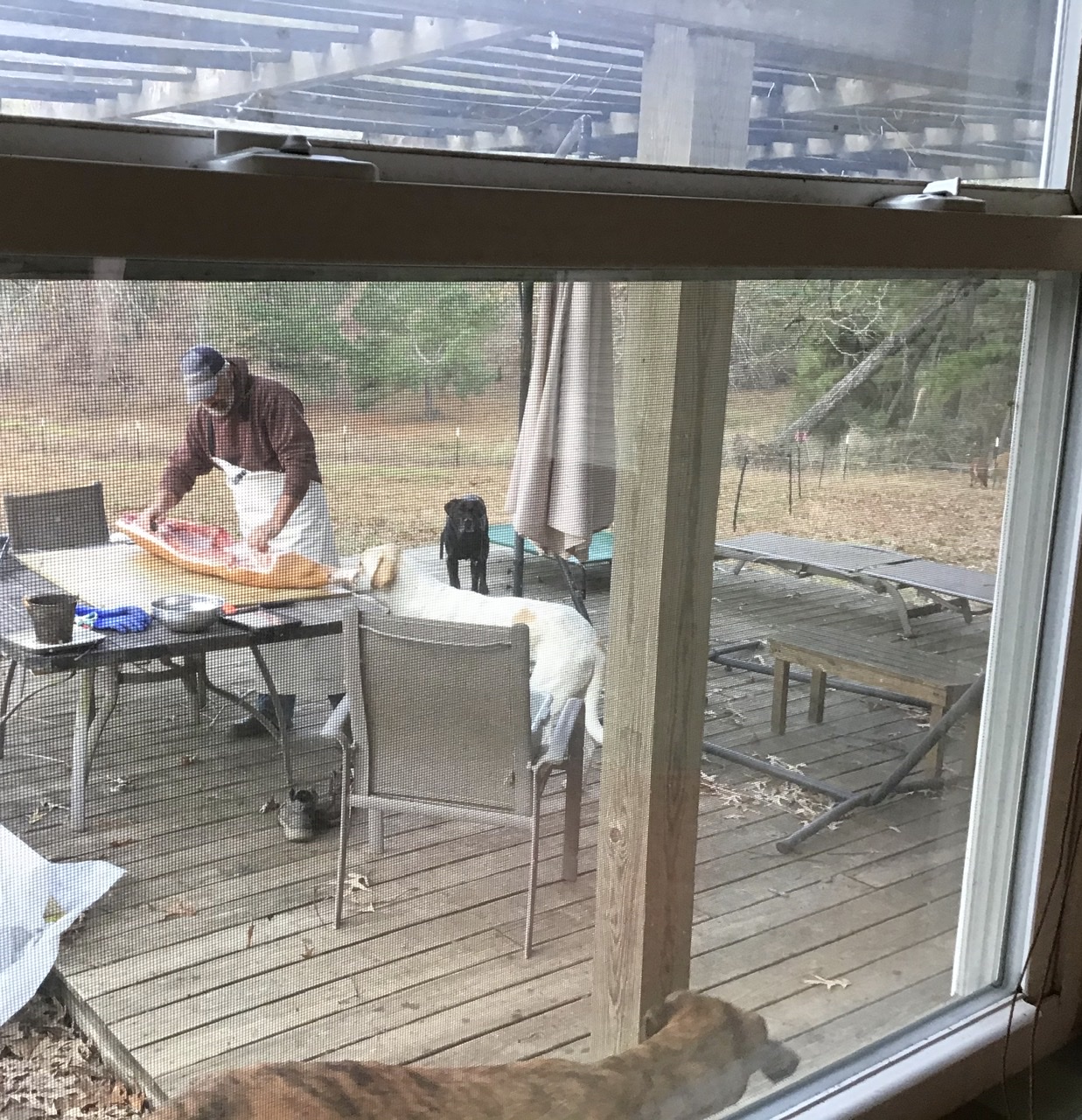
With Handy Hubby perfecting another lost art—growing, slaughtering and butchering all on-site—perhaps we should up our game goals? ‘Luddite Power Couple’ is that a thing? 😉