What’s Been Lost III

When I first started watching alternative history Youtube channels I was skeptical, and I still am. I want the truth, not more redirection. Not more fantasy. Not more illusion. Not more heavily curated or mediocre nonsense.

So far, I don’t sense I’ve found it, but I’ve become ok with never finding it. I’ve resigned myself to what’s as close to the truth as I’ll be able to manage to get to in this lifetime, which is: I’ll never know the truth, but I may be able to manage truth-adjacent with enough study and discernment. I can confidently opt-out of the lie, permanently. That’s a big improvement to the path of blind acceptance I was, and most are, still on.

The first step toward truth was achieved pretty easily, it began with calling bluffs. As long as I don’t allow it to frustrate me, which isn’t exactly easy, this alone feels pretty empowering. For me, as usual, I had to experience it directly, no Youtube influencers, no professors, no self-styled experts can convince me, not without applying my own eyes and ears and reason.
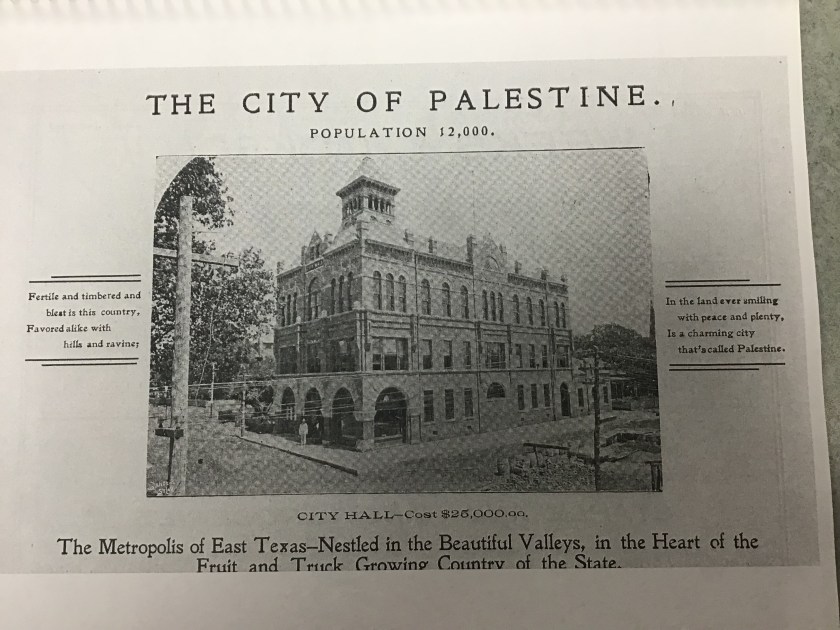
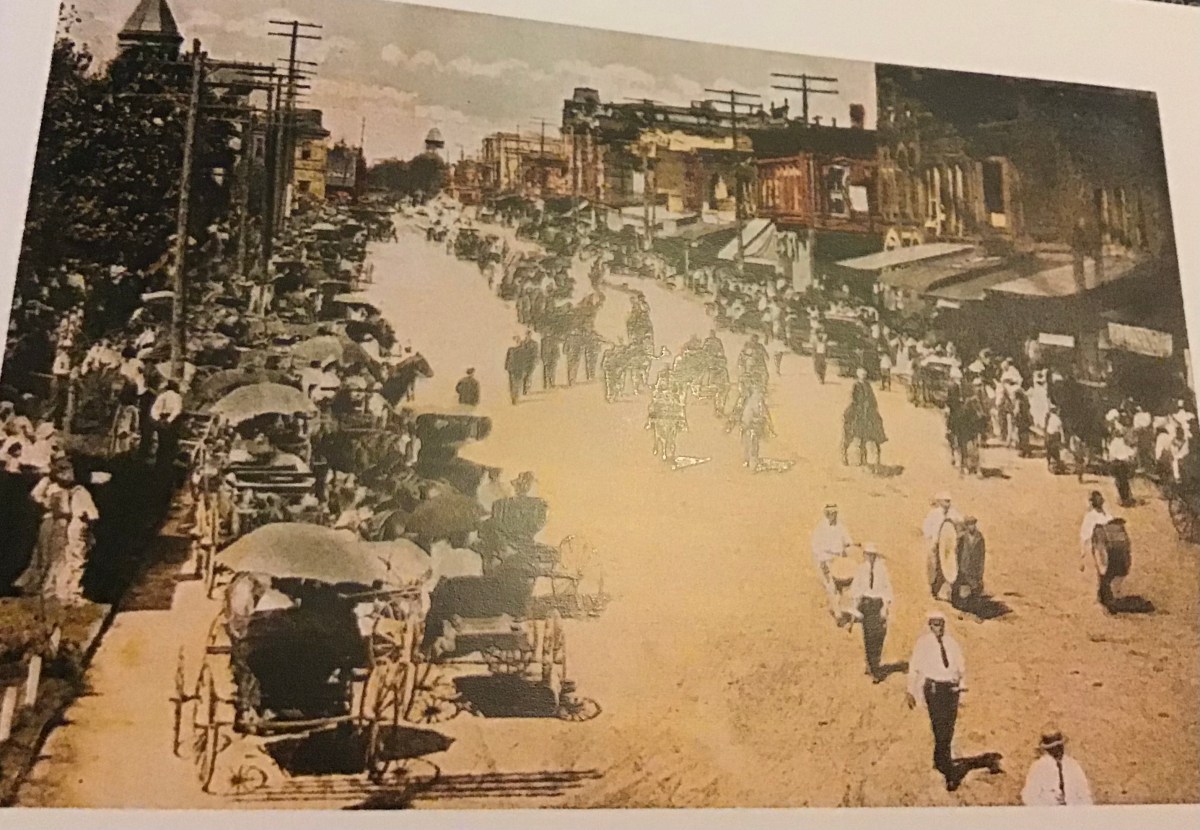
I looked to the architecture because that’s what’s visible, and only then to the official history, because that’s what’s accepted as truth. I started in my own neighborhood, that is, the small city closest to us, called Palestine. It’s actually easier I think to consider the small city, rather than the large ones, because there’s been less tampering more likely, more holes in the narratives that can be more easily noticed by the novice.
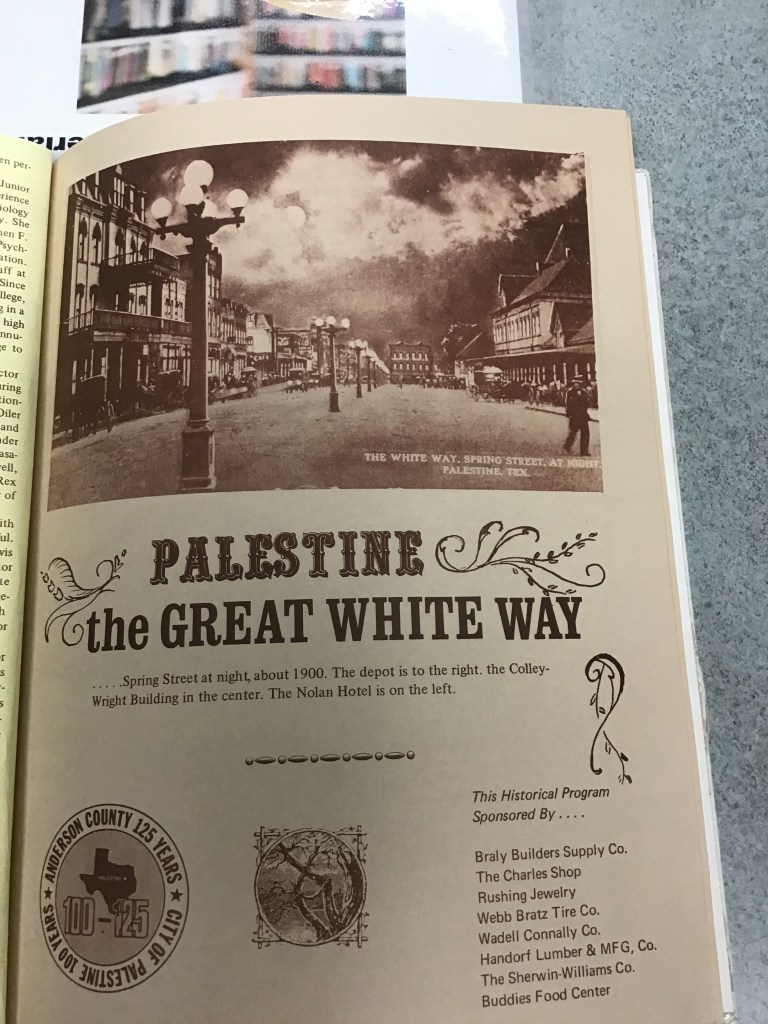
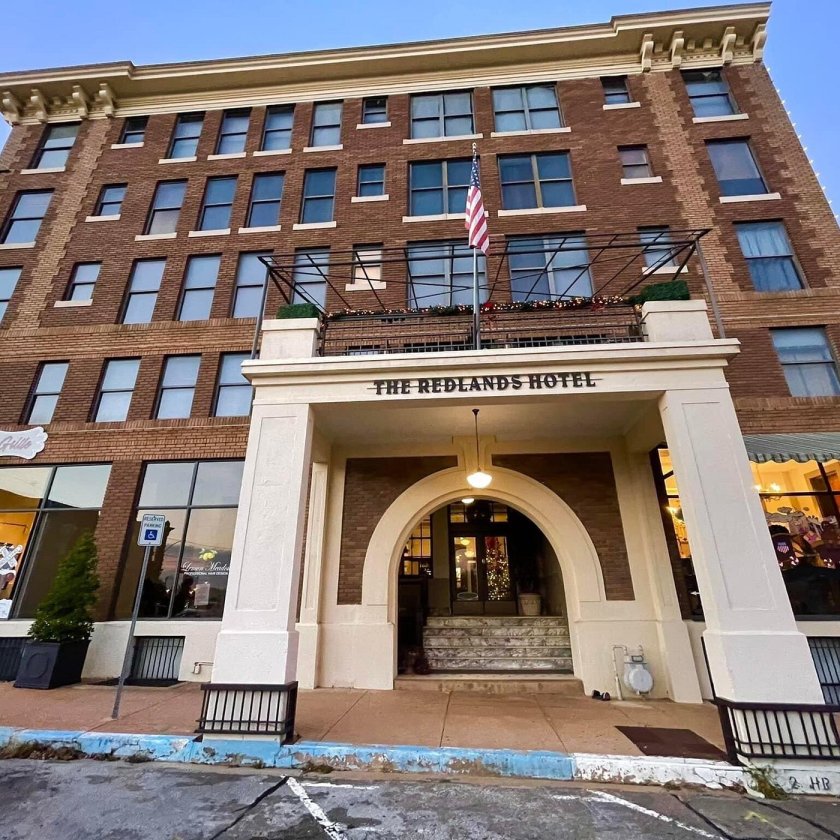
The well-maintained Redlands Hotel today.

Like, the story of the popular Redlands Hotel, where I sometimes go for lunch on my rare trips to town. It’s a lovely old building that they’ve done a relatively decent job of keeping up, especially considering the condition of the vast majority of the downtown area.

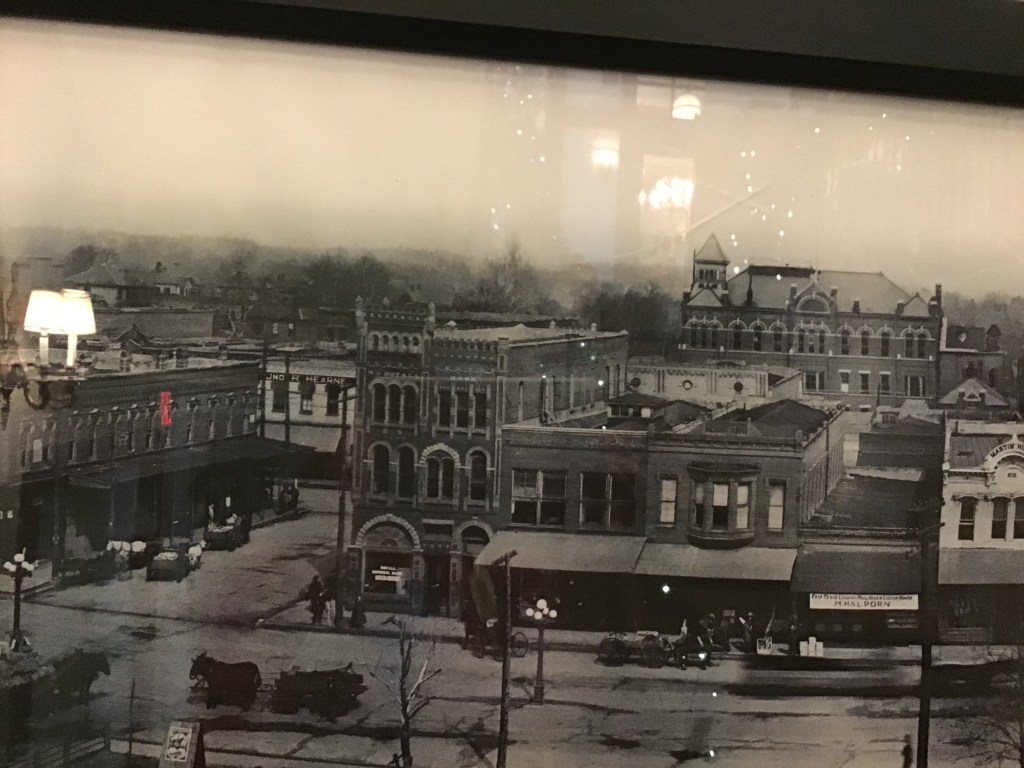
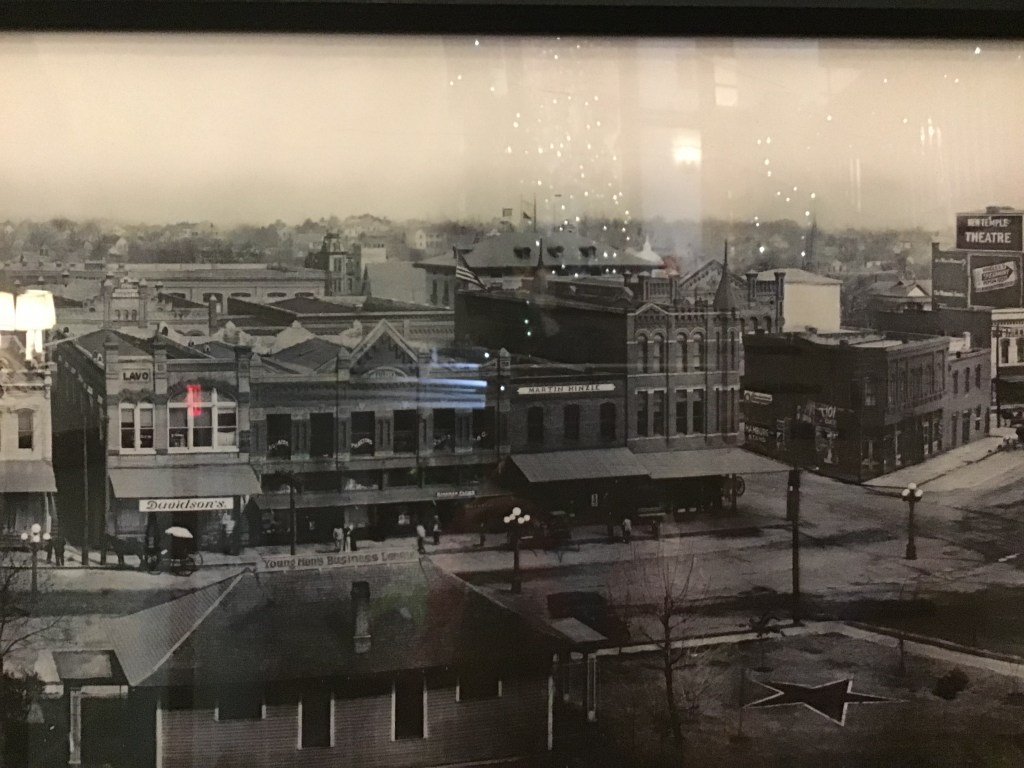
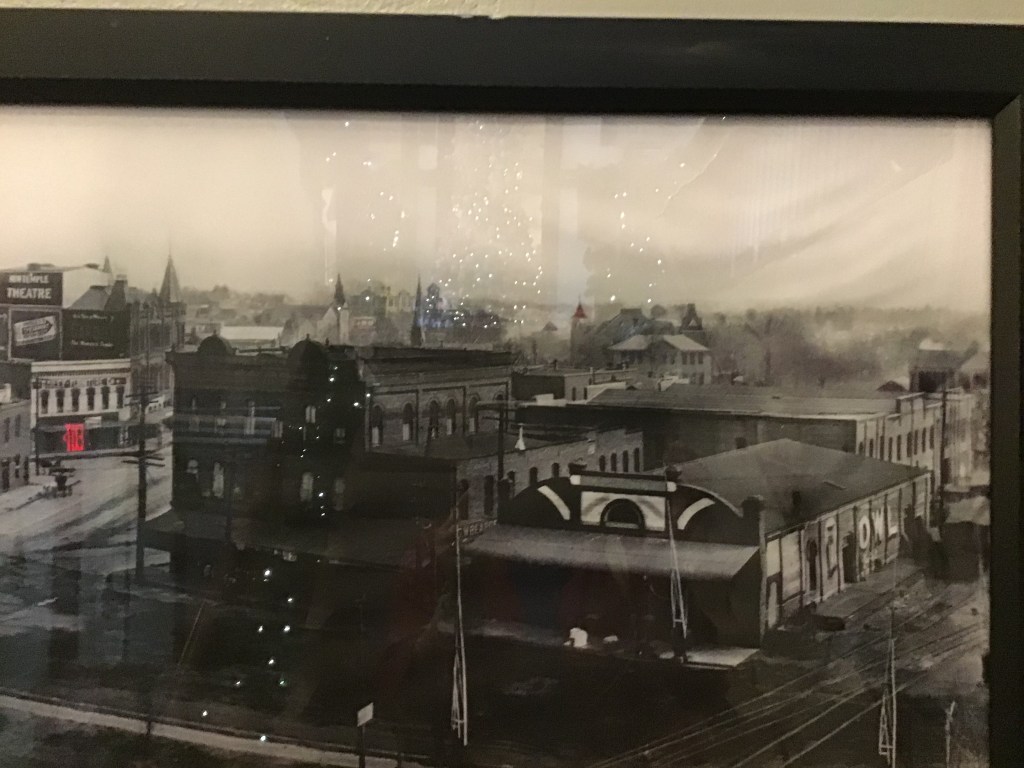
Interestingly, they have a panaramic photo of the early years of the city on display.  As you follow the railroad tracks from left to right in the photo, you end up at graffitti painted on the side of a building.  That is, the word OWL.

That’s my cue to start calling bluffs.
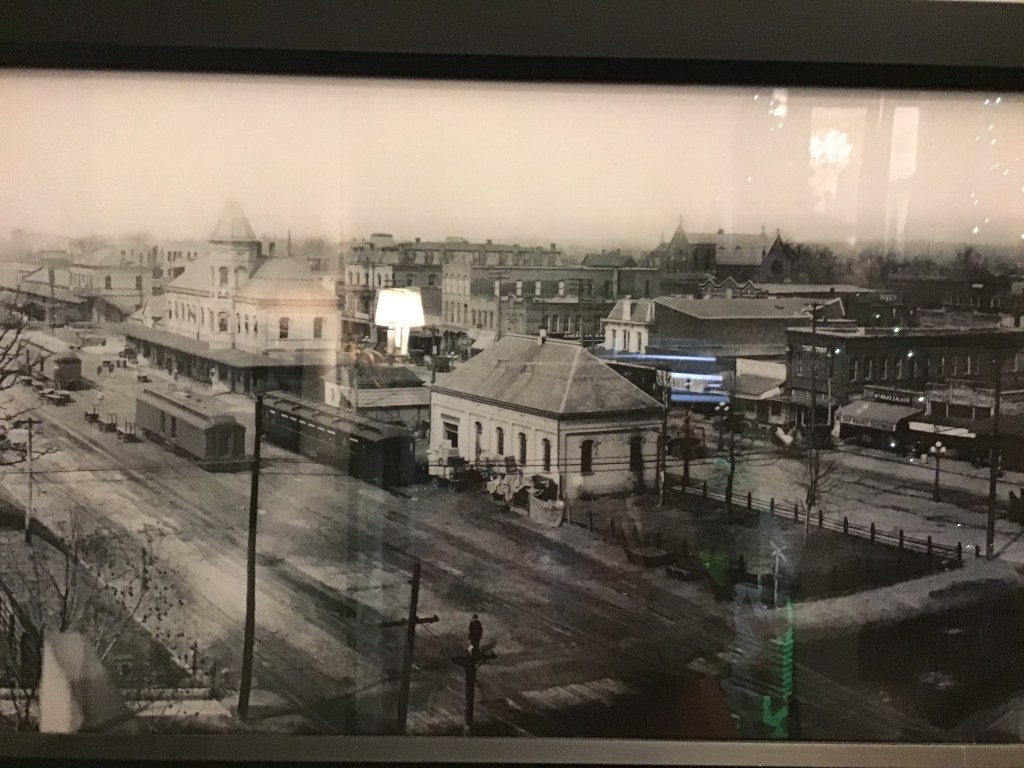
The owners of this hotel are deep into the official history, which is superficially helpful. As it goes, in 1914 when stockholders rushed to build the brown brick building, it was oxen that delivered the sand for the concrete. That is, sand from the Trinity River, 30 miles away. Are you kidding me?! That’s a pretty big bluff.

And even with that serious transport challenge, on supposed dirt roads, they managed to complete the five story building in a year.  Apparently dirt roads weren’t effected back then by rain or snow, neither were the human builders, or the oxen.  Amazing.

Even more amazing was that another striking building was going up on the other side of town, that is, the County Court House. The two structures apparently shared Italian artisans who installed hexagon tile to both buildings.
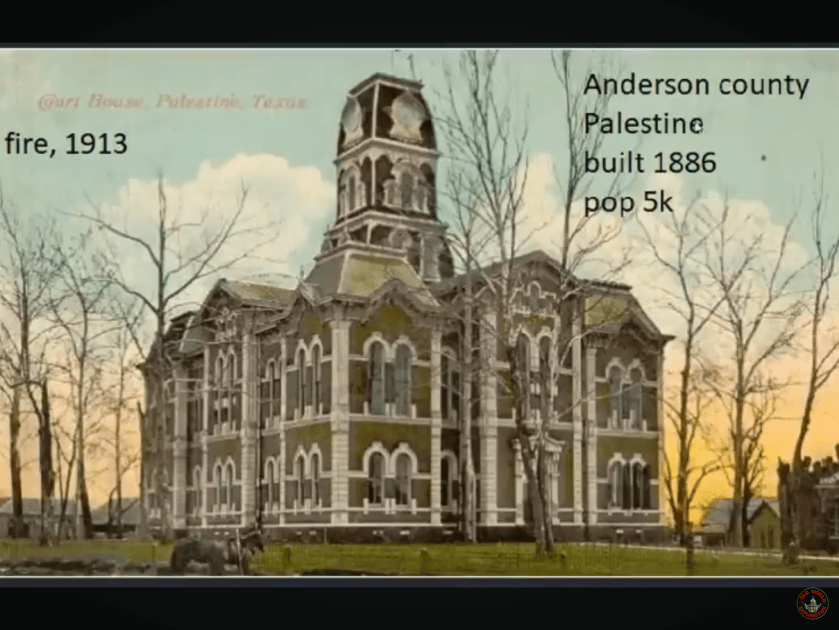
The original burned court house, depending on which source cited. Another source states the original courthouse was a small building made of wood.

“Considered one of the most modern constructions of its era, and built to withstand the challenges of time, its walls are made of concrete, masonry blocks, sheetrock, and metal studs—evident in the structure today.”

My those were some busy boys and oxen!

In fact, with just a bit of digging, we learn there was in fact another town at the Trinity River junction where the cherished sand came from, now missing from both the land and the history books. But, there remains one hand-drawn map available in the archives, Magnolia was the town’s name, and it was apparently so bustling with commerce and activity according to one source that they called it the ‘St. Louis of the South”.
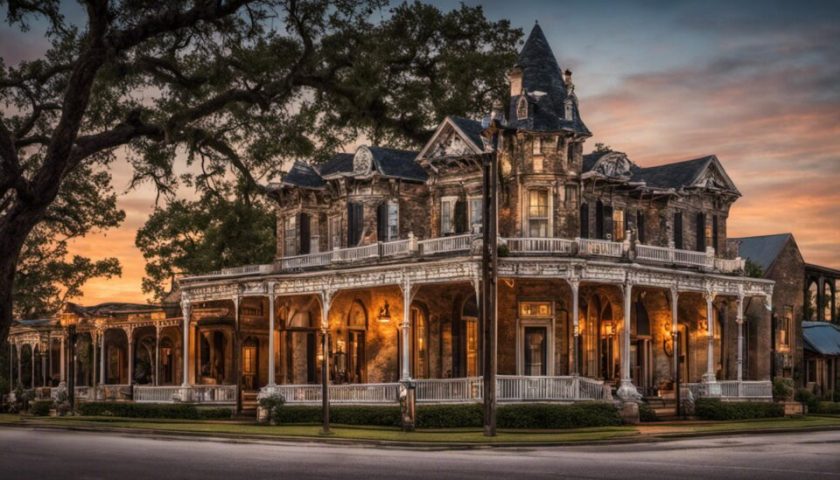
One of the many demolished structures of the non-existent town once called Magnolia, according to the official history.

“Magnolia was established in the early 1840s as a Trinity River cotton port and was named for a large magnolia tree in the center of the townsite. Magnolia had a post office from 1851 to 1871. William A. Haygood was one of the principal property owners in the community and operated cotton gins, a hotel, a livery stable, a general store, a blacksmith shop, and a local ferry. Among other businesses in the community were a drugstore and John McClannahan and son’s warehouse. Magnolia was reported to have a population of 800 at its peak around 1863, when the town had thirty-three blocks of residences and businesses. Most shipments from the port went to Galveston, but on May 5, 1868, a steamboat traveled up the Trinity to Dallas. After it was bypassed by the International and Great Northern Railroad in the 1870s, Magnolia declined rapidly. By the 1930s it was no longer shown on the county highway map, though its name was preserved in that of the two schools that stood on the site of the former town. In 1932 the Magnolia school for whites had an enrollment of forty-three and the Magnolia school for blacks, thirty-four. A 1982 map showed only the Magnolia Cemetery at the townsite.”
Magnolia, Texas
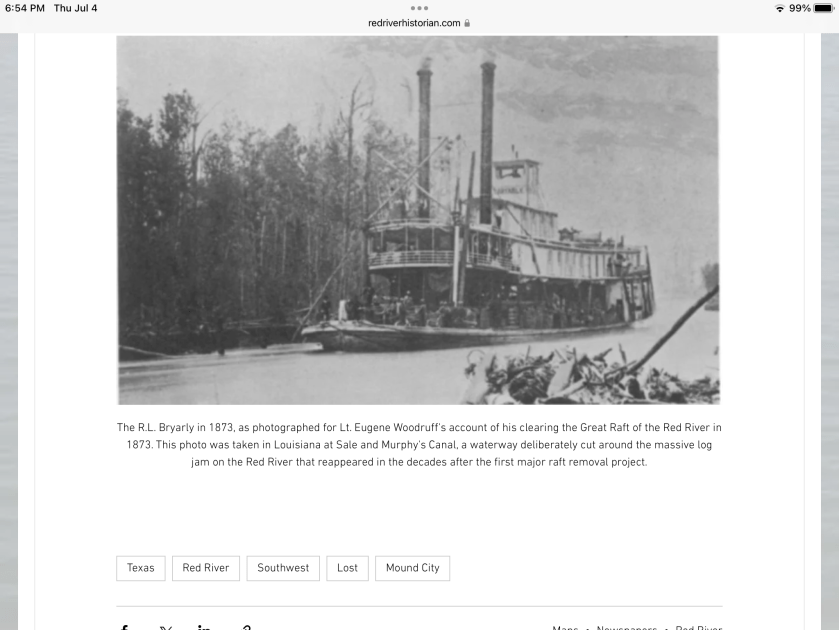
This is the sort of vessel which would have been traveling the Trinity River through Magnolia.

Nothing remains of this supposed river hub besides the hand-drawn map of the area where it was supposed to have been, where is now located some simple family houses, an intersection and the cemetery. I couldn’t even locate the river, or the supposed subsequent railroad.

Several other beautiful structures were also said to have been destroyed in this small city of Palestine not long after they were constructed.
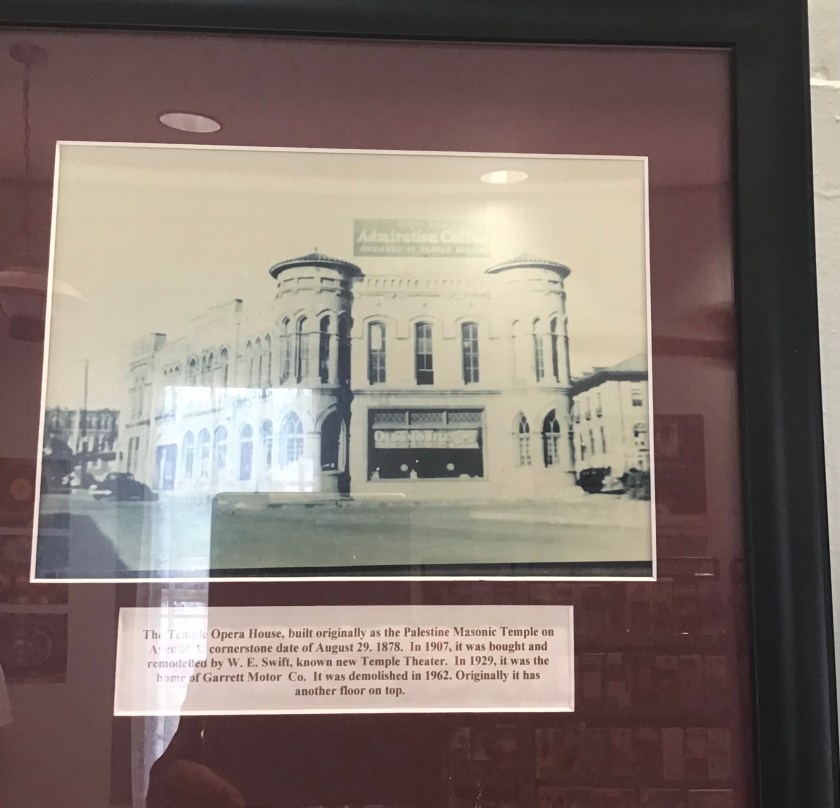
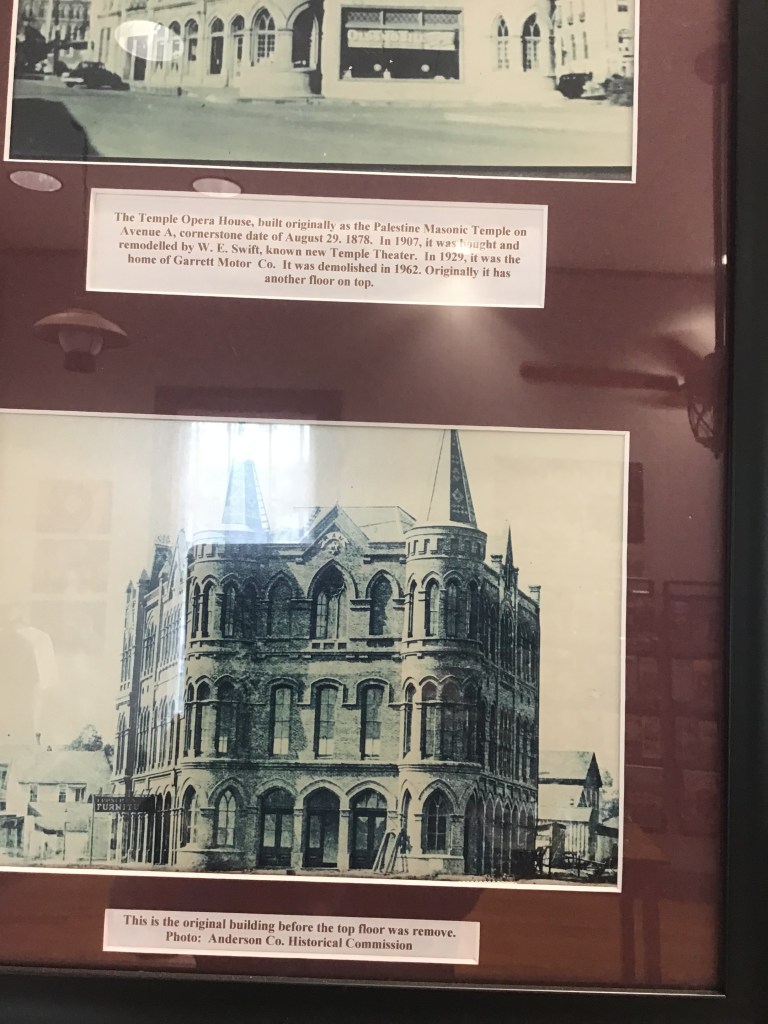
The Temple Opera House was built originally as the Palestine Masonic Temple with the cornerstone date of August 29, 1878. In 1907, it was bought and remodeled by W.E. Swift and known as the New Temple Theater. In 1929, it was the home of Garrett Motor Company, Palestine’s first Ford Motor Car Agency. It was demolished in 1962. It originally had another floor on top, but this was removed at some point.

At some point? Not even the official historians can tell us more specifically.

Exquisite building of multi-functions which didn’t have enough value to the small city to remain for a full century. The small box building housing a liquor store in that location now is so much better, I’m sure.

The “Railroad YMCA Building” was another one.
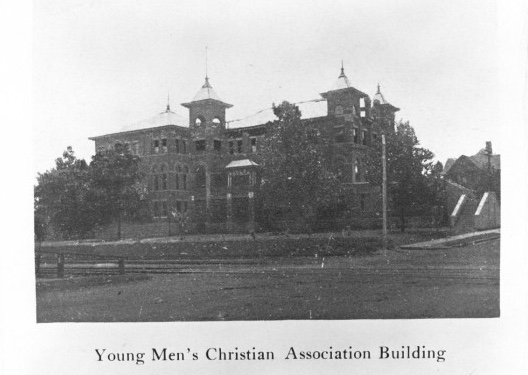
The Railroad YMCA opened in April of 1903 and continued as the YMCA until the building burned in the mid 1950’s. Interestingly, there seems to be no recorded photos available of this horrid fire event of a huge BRICK building. Nothing to see here! (In fact, I believe this to be another building altogether, more on that in a future post.)

As I searched the stacks of the local history at the library I was surprised to find several ‘fake books’ — that is supposed local history written by a source who cannot be located and is listed in the local phone book with phone numbers that don’t work and at addresses which never existed.  Three different phone books, three different addresses, I actually went to all of them personally.  Nothing.  The books appear to be written by AI!  I brought this to the attention of the library board, and no one cared.  At all.  I never heard back, though I went personally to the board meeting with evidence in hand.  They didn’t even care to know which books it was with these obvious falsities, possibly written by an unaccountable AI, and sitting in their stacks posing as actual local history written by a fake person.

And now I feel frustration setting in, so enough for now, to be continued . . .
What’s Been Lost II

We’ve all heard the expressions: “History is a set of lies agreed upon” and “History is written by the victors” and most have come to accept these tropes.

But what they may not have considered is when the history is that flexible, all those academic fields which are history adjacent–like anthropology, sociology, philosophy, literature, all cultural studies, even linguistics– become subject to those authoritarian whims and fashionable irregularities.

Generalization, subjectivity, distant observation, even making obvious comparisons across vast and complex measurable units–ie. pattern recognition–is not just discouraged, it’s potential grounds for dismissal. It’s considered sloppy, unprofessional, unacademic. Pseudo-subjects and conspiracy theory.

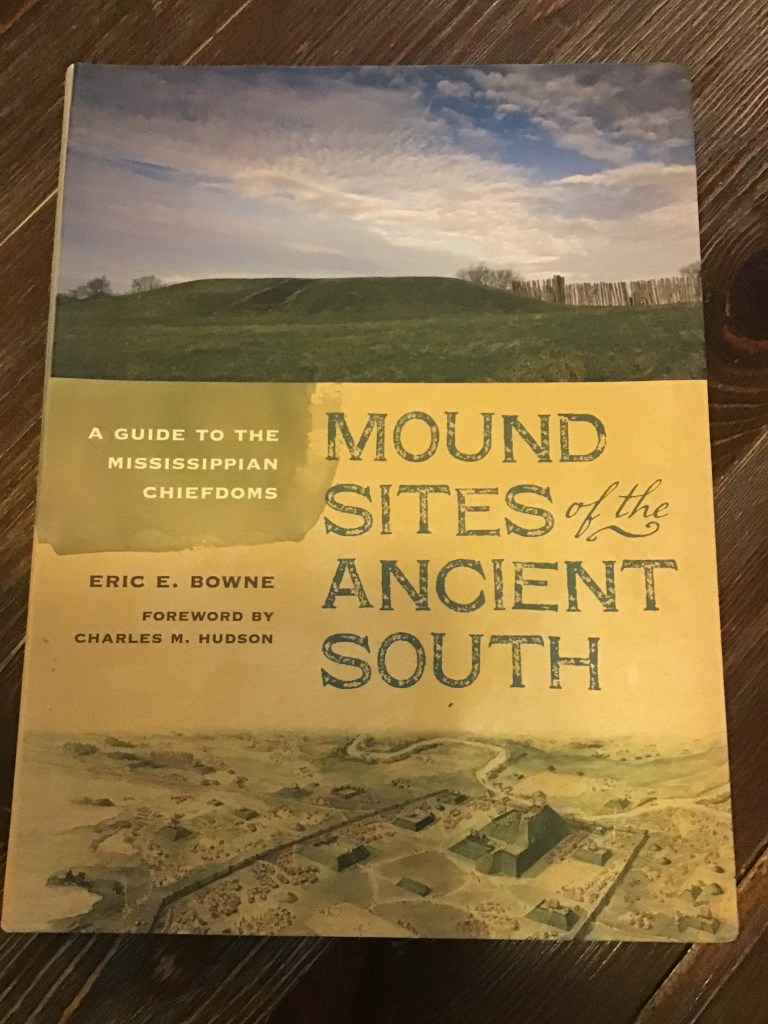
Academics are especially vulnerable to such manipulations as their fields are controlled in a strict hierarchical system and their studies, even as tenured professors, tend to stay very narrow in scope. They do not need to strive for a cohesive worldview in their academic work as they are mostly employed to measure the minutia, to dig deep into one tiny corner of the field, as has been the case with the historical and architectural world of the Mound Builders.

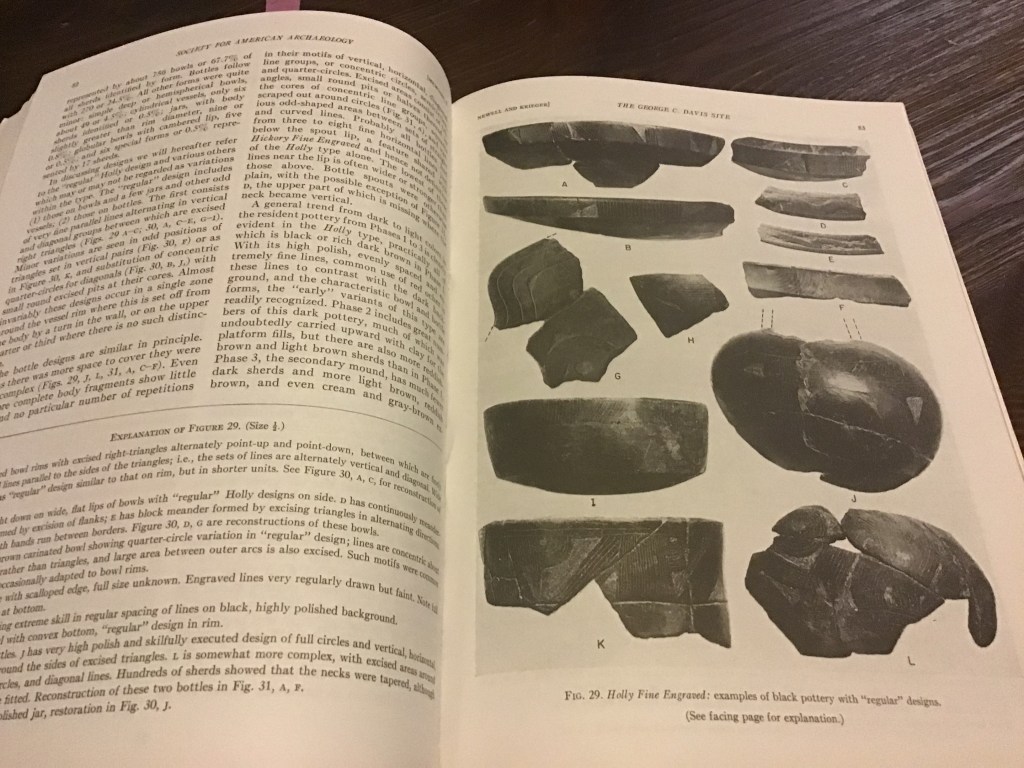
What the volumes of academic work on these cultures tend to do is narrow in so microscopically as to make all similarities irrelevant and cross-cultural observations inadmissable. They debate ad nasauem around shards of pottery found just beneath the surface of their archeological sites and the thousands of ways these tiny artefacts differ from one locale to the next.

There are literally thousands of pages published on comparisons and categorizations of tiny fossils and shards of the various Mound Builder tribes of the Americas. Specific measurements are taken of the space between the decorative lines and their width, length and coloration. All is catelogued in such microscopic detail as to bore to tears all but the most myopic of minds.

Truly, it is a form of academic gaslighting. Keep searching right here, right in this tiny framework where we’ve given the appropriate boundaries and designations. Don’t broaden, don’t do your own investigations, don’t venture out of your assigned territory, all alien parameters will be squashed with contempt and mockery and quite likely, career death.

Observe, very closely, and question every narrative.

That singular, rigid, hierachical model has been demolished with the Internet and for me, who formally studied and taught for four decades the very subjects now being shamelessly dismantled, I couldn’t be more pleased about it.

Actually, I could be. If there was a guarantee the ends would somehow justify all these means–as in the decades of lies and indoctrination and then subsequent ripping away of those foundations and the now erupting attempts to filter the masses into new molds for better slave management and more prosperous slaveholders–then I would certainly be more pleased.

But I’m not so naive as to think there’s ever any such guarantees. (As an entertaining aside, James Corbett here at his comedic best with more on our system of modern slavery.)
https://youtu.be/ZjwO9_3g4xQ?si=8u5_OumKlk-LOMub

But my topic today is a continuation of the last What’s Been Lost new Kensho series. And say what you want about formal education, I’ve experienced the pros and the great many cons, but for all those naysayers and critics, my serious education these days comes from Youtube, mostly. I know, right?!

Don’t knock it ’till you try it, there are some really amazing teachers there (they call them creators now, which is nice) and I’m not watching them to buy into any of their conclusions, but just to appreciate their work, collect their evidence, and consider, that’s all.

There are relatively few in my life who care about this stuff at all, so I’m grateful for the company and impressed with their body of work. Yes, I do understand some of them are part of a big club, and I’m not in it. I don’t mind. And I’ve got no where else to go, and I’ve got a bit of time and loads of interest.

So for those others who might be interested in exploring and considering with me, we continue in search of what’s been lost.

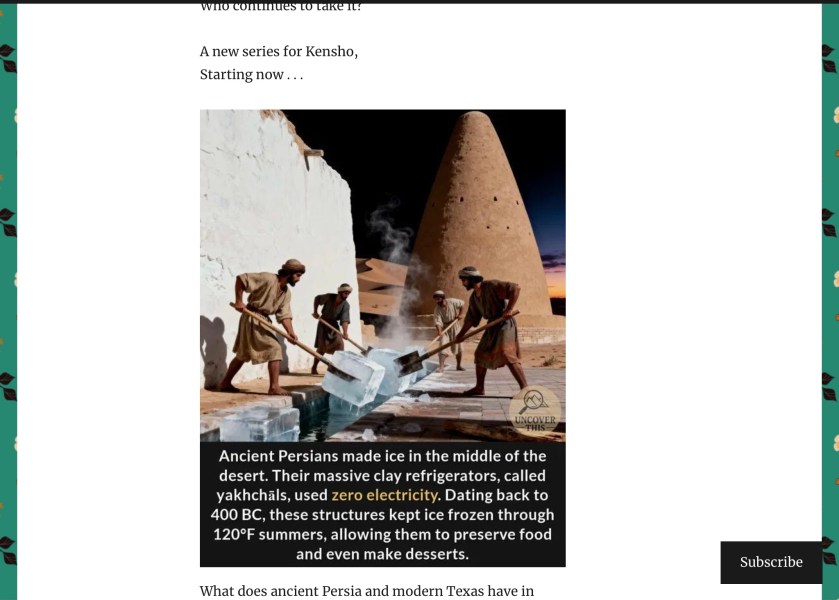
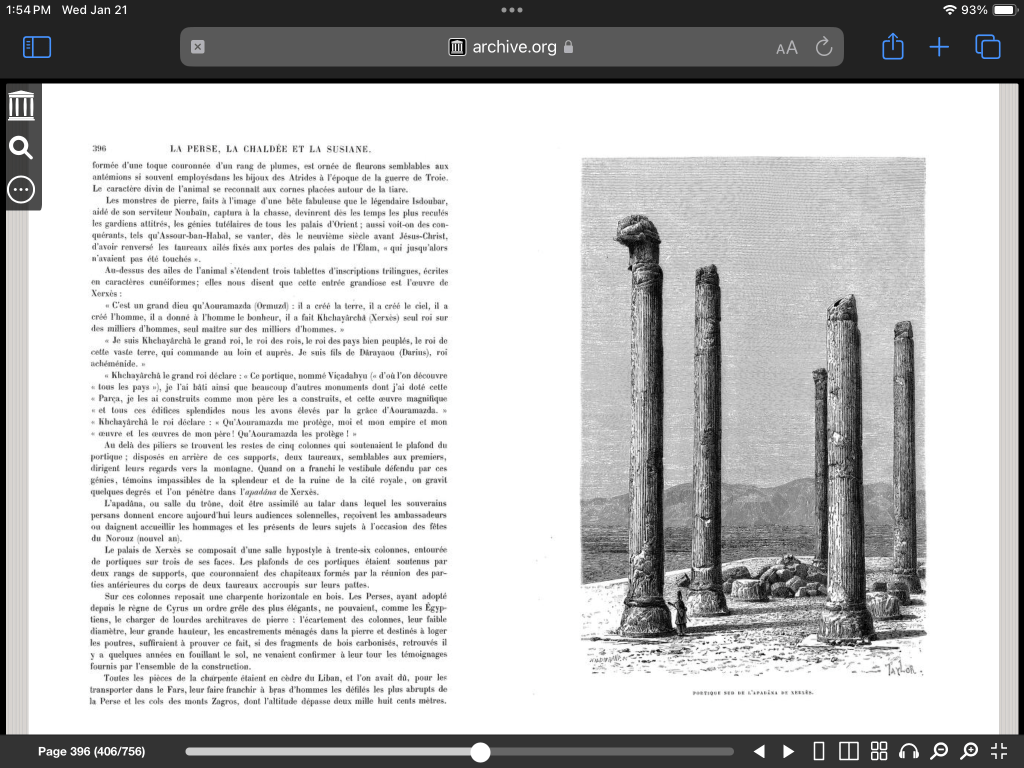
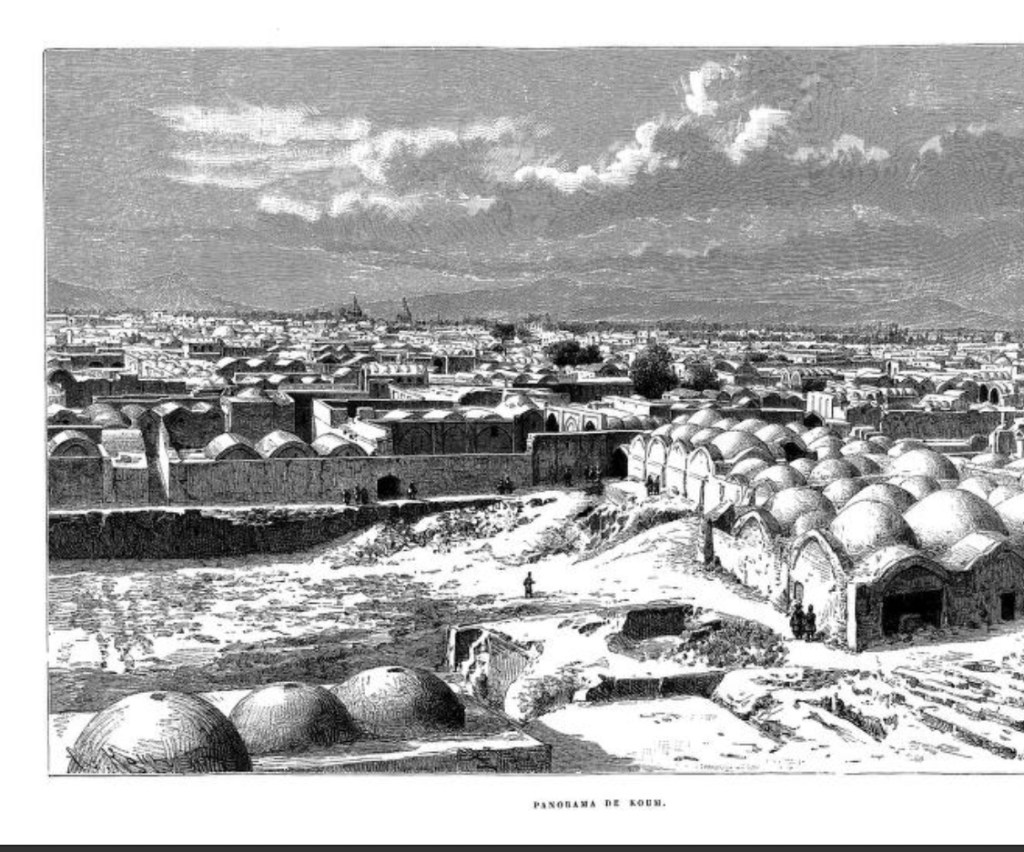
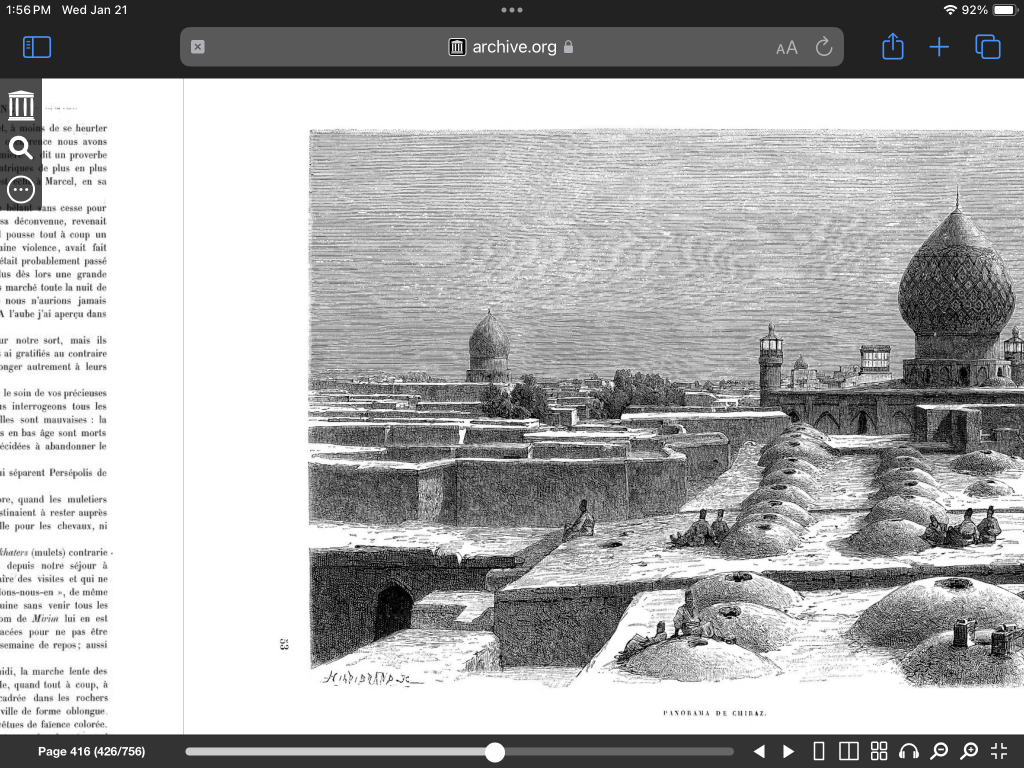
Last time I shared about the Yakhchal, a common radiative cooling system used from ancient times, still in operation in parts of the Middle East, and perhaps close by as well, as close as Dallas.

https://kenshohomestead.org/2026/01/18/whats-been-lost/

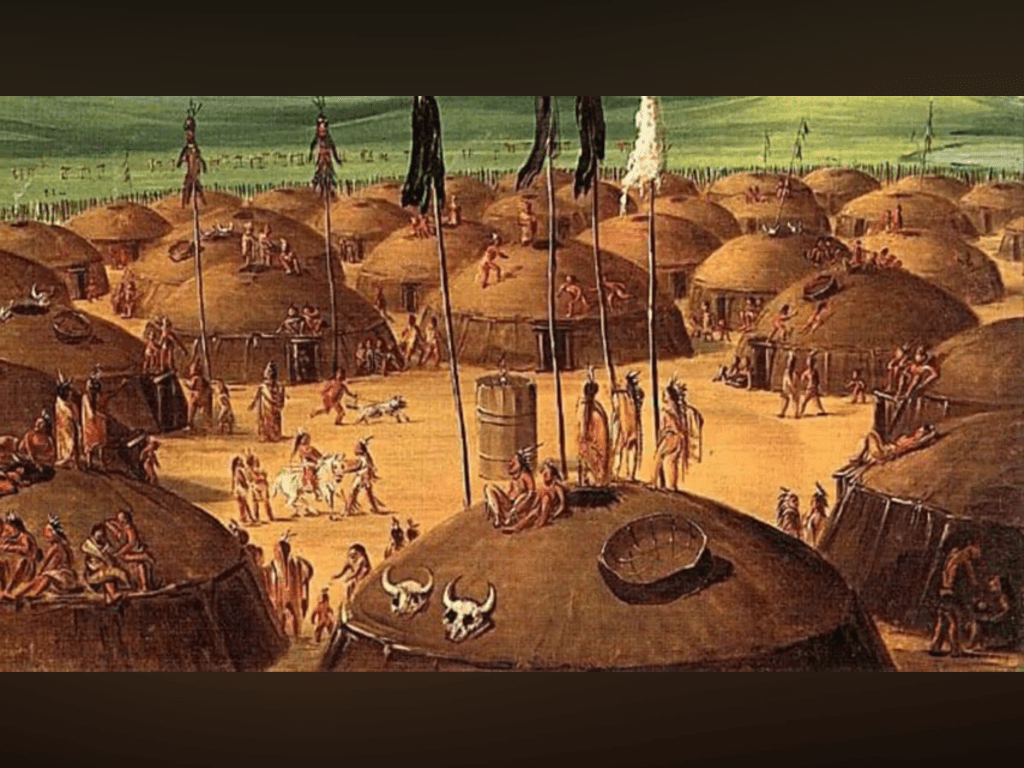
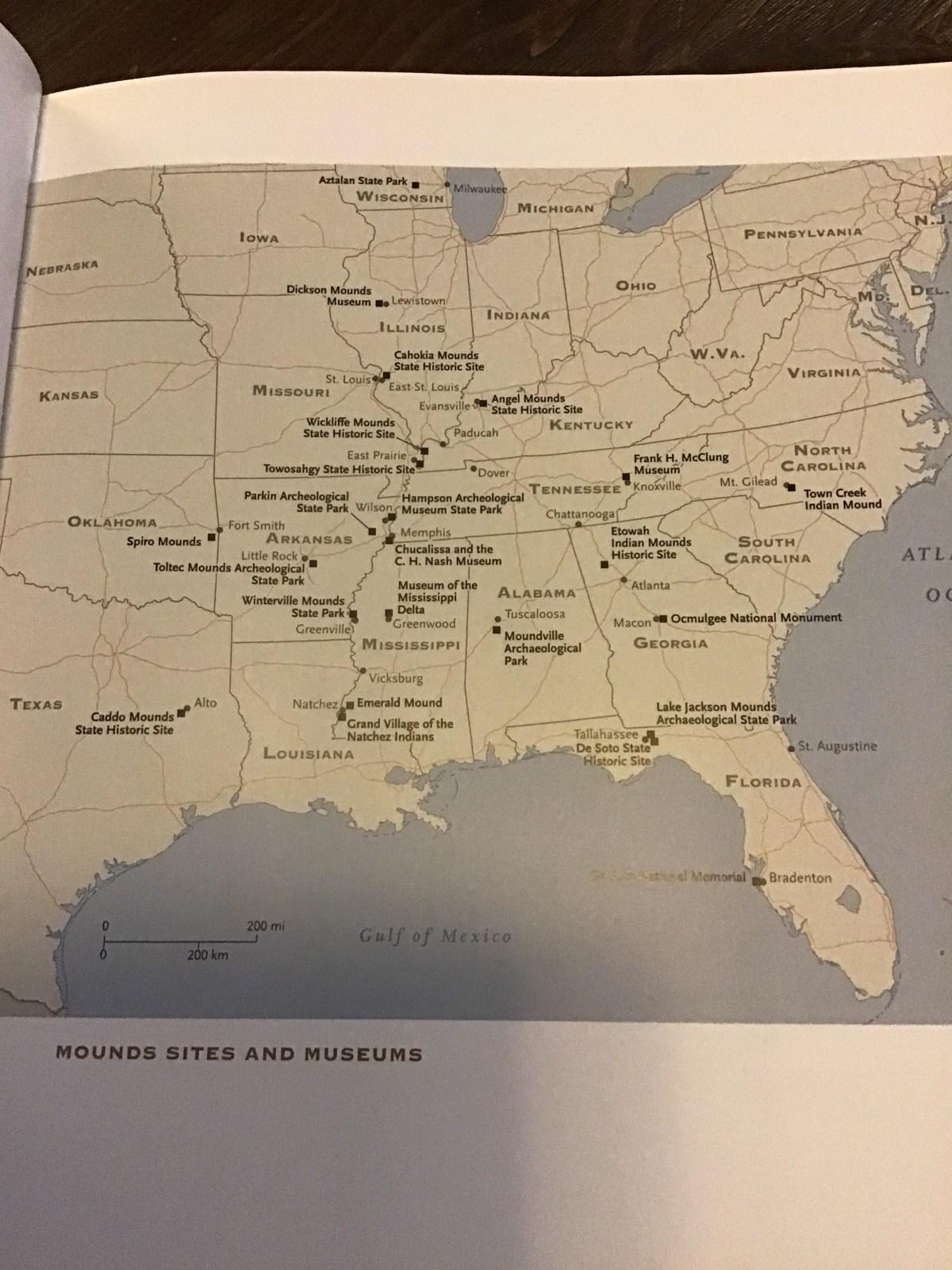
Now I will introduce another thread to this story, the so-called Mound Builder ‘indigenous’ tribes of the South, officially referred to as having been ‘occupying’ these lands before the arrival of the Europeans.

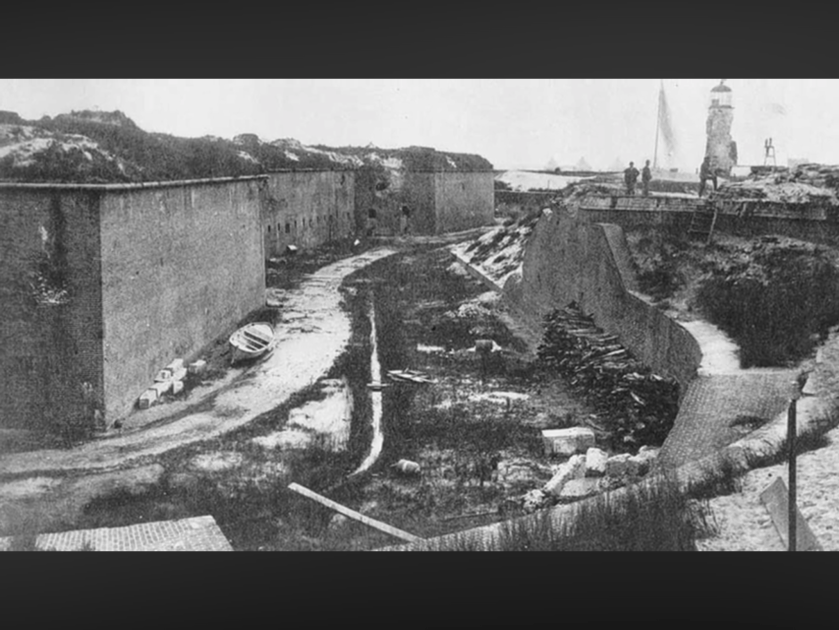
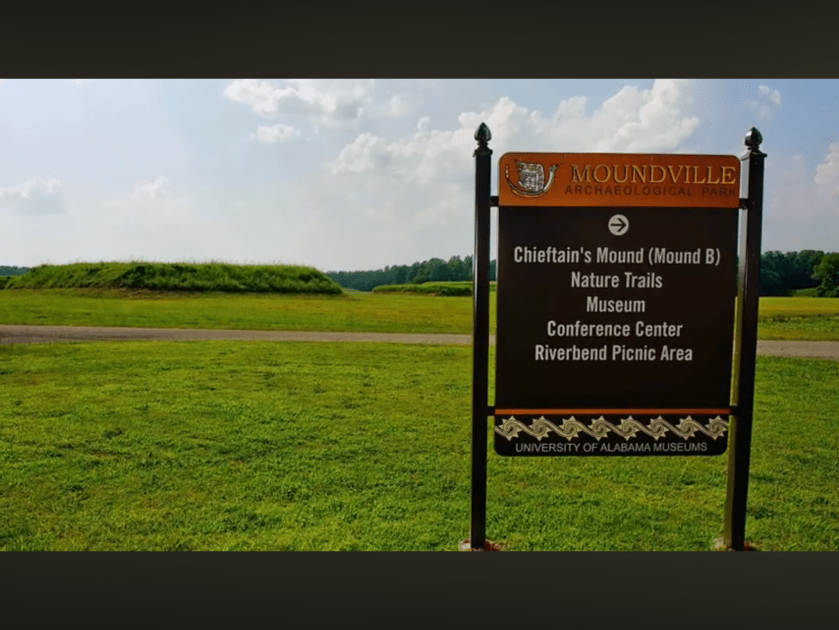
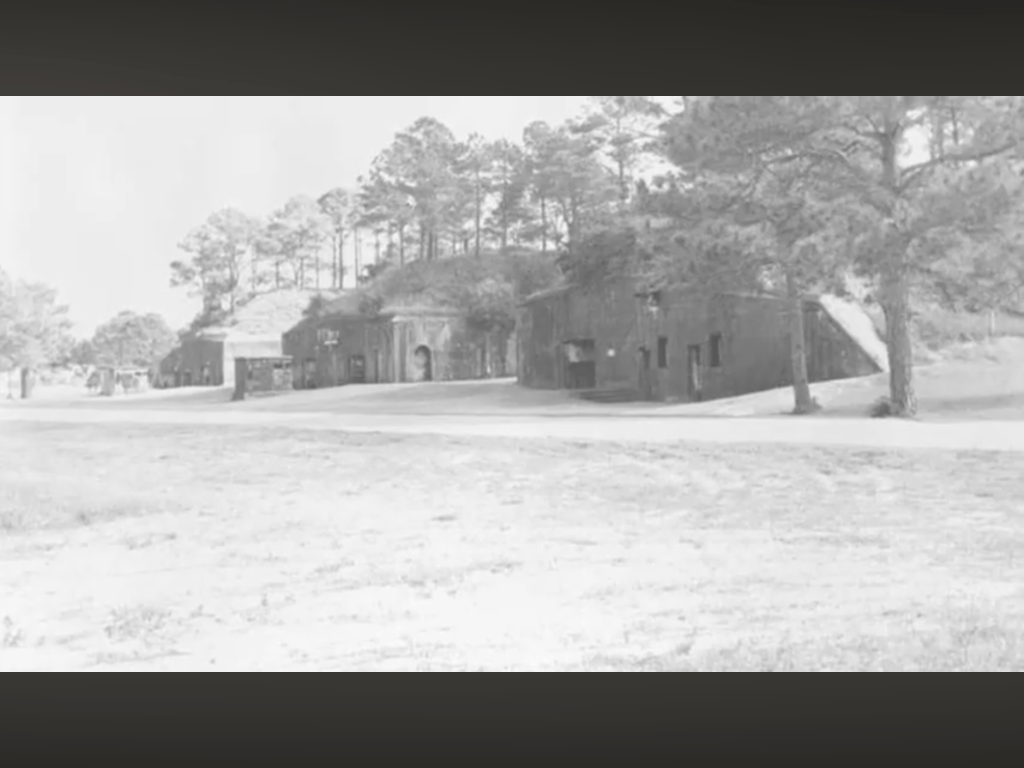
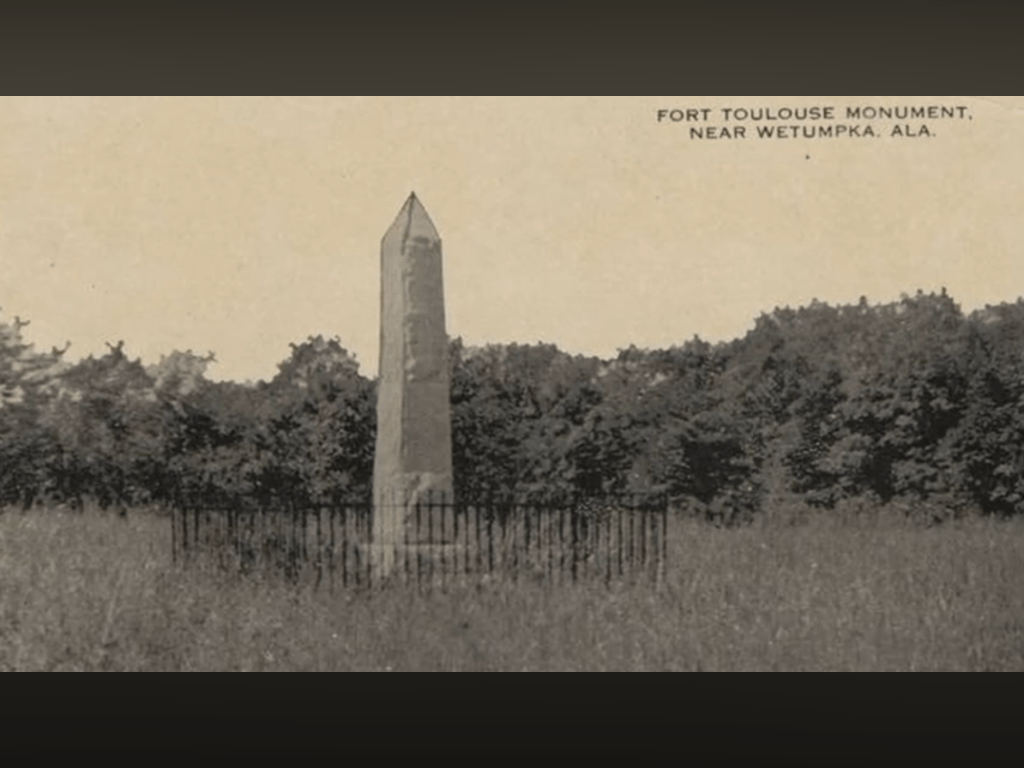
A recent video by Jarid Boosters was perfectly timed and is well worth a complete viewing. In it he considers one such Mound Builder culture in present-day Moundville, Alabama, once called the Kingdom of Pafalaya, which includes Fort Morgan. Most of these sites are former military installations and are owned by universities and used as tourist traps now. Some of them are privately owned, all have vast areas not open to the public.

We have one very close to us as well, known as Caddo Mounds, which I’ve written about briefly before, after a sudden (manufactured) tornado hit during their cultural ceremony, destroying much property, killing one and injuring many. The site has since been upgraded and reopened, though there is little to see besides some very basic ‘replica’ huts and of course, a large gift shop.

One of the most famous ones is in the mid-West, near St. Louis, not that far from where I grew up, called Cahokia Mounds.
https://youtu.be/Gw6A2RgVwjs?si=bUXC9lyrKKuRHSQb

What I propose has happened with these sites is a deliberate militarized program of generational amnesia.

“Generational amnesia refers to the phenomenon where each generation forgets important knowledge and experiences from previous generations, leading to a distorted understanding of the past and the environment. This can result in a lack of awareness about changes in society and nature, as new generations accept their current conditions as the norm without recognizing what has been lost.”

They tell us ‘Generative AI’ will solve this mounting modern social problem. Promises, promises. Let’s not wait on those any longer.

For a bit of background, Mound Builders refers to ‘prehistorical’ cultures of the ‘ancient’ South. For our purposes, ‘prehistorical’ refers to the most recent rewriting of history, or ‘reset’ as many interested in these topics are calling it; and ‘ancient’ refers to the ‘Roman’ era and all those pre-dating it. In this version of history we examine especially the period of the so-called “Civil” War, or the war between the states, or the war of Northern agression, or whatever other term seems appropriate for that period of time when much of the southern US was destroyed and their history re-written by the victors.

At this time the official narratives went under the command and control of the military, if they weren’t there already. In my estimation we have always been a military industrial complex, this wasn’t a new phenomenon predicted by another puppet president.

There are other ‘fringe’ channels that deal more specifically with military history, that is not my main interest, one I could recommend for this angle would be that of a former history academic:
https://youtu.be/LqiZPX0Ordc?si=IOKaZQ7FT2Bjr7Wg

In fact, there are so-called Mound sites all over the South, and I’d suggest many of them are as yet ‘undiscovered’ because they sit on private property where even the land owners have no idea what’s beneath them.

In nearby Nacogdoches there is another ‘curated’ Mound site:

“Excavations at the Washington Mound site have uncovered the archeological remains of a large Middle Caddoan period (ca. A.D. 1250-1350) mound complex in south-central East Texas. The investigations of this heretofore unknown complex indicate that there was a significant post-Alto phase culture in the region that may have had a significant impact on subsequent regional Caddoan manifestations.”

While there are teams of academics studying the tiny differences in the fossils on the surface and money rolling in from the tourist trade, and grants galore for those academics willing to tow the official line, the accepted narrative framework gets further cemented into the public consciousness.

The new Southern history started in 1888 or thereabouts, with 1933 appearing oddly often. The commonalities of these sites, like the ‘charcoal-filled pits’ and ‘post holes’ are left as side curiousities or mysteries or given barely-plausible labels like ‘ceremonial spaces’ or ‘burial grounds’.

According to Wiki we see some typical features, like the involvement of the Smithsonian Institution, and a minimum of curious names and the all-important dates to keep our minds distracted from the bigger picture:

The earliest recorded written mention of the mounds was in 1779 by Athanase de Mézières, who traveled from Louisiana to San Antonio in the employ of the Spanish government. In 1919 American James Edwin Pearce was the first professional archeologist to record the site for the Bureau of Ethnology (Smithsonian Institution). In 1933 archeologist E. B. Sayles concluded that the site was a Caddo mound center, after conducting surface collection of artifacts at the location.
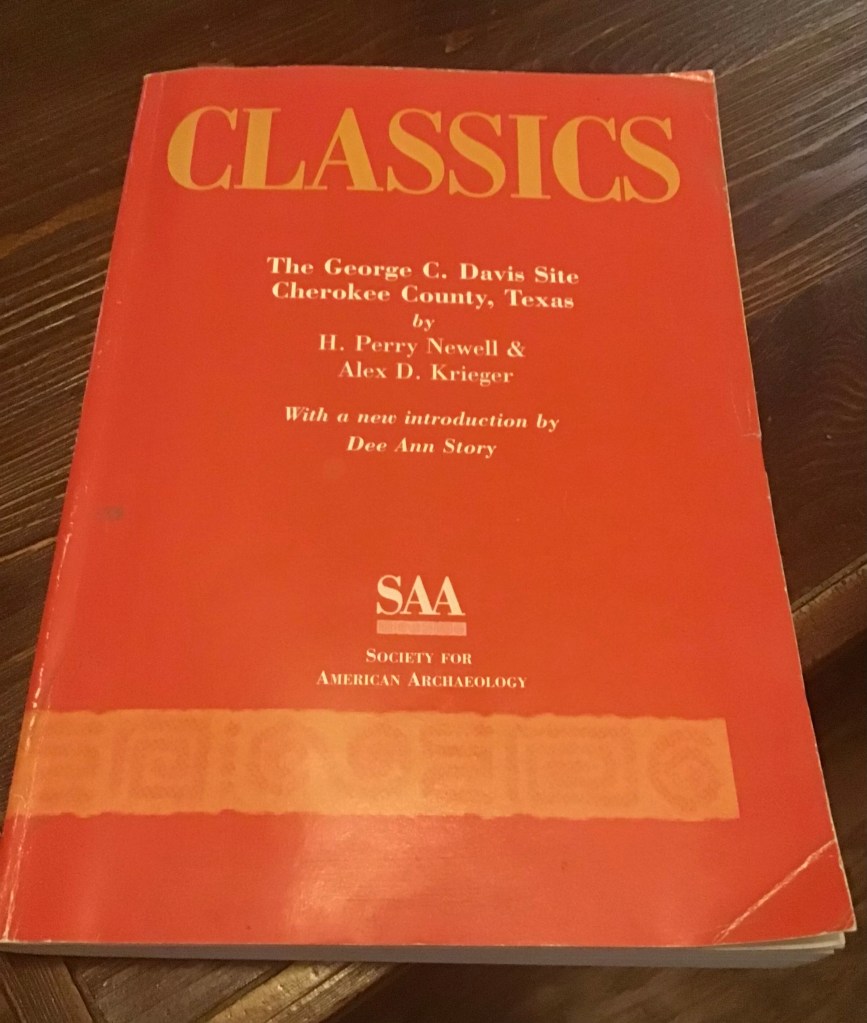
The first scientific excavations were conducted from 1939 to 1941 by H. Perry Newell, a University of Texas archeologist with the federal Work Projects Administration in the government of President Franklin D. Roosevelt. When Newell died, archeologist Alex D. Krieger took over investigations at the site and concluded that it had been a major Caddo site. Further excavations in the 1960s and early 1970s by Dee Ann Story pinpointed the timeline of the site to 780 and 1260.

Following military service, Tunnell returned to Texas and began working with archeologist Ed Jelks on the Texas Rivers Basin Survey project funded by the Smithsonian Institution. Their first investigations took place along the McGee Bend of the Angelina River in East Texas, later impounded as part of Sam Rayburn Reservoir. He also worked in the Lake Amistad area along the Rio Grande.

As State Archeologist, Tunnell participated in scientific investigations at the Alamo and other important Spanish Colonial mission and presidio sites in Texas, directed archeological excavations at the ancient Folsom-age Adair-Steadman site, and braved the waters of the Rio Grande in order to record the archeological resources present in the canyons of the Big Bend region. He battled commercial salvagers to retain the 1554 Spanish shipwreck artifacts for the State of Texas and was instrumental in the development of the Antiquities Code of Texas, the legal tool to protect historic resources on public (state) land, including submerged shipwrecks. 

His films and audiotapes documenting the work of numerous folk artisans and craftsmen in the Texas-Mexico border region may well represent the only records of the practitioners of many vanishing crafts and arts. In 1981, Tunnell became THC executive director, a position he held until his retirement in January 1999. 

Through his decades of state service, Tunnell traveled to all 254 Texas counties and developed lasting friendships in all regions of the state. Tunnell passed away suddenly at his home on April 13, 2001.

His name was Tunnell, former military, and her name was Story. Isn’t that special. He liked to talk about Arts & Crafts. But not so much about Antiquitech.

What I wonder is, do the actual tunnels tell another story?

We’ve got mounds and post holes and charcoal-filled pits; we’ve got vast stone walls covered over by lakes and resevoirs and now deemed ‘legend’; we’ve got historical timelines that have clearly been ‘revised’, many times; we’ve got buildings and other structures that make no sense, but get little attention.

The burying of the past continues, the generational amensia widens, and aside from a few Youtubers and their marginalized audiences, I wonder if anyone else really cares.

Just in case you are one of the few who do, thank you, and you’re welcome.

More on the vast and ubiquitous caves and caverns of Texas and the mid-West on a future journey.

Groveling for Gratitude

Handy Hubby is a veteran in common parlance, but I’m so glad he doesn’t go around announcing that to strangers like a child desperate for recognition and approval.

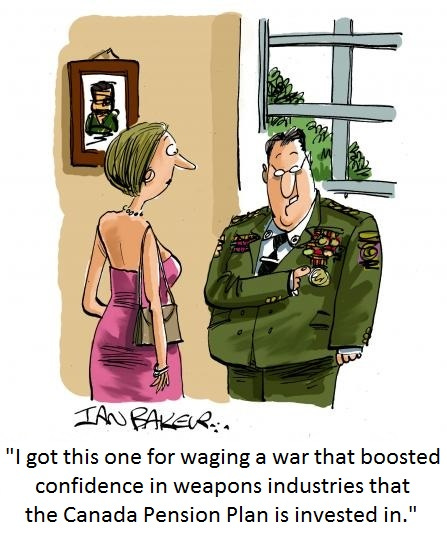
We get a discount at Lowe’s, so that’s pretty cool, because we spend loads of money there. It makes perfect sense that corporations reward veterans, because that’s who veterans serve.

Hubby joined the military because he wanted to expand his opportunities, same as many young people today.

Instead of celebrating Armistice Day, we celebrate Forever War.

Retired Lieutenant Colonel (USAF) Bill Astore writes:

“Sadly, as we raise more troops and fight more wars, we seem committed to the opposite. Our military just enjoyed its best recruiting class in years. This “success” is not entirely surprising. It’s no longer that difficult to fill our military’s expanding ranks because many of our young men and women simply have little choice but to enlist, whether for economic opportunity, money for college, or benefits like free health care.”

I served in the Peace Corps, but only one person has ever thanked me for my service, a stranger who didn’t know what the Peace Corps was, but everytime he heard the word “corps” was conditioned to reply with the proper canned reply, “Thank you for your service.”

Everyone knows the Peace Corps is for idealistic, lazy losers, unlike the military, which is for tough, courageous go-getters. Hollywood tells us so.

You want to joing the Peace Corps? What are you some sort of bleeding heart liberal hippy?!

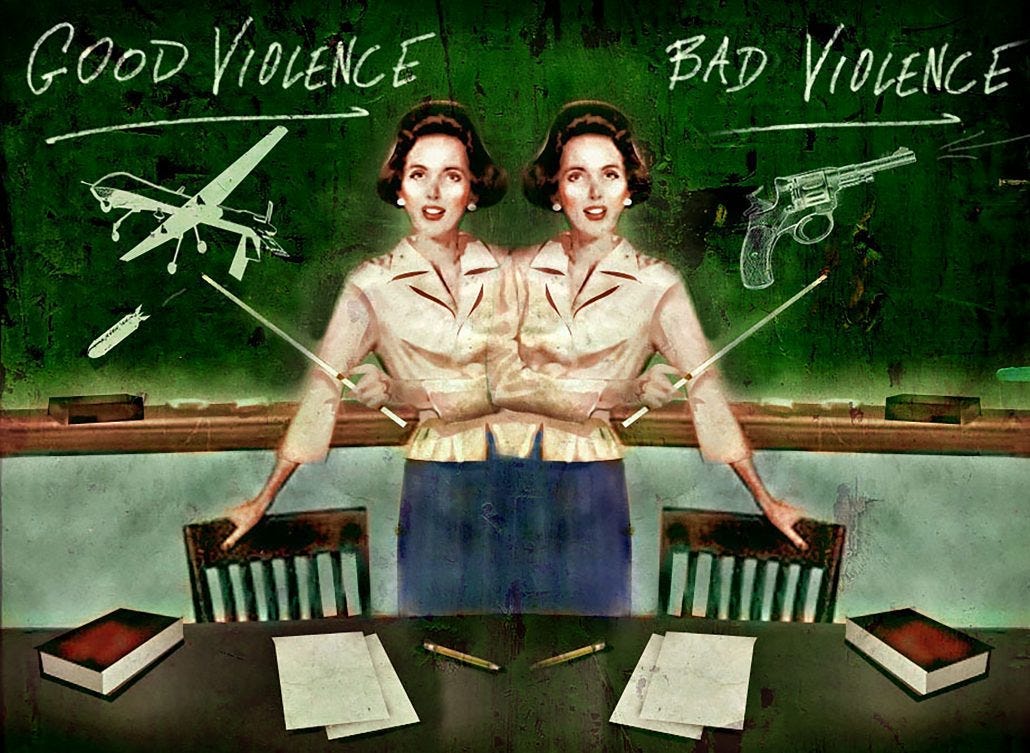
“Since a very young age we are indoctrinated into the idea that wars are the story of “good” guys vs “bad” guys, that we are (of course) on the “good guys team” and the reason that the poor people from our country were (and continue to be) sent to other countries to kill other human beings with technology designed to end sentient life is so that we can “bring them democracy”, “protect our freedoms” and “ensure regional stability”. The truth is nothing even close to that comforting fairy tale.”

The Peace Corps volunteers don’t get included in Veterans Day, which used to be called Armistice Day, to remember the fighting that ENDED.

Once the wars became continuous they had to change the name.

I supported the Peace Corps for over two decades after I returned home, through financial donations, writing articles for their sites and singing their praises whenever I had occassion to do so. I stopped supporting them once I realized they’d turned pro-war.

Hollywood creations and fictional characters like the veteran Jack Reacher are worthy of the fandom of grown adults because that definitely has no resemblance to grown adults worshipping comic book figures like Superman or Robinhood as if they are real people.

“Collectively, we Americans tend to suppress whatever doubts we have about the wisdom of our wars with unequivocal statements of support for our troops. And on days like Veterans Day, we honor those who served, and especially those who paid the ultimate price on the battlefield.

Yet, wouldn’t the best support for our troops be the achievement of the dream of that grizzled vet who cut through a young man’s fog thirty years ago? Shouldn’t we be working to achieve a new age in which the rosters of our local VFWs and Legion posts are no longer renewed with the broken bodies and shattered minds of American combat veterans?”

“Working Towards Peace: Imagine if Veterans Day Became Obselete” Bill Astore, Bracing Views substack.

“There is no honor in tax-payer funded organized murder for profit: War is still a racket” Gavin Mounsey substack

“On November 11th, a day when we have been conditioned to glorify war as “necessary and honorable” let us take an honest look at the true nature of (and profiteers) of Modern Warfare”

Healing, or Perception Management

“Don’t sweat the small stuff. And it’s all small stuff.” ~ Idiots everywhere

“That which doesn’t kill you makes you stronger.” Fathers everywhere

“Where God closes a door, he opens a window.” Mothers everywhere

“Best cancer EVER!” ~ Stefan Molyneuxhttps://freedomain.com/freedomaininterviews/how-cancer-can-make-you-well-stefan-molyneux-with-laurette-lynn/, shilly online philosopher

“It’s just a flesh wound!” Monty Python

The message is clear and ubiquitous in the modern world, that favorite word of religions, wanna-be warriors, social programmers and closet tyrants everywhere: Transcend.

Or suffer. Your choice.

Transcend pain, transcend discomfort, transcend ennui.
Transcend mind, transcend body, transcend your very sex.

Jennifer Bilek might tell us a thing or two about that.

“The speed and coordination of this deployment—from zero “transgender children” before 2000 to their ubiquitous presence in schools and media within two decades—reveals orchestrated social engineering rather than natural cultural evolution.

The speed of normalization reveals coordination impossible through organic social change. Within two decades, major medical associations endorsed pediatric transition, schools implemented gender identity policies, and laws passed making it child abuse to question a minor’s gender identity. This transformation required massive funding, institutional capture, and media compliance—all documented in the money flows Bilek traces.”

Growth, like healing, does not happen on a fixed schedule, and sometimes it never happens. But, permanent medical interventions invented to create a profitable market out of confused and abused children is truly circling the drain.

It really irks me when those who call themselves and think of themselves as healers, use this form of gaslighting, which is actually perception management, in order to train ‘patients’ and the public how they should feel.

What’s actually happening at a fundamental level is cognitive and emotional dissociation. It makes the healer feel a lot bettter than the patient.

It’s an epidemic really. Magical thinking, positivity, silver linings, Hopium–they really only get you so far–which is to the next moment, where your mood or situation will have necessarily altered, but the REAL healing, the real growth, was simply relinquished to the back seat.

To rear it’s head another day. A day when most likely that fair weather friend or healer has moved on to greener pastures. More hopefully, the seeker has to. And by seeker I mean, the one looking for the healing.

It is the worst possible solution to be in because 99% of nitwits everywhere call themselves healers and having to navigate that at the precise moment of your own weakness is really shitty.

“Instead of ending these experiments, wealthy transsexuals like Martine Rothblatt began creating legal and linguistic frameworks to normalize their fetish. Rothblatt, who built satellite surveillance systems and founded Sirius XM, authored the first gender rights legislation and created ideological structures supporting body dissociation. The shift to “transgender” accomplished multiple strategic goals: it removed medical gatekeeping, expanded the market beyond surgical candidates, created ambiguity about what the term meant, and most crucially, included children.”

Soon, just another decade or so, this worst possible solution will be obvious to everyone with any cognitive function left. Because the endless loop between healers and patients will encompass the vast majority of the population. Wounded healers will become the most common archetype of the modern ages.

“Understanding the financial architecture behind gender ideology matters because it fundamentally changes how we perceive and respond to this phenomenon. When we recognize that the same billionaires funding gender clinics invest in artificial wombs, that the same foundations promoting “trans kids” advance transhumanist philosophy, that the same corporations threatening economic sanctions for “bathroom bills” develop human augmentation technology, the seemingly inexplicable suddenly becomes comprehensible. This isn’t about civil rights or social progress—it’s about market preparation for humanity’s technological transformation.
Breaking the spell, as Bilek emphasizes, requires following the money. The trail leads from philanthropic foundations through medical institutions to tech companies, revealing coordinated investment in reshaping humanity’s relationship with biological reality. This essay traces that trail, examining how gender ideology serves as psychological and cultural preparation for transhumanism’s larger project: the transformation of human beings into technological substrate.
What follows challenges comfortable narratives on all sides of the political spectrum. The evidence presented comes not from speculation but from documented financial transactions, institutional connections, and the explicit statements of the movement’s leaders. The patterns revealed demand we reconsider everything we think we know about why gender ideology emerged when it did, spread as rapidly as it has, and encounters such fierce protection from institutional power despite growing public opposition.

Children internalize this commodification through comprehensive indoctrination. They learn about “choosing” their sex characteristics like selecting avatar features in video games. School curricula teach about “families created through technology” and normalize the idea that biological parents are merely “genetic donors.” They see their bodies as collections of customizable parts rather than integrated biological systems. This dissociation from physical reality serves the larger project of normalizing human augmentation, genetic modification, and eventual merger with artificial intelligence.”

The Wounded Healer, the Autistic once called the Artistic? The previous victims of collective perception management, noticing.

Noticing no healing is happening. And calling out the so-called Healers.

Disenchanting Enchanted Rock

I was so excited when I found ‘an expert’ on Enchanted Rock, who had written an entire book on the monument and its surroundings and has a website too, with lots of details. I was sure to have found a great source, I thought.

Click pic for my previous post about Enchanted Rock called “My favorite Enchanting photo”

And with a name like Kennedy, it’s gotta be good, right?

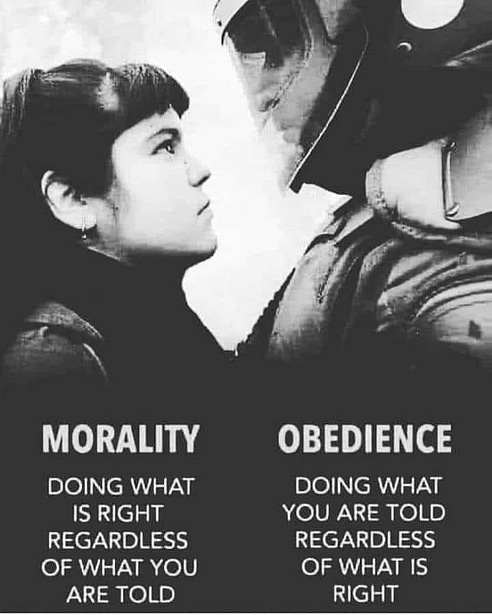
In the spirit of disobedience, in a word, no. Two words: Hell, no! Three words: Big, Fat, Disappointment!!

Wow, I didn’t realize anyone can just throw any piece of nonsense together and call it history. Or anthropology. Or pretty much any ‘science’.

Way to spoil a miraculous destination, Kennedy, thanks bunches.

But I can’t really blame him alone, it’s more than a trend. The dumbing down of the public has been documented for decades, and this sort of material that is supposed to pass as educational is a perfect case in point. So, let’s take a few pokes at it from a few of those many angles.

The History of Enchanted Rock in the Texas Hill Country by Ira Kennedy self-published in 2010 naming it https://www.amazon.com/HISTORY-ENCHANTED-ROCK-TEXAS-COUNTRY/dp/1456818783
“The Sacred Landmark of Central Texas”.

It is not sold as a children’s book and costs $21.99. According to the the Amazon page Ira Kennedy is:

“Considered as the state’s leading authority on Enchanted Rock, the sacred mountain of Central Texas, Ira has assisted the author’s of several published books, articles and the Thomas Evans mural of Enchanted Rock in the Austin-Bergstorm International Airport. IN 1992, Ira was awarded a Certificate of Appreciation from the Texas Parks and & Wildlife Department for providing numerous educational talks at Enchanted Rock Natural Area.” And it goes on.

The first Amazon review looked promising.
“Ira Kennedy is the world expert, in the opinion of many, of this beautiful Texas natural treasure. His knowledge comes from spending a great deal of his life on or near the rock. Ira is a creative genius and humble man who has written this amazing book, sure to answer all your questions about this geological wonder. Beautifully illustrated by Ira, you will keep this book among your special collections.”

The ‘book’ itself looks more like a coloring book. There are no references or citations, no bibliography or notes. While the author states he did multi-disciplinary research and himself has an advanced degree and was employed in Naval intelligence as a cryptographer, he must seriously understand what an ‘expert’ text would look like, and this one is the polar opposite of scholarly.

I can only assume ‘expert’ has taken on a new meaning sometime around the year 1999.

Let’s set the tone with his “Brief Historical Timeline” which begins his story in 12,000 B.C. and ends in 1978. With only a smattering of centuries missing, bless his heart!

We learn of a dubious-looking character named Jack Hays who was ‘an enigma’. We learn about a William Kennedy and his ‘flower-spangled’ landscape and ‘lost mines’ the ‘fueled the imaginagtion’. We learn about some immigrants from Germany in the 1840s.

We have the ‘First People’ myths and ‘The Imaginary Frontier’ of the Spanish explorer Alvar Nunez Cabeza de Vaca, who passed right through Mason County in the sixteenth century. And some childish stick figure drawings, some arrowheads and feather headdresses.

Later in the book are some drawings of angry indians who we learn may or may not have practiced human sacrifice.

And that about sums up my waste of money and time! Alas, the journey of discovery continues.

Poor, misunderstood ‘Enchanted Rock’ — I don’t even like your name anymore, so I think I’ll find a new one. And a new history to go with it. It would surely be better footnoted than this toilet paper, and good bit more entertaining I expect too!

I dare say, you there, intrepid traveler, can you smell anything beyond the boulders of bullshit?

Destination Zion

The plot thickens, and twists.  This time we learn from Wiki that after the Columbia Space Shuttle disintegrated re-entering Earth’s atmosphere, there were indeed body remains found after all.  According to this source, the remains of all of the bodies of the astronauts were found.  Someone should really share that info with Rich Husband’s people.

Kalpana Chawla, our next look at astronaut lore, was also a music lover.  She served as the shuttle’s flight engineer.  She was married to Jean-Pierre Harrison, who has written a book about her and is the president of two dubious-looking companies for which I was able to find no information.

“Chawla” means “imagination” in Hindi. https://www.imdb.com/name/nm1527404/bio/According to her IMBd bio page

“Steve Morse of the band Deep Purple released the song “Contact Lost” in 2003 in memory of the Columbia disaster.[50] Chawla took three Deep Purple albums on STS-107, using their song “Space Truckin’” as a wakeup call.  One of their albums was found in the shuttle’s wreckage.”

Wow, so an entire album was discovered, as well as a CD.  She had room for 3 albums, and clearly must have had a player for those.  These space shuttles must be roomier than a magic bus!  I wonder if they ever had arguments over who got to choose the ‘wake-up’ music.  I know that much Deep Purple and I’d definitely be wishing for some disintegration.

She was accused of screwing up during the previous mission, but was given a second chance.  On a YT video of day 4 of that mission we learn that one of her colleague’s favorite songs is from a popular Japanese television show about puppets in space.

“Chawla first flew on Space Shuttle Columbia in 1997 as a mission specialist and robotic armoperator aboard STS-87. Her role in the flight caused some controversy due to the failed deployment of the Shuttle-Pointed Autonomous Research Tool for Astronomy (“Spartan”) module. Chawla’s second flight was in 2003 on STS-107, the final flight of Columbia.”

In an interview about her previous mission the reporter writes:

“We’d be very foolish if we tried to second-guess or tried to figure out what the actual turn of events were without having all the information… We’re six folks up here, we know what happened on our side, we’ll get together with the folks on the ground and we’ll put the whole story together and make sure it never happens again. Sure, we’re always a bit disappointed if we don’t get the full mission accomplished, but we did retrieve the satellite, and so the important thing is we’re bringing Spartan back down to Earth and it’ll get to fly another day.”

It’ll get to fly another day.  And so will Chawla, but apparently just the one.

She is now in Zion, her final resting place being Zion National Park, Utah.  

Running To The Light

Running To The Light, Columbia Space Shuttle, Modern Myths

I came across this photo on our nearby city map and found it so compelling I thought to do a few post about it.  This is from Palestine, Texas.  The Columbia Space Shuttle was reported to have exploded over this area of East Texas killing all these crew members.

Rick D. Husband, Commander; Kaplan’s Chawla, Mission Specialist; David M. Brown, Mission Specialist I; Williams C. McCool, Pilot; Michael P. Anderson, Payload Commander; Lian Ramon, Payload Specialist I;  Laurel Blair Salton Clark, Mission Specialist 4.

We will start with the latter, Laurel Blair Salton Clark, Mission Specialist 4 Wiki page:

The Scottish band Runrig pays tribute to Clark on the 2016 album The Story. The final track, “Somewhere”, ends with a recording of her voice.[18] Clark was a Runrig fan and had a wake up call with Runrig’s “Running to the Light”. She took their 2001 The Stamping Ground CD into space with her. When the shuttle disintegrated the CD was found back on Earth, and was presented to the band by her family.

Laurel Clark – Wikipedia

Mission Specialist 4 

Y’all did read that correctly, right?

When the shuttle disintegrated this CD was still there and given in homage back to the band.

You got that part, right?

What a fun gal, eh?