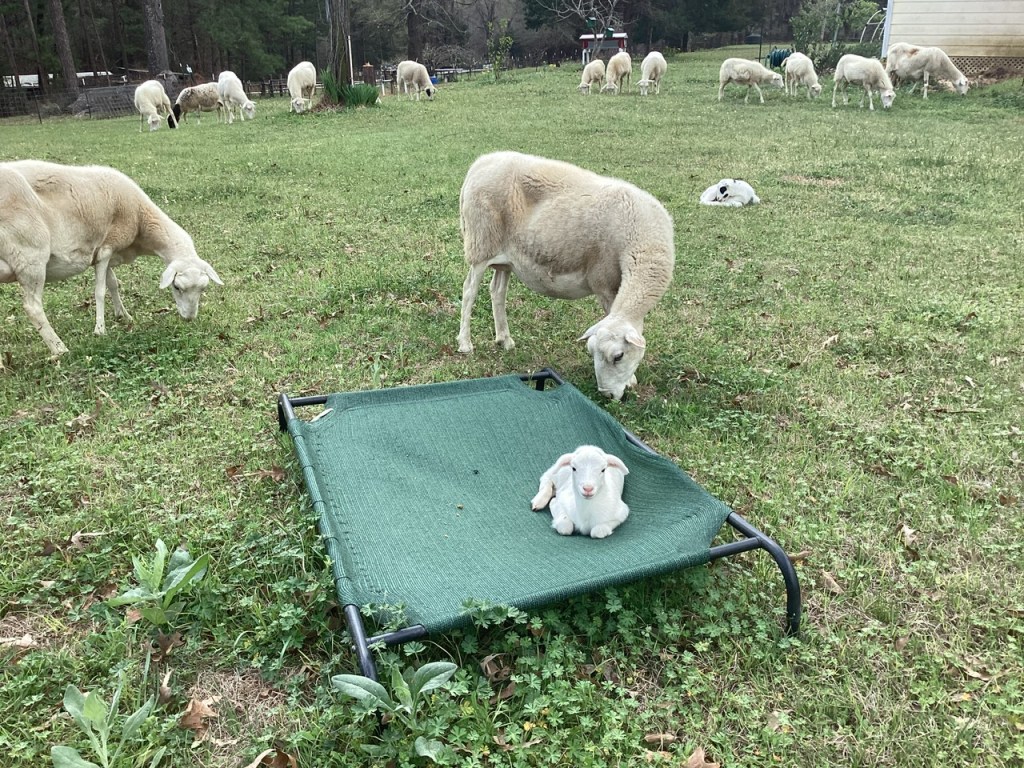
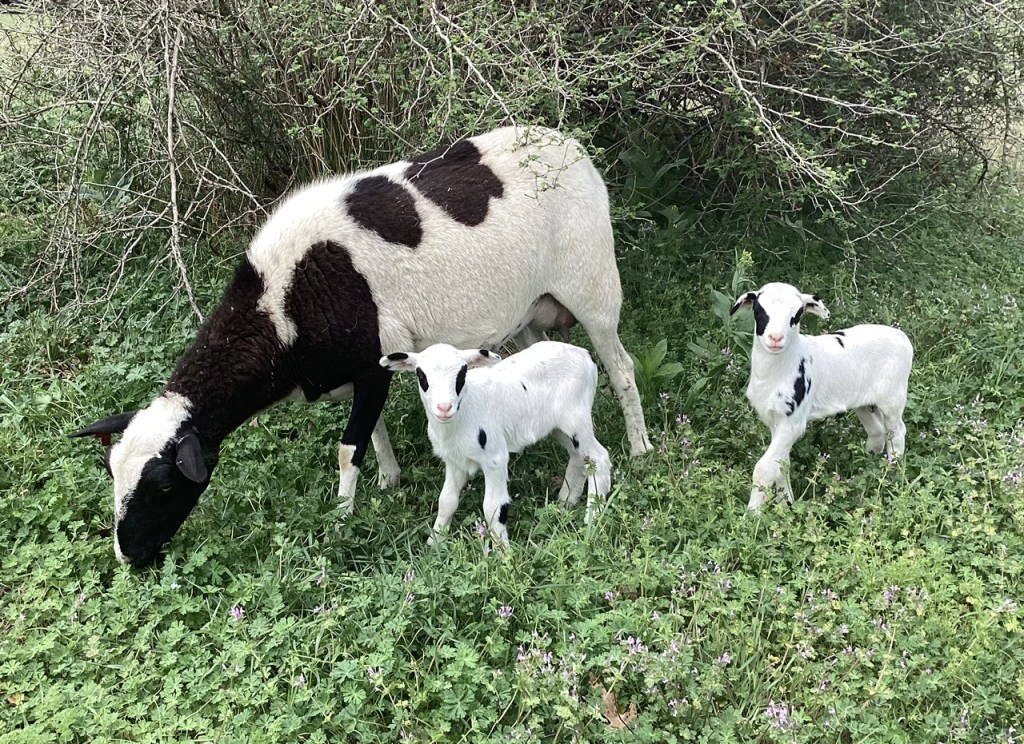
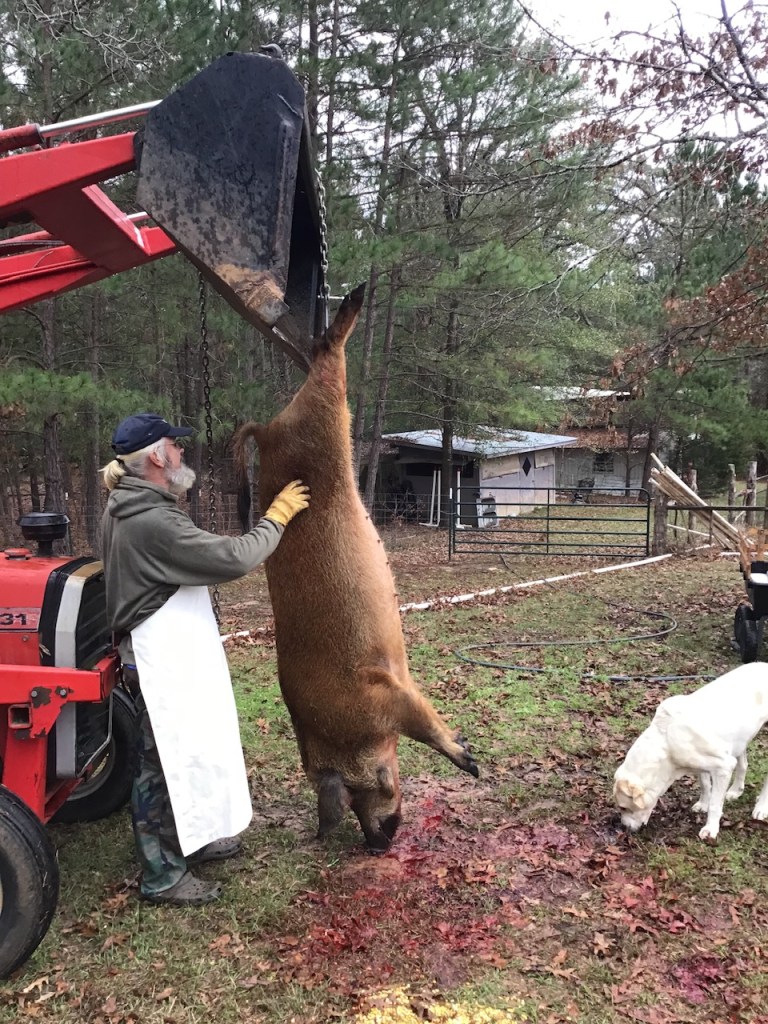
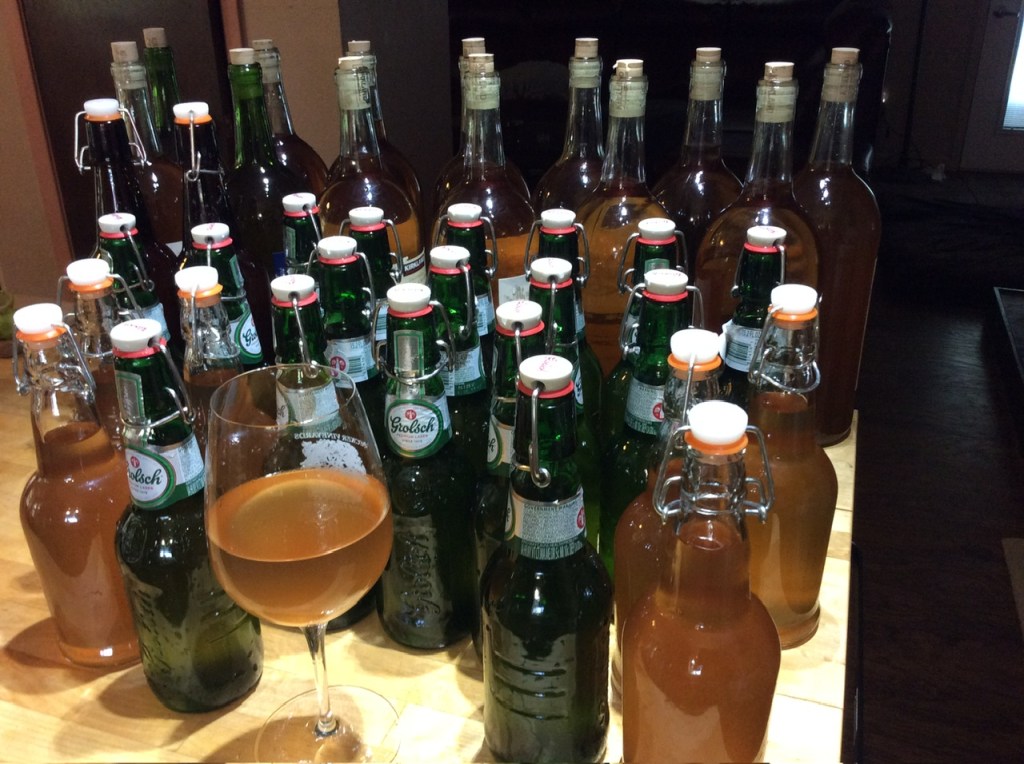
Such a synchronistic interview popped into my feeds, which I just have to share. Not only is our wee homestead full of young blood sucking down mamas’ milk, but I’m also teaching another cheesemaking workshop this week.
So, milk is big on my mind, nothing unusual there.
This interview from Weston A. Price is priceless! It really is such an awesome feeling for me when a new and powerful voice comes on the scene repeating what I sincerely believe and what we have been diligently cultivating on the wee homestead. We are losing too much of great value in our blind rush toward ‘progress’. We’ve got to work harder to keep hold of our wise traditions, or they will be lost forever.
Clearly this issue is getting lots more attention lately, but it has been on the radar of many cheese-lovers since the 90s, including yours truly, because I was so peeved to have to give up cheese, because I was suddenly ‘lactose-intolerant’, like loads of other people. But at that time it was only in the U.S. I couldn’t eat breat or cheese, not in Europe.
Today in Europe they have also been inundated with ‘vegetarian’ rennet and glyphosate and other chemical industrial products and processes, and when it comes to cheese, the vast majority are not labeled as such. I got suspicious, started asking a lot of uncomfortable questions, and found out A LOT about GMOs and our body’s reaction to them.
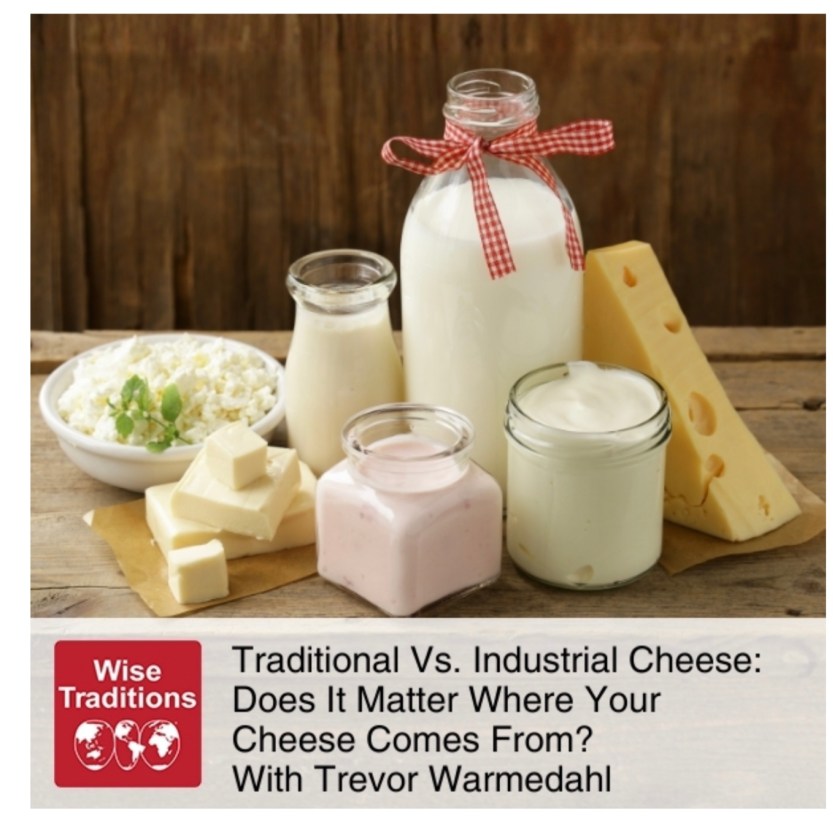
The interview summary and link for anyone interested in some fantastic cheese talk (he even talks about the maggot-ripened cheeses I’ve mentioned quite a few times on this blog!)
Traditional cheesemakers respect the process of cheesemaking. They honor the environment, the animal, its milk and traditional techniques – all of which lead to delicious, nutritious cheese. Industrial cheesemaking, in stark contrast, emphasizes sterile conditions, uniformity, and artificial inputs (including GMO-derived rennet). The cheese that results from the conventional approach is consistent… but misses a lot in terms of flavor profile and nutrients.
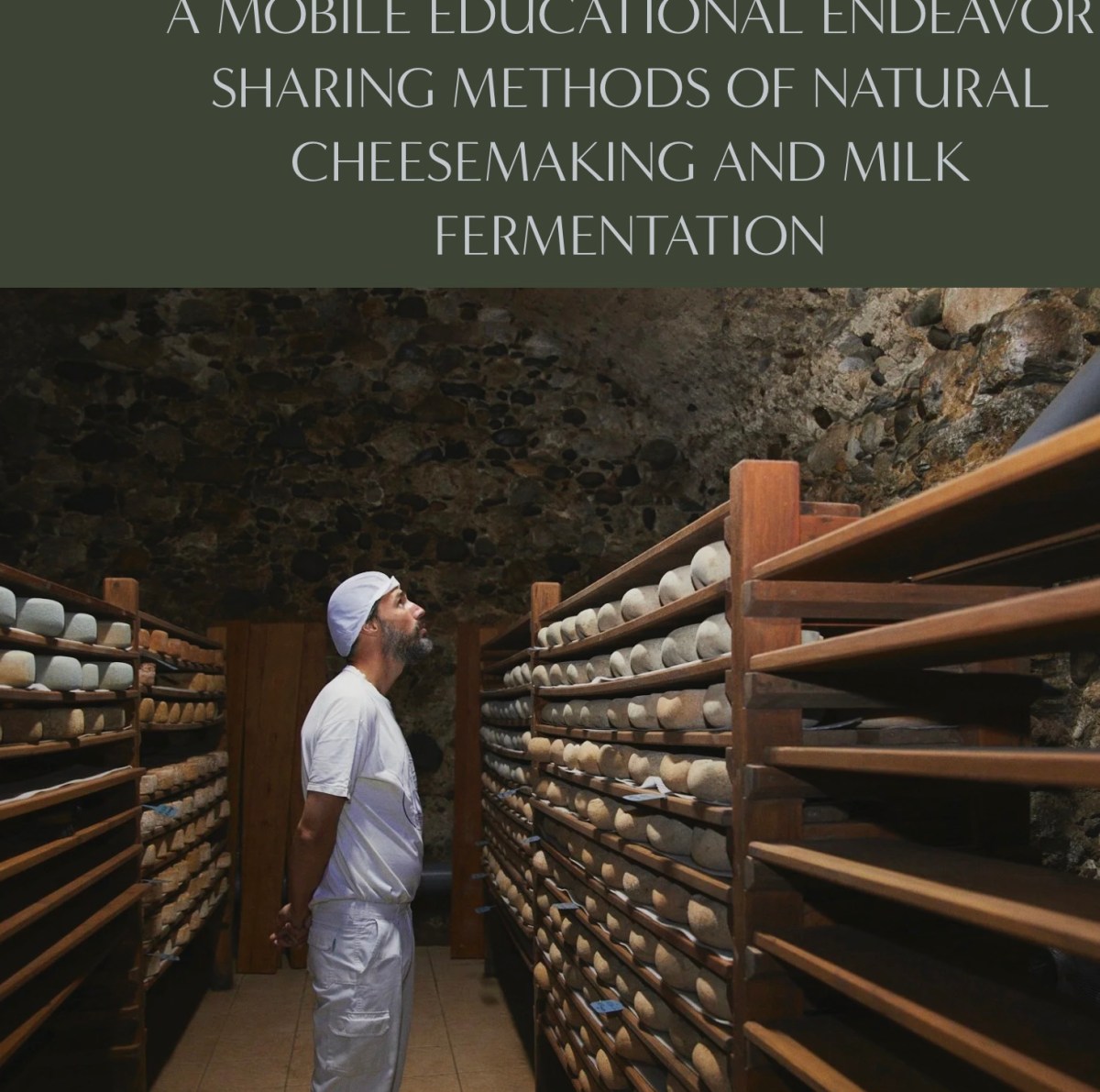
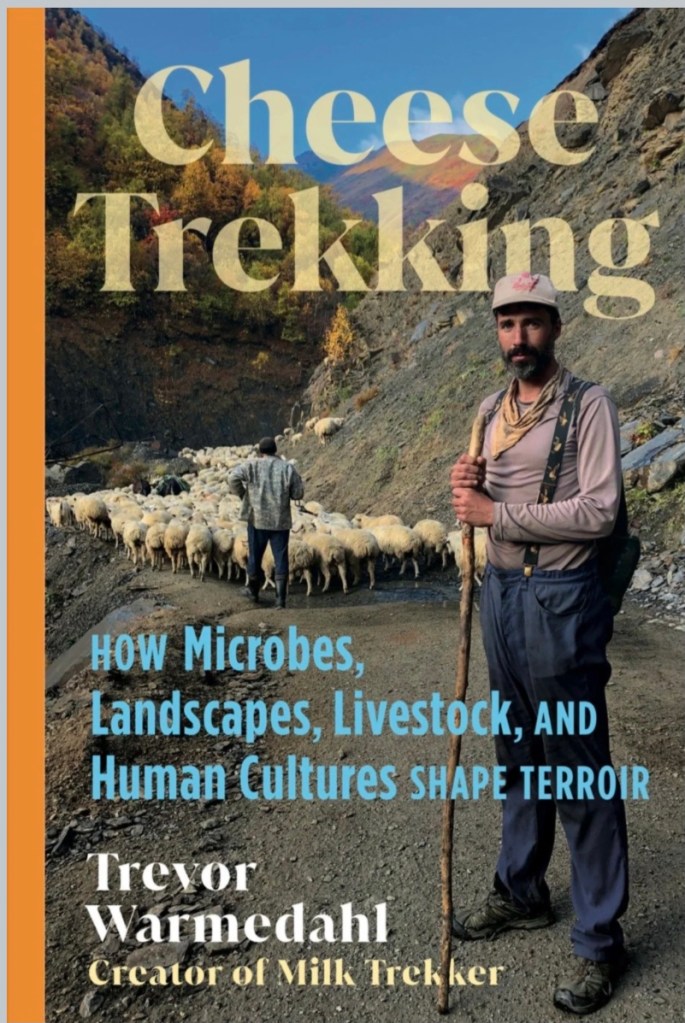
Trevor Warmedahl is a cheesemaker, fermentation educator and the author of Cheese Trekking. Today, he takes us on a cheese adventure, as we gain insight on traditional, artisanal cheesemaking. He gives us pause about what is in our fridge and where it comes from.
Trevor has trekked all over the world, working alongside artisanal cheesemakers, so he understands and shares the importance of working with (instead of against) microbes and nature. He describes cheeses you may have never heard of, along with unique approaches to making them. Trevor also helps us take stock of what has been lost in our modern approach to cheesemaking.
We’ve all heard the expressions: “History is a set of lies agreed upon” and “History is written by the victors” and most have come to accept these tropes.
But what they may not have considered is when the history is that flexible, all those academic fields which are history adjacent–like anthropology, sociology, philosophy, literature, all cultural studies, even linguistics– become subject to those authoritarian whims and fashionable irregularities.
Generalization, subjectivity, distant observation, even making obvious comparisons across vast and complex measurable units–ie. pattern recognition–is not just discouraged, it’s potential grounds for dismissal. It’s considered sloppy, unprofessional, unacademic. Pseudo-subjects and conspiracy theory.
Academics are especially vulnerable to such manipulations as their fields are controlled in a strict hierarchical system and their studies, even as tenured professors, tend to stay very narrow in scope. They do not need to strive for a cohesive worldview in their academic work as they are mostly employed to measure the minutia, to dig deep into one tiny corner of the field, as has been the case with the historical and architectural world of the Mound Builders.
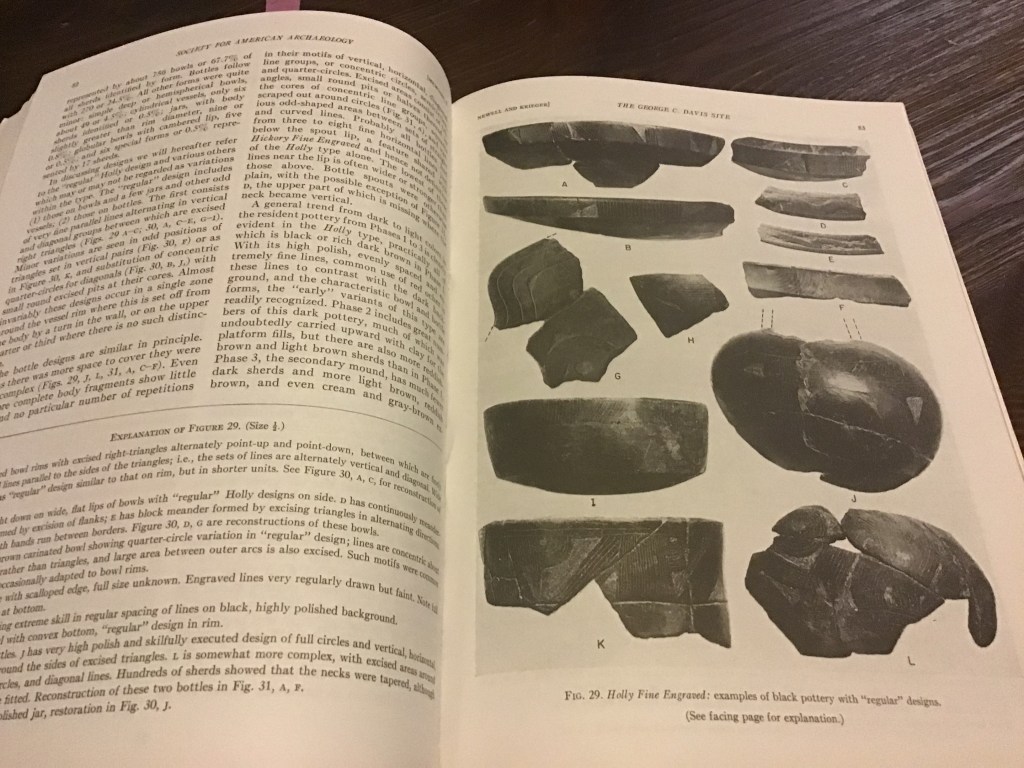
What the volumes of academic work on these cultures tend to do is narrow in so microscopically as to make all similarities irrelevant and cross-cultural observations inadmissable. They debate ad nasauem around shards of pottery found just beneath the surface of their archeological sites and the thousands of ways these tiny artefacts differ from one locale to the next.
There are literally thousands of pages published on comparisons and categorizations of tiny fossils and shards of the various Mound Builder tribes of the Americas. Specific measurements are taken of the space between the decorative lines and their width, length and coloration. All is catelogued in such microscopic detail as to bore to tears all but the most myopic of minds.
Truly, it is a form of academic gaslighting. Keep searching right here, right in this tiny framework where we’ve given the appropriate boundaries and designations. Don’t broaden, don’t do your own investigations, don’t venture out of your assigned territory, all alien parameters will be squashed with contempt and mockery and quite likely, career death.
Observe, very closely, and question every narrative.
That singular, rigid, hierachical model has been demolished with the Internet and for me, who formally studied and taught for four decades the very subjects now being shamelessly dismantled, I couldn’t be more pleased about it.
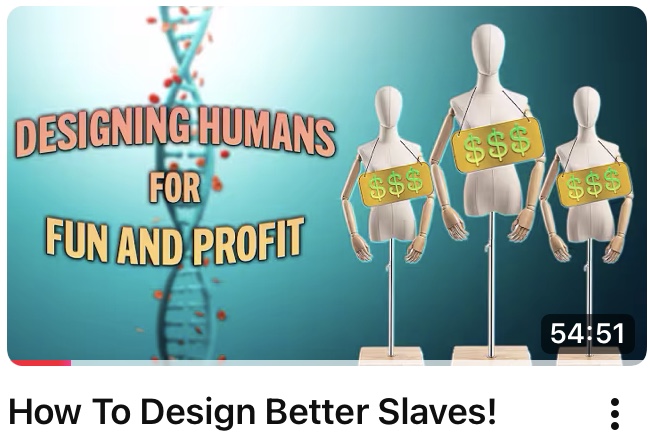
Actually, I could be. If there was a guarantee the ends would somehow justify all these means–as in the decades of lies and indoctrination and then subsequent ripping away of those foundations and the now erupting attempts to filter the masses into new molds for better slave management and more prosperous slaveholders–then I would certainly be more pleased.
But I’m not so naive as to think there’s ever any such guarantees. (As an entertaining aside, James Corbett here at his comedic best with more on our system of modern slavery.) https://youtu.be/ZjwO9_3g4xQ?si=8u5_OumKlk-LOMub
But my topic today is a continuation of the last What’s Been Lost new Kensho series. And say what you want about formal education, I’ve experienced the pros and the great many cons, but for all those naysayers and critics, my serious education these days comes from Youtube, mostly. I know, right?!
Don’t knock it ’till you try it, there are some really amazing teachers there (they call them creators now, which is nice) and I’m not watching them to buy into any of their conclusions, but just to appreciate their work, collect their evidence, and consider, that’s all.
There are relatively few in my life who care about this stuff at all, so I’m grateful for the company and impressed with their body of work. Yes, I do understand some of them are part of a big club, and I’m not in it. I don’t mind. And I’ve got no where else to go, and I’ve got a bit of time and loads of interest.
So for those others who might be interested in exploring and considering with me, we continue in search of what’s been lost.
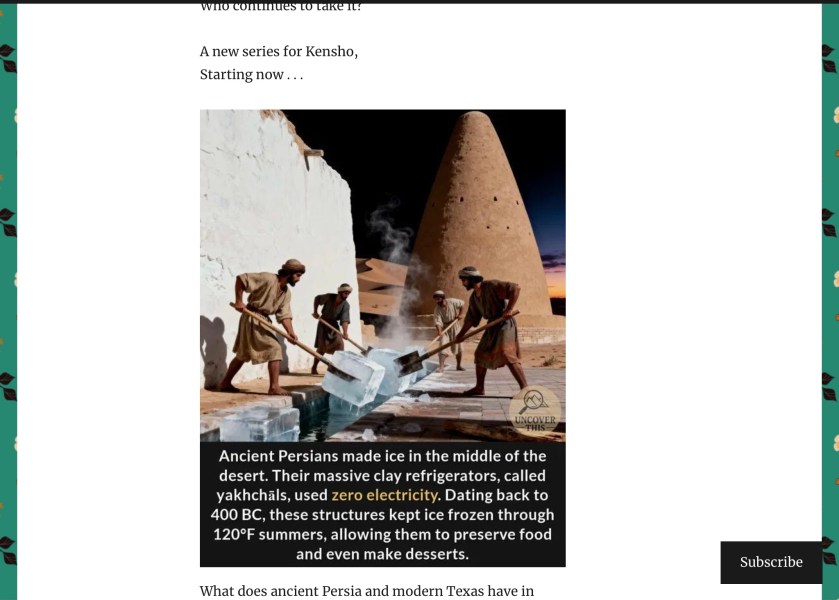
Last time I shared about the Yakhchal, a common radiative cooling system used from ancient times, still in operation in parts of the Middle East, and perhaps close by as well, as close as Dallas.
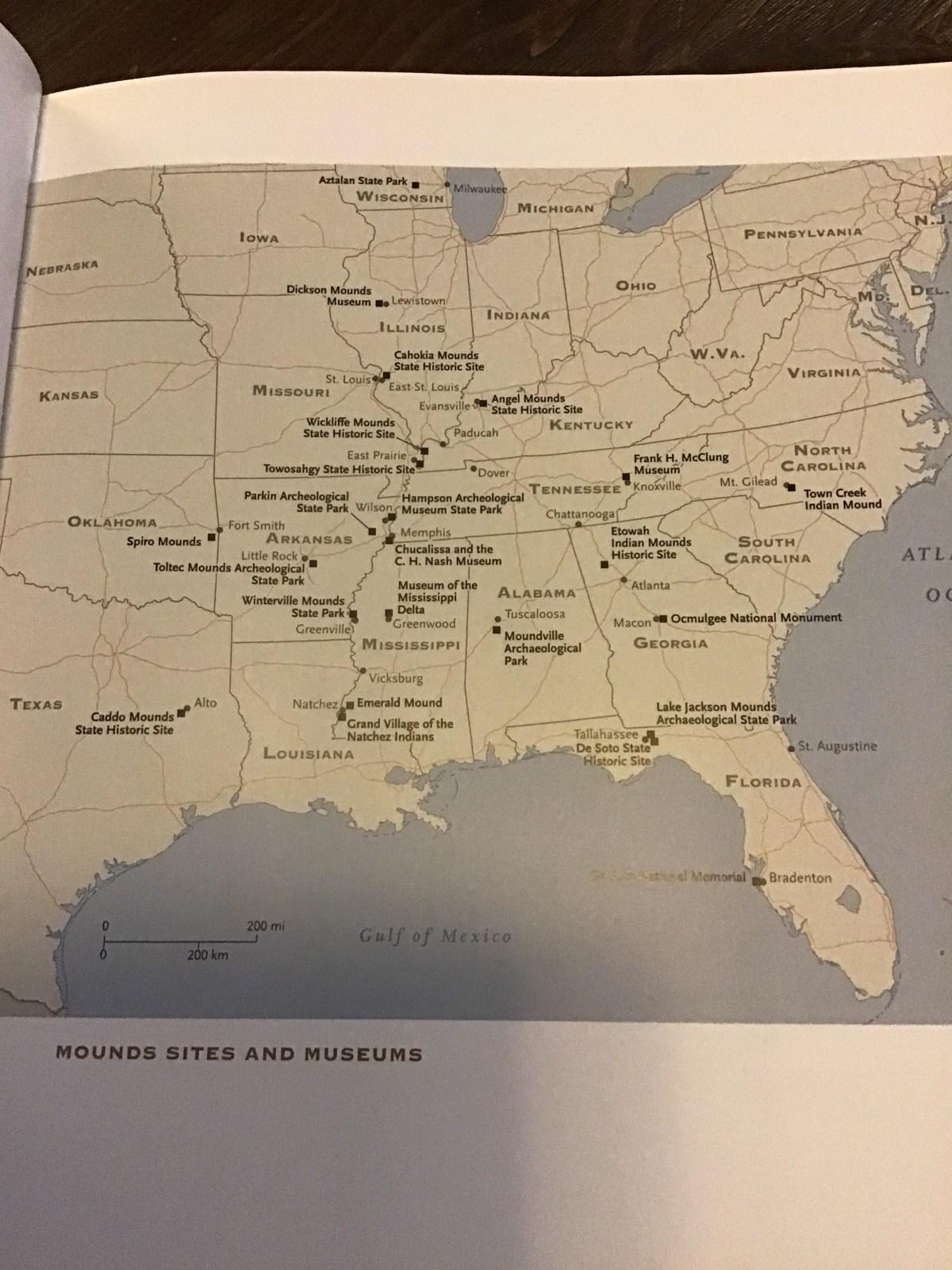
Now I will introduce another thread to this story, the so-called Mound Builder ‘indigenous’ tribes of the South, officially referred to as having been ‘occupying’ these lands before the arrival of the Europeans.
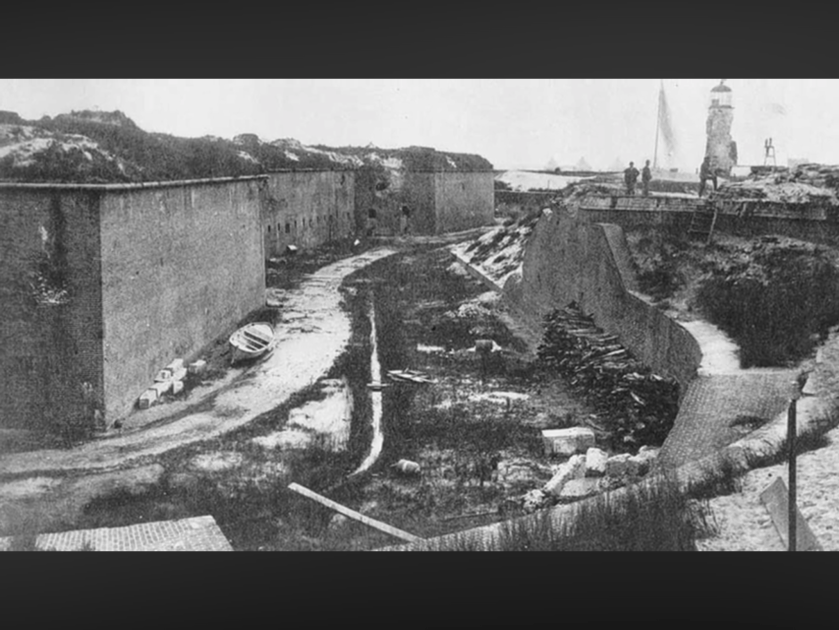
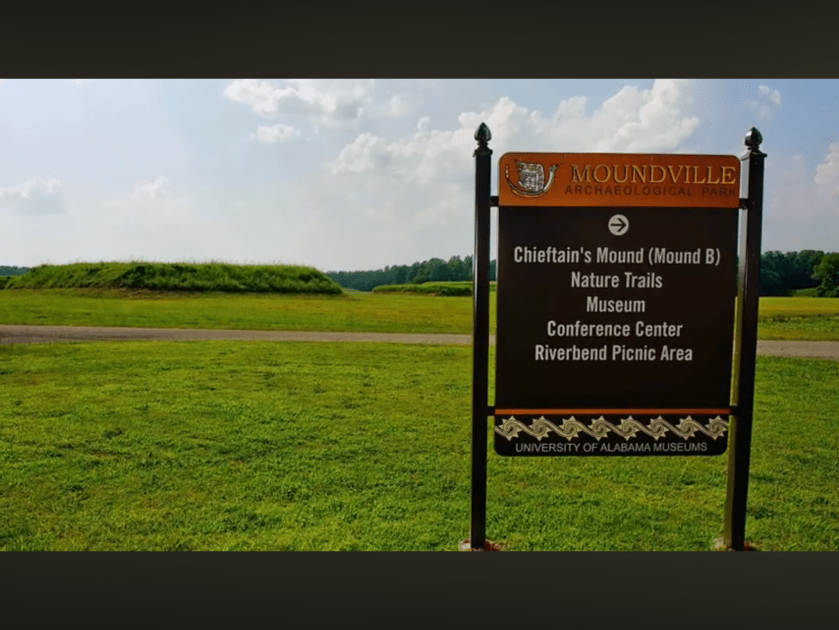
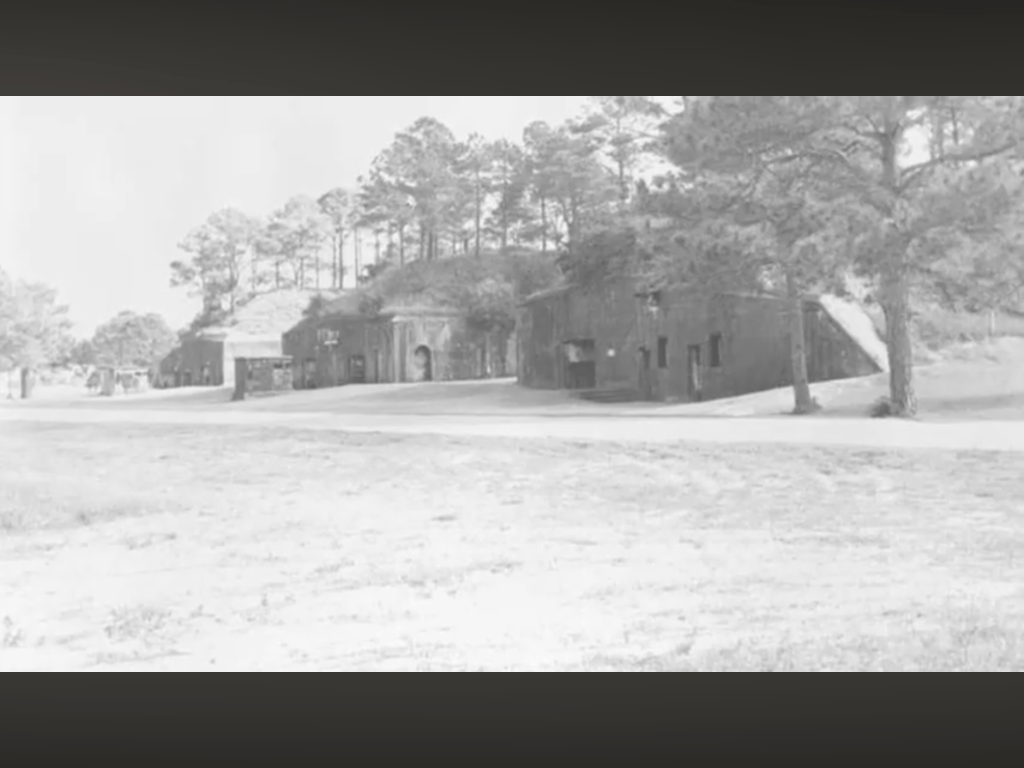
A recent video by Jarid Boosters was perfectly timed and is well worth a complete viewing. In it he considers one such Mound Builder culture in present-day Moundville, Alabama, once called the Kingdom of Pafalaya, which includes Fort Morgan. Most of these sites are former military installations and are owned by universities and used as tourist traps now. Some of them are privately owned, all have vast areas not open to the public.
We have one very close to us as well, known as Caddo Mounds, which I’ve written about briefly before, after a sudden (manufactured) tornado hit during their cultural ceremony, destroying much property, killing one and injuring many. The site has since been upgraded and reopened, though there is little to see besides some very basic ‘replica’ huts and of course, a large gift shop.
What I propose has happened with these sites is a deliberate militarized program of generational amnesia.
“Generational amnesia refers to the phenomenon where each generation forgets important knowledge and experiences from previous generations, leading to a distorted understanding of the past and the environment. This can result in a lack of awareness about changes in society and nature, as new generations accept their current conditions as the norm without recognizing what has been lost.”
They tell us ‘Generative AI’ will solve this mounting modern social problem. Promises, promises. Let’s not wait on those any longer.
For a bit of background, Mound Builders refers to ‘prehistorical’ cultures of the ‘ancient’ South. For our purposes, ‘prehistorical’ refers to the most recent rewriting of history, or ‘reset’ as many interested in these topics are calling it; and ‘ancient’ refers to the ‘Roman’ era and all those pre-dating it. In this version of history we examine especially the period of the so-called “Civil” War, or the war between the states, or the war of Northern agression, or whatever other term seems appropriate for that period of time when much of the southern US was destroyed and their history re-written by the victors.
At this time the official narratives went under the command and control of the military, if they weren’t there already. In my estimation we have always been a military industrial complex, this wasn’t a new phenomenon predicted by another puppet president.
There are other ‘fringe’ channels that deal more specifically with military history, that is not my main interest, one I could recommend for this angle would be that of a former history academic: https://youtu.be/LqiZPX0Ordc?si=IOKaZQ7FT2Bjr7Wg
In fact, there are so-called Mound sites all over the South, and I’d suggest many of them are as yet ‘undiscovered’ because they sit on private property where even the land owners have no idea what’s beneath them.
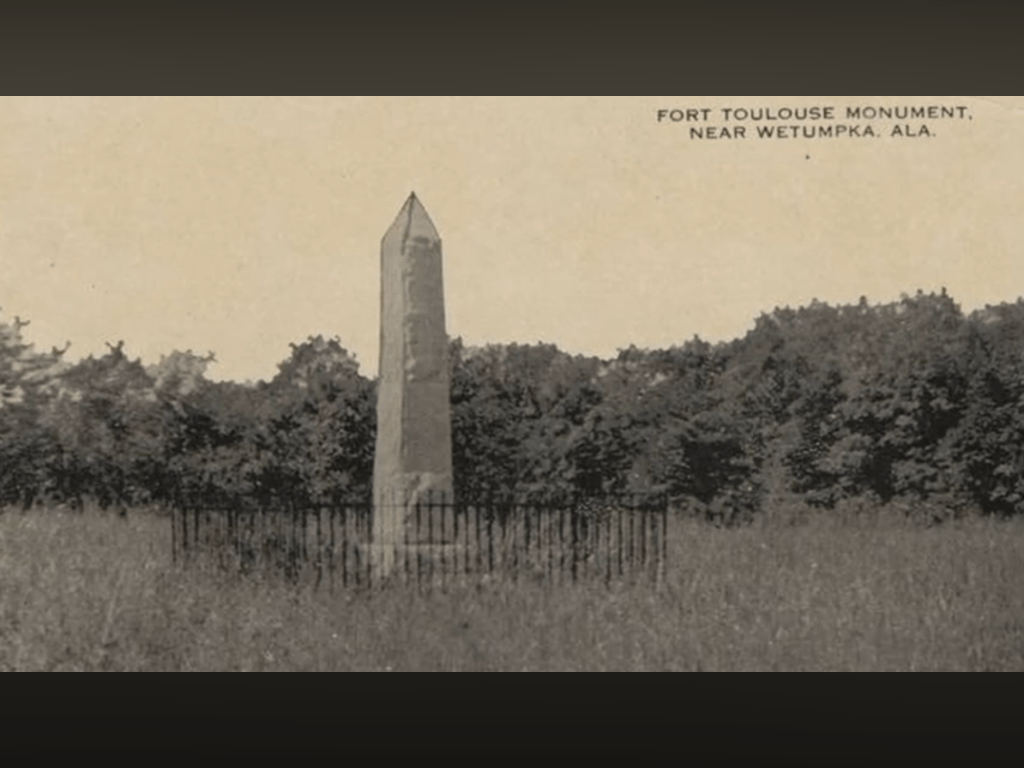
In nearby Nacogdoches there is another ‘curated’ Mound site:
“Excavations at the Washington Mound site have uncovered the archeological remains of a large Middle Caddoan period (ca. A.D. 1250-1350) mound complex in south-central East Texas. The investigations of this heretofore unknown complex indicate that there was a significant post-Alto phase culture in the region that may have had a significant impact on subsequent regional Caddoan manifestations.”
While there are teams of academics studying the tiny differences in the fossils on the surface and money rolling in from the tourist trade, and grants galore for those academics willing to tow the official line, the accepted narrative framework gets further cemented into the public consciousness.
The new Southern history started in 1888 or thereabouts, with 1933 appearing oddly often. The commonalities of these sites, like the ‘charcoal-filled pits’ and ‘post holes’ are left as side curiousities or mysteries or given barely-plausible labels like ‘ceremonial spaces’ or ‘burial grounds’.
According to Wiki we see some typical features, like the involvement of the Smithsonian Institution, and a minimum of curious names and the all-important dates to keep our minds distracted from the bigger picture:
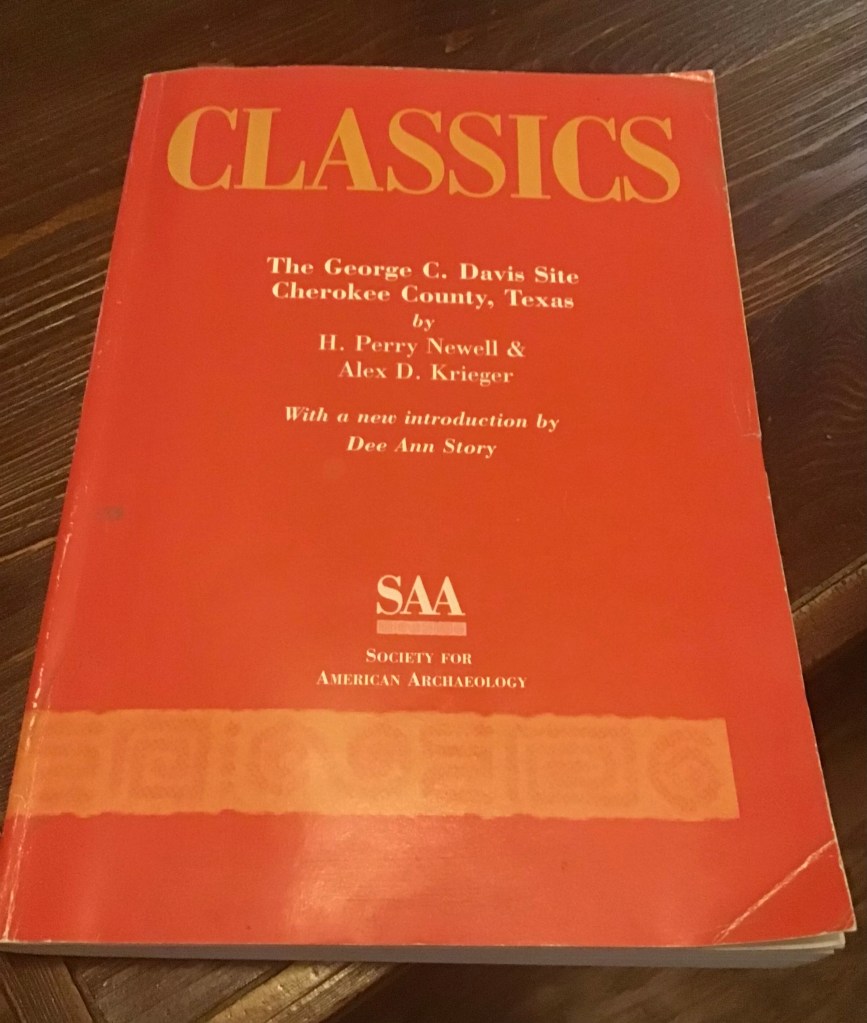
The earliest recorded written mention of the mounds was in 1779 by Athanase de Mézières, who traveled from Louisiana to San Antonio in the employ of the Spanish government. In 1919 American James Edwin Pearce was the first professional archeologist to record the site for the Bureau of Ethnology (Smithsonian Institution). In 1933 archeologist E. B. Sayles concluded that the site was a Caddo mound center, after conducting surface collection of artifacts at the location. The first scientific excavations were conducted from 1939 to 1941 by H. Perry Newell, a University of Texas archeologist with the federal Work Projects Administration in the government of President Franklin D. Roosevelt. When Newell died, archeologist Alex D. Krieger took over investigations at the site and concluded that it had been a major Caddo site. Further excavations in the 1960s and early 1970s by Dee Ann Story pinpointed the timeline of the site to 780 and 1260.
Following military service, Tunnell returned to Texas and began working with archeologist Ed Jelks on the Texas Rivers Basin Survey project funded by the Smithsonian Institution. Their first investigations took place along the McGee Bend of the Angelina River in East Texas, later impounded as part of Sam Rayburn Reservoir. He also worked in the Lake Amistad area along the Rio Grande.
As State Archeologist, Tunnell participated in scientific investigations at the Alamo and other important Spanish Colonial mission and presidio sites in Texas, directed archeological excavations at the ancient Folsom-age Adair-Steadman site, and braved the waters of the Rio Grande in order to record the archeological resources present in the canyons of the Big Bend region. He battled commercial salvagers to retain the 1554 Spanish shipwreck artifacts for the State of Texas and was instrumental in the development of the Antiquities Code of Texas, the legal tool to protect historic resources on public (state) land, including submerged shipwrecks. His films and audiotapes documenting the work of numerous folk artisans and craftsmen in the Texas-Mexico border region may well represent the only records of the practitioners of many vanishing crafts and arts. In 1981, Tunnell became THC executive director, a position he held until his retirement in January 1999. Through his decades of state service, Tunnell traveled to all 254 Texas counties and developed lasting friendships in all regions of the state. Tunnell passed away suddenly at his home on April 13, 2001.
His name was Tunnell, former military, and her name was Story. Isn’t that special. He liked to talk about Arts & Crafts. But not so much about Antiquitech.
Screenshot
What I wonder is, do the actual tunnels tell another story?
We’ve got mounds and post holes and charcoal-filled pits; we’ve got vast stone walls covered over by lakes and resevoirs and now deemed ‘legend’; we’ve got historical timelines that have clearly been ‘revised’, many times; we’ve got buildings and other structures that make no sense, but get little attention.
The burying of the past continues, the generational amensia widens, and aside from a few Youtubers and their marginalized audiences, I wonder if anyone else really cares.
Just in case you are one of the few who do, thank you, and you’re welcome.
More on the vast and ubiquitous caves and caverns of Texas and the mid-West on a future journey.
I have a dream that when asked where I sell my delicious locally-produced raw milk cheeses my response will be one of beaming pride instead of deflated frown.
Instead of–“Sorry, I can’t sell them, it’s illegal”–in my dream I reply instead:
“I have an assitant who delivers our homemade cheeses twice a week to the community Farmstead Store in town. You probably should call her and make arrangements because she always sells out by lunch. We have Farmstead Stores in every small town in our region who send out drivers to exchange with one another. Our free-range pork and our neighbor’s beef sell out even faster than the cheeses. They’ve also got year-round fresh produce there, eggs of course, honey, wine, kombucha–all sourced and produced from within 15 miles.”
Instead of my dream, in my reality I get asked, “Can’t you get a license?”
No! No, of course I cannot get a license! Instead of dream-speak I get the nightmare reality.
It’s not only impossible to get a license for a home cheesemaking operation, it just happens to also be against my philosophy.
“An agorist is one who applies the principles of libertarianism consistently through counter-economic practice. They aim, that is, to bring about the voluntaryist society not through political (in)action but through direct counter-economic action.”
No, I cannot get a license. Since we are in the South, I wonder if another appeal might be in order?
Imagine if instead of ‘philosophy’ I said ‘religion’. So my reply becomes:
“Appealing to State and Federal officials for what I, and my neighbors, choose to purchase for consumption is against a fundamental aspect of my religion which preaches the gospel that God chooses my food through my tastebuds.”
“This is not a trivial point. A free society is not merely an ideal society to be philosophically formulated, but a process to be enacted through conscious action. Thus, the idea of separating the free society from the actions that free human beings must (or must not) engage in is self-contradictory. What else defines a free society except for those actions?” James Corbett
“Furthermore,” I continue in my dream space, “I’m allergic to paperwork and authoritarian nincompoops and I refuse to spend what little time I have left on this spinning green insane asylum kissing the arses of Velvetta-eating officials mansplaining me what I must do to make safe cheese.”
Also from Corbett In “An Agorist Primer” Konkin explains: “We see that nearly every action is regulated, taxed, prohibited, or subsidized. Much of this Statism — for it is only the State that wields such power — is so contradictory that little ever gets done. If you cannot obey the (State’s) laws and charge less than [because of “Fair Trade” laws], more than [because of “Anti-Trust” laws], or the same as [because of laws against cartels] your competitor, what do you do? You go out of business or you break the law. Suppose paying your taxes would drive you out of business? You go out of business — or you break the law. Government laws have no intrinsic relationship with right and wrong or good and evil. Historically, most people knew that the royal edicts were for the king’s good, not theirs. People went along with the king because the alternative looked worse. [. . .] But everyone is a resister to the extent that he survives in a society where laws control everything and give contradictory orders. All (non-coercive) human action committed in defiance of the State constitutes the Counter-Economy.” In effect, Konkin takes the plight of the modern-day citizen, stuck in a web of ridiculous, contradictory, and impossible-to-follow laws, rules and regulations, and flips it on its head. It is not a source of shame to be acting against the arbitrary whims of the state, but a virtue. Economics is the realm of white markets: legal, licensed, sanctioned and regulated exchanges in the aboveground economy. Counter-economics is everything else: black market and gray market activity either specifically outlawed by the state or not licensed or approved by it. People tend to get squeamish when they hear “black market,” but we’re not just talking about gunrunning, counterfeit smuggling or drug dealing here. Any (non-violent) activity that doesn’t have the blessing of the state is counter-economic.
“Of course, individually, these actions seem unimportant, even trivial. But in combination they drain significant resources away from the clutches of the state and toward the people participating in the actual productive economy. It is estimated that 20% to 30% of Americans fail to report taxable income. In some parts of Latin America it’s closer to 80%. Can you imagine if it were 100%? A few isolated counter-economists acting in a disorganized haphazard faction is a minor inconvenience to the powers-that-shouldn’t-be. Millions of people acting in concert in a deliberate undermining of state authority is a revolution. This is the promise of counter-economics.”
The quotes that are not in my dream are taken from the following 2 articles by James Corbett, well worth the read.
This is a repost of a few of my first cheesemaking adventures way back in 2015. I decided to repost it since not only is it Hubby’s favorite, but also because my cheesemaking workshop is right around the corner, so my cheese posts are getting more views lately.
From the archives:
I’ve now made nearly two dozen different cheeses. When I started out, my only raw milk source was a five-hour round-trip drive, I was aging them in the veggie drawer of the fridge, and I was following the recipes to the letter.
I now have an aging fridge packed with cheeses, my raw milk source is at least in the ballpark, I’m creating my own recipes, and I may even spring for a pricey PH-tester. It’s been a long, fun road with a steep learning curve made in a relatively short time, which is what I say about pretty much everything in our adopted rural lifestyle.
But the best cheese I’ve made so far was the third one I attempted, and it started out as a smelly, rather disgusting potential disaster.
In our cheese-making class, we were strongly encouraged to take notes on our every hard cheese-making venture and being the diligent student I usually am, I do. This time was no exception.
Has odd fishy odor” is at the top, middle and end of the third cheese’s entry. I was a bit reluctant to include the less-than-savory details as to why that might be.
First, a bit of background on my past experiences with stinky cheese. I am no expert, I can’t even call myself a true aficionado, but I’m more cheese-fearless than most, especially most Americans. After all, I did live in France for a while, and spent a few months in Corsica, where I met the only cheese that scared me off.
The Corsican cheese is quite popular and, being a sensitive traveler attracted to regional specialties, I was anxious to give it a try. I went to the farmers’ market, found the oldest, roughest-looking cheese-monger of all the vendors and marched right up to examine his wares. He looked like an ex-sailor with wrinkled, sun-burnt skin, black patterns on his forearms where I assume tattoos were once legible, and an easy-going, toothless grin. He eyed me as I pretended to know what I was doing. I glanced over his table and tried to make out the curious handwriting to learn what I might be able to pronounce well-enough to order.
My eyes went right to the group of words I was searching for – traditional Corsican cheese – how easy was that? I felt already triumphant. In my best French, I tell him I want that cheese, and he replies, “Avec ou sans habitants?” At that point I feel certain I saw a glimmering in his eyes. He points down to the sign below the ‘traditional Corsican cheese’ sign, which reads just as he has stated: “AVEC OU SANS HABITANTS.”
Instead of triumphant, I’m instantly befuddled. I had no idea what that meant, and the question so baffled me I thought I clearly did not understand. I said quite sincerely, “I don’t understand.” But, in retrospect, I think I kinda did, I just didn’t want to believe it. “With or without inhabitants,” it was clear and easy to understand even for a non-French-speaker. This was not a linguistic block I was having, it was a reality check.
At that moment my market companion attempted to come to my rescue. She didn’t speak English, but understood my dilemma apparently without words exchanged, being French and rather snobbish about her cheeses. “Inhabitants …,” she repeated to my complete horror, “as in maggots.” After which she pinched up her nose slightly and gave a nearly imperceptible shake of her head, like she was trying to reassure me – ”Don’t worry, on the mainland we don’t eat that sort of cheese.”
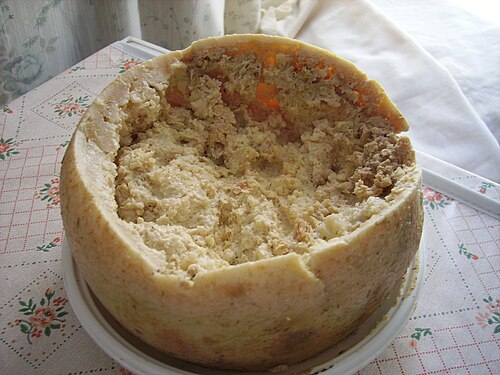
Maggots, I’ve since discovered, is just one of may unsavory methods of ripening, there are many, like ‘cheese mites’ and they are still deliberately used to ripen certain cheeses in various parts of the world, like Casu martzu – Wikipedia.
Wiki image of maggot-ripened cheese
So, back to my Cheese No. 3. The first two times I followed two different farmstead cheese recipes to the letter, wrapped them to age, and made my notes, nice and clean, without any question of potential perfection in outcome. This third time I found a recipe online that was so vague in steps, measurements and temperatures, I had to wing it a bit for the first time.
To make matters worse, this particular day had a pronounced increase in kitchen traffic. After I’d muddled through the recipe and began the pressing process, Handy Hubby had a dramatic building challenge of the electrical variety that required him to tear into the wall in the vicinity of the press. He’d just been on the roof cleaning up mice nests, and they’d managed to chew through some of the wires, which he now had to replace.
I wondered momentarily if that was something I should include in my notes. Nah, best forgotten, I decided.
But I could not forget, and what I’d hoped would be a quick in-and-out project around the press turned into an hour, going on who knew how many more. With Hubby going in and out, meant the dogs are following him. They think this is a game and don’t understand Hubby’s irritation as he curses the mice only under his breath … and … is sweating through his T-shirt. Right over the press!
Tori and Papi, our dogs at the time, who were often guilty of playing games around the cheese press.
Finally, the straw to break this camel’s back – I glance over from the sink as Tori’s tail brushes over the press. Tori is our Dane-Mastiff and about 6 feet from nose to tail tip. In a flash I imagine it snake-like engulfing the entire cheese.
“Stop, stop, oh my god, stop the pressing!”
I neither wanted to perceive myself as excessively anal nor offend Hubby’s already delicate mood any further, but my stomach was churning and my mind screaming at me for what I was allowing to happen to that poor cheese. I immediately disassembled the press, moved it to the office, and, with trepidation, examined the cheese, slowly unwrapping it from the muslin.
Just as I had suspected, dry-wall debris, dog hair, and who knew what other invisible entities had found their way onto the surface of Cheese No. 3.
In a moment of panic and disgust, I nearly threw it in the garbage. Then I thought, no, wait, chill, this will be the perfect testing ground. I’ll continue to do everything wrong, according to all things science and sensibility, and see what happens.
So, I stopped following the vague directions and followed instinct instead. What would the Corsican cheese-monger have done, I repeated to myself as I decided not to wrap it, to leave it at room temperature uncovered for days, then put it in with the others to age in the drawer of the fridge.
Not only did it look completely different from the others, it also smelled completely different. The fishy smell had stabilized, mold started growing on the air-dried, uncovered rind, and the texture softened inside until it began to sort of pooch out around the middle like love handles.
I felt some encouragement then, thinking, “Might good cheeses be like good dogs and begin to resemble their masters?”
A couple weeks more and it began to look and smell so delicious the temptation was starting to weigh on me. It was becoming irresistible. On Christmas Eve, I could wait no longer. The vague directions said it would be ready in two months, but my instincts were saying, ”Dig in, woman!”
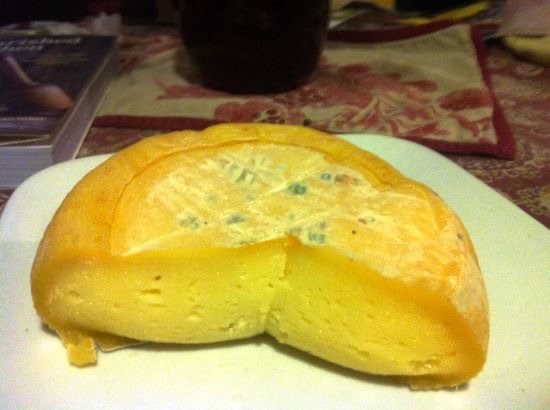
The luckiest mistake: Cheese #3
So I did, and it was delicious! I am now convinced the best cheeses were discovered quite by accident and our ancestors turn over in their graves every time we get squeamish over a few dog hairs or even . . . maggots.
The only problem is, I have no idea how to imitate it.
The latest cheese ‘failure’ supposed to be a pepper jack– story and tasting coming soon!
Fast forward to last week, October 2025, and we have another crazy cheese mistake, which may turn out to be just as delicious!
Here’s the ‘pepper jack’ after further aging abuses, looking and smelling full of potential!
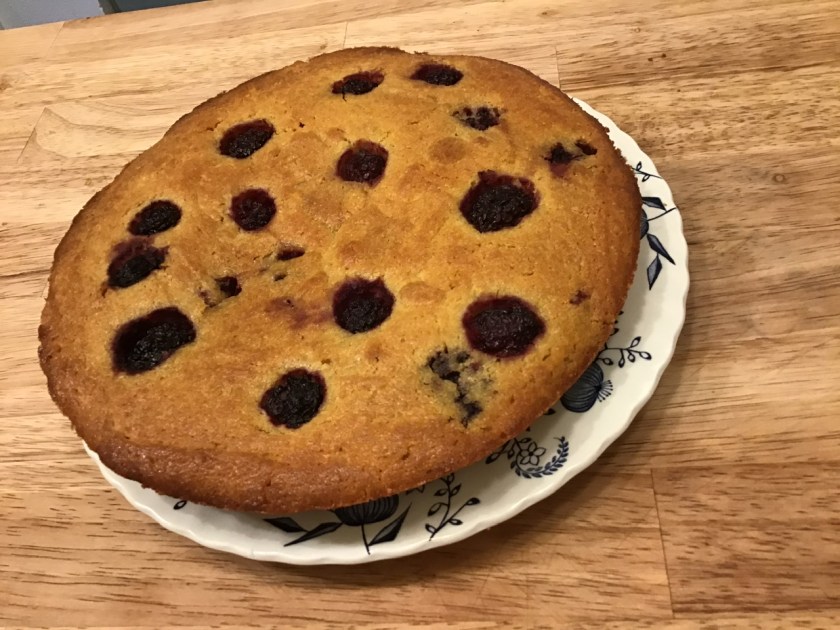
Just some cheese talk this post, plus a bit of a book review and a delicious recipe for Blackberry Ricotta Cake.
David Asher’s latest book arrived and I’ve been devouring it, as well as a whole lot of cheeses. He dives deep not just into the biology, ecology and history of cheesemaking, but the dairy and fermentation traditions that continue today around the world. Really fascinating!
Since the beginning of August, when I found a raw milk lady with a surplus willing to work with a renegade cheese lady, that’s me, I’ve been my own milk lab*.
5 gallons of warm milk spoiling on the table. 😆
Plus a ‘failed’ pressed ricotta, used too much vinegar, but it will still be good further dried and crumbled on salad like feta.
Together we settled on a suitable style and schedule that’s been rather rigorous for me, 5 gallons twice a week, right from the barn to my containers. Not even chilled. (I can see my mom in my mind’s eye trying to hold the grimace from her face! 😆)
A very hot Pepper Jack before its tallow rub before aging several months.
But I’m in hog heaven! It’s brilliant to have top-quality raw milk for a cost so reasonable I can afford to experiment again, because that’s my favorite part. It still feels like a mini-miracle after searching and pining for so long. Plus, my milk lady is arranging for me to teach a workshop again very soon at her church. (I wonder if their grimaces will match my mom’s?!)
My raw milk lady winces at the idea of making clabber cheese too, and I bet most others would as well. Sitting warm milk out on the counter for a few days would scare Brits and Yanks, equally I expect, because our unusual cheese habits in America came from them, mostly.
The vast majority of the rest of the world, Europe included, drink fermented milk and eat raw fresh cheeses, as well as cooked and aged cheeses. Velveeta, like Squeeze Parkay and American cheese slices are a true embarassment to culinary culture and it’s a shame more Americans can’t see that. But I think it’s changing.
It’s our obsession with pasteurization and refridgeration that both giveth and taketh away in the realm of cheesemaking.
Sweet cream and fresh milk are far from the norm, and came about with industrial-level and widespread home-use of refridgeration. Cooling milk should really be considered as less than ideal, it begins the de-naturing process, which continues when we then must re-heat to an optimal temperature for cheesemaking, which is about 93 degrees, the same as it comes out of the cow.
Not that I ever care to live without refridgeration, mark my words! I LOVE all our costly cooling devices. Still, I really do want to know what the most naturally produced cheeses taste like, and I have that rare opportunity now.
The other problem that gets solved by not chilling the milk before cheesemaking is re-heating the milk adds about an hour to the process, because it must be done slowly and evenly, which requires stirring, or using a water bath.
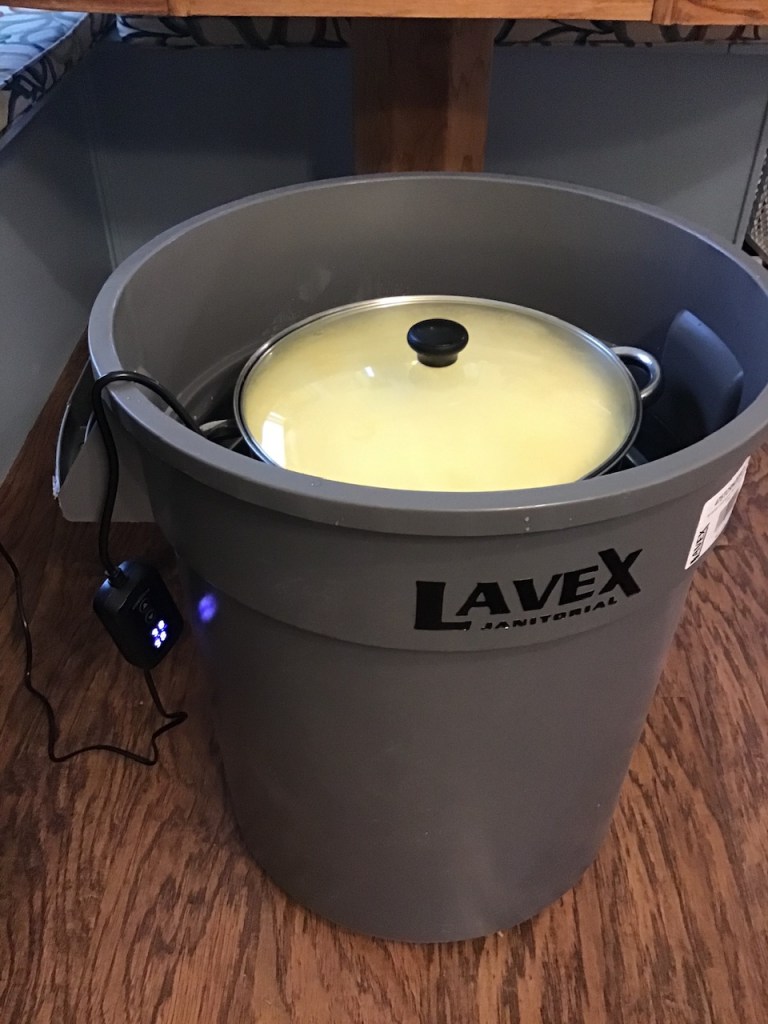
Hubby’s Redneck solution–Water bath in a garbage can, equipped with a fish-tank heater and oscillator, and now on casters for easy storage. Wow!
Just as Hubby tries diligently to solve all my complicated problems with custom redneck solutions, the temperature challange got him thinking creatively on my behalf once again. Not to mention the fact (I’m sure) that I’m taking up way too much prime kitchen space and time. Did I mention we have a small kitchen in a small cottage?
As a bonus from cheesemaking we have loads of ricotta, made with the whey after the curds are removed. I mentioned whey cheeses last time, which are most delicious pressed and soaked in cider or wine, mixed with herbs on crackers, in pasta sauces or salad dressings, but ricotta also freezes well. It also has to be made the same day, another reason for as many shortcuts as possible in the overall process.
And still, with all those possibilities, it’s proving a challenge to keep up with all the ricotta. My scheme is to create something so delicious the neighbors will start taking it off our hands.
1 1/2 cups soft wheat (sifted) 1 cup sugar 2 teaspoons baking powder 1/2 teaspoon salt 3 large eggs 1 1/2 cups ricotta 1/2 teaspoon vanilla 1/2 cup butter, melted 1 cup frozen blackberries (only slightly thawed)
350 oven, pie pan greased/floured. Whisk flour, sugar, baking powder and salt, set aside. Wisk eggs, ricotta, vanilla in separate bowl. Combine both and mix until just blended. Fold in butter. Fold in 1/2 berries, top with remaining berries. check at 45 minutes.
Good plain as a coffee cake or with ice cream or whipped cream for dessert. 😋
*milk lab is actually David Asher’s site, not in my kitchen! 😂 David Asher is a Natural Cheesemaker, bringing the traditions of dairying, fermentation and coagulation back into this age-old craft. A former farmer and goatherd from the west coast of Canada, David now travels widely, sharing a very old but also very new approach to cheese production. Through teaching about the use of in-house starter cultures and natural rennet from calves and kids, David helps cheesemakers around the world reclaim their traditional cheeses. He also explores the relations of all food fermentations, and the important role of small scale and traditional food production in our modern world. David is the author of ‘The Art of Natural Cheesemaking’ and the upcoming ‘Milk into Cheese’.
A sudden mini-miracle has occured and has turned the month I completely intended to be an exceptionally lazy one into a whole big mess of work.
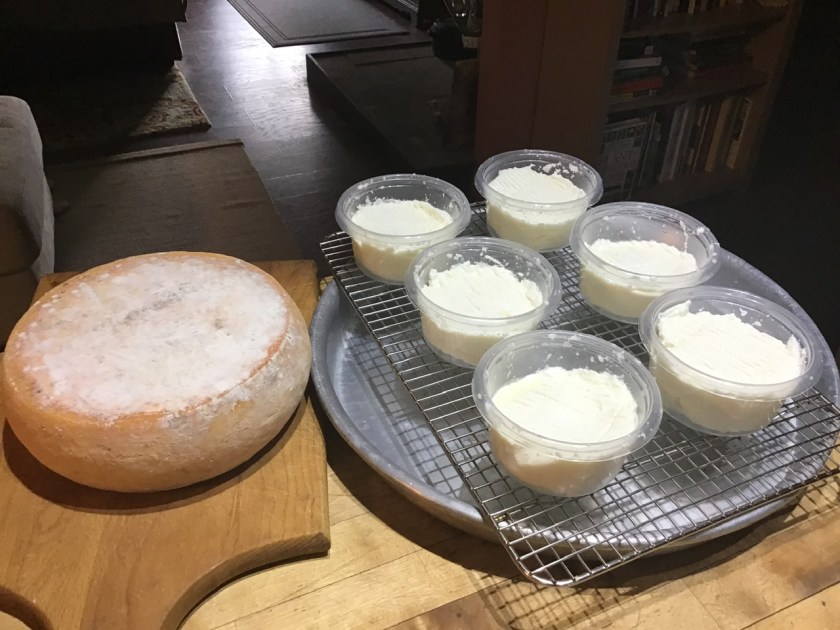
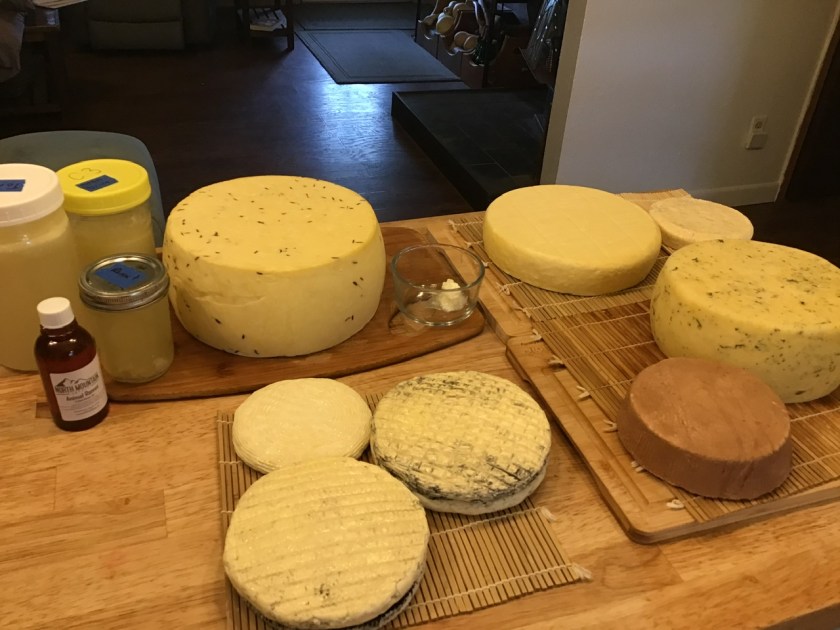
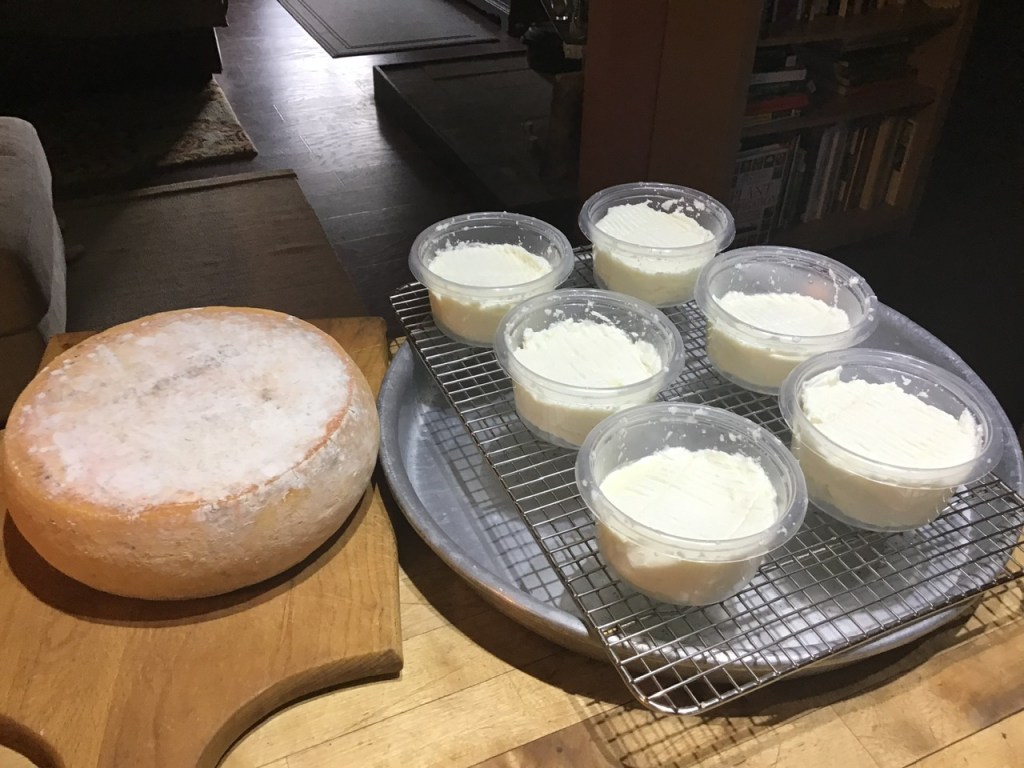
What’s in your cheese cave? A portion of the cheeses I’ve made in the last two weeks, the largest was from 9 gallons, which was transformed into a Caraway Gouda. The smallest was made right in the half-gallon Mason jar with milk directly from the cow, never cooled and ‘backslopped’ from our own homemade goat rennet. Backslopping was a traditional method used on the farm to carry the culture and rennet combination from day-to-day, similar to keeping a fresh starter culture for sourdough bread.
While it’s work I love, the problem-solving has been endless and my shoulder is an on-going issue. After such a long search, this was so unexpected and has caught me off-guard, unprepared and re-injured. Why am I not surprised?
My milk-quest for cheesemaking has been a decade-long challenge. For the briefest of run-downs I’ve watched raw milk prices double in that time, tried and failed at goat rearing, and for the past couple of years I’ve been herdshare hopping, with prices far too high for cheesemaking.
A few weeks ago I tried another herdshare–closer, nicer, and so much cheaper. Finally, I can make cheese to my heart’s content, to hell with my aching shoulder! And thanks to Hubby on early retirement, who is willing and available for all the heavy lifting.
And who also helps with the redneck innovations–having just made me a new collapsible cheese-hanger unit and also made my cheese-press.
I’ve even been able to experiment again it’s so reasonable, at just $3.50/gallon. Not since the goats have I managed to pay so little for such cheese pleasures. My new milk lady is short on customers, half her milk is going to her neighbor’s pigs every day.
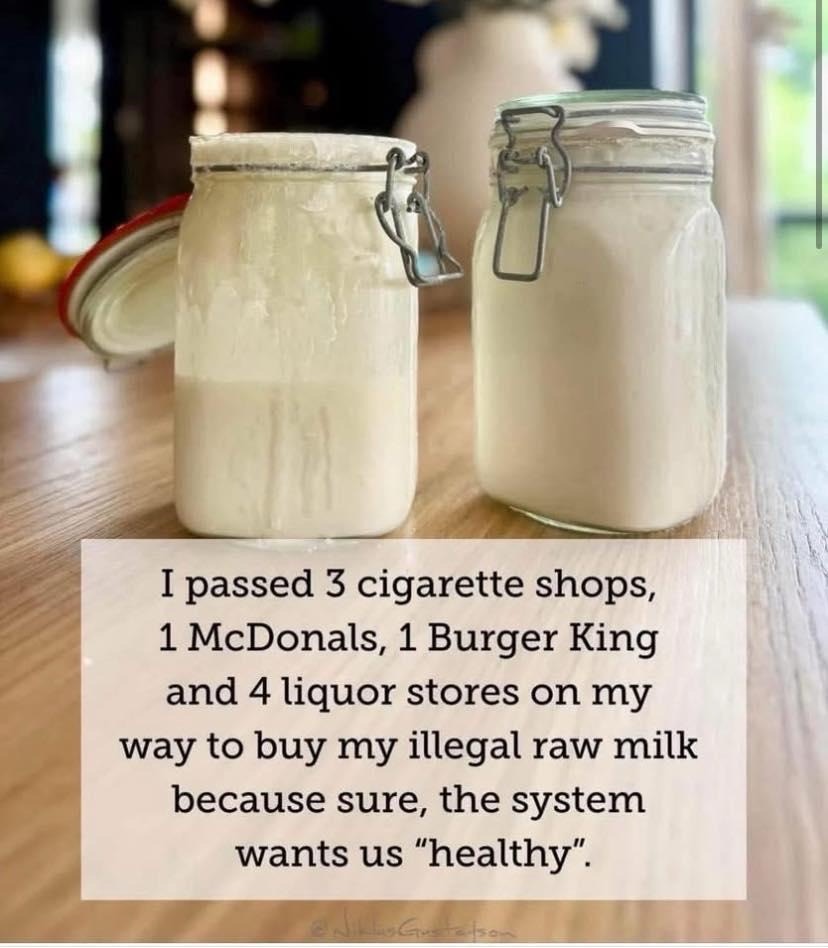
All I can think is, how crazy is that? That precious milk goes to the pigs, because it’s illegal to sell it anywhere but at her farm and to process it into cheese to sell is also illegal. While I can imagine those are some very happy pigs, I still wish I could sell cheese.
Actually, not so much the selling part, just the making part. I do often give it away as gifts and I get rave reviews. I’m often asked why I don’t sell it at the Farmer’s Market, because so few know how illegal it actually is. The requirements for licensing are very strict, not a chance a home kitchen would pass, (Great Dane not included!) and even with all the proper paperwork and a professional kitchen, many cheeses are still illegal to sell.
Various whey beneficiaries on the homestead:
I don’t want to run a cheese business anyway. I want a HWB (Hobby with Benefits) with those benefits being financial as well as delicious.
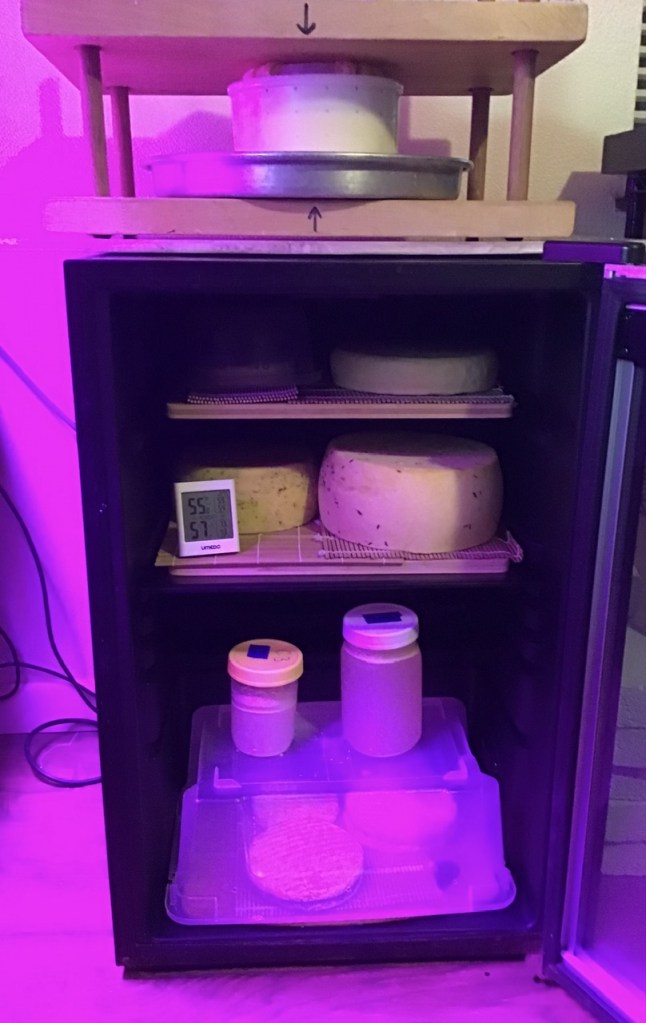
For now, I’m already out of room in my mini-aging fridge. I bought a second one, but once I got all the cheeses in it I had an impossible time getting a steady temperature. I gave up after 3 days of trying, to a mess of 70 degree cheeses sweating and dripping and starting to smell bad. The fridge regularly swings by 30 degrees, a cheesemaking nightmare.
I can work with a steady 50-55, and control humidity using plastic bins, not exactly a cave in the Loire Valley, but I can make it work well enough for a short Redneck affinage.
The non-existent affinage fridge of my dreams would be humidity controlled. The one that’s close enough costs a mere $700 and has temperature control in two sections (nice!). It’s technically for wine but home cheesemakers who can afford it often convert them with great success, or so I’ve read.
Let me just put that up on my vision board and see if it arrives in a timely fashion!
Also on my wishlist, David Asher’s latest book. His first book is my go-to resource and changed everything I was doing in making cheese, “The Art of Natural Cheesemaking: Using Traditional, Non-Industrial Methods and Raw Ingredients to Make the World’s Best Cheeses.”
Despite the struggle for a reliable raw milk source I have come to the wonderful place in my cheesemaking skills that I no longer follow recipes. I still read plenty of recipes, of course. But I read them to glean new techniques, learn cultural differences and especially pre-industrial methods, and imagine new combinations, in order to try them in my own way, like the rest of our cooking here. Hubby works the same way with his culinary craftiness.
It is the key to turning cooking from drudgery to joy, imo. It’s ‘the zone’ like they talk about in sports, or artists in their creative flow. Who wants to do that in their sterile industrial kitchen rather than in the comfort of their own home? Some, I know, but definitely not me.
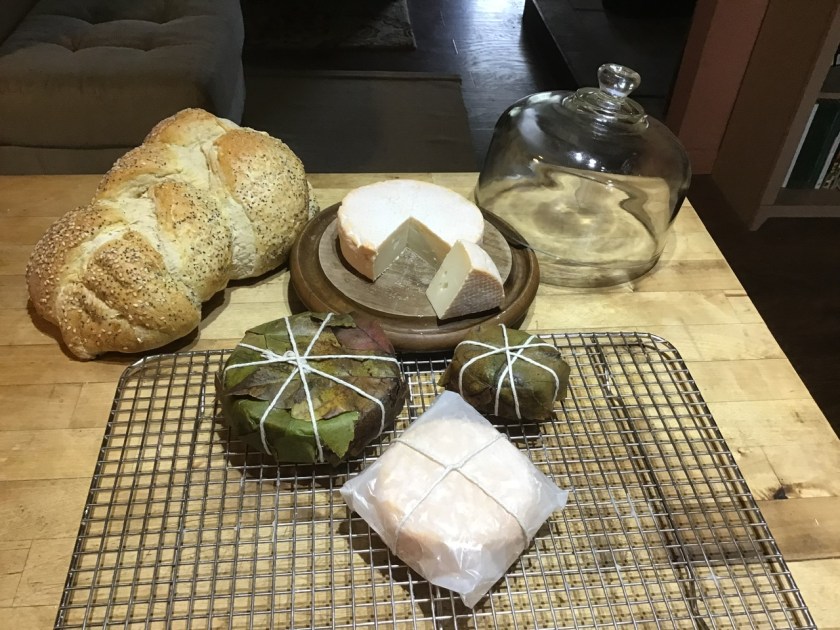
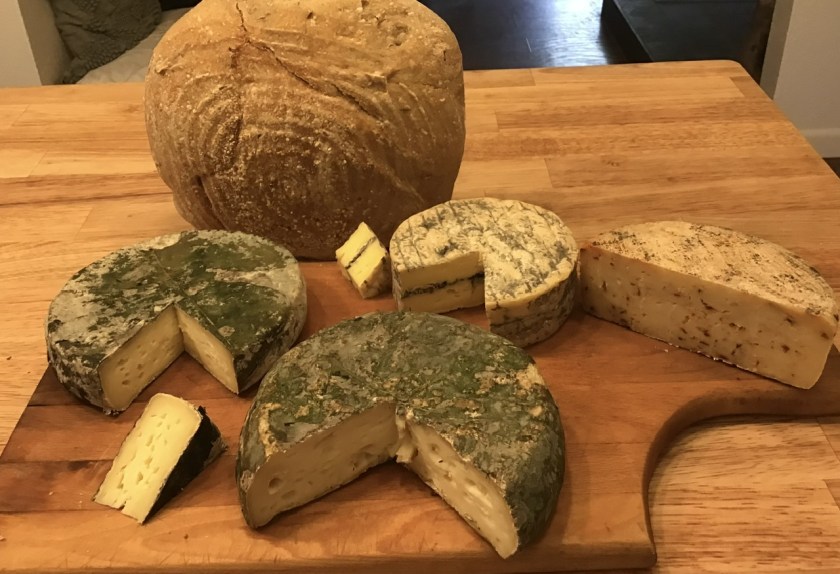
Some previous cheeses
“Kenshobert” in my territoire version of Camembert.
Turning a favorite hobby into a business is the joy-killer. Being well-rewarded for a favorite hobby is the goal. That’s magical like milk transforming into 1,000 cheeses is magical. Some call it alchemy, but really it’s just fermentation, maybe the most ordinary and natural process in the world.
Cheesemaking is also economical and beneficial to more than just our health and palette. The dogs and the pigs get all the whey after the ricotta is made–whey ricotta is a delicious ‘by-product’ from making hard cheeses. So from each gallon we get the heavy cream for coffee and ice cream, milk for cheeses, and whey for other recipes and very contended critters.
Ricotta pressed overnight then soaked 3 days in homemade hard pear cider. Eaten fresh, with fruit or crackers, it’s mild, slightly sweet and tangy.
The critics of course think it a lot of wasted work when cheese from the grocery store is cheap and plentiful, and there’s a growing network of artisanal cheesemakers who craft excellent cheeses (for a hefty price). I’ve had plenty of such cheeses and they are indeed delicious and worth the money.
A Tomme-style wash-rined cheese with goat cheese crottin-style drainingYogurt cheese with herbs aging in olive oil
But, they are all subject to the laws, which usually means: pasteurization, medicated animals, artificial lab-produced rennet (brought to you by Pfizer!), and freeze-dried cultures, also lab-made.
All that is exactly what I’m trying to get away from, in order to craft the most natural, local cheeses as possible. It’s an impossible task while remaining inside the laws.
Yet, there are folks still alive today who can remember when the laws weren’t so intolerably squashing to taste, creativity and economy. Just as there are old-timers here in Texas who can remember the days when they were allowed to raise, kill, process and sell their own livestock to the public, there are cheesemakers up north (no traditional cheese country in the south, too hot) who can still remember a time they could sell their handmade cheeses produced on farm in their own kitchens. Now most cheeses sold in this country are essentially fake, already lab grown, like the ‘meat’ they keep trying to push on the public.
Somehow there are still the majority who continue to call this freedom and progress.
About 5 or so years ago an old timer whose land borders our own gave me a brochure with an enthusiastic smile and said–“Y’all should do this, too!”
I grimaced as I took the materials he offered. As much as I respected this neighbor, bless his heart and rest his soul, as he has since passed, I just knew there had to be a con behind these legal conservation agreements property owners are signing in an effort at protecting their land for future generations.
He thought he’d done good, of course. While his property was entirely recreational, and his full-time home in Houston, he worked very hard on it for many decades. He has a beautiful 2-story cabin there he built himself, as well as fruit trees and grapes, and his children and many grandchildren filled the home on weekends and holidays, often practicing his favorite sport–shooting. He was a good man and he meant well.
No one in the family has been back to enjoy the cabin since his death, about 3 years ago. This is not unsual with inherited property, and our own property was another case in point. Siblings disagree, feelings get hurt, attorneys get hired, acreage gets split and the decades of hard work slowly go back to nature, if the internal conflict continues long enough.
This is a common enough scenario that it makes perfect sense an old patriarch would do all he can to avoid such mess. Now I can’t say if his family inheritors are aware of any potential issue with his decision to legally protect some of his land ‘forever’ or if that’s the reason they have not returned. Maybe a family feud alone is the issue there and the government hasn’t yet involved themselves.
Nature Preserves or Confiscation Scheme?
But that’s exactly the point I’m getting at. These ‘permanent conservation easements’ that are being created by well-meaning landowners are not without risk. And absentee landowners, or those embroiled in inheritance issues, are especially vulnerable.
Because the Globalists want the land, and if they can find a proverbial broken link in your private property chain, they will worm their way in, legally, through the fine print.
It’s all part of the Total Human Ecosystem (THE) scheme. From escapekey’s Substack:
“Conservation Easements as Confiscation: Across rural America, landowners are being offered attractive deals for ‘conservation easements‘ that sound like simple land protection agreements. But buried in the contracts are ecosystem performance requirements tied to financing. Miss the biodiversity targets and operational control transfers to environmental organisations. The land becomes theirs while you keep the tax liability.”
Long gone are the days when Americans could glibly repeat, “But that would never happen here. We have laws.”
The ‘laws’ for every ‘country’ on Earth will be Uniform. This is the Agenda, and all private property is threatened. The very concept of private property will be demonized through the Government schools so thoroughly that children will be indoctrinated to be afraid of it.
“The Total Human Ecosystem framework treats private property as an outdated concept that threatens ecosystem integrity. Increasingly, local zoning laws incorporate ‘ecosystem service’ requirements that can trigger automatic seizure clauses. When satellite data shows your land use conflicts with ecosystem targets, your property can be transferred to ‘ecosystem management’ organisations. You might own the deed, but the ecosystem owns the seizure authority.”
Agricultural Land Seizure: Farmers are being offered attractive financing tied to ‘regenerative agriculture‘ and ‘carbon sequestration‘ targets. But when weather, pests, or market conditions make those targets impossible to hit, the financing agreements trigger land transfer clauses. Family farms that have operated for generations are being seized by international organisations through algorithmic enforcement of impossible environmental standards.
The Domestic Blueprint: What’s happening in Belize and Ecuador is the beta test for comprehensive land confiscation in developed countries. THE provides the philosophical justification (individual property rights threaten ecosystem health), the ecosystem approach provides the governance framework (decisions must be made at ‘appropriate’ ecosystem scales), and the financial instruments provide the seizure mechanism (miss your targets, lose your land).”
“Once you see this pattern, you cannot unsee it: every expansion of control comes wrapped in moral imperatives, every loss of freedom is packaged as virtuous necessity, every dissent is reframed as a moral failing. Healthcare workers fired for “ethics violations,” companies forced into ESG compliance, scientists silenced for challenging consensus—all manifestations of the same ethical control architecture that esc has systematically documented.”
“Yet appearances deceive. The result is a global Soviet: the Party is gone, but the apparatus remains — cloaked in sustainability, cooperation, and humanitarianism, with a web of NGOs functioning as the modern fronts for its operational machinery.
The ideologies of peace, sustainability, and rights have been merged with the infrastructure of surveillance, algorithmic governance, and moral programming. The old flags have been lowered — but the new system flies under a different banner: expertise, ethics, and emergency.”
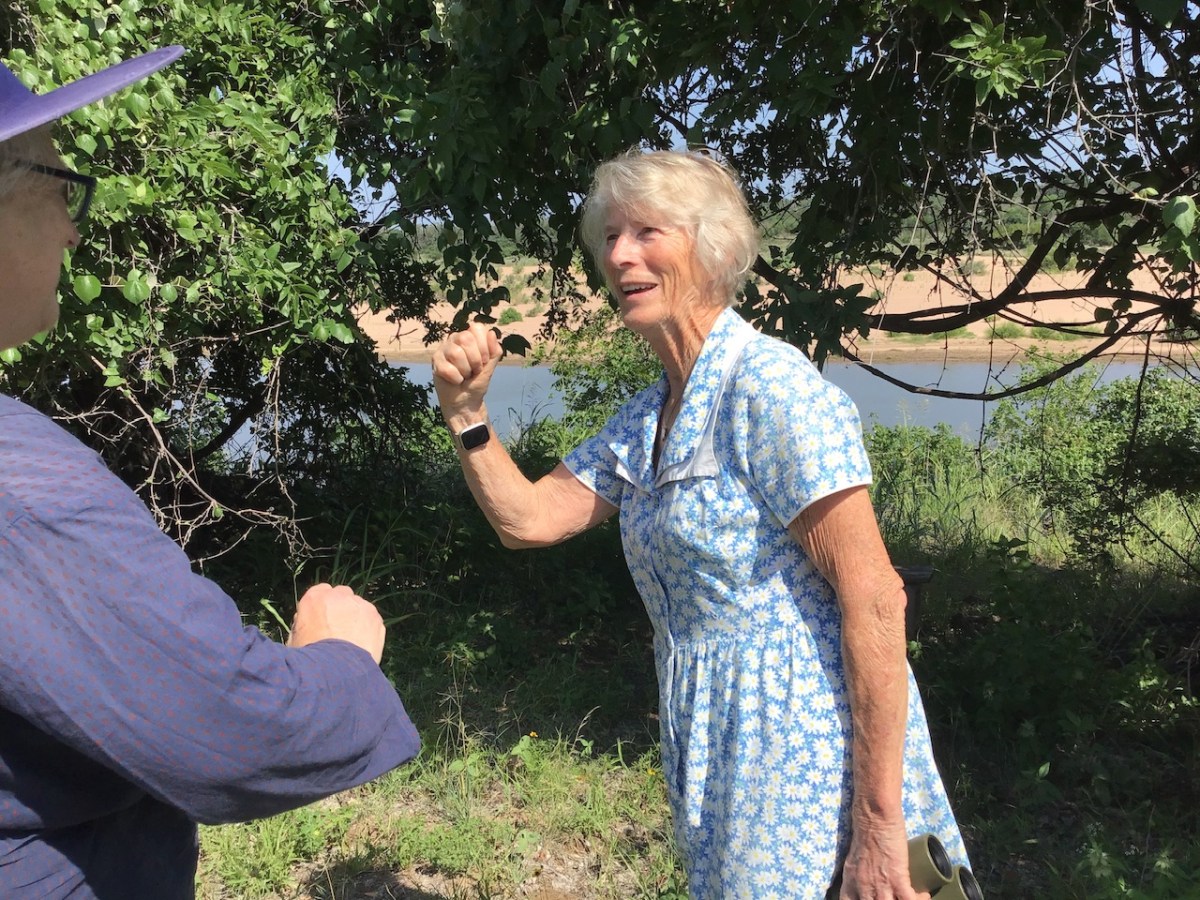
From Kenya to Llano, Berit pictured with Kath, visiting from the UK
Hunters often get a bad rap and it’s not always for good reason. I had a chance to learn something about this on a recent trip to the Texas Hill Country where I was led to question the difference between a hunter and a poacher.
Before assuming this is a niche topic and of little interest to the vast majority of folks whom are neither hunters nor poachers, consider it’s a matter of philosophy as well, along with colonialism, globalism, human nature and modern life.
A wall of hunting ‘trophies’ not uncommon in Texas homes.
Mostly they have much in common, the hunter and the poacher. There is a similar skillset, clearly, but one I know nothing about, so I’ll leave that to the hobbyists and professionals. As strictly an occassional observer I imagine it to require more patience than I’ve ever mustered, more tenacity than most and more courage than the vast majority.
We might say the poacher is lawless and greedy and violent, and in some cases that may well be true. It may also be true that some hunters share such qualities as well.
But again, I’m coming to this as a complete outsider to their world, strictly an observer, and occasionally a beneficiary.
The differences between the hunter and the poacher must lie somewhere between intrepid and genteel, I figure. And so it is most apropos that I should think of it with a hunter who fits the bill for both adjectives.
Our hunter in question, Berit, at her home in Llano, Texas
I’d never have taken this fair, mild-mannered, small and slender woman as a big game hunter, that’s for sure, and I suspect that made her something of an attraction at her home in Kenya, kind of like a pretty little sparrow among bulls. Though looking at the full and adventurous life she’s led, we mustn’t think a sparrow at anyone’s mercy.
A beautiful display of African artefacts collected during their time there.
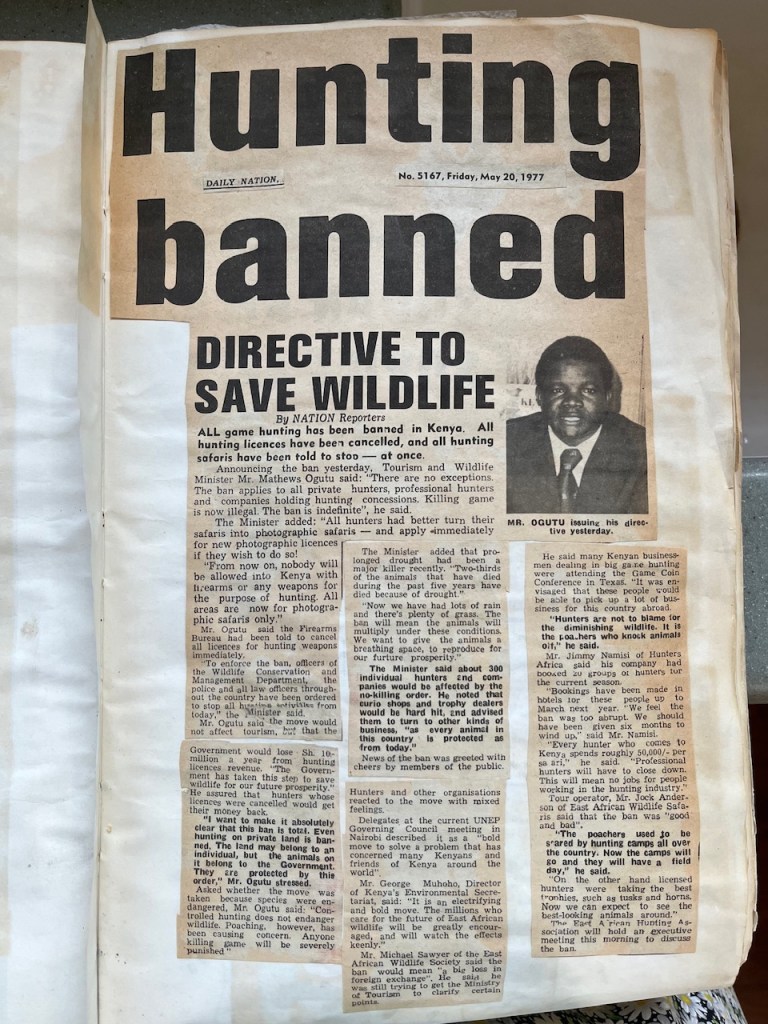
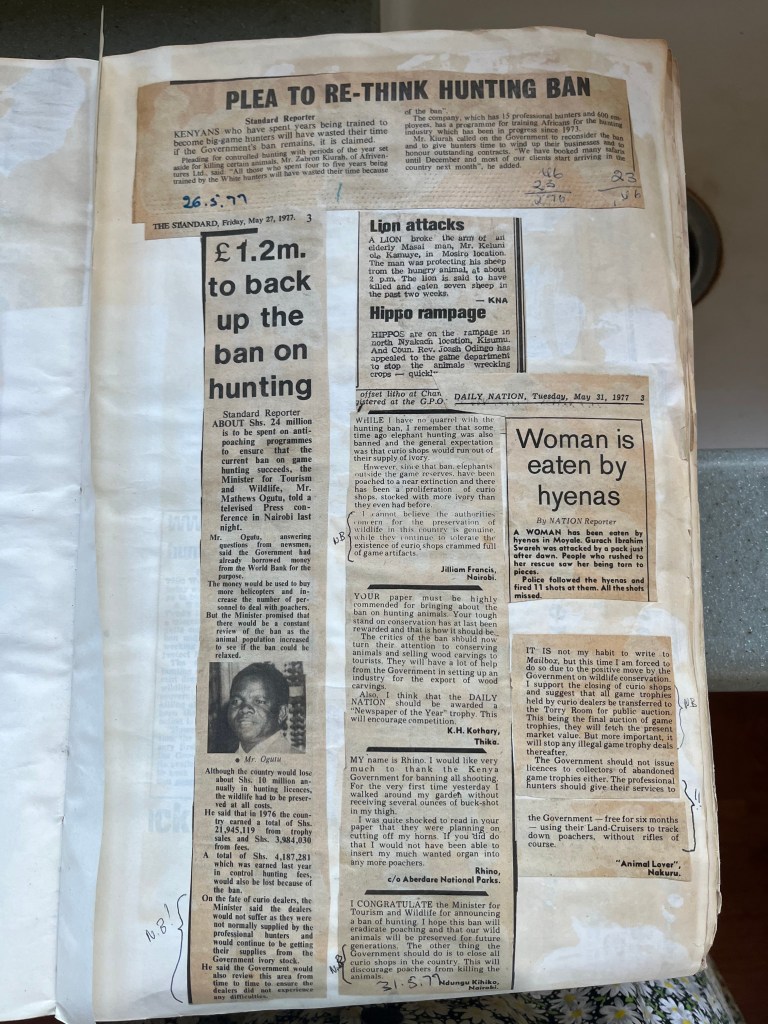
I met her with her second husband, an avid big game hunter, but her first husband was a professional one. They had a business together leading safaris until the laws were changed in an instant, hunting banned by the government, their livelihood lost.
Neither were Americans, but he had a prospect in Texas. So, with young children in tow, they moved to the Hill Country, to Llano, and started anew.
That was in 1977. It is still illegal to hunt in Kenya.
What’s more interesting, Kenya has remained on the fast track ever since, to full-tilt modernization. They have been an international fore-runner for all the Global Village United Nations WEF grand schemes for their ideal Future: ESG scores, vaccines, digital IDs, carbon credits.
That’s the great gift of compliance. Or, as the old adage goes, “Give the devil a finger . . .”
“Esc’s analysis, backed by meticulous documentation, sets the stage for understanding a system already operational, where resistance is economically suicidal and socially ostracized. Esc details how development programs in nations like Kenya test governance technologies—digital IDs, carbon credits—later exported to the West, ensuring global compliance under the guise of progress. The Earth Charter, as esc notes, serves as a global constitution, subordinating individual rights to expert-defined collective responsibilities, a theme echoed in The Invisible Empire’s critique of sustainability metrics overriding democratic will. We need to recognize this system before the window for democratic resistance closes, as each institutional capture—from ESG compliance to AI-driven surveillance—tightens the web.” The Complete Architecture – by esc
“For 130 years, a coordinated network of institutions has been systematically replicating the same control structure across every domain of human life – from healthcare to education, from banking to environmental policy. This structure, originally perfected in British banking, creates the appearance of local autonomy while concentrating ultimate decision-making power at higher levels run by credentialed experts. The breakthrough came when science claimed moral authority over all aspects of human experience through the 1986 Venice Declaration, positioning scientific expertise not just as informing ethical decisions, but as the source of ethics itself. This created the intellectual foundation for what we now see operational: a system where questioning expert consensus isn’t just wrong – it’s scientifically illiterate, ethically irresponsible, and potentially pathological.”
How close is your country’s hunting policy to Kenya’s? Is hunting policy about creating the lines between hunter and poacher, or obscuring them? Because, if everything is forbidden except to a tiny few, aren’t we pretty much all destined to become poachers?
“And the pity is that it will do nothing for the wildlife, controlled licensed hunting has never been a threat to wildlife. When elephant hunting was closed a few years ago, I wrote to the East African Standard and pointed out that poaching was the problem, not licensed hunting, and that if poaching were not stopped, the elephants would disappear anyway, whether licensed hunting were allowed or not. Unfortunately I have been proved right, and since that time the elephants have been exterminated all over large areas of Kenya. For this licensed hunting can in no way be blames, as legal hunting of elephants was closed.”
Finn, Berit’s husband
Should hunting be allowed in Kenya? | davidlansing.com
“When I was in Kenya a few years ago I stayed on the edge of the plateau overlooking the Mara. About a mile away one night, a leopard broke into a Maasai boma and killed a cow. The game officials came by two days later, photographed the pug marks on the ground and the carcasses, payed the elder a pittance for his loss, reminded them that they were forbidden to kill the leopard, and disappeared. A couple of nights later, it happened again. So they staked out a goat and speared the leopard to death and buried him. That same leopard could have brought in tens of thousands of dollars in fees to Kenya and the local economy – now it’s a skeleton. When the wild game is seen only as a nuisance and is not allowed to pay its own way in a crowded land, it will always end like that.”
What is the difference between Hope, and Hopium? There’s a fuzzy line and it’s very easy to misjudge, but it’s located somewhere between: “Yay, Trump will save us all from $11/dozen eggs!” And “We should start a chicken mega-ranch.”
If those two meet in the middle of the road, might creative minds find that they’ve absent-mindedly crossed with logic and conclude a few laying hens might be just the ticket? A bit of self-sufficiency, why not? After all, it’s not rocket science . . .
Joel Salatin exposes the WEF agenda! “Josh Sigurdson talks with Joel Salatin of Polyface Farms, an entrepreneur and farmer who for years has fought against Monsanto, factory farming and dependence pushing for people to homestead and/or farm and not be dependent on the system. We previously interviewed Joel in 2017 regarding Monsanto. Now, 8 years later, we delve into the massively expanded technocratic grid as more than ever, people are dependent on grocery stores, the grid and AI, weakened by design. The World Economic Forum agenda is to destroy self sustainability and make people weak slaves to technocracy. Eventually they want food rations and carbon credit scores. They’re already being rolled out to some degree and with the 2024 United Nations Pact For The Future, this problem is encroaching quicker than ever. The climate lobby attempting to bring down farms is more alive than ever. There are solutions however which Joel Salatin has spent decades teaching people. There is also a rumor circulating that Joel Salatin was picked to head the USDA. He explains this and more in this interview.”
Though it is the gateway livestock, and that’s official, I’ve even heard it repeated by the official fact-checkers at NASA.
Don’t worry, more government will save us! They will VAXX this FLU away, similar to the way they spray on the weather!
Respiratory diseases? I can’t imagine how that might be happening! So baffling!
But as James Corbett points out, chickens are the simple solution, but not necessarily the Easy one.
Most folks will take the easy way out, drink the Kool-aid, puff the Hopium, and exclaim RFKJ is here to save the day. Cheap eggs and healthy injections on the way!
This posts aims to answer the question: Would there be anything redeeming about August in East Texas if it weren’t for the watermelons?
I repeat this every year. But I can’t help repeating it again. When we first came here and I’d spent my first August, I was mostly without Hubby because he would often get stuck offshore in the Gulf for bad weather or working over for vacationing colleagues. I swore I would find a way to travel in August, just like the French.
The heat is brutal, the garden mostly gone. Actually, it amazes me anything can survive out there, and yet, plenty of plants are thriving.
And now I can’t imagine having a happy vacation when we’ve got bushels of grapes to harvest and after that bushels of pears, which then must all be processed.
Into wine! I know I shouldn’t whine. It’s not every year we get either good grapes or good pears, and this year we’ve got both.
My wine lab, soon to be greatly expanding. 😊
Wine-making has proven to be a reasonable replacement for my sudden loss in cheese-making ability. That story has only gotten worse, so I’m going to avoid telling it, at least for now. Like I said, August is bad enough already.
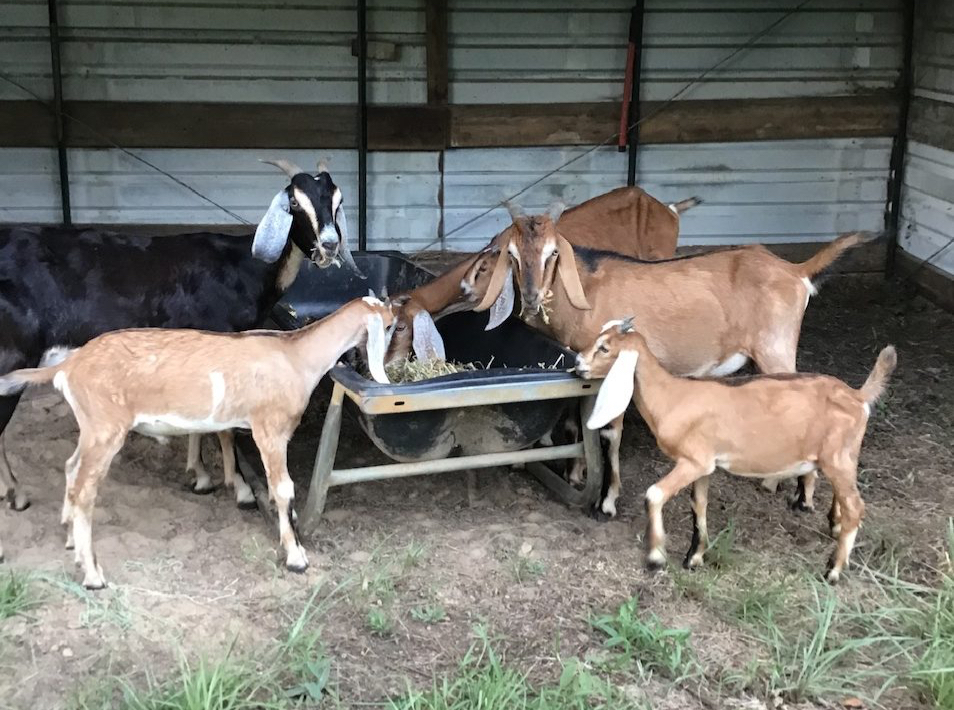
The healthy half of the herd.
While we have made hard cider from the pears and a bit of wine from grapes in past years, I really had no idea how versatile wine-making could be. Since last post I’ve added cantaloupe wine to the rows—joining Elderberry, Blackberry, Wild grape, and mead.
Cantaloupe wine? Who knew! But after giving these great big delicious 20- pounders to friends and eating them daily we still had so many and they were ripening so fast we had to do something. We forgot to keep track, but we had at least 15 of them, off only 3 plants.
‘Ole Tyme Tennessee’ melon
Enough to make 3 gallons of wine. I plan to make cider from it as well. Imagine all the fun we’ll be having wine tasting in December! (That’s exactly what I’m doing, a lot of imagining, to keep my mind off the miserable sweltering reality.)
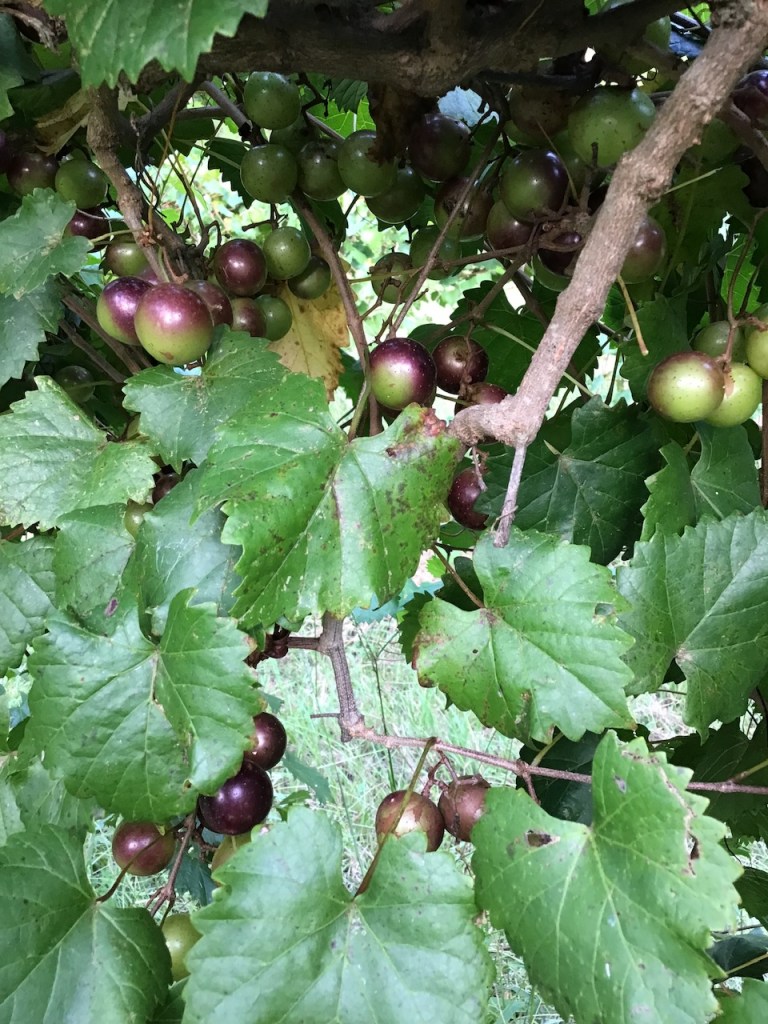
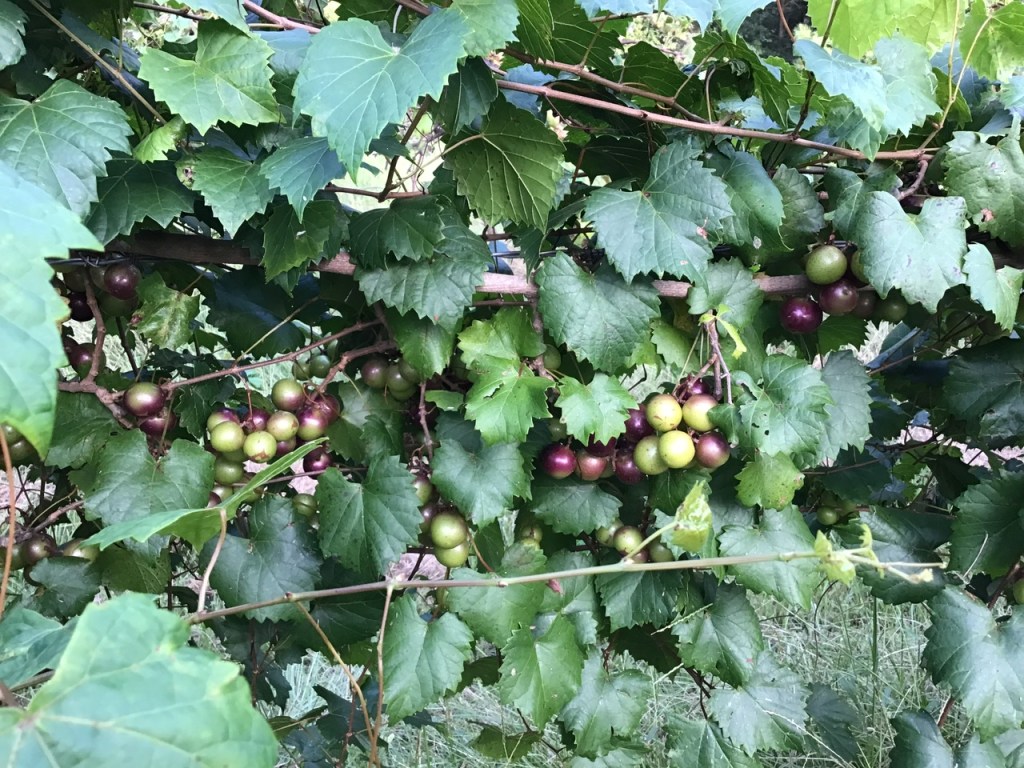
Now we’ve also got a couple buckets going of our cultivated grapes: white and red muscadines, sometimes also known as Scuppernongs.
“A glass of scuppernong wine is better for a body than a shot of penicillin.”
If you’re not from the Southern US you’ve probably never heard of Scuppernongs because they don’t have a good reputation among wine connoisseurs and don’t grow north of the Mason-Dixon line, as far as I know.
And they aren’t really suitable for table grapes either, unless your table allows for a lot of spitting.
Good enough for country wines, they say. So, good enough for me!
In fact they are really delicious. Beyond bursting with juicy sweetness, the green ones especially have varied and complex notes, sharp and earthy. The red ones have such an huge pop of intense grape flavor I’m reminded of manufactured fake grape flavors from childhood, Jolly Ranchers and Bubbalicious gum. Sad, but true, since I never tasted such fruit as a kid.
Except, that these have a tough skin and big seeds. And they are really a pain to harvest. If the weather were nice it wouldn’t be so bad at all. But the thing about muscadine grapes is they don’t ripen in nice clusters like the fancy grapes of more civilized peoples. 😆
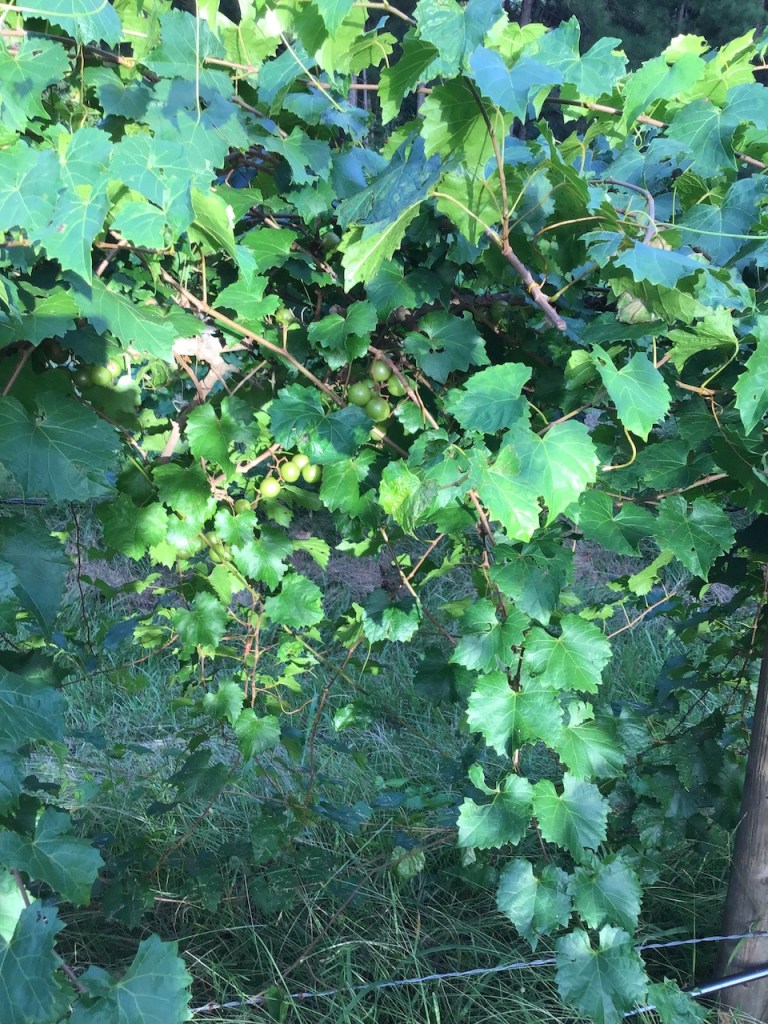
Every other day we’re out there gathering these plump gems from under their enormous vines, one by one, little jewels among the masses of deep green leaves. They’ve done remarkably well this year, after a dismal last year, and a meager crop the year before, and just when we were starting to worry all our hard work planting them was wasted.
I wish we knew the trick, Hubby tends the vines and he did nothing different this year from the previous.
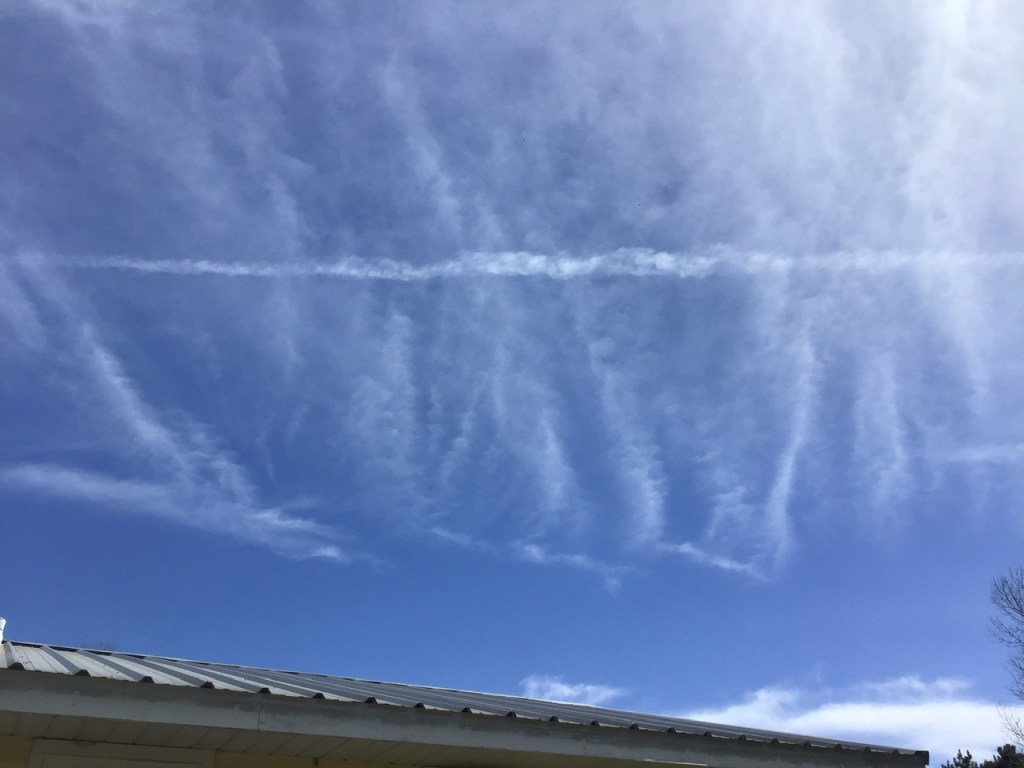
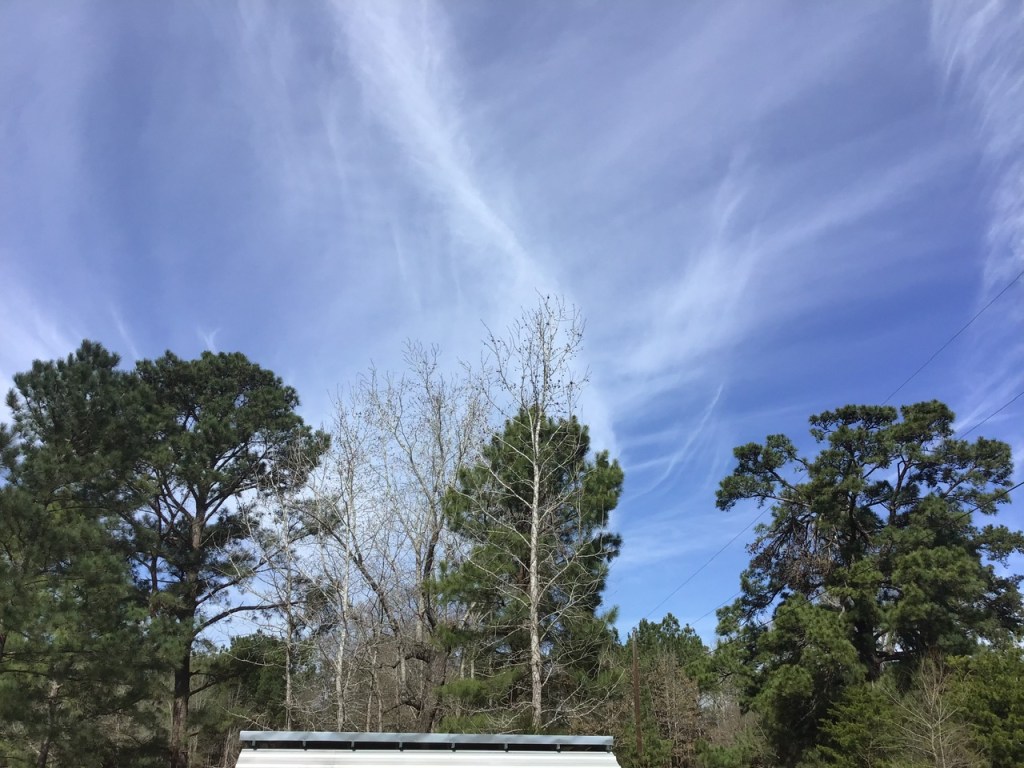
Our beautiful grape vines beneath a disgusting chem-filled sky.
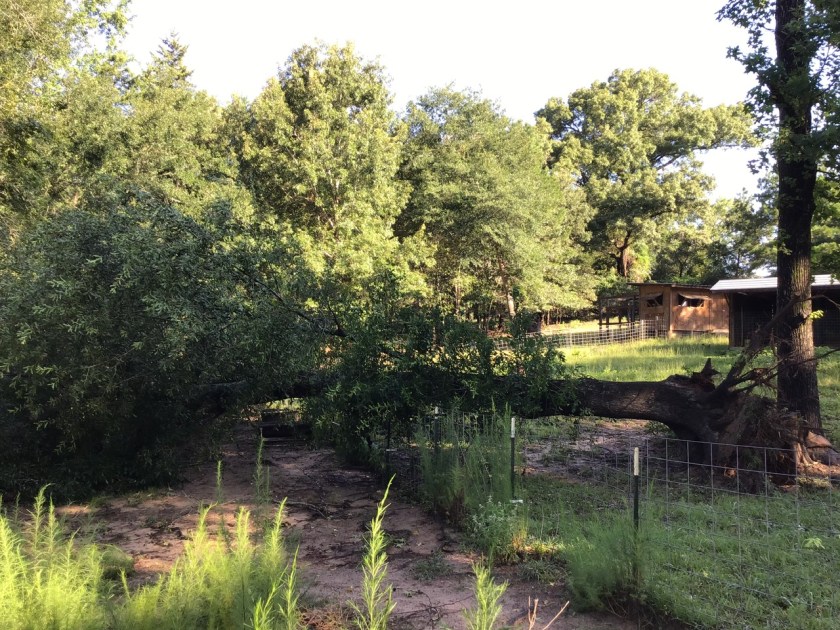
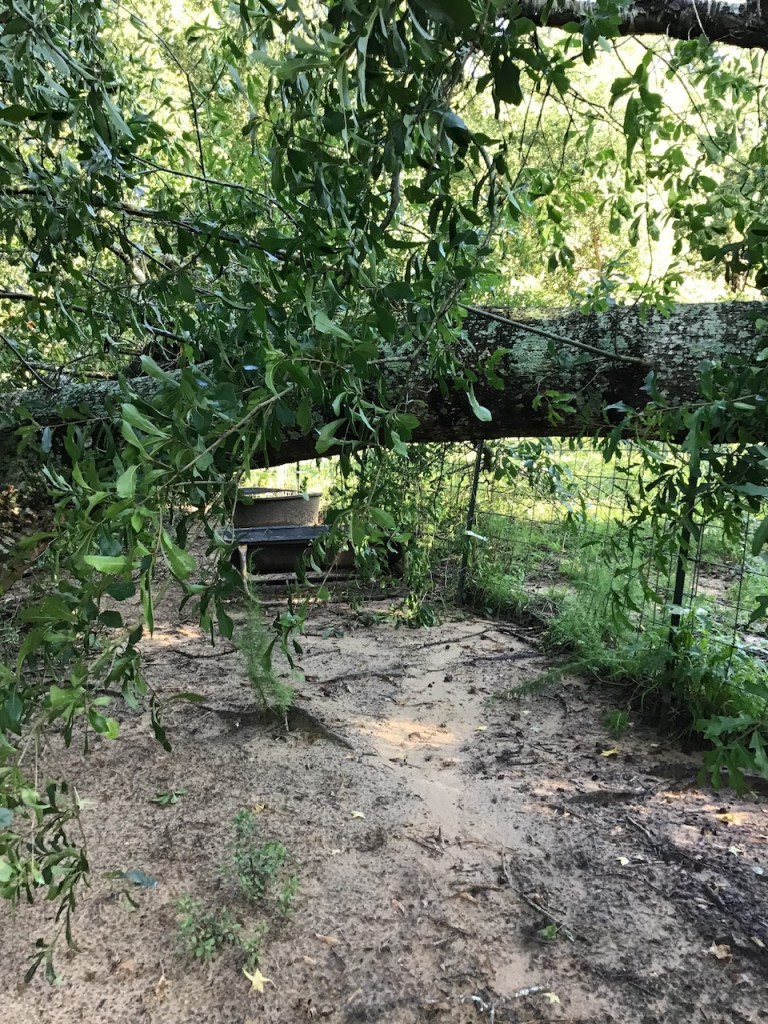
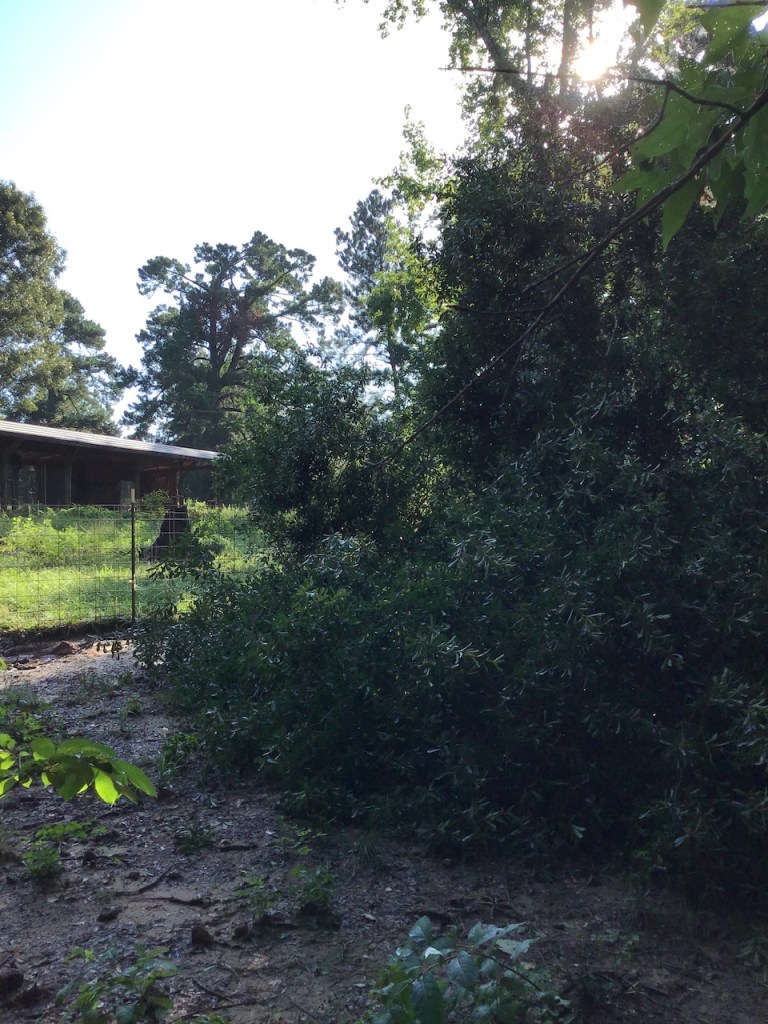
We did have the big rain with a nice temperature drop, which also brought down another big tree, right through a fence, as per usual. It seems we lose a big tree with every rain event these days.
Too bad, because that oak has been providing a lot of acorn forage for the critters in autumn. There are several other nearby mature oaks looking like they are also about to keel over.
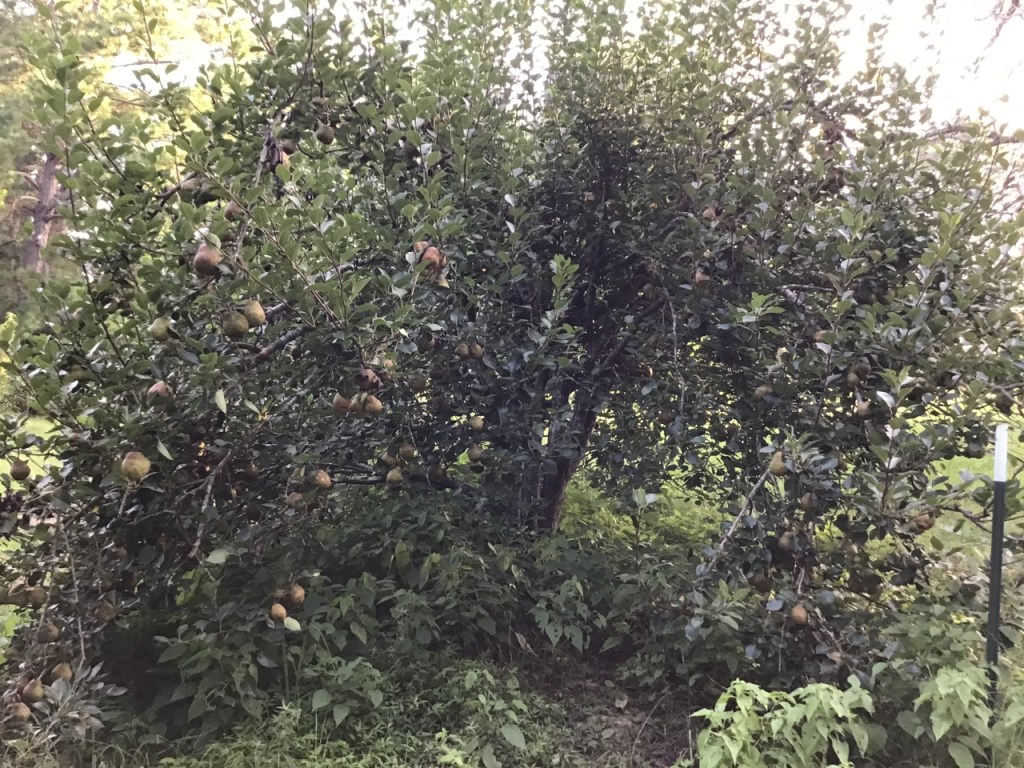
But, the pears have been spared and that will be our next big project in the blazing heat. Yay! 🤪
Three hard pear trees, two which were the only cultivated fruit trees here when we arrived, abandoned and still producing, bringing the feral hogs many happy meals. They produce prolifically when they produce, which is every 3 years on average. Plus one we planted in our still struggling orchard, it does really well most years, having gotten the regular run-off from our duck tub from it’s early years.
But the real pièce de résistance this year especially has been the watermelons.
They’ve not been as prolific as the cantaloupes, but they are some of the best I’ve ever eaten. Watermelons are Hubby’s preference, so he’s been in hog heaven every day, and the hogs are in a similar heaven with all the rinds they’ve been eating.
August has a few redeeming qualities after all. I don’t think I could make it through otherwise.
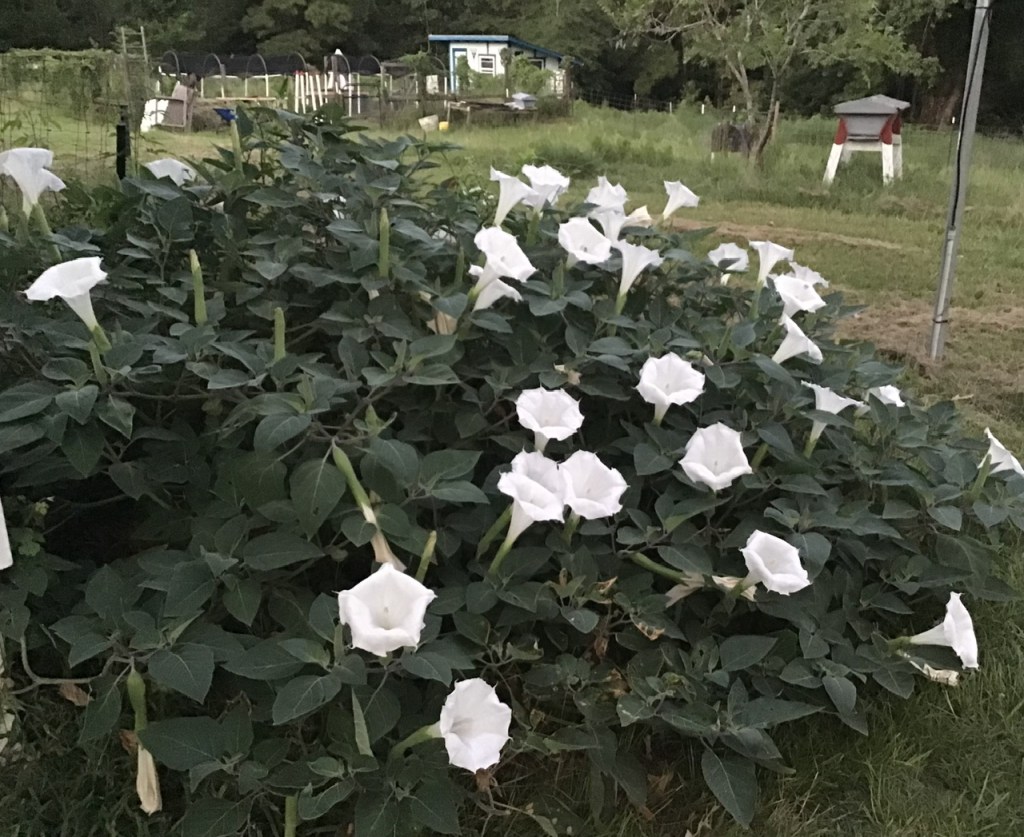
At sunset, within one hour they all open together while the bees get furiously busy. If you can’t catch the scent at just that initial pip of release, it’s instantly gone. Such an inimitable fragrance, enough to keep a woman longing, just long enough, that August might be gone again, and we’ll forget. It’s not so bad, right?
Until the next August.
Datura inoxia perhaps signaling the season of intoxia? Because we’re making lots of wine and it helps to get intoxicated to get through it? 😆