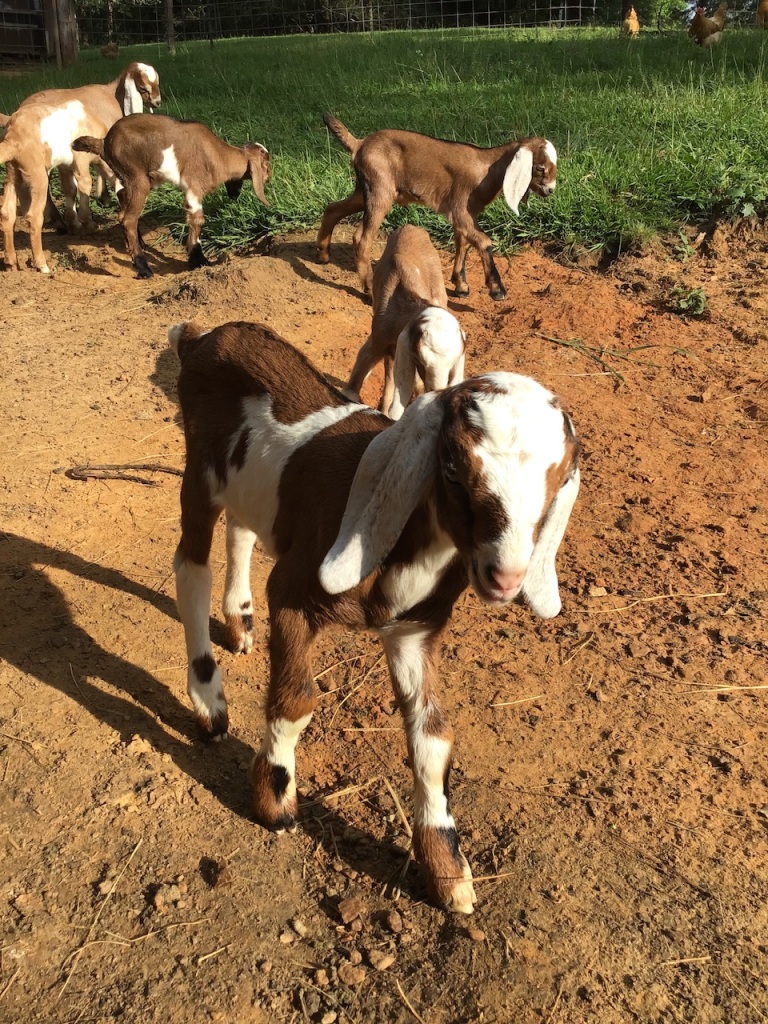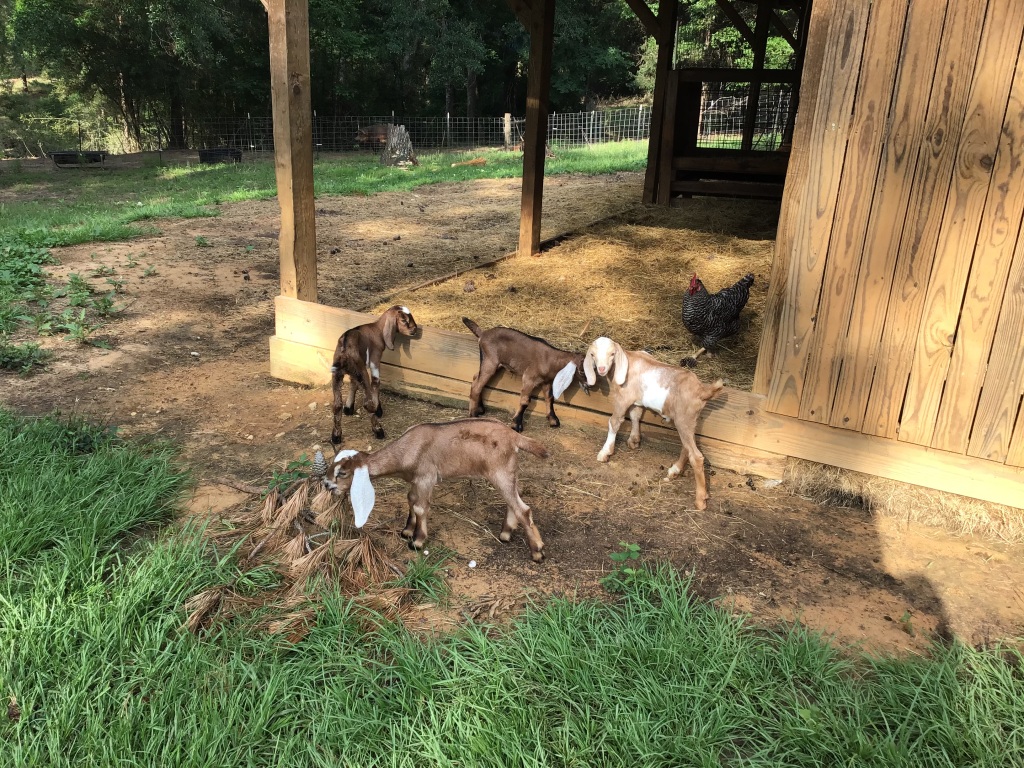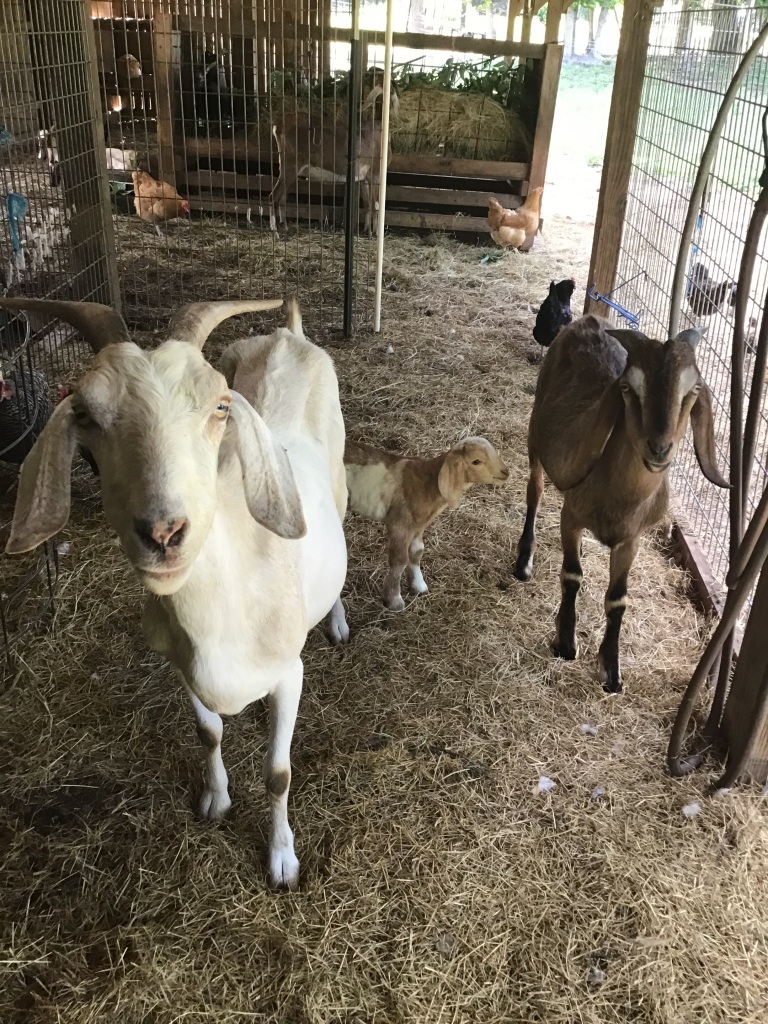

So. Much. Milk

A sudden mini-miracle has occured and has turned the month I completely intended to be an exceptionally lazy one into a whole big mess of work.

What’s in your cheese cave?
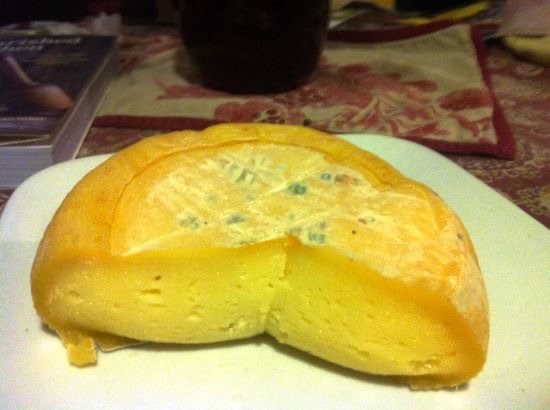
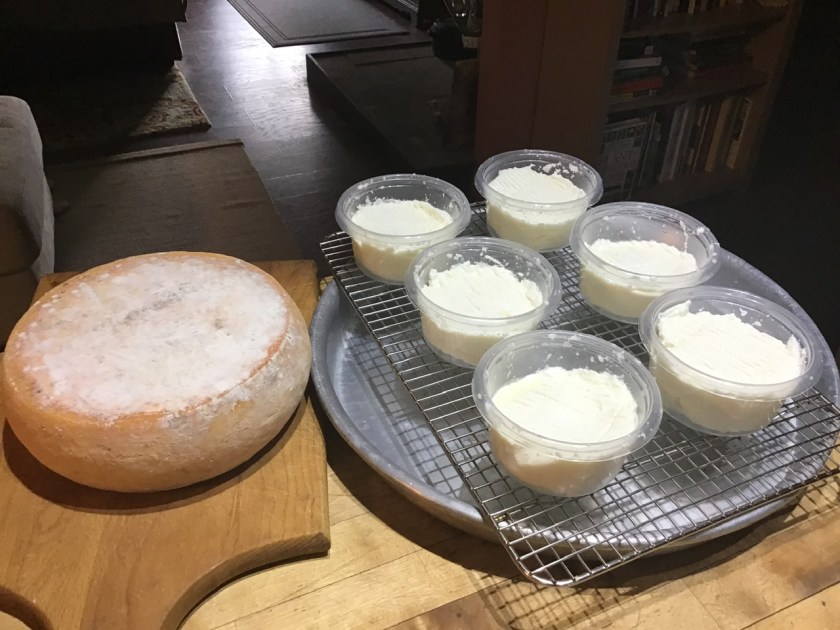
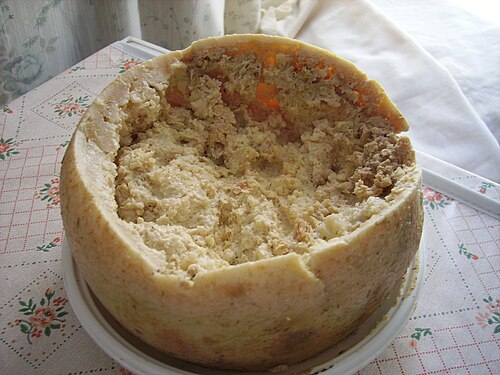
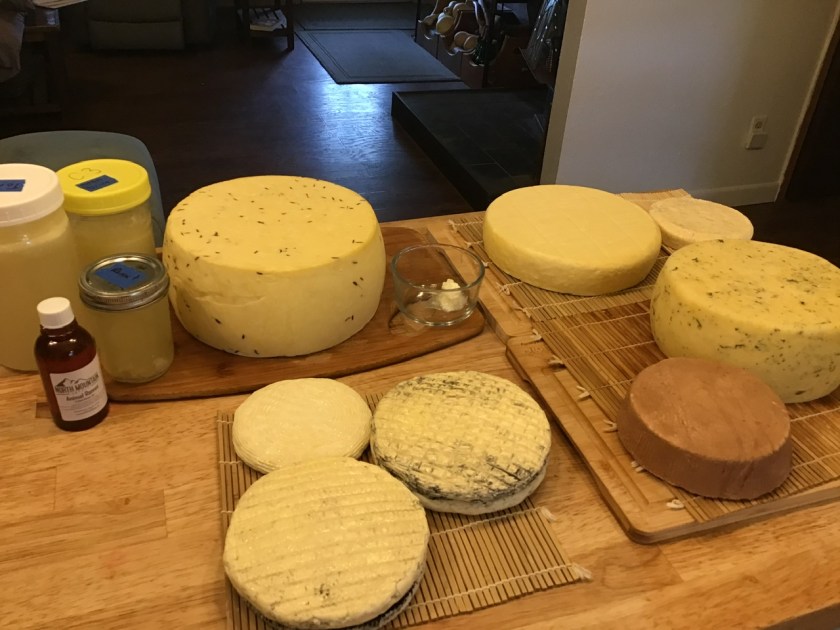
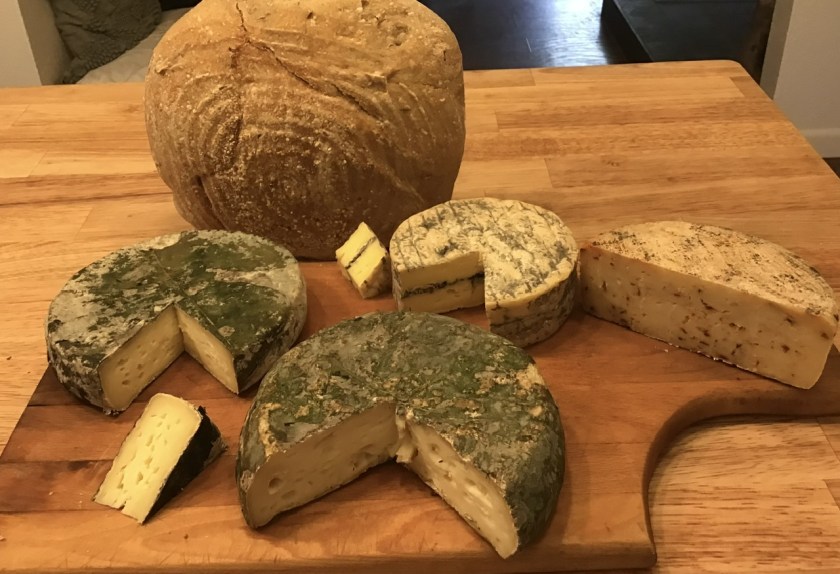
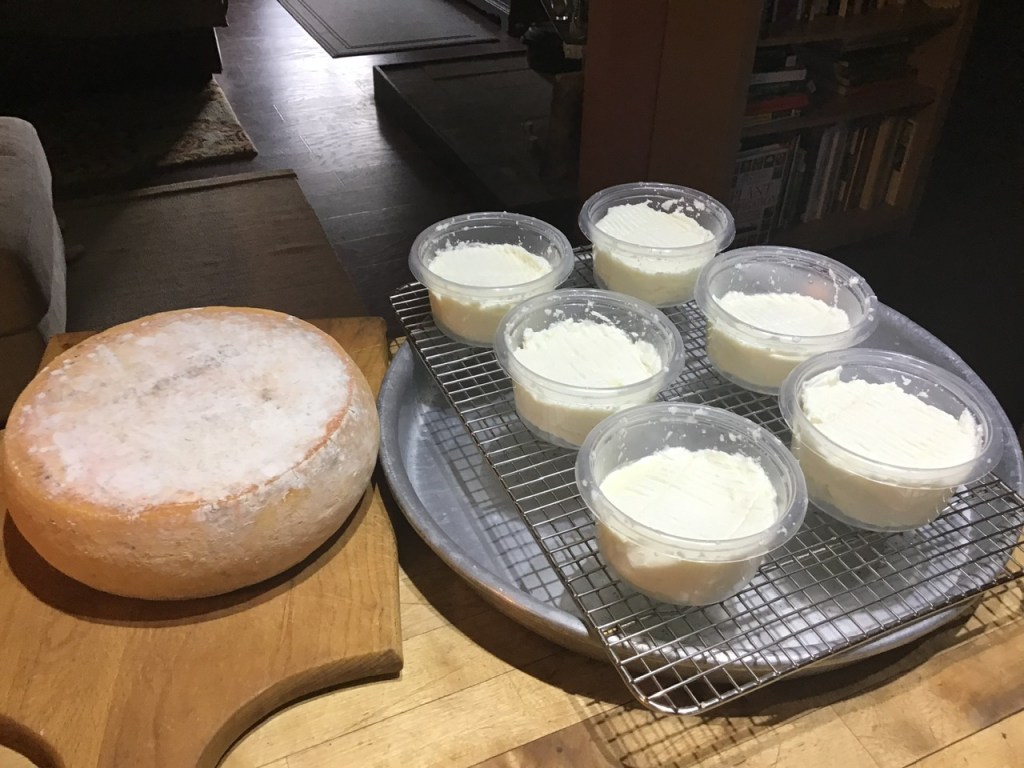
A portion of the cheeses I’ve made in the last two weeks, the largest was from 9 gallons, which was transformed into a Caraway Gouda. The smallest was made right in the half-gallon Mason jar with milk directly from the cow, never cooled and ‘backslopped’ from our own homemade goat rennet. Backslopping was a traditional method used on the farm to carry the culture and rennet combination from day-to-day, similar to keeping a fresh starter culture for sourdough bread.

While it’s work I love, the problem-solving has been endless and my shoulder is an on-going issue. After such a long search, this was so unexpected and has caught me off-guard, unprepared and re-injured. Why am I not surprised?

My milk-quest for cheesemaking has been a decade-long challenge. For the briefest of run-downs I’ve watched raw milk prices double in that time, tried and failed at goat rearing, and for the past couple of years I’ve been herdshare hopping, with prices far too high for cheesemaking.

A few weeks ago I tried another herdshare–closer, nicer, and so much cheaper. Finally, I can make cheese to my heart’s content, to hell with my aching shoulder! And thanks to Hubby on early retirement, who is willing and available for all the heavy lifting.

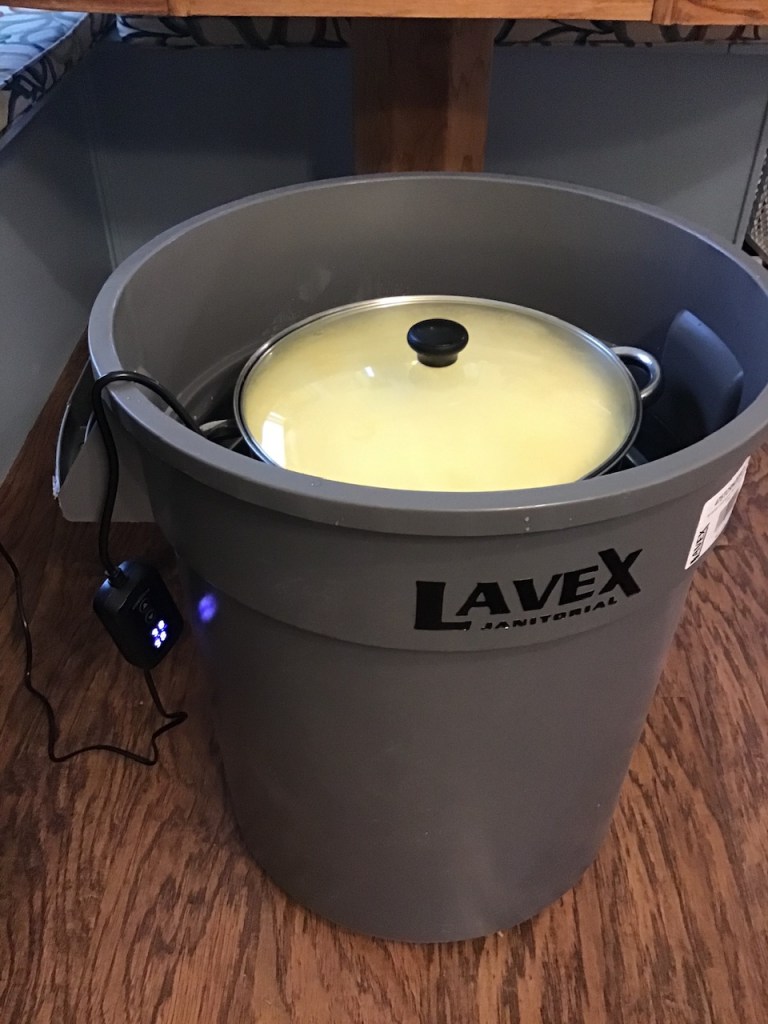
And who also helps with the redneck innovations–having just made me a new collapsible cheese-hanger unit and also made my cheese-press.

I’ve even been able to experiment again it’s so reasonable, at just $3.50/gallon. Not since the goats have I managed to pay so little for such cheese pleasures. My new milk lady is short on customers, half her milk is going to her neighbor’s pigs every day.

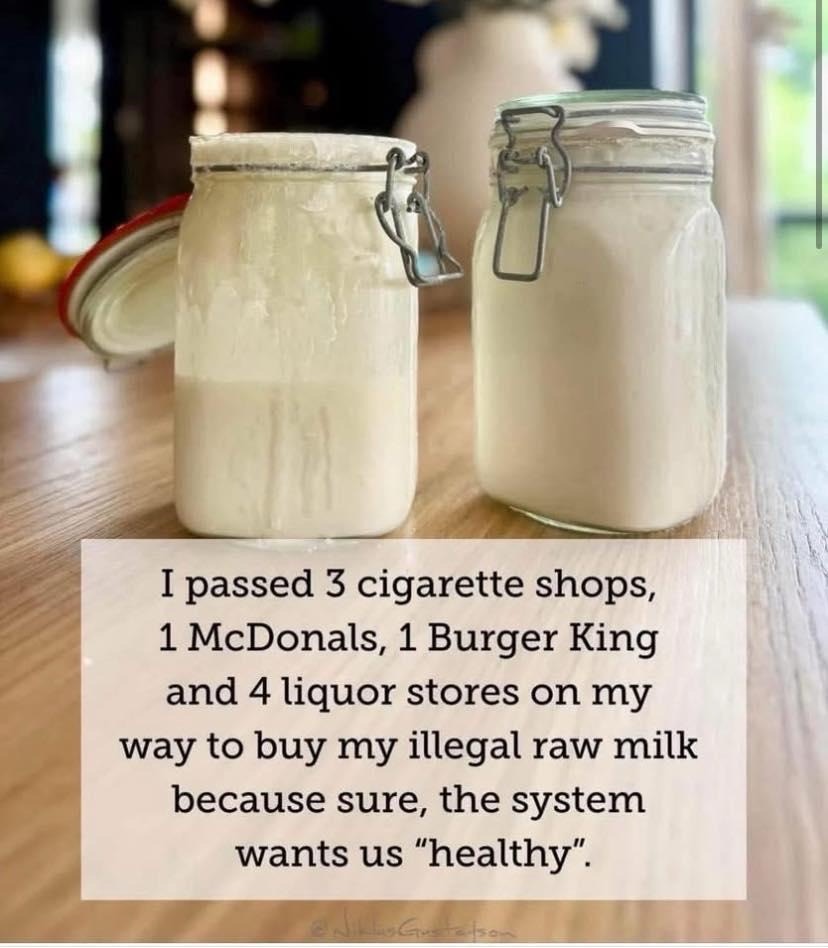
All I can think is, how crazy is that? That precious milk goes to the pigs, because it’s illegal to sell it anywhere but at her farm and to process it into cheese to sell is also illegal. While I can imagine those are some very happy pigs, I still wish I could sell cheese.

Actually, not so much the selling part, just the making part. I do often give it away as gifts and I get rave reviews. I’m often asked why I don’t sell it at the Farmer’s Market, because so few know how illegal it actually is. The requirements for licensing are very strict, not a chance a home kitchen would pass, (Great Dane not included!) and even with all the proper paperwork and a professional kitchen, many cheeses are still illegal to sell.

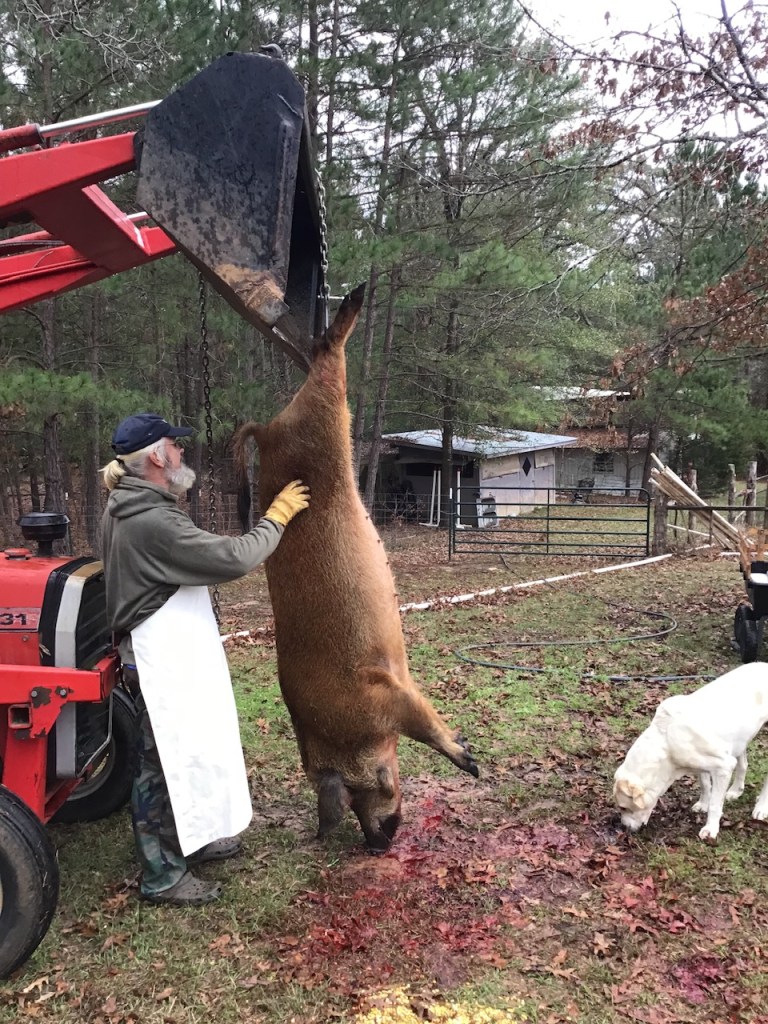
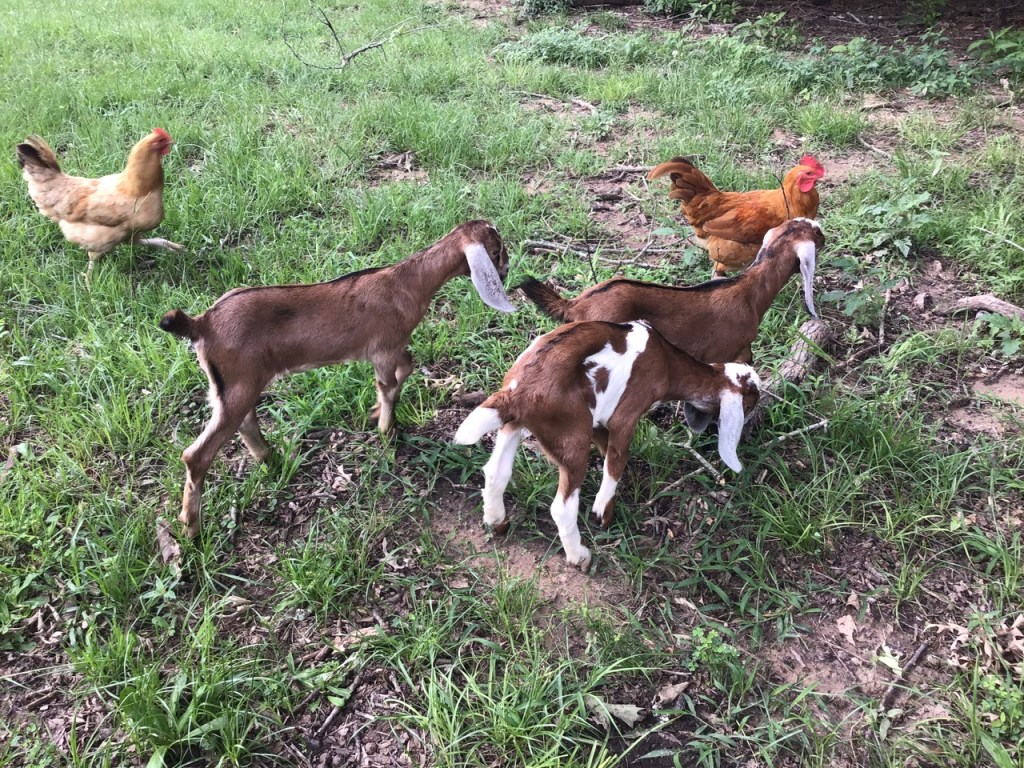
Various whey beneficiaries on the homestead:

I don’t want to run a cheese business anyway. I want a HWB (Hobby with Benefits) with those benefits being financial as well as delicious.

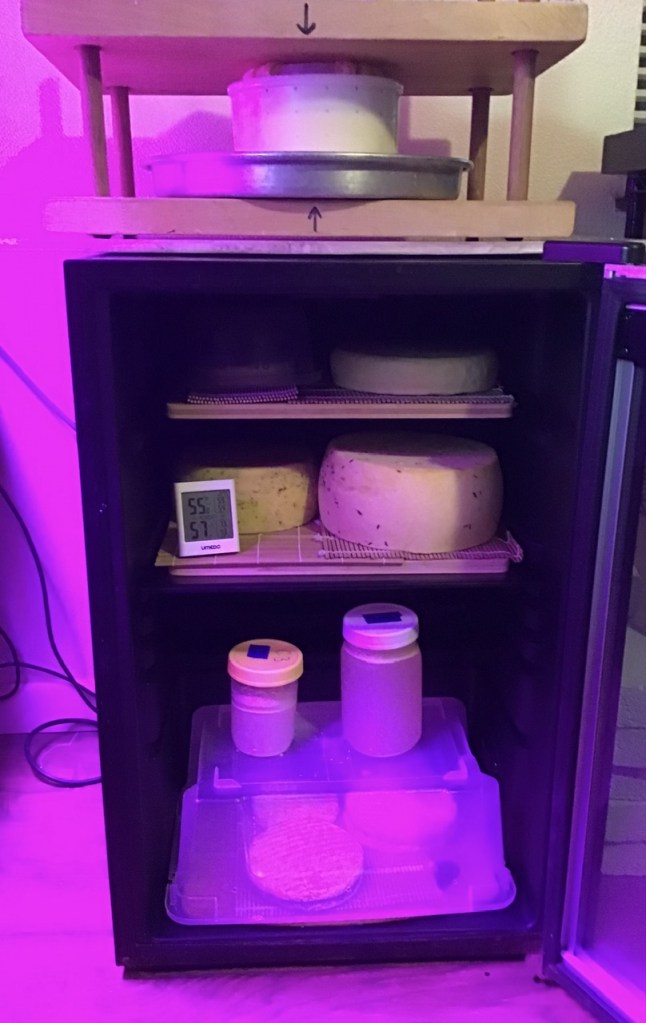
For now, I’m already out of room in my mini-aging fridge. I bought a second one, but once I got all the cheeses in it I had an impossible time getting a steady temperature. I gave up after 3 days of trying, to a mess of 70 degree cheeses sweating and dripping and starting to smell bad. The fridge regularly swings by 30 degrees, a cheesemaking nightmare.

I can work with a steady 50-55, and control humidity using plastic bins, not exactly a cave in the Loire Valley, but I can make it work well enough for a short Redneck affinage.

The non-existent affinage fridge of my dreams would be humidity controlled. The one that’s close enough costs a mere $700 and has temperature control in two sections (nice!). It’s technically for wine but home cheesemakers who can afford it often convert them with great success, or so I’ve read.

Let me just put that up on my vision board and see if it arrives in a timely fashion!

Also on my wishlist, David Asher’s latest book. His first book is my go-to resource and changed everything I was doing in making cheese, “The Art of Natural Cheesemaking: Using Traditional, Non-Industrial Methods and Raw Ingredients to Make the World’s Best Cheeses.”

Despite the struggle for a reliable raw milk source I have come to the wonderful place in my cheesemaking skills that I no longer follow recipes. I still read plenty of recipes, of course. But I read them to glean new techniques, learn cultural differences and especially pre-industrial methods, and imagine new combinations, in order to try them in my own way, like the rest of our cooking here. Hubby works the same way with his culinary craftiness.

It is the key to turning cooking from drudgery to joy, imo. It’s ‘the zone’ like they talk about in sports, or artists in their creative flow. Who wants to do that in their sterile industrial kitchen rather than in the comfort of their own home? Some, I know, but definitely not me.

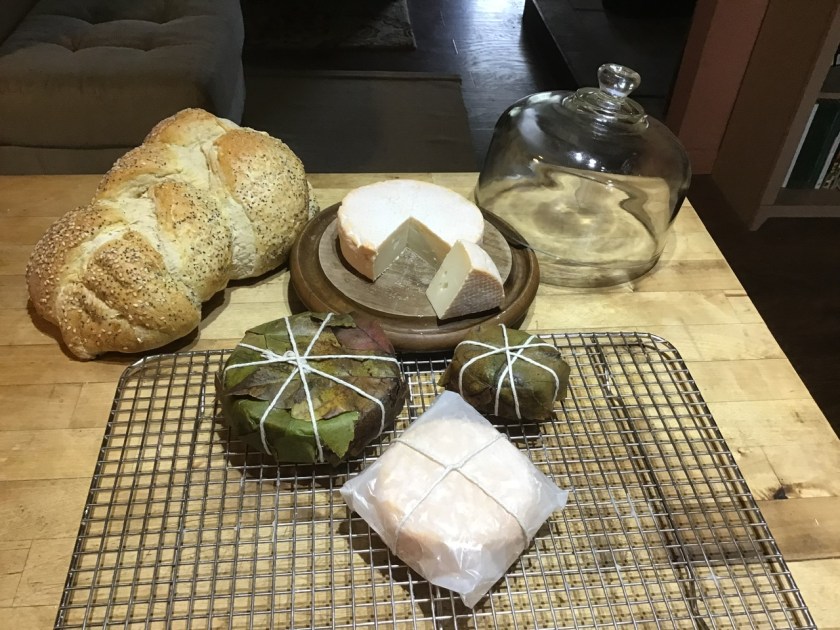
Some previous cheeses “Kenshobert” in my territoire version of Camembert.

Turning a favorite hobby into a business is the joy-killer. Being well-rewarded for a favorite hobby is the goal. That’s magical like milk transforming into 1,000 cheeses is magical. Some call it alchemy, but really it’s just fermentation, maybe the most ordinary and natural process in the world.

Cheesemaking is also economical and beneficial to more than just our health and palette. The dogs and the pigs get all the whey after the ricotta is made–whey ricotta is a delicious ‘by-product’ from making hard cheeses. So from each gallon we get the heavy cream for coffee and ice cream, milk for cheeses, and whey for other recipes and very contended critters.

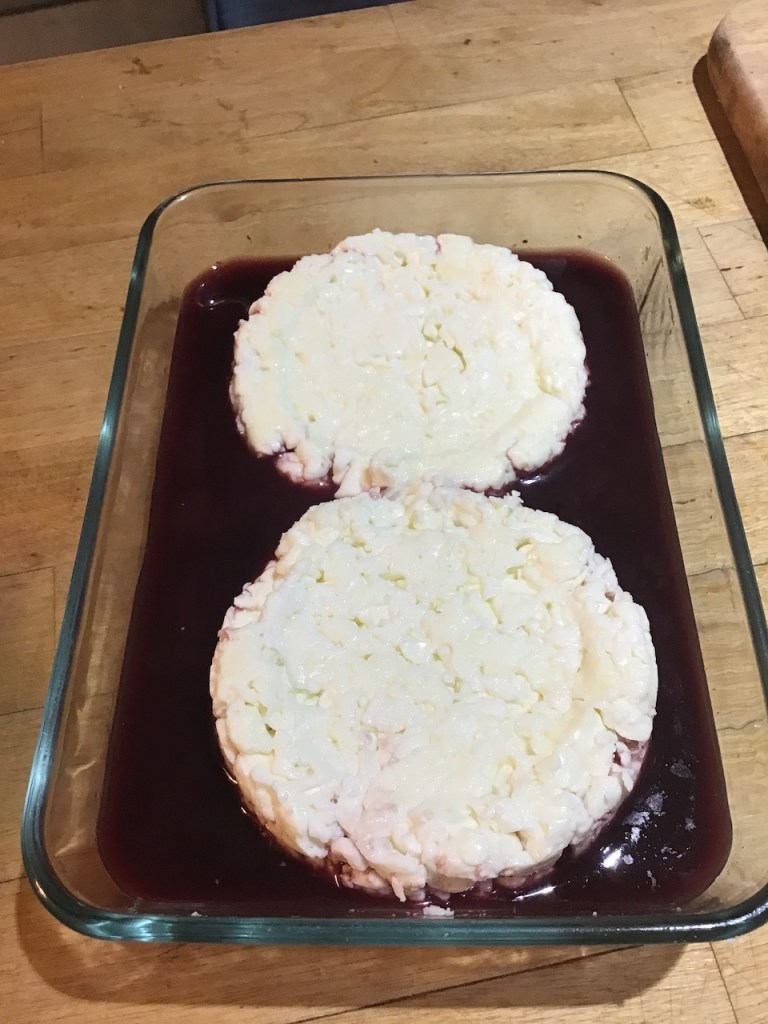
Ricotta pressed overnight then soaked 3 days in homemade hard pear cider. Eaten fresh, with fruit or crackers, it’s mild, slightly sweet and tangy.

The critics of course think it a lot of wasted work when cheese from the grocery store is cheap and plentiful, and there’s a growing network of artisanal cheesemakers who craft excellent cheeses (for a hefty price). I’ve had plenty of such cheeses and they are indeed delicious and worth the money.

But, they are all subject to the laws, which usually means: pasteurization, medicated animals, artificial lab-produced rennet (brought to you by Pfizer!), and freeze-dried cultures, also lab-made.

All that is exactly what I’m trying to get away from, in order to craft the most natural, local cheeses as possible. It’s an impossible task while remaining inside the laws.

Yet, there are folks still alive today who can remember when the laws weren’t so intolerably squashing to taste, creativity and economy. Just as there are old-timers here in Texas who can remember the days when they were allowed to raise, kill, process and sell their own livestock to the public, there are cheesemakers up north (no traditional cheese country in the south, too hot) who can still remember a time they could sell their handmade cheeses produced on farm in their own kitchens. Now most cheeses sold in this country are essentially fake, already lab grown, like the ‘meat’ they keep trying to push on the public.

Somehow there are still the majority who continue to call this freedom and progress.

Homestead Happenings

It’s been quite a long time since an update on the wee homestead projects and activities; it’s hard to know where to start! How about, for consistency sake, I bitch about the weather for a bit, and then move along to better tidings.

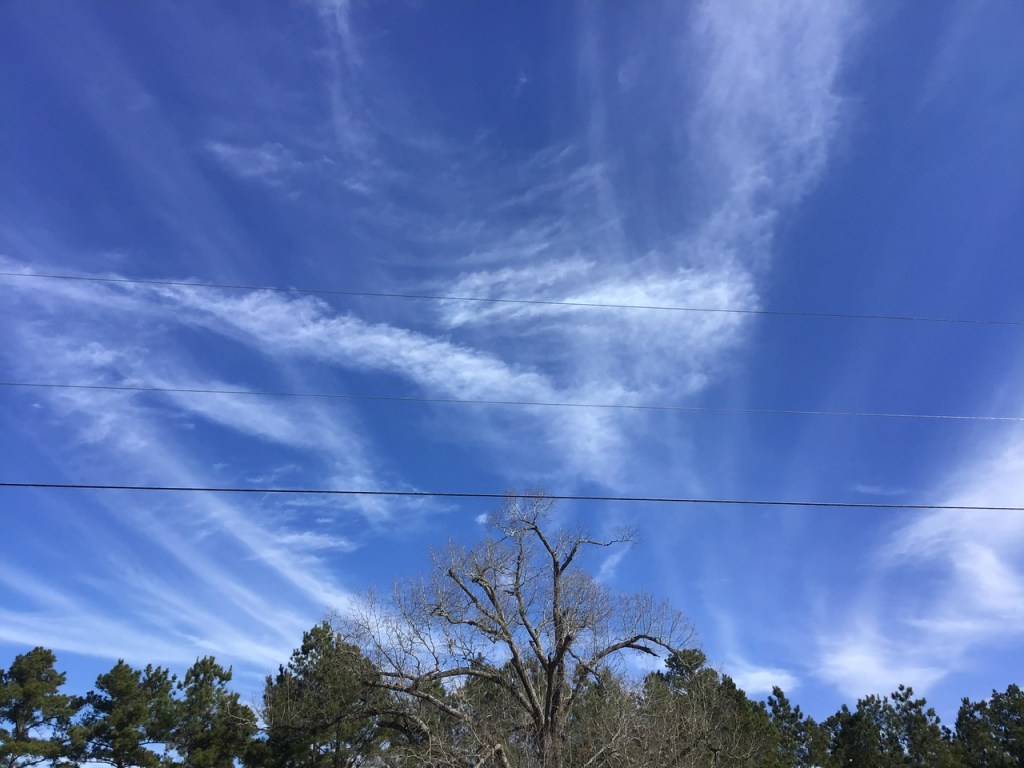
Of course the geoengineered chem-filled skies continue, as does our Yo-Yo season (formerly known as winter). We are using the air conditioning now, it’s been 80 degrees for days.

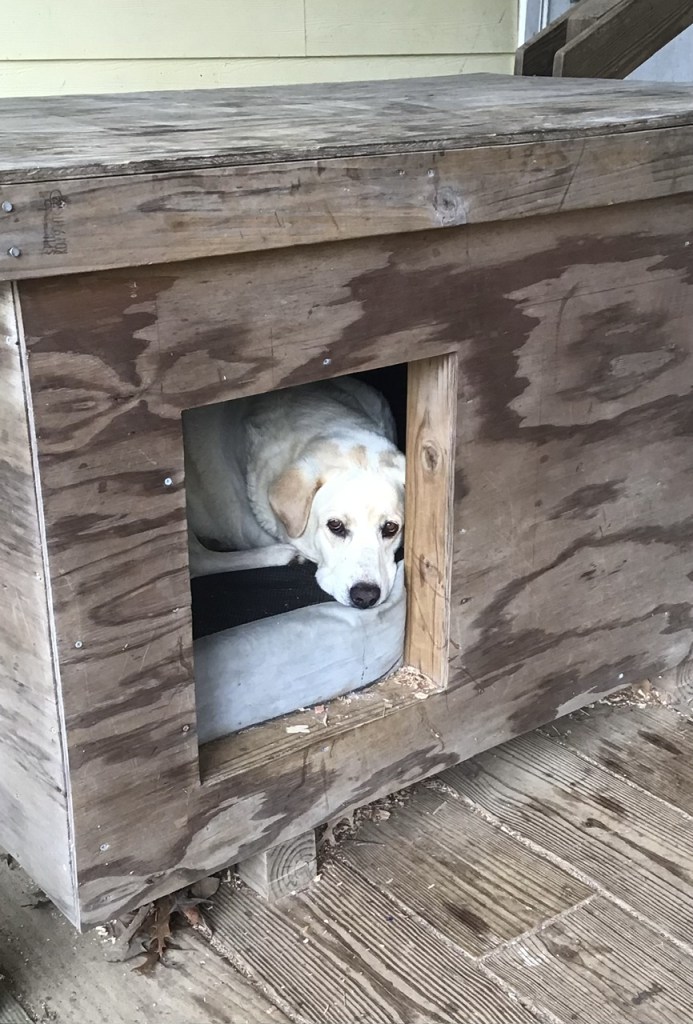
Buttercup is especially sensitive to the YoYo, to the point of regular getting seizures at such times, also lethargic and losing her appetite.

Buttercup hiding in her box all day.

There was of course the lows not long ago in the 20s and I was very concerned for the newly planted citrus. We employed quite the set up of lights and covers and they faired very well, I’m happy to report.

Invasion of Asian beetles on the citrus cover

But there has been a bad invasion of these awful beetles, which we’re vacuuming off the ceiling multiple times a day. Not to be confused with the garden-friend, the lovely little lady bugs, NO, these little beasts are really nasty. They infest, as obvious from the photos, and they bite, and as if that’s not enough, they stink.

I don’t like when folks call them lady bugs, they are not at all ladylike, so I try to correct them anytime I hear complaints, which is more often than you might think. The reaction I get is much more open and accepting than when I inform them about the manufactured weather.

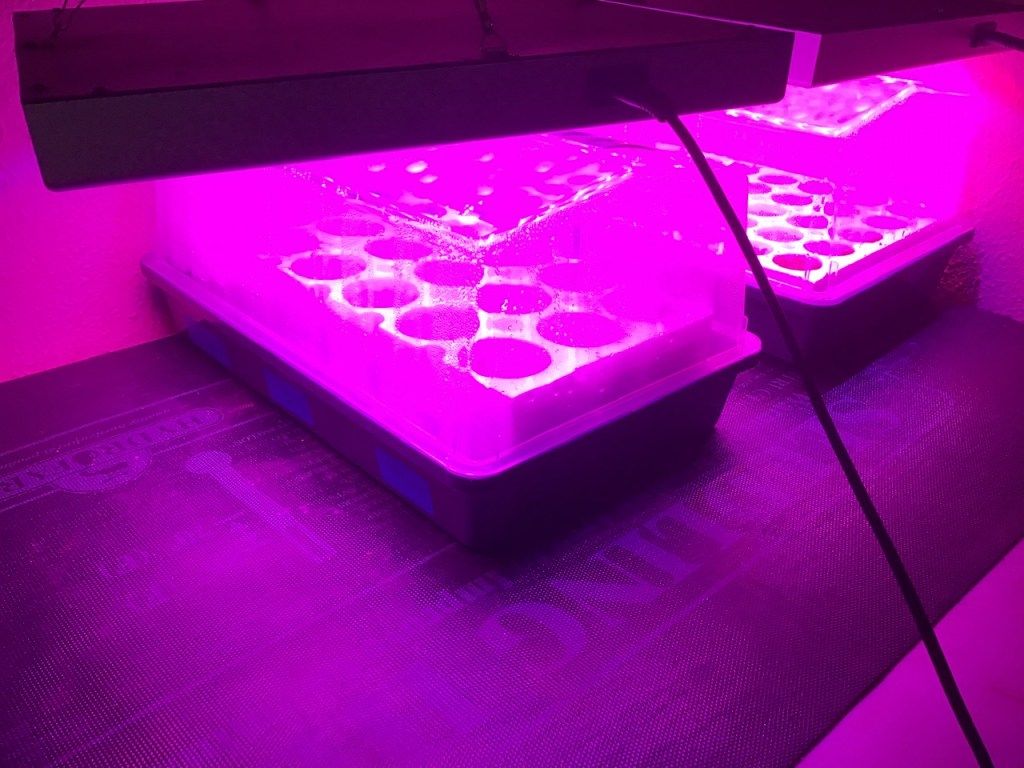
Old lettuce bolting, replacing with new lettuce started under lights indoors, along with broccoli and cauliflower.

It does keep us on our toes, dealing with the Yo-Yo. Lettuce and herbs bolt prematurely quite often, seedlings come up then freeze or wither. We never know from week to week what to expect or how to plan.

I don’t normally have such a fancy setup, but these trays were gifted to me and they’re working quite well germinating some lobelia and snap dragons.

My indoor lights and heating mats make things easier, as does the row cover in the garden, but it is constant juggling. And if I miss a beat, death. Like happened with the Mexican oregano I was so proud of. I forgot about it outside one night when it frosted. Very disappointing considering our long journey of discovery, and how long I babied those few little sprouts, trying to anticipate their every need, carting them inside for warmth, then outside for sun and wind, and just when they were getting their legs, gone. All my fault.

Well, except for the geoengineers, because I wouldn’t be doing this constant refrain if our weather was consistent or predictable or seasonal.

I’ve tried twice since then to sprout the herb again with no luck. I will succeed eventually, of course, we’ve come too far in our quest to fail. The Mexican oregano has a long tale in these parts. Failure is not an option. More on that in the last HH post, if you like. https://kenshohomestead.org/2024/11/14/homestead-happenings-43/

I’d like to say it was the same with the milk quest. Unfortunately, I’m not nearly as confident; I feel failure is probably inevitable and maybe even imminent. For the time being I’m counting my blessings I’ve found another (perhaps temporary) source. Last time I was complaining about the cost, this one is even more expensive at $15/gallon. At that price I’m not going to be experimenting with any new cheeses, that’s for sure. To make cheese at all is not really feasible, except for the most delicious of selections—Camembert. Otherwise the precious commodity goes toward morning coffee, ice cream, and buttermilk for recipes and the extended expiration date.

Camembert to be draining before salting

I’ve been doing continued research on the topic of raw milk and what’s available and in general, where’s the market vibe. I found one young entrepreneur with a private herdshare selling cheese for $25 a pound. (A Herdshare Agreement or a Grade A license from the state are the only ways to sell raw milk in Texas legally.).

With my new herdshare deal I can buy more milk for cheesemaking, if I’m willing to pay $15/gallon. Considering the hard cheeses I typically made were 5 gallons ideally (better for aging in less than optimal conditions), that’s a really expensive cheese.

Certainly what can be made on-site are far better cheeses than can be bought at the store; that’s why I started making cheese in the first place. But still, it’s really hard to justify all that work, and expense, when we can still buy organic cheese for about $8/pound.

I will splurge one time in late spring, if possible, when the grass is thick and so the milk most rich. And we do still have two goats, hopefully pregnant, so there’s a small hope of cheesemaking in my future, if all goes well.

Moving on to the garden, the garlic is going strong and I’ve just got the onions in, 3 big rows of each. The garlic we plant is elephant garlic which does so much better here than any other variety I’ve tried, and I’ve tried lots. These are local for over a decade now and their productivity has yet to disappoint.

The onions are from purchased sets and they normally do well, though some years are a bust, like last year. I also started some from seed under lights, to compare if they are more consistent and adaptable, because the sets have gotten pricey in recent years and it’s irritating to pay good money for possible failure. Onions do not like Yo-Yo weather, but then again, who or what really does?

At least some seem to tolerate it better than others. We’ve got a couple of ‘oyster trees’ that are bringing us regular tasty gifts.

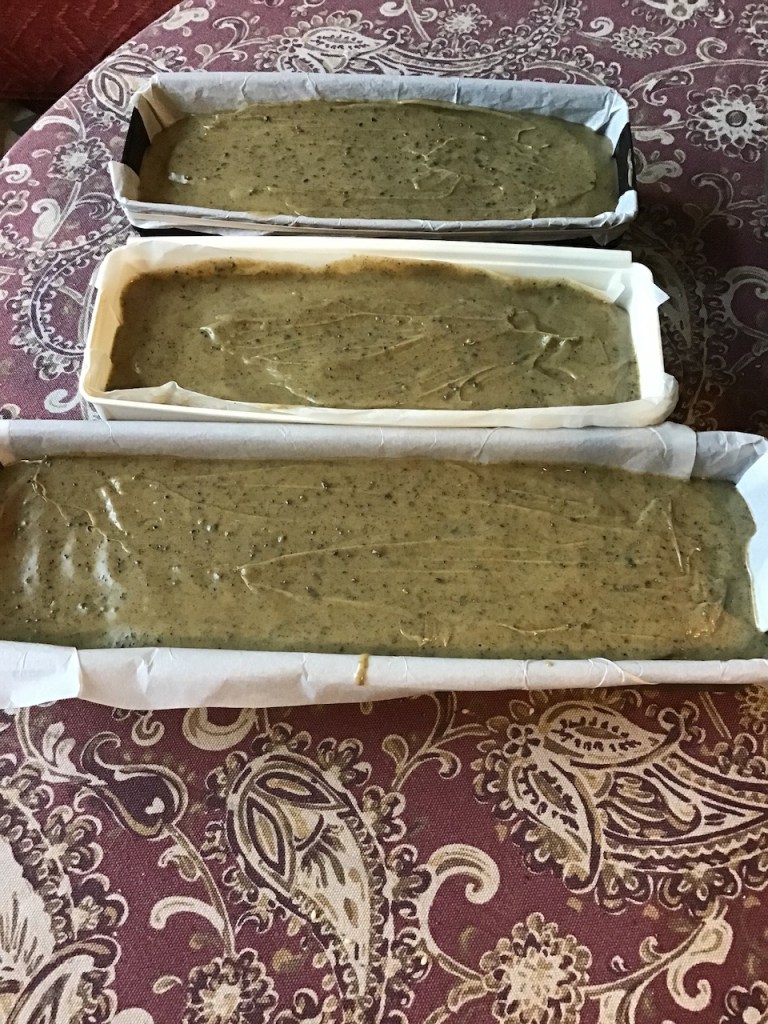
I’ve also tried a couple new things that have been long on my list. There’s the soap that’s just now cured, a bit earlier than I’d read is typical. I’m really pleased with it! It lathers very well and the scent is rather sensuous. My intention was something earthy and erotic, and I think I succeeded.

I got the sensual part down, now I need to up the aesthetic! Trust me, looks are deceiving here, I just need better molds! Never underestimate the power of packaging, eh?

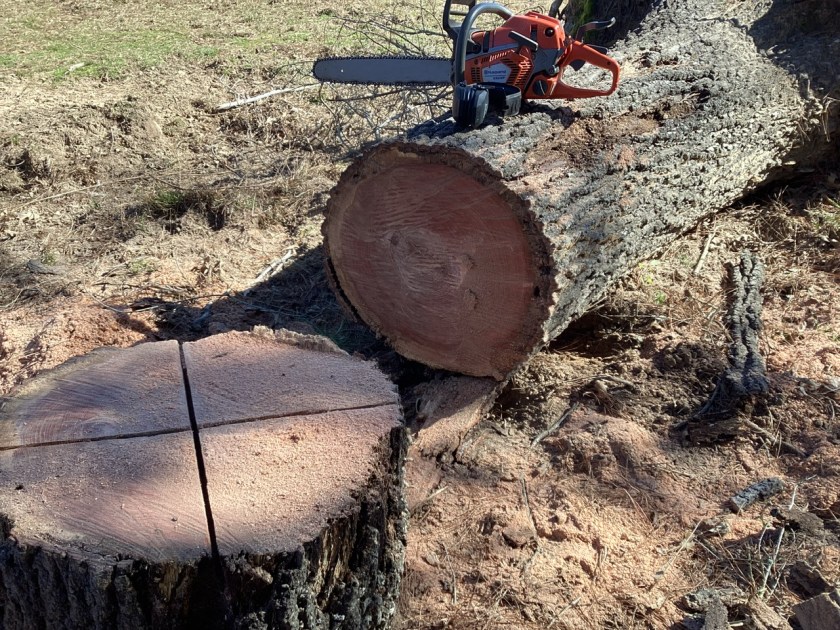
After finishing up slaughter season and chopping up downed trees for a month, Hubby has moved on to a far more desirable and needed project, according to me, our kitchen! Yippie!

We’ve needed new countertops badly for many years, ours have been well-worn in 40 years, especially since we’ve gotten here and the space went from softly used a few times a year, to a daily year-round assault. It’s actually pretty impressive the counters aren’t near dust by now, considering how quickly more modern materials fall apart.

New island done, now for the hard part.

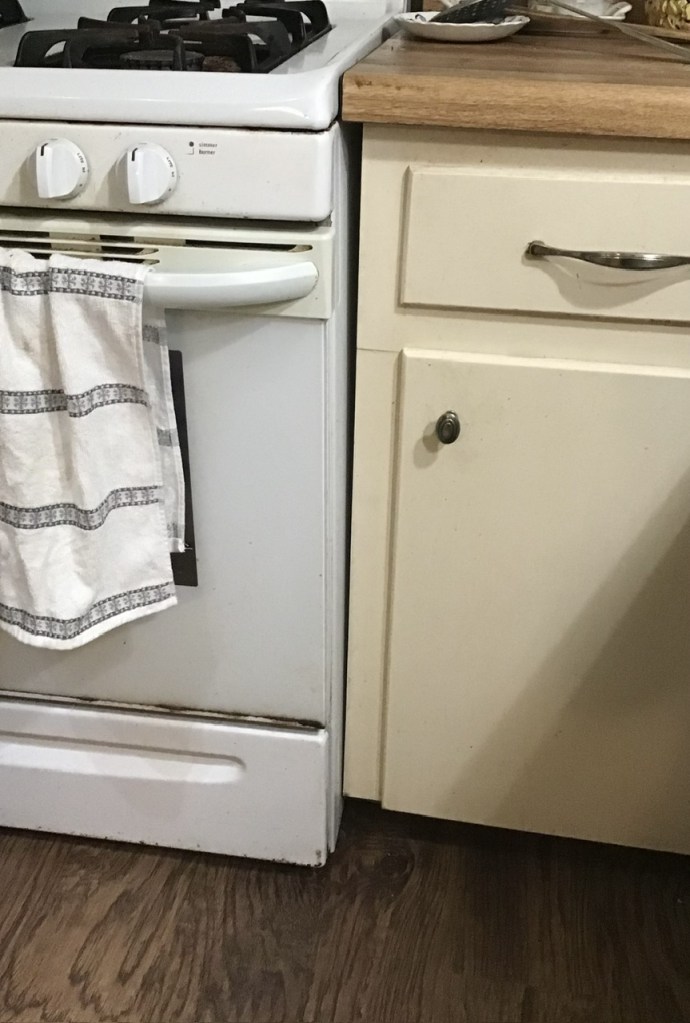
Old, ugly, not square or plumb . . . Good times coming in Hubby’s near future!

New countertops got us on a roll and now we’re planning new light fixtures and maybe even a new paint job. Big ideas, perhaps not backed up by time or commitment.

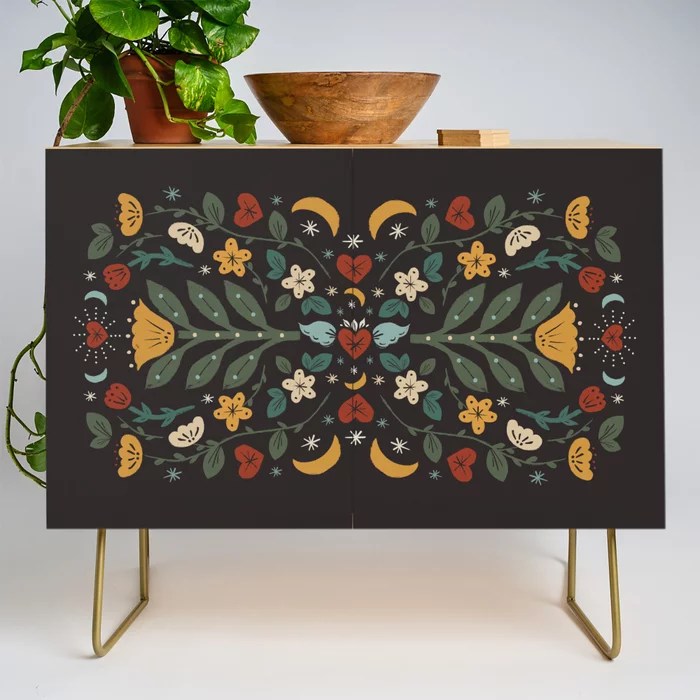
Those big ideas, I’m full of ‘em! In my mind the kitchen’s already painted and my next project is to paint the table, which I’ve wanted (and once tried) to do for as long as we’ve had it. I can imagine I might have a table with a surface that looked something like this . . .

But I’d be perfectly willing to settle for this . . .

Or this . . .

So, after I repaint the kitchen in the few spare moments between juggling plants in YoYo season, I acquire the skills of an artist, and paint something I can really be proud of . . .

Whenever I’m finally able to manage that, y’all will be the first to know!

In the meantime, here’s where we were at in the last update . . .
Homestead Happenings

It’s been a challenging month on the wee homestead. We’ve had some successes and I am still hopeful for more positive outcomes, but I focus on them overly, because I’m being a bit avoidant, because really, I’m still concerned.

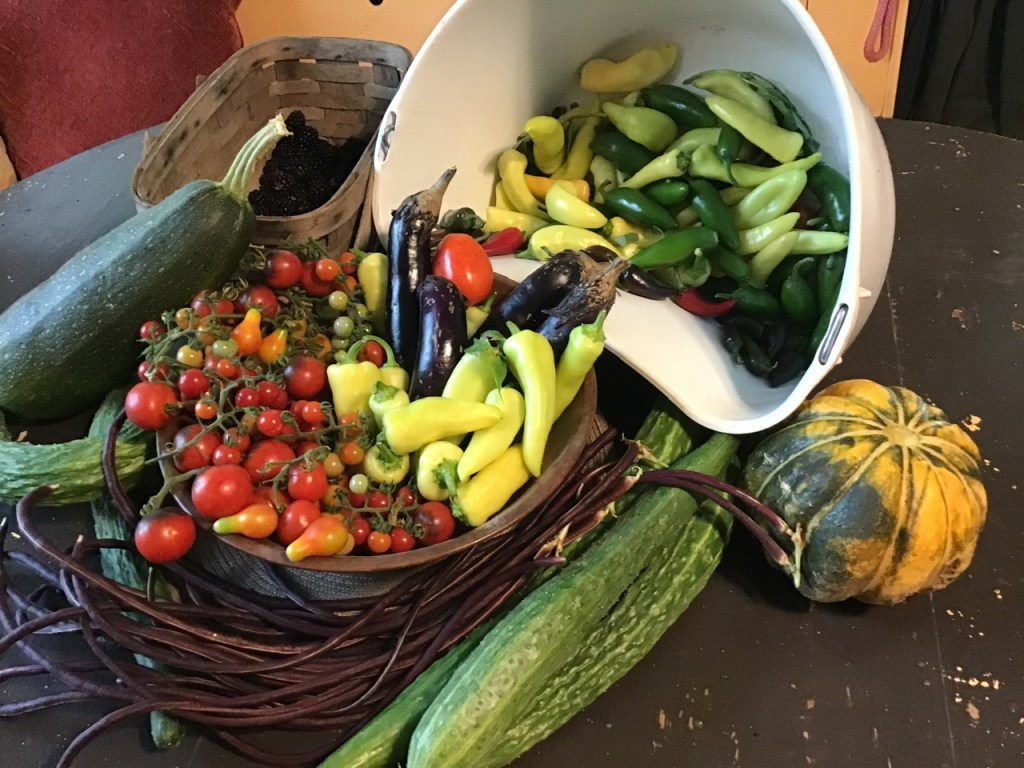
The determinate tomatoes are long gone already, but Hubby’s made many delicious jars of puttanesca and salsa for our future enjoyment. Must keep up morale!

So I’ll share about that this post, along with some happy snaps and surpluses, to help the medicine go down. I know it’s part of the lifestyle. Life, that is.

Yes, I’ve gotten better at it. That is, the death part of life. But also, we must understand our own limitations, and for that we must first broach them.

So if there are still any rose-colored glasses sort of readers remaining here, armor up.

Bye, bye Bluebonnet.*
(I share more about my observations on her death at the end, for those who choose to go there.)

I’m so sad to say we’ve lost one of our new mamas, and her mama, our herd queen Summer, has also been very ill. Several of the does are too thin and are not producing enough milk. This all happened quite suddenly. I was training them on the milk stand for a month, even getting a bit of milk from one, I had high hopes of daily cheese-making by now.

Instead I’ve turned suddenly nurse-maid/dietician/worry wort.

Summer and her daughter Bluebonnet, who I figured would one day replace her as herd queen.

The learning curve is so very high and I’ve set myself impossible standards. I do understand that, though that understanding changes little.

I want a treatment-free herd, or no herd at all. Like with the bees, which took me years of failures, I simply cannot stand the industry standard. I cannot abide such total reliance on pharmaceuticals and exotic inputs from far-off lands. I cannot trust the science. I refuse to believe the only way to raise healthy pets and livestock is to poison them with vaccines and parasite treatments and feed them full of processed foods.

There has got to be another way! A much better way!

And I aim to find it.

We are not directly poisoning our garden and still have plenty of success despite the manufactured crazy weather.

I truly believe a large part of the problem is the processed foods causing the need for the supplemental treatments. It’s a vicious cycle and I want off, and I want ALL I see around me every day off it also, including the land, the water, and the air and ALL the critters!

Is that so much to ask?!

But I already know the drill, thanks to the bees. Every professional and expert says that’s impossible. Like with the gardening when we first got here. Every farmer, every gardener, every Farm & Ranch professional, repeating—You’ve got to spray. You’ve got to treat.

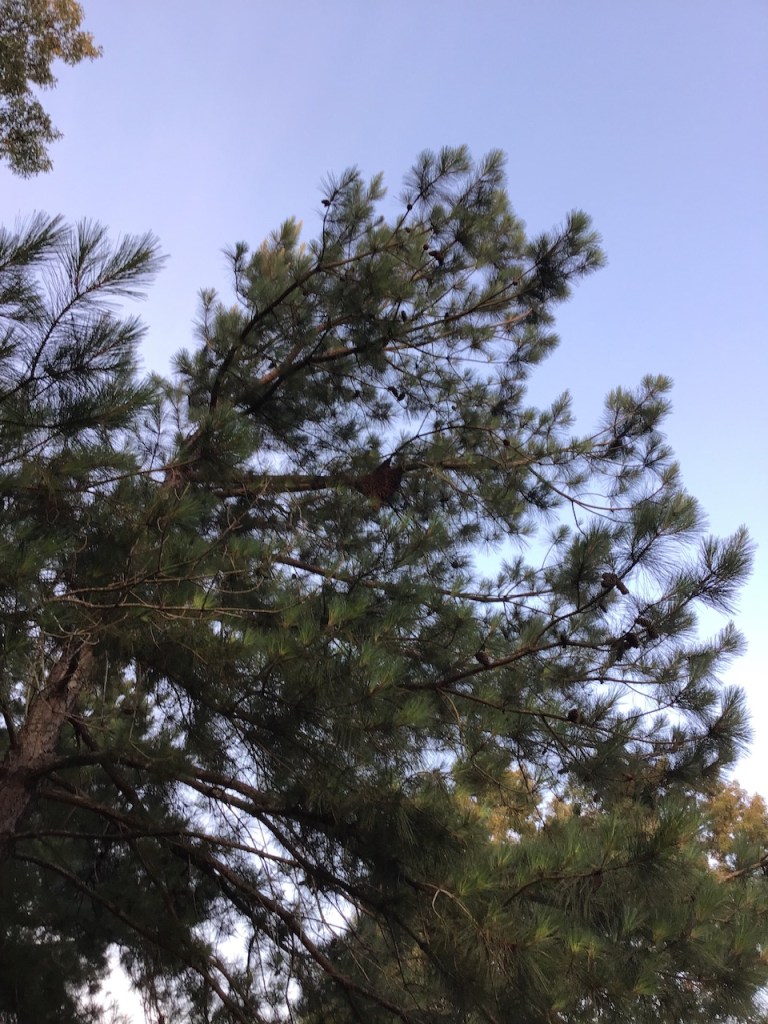
There’s a swarm up there, can you see it?
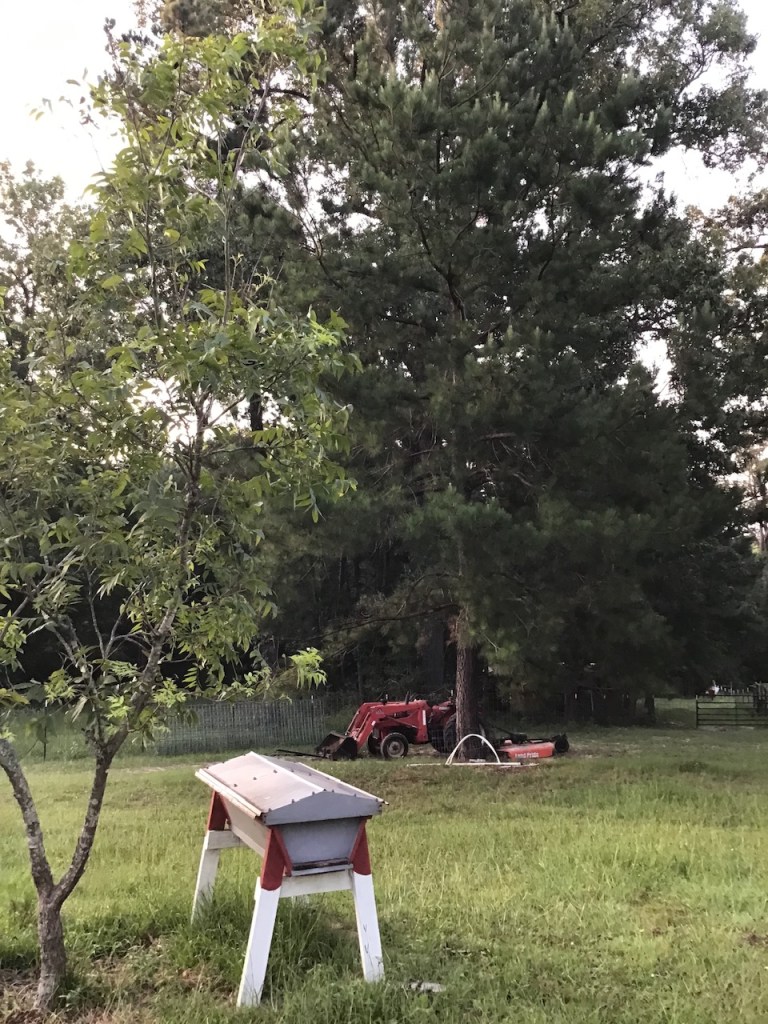
It came off this hive and we watched it, amazing! The large pine in front of the tractor is where it stopped. Too high up to catch, but I’m happy to report another totally treatment-free colony repopulating the county.

“Here, follow this quarterly poisoning routine, and all will be well.” NO!

Is it any wonder they all readily accept without objection whatever the hell is being sprayed over our heads at regular intervals?

We’re not giving up yet. As long as we have irrigation it will be a jungle out there. But without it we’d be screwed, that’s for sure. It hasn’t rained for nearly 3 weeks.

(Photos below Left to Right) The datura is a blessed monster. The sweet potato vines are prolific and a favorite snack of Summer’s. The melons and green beans are thriving. The indeterminate tomatoes and some of the peppers are doing fairly well under the shade cloth and I’ve been succession planting the cucumbers.

From the front: New cucumbers coming up with purslane to help cool the roots and shading from above, old screens protecting some struggling Romaine lettuce, and a growing grove of well-watered elderberries.

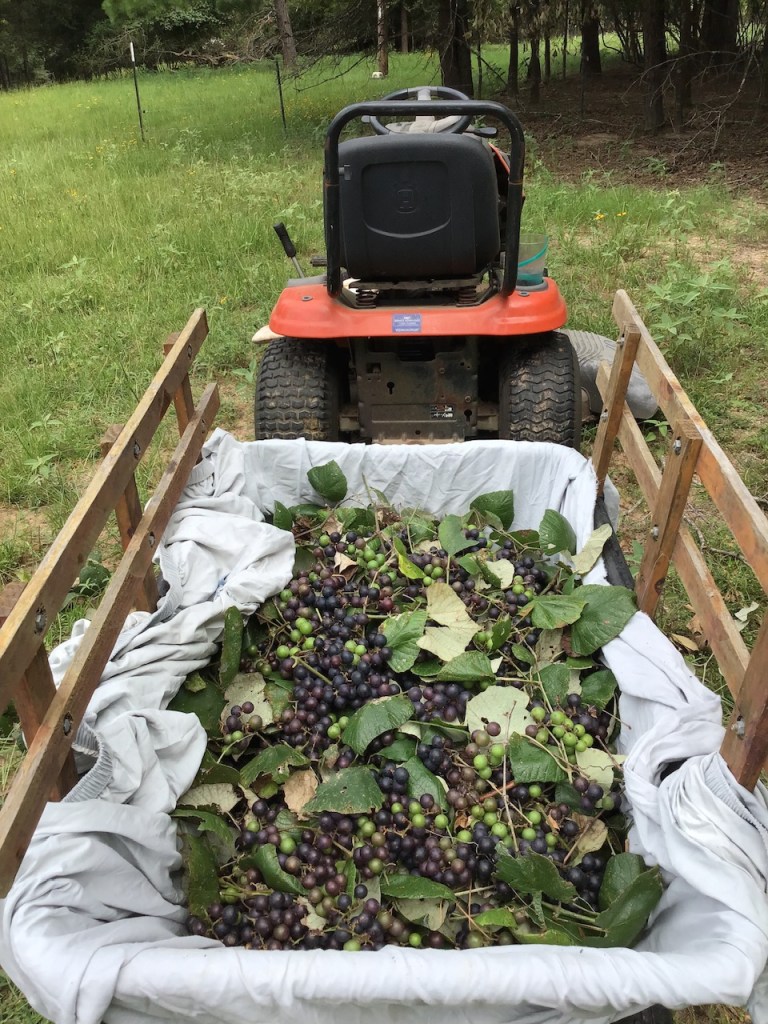
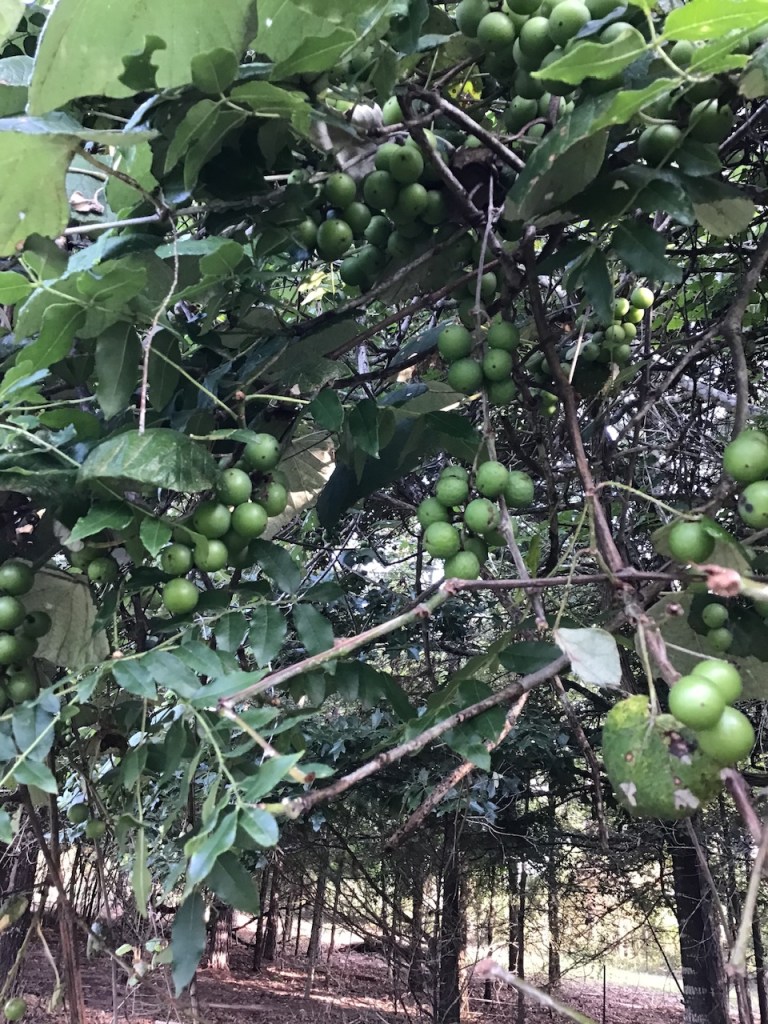
We’ve also been lucky to get some wild grapes, which are now fermenting along with the mead and the blackberry and mulberry wines.

He is literally Hubby’s Shadow!

It’s not an easy life, but it’s a life well-lived. Our first figs of the season, along with our last blackberries.

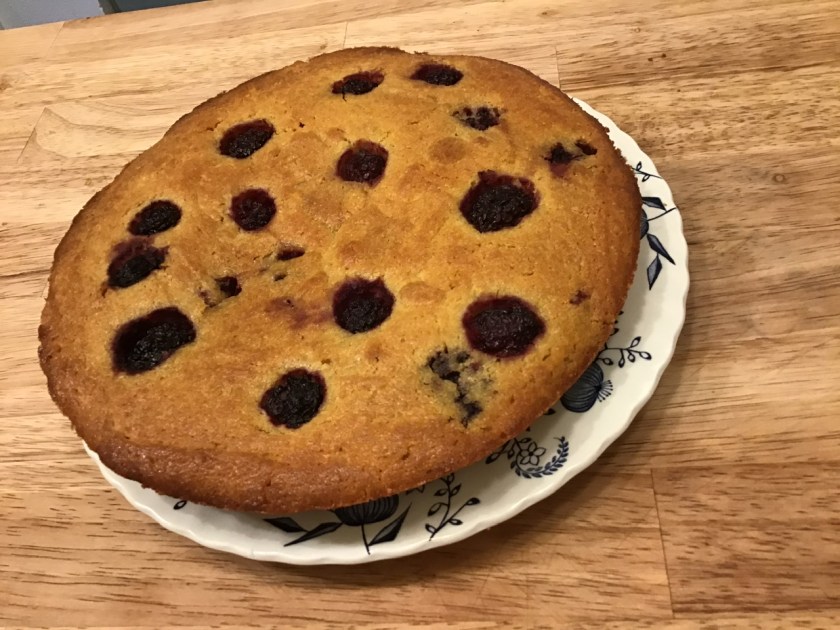
A Czech classic—so simple—Bublanina, made with blackberries or any number of fresh fruits in season. (Comment below if you want the recipe and I’ll post it. )

*The observation which I’ve found most interesting from Bluebonnet’s death, was that her kids adjusted immediately. She died the evening of the full moon last week. She left the corral with the rest of the herd in the morning, she seemed to be improving, I thought. But then in the afternoon she planted herself under a tree on a hill and wouldn’t leave, even when evening came and the rest of the herd returned to the corral. I went and sat with her there at sunset and stroked her neck and she laid her head on my shoulder. I wanted to be hopeful, but I felt she knew, and I felt horribly helpless. I hope that the feeling of helplessness is the worst feeling in the world. The next morning I woke before dawn and I went back to the tree in the dark, the full moon shining on her corpse.

There was a bit of relief for me that her kids adjusted so quickly. I find it odd really, it was like an immediate weaning. While her mama, Summer, is so ill she stopped producing milk, but her kids are still so attached to her their health is also suffering because they won’t go out and eat with the rest of the herd or accept being bottle fed. I’ve been mixing them special feed dosed with milk replacer and they are doing ok, and Summer today joined the herd again to forage, which I’m praying is a good sign. 🙏

Thanks for stopping by, even in the hard times!

Homestead Happenings

Mostly happy snaps this post, plus a few weather woes.

Hubby’s gorgeous melon patch is starting to produce more than just a feast for the eyes. He’s come up with quite an integrated system there and when I expressed how impressed I was with his companion planting scheme (and wondered whether he’d been taking a permaculture course on the sly) he informed me it was all a matter of frugality.

His penny-pincher logic is: the melon mounds have a lot of water run-off and sometimes erosion, so he added a ring of clover at the base of them. It’s just a bonus they are also good for the soil and the bees. The sunflowers are fodder for the goats and the chickens, plus they help shade the melons. The sea of black-eyed Susan’s just turned up there, apparently as impressed as me with the space.

Hopefully the melons don’t go the way of the onions, which has been our worst year yet. Luckily the garlic still did fine, which is from our saved seed, which previously came from a nearby friend’s saved seed. That has become a theme.

Elephant garlic does much better here than anything else, and I’ve tried many others for many years. I think I’ll give up that practice now and stick with what works, avoiding future costs and frustrations.

The success of the tomatoes and peppers so far has also been thanks to saved seed. I bought several varieties of each from the store, just for more variety, and those are the ones suffering more from the rain and high humidity. Several have already died, a few aren’t growing at all, and several of the others have bad issues.

Ours on the left, theirs on the right.

The purchased squash is already full of pests before giving us even a single fruit.

At least we got a few zucchini off our own saved seed before it too is already beginning to succumb to some kind of mold.

But other saved seed, the Trombetta squash and the mystery squash from last year, have proven to be more resilient than the popular varieties.

The filth-filled skies continue and not even the regular rains clear them up for long. I’m sure the sorry state of the skies has nothing to do with the crazy storms, right? The intense lightening, sudden flooding rain bursts, intolerable humidity, hail, tornadoes, and so on, that folks are experiencing across the country?

Just ‘mother nature’ they tell us. OK.

Well, too much ‘mother nature’ is not so good for the garden. It looks plenty green and lush, so that’s nice. But, look a little closer and we find it’s not so pretty below the surface.

But we’ve been relatively fortunate so far this year, just lots of rain and some wind gusts. Others have had far worse.

The yucca didn’t get lucky, but the blossoms are still lovely, even on the ground.

There’s some long-term requirements that fall on Hubby, which I mentioned last update, an upgraded culvert is required now in order to drive to the back half of our property. He’s already gotten started on that, a huge undertaking for sure. After that he can look forward to tackling the pond that’s now washed out.

In better news, there’s been some amazing growth in just one week.

A side by side comparison of 8 days growth.

We’ve prepared for the swelter season by crafting another shading system where these tomatoes and peppers should be much happier into late summer. It’s recycled from another project and a bit awkward to move through, but it should do the trick just fine for supporting the shade cloth.

The asparagus beans, a first timer here, have really taken off in the last week. I’m excited to try them!

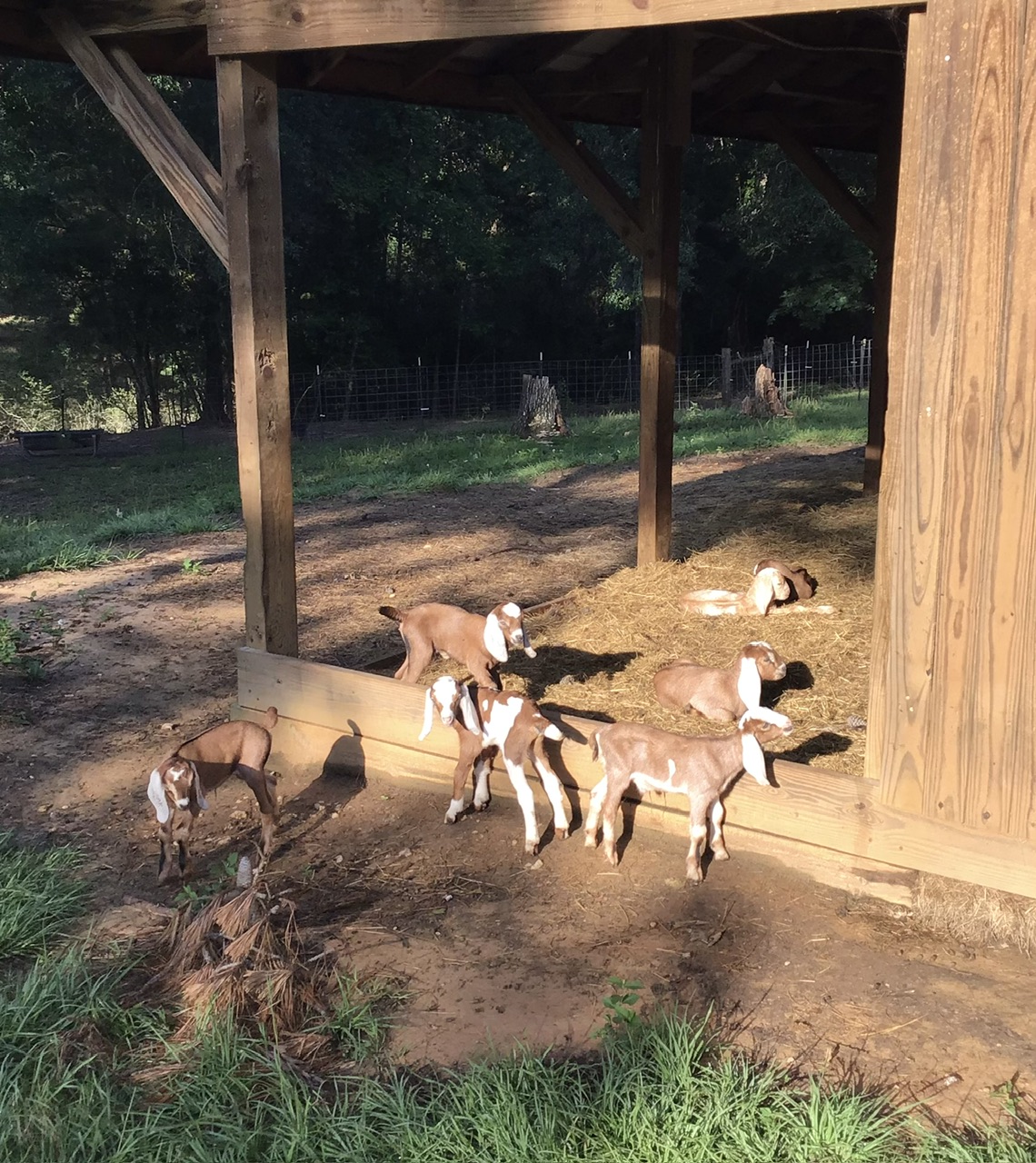
In even better news, the mamas and kids are growing well. We’ve started forcing them out of the corral during the day so I was able to give that space a much needed refreshing.

It seems they sometimes prefer following the chickens instead of their mamas. 😆

I’m getting the first fresheners ready for milking by training them on the milk stand. Soon it will be time to start separating them at night so I can milk them in the mornings before putting them back together again during the days. It’s not a happy time for anyone and I’m not looking forward to it.

But, I am looking forward to making lots of cheese again. We’re getting a bit of milk from Chestnut, who rejected her boy, and her girl is only nursing from one side. So, if I weren’t milking her she’d become even more lopsided than she already is.

It’s not a lot of milk, but enough for a little mozzarella now and then. I’ve found another method from my new favorite YT channel which is completely natural and far more tasty than the vast majority of those found online.

Raw milk mozzarella, mmmmm!

Unfortunately, the 2nd time I tried it was a failure. But, 99.9 % of the time a failed cheese can always become another delicious cheese. Some of my best cheeses have been from failures.

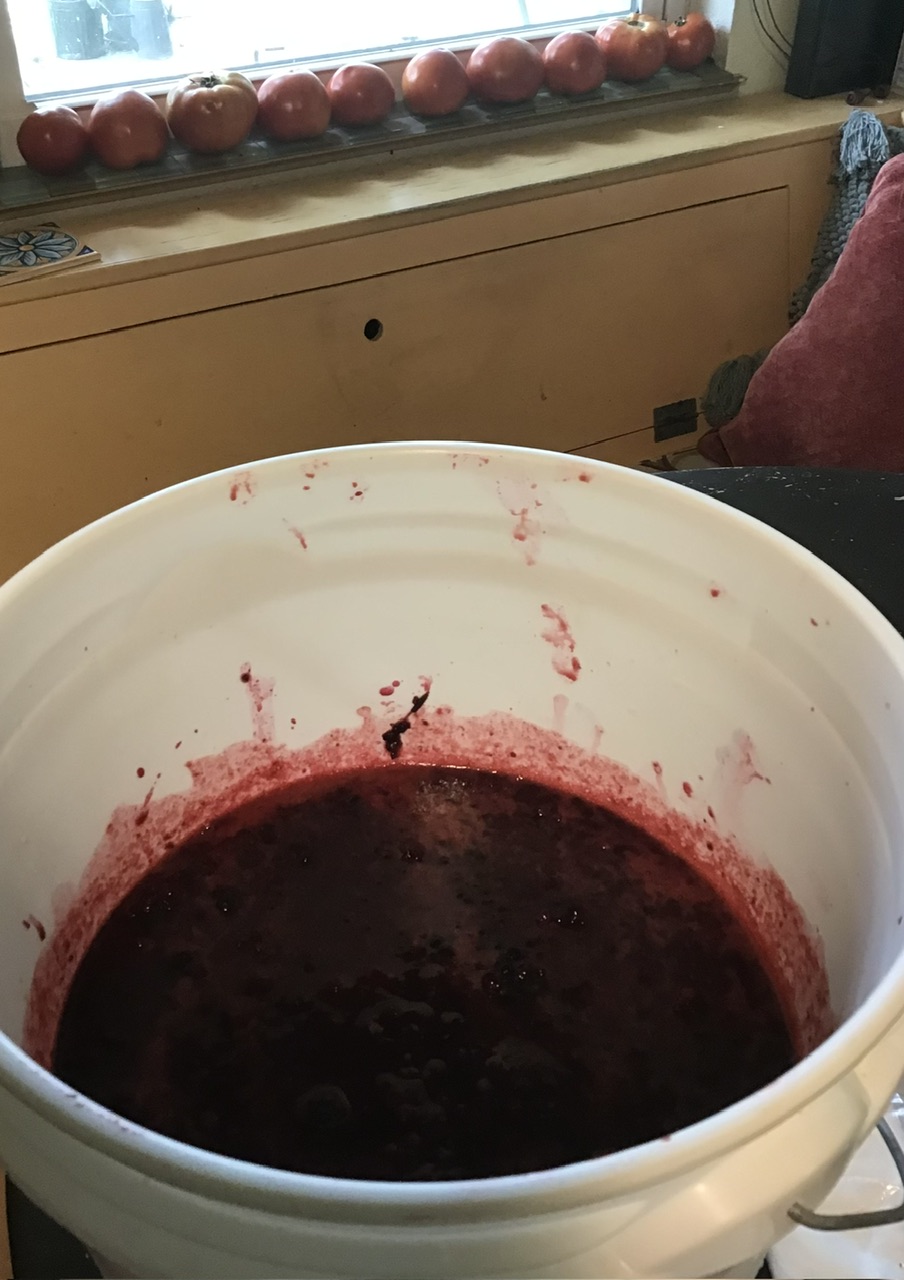
Not necessarily the case with failed wine. This cheese ‘failure’ will be soaked for a couple of days in the leftover must of the now fermenting wine, another tip I learned from my new fav YT channel.

This one was mulberry and I’ve also started a blackberry.

The blackberries seem to very much appreciate the extra rain and our harvest has been great, inspiring me to make blackberry wine for the first time. Last year’s harvest was very disappointing after getting some kind of strange disease right after their flowering period. (Not normal development, despite what several folks claimed at the time.)

I’ve decided to try more natural, traditional methods with the wine-making, like with the cheeses. Modern methods require all kinds of chemically-obtained inputs, which most insist are necessary for a fool-proof product.

Yet, last year we had a major failure using that method and ended up with several cases of vinegar. Very disappointing after all that work. We have had great success in the past or we might be too discouraged to try again.

Blackberries, banana peppers and Nigella seed pods

Traditionally, country wines were not made with all those foreign yeasts and I don’t really want my blackberry wine to taste like merlot anyway. While we may not have a decent cultivated grape harvest this year, the wild grapes look promising again. Also the pears are looking good, could be a bumper crop like we get only every few years.

If so, I’m going to do some side-by-side experiments, traditional methods vs. modern methods, and make a real project of it.

Blackberry wine in the making, hopefully

It’s easy to find lots of instruction using the identical modern method. For that I’ll rely on this book.

The wild grapes are looking promising. Our cultivated grapes still uncertain.

It’s not as easy to find good instruction on traditional methods, no surprise there. But this channel has a lot to offer and she uses nothing but a homemade fruit fermentation starter for her wines.

A teetotaler who makes wine, don’t see that everyday!

She also teaches how to make natural sodas and mead on her channel which I’m also very eager to try.

Blackberries fermenting beautifully after 36 hours.

The elderberry is also liking the extra rain. I might even try to make elderberry wine too. The blossoms are excellent in kombucha and will make an effervescent ‘champagne’ like beverage or flavor a cordial. And the goats love it. It’s just an all-around fantastic plant that is popping up everywhere now, so I’m going to create a big grove of them trailing down the hill.

A couple happy snaps in parting.

Thanks for stopping by!

Homestead Happenings

Some brief updates this post and not as many happy snaps as I’d like. But, it’s been so busy and carting my tablet around everywhere is not usually an option, especially where it’s wet and dirty, which is a lot of places at the moment.

Kidding season is over and it’s been a bit stressful, no surprise there. I’ve been wanting to try something new—which is the greatest lost homestead technique I could think of—making our own rennet.

We’ve only had goats a few years now, all of this still feels very new, but, we do want to keep moving forward on the path to self-reliance, so this one is pretty essential on that list. It was as challenging as I expected it to be!

I am squeamish, so that’s the first of the issues. Hubby does all the slaughtering and butchering and for a while I did help plucking chickens, but then we got a machine, so I don’t even do that anymore. I’m not accustomed to seeing the interiors of the animals, let alone having to identify all the parts.

So, trigger warning for this section for anyone reading more squeamish than me! Move to the next section, if you please.

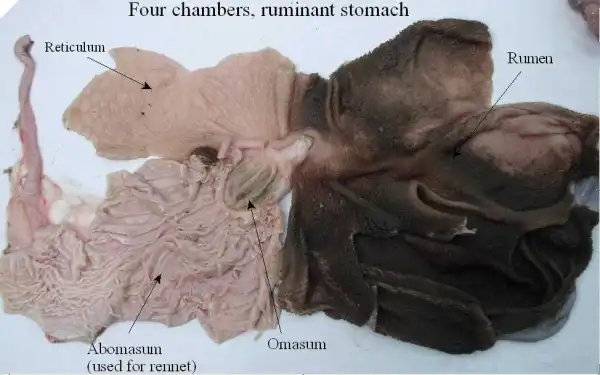
For the briefest of intro lessons, rennet is made from the 4th stomach of the ruminant animal, the abomasum.

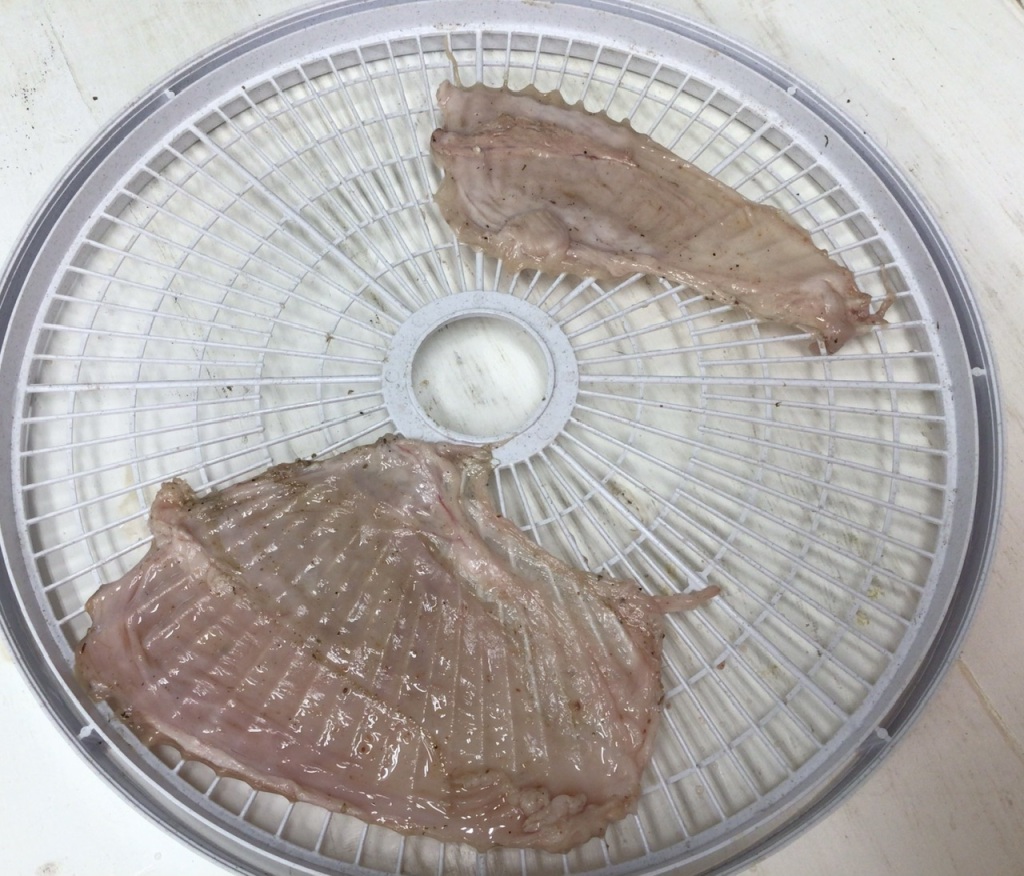
This photo is from a calf, so for us we were dealing with far smaller features. Obviously, this is a precious commodity. The abomasum must come from a nursing animal, as it still has the enzymes required for cheesemaking. It can also come from a stillborn, an unfortunate event turned into a beneficial one with proper immediate attention.

In our case, we’ve had 2 stillborn, one this year and one last year. This year we also had a very small doe, a first freshener, who had fairly large twins. We decided to cull one of her kids as part of our efforts. Of course this is never an easy decision to make, and I lose sleep over stuff like this. I was never meant to be a goat farmer, I just want to make cheese!

Anyway, I am glad for the tough choice and going through the trouble to acquire this precious skill. Hubby and I sat down before the guts together, at the kitchen table. One of the great many sentences I could never have imagined I’d be writing!

It’s not easy to find information on the how-to’s of this process, and I certainly had no one to call or visit for advice. It was not enough information to substantially build my confidence, that’s for sure. Sometimes that just takes doing it.

Luckily, I did find one YouTube video, and one blog, both again working with a calf, for which I’m exceptionally grateful.

Another brief aside about rennet, if I may bore many readers a bit further! As I’ve written before, most cheese made today, at least in the U.S., is not made from real rennet, it’s made from a lab-grown rennet substitute, made by Pfizer.

While it’s not that expensive for home cheese makers to buy animal rennet online, relatively speaking, considering only a tiny amount is required, I don’t want to have to entirely rely on far-away sources for such an essential item.

Another thing I’ve been experimenting with to overcome this issue is vegetable rennet, again, from a natural, local source, not a GMO lab-purchased source. We have figs, so that’s what I’m using, but nettles are another source.

It’s not possible to set a large hard cheese with this method, but it works for soft cheeses and very small, what I’d call semi-hard cheeses (because they don’t need a press) like the one I just tried after discovery this channel’s excellent demonstration.

This cheese is so easy! I’ve only just made it, so I can’t yet vouch for the taste, but he makes it look delicious. For this cheese you don’t need any special equipment—no molds or cultures, no aging fridge, and no rennet. Instead of the cute baskets he uses I just poked some holes in an old sour cream container. (And can I just add how much I adore his heavy accent and classic Italian hand gestures!)

We did eventually figure it all out, and here is our final product, now drying for 3 months or so, according to processing directions. It will then be sealed and last for many years and make many dozens of cheeses.

A great big thanks to the multi-layered efforts of man and nature for this magical gift!

In weather news, we’ve had a lot of rain. While I mentioned last update how much I love the rain, it is causing problems. We lost most of our onion harvest, for starters. This is a big disappointment because we were so close to harvest, just a couple more weeks. Not anymore, they were rotting in the ground, we had to pull them, lost a great many, and the others are mostly very small still.

So between the pitiful potatoes and the sad state of the onions, we are not starting off too well. The peas are already done as well, because of the heat, but that’s pretty normal here.

What’s not normal is my usual complaint—the manufactured weather. We can’t drive to half our property until Hubby upgrades our culvert, a huge undertaking. But we are very lucky this time around! No hail, or tornadoes, or other immediate disasters to deal with, like a great many.

Yes, more manmade clouds above our head. We’ll learn what NASA calls them next post.

But, I have a future Geoengineering Update in the works, so I’ll save further lecturing and complaining for now!

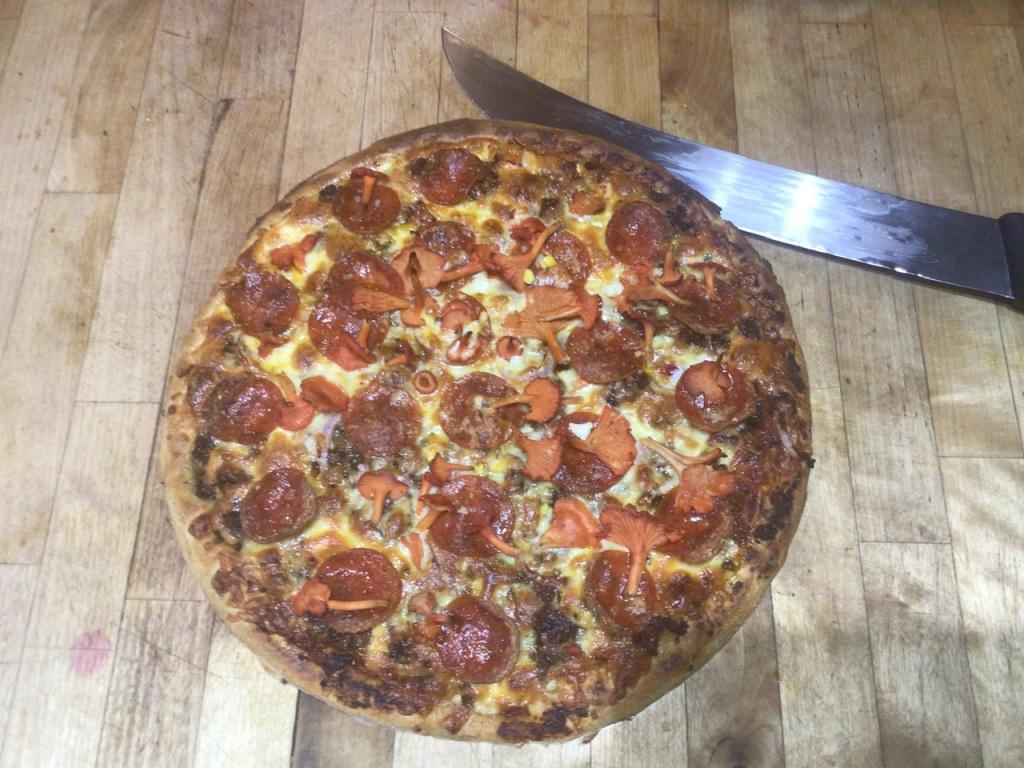
Instead we’ll end with a snap of one of our favorite dinners, just how we like it, burned to perfection! Not our pepperoni or cheese this time, but some just foraged chanterelles, homemade sourdough crust, and homegrown pork sausage. 😋

Thanks for stopping by!

Cheese! (Brought to you by Pfizer)

I started making cheese because I love cheese and could no longer find quality cheeses nearby. I lived on a diet of mostly bread and cheese while a student in France and while it did take its toll on my middle (I gained a pound or ten!) it felt perfectly sustainable as far as health and deliciousness to me.

Photo by Nataliya Vaitkevich on Pexels.com
Could totally be me! 😆

Fast forward a decade and suddenly cheese was making me sick. And bread, too! Like a great many folks, I was told I was ‘lactose intolerant’ and had a “gluten allergy”. Suddenly. Out of nowhere. How very odd.

I gave up bread and cheese for a year and the problem was solved, but I was miserable. Then I started to do some research on my own.

What I learned I’ve talked about before on this blog so I won’t go into detail. The results speak for themselves: I can eat as much bread and cheese as I want, as long as I make it myself, from raw milk and organic wheat berries and all natural ingredients. We also eat homemade ice cream regularly. And cookies and cakes.

But the problem with the commercially manufactured ingredients these days is far worse than just homogenizing and denaturing. The rennet used to make 90% of cheese in this country is GMO, so it’s no wonder at all so many are being told they are lactose intolerant or have IBS and allergies and other digestive issues every time they consume dairy. And wheat. It’s become so common it’s a joke.

In reality, these non-foods are poisoning people and it should be pretty obvious by the poor state of health of a majority of the population.

Thanks to Granny for sending this article that sums up the cheese reality pretty well. And it’s not pretty.

Genetically modified FPC — To overcome some of the shortcomings of the vegetable and microbial rennets like the potential bitter cheese taste, scientists have leveraged genetic engineering technology to create new, genetically modified species that generate these milk-curdling enzymes.

Introducing the most common alternative to animal rennet in cheese making — FPC, which stands for Fermentation-Produced Chymosin (FPC). (Chymosin referring to the enzyme that curdles milk, and is naturally present in the stomach lining of ruminant animals).

In fact, 90% of the cheese manufactured in the U.S. uses these enzymes from genetically modified organisms.9

FPC was created by the one and only Pfizer (biotech company) and is made possible by using CRISPR gene editing technology10 where the genomes of living organisms are modified. The “safety” of FPC was evaluated by a 90 day trial in rats.11

Is it safe to consume? Good question!

“This bioengineered chymosin (FPC) was granted Generally Regarded as Safe (GRAS) status. Meaning, Pfizer was exempt from the pre-approval requirements that apply to other (non GRAS) new food additives.”

Food was just fine before they started screwing with it! 😖

A few of my homemade cheeses—not as difficult as you might think to learn how, and so worthwhile!

Rhythm of Life

Our seasons change. I don’t just mean from north to south, east to west. There are the calendar seasons, and the four seasons, though some unfortunate folks only get two.

Then there are the seasons of life—childhood, adulthood, old age.

Here on the wee homestead we have our own seasons now, too. These, of course, are the most special of all seasons, to us.

Here we have just ended the killing season. Hallelujah! A very unique sort of season to most—vegetarians certainly—but also to most of the western world, who no longer process their own meat.

This is an extremely challenging season.

For Hubby!

He has full and sole responsibility for the slaughtering, the gutting, the skinning, the scalding, the hanging, the butchering, the grinding, the rendering, the canning, the smoking, the curing, the broth-making.

WOW!

For my part, I do the packaging. Plus a bit of pâté, a smattering of curing. 
Not exactly an equitable deal.

Mostly it’s Delicious Season for me! Our small space is full of meats of many flavors—bacon, ham, pâtés, sausage, lamb pastrami and various other cures, beautiful chops and ribs and roasts, the aroma of broths and meats that he pressure cans, filling up every corner of our little cottage and wafting out to season the surrounding vicinity.

Cheese season has also just ended. Now my divas should be comfortably pregnant, their season also having shifted thanks to the services of our friendly neighborhood Billy (aka Roderick). That means our herd shall be greatly increased by early summer, gods willing. Roderick has since moved on to more fertile pastures in the next county.

While the Gouda-style and the Camembert-style are more difficult to make, the Mason Jar Marcelin and the herbed cheese balls aged in olive oil couldn’t be easier. A 3rd grader could do it!
Don’t let the moldy surfaces fool you, beneath their scary exterior these cheeses are quite mild and very tasty.

That means it’s also a season for some difficult decisions. We are at our ideal capacity right now. We don’t want to grow. We don’t want to get ‘into business’. Such an odd thing to reject, considering where we’ve grown up. It gets in the blood—this mindset/worldview—now what, what’s next, what’s new. Get big or get out! Where’s the market? Don’t you want to open up shop? Sell to the public? Get all licensed up and grow, grow, grow?

Oh, hell, no!

What if, we don’t care about all that? What if we are in a season of life where we care about quality over quantity? Others can, and will, ‘get big’ and in some cases (a precious few) more power to ‘em.

But, I’m in my Delicious Season. I have an extra roll around my middle to prove it. (So do Hubby and all the dogs and pigs and even the sheep!)

Nope, my main concern at the moment is, how delicious can I get delicious to be? It sounds decadent, I know. But, maybe further refinement, compared to mass production, could be a really good thing?

Quantity over quality—whether in words, or food, or strip malls, or entertainment—has not worked out too well for this world seems to me.

There was a time, in my peak ambition years, I did strive for more instead of better—more travels, more experiences, more friends, more leisure, even more work. My season has shifted. I definitely strive for better over more these days. What if I could make the most delicious cheese ever made in all the world, and only 3 people ever tasted it?

Fine by me!

Of course, then how would I know if it’s the most delicious? Maybe that’s not so important either. Maybe it’s sufficient that what we produce and process and serve is delicious enough to make all the hard work worthwhile.

We’ll be spending some cold days relishing in our Delicious Season, because right around the corner another season is waiting.

Bubba and Buttercup LOVE when it gets really cold! When it’s under 20 degrees F they get to camp inside under the kitchen table. 🤗
“But the hills that we climbed were just seasons out of time.”

Homestead Happenings

Wow, I’ve posted no update since the end of August (aka Late Swelter Season). Now here we are already well into Weather Whiplash Season, my how time flies!

This post we’ve got lots of happy snaps, the usual weather bitching, some cheese boasting, and long laments about our dear Shadow’s woes.

Notice the band-aid on his ear? Useless.
But, apparently we needed to learn that the hard way.

Sometimes time flies, but when things get really bad, it crawls. Especially when it goes instantly from nothing much to Holy Shit!

And as bad as it is, in the big picture the weather whiplash is still way worse. So, best get that report out of the way first. No rain, in our rainy season. No real season at all, just a rainless rollercoaster, and not nearly as fun as that sounds.

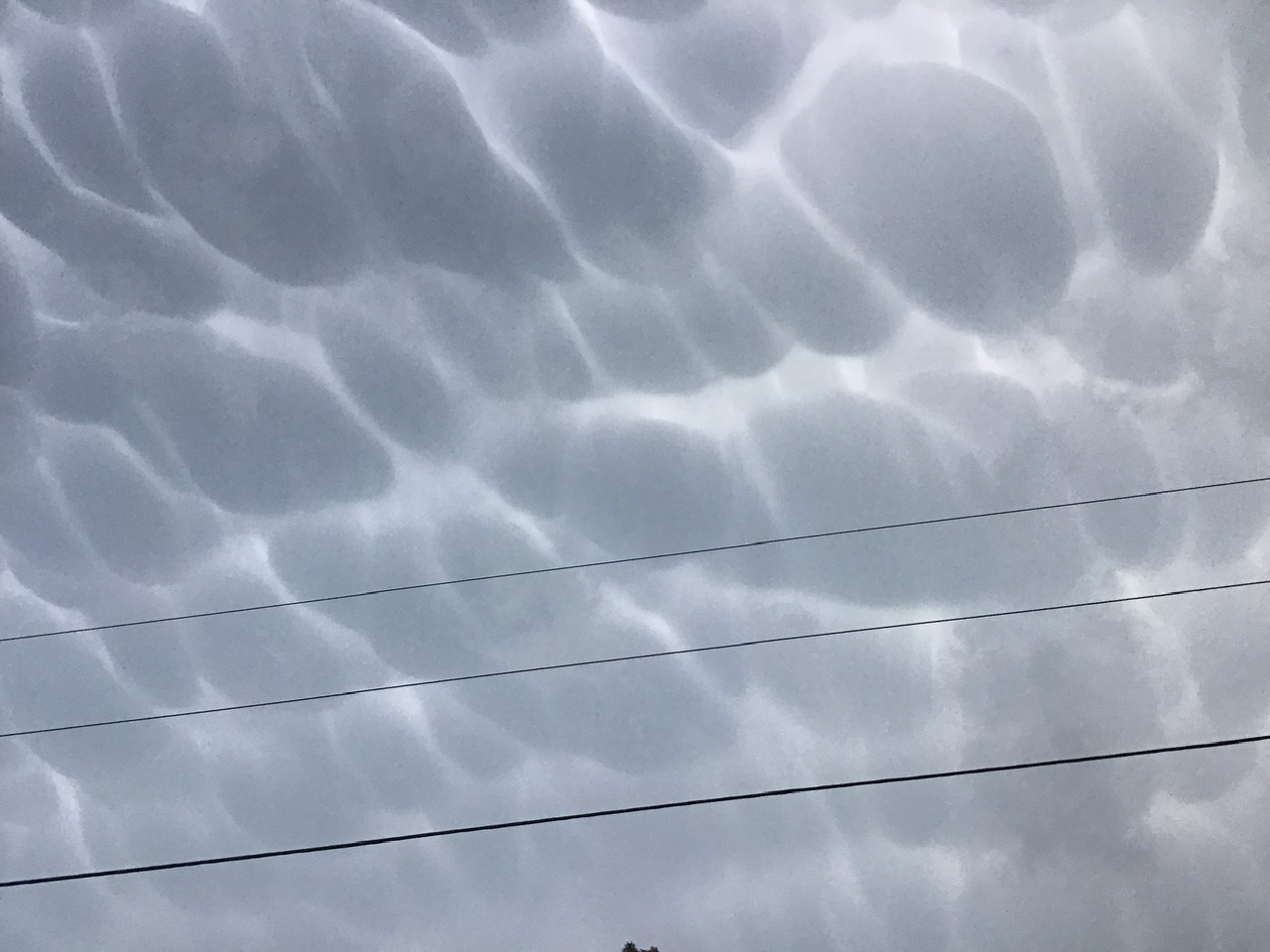
Not natural clouds, folks! And soon the kids won’t be able to see any difference, though the atmosphere has significantly changed in the last two decades, as the weather has changed, as they lie about their climate scam, and charge ‘carbon taxes’ to ordinary folks to pay for their madness. Makes me SO FURIOUS!

I could be taking such photos on a regular basis, but it gets old. And then someone could comment on the ‘pretty’ sunset. 🤯. Argghhh, Noooo! Can’t someone please make it stop?!

No? Ok, moving on.

More bad news. We’ve had the most prolific acorn year since we’ve been here, that’s about 15 years. Sounds like good news, I know. It is good news, in many ways. The pigs are getting fat, the sheep and goats are gorging. Literally. And that’s the problem. One of the young twins gorged himself to death. It was terribly sad. His little stomach ballooned up as if his body couldn’t contain it anymore and he was suffering for hours.

I’d read baking soda could help, but it did not in this case. Perhaps it was too severe. I also read there’s a surgical procedure which would alleviate the pressure in his gut, but I don’t have the confidence to perform that myself and the vets around here don’t treat goats. I held the little guy for a long time, trying to keep him warm and help him feel better, but we lost him. Oh the perils of animal husbandry!

Another problem of the acorn bumper crop is much less severe. We live under a large oak tree and have a metal roof. It’s been rather windy lately and once those nuts start shaking loose, it’s kinda like the sky is falling. If our veteran neighbor with PTSD comes by I expect he’ll be darting for cover quick, because it sounds eerily like machine gunfire when they get popping off the roof.

The acorn perks include some plump pigs and happy goats, two of which I’m still milking, which is making for some very tasty cheeses.

Under the oaks: happy pigs, sheep and goats.
Can you spot the perfectly camouflaged foraging pig?
Happy goats make for delicious cheeses.

I’ve gotten so successful I’m confident enough to get very daring!

Chèvre wrapped in sassafras and fig leaves for aging.
More aged chèvre—the top log is covered in dried goldenrod leaves and flowers, the bottom one is wrapped in honeybee comb.

Our fruits were nearly non-existent this summer, but we did just get our first ‘crop’ of persimmons, a whopping 5 of them! A couple of years ago I harvested lots of them from a neighbor’s tree and they were delicious; that was the first time we’d ever tried them.

Fuji persimmon

We planted both varieties, but the American variety takes much longer to start producing fruit and the fruits are generally smaller. These pictured above are Fuji, quite different, harder, larger, less sweet, not at all astringent, and also very tasty. The closest in taste I’d say would be a very ripe mango, the American varieties are especially super sweet, like jam.

If you’d like to learn more about this fancy fruit, here’s an enthusiastic lesson from James Prigione.

We’ve been getting a few mushrooms, but the lack of rain is certainly hindering our foraging experience. A friend brought us a huge chicken of the woods, our first time trying it and it was excellent.

Laetiporus sulphureus

The lactarius paradoxus are hard to spot and deceptively unattractive. In fact, they are exceptionally tasty and have a longer shelf-life, and of course a different season, than our favorite chanterelles.

Even while foraging mushrooms it seems the grass is always greener on the other side of the fence. 🤔

In the garden we do have two nice full boxes of varied cool-season produce we protect from the frosts with row cover cloth. In addition to lettuces there’s some broccoli and cauliflower, spring onions, cilantro and parsley, radishes and Chinese cabbage. We’ve also got our garlic already shooting up and a couple rows of turnips started for the pigs come spring. Our neighbors are now buying eggs from us, so we throw in the surplus veggies when we can.

3 of 6 colonies survived our terrible summer. The hives are a bit hodge-podge at the moment while we do maintenance on them.

The honeybees are occasionally making an appearance, though since the frost there is little for them to forage. One of their last favorites is another one considered a ‘nuisance plant’ by the ‘experts’—it’s called tree groundsel and it’s pictured after the frost in the right photo above, in the background behind the boxes. Quite a lovely late-season plant, if you ask me.

And approaching it before the first frost sounded like the buzzing metropolis that it was! A last hoorah for the bees.

So we come back to the current day and our crazy Shadow drama. It all started with a tiny Band-Aid.

He’s got the ear-span of a small plane and we have the living room space of its cockpit. When he shakes his head he invariably hits some piece of wall or corner of furniture with his Dumbo ears and it’s actually pretty amazing it didn’t happen already: a tiny gash on the tip of one ear that he doubtlessly cannot even feel.

Forever happy and oblivious

We were racking our brains for several days, trying everything we could think of and just digging ourselves deeper. One tiny failed Band-aid led to bigger Band-aids led to bigger wraps led to taping menstrual pads to the poor creature!

Nothing was working. We also tried several over-the-counter products, like liquid Band-aid, blood-clotting powder, and some spray-on crap. Not only was nothing working, they all seemed to be making the problem worse.

We even tried to craft our own ‘No flap ear wrap’ made out of my doo-rags, which also didn’t work. So, we purchased a pricey one online which should be arriving any day now. Obviously, this is a universally common dog issue. A result of over-domestication no doubt, but that’s fodder for another post.

Then I start racking my pea brain in frantic desperation. How to stop the blood flow pronto?! Crimp his ears with clothes pins? Tie his ears up on top of his head with a scrunchy? Stitches? Soldering? How about just cut the whole ear off? Yes, we did briefly consider the vet. But we’ve been spending the many months since we got him trying to detox him from all the vet potions and it feels we are finally making some headway there. I kept imagining the new meds that would be required for this new issue and their invariable side-effects, which would start us off at square one with his detox.

Clearly I don’t think very well in high-stress situations. I was really trying hard and the bad ideas were piling on. The blood, which had gone from a tiny occasional drop, to a full-on drip, to a steady stream, and from then within a few hours a sprayer-hose in every direction with every shake of his head. And that boy loves to shake his head.

Between the blood splatter and the acorn fire it feels we could be living in a battlefield training zone.

Yup, the crazy, bloody mess had arrived and is still visible all over our living room, deck, porch, siding. We covered all the furniture and even the walls with old towels and sheets. Hubby started following him around everywhere, with a giant towel extended between his outstretched arms each time he sensed a head shake was about to turn into a sprayer-hose of the sticky, red, splatter paint across the windows, the screens, the ceilings even. (Where are those magical elves when you need a deep house cleaning?)

We needed a miracle, and fast!

And thank the heavens, I got that miracle in one brief email. Thank you UK herbalists, Kath and Zoe, miracle workers! It should’ve occurred to me sooner. Me, especially, considering I did start the Herbal Explorations pages earlier this year and have been getting educated on herbal remedies. It honestly did not occur to me that herbs could solve this acute issue. I didn’t think anything would be fast or effective enough, especially when every other thing we were trying had failed and even worsened the problem.

Zoe suggested powdered myrrh as her preferred method in order to stop the blood flow, but we didn’t have that on hand. I ordered some online, but in the meantime chose among her other options, yarrow, and we have plenty on hand because I like it in Kombucha. I made a strong tea with it, as well as grounding some up into a powder and that whole concoction I held on his ear a few times with a cloth, some of that powder getting into the wound and sticking there, and the blood flow finally stopped. Holy Heavens! As of this writing we are still in good form and have our reserve remedies soon arriving in the mail.

What I clearly need now is an official Herbal First-Aid course. Herbs are not just for gentle healing and routine health, I see, they can be used in emergencies, too.

Why did I not think about it sooner?! It seems like such a no-brained to me now, that I’ve started to consider other potentials that didn’t occur to me at the time—like the old Russian folk remedy bees podmore—which I just happen to have been saving for a rainy day for 3 years now.

Quite an expensive lesson, but a welcome one nonetheless. 😊

A huge thanks and deep bow to Kath and Zoe, from all of us on the wee homestead! 🙏 🤗

Homestead Happenings

I know it must be autumn somewhere! Here that reality is still mostly in my dreams. We’re still in the 90s and still mostly dry. There are a few tiny signs of change though, that I’m magnifying in my mind, because I can hardly wait! It’s been a terrible summer.

See, right there, 3 red leaves on my favorite Sassafras tree!
(Very soon to be featured in an ‘Herbal Explorations’ post)

But, I’m not going to complain about that now. Instead we’ve got lots of happy snaps, and even a few scary ones.

We’re gearing up for the fall/winter garden, getting the beds ready for the transplants that have been growing under lights for a month and are very ready for their new outdoor home, just as soon as the temperature drops a bit.

We just started harvesting sweet potatoes from the boxes waiting for replanting.

Those vines helped keep the goats happy and healthy during the extra long heat wave.

Summer keeping a sharp eye on Shadow even though there’s a fence between them.
None of the goats have warmed up to him, despite all his best efforts!

The peppers have come back with gusto after another dose of compost dressing and removing their shade cloth.

Jalapeños and banana peppers and the now monstrous cranberry hibiscus on right that is finally just starting to bloom.

Cucumbers again, yippie! Plus hurricane lilies, turmeric, zinnia and basil keeping the bees happy. And lots of bindweed (morning glory)—scourge to the industrial farmer—a hardy, lovely and welcome cover for the rest of us.

I’m getting about 1/2 gallon of milk a day from 2 goats and making cheese often—mozzarella and soft chèvre every week and a hard cheese whenever I can accumulate at least 3 gallons (preferably 6) in the freezer. The larger the hard cheese the easier it is to age properly and goat milk works just fine for cheese after freezing.

The easiest cheese to make and so delish!

But I’m really looking forward to making Camembert and Munster again. Just like all things natural, cheeses also have seasons. I was very disappointed by a so-called Brie I just splurged on from the grocery store. They should call it a processed Brie-like imitation and market it in the aisle with Velveeta. Quel scandale!

A few more friendly faces . . .

As I mentioned last update, we had a sausage-fest this summer, that is, a super-high percentage of males born, of all species—cats, pigs, sheep, chickens, goats. So odd.

Now we have 3 young male cats, a new thing for us. But one of them is a real scaredy cat, we’re never able to get close to him and he’s rarely around except for meal time.

Always crouching in the shadows and darting off even from the camera.

Also odd but true—our black cat, Mittens, hangs out with our black Shadow and our blond Tony hangs out with our blond Bubba and Buttercup—go figure!

“Hey in there! Where’s our breakfast?!”

I love spiders, especially these beauties, but some folks find them scary, apparently.

Now here’s a real foe . . . .
Gross! Looks like right out of a horror movie.
And he has a lot of friends haunting our compost heap. 🤢

But who loves ‘em but our very scary Halloween rooster . . .

Poor guy, we’ve no idea what happened to him, but he is one scary-looking dude!

Soon we will be making the tough but necessary fall homestead decision—who will get bred and who will shuffle off to freezer camp?

But not a care in the world for these contented creatures!

Hope you’re having a fine Sunday and thanks for stopping by!

Homestead Happenings

Continuing on from the previous post, more weird scenes. Plus, lots more happy snaps, an update on Scrappy with video clip, danger averted, and mushrooms galore.
Starting with the weird and disgusting, so those trying to eat and read, or others simply of an easily-queasy disposition, may skip right down to the happy snaps post haste.

Thanks to the lovely rains last week, which may or may not have destroyed our blackberries (still documenting), we’ve been finding plenty of mushrooms. Some we know very well, like chanterelles, and hunt for them routinely. Most others we collect, and I try to identify, usually without success.

Occasionally that proves to be a disgusting lesson. Boletes in particular bring unwelcome inhabitants and you may just wake up to this sight as you’re making your morning coffee.

If that concerns you, best to leave them in the wild and admire from a safe distance!

Not edible, but cute!

Staying in the weird-disgusting realm, I mentioned last we lost an established bee colony, which was a big disappointment. I wanted to figure out what went wrong with them, and thankfully Hubby noticed the empty hive almost immediately, thanks to the observation window, that so many beekeepers complain about.

I was able to bring all the comb in for inspection. It was highly unusual, because the colony left behind quite a bit of resources, in this case pollen. That means something must’ve been very wrong. Luckily we did capture a swarm off this hive the last month, so it wasn’t a total loss. The culprit behind their total departure from the hive, the dreaded wax moth.

Hubby noticed immediately the spotty brood pattern, sure sign of a failing queen. Had he not noticed and had I not taken action, very quickly all the colony’s painstaking acquisition of pollen and long, hard work of drawing out the wax comb, all would’ve been lost within a fortnight. Wax moth damage in a hive is truly disgusting, the clean-up of which is probably the dirtiest job a beekeeper faces.

Saving the comb, therefor the pollen, therefor the hive body, was the silver lining to this colony collapse. And, it was a good scientific observation for me. What happens is the wax moth eggs as they develop, having been laid in the empty cells where the bees then place their pollen, grow into larvae that pushes out the pollen. From that point they squiggle around a lot. Some of them are able to make it as far as the next room in search of a place to cocoon. Pretty amazing!

Bee pollen is actually pretty tasty, is said to be healthy, and makes a great flavoring for kombucha. I’m sure they eat the larvae in some cultures, just like with silk moths, but don’t worry, I’m not that weird, yet.

*******The rest of this post is safe for the easily-queasy!********

But, there is still danger afoot! And Bubba lets us know about it. A water moccasin on the loose and ready to terrorize the troop, if not for Bubba’s keen scouting.

Bubba sounds the alarm, such a good boy!

In other homestead news, Scrappy, whose Mama rejected him at birth, is doing just fine raised on the bottle. Hubby even set up a portable milk station for him, which he adjusted to almost immediately.

In garden news we’ve been harvesting onions and we’re quite pleased with the prolific results for the 2nd year in a row. We’re about 2/3 to completion. Where the onions and garlic have come out, we’ll be planting okra, sweet potatoes, and melons.

The tomatoes and green beans are coming in great, and a few forgotten flowers too.

Never forgotten, Datura, one of my very favorites. If only I could capture that most sublime scent when the blossom first opens!

In more critter news, Shadow is still adjusting well to country life, with occasional hiccups. Like, he still likes to chase the goats and the lambs if they stray too far from the herd.

Is he gone yet?!

Only the pigs remain unconcerned with his massive curiosity.

And he seems to find the kittens quite exasperating!

And that’s kinda weird for us too, because we’re not cat people, this is the first time having kittens around at all, yet they seem to be taking over!

It’s an exhausting life for a townie-dog, I’m sure!

Thanks for stopping by!

Do you have any critter or garden news to share?