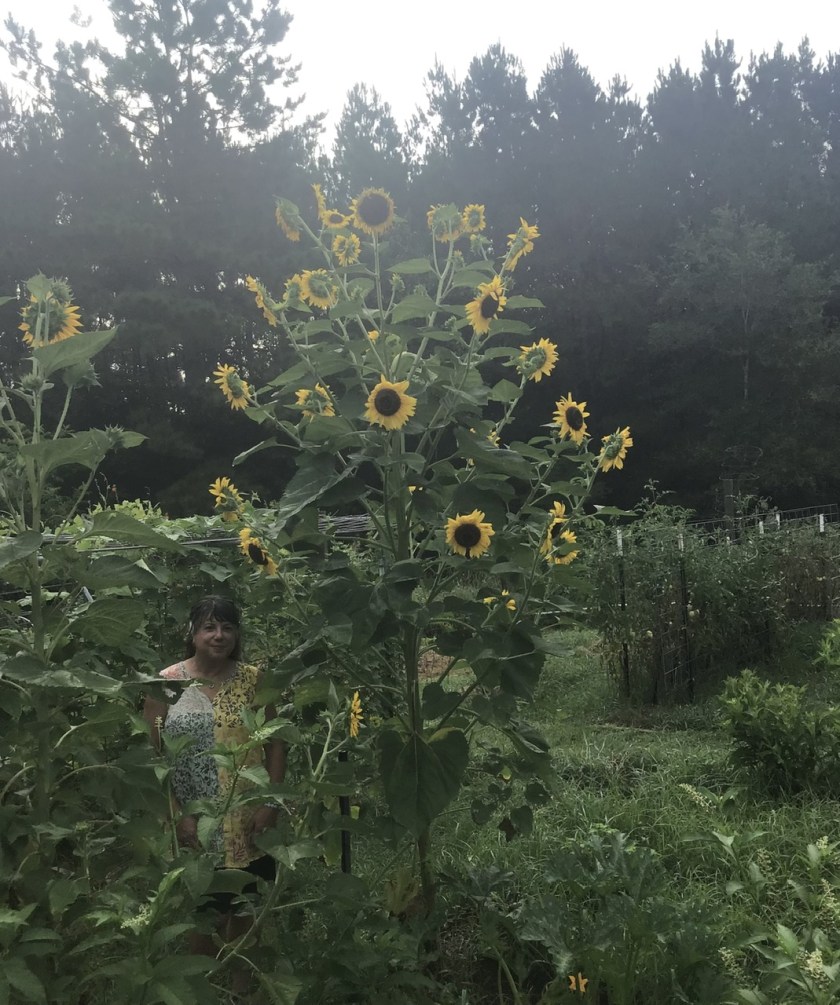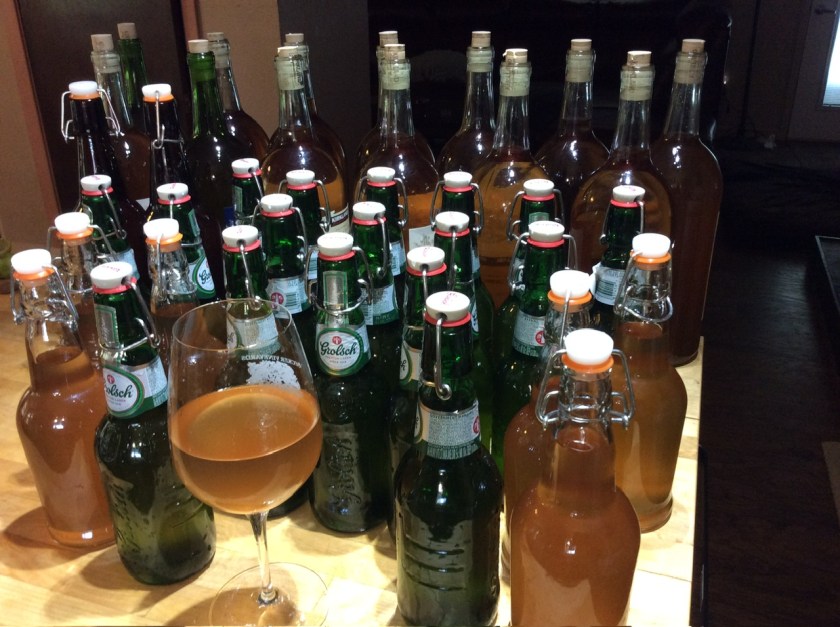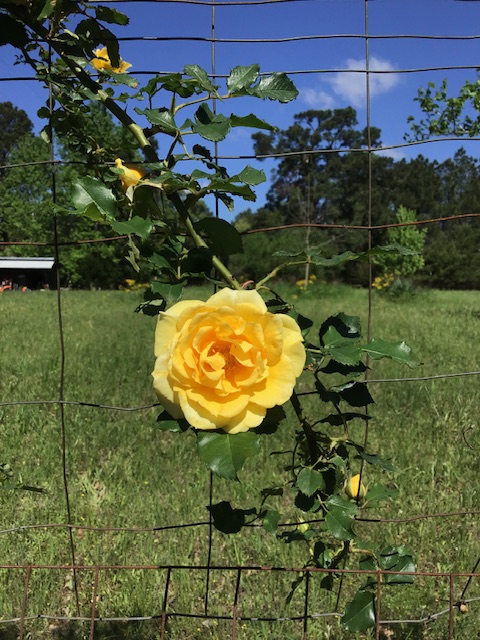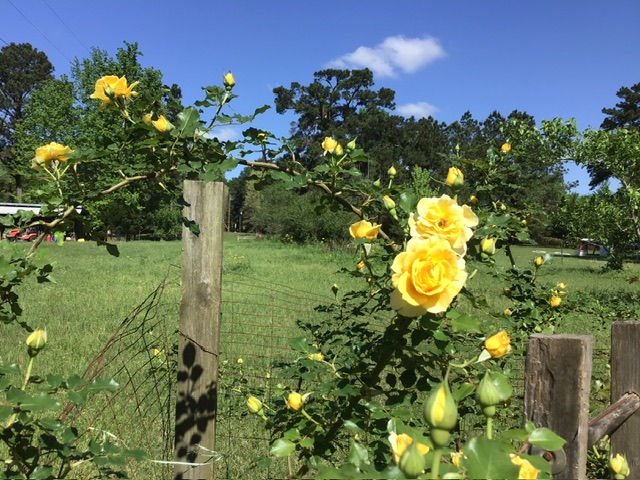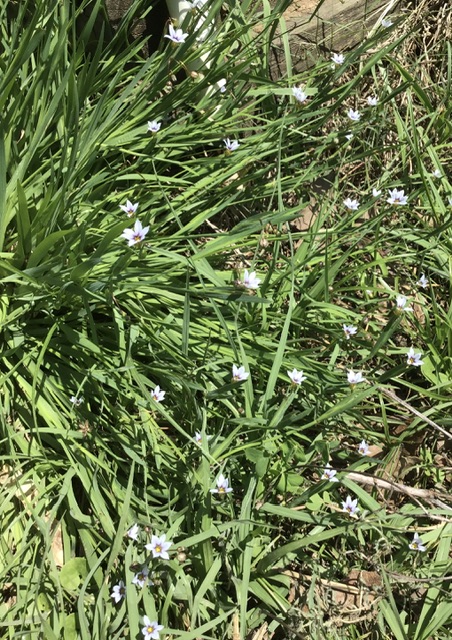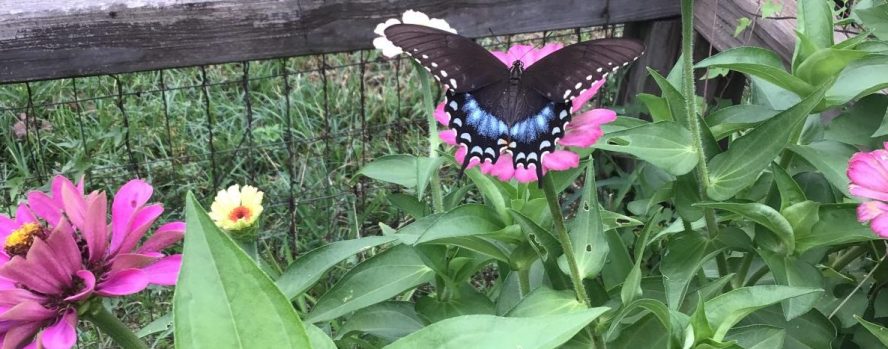
Such a busy time of year already, made busier with our remodeling projects, but we always make time to stop and smell the roses.
And bow to the weather gods, or geoengineers, who have spared us this time, and after so much barking, we are grateful there was no bite. Before I sing our praises, let me acknowledge those further north who are biting the bullet this time around. Our picture perfect skies are so very rare, I don’t like to think about all that means.
We did prepare all we could for the worst, annoying as that was. Out came the row cover fabric again and the wheelbarrows full of logs to hold it down, after just having cleaned all that up and took it to storage the week before.
We expected a frost for sure.
All the pots had to be gathered to cover all the peppers and tomatoes. And considering it was so hot and humid and over 8o degrees when we were doing all of this, it felt more incongruent than snow along the coast of the Gulf of America. 😂
But, I can’t complain, because as I just said, we got very lucky. No hail, tornados, landocaines, flooding and we just barely scratched by the frost threshold.
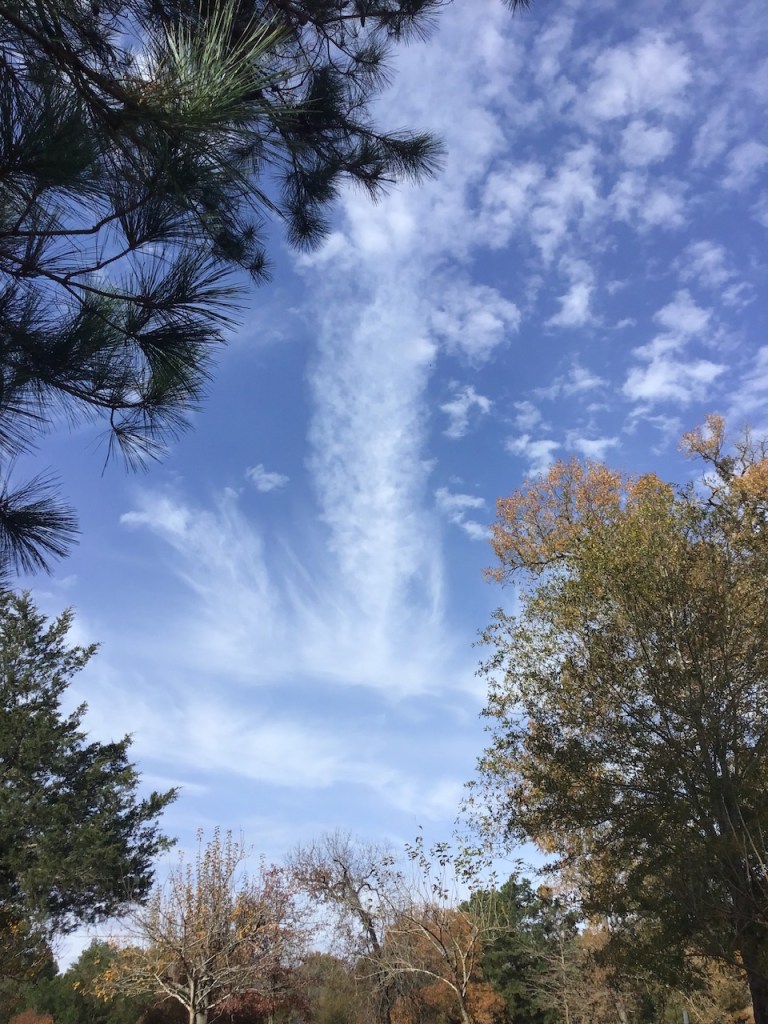
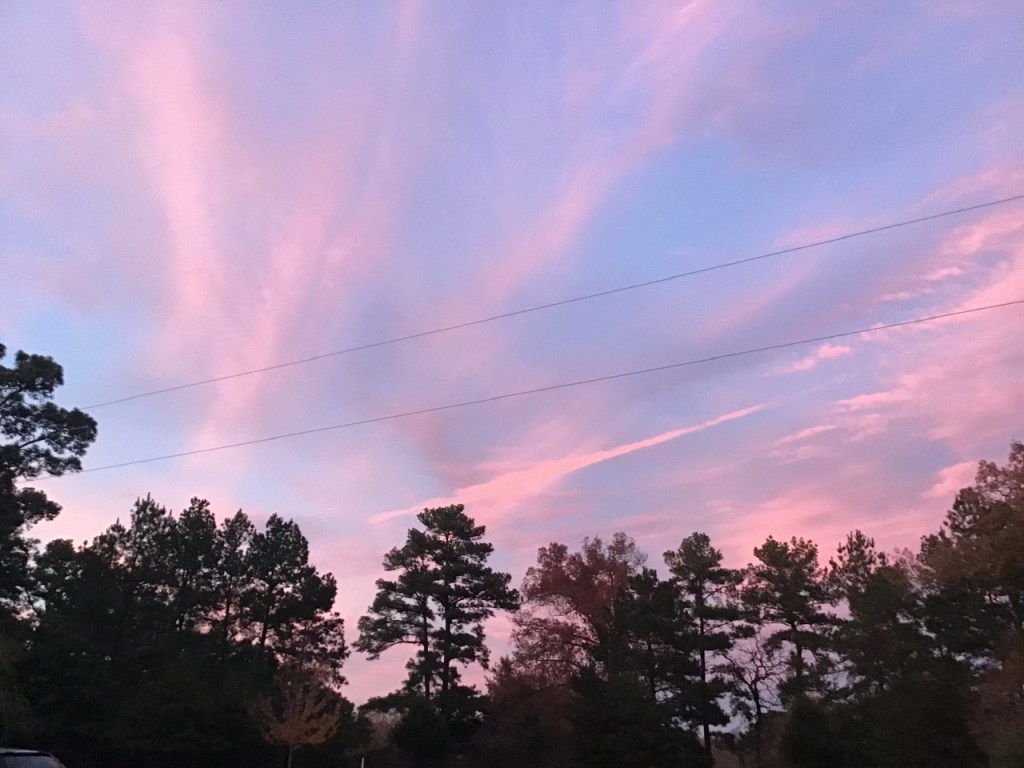
Just look at that sky! I can’t tell you how long it’s been since seeing such a sight!
There is so much beauty and bounty, in nature, and in cyberspace too!
Just yesterday I was scrolling through my Youtube feed and about every 100 suggestions up pops a true gem, like this old Mexican lady cooking her heart out and sharing it with the world. This is the very best of the power that’s right at our fingertips, I truly believe that: The world’s people sharing about their cultures. The cuisines, the histories and myths, the music, the dance, the landscapes, the languages, the gardens, the architecture–and the ordinary folks sharing them. Unfortunately, as the AI gods have demonstrated, for every such miracle there are about 100 curses.
Make food not war!
There are the tiniest gems not to be missed through all the noise and all the neon glare.
And it seems like they are beckoning me to slow down and notice them.
What would you rather do . . . follow me around the garden, or do more of that thing you call work?
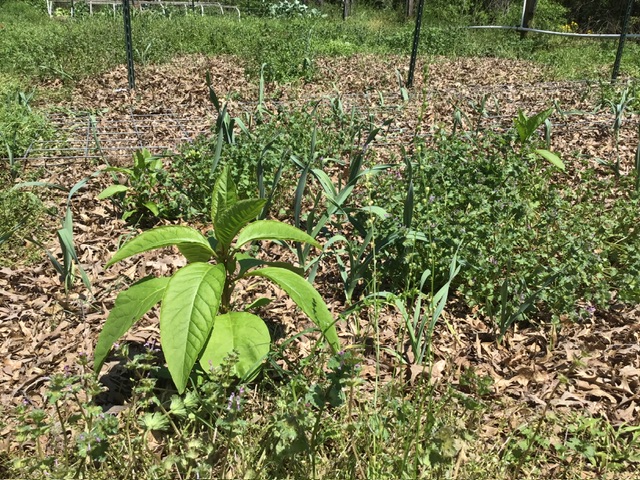
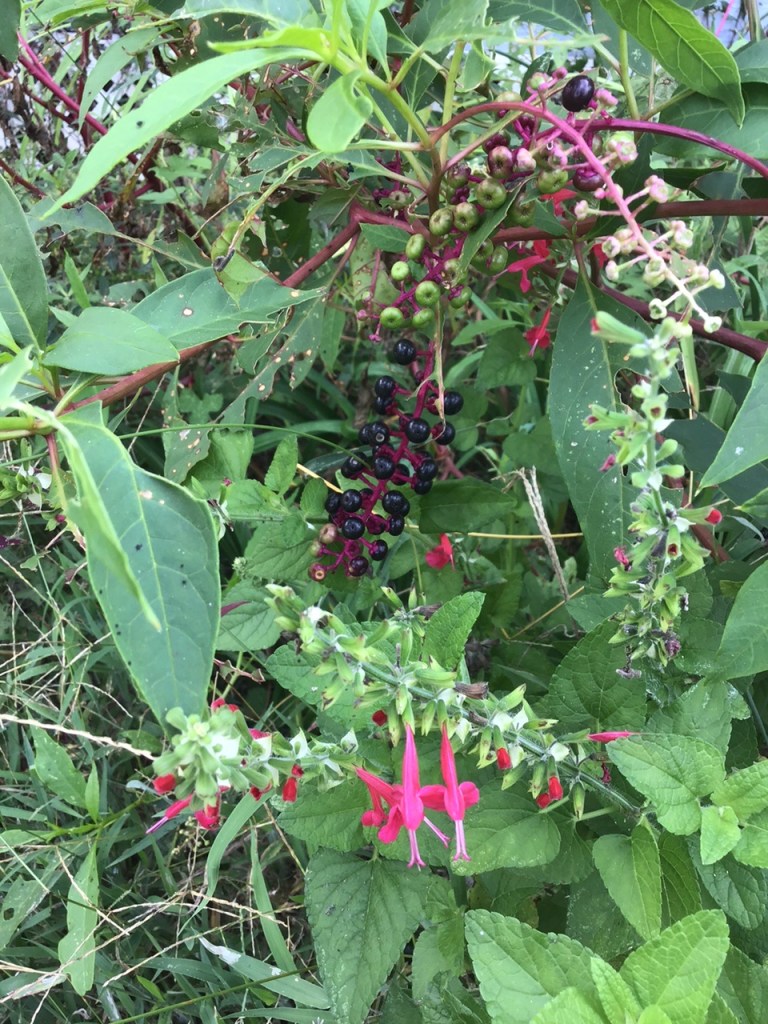
A plot of volunteer poke weed and garlic, as if they’re just screaming, we are here for your good health, so happy to be here, we keep returning for you!
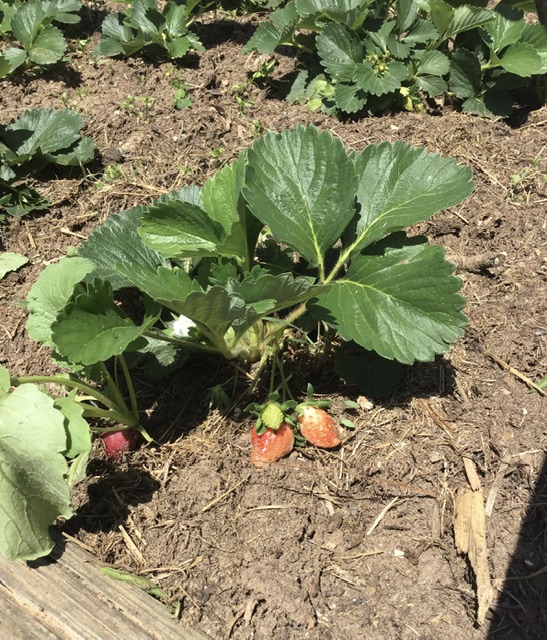
Sometimes, when I least expect it, we learn how to grow together better. Like I was thinking of the old Southern trick to set out red-painted pebbles to fool the birds into keeping off the strawberries. I thought, I bet some well-placed breakfast radishes would have the same effect, and sure enough, it’s working. The birds have moved off that bed ever since those radishes started showing their little red tops, and bonus, we adore radishes, maybe even as much as strawberries.
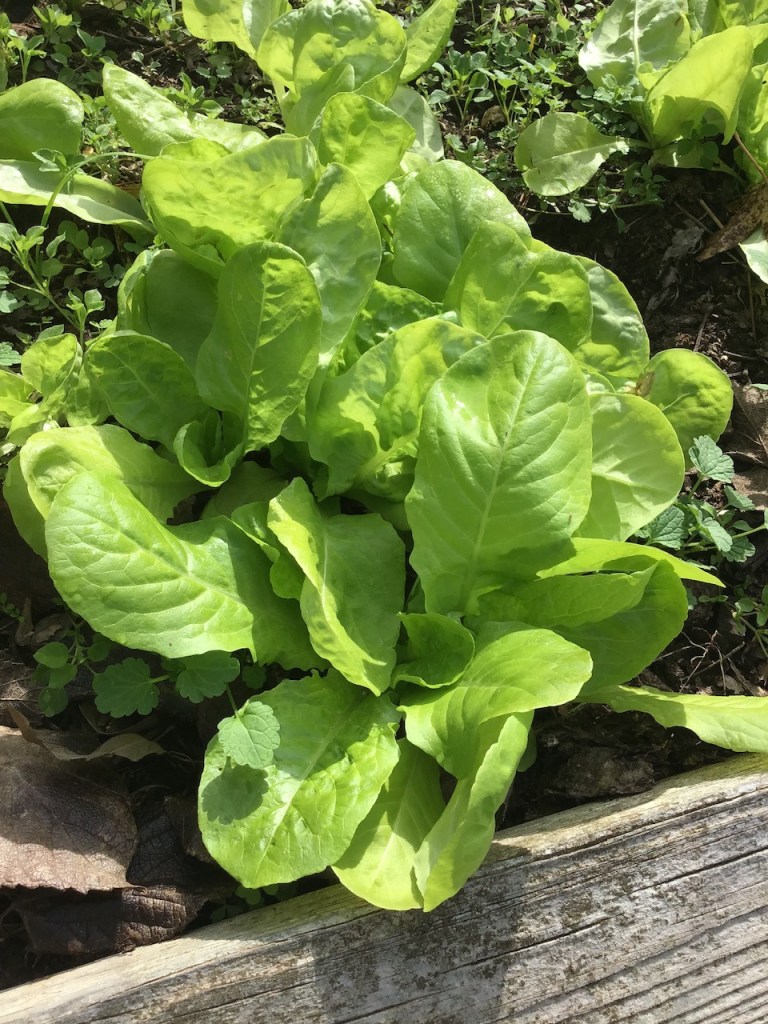
We have been eating giant salads every day, with enough surplus for our neighbors.
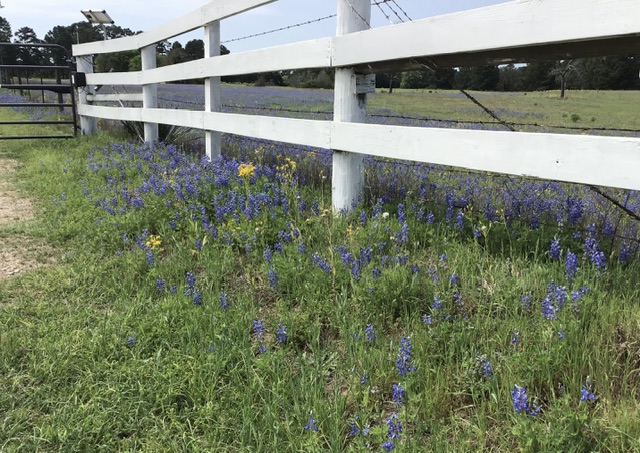
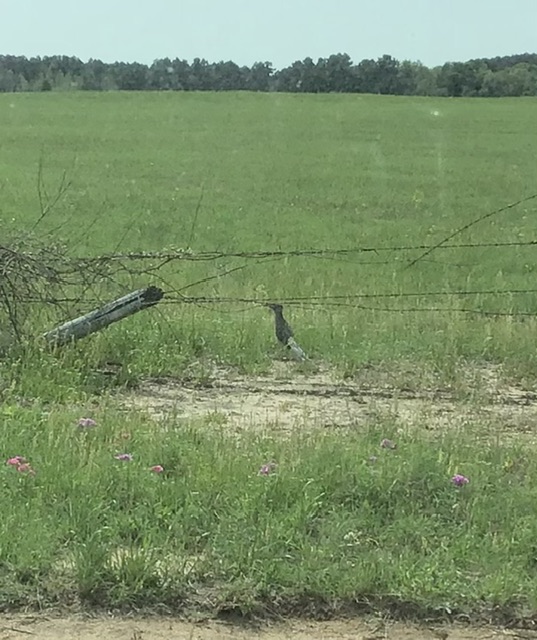
Along the country roads all is flourishing. The bluebonnets are brilliant and I even caught a roadrunner, just barely.
Beep, beep!
Such gifts of beauty and bounty! What a precious, ephemeral time to infuse their bursting energy into our year ahead. What we put into it is what we’ll get out of it, just like life.
I hope your spring is being beautiful to y’all, too! Thanks for stopping by!
After my little lecture at the end of the last post about teaching the younger generations real life skills I was listening to an interview that gave a bit more perspective to that personal plea.
It’s with a 60 year old grandma trying to do exactly that on YouTube, and she’s got over a million subscribers, a huge website and a new cookbook. She is bursting with passion and purpose, but it’s well-tempered by her realization that in America, for most folks, we still have a very long way to go.
Folks are intimidated, she insists. And for those of us who have been doing it for the last decade already, we have a tendency to forget where we came from.
She is of the rare breeds who grew up cooking and eating this way, whereas her first students were her friends, who couldn’t even imagine making homemade bread at the time, let alone mastering sourdough. They never bought a whole chicken before, let alone broke the carcass down for a nutritious bone broth. They were not accustomed to shopping on a budget, or to filling their pantries with essentials for emergencies.
She really is the ‘Starting From Scratch’ guru, with the patience, positivity and personality it takes to succeed in such a position.
In a recent Wise Traditions interview, “Why Cooking Traditional Foods From Scratch Is Worth It”:
“Do you get overwhelmed thinking about making sourdough bread from scratch? Or homemade broths and soups? Mary Bryant Shrader of Mary’s Nest is a YouTuber and educator who has a knack for demonstrating how simple (and tasty and economical) traditional cooking can be! Today, she shares some of her own story (including successes and failures along the way) of how she got into becoming a “modern kitchen pioneer”. She goes over the biggest hurdles we face (like feeling too busy or too intimidated to get started), how to overcome them, and even what inspires her to keep going with traditional food cooking.” https://podcasts.apple.com/us/podcast/wise-traditions/id1072618042?i=1000681385872
Her YT channel has loads of content, not all for beginners either. Here’s an intriguing one I plan to watch: The 10 Best Survival Foods for your prepper pantry
If you’re one of those who believe the commercial hype, and think that all food is the same, and what nutrition you aren’t getting from your junk food diet is no big deal, because you take vitamins and supplements, here’s the really bad news from someone who once thought along similar lines, and paid dearly for those mistakes through his poor health at a relatively young age. Something we are witnessing far too often in this country.
Unlike our above super upbeat, positive Granny, Agent is snarky and sometimes downright intolerant—so, much more my style—except he doesn’t like to cook, poor fella.😆
“I get a lot of emails and questions about if a specific product is good to take – in my opinion it is all poison because nutrients come from clean foods, not bottles, but I don’t want you to take my word for it, I want you to know how to find out for yourself so nobody can ever dupe you again. With that being said, today I am going to show you how you can easily learn about any chemical in any product and its health effects, real safety data and more. You can then use the information you found to make an informed decision and never have to rely on a podcaster, famous doctor or Substack author again.”
Become your own master of health! YES, that’s the ticket!
“A Manufacturers Safety Data Sheet (MSDS or SDS) is the easiest way to get real information because, while Google can selectively show you search results to fit an agenda, and while doctors-turned-online-show hosts can recommend a product they are making a kickback off of, the MSDS can’t lie. The reason is because the manufacturer of the chemical must present honest information to avoid being sued out of existence by those who purchase their product and use it to manufacture supplements to sell to the plebs.”
He has a series of articles breaking down the reality of America’s most commonly used vitamins and supplements. You probably already know that some of the chemicals Americans consume routinely are banned in other countries. And A LOT of it comes from China and other far off places where we have little to no oversight.
Not that government oversight is on our side, at all! They pretend to be on our side, only to make more absurd and expensive regulations to ‘solve’ the problems they previously created.
This is a home kitchen, seriously? 🤪
As an example here’s a ‘solution’ of several states that is a complete non-solution for those who don’t like to cook and can’t afford to out every meal, yet are tired of the grocery store ready-meal options.
Micro enterprise Home Kitchen Operation (MEHKO), a way for the government to further interfere in your kitchen and your health.
Frequently Asked Questions — The COOK Alliance
How do you get a MEHKO permit? 1. Pass a Food Protection Manager Certification exam. 2. Submit your application, including your menu and a Standard Operating Procedures (SOP) form. 3. Pay the permit fee. 4. Schedule and pass a home inspection.
And once you do all that, you still cannot serve the most nutritious meals, because they are on the ‘dangerous’ list (with oysters!) including all raw milk products, smoked or cured products, any food that has been vacuum-sealed, and even homemade ice cream. So. Not. A. Solution.
But let’s at least try to end on a positive note today!
If you have plenty of money, live in a popular urban environment, frequent the very best grocery stores, but don’t like cooking, you have plenty of options available for healthy choices these days, because the ‘free market’ has answered the call and made available all kinds of healthy and natural pre-made meals.
If you live anywhere else in America, or are feeling the economic pinch as we are here, well . . .
May this Season’s Greetings lead to new paths of traditional healthy eating for you and your family!
Our Christmas watermelon—not exactly seasonal, but still pretty tasty!
A celebration of fresh food in photo! Because it is a true pleasure for both of us to produce our own food as much as possible; it is the main appeal of this labor-intensive lifestyle.
To think, it all started with a hurricane, and then a garden. We didn’t even have a dream or a plan.
Or a clue!
Left: Hot peppers and turmeric, dried luffa for sponges Right: fresh from the garden—lots of lettuce, radishes, cilantro, dill, thyme, celery and roasted garlic.
The peppers are becoming a couple of sauces, one made by Hubby, chili garlic sauce, and was pressure canned for long term storage. It’s a copycat recipe of Huy Fong Brand and is fantastic.
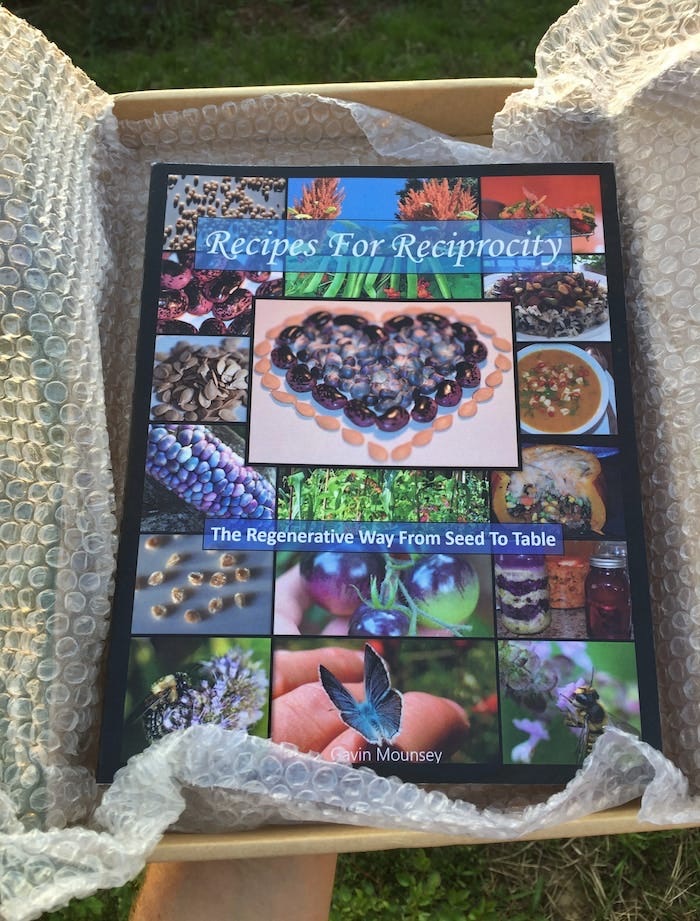
Another will be made by me, inspired by Gavin Mounsey’s kitchen.
Photos by Gavin Mounsey
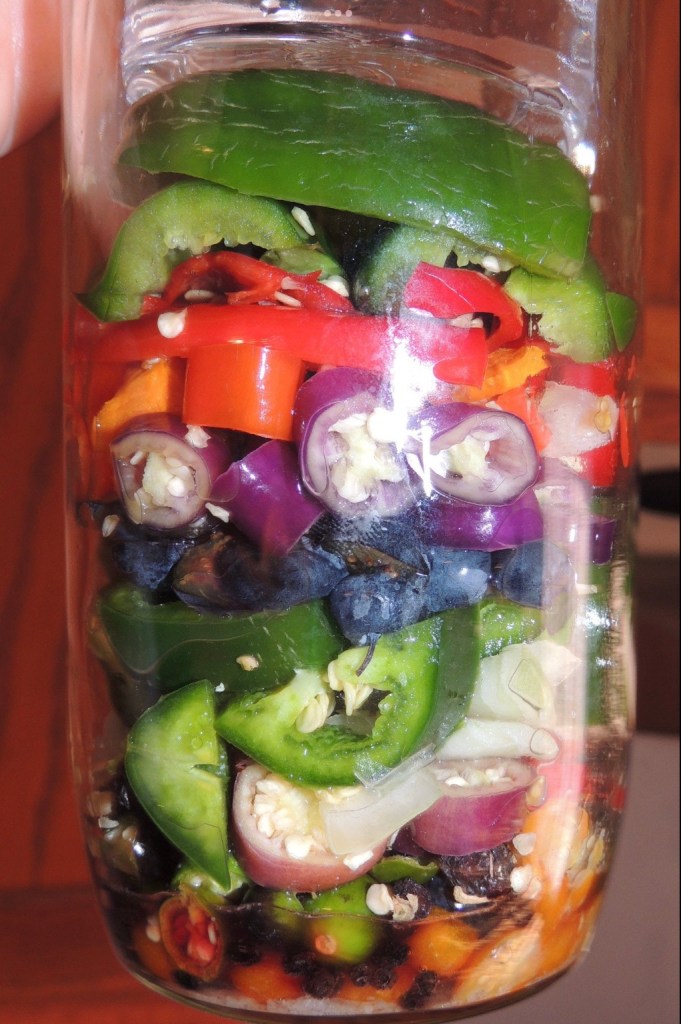
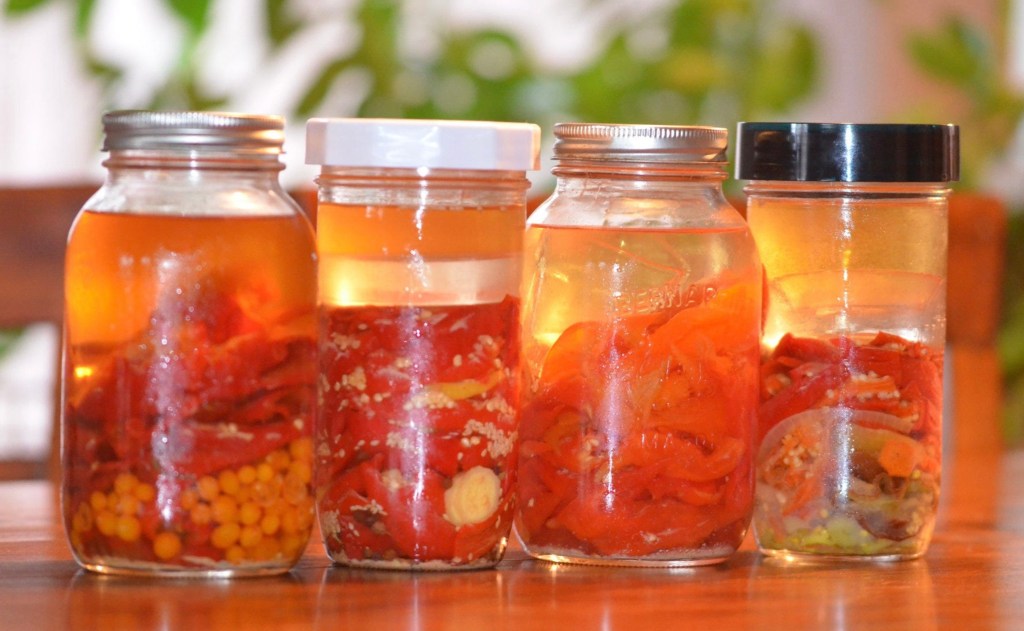
The peppers, garlic, elderberry, onion and other herbs will first be fermented and later made into a Sriracha-type sauce that will store about 6 months in the refrigerator. For amazing food photos and recipes, Gavin’s are spectacular, along with so much other refreshing content.
Previous year’s garden goodies.
From the pasture to the plate. It’s a very rewarding feeling!
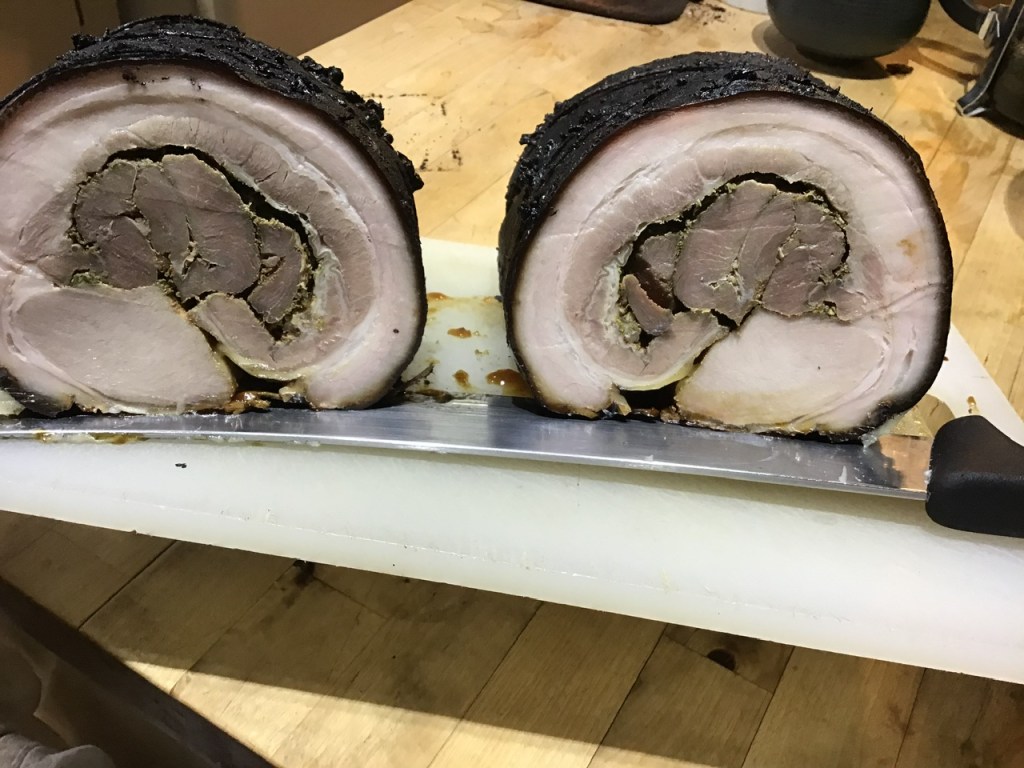
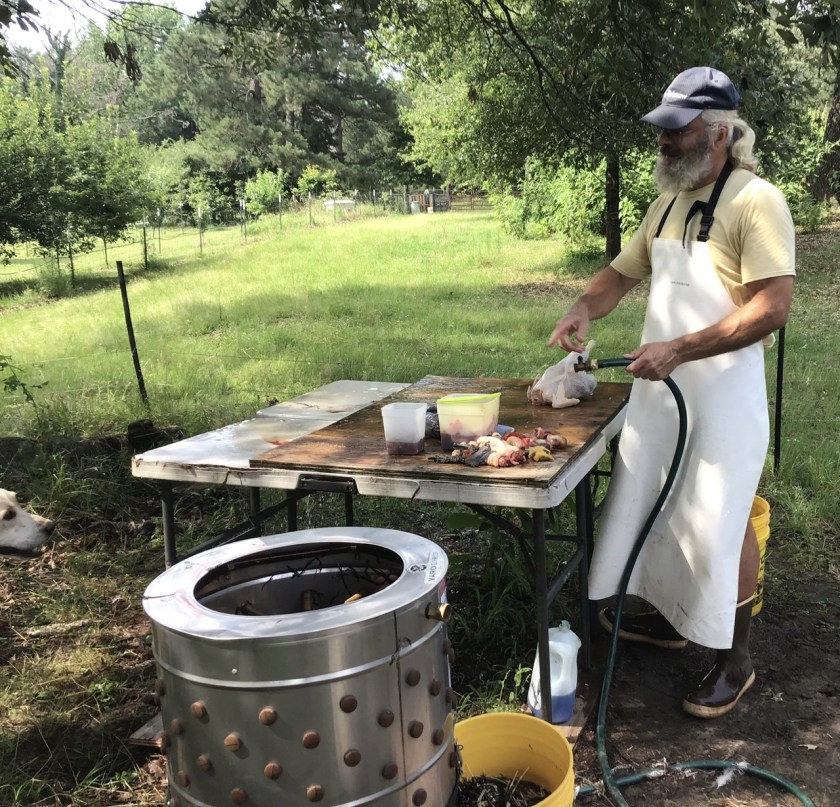
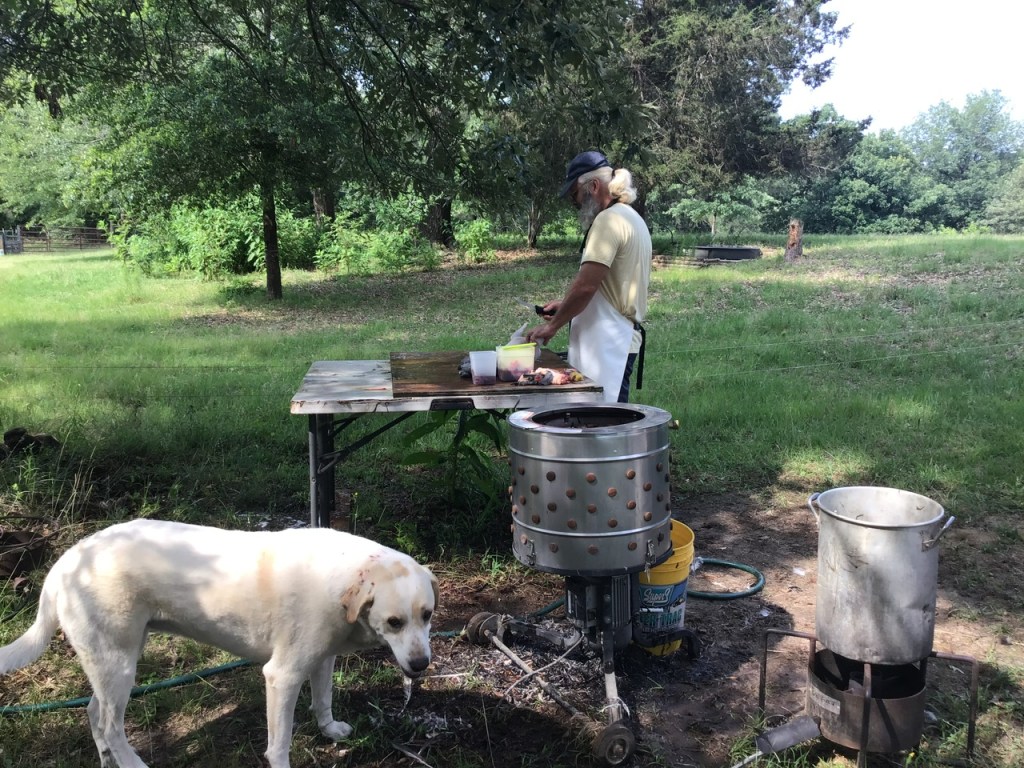
Above: Hubby processing chickens with machine plucker. Below left: smoking bacon Right: Pork roll just off the smoker
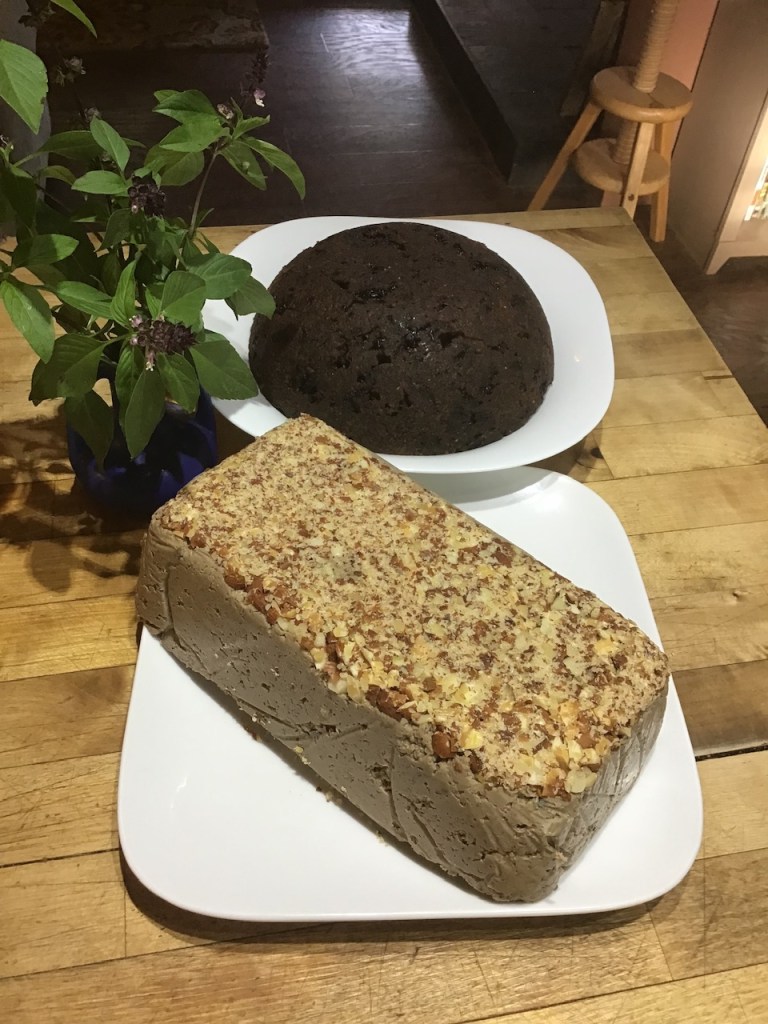
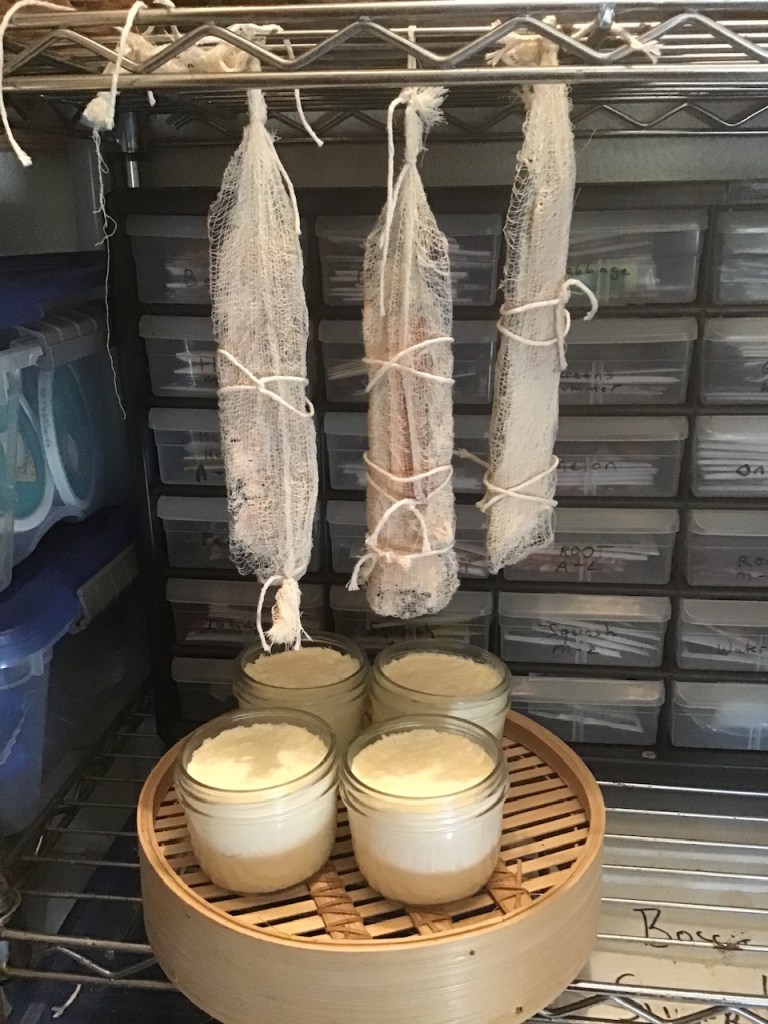
Left: Christmas pudding, a British classic and my first attempt. (Thanks Kath for the recipe!) We will see in a month or so if I succeeded. Also liver sausage, made from lamb liver and topped with roasted almonds. It’s not everyone’s thing, I know, but you might be surprised, I was never a fan of liver either. Right: Cured lamb and Mason jar Marcelin cheese, aging. Yes, you can put them in the same small space, I cover the cheese with a bamboo mat, in a closet with my seed storage, for about a week before moving to cold storage.
The cured lamb can be done from many different types or cuts of meats. This one is taken from the easy-to-follow recipe for Cured Venison Loin at wildharvesttable.com
The cured lamb thinly sliced with soft cheese and sourdough bread is better than anything store-bought in these parts.
We have learned so much about growing and cooking and preserving and the learning never ends.
But all the hard work has excellent rewards!
I’ve learned a lot about homemade wines and cured meats from this Italian YT channel. It’s amazing what you can do with just a little bit of space and minimal equipment and good ingredients. I’ll be trying this simple salami next.
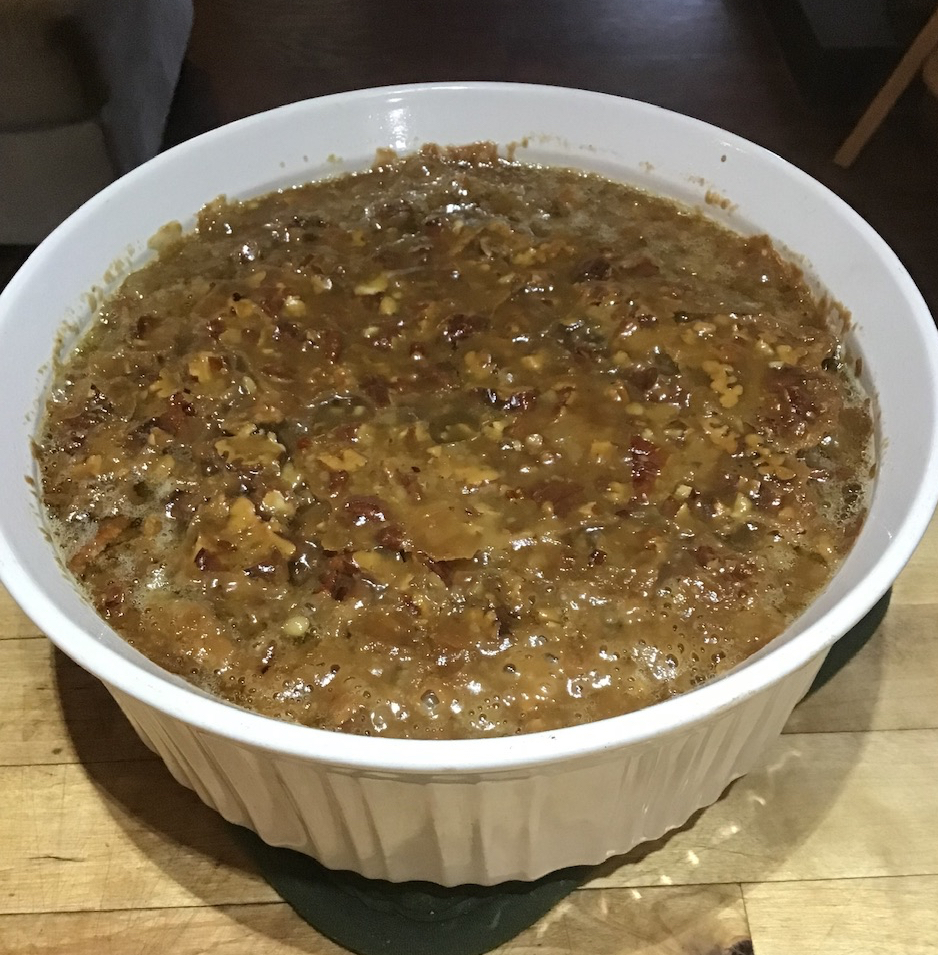
Roasted sweet potatoes become Sweet Potato
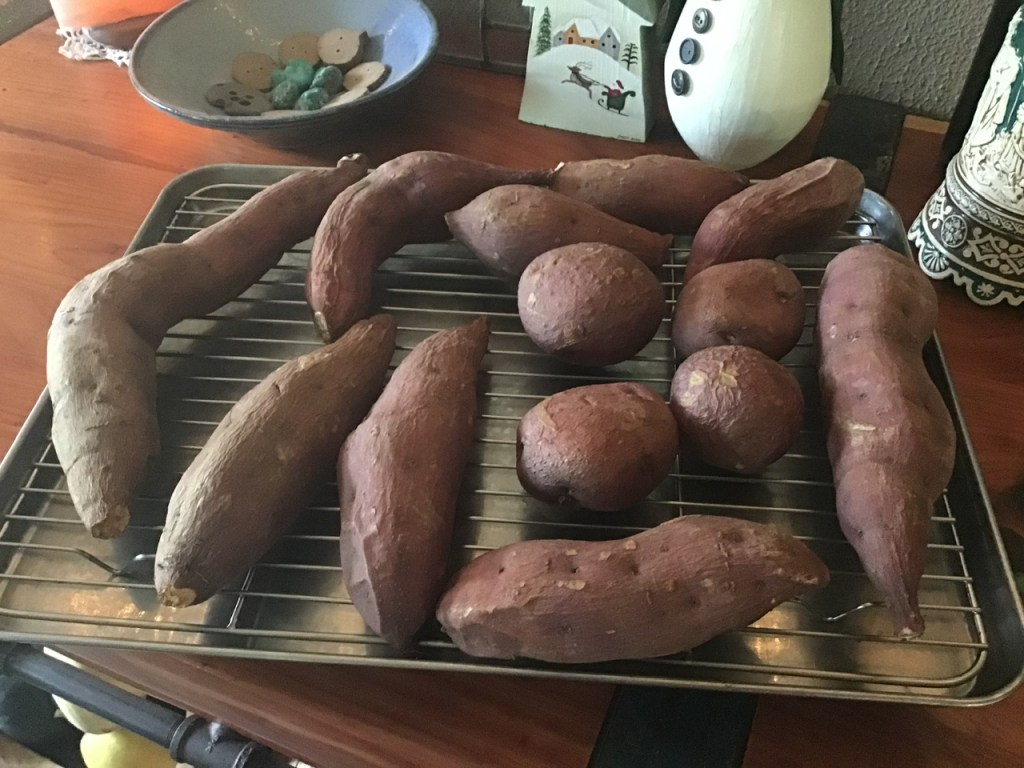
Roasted sweet potatoes from this year’s harvest become a favorite dessert: Sweet Potato Praline served with fresh whipped cream and homemade chocolate liqueur.
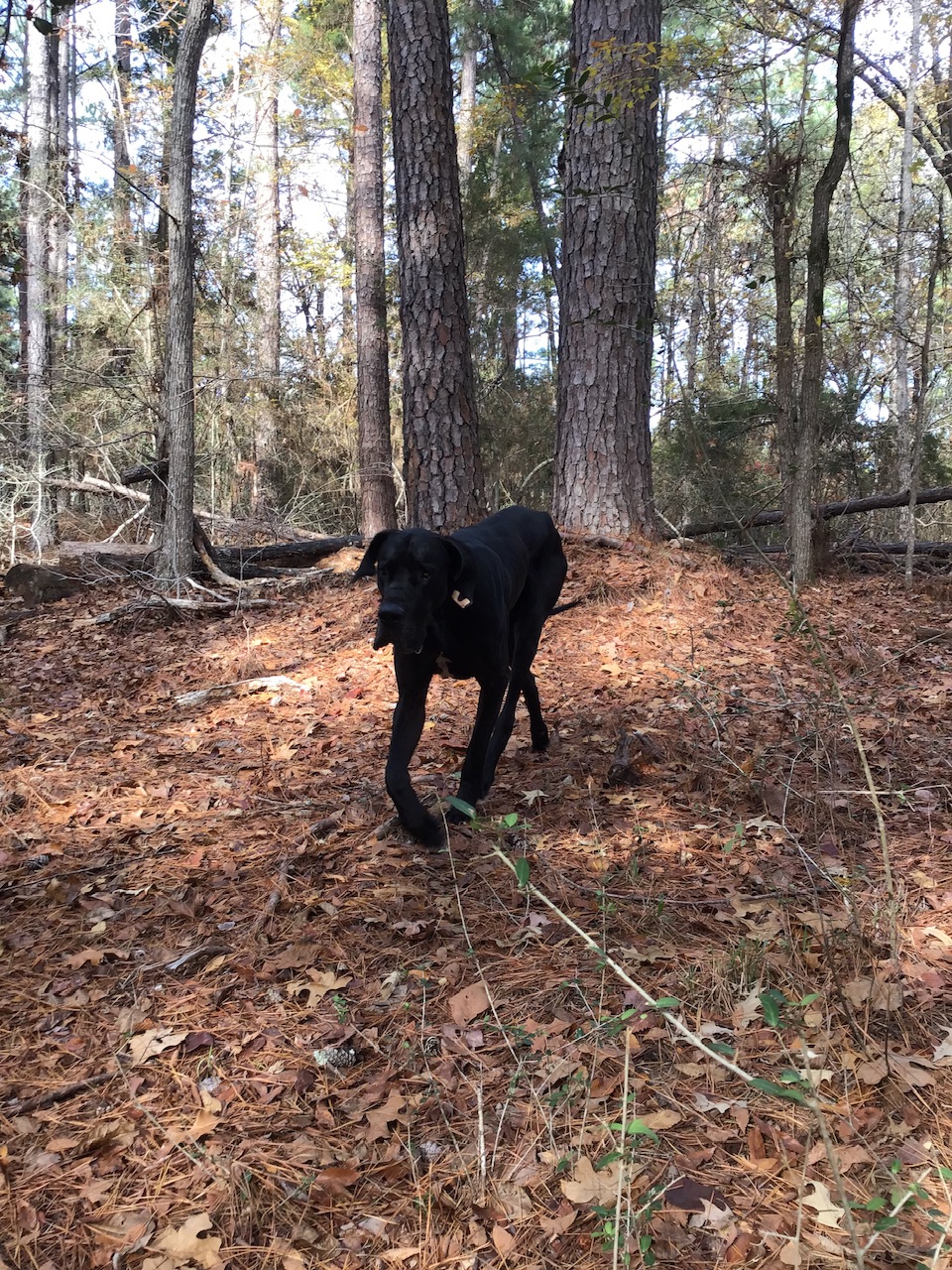
Cooking is a wonderful way to spend the day, even when it’s just for the dogs!
A big pot of dog food, fit for a Great Dane
Hope you’re enjoying your cooking time, too! Thanks for stopping by!
I started making cheese because I love cheese and could no longer find quality cheeses nearby. I lived on a diet of mostly bread and cheese while a student in France and while it did take its toll on my middle (I gained a pound or ten!) it felt perfectly sustainable as far as health and deliciousness to me.
Photo by Nataliya Vaitkevich on Pexels.com Could totally be me! 😆
Fast forward a decade and suddenly cheese was making me sick. And bread, too! Like a great many folks, I was told I was ‘lactose intolerant’ and had a “gluten allergy”. Suddenly. Out of nowhere. How very odd.
I gave up bread and cheese for a year and the problem was solved, but I was miserable. Then I started to do some research on my own.
What I learned I’ve talked about before on this blog so I won’t go into detail. The results speak for themselves: I can eat as much bread and cheese as I want, as long as I make it myself, from raw milk and organic wheat berries and all natural ingredients. We also eat homemade ice cream regularly. And cookies and cakes.
But the problem with the commercially manufactured ingredients these days is far worse than just homogenizing and denaturing. The rennet used to make 90% of cheese in this country is GMO, so it’s no wonder at all so many are being told they are lactose intolerant or have IBS and allergies and other digestive issues every time they consume dairy. And wheat. It’s become so common it’s a joke.
In reality, these non-foods are poisoning people and it should be pretty obvious by the poor state of health of a majority of the population.
Thanks to Granny for sending this article that sums up the cheese reality pretty well. And it’s not pretty.
“Genetically modified FPC — To overcome some of the shortcomings of the vegetable and microbial rennets like the potential bitter cheese taste, scientists have leveraged genetic engineering technology to create new, genetically modified species that generate these milk-curdling enzymes.
Introducing the most common alternative to animal rennet in cheese making — FPC, which stands for Fermentation-Produced Chymosin (FPC). (Chymosin referring to the enzyme that curdles milk, and is naturally present in the stomach lining of ruminant animals).
In fact, 90% of the cheese manufactured in the U.S. uses these enzymes from genetically modified organisms.9
FPC was created by the one and only Pfizer (biotech company) and is made possible by using CRISPR gene editing technology10 where the genomes of living organisms are modified. The “safety” of FPC was evaluated by a 90 day trial in rats.11”
Is it safe to consume? Good question!
“This bioengineered chymosin (FPC) was granted Generally Regarded as Safe (GRAS) status. Meaning, Pfizer was exempt from the pre-approval requirements that apply to other (non GRAS) new food additives.”
Food was just fine before they started screwing with it! 😖
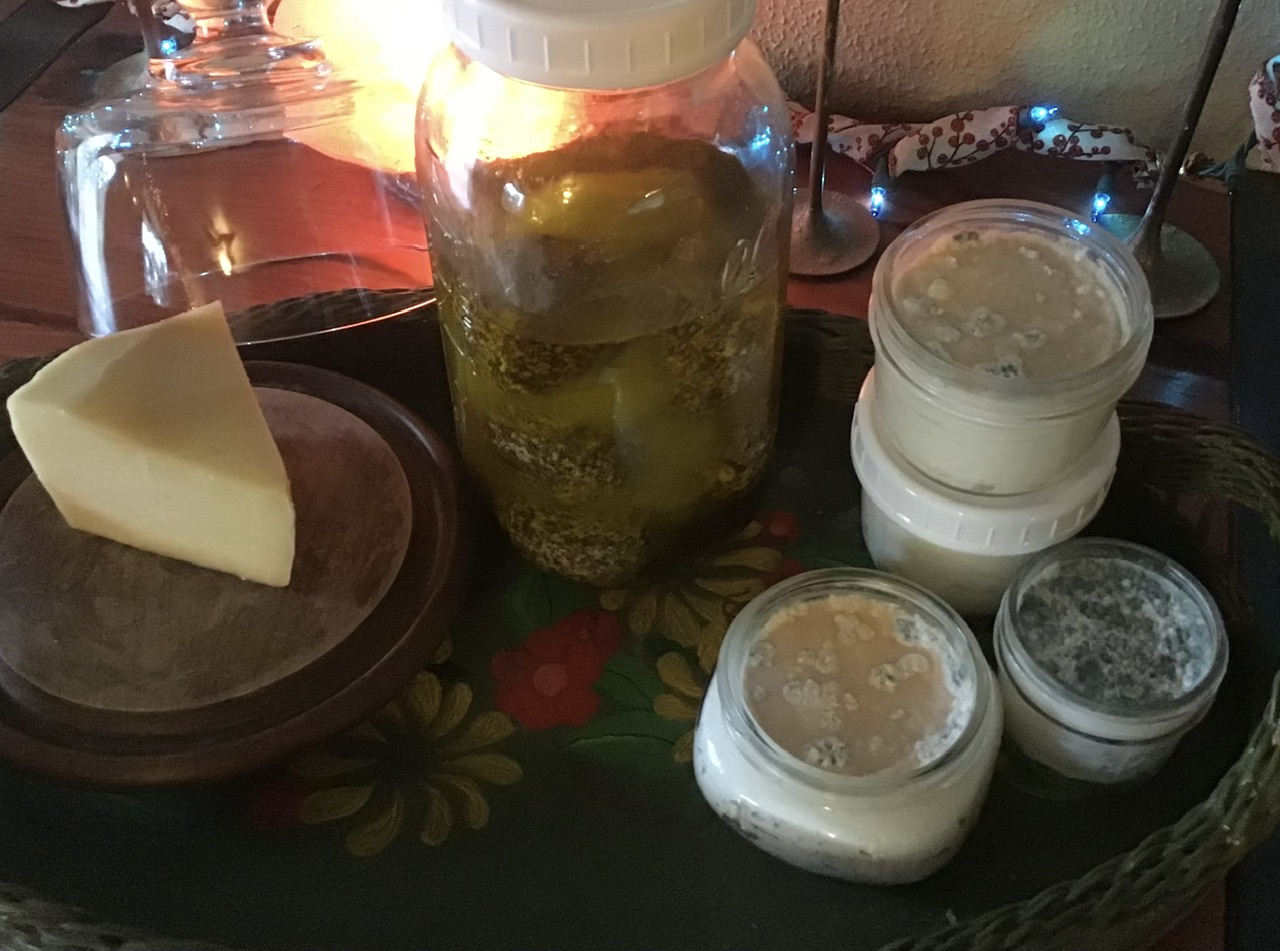
A few of my homemade cheeses—not as difficult as you might think to learn how, and so worthwhile!
Our seasons change. I don’t just mean from north to south, east to west. There are the calendar seasons, and the four seasons, though some unfortunate folks only get two.
Then there are the seasons of life—childhood, adulthood, old age.
Here on the wee homestead we have our own seasons now, too. These, of course, are the most special of all seasons, to us.
Here we have just ended the killing season. Hallelujah! A very unique sort of season to most—vegetarians certainly—but also to most of the western world, who no longer process their own meat.
This is an extremely challenging season.
For Hubby!
He has full and sole responsibility for the slaughtering, the gutting, the skinning, the scalding, the hanging, the butchering, the grinding, the rendering, the canning, the smoking, the curing, the broth-making.
WOW!
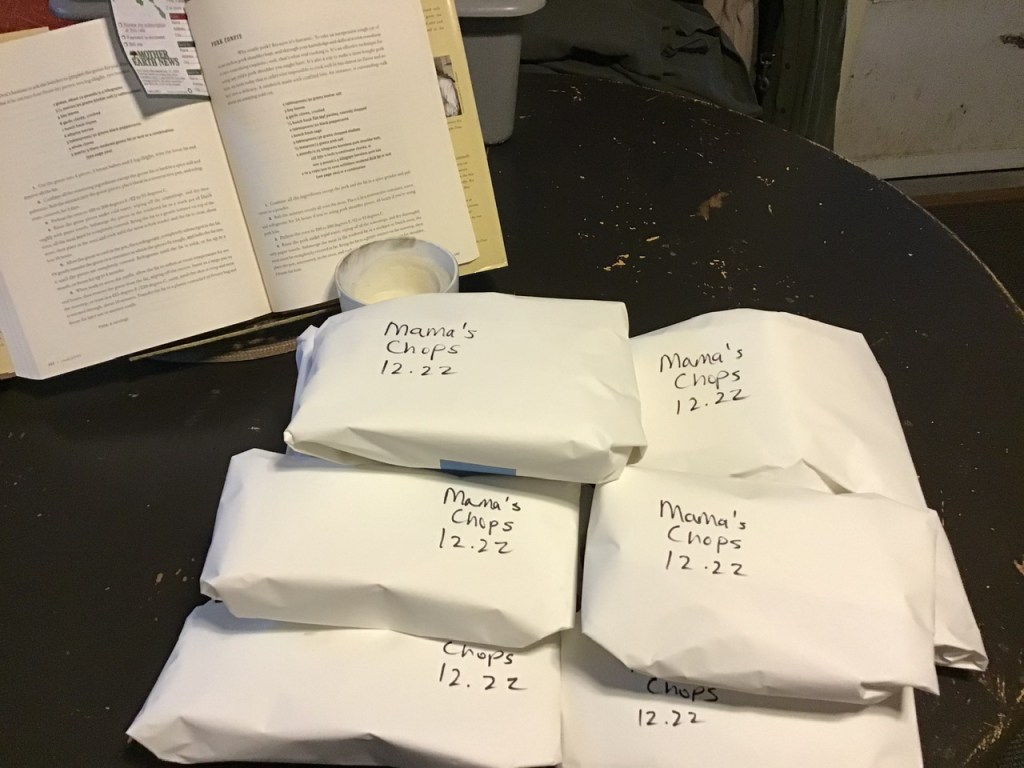
For my part, I do the packaging. Plus a bit of pâté, a smattering of curing. Not exactly an equitable deal.
Mostly it’s DeliciousSeason for me! Our small space is full of meats of many flavors—bacon, ham, pâtés, sausage, lamb pastrami and various other cures, beautiful chops and ribs and roasts, the aroma of broths and meats that he pressure cans, filling up every corner of our little cottage and wafting out to season the surrounding vicinity.
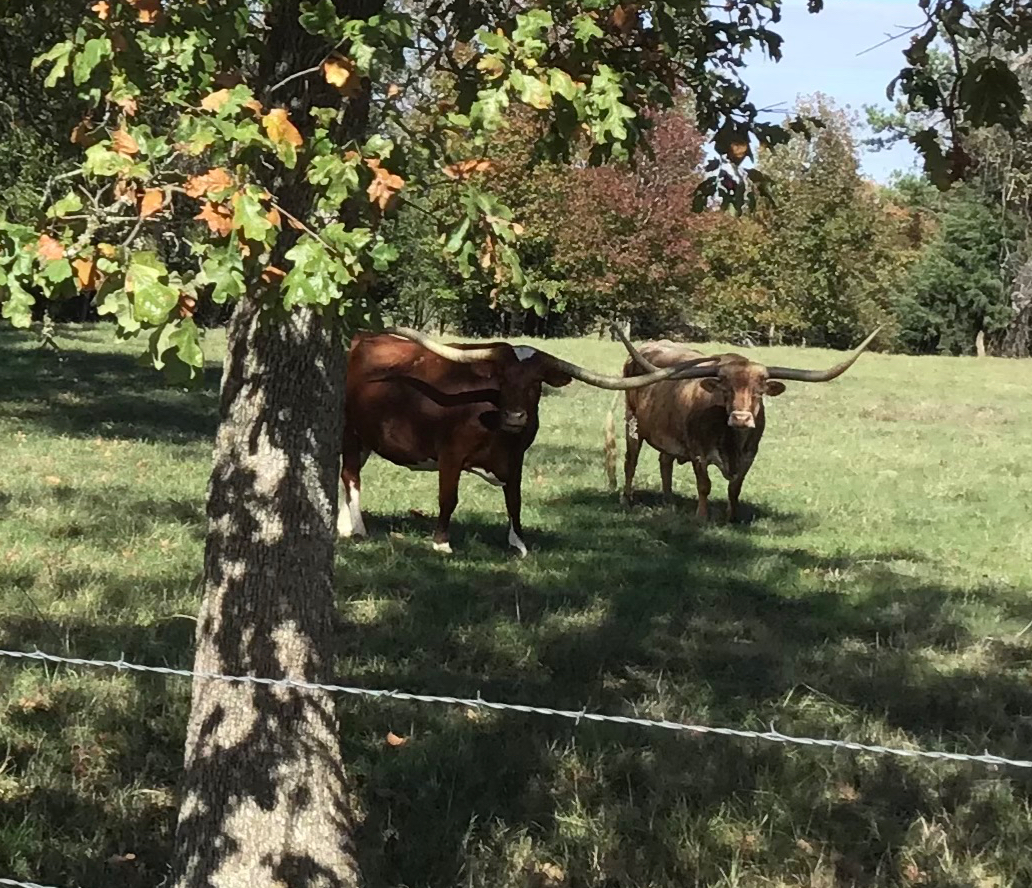
Roderick and half of his harem. Notice the PVC pipe on Walnut? That was a temporary fix to keep her horns out of the fences, and it worked like a charm.
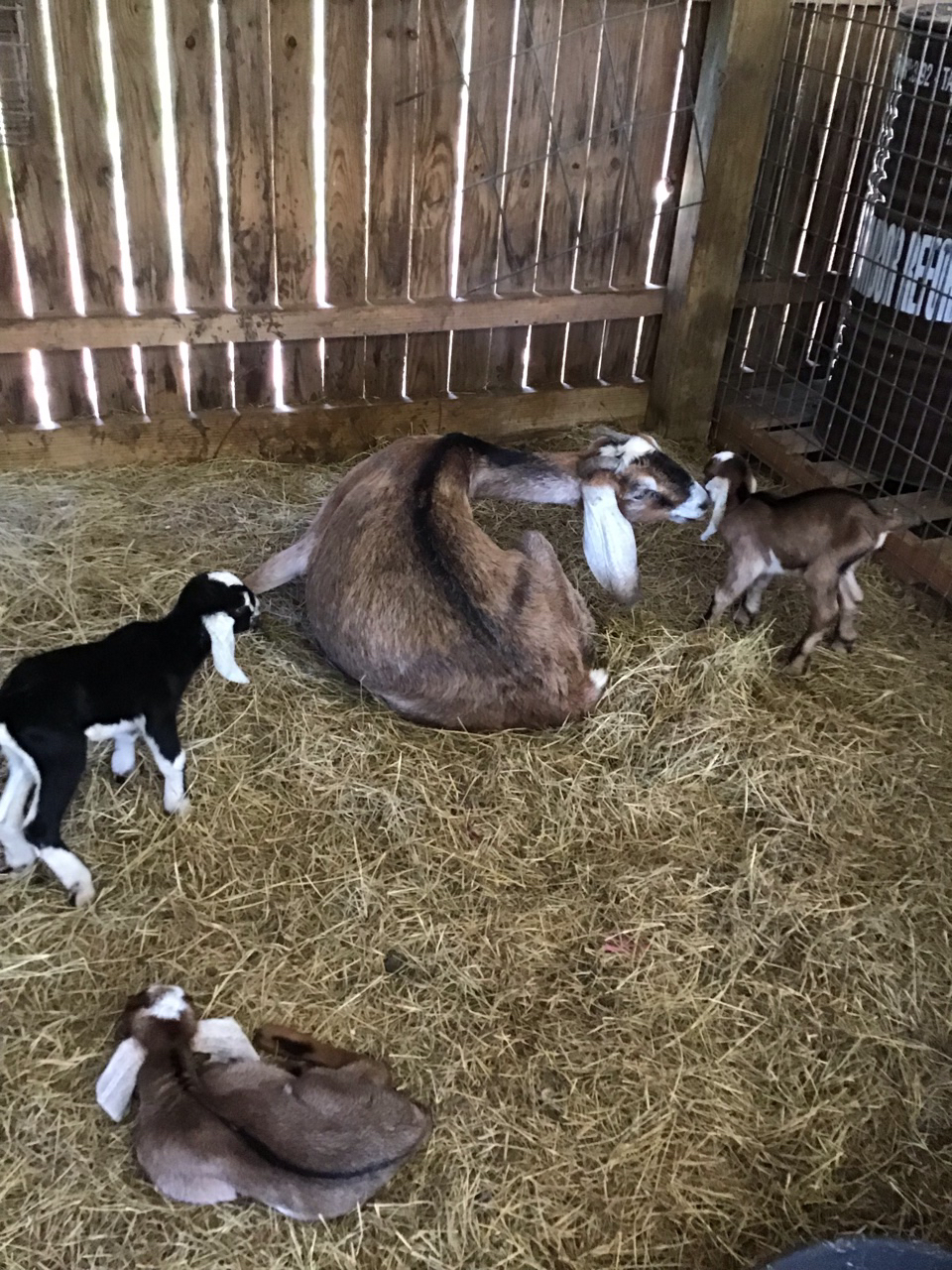
Cheese season has also just ended. Now my divas should be comfortably pregnant, their season also having shifted thanks to the services of our friendly neighborhood Billy (aka Roderick). That means our herd shall be greatly increased by early summer, gods willing. Roderick has since moved on to more fertile pastures in the next county.
While the Gouda-style and the Camembert-style are more difficult to make, the Mason Jar Marcelin and the herbed cheese balls aged in olive oil couldn’t be easier. A 3rd grader could do it! Don’t let the moldy surfaces fool you, beneath their scary exterior these cheeses are quite mild and very tasty.
That means it’s also a season for some difficult decisions. We are at our ideal capacity right now. We don’t want to grow. We don’t want to get ‘into business’. Such an odd thing to reject, considering where we’ve grown up. It gets in the blood—this mindset/worldview—now what, what’s next, what’s new. Get big or get out! Where’s the market? Don’t you want to open up shop? Sell to the public? Get all licensed up and grow, grow, grow?
Oh, hell, no!
What if, we don’t care about all that? What if we are in a season of life where we care about quality over quantity? Others can, and will, ‘get big’ and in some cases (a precious few) more power to ‘em.
But, I’m in my Delicious Season. I have an extra roll around my middle to prove it. (So do Hubby and all the dogs and pigs and even the sheep!)
Nope, my main concern at the moment is, how delicious can I get delicious to be? It sounds decadent, I know. But, maybe further refinement, compared to mass production, could be a really good thing?
Quantity over quality—whether in words, or food, or strip malls, or entertainment—has not worked out too well for this world seems to me.
There was a time, in my peak ambition years, I did strive for more instead of better—more travels, more experiences, more friends, more leisure, even more work. My season has shifted. I definitely strive for better over more these days. What if I could make the most delicious cheese ever made in all the world, and only 3 people ever tasted it?
Fine by me!
Of course, then how would I know if it’s the most delicious? Maybe that’s not so important either. Maybe it’s sufficient that what we produce and process and serve is delicious enough to make all the hard work worthwhile.
We’ll be spending some cold days relishing in our Delicious Season, because right around the corner another season is waiting.
Bubba and Buttercup LOVE when it gets really cold! When it’s under 20 degrees F they get to camp inside under the kitchen table. 🤗
“But the hills that we climbed were just seasons out of time.”
Wow, I’ve posted no update since the end of August (aka Late Swelter Season). Now here we are already well into Weather Whiplash Season, my how time flies!
This post we’ve got lots of happy snaps, the usual weather bitching, some cheese boasting, and long laments about our dear Shadow’s woes.
Notice the band-aid on his ear? Useless. But, apparently we needed to learn that the hard way.
Sometimes time flies, but when things get really bad, it crawls. Especially when it goes instantly from nothing much to Holy Shit!
And as bad as it is, in the big picture the weather whiplash is still way worse. So, best get that report out of the way first. No rain, in our rainy season. No real season at all, just a rainless rollercoaster, and not nearly as fun as that sounds.
Not natural clouds, folks! And soon the kids won’t be able to see any difference, though the atmosphere has significantly changed in the last two decades, as the weather has changed, as they lie about their climate scam, and charge ‘carbon taxes’ to ordinary folks to pay for their madness. Makes me SO FURIOUS!
I could be taking such photos on a regular basis, but it gets old. And then someone could comment on the ‘pretty’ sunset. 🤯. Argghhh, Noooo! Can’t someone please make it stop?!
No? Ok, moving on.
More bad news. We’ve had the most prolific acorn year since we’ve been here, that’s about 15 years. Sounds like good news, I know. It is good news, in many ways. The pigs are getting fat, the sheep and goats are gorging. Literally. And that’s the problem. One of the young twins gorged himself to death. It was terribly sad. His little stomach ballooned up as if his body couldn’t contain it anymore and he was suffering for hours.
I’d read baking soda could help, but it did not in this case. Perhaps it was too severe. I also read there’s a surgical procedure which would alleviate the pressure in his gut, but I don’t have the confidence to perform that myself and the vets around here don’t treat goats. I held the little guy for a long time, trying to keep him warm and help him feel better, but we lost him. Oh the perils of animal husbandry!
Another problem of the acorn bumper crop is much less severe. We live under a large oak tree and have a metal roof. It’s been rather windy lately and once those nuts start shaking loose, it’s kinda like the sky is falling. If our veteran neighbor with PTSD comes by I expect he’ll be darting for cover quick, because it sounds eerily like machine gunfire when they get popping off the roof.
The acorn perks include some plump pigs and happy goats, two of which I’m still milking, which is making for some very tasty cheeses.
Under the oaks: happy pigs, sheep and goats.Can you spot the perfectly camouflaged foraging pig?Happy goats make for delicious cheeses.
I’ve gotten so successful I’m confident enough to get very daring!
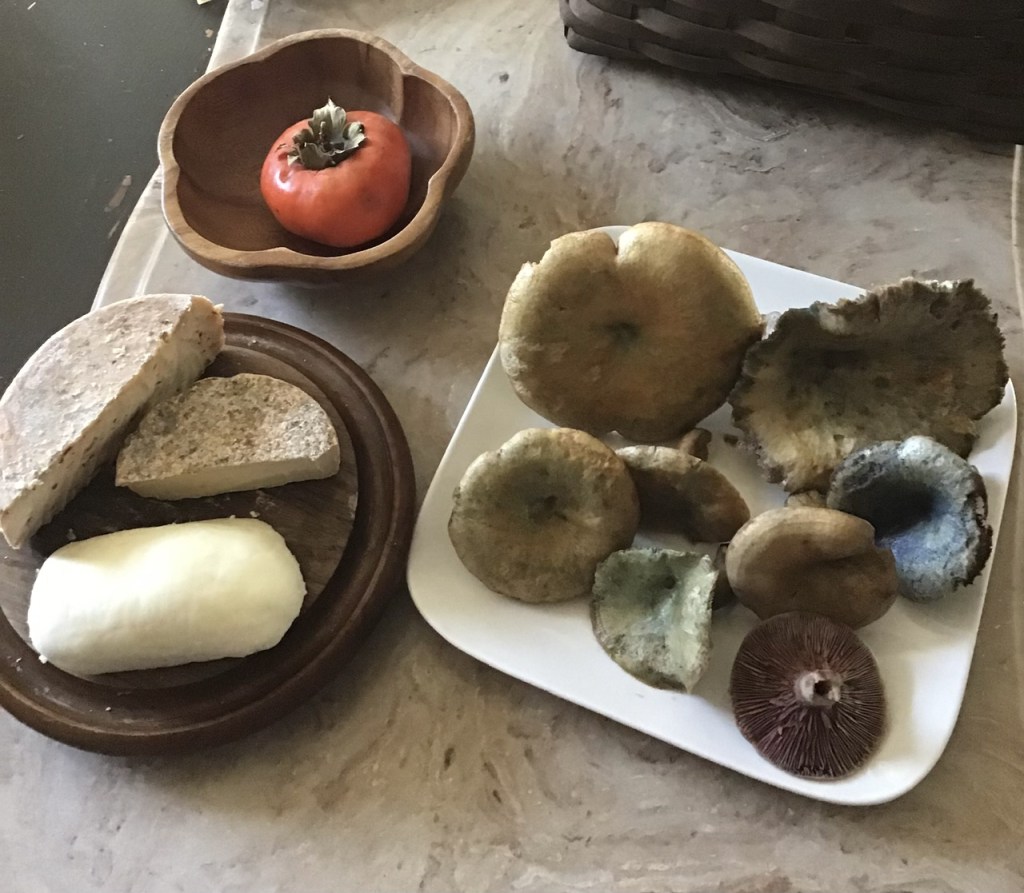
Chèvre wrapped in sassafras and fig leaves for aging.More aged chèvre—the top log is covered in dried goldenrod leaves and flowers, the bottom one is wrapped in honeybee comb.Our first pecan harvest—less than impressive, but still delishLactarius paradoxus mushrooms, homemade goat cheeses and first Japanese persimmon
Our fruits were nearly non-existent this summer, but we did just get our first ‘crop’ of persimmons, a whopping 5 of them! A couple of years ago I harvested lots of them from a neighbor’s tree and they were delicious; that was the first time we’d ever tried them.
Fuji persimmon
We planted both varieties, but the American variety takes much longer to start producing fruit and the fruits are generally smaller. These pictured above are Fuji, quite different, harder, larger, less sweet, not at all astringent, and also very tasty. The closest in taste I’d say would be a very ripe mango, the American varieties are especially super sweet, like jam.
If you’d like to learn more about this fancy fruit, here’s an enthusiastic lesson from James Prigione.
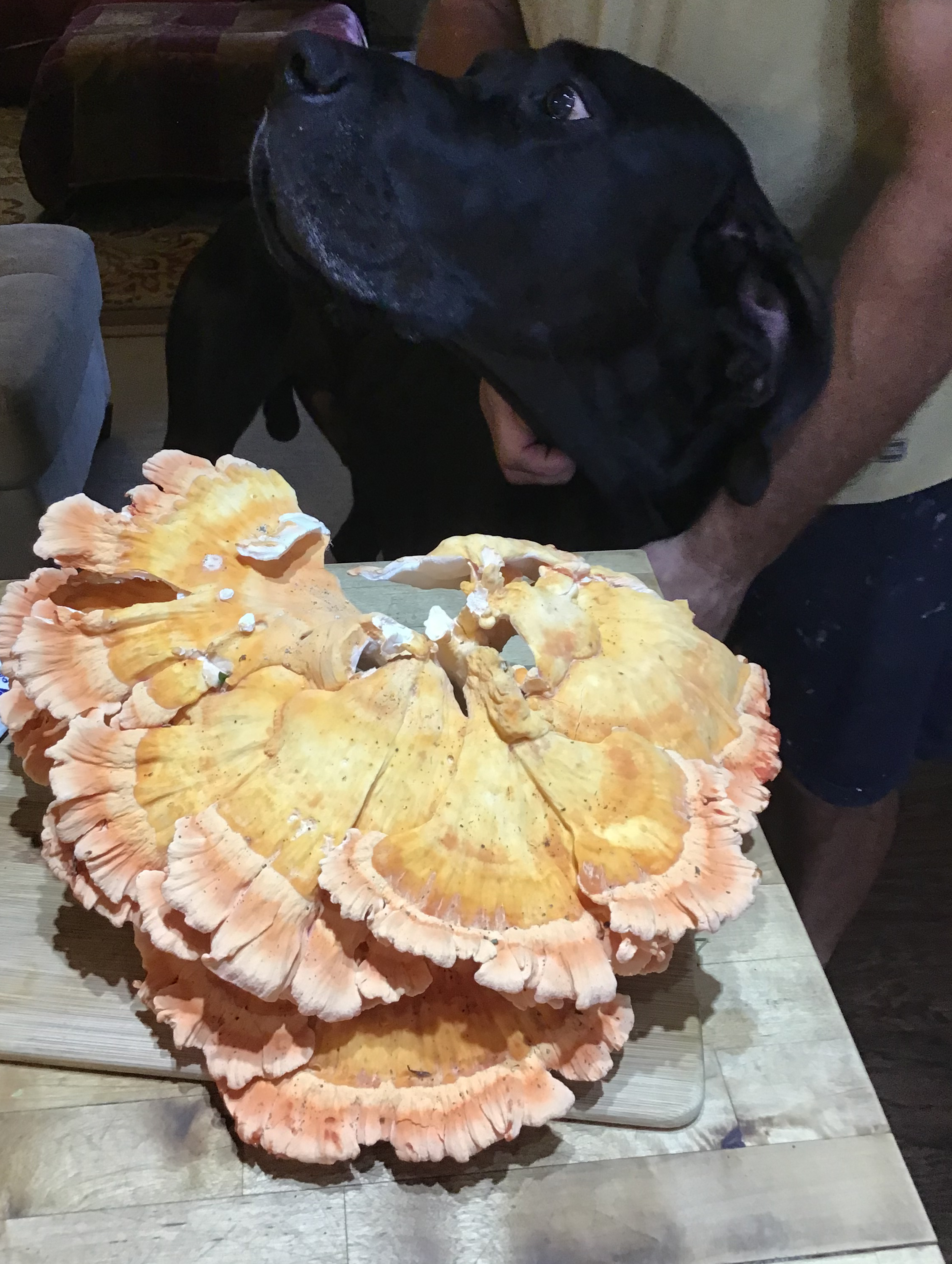
We’ve been getting a few mushrooms, but the lack of rain is certainly hindering our foraging experience. A friend brought us a huge chicken of the woods, our first time trying it and it was excellent.
Laetiporus sulphureus
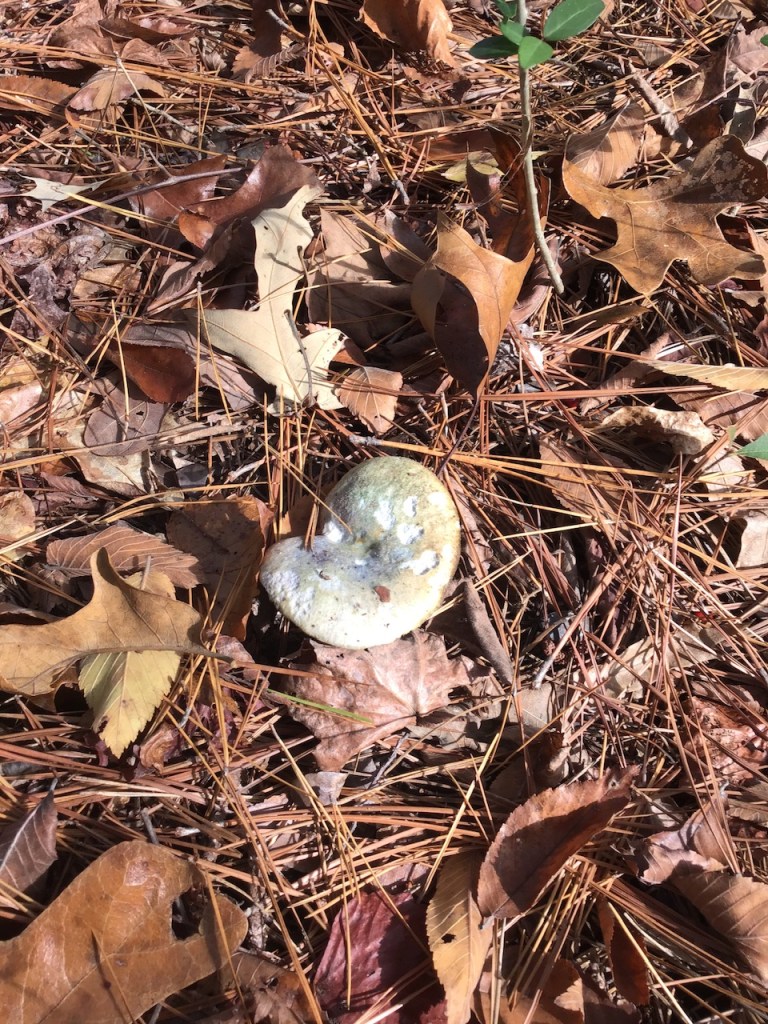
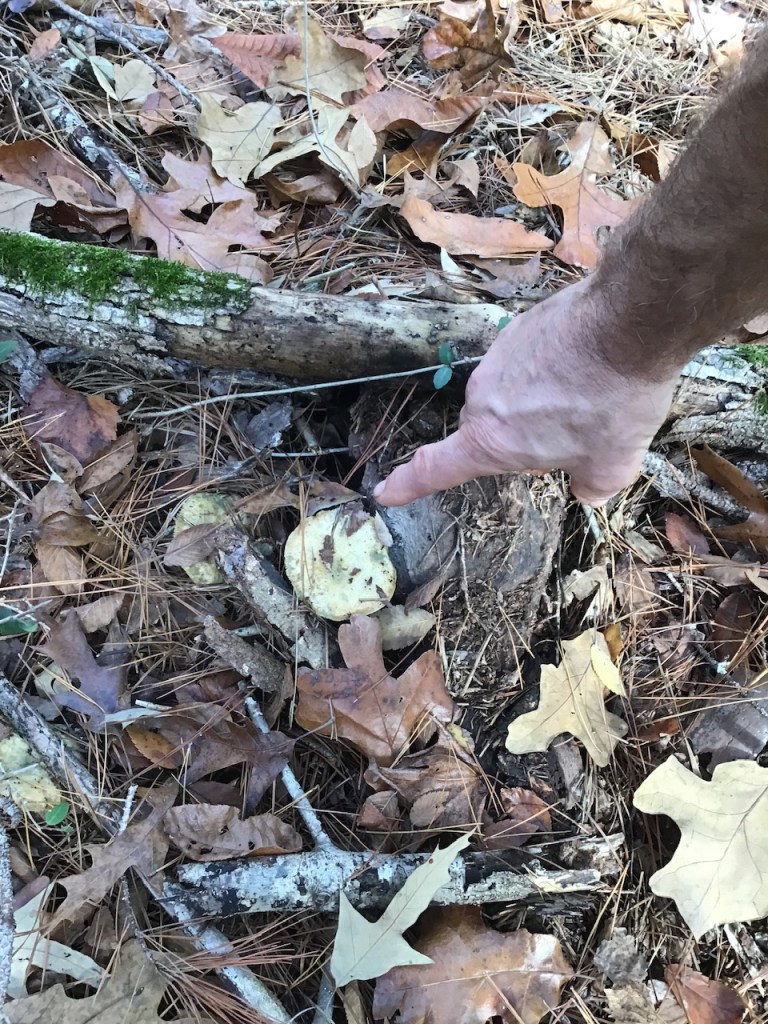
The lactarius paradoxus are hard to spot and deceptively unattractive. In fact, they are exceptionally tasty and have a longer shelf-life, and of course a different season, than our favorite chanterelles.
Even while foraging mushrooms it seems the grass is always greener on the other side of the fence. 🤔
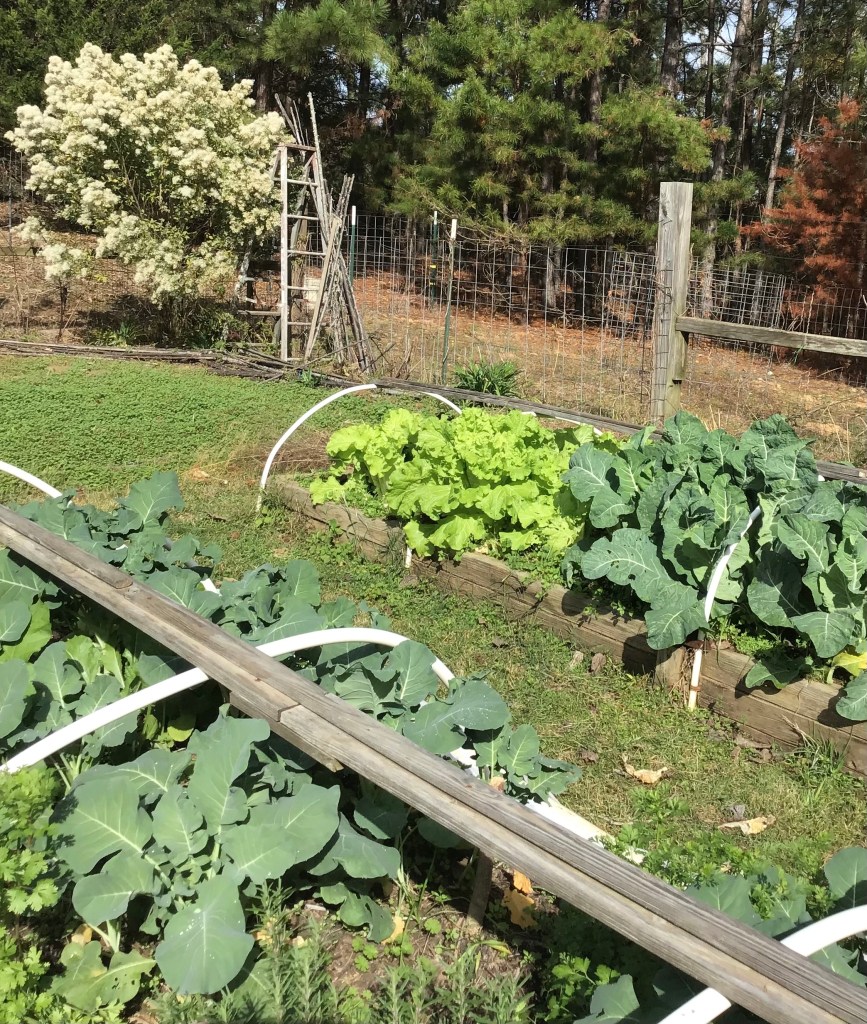
In the garden we do have two nice full boxes of varied cool-season produce we protect from the frosts with row cover cloth. In addition to lettuces there’s some broccoli and cauliflower, spring onions, cilantro and parsley, radishes and Chinese cabbage. We’ve also got our garlic already shooting up and a couple rows of turnips started for the pigs come spring. Our neighbors are now buying eggs from us, so we throw in the surplus veggies when we can.
3 of 6 colonies survived our terrible summer. The hives are a bit hodge-podge at the moment while we do maintenance on them.
The honeybees are occasionally making an appearance, though since the frost there is little for them to forage. One of their last favorites is another one considered a ‘nuisance plant’ by the ‘experts’—it’s called tree groundsel and it’s pictured after the frost in the right photo above, in the background behind the boxes. Quite a lovely late-season plant, if you ask me.
And approaching it before the first frost sounded like the buzzing metropolis that it was! A last hoorah for the bees.
So we come back to the current day and our crazy Shadow drama. It all started with a tiny Band-Aid.
He’s got the ear-span of a small plane and we have the living room space of its cockpit. When he shakes his head he invariably hits some piece of wall or corner of furniture with his Dumbo ears and it’s actually pretty amazing it didn’t happen already: a tiny gash on the tip of one ear that he doubtlessly cannot even feel.
Forever happy and oblivious
We were racking our brains for several days, trying everything we could think of and just digging ourselves deeper. One tiny failed Band-aid led to bigger Band-aids led to bigger wraps led to taping menstrual pads to the poor creature!
Nothing was working. We also tried several over-the-counter products, like liquid Band-aid, blood-clotting powder, and some spray-on crap. Not only was nothing working, they all seemed to be making the problem worse.
We even tried to craft our own ‘No flap ear wrap’ made out of my doo-rags, which also didn’t work. So, we purchased a pricey one online which should be arriving any day now. Obviously, this is a universally common dog issue. A result of over-domestication no doubt, but that’s fodder for another post.
Then I start racking my pea brain in frantic desperation. How to stop the blood flow pronto?! Crimp his ears with clothes pins? Tie his ears up on top of his head with a scrunchy? Stitches? Soldering? How about just cut the whole ear off? Yes, we did briefly consider the vet. But we’ve been spending the many months since we got him trying to detox him from all the vet potions and it feels we are finally making some headway there. I kept imagining the new meds that would be required for this new issue and their invariable side-effects, which would start us off at square one with his detox.
Clearly I don’t think very well in high-stress situations. I was really trying hard and the bad ideas were piling on. The blood, which had gone from a tiny occasional drop, to a full-on drip, to a steady stream, and from then within a few hours a sprayer-hose in every direction with every shake of his head. And that boy loves to shake his head.
Between the blood splatter and the acorn fire it feels we could be living in a battlefield training zone.
Yup, the crazy, bloody mess had arrived and is still visible all over our living room, deck, porch, siding. We covered all the furniture and even the walls with old towels and sheets. Hubby started following him around everywhere, with a giant towel extended between his outstretched arms each time he sensed a head shake was about to turn into a sprayer-hose of the sticky, red, splatter paint across the windows, the screens, the ceilings even. (Where are those magical elves when you need a deep house cleaning?)
We needed a miracle, and fast!
And thank the heavens, I got that miracle in one brief email. Thank you UK herbalists, Kath and Zoe, miracle workers! It should’ve occurred to me sooner. Me, especially, considering I did start the Herbal Explorations pages earlier this year and have been getting educated on herbal remedies. It honestly did not occur to me that herbs could solve this acute issue. I didn’t think anything would be fast or effective enough, especially when every other thing we were trying had failed and even worsened the problem.
Zoe suggested powdered myrrh as her preferred method in order to stop the blood flow, but we didn’t have that on hand. I ordered some online, but in the meantime chose among her other options, yarrow, and we have plenty on hand because I like it in Kombucha. I made a strong tea with it, as well as grounding some up into a powder and that whole concoction I held on his ear a few times with a cloth, some of that powder getting into the wound and sticking there, and the blood flow finally stopped. Holy Heavens! As of this writing we are still in good form and have our reserve remedies soon arriving in the mail.
What I clearly need now is an official Herbal First-Aid course. Herbs are not just for gentle healing and routine health, I see, they can be used in emergencies, too.
Why did I not think about it sooner?! It seems like such a no-brained to me now, that I’ve started to consider other potentials that didn’t occur to me at the time—like the old Russian folk remedy bees podmore—which I just happen to have been saving for a rainy day for 3 years now.
Quite an expensive lesson, but a welcome one nonetheless. 😊
Thank you from Hubby’s ‘White Elephant’! 😆
A huge thanks and deep bow to Kath and Zoe, from all of us on the wee homestead! 🙏 🤗
Pokeweed is one of the most controversial yet fully legal weeds you’ll hear about, I’m sure!
A young plant on left surrounded by poison ivy. On right a mature plant with ripe and unripe berries surrounded by fireweed
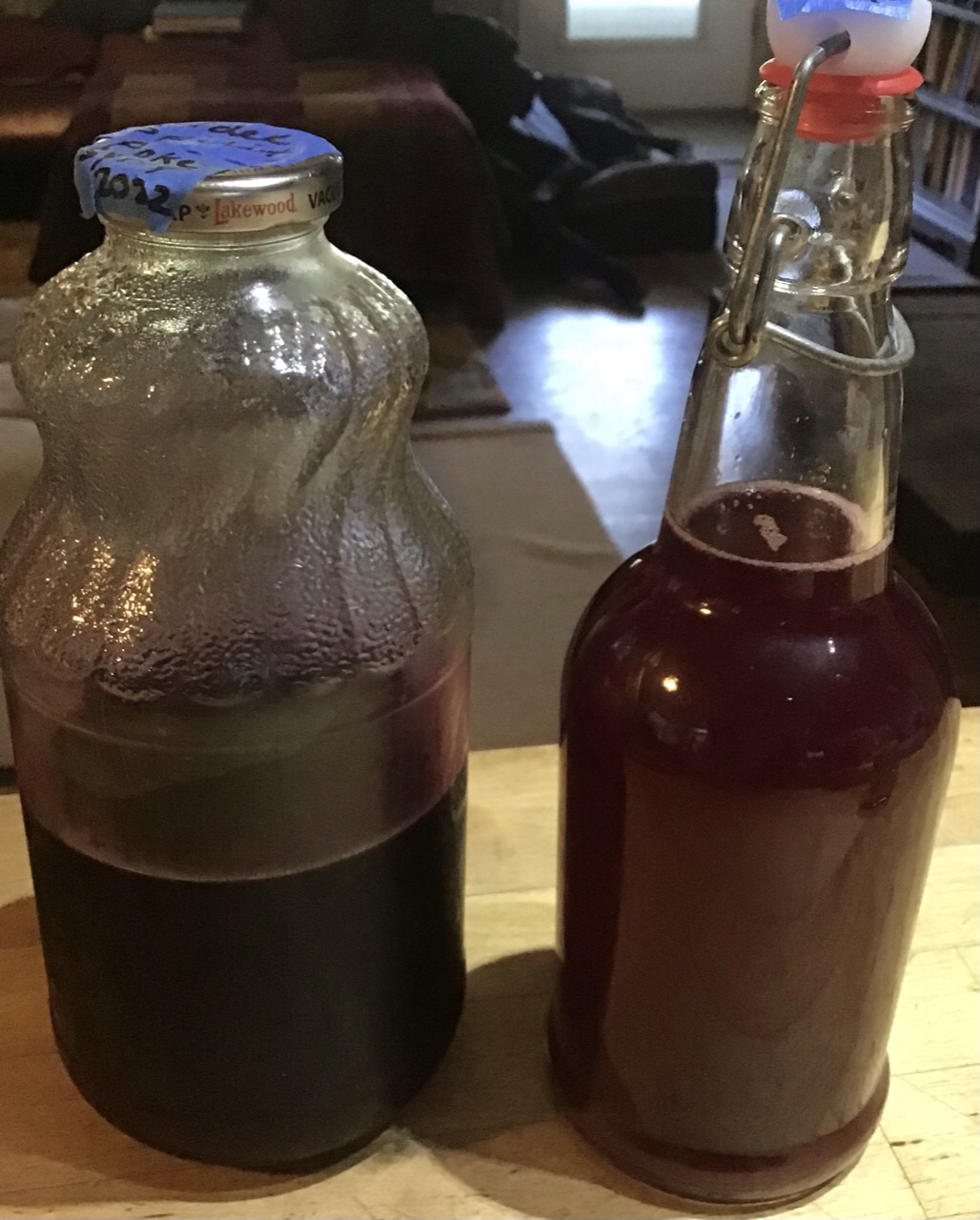
Elderberry-Pokeberry syrup for flavoring cocktails and Pokeberry kombucha—such lovely colors!
There is a hefty amount of misinformation on this ubiquitous plant, but in recent years there’s been a significant pushback, especially among Southerners, where for some it’s been a staple crop for generations.
Though its reputation is still highly contested! The YT video below tells a good chunk of poke’s dramatic story. 😁
It is used as an ornamental in some areas, while others consider it invasive. Ranchers consider it a nuisance and try to eradicate it, though it loves nitrogen-rich soil, so tends to pop back up wherever animals have been penned up or have heavily grazed, therefore fertilizing the land.
We do use it as an ornamental and a food crop, and I’ve written short posts about it here and here. I make wine and syrup from the berries and use the greens in many dishes. The popular belief that the greens must be boiled 3 times is mistaken and overkill.
However, care must be taken in its preparation and it’s not to be eaten raw. The above video explains a lot for those wanting to give poke a fair shake!
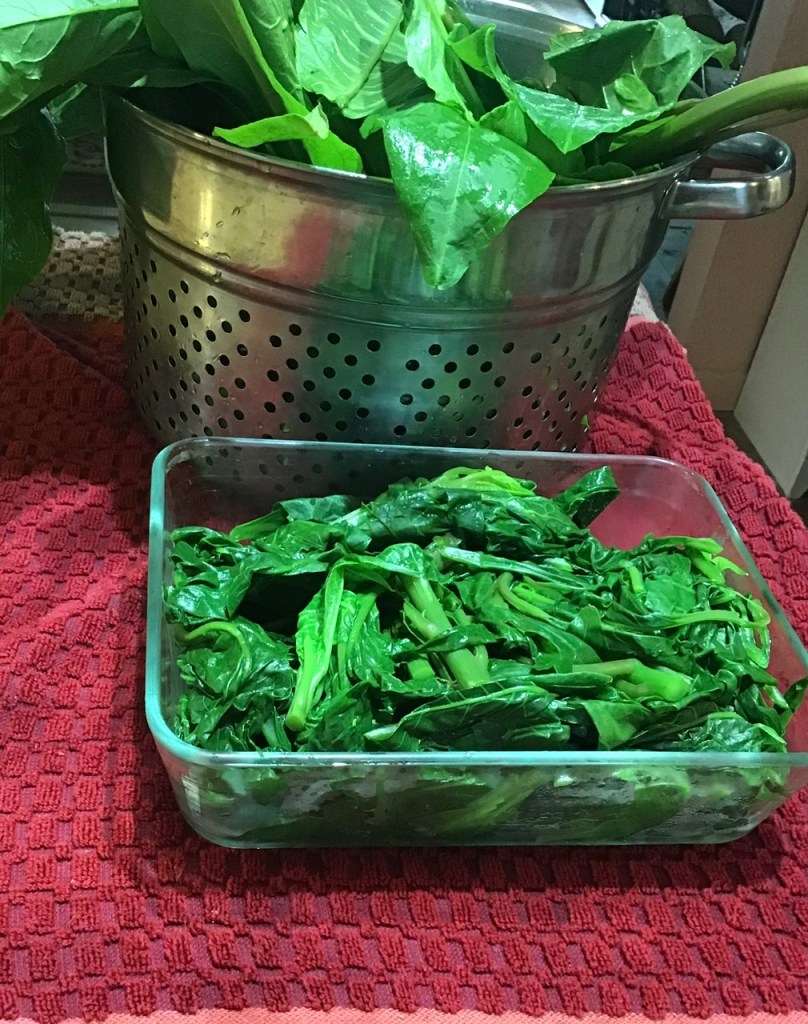
Rinsing well before submerging in boiling water.
Boiled in batches until limp, rinsed in cold water, then used in a dish that will be cooked, like a casserole or stir-fry, or frozen for future use.
The common advice to boil it three times disintegrates the leaves into slime, but you’ll hear that all over the internet and probably from your neighbors too.
That is, if they aren’t already convinced it’s poisonous.
This false belief most likely comes from four places: 1) The farmers and ranchers who would like to see it eradicated because it so successfully competes with the grasses. 2) The high-end wine-makers of our predecessors, because the ripe berry juice was used to color inferior quality wine to make it sell better. 3) Rockefeller medicine which demonizes traditional healing herbs and practices. 4) Chemical dye manufacturers who wanted to dominate the market as it was (and still is) used as a natural fabric dye.
The economic importance of pokeweed to our ancestors was sure to be unpopular with manufacturers and industrialists wanting to create dependency on their products.
A few benefits taken from the sources linked below, not the best translations, unfortunately, but some interesting info. (They do also repeat the plant leaves cannot be used after the stalk turns crimson, but in my experience and in the video above, this is not the case.)
“The young shoots of Ph. americana are eaten cooked as a substitute for asparagus in spring, and its tender leaves were eaten as a substitute for spinach even by the North American (Delaware and Virginian) Indians. We can found this kind of utilization nowadays too: at markets in the southern states of the USA it is sold as „sprouts” even these days, and they sell its young, tender leaves tinned (Poke Salet Greens). At some places it is still cultivated, though only in small-scale. The tender, bright inner part of the stem is crumbed in cornstarch and fried. They use the young plants before crimson coloration, but the cooking water needs to be discarded. Its ripe berries are added to cake pastries. The roots and the leafy stems are traditionally used for purple-brown dyeing. This colour is not much permanent, after body painting it can be removed easily. The root contains much saponin so it can be used for making soaps. The leaf ’s powder or the leaves were used for external treatment of cancerous wounds. After it got into Europe it was not only planted as an ornamental plant, but its dark purple dye was used for food coloration. The liquor of the berries were pressed, fermented and cleaned up by straining and afterwards it was evaporated down to about honey density in Chinas. The product was used at one for the coloration of foods, preserved fruits, sweets, liqueurs and wines; and for example alias Succus Phytolaccae inspissatus it was sold in German pharmacies. The berries were used to colour the wines of poorer quality with such a success that the plant was widely grown in Portugal, Spain, France and Italy. An ethnobotanical fact about the plant in the Carpathian Basin is that the Transylvanian (Kalotaszeg, Kiskapus) people put the fruit in the barrel cabbage to give it a red colour. Thanks to it betacyanin content it can be used as an industrial dye, but its colour is not as persistent as the colour of the scarlet oak (Quercus coccifera) is. Rarely it was used for wool and silk coloration too. The crimson coloured sap of the berries was used as ink (for example by the soldiers in the World War), that is where English name, inkberry derives from. A limner from Missouri, Bingham used it as paint. Its therapeutical utilization has traditions too. The Delaware Indians considered it to which has cardiac restorative effect, and the Virginian tribes used it for its strong psychotic effect. They presumed it is useful against rheumatism, tumours and in smaller doses against syphilis too. Its therapeutical utilization is comprehensive. Earlier the European therapeutics used it too as an emetic: Radix, Herba et Baccae Phytolaccae. Its root, leaves and fruits are used in the homeopathy too. The plant is a pharmaceutical base material even nowadays. Its drug is used as an antirheumaticum, purgaticum and emeticum (alias “poke root” or „Phytolacca”) in the USA, besides the lush root may can be used against breast cancer, too. The berries are utilized there for food coloration too, and with its leaves they adulterate, or rather substitute the „Folia Belladonnae”. The modern medicine started to show interest in it, thanks to the antiviral protein (pokeweed antiviral protein, PAP) that blocks the infection and reproduction of the HIV virus. The external use of PAP has an inhibi- tory effect on the plant RNS viruses too. The transgenic plants that contain the gene of this protein became resistent to a wide range of viruses. They impute that the root of the Ph. americana has blood cleanser, anti- inflammatory, expectorant, sedative, stupefying and purgative effects too. There are experiments for its uti- lization to cure the autoimmun diseases, especially the rheumatic arthritis. The plant contains toxic compounds against micro-fungi and molluscs too. The lectins extracted from it have toxic effect on the juvenile larvae of the southern corn rootworm (Diabrotica undecimpunctata howardi).”
Web references Armstrong, W. P.: Pokeweed: an interesting American vegetable. In: Economic Plant Families. Wayne’s World, Escondido, California. http://waynesword.palomar.edu/ecoph24.htm Hedrick, U. P. (ed.) & Moore, M. (upd.) (1972): Sturtevant’s edible plants of the world. Dover Publications, New York. E-version: The Southwest School of Botanical Medicine. http://www.swsbm.com NIAES (2005): Japanese Fungi on Plants. National Institute for Agro-Environmental Sciences Natural Resources Inventory Center, Microbial Systematics Laboratory, Tsukuba, Ibaraki, Japan. http://www.niaes.affrc.go.jp/inventry/microorg/eng/kingaku-rs.htm Plants For a Future. http://www.scs.leeds.ac.uk/pfaf/ RBGE (2001): Flora Europaea database. Royal Botanic Garden Edinburgh, Edinburgh, UK. http://193.62.154.38/FE/fe.html
Compare that to what our US institutions repeat: All parts poisonous, lots of toxicity fear-mongering, and usually including advice not to plant it in your garden.
Sometimes I look at Handy Hubby and whine, “Please, make it stop!”
Then I think of the shrimp scene in the film Forest Gump—you got your boiled shrimp, your fried shrimp, your grilled shrimp, shrimp creole, your gumbo . . . .
Only with me it’s tomatoes.
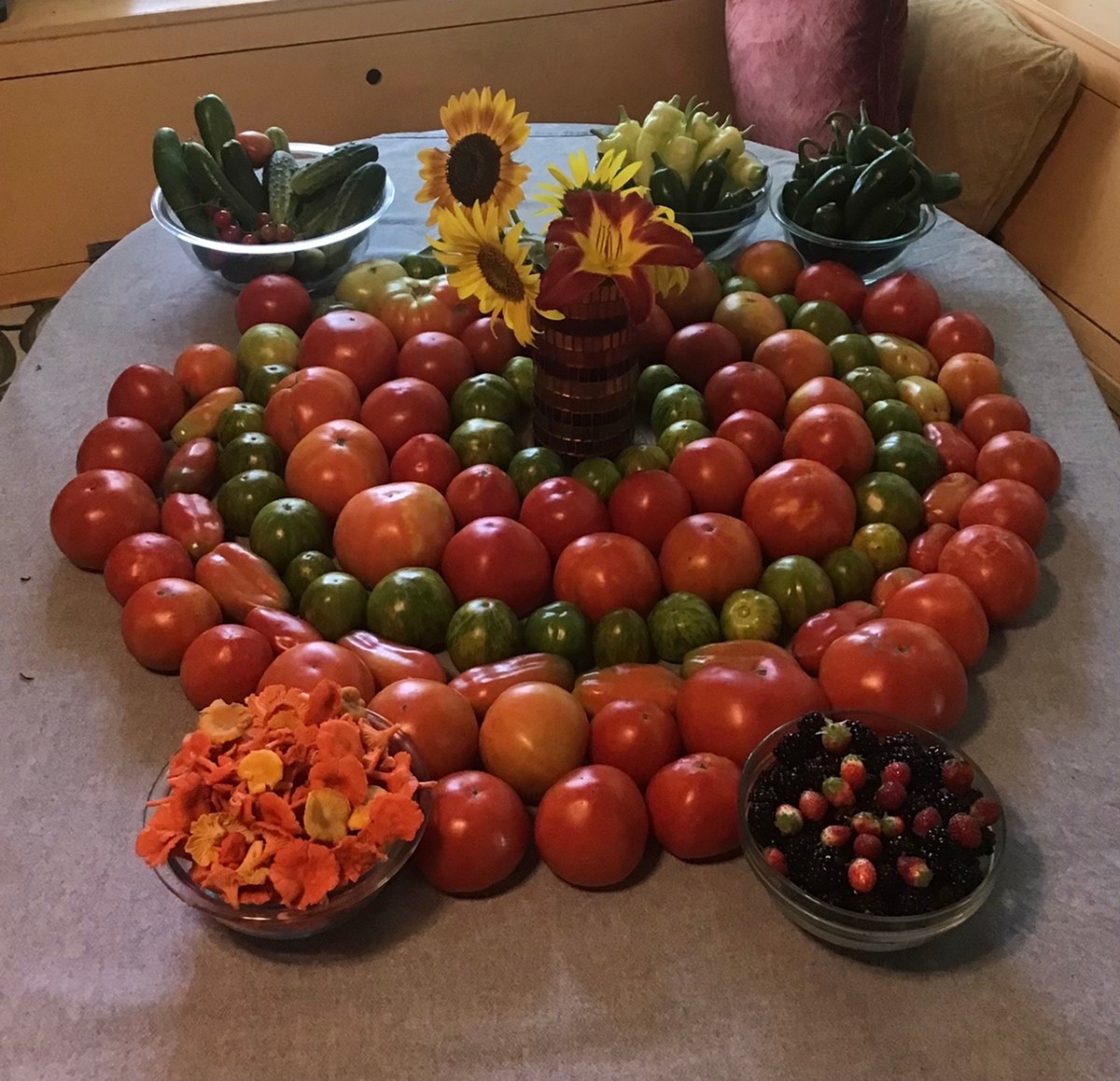
In my defense I planted so many tomatoes because last year was not good for tomatoes, so we didn’t can up nearly as much as we wanted and were way short on salsa. The crop burned up so fast, it was pathetic, even though I planted just as many, we got far less.
So this year I was really determined. Decidedly, way too determined.
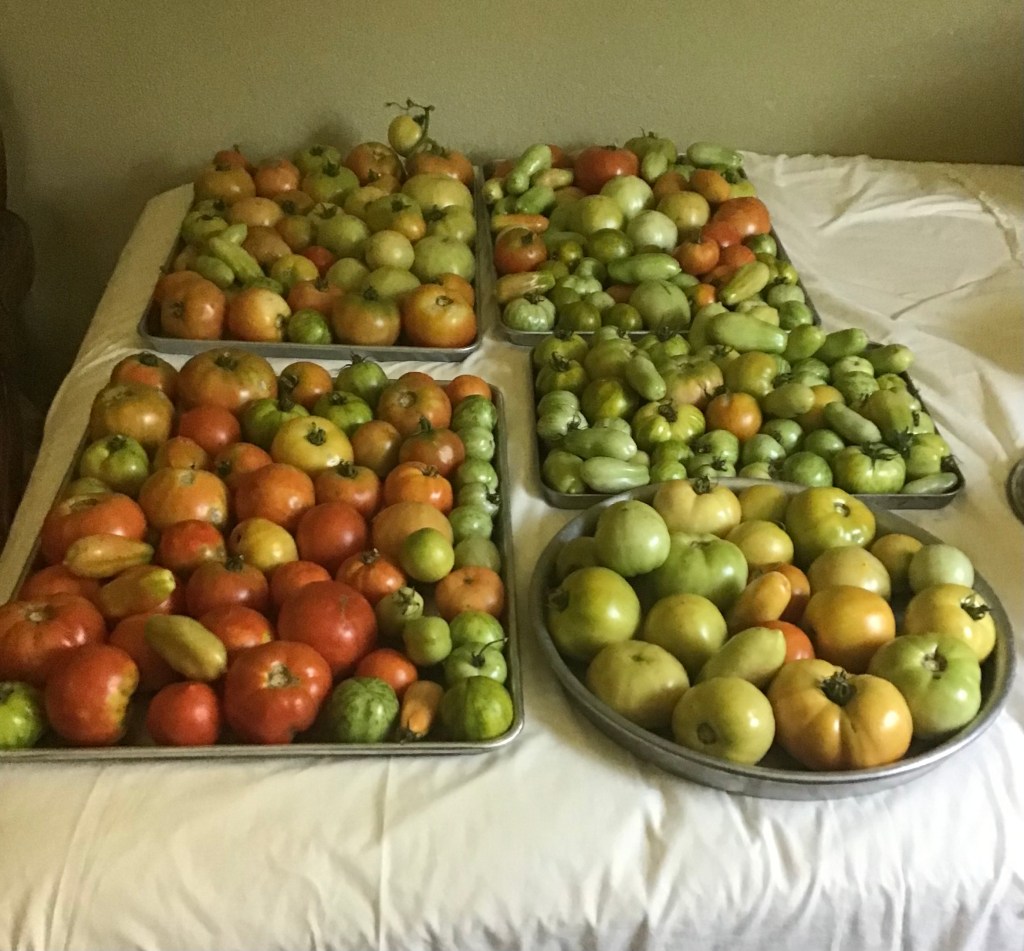
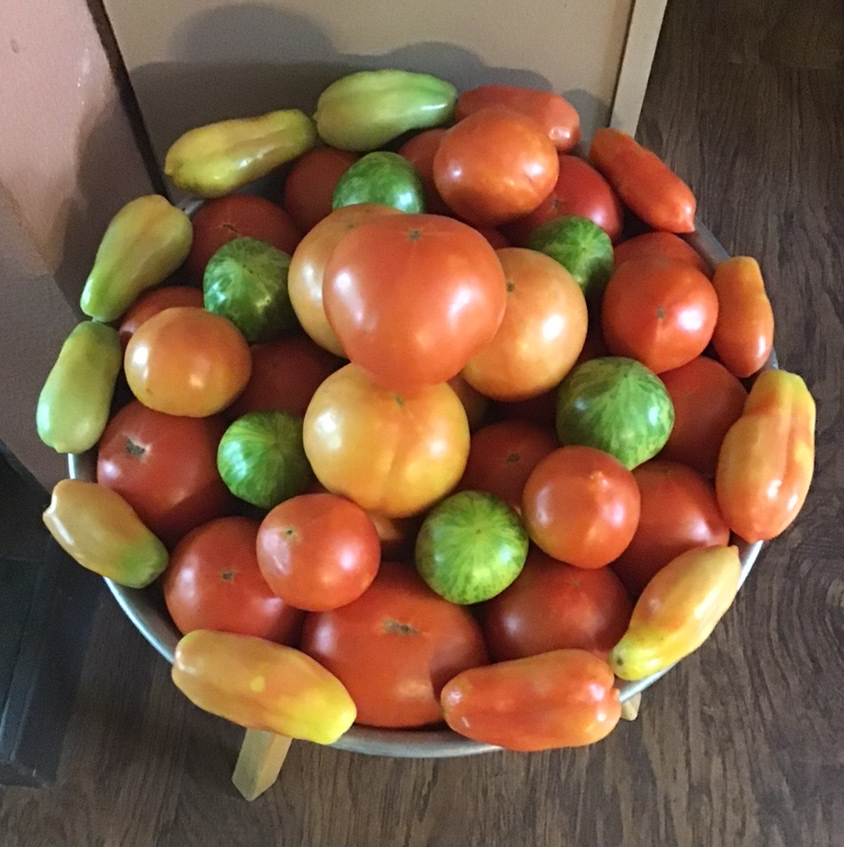
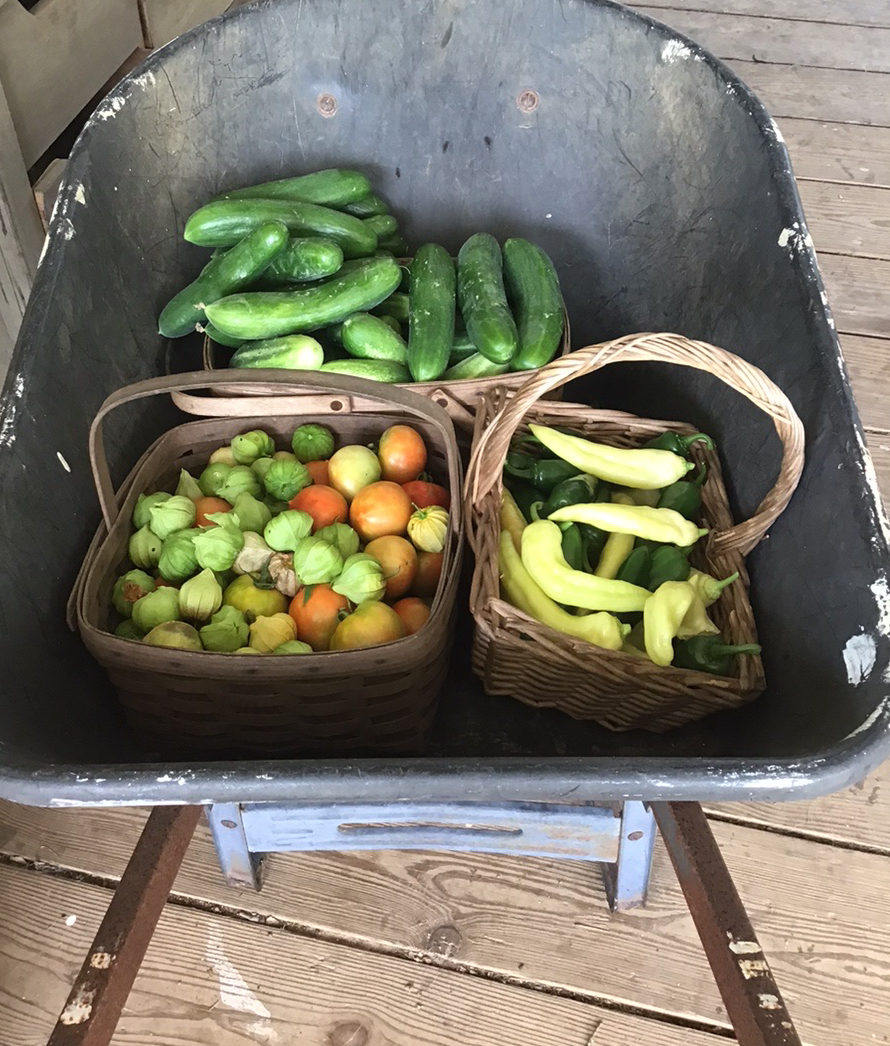
And, while we do (still!) have a bumper crop, it’s not exactly ideal, because once again, it’s so hot so fast that they are burning and exploding on the vine if I try to let them ripen properly. So, I have to bring them in to ripen, which means I’m really, really sick of looking at them everywhere.
Due to excessive heat we have uneven ripening, sun scald and plants dying while still full of unripened fruit.
But they are good, so, so good! My very favorite way to enjoy them is so simple—sliced and liberally doused with salt and pepper and served with— Everything!
We can chow through a good many this way, and it lasts for just a month or two, which makes our enjoyment all the sweeter.
So garden fresh you can eat them naked!
Then you got your salsas, your chutneys, your marinaras, your tomato soup, your creamed tomato soup, your plain canned, your Rotella style, spicy juice for cocktails, ketchup, barbecue sauce . . .. 😆. Did I miss anything?
And the cucumbers. Oh please, don’t get me started on the cucumbers! How I long for them all winter, and within two months can hardly stand to harvest them any longer.
I purposely planted fewer this spring, planning to stagger them more, for a longer season. In fact, there should not be so many cucumbers at all based on my inputs, and the sad fact that there are NO bees on them. By that I mean our own honey bees are not visiting our garden, though there are two colonies within 75 feet of it.
Speaking of bees, half of my colonies, that’s 3 out of 6, have perished this summer. I’m not surprised when I lose a colony over the winter or early spring, but 3 that were going strong into the summer, this is unheard for me, and super depressing.
I also notice far fewer native bees, and the ones I am seeing are much smaller. The wasps seem to be doing very well, so maybe that’s who is keeping us in bushels of cucumbers at the moment?
And of course we’re offering the surplus to anyone! We give it to neighbors, bring it to gatherings, get the word around that it is available, for free. What we can’t eat or give away goes to the goats and pigs and they need to eat too!
So, when I get the occasional comment that we should sell it at the farmer’s market or somewhere equivalent, I understand the well-meaning at heart. But, what I’m actually self-censoring myself from saying does stray a bit from the habitual and expected smile and nod.
Because what I sometimes hear, though I’m sure was not at all the intentioned meaning is: It’s really not enough that you work your fucking ass off to produce all this fine produce, you should now go out and spend money on gas hauling it to town and suffer through the rules and regulations and pay for a booth and market it to a public who mostly doesn’t give a shit what they eat, and let’s face it, mostly just wants it cheap and convenient. So, don’t just plant it, nurture it, harvest it, sort it, wash it, package it, but now haul it to a market 20+miles away and stand there in the blazing heat all day so you can clear about $30.30 a truckload.
Sounds so awesome! Sign us up! 😳
On a brighter note, here’s something you’ll really like, because the world really does need one more cute kitten video!
Oh and Happy Independence Day y’all, thanks for stopping by!
Lots to report since the last HH post. We’ve got slithering scares, miracle kids and lots of garden goodies.
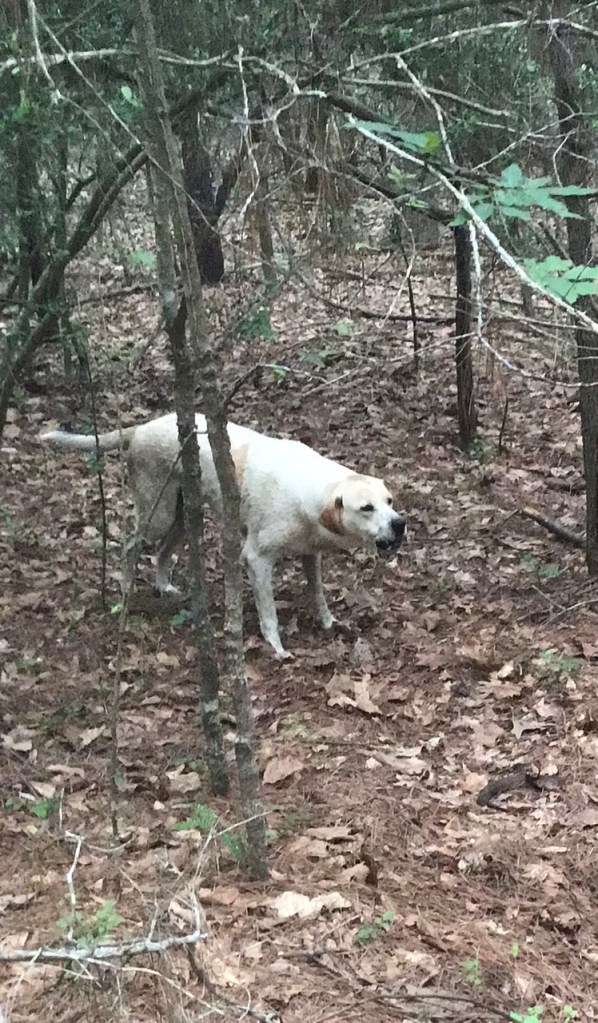
My oh my, we’ve been busy! We haven’t had much time to do leisurely things, like take the dogs for a long walk in the back forty, which you might remember last post when Bubba saved us from a giant water moccasin with his ferocious warning barks.
It’s not that unusual to see snakes near the pond, where we were at that time, or along the creek. But I’m sure you can imagine my surprise finding them in the garden!
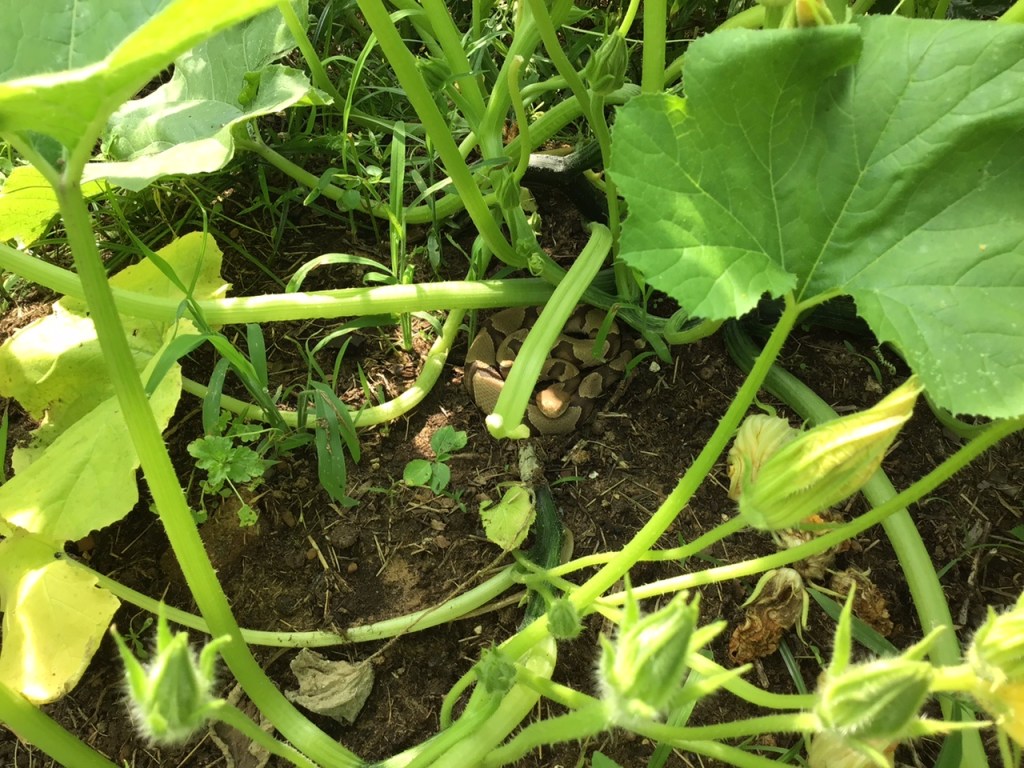
Look before you grab!
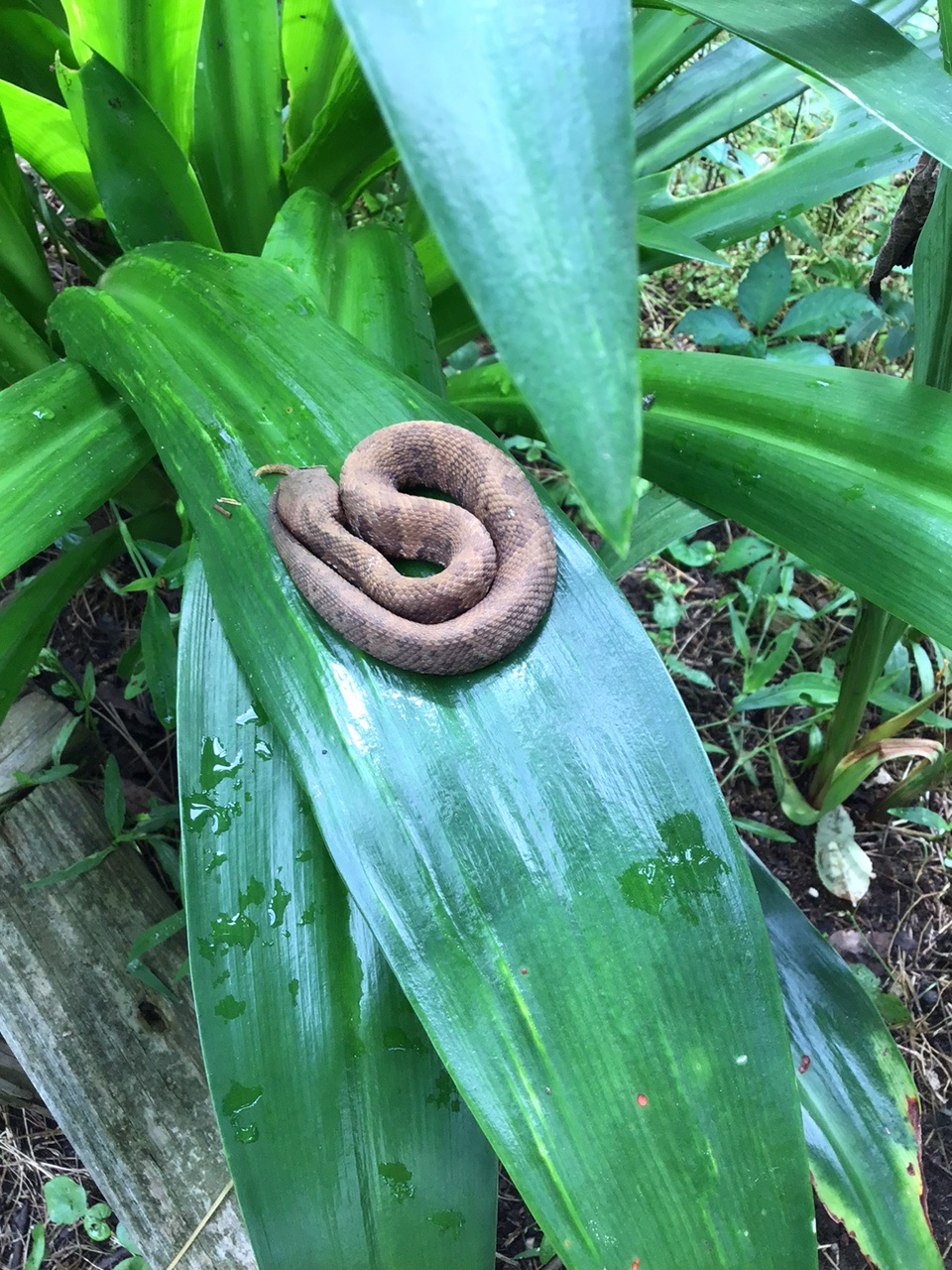
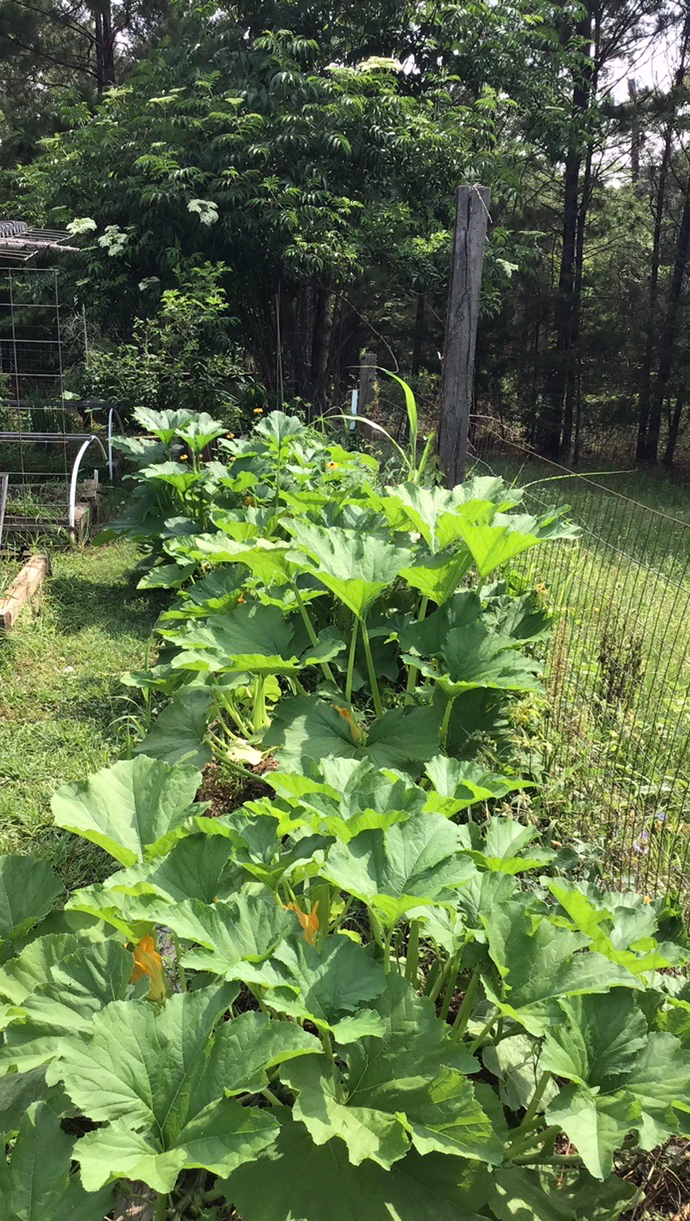
One copperhead under the squash, which I was lucky not to grab by mistake. It’s very typical of me to reach down without thinking as soon as I see something that shouldn’t be there, like twigs or weeds or dead leaves. Or, to pick a mature fruit, obviously.
Sometimes I don’t even wear my glasses to garden, or gloves, or shoes. Guess I’ll be re-thinking those habits now. Just as I reached my hand in, it registered, and I froze, and then laughed.
Hubby finds it humorous that I scream like crazy whenever I see a roach, I absolutely LOATHE them. But a snake, (beyond the startled OH!) even a poisonous one, not at all. I find them pretty amazing, and they’ve never bothered me (and I’ve had plenty of close encounters) or been aggressive, or been in the house. So I feel safe to just laugh and take pictures.
And then call over Hubby to take care of it for me. 😂
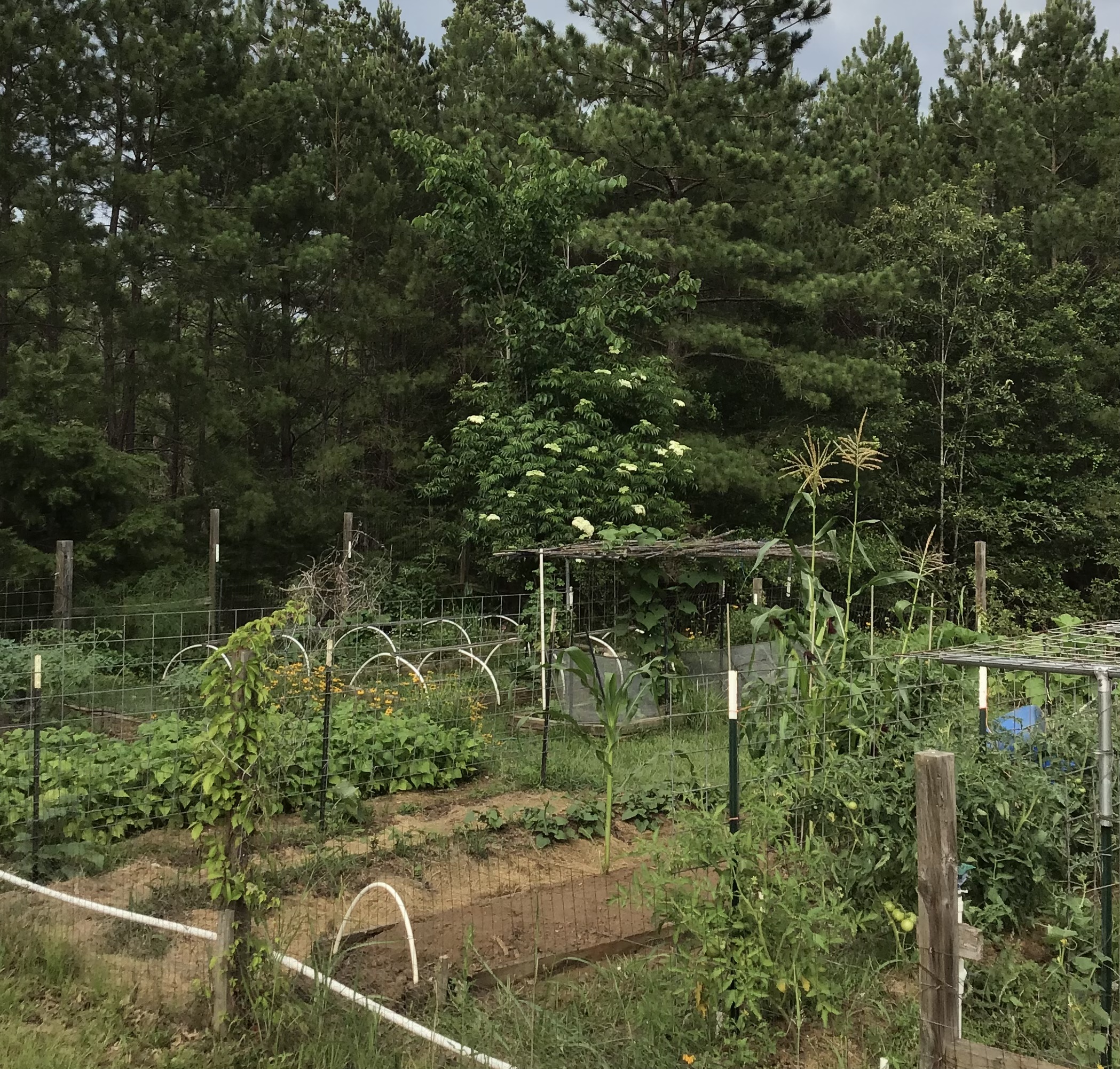
The other copperhead was just a baby, snoozing away on a swamp lily frond under the elderberry tree, kinda adorable-like. Here’s some perspective.
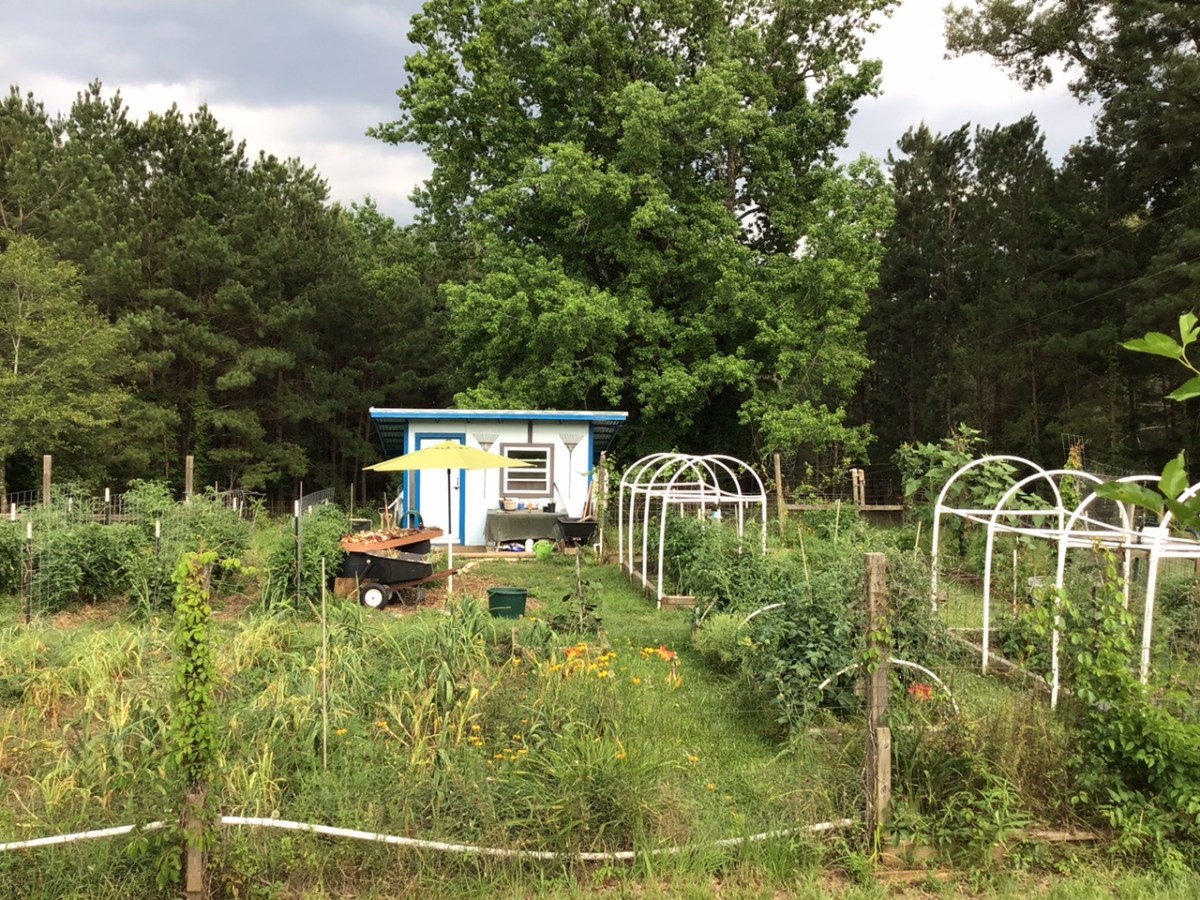
The elderberry from a distance, dead center. It’s quite a lovely specimen I think, but a bit too happy there, it’s getting invasive. The swamp lily is just underneath it.Elderberry in the back. Up front, Zucchini and pumpkin—just learned today not only the fruit and blossoms are edible—but also the leaves. Can’t wait to try them!
We’ve finally got all the onions harvested, now just the garlic is left. That will be coming out very soon.
That’s about 2/3 of them pictured here. All the rest were quite small and so we’ll use them up first.
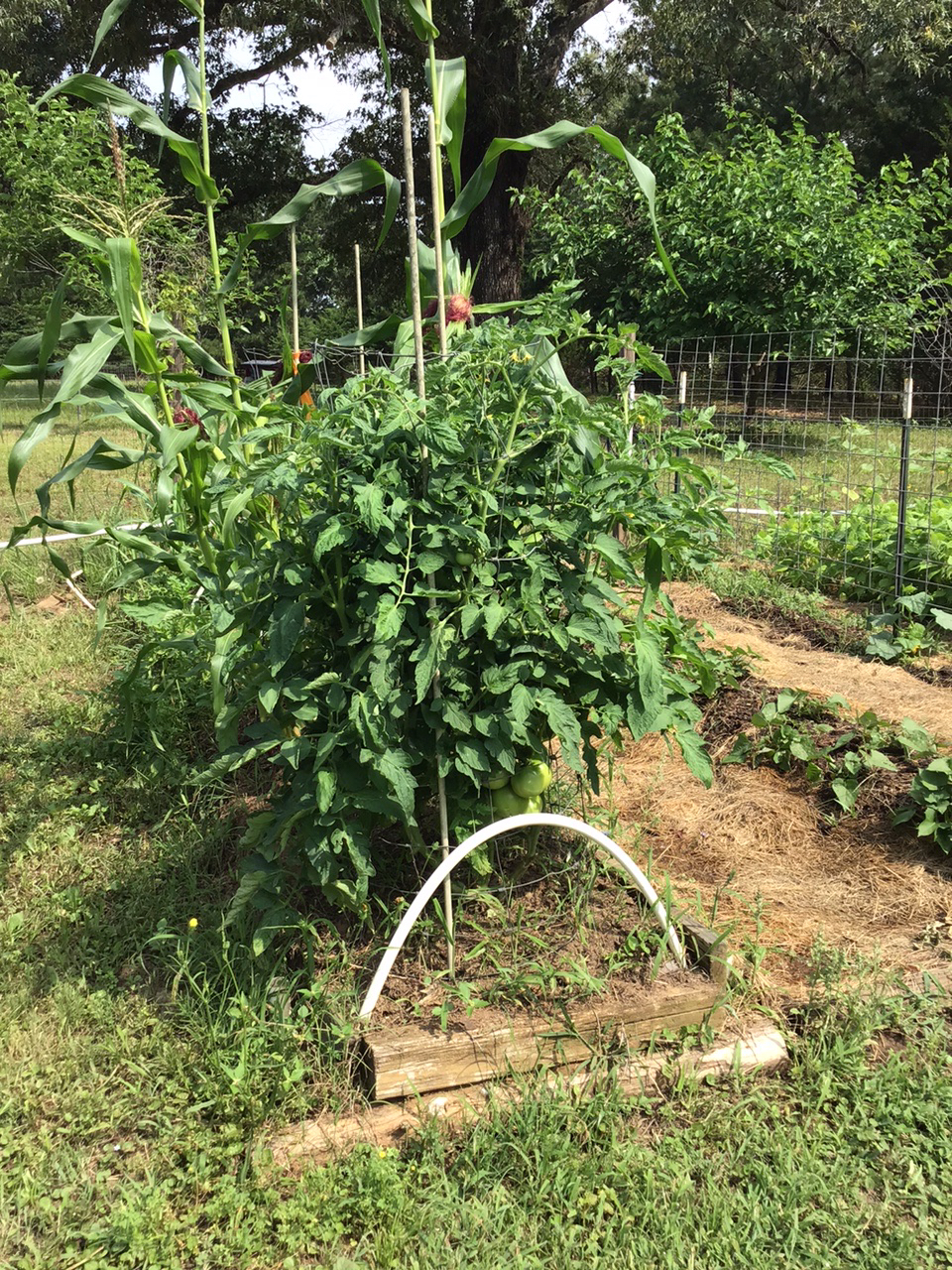
The tomatoes are looking awesome, but I don’t want to get too excited, because that could change any day with little warning. I planted loads of tomatoes because last year was not a good year for them, so I’m extra anxious for a decent crop.
We’ve also harvested all the new potatoes and while not terribly impressive, it was a better effort than past years for sure. The secret did not seem to be growing them in containers, which I tried for the first time, but rather lots and lots of poop. I tried them three different ways this year, none of them particularly better producing.
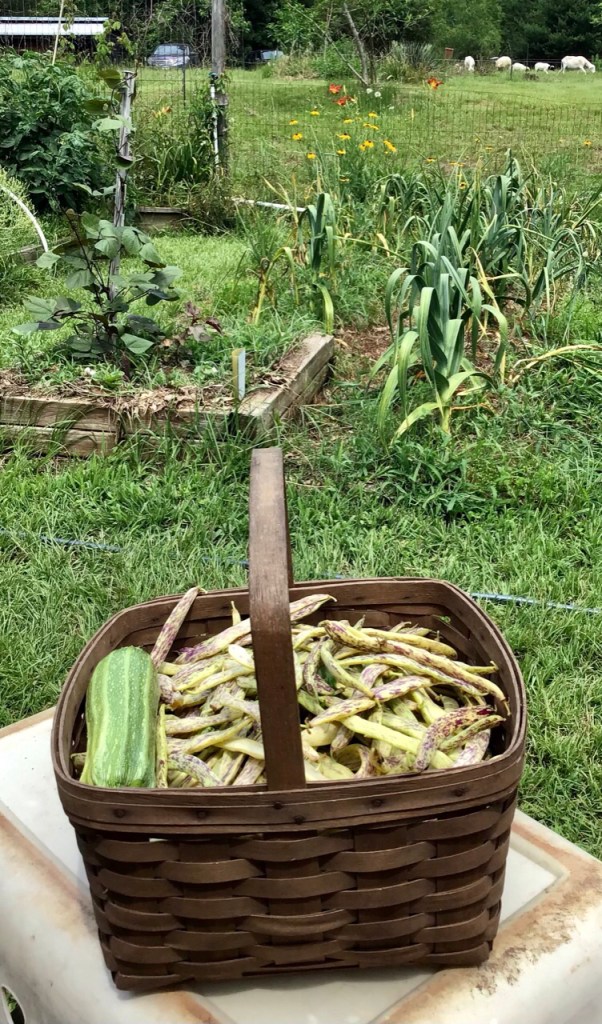
We’re also getting loads of green beans, after a couple of bad years. And some delicious peppers.
So many green beans that Hubby’s just canned 13 pounds of them! Such a joy for me that he’s taken over all the canning, which I’ve always dreaded. I never even tried the pressure canner and I’m not wanting to even a little. He is quite methodical about the process and can accomplish a lot in a short time and without breakage, far better than any of my past canning efforts.
Efficient, industrial, high yield, detail and process-oriented. Thank heavens for Hubby
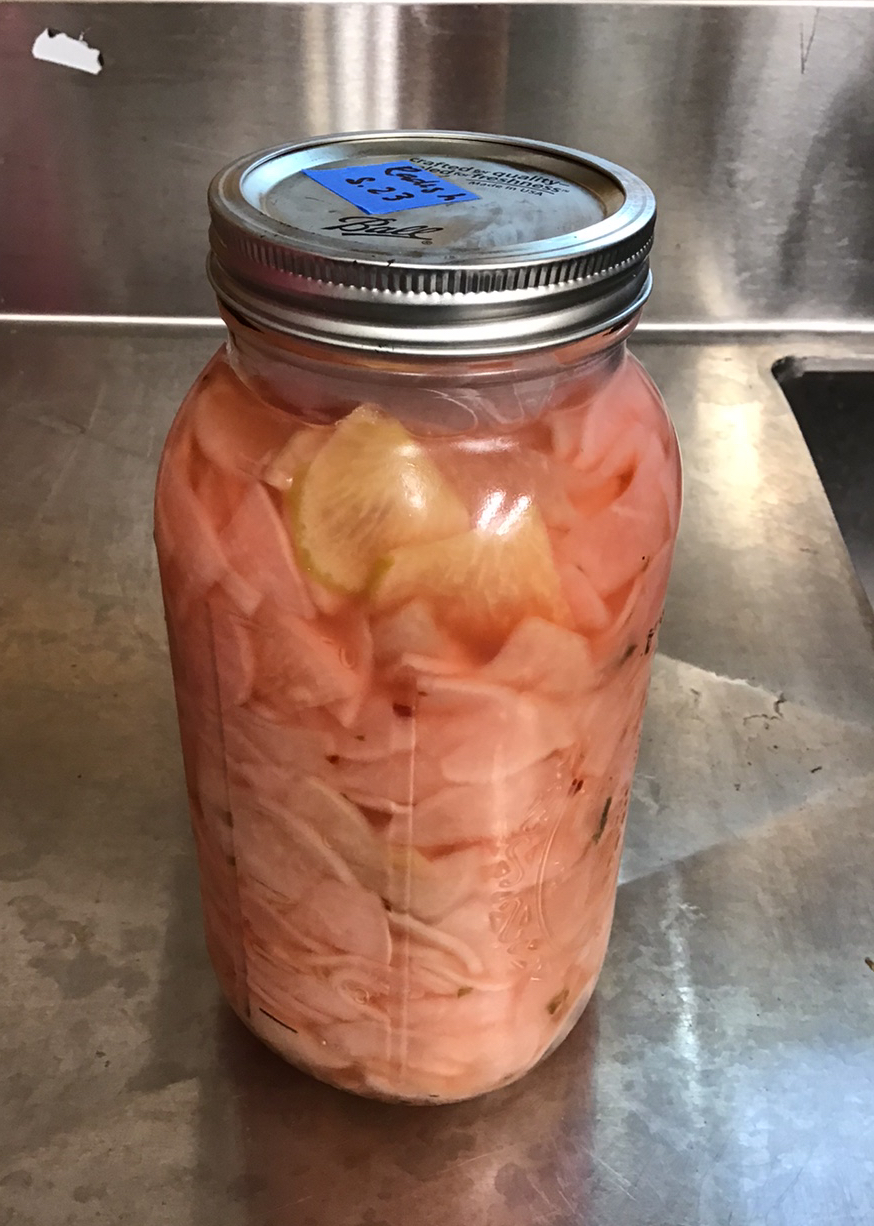
But I do really love the fermenting and am experimenting with it very successfully. I made a celery-mint paste that is surprisingly delicious and a gallon of radishes that will last us easily through the summer. Next on the to-try list is green beans.
Customizable, small-batch, creative and so pretty in pink! Much more my style
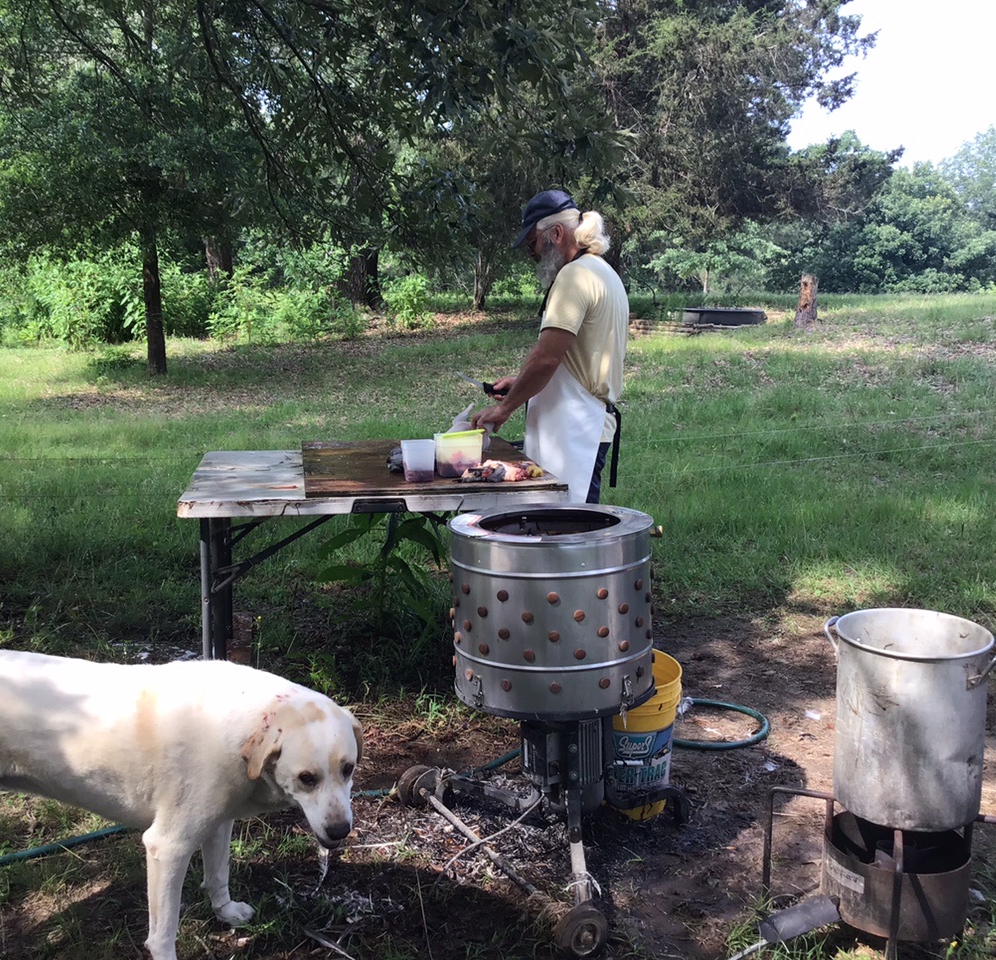
A friend gave us half a dozen roosters, which Hubby quickly processed into freezer camp to save us from listening to the crowing wars for any longer than necessary. A handyman and a gentleman.
Hubby at the processing station. Not exactly government-approved. Bubba and Buttercup’s favorite days, all the heads and feet they can eat!
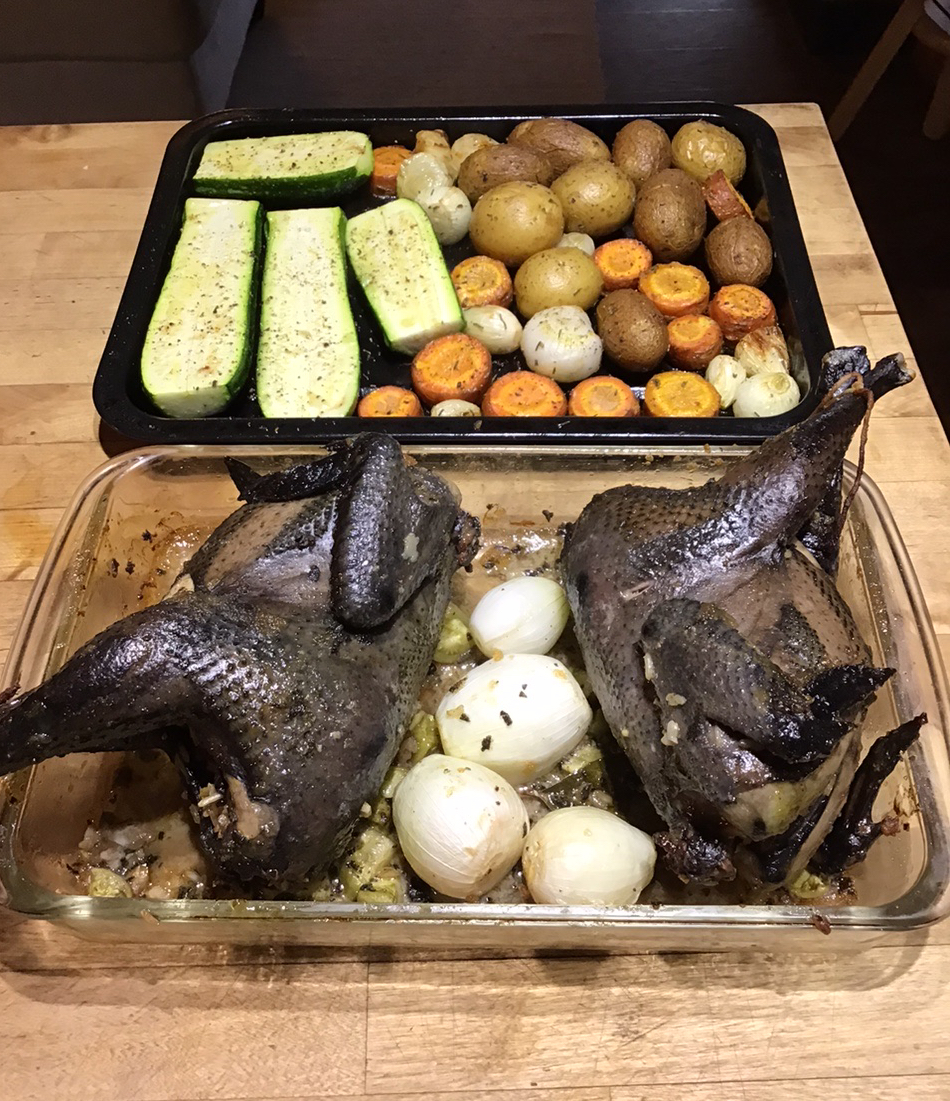
A couple of the roos were these little Bantums which became Sunday’s dinner—stuffed with rice and home-cured bacon, herbs and last year’s dried cherry tomatoes—and basted with ginger-melon marinade. Don’t be too off-put by their black skin and bones, they were delicious!
Dinner for two plus the much needed, time-saving leftovers.
Also served with foraged chanterelles in cream sauce and just harvested blackberries over pound cake for dessert. Mmmm.
And the best saved for last this post, the miracle! In the last post it was Bubba who was the savior, this time it was Buttercup.
Take a bow, Buttercup!
We’ve got two pregnant does, due the first week of June. Because of that I’ve been a bit weary putting the herd too far from the corral, but I did it anyway. They are such homebodies normally and always come right back to the gate after disappearing into the woods for a while. Sometimes it’s harder to get them to go out and forage instead of sticking their head through every fence.
Bluebonnet, notorious fence-clingerKee away from the garden!Double-protection required for the grape vines along the fence
Go forth and forage lazy goats! There’s acres of woods to eat, not my landscaping!
Except, only Phoebe disappeared into the forest that day. Alone, and so unlike her. She is the most herd-oriented of them all. She’ll start screaming if the entire group isn’t together at all times. If she was separated from her sister the first year, or her twins the year after that, you’d think from her incessant screaming that all hell’s broken loose. I’m sure the entire county can hear her sometimes.
But, silence. It happened about 3 or 4 pm, I suspect, that was the last time I saw her with the rest of the herd at the fence. We didn’t notice until it was time to put them up for the night in the corral. She was no where in sight, and we immediately went searching. We knew something must be very wrong. We searched until dark with no luck.
I went again the first thing the next morning. All the places I figured she might be holding out, having prematurely dropped her brood, waiting for them to get their legs, so she could bring them up to the usual gate. I walked all along the areas they frequent. It’s very easy to tell where the scrub gets thick again, compared to where they’ve eaten everything up to shoulder-height. I called out for her, listened for any responses or rustle of leaves, nothing.
After coffee and milking Hubby and I went back out together, along with Bubba and Buttercup. Shadow had to get left behind because the goats are still very weary of him. Bubba and I searched and called for an hour or so, nothing. I started to think the worst.
We went back and I was making some toast and cheese before heading back out again, so hungry. It was already hot and muggy and I was sick of slogging through the poison ivy and mosquitoes. I was stuffing a bite into my mouth when a very sweaty Hubby comes up to the window yelling.
“I’ve been yelling for you!”
What?!
He found her! He went far beyond where I’d stopped when he noticed Buttercup started weaving back and acting determined. He followed her and she stopped at a bewildered Phoebe and newly born triplets.
It took us another couple of hours to lure her back while carrying the triplets in a laundry basket across pretty challenging terrain.
But it was a happy ending and mama and babies are all doing well!
Weird scenes inside the homestead! What have we to add to the big wide web of weird today? A couple of things only, along with some sad news and some happy snaps. Successes and failures, as usual. Trying to keep them all in stride, which with the wild flowers and a short country drive, isn’t too big a challenge at the moment.
Creepy visitor appearing everywhere after the rains
Best to get the crap out of the way first, I prefer. We’ve got seemingly severe blackberry failure and an established bee colony suddenly lost. I could write exhaustively on just those two, but since I’m already exhausted, I’ll keep it brief. And continue the relentless churning in my mind alone.
These photos and several more have seen the cyber rounds this week, let me assure you! And the cornucopia of responses we’ve received is rather astounding. Long story short—we’ve had some lovely rains, finally. But it sent our blackberries from thriving and gorgeous, to this brown, crispy-looking horror nearly overnight.
Not just a few bushes either, the entire row, a dozen bushes easy. It looks terrible. So we got a bit frantic and have been sending photos to Ison’s Nursery, where we got them. Also, to various friends and forums, where we’ve had answers to run the gamut: too dry, a virus, a fungus, a blight, Botryosphaeria canker, empty pocket syndrome, aphid damage, and then the kicker . . . This is totally normal development.
Wait, whaaat??
You mean to tell me these could be normally progressing blackberries and after many years of growing blackberries we just never noticed it before?!
Well that would certainly be a big and welcomed WOW! Yes please!
But unfortunately, I don’t think so. They look brown and shriveled beyond anything I’ve seen in any of the online photorama. And there’s no sign of aphids, and it’s not cane blight, and it’s certainly not too dry, although I totally understand that guess, since that’s exactly what it looks like.
And I do so appreciate all the speculation, seriously! It gets me thinking and exploring every time and I do so love all the effort and camaraderie inherit in it. Be wrong, it’s not the end of the world!
Of course, what I did so notice among the seeds of speculation was the one that was, unsurprisingly, totally missing. Toxic rain perhaps? Some other oddities in the atmosphere, perhaps? Not on anyone’s radar? Really?
No idea what’s happening in this photo with the blue dot-purple ring, I just snapped the shot with the tablet as soon as I saw the trail while busy in the garden.
On better themes . . .
I also took some lovely happy snaps of the wild flowers blooming along the road, which was so much more gorgeous than what I was able to capture here. But I tried, and that should count for something, no?
And on that note, this post will have a Part 2 to finish later, cause that’s all I can manage at the moment. More to follow, so much more!
Thanks for stopping by!
I leave with a song that motivates me when I really need it most. Hope it works for y’all too!