No politics or unpleasant ponderings this post, I promise!
Just some homesteady happy snaps and a well wishing for a wonderful weekend. 🙂
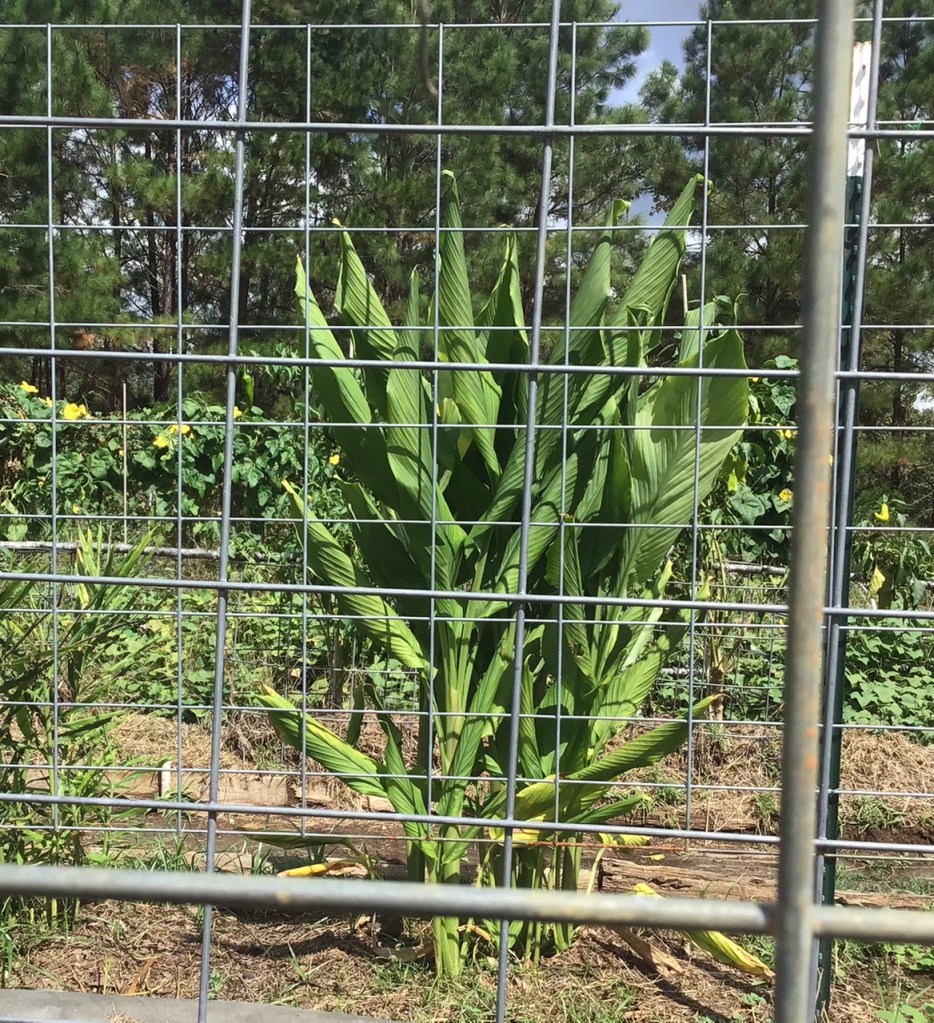
A sea of sweet potatoes soon to be harvested.Mexican tarragon—an attractive replacement for French tarragon that does much better in the South.
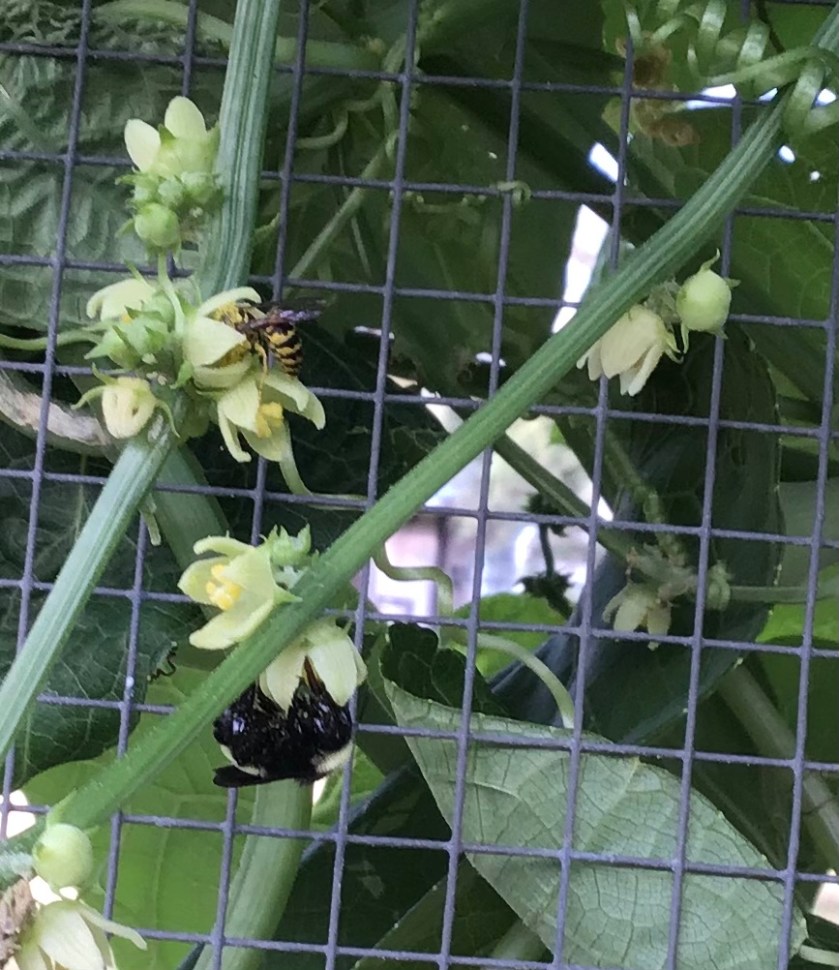
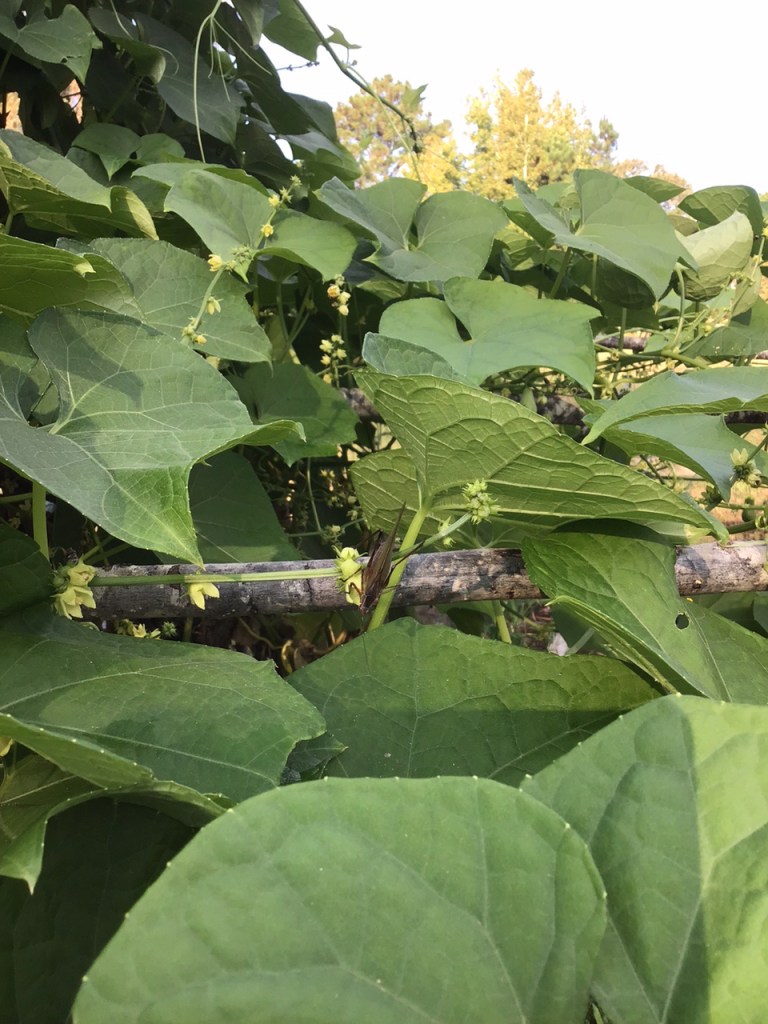
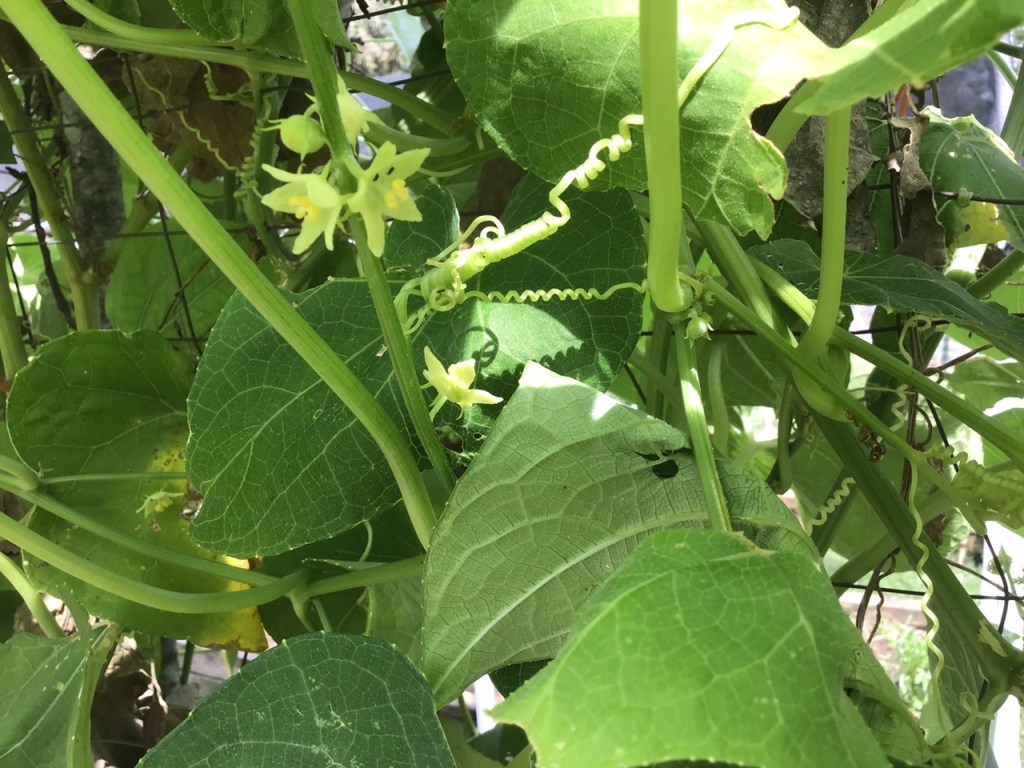
So excited for the mirliton (chayote squash)! It’s growing like mad, covered in flowers and fruit and providing perfect habitat for bees, wasps, crickets, etc.
Volunteer cherry tomatoes thriving on the old duck coop! We’ve never had tomatoes last all summer before, but now I can see how nature would have it done. This is almost an entirely shaded space and the entire coop is filled with volunteers: malabar spinach, datura, and these delicious little morsels.
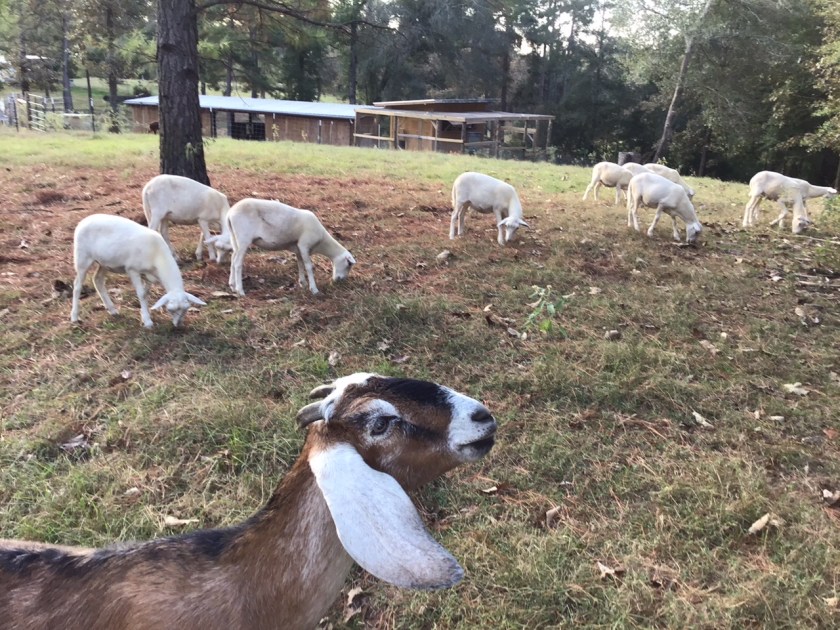
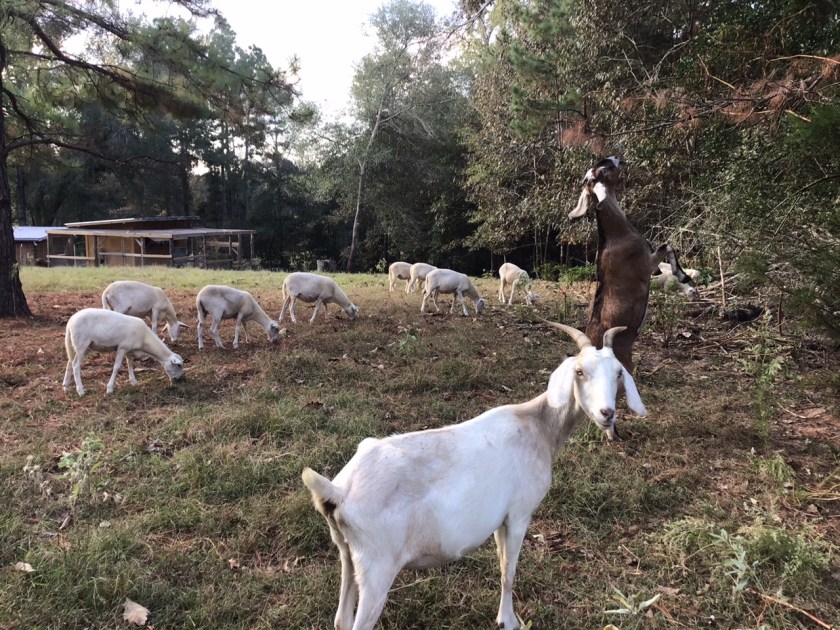
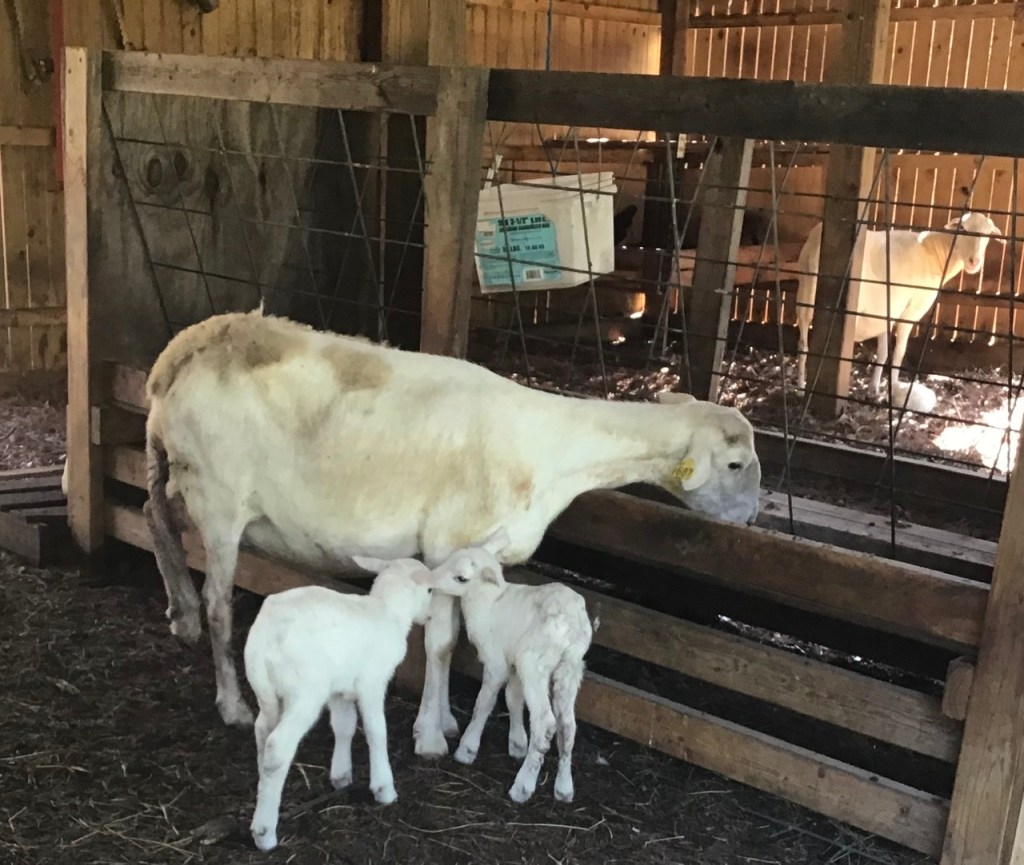
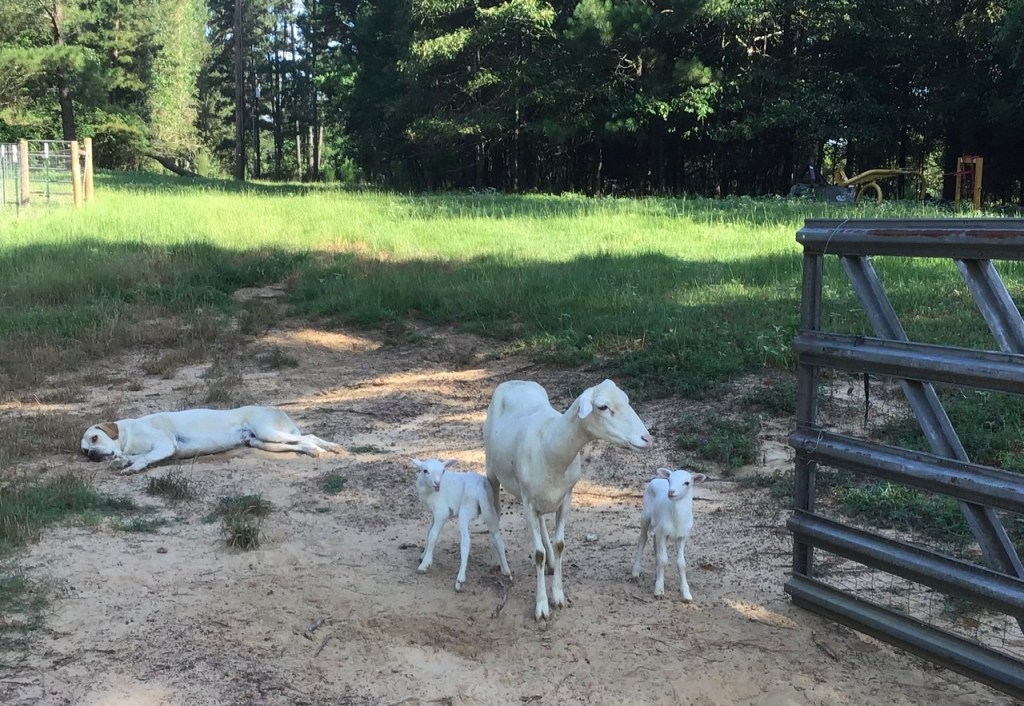
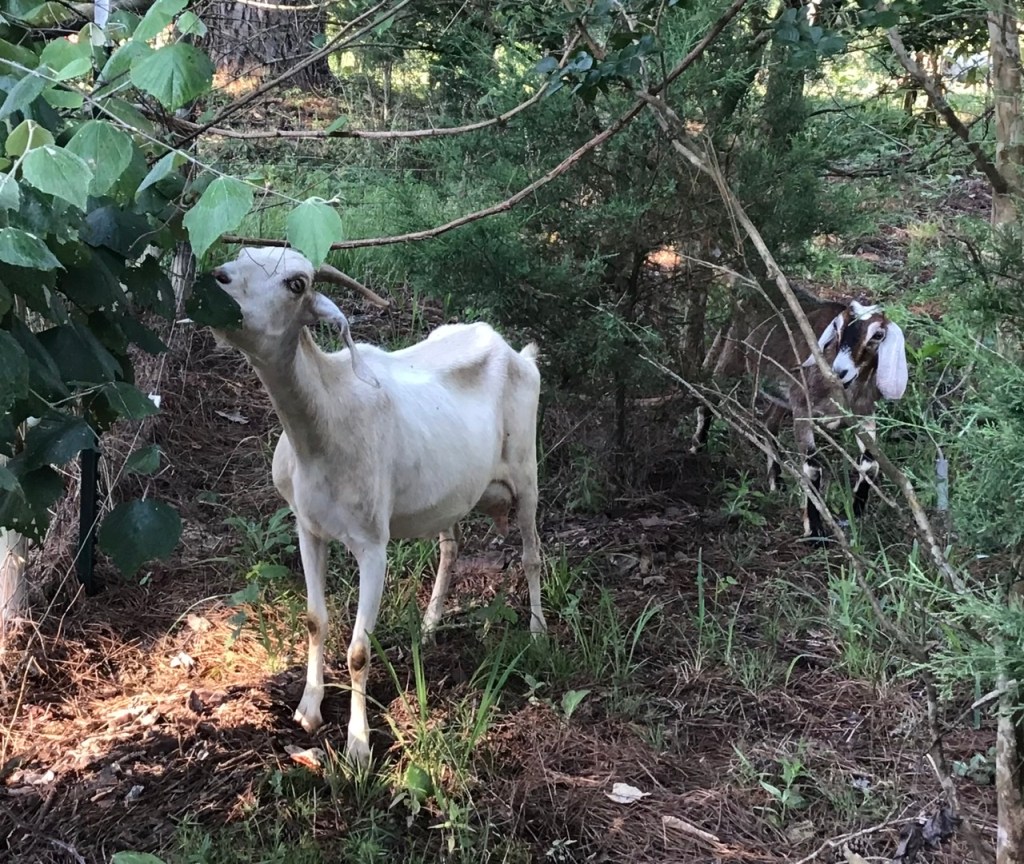
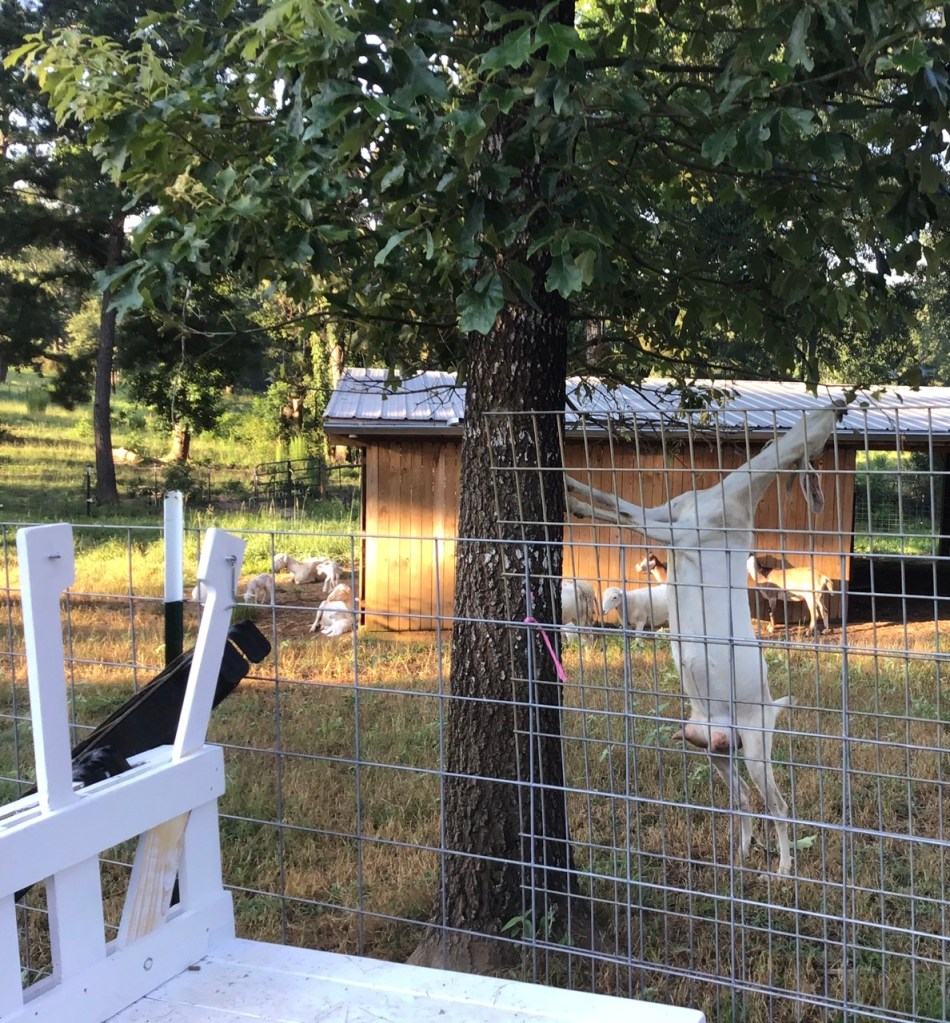
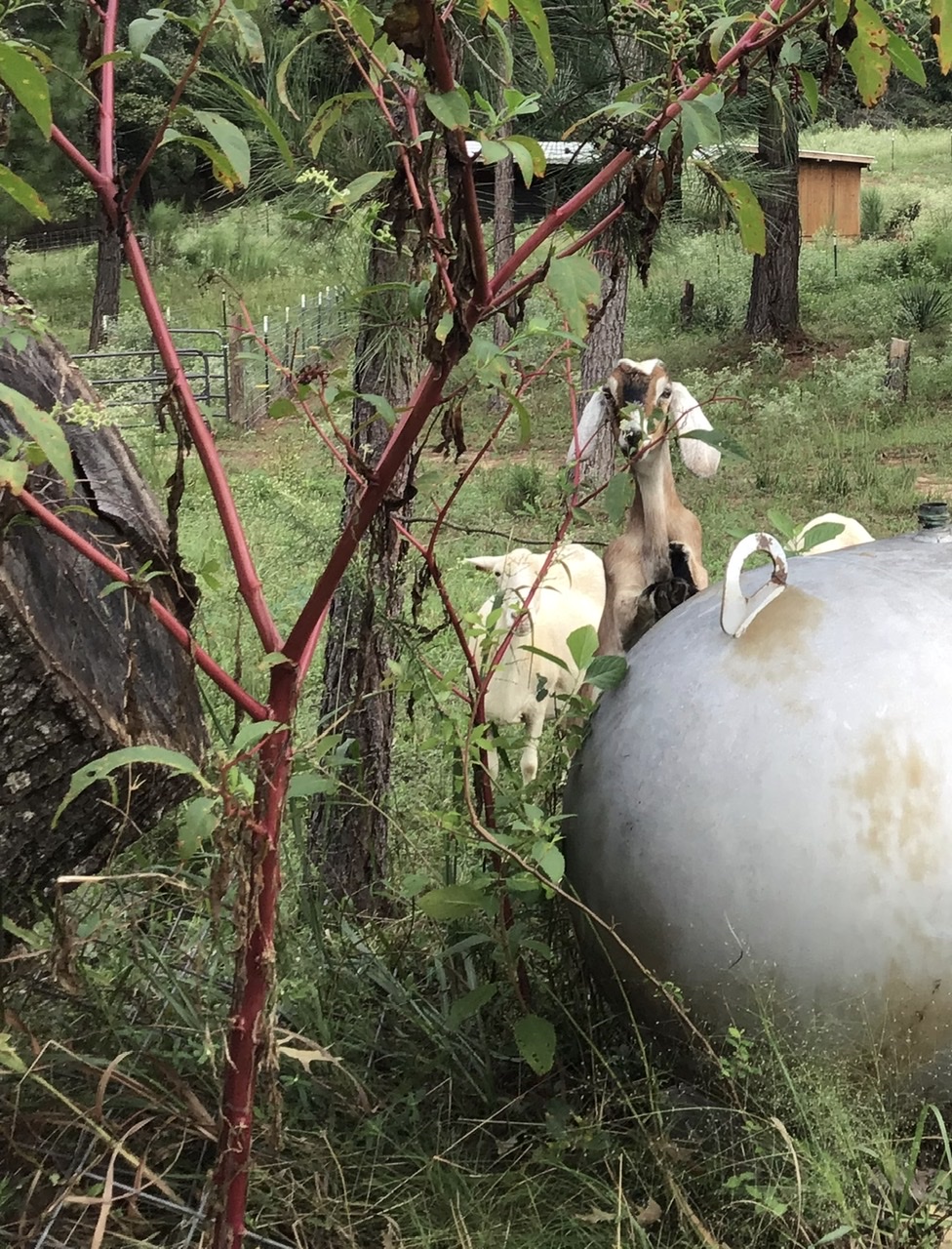
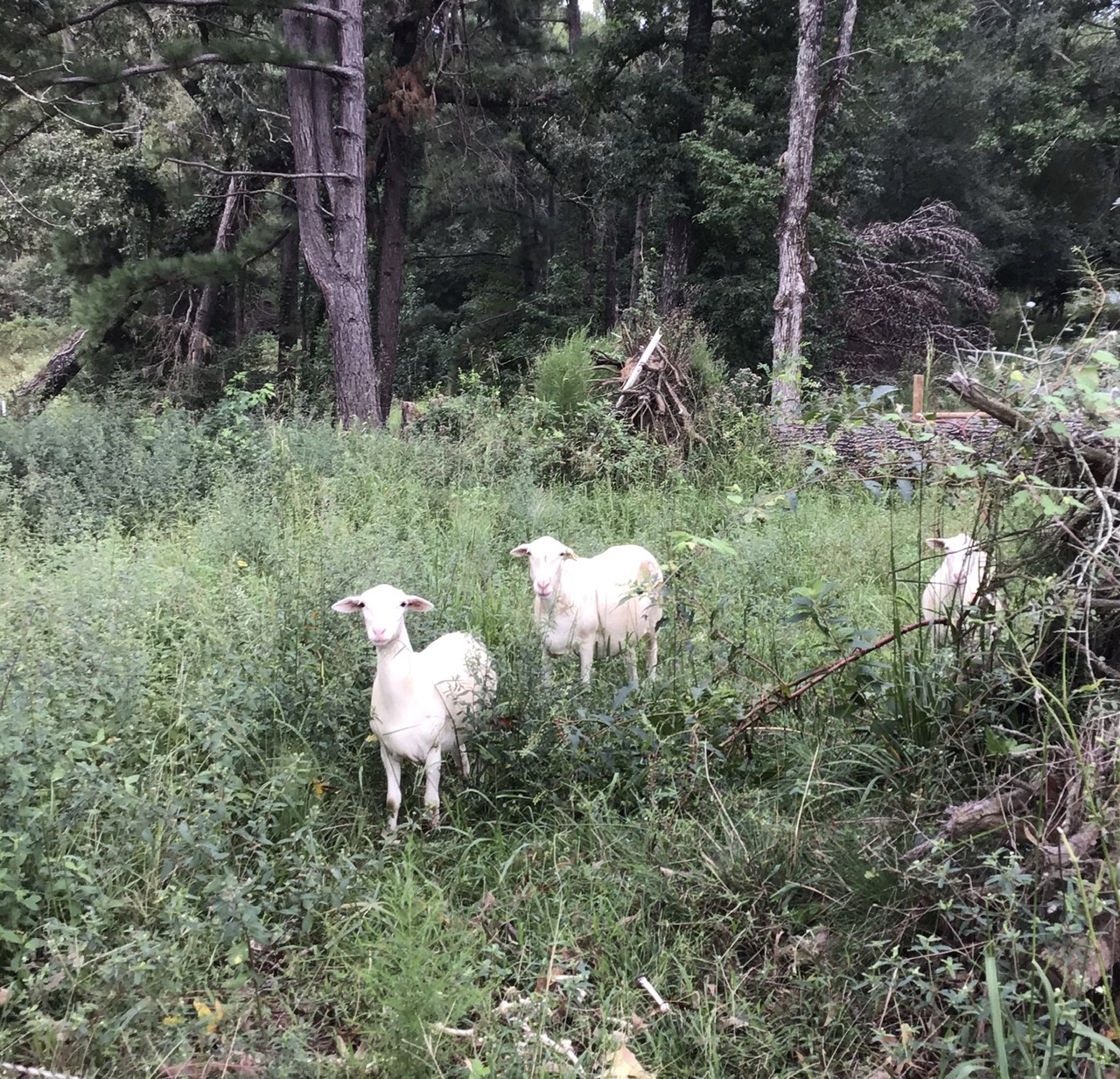
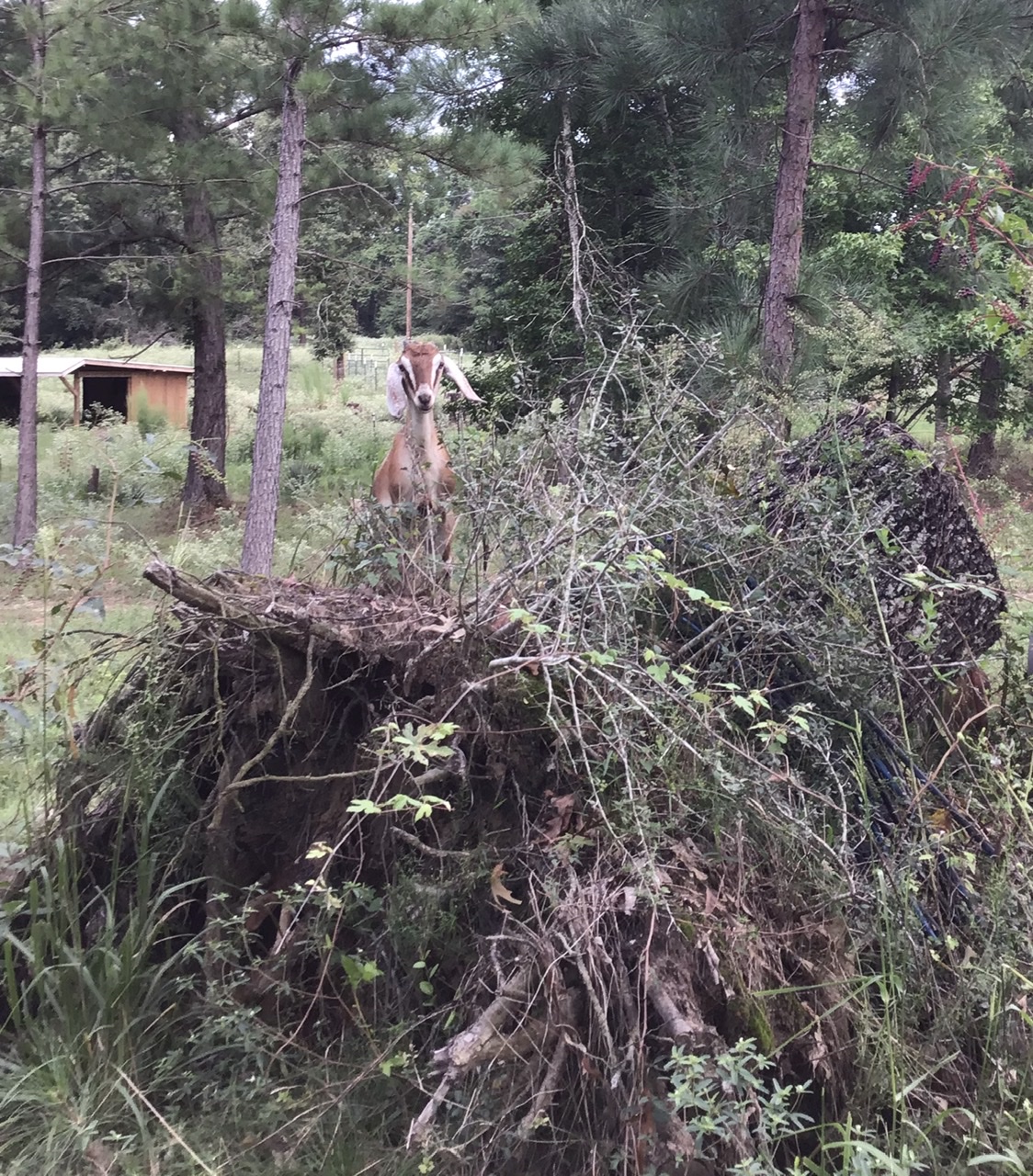
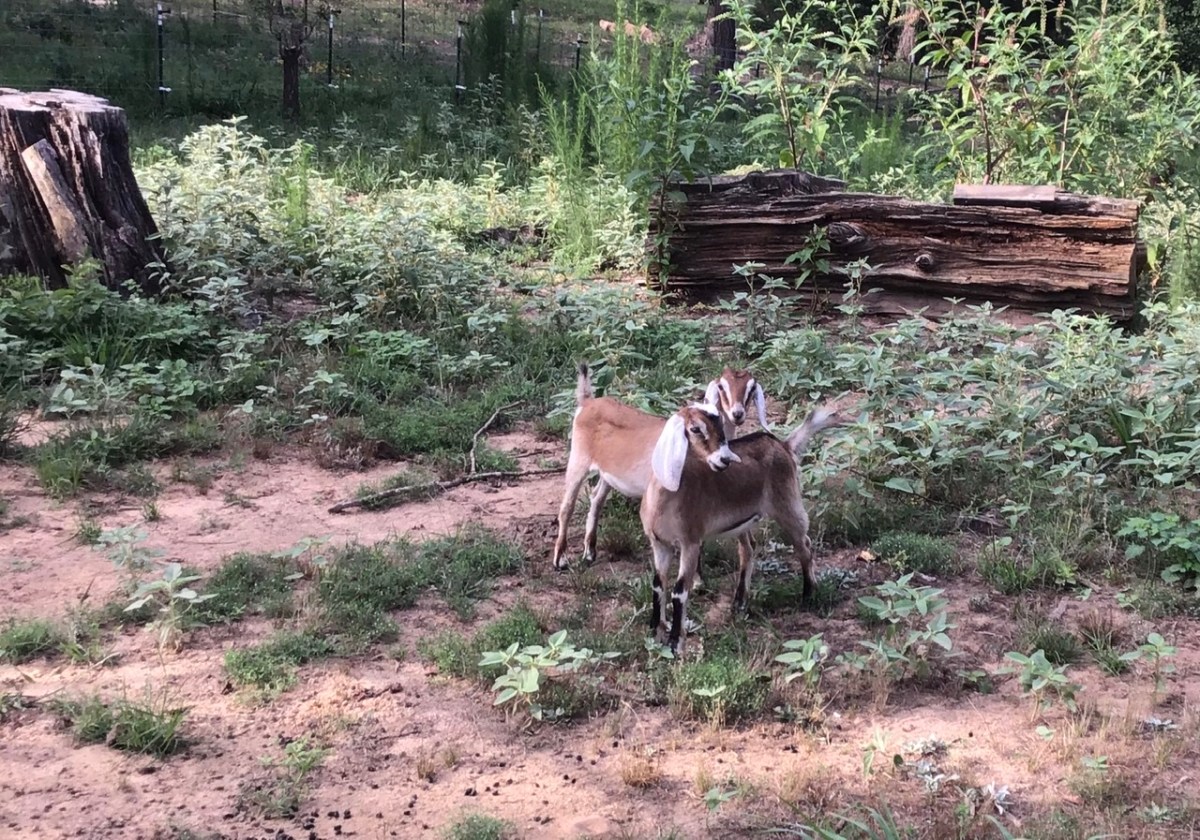
Time to wean the lambs. It was a loud couple of days as mamas and babies were separated, but with Summer as surrogate herd Queen everyone has mellowed down again. Phoebe, the goat pictured on the left, will have her first mating encounter next month. Her sister, Chestnut, jumped the gun, by jumping the fence to be near the rams, the little hussy! FYI—a goat crossed with a sheep is a Geep, very rare and not very desirable.
Drum roll, please, for this next rare shot . . . A Skittles sighting!
Our barn cat, Skittles, who we see about once a week and lives mostly in the trees.
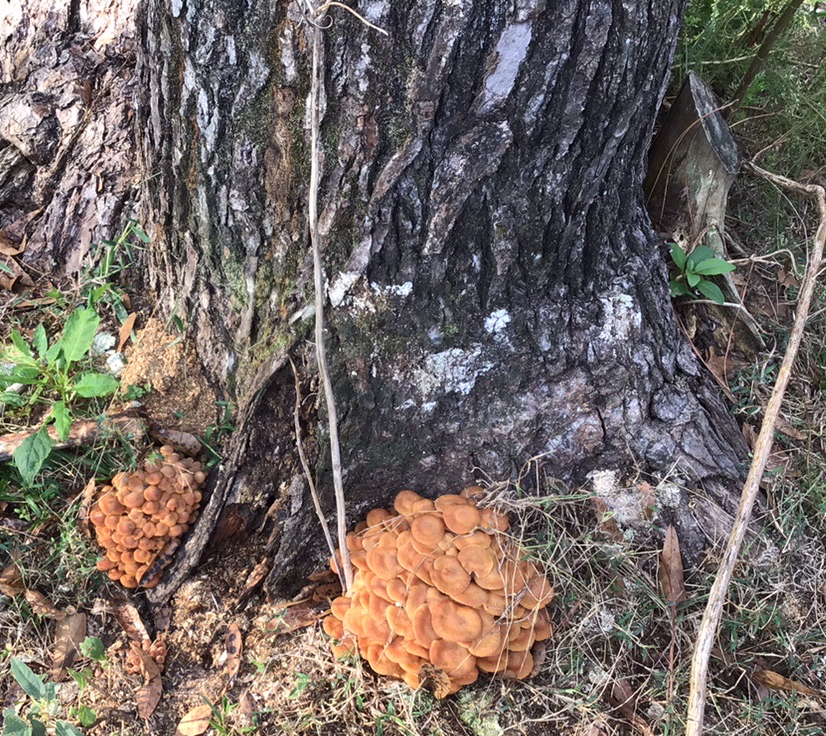
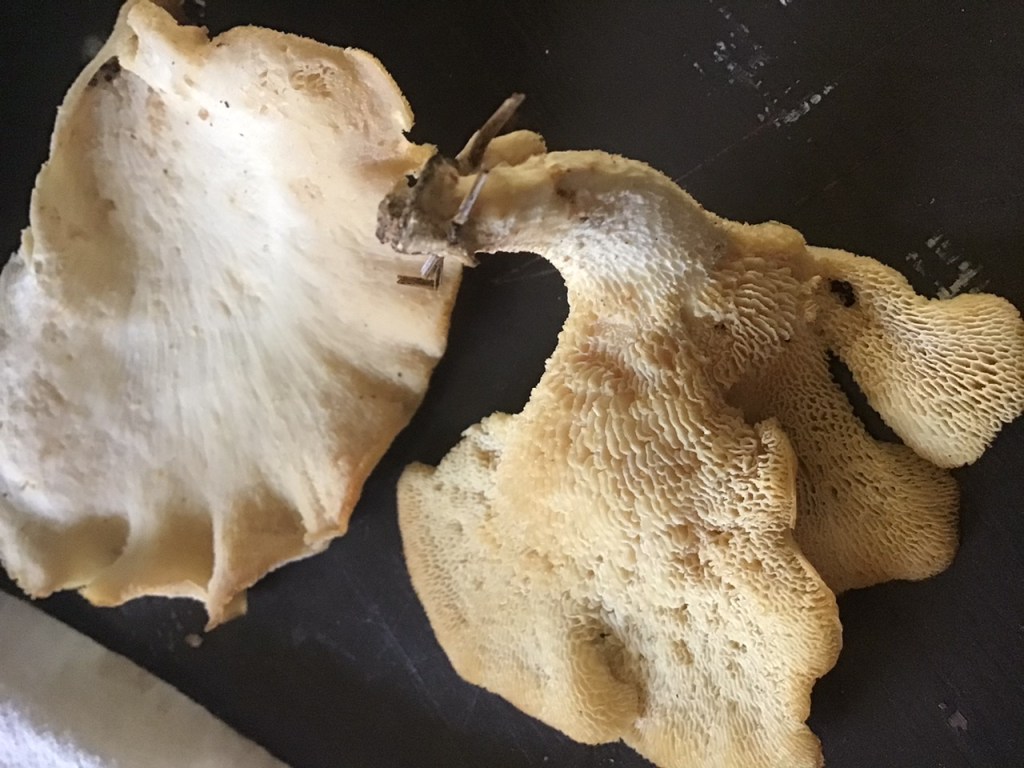
Mystifying mushrooms! These are quite common, honies (armillaria tabescens) claimed to be good by a good many foragers, but we haven’t tried them yet, because my mushrooming buddy and her husband got wretchedly ill on them once. Oops, I promised no unpleasantries. 😉
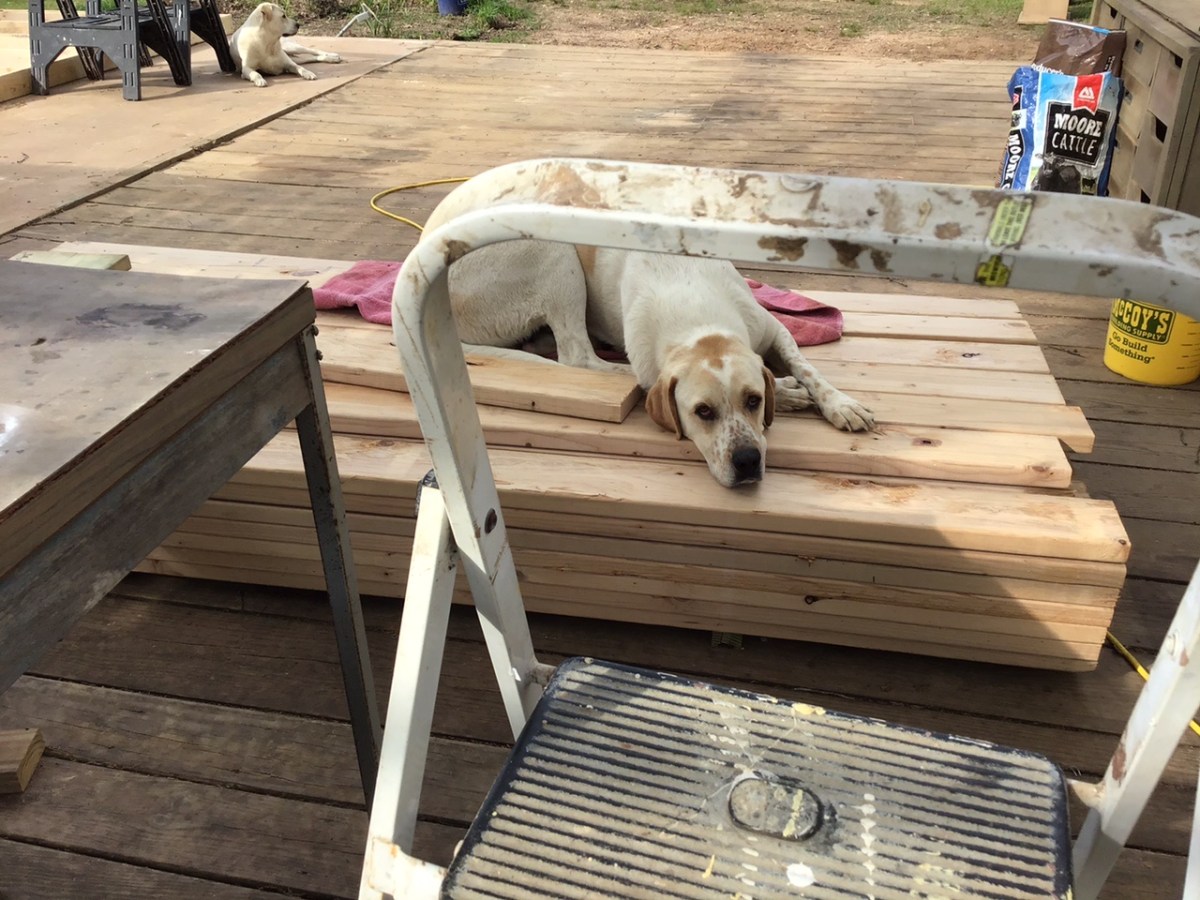
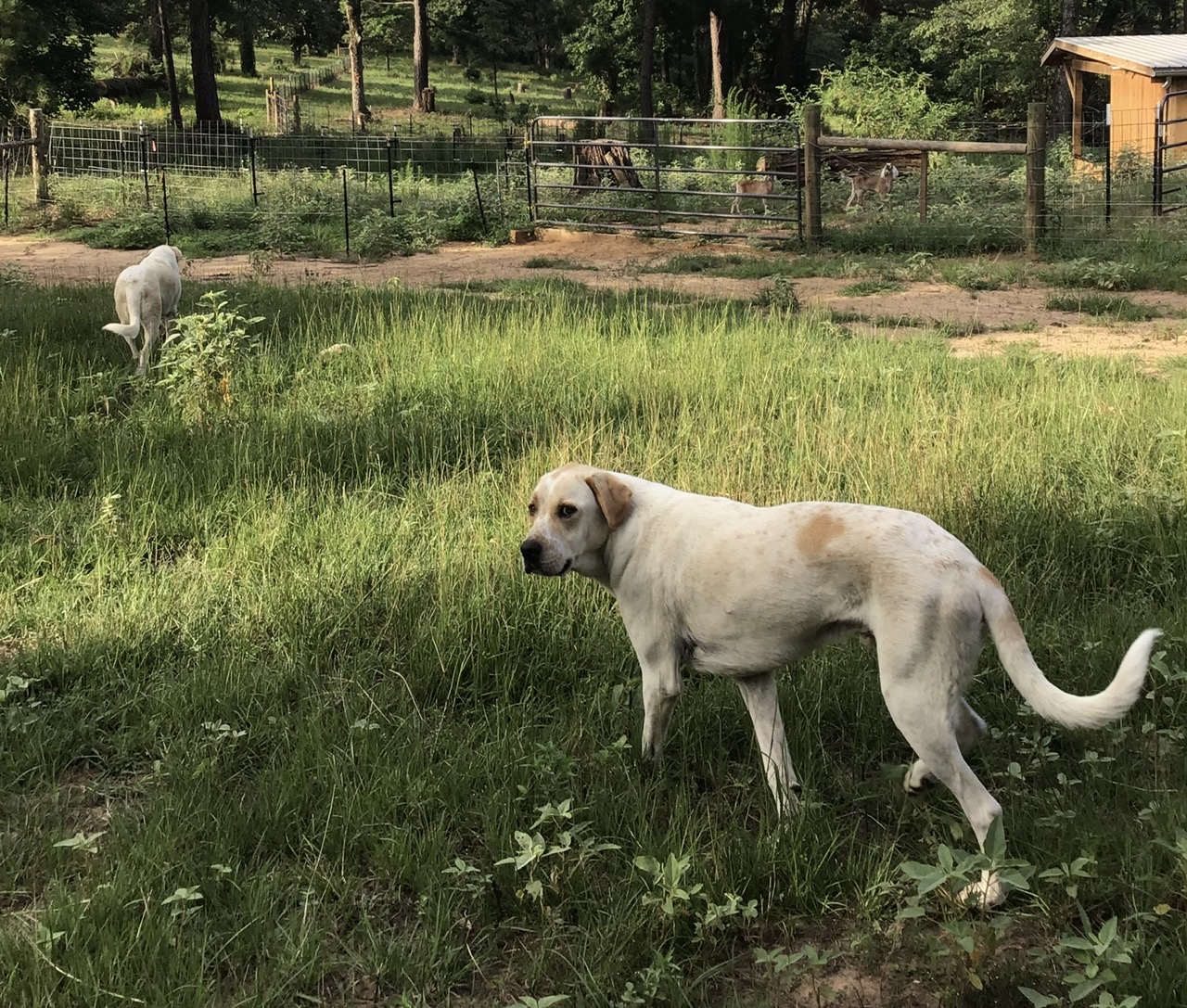
Buttercup paying homage to the pack leader, Tori, she does this multiple times a day.
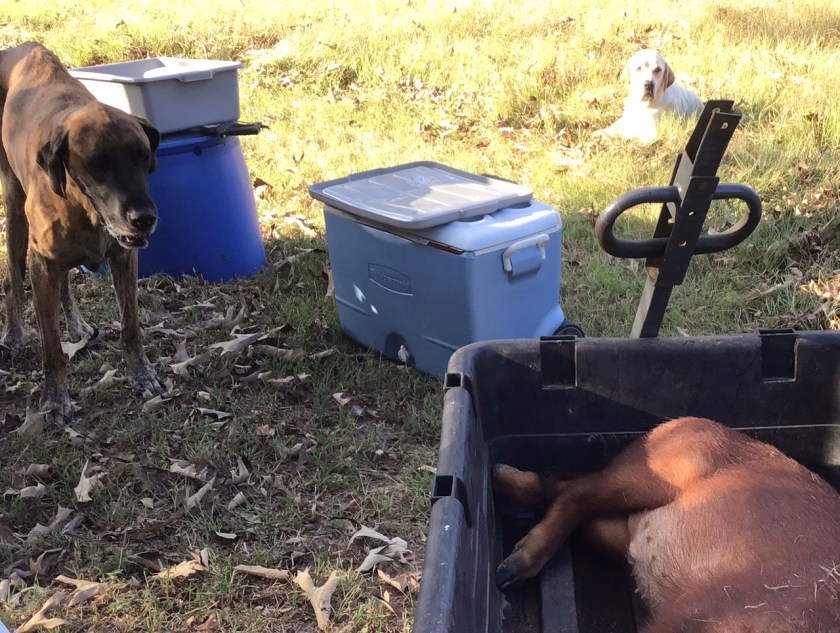
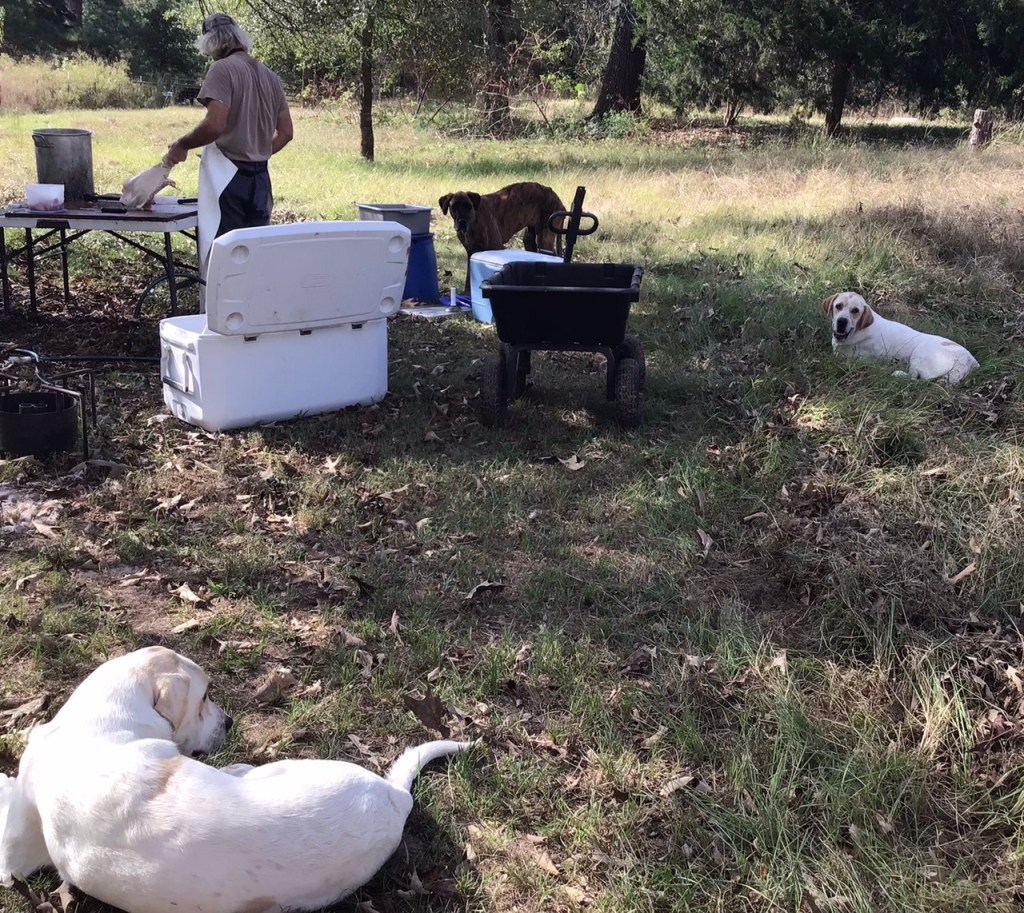
I suppose these next snaps might be unpleasant to some, sorry! I do get that, I felt that at first too, but I was gradually desensitized as I realized how much economic sense it makes, what an amazing skill it is, and especially how magically delicious it is.
Always an attentive audience at slaughter time.
Our favorite foraging expert who we forayed with nearby this past spring has a great new website all about medicinals. Here’s a short podcast about it, and reminding me that now is the time I should be collecting some goldenrod before winter! Medicine Man Plant Co
No rest for the weary around here! Our goal of year-round garden harvesting has been met and is every bit as rewarding, and exhausting, as I expected.
Living, working and eating according to the season is remarkably satisfying. In the last couple of years especially I’ve spent much less time learning from books and much more on direct observing and experimenting.
I’m thinking our next goal should be to throw the calendar and the clock out with the garbage. Show those Amish what a real Luddite looks like! HA! 🙂
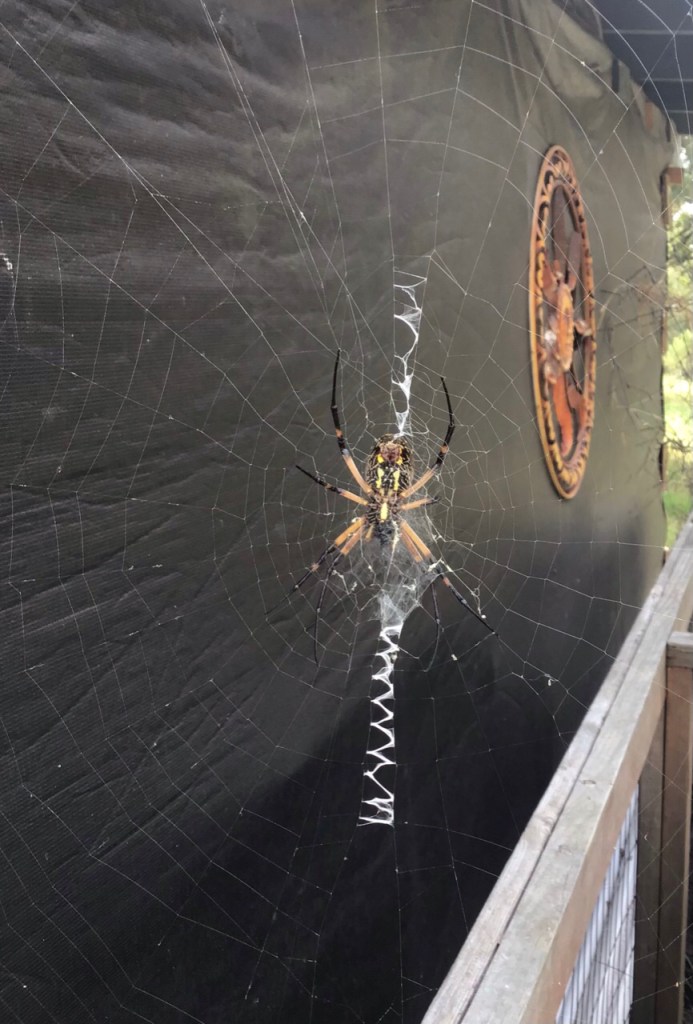
This time of year the spiders tell me it’s a good thing I’ve got the cool season crops out already. Many of them were started indoors, then transferred outside under shade cloth which will remain until the heat breaks, fingers crossed we don’t get an early frost.
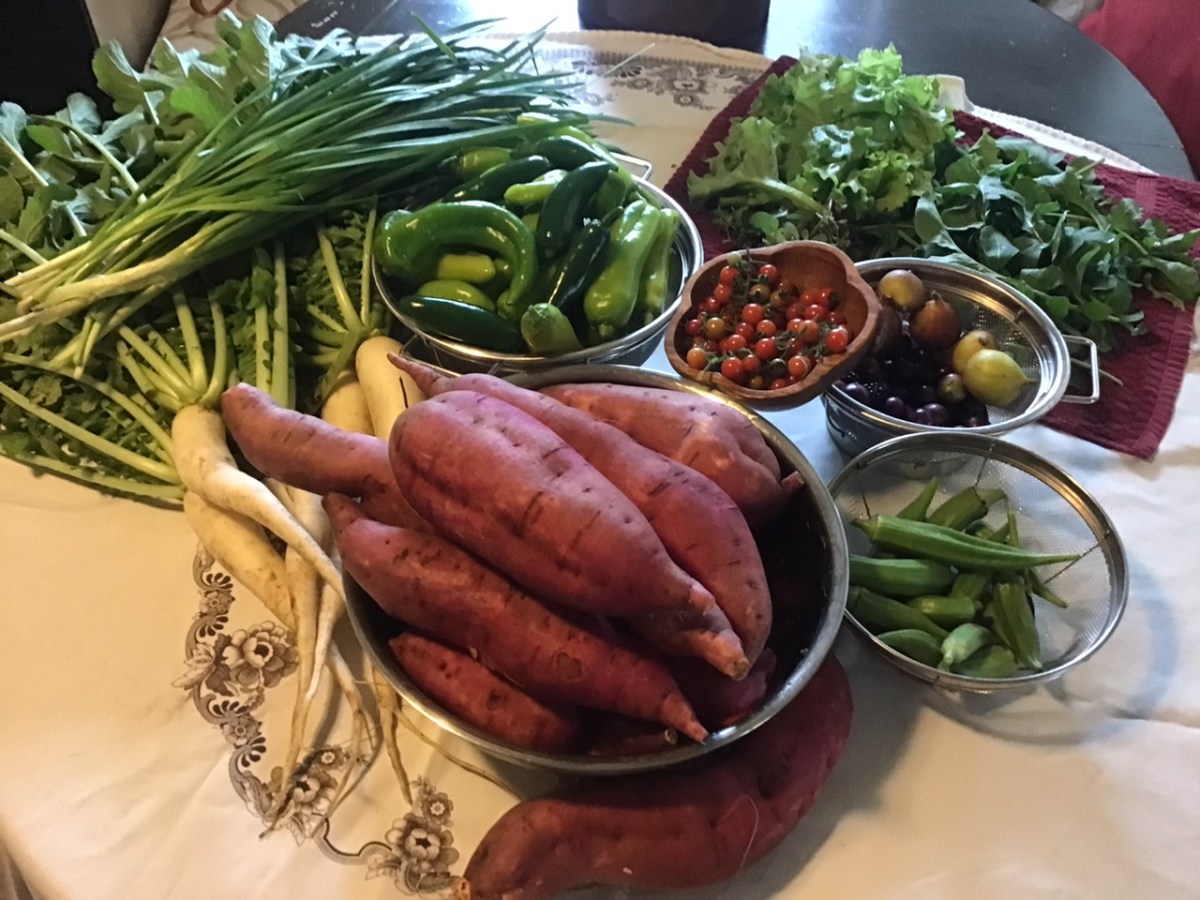
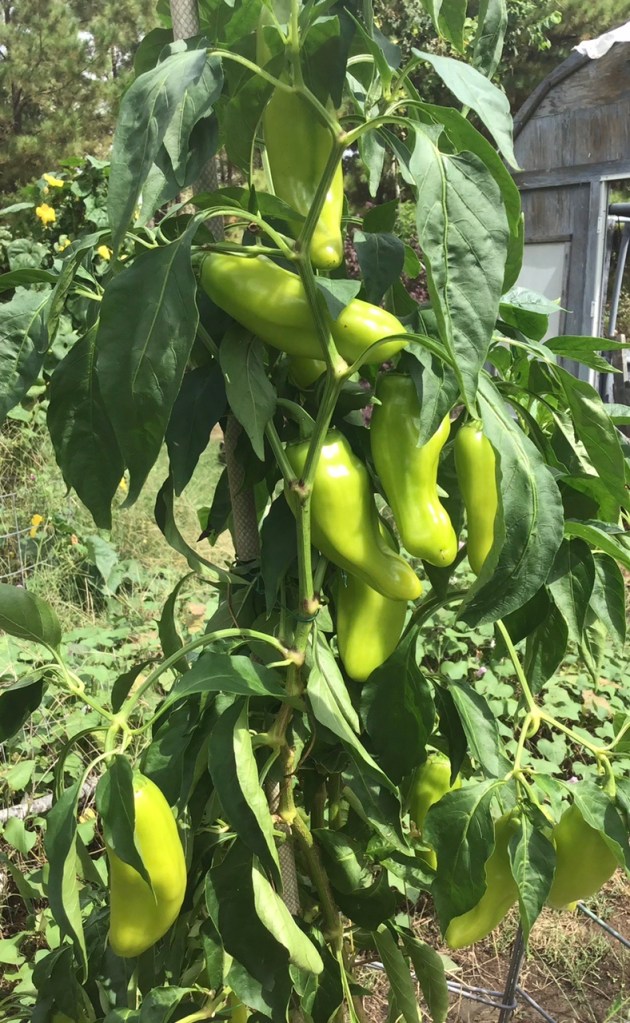
I’ve just started harvesting the sweet potatoes, the luffa and peppers are going crazy, the radishes, volunteer cherry tomatoes and lettuces are finally happy again and I’m most excited for the mirliton squash (chayote) that is finally getting its first flowers. This will (hopefully) be our first success with mirlitons following multiple failed attempts. I love this squash, but it thrives in southern Louisiana mostly, because it needs a very long warm season, even longer than we get here. I started these indoors in February, along with the turmeric, also a first for us this year.
As soon as it cools down I’ll also be harvesting honey, lots of herbs for drying and pesto, along with foraged leaves and roots for teas— sassafras, beauty berry, sumac—and once we finally get some rain, it’ll be time for mushrooms.
Hubby will be filling the freezer with lamb and pork and freshening our flock for spring lambs and a few to add to our growing herd of milking goats.
Hibiscus in May, hibiscus today . … still not blooming because I got a late start.
The honey bees love the Thai basil and the native bees especially love the salvia and the sweet potato and luffa flowers. We’ve decided next year to plant an entire row of luffa in the orchard just for the bees and pigs.
Hope you can enjoy a moment of piglet playtime! Surely there will be time for a wee rest in late winter?
Big days on the wee homestead! The cucumbers are coming in by the bushel full, the lambs are dropping like rabbits, the mushrooms are growing like mad and the bees sound exceptionally pleased. I can’t keep up!
Luckily, Handy Hubby is here now every day, thanks to his ‘early retirement’ (that is his layoff six months ago) thanks to The Great Scamdemic. With his steady efforts and attention our place is shaping up beautifully and my stress levels have been reduced by half, even as chaos still reigns. For these are not the only new milking mamas, I’m now officially a milkmaid in training myself!
Welcome, Summer! Two piglets for a goat in milk was our barter with a friend. She’s settling in nicely and Phoebe was the first of the herd to greet her.
Learning to milk in humid and buggy 95 degrees F is every bit as pleasant as it sounds. 😏
Impressive udder and gymnast-like capabilities!
Handy Hubby crafted me a nice milk stand from plans posted by Fias Co Farms, a very good resource for goat newbies.
The chanterelles will surely give up very soon in this heat, so I forced myself to brave the mosquitoes and ticks once more to gather one last big basket full. I came across a new variety while hunting that’s not in any of my books, so I contacted Texas Foraging expert Mark ‘Merriwether’ Vorderbruggen, who identified it and directed me to this excellent site:
Since our temps went from April-like to August-like overnight, I got stuck in a bit of a bind with the bees. Because I’m trying to work between 3 different hive types (very stupid, do not entertain this folly I would advise) I’m trying to get them to move of their own accord. It is working, but it is quite a slow process. I will eventually have 3 colonies from this one very full nuc without too much destruction or fuss, or at least that’s my plan.
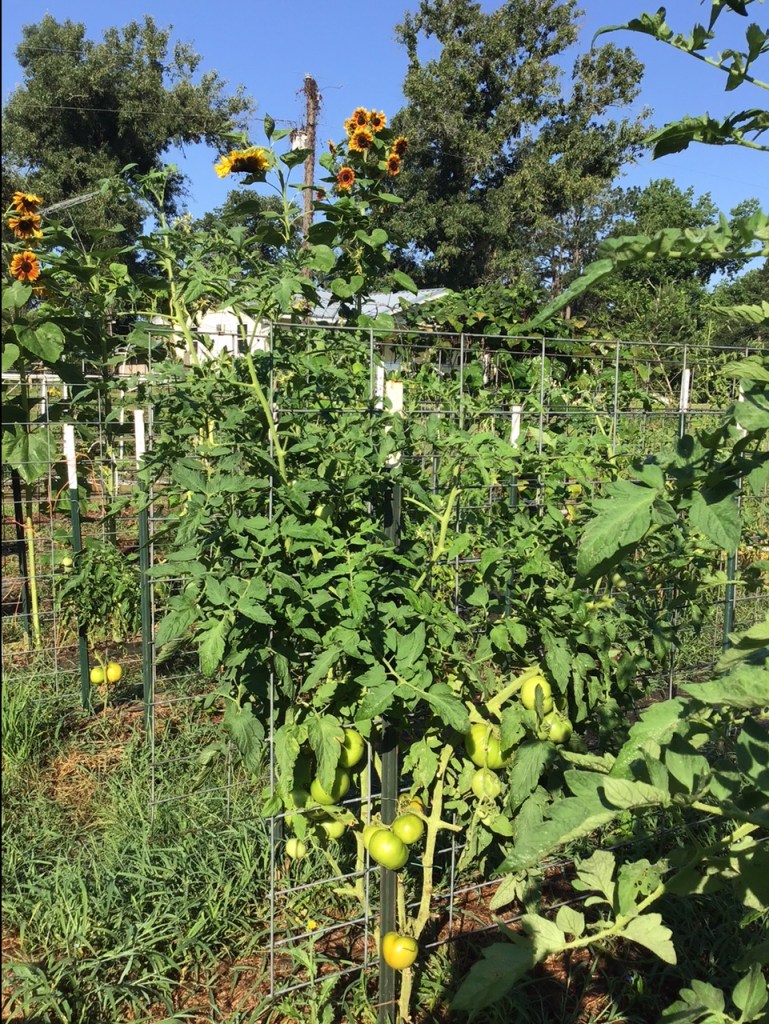
To end I offer a true garden success. I’ve been experimenting a lot with companion planting, sometimes with advice from permaculture books, but sometimes just by my own observations. This year I planted sunflowers very early, before it was warm enough for the cucumbers and melons. My thought was to attract the bees to the garden like a lure down to the still small cucumbers. It’s worked like a charm and the trellises are bursting with activity.
I’m also trying some new tricks with the tomatoes, letting the cherry types go wild, but highly managing the large varieties and interspersing them with various herbs, lots of comfrey, turmeric and ginger. The results are not yet in on those efforts, but I’ll keep y’all posted.
Just a wee update with some happy snaps because we’ve been keeping as busy as bees around here!
The bees are busy indeed and multiplying like rabbits. Time to expand their chambers or to do some splits.
Bearding in summer, not too unusual in our hot climate. But, bearding in spring, probably a sign they’re really cramped and fixing to swarm.
I did end up losing one colony, the only one I have in the conventional Langstroth model hive. I’m going to blame myself for that though, I left a super on over winter and we had a really bad winter. They made it through alright from the looks of things, but left about a month ago, probably because their numbers were still too small to keep a mansion clean while trying to nurse babies to build up the colony again. There was no evidence of freezing or starving, so I suspect they left as a small swarm. That’s my story anyway.
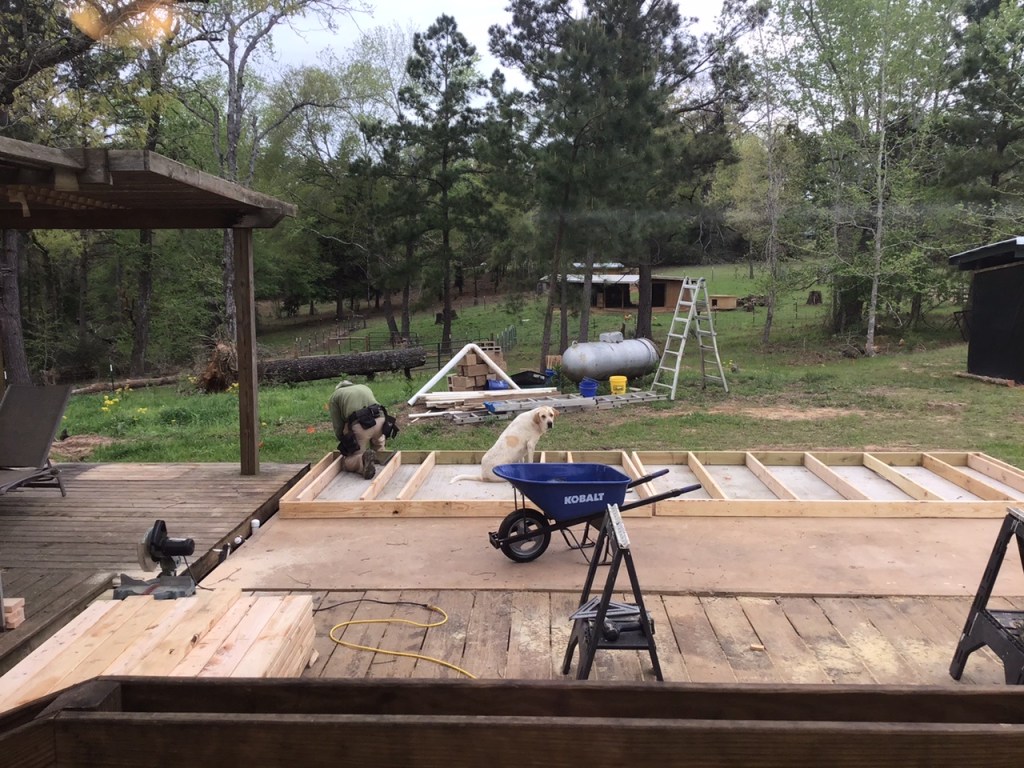
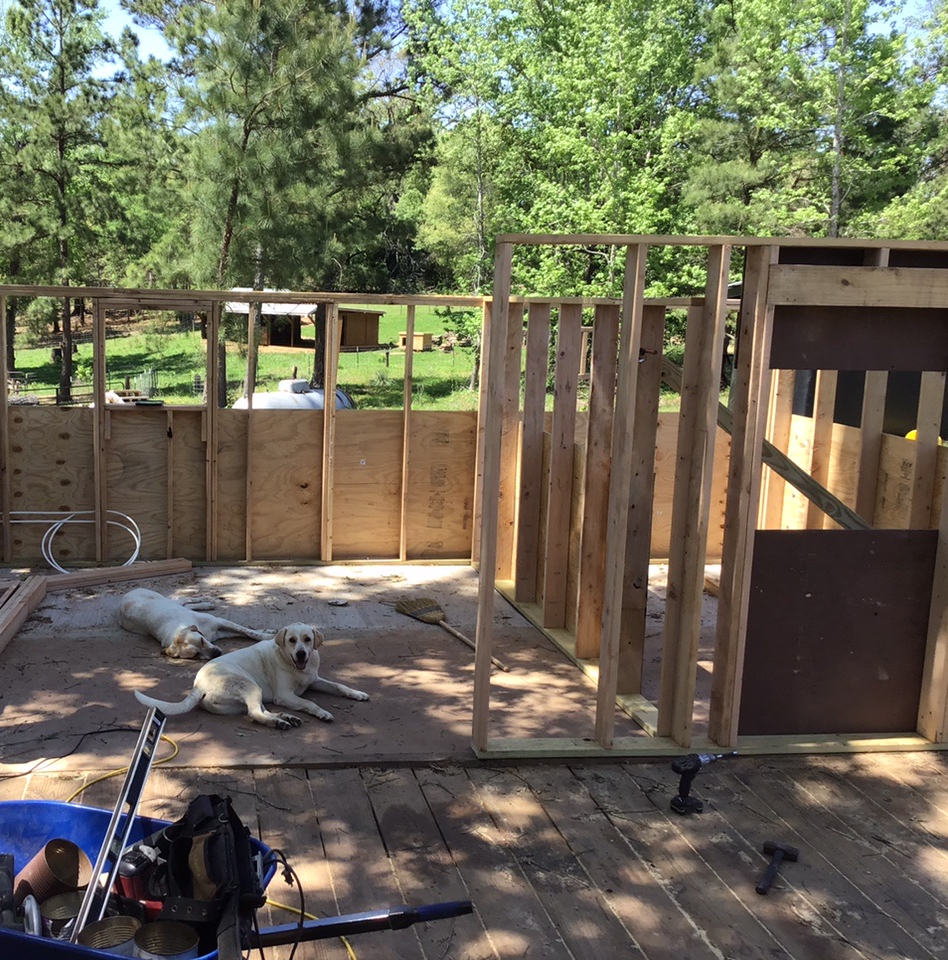
Construction continues on the best project so far. Handy Hubby is building an addition to our house and I’m over the moon excited about it! This place was never meant to be a year-round residence, it was initially used as a weekend cottage and hadn’t been used for many years by the time we moved in.
Handy Hubby with his loyal helpers!
We’ve been cramped for quite a while, but now we’ll have a new, very necessary and very functional, climate-controlled Utility room. Thank you, my love, better late than never! 😉
We aren’t cat people but we adopted a barn kitten last year to try to help with our mouse, vole, mole, gopher, snake problems. Apparently she didn’t get the memo, or realized the problem was so bad she needed a crew.
Skittles, our frisky barn kitten having kittens.
Our piglet population is back down to a manageable size since trading 2 piglets for a milking goat to be delivered next month and 2 others for a breeding ram after a friend has freshened her flock. We also traded a beehive for some bantam hens because they are known for their strong broody behavior, and sure enough, here’s one tightly tucked on her clutch. It’s one of my favorite things to trade with folks and leave Uncle Sam with his funny money out of our pockets for a change.
You can’t see me! Bantam hens, known for tucking up in tiny corners to brood.
As for garden developments, I continue my efforts incorporating permaculture features. I keep experimenting with good companion plants; I’m planting more perennials amongst the annuals; I’m doing more succession planting; I’m getting lots of comfrey growing for ‘chop and drop’ composting.
Spooning the onions
Comfrey—useful permaculture plant
Bees on chervil gone to seed
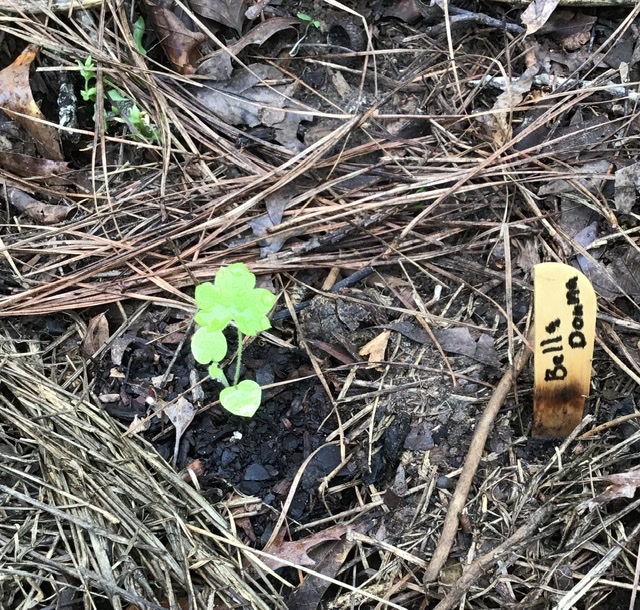
My latest addition is a ‘poison garden’ including such toxic beauties as datura, belladonna and castor bean. I’m testing a few tricks like ‘spooning’ the onions, which is to remove the dirt from the bulb tops to encourage larger storing onions. I’m watering weekly with ‘poop soup’ that is, watered down cow manure I’ve gathered from the stray cows sometimes wandering our property.
It’s a dirty job, but anything for my plants!
As always, I let the herbs and greens go to seed, but this year I’m going to get better about seed-saving. The price of seeds is going through the roof! Another new project I’m dedicating time to is more propagating, but not just the easy stuff anymore, like figs and roses and mulberries.
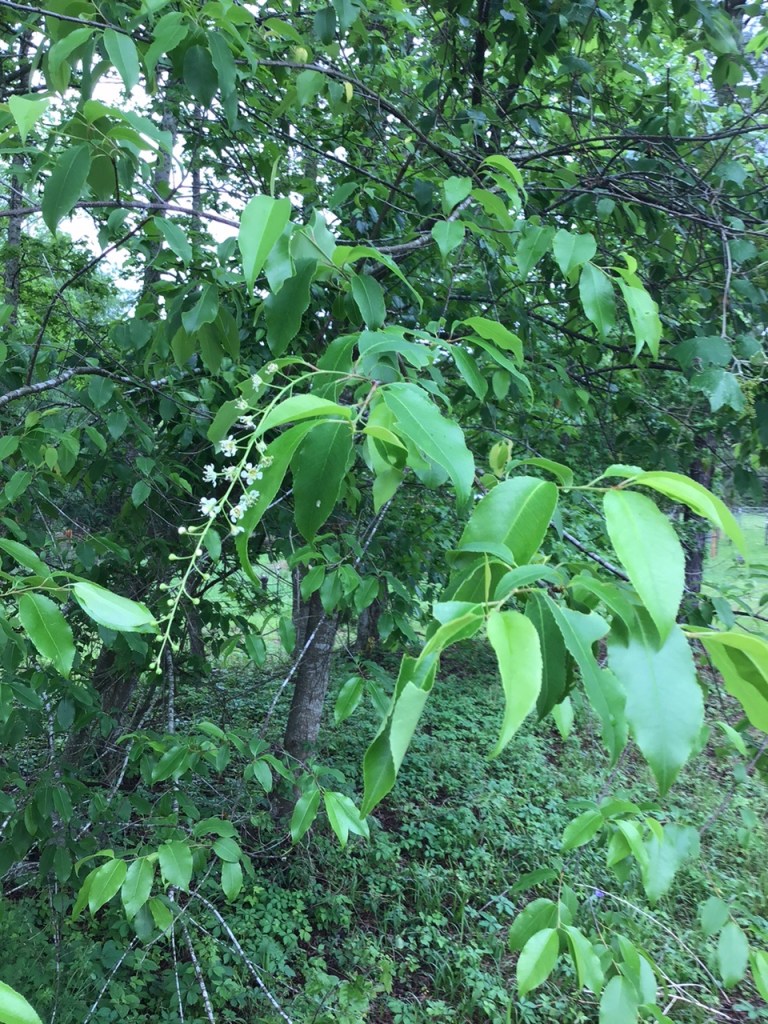
I’m going for the big time—‘native’ trees! Wild cherry (because they taste so amazing), Osage orange (because they are so useful) and prickly ash (because they look so cool) are at the top of my current list.
Prickly Ash—prickly is an understatement!
Wild cherry—the most delicious cherry flavor EVER!
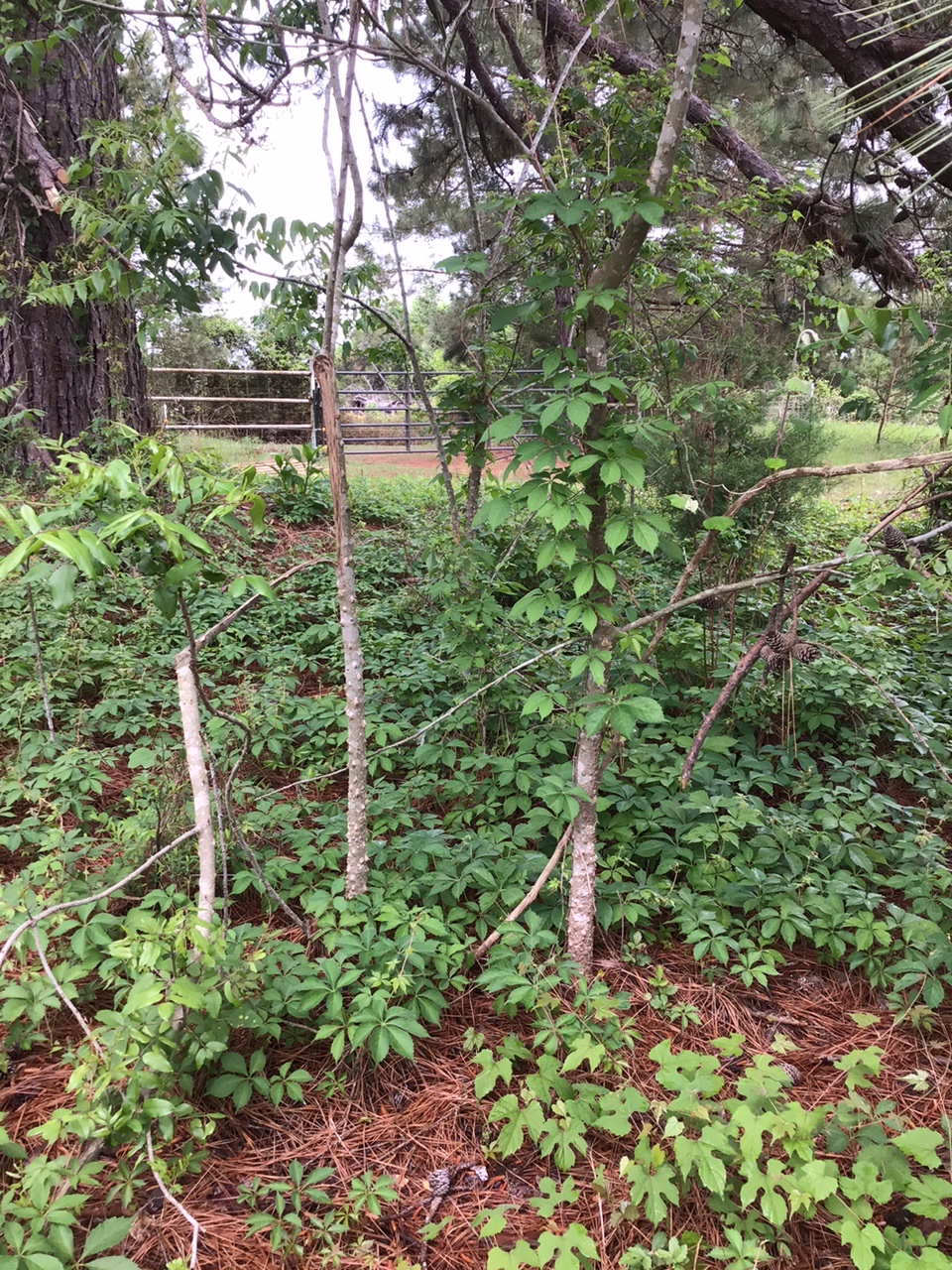
As for foraging, a favorite spring activity for me, in addition to pokeweed and dandelions, I’ve got another new favorite: greenbrier tips—taste just like asparagus. The root, along with sassafras root, were once the main ingredients of root beer, which I plan to try soon. Yum!
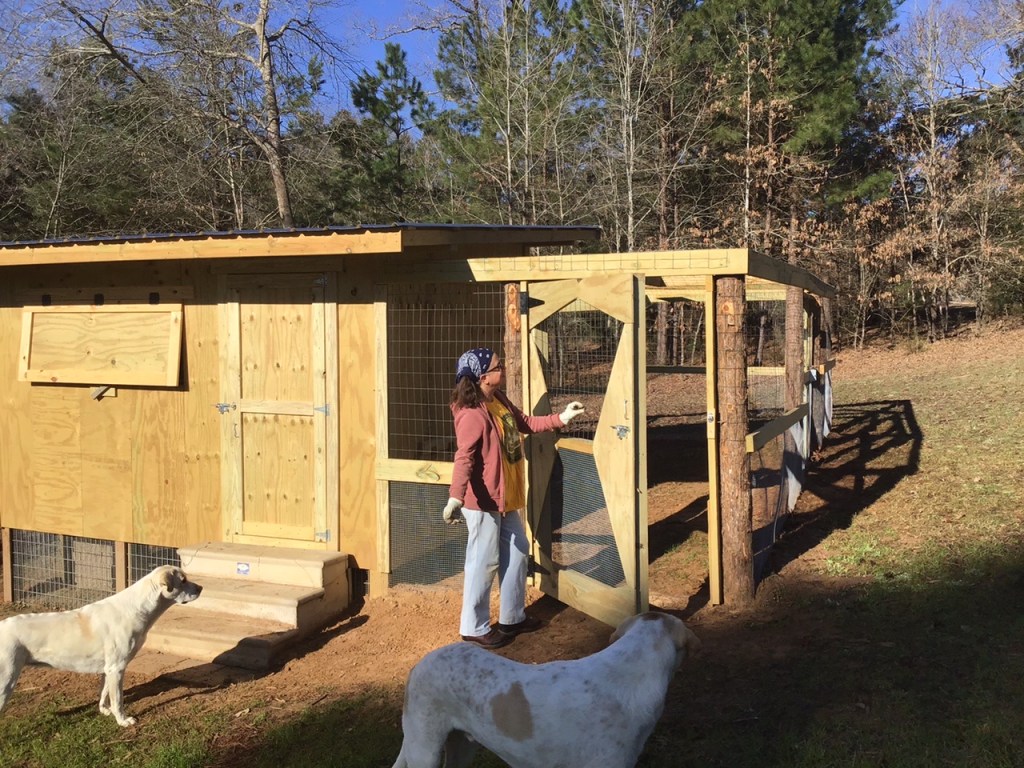
Third time’s a charm! Everyone knows that’s a mathematical fact. And when it comes to coops, so what if it takes three generations to recoup your costs in chickens and eggs? What matters more is the satisfaction of the Trifecta: form, function and plenty of time on our hands these days.
Coop needs are going to vary and the portable coops are really popular right now. They make a lot of sense for many reasons that are not of interest here. Mostly because we use our coop for poop.
We throw our compost in there, the chickens process through it, then we haul it to the garden. We also let them free range all day, but need the option to keep them excluded in the run from time to time. We’ve had 8 years of trial and error and here’s a sampling of the adjustments Handy Hubby has made to better suit our needs with coop 3.0. Most of them are for matters of hygiene and convenience.
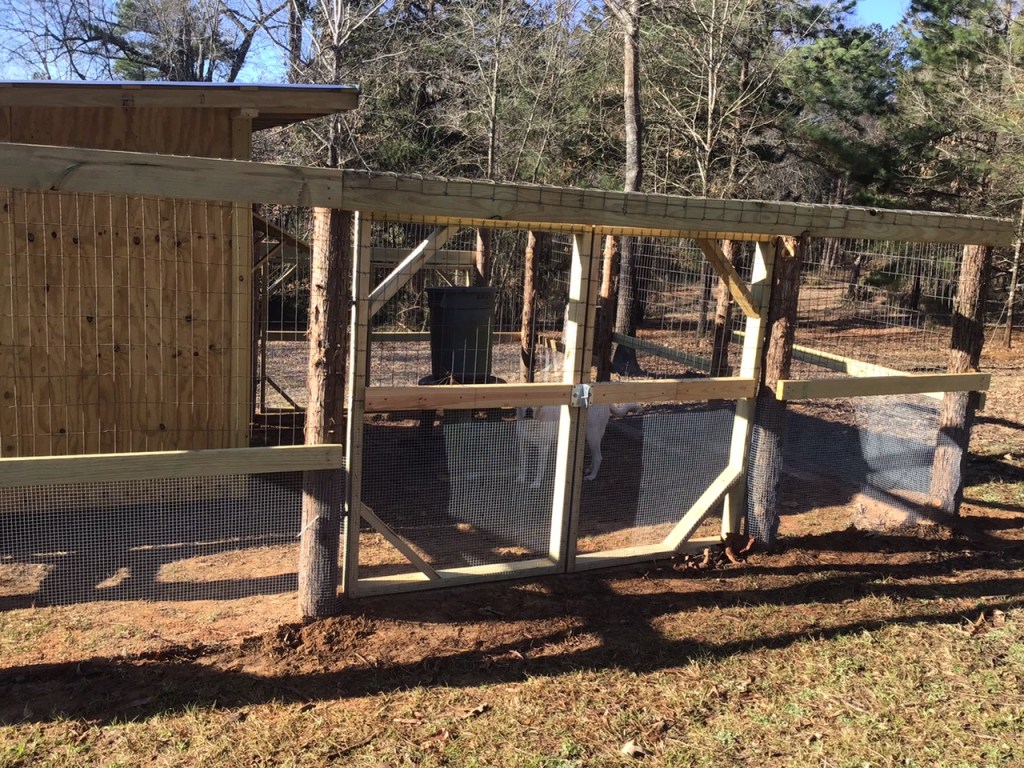
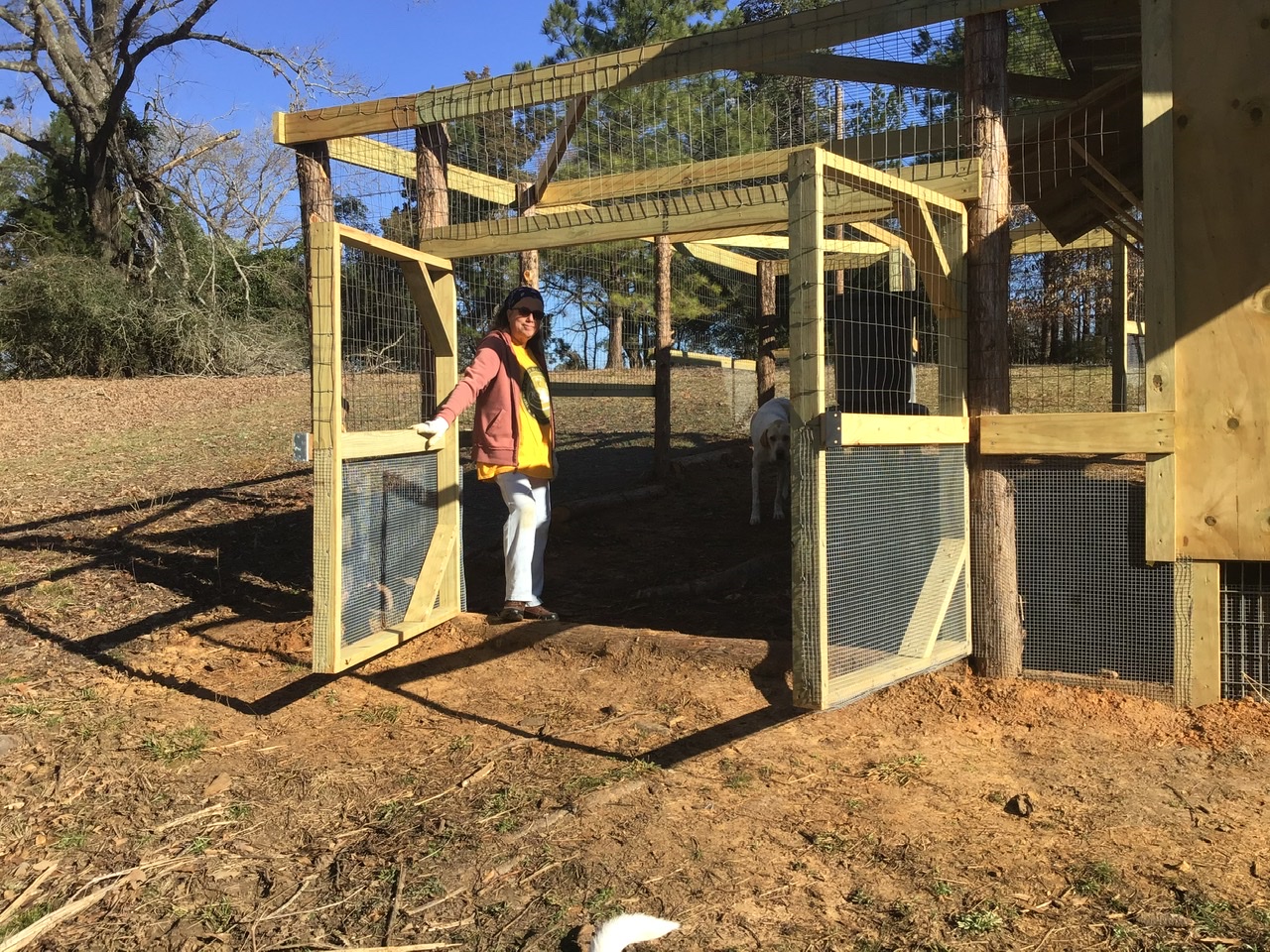
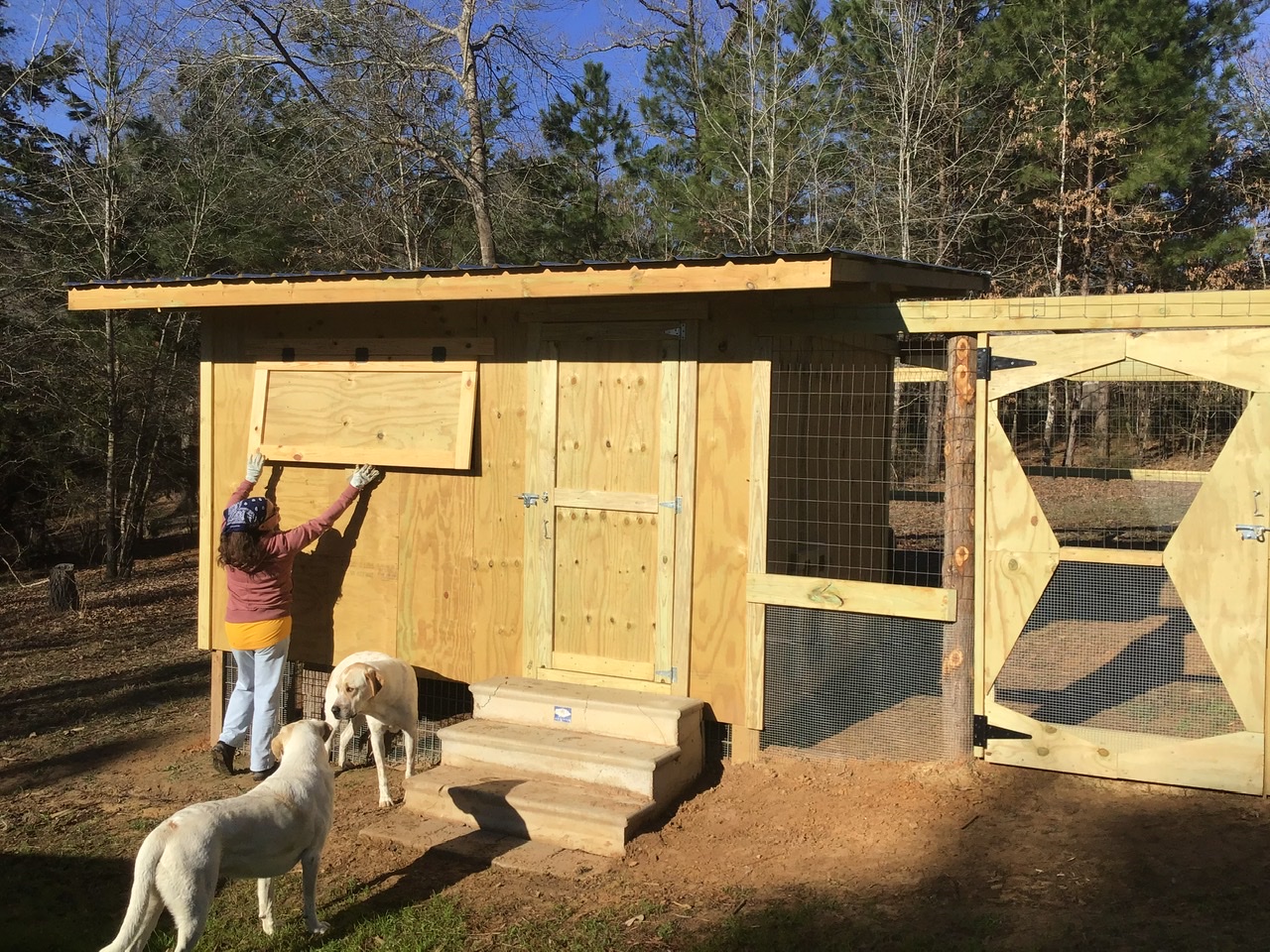
Welcome to our Taj-Ma Coop! And move over Vanna White! 🙂A custom entry gate
—No sloping run enclosures, but still fully enclosed with generous head room. Too much stooping and head clunking made this one highest priority.
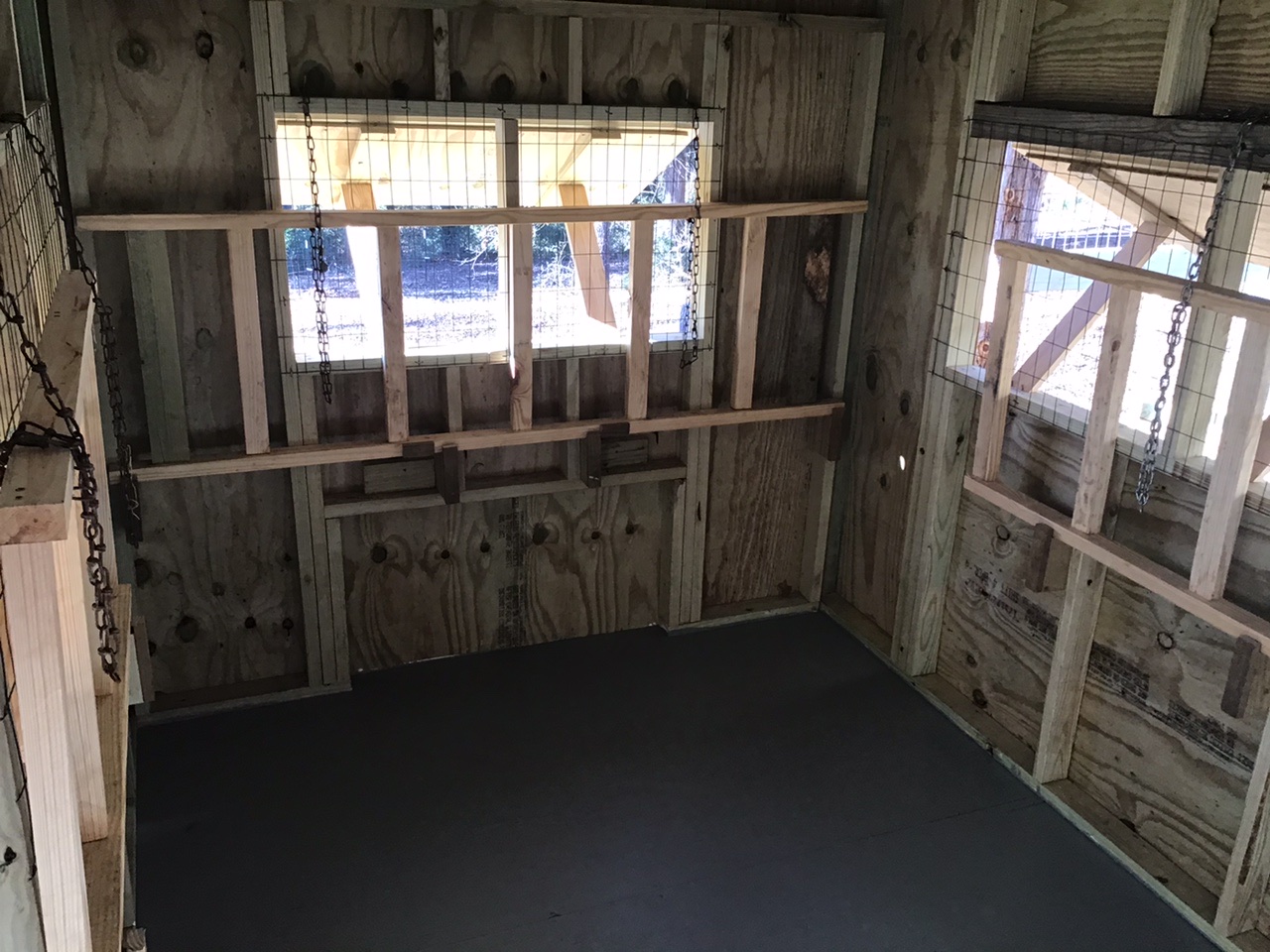
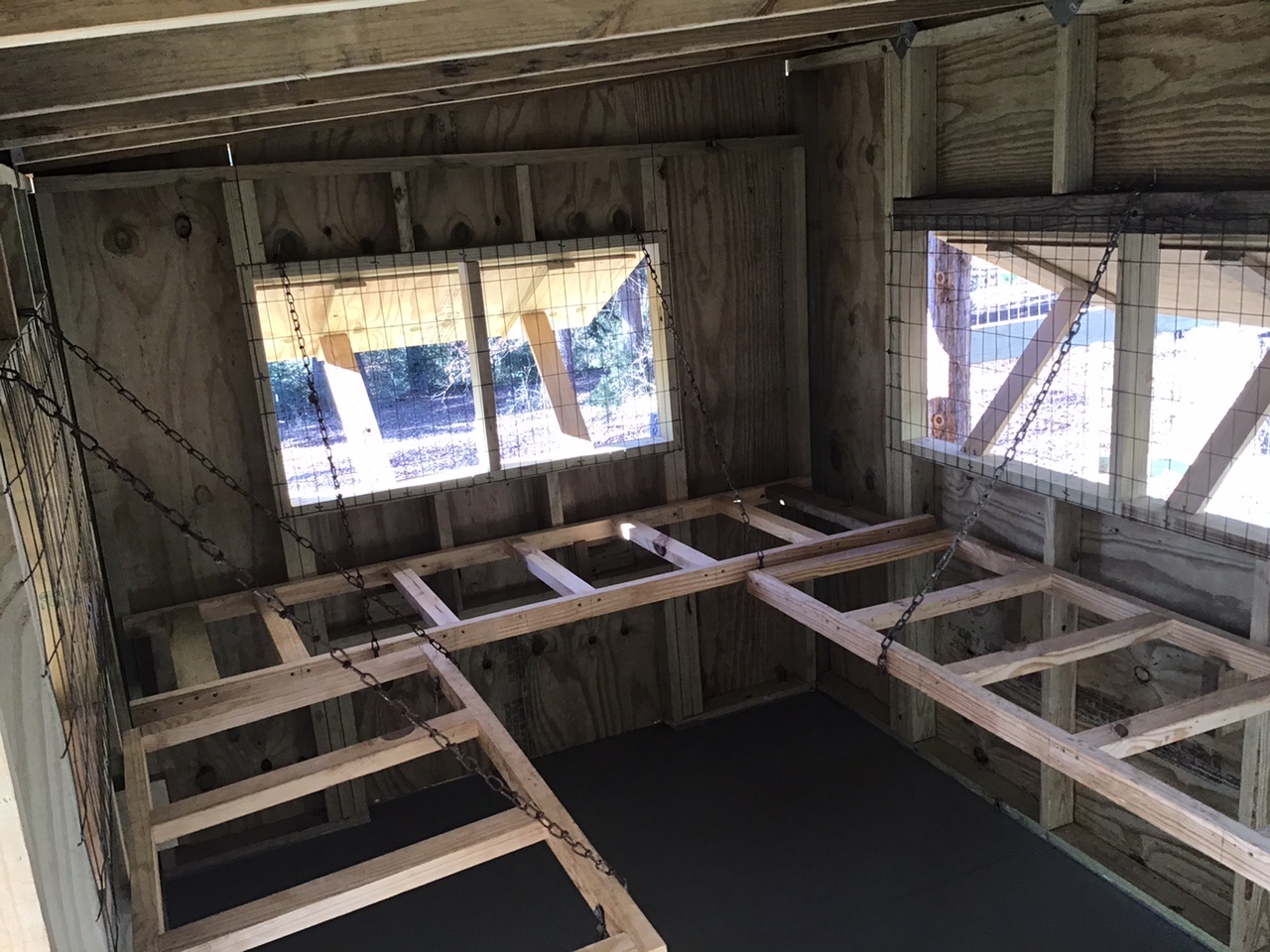
—Fold-away perches, what a feature! This might be a Handy Hubby unique creation, I’ve never seen it before, nor has he. Necessity is the mother of invention! Snakes curled up in a corner are really hard to get at when you have to crawl under permanent perches. There’s invariably rogue hens who try to nest in the corners too. And for cleaning, of course, with a large back door for scooping poop directly into the tractor bucket.
—Gravity assisted flow-thru composting, impressive! Faster compost processing using scratching chickens. Tractor gates at both ends make it quick and easy to load the run up with leaves and grass, then on the downhill side rake it into the bucket and haul it to the garden after the chickens break it down. Our advancing age was the inspiration there, since we’ve been doing this with shovels and a wheelbarrow. A least favorite chore for sure.
—Storm shutters over extra large windows and an extra large feeder. We need lots of ventilation from all sides in summer, but also extra protection from crazy weather like high winds, hail and tornadoes that are apparently our ‘new normal’.
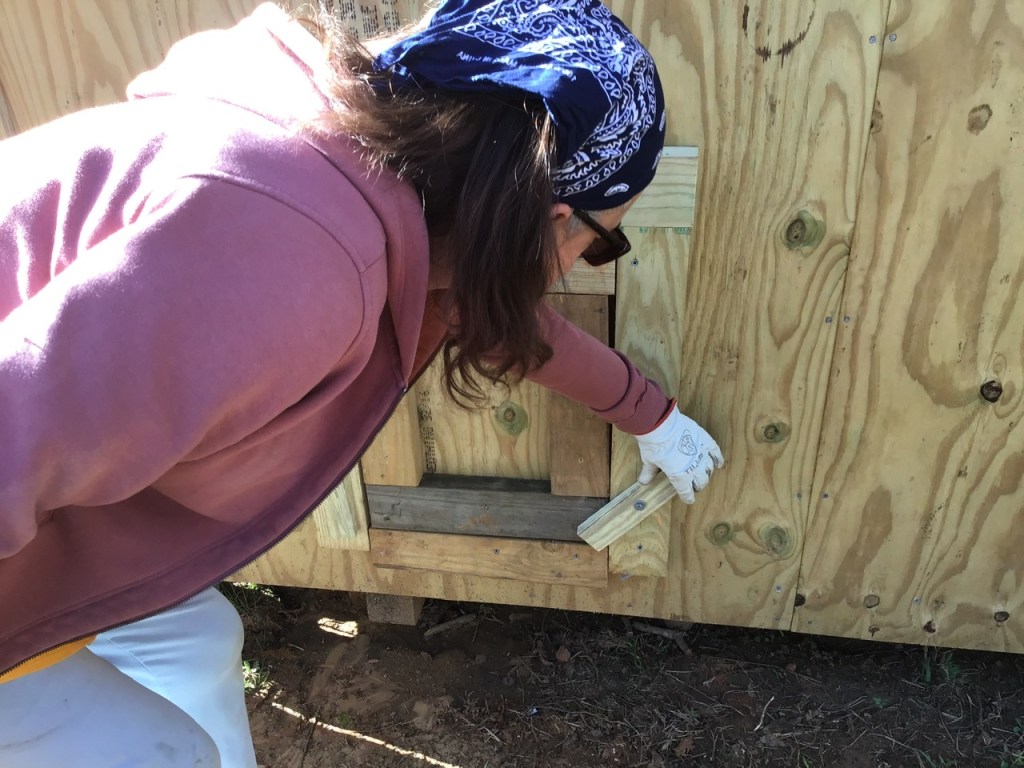
—A locking hatch, because safe chickens make happy owners.
It’s time again for some fun snaps. Apparently my ‘extremist’ opinions are not nearly as popular as far as posts go. What a mystery! 🙂
As usual, not suitable viewing for vegetarians.
But, our veggie of the year has definitely been the turnip. Not too sexy, I know. Personally I think the turnip is way under-rated. Lucky for us, they were so prolific this year we’ve been giving them away, feeding them to the pigs and eating them ourselves pretty much daily. Raw, baked, stewed, roasted, fermented—don’t knock ‘em ‘til you try ‘em! (And if you have any yummy suggestions for preparation, please do share.).
Hakurei F1 Turnip from Johnny’s Seeds—fantastic producer, delicious and nutritious
Our small asparagus bed was so over-packed we created 2 huge beds for them, had to go outside the garden fence and cut down a few trees to do it, and still had enough to give a big box away to a sister homesteader.
I also dug up the ‘naked lady’ lilies, day lilies and iris, replanted a bunch of them and still had loads to give away. I love to spread the wealth! It was A LOT of work, but hopefully worth it. Time will tell.
(Note to new gardeners: DO NOT crowd your asparagus, those crowns are a nightmare to separate once they get over-clumped. Lesson learned the hard way.)
Fava beans and lovely greens and my favorite herb, chervil.
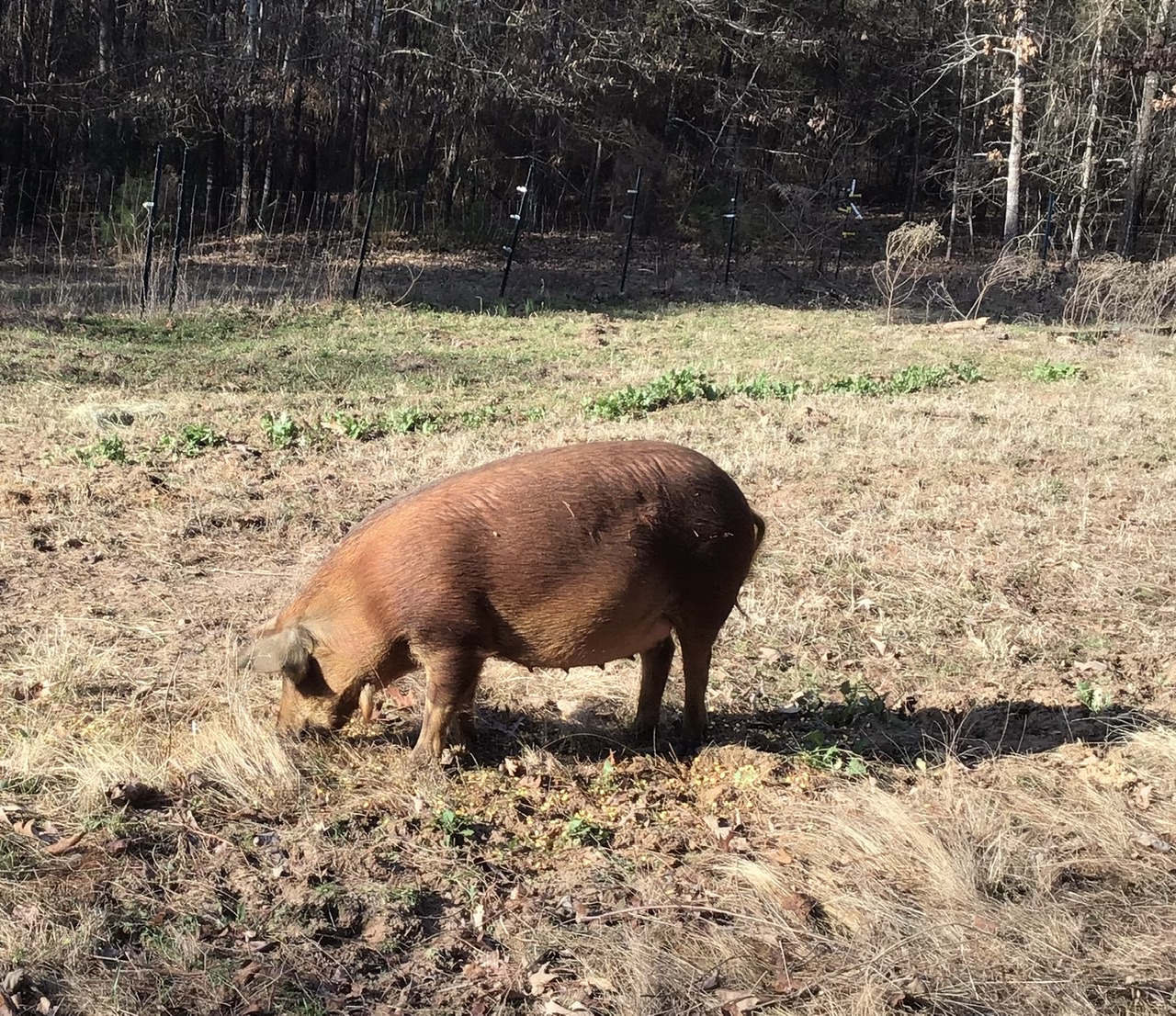
Mama Chop, ready to pop! Papa Chop must be very proud, he got Virginia preggers too, her first time. Loads of piglets coming any day now.
We had to borrow another ram, apparently the last one was sleeping on the job. He’s been keeping very busy.
Handy Hubby’s Grand TajMa-Coop post coming up soon, it’s a beauty, so stay tuned!
Dare I say, it’s the classiest coop in the county?Have a Great Dane of a day!
As the United Nations, Club of Rome, World Health Organization and various other international ‘public-private’ partnerships try to propagandize the world into their vision of “Global Sustainability” there are a number of crucial variables they’ve left out, which localities could capitalize on, if they were made aware of this potential.
For example, did you know there are salt mines all over place in this country? Salt was the basis of our first ‘trade markets’ — long before exotic spices of the Orient — salt was King of the World.
Salt was, well, worth its weight in gold, as the saying goes. Why do we import tea, the ‘native Americans’ might have queried of the mostly British expats settling here? There’s perfectly good tea all around you, can’t you see? And they might have made a few good jokes about that.
But salt? You’re going to import salt, too? What the bleep for?! That’s not even joke-worthy, that’s just a dumb-ass death sentence! You know it’s everywhere around here, right? And the gold y’all so covet, what’s that for, exactly? Y’all are really so very attached to your adornments, eh? Good choices there, give over your salt, so you starve, for gold, so you can pay your taxes. Brilliant system!
Here on the wee homestead we came inspired to see how long and far a road it is to self and community sustainability. We were thinking like most homesteaders, survivalists, etc., are thinking—food, water, energy. Obvious, these are crucial.
But what about the salt? That, along with the water, was the very first thing either robbed, buried, or tainted by the industrialist-minded settlers. Not the ones who came for a better life more aligned with their God and purpose, the ones who came expressly to profiteer for the pay-masters back home.
Long before our water and air were compromised, our people enslaved to the State and our ranges overrun with slave labor, our salt was “buried” by the Global Regulators. There are salt mines and primal (renewable, sub-surface geysers, essentially) water available all over this country.
That was known centuries ago! But go ahead and demonstrate your loyalty to the State, that tricked and enslaved your Great, Great Grandparents and before, by wearing that muzzle of submission and voting for your next tyrant.
Don’t care where your salt comes from? Next you don’t care where your water comes from, or your food comes from, or your energy, or anything else.
We mustn’t let the tyrants and clowns get us down Joy and laughter can still abound Mantras and cliches can spout the latest crazes But it’s Nature that always amazes!
Praying Mantis living on Wandering Jew, seems somehow apropos, no? He really does live there and he’s pretty good company. 🙂I’ve heard of bats in the belfry, but in the umbrella?!How about a cuteness contest—goats or sheep? I know my opinion! Share yours below?
It’s very zen to watch the bees, I find. Next time I’ll figure out how to add sound—I love that soothing buzz of what appears to be such well-ordered chaos—Such miracles in nature!
I just wanted to share this fantastic site, here’s just one of their high-quality articles, but there are many more of great value for beginners and old green thumbs alike! I’m learning so much from them, yippie!! 🙂
Raspberries (Rubus idaeus) belong to the genus Rubus, along with other cane berries such as blackberries, boysenberries, lawtonberries, loganberries, marionberries, silvanberries and tayberries. What’s quite interesting is that the whole Rubus genus is part of the Rosaceae (Rose) family, to which almonds, apples, apricots, cherries, hawthorns, loquats, peaches, pears, plums, quinces, raspberries and strawberries also […]
Oh my, I suck again. Of course I already knew goats are notoriously mischievous. And as a habitual novice, I expect mistakes and steep learning curves, but a nearly fatal accident before my new kids are here even a week?
Don’t worry, the story has a happy ending or I wouldn’t be writing it right now. I’d still be sobbing, watching chick flicks, eating popcorn, and overindulging in kombucha cocktails, like I did all afternoon yesterday.
I don’t handle this kind of thing well at all. In fact, even that expression ‘to handle it’ is too generous, because I barely do. What actually happens is I panic, get hysterical, panic some more, act out of sheer desperation, and then sob, whether or not I was successful. I have so much awe and admiration for real farm folk, the kind that grew up with livestock, so that all this life and death drama is second nature to them. But I grew up like most Americans, very sheltered from death and the other common dramas of nature.
I woke up yesterday morning and went directly to the corral where I have the new kids penned up, for their safety, of course. No, not at all of course. Phoebe, once the tamer and more exuberant of the two, had wedged herself in the feeder, she was on the ground not moving, I thought she was dead. Panic ensued immediately. I left the gate open as I rushed to her, and out bolted Chestnut, who then also panicked as the dogs began pursuing her eagerly around the corral.
Guard or chase, we’re getting mixed messages?!
Phoebe’s neck was twisted in a horrific way, but she was still breathing. And I couldn’t get her out. I struggled for what seemed like 20 minutes but was probably more like 2, absolutely beside myself. I thought for sure if her neck wasn’t already broken, I was breaking it without a doubt.
I did at last get her out, she tried to stand, head and neck terribly deformed, and fell right back down again. My mind was racing and whirling and the very thought that I was going to have to put her down had me collapse in a heap of sobbing.
She barely moved all day. Miraculously though, she’s now recovering. She doesn’t have her voice back at all, she’s more skittish, but she’s eating, and I am so grateful, and so lucky that my ineptitude and panic didn’t cause nearly as much pain as expected.
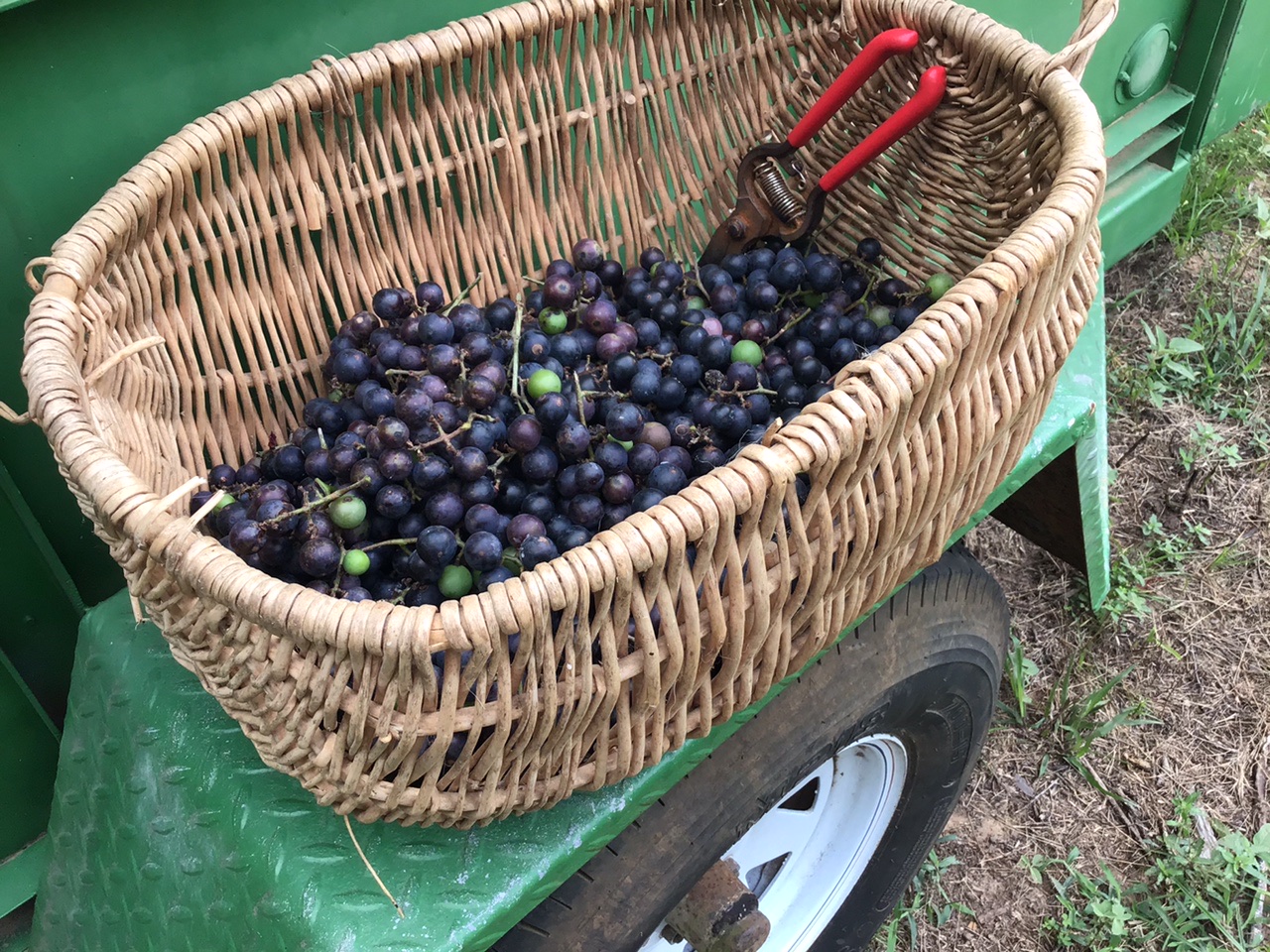
Something good in fact came out of it—I realized the wild grapes are ripe as I tore at the vines to bring the kids. Today’s a new day and there’s no time to keep crying over milk not even spilled.
Grapes for the adults and vines for the kids. Now get busy crushing, woman!
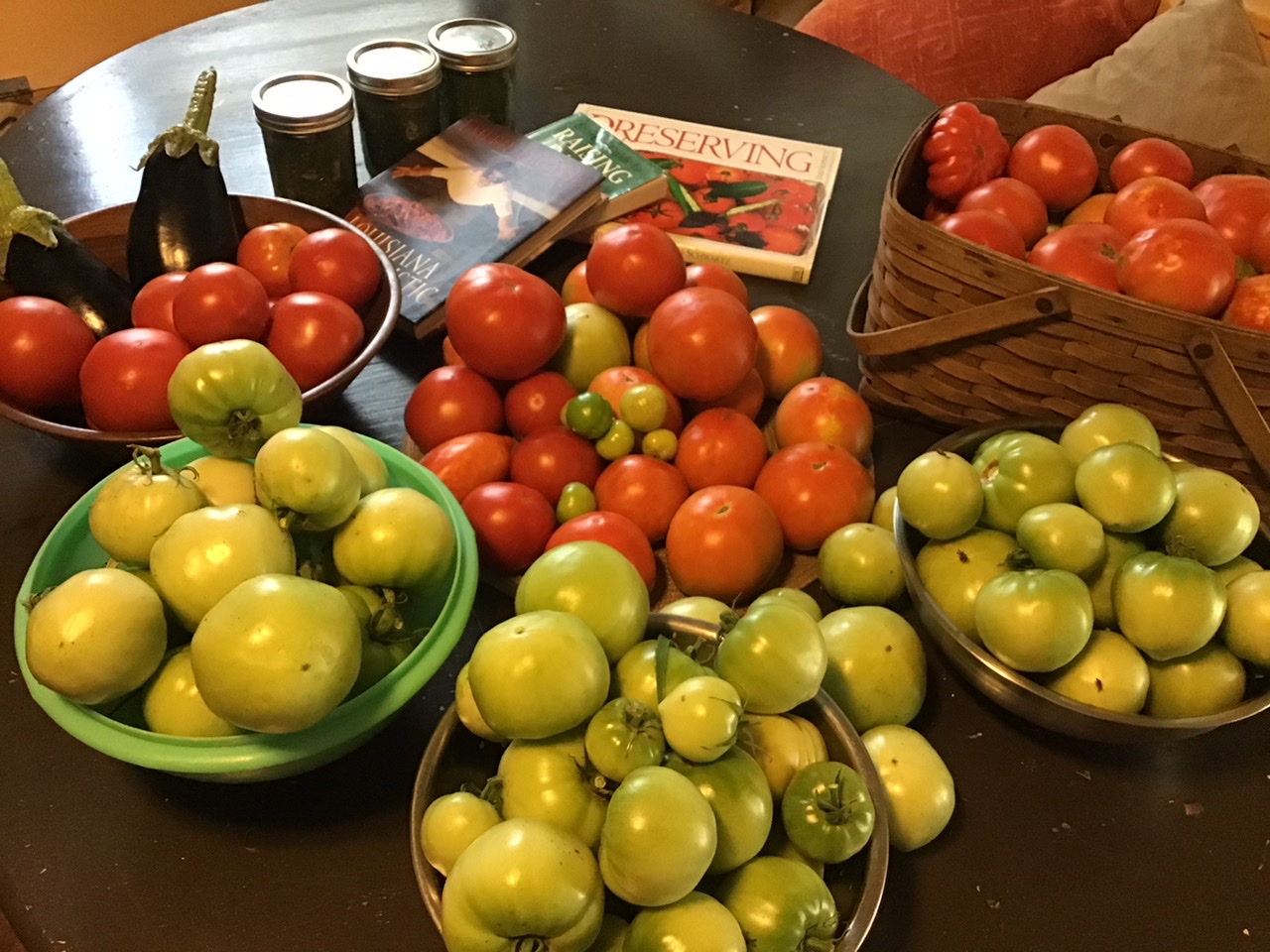
2 huge tomato plants found dead, mysteriously, full of unripe fruit. No time to cry or wonder why!