Food Freedom & Noncompliance

When you see that trading is done, not by consent, but by compulsion – when you see that in order to produce, you need to obtain permission from men who produce nothing – when you see that money is flowing to those who deal, not in goods, but in favors – when you see that men get richer by graft and by pull than by work, and your laws don’t protect you against them, but protect them against you – when you see corruption being rewarded and honesty becoming a self-sacrifice – you may know that your society is doomed.”  Ayn Rand

The age of noncompliance is at hand, dear fellow Americans.  Where will you stand, or fall?

This looks like an exciting event I wish I could attend!  It’s too far for me, but I thought to repost it in the hope it will attract others who might be interested.

Rogue Food Conference – Circumvention not Compliance

First-ever Rogue Food Conference, innovative solutions to over-regulation in the food and farming space

January 25th, 2020
Marriott Hotel at the Cincinnati International Airport, Hebron, Kentucky
Snag your seat here:  https://roguefoodconference.com/blog/registration/

Does your lack of food choice bother you? Then come see us, Joel Salatin and others at the one-day Rogue Food Conference.

Here’s more about the conference from Joel Salatin himself:

For the few of you who are unfamiliar with food regulations, be assured that the time has come in this country, unfortunately, where circumventing the law is more doable than complying with the law. Price, availability and safety all hinge on consumer choice in the marketplace. Right now, consumers do not have freedom of food choice. But numerous innovative folks have figured out loop holes to gain neighbor access to food options.

So it is with extreme pleasures and gratitude that I can announce this 2020 ROGUE FOOD CONFERENCE, which will explore and publicize the numerous work-arounds within our heavily regulated food space.

We’ll hear from people who sell pet food. Some have created a food church. Some operate under a non-public co-op country club arrangement. These schemes are highly creative, hated by the food police and loved by people who, as consenting adults, gratefully enjoy the empowerment of food choice freedom. When people lament the deplorable state of American food (we lead the world in junk food) too often their only solution is more regulation, from nutrition labeling laws to food temperature requirements to licensing plans.

But another alternative exists: it’s called freedom. We’ve tried top down regulatory oversight to change the food system, only to see it become nutrient deficient, sugar laden and sterile. It’s time to try a bottom up approach with some freedom instead of bureaucracy.

I hope everyone comes.


To learn more, go to www.roguefoodconference.com

Nature’s Wisdom

When you realize you’ve made a wrong turn, you stop.  Maybe you turn around, maybe you ask for directions.  Maybe you find a detour, or forge a new path through the unmanaged brush.

Won’t you don’t do is continue on in the same direction mindlessly.

The Technocrats have made a wrong turn, over a century ago.  Some of them probably meant well, I’m sure.  Despite this obvious error, they are doubling down, like addicts at the roulette table after midnight.

Here’s a courageous woman taking the journey of a lifetime, following in the footsteps of Dr. Weston A. Price, many decades later.  What have the indigenous cultures to teach us about living healthy and in harmony with the natural world?  We have silenced their voices to our detriment and I cheer every effort to realign with their wisdom.

Yay Holistic Hilda, You GO GIRL!

Science’s G.O.D=Magnetoreception?

Another post pondering and speculating on the Great Organizing Dynamic, and where science stands on the issue.

I realize I’m once again in way over my head, because even if I could understand all the formulas and lingos in these studies and articles, most of them I can’t obtain anyway without being part of an affiliated university or think tank or by paying hundreds of dollars each to subscribe to the various journals of officialdom.

I see I’m not alone in complaining about this fact and that many scientists agree and go for more ‘open source’ publishing options.

I see also I’m among a big crowd complaining about the lack of ethics in science publishing and research methodology.  There’s plenty of evidence of the lack of replication ability, questionable research parameters favoring certain outcomes, not to mention the ridiculous mainstream garbage that makes it down the pipeline to the general public.

Here’s a dirty little science secret: If you measure a large number of things about a small number of people, you are almost guaranteed to get a ‘statistically significant’ result. Our study included 18 different measurements—weight, cholesterol, sodium, blood protein levels, sleep quality, well-being, etc.—from 15 people. (One subject was dropped.) That study design is a recipe for false positives.”

Corbett Report: The Crisis of Science

What I noticed in the short abstracts and few articles I was able to read freely, was a lot of assuming, and not enough abstract observing.  Like in the following example:

First, the bees’ distance errors are similar in magnitude to their directional errors, and their angular errors decrease greatly with increasing distance to the target (decreasing more than fourfold between 100 and 700 m). As a result, the absolute scatter of recruits remains relatively constant with changing distance to the target (increasing by less than 50% between 100 and 700 m). This is to be expected if the optimal level of imprecision is the same for distance and direction and does not change with the distance of the target from the nest. Second, comparative studies involving three tropical- and one temperate-zone species (allApis)suggest that the precision of the bees’ languages may have been tuned in accordance with the spatial characteristics of the resources each species uses. We suggest that both the round dance, which conveys no directional information for nearby targets, and the high angular divergence in waggle dances indicating targets within several hundred meters of the colony are both understandable in this context.

https://link.springer.com/article/10.1007/BF01052234

“Distance errors,” “Directional errors,” “Imprecision”??  How would scientists have any clue at all whether the bee lines were in error when they know, admittedly, so very little about a bee colony’s social behavior?

In the following study, the parameters are so narrow and there are so many underlying assumptions it doesn’t seem to have much relevance to the layperson or even to industry, so I’m naturally curious, who funded the study and for what aims?

Honeybees have been trained to respond to very small changes in geomagnetic field intensity.

https://pdfs.semanticscholar.org/750f/ce1b8f4723b09dd2fb1324fc916c9578c77b.pdf

What about magnetoreception?  Their eyes and even their instruments can’t measure half of what’s going on in the bee brain, I’d be willing to bet the farm.

Wikipedia flat out lies that research on magnetoreception in humans is a brand new thing, as of this year, when in fact there was a groundbreaking book on the topic published in the mid-80s!

Wiki: “Humans are not thought to have a magnetic sense, but there is a protein (a cryptochrome) in the eye which could serve this function.[2] In 2019, a group of researchers have arguably provided the first concrete neuroscientific evidence that humans do have a geomagnetic sense.[3]”

A6CFCE13-0599-4D7F-ADED-276D0011C0F4

Testing Human Subjects

Brains Register Magnetic Shifts, Subconsciously

“Our participants were all unaware of the magnetic field shifts and their brain responses. They felt that nothing had happened during the whole experiment – they’d just sat alone in dark silence for an hour. Underneath, though, their brains revealed a wide range of differences. Some brains showed almost no reaction, while other brains had alpha waves that shrank to half their normal size after a magnetic field shift.”

What might activate these sensors in humans? Here’s an interesting study Wiki seemed to miss, among others.

“The Earth’s geomagnetic field (GMF) is known to influence magnetoreceptive creatures, from bacteria to mammals as a sensory cue or a physiological modulator, despite it is largely thought that humans cannot sense the GMF. Here, we show that humans sense the GMF to orient their direction toward food in a self-rotatory chair experiment. Starved men, but not women, significantly oriented toward the ambient/modulated magnetic north or east, directions which had been previously food-associated, without any other helpful cues, including sight and sound. The orientation was reproduced under blue light but was abolished under a blindfold or a longer wavelength light (> 500 nm), indicating that blue light is necessary for magnetic orientation. Importantly, inversion of the vertical component of the GMF resulted in orientation toward the magnetic south and blood glucose levels resulting from food appeared to act as a motivator for sensing a magnetic field direction. The results demonstrate that male humans sense GMF in a blue light-dependent manner and suggest that the geomagnetic orientations are mediated by an inclination compass.

Blood glucose activates sensing magnetic direction

Finally, we investigated the mechanism by which different magnetic orientations was manifested among starved men, unstarved men, and women irrespective of starvation. An analysis of raw data (Fig 2A, 2C and 2D, Fig A in S2 Fig) demonstrated that magnetic north orientation was remarkable only in the food association sessions in starved men (Fig 4A, top, middle), in consistent with the result (Fig 2D)”

https://journals.plos.org/plosone/article?id=10.1371/journal.pone.0211826

What might this line of study reveal about ‘debunked’ ancient sciences like gardening by moon phase, dowsing, astrology, lay lines, and so on?
Free Tea!

I had a bunch of ladies over from our community stitching group and offered them a taste of our homemade wine and foraged tea.  The wine was hit and miss, most of the ladies being teetotalers.  The tea though was a big hit.  Much to my surprise, while most of them were country-raised, none of them had ever heard of making tea from two of the most common sources imaginable: pine needles and yaupon.

Foraging health
The Amazing All-Purpose Pine Needle Tea – Dave’s Garden

A sure cure for scurvy; a remedy for cold, flu, obesity, dementia, bladder, and kidney issues; antidepressant; anti-hypertensive; anti-tumor; render chemotherapy less toxic to patients, and many more potential health improvements and nutritional benefits, can all be found in the Christmas tree you dispose of yearly!”

5 Incredible Benefits of Pine | Organic Facts

The most interesting health benefits of pine include its ability to boost the immune system, improve vision health, stimulate circulation, protect against pathogens, and improve respiratory health.”

The yaupon surprised them even more than the pine, because around here it’s so prolific they are treated like annoying weeds much of the time.  (Maybe that’s because they don’t realize how much the bees love them in their early spring bloom period.).

In some areas you’ll need to be sure not to confuse yaupon with Japanese privet, which is a popular landscaping shrub, but poisonous.

Benefits of Yaupon Tea

Yaupon tea is a tea made from the dried leaves of the yaupon holly tree, which is scientifically known as Ilex vomitoria. This type of holly tree is native to the southeastern region of North America and was once used as an emetic and a ceremonial tea for numerous Native American tribes. The tea is also closely related to yerba mate tea and has many of the same active ingredients and nutrients.

I also make tea with sassafras, mullein, rose hips, elderberries, sumac, and lots of other foraged goodies. Healthy and delicious, especially after you add the local honey, of course.

Foraging Texas has a great list with lots of common plants not just in Texas.

DA8B9586-28FF-443F-A3C4-0A86B62DD0C7


Planned Obsolescence Rockefeller Style

Not just doomed to fail, but designed, then built, expressly to fail.

SMART cities are Agenda 21/2030 cities, NLP (neuro-linguistic programming) buzzwords include: “sustainable,” “resilient,” “connected,” “hi-tech” — as cool and cosmopolitan as the marketers try to make them sound, the reality is the polar opposite.  These cities are death traps and the Globalists want it that way.

Common sense question:  If ‘resilience’ were really the goal, why continue to rebuild,  incessantly, in places like Houston and New Orleans, and other fire-prone areas, or flood and hurricane prone areas?

I’ve never called myself a ‘doomsdayer’ among the many things I call myself, but I think I might start. 

It’s clear to see the Globalists’ get-rich-forever plan is alive and thriving after my recent trip to Dallas.  Of course, I’ve seen changes in our rural area as well, but it’s more nuanced: road construction, new fancy schools, increased consumerism, a noticeable influx of immigration in the surrounding small cities.

But Dallas, whoa!  From here on the wee homestead to there, as to Houston, or Austin, is as big a contrast as most any three-hour tours could take you today, I imagine.

A7EBDC29-F284-421C-954C-441224CA5BCA
http://www.america2050.org/texas_triangle.html


I traveled alone, which I like to do, even though it often feels weird and lonely. 

“Weird” was a theme, considering one of my destinations was the Flat Earth conference.  Owen Benjamin was the comic crowd pleaser, me excluded.  He tenderly refers to the conference as “The Island of Misfit Toys.”

Then from Flat Earth to Ancestral Earth, for the Wise Traditions conference, coincidentally just 20 minutes away.

Coincidence, or synchronicity, was another theme.  More on that later, maybe.

For the moment though, here’s why I now have no doubt these SMART cities are for corralling human livestock for future culling.  The most basic logic, based on clear data that anyone could see, if they would just look.

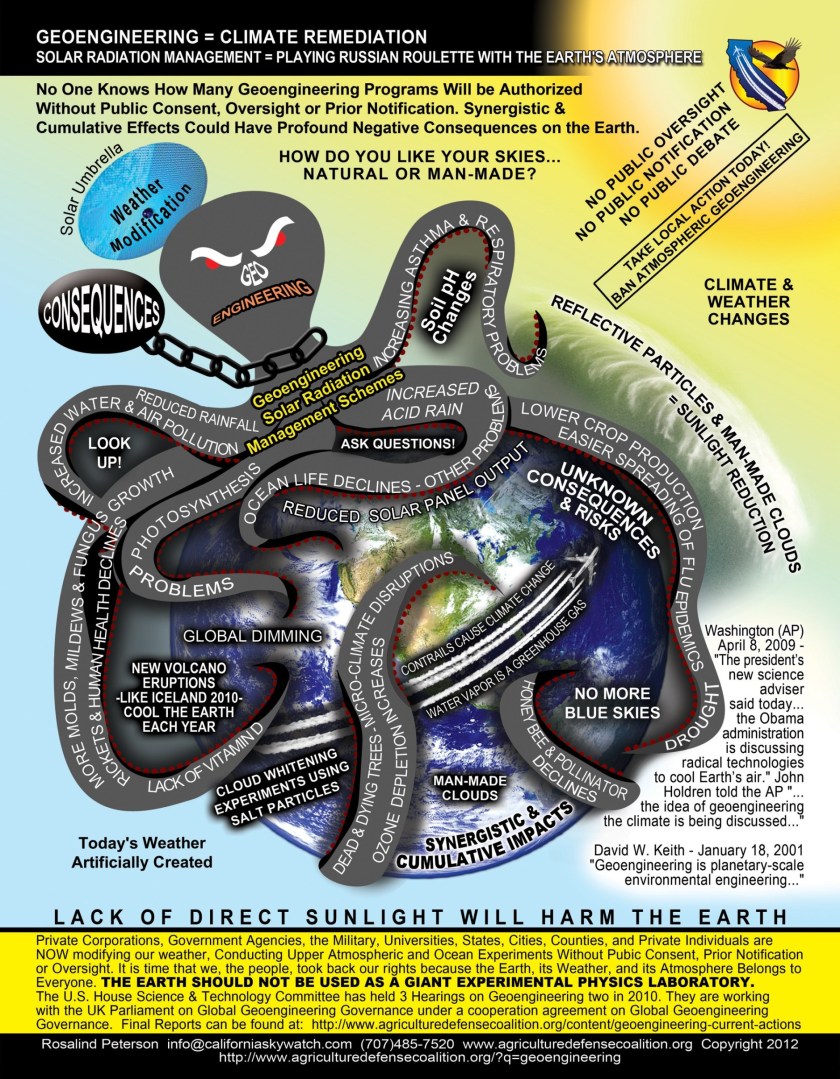
Weather modification exists.  It’s not being used for the benefit of the populace.  The cities do not have their own food sources.  They rely on electricity to function already and will become even more vulnerable with IOT (Internet of Things) and the 5G grid. 

Both weather modification and 5G rely on altering the atmosphere through manipulation of frequencies, so as these systems attempt to co-exist in densely populated areas, we are in dangerous and uncharted territory. Many claim, lethal territory.

Because I met several awesome folks at each conference, I thought maybe, hopefully, they might look me up, and be reading now, and wondering if I have any quick bird’s eye perspective on my takeaway from each event.

Of course I do.

Of Flat Earth: The map is not the territory.
Of Wise Traditions: Look up.

Of Strategy, for us all: Know the enemy, know thyself.


It’s a Life Skills Problem

I couldn’t agree more with Max Igan when he repeats that losing our life skills is assuredly one of the most serious vulnerabilities of modern civilization.  

Of course, I can’t agree with his ‘no private property’ stance, but that’s another post.

Igan’s outlook reminds me when I was first introduced to the theory of Spiral Dynamics, when my fellow students (mostly middle-aged women of a relatively superior income class) immediately ‘recognized’ themselves in the ‘highly evolved’ stage of ‘Turquoise’.  Big surprise. 

I was far too polite when I refrained from pointing out what was obvious to me even as a novice, having already been ploughing away on the wee homestead by then for several years.

Your Turquoise is built on a house of cards, Madame,” is what was obvious to me immediately, and which I longed to express.  If it were built on a house of sand you’d be far safer, I’d then add.

Even my favorite synopsis of this social theory fails to highlight the significance of ‘Beige’ — the foundations of civilization.  This stage is considered to be subsistence living, hand-to-mouth, barely advanced to basic tribal existence.

The theorist here, Don Beck, demonstrates respect, even some reverence to their ancient wisdom, but with the assumption, it seems obvious to me, that an evolved civilization has technological immunity to such bio-psycho-social devolution that would accompany this exceptional vulnerability of modern life.  

You think butchering and gardening, farming and foraging are skills beneath you, Family Silicon Valley?  

Or, in the tolerant, nostalgic age they are, at best, quaint lost skills to pine about and imitate in your Petri dishes? Ya’ll can’t possible recognize your feeble attempts bound to fail as you attempt to fit all of creation into your teensy-BIG Smart World?

Think again, former friends.  Here are the real skills armies and resilient cultures are built on.  

Here’s your reality, Family Turquoise, if the grid goes down, you can’t survive, not even for a fortnight.  Psychic breakdown would occur almost immediately, due to lack of any authentic earthly connections or spiritual foundations in your personal or family or community unit.

Then the true reality of your vulnerability would hit home for real.  You have NO LIFE SKILLS, at all! Not spiritually, not physically, not emotionally. 

Most Americans these days can’t even cook from scratch.  This skill was lost in barely two generations.  And what’s worse, they can’t even fathom what happens to the individual mind, let alone the family and in turn the collective consciousness, when faced head-on with annihilation.

The more ‘superior’ one calls themselves in the modern world is directly related to how vulnerable they really are.  Perhaps that’s what the well-quoted Bible translation meant in claiming, “The meek shall inherit the earth.”

As a wise woman in an era of uncertainty, who are you going to put your confidence in—the wealthy CEO of Fiction, USA with a San Francisco loft worth a few million on paper—or the ‘poor’ man who can trap, shoot, butcher and even cook the meat for your table?

bigchopsmoker

That the ‘A Class’ woman chooses poorly in this situation doesn’t surprise me at all considering our current state of affairs and the fact that of the many supporters as well as volumes discussing this social theory of Spiral Dynamics, I’ve yet to find one who gets the full nuance of Beige.

Modern folk just don’t want to go there.  It’s like the old lyrics, “How ya gonna keep them down on the farm once they’ve seen gay Paris?”  It’s hard work after all.

It’s not just whistling Dixie in your Tu-Tu, thanks anyway, Grandma.

1938 Mom - 4th-ice follies
Yeah, that’s Granny, the gorgeous one, 4th from the left.


So we get Soy-Boys who are good at sales, rather than competent men who can bring home the real bacon.  The ‘elite-class’ calls this ‘evolution’.  This is ‘spiritual’ advancement.  

Why might they promote this among the plebs and their entertainers? Heaven knows!

If one isn’t capable of hurting a fly, then we’ve evolved to societal sainthood, according to these shysters. This is their Utopia. 

As for the adult-children bolstering these Pied Pipers?  How long shall the competent among a functional colony support them, I wonder?

http://www.alt-market.com/index.php/articles/3969-why-is-the-elitist-establishment-so-obsessed-with-meat

Humpty Dumpty sat on a wall . . .
Humpty Dumpty had a great fall . . .

And I said, “Serves ya right, fat ass in fantasy land.”


Upgrade to Vocation

I like the old adage: “All work and no play makes Jack a dull boy.”  I think it’s true.  I’ve actually said it before to Handy Hubby and it makes for a pretty effective guilting tool.

But there’s an equally true non-adage I think to be more fitting to most folks in this country currently:  All play and no work makes Jack a jackass.”

Don’t get me wrong please.  I do know there’s plenty of fine folks working multiple meaningless jobs just to keep their family afloat.  I’m not talking about them.  I’m also not talking about those who are seriously mentally and physically suffering, because there’s plenty of those folks around, too.

But I do mean those of us who are in the majority, like me, relatively mildly mentally and physically suffering, still able to get up each day and do stuff.

Here’s my point.  There are three main stages in life between birth and death as far as I can tell so far.  It begins with Service to Self (infancy, childhood, adolescence), it moves to Service to Others (family, friends, community), and these stage are both motivated primarily by a ‘will to power’.  Then, as the third and most crucial stage, we mature into Service to the Greater Good.

Bush’s answer to Americans when starting another insane war was: “Go shopping!”  Hillary Clinton claimed: “We have a huge fun deficit in America.” They were appealing to Service to Self.  

JFK’s famous quote, encouraging to his future Peace Corps volunteers for decades to come, was an appeal to Service to Others:Ask not what your country can do for you, but what you can do for your country.”

This is where too many of us are getting stuck.  And our rulers have designed it this way quite deliberately.

The coup d’état in slow motion we are witnessing unfold now at a rapidly increasing clip has been in the works for many generations.

“Contrary to common belief even among the educated, Huxley and Orwell did not prophesy the same thing.  Orwell warns that we will be overcome by an externally imposed oppression.  But in Huxley’s vision, no Big Brother is required to deprive people of their autonomy, maturity and history.  As he saw it, people will come to love their oppression, to adore the technologies that undo their capacity to think.”  Neil Postman Amusing Ourselves to Death: Public Discourse in the Age of Show Business (1985)

Instead of wisdom years filled with . . .well . . . wisdom, we’ve got Alzheimer’s and chronic fatigue, and a dozen and one other ailments of mind, body and spirit.

The middle aged and elderly, those still healthy enough to have a life, are devoting it to a retirement filled with meaningless pursuits—gambling, cruises, the Shopping Network, or latest sport, game or craft craze, looping right back into Service to Self or Service to Others, without ever maturing into the final, and by far most crucial, stage of life.

Without our wise elders we are doomed as a culture and a society.  We don’t need them getting plastic surgery and posting their new faces and evening dining choices on social media.  We need them learning from their mistakes, seeing reality through the lifetime of a mature adult, sharing their hardest lessons as well as their greatest gifts.  We need them to realize it’s not a popularity contest anymore, to take off the masks once in a while, to call out the bullshit they see, to relentlessly speak truth to power, and truth to youth.

Retirement should not mean a decade or two of crossword puzzles and golf.  Service to the Greater Good—that means greater than self and others. Not following orders, not following trends, following the highest calling of the divine Self—the vocation— the will to meaning.  It’s not ‘do what you love and the money will come’ it’s ‘do what matters, beyond the money, beyond the need for approval.’

Without examples of this, with so few mature adults modeling this 3rd stage, what do we expect to happen?

Do most of us in middle age now have examples of wise elders in our lives?  I have a few, but that’s only because I consistently seek them out.  I’d say the majority don’t even know what a vocation is, they see the ‘o’ as an ‘a’.

In fact, a vocation is far more precious.  It’s the secret garden where your skill, your joy, your wisdom, and the humble desire for a better future to leave behind, all magically coincide.  It’s the sweet spot of life’s greatest magic that only you can offer.  It’s the quilt, or the tapestry, or the garden, or the painting, rainbow, symphony—whatever metaphor suits you most— as the scene moves from seemingly random splotches of design and craft, to the point where the image takes shape at last, nearly ready for show and tell.  

It’s your life as the willed ephemeral expression of the divine.

luckyday

But so many are missing this, as it’s been systematically stolen and replaced by entertainment, endless material pursuits, silly vanity, diversions of the Order of Bread and Circus, that if I were a kid today I’d be saying: “Grow up, Grandpa!”

Feminine Psychology (Part 2)

Did you notice my ‘moving of the goal post’ in Part 1?  That’s a master feminine trick, pay attention! 🙂

A6777210-9878-432B-ADC3-02915E815387

Now just some innocent questions.  So innocent.

B2E35349-7379-4CA3-8F09-05CBC30F17AD

Are modesty and virtue feminine social constructs?

1875658E-C0D8-4610-B534-61A3FFCD75C2

Why did women’s liberation become mostly about sex? Has the result improved women’s sex lives?  Does more, and raunchier, equal better?

9BE11634-8D39-40F5-8F92-316D97B429F6


Are mothers with careers happier than those who stay at home?

0417E9DE-070F-4CD3-8BFA-864EB829E09F

Are their children happier?  Are their families healthier?

479D28D4-82C5-4714-8905-E731BB04528C

How did we go so quickly from this . . .

C62AB758-ED2C-4453-8165-97A02543C401

To this?

E08F451A-053D-4478-B7A9-CBD1024B27A3

Who really benefits when women stop slut shaming?  Who is adversely affected?

Why are ‘conspiracy theorists’ being censored while women’s asses are being promoted?


For the LOVE of BEES

If you plan to join the growing number of hobby beekeepers the very first step should be to define your goals.  I learned that the hard way.

It’s a wonderful thing to see the popularity of beekeeping keeps increasing.  I love beekeeping for many reasons, but when I was first starting out the learning curve was very intimidating.  And that’s coming from someone who usually adores learning.  

Not only was there loads to learn about the bees themselves, but also about how to manage their colonies, which changes depending on your hive type, which is dependent on what your goals are as a beekeeper.

The first question to answer for yourself as a newbie is if you are interested in beekeeping as livestock or as habitat provider, or maybe both.

I had several mishaps in my first years because I hadn’t asked myself this most fundamental question.  I hadn’t asked myself this because in all the books, forums, courses and club meetings I’d attended, no one asked this question.  The general assumption is always that the beekeeper is interested in bees as livestock, because that’s what most want.

In this case, follow the commercial standards, using their Langstroth hives and peripheral equipment, their treatment schedules for pests and diseases, and their feeding programs and supplies, and you should be good to go.  You can buy nucs (nucleus colonies) in the spring, and if all goes well you’ll have some honey before winter.  This is by far the most popular route to take in beekeeping.

3D20AE9C-B664-4014-B63E-60DCE37A2BC9
Our only Langstroth hive on the homestead, bedazzled with old jewelry.

But it’s not for everyone, including me, which took me a few years to figure out.  Honey, pollen, wax, propolis, royal jelly, queen rearing, and other processes and products from beekeeping are the main goals of this style of beekeeping and there’s lots to learn from the commercial operators who have mastered many of these skills for maximum efficiency and profit.

However, if you are interested more in providing habitat and learning from the bees, and creating truly sustainable, long-term, self-sufficient colonies in your space, following commercial practices is really not the way to go, and can lead to a lot of expense, confusion and frustration.

In the hopes of encouraging more beekeepers to become honeybee habitat providers rather than livestock managers only, here are a few tips and resources.

0F66DEAA-3033-44FD-AECE-B91386C6AE8A
The bee yard of Dennis Kenney of Jackson-area Beekeepers Club, with his preferred horizontal hive style.  Horizontal hives differ from Top-bar hives in that they have full frames with foundation.  Benefits of full frames is ease of management and stability of comb.  Drawbacks would be the added expense and the artificial, manufactured foundation and its potential contaminants.

0A98CBDD-BF2C-478A-A48B-7CBF71767714

  • The conventional practice is to keep all your hives in a ‘bee yard’ for reasons of convenience and space.  This is antithetical to bee colonies’ natural proclivity to nest far from one another.  It creates problems of diseases and pests that spread rapidly in conditions of overpopulation, which is why so many treatments are needed, and then feeding when nectar/pollen flow is scarce, as well as being hyper-vigilant in your regular hive inspections to find issues immediately before they spread.  Now that I have spaced my 6 hives out around a very large area I’m having far more success.  But, only time will tell!

What else I’ve learned:

  • The typical Langstroth hive is made for easy transport and standardization purposes for the industry mainly, but they are not ideal for the honeybee habitat provider, because they are made with thin walls in order to be lightweight. This means they are poorly insulated and so not suitable for the long-term stability of the hive—getting too hot in summer in southern climates and too cold in winter in northern climates.  Our top-bar hives and nucs have thick walls and insulated roofs. 

  • If you want your bees adapted to your area and climate you don’t want to do the conventional practice of buying new queens every couple of years.  Ideally, you’ll want your colonies to produce their own queens.  Queen-rearing will remain an essential skill for a more advanced beekeeper, because occassionally you may still want to make splits to increase your numbers or to replace weak colonies, or to re-queen another hive displaying poor genetic traits. 
  • When the colonies are weak, depending on the issue, they may need to be culled. This is rarely suggested by professional beekeepers who promote regular treatments on which the weak colonies then become dependent, while still spreading their weak genes on to subsequent generations and their diseases and pests to other colonies.

Just like the faulty logic of ‘herd immunityin the vaccine debate among human populations, many commercial beekeepers use the same complaint about those of us who want go au naturel, that is, treatment-free, with our bees.

Many scientists and researchers are trying to raise public awareness that this is not how herd-immunity works, not in livestock or in humans, and I applaud their efforts.  I personally find referring to populations of people as a herd to be insulting.  I think it actually trains individuals through neuro-linguistic programming (NLP) to think of themselves and each other not as unique and separate individuals, but rather as cattle to be managed.

  • You’ll also want to mostly forgo the conventional practice of swarm prevention.  The goal is for the bees to become self-sufficient, as in the wild, where colonies can live for decades with no hand from man to aid or to disturb.  Some of these colonies are enormous, like one we found in an old oil barrel, there for over 15 years and thriving with multiple queens in the same colony, which most likely swarmed annually.

Swarming is a natural, bio-dynamic process performing many different functions for the colony, hygiene being an essential one. Everything the beekeeper takes away from their natural processes is a stress on them which must then be alleviated by other, most likely artificial, means.

  • Plant perennial and annual crops the bees like for your area and climate.  Here in the south there are plenty of plants that bloom at different times most of the year, giving free bee buffets from early spring to late fall, like: bluebonnet, white clover, hairy vetch, wild mustard, vitek, morning glory, trumpet vine, yaupon, and lots of garden herbs and crops, too.  It is my greatest pleasure to harvest cucumbers, peas, beans and arugula surrounded by forging bees—they love them as much as we do!

65DA91CB-DB3F-4905-AC66-092D51484283

Experimenting and observing is the most fabulous feature of the honeybee habitat provider! 

I know a homeschooling homesteader with an observation hive in their house that the children treasure.  Not only do they learn from these fascinating creatures about how they operate in the hive, but how they are connected to the seasons and to their environment.  They’re learning constantly from the colonies’ successes as much as from their failures.

I practice slightly different techniques with each hive to discover which methods work best here on the wee homestead: one hive has a screened bottom board, one I keep with a reduced entrance all year, one’s in full-sun and another partial shade, and so on.  Not that this will necessarily solve the mystery of colony failure, but every bit of data helps!

Some unconventional resources:

Books

The Shamanic Way of the Bee: Ancient Wisdom and Healing Practices of the Bee Masters by Simon Buxton (2004)

The Dancing Bees: An Account of the Life and Senses of the Honey Bee by Karl von Frisch (1953)

Top-Bar Beekeeping: Organic Practices for Honeybee Health by Les Crowder & Heather Harrell (2012)

Natural Beekeeping: Organic Approaches to Modern Apiculture by Ross Conrad (2013)

Sites

Treatment-free Beekeeping YouTube Channel

https://www.youtube.com/channel/UCC_Yb2d_9M09hcaWlghVZDg

The Bee-Master of Warrilow by Tigkner Edwardes (1921)

https://archive.org/stream/cu31924003203175/cu31924003203175_djvu.txt

Biobees

http://biobees.com/library/general_beekeeping/beekeeping_books_articles/BroAdam_Search_for_Best_strains2.htm

Dr. Leo Sharashkin

horizontalhive.com