
Cartoon Reality

I grew up in the suburbs; I found it really boring; I watched a lot of TV, especially cartoons.

For better or worse, a good portion of my sense of justice came from Bugs Bunny.

Which is actually a lot more healthy than what passes for justice these days, I’d say!

During that time artificial reality did not blur so readily with actual reality. Now when I watch any media I see cartoons everywhere. I see cartoons when I look at people, too. So many have created caricatures of themselves it is clear there is too little authentic left to matter in them anymore. It’s like a return to the primitive, only plastic. Surface obsessed–the inner world collapsed in order to buttress the phony outer world of a manufactured jungle.

The following I copied and/or jotted down from still more media consumption, from a writer I imagine is real, who calls himself Stylman. Interesting name. I stopped following, despite his many wise expressions, when he wrote he thought the crazy weather is being controlled by the fears of the people who believe in geoengineering. A lunatic, obviously. And yet, some prescient views nonetheless.

“And it’s a road to nowhere—a few winners, millions of casualties, and an entire generation taught that their value lies in their ability to perform rather than create, to influence rather than contribute, to be seen rather than to matter.”

Now we live in an era where TikTok influencers who dance for thirty seconds make more than teachers, nurses, or the engineers who build our bridges. We’ve moved from celebrating skill to monetizing attention, from honoring achievement to rewarding performance and exhibitionism.

The fame machine isn’t just anti-human—it’s filling the void left by our disconnection from authentic community and natural guidance, while simultaneously being the logical response to living under constant surveillance.

But this isn’t cultural drift – it’s social engineering. The same institutional forces that have systematically replaced real information, real money, and real community are now replacing authentic human development with performance for strangers. This reflects a broader pattern: we live in an era where every essential human system has been replaced with artificial substitutes designed to harvest our energy rather than nourish our souls.

We’ve built a system that teaches them to treat their lives like content. That tells them: if you’re not being seen, you’re not really here. That your private self has no value unless it’s validated by strangers. We’ve stripped away something essential—the right to exist without an audience.”

While I agree, it’s actually much worse, in my experience.

The invasion of privacy of public systems and the individuals willing to force this state on everyone have deeply influenced inter-personal relationships as well–corrupting them, disfiguring them into parallel invasions–where expectation, extraction, exploitation has become the nauseating norm, and accountability has become entirely absent.

The public and private realities mirroring each other. Recently when I was visiting a dear friend who is Uber-Tech-Attached I had a Truman Show Moment, where she was gushing over her new air-fryer and I got the uncomfortable and uncanny sense I was unvoluntarily in an infomercial.

It’s a very creepy feeling I knew she would not understand.

Folks are faking their way through life, and this will have continued disastrous consequences.

The invasions will continue, until the trespasses are rejected and honor is restored to privacy and to nature.

The dangers of such a system, where access is assumed–access to your private spaces, your private thoughts, from your micro-expressions to your quotidian habits–is a culture of mutual parasitism, not even close to mutual understanding. This is not a culture more connected, it’s a culture more devolved. Incapable of boundaries, non-chalant around respect and autonomy, mocking of custom and structure, collapsing into a decaying emptiness. The nothingness of perpetually dissolving illusions, like the garish carricatures of a cartoonish, substanceless life.

A life perpetually romanticising illusion.
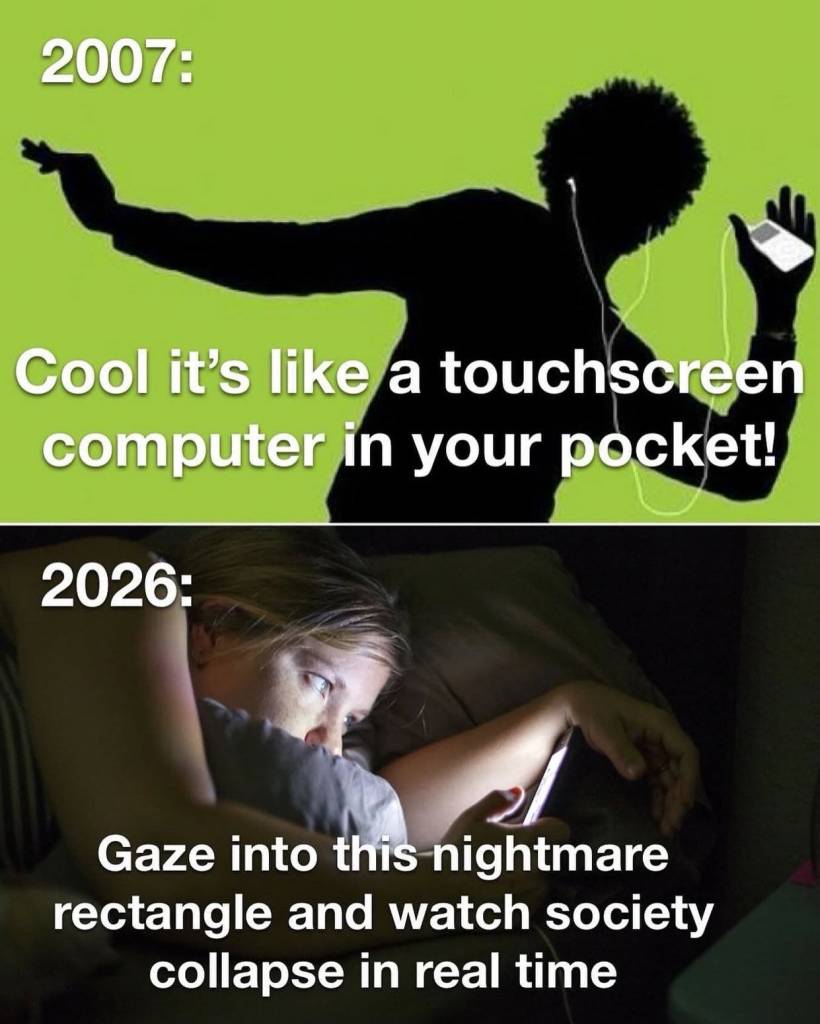
Even as its entire life support system slips away.

Even as the answer is so very simple.

True Fiction

I attract scorpions, I always have. It’s my sweet blood, I’m sure, I can be very irrestistible when I want.

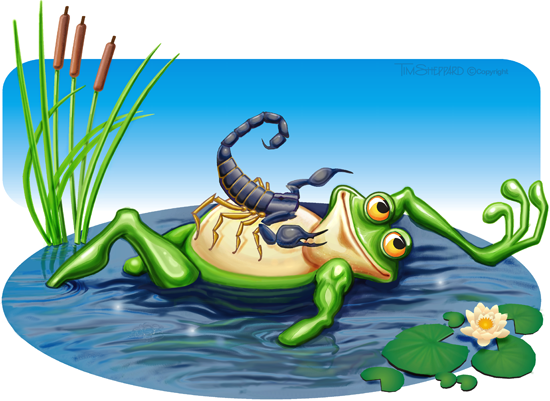
There are a lot of us.  You can imagine us as the frogs.  Some of us let their hearts and wallets bleed out dry for stray cats, which then makes them act nasty toward fellow frogs.  Others turn their skin to poison for protection, which doesn’t really work all that well, because it gets some scorpions really high.

And still others migrate to Florida, where they freeze in manufactured ice storms.

Scorpions on frogs has been a pretty common theme for a while. It’s so common in fact that a new language is being crafted as I live and breath, right now, in this very cyberworld, also manufactured by man, like the Florida ice storms.

In scorpion-speak, everything was working just fine until the frogs started complaining.

But, the message in the bottle is that there are far more frogs than scorpions and the messengers are dropping many truths right into our very laps all about them. All kinds of clandestine information is flowing, on how to uncover them, how to trap them, how to recognize the master scorpions and even how ship them off to a land far, far away.

It’s a very exciting time! It’s becoming fashionable even! Soon the frogs will be free from scorpion influence! Maybe even forever!!

I do tend to get too enthusiastic and hopeful, but the thing is, I really think it’s working this time. I think it might even be coordinated. But, you know, they call me a conspiracy theorist.

This time they’ve given us the words. The words are the map to the behavior. The behavior is the path to extermination. From what I’ve been able to work out so far, it’s a lot like used-car sales with them.

First, they get their foot in the door. Then, they try to sell you a lemon.

“Foot-in-the-door technique is a compliance tactic that aims at getting a person to agree to a large request by having them agree to a modest request first. This technique works by creating a connection between the person asking for a request and the person that is being asked. If a smaller request is granted, then the person who is agreeing feels like they are obligated to keep agreeing to larger requests to stay consistent with the original decision of agreeing.”

If you buy it, their quick onto your back, for as long as they feel like free-riding. They’ll expect you to cart them around everywhere without ever learning to paddle for themselves. They’ll expect to suck your life’s energy while you’re paddling them around, cooking for them, cleaning for them, while simultaneously entertaining them. When you complain you’re too drained and exhausted, they’ll snap at you that you are weak and that you should really try harder. Their drive matters far more than your fatigue.

Once they’ve got their claws in you, you’ll wish you were the frog freezing to death in Florida. They have all kinds of tricks, let me tell you!

If you try to pry them off your back once attached, here’s what you should expect to hear. They are, in fact, the true victims! They will actually try to persuade you this is true, even if they have to shapeshift before your very eyes, distort words just spoken, and throw you under the bus, all at the same time.

Indeed, Frog, why have you been so dissappointing a carrier? Why are you so cruel and malintentioned that your energy and vitality are not infinitely enduring? Why are you holding back?

You said you wanted me to be comfortable, Frog, and I am no longer, so fix it! I want more!

And you see I’m not capable of crossing the river by myself, it’s so obvious, what are you, some kind of a dumbass? I suppose you’d be fine if I just drowned. You’re just mean, that’s it. You pretend to be kind and caring, but you don’t care, you’ll just leave me by the side of the river while you go off with your other frog friends.

I know plenty of other frogs who will help me, you know. Not that I need help, of course. Just with this one little thing about getting across the river. And you won’t even do that. But, another will. They always do. You’ll see.

I don’t know, Scorpion, the frogs, well, they’re catching on to your tricks. They’re starting to collectively block you. That can’t be fun! The young scorpions, they’re getting more and more lazy and entitled, while the young frogs are getting wiser and craftier. I don’t know, but it doesn’t seem to be looking too good for your kind anymore.

One fellow frog has even started selling deep-fried scorpion chips, and I tasted one, and wow, are they tasty!

What is true character?

Character is what’s left when no masks hold. We recognize it most often in its absence.

Give a one power and watch, do they use it to make others more comfortable, or do they use it to dominate?

Here is a perfect example of a wolf preying on men who love it. Look at who she is being, not who she says she is. She’s a self-proclaimed coach, for men, who have been abused by narcissistic women.

She’s wearing a black neglige and has an eroticised naked woman in the very obvious background. Her career took off when she started focusing on wounded men. Big surprise!

Here is your wolf in lamb’s clothing, men. Why do you love her? She talks the talk, she looks the part, you fall for it, again, and again. A poser, pretending, while on the hunt.

She will poison every healthy relationship you have as you long for the fantasy she creates with her makeup and her emotional manipulation. She speaks of her own clientele as objects while buoying their egos without any context.

A true Machivallean artisan maneuvering in plain site and getting applauded for it!

Pro-tip: No serious woman wears a black neglige to make her intellectual point. She’s fishing for vulnerable men, beware.

The Story Arc(h)

So many stories not told. They don’t fit the mold.

While the same stories are repeated over and over. The approved stories, with the approved arcs and twists, capturing audiences beyond time and space.

Hero or Villain? Victim or Culprit?

The ordinary stories of ordinary folks are bypassed. Not sexy enough. Not dramatic enough. Too slow-paced. Not Catchy. Or spicy. Or click-baity.

Not nearly sticky enough.

Stories must be sending the right message. Clicking the right boxes in the right moments in the accepted paradigm according to the right models.

Triumph over adversity are ultimately the only stories allowed. Even the stories of failed heroes are spun in such a light, otherwise they are considered ‘dystopian’. And even then we see tragic heroes ‘set free’ by their surrender to the ‘greater force’ or ‘liberated’ by a merciful death.

How the stories are told indicate what the audience will perceive. Here I provide some examples.

These are all still ‘my stories’, just spun to be acceptable, or not. My goal here is to get folks to question WHY certain stories sell. Is it a matter of authentic taste? Of expectation? Of social programming?

Is it the audience who choose, or someone else, perhaps more subtly who chooses for you?

Here are some stories never told, true (ish) stories from my own life. You be the judge/critic/pretend publisher and let me know.

***

While in NOLA, a hurricane. The story that would sell: Young teacher moves to New Orleans for her new position at a prestigious Southern university one week before the most devastating hurricane in its history. She evacuates to a remote part of the Louisiana bayou and learns about Creole and Cajun history and music and cuisine and finally settles in the region of the native Caddo tribe to study Pre-Colombian cultures of the Deep South.

The story that won’t sell: Young teacher moves to New Orleans for her new position at a prestigious Southern university one week before the most devastating hurricane in its history. She evacuates to a remote part of the Louisiana bayou and learns about weather modification and clandestine military operations pertaining to centralized, unelected power structures controlling the U.S. government.

***

While in Galveston, a hurricane. The story that would sell: Couple not long ago evacuated from New Orleans experiences second 100-year hurricane evacuation after just three years. After being forced to split up in order to continue working, they blow through a decade of savings, suffer marital issues and nearly divorce, but are called by God to settle in the remote hills of East Texas to build a homestead.

The story that won’t sell: Couple not long ago evacuated from New Orleans experiences second 100-year hurricane evacuation after just three years. Wife begins seriously researching ‘chemtrails’ and learns about the 70+ years of weather modification that leads her to the ongoing Geoengineering projects—that is the global ‘climate remediation’ experimentation, much of it covert operations of global public-private partnerships with zero accountability or known oversight.

***

While in Elkhart, a tornado. The story that would sell: Couple experiences third weather disaster and nearly loses home and wife talks of ‘meeting death’. She finds God, Jesus, Mohammed, Buddha, Enlightenment and starts a fundamentalist cult which then gets attacked Waco-style by the government and all cultists die in flames.

The story that won’t sell: Couple experiences third weather disaster and nearly loses home and wife talks of ‘meeting death’. She turns to herbalism and organic gardening and a life of quiet reflection about the nature of evil and tyranny and the statist system broken beyond repair and the inadequacies of every group-think solution to this issue, including the anarchy renamed voluntarism and the so-called ‘mystery schools’ and the exhausting rehashing of ‘Prophecy’ and is just generally permanently dissatisfied with all the solutions and proposals she’s ever heard, and she’s heard a fucking ton of them by now.

She discovers a mass effort at brainwashing against the ‘victim’ —some kind of crazy signaling effort of victims to rally other victims, and wonders who does this attitude really serve? So, we ‘victims’ are now considered by the establishment as of a ‘dark triad’ type (witches?) if we don’t spin our circumstances to always be whistling while we work, in whatever chaotic wind they care to bare down on us. Or so it would seem.

“Victim signaling, defined as ‘public and intentional expressions of one’s disadvantages, suffering, oppression, or personal limitations’ is strongly correlated (r = .52) with Dark Triad personality traits”.

The Psychology of Social Status and Class: A Conversation with Jordan Peterson

So, so many stories not told. But don’t worry! We’ve got a new generation now, selling the same story in a whole new way!

Stop complaining! Smile. Be happy now.

Creating the Global Citizen

“Alvin Toffler predicted ‘demassification’: a process ‘in which a relatively homogeneous social collectivity (or one conceptualized as such) is broken down into (or reconceptualized in terms of) smaller, more diverse elements’. This is the prize for big social networks: compartmentalize people into echo chambers and bombard them with confusing distractions and dead ends.”

Confuse the words, creating a smokescreen of misunderstanding: Like: community=network=market
Obviously these words used to mean very different things in the actual world, before the virtual environment muddied the waters. The market wants all kinds of personal details about you and so they pretend they are in a community with you. Your network of friends and acquaintances and business relations may indeed form a community at some basic level, but to expand this concept out in an attempt to create from this a sense of ‘global community’ is preposterous. It is a Benetton ad, not a community.

Yet it has infiltrated and infected the actual world as we’ve all experienced. The great Convid is example enough. But, there’s more. 

Even small local shops in rural Texas feel entitled to ask shoppers for their phone number, to use video surveillance indiscriminately, to appeal to shoppers for ‘community’ donations and to shove their mailing list and ‘loyalty card’ at you. I seriously doubt they will draw the line at the next big thing the big box markets teach them.

Please take a sensor bracelet at the entrance, this will ensure you a positive shopping experience.”

That is no community for me!

Deb Filman does a fine job of ranting about this, and an even better job breaking it down for folks, especially parents, because it really is the kids they are after. They always start with the easiest targets.

Are We Educating Children or Training Bots? That is the question!

More concept confabulation: Training=programming=learning
Deb has some choice words to share about this, so I’ll be brief. These words and concepts are being deliberately confused in order to create cognitive dissonance in order to get us to comply. Social engineering has become an acceptable system for indoctrination of populations and is being normalized and implemented by the United Nations and cooperating global partners through our institutions, and directly into our LOCAL communities, all of them.

The U.N.: Creating child social activists all over the country on our dollar.

More muddying of words and concepts happens all the time. This is to be expected. This is not a new tactic at all. If they still teach Animal Farm in school, let’s hope the correct message is still being taken from it. The rules written on the barnyard wall keep shifting. (Therefore, it must be my job to keep shifting with the rules, right?)

More word meshing:
Individuals=collectives
Regulate=Control=Master=Suppress

“It is the responsibility of civil society to experiment with models of effective global citizenship.”

To experiment with models! It is our responsibility, as global citizens, to experiment with our populations through education, to create good global citizens.

That is, for one, to train children in ‘Emotional Regulation’ in order to make good ‘Global Citizens’. Soldiers are trained in emotional regulation. As much as you might get annoyed at the Hobby Lobby with the number of emotionally unregulated children, this is not something that we want as institutional directives aimed at children. Why? Because as the establishment experts know very well, it leads to neuroticism. One kind of behavior required at school, another one at home, another one in public, another one at church, another one here and there and everywhere, and what the kids end up with is not an education, but the essential life skill required of a psychotic society: Mask Juggling.

In other words, become better adjusted at nebulous, shifting, always uncertain unreality. Who does that serve?

From Wiki, the ‘experts’, right?!

“Psychodynamic therapy uses the idea of a Faustian bargain to explain defence mechanisms, usually rooted in childhood, that sacrifice elements of the self in favor of some form of psychological survival. For the neurotic, abandoning one’s genuine feeling self in favour of a false self more amenable to caretakers may offer a viable form of life, but at the expense of one’s true emotions and affects. For the psychotic, a Faustian bargain with an omnipotent self can offer the imaginary refuge of a psychic retreat at the price of living in unreality.”

I can’t help but wonder, as illogical as all this obviously is, could it actually be the setup for the next great fall?

“We had created a global civilization, and for what? So the whole thing could come crashing down into the ocean, bringing unimaginable misery upon the earth? What purpose could such suffering possibly serve? The answer—in truth, the loss, death, despair, desolation, sickness, ill-treatment, indignity and, as Nietzsche wrote, ‘profound self-contempt, the torture of self-mistrust and the wretchedness of the vanquished’ rarely change ordinary men and women. Extraordinary people change through the good thing, and through the self-mastery that yokes them to it; the joyous source of the world. But such types are few and far between. For the masses, there is no hope because all they have is hope, and habit, and expectation, and desire, and possession, and progress, and business, and money, and all the other illusions of the egoic system.
That man had to be disillusioned was not, quite obviously, a message which could find very much popular support in a world of illusions, but then no message worth hearing ever does. The individual knows that the evil and pain and suffering she has gone through has not been for naught. Being sensitive and kind—those rarest of qualities in the civilized system—the individual finds no pleasure in the idea that everyone has to go through hell to reach heaven.”
 33 Myths of the System by Darren Allen

We SO Rock!

Times are tough, the mood around here is tight and demoralized. I won’t sugar coat it. Two months of 100+ degrees and no rain is bound to have emotional as well as physical consequences. We are victims and I refuse to pretend otherwise.

It’s one thing after another and because it’s so hot everything takes far greater effort. I’d go down the big list of all the things breaking down and all the things we can’t keep up with, but it’s way too long.

And no one likes a complainer, right? Don’t wallow in misery, right? Don’t bring others down?

If I had a dollar for every time I read or hear somewhere some version of—“Don’t play the victim”or “You’ve got to get out of the victim mentality” —I’d spit on it, wad it up in a tight ball, and shoot it out the barrel of a gun right between the eyes of every idiot who repeats such self-serving nonsense.

We ARE victims and there are a great many of us. Victims of medical experimentation, victims of weather warfare and disaster capitalism, victims of theft, victims of bullying and coercion, and that’s just those who are lucky enough not to be victims of far worse.

What is the ‘victim mentality’ exactly and who does it serve if we all bypass it? Who does it serve if we swallow our anger and resentment and bitterness?

Folks like to say it serves oneself, as in, then the dark emotions don’t haunt you and bring you down. They say we shouldn’t be vindictive, or hang on to past abuses and that hate will eat away at our souls and even cause cancer and other serious diseases.

In fact, it’s blind optimism and relentless positivity that keep folks stuck in denial and complacency, which can easily prove fatal, for the individual and the culture.

It is considered extremely ‘uncool’ to ‘play the victim’ even when you are a victim. Why is that? The media would have us believe everyone is playing the victim and that’s what’s wrong with our culture—so litigious, everyone looking for a handout, too many snowflakes.

While that may be partially true, and most certainly exploited, they leave out one very big piece of the social puzzle. Like, should we not be concerned that we have created a culture with so many victims, whether perceived or real?

I’ll leave y’all to ponder that question for a bit while I digress.

Because, we SO ROCK!

Sure, it really sucks at the moment. But at such times I take more notice of all the things we’ve done right. It’s not bypassing all that’s gone wrong, it’s holding both reality extremes in my mind at the same time.

We recently celebrated our 20th anniversary, and 15 of those years we’ve had this property, which we purchased, BASED ON BEING VICTIMS. After Hurricane Katrina, we saw first hand what the government response is to a crisis and we also saw how helpless most folks were. It was very eye-opening. We took action, to make sure we were not victims again.

We were victims again. And again. These are not ‘natural’ disasters, not one of them.

But for argument sake, even if the hurricanes and tornado were not manipulated by man (they were!) the consequences of those disasters were most definitely exacerbated by man.

These are disasters with perpetrators. Each time the (supposed) natural disasters were made far worse by people. We were robbed after the first one, as well as permanently losing my teaching contract at that time. The second time we were left paying 3 rents—one on the apartment we couldn’t live in, the mortgage on this property that had no finished home to live in yet, and the house to which we evacuated. The third time saw more grifters try to take advantage of our compromised and very stressful situation under the guise of helping.

Each time we’ve taken action based on that victim status to try to ameliorate it for the next time.

That’s why we rock. In the last 15 years we have carved out an awesome wee homestead. We cleared loads of land, just the two of us and a little old tractor. Built a cabin, 3 chicken coops, a corral, a large garden, a large orchard, remodeled our home, acquired many different kinds of livestock, have been learning beekeeping, foraging, cheesemaking, herbalism and LOADS of other life skills that were completely new to us, and have helped a few others on their journey to do the same.

As victims it is our duty to arm others (or at least try, especially for the next generations) with the tools they will need to bring down the perpetrators who currently evade us. It only serves the perpetrators to pretend there are no victims, or to micro-manage others’ victim status and behavior.

A victim mentality can be healthy, or it can be destructive. What most folks do is try to exploit it or minimize it.

They try to exploit it by using it as an excuse to do nothing—this is not a victim mentality—this is a grifter mentality. They try to minimize it because the folks around them are too lazy, indifferent, busy, selfish, adolescent, or cruel to listen to them and allow them to express their true feelings rather than those that are socially acceptable and make everyone else feel comfortable.

The guilt and shame should go squarely and solely on the shoulders of the abusers and those making excuses for the abuse. If victims of repeated abuses turn into individuals with a grifter mentality it could be because they’ve witnessed so often first-hand that this is the winning strategy in our culture. I seriously doubt telling such individuals to stop ‘playing the victim’ will do a damn bit of good. And, why should it?

So, all hail the victims! And more power to us. Not the corrupting brand of power that turns us into tyrants and perpetrators ourselves, but the inner-power it takes to hold that victimhood out for all to see, in order to enlighten, to righteously blame and accuse, and to give the next generation a better chance at identifying their abusers, holding them accountable, as well as in fortifying their own lives and livelihoods against further victimization.

Feast or Famine

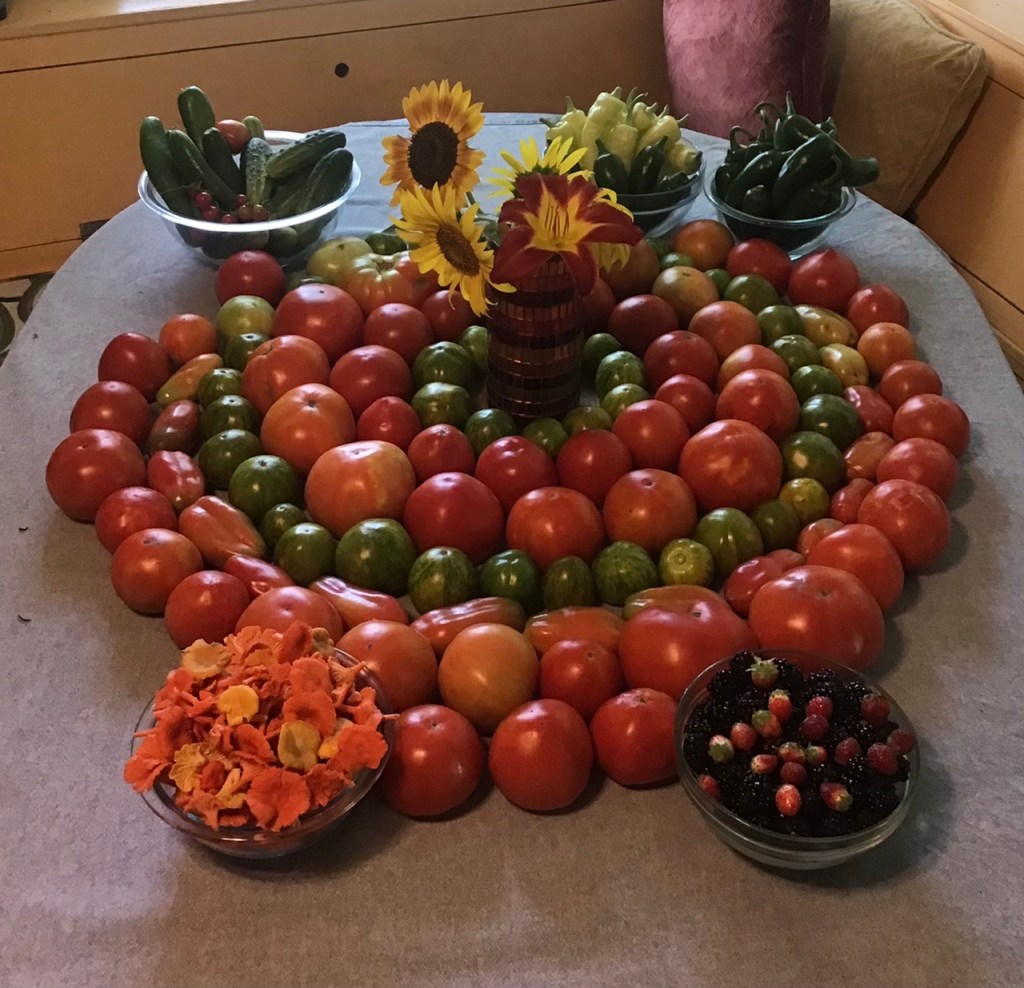
We are just days away from no tomatoes. Just as I was really getting sick of them.

There’s an attitude to surplus, just as there is to scarcity. Maybe we could even call it opposing frequencies.

I’ve known wealthy folk, in my younger days, who refused to eat leftovers, ever, no matter what it was, even lobster or filet mignon. One could almost be convinced of a certain ‘trickle down’ economic theory when in their presence.

While I was really lucky to be friends with them, because I got a lot of free upscale leftovers, I did find that attitude to be wasteful, and was not shy about expressing it.

It behooved me to see all that good food go into the garbage, not even composted. I couldn’t eat all the leftovers created from a weekend lake house party, and there certainly weren’t any livestock to benefit, not even doggie bags.

I think my 2nd favorite thing about having pigs, after the sausage and bacon and ham, is that I feel zero guilt about throwing away our surplus. It’s not throwing it away at all, I’ve come to realize, it’s really more like pre-seasoning our sausage.

So it was interesting to read an article the other day from an author who presented a graph from the “Bureau of Labor Statistics (BLS) data demonstrating a substantial decrease in household food expenditure as a percentage of income—from 44 percent in 1901 to a mere 9 percent in 2021.”

It was considered a ‘good thing’ according to this graph and this author that food prices had become so negligible in the modern economy.

I’d be willing to bet the farm that the general public agrees with this premise. To have the essentials of life—that is, food and water—as cheap as possible, indeed feels like a good thing. If those are brought to them poisoned is mostly not a thought at all.

Once the essentials are met, as in our modern Maslow’s hierarchy of needs, we can move on to entertainment.

Oh, except for that other pesky thing, energy. Because WiFi and game boys and television aside, we do still NEED our fridges and freezers and air conditioners.

And if you think that’s exaggerated, watch the mass exodus from the South to the North if the World Economic Forum has their way and all those civilizing conveniences disappear before too long. All while we are sweltering down here under the umbrella of ionospheric heaters up there.

But, aside. Let’s get back to the basics. Food and water, even before energy. You already know the feast or famine feeling. I know you do.

Do you give a care when you shower that 5 more minutes will break the bank? Have you ever lived in a situation where you carried all the water you needed for the day?

Do you consider when you buy your groceries that 5 more dollars will break the bank? Have you ever lived in a situation where a few dollars meant dinner or no dinner?

Every technology is a Trojan Horse. From shoes, to language, to music, to roads, to windmills, to combines, to bombs, to telephones, to cybernetics. Every one. Man existed before all of them. Somehow. Not even the ionospheric heaters causing us drought and weather chaos will bring about the extinction of man.

Man, in whatever form, of whatever species we care to classify, is a feature, or a bug, of this ‘solar system’.

Or, maybe I’m wrong, and we will perish like the supposed dinosaurs.

But my sense says, its otherwise. It says we survive in surplus, in scarcity, in love and in hate. We remain under masters, in servitude, and occasionally at some magnificent moments, I imagine, its otherwise.

We survive wars and diseases and lies. We survive pop music and step mothers and manufactured weather.

They say we must thrive, to thrive is to succeed. To succeed is to know progress. To progress IS.

To succeed is to feast.
Yet to feast indefinitely, is impossible. It will eventually lead to famine.

Because failure IS the inevitable consequence of success.

Chop Wood, Carry Water

Trip to town, so sad. Two machines tried to rip me off and no working humans looked capable of anything.

Don’t load, don’t count, don’t smile. What do ya do?

Hostessing was once a thing, like customer service. I was a really good hostess once, let me assure y’all!

It’s more than charm and service, it’s an art and a craft.

So, it’s no mystery to me why the cats eat with the dogs on our back porch: Good food + Good vibes= Good company.

Being a good hostess is similar to being a good teacher—observation, agility, ingenuity—are higher qualifications than even empathy, discernment and a sense of propriety—all already a challenge for most.

A teacher cannot play the same role as a bouncer, though that is mostly what is required these days.

My greatest failures in the classroom mirror my greatest failures in life. I’d sum them up to a kind of mis-navigation of the cherished Comfort Zone. As an example I offer a brief recap of my worst classroom lesson ever.

It was taken from a book of suggested lessons for EFL/ESL (English as a Foreign/Second) students and it was called: ‘Dog or Wolf?’

These are lessons designed to generate conversation in the target language, so students learn new vocabulary, practice old expressions, participate with one another, and ultimately create a student-centered learning environment. Sometimes it works, sometimes it doesn’t, occassionally it’s a classroom catastrophe.

This is where the observational and flexibility skills of the teacher can really shine. Or, really, not.

I thought I knew these students well enough to pull it off. NOT!

Was it my mood? My confidence? My lack of fluidity that particular day? I really can’t say, even now, but oh how that failure, just that one day out of how many other lesser failures, who knows, but that particular one has stuck in my craw still 2+decades later.

They were mostly Japanese students, from various cities, all college-aged. The caliber of student willing and able to travel to the desert US to immerse themselves in American life, indoctrination, and university culture. We had a good rapport, they were good students. Their English was at a level I knew they could perform well with the material.

I presented it, gave the requisite handouts, grouped them in fours as per the instructions and posed the preliminary question:

If you could choose, would you choose to be a dog or a wolf?

There were follow-up questions about culture and civilization, surplus vs scarcity, independence and hierarchy. In my mind it generated a brilliant potential conversation and I was looking forward to it.

The question was meant to lead to an exchange between group members who would discuss the merits of their choice, as opposed to the deficiencies of the other option. It was based on the assumption there would be some who would choose dog and others who would choose wolf, for various reasons, creating an atmosphere for debate.

Except all the students agreed on dog at the preliminary question, leaving me standing there with my mouth agape and no further game plan.

I nudged, painfully, at my more philosophical follow-up questions and got crickets. Obviously, everyone would be a dog—comfort, ease, predictability, discipline, training—DUH!

The ‘best’ student, a relatively large young man from Okinawa, who was more bold and out-going than the rest, immediately intuited my dilemma. He raised his hand and said he wanted to change his answer.

But, I was stuck in my own personal baffledom. I tried to go with it, push through, take the ball he’d so generously tossed me and run with it, but I remained, I don’t know, just sort of, stranded there, for way too long a moment.

And then I couldn’t get it back.

Anyone who has never stood in front of a classroom most likely underestimates the skill it takes to be good at it. And when I say good, I don’t just mean popular. And I don’t just mean effective. I mean the kind of good where one can walk the line between popular and effective, because it is impossibly narrow. Those who pull off that level of impossible should be studied and duly rewarded and I’m sure there are more than a few. So, it’s not actually impossibly narrow. Just too narrow for me that day, that lesson.

They should also study bombs like mine that day.

After missing the generous handoff, I was so tongue-tied and disgusted, with it all—them, myself, the lesson—that I dismissed the class early.

The Okinawan student stayed there, obviously to discuss it with me. He wanted to make me feel better about the clear and dismal failure, I think. It was a really sweet gesture and very appreciated, even in the moment, but it didn’t really help me make sense of it all.

Like, why was I so confident that lesson would work? So confident, in fact, that I didn’t even have a Plan B. Bad teacher! So confident, in fact, that I became rigid. And frankly, still feel judgmental of those students (so passive, so acquiescent, so like, totally lame!).

Not really like me. So stuck in my own thinking that it’s not conceivable to me every student would choose dog over wolf that I could not, in fact still feel challenged to, mentally adjust from my misperceptions. Yes, even now.

A room of 30 students and only one wolf, and that one only under pressure, and with a savior complex no less.

What happens in world become so ‘civilized’ we’ve all become obedient dogs? And, obedient to what, and to whom?

Don’t think, don’t fight, don’t roam, what do we do? What happens when man becomes too civilized? Too domesticated? Too content?

I still don’t know what to do with such a muddle. Would you?

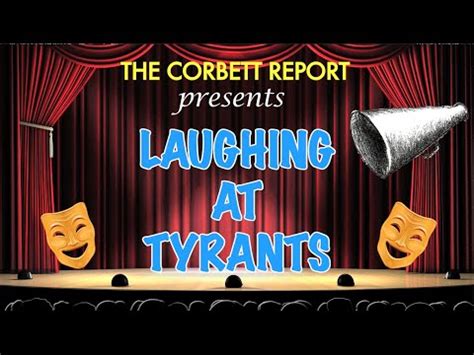
Laughing at Tyrants

From the best essay I’ve read all month (not James Corbett, but I was reminded of his excellent vid on the topic, so I used that image).

This one comes from a ‘new to me’ writer on Substack called ‘The Upheaval’:

“The most obvious answer is that ridicule undermines authority. Or, perhaps more accurately, it is inherently destabilizing to brittle, illegitimate, undeserving authority. Hence why, as Milan Kundera put it in The Joke, “No great movement designed to change the world can bear sarcasm or mockery, because they are a rust that corrodes everything it touches.”

Me: Milan Kundera was my favorite writer for years and I’ve read most of his works, some of it multiple times. I find it extraordinary that despite his popularity among New York intelligentsia, that same circle has not understood its deeper implications, clearly, otherwise they would’ve seen right through the corporate-fascist institutions they are still supporting even now.

“The answer strikes to a much deeper insight: genuine humor is utterly reliant on its connection with the truth. As any good comic could explain, the best jokes play off the gap between expectation and reality; or between propriety (social pretense) and reality; or on irony, the gap between words and their real meaning; and so on – in all cases the most effective humor functions through revelation.”

“Nor perhaps why, pearls firmly in hand, a 2021 EU report literally titled “It’s Not Funny Anymore” warned breathlessly that, by “blurring the lines between mischief and potentially radicalising messaging,” the “transgressive humour” of online “meme culture” threatens to expose people to such amorphous “far-right” and “extremist” notions as “anti-elite arrogance and condescension,” or jokes making fun of those who “do not question the information that comes from mainstream press and politics.” And why, decrying that “humour has been weaponised as a form of resistance against a political culture that is supposedly curtailing free speech,” it called for increased global efforts to “monitor” and “quarantine” such humor in partnership with tech companies and “progressive communities.”

Me: Indeed. Just try to find funny political memes on a basic Google search today. Hardly a laugh to be found.

“But humor’s intimate relationship with the truth also explains why the authoritarian is typically incapable of it. If the punchline of a joke is not the revelation of the real but simply the reiteration of the lie, no genuine laughter – of the kind that seems to well up unbidden from deep within the listener – can be produced. Hence why most mainstream comedy has long since replaced laughter with “clapter,” why the left can’t meme, and why the EU report bemoaned the fact that “attempting to counter extremist humour with a form of alternative humour has proven very difficult.”

Me: As much as I agree and appreciate this entire essay and hope ya’ll will go read it, I also need to add that seed of doubt, because it’s there.

A question for y’all: Does humor also serve the tyrannical system by normalizing its crimes and diffusing the hostility of the masses? After all, back in the day it was the ‘court jesters’ who performed at the behest of the rulers. It is part of the ‘bread and circus’.

And so far, it has proven to be completely ineffectual at curbing the influence of the unelected elite whose power has only increased despite all the best efforts of George Carlin, among precious few others.

It may make us feel better, but does it really have any chance of changing the game? Because, if it did, wouldn’t it have worked by now? Is humor just the new ‘Opium of the masses’? After all, the ‘Emperor With No Clothes’ remains the Emperor.

Beauty is Intoxicating

Every gift is a curse. But, is every curse also a gift?

I’m going to take the long way around a pretty basic question, but one that I am honestly curious about and would love to hear any thoughts on the matter.

When I was a teenager, I had a number of “love interests” that were short-lived, but intense enough that I remember them vividly. I went from Tom-boy to boy-crazy fairly quickly, in just one summer actually. For someone so young I found myself navigating very choppy waters without a smidgeon of skill.

Two of them, around the age of 16 and 17, are fit examples for this story. One was a short-term boyfriend, another was a near miss.

The near miss was a one-legged salesman. I was a shoe sales clerk at the shopping mall in Chesterfield, Missouri. It was actually a really good job and I was glad to have it. Suburban life before car age is brutally boring for someone like me. I finally felt free and so adult-like as I strutted through the mall on breaks in my heavily discounted Overland Trading Company shoes.

I don’t remember which shop it was now, but I would expressly wander in that direction just to see if he was there. He would smile at me, I felt he was even waiting for me to pass by, and I would smile back, maybe give a cute little wave for added effect.

That he had only one leg was not what made me want to gawk at him. But rather that he was gorgeous. I mean, seriously Gorgeous. Handsome, amazing build, confident, well-dressed, and just the right amount of older for a 16 year old to get herself swooning in his direction.

We talked at some point. Went to the food court together. Became, not exactly friends, but something like ‘mall buddies’. Then somehow it happened that we decided to have a real date, where he came over to my house to pick me up in his car.

And I will never forget that moment. It was a sudden disaster. That he had one leg did not phase me in the public sphere, not at all. It felt like a non-issue. Sure, I was curious what had happened, and I’m sure I asked at one point and he answered, but I don’t recall his story. I liked him. I especially liked looking at him. I liked that he liked me. I remember, I really liked that.

I remember he was kind, and a gentleman. And I hated myself. I hated myself that suddenly, seeing him in my house, something switched for me that I could not comprehend. I sensed overwhelmingly, all of a sudden, that I could not be who he needed me to be. It was a shameful, and quite devastating feeling for me at that ripe young age.

On one other occasion not long afterward I again became intoxicated by another young man’s beauty. He was my age and the son of a family friend from church. Everybody loved him. It also ended badly, despite my genuine feelings for him, that certainly went beyond just his great looks. And that also came down to the same issue, in 20/20 hindsight: I can’t be who you need me to be. The realization coming too late to avoid the associated pain. Their beauty, I really believe, clouded what I should’ve seen before leading them on.

And my point in sharing these very old recollections is, could the opposite also be true? I guess I feel it would be nice if it were. I saw a man the other day who was clearly very compromised—and my heart went out to him, in a very pitying way. I knew, from his appearance, he suffered many hardships in life. I’d like to believe that in his apparent curse, he has found a deeper gift. Sort of like the opposite of the gift of beauty that invariably bestows pain due to all of us who are so entranced by it.

Or, I’m just looking for an avenue out of my automatic pity for him? Thoughts?