Milk Into Cheese

Just some cheese talk this post, plus a bit of a book review and a delicious recipe for Blackberry Ricotta Cake.

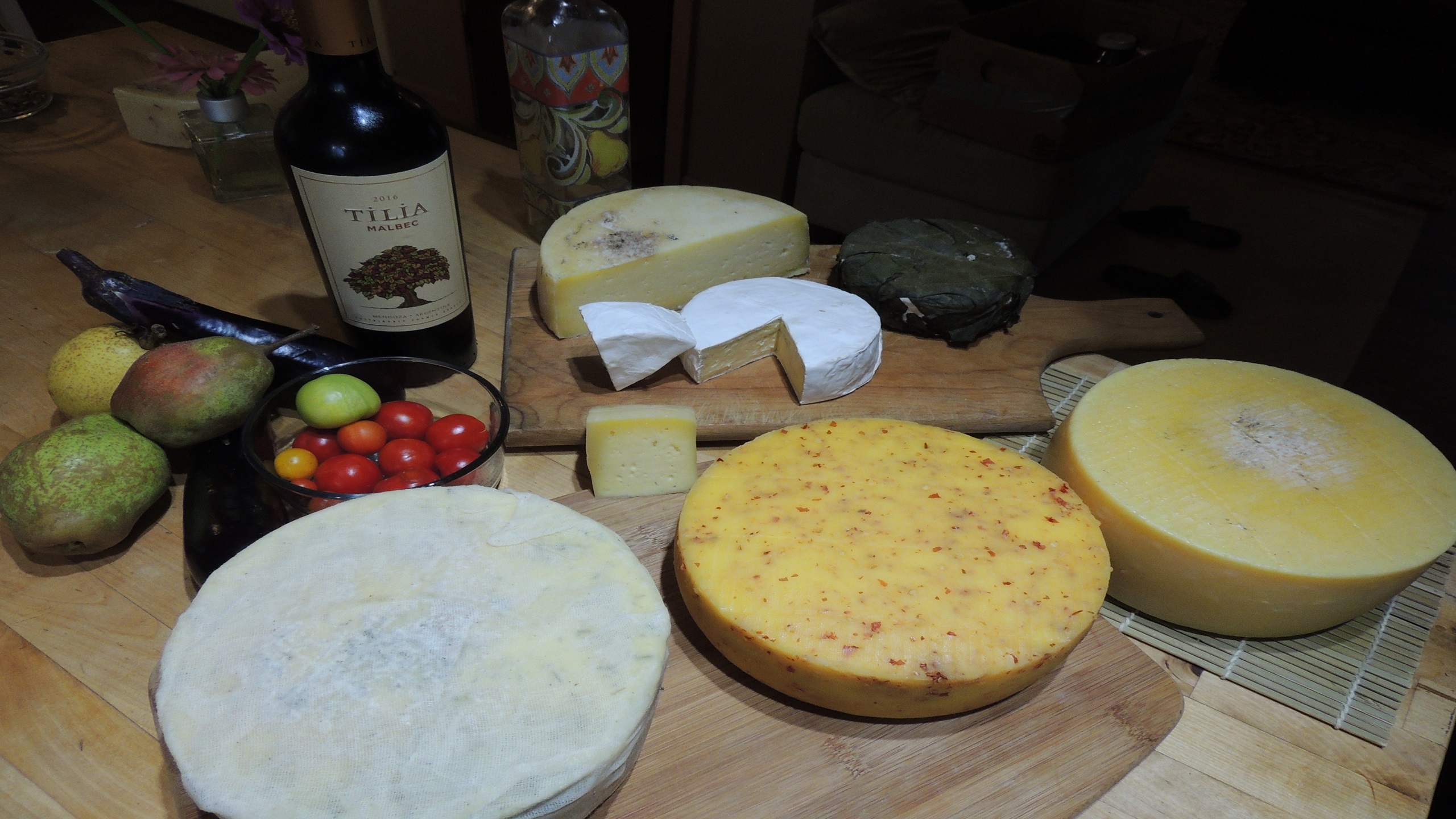
David Asher’s latest book arrived and I’ve been devouring it, as well as a whole lot of cheeses. He dives deep not just into the biology, ecology and history of cheesemaking, but the dairy and fermentation traditions that continue today around the world. Really fascinating!

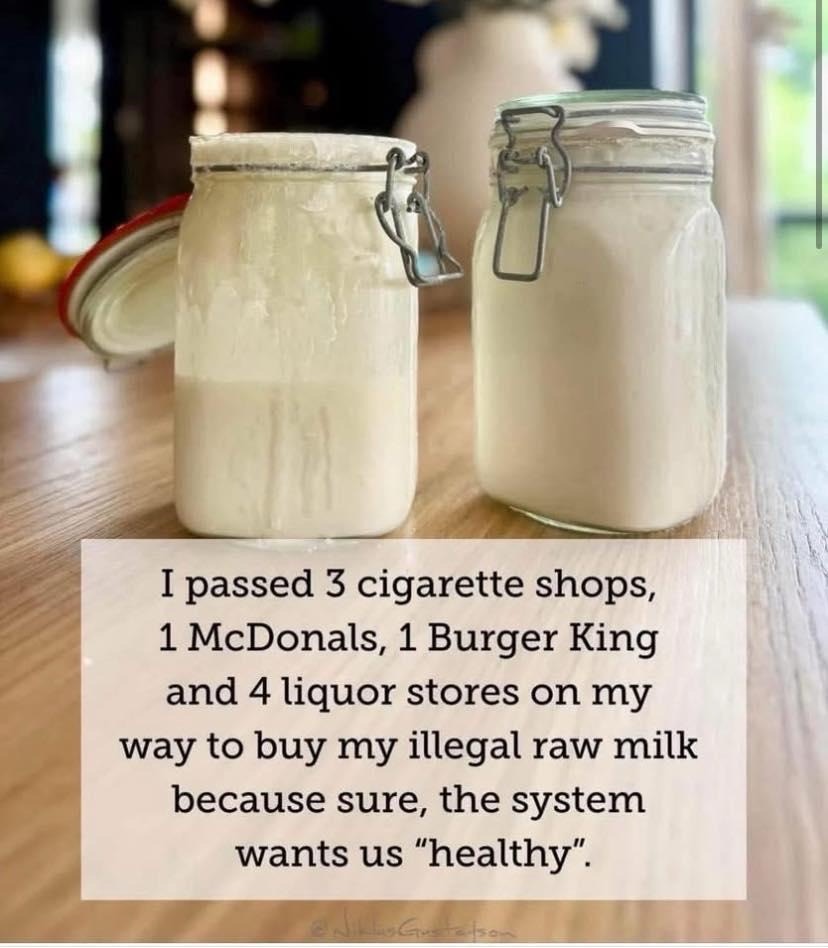
Since the beginning of August, when I found a raw milk lady with a surplus willing to work with a renegade cheese lady, that’s me, I’ve been my own milk lab*.

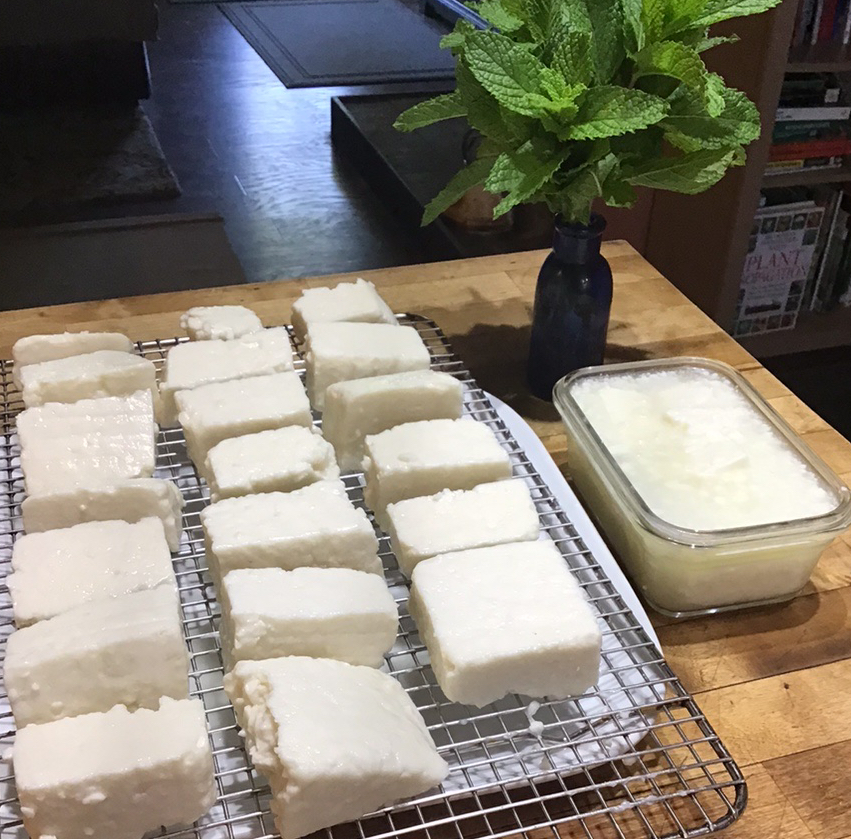
5 gallons of warm milk spoiling on the table. 😆 Plus a ‘failed’ pressed ricotta, used too much vinegar, but it will still be good further dried and crumbled on salad like feta.

Together we settled on a suitable style and schedule that’s been rather rigorous for me, 5 gallons twice a week, right from the barn to my containers. Not even chilled. (I can see my mom in my mind’s eye trying to hold the grimace from her face! 😆)

A very hot Pepper Jack before its tallow rub before aging several months.

But I’m in hog heaven! It’s brilliant to have top-quality raw milk for a cost so reasonable I can afford to experiment again, because that’s my favorite part. It still feels like a mini-miracle after searching and pining for so long. Plus, my milk lady is arranging for me to teach a workshop again very soon at her church. (I wonder if their grimaces will match my mom’s?!)

My raw milk lady winces at the idea of making clabber cheese too, and I bet most others would as well. Sitting warm milk out on the counter for a few days would scare Brits and Yanks, equally I expect, because our unusual cheese habits in America came from them, mostly.

The vast majority of the rest of the world, Europe included, drink fermented milk and eat raw fresh cheeses, as well as cooked and aged cheeses. Velveeta, like Squeeze Parkay and American cheese slices are a true embarassment to culinary culture and it’s a shame more Americans can’t see that. But I think it’s changing.

It’s our obsession with pasteurization and refridgeration that both giveth and taketh away in the realm of cheesemaking.

Sweet cream and fresh milk are far from the norm, and came about with industrial-level and widespread home-use of refridgeration. Cooling milk should really be considered as less than ideal, it begins the de-naturing process, which continues when we then must re-heat to an optimal temperature for cheesemaking, which is about 93 degrees, the same as it comes out of the cow.

Not that I ever care to live without refridgeration, mark my words! I LOVE all our costly cooling devices. Still, I really do want to know what the most naturally produced cheeses taste like, and I have that rare opportunity now.

The other problem that gets solved by not chilling the milk before cheesemaking is re-heating the milk adds about an hour to the process, because it must be done slowly and evenly, which requires stirring, or using a water bath.
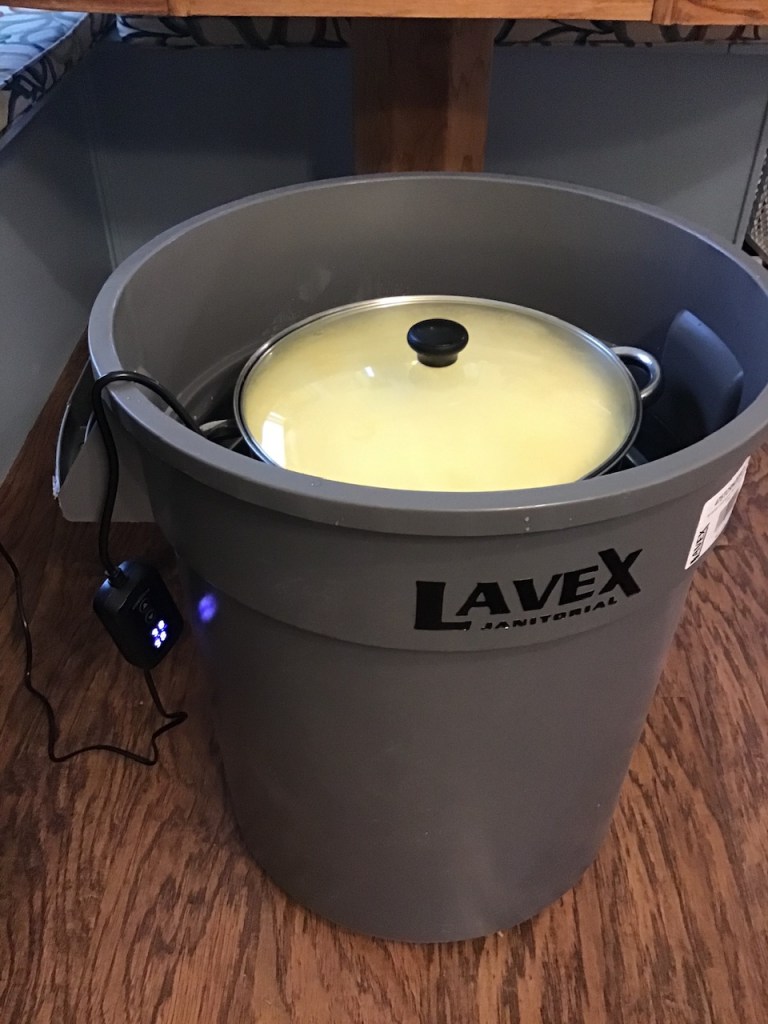
Hubby’s Redneck solution–Water bath in a garbage can, equipped with a fish-tank heater and oscillator, and now on casters for easy storage. Wow!

Just as Hubby tries diligently to solve all my complicated problems with custom redneck solutions, the temperature challange got him thinking creatively on my behalf once again. Not to mention the fact (I’m sure) that I’m taking up way too much prime kitchen space and time. Did I mention we have a small kitchen in a small cottage?

As a bonus from cheesemaking we have loads of ricotta, made with the whey after the curds are removed. I mentioned whey cheeses last time, which are most delicious pressed and soaked in cider or wine, mixed with herbs on crackers, in pasta sauces or salad dressings, but ricotta also freezes well. It also has to be made the same day, another reason for as many shortcuts as possible in the overall process.

And still, with all those possibilities, it’s proving a challenge to keep up with all the ricotta. My scheme is to create something so delicious the neighbors will start taking it off our hands.

So here’s one more tasty solution.
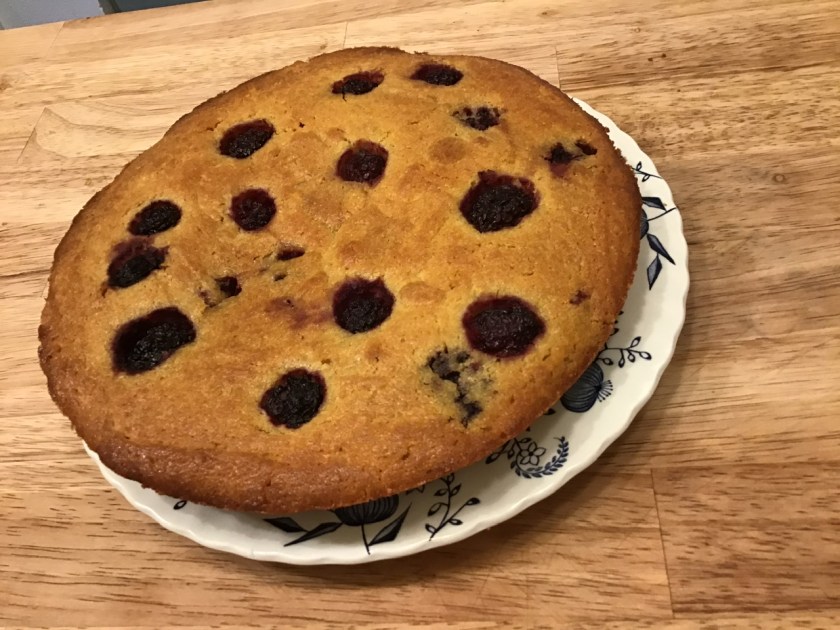
I like it dark, but you don’t have to. 😁

Blackberry Ricotta Cake
(or blueberry, rasberry, whatever berry)

1 1/2 cups soft wheat (sifted)
1 cup sugar
2 teaspoons baking powder
1/2 teaspoon salt
3 large eggs
1 1/2 cups ricotta
1/2 teaspoon vanilla
1/2 cup butter, melted
1 cup frozen blackberries (only slightly thawed)

350 oven, pie pan greased/floured.
Whisk flour, sugar, baking powder and salt, set aside.
Wisk eggs, ricotta, vanilla in separate bowl. Combine both and mix until just blended. Fold in butter. Fold in 1/2 berries, top with remaining berries.
check at 45 minutes.

Good plain as a coffee cake or with ice cream or whipped cream for dessert. 😋

*milk lab is actually David Asher’s site, not in my kitchen! 😂
David Asher is a Natural Cheesemaker, bringing the traditions of dairying, fermentation and coagulation back into this age-old craft. A former farmer and goatherd from the west coast of Canada, David now travels widely, sharing a very old but also very new approach to cheese production. Through teaching about the use of in-house starter cultures and natural rennet from calves and kids, David helps cheesemakers around the world reclaim their traditional cheeses. He also explores the relations of all food fermentations, and the important role of small scale and traditional food production in our modern world. David is the author of ‘The Art of Natural Cheesemaking’ and the upcoming ‘Milk into Cheese’.

David Asher’s Milklabhttp://www.milklab.ca/

Thank you sir for another most excellent book!

Homestead Happenings

It’s been quite a long time since an update on the wee homestead projects and activities; it’s hard to know where to start! How about, for consistency sake, I bitch about the weather for a bit, and then move along to better tidings.

Of course the geoengineered chem-filled skies continue, as does our Yo-Yo season (formerly known as winter). We are using the air conditioning now, it’s been 80 degrees for days.

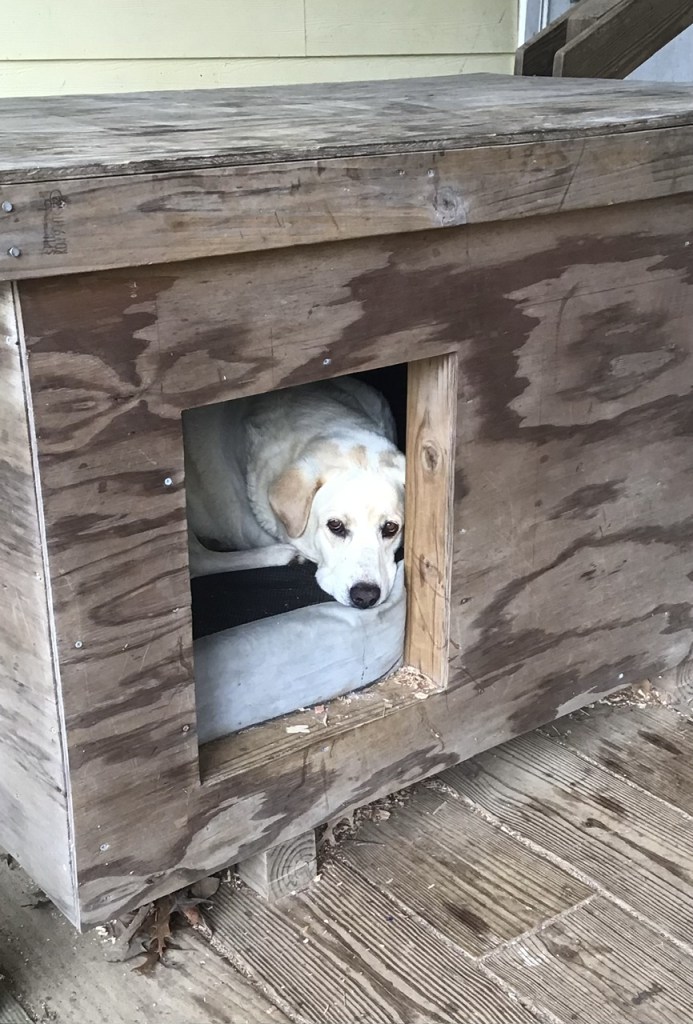
Buttercup is especially sensitive to the YoYo, to the point of regular getting seizures at such times, also lethargic and losing her appetite.

Buttercup hiding in her box all day.

There was of course the lows not long ago in the 20s and I was very concerned for the newly planted citrus. We employed quite the set up of lights and covers and they faired very well, I’m happy to report.

Invasion of Asian beetles on the citrus cover

But there has been a bad invasion of these awful beetles, which we’re vacuuming off the ceiling multiple times a day. Not to be confused with the garden-friend, the lovely little lady bugs, NO, these little beasts are really nasty. They infest, as obvious from the photos, and they bite, and as if that’s not enough, they stink.

I don’t like when folks call them lady bugs, they are not at all ladylike, so I try to correct them anytime I hear complaints, which is more often than you might think. The reaction I get is much more open and accepting than when I inform them about the manufactured weather.

Old lettuce bolting, replacing with new lettuce started under lights indoors, along with broccoli and cauliflower.

It does keep us on our toes, dealing with the Yo-Yo. Lettuce and herbs bolt prematurely quite often, seedlings come up then freeze or wither. We never know from week to week what to expect or how to plan.

I don’t normally have such a fancy setup, but these trays were gifted to me and they’re working quite well germinating some lobelia and snap dragons.

My indoor lights and heating mats make things easier, as does the row cover in the garden, but it is constant juggling. And if I miss a beat, death. Like happened with the Mexican oregano I was so proud of. I forgot about it outside one night when it frosted. Very disappointing considering our long journey of discovery, and how long I babied those few little sprouts, trying to anticipate their every need, carting them inside for warmth, then outside for sun and wind, and just when they were getting their legs, gone. All my fault.

Well, except for the geoengineers, because I wouldn’t be doing this constant refrain if our weather was consistent or predictable or seasonal.

I’ve tried twice since then to sprout the herb again with no luck. I will succeed eventually, of course, we’ve come too far in our quest to fail. The Mexican oregano has a long tale in these parts. Failure is not an option. More on that in the last HH post, if you like. https://kenshohomestead.org/2024/11/14/homestead-happenings-43/

I’d like to say it was the same with the milk quest. Unfortunately, I’m not nearly as confident; I feel failure is probably inevitable and maybe even imminent. For the time being I’m counting my blessings I’ve found another (perhaps temporary) source. Last time I was complaining about the cost, this one is even more expensive at $15/gallon. At that price I’m not going to be experimenting with any new cheeses, that’s for sure. To make cheese at all is not really feasible, except for the most delicious of selections—Camembert. Otherwise the precious commodity goes toward morning coffee, ice cream, and buttermilk for recipes and the extended expiration date.

Camembert to be draining before salting

I’ve been doing continued research on the topic of raw milk and what’s available and in general, where’s the market vibe. I found one young entrepreneur with a private herdshare selling cheese for $25 a pound. (A Herdshare Agreement or a Grade A license from the state are the only ways to sell raw milk in Texas legally.).

With my new herdshare deal I can buy more milk for cheesemaking, if I’m willing to pay $15/gallon. Considering the hard cheeses I typically made were 5 gallons ideally (better for aging in less than optimal conditions), that’s a really expensive cheese.

Certainly what can be made on-site are far better cheeses than can be bought at the store; that’s why I started making cheese in the first place. But still, it’s really hard to justify all that work, and expense, when we can still buy organic cheese for about $8/pound.

I will splurge one time in late spring, if possible, when the grass is thick and so the milk most rich. And we do still have two goats, hopefully pregnant, so there’s a small hope of cheesemaking in my future, if all goes well.

Moving on to the garden, the garlic is going strong and I’ve just got the onions in, 3 big rows of each. The garlic we plant is elephant garlic which does so much better here than any other variety I’ve tried, and I’ve tried lots. These are local for over a decade now and their productivity has yet to disappoint.

The onions are from purchased sets and they normally do well, though some years are a bust, like last year. I also started some from seed under lights, to compare if they are more consistent and adaptable, because the sets have gotten pricey in recent years and it’s irritating to pay good money for possible failure. Onions do not like Yo-Yo weather, but then again, who or what really does?

At least some seem to tolerate it better than others. We’ve got a couple of ‘oyster trees’ that are bringing us regular tasty gifts.

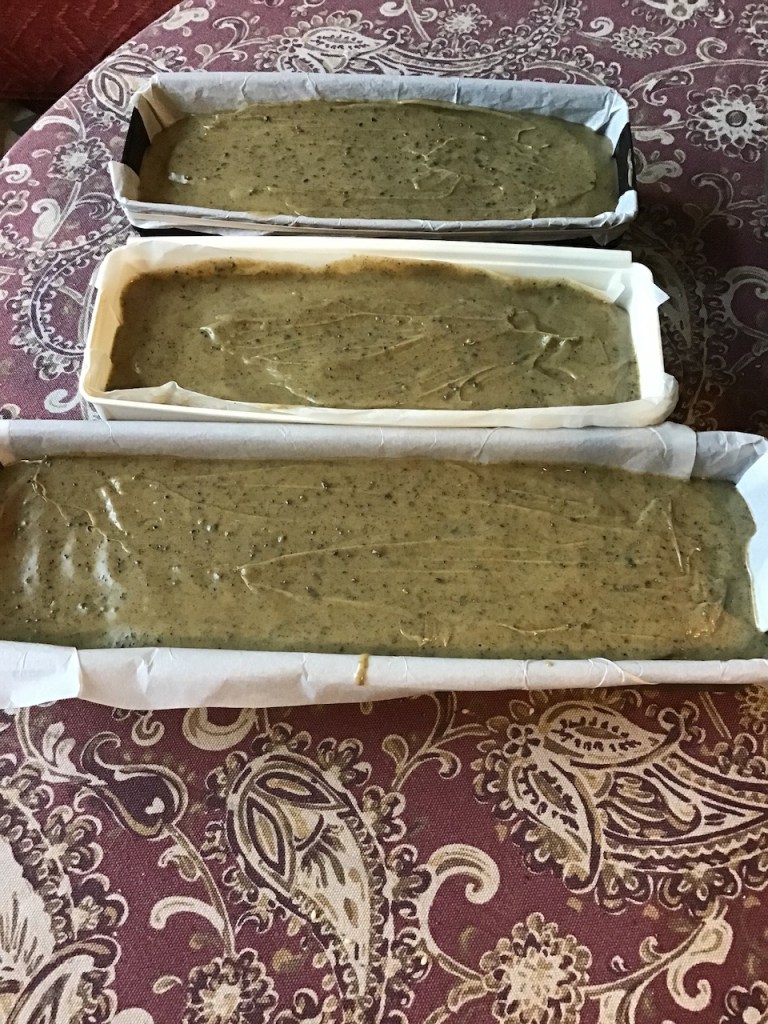
I’ve also tried a couple new things that have been long on my list. There’s the soap that’s just now cured, a bit earlier than I’d read is typical. I’m really pleased with it! It lathers very well and the scent is rather sensuous. My intention was something earthy and erotic, and I think I succeeded.

I got the sensual part down, now I need to up the aesthetic! Trust me, looks are deceiving here, I just need better molds! Never underestimate the power of packaging, eh?

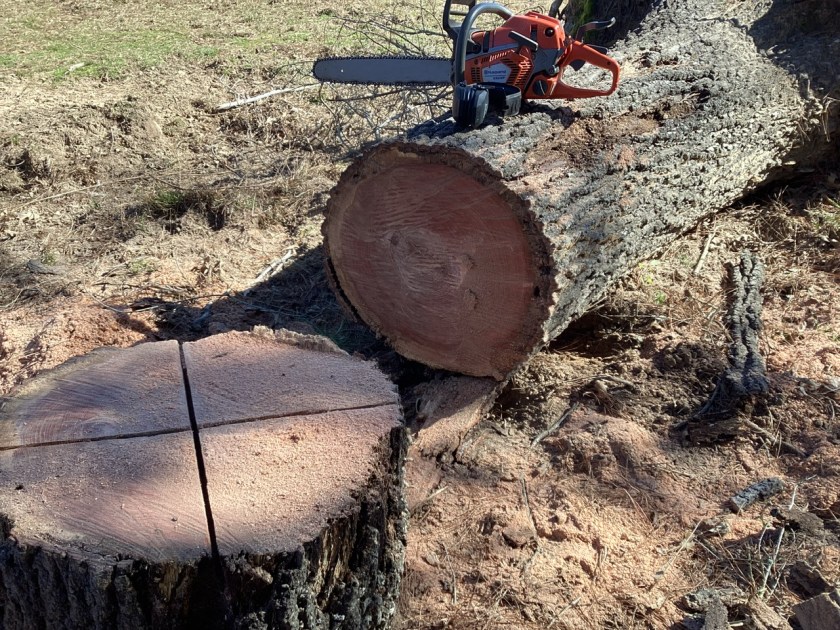
After finishing up slaughter season and chopping up downed trees for a month, Hubby has moved on to a far more desirable and needed project, according to me, our kitchen! Yippie!

We’ve needed new countertops badly for many years, ours have been well-worn in 40 years, especially since we’ve gotten here and the space went from softly used a few times a year, to a daily year-round assault. It’s actually pretty impressive the counters aren’t near dust by now, considering how quickly more modern materials fall apart.

New island done, now for the hard part.

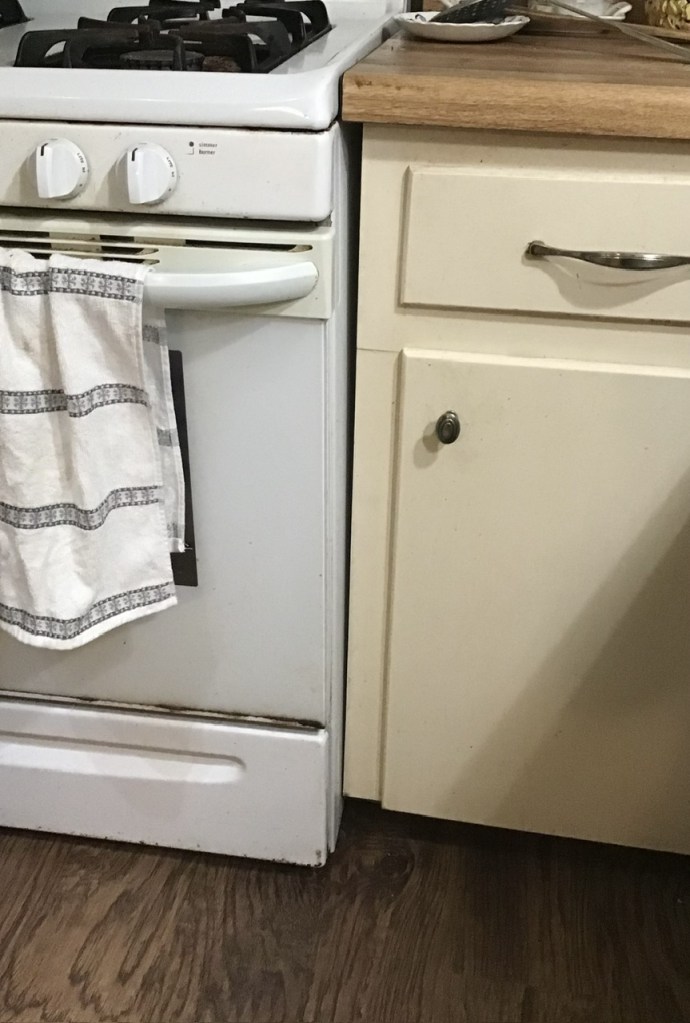
Old, ugly, not square or plumb . . . Good times coming in Hubby’s near future!

New countertops got us on a roll and now we’re planning new light fixtures and maybe even a new paint job. Big ideas, perhaps not backed up by time or commitment.

Those big ideas, I’m full of ‘em! In my mind the kitchen’s already painted and my next project is to paint the table, which I’ve wanted (and once tried) to do for as long as we’ve had it. I can imagine I might have a table with a surface that looked something like this . . .

But I’d be perfectly willing to settle for this . . .

Or this . . .

So, after I repaint the kitchen in the few spare moments between juggling plants in YoYo season, I acquire the skills of an artist, and paint something I can really be proud of . . .

Whenever I’m finally able to manage that, y’all will be the first to know!

In the meantime, here’s where we were at in the last update . . .

The Illusion of Abundance

I grew up on fast food, TV dinners, mac & cheese, like most middle class Americans. And I liked it, like most middle class Americans. Because, I didn’t know any better. Like most middle class Americans.

We had a constant supply of chips, cookies, candy, coke, and all things convenience. Our cupboards and fridge were never empty. I never worried I would go hungry.

And yet, I know now, decades later, I was malnourished. I know this in retrospect, like I know now I was also vaccine injured. It is not until you know what real nourishment feels like, what real health feels like, that you can recognize its opposite.

I feel like I was one of the lucky ones. I saw it in time. I traveled, so I saw how different my normal actually was, in the wider context. No other culture ate like we did. Every other culture was healthier than we were. It has since changed in the last decades, as more cultures adapt to Western, particularly the modern American, faux-food diet.

But this realization is far from new or unique. As James Corbett so well documents, and I’m elaborating on now with personal anecdote, food as a weapon is not new or unique.

https://mises.org/library/what-caused-irish-potato-famine

When was food weaponized? Well, let’s just say, it’s been a minute.

My food upbringing was normalized and enhanced— baby formula replacing breast feeding, a dozen vaccines added per decade, cooking from scratch becoming obsolete, supplements becoming de rigeur, pharmaceuticals coming to rule the world of health where food once reigned.

And the conquering continues.

Corbett:
“The answer is simple. We are witnessing a controlled demolition of the food supply chain, one that is intended to result in the destruction of the current industrial farming system as we know it. But this changeover is not intended to return us to truly sustainable farming practices, with local, organic farmers producing crops in accordance with age-old agricultural wisdom. Far from it.
As it turns out, the “solution” to this food crisis being proffered by the billionaires of the corporate-pharmaceutical-medical-industrial-philanthrocapital-military complex is being engineered in laboratories and sold to the public via a bought-and-paid-for mainstream media.
One thing is for certain: the future of food will look very different from anything that we have seen in human history.

Scientists are bioengineering spores that can be inserted into crops and livestock, allowing companies to identify and track food products all the way through the food system, from farm to factory to fork.
DARPA is doling out multi-million-dollar contracts for researchers to find ways “to turn military plastic waste into protein powder” for human consumption.
A company called Amai Proteins is using genetically engineered microbes to create peptides that taste like sugar but are digested like proteins. And the best (read: worst) part is that, “[a]lthough these microbes are technically genetically engineered, the desired products can be purified and legally sold as non-GMO”!”

Just as my home cupboards were full, todays grocery stores are full. As we suffer mass malnutrition.

Yes, some claim shortages because they can no longer find cheap cat food. Whatever.

A food supply abundant with non-nourishing food is worse than empty store shelves. Exponentially worse. We are a population lulled into the illusion of abundance for the last six decades plus.

If you think that’s not a deliberate and highly effective conquering strategy, you are a fool.

Forbidden Cheeses: Little Turd & Wetnurse Breast

I ran out of attention span last post before I got to talking about cheese. Now that we have three mamas in milk I’ll be having a ball experimenting with new cheeses, which along with kombucha experimenting, is my favorite homesteady sort of thing to do.

Gardening and cooking being not far behind, to be sure!

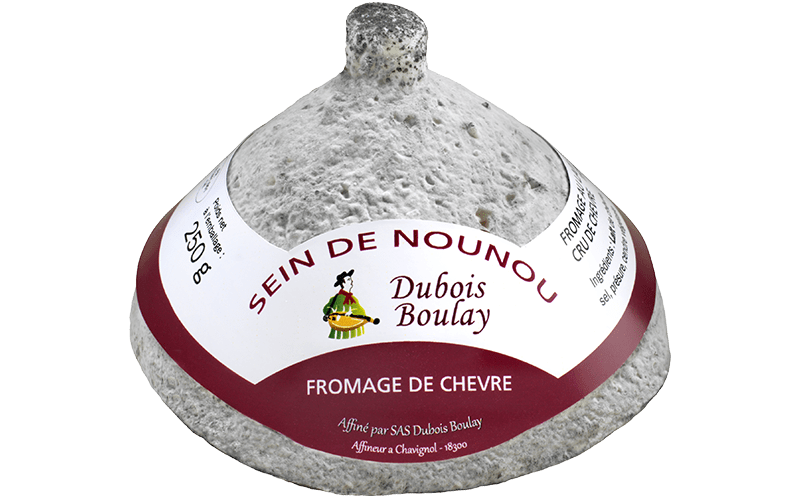
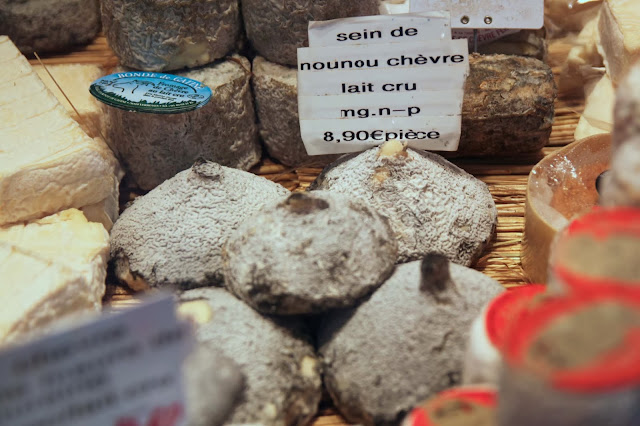
Aged chèvre (goat cheese) in the French tradition is made of the highest craft and care, even when they are whimsically-named, like Crottin (Little Turd) and Sein de NouNou (Wetnurse breast).

But here in the U.S., Land of the FreeTM, Velveeta is ‘safe’ for consumers and aged goat cheeses, ideal for homestead creation, are completely illegal.

Because they care so very much, right?

“Chèvre evolved in frugal farming households of the sort that continue to make it today. It is a cheese that’s very economical, in both time and ingredients; made on the family farm, where there are many chores to take care of and livestock to feed, a cheese that didn’t need much attention or many costly ingredients fit right in.”

That is in Central France and other locations where it’s not illegal to sell. These are cheeses that require few inputs and no regular purchases—you don’t need a cheese press, or any expensive cultures, or even rennet. Fig sap (or other coagulants like nettles) can easily be substituted for rennet as only a few drops are used to set a gallon of milk.

These are also cheeses suitable to make in warm climates, similar to the more well-known goat cheeses like Feta or a fresh goat cheese. What makes the aged chèvre so unique is that it can only be made with raw milk. You may find hard raw milk cheeses in your grocery store or farmer’s market, like Gouda or Cheddar, these are pressed cheeses aged over two months, which are legal to sell with all the proper licensing. (I have NO interest in that!)

Feta, aged in salted whey for 2 weeks, some still soaking for a sharper flavor and others now drying for packaging in Foodsaver bags for longer storage.

These illegal aged goat cheeses sit at room temperature for about four days.

Imagine the horror the germophobes have with that!

You most certainly can’t do that with pasteurized milk. These cheeses were invented before pasteurization and before refrigeration and aged for a month or two in caves.

Mine will be aged in Tupperware bins inside a small beverage fridge I use for aging cheeses. (I would prefer not to use plastics at all, but they work just fine and I don’t have other options at the moment.).

I use natural cultures, not store-bought or freeze-dried, developed from previous cheeses, and stored in the freezer. Once the cheeses develop their fungal coat after a couple of weeks, they will be wrapped and aged for about a month.

Traditionally wrapping for these cheeses include leaves, like grape and fig, and even hornet’s nests. A few will also be coated with ash, instead of wrapping, like the traditional Sein de NouNou.

It is positively amazing how differently the cheeses will taste based on just a few variables in the process!

“Relatively unknown in North America, this class of cheeses includes some of France’s most famous fromages: ash-coated and pyramid-shaped Valencay; Sainte Maure—pierced with a blade of straw (the industrial version of Sainte Maure features plastic straws!); and small, moldy Crottin are all aged chèvre cheeses. Perhaps the only well-known North American aged chèvre is Humboldt Fog, a creamy, ash-ripened goats’ milk cheese from Humboldt County, California.”

(I’ve not looked into why or how the Humboldt Fog is legal to mass produce and sell. I plan to dig into that, but my initial guess is they’ve been able to either find a way to use pasteurized goat milk or they have a state-of-the-art affinage ‘cave’ where they can age it over two months without losing the creamy texture.)

“Goats are a belligerent species that have rejected the rigorous production regime thrust upon their bovine cousins. Unlike cows, who contentedly chew their cud in confinement and produce enormous quantities of milk year-round, goats refuse to be cogs in the machine of industrialized dairying.”

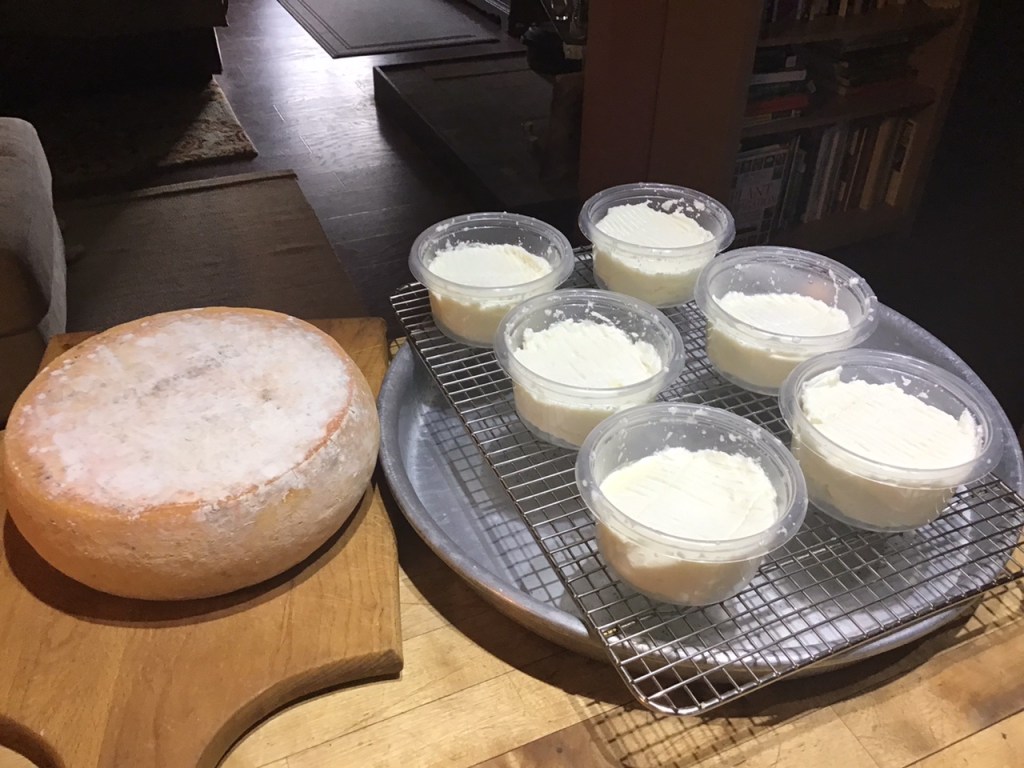
On left: Cutting into the last Kensho cheese experiment, aged two months, a washed-rind cheese similar to something between a Muenster and Gouda.
Result: Delicious Success!

A most excellent resource, and the source of the above quotes:

Goats, a belligerent species? HA!
The perfectly adorable non-conformists more like!

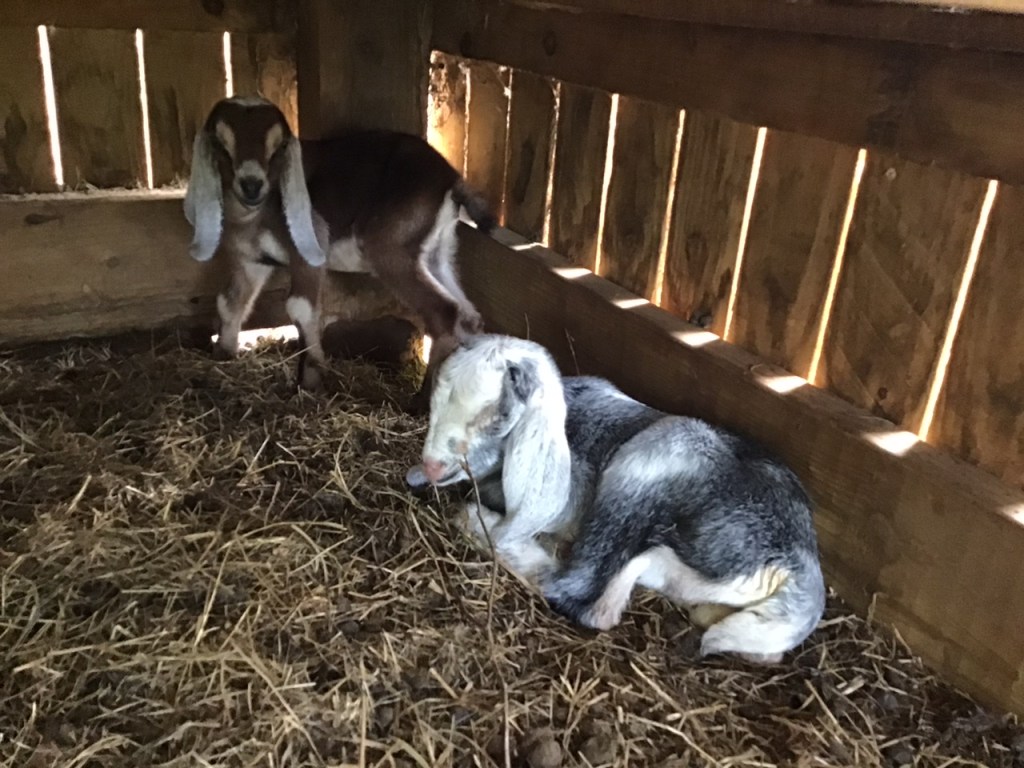
The latest and last addition to the herd this year (in the foreground) yet to be named, and already twice the size of our wee Athena (in the background, about 5 days old), formerly Zena, we decided we prefer the former.
Any name suggestions on our newest? We are at a loss so far with this big girl who is sure to be a lifetime keeper! She came out huge and most active and ready to suckle immediately and play within 1 day!

Poke Fear & Irrational Science

In its typical, now routine, fashion ‘science’ comes to save the day and leads everyone astray.

Once upon a time they desperately wanted us to fear cannabis, so they fudged some data to make it look like not only is marijuana a ‘gateway drug’ but it will kill all your brain cells and transform you into a moronic, lethargic two-ton-Tessy with crossed eyes.

Sassafras, that most delicious natural ingredient that used to make up root beer and was enjoyed by our ancestors for centuries—science data decided it’s a carcinogen and it gets stripped from the marketplace for half a century. Then the data decides, oops, nevermind. Then they decide it makes an awesome illegal street drug known by “Ecstasy” aficionados as “Sass” and it’s then highly processed active ingredients are exploited by twisted chemists and greedy marketers and pushed on curious kids around the world. Thanks, again, Science!

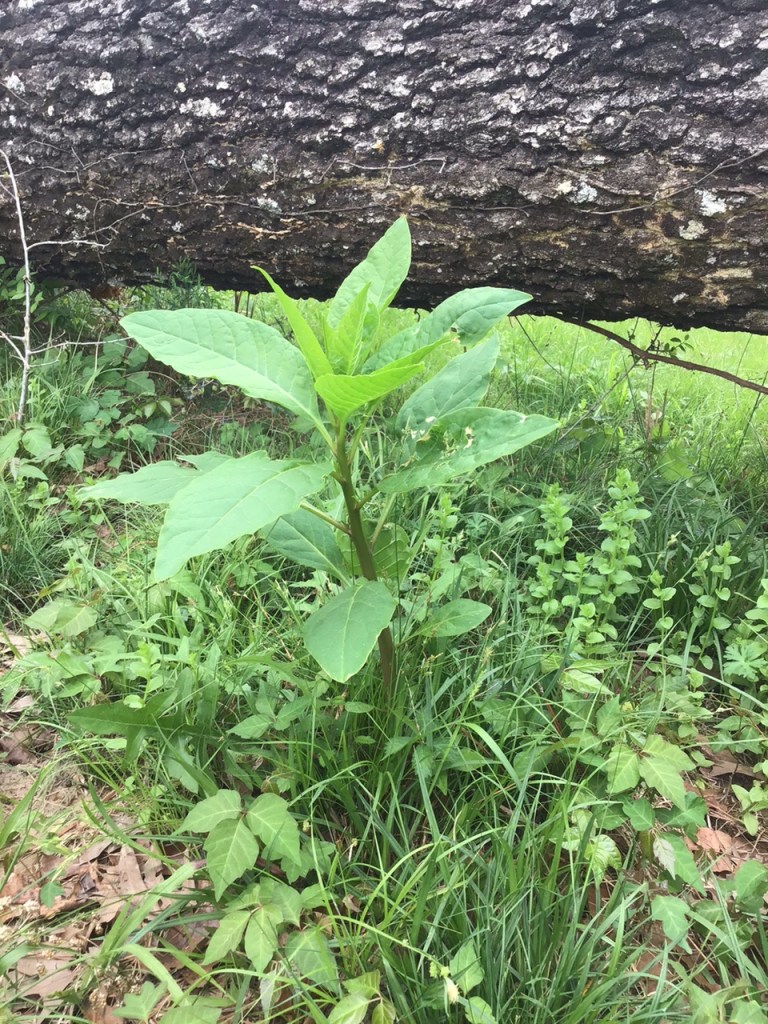
So, forgive me when I heard for the first time the panicked cries about the poisonous pokeweed I had to roll my eyes a little. I heard repeated the usual crazy as I tried to research it myself—the ranchers trying in vain to eradicate it permanently before it kills all their cattle; the dying children whose dumbass parents didn’t perform the proper ceremonial procedures before consuming; the dead chickens who consumed the poisoned berries, etc. All nonsense. We’ve never had a chicken or any other animal fall ill from this ubiquitous ‘weed’. The four-legged graze on it and the birds, wild and domesticated, love the berries at the end of summer when little else is available for them.

And, it is the most delicious green I’ve ever tasted, no exaggeration.

I’m not alone in my palate preferences.

“For many, getting a springtime poke-sallet fix was indeed a psychological if not necessarily a medicinal shot in the arm. Azzie Waters remembered a saying by ‘old Doc McClain’ of Marble Hill, Georgia, who declared that ‘if you’ll eat one good mess of poke sallet in the spring of the year, you won’t have typhoid fever.” (Smokehouse Ham, Spoon Bread, & Scuppernong Wine: The Folklore and Art of Southern Appalachian Cooking by Joseph E. Dabney, p. 263)

It’s simply miraculous our ancestors managed to survive at all before the Great Age of Scientism came to our collective rescue! Though I do suspect back in the day folks knew better where to draw that very fuzzy line between science and politics. Yet more crucial life skills lost to Progress.

As for the ‘proper ceremonial procedures’ I’m referring to the often repeated ‘requirements’ of fully boiling the greens three times, rinsing them and changing the water each time before consuming. I tried this, wanting to give these nincompoops the benefit of the doubt, knowing full well this had to be overkill. Simple logic told me there’s no way mountain folk would waste that much time and resources, hauling huge pots of water, burning all that fuel, and still consider these greens such a great Spring treasure. My hunch was correct, considering the mess of greens that resulted was the equivalent of green soup with hardly a solid piece of green remaining. Clearly that’s not what all the Southern old-timers rave about.

A bit more research and I’d bet only one parboiling is necessary. But, I’ve been giving it two, just to be on the safe, but still delicious, side. From there it can be used just like spinach and the taste is far better. Traditionally it was popular to fry it in bacon grease or coat it in cornmeal and deep fry it like okra.

Tonight we’ll be enjoying it smothered in homemade Mexican queso. Mmmmm. 🙂

Food Matters

Can you tell who your ancestors were from the sorts of foods you like?

Folks say you develop a taste for the foods you grew up with and keep a sort of inner-scent nostalgia from childhood, like when Proust describes his semi-conscious love affair with Madeleines.

I’d say that’s only the surface layer of the story. The first time I smelled beans cooking from scratch, as in not coming from a can, I felt I was wafting on scented dreams that could not possibly have come from my own limited lifetime.

We didn’t eat sourdough or sauerkraut either growing up. We ate Oreos, McDonalds, KFC, TV dinners, mac & cheese, and we loved them. All the way through university I lived on mostly fast food and had little clue what cooking from scratch actually meant.

So, considering I was well-adapted to such convenience foods growing up and had developed such a taste for them that I craved them after moving to areas where they were not available, what gives?

Hubby had a much more traditional outlook from his childhood than I did. More than any other single influence in my move toward better nutrition, he was my inspiration. He introduced our household to fermented foods, and now I’m primarily the one who nurtures those crafts. His folks had already been gardening in his youth and still had a ‘subsistence’ mindset, and by that I mean they still ‘put up’ food, something that was unheard of to me growing up.

Do you eat to live or live to eat?

Breaking bread together still means something in our country, I think, but barely. Somehow even the traditional ‘pot luck’ is hardly lucky anymore when food sensitivities reign and diet dictocrats menace and folks’ general health is so poor who knows what will set them off the deep end.

New film: Like Beans for Beef? I don’t think so!

Sensual, comforting, beautiful, sublime, simple, food is far more than sustenance, just as depicted in a popular and a most favorite film of mine, Like Water for Chocolate. Can your mood affect your meal? Can your meal affect your mood? Any true cook or gourmand knows, indeed, it can, and often does. That is ‘the weather’ both inside and out, tempers the dish, for better or worse, and that’s a fact I’ll swear by.

Which came first: the cheese, the beer, the wine, the bread, the kraut or the Kombucha?

In Czech they say their beer is liquid bread. Fermentation is a key miracle of life that I had no idea existed until I was nearly 40. I’d visited caves in France where Champagne is aged and others where Roquefort is crafted and been to festivals where the ‘new wine’ and liters of beer were copiously enjoyed and obviously had eaten pickles in my lifetime, but none of these experiences cemented the notion of fermentation in my mind.

“In all raw whole foods, the food plays host to beneficial bacteria that are particularly suited to devouring it. These native cultures also help to transform the basic foodstuff into traditionally fermented foods: Cabbage contains all the bacteria it needs to become sauerkraut, wheat has all the bacteria and yeasts it needs to become bread (or beer), and grapes have all the culture they need to become wine. Milk is no exception: The native biodiversity of raw milk provides microorganisms that help infants digest their mothers’ milk (and cause the milk to decay if it is spilt); these microorganisms are all that the milk needs to become the many different styles of cheese.” The Art of Natural Cheesemaking: Using Traditional, Non-Industrial Methods and Raw Ingredients to Make the World’s Best Cheeses by David Asher

The first time I tasted Camembert with onions was in Germany, partnered with great beer, and it was instantly a favorite meal. At home I bought an American-imported version of both, but they were not the same. Once I started to make cheese myself I realized why, and also realized, I’d become a bonafide cheese snob. A freeze-dried culture is very different from a ‘territoire’ cultivated culture—as different as Velveeta is from the homemade ‘Mexican queso’ it’s supposed to imitate.

Generations upon generations of traditional cheese makers evolved the diverse methods of making cheese while carefully practicing their art. All classes of cheese were discovered by cheese makers long before they had a scientific understanding of the microbiological and chemical forces at play in its creation. Industry and science hijacked cheers making from the artisans and farmers some 150 years ago, and since then new new styles of cheese have been created; yet during that time hundreds, possibly thousands, of unique cheeses have been lost.” (Asher)

These cheeses were made from my own fungal cultures and have a far superior taste compared to the cheeses made with the typical freeze-dried cultures:
brevibacterium linens, geotrichum candidum, penicillin roqueforti

I know how bizarre this will sound to many, because that’s how it sounds to me, now. I didn’t even know vegetables had seasons and I’d never tasted cheese that wasn’t processed and wrapped in plastic, but I assure you, for a girl raised in the American suburbs this was/is typical.

I remember the first time a visiting Czech friend tasted an American beer, he remarked, “That’s an interesting beverage, not bad, but it’s not beer.” It was Budweiser, the ‘beer’ that was originally from Plzen, called Budvar. Even then, already as a ‘worldly’ adult, I didn’t fully grasp his meaning.

Now I understand he was noticing the obvious lack of real fermentation. Like breads made from instant yeast instead of natural yeast, or cheese made from freeze-dried cultures instead of natural cultures, there is most definitely a difference and once you are sensitized to it you cannot even refer to this difference as subtle. It’s glaringly elementary, yet it’s pitifully difficult to describe.

We grew up with artificial sodas like Coke, but we don’t drink them now, because once you master your own favorite Kombucha flavors, artificial flavors become unpalatable. Ditto on the artificial condiments—ketchup, mustard, mayonnaise, Tabasco—these all fared from real and healthy foods that once kept our ancestors thriving for centuries before science learned how to mimic them, but not in nutrition, only in taste, and even then, only sort of.

It’s similar to the modern rose that is hardly a rose but in looks alone. And even then, only sort of. Do modern cultivars creating the equivalent of fake boobs recall that roses, like boobs, once had a nutritive purpose that surpassed mere vulgar voluptuousness?

It would appear that no, they do not, because even here in the ‘rose capital’ of Tyler, Texas, boasting a very popular annual festival with a Queen and everything, I’d never have fathomed roses were once cultivated primarily for their hips.

Selective breeding and shortcuts require compromises that are most often not worth it once you develop refinement and can truly appreciate how unsurpassed is the luxury of time. Two days for decent bread, two days prep plus six months aging for a great Alpine cheese, a year for a drinkable wine, a century of painstakingly crafted cultivation for a beautiful yet still nutritious rose—when you nurture the sensitivity of your palate and your gut, you realize there really is a hierarchy of taste and fake is never going to be an adequate substitute.

I’ve set goals all my life, many of them I’ve achieved and many more I’ve not and many more still I decided were not worthy of achieving once within the goal posts. But there is always remaining this matter of food, and it always fits. Not the short-term convenience foods I grew up with, but a much wider tradition that settled into our lives rather organically and that reflects the ancestral wisdom I believe my own ancestors were mistaken to leave behind, which I feel very fortunate to have the time and inclination to revive and cultivate.

With Handy Hubby perfecting another lost art—growing, slaughtering and butchering all on-site—perhaps we should up our game goals? ‘Luddite Power Couple’ is that a thing? 😉

Do You Kombucha-cha?

I realize it’s already a thing, considering it’s now a $600 million annual industry, but I thought I didn’t like it.  I couldn’t have been more wrong, I’m happy to say.  I haven’t been this excited about a new thing (for me!) since I started making cheese.

In fact, it’s not at all new, just popularized and mass marketed these days.  Kombucha has an ancient and fascinating history and far more uses than just a really healthy and delicious beverage.  I’m just learning about them all, but I’m keen to incorporate this little miracle into our homestead lifestyle.

Sally Fallon, my favorite cookbook author, believes as I do that, “the craving for both alcohol and soft drinks stems from an ancient collective memory of the kind of lacto-fermented beverages still found in traditional societies.”

And it’s so much more than just a wonderful beverage.

Kombucha’s numerous applications make it a natural component of ‘closed-loop’ systems, in which its waste products can be converted into toxin-free commodities.  Whether as compost or foodstuff, there is some way to turn every by-product of the kombucha brewing process into something useful. The Big Book of Kombucha by Hannah Crum & Alex LaGory

84D13C37-F34B-438E-8E6C-4762EEE53690

If you’ve only tried commercial Kombucha you might be like I was and think you don’t like it either.  My home-brewed version taste nothing like the store-bought brands I tried.  And, the first time I tried home-brewing I was doing it all wrong.  I’m so grateful to a friend who gave me another SCOBY and insisted I try it again.  Following the tips and tricks from several great resources, I’m hooked.

A SCOBY (Symbiotic Culture Of Bacteria and Yeast) is kind of like a sourdough starter, shared among friends and self-replicating.

There’s far more information available than the first time I tried home-brewing many years ago.  The key to my new love is the 2nd fermentation bottling with flavors, when the tea becomes carbonated.  Even if you’re not a tea-lover you might be surprised, I think it tastes more like a mild, flavored soda.  Some Kombucha lovers have claimed it helped them kick their cola habit and replace it with something far healthier in every way—for the body, the paycheck, and the environment.

Besides the excellent book mentioned above, these sites are also great resources to help you get started, learn more, or stay addicted.

Cultured Food Life

Cultural Revivalists