Running To The Light, Columbia Space Shuttle, Modern Myths
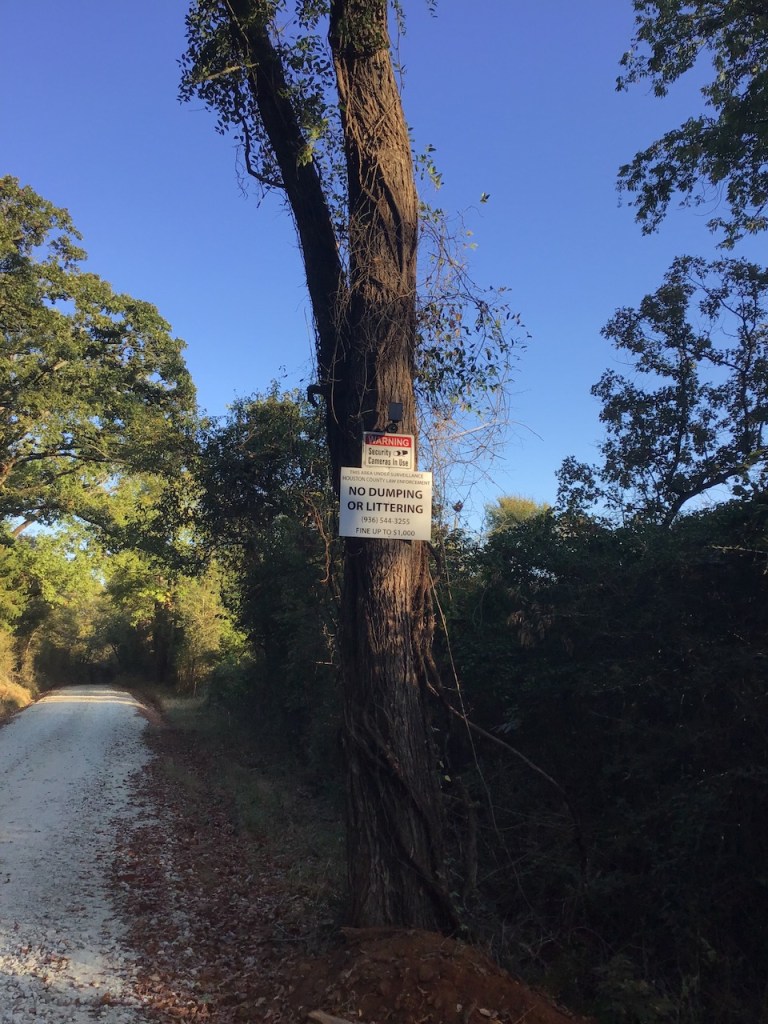
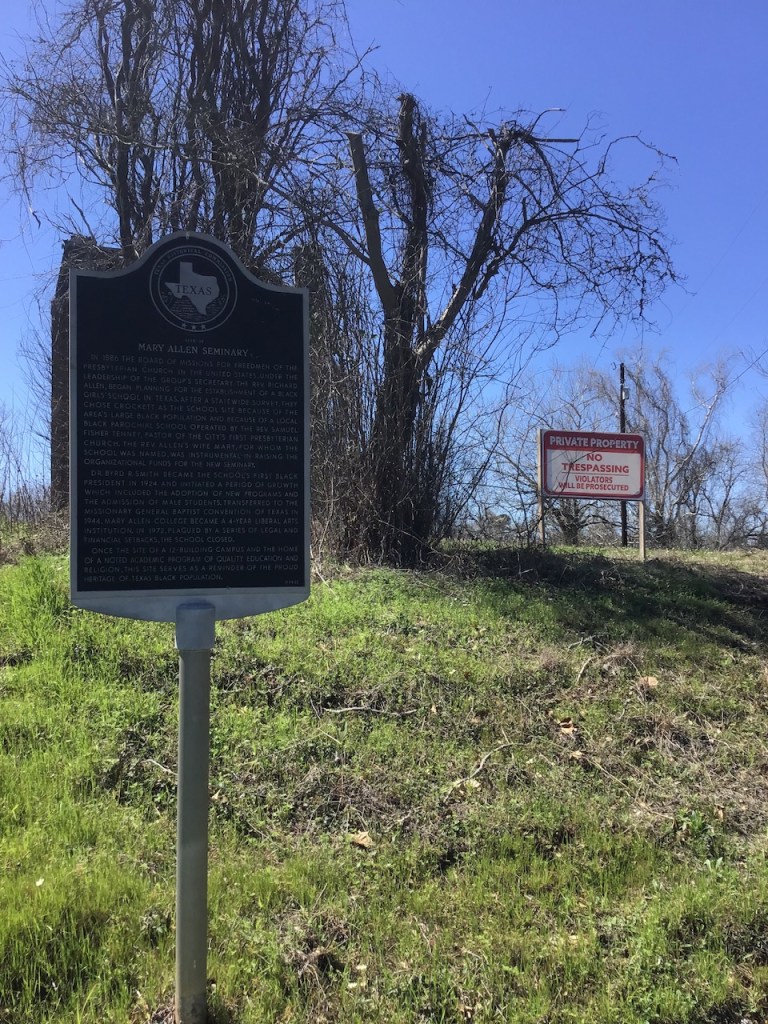
I came across this photo on our nearby city map and found it so compelling I thought to do a few post about it. This is from Palestine, Texas. The Columbia Space Shuttle was reported to have exploded over this area of East Texas killing all these crew members.
Rick D. Husband, Commander; Kaplan’s Chawla, Mission Specialist; David M. Brown, Mission Specialist I; Williams C. McCool, Pilot; Michael P. Anderson, Payload Commander; Lian Ramon, Payload Specialist I; Laurel Blair Salton Clark, Mission Specialist 4.
We will start with the latter, Laurel Blair Salton Clark, Mission Specialist 4 Wiki page:
The Scottish band Runrig pays tribute to Clark on the 2016 album The Story. The final track, “Somewhere”, ends with a recording of her voice.[18] Clark was a Runrig fan and had a wake up call with Runrig’s “Running to the Light”. She took their 2001 The Stamping Ground CD into space with her. When the shuttle disintegrated the CD was found back on Earth, and was presented to the band by her family.
Maclura pomifera (Moraceae family) has a great many common names besides Osage Orange: bois d’arc, bodark, horse apple, hedge apple, murier du Texas
It’s in the same family as mulberry and has a similar growth habitat and widespread adaptability.
For our ancestors it was a highly prized tree that went out of favor in late Colonial times after the widespread use of barbed wire and later heavy harvesting machinery. Before that time it had multiple crucial uses as a wind break, in preventing soil erosion and especially for creating living hedges for livestock containment. It was also used for it’s very hard but flexible wood in making bows and rot-resistant building materials.
It was also used as a rodent and insect repellant and many still use it for this purpose.
But here we are most interested in its many medicinal uses.
The seed is edible, and often enjoyed by squirrels, but not easily obtained.
“The fruit of M. pomífera has shown an effect on human cancer cells (kidney, lung, prostate, breast, melanoma, and colon) as an inhibitor of histone deacetylase (HDAC) via the prenylated flavonoid pomiferin, showing antiproliferative activity in the six cell lines evaluated [23]. In this sense, the compound pomiferin (contained in the fruit of M. pomífera) has been shown in tests with cancer cells to behave as an inhibitor of cancer stem cells from a human glioma [22], showing a reduction in the expression of genes associated with stamina (the ability of the cell to reproduce repeatedly and form stem cells). Also, M. pomífera has been helpful as a marker in the diagnosis of cancer since it allows the distinguishing of patients with prostate cancer from those patients who present benign prostatic diseases and normal subjects, this being through the high affinity of the sera of patients with prostate cancer towards the M. pomífera lectin [21].
Additionally, the fruit, bark, leaves, root, and seed have been reported to have a high content of oils, sugars, and compounds such as isoflavones, xanthones, triterpenes, and stilbenes, with isoflavones being the most representative [15].”
“The seeds are edible and the heartwood, bark and roots contain many extractives of actual and potential value in food processing, pesticide manufacturing, and dye-making. Various parts of the Maclura species are used in folkloric medicine worldwide. Decoction prepared from the roots of M. pomifera is used for the treatment of sore eyes by Comanche Indians in the North America (Carlson and Volney, 1940). The bark of Maclura tinctoria has been reported to be used against toothache by Kaiowa and Guarani indigenous people living in the Caarapo Reserve in Brazil as well as the in the other parts of Amazon region, it was also recorded to be used in Southern Ghana for dental health (Elvin-Lewis et al., 1980, Elvin-Lewis and Lewis, 1983, Bueno et al., 2005).
The fruit of M. pomifera is also well-known for its rich isoflavonoid content as well as a content of xanthones (Delle Monache et al., 1984, Delle Monache et al., 1994, Toker and Erdogan, 1998). Several biological activities of the plant were reported up to date including antimicrobial, estrogenic, anti-inflammatory and antinociceptive activities (Mahmoud, 1981, Maier et al., 1995, Küpeli et al., 2006). Antioxidant activity of the major flavonoids of M. pomifera has also been studied (Tsao et al., 2003, Vesela et al., 2004).”
Native Americans used M. pomifera for the treatment of cancer [2]. In Bolivia, the plant sap is used for the treatment of tooth pain, and the bark and leaves are used for uterine hemorrhage [3]. Comanche Indians in North America used the Osage orange roots decoction to treat sore eyes [4]. M. pomifera and its components possess several biological activities including cytotoxic, antitumor, antibacterial, estrogenic, antifungal, antiviral, and antimalar-ial activities [5–13]. Recently, isofavones isolated from Osage orange have been demonstrated to protect brain cells, or neurons, from the toxic effects of amyloid beta peptide, which is believed to be responsible for the degeneration of neurons in Alzheimer’s disease patients.” M.pomifera produces several secondary metabolites belonging to diferent chemical classes including prenylated favonoids. Teprenylated favonoids possess diferent biological activities such as antifungal, antibacterial, antitumor, and antioxidant activities.”
We have a few still around in our area and I’ve been propagating them from seed in the hope of creating a living hedge. Unfortunately our summers have been so severe lately I’ve only managed one survivor, now 3 years old. I’ll keep trying!
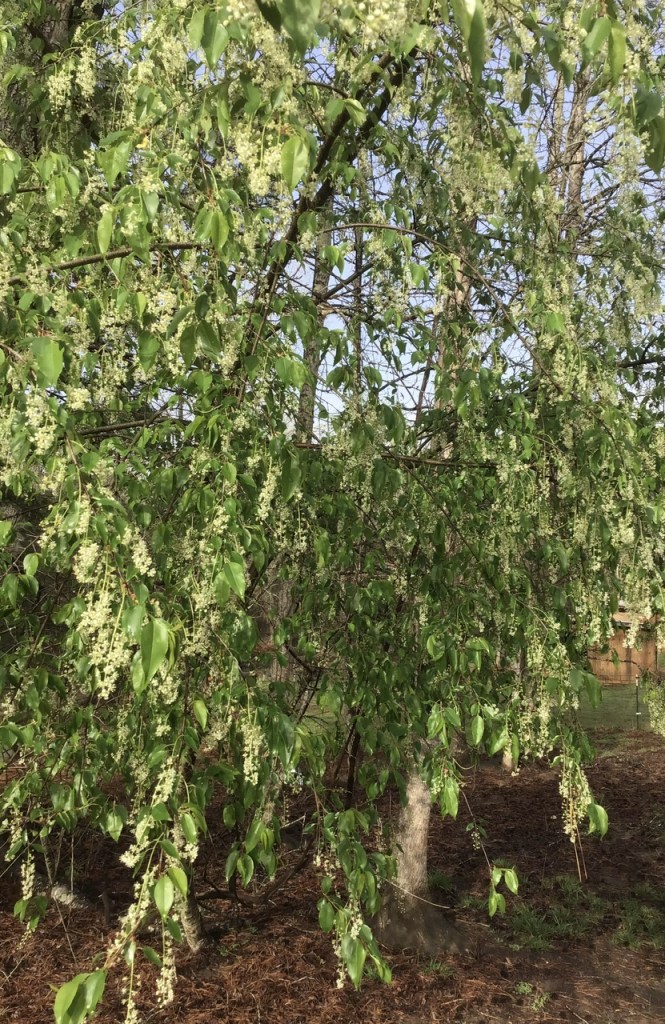
A very old specimen at a neighbor’s house in East Texas.
A neighbor’s old Bois d’arc tree Spring 2023
A beautiful shade tree with so much to offer, I hope it becomes popular once again in our countryside.
A couple more impressive Bois d’arc photos from the Internet:
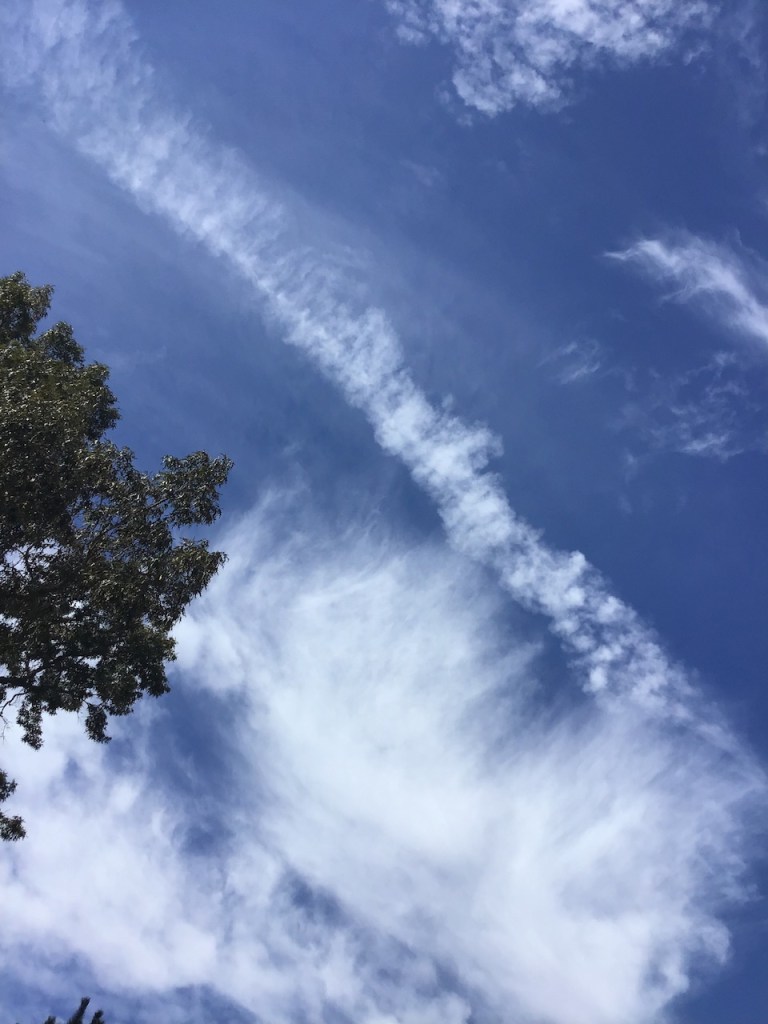
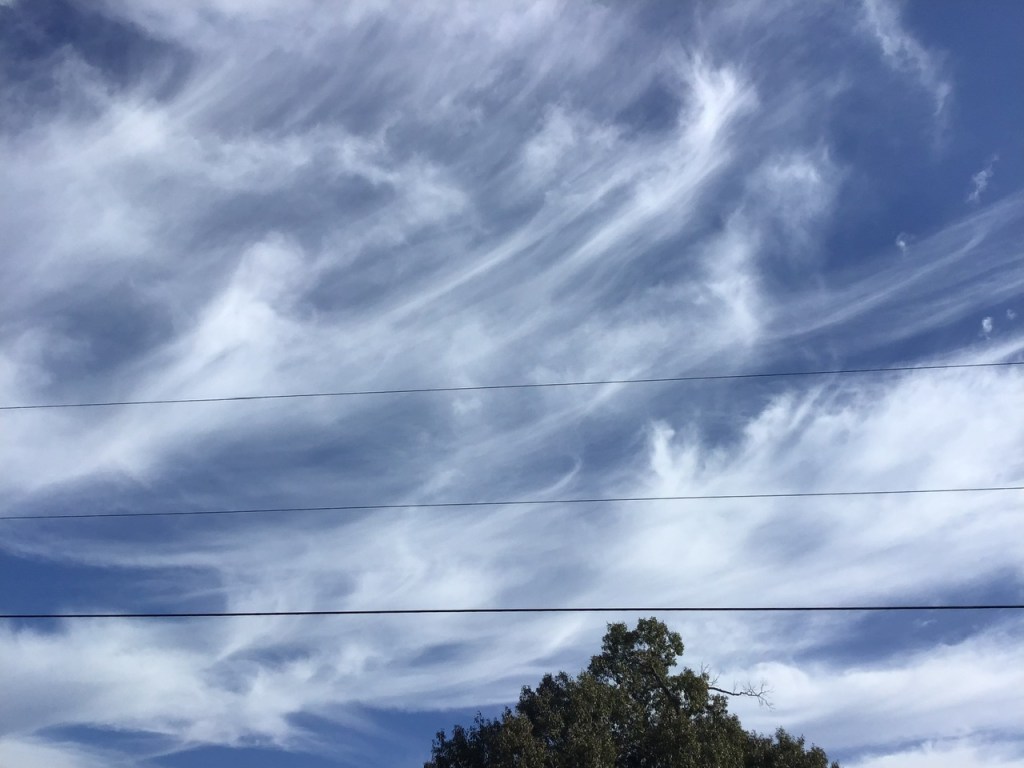
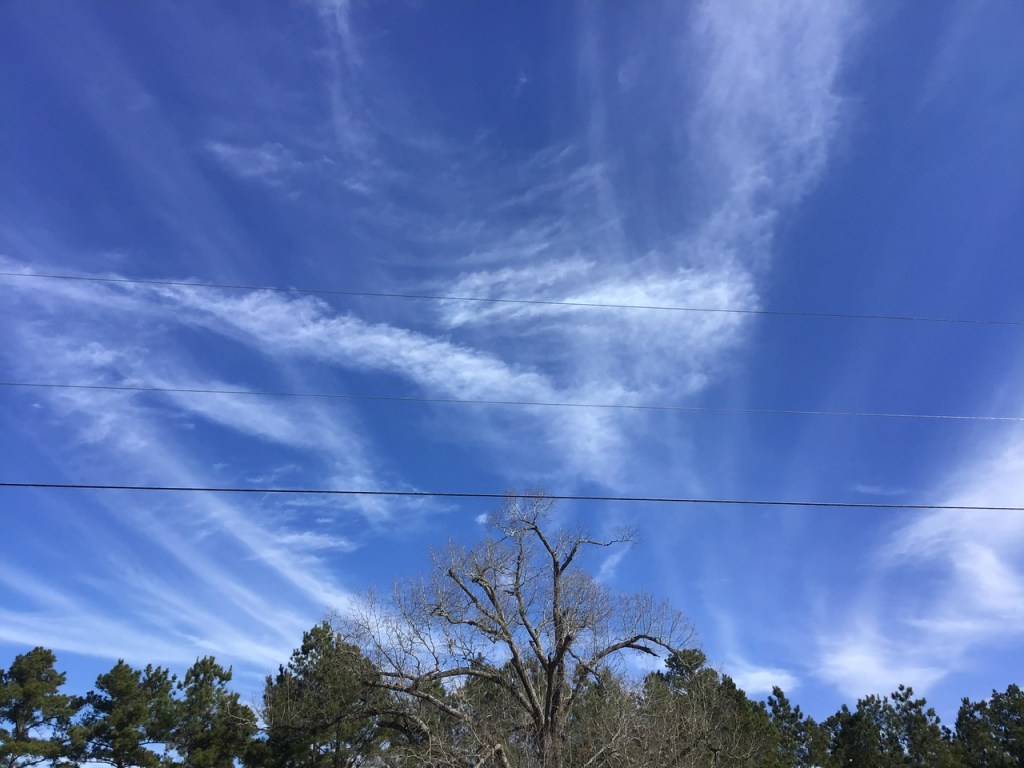
The chem-filled skies continue into our Yo-Yo Season, formerly known as fall and winter.
I suppose art students are now learning to draw filth-filled skies as fine and normal the way we used to draw puffy clouds as kids before the 90s.
Scientists will be taught that aluminum, barium, strontium are all to be expected in our snow and rain and soil.
We’ve been talking about it for a decade, providing all the proof we could get our hands on, and the government put their blinders on like good little minions and the greedy scientists and corporate media spinners did as they were told in order to keep collecting their paychecks and pensions.
And now it’s all coming out. Officially, finally. “Conspiracy theory” is no longer an out for them. IT’S OFFICIAL!
IT’S NOT JUST CONSPIRACY CRAZIES POSTING PHOTOS OF CONTRAILS. WOW!
SO THESE REALLY AREN’T JUST BEAUTIFUL SUNSETS AND FUN CLOUD FORMATIONS MADE BY THE WEATHER GODS FOR OUR ENJOYMENT?
WOW!
So now what? What does it all mean? Trump’s here to fix it all, right?
No silly! Now comes the part where we get Global Governance, through more war and manufactured disasters blamed on nature. The big reveal, the book Behind the Green Mask was published 13 years ago.
Looks like it’s all happening right on schedule. With the exact same people hiding information for the last 50 years leading the show.
22 November 2024 | ZeroGeoengineering.com | Planning, development, and implementation of weather interventions and atmospheric experimentation are funded by Congress and directed by interagency groups including those in partnership with the U.S. Global Change Research Program (USGCRP).
The USGCRP was established by Congress in 1990 to coordinate ‘global change research’ and collaboration with international and federal agencies.
Ending USGCRP interventions will require repealing federal laws including but not limited to, the National Weather Modification Policy Act, the Global Change Research Act (GCRA) of 1990, the National Oceanic and Atmospheric Administration Authorization Act of 1992 and Trump’s Weather Research and Forecasting Innovation Act of 2017 (Public Law No. 115-25, Title IV, sec. 402, 15 U.S.C. § 8542.
I’m sure our crafty disaster capitalists will be filled with hope and solutions. Anti-radiation suits. Fancy new protective devices.
I’m sure the high fashion industry and the home and garden gurus will have plenty of new high-tech solutions to save us all. And the ‘detox’ solutions, of course. So many solutions! Don’t worry!
“Did you know radiation is a central component of weather control?
At the heart of weather experimentation is NEXRAD, or NEXt-generation RADar and the transmission of microwave radiation pollution. The cell phone you hold in your hand and the cell phone towers it’s communicating with are transmitting and receiving microwave radiation. Shown below, definitions of pollution and pollutants from Verizon and AT&T”
It’s been a while since any update, but not because nothing is happening on the wee homestead. It’s still the same story—the biggest news-worthy thing is the one I’ve been avoiding writing about.
As usual, there are the latest piglets and chicks and harvests and garden woes and ‘unseasonable’ weather. Rest assured, we’ve had all that again this summer.
I did imagine if I ever run out of blogging content to share I could start a new quiz show . . . Here we are in East Texas folks, so let’s play Guess The Season!
Come on down, step right up, where your chances to win are a remarkable 1 in 4, WOW!
But it might be more challenging to win than you think. How about it, ready to give it a try?
The roses and geraniums and wildflowers are blooming, volunteer tomato plants are coming up, the lettuce is bolting and the dogs are shedding, what season is it?
Well, if you guessed springtime, tough luck loser!
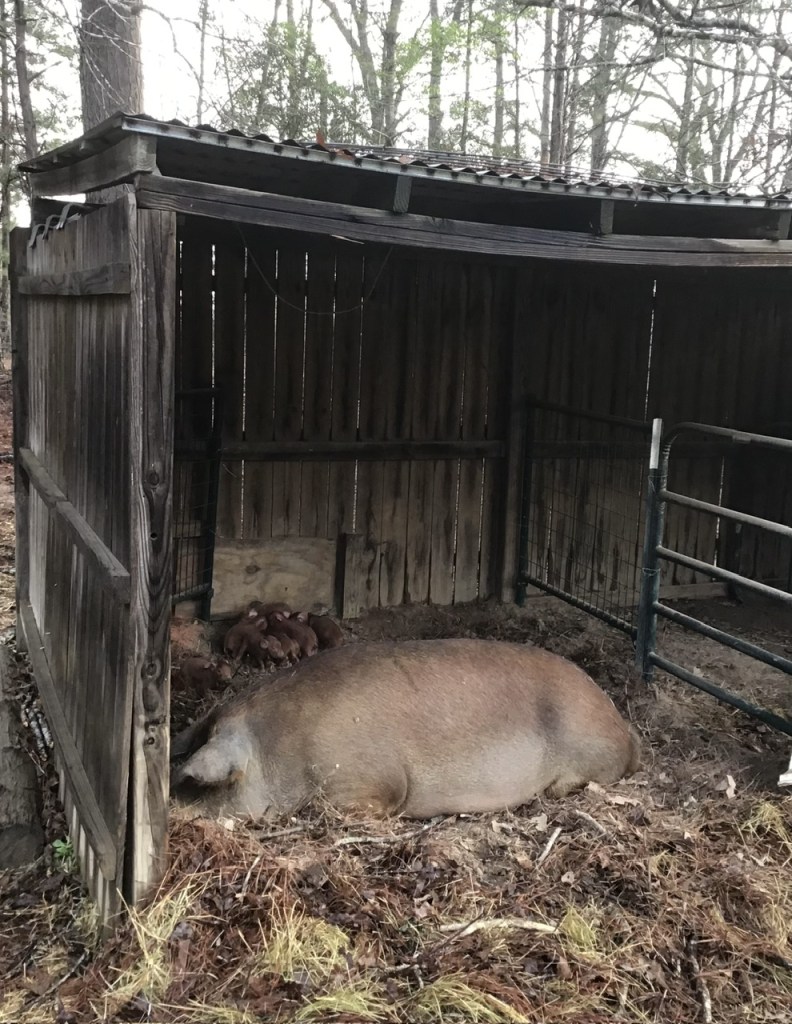
Let me give you another clue, Rambo, Teaky and Papa Chop are horny, but the girls are all already knocked up. Poor fellas!
Rambo, still chasing the girls! If you look closely in the distance, past the downed tree, you’ll see Hubby’s recently finished ‘bridge to nowhere’.
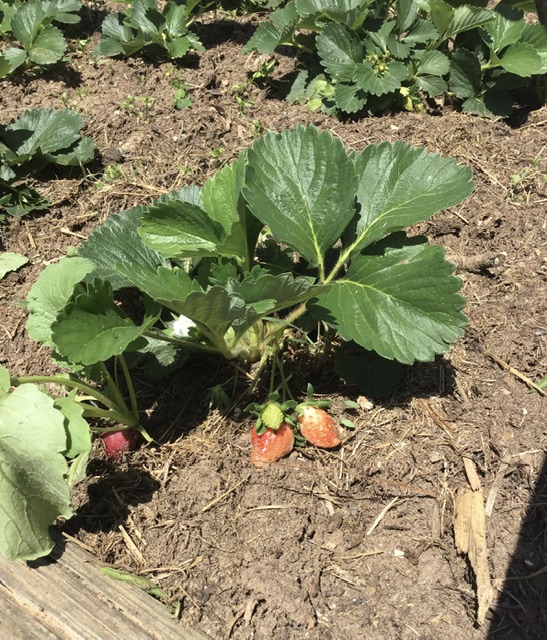
What else is new, or not? We have entered slaughter season, my fall transplants are dying in the heat, the moles and voles and gophers have taken over the garden, and I have only two bee colonies which survived the summer, again.
An entire bed of baby broccoli, cauliflower and cabbages lost to rodents! Argh! 😖
It’s well past time to plant garlic, Hubby prepared the rows a month ago, but I don’t dare do the deed. It’s still far too warm. They will start growing too soon, putting all their energy into a fine green shoot that will then die when the inevitable frost comes again, and the remnants of the bulb will then likely rot in the ground.
Lots of elephant garlic (harvested in May) left for re-planting and enjoying through the YoYo season. Behind it is about 1/3 of our sweet potato harvest. Both did very well, though the Irish potatoes and the onions did terrible.
As far as general garden results for the year, a mixed bag, as is typical. The peppers did not do well and I had such high hopes. Last year we had amazing peppers all summer and fall, so I really have no idea why this year was so poor. It was my hope to experiment with spicy ferments and pimientos. No such luck. We have dismally few jalapeños and green peppers coming in, plus one prolific plant that magically survived, producing these beauties, which will hopefully ripen quickly. I had to pull off one entire branch, which is where these green ones originated, because it was overtopping its cage and becoming unruly.
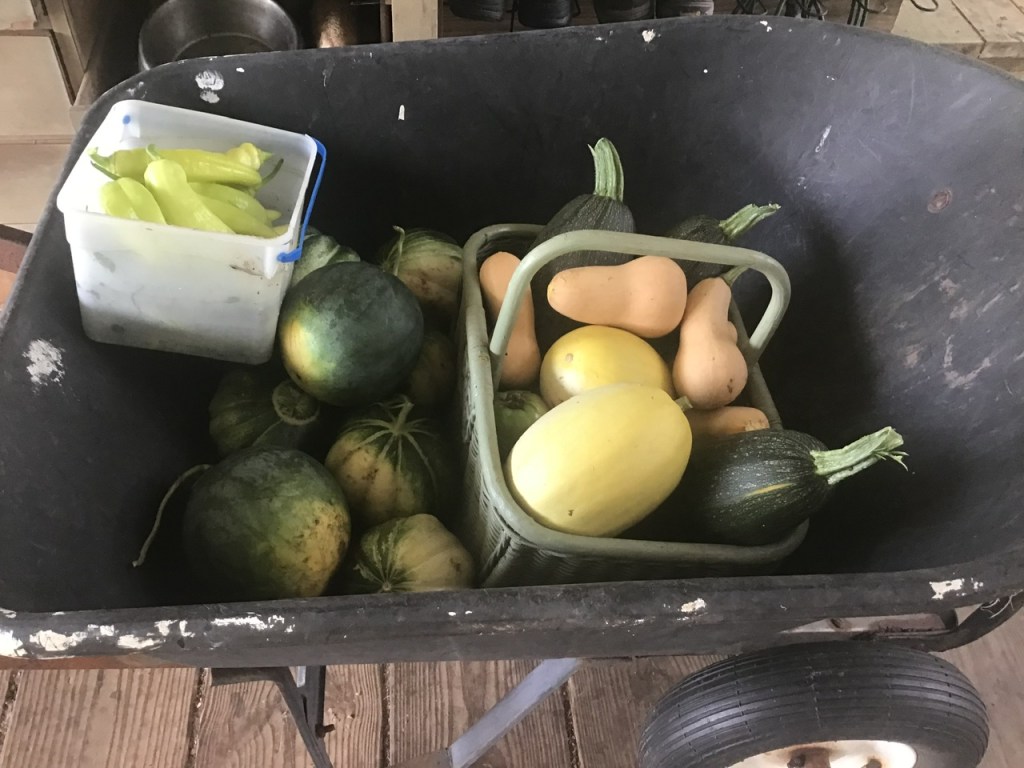
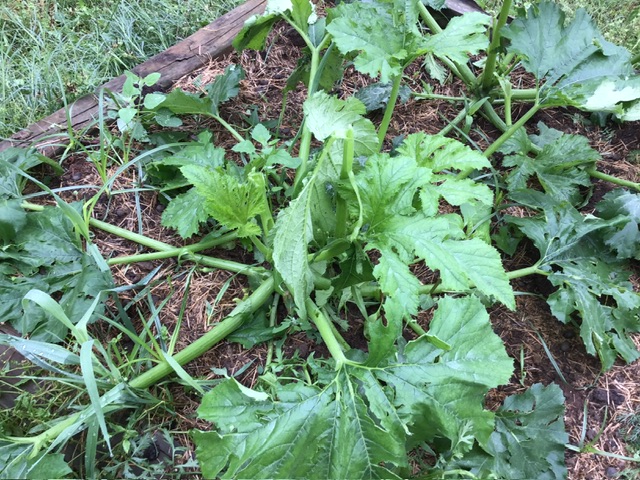
The squashes also did not do well and I attribute this to the wet spring followed quickly by excessive heat and drought. I’ve heard from several nearby gardeners who had the same problem.
Very few squashes this year, not even luffa did well, and that’s usually easy and prolific. In the center are persimmons, we got about a dozen off the young tree. And, a surprise . . . Watermelon!
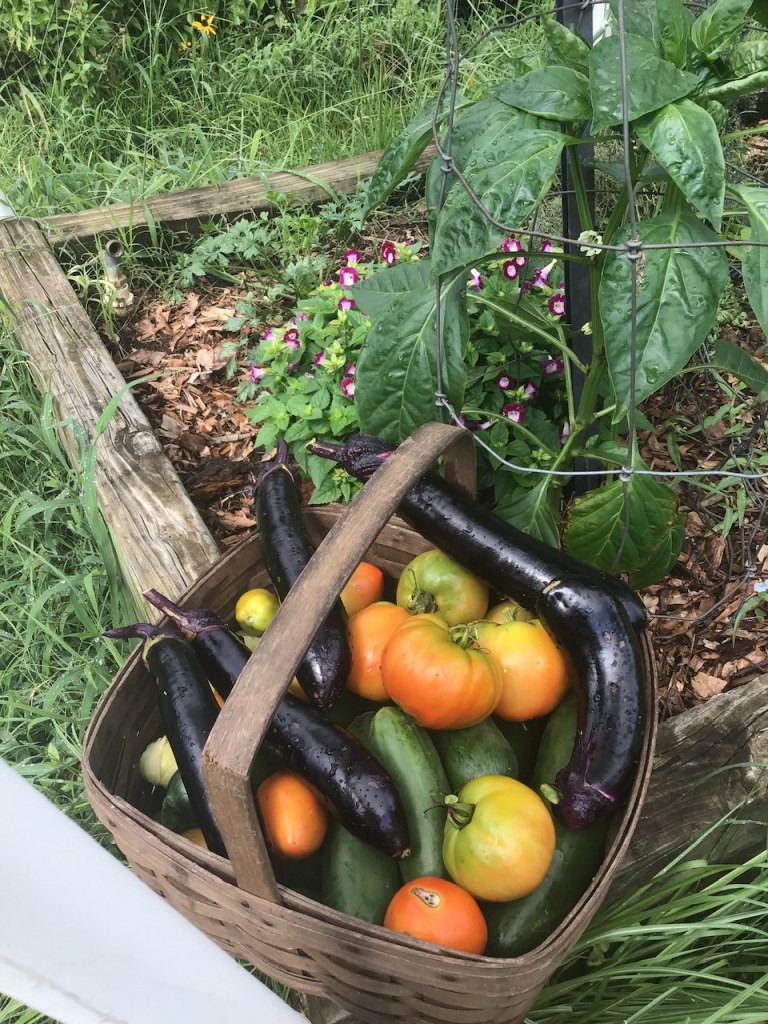
The cucumbers were another disappointment, but that was my own fault. My goal was to prolong the season by succession planting, so I planted fewer cucumbers than usual at peak time, thinking we’d have them fresh and fermented for the entire summer and fall, so no need for canning surplus.
Unfortunately, even the young plants could not thrive in our summer temps, so old ones which were past their main production, along with new but not yet producing, all died. Then I got lucky and some volunteers showed up in late August, so I nurtured them along, and right after they started producing, we got a super early frost, one night only. It killed them off.
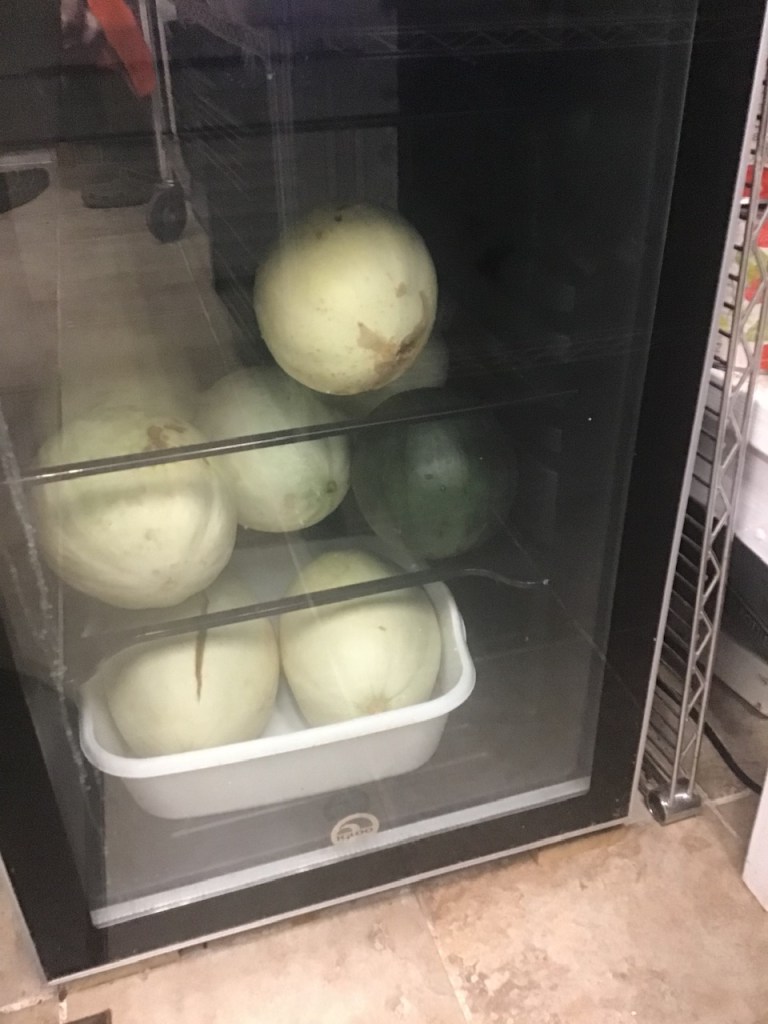
Six ‘winter’ watermelons!
Surprisingly, the quick frost did not kill off the few remaining peppers, or the watermelons, which I planted late after starting them indoors, on a whim, because the best part of the summer garden this year was definitely the watermelons.
And now, we’ve got more!
Thanksgiving watermelons, that’s a first. There’s also a few volunteer tomatoes I’ll be digging up soon to move inside under lights.
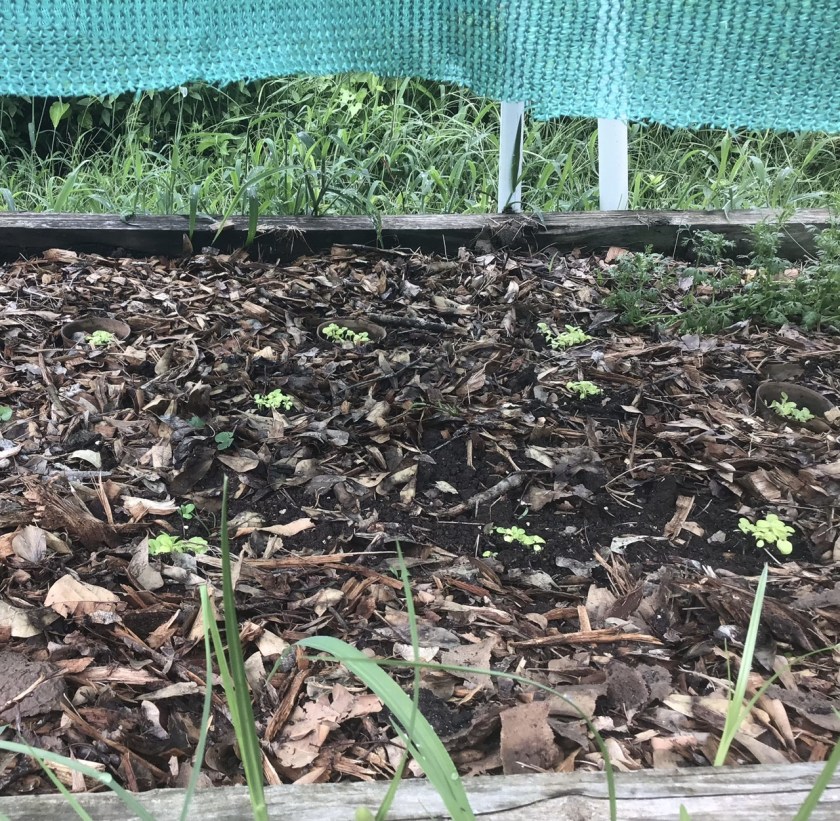
Between the bolted Romaine, one of several tomato volunteers.
The baby citrus trees have all survived their first summer, I’m so hoping that’s a sign of continued success. They aren’t looking so good, but they’re hanging in there. I’ll take that as a win, as temporary as it may be.
The young citrus planted in early spring, not looking great, but still hanging in there!
I’ve also been babying a few graveyard treasures. Perhaps as a distraction from my misery, I’ve been visiting all the cemeteries in the area and have found in them a few spectacular specimens I want to grow.
There was the healthiest, largest Turk’s cap aka Mexican apple (Malvaviscus arboreus var. drummondii) I’ve ever seen, and in the middle of drought still bright and beautiful. I’ve been wanting one not only because they are drought-tolerant and attractive, but also because they are a popular medicinal and a perennial edible. (I’ll definitely be covering it in a future Herbal Explorations post.)
I did manage to get one cutting, out of 6, to take root. There’s also a wild pink rambling rose that I got rooted, and some gorgeous Magnolia trees, which I hope I can get started after stratification and scarification of their seeds.
A baby Turk’s Cap and a Mexican oregano (I hope!)
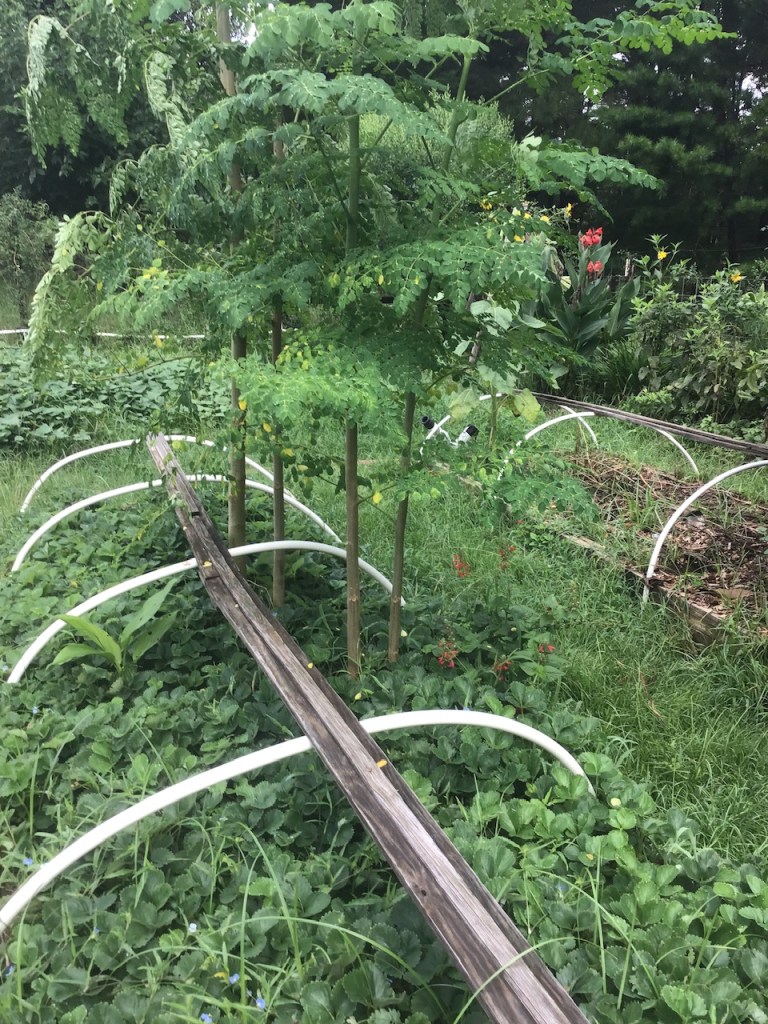
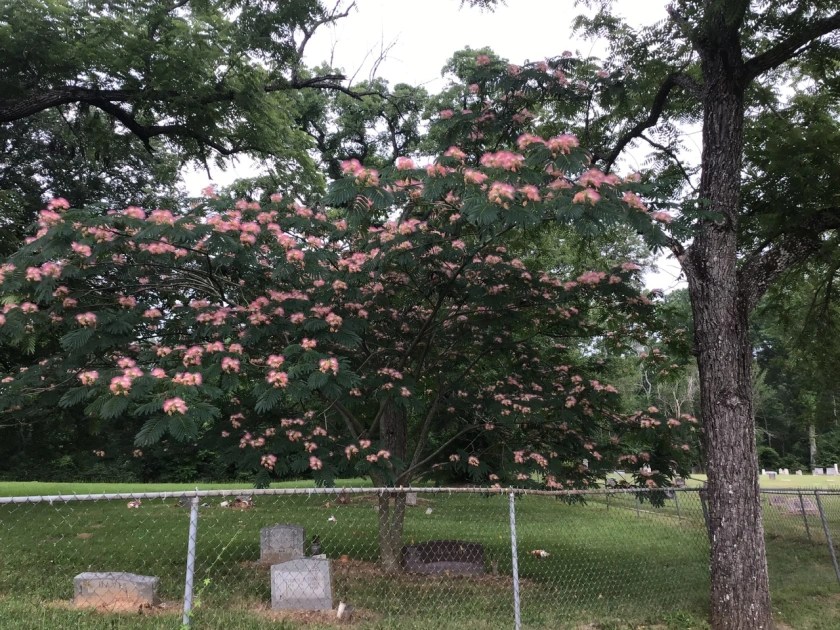
Plus, I’m excited that 1 of the 3 Mimosa trees I dug up from the gutter in early spring, and have been doting on all summer, is doing beautifully; I think she’s going to make it! Last year’s attempt failed by this time of year, I think because the spot I chose was too shady.
A young Mimosa tree recently transplanted after growing in a pot in part-sun all summer. Again in the distance, behind the sheep, Hubby’s ‘bridge to nowhere’.
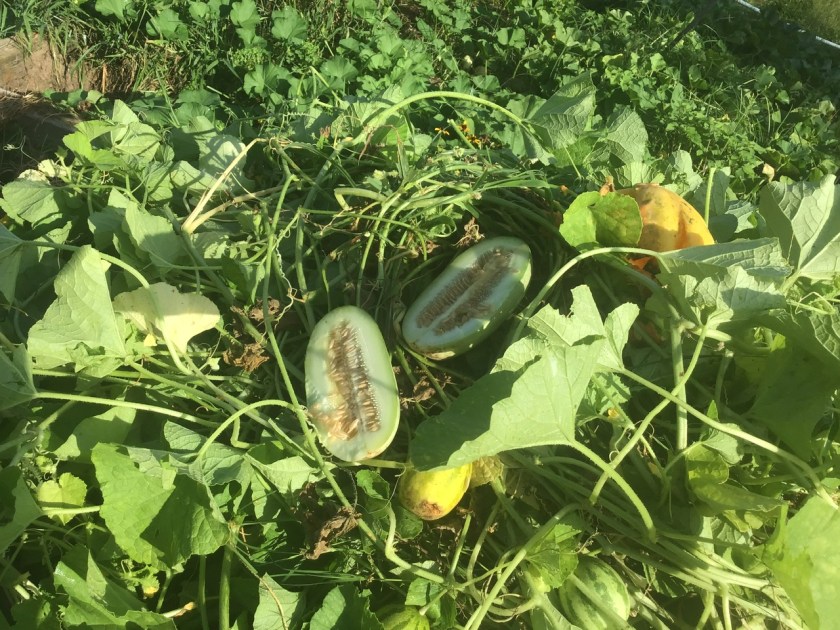
Another noteworthy piece is we’ve had a mystery fruit invade the garden.
Mouse melons gone wild? I did plant store-bought mouse melon seed, also called cucamelon, for a couple of summers. I called it my ‘crop of the year’ in 2018.
They were a novelty item I thought I’d try, and while they are so cute and a fun addition to the summer produce, they are super tiny and tedious to harvest, so not a lot of bang for the buck.
Online stock photo: Mouse melons, about the size of my thumb nail.
Mouse melon from Wiki: Melothria scabra is native to Colombia, El Salvador, Guatemala, Honduras, Mexico, Nicaragua, Panama, and Venezuela,where it grows in forests and thickets.
That is the closest fruit I can match to our mystery fruit, which does come with a more interesting backstory.
Two years ago I found five of these fruits on the road near the creek with no plant attached to them. I figured they were part of a squirrel’s stash that had flooded out, or had dropped from an unknown tree, a wild variety of something I’d never heard of before. I was so intrigued!
I looked all around for the potential tree and couldn’t find any. But, somehow I got it stuck in my head that I’d just found wild kumquats. When my local gardening friends laughed and told me that was impossible, I said, well, we will see.
The following spring I gave some of the seeds to a friend and planted some in our garden. Within two months I’d regretted it; it was no tree. The vines had very quickly begun to take over a large section of space with the most tenacious tendrils and prolific foliage I’d ever seen.
I told my friend to pull them out, immediately, as they were very invasive and she has very limited garden space. She laughed and said, “I told you they weren’t kumquats!” 😆
The vines are so tough they’re like pulling thick rope. They readily re-root from the vines as well, and I came to discover this year, re-seed with great abandon.
While I pulled them up that first year before seeing any fruits on them, there must’ve been some hidden, because this year another plant formed, rather late in the season, and in a spot where we could afford to leave it to its natural inclinations.
Wow, what a giant beast it grew into! In the dead of summer, in severe heat and drought, without any supplementary water, it grew, and grew, and has produced so many golf ball sized fruits I could’ve easily filled a wheelbarrow with them more than once.
Except the fruit is quite sour, exceptionally seedy and with tough skin. It was a labor intensive process, but after peeling and deseeding, I made a few ferments and I was impressed with the results.
Ferment with mouse melons and varied veggies and herbs.
But, the vines were taking over, moving into our pathways, climbing up fences, choking out everything in its path. So we started pulling it, mowing over it, and generally abusing it on a daily basis.
It lived on! All through the late summer and into our faux fall. It actually started regrowing under the brush pile of leaves and grass we piled on top of its last remaining vines.
While most of the fruit became pig fodder, I’m still impressed with its determination and tenacity and will be finding some wasted space to keep the mystery fruit in our summer rotation. Maybe with the okra, which we aren’t crazy about either, but keep growing as a ‘just in case’ survival crop.
There’s been another ancient garden mystery, which we may have finally solved. I mean ancient in the modern sense, that being over five years in the making. It concerns the herb popularly named ‘Mexican oregano’.
Many years ago I started looking to plant this herb, one of my all-time favorites in the kitchen, and that’s when the quest began.
Now, one would certainly think this herb to be readily available in these parts, considering every year I can find in the garden stores many different varieties of oregano—Greek, Italian, Cuban, Golden, variegated, ornamental, Syrian. Really, Syrian?
No Mexican. And yet, that’s right over our border, certainly a lot closer than Syria. Why can we not find seeds or plants of Mexican oregano?
Years ago this put a bee in my bonnet loud enough to get Hubby on the hunt. Between the two of us we’ve spent many hours calling around, searching online, trying to sift through the mounds of misinformation and redirection.
Yes, it would seem that’s happening not only in politics and history, but even in culinary herbs!
Once we were able to identify the basics of the problem, we honed in on the solution. There are actually two different types of (commercially unavailable) plants called Mexican oregano. We’ve been buying the herb in bulk for years without any problem, but we really want to be growing it ourselves.
~Mexican Bush Oregano (Poliomintha longiflora) Mint family
~Mexican Oregano (lippia graveolens) Verbena family
Of the 2 types, we want to grow the latter, lippia graveolens. It’s a marvelous oregano and not just in Mexican cuisine. The flavor is much less intense than Greek, more like marjoram, but with notes of citrus and thyme. It’s quite unique as far as oregano’s go, which makes sense, since it’s in the verbena family and not the mint family, as most are.
After discovering we cannot find plants or seeds anywhere around here or online, we were really wondering why this is. It’s a very popular herb after all, used in lots of Mexican dishes. We did come across a few sites that claimed to sell the seedlings and small plants, but they were always out of stock.
Finally, Hubby stumbled on a potential answer in an online forum. It was suggested that they don’t sell the seeds because they are too small. We had never thought of this! It was suggested to simply sprinkle some of the herb purchased from the store onto some soil! Wait, what . . . ?
So, I’ve been trying that a couple of times now, and I may have just gotten some positive results.
Baby Mexican Oregano? I’m hoping! Also rooting some lemon-scented geranium, which has done pretty well all summer.
Back to the bad news. We continue to lose trees, old and young, at a dismal rate. This one flashed out dead within one week in July. It’s one of four equally large ones that have come down just this summer. I honestly can’t imagine how that happens so quickly outside of being poisoned. The dead leaves continue to hang there, almost 3 months later, while branches full of dead leaves come down in the slightest wind.
Branches come down, but not the dead leaves.
The spring floods that forced Hubby to rebuild our culvert then turned into the two-month plus drought that made his efforts futile. Still, it had to be done, as the washout was really significant.
Big job for one old man and his old tractor!
The previous culvert was our first job when we bought this property. That time I was a big helper, right alongside Hubby, digging dirt and dragging debris. It was necessary in order to get the car to our camping spot, where we spent many months building the cabin. Hauling in water, no electricity, sleeping in a tent. Ah, the good ole days!
This time I didn’t lift a finger, not even to take photos. He was able to successfully replace the culvert with a structure which we call our ‘bridge to nowhere’.
But, it was still necessary even though we aren’t camping over there anymore, in order to get the tractor to the back half of the property for other reasons—fence repair, any necessary tree felling, or getting to the cabin that’s become an unusually attractive storage room. 😏
Hopefully this one will do the trick for another 15 years or so.
Slaughter season may not sound so appealing, but if you could smell our kitchen when Hubby is cooking up the meats and broths for canning, or making his marvelous split pea soup or sampling sausage mixes before freezing, I think you’d change your tune.
Which reminds me of a bit more news worth sharing. Canning potatoes has been a surprisingly good choice I’d not have expected. Fried potatoes are such a popular food and we eat them weekly. But it’s a pretty labor-intensive process to make good fried potatoes, because you’ve got to cook them twice to get them crisp. This is probably why so many folks rely on the wide variety of frozen French fries and other convenience potato products on the market.
A couple jars of Hubby’s pressure canned potatoes.
While we never get large potato harvests here (besides sweet potatoes that is) Hubby is an excellent sale shopper. When he spots them for really cheap, like they are now at just 19 cents a pound, he’ll buy a big load of them and get prepping.
By getting the first part of the potato prep done in bulk, these canned potatoes are so quick and versatile and delish. It does take a lot of initial time and effort—peeling, chopping, pressure canning, but it’s well worth it.
All you have to do then for perfectly crisp ‘fries’ is drain and rinse and dry a bit, then toss them in your hot oil or fat of choice and in minutes you’ve got a cheaper, healthier, quicker version than most convenience products.
And would you look at that! Such a long and newsy post which I managed without ever mentioning the elephant in my head.
That is the goats. My great summer sorrow. I lost 9 of them; there are just 4 left. And I still can’t face up to it without tearing up.
So, it seems I can be as avoidant, bypassing, stalling, redirecting, minimizing and gaslighting as the best of them, when it suits me. 🥲
Just protecting myself from facing reality, right? How very common.
I failed. I miss them. That dream became a nightmare.
But I can’t end on that sad note, not now. The summer has been hard on the sheep and the dogs, too. We lost several lambs and Hubby was once again nursing Shadow issues for weeks. That’s quite another story, for another time.
Suffice it to say, he’s doing fine now, hurrah!
Better watch out, Shadow’s in loop position, he’s about to pounce!
What an athlete!
And right back to lounge position.
There’s always Bubba, giving free hourly lessons in lounge.
Thanks for stopping by!
Do you have any idea what our mystery plant could be?
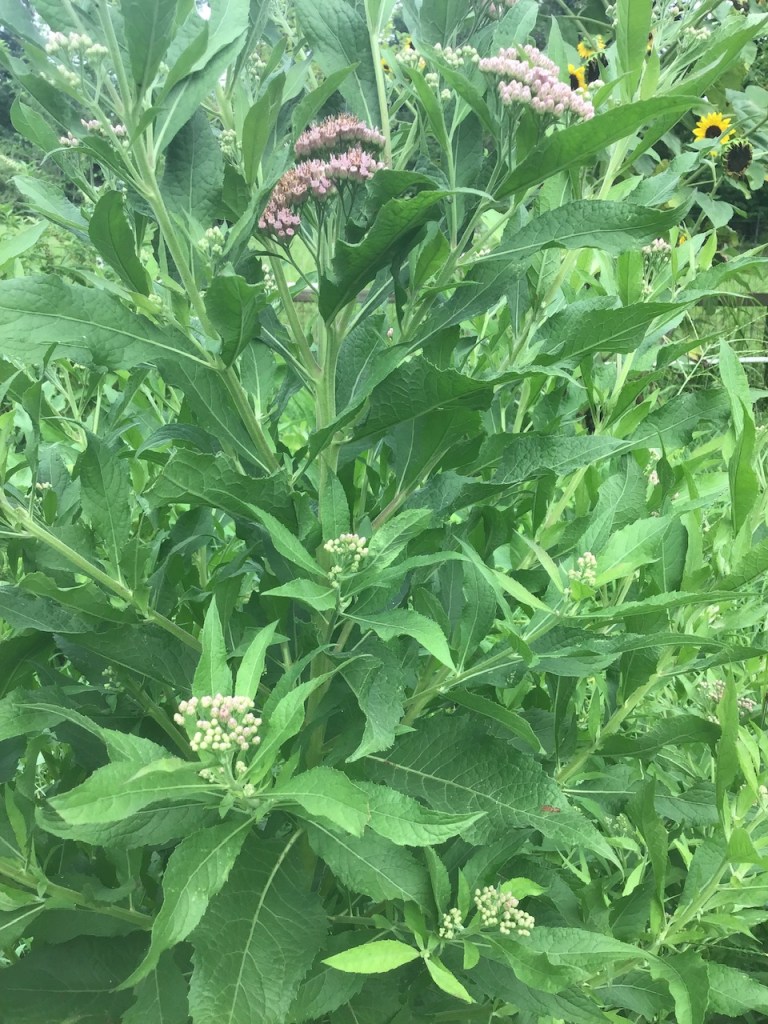
This is a ‘weed’ I’ve been wanting to learn more about for a long time. It’s a very popular plant for foragers, right up there with Mullein, but I first learned about it as a preferred late season food for the bees.
In East Texas it seems to prefer roadsides and creeks to open fields and often appears nearby mistflower (conoclinium coelestinium) both in the family asteraceae.
Goldenrod and mistflower growing by the creek October 2024
Surprisingly (or perhaps not) Wiki has little info on this popular medicinal, and it wasn’t listed on a longtime foraging go-to of mine, Merriwether of Foraging Texas.
I can’t imagine why not! It’s a well-known medicinal in many countries and is plentiful in Texas even during extremely hot and dry summers.
According to The Medicinal Flora of Britain and Northwestern Europe, ”It’s first reliable record of medicinal use dates from the Southern Europe of the 13th century. It became much prized in Tudor England but, being imported, was very expensive.” (Julian Barker)
“Goldenrod was formerly prized as a wound herb as it is, indeed, astringent and antiseptic. Its principal internal use is for the kidney and bladder. I have found some justification for the BHP recommendation against naso-pharayngeal catarrh (and chronic sinusitis) but some skepticism has been expressed against this use. I think much of the variability in its efficacy may be due to the extreme polymorphism of the species which will lead, I am sure to the future recognition of subspecies.
”The aromatic leaves of the American S.odora make a once popular drink known as Blue Mountain Tea.”
“The flowering tops are used medicinally. Their constituents include tannins, saponins, bitter compounds, an essential oil and flavonoids. These substances give Goldenrod diuretic, astringent, vulnerary, anti-inflammatory, expectorant, antispasmodic, and carminative properties. In herbal medicine an infusion is used to treat kidney and bladder disorders, to improve kidney and prostate function, for flatulence and indigestion, and for chronic bronchitis, coughs and asthma. Externally Godenrod is used in poultices, ointments and bath preparations for varicose ulcers, eczema and slow-healing wounds.”
Some of us have known for decades what’s coming. Actually, what is here, already here, has been here, and has been destroying families and communities for two centuries, at least.
You need look no further than the “Civil” war to see it.
Others are just coming face to face with this reality now. It’s a horrifying reality for such folks, not only has their reality bubble been burst, but now they must face such dire facts while trying to fight for their homes, their properties, and their lives. Just as happened to the Southerners. Just as happened to the ‘Native Americans’. Don’t believe the war propaganda; every day is Groundhog Day. Every land grab scheme has been played before, now they just have fancier weapons to do their dirty work.
Waking up is hard to do in the best of circumstances, so I can imagine the hell when attempting to do so in the worst of them.
It’s not just the weather! I know, I’ve been focused on the weather for so long, it’s been my obsession, because trying to deal with it on a daily basis is no picnic.
I’ve also felt like the manufactured weather is like a baby step, a gateway, if folks would get their minds around that fact, and the very serious implications of it, then they would be better able to face the far more dire situation we are in.
Now that the cyber world is finally facing up to the manmade weather chaos, I feel it’s time to take the next step, because in fact, the reality of the situation is FAR worse.
During the series of tests at the High Energy Laser System Test Facility at White Sands Missile Range, the Demonstrator Laser Weapon System (DLWS), acting as a ground-based test surrogate for the SHiELD system, was able to engage and shoot down several air launched missiles in flight. The demonstration is an important step of the SHiELD system development, by validating laser effectiveness against the target missiles.
DEW—Directed Energy Weapons—are that reality. This is not a conspiracy theory. Those in the know, those in the positions of power in this country, they understand very well these weapons are real, and they are being used against us in this country as in many others.
This book is from 2003.
“Several nations are engaging in development and production of directed energy weapons. Recent scientific advances now enable the production of lethal lasers and high-powered microwaves. The current growth and development in this emerging area strongly suggests that directed energy weapons of lethal power will reach the battlefield before 2010. Since proliferation of lower power laser weapons has already happened, it is likely that proliferation of high power or high energy weapons will occur as well. This paper expands on this development and posits potential impacts on a plausible future battlefield, developed in part from the Alternate Futures of AF 2025, where all comers deploy lethal directed energy technologies. From these impacts, which span doctrine, organization, force structure, and systems design, this paper recommends changes to better posture the United States for this potential future.”
Who you vote for will not change this. This is being carried out from above our political class. As I asked in a previous post: Who owns our airspace?
“The NOAA Project Report below includes information regarding “Weather Modification experiments through electromagnetism” starting 01/05/2023 through 01/01/2026. The submitted application includes a World Economic Forum Global Weather Modification Alliance STRATEGIC INTELLIGENCE BRIEFING which discusses “manmade electro-magnetic storms which may render another region powerless to floods, extreme wildfires and hailstorms…”. The applicant states, “I created a Strategic Intelligence Map this year as well and sent it off to UNOOSA and the United Nations in hope to create a weather modification alliance…”
Who owns our airspace? Does this answer my question?
The ‘race for space’ is not about gifting the world with Internet. It’s the modern battlefield. All that sits below ‘space’ is the fallout zone. We are the fallout zone.
They don’t just want the most beautiful places either, the mountains and the coastlines. They want what is beneath our feet. In some cases, that means lithium and other desired minerals.
East Texas, along with a good chunk of the South is also lithium rich territory, not just our miserable neighbors living in the current hellscape called Appalachia.
“In this episode, we dive into a timely and fascinating topic: the growing importance of lithium extraction in the United States and what it means for mineral owners. In fact, long-time listener, Barb R. shared a news story about Standard Lithium Ltd’s discovery of the highest confirmed lithium grade brine in North America in Cass County, Texas. This discovery has sparked conversations about the ownership of lithium mineral rights and who owns the valuable minerals found in produced water and the potential impact on royalties. Whether you have minerals in the Smackover Formation or anywhere else in the United States, be sure to listen to learn how you can navigate this developing landscape to make sure you get paid for these valuable minerals.”
For those new to the topic of mineral rights here’s a noteworthy fact: Most mineral rights owners do not live on the property for which they own the mineral rights. And most land owners do not own mineral rights.
That means they, ordinary mineral owning Americans, profit, sometimes substantially, if the Public-Private partnerships drill on the land, even against the desire of the land owners.
Furthermore, if those mineral rights owners don’t know they own those rights (for example a death where those rights weren’t specified so the inheritor has no idea), or aren’t informed of the prospective drilling operations (because these international corporations are not always forthcoming), that money goes to the US federal government.
As the famous quote goes:
Thank you to The Tactical Hermit who has been covering the news of our fellows in our latest war zone. Follow link for more info.
Surface modification control stations and methods in a globally distributed array for dynamically adjusting the atmospheric, terrestrial and oceanic properties
“Surface modification control stations and methods in a globally distributed array for dynamically adjusting the atmospheric, terrestrial and oceanic properties. The control stations modify the humidity, currents, wind flows and heat removal rate of the surface and facilitate cooling and control of large area of global surface temperatures. This global system is made of arrays of multiple sub-systems that monitor climate and act locally on weather with dynamically generated local forcing & perturbations for guiding in a controlled manner aim at long-term modifications. The machineries are part of a large-scale system consisting of an array of many such machines put across the globe at locations called the control stations. These are then used in a coordinated manner to modify large area weather and the global climate as desired.”
Listen to the beginning of Dane’s broadcast this week where a man confronts the (supposedly ignorant) atmospheric terrorists and makes them squirm like the worms they are! 😆
Delving deep Diving sweet Sipping sublime Nectars divine
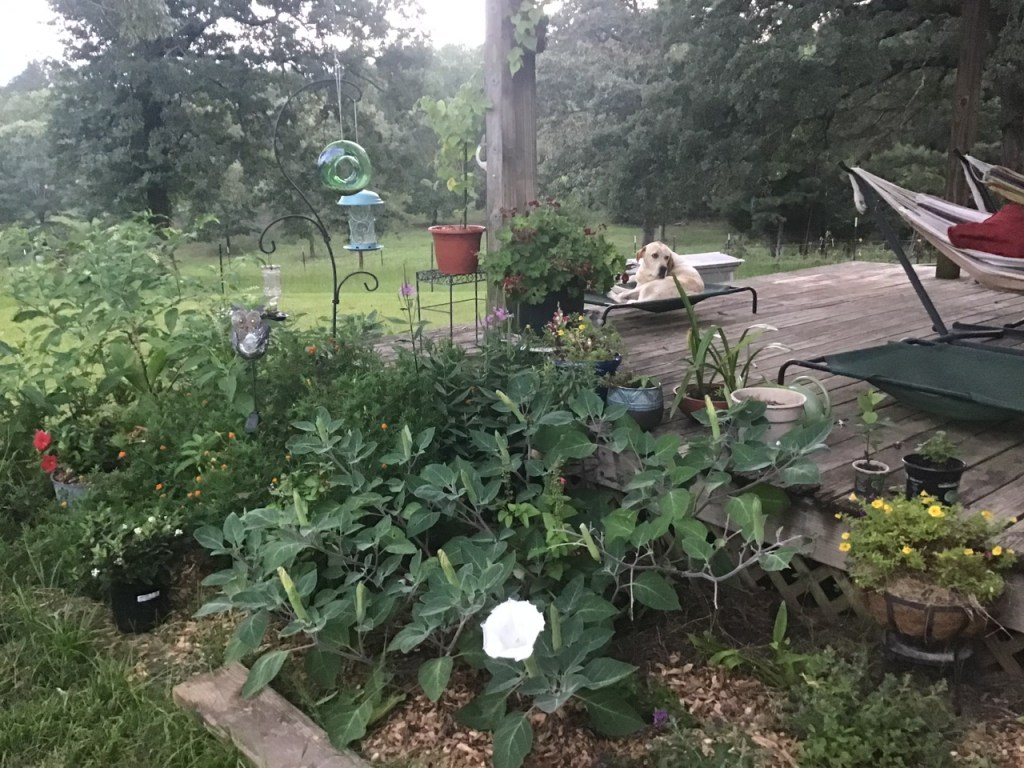
A one minute clip of Datura inoxia alive in the evening breeze covered in honeybees and dotted by the diving ‘tobacco hornworm’ moths (manducasexta) in a safe haven among the blossoms here on the wee homestead, of this ‘poison plant’ it loves so much, from the great many pesticide lovers who hate them so.
This posts aims to answer the question: Would there be anything redeeming about August in East Texas if it weren’t for the watermelons?
I repeat this every year. But I can’t help repeating it again. When we first came here and I’d spent my first August, I was mostly without Hubby because he would often get stuck offshore in the Gulf for bad weather or working over for vacationing colleagues. I swore I would find a way to travel in August, just like the French.
The heat is brutal, the garden mostly gone. Actually, it amazes me anything can survive out there, and yet, plenty of plants are thriving.
And now I can’t imagine having a happy vacation when we’ve got bushels of grapes to harvest and after that bushels of pears, which then must all be processed.
Into wine! I know I shouldn’t whine. It’s not every year we get either good grapes or good pears, and this year we’ve got both.
My wine lab, soon to be greatly expanding. 😊
Wine-making has proven to be a reasonable replacement for my sudden loss in cheese-making ability. That story has only gotten worse, so I’m going to avoid telling it, at least for now. Like I said, August is bad enough already.
The healthy half of the herd.
While we have made hard cider from the pears and a bit of wine from grapes in past years, I really had no idea how versatile wine-making could be. Since last post I’ve added cantaloupe wine to the rows—joining Elderberry, Blackberry, Wild grape, and mead.
Cantaloupe wine? Who knew! But after giving these great big delicious 20- pounders to friends and eating them daily we still had so many and they were ripening so fast we had to do something. We forgot to keep track, but we had at least 15 of them, off only 3 plants.
‘Ole Tyme Tennessee’ melon
Enough to make 3 gallons of wine. I plan to make cider from it as well. Imagine all the fun we’ll be having wine tasting in December! (That’s exactly what I’m doing, a lot of imagining, to keep my mind off the miserable sweltering reality.)
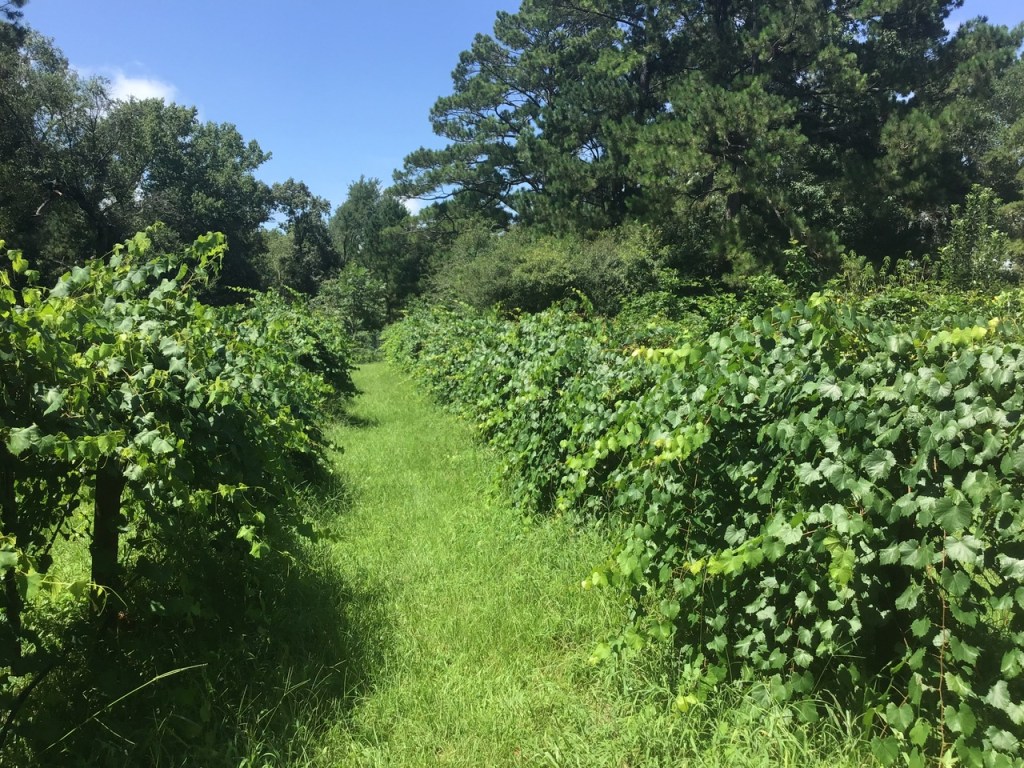
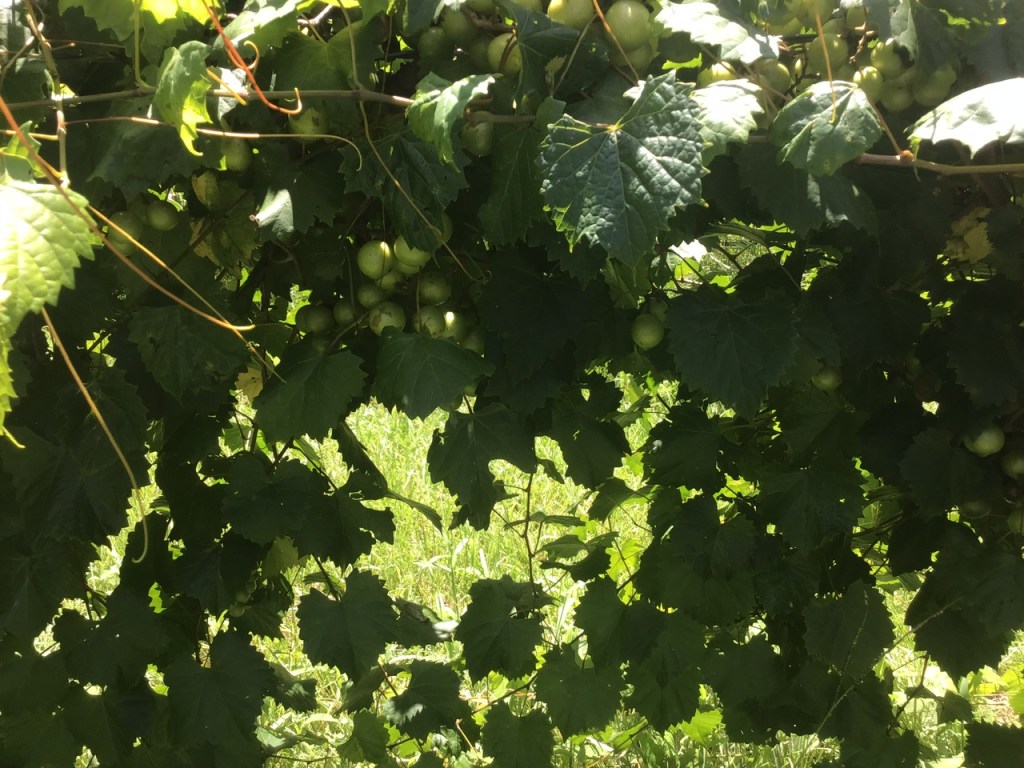
Now we’ve also got a couple buckets going of our cultivated grapes: white and red muscadines, sometimes also known as Scuppernongs.
“A glass of scuppernong wine is better for a body than a shot of penicillin.”
If you’re not from the Southern US you’ve probably never heard of Scuppernongs because they don’t have a good reputation among wine connoisseurs and don’t grow north of the Mason-Dixon line, as far as I know.
And they aren’t really suitable for table grapes either, unless your table allows for a lot of spitting.
Good enough for country wines, they say. So, good enough for me!
In fact they are really delicious. Beyond bursting with juicy sweetness, the green ones especially have varied and complex notes, sharp and earthy. The red ones have such an huge pop of intense grape flavor I’m reminded of manufactured fake grape flavors from childhood, Jolly Ranchers and Bubbalicious gum. Sad, but true, since I never tasted such fruit as a kid.
Except, that these have a tough skin and big seeds. And they are really a pain to harvest. If the weather were nice it wouldn’t be so bad at all. But the thing about muscadine grapes is they don’t ripen in nice clusters like the fancy grapes of more civilized peoples. 😆
Every other day we’re out there gathering these plump gems from under their enormous vines, one by one, little jewels among the masses of deep green leaves. They’ve done remarkably well this year, after a dismal last year, and a meager crop the year before, and just when we were starting to worry all our hard work planting them was wasted.
I wish we knew the trick, Hubby tends the vines and he did nothing different this year from the previous.
Our beautiful grape vines beneath a disgusting chem-filled sky.
We did have the big rain with a nice temperature drop, which also brought down another big tree, right through a fence, as per usual. It seems we lose a big tree with every rain event these days.
Too bad, because that oak has been providing a lot of acorn forage for the critters in autumn. There are several other nearby mature oaks looking like they are also about to keel over.
But, the pears have been spared and that will be our next big project in the blazing heat. Yay! 🤪
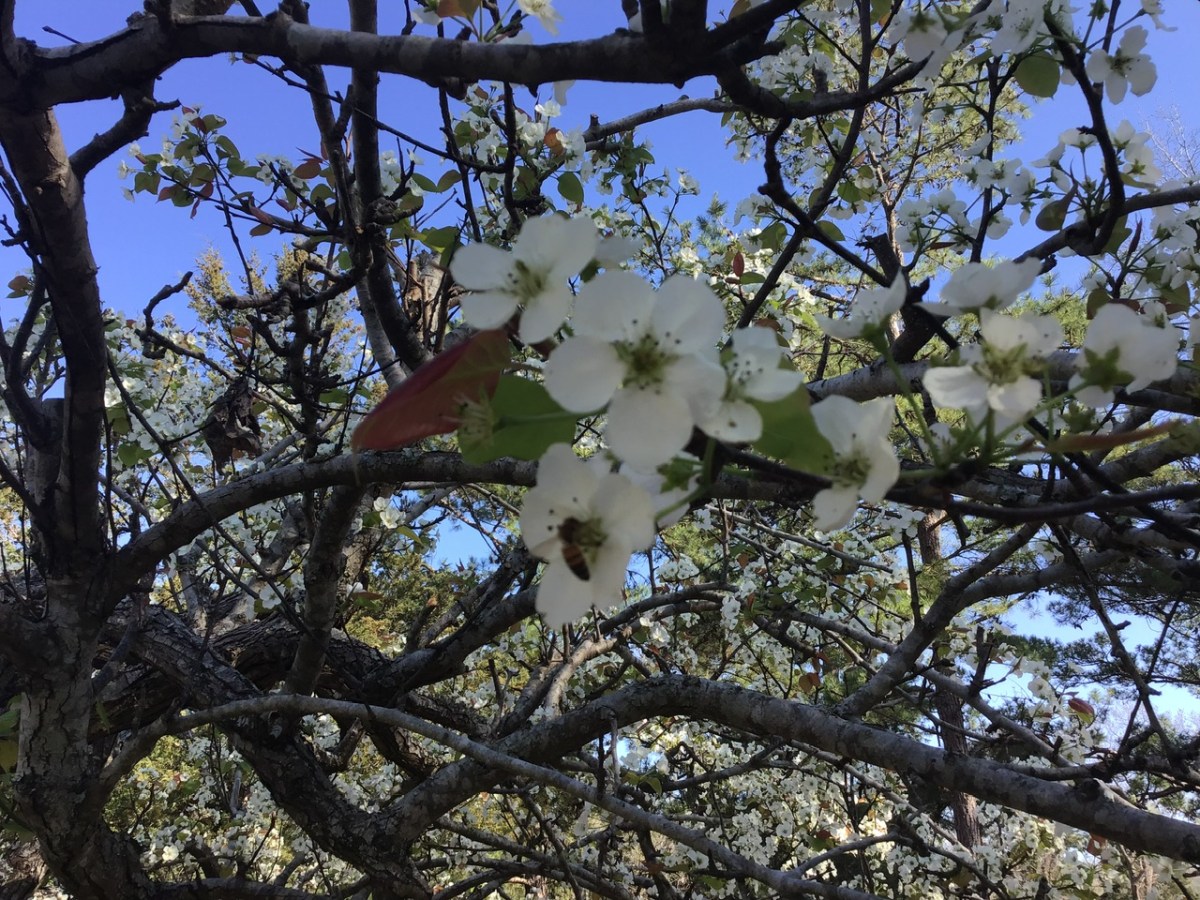
Three hard pear trees, two which were the only cultivated fruit trees here when we arrived, abandoned and still producing, bringing the feral hogs many happy meals. They produce prolifically when they produce, which is every 3 years on average. Plus one we planted in our still struggling orchard, it does really well most years, having gotten the regular run-off from our duck tub from it’s early years.
But the real pièce de résistance this year especially has been the watermelons.
They’ve not been as prolific as the cantaloupes, but they are some of the best I’ve ever eaten. Watermelons are Hubby’s preference, so he’s been in hog heaven every day, and the hogs are in a similar heaven with all the rinds they’ve been eating.
August has a few redeeming qualities after all. I don’t think I could make it through otherwise.
At sunset, within one hour they all open together while the bees get furiously busy. If you can’t catch the scent at just that initial pip of release, it’s instantly gone. Such an inimitable fragrance, enough to keep a woman longing, just long enough, that August might be gone again, and we’ll forget. It’s not so bad, right?
Until the next August.
Datura inoxia perhaps signaling the season of intoxia? Because we’re making lots of wine and it helps to get intoxicated to get through it? 😆
It’s been a challenging month on the wee homestead. We’ve had some successes and I am still hopeful for more positive outcomes, but I focus on them overly, because I’m being a bit avoidant, because really, I’m still concerned.
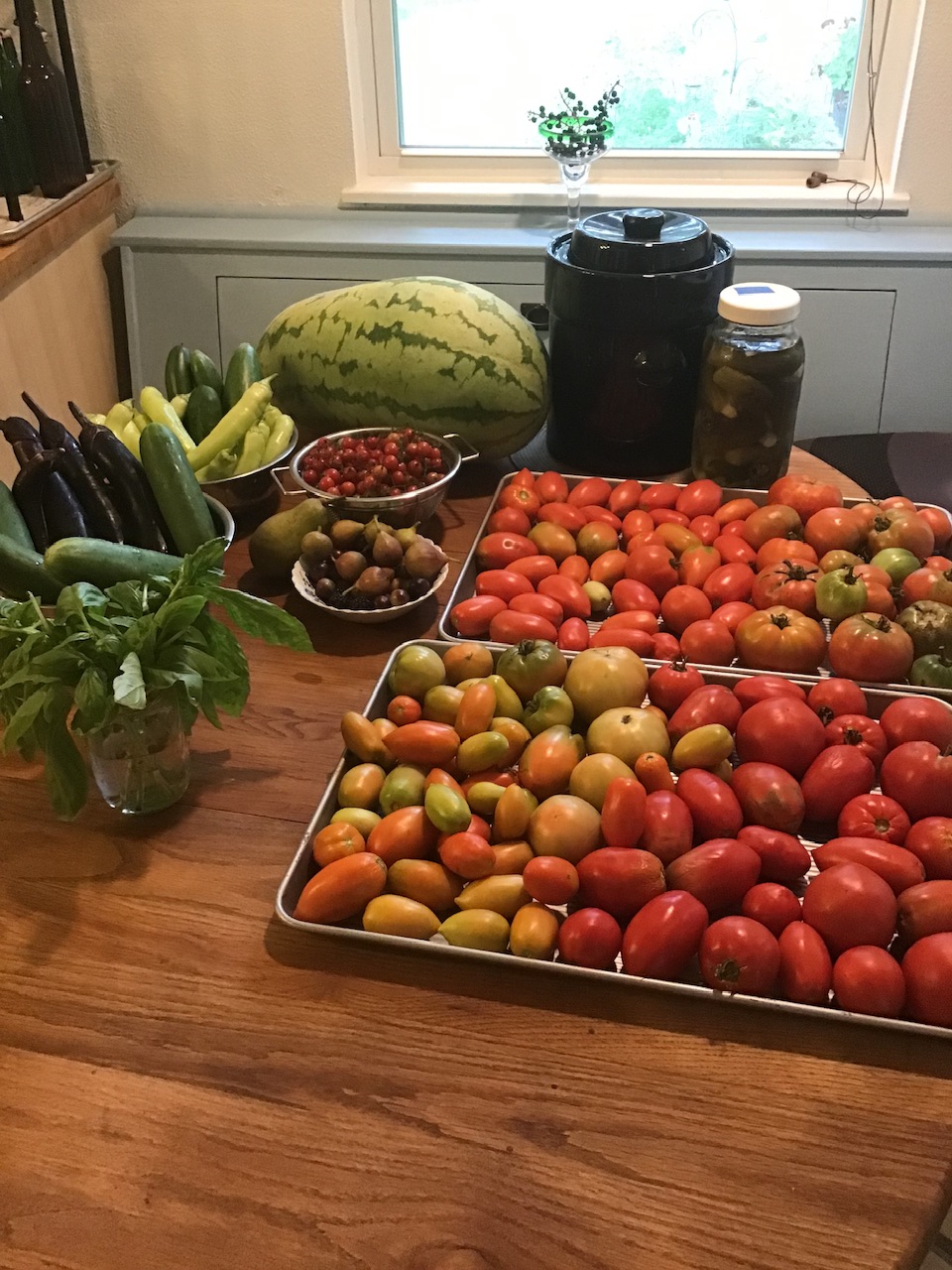
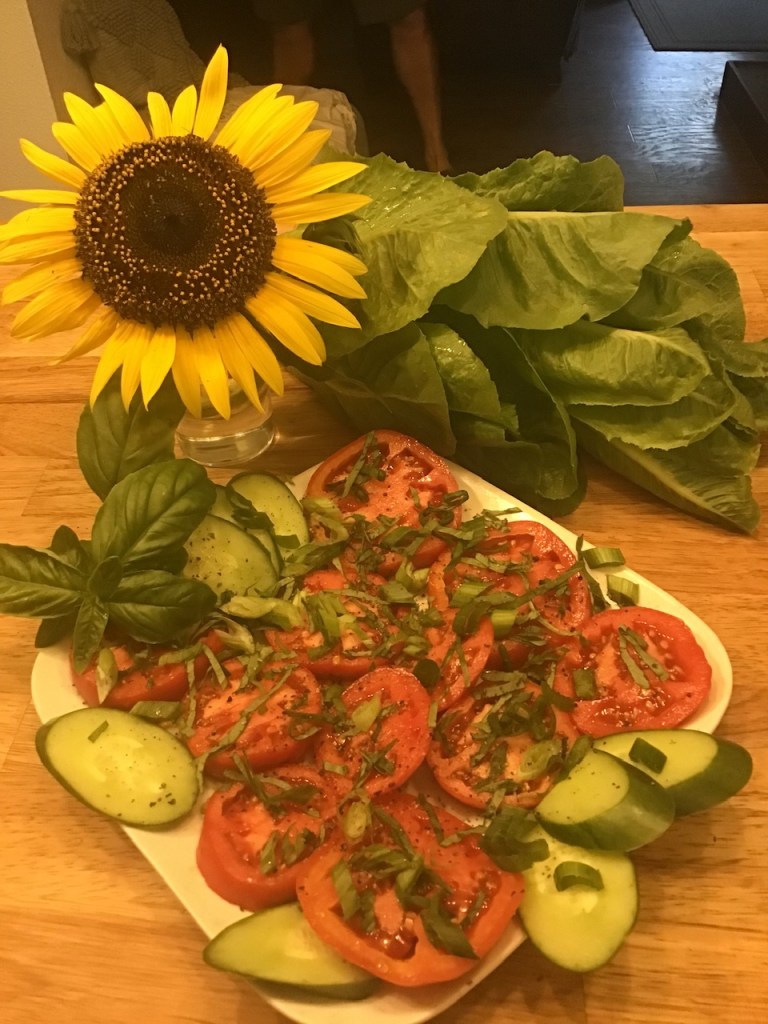
The determinate tomatoes are long gone already, but Hubby’s made many delicious jars of puttanesca and salsa for our future enjoyment. Must keep up morale!
So I’ll share about that this post, along with some happy snaps and surpluses, to help the medicine go down. I know it’s part of the lifestyle. Life, that is.
Yes, I’ve gotten better at it. That is, the death part of life. But also, we must understand our own limitations, and for that we must first broach them.
So if there are still any rose-colored glasses sort of readers remaining here, armor up.
Bye, bye Bluebonnet.* (I share more about my observations on her death at the end, for those who choose to go there.)
I’m so sad to say we’ve lost one of our new mamas, and her mama, our herd queen Summer, has also been very ill. Several of the does are too thin and are not producing enough milk. This all happened quite suddenly. I was training them on the milk stand for a month, even getting a bit of milk from one, I had high hopes of daily cheese-making by now.
Summer and her daughter Bluebonnet, who I figured would one day replace her as herd queen.
The learning curve is so very high and I’ve set myself impossible standards. I do understand that, though that understanding changes little.
I want a treatment-free herd, or no herd at all. Like with the bees, which took me years of failures, I simply cannot stand the industry standard. I cannot abide such total reliance on pharmaceuticals and exotic inputs from far-off lands. I cannot trust the science. I refuse to believe the only way to raise healthy pets and livestock is to poison them with vaccines and parasite treatments and feed them full of processed foods.
There has got to be another way! A much better way!
And I aim to find it.
We are not directly poisoning our garden and still have plenty of success despite the manufactured crazy weather.
I truly believe a large part of the problem is the processed foods causing the need for the supplemental treatments. It’s a vicious cycle and I want off, and I want ALL I see around me every day off it also, including the land, the water, and the air and ALL the critters!
Is that so much to ask?!
But I already know the drill, thanks to the bees. Every professional and expert says that’s impossible. Like with the gardening when we first got here. Every farmer, every gardener, every Farm & Ranch professional, repeating—You’ve got to spray. You’ve got to treat.
There’s a swarm up there, can you see it?It came off this hive and we watched it, amazing! The large pine in front of the tractor is where it stopped. Too high up to catch, but I’m happy to report another totally treatment-free colony repopulating the county.
“Here, follow this quarterly poisoning routine, and all will be well.” NO!
Is it any wonder they all readily accept without objection whatever the hell is being sprayed over our heads at regular intervals?
The latest geoengineered filth-filled skies over our property.
We’re not giving up yet. As long as we have irrigation it will be a jungle out there. But without it we’d be screwed, that’s for sure. It hasn’t rained for nearly 3 weeks.
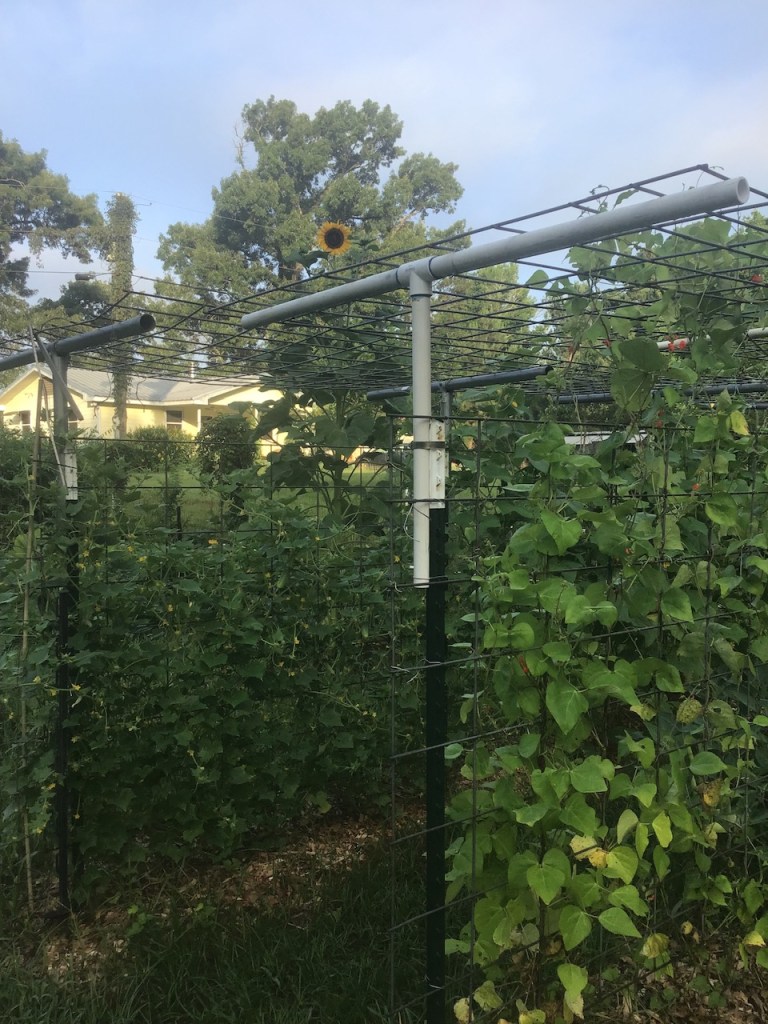
(Photos below Left to Right) The datura is a blessed monster. The sweet potato vines are prolific and a favorite snack of Summer’s. The melons and green beans are thriving. The indeterminate tomatoes and some of the peppers are doing fairly well under the shade cloth and I’ve been succession planting the cucumbers.
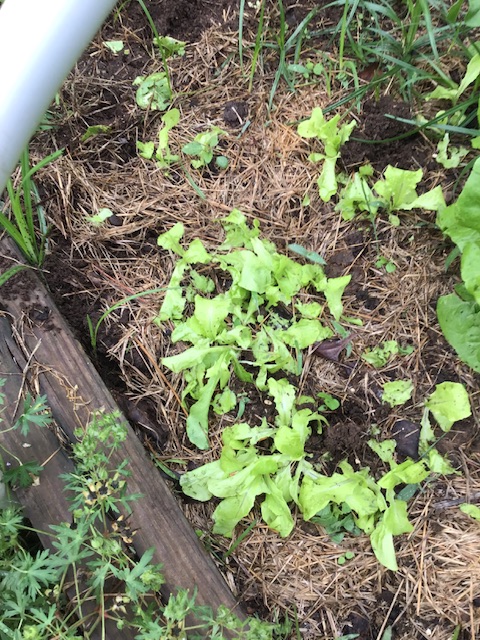
From the front: New cucumbers coming up with purslane to help cool the roots and shading from above, old screens protecting some struggling Romaine lettuce, and a growing grove of well-watered elderberries.
We’ve also been lucky to get some wild grapes, which are now fermenting along with the mead and the blackberry and mulberry wines.
He is literally Hubby’s Shadow!
It’s not an easy life, but it’s a life well-lived. Our first figs of the season, along with our last blackberries.
A Czech classic—so simple—Bublanina, made with blackberries or any number of fresh fruits in season. (Comment below if you want the recipe and I’ll post it. )
*The observation which I’ve found most interesting from Bluebonnet’s death, was that her kids adjusted immediately. She died the evening of the full moon last week. She left the corral with the rest of the herd in the morning, she seemed to be improving, I thought. But then in the afternoon she planted herself under a tree on a hill and wouldn’t leave, even when evening came and the rest of the herd returned to the corral. I went and sat with her there at sunset and stroked her neck and she laid her head on my shoulder. I wanted to be hopeful, but I felt she knew, and I felt horribly helpless. I hope that the feeling of helplessness is the worst feeling in the world. The next morning I woke before dawn and I went back to the tree in the dark, the full moon shining on her corpse.
There was a bit of relief for me that her kids adjusted so quickly. I find it odd really, it was like an immediate weaning. While her mama, Summer, is so ill she stopped producing milk, but her kids are still so attached to her their health is also suffering because they won’t go out and eat with the rest of the herd or accept being bottle fed. I’ve been mixing them special feed dosed with milk replacer and they are doing ok, and Summer today joined the herd again to forage, which I’m praying is a good sign. 🙏