Surface modification control stations and methods in a globally distributed array for dynamically adjusting the atmospheric, terrestrial and oceanic properties
“Surface modification control stations and methods in a globally distributed array for dynamically adjusting the atmospheric, terrestrial and oceanic properties. The control stations modify the humidity, currents, wind flows and heat removal rate of the surface and facilitate cooling and control of large area of global surface temperatures. This global system is made of arrays of multiple sub-systems that monitor climate and act locally on weather with dynamically generated local forcing & perturbations for guiding in a controlled manner aim at long-term modifications. The machineries are part of a large-scale system consisting of an array of many such machines put across the globe at locations called the control stations. These are then used in a coordinated manner to modify large area weather and the global climate as desired.”
Listen to the beginning of Dane’s broadcast this week where a man confronts the (supposedly ignorant) atmospheric terrorists and makes them squirm like the worms they are! 😆
The Hate spewed in this tirade is not politically motivated, nor is it the result of biases toward any ethnic group, nor gender-oriented ideology nor philosophy, nor tribe, nor nation, nor social collective, market, herd, country, continent, school of thought or fish, sea or sea-adjacent, corporation, cooperative, nor any other type of group, at any time in past or present or future.
This will be Hate directed squarely at specific individuals, mostly for their overarching idiocy, blind obedience, gaslighting or other dainty bullshit* and general full-fledged and undeniable assholery. These would be individuals for whom my disdain and contempt has been building, decades in some instances, seconds in others.
This is not your average rant or shitposting. Therefore it will be organized in proper form, beginning with Silver level Hatred, then proceeding to Bronze level, and ending with Platinum.
In no way can my Hateful Epic Tirade be confused with a real Hate Crime, of the variety of famous (or infamous, depending on his audience), Mr. CJ Hopkins, currently awaiting his second trial in New Normal Berlin. That’s because real Hate Crimes are against groups, particularly those groups with a shitload of power.
Mr. Hopkins deserves his prosecution for so hatefully opposing many such VIP groups. Too many to count surely, but most certainly he is an enemy of the totalitarian State by any measure. He made a grave mistake of criticizing it repeatedly on various public forums and a great many suffered for his actions, so there must be strict punishment.
Besides, any satirist worth his salt should spend time in prison, it’s like a rite of passage. It will ultimately improve his work, so I hope he understands it will be worth it. That is, if he lives long enough to get out. And even if not, great satirists often get even funnier after they’re dead. It’s mystical or something.
But I do not like the idea of spending heaps of sums (which I don’t have) on attorneys, or the threat of a ruined career (too late) and jail time (been there too) by being hateful to any group, powerful or otherwise.
Therefore I’m focusing my Hate directly on the individuals who engendered that hatred by their own actions, or lack thereof.
Before proceeding I’d also like to clarify that my hatred does not extend to violence, nor to the threat of violence. I want to make it perfectly clear that while, yes, I am indeed armed, I am not dangerous.
Furthermore, I’m a terrible shot and get frightfully nervous and shaky when alarmed, and I probably couldn’t manage to shoot a pair of balls at close range, eyeballs or otherwise.
So, to get on with it!
The Silver Level Hatred is awarded to my neighbor, Herr Blackheart. His crime is being a belligerent idiot. Idiocy is one thing, we all have to tolerate it regularly, this is part of the invisible social contract no one signed.
Belligerent idiocy is common as well, but it’s far more dangerous. Herr Blackheart is bullying and condescending and adolescent and has the social graces of a shanked hog.
And he has the infuriating gall to go on and on about the pristine air quality of our skies!
I can only assume he means in comparison to the slums of New Delhi in winter. Otherwise he might have earned a Bronze or even a Platinum award for the level of Hatred he was able to inspire in me.
A man so willfully blind he laughs out loud as he yells about his army of friends in the aviation industry, who all (shockingly) tow the company lines: Chemtrails are a conspiracy theory! Geoengineering is not real! You are a crazy lady! Stop bothering us!
And furthermore, weather modification is awesome, so there!
Some day we will control the weather and he who controls the weather will control the world!
YEEHAW!
Moving on.
The Bronze Level Hatred is awarded to my former dentist in Arizona, a total Jackass of epic proportion, who is really lucky I can’t remember his name.
Jackass was forced on me by my insurance plan and I had to suffer his arrogant used car salesman tactics for a year before I could switch. He employed all the well-worn tricks to get me to purchase every product and procedure available at his Uber High-Tech office with an unusally large staff of all young and beautiful female assitants. My teeth aren’t white enough, straight enough, clean enough, my gums are receding, I need a root canal, and maybe another.
I’m super surprised he never tried to send me to his 2nd cousin in Albequerque for a boob job.
And, I’d bet the farm he was on drugs, amphetamines of some sort. He would hit nerves I didn’t even know I had, and then claim I was being too sensitive.
Too sensitive, eh? Perhaps I didn’t have the same degree of drugged blood necessary as to render me as insensitive as being in his presence required. (Perhaps because he and his staff were sniffing off the top a little too much?)
Too bad I can’t invite him to sit in my magic chair of torture and drill into his brain, just a little. With an entourage of uniformed pretty boys gazing on.
Don’t let the bland eyes and penciled-in eyebrows fool you, this is one mean career Tyrant standing here!
The Platinum level Hate goes to Frau Ines Karl, the Hate-Crime Commissar of New Normal Berlin.
This is my personal gift, since I can’t afford a financial donation, on behalf of the Hate Crimes trials of Mr. CJ Hopkins. I know, that’s mighty white of me, as the saying goes. I will avoid taking a bow for humility’s sake.
I just think he needs some solidarity at the moment and even though he has been terribly Hateful to many VIP groups, he has been far too kind to the garden variety Tyrants he’s been exposed to on a daily basis for quite some time.
I know he’s a very courageous individual, but he’s hardly in a position to put any Hate down on any one person, especially if said person has the power to put him in prison for three years. Or more. Or less. Her whim, I suppose.
Not that he doesn’t deserve to be in prison, that’s been established in the previous paragraph: All good satirists deserve to go to prison. It enriches their work. Really, she’d be doing him, as well as his international audience, a great service.
But since I know that’s not her motivation, she gets the full reward of my individualized Hate.
I know some of you are probably thinking she doesn’t deserve that, from me certainly, who has never even met her, or heard her name spoken before this day. Hate, well-tended, does tend to come on suddenly, and be transferable. It’s mystical or something.
While you may be right about that, it’s beside the point. I stand with Mr. Hopkins. He is not able to Hate on her, maybe he doesn’t even hate her at all, so clearly, it’s up to me.
Right here you can see he’s being far too kind to this career Tyrant.
“I don’t want to impugn her competence as a Senior Public Hate-Crime Prosecutor or in any way suggest that the “lengthy review process” of her understanding of the law (including the concept of “the rule of law” in non-totalitarian societies) conducted by the Judges’ Election Committee and the Office for the Protection of the Constitution prior to turning her loose on the public following the collapse of the GDR was … well, anything less than adequate, but, if Germany is going to continue to claim that it has any respect for basic democratic principles — not to mention its own constitution — someone might want to take Ines Karl aside and explain that political dissent is not a crime.
Or, on second thought, maybe it is now. In which case, it would helpful if the German authorities would drop the “Germany is a democratic state under the rule of law” crap and just go openly totalitarian. It would certainly be less confusing.”
Tyrants, please have mercy on Mr. Hopkins, just look how sad and confused he is!
You see, he’s confused. I get it! I just want to help.
This Tyrant has made a long and successful career out of prosecuting Haters, so being a Hater myself, I feel justified to a bit of long-distance revenge.
“Senior Public Hate-Crime Prosecutor Ines Karl began her distinguished prosecutorial career back in the GDR, i.e., the German Democratic Republic, the judiciary of which convicted roughly 200,000 people of political crimes during its 40-year existence.”
I’ve reserved a special Hate-On Voodoo Supreme Package I learned deep in the swamps of Plaquemines Parish before the arrival of the Great Hurricane Katrina of the Raytheon Empire. This ritual can only be performed on the Sabbath of the 56th year of the Holy Birth of the Phantom Shelle.
And it just so happens that’s coming up at the end of this month!
Prepare for a Major Hate Flow coming your way Frau Karl of New Normal Berlin!
*Dainty bullshit, is the popular expression attributed to shitposting professional, Decker, of the esteemed blog: Dispatches from the Asylum.
An article worth sharing and which re-emphasizes for me the Catch 22 tied up in a tight Gordian knot that is this topic.
I haven’t shared this site in the past because it calls for a government solution, and I believe government already has its paws all over these projects and nothing they can or will do can possibly be of any benefit to the average person.
However, like this site proposes, I also want it banned. So, therein lies quite the predicament. How to stop something like this without the Global Governance structures that are exactly what the perpetrators want in place?
On to the article.
The Governance of Geoengineering in 2025+
July 19, 2024 | ZeroGeoengineering.com | The false “solution” of geoengineering as a “remedy” for environmental crisis follows a model that readers may understand as the Hegelian dialectic –problem, reaction, solution.
In his 1968 article, How to Wreck the Environment, Professor Gordon J. F. MacDonald of the Institute of Geophysics and Planetary Physics at the University of California, Los Angeles describes the use of weather as a weapon “peculiarly suited for covert or secret wars…Such a ‘secret war’ need never be declared or even known by the affected populations. It could go on for years with only the security forces involved being aware of it. The years of drought and storm would be attributed to unkindly nature and only after a nation were thoroughly drained would an armed take-over be attempted.”
More than a half-century of geoengineering,weather, and climate modification has resulted in catastrophic weather extremes, incalculable harm to life, and damage to property. This engineered climate “problem” is promoted by media, globalists, NGO’s, academics, militaries, and corporate interests to stoke fear in the population and induce a public “reaction” urging governments to “do something” about the “problem”. The solar radiation modification (SRM) geoengineering “solution” is then promoted by the same entities who engineered the crisis.
A 2019 policy memo in the Journal of Science Policy & Governance, An Approach to Scientific and Legislative Governance of Solar Radiation Modification Research in the United States states: “With a lack of domestic and international policy, researchers will continue to self-govern research into SRM.”
Society faces a crisis in policymaking. In order to honestly evaluate the climate “problem,” the history of weather and climate modification must be added into the current equation.
Geoengineering is environmental warfare and is therefore not “governable”– it must be banned.”
(View the full article here, which has many relevant links and references.)
Most folks I know don’t believe Geoengineering is actually happening, they’ve bought the conspiracy theory narrative. So, I guess the first they’ll believe, over their very own eyes and experience, is when we have Global Government controlling our weather.
Because there’s no way technologies like these will not be used by someone, somewhere. It’s simply a matter of who and when. And of course, who is willing to fight wars in order to control the most powerful of all weapons—our atmosphere and weather.
It’s been a challenging month on the wee homestead. We’ve had some successes and I am still hopeful for more positive outcomes, but I focus on them overly, because I’m being a bit avoidant, because really, I’m still concerned.
The determinate tomatoes are long gone already, but Hubby’s made many delicious jars of puttanesca and salsa for our future enjoyment. Must keep up morale!
So I’ll share about that this post, along with some happy snaps and surpluses, to help the medicine go down. I know it’s part of the lifestyle. Life, that is.
Yes, I’ve gotten better at it. That is, the death part of life. But also, we must understand our own limitations, and for that we must first broach them.
So if there are still any rose-colored glasses sort of readers remaining here, armor up.
Bye, bye Bluebonnet.* (I share more about my observations on her death at the end, for those who choose to go there.)
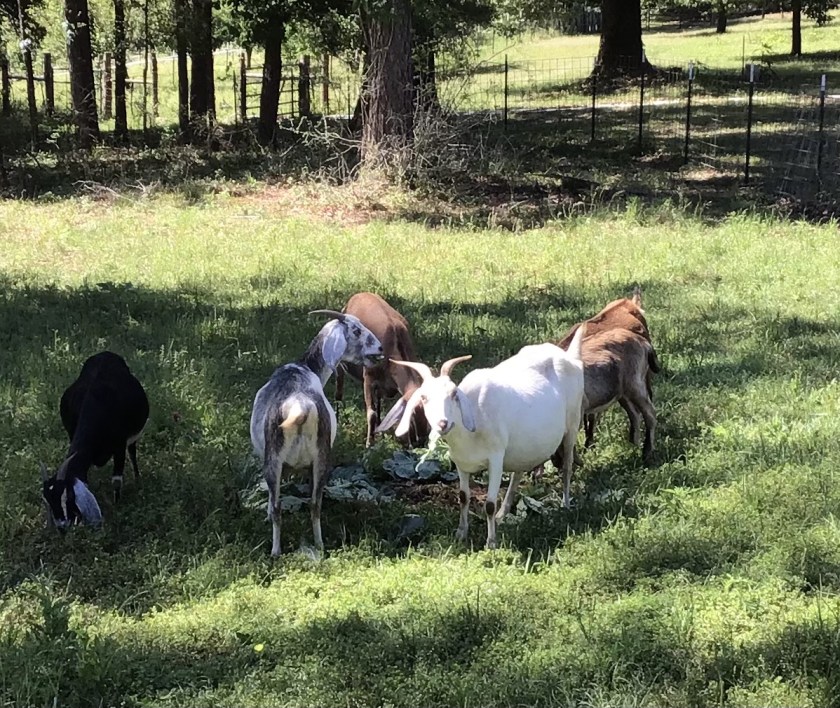
I’m so sad to say we’ve lost one of our new mamas, and her mama, our herd queen Summer, has also been very ill. Several of the does are too thin and are not producing enough milk. This all happened quite suddenly. I was training them on the milk stand for a month, even getting a bit of milk from one, I had high hopes of daily cheese-making by now.
Summer and her daughter Bluebonnet, who I figured would one day replace her as herd queen.
The learning curve is so very high and I’ve set myself impossible standards. I do understand that, though that understanding changes little.
I want a treatment-free herd, or no herd at all. Like with the bees, which took me years of failures, I simply cannot stand the industry standard. I cannot abide such total reliance on pharmaceuticals and exotic inputs from far-off lands. I cannot trust the science. I refuse to believe the only way to raise healthy pets and livestock is to poison them with vaccines and parasite treatments and feed them full of processed foods.
There has got to be another way! A much better way!
And I aim to find it.
We are not directly poisoning our garden and still have plenty of success despite the manufactured crazy weather.
I truly believe a large part of the problem is the processed foods causing the need for the supplemental treatments. It’s a vicious cycle and I want off, and I want ALL I see around me every day off it also, including the land, the water, and the air and ALL the critters!
Is that so much to ask?!
But I already know the drill, thanks to the bees. Every professional and expert says that’s impossible. Like with the gardening when we first got here. Every farmer, every gardener, every Farm & Ranch professional, repeating—You’ve got to spray. You’ve got to treat.
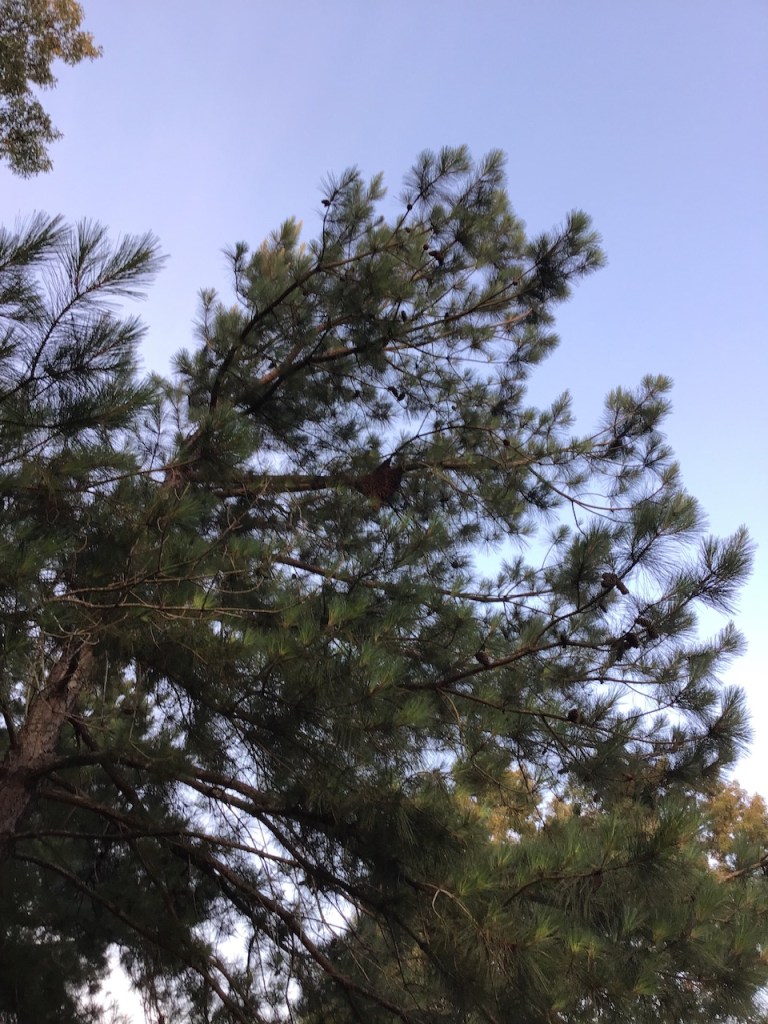
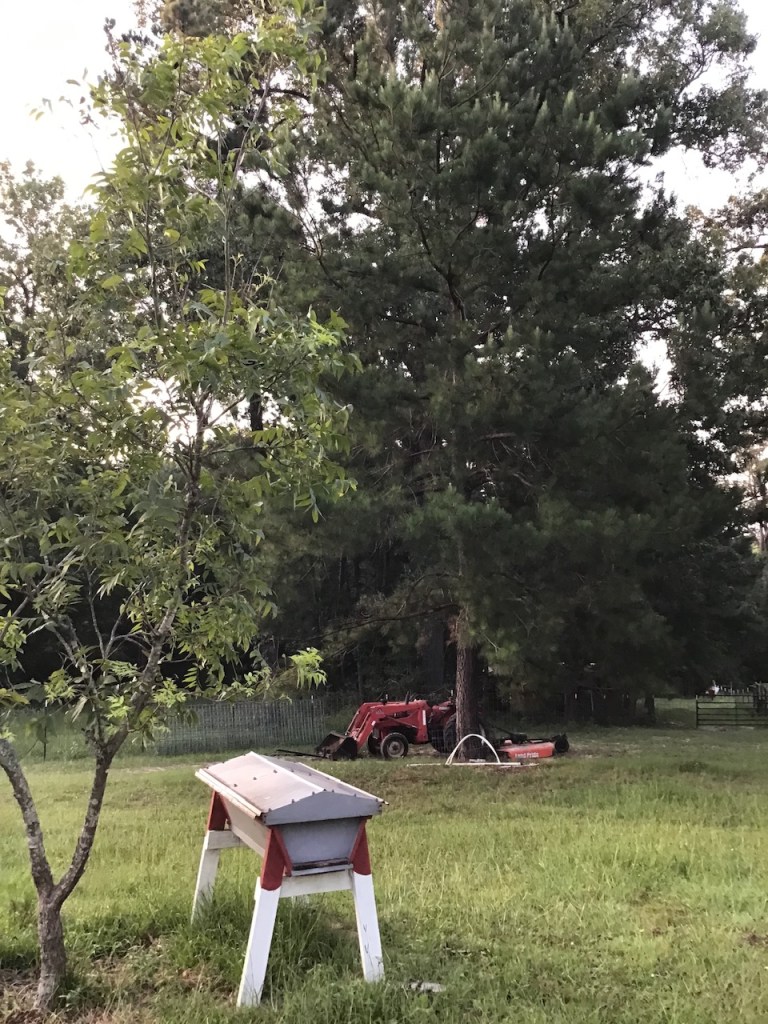
There’s a swarm up there, can you see it?It came off this hive and we watched it, amazing! The large pine in front of the tractor is where it stopped. Too high up to catch, but I’m happy to report another totally treatment-free colony repopulating the county.
“Here, follow this quarterly poisoning routine, and all will be well.” NO!
Is it any wonder they all readily accept without objection whatever the hell is being sprayed over our heads at regular intervals?
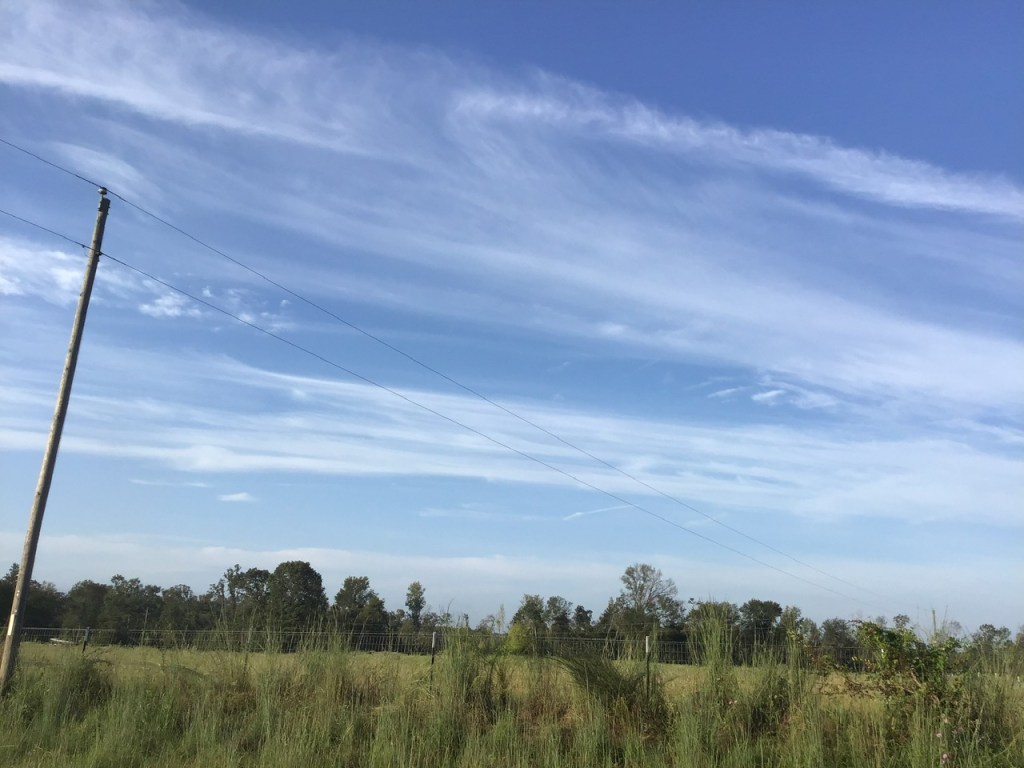
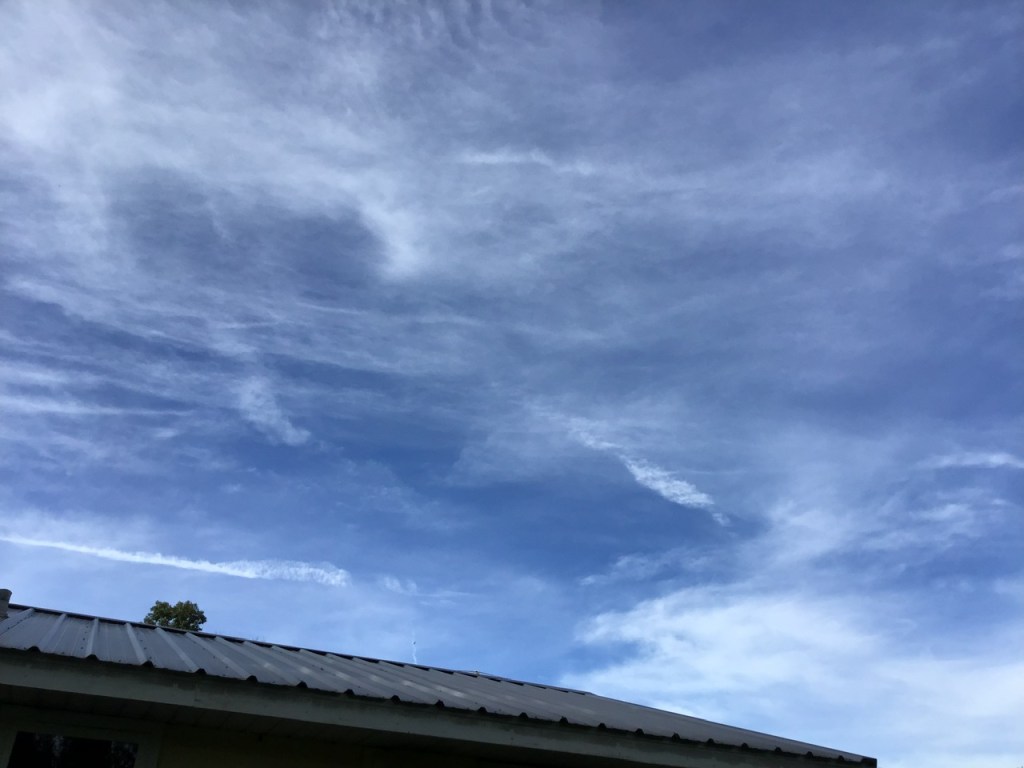
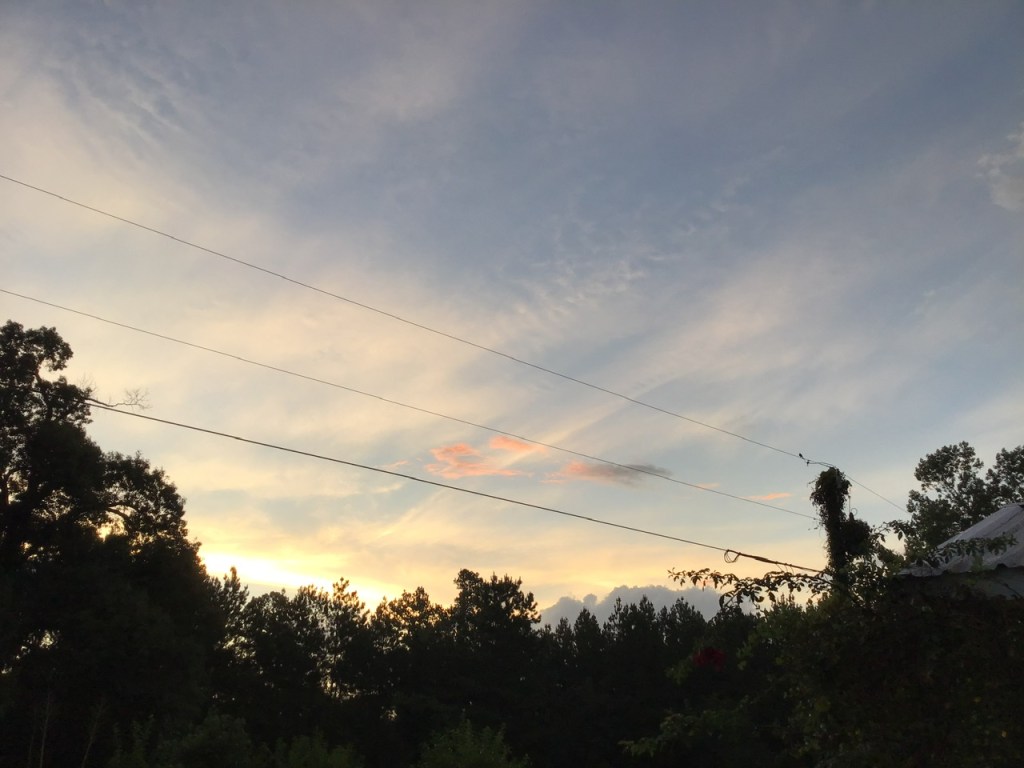
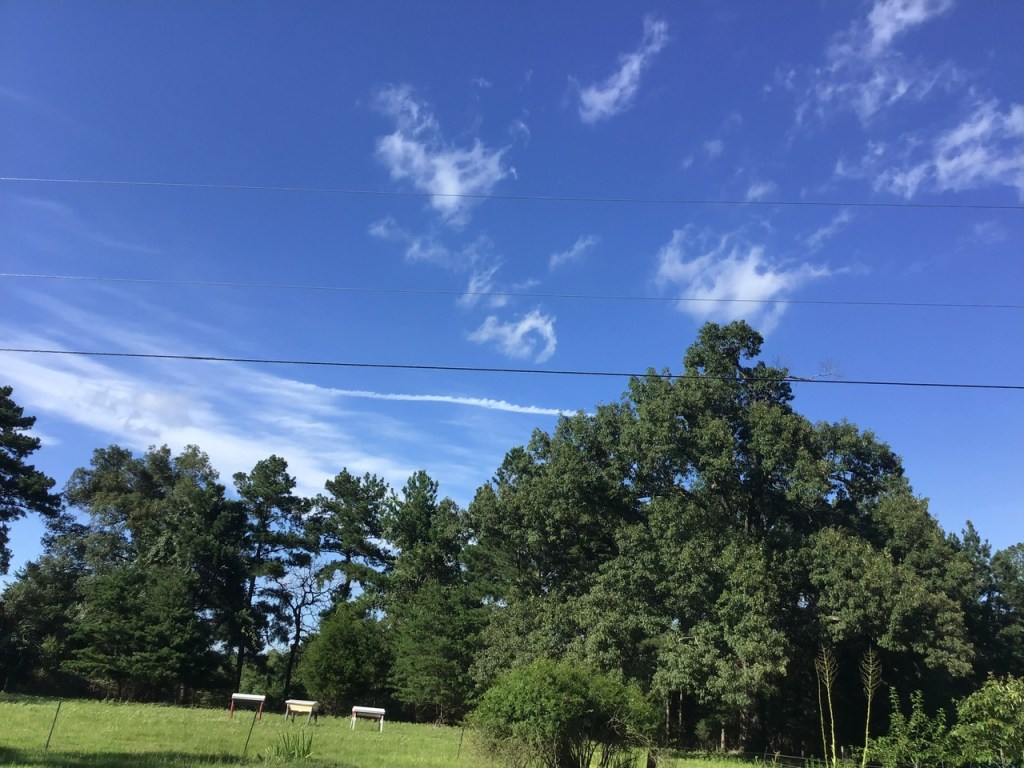
The latest geoengineered filth-filled skies over our property.
We’re not giving up yet. As long as we have irrigation it will be a jungle out there. But without it we’d be screwed, that’s for sure. It hasn’t rained for nearly 3 weeks.
(Photos below Left to Right) The datura is a blessed monster. The sweet potato vines are prolific and a favorite snack of Summer’s. The melons and green beans are thriving. The indeterminate tomatoes and some of the peppers are doing fairly well under the shade cloth and I’ve been succession planting the cucumbers.
From the front: New cucumbers coming up with purslane to help cool the roots and shading from above, old screens protecting some struggling Romaine lettuce, and a growing grove of well-watered elderberries.
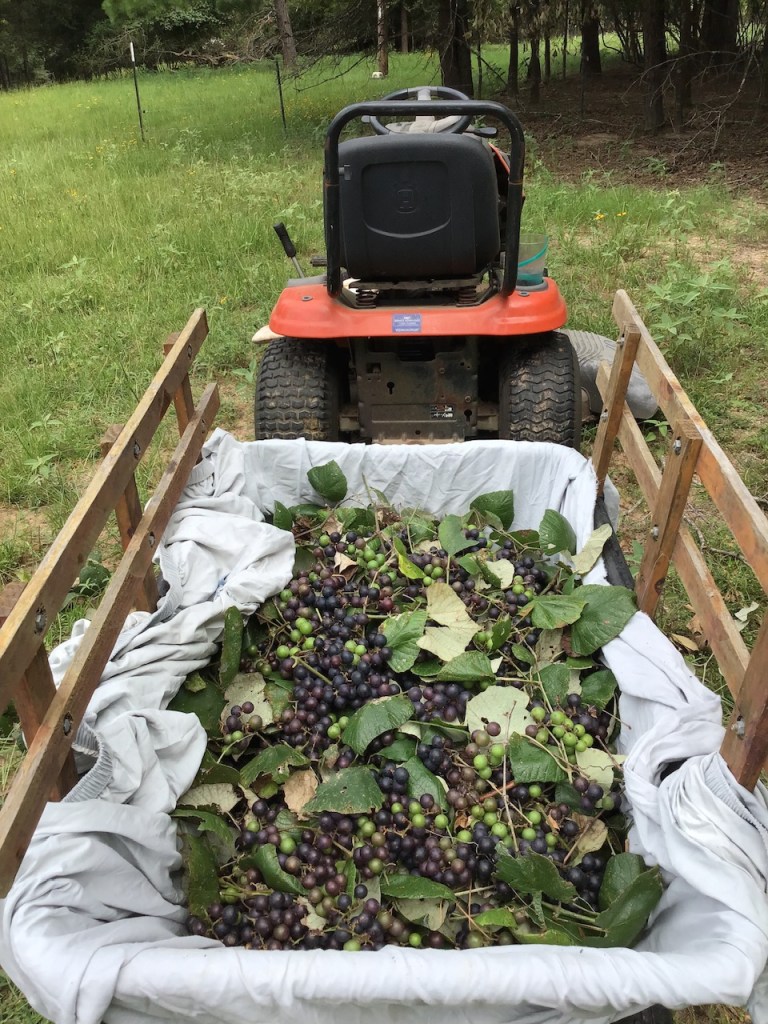
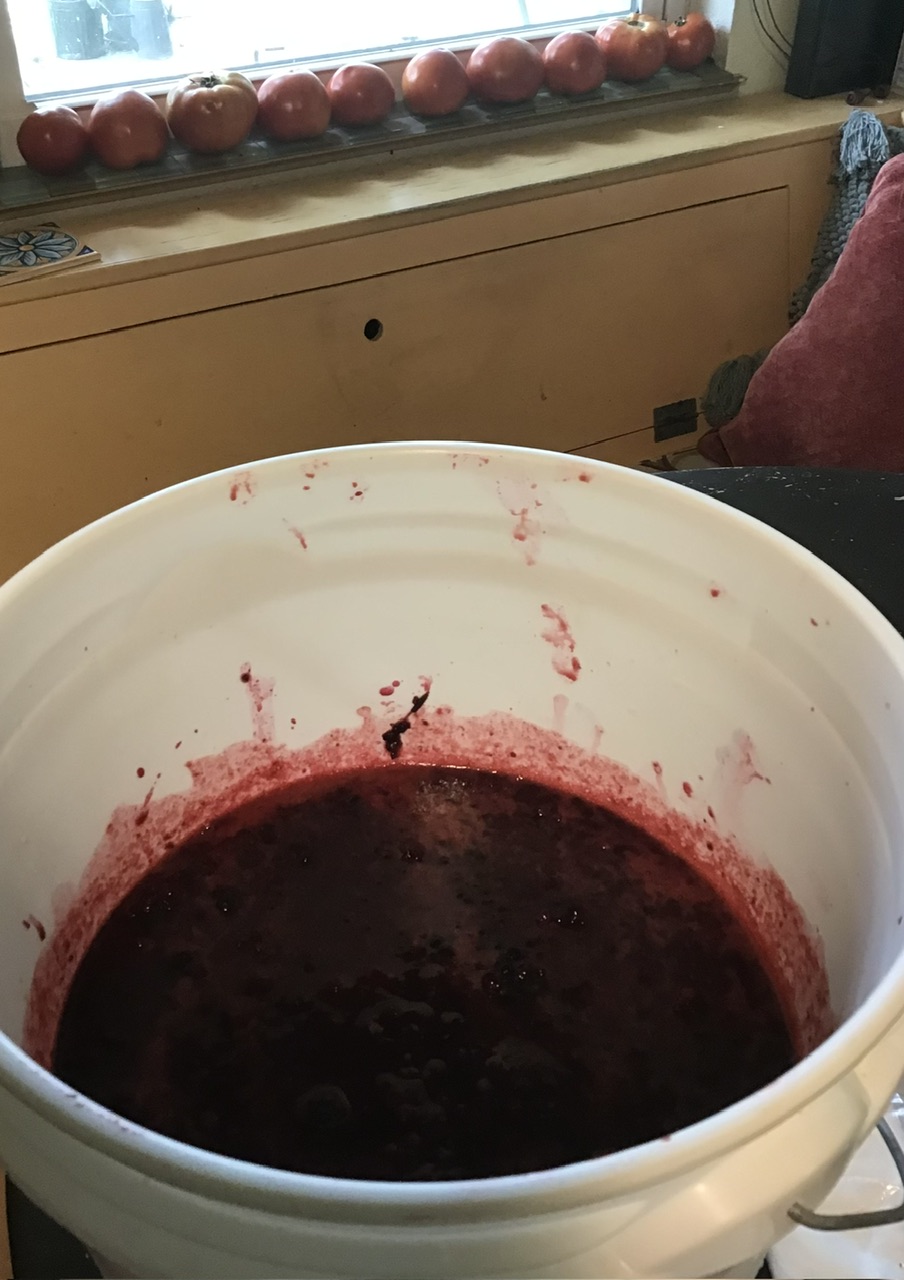
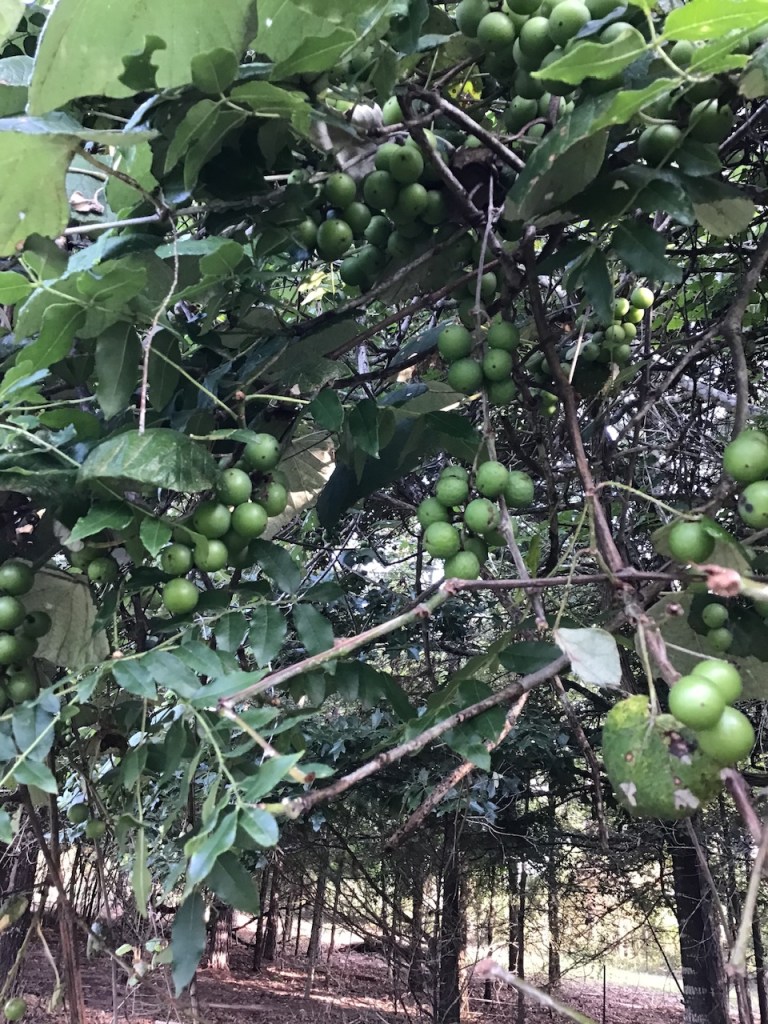
We’ve also been lucky to get some wild grapes, which are now fermenting along with the mead and the blackberry and mulberry wines.
He is literally Hubby’s Shadow!
It’s not an easy life, but it’s a life well-lived. Our first figs of the season, along with our last blackberries.
A Czech classic—so simple—Bublanina, made with blackberries or any number of fresh fruits in season. (Comment below if you want the recipe and I’ll post it. )
*The observation which I’ve found most interesting from Bluebonnet’s death, was that her kids adjusted immediately. She died the evening of the full moon last week. She left the corral with the rest of the herd in the morning, she seemed to be improving, I thought. But then in the afternoon she planted herself under a tree on a hill and wouldn’t leave, even when evening came and the rest of the herd returned to the corral. I went and sat with her there at sunset and stroked her neck and she laid her head on my shoulder. I wanted to be hopeful, but I felt she knew, and I felt horribly helpless. I hope that the feeling of helplessness is the worst feeling in the world. The next morning I woke before dawn and I went back to the tree in the dark, the full moon shining on her corpse.
There was a bit of relief for me that her kids adjusted so quickly. I find it odd really, it was like an immediate weaning. While her mama, Summer, is so ill she stopped producing milk, but her kids are still so attached to her their health is also suffering because they won’t go out and eat with the rest of the herd or accept being bottle fed. I’ve been mixing them special feed dosed with milk replacer and they are doing ok, and Summer today joined the herd again to forage, which I’m praying is a good sign. 🙏
Mostly happy snaps this post, plus a few weather woes.
Hubby’s gorgeous melon patch is starting to produce more than just a feast for the eyes. He’s come up with quite an integrated system there and when I expressed how impressed I was with his companion planting scheme (and wondered whether he’d been taking a permaculture course on the sly) he informed me it was all a matter of frugality.
His penny-pincher logic is: the melon mounds have a lot of water run-off and sometimes erosion, so he added a ring of clover at the base of them. It’s just a bonus they are also good for the soil and the bees. The sunflowers are fodder for the goats and the chickens, plus they help shade the melons. The sea of black-eyed Susan’s just turned up there, apparently as impressed as me with the space.
Hopefully the melons don’t go the way of the onions, which has been our worst year yet. Luckily the garlic still did fine, which is from our saved seed, which previously came from a nearby friend’s saved seed. That has become a theme.
Elephant garlic does much better here than anything else, and I’ve tried many others for many years. I think I’ll give up that practice now and stick with what works, avoiding future costs and frustrations.
The success of the tomatoes and peppers so far has also been thanks to saved seed. I bought several varieties of each from the store, just for more variety, and those are the ones suffering more from the rain and high humidity. Several have already died, a few aren’t growing at all, and several of the others have bad issues.
Ours on the left, theirs on the right.
The purchased squash is already full of pests before giving us even a single fruit.
At least we got a few zucchini off our own saved seed before it too is already beginning to succumb to some kind of mold.
But other saved seed, the Trombetta squash and the mystery squash from last year, have proven to be more resilient than the popular varieties.
The filth-filled skies continue and not even the regular rains clear them up for long. I’m sure the sorry state of the skies has nothing to do with the crazy storms, right? The intense lightening, sudden flooding rain bursts, intolerable humidity, hail, tornadoes, and so on, that folks are experiencing across the country?
Just ‘mother nature’ they tell us. OK.
Well, too much ‘mother nature’ is not so good for the garden. It looks plenty green and lush, so that’s nice. But, look a little closer and we find it’s not so pretty below the surface.
But we’ve been relatively fortunate so far this year, just lots of rain and some wind gusts. Others have had far worse.
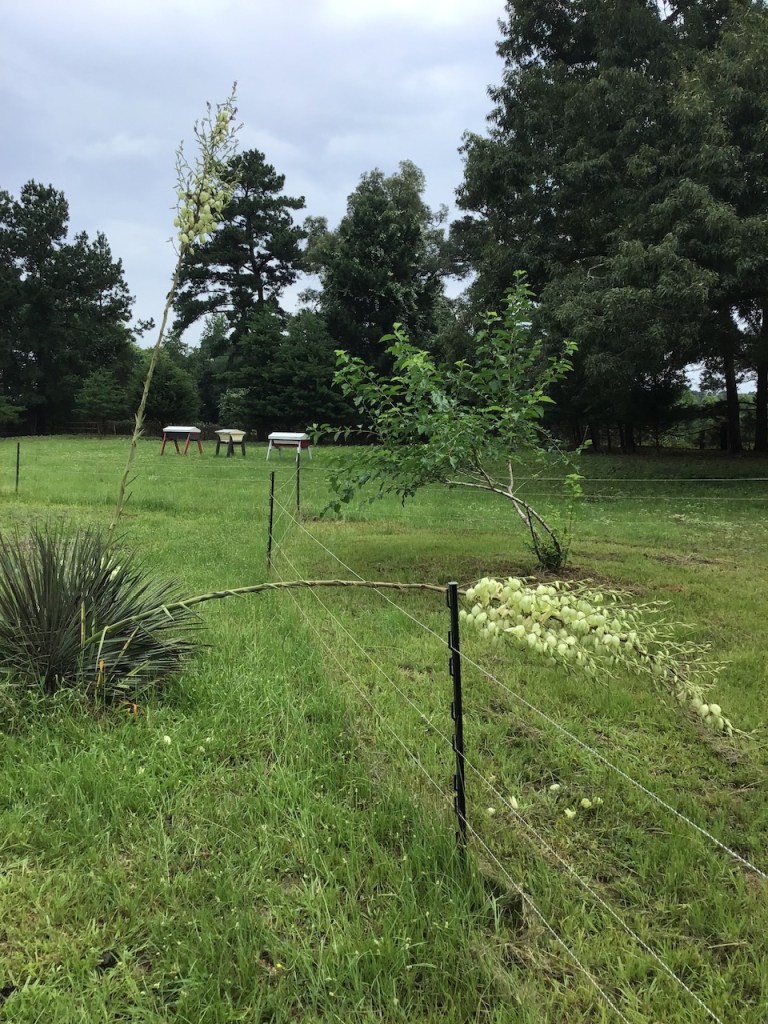
The yucca didn’t get lucky, but the blossoms are still lovely, even on the ground.
There’s some long-term requirements that fall on Hubby, which I mentioned last update, an upgraded culvert is required now in order to drive to the back half of our property. He’s already gotten started on that, a huge undertaking for sure. After that he can look forward to tackling the pond that’s now washed out.
In better news, there’s been some amazing growth in just one week.
A side by side comparison of 8 days growth.
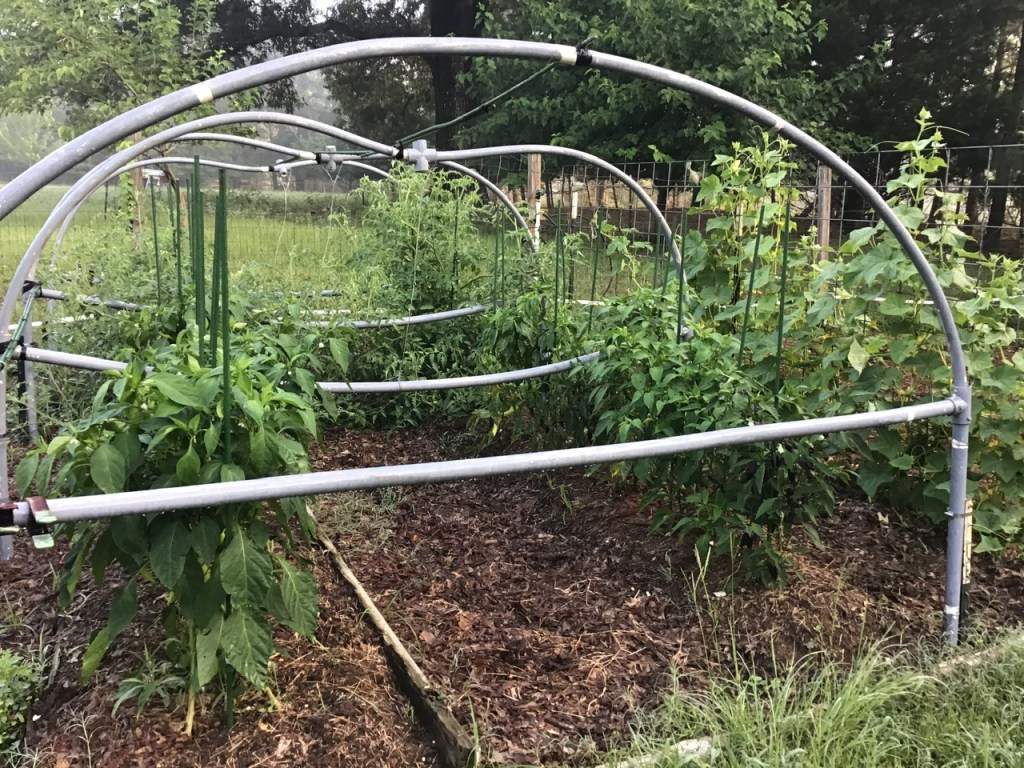
We’ve prepared for the swelter season by crafting another shading system where these tomatoes and peppers should be much happier into late summer. It’s recycled from another project and a bit awkward to move through, but it should do the trick just fine for supporting the shade cloth.
The asparagus beans, a first timer here, have really taken off in the last week. I’m excited to try them!
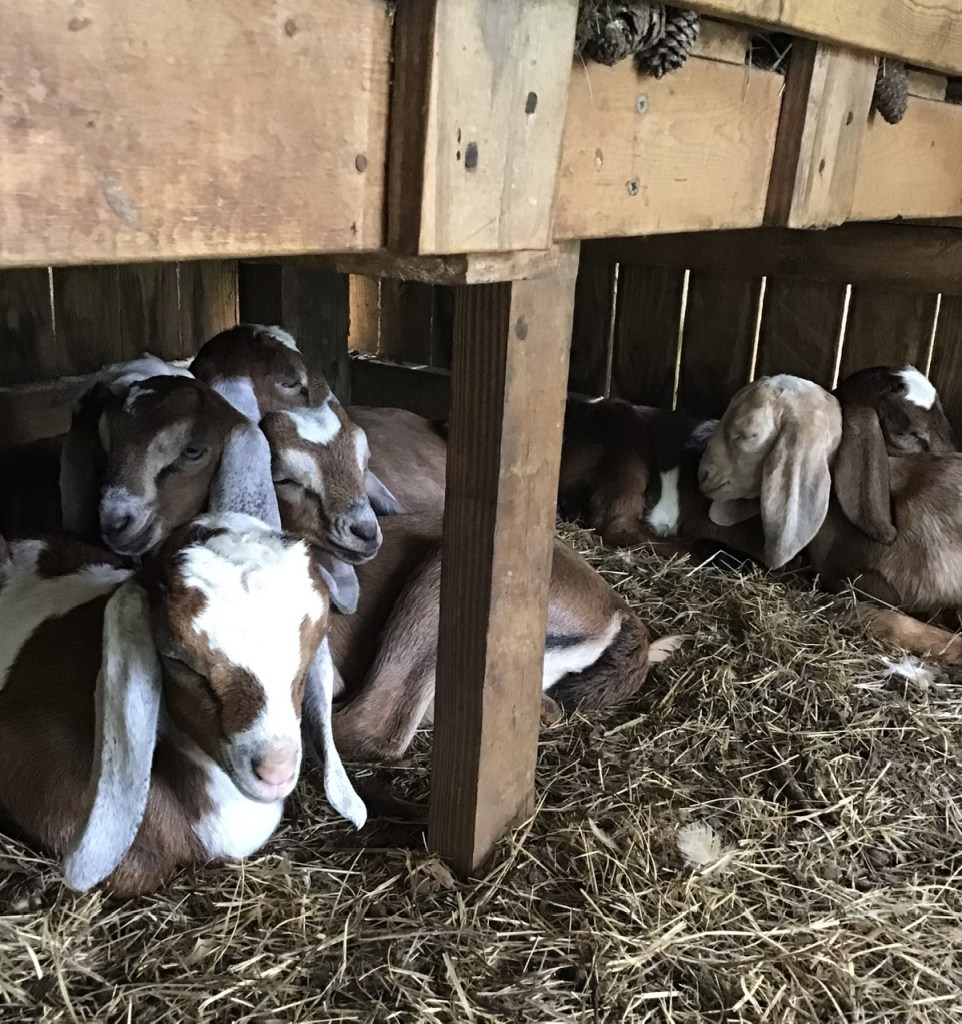
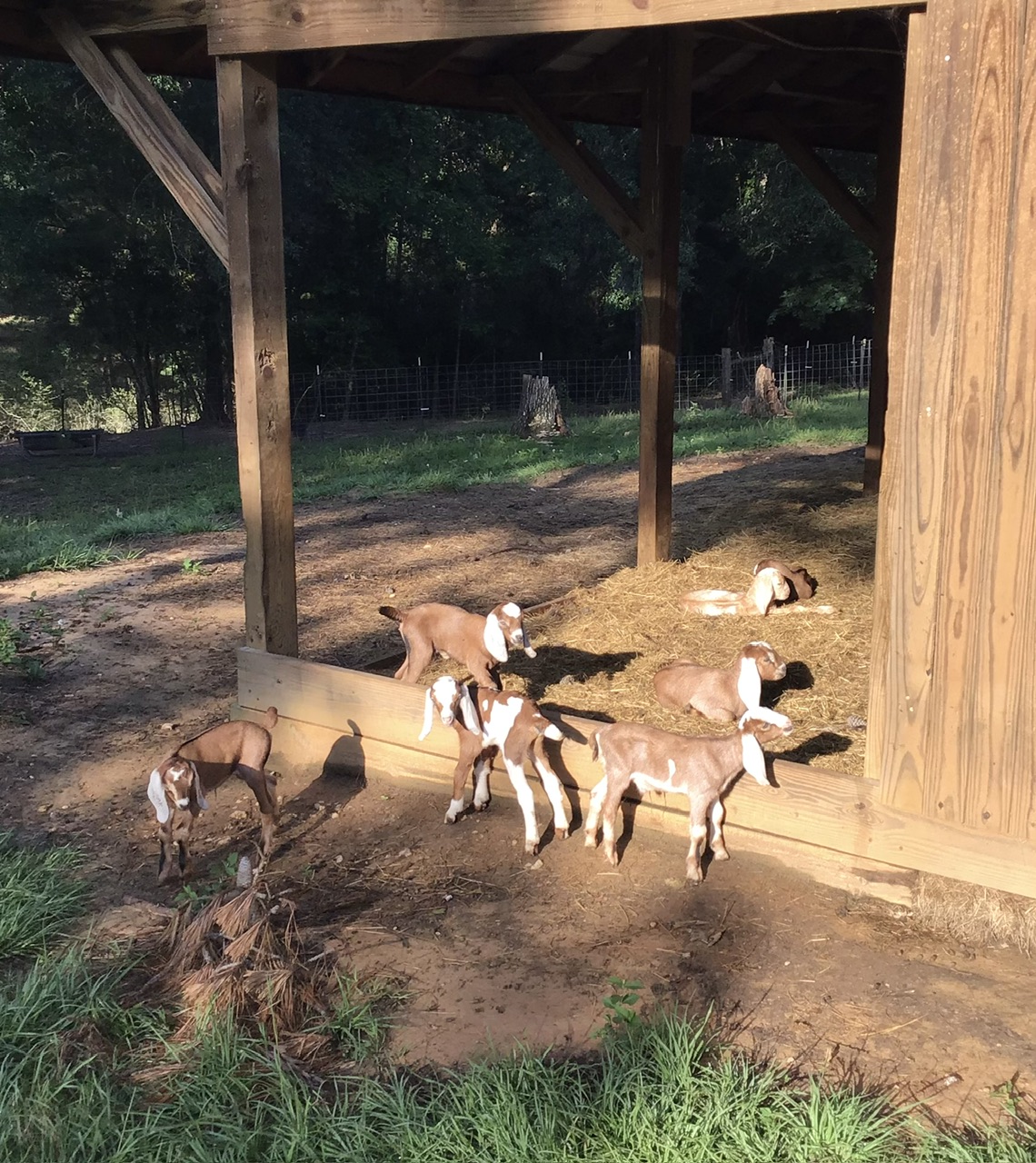
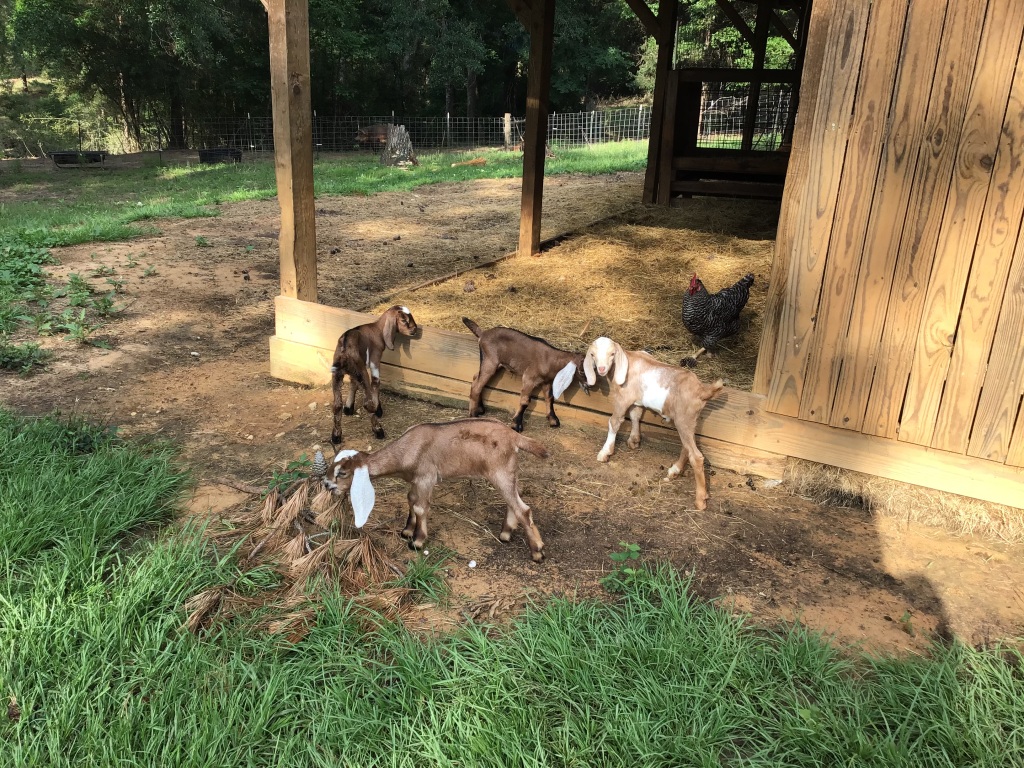
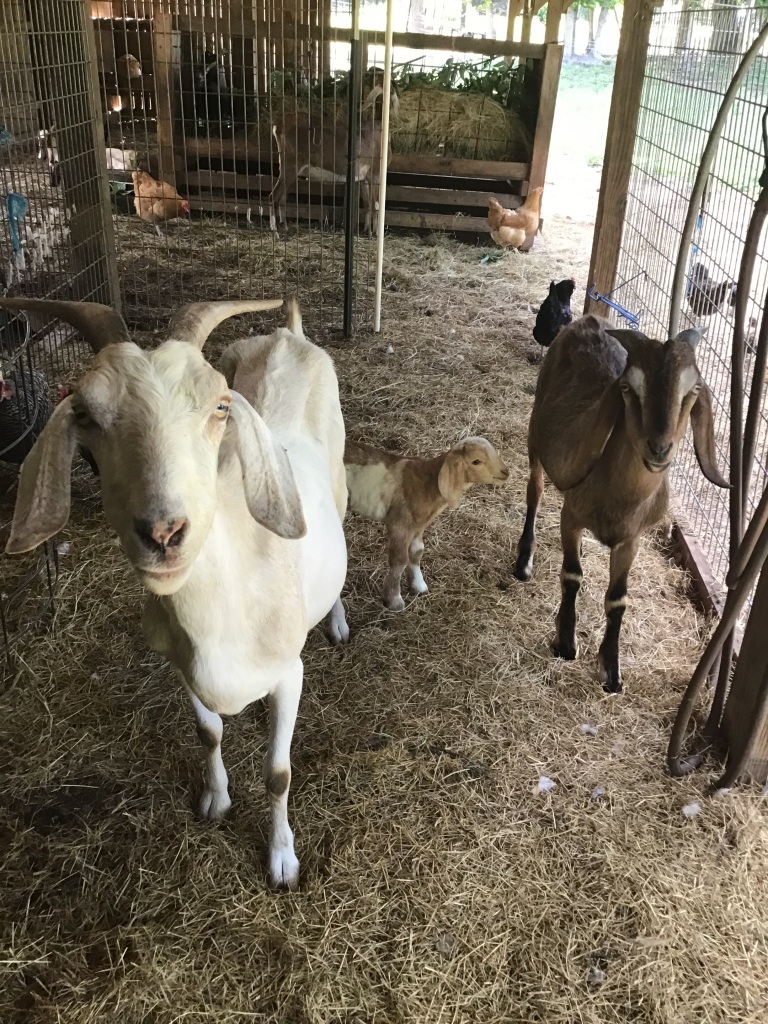
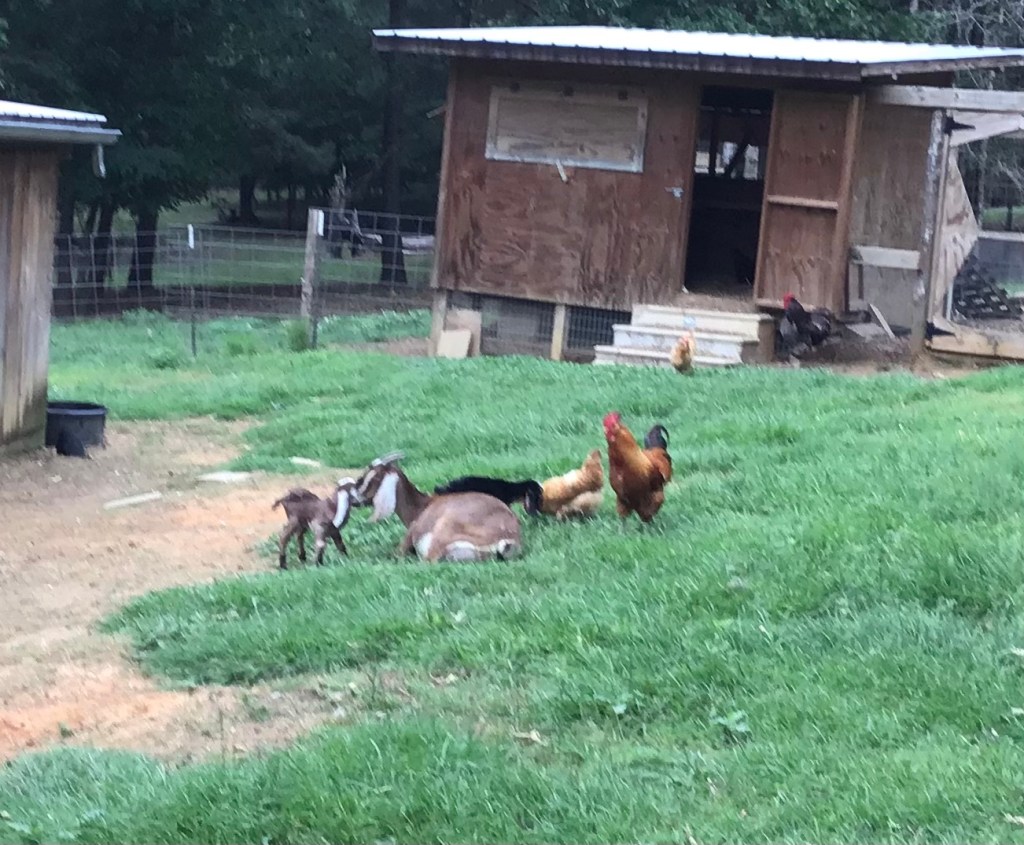
In even better news, the mamas and kids are growing well. We’ve started forcing them out of the corral during the day so I was able to give that space a much needed refreshing.
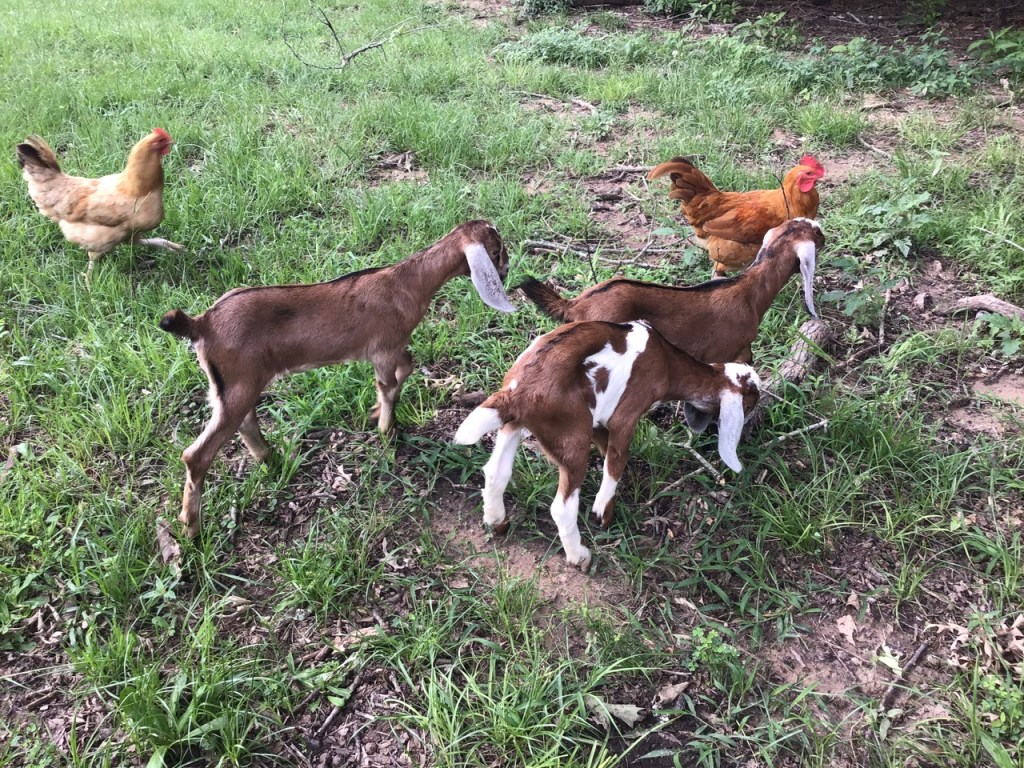
It seems they sometimes prefer following the chickens instead of their mamas. 😆
I’m getting the first fresheners ready for milking by training them on the milk stand. Soon it will be time to start separating them at night so I can milk them in the mornings before putting them back together again during the days. It’s not a happy time for anyone and I’m not looking forward to it.
But, I am looking forward to making lots of cheese again. We’re getting a bit of milk from Chestnut, who rejected her boy, and her girl is only nursing from one side. So, if I weren’t milking her she’d become even more lopsided than she already is.
It’s not a lot of milk, but enough for a little mozzarella now and then. I’ve found another method from my new favorite YT channel which is completely natural and far more tasty than the vast majority of those found online.
Raw milk mozzarella, mmmmm!
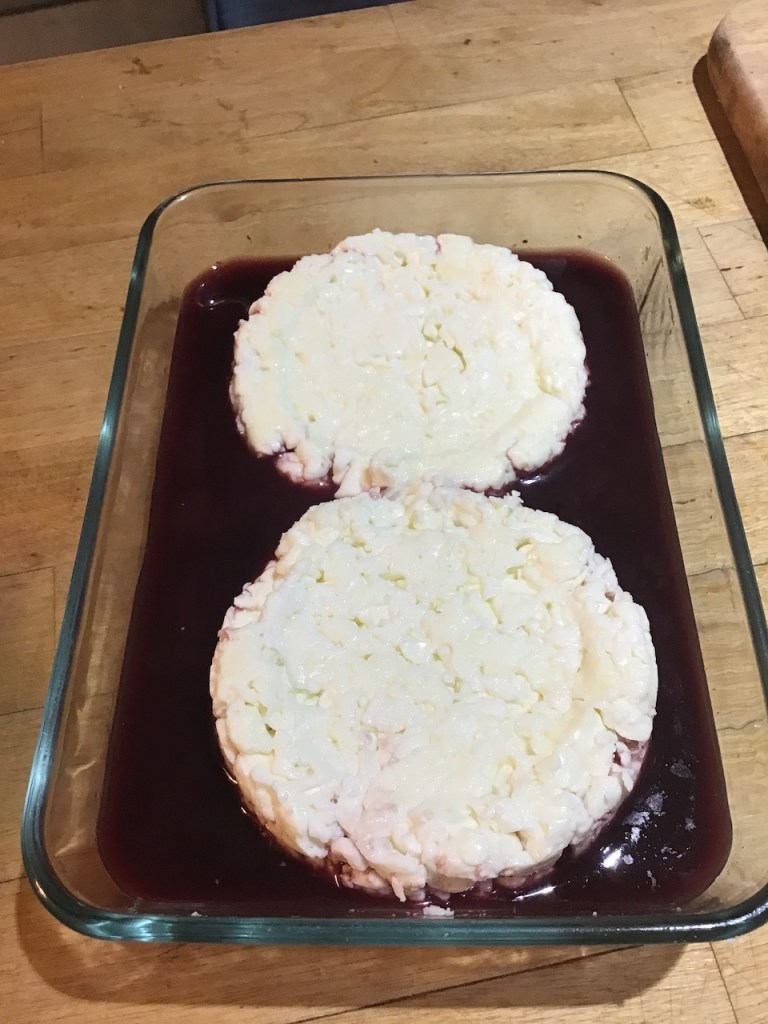
Unfortunately, the 2nd time I tried it was a failure. But, 99.9 % of the time a failed cheese can always become another delicious cheese. Some of my best cheeses have been from failures.
Not necessarily the case with failed wine. This cheese ‘failure’ will be soaked for a couple of days in the leftover must of the now fermenting wine, another tip I learned from my new fav YT channel.
This one was mulberry and I’ve also started a blackberry.
The blackberries seem to very much appreciate the extra rain and our harvest has been great, inspiring me to make blackberry wine for the first time. Last year’s harvest was very disappointing after getting some kind of strange disease right after their flowering period. (Not normal development, despite what several folks claimed at the time.)
I’ve decided to try more natural, traditional methods with the wine-making, like with the cheeses. Modern methods require all kinds of chemically-obtained inputs, which most insist are necessary for a fool-proof product.
Yet, last year we had a major failure using that method and ended up with several cases of vinegar. Very disappointing after all that work. We have had great success in the past or we might be too discouraged to try again.
Blackberries, banana peppers and Nigella seed pods
Traditionally, country wines were not made with all those foreign yeasts and I don’t really want my blackberry wine to taste like merlot anyway. While we may not have a decent cultivated grape harvest this year, the wild grapes look promising again. Also the pears are looking good, could be a bumper crop like we get only every few years.
If so, I’m going to do some side-by-side experiments, traditional methods vs. modern methods, and make a real project of it.
Blackberry wine in the making, hopefully
It’s easy to find lots of instruction using the identical modern method. For that I’ll rely on this book.
The wild grapes are looking promising. Our cultivated grapes still uncertain.
It’s not as easy to find good instruction on traditional methods, no surprise there. But this channel has a lot to offer and she uses nothing but a homemade fruit fermentation starter for her wines.
A teetotaler who makes wine, don’t see that everyday!
She also teaches how to make natural sodas and mead on her channel which I’m also very eager to try.
Blackberries fermenting beautifully after 36 hours.
The elderberry is also liking the extra rain. I might even try to make elderberry wine too. The blossoms are excellent in kombucha and will make an effervescent ‘champagne’ like beverage or flavor a cordial. And the goats love it. It’s just an all-around fantastic plant that is popping up everywhere now, so I’m going to create a big grove of them trailing down the hill.
There are two replies I generally hear from others when I attempt to talk about geoengineering and weather modification which I also often see in the comments section of others posting about this topic.
So this post I’m going to share some new links and quotes and personal observations in the hope that folks really start to get a better sense of the scope of this issue.
So few folks are even aware of the long history of weather modification, though it’s been well-documented and these days is very easy to research.
This is something I’ve written about many times already, because it sets a precedent. I am no longer going to bother with this vast history in future posts, because now there are plenty of others talking about it online.
I’ve noticed that when someone is aware of the long history of weather modification, they usually reply that it’s just about ‘cloud seeding’ which is no big deal, they say, they’ve been doing it forever, so what’s the problem?
As Agent’s Substack starkly points out, there’s nothing safe & effective about cloud seeding. And if you’d like the ugly truth expressed in some pretty harsh terms, I urge you to read his article. (Some of his work is behind a paywall)
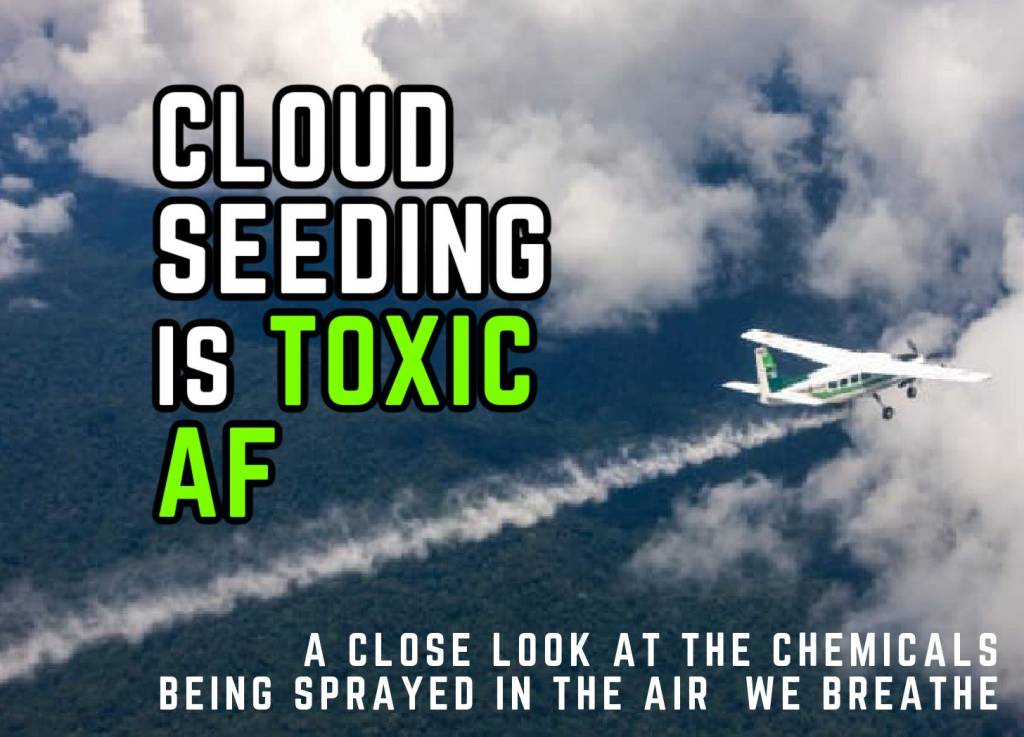
“They’re just cloud seeding, it’s not chemtrails! It’s harmless!”, they tell us. In fact, it’s so harmless that the vast majority of states in the US have some form of seeding program currently taking place. Many of them are funded with our tax dollars, but some are sponsored by corporations you would never expect to be involved in GeoEngineering. Idaho Power currently spends $4 million a year on cloud seeding which results in a 12% increase in snow in some areas. Although the internet assures us Cloud Seeding is super-duper safe, today we are going to look at what chemicals are being spammed into the atmosphere, according to the Manufacturers of the chemicals and a crazy CDC document I unearthed.”
He’s also shared his sky photos in another recent article and has lots more geoengineering materials.
“I had an idea for an experiment: Pick a month and photograph and/or video the sky every day in 2023 then wait a year and do it again in the same month, then compare the GeoEngineering. Would there be anything to learn from this? Let’s find out…
“First, they (meaning, The Powers that Be) claim the suns rays are harmful and causing Climate Change (Global Warming), therefore, to keep the temperature of earth down, they need to block it. This is not a conspiracy theory, it is well documented. I have written a number of articles on the topic. They have been discussing blocking the sun since the 1960s and NASA was doing extensive research in the early 1980s which involved releasing chemicals into the sky and running tests to see how much of the suns rays were blocked. They began planning heavily in the early 1990s. read my piece 1992: Should we Spray Sulfuric Acid or Dust to Block the Sun? In the mid-to-late 1990s, only a few years after the 1992 document, people in the USA began reporting white grids and lines appearing in the sky. These grids and lines blocked the sun.”
A friend in UK driving to her vacation destination recently sent me some pics of the sad state of the skies there. Look familiar?
I wish I had better news. It’s not good. It’s not benevolent. It’s not about saving us from global warming or helping our farmers cope with droughts. It’s not about that AT ALL.
That’s just the cover story, because there always has to be a cover story.
It’s about weaponizing the weather for control purposes of war and power. Now it’s also being used to force populations in myriad ways and fleece everyone with ridiculous carbon schemes. The academic publications which hype on and on about climate change do not talk about geoengineering as an on-going global operation, but as mere proposals, and this is how they’ll lock in their ‘World Governance’.
As the public outcry grows, so the solutions will be put into place.
Screenshot
Several US states have gotten on this bandwagon to outlaw geoengineering on various levels, which will have zero impact, because it’s a global issue, by design.
Screenshot
‘To prostitute the elements’ : Weather Control and Weaponization by the US Dept of Defense by R. Pincus 2017 War & Society p. 64-80
“The US military has a long and robust history of scientific research programs, often conducted in conjunction with civilian scientists at non-military governmental agencies as well as universities. These programs flourished in the immediate post-Second World War and the early cold war years, as the field of military science expanded to address the sprawling Soviet threat. One area of growth was in atmospheric science, which had already taken off preceding Second World War in conjunction with the growth of air warfare. Advances in meteorology, cloud science and climatology enabled military interests to align with weather forecasters and also agricultural interests, as old ideas about cloud seeding and weather control were revived in the light of new research. The military, largely through the Air Force, advanced a series of projects investigating the potential of weather and climate control, manipulation, and ultimately weaponisation.”
What we have are Global Public-private partnerships cooperating internationally to manipulate the weather and change the climate as well as fleece the populace with projects that do not help the people.
Like these: the Greenhouse Gas Removal by Enhanced Weathering (GGREW) projects
“One example of a research project on the feasibility of enhanced weathering is the CarbFix project in Iceland.[33][34][35]”
“An Irish company named Silicate has run trials in Ireland and in 2023 is running trials in the USA near Chicago. Using concrete crushed down to dust it is scattered on farmland on the ratio 500 tonnes to 50 hectares, aiming to capture 100 tonnes of CO2 per annum from that area. Claiming it improves soil quality and crop productivity, the company sells carbon removal credits to fund the costs. The initial pilot funding comes from prize money awarded to the startup by the THRIVE/Shell Climate-Smart Agriculture Challenge.[36][37]”
I’ve been documenting some of what’s been happening in our skies for nearly a decade. It is not cooling us, it is not stabilizing our rainfall, it’s the exact opposite. And, they know this!
“In their own words from one of their reports, the Royal Aeronautical Society (based in London): “the current overall effect of contrails and contrail cirrus is a net warming – about 1.5 times that of aviation’s C02”. This is a smoking gun because it affirms that what they are doing is actually having the opposite effect of what they claim to be doing. It’s warming things, not cooling it.”
But what do academics concern themselves with? Issues of governance, because, warmer temperatures might increase small arms purchases. And other GLOBAL concerns about the control of the ornery plebs.
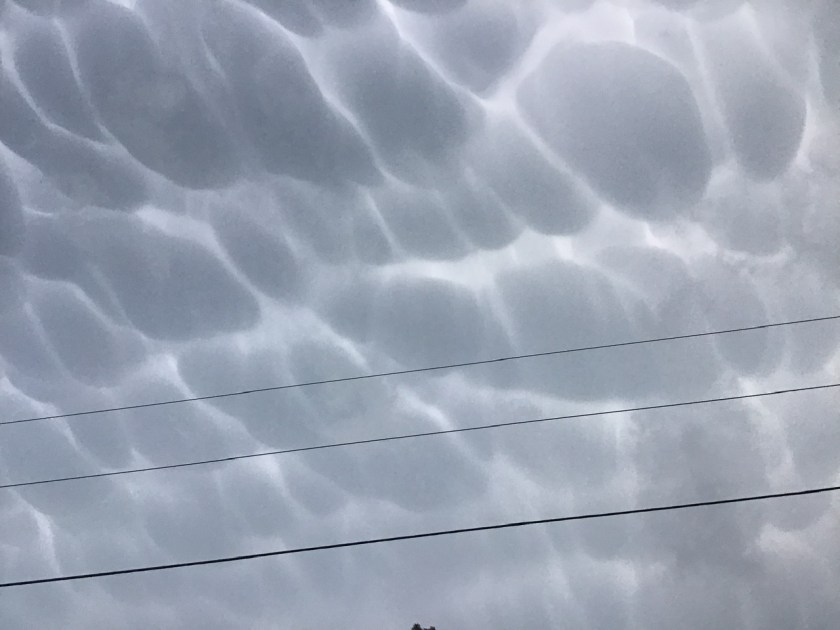
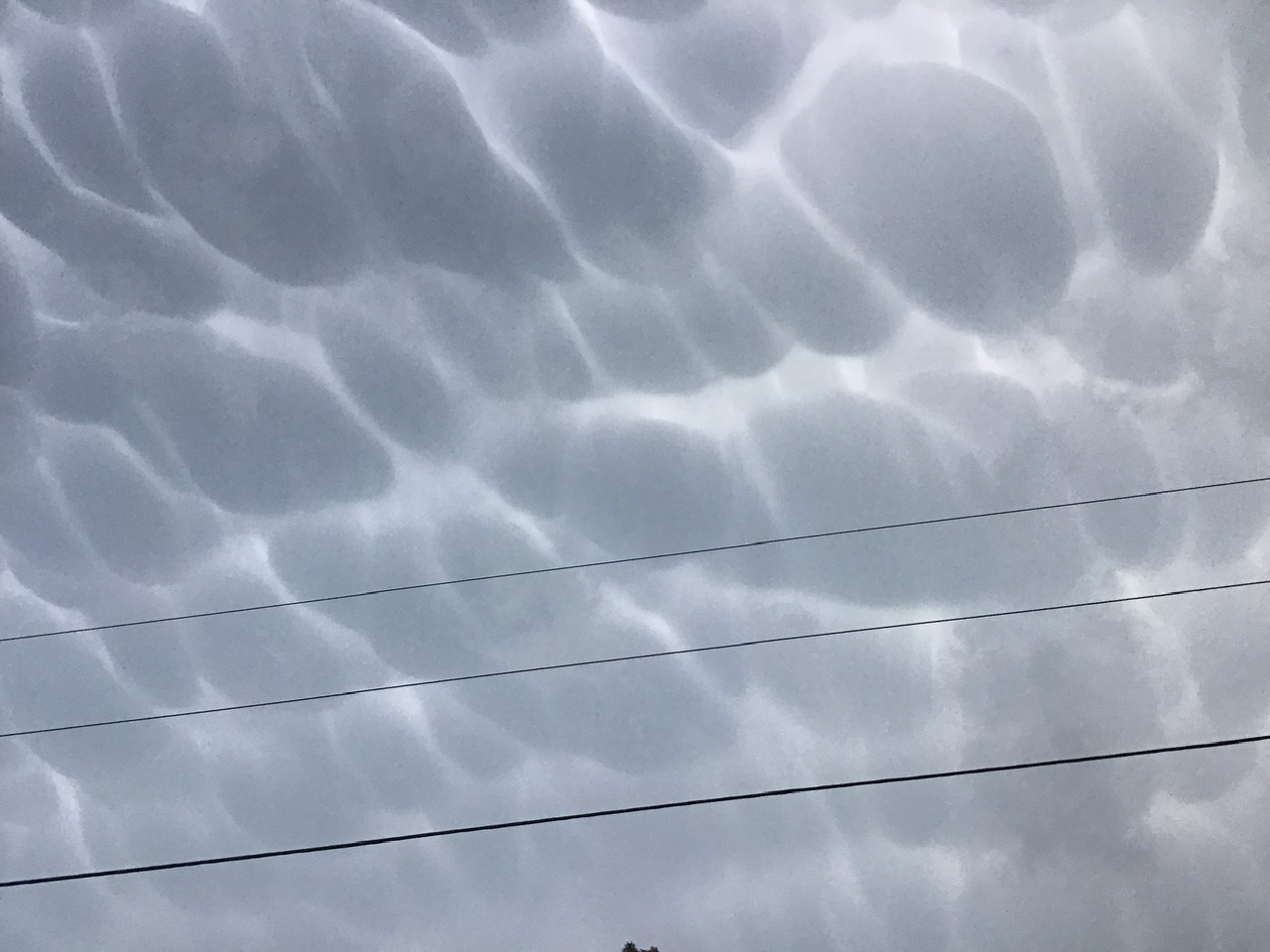
In my last post I included a recent photo from our area. These are the among the ‘new cloud species’ which some will actually tell you have always been there, we just never noticed them before Smartphones. Yes, I’ve actually heard this ridiculous answer on multiple annoying occasions.
“Mammatus clouds” they call them, because to name them is to normalize them. And the kids grow up “knowing” and are diligently taught to accept anything that has a name. That’s Science!
The official sites, the academic sites ALWAYS normalize, that’s their job. The rest of us are just all crazy conspiracy theorists. See, totally normal, because it’s right there in the International Cloud Atlas!
Thanks for reading folks, please research and pass along information!
Some brief updates this post and not as many happy snaps as I’d like. But, it’s been so busy and carting my tablet around everywhere is not usually an option, especially where it’s wet and dirty, which is a lot of places at the moment.
Kidding season is over and it’s been a bit stressful, no surprise there. I’ve been wanting to try something new—which is the greatest lost homestead technique I could think of—making our own rennet.
We’ve only had goats a few years now, all of this still feels very new, but, we do want to keep moving forward on the path to self-reliance, so this one is pretty essential on that list. It was as challenging as I expected it to be!
I am squeamish, so that’s the first of the issues. Hubby does all the slaughtering and butchering and for a while I did help plucking chickens, but then we got a machine, so I don’t even do that anymore. I’m not accustomed to seeing the interiors of the animals, let alone having to identify all the parts.
So, trigger warning for this section for anyone reading more squeamish than me! Move to the next section, if you please.
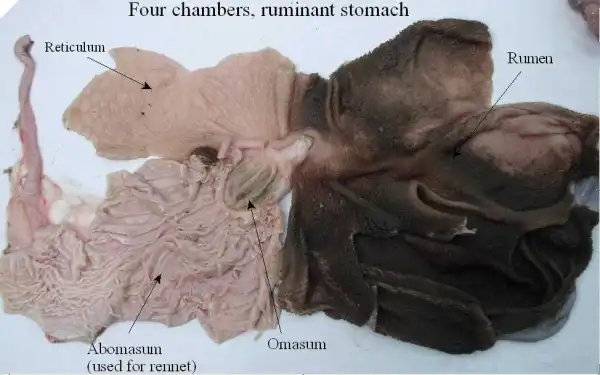
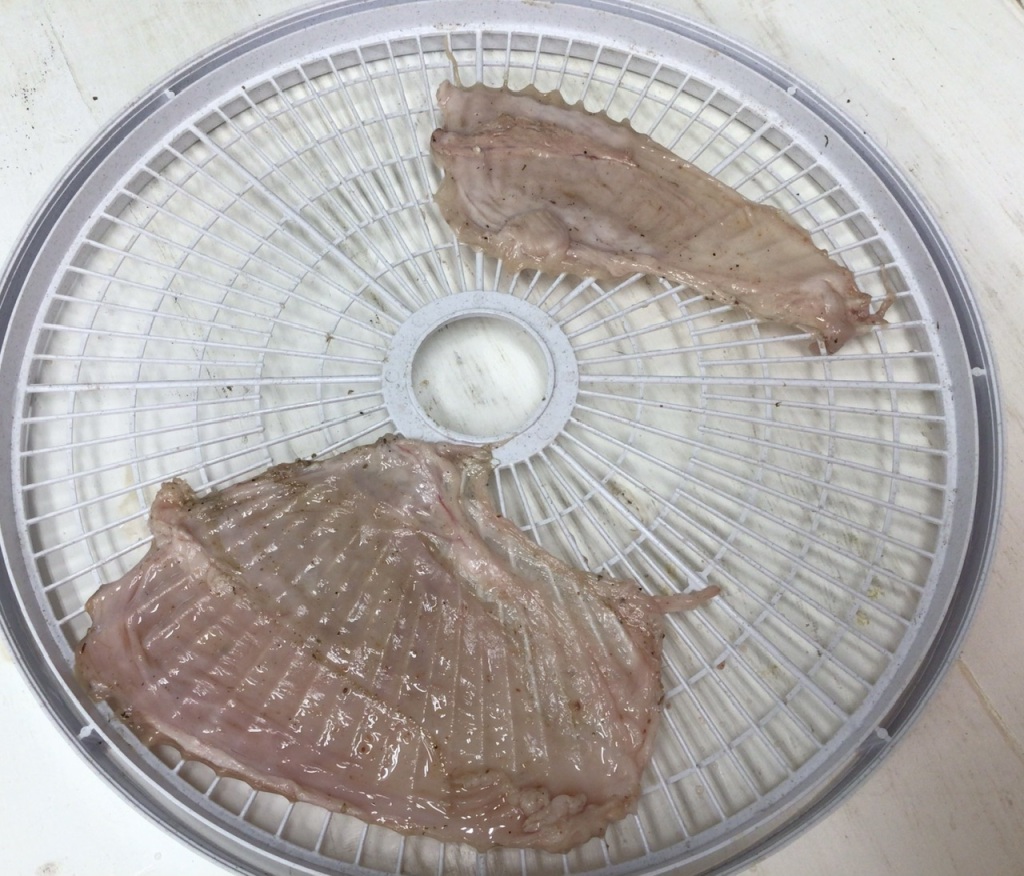
For the briefest of intro lessons, rennet is made from the 4th stomach of the ruminant animal, the abomasum.
This photo is from a calf, so for us we were dealing with far smaller features. Obviously, this is a precious commodity. The abomasum must come from a nursing animal, as it still has the enzymes required for cheesemaking. It can also come from a stillborn, an unfortunate event turned into a beneficial one with proper immediate attention.
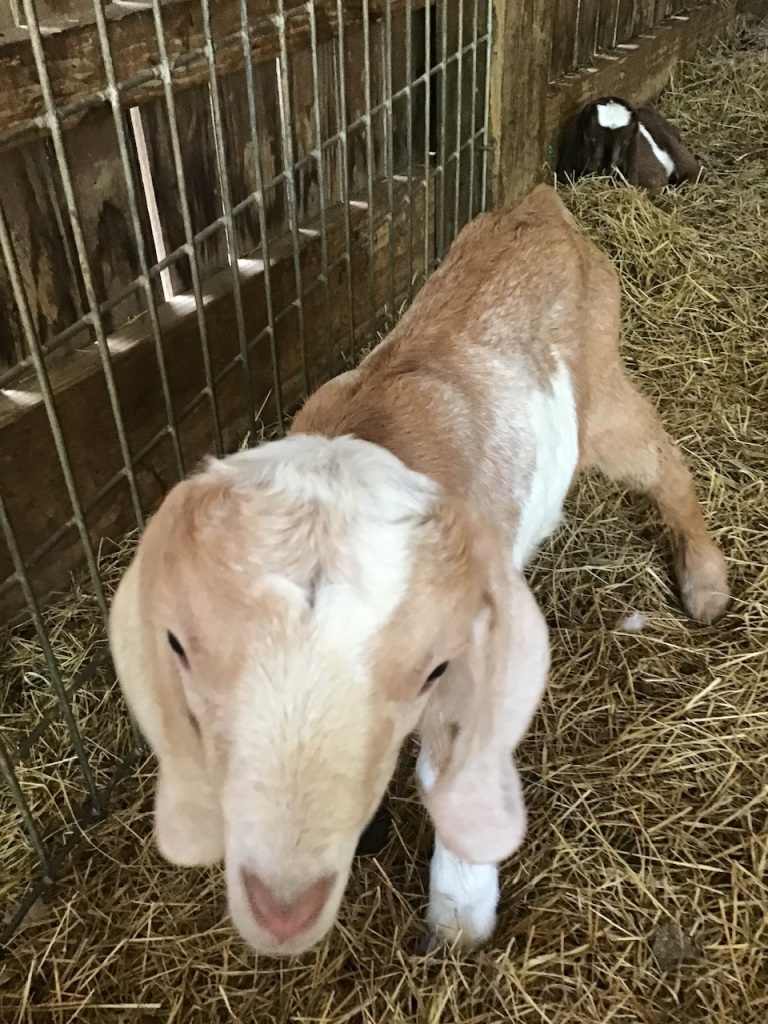
In our case, we’ve had 2 stillborn, one this year and one last year. This year we also had a very small doe, a first freshener, who had fairly large twins. We decided to cull one of her kids as part of our efforts. Of course this is never an easy decision to make, and I lose sleep over stuff like this. I was never meant to be a goat farmer, I just want to make cheese!
Anyway, I am glad for the tough choice and going through the trouble to acquire this precious skill. Hubby and I sat down before the guts together, at the kitchen table. One of the great many sentences I could never have imagined I’d be writing!
It’s not easy to find information on the how-to’s of this process, and I certainly had no one to call or visit for advice. It was not enough information to substantially build my confidence, that’s for sure. Sometimes that just takes doing it.
Luckily, I did find one YouTube video, and one blog, both again working with a calf, for which I’m exceptionally grateful.
Another brief aside about rennet, if I may bore many readers a bit further! As I’ve written before, most cheese made today, at least in the U.S., is not made from real rennet, it’s made from a lab-grown rennet substitute, made by Pfizer.
While it’s not that expensive for home cheese makers to buy animal rennet online, relatively speaking, considering only a tiny amount is required, I don’t want to have to entirely rely on far-away sources for such an essential item.
Another thing I’ve been experimenting with to overcome this issue is vegetable rennet, again, from a natural, local source, not a GMO lab-purchased source. We have figs, so that’s what I’m using, but nettles are another source.
It’s not possible to set a large hard cheese with this method, but it works for soft cheeses and very small, what I’d call semi-hard cheeses (because they don’t need a press) like the one I just tried after discovery this channel’s excellent demonstration.
This cheese is so easy! I’ve only just made it, so I can’t yet vouch for the taste, but he makes it look delicious. For this cheese you don’t need any special equipment—no molds or cultures, no aging fridge, and no rennet. Instead of the cute baskets he uses I just poked some holes in an old sour cream container. (And can I just add how much I adore his heavy accent and classic Italian hand gestures!)
We did eventually figure it all out, and here is our final product, now drying for 3 months or so, according to processing directions. It will then be sealed and last for many years and make many dozens of cheeses.
A great big thanks to the multi-layered efforts of man and nature for this magical gift!
In weather news, we’ve had a lot of rain. While I mentioned last update how much I love the rain, it is causing problems. We lost most of our onion harvest, for starters. This is a big disappointment because we were so close to harvest, just a couple more weeks. Not anymore, they were rotting in the ground, we had to pull them, lost a great many, and the others are mostly very small still.
So between the pitiful potatoes and the sad state of the onions, we are not starting off too well. The peas are already done as well, because of the heat, but that’s pretty normal here.
What’s not normal is my usual complaint—the manufactured weather. We can’t drive to half our property until Hubby upgrades our culvert, a huge undertaking. But we are very lucky this time around! No hail, or tornadoes, or other immediate disasters to deal with, like a great many.
Yes, more manmade clouds above our head. We’ll learn what NASA calls them next post.
But, I have a future Geoengineering Update in the works, so I’ll save further lecturing and complaining for now!
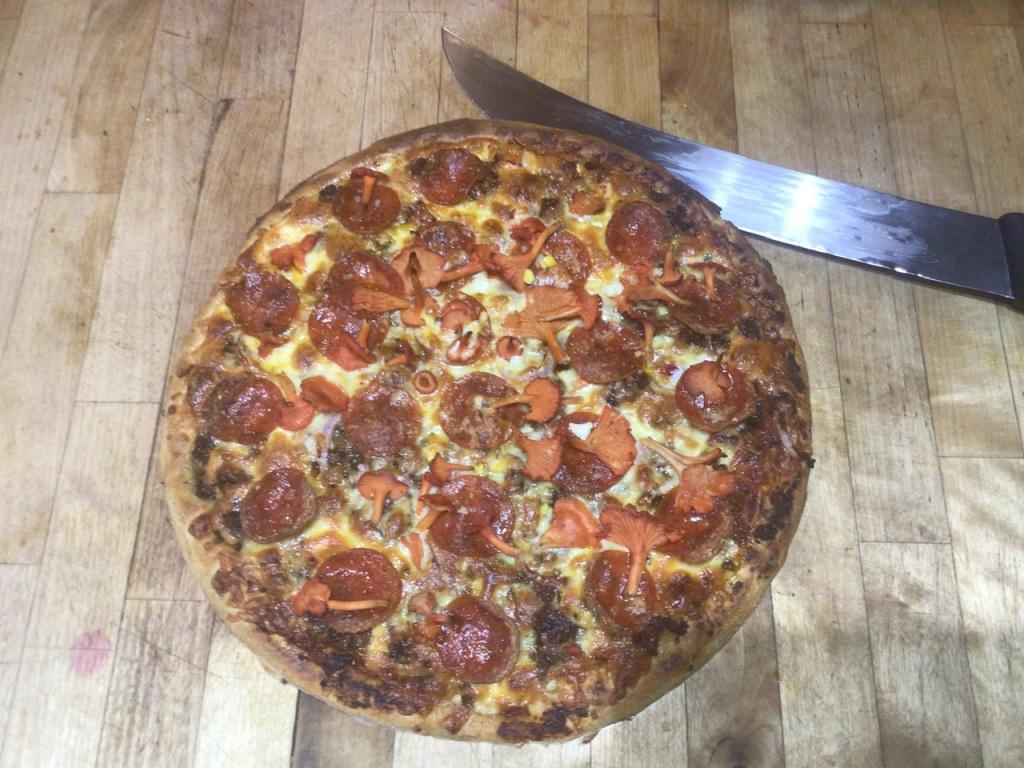
Instead we’ll end with a snap of one of our favorite dinners, just how we like it, burned to perfection! Not our pepperoni or cheese this time, but some just foraged chanterelles, homemade sourdough crust, and homegrown pork sausage. 😋
And other news this post, including Hubby’s big mistake, lots of garden snaps, critter updates and the new normal weather chaos.
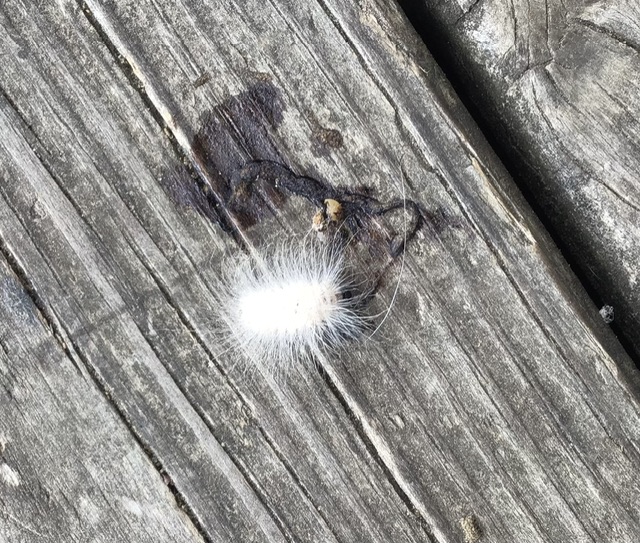
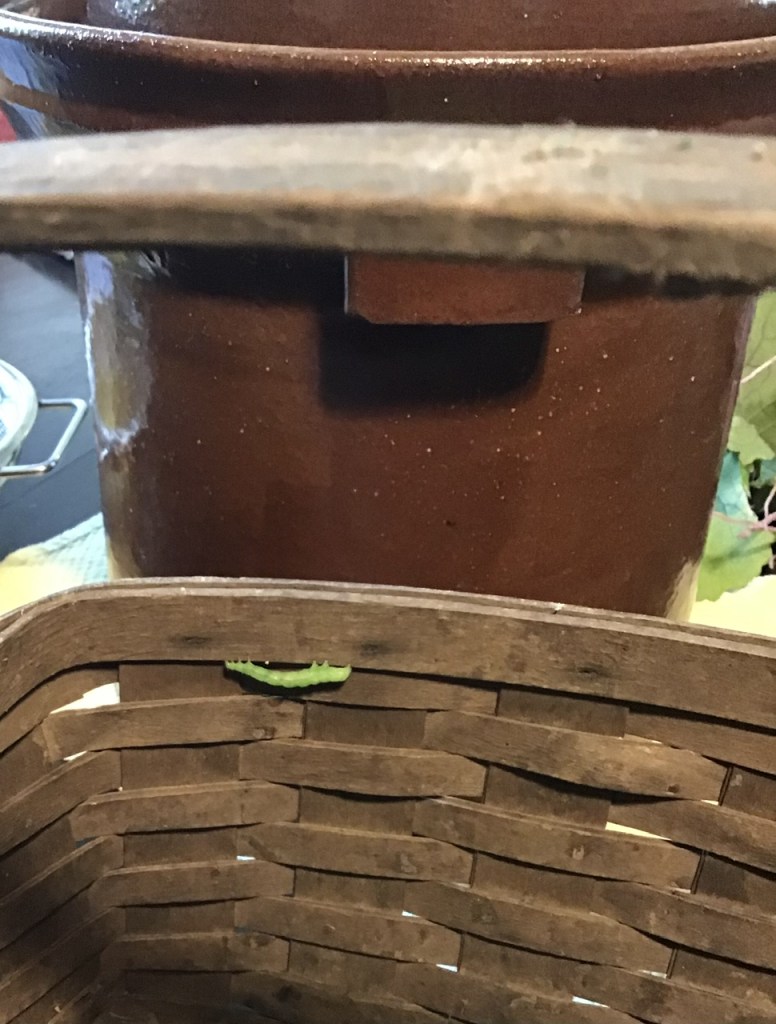
Big ones, small ones, skinny ones, fat ones . . .
Black ones, white ones, green ones, yellow ones . . .
Let’s see, perhaps a bit of 80s pre-conditioning before our current day “You vill eat ze bugs!”?
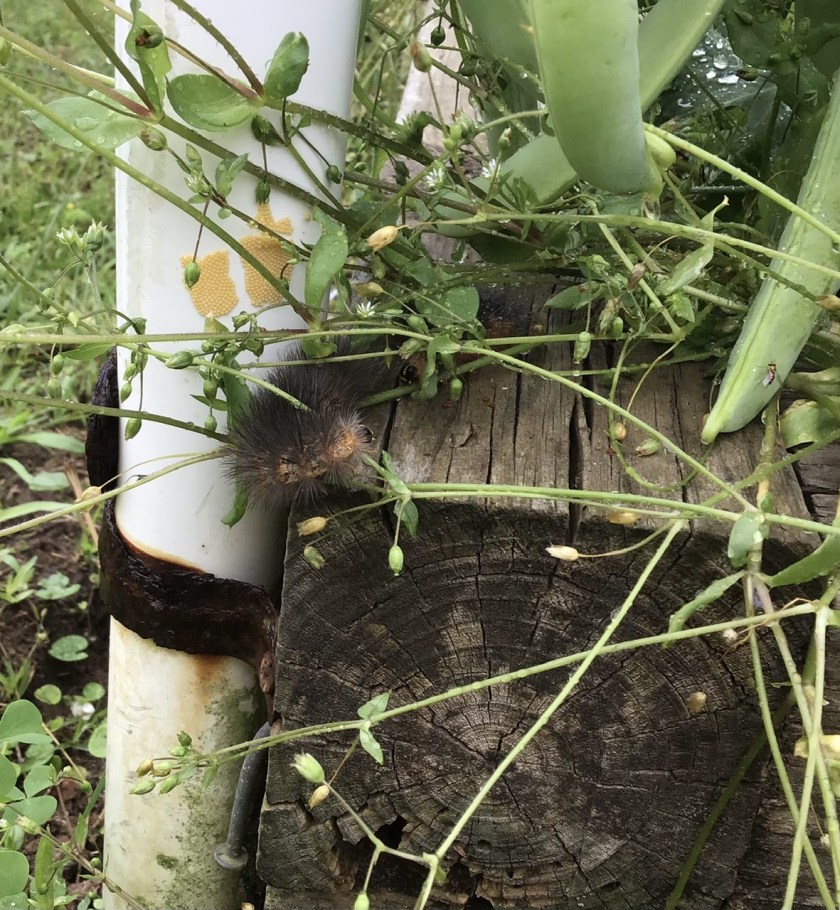
We’ve never seen so many, and such a variety. They do not look the least bit appetizing and clearly the birds agree, or there couldn’t possibly be so many.
I’m not exaggerating when I say you cannot take a step without seeing one. I’m hoping they turn into gorgeous butterflies and soon we’ll have a garden full of them. But I haven’t looked them up yet and they could easily become some voracious relative of horn worms for all I know, about to attack the tomatoes.
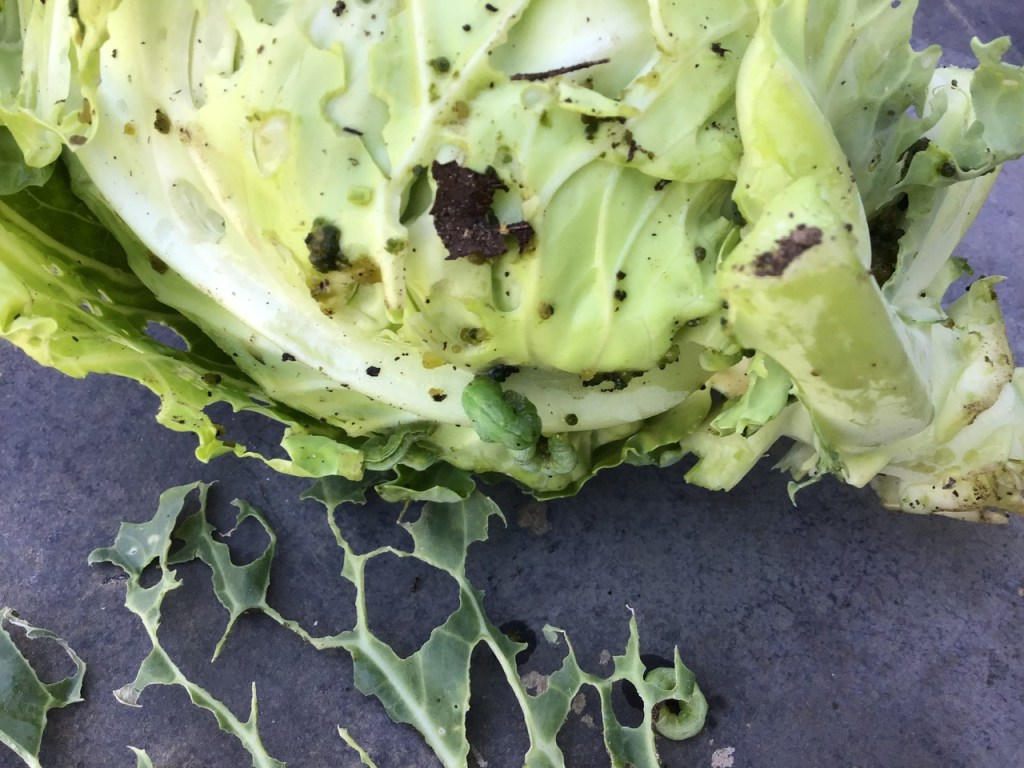
They’ve destroyed my spring cabbages and are working on the fava beans and snap peas now.
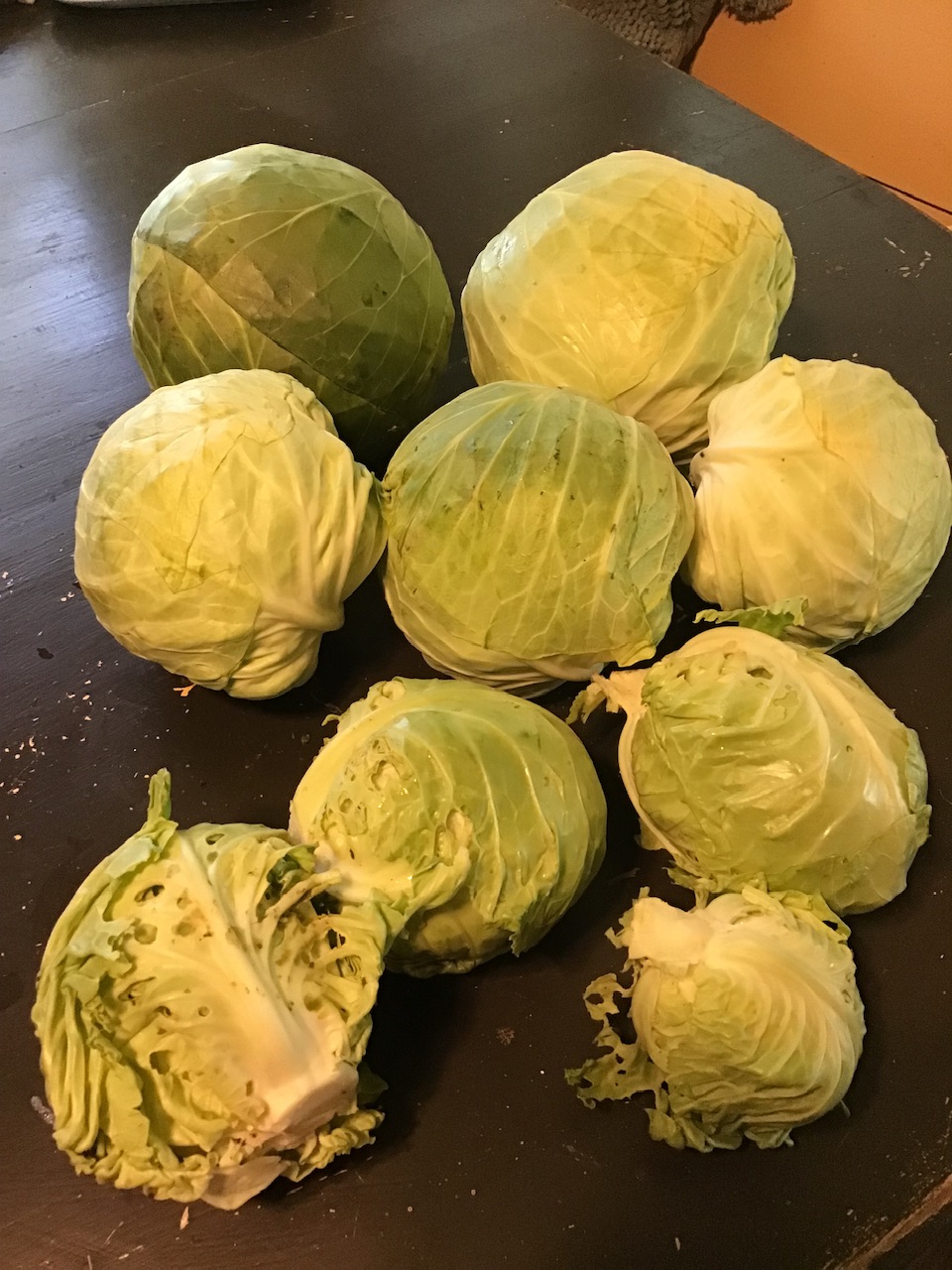
Fall cabbages in the back compared to spring cabbages up front
At least the goats appreciated all those Swiss cheese-like leaves.
Snap peas don’t last long here anyway and while those creepy crawlers get the leaves of them, and those of the radishes, at least they leave us the fruits.
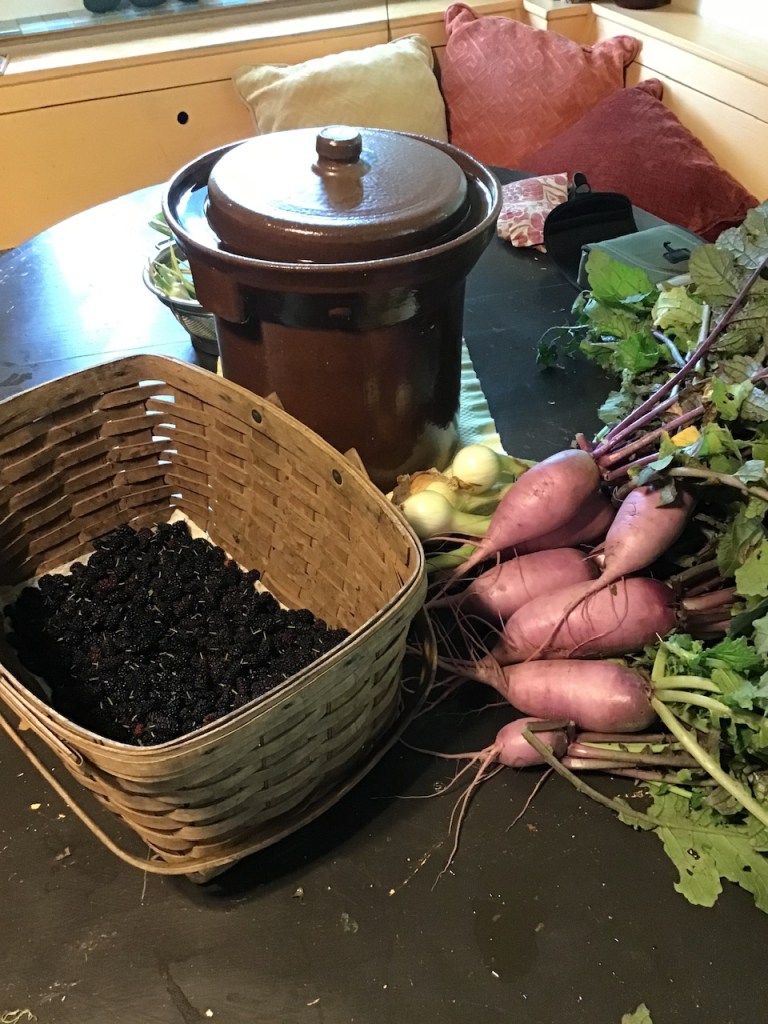
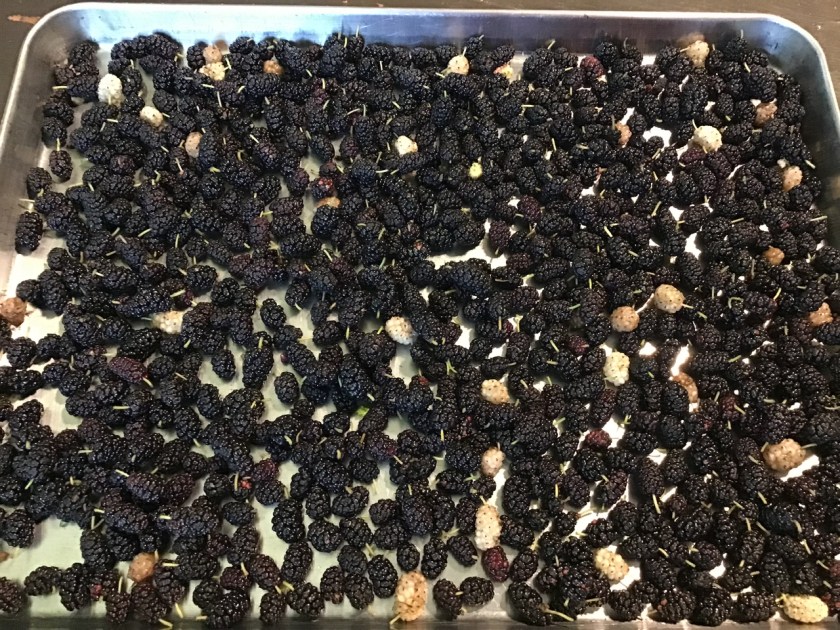
I’ve already made a large crock of sauerkraut and a quart of fermented radishes. Plus we’ve been getting loads of mulberries thanks to Hubby who has been destroying the tent worms that have been appearing all spring. Those little buggers love the wild cherries too and can easily destroy all leaves and fruits in a matter of days.
So, big kudos to Hubby for coming to the rescue, and spending a fair amount of tedious time harvesting these little beauties as well.
But, Hubby is also responsible for the misdemeanor crime of killing our potatoes! I should’ve caught it. I know, he was just trying to help. So, he filled our potato buckets with too much compost too fast and now we have potato disaster.
Lesson learned, you can only add a couple inches at a time, even if the greens are much taller than that.
I’ve got lots of herbs companion planted with the tomatoes that are all looking great.
Thyme, cilantro and dill growing between tomatoes
One of the best garden decisions I’ve made is far more flowers in the garden. Not only to attract pollinators, but to attract us too. It’s a far more inviting space than just rows of crops and makes me want to go in and play. 😊
The Peggy Martin rose just one year after planting a cutting from a friend.
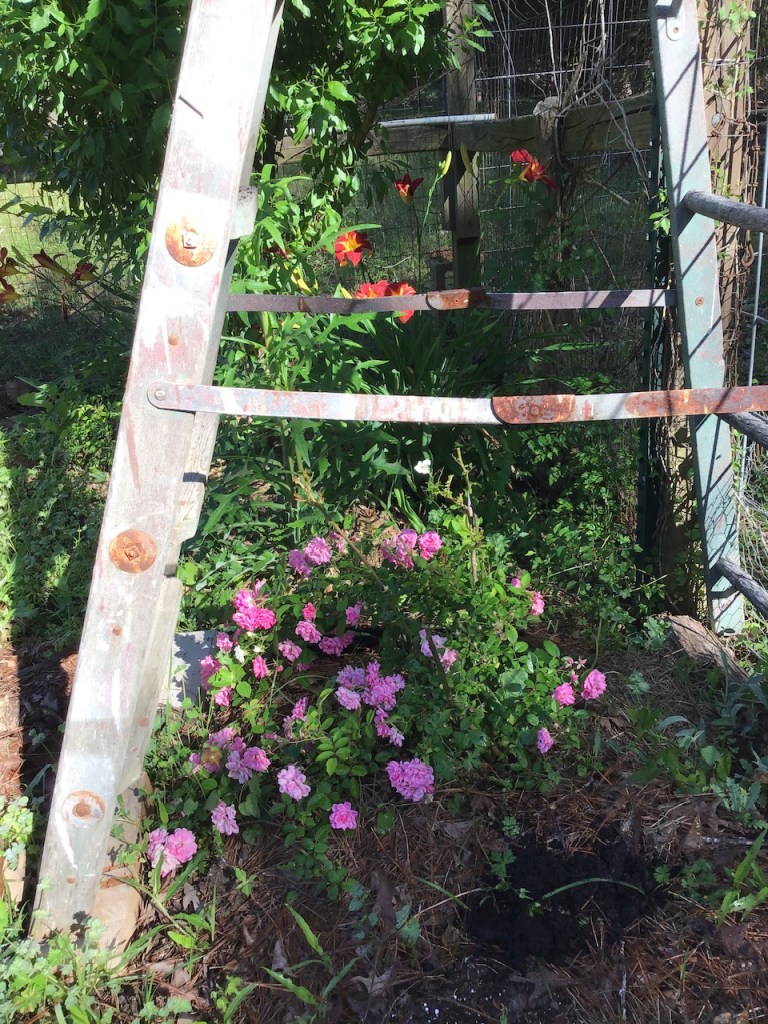
And the Burr rose, many years old, huge and seemingly indestructible, even from constant nibbling by the sheep and goats.
And one of my garden favorites, which my photo doesn’t do justice at all: Nigella, a delicious seed and lovely tiny blooms in blue and white.
Their seeds have a grape-like flavor and are delicious in bread and kombucha.
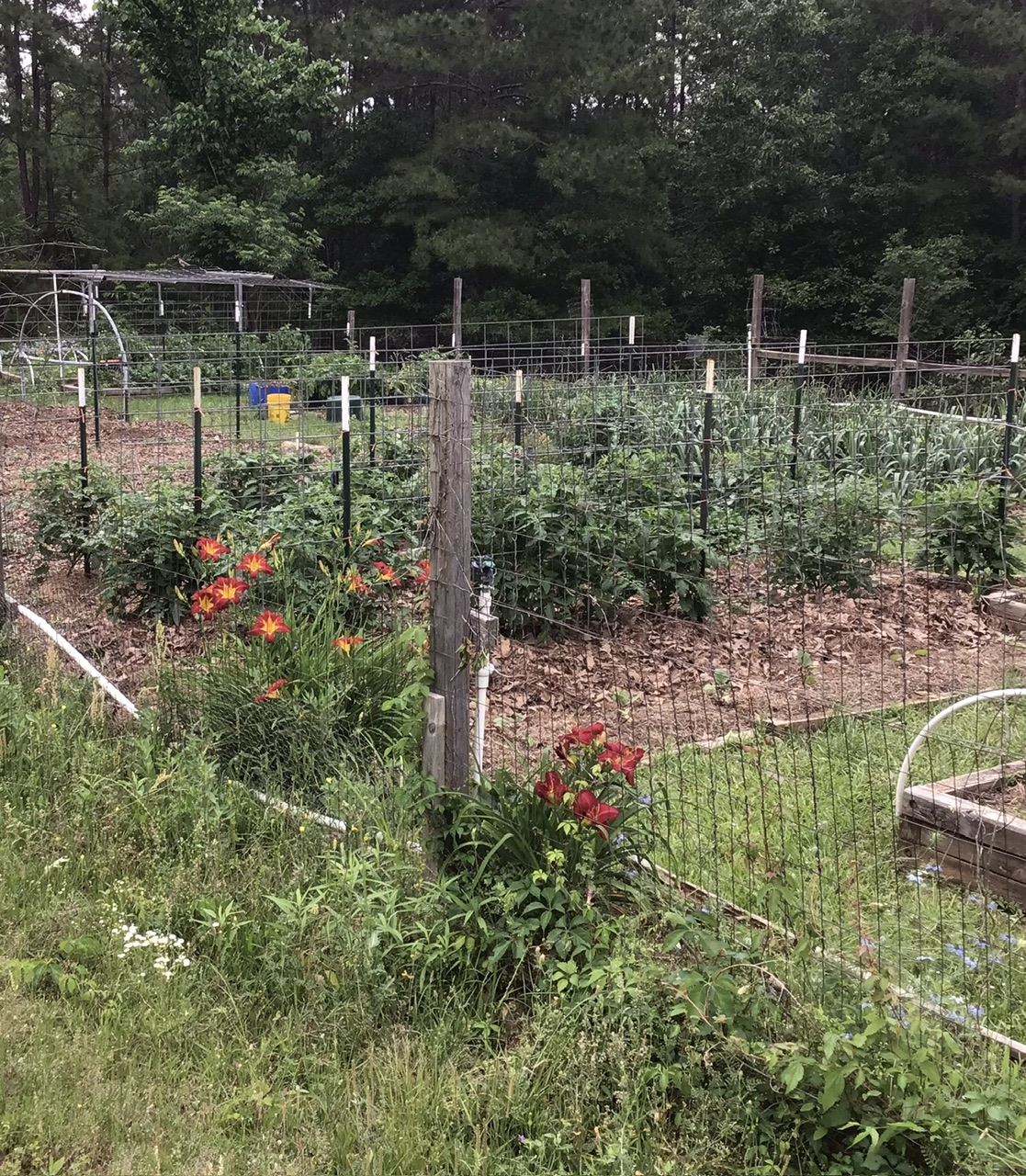
A larger garden view
Another fruit that so far seems successful are the persimmons. We have both Virginia and Asian planted and the flowers on them are so unique, just like their fruits.
I’ve also got the citrus planted at last and I’m so excited! I cannot fail! (Says no one but me and I’ve gotten quite a few discouraging words from others on this venture.)
Planted along with the new ‘kiss me under the garden gate’ flower which is doing quite well, and the still unfinished wattle fence.
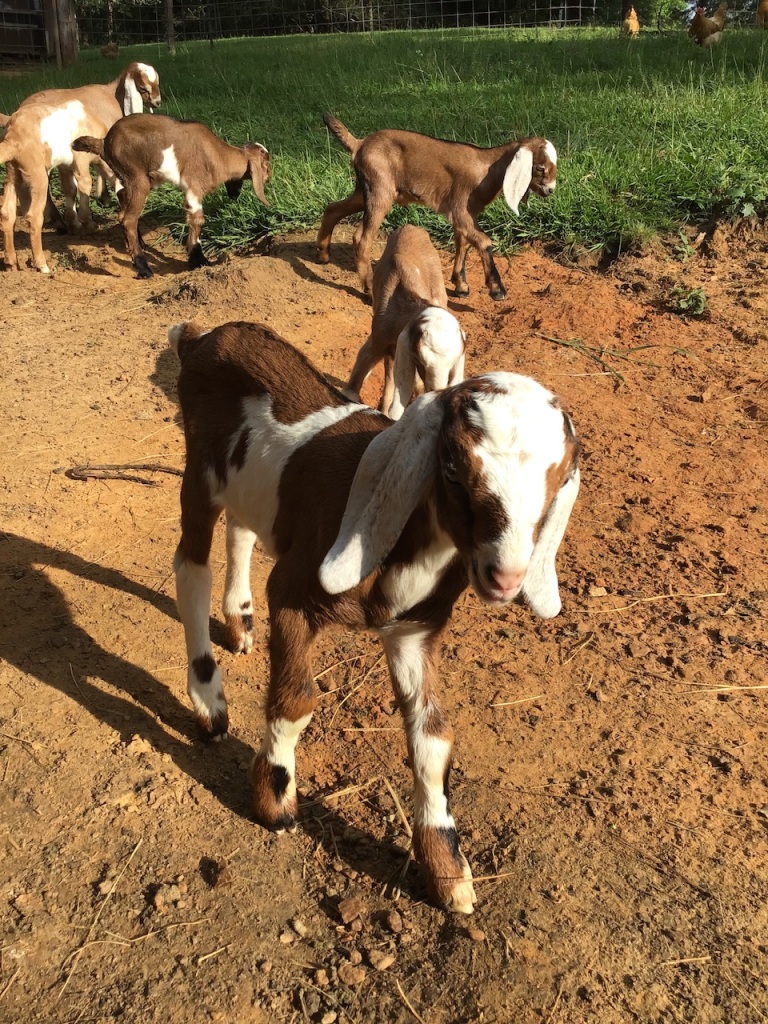
In the best news we have our first kids just born this morning. Milking season approaches too quickly!
The weather madness continues, unfortunately. Big surprise.
Some still think these are contrails! Good grief!
This weekend’s forecast looks like a drop-down menu: 1/16th inch rain possible, or severe storms, or flooding, or hail, or tornadoes. Try planning for those options, peasants! 😩
Hope life is a little more predictable in your neck of the woods!
I have to applaud our reader Highlander for sharing this musician who has me laughing so hard I have tears streaming down my cheeks! Nothing like a good laugh for health. So, first the fun stuff.
I believe this kind of ‘meaningful entertainment’ is an excellent way to spread the word about unpleasant news.
Another good one I’ve shared in the past, not a parody tune, a ballad, and very sad.
And, winding down, if you can muster the courage, Dane’s weekly Bad News Broadcast, which I never miss (much to Hubby’s chagrin!)
Keep laughin’, keep preppin’, and thanks for stopping by! 🤗
Almost entirely happy snaps and almost no complaining at all, really! The garden is mostly great, the weather mostly fine, summer in full swing already, ready or not.
It’s been busy around here, as usual. But, busy in the country way, which is very different. Our preservation season has already begun, and it’s fixing to get very busy very soon. I have mixed feelings about that, but here it is anyway.
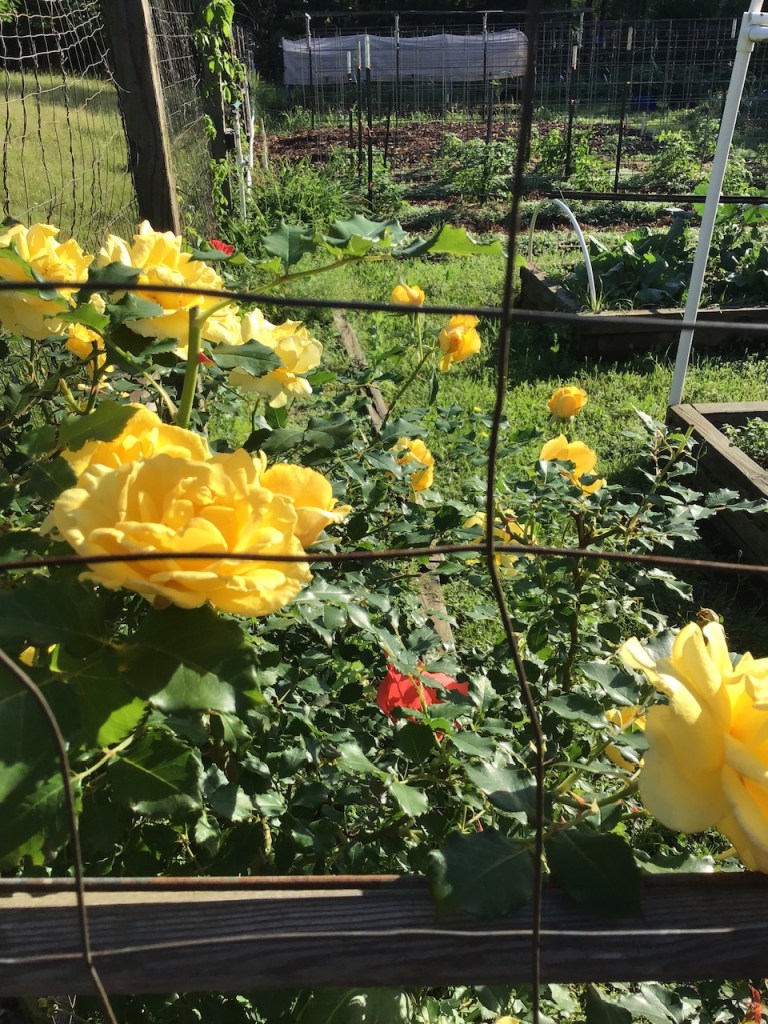
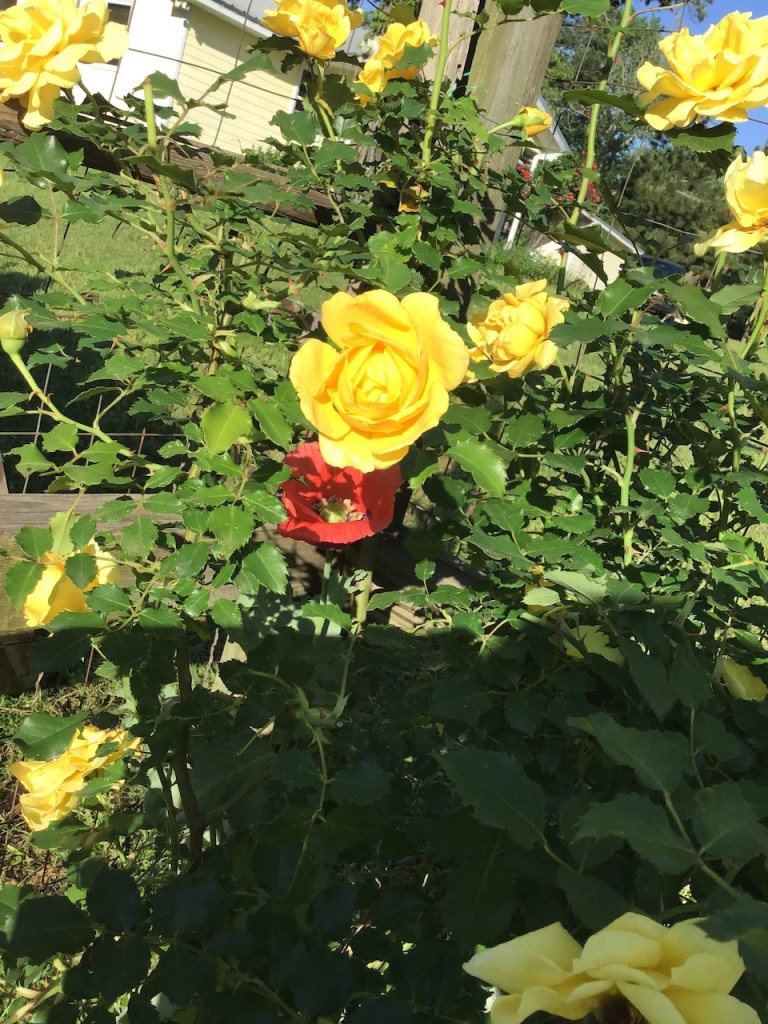
I’ve been saving the rose petals for drying and kombucha after admiring their scent and beauty in many lights and angles.
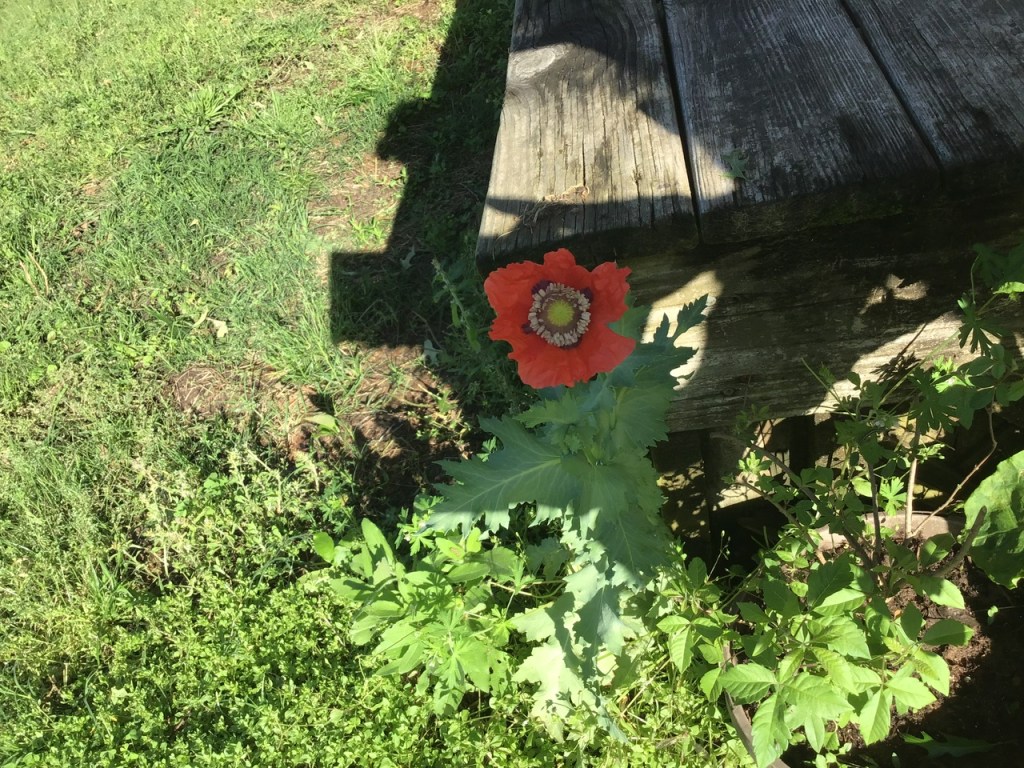
The poppies continue to pop up in random places, among the roses and in cracks and crevices, like dandelions.
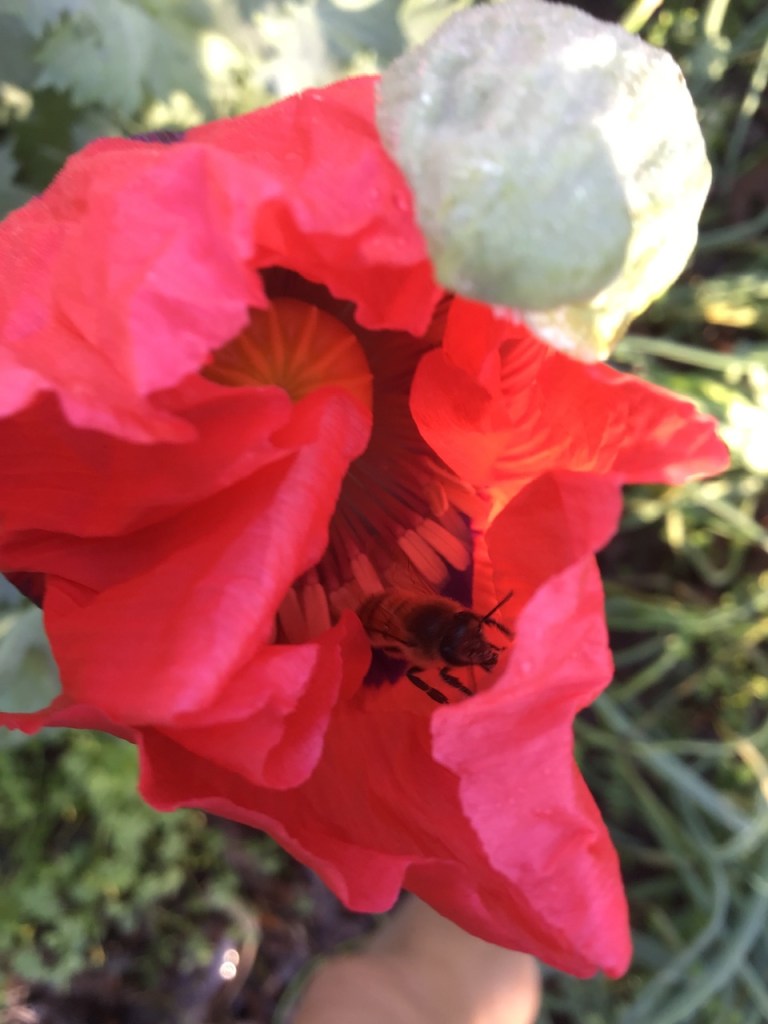
And the bees love them as much as I do.
Another rose variety, the thornless Peggy Martin, I just planted last year, is now getting its first blooms.
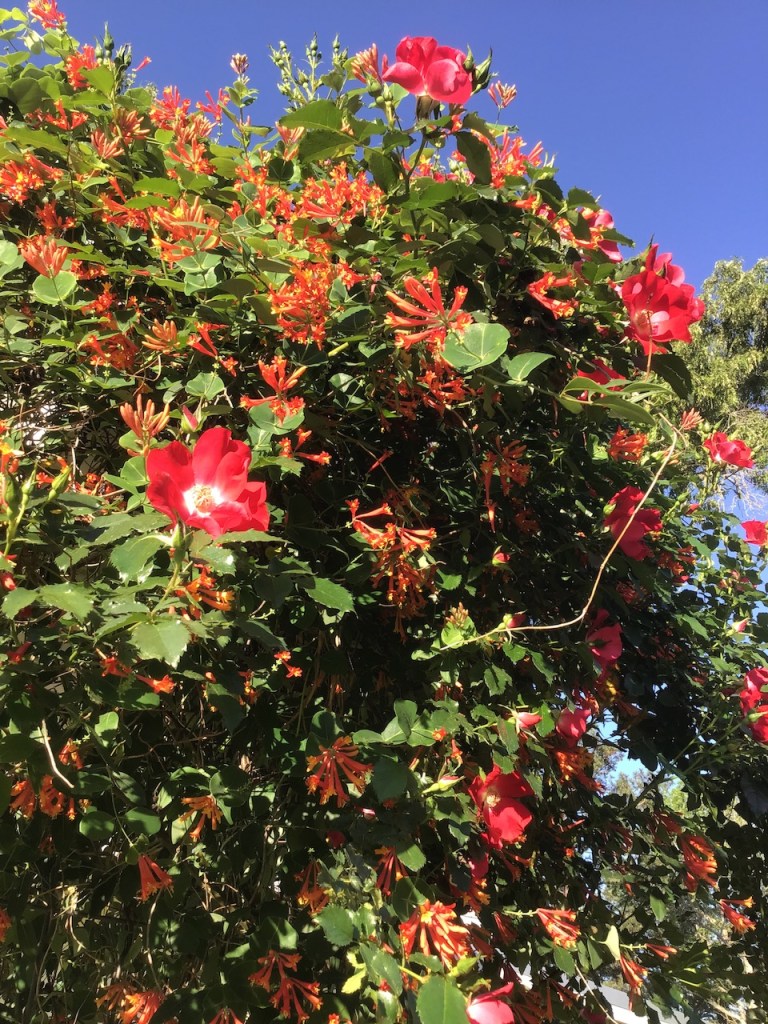
I’m so very pleased with the transition from cool-season coral honeysuckle blooms to the Dortmond rose takeover, lovely! I especially like the short spell they co-habitat.
The wattle fence I began with the best intentions is languishing due to too many other priorities. It has been a sheep deterrent at least, since the mamas and lambs have taken over the front yard. And even Shadow doesn’t dare stand in their way!
This is where the citrus will go, my new big project. I’m even considering throwing an avocado in there too. I know, very ambitious! But, I want to give some of the new methods a try and it seems like a good time. This side of the house is ideal, the house breaking the north wind and the heavy late afternoon sun. Plus, there’s the extra warmth accumulated in the walls of the house to help in cold snaps, along with the extra heating and draping methods that seem to be working for others.
Ooohhh, anticipation!
Just like the tomatoes and cucumbers coming so soon, right around the corner, and I can hardly wait. The last fermented cucumbers we used up a week ago, amazingly, and they were still crispy and flavorful. I plan to continue and expand my fermenting efforts this summer and fall. More herb pastes, more tea blends, more spice mixes.
The lambs are still doing fine, my how fast they grow.
Spring lambs on springs! 😆
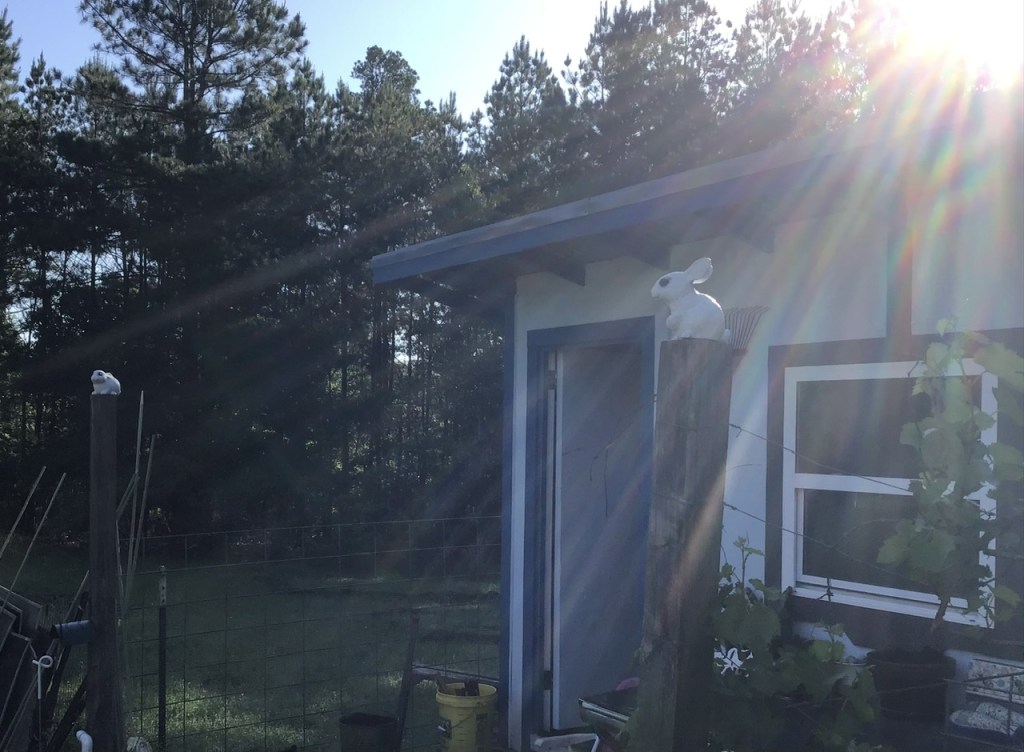
My garden mascots, two white rabbits.
And my single complaint—the spray continues to ruin our beautiful days.
Is this why we can so clearly see these colors, because we have an atmosphere saturated with reflective particulate matter?
Cool pic, or chem-filled haze?
“I’m no prophet Lord, I don’t know nature’s ways.” ‘Anticipation’ by Carly Simon