I wrote about Gavin’s book and gift of seeds recently, and now I’d like to share a bit about the recipes and his approach to gardening, food, cooking and life in general that I align with so much I can easily overlook our superficial differences–like we’re at nearly opposite ends of the gardening calendar, we’re decades apart in age, and I would normally never buy a vegetarian cookbook.
But as I already said, it’s much more than a cookbook. And I have too much respect for Gavin’s work to shun it just because it’s vegetarian! 😆
I’ve got a dozen pages marked of delicious-looking dishes I can’t wait to try. A number of dishes are already on our regular routine, like sourdough pancakes, heuvos rancheros, enchiladas with salsa verde and refried beans, and Greek salad (and we make it with homemade feta!)
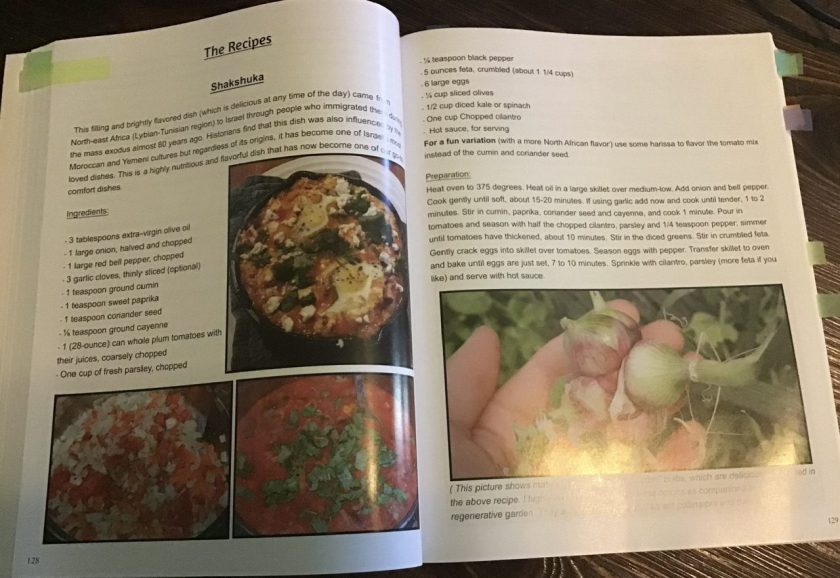
At the top of my ‘Must-Try’ List: Shakshuka. The name alone sounds alluring!
We do eat a lot of vegetables and we always have salad daily and I’ve gotten plenty of new ideas–combinations I hadn’t considered, like a zucchini salad with mint–I’m often wanting to use more mint, it grows like crazy here.
The recipes are very adventurous too, drawing from diverse cultures and culinary traditions–Ethiopia, Morocco, Bali, Mexico, Greece, Thailand –which I truly appreciate, because we tend to get stuck in a bit too much of a routine sometimes. When the garden produce is rolling in by the wheelbarrow, there’s not much time to get creative.
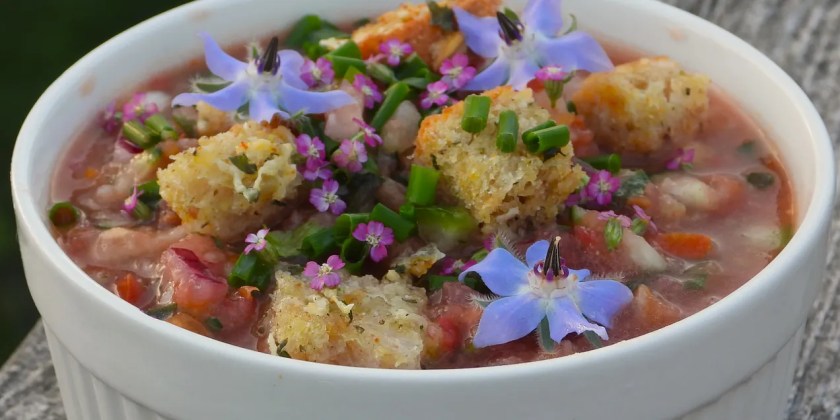
The lovely and edible Borage flower, used as a garnish in Gavin’s Gazpacho recipe on YT. (Photo credit: Kath-UK)
In fact, on the things that really matter, we agree completely.
Like on the importance of fermented dishes, and especially sauces, because the ones that are mass-produced are full of chemicals and highly processed garbage. It’s hard not to sound preachy, maybe even impossible, when telling folks how terrible their diet most likely is. But it’s the plain and simple truth.
I still go to the grocery store from time to time and I see what’s available and what’s in most folks’ carts and it’s pretty hard not to get judgy and to bite my tongue!
The difference a few dietary adjustments can make over time is really impressive–and it starts with naturally-grown fresh food.
Considering the vast majority of folks are outsourcing their health to Big Ag, Big Food and Big Pharma it’s not any wonder why our societies are collapsing under the weight of it all!
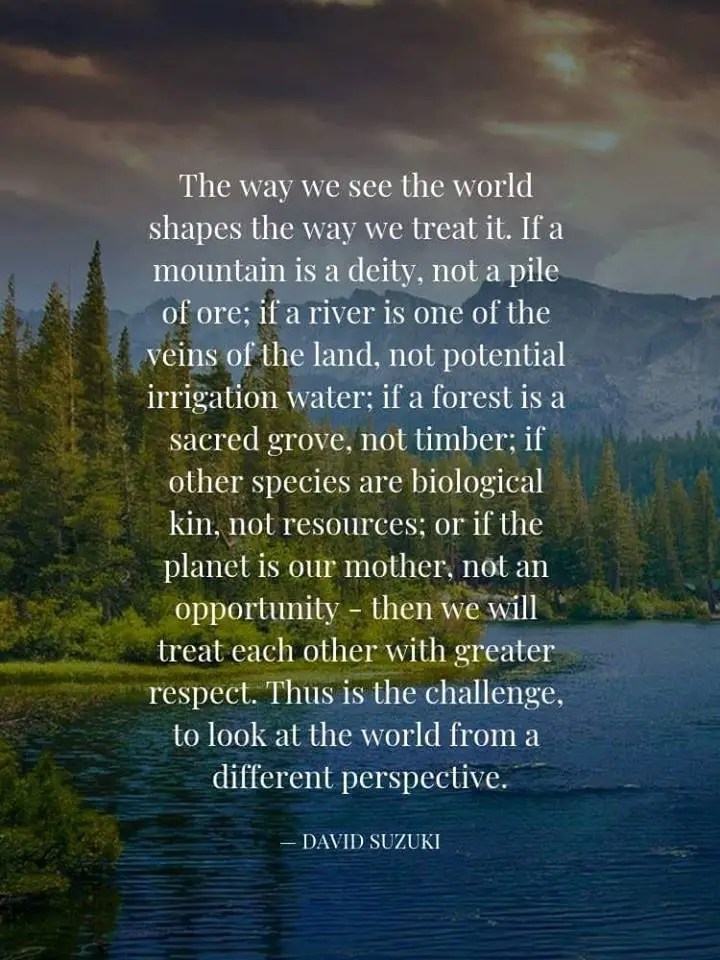
I’ve been enjoying goofing around with the free meme-maker ap using Gavin’s gorgeous photography and inspiring quotes. 😊
“In the past hundred years or so most people have forgotten about those ancient fermentation practices because of the advent of ‘instant gratification’ mass-produced products has allowed for entire generations of people to become completely dependent on corporations that supply them with the ‘food’ they need to survive. These ‘ultra-pasteurized’, pre-packaged, chemical-laden ‘food products’ are devoid of life, contain very little if any nutrients and are produced in ways that cause much damage to the planet’s ecosystems. Though eating prepackaged factory food (with unpronounceable ingredient lists) might be considered by some as ‘normal’ by today’s standards, it is certainly not a ‘norm’ that is conducive to longevity, sustainability or common sense.”
With thanks once again to Gavin, for his great many gifts, and for sharing them so graciously and generously. I’m already looking forward to his next book!
It’s Shoulder Season on the wee homestead, and by that I mean a few things.
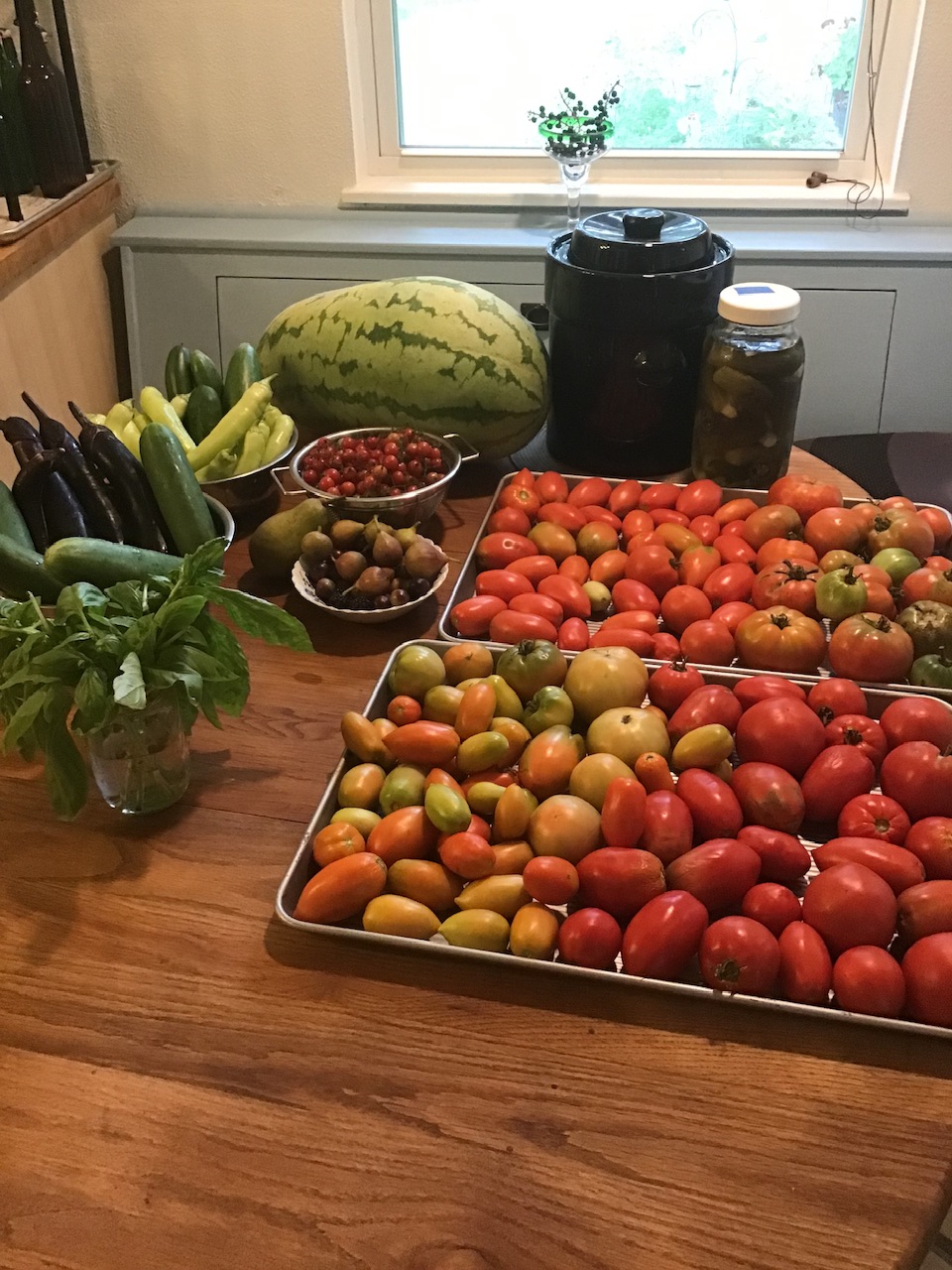
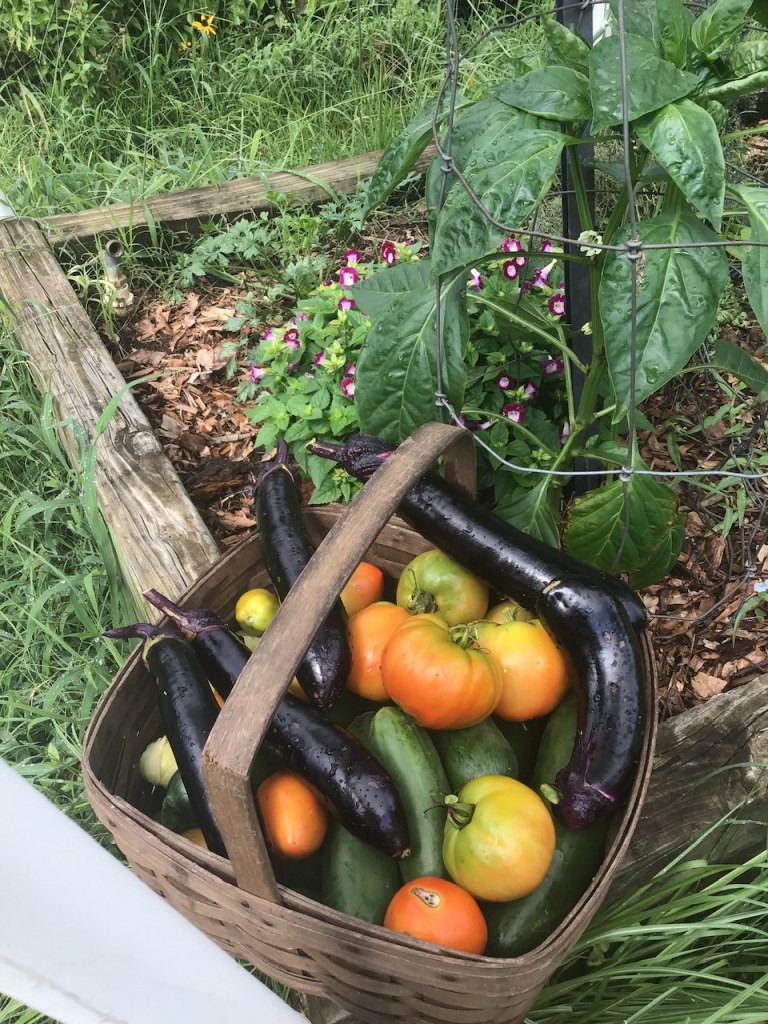
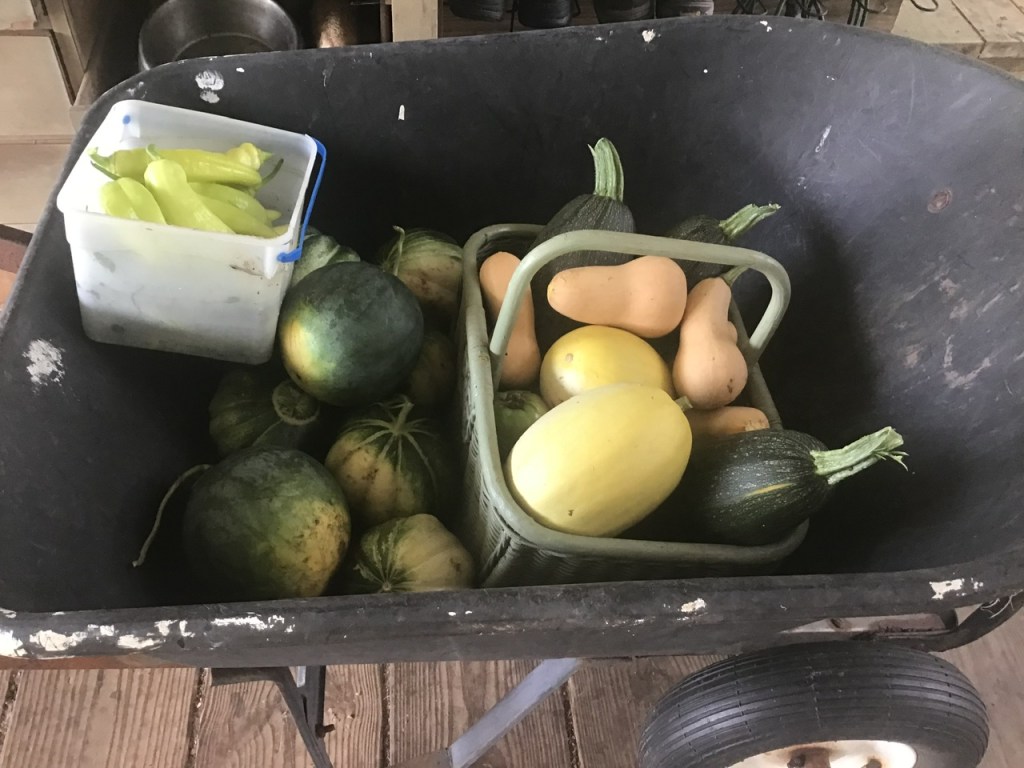
Tomatoes on their way out, eggplant just coming inAssorted melons and squashes
Shoulder season, for those who maybe new to the phrase, has a specific meaning in tourist trades, meaning between high season and low season. Savvy travelers and those who dislike crowds or who are just cheap or nearly broke try to travel in the shoulder season.
As far as I know it doesn’t have a parallel meaning in the gardening world.
But for me it does. It’s the time we move between seasons in the garden and since we garden all year, it happens twice, once in Swelter Season (now) and once in YoYo Season (formerly known as winter).
The key summer crops in the garden are either long gone–onions, garlic, crucifers, or mostly dead–tomatoes, squash, melons. And normally the cucumbers too, except those are, so far, successfully secession planted, with the new generation just coming up as the last one is dying. Good timing there, tiny bow to me!
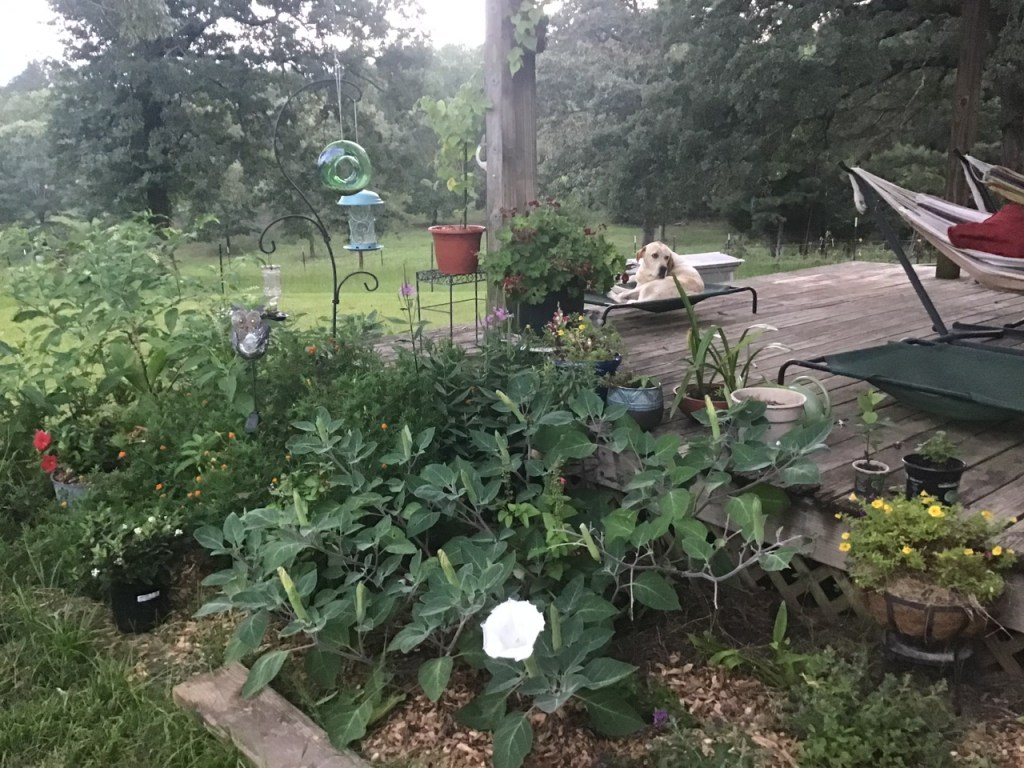
Old cucs on left, dying fast, on right a couple of tomatillos in the back, also dying and a volunteer datura, doing great.
New cucumber plants looking good, but will they produce?
And big bow to Handy Hubby for growing this 27 pound beauty!
A nice variety of melons and squashes, we are quite pleased.
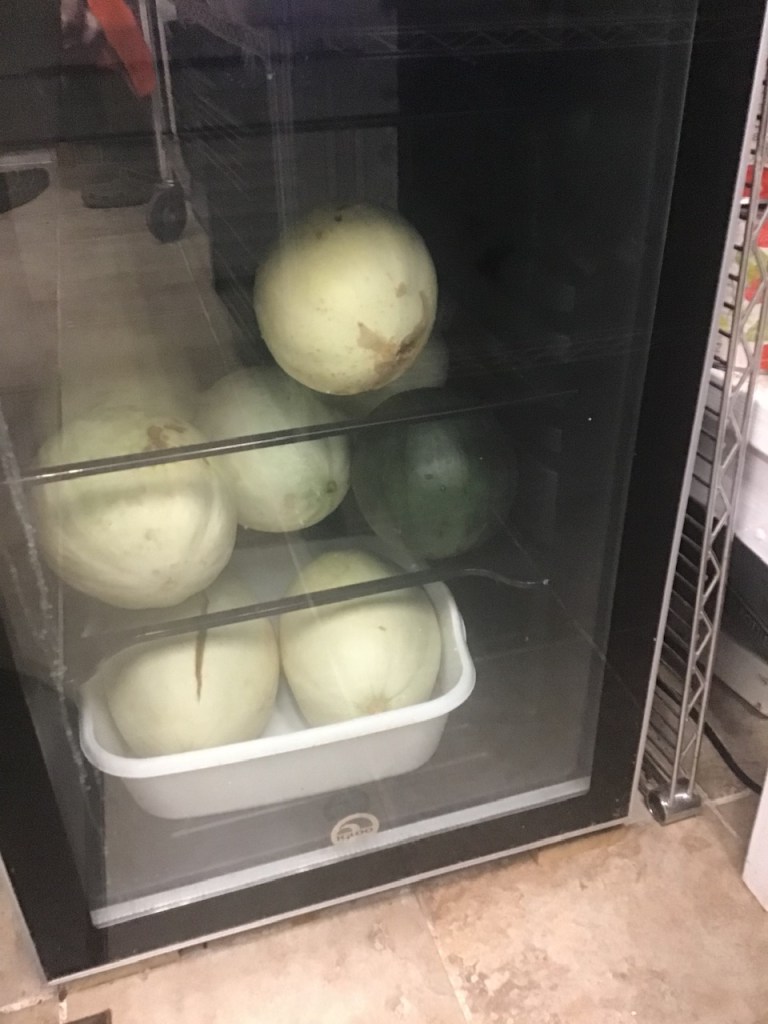
And still more, a mini-fridge of melon
And still more squash!
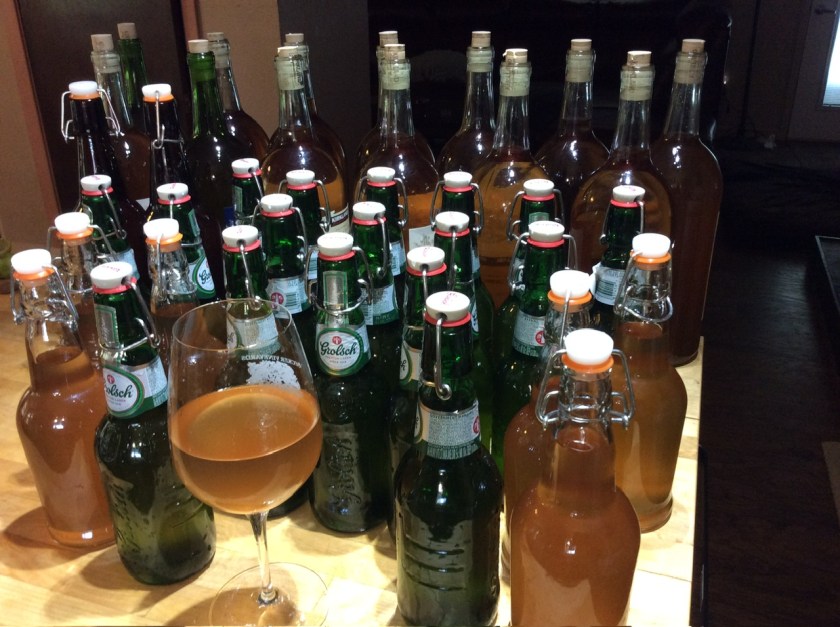
And cider.
While it could be Vacation Season for some more sane types, for us it’s the work of Shoulder Season. We keep the minimum that will survive our high heat for the next two months and baby most of them best we can.
But under lights inside the fall/winter garden is on its way. There’s already another crop of tomatoes coming up, as well as broccoli, cauliflower and arugula.
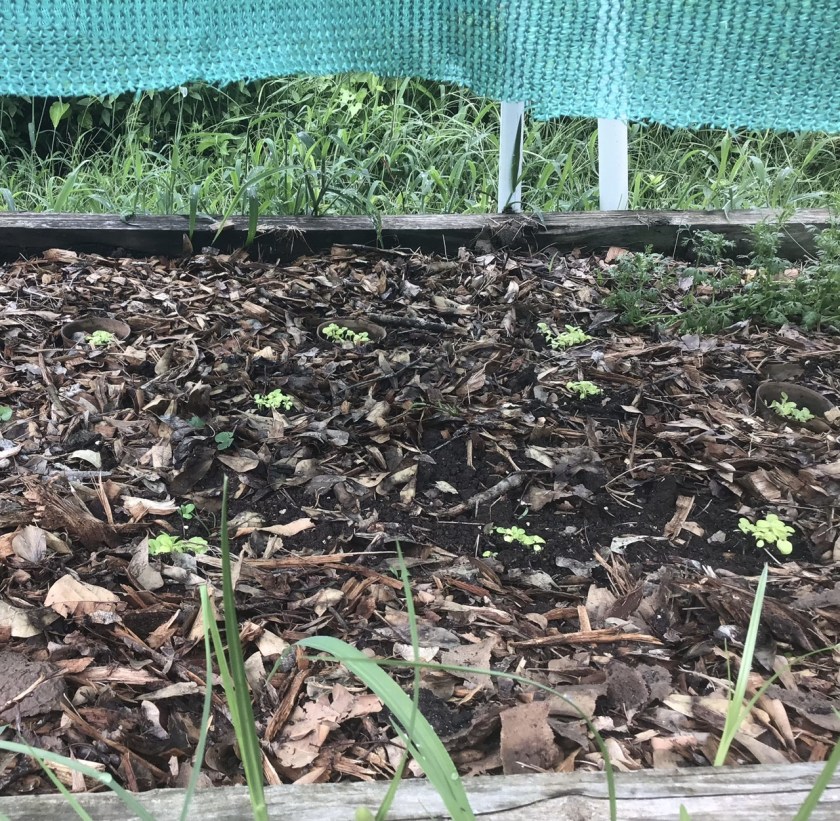
In the ‘babying’ bed I continue my lettuce experiment, starting romaine indoors under lights and moving under double shade cloth to transplant, then removing one level of shade cloth after a few days to adjust. They are still alive, yay!
Also in the ‘baby’ bed under shade cloth: some parsley barely hanging on, some dill trying to seed, 2 peppers, 2 dying tomatoes and lots of very happy basil.
Tomatoes, peppers and basil for marinara. And in back left is cured lamb.
There’s processing to be done still, the marinara stockpile is done thanks to Hubby, but there’s still ketchup and bar-b-que sauce. And we still call this a bad tomato year!
stockpiling marinara
Ah, the gifts and curses of relativity. And surplus.
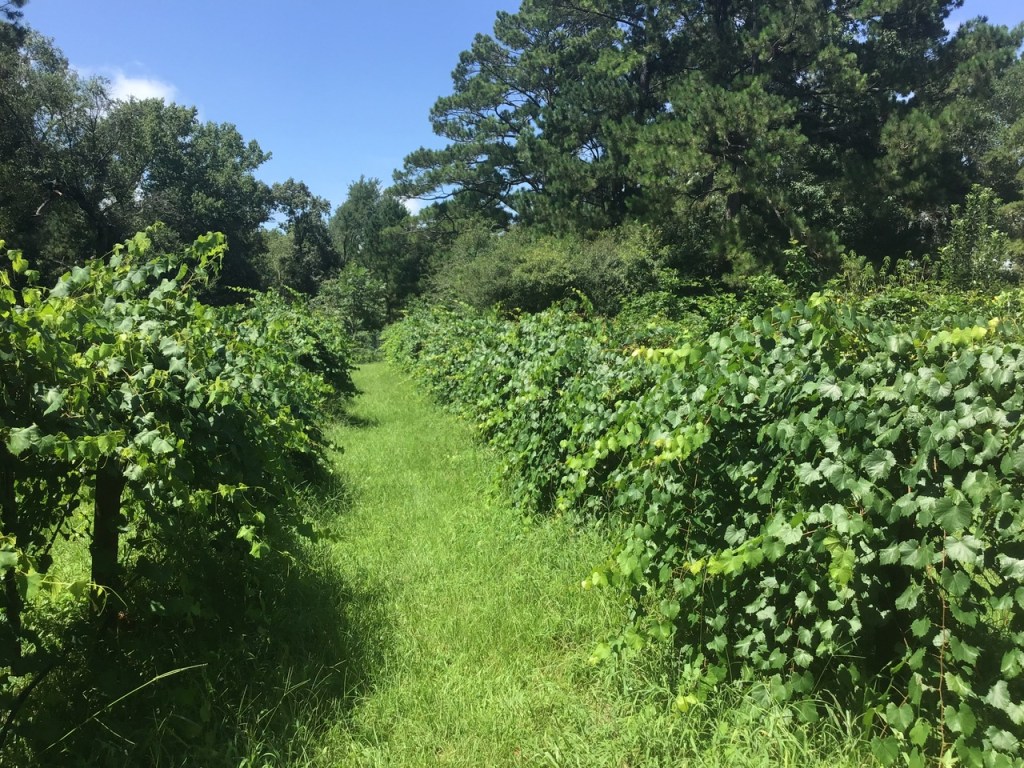
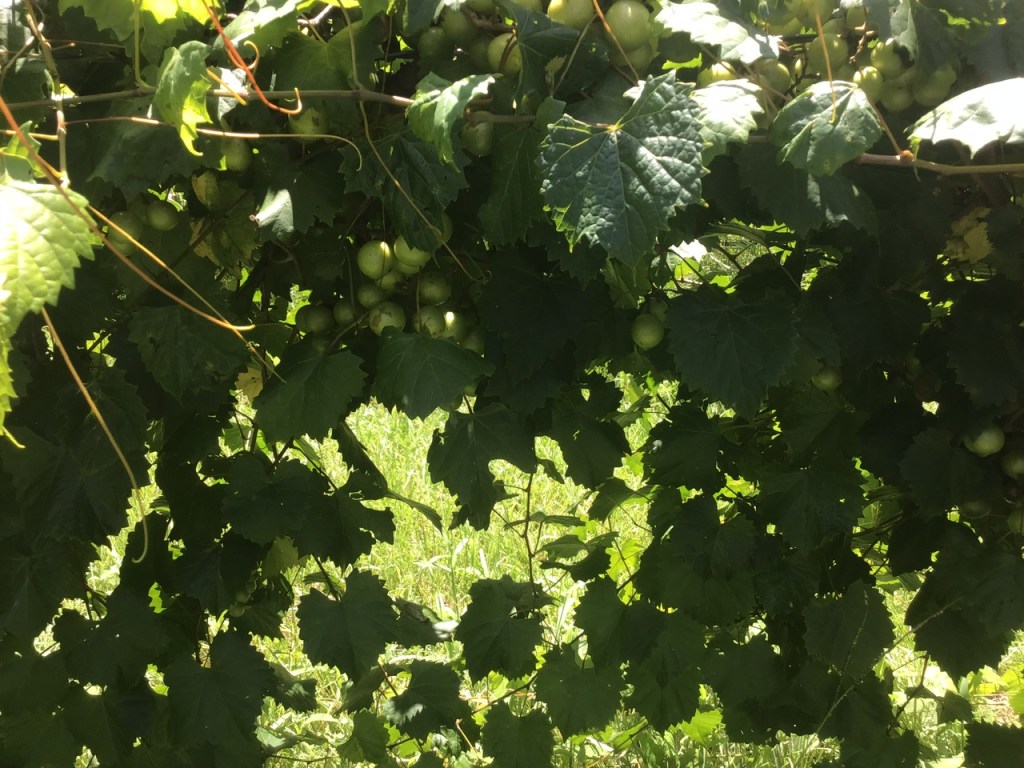
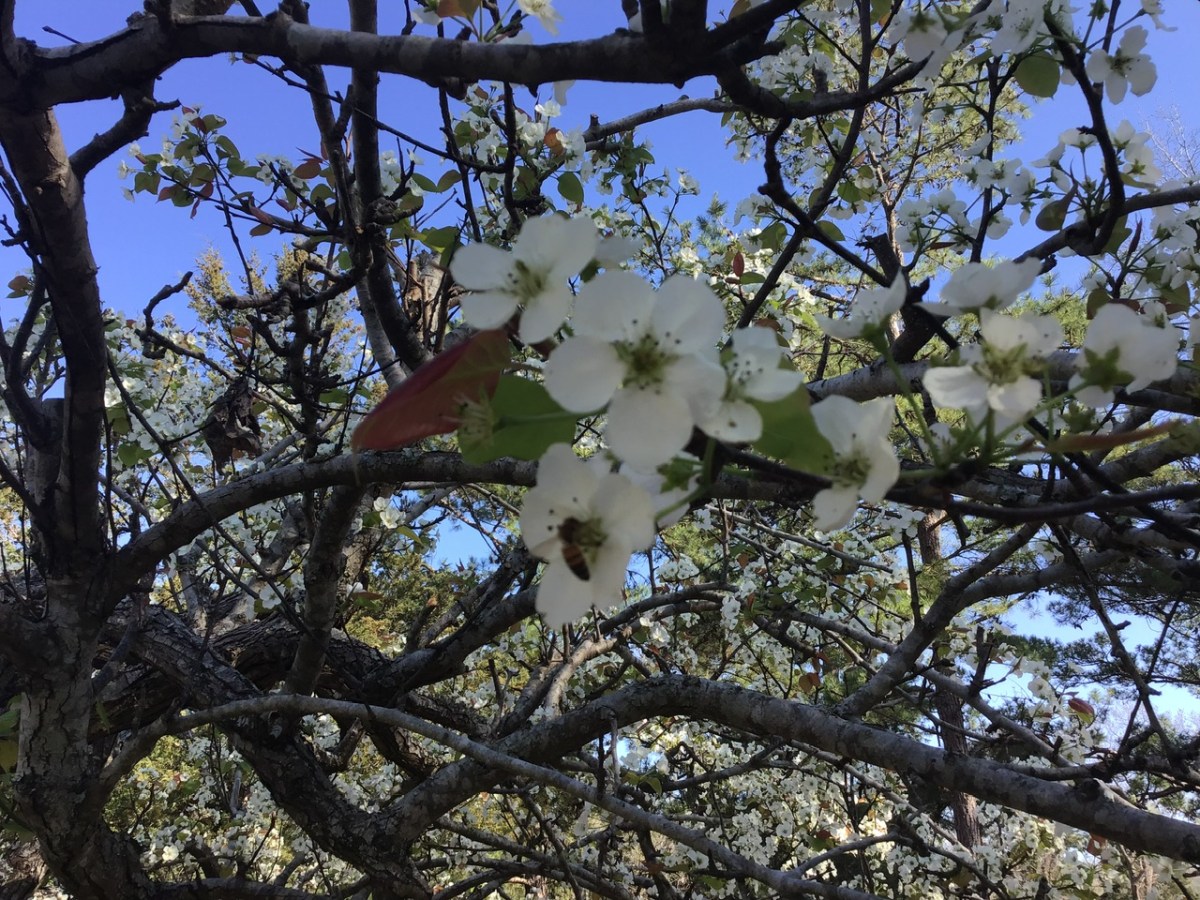
The pears are looking promising, and the grapes–which will be the next big project–wine and cider-making season. Blackberries and pears are our easiest fruits here; everything else seems to struggle. Though we have had years of good figs, and some neighbors still do. The grapes are looking good too, but there’s no guarantee.
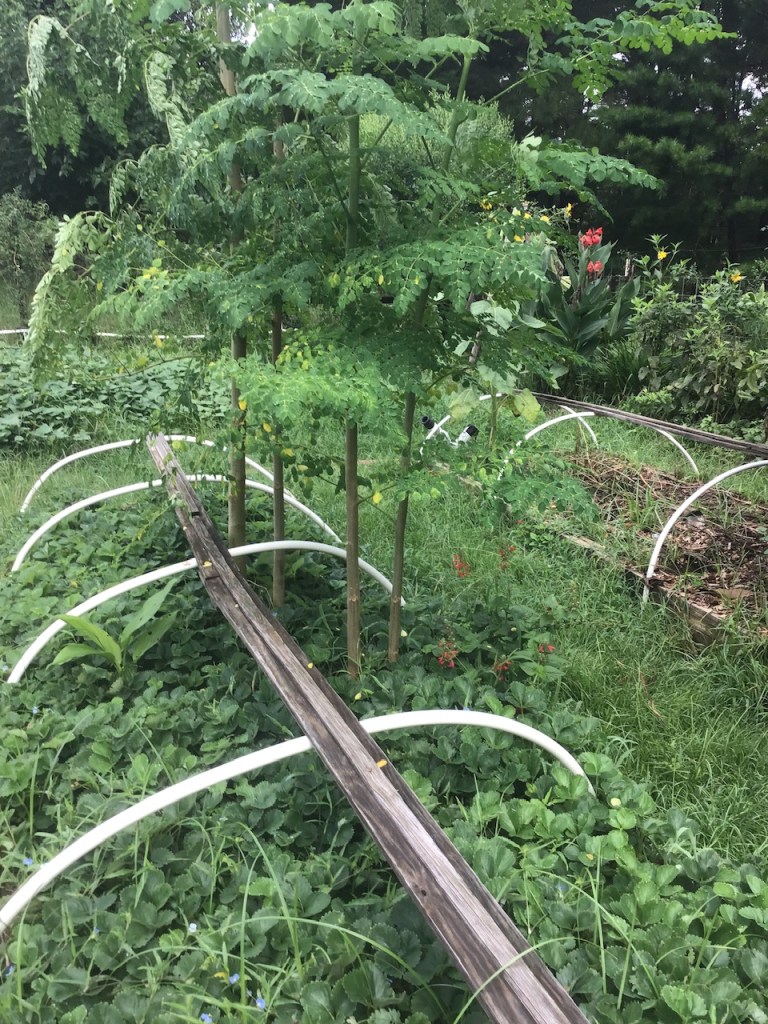
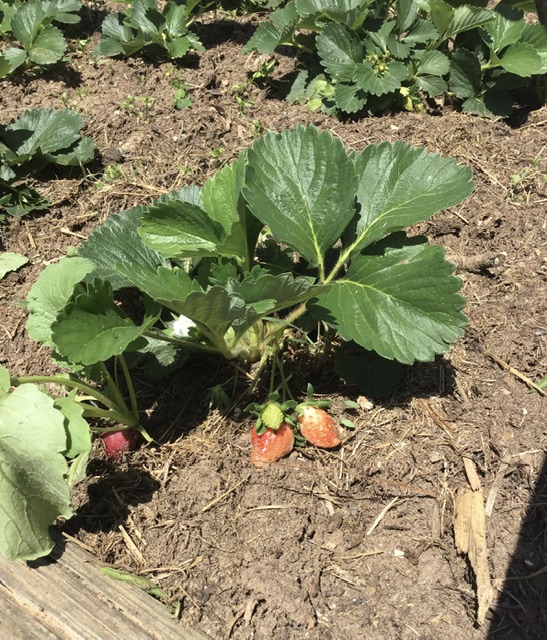
And I think I finally got the trick for strawberries. It seems most everything that is most delicious is high-maintenance. What can -we do, if we like high maintenance produce but to contend with the high costs of creating them?
Many years of failed strawberries, but this year was a great success in comparison. Now the runners are going crazy and taking over this bed, so next year promises to be better still.
I’m planning for more low-maintenance in future, but those might be high hopes.
Because, my choice would be to spend my dwindling number of pain-free hours working with the flowers!
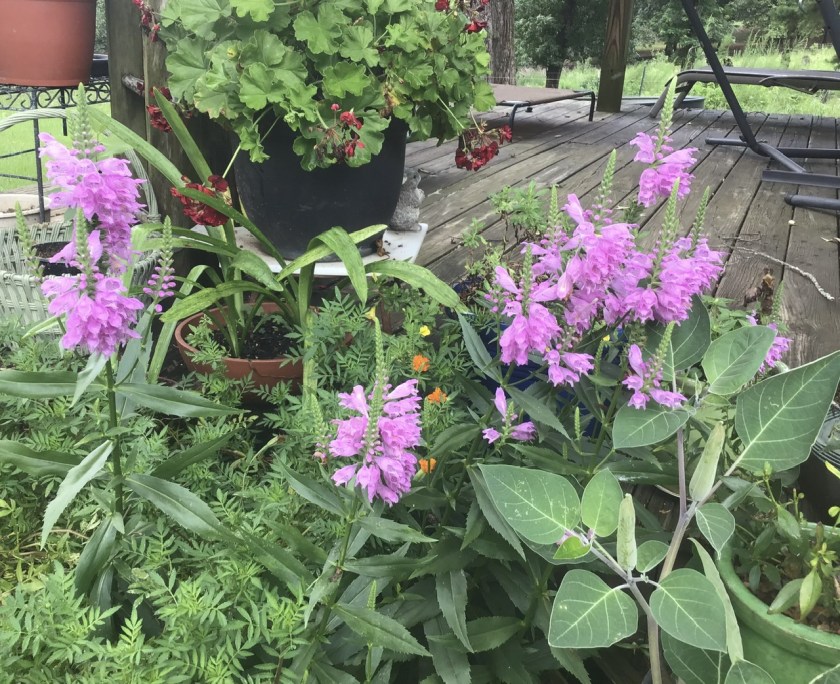
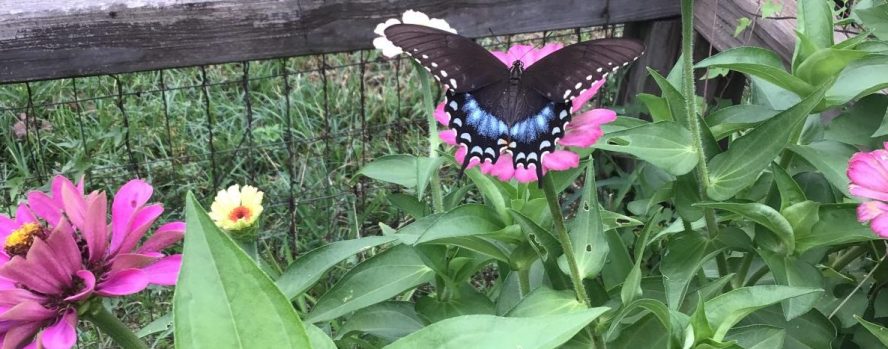
I’ve seen a few butterflies and bees on the pink ‘Obedience plant’, such a welcome sight!
Which brings up my other meaning for Shoulder Season. So much shoulder pain! And I am not good at staying stationary, it drives me nuts actually. So it’s between physical anquish, or mental, and I do far better with the former.
I’ve been planting more flowersAnd trying to attract the birds and the bees
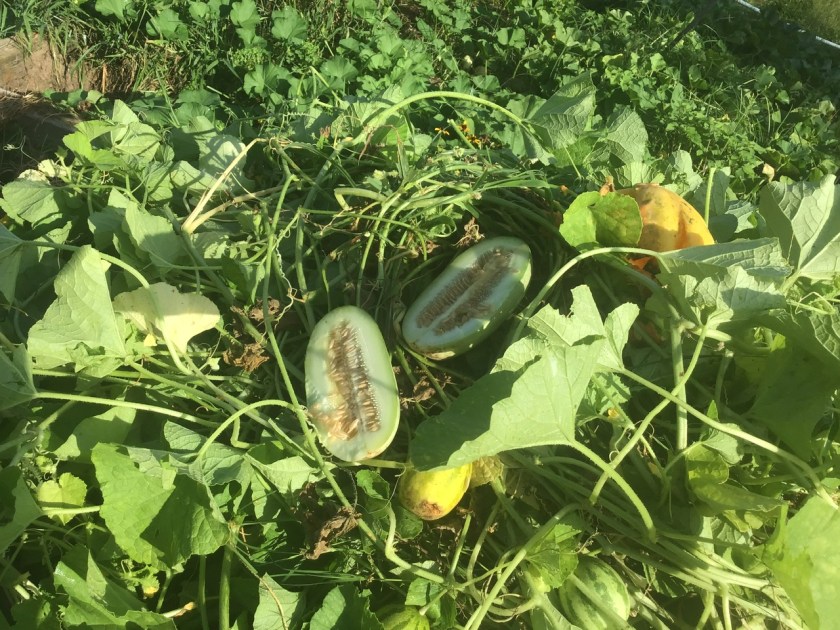
It’s as unwelcome a kinked, knotted, crippling invasion as this mystery fruit I posted about last year. I unknowingly caused quite a crisis in the garden and lost almost all the melons I planted.
What is this imposter which choked out all my melons?!
Just when I was insisting to Hubby we need to be thinking about reducing our garden plots in order to reduce our workload and water usage, I stand corrected. The orchard squash didn’t produce well at all, for some unknown reason; the garden melons were choked out by the wild cucumber; so without the third space we’d have no watermelons or honeydews, which would mean a mostly melonless summer after lots of work and wait, as the main garden produced about half a dozen sub-par cantaloupe.
A sweet, cold watermelon is the best morale booster in the hot, humid Texas summer garden jungle!
Two wheelbarrows full of vines and fruit the pigs don’t even like.
Wild cucumber vs melons and the melons lost bad. I have still not been able to figure out what these things are, which I brought into the garden under false pretenses. I have heard suggested they may be lemon cucumbers or mouse melons, but they are not the right size, shape or color for either of those.
I really get the frustration of invasive species now. I realize I’ve been a bit cavalier on that front in the past, for good reason, but I have definitely been humbled this time as these bitter, seedy imposters are still popping up everywhere.
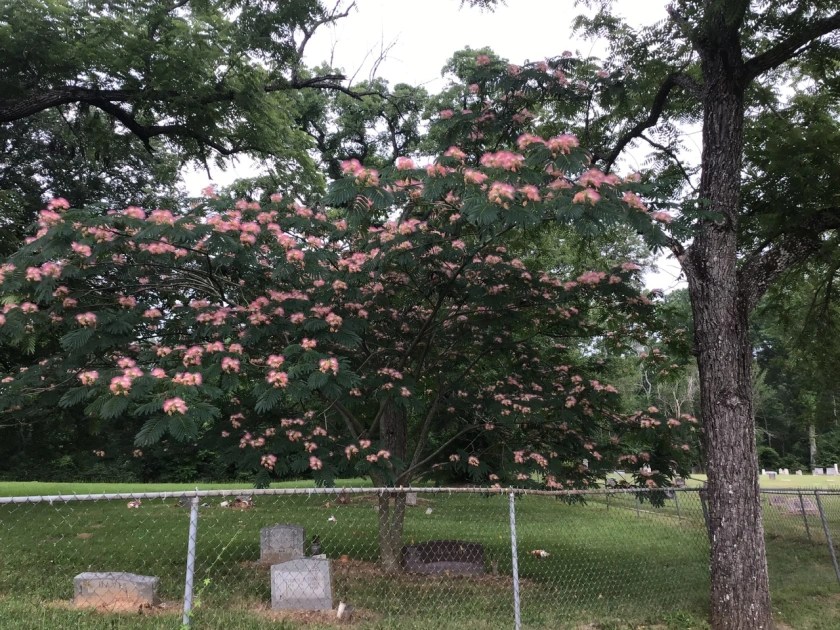
Please, give me an invasion of the supposedy invasive Mimosa trees, and I’d be thrilled!
You have my permission to invade my gorgeous Mimosa!
The plants that thrive here in the long high heat and humidity are so impressive, even when invasive, but it helps my morale considerably to consider the non-invasive ones as often as possible.
A couple of young zuccini with the sweet potatoesA mini-jungle of cherry tomatoes growing under the elderberry
The sweet potatoes are almost effortless. Once they get established and as long as they get a good head start over the bindweed (another ‘invasive’ relative) they are pretty reliable. Eggplant and okra are others, and we’re learning to like eggplant. Maybe even a lot.
Eggplant, peppers, tomatoes, green beans and tonnato sauce over rice noodles, delish!Eggplant, basil ferment in the back and bread and muffins baked in the toaster oven outside, because it’s too hot to bake inside.
The bountiful basil takes center stage as the parsley, dill and cilantro take early retirement and don’t even bother to seed, it’s so damn hot.
Whether and which tomatoes will survive, or thrive, from one year to another is anyone’s guess.
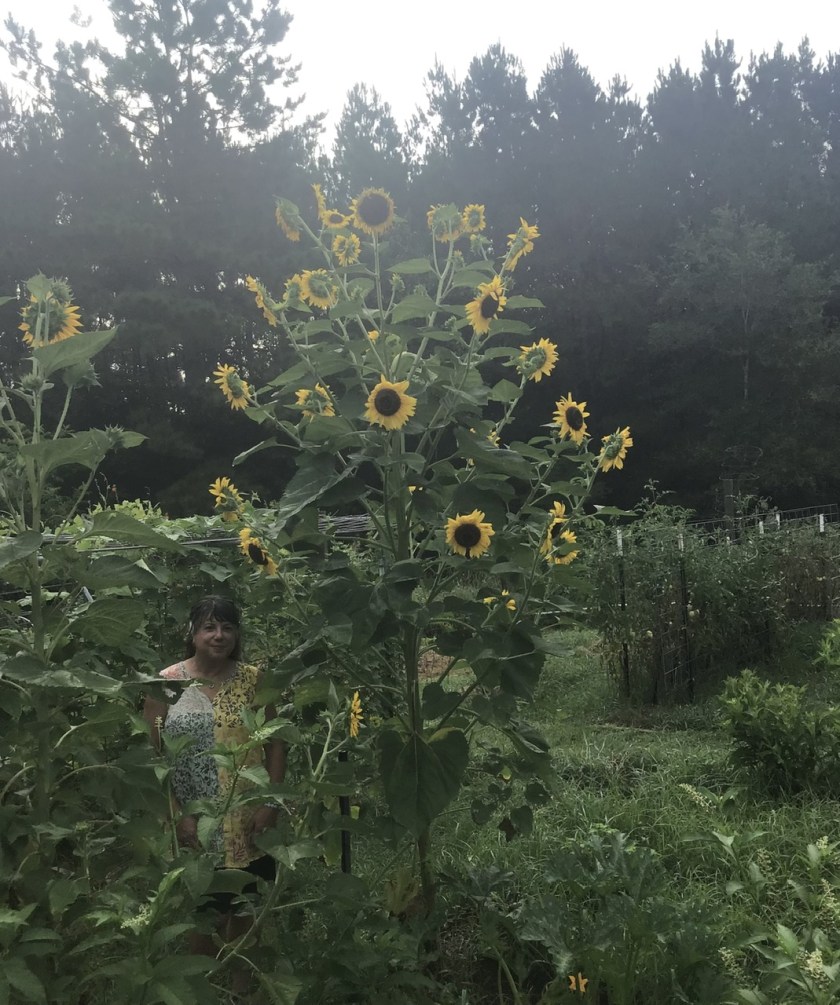
Gavin’s seeds, the Scarlet Runnerbean (barely) and Black Hopi Sunflower, are hanging on still, very impressive.
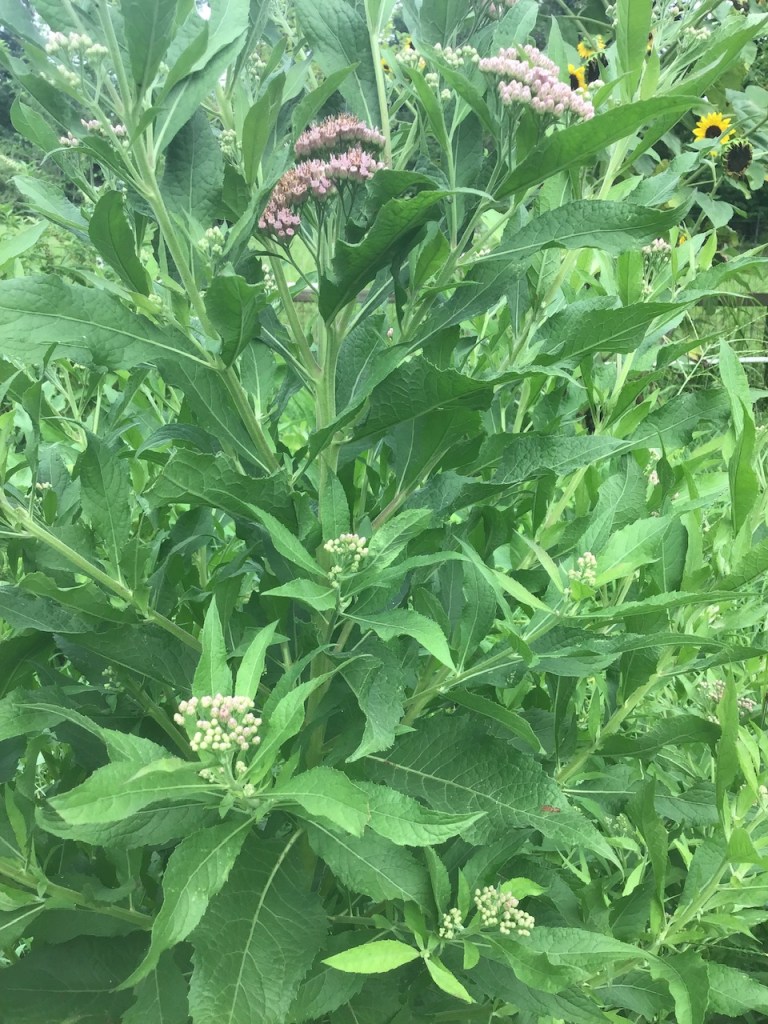
The black Hopi sunflower behind a mystery weed that smells medicinal. Any idea what it is, anyone?
The two out of three citrus planted last spring are doing well–they look healthy and their growth has more than doubled since spring.
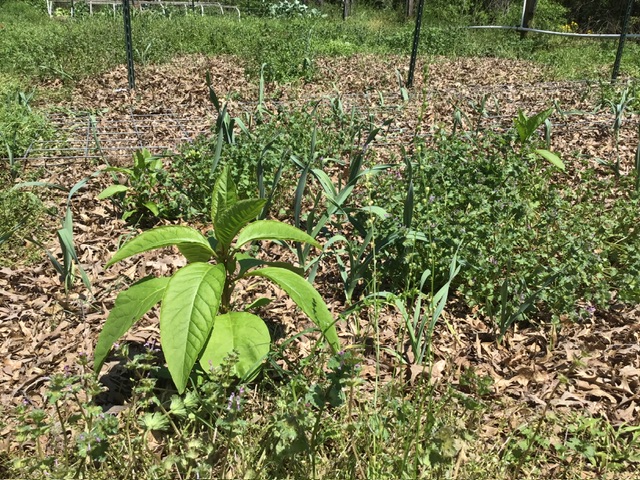
The poke weed, the datura, don’t get me started, such beautiful and amazing plants!
But, the mystery weeds, what are these?
What is it?Kinda pretty, very hardy, smells medicinal.Inquiring minds want to know!
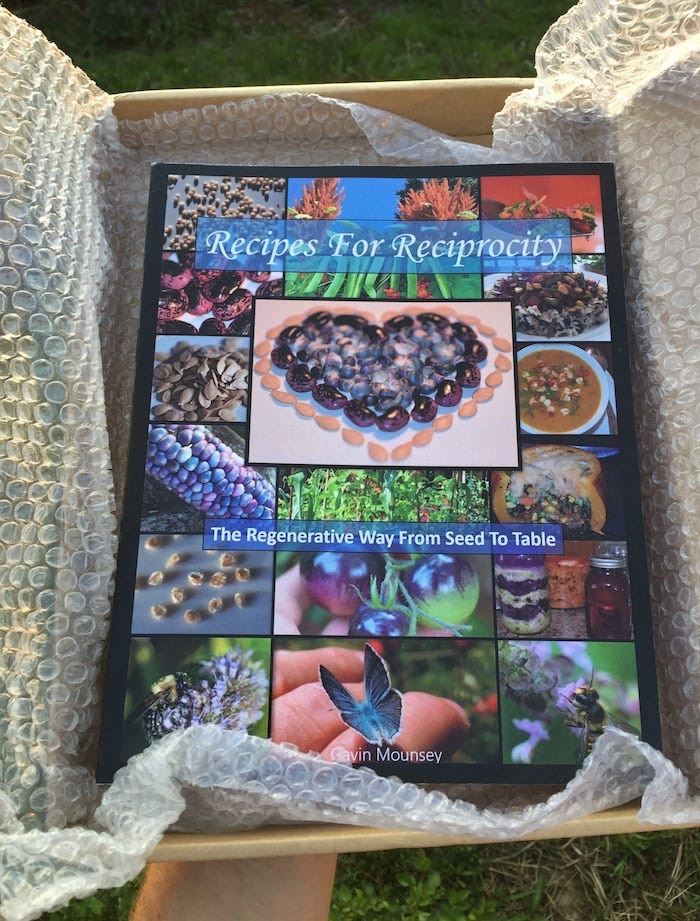
I’ve had a bit of challenge trying to simply label Gavin Mounsey’s book, “Recipes For Reciprocity: The Regnerative Way From Seed to Table” because it’s so much more than a cookbook. I have a great many cookbooks and my favorite type are what we might call ‘narrative cookbooks’ (though there may be an official sub-category name that I don’t know)–these are the kind where there’s a very present narrator telling you stories about the foods, and the places, and the people associated with the recipes and the author’s life. I might be inspired enough to write one of these myself someday.
Gavin’s book is not that, yet it is even more still. Rather than try to say it better myself, and fail, here’s an excellent description from the back cover: “This book is a magnificent achievement. It can help you learn pracical ways to grow and cook mouthwatering food-as-medicine, and build deeper and stronger community, but it is so much more than that. Gavin has written a love letter to humanity and the living world and a manifesto for workable hope, all with an unflinching honesty about the crises we face. Gavin uses the nuts and bolts skills in the garden and kitchen as a launchpad to reimagine our place in the world, and the result is a solid foundation in the chaos. His hope and love are infectious, and the applied knowledge shared in his book is encyclopedic. I highly recommend it to you.” ~ Jason Padyorac
Along with the two books, one I gave to a friend, Gavin sent lots of seeds, some I’m already growing, others I can’t wait to try.
Scarlet Runner Bean in early summer, now dead.
Full Texas sun, not a happy plant.Bit of afternoon cover and is looking good.
So far I’ve planted the Scarlet Runner Beans and the Black Hopi Sunflowers.
Gavin:
“These beans are among my all time favorites for their versatility in the kitchen and beauty as well as productivity in the garden. They are an amazing companion plant due to the plant’s roots having the ability to associate with rhizobia (nitrogen fixing bacteria) which not only allows this plant to fertilize itself by pulling plant food from the air, it also means this plant can help fertilize its meighboring plants with excess nitrogen. On top of that amazing benefit the scarlet runner bean has beautiful red flowers that attract pollinators such as ruby-throated hummingbirds and bumblebees.”
It is amazing to see how many fantastic plants can flourish in such varied climates. Because Gavin is in Canada and I’m in Texas I didn’t expect to find so many parallels in what we plant in our gardens, though certainly the timing and special needs vary quite a bit. The scarlet runner beans I’ve planted in full sun are perishing. But the others I planted which is shaded during the intense mid-day heat are hanging on. They’ve not produced yet, but I’m still hopeful and I like them anyway. I’m sure if there is any production and I can save the seed, it will acclimate to our area. Unfortunately, after a promising spring, the bumblebees and butterflies have been depressingly scarce in the garden lately.
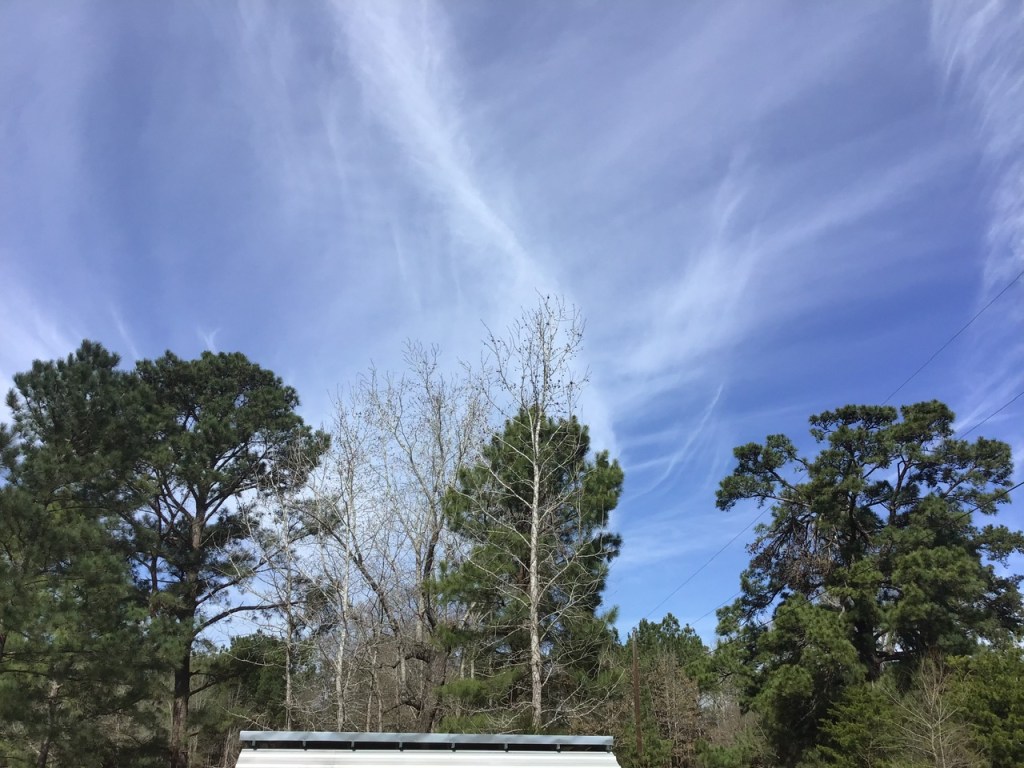
Gorgeous! Ugly pity for the chem-sky.
The Black Hopi sunflower has been the piece de resistance. It’s gorgeous and taller and fuller than any I’ve ever seen. I had several planted in several spots, and most of them got damaged in the high-wind storms we’ve had. But not this magnificent giant!
Gavin’s reciprocity in action is so inspiring, which is why I wanted to spend a couple of posts sharing about his book. Regular readers will probably remember I’ve shared some other of his work here in the past, especially in our Herbal Explorations pages, which come from his Substack newsletter.
In another post I’ll dive into a few of the recipes, but for now I’d like to expand on a few quotes which so align with my own learning and experience growing a garden and cooking seasonally from scratch. It has absolutely been the most rewarding journey of my life, with plenty of hope remaining for more of the same in the future.
From the section: Reciprocity in Action “Choosing to give our attention to nature is also a form of giving back. Observing and paying attention to the cycles and living systems in nature involves giving our time and our thoughts. When we closely observe nature we inevitably come to perceive countless expressions of beauty through our perceptions of the form, color, sound, scent, textures, tastes and relationships that are all around us. This leads us to caring, feeling gratitude for and feeling compelled to protect the amazing gifts nature shares with us. From the place of gratitude we engage in one of the most meaningful and powerful acts of reciprocity. We open our hearts, we feel content . . . we practice self-restraint, we choose to live more consciously and aware of how our life choices impact the living planet that sustains us and showers us with endless gifts.”
Gavin most certainly has an eye for beauty, his photography is stunning.
I know how daunting it can seem to dive into a new hobby like gardening, or even cooking nowadays, but there’s so many smaller and easier things that take so little effort or knowledge that might be just the momentum for many to kickstart a healthier life and society.
Just observing. I couldn’t agree more. It really does start that small and simple and while I have read loads of books on gardening and cooking and many adjacent subjects, I’ve learned far more from observing. Taking notes helps too, but considering how bad I am at that, it must not be totally necessary.
The other few very simple things that require no gardening and very little cooking is compost and ferments, both which Gavin discusses in the book.
Why those two, you might be wondering? Because in my experience, composting makes you far more conscious of waste, and fermenting shifts your attention to the weather and seasons. Both of these processes have enriched my life and health and outlook far more than I could’ve ever imagined.
A window sill of herbs would be enough to use up the compost produced by the average small household. Or donate it to a friend who gardens if you have such a black thumb or really no space. And who knows, maybe she’ll reciprocate with a zuccinni or two.
I had no idea what eating seasonally meant. Really. Until I went to the farmer’s markets in France on a high school exchange program, I had zero clue produce even had seasons, and considering how much is grown indoors today, that’s probably become more normalized than ever.
Considering I grew up eating like the vast majority of Americans–fast, frozen, canned, bagged–I know what easy looks like, and this is pretty darn easy. The shift really is more in attitude and attention.
Now I long for cucumber season as I long for tomato season as I long for melon season as I long for radish and lettuce season. It’s become that nuanced and I love it. Sure, there’s some cross-over and we can and ferment to save the bounty. But that limited time window of bounty becomes a season within a season, with all that entails–a change in primary food and focus–all with their unique gifts and challenges.
Surplus requires work, work requires rest and creates reward. 😊
The ebb and flow of surplus and scarcity becomes natural again, each bringing its own unique gifts and challenges.
My influences growing up–that of media, education, environment–worked synergistically as detachment mechanism. Nature was that which we were being systematically detached from, and that trend has only exaccerbated, to the growing dis-ease of ourselves and our environment.
“Within the last century, healthy, natural, organic food has been made more difficult to produce because of the chemical pollution, at first, and genetic pollution, more recently. A handful of companies have spread these toxins across our planet diverting US$ 400 billion of public money to subsidize their high cost chemical commodities to make them artificially ‘cheap’. The costs of this ‘cheap’ food are astronomical in terms of the health of people, the ecological damge it causes and its exploitation of farmers. If the true costs of chemical food were taken into account it would be unaffordable. Insead of subsidizing chemical food and creating epidemics of food-related diseases, public money, used for nourishment and the protection of public health through organic food, would save us billions in health care. Denying people their right to healthy, poison-free food by manipulating laws, policy, science and the use of public money to impose a non-sustainable, unhealthy food is food-dictatorship.”
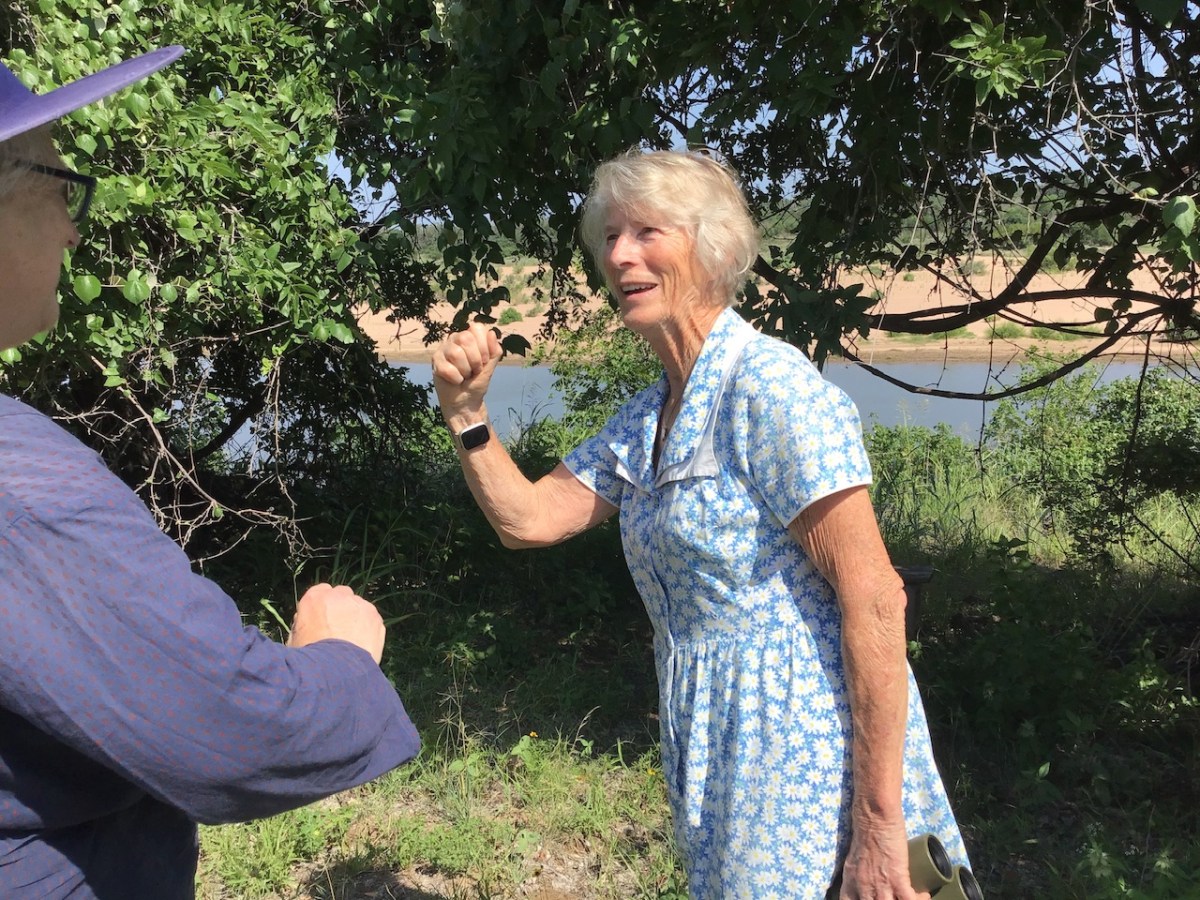
From Kenya to Llano, Berit pictured with Kath, visiting from the UK
Hunters often get a bad rap and it’s not always for good reason. I had a chance to learn something about this on a recent trip to the Texas Hill Country where I was led to question the difference between a hunter and a poacher.
Before assuming this is a niche topic and of little interest to the vast majority of folks whom are neither hunters nor poachers, consider it’s a matter of philosophy as well, along with colonialism, globalism, human nature and modern life.
A wall of hunting ‘trophies’ not uncommon in Texas homes.
Mostly they have much in common, the hunter and the poacher. There is a similar skillset, clearly, but one I know nothing about, so I’ll leave that to the hobbyists and professionals. As strictly an occassional observer I imagine it to require more patience than I’ve ever mustered, more tenacity than most and more courage than the vast majority.
We might say the poacher is lawless and greedy and violent, and in some cases that may well be true. It may also be true that some hunters share such qualities as well.
But again, I’m coming to this as a complete outsider to their world, strictly an observer, and occasionally a beneficiary.
The differences between the hunter and the poacher must lie somewhere between intrepid and genteel, I figure. And so it is most apropos that I should think of it with a hunter who fits the bill for both adjectives.
Our hunter in question, Berit, at her home in Llano, Texas
I’d never have taken this fair, mild-mannered, small and slender woman as a big game hunter, that’s for sure, and I suspect that made her something of an attraction at her home in Kenya, kind of like a pretty little sparrow among bulls. Though looking at the full and adventurous life she’s led, we mustn’t think a sparrow at anyone’s mercy.
A beautiful display of African artefacts collected during their time there.
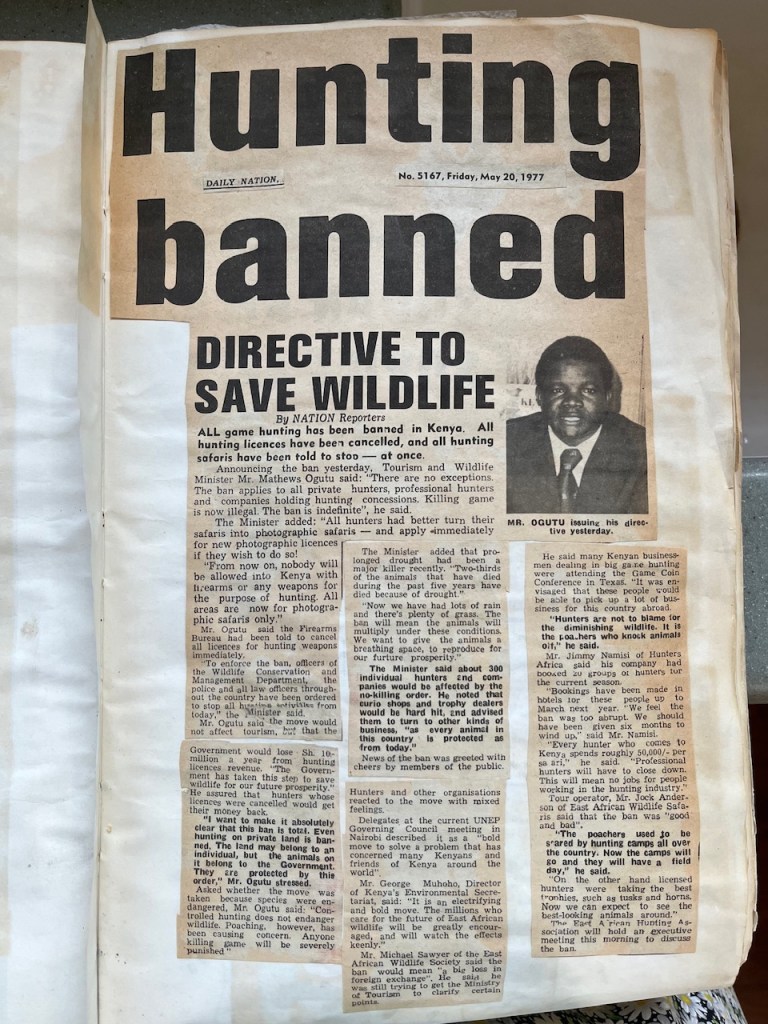
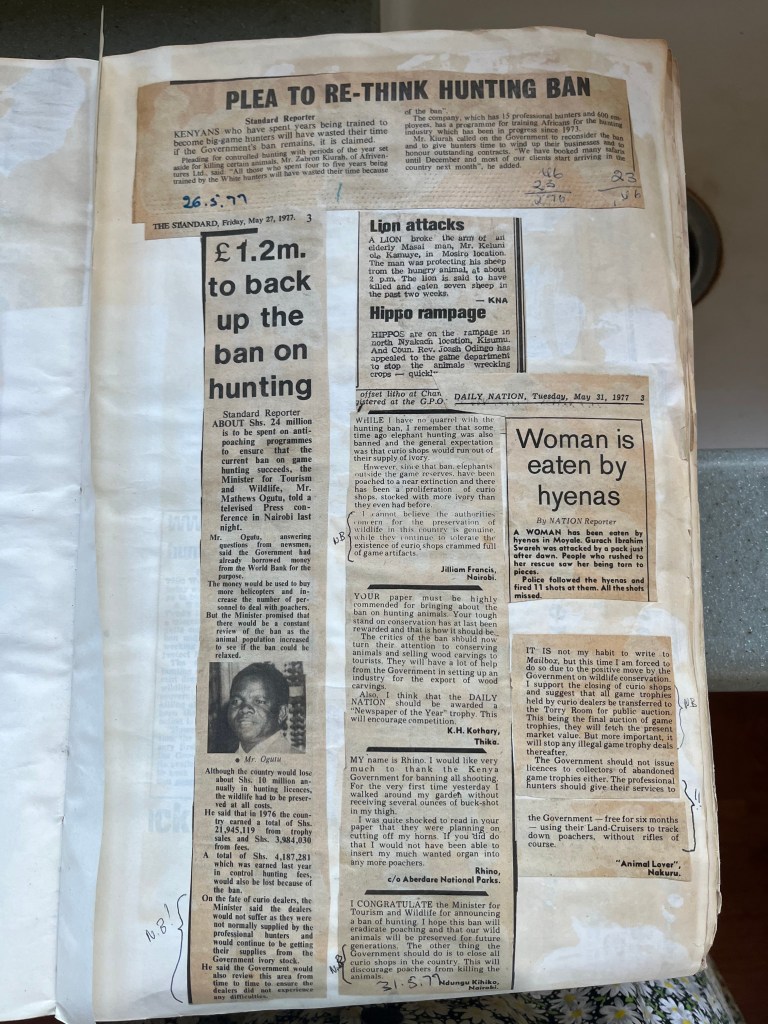
I met her with her second husband, an avid big game hunter, but her first husband was a professional one. They had a business together leading safaris until the laws were changed in an instant, hunting banned by the government, their livelihood lost.
Neither were Americans, but he had a prospect in Texas. So, with young children in tow, they moved to the Hill Country, to Llano, and started anew.
That was in 1977. It is still illegal to hunt in Kenya.
What’s more interesting, Kenya has remained on the fast track ever since, to full-tilt modernization. They have been an international fore-runner for all the Global Village United Nations WEF grand schemes for their ideal Future: ESG scores, vaccines, digital IDs, carbon credits.
That’s the great gift of compliance. Or, as the old adage goes, “Give the devil a finger . . .”
“Esc’s analysis, backed by meticulous documentation, sets the stage for understanding a system already operational, where resistance is economically suicidal and socially ostracized. Esc details how development programs in nations like Kenya test governance technologies—digital IDs, carbon credits—later exported to the West, ensuring global compliance under the guise of progress. The Earth Charter, as esc notes, serves as a global constitution, subordinating individual rights to expert-defined collective responsibilities, a theme echoed in The Invisible Empire’s critique of sustainability metrics overriding democratic will. We need to recognize this system before the window for democratic resistance closes, as each institutional capture—from ESG compliance to AI-driven surveillance—tightens the web.” The Complete Architecture – by esc
“For 130 years, a coordinated network of institutions has been systematically replicating the same control structure across every domain of human life – from healthcare to education, from banking to environmental policy. This structure, originally perfected in British banking, creates the appearance of local autonomy while concentrating ultimate decision-making power at higher levels run by credentialed experts. The breakthrough came when science claimed moral authority over all aspects of human experience through the 1986 Venice Declaration, positioning scientific expertise not just as informing ethical decisions, but as the source of ethics itself. This created the intellectual foundation for what we now see operational: a system where questioning expert consensus isn’t just wrong – it’s scientifically illiterate, ethically irresponsible, and potentially pathological.”
How close is your country’s hunting policy to Kenya’s? Is hunting policy about creating the lines between hunter and poacher, or obscuring them? Because, if everything is forbidden except to a tiny few, aren’t we pretty much all destined to become poachers?
“And the pity is that it will do nothing for the wildlife, controlled licensed hunting has never been a threat to wildlife. When elephant hunting was closed a few years ago, I wrote to the East African Standard and pointed out that poaching was the problem, not licensed hunting, and that if poaching were not stopped, the elephants would disappear anyway, whether licensed hunting were allowed or not. Unfortunately I have been proved right, and since that time the elephants have been exterminated all over large areas of Kenya. For this licensed hunting can in no way be blames, as legal hunting of elephants was closed.”
Finn, Berit’s husband
Should hunting be allowed in Kenya? | davidlansing.com
“When I was in Kenya a few years ago I stayed on the edge of the plateau overlooking the Mara. About a mile away one night, a leopard broke into a Maasai boma and killed a cow. The game officials came by two days later, photographed the pug marks on the ground and the carcasses, payed the elder a pittance for his loss, reminded them that they were forbidden to kill the leopard, and disappeared. A couple of nights later, it happened again. So they staked out a goat and speared the leopard to death and buried him. That same leopard could have brought in tens of thousands of dollars in fees to Kenya and the local economy – now it’s a skeleton. When the wild game is seen only as a nuisance and is not allowed to pay its own way in a crowded land, it will always end like that.”
Having become far more accustomed to the surreal ‘nature’ of ‘reality’ in the last decade or so, I was less baffled by the still ever-increasing Suburban Sprawl on my recent roadtrip through the Hill Country of Texas.
Because of course, by now we are all hearing constantly the war drums of the Globalists and their plan to put all ShittyZens into Smart 15-minute Cities™ under Palantir Surveillance Systems™ paid for with our tax dollars and paving the way for digital money cheered on by ‘Freedom Fighters’ where everyone will be eating food manufactured by Pig Pharma, who begrudgingly keeps the ShittyZenry alive through forced drugging deemed voluntary.
Homesteading gets sold as a solution, which it is not, and never was, and even I knew that as a novice 15 years ago, before it was cool. Homesteaders rarely last 5 years, I’m told, like most small businesses. Makes perfect sense to me, because it’s the only work I’ve ever done that gets harder with time instead of easier.
It’s a lot like all the lies being sold to us about everything, everywhere, all the time.
Perhaps the 15-minute city agenda works in some places, but I see nothing of the sort here. The Shitty Sprawl continues, unabated and unabashed, developing the vast parcels of land without the people, in an unstoppable concrete jungle that clearly doesn’t listen to the same news as we are subjected to from the 24-hour Cybernews Today Club.
Residential and commercial alike, vast development continues, and sits empty for tens of miles outside every major city in Texas: Dallas, Austin, San Antonio, Houston. The foreign populations increase, but not nearly at the rate the buildings to house and employ them get constructed.
And out, and out, and out they go, encroaching far worse than infesting cockroaches. Blocking the views, crushing the landscape, sculpting and paving and polluting any and every open space where someone can maybe hope to make another dollar.
“The project is set to deliver 1,200,000 square feet of office space, 140,000 square feet of retail space, 1,700 multifamily units, and 200 hotel rooms. The development will also create 14 acres of green space. ”
Mind you, there are already huge empty building ALL over the shitty.
Plus,
(A whopping 14 acres of green space! 😂)
I like when I hear rural (and other wise) folks refer to the cities as ‘shitties’ because I think it fits. Let’s call a spade a spade. What I saw on my roadtrip was horrendous and makes me thankful for the wee refuge we have created here, for now. But the Shitties aren’t the real problem here, in fact. We are being swallowed up, everywhere, by the relentless Shitty Sprawl.
Amazon and Walmart will be offering drone delivery service, so perhaps that will alleviate some of the choking traffic that stagnates around every Shitty, all day long. Those drones must be very adept at navigating through the expanse of electrical towers and fat mess of wires that crisscross every skyline and create a hideous hellscape of prison-like bars. So much for the vast open horizons of our fabled cowboy days.
In Houston, veterans and cripples beg at every underpass and intersection, weaving themselves like Frogger players through 5-lanes of traffic. San Antonio has been ruined by tourism and is now, in just the last 5 years since I was last there, a crowded, filthy slum pretending to be full of family fun. Austin is just more of the same which started well over a decade ago, and continues its relentless expansive march into the drought-stricken Hill Country, paying no heed whatsoever to the limits of water or other pesky human needs. Technology!
Yes, technology is both the Great Driver and the Great Savior. As well as the Great Disrupter and the Great Connector.
While the water gets diverted into Data Centers, swimming pools and water sports for the foreign tech teams, tourist traps sprout up like, well like tourists traps always do.
Mystery Tours and Great Escapes (TM) and Wild West Simulations based on previous historical simulations. Hotels that require Smart phones to check-in and coffee shops that sell fancy foamy cocktails, but don’t take cash.
Such is the American Dream I’ll be expanding upon in the next posts, based on my recent, rare roadtrip. There will be highlights among these many Shitty Horrors, I hope they will be enough to create some kind of basic balance, as temporary as I expect that will be in the grand scheme of things.
The Pie in the Sky Tech dreams are in fact nightmares for a great many of us. The kind of projects ‘our betters’ have planned for the world are little more than anti-human miseries sold as ‘fun’ and ‘sustainable’ while they are in fact conning the populations of the world to build playgrounds for the uber-wealthy on the backs of the common man: THE story as old as time.
Will Austin become the next Neom?
city of neom saudi, future home of the 2029 Asian Olympic Winter Games https://en.wikipedia.org/wiki/Neom Yes, there is the usual rumblings of faux climate concerns. “Amidst increasing global-warming concerns, the project raised multiple issues ranging from the expected high temperatures in the desert land, the energy impact and detour of local water resources to the construction of artificial ski slopes from scratch.”
Our Texas mega-Shitties equally demonstrate ZERO authentic concern over their continued expansion.
“The new construction home market in Austin, Texas, remains vibrant, with homebuilders offering attractive incentives like rate buy-downs and closing cost contributions. Demand is steady, as Austin continues to attract buyers drawn to its growing tech scene, great schools, and high quality of life . . .”
In Shitty-speak, a ‘high quality of life’ is apparently defined by constant drought, non-stop shitty-wide traffic and enough beggars to make one feel rich even while living in a mini-studio apartment above a freeway.
Pay no mind whatsoever to Austin’s infamous traffic. It’s main corridor, dubed ‘A Freeway Without a Future’.
I-35 in Austin is one of nine freeways where the infrastructure is “nearing the end of its functional life.” Photo courtesy of Getty Images Apparently this was a problem inherent in the 1928 Master Plan of Austin’s infrastructure that is now visible to ALL: The Master Plan was in fact, rascist. So that explains everything.
Perhaps the future plan will mirror a devotedly Non-Racist plan, like that of Neom, Saudi Arabia, where everyone has equal opportunity to be a ShittyZen, provided they don’t mind being surveilled like a prisoner.
From Wiki: “At one company meeting, Nasr said on record, “I drive everybody like a slave, when they drop down dead, I celebrate. That’s how I do my projects.”[108] He also threatened to replace employees stuck in other countries during the COVID-19 pandemic lockdown in 2020, which included the former director of branding and marketing.
Surveillance Designers of The Line announced plans to use data as a currency to manage and provide facilities such as power, waste, water, healthcare, transport and security. It was said that data would also be collected from the smartphones of the residents, their homes, facial recognition cameras and multiple other sensors. According to Joseph Bradley, the chief executive of Neom Tech & Digital Co., the data sweep would help developers feed the collected information to the city for further predicting and customizing every user’s needs. However, Saudi Arabia’s poor human-rights record and use of espionage and surveillance technology for spying on its citizens emerged as a roadblock, according to digital rights experts. Vincent Mosco, a researcher into the social effects of technology, stated that “the surveillance concerns are justified” while further adding that “it is, in effect, a surveillance city.” The Saudi Ministry of Communications and Information Technology did not respond to digital rights experts and researchers’ requests for comments.
Other criticisms The project has been critiqued as a “laboratory of false solutions” inasmuch as carbon capture and storage (CCS), green hydrogen, and carbon-offsetting are self-serving panaeceas backed by the fossil fuel industry which do not work at scale. Furthermore Salman’s vision for the city includes such fanciful technologies as flying cars, robot maids, dinosaur robots, and even a giant artificial moon.”
Even a giant artificial moon?! Wow! Who needs water anyway, fly me to the moon! 🤪
I don’t follow this very popular homesteading channel, Off-Grid with Doug & Stacy, too chatty and hyperbolic for me, but that’s what gets the clicks, so more power to ’em. Yet somehow, the Algos knew to put this particular new episode prominently on my feed.
Natural beekeeping in horizontal hives!
It’s excellent! I first heard this beekeeper many years ago and am so glad to see he continues to promote natural beekeeping and adding to his informational website. He’s also added equipment, books and events, and if I still lived in Missouri, you can bet I’d have befriended him ages ago.
It really is a thrill for me to watch the growth of treatment-free beekeeping over the last decade. It used to be not only terribly difficult to find good information, but also it was treacherous. I’m not joking either. Natural beekeepers are the anti-vaxxers of the beekeeping world, with all the bullying, ridicule, and obnoxious bloviating to prove it, which I experienced for years with this simple preference.
I do not want Big Pharma livestock. It’s really not a crime, though you will be treated like a criminal to suggest it or admit that it’s your practice to most mainstream and commercial professionals. According to many of them, the fact that treatment-free beekeepers exist at all explains why their colonies are filled with diseases. It’s blind faith in The Science. And The Science is not rational.
Folks might be surprised to learn that the lifespans of pets and livestock has decreased sharply over the decades. Bees, like all the animals, are basically treated as a disposible commodity. One disgusted veterinarian who turned his practice to homeophathy complained about this in milk cows, but actually it can be observed in ALL livestock:
“While my cow patients in Wisconsin often lived well into their teens, some to over 20 years, the average California operator culled cows at 2 years old. They’d been pushed with so much grain and ever higher production goals that their health suffered and they were literally dispensed with when they couldn’t keep up.” (3) When “organic” dairy ain’t – by Will Falconer, DVMhttps://vitalanimal.substack.com/p/when-organic-dairy-aint
But that is clearly changing! It could be that more are recognizing the false science of Pig Pharma, finally. Or, that there is so much success now in the treatment-free circles, and so many more are starting to practice it, that the bullies in the business are starting to become outnumbered. That’s my hope anyway.
One commercial beekeeper replied to Leo’s inquiry with a common fact:
14:45 “If I stopped treating my bees, I’d lose 85% in a year . . .”
I would LOVE to try a skep hive!
That’s right! And plenty of beekeepers, commercial and hobby, have experienced that, unfortunately. I also had a very hard time in the beginning. It took a lot of failure and a lot of research.
Mostly it took conviction. Good health is not found in medications. It is achieved through wholesome practices, which are the same for bees as all of life: Clean living and being left to pursue the most natural ways as possible.
From the interview we learn Doug & Stacy had similar issues as I had when beginning in beekeeping, and it was through Leo’s work and presentations they understood why and began to change their practices with continued success. Leo insists, you don’t need to invest much money, contrary to popular opinion. You don’t need to keep buying bees to grow your apiary.
Treatment-free practices rely on the natural intelligence of the bees to care for themselves. We do not requeen when we make a colony split, requiring the bees to raise their own queen. This keeps all beekeeping local, as it should be.
One of our horizontal hives with an observation window.
Instinct of the local area grows in the colony from one generation to the next. Also contrary to popular opinion, the bees get more resilient with each generation when left to their own decision-making, ie. when to swarm, how much honey to store for the winter, when to build up brood in the local conditions, which queen to keep, and when to get rid of her.
Leo’s entire apiary was grown through trapping swarms and making splits. I’ve not had much success with swarms and will try to start following more of his advice for attracting them. You’ll actually have more success attracting swarms in less rural areas, as counter-intuitive as that might sound. But bees are a bit like deer in that regard, they are attracted to the closest and most abundant and varied food sources, which often means near where humans are residing.
While he uses horizontal hives, like I do, he also has some good advice for beekeepers in cold climates and hive designs which help keep colonies alive during long winters.
LOVE SWARMS: The Complete Guide to Attracting Honeybees
I once drove all the way to Arkansas on my search for treatment-free bees. This is what the car looked like when I arrived home! 😆
Unfortunately, after all that trouble, these bees also did not survive a full year. BTW, I was not stung once.
When I finally understood the importance of getting bees locally and allowing the weak colonies to die off, I finally had some success. But, it’s still a work in progress and I’m so happy for all the advice and expertise from those with more experience and success.
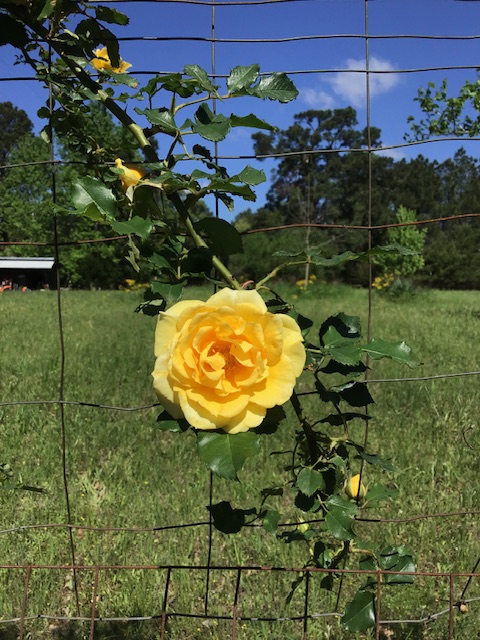
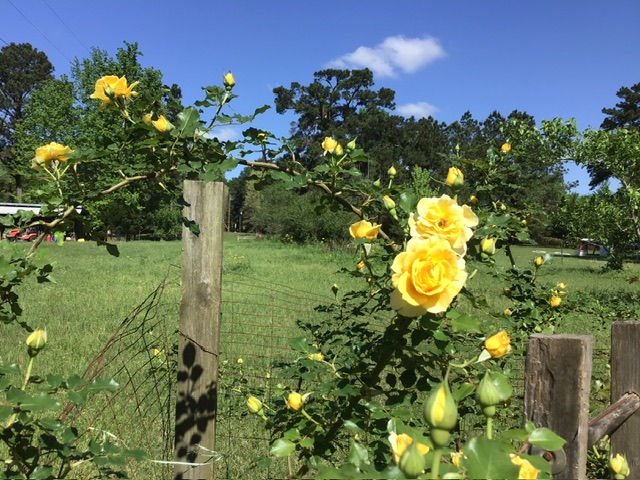
Such a busy time of year already, made busier with our remodeling projects, but we always make time to stop and smell the roses.
And bow to the weather gods, or geoengineers, who have spared us this time, and after so much barking, we are grateful there was no bite. Before I sing our praises, let me acknowledge those further north who are biting the bullet this time around. Our picture perfect skies are so very rare, I don’t like to think about all that means.
We did prepare all we could for the worst, annoying as that was. Out came the row cover fabric again and the wheelbarrows full of logs to hold it down, after just having cleaned all that up and took it to storage the week before.
We expected a frost for sure.
All the pots had to be gathered to cover all the peppers and tomatoes. And considering it was so hot and humid and over 8o degrees when we were doing all of this, it felt more incongruent than snow along the coast of the Gulf of America. 😂
But, I can’t complain, because as I just said, we got very lucky. No hail, tornados, landocaines, flooding and we just barely scratched by the frost threshold.
Just look at that sky! I can’t tell you how long it’s been since seeing such a sight!
There is so much beauty and bounty, in nature, and in cyberspace too!
Just yesterday I was scrolling through my Youtube feed and about every 100 suggestions up pops a true gem, like this old Mexican lady cooking her heart out and sharing it with the world. This is the very best of the power that’s right at our fingertips, I truly believe that: The world’s people sharing about their cultures. The cuisines, the histories and myths, the music, the dance, the landscapes, the languages, the gardens, the architecture–and the ordinary folks sharing them. Unfortunately, as the AI gods have demonstrated, for every such miracle there are about 100 curses.
Make food not war!
There are the tiniest gems not to be missed through all the noise and all the neon glare.
And it seems like they are beckoning me to slow down and notice them.
What would you rather do . . . follow me around the garden, or do more of that thing you call work?
A plot of volunteer poke weed and garlic, as if they’re just screaming, we are here for your good health, so happy to be here, we keep returning for you!
Sometimes, when I least expect it, we learn how to grow together better. Like I was thinking of the old Southern trick to set out red-painted pebbles to fool the birds into keeping off the strawberries. I thought, I bet some well-placed breakfast radishes would have the same effect, and sure enough, it’s working. The birds have moved off that bed ever since those radishes started showing their little red tops, and bonus, we adore radishes, maybe even as much as strawberries.
We have been eating giant salads every day, with enough surplus for our neighbors.
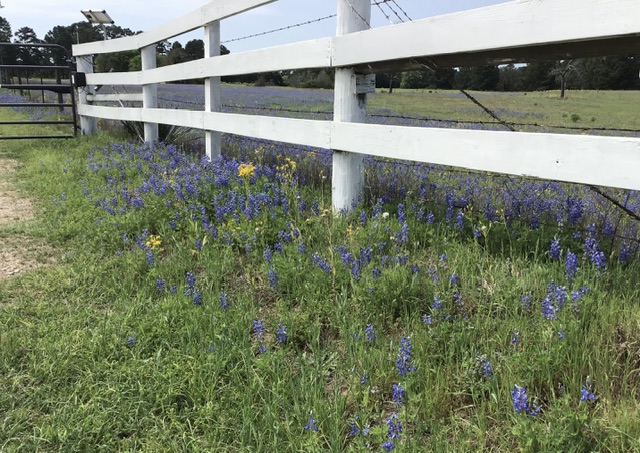
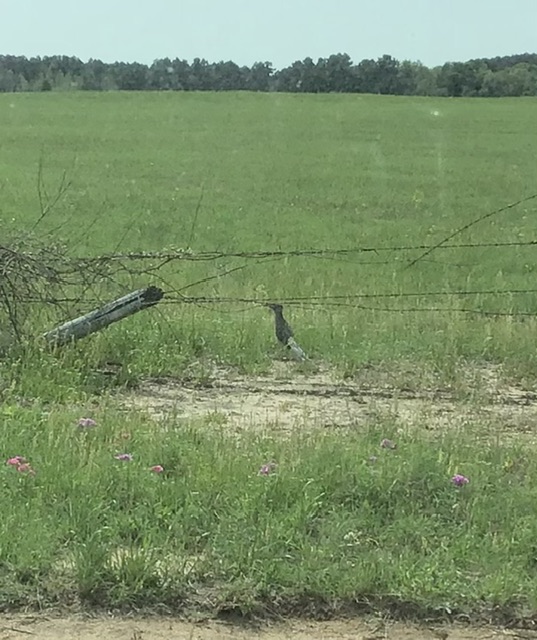
Along the country roads all is flourishing. The bluebonnets are brilliant and I even caught a roadrunner, just barely.
Beep, beep!
Such gifts of beauty and bounty! What a precious, ephemeral time to infuse their bursting energy into our year ahead. What we put into it is what we’ll get out of it, just like life.
I hope your spring is being beautiful to y’all, too! Thanks for stopping by!
Still, no time. I’ve lost a month, maybe two, in projects and to-do. Now I risk missing the whole spring to more of the same. And yet, in spring, it’s never all that bad.
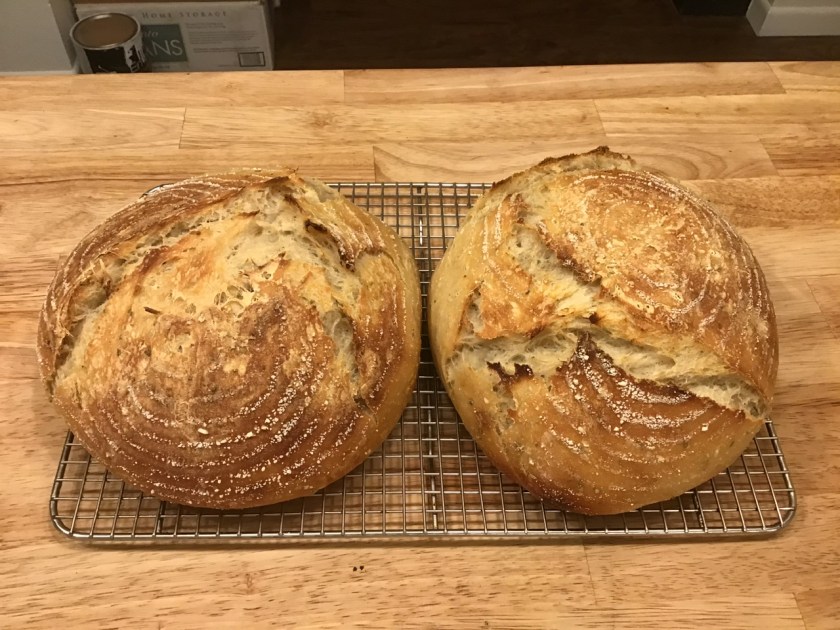
There will always be time for baking delicious bread, and making fabulous cheese. Even in the midst of kitchen face-lift chaos, the healthy food must go on.
Quinoa-rosemary sourdough made with potato water Fantastic!
Still, no time, but still want to share some quick happy snaps and briefest of updates, because I’d hate to be totally forgotten before even gone! 😊
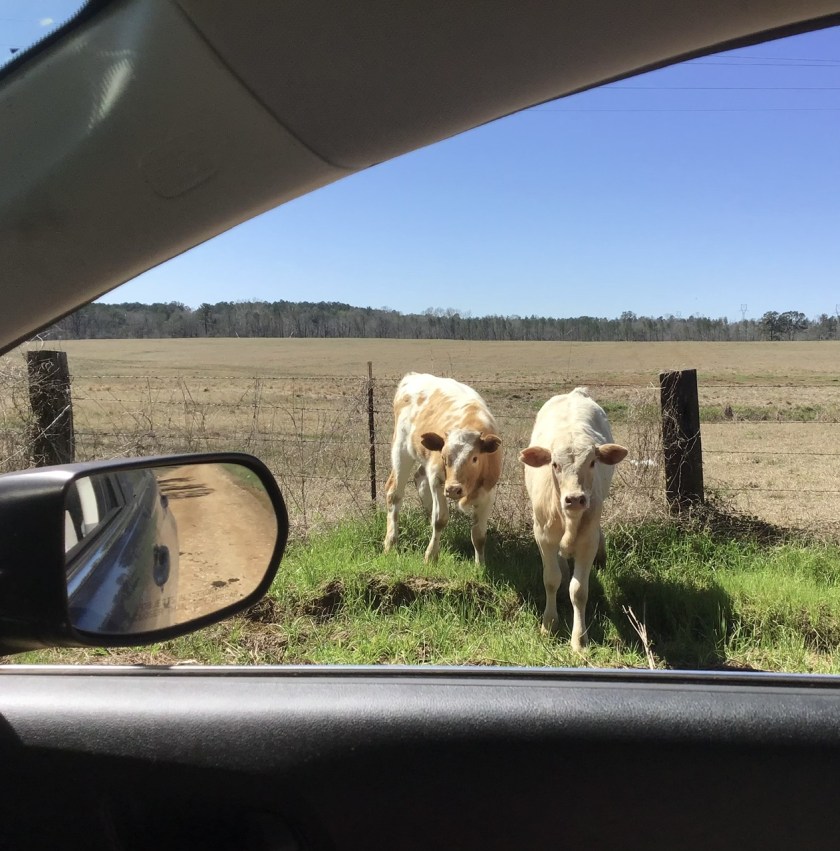
It was a beautiful day, so I decided to take the scenic route to the herdshare where I pick up one gallon of raw milk at the cost of $15, that’s about a 1 hour round-trip. On this day, it took more like 3, with multiple occasions for nearly getting stuck in the mud. But it was very scenic and an adventure to boot!
Excuse me, sir, might I pass?
Apparently they get much more rain than we do and the scenic route proved impassable.
But the cows didn’t seem to mind.
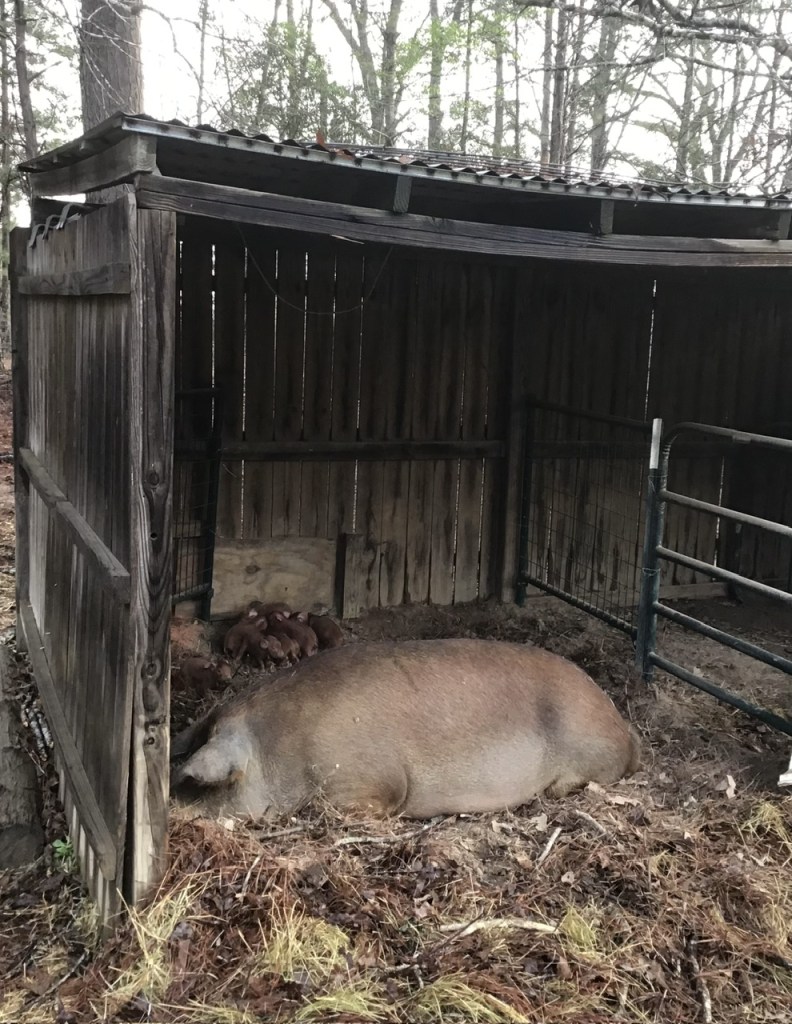
Meanwhile back on the wee homestead, Patty has had a big brood!
………….
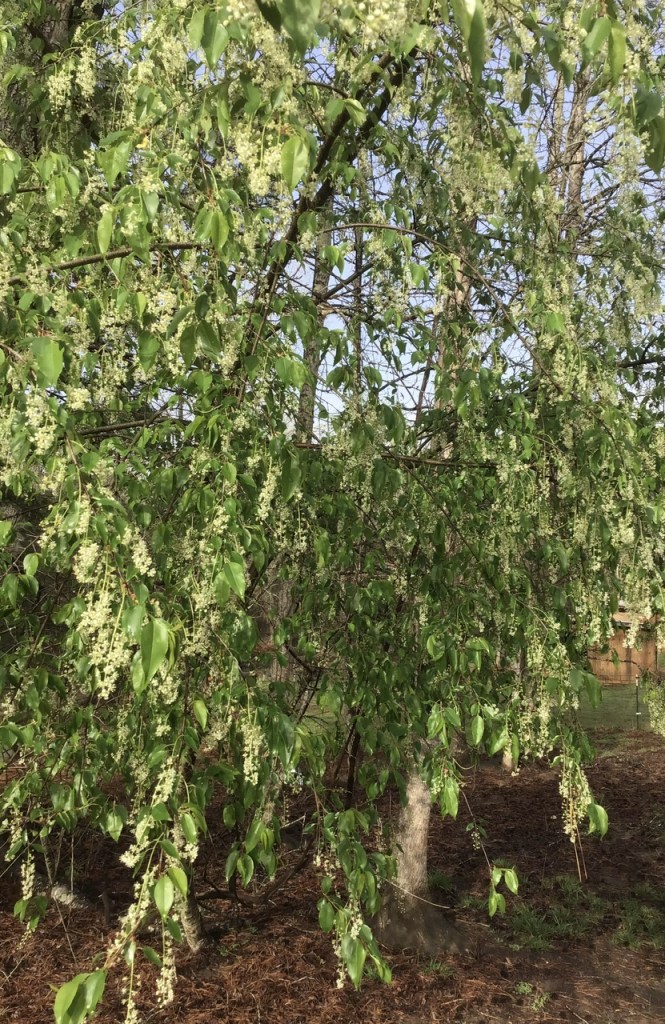
And the wild cherry has never looked so good! I wish I could get a better pic.
…………..
We’re spending so much on our interior face-lift the roosters are taking over, no time to reduce their numbers, the benefit being, no sleeping in.
………..
The garden is growing so fast, and the citrus and magnolias I planted last year are just now sprouting. But all that for another post, too much to do!
Hope all’s springing with y’all, thanks for stopping by!
Another fixer-upper on the route to my herdshare. Looks a bit over our pay grade.
How about this one, also on the route?
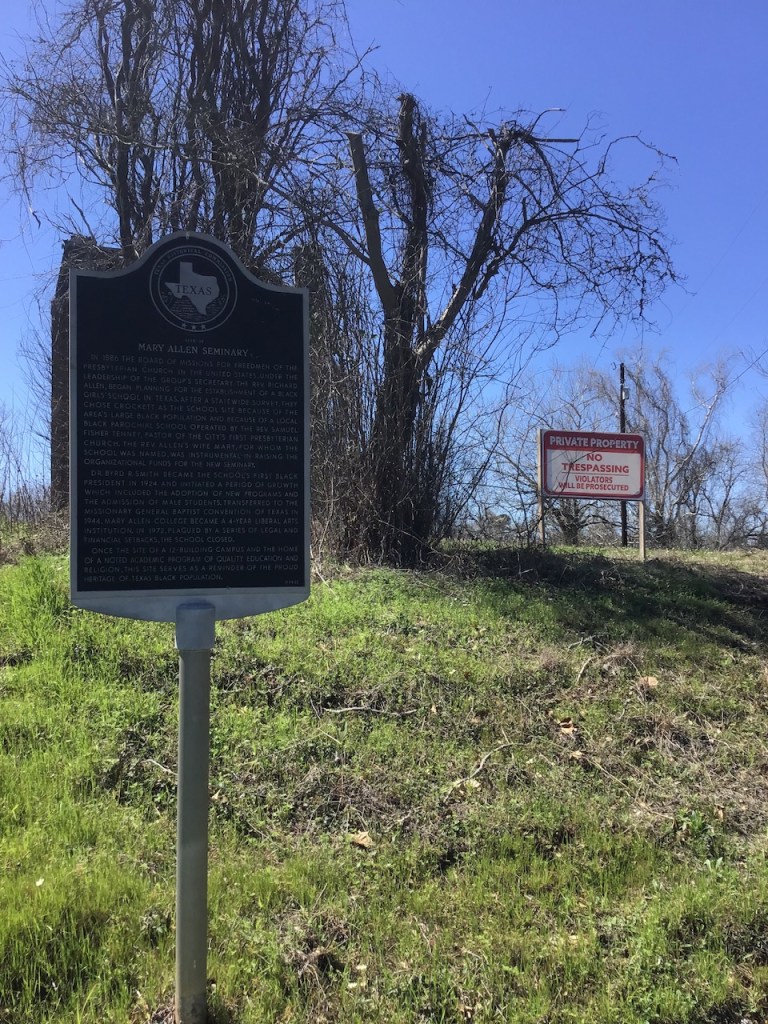
Destined to become a Black Heritage museum, so they say! 😆
What is the difference between Hope, and Hopium? There’s a fuzzy line and it’s very easy to misjudge, but it’s located somewhere between: “Yay, Trump will save us all from $11/dozen eggs!” And “We should start a chicken mega-ranch.”
If those two meet in the middle of the road, might creative minds find that they’ve absent-mindedly crossed with logic and conclude a few laying hens might be just the ticket? A bit of self-sufficiency, why not? After all, it’s not rocket science . . .
Joel Salatin exposes the WEF agenda! “Josh Sigurdson talks with Joel Salatin of Polyface Farms, an entrepreneur and farmer who for years has fought against Monsanto, factory farming and dependence pushing for people to homestead and/or farm and not be dependent on the system. We previously interviewed Joel in 2017 regarding Monsanto. Now, 8 years later, we delve into the massively expanded technocratic grid as more than ever, people are dependent on grocery stores, the grid and AI, weakened by design. The World Economic Forum agenda is to destroy self sustainability and make people weak slaves to technocracy. Eventually they want food rations and carbon credit scores. They’re already being rolled out to some degree and with the 2024 United Nations Pact For The Future, this problem is encroaching quicker than ever. The climate lobby attempting to bring down farms is more alive than ever. There are solutions however which Joel Salatin has spent decades teaching people. There is also a rumor circulating that Joel Salatin was picked to head the USDA. He explains this and more in this interview.”
Though it is the gateway livestock, and that’s official, I’ve even heard it repeated by the official fact-checkers at NASA.
Don’t worry, more government will save us! They will VAXX this FLU away, similar to the way they spray on the weather!
Respiratory diseases? I can’t imagine how that might be happening! So baffling!
But as James Corbett points out, chickens are the simple solution, but not necessarily the Easy one.
Most folks will take the easy way out, drink the Kool-aid, puff the Hopium, and exclaim RFKJ is here to save the day. Cheap eggs and healthy injections on the way!
It’s been quite a long time since an update on the wee homestead projects and activities; it’s hard to know where to start! How about, for consistency sake, I bitch about the weather for a bit, and then move along to better tidings.
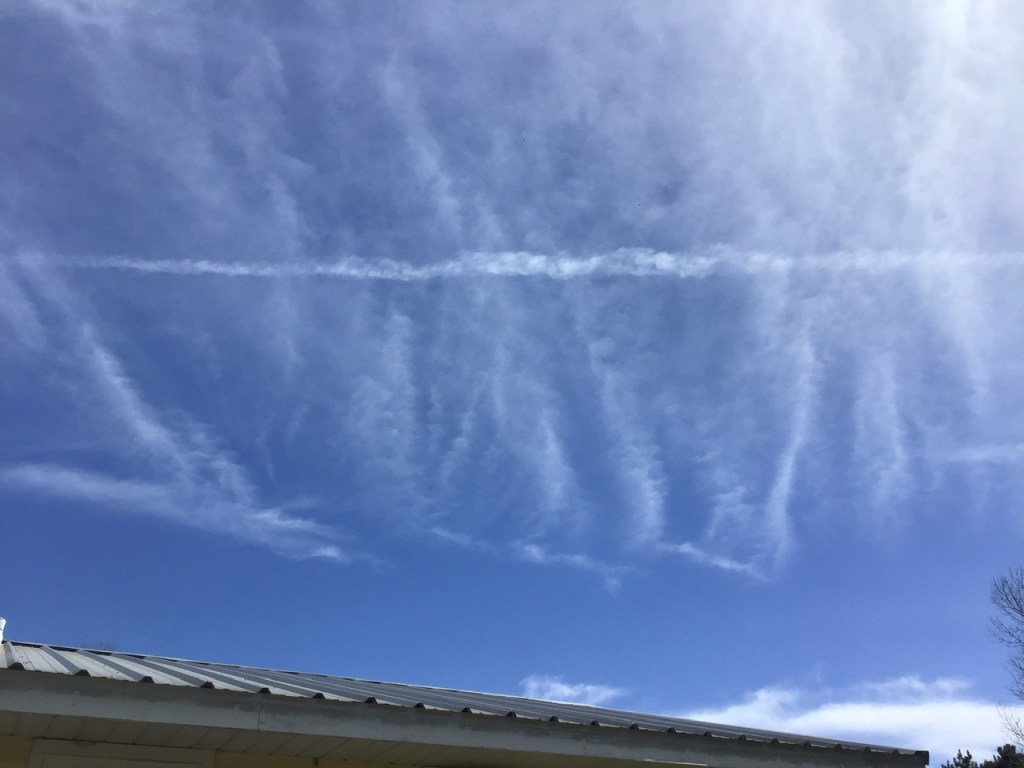
Of course the geoengineered chem-filled skies continue, as does our Yo-Yo season (formerly known as winter). We are using the air conditioning now, it’s been 80 degrees for days.
Buttercup is especially sensitive to the YoYo, to the point of regular getting seizures at such times, also lethargic and losing her appetite.
Buttercup hiding in her box all day.
There was of course the lows not long ago in the 20s and I was very concerned for the newly planted citrus. We employed quite the set up of lights and covers and they faired very well, I’m happy to report.
Invasion of Asian beetles on the citrus cover
But there has been a bad invasion of these awful beetles, which we’re vacuuming off the ceiling multiple times a day. Not to be confused with the garden-friend, the lovely little lady bugs, NO, these little beasts are really nasty. They infest, as obvious from the photos, and they bite, and as if that’s not enough, they stink.
I don’t like when folks call them lady bugs, they are not at all ladylike, so I try to correct them anytime I hear complaints, which is more often than you might think. The reaction I get is much more open and accepting than when I inform them about the manufactured weather.
Old lettuce bolting, replacing with new lettuce started under lights indoors, along with broccoli and cauliflower.
It does keep us on our toes, dealing with the Yo-Yo. Lettuce and herbs bolt prematurely quite often, seedlings come up then freeze or wither. We never know from week to week what to expect or how to plan.
I don’t normally have such a fancy setup, but these trays were gifted to me and they’re working quite well germinating some lobelia and snap dragons.
My indoor lights and heating mats make things easier, as does the row cover in the garden, but it is constant juggling. And if I miss a beat, death. Like happened with the Mexican oregano I was so proud of. I forgot about it outside one night when it frosted. Very disappointing considering our long journey of discovery, and how long I babied those few little sprouts, trying to anticipate their every need, carting them inside for warmth, then outside for sun and wind, and just when they were getting their legs, gone. All my fault.
Well, except for the geoengineers, because I wouldn’t be doing this constant refrain if our weather was consistent or predictable or seasonal.
I’ve tried twice since then to sprout the herb again with no luck. I will succeed eventually, of course, we’ve come too far in our quest to fail. The Mexican oregano has a long tale in these parts. Failure is not an option. More on that in the last HH post, if you like. https://kenshohomestead.org/2024/11/14/homestead-happenings-43/
I’d like to say it was the same with the milk quest. Unfortunately, I’m not nearly as confident; I feel failure is probably inevitable and maybe even imminent. For the time being I’m counting my blessings I’ve found another (perhaps temporary) source. Last time I was complaining about the cost, this one is even more expensive at $15/gallon. At that price I’m not going to be experimenting with any new cheeses, that’s for sure. To make cheese at all is not really feasible, except for the most delicious of selections—Camembert. Otherwise the precious commodity goes toward morning coffee, ice cream, and buttermilk for recipes and the extended expiration date.
Camembert to be draining before salting
I’ve been doing continued research on the topic of raw milk and what’s available and in general, where’s the market vibe. I found one young entrepreneur with a private herdshare selling cheese for $25 a pound. (A Herdshare Agreement or a Grade A license from the state are the only ways to sell raw milk in Texas legally.).
With my new herdshare deal I can buy more milk for cheesemaking, if I’m willing to pay $15/gallon. Considering the hard cheeses I typically made were 5 gallons ideally (better for aging in less than optimal conditions), that’s a really expensive cheese.
Certainly what can be made on-site are far better cheeses than can be bought at the store; that’s why I started making cheese in the first place. But still, it’s really hard to justify all that work, and expense, when we can still buy organic cheese for about $8/pound.
I will splurge one time in late spring, if possible, when the grass is thick and so the milk most rich. And we do still have two goats, hopefully pregnant, so there’s a small hope of cheesemaking in my future, if all goes well.
Moving on to the garden, the garlic is going strong and I’ve just got the onions in, 3 big rows of each. The garlic we plant is elephant garlic which does so much better here than any other variety I’ve tried, and I’ve tried lots. These are local for over a decade now and their productivity has yet to disappoint.
The onions are from purchased sets and they normally do well, though some years are a bust, like last year. I also started some from seed under lights, to compare if they are more consistent and adaptable, because the sets have gotten pricey in recent years and it’s irritating to pay good money for possible failure. Onions do not like Yo-Yo weather, but then again, who or what really does?
At least some seem to tolerate it better than others. We’ve got a couple of ‘oyster trees’ that are bringing us regular tasty gifts.
I’ve also tried a couple new things that have been long on my list. There’s the soap that’s just now cured, a bit earlier than I’d read is typical. I’m really pleased with it! It lathers very well and the scent is rather sensuous. My intention was something earthy and erotic, and I think I succeeded.
I got the sensual part down, now I need to up the aesthetic! Trust me, looks are deceiving here, I just need better molds! Never underestimate the power of packaging, eh?
After finishing up slaughter season and chopping up downed trees for a month, Hubby has moved on to a far more desirable and needed project, according to me, our kitchen! Yippie!
We’ve needed new countertops badly for many years, ours have been well-worn in 40 years, especially since we’ve gotten here and the space went from softly used a few times a year, to a daily year-round assault. It’s actually pretty impressive the counters aren’t near dust by now, considering how quickly more modern materials fall apart.
New island done, now for the hard part.
Old, ugly, not square or plumb . . . Good times coming in Hubby’s near future!
New countertops got us on a roll and now we’re planning new light fixtures and maybe even a new paint job. Big ideas, perhaps not backed up by time or commitment.
Those big ideas, I’m full of ‘em! In my mind the kitchen’s already painted and my next project is to paint the table, which I’ve wanted (and once tried) to do for as long as we’ve had it. I can imagine I might have a table with a surface that looked something like this . . .
But I’d be perfectly willing to settle for this . . .
Or this . . .
So, after I repaint the kitchen in the few spare moments between juggling plants in YoYo season, I acquire the skills of an artist, and paint something I can really be proud of . . .
Whenever I’m finally able to manage that, y’all will be the first to know!
In the meantime, here’s where we were at in the last update . . .