ALL For Sale

When I lived in Europe in the 90s it was not too uncommon to see an amazing castle for sale for a pittance. I do mean a real castle, or a vast country estate that included a structure that once was a castle.

And I do mean a pittance, as in, they were not able to give these places away.

Vauburg, France (not my image), bit of a multi-generational hodge-podge.

Sometimes that was because they came with strings attached, so I can understand. Or it was designated for a specific purpose or with strict regulations. You had to restore it, for example, which was something that cost so much that the just wealthy could not afford it.

I had a French boyfriend for a while, who boasted some aristocratic lineage and took me to the castle where his aunt still lived. I marveled at the exquisite property and at the lingering formality of his kin who addressed each other, that is as husband and wife, in the formal, using ‘vous’.

Maybe the uber-wealthy could afford it, if they cared to, but they just didn’t have the interest?

Or, which I’m actually more inclined to think these days, even with their fortunes, they would not be able to restore it. Because the skills to accomplish such an extraordinary endeavor have been lost to time.

A single example of the dozens of architectural marvels which have been destroyed in our little city, with more on the chopping block all the time.

In those days I dreamed of becoming a travel writer, or a writer of historical fiction. So, it’s not a huge stretch for me now to covet an interest in such parallel stories here, today, locally.

This is the closest real city to us, Palestine. What I’d call a small city today, though growing steadily. It was never more than a small city, as far as population goes. Just how it amassed such an amazing amount of great architecture is a real mystery to me. Though there are official stories.

I knew there was some interesting history there, and all around here, but it’s not like I’ve had a lot of time for exploring such idle pastimes, with all the work trying to build up a homestead.

But lately I’ve been squeezing in some time and loving it!

And of course, you’ve got to blossom where you’re planted. I used to tour every castle or abbey or old walls or ruins I could find, whether in the Old Town of any European city or hamlet, or a day hike away from the nearest bus stop.

This Old World has entered center stage for me again thanks to the Cyber World, which is really kinda crazy. But, true.

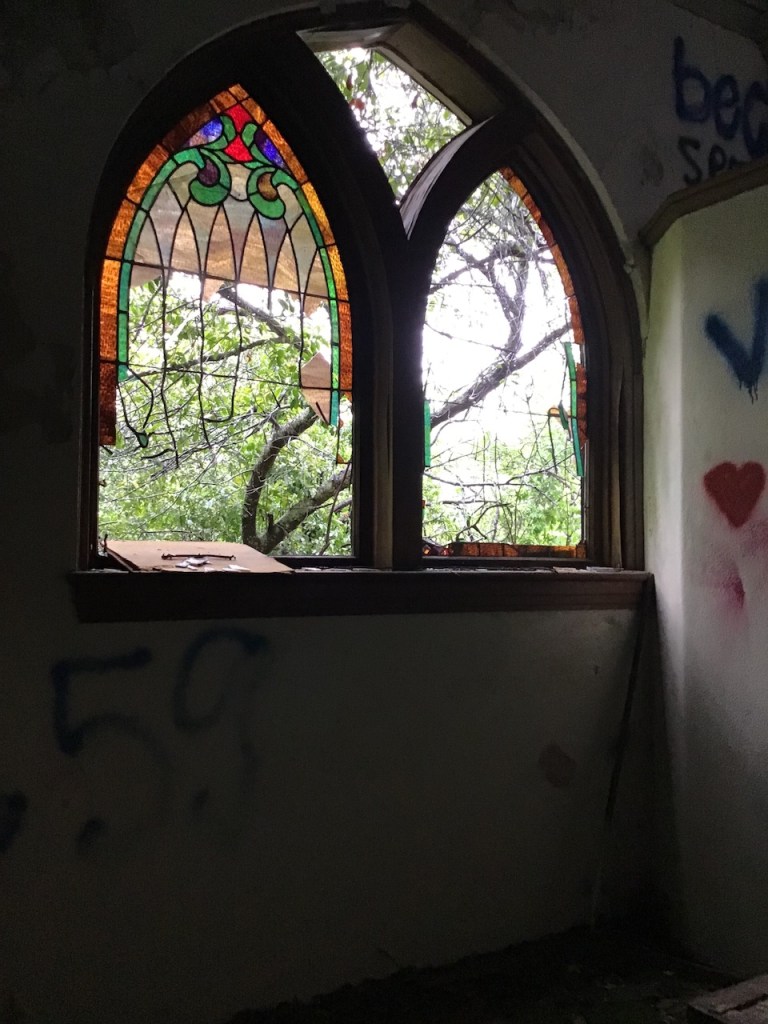
I’ve seen this old church for sale the last few times while driving through the downtown streets marveling at the old buildings.

I stop for lunch, and at a favorite antique shop, where I see tourists, which I find delightful. Though they only have much interest in the antique shops and the cafes and the provided entertainment. Still, it’s fun hearing German in the tourist office and hearing ladies from places all around the region, even in a rainstorm, there to peruse what our little city has to offer.

I was a novice travel writer, until I met the love of my life, who I managed to lure from the beaches of Thailand to a trailer park in Mena, Arkansas.

Hubby and I at ‘Roman ruins’ in Spain 2003—note our cute matching outfits—that was not planned.

And look who returned the favor by luring me into the deep woods of East Texas to spend an exceptional amount of time doing menial labor. 😏

I was also a beginner tour guide, Mayflower Tours. I lasted about two weeks, until I realized how unsuited I was to a job hosting a bus full of retirees for four-day trips to and around Branson, Missouri three times a month.

I think they weeded out a lot of us that way. There must be a trick to how many bossy seniors and cowboy theaters can be stomached for minimum wage, but I couldn’t figure that out quite fast enough. Another potential career option in the toilet.

And yet . . .

When I see precious gems like this my imagination sparks just like those days in Spain, France, Germany, UK, Czech Republic, Poland . . . Ok, everywhere, just about everywhere. I was very much a Europhile. Still am.

And yet . . .

I’m so struck by the lack of general interest. And knowledge. And, frankly, care.

I see the collapsing remnants of a structure worth saving. I see a history worth understanding and passing forward.

That’s the shot to inspire a buyer’s creative juices? Yikes. What about its real history, does anyone care? And, where’s the roof?

But the Realtors, who are there to sell this precious gem, see little of that world, neither the past nor the true potential. It’s such a shame. Such a very common, and so very confusing, big fat shame.

Will it become an ‘event venue’ as they suggest? It’s hard to imagine the kind of events that would make such a renovation effort worthwhile, or particularly palatable. Is there even such skilled workmanship available today?

Dare I question, true philanthropy, if it ever existed at all, is it dead?

There are many such gems in our little city, which suggest but mere clues to the true treasures in our midst, in plain sight—all teetering in a world of nearly forgotten but, dare I hope, at least a cyber-revival?

A taste of the hidden history in plain site, he’s getting to all the states eventually, and beyond, one of a great many channels sparking my renewed interests . . . 😁
Homestead Happenings

The exciting season continues! Mostly plant talk this post. And, we’ve got our first lambs, I’m workin’ my first wattle fence, there’s some flower photos and fancy garden plans.

A first-time mama is the first to drop a perfect set of twins!
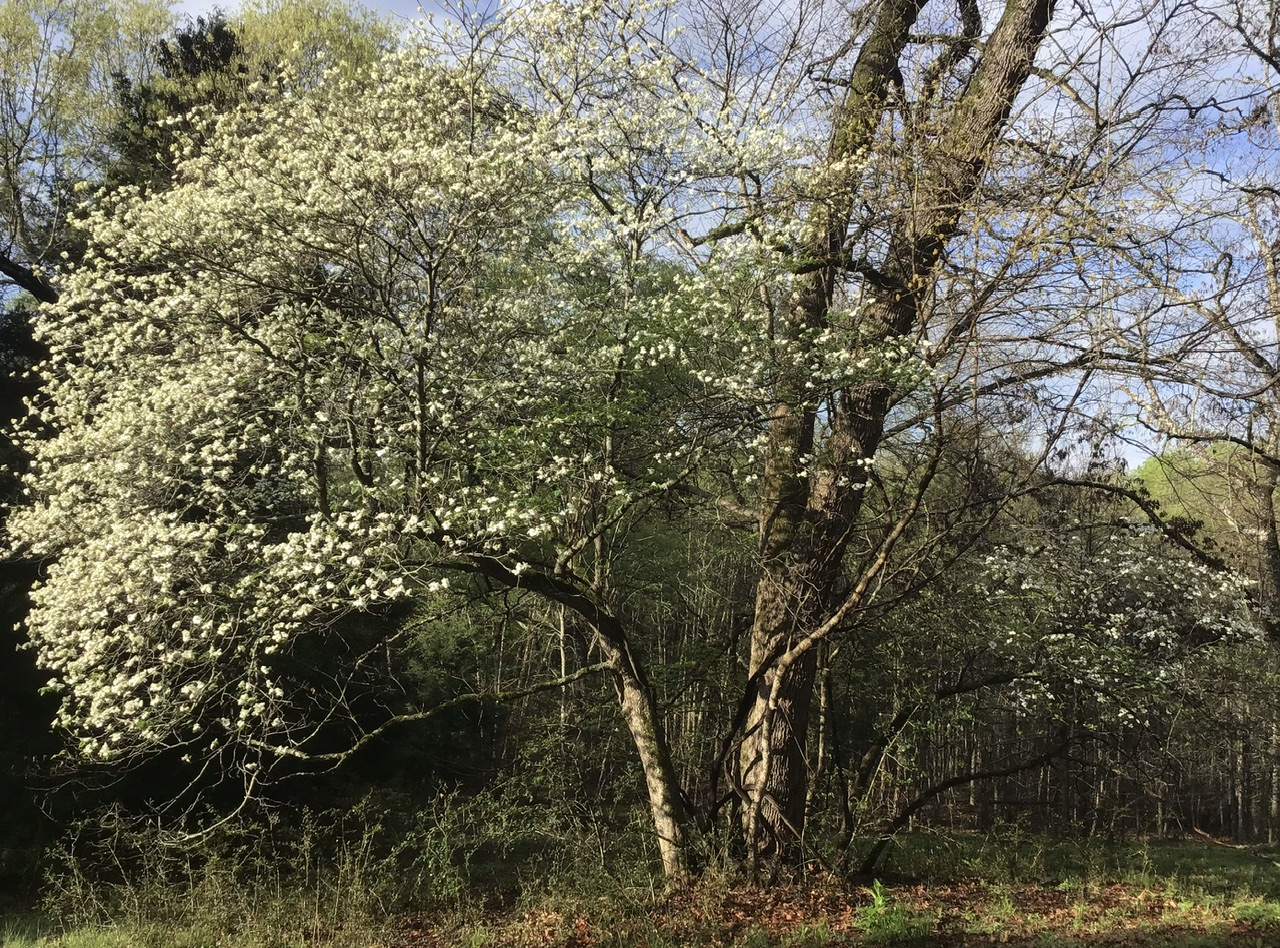
Dogwoods blooming beneath oaks

Trumpet, or coral, honeysuckle on our front porch usually attracts hummingbirds by now. It’s looking gorgeous and I’m quite proud of it because it’s one I propagated from the wild. But, where are our feathered friends?

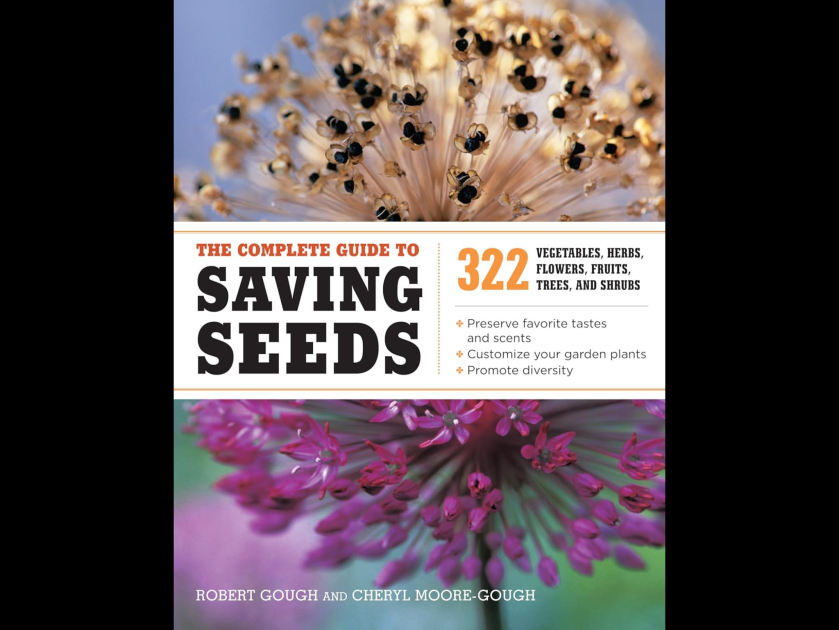
Seed saving has definitely upped our game in the garden. Buying seeds is certainly far easier than saving them. Where we once just had to plan one large garden space, now there are three. It feels like juggling! You’ve got to keep all the spaces perfectly coordinated. I had to make a chart. I am not a chart sort of person. I’m the kind of person who instantly glazes over at the mere inclusion of a chart in any piece of literature.

So really my chart was more like a list of do’s and don’ts in a useless graph format. Don’t plant the pumpkins with the zucchini. Don’t plant the luffa with the Trombetta. Do plant different varieties of cucumbers, peppers, melons and watermelons at least 1/2 mile apart. (Is that even possible?) Musk melons and watermelons are safe to plant together, but French cantaloupe most certainly cannot be planted with American varieties or with green melons.

And that’s just the summer season’s produce, there’s a whole different set of charts for the winter veggies.

Luckily, I’ve got some good guidance in a great book and, even better, some bigger minds to follow in the form of Gavin’s Newsletter. He’s just started a book club and his first book up for April just happens to be the one I’m reading.

Why save seed?
From the book we learn a few good reasons:
*selecting for specific traits,
*preserving diversity,
*saving money,
*creating superb plants,
*And, going on an adventure.
“The art of saving seeds may so intrigue you that you’ll branch out to your own plant-breeding adventures with such long-term seed-saving projects as growing oaks from acorns.”

Perhaps that could be me! Or perhaps I should’ve started this about 30 years ago.

But, those do all sound like good reasons to me, plus I’ll add one more. It’s a good way to exercise your body and your brain at the same time.

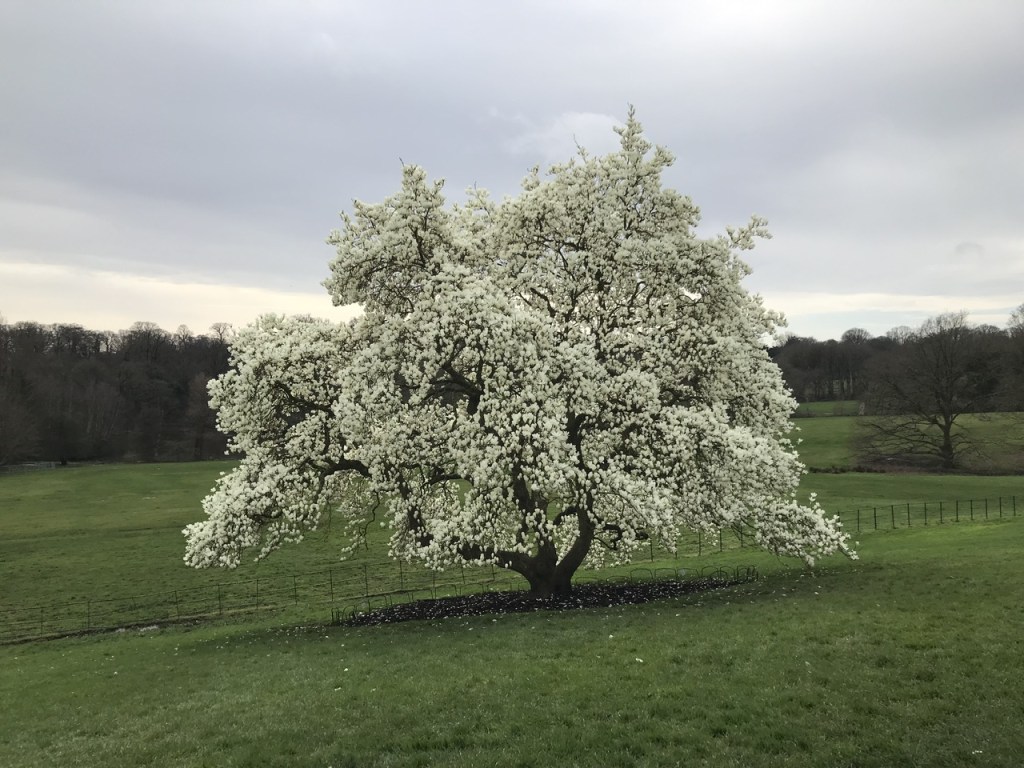
But, propagating something so slow-growing from seed at this stage of life, I think I’ll need more bang for the buck than an oak. Like, this magnificent magnolia!

(Photos sent by a friend in UK, wow, what a specimen!)

Of course, not all seed saving is complicated. After all, it used to be something every farmer would do, and their children, too. If I’d grown up doing it I’d probably think I’m making much ado about nothing.

In particular, most of the common herbs we love—dill, cilantro, basil, parsley couldn’t be easier—let them go to seed, collect the seed once dry, keep in a paper bag over winter, and sprinkle back out in spring.

Easy-peasy, leaving more time for flowers!

More flowers, herbs and medicinals has been the big goal besides seed saving. I’ve always liked hollyhocks and other traditional ‘cottage garden’ favorites. How fortunate for me to find one I’ve never heard of before, with a really cute name.

Inspiration photo only, real or photoshop, no clue

Flower name: “Kiss me over the garden gate”
Latin name: Persicaria orientalis (formerly Polygonum orientale) is an annual member of the buckwheat family. The tall plants produce pretty pink pendulous blooms.

I’ve just planted it under the bedroom window inside my work-in-progress wattle fence.

What’s a wattle fence?

I had no idea what that was until I read about another blogger, Re-Farmer, building one. It looked like a fun and do-able project perfect for a precision-challenged person like myself.

And it is! There are lots of YouTube videos on the process, but I think this one was the best—a much taller and longer wattle fence than I’ve tried to produce, but who knows, as my skills develop I could step it up a notch. 🤔

The other big garden plan this year are a few citrus trees. We’ve been wanting them for a long time, but all fruit trees are a challenge here with our crazy weather. (And it’s not just us! All kinds of complaints about it from YouTubers and neighbors alike. It didn’t used to be like this.)

Anyway, this guy’s got some great suggestions and solutions and we so love our citrus, so we’re going to make an investment toward our citrus-filled future with Myer’s lemon, Mexican lime and Satsuma orange.

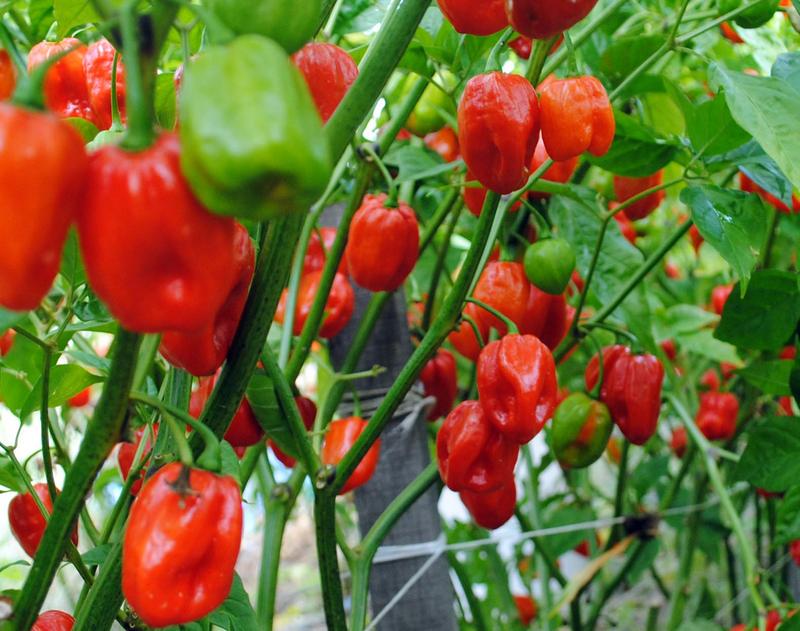
Another small plan is more peppers, specifically seasoning peppers, also called spice peppers (though they aren’t always spicy as in hot), like pimiento’s and such.

As much fermenting as I’ve been doing I see they are an excellent addition to all kinds of dishes. Plus, peppers do pretty well here usually, and they harvest in fall when there’s little else happening, and they are lovely little plants some folks grow just as ornamentals. Four excellent reasons to squeeze them into the rotation. Here’s one variety I’m trying:


Aji Dulce spice pepper from Southern Exposure

Aji Dulce Spice Pepper

“(C. chinense) 99 days. (green > orange-red > red) [Venezuelan heirloom. Seed source from Donna Hudson in TN.] Has the same shape, size, color and aroma as Habanero, but is sweet, spicy, and delicious, with only a trace of heat. Highly aromatic fruits; their flavor is unusual and complex, with overtones of black pepper and coriander, and undertones of other spicy flavors. An excellent choice for sautéed vegetables, rice and bean dishes, paprika, or herbal vinegars. The thin-walled pendant fruits are 1 x 2 in., tapering at both the stem and blossom end. Plants have good foliage cover and bear at 18 in. high. Seedlings grow slowly at first, but grow rapidly later in the season to 48 in. or more.”

Like I said, it’s the exciting season on the wee homestead!

Bubba says “Bye and thanks for stopping by!”

Homestead Happenings

This post we’ve got some happy snaps, the usual weather bitching, a bit of pre-planning and some good news on two healing fronts.

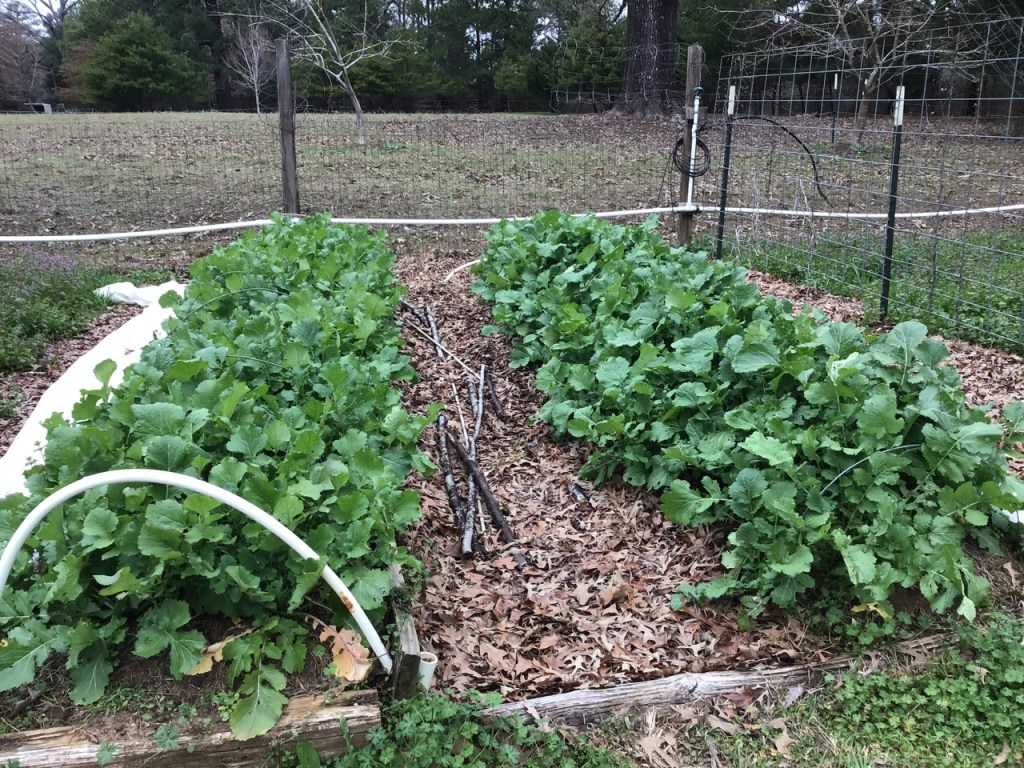
(From bottom left: mini-mustard greens and new lettuce germinated inside about to be transplanted to replace all we’ve eaten; several types of onions and elephant garlic (which does best here, by far); and turnips for us and the pigs. 😋)

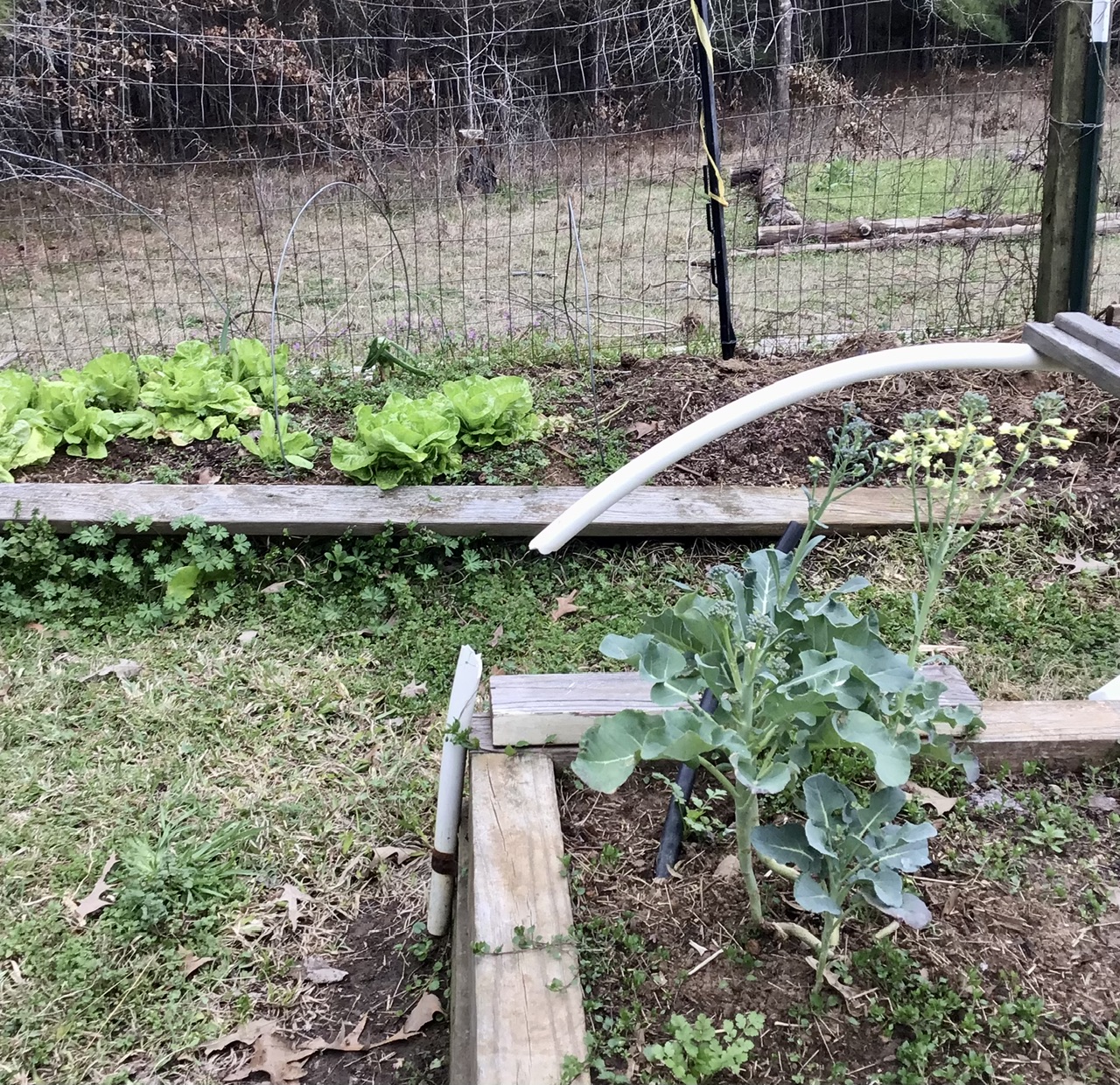
The cauliflower is long gone, the broccoli nearly so, but a new crop is already in the works inside on a heat mat. Succession planting has its limitations in our East Texas Yo-Yo Season (formally known as ‘winter’). Sometimes you get lucky with a warm stretch and get a nice surprise (yay, third times a charm, the carrot seeds finally germinated!) other times you get premature bolting (that dumb broccoli didn’t even produce a good head yet!).

Premature bolting 😖
But some nice butter lettuce still doing well by covering during cold swings

I do not appreciate it, and I think it stresses us all at some level, not just me, not just the more sensitive 4-legged and 2-legged, but all of life. Five warm days go by, in the 70s (but feeling hotter), with an unseasonal and hot stinking wind coming from the south, then suddenly, the very next day, it’s 40, lows in the 20s, and the dogs are shedding, also unseasonably.

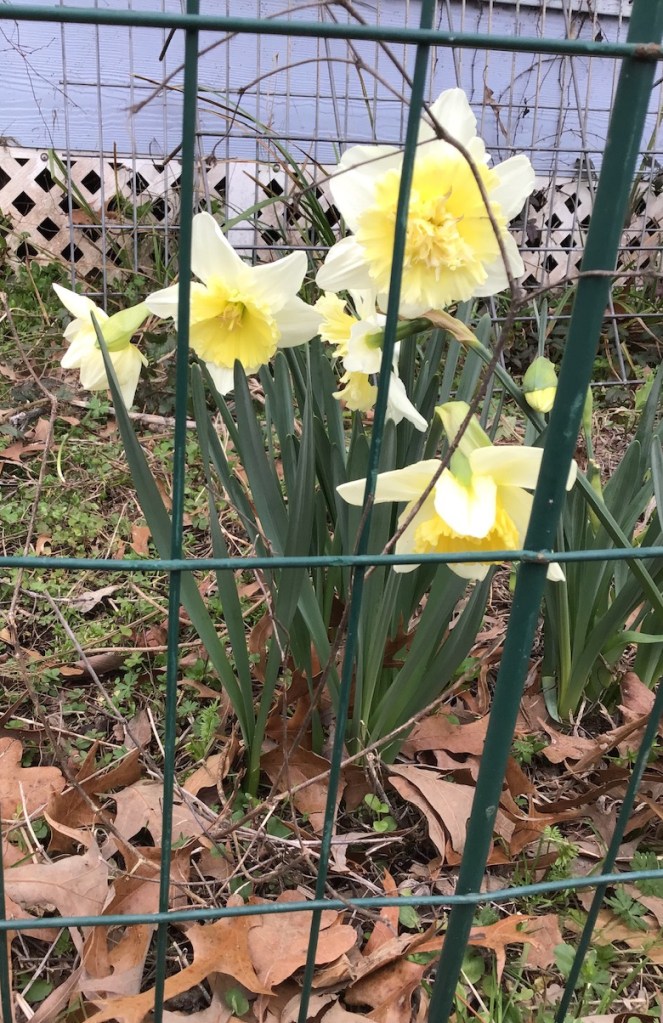
Yes, we get the surprise arctic chicks on occasion. It’s nice to see a bee or two about. We get early daffodils. But we also get another lost fruit crop because it is sure to frost and now, again, everything is blooming far too early.

And it seems to me, the more folks are catching on, the more the establishment pushes back, with the gaslighting and the misdirection and the normalizing.

Going back to the 1800s! And how’s that working out for us?

Despite the man-made manipulation, or maybe because of it, I’ve come to appreciate the old adage ‘Let nature take its course’ on a whole new level. We’ve had two overlapping critter health issues these last months, both with their unique challenges.

Shadow’s blood-spurting ear was by far worse, but still, in every case, I don’t like not knowing what to do, stressing about my lack of knowledge, feeling useless, and that’s how I felt during Chestnut’s ordeal as well.

Please allow my whine for just another moment, it’s been illuminating for me, in a way.

Self-reliance is a cornerstone goal for us. Relying on vet care is not an option for a number of reasons, beginning with the cost, ending with the lack of trust we have for the medical establishment, and with a very long and convoluted journey in between where we try to figure out how to bridge this enormous gap, with no training.

We are lucky for the internet, but you know how that goes. One problem, a dozen conflicting pieces of advice. We ask around as well, we are certainly grateful the many suggestions offered, but still it’s nerve-racking making ill-informed decisions, and no matter what anyone might pretend, health is not an exact, one-size fits all kind of science.

Chestnut was acting strangely, very suddenly. She went from just fine to a few hours later she was lethargic and not eating much and separated herself from the herd.

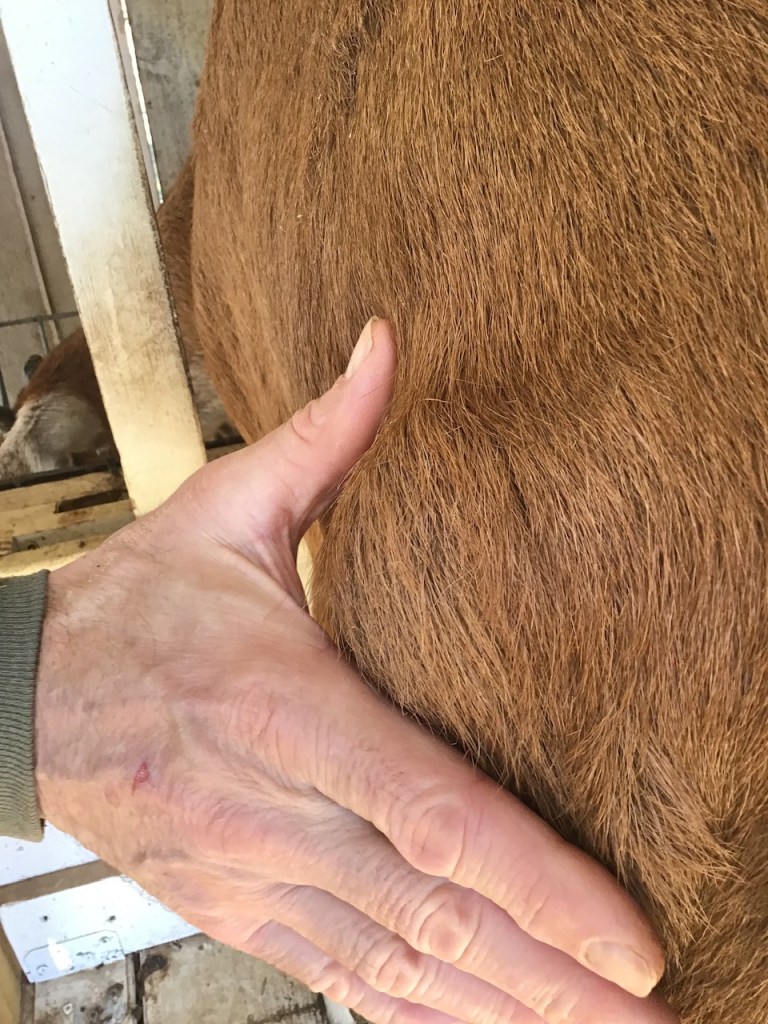
My goat friend suggested Ivermectin and it seemed to work fine. Then she quickly developed an abscess on her side. Related? No clue. It looked terrible, but it was not bothering her at all. I read lots of advice, but decided to let nature take its course after reading one description that sounded most similar to what I was seeing. Though they recommended lancing it at the end stage to avoid ‘infection’. (In the above photo you can see the ‘before and after’, the photo on right taken yesterday, sorry for the blurriness.). It got very large and it was not easy to do nothing!

It’s been over a month now, and it is healing nicely. Patience was the correct remedy, not lancing. I think we have an addiction to unnecessary interference in our culture.

The ordeal with Shadow was a serious challenge. You might recall the middle of the story from our last Happenings post. It started all the way back in November with a little nick on the tip of his ear. The cat?

Who knows, but it was shockingly difficult to get the blood flow under control.

We had much advice, some of it new and excellent (thanks again Kath and Zoe!), but wow, did that take some patience and perseverance, which mostly landed on Hubby, as per usual. (Male privilege! 😂)

Three months later and it is completely healed and all’s well that ends well, thank heavens!

What exuberance, no one around here can keep up with him! He runs circles around us all, then sits patiently by Hubby’s side until the next round.

We love potatoes so much we also buy them in bulk when they’re on sale and Hubby cans them up and they fry up in tallow so quick it’s like a delicious fast food that’s a cheaper and healthier alternative to the industrially processed varieties.

It is a long and labor-intensive project, that’s 45 pounds of potatoes there, it took him the best part of a day to do, but we’ll be appreciating the effort for 28 delicious meals. 😊

Looking ahead we’re doing a bit of planning—I’ll be giving another beginner’s fermentation course next month and Hubby’s got some good livestock trades in the works, we’re committed to foraging more for mushrooms and cultivating our own.

Patty, our mama-to-be, eating up the last acorns. Already many of her piglets claimed for bartering deals. 😁

Here’s a current little visit with our herd, including, hopefully many healthy, expectant mamas with kids growing fine.

Not that little guy, he’s our first buck, we call him Teaky.

5 expectant mamas among our St. Croix-Dorper flock

Incorporating more permaculture design in the garden and orchard is an on-going big goal. We have a couple spaces empty and I’d love to try something really unique like this:

Permaculture-Inspired image I’m dreaming about!

Where I’d be including my fun garden-art projects, like these:

Lots of grand plans in the works, always, but it’s the simple things that make the hard stuff worth while.

Thanks for stopping by!

PseudoCaring

Soon the mainstream disease care system will be employing robots and AI-generated advice dispensers as nurses and surgeons. It’s happening already.

Meet Grace, the robot nurse that COVID created

Some are shocked and appalled by this, as they should be, according to me. Others think it will be a fantastic improvement to human life, or a great way to make more fiat, or a solution to the burden on the caring professionals, or they love tech for tech’s sake, or whatever.

Those of us who love history and dwell constantly on the question ‘how has it come to this’ were well aware of this potential because we study the trajectory of modern life. I could begin with the first critics centuries ago, but for brevity sake, I’ll start instead with my own life, the only history available to me to know thoroughly enough.

Working mother, divorced parents, step parents, then step siblings, professional daycares, neighborhood babysitters, after school programs, junk food, convenience food, lots of TV. Family history of: diabetes, heart disease, obesity, cancer, vision problems, depression, eczema, alcoholism, Parkinson’s, and, you get the picture.

And I would not say my family life was bad. It was the typical American suburban life of a great many growing up in the 70s and 80s. Neither particularly good, nor bad, just normal. Normal, as in well-normalized.

Like most families my parents would joke about voting for the ‘lesser of two evils’. They probably learned that from their parents. My mom went to community college and got her degree once we were gone, in sociology. She worked full-time all her adult life and didn’t regret it. My dad remained ‘upwardly mobile’ as his Protestant father taught him to be.

In fact, we have retired before him, and he has just had his first heart attack.

They are both still with us, but they do not read this blog, so I could say whatever I wanted. 😏. But, that’s not the point of this particular post.

Let’s leave it at this—in hindsight, my unique perception of growing up this way is, in a nutshell—there was not a lot of parenting happening. The results of this having widespread and devastating effects.

It is from these original seeds of pseudocare that have been not only consistently irrigated in our own territories, but have been dispersed throughout the world these last five-plus decades which has ensured the trajectory to the ridiculous place where we now find ourselves: Drowning in pseudocare so deeply we can scarcely recognize what real care looks like anymore.

Another quick peak at the fruits those seeds have produced.

Yet even facing all of this, I’m still optimistic, as I have been all my life. Even at the worst of times, even during a few prolonged worst of times, I must’ve still learned something vital from my half-assed upbringing and collapsing culture.

So, here it is, in another nutshell:

Believe in yourself, believe it can change, but don’t practice in sidestepping the hard stuff. And the hardest of the hard stuff is care, real care—for yourself, for others, for the future—that is why we are here. How you go about that is your personal journey and your only real duty to discover and live. That is all there is to do in a life well-lived.

Which is why I want to once again quote an obvious example of someone doing exactly that, Gavin Mounsey, who is rocking the real care like a hurricane these days! Wait . . . What?? Ok, terrible simile aside . . .

I believe he knows what needs to happen next and is becoming the living manifestation of that in his own life first, and passing it around. Leading by example, it’s the only way. It’s the same cardinal rule as storytelling—Show, don’t tell.

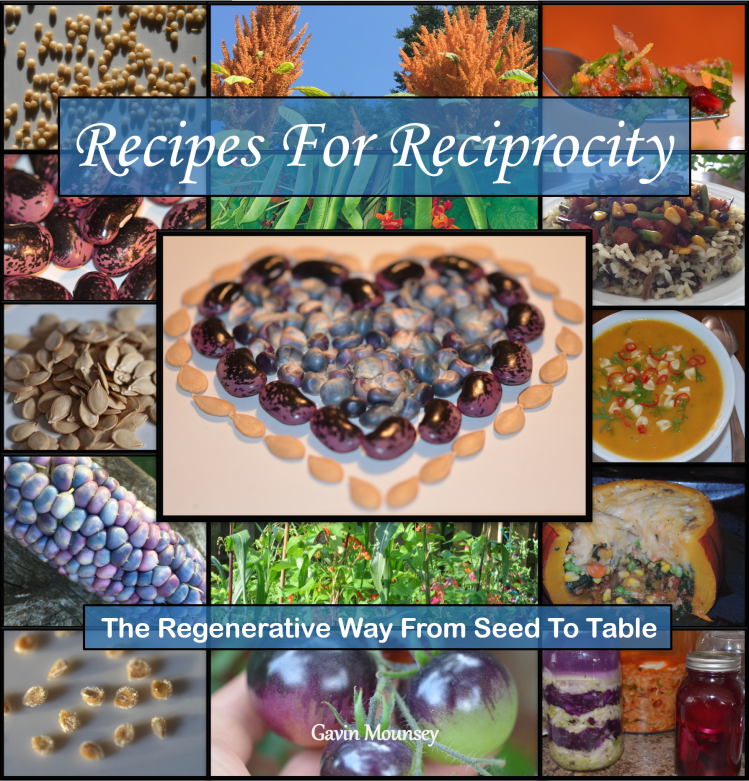
From Gavin’s book, Recipes for Recipocity

Here are few select quotes from his recent interview with the witty Russian correspondent and potential future Russian-American homesteader, Edward Slavsquat: The Revolution Will Involve Fermented Cabbage

“I want to give my energy to improving and increasing the resilience of my local community, not your hyper centralized one size fits all infrastructure. 

“Freedom is not a consolatory prize that can be given to us to reward our obedience and capitulation to a system of violent coercion. It is not something that can be granted or provided to you by some government that wrote some thing on a piece of paper. Freedom is your birthright, and you either live it and embody it, or you allow yourself to be put in a mental cage by statists and other abusive institutions or individuals. My ancestors bloodlines are traced back to a people described in today’s terms as The Gaels. “Saoirse” is Irish Gaelic word for “Freedom”. Saoirse is an ancient concept that comes from the original Brehon laws of the Druidic (and eventually Celtic) world before the time of Christ. In the times when that word was created, my ancient ancestors lived without a centralized state, without prisons and without police.

Saoirse means many things to different people. For some it means freedom to think, express and freedom to learn, for others it’s the freedom of imagination and the freedom of the spirit. And for some it also means freedom to set up parallel societies.

“This is one of the reasons that I included glimpses into two historical cultural cross sections of ancient cultures that existed without a centralized state and police/prison system in my essay as I feel that we can glean wisdom from stateless societies that existed for centuries to millennia in how to design more ethical, equitable, honest, Regenerative and practical ways to organize community, encourage amicable/respectful behaviour in humans and collaborate to leave this world a little bit more free and beautiful than it was when we got here after we are gone.

“With all that being said, I want to emphasize that I think that placing any culture, group of people or individual on some pedestal as pure is unhealthy. I feel we should be vigilant to make sure we are not romanticizing their past nor romanticizing the potential of their worldviews to provide solutions to the present challenges we face.

“The path to become connected to place with a reciprocal relationship, reverence and humility is the path to embrace indigeneity ourselves.

“It is a great starting point to create pockets of decentralized resistance to oligarchic / statist tyranny as growing your own medicine and veggies may appear harmless, but in a parasitic global plutocracy it represents a decisive action that severs the tentacles of tyranny in a critically important aspect of our lives (how we access food and medicine). Thus,  it is a radical and revolutionary act that appears benign to the hubristic philanthropaths and demociders, serving as a sort of covert sedition in a world governed by parasites that want us dependent, gardening to grow or own food and medicine is like a hammer wrapped in velvet that knee caps big pharma’s plans to poison us slowly through dependence on their system for health care and also strikes the spine of the digital gulag system, breaking its back so it can no longer have any strength to influence our lives through controlling our access to food/medicine.

A better essay about the importance of self-reliance and health as the ideal antidote to modern societal tyranny I could not have written! And he has a YT channel. 😁

He was also kind enough to try to address our biggest garden nuisance within the scope of his permaculture lens. He offered many potential solutions, and bless his heart for the effort. 

But I’ll just repeat my personal favorite: hot and spicy gopher wings. 🤪

What an example of authentic care—growing in the real and cyber worlds simultaneously—where even sassy meat-eaters and smart-asses and AI are welcome to stuff up their comments sections. Now that’s grace under fire!

Thanks to guys like these, in the coming decades I predict courageous fellowship will become the new sexy.

Rhythm of Life

Our seasons change. I don’t just mean from north to south, east to west. There are the calendar seasons, and the four seasons, though some unfortunate folks only get two.

Then there are the seasons of life—childhood, adulthood, old age.

Here on the wee homestead we have our own seasons now, too. These, of course, are the most special of all seasons, to us.

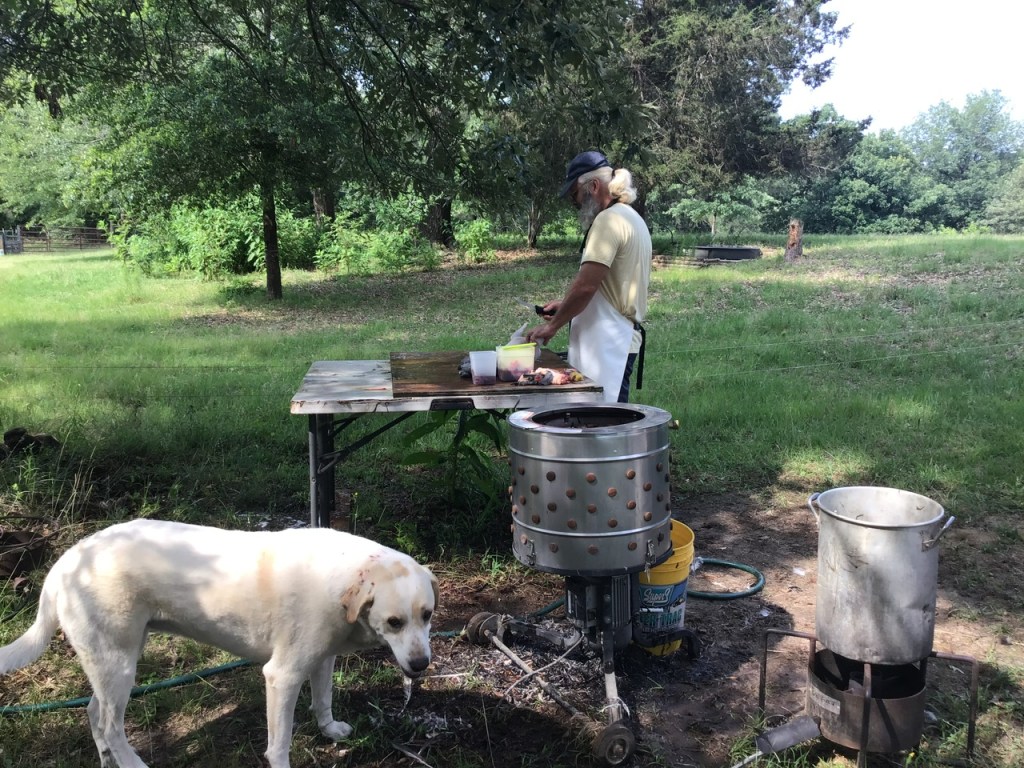
Here we have just ended the killing season. Hallelujah! A very unique sort of season to most—vegetarians certainly—but also to most of the western world, who no longer process their own meat.

This is an extremely challenging season.

For Hubby!

He has full and sole responsibility for the slaughtering, the gutting, the skinning, the scalding, the hanging, the butchering, the grinding, the rendering, the canning, the smoking, the curing, the broth-making.

WOW!

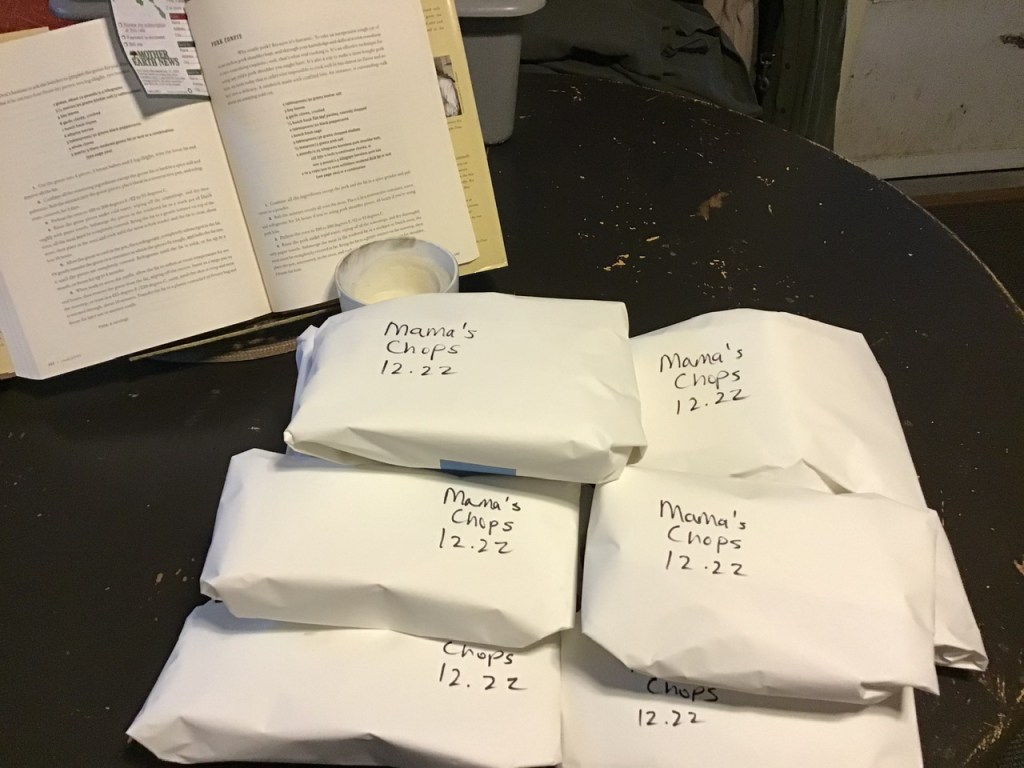
For my part, I do the packaging. Plus a bit of pâté, a smattering of curing. 
Not exactly an equitable deal.

Mostly it’s Delicious Season for me! Our small space is full of meats of many flavors—bacon, ham, pâtés, sausage, lamb pastrami and various other cures, beautiful chops and ribs and roasts, the aroma of broths and meats that he pressure cans, filling up every corner of our little cottage and wafting out to season the surrounding vicinity.

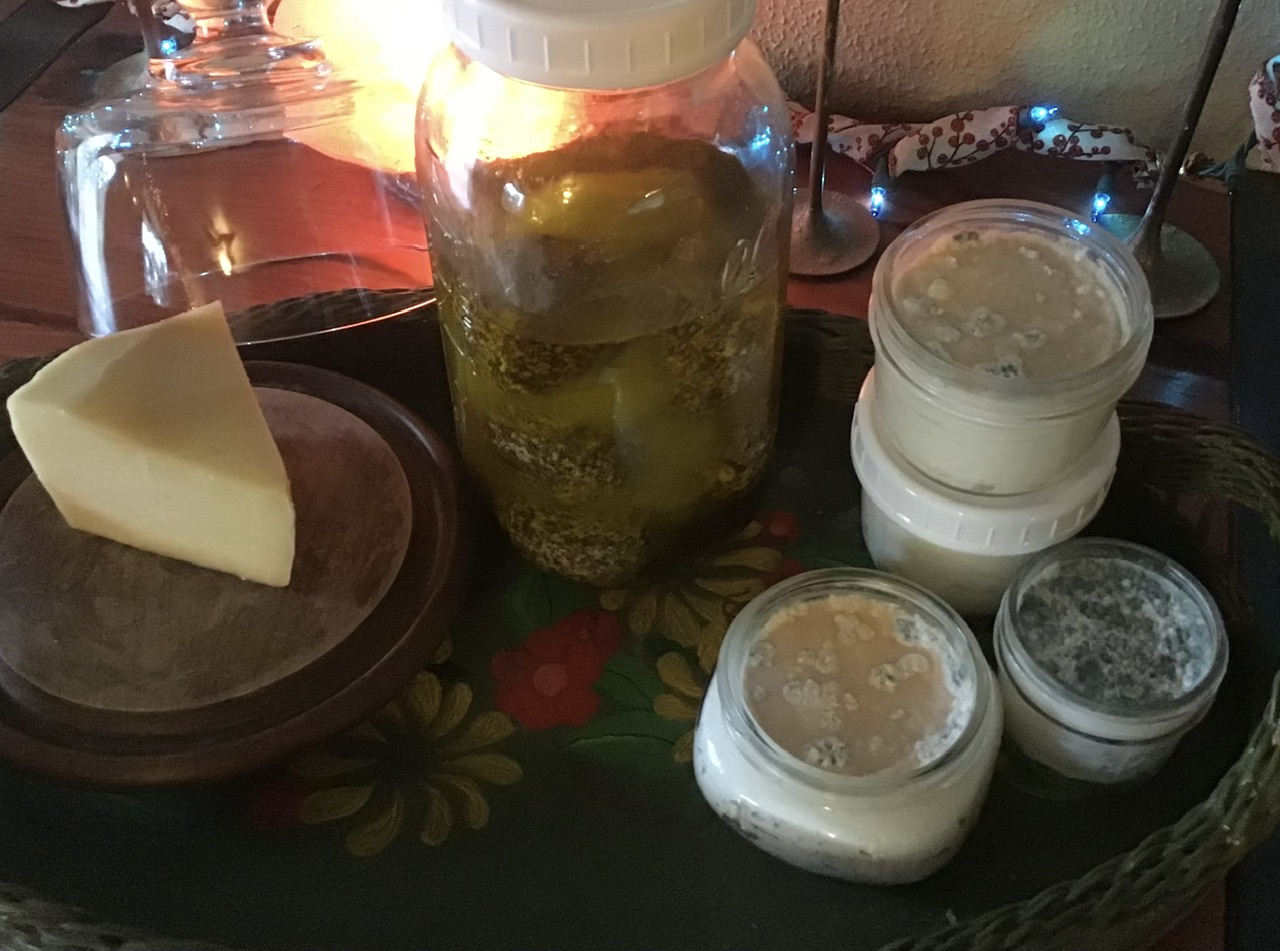
Cheese season has also just ended. Now my divas should be comfortably pregnant, their season also having shifted thanks to the services of our friendly neighborhood Billy (aka Roderick). That means our herd shall be greatly increased by early summer, gods willing. Roderick has since moved on to more fertile pastures in the next county.

While the Gouda-style and the Camembert-style are more difficult to make, the Mason Jar Marcelin and the herbed cheese balls aged in olive oil couldn’t be easier. A 3rd grader could do it!
Don’t let the moldy surfaces fool you, beneath their scary exterior these cheeses are quite mild and very tasty.

That means it’s also a season for some difficult decisions. We are at our ideal capacity right now. We don’t want to grow. We don’t want to get ‘into business’. Such an odd thing to reject, considering where we’ve grown up. It gets in the blood—this mindset/worldview—now what, what’s next, what’s new. Get big or get out! Where’s the market? Don’t you want to open up shop? Sell to the public? Get all licensed up and grow, grow, grow?

Oh, hell, no!

What if, we don’t care about all that? What if we are in a season of life where we care about quality over quantity? Others can, and will, ‘get big’ and in some cases (a precious few) more power to ‘em.

But, I’m in my Delicious Season. I have an extra roll around my middle to prove it. (So do Hubby and all the dogs and pigs and even the sheep!)

Nope, my main concern at the moment is, how delicious can I get delicious to be? It sounds decadent, I know. But, maybe further refinement, compared to mass production, could be a really good thing?

Quantity over quality—whether in words, or food, or strip malls, or entertainment—has not worked out too well for this world seems to me.

There was a time, in my peak ambition years, I did strive for more instead of better—more travels, more experiences, more friends, more leisure, even more work. My season has shifted. I definitely strive for better over more these days. What if I could make the most delicious cheese ever made in all the world, and only 3 people ever tasted it?

Fine by me!

Of course, then how would I know if it’s the most delicious? Maybe that’s not so important either. Maybe it’s sufficient that what we produce and process and serve is delicious enough to make all the hard work worthwhile.

We’ll be spending some cold days relishing in our Delicious Season, because right around the corner another season is waiting.

Bubba and Buttercup LOVE when it gets really cold! When it’s under 20 degrees F they get to camp inside under the kitchen table. 🤗
“But the hills that we climbed were just seasons out of time.”

Leap of Faith

Empire is blind. It is deaf. It is dumb.

Some say It’s on Its last legs. The ‘coming collapse’ crowd is growing, that’s for sure. I’m pretty sure we can confirm we’re no longer fringe.

“There are mighty forces arrayed against us. They threaten our liberty, our livelihoods, our families, and even, possibly, our sanity. We may find ourselves, if we are awake at all, resentful or even angry at the situation we find ourselves in. We may want to ‘resist them’. But how? Our governments, except possibly at a local level, seem to largely be against us. The corporations, as they always have been, are against us. The media…ditto. The institutions of civil society? Largely captured. Our faith communities? Well, maybe some hope there, but all too often, the same deal. So, what are we to do?”

Deep Resistance: Philosophical Practices of Sanity (Part 1) | winter oak

I don’t believe that, exactly. Our beloved Institutions have always been in service to Empire and I believe Empire is now in the process of refining itself, shedding its skin in order to reinvent itself. Empire is like the Ouroborus, eternal and regenerative.

These opinions may look opposing at first glance, but in fact they are complimentary.

I believe Empire is the rolling stone on which the Individual’s sword is sharpened. We will never be without It, we have never been without It.

That does not mean resistance to Empire is futile. But it is painful. From happy slave to disgruntled dissident is a long and lonely journey. It has to be.

Empire’s tactics evolve, forcing the Individuals’ along with It. Not in a David vs Goliath manner, but more like in a perpetuating Gordian Knot. We need each other too much, we are not who we are, one without the other.

For as long as Empire has existed, the Individual has fought to escape it.

He has fought so hard against It, that he has become It. The fight, or dance, however you choose to feel it, has become excruciatingly intimate over time.

At some moments in the cycle, perhaps all it takes are whips and chains to keep the system of Empire churning. In current times It is far more sophisticated. It wants willing and happy slaves, that’s what helps the Master slaves sleep better at night. Mental slavery, debt slavery, touchless torture.

We each must choose. The Individual must have free will.

It’s not that one is alone on the path away from Empire. There are a great many unhappy slaves. You will find them everywhere along your course, which has existed for as long as Empire.

“The classic example of ideological motivation is the ‘work ethic’; the idea, which has driven the workers of the West for the past few centuries, that we are morally obliged to work for the system for our entire lives so that, perhaps, one day, we will no longer have to work. A subtler modern example of ideological discipline might be ‘team spirit’ — the means by which loss of purpose, dignity, joy and freedom at work is compensated with group-bonding. “I didn’t agree with the purpose of the war; I was just looking out for my buddies—applies equally to the army platoon, the office department and the school class.” 33 Myths of the System by Darren Allen

We learn in the Empire’s schooling that the opposite of pleasure is pain. Furthermore, they teach us, that as a species we inherently seek to experience pleasure and to avoid pain.

And yet, sado-masochism is visible everywhere in our cultures. There are those who actively seek pain, and a great many who experience pain, and still go back to do it again, and again, willingly. Mothers and soldiers come to mind. Giving birth is rarely described as pleasurable. Soldiers rarely relish in their battle fatigue. Are we to believe they are all masochistic?

What’s missing here? Perhaps the opposite of pleasure is not pain exactly, but a specific kind of pain, the kind inherent in seeking virtue. Why do we not avoid this kind of pain as well, as a general rule?

The Individual’s path is painful because virtue is the opposite of pleasure, as Empire is opposite of the Individual.

That may sound like a notion of the Stoics, yet I’m definitely Dionysian by nature. It is not for the backache or the sweat or the frustration that I garden. It is for the fruits of my labor. It is for the care I’m able to show to the soul and soil and the hope that my efforts grow beyond my finite existence and wisdom. It is the pain of true ‘virtue seeking’.

I want them all, all my fruits, not out of selfishness, but to distribute at my preference and at my leisure and not according to the dictates or conveniences of Empire.

And yet, Empire is not my enemy. We may fight, or dance, but I do not wish Its collapse. Specifically, I wish It to continue to increase the virtue of the Individual. Even though I know that requires significant pain.

I have been amazed by the incredible virtue of some of those I’ve found along my Individual course.

The following comes from the latest post of one of these Virtuosos, Gavin Mounsey. I like Gavin not only for his beautiful photos and keen mind and wholesome work, there are many others who fit that bill. What I find most unique about him is, he doesn’t bypass the dirty work. That is rare in my experience. He stays focused on the good, on the light, on the solutions, but not at the expense of the hard truth. It’s a tough balance I know.

24 Reasons You Should Start a Garden in 2024

The magic of the bumblebee, amazing!

“Taking steps to embrace food sovereignty and a path that consciously nurtures symbiotic relationships are ways of living that are synonymous with a more happy, passionate and creative life. As our basic survival needs become fulfilled through our own “hands-on work” and skills, it frees up a lot more time to pursue the things we are truly passionate about in life. Embracing that self-sufficient lifestyle is so much more fulfilling than working ‘for the man” getting a pay check of digital fiat currency, trading it with 5 different middle men to get our food, water, energy and fulfill our transportation needs. It really does improve not only the quality of life, but the perception of what is meaningful in one’s life. It effects our very psychological foundations as we rediscover the simple joys in life. It helps us move away from the hyper-distracted, over-stimulated, digital chemical culture that has built up around us and allows us to let go of greed and materialism by truly coming to know the beauty of planting a seed in the soil, nurturing it to grow, and reaping what we sow.”

“Now is the time to reaffirm our alliances with the living Earth, to nurture new symbiotic relationships with the soil, people, plants and fungi in our local communities. Human empires rise and fall, and history teaches us that when they fall, it is those that know how to grow/forage for their own food, medicine and preserve it, that survived.”

“We can create oasises of health, resilience, and abundance in each of our communities… we can become the solution, break from dependence on centralized systems and help others to do the same. It begins with the soil and the seeds and it evolves into nurturing symbiotic connections with those whom we share our communities with. Each of us can embody the medicine that the land and our communities need too survive and thrive though the tough times ahead.

“Thus, each and everyone one of us should now be focusing our efforts on honing our skills related to food/medicine cultivation, preservation and developing a reciprocal relationship with the land where we live.”

“Saving up money for a ‘rainy day’ is not a solid way to prepare for emergencies because money has no innate value. Seeds, good soil, gardening skills, increased health/immunity, preserving experience and the symbiotic relationships and friendships we forge with neighbors and the broader community we are a part of (through sharing our abundant harvests and seeds and helping others to grow regenerative gardens) are however things that have innate value.”

There’s so much inspiration in his excellent article, many great reasons to start a garden, but also much information about all the rewards gardening reaps.

Cheers to a year full of leaps of faith!

What Is Retirement?

Retirement is Unabashedly Selfish.

As the entitled, privileged, white western woman I identify as, I now have Hubby all to myself.

Now his best, his most creative, his most talented and productive self gets expressed here, at home, instead of off in some far away place for some unknown people.

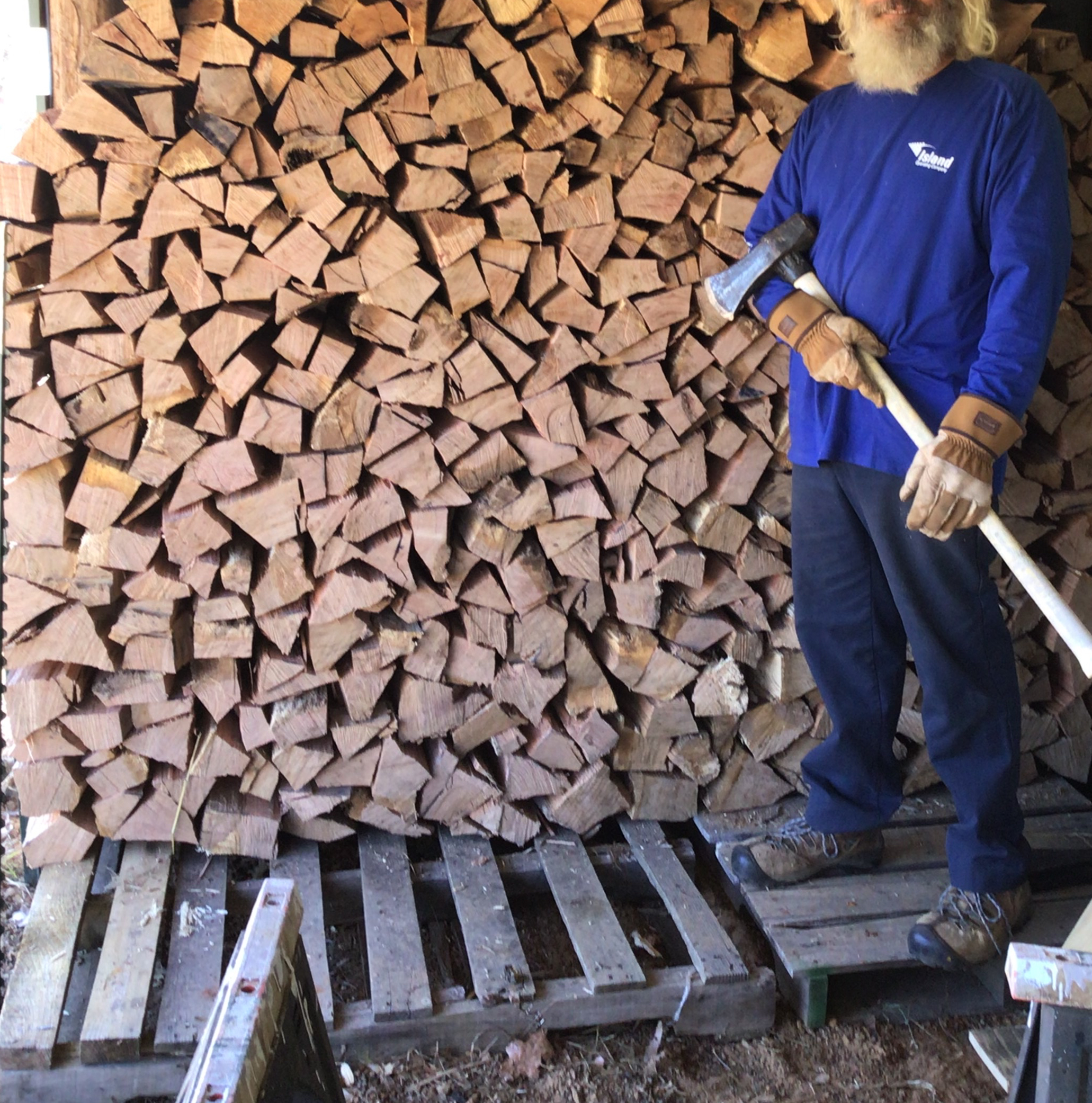
“Every man looks at his wood pile with a kind of affection.” ~Henry David Thoreau

The benefit for me has been huge, off the charts. Most recently in the form of a beautiful Christmas gift. We’ve spent most Christmases of our 20 year marriage apart, usually with Hubby working offshore. This never felt like such a big deal to me considering we don’t have kids and we are neither religious nor consumer-oriented.

It was a pretty good deal actually, because he got bonus pay and we got to feel generous at the same time—offering the holidays to the Dads among his co-workers.

No matter how good of a sharer one is entrained to be, especially I guess as a selfish, entitled, privileged, white, western woman, giving the best years of life to ‘the system’ is not nearly as fulfilling as it might sound to some.

Like most modern Westerners we worked hard for many decades—we devoted years of education and training in order to fulfill our function in the economy and we played by the social rules and did some right investment things and we feel we’ve earned our relative liberty.

We’ve bought our freedom, so to speak. For as long as that lasts anyway.

We have earned our right to withdraw our energy, time and talent from an insane system earlier than scheduled. A ‘gift’ hard-earned and well-deserved, I’d say.

Many years ago I was told that “Americans live to work, while the French work to live” in an attempt to describe the comparable ‘work ethic’ of these two cultures. In general, I’d agree, at least back then. Certainly in past centuries Americans have prided themselves on their reputation of being hard workers, with high productivity, and all those industrious accolades that go along with that—like ingenuity and resourcefulness and determination. Now we desire to benefit from those hard-earned character traits.

Retirement is Redefining Fun

I preferred the French style of cultivating more joie de vivre and laissez-faire attitudes, but not just for the more obvious reasons of the pleasure and sensual rewards of the good life. I also saw how unhealthy it is to encompass so much of one’s raison d’etre —self-esteem and community connections and social structure and really most aspects of life —in with one’s professional occupation. But this is what the majority of us have been trained to do.

“Because work is an activity in which all initiative and energy is extorted from the individual in order to generate profit for someone else, and because it is unbearably unpleasant, futile and barren, ‘free’ time looms before labour as a garden paradise. Fake sickies are then engineered and labour-saving devices purchased to extend the Pastime Arcadia by a minute or two. But because access to wild nature and genuine culture is curtailed, weekenders are forced to buy their pleasure as they buy everything else, from huge corporations which, to turn a profit, appeal to the lowest common denominator of its demographic, thereby producing, in lieu of satisfying art, addictive titillation and anxiety. In other words, once we have freed ourselves from work, we then have to submit to a world made of work.” 
33 Myths of the System: A Radical Guide to the World by Darren Allen (2021)

Leaving all the variables aside—like retirement wasn’t exactly intentional and was certainly untimely, yet irresistible, and as yet permanently untenable—the rewards still far outweigh the risks.

Retirement is Reprioritizing.

The old adage ‘time is money’ casts an evil word spell. In actuality, time is precious, as money is profane.

“The second new technology of control invented by the Greeks , was MONEY — an impersonal, indestructible abstraction which rendered people, objects and, eventually, the entire universe as a collection of homogeneous quantities, things which could be bought and sold. It was thanks to the attitude that money engendered that Greek philosophers began to view the entire universe as a composite of discrete, rationally-apprehended granules, or particles (a.k.a. ‘Atoms’), and ideas (or ‘platonic forms’), chief among them, the tragic atom—cut-off, isolated, alone — we call ‘man’.” (D. Allen)

When man is no longer ‘trading hours for a handful of dimes’ to borrow a Doors’ passage, fantastic things can occur. I’m not saying they will occur, only that the potential is created that they might. That is, a space where no space existed before, where money’s place in time is squarely upstaged by something infinitely more appealing.

Some folks plan multiple decades for retirement only to be overwhelmed by time’s infinity once they reach it. They succeeded in their dream. Right?

Whether they scrimped and saved or invested and won, still they cling to the ‘time is money’ fallacy and once retired spend much energy agonizing over their dwindling resources and increased hours to fill with distractions—some new fanaticism —be it sports or politics or shopping or so, so many other means for their entertainment, that is, their entrainment. Your money and your mind.

They’ve been so acclimated to the Earn-Spend Ferris wheel of existence that time shifts almost instantly from precious to perilous. The ‘never enough’ crowd, born and bred to earn and burn, to forever cast the pearls of their finite energy into the infinite abyss of acquisition.

Where to burn, once that ride threatens to end? Could a new retirement hobby ever be enough?

Or will it take a new lifestyle? A new way of being and perceiving in the world? Maybe even re-integrating the simple satisfaction of chopping wood and carrying water? After all, why pay a gym membership?

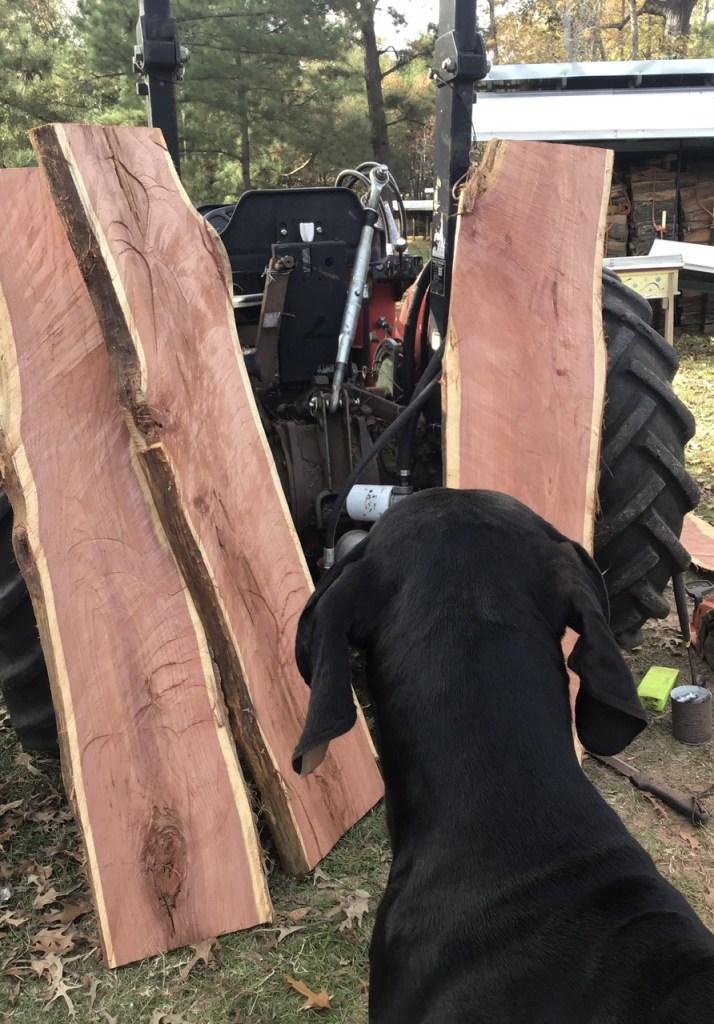
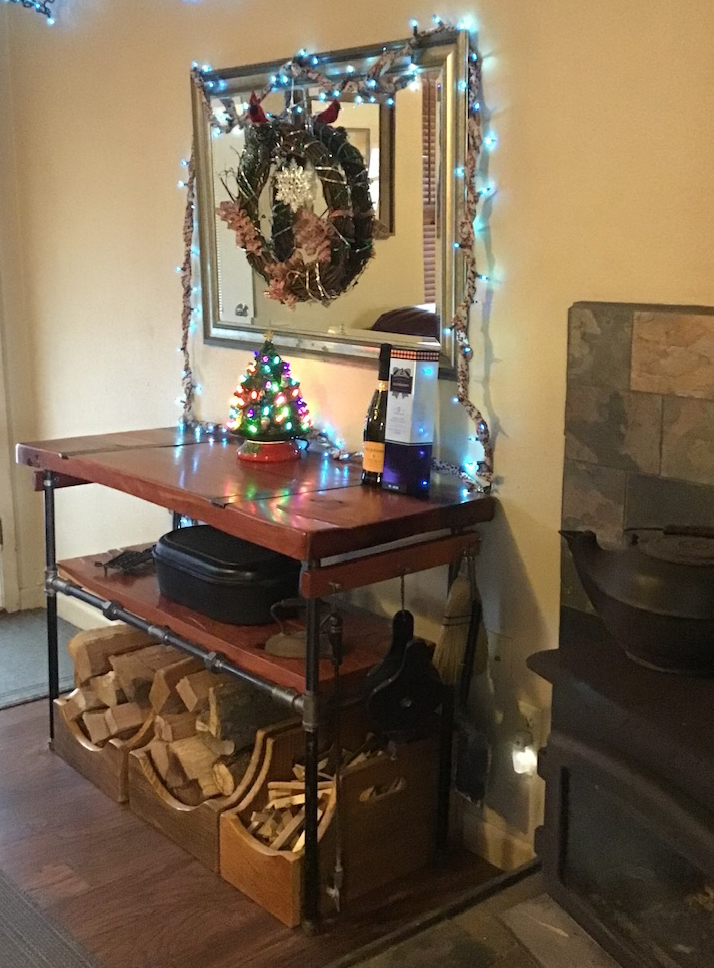
Or, as my beautiful Christmas gift suggests, maybe making furniture?

As best we could, with limited knowledge, skill, money, we set ourselves up to succeed at this moment, and against the odds. Will that be enough? There are no guarantees.

But, the meaning of ‘succeed’ has shifted with the territory. It’s our own meaning now. No masters above, no slaves below. It’s working at our leisure, at our pleasure, on projects and activities that reflect who we are, what we want out of life, how we envision a better future. It’s personal and imperfect and it’s the way we are trying to practice more than we preach.

Retirement is spontaneity. After having planned ahead.

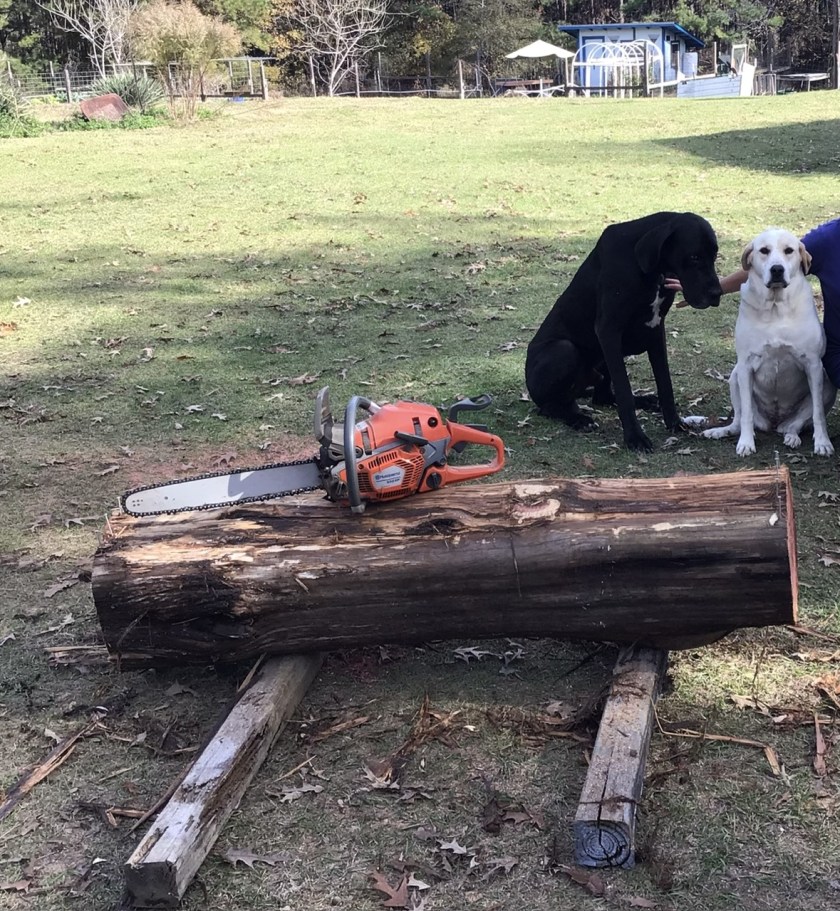
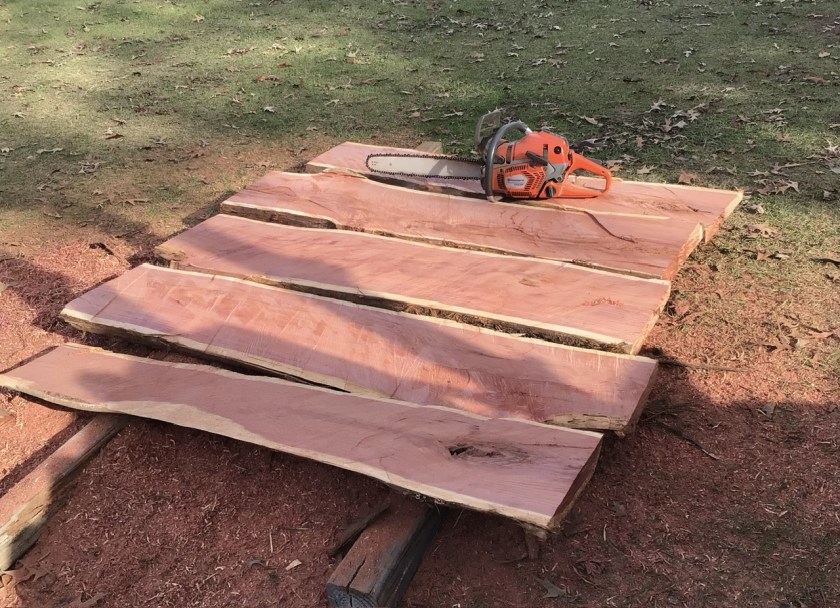
Yes, it was a tornado that took down that cedar, and many other trees as well. Yes, our tools are still inadequate. No, we don’t have the money to ‘upgrade’. But the financial restraints require creativity and frugality, which we’ve cultured over the decades. And the self-reliance fosters self-confidence, which we’ve been diligently cultivating for decades as well.

If the best things in life are free, what to do with our freedom?
Do we spend our precious time perfecting the dance of life, or perfecting our costumes? Do we spend our greatest efforts making it easier for ourselves to play, or for others to watch?

Perfection is the enemy of the good. In the world of corporate work, perfection is the goal. Perfection is the construct upon which all human effort is poised. Your regenerative human resource creates their sustained capital. Perfection in the eyes of the corporate beholder is maintained through mechanization, that is, mechanization of the resource, be he human or time, quotidian or universal.

Retirement is unstructured.

Our only intention now is to never go back. It is a soul-sucking system, not just a time-sucking one. I’d say that’s why so many don’t get out sooner, or whenever they have the chance—their souls have been too drained already.

Mechanization of the body or soul is equal under the laws of the system. But, unstructured time allows plenty of opportunity to de-mechanize.

What is one man capable of without the lifetime expectation of the system? Without the chaotic pressures of the market? With just a bit of time and skill and opportunity?

That’s what retirement should be, according to me. The freedom to be unpredictable and unperfectable. The freedom not to be adjusted or tampered with anymore in order to support a slippery system we unwittingly inherited.

“Most people do not know what to do with free time and when it appears they feel only an anxious need to consume corporate fun or, at best, cultural familiarity.” (D. Allen)

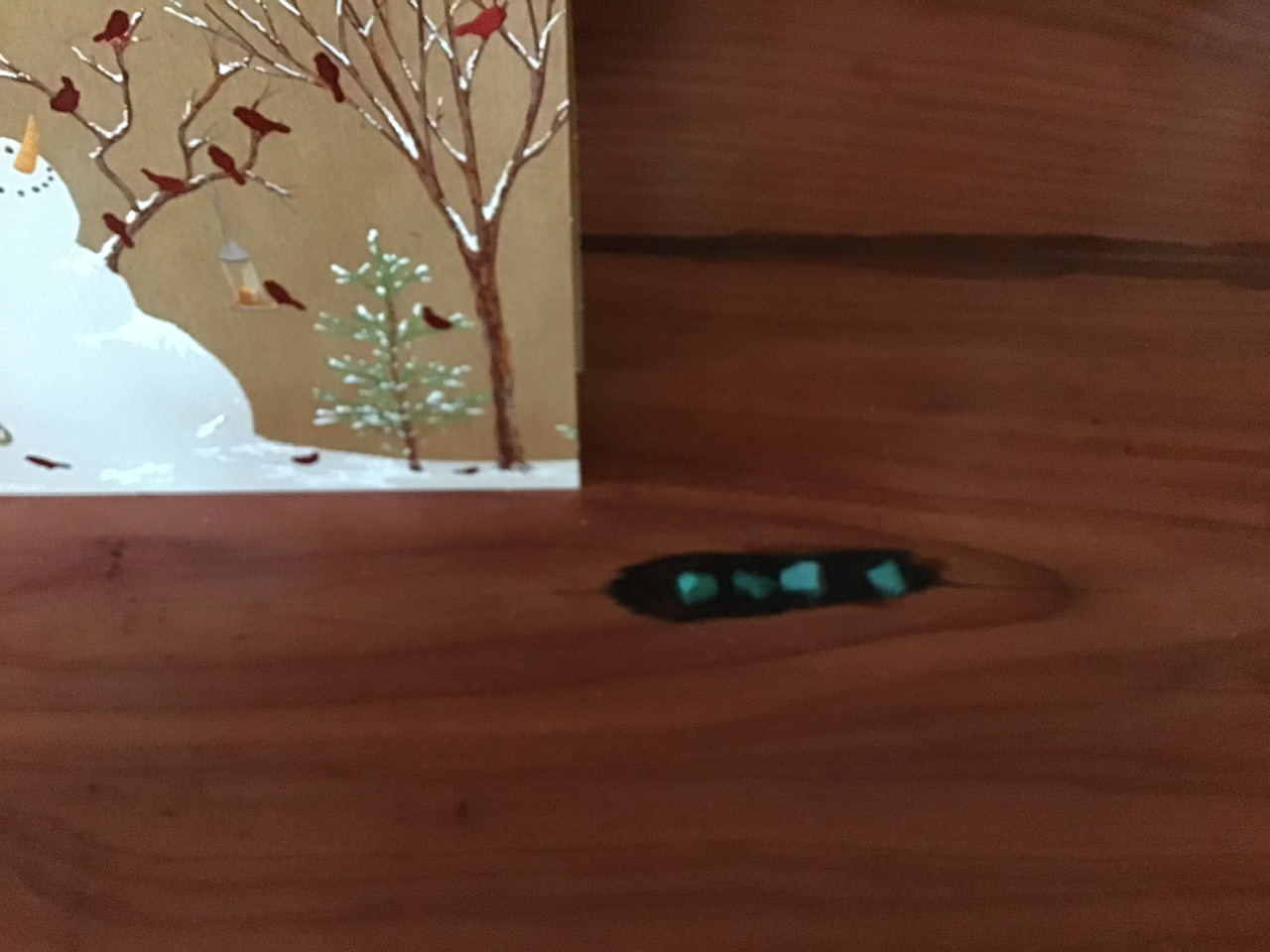
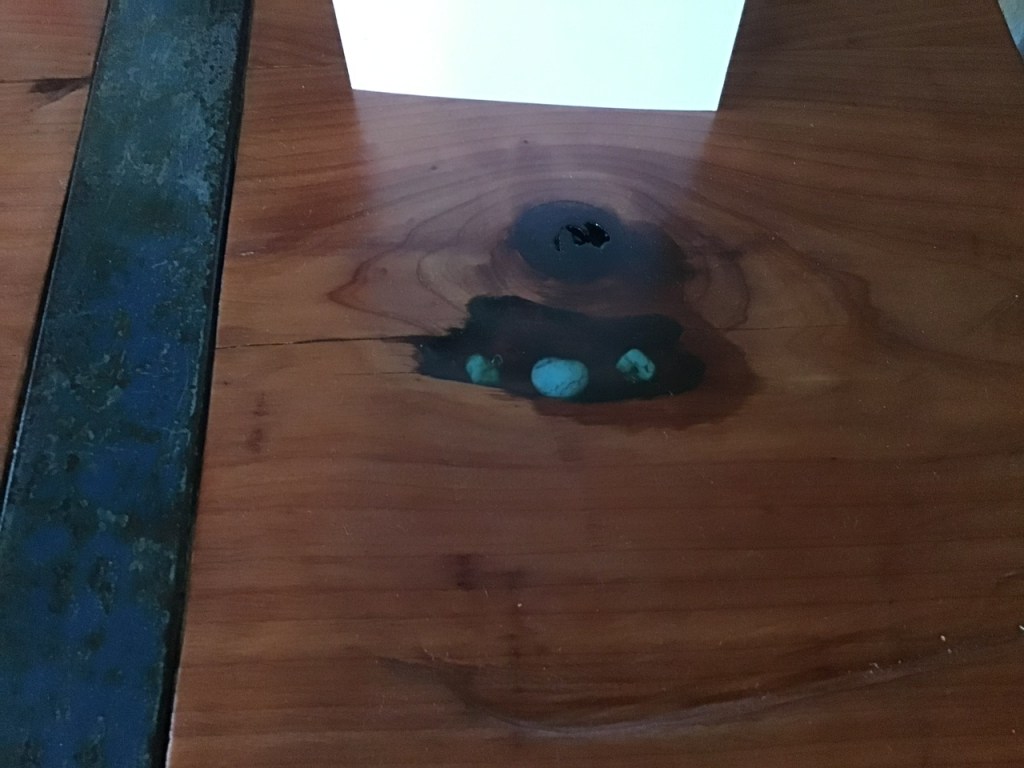
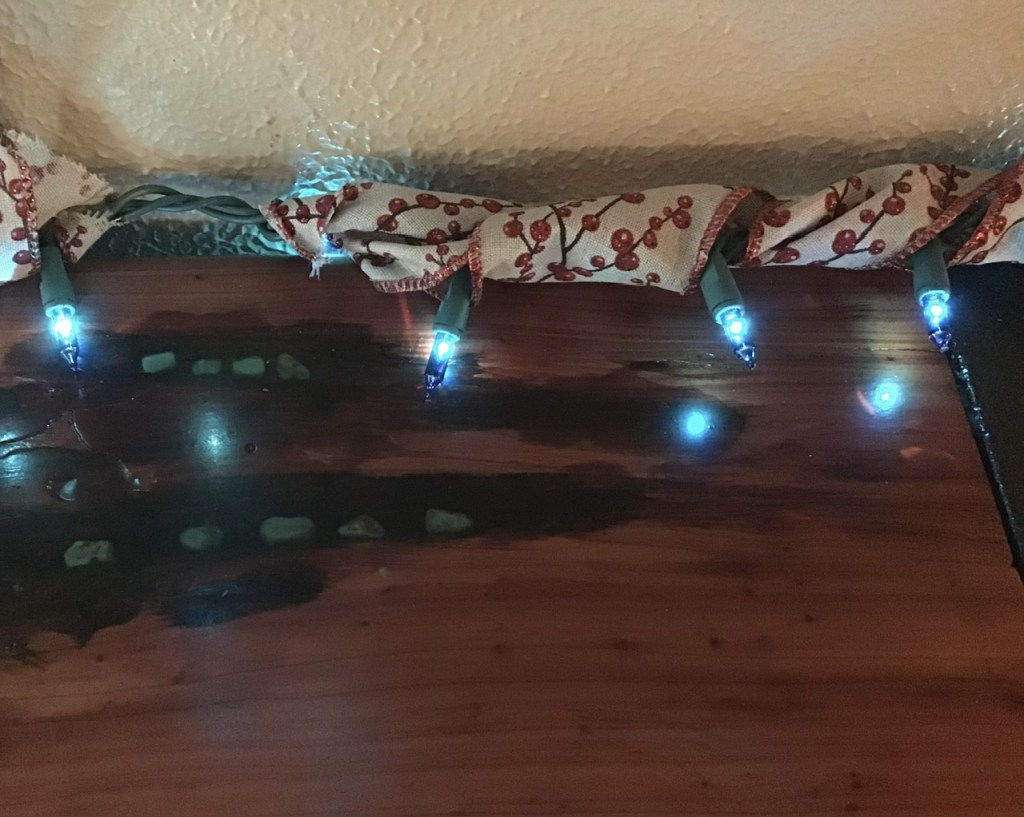
A great number of disjointed fragments came together to make this whole—including a tornado, a scamdemic, a hand-me-down gift of turquoise stones, a random forum post about ‘steampunk style’ and a lot of time, and desire, and a good bit of skill—none of which had anything to do with me directly.

I only breathed just a hint of enthusiasm at just the right time and voila—he has crafted a unique treasure that will forever recall the transformation of a painful memory recast into magnificently unique beauty, form and function.

The deeper fissures in the wood filled with lovely turquoise stones.

If it’s the only piece he ever creates, I am over-joyed! If it leads to a hobby that fills his desires, I am thrilled! If it leads even further, to actual work, like, for others, well, maybe, I’ll be forced to pull that Retirement is Selfish card again.

Happy New Year, y’all, thanks for stopping by!

Homestead Happenings

Wow, I’ve posted no update since the end of August (aka Late Swelter Season). Now here we are already well into Weather Whiplash Season, my how time flies!

This post we’ve got lots of happy snaps, the usual weather bitching, some cheese boasting, and long laments about our dear Shadow’s woes.

Notice the band-aid on his ear? Useless.
But, apparently we needed to learn that the hard way.

Sometimes time flies, but when things get really bad, it crawls. Especially when it goes instantly from nothing much to Holy Shit!

And as bad as it is, in the big picture the weather whiplash is still way worse. So, best get that report out of the way first. No rain, in our rainy season. No real season at all, just a rainless rollercoaster, and not nearly as fun as that sounds.

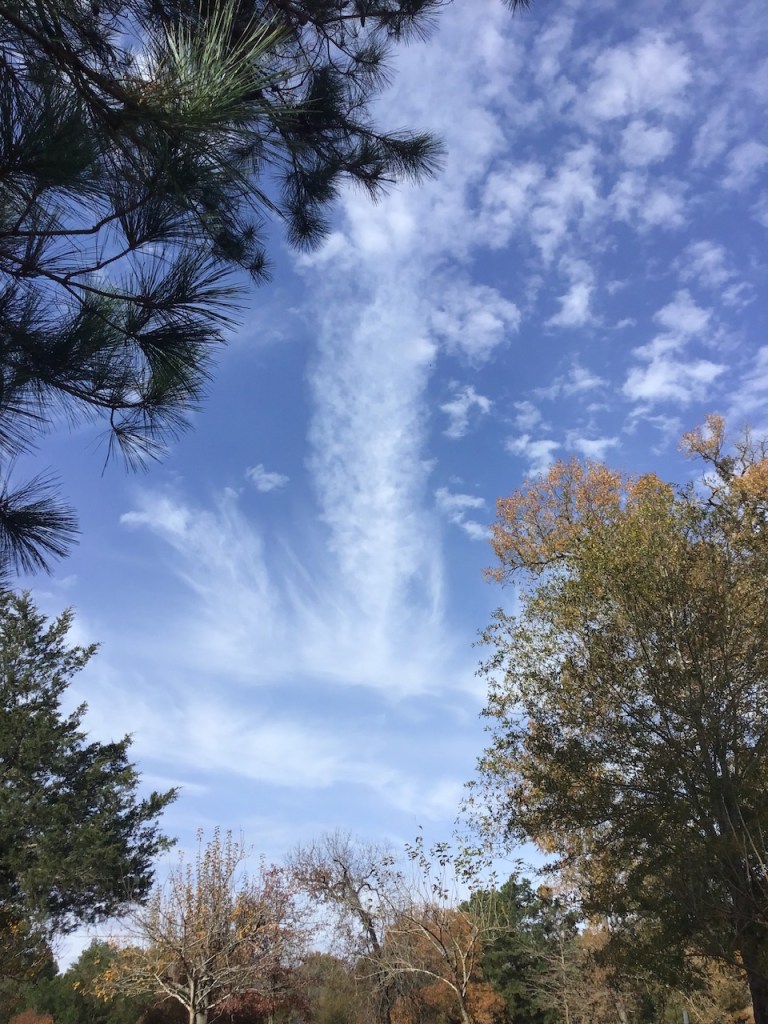
Not natural clouds, folks! And soon the kids won’t be able to see any difference, though the atmosphere has significantly changed in the last two decades, as the weather has changed, as they lie about their climate scam, and charge ‘carbon taxes’ to ordinary folks to pay for their madness. Makes me SO FURIOUS!

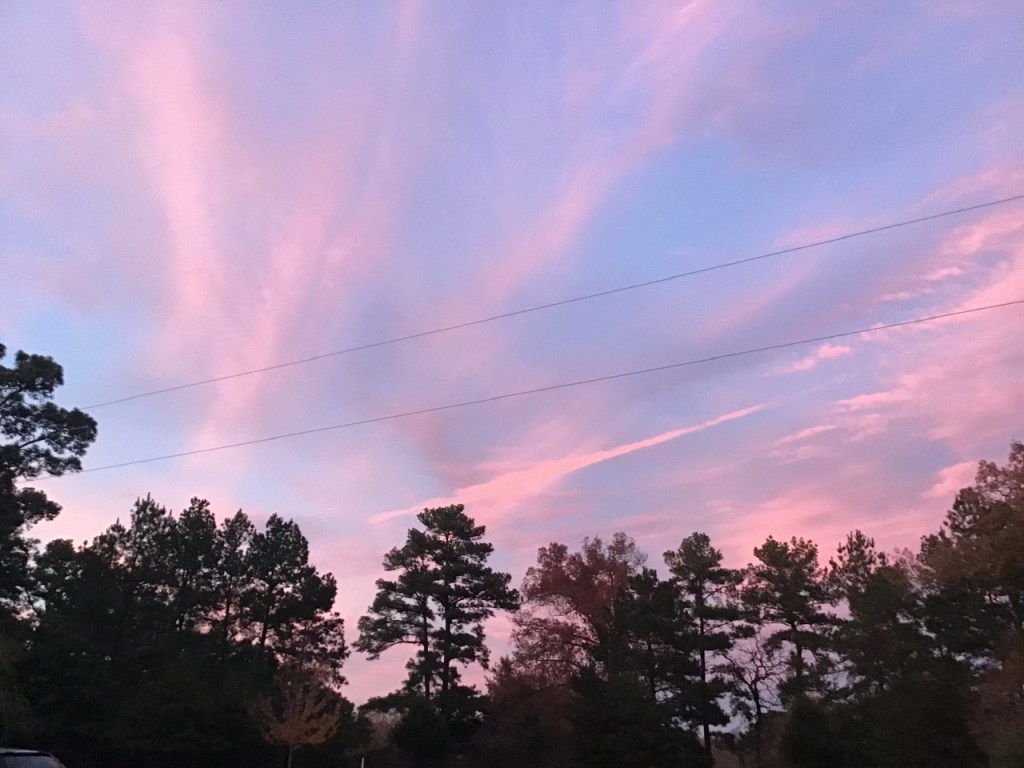
I could be taking such photos on a regular basis, but it gets old. And then someone could comment on the ‘pretty’ sunset. 🤯. Argghhh, Noooo! Can’t someone please make it stop?!

No? Ok, moving on.

More bad news. We’ve had the most prolific acorn year since we’ve been here, that’s about 15 years. Sounds like good news, I know. It is good news, in many ways. The pigs are getting fat, the sheep and goats are gorging. Literally. And that’s the problem. One of the young twins gorged himself to death. It was terribly sad. His little stomach ballooned up as if his body couldn’t contain it anymore and he was suffering for hours.

I’d read baking soda could help, but it did not in this case. Perhaps it was too severe. I also read there’s a surgical procedure which would alleviate the pressure in his gut, but I don’t have the confidence to perform that myself and the vets around here don’t treat goats. I held the little guy for a long time, trying to keep him warm and help him feel better, but we lost him. Oh the perils of animal husbandry!

Another problem of the acorn bumper crop is much less severe. We live under a large oak tree and have a metal roof. It’s been rather windy lately and once those nuts start shaking loose, it’s kinda like the sky is falling. If our veteran neighbor with PTSD comes by I expect he’ll be darting for cover quick, because it sounds eerily like machine gunfire when they get popping off the roof.

The acorn perks include some plump pigs and happy goats, two of which I’m still milking, which is making for some very tasty cheeses.

Under the oaks: happy pigs, sheep and goats.
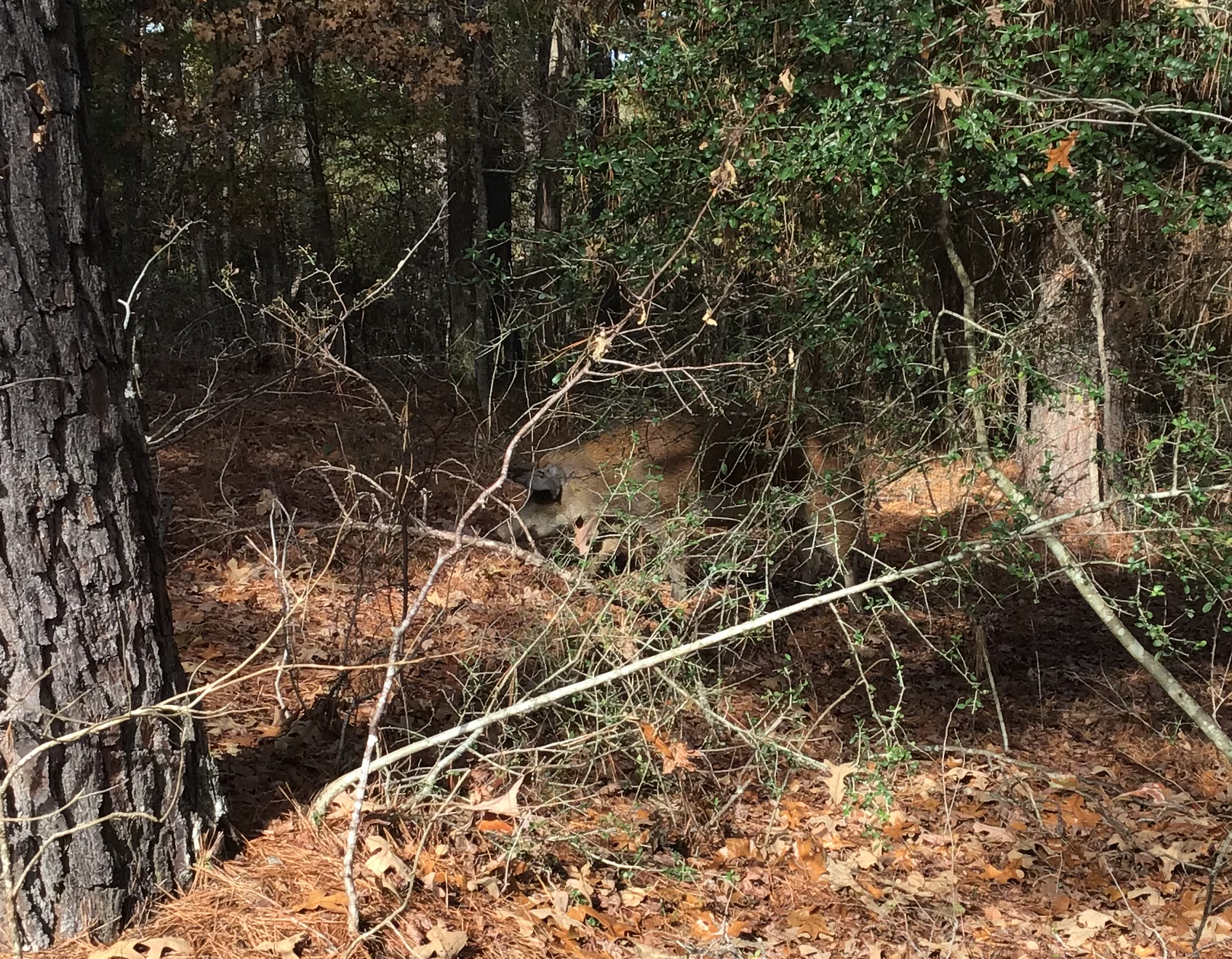
Can you spot the perfectly camouflaged foraging pig?
Happy goats make for delicious cheeses.

I’ve gotten so successful I’m confident enough to get very daring!

Chèvre wrapped in sassafras and fig leaves for aging.
More aged chèvre—the top log is covered in dried goldenrod leaves and flowers, the bottom one is wrapped in honeybee comb.

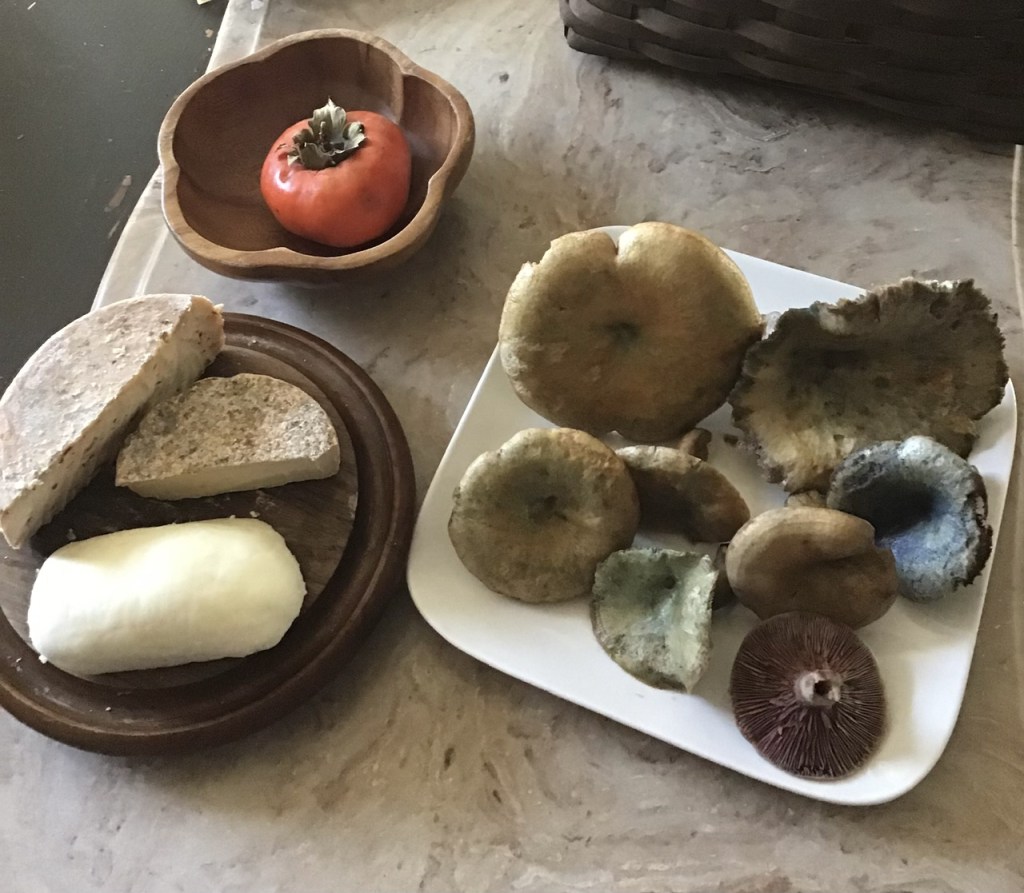
Our fruits were nearly non-existent this summer, but we did just get our first ‘crop’ of persimmons, a whopping 5 of them! A couple of years ago I harvested lots of them from a neighbor’s tree and they were delicious; that was the first time we’d ever tried them.

Fuji persimmon

We planted both varieties, but the American variety takes much longer to start producing fruit and the fruits are generally smaller. These pictured above are Fuji, quite different, harder, larger, less sweet, not at all astringent, and also very tasty. The closest in taste I’d say would be a very ripe mango, the American varieties are especially super sweet, like jam.

If you’d like to learn more about this fancy fruit, here’s an enthusiastic lesson from James Prigione.

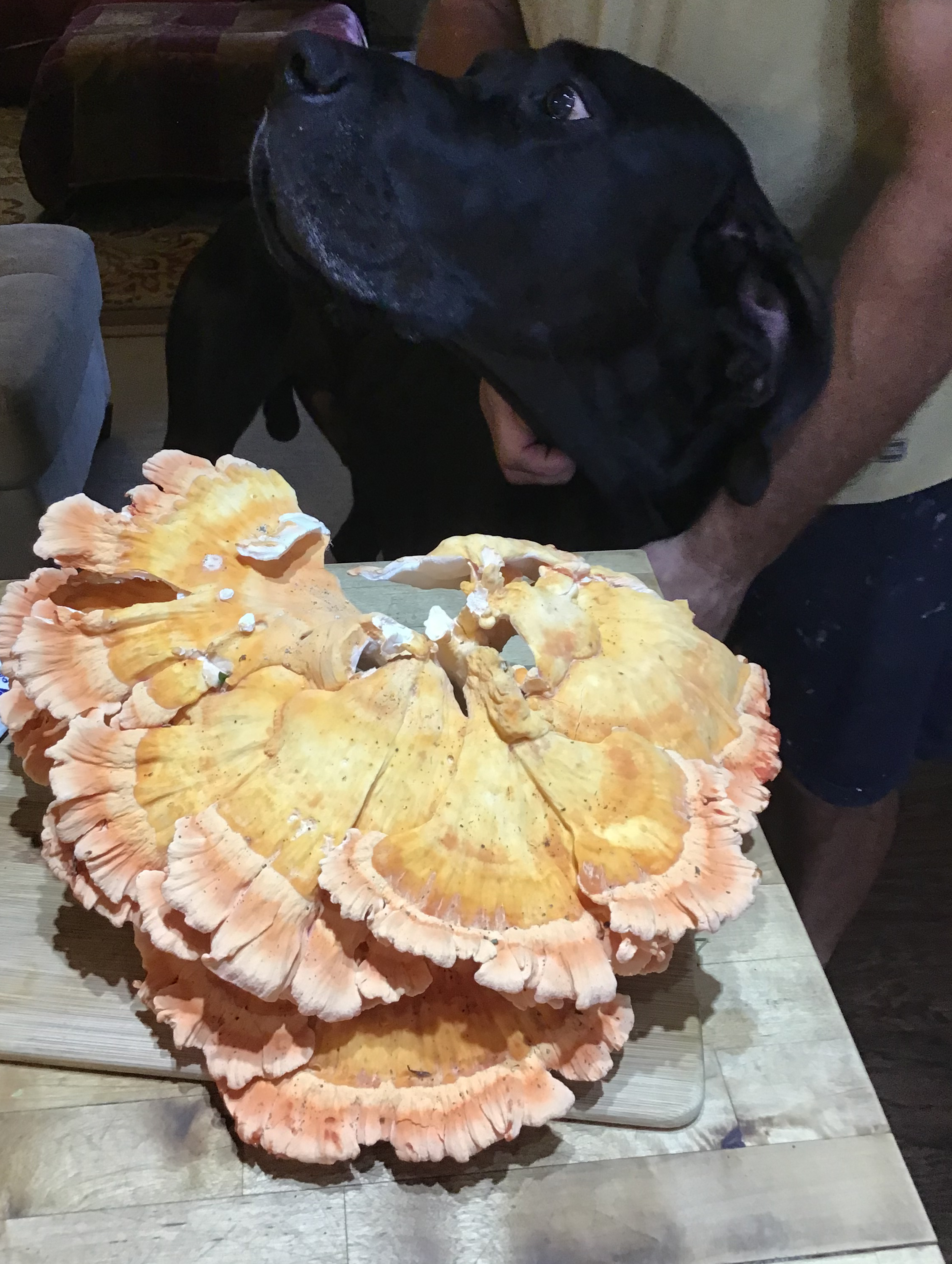
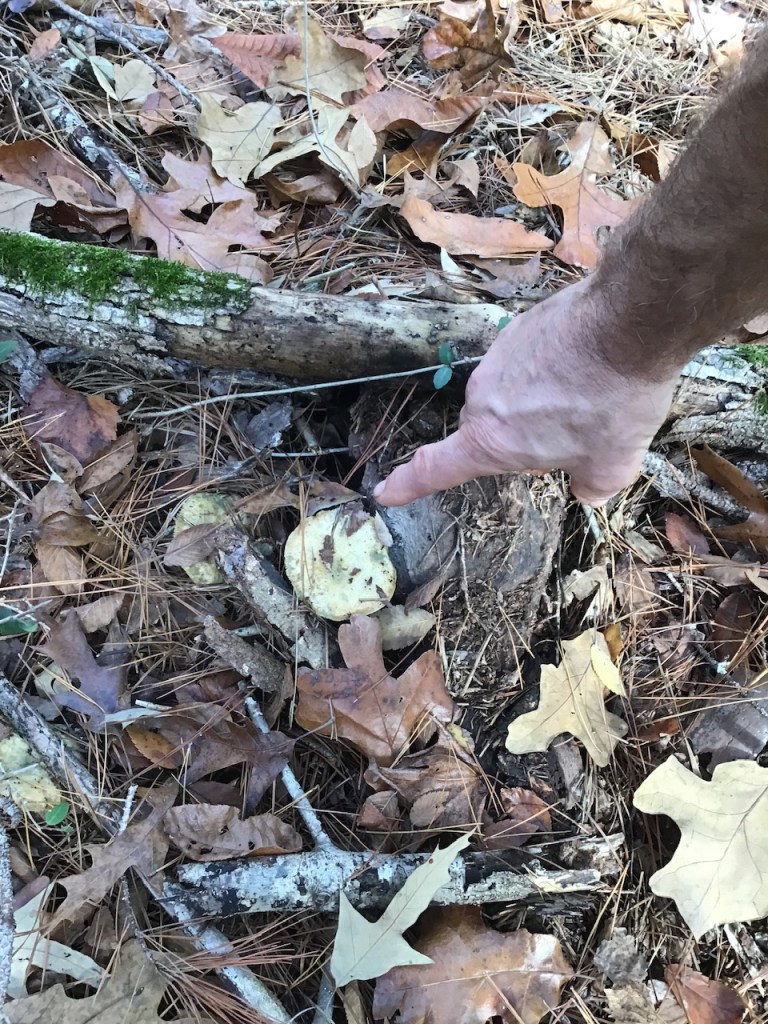
We’ve been getting a few mushrooms, but the lack of rain is certainly hindering our foraging experience. A friend brought us a huge chicken of the woods, our first time trying it and it was excellent.

Laetiporus sulphureus

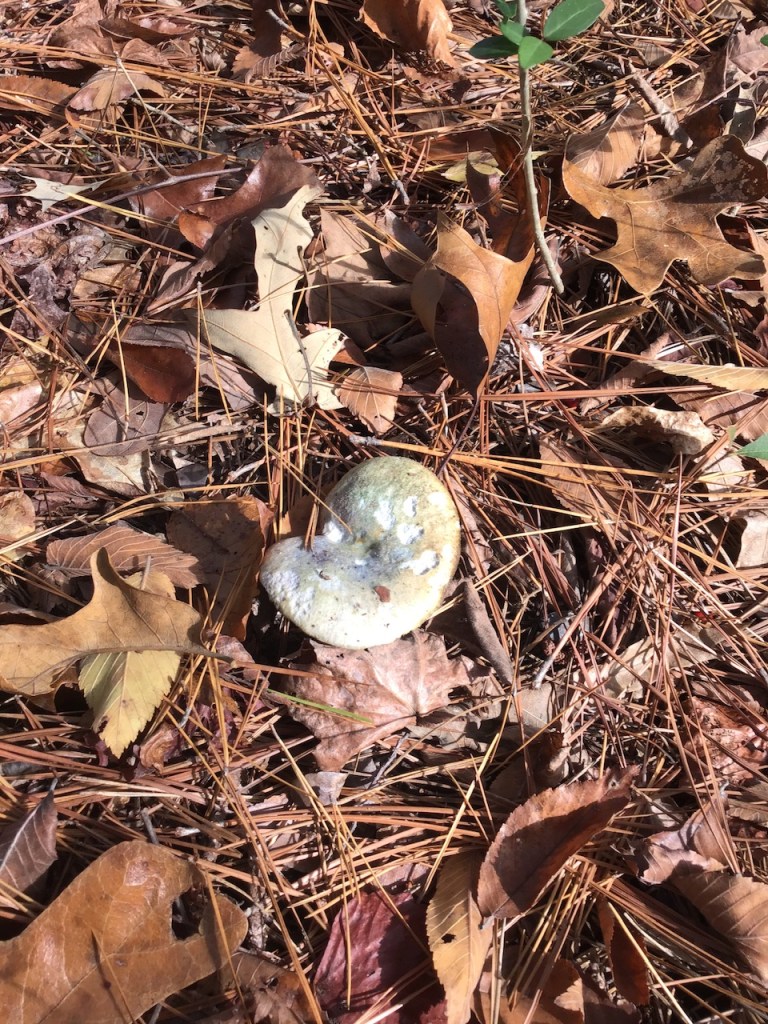
The lactarius paradoxus are hard to spot and deceptively unattractive. In fact, they are exceptionally tasty and have a longer shelf-life, and of course a different season, than our favorite chanterelles.

Even while foraging mushrooms it seems the grass is always greener on the other side of the fence. 🤔

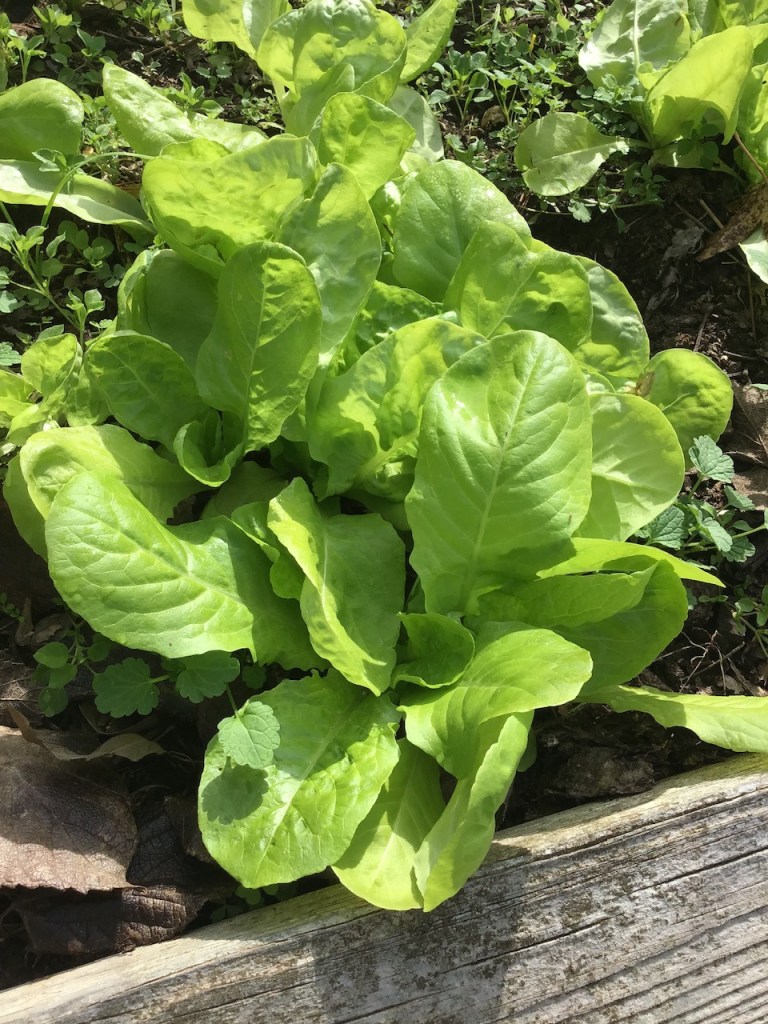
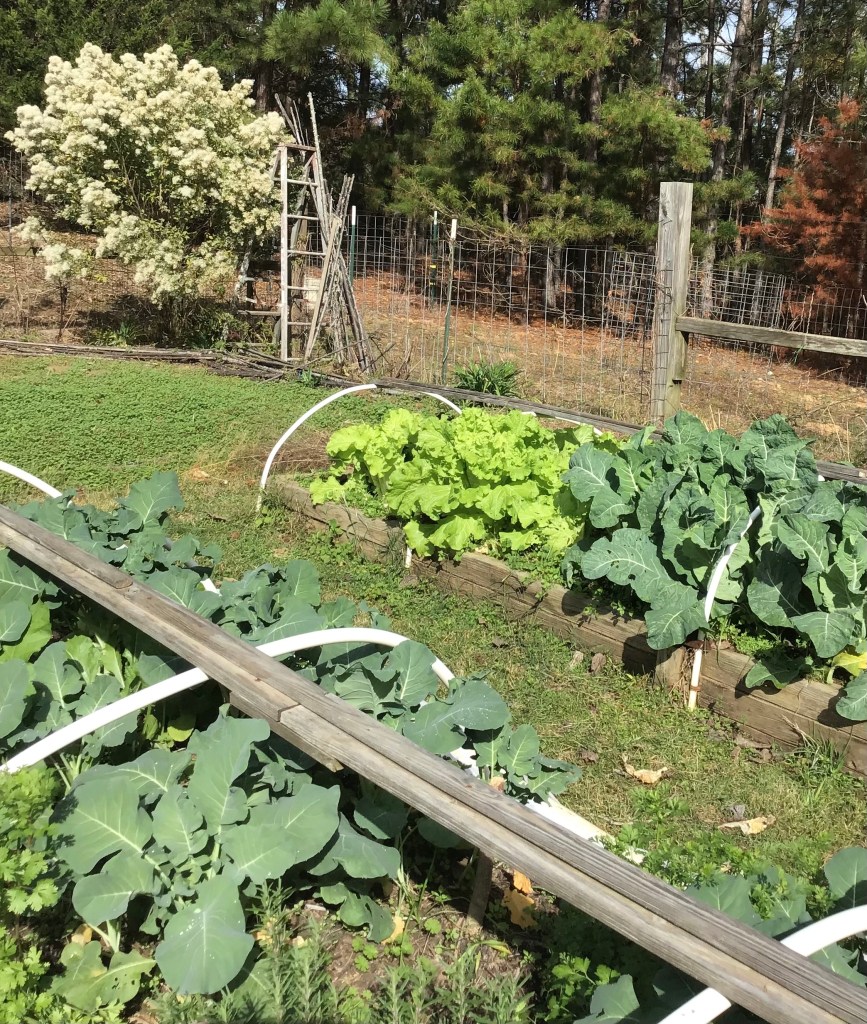
In the garden we do have two nice full boxes of varied cool-season produce we protect from the frosts with row cover cloth. In addition to lettuces there’s some broccoli and cauliflower, spring onions, cilantro and parsley, radishes and Chinese cabbage. We’ve also got our garlic already shooting up and a couple rows of turnips started for the pigs come spring. Our neighbors are now buying eggs from us, so we throw in the surplus veggies when we can.

3 of 6 colonies survived our terrible summer. The hives are a bit hodge-podge at the moment while we do maintenance on them.

The honeybees are occasionally making an appearance, though since the frost there is little for them to forage. One of their last favorites is another one considered a ‘nuisance plant’ by the ‘experts’—it’s called tree groundsel and it’s pictured after the frost in the right photo above, in the background behind the boxes. Quite a lovely late-season plant, if you ask me.

And approaching it before the first frost sounded like the buzzing metropolis that it was! A last hoorah for the bees.

So we come back to the current day and our crazy Shadow drama. It all started with a tiny Band-Aid.

He’s got the ear-span of a small plane and we have the living room space of its cockpit. When he shakes his head he invariably hits some piece of wall or corner of furniture with his Dumbo ears and it’s actually pretty amazing it didn’t happen already: a tiny gash on the tip of one ear that he doubtlessly cannot even feel.

Forever happy and oblivious

We were racking our brains for several days, trying everything we could think of and just digging ourselves deeper. One tiny failed Band-aid led to bigger Band-aids led to bigger wraps led to taping menstrual pads to the poor creature!

Nothing was working. We also tried several over-the-counter products, like liquid Band-aid, blood-clotting powder, and some spray-on crap. Not only was nothing working, they all seemed to be making the problem worse.

We even tried to craft our own ‘No flap ear wrap’ made out of my doo-rags, which also didn’t work. So, we purchased a pricey one online which should be arriving any day now. Obviously, this is a universally common dog issue. A result of over-domestication no doubt, but that’s fodder for another post.

Then I start racking my pea brain in frantic desperation. How to stop the blood flow pronto?! Crimp his ears with clothes pins? Tie his ears up on top of his head with a scrunchy? Stitches? Soldering? How about just cut the whole ear off? Yes, we did briefly consider the vet. But we’ve been spending the many months since we got him trying to detox him from all the vet potions and it feels we are finally making some headway there. I kept imagining the new meds that would be required for this new issue and their invariable side-effects, which would start us off at square one with his detox.

Clearly I don’t think very well in high-stress situations. I was really trying hard and the bad ideas were piling on. The blood, which had gone from a tiny occasional drop, to a full-on drip, to a steady stream, and from then within a few hours a sprayer-hose in every direction with every shake of his head. And that boy loves to shake his head.

Between the blood splatter and the acorn fire it feels we could be living in a battlefield training zone.

Yup, the crazy, bloody mess had arrived and is still visible all over our living room, deck, porch, siding. We covered all the furniture and even the walls with old towels and sheets. Hubby started following him around everywhere, with a giant towel extended between his outstretched arms each time he sensed a head shake was about to turn into a sprayer-hose of the sticky, red, splatter paint across the windows, the screens, the ceilings even. (Where are those magical elves when you need a deep house cleaning?)

We needed a miracle, and fast!

And thank the heavens, I got that miracle in one brief email. Thank you UK herbalists, Kath and Zoe, miracle workers! It should’ve occurred to me sooner. Me, especially, considering I did start the Herbal Explorations pages earlier this year and have been getting educated on herbal remedies. It honestly did not occur to me that herbs could solve this acute issue. I didn’t think anything would be fast or effective enough, especially when every other thing we were trying had failed and even worsened the problem.

Zoe suggested powdered myrrh as her preferred method in order to stop the blood flow, but we didn’t have that on hand. I ordered some online, but in the meantime chose among her other options, yarrow, and we have plenty on hand because I like it in Kombucha. I made a strong tea with it, as well as grounding some up into a powder and that whole concoction I held on his ear a few times with a cloth, some of that powder getting into the wound and sticking there, and the blood flow finally stopped. Holy Heavens! As of this writing we are still in good form and have our reserve remedies soon arriving in the mail.

What I clearly need now is an official Herbal First-Aid course. Herbs are not just for gentle healing and routine health, I see, they can be used in emergencies, too.

Why did I not think about it sooner?! It seems like such a no-brained to me now, that I’ve started to consider other potentials that didn’t occur to me at the time—like the old Russian folk remedy bees podmore—which I just happen to have been saving for a rainy day for 3 years now.

Quite an expensive lesson, but a welcome one nonetheless. 😊

A huge thanks and deep bow to Kath and Zoe, from all of us on the wee homestead! 🙏 🤗

Rockefeller Medicine vs Traditional Foods

Following is a partial repost of an excellent article that deserves a full read by Gavin Mounsey on Substack: Exploring the True Nature of Big Pharma

The material being taught to the professionals that most people consider to be experts in healing and human health has been corrupted by corporate propaganda.

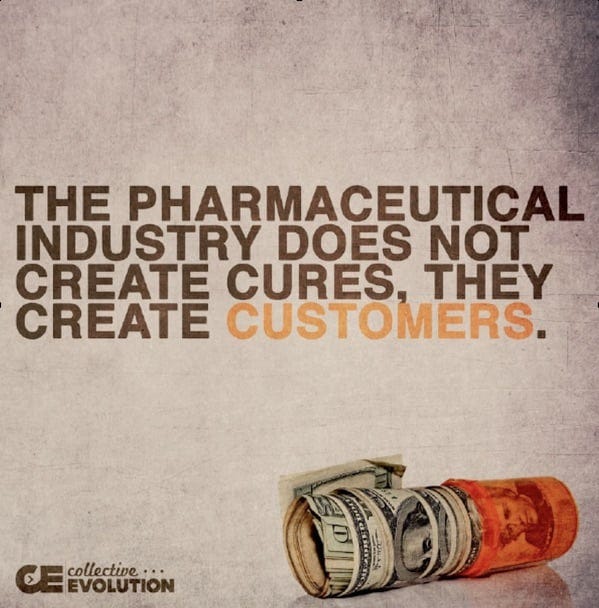
The medical education curriculum being taught in universities has been hijacked by big pharma. This is not a new phenomenon, the coup d’état which replaced natural medicine (that sought to address root causes of illness) with synthetic petroleum based medicine (that seeks to use petroleum derived patentable synthetic drugs to cover symptoms and create ‘return customers’) began over a century ago.

Here is a brief history that provides a summarized overview of how the hostile take over happened.

Founded in 1847, the American Medical Association is the largest association of physicians and medical students in the United States. Its stated mission includes “…lobbying for legislation favorable to physicians and patients, and to raise money for medical education.”

The AMA spends big money on lobbying. One of the AMA’s top lobbying firms, the McManus Group, also lobbies for PhRMA, Eli Lilly & Co, Merck and Pfizer. According to OpenSecrets.org, the American Medical Association comes in second in overall money spent on lobbying in the last 10 years with over $264 million. The health industry as a whole trumps all other industries including energy and finance in lobbying expenditure.

The AMA looks to legitimize its agenda through its Journal of the American Medical Association, JAMA, which is the most widely circulated medical journal in the world. JAMA receives major funding through its advertisers, many of which are pharmaceuticals. In addition, the American Medical Association has been accepting money from the Rockefeller (America’s first billionaire that made his fortune in Oil) and Carnegie Foundations from as early as 1910. In World Without Cancer, G. Edward Griffin makes the argument that the Rockefeller and Carnegie Foundations began to support the AMA in an effort to control the medical schooling establishment and to gain power over this “large and vital sphere of American life.”

The editor of JAMA is very influential, and has historically played a significant role in suppressing alternative health treatments. Morris Fishbein, editor of JAMA from 1924–1950, was directly engaged in suppressing Royal Rife’s cancer cure. In 1849, homeopathy was nearly as popular as allopathic medical practices. The AMA was able to use its position to squash what it referred to as “quackery” — stating that the public did not know what was good for it and that the medical establishment must have total control. At that point it called for control over all medical regulations and licenses. These regulations eventually lead to closing down of schools and almost complete suppression of the practice. Even today in parts of Canada and America some homeopathic practices are “underground.”

It was around the turn of the century that the AMA, the Rockefeller Foundation, and the Carnegie Foundation forged their partnership. They put their money into drug-based research (oil derived pharmaceuticals) and made that the main focus of “healthcare”—a move that turned “healthcare” into “sickness management.” The Rockefellers and other prominent banking elite (and the shareholders of their subsidiary pharmaceutical corporations) have been able to control and profit enormously from the drug industry.

Now, all medical doctors in the USA are trained in medical schools that are run and/or accredited/sanctioned by the AMA. Of 129 medical schools in America, only 22 require even what amounts to basic rudimentary courses in nutrition. Medical students are not trained to see the connections between many degenerative diseases and malnutrition. Instead they are taught only how to treat with surgical or pharmaceutical methods but do not cure or alleviate the root problem or ailment. Similar numbers are reflected in medical education here in Canada. In this way, they are assured of life-long customers. Surveys conclude that over 66% of all Americans regularly take prescription drugs (with only slightly lower numbers being reflected here in Canada as well).

Massive transnational pharmaceutical corporations (like Bayer) were not satisfied in only dominating what we are taught about medicine and what forms of ‘medicine’ we will have access to, they soon moved to take over the food production systems as well.

Just 50 years ago, some 1,000 small and family-owned seed companies were producing and distributing seeds in the United States; by 2009, there were fewer than 100.

Thanks to a series of mergers and acquisitions over the last few years, four multinational agrochemical/pharmaceutical firms — Corteva, ChemChina, Bayer and BASF — now control over 60 percent of global seed sales.

The slow march of seed consolidation suddenly turned into a sprint. Chemical and pharmaceutical companies with no historical interest in seed bought small regional and family-owned seed companies. Targeting cash crops like corn and soy, these companies saw seeds as part of a profitable package: They made herbicides and pesticides, and then engineered the seeds to produce crops that could survive that drench of chemicals. They make the petroleum based pharmaceutical drugs that your doctor will prescribe you when the toxic ‘food’ you eat results in degenerative diseases. At every turn, they make a profit (at the expense of the integrity of the biosphere and human health). The same seed companies that now control more than 60 percent of seed sales also sell more than 60 percent of the pesticides.

GMO byproducts degrade and deplete soils of vital minerals and beneficial bacteria, both of which protect crops from pests, viruses, and other threatening elements. Glyphosate which is used in conjunction with GMO seeds does not biodegrade, which means it is continually accumulating in the environment without restraint, perpetually altering soil composition and contaminating natural resources.

A handful of companies have spread these toxins across our planet diverting US$ 400 Billion of public money to subsidize their high cost chemical commodities to make them artificially “cheap”. The costs of this cheap “food” are astronomical in terms of the health of people, the ecological damage it causes and it’s exploitation of farmers. If the true costs of chemical food were taken into account it would be unaffordable.

If what we put into the soil is toxic, what we get out is toxic.
Mission successful. Incidents of degenerative disease and cancer have skyrocketed since the above described ‘food’ and ‘medicine’ products became the norm. Life long return customers for the pharmaceutical industry are now plentiful.

The article continues with more compelling evidence and ends with good intentions and creations—Gavin’s ferments and info about his book: Recipes for Reciprocity

For the full article:

Looks like a fabulous book I must add to my collection!

Homestead Happenings

I know it must be autumn somewhere! Here that reality is still mostly in my dreams. We’re still in the 90s and still mostly dry. There are a few tiny signs of change though, that I’m magnifying in my mind, because I can hardly wait! It’s been a terrible summer.

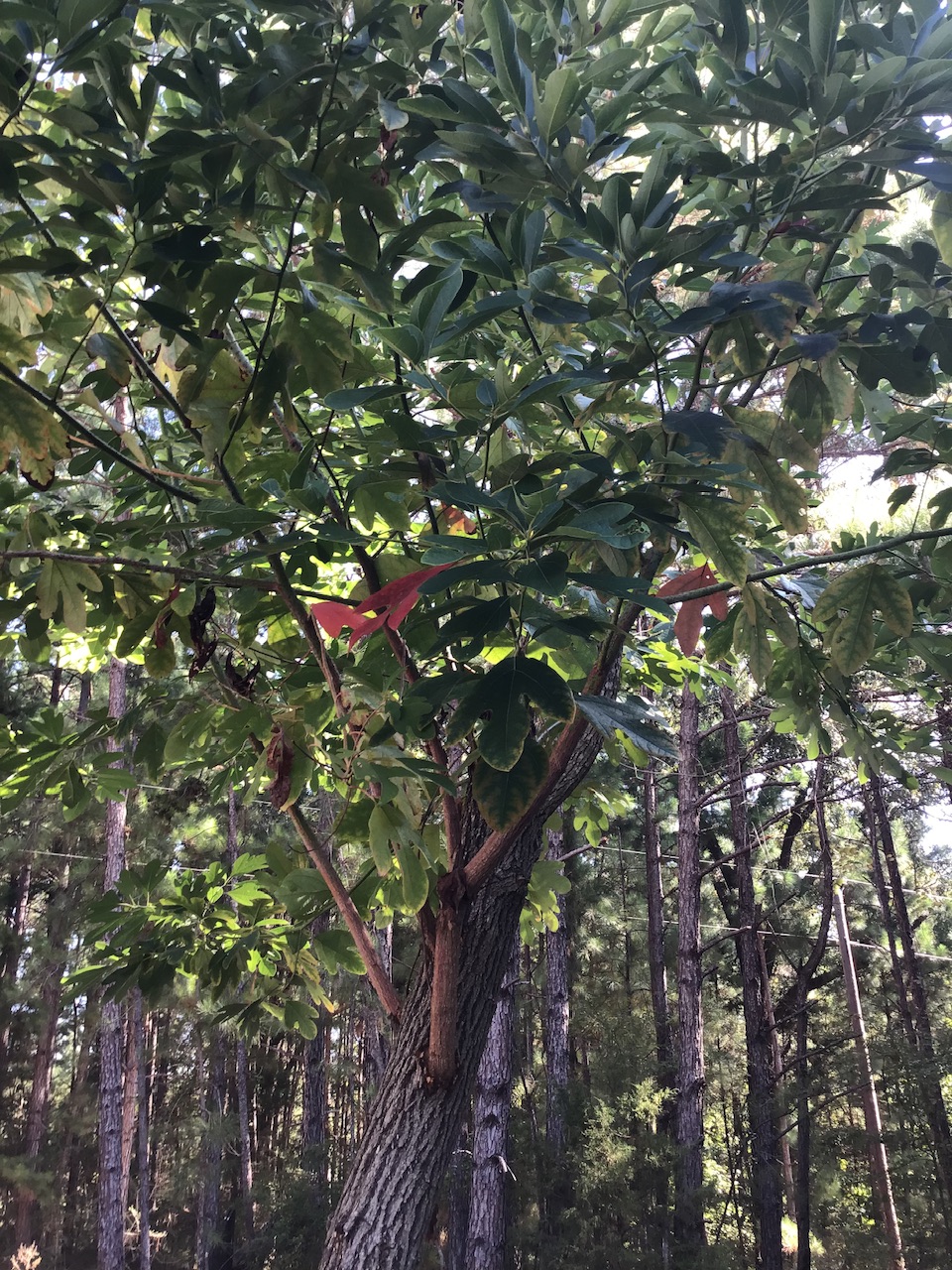
See, right there, 3 red leaves on my favorite Sassafras tree!
(Very soon to be featured in an ‘Herbal Explorations’ post)

But, I’m not going to complain about that now. Instead we’ve got lots of happy snaps, and even a few scary ones.

We’re gearing up for the fall/winter garden, getting the beds ready for the transplants that have been growing under lights for a month and are very ready for their new outdoor home, just as soon as the temperature drops a bit.

We just started harvesting sweet potatoes from the boxes waiting for replanting.

Those vines helped keep the goats happy and healthy during the extra long heat wave.

Summer keeping a sharp eye on Shadow even though there’s a fence between them.
None of the goats have warmed up to him, despite all his best efforts!

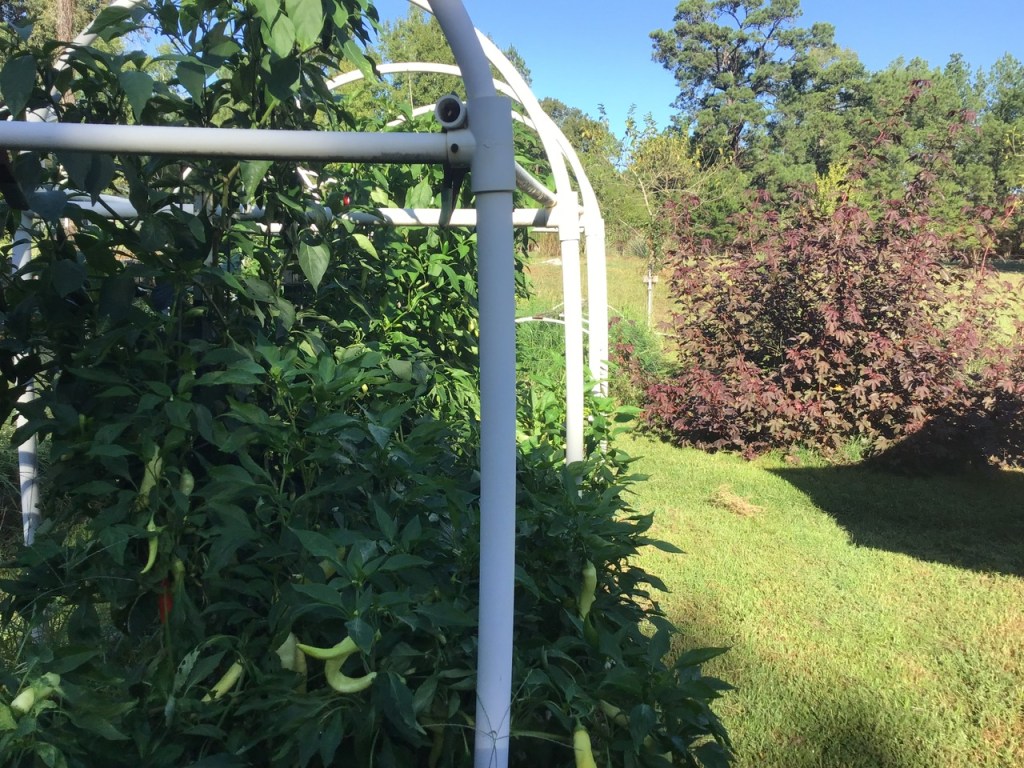
The peppers have come back with gusto after another dose of compost dressing and removing their shade cloth.

Jalapeños and banana peppers and the now monstrous cranberry hibiscus on right that is finally just starting to bloom.

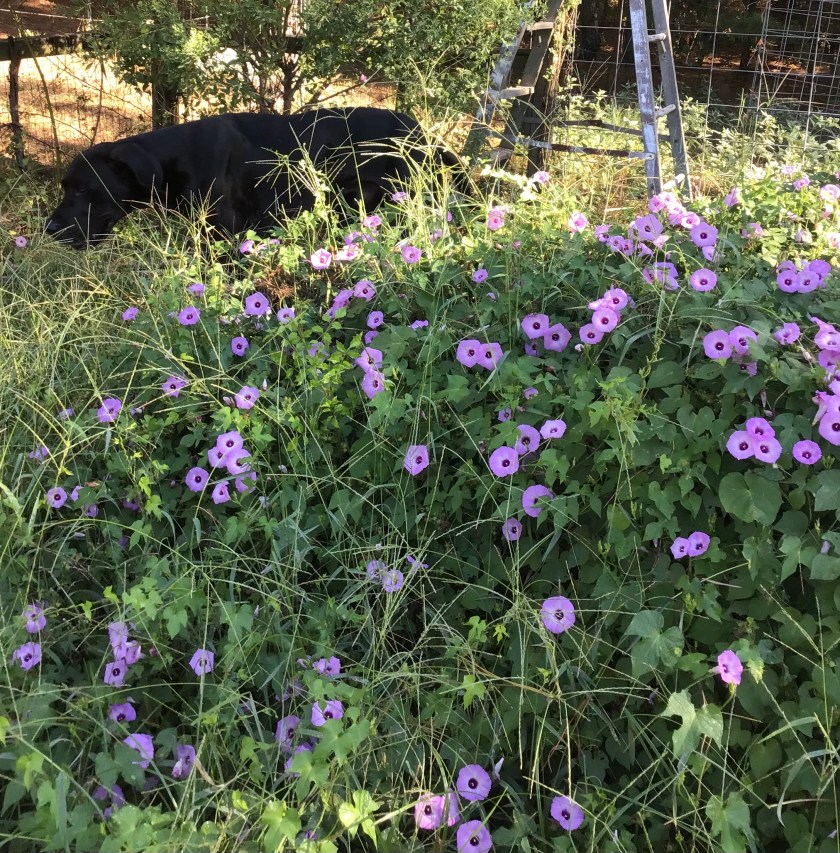
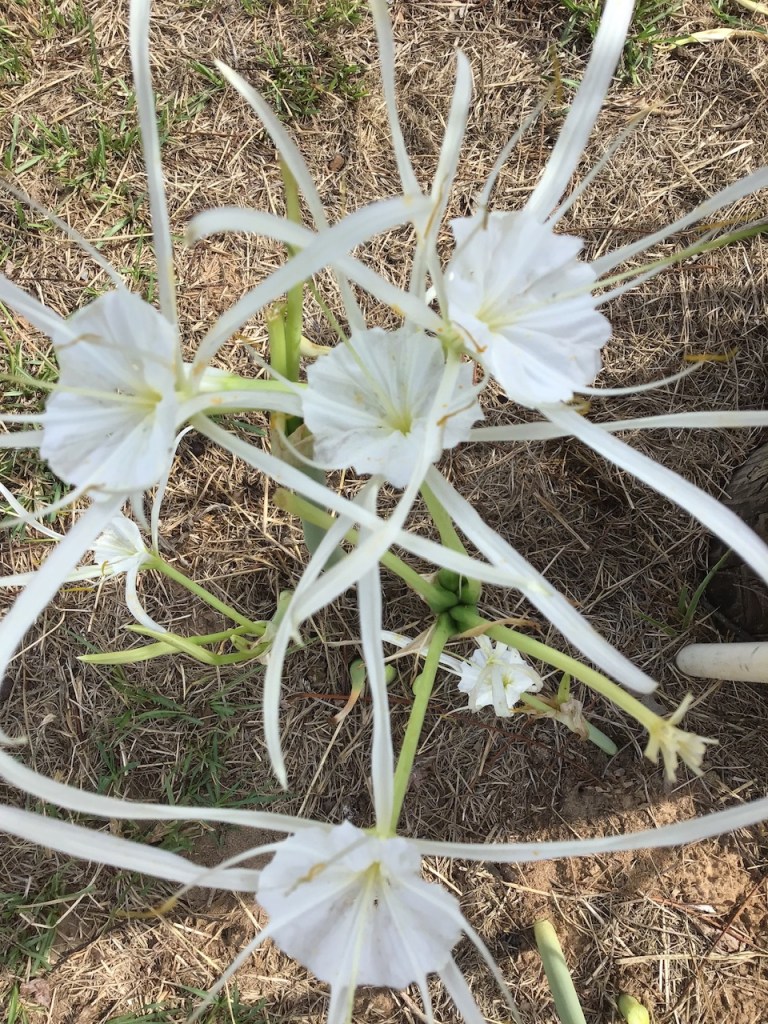
Cucumbers again, yippie! Plus hurricane lilies, turmeric, zinnia and basil keeping the bees happy. And lots of bindweed (morning glory)—scourge to the industrial farmer—a hardy, lovely and welcome cover for the rest of us.

I’m getting about 1/2 gallon of milk a day from 2 goats and making cheese often—mozzarella and soft chèvre every week and a hard cheese whenever I can accumulate at least 3 gallons (preferably 6) in the freezer. The larger the hard cheese the easier it is to age properly and goat milk works just fine for cheese after freezing.

The easiest cheese to make and so delish!

But I’m really looking forward to making Camembert and Munster again. Just like all things natural, cheeses also have seasons. I was very disappointed by a so-called Brie I just splurged on from the grocery store. They should call it a processed Brie-like imitation and market it in the aisle with Velveeta. Quel scandale!

A few more friendly faces . . .

As I mentioned last update, we had a sausage-fest this summer, that is, a super-high percentage of males born, of all species—cats, pigs, sheep, chickens, goats. So odd.

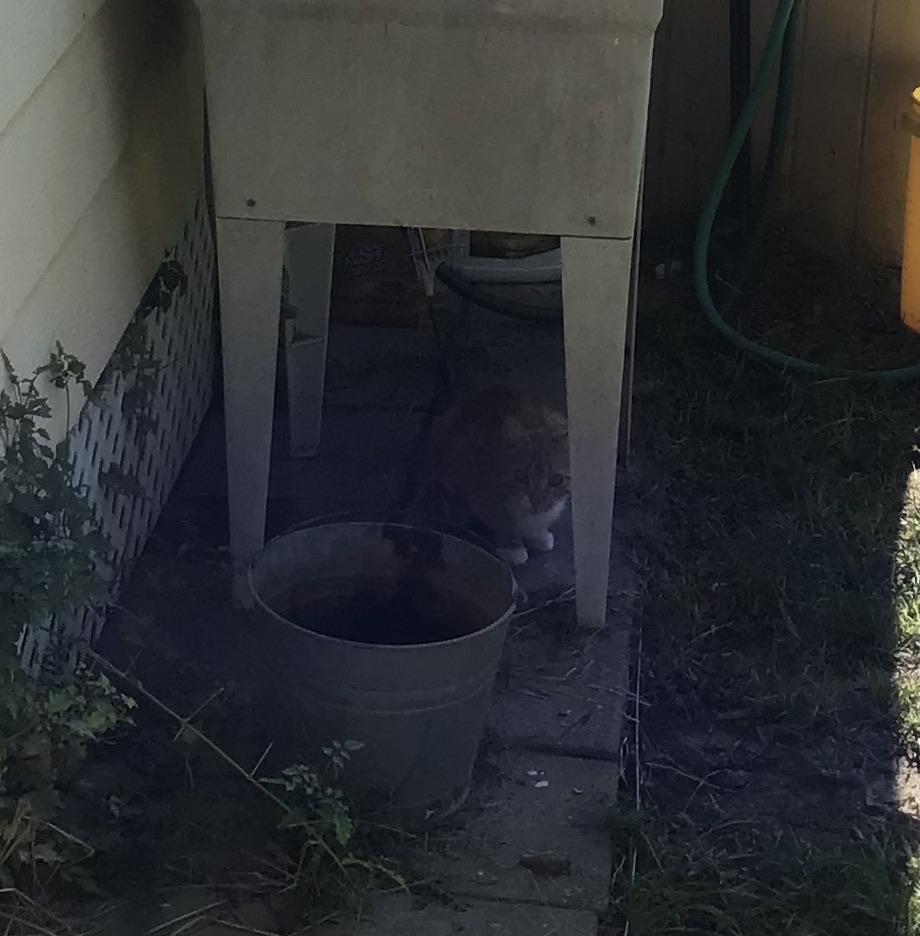
Now we have 3 young male cats, a new thing for us. But one of them is a real scaredy cat, we’re never able to get close to him and he’s rarely around except for meal time.

Always crouching in the shadows and darting off even from the camera.

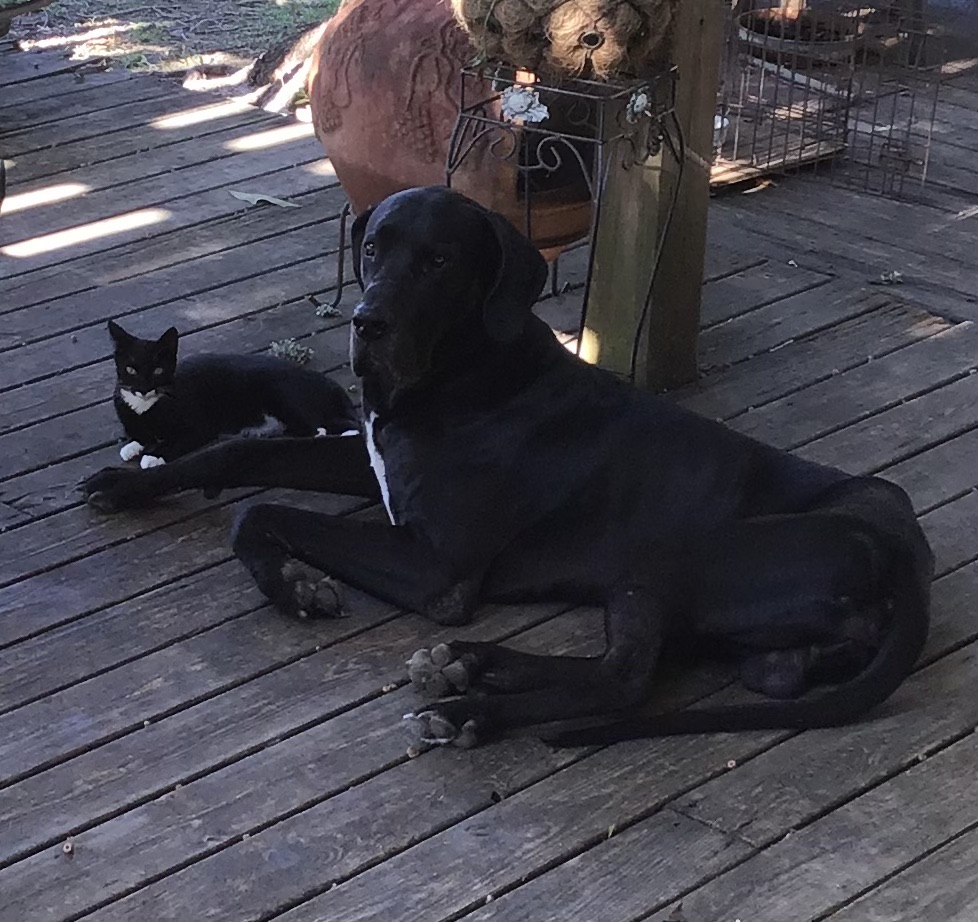
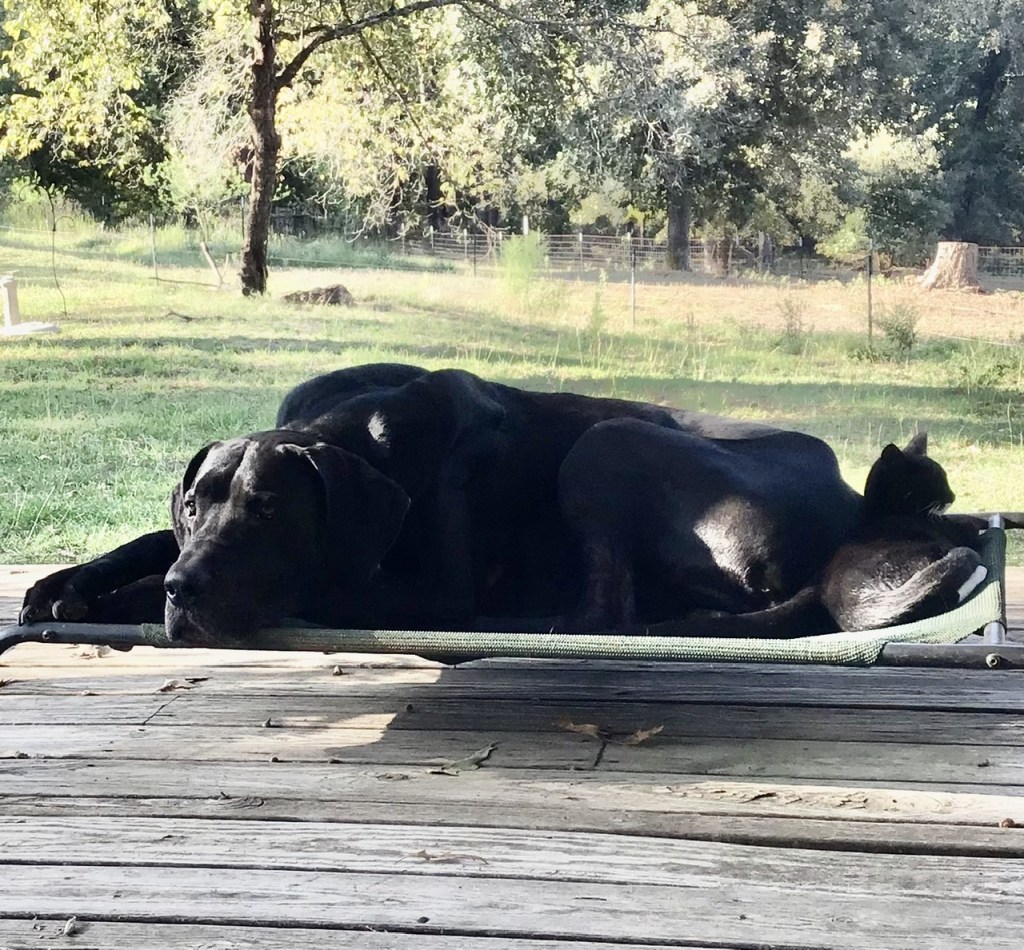
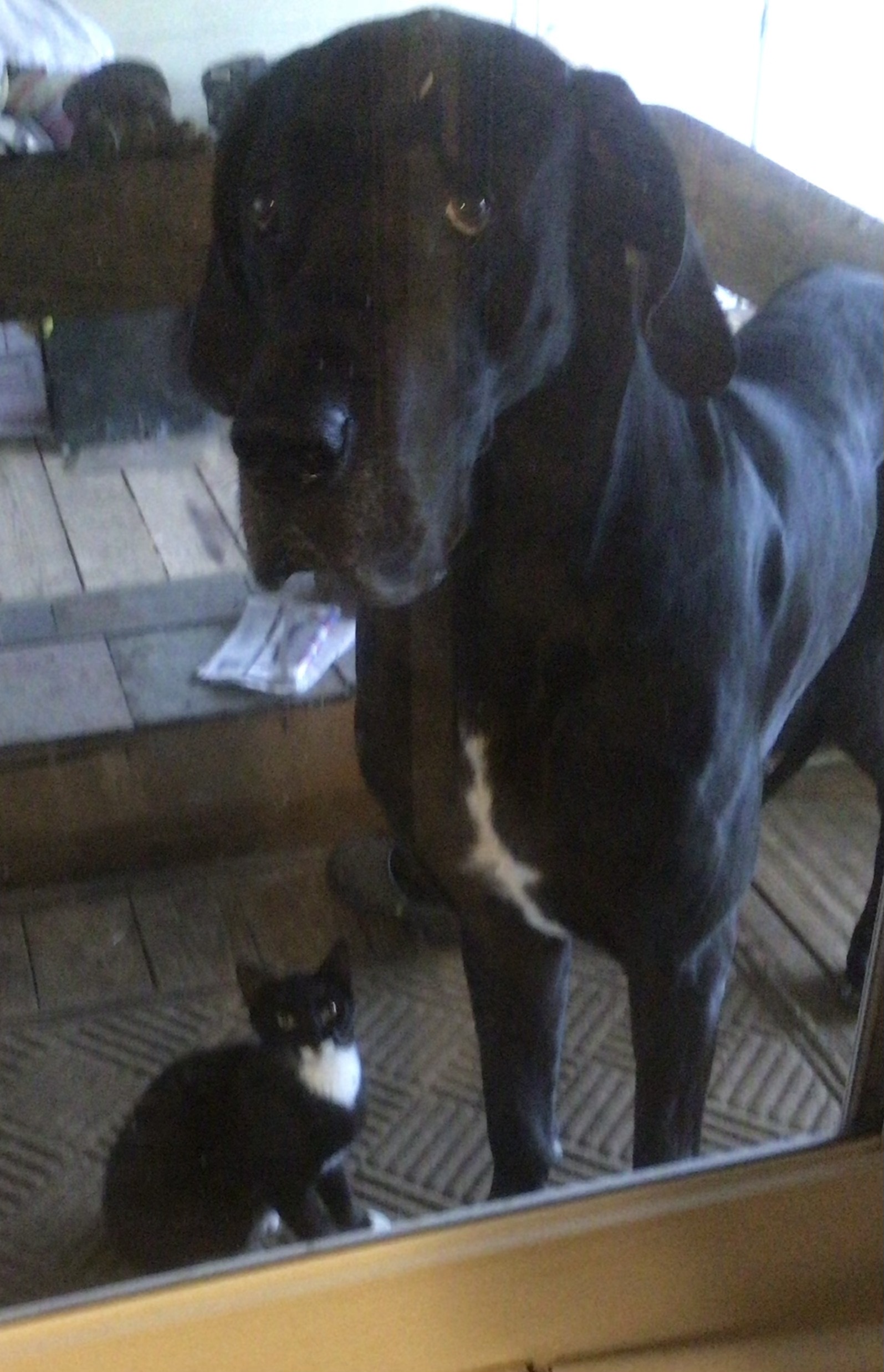
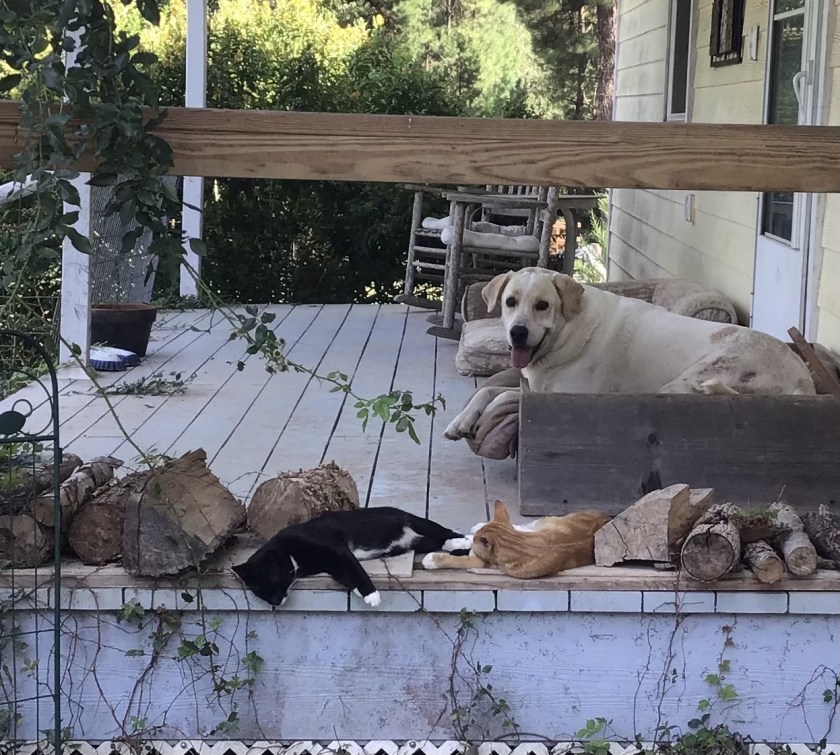
Also odd but true—our black cat, Mittens, hangs out with our black Shadow and our blond Tony hangs out with our blond Bubba and Buttercup—go figure!

“Hey in there! Where’s our breakfast?!”

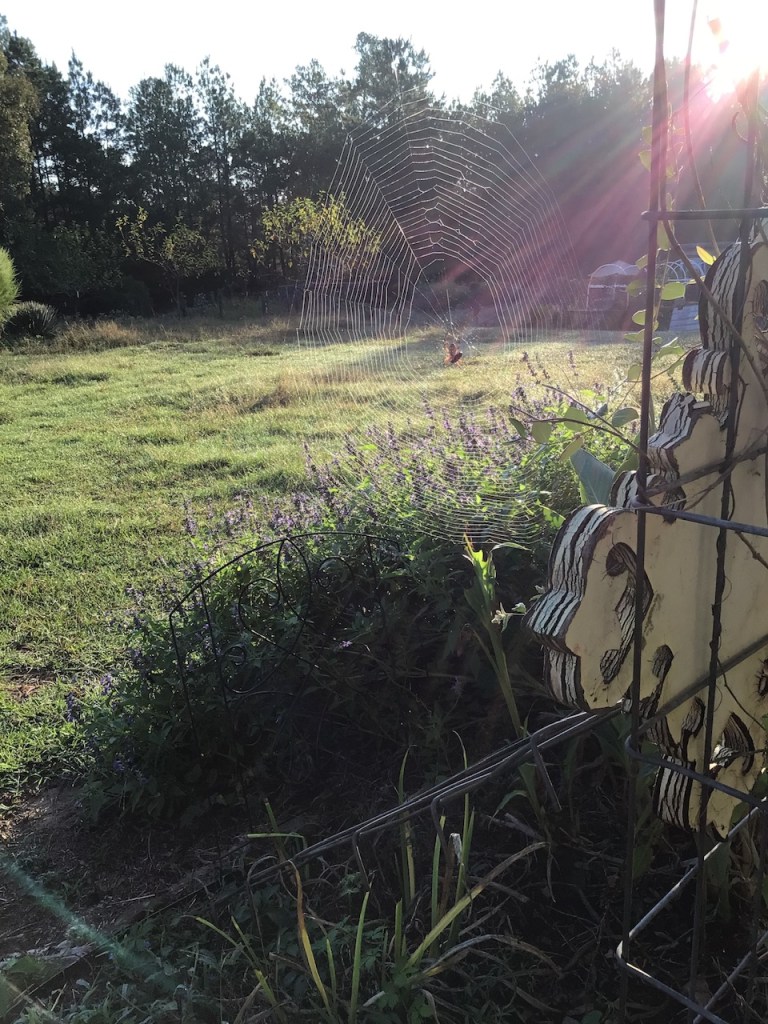
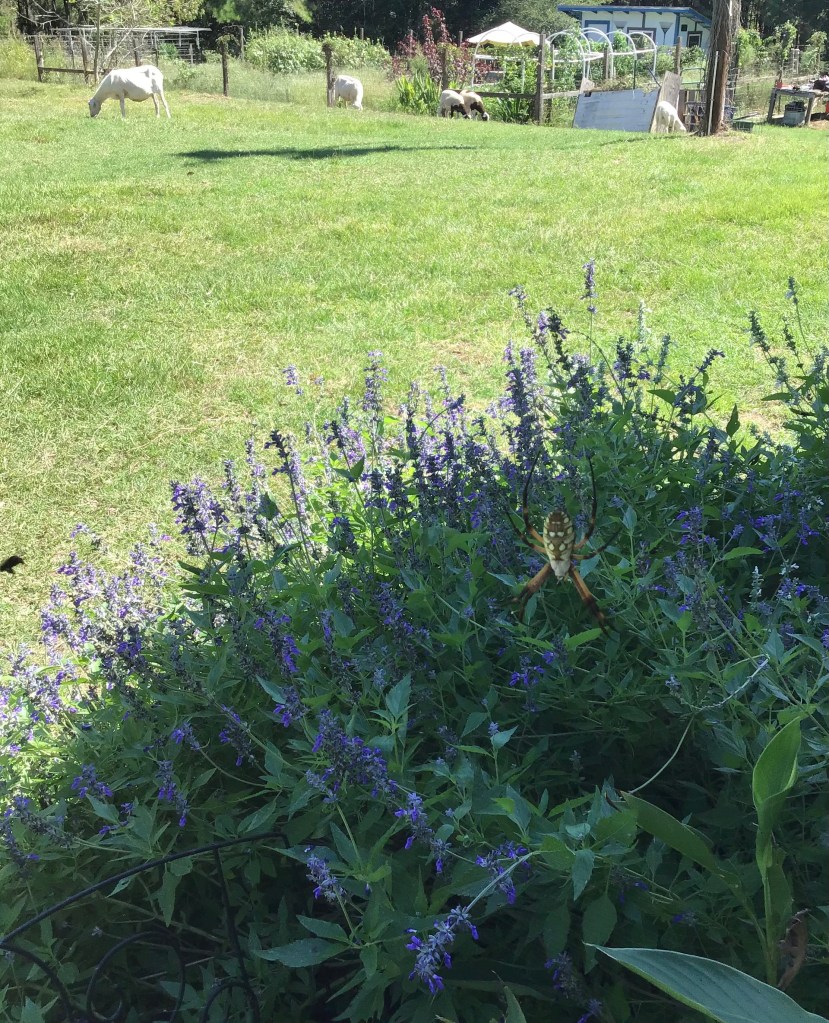
I love spiders, especially these beauties, but some folks find them scary, apparently.

Now here’s a real foe . . . .

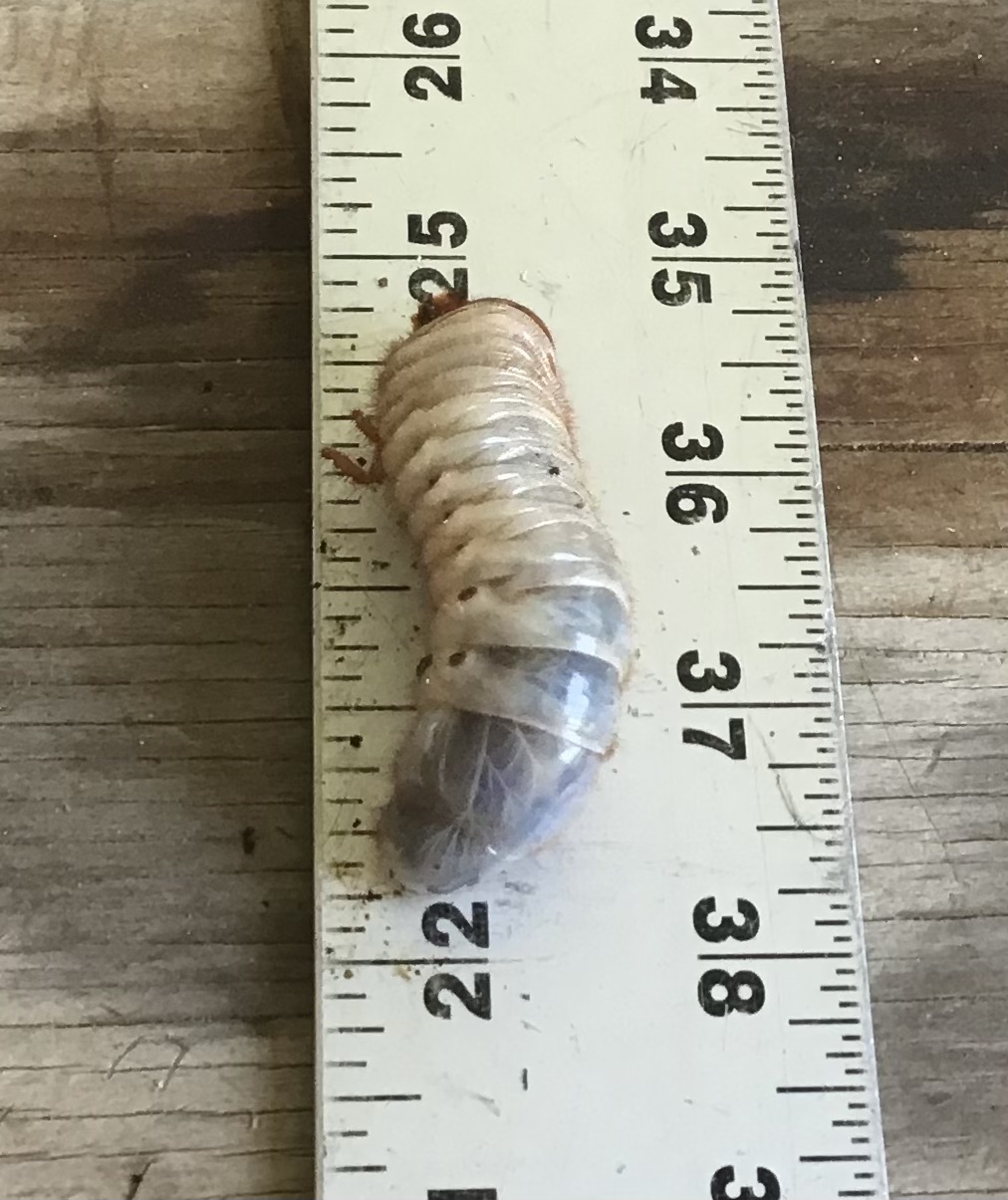
Gross! Looks like right out of a horror movie.
And he has a lot of friends haunting our compost heap. 🤢

But who loves ‘em but our very scary Halloween rooster . . .

Poor guy, we’ve no idea what happened to him, but he is one scary-looking dude!

Soon we will be making the tough but necessary fall homestead decision—who will get bred and who will shuffle off to freezer camp?

But not a care in the world for these contented creatures!

Hope you’re having a fine Sunday and thanks for stopping by!