And other news this post, including Hubby’s big mistake, lots of garden snaps, critter updates and the new normal weather chaos.
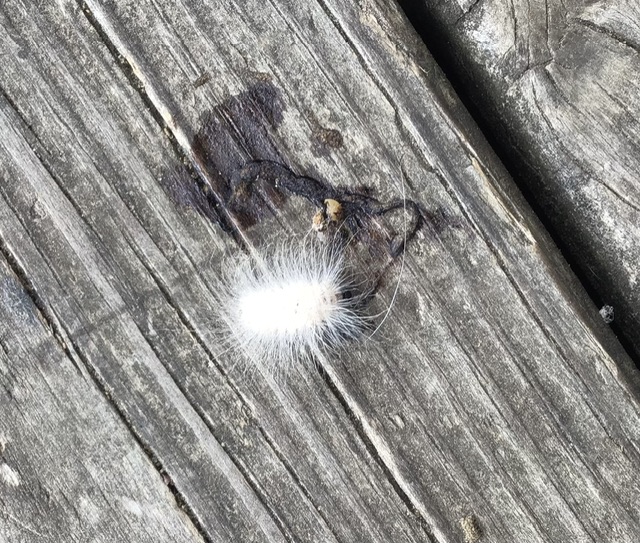
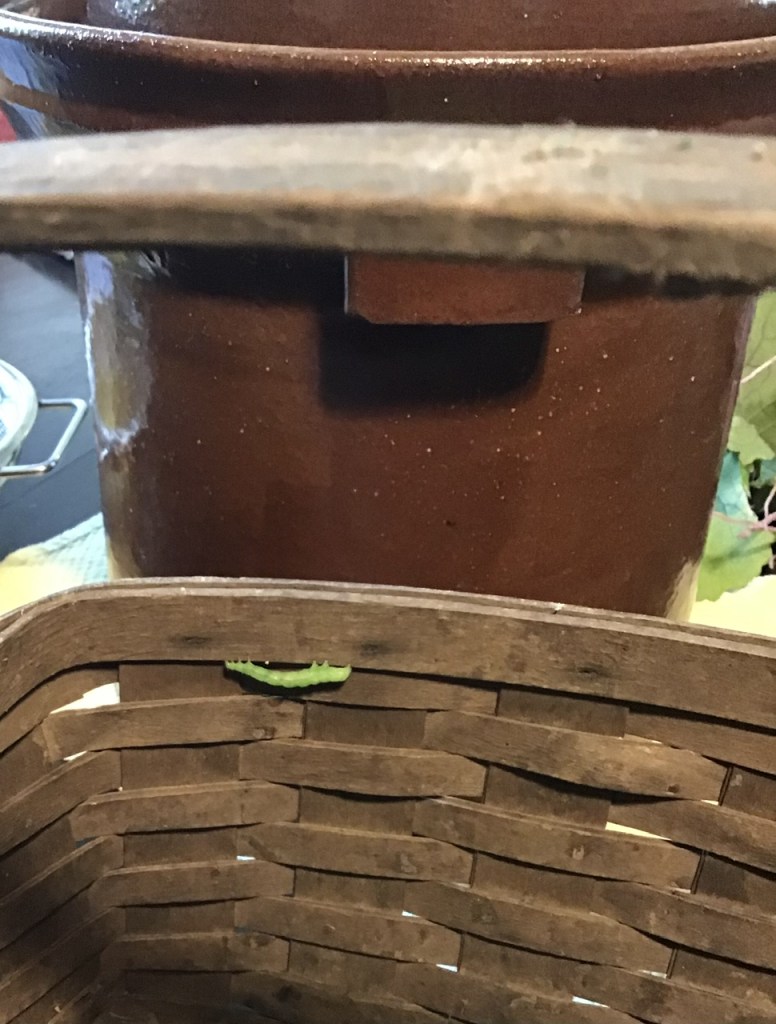
Big ones, small ones, skinny ones, fat ones . . .
Black ones, white ones, green ones, yellow ones . . .
Let’s see, perhaps a bit of 80s pre-conditioning before our current day “You vill eat ze bugs!”?
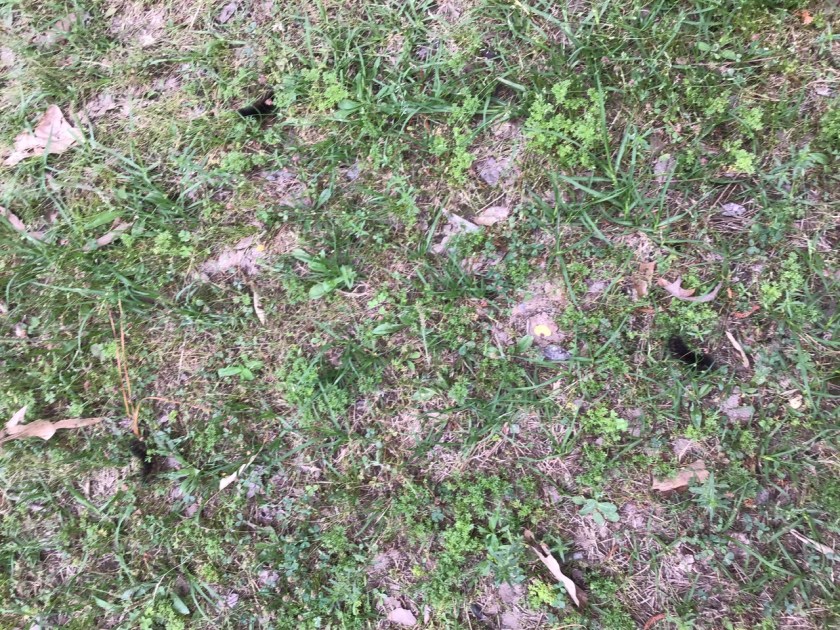
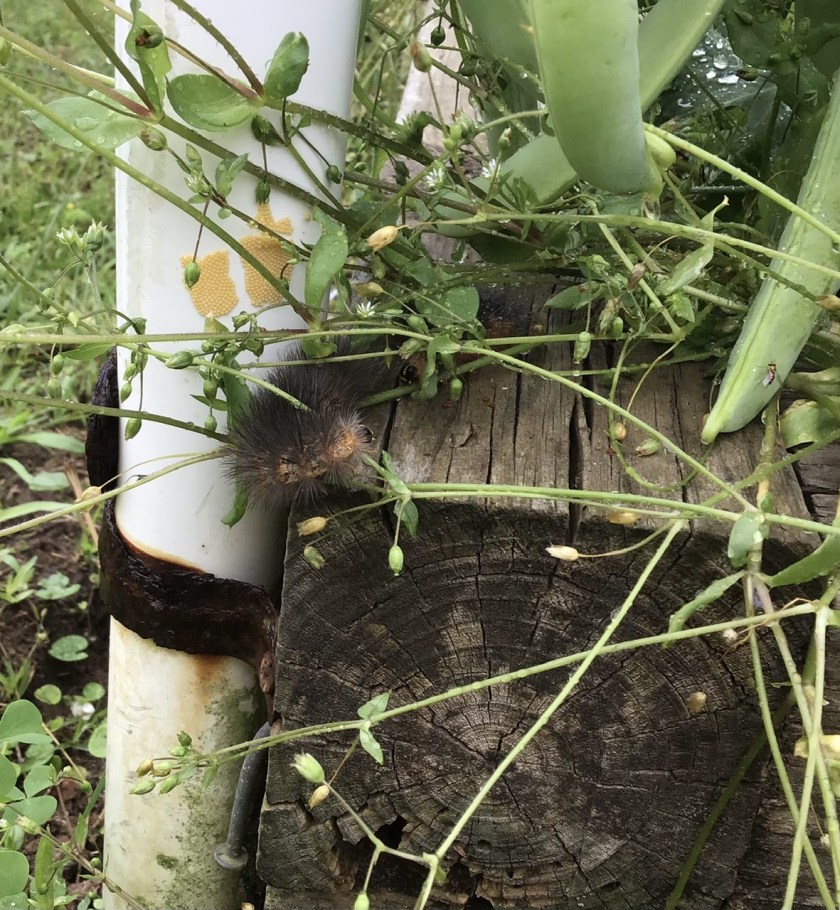
We’ve never seen so many, and such a variety. They do not look the least bit appetizing and clearly the birds agree, or there couldn’t possibly be so many.
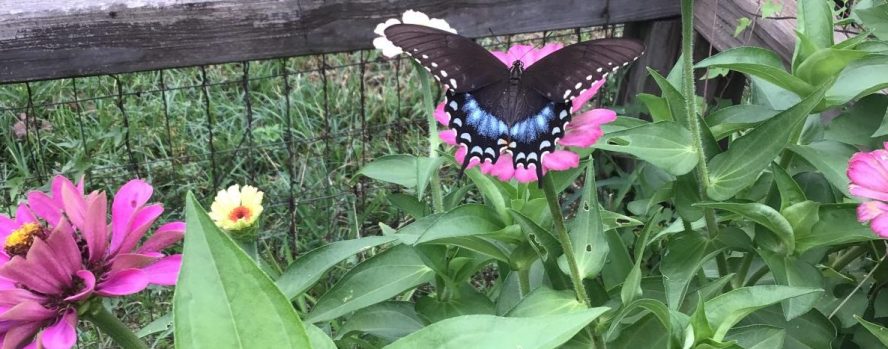
I’m not exaggerating when I say you cannot take a step without seeing one. I’m hoping they turn into gorgeous butterflies and soon we’ll have a garden full of them. But I haven’t looked them up yet and they could easily become some voracious relative of horn worms for all I know, about to attack the tomatoes.
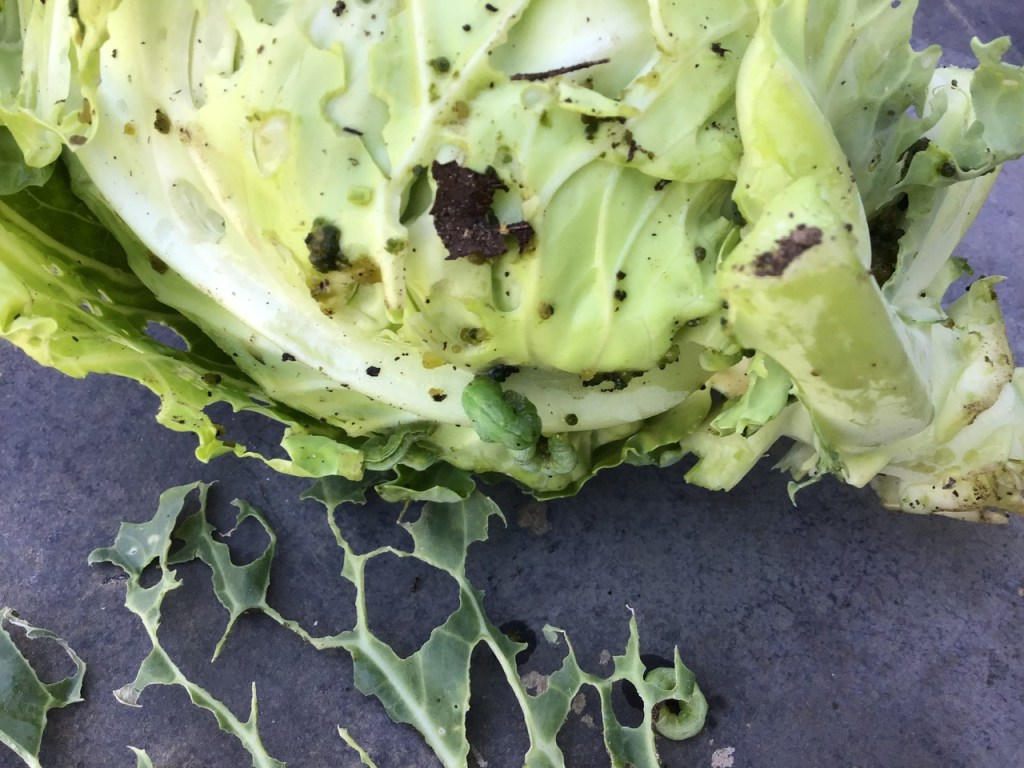
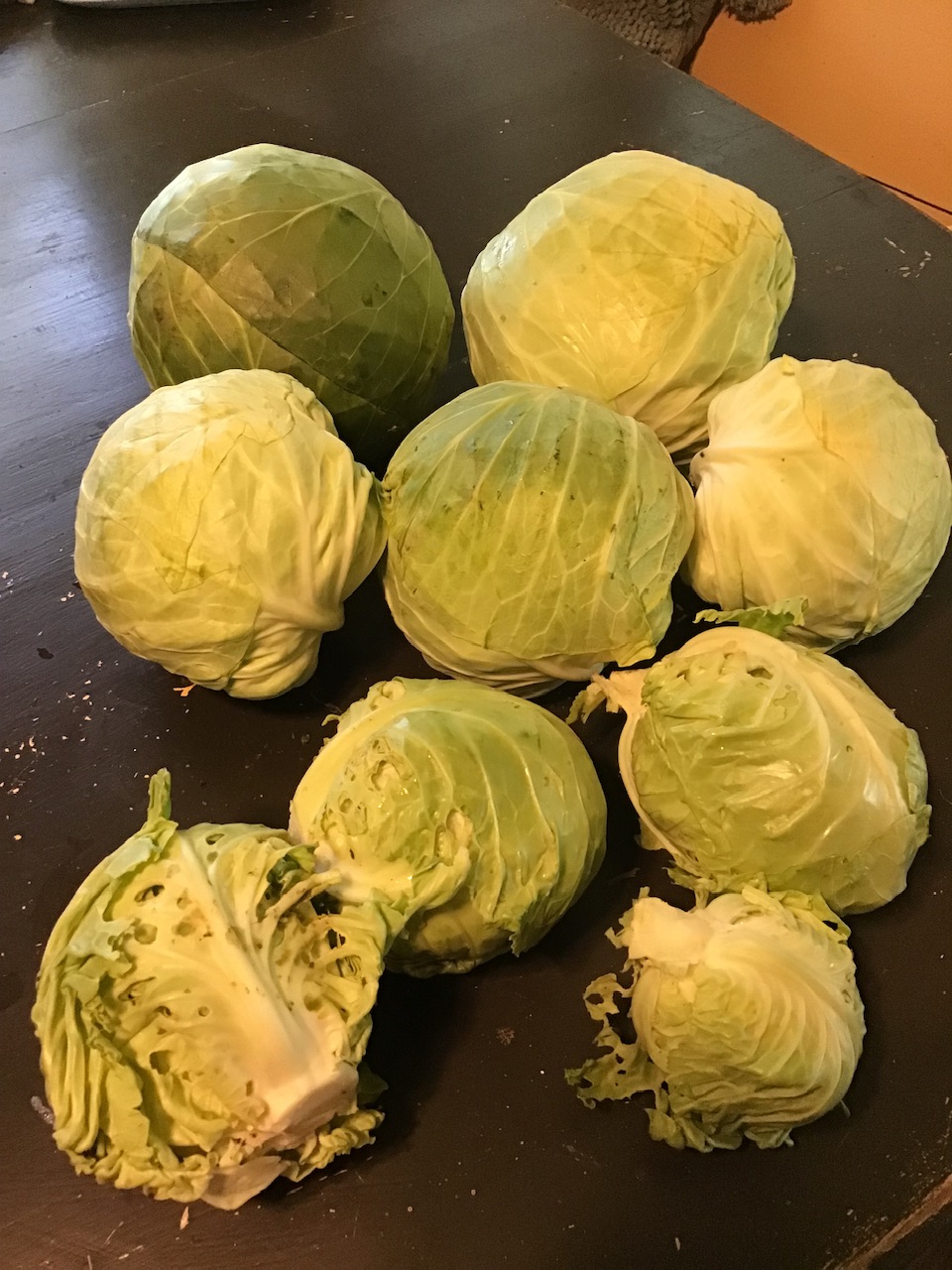
They’ve destroyed my spring cabbages and are working on the fava beans and snap peas now.
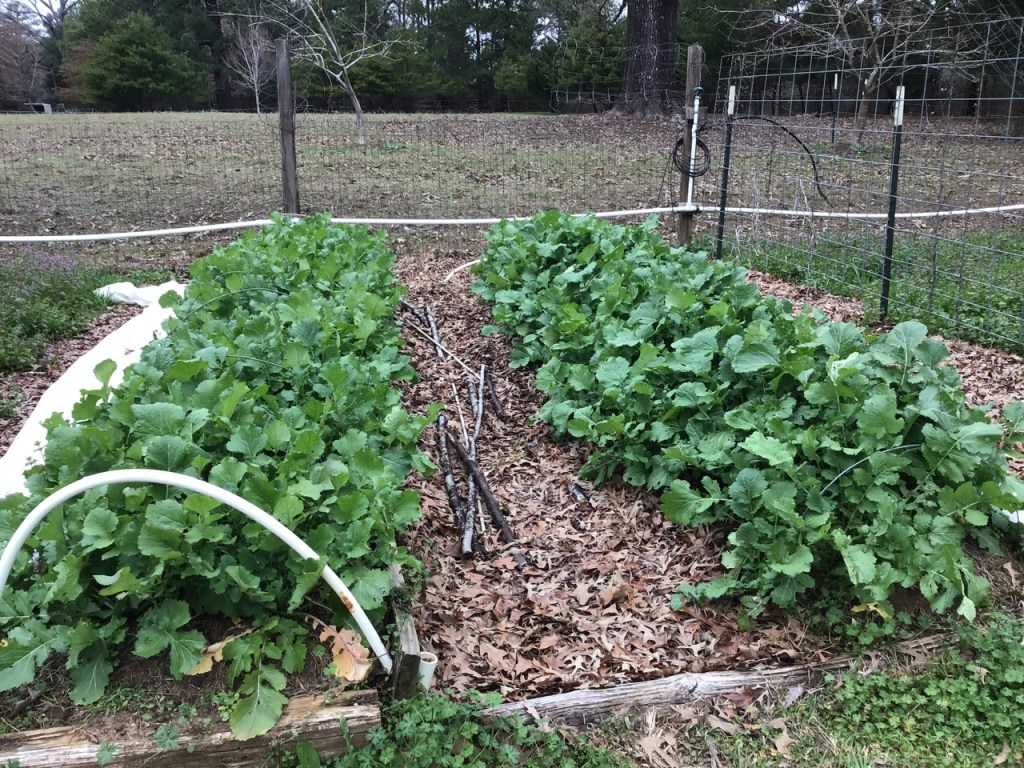
Fall cabbages in the back compared to spring cabbages up front
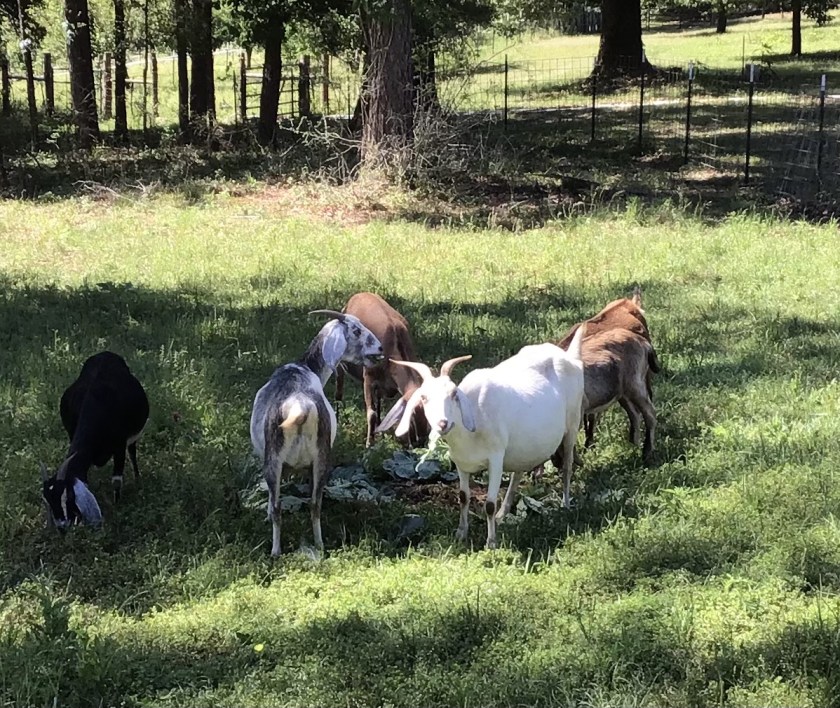
At least the goats appreciated all those Swiss cheese-like leaves.
Snap peas don’t last long here anyway and while those creepy crawlers get the leaves of them, and those of the radishes, at least they leave us the fruits.
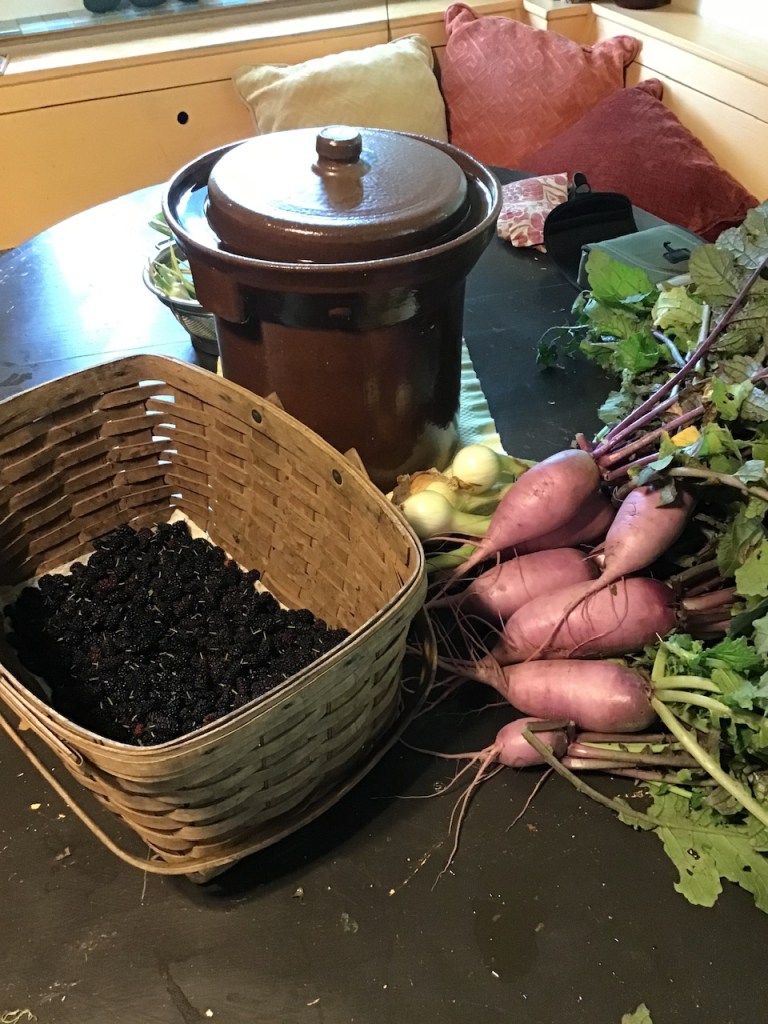
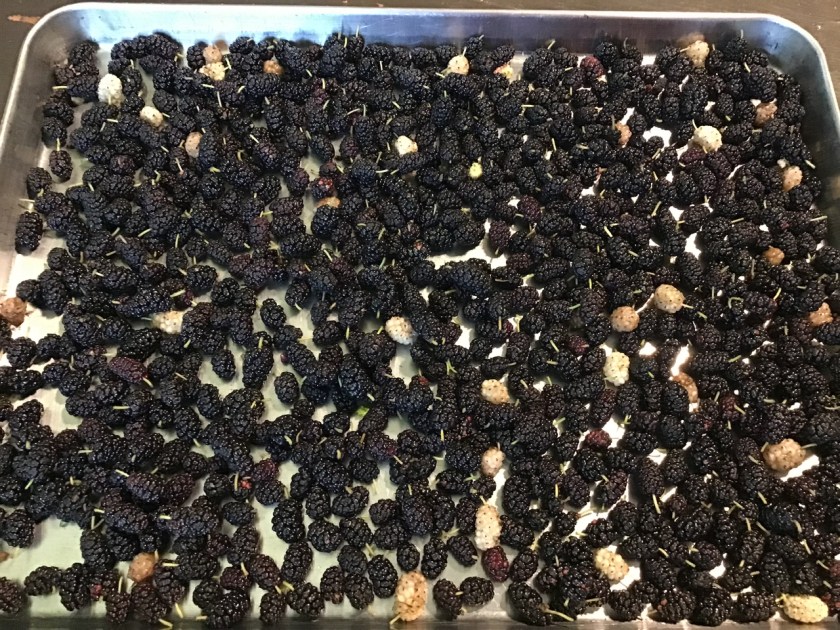
I’ve already made a large crock of sauerkraut and a quart of fermented radishes. Plus we’ve been getting loads of mulberries thanks to Hubby who has been destroying the tent worms that have been appearing all spring. Those little buggers love the wild cherries too and can easily destroy all leaves and fruits in a matter of days.
So, big kudos to Hubby for coming to the rescue, and spending a fair amount of tedious time harvesting these little beauties as well.
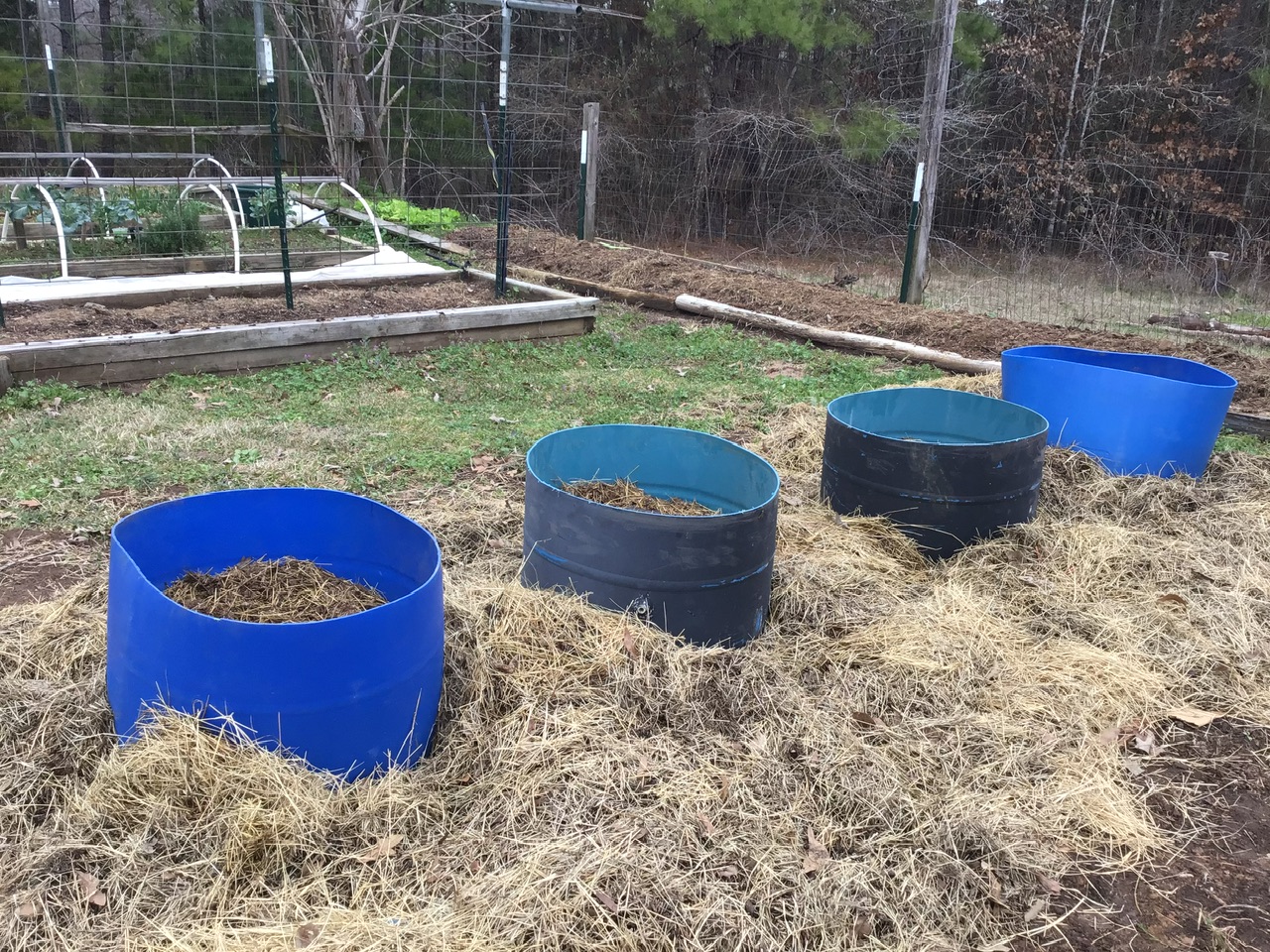
But, Hubby is also responsible for the misdemeanor crime of killing our potatoes! I should’ve caught it. I know, he was just trying to help. So, he filled our potato buckets with too much compost too fast and now we have potato disaster.
Lesson learned, you can only add a couple inches at a time, even if the greens are much taller than that.
I’ve got lots of herbs companion planted with the tomatoes that are all looking great.
Thyme, cilantro and dill growing between tomatoes
One of the best garden decisions I’ve made is far more flowers in the garden. Not only to attract pollinators, but to attract us too. It’s a far more inviting space than just rows of crops and makes me want to go in and play. 😊
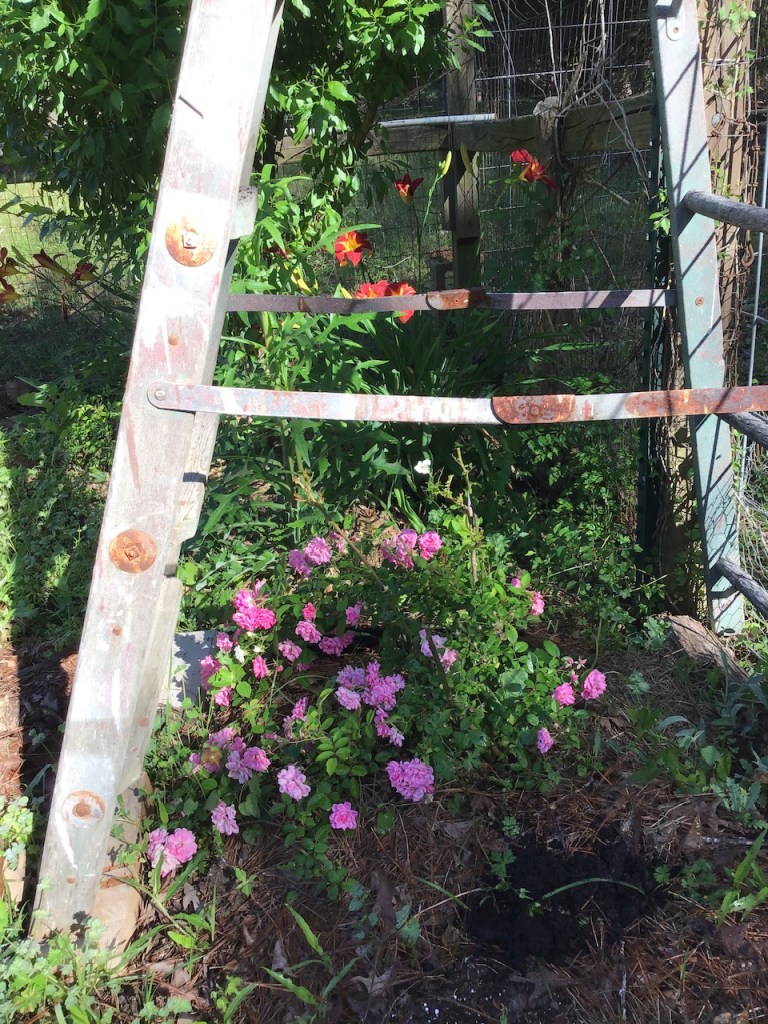
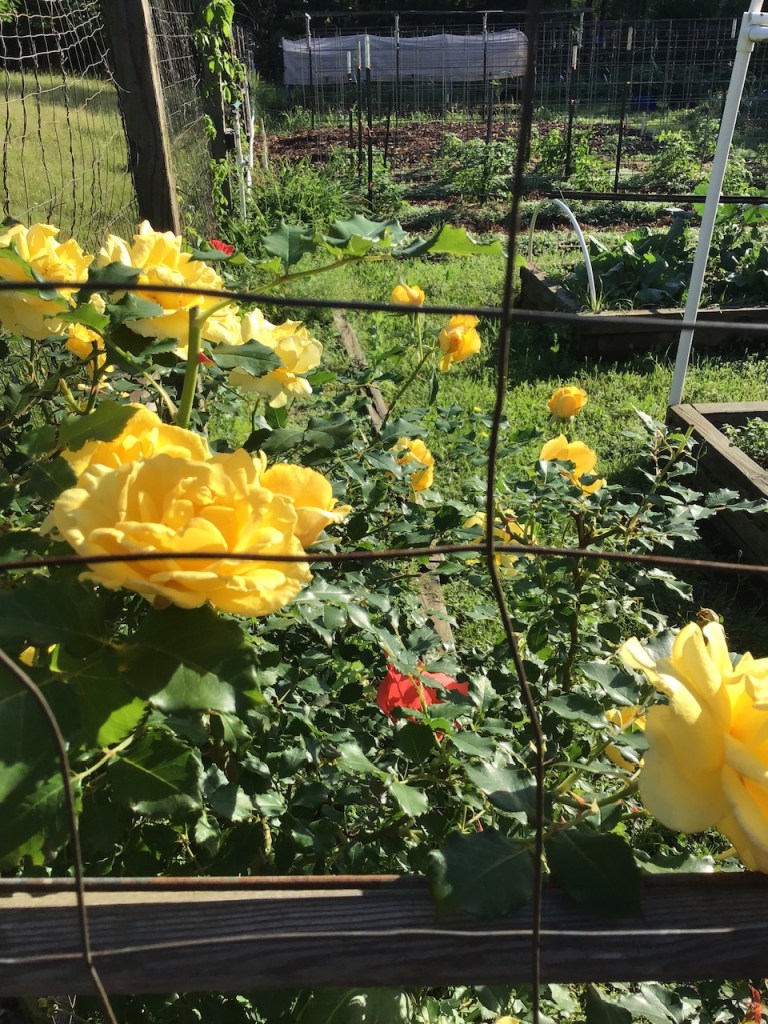
The Peggy Martin rose just one year after planting a cutting from a friend.
And the Burr rose, many years old, huge and seemingly indestructible, even from constant nibbling by the sheep and goats.
And one of my garden favorites, which my photo doesn’t do justice at all: Nigella, a delicious seed and lovely tiny blooms in blue and white.
Their seeds have a grape-like flavor and are delicious in bread and kombucha.
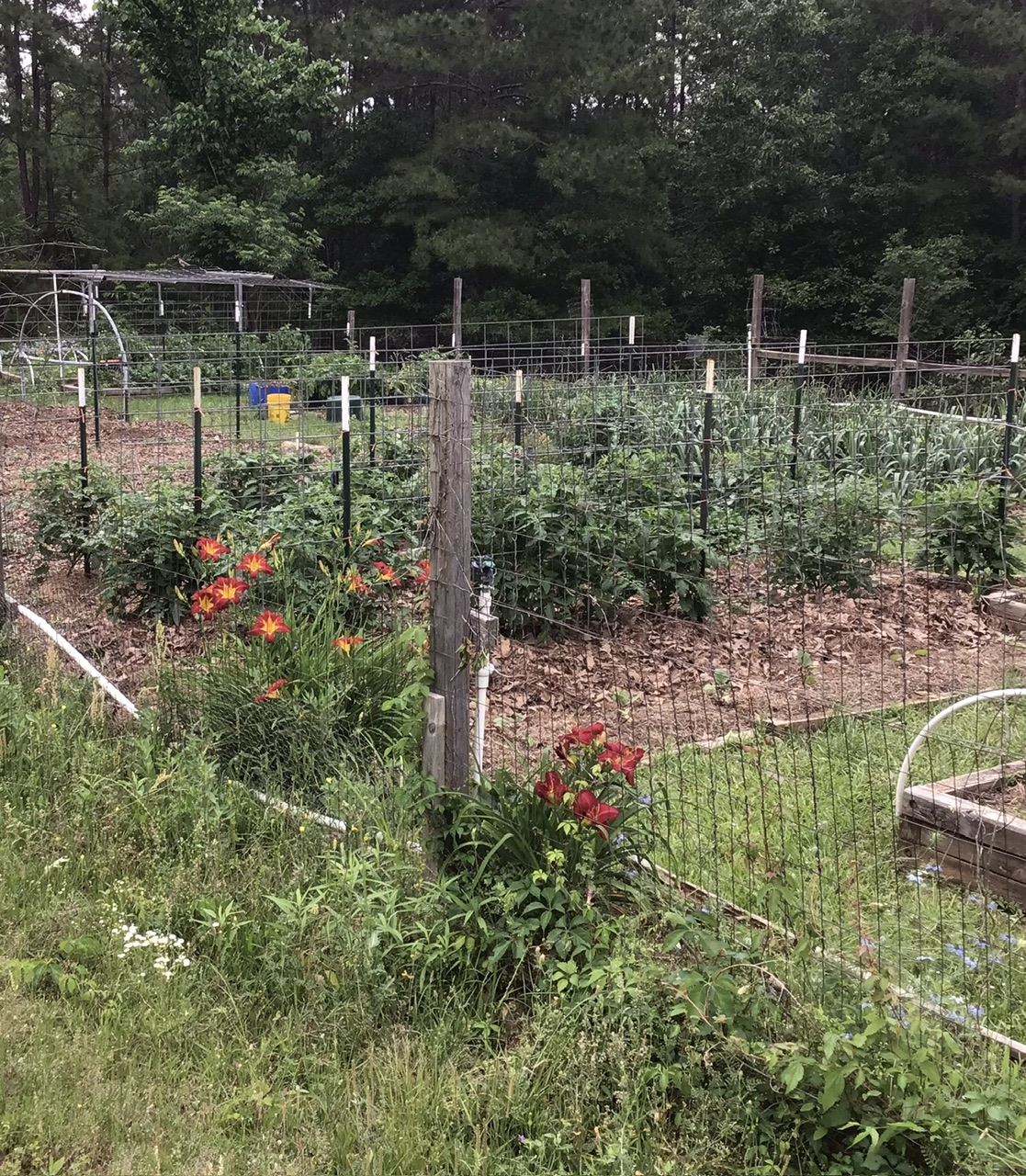
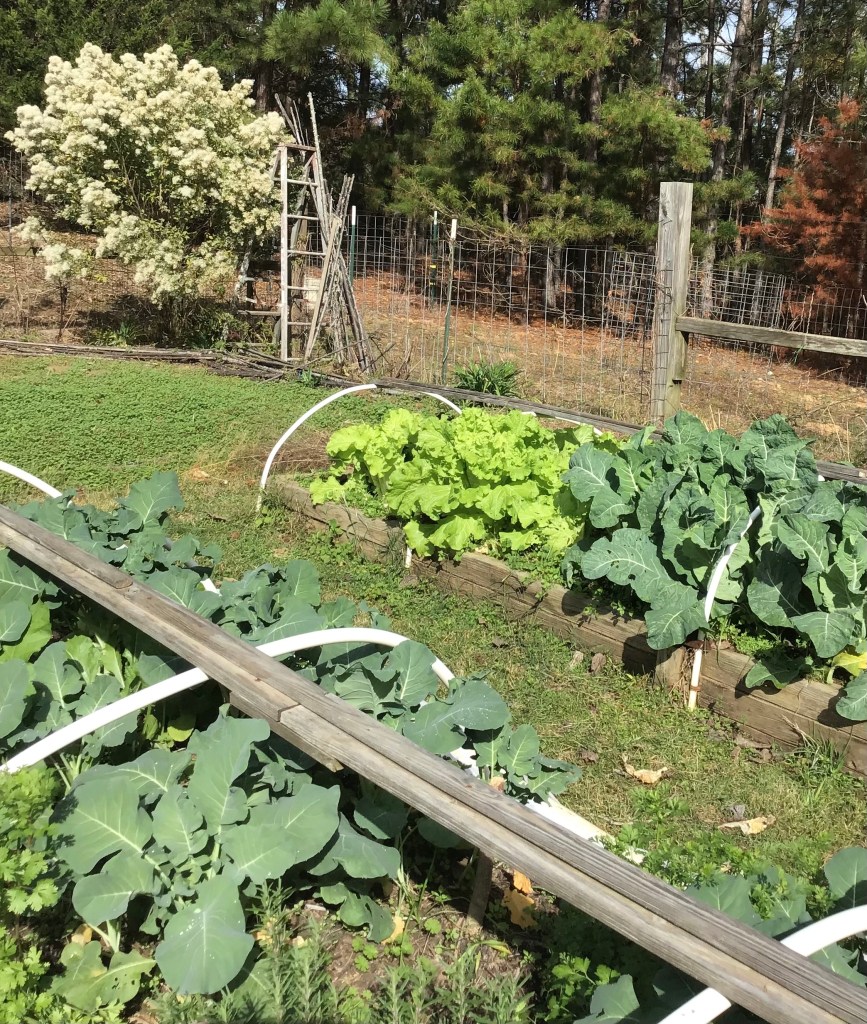
A larger garden view
Another fruit that so far seems successful are the persimmons. We have both Virginia and Asian planted and the flowers on them are so unique, just like their fruits.
I’ve also got the citrus planted at last and I’m so excited! I cannot fail! (Says no one but me and I’ve gotten quite a few discouraging words from others on this venture.)
Planted along with the new ‘kiss me under the garden gate’ flower which is doing quite well, and the still unfinished wattle fence.
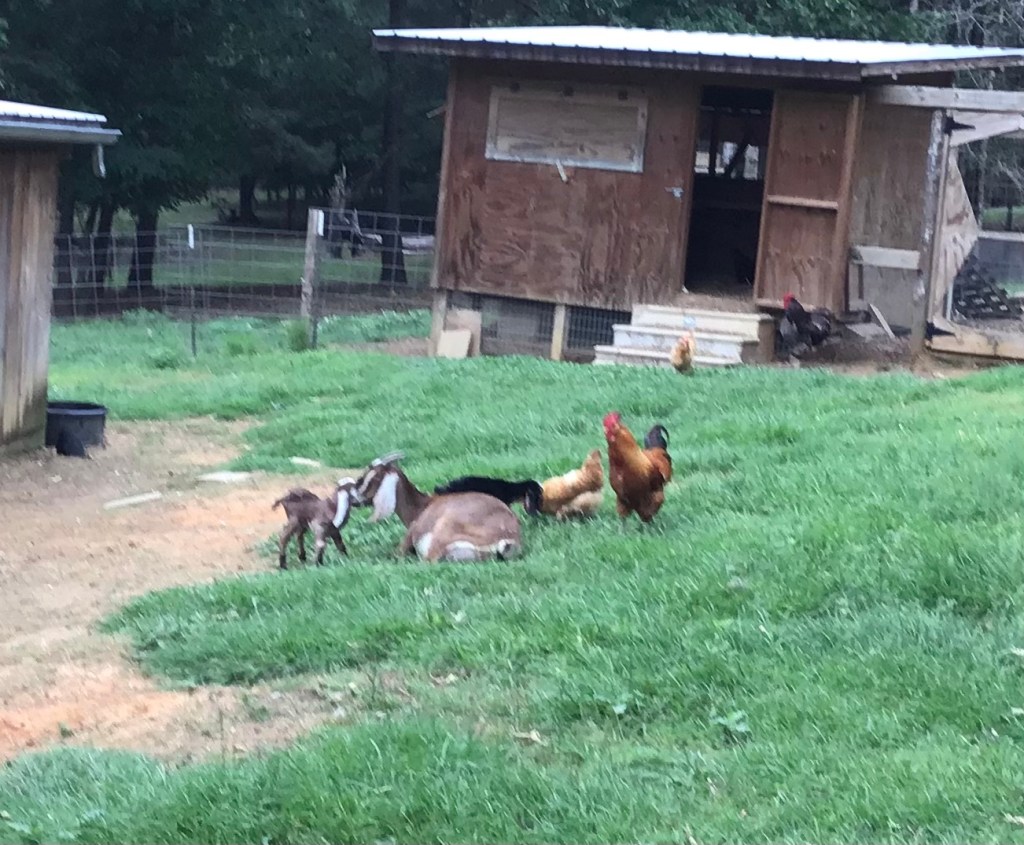
In the best news we have our first kids just born this morning. Milking season approaches too quickly!
The weather madness continues, unfortunately. Big surprise.
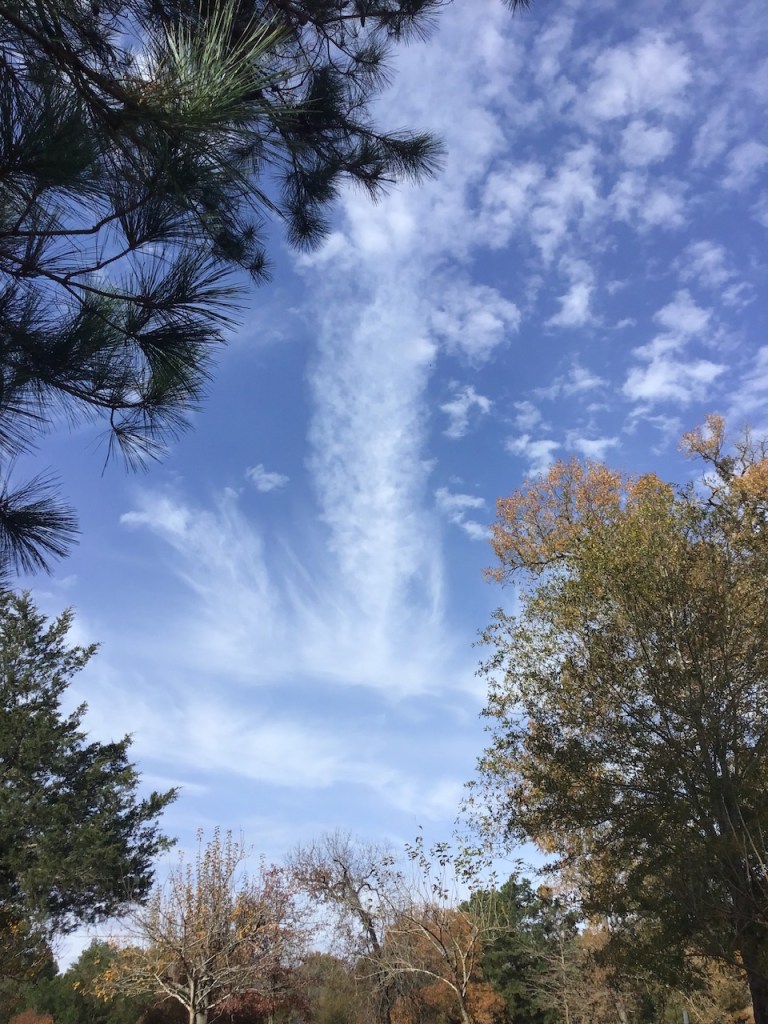
Some still think these are contrails! Good grief!
This weekend’s forecast looks like a drop-down menu: 1/16th inch rain possible, or severe storms, or flooding, or hail, or tornadoes. Try planning for those options, peasants! 😩
Hope life is a little more predictable in your neck of the woods!
Almost entirely happy snaps and almost no complaining at all, really! The garden is mostly great, the weather mostly fine, summer in full swing already, ready or not.
It’s been busy around here, as usual. But, busy in the country way, which is very different. Our preservation season has already begun, and it’s fixing to get very busy very soon. I have mixed feelings about that, but here it is anyway.
I’ve been saving the rose petals for drying and kombucha after admiring their scent and beauty in many lights and angles.
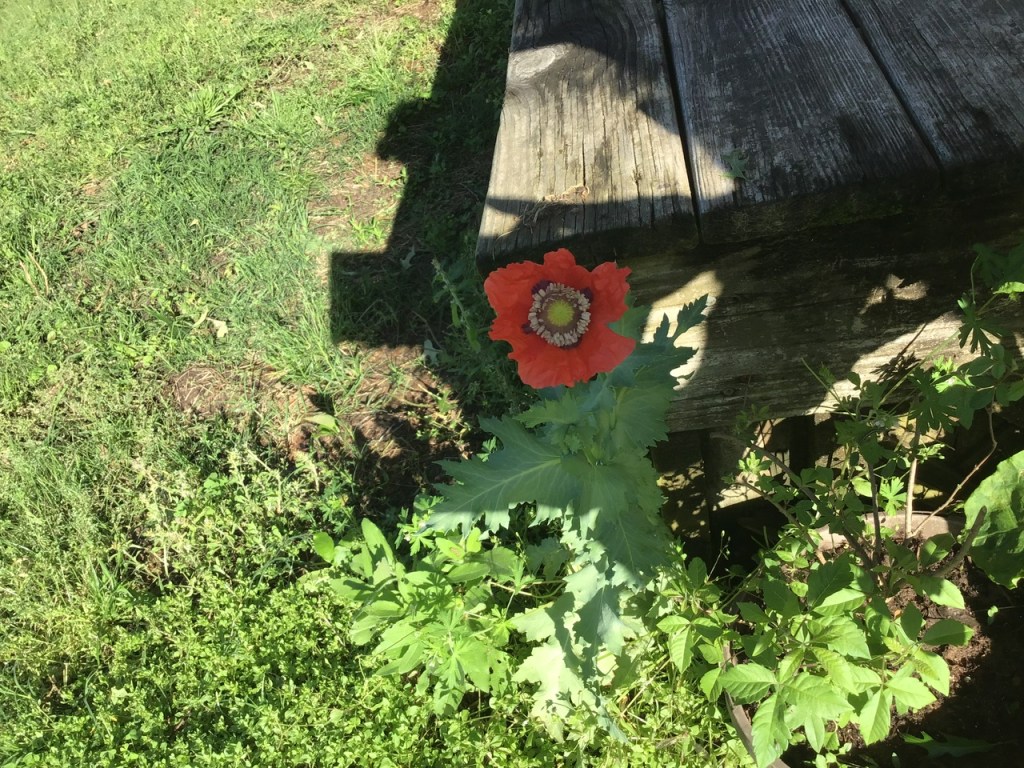
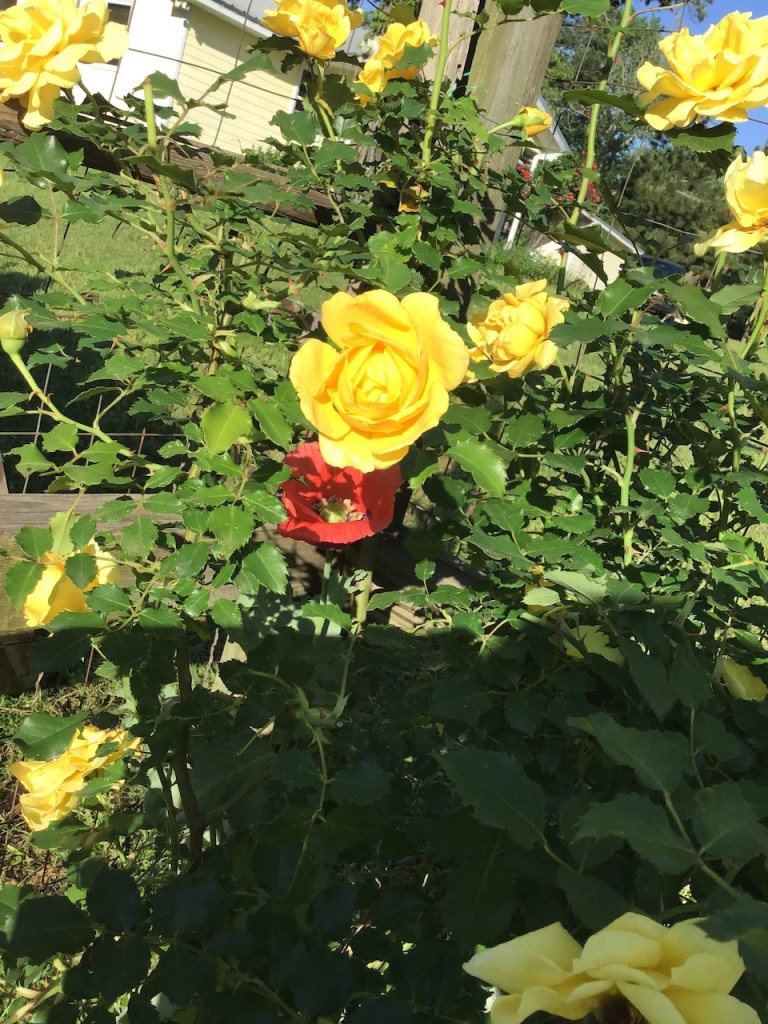
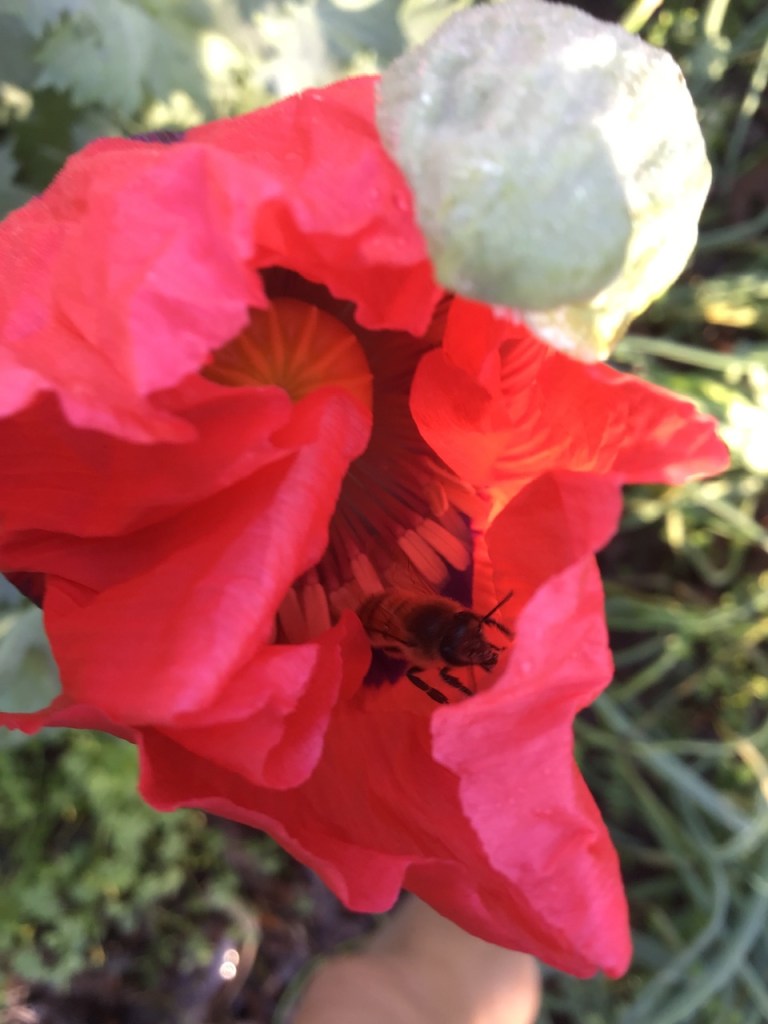
The poppies continue to pop up in random places, among the roses and in cracks and crevices, like dandelions.
And the bees love them as much as I do.
Another rose variety, the thornless Peggy Martin, I just planted last year, is now getting its first blooms.
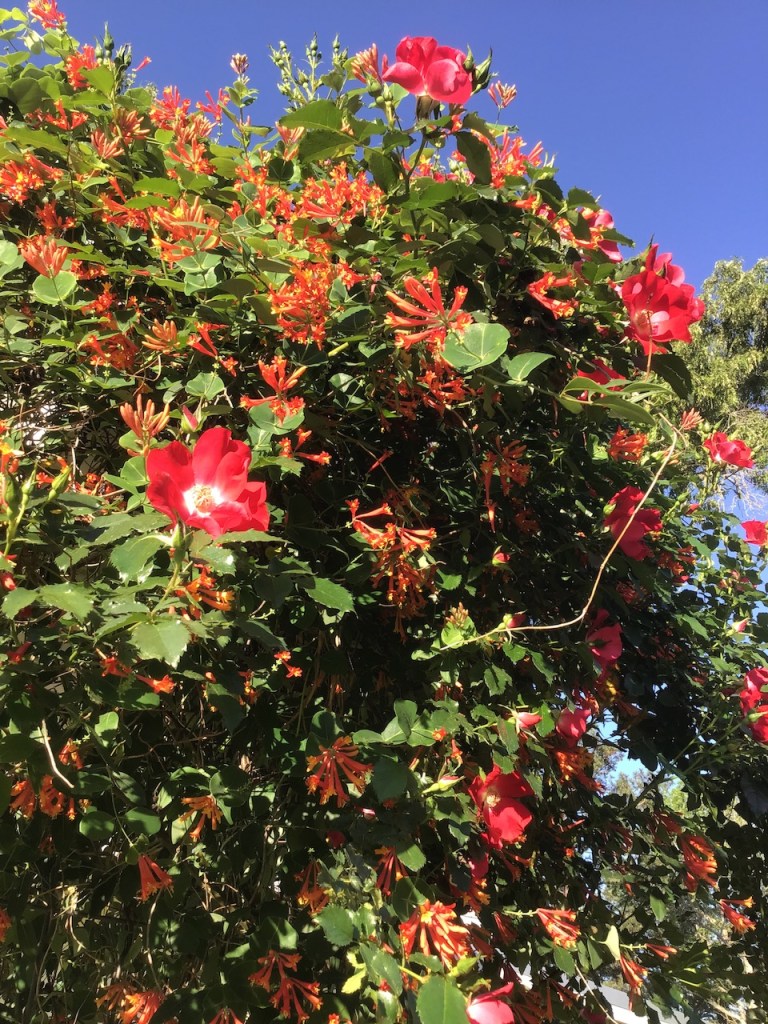
I’m so very pleased with the transition from cool-season coral honeysuckle blooms to the Dortmond rose takeover, lovely! I especially like the short spell they co-habitat.
The wattle fence I began with the best intentions is languishing due to too many other priorities. It has been a sheep deterrent at least, since the mamas and lambs have taken over the front yard. And even Shadow doesn’t dare stand in their way!
This is where the citrus will go, my new big project. I’m even considering throwing an avocado in there too. I know, very ambitious! But, I want to give some of the new methods a try and it seems like a good time. This side of the house is ideal, the house breaking the north wind and the heavy late afternoon sun. Plus, there’s the extra warmth accumulated in the walls of the house to help in cold snaps, along with the extra heating and draping methods that seem to be working for others.
Ooohhh, anticipation!
Just like the tomatoes and cucumbers coming so soon, right around the corner, and I can hardly wait. The last fermented cucumbers we used up a week ago, amazingly, and they were still crispy and flavorful. I plan to continue and expand my fermenting efforts this summer and fall. More herb pastes, more tea blends, more spice mixes.
The lambs are still doing fine, my how fast they grow.
Spring lambs on springs! 😆
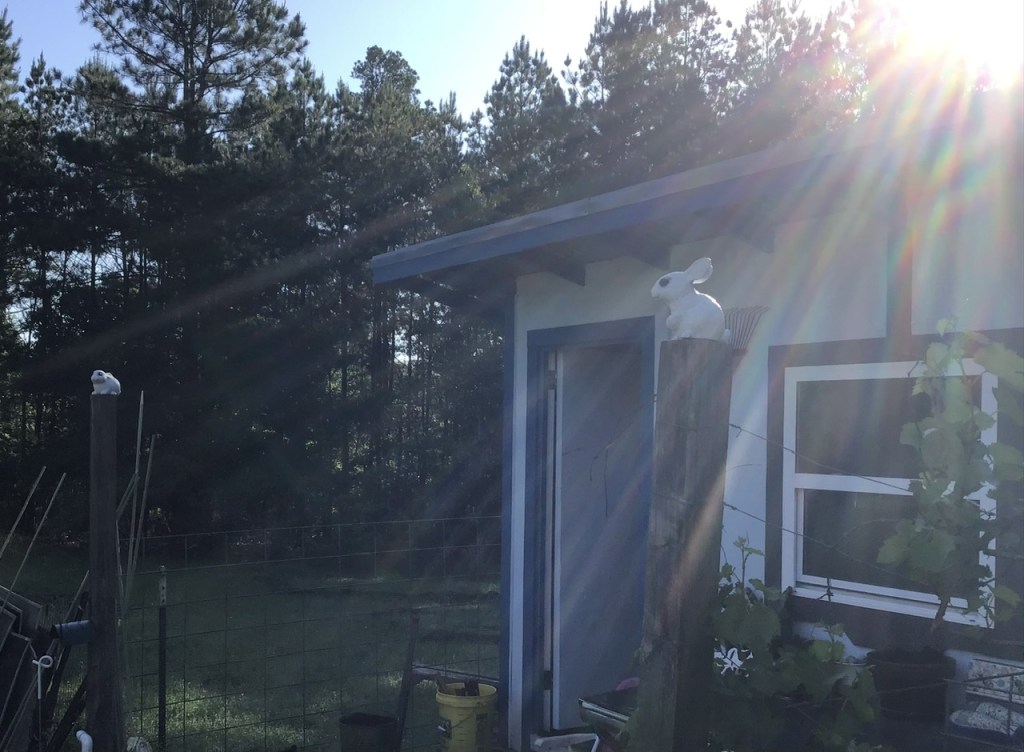
My garden mascots, two white rabbits.
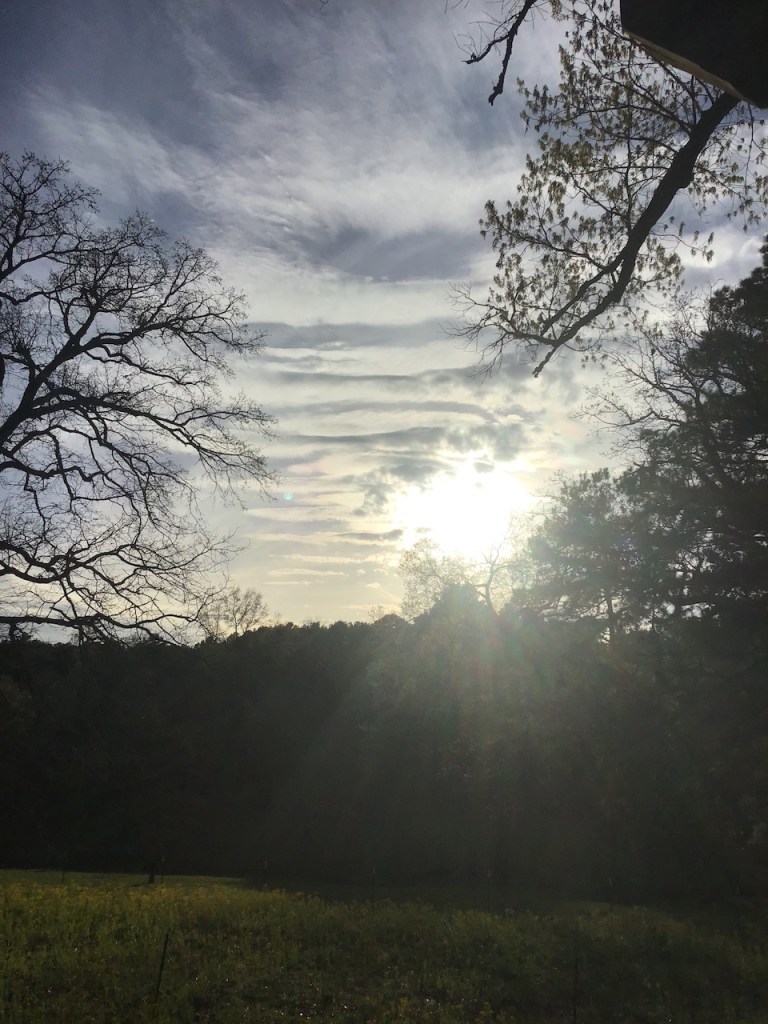
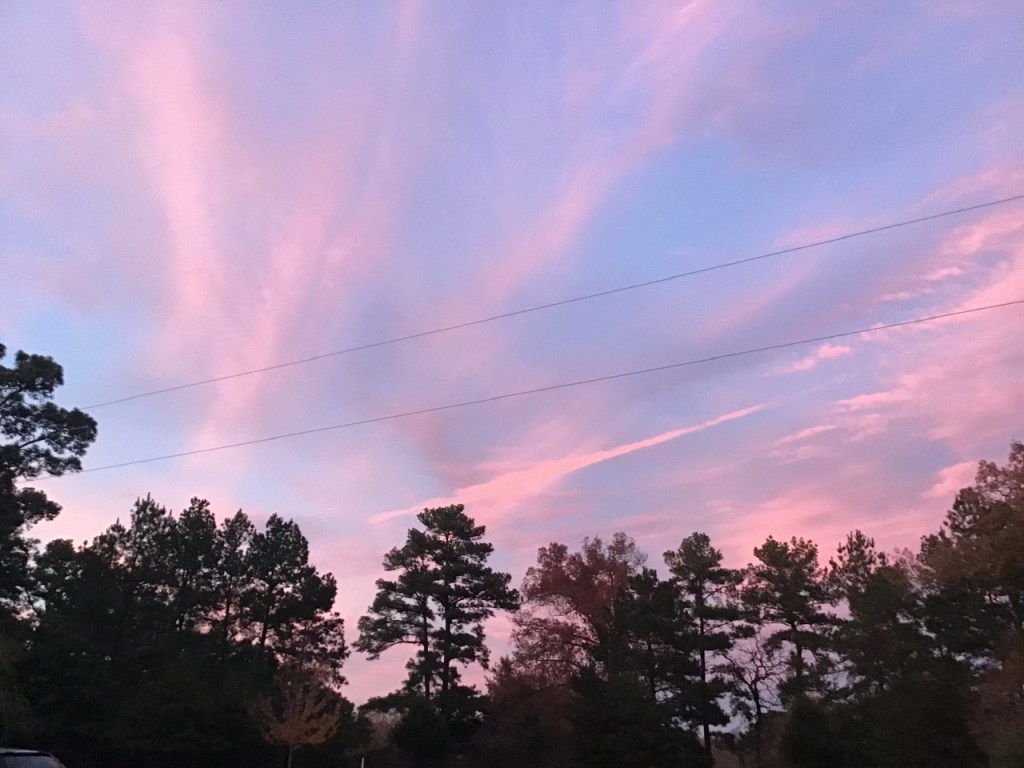
And my single complaint—the spray continues to ruin our beautiful days.
Is this why we can so clearly see these colors, because we have an atmosphere saturated with reflective particulate matter?
Cool pic, or chem-filled haze?
“I’m no prophet Lord, I don’t know nature’s ways.” ‘Anticipation’ by Carly Simon
The exciting season continues! Mostly plant talk this post. And, we’ve got our first lambs, I’m workin’ my first wattle fence, there’s some flower photos and fancy garden plans.
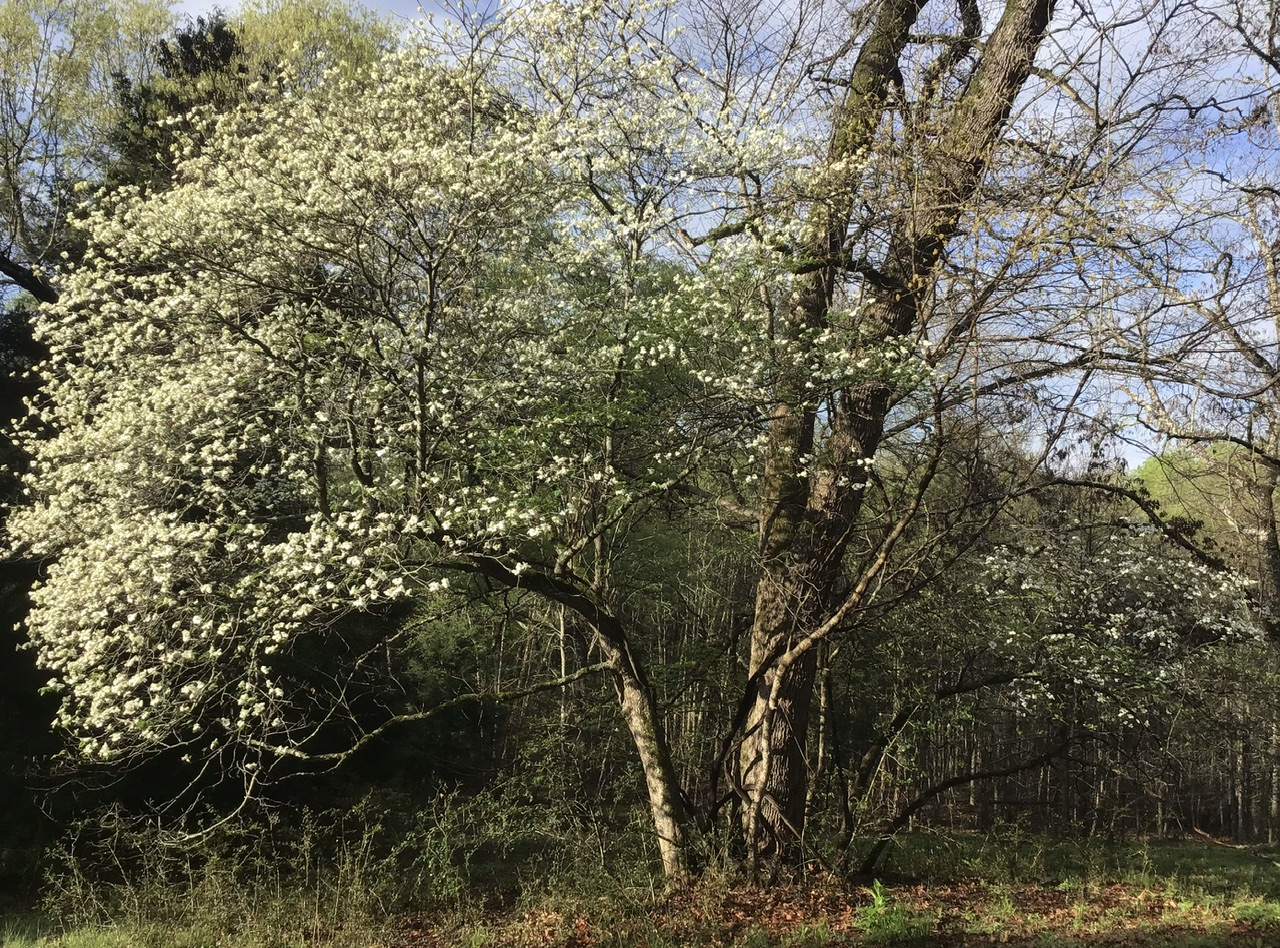
A first-time mama is the first to drop a perfect set of twins!Dogwoods blooming beneath oaks
Trumpet, or coral, honeysuckle on our front porch usually attracts hummingbirds by now. It’s looking gorgeous and I’m quite proud of it because it’s one I propagated from the wild. But, where are our feathered friends?
Seed saving has definitely upped our game in the garden. Buying seeds is certainly far easier than saving them. Where we once just had to plan one large garden space, now there are three. It feels like juggling! You’ve got to keep all the spaces perfectly coordinated. I had to make a chart. I am not a chart sort of person. I’m the kind of person who instantly glazes over at the mere inclusion of a chart in any piece of literature.
So really my chart was more like a list of do’s and don’ts in a useless graph format. Don’t plant the pumpkins with the zucchini. Don’t plant the luffa with the Trombetta. Do plant different varieties of cucumbers, peppers, melons and watermelons at least 1/2 mile apart. (Is that even possible?) Musk melons and watermelons are safe to plant together, but French cantaloupe most certainly cannot be planted with American varieties or with green melons.
And that’s just the summer season’s produce, there’s a whole different set of charts for the winter veggies.
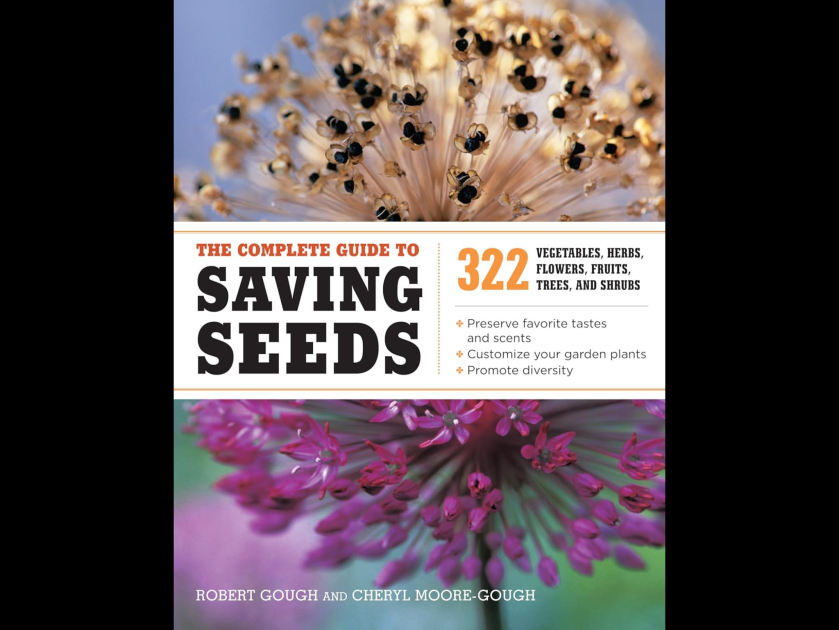
Luckily, I’ve got some good guidance in a great book and, even better, some bigger minds to follow in the form of Gavin’s Newsletter. He’s just started a book club and his first book up for April just happens to be the one I’m reading.
Why save seed? From the book we learn a few good reasons: *selecting for specific traits, *preserving diversity, *saving money, *creating superb plants, *And, going on an adventure. “The art of saving seeds may so intrigue you that you’ll branch out to your own plant-breeding adventures with such long-term seed-saving projects as growing oaks from acorns.”
Perhaps that could be me! Or perhaps I should’ve started this about 30 years ago.
But, those do all sound like good reasons to me, plus I’ll add one more. It’s a good way to exercise your body and your brain at the same time.
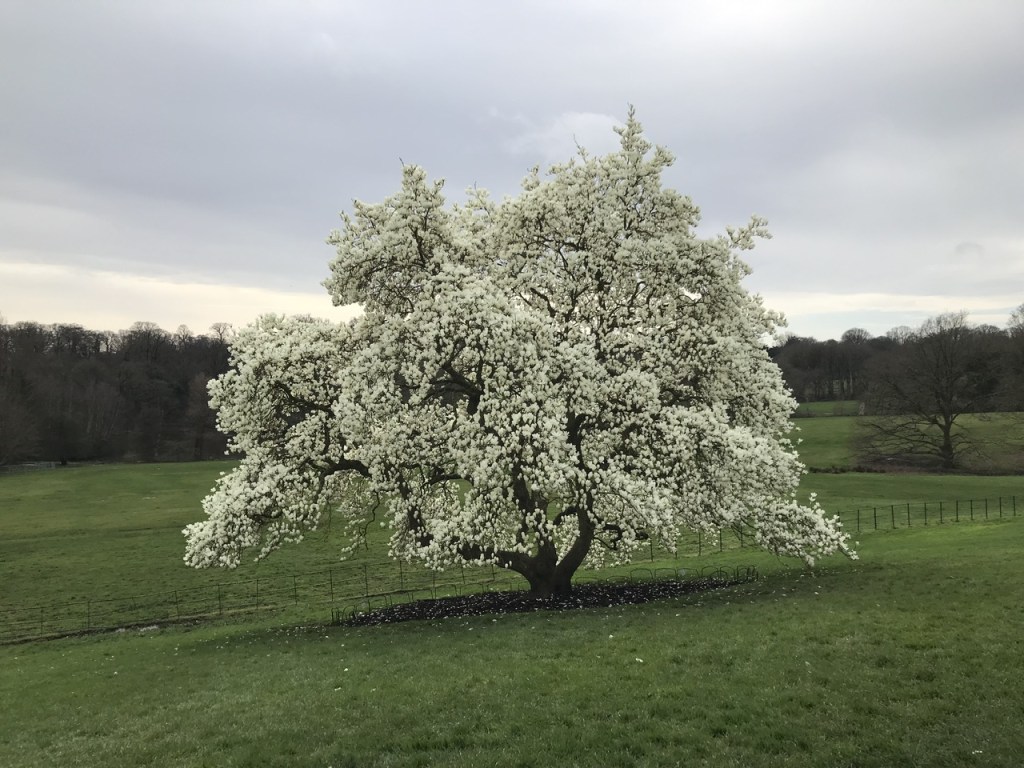
But, propagating something so slow-growing from seed at this stage of life, I think I’ll need more bang for the buck than an oak. Like, this magnificent magnolia!
(Photos sent by a friend in UK, wow, what a specimen!)
Of course, not all seed saving is complicated. After all, it used to be something every farmer would do, and their children, too. If I’d grown up doing it I’d probably think I’m making much ado about nothing.
In particular, most of the common herbs we love—dill, cilantro, basil, parsley couldn’t be easier—let them go to seed, collect the seed once dry, keep in a paper bag over winter, and sprinkle back out in spring.
Easy-peasy, leaving more time for flowers!
More flowers, herbs and medicinals has been the big goal besides seed saving. I’ve always liked hollyhocks and other traditional ‘cottage garden’ favorites. How fortunate for me to find one I’ve never heard of before, with a really cute name.
Inspiration photo only, real or photoshop, no clue
Flower name: “Kiss me over the garden gate” Latin name: Persicaria orientalis (formerly Polygonum orientale) is an annual member of the buckwheat family. The tall plants produce pretty pink pendulous blooms.
I’ve just planted it under the bedroom window inside my work-in-progress wattle fence.
What’s a wattle fence?
I had no idea what that was until I read about another blogger, Re-Farmer, building one. It looked like a fun and do-able project perfect for a precision-challenged person like myself.
And it is! There are lots of YouTube videos on the process, but I think this one was the best—a much taller and longer wattle fence than I’ve tried to produce, but who knows, as my skills develop I could step it up a notch. 🤔
The other big garden plan this year are a few citrus trees. We’ve been wanting them for a long time, but all fruit trees are a challenge here with our crazy weather. (And it’s not just us! All kinds of complaints about it from YouTubers and neighbors alike. It didn’t used to be like this.)
Anyway, this guy’s got some great suggestions and solutions and we so love our citrus, so we’re going to make an investment toward our citrus-filled future with Myer’s lemon, Mexican lime and Satsuma orange.
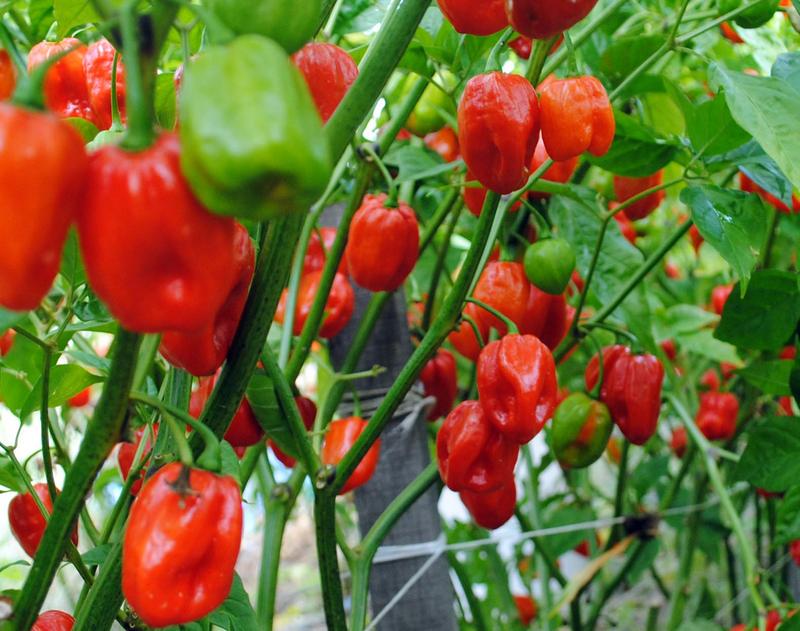
Another small plan is more peppers, specifically seasoning peppers, also called spice peppers (though they aren’t always spicy as in hot), like pimiento’s and such.
As much fermenting as I’ve been doing I see they are an excellent addition to all kinds of dishes. Plus, peppers do pretty well here usually, and they harvest in fall when there’s little else happening, and they are lovely little plants some folks grow just as ornamentals. Four excellent reasons to squeeze them into the rotation. Here’s one variety I’m trying:
“(C. chinense) 99 days. (green > orange-red > red) [Venezuelan heirloom. Seed source from Donna Hudson in TN.] Has the same shape, size, color and aroma as Habanero, but is sweet, spicy, and delicious, with only a trace of heat. Highly aromatic fruits; their flavor is unusual and complex, with overtones of black pepper and coriander, and undertones of other spicy flavors. An excellent choice for sautéed vegetables, rice and bean dishes, paprika, or herbal vinegars. The thin-walled pendant fruits are 1 x 2 in., tapering at both the stem and blossom end. Plants have good foliage cover and bear at 18 in. high. Seedlings grow slowly at first, but grow rapidly later in the season to 48 in. or more.”
Like I said, it’s the exciting season on the wee homestead!
Such an exciting season around the wee homestead! We’ve got mostly happy snaps and cute vids to share this post—growing piglets and bees and veggies—yippie!
I’ll save the unsavory stuff til the very end, that way those who must can just skip it. (Mighty generous of me, eh? 😆)
Let’s begin with a bumper crop of piglets, 11 of them, here trying to figure out the basics. This is just one day old, my aren’t they some quick learners!
Later we have a couple more from today, at one week old.
She’s been an excellent mama, Patty, this is her 2nd litter.
The garden is going strong already and this is definitely the earliest I’ve seen bumble bees out and about. March 15 is our average last frost date around here, for whatever that’s worth. Considering we’ve seen snow-covered Indian paintbrush before, we don’t put a lot of stock in that date.
If we don’t get a late frost this year it will be our earliest ever for summer planting. I’ve already got cucumbers in! The tomatoes are just about to go in and the peas are presenting perfectly.
Peas and fava beans planted together. If it gets too hot too quickly they will be a bust, but we do love when they succeed.
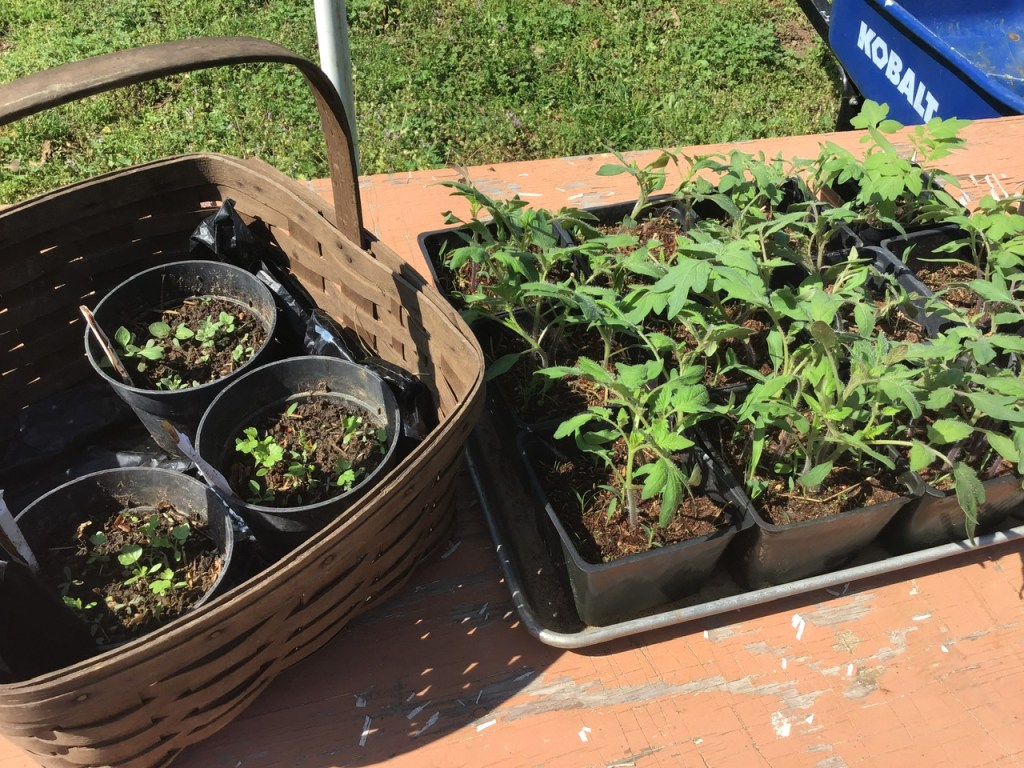
On left in the basket is celeriac, another fav of mine I try ever year, but like the fava beans and peas, it all depends on the temperatures if we’ll see a harvest. Next to them are tomatoes started under lights indoors and hardening now before planting in a day or two. I’ll plant some indeterminate varieties in about a month, hoping they’ll last longer through the heat. On right, the onions and garlic are looking great.
The old pears have already flowered over a week ago, here you can see Papa Chop napping while surely enjoying their sweet scent wafting on the breeze. Along with the bees!
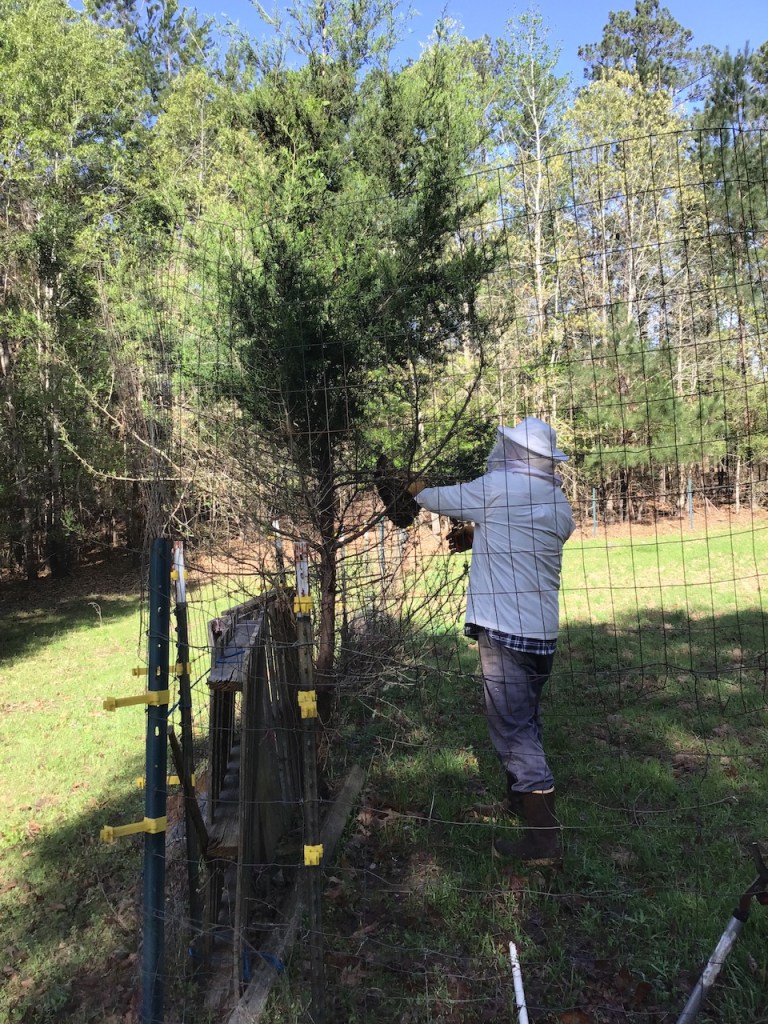
On the right you can see me filling up the new hive with bees that over-wintered in the nuc where they positioned themselves last spring.
This was such a memorable experience last year that we managed to catch a bit of on vid—well worth the watch as the colony we just captured as a swarm moves from the hive I tried to put it in into the nuc I’d placed as a bait hive, moving themselves within just a few hours from one side of the garden to the other.
This was a swarm we caught and first tried to transfer to a different hive on the other side of the garden. The bees had a better idea.
This was the swarm last spring. It was just a small one and I guess they just didn’t feel quite ready yet for the big hive I tried to place them in.
Thank you ma’am, but we prefer it over here!
Well, this time they were a little more receptive to my preference and they are in their expanded home doing fine. 🤗
The piglets are so cute it’s hard not to take multiple vids watching them. I don’t edit yet, but maybe someday I’ll venture into more serious farmish filming.
And another ….
But, it’s not all peaches and rainbows for the piglets. Because you know, ‘male privilege’. Last year Hubby learned to castrate, which is an absolutely necessary skill if you’re serious about raising pigs. He did the deed, he’s gotten rather quick and good at it, so we made a couple of vids this time. Here’s the intro.
I’ll refrain from posting an example of the dirty deed though, which I could barely film! Yes, I admit one of my many bad qualities is squeamishness. But in my defense, I know many others way more squeamish than me!
If you really want to see it, you’ll have to send me an email. Don’t worry, I won’t judge. 😉
And in other bad news, yes, they still spray our beautiful days away. 😩
Still, it’s a beautiful life, and while we may complain, we know how to appreciate it all, too.
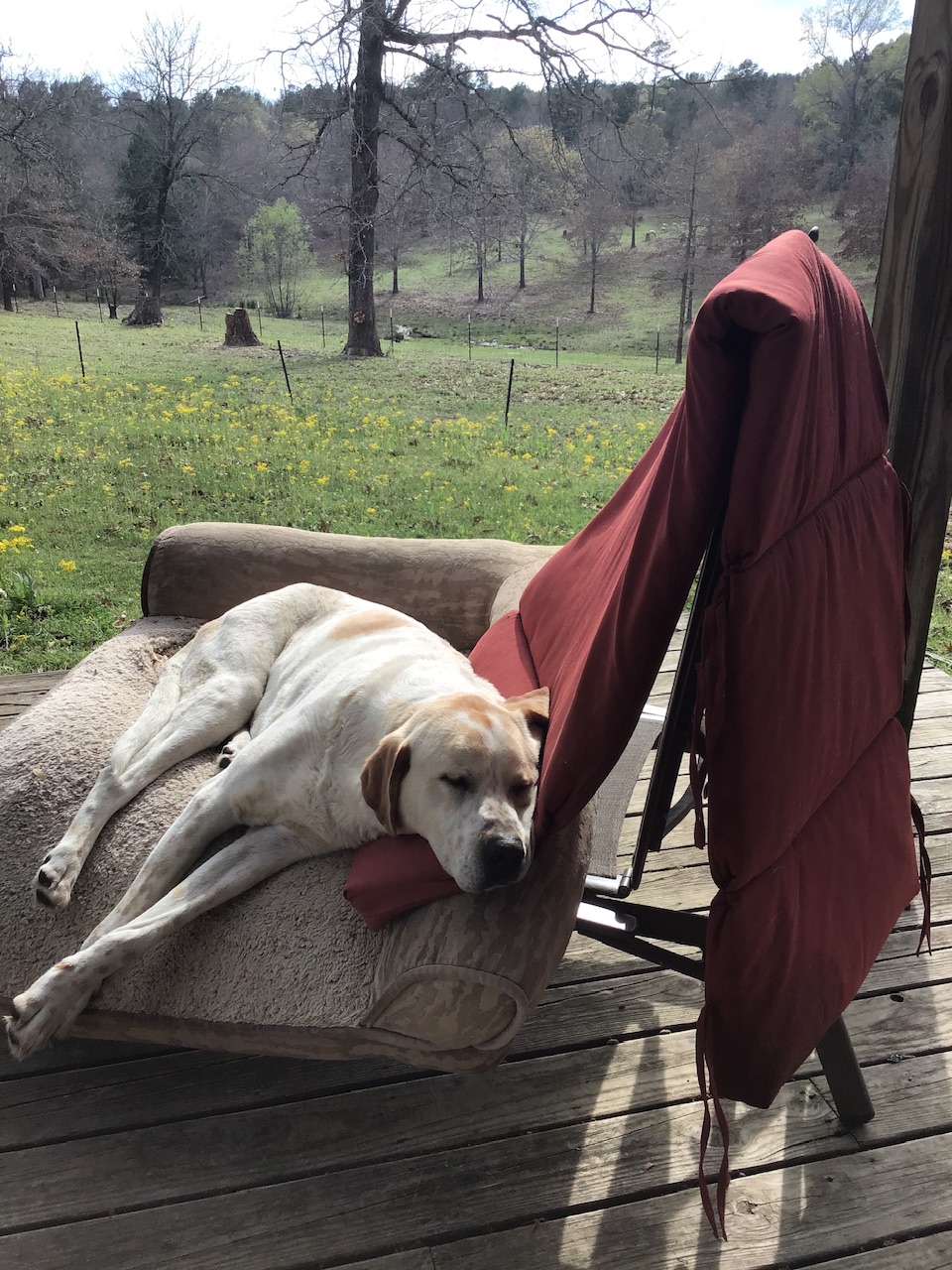
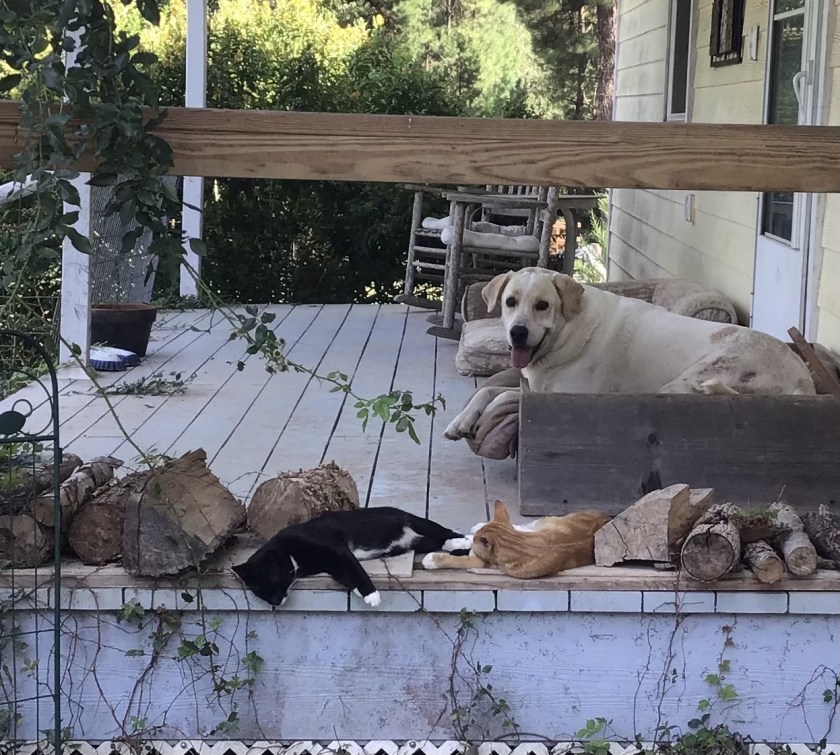
When all else fails, learn from Bubba.
“Oh, you only meant to dry the cushions here for freshening? Let me test that out for ya.” ~So Says Bubba
Thanks for stopping by, wishing y’all a glorious spring!
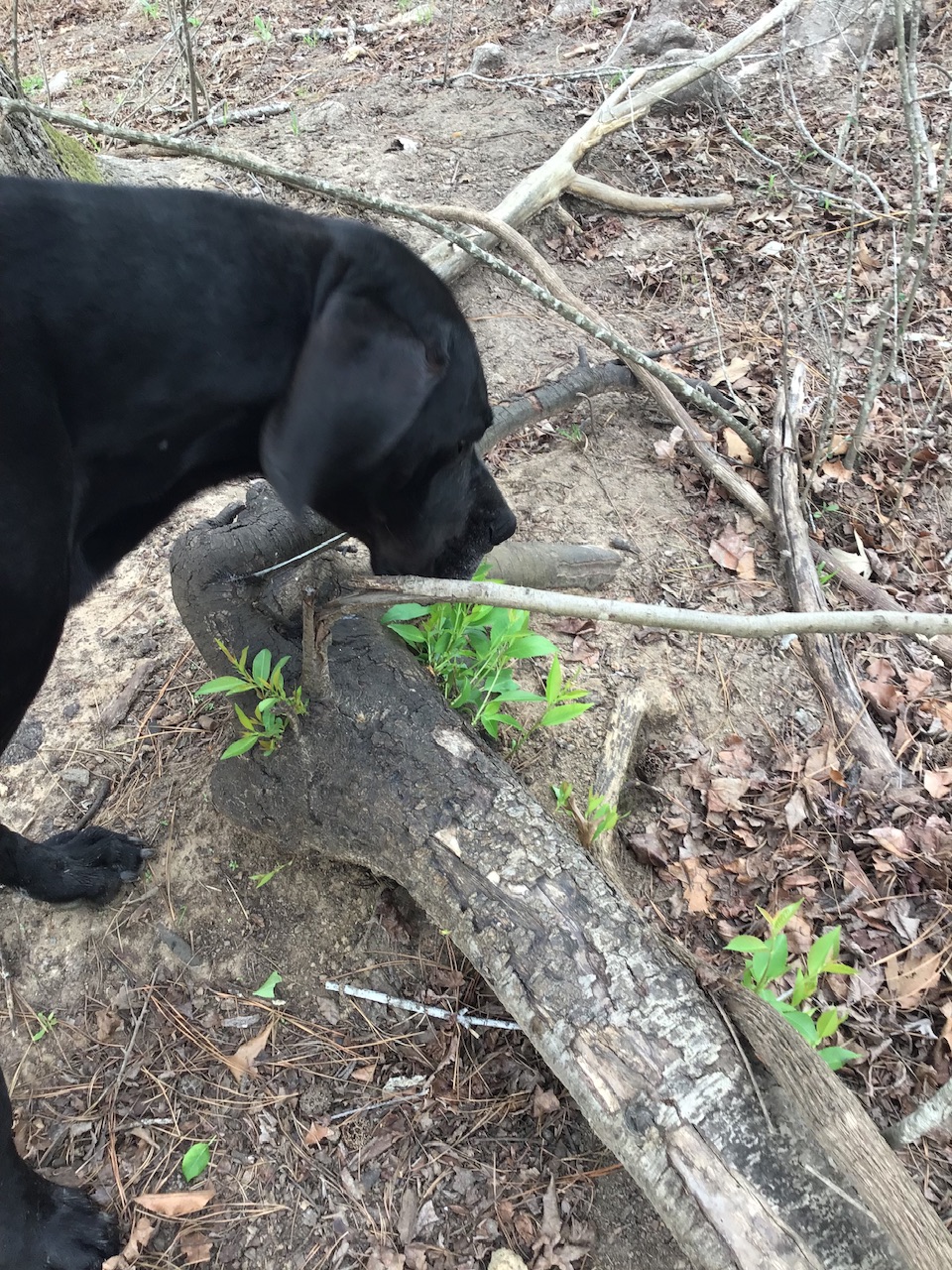
Shadow pointing out which wild cherry suckers I should try to grow into trees.
This post we’ve got some happy snaps, the usual weather bitching, a bit of pre-planning and some good news on two healing fronts.
(From bottom left: mini-mustard greens and new lettuce germinated inside about to be transplanted to replace all we’ve eaten; several types of onions and elephant garlic (which does best here, by far); and turnips for us and the pigs. 😋)
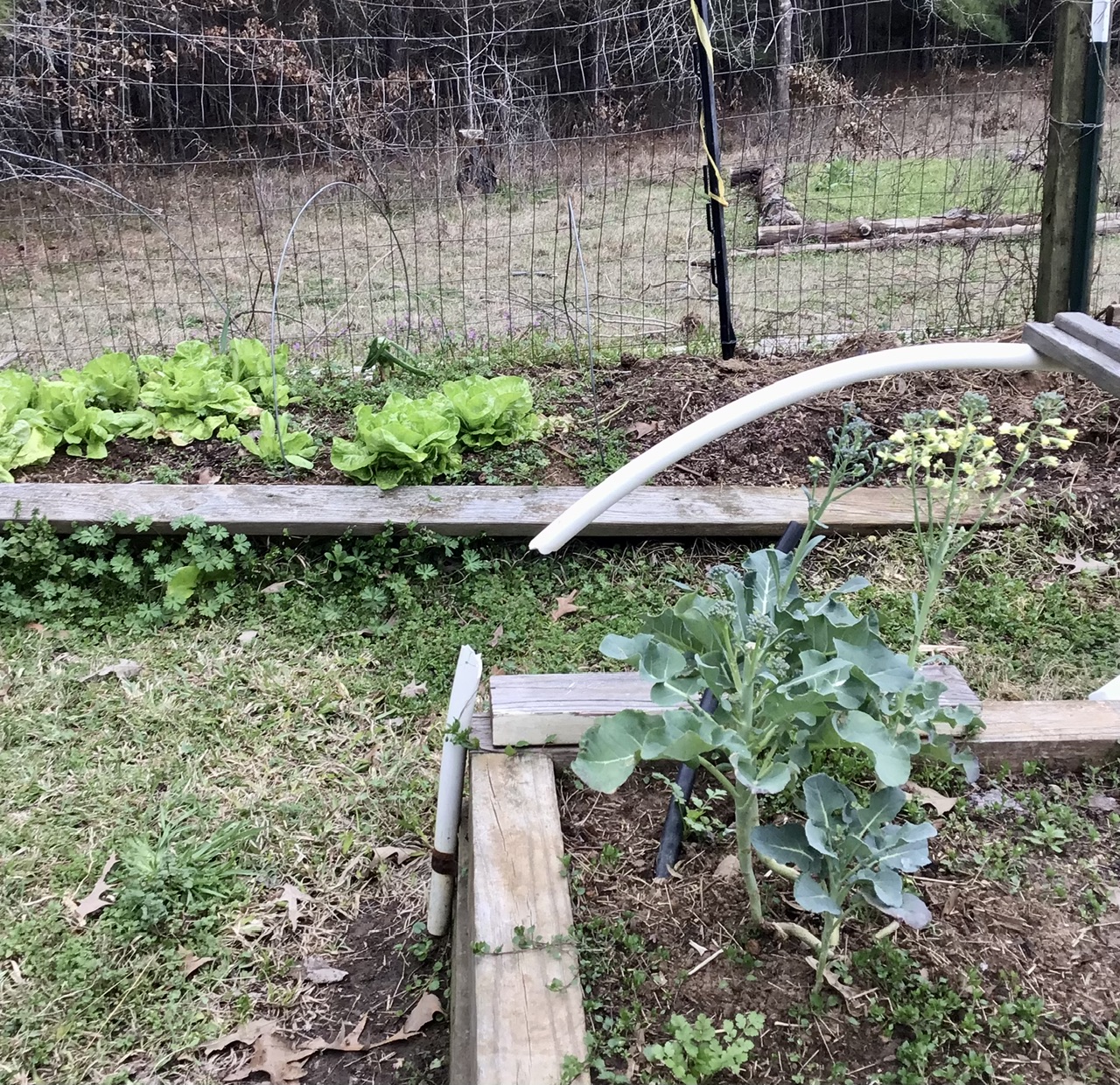
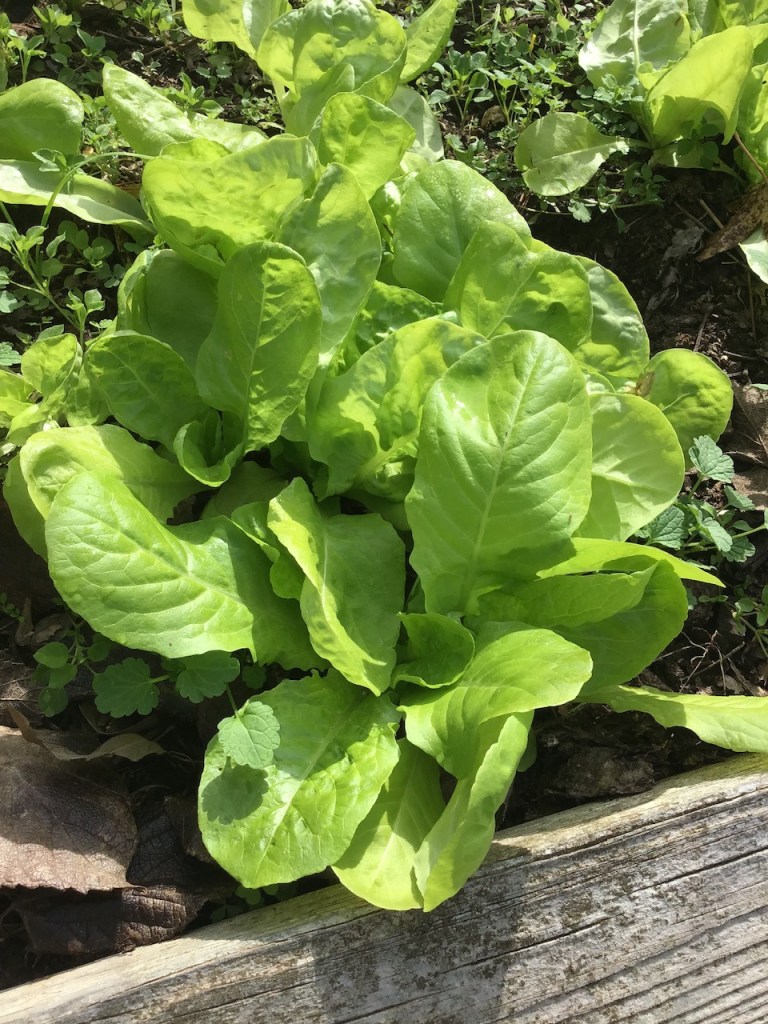
The cauliflower is long gone, the broccoli nearly so, but a new crop is already in the works inside on a heat mat. Succession planting has its limitations in our East Texas Yo-Yo Season (formally known as ‘winter’). Sometimes you get lucky with a warm stretch and get a nice surprise (yay, third times a charm, the carrot seeds finally germinated!) other times you get premature bolting (that dumb broccoli didn’t even produce a good head yet!).
Premature bolting 😖 But some nice butter lettuce still doing well by covering during cold swings
I do not appreciate it, and I think it stresses us all at some level, not just me, not just the more sensitive 4-legged and 2-legged, but all of life. Five warm days go by, in the 70s (but feeling hotter), with an unseasonal and hot stinking wind coming from the south, then suddenly, the very next day, it’s 40, lows in the 20s, and the dogs are shedding, also unseasonably.
Our ‘Arctic chicks’ — confused broody hens confusing weather whiplash for spring
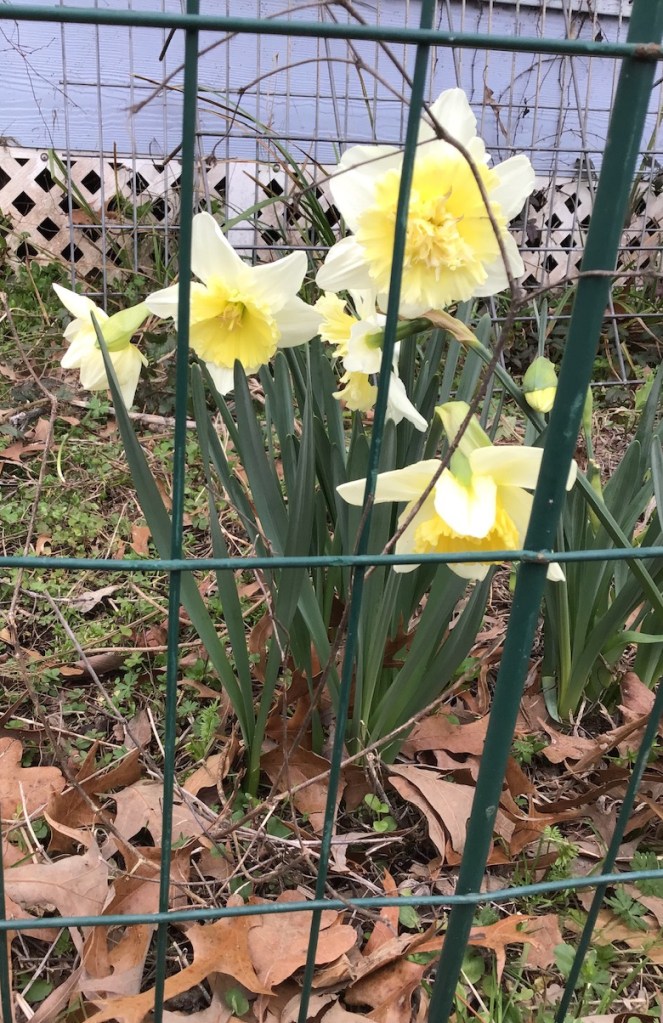
Yes, we get the surprise arctic chicks on occasion. It’s nice to see a bee or two about. We get early daffodils. But we also get another lost fruit crop because it is sure to frost and now, again, everything is blooming far too early.
And it seems to me, the more folks are catching on, the more the establishment pushes back, with the gaslighting and the misdirection and the normalizing.
Going back to the 1800s! And how’s that working out for us?
Despite the man-made manipulation, or maybe because of it, I’ve come to appreciate the old adage ‘Let nature take its course’ on a whole new level. We’ve had two overlapping critter health issues these last months, both with their unique challenges.
Shadow’s blood-spurting ear was by far worse, but still, in every case, I don’t like not knowing what to do, stressing about my lack of knowledge, feeling useless, and that’s how I felt during Chestnut’s ordeal as well.
Please allow my whine for just another moment, it’s been illuminating for me, in a way.
Self-reliance is a cornerstone goal for us. Relying on vet care is not an option for a number of reasons, beginning with the cost, ending with the lack of trust we have for the medical establishment, and with a very long and convoluted journey in between where we try to figure out how to bridge this enormous gap, with no training.
We are lucky for the internet, but you know how that goes. One problem, a dozen conflicting pieces of advice. We ask around as well, we are certainly grateful the many suggestions offered, but still it’s nerve-racking making ill-informed decisions, and no matter what anyone might pretend, health is not an exact, one-size fits all kind of science.
Chestnut was acting strangely, very suddenly. She went from just fine to a few hours later she was lethargic and not eating much and separated herself from the herd.
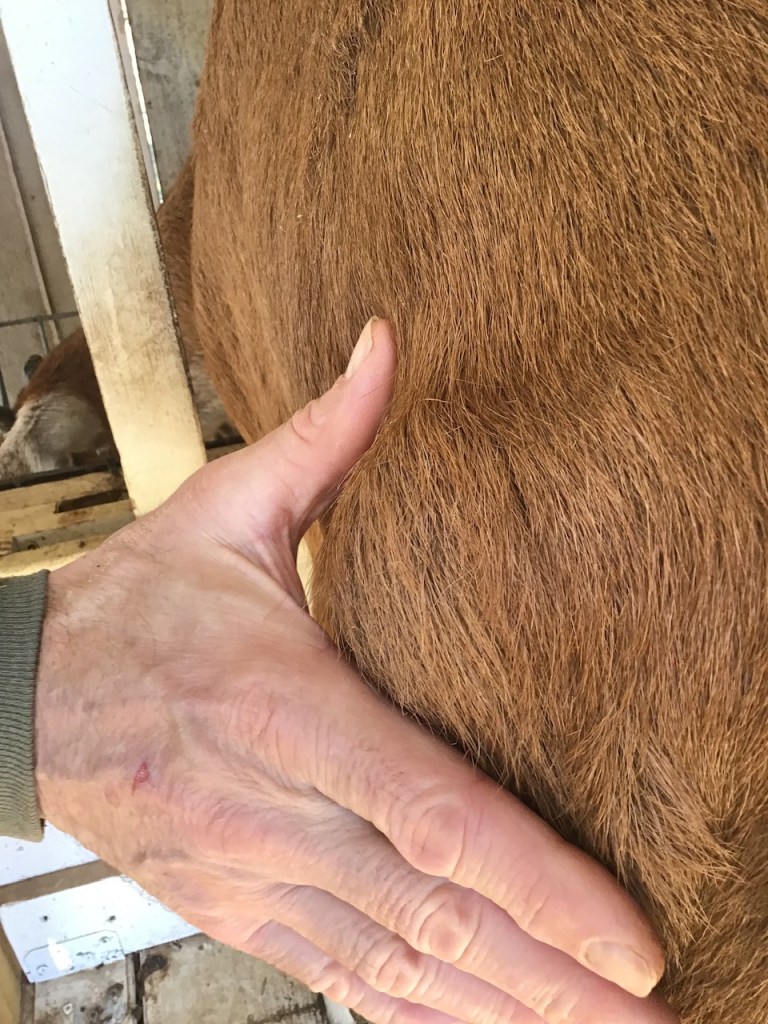
My goat friend suggested Ivermectin and it seemed to work fine. Then she quickly developed an abscess on her side. Related? No clue. It looked terrible, but it was not bothering her at all. I read lots of advice, but decided to let nature take its course after reading one description that sounded most similar to what I was seeing. Though they recommended lancing it at the end stage to avoid ‘infection’. (In the above photo you can see the ‘before and after’, the photo on right taken yesterday, sorry for the blurriness.). It got very large and it was not easy to do nothing!
It’s been over a month now, and it is healing nicely. Patience was the correct remedy, not lancing. I think we have an addiction to unnecessary interference in our culture.
The ordeal with Shadow was a serious challenge. You might recall the middle of the story from our last Happenings post. It started all the way back in November with a little nick on the tip of his ear. The cat?
Who knows, but it was shockingly difficult to get the blood flow under control.
We had much advice, some of it new and excellent (thanks again Kath and Zoe!), but wow, did that take some patience and perseverance, which mostly landed on Hubby, as per usual. (Male privilege! 😂)
Three months later and it is completely healed and all’s well that ends well, thank heavens!
What exuberance, no one around here can keep up with him! He runs circles around us all, then sits patiently by Hubby’s side until the next round.
We LOVE potatoes, but they aren’t the easiest to grow here. This ‘barrel-layering’ technique has proven to be more successful.
We love potatoes so much we also buy them in bulk when they’re on sale and Hubby cans them up and they fry up in tallow so quick it’s like a delicious fast food that’s a cheaper and healthier alternative to the industrially processed varieties.
It is a long and labor-intensive project, that’s 45 pounds of potatoes there, it took him the best part of a day to do, but we’ll be appreciating the effort for 28 delicious meals. 😊
Looking ahead we’re doing a bit of planning—I’ll be giving another beginner’s fermentation course next month and Hubby’s got some good livestock trades in the works, we’re committed to foraging more for mushrooms and cultivating our own.
Patty, our mama-to-be, eating up the last acorns. Already many of her piglets claimed for bartering deals. 😁
Here’s a current little visit with our herd, including, hopefully many healthy, expectant mamas with kids growing fine.
Not that little guy, he’s our first buck, we call him Teaky.
5 expectant mamas among our St. Croix-Dorper flock
Incorporating more permaculture design in the garden and orchard is an on-going big goal. We have a couple spaces empty and I’d love to try something really unique like this:
Permaculture-Inspired image I’m dreaming about!
Where I’d be including my fun garden-art projects, like these:
Lots of grand plans in the works, always, but it’s the simple things that make the hard stuff worth while.
Some are shocked and appalled by this, as they should be, according to me. Others think it will be a fantastic improvement to human life, or a great way to make more fiat, or a solution to the burden on the caring professionals, or they love tech for tech’s sake, or whatever.
Those of us who love history and dwell constantly on the question ‘how has it come to this’ were well aware of this potential because we study the trajectory of modern life. I could begin with the first critics centuries ago, but for brevity sake, I’ll start instead with my own life, the only history available to me to know thoroughly enough.
Working mother, divorced parents, step parents, then step siblings, professional daycares, neighborhood babysitters, after school programs, junk food, convenience food, lots of TV. Family history of: diabetes, heart disease, obesity, cancer, vision problems, depression, eczema, alcoholism, Parkinson’s, and, you get the picture.
And I would not say my family life was bad. It was the typical American suburban life of a great many growing up in the 70s and 80s. Neither particularly good, nor bad, just normal. Normal, as in well-normalized.
Like most families my parents would joke about voting for the ‘lesser of two evils’. They probably learned that from their parents. My mom went to community college and got her degree once we were gone, in sociology. She worked full-time all her adult life and didn’t regret it. My dad remained ‘upwardly mobile’ as his Protestant father taught him to be.
In fact, we have retired before him, and he has just had his first heart attack.
They are both still with us, but they do not read this blog, so I could say whatever I wanted. 😏. But, that’s not the point of this particular post.
Let’s leave it at this—in hindsight, my unique perception of growing up this way is, in a nutshell—there was not a lot of parenting happening. The results of this having widespread and devastating effects.
It is from these original seeds of pseudocare that have been not only consistently irrigated in our own territories, but have been dispersed throughout the world these last five-plus decades which has ensured the trajectory to the ridiculous place where we now find ourselves: Drowning in pseudocare so deeply we can scarcely recognize what real care looks like anymore.
Another quick peak at the fruits those seeds have produced.
Yet even facing all of this, I’m still optimistic, as I have been all my life. Even at the worst of times, even during a few prolonged worst of times, I must’ve still learned something vital from my half-assed upbringing and collapsing culture.
So, here it is, in another nutshell:
Believe in yourself, believe it can change, but don’t practice in sidestepping the hard stuff. And the hardest of the hard stuff is care, real care—for yourself, for others, for the future—that is why we are here. How you go about that is your personal journey and your only real duty to discover and live. That is all there is to do in a life well-lived.
Which is why I want to once again quote an obvious example of someone doing exactly that, Gavin Mounsey, who is rocking the real care like a hurricane these days! Wait . . . What?? Ok, terrible simile aside . . .
I believe he knows what needs to happen next and is becoming the living manifestation of that in his own life first, and passing it around. Leading by example, it’s the only way. It’s the same cardinal rule as storytelling—Show, don’t tell.
“I want to give my energy to improving and increasing the resilience of my local community, not your hyper centralized one size fits all infrastructure.
“Freedom is not a consolatory prize that can be given to us to reward our obedience and capitulation to a system of violent coercion. It is not something that can be granted or provided to you by some government that wrote some thing on a piece of paper. Freedom is your birthright, and you either live it and embody it, or you allow yourself to be put in a mental cage by statists and other abusive institutions or individuals. My ancestors bloodlines are traced back to a people described in today’s terms as The Gaels. “Saoirse” is Irish Gaelic word for “Freedom”. Saoirse is an ancient concept that comes from the original Brehon laws of the Druidic (and eventually Celtic) world before the time of Christ. In the times when that word was created, my ancient ancestors lived without a centralized state, without prisons and without police.
“Saoirse means many things to different people. For some it means freedom to think, express and freedom to learn, for others it’s the freedom of imagination and the freedom of the spirit. And for some it also means freedom to set up parallel societies.
“This is one of the reasons that I included glimpses into two historical cultural cross sections of ancient cultures that existed without a centralized state and police/prison system in my essay as I feel that we can glean wisdom from stateless societies that existed for centuries to millennia in how to design more ethical, equitable, honest, Regenerative and practical ways to organize community, encourage amicable/respectful behaviour in humans and collaborate to leave this world a little bit more free and beautiful than it was when we got here after we are gone.
“With all that being said, I want to emphasize that I think that placing any culture, group of people or individual on some pedestal as pure is unhealthy. I feel we should be vigilant to make sure we are not romanticizing their past nor romanticizing the potential of their worldviews to provide solutions to the present challenges we face.
“The path to become connected to place with a reciprocal relationship, reverence and humility is the path to embrace indigeneity ourselves.
“It is a great starting point to create pockets of decentralized resistance to oligarchic / statist tyranny as growing your own medicine and veggies may appear harmless, but in a parasitic global plutocracy it represents a decisive action that severs the tentacles of tyranny in a critically important aspect of our lives (how we access food and medicine). Thus, it is a radical and revolutionary act that appears benign to the hubristic philanthropaths and demociders, serving as a sort of covert sedition in a world governed by parasites that want us dependent, gardening to grow or own food and medicine is like a hammer wrapped in velvet that knee caps big pharma’s plans to poison us slowly through dependence on their system for health care and also strikes the spine of the digital gulag system, breaking its back so it can no longer have any strength to influence our lives through controlling our access to food/medicine.
A better essay about the importance of self-reliance and health as the ideal antidote to modern societal tyranny I could not have written! And he has a YT channel. 😁
He was also kind enough to try to address our biggest garden nuisance within the scope of his permaculture lens. He offered many potential solutions, and bless his heart for the effort.
But I’ll just repeat my personal favorite: hot and spicy gopher wings. 🤪
What an example of authentic care—growing in the real and cyber worlds simultaneously—where even sassy meat-eaters and smart-asses and AI are welcome to stuff up their comments sections. Now that’s grace under fire!
Thanks to guys like these, in the coming decades I predict courageousfellowship will become the new sexy.
Our seasons change. I don’t just mean from north to south, east to west. There are the calendar seasons, and the four seasons, though some unfortunate folks only get two.
Then there are the seasons of life—childhood, adulthood, old age.
Here on the wee homestead we have our own seasons now, too. These, of course, are the most special of all seasons, to us.
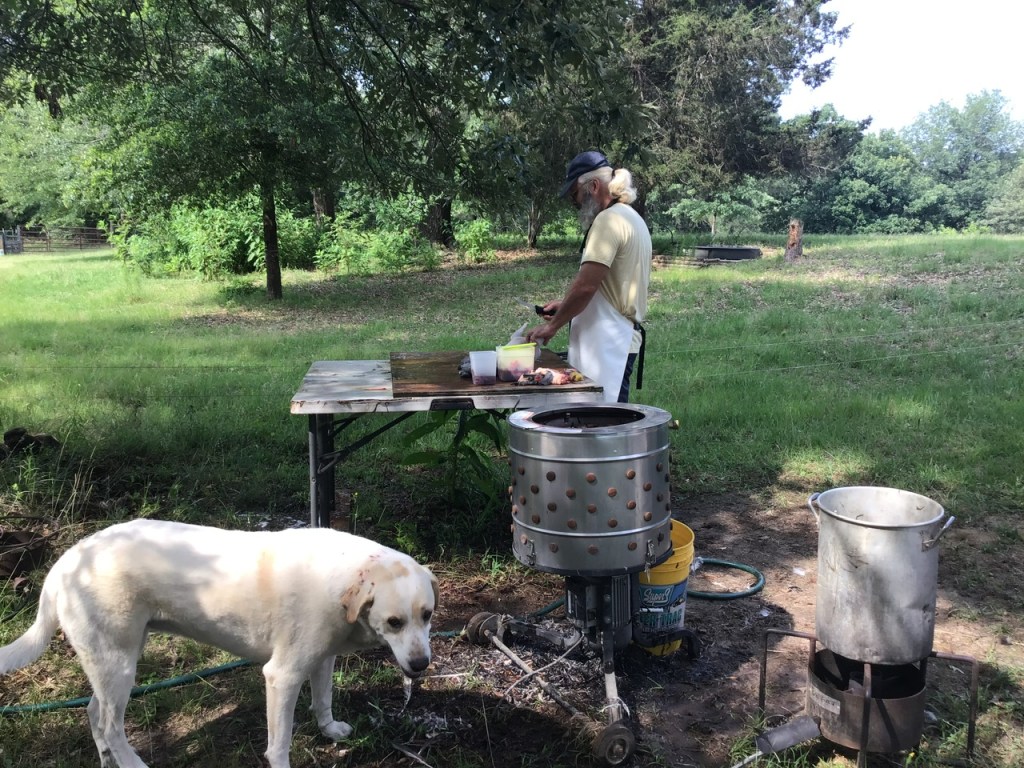
Here we have just ended the killing season. Hallelujah! A very unique sort of season to most—vegetarians certainly—but also to most of the western world, who no longer process their own meat.
This is an extremely challenging season.
For Hubby!
He has full and sole responsibility for the slaughtering, the gutting, the skinning, the scalding, the hanging, the butchering, the grinding, the rendering, the canning, the smoking, the curing, the broth-making.
WOW!
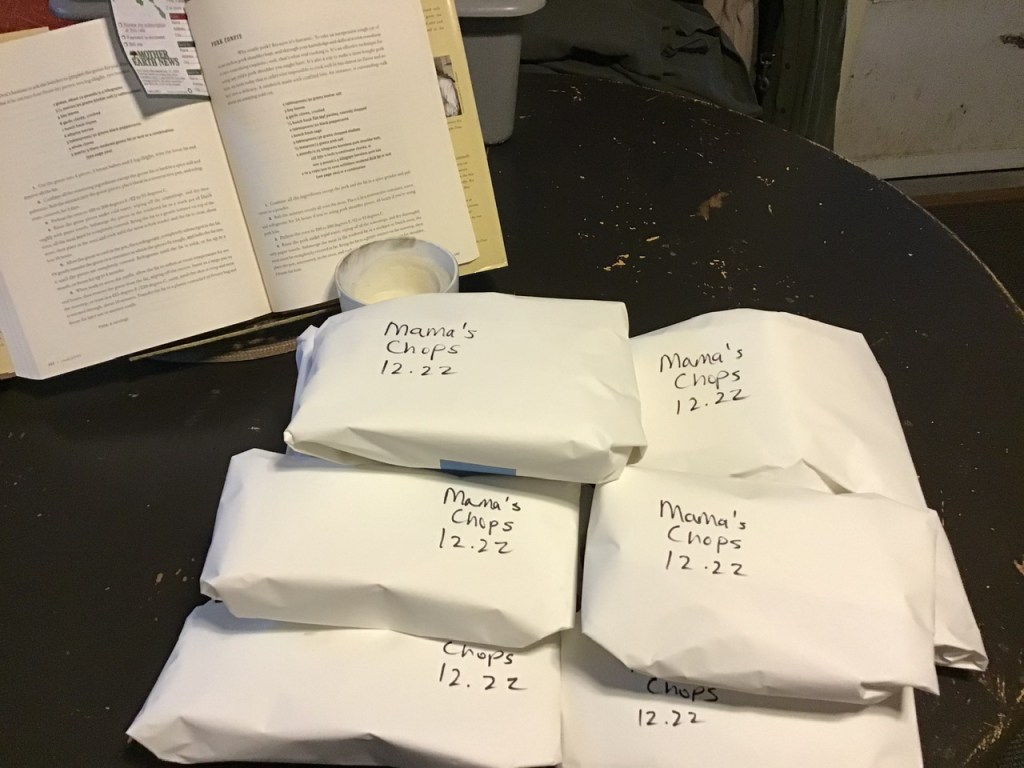
For my part, I do the packaging. Plus a bit of pâté, a smattering of curing. Not exactly an equitable deal.
Mostly it’s DeliciousSeason for me! Our small space is full of meats of many flavors—bacon, ham, pâtés, sausage, lamb pastrami and various other cures, beautiful chops and ribs and roasts, the aroma of broths and meats that he pressure cans, filling up every corner of our little cottage and wafting out to season the surrounding vicinity.
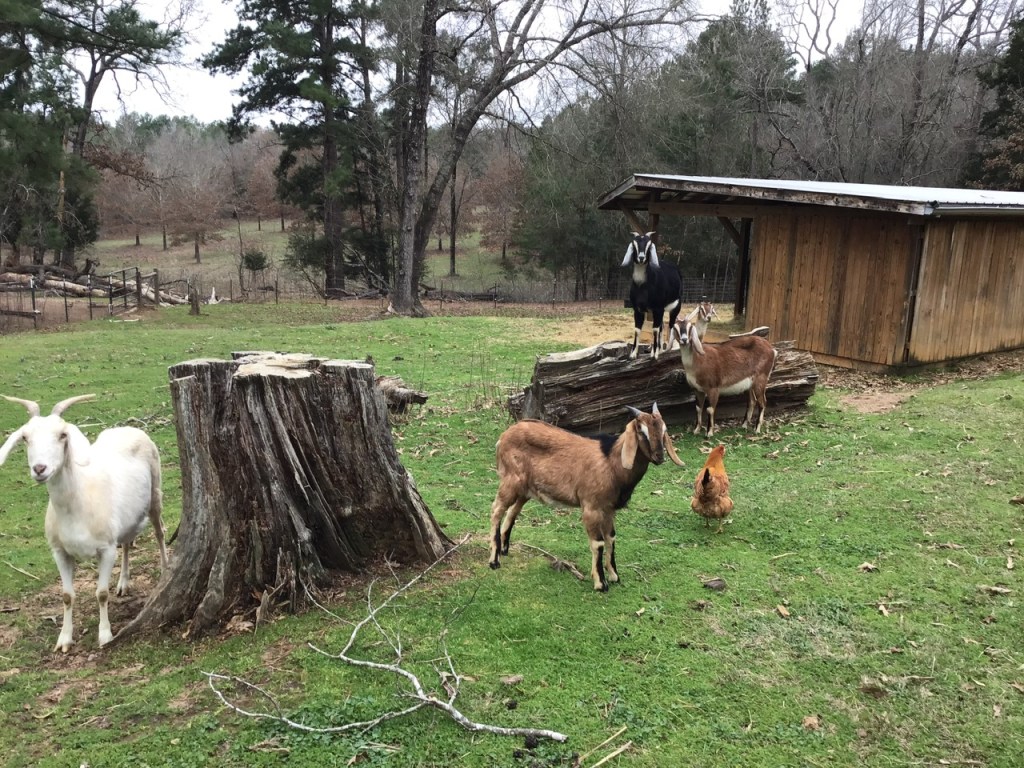
Roderick and half of his harem. Notice the PVC pipe on Walnut? That was a temporary fix to keep her horns out of the fences, and it worked like a charm.
Cheese season has also just ended. Now my divas should be comfortably pregnant, their season also having shifted thanks to the services of our friendly neighborhood Billy (aka Roderick). That means our herd shall be greatly increased by early summer, gods willing. Roderick has since moved on to more fertile pastures in the next county.
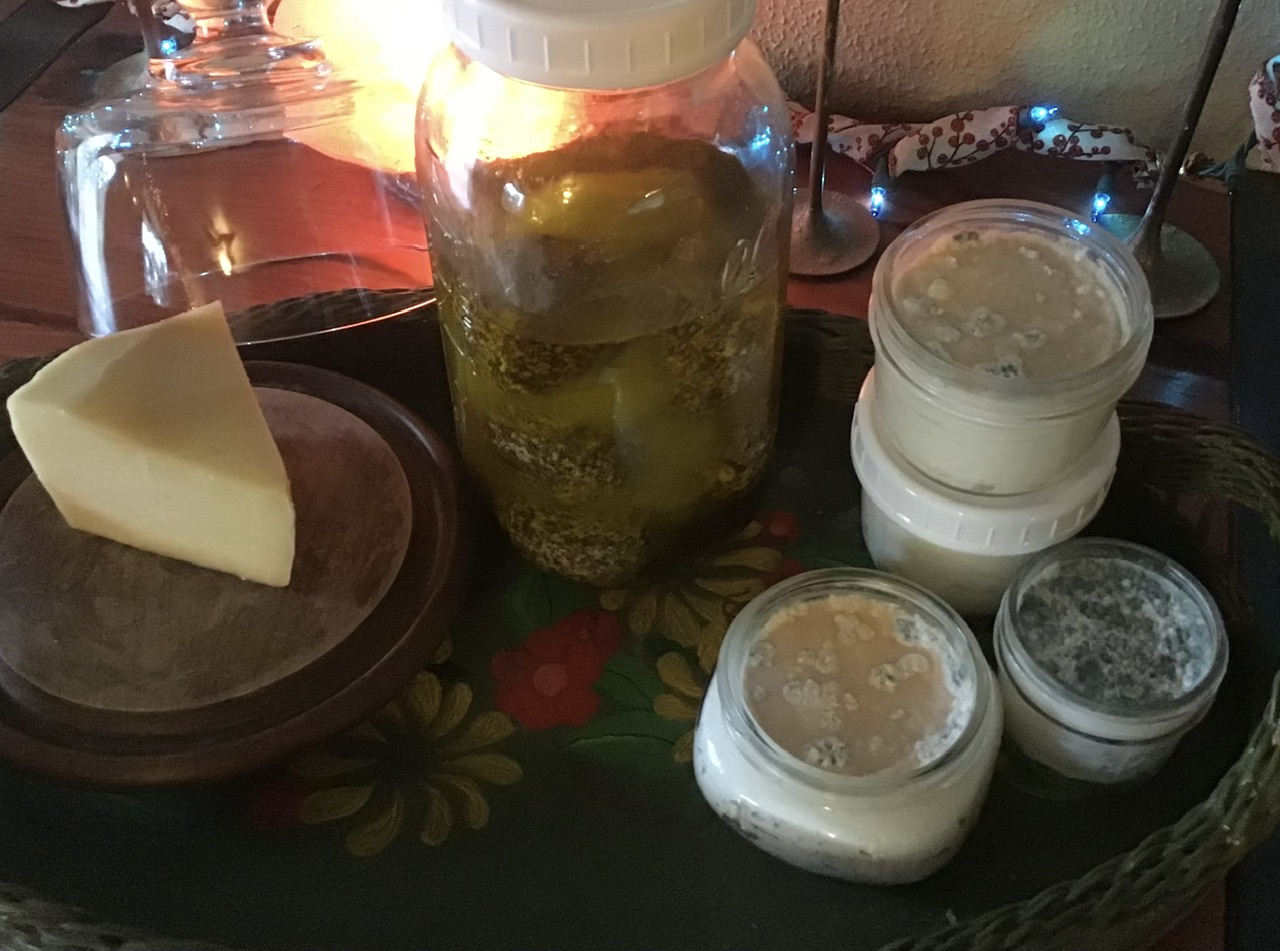
While the Gouda-style and the Camembert-style are more difficult to make, the Mason Jar Marcelin and the herbed cheese balls aged in olive oil couldn’t be easier. A 3rd grader could do it! Don’t let the moldy surfaces fool you, beneath their scary exterior these cheeses are quite mild and very tasty.
That means it’s also a season for some difficult decisions. We are at our ideal capacity right now. We don’t want to grow. We don’t want to get ‘into business’. Such an odd thing to reject, considering where we’ve grown up. It gets in the blood—this mindset/worldview—now what, what’s next, what’s new. Get big or get out! Where’s the market? Don’t you want to open up shop? Sell to the public? Get all licensed up and grow, grow, grow?
Oh, hell, no!
What if, we don’t care about all that? What if we are in a season of life where we care about quality over quantity? Others can, and will, ‘get big’ and in some cases (a precious few) more power to ‘em.
But, I’m in my Delicious Season. I have an extra roll around my middle to prove it. (So do Hubby and all the dogs and pigs and even the sheep!)
Nope, my main concern at the moment is, how delicious can I get delicious to be? It sounds decadent, I know. But, maybe further refinement, compared to mass production, could be a really good thing?
Quantity over quality—whether in words, or food, or strip malls, or entertainment—has not worked out too well for this world seems to me.
There was a time, in my peak ambition years, I did strive for more instead of better—more travels, more experiences, more friends, more leisure, even more work. My season has shifted. I definitely strive for better over more these days. What if I could make the most delicious cheese ever made in all the world, and only 3 people ever tasted it?
Fine by me!
Of course, then how would I know if it’s the most delicious? Maybe that’s not so important either. Maybe it’s sufficient that what we produce and process and serve is delicious enough to make all the hard work worthwhile.
We’ll be spending some cold days relishing in our Delicious Season, because right around the corner another season is waiting.
Bubba and Buttercup LOVE when it gets really cold! When it’s under 20 degrees F they get to camp inside under the kitchen table. 🤗
“But the hills that we climbed were just seasons out of time.”
Wow, I’ve posted no update since the end of August (aka Late Swelter Season). Now here we are already well into Weather Whiplash Season, my how time flies!
This post we’ve got lots of happy snaps, the usual weather bitching, some cheese boasting, and long laments about our dear Shadow’s woes.
Notice the band-aid on his ear? Useless. But, apparently we needed to learn that the hard way.
Sometimes time flies, but when things get really bad, it crawls. Especially when it goes instantly from nothing much to Holy Shit!
And as bad as it is, in the big picture the weather whiplash is still way worse. So, best get that report out of the way first. No rain, in our rainy season. No real season at all, just a rainless rollercoaster, and not nearly as fun as that sounds.
Not natural clouds, folks! And soon the kids won’t be able to see any difference, though the atmosphere has significantly changed in the last two decades, as the weather has changed, as they lie about their climate scam, and charge ‘carbon taxes’ to ordinary folks to pay for their madness. Makes me SO FURIOUS!
I could be taking such photos on a regular basis, but it gets old. And then someone could comment on the ‘pretty’ sunset. 🤯. Argghhh, Noooo! Can’t someone please make it stop?!
No? Ok, moving on.
More bad news. We’ve had the most prolific acorn year since we’ve been here, that’s about 15 years. Sounds like good news, I know. It is good news, in many ways. The pigs are getting fat, the sheep and goats are gorging. Literally. And that’s the problem. One of the young twins gorged himself to death. It was terribly sad. His little stomach ballooned up as if his body couldn’t contain it anymore and he was suffering for hours.
I’d read baking soda could help, but it did not in this case. Perhaps it was too severe. I also read there’s a surgical procedure which would alleviate the pressure in his gut, but I don’t have the confidence to perform that myself and the vets around here don’t treat goats. I held the little guy for a long time, trying to keep him warm and help him feel better, but we lost him. Oh the perils of animal husbandry!
Another problem of the acorn bumper crop is much less severe. We live under a large oak tree and have a metal roof. It’s been rather windy lately and once those nuts start shaking loose, it’s kinda like the sky is falling. If our veteran neighbor with PTSD comes by I expect he’ll be darting for cover quick, because it sounds eerily like machine gunfire when they get popping off the roof.
The acorn perks include some plump pigs and happy goats, two of which I’m still milking, which is making for some very tasty cheeses.
Under the oaks: happy pigs, sheep and goats.Can you spot the perfectly camouflaged foraging pig?Happy goats make for delicious cheeses.
I’ve gotten so successful I’m confident enough to get very daring!
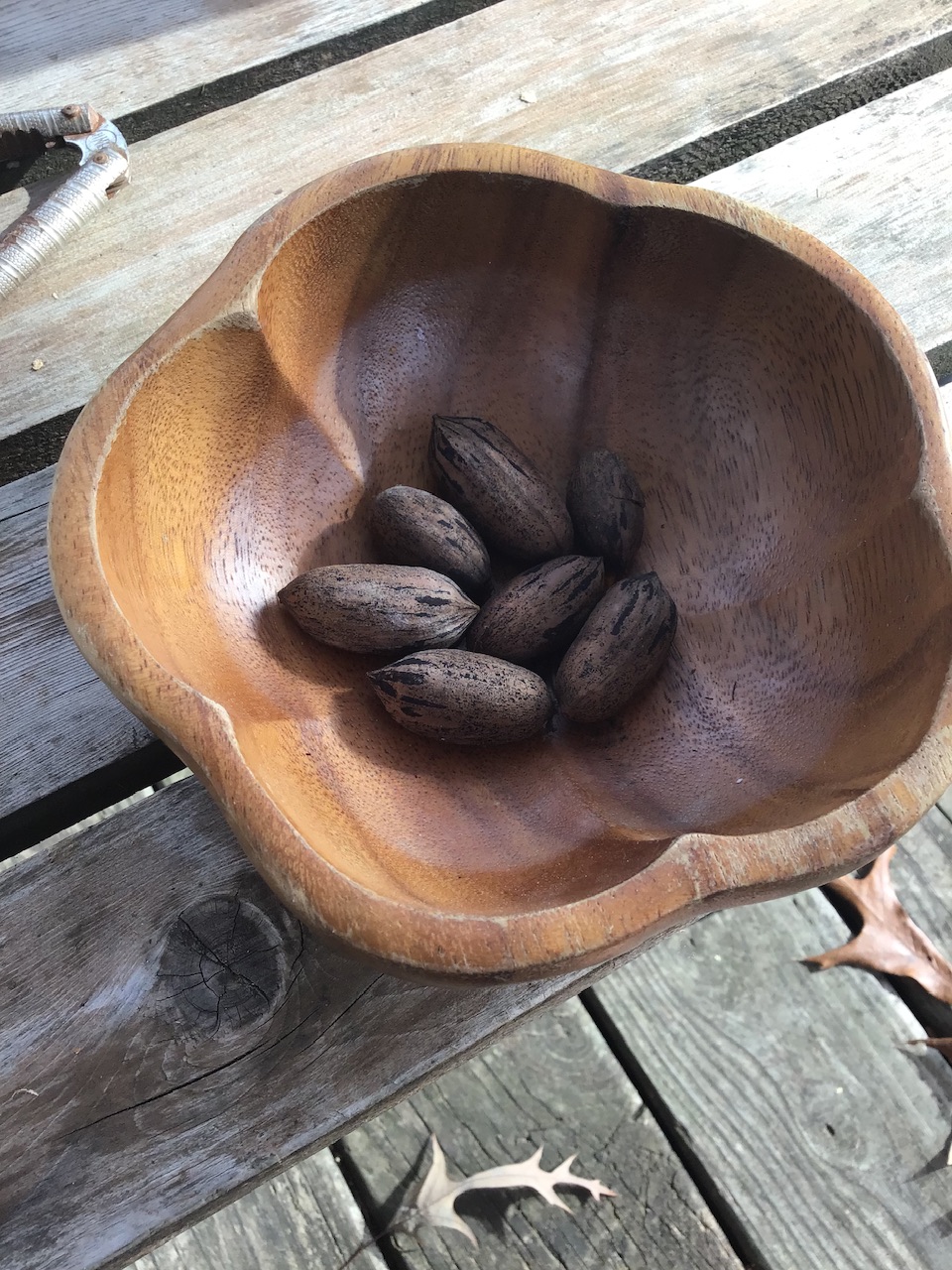
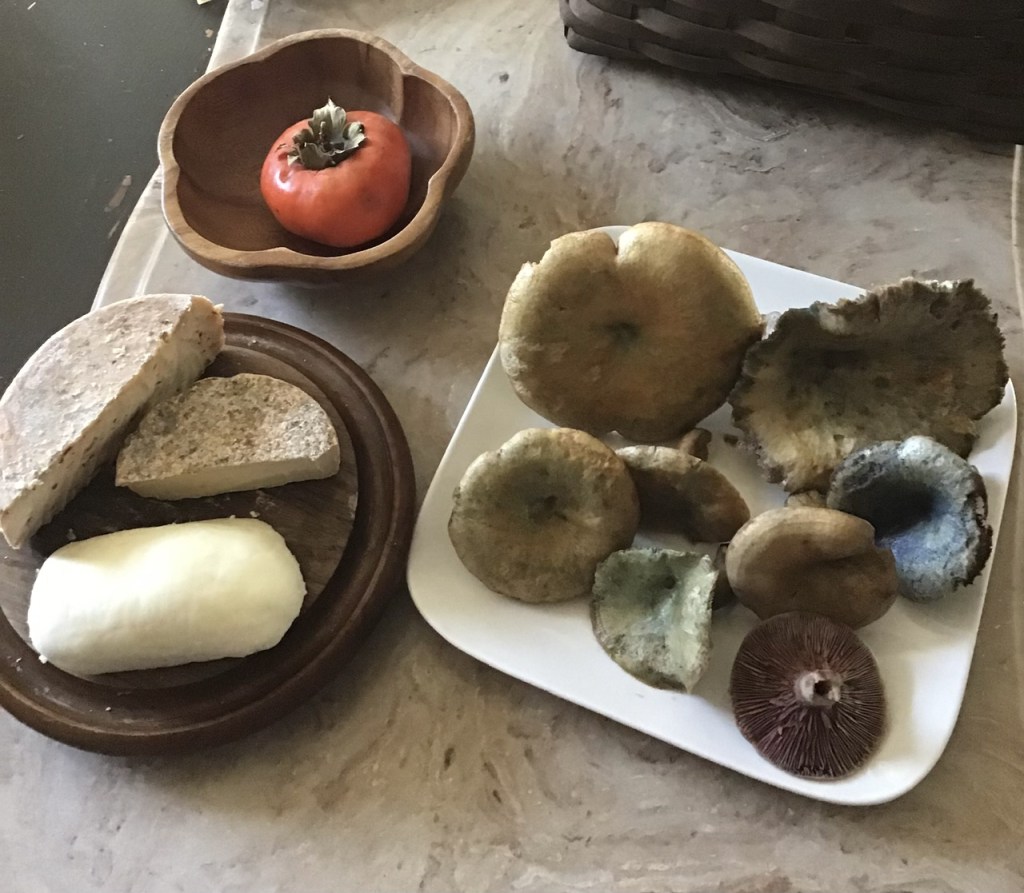
Chèvre wrapped in sassafras and fig leaves for aging.More aged chèvre—the top log is covered in dried goldenrod leaves and flowers, the bottom one is wrapped in honeybee comb.Our first pecan harvest—less than impressive, but still delishLactarius paradoxus mushrooms, homemade goat cheeses and first Japanese persimmon
Our fruits were nearly non-existent this summer, but we did just get our first ‘crop’ of persimmons, a whopping 5 of them! A couple of years ago I harvested lots of them from a neighbor’s tree and they were delicious; that was the first time we’d ever tried them.
Fuji persimmon
We planted both varieties, but the American variety takes much longer to start producing fruit and the fruits are generally smaller. These pictured above are Fuji, quite different, harder, larger, less sweet, not at all astringent, and also very tasty. The closest in taste I’d say would be a very ripe mango, the American varieties are especially super sweet, like jam.
If you’d like to learn more about this fancy fruit, here’s an enthusiastic lesson from James Prigione.
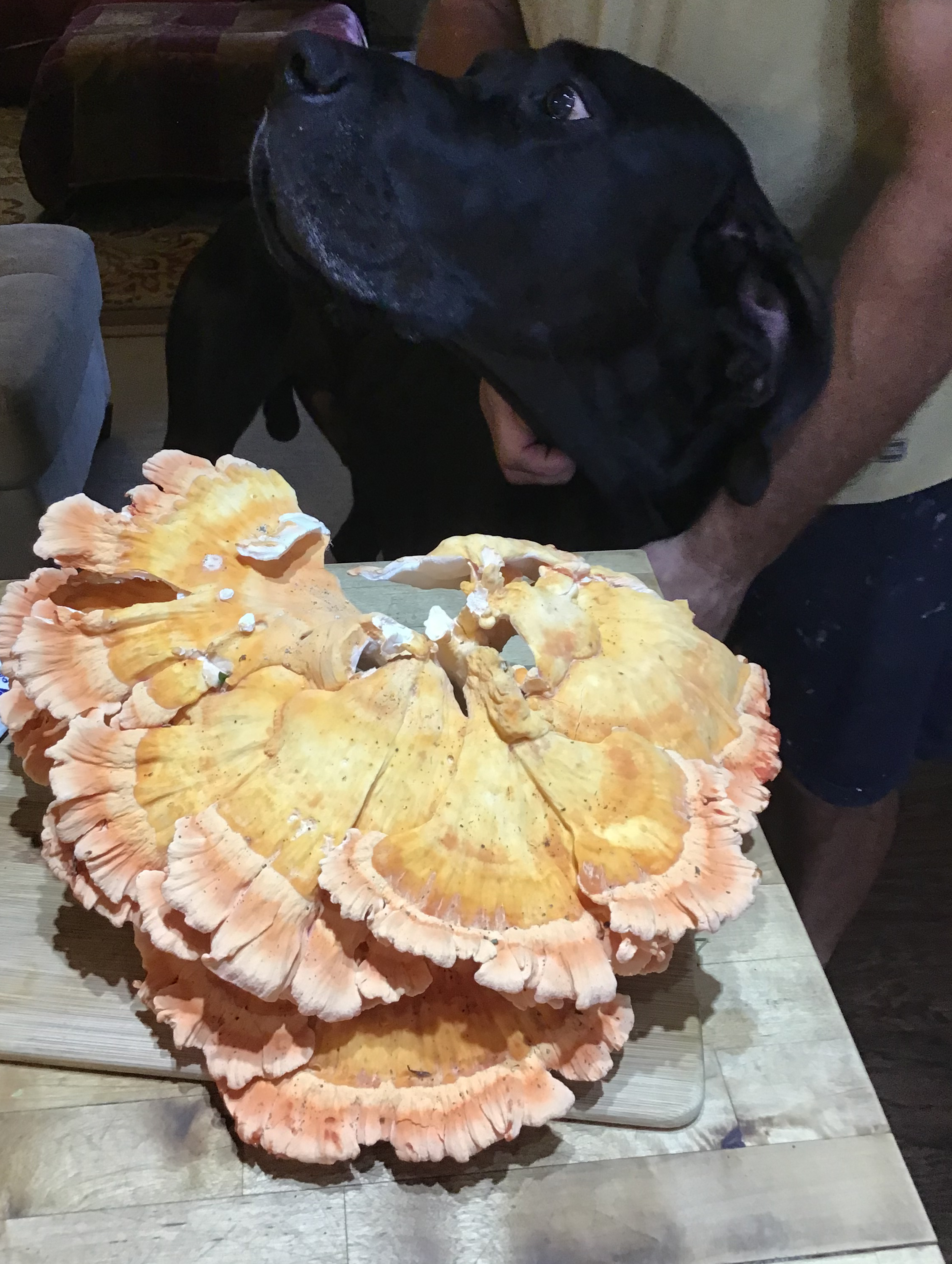
We’ve been getting a few mushrooms, but the lack of rain is certainly hindering our foraging experience. A friend brought us a huge chicken of the woods, our first time trying it and it was excellent.
Laetiporus sulphureus
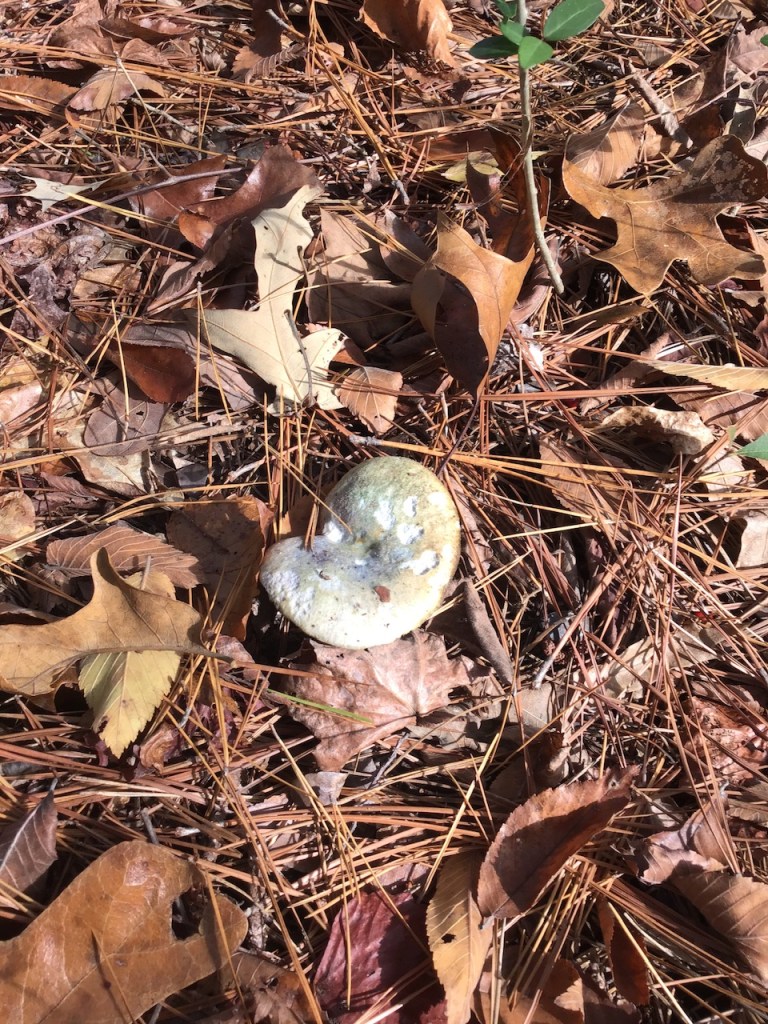
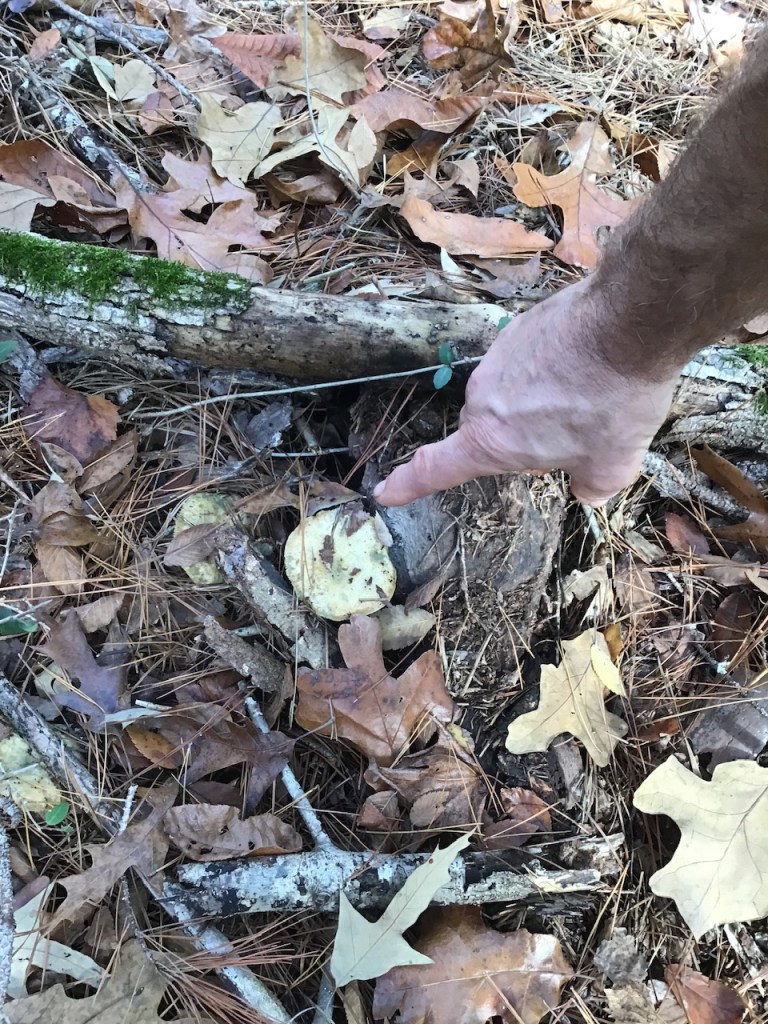
The lactarius paradoxus are hard to spot and deceptively unattractive. In fact, they are exceptionally tasty and have a longer shelf-life, and of course a different season, than our favorite chanterelles.
Even while foraging mushrooms it seems the grass is always greener on the other side of the fence. 🤔
In the garden we do have two nice full boxes of varied cool-season produce we protect from the frosts with row cover cloth. In addition to lettuces there’s some broccoli and cauliflower, spring onions, cilantro and parsley, radishes and Chinese cabbage. We’ve also got our garlic already shooting up and a couple rows of turnips started for the pigs come spring. Our neighbors are now buying eggs from us, so we throw in the surplus veggies when we can.
3 of 6 colonies survived our terrible summer. The hives are a bit hodge-podge at the moment while we do maintenance on them.
The honeybees are occasionally making an appearance, though since the frost there is little for them to forage. One of their last favorites is another one considered a ‘nuisance plant’ by the ‘experts’—it’s called tree groundsel and it’s pictured after the frost in the right photo above, in the background behind the boxes. Quite a lovely late-season plant, if you ask me.
And approaching it before the first frost sounded like the buzzing metropolis that it was! A last hoorah for the bees.
So we come back to the current day and our crazy Shadow drama. It all started with a tiny Band-Aid.
He’s got the ear-span of a small plane and we have the living room space of its cockpit. When he shakes his head he invariably hits some piece of wall or corner of furniture with his Dumbo ears and it’s actually pretty amazing it didn’t happen already: a tiny gash on the tip of one ear that he doubtlessly cannot even feel.
Forever happy and oblivious
We were racking our brains for several days, trying everything we could think of and just digging ourselves deeper. One tiny failed Band-aid led to bigger Band-aids led to bigger wraps led to taping menstrual pads to the poor creature!
Nothing was working. We also tried several over-the-counter products, like liquid Band-aid, blood-clotting powder, and some spray-on crap. Not only was nothing working, they all seemed to be making the problem worse.
We even tried to craft our own ‘No flap ear wrap’ made out of my doo-rags, which also didn’t work. So, we purchased a pricey one online which should be arriving any day now. Obviously, this is a universally common dog issue. A result of over-domestication no doubt, but that’s fodder for another post.
Then I start racking my pea brain in frantic desperation. How to stop the blood flow pronto?! Crimp his ears with clothes pins? Tie his ears up on top of his head with a scrunchy? Stitches? Soldering? How about just cut the whole ear off? Yes, we did briefly consider the vet. But we’ve been spending the many months since we got him trying to detox him from all the vet potions and it feels we are finally making some headway there. I kept imagining the new meds that would be required for this new issue and their invariable side-effects, which would start us off at square one with his detox.
Clearly I don’t think very well in high-stress situations. I was really trying hard and the bad ideas were piling on. The blood, which had gone from a tiny occasional drop, to a full-on drip, to a steady stream, and from then within a few hours a sprayer-hose in every direction with every shake of his head. And that boy loves to shake his head.
Between the blood splatter and the acorn fire it feels we could be living in a battlefield training zone.
Yup, the crazy, bloody mess had arrived and is still visible all over our living room, deck, porch, siding. We covered all the furniture and even the walls with old towels and sheets. Hubby started following him around everywhere, with a giant towel extended between his outstretched arms each time he sensed a head shake was about to turn into a sprayer-hose of the sticky, red, splatter paint across the windows, the screens, the ceilings even. (Where are those magical elves when you need a deep house cleaning?)
We needed a miracle, and fast!
And thank the heavens, I got that miracle in one brief email. Thank you UK herbalists, Kath and Zoe, miracle workers! It should’ve occurred to me sooner. Me, especially, considering I did start the Herbal Explorations pages earlier this year and have been getting educated on herbal remedies. It honestly did not occur to me that herbs could solve this acute issue. I didn’t think anything would be fast or effective enough, especially when every other thing we were trying had failed and even worsened the problem.
Zoe suggested powdered myrrh as her preferred method in order to stop the blood flow, but we didn’t have that on hand. I ordered some online, but in the meantime chose among her other options, yarrow, and we have plenty on hand because I like it in Kombucha. I made a strong tea with it, as well as grounding some up into a powder and that whole concoction I held on his ear a few times with a cloth, some of that powder getting into the wound and sticking there, and the blood flow finally stopped. Holy Heavens! As of this writing we are still in good form and have our reserve remedies soon arriving in the mail.
What I clearly need now is an official Herbal First-Aid course. Herbs are not just for gentle healing and routine health, I see, they can be used in emergencies, too.
Why did I not think about it sooner?! It seems like such a no-brained to me now, that I’ve started to consider other potentials that didn’t occur to me at the time—like the old Russian folk remedy bees podmore—which I just happen to have been saving for a rainy day for 3 years now.
Quite an expensive lesson, but a welcome one nonetheless. 😊
Thank you from Hubby’s ‘White Elephant’! 😆
A huge thanks and deep bow to Kath and Zoe, from all of us on the wee homestead! 🙏 🤗
The material being taught to the professionals that most people consider to be experts in healing and human health has been corrupted by corporate propaganda.
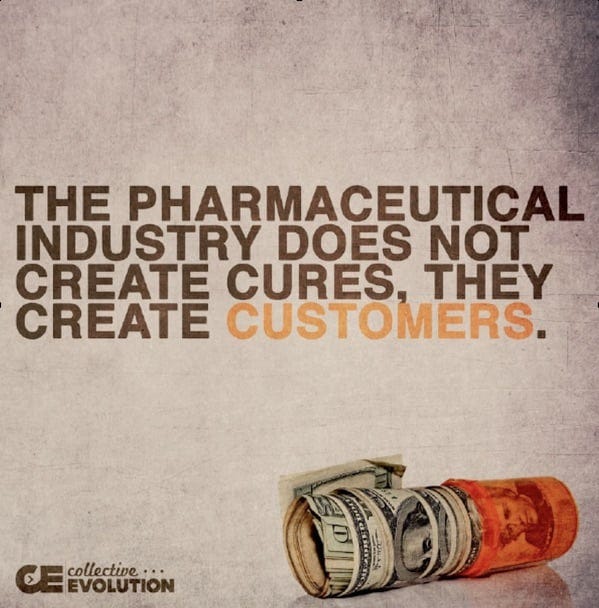
The medical education curriculum being taught in universities has been hijacked by big pharma. This is not a new phenomenon, the coup d’état which replaced natural medicine (that sought to address root causes of illness) with synthetic petroleum based medicine (that seeks to use petroleum derived patentable synthetic drugs to cover symptoms and create ‘return customers’) began over a century ago.
Here is a brief history that provides a summarized overview of how the hostile take over happened.
Founded in 1847, the American Medical Association is the largest association of physicians and medical students in the United States. Its stated mission includes “…lobbying for legislation favorable to physicians and patients, and to raise money for medical education.”
The AMA spends big money on lobbying. One of the AMA’s top lobbying firms, the McManus Group, also lobbies for PhRMA, Eli Lilly & Co, Merck and Pfizer. According to OpenSecrets.org, the American Medical Association comes in second in overall money spent on lobbying in the last 10 years with over $264 million. The health industry as a whole trumps all other industries including energy and finance in lobbying expenditure.
The AMA looks to legitimize its agenda through its Journal of the American Medical Association, JAMA, which is the most widely circulated medical journal in the world. JAMA receives major funding through its advertisers, many of which are pharmaceuticals. In addition, the American Medical Association has been accepting money from the Rockefeller (America’s first billionaire that made his fortune in Oil) and Carnegie Foundations from as early as 1910. In World Without Cancer, G. Edward Griffin makes the argument that the Rockefeller and Carnegie Foundations began to support the AMA in an effort to control the medical schooling establishment and to gain power over this “large and vital sphere of American life.”
The editor of JAMA is very influential, and has historically played a significant role in suppressing alternative health treatments. Morris Fishbein, editor of JAMA from 1924–1950, was directly engaged in suppressing Royal Rife’s cancer cure. In 1849, homeopathy was nearly as popular as allopathic medical practices. The AMA was able to use its position to squash what it referred to as “quackery” — stating that the public did not know what was good for it and that the medical establishment must have total control. At that point it called for control over all medical regulations and licenses. These regulations eventually lead to closing down of schools and almost complete suppression of the practice. Even today in parts of Canada and America some homeopathic practices are “underground.”
It was around the turn of the century that the AMA, the Rockefeller Foundation, and the Carnegie Foundation forged their partnership. They put their money into drug-based research (oil derived pharmaceuticals) and made that the main focus of “healthcare”—a move that turned “healthcare” into “sickness management.” The Rockefellers and other prominent banking elite (and the shareholders of their subsidiary pharmaceutical corporations) have been able to control and profit enormously from the drug industry.
Now, all medical doctors in the USA are trained in medical schools that are run and/or accredited/sanctioned by the AMA. Of 129 medical schools in America, only 22 require even what amounts to basic rudimentary courses in nutrition. Medical students are not trained to see the connections between many degenerative diseases and malnutrition. Instead they are taught only how to treat with surgical or pharmaceutical methods but do not cure or alleviate the root problem or ailment. Similar numbers are reflected in medical education here in Canada. In this way, they are assured of life-long customers. Surveys conclude that over 66% of all Americans regularly take prescription drugs (with only slightly lower numbers being reflected here in Canada as well).
Massive transnational pharmaceutical corporations (like Bayer) were not satisfied in only dominating what we are taught about medicine and what forms of ‘medicine’ we will have access to, they soon moved to take over the food production systems as well.
Just 50 years ago, some 1,000 small and family-owned seed companies were producing and distributing seeds in the United States; by 2009, there were fewer than 100.
Thanks to a series of mergers and acquisitions over the last few years, four multinational agrochemical/pharmaceutical firms — Corteva, ChemChina, Bayer and BASF — now control over 60 percent of global seed sales.
The slow march of seed consolidation suddenly turned into a sprint. Chemical and pharmaceutical companies with no historical interest in seed bought small regional and family-owned seed companies. Targeting cash crops like corn and soy, these companies saw seeds as part of a profitable package: They made herbicides and pesticides, and then engineered the seeds to produce crops that could survive that drench of chemicals. They make the petroleum based pharmaceutical drugs that your doctor will prescribe you when the toxic ‘food’ you eat results in degenerative diseases. At every turn, they make a profit (at the expense of the integrity of the biosphere and human health). The same seed companies that now control more than 60 percent of seed sales also sell more than 60 percent of the pesticides.
GMO byproducts degrade and deplete soils of vital minerals and beneficial bacteria, both of which protect crops from pests, viruses, and other threatening elements. Glyphosate which is used in conjunction with GMO seeds does not biodegrade, which means it is continually accumulating in the environment without restraint, perpetually altering soil composition and contaminating natural resources.
A handful of companies have spread these toxins across our planet diverting US$ 400 Billion of public money to subsidize their high cost chemical commodities to make them artificially “cheap”. The costs of this cheap “food” are astronomical in terms of the health of people, the ecological damage it causes and it’s exploitation of farmers. If the true costs of chemical food were taken into account it would be unaffordable.
If what we put into the soil is toxic, what we get out is toxic. Mission successful. Incidents of degenerative disease and cancer have skyrocketed since the above described ‘food’ and ‘medicine’ products became the norm. Life long return customers for the pharmaceutical industry are now plentiful.
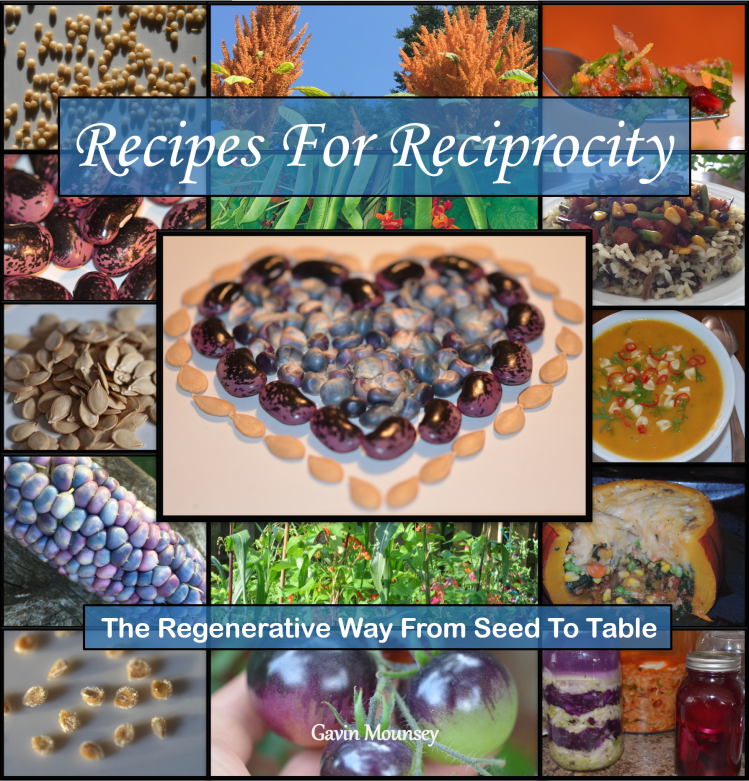
The article continues with more compelling evidence and ends with good intentions and creations—Gavin’s ferments and info about his book: Recipes for Reciprocity
I know it must be autumn somewhere! Here that reality is still mostly in my dreams. We’re still in the 90s and still mostly dry. There are a few tiny signs of change though, that I’m magnifying in my mind, because I can hardly wait! It’s been a terrible summer.
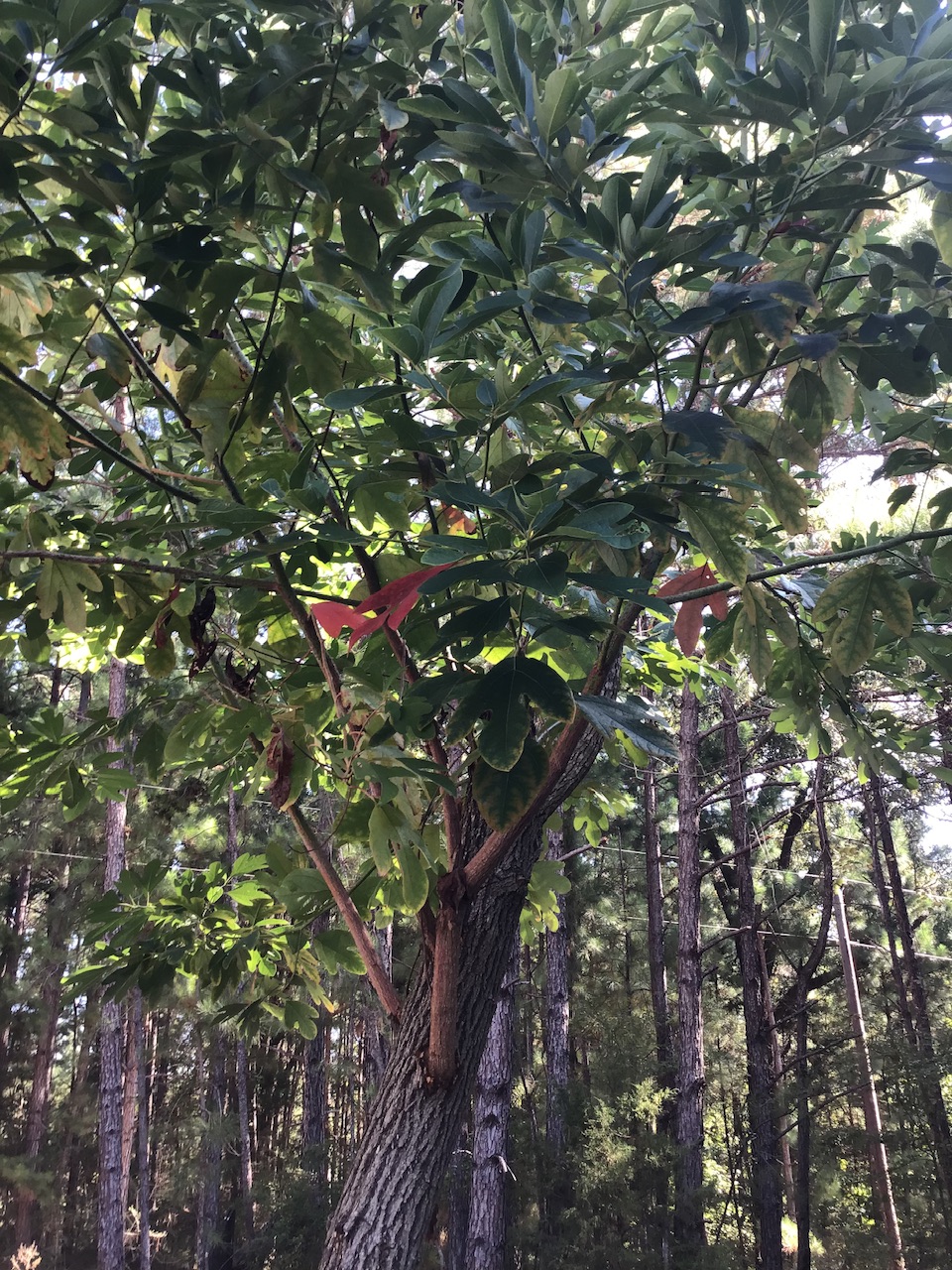
See, right there, 3 red leaves on my favorite Sassafras tree! (Very soon to be featured in an ‘Herbal Explorations’ post)
But, I’m not going to complain about that now. Instead we’ve got lots of happy snaps, and even a few scary ones.
We’re gearing up for the fall/winter garden, getting the beds ready for the transplants that have been growing under lights for a month and are very ready for their new outdoor home, just as soon as the temperature drops a bit.
Hang in there brassicas, it’s almost time!
We just started harvesting sweet potatoes from the boxes waiting for replanting.
Those vines helped keep the goats happy and healthy during the extra long heat wave.
Summer keeping a sharp eye on Shadow even though there’s a fence between them. None of the goats have warmed up to him, despite all his best efforts!
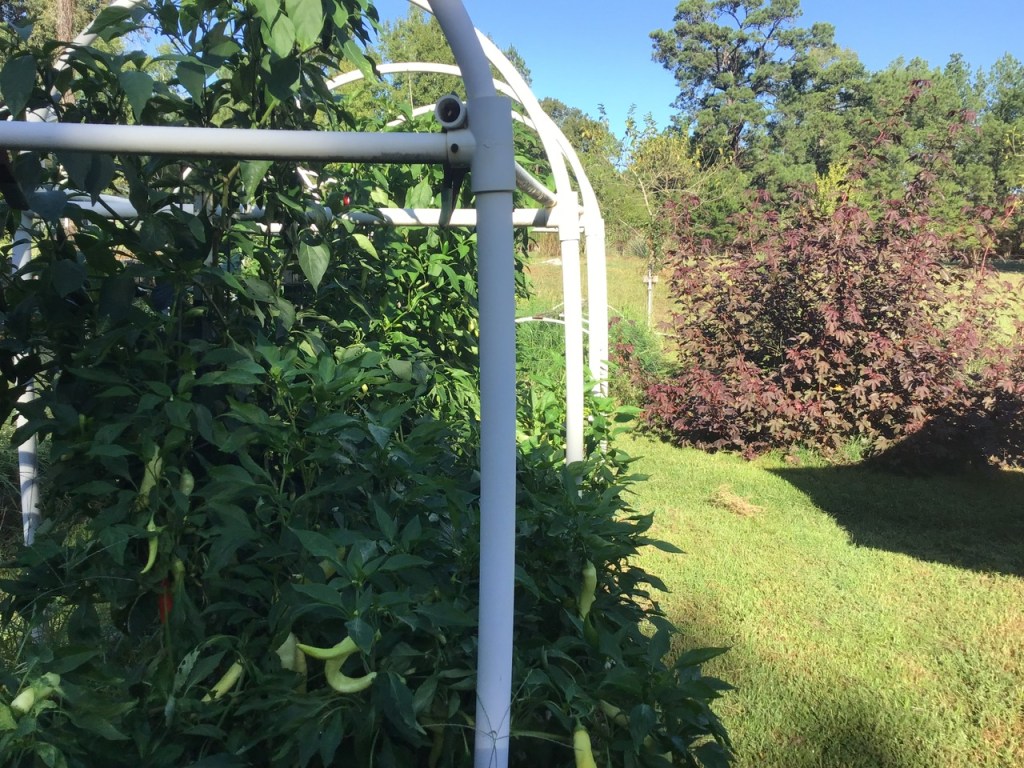
The peppers have come back with gusto after another dose of compost dressing and removing their shade cloth.
Jalapeños and banana peppers and the now monstrous cranberry hibiscus on right that is finally just starting to bloom.
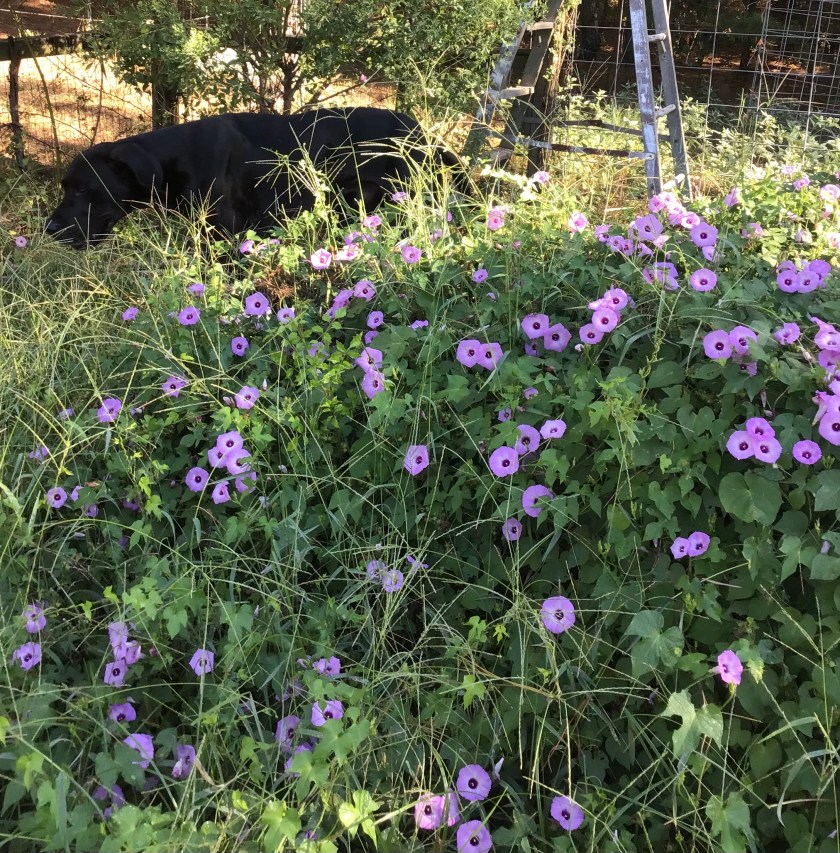
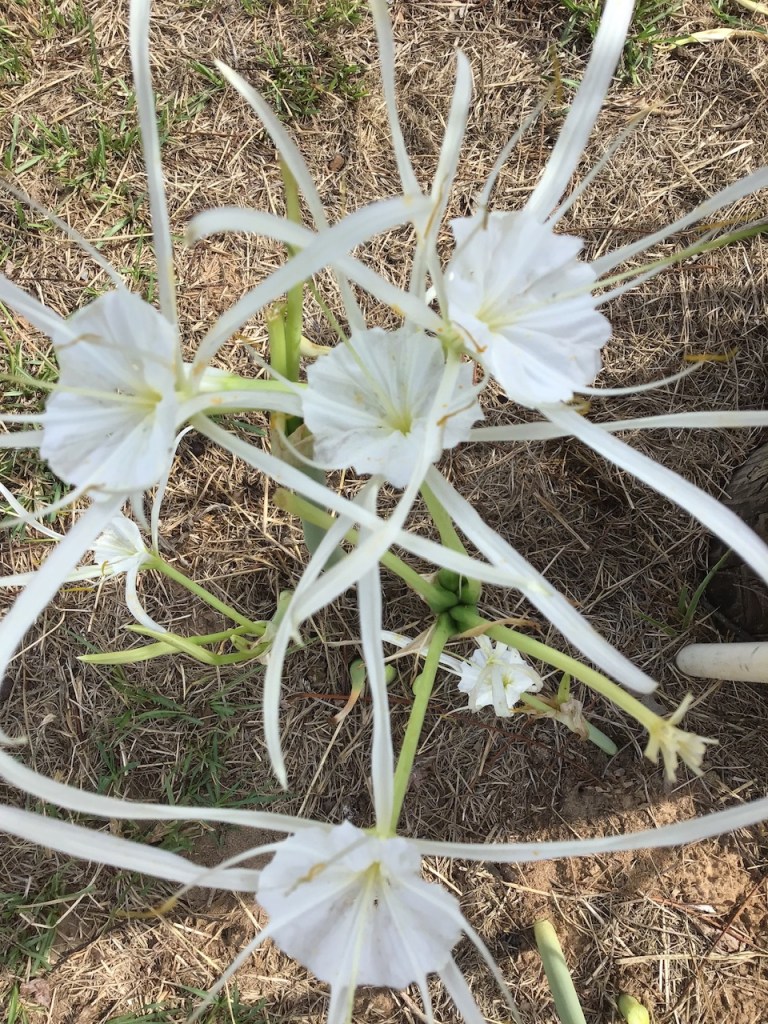
Cucumbers again, yippie! Plus hurricane lilies, turmeric, zinnia and basil keeping the bees happy. And lots of bindweed (morning glory)—scourge to the industrial farmer—a hardy, lovely and welcome cover for the rest of us.
I’m getting about 1/2 gallon of milk a day from 2 goats and making cheese often—mozzarella and soft chèvre every week and a hard cheese whenever I can accumulate at least 3 gallons (preferably 6) in the freezer. The larger the hard cheese the easier it is to age properly and goat milk works just fine for cheese after freezing.
The easiest cheese to make and so delish!
But I’m really looking forward to making Camembert and Munster again. Just like all things natural, cheeses also have seasons. I was very disappointed by a so-called Brie I just splurged on from the grocery store. They should call it a processed Brie-like imitation and market it in the aisle with Velveeta. Quel scandale!
A few more friendly faces . . .
As I mentioned last update, we had a sausage-fest this summer, that is, a super-high percentage of males born, of all species—cats, pigs, sheep, chickens, goats. So odd.
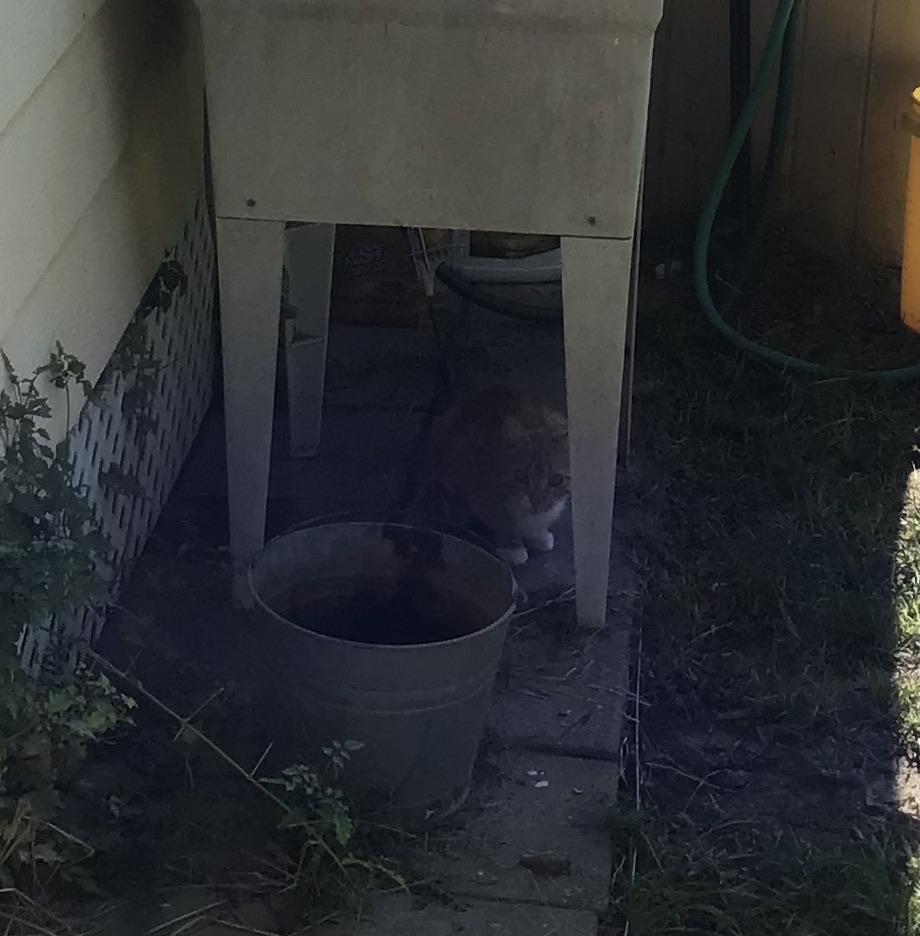
Now we have 3 young male cats, a new thing for us. But one of them is a real scaredy cat, we’re never able to get close to him and he’s rarely around except for meal time.
Always crouching in the shadows and darting off even from the camera.
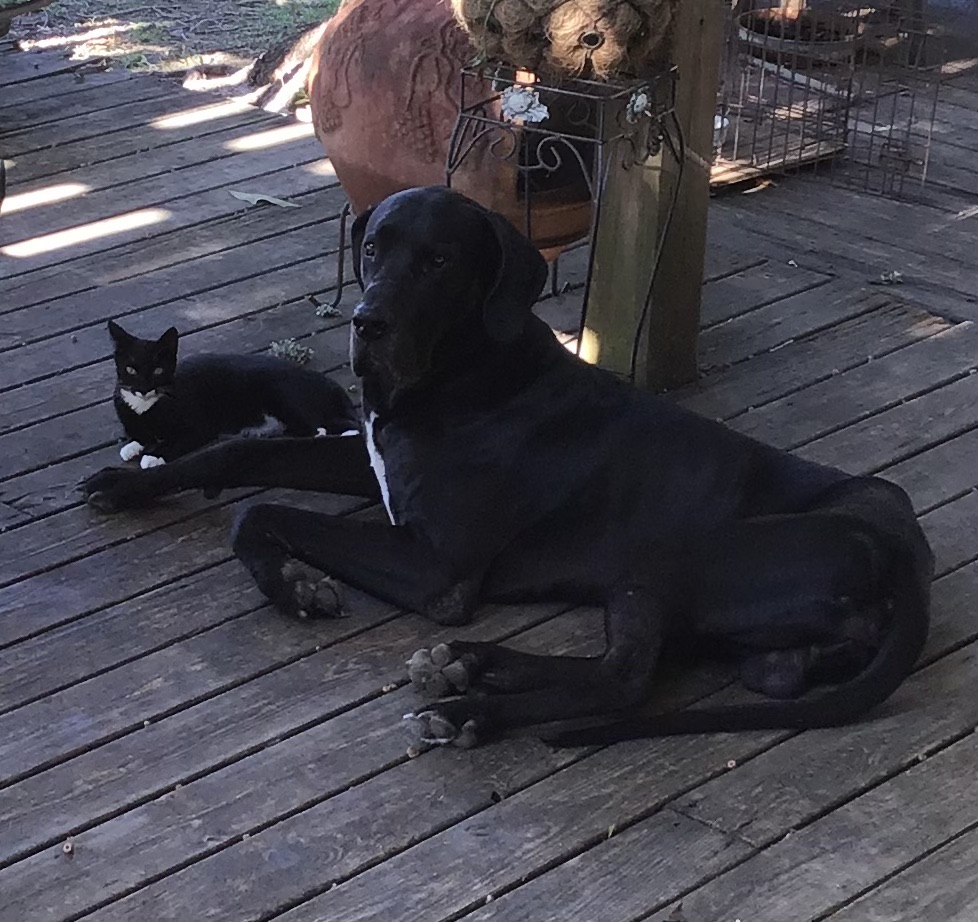
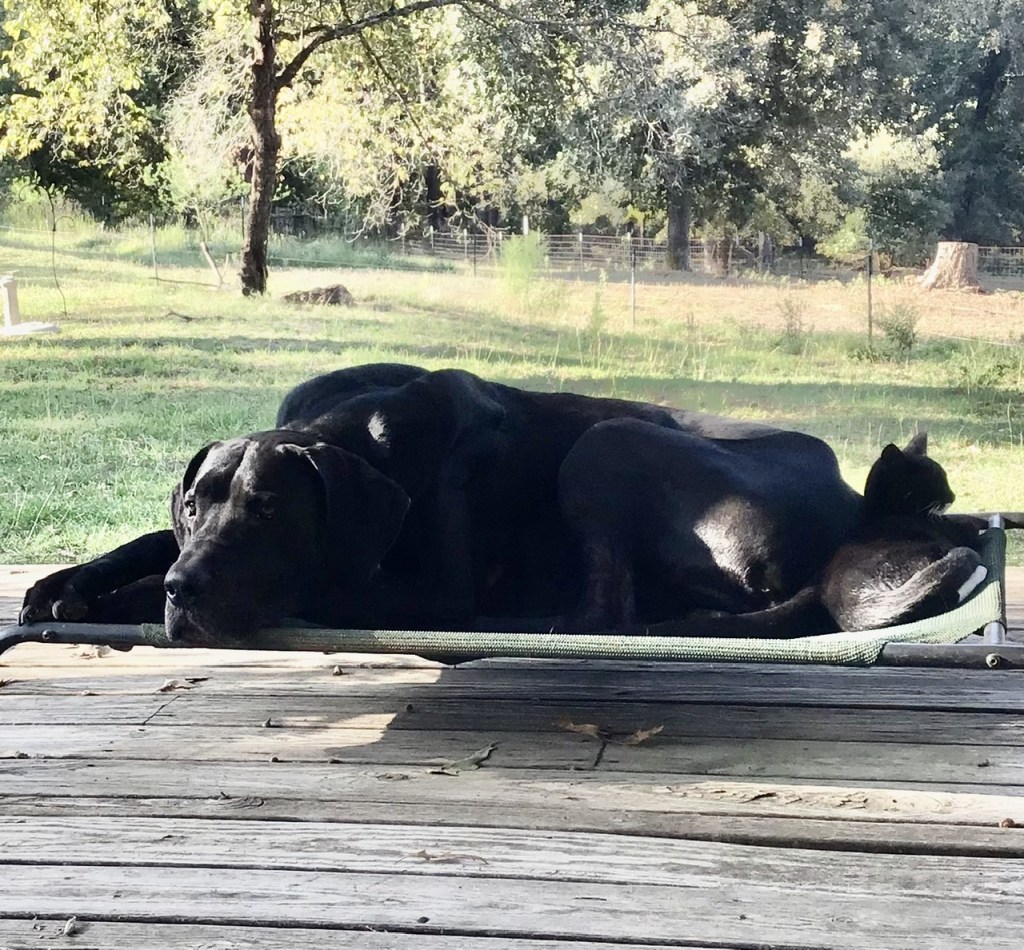
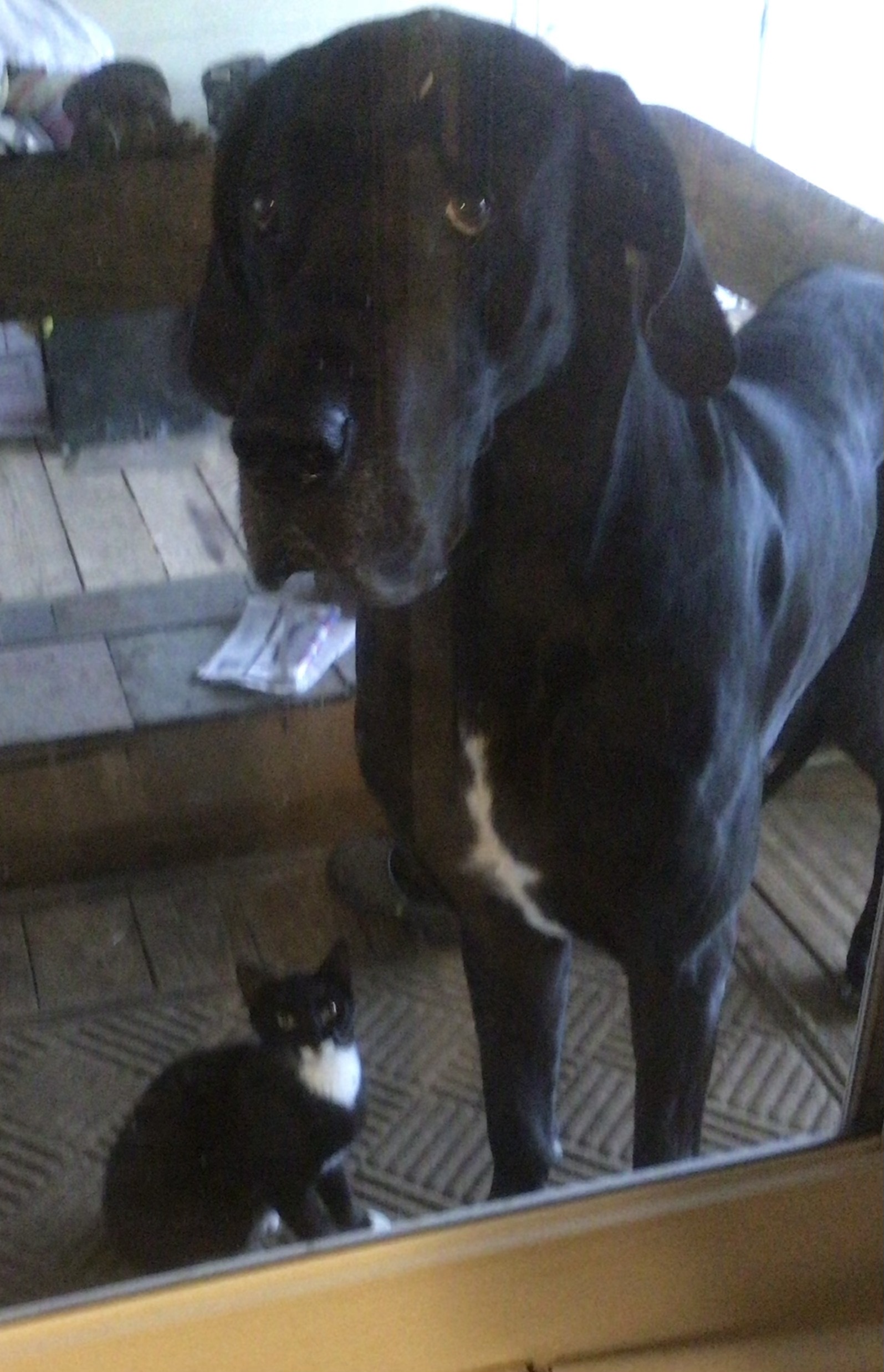
Also odd but true—our black cat, Mittens, hangs out with our black Shadow and our blond Tony hangs out with our blond Bubba and Buttercup—go figure!
“Hey in there! Where’s our breakfast?!”
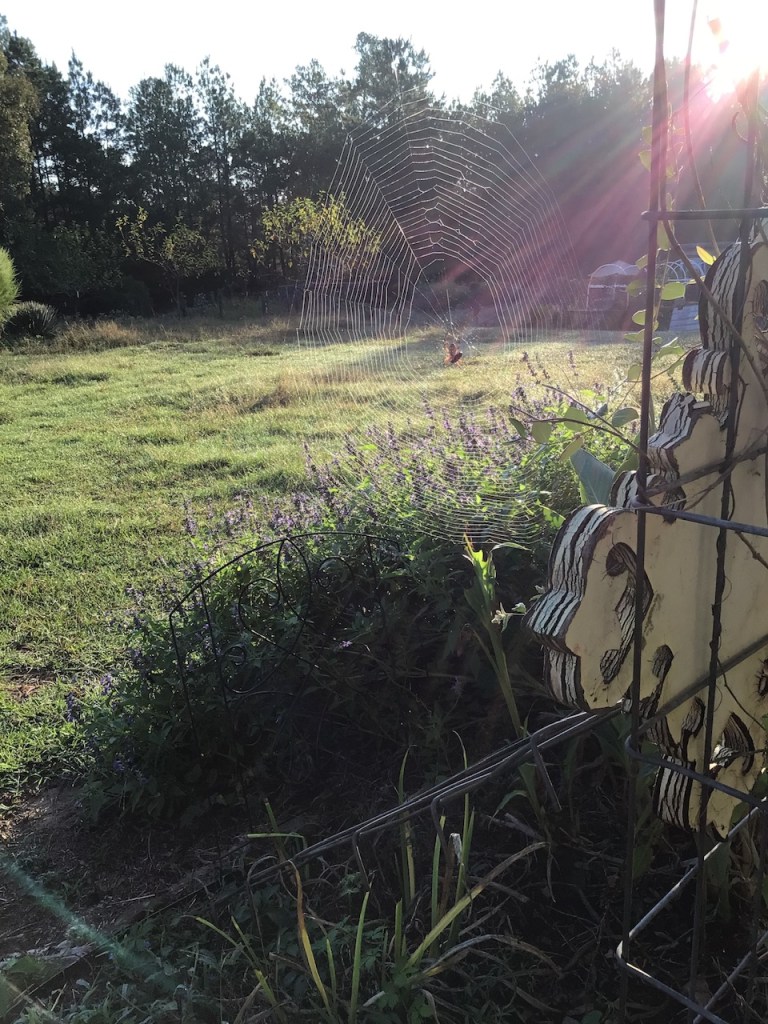
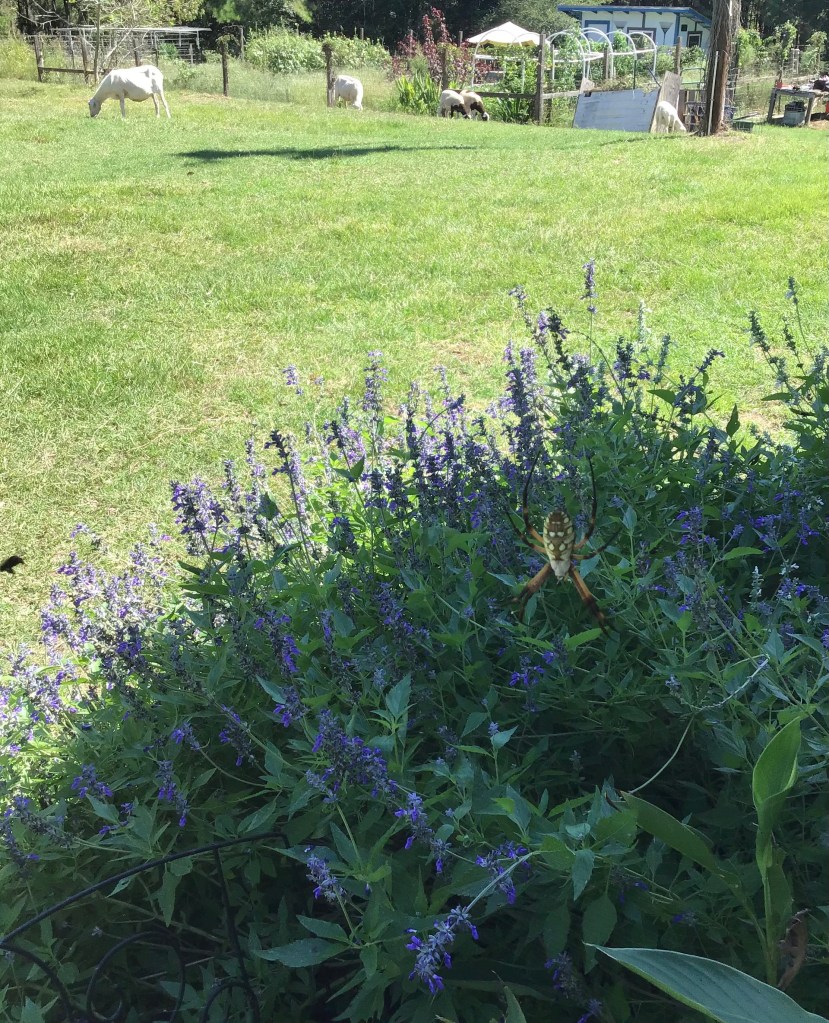
I love spiders, especially these beauties, but some folks find them scary, apparently.
Now here’s a real foe . . . .
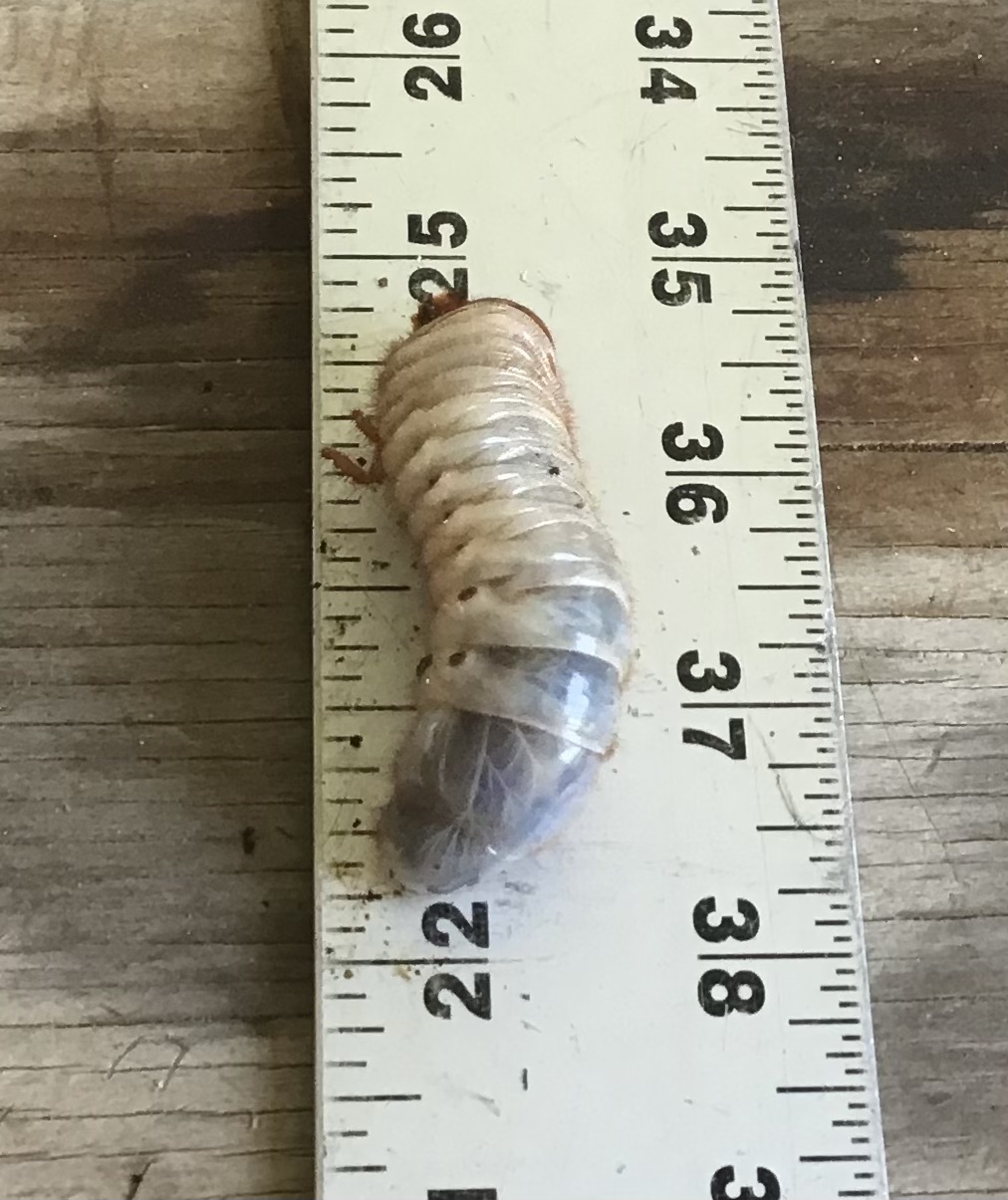
Gross! Looks like right out of a horror movie. And he has a lot of friends haunting our compost heap. 🤢
But who loves ‘em but our very scary Halloween rooster . . .
Poor guy, we’ve no idea what happened to him, but he is one scary-looking dude!
Soon we will be making the tough but necessary fall homestead decision—who will get bred and who will shuffle off to freezer camp?
But not a care in the world for these contented creatures!
Hope you’re having a fine Sunday and thanks for stopping by!