Addicts run the world.
Big $ in Weather Chaos
Addicts run the world.
Addicts run the world.
A quick reprieve from ruminating about technology for some recent happy snaps. I’ll try to not do too much complaining about the weather. But I know how hard that’s going to be so, here’s a deal, for every complaint I will offer one bonus. 😁
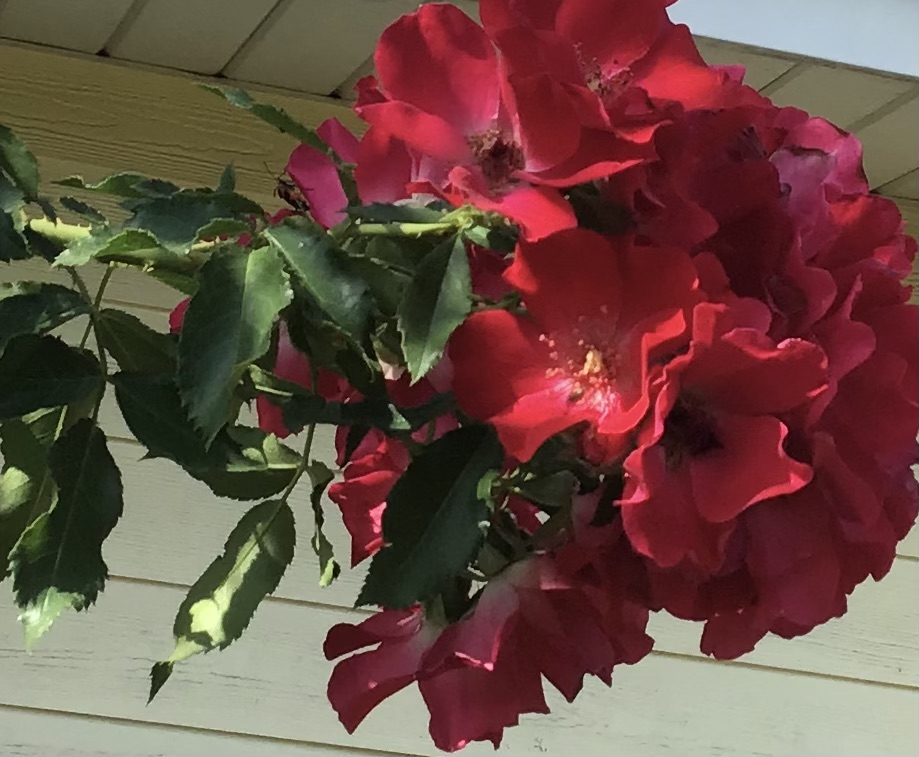
The extreme heat, and drought, is not normal, so I really wish folks would stop saying it is.
Bonus! It’s reassuring how remarkably resilient some plants and animals are.
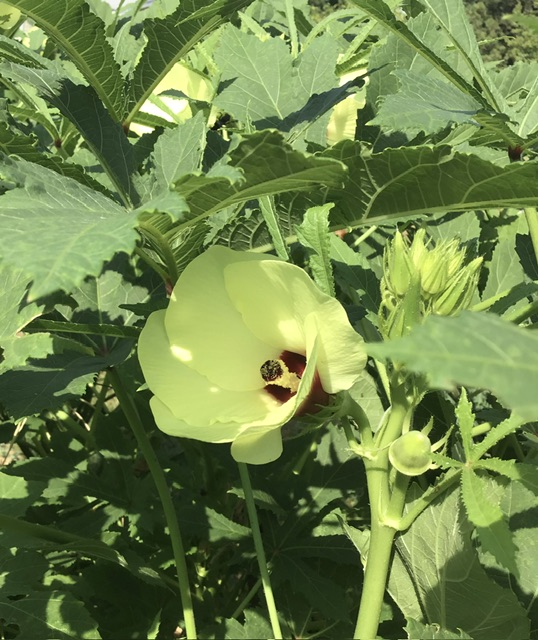


One green melon from one surviving plant, I think I’ll name those saved seeds the Miracle Melon.
Not much harvesting happening, but at least something. A few figs and grapes, some herbs and elderberries for flavoring kombucha.

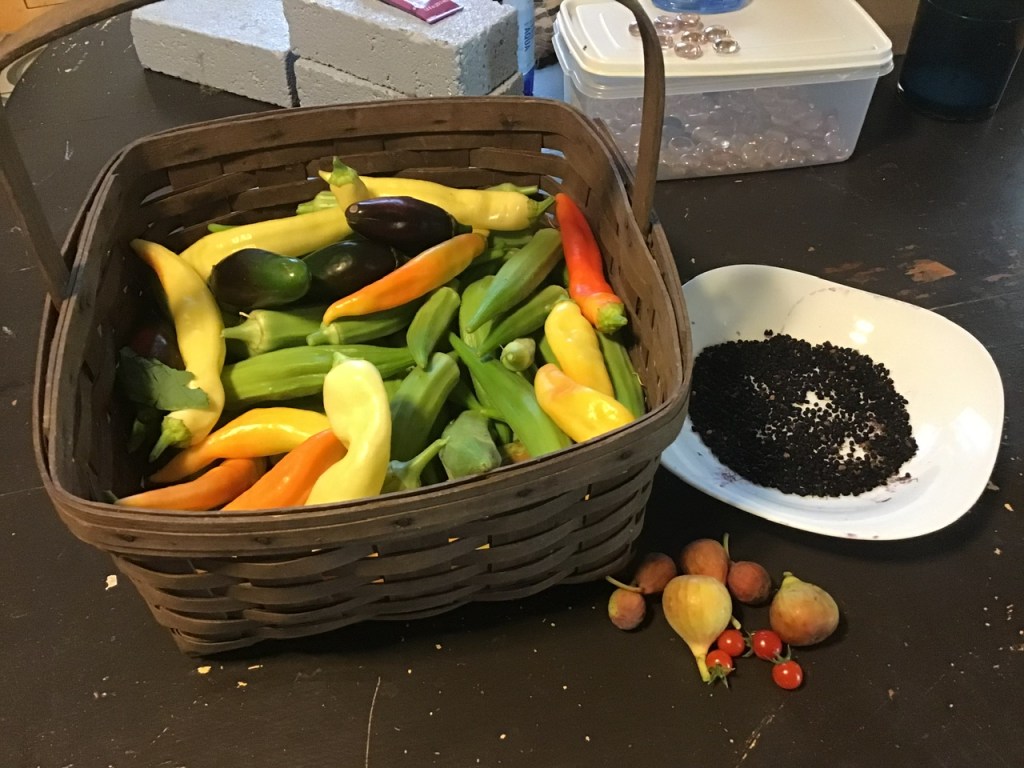
How dare man meddle with the weather, makes me SO mad!
Bonus! We can fully appreciate how precious water is to all of us.
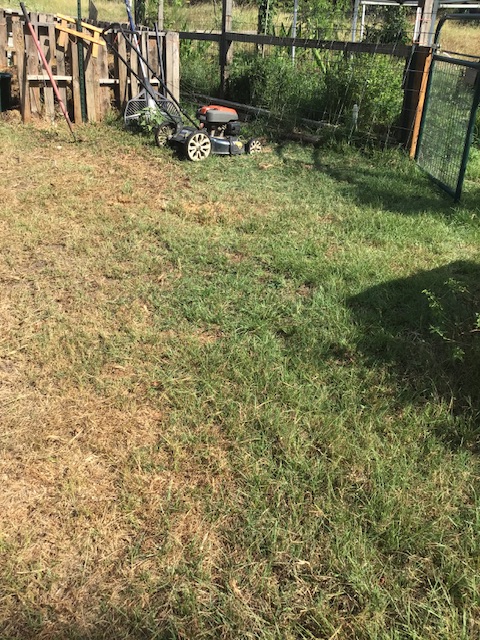
Man changing the climate? Perhaps.
Man changing the weather? Definitely. Do they care how toxic and dangerous that is? Seems like no.
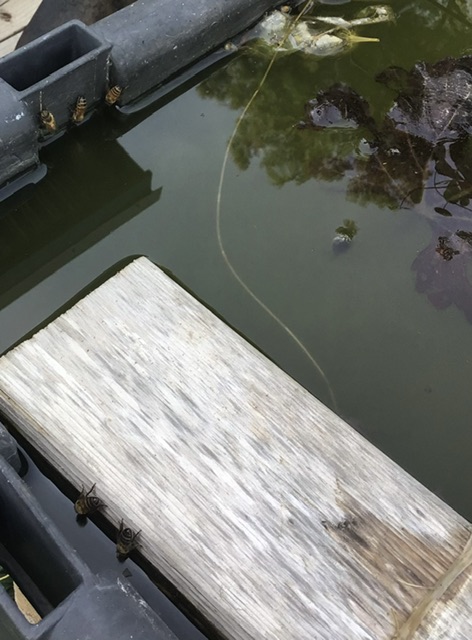
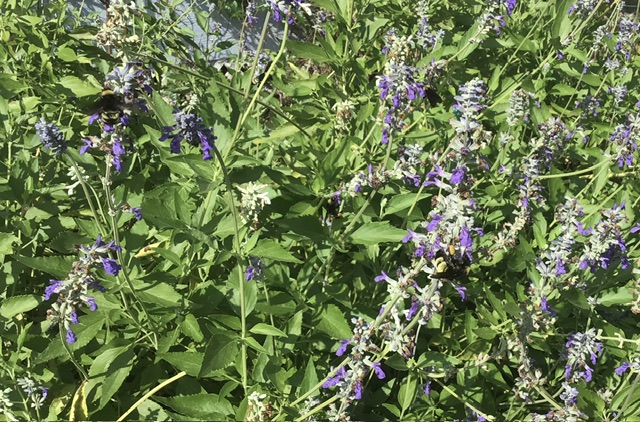
Bonus! We can observe different species peaceful tolerance of the other under times of stress, as well as which critters are more heat tolerant. The honeybees only appearance in the garden at the moment is at this water trough where I feed some tadpoles. But, bumblebees are going crazy on the salvia, wonderful!
It’s so hellishly hot by 10 am we can’t stand to be outside anymore.
Bonus! We can feel like heroes as we try to keep the critters as comfortable as possible.
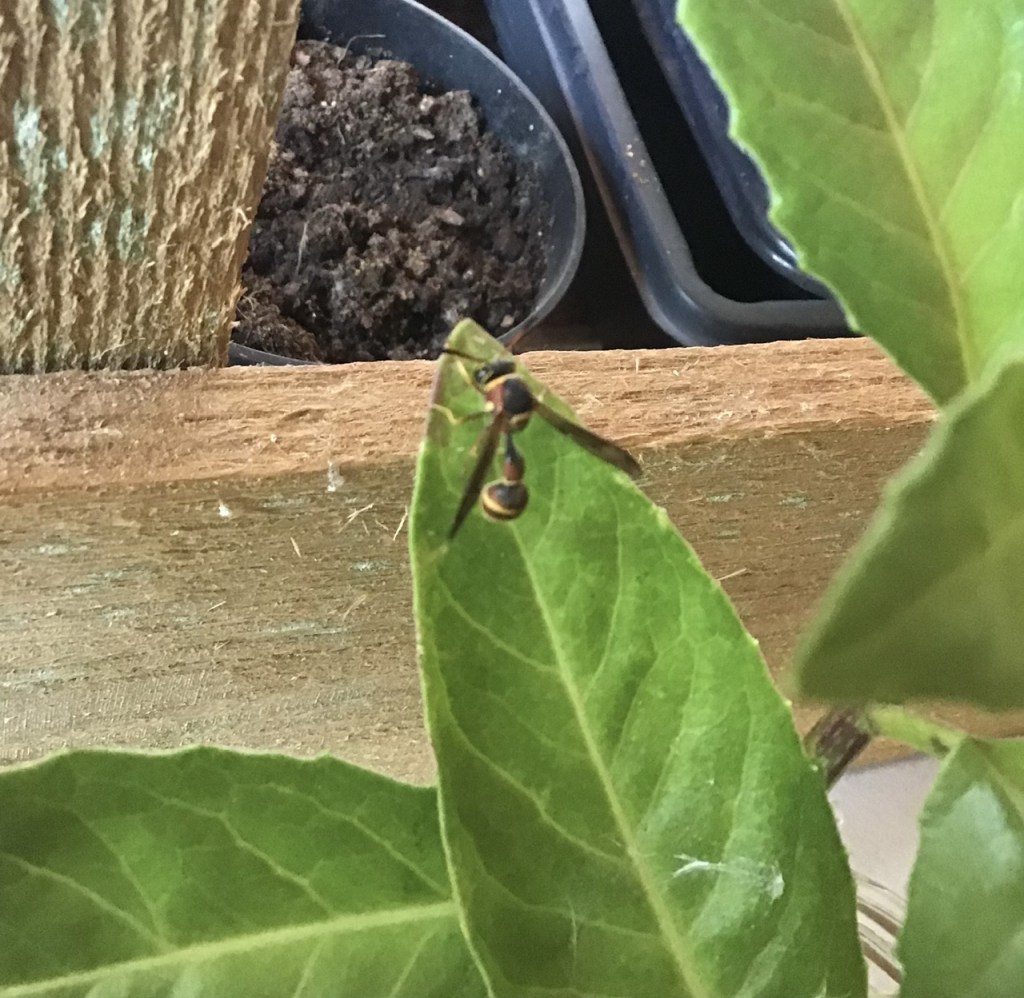
This cool-looking wasp followed me inside, maybe hoping to keep cool? It’s been living happily on this ‘longevity spinach’ (gynura procumbens) for nearly a week. I didn’t realize they could live so long alone, indoors and with no nectar. The wasps must eat something on the leaves, there’s loads of wasps on the okra leaves too.
Here we come to save the day! Bubba in his tub and Buttercup in her sand hole.
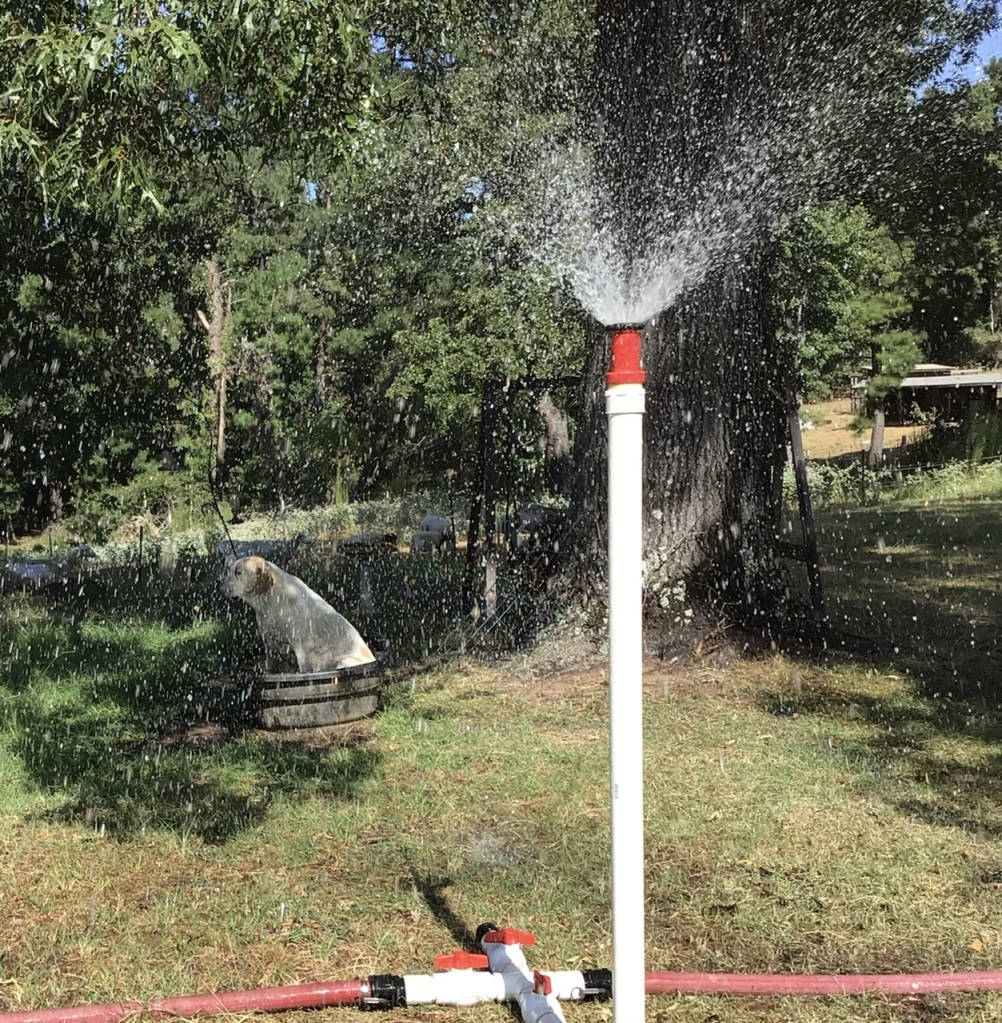
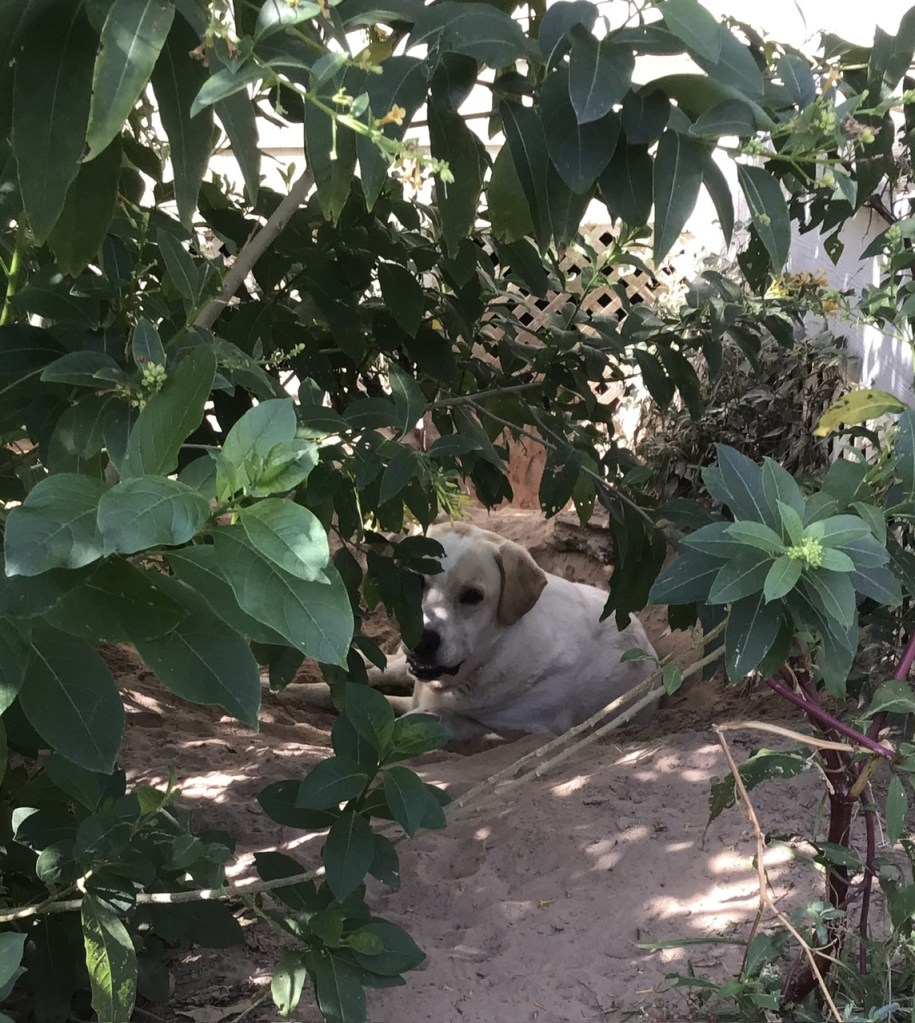
The final bonus of bonuses! I can tackle all kinds of indoor projects I’ve been neglecting, like organizing the closets, washing the windows and floors, attending to the neglected pile of sewing . . .
The only true bonus of that list is that I find it so objectionable I’ll instead be reaching for another novel I’ve been meaning to read. 😆
Thanks for stopping by, hope you’re keeping cool!
I’m critical of high-tech solutions and when I hear them in tandem with big claims of sustainability, especially at a global level, I automatically bristle.
Still, the first time someone called me a Luddite, I balked.
I know there are plenty of us—vocal advocates and quiet dissenters alike—bemoaning so much of the tech being shoved down our throats, most certainly when it comes to food. I’ve been vocally ‘anti-GMO’ and ‘anti-geoengineering’ and ‘anti-vaxx’ and ‘anti-surveillance’ which in their linguistic game really just amounts to PRO-nature.
Yet it is becoming more common, even among the homesteading ‘community’ and ‘off-griders’ to consider these two powerful forces as intrinsically intertwined. As if sustainability cannot be achieved without modern tech, forgetting we somehow made it all the way up to the industrial era with relatively little of it.

We often hear of technology being a Trojan Horse. But, that’s an understated analogy, considering in that story it was a “gift”—insinuating it was one that could’ve been rejected. There is no rejecting a good portion of this tech flooding into our lives today. You will not escape the digital prison, at least not completely. Those 5G towers are screaming their frequencies over your head day and night whether you like it or not. The weather modification is a thing, whether I like it or not. (NOT!)

We also hear of technology being as any other tool—to be used for good or ill. Yet, is that a fair assessment when these tools are largely invisible? And when they are overwhelmingly in the hands of very few, and when fewer still would be able to replicate them in any capacity?
What am I missing? Where is the healthy balance?
To explore these questions over the next few posts, I’m bringing in considerable help.
A young ‘homestead influencer’ I’ve heard about for years is about to release a new book and her attitude about the tech sounds pretty healthy. In the book she explores the question, “What are we leaving behind in our race toward progress?”

Old-Fashioned On Purpose by Jill Winger of The Prairie Homestead
The book is coming out soon, but she discusses it at length here:
https://thejoegardenershow.libsyn.com/326-an-introduction-to-modern-homesteading-with-jill-winger
Like most of us, she has zero intention of recreating a ‘Little House on the Prairie’ lifestyle. She has managed to incorporate the tech into her life on her terms. So far, it seems.
Many of us certainly feel as the diaspora—dispersed between cultures—natural and digital.
I can’t help but wonder, is losing our soil connected to losing our soul?

I have a cousin in Colorado with a farm I’d call pretty high-tech. He’s a permaculture/biodynamics guy and has been very successful and has the perfect background to enlighten me, I’m sure.
He worked all over the world before his current venture, which has recently gone on the market after 20 years of development and WOW, talk about a success story! To increase the value of a property by such an extraordinary measure is truly remarkable. And that’s only part of his success story.
He too seems to have managed the tech, rather than the tech managing him.
I was quite moved by his 2015 speech:
“I remember!
Excerpt from a speech given by Brook LeVan at the 12th Annual Sustainable Settings Harvest Festival on September 20th, 2015:
These qualities of life giving wholeness that our ancestors knew deep in their bones have been drawn off, separated, reduced, modified, pasteurized, homogenized, radiated – their vitality degraded, their life giving forces mutilated beyond what our cells might recognize. We now consume what are at best facsimiles of food, laboratory concoctions, genetically mastered ingredients – simulacra that do not build our cellular health but create work for our bodies, that weaken our fortitude and break our spirits. These laboratory wonders parade in full color down our grocery store isles. -all screaming for our purchasing dollars. More money is spent on the campaigns intended to seduce us than on the so-called food inside. These products are combinations of ingredients that we can not pronounce, masquerading as food and covered up with contemporary Eco-socially correct overly-designed, brightly bannered sales pitches in suspect containers claiming to bring us momentary bliss – all hawking only slight variations of amber waves of commodities meant for one thing and one thing only – to efficiently generate profit for a few, and from the most devastating chain of ecological rape and pillage the world has ever experienced – all leaving an accumulated insurmountable debt to future generations.”
As little media as I consume, I read or hear such attitudes on a daily basis.
Just today in fact from The Naked Emperor:
“In the modern world, progress and innovation are often celebrated as unambiguously positive. New technologies, ideas, and ways of living are readily embraced with the assumption that they must be better than what came before. While it is true that certain advancements have brought undeniable benefits, such as improved hygiene, faster means of travel, effective medical treatments, and enhanced communication, it is crucial to critically examine the broader implications of modern progress. Often, the rapid pace of change leaves little room for reflection on whether newer solutions are truly superior to time-tested practices.
As society becomes more complex and interconnected, the allure of novel and convenient solutions can overshadow the wisdom of the ancestors. Practices that have served humanity for generations may be disregarded in favour of modern alternatives that promise quick results and ease. For example, the trend toward processed foods and sedentary lifestyles has led to health problems that were less prevalent in societies that followed more traditional dietary and physical activity patterns. Likewise, the reliance on fiat money and speculative investment has created economic instability compared to more sound financial practices.”
Sound financial practices? What will the future kids know of that when even homesteaders are encouraging others to go deep into debt to finance their ‘off-grid’ dream property as if that’s magically sustainable? We used to call that debt-slavery.
Curtis Stone is a popular YT homesteader, and I’m not really meaning to diss him here, because it’s quite possible if I were a young man in my prime I wouldn’t be having such reservations as I do.
Risky behavior is common in youth, yet do we not expect a mature individual, as a mature culture, to become less risk-tolerant with time?
Debt has alway been encouraged for farmers when all the fancy new equipment becomes de rigueur—and a great many lost their farms that way during the Great Depression.
I’m not the gambling type myself, yet I see the technological sphere permeated with these types. From my vantage point, they appear to be addicts.
As if The Tech is not sketchy enough to me, there’s also the obvious fact of The Money, because you can’t have one without the other. That’s where the rabbit hole starts to go very deep.
(17:53) Gambling on people’s lives. That’s where the tech is headed. Not a ‘Black Mirror’ episode. Reality. Our debt-creation machine riding squarely on the backs of every cyber-unit, that is, every man, woman, and child, every living thing, all resources all around the world. Internet of Things, Internet of Bodies.
Alison McDowell of WrenchintheGears has been doing deep dives on this topic for many years, her work is hefty and dense, expertly sourced, and crucial in this discussion.
All this data. All the electricity required to run all this tech. All the power to be had, when all that power is in the hands of so very few.

So, I suppose I am a bit of a Luddite.
I’ll be exploring this reality in the next few posts, I hope you’ll join me by adding your thoughts about the topic in the comments.

Too funny! 😂
Times are tough, the mood around here is tight and demoralized. I won’t sugar coat it. Two months of 100+ degrees and no rain is bound to have emotional as well as physical consequences. We are victims and I refuse to pretend otherwise.
It’s one thing after another and because it’s so hot everything takes far greater effort. I’d go down the big list of all the things breaking down and all the things we can’t keep up with, but it’s way too long.
And no one likes a complainer, right? Don’t wallow in misery, right? Don’t bring others down?
If I had a dollar for every time I read or hear somewhere some version of—“Don’t play the victim”or “You’ve got to get out of the victim mentality” —I’d spit on it, wad it up in a tight ball, and shoot it out the barrel of a gun right between the eyes of every idiot who repeats such self-serving nonsense.
We ARE victims and there are a great many of us. Victims of medical experimentation, victims of weather warfare and disaster capitalism, victims of theft, victims of bullying and coercion, and that’s just those who are lucky enough not to be victims of far worse.
What is the ‘victim mentality’ exactly and who does it serve if we all bypass it? Who does it serve if we swallow our anger and resentment and bitterness?
Folks like to say it serves oneself, as in, then the dark emotions don’t haunt you and bring you down. They say we shouldn’t be vindictive, or hang on to past abuses and that hate will eat away at our souls and even cause cancer and other serious diseases.
In fact, it’s blind optimism and relentless positivity that keep folks stuck in denial and complacency, which can easily prove fatal, for the individual and the culture.
It is considered extremely ‘uncool’ to ‘play the victim’ even when you are a victim. Why is that? The media would have us believe everyone is playing the victim and that’s what’s wrong with our culture—so litigious, everyone looking for a handout, too many snowflakes.
While that may be partially true, and most certainly exploited, they leave out one very big piece of the social puzzle. Like, should we not be concerned that we have created a culture with so many victims, whether perceived or real?
I’ll leave y’all to ponder that question for a bit while I digress.
Because, we SO ROCK!
Sure, it really sucks at the moment. But at such times I take more notice of all the things we’ve done right. It’s not bypassing all that’s gone wrong, it’s holding both reality extremes in my mind at the same time.
We recently celebrated our 20th anniversary, and 15 of those years we’ve had this property, which we purchased, BASED ON BEING VICTIMS. After Hurricane Katrina, we saw first hand what the government response is to a crisis and we also saw how helpless most folks were. It was very eye-opening. We took action, to make sure we were not victims again.
We were victims again. And again. These are not ‘natural’ disasters, not one of them.
But for argument sake, even if the hurricanes and tornado were not manipulated by man (they were!) the consequences of those disasters were most definitely exacerbated by man.

These are disasters with perpetrators. Each time the (supposed) natural disasters were made far worse by people. We were robbed after the first one, as well as permanently losing my teaching contract at that time. The second time we were left paying 3 rents—one on the apartment we couldn’t live in, the mortgage on this property that had no finished home to live in yet, and the house to which we evacuated. The third time saw more grifters try to take advantage of our compromised and very stressful situation under the guise of helping.
Each time we’ve taken action based on that victim status to try to ameliorate it for the next time.
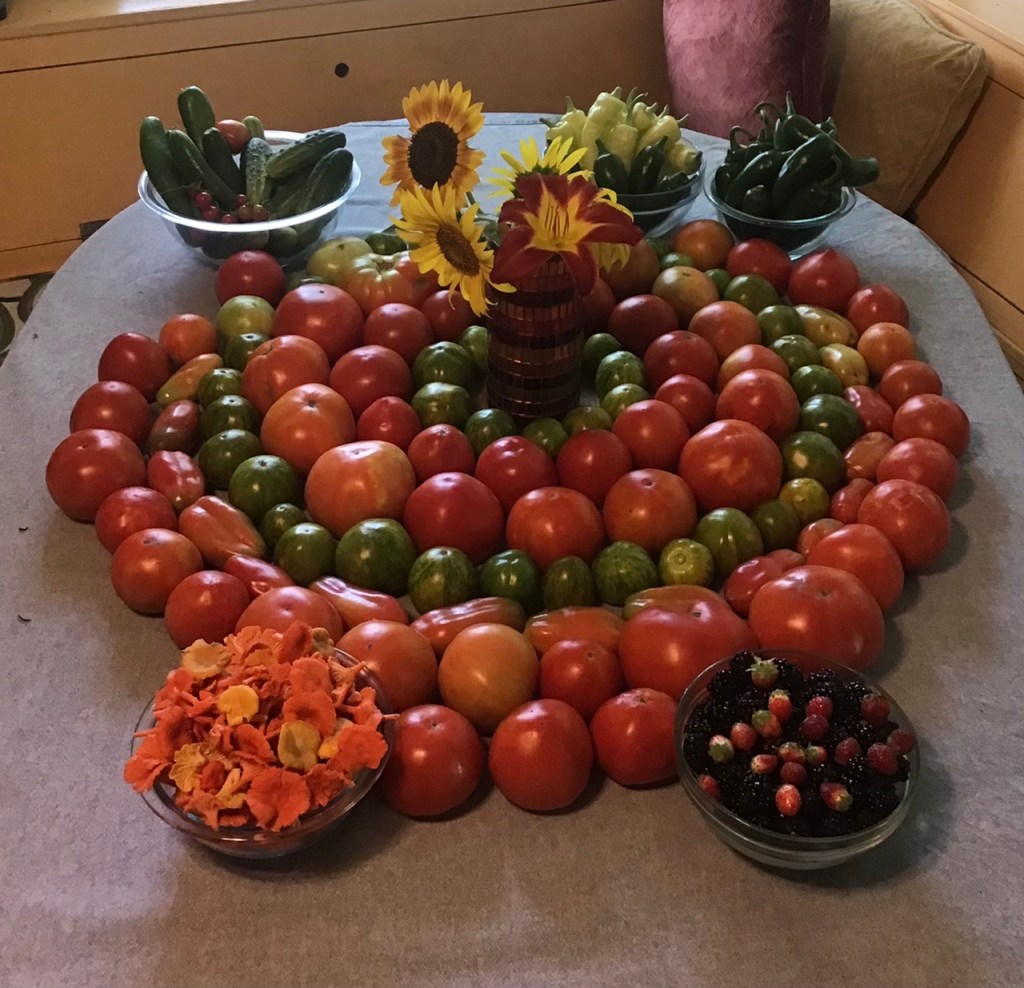
That’s why we rock. In the last 15 years we have carved out an awesome wee homestead. We cleared loads of land, just the two of us and a little old tractor. Built a cabin, 3 chicken coops, a corral, a large garden, a large orchard, remodeled our home, acquired many different kinds of livestock, have been learning beekeeping, foraging, cheesemaking, herbalism and LOADS of other life skills that were completely new to us, and have helped a few others on their journey to do the same.
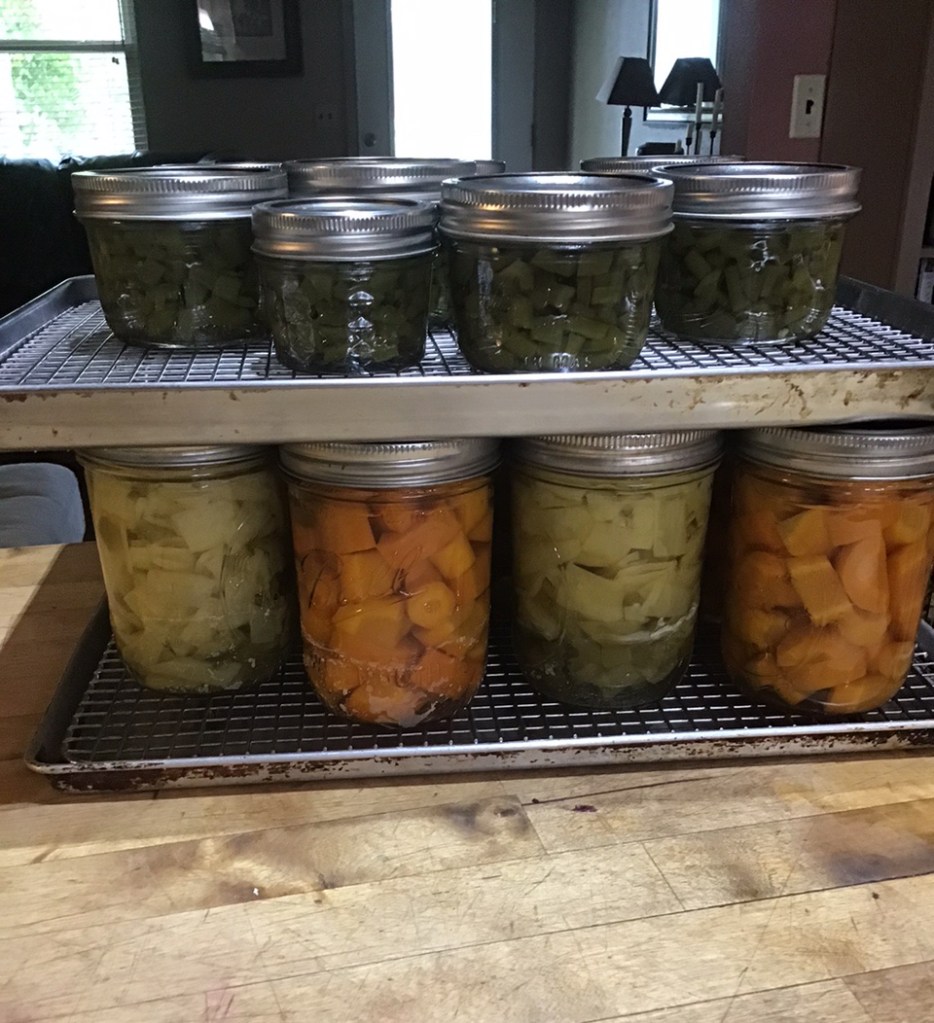

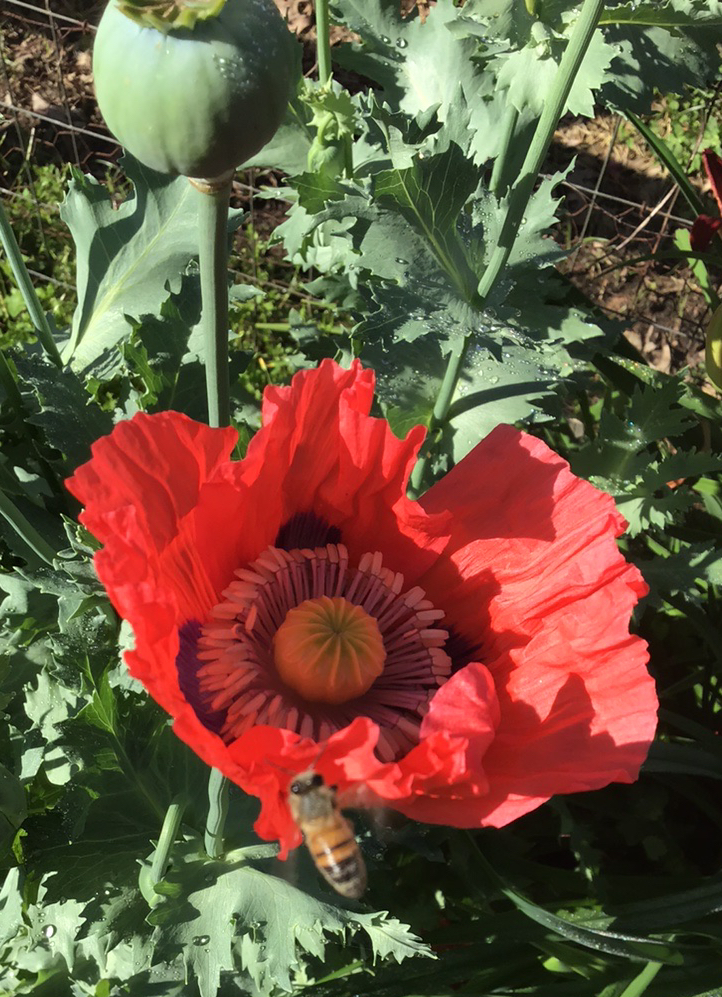
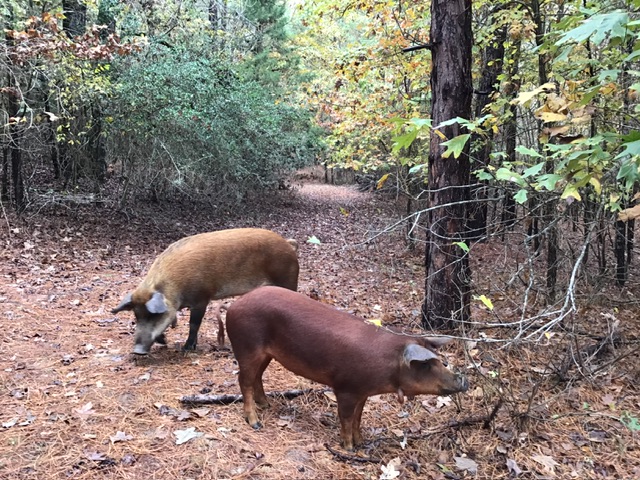

As victims it is our duty to arm others (or at least try, especially for the next generations) with the tools they will need to bring down the perpetrators who currently evade us. It only serves the perpetrators to pretend there are no victims, or to micro-manage others’ victim status and behavior.
A victim mentality can be healthy, or it can be destructive. What most folks do is try to exploit it or minimize it.
They try to exploit it by using it as an excuse to do nothing—this is not a victim mentality—this is a grifter mentality. They try to minimize it because the folks around them are too lazy, indifferent, busy, selfish, adolescent, or cruel to listen to them and allow them to express their true feelings rather than those that are socially acceptable and make everyone else feel comfortable.
The guilt and shame should go squarely and solely on the shoulders of the abusers and those making excuses for the abuse. If victims of repeated abuses turn into individuals with a grifter mentality it could be because they’ve witnessed so often first-hand that this is the winning strategy in our culture. I seriously doubt telling such individuals to stop ‘playing the victim’ will do a damn bit of good. And, why should it?
So, all hail the victims! And more power to us. Not the corrupting brand of power that turns us into tyrants and perpetrators ourselves, but the inner-power it takes to hold that victimhood out for all to see, in order to enlighten, to righteously blame and accuse, and to give the next generation a better chance at identifying their abusers, holding them accountable, as well as in fortifying their own lives and livelihoods against further victimization.

Old man
Languishing in faded orange
Pretending he’s not confused
Young man
Fighting in manufactured neon
Pretending he’s not confused
Young girl
Lost yet amused
Happy to be confused
Old hag
Seen but not heard
Bemused by our conductors
What’s in a play
Of invisible script
Righting the ancient way
As one frond browns
And withers and is replaced
And the green one takes its space
She begins to write this place
Right this place
Not as god displaced
Nor as thief disgraced
Resigned to align her fate
By right faith
Conductors be damned
Herdless hearing
Godness clearing
Re-spiriting she
Effortlessly
Oz be damned
Wizards’ dreams dimming
Rainbows defused
Fancier times tossed
Righteousness scammed
Final stones churning
Yearning breathing
Quieting
Still
Not spinning
Ug, am I in a mood! Read on for a big fat bitch fest.

First I’m going to bitch about the weather. Then I’m going to bitch about the garden. Finally I’m going to bitch about all the dumb bitches.
I will end with one positive paragraph, however, so y’all can leave satisfied that there’s no need to fret on my behalf. 😆
Let me first set the proper tone.
Time stamp 35:53. It’s an old clip, but as valid as ever. Oh my, do I have rant-envy! How I wish I were this good!
You’re worried about what you’re putting in your fucking body?! What about what you’re fucking breathing?!!
I listen to Carol nearly every day; she’s one of the precious few who gets what’s happening and has a proper level of peeve about it all. Go ahead and give the first 30 minutes a listen, if you care to hear about all the (manufactured!) weather destruction around our realm.
If you want to be that person, who writes in the comments that all this is normal and they can’t control the weather, feel free, because I could use a good target for all this vitriol!
And just for the record, I know they use the word ‘control’ to confuse folks, because then they have plausible deniability. Because they don’t exactly “control it” like we control the thermostat in our homes. They manipulate it, where and when they can, in order to cause destruction, in order to profit from disaster capitalism and play the Stocks with weather futures and food prices and every other piece of the economy which is weather-dependent, which is a whole helluvalot.
If you are safe and secure in your tiny little area, good for you, your region is not on the targeted list, YET.
This is not about Bill Gates and his ‘proposed’ solar radiation management. This is SO much bigger and he is one drop in the bucket of the wild, Wild West that is happening in our skies and with our atmosphere. It’s been going on for decades! I’m SO SO damn tired of the denial and the Pollyanna pretending and the stoic excuses!

The general consensus that we can just keep throwing money at the problems and they will magically get fixed by technology is not just absurd and dangerous, it is fatal.

How’s this for the next big fix by Big Biz?
“Now, the likes of Bayer, Corteva and Syngenta are working with Microsoft, Google and the big-tech giants to facilitate farmerless farms driven by cloud and AI technology. A cartel of data owners and proprietary input suppliers are reinforcing their grip on the global food system while expanding their industrial model of crop cultivation.”
From Net Zero to Glyphosate: Agritech’s Greenwashed Corporate Power Grab
“Whereas traditional breeding and on-farm practices have little or no need for GE technologies, under the guise of ‘climate emergency’, the data and agritech giants are commodifying knowledge and making farmers dependent on their platforms and inputs. The commodification of knowledge and compelling farmers to rely on proprietary inputs overseen by algorithms will define what farming is and how it is to be carried out.”
How do you make the world believe there’s a climate emergency? It takes a lot more than hyped-up media coverage and fraudulent stats—there has to be something to cover after all. Enter mass-scale weather modification in key areas—droughts, floods, earthquakes—YES THEY CAN!
Not to mention they’ve cornered the markets of: Disaster Preparedness, 1st Response, Disaster Relief, and Reconstruction, of the entire globe.

Someone has to keep shaking that can to keep everyone fighting you know!
“There’s a meme that circulated on social media a while back that perfectly sums up the polarized, manipulated mayhem, madness and tyranny that is life in the American police state today:
“If you catch 100 red fire ants as well as 100 large black ants, and put them in a jar, at first, nothing will happen. However, if you violently shake the jar and dump them back on the ground the ants will fight until they eventually kill each other. The thing is, the red ants think the black ants are the enemy and vice versa, when in reality, the real enemy is the person who shook the jar. This is exactly what’s happening in society today. Liberal vs. Conservative. Black vs. White. Pro Mask vs. Anti Mask. The real question we need to be asking ourselves is who’s shaking the jar … and why?”
The Rutherford Institute, John and Nisha Whitehead
“Whether You Live in a Small Town or a Big City, the Government Is Still Out to Get You”
Weather warfare is real and it is happening. And it is going to get worse.

Around here, with nearly two months now without rain, high temperatures, drying winds, it’s very easy to grasp what sitting ducks we all really are. We spend the entire mornings just trying to keep what’s not already dead from dying. The time and energy and repetition is exhausting and demoralizing. The afternoons are spent indoors, grateful for the air conditioning and that we’ve had no animal fatalities from the heat, so far.
Most of the garden is dead and depressing. The tomatoes fried, the cucumbers almost gone and getting bitter, the squashes mostly dead, even the heat-loving luffa, which has never succumbed to the heat in past summers. One of four chayote squashes is still barely hanging on, and that’s supposedly another heat-lover.


Not even regular watering helps.
Thinking this ‘heat dome’ could be parked over us for another three months, or wildfires could be next on their battle plan is more than I can bear. I set a single perfect pinecone on the windowsill to remind me fall will surely come, eventually.
Then come the normalizers, Lord Have Mercy! The Fucking Chemtrail Deniers, How I LOATHE them! Let me count some ways:
The evolution of the geoengineering psy-op as I’ve experienced it over the last decade or so has been a recurring nightmare.
I’m thinking it might be helpful to those new to the topic and also to those compiling the multi-colored yarns of our clown world for knitting a scarf for their future grandchildren.
No kids, the skies did not always look like this. Don’t believe the Con-trail Believers!

Some early ‘rationales’ for the lines, dubbed chemtrails, back in the ancient past (circa 2010) — these would be the various layers of gaslighting I heard during my first inquiries on the topic.
*First tier. This is when I would randomly ask Google questions like, WTF is wrong with the sky? What’s the difference between weather and climate? What’s a ‘space fence’? What the hell is wrong with the weather?
Answers:
Planet Nabiru causing atmospheric disturbance
The wind patterns changing due to ‘El Nino’
Contrails, a con that keeps on giving
WiFi, atmospheric phenomenon due to widespread wifi
Radar, result of new tech
*Second tier. This is when I started seriously questioning and challenging on social media. What’s geoengineering? What the fuck is wrong with the weather? What are ‘sun dogs’? What is ‘solar radiation management’? What are chemtrails?
Answers:
Not there, my imagination (yes, I got that regularly)
Military operations, not my business (ditto)
New brand of ‘green’ Jet fuel
Military chaff
End of days
Coal Fly Ash
Military fuel dumps
Contrails, the con persists!
*Third tier:
Self-replicating Nano-bots (now we’re getting somewhere!)
Space fence, for real!
Germ warfare
Weather warfare (DUH!)
My imagination—yes, still!
I do try to focus on the positive, and there is a bit of it. Hubby’s first sunflower-melon patch was a big hit. It’s gone now, but we’ve got some really amazing watermelons to celebrate his success!


The pumpkins have also been pretty impressive, and amazingly they are still alive, though it does feel odd to have ripe pumpkins laying around everywhere in July.
Guess who else loves pumpkins? The plants got so big they’ve grown past the garden fence into the goat’s forage area, so, fair play.

But selfish old queen that she is, she wouldn’t share a single bite with her mates!

For a couple hours in the morning it’s not so terrible standing still in the shade with mist from the sprinklers blowing on me.


While we definitely have fewer pollinators visiting the garden this summer, at least we do still have a few nibbling at the drying flowers. May they survive and multiply!
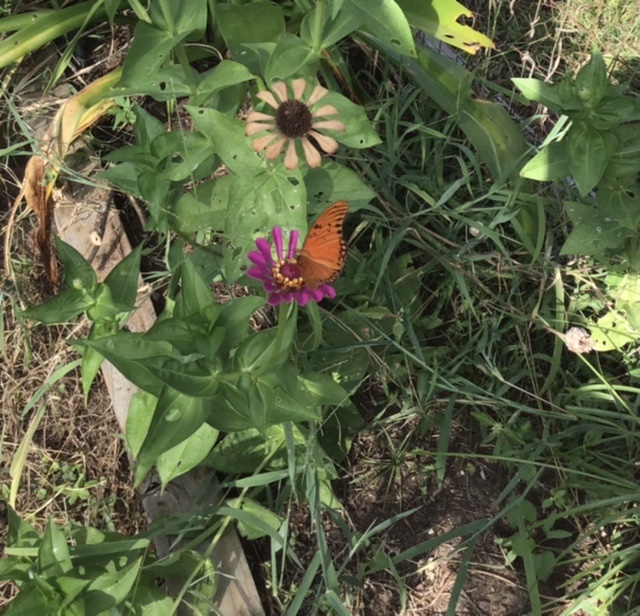

And of course, tomorrow’s Funny Friday, so that might help my torrid mood. 😆
We are just days away from no tomatoes. Just as I was really getting sick of them.
There’s an attitude to surplus, just as there is to scarcity. Maybe we could even call it opposing frequencies.
I’ve known wealthy folk, in my younger days, who refused to eat leftovers, ever, no matter what it was, even lobster or filet mignon. One could almost be convinced of a certain ‘trickle down’ economic theory when in their presence.
While I was really lucky to be friends with them, because I got a lot of free upscale leftovers, I did find that attitude to be wasteful, and was not shy about expressing it.
It behooved me to see all that good food go into the garbage, not even composted. I couldn’t eat all the leftovers created from a weekend lake house party, and there certainly weren’t any livestock to benefit, not even doggie bags.
I think my 2nd favorite thing about having pigs, after the sausage and bacon and ham, is that I feel zero guilt about throwing away our surplus. It’s not throwing it away at all, I’ve come to realize, it’s really more like pre-seasoning our sausage.
So it was interesting to read an article the other day from an author who presented a graph from the “Bureau of Labor Statistics (BLS) data demonstrating a substantial decrease in household food expenditure as a percentage of income—from 44 percent in 1901 to a mere 9 percent in 2021.”
It was considered a ‘good thing’ according to this graph and this author that food prices had become so negligible in the modern economy.
I’d be willing to bet the farm that the general public agrees with this premise. To have the essentials of life—that is, food and water—as cheap as possible, indeed feels like a good thing. If those are brought to them poisoned is mostly not a thought at all.
Once the essentials are met, as in our modern Maslow’s hierarchy of needs, we can move on to entertainment.
Oh, except for that other pesky thing, energy. Because WiFi and game boys and television aside, we do still NEED our fridges and freezers and air conditioners.
And if you think that’s exaggerated, watch the mass exodus from the South to the North if the World Economic Forum has their way and all those civilizing conveniences disappear before too long. All while we are sweltering down here under the umbrella of ionospheric heaters up there.
But, aside. Let’s get back to the basics. Food and water, even before energy. You already know the feast or famine feeling. I know you do.
Do you give a care when you shower that 5 more minutes will break the bank? Have you ever lived in a situation where you carried all the water you needed for the day?
Do you consider when you buy your groceries that 5 more dollars will break the bank? Have you ever lived in a situation where a few dollars meant dinner or no dinner?
Every technology is a Trojan Horse. From shoes, to language, to music, to roads, to windmills, to combines, to bombs, to telephones, to cybernetics. Every one. Man existed before all of them. Somehow. Not even the ionospheric heaters causing us drought and weather chaos will bring about the extinction of man.
Man, in whatever form, of whatever species we care to classify, is a feature, or a bug, of this ‘solar system’.
Or, maybe I’m wrong, and we will perish like the supposed dinosaurs.
But my sense says, its otherwise. It says we survive in surplus, in scarcity, in love and in hate. We remain under masters, in servitude, and occasionally at some magnificent moments, I imagine, its otherwise.
We survive wars and diseases and lies. We survive pop music and step mothers and manufactured weather.
They say we must thrive, to thrive is to succeed. To succeed is to know progress. To progress IS.
To succeed is to feast.
Yet to feast indefinitely, is impossible. It will eventually lead to famine.
Because failure IS the inevitable consequence of success.
Phytolacca americana
The latest addition to our Herbal Explorations pages.
Pokeweed is one of the most controversial yet fully legal weeds you’ll hear about, I’m sure!

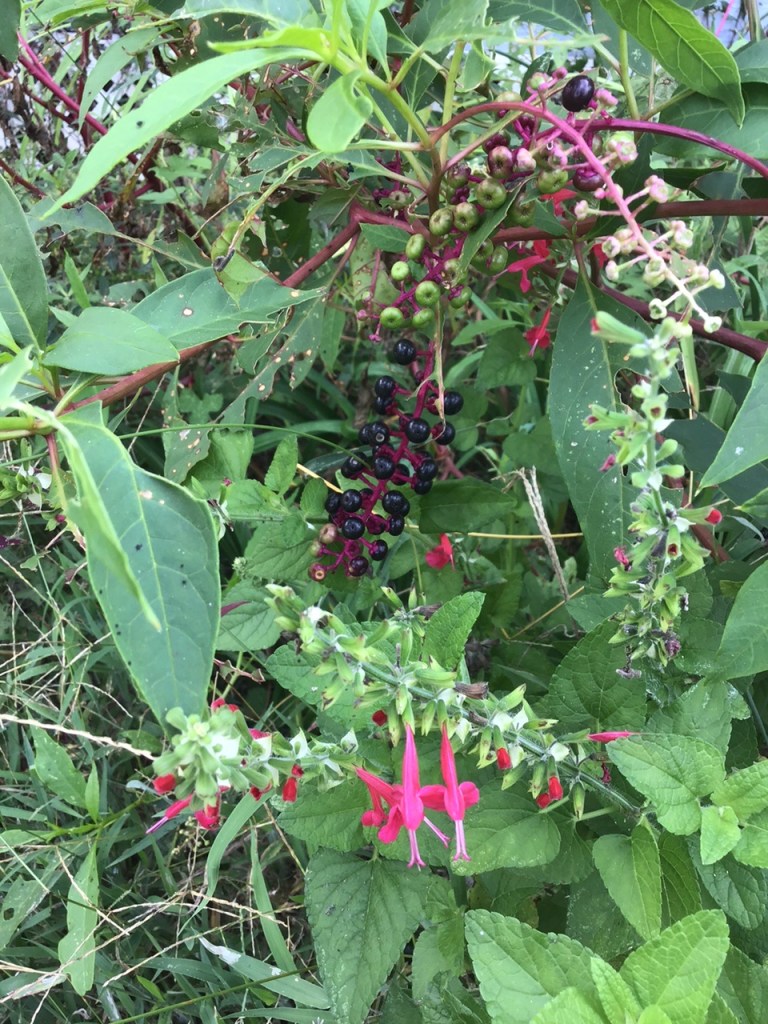
A young plant on left surrounded by poison ivy. On right a mature plant with ripe and unripe berries surrounded by fireweed
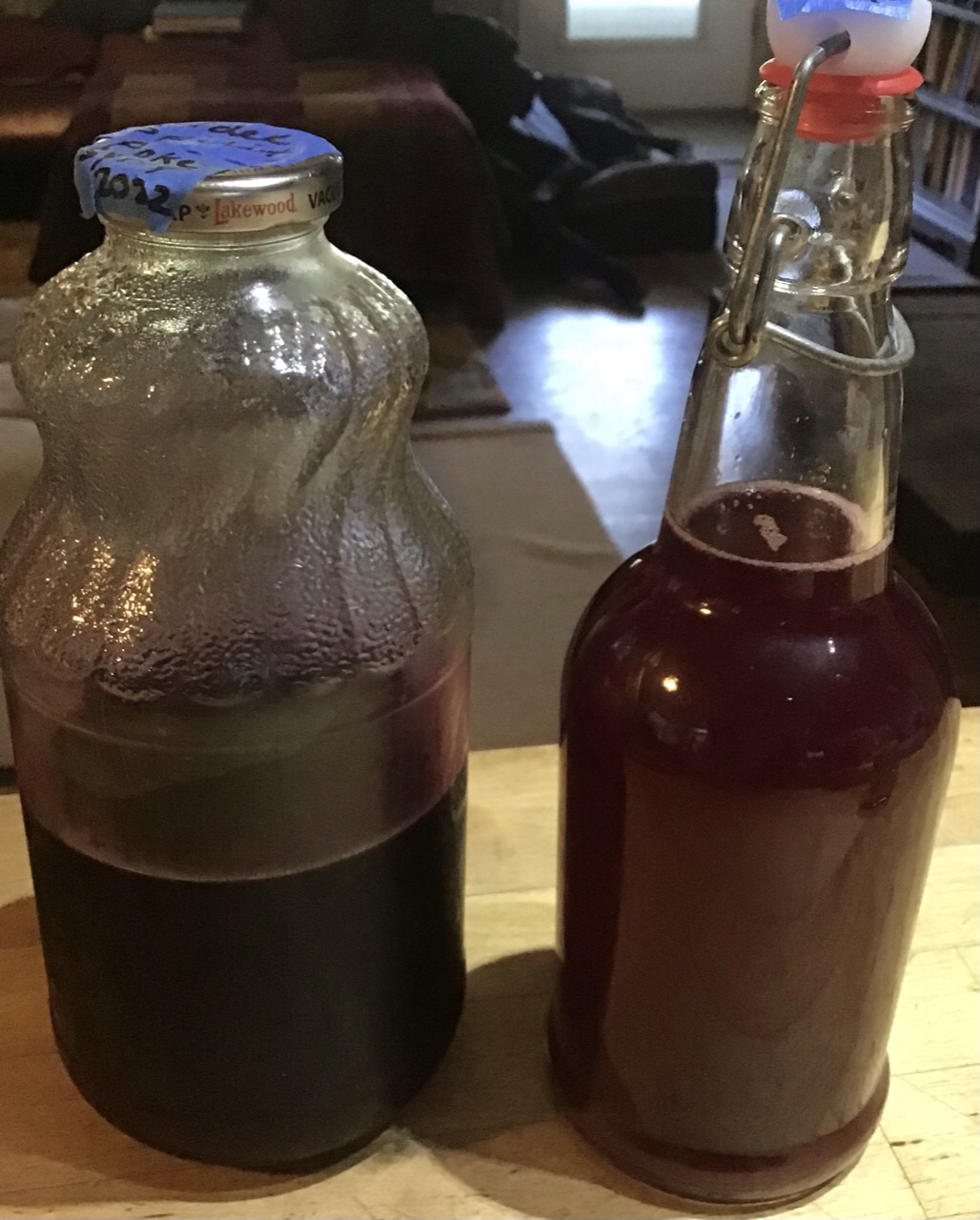
Elderberry-Pokeberry syrup for flavoring cocktails and Pokeberry kombucha—such lovely colors!
There is a hefty amount of misinformation on this ubiquitous plant, but in recent years there’s been a significant pushback, especially among Southerners, where for some it’s been a staple crop for generations.
Though its reputation is still highly contested! The YT video below tells a good chunk of poke’s dramatic story. 😁
It is used as an ornamental in some areas, while others consider it invasive. Ranchers consider it a nuisance and try to eradicate it, though it loves nitrogen-rich soil, so tends to pop back up wherever animals have been penned up or have heavily grazed, therefore fertilizing the land.
We do use it as an ornamental and a food crop, and I’ve written short posts about it here and here. I make wine and syrup from the berries and use the greens in many dishes. The popular belief that the greens must be boiled 3 times is mistaken and overkill.
However, care must be taken in its preparation and it’s not to be eaten raw. The above video explains a lot for those wanting to give poke a fair shake!

Rinsing well before submerging in boiling water.
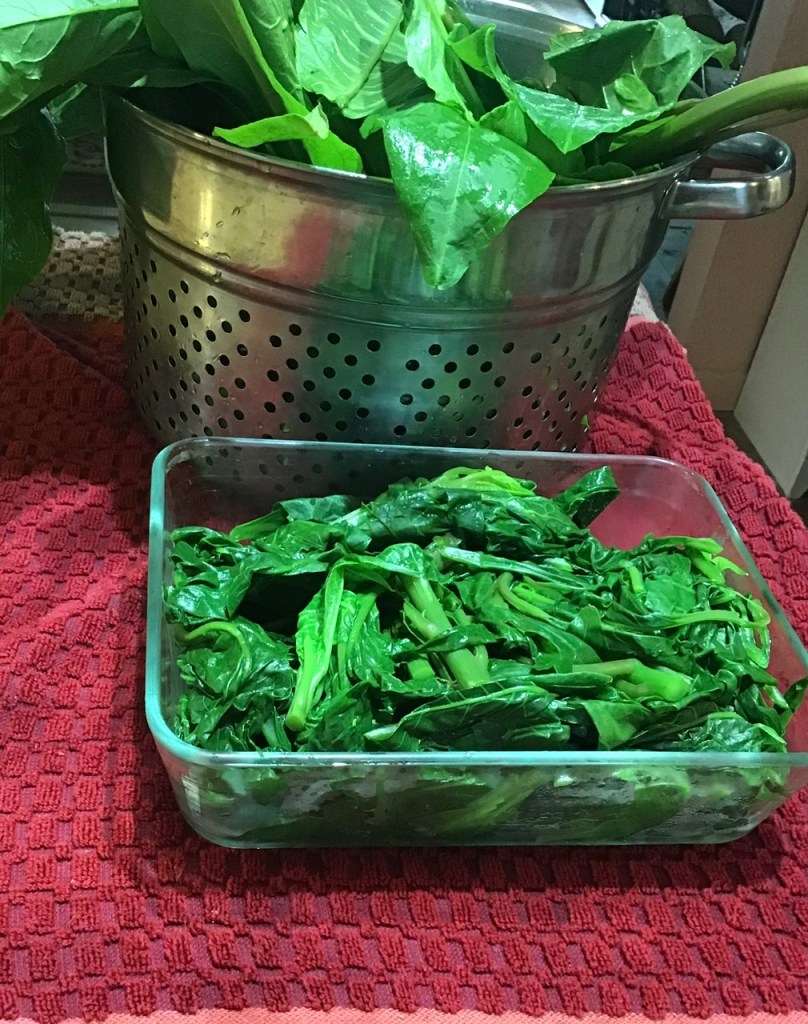
Boiled in batches until limp, rinsed in cold water, then used in a dish that will be cooked, like a casserole or stir-fry, or frozen for future use.
The common advice to boil it three times disintegrates the leaves into slime, but you’ll hear that all over the internet and probably from your neighbors too.
That is, if they aren’t already convinced it’s poisonous.
This false belief most likely comes from four places: 1) The farmers and ranchers who would like to see it eradicated because it so successfully competes with the grasses. 2) The high-end wine-makers of our predecessors, because the ripe berry juice was used to color inferior quality wine to make it sell better. 3) Rockefeller medicine which demonizes traditional healing herbs and practices. 4) Chemical dye manufacturers who wanted to dominate the market as it was (and still is) used as a natural fabric dye.
The economic importance of pokeweed to our ancestors was sure to be unpopular with manufacturers and industrialists wanting to create dependency on their products.
A few benefits taken from the sources linked below, not the best translations, unfortunately, but some interesting info. (They do also repeat the plant leaves cannot be used after the stalk turns crimson, but in my experience and in the video above, this is not the case.)
“The young shoots of Ph. americana are eaten cooked as a substitute for asparagus in spring, and its tender leaves were eaten as a substitute for spinach even by the North American (Delaware and Virginian) Indians.
We can found this kind of utilization nowadays too: at markets in the southern states of the USA it is sold as „sprouts” even these days, and they sell its young, tender leaves tinned (Poke Salet Greens). At some places it is still cultivated, though only in small-scale. The tender, bright inner part of the stem is crumbed in cornstarch and fried. They use the young plants before crimson coloration, but the cooking water needs to be discarded. Its ripe berries are added to cake pastries. The roots and the leafy stems are traditionally used for purple-brown dyeing. This colour is not much permanent, after body painting it can be removed easily. The root contains much saponin so it can be used for making soaps. The leaf ’s powder or the leaves were used for external treatment of cancerous wounds. After it got into Europe it was not only planted as an ornamental plant, but its dark purple dye was used for food coloration. The liquor of the berries were pressed, fermented and cleaned up by straining and afterwards it was evaporated down to about honey density in Chinas. The product was used at one for the coloration of foods, preserved fruits, sweets, liqueurs and wines; and for example alias Succus Phytolaccae inspissatus it was sold in German pharmacies. The berries were used to colour the wines of poorer quality with such a success that the plant was widely grown in Portugal, Spain, France and Italy. An ethnobotanical fact about the plant in the Carpathian Basin is that the Transylvanian (Kalotaszeg, Kiskapus) people put the fruit in the barrel cabbage to give it a red colour. Thanks to it betacyanin content it can be used as an industrial dye, but its colour is not as persistent as the colour of the scarlet oak (Quercus coccifera) is. Rarely it was used for wool and silk coloration too. The crimson coloured sap of the berries was used as ink (for example by the soldiers in the World War), that is where English name, inkberry derives from. A limner from Missouri, Bingham used it as paint. Its therapeutical utilization has traditions too. The Delaware Indians considered it to which has cardiac restorative effect, and the Virginian tribes used it for its strong psychotic effect. They presumed it is useful against rheumatism, tumours and in smaller doses against syphilis too. Its therapeutical utilization is comprehensive. Earlier the European therapeutics used it too as an emetic: Radix, Herba et Baccae Phytolaccae. Its root, leaves and fruits are used in the homeopathy too. The plant is a pharmaceutical base material even nowadays. Its drug is used as an antirheumaticum, purgaticum and emeticum (alias “poke root” or „Phytolacca”) in the USA, besides the lush root may can be used against breast cancer, too. The berries are utilized there for food coloration too, and with its leaves they adulterate, or rather substitute the „Folia Belladonnae”. The modern medicine started to show interest in it, thanks to the antiviral protein (pokeweed antiviral protein, PAP) that blocks the infection and reproduction of the HIV virus. The external use of PAP has an inhibi- tory effect on the plant RNS viruses too. The transgenic plants that contain the gene of this protein became resistent to a wide range of viruses. They impute that the root of the Ph. americana has blood cleanser, anti- inflammatory, expectorant, sedative, stupefying and purgative effects too. There are experiments for its uti- lization to cure the autoimmun diseases, especially the rheumatic arthritis. The plant contains toxic compounds against micro-fungi and molluscs too. The lectins extracted from it have toxic effect on the juvenile larvae of the southern corn rootworm (Diabrotica undecimpunctata howardi).”
Web references
Armstrong, W. P.: Pokeweed: an interesting American vegetable. In: Economic Plant Families. Wayne’s World, Escondido, California. http://waynesword.palomar.edu/ecoph24.htm
Hedrick, U. P. (ed.) & Moore, M. (upd.) (1972): Sturtevant’s edible plants of the world. Dover Publications, New York. E-version: The Southwest School of Botanical Medicine. http://www.swsbm.com
NIAES (2005): Japanese Fungi on Plants. National Institute for Agro-Environmental Sciences Natural Resources Inventory Center, Microbial Systematics Laboratory, Tsukuba, Ibaraki, Japan. http://www.niaes.affrc.go.jp/inventry/microorg/eng/kingaku-rs.htm
Plants For a Future. http://www.scs.leeds.ac.uk/pfaf/
RBGE (2001): Flora Europaea database. Royal Botanic Garden Edinburgh, Edinburgh, UK. http://193.62.154.38/FE/fe.html
Medicinal properties and anti-inflammatory components of Phytolacca (Shanglu) – ScienceDirect
Compare that to what our US institutions repeat:
All parts poisonous, lots of toxicity fear-mongering, and usually including advice not to plant it in your garden.
Native Plant of the Week: American Pokeweed | Matthaei Botanical Gardens and Nichols Arboretum

“Children, with their whole lives ahead of them and ready to be plugged in and monitored for decades in the financiers’ digital smart-city panopticon, are the prime target of the impact vultures.
Apparently forgetting its concern for the welfare of “All God’s children”, the Church of England has jumped on board this lucrative impact-slavery bandwagon.”