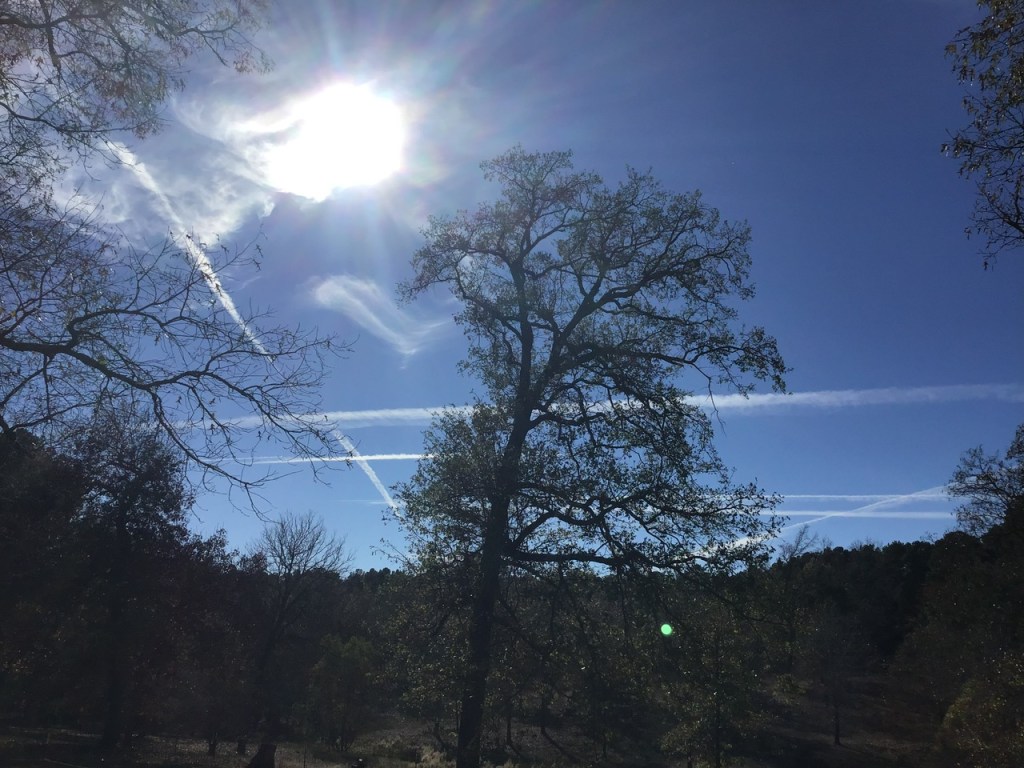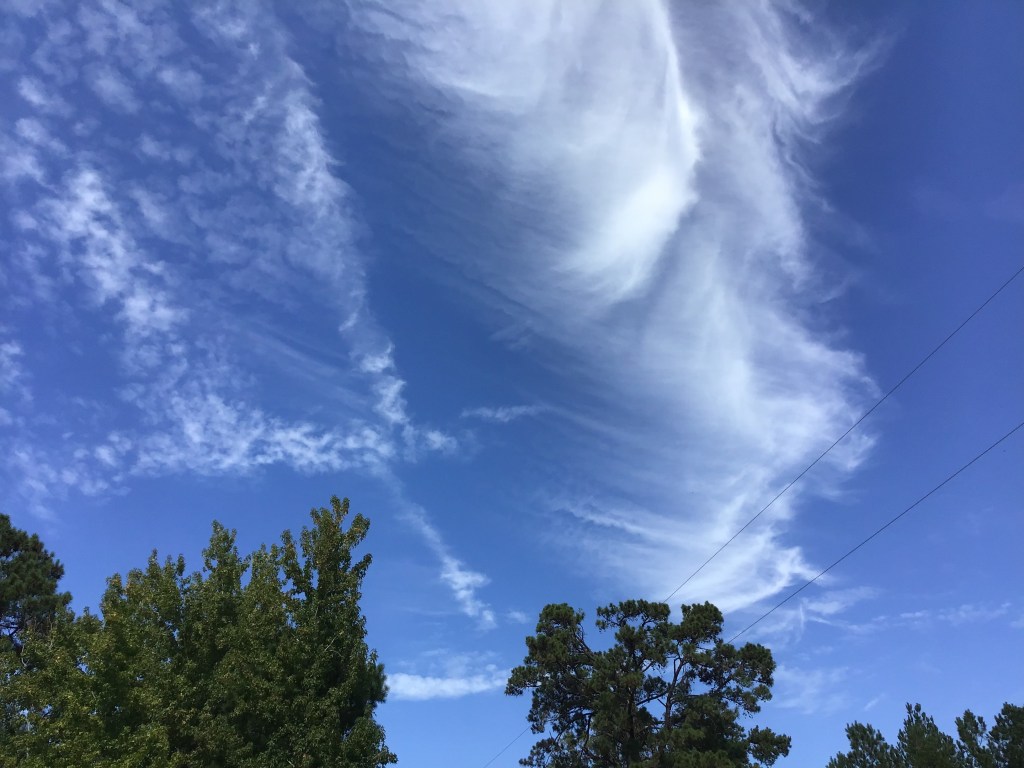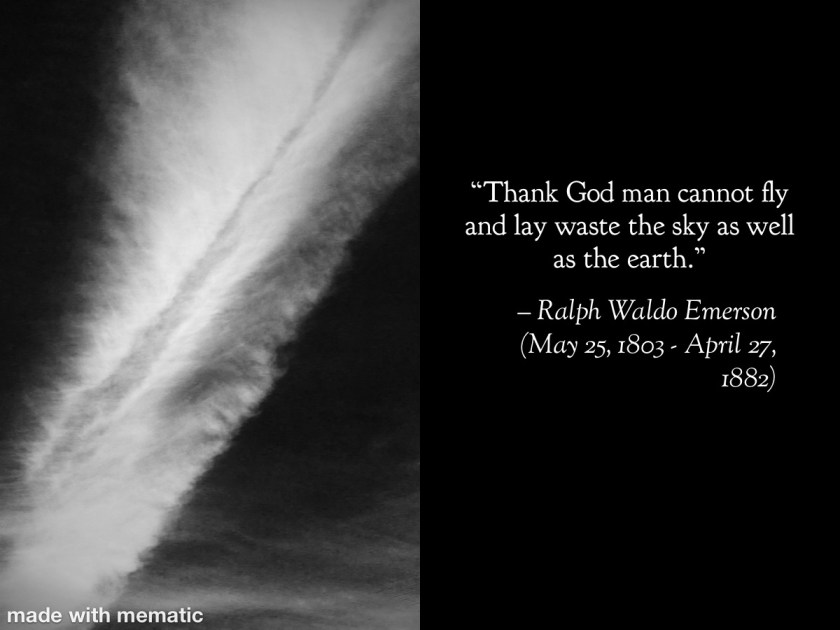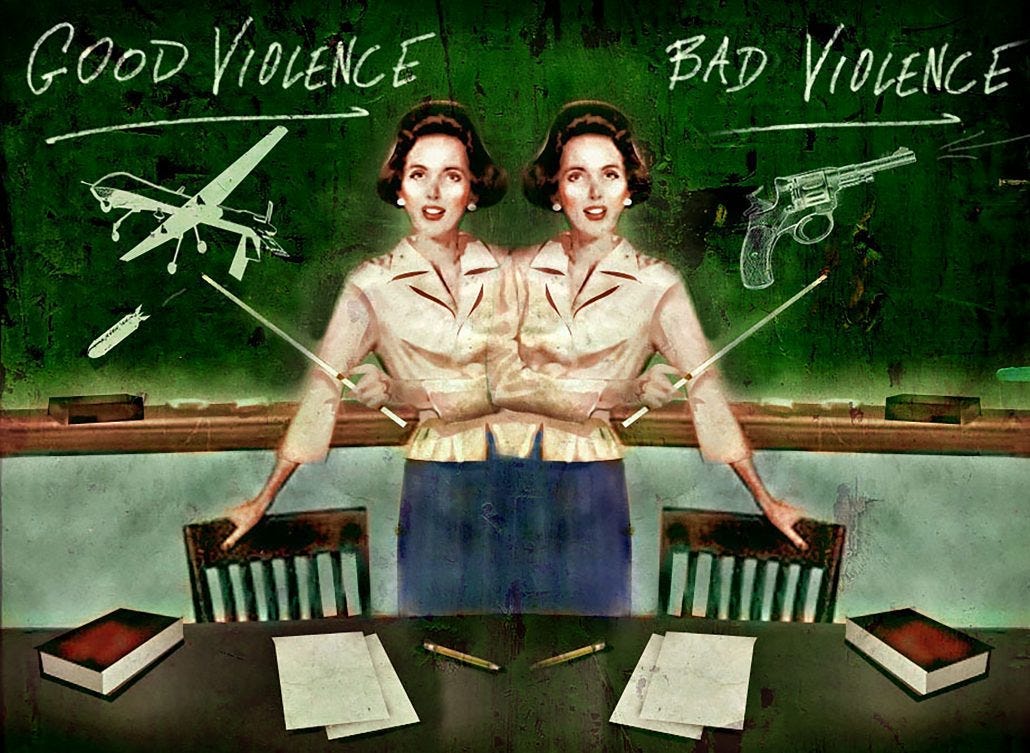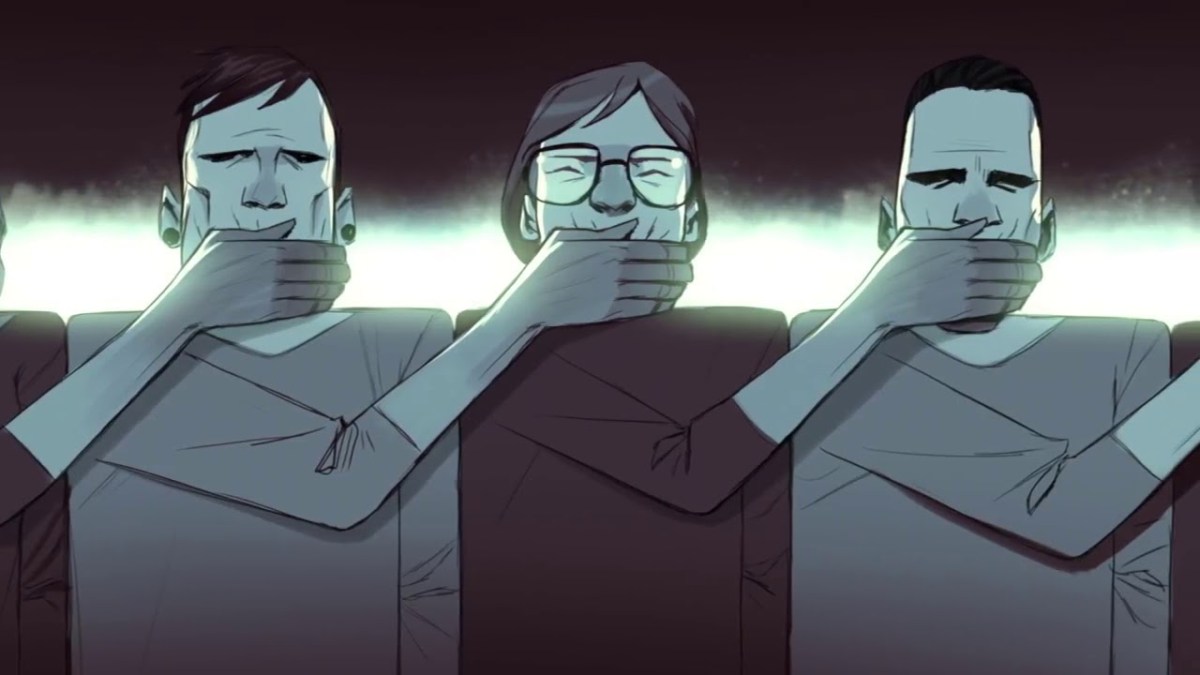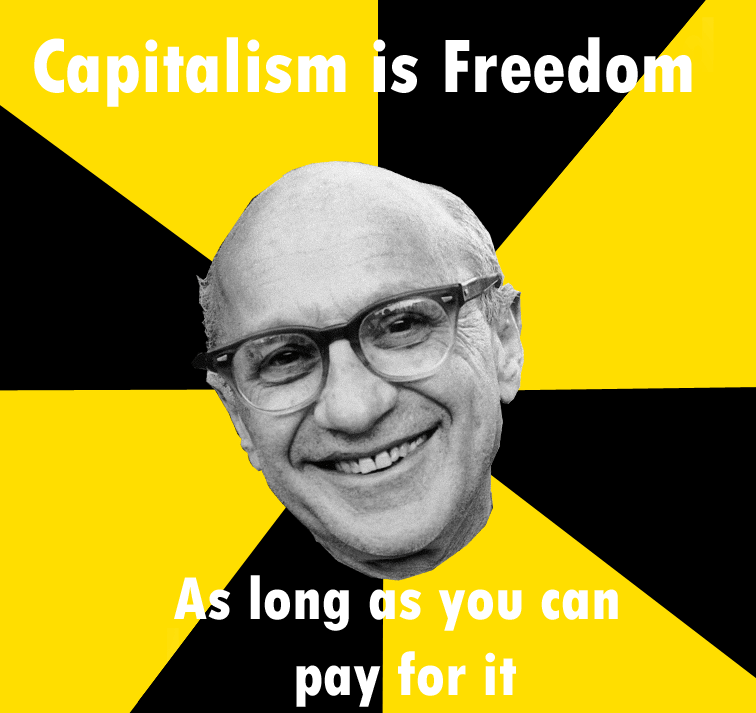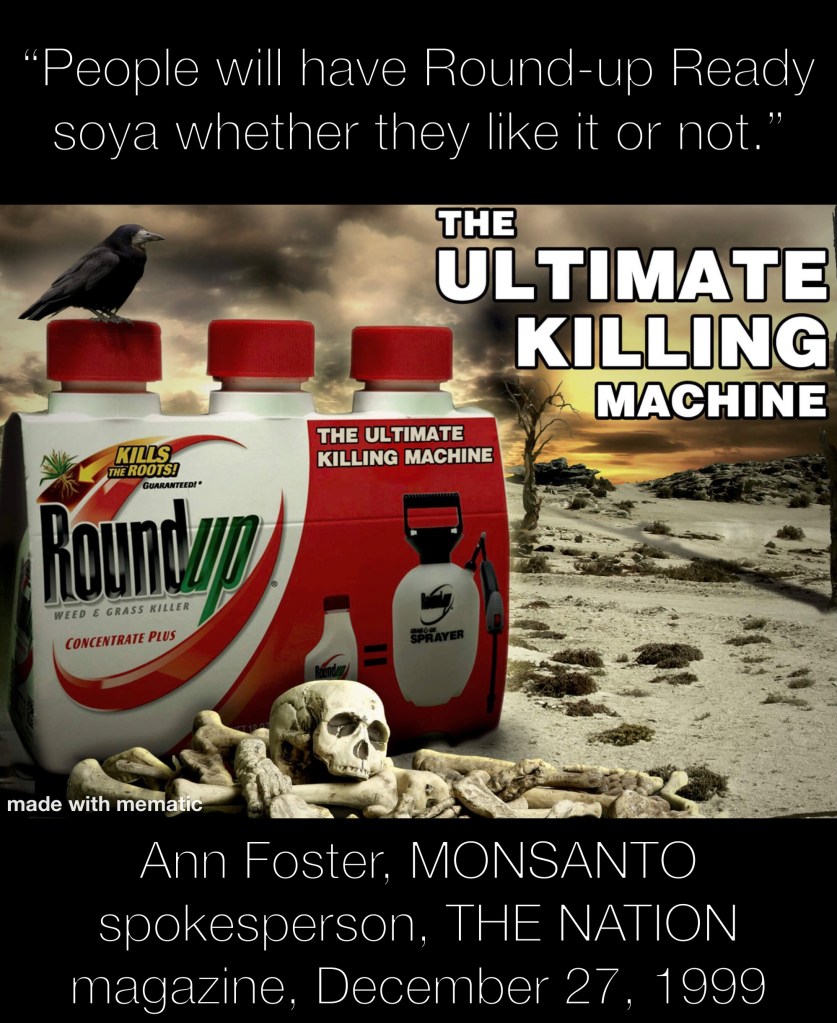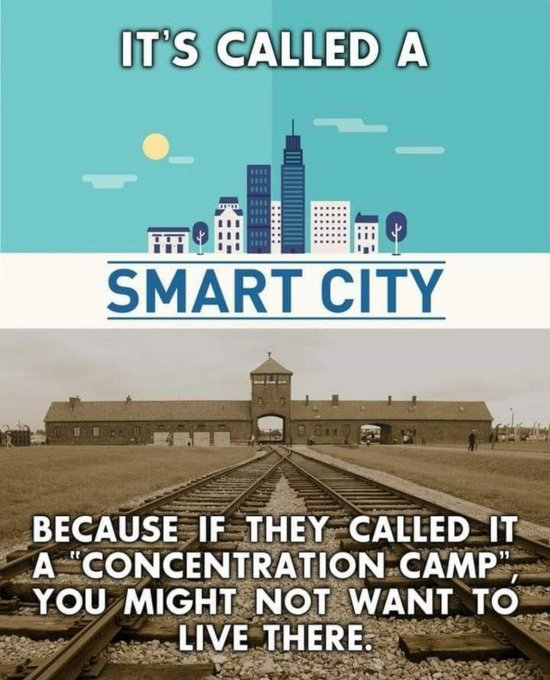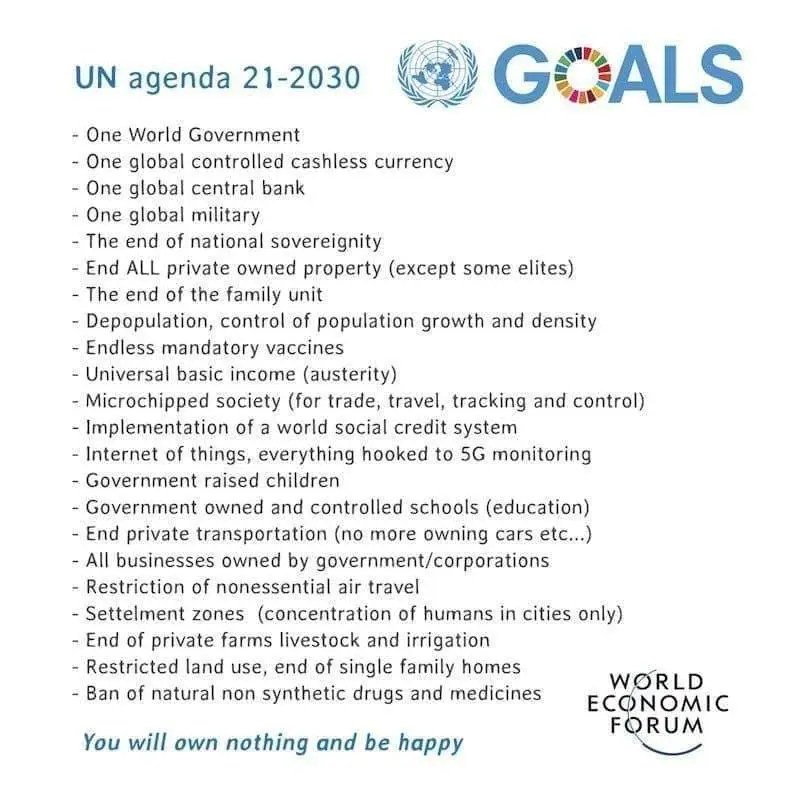
Surveillance Capitalism Comes With a Side of Atmospheric Tampering

“Papers, please!” was a running joke among Western expats living in Eastern Europe. I wonder how many of them now carry a permanent spying device with great pleasure or perhaps even cheerfully signed on to the digital passport program, first in line, buying into the ploys of safety and convenience.

The Globe was supposed to move in the other direction entirely! We won the Cold War, supposedly, in order to NOT be treated like the perpetual citizen-criminals of Kafka’s stories.

Eastern Europe in 1989 was a surreal place for a young university sophmore voyaging long distances by train alone for the first time. It was at once charming and derelict, welcoming and suspicious, familiar and mysterious.

On the one hand I never felt physically threatened, not even as flaneuse on the city streets at night. On the other hand the decrepid state of the infrastructure whispered danger somehow, because neglect itself is a dark force.

On the one hand the relative poverty was palpable, though my midwest suburban upbringing was middle class, great food variety and consumer goods were far more available. On the other hand their resourcefullness has had a lifelong impact on me and was my first critical look at the innate and corrupting consumerism of my little world.

I didn’t speak the languages and there were very few English speakers. I got by, barely, with French, rudimentary German and smiling, mostly. Americans were considered automatically suspect, so some travelers would claim to be Canadian at any venue not requiring their passports.

Already on the issue of passports I was laughingly naive.
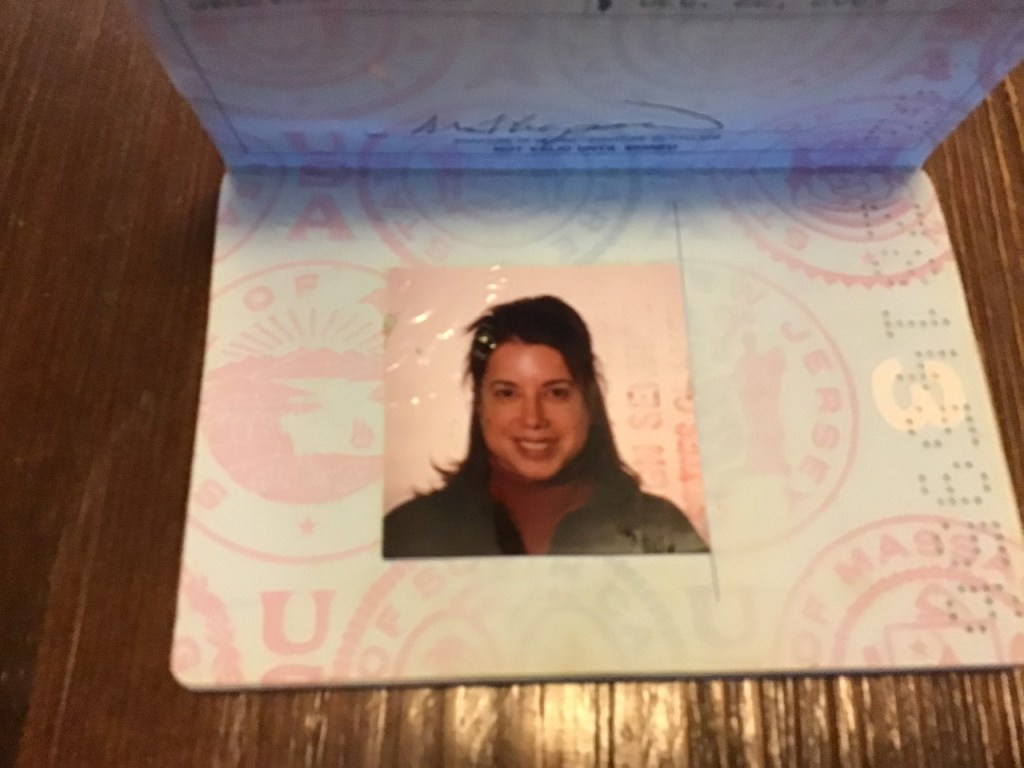
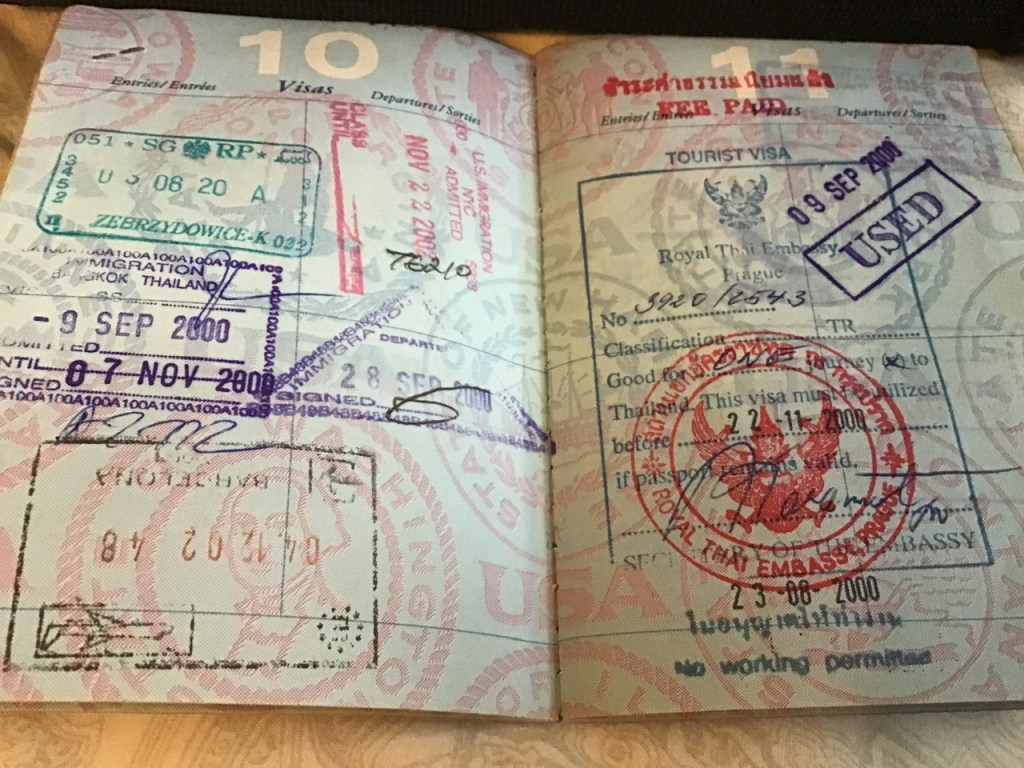
A variety of stamp collecting, or paving the way for the Global digital gulag? It was an especially exciting moment in the expats life when your passport got so full of stamps you had to go pronto to the nearest embassy to get new blank pages stapled into the back of the official document.

Interestingly, while Americans were considered automatically suspect, there was still a sort of cult following that adored America and those who were positively thrilled to meet one, and I made it a point of meeting those unique sorts.

I went on to be a Peace Corps volunteer there a few years later precisely because of my immediate attraction to this region. I felt compelled to know it better and the fact I had the opportunity to spend three more years there, mostly in Czech Republic, but traveling the region extensively, was in fulfillment of my deepest desires and longings at that time.

For all that I loved it, there I also felt my greatest repulsions.

The dystopian Kafkaesque bureaucrocy I experienced was not just fiction. The general acceptance of the populace, while not exactly Stolkholm Sydrome toward their Soviet occupiers, was still a quiet resignation which struck me as particularly pathetic considering their far more astute knowledge of history.

My old passports are the best symbol with which I can try to express my current level of despair seeing my greatest repulsions come to fruition all around me, even as we ‘the Capitalist West’ were the supposed winners of the Cold War.

What did we win? A military industrial complex acting against the best interests of its people. A Corporatocracy run by corrupt public-private partnerships which pretends not to be a fascistic system. Progress that is defined entirely by blind acceptance of anything stamped with the Technocrat seal of approval. Endless paving over of the countryside for roads and minimalls and condos and tourist traps in the ugliest construction ever known to ‘civilized’ man.

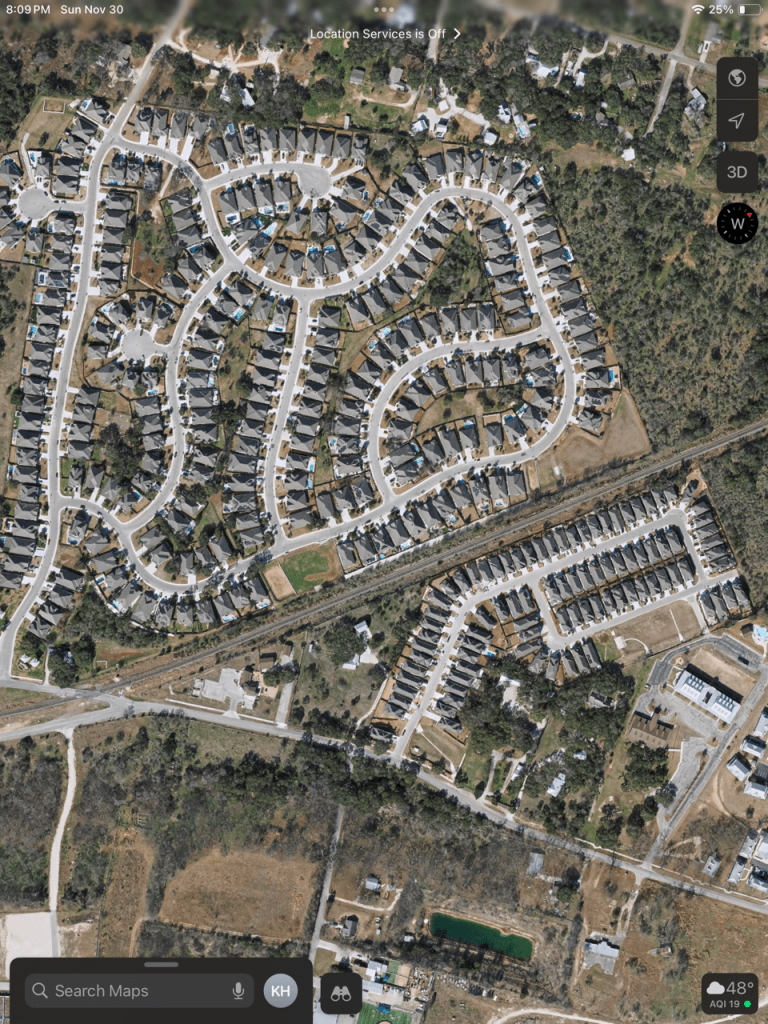
Civilization itself has morphed into something totally uncivil, hideous and expanding entirely out of control.

I, like many other intrepid travelers, thought of the passport merely as the modern equivalent of the old travel trunks stamped fashionably with destinations. We thought of them as a collection of strange signs and symbols we’d forever associate with our new memories of far-off places. They were the paper images of our wanderlust we planned to show one day to the grandkids, not knowing they would be holding a digital scrolling device we’d rarely be able to pry from their clutches.
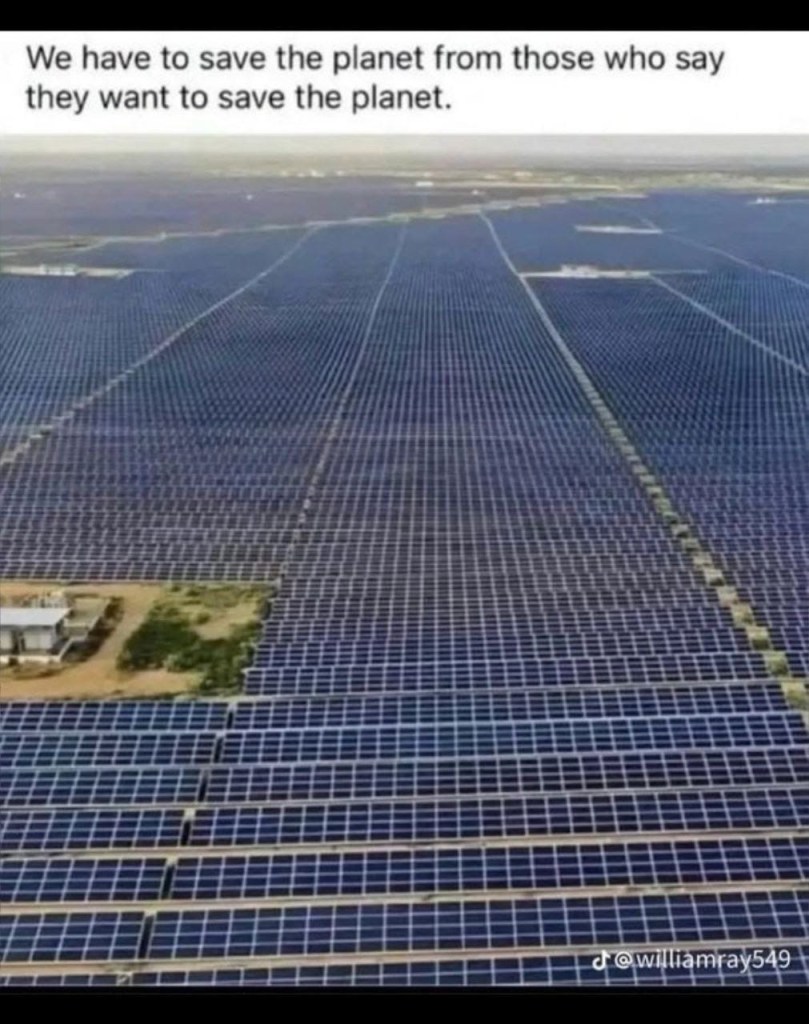
Just a decade ago this was all ranch land

“Once traditional farming systems have been destabilised by the debt-trap of subsidised loans, structural adjustment policies, corporate input regimes, global supply chains, patented seeds and monocultural production, mass migration to cities becomes an inevitability engineered from above. The city thus absorbs the displaced because the countryside has been systematically stripped of opportunities or carved up for infrastructure or real estate schemes.”

What if we’d been given the actual choice, not the strategically invented one, between our current paradigm of progress as a global militarized surveillance state and the ‘stagnation’ where the Eastern Bloc resided for half a century?

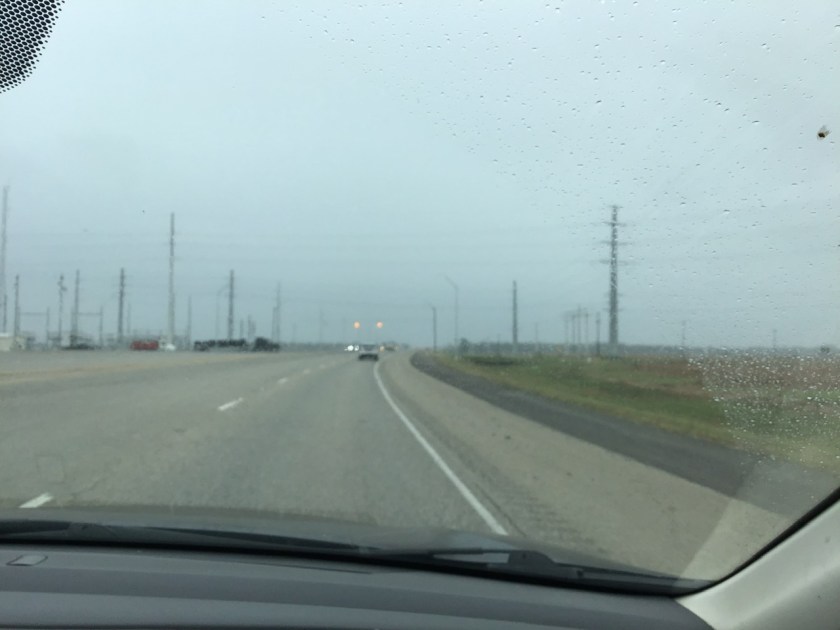
This, or this?
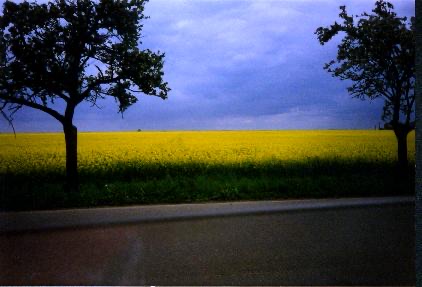
Electric prison bars or progress?

Do folks really think WHEN this whole shitshow goes tits-up there will be government funding for the clean-up and restoration of this once beautiful land?

That I don’t want this EVER, for ANYONE makes me some kind of bitter-clinger communist?
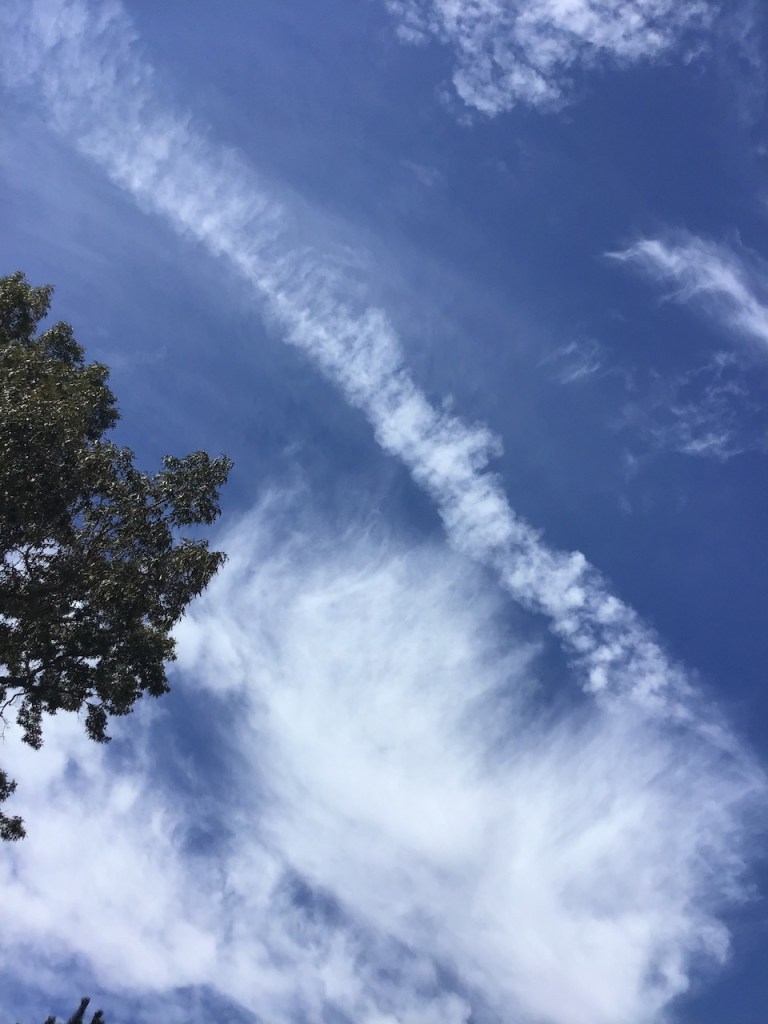
“ALA’s annual State of the Air report found that 156.1 million people—46 percent of the population—now live in counties with failing grades for ozone or particle pollution, nearly 25 million higher than last year. Previously less-affected areas, such as Minneapolis, saw significant spikes in unhealthy air days tied to climate-exacerbated wildfires and particle pollution, such as dust.”

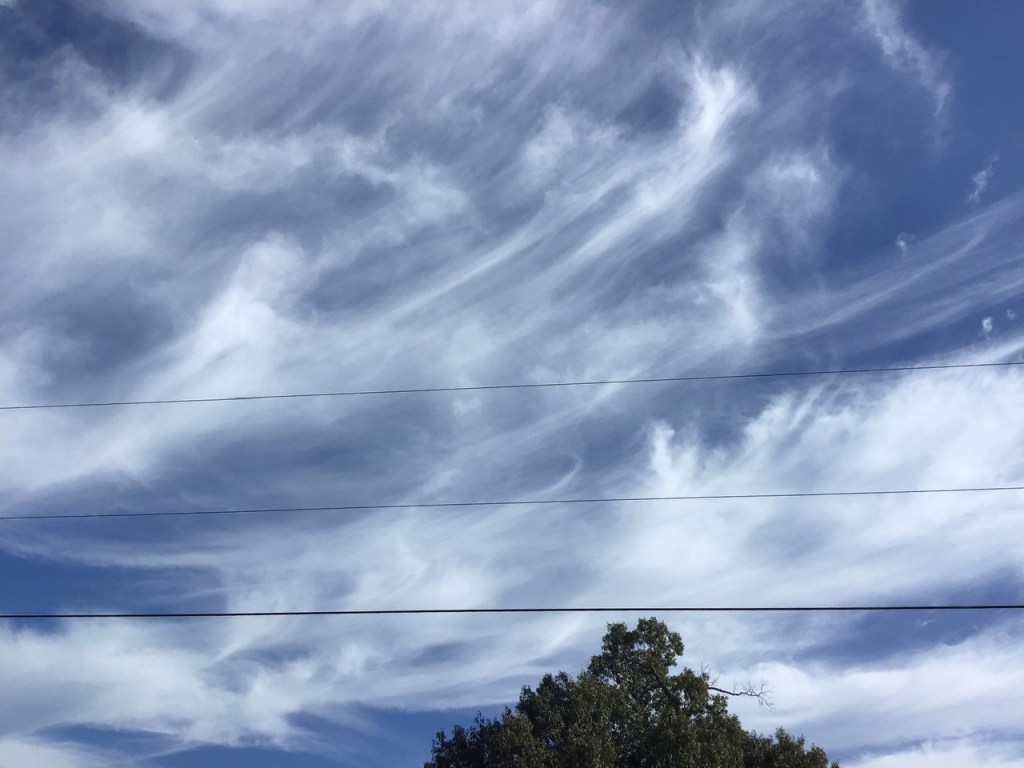
Universities funded by public-private partnerships clandestinely tamper with our atmosphere using euphemistically-named scientific jargon like ‘Plume dispersions’ as if this is not mass poisoning?

A fairy tale of citizen safety in the form of acoustic weapons for
city-wide crisis alerts?

https://newbraunfels.gov/m/newsflash/Home/Detail/3762

A hellscape of ‘progress’ in the form of the most ugly, extractive and intrusive landscapes imaginable?

How did ‘WE’ win in this global game that began long before I was born?

What kind of twisted minds call this progress? We have 70 years of documented atmospheric tampering while officialdom continues in denying its impact, which is now going into overdrive while the voices of the livid citizenry, especially those losing their livliehoods in the rural regions, get squashed. Same as it always was.

“Similarly, Gerard Winstanley, writing in the 17th century, envisioned a society in which land and labour were shared as a common good, not commodities to be exploited. His insistence on communal responsibility and ecological justice underscores the radical, enduring potential of agrarian ethics against the logic of extraction and profit.

In this light, the critique of urban-centric development becomes more than an economic critique. It represents a challenge to the very definition of progress. The rejection of the celebratory narrative of neoliberal modernity is a philosophical insistence that a society cannot be judged by its technological prowess while its ecological foundations crumble and its people are alienated from the sources of life.

The modern city, therefore, becomes a battleground where two visions of civilisation confront one another: the dominant model of corporate-led, centrally managed growth and the fragile but persistent ethic of stewardship, locality and shared responsibility. As made clear in my new open access book, The Agrarian Imagination: Development and the Art of the Impossible (available here), genuine human development cannot be measured by urban skylines or GDP figures but by the survival of relationships between people, land and community that give meaning to life.”

https://figshare.com/articles/book/The_Agrarian_Imagination_Development_and_the_Art_of_the_Impossible/30589238?file=59624783

Beneath the Concrete, the Soil Still Whispers – OffGuardian

Texas Weather Modification Report–1964 – Zero Geoengineering

Groveling for Gratitude

Handy Hubby is a veteran in common parlance, but I’m so glad he doesn’t go around announcing that to strangers like a child desperate for recognition and approval.

We get a discount at Lowe’s, so that’s pretty cool, because we spend loads of money there. It makes perfect sense that corporations reward veterans, because that’s who veterans serve.

Hubby joined the military because he wanted to expand his opportunities, same as many young people today.

Instead of celebrating Armistice Day, we celebrate Forever War.

Retired Lieutenant Colonel (USAF) Bill Astore writes:

“Sadly, as we raise more troops and fight more wars, we seem committed to the opposite. Our military just enjoyed its best recruiting class in years. This “success” is not entirely surprising. It’s no longer that difficult to fill our military’s expanding ranks because many of our young men and women simply have little choice but to enlist, whether for economic opportunity, money for college, or benefits like free health care.”

I served in the Peace Corps, but only one person has ever thanked me for my service, a stranger who didn’t know what the Peace Corps was, but everytime he heard the word “corps” was conditioned to reply with the proper canned reply, “Thank you for your service.”

Everyone knows the Peace Corps is for idealistic, lazy losers, unlike the military, which is for tough, courageous go-getters. Hollywood tells us so.

You want to joing the Peace Corps? What are you some sort of bleeding heart liberal hippy?!

“Since a very young age we are indoctrinated into the idea that wars are the story of “good” guys vs “bad” guys, that we are (of course) on the “good guys team” and the reason that the poor people from our country were (and continue to be) sent to other countries to kill other human beings with technology designed to end sentient life is so that we can “bring them democracy”, “protect our freedoms” and “ensure regional stability”. The truth is nothing even close to that comforting fairy tale.”

The Peace Corps volunteers don’t get included in Veterans Day, which used to be called Armistice Day, to remember the fighting that ENDED.

Once the wars became continuous they had to change the name.

I supported the Peace Corps for over two decades after I returned home, through financial donations, writing articles for their sites and singing their praises whenever I had occassion to do so. I stopped supporting them once I realized they’d turned pro-war.

Hollywood creations and fictional characters like the veteran Jack Reacher are worthy of the fandom of grown adults because that definitely has no resemblance to grown adults worshipping comic book figures like Superman or Robinhood as if they are real people.

“Collectively, we Americans tend to suppress whatever doubts we have about the wisdom of our wars with unequivocal statements of support for our troops. And on days like Veterans Day, we honor those who served, and especially those who paid the ultimate price on the battlefield.

Yet, wouldn’t the best support for our troops be the achievement of the dream of that grizzled vet who cut through a young man’s fog thirty years ago? Shouldn’t we be working to achieve a new age in which the rosters of our local VFWs and Legion posts are no longer renewed with the broken bodies and shattered minds of American combat veterans?”

“Working Towards Peace: Imagine if Veterans Day Became Obselete” Bill Astore, Bracing Views substack.

“There is no honor in tax-payer funded organized murder for profit: War is still a racket” Gavin Mounsey substack

“On November 11th, a day when we have been conditioned to glorify war as “necessary and honorable” let us take an honest look at the true nature of (and profiteers) of Modern Warfare”

Gavin’s Reciprocity

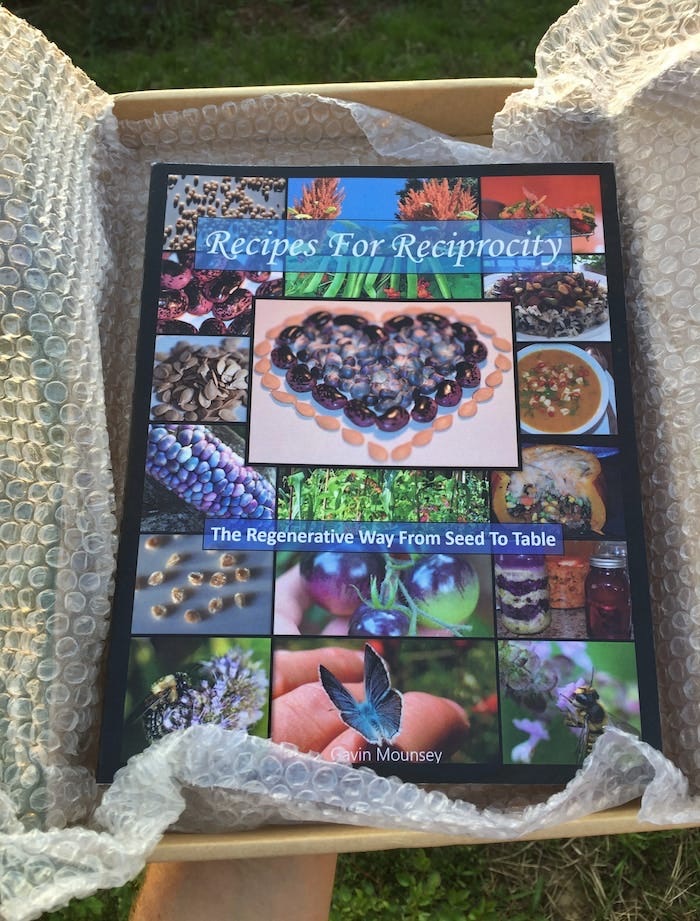
I’ve had a bit of challenge trying to simply label Gavin Mounsey’s book, “Recipes For Reciprocity: The Regnerative Way From Seed to Table” because it’s so much more than a cookbook. I have a great many cookbooks and my favorite type are what we might call ‘narrative cookbooks’ (though there may be an official sub-category name that I don’t know)–these are the kind where there’s a very present narrator telling you stories about the foods, and the places, and the people associated with the recipes and the author’s life. I might be inspired enough to write one of these myself someday.

Gavin’s book is not that, yet it is even more still. Rather than try to say it better myself, and fail, here’s an excellent description from the back cover:
“This book is a magnificent achievement. It can help you learn pracical ways to grow and cook mouthwatering food-as-medicine, and build deeper and stronger community, but it is so much more than that. Gavin has written a love letter to humanity and the living world and a manifesto for workable hope, all with an unflinching honesty about the crises we face. Gavin uses the nuts and bolts skills in the garden and kitchen as a launchpad to reimagine our place in the world, and the result is a solid foundation in the chaos. His hope and love are infectious, and the applied knowledge shared in his book is encyclopedic. I highly recommend it to you.” ~ Jason Padyorac

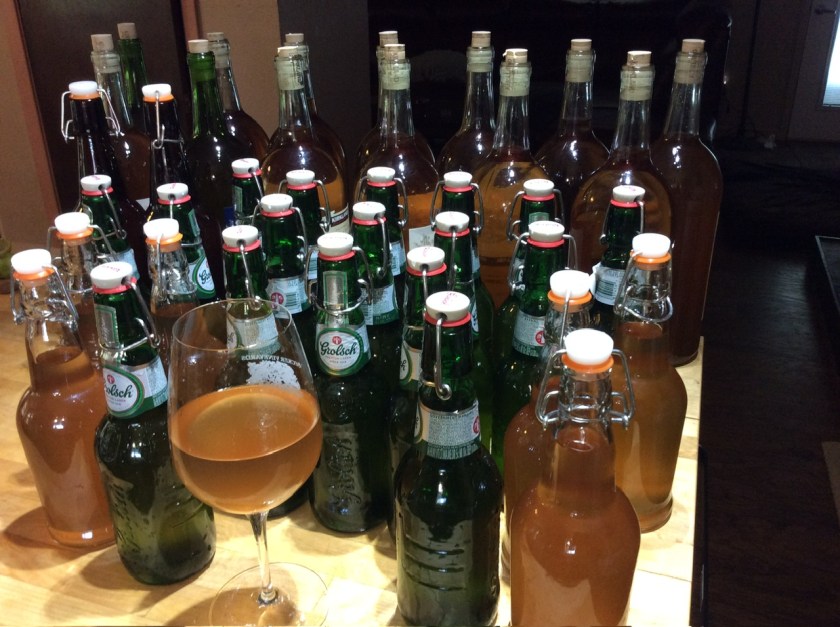
Along with the two books, one I gave to a friend, Gavin sent lots of seeds, some I’m already growing, others I can’t wait to try.

Scarlet Runner Bean in early summer, now dead.

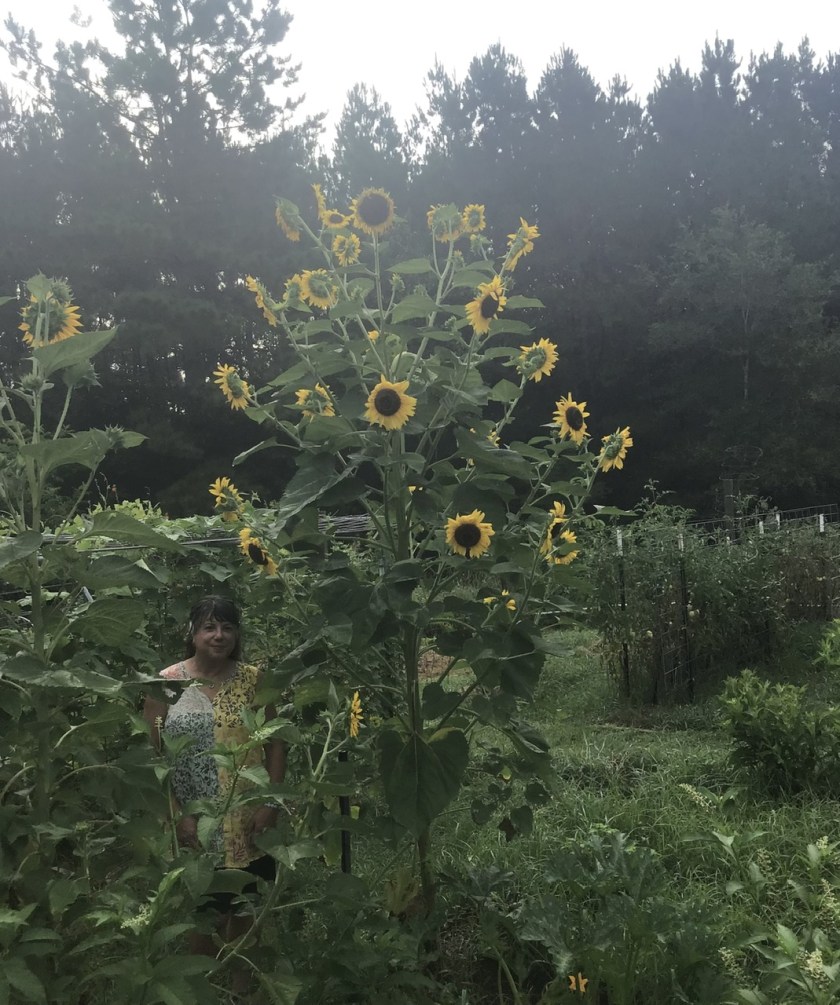
So far I’ve planted the Scarlet Runner Beans and the Black Hopi Sunflowers.

Gavin:

“These beans are among my all time favorites for their versatility in the kitchen and beauty as well as productivity in the garden. They are an amazing companion plant due to the plant’s roots having the ability to associate with rhizobia (nitrogen fixing bacteria) which not only allows this plant to fertilize itself by pulling plant food from the air, it also means this plant can help fertilize its meighboring plants with excess nitrogen. On top of that amazing benefit the scarlet runner bean has beautiful red flowers that attract pollinators such as ruby-throated hummingbirds and bumblebees.”

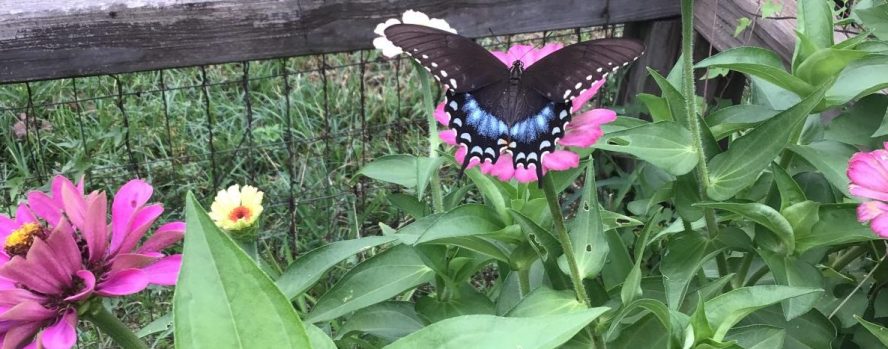
It is amazing to see how many fantastic plants can flourish in such varied climates. Because Gavin is in Canada and I’m in Texas I didn’t expect to find so many parallels in what we plant in our gardens, though certainly the timing and special needs vary quite a bit. The scarlet runner beans I’ve planted in full sun are perishing. But the others I planted which is shaded during the intense mid-day heat are hanging on. They’ve not produced yet, but I’m still hopeful and I like them anyway. I’m sure if there is any production and I can save the seed, it will acclimate to our area. Unfortunately, after a promising spring, the bumblebees and butterflies have been depressingly scarce in the garden lately.

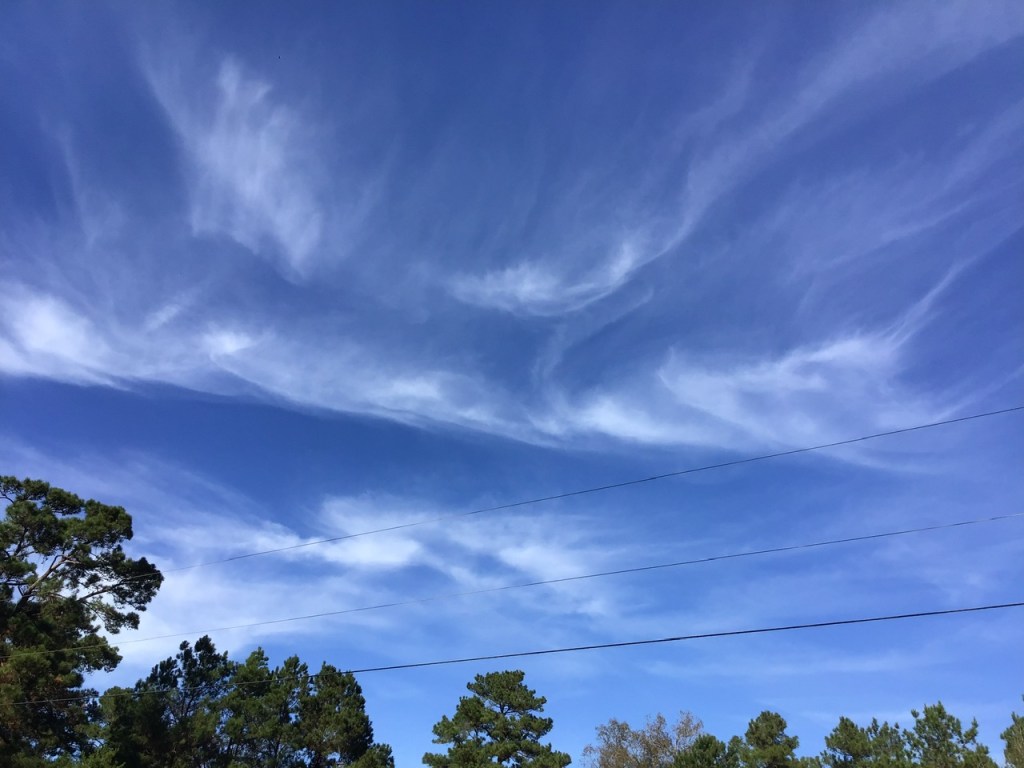
Gorgeous! Ugly pity for the chem-sky.

The Black Hopi sunflower has been the piece de resistance. It’s gorgeous and taller and fuller than any I’ve ever seen. I had several planted in several spots, and most of them got damaged in the high-wind storms we’ve had. But not this magnificent giant!

Gavin’s reciprocity in action is so inspiring, which is why I wanted to spend a couple of posts sharing about his book. Regular readers will probably remember I’ve shared some other of his work here in the past, especially in our Herbal Explorations pages, which come from his Substack newsletter.

In another post I’ll dive into a few of the recipes, but for now I’d like to expand on a few quotes which so align with my own learning and experience growing a garden and cooking seasonally from scratch. It has absolutely been the most rewarding journey of my life, with plenty of hope remaining for more of the same in the future.

From the section: Reciprocity in Action
“Choosing to give our attention to nature is also a form of giving back. Observing and paying attention to the cycles and living systems in nature involves giving our time and our thoughts. When we closely observe nature we inevitably come to perceive countless expressions of beauty through our perceptions of the form, color, sound, scent, textures, tastes and relationships that are all around us. This leads us to caring, feeling gratitude for and feeling compelled to protect the amazing gifts nature shares with us. From the place of gratitude we engage in one of the most meaningful and powerful acts of reciprocity. We open our hearts, we feel content . . . we practice self-restraint, we choose to live more consciously and aware of how our life choices impact the living planet that sustains us and showers us with endless gifts.”

Gavin most certainly has an eye for beauty, his photography is stunning.

(3) The Jubilation Of June – by Gavin Mounsey

https://gavinmounsey.substack.com/p/the-jubilation-of-june-d41

I know how daunting it can seem to dive into a new hobby like gardening, or even cooking nowadays, but there’s so many smaller and easier things that take so little effort or knowledge that might be just the momentum for many to kickstart a healthier life and society.

Just observing. I couldn’t agree more. It really does start that small and simple and while I have read loads of books on gardening and cooking and many adjacent subjects, I’ve learned far more from observing. Taking notes helps too, but considering how bad I am at that, it must not be totally necessary.

The other few very simple things that require no gardening and very little cooking is compost and ferments, both which Gavin discusses in the book.

Why those two, you might be wondering? Because in my experience, composting makes you far more conscious of waste, and fermenting shifts your attention to the weather and seasons. Both of these processes have enriched my life and health and outlook far more than I could’ve ever imagined.

A window sill of herbs would be enough to use up the compost produced by the average small household. Or donate it to a friend who gardens if you have such a black thumb or really no space. And who knows, maybe she’ll reciprocate with a zuccinni or two.

I had no idea what eating seasonally meant. Really. Until I went to the farmer’s markets in France on a high school exchange program, I had zero clue produce even had seasons, and considering how much is grown indoors today, that’s probably become more normalized than ever.

Considering I grew up eating like the vast majority of Americans–fast, frozen, canned, bagged–I know what easy looks like, and this is pretty darn easy. The shift really is more in attitude and attention.

Now I long for cucumber season as I long for tomato season as I long for melon season as I long for radish and lettuce season. It’s become that nuanced and I love it. Sure, there’s some cross-over and we can and ferment to save the bounty. But that limited time window of bounty becomes a season within a season, with all that entails–a change in primary food and focus–all with their unique gifts and challenges.

Surplus requires work, work requires rest and creates reward. 😊

The ebb and flow of surplus and scarcity becomes natural again, each bringing its own unique gifts and challenges.

My influences growing up–that of media, education, environment–worked synergistically as detachment mechanism. Nature was that which we were being systematically detached from, and that trend has only exaccerbated, to the growing dis-ease of ourselves and our environment.

“Within the last century, healthy, natural, organic food has been made more difficult to produce because of the chemical pollution, at first, and genetic pollution, more recently. A handful of companies have spread these toxins across our planet diverting US$ 400 billion of public money to subsidize their high cost chemical commodities to make them artificially ‘cheap’. The costs of this ‘cheap’ food are astronomical in terms of the health of people, the ecological damge it causes and its exploitation of farmers. If the true costs of chemical food were taken into account it would be unaffordable. Insead of subsidizing chemical food and creating epidemics of food-related diseases, public money, used for nourishment and the protection of public health through organic food, would save us billions in health care. Denying people their right to healthy, poison-free food by manipulating laws, policy, science and the use of public money to impose a non-sustainable, unhealthy food is food-dictatorship.”

to be continued . . .

Thanks for reading!

Shitty of San Antonio

Now in my top 3 Shittiest of Shitties Official List, the once unique and charming San Antonio is now the official Theme Park capital of the U.S. I didn’t just make that up either, and apparently, they consider this a good thing.

My top-listed shitty is Bangkok followed by Warsaw, for orientation sake.

San Antonio, like the other two, had such potential at one time. Historically fascinating with magnificent old world architecture buried in a tragic mess of the modern world.

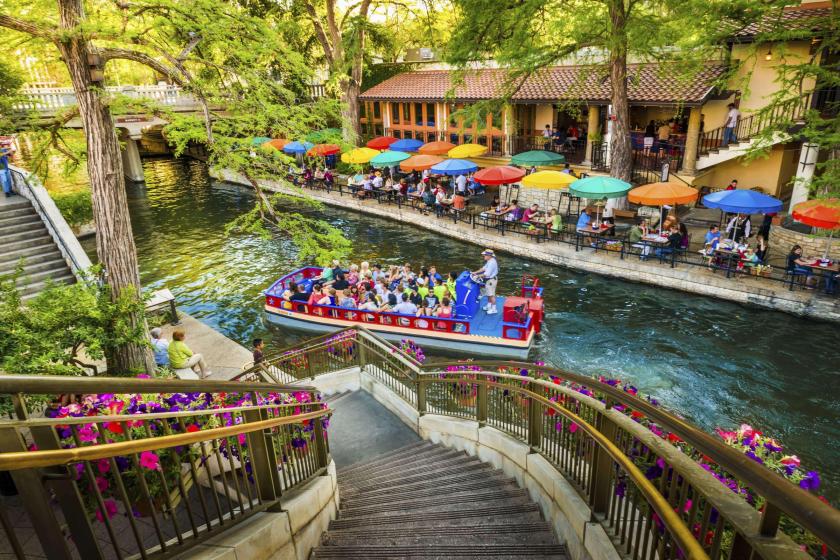
The Riverwalk was desert hot in May and nearly impassable through the crowds. Just five years before, when Hubby and I visited for Christmas holiday lights, it still had some appeal.

Now the city boasts 17 theme parks, one per 27 square miles. This does not include the many other paid attractions, like State Parks, caves and caverns in the surrounding area.

San Antonio‘s theme parks invest in new attractions for 2025

“San Antonio is known as the “Theme Park Capital of Texas” for good reason, with its 663 combined acres of attractions and entertainment parks. And nearly every park is undergoing multimillion-dollar expansions for 2025.”

Surprise, surprise, the shitty is constantly flooding now.

It begs the question: Is a shitty still a shitty without a shitty theme park?

Disneyland, Disney World, Six Flags, Dollywood, Wisconsin Dells, Schlitterbahn, Universal Studios, Sea World, Busch Gardens, Cedar Point, HersheyPark, and on and on it goes.

In the decade since Hillary Clinton made this declaration, already hilariously ironic when she said it, the theme park industry in America has grown 43%.
A Look at a Thrilling Industry: Amusement and Theme Parks : Spotlight on Statistics : U.S. Bureau of Labor Statistics
The average annual pay is $36,000
Prices for food and beverages up 62%

Yet again and again I hear from the ‘pro-development’ right and left alike that in the U.S. we’ve only had development of 5% of our land and resources. I don’t know where this statistic comes from, because those who quote it never provide their source material. I can say I think it’s more shitty nonsense.

But, if it is true, I’ll yell an enthusiastic ‘Thank the heavens!’ Because what we do in the name of development in this country is a travesty to reason and a tragedy to nature.

At least 8 dead in San Antonio after months of rain fell in hours
Months worth of rain on Wednesday night led to multiple water rescues in San Antonio, where at least eight people were killed by floodwaters.
By Jesse Ferrell, AccuWeather meteorologist and senior weather editor
Published Jun 12, 2025 9:09 AM PDT | Updated Jun 13, 2025 12:39 PM PDT
https://www.accuweather.com/en/weather-news/at-least-8-dead-in-san-antonio-after-months-of-rain-fell-in-hours/1783936

Between Shitty & Country

Having become far more accustomed to the surreal ‘nature’ of ‘reality’ in the last decade or so, I was less baffled by the still ever-increasing Suburban Sprawl on my recent roadtrip through the Hill Country of Texas.

Because of course, by now we are all hearing constantly the war drums of the Globalists and their plan to put all ShittyZens into Smart 15-minute Cities™ under Palantir Surveillance Systems™ paid for with our tax dollars and paving the way for digital money cheered on by ‘Freedom Fighters’ where everyone will be eating food manufactured by Pig Pharma, who begrudgingly keeps the ShittyZenry alive through forced drugging deemed voluntary.

Homesteading gets sold as a solution, which it is not, and never was, and even I knew that as a novice 15 years ago, before it was cool. Homesteaders rarely last 5 years, I’m told, like most small businesses. Makes perfect sense to me, because it’s the only work I’ve ever done that gets harder with time instead of easier.

It’s a lot like all the lies being sold to us about everything, everywhere, all the time.

Perhaps the 15-minute city agenda works in some places, but I see nothing of the sort here. The Shitty Sprawl continues, unabated and unabashed, developing the vast parcels of land without the people, in an unstoppable concrete jungle that clearly doesn’t listen to the same news as we are subjected to from the 24-hour Cybernews Today Club.

Residential and commercial alike, vast development continues, and sits empty for tens of miles outside every major city in Texas: Dallas, Austin, San Antonio, Houston. The foreign populations increase, but not nearly at the rate the buildings to house and employ them get constructed.

And out, and out, and out they go, encroaching far worse than infesting cockroaches. Blocking the views, crushing the landscape, sculpting and paving and polluting any and every open space where someone can maybe hope to make another dollar.

11 new Commercial Mega-projects for the Austin market!https://aquilacommercial.com/learning-center/megaprojects-planned-for-austin/

“The project is set to deliver 1,200,000 square feet of office space, 140,000 square feet of retail space, 1,700 multifamily units, and 200 hotel rooms. The development will also create 14 acres of green space. ”

Mind you, there are already huge empty building ALL over the shitty.

Plus,

(A whopping 14 acres of green space! 😂)

I like when I hear rural (and other wise) folks refer to the cities as ‘shitties’ because I think it fits. Let’s call a spade a spade. What I saw on my roadtrip was horrendous and makes me thankful for the wee refuge we have created here, for now. But the Shitties aren’t the real problem here, in fact. We are being swallowed up, everywhere, by the relentless Shitty Sprawl.

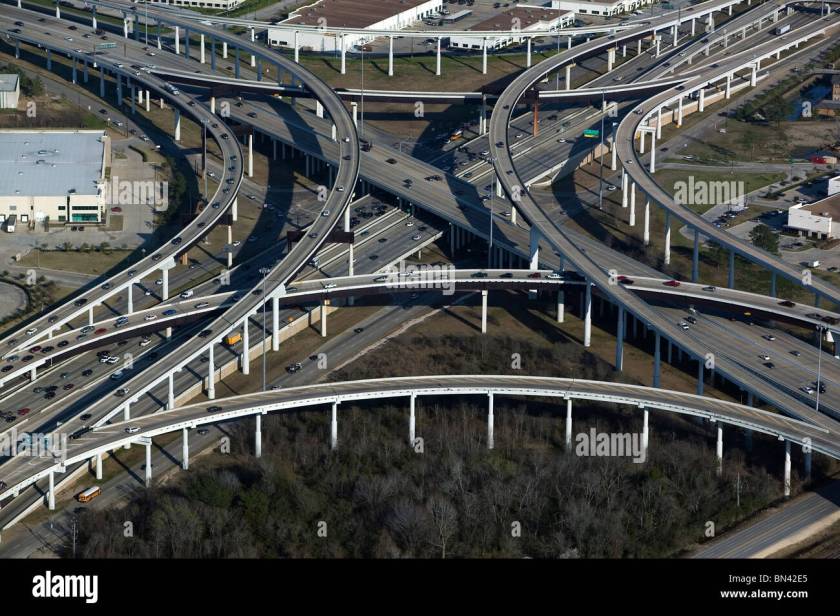
Amazon and Walmart will be offering drone delivery service, so perhaps that will alleviate some of the choking traffic that stagnates around every Shitty, all day long. Those drones must be very adept at navigating through the expanse of electrical towers and fat mess of wires that crisscross every skyline and create a hideous hellscape of prison-like bars. So much for the vast open horizons of our fabled cowboy days.

In Houston, veterans and cripples beg at every underpass and intersection, weaving themselves like Frogger players through 5-lanes of traffic. San Antonio has been ruined by tourism and is now, in just the last 5 years since I was last there, a crowded, filthy slum pretending to be full of family fun. Austin is just more of the same which started well over a decade ago, and continues its relentless expansive march into the drought-stricken Hill Country, paying no heed whatsoever to the limits of water or other pesky human needs. Technology!

Yes, technology is both the Great Driver and the Great Savior. As well as the Great Disrupter and the Great Connector.

While the water gets diverted into Data Centers, swimming pools and water sports for the foreign tech teams, tourist traps sprout up like, well like tourists traps always do.

Mystery Tours and Great Escapes (TM) and Wild West Simulations based on previous historical simulations. Hotels that require Smart phones to check-in and coffee shops that sell fancy foamy cocktails, but don’t take cash.

Such is the American Dream I’ll be expanding upon in the next posts, based on my recent, rare roadtrip. There will be highlights among these many Shitty Horrors, I hope they will be enough to create some kind of basic balance, as temporary as I expect that will be in the grand scheme of things.

The Pie in the Sky Tech dreams are in fact nightmares for a great many of us. The kind of projects ‘our betters’ have planned for the world are little more than anti-human miseries sold as ‘fun’ and ‘sustainable’ while they are in fact conning the populations of the world to build playgrounds for the uber-wealthy on the backs of the common man: THE story as old as time.

Will Austin become the next Neom?

city of neom saudi, future home of the 2029 Asian Olympic Winter Games
https://en.wikipedia.org/wiki/Neom
Yes, there is the usual rumblings of faux climate concerns.
“Amidst increasing global-warming concerns, the project raised multiple issues ranging from the expected high temperatures in the desert land, the energy impact and detour of local water resources to the construction of artificial ski slopes from scratch.”

Our Texas mega-Shitties equally demonstrate ZERO authentic concern over their continued expansion.

“The new construction home market in Austin, Texas, remains vibrant, with homebuilders offering attractive incentives like rate buy-downs and closing cost contributions. Demand is steady, as Austin continues to attract buyers drawn to its growing tech scene, great schools, and high quality of life . . .”

In Shitty-speak, a ‘high quality of life’ is apparently defined by constant drought, non-stop shitty-wide traffic and enough beggars to make one feel rich even while living in a mini-studio apartment above a freeway.

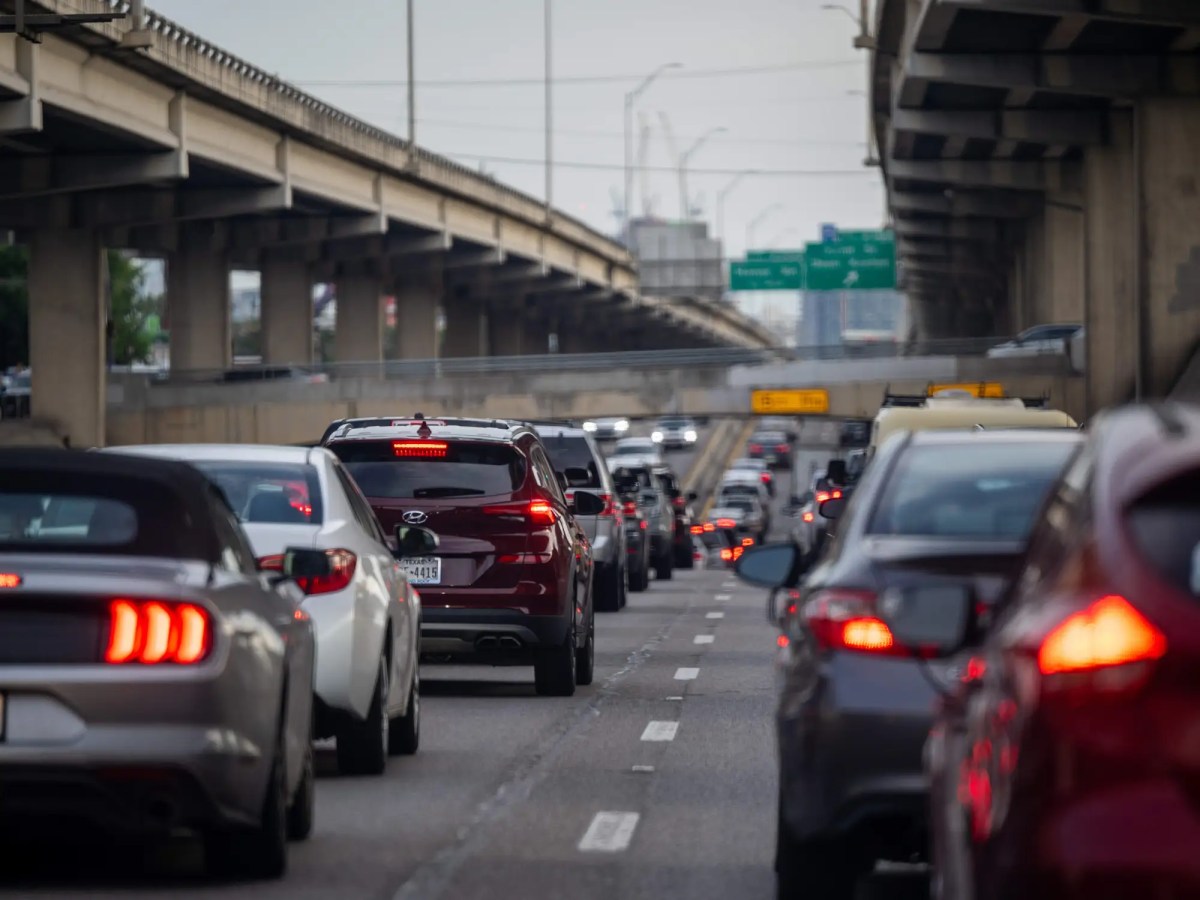
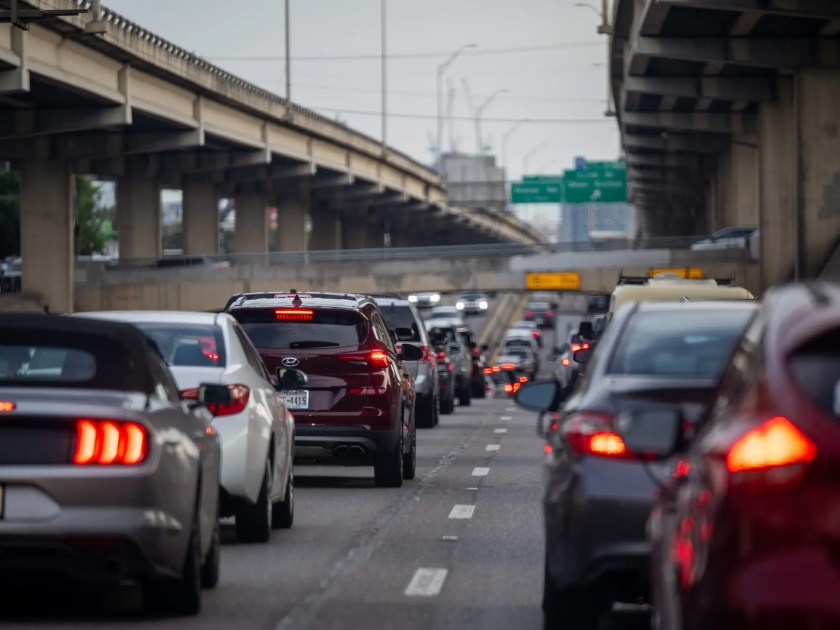
Pay no mind whatsoever to Austin’s infamous traffic. It’s main corridor, dubed ‘A Freeway Without a Future’.

I-35 in Austin is one of nine freeways where the infrastructure is “nearing the end of its functional life.” Photo courtesy of Getty Images
Apparently this was a problem inherent in the 1928 Master Plan of Austin’s infrastructure that is now visible to ALL: The Master Plan was in fact, rascist. So that explains everything.

The Master Plan https://austin.culturemap.com/news/city-life/austin-i35-freeways-without-futures/was rascist, of course!

Perhaps the future plan will mirror a devotedly Non-Racist plan, like that of Neom, Saudi Arabia, where everyone has equal opportunity to be a ShittyZen, provided they don’t mind being surveilled like a prisoner.

From Wiki:
“At one company meeting, Nasr said on record, “I drive everybody like a slave, when they drop down dead, I celebrate. That’s how I do my projects.”[108] He also threatened to replace employees stuck in other countries during the COVID-19 pandemic lockdown in 2020, which included the former director of branding and marketing.

Surveillance
Designers of The Line announced plans to use data as a currency to manage and provide facilities such as power, waste, water, healthcare, transport and security. It was said that data would also be collected from the smartphones of the residents, their homes, facial recognition cameras and multiple other sensors. According to Joseph Bradley, the chief executive of Neom Tech & Digital Co., the data sweep would help developers feed the collected information to the city for further predicting and customizing every user’s needs.
However, Saudi Arabia’s poor human-rights record and use of espionage and surveillance technology for spying on its citizens emerged as a roadblock, according to digital rights experts. Vincent Mosco, a researcher into the social effects of technology, stated that “the surveillance concerns are justified” while further adding that “it is, in effect, a surveillance city.” The Saudi Ministry of Communications and Information Technology did not respond to digital rights experts and researchers’ requests for comments.

Other criticisms
The project has been critiqued as a “laboratory of false solutions” inasmuch as carbon capture and storage (CCS), green hydrogen, and carbon-offsetting are self-serving panaeceas backed by the fossil fuel industry which do not work at scale. Furthermore Salman’s vision for the city includes such fanciful technologies as flying cars, robot maids, dinosaur robots, and even a giant artificial moon.”

Even a giant artificial moon?! Wow! Who needs water anyway, fly me to the moon! 🤪

Assessing Value

Back to this unpleasant subject again. It’s been a very long loop; I haven’t considered it much since first attempting to barter goods from the wee homestead.

It’s something we really do take for granted in our modern economy, whether one takes that as an inherent good or evil.

The good part is that it’s comfortable and I prefer it, on the surface. I hate bartering. I SO suck at it. I suck at it for reasons that are so deeply-seated (seeded?) that no logic can ever possibly be applied.

On travels to some countries barter was the norm and I was told to keep practicing as I’d get better at it. Some seem to enjoy it. These sorts always baffled me. They say, “Treat it like a game!” But that is really stupid, isn’t it, because I did not go out shopping in order to play a game. I already don’t like shopping much, to think I’d like it more by making it game-like is to make it ever closer to hellish.

So while it may not sound like it, this is the good side of money. It took me a long time to learn that. Not until I had to consider such exchanges as, which was of better or equal value, the handcrafted Top bar beehive, or the wormy, bossy, but still a good milker, Summer, a 7-year old goat?

Money, in partnership with “the Market”, make such exchanges far more simple. Since none of us has a crystal ball, and I have no idea how long Summer will live and there are no guarantees, and my friend has no idea if she’ll enjoy beekeeping, or be able to keep bees alive in our chemskies and YoYo climate, our exchange is made more simple by imagining what would be the ‘market value’ of each of our offerings.

The dark side of money it seems to me relates quite easily to the dark side of most things—like religion, or science, or even education—it provides, by its very nature, an endless potential for ‘middlemen’. It becomes a profession, then a vast sea of professions, then an institution, then an institution ‘too big to fail’.

It’s convenient and comfortable, no doubt about it. It’s easy enough for a child to use, but complex enough to build empires upon. Try to imagine living without it.

Do we really consider how we, as individuals, would place value upon goods and services anymore?

What about once money is replaced with tokens. It’s pretty much the same thing already, right? Tokens as a medium of value exchange—your massage is worth 2 dozen yard eggs. Right?

Well, the market value of your massage today is 20 tokens, but the value of my eggs is 10 tokens, today, and 15 tokens last week, and is projected to be 25 tokens tomorrow. That’s the real problem with the market, right? For you and I, as individuals deciding value between us, the eggs and massage exchange didn’t fluctuate vastly over a matter of days, or even weeks. It’s pretty steady, really. You use 2 dozen eggs per week, I like 1 massage per week, stable value exchange.

But I’ll bet you 5 economists in the room with us would tell us 50 ways it’s not really a stable value exchange. And, why be stable at all if there might be a profit to make? Then a dozen lawyers will tell us why those economists are right. And a nation full of universities will continue to produce a fat muffin top of middlemen to stuff between every simple interpersonal transaction in every tiny hamlet around the world.

I’m bothering to restate the obvious at this moment because I’m trying to re-assess the value of technology in my life. It started with the recurring headaches of social media many years ago, then moved to Smart phones, and lately it’s WordPress.

Then a cyber-friend shared a dream, which caused this spark of inquiry.

“Imagine if we could create an Agrarian world again, using technology as a tool to help us,  but not control or surveil us.” 

Can we make a more agrarian life through technology? Which I understand as, can technology help us to get back to basics? And by basics we mean an understanding of nature, an appreciation of its organic processes, a “re-enchantment” as I’ve heard it lovingly expressed, with the natural world. Working with our hands again, I presume, creating items of value to exchange with one another. A slower life perhaps, where we have the great luxury of time to enjoy our lives and our nature world to a greater degree than afforded to most in the modern world.

A ‘re-enchantment’ with nature, I like the sound of that.

An ‘agora’ that’s not corrupted by fiat, usury, taxes, violence and coercion, perhaps?

Technology in our private life here on the wee homestead has benefitted us in a few crucial ways—helping us to learn new skills has been the most significant. But keeping us from feeling terribly remote and unconnected and uninformed has also been very important. I’ve made a few good friends thanks to the internet and I’m very grateful for that. Feelings of isolation and loneliness can be significant spiritual hurdles for some of us living rural for the first time.

And I have seen promising shifts over the years. Homesteading is clearly a bonafide cultural movement at this time, I think primarily thanks to technology, as oxymoronic as that sounds. Herbalism has become more appealing as Pig Pharma breathes heavier down our necks. Pockets of interest and learning are all over the cyber world, every craft, trade or skill imaginable is available somewhere with a few clicks, I’m sure.

But I have seen and heard some really concerning trends lately, which makes me realize that the time to be re-assessing the value of the tech in our lives is reaching a crescendo.

For example, the young entrepreneurial types who are coming in to fill the needs of the rural communities with essentials like raw milk, homegrown veggies at the farmer’s market, small service businesses and the like, well they aren’t like us in some really fundamental ways.

They trust The Science, for the most part, evident in their willingness to vaccinate, medicate, use the latest supplements and vitamins, and not question any of it. They also love the tech and fully embrace the insane trifecta of the Global Grid: Surveillance cameras, Smart phones and digital payment systems.

How is that value assessed? Who is benefitting more?

My guess would be, more often than not, the middlemen. Like any pyramid scheme a few must be making good for anyone else to follow. For a while.

Seems to me these young entrepreneurs are setting themselves up for certain failure. I met one of these ambitious young women last week on my quest for raw milk, now that my goats are mostly gone. I really miss making cheese. The price of raw milk, not even organic, has gone through the roof as demand has perked up—$11/gallon around here. It’s too much for us to afford.

What did I learn from this experience? Her surveillance cameras everywhere tell me she doesn’t trust her customers or neighbors. Her vaccination schedule tells me she does not do her due diligence in caring for her animals. Her price and her preferred payment by QR code tells me she prefers dealing with middlemen over direct transactions and getting to know her clientele.

I will not be doing any business with her, that’s for sure.

So, while I still have a lot to learn about assessing value, there is a point to this rather rambling post: The goat is dead, no bees have yet to make that hive a home—but no one else profited or lost from that private exchange—and our relationship stayed in tact to trade another day despite these apparent failures. I think nations have gone to war for less.

And that’s something so far social media, Smart phones, WordPress, and indeed money, all fail to assess a proper value.

I’d love to hear any thoughts or ramblings about my cyber-friend’s dream, what do y’all think, is it possible? Would you want such a world?

“Imagine if we could create an Agrarian world again, using technology as a tool to help us,  but not control or surveil us.” 

How long before this field gets paved over for yet another Vape Shop, or Dollar Store, or Walgreens? Is it considered an improvement if it’s a Smart Farm run from Brussels by robots?

Art As Transformative?

What do you think? Have you had a personal experience of transformation through art?

I wrote my Master’s thesis on social engineering in 90s, before I had any idea what social engineering was. I didn’t know at the time that’s what I was writing about. The thesis was about women writers of francophone West Africa using their novels as a means to catalyze social change. Liberation through literature, I called it, where practices like polygamy, female genital mutilation, and lack of educational opportunities were voiced in fictional form by the otherwise voiceless.

Certainly it is not at all uncommon for writers to use their works toward such ends. And yet, something about the timing of my thesis, or perhaps the content, resonated less with others than I expected.

I found that instead ‘Art for art’s sake’ had become the more popular mode of the times and works that were considered to be ‘too pedantic’ (which seemed to mean any fictional work with a purpose other than sheer entertainment) were heavily criticized.

I tried for years to pitch similar ideas for publishing to various entities and could find no interest and quite a lot of criticism. Folks wanted to be entertained, not taught. If they had to learn something, they wanted it tightly obscured in a bubble of excitement, like a Dan Brown novel.

But times seem to have changed again and authors and artists with a serious message, with deep societal concerns, seem to be able to find, or are perhaps themselves creating, a growing audience hungry for their transformational content.

It reminds me of some of the criticisms I heard in the 90s—art is not meant to transform or educate, but rather has the sole purpose to simply express the subjective worldview of the creator. Any feelings of universality in a work of art is essentially meaningless coincidence. Art should not be held in the clutches of meaning-making. Beauty is in the eye of the beholder. Art cannot be personally or socially transformative, except to the artist himself, that is an establishment myth of conformity.

I even had an artist friend, with an art degree, who assisted at a gallery, try to insist to me that the glass flask full of the artist’s excrement (I’m not joking) was to be considered art just as much as any old famous painting.

So I’m very pleased to see this more recent ‘re-formation’ to art with purpose. But, I wonder, can it actually be transformative? Or were all those critical voices in the 90s correct?

What do y’all think?

Here’s a couple of amazing pieces which might have such power. Do you know of others to share? If so, please do link below!

In Shadow: A Modern Odyssey

Kingdom

These works are both by: Lubomir Arsov and you can find an excellent interview with him here:

The Myth of ‘Market-Driven’

We were taught in Economics 101 that we live in a market-based economy in the USA. They sometimes threw around the word ‘free market’ as well.

We were also taught it was our prosperity that allowed for so many choices in our free country, which itself was thanks to our progress.

Wonderful words that sound magical together: Progress and Prosperity

And this could almost make sense, it’s not exactly a lie, so it could almost be true.*. Except, we were taught another thing at the same time: We were taught that it is the customers who drive the market.

Now the lie becomes recognizable, because we can easily point to thousands of examples as to how it is not the case that the consumer drives the market.

Here are some of my preferred examples. Feel free to add more in the comments.

The Illusion of Choice

It’s not just thousands of breakfast cereals made up of the same toxic ingredients, but most of the food products available to the average consumer these days.

How about the good ole landline? Soon to be gone the way of the pay phone.
We are told that folks just don’t want landlines anymore and so they will begin to discontinue them. California recently had a public backlash, but it won’t matter in the long run. Landlines will be discontinued for the plebs. That is those who haven’t already happily switched to a Smart surveillance system they carry everywhere.

In some cases, probably many, this will happen by forcing (coercing) customers into canceling their service. This is just ‘anecdotal evidence’ as they always say, whereas they have ‘the data’ which says the opposite.

It’s not that landline service has become increasingly poor over the last decade while the costs keep rising, as has happened to us and our neighbors. No, it’s market-driven scientific data that claims folks don’t want them anymore.

Lightbulbs. Low-flush toilets and low-flow shower heads. Wood-burning appliance restrictions and prohibitions. Gas can safety features. Smart washing machines. Electric cars. Sustainable Everything driving up energy costs. “Sin” taxes.

Your market-driven choice: Smart City or poverty

I have met very few folks who wanted any of these market-driven signs of our ever-improved Progress and Prosperity. But again, anecdotal.

Because they are ALL for the Environment, or our own good, of course. And the data says we want it.

Everything I want to do is illegal, like:

Sell raw milk Camembert at the Farmer’s Market (or anywhere else), distill our own whiskey, grow hemp, sell pork chops to our neighbors, refuse to pay taxes that fund wars and bail-out bankers or funds the research that floods our fields.

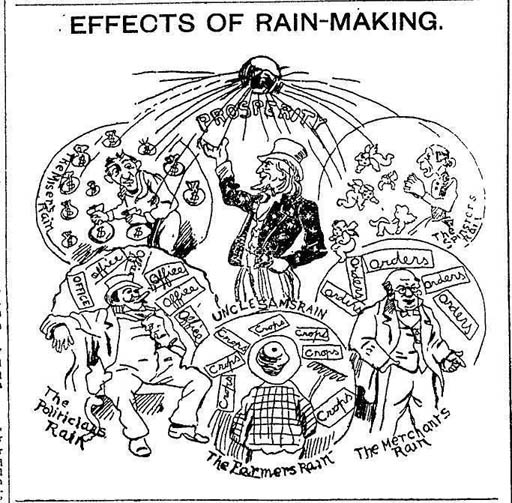
Behold the market-driven forces of weather modification!

But we are driven into Progress on the Big Bus of Bullshit called Prosperity (undefined term) by unseen forces (mostly unelected and completely unaccountable). Like magic!

Which brings me to my most obvious market-driven fantasy.

More like: Encyclopedia of Useless Myths


Out-of-print books

This one really aggravates me!  There are plenty of glaring examples of the deliberate dumbing down of our media and our educational content. Here’s just one perfect example because it’s fresh on my mind from just today.

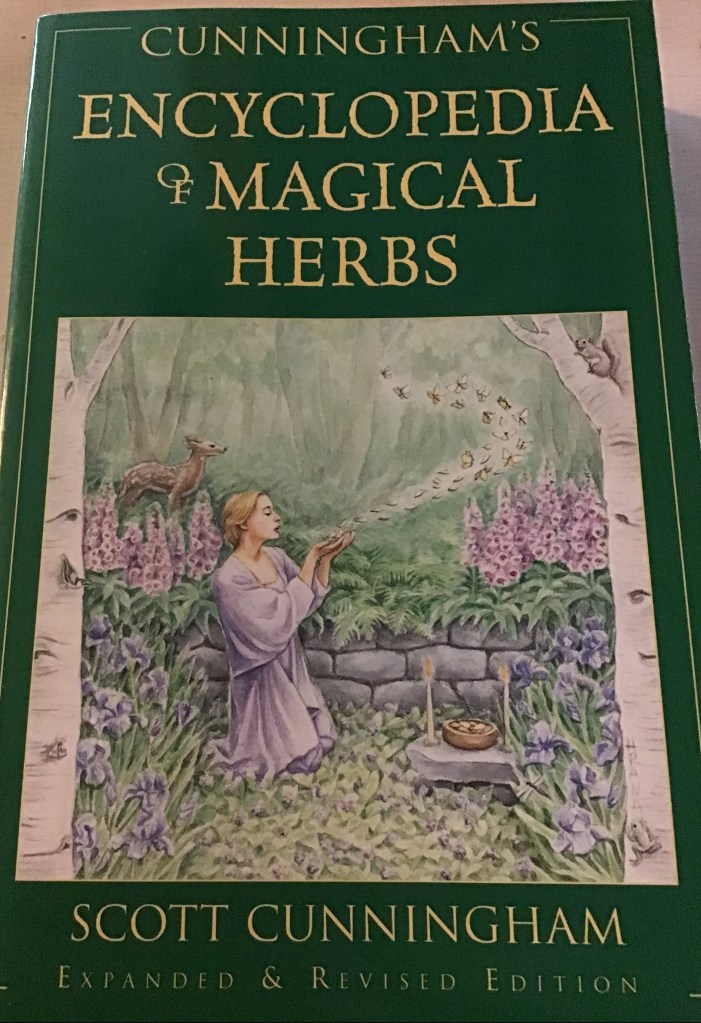
This book of utter herbal nonsense which I should probably burn on principle, is on its 22nd printing—Cunningham’s Encyclopedia of Magical Herbs.

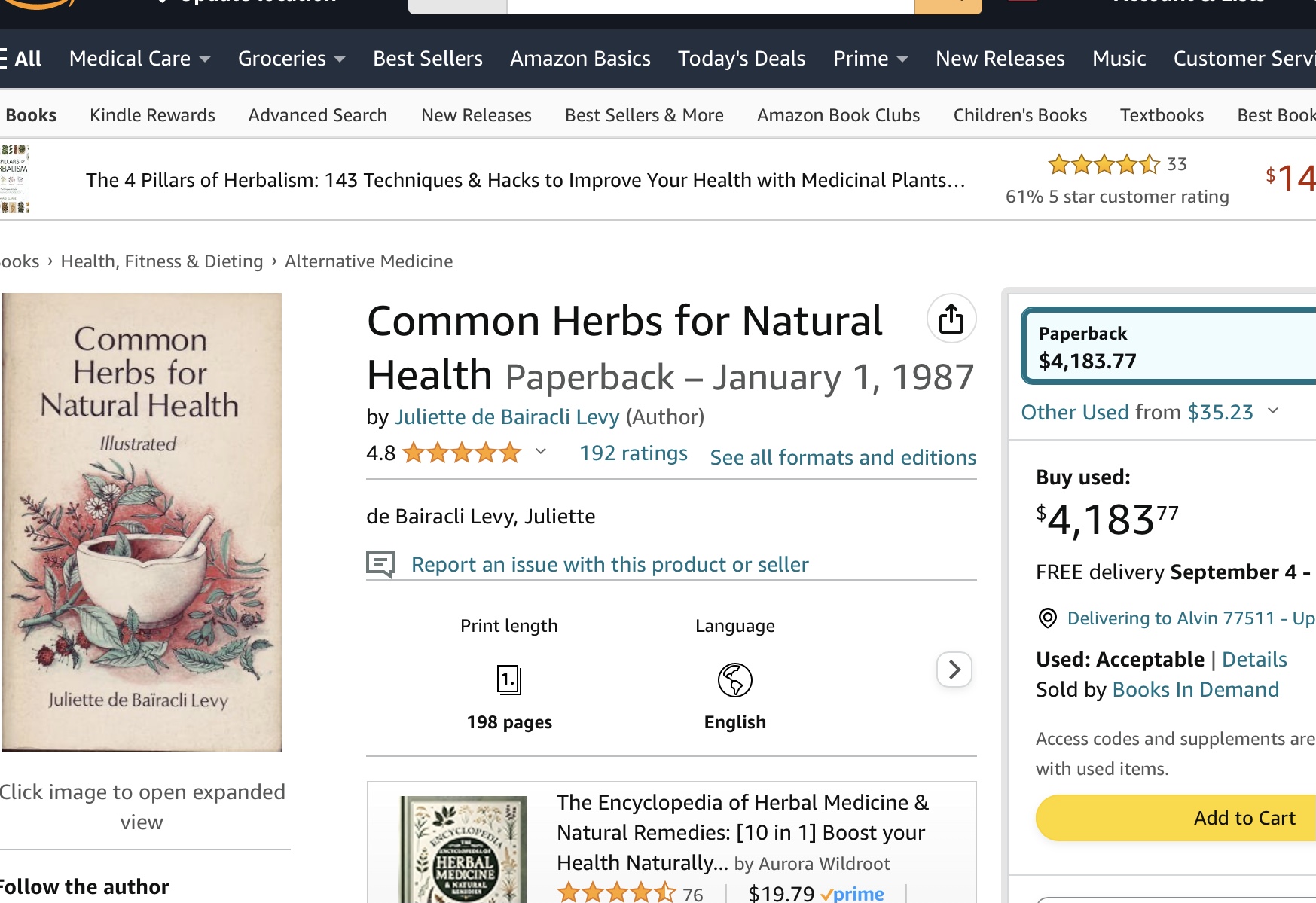
While Juliette de Bairacli Levy’s books of serious research and immense practical value are mostly out of print, or hard to find, in poor condition and/or expensive, or only available to read online (which I truly dislike, but there are no good public libraries around anymore and books are ridiculously over-priced and of course, I want to do my part for the trees. 😂)

A collector’s copy worth thousands proves there’s no interest whatsoever from the free market.

Why learn the practical magic of the actual benefits and remedies of the common Comfrey when it is demonized by Big Pharma and cajoled and belittled into its ‘fairy magic’ properties thanks to ‘trendy’ books dominating the marketplace, repeating drivel like:

Worn or carried, Comfrey protects and ensures safety during travel. Also, tuck some into your suitcases so that they aren’t lost or stolen.”

Ah brilliant, so helpful! Our ancestors must’ve been loading up those trunks and buggies with their comfrey leaves. Is Cunningham’s book really worthy of 22 continuous reprints?

Or do folks buy this book for the same reason I did, because they were so desperate to learn practical wisdom about how our ancestors used herbs that they foolishly believed such a popular book must have something of value besides the pretty cover. Fool me once . . .

And in the meantime, arrest that old Amish man who fraudulently claimed his comfrey salve cures skin cancer (surely killing or maiming millions).

Samuel Girod Sentenced To 6 Years In Prison – Amish America

*Market-driven I’ve come to realize is a kind of Newspeak, because it has a double-meaning, similar to “stakeholder capitalism”—the market is not meant as in the agora, the market-place, you and I, but as in the stock market.

PseudoCaring

Soon the mainstream disease care system will be employing robots and AI-generated advice dispensers as nurses and surgeons. It’s happening already.

Meet Grace, the robot nurse that COVID created

Some are shocked and appalled by this, as they should be, according to me. Others think it will be a fantastic improvement to human life, or a great way to make more fiat, or a solution to the burden on the caring professionals, or they love tech for tech’s sake, or whatever.

Those of us who love history and dwell constantly on the question ‘how has it come to this’ were well aware of this potential because we study the trajectory of modern life. I could begin with the first critics centuries ago, but for brevity sake, I’ll start instead with my own life, the only history available to me to know thoroughly enough.

Working mother, divorced parents, step parents, then step siblings, professional daycares, neighborhood babysitters, after school programs, junk food, convenience food, lots of TV. Family history of: diabetes, heart disease, obesity, cancer, vision problems, depression, eczema, alcoholism, Parkinson’s, and, you get the picture.

And I would not say my family life was bad. It was the typical American suburban life of a great many growing up in the 70s and 80s. Neither particularly good, nor bad, just normal. Normal, as in well-normalized.

Like most families my parents would joke about voting for the ‘lesser of two evils’. They probably learned that from their parents. My mom went to community college and got her degree once we were gone, in sociology. She worked full-time all her adult life and didn’t regret it. My dad remained ‘upwardly mobile’ as his Protestant father taught him to be.

In fact, we have retired before him, and he has just had his first heart attack.

They are both still with us, but they do not read this blog, so I could say whatever I wanted. 😏. But, that’s not the point of this particular post.

Let’s leave it at this—in hindsight, my unique perception of growing up this way is, in a nutshell—there was not a lot of parenting happening. The results of this having widespread and devastating effects.

It is from these original seeds of pseudocare that have been not only consistently irrigated in our own territories, but have been dispersed throughout the world these last five-plus decades which has ensured the trajectory to the ridiculous place where we now find ourselves: Drowning in pseudocare so deeply we can scarcely recognize what real care looks like anymore.

Another quick peak at the fruits those seeds have produced.

Yet even facing all of this, I’m still optimistic, as I have been all my life. Even at the worst of times, even during a few prolonged worst of times, I must’ve still learned something vital from my half-assed upbringing and collapsing culture.

So, here it is, in another nutshell:

Believe in yourself, believe it can change, but don’t practice in sidestepping the hard stuff. And the hardest of the hard stuff is care, real care—for yourself, for others, for the future—that is why we are here. How you go about that is your personal journey and your only real duty to discover and live. That is all there is to do in a life well-lived.

Which is why I want to once again quote an obvious example of someone doing exactly that, Gavin Mounsey, who is rocking the real care like a hurricane these days! Wait . . . What?? Ok, terrible simile aside . . .

I believe he knows what needs to happen next and is becoming the living manifestation of that in his own life first, and passing it around. Leading by example, it’s the only way. It’s the same cardinal rule as storytelling—Show, don’t tell.

From Gavin’s book, Recipes for Recipocity

Here are few select quotes from his recent interview with the witty Russian correspondent and potential future Russian-American homesteader, Edward Slavsquat: The Revolution Will Involve Fermented Cabbage

“I want to give my energy to improving and increasing the resilience of my local community, not your hyper centralized one size fits all infrastructure. 

“Freedom is not a consolatory prize that can be given to us to reward our obedience and capitulation to a system of violent coercion. It is not something that can be granted or provided to you by some government that wrote some thing on a piece of paper. Freedom is your birthright, and you either live it and embody it, or you allow yourself to be put in a mental cage by statists and other abusive institutions or individuals. My ancestors bloodlines are traced back to a people described in today’s terms as The Gaels. “Saoirse” is Irish Gaelic word for “Freedom”. Saoirse is an ancient concept that comes from the original Brehon laws of the Druidic (and eventually Celtic) world before the time of Christ. In the times when that word was created, my ancient ancestors lived without a centralized state, without prisons and without police.

Saoirse means many things to different people. For some it means freedom to think, express and freedom to learn, for others it’s the freedom of imagination and the freedom of the spirit. And for some it also means freedom to set up parallel societies.

“This is one of the reasons that I included glimpses into two historical cultural cross sections of ancient cultures that existed without a centralized state and police/prison system in my essay as I feel that we can glean wisdom from stateless societies that existed for centuries to millennia in how to design more ethical, equitable, honest, Regenerative and practical ways to organize community, encourage amicable/respectful behaviour in humans and collaborate to leave this world a little bit more free and beautiful than it was when we got here after we are gone.

“With all that being said, I want to emphasize that I think that placing any culture, group of people or individual on some pedestal as pure is unhealthy. I feel we should be vigilant to make sure we are not romanticizing their past nor romanticizing the potential of their worldviews to provide solutions to the present challenges we face.

“The path to become connected to place with a reciprocal relationship, reverence and humility is the path to embrace indigeneity ourselves.

“It is a great starting point to create pockets of decentralized resistance to oligarchic / statist tyranny as growing your own medicine and veggies may appear harmless, but in a parasitic global plutocracy it represents a decisive action that severs the tentacles of tyranny in a critically important aspect of our lives (how we access food and medicine). Thus,  it is a radical and revolutionary act that appears benign to the hubristic philanthropaths and demociders, serving as a sort of covert sedition in a world governed by parasites that want us dependent, gardening to grow or own food and medicine is like a hammer wrapped in velvet that knee caps big pharma’s plans to poison us slowly through dependence on their system for health care and also strikes the spine of the digital gulag system, breaking its back so it can no longer have any strength to influence our lives through controlling our access to food/medicine.

A better essay about the importance of self-reliance and health as the ideal antidote to modern societal tyranny I could not have written! And he has a YT channel. 😁

He was also kind enough to try to address our biggest garden nuisance within the scope of his permaculture lens. He offered many potential solutions, and bless his heart for the effort. 

But I’ll just repeat my personal favorite: hot and spicy gopher wings. 🤪

What an example of authentic care—growing in the real and cyber worlds simultaneously—where even sassy meat-eaters and smart-asses and AI are welcome to stuff up their comments sections. Now that’s grace under fire!

Thanks to guys like these, in the coming decades I predict courageous fellowship will become the new sexy.

Technology & Sustainability II

I venture once more into this unsavory file. I have to force myself, because there are about three thousand things I’d rather be thinking and writing about. Here’s the first one in my on-going efforts.

But, it’s the kind of questions that keep circling round and round in my mind day and night. Why are technology and sustainability being pushed on the public as essentially and inextricably connected? With the follow-up question being, and why do folks keep accepting it?

I read and listen to quite a bit trying to wrap my tiny mind around it all. I still can’t. But, do know I’m not giving up, and feel free to click around at some articles and quotes of interest.

All I can come up with is, it’s a classic Bait & Switch.

https://www.forbes.com/sites/forbestechcouncil/2021/04/28/how-technology-is-driving-a-sustainable-future/

https://www.weforum.org/agenda/2020/01/using-technology-and-innovation-to-ensure-the-world-won-t-starve-by-2050/

“Three years ago, Olam International, a global agribusiness company with nearly $27 billion in annual revenue, took a big step toward helping the agriculture field meet its ambitious goals to lower greenhouse gas emissions, reduce waste, and improve the livelihoods of farmers by launching AtSource with Olam, a groundbreaking digital sustainability platform. AtSource makes it possible for customers to trace their products’ origin, measures the environmental and social impact of those supply chains, and offers insights on how to influence them for the better. Customers can view the journey from source to factory for more than 20 ingredients across more than 60 supply chains, and in many cases they can trace crops to specific groups of farmers, calculating the environmental footprint of a specific crop by volume, origin and destination.”

Obviously, this is customers and regulators teamed together to squeeze producers around the world into compliance. It is not that much different than administrators and students taking over academia, squeezing the critical voices out of even tenured professors, which I experienced first-hand.

Businesses will have to employ this technology in order to ‘live up to’ their sustainability pledges according to the Davos Agenda 2022.

I wonder if the rancher up the road has made a sustainability pledge to the Davos kingpins? I dare say he hasn’t the slightest clue what the global public-private partnerships have in store for him, his cattle and his land.

How digital technology can improve your sustainability game | World Economic Forum

“Sustainability is no longer just a buzzword, but an environmental, economic and social driver that’s changing our day-to-day lives in almost every way imaginable.”

https://www.forbes.com/sites/forbestechcouncil/2021/08/31/how-technology-can-provide-a-more-sustainable-future-for-the-industrial-sector/

How is the digitization of all life going to create global sustainability?

“For example, a 5G-enabled IoT network allows smart cities to automatically monitor and manage utility systems, helping conserve water, combat pollution and reduce energy consumption. Smart cities will also enable dynamic traffic management systems that continuously collect and process data from thousands of vehicles to reduce traffic congestion and pollution. Additionally, smart agriculture will allow the industry to minimize their use of water, fertilizers and pesticides through a more precise application. This is a significant opportunity, as agriculture irrigation currently accounts for 70% of water use worldwide. Finally, 5G-enabled smart buildings and homes will be equipped with sensors that react to environmental conditions and occupancy to reduce energy consumption caused by lighting, heating and cooling.”

Sure, there are problems with industrial agriculture, this is not news. But why are the only solutions offered requiring so much tech and so many sacrifices for the average person?

Why don’t they talk about why there are such water constraints? What’s causing so many droughts, for example? (Geoengineering and Weather Modification!) Why do we allow industry and corporations and global mass consumerism to exploit our resources? How will digitizing everything change that?
“In recent years, agricultural regions around the globe have been subject to extensive and increasing water constraints. Major droughts in Chile and the United States have affected agricultural production while diminishing surface and groundwater reserves. These and other extreme weather events, like floods or tropical storms, are also expected to be more frequent. Climate change is projected to increase the fluctuations in precipitation and surface water supplies, reducing snow packs and glaciers and affecting crop’s water requirements.
Coupled with these changes, farmers in many regions will face increasing competition from non-agricultural users due to rising urban population density and water demands from the energy and industry sectors. In addition, water quality is likely to deteriorate in many regions, due to the growth of polluting activities, salination caused by rising sea levels and the abovementioned water supply changes.”

Water and agriculture – OECD (check out their site also for plenty of Covid19 and Ukraine propaganda)

All I seem to find is more big business solutions aimed at getting blood from turnips.

What is the role of technology in sustainability? – MAHB

Digitalization to achieve sustainable development goals: Steps towards a Smart Green Planet – ScienceDirect