The Pleasure Principle

A post for Valentine’s Day, something I’ve never done before, as far as I recall.

I imagine it as an Ode to Narcissus, which is my own personal meaning attached to this holiday.  Through the Greek myth we are told that Narcissus fell in love with his reflection in a pool of water and up to modern times there are myriad explorations for what that represents.

The most well-known today, coming from Wiki:

The myth had a decided influence on English Victorian homoerotic culture, via André Gide‘s study of the myth, Le Traité du Narcisse (‘The Treatise of the Narcissus’, 1891), and the only novel by Oscar WildeThe Picture of Dorian Gray.

Most often in our modern era it’s considered a negative thing—a forsaking of the beloved or even God, or the destructive self-love of a tyrannical ego, or the folly of youth.

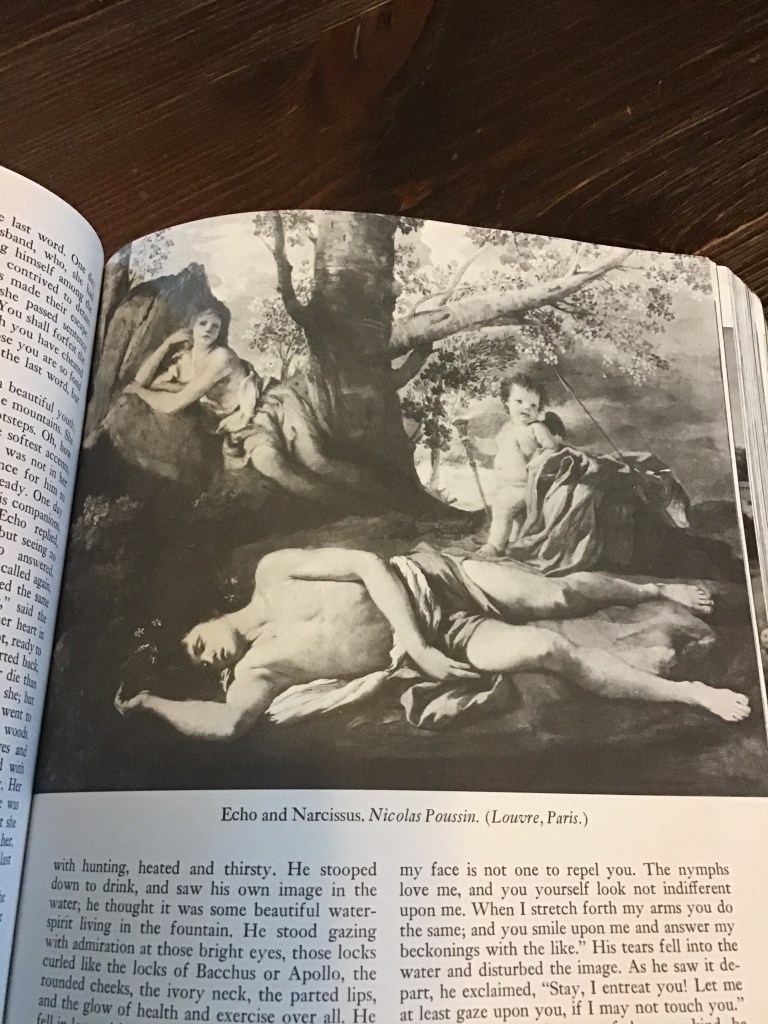
Echo and Narcissus, oil on canvas by Nicolas Poussin, 1627 (Louvre, Paris)

But for myself, I imagine its original intent as being more pure and innocent.  I don’t imagine the Greek myths were to be taken as literal stories of living people and Gods, but rather the mysteries and processes of Nature.

Eros is Cupid, but I imagine that what’s being unveiled between these 3 figures is depicting the process, the mystery, the intimate and delicate balance with Cupid (Eros) manifesting through  Narcissus’ love of beauty and pleasure.   

That something bigger than we mere mortals is occurring when we fall in love, sometimes even against our own will, awakens and evokes the spirit of Eros.  A natural force so powerful we think of it as a drug, capable of making us behave in uncharacteristic, undesirable and even dangerous ways.

Narcissus is in love with love, which is to say, in love with life.

In the water, a classic symbol of emotion, he truly saw himself in the spirit of divine love.  

The latest modern remaking of The Picture of Dorian Gray.

What came after that initial myth were the modern cultural assaults and chronic misunderstandings cursing him with egoism, arrogance, selfishness, cruelty, taken to the extremes of self-absorption, self-loathing and eventually self-destruction, as in The Picture of Dorian Gray.  Eros as uncontrolled self-obsession.

My belief is that to fall in love with anything, or anyone, is to fall in love with oneself; that is, an aspect of one’s own reflection.  Just as Narcissus is our first flower to appear in spring (it’s blooming right now in fact) Narcissus symbolizes the coming reawakening of all our natural pleasures as spring approaches and life is renewed.  

Before the Easter ritual of fecundity, first the pair must meet, and fall in love.

In celebrating the courting rituals, it’s the one holiday that’s not considered a family affair, and conjures an atypical respect for intimacy in our mass-loving modern culture.

To me it is a holiday of guilty pleasures, quirky pursuits, strange beliefs and peculiar tastes. 

What’s your pleasure?  Do you indulge it enough?  Or perhaps, too much?  Narcissus wants to know!

Do you prefer the cake or the icing?

Immediate reward or delayed gratification?

Are you the driver or the passenger?  

Is ‘fun’ the same as pleasure?  

Is your pleasure a particpatory adventure, or to be delivered on a silver tray?  

Active or passive?

Photography or painting? Reading or writing? Listening or singing?Watching or playing? Cooking or eating?  Looking or being seen?

Is there one without the other?  Is there the other without the one?

A personal story of guilty pleasures.

A fine restaurant, with a fine atmosphere, and fine company, is my guiltiest pleasure of all.  I’d spend lavishly without reserve, relish with abandon, obsess over every detail, waste hours, or weekends without a second thought.  Dionysus takes the reigns when I experience such exquisite care, such regard for pleasure and beauty, I’m easily swept away.  (And unfortunately, just as easily disappointed.). 

Hubby did not know that about me.  How could he possibly, he’d only known me a week or so.

Perhaps it’s not such an unusual thing, considering the love affair with food that’s shared across seemingly all cultures, if not always appreciated to the same degree with all people.

I’ll forever cherish the singular date when Hubby won me over, especially because I know the chances of something remotely similar ever happening again are microscopic.  It was one of those one in a million evolutionary occurrences, kind of like the Big Bang.  

As we all know, it just takes one miracle.

He planned it to the letter—chose the best restaurant, actually went there in advance to choose the best table overlooking the water, spoke to the chef personally, tipped the maitre’d in advance.

Who does that?  I mean, I would probably, but who else?  Only in the movies, right?

It wasn’t on Valentine’s Day, there was no chocolate or champagne.  But I did drink too much, and he swiftly transformed into my white knight on a scooter.  He was the crafter of the most perfectly romantic night of my life.  And romantic is not something he’s ever aspired to, by any standards, and by his own admission. 

Like I said, just one miracle. Perhaps a little help from Cupid?

I was ho-hum before that.  Not that he wasn’t a good catch, of course.  Certainly loads of divorced 30-something women are attracted to a man who finds it to be bragging material that his belongings fit into a backpack with few aspirations besides spending half the year in a hammock on a Thai beach.

We had a lot in common, as in we were both fairly uncommon vagabonds.  Not trust-fund kids or military brats, that was most common in the ex-pat scenes in those days.  We worked and scrimped and hustled and snubbed our noses at such privilege, when we could afford to.  Otherwise we enjoyed their parties and their company and their contacts.

We met at one such fancy affair, and he wasn’t my type, that’s how I saw it in the moment.  Not because of any of those previously mentioned assets, those I actually found pretty charming, especially that he would be bragging on them with a woman he’d just met.  I was far more impressed with his stories of rugged adventure than any of other’s comfort and privilege.

Not our photo, though we do have great ones, somewhere. This one is from kingscup.com

But I was just barely out of another failed relationship; I just wasn’t on the market, according to me. 

He perceived otherwise.  I dare say, I have never been pursued with such seemingly carefree precision.  He is/was not ever a lady’s man, had less relationship experience than me, and was not there looking for love.

It didn’t help that my just-failed relationship was with a photographer, and that he was there as another photographer’s assistant.  Of course I noticed he was fit and handsome and friendly and funny.  I imagined we could become friends, maybe even friends with benefits.  My imagination stopped there.

This is a stock photo, the resorts we stayed in were even more glorious.

We bumped into each other often, as would be expected, since we were all covering the Phuket King’s Cup Regatta.  They had us all staying in top resorts, sailing the seas by day and attending parties every night.  It was amazing and overwhelming and so deliciously extravagant and foreign. 

Even under such conditions, he was able to corral my attentions, redirect my intentions, and totally capture my life’s trajectory (as dismal as that was looking at the time considering I was living in an old, drafty single-wide in my dad’s trailer park in Mena, Arkansas.)

Though I’m sure he won’t admit it and questions who was doing the seducing, I will still insist, it surely wasn’t me.  Narcissus, perhaps? 

We are told it’s human nature to pursue pleasure and to recoil from pain.  But all around us we have plenty of evidence that’s not the case at all.  In honest observation it looks much more true that pain and pleasure have a very mysterious relationship that is quite unique to each individual.  

I personally will not allow the Dorian Gray’s of the world to eternally spoil the beauty of Narcissus, so I celebrate Valentine’s Day as a gateway into the new season’s promise of pleasure.

Happy Valentine’s Day to all the Lovers of Love, Beauty, Pleasure and Life!

Heaven in Hell

I will be accused of being hyperbolic. Melodramatic. Perhaps I complain too much. Might my standards be too high?

It’s not that bad, they will say, or think. You still have a house and a husband and a relatively stable life. Just think of those miserable folks in . . . And all those who . . . And don’t forget the starving children in . . .

All over the place. Like, seriously, all over the god-damned place, and still everywhere, also, simultaneously, I hear such minimizing, avoidance, redirecting, marginalizing ‘advice’ from those high on their horses.

So if my experience, this time, is not as hellish as the last time, or as his or her or their experiences, on our vast continuum of hellishness, I should just move on. Get over it.

No matter how hard it gets, the social contract requires you stay positive, hopeful, forever gazing over the rainbow at the future potential for success, and perpetually focused on the life lesson.

It’s not hard, it’s challenging. It’s not a problem, it’s an opportunity. It’s not theft, it’s redistribution. It’s not a real lie, it’s a lie of omission. It’s not a failure, it’s a stepping stone. You’re not beat, you’re regrouping.

I still get counseled from others, unwanted advice (well-meaning I’m sure in their own minds) on how to see the bright side.

As if I don’t know how to do it! I was born and raised painting a silver lining on every cloud. I’m American, we’ve written nearly every script on this bullshit.

But, I grew up and got over it.

I was also a teacher for 20 years and sometimes I was actually a good one. Ok, maybe only occasionally, but that counts.

When I was good it was because I was tough, but fair. Not nice. Not compromising. Not lenient or understanding. Not painting rosy pictures or being sweet and kind.

And in such moments of lucidity it became very obvious to me that most students fail due to one thing: unrealistic expectations.

Our culture is saturated with them. Because it’s really, really good for business.

Lots of students sincerely wanted to learn the foreign language I was trying to teach them, and certainly had the smarts to do so because it’s not difficult, even a child can do it. And almost always does!

Photo by Anastasia Shuraeva on Pexels.com

But they bought the hype of some advertisement or second hand story from a braggart who swears anyone can learn a language in three months by listening to tapes on their work commute. They bought the expectation the process would be smooth sailing all the way.

They are a lot like these types who are constantly insisting everyone see the bright side of every situation. They’re all like mood police. Like moms who make kids ‘kiss and make up’ while they’re still seething inside. Emotional bullying based on unreasonable expectations. It reminds me of an awful photo I once saw of a child model posing for the camera with a forced smile on her face though her eyes were red and puffy from crying.

So, with all that out of the way, this summer has SUCKED for me.

There, I’ve said it. I haven’t written a Homestead Happenings in months in order to avoid having to try to make it palatable for readers. I know how to paint the silver lining on it. But, it also irritates me that those are the only kinds of stories we’re allowed to tell in mixed company. If there’s not some triumph over adversity, keep it to yourself.

If there’s not gratitude somewhere for the gift of life, no one wants to hear it. Stop whining. Get over it. Make lemonade.

I know. I can hear it.

Art As Transformative?

What do you think? Have you had a personal experience of transformation through art?

I wrote my Master’s thesis on social engineering in 90s, before I had any idea what social engineering was. I didn’t know at the time that’s what I was writing about. The thesis was about women writers of francophone West Africa using their novels as a means to catalyze social change. Liberation through literature, I called it, where practices like polygamy, female genital mutilation, and lack of educational opportunities were voiced in fictional form by the otherwise voiceless.

Certainly it is not at all uncommon for writers to use their works toward such ends. And yet, something about the timing of my thesis, or perhaps the content, resonated less with others than I expected.

I found that instead ‘Art for art’s sake’ had become the more popular mode of the times and works that were considered to be ‘too pedantic’ (which seemed to mean any fictional work with a purpose other than sheer entertainment) were heavily criticized.

I tried for years to pitch similar ideas for publishing to various entities and could find no interest and quite a lot of criticism. Folks wanted to be entertained, not taught. If they had to learn something, they wanted it tightly obscured in a bubble of excitement, like a Dan Brown novel.

But times seem to have changed again and authors and artists with a serious message, with deep societal concerns, seem to be able to find, or are perhaps themselves creating, a growing audience hungry for their transformational content.

It reminds me of some of the criticisms I heard in the 90s—art is not meant to transform or educate, but rather has the sole purpose to simply express the subjective worldview of the creator. Any feelings of universality in a work of art is essentially meaningless coincidence. Art should not be held in the clutches of meaning-making. Beauty is in the eye of the beholder. Art cannot be personally or socially transformative, except to the artist himself, that is an establishment myth of conformity.

I even had an artist friend, with an art degree, who assisted at a gallery, try to insist to me that the glass flask full of the artist’s excrement (I’m not joking) was to be considered art just as much as any old famous painting.

So I’m very pleased to see this more recent ‘re-formation’ to art with purpose. But, I wonder, can it actually be transformative? Or were all those critical voices in the 90s correct?

What do y’all think?

Here’s a couple of amazing pieces which might have such power. Do you know of others to share? If so, please do link below!

In Shadow: A Modern Odyssey

Kingdom

These works are both by: Lubomir Arsov and you can find an excellent interview with him here:

The Story Arc(h)

So many stories not told. They don’t fit the mold.

While the same stories are repeated over and over. The approved stories, with the approved arcs and twists, capturing audiences beyond time and space.

Hero or Villain? Victim or Culprit?

The ordinary stories of ordinary folks are bypassed. Not sexy enough. Not dramatic enough. Too slow-paced. Not Catchy. Or spicy. Or click-baity.

Not nearly sticky enough.

Stories must be sending the right message. Clicking the right boxes in the right moments in the accepted paradigm according to the right models.

Triumph over adversity are ultimately the only stories allowed. Even the stories of failed heroes are spun in such a light, otherwise they are considered ‘dystopian’. And even then we see tragic heroes ‘set free’ by their surrender to the ‘greater force’ or ‘liberated’ by a merciful death.

How the stories are told indicate what the audience will perceive. Here I provide some examples.

These are all still ‘my stories’, just spun to be acceptable, or not. My goal here is to get folks to question WHY certain stories sell. Is it a matter of authentic taste? Of expectation? Of social programming?

Is it the audience who choose, or someone else, perhaps more subtly who chooses for you?

Here are some stories never told, true (ish) stories from my own life. You be the judge/critic/pretend publisher and let me know.

***

While in NOLA, a hurricane. The story that would sell: Young teacher moves to New Orleans for her new position at a prestigious Southern university one week before the most devastating hurricane in its history. She evacuates to a remote part of the Louisiana bayou and learns about Creole and Cajun history and music and cuisine and finally settles in the region of the native Caddo tribe to study Pre-Colombian cultures of the Deep South.

The story that won’t sell: Young teacher moves to New Orleans for her new position at a prestigious Southern university one week before the most devastating hurricane in its history. She evacuates to a remote part of the Louisiana bayou and learns about weather modification and clandestine military operations pertaining to centralized, unelected power structures controlling the U.S. government.

***

While in Galveston, a hurricane. The story that would sell: Couple not long ago evacuated from New Orleans experiences second 100-year hurricane evacuation after just three years. After being forced to split up in order to continue working, they blow through a decade of savings, suffer marital issues and nearly divorce, but are called by God to settle in the remote hills of East Texas to build a homestead.

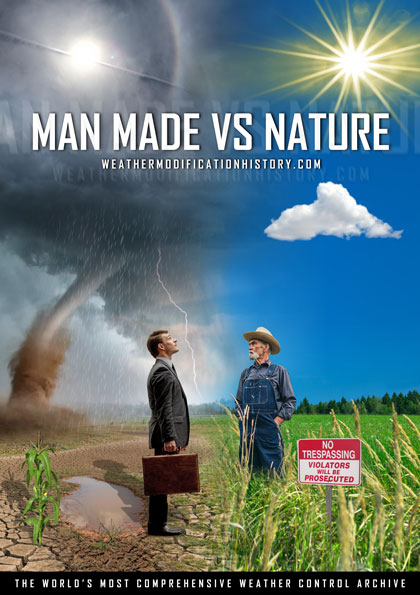
The story that won’t sell: Couple not long ago evacuated from New Orleans experiences second 100-year hurricane evacuation after just three years. Wife begins seriously researching ‘chemtrails’ and learns about the 70+ years of weather modification that leads her to the ongoing Geoengineering projects—that is the global ‘climate remediation’ experimentation, much of it covert operations of global public-private partnerships with zero accountability or known oversight.

***

While in Elkhart, a tornado. The story that would sell: Couple experiences third weather disaster and nearly loses home and wife talks of ‘meeting death’. She finds God, Jesus, Mohammed, Buddha, Enlightenment and starts a fundamentalist cult which then gets attacked Waco-style by the government and all cultists die in flames.

The story that won’t sell: Couple experiences third weather disaster and nearly loses home and wife talks of ‘meeting death’. She turns to herbalism and organic gardening and a life of quiet reflection about the nature of evil and tyranny and the statist system broken beyond repair and the inadequacies of every group-think solution to this issue, including the anarchy renamed voluntarism and the so-called ‘mystery schools’ and the exhausting rehashing of ‘Prophecy’ and is just generally permanently dissatisfied with all the solutions and proposals she’s ever heard, and she’s heard a fucking ton of them by now.

She discovers a mass effort at brainwashing against the ‘victim’ —some kind of crazy signaling effort of victims to rally other victims, and wonders who does this attitude really serve? So, we ‘victims’ are now considered by the establishment as of a ‘dark triad’ type (witches?) if we don’t spin our circumstances to always be whistling while we work, in whatever chaotic wind they care to bare down on us. Or so it would seem.

“Victim signaling, defined as ‘public and intentional expressions of one’s disadvantages, suffering, oppression, or personal limitations’ is strongly correlated (r = .52) with Dark Triad personality traits”.

The Psychology of Social Status and Class: A Conversation with Jordan Peterson

So, so many stories not told. But don’t worry! We’ve got a new generation now, selling the same story in a whole new way!

Stop complaining! Smile. Be happy now.

PseudoCaring

Soon the mainstream disease care system will be employing robots and AI-generated advice dispensers as nurses and surgeons. It’s happening already.

Meet Grace, the robot nurse that COVID created

Some are shocked and appalled by this, as they should be, according to me. Others think it will be a fantastic improvement to human life, or a great way to make more fiat, or a solution to the burden on the caring professionals, or they love tech for tech’s sake, or whatever.

Those of us who love history and dwell constantly on the question ‘how has it come to this’ were well aware of this potential because we study the trajectory of modern life. I could begin with the first critics centuries ago, but for brevity sake, I’ll start instead with my own life, the only history available to me to know thoroughly enough.

Working mother, divorced parents, step parents, then step siblings, professional daycares, neighborhood babysitters, after school programs, junk food, convenience food, lots of TV. Family history of: diabetes, heart disease, obesity, cancer, vision problems, depression, eczema, alcoholism, Parkinson’s, and, you get the picture.

And I would not say my family life was bad. It was the typical American suburban life of a great many growing up in the 70s and 80s. Neither particularly good, nor bad, just normal. Normal, as in well-normalized.

Like most families my parents would joke about voting for the ‘lesser of two evils’. They probably learned that from their parents. My mom went to community college and got her degree once we were gone, in sociology. She worked full-time all her adult life and didn’t regret it. My dad remained ‘upwardly mobile’ as his Protestant father taught him to be.

In fact, we have retired before him, and he has just had his first heart attack.

They are both still with us, but they do not read this blog, so I could say whatever I wanted. 😏. But, that’s not the point of this particular post.

Let’s leave it at this—in hindsight, my unique perception of growing up this way is, in a nutshell—there was not a lot of parenting happening. The results of this having widespread and devastating effects.

It is from these original seeds of pseudocare that have been not only consistently irrigated in our own territories, but have been dispersed throughout the world these last five-plus decades which has ensured the trajectory to the ridiculous place where we now find ourselves: Drowning in pseudocare so deeply we can scarcely recognize what real care looks like anymore.

Another quick peak at the fruits those seeds have produced.

Yet even facing all of this, I’m still optimistic, as I have been all my life. Even at the worst of times, even during a few prolonged worst of times, I must’ve still learned something vital from my half-assed upbringing and collapsing culture.

So, here it is, in another nutshell:

Believe in yourself, believe it can change, but don’t practice in sidestepping the hard stuff. And the hardest of the hard stuff is care, real care—for yourself, for others, for the future—that is why we are here. How you go about that is your personal journey and your only real duty to discover and live. That is all there is to do in a life well-lived.

Which is why I want to once again quote an obvious example of someone doing exactly that, Gavin Mounsey, who is rocking the real care like a hurricane these days! Wait . . . What?? Ok, terrible simile aside . . .

I believe he knows what needs to happen next and is becoming the living manifestation of that in his own life first, and passing it around. Leading by example, it’s the only way. It’s the same cardinal rule as storytelling—Show, don’t tell.

From Gavin’s book, Recipes for Recipocity

Here are few select quotes from his recent interview with the witty Russian correspondent and potential future Russian-American homesteader, Edward Slavsquat: The Revolution Will Involve Fermented Cabbage

“I want to give my energy to improving and increasing the resilience of my local community, not your hyper centralized one size fits all infrastructure. 

“Freedom is not a consolatory prize that can be given to us to reward our obedience and capitulation to a system of violent coercion. It is not something that can be granted or provided to you by some government that wrote some thing on a piece of paper. Freedom is your birthright, and you either live it and embody it, or you allow yourself to be put in a mental cage by statists and other abusive institutions or individuals. My ancestors bloodlines are traced back to a people described in today’s terms as The Gaels. “Saoirse” is Irish Gaelic word for “Freedom”. Saoirse is an ancient concept that comes from the original Brehon laws of the Druidic (and eventually Celtic) world before the time of Christ. In the times when that word was created, my ancient ancestors lived without a centralized state, without prisons and without police.

Saoirse means many things to different people. For some it means freedom to think, express and freedom to learn, for others it’s the freedom of imagination and the freedom of the spirit. And for some it also means freedom to set up parallel societies.

“This is one of the reasons that I included glimpses into two historical cultural cross sections of ancient cultures that existed without a centralized state and police/prison system in my essay as I feel that we can glean wisdom from stateless societies that existed for centuries to millennia in how to design more ethical, equitable, honest, Regenerative and practical ways to organize community, encourage amicable/respectful behaviour in humans and collaborate to leave this world a little bit more free and beautiful than it was when we got here after we are gone.

“With all that being said, I want to emphasize that I think that placing any culture, group of people or individual on some pedestal as pure is unhealthy. I feel we should be vigilant to make sure we are not romanticizing their past nor romanticizing the potential of their worldviews to provide solutions to the present challenges we face.

“The path to become connected to place with a reciprocal relationship, reverence and humility is the path to embrace indigeneity ourselves.

“It is a great starting point to create pockets of decentralized resistance to oligarchic / statist tyranny as growing your own medicine and veggies may appear harmless, but in a parasitic global plutocracy it represents a decisive action that severs the tentacles of tyranny in a critically important aspect of our lives (how we access food and medicine). Thus,  it is a radical and revolutionary act that appears benign to the hubristic philanthropaths and demociders, serving as a sort of covert sedition in a world governed by parasites that want us dependent, gardening to grow or own food and medicine is like a hammer wrapped in velvet that knee caps big pharma’s plans to poison us slowly through dependence on their system for health care and also strikes the spine of the digital gulag system, breaking its back so it can no longer have any strength to influence our lives through controlling our access to food/medicine.

A better essay about the importance of self-reliance and health as the ideal antidote to modern societal tyranny I could not have written! And he has a YT channel. 😁

He was also kind enough to try to address our biggest garden nuisance within the scope of his permaculture lens. He offered many potential solutions, and bless his heart for the effort. 

But I’ll just repeat my personal favorite: hot and spicy gopher wings. 🤪

What an example of authentic care—growing in the real and cyber worlds simultaneously—where even sassy meat-eaters and smart-asses and AI are welcome to stuff up their comments sections. Now that’s grace under fire!

Thanks to guys like these, in the coming decades I predict courageous fellowship will become the new sexy.

Devious vs Clever

Does narrative control our lives?

Do mere words, forever shifting on the barnyard wall, mold our collective behavior?

If a lie lands in the narrative, and no one knows it’s a lie, does it pass for the truth?

Enter, the Scapegoat:

“No, everything seems conditional now, contingent on proof of cognitive compliance. Their cancellation of me has been cemented into their own identities. The people who were once closest to me now exist in direct opposition to the person they imagine I’ve become. There is no way to dissuade them, to show them that I really am me, the same me I’ve always been. I realize the framing they’ve embraced since the lockdowns cannot shift without destabilizing the shaky narrative they’ve chosen to inhabit. I am the problem. I have to be the problem in order for their reality to remain steady.”
Alison McDowell

Oh how I know this role so very well! I was born into it—by chance, divine intervention, twist of fate—I have no idea.

Alison, having experienced life primarily as the golden child, here feeling it now so poignantly, perhaps for the first time, navigating as an outsider, has put words on my reality as I never could. Such poignant, touching, true words.

There is something about venturing into new territory and trying to map the landscape for yourself that highlights what is most special and unique about a particular place from a particular perspective. It’s a kind of magic I think. What has become invisible to the native through habituation has new meaning through new eyes and in turn brings new insights to the observers’ previous perspectives simultaneously.

It’s why I wanted to be a travel writer, why I thought I could be good at it, because if I could recognize that level of magic, surely I could learn to apply it myself.

But now I deal in inner worlds, instead of outer ones. So many of us find ourselves here in these times that we can hardly consider ourselves outsiders anymore. Can we?

“The Herculean effort to struggle to come to an understanding of something alone, without mature guidance and the fellowship of other stumbling souls is more than most can bear. This is what angers me about the glib soundbites in praise of the ‘freedom’ for individuals to simply learn alone via internet study.” Christine Jones

Withered Leaves & Spoiled Fruits meet Wrench in the Gears, if only here in my words. I hear you say the same thing, though you are physically and in so many other ways, so far away, from me and each other.

But, in ways that don’t seem to matter to me much these days.

That we are each middle aged women who have been cast off—by our own or divine, or others’ design—how delightful, still, to find sister castaways.

What I’ve come to learn lately navigating the inner worlds at the expense of the outer ones is that words matter much less. Labels hardly at all. That works out pretty well since language has forgone nuance words have become superfluous. (Spellcheck just tried to correct me from ‘become’ to ‘Beyoncé’, how apropos)

The inner world narrative is not man’s narrative. Words hardly fit. Words hardly fathom. The words sound ever-more more political the further in you journey. Falsity reigns and duplicity rains and you find that words only rein in reality. They don’t invent it, they don’t even represent it, not really. The map is not the territory.

In fact, it becomes more difficult to navigate the inner worlds the more you rely on the words.

What are thoughts but words yet expressed? What am I to rely on once words begin to lose their meaning to me? Me, who spent four decades devoted to the study of words. Who considered language to be the cornerstone of civilization and all that made it function.

What a shift, now to think in fact it is not words that craft the spells that create our cultures, but rather enclose them, like walled gardens or mazes, constructs that sometimes illuminate and sometimes obstruct. Sometimes nurture and sometimes confound.

Once upon a time “devious” and “clever” were not synonymous. To understand how they’ve become so confounded one must explore the inner world, beyond the words and into the being. There the answer lies.

Lies?

Perhaps the lies inherent in the words, inherited with the words, are driving us collectively mad? Everywhere I hear about the ‘clever’ machinations of the great powers. Clever?

Perhaps if we shake hard enough, like a soaked dog after his bath, the words will be cast off like water droplets, leaving the cleansed being behind.

A Case for Applied Bitterness

The Promise and The Fantasy: It is said Love is God’s weapon.

Revelation 21: 1-6
“Then I saw a new heaven and a new earth, for the first heaven and the first earth had passed away, and there was no longer any sea. I saw the Holy city, the new Jerusalem coming down out of heaven from God, prepared as a bride beautifully dressed for her husband. And I heard a loud voice from the throne saying, “Look! God’s dwelling place is now among the people, and he will dwell among them. They will be his people, and God himself will be with them and be their God. He will wipe every tear from their eyes. There will be no more death or mourning or crying or pain, for the old order of things has passed away. He who was seated on the throne said, ” I am making everything new!” Then he said, “Write this down for these words are trustworthy and true.” He said to me: “It is done. I am the Alpha and the Omega, the Beginning and the End. To the thirsty I will give water without cost from the spring of the water of life.”

The Promise and The Fantasy: An end to all pain, suffering, sacrifice.

“Man will oppose everything except a Hand Extended, … he will stand up in the face of every hazard except Lonely Time; that for the sake of his poorest and shakiest and screwiest principle he will lay down his life, endure pain, ridicule, and even sometimes, that most demeaning of American hardships, discomfort, but will relinquish his firmest stand for Love …
Love — or the fear of Not Having It, or the worry of Not having Enough of It, or the Terror of Losing It — certainly does conquer all.”
~Ken Kesey, Sometimes a Great Notion

Repeat after me: I believe in LOVE!

Repeat after me: I believe in LOVE!

The New Age Movement:
Love as weapon of coercion and behavior modification

Benjamin Creme (1922-2016), Aquarian Age conspiracist
From Wiki:

“Creme said that he was first contacted telepathically by his Master in January 1959, when Creme was asked to make tape recordings of his Master’s messages.[19] Creme first began to speak publicly of his mission on 30 May 1975, at the Friends Meeting House on Euston Road in London, England.[20][21] His central message announced the emergence of this group of enlightened spiritual teachers who would guide humanity forward into a new epoch, the Aquarian Age of peace and brotherhood, based on the principles of love and sharing. At the head of this group would be the one who occupies the office of the Christ, Maitreya, the World Teacher,[1] expected by all the major religions as their “Awaited One”: the Christ to the Christians; the Imam Mahdi to the Muslims; the Messiah for Jews; and the 5th Buddha (i.e., Maitreya) for Buddhists. As early as 1982, however, Creme emphasized that Maitreya would reveal himself fully only when Humanity began to live in right relationship to one another – most notably, by living in peace, and by beginning to share the world’s resources more equitably.[22][23]

Creme asserted that Maitreya was the World Teacher for the Age of Aquarius, and that during the transition of one astrological cycle to another humans undergo a quickening of their evolution, while experiencing crisis after crisis.[45]”

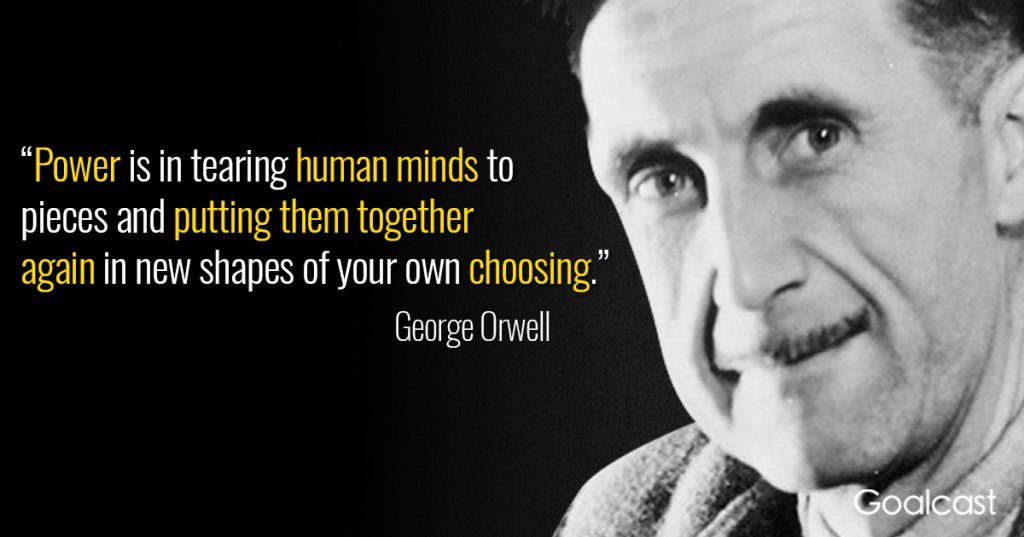
At the end of George Orwell’s 1984, broken, humiliated, every bit of his humanity smashed, Winston waits for the bullet in the back of the head and thinks, “He had won the victory over himself. He loved Big Brother.

Become the weakest, most vulnerable, most obedient and acquiescent version of yourself, and then the world will be peaceful.

Love one another blindly in a thick global stew of brotherly affection, and then the world will be free of war.

Lay down your weapons and your sour pusses, and then the world will be free of crime.

Give all your worldly goods away, and then the world will be free from exploitation.

Spread all your love all around everywhere all the time, give it all you’ve got—mind, body, soul—And then we will all live as One.

Feast or Famine

We are just days away from no tomatoes. Just as I was really getting sick of them.

There’s an attitude to surplus, just as there is to scarcity. Maybe we could even call it opposing frequencies.

I’ve known wealthy folk, in my younger days, who refused to eat leftovers, ever, no matter what it was, even lobster or filet mignon. One could almost be convinced of a certain ‘trickle down’ economic theory when in their presence.

While I was really lucky to be friends with them, because I got a lot of free upscale leftovers, I did find that attitude to be wasteful, and was not shy about expressing it.

It behooved me to see all that good food go into the garbage, not even composted. I couldn’t eat all the leftovers created from a weekend lake house party, and there certainly weren’t any livestock to benefit, not even doggie bags.

I think my 2nd favorite thing about having pigs, after the sausage and bacon and ham, is that I feel zero guilt about throwing away our surplus. It’s not throwing it away at all, I’ve come to realize, it’s really more like pre-seasoning our sausage.

So it was interesting to read an article the other day from an author who presented a graph from the “Bureau of Labor Statistics (BLS) data demonstrating a substantial decrease in household food expenditure as a percentage of income—from 44 percent in 1901 to a mere 9 percent in 2021.”

It was considered a ‘good thing’ according to this graph and this author that food prices had become so negligible in the modern economy.

I’d be willing to bet the farm that the general public agrees with this premise. To have the essentials of life—that is, food and water—as cheap as possible, indeed feels like a good thing. If those are brought to them poisoned is mostly not a thought at all.

Once the essentials are met, as in our modern Maslow’s hierarchy of needs, we can move on to entertainment.

Oh, except for that other pesky thing, energy. Because WiFi and game boys and television aside, we do still NEED our fridges and freezers and air conditioners.

And if you think that’s exaggerated, watch the mass exodus from the South to the North if the World Economic Forum has their way and all those civilizing conveniences disappear before too long. All while we are sweltering down here under the umbrella of ionospheric heaters up there.

But, aside. Let’s get back to the basics. Food and water, even before energy. You already know the feast or famine feeling. I know you do.

Do you give a care when you shower that 5 more minutes will break the bank? Have you ever lived in a situation where you carried all the water you needed for the day?

Do you consider when you buy your groceries that 5 more dollars will break the bank? Have you ever lived in a situation where a few dollars meant dinner or no dinner?

Every technology is a Trojan Horse. From shoes, to language, to music, to roads, to windmills, to combines, to bombs, to telephones, to cybernetics. Every one. Man existed before all of them. Somehow. Not even the ionospheric heaters causing us drought and weather chaos will bring about the extinction of man.

Man, in whatever form, of whatever species we care to classify, is a feature, or a bug, of this ‘solar system’.

Or, maybe I’m wrong, and we will perish like the supposed dinosaurs.

But my sense says, its otherwise. It says we survive in surplus, in scarcity, in love and in hate. We remain under masters, in servitude, and occasionally at some magnificent moments, I imagine, its otherwise.

We survive wars and diseases and lies. We survive pop music and step mothers and manufactured weather.

They say we must thrive, to thrive is to succeed. To succeed is to know progress. To progress IS.

To succeed is to feast.
Yet to feast indefinitely, is impossible. It will eventually lead to famine.

Because failure IS the inevitable consequence of success.

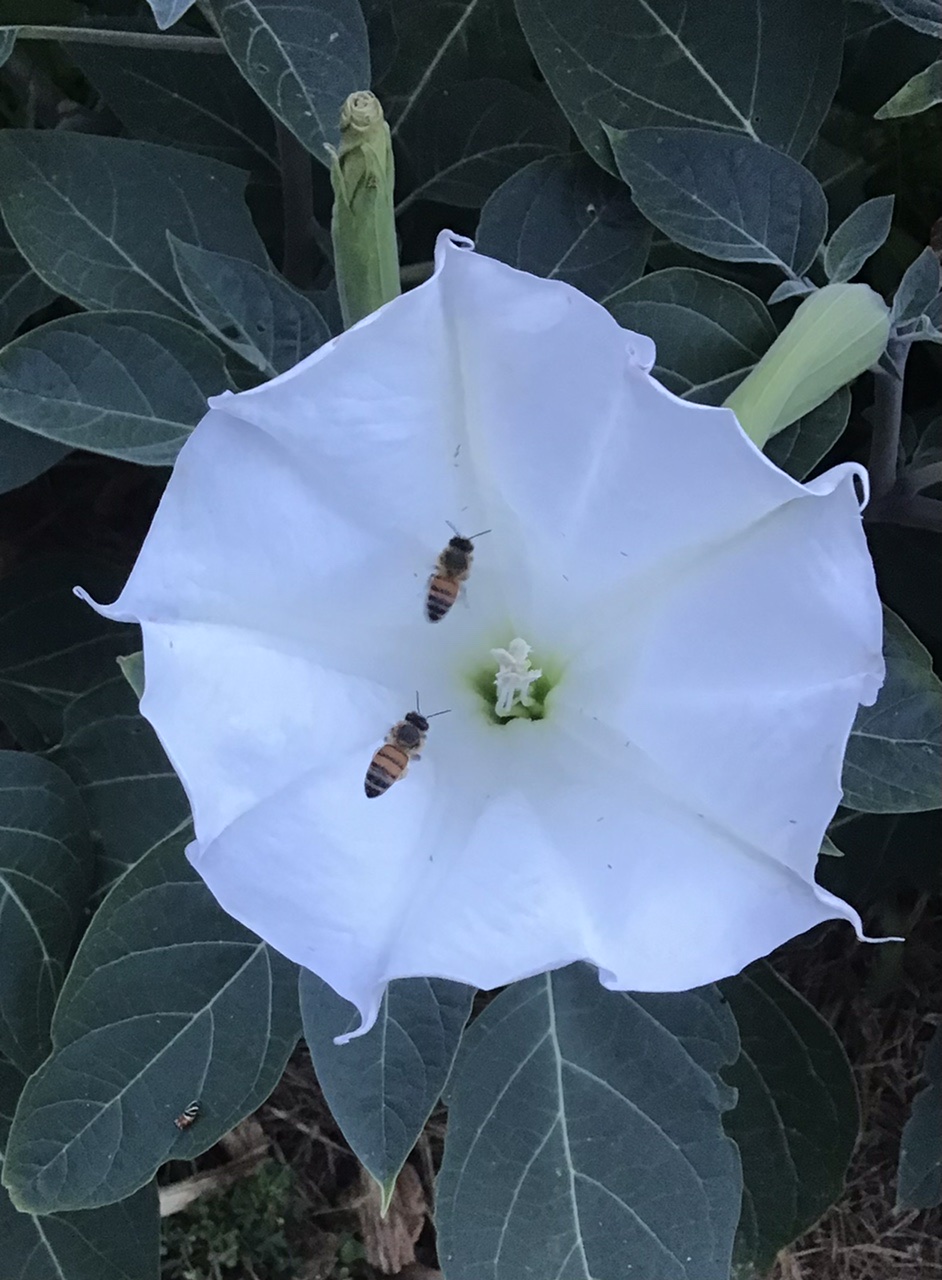
Herbal Explorations: Datura

I’ve added a new ‘weed’ to the Herbal Explorations pages. It’s long, but fascinating, at least according to me. 😁

I hope I can help you enjoy my favorite flower from afar!

Common names: Thornapple, Jimsonweed, Devil’s trumpet, Mad apple, Stinkweed, and many more

Scientific names: Datura fastuosa, sanguinea; D. Stramonium; D. Metel
Solanaceae family

Datura is one of those weeds with a very long and very sordid history, but that’s only part of the reason it is my very favorite.

My datura inoxia with Bubba behind surely enjoying its ephemeral scent

It’s a luxuriously soft bloom, thick and silky, opening at dusk. For a very short time while opening it emits the most seductive scent I could imagine. It makes me want to just dive in and drink it up!

And sometimes I do smother my nose right into the center of it and breathe deeply as the smooth velvety petals brush my cheeks, but the scent does not become stronger in such close proximity. It remains very subtle, almost dainty, like a sweet teasing, a slight flirtation that drifts into an unrequited mystique.*

On the nightstand, just opening, when its fragrance is strongest

Man has been tempted and fascinated by this weed since long before written history.

From Wiki:

“The case of D. metel is unique in that not only is the plant not a true species at all, but an assemblage of ancient pre-Columbian cultivars created from D. innoxia in the Greater Antilles, but evidence is mounting that it was introduced to the Indian subcontinent no later than the second century CE – whether by natural or human agency is, as yet, unknown – making it one of the most ancient plant introductions (if not the most ancient) from the New World to the Old World (see Columbian Exchange).”

Datura metel fastuosa from Wiki

While there are many varieties, all with distinctive features, it is the scent especially that is said to vary dramatically among species—from noxious to intoxicating—sometimes dependent solely on the nose of the beholder.

From Wiki again:

Datura is a genus of nine species of highly poisonous, vespertine-flowering plants belonging to the nightshade family (Solanaceae). They are commonly known as thornapples or jimsonweeds, but are also known as devil’s trumpets (not to be confused with angel’s trumpets, which are placed in the closely related genus Brugmansia). Other English common names include moonflowerdevil’s weed, and hell’s bells. All species of Datura are extremely poisonous and potentially psychoactive, especially their seeds and flowers, which can cause respiratory depression, arrhythmias, fever, delirium, hallucinations, anticholinergic syndrome, psychosis, and even death if taken internally.”

From Reader’s Digest Magic & Medicine of Plants 1986:

“Jimsonweed: Although it has antispasmodic, painkilling, and narcotic properties, jimsonweed is a plant to be avoided. Every part of this weed, which is a member of the notorious nightshade family, is extremely poisonous and may cause death. (It) was once a popular asthma remedy. . . .The root and leaves were used externally in folk medicine to treat boils and cuts. The American physician and botanist Charles Millspaugh stated in his Medicinal Plants (1892) that jimsonweed was employed ‘as a narcotic, soothing drug’ for epilepsy and neuralgia. He also noted that it was recommended as an ointment for burns and scalds.” (P. 226)

~~~~~~~~~~

From Plant Intoxicants: A Classic Text on the Use of Mind-Altering Plants by Baron Ernst von Bibra (Die narkotischen Genussmittel und der Mensch by Wilhelm Schmid, Nuremberg, 1855)

(Datura fastuosa, sanguinea; D. Stramonium; D. Metel)

“An intoxicating drink called tonga is prepared from the seed capsules of this plant. This brew has a violent and powerful effect. Johann Jakob von Tschudi in his ‘Travels in Peru’ describes the effects as he saw them on an Indian who had taken the tonga.
‘Shortly after swallowing the beverage he fell into a heavy stupor. He sat with his eyes fixed vacantly on the ground, his mouth convulsively closed, and his nostrils dilated. In the course of a quarter of an hour his eyes began to roll, foam issued from his half-opened lips, and his whole body was shaken by frightful convulsions. After these violent symptoms subsided, a profound sleep of several hours followed. In the evening I saw the Indian again. He was relating to a circle of attentive listeners the particular of this silicon, during which he allegedly communicated with the spirits of his forefathers. He appeared very weak and exhausted.’
The name yerba de huaca (herb of the graves) thus derived from the peculiar idea of the Indians that they can communicate with the spirits of their forefathers, generally after consuming the thornapple plant.”
In former times the old Indian priests drank the thornapple if they wished to converse with their gods. Moreover, priests at the oracle of Delphi administered the prepared seeds of the thornapple to their seers to put them in the desired prophetic ecstasy. In the sun temples at Sogamossa, near Bogota in the Andes of New Granada a similar practice was carried out by the Indians.” (P. 77-78)

~~~~~~~~~~~~~~~~

From Witchcraft Medicine: Healing Arts, Shamanic Practices, and Forbidden Plants by Claudia Muller-Ebeling, Christian Ratsch, and Wolf-Dieter Storl

The famous Flying Ointment

“The ointments (Unguentum populeum) were not forbidden; they were officially used for the treatment of pain, as a numbing wound dressing, as an executioner’s salve, for rheumatism, and for hemorrhoids. The common people were also quite familiar with plants that move the spirit, and used them for love potions and as spices to make beer more inebriating. . . .The courts themselves made use of such ointments. The inquisitors used them to revive defendants after they had been thoroughly questioned and—due to the effects of scopolamine—used the ointments as ‘truth serums’ to break the resistance of tortured prisoners.” P.51

‘Witches’ markets’ in Mexico sell ‘pomada de toloache’ made from the leaves and petals using the variety Datura inoxia (Mill.,syn, datura meteloides DC)

~~~~~~~*More on scent*~~~~~~~~

I am so enamored with the scent of this flower, I wish I could find it in bottle! But so far, I don’t think it exists.

I wonder, how would they re-create a scent that smells differently to different people? Considering ‘smellovision’( a play on ‘television)’ is apparently already possible and coming soon to a computer near you, I dare say there are some scents science will never capture, and perhaps datura will be one of them.

“The concept of digital smell technology was already being discussed openly in mainstream news in 2018, and The Monell Center in Philadelphia, PA, is actively engaged in research to digitize chemosensory data. The notion of a mixed, augmented reality, integrating smell technology, is no longer in the sci-fi realm.” ~Stephers

Part 4: The Scent of Fear ~ Musings on Fear and Olfaction – Piece of Mindful

If I could upload the scent for you now, I would! 😊

~~~~~~~~~~~~~~~~~~~~

Here is some more interesting information on the psychoactive properties of Datura. Scopolamine, the so-called ‘mind control’ drug is an active ingredient.

From Wiki again: Psychoactive Use

“In Pharmacology and Abuse of Cocaine, Amphetamines, Ecstasy and Related Designer Drugs, Freye asserts: Few substances have received as many severely negative recreational experience reports as has Datura. The overwhelming majority of those who describe their use of Datura find their experiences extremely unpleasant; both mentally and often physically dangerous.
  However, anthropologists have found that indigenous groups, with a great deal of experience with and detailed knowledge of Datura, have been known to use Datura spiritually (including the Navajo and especially the Havasupai) Adequate knowledge of Datura‘s properties is necessary to facilitate a safe experience. The ancient inhabitants of what became central and Southern California used to ingest Datura to “commune with deities through visions”. The Southern Paiute believe Daturacan help locate missing objects. In ancient Mexico, Datura also played an important role in the religion of the Aztecs and the practices of their medicine men and necromancers. It was reportedly used by the Aztecs for ritual sacrifice and malevolent purposes as well. In modern-day Mexico, some datura species are still used for sorcery and other occult practices, mostly in the southern region of Veracruz, specifically in the city of Catemaco.

Bernardino de Sahagún, in around 1569, called attention to Datura in these words: “It is administered in potions in order to cause harm to those who are objects of hatred. Those who eat it have visions of fearful things. Magicians or those who wish to harm someone administer it in food or drink. This herb is medicinal and its seed is used as a remedy for gout, ground up and applied to the part affected.”

Christian Rätsch has said, “A mild dosage produces medicinal and healing effects, a moderate dosage produces aphrodisiac effects, and high dosages are used for shamanic purposes”. 
Wade Davis, an ethnobotanist, also lists it as an essential ingredient of Haitian zombie potion. In Western culture, the same species (Datura stramonium) has been said to have been commonly used by witches as an ingredient for their flying ointments and was regularly included in detailed recipes of magical ointments dating back as far as the early modern period, predominately in New England and Western Europe. During the anti-witchcraft hysteria of colonial times it was considered unlucky or inappropriate to grow D. stramonium in one’s garden due to its supposed reputation for aiding in incantations.”

~~~~~~~~~~~~

For more information on its psychoactive properties visit:

Erowid Vault: Datura

Beauty is Intoxicating

Every gift is a curse. But, is every curse also a gift?

I’m going to take the long way around a pretty basic question, but one that I am honestly curious about and would love to hear any thoughts on the matter.

When I was a teenager, I had a number of “love interests” that were short-lived, but intense enough that I remember them vividly. I went from Tom-boy to boy-crazy fairly quickly, in just one summer actually. For someone so young I found myself navigating very choppy waters without a smidgeon of skill.

Two of them, around the age of 16 and 17, are fit examples for this story. One was a short-term boyfriend, another was a near miss.

The near miss was a one-legged salesman. I was a shoe sales clerk at the shopping mall in Chesterfield, Missouri. It was actually a really good job and I was glad to have it. Suburban life before car age is brutally boring for someone like me. I finally felt free and so adult-like as I strutted through the mall on breaks in my heavily discounted Overland Trading Company shoes.

I don’t remember which shop it was now, but I would expressly wander in that direction just to see if he was there. He would smile at me, I felt he was even waiting for me to pass by, and I would smile back, maybe give a cute little wave for added effect.

That he had only one leg was not what made me want to gawk at him. But rather that he was gorgeous. I mean, seriously Gorgeous. Handsome, amazing build, confident, well-dressed, and just the right amount of older for a 16 year old to get herself swooning in his direction.

We talked at some point. Went to the food court together. Became, not exactly friends, but something like ‘mall buddies’. Then somehow it happened that we decided to have a real date, where he came over to my house to pick me up in his car.

And I will never forget that moment. It was a sudden disaster. That he had one leg did not phase me in the public sphere, not at all. It felt like a non-issue. Sure, I was curious what had happened, and I’m sure I asked at one point and he answered, but I don’t recall his story. I liked him. I especially liked looking at him. I liked that he liked me. I remember, I really liked that.

I remember he was kind, and a gentleman. And I hated myself. I hated myself that suddenly, seeing him in my house, something switched for me that I could not comprehend. I sensed overwhelmingly, all of a sudden, that I could not be who he needed me to be. It was a shameful, and quite devastating feeling for me at that ripe young age.

On one other occasion not long afterward I again became intoxicated by another young man’s beauty. He was my age and the son of a family friend from church. Everybody loved him. It also ended badly, despite my genuine feelings for him, that certainly went beyond just his great looks. And that also came down to the same issue, in 20/20 hindsight: I can’t be who you need me to be. The realization coming too late to avoid the associated pain. Their beauty, I really believe, clouded what I should’ve seen before leading them on.

And my point in sharing these very old recollections is, could the opposite also be true? I guess I feel it would be nice if it were. I saw a man the other day who was clearly very compromised—and my heart went out to him, in a very pitying way. I knew, from his appearance, he suffered many hardships in life. I’d like to believe that in his apparent curse, he has found a deeper gift. Sort of like the opposite of the gift of beauty that invariably bestows pain due to all of us who are so entranced by it.

Or, I’m just looking for an avenue out of my automatic pity for him? Thoughts?