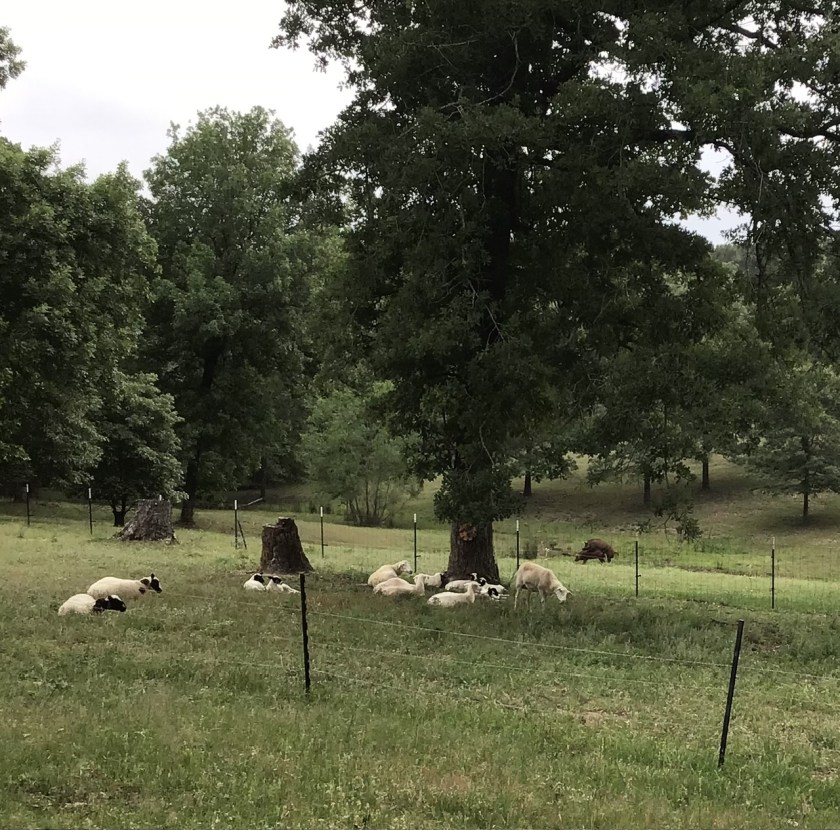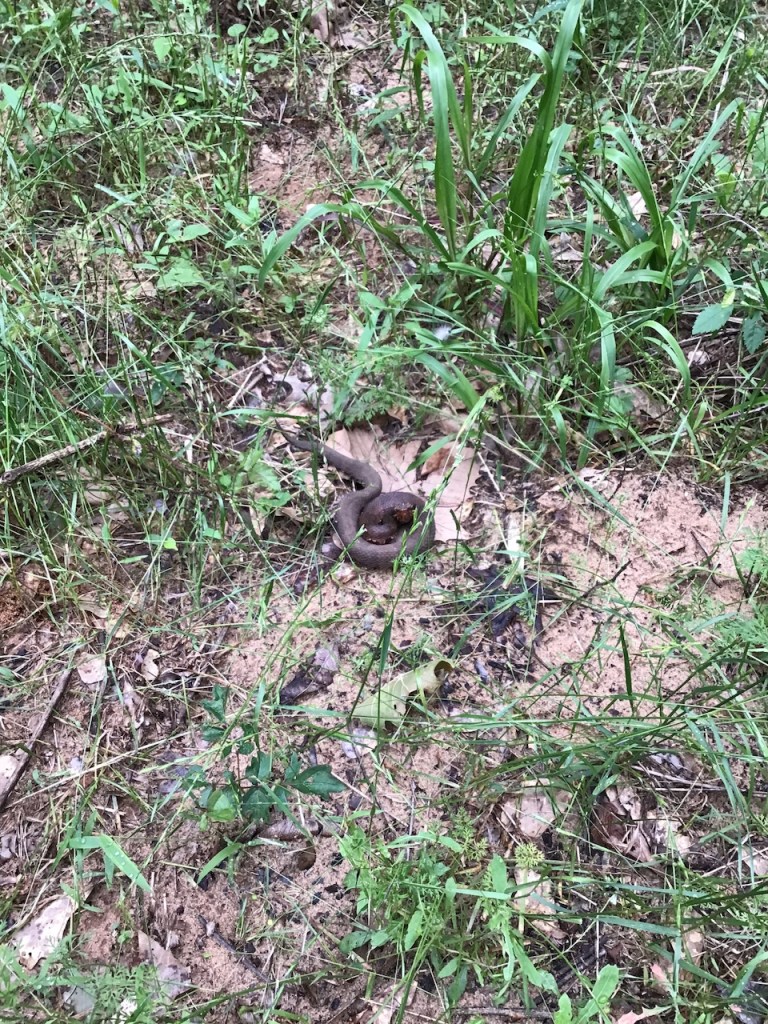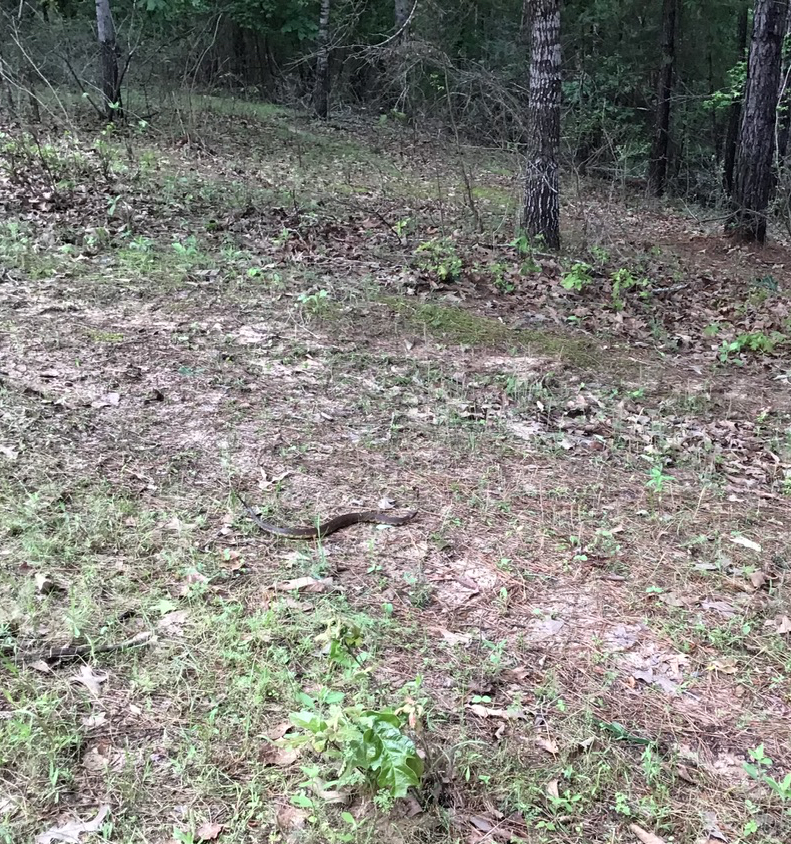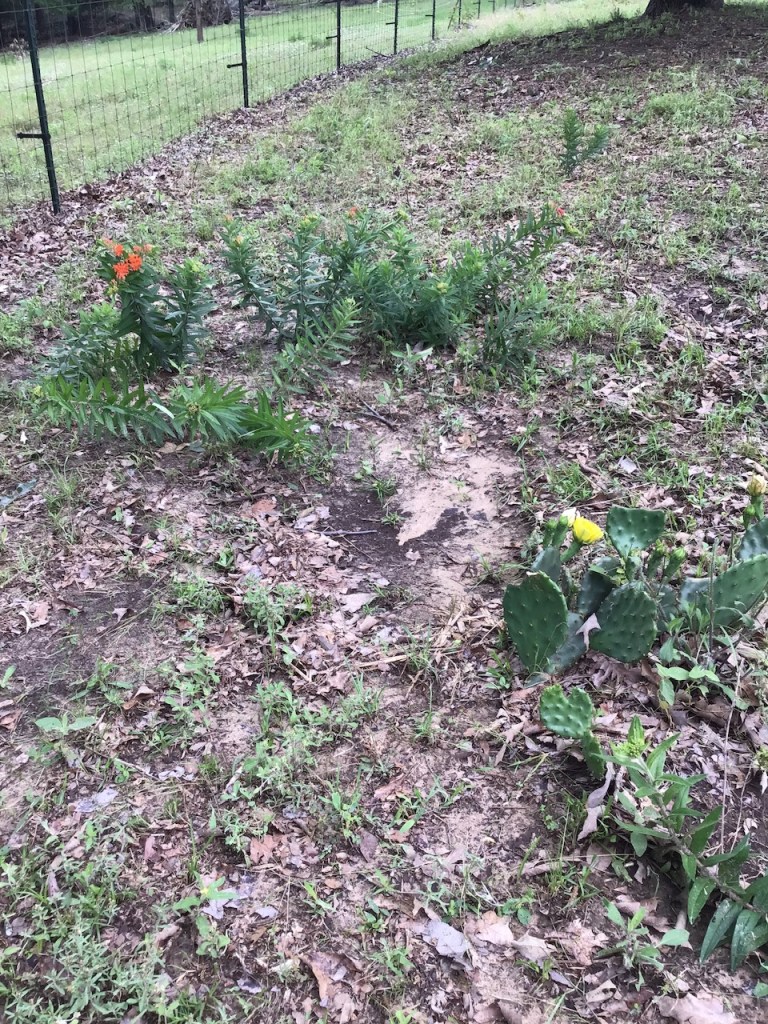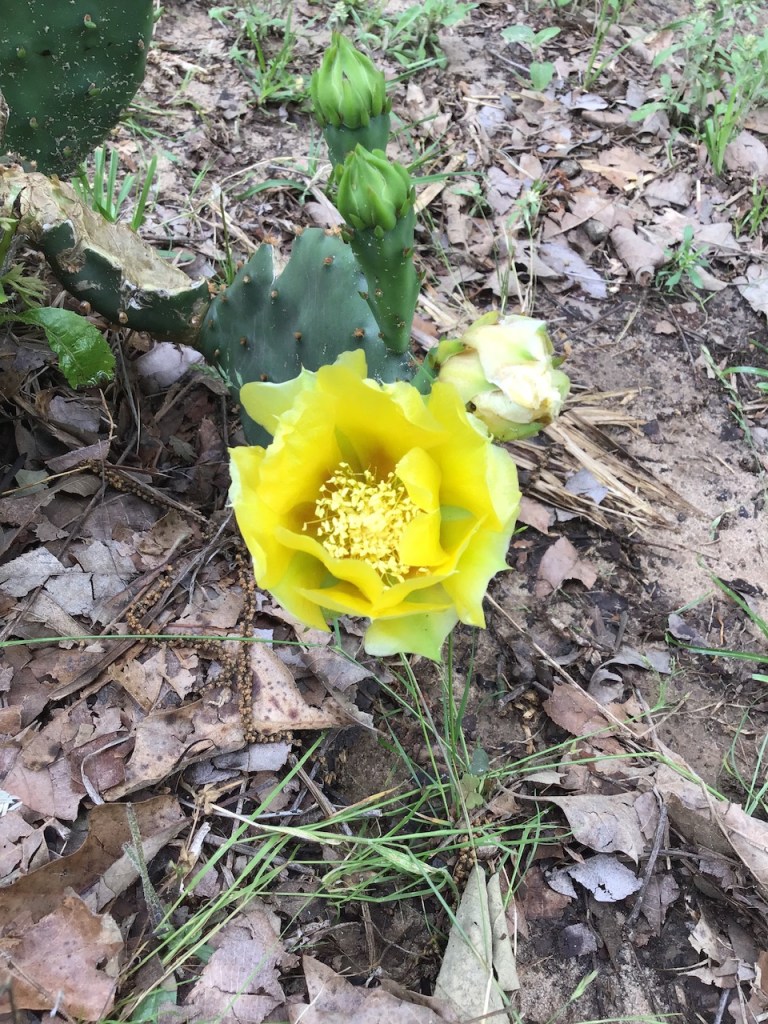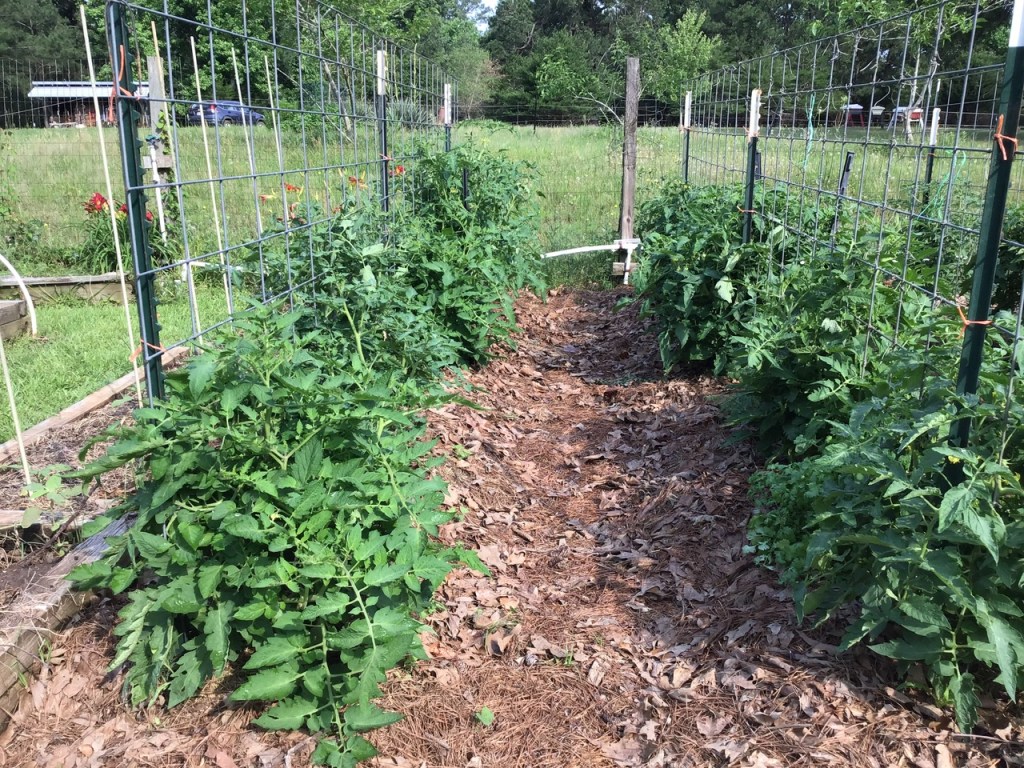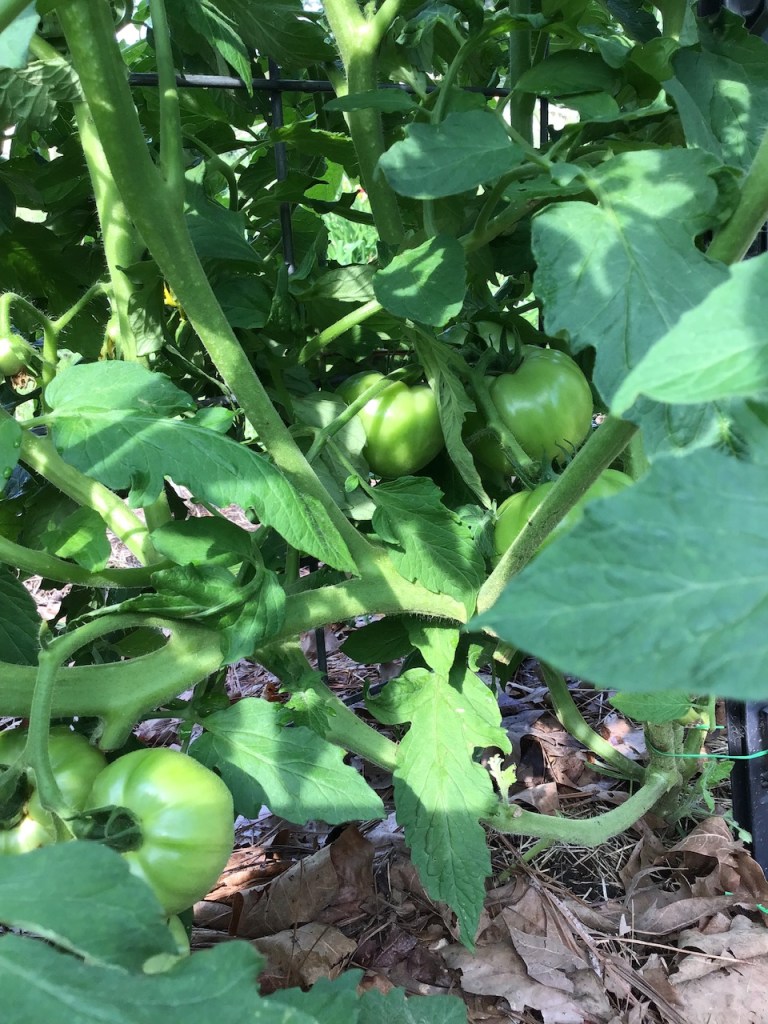
As much as I complain about the weatherâthat is mostly, the man-made weatherâI feel I must give credit when credit is due.
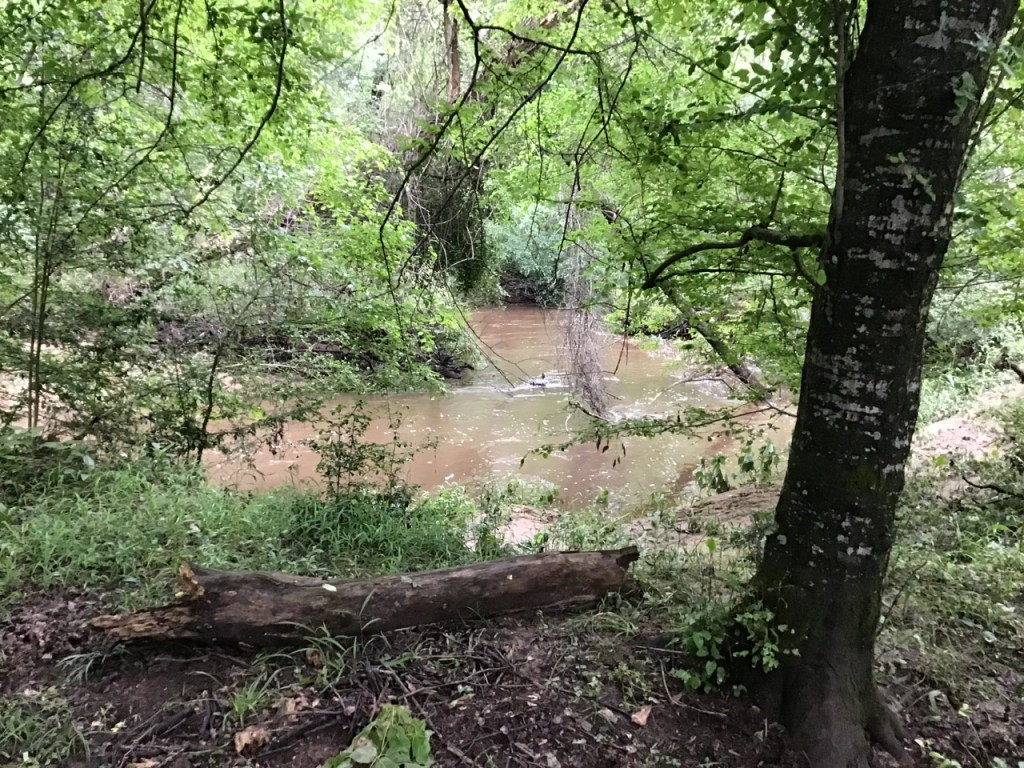
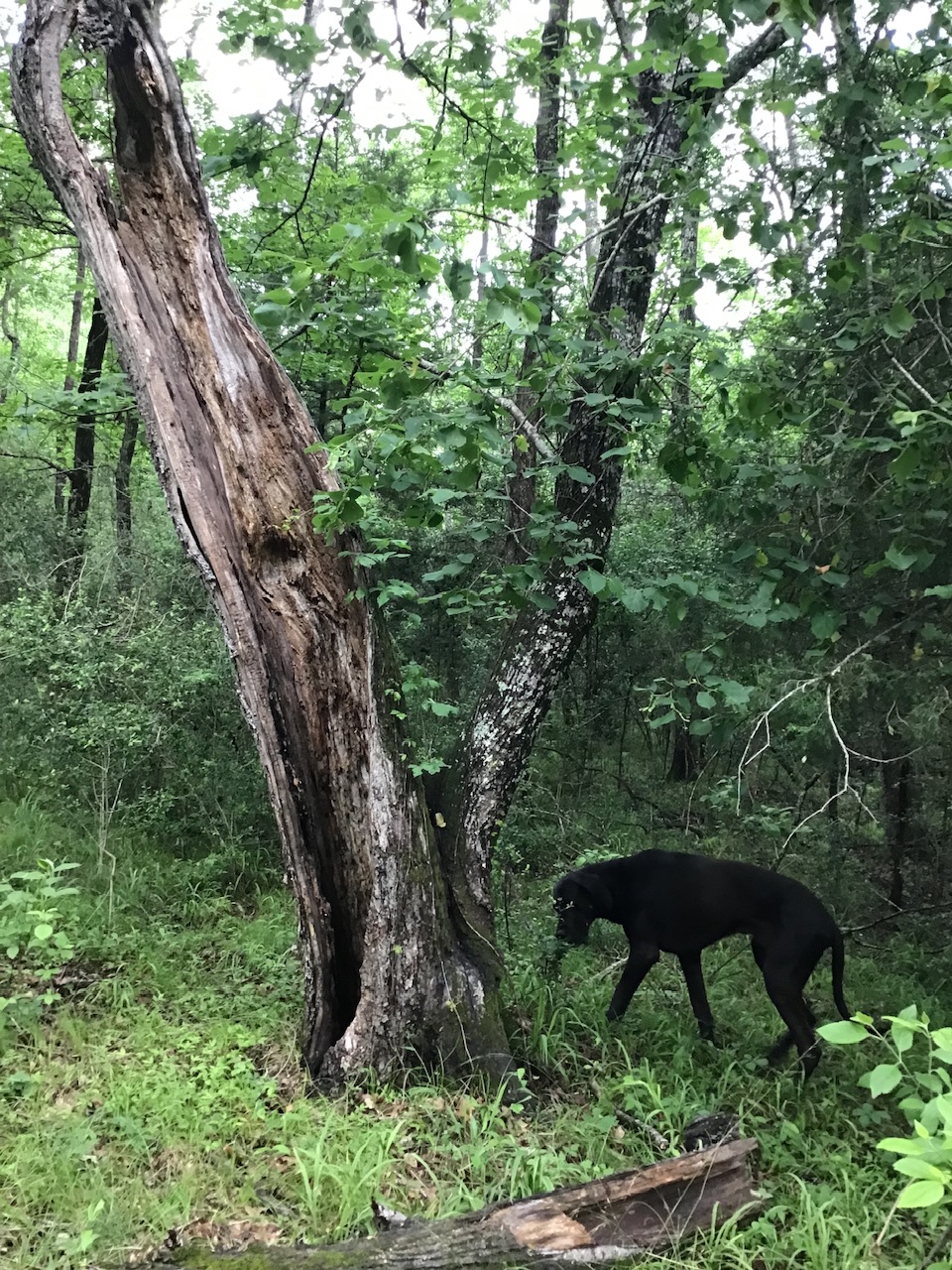
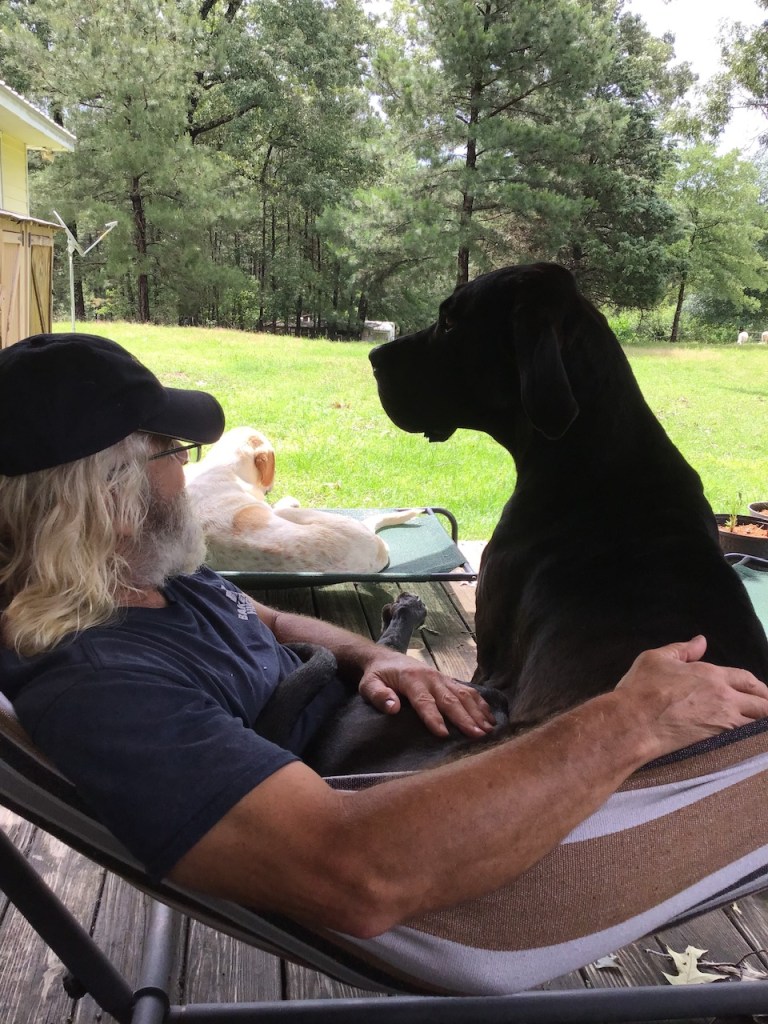
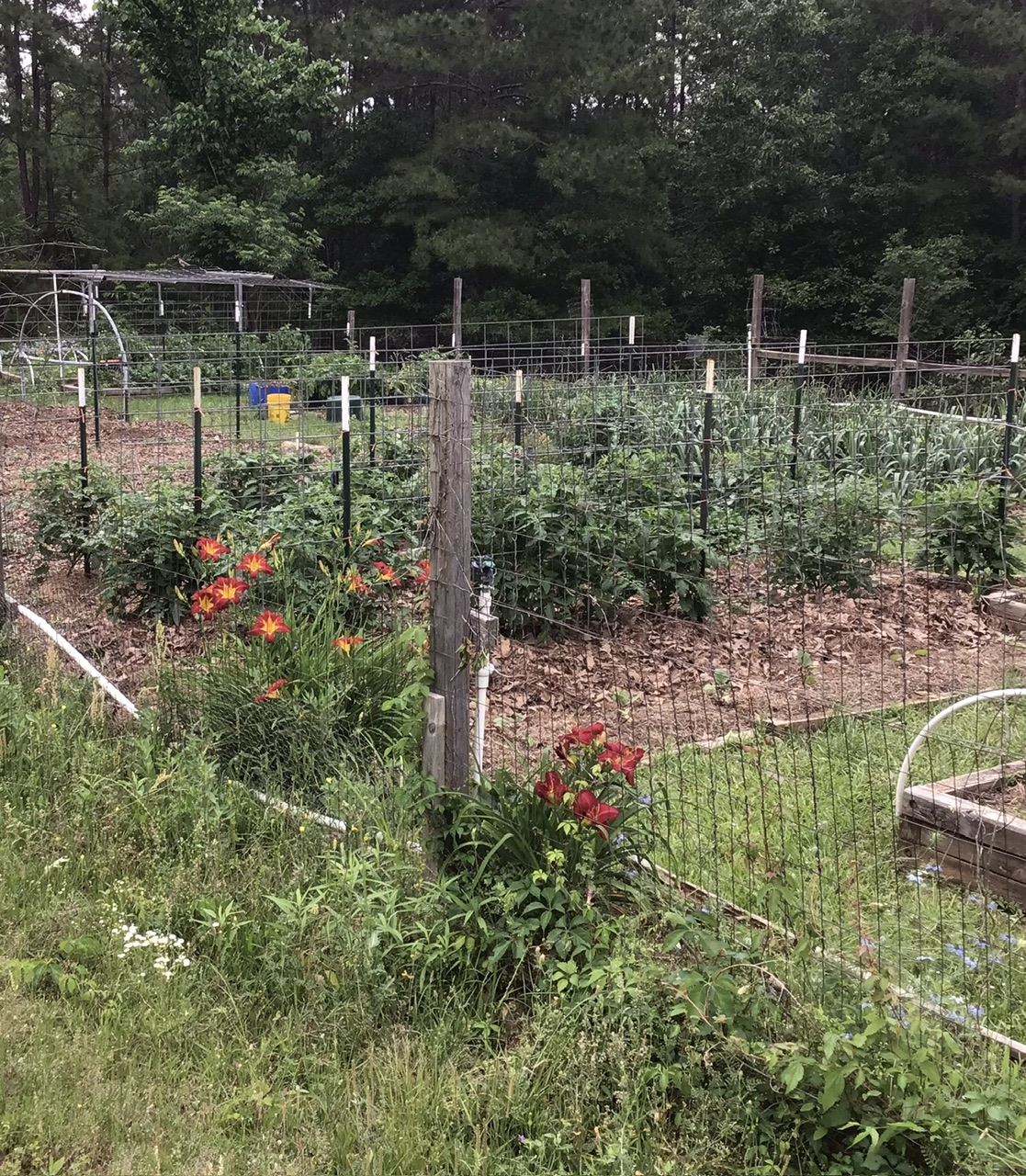
Weâve been having a spectacular spring. Not one hail storm, flood, tornado to speak of. Perhaps still too light on the rain for my liking, but itâs been enough to keep things growing beautifully around here.
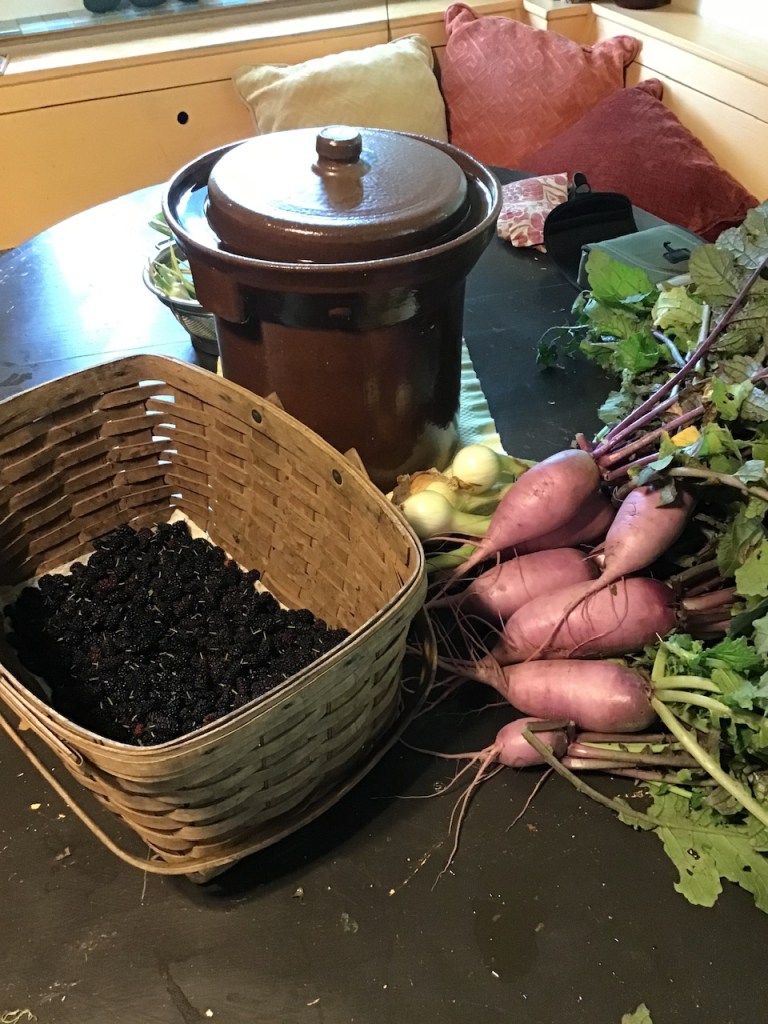
So I just thought Iâd share a bit of that splendor here and now, even though I havenât the time or energy for much else at the moment. Iâve been preparing all week for another basic fermentation workshop, which means a lot of mise en place (thatâs a fancy French expression for âget your shit togetherâ). đ
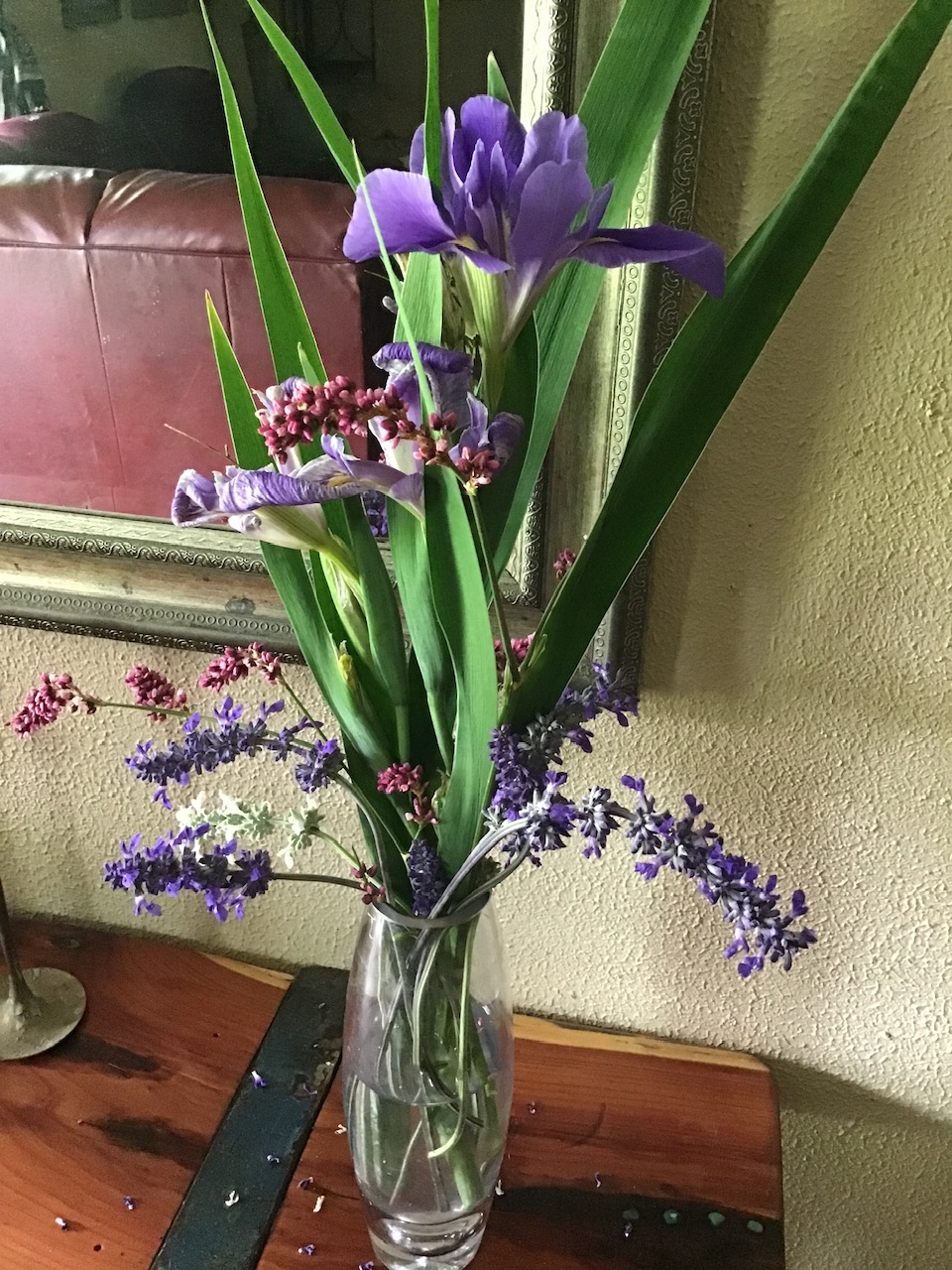
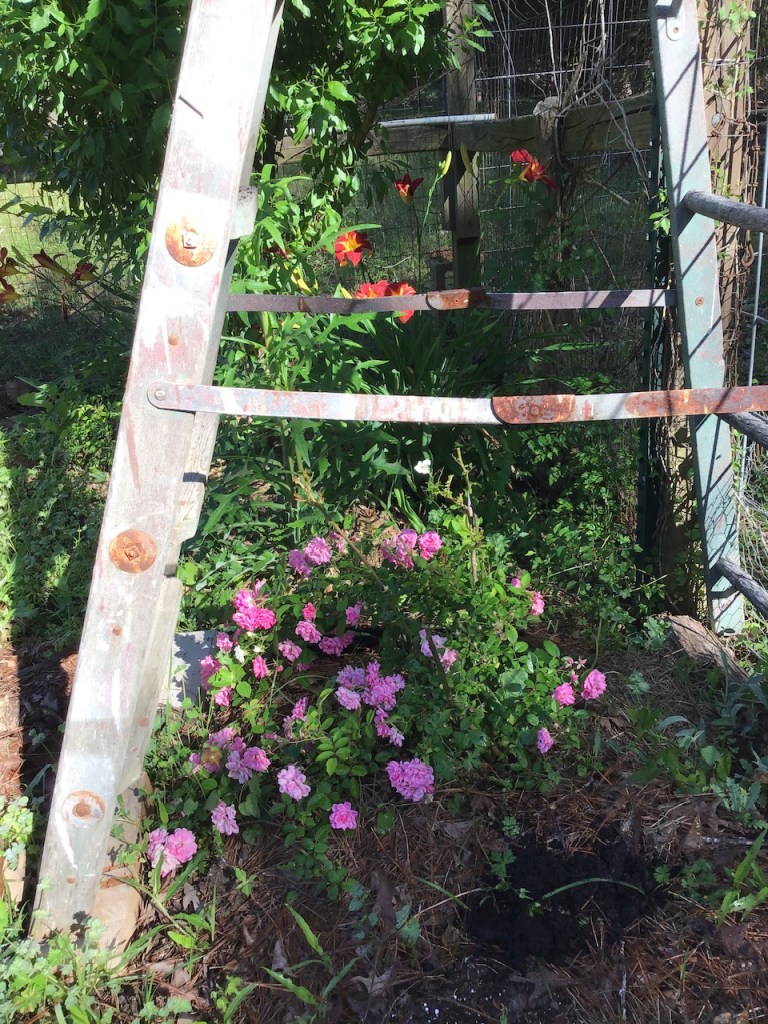
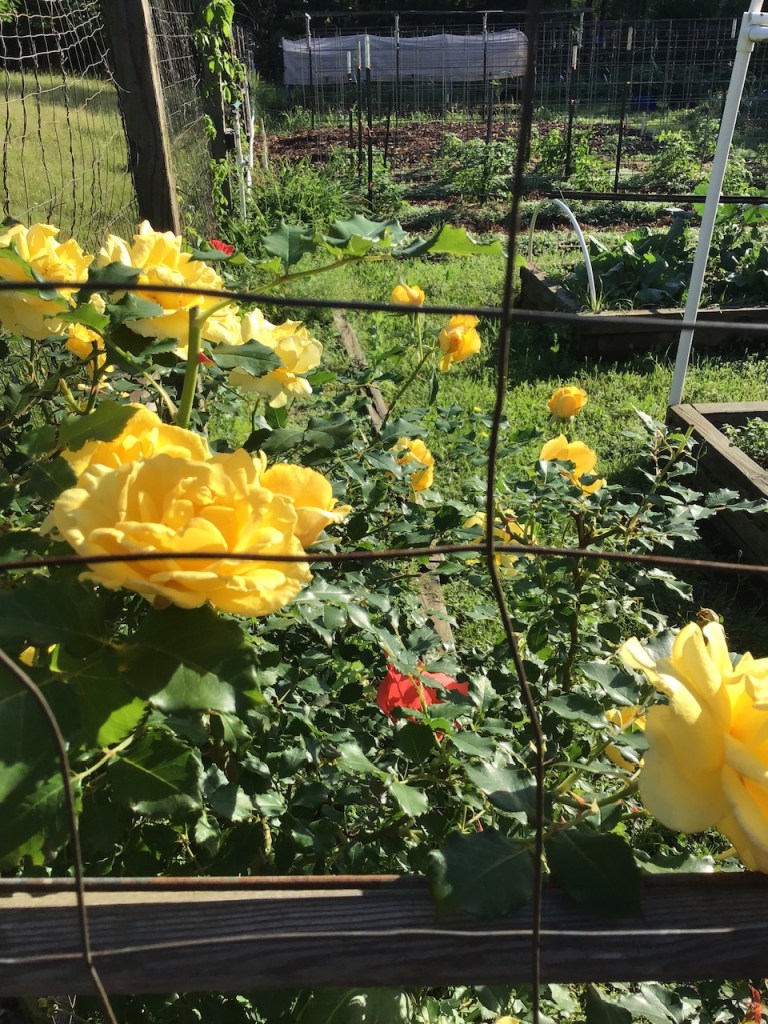
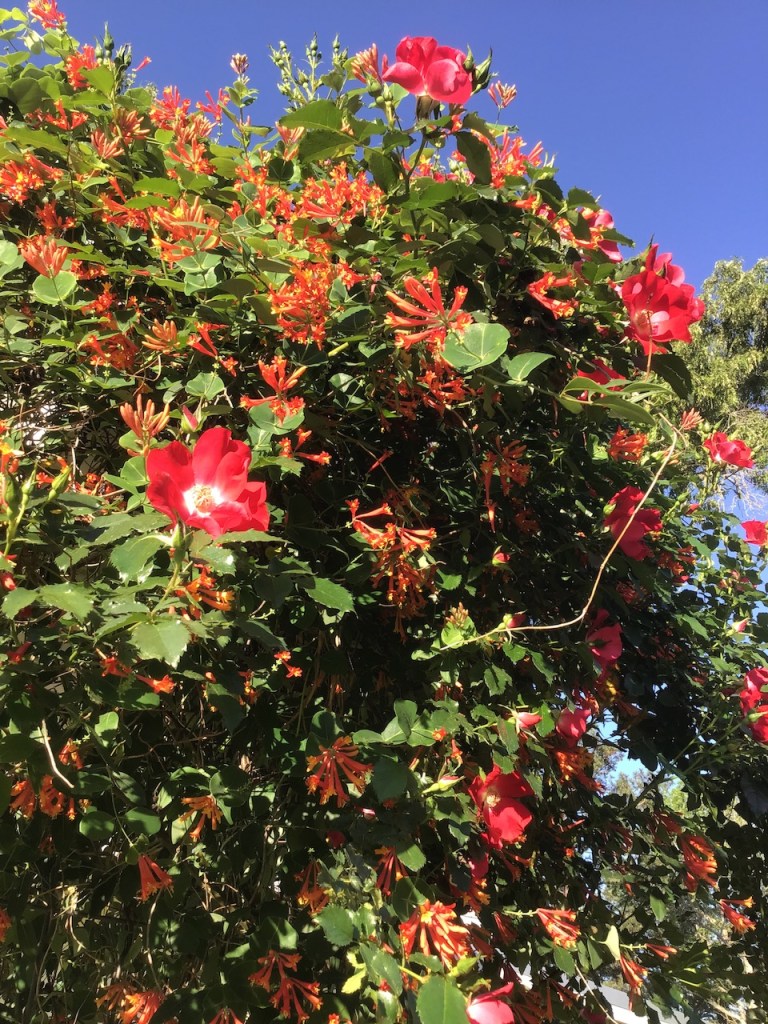
The coral honeysuckle, looking more amazing than ever, with the rose growing in there just about to bloom too. And a hummingbird finally showed up to enjoy it too, but thereâs not a chance to catch him on camera without many hours to spare.
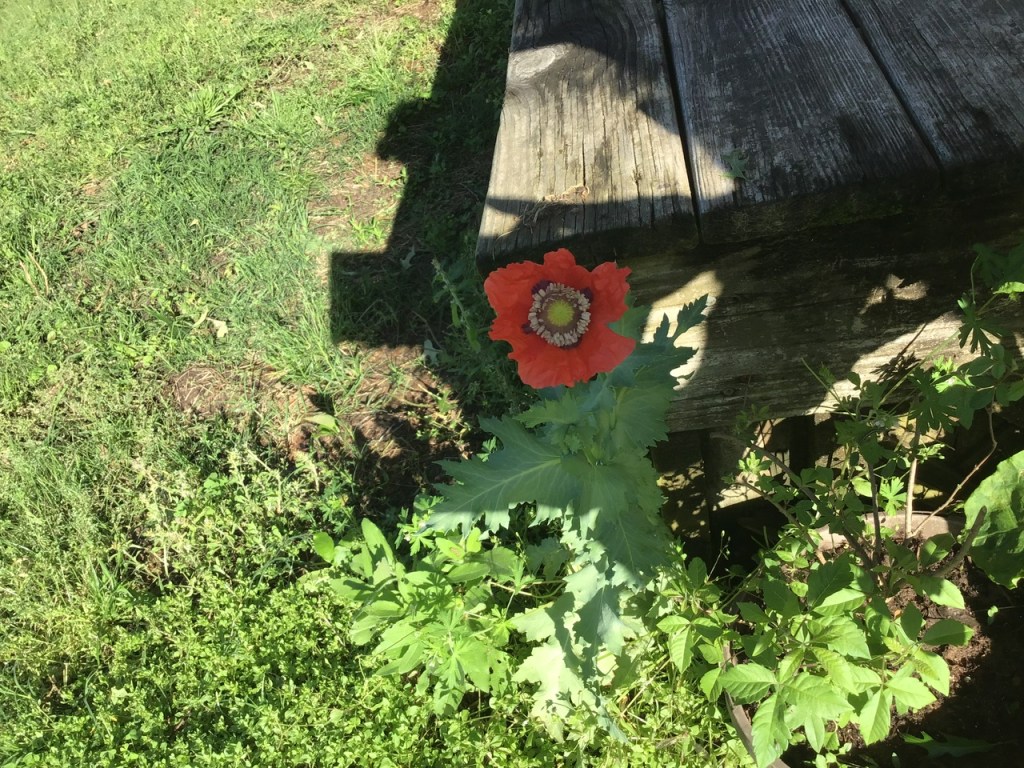
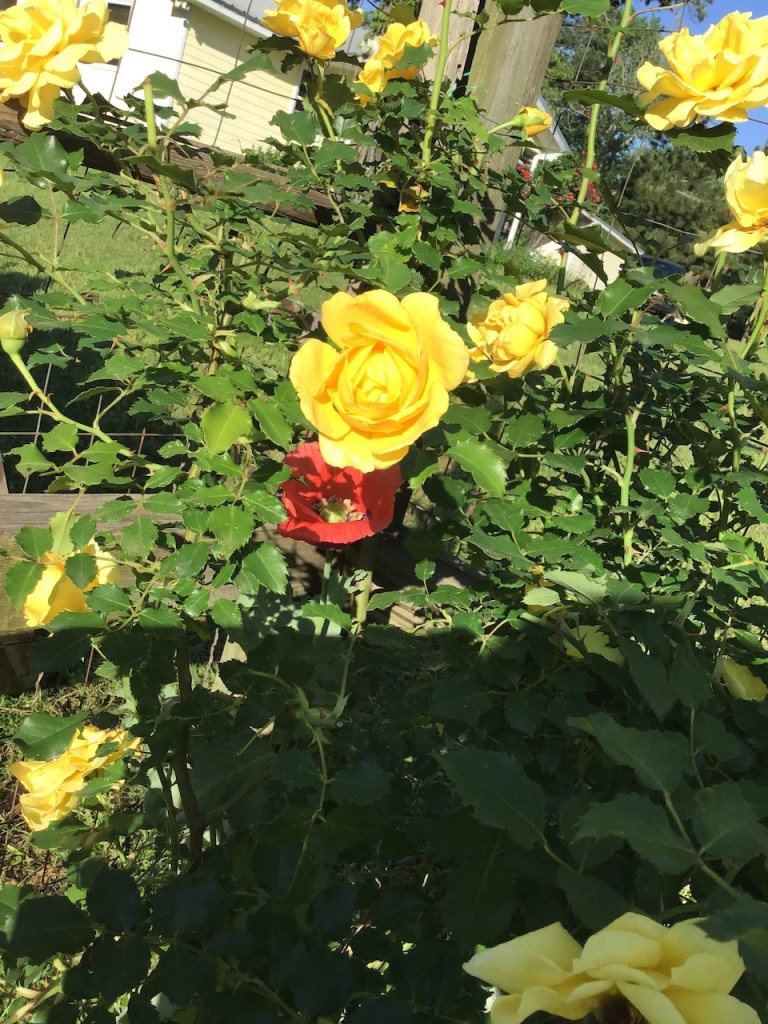
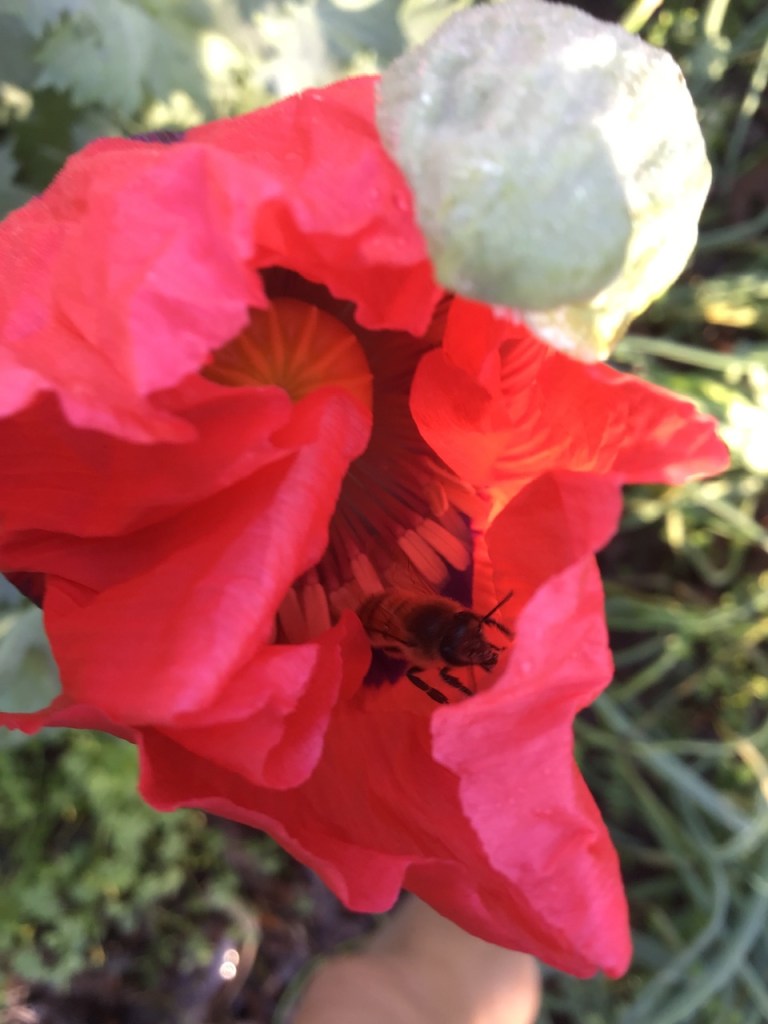
I tossed poppy seeds out by the hundreds, everywhere. And theyâve shown up in the most unusual places, one at a time, in the tiny cracks between wood and grass, under the dogwood, under the mulberry, in the garlic patch and the turnip rows, just one each, out of hundreds.
Iâm glad, I so love them, but I donât get it. Why there? And where are the rest of them?
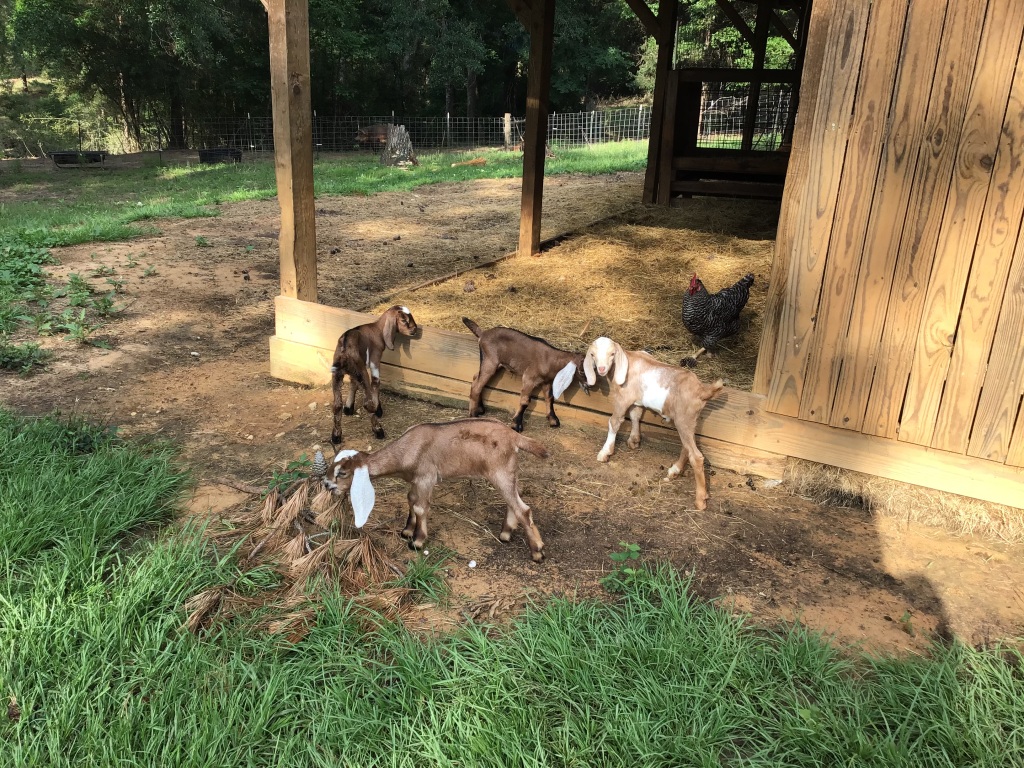
Everybody loves the turnip blossoms, especially the bees and goats!
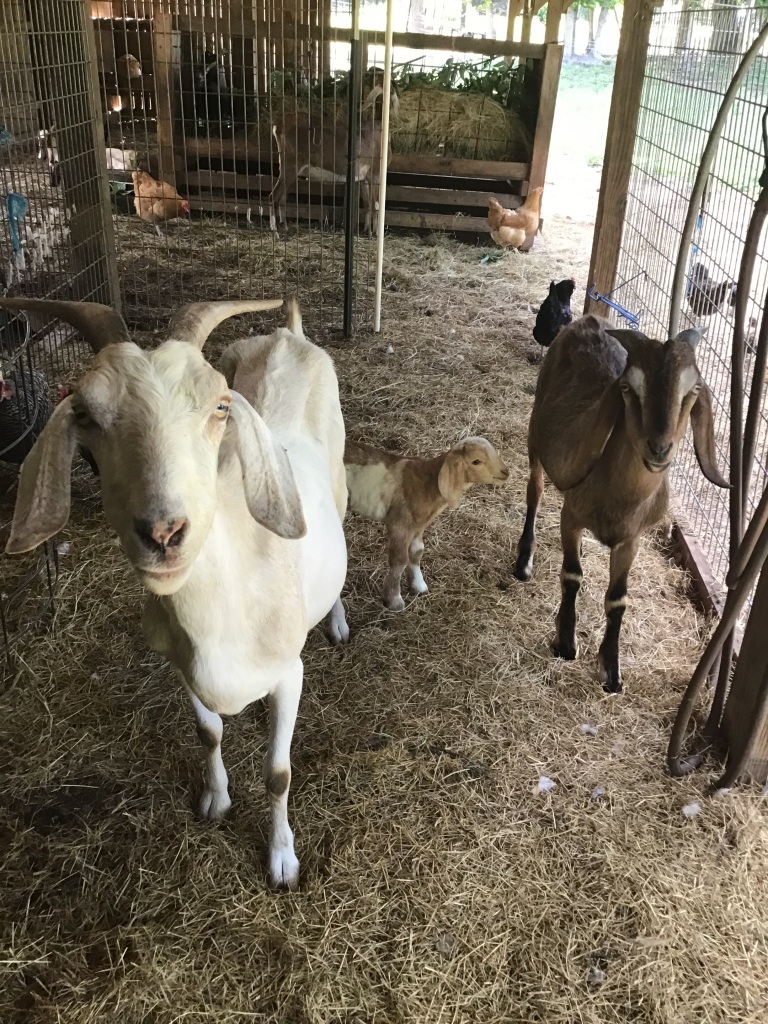
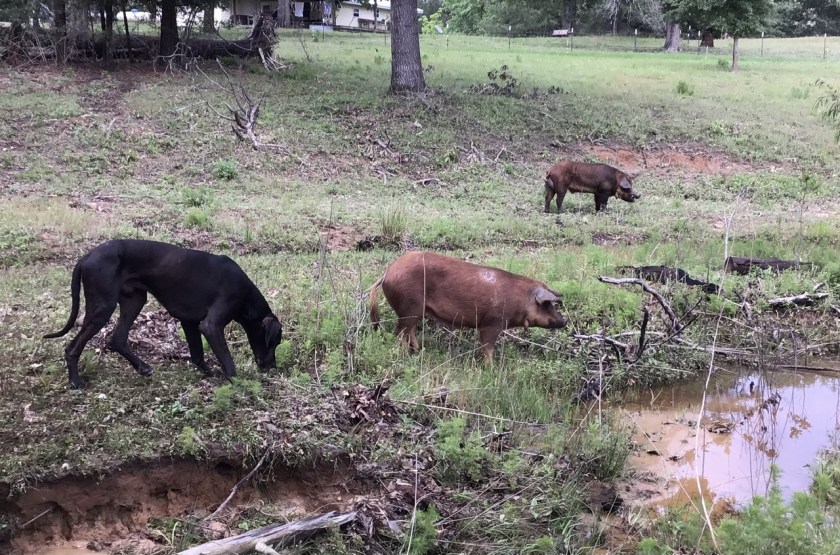
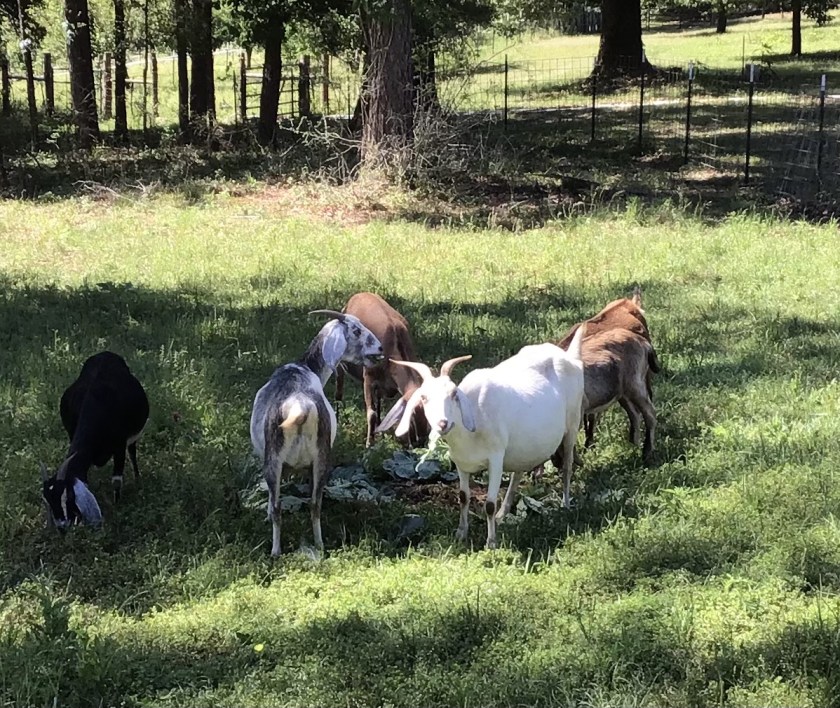
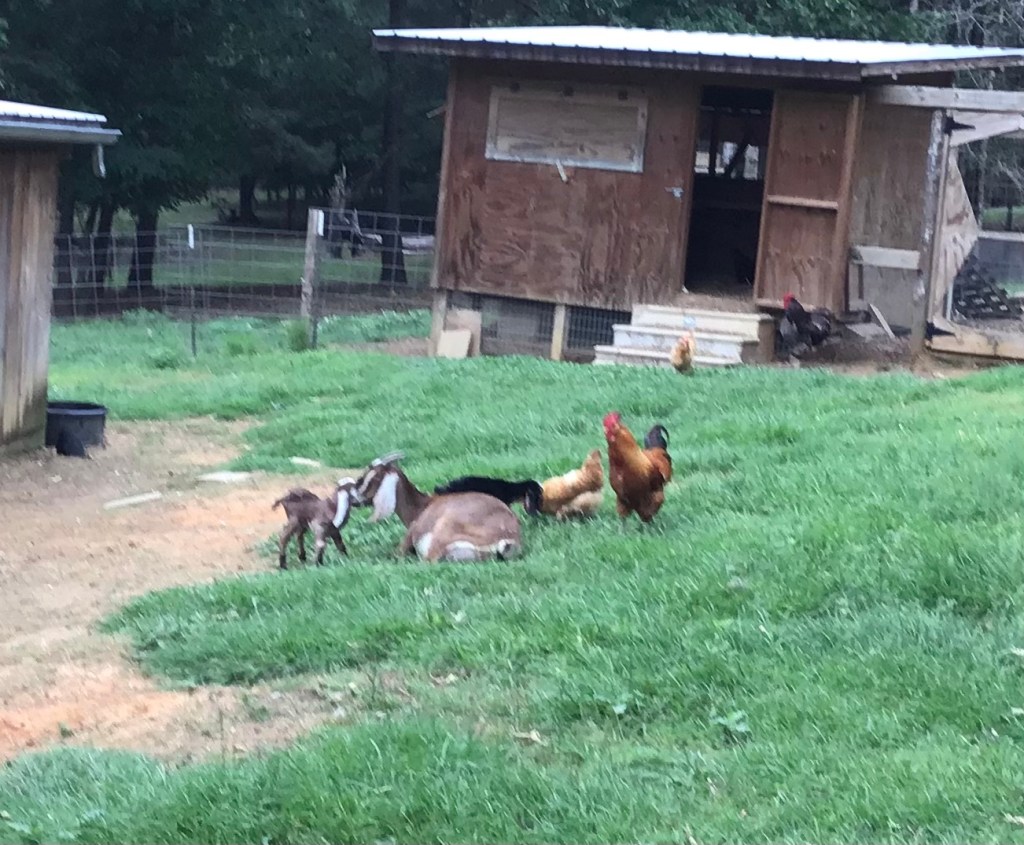
You can see Chestnutâs abscess has almost completely disappeared, hardly visible anymore. But Walnut behind her has torn her ear something terrible, probably in a fence somewhere, doing just what sheâs doing here. We may have to change her name to Van Gogh.
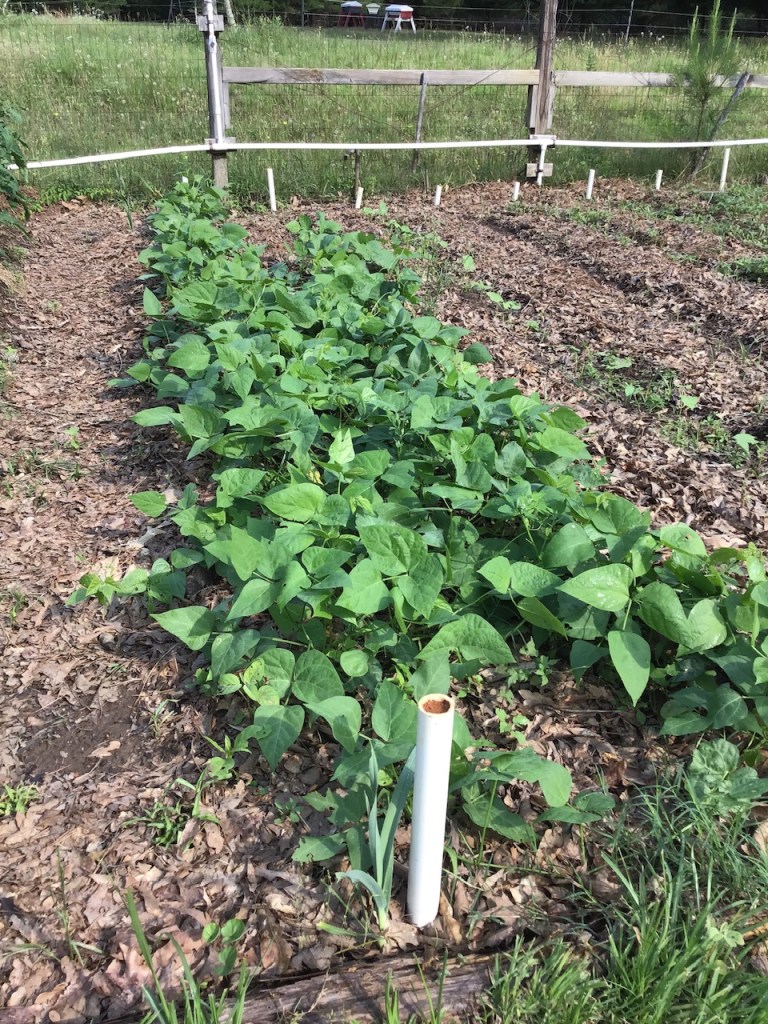
Getting some good kohlrabi and kale and potatoes, and peas, and strawberries and clover, and just about everything, coming in strong.
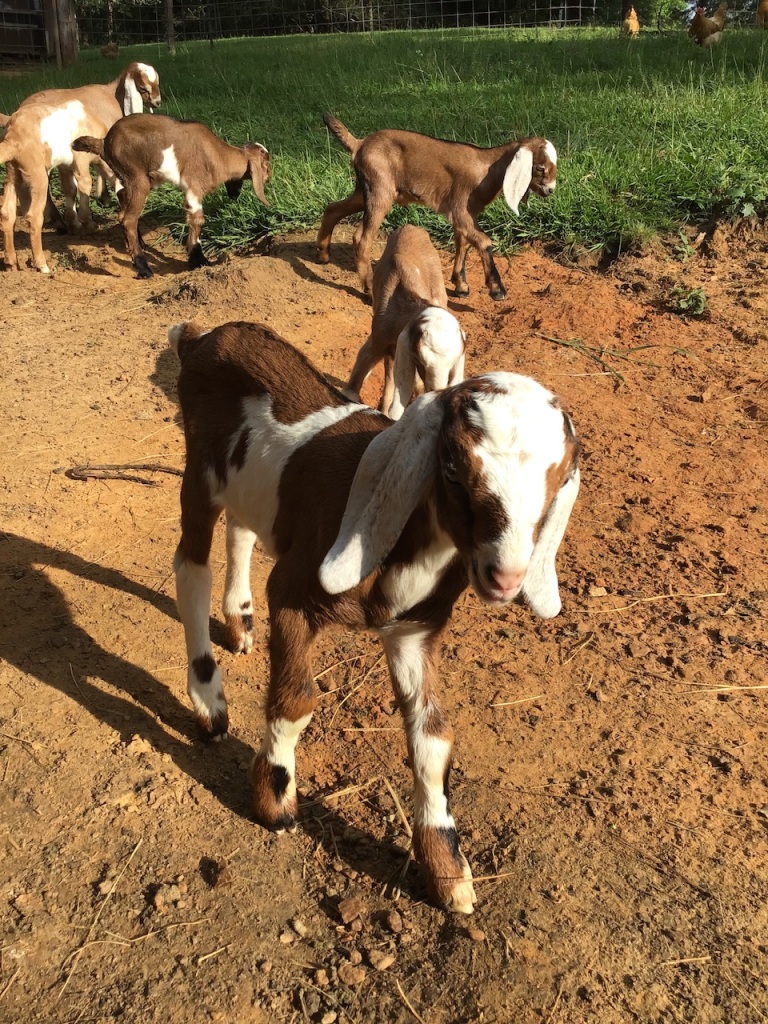
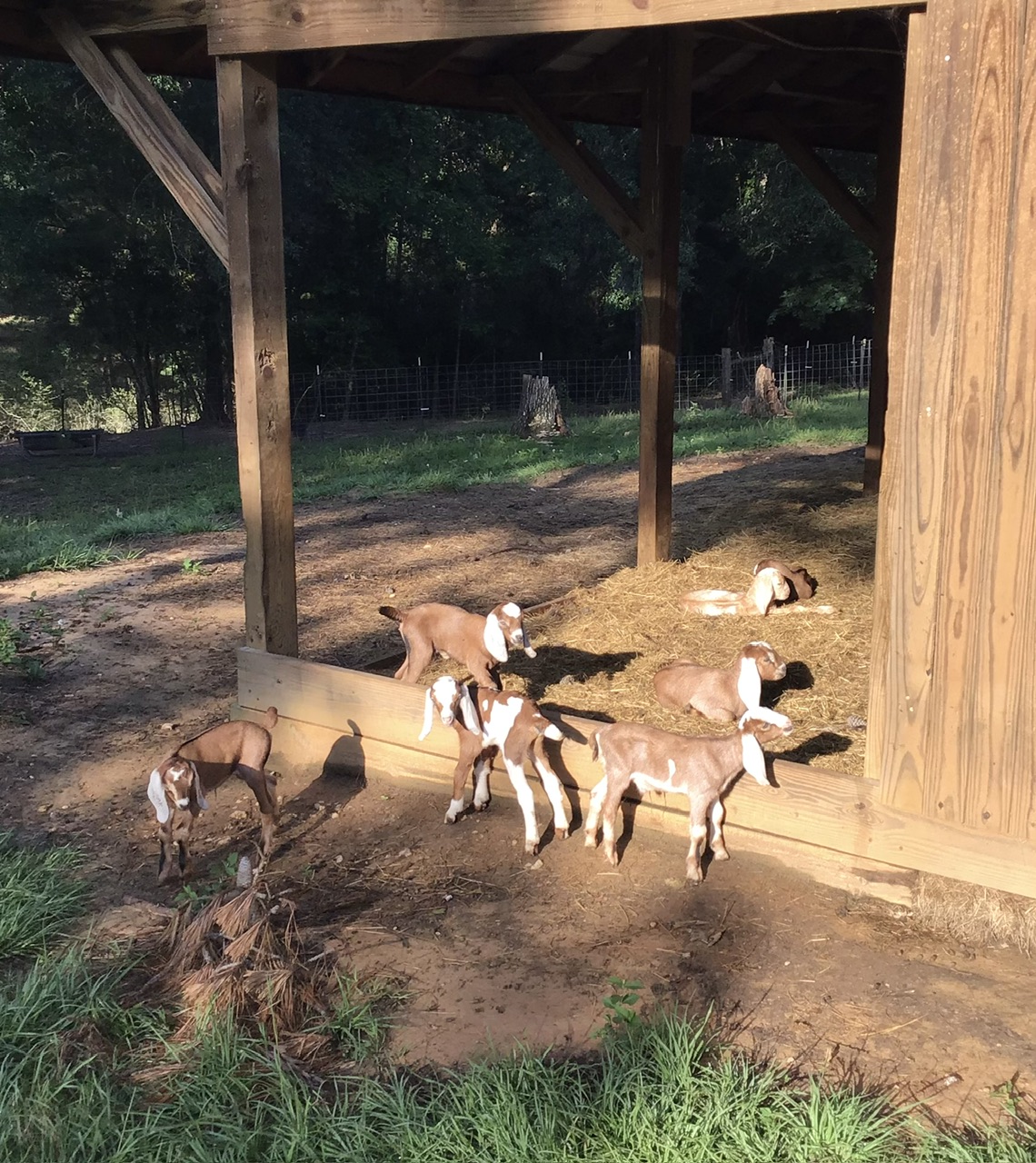
Iâve been meaning to get some cute lamb vid soon too, really! They are at that adorable stage. Next month come the kids!
Following is my personal opinion on: âDaily writing promptsâ* and the personal lives of âActivistsâ.
It should be considered Rated R, Adult Content, Not Suitable for Work. And generally just bitchy.
(Furthermore, it may be considered as a Self-Righteous Rant and a Cowardly Non-Accusation aimed specifically at I know who but will not name, because these are the kinds of fuckers who will publicly come after me to berate a tiny fish in front of their very large audiences. As Iâve seen them do on numerous occasions to others who dare to âcrossâ them, even privately.)
Today, among the political classes and the masses, we have victim groups, instead of individual victims. Itâs a kind of class action diffusion. Itâs like the old adage: 1 death is a tragedy, a million a statistic.
Maybe thatâs why itâs become de rigeur for our âinfluencersâ to pile so much of their personal baggage into the public sphere. Iâm not talking a time or two, or a personage or two, Iâm talking a years-long pattern of âpopularâ people spraying every issue with their personal odiferous and onerous and particularly cacophonous stench.
‘It’s not your work, Hannon – it’s your attitude.’
(And, I want to be very clear here, Iâm not talking about all those folks with personal blogs. Blogging is by its nature a borderline mediaâsomewhat public, certainly not private. Somewhat professional, sometimes, but mostly more like gathering at the cyberhood pub. Personal blogs sharing folksâ personal issues in their lives is a fine genre for generating support and camaraderie and insights and I enjoy and appreciate many of them.)
Iâm talking about those who consider themselves, who are labeling themselves, as activists or influencers or journalists, specifically. Very public folks feeding their audiences on a regularly supply of their constantly distracting and dramatic personal conflicts and dramas.
Landing somewhere between a Mexican soap opera and politiciansâ tawdry nightly news scandals, I find Iâm being increasingly bombarded with the personal lives and conflicts of an increasing number of âadvocatesâ and âinfluencersâ and âactivistsâ and âphilosophersâ.
Who are these people and why are their personal lives weaved in so tightly with their public work?
From their personal lawsuits, to their family problems, to their health issues, to their constant bickering with the oppositionâwhich really makes me wonderâare these activists in fact trying to replace the current Hollywood celebrities?
Itâs like a version of reality TV for the âalternativeâ or âconspiracyâ or ânewsâ buff. Whoâs being censored this week? Whoâs blocked whom? Whoâs going bankrupt? Whoâs getting divorced? Whoâs going to rehab?
And then those very same activists claim their work is all about criticizing the SYSTEM, and itâs not about individuals.
Wait, what?
If this is about the system, why is your audience being constantly drawn to the dramas about YOU, an individual? And your relationships. And your endless conflicts. And your constant frustrations. And your family life. And your love life, or lack there of.
If itâs really not about you, then stop making it about you!
And, on, and on. Every fucking where they go they create conflict. And then âunpackâ it, for hours, for their audiences. How/why is this? Every damn month itâs some new drama with some poor new (or repeat) sap. All over the screens, unavoidable, poking their pathetic noses into my feeds on a regular basis.
How many collaborators must I block while still being subjected to your ânewsâ? Your shifty, and forever shifting, views. Criticizing everyone while no oneâs allowed to criticize you. Whining constantly how you are all about the âgreater goodâ while sucking the hearts out of your collaborators and supporters alike, for years.
Why bring your personal life to your work, and then demand your audience and collaborators focus solely on your work? Either bring your personal shit into the space, or leave it out. Donât be that dumbass bitch who wears her teeny-tiny tank top on the city street and then whines when men gawk at her.
Thereâs a place for airing your dirty laundry in publicâitâs located somewhere between the Red Light District and Donât Ask Donât Tell.
Please yâall, spare me, and park yourselves there, so I know how to better avoid you in future.
________
*Why include those innocent-seeming âdaily writing promptsâ in my diatribe, like those shuffled out right here on WP, you might ask?
Because they are invasive and I believe a stepping stone onto the TMI stage. Diffusing your victimhood or childhood fears or daily dramas through writing is cathartic and can be healthy, within safe environments and safe people.
These platforms are not safe. A nameless/faceless/largely invisible audience is not safe. Being a public figure in general requires a certain level of risk. And, being courageous enough to publicly share your difficulties in order to help or educate or vent or encourage, or even criticize others is not the problem.
Itâs the deliberate and repeated interference of the private sphere into the public forums that is collapsing healthy discourse and glueing the undiscerning public eye on the train wrecks of the characters speaking over the actual social issues in question.
If thatâs not a deliberate diversionary tactic, it sure the hell looks like one from where Iâm standing. These are âprofessional activistsâ doing a grave disservice to public activity. And the platforms are encouraging it because it generates copious data and more eager audiences around otherwise rather dry topics.
Itâs the âClinton-Lewinsky Effectâ of the Activistsâ Cult and when I see it happen 3 times with one activist I know they are a card-carrying member of this cult and thatâs the sign itâs high time to step away from their addictions, distractions and shenanigans.
The exciting season continues! Mostly plant talk this post. And, weâve got our first lambs, Iâm workinâ my first wattle fence, thereâs some flower photos and fancy garden plans.
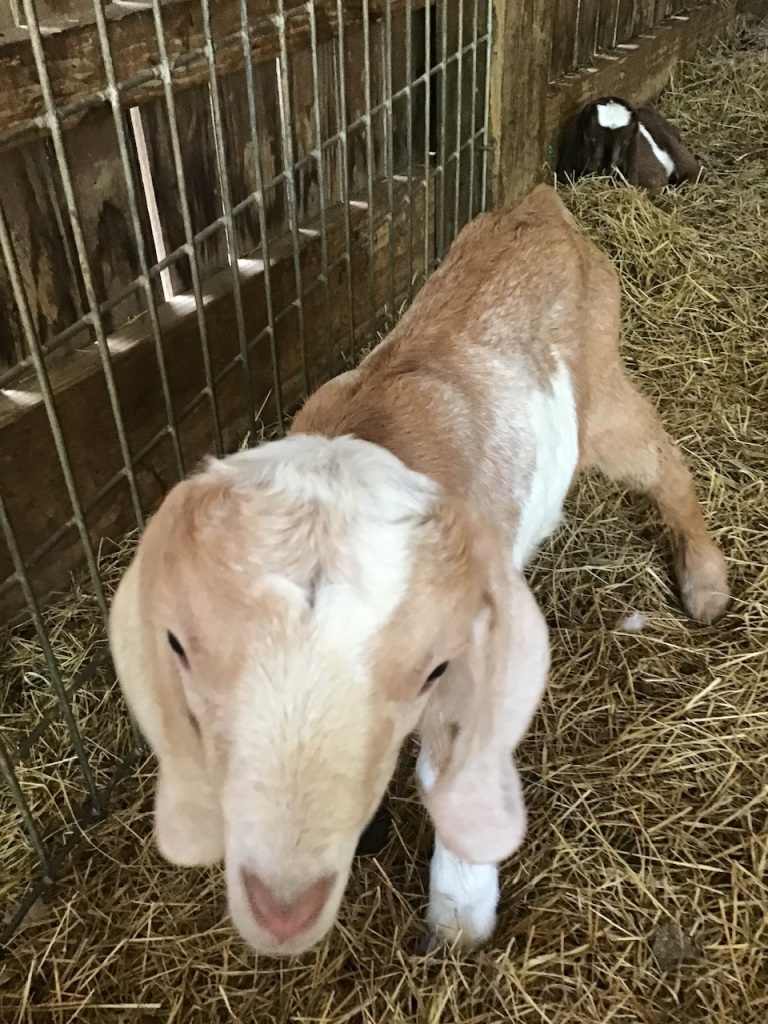
A first-time mama is the first to drop a perfect set of twins!Dogwoods blooming beneath oaks
Trumpet, or coral, honeysuckle on our front porch usually attracts hummingbirds by now. Itâs looking gorgeous and Iâm quite proud of it because itâs one I propagated from the wild. But, where are our feathered friends?
Seed saving has definitely upped our game in the garden. Buying seeds is certainly far easier than saving them. Where we once just had to plan one large garden space, now there are three. It feels like juggling! Youâve got to keep all the spaces perfectly coordinated. I had to make a chart. I am not a chart sort of person. Iâm the kind of person who instantly glazes over at the mere inclusion of a chart in any piece of literature.
So really my chart was more like a list of doâs and donâts in a useless graph format. Donât plant the pumpkins with the zucchini. Donât plant the luffa with the Trombetta. Do plant different varieties of cucumbers, peppers, melons and watermelons at least 1/2 mile apart. (Is that even possible?) Musk melons and watermelons are safe to plant together, but French cantaloupe most certainly cannot be planted with American varieties or with green melons.
And thatâs just the summer seasonâs produce, thereâs a whole different set of charts for the winter veggies.
Luckily, Iâve got some good guidance in a great book and, even better, some bigger minds to follow in the form of Gavinâs Newsletter. Heâs just started a book club and his first book up for April just happens to be the one Iâm reading.
Why save seed? From the book we learn a few good reasons: *selecting for specific traits, *preserving diversity, *saving money, *creating superb plants, *And, going on an adventure. âThe art of saving seeds may so intrigue you that youâll branch out to your own plant-breeding adventures with such long-term seed-saving projects as growing oaks from acorns.â
Perhaps that could be me! Or perhaps I shouldâve started this about 30 years ago.
But, those do all sound like good reasons to me, plus Iâll add one more. Itâs a good way to exercise your body and your brain at the same time.
But, propagating something so slow-growing from seed at this stage of life, I think Iâll need more bang for the buck than an oak. Like, this magnificent magnolia!
(Photos sent by a friend in UK, wow, what a specimen!)
Of course, not all seed saving is complicated. After all, it used to be something every farmer would do, and their children, too. If Iâd grown up doing it Iâd probably think Iâm making much ado about nothing.
In particular, most of the common herbs we loveâdill, cilantro, basil, parsley couldnât be easierâlet them go to seed, collect the seed once dry, keep in a paper bag over winter, and sprinkle back out in spring.
Easy-peasy, leaving more time for flowers!
More flowers, herbs and medicinals has been the big goal besides seed saving. Iâve always liked hollyhocks and other traditional âcottage gardenâ favorites. How fortunate for me to find one Iâve never heard of before, with a really cute name.
Inspiration photo only, real or photoshop, no clue
Flower name: âKiss me over the garden gateâ Latin name: Persicaria orientalis (formerly Polygonum orientale) is an annual member of the buckwheat family. The tall plants produce pretty pink pendulous blooms.
Iâve just planted it under the bedroom window inside my work-in-progress wattle fence.
Whatâs a wattle fence?
I had no idea what that was until I read about another blogger, Re-Farmer, building one. It looked like a fun and do-able project perfect for a precision-challenged person like myself.
And it is! There are lots of YouTube videos on the process, but I think this one was the bestâa much taller and longer wattle fence than Iâve tried to produce, but who knows, as my skills develop I could step it up a notch. đ¤
The other big garden plan this year are a few citrus trees. Weâve been wanting them for a long time, but all fruit trees are a challenge here with our crazy weather. (And itâs not just us! All kinds of complaints about it from YouTubers and neighbors alike. It didnât used to be like this.)
Anyway, this guyâs got some great suggestions and solutions and we so love our citrus, so weâre going to make an investment toward our citrus-filled future with Myerâs lemon, Mexican lime and Satsuma orange.
Another small plan is more peppers, specifically seasoning peppers, also called spice peppers (though they arenât always spicy as in hot), like pimientoâs and such.
As much fermenting as Iâve been doing I see they are an excellent addition to all kinds of dishes. Plus, peppers do pretty well here usually, and they harvest in fall when thereâs little else happening, and they are lovely little plants some folks grow just as ornamentals. Four excellent reasons to squeeze them into the rotation. Hereâs one variety Iâm trying:
â(C. chinense) 99 days. (green > orange-red > red) [Venezuelan heirloom. Seed source from Donna Hudson in TN.] Has the same shape, size, color and aroma as Habanero, but is sweet, spicy, and delicious, with only a trace of heat. Highly aromatic fruits; their flavor is unusual and complex, with overtones of black pepper and coriander, and undertones of other spicy flavors. An excellent choice for sautĂŠed vegetables, rice and bean dishes, paprika, or herbal vinegars. The thin-walled pendant fruits are 1 x 2 in., tapering at both the stem and blossom end. Plants have good foliage cover and bear at 18 in. high. Seedlings grow slowly at first, but grow rapidly later in the season to 48 in. or more.â
Like I said, itâs the exciting season on the wee homestead!
Oh how I love a good laugh in the morning! Or, any time of day. This is a Substack, The Farce Feed, I just found and I just have to share todayâs post, soo funny.
My favorite part of this post: âwith bonus points for dramatic reenactments of historical injustices.â đ. Whatâs yours??
âIn a move that has highlighted the absurdity of modern day politics, Democrats have announced plans to host the first-ever “Oppression Olympics,” a series of tournaments aimed at determining who holds the prestigious title of the most oppressed and marginalized person in the world.
The five-day event, scheduled to take place in Portland, OR, is sponsored by The American Civil Liberties Union (ACLU), the Gay and Lesbian Alliance Against Defamation (GLAAD) and the Southern Poverty Law Center (SPLC), and promises to be a spectacle like no other. Below is a partial list of scheduled games.
“Mental Gymnastics”: Contestants will dodge facts and reason for dear life using as many logical fallacies and false equivalents as they can muster up in a given time, with virtue signaling prowess taken into consideration.
“Microaggression Marathon”: Participants must navigate a course filled with tiny, seemingly harmless comments and actions, earning points for the most exaggerated reactions.
“Privilege Pole Vault”: Athletes compete to see who can vault over the highest bar of privilege, with extra points awarded for creative excuses, responsibility rejection and privilege-checking mid-air.
“Gender Pronoun Juggling”: Contestants juggle multiple gender neo-pronouns while engaging in casual conversation, with penalties for any slip-ups or misgendering.
“Triggered Triathlon”: A grueling test of mental fortitude, participants must navigate through a series of triggering scenarios, from controversial opinions to unexpected confrontations, all while maintaining their composure and resisting the urge to rant on TikTok.
“Safe Space Synchronized Swimming”: Teams of synchronized swimmers perform routines while staying within the confines of their designated safe spaces, complete with emotional support dolphins.
“Woke Weightlifting”: the point is to see the least amount of weight contestants can lift before breaking a sweat, while replenishing with soy protein shakes in between half-assed sets of bicep curls.
“Inclusive Interpretive Dance”: Dancers express themes of diversity and inclusion through interpretive dance, incorporating elements of different cultures and identities while avoiding any hint of cultural appropriation.
“Snowflake Snowboarding”: A group of extremely easily offended participants snowboard down a course made with artificial snowflakes, and the winner gets to cut ties with the other competitors over a minor difference of opinion.
“Critical Relay Race Theory”: Teams of runners pass infinity stones of wokeness to one another while espousing divisive Marxist ideology.
“Defund the Polo” (AKA “Pro-Crime Cycling”): contestants will attempt to one-up each other by stating the most egregious crime they’re willing to excuse and decriminalize, including rape, murder and necrophilia.
The winners of each competition will face off in a final battle, the “Oppression Obstacle Course,” where competitors navigate a course filled with obstacles representing various forms of oppression, from glass ceilings to institutionalized racism, with bonus points for dramatic reenactments of historical injustices. First place champion will win the coveted position of Harvard University president, complete with a $1.5 million salary, while second and third place will be awarded positions of their choosing in the Biden administration, in addition to sponsorships from feminine hygiene product companies, unless, of course, they are biologically female.
In response, Republicans have announced “Based ball,” where chuds will compete in a game of moral convictions, righteous indignation and moral panic, with an emphasis on cult of personality, excusing obvious flaws and colluding with the opposing team among the higher ranks.
“We believe it’s important to recognize and celebrate the struggles of the oppressed,” said one Democratic organizer, struggling to keep a straight face. “And what better way to do that than by turning it into a competition?”
Critics have been quick to point out the absurdity of the event, accusing Democrats of trivializing genuine issues of oppression and marginalization in their quest for woke virtue signaling. “This is just another example of the left’s obsession with identity politics,” remarked one skeptical observer. “Instead of focusing on real solutions to real problems, they’re busy staging a circus of victimhood.”
But supporters of the Oppression Olympics argue that it’s a necessary step towards anti-racism and decolonization, and anyone who disagrees is a homophobic, transphobic Nazi deserving of physical assault and cancellation.
As the world braces itself for the spectacle of the century, one thing is for certain: the Oppression Olympics are sure to be a gold medal-worthy display of absurdity, proving once and for all that when it comes to the delicate art of offense-taking, nobody does it better than far-left extremists. What are your thoughts on this newly announced series of competitions, and are there any games you’d like to see added to the list? Let us know in the comments below!â
I think theyâre new, so I hope youâll go there and send some love! đĽ°
This blogger has really got me thinking today. Iâve been following her for quite a while now because she lives in a gorgeous part of the U.S and has similar interests and has an innately creative eye. She typically posts awesome photos of birds and her huskies and mountain views and has been growing in her homestead lifestyle a bit more all this time.
Except this last year she went on an extended road-trip across the country with her hubby who has a unique job.
The part about the trip that interests me is not so much about his job, but about her observations. And this is not a post to put her on the spot to tell more of her stories, though that would be great I think!
Actually Iâm just wondering if anyone else would care to share?
She feels more committed now than ever to extend her homesteading efforts. She saw a lot of drugged-out loonies and homelessness, across the country.
Like I mentioned to her in the comments, we donât get out much anymore. We donât trust the media much. We arenât on the major social platformsâwhich means we donât get nearly the propaganda, or on the flip side, the true accounts of the mass of folks.
So, I would honestly like to know. Howâs it like in your corner of the states or the world?
I wish to express to her by sharing this how valuable her observations and insights really are, because these are tough conversations to have, and too easily avoided, and it seems high time to start talkin more about it. ALL!
Thanks for reading, and sharing, itâs a beautiful thing we can still do here!
Such an exciting season around the wee homestead! Weâve got mostly happy snaps and cute vids to share this postâgrowing piglets and bees and veggiesâyippie!
Iâll save the unsavory stuff til the very end, that way those who must can just skip it. (Mighty generous of me, eh? đ)
Letâs begin with a bumper crop of piglets, 11 of them, here trying to figure out the basics. This is just one day old, my arenât they some quick learners!
Later we have a couple more from today, at one week old.
Sheâs been an excellent mama, Patty, this is her 2nd litter.
The garden is going strong already and this is definitely the earliest Iâve seen bumble bees out and about. March 15 is our average last frost date around here, for whatever thatâs worth. Considering weâve seen snow-covered Indian paintbrush before, we donât put a lot of stock in that date.
If we donât get a late frost this year it will be our earliest ever for summer planting. Iâve already got cucumbers in! The tomatoes are just about to go in and the peas are presenting perfectly.
Peas and fava beans planted together. If it gets too hot too quickly they will be a bust, but we do love when they succeed.
On left in the basket is celeriac, another fav of mine I try ever year, but like the fava beans and peas, it all depends on the temperatures if weâll see a harvest. Next to them are tomatoes started under lights indoors and hardening now before planting in a day or two. Iâll plant some indeterminate varieties in about a month, hoping theyâll last longer through the heat. On right, the onions and garlic are looking great.
The old pears have already flowered over a week ago, here you can see Papa Chop napping while surely enjoying their sweet scent wafting on the breeze. Along with the bees!
On the right you can see me filling up the new hive with bees that over-wintered in the nuc where they positioned themselves last spring.
This was such a memorable experience last year that we managed to catch a bit of on vidâwell worth the watch as the colony we just captured as a swarm moves from the hive I tried to put it in into the nuc Iâd placed as a bait hive, moving themselves within just a few hours from one side of the garden to the other.
This was a swarm we caught and first tried to transfer to a different hive on the other side of the garden. The bees had a better idea.
This was the swarm last spring. It was just a small one and I guess they just didnât feel quite ready yet for the big hive I tried to place them in.
Thank you maâam, but we prefer it over here!
Well, this time they were a little more receptive to my preference and they are in their expanded home doing fine. đ¤
The piglets are so cute itâs hard not to take multiple vids watching them. I donât edit yet, but maybe someday Iâll venture into more serious farmish filming.
And another âŚ.
But, itâs not all peaches and rainbows for the piglets. Because you know, âmale privilegeâ. Last year Hubby learned to castrate, which is an absolutely necessary skill if youâre serious about raising pigs. He did the deed, heâs gotten rather quick and good at it, so we made a couple of vids this time. Hereâs the intro.
Iâll refrain from posting an example of the dirty deed though, which I could barely film! Yes, I admit one of my many bad qualities is squeamishness. But in my defense, I know many others way more squeamish than me!
If you really want to see it, youâll have to send me an email. Donât worry, I wonât judge. đ
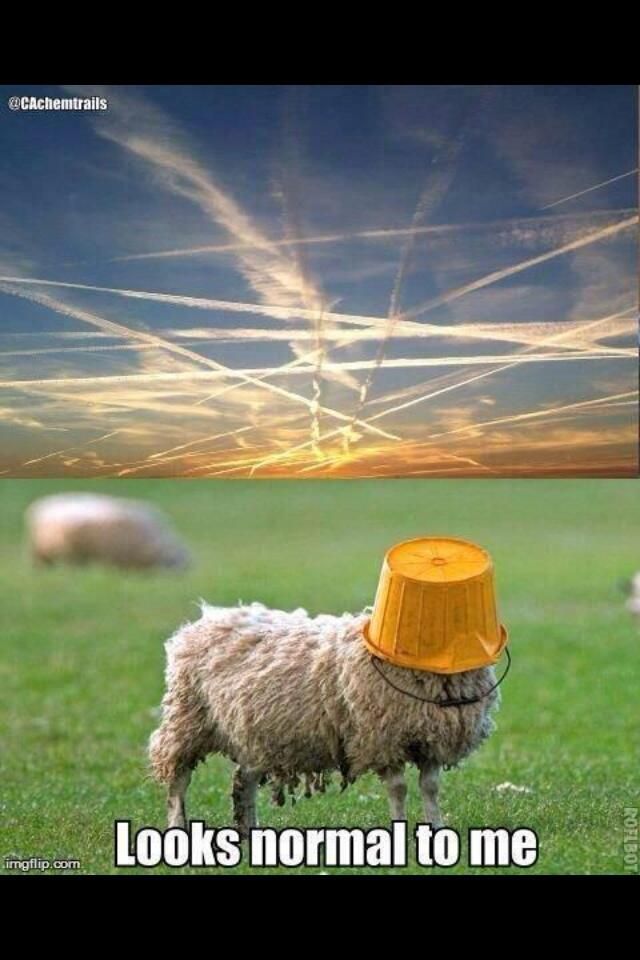
And in other bad news, yes, they still spray our beautiful days away. đŠ
Still, itâs a beautiful life, and while we may complain, we know how to appreciate it all, too.
When all else fails, learn from Bubba.
âOh, you only meant to dry the cushions here for freshening? Let me test that out for ya.â ~So Says Bubba
Thanks for stopping by, wishing yâall a glorious spring!
Shadow pointing out which wild cherry suckers I should try to grow into trees.
So many stories not told. They donât fit the mold.
While the same stories are repeated over and over. The approved stories, with the approved arcs and twists, capturing audiences beyond time and space.
Hero or Villain? Victim or Culprit?
The ordinary stories of ordinary folks are bypassed. Not sexy enough. Not dramatic enough. Too slow-paced. Not Catchy. Or spicy. Or click-baity.
Not nearly sticky enough.
Stories must be sending the right message. Clicking the right boxes in the right moments in the accepted paradigm according to the right models.
Triumph over adversity are ultimately the only stories allowed. Even the stories of failed heroes are spun in such a light, otherwise they are considered âdystopianâ. And even then we see tragic heroes âset freeâ by their surrender to the âgreater forceâ or âliberatedâ by a merciful death.
How the stories are told indicate what the audience will perceive. Here I provide some examples.
These are all still âmy storiesâ, just spun to be acceptable, or not. My goal here is to get folks to question WHY certain stories sell. Is it a matter of authentic taste? Of expectation? Of social programming?
Is it the audience who choose, or someone else, perhaps more subtly who chooses for you?
Here are some stories never told, true (ish) stories from my own life. You be the judge/critic/pretend publisher and let me know.
***
While in NOLA, a hurricane. The story that would sell: Young teacher moves to New Orleans for her new position at a prestigious Southern university one week before the most devastating hurricane in its history. She evacuates to a remote part of the Louisiana bayou and learns about Creole and Cajun history and music and cuisine and finally settles in the region of the native Caddo tribe to study Pre-Colombian cultures of the Deep South.
The story that wonât sell: Young teacher moves to New Orleans for her new position at a prestigious Southern university one week before the most devastating hurricane in its history. She evacuates to a remote part of the Louisiana bayou and learns about weather modification and clandestine military operations pertaining to centralized, unelected power structures controlling the U.S. government.
***
While in Galveston, a hurricane. The story that would sell: Couple not long ago evacuated from New Orleans experiences second 100-year hurricane evacuation after just three years. After being forced to split up in order to continue working, they blow through a decade of savings, suffer marital issues and nearly divorce, but are called by God to settle in the remote hills of East Texas to build a homestead.
The story that wonât sell: Couple not long ago evacuated from New Orleans experiences second 100-year hurricane evacuation after just three years. Wife begins seriously researching âchemtrailsâ and learns about the 70+ years of weather modification that leads her to the ongoing Geoengineering projectsâthat is the global âclimate remediationâ experimentation, much of it covert operations of global public-private partnerships with zero accountability or known oversight.
***
While in Elkhart, a tornado. The story that would sell: Couple experiences third weather disaster and nearly loses home and wife talks of âmeeting deathâ. She finds God, Jesus, Mohammed, Buddha, Enlightenment and starts a fundamentalist cult which then gets attacked Waco-style by the government and all cultists die in flames.
The story that wonât sell: Couple experiences third weather disaster and nearly loses home and wife talks of âmeeting deathâ. She turns to herbalism and organic gardening and a life of quiet reflection about the nature of evil and tyranny and the statist system broken beyond repair and the inadequacies of every group-think solution to this issue, including the anarchy renamed voluntarism and the so-called âmystery schoolsâ and the exhausting rehashing of âProphecyâ and is just generally permanently dissatisfied with all the solutions and proposals sheâs ever heard, and sheâs heard a fucking ton of them by now.
She discovers a mass effort at brainwashing against the âvictimâ âsome kind of crazy signaling effort of victims to rally other victims, and wonders who does this attitude really serve? So, we âvictimsâ are now considered by the establishment as of a âdark triadâ type (witches?) if we donât spin our circumstances to always be whistling while we work, in whatever chaotic wind they care to bare down on us. Or so it would seem.
âVictim signaling, defined as ‘public and intentional expressions of oneâs disadvantages, suffering, oppression, or personal limitations’ is strongly correlated (r = .52) with Dark Triad personality traitsâ.
Iâve just added a new page to our Herbal Explorations section, Elderberry, thanks to Gavin Mounseyâs excellent work.
This is only an excerpt, so I encourage a full reading of his article!
Medicinal use of Elderberry:
Elder has a very long history of household use as a medicinal herb and is also much used by herbalists. The plant has been called “the medicine chest of country people”. The flowers are the main part used in modern herbalism, though all parts of the plant have been used at times. Stimulant. The fresh flowers are used in the distillation of “Elder Flower Water”. The flowers can be preserved with salt to make them available for distillation later in the season. The water is mildly astringent and a gentle stimulant. It is mainly used as a vehicle for eye and skin lotions. The dried flowers are diaphoretic, diuretic, expectorant, galactogogue and pectoral. An infusion is very effective in the treatment of chest complaints and is also used to bathe inflamed eyes. The infusion is also a very good spring tonic and blood cleanser. Externally, the flowers are used in poultices to ease pain and abate inflammation. Used as an ointment, it treats chilblains, burns, wounds, scalds etc. The fruit is depurative, weakly diaphoretic and gently laxative. A tea made from the dried berries is said to be a good remedy for colic and diarrhoea. The fruit is widely used for making wines, preserves etc., and these are said to retain the medicinal properties of the fruit.
Some of the medicinal benefits of Elderberries include:
One of the most well-studied elderberry syrup benefits is its powerful immune-boosting properties. The berries contain chemical compounds called anthocyanidins, which are known to have immunostimulant effects.
Research actually shows that elderberry is a safe, efficient and cost-effective treatment for the common cold and flu. A 2021 systematic review screened 1,187 records and five randomized trials on elderberry for the treatment or prevention of viral respiratory illness. Researchers found that elderberry may reduce the duration and severity of symptoms related to colds and influenza, and thereâs no evidence that it overstimulates the immune system.
A 2016 study published in Nutrients showed that elderberry supplementation was able to reduce cold duration and symptoms in people using air travel. People using this herb from 10 days before travel until four to five days after arrival overseas experienced, on average, a two-day shorter duration of their colds as well as a noticeable reduction in cold symptoms.
Several studies have found benefits to support the use of elderberry syrup for flu symptoms as well. Specifically, the flavonoids in the extract bind to the H1N1 human influenza virus as well as the H5N1 avian influenza virus.
A 2009 study randomized patients into two groups. One group was given four doses of 175-milligram proprietary elderberry extract daily, and the other group received a placebo for two days. The group treated with the extract showed significant improvement in most flu symptoms, while the placebo group showed no improvement in symptom severity. Researchers conclude that the extract is effective in controlling influenza symptoms.
The group treated showed significant improvement in most signs of flu, while the placebo group showed no improvement in symptom severity. Researchers concludedthat the extract is effective in controlling influenza symptoms.
Another study published in the Journal of International Medical Research referenced above suggests that when elderberry is used within the first 48 hours of the onset of signs of flu, it can shorten the duration of flu symptoms by an average of four days.
With elderberryâs anti-inflammatory and antioxidant properties, it makes sense that it can help treat sinus issues. A sinus infection is a condition in which the cavities around the nasal passages become inflamed, and this antiviral herb has promise as a sinus infection natural remedy.
A study conducted by the Institute of Complementary Medicineâs Department of Internal Medicine at the University Hospital in Zurich, Switzerland examined the use of a product called Sinupret, which contains elderberry extract. The researchers used Sinupret to treat bacterial sinusitis along with an antibiotic (doxycycline or vibramycin) and a decongestant. Interestingly enough, those who took the combination did better compared to those who did not take Sinupret at all.
In addition to using elderberry syrup for colds, the flowers of the elder plant are also known to be an effective herbal allergy remedy. Since allergies involve an overreaction of the immune system as well as inflammation, the herbâs ability to improve immune function and calm inflammation can help provide allergy relief.
Some herbalists put black elder flower on the list of most effective herbs used for treating hay fever-like symptoms. It can be used for allergies on its own or in combination with other herbs and natural remedies.
Edible berry extracts like elderberry extract are rich in anthocyanins and have been shown to have a broad spectrum of therapeutic, pharmacologic and anti-carcinogenic properties. In vitro studies specifically indicate that the elderberry has some chemopreventive properties, which can help inhibit, delay or reverse cancer formation.
One study published in the Journal of Medicinal Food compared the anticancer properties of European and American elderberry fruits. European elderberry (Sambucus nigra) is known for its medicinal use and contains anthocyanins, flavonoids and other polyphenolics, which all contribute to the high-antioxidant capacity of its berries. American elderberry (Sambucuscanadensis) has not been grown or promoted as a medicinal plant like its European relative.
This study tested extracts of both berries to assess anticancer potential and found that both demonstrated significant chemopreventive potential. Additionally, the American elder extract showed inhibition of ornithine decarboxylase, which is an enzyme marker related to the promotion stage of cancer formation. Thus, elderberries show potential as cancer-fighting foods.
Although studies have found mixed results, some research suggests that elderberry extract may improve heart health. For example, one animal model showed that giving mice with high cholesterol and HDL cholesterol dysfunction anthocyanin-rich black elderberry extract helped reduce hepatic cholesterol levels and improved HDL function. This may be due to the presence of anthocyanins, which are polyphenols that have demonstrated antioxidant and anti-inflammatory activities.
Another study found that elderberry extract may have beneficial effects on high blood pressure. When polyphenols extracted from the plant were administered with renin inhibitors to rats with hypertension, they reduced arterial pressure.
Researchers suggest that using polyphenols to lower blood pressure may also help reduce the side effects of blood pressure-lowering medications and improve overall quality of life.
The calcium, iron, and potassium in the berries are known to strengthen bones and increase bone mineral density, cutting the risk of osteoporosis as a result.
Experiments show the benefits of natural polyphenols extracted from the Elder (Sambucus nigra) fruit on osteoporosis regression. Extremely low bone mineral density is improved by polyphenol delivery. Thus, a dietary intake rich in natural polyphenols helps lead to the regression of osteoporosis. Osteoporosis regression due to the Sambucus nigra extract shows us how powerful these berries are for preventing bone degradation and speeding up bone healing.
Being rich in vitamins A and B6, elderberries can help prevent serious vision ailments like glaucoma and macular degeneration. The antioxidant activity of elderberries also helps ensure vision health in the long run.
One study talks about how the anthocyanins in berries (including elderberries) can help treat cognitive impairment and the resultant conditions like Alzheimerâs.
Elderberries are also replete with quercetin, which is an important flavonoid critical for brain health. Quercetin reduces the harmful inflammation at a cellular level. It also activates the mitochondria in your cells â which are powerhouses that boost cell health.
As mentioned above, Mitochondria are the powerhouses of your cells, generating energy to fuel your cellsâ biochemical reactions. Via optimizing their function and promoting their rates of regeneration within your body you are building a solid foundation for health, vibrancy and longevity from the cellular level up.
Sufficient mitochondrial biogenesis (the process by which cells increase mitochondrial numbers) is necessary for efficient cell function and haemostasis, which is dependent on the regulation of ATP generation and maintenance of mitochondrial DNA (mtDNA). These procedures play a primary role in the processes of inflammation, aging, cancer, metabolic diseases, and neurodegeneration. Polyphenols (such as anthocyanins) are considered as the main components of plants, fruits, and natural extracts with proven therapeutic effects during the time. These components regulate the intracellular pathways of mitochondrial biogenesis.
The studies available also support the ability of anthocyanins to prevent damage to mitochondria and to sustain its function. Berry extracts also demonstrated positive outcomes in different models of neurodegeneration, endothelial dysfunction, myocardial damage, metabolic disorders, longevity, and cancer. At the molecular level, major anthocyanins can modulate the expression and activity of mitochondrial proteins, apoptotic and biogenesis factors, antioxidant defenses, inflammation, and the AMPK pathway. Noteworthy, anthocyanins could balance abnormalities in ROS production, respiration, and mitochondrial fragmentation in cells exposed to toxicants or oxidizing agents.
âŚ..
Here on the wee homestead I use elderflowers and elderberries in kombucha with delicious results! Iâve also made syrup and St. Germain.
Please visit Gavinâs full article for so much more on this ancient medicinal plant, including history, myth and folklore, habitat, recipes, and beautiful photography.
Elderberry blossoming in the garden with pumpkin, inviting lots of pollinators.
I started making cheese because I love cheese and could no longer find quality cheeses nearby. I lived on a diet of mostly bread and cheese while a student in France and while it did take its toll on my middle (I gained a pound or ten!) it felt perfectly sustainable as far as health and deliciousness to me.
Photo by Nataliya Vaitkevich on Pexels.com Could totally be me! đ
Fast forward a decade and suddenly cheese was making me sick. And bread, too! Like a great many folks, I was told I was âlactose intolerantâ and had a âgluten allergyâ. Suddenly. Out of nowhere. How very odd.
I gave up bread and cheese for a year and the problem was solved, but I was miserable. Then I started to do some research on my own.
What I learned Iâve talked about before on this blog so I wonât go into detail. The results speak for themselves: I can eat as much bread and cheese as I want, as long as I make it myself, from raw milk and organic wheat berries and all natural ingredients. We also eat homemade ice cream regularly. And cookies and cakes.
But the problem with the commercially manufactured ingredients these days is far worse than just homogenizing and denaturing. The rennet used to make 90% of cheese in this country is GMO, so itâs no wonder at all so many are being told they are lactose intolerant or have IBS and allergies and other digestive issues every time they consume dairy. And wheat. Itâs become so common itâs a joke.
In reality, these non-foods are poisoning people and it should be pretty obvious by the poor state of health of a majority of the population.
Thanks to Granny for sending this article that sums up the cheese reality pretty well. And itâs not pretty.
âGenetically modified FPC â To overcome some of the shortcomings of the vegetable and microbial rennets like the potential bitter cheese taste, scientists have leveraged genetic engineering technology to create new, genetically modified species that generate these milk-curdling enzymes.
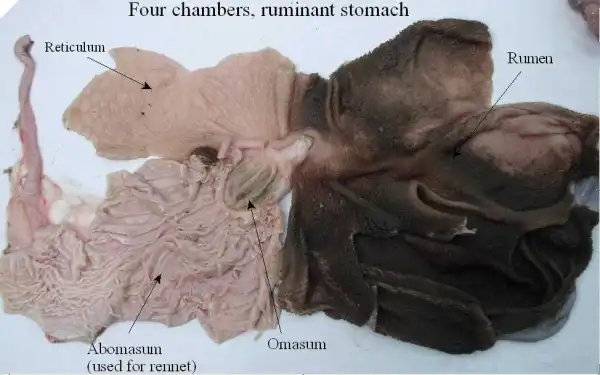
Introducing the most common alternative to animal rennet in cheese making â FPC, which stands for Fermentation-Produced Chymosin (FPC). (Chymosin referring to the enzyme that curdles milk, and is naturally present in the stomach lining of ruminant animals).
In fact, 90% of the cheese manufactured in the U.S. uses these enzymes from genetically modified organisms.9
FPC was created by the one and only Pfizer (biotech company) and is made possible by using CRISPR gene editing technology10Â where the genomes of living organisms are modified. The âsafetyâ of FPC was evaluated by a 90 day trial in rats.11â
Is it safe to consume? Good question!
âThis bioengineered chymosin (FPC) was granted Generally Regarded as Safe (GRAS) status. Meaning, Pfizer was exempt from the pre-approval requirements that apply to other (non GRAS) new food additives.â
Food was just fine before they started screwing with it! đ
A few of my homemade cheesesânot as difficult as you might think to learn how, and so worthwhile!
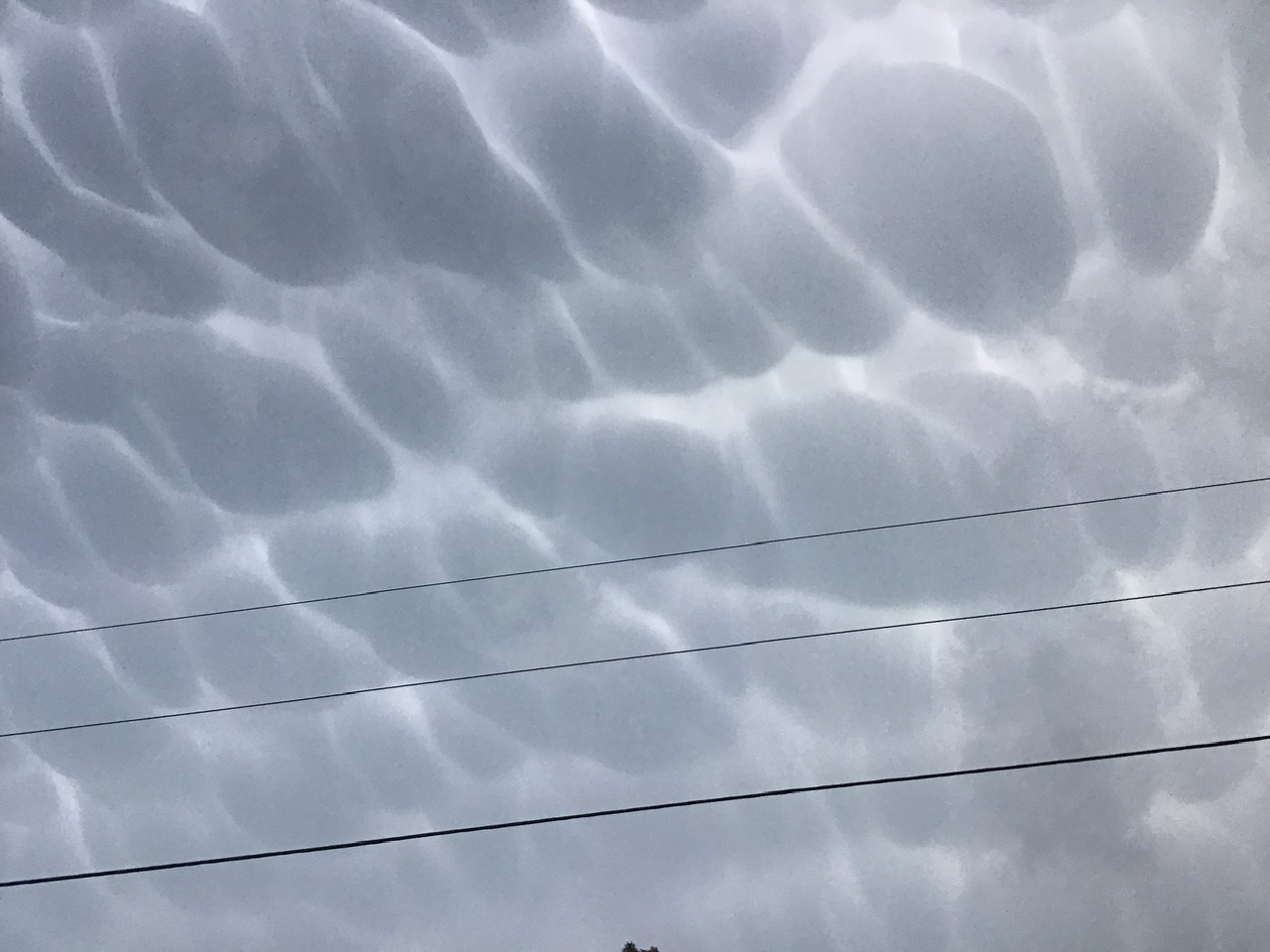
Two quick shares todayâa very short peek at a few radar clips from GeoengineeringWatch.org. These âanomaliesâ occur daily, obviously itâs not natural. Are the meteorologists all in on it? They canât be so dumb as to think this is natural, right?