Homestead Happenings

It’s Shoulder Season on the wee homestead, and by that I mean a few things.

Shoulder season, for those who maybe new to the phrase, has a specific meaning in tourist trades, meaning between high season and low season. Savvy travelers and those who dislike crowds or who are just cheap or nearly broke try to travel in the shoulder season.

As far as I know it doesn’t have a parallel meaning in the gardening world.

But for me it does. It’s the time we move between seasons in the garden and since we garden all year, it happens twice, once in Swelter Season (now) and once in YoYo Season (formerly known as winter).

The key summer crops in the garden are either long gone–onions, garlic, crucifers, or mostly dead–tomatoes, squash, melons. And normally the cucumbers too, except those are, so far, successfully secession planted, with the new generation just coming up as the last one is dying. Good timing there, tiny bow to me!

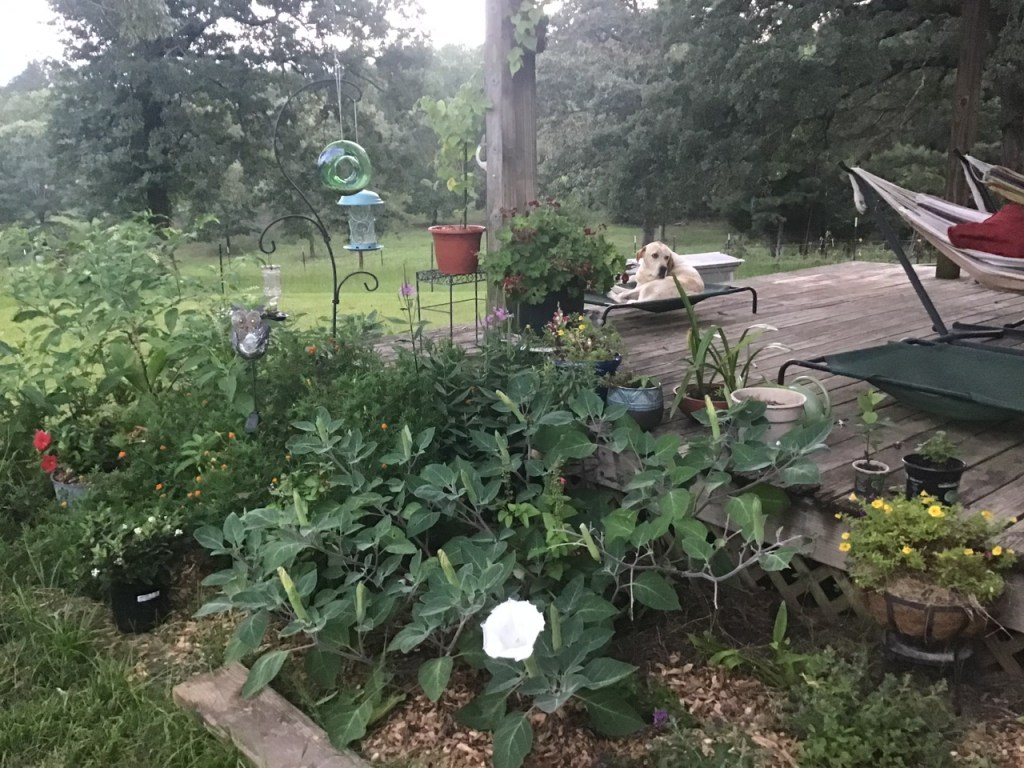
Old cucs on left, dying fast, on right a couple of tomatillos in the back, also dying and a volunteer datura, doing great.
New cucumber plants looking good, but will they produce?

And big bow to Handy Hubby for growing this 27 pound beauty!

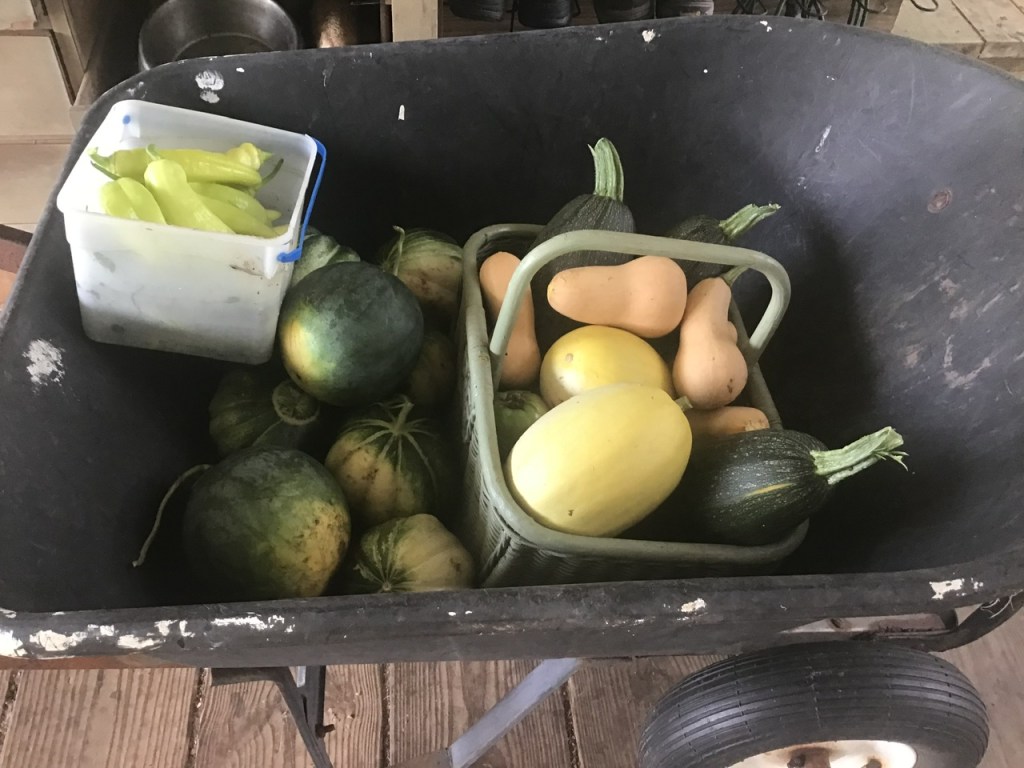
A nice variety of melons and squashes, we are quite pleased.
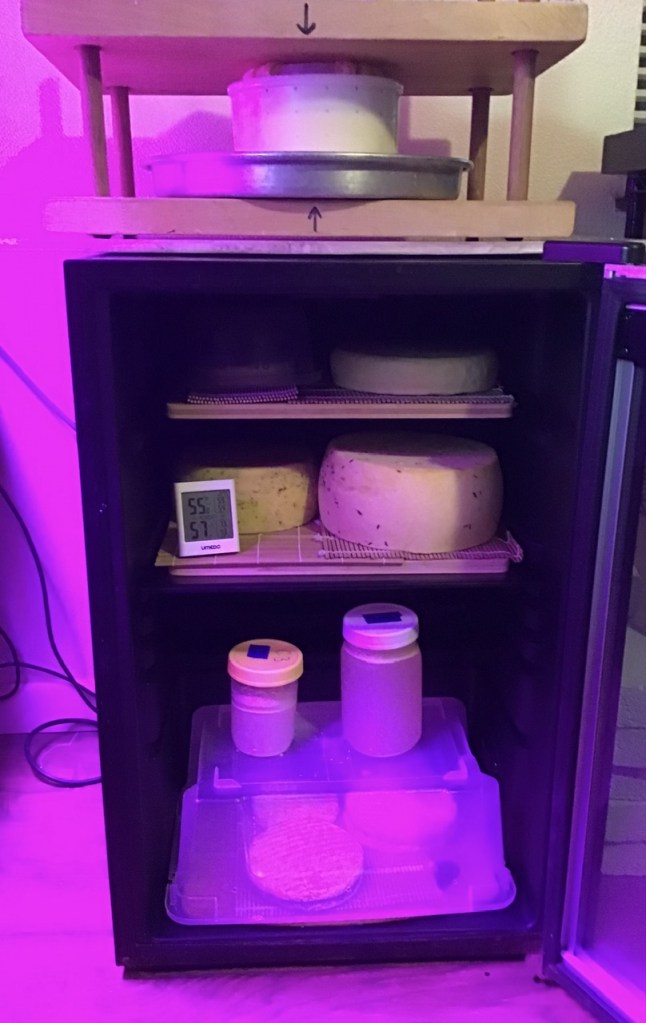
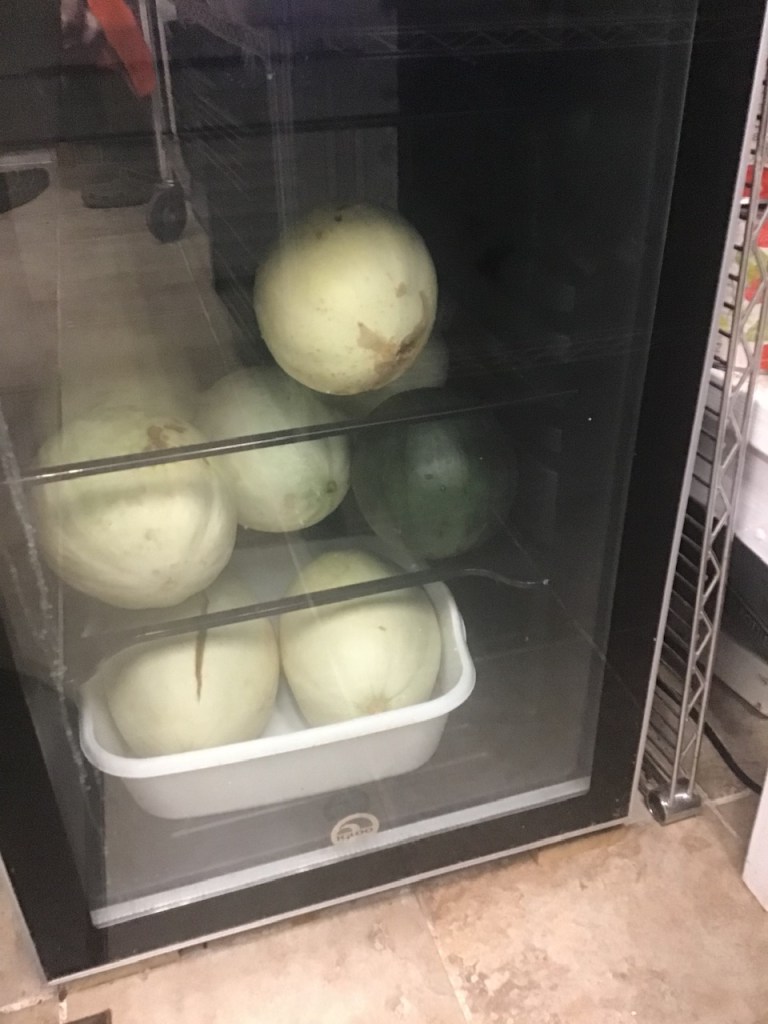
And still more, a mini-fridge of melon
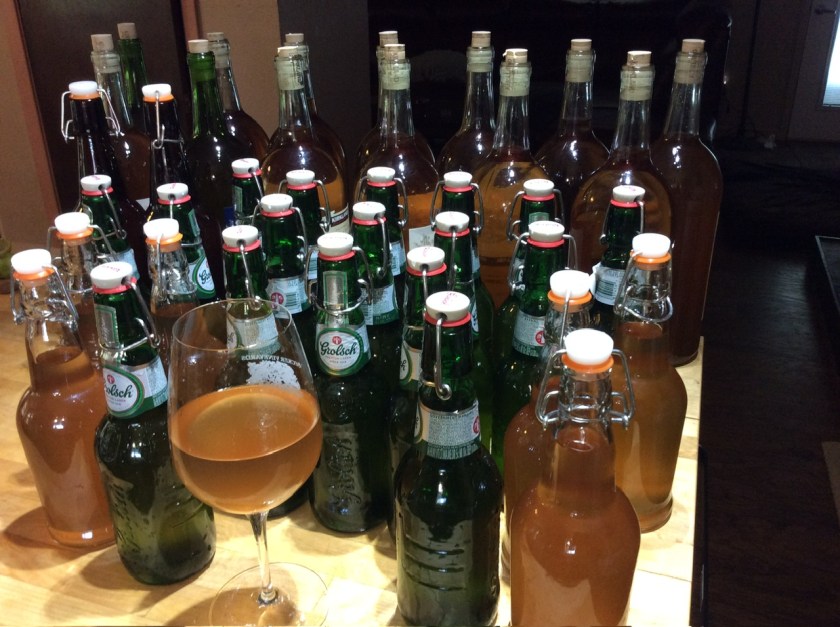
And still more squash! And cider.

While it could be Vacation Season for some more sane types, for us it’s the work of Shoulder Season. We keep the minimum that will survive our high heat for the next two months and baby most of them best we can.

But under lights inside the fall/winter garden is on its way. There’s already another crop of tomatoes coming up, as well as broccoli, cauliflower and arugula.

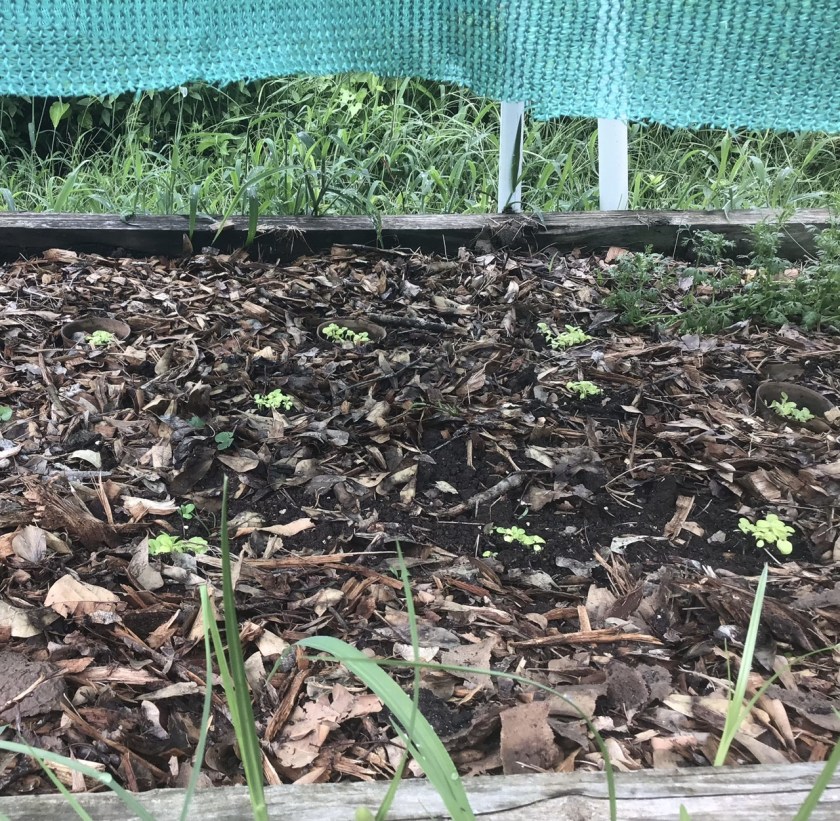
In the ‘babying’ bed I continue my lettuce experiment, starting romaine indoors under lights and moving under double shade cloth to transplant, then removing one level of shade cloth after a few days to adjust. They are still alive, yay!
Also in the ‘baby’ bed under shade cloth: some parsley barely hanging on, some dill trying to seed, 2 peppers, 2 dying tomatoes and lots of very happy basil.
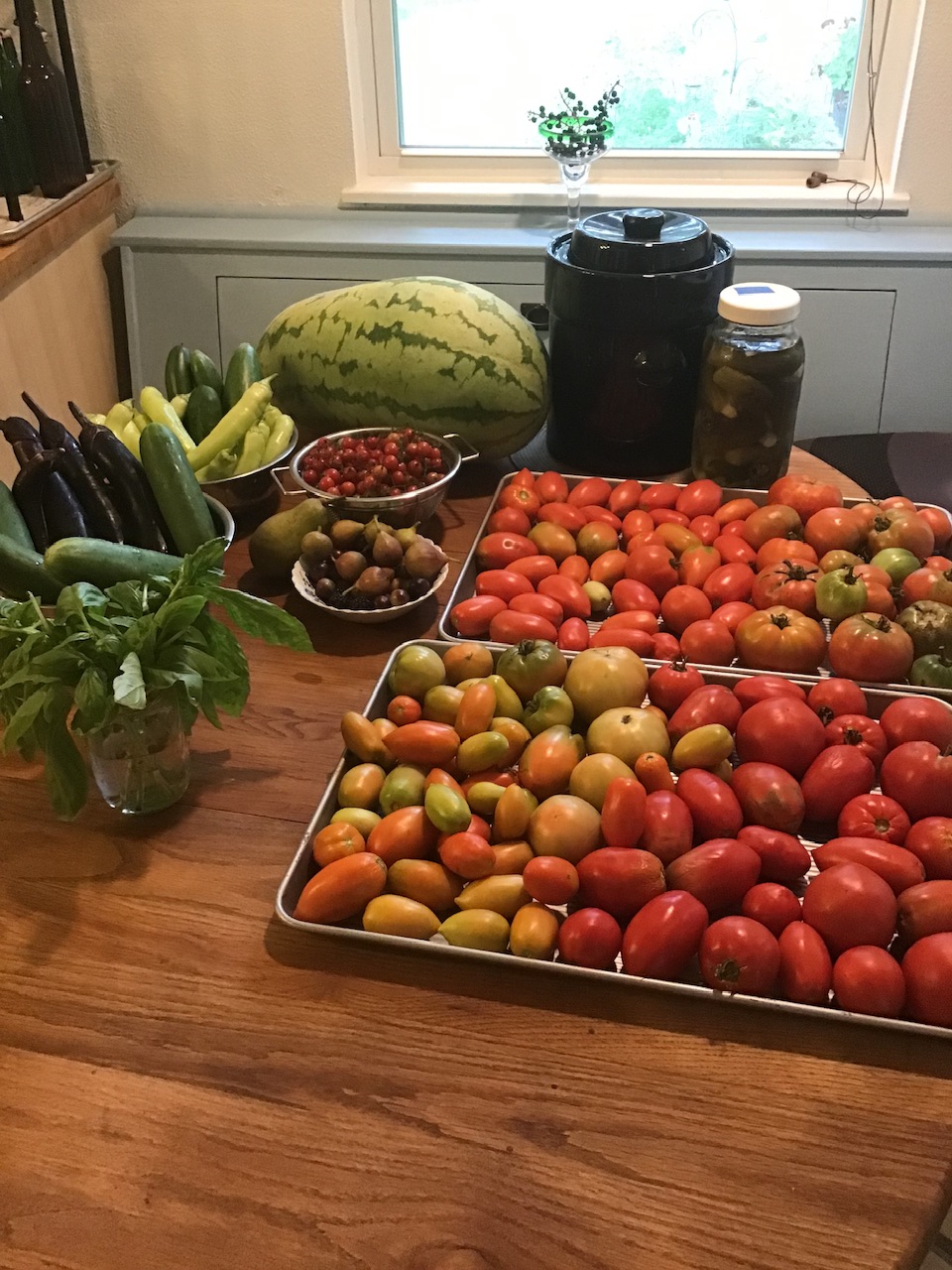
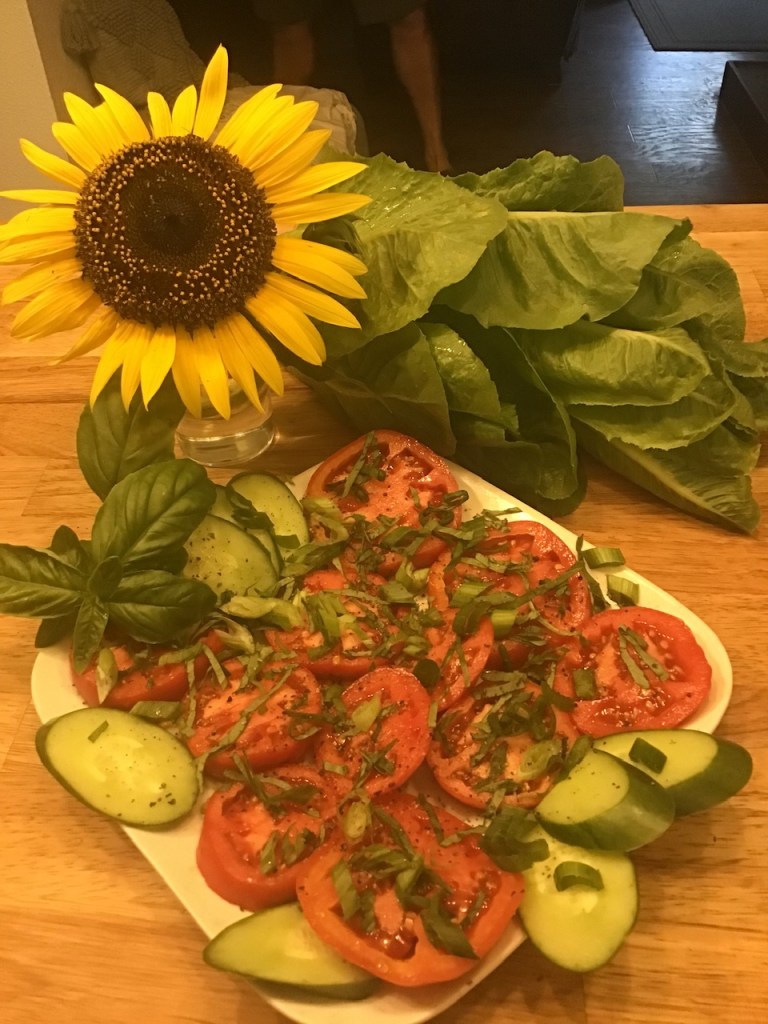
Tomatoes, peppers and basil for marinara. And in back left is cured lamb.

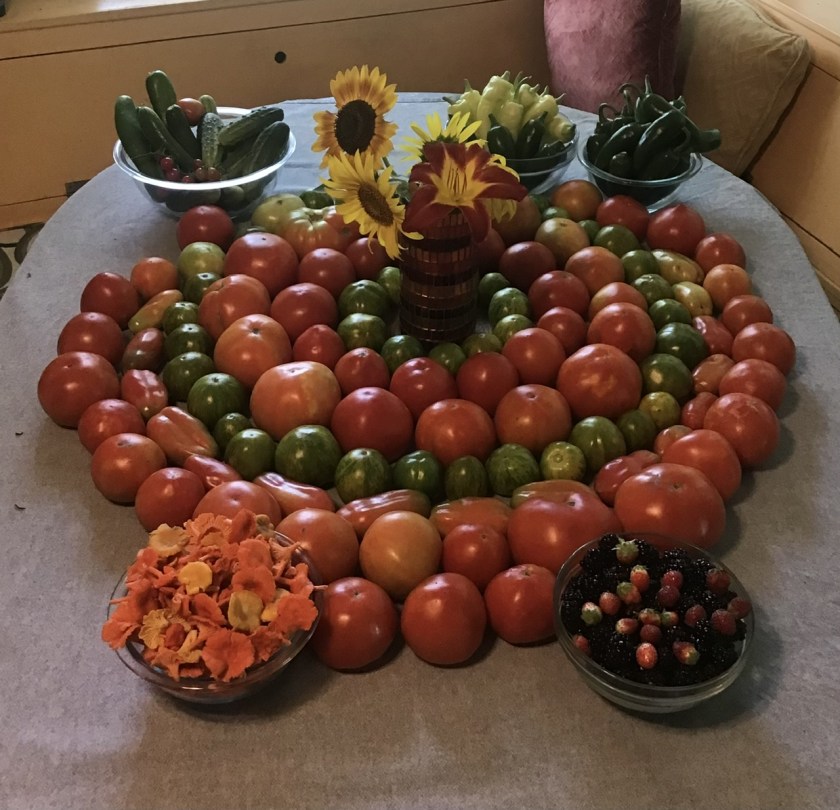
There’s processing to be done still, the marinara stockpile is done thanks to Hubby, but there’s still ketchup and bar-b-que sauce. And we still call this a bad tomato year!

stockpiling marinara

Ah, the gifts and curses of relativity. And surplus.

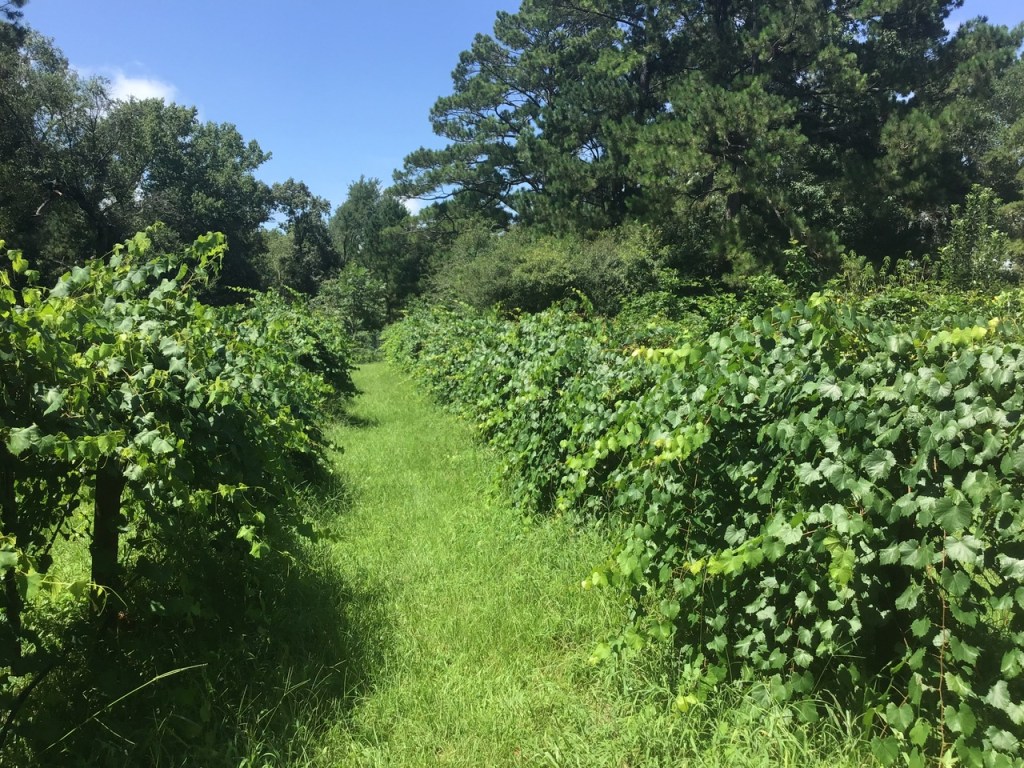
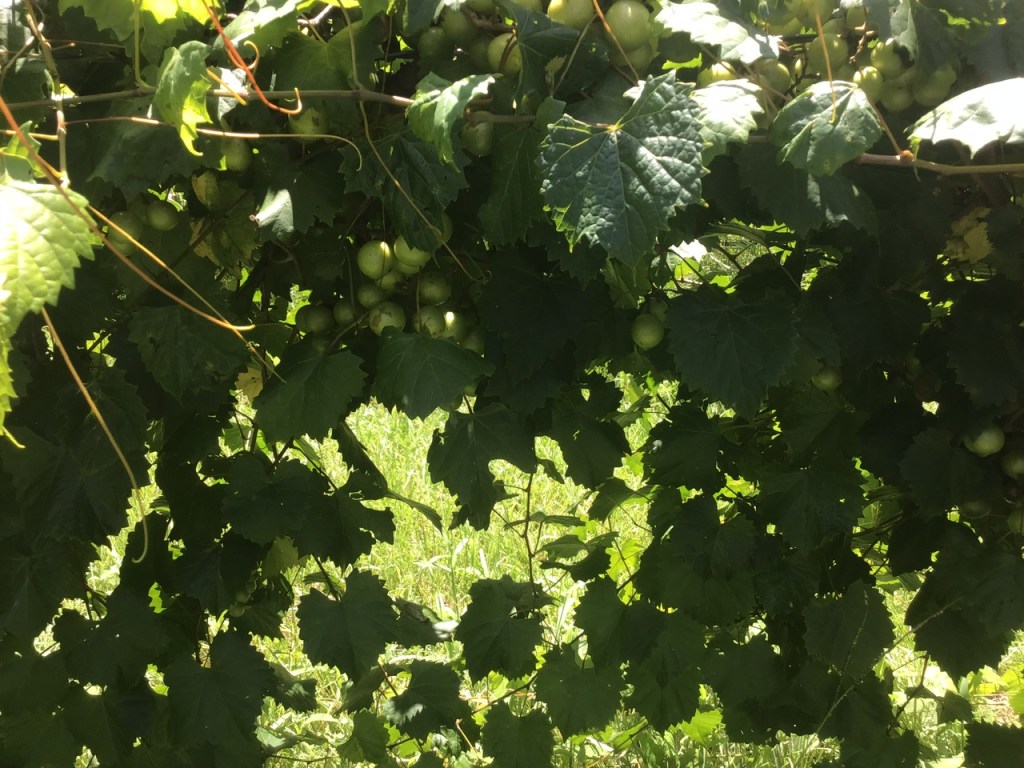
The pears are looking promising, and the grapes–which will be the next big project–wine and cider-making season. Blackberries and pears are our easiest fruits here; everything else seems to struggle. Though we have had years of good figs, and some neighbors still do. The grapes are looking good too, but there’s no guarantee.

And I think I finally got the trick for strawberries. It seems most everything that is most delicious is high-maintenance. What can -we do, if we like high maintenance produce but to contend with the high costs of creating them?

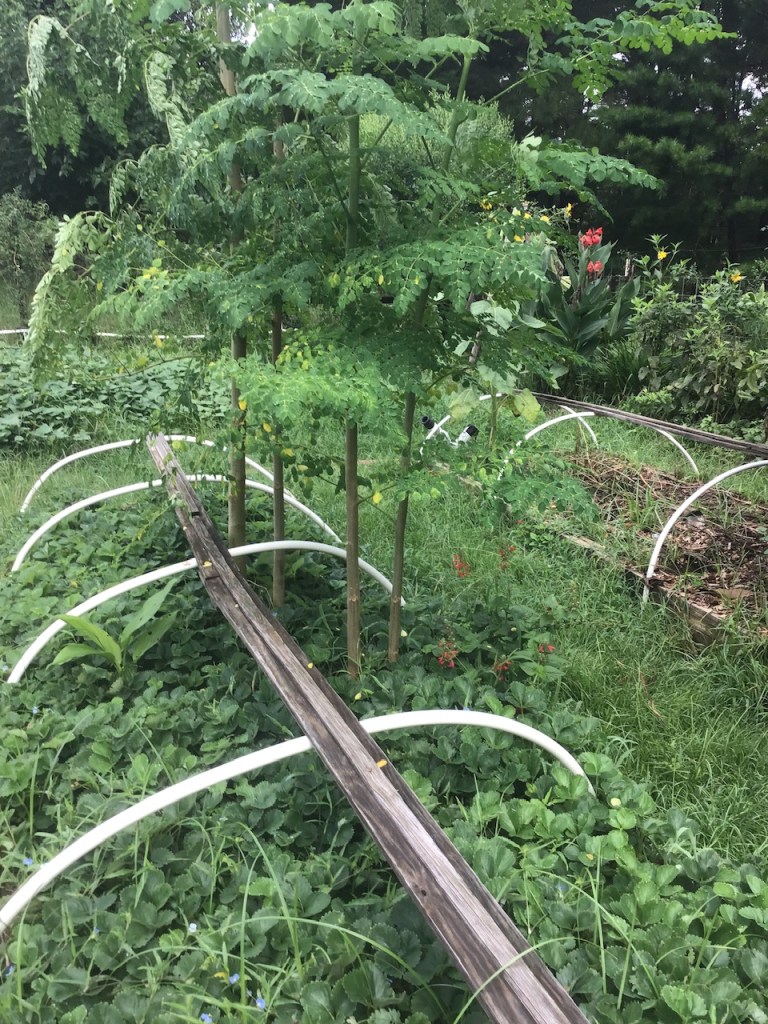
Many years of failed strawberries, but this year was a great success in comparison. Now the runners are going crazy and taking over this bed, so next year promises to be better still.

I’m planning for more low-maintenance in future, but those might be high hopes.

Because, my choice would be to spend my dwindling number of pain-free hours working with the flowers!

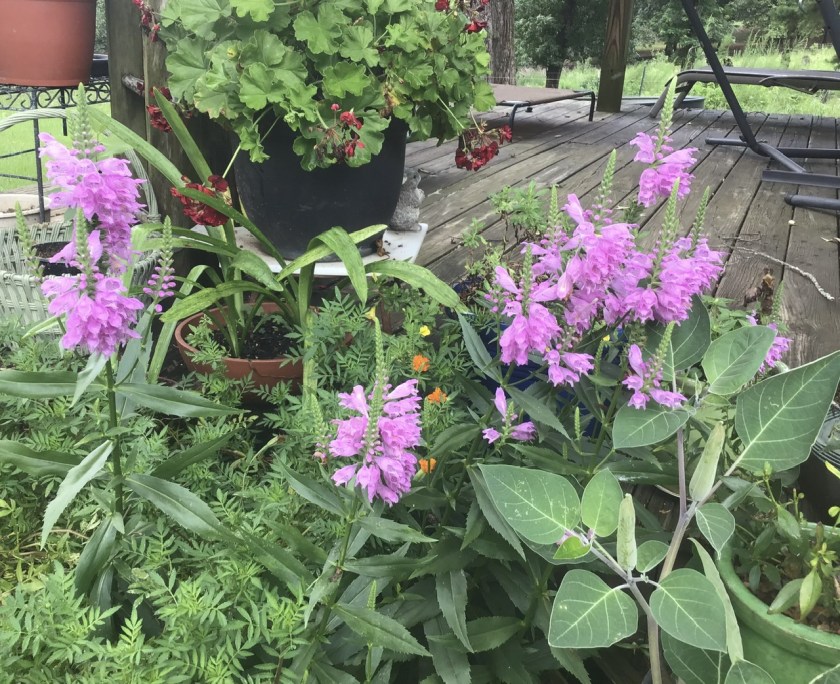
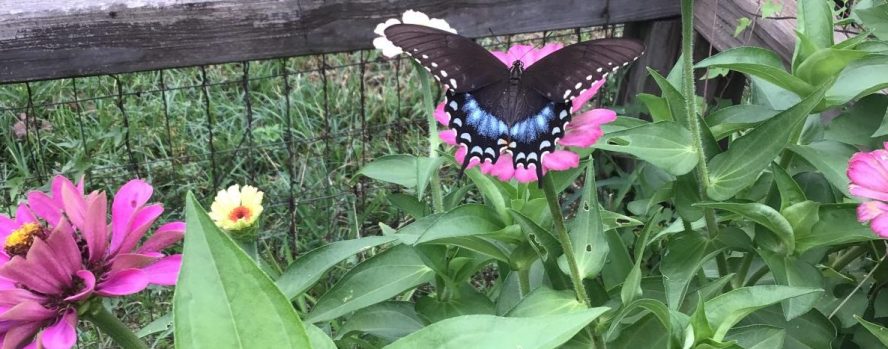
I’ve seen a few butterflies and bees on the pink ‘Obedience plant’, such a welcome sight!

Which brings up my other meaning for Shoulder Season.
So much shoulder pain! And I am not good at staying stationary, it drives me nuts actually. So it’s between physical anquish, or mental, and I do far better with the former.

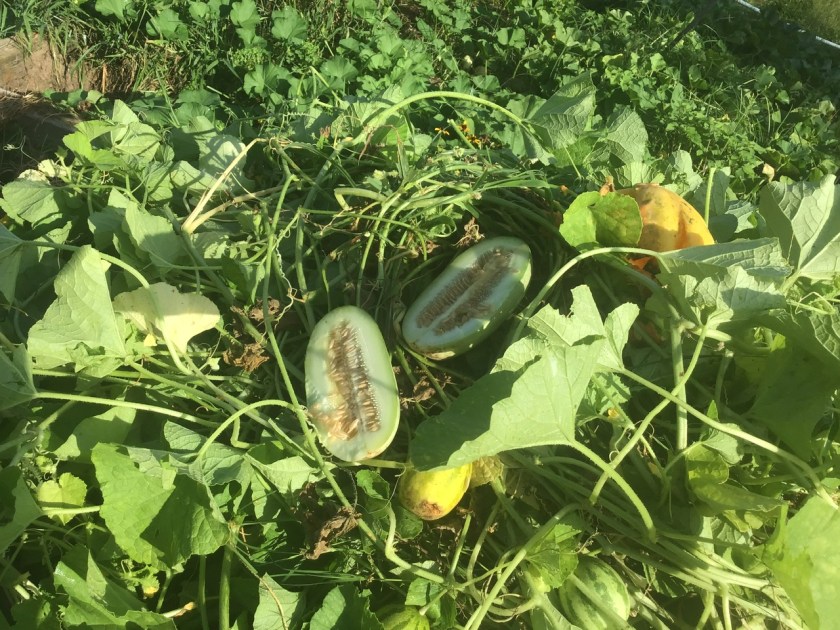
It’s as unwelcome a kinked, knotted, crippling invasion as this mystery fruit I posted about last year. I unknowingly caused quite a crisis in the garden and lost almost all the melons I planted.

What is this imposter which choked out all my melons?!

Just when I was insisting to Hubby we need to be thinking about reducing our garden plots in order to reduce our workload and water usage, I stand corrected. The orchard squash didn’t produce well at all, for some unknown reason; the garden melons were choked out by the wild cucumber; so without the third space we’d have no watermelons or honeydews, which would mean a mostly melonless summer after lots of work and wait, as the main garden produced about half a dozen sub-par cantaloupe.

A sweet, cold watermelon is the best morale booster in the hot, humid Texas summer garden jungle!

Two wheelbarrows full of vines and fruit the pigs don’t even like.

Wild cucumber vs melons and the melons lost bad. I have still not been able to figure out what these things are, which I brought into the garden under false pretenses. I have heard suggested they may be lemon cucumbers or mouse melons, but they are not the right size, shape or color for either of those.

I really get the frustration of invasive species now. I realize I’ve been a bit cavalier on that front in the past, for good reason, but I have definitely been humbled this time as these bitter, seedy imposters are still popping up everywhere.

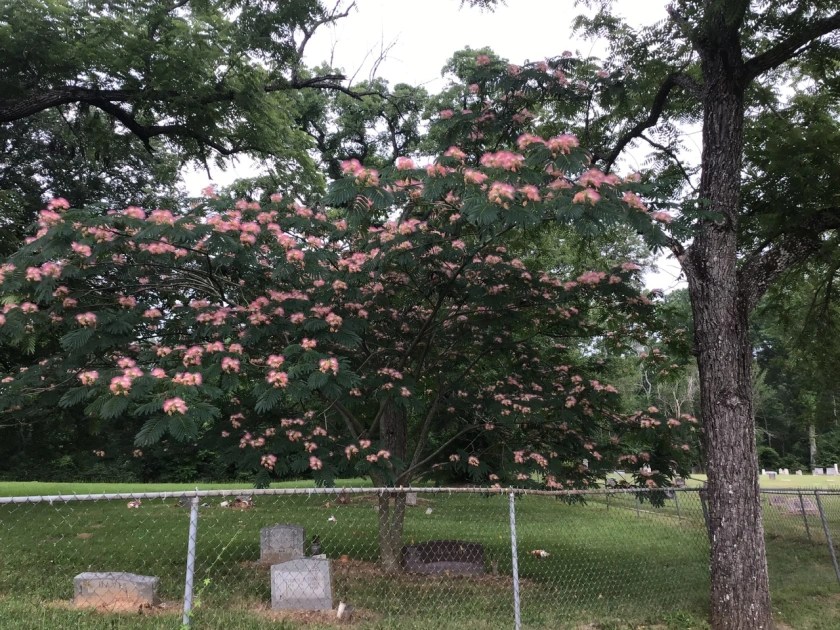
Please, give me an invasion of the supposedy invasive Mimosa trees, and I’d be thrilled!

You have my permission to invade my gorgeous Mimosa!

The plants that thrive here in the long high heat and humidity are so impressive, even when invasive, but it helps my morale considerably to consider the non-invasive ones as often as possible.

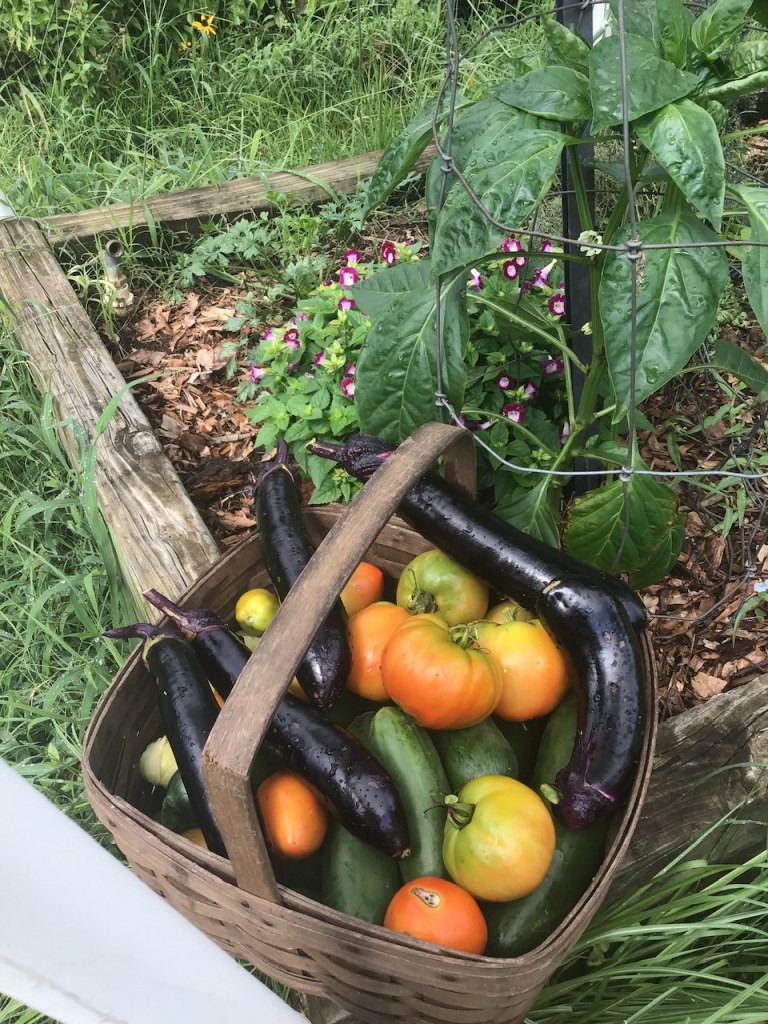
The sweet potatoes are almost effortless. Once they get established and as long as they get a good head start over the bindweed (another ‘invasive’ relative) they are pretty reliable. Eggplant and okra are others, and we’re learning to like eggplant. Maybe even a lot.

The bountiful basil takes center stage as the parsley, dill and cilantro take early retirement and don’t even bother to seed, it’s so damn hot.

Whether and which tomatoes will survive, or thrive, from one year to another is anyone’s guess.

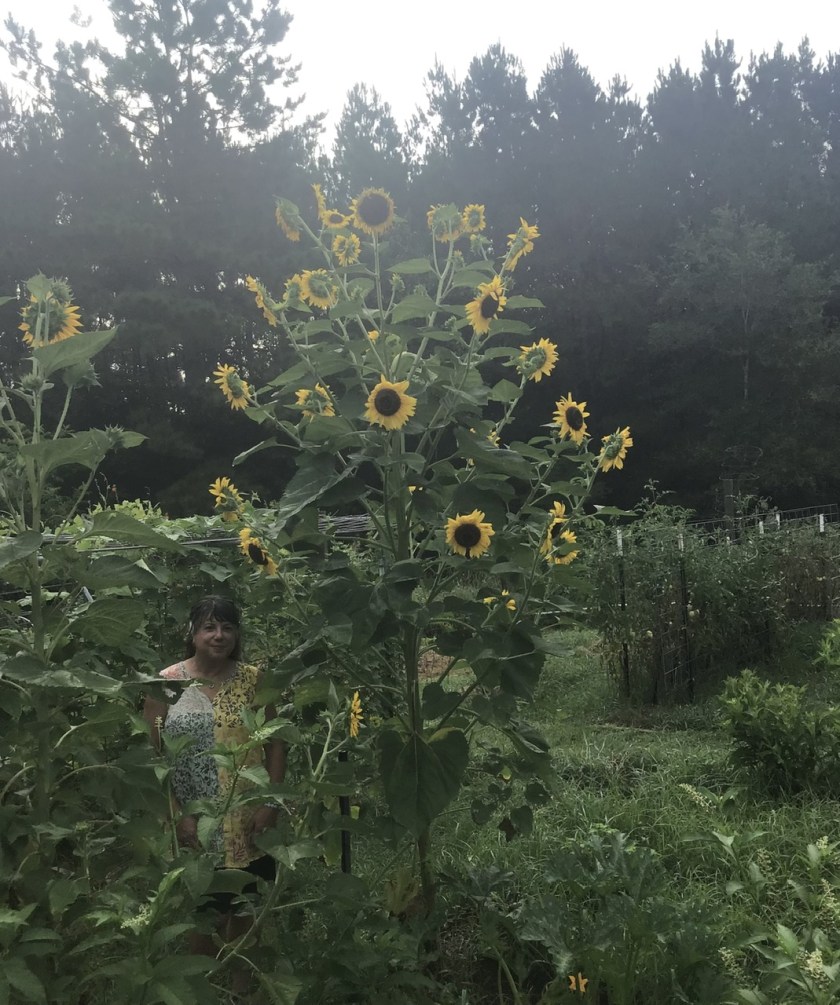
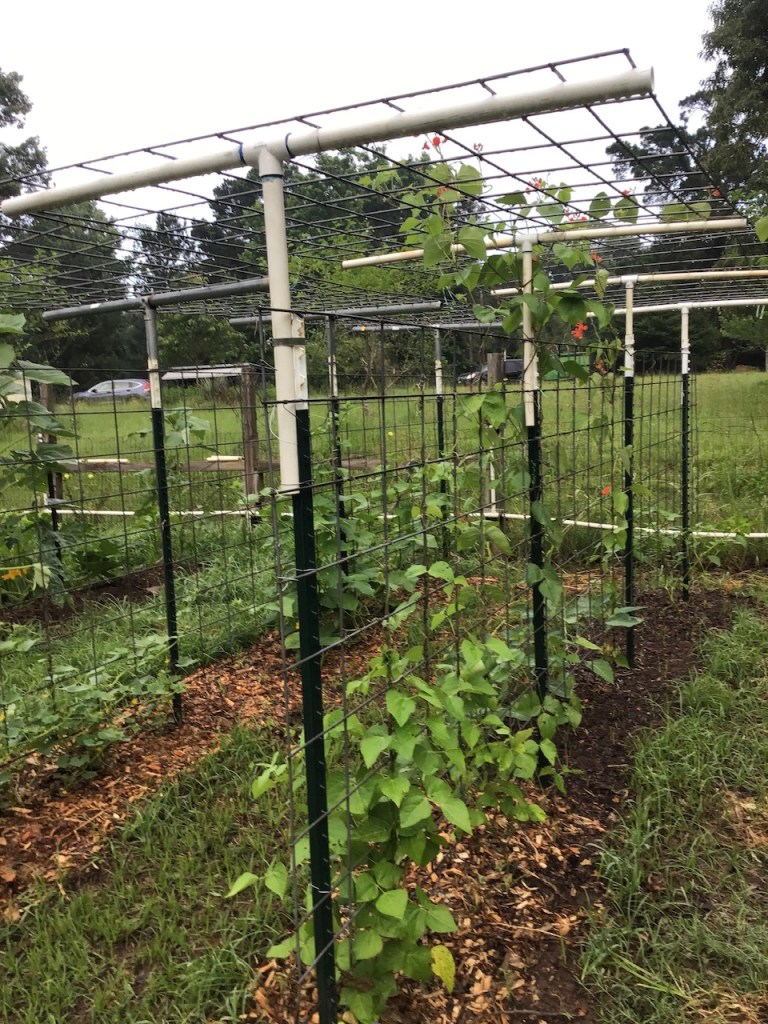
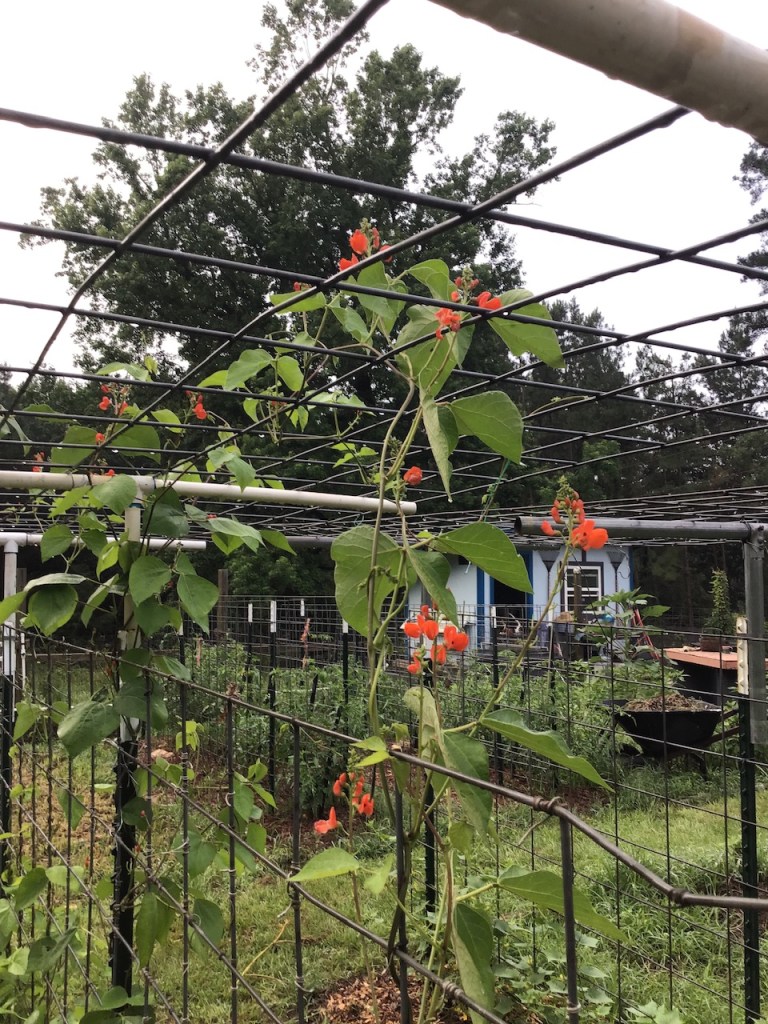
Gavin’s seeds, the Scarlet Runnerbean (barely) and Black Hopi Sunflower, are hanging on still, very impressive.

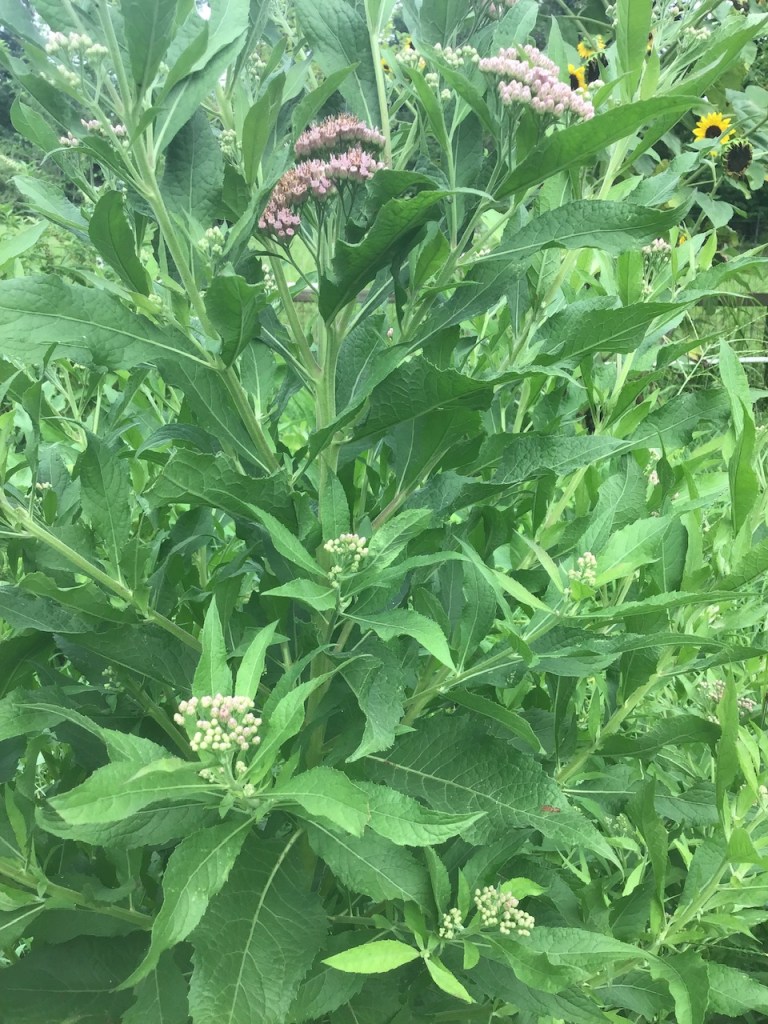
The black Hopi sunflower behind a mystery weed that smells medicinal. Any idea what it is, anyone?

The two out of three citrus planted last spring are doing well–they look healthy and their growth has more than doubled since spring.

The poke weed, the datura, don’t get me started, such beautiful and amazing plants!

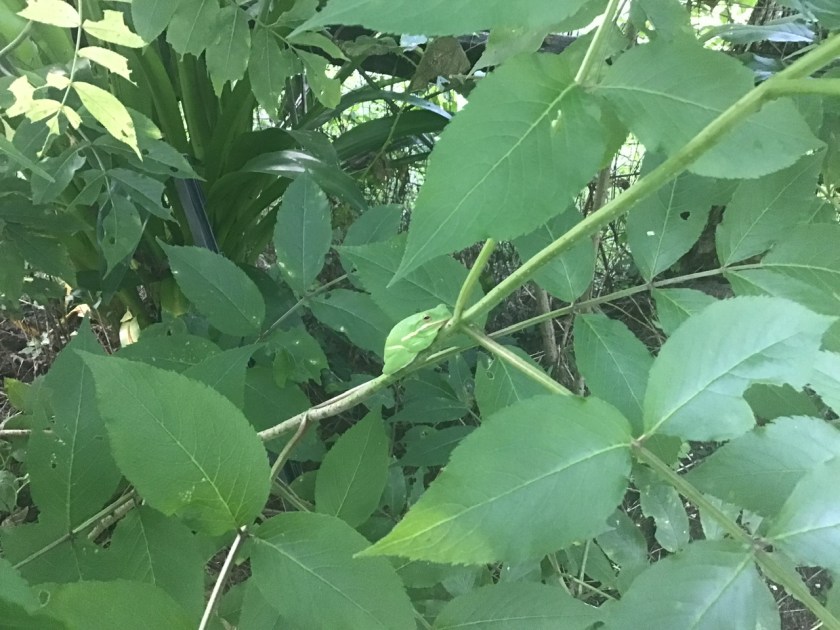
But, the mystery weeds, what are these?

Inquiring minds want to know!

Thanks for stopping by!

Agri-Capture, Psy-Style

“Agriculture is a major contributor to climate change and the devastation of the planet… The only way to fix this, the necessary step, is knowing what food is.”

Converting Food Tradition Into Science With The Periodic Table Of Food

https://www.forbes.com/sites/daphneewingchow/2024/05/21/converting-food-tradition-into-science-with-the-periodic-table-of-food/

This was an infuriating propaganda piece on behalf of the Rockefeller Cartel by Forbes magazine, sent by a friend who likes it when I’m infuriated. Bless her heart!

The article is the perfect example of the methods of ideological subversion being used on the public by the corporatocracy through the institutions.

The single quote above I take from the article, rather than quoting it further, is in order to not subject the reader to further mind poison. But rather instead, to offer an antedote.

How does it work? Why are they doing this?

While the excellent article below is a good means of demonstration, it’s first important to notice the labels themselves are meant to be flexible while still garnering a knee-jerk reaction: Communism, Capitalism, two opposing worldviews, that’s the framing.

Except it’s fake, a false dichotomy. These are economic views posing as worldviews for political purposes.

Often political purposes and religious ones overlap, which is why I avoid religion as well as politics when I’m trying to think logically!

The above quote works a similar frame: Science must know what food IS so that agriculture will no longer destroy the planet.

Except the only reason argriculture is destroying the planet is because it was taken over by BigAg MANY decades ago. Before I was born, actually, and I’m getting up there.

They fail to mention this piece of the puzzle, no surprise there. Many societies have thrived and still thrive on non-industrial agriculture to survive. Industry has ruined agriculture in this country, and many others.

Our brainwashing that it is our job to feed and police the world is the actual problem causing the devastion. The industrial-military global order is the problem causing the devastion.

95% of average folks are just pawns in this game.

Leave the terms ‘communism’ and ‘capitalism’ to the side for a moment and consider this:

“What Marx and Engels pioneered wasn’t specifically a political revolution β€” it was the rewriting of the moral code itself. The Manifesto operates as a systematic inversion of the fundamental value and structures that underpin social organisation. Every principle that helped stabilise bourgeois society β€” property rights, family inheritance, religious authority, national sovereignty β€” was methodically reframed through inversion; consciousness programming designed to make the existing moral operating system feel not just wrong, but obsolete.

Programming Permissible Thought
Control the language and you control the range of permissible thought. The Communist Manifesto introduced this tactic with rhetorical inversions; ESG and global ethics continue it by redefining terms like β€˜freedom’, β€˜equity’, and β€˜justice’ so that dissent itself becomes linguistically unspeakable. When β€˜inclusive’ becomes the only acceptable alternative to β€˜extractive’, when β€˜sustainable’ becomes synonymous with β€˜moral’, and when β€˜science-based’ becomes code for β€˜unchallengeable’, we’re witnessing linguistic capture similar to that Marx pioneered.

The genius lies not just in changing what words mean, but in making certain combinations of words feel impossible. Try arguing against β€˜inclusive prosperity’, β€˜women’s rights’, or β€˜science-based sustainability targets’ without sounding backwards. The linguistic terrain has been so thoroughly mapped that opposition requires either accepting the loaded framework β€” or appearing to reject progress itself. It’s a steep uphill struggle, almost guaranteed to waste enormous amounts of time β€” even though these terms typically function to insert ideological blind spots ripe for later exploitation by full intent.”

Like the quote says–to solve the problem, we must know what food is. Imagine, we don’t even know what food is! We must have science explain food to us in order to not destroy the planet by eating.

esc continues . . .

“Inclusive Capitalism as Semantic Cover for Stakeholder Feudalism
β€˜Inclusive capitalism’ β€” promoted by coalitions involving the Vatican, the World Economic Forum, and major central banks β€” promises to β€˜make capitalism work for everyone’. The manipulative techniques are identical to the Manifesto: binary framing where β€˜inclusive capitalism’ opposes β€˜neoliberal greed’ with no middle ground allowed; euphemistic coercion where investors are β€˜guided’ to ESG portfolios and non-compliance means exclusion from financial markets; sacred authority through alignment with religious institutions that sanctifies technocratic control; and guilt transfer where individual consumers β€” not megacorporations, nor central banks β€” bear responsibility for systemic problems.
You get to keep the word β€˜capitalism’… while losing actual market freedom. It’s semantic cover for stakeholder feudalism β€” the Financial Stability Board and the BIS become moral arbiters of capital allocation, yet you never voted for them.”

This ‘guy’ knows what he’s talking about, read him, not Forbes!

“Recognition and Resistance
What we witness is the emergence of something historically unprecedented: soft totalitarianism with global reach, implemented not through revolutionary violence but through institutional coordination and moral manipulation. The most disturbing aspect is how voluntary compliance is manufactured through psychological techniques that make resistance feel not just futile but morally reprehensible.
Unlike crude twentieth-century totalitarianism, this system preserves the language of freedom while altering its substance, claims scientific and moral authority rather than raw power, operates through persuasion and micro-incentives rather than force, and presents itself as evolution rather than revolution. Koestler⁢² warned that disembodied rational systems could turn pathological when disconnected from human meaning β€” today’s ESG frameworks automate that disconnection at global scale.”

Geoengineering Update

Just a couple of vids to share today. I have not (yet) done any sort of deep dive on the Hill Country flooding. I have heard some of the speculation and I’m sure readers could guess my opinion to any question of whether this was a ‘natural’ disaster.

I was confused by this first video showing how quickly the flooding happened in an area that was getting no rain at the time. It looks like something from an amusement park. But, I did hear they opened certain dams in some areas to divert the intense water flow, so maybe that could help explain it. I’m going to look into this part of the operation in future.

What’s far easier to see is the current government propaganda drive, and it’s thick and multi-layered. We’ve got promises of disclosure coming from stooges and patsies being played as blame gets shifted and terminology gets altered.

We will not be led into their narrative spin cycle. That’s why I’ve included the 2nd video. The Spinners want the public blaming small, local cloud-seeding operations, not the global military operations.

NOLAButterfly is the researcher of the 2nd video and has been active for a very long time. Notice how few views she gets, how little exposure. I’ve seen her kicked off multiple channels over the years and get in heated arguments with top researchers like Jim Lee, who definitely looks to me like he’s joined the dark side.

I cannot say if her theories are correct. I can say her silencing speaks volumes to me. From what I’ve experienced and seen myself, I believe she has some very plausible ideas backed by research. She explains clearly in the vid what she sees happening and it’s worth a listen.

Click on the link for the 2nd video, because the embed doesn’t work properly with Rumble videos.

NOLAButterfly Texas Hill Country flooding, radar explanationhttps://rumble.com/v6vzs4m-radar-analysis-leading-up-to-the-texas-flood-massacre.html

Disenchanting Enchanted Rock

I was so excited when I found ‘an expert’ on Enchanted Rock, who had written an entire book on the monument and its surroundings and has a website too, with lots of details. I was sure to have found a great source, I thought.

Click pic for my previous post about Enchanted Rock called “My favorite Enchanting photo”

And with a name like Kennedy, it’s gotta be good, right?

In the spirit of disobedience, in a word, no. Two words: Hell, no! Three words: Big, Fat, Disappointment!!

Wow, I didn’t realize anyone can just throw any piece of nonsense together and call it history. Or anthropology. Or pretty much any ‘science’.

Way to spoil a miraculous destination, Kennedy, thanks bunches.

But I can’t really blame him alone, it’s more than a trend. The dumbing down of the public has been documented for decades, and this sort of material that is supposed to pass as educational is a perfect case in point. So, let’s take a few pokes at it from a few of those many angles.

The History of Enchanted Rock in the Texas Hill Country by Ira Kennedy self-published in 2010 naming it https://www.amazon.com/HISTORY-ENCHANTED-ROCK-TEXAS-COUNTRY/dp/1456818783
“The Sacred Landmark of Central Texas”.

It is not sold as a children’s book and costs $21.99. According to the the Amazon page Ira Kennedy is:

“Considered as the state’s leading authority on Enchanted Rock, the sacred mountain of Central Texas, Ira has assisted the author’s of several published books, articles and the Thomas Evans mural of Enchanted Rock in the Austin-Bergstorm International Airport. IN 1992, Ira was awarded a Certificate of Appreciation from the Texas Parks and & Wildlife Department for providing numerous educational talks at Enchanted Rock Natural Area.” And it goes on.

The first Amazon review looked promising.
“Ira Kennedy is the world expert, in the opinion of many, of this beautiful Texas natural treasure. His knowledge comes from spending a great deal of his life on or near the rock. Ira is a creative genius and humble man who has written this amazing book, sure to answer all your questions about this geological wonder. Beautifully illustrated by Ira, you will keep this book among your special collections.”

The ‘book’ itself looks more like a coloring book. There are no references or citations, no bibliography or notes. While the author states he did multi-disciplinary research and himself has an advanced degree and was employed in Naval intelligence as a cryptographer, he must seriously understand what an ‘expert’ text would look like, and this one is the polar opposite of scholarly.

I can only assume ‘expert’ has taken on a new meaning sometime around the year 1999.

Let’s set the tone with his “Brief Historical Timeline” which begins his story in 12,000 B.C. and ends in 1978. With only a smattering of centuries missing, bless his heart!

We learn of a dubious-looking character named Jack Hays who was ‘an enigma’. We learn about a William Kennedy and his ‘flower-spangled’ landscape and ‘lost mines’ the ‘fueled the imaginagtion’. We learn about some immigrants from Germany in the 1840s.

We have the ‘First People’ myths and ‘The Imaginary Frontier’ of the Spanish explorer Alvar Nunez Cabeza de Vaca, who passed right through Mason County in the sixteenth century. And some childish stick figure drawings, some arrowheads and feather headdresses.

Later in the book are some drawings of angry indians who we learn may or may not have practiced human sacrifice.

And that about sums up my waste of money and time! Alas, the journey of discovery continues.

Poor, misunderstood ‘Enchanted Rock’ — I don’t even like your name anymore, so I think I’ll find a new one. And a new history to go with it. It would surely be better footnoted than this toilet paper, and good bit more entertaining I expect too!

I dare say, you there, intrepid traveler, can you smell anything beyond the boulders of bullshit?

Gavin’s Reciprocity

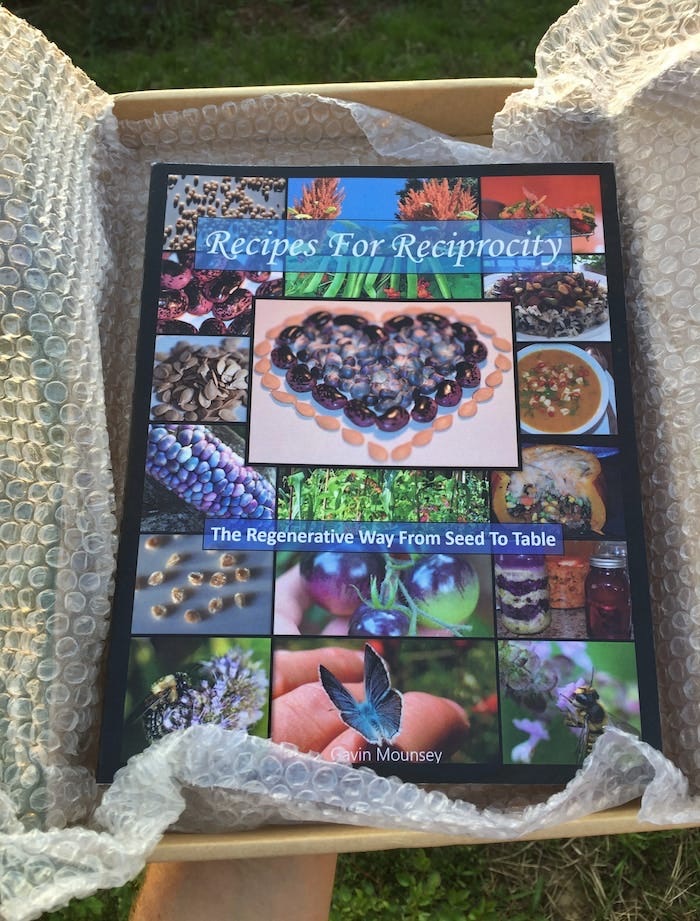
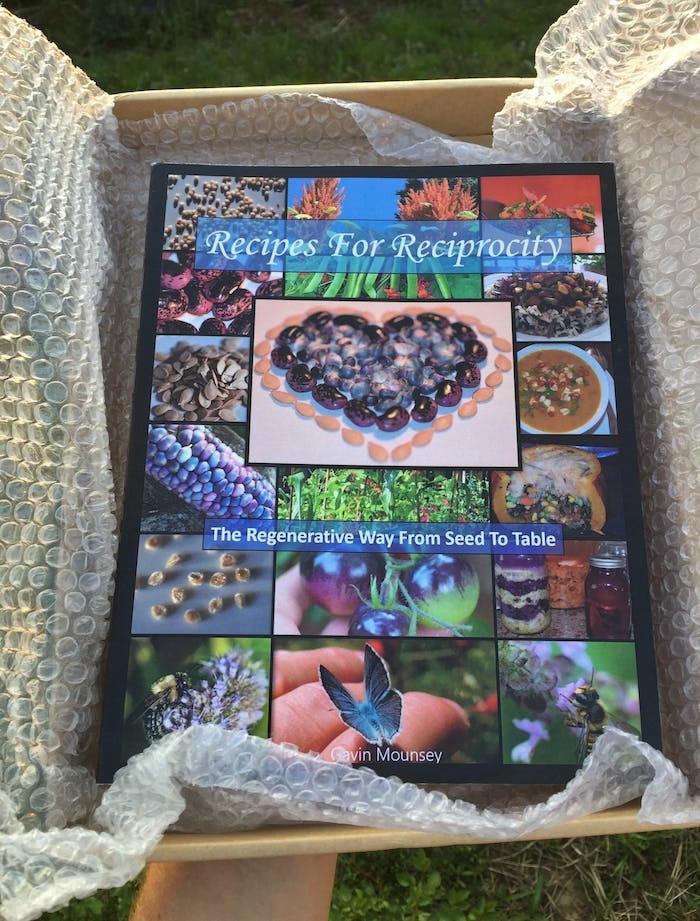
I’ve had a bit of challenge trying to simply label Gavin Mounsey’s book, “Recipes For Reciprocity: The Regnerative Way From Seed to Table” because it’s so much more than a cookbook. I have a great many cookbooks and my favorite type are what we might call ‘narrative cookbooks’ (though there may be an official sub-category name that I don’t know)–these are the kind where there’s a very present narrator telling you stories about the foods, and the places, and the people associated with the recipes and the author’s life. I might be inspired enough to write one of these myself someday.

Gavin’s book is not that, yet it is even more still. Rather than try to say it better myself, and fail, here’s an excellent description from the back cover:
“This book is a magnificent achievement. It can help you learn pracical ways to grow and cook mouthwatering food-as-medicine, and build deeper and stronger community, but it is so much more than that. Gavin has written a love letter to humanity and the living world and a manifesto for workable hope, all with an unflinching honesty about the crises we face. Gavin uses the nuts and bolts skills in the garden and kitchen as a launchpad to reimagine our place in the world, and the result is a solid foundation in the chaos. His hope and love are infectious, and the applied knowledge shared in his book is encyclopedic. I highly recommend it to you.” ~ Jason Padyorac

Along with the two books, one I gave to a friend, Gavin sent lots of seeds, some I’m already growing, others I can’t wait to try.

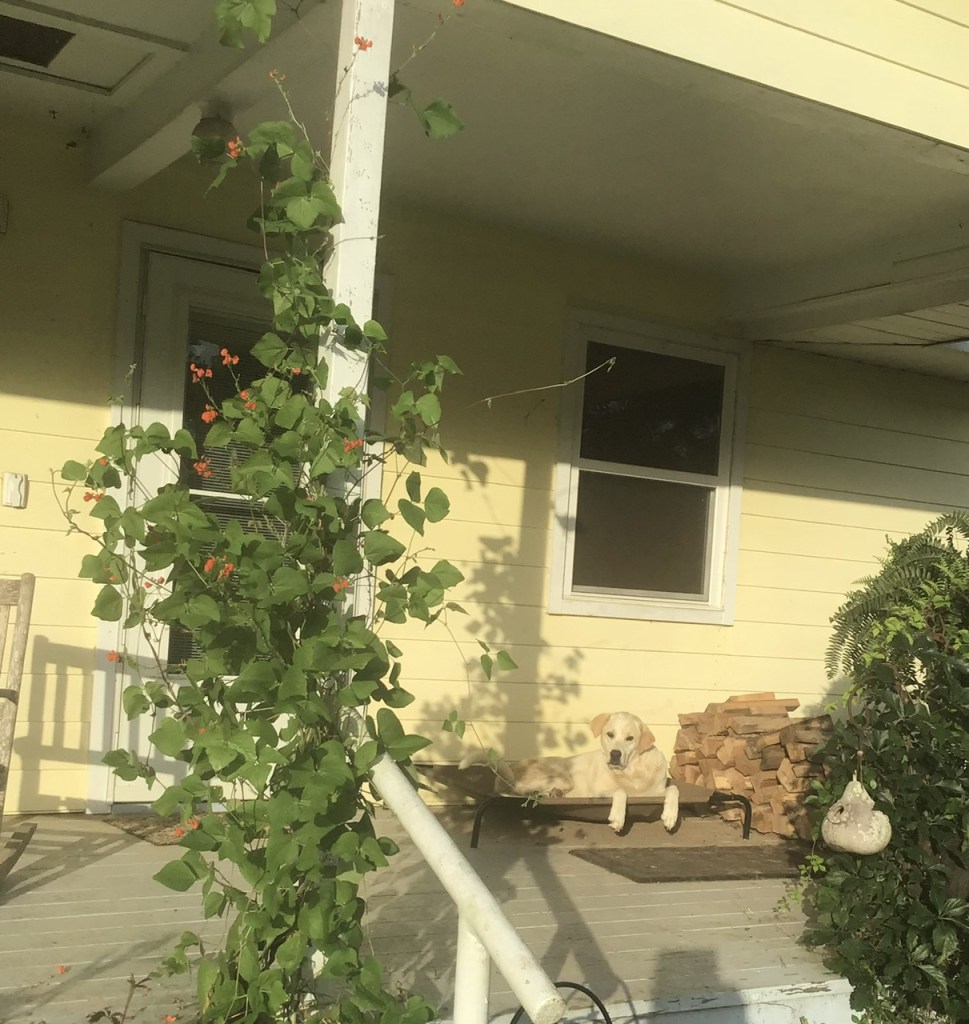
Scarlet Runner Bean in early summer, now dead.

So far I’ve planted the Scarlet Runner Beans and the Black Hopi Sunflowers.

Gavin:

“These beans are among my all time favorites for their versatility in the kitchen and beauty as well as productivity in the garden. They are an amazing companion plant due to the plant’s roots having the ability to associate with rhizobia (nitrogen fixing bacteria) which not only allows this plant to fertilize itself by pulling plant food from the air, it also means this plant can help fertilize its meighboring plants with excess nitrogen. On top of that amazing benefit the scarlet runner bean has beautiful red flowers that attract pollinators such as ruby-throated hummingbirds and bumblebees.”

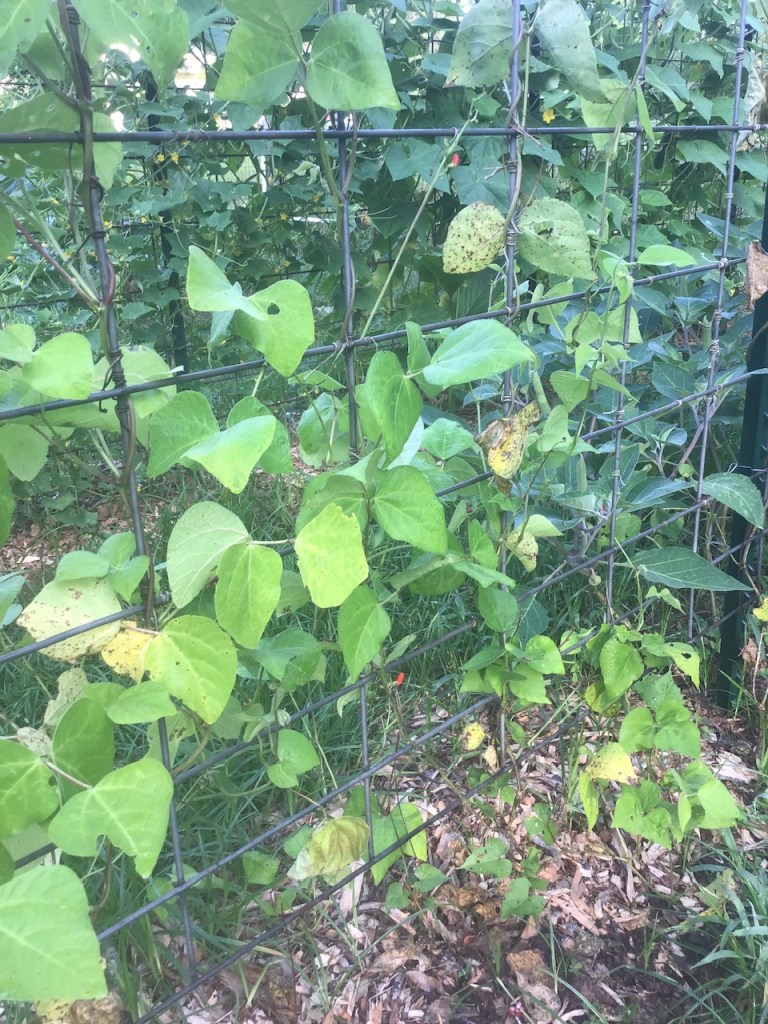
It is amazing to see how many fantastic plants can flourish in such varied climates. Because Gavin is in Canada and I’m in Texas I didn’t expect to find so many parallels in what we plant in our gardens, though certainly the timing and special needs vary quite a bit. The scarlet runner beans I’ve planted in full sun are perishing. But the others I planted which is shaded during the intense mid-day heat are hanging on. They’ve not produced yet, but I’m still hopeful and I like them anyway. I’m sure if there is any production and I can save the seed, it will acclimate to our area. Unfortunately, after a promising spring, the bumblebees and butterflies have been depressingly scarce in the garden lately.

Gorgeous! Ugly pity for the chem-sky.

The Black Hopi sunflower has been the piece de resistance. It’s gorgeous and taller and fuller than any I’ve ever seen. I had several planted in several spots, and most of them got damaged in the high-wind storms we’ve had. But not this magnificent giant!

Gavin’s reciprocity in action is so inspiring, which is why I wanted to spend a couple of posts sharing about his book. Regular readers will probably remember I’ve shared some other of his work here in the past, especially in our Herbal Explorations pages, which come from his Substack newsletter.

In another post I’ll dive into a few of the recipes, but for now I’d like to expand on a few quotes which so align with my own learning and experience growing a garden and cooking seasonally from scratch. It has absolutely been the most rewarding journey of my life, with plenty of hope remaining for more of the same in the future.

From the section: Reciprocity in Action
“Choosing to give our attention to nature is also a form of giving back. Observing and paying attention to the cycles and living systems in nature involves giving our time and our thoughts. When we closely observe nature we inevitably come to perceive countless expressions of beauty through our perceptions of the form, color, sound, scent, textures, tastes and relationships that are all around us. This leads us to caring, feeling gratitude for and feeling compelled to protect the amazing gifts nature shares with us. From the place of gratitude we engage in one of the most meaningful and powerful acts of reciprocity. We open our hearts, we feel content . . . we practice self-restraint, we choose to live more consciously and aware of how our life choices impact the living planet that sustains us and showers us with endless gifts.”

Gavin most certainly has an eye for beauty, his photography is stunning.

(3) The Jubilation Of June – by Gavin Mounsey

https://gavinmounsey.substack.com/p/the-jubilation-of-june-d41

I know how daunting it can seem to dive into a new hobby like gardening, or even cooking nowadays, but there’s so many smaller and easier things that take so little effort or knowledge that might be just the momentum for many to kickstart a healthier life and society.

Just observing. I couldn’t agree more. It really does start that small and simple and while I have read loads of books on gardening and cooking and many adjacent subjects, I’ve learned far more from observing. Taking notes helps too, but considering how bad I am at that, it must not be totally necessary.

The other few very simple things that require no gardening and very little cooking is compost and ferments, both which Gavin discusses in the book.

Why those two, you might be wondering? Because in my experience, composting makes you far more conscious of waste, and fermenting shifts your attention to the weather and seasons. Both of these processes have enriched my life and health and outlook far more than I could’ve ever imagined.

A window sill of herbs would be enough to use up the compost produced by the average small household. Or donate it to a friend who gardens if you have such a black thumb or really no space. And who knows, maybe she’ll reciprocate with a zuccinni or two.

I had no idea what eating seasonally meant. Really. Until I went to the farmer’s markets in France on a high school exchange program, I had zero clue produce even had seasons, and considering how much is grown indoors today, that’s probably become more normalized than ever.

Considering I grew up eating like the vast majority of Americans–fast, frozen, canned, bagged–I know what easy looks like, and this is pretty darn easy. The shift really is more in attitude and attention.

Now I long for cucumber season as I long for tomato season as I long for melon season as I long for radish and lettuce season. It’s become that nuanced and I love it. Sure, there’s some cross-over and we can and ferment to save the bounty. But that limited time window of bounty becomes a season within a season, with all that entails–a change in primary food and focus–all with their unique gifts and challenges.

Surplus requires work, work requires rest and creates reward. 😊

The ebb and flow of surplus and scarcity becomes natural again, each bringing its own unique gifts and challenges.

My influences growing up–that of media, education, environment–worked synergistically as detachment mechanism. Nature was that which we were being systematically detached from, and that trend has only exaccerbated, to the growing dis-ease of ourselves and our environment.

“Within the last century, healthy, natural, organic food has been made more difficult to produce because of the chemical pollution, at first, and genetic pollution, more recently. A handful of companies have spread these toxins across our planet diverting US$ 400 billion of public money to subsidize their high cost chemical commodities to make them artificially ‘cheap’. The costs of this ‘cheap’ food are astronomical in terms of the health of people, the ecological damge it causes and its exploitation of farmers. If the true costs of chemical food were taken into account it would be unaffordable. Insead of subsidizing chemical food and creating epidemics of food-related diseases, public money, used for nourishment and the protection of public health through organic food, would save us billions in health care. Denying people their right to healthy, poison-free food by manipulating laws, policy, science and the use of public money to impose a non-sustainable, unhealthy food is food-dictatorship.”

to be continued . . .

Thanks for reading!

Between Intrepid and Genteel

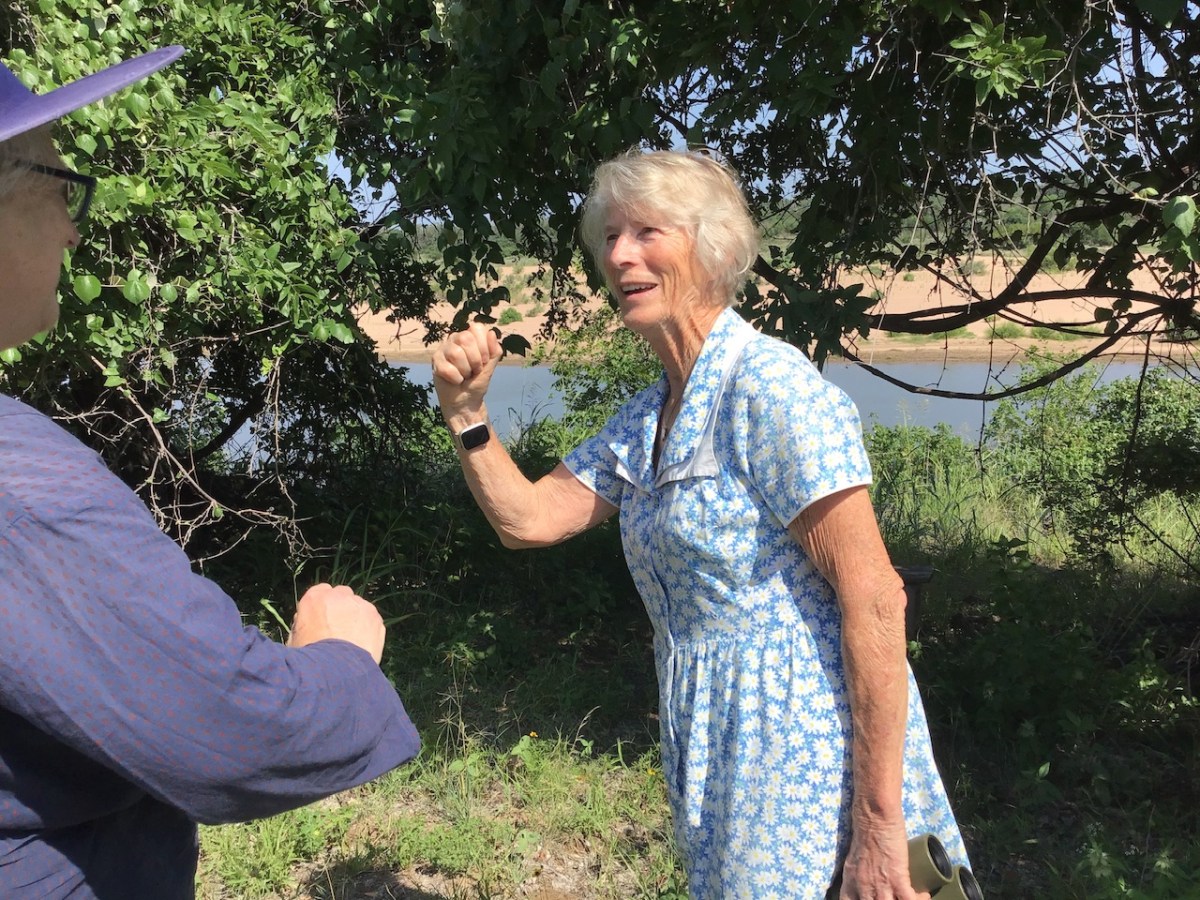
From Kenya to Llano, Berit pictured with Kath, visiting from the UK

Hunters often get a bad rap and it’s not always for good reason. I had a chance to learn something about this on a recent trip to the Texas Hill Country where I was led to question the difference between a hunter and a poacher.

Before assuming this is a niche topic and of little interest to the vast majority of folks whom are neither hunters nor poachers, consider it’s a matter of philosophy as well, along with colonialism, globalism, human nature and modern life.

A wall of hunting ‘trophies’ not uncommon in Texas homes.

Mostly they have much in common, the hunter and the poacher. There is a similar skillset, clearly, but one I know nothing about, so I’ll leave that to the hobbyists and professionals. As strictly an occassional observer I imagine it to require more patience than I’ve ever mustered, more tenacity than most and more courage than the vast majority.

We might say the poacher is lawless and greedy and violent, and in some cases that may well be true. It may also be true that some hunters share such qualities as well.

But again, I’m coming to this as a complete outsider to their world, strictly an observer, and occasionally a beneficiary.

The differences between the hunter and the poacher must lie somewhere between intrepid and genteel, I figure. And so it is most apropos that I should think of it with a hunter who fits the bill for both adjectives.

Our hunter in question, Berit, at her home in Llano, Texas

I’d never have taken this fair, mild-mannered, small and slender woman as a big game hunter, that’s for sure, and I suspect that made her something of an attraction at her home in Kenya, kind of like a pretty little sparrow among bulls. Though looking at the full and adventurous life she’s led, we mustn’t think a sparrow at anyone’s mercy.

A beautiful display of African artefacts collected during their time there.

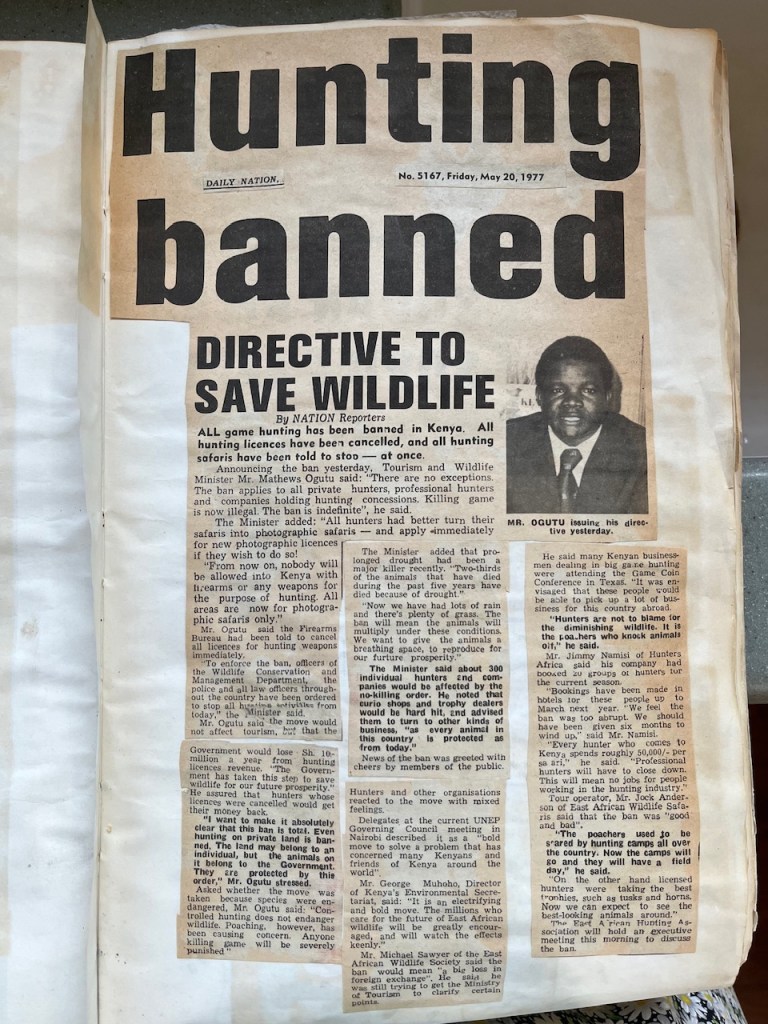
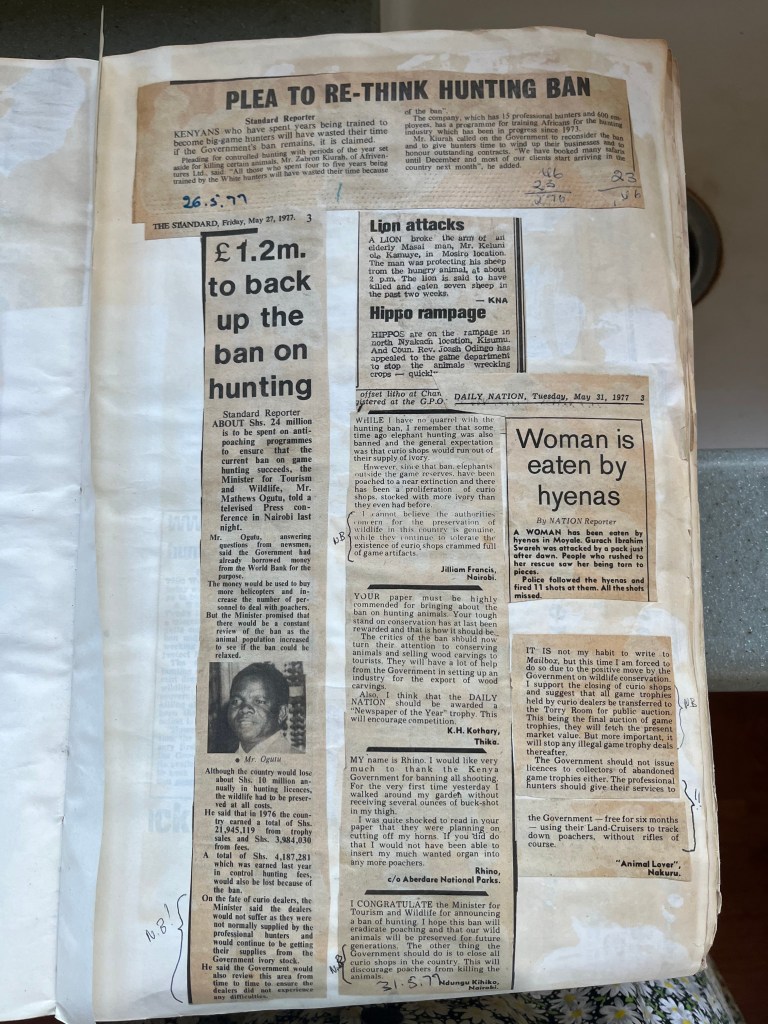
I met her with her second husband, an avid big game hunter, but her first husband was a professional one.Β Β They had a business together leading safaris until the laws were changed in an instant, hunting banned by the government, their livelihood lost.

Neither were Americans, but he had a prospect in Texas. So, with young children in tow, they moved to the Hill Country, to Llano, and started anew.

That was in 1977. It is still illegal to hunt in Kenya.

What’s more interesting, Kenya has remained on the fast track ever since, to full-tilt modernization. They have been an international fore-runner for all the Global Village United Nations WEF grand schemes for their ideal Future: ESG scores, vaccines, digital IDs, carbon credits.

That’s the great gift of compliance. Or, as the old adage goes, “Give the devil a finger . . .”

“Esc’s analysis, backed by meticulous documentation, sets the stage for understanding a system already operational, where resistance is economically suicidal and socially ostracized. Esc details how development programs in nations like Kenya test governance technologiesβ€”digital IDs, carbon creditsβ€”later exported to the West, ensuring global compliance under the guise of progress. The Earth Charter, as esc notes, serves as a global constitution, subordinating individual rights to expert-defined collective responsibilities, a theme echoed in The Invisible Empire’s critique of sustainability metrics overriding democratic will. We need to recognize this system before the window for democratic resistance closes, as each institutional captureβ€”from ESG compliance to AI-driven surveillanceβ€”tightens the web.”
The Complete Architecture – by esc

“For 130 years, a coordinated network of institutions has been systematically replicating the same control structure across every domain of human life – from healthcare to education, from banking to environmental policy. This structure, originally perfected in British banking, creates the appearance of local autonomy while concentrating ultimate decision-making power at higher levels run by credentialed experts.
The breakthrough came when science claimed moral authority over all aspects of human experience through the 1986 Venice Declaration, positioning scientific expertise not just as informing ethical decisions, but as the source of ethics itself. This created the intellectual foundation for what we now see operational: a system where questioning expert consensus isn’t just wrong – it’s scientifically illiterate, ethically irresponsible, and potentially pathological.”

How close is your country’s hunting policy to Kenya’s?
Is hunting policy about creating the lines between hunter and poacher, or obscuring them? Because, if everything is forbidden except to a tiny few, aren’t we pretty much all destined to become poachers?

“And the pity is that it will do nothing for the wildlife, controlled licensed hunting has never been a threat to wildlife. When elephant hunting was closed a few years ago, I wrote to the East African Standard and pointed out that poaching was the problem, not licensed hunting, and that if poaching were not stopped, the elephants would disappear anyway, whether licensed hunting were allowed or not. Unfortunately I have been proved right, and since that time the elephants have been exterminated all over large areas of Kenya. For this licensed hunting can in no way be blames, as legal hunting of elephants was closed.” Finn, Berit’s husband

Should hunting be allowed in Kenya? | davidlansing.com

“When I was in Kenya a few years ago I stayed on the edge of the plateau overlooking the Mara. About a mile away one night, a leopard broke into a Maasai boma and killed a cow. The game officials came by two days later, photographed the pug marks on the ground and the carcasses, payed the elder a pittance for his loss, reminded them that they were forbidden to kill the leopard, and disappeared. A couple of nights later, it happened again. So they staked out a goat and speared the leopard to death and buried him. That same leopard could have brought in tens of thousands of dollars in fees to Kenya and the local economy – now it’s a skeleton. When the wild game is seen only as a nuisance and is not allowed to pay its own way in a crowded land, it will always end like that.”

To be continued . . .

Feel free to chime in below!

Llano, Texas May 2025

Homestead Happenings

It’s been so long since an update I don’t know where to start. Or where to end, or what to include. But I figure there have got to be a few readers out there hankering for some other news besides the shitstorm coming at us from the global mafia and the media cartels.

Mostly done, finally!

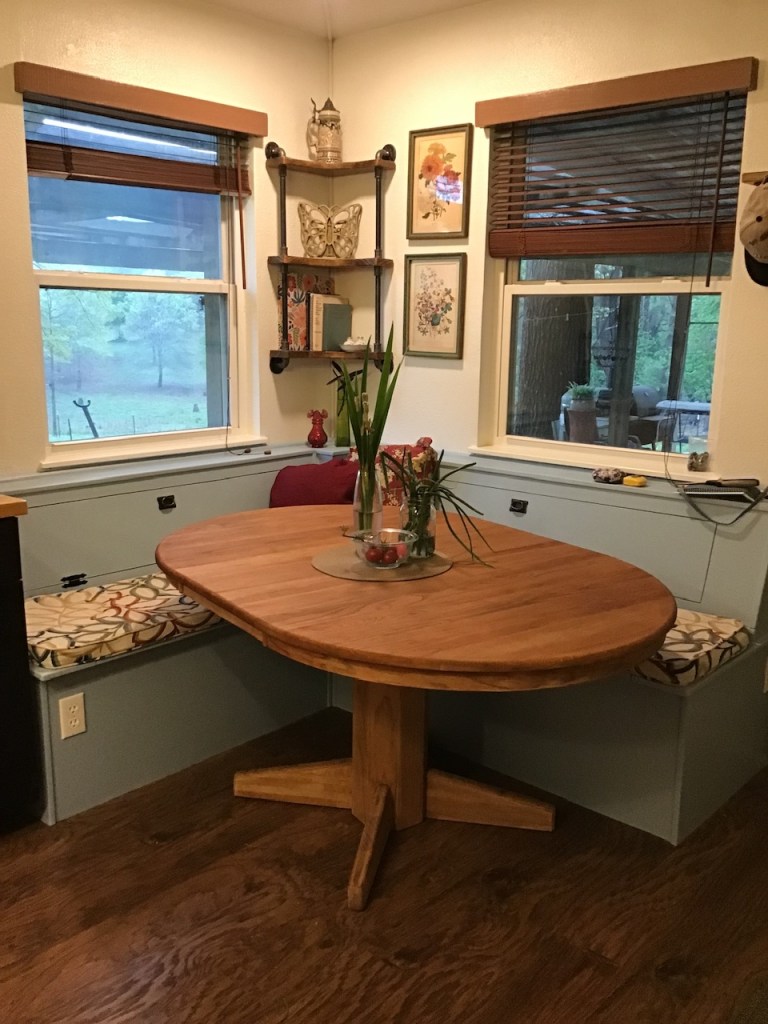
In my last update we’d started remodeling the kitchen. That was a very big DIY job, it took a very long time, and we’re still not totally finished. But we are very pleased with the results that were easy on the budget and tested our creativity, skill and resourcefulness.

I thought I’d include our first time redoing the kitchen, in 2009 when we first moved in, with the previous owners’ belongings to haul away before we could begin. It had been empty for many years and the mice and roaches had taken over. It was a disgusting experience, the worst of which we got to avoid this time, so that was a bonus.
This time we also repainted the ceiling and walls and all the cabinets as well as the breakfast nook bench and storage unit Hubby had built previously. He also replaced the countertops and handcrafted new lighting and shelves, expanding on the same ‘steam-punk’ style as he used on the entryway table he built last year.

Work in progress:

After way too many lost hours, I was not always a happy DIYer! But I am pleased with the result.

I spent a lot of time stripping and re-staining the kitchen table. I still want to dress-up the windows treatments and paint the doors and bases of the table and stool. But then we got too busy and had to devote our time to the garden and orchard.

The cucumbers and zuccini that were badly damaged by hail in late spring did make a bit of a comeback, but now are succumbing to the heat.

Unfortunately and as usual, a lot of the time devoted to the garden gets wasted because of crazy weather. This year has been no different and we had a lot of rain at the wrong time for some crops at some stages. The older peppers did fine with it, but the younger ones look terrible and are not recovering. Same with the tomatoes. The heirloom Scarlet Runner bean is struggling and not producing, but is still quite pretty as an ornamental.
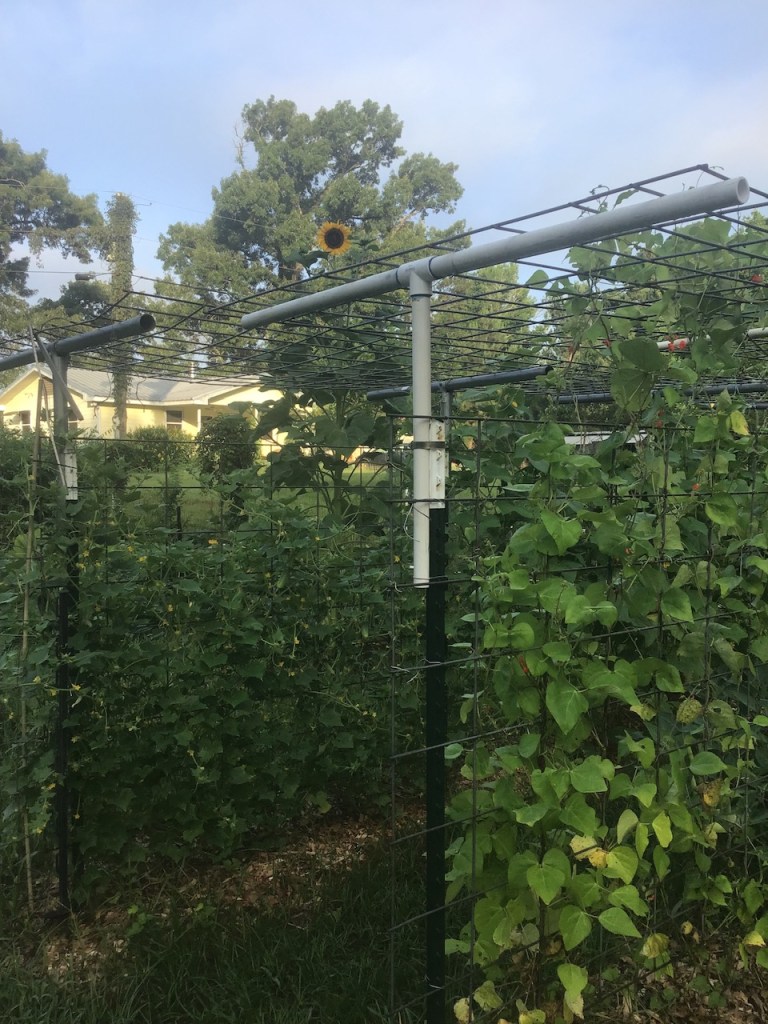
I’ll be writing about those seeds, as well as the ones that grew this great big beautiful Black Hopi sunflower (the tallest I’ve ever seen!), in an upcoming post about Gavin Mounsey’s book Recipes for Reciprocity, because the seeds came from him.

These cucumbers were just the right age for survival and are going strong now.

I’ve gotten good at succession planting over the years for the reason of crazy weather. In very early spring I try to get tomatoes, flowers and herbs started, but am often disappointed by late frosts. Days of heavy rain and high humidity with overcast skies can easily cause damage to younger more vulnerable plants in early summer. By this time of mid-summer I’m sowing more cucumbers, herbs, and sometimes beans, but it’s often already too hot for them to get established. At this point, we get what we get until fall brings more hope.

But of course I can’t be satisfied with that and am always experimenting. Often it’s fall tomatoes or melons, which rarely work out. This year it’s the challenge of romaine lettuce through summer. I seriously doubt it’s possible, but I’ve got a tray that has just germinated under lights inside to give it a try. I’ll put them in a shaded box, with plenty of hardwood mulch in an attempt to keep the roots cooler. It’s been in the 90s everyday lately, humid and not cooling off much at night, but there’s still some growing that wasn’t smashed by the heavy rain and hail a couple of weeks ago.

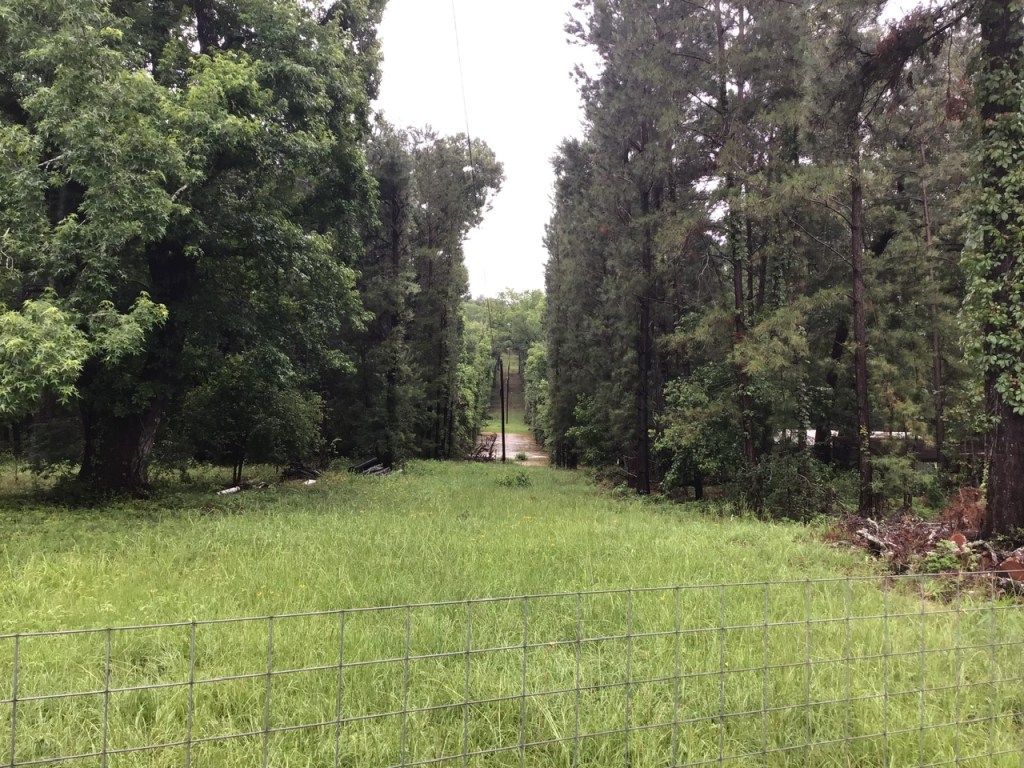
Left photo is view from garden, normally the creek is not visible at all. Right photo is walking along the power easement to the very flooded creek banks.

We also had another big oak tree die suddenly in the prime of life. The last one was just taken (partly) down by the electricity company’s crew because it risked falling into their cables. The latest one Hubby will have to fell himself, before it comes down on the fencing. That will probably be after he fixes his bridge to nowhere that he just built last year in response to flooding and was nearly taken out by this year’s repeat performance.

Sudden Oak Death Syndrome?

In the last two years, with no tornados or hurricanes to blame, we’ve had three large trees right around us flash out dead in a matter of days. Rather disconcerting to me, to say the least.

No such bounty this year I fear.

Still, let’s end on a positive note. Some years are better than others. We had an inexplicably bad blackberry year, but this year was excellent. Hubby made blackberry wine with much it, which was much better tasting as a young wine than the one I tried to make and age last year. Some years we have amazing tomatoes. Other years it’s great melons. Maybe this year it will be spectacular grapes?

It doesn’t take much for fabulous meals when food is fresh. Fermented herbs and veggies add flavor and nutrition with just a little garden surplus or foraging time. The chanterelles always do better with lots of rain. Hubby’s delicious young blackberry wine makes such a refreshing spritzer when mixed with kombucha.

Eating seasonally from our land is so rewarding even when we don’t have a bumper crop.

I have a long list of content coming up during the swelter season, so all the more excuse to stay indoors. Thank Man for air condition! πŸ˜†

And thanks for stopping by!

My Favorite Enchanting Photo

I’ve gazed at it for what seems like hours, though its magic is hardly captured there. It is just reminiscent of the awe I felt.

That I took it, that’s fine enough for now. I’ll be back, no doubt about that. I’ve no idea still what I’ve seen, only that I don’t see what they say I should see.

This is the One! Amazing!

That we traveled so many miles, and after plenty of discouragement, to get so very fortunate in the end must’ve added to the enchantment. I will cling to it, for a long time to come, I’m sure.

Intrepid traveler, Kath

To be in good company, that helps, always. But I expect next time I’ll go alone, and I’ll stay a good long while, hoping that maybe a few more of its mysteries might come to present themselves to me. That’s how it seems to work.

If I’m patient enough, keen enough, present enough . . .
Perhaps.
Maybe. Or maybe not.
Already there are many obstacles.

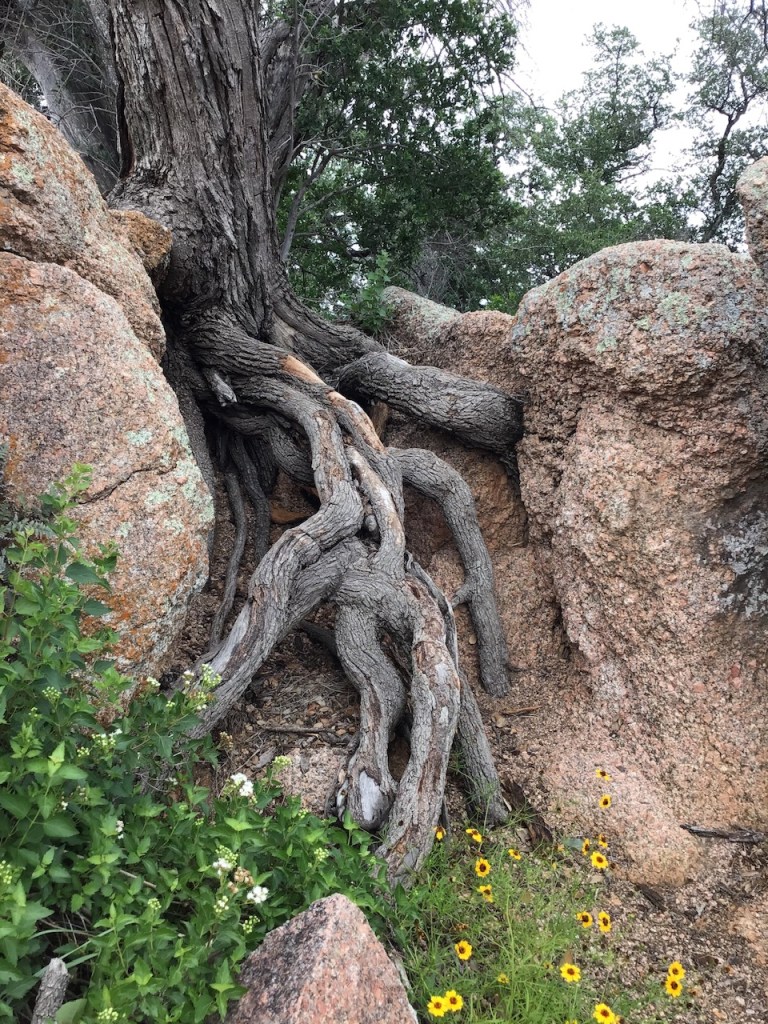
If only they would be, these many obstacles, as permeable as these rocks are to these roots.

If only I could hear their stories and know they were real.

If only I knew. What would I do?

Creep among the rocks, disguised, like these little guys?

You can’t see me . . .

Or mock its odd monochromatic effect with bold color displays in every shallow pool or crevice?

What makes a sight worthy of seeing? Is worth only weighed in the eye of the beholder? How many eyes does it take to spoil a place?

Enchanted Rock is a pink granite mountain located in the Llano Uplift about 17 miles (27 km) north of Fredericksburg, Texas and 24 miles (39 km) south of Llano, Texas, United States. Enchanted Rock State Natural Area.

I don’t know much about rocks, but granite is one we’ve all heard of, thanks to its continued popularity in building, from the popular household granite countertops to Mount Rushmore and the Red Pyramid in Egypt.

This is said to be a testament to its durability, longevity, and resistance to weather.

According to Wiki, it’s quite hard:

“Granite is nearly always massive (lacking any internal structures), hard (falling between 6 and 7 on the Mohs hardness scale),[1] and tough. These properties have made granite a widespread construction stone throughout human history.”

Which makes me all the more curious about the intimate relationship between those roots and rocks. According to the official history, we’re only seeing the proverbial tip of the iceberg.

“Enchanted Rock is a small speck compared to the huge underground rock that spans over 100 square miles. That’s almost four times as big as Manhattan!”

It’s quite hard, and yet it ‘sheds’ kind of like a glacier ‘calves’?
“Eventually, weather and erosion shaped these rocks into the odd shapes you see today.”

How odd!

So, what kind of weather and erosion causes a lozenge shape? Inquiring minds want to know!

A partial official explanation can perhaps be found within worldwide examples of batholiths:

“Batholiths exposed at the surface are subjected to huge pressure differences between their former location deep in the earth and their new location at or near the surface. As a result, their crystal structure expands slightly over time. This manifests itself by a form of mass wasting called exfoliation. This form of weathering causes convex and relatively thin sheets of rock to slough off the exposed surfaces of batholiths (a process accelerated by frost wedging). The result is fairly clean and rounded rock faces. A well-known result of this process is Half Dome in Yosemite Valley.”

That explains the ‘thin sheets’ perhaps, and the rounded rock face, but not so much the lozenges. And the root-rock infusions!

Continuing with Wiki:

Lanite, a rare type of brown rhyolite porphyry with sky-blue quartz crystals and rusty-pink microcline feldspar, is found nowhere else in the world except in Llano County. Llanite can be found along a highway cut 9 mi (14 km) north of Llano on Texas 16. The largest piece of polished llanite in the world can be seen at the Badu House.

The Llano Uplift, a roughly circular geologic dome of Precambrian rock, primarily granite, covers about 50 miles along Texas Highway 29 and was 1.5 billion years in the making. Call it Rock Heaven: Geologists identify 241 rocks and minerals in Llano County, including llanite, a blue-specked dark granite found nowhere else in the world.”
Travel: Rock Heaven in Llano|April 2018| TPW magazine
Lovin’ Llano | October 2008 | TPW magazine

But apparently it was not the discovery of granite, but rather that of iron ore that transformed Llano into a boom town.

“Newspapers spread the word about Llano, recklessly playing up the magnitude of the region’s mineral resources. β€œLlano iron ore is the finest on the continent,” one story claimed. β€œIron Mountain will produce 2,000,000 to 4,000,00 tons annually after the first year.”

“Little visible evidence remains of the Llano iron boom. A 1906 tornado destroyed some of the boomtown buildings north of the river. Other structures suffered a more mysterious fate.
β€œA number of buildings on the north side burned,” JoAnn McDougall explains. β€œThe owners did it to collect insurance money. They needed cash and didn’t see any other way to get it. So many buildings burned, the insurance companies stopped insuring buildings in Llano, at least for a while.”
The Badu Building

The Badu Buildinghttps://rockandvinemag.com/2024/02/the-badu-building/

According to Wiki:
The geology of northeast Africa is very similar to that of Texas, and many of the two regions’ minerals and fossils are only found in these two locations.[2] A dike of llanite crops out on Texas State Highway 16 about nine miles north of the town of Llano.[3]
Llanite, which is similar to granite, is very strong, with a crushing strength of 37,800 lb/in2 or 26,577,180 kg/m2.[4] The mineral is also very similar in appearance to pietersite

Enchanted Rock was the absolute highlight for me on this road trip, and we almost didn’t make it. For one thing, I almost might not have been able to muster any enjoyment from it at all, being that I was wickedly hung over.

A hangover that dissippated in an instant, in a sudden and unexpected weather shift. The day before I’d been suffering in intense heat walking in a shadeless midday scrubby desert and I was attempting to muster the strength for the same again. For the first 45 minutes of the drive it was not looking promising. What fortune came then, in the last 10 minutes before the entrance, was the most welcome of weather whiplash …

Except that meant the main path of the Enchanted Rock might have to close any minute. Any amount of rain makes the rocks very slick, and they want no accidents. Best get climbing quick!

To be continued . . .

For more Enchanted Rock fact and fiction, begin at the 1:06 mark.


https://youtu.be/OO61UcJMHGw?si=4x33GYsB9oI3lbuF

Between Shitty & Country

Having become far more accustomed to the surreal ‘nature’ of ‘reality’ in the last decade or so, I was less baffled by the still ever-increasing Suburban Sprawl on my recent roadtrip through the Hill Country of Texas.

Because of course, by now we are all hearing constantly the war drums of the Globalists and their plan to put all ShittyZens into Smart 15-minute Citiesβ„’ under Palantir Surveillance Systemsβ„’ paid for with our tax dollars and paving the way for digital money cheered on by ‘Freedom Fighters’ where everyone will be eating food manufactured by Pig Pharma, who begrudgingly keeps the ShittyZenry alive through forced drugging deemed voluntary.

Homesteading gets sold as a solution, which it is not, and never was, and even I knew that as a novice 15 years ago, before it was cool. Homesteaders rarely last 5 years, I’m told, like most small businesses. Makes perfect sense to me, because it’s the only work I’ve ever done that gets harder with time instead of easier.

It’s a lot like all the lies being sold to us about everything, everywhere, all the time.

Perhaps the 15-minute city agenda works in some places, but I see nothing of the sort here. The Shitty Sprawl continues, unabated and unabashed, developing the vast parcels of land without the people, in an unstoppable concrete jungle that clearly doesn’t listen to the same news as we are subjected to from the 24-hour Cybernews Today Club.

Residential and commercial alike, vast development continues, and sits empty for tens of miles outside every major city in Texas: Dallas, Austin, San Antonio, Houston. The foreign populations increase, but not nearly at the rate the buildings to house and employ them get constructed.

And out, and out, and out they go, encroaching far worse than infesting cockroaches. Blocking the views, crushing the landscape, sculpting and paving and polluting any and every open space where someone can maybe hope to make another dollar.

11 new Commercial Mega-projects for the Austin market!https://aquilacommercial.com/learning-center/megaprojects-planned-for-austin/

“The project is set to deliver 1,200,000 square feet of office space, 140,000 square feet of retail space, 1,700 multifamily units, and 200 hotel rooms. TheΒ developmentΒ will also create 14 acres of green space.Β ”

Mind you, there are already huge empty building ALL over the shitty.

Plus,

(A whopping 14 acres of green space! πŸ˜‚)

I like when I hear rural (and other wise) folks refer to the cities as ‘shitties’ because I think it fits. Let’s call a spade a spade. What I saw on my roadtrip was horrendous and makes me thankful for the wee refuge we have created here, for now. But the Shitties aren’t the real problem here, in fact. We are being swallowed up, everywhere, by the relentless Shitty Sprawl.

Amazon and Walmart will be offering drone delivery service, so perhaps that will alleviate some of the choking traffic that stagnates around every Shitty, all day long. Those drones must be very adept at navigating through the expanse of electrical towers and fat mess of wires that crisscross every skyline and create a hideous hellscape of prison-like bars. So much for the vast open horizons of our fabled cowboy days.

In Houston, veterans and cripples beg at every underpass and intersection, weaving themselves like Frogger players through 5-lanes of traffic. San Antonio has been ruined by tourism and is now, in just the last 5 years since I was last there, a crowded, filthy slum pretending to be full of family fun. Austin is just more of the same which started well over a decade ago, and continues its relentless expansive march into the drought-stricken Hill Country, paying no heed whatsoever to the limits of water or other pesky human needs. Technology!

Yes, technology is both the Great Driver and the Great Savior. As well as the Great Disrupter and the Great Connector.

While the water gets diverted into Data Centers, swimming pools and water sports for the foreign tech teams, tourist traps sprout up like, well like tourists traps always do.

Mystery Tours and Great Escapes (TM) and Wild West Simulations based on previous historical simulations. Hotels that require Smart phones to check-in and coffee shops that sell fancy foamy cocktails, but don’t take cash.

Such is the American Dream I’ll be expanding upon in the next posts, based on my recent, rare roadtrip. There will be highlights among these many Shitty Horrors, I hope they will be enough to create some kind of basic balance, as temporary as I expect that will be in the grand scheme of things.

The Pie in the Sky Tech dreams are in fact nightmares for a great many of us. The kind of projects ‘our betters’ have planned for the world are little more than anti-human miseries sold as ‘fun’ and ‘sustainable’ while they are in fact conning the populations of the world to build playgrounds for the uber-wealthy on the backs of the common man: THE story as old as time.

Will Austin become the next Neom?

city of neom saudi, future home of the 2029 Asian Olympic Winter Games
https://en.wikipedia.org/wiki/Neom
Yes, there is the usual rumblings of faux climate concerns.
“Amidst increasing global-warming concerns, the project raised multiple issues ranging from the expected high temperatures in the desert land, the energy impact and detour of local water resources to the construction of artificial ski slopes from scratch.”

Our Texas mega-Shitties equally demonstrate ZERO authentic concern over their continued expansion.

“The new construction home market in Austin, Texas, remains vibrant, with homebuilders offering attractive incentives like rate buy-downs and closing cost contributions. Demand is steady, as Austin continues to attract buyers drawn to its growing tech scene, great schools, and high quality of life . . .”

In Shitty-speak, a ‘high quality of life’ is apparently defined by constant drought, non-stop shitty-wide traffic and enough beggars to make one feel rich even while living in a mini-studio apartment above a freeway.

Pay no mind whatsoever to Austin’s infamous traffic. It’s main corridor, dubed ‘A Freeway Without a Future’.

I-35 in Austin is one of nine freeways where the infrastructure is “nearing the end of its functional life.” Photo courtesy of Getty Images
Apparently this was a problem inherent in the 1928 Master Plan of Austin’s infrastructure that is now visible to ALL: The Master Plan was in fact, rascist. So that explains everything.

The Master Plan https://austin.culturemap.com/news/city-life/austin-i35-freeways-without-futures/was rascist, of course!

Perhaps the future plan will mirror a devotedly Non-Racist plan, like that of Neom, Saudi Arabia, where everyone has equal opportunity to be a ShittyZen, provided they don’t mind being surveilled like a prisoner.

From Wiki:
“At one company meeting, Nasr said on record, “I drive everybody like a slave, when they drop down dead, I celebrate. That’s how I do my projects.”[108] He also threatened to replace employees stuck in other countries during the COVID-19 pandemic lockdown in 2020, which included the former director of branding and marketing.

Surveillance
Designers of The Line announced plans to use data as a currency to manage and provide facilities such as power, waste, water, healthcare, transport and security. It was said that data would also be collected from the smartphones of the residents, their homes, facial recognition cameras and multiple other sensors. According to Joseph Bradley, the chief executive of Neom Tech & Digital Co., the data sweep would help developers feed the collected information to the city for further predicting and customizing every user’s needs.
However, Saudi Arabia’s poor human-rights record and use of espionage and surveillance technology for spying on its citizens emerged as a roadblock, according to digital rights experts. Vincent Mosco, a researcher into the social effects of technology, stated that “the surveillance concerns are justified” while further adding that “it is, in effect, a surveillance city.” The Saudi Ministry of Communications and Information Technology did not respond to digital rights experts and researchers’ requests for comments.

Other criticisms
The project has been critiqued as a “laboratory of false solutions” inasmuch as carbon capture and storage (CCS), green hydrogen, and carbon-offsetting are self-serving panaeceas backed by the fossil fuel industry which do not work at scale. Furthermore Salman’s vision for the city includes such fanciful technologies as flying cars, robot maids, dinosaur robots, and even a giant artificial moon.”

Even a giant artificial moon?! Wow! Who needs water anyway, fly me to the moon! πŸ€ͺ

Geoengineering Update

“In conclusion, the use of military climatic and environmental modification technologies appears to be the most relevant explanation to understand the increase in natural disasters over the last 20 years.     

“For a half century, the military has been developing technologies to turn climate and extreme environmental phenomena into weapons. This study is a literature review, which was conducted with the following objectives: 1/ to expose the known powerful military technologies of climate and environmental modification; 2/ to emphasize that many extreme environmental events observed in recent years coincide with the effects that these military technologies are able to generate; 3/ to analyze the conclusions of the Intergovernmental Panel on Climate Change (IPCC) on the origins of the increase in natural disasters. The literature used comes from official sources: peer-reviewed scientific articles (except one); patents; intergovernmental organizations; military documents; policy documents; university documents; national newspapers; news agencies; writings by respected scientists in their fields. Results of the literature review reveal that HAARP (High-frequency Active Auroral Research Program), the most powerful ionospheric heater in operation, is able to influence climate. High-power electromagnetic pulses in the earth’s crust, produced by a mobile magneto-hydrodynamic generator, is a technique developed since the 1970s to trigger earthquakes. Directed energy weapons, a real technology, can ignite destructive fires at range. For several years, official documents report effects on health and the environment similar in all aspects to those that would be detected if solar geoengineering by stratospheric aerosol injection, a climate-altering technique, was used. Due to numerous biases and a lack of objectivity, the IPCC’s arguments on the causes of the growth in extreme environmental phenomena (heat and cold waves, storms, hurricanes, tornadoes, 75 droughts, floods, wildfires, air pollution, etc.) are flawed. The solar hypothesis isn’t appropriate either, given its low activity for several years. In conclusion, the use of military climatic and environmental modification technologies appears to be the most relevant explanation to understand the increase in natural disasters over the last 20 years.”

(PDF) Natural Disasters are Not All Natural

2018 Security Framework Characterizes Geoengineering as Weapon of War – Zero Geoengineering

Season 6 Episode 25 1995
Simpson’sPredictive Programming