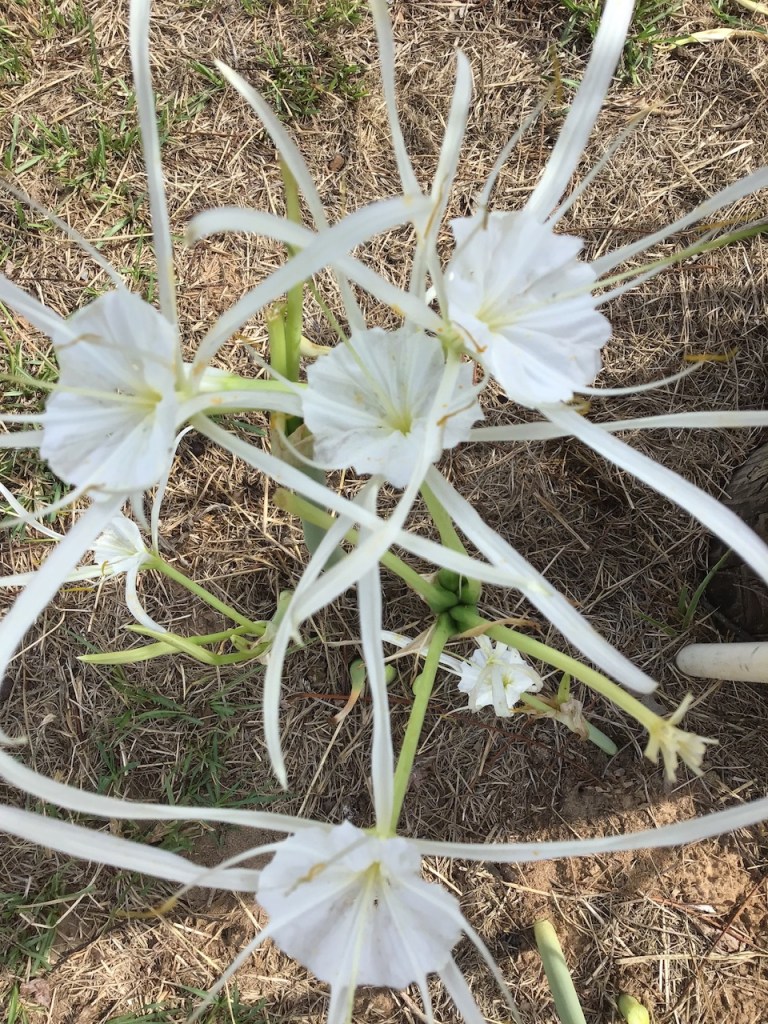
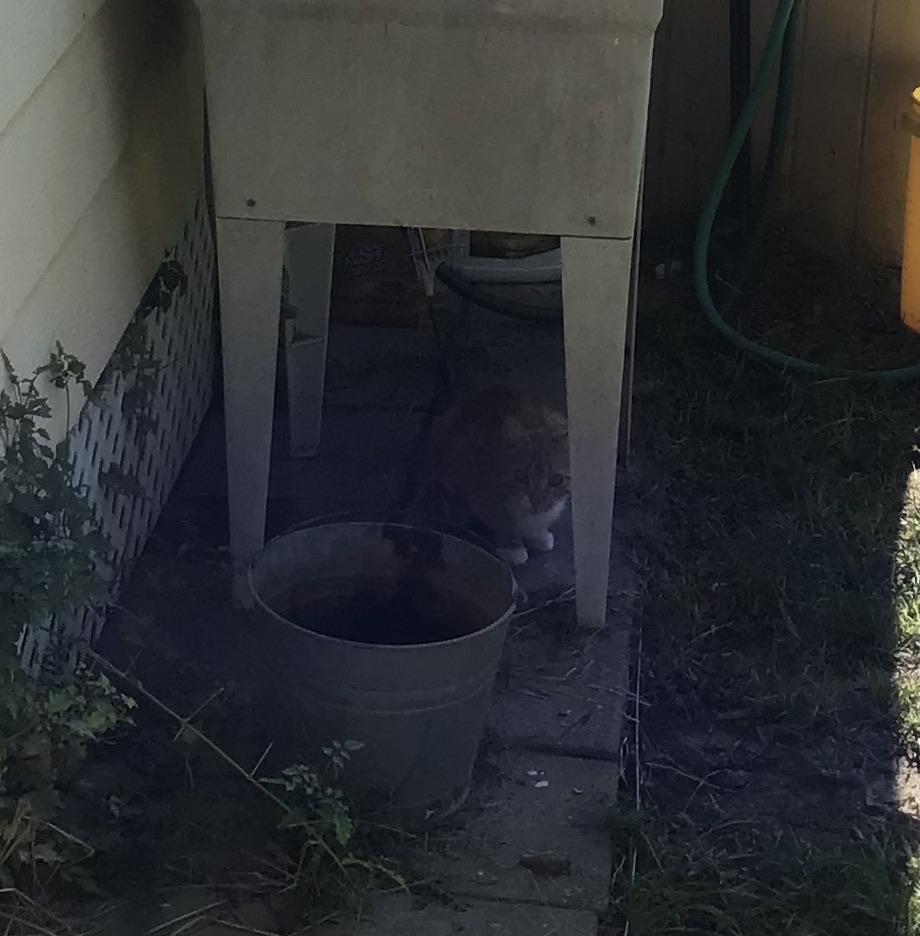
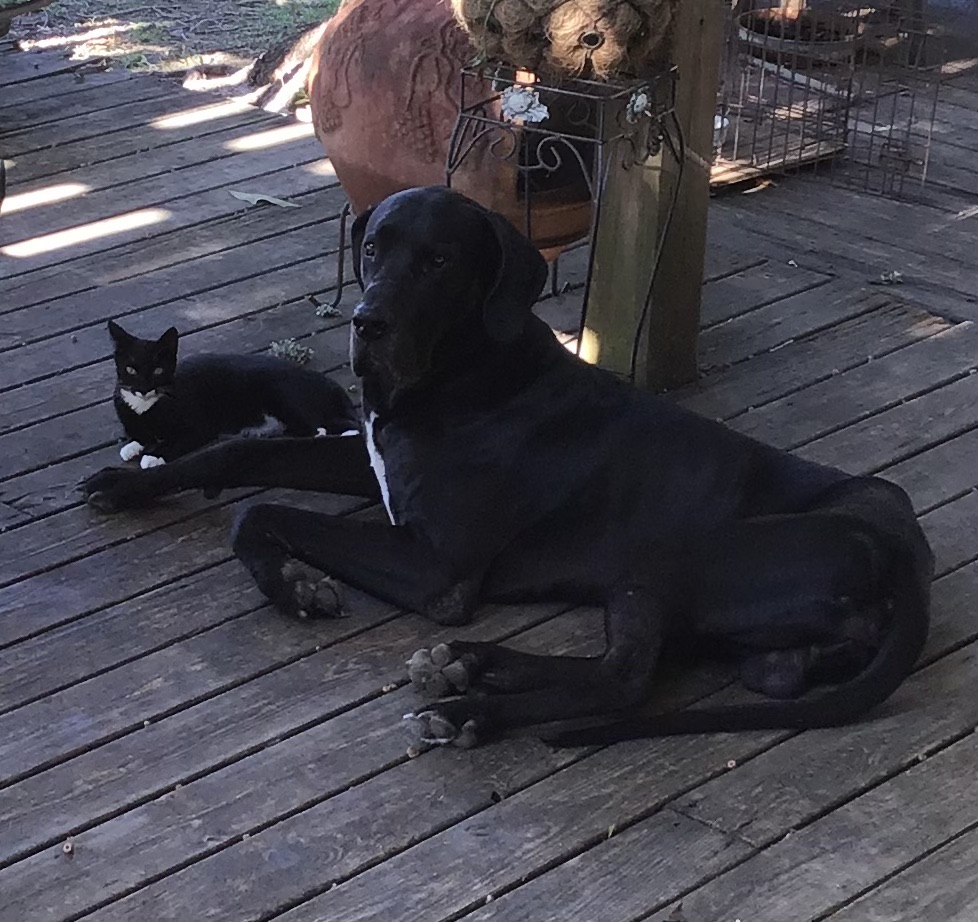
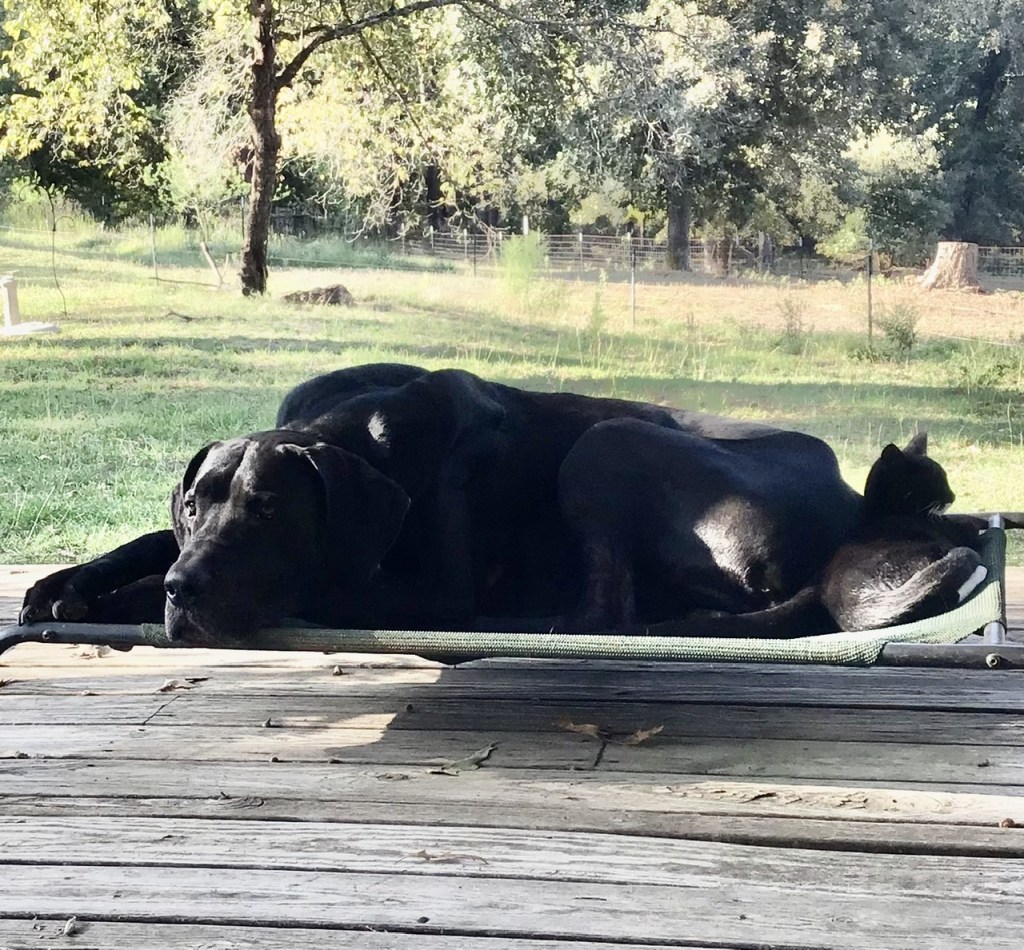
Just some happy snaps with minimal commentary this post, because it’s been too long. With more coming very shortly, as soon as my new keyboard arrives, because I loathe the hunt and peck method of the digital keyboard.
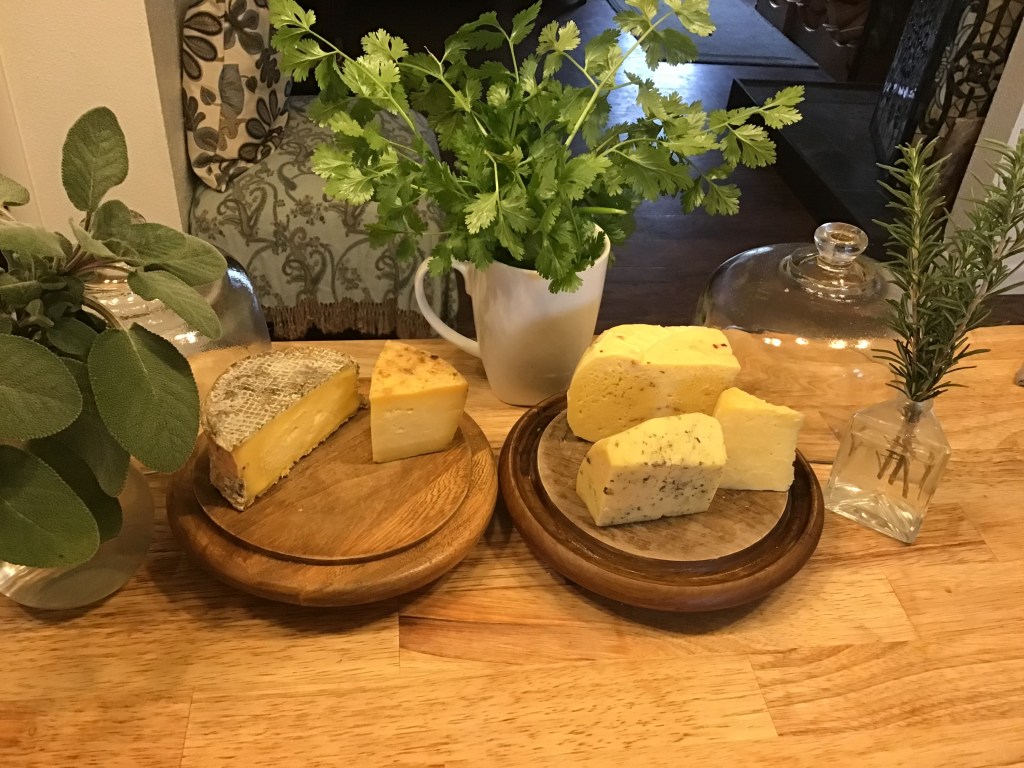
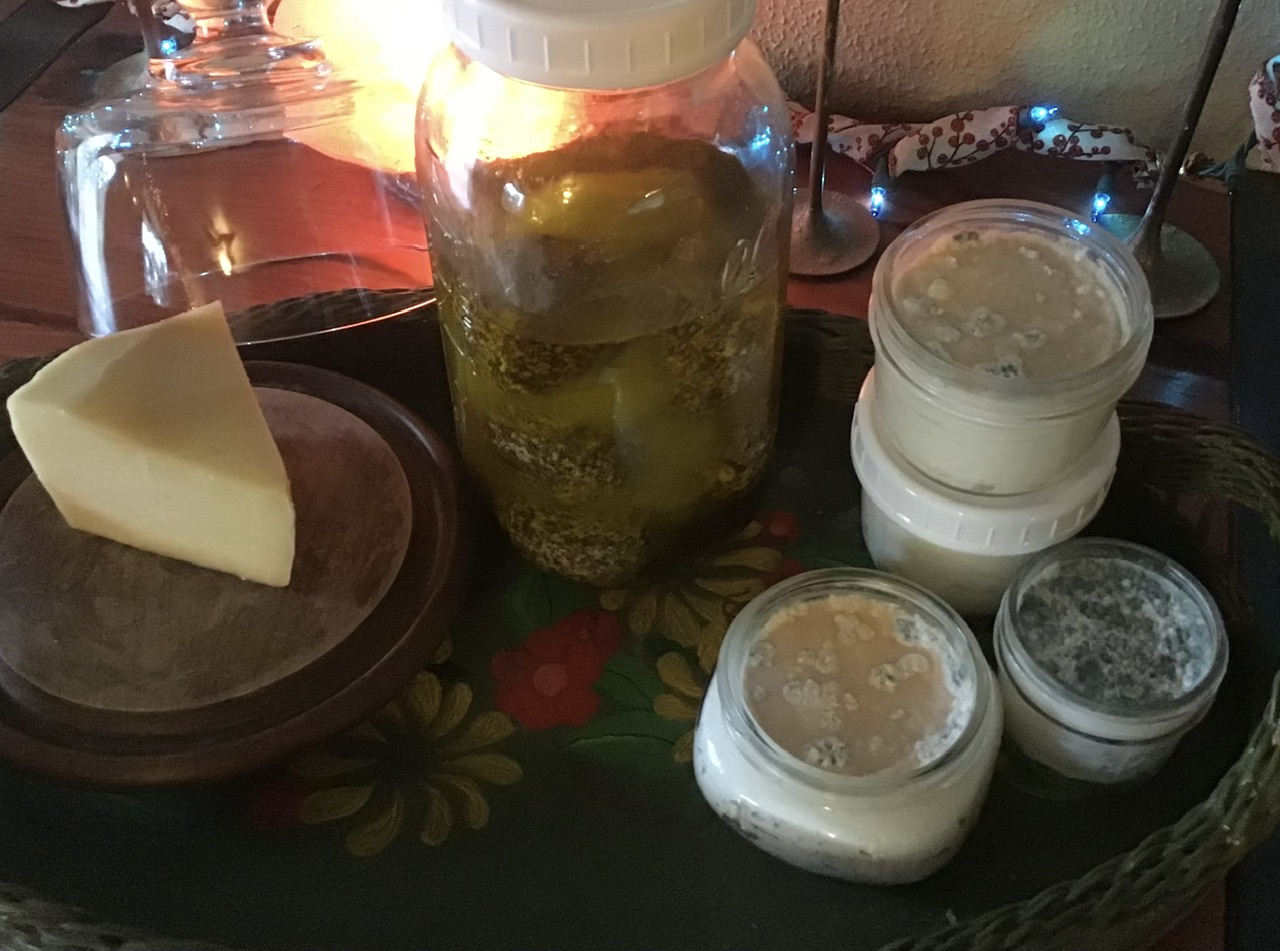
Some aged cheeses and winter herbs: smoked cheese on lees, kenshobert, pepper havarti, dill havarti and cheddar, with some fresh sage, cilantro and rosemary.
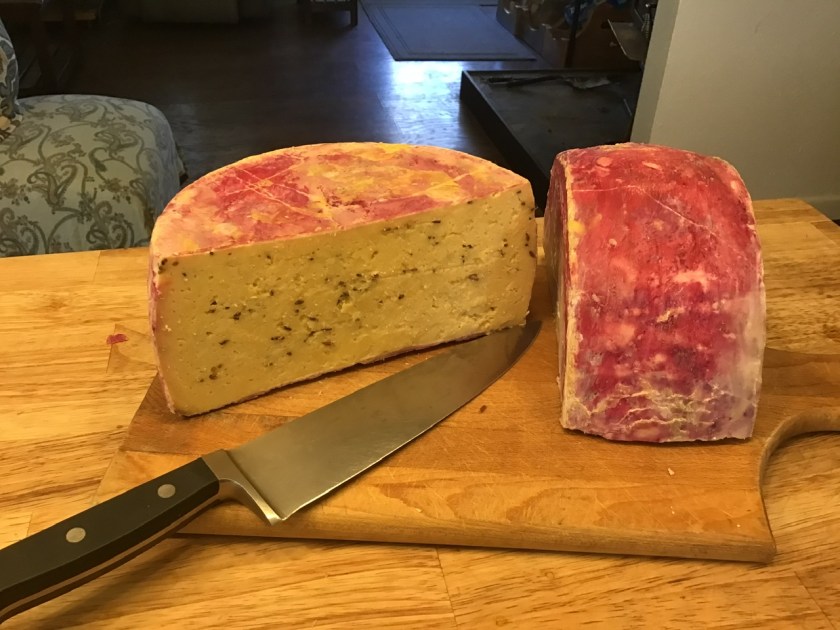
My biggest cheese this season from 9 gallons, caraway cheddar aged in a poke-tinted tallow coating. Unfortunately, it’s not my favorite. Fortunately, others like it fine so I happily gave the whole thing away.
My personal favorite, my signature Kenshobert, a local take on Camembert.
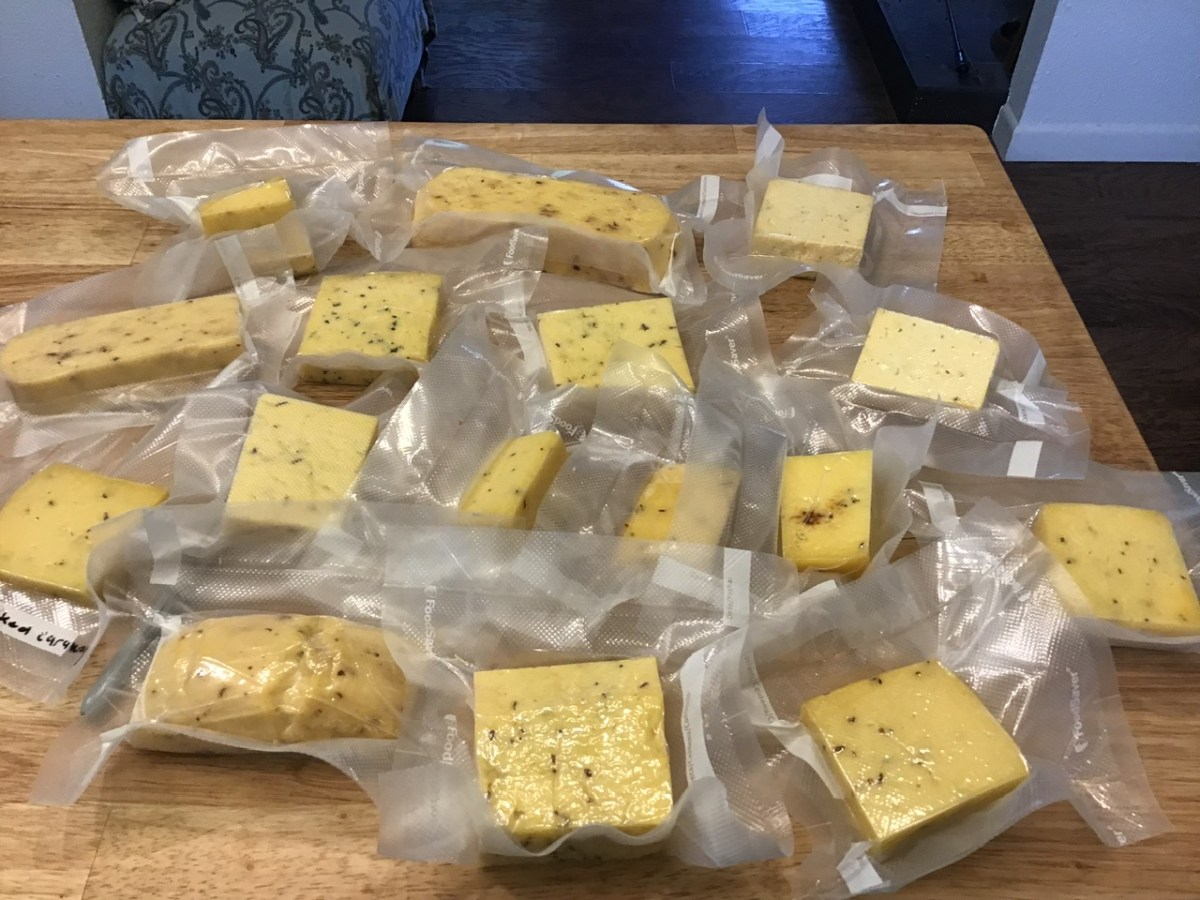
A large dill havarti and variety of experiments, most quite good!
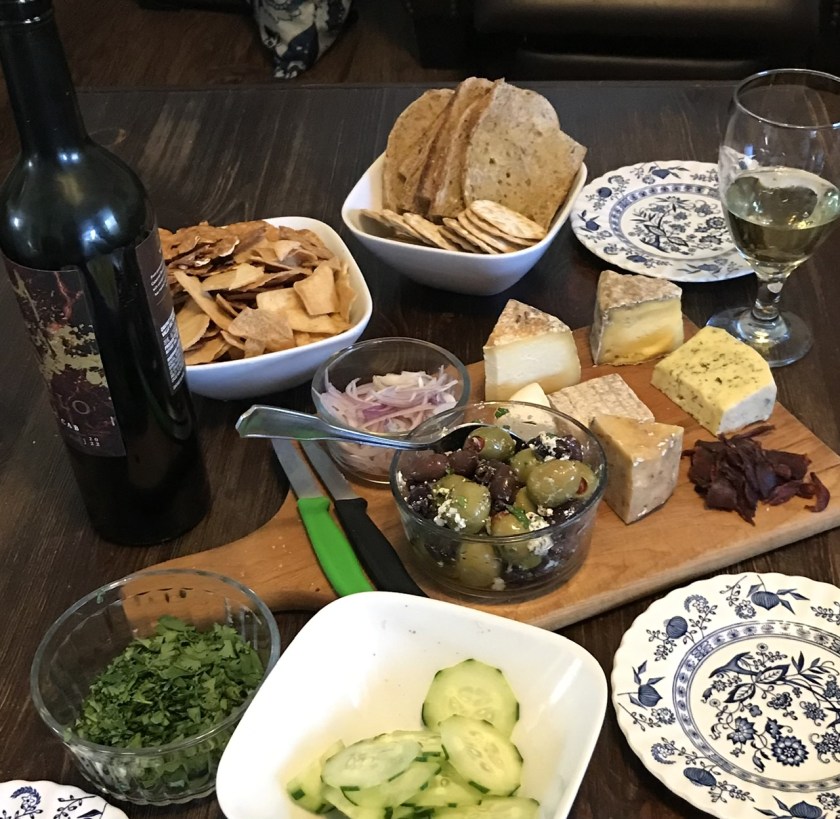
Sharing a charcuterie board of cheeses and cured lamb.
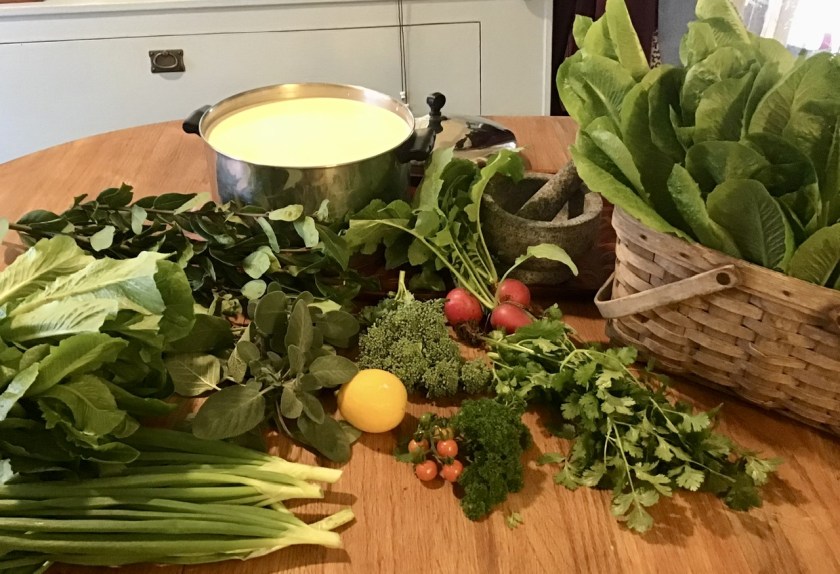
A winter harvest of romaine, onions, herbs, radishes and even an orange from our little shrub and some cherry tomatoes because it’s been so unseasonably (and unnaturally) warm. Plus a pot of today’s milk becoming clabber for tomorrow’s cheese.
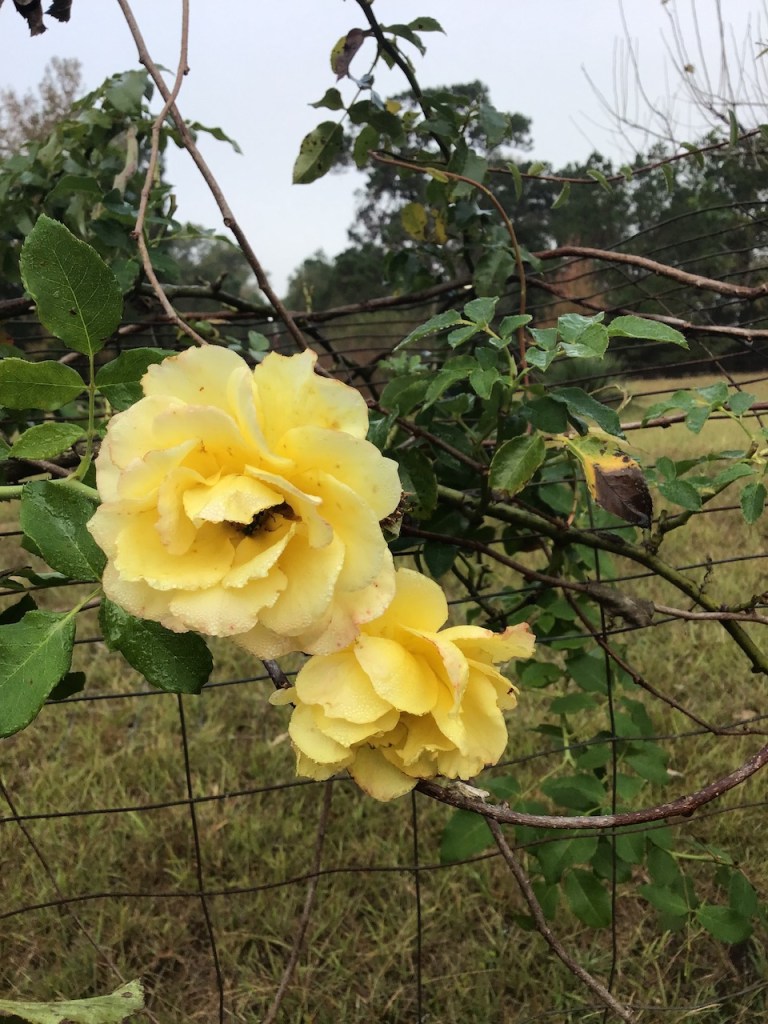
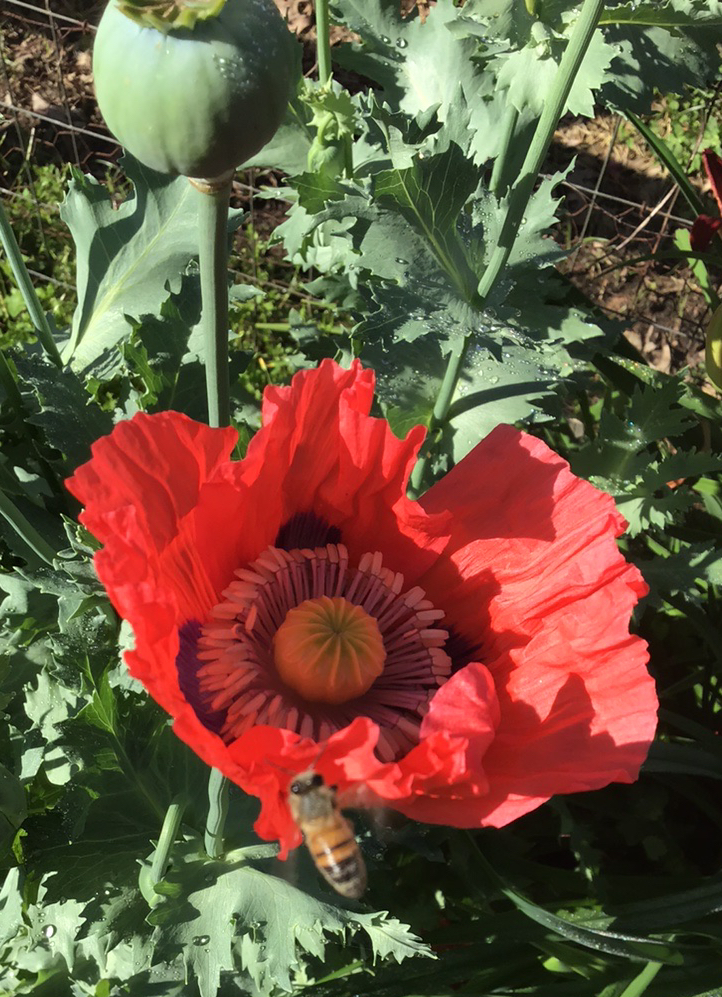
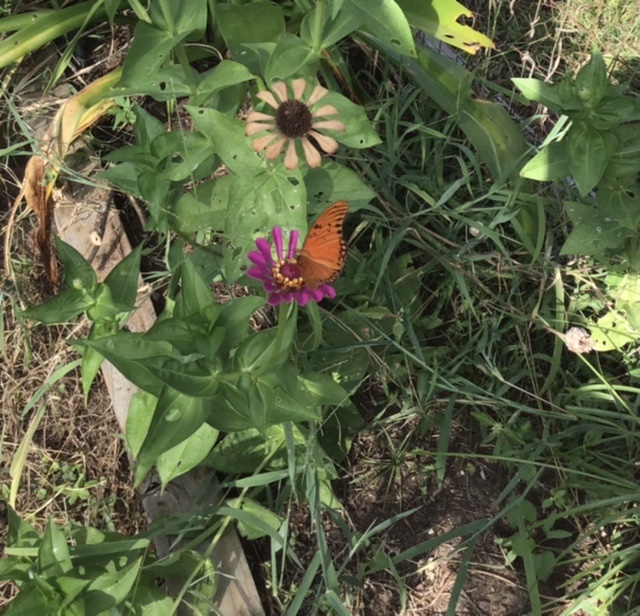
A Christmas bumblebee!
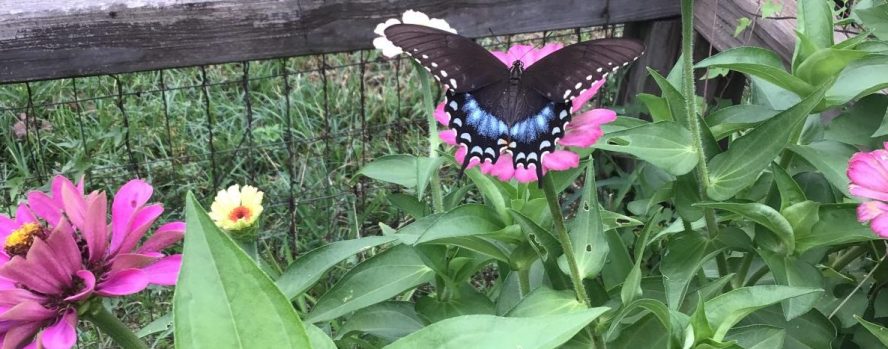
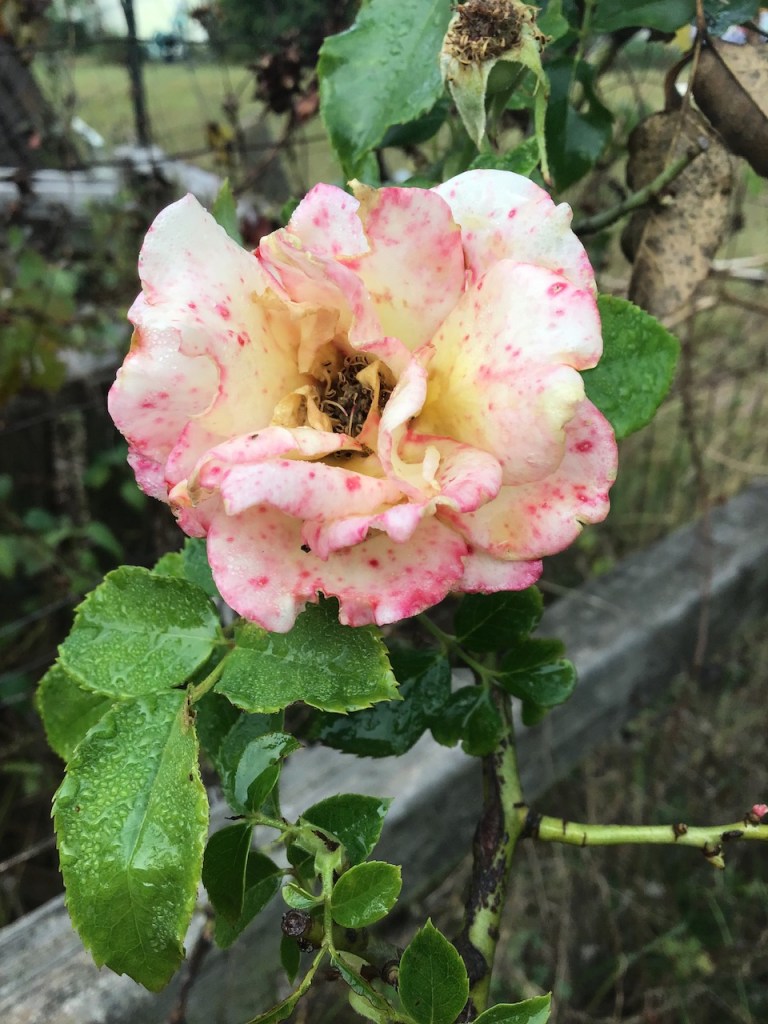
Unusual winter roses turning strange colors.
A few more happy snaps . . .
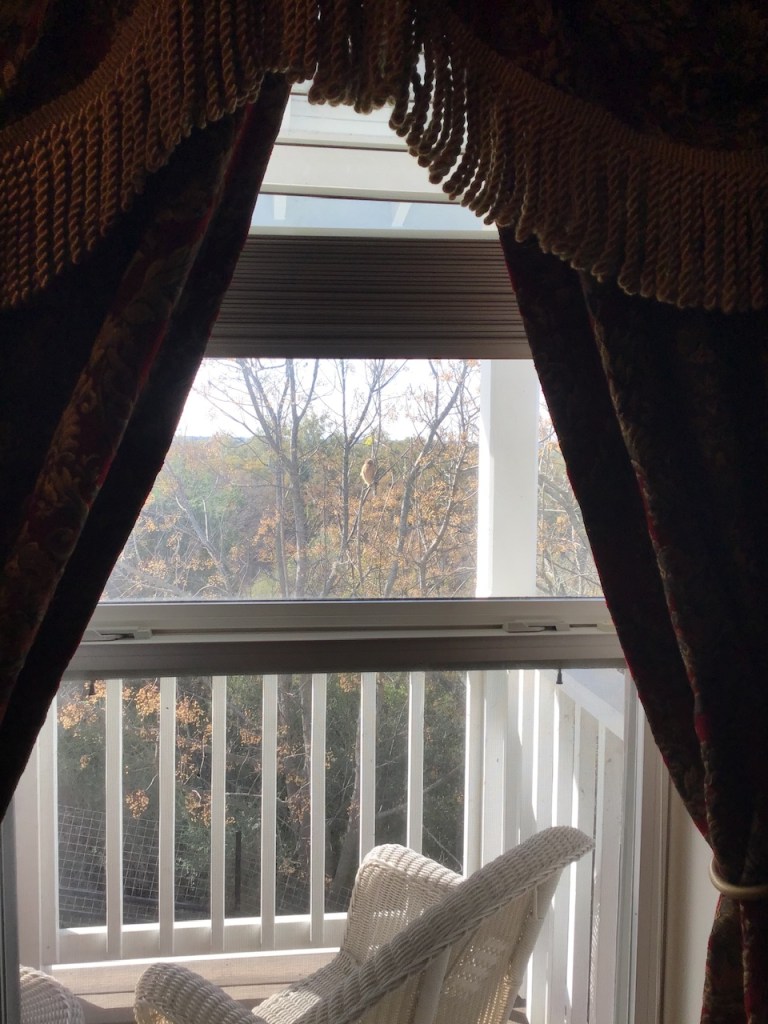
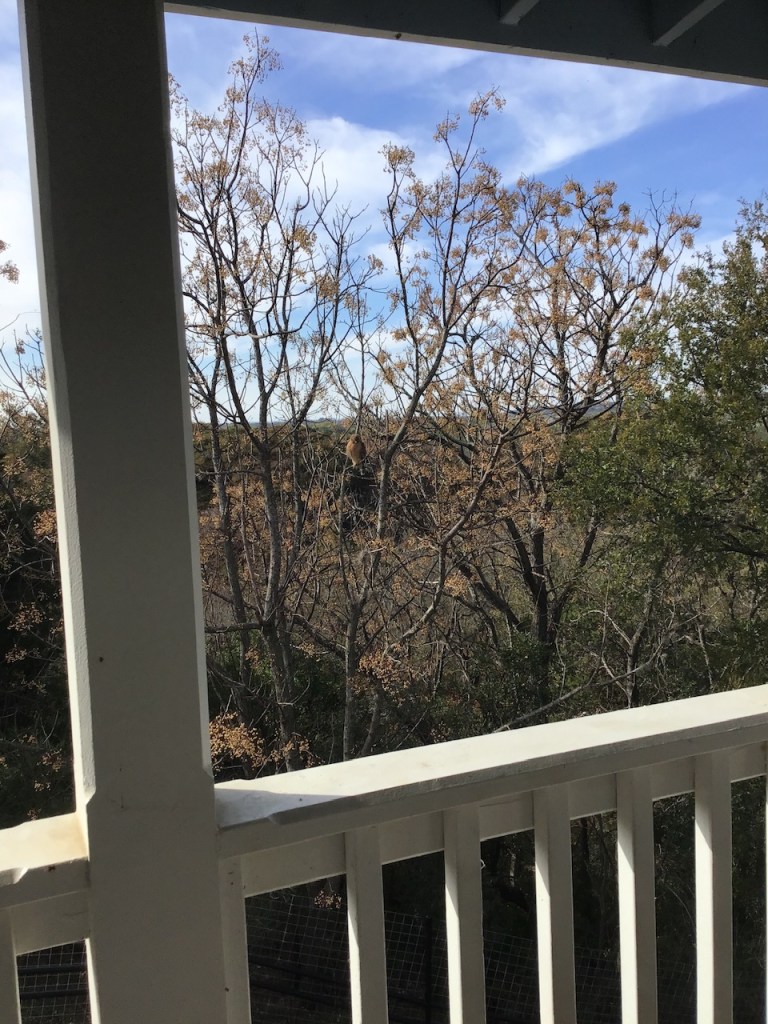
A darling bird of prey I watched right off our balcony from our recent quick roadtrip to Gruene in the Hill Country.
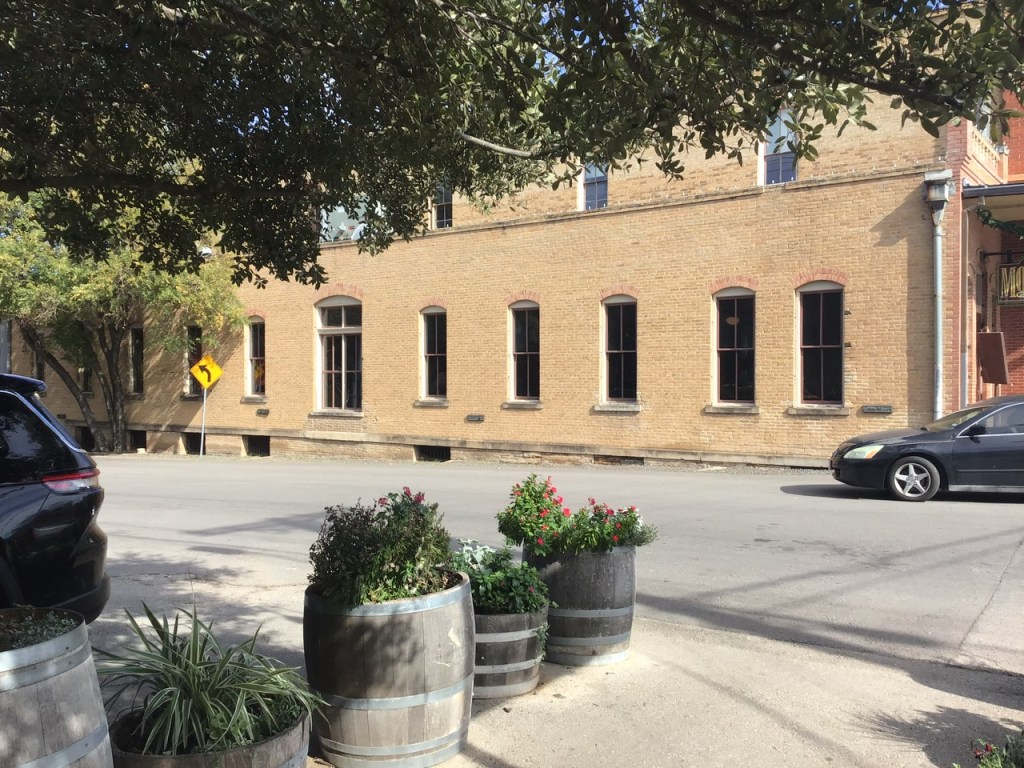
Also in Gruene, a so-called ‘mud-flooded’ building, more coming soon on that conspiracy theory in the new year.
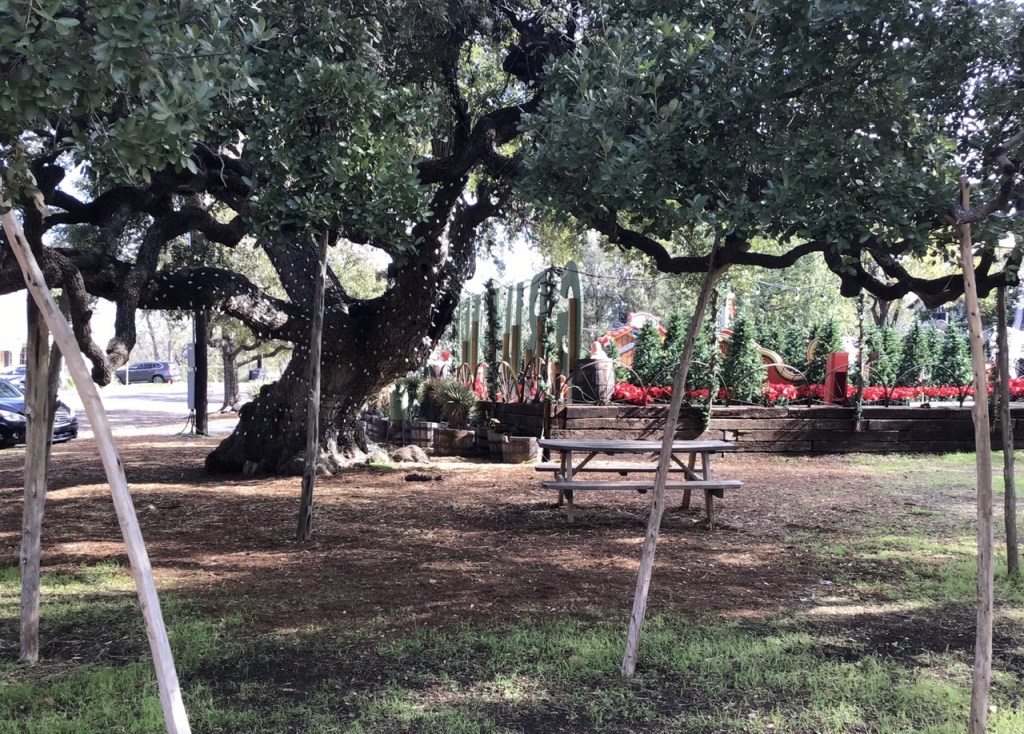
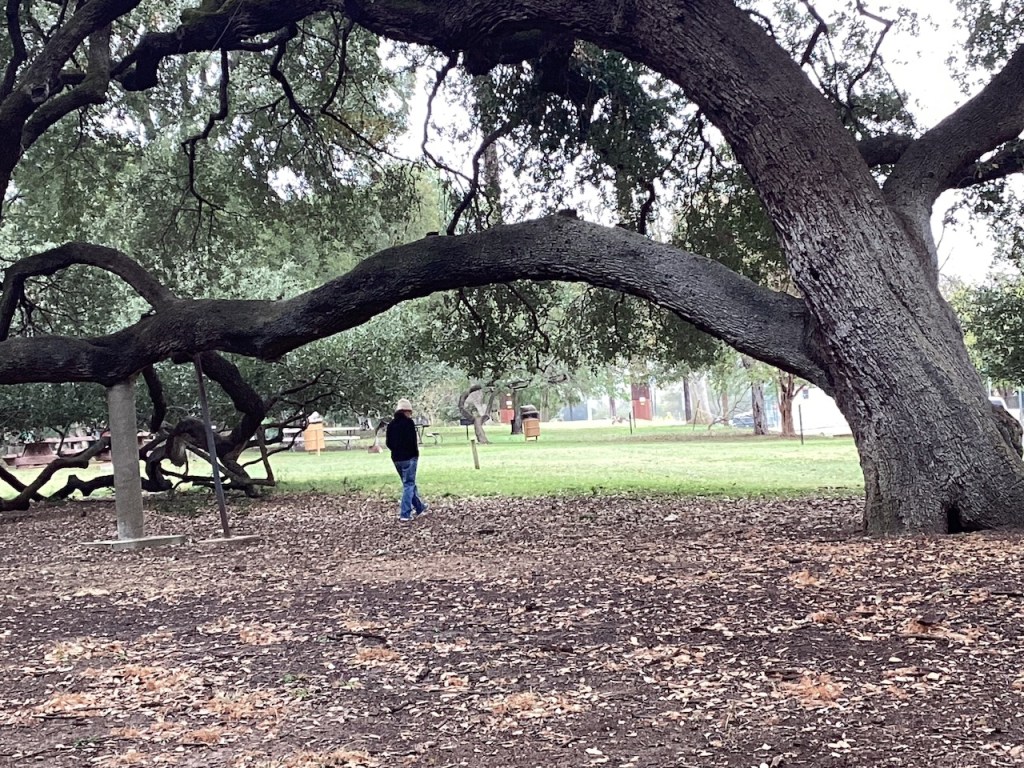
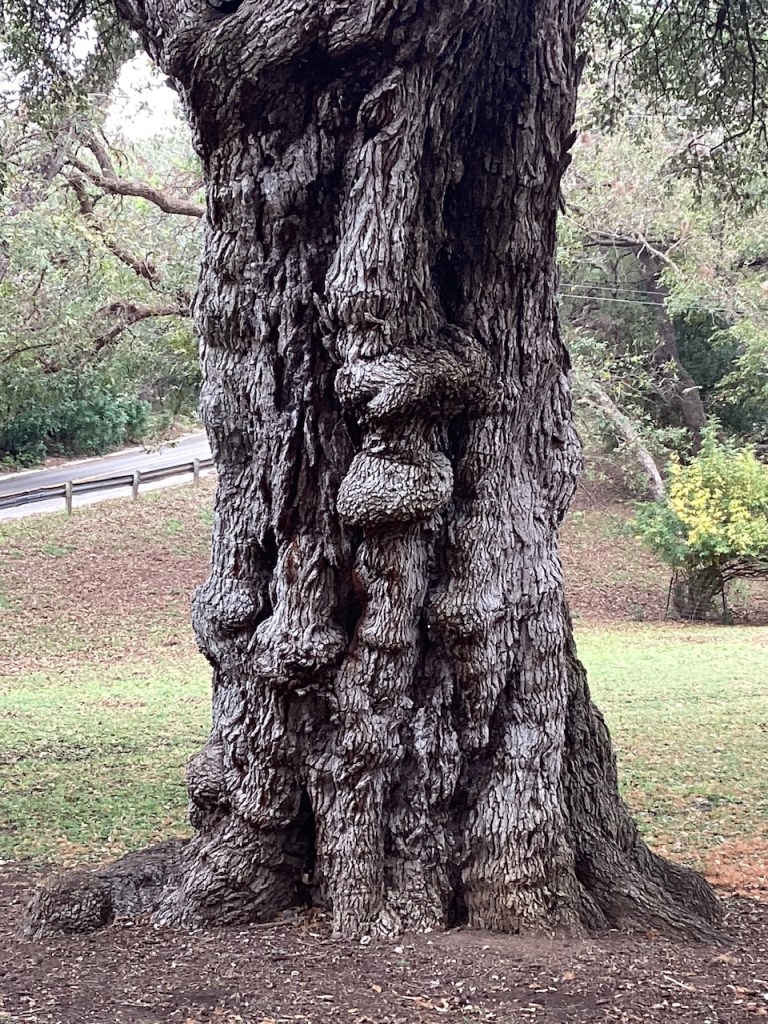
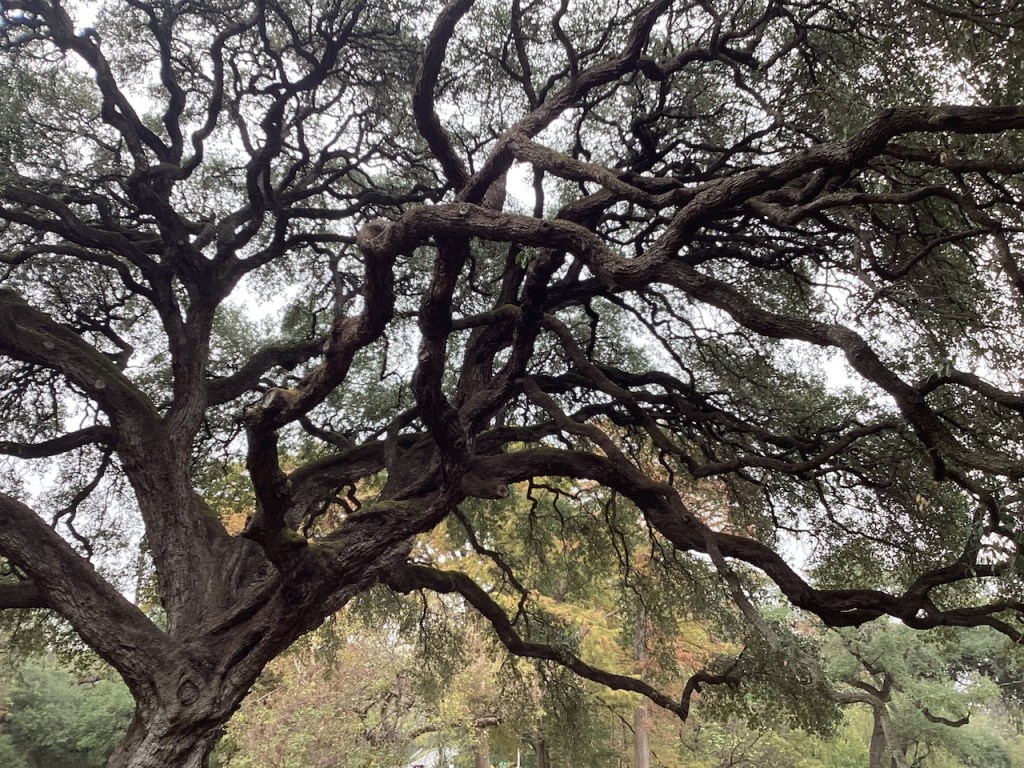
They have preserved some gorgeous trees there from the ever-encroaching urban sprawl, and more power to ’em!
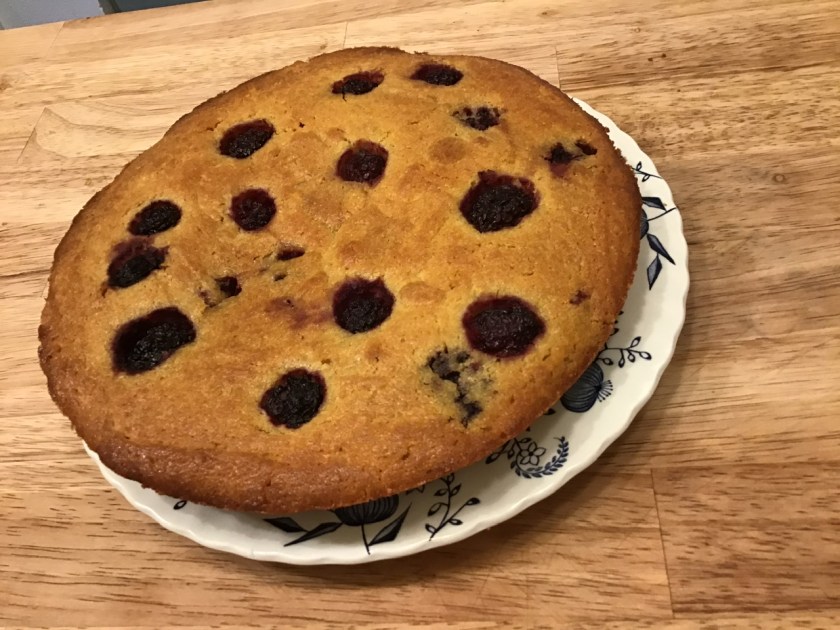
Just some cheese talk this post, plus a bit of a book review and a delicious recipe for Blackberry Ricotta Cake.
David Asher’s latest book arrived and I’ve been devouring it, as well as a whole lot of cheeses. He dives deep not just into the biology, ecology and history of cheesemaking, but the dairy and fermentation traditions that continue today around the world. Really fascinating!
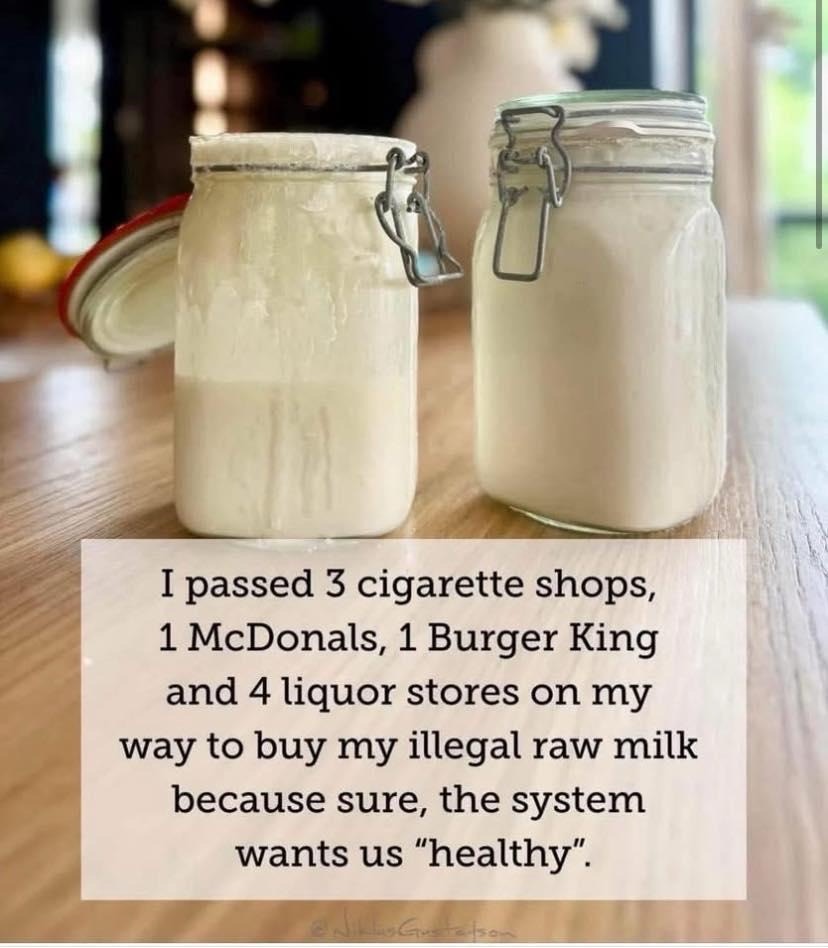
Since the beginning of August, when I found a raw milk lady with a surplus willing to work with a renegade cheese lady, that’s me, I’ve been my own milk lab*.
5 gallons of warm milk spoiling on the table. 😆
Plus a ‘failed’ pressed ricotta, used too much vinegar, but it will still be good further dried and crumbled on salad like feta.
Together we settled on a suitable style and schedule that’s been rather rigorous for me, 5 gallons twice a week, right from the barn to my containers. Not even chilled. (I can see my mom in my mind’s eye trying to hold the grimace from her face! 😆)
A very hot Pepper Jack before its tallow rub before aging several months.
But I’m in hog heaven! It’s brilliant to have top-quality raw milk for a cost so reasonable I can afford to experiment again, because that’s my favorite part. It still feels like a mini-miracle after searching and pining for so long. Plus, my milk lady is arranging for me to teach a workshop again very soon at her church. (I wonder if their grimaces will match my mom’s?!)
My raw milk lady winces at the idea of making clabber cheese too, and I bet most others would as well. Sitting warm milk out on the counter for a few days would scare Brits and Yanks, equally I expect, because our unusual cheese habits in America came from them, mostly.
The vast majority of the rest of the world, Europe included, drink fermented milk and eat raw fresh cheeses, as well as cooked and aged cheeses. Velveeta, like Squeeze Parkay and American cheese slices are a true embarassment to culinary culture and it’s a shame more Americans can’t see that. But I think it’s changing.
It’s our obsession with pasteurization and refridgeration that both giveth and taketh away in the realm of cheesemaking.
Sweet cream and fresh milk are far from the norm, and came about with industrial-level and widespread home-use of refridgeration. Cooling milk should really be considered as less than ideal, it begins the de-naturing process, which continues when we then must re-heat to an optimal temperature for cheesemaking, which is about 93 degrees, the same as it comes out of the cow.
Not that I ever care to live without refridgeration, mark my words! I LOVE all our costly cooling devices. Still, I really do want to know what the most naturally produced cheeses taste like, and I have that rare opportunity now.
The other problem that gets solved by not chilling the milk before cheesemaking is re-heating the milk adds about an hour to the process, because it must be done slowly and evenly, which requires stirring, or using a water bath.
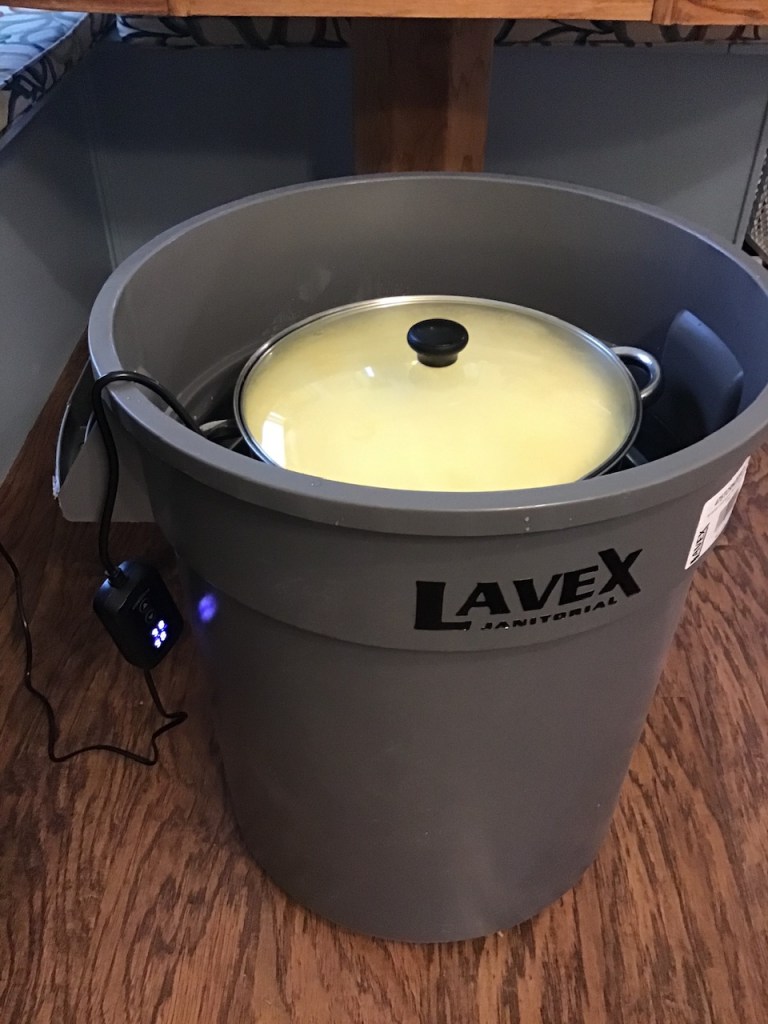
Hubby’s Redneck solution–Water bath in a garbage can, equipped with a fish-tank heater and oscillator, and now on casters for easy storage. Wow!
Just as Hubby tries diligently to solve all my complicated problems with custom redneck solutions, the temperature challange got him thinking creatively on my behalf once again. Not to mention the fact (I’m sure) that I’m taking up way too much prime kitchen space and time. Did I mention we have a small kitchen in a small cottage?
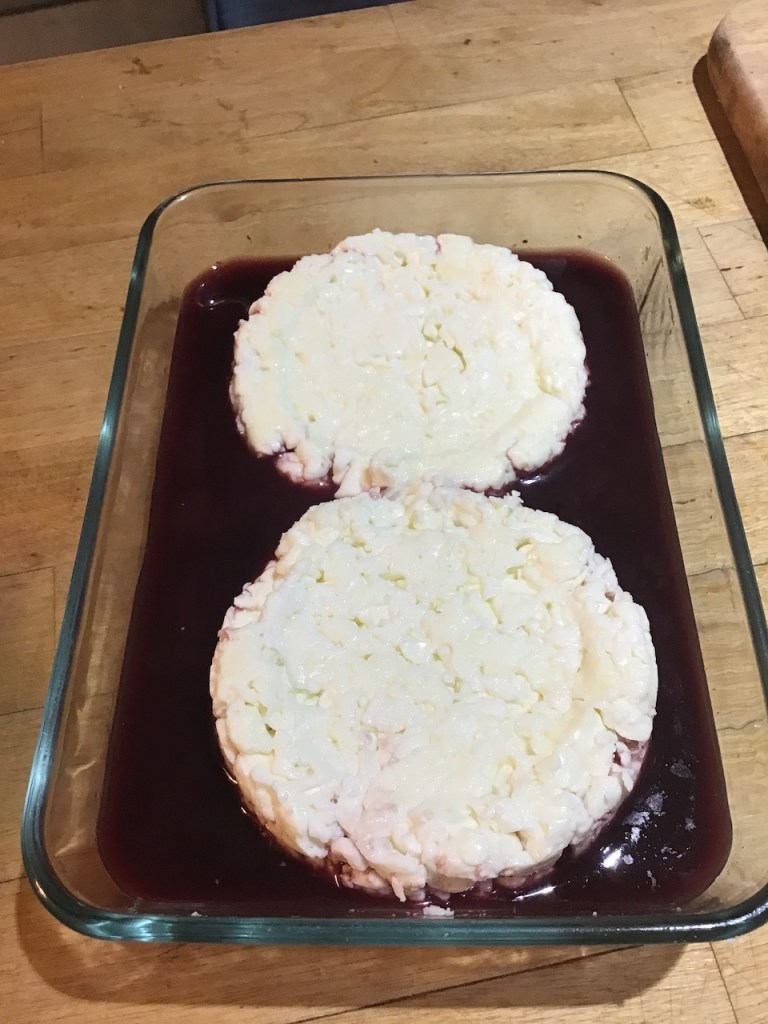
As a bonus from cheesemaking we have loads of ricotta, made with the whey after the curds are removed. I mentioned whey cheeses last time, which are most delicious pressed and soaked in cider or wine, mixed with herbs on crackers, in pasta sauces or salad dressings, but ricotta also freezes well. It also has to be made the same day, another reason for as many shortcuts as possible in the overall process.
And still, with all those possibilities, it’s proving a challenge to keep up with all the ricotta. My scheme is to create something so delicious the neighbors will start taking it off our hands.
1 1/2 cups soft wheat (sifted) 1 cup sugar 2 teaspoons baking powder 1/2 teaspoon salt 3 large eggs 1 1/2 cups ricotta 1/2 teaspoon vanilla 1/2 cup butter, melted 1 cup frozen blackberries (only slightly thawed)
350 oven, pie pan greased/floured. Whisk flour, sugar, baking powder and salt, set aside. Wisk eggs, ricotta, vanilla in separate bowl. Combine both and mix until just blended. Fold in butter. Fold in 1/2 berries, top with remaining berries. check at 45 minutes.
Good plain as a coffee cake or with ice cream or whipped cream for dessert. 😋
*milk lab is actually David Asher’s site, not in my kitchen! 😂 David Asher is a Natural Cheesemaker, bringing the traditions of dairying, fermentation and coagulation back into this age-old craft. A former farmer and goatherd from the west coast of Canada, David now travels widely, sharing a very old but also very new approach to cheese production. Through teaching about the use of in-house starter cultures and natural rennet from calves and kids, David helps cheesemakers around the world reclaim their traditional cheeses. He also explores the relations of all food fermentations, and the important role of small scale and traditional food production in our modern world. David is the author of ‘The Art of Natural Cheesemaking’ and the upcoming ‘Milk into Cheese’.
An excellent article, rather long with multiple tangents, but well worth the read. He covers quite a bit of weather terrorism, and the completely justified outbursts about the globalist disaster capitalism, but that’s not the part that most interested me today.
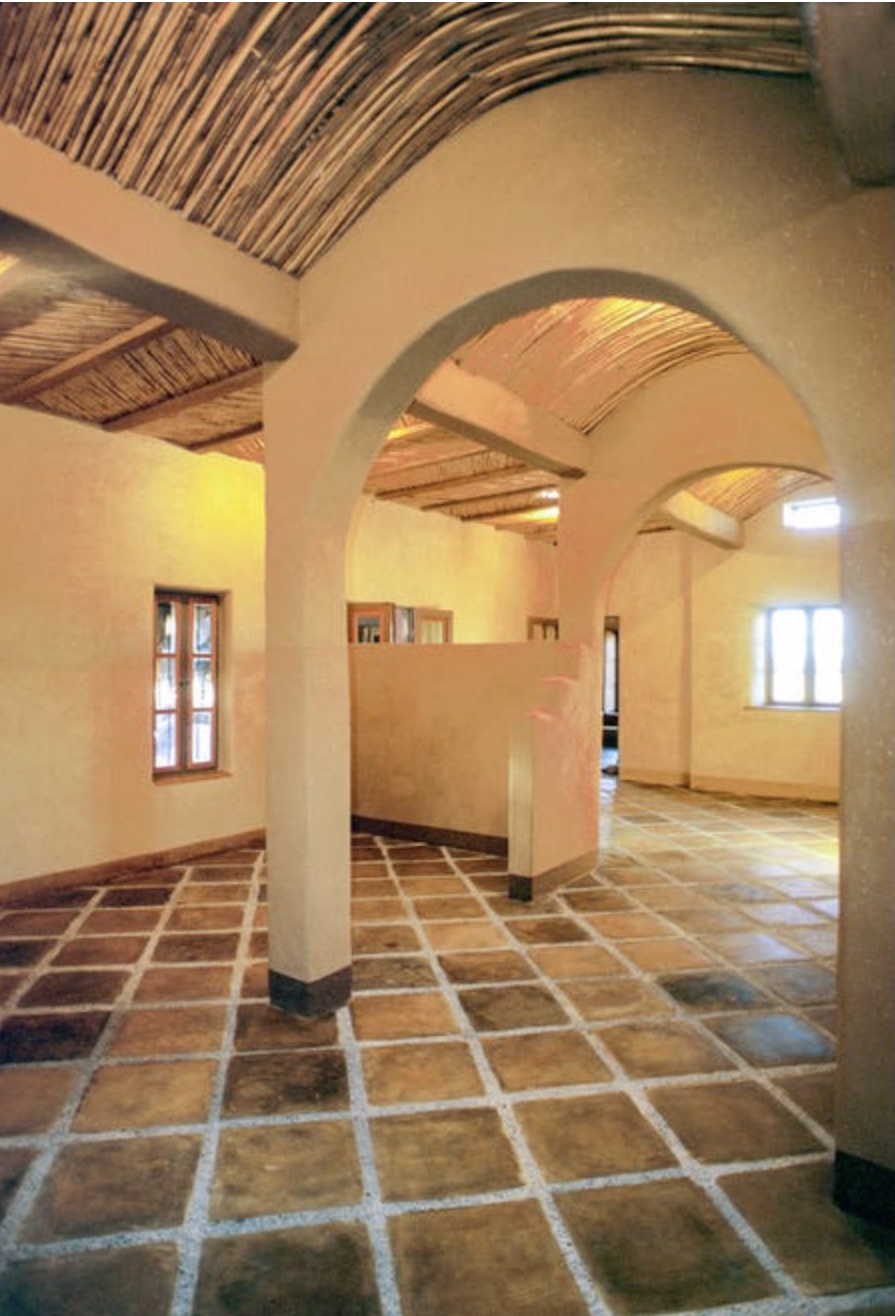
He also talks about rebuilding. He’s got some fantastic inspiration on what true resilience looks like, and it’s not even close to what’s being sold as our only options after a crisis.
I’d LOVE to rebuild in such a way right here, right now.
But another weather disaster is not what we want to force that to happen, thanks anyway weather terrorists!
resilience in the face of adversity
“a typical new house built in the US is made with energy intensive (and very pricey) materials that come from all over the world, materials that have nothing to do with blending into the local environment. Additionally, most of those imported building materials are toxic. The end result is a butt-ugly house that’ll be outgassing toxic fumes into the living space for decades. To make mater worse, it’ll look and feel completely foreign to its location. The only people who benefit from such a house are the globalists who control the globalist building material supply chains and write the costly, globalist building codes.
The reason so many butt ugly, toxic, expensive houses like this get built is because the same globalists who get local authorities to impose national building codes that require their toxic globalist building products – codes and products that give no consideration to local conditions and resources – are the same globalists that provide the textbooks and pay for architectural curriculum’s at universities that dole out the architectural degrees we are told are needed to design a house. The traditional concept of vernacular architecture – buildings made from local resources that allows them to blend well into their location – was long ago tossed aside in most modern architectural university programs in favor of driving up costs to increase globalist profits.
The house construction industry is as big of a toxic, globalist rip-off as the pharmaceutical industry.
Now we have FEMA moving in to “assist” with rebuilding. Right. One thing we can count on is that anything FEMA does will be closely linked to the industrial housing complex. That means toxic building materials that have nothing to do with the local vernacular will reign supreme.
Be forewarned – anyone who signs up for housing relief help from FEMA will be locked into the toxic, industrial housing complex.
Thankfully, as of right now, building a house doesn’t require one to be dependent on university trained architects or the toxic, globalist building supply chain.
Let’s get into that.
Three wonderful building resources are in abundance Western NC: stone, trees and bamboo. The stone and trees are native, most of the bamboo was introduced long ago. As I pointed out in the following post, one of the benefits of building with native resources is that you end up with a home that blends in with the native landscape – it looks like it belongs there because it is made of materials from that place. That is the essence of vernacular architecture. Another benefit of building with local resources is that, in the event of another disaster, the resources needed to do repairs are readily available from your native ecosystem.
No, these techniques may not work everywhere, and they shouldn’t. That’s what makes vernacular architecture so unique. It all depends on the natural resources available in your area. You want your home to blend in with your region, not my region. Don’t let a globalist suit sitting in a distant tower in New York City tell you how to build a house in Florida, North Carolina or New Mexico.
I once picked up a hitchhiker from England. He had already been traveling around the US for 3 months. He was a recent graduate with a degree in architectural. He was understandably disappointed with the architecture in the US, saying it was all very homogenous. He was right, of course. That’s what comes with globalism’s shortsighted, one size fits all, economy of scale mentality. Local resources and landscapes are not on the radar of most university architectural programs in the US. In the same way that modern doctors know nothing about nutrition, modern architects know nothing about vernacular architecture.
He told me that if someone were to blindfold him and take him to any rural area of England and removed the blindfold, he could tell where he was just by the vernacular architecture of the place. That is the epitome of resilience in home construction. It’s also the epitome of pride of place and a sense of community, all of which are lacking under the strong arm of the centralized, globalist technocracy in the US.
Those recovering from disasters have a choice: They can take the convenient route and sign their life away for government aid, once again becoming addicted to the cheap, toxic, pablum of globalist syphilization, and hope that another disaster doesn’t affect them or their childrens grandchildren. Or, they can become resilient.
Mostly happy snaps this post, plus a few weather woes.
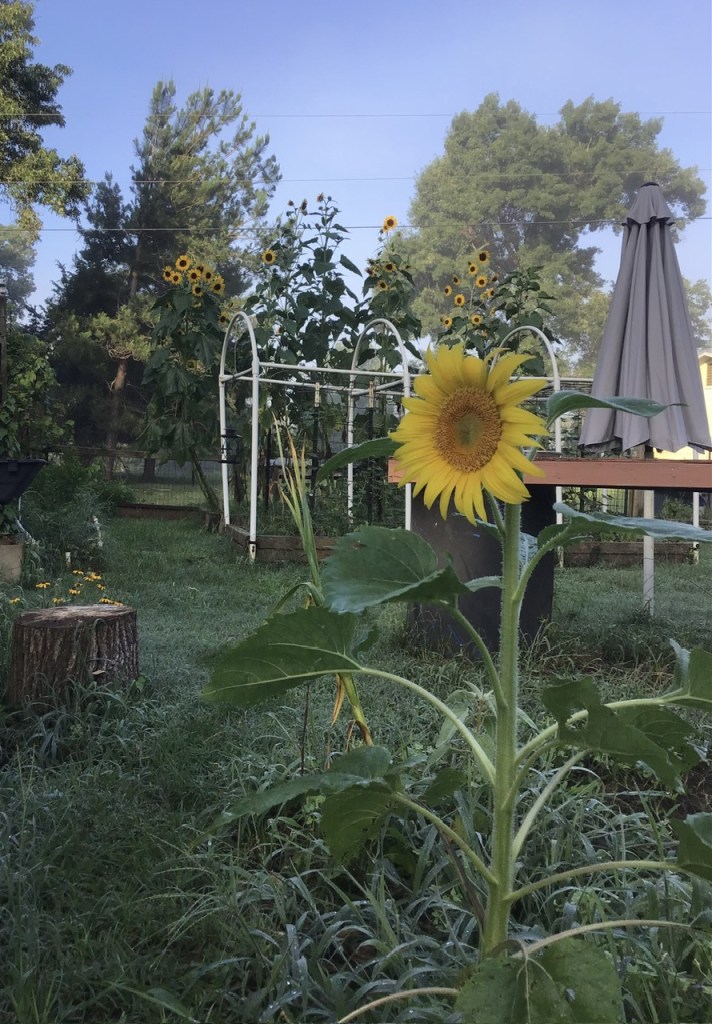
Hubby’s gorgeous melon patch is starting to produce more than just a feast for the eyes. He’s come up with quite an integrated system there and when I expressed how impressed I was with his companion planting scheme (and wondered whether he’d been taking a permaculture course on the sly) he informed me it was all a matter of frugality.
His penny-pincher logic is: the melon mounds have a lot of water run-off and sometimes erosion, so he added a ring of clover at the base of them. It’s just a bonus they are also good for the soil and the bees. The sunflowers are fodder for the goats and the chickens, plus they help shade the melons. The sea of black-eyed Susan’s just turned up there, apparently as impressed as me with the space.
Hopefully the melons don’t go the way of the onions, which has been our worst year yet. Luckily the garlic still did fine, which is from our saved seed, which previously came from a nearby friend’s saved seed. That has become a theme.
Elephant garlic does much better here than anything else, and I’ve tried many others for many years. I think I’ll give up that practice now and stick with what works, avoiding future costs and frustrations.
The success of the tomatoes and peppers so far has also been thanks to saved seed. I bought several varieties of each from the store, just for more variety, and those are the ones suffering more from the rain and high humidity. Several have already died, a few aren’t growing at all, and several of the others have bad issues.
Ours on the left, theirs on the right.
The purchased squash is already full of pests before giving us even a single fruit.
At least we got a few zucchini off our own saved seed before it too is already beginning to succumb to some kind of mold.
But other saved seed, the Trombetta squash and the mystery squash from last year, have proven to be more resilient than the popular varieties.
The filth-filled skies continue and not even the regular rains clear them up for long. I’m sure the sorry state of the skies has nothing to do with the crazy storms, right? The intense lightening, sudden flooding rain bursts, intolerable humidity, hail, tornadoes, and so on, that folks are experiencing across the country?
Just ‘mother nature’ they tell us. OK.
Well, too much ‘mother nature’ is not so good for the garden. It looks plenty green and lush, so that’s nice. But, look a little closer and we find it’s not so pretty below the surface.
But we’ve been relatively fortunate so far this year, just lots of rain and some wind gusts. Others have had far worse.
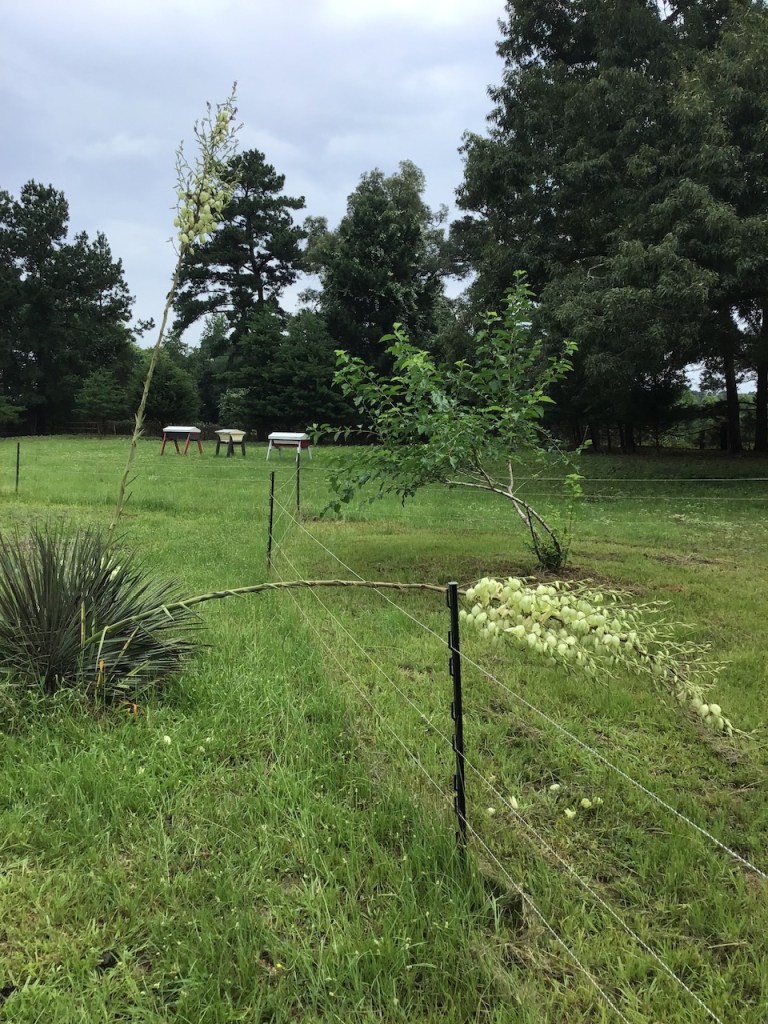
The yucca didn’t get lucky, but the blossoms are still lovely, even on the ground.
There’s some long-term requirements that fall on Hubby, which I mentioned last update, an upgraded culvert is required now in order to drive to the back half of our property. He’s already gotten started on that, a huge undertaking for sure. After that he can look forward to tackling the pond that’s now washed out.
In better news, there’s been some amazing growth in just one week.
A side by side comparison of 8 days growth.
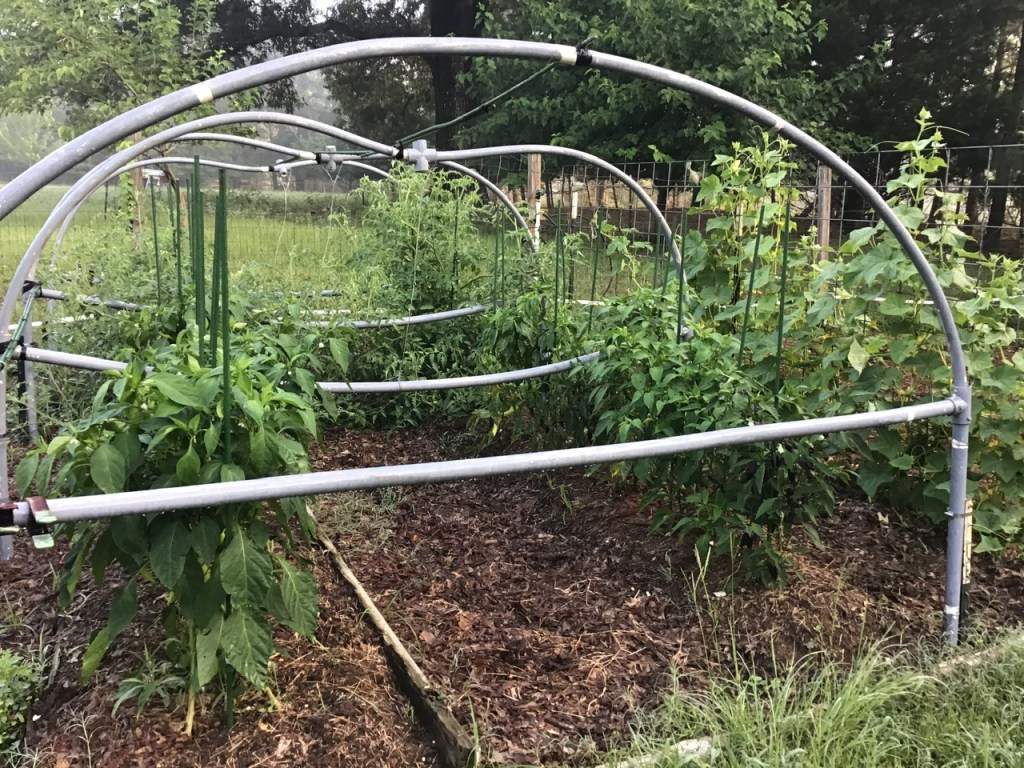
We’ve prepared for the swelter season by crafting another shading system where these tomatoes and peppers should be much happier into late summer. It’s recycled from another project and a bit awkward to move through, but it should do the trick just fine for supporting the shade cloth.
The asparagus beans, a first timer here, have really taken off in the last week. I’m excited to try them!
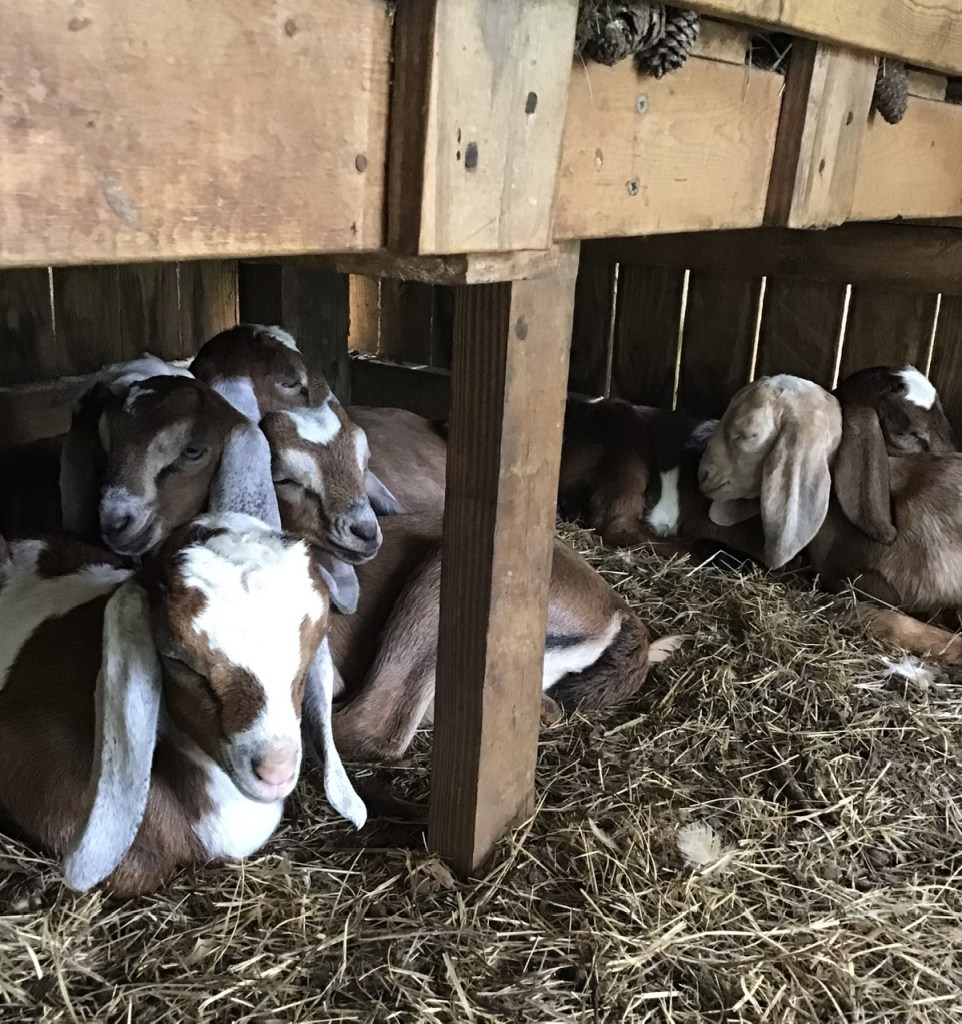
In even better news, the mamas and kids are growing well. We’ve started forcing them out of the corral during the day so I was able to give that space a much needed refreshing.
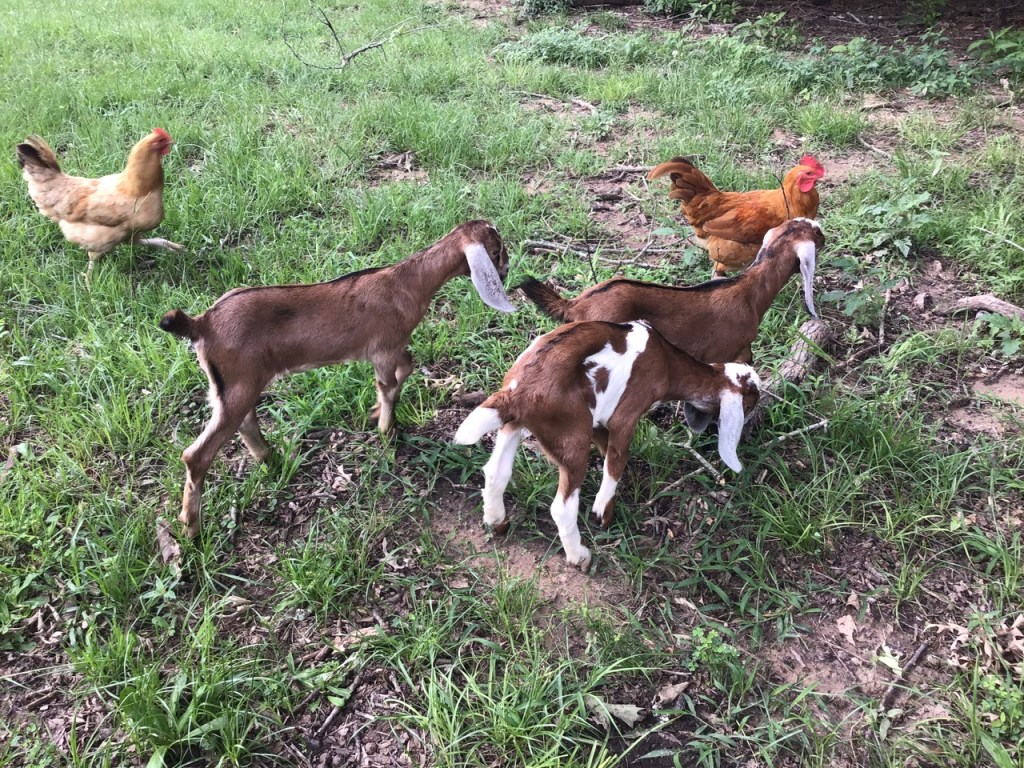
It seems they sometimes prefer following the chickens instead of their mamas. 😆
I’m getting the first fresheners ready for milking by training them on the milk stand. Soon it will be time to start separating them at night so I can milk them in the mornings before putting them back together again during the days. It’s not a happy time for anyone and I’m not looking forward to it.
But, I am looking forward to making lots of cheese again. We’re getting a bit of milk from Chestnut, who rejected her boy, and her girl is only nursing from one side. So, if I weren’t milking her she’d become even more lopsided than she already is.
It’s not a lot of milk, but enough for a little mozzarella now and then. I’ve found another method from my new favorite YT channel which is completely natural and far more tasty than the vast majority of those found online.
Raw milk mozzarella, mmmmm!
Unfortunately, the 2nd time I tried it was a failure. But, 99.9 % of the time a failed cheese can always become another delicious cheese. Some of my best cheeses have been from failures.
Not necessarily the case with failed wine. This cheese ‘failure’ will be soaked for a couple of days in the leftover must of the now fermenting wine, another tip I learned from my new fav YT channel.
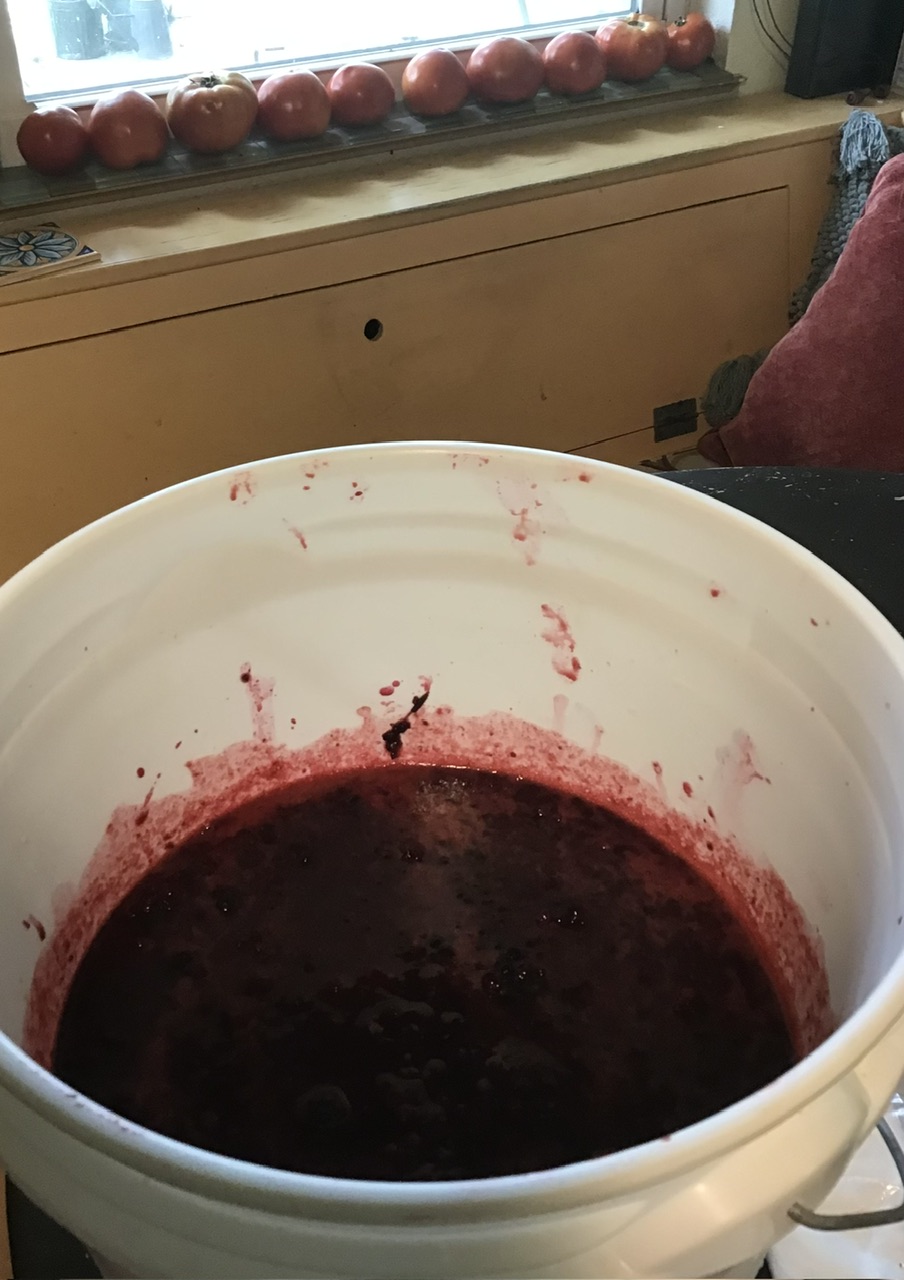
This one was mulberry and I’ve also started a blackberry.
The blackberries seem to very much appreciate the extra rain and our harvest has been great, inspiring me to make blackberry wine for the first time. Last year’s harvest was very disappointing after getting some kind of strange disease right after their flowering period. (Not normal development, despite what several folks claimed at the time.)
I’ve decided to try more natural, traditional methods with the wine-making, like with the cheeses. Modern methods require all kinds of chemically-obtained inputs, which most insist are necessary for a fool-proof product.
Yet, last year we had a major failure using that method and ended up with several cases of vinegar. Very disappointing after all that work. We have had great success in the past or we might be too discouraged to try again.
Blackberries, banana peppers and Nigella seed pods
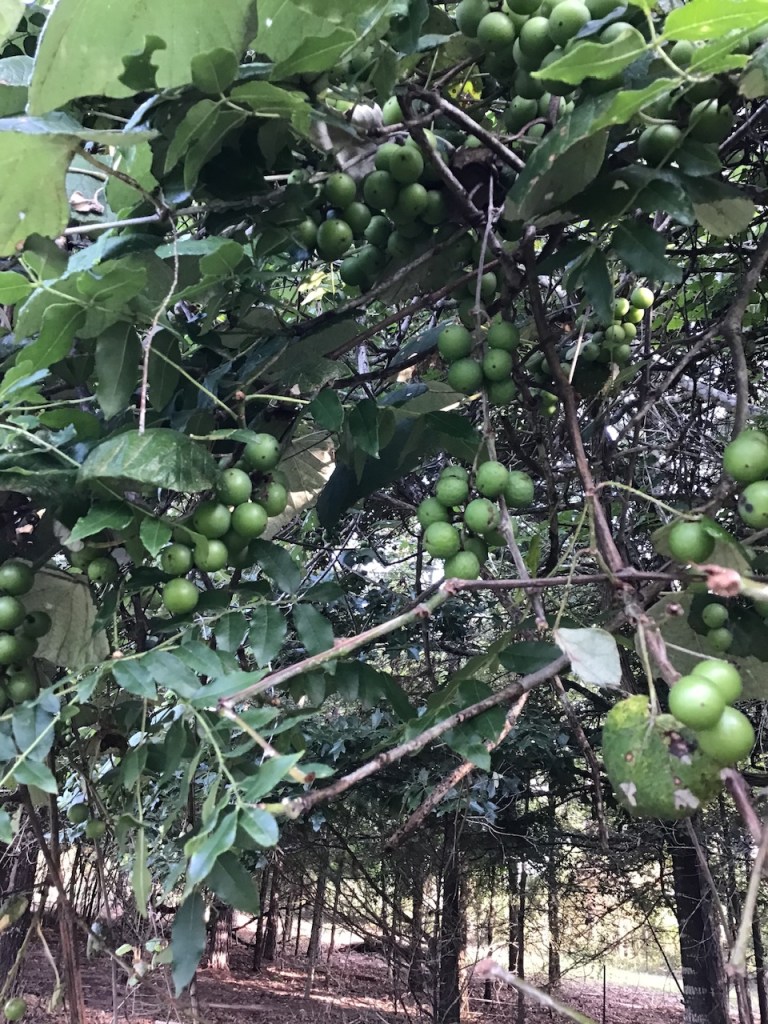
Traditionally, country wines were not made with all those foreign yeasts and I don’t really want my blackberry wine to taste like merlot anyway. While we may not have a decent cultivated grape harvest this year, the wild grapes look promising again. Also the pears are looking good, could be a bumper crop like we get only every few years.
If so, I’m going to do some side-by-side experiments, traditional methods vs. modern methods, and make a real project of it.
Blackberry wine in the making, hopefully
It’s easy to find lots of instruction using the identical modern method. For that I’ll rely on this book.
The wild grapes are looking promising. Our cultivated grapes still uncertain.
It’s not as easy to find good instruction on traditional methods, no surprise there. But this channel has a lot to offer and she uses nothing but a homemade fruit fermentation starter for her wines.
A teetotaler who makes wine, don’t see that everyday!
She also teaches how to make natural sodas and mead on her channel which I’m also very eager to try.
Blackberries fermenting beautifully after 36 hours.
The elderberry is also liking the extra rain. I might even try to make elderberry wine too. The blossoms are excellent in kombucha and will make an effervescent ‘champagne’ like beverage or flavor a cordial. And the goats love it. It’s just an all-around fantastic plant that is popping up everywhere now, so I’m going to create a big grove of them trailing down the hill.
Some are shocked and appalled by this, as they should be, according to me. Others think it will be a fantastic improvement to human life, or a great way to make more fiat, or a solution to the burden on the caring professionals, or they love tech for tech’s sake, or whatever.
Those of us who love history and dwell constantly on the question ‘how has it come to this’ were well aware of this potential because we study the trajectory of modern life. I could begin with the first critics centuries ago, but for brevity sake, I’ll start instead with my own life, the only history available to me to know thoroughly enough.
Working mother, divorced parents, step parents, then step siblings, professional daycares, neighborhood babysitters, after school programs, junk food, convenience food, lots of TV. Family history of: diabetes, heart disease, obesity, cancer, vision problems, depression, eczema, alcoholism, Parkinson’s, and, you get the picture.
And I would not say my family life was bad. It was the typical American suburban life of a great many growing up in the 70s and 80s. Neither particularly good, nor bad, just normal. Normal, as in well-normalized.
Like most families my parents would joke about voting for the ‘lesser of two evils’. They probably learned that from their parents. My mom went to community college and got her degree once we were gone, in sociology. She worked full-time all her adult life and didn’t regret it. My dad remained ‘upwardly mobile’ as his Protestant father taught him to be.
In fact, we have retired before him, and he has just had his first heart attack.
They are both still with us, but they do not read this blog, so I could say whatever I wanted. 😏. But, that’s not the point of this particular post.
Let’s leave it at this—in hindsight, my unique perception of growing up this way is, in a nutshell—there was not a lot of parenting happening. The results of this having widespread and devastating effects.
It is from these original seeds of pseudocare that have been not only consistently irrigated in our own territories, but have been dispersed throughout the world these last five-plus decades which has ensured the trajectory to the ridiculous place where we now find ourselves: Drowning in pseudocare so deeply we can scarcely recognize what real care looks like anymore.
Another quick peak at the fruits those seeds have produced.
Yet even facing all of this, I’m still optimistic, as I have been all my life. Even at the worst of times, even during a few prolonged worst of times, I must’ve still learned something vital from my half-assed upbringing and collapsing culture.
So, here it is, in another nutshell:
Believe in yourself, believe it can change, but don’t practice in sidestepping the hard stuff. And the hardest of the hard stuff is care, real care—for yourself, for others, for the future—that is why we are here. How you go about that is your personal journey and your only real duty to discover and live. That is all there is to do in a life well-lived.
Which is why I want to once again quote an obvious example of someone doing exactly that, Gavin Mounsey, who is rocking the real care like a hurricane these days! Wait . . . What?? Ok, terrible simile aside . . .
I believe he knows what needs to happen next and is becoming the living manifestation of that in his own life first, and passing it around. Leading by example, it’s the only way. It’s the same cardinal rule as storytelling—Show, don’t tell.
“I want to give my energy to improving and increasing the resilience of my local community, not your hyper centralized one size fits all infrastructure.
“Freedom is not a consolatory prize that can be given to us to reward our obedience and capitulation to a system of violent coercion. It is not something that can be granted or provided to you by some government that wrote some thing on a piece of paper. Freedom is your birthright, and you either live it and embody it, or you allow yourself to be put in a mental cage by statists and other abusive institutions or individuals. My ancestors bloodlines are traced back to a people described in today’s terms as The Gaels. “Saoirse” is Irish Gaelic word for “Freedom”. Saoirse is an ancient concept that comes from the original Brehon laws of the Druidic (and eventually Celtic) world before the time of Christ. In the times when that word was created, my ancient ancestors lived without a centralized state, without prisons and without police.
“Saoirse means many things to different people. For some it means freedom to think, express and freedom to learn, for others it’s the freedom of imagination and the freedom of the spirit. And for some it also means freedom to set up parallel societies.
“This is one of the reasons that I included glimpses into two historical cultural cross sections of ancient cultures that existed without a centralized state and police/prison system in my essay as I feel that we can glean wisdom from stateless societies that existed for centuries to millennia in how to design more ethical, equitable, honest, Regenerative and practical ways to organize community, encourage amicable/respectful behaviour in humans and collaborate to leave this world a little bit more free and beautiful than it was when we got here after we are gone.
“With all that being said, I want to emphasize that I think that placing any culture, group of people or individual on some pedestal as pure is unhealthy. I feel we should be vigilant to make sure we are not romanticizing their past nor romanticizing the potential of their worldviews to provide solutions to the present challenges we face.
“The path to become connected to place with a reciprocal relationship, reverence and humility is the path to embrace indigeneity ourselves.
“It is a great starting point to create pockets of decentralized resistance to oligarchic / statist tyranny as growing your own medicine and veggies may appear harmless, but in a parasitic global plutocracy it represents a decisive action that severs the tentacles of tyranny in a critically important aspect of our lives (how we access food and medicine). Thus, it is a radical and revolutionary act that appears benign to the hubristic philanthropaths and demociders, serving as a sort of covert sedition in a world governed by parasites that want us dependent, gardening to grow or own food and medicine is like a hammer wrapped in velvet that knee caps big pharma’s plans to poison us slowly through dependence on their system for health care and also strikes the spine of the digital gulag system, breaking its back so it can no longer have any strength to influence our lives through controlling our access to food/medicine.
A better essay about the importance of self-reliance and health as the ideal antidote to modern societal tyranny I could not have written! And he has a YT channel. 😁
He was also kind enough to try to address our biggest garden nuisance within the scope of his permaculture lens. He offered many potential solutions, and bless his heart for the effort.
But I’ll just repeat my personal favorite: hot and spicy gopher wings. 🤪
What an example of authentic care—growing in the real and cyber worlds simultaneously—where even sassy meat-eaters and smart-asses and AI are welcome to stuff up their comments sections. Now that’s grace under fire!
Thanks to guys like these, in the coming decades I predict courageousfellowship will become the new sexy.
Our seasons change. I don’t just mean from north to south, east to west. There are the calendar seasons, and the four seasons, though some unfortunate folks only get two.
Then there are the seasons of life—childhood, adulthood, old age.
Here on the wee homestead we have our own seasons now, too. These, of course, are the most special of all seasons, to us.
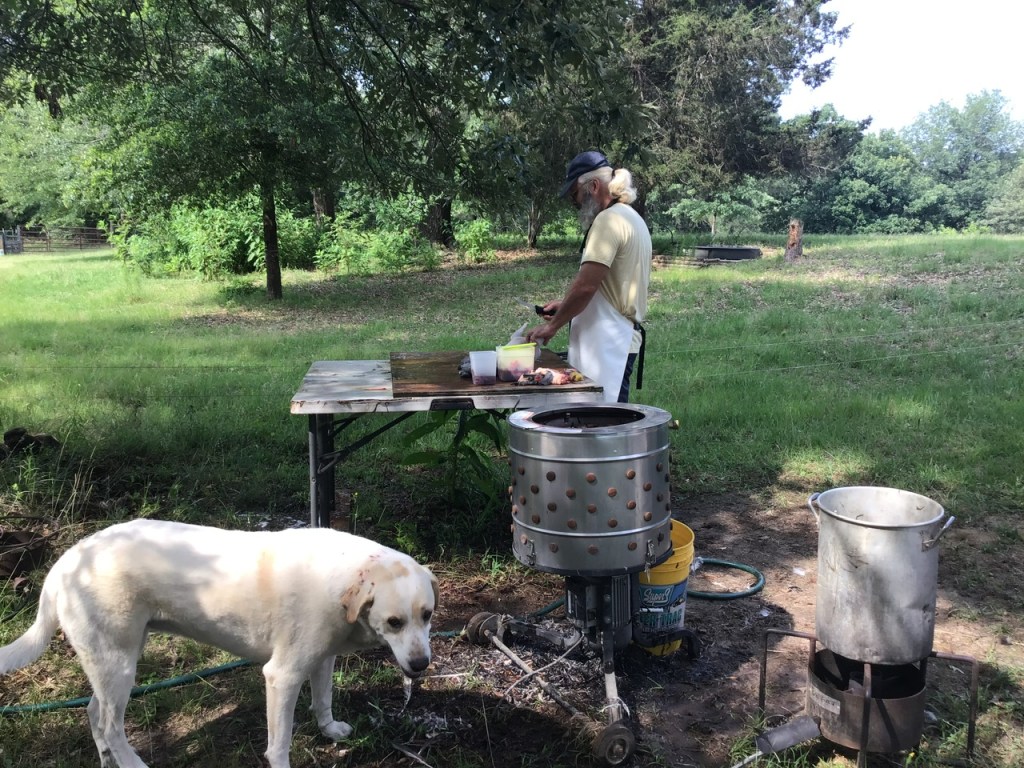
Here we have just ended the killing season. Hallelujah! A very unique sort of season to most—vegetarians certainly—but also to most of the western world, who no longer process their own meat.
This is an extremely challenging season.
For Hubby!
He has full and sole responsibility for the slaughtering, the gutting, the skinning, the scalding, the hanging, the butchering, the grinding, the rendering, the canning, the smoking, the curing, the broth-making.
WOW!
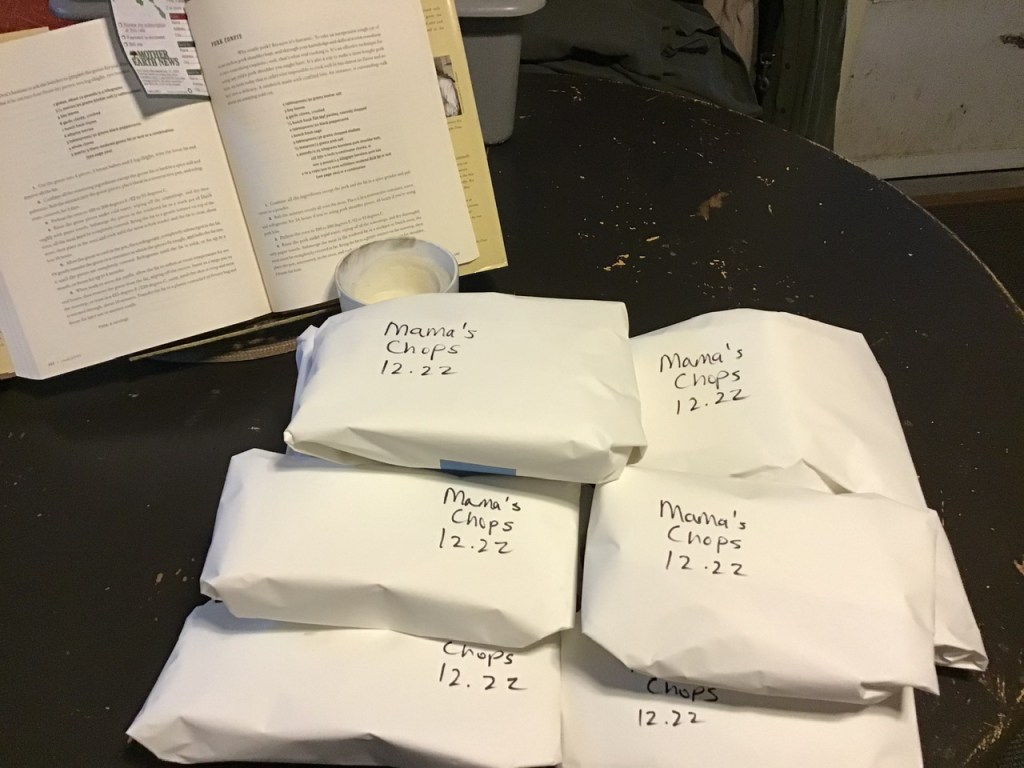
For my part, I do the packaging. Plus a bit of pâté, a smattering of curing. Not exactly an equitable deal.
Mostly it’s DeliciousSeason for me! Our small space is full of meats of many flavors—bacon, ham, pâtés, sausage, lamb pastrami and various other cures, beautiful chops and ribs and roasts, the aroma of broths and meats that he pressure cans, filling up every corner of our little cottage and wafting out to season the surrounding vicinity.
Roderick and half of his harem. Notice the PVC pipe on Walnut? That was a temporary fix to keep her horns out of the fences, and it worked like a charm.
Cheese season has also just ended. Now my divas should be comfortably pregnant, their season also having shifted thanks to the services of our friendly neighborhood Billy (aka Roderick). That means our herd shall be greatly increased by early summer, gods willing. Roderick has since moved on to more fertile pastures in the next county.
While the Gouda-style and the Camembert-style are more difficult to make, the Mason Jar Marcelin and the herbed cheese balls aged in olive oil couldn’t be easier. A 3rd grader could do it! Don’t let the moldy surfaces fool you, beneath their scary exterior these cheeses are quite mild and very tasty.
That means it’s also a season for some difficult decisions. We are at our ideal capacity right now. We don’t want to grow. We don’t want to get ‘into business’. Such an odd thing to reject, considering where we’ve grown up. It gets in the blood—this mindset/worldview—now what, what’s next, what’s new. Get big or get out! Where’s the market? Don’t you want to open up shop? Sell to the public? Get all licensed up and grow, grow, grow?
Oh, hell, no!
What if, we don’t care about all that? What if we are in a season of life where we care about quality over quantity? Others can, and will, ‘get big’ and in some cases (a precious few) more power to ‘em.
But, I’m in my Delicious Season. I have an extra roll around my middle to prove it. (So do Hubby and all the dogs and pigs and even the sheep!)
Nope, my main concern at the moment is, how delicious can I get delicious to be? It sounds decadent, I know. But, maybe further refinement, compared to mass production, could be a really good thing?
Quantity over quality—whether in words, or food, or strip malls, or entertainment—has not worked out too well for this world seems to me.
There was a time, in my peak ambition years, I did strive for more instead of better—more travels, more experiences, more friends, more leisure, even more work. My season has shifted. I definitely strive for better over more these days. What if I could make the most delicious cheese ever made in all the world, and only 3 people ever tasted it?
Fine by me!
Of course, then how would I know if it’s the most delicious? Maybe that’s not so important either. Maybe it’s sufficient that what we produce and process and serve is delicious enough to make all the hard work worthwhile.
We’ll be spending some cold days relishing in our Delicious Season, because right around the corner another season is waiting.
Bubba and Buttercup LOVE when it gets really cold! When it’s under 20 degrees F they get to camp inside under the kitchen table. 🤗
“But the hills that we climbed were just seasons out of time.”
Wow, I’ve posted no update since the end of August (aka Late Swelter Season). Now here we are already well into Weather Whiplash Season, my how time flies!
This post we’ve got lots of happy snaps, the usual weather bitching, some cheese boasting, and long laments about our dear Shadow’s woes.
Notice the band-aid on his ear? Useless. But, apparently we needed to learn that the hard way.
Sometimes time flies, but when things get really bad, it crawls. Especially when it goes instantly from nothing much to Holy Shit!
And as bad as it is, in the big picture the weather whiplash is still way worse. So, best get that report out of the way first. No rain, in our rainy season. No real season at all, just a rainless rollercoaster, and not nearly as fun as that sounds.
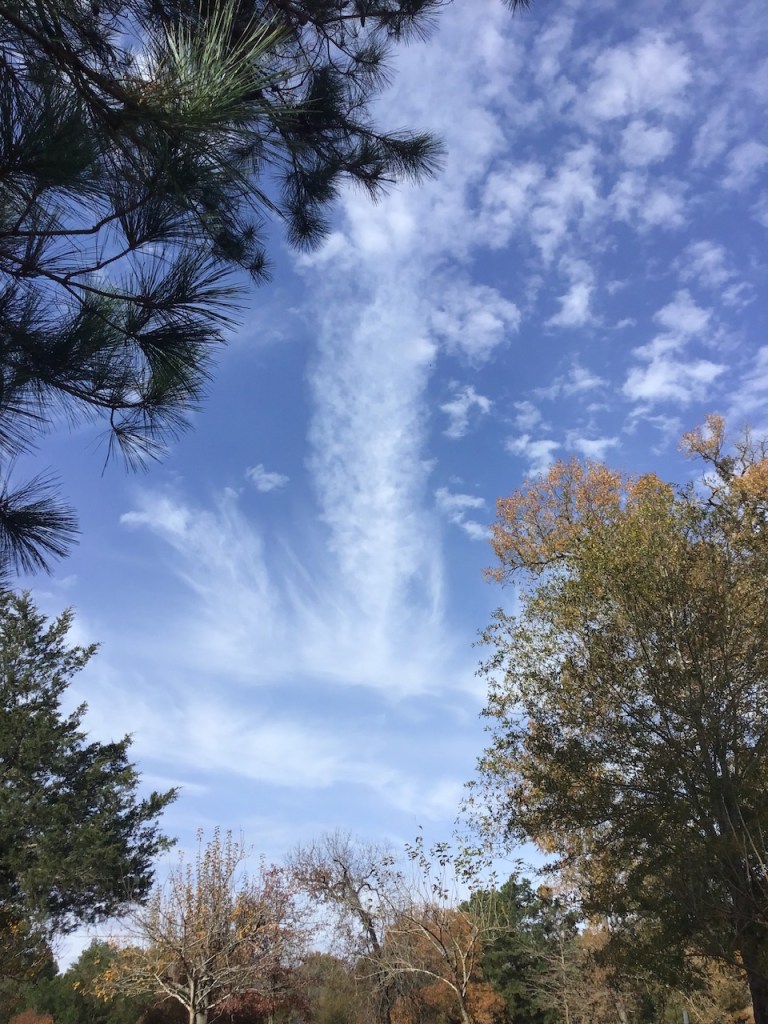
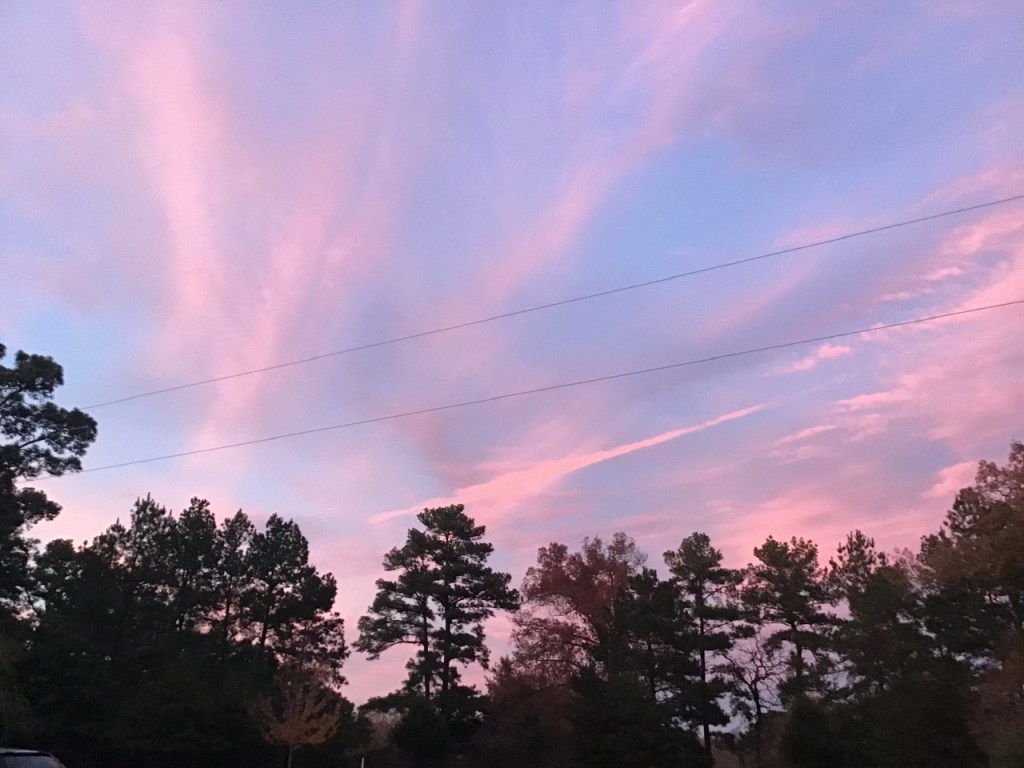
Not natural clouds, folks! And soon the kids won’t be able to see any difference, though the atmosphere has significantly changed in the last two decades, as the weather has changed, as they lie about their climate scam, and charge ‘carbon taxes’ to ordinary folks to pay for their madness. Makes me SO FURIOUS!
I could be taking such photos on a regular basis, but it gets old. And then someone could comment on the ‘pretty’ sunset. 🤯. Argghhh, Noooo! Can’t someone please make it stop?!
No? Ok, moving on.
More bad news. We’ve had the most prolific acorn year since we’ve been here, that’s about 15 years. Sounds like good news, I know. It is good news, in many ways. The pigs are getting fat, the sheep and goats are gorging. Literally. And that’s the problem. One of the young twins gorged himself to death. It was terribly sad. His little stomach ballooned up as if his body couldn’t contain it anymore and he was suffering for hours.
I’d read baking soda could help, but it did not in this case. Perhaps it was too severe. I also read there’s a surgical procedure which would alleviate the pressure in his gut, but I don’t have the confidence to perform that myself and the vets around here don’t treat goats. I held the little guy for a long time, trying to keep him warm and help him feel better, but we lost him. Oh the perils of animal husbandry!
Another problem of the acorn bumper crop is much less severe. We live under a large oak tree and have a metal roof. It’s been rather windy lately and once those nuts start shaking loose, it’s kinda like the sky is falling. If our veteran neighbor with PTSD comes by I expect he’ll be darting for cover quick, because it sounds eerily like machine gunfire when they get popping off the roof.
The acorn perks include some plump pigs and happy goats, two of which I’m still milking, which is making for some very tasty cheeses.
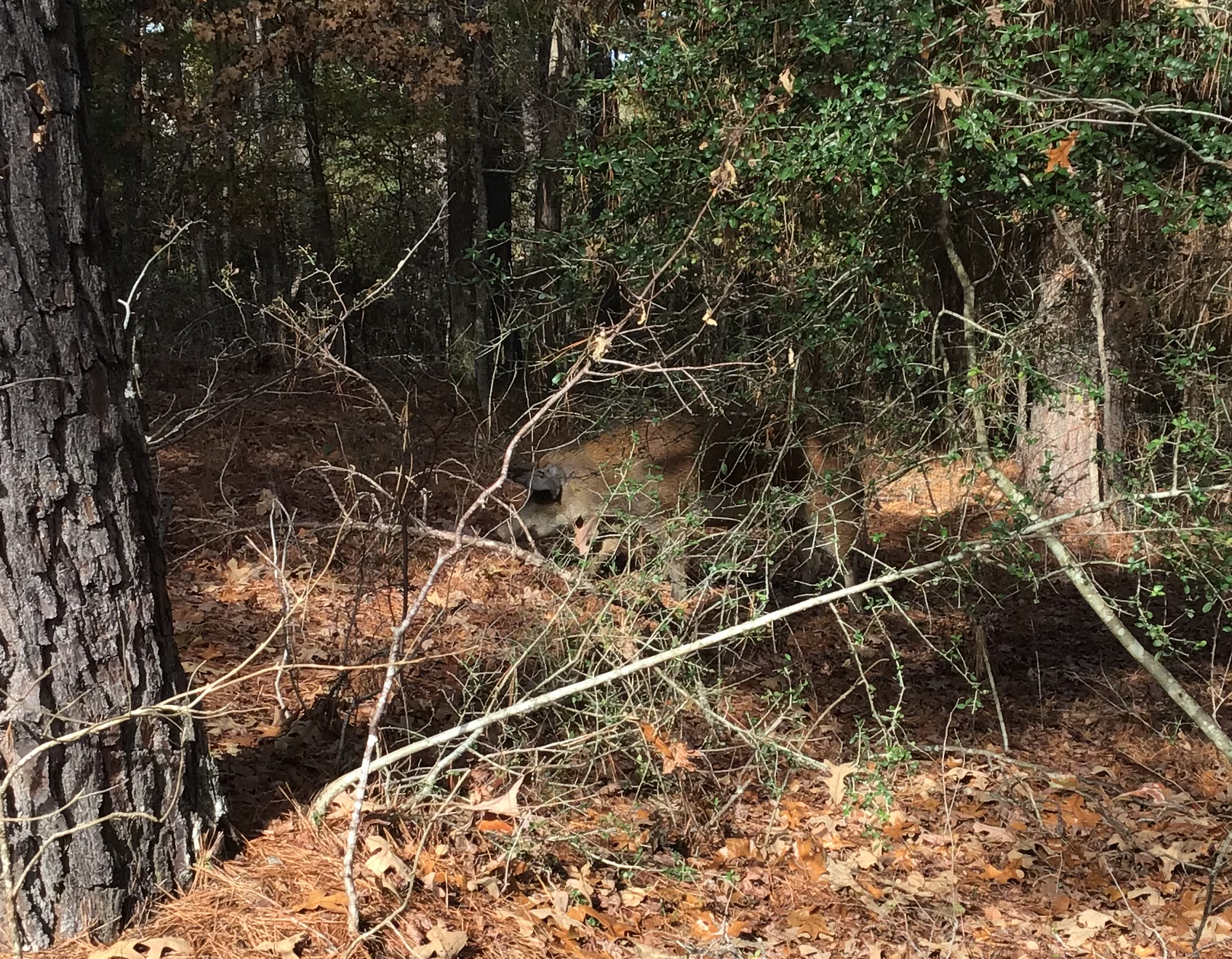
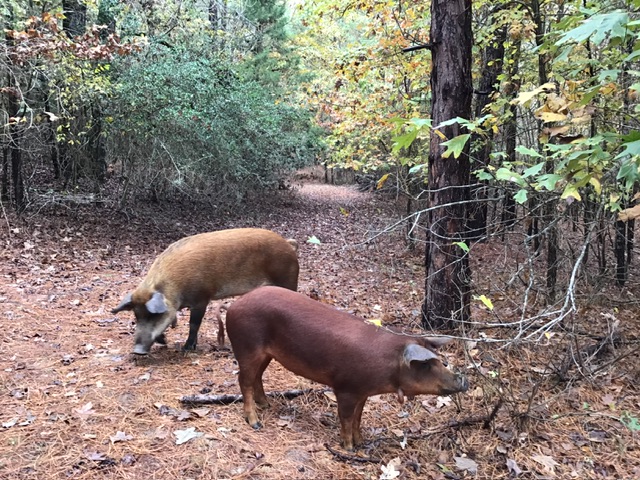
Under the oaks: happy pigs, sheep and goats.Can you spot the perfectly camouflaged foraging pig?Happy goats make for delicious cheeses.
I’ve gotten so successful I’m confident enough to get very daring!
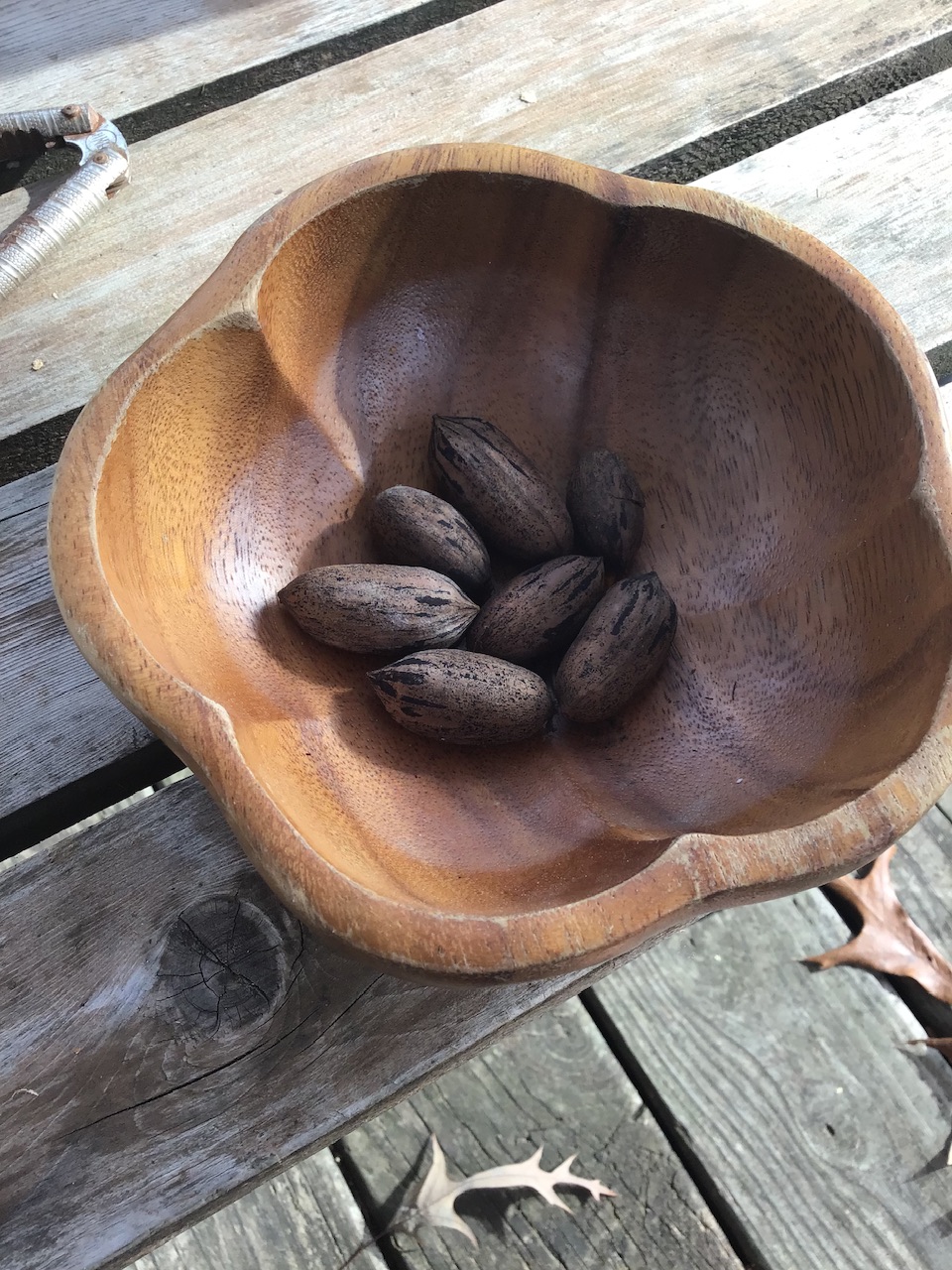
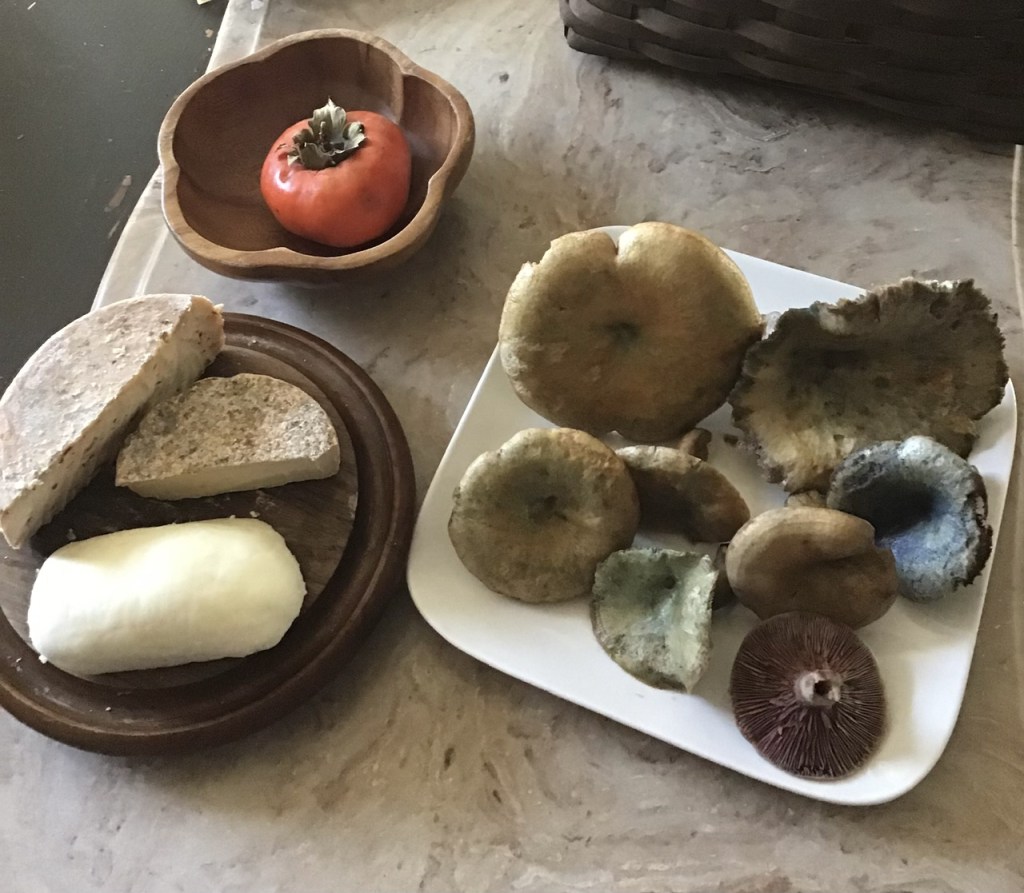
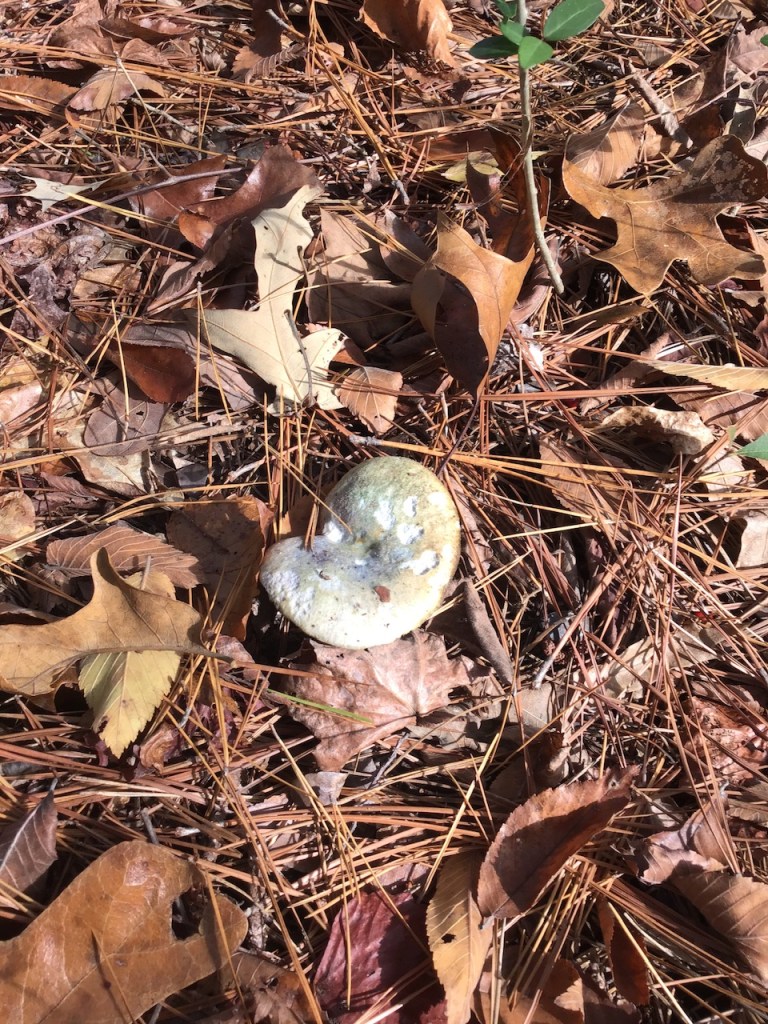
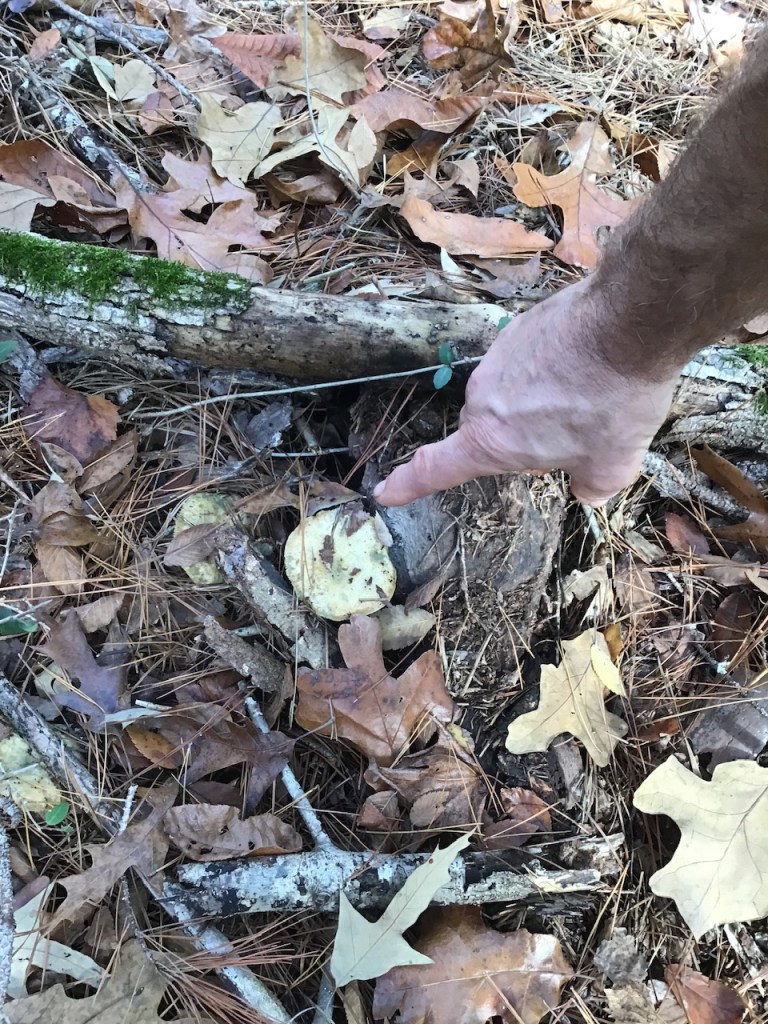
Chèvre wrapped in sassafras and fig leaves for aging.More aged chèvre—the top log is covered in dried goldenrod leaves and flowers, the bottom one is wrapped in honeybee comb.Our first pecan harvest—less than impressive, but still delishLactarius paradoxus mushrooms, homemade goat cheeses and first Japanese persimmon
Our fruits were nearly non-existent this summer, but we did just get our first ‘crop’ of persimmons, a whopping 5 of them! A couple of years ago I harvested lots of them from a neighbor’s tree and they were delicious; that was the first time we’d ever tried them.
Fuji persimmon
We planted both varieties, but the American variety takes much longer to start producing fruit and the fruits are generally smaller. These pictured above are Fuji, quite different, harder, larger, less sweet, not at all astringent, and also very tasty. The closest in taste I’d say would be a very ripe mango, the American varieties are especially super sweet, like jam.
If you’d like to learn more about this fancy fruit, here’s an enthusiastic lesson from James Prigione.
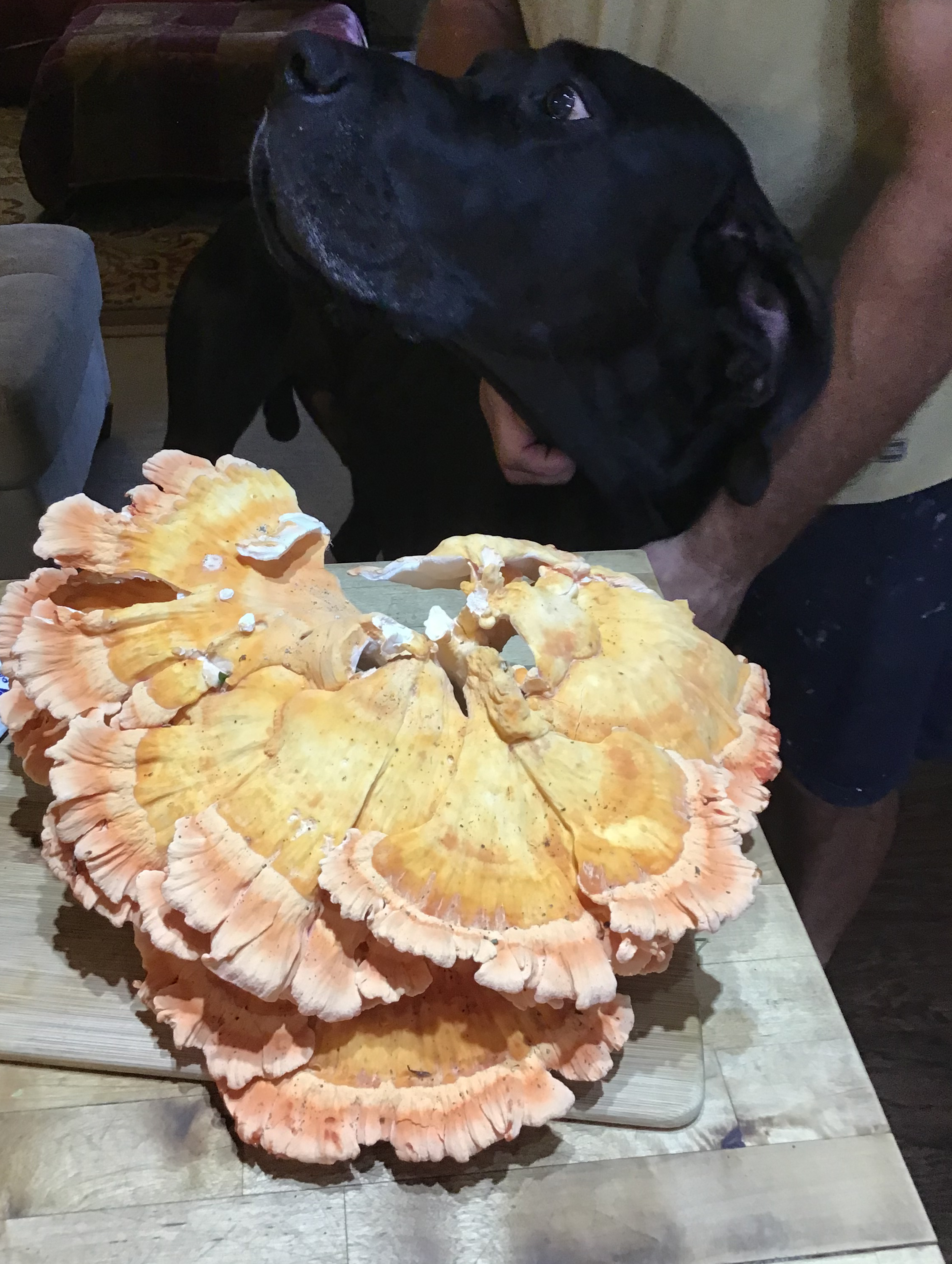
We’ve been getting a few mushrooms, but the lack of rain is certainly hindering our foraging experience. A friend brought us a huge chicken of the woods, our first time trying it and it was excellent.
Laetiporus sulphureus
The lactarius paradoxus are hard to spot and deceptively unattractive. In fact, they are exceptionally tasty and have a longer shelf-life, and of course a different season, than our favorite chanterelles.
Even while foraging mushrooms it seems the grass is always greener on the other side of the fence. 🤔
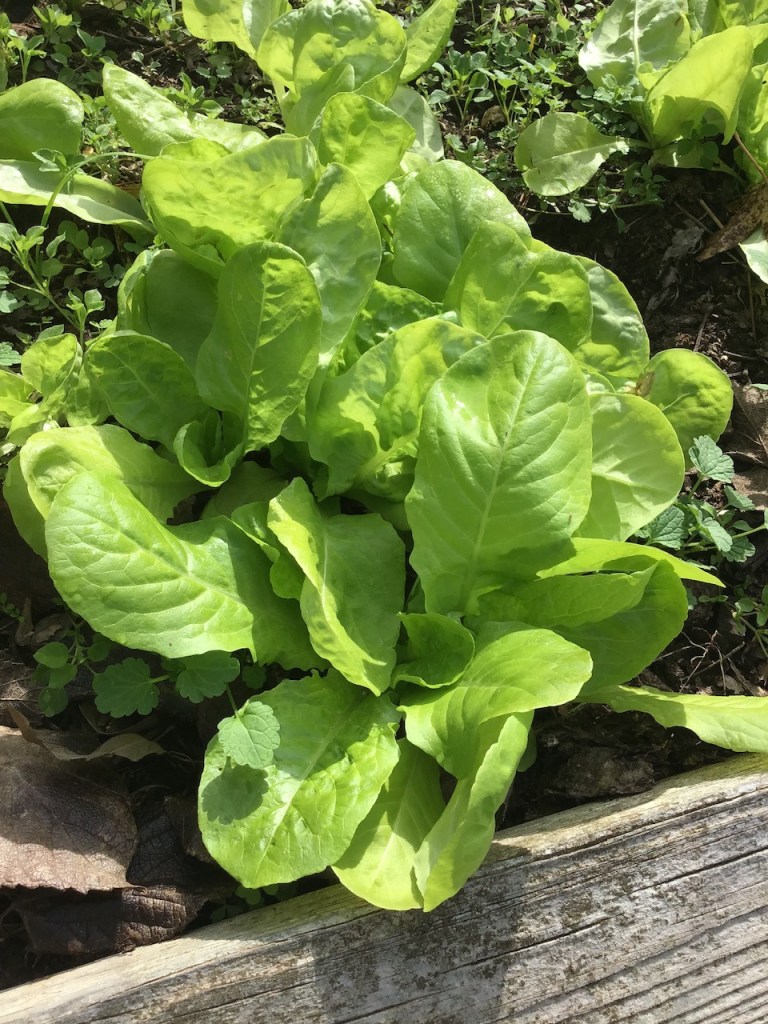
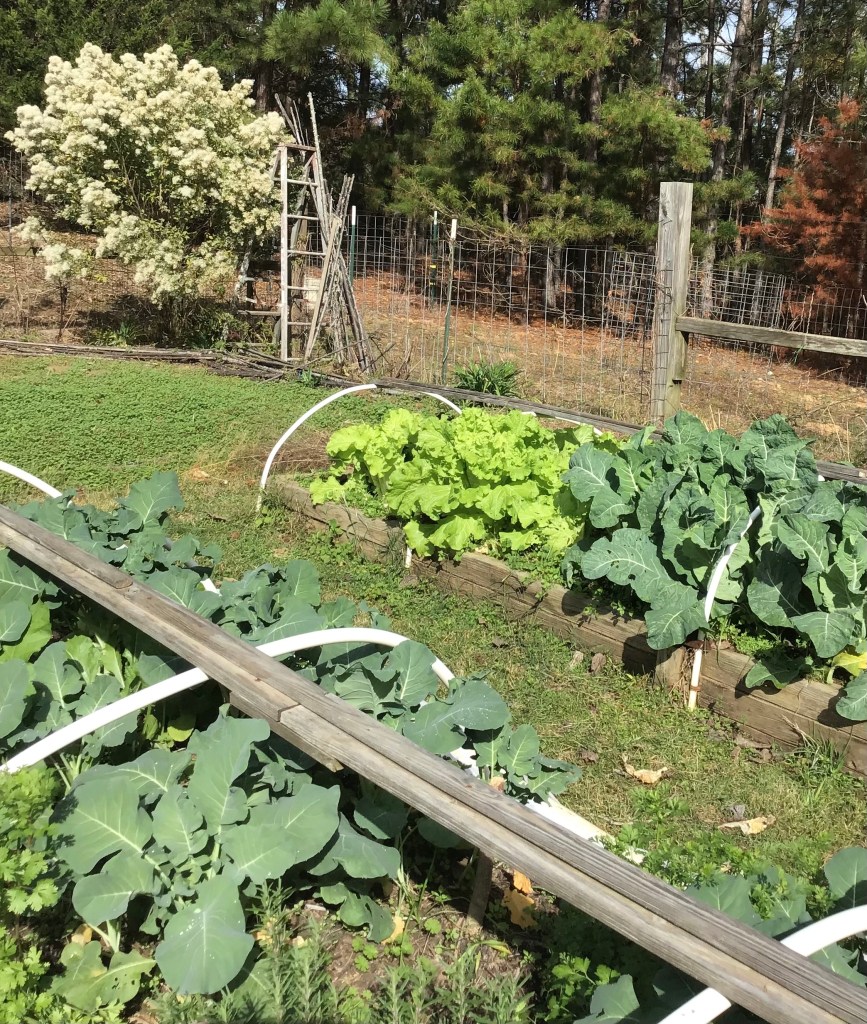
In the garden we do have two nice full boxes of varied cool-season produce we protect from the frosts with row cover cloth. In addition to lettuces there’s some broccoli and cauliflower, spring onions, cilantro and parsley, radishes and Chinese cabbage. We’ve also got our garlic already shooting up and a couple rows of turnips started for the pigs come spring. Our neighbors are now buying eggs from us, so we throw in the surplus veggies when we can.
3 of 6 colonies survived our terrible summer. The hives are a bit hodge-podge at the moment while we do maintenance on them.
The honeybees are occasionally making an appearance, though since the frost there is little for them to forage. One of their last favorites is another one considered a ‘nuisance plant’ by the ‘experts’—it’s called tree groundsel and it’s pictured after the frost in the right photo above, in the background behind the boxes. Quite a lovely late-season plant, if you ask me.
And approaching it before the first frost sounded like the buzzing metropolis that it was! A last hoorah for the bees.
So we come back to the current day and our crazy Shadow drama. It all started with a tiny Band-Aid.
He’s got the ear-span of a small plane and we have the living room space of its cockpit. When he shakes his head he invariably hits some piece of wall or corner of furniture with his Dumbo ears and it’s actually pretty amazing it didn’t happen already: a tiny gash on the tip of one ear that he doubtlessly cannot even feel.
Forever happy and oblivious
We were racking our brains for several days, trying everything we could think of and just digging ourselves deeper. One tiny failed Band-aid led to bigger Band-aids led to bigger wraps led to taping menstrual pads to the poor creature!
Nothing was working. We also tried several over-the-counter products, like liquid Band-aid, blood-clotting powder, and some spray-on crap. Not only was nothing working, they all seemed to be making the problem worse.
We even tried to craft our own ‘No flap ear wrap’ made out of my doo-rags, which also didn’t work. So, we purchased a pricey one online which should be arriving any day now. Obviously, this is a universally common dog issue. A result of over-domestication no doubt, but that’s fodder for another post.
Then I start racking my pea brain in frantic desperation. How to stop the blood flow pronto?! Crimp his ears with clothes pins? Tie his ears up on top of his head with a scrunchy? Stitches? Soldering? How about just cut the whole ear off? Yes, we did briefly consider the vet. But we’ve been spending the many months since we got him trying to detox him from all the vet potions and it feels we are finally making some headway there. I kept imagining the new meds that would be required for this new issue and their invariable side-effects, which would start us off at square one with his detox.
Clearly I don’t think very well in high-stress situations. I was really trying hard and the bad ideas were piling on. The blood, which had gone from a tiny occasional drop, to a full-on drip, to a steady stream, and from then within a few hours a sprayer-hose in every direction with every shake of his head. And that boy loves to shake his head.
Between the blood splatter and the acorn fire it feels we could be living in a battlefield training zone.
Yup, the crazy, bloody mess had arrived and is still visible all over our living room, deck, porch, siding. We covered all the furniture and even the walls with old towels and sheets. Hubby started following him around everywhere, with a giant towel extended between his outstretched arms each time he sensed a head shake was about to turn into a sprayer-hose of the sticky, red, splatter paint across the windows, the screens, the ceilings even. (Where are those magical elves when you need a deep house cleaning?)
We needed a miracle, and fast!
And thank the heavens, I got that miracle in one brief email. Thank you UK herbalists, Kath and Zoe, miracle workers! It should’ve occurred to me sooner. Me, especially, considering I did start the Herbal Explorations pages earlier this year and have been getting educated on herbal remedies. It honestly did not occur to me that herbs could solve this acute issue. I didn’t think anything would be fast or effective enough, especially when every other thing we were trying had failed and even worsened the problem.
Zoe suggested powdered myrrh as her preferred method in order to stop the blood flow, but we didn’t have that on hand. I ordered some online, but in the meantime chose among her other options, yarrow, and we have plenty on hand because I like it in Kombucha. I made a strong tea with it, as well as grounding some up into a powder and that whole concoction I held on his ear a few times with a cloth, some of that powder getting into the wound and sticking there, and the blood flow finally stopped. Holy Heavens! As of this writing we are still in good form and have our reserve remedies soon arriving in the mail.
What I clearly need now is an official Herbal First-Aid course. Herbs are not just for gentle healing and routine health, I see, they can be used in emergencies, too.
Why did I not think about it sooner?! It seems like such a no-brained to me now, that I’ve started to consider other potentials that didn’t occur to me at the time—like the old Russian folk remedy bees podmore—which I just happen to have been saving for a rainy day for 3 years now.
Quite an expensive lesson, but a welcome one nonetheless. 😊
Thank you from Hubby’s ‘White Elephant’! 😆
A huge thanks and deep bow to Kath and Zoe, from all of us on the wee homestead! 🙏 🤗
I know it must be autumn somewhere! Here that reality is still mostly in my dreams. We’re still in the 90s and still mostly dry. There are a few tiny signs of change though, that I’m magnifying in my mind, because I can hardly wait! It’s been a terrible summer.
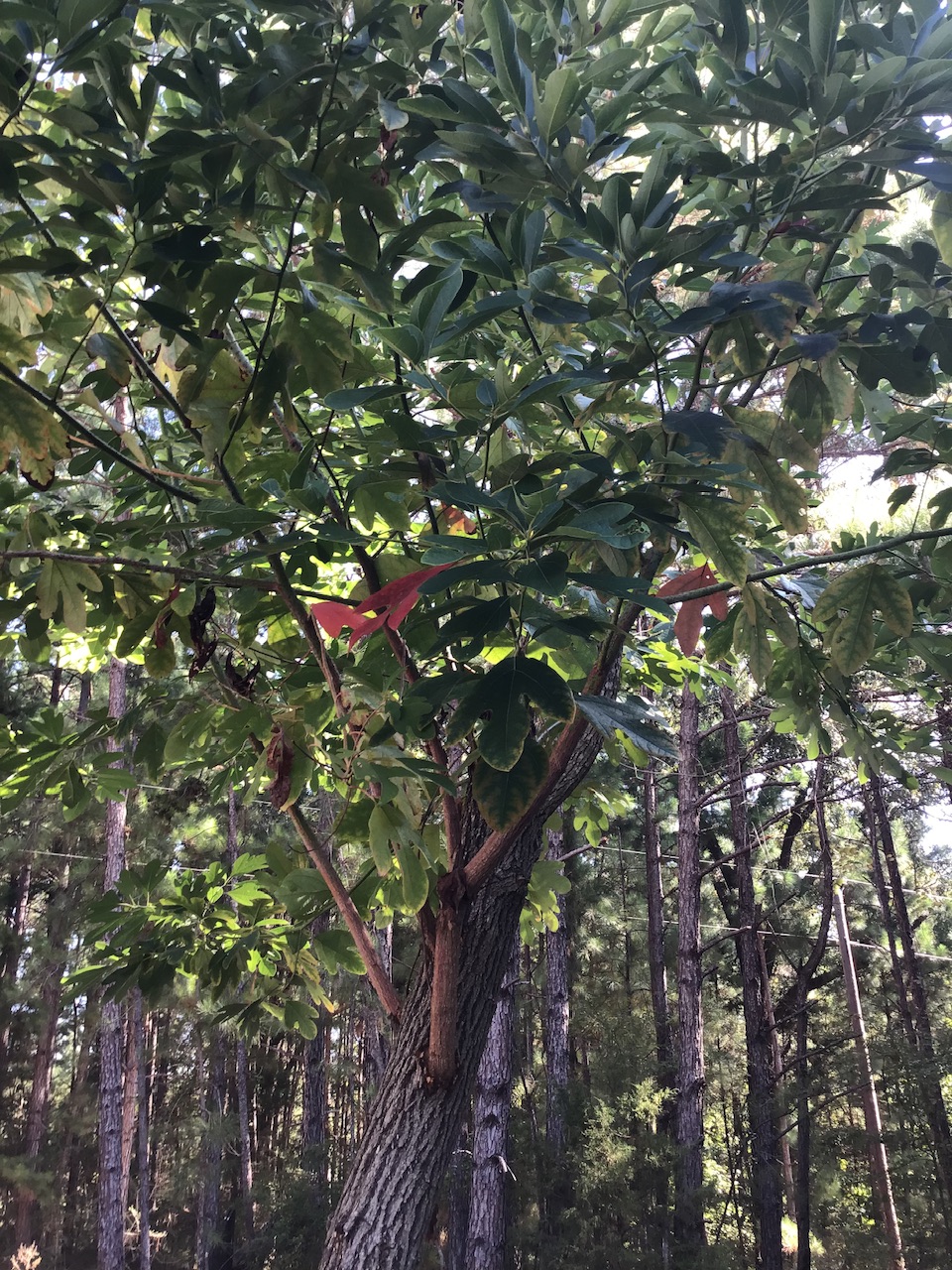
See, right there, 3 red leaves on my favorite Sassafras tree! (Very soon to be featured in an ‘Herbal Explorations’ post)
But, I’m not going to complain about that now. Instead we’ve got lots of happy snaps, and even a few scary ones.
We’re gearing up for the fall/winter garden, getting the beds ready for the transplants that have been growing under lights for a month and are very ready for their new outdoor home, just as soon as the temperature drops a bit.
Hang in there brassicas, it’s almost time!
We just started harvesting sweet potatoes from the boxes waiting for replanting.
Those vines helped keep the goats happy and healthy during the extra long heat wave.
Summer keeping a sharp eye on Shadow even though there’s a fence between them. None of the goats have warmed up to him, despite all his best efforts!
The peppers have come back with gusto after another dose of compost dressing and removing their shade cloth.
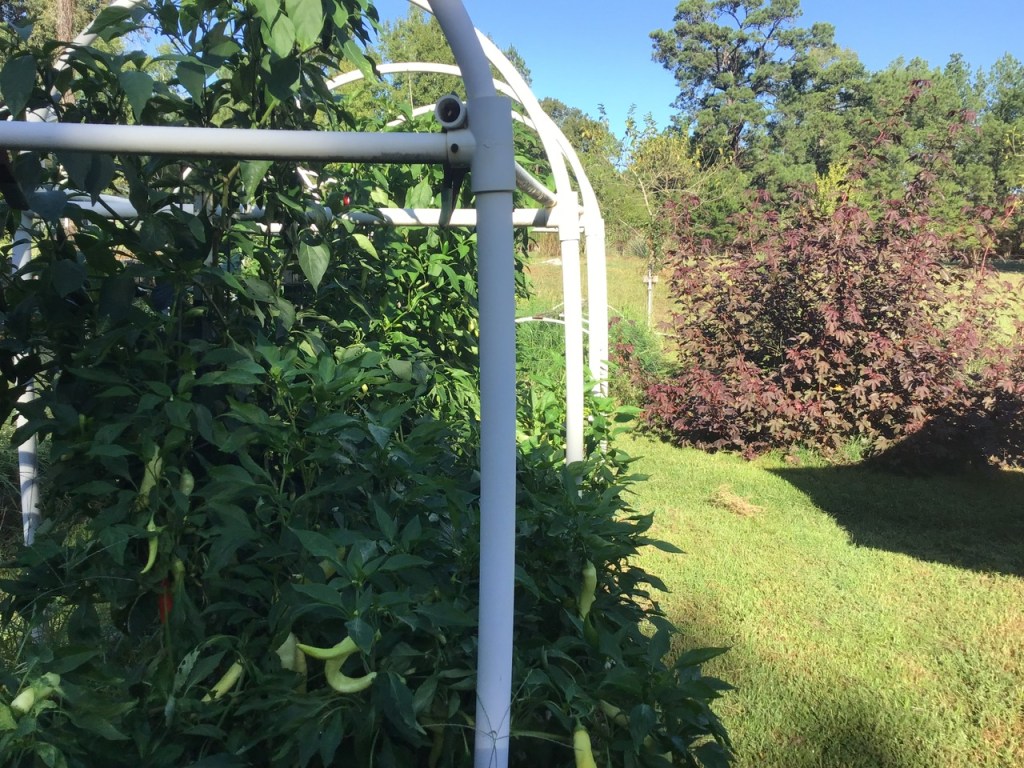
Jalapeños and banana peppers and the now monstrous cranberry hibiscus on right that is finally just starting to bloom.
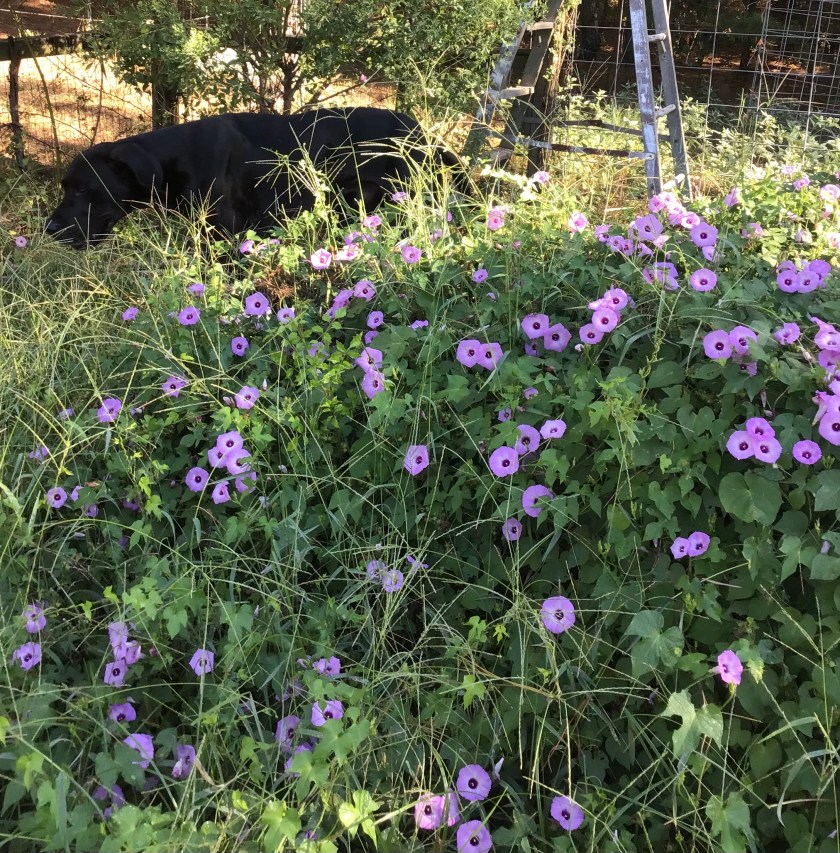
Cucumbers again, yippie! Plus hurricane lilies, turmeric, zinnia and basil keeping the bees happy. And lots of bindweed (morning glory)—scourge to the industrial farmer—a hardy, lovely and welcome cover for the rest of us.
I’m getting about 1/2 gallon of milk a day from 2 goats and making cheese often—mozzarella and soft chèvre every week and a hard cheese whenever I can accumulate at least 3 gallons (preferably 6) in the freezer. The larger the hard cheese the easier it is to age properly and goat milk works just fine for cheese after freezing.
The easiest cheese to make and so delish!
But I’m really looking forward to making Camembert and Munster again. Just like all things natural, cheeses also have seasons. I was very disappointed by a so-called Brie I just splurged on from the grocery store. They should call it a processed Brie-like imitation and market it in the aisle with Velveeta. Quel scandale!
A few more friendly faces . . .
As I mentioned last update, we had a sausage-fest this summer, that is, a super-high percentage of males born, of all species—cats, pigs, sheep, chickens, goats. So odd.
Now we have 3 young male cats, a new thing for us. But one of them is a real scaredy cat, we’re never able to get close to him and he’s rarely around except for meal time.
Always crouching in the shadows and darting off even from the camera.
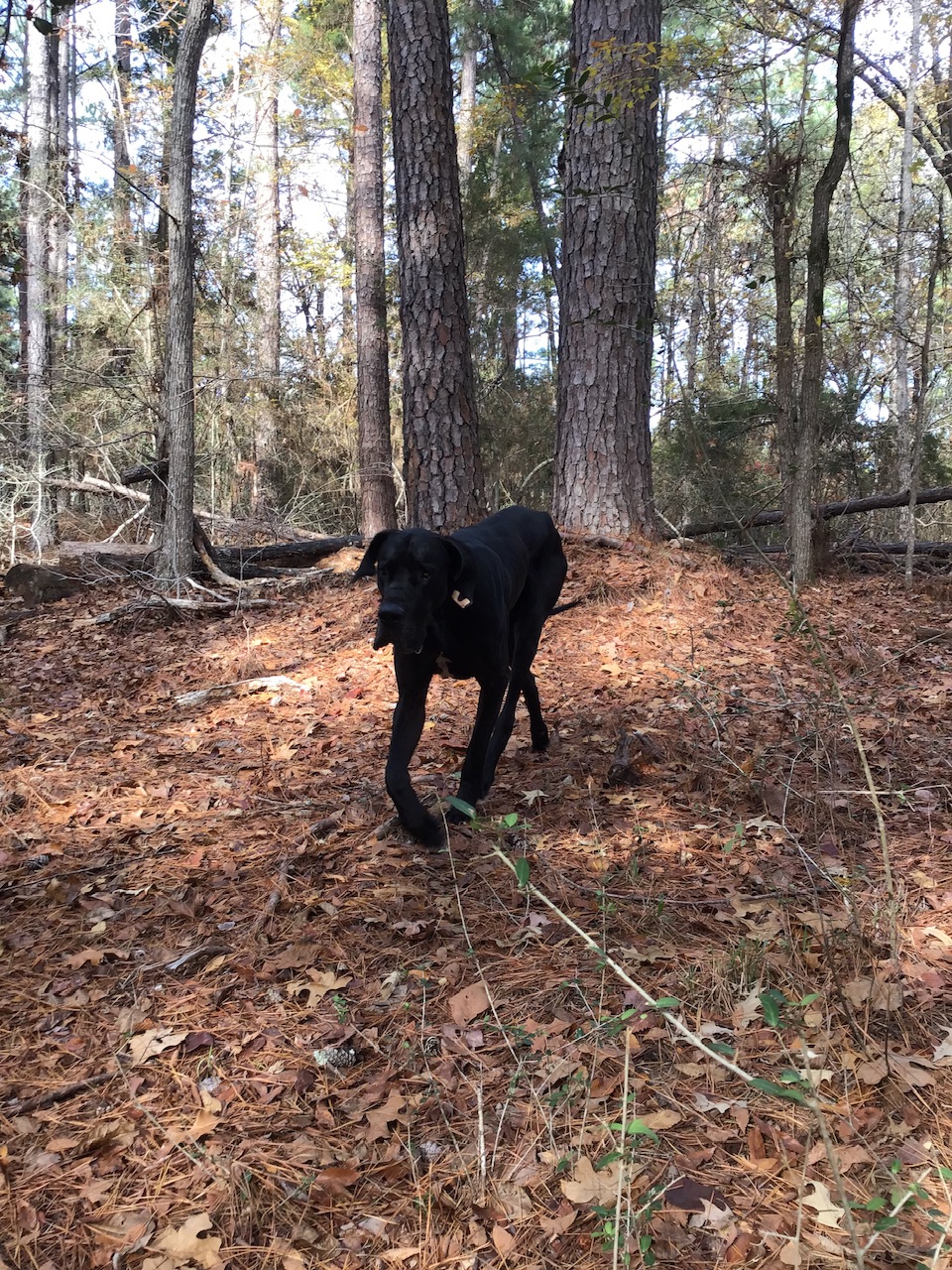
Also odd but true—our black cat, Mittens, hangs out with our black Shadow and our blond Tony hangs out with our blond Bubba and Buttercup—go figure!
“Hey in there! Where’s our breakfast?!”
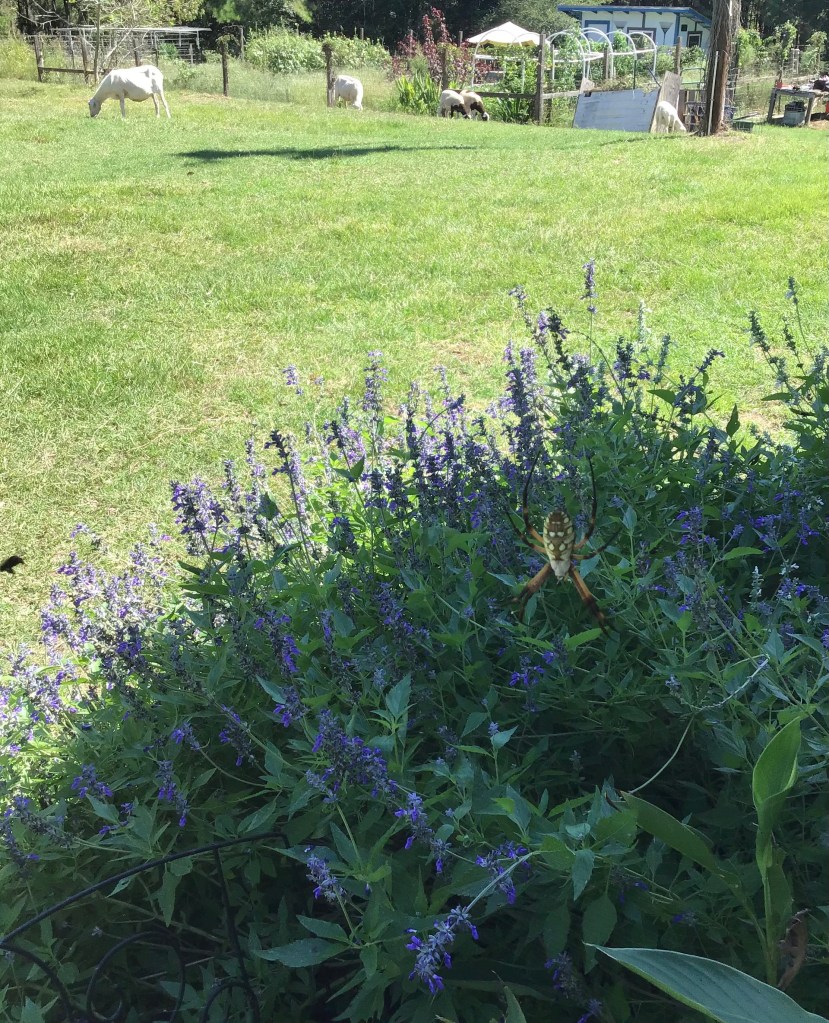
I love spiders, especially these beauties, but some folks find them scary, apparently.
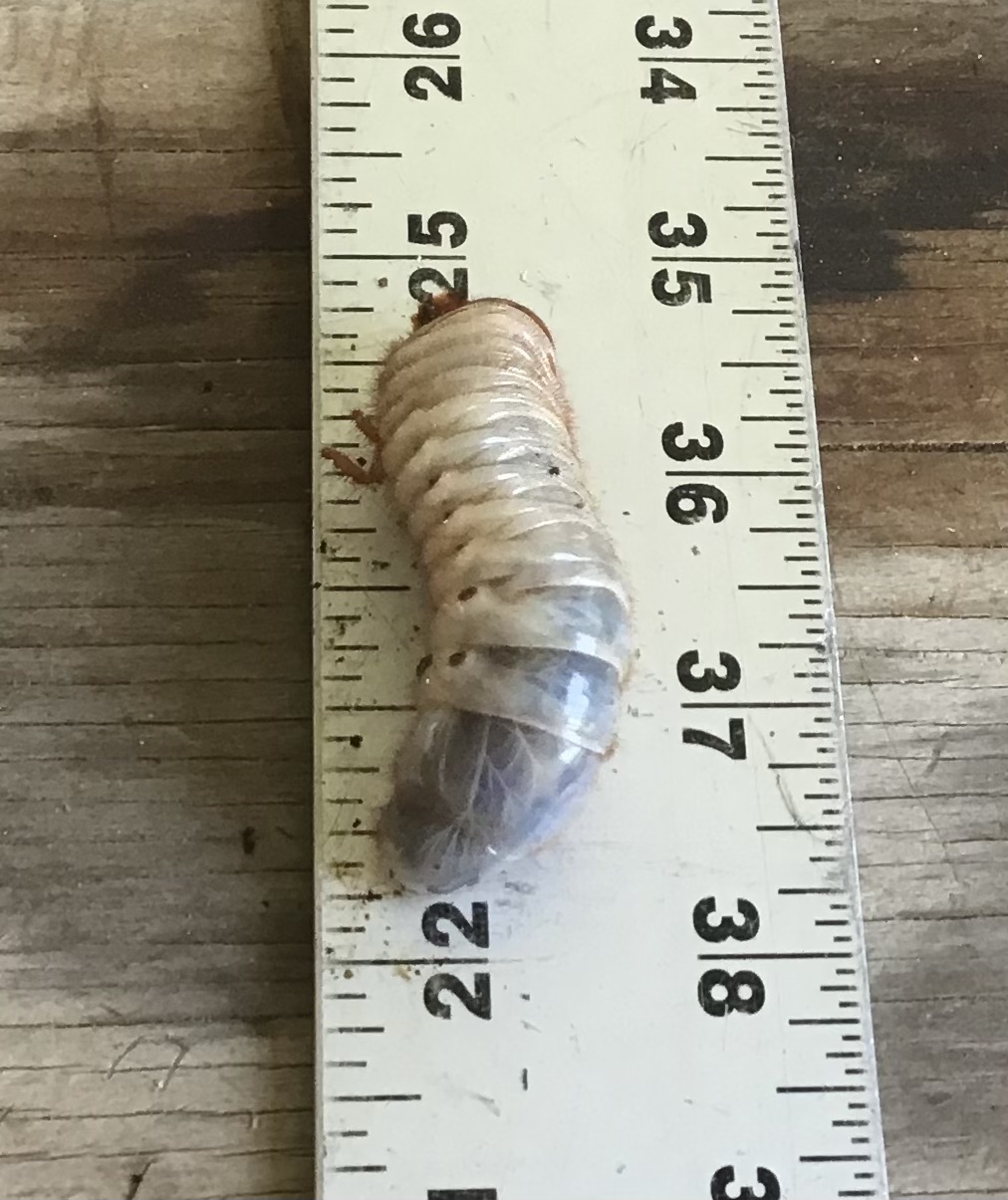
Now here’s a real foe . . . .
Gross! Looks like right out of a horror movie. And he has a lot of friends haunting our compost heap. 🤢
But who loves ‘em but our very scary Halloween rooster . . .
Poor guy, we’ve no idea what happened to him, but he is one scary-looking dude!
Soon we will be making the tough but necessary fall homestead decision—who will get bred and who will shuffle off to freezer camp?
But not a care in the world for these contented creatures!
Hope you’re having a fine Sunday and thanks for stopping by!
Times are tough, the mood around here is tight and demoralized. I won’t sugar coat it. Two months of 100+ degrees and no rain is bound to have emotional as well as physical consequences. We are victims and I refuse to pretend otherwise.
It’s one thing after another and because it’s so hot everything takes far greater effort. I’d go down the big list of all the things breaking down and all the things we can’t keep up with, but it’s way too long.
And no one likes a complainer, right? Don’t wallow in misery, right? Don’t bring others down?
If I had a dollar for every time I read or hear somewhere some version of—“Don’t play the victim”or “You’ve got to get out of the victim mentality” —I’d spit on it, wad it up in a tight ball, and shoot it out the barrel of a gun right between the eyes of every idiot who repeats such self-serving nonsense.
We ARE victims and there are a great many of us. Victims of medical experimentation, victims of weather warfare and disaster capitalism, victims of theft, victims of bullying and coercion, and that’s just those who are lucky enough not to be victims of far worse.
What is the ‘victim mentality’ exactly and who does it serve if we all bypass it? Who does it serve if we swallow our anger and resentment and bitterness?
Folks like to say it serves oneself, as in, then the dark emotions don’t haunt you and bring you down. They say we shouldn’t be vindictive, or hang on to past abuses and that hate will eat away at our souls and even cause cancer and other serious diseases.
In fact, it’s blind optimism and relentless positivity that keep folks stuck in denial and complacency, which can easily prove fatal, for the individual and the culture.
It is considered extremely ‘uncool’ to ‘play the victim’ even when you are a victim. Why is that? The media would have us believe everyone is playing the victim and that’s what’s wrong with our culture—so litigious, everyone looking for a handout, too many snowflakes.
While that may be partially true, and most certainly exploited, they leave out one very big piece of the social puzzle. Like, should we not be concerned that we have created a culture with so many victims, whether perceived or real?
I’ll leave y’all to ponder that question for a bit while I digress.
Because, we SO ROCK!
Sure, it really sucks at the moment. But at such times I take more notice of all the things we’ve done right. It’s not bypassing all that’s gone wrong, it’s holding both reality extremes in my mind at the same time.
We recently celebrated our 20th anniversary, and 15 of those years we’ve had this property, which we purchased, BASED ON BEING VICTIMS. After Hurricane Katrina, we saw first hand what the government response is to a crisis and we also saw how helpless most folks were. It was very eye-opening. We took action, to make sure we were not victims again.
We were victims again. And again. These are not ‘natural’ disasters, not one of them.
But for argument sake, even if the hurricanes and tornado were not manipulated by man (they were!) the consequences of those disasters were most definitely exacerbated by man.
These are disasters with perpetrators. Each time the (supposed) natural disasters were made far worse by people. We were robbed after the first one, as well as permanently losing my teaching contract at that time. The second time we were left paying 3 rents—one on the apartment we couldn’t live in, the mortgage on this property that had no finished home to live in yet, and the house to which we evacuated. The third time saw more grifters try to take advantage of our compromised and very stressful situation under the guise of helping.
Each time we’ve taken action based on that victim status to try to ameliorate it for the next time.
That’s why we rock. In the last 15 years we have carved out an awesome wee homestead. We cleared loads of land, just the two of us and a little old tractor. Built a cabin, 3 chicken coops, a corral, a large garden, a large orchard, remodeled our home, acquired many different kinds of livestock, have been learning beekeeping, foraging, cheesemaking, herbalism and LOADS of other life skills that were completely new to us, and have helped a few others on their journey to do the same.
As victims it is our duty to arm others (or at least try, especially for the next generations) with the tools they will need to bring down the perpetrators who currently evade us. It only serves the perpetrators to pretend there are no victims, or to micro-manage others’ victim status and behavior.
A victim mentality can be healthy, or it can be destructive. What most folks do is try to exploit it or minimize it.
They try to exploit it by using it as an excuse to do nothing—this is not a victim mentality—this is a grifter mentality. They try to minimize it because the folks around them are too lazy, indifferent, busy, selfish, adolescent, or cruel to listen to them and allow them to express their true feelings rather than those that are socially acceptable and make everyone else feel comfortable.
The guilt and shame should go squarely and solely on the shoulders of the abusers and those making excuses for the abuse. If victims of repeated abuses turn into individuals with a grifter mentality it could be because they’ve witnessed so often first-hand that this is the winning strategy in our culture. I seriously doubt telling such individuals to stop ‘playing the victim’ will do a damn bit of good. And, why should it?
So, all hail the victims! And more power to us. Not the corrupting brand of power that turns us into tyrants and perpetrators ourselves, but the inner-power it takes to hold that victimhood out for all to see, in order to enlighten, to righteously blame and accuse, and to give the next generation a better chance at identifying their abusers, holding them accountable, as well as in fortifying their own lives and livelihoods against further victimization.
Ug, am I in a mood! Read on for a big fat bitch fest.
First I’m going to bitch about the weather. Then I’m going to bitch about the garden. Finally I’m going to bitch about all the dumb bitches.
I will end with one positive paragraph, however, so y’all can leave satisfied that there’s no need to fret on my behalf. 😆
Let me first set the proper tone.
Time stamp 35:53. It’s an old clip, but as valid as ever. Oh my, do I have rant-envy! How I wish I were this good!
You’re worried about what you’re putting in your fucking body?! What about what you’re fucking breathing?!!
I listen to Carol nearly every day; she’s one of the precious few who gets what’s happening and has a proper level of peeve about it all. Go ahead and give the first 30 minutes a listen, if you care to hear about all the (manufactured!) weather destruction around our realm.
If you want to be that person, who writes in the comments that all this is normal and they can’t control the weather, feel free, because I could use a good target for all this vitriol!
And just for the record, I know they use the word ‘control’ to confuse folks, because then they have plausible deniability. Because they don’t exactly “control it” like we control the thermostat in our homes. They manipulate it, where and when they can, in order to cause destruction, in order to profit from disaster capitalism and play the Stocks with weather futures and food prices and every other piece of the economy which is weather-dependent, which is a whole helluvalot.
If you are safe and secure in your tiny little area, good for you, your region is not on the targeted list, YET.
This is not about Bill Gates and his ‘proposed’ solar radiation management. This is SO much bigger and he is one drop in the bucket of the wild, Wild West that is happening in our skies and with our atmosphere. It’s been going on for decades! I’m SO SO damn tired of the denial and the Pollyanna pretending and the stoic excuses!
The general consensus that we can just keep throwing money at the problems and they will magically get fixed by technology is not just absurd and dangerous, it is fatal.
How’s this for the next big fix by Big Biz?
“Now, the likes of Bayer, Corteva and Syngenta are working with Microsoft, Google and the big-tech giants to facilitate farmerless farms driven by cloud and AI technology. A cartel of data owners and proprietary input suppliers are reinforcing their grip on the global food system while expanding their industrial model of crop cultivation.” From Net Zero to Glyphosate: Agritech’s Greenwashed Corporate Power Grab “Whereas traditional breeding and on-farm practices have little or no need for GE technologies, under the guise of ‘climate emergency’, the data and agritech giants are commodifying knowledge and making farmers dependent on their platforms and inputs. The commodification of knowledge and compelling farmers to rely on proprietary inputs overseen by algorithms will define what farming is and how it is to be carried out.”
How do you make the world believe there’s a climate emergency? It takes a lot more than hyped-up media coverage and fraudulent stats—there has to be something to cover after all. Enter mass-scale weather modification in key areas—droughts, floods, earthquakes—YES THEY CAN!
Not to mention they’ve cornered the markets of: Disaster Preparedness, 1st Response, Disaster Relief, and Reconstruction, of the entire globe.
Someone has to keep shaking that can to keep everyone fighting you know!
“There’s a meme that circulated on social media a while back that perfectly sums up the polarized, manipulated mayhem, madness and tyranny that is life in the American police state today:
“If you catch 100 red fire ants as well as 100 large black ants, and put them in a jar, at first, nothing will happen. However, if you violently shake the jar and dump them back on the ground the ants will fight until they eventually kill each other. The thing is, the red ants think the black ants are the enemy and vice versa, when in reality, the real enemy is the person who shook the jar. This is exactly what’s happening in society today. Liberal vs. Conservative. Black vs. White. Pro Mask vs. Anti Mask. The real question we need to be asking ourselves is who’s shaking the jar … and why?”
Weather warfare is real and it is happening. And it is going to get worse.
Around here, with nearly two months now without rain, high temperatures, drying winds, it’s very easy to grasp what sitting ducks we all really are. We spend the entire mornings just trying to keep what’s not already dead from dying. The time and energy and repetition is exhausting and demoralizing. The afternoons are spent indoors, grateful for the air conditioning and that we’ve had no animal fatalities from the heat, so far.
Most of the garden is dead and depressing. The tomatoes fried, the cucumbers almost gone and getting bitter, the squashes mostly dead, even the heat-loving luffa, which has never succumbed to the heat in past summers. One of four chayote squashes is still barely hanging on, and that’s supposedly another heat-lover.
Not even regular watering helps.
Thinking this ‘heat dome’ could be parked over us for another three months, or wildfires could be next on their battle plan is more than I can bear. I set a single perfect pinecone on the windowsill to remind me fall will surely come, eventually.
Then come the normalizers, Lord Have Mercy! The Fucking Chemtrail Deniers, How I LOATHE them! Let me count some ways:
The evolution of the geoengineering psy-op as I’ve experienced it over the last decade or so has been a recurring nightmare.
I’m thinking it might be helpful to those new to the topic and also to those compiling the multi-colored yarns of our clown world for knitting a scarf for their future grandchildren.
No kids, the skies did not always look like this. Don’t believe the Con-trail Believers!
Some early ‘rationales’ for the lines, dubbed chemtrails, back in the ancient past (circa 2010) — these would be the various layers of gaslighting I heard during my first inquiries on the topic.
*First tier. This is when I would randomly ask Google questions like, WTF is wrong with the sky? What’s the difference between weather and climate? What’s a ‘space fence’? What the hell is wrong with the weather? Answers: Planet Nabiru causing atmospheric disturbance The wind patterns changing due to ‘El Nino’ Contrails, a con that keeps on giving WiFi, atmospheric phenomenon due to widespread wifi Radar, result of new tech
*Second tier. This is when I started seriously questioning and challenging on social media. What’s geoengineering? What the fuck is wrong with the weather? What are ‘sun dogs’? What is ‘solar radiation management’? What are chemtrails? Answers: Not there, my imagination (yes, I got that regularly) Military operations, not my business (ditto) New brand of ‘green’ Jet fuel Military chaff End of days Coal Fly Ash Military fuel dumps Contrails, the con persists!
*Third tier: Self-replicating Nano-bots (now we’re getting somewhere!) Space fence, for real! Germ warfare Weather warfare (DUH!) My imagination—yes, still!
I do try to focus on the positive, and there is a bit of it. Hubby’s first sunflower-melon patch was a big hit. It’s gone now, but we’ve got some really amazing watermelons to celebrate his success!
The pumpkins have also been pretty impressive, and amazingly they are still alive, though it does feel odd to have ripe pumpkins laying around everywhere in July.
Guess who else loves pumpkins? The plants got so big they’ve grown past the garden fence into the goat’s forage area, so, fair play.
But selfish old queen that she is, she wouldn’t share a single bite with her mates!
For a couple hours in the morning it’s not so terrible standing still in the shade with mist from the sprinklers blowing on me.
At least the okra is still alive
Moringa, a lovely plant that just might make it long enough to produce before frost.
While we definitely have fewer pollinators visiting the garden this summer, at least we do still have a few nibbling at the drying flowers. May they survive and multiply!
And of course, tomorrow’s Funny Friday, so that might help my torrid mood. 😆