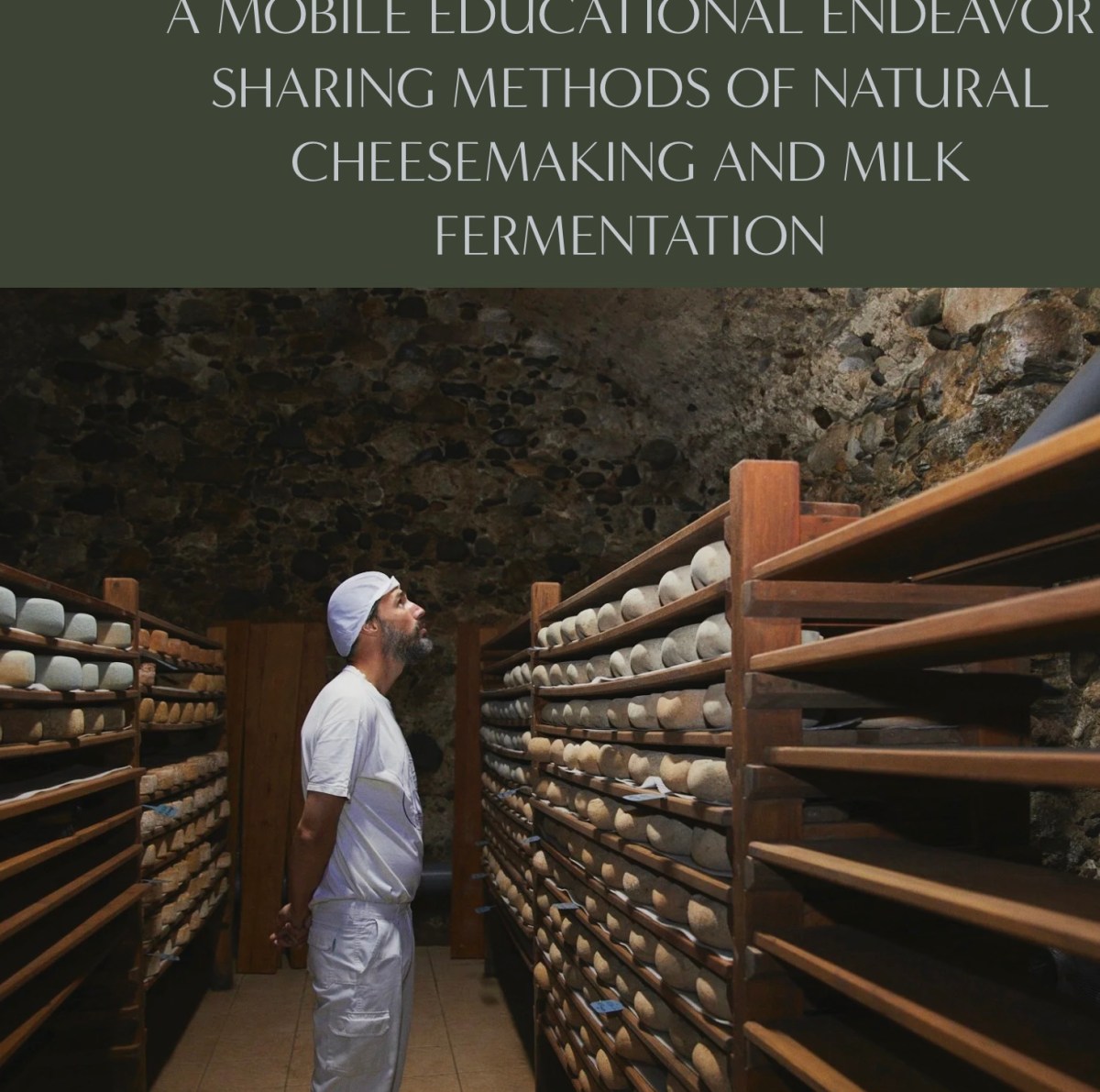
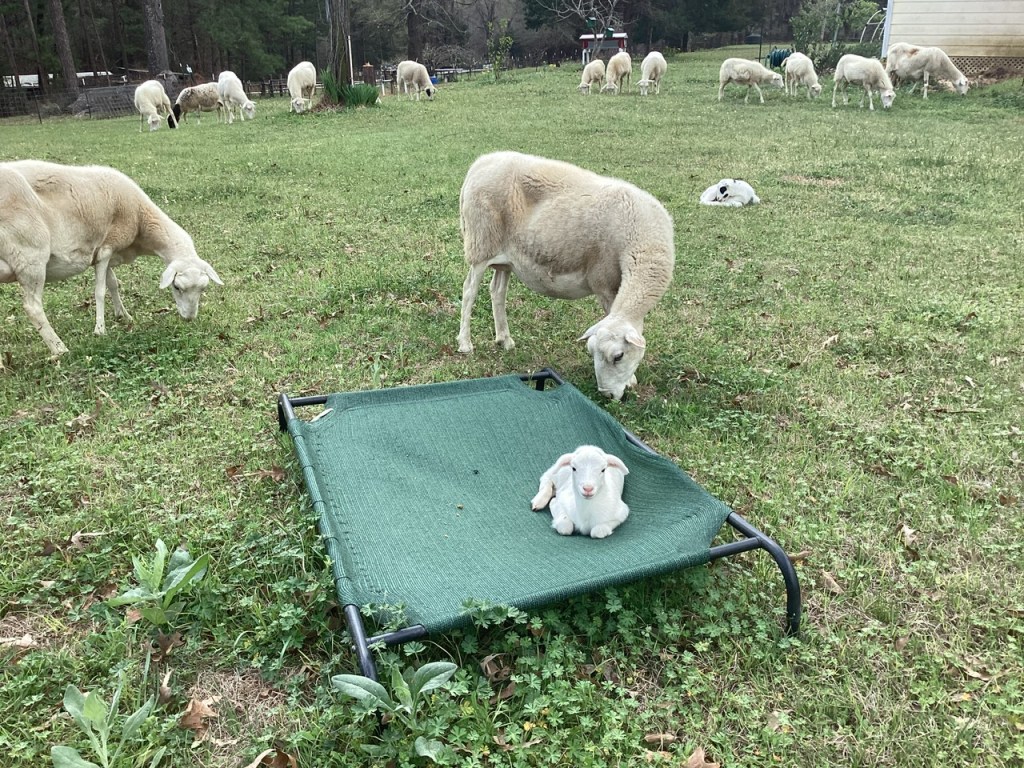
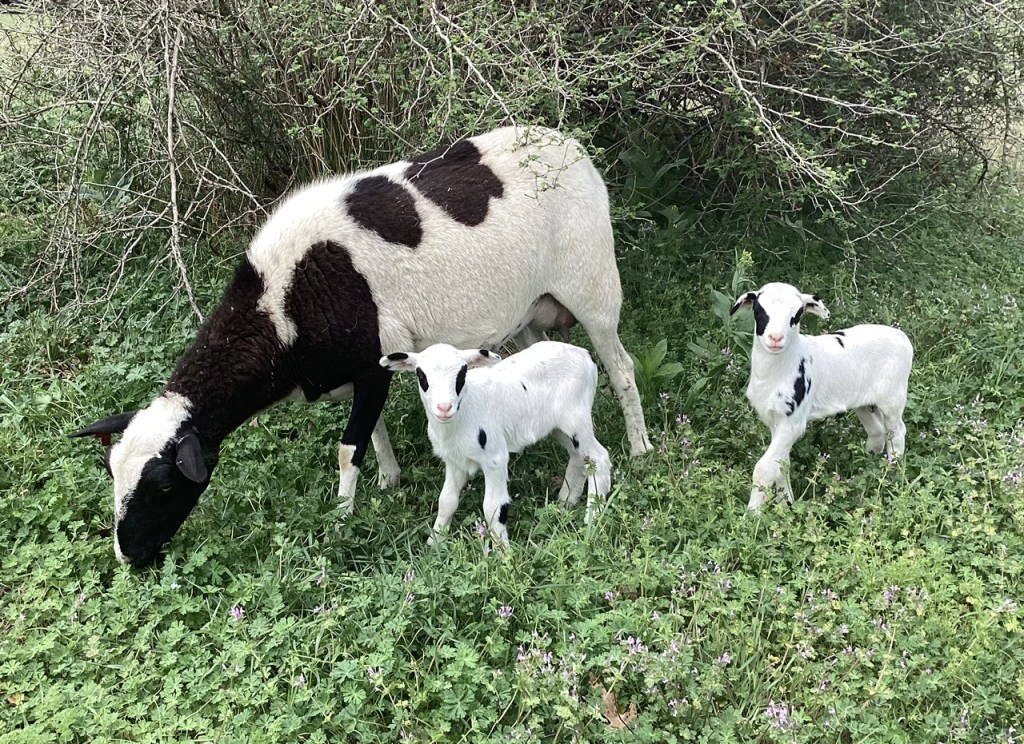
Such a synchronistic interview popped into my feeds, which I just have to share. Not only is our wee homestead full of young blood sucking down mamas’ milk, but I’m also teaching another cheesemaking workshop this week.
So, milk is big on my mind, nothing unusual there.
This interview from Weston A. Price is priceless! It really is such an awesome feeling for me when a new and powerful voice comes on the scene repeating what I sincerely believe and what we have been diligently cultivating on the wee homestead. We are losing too much of great value in our blind rush toward ‘progress’. We’ve got to work harder to keep hold of our wise traditions, or they will be lost forever.
Clearly this issue is getting lots more attention lately, but it has been on the radar of many cheese-lovers since the 90s, including yours truly, because I was so peeved to have to give up cheese, because I was suddenly ‘lactose-intolerant’, like loads of other people. But at that time it was only in the U.S. I couldn’t eat breat or cheese, not in Europe.
Today in Europe they have also been inundated with ‘vegetarian’ rennet and glyphosate and other chemical industrial products and processes, and when it comes to cheese, the vast majority are not labeled as such. I got suspicious, started asking a lot of uncomfortable questions, and found out A LOT about GMOs and our body’s reaction to them.
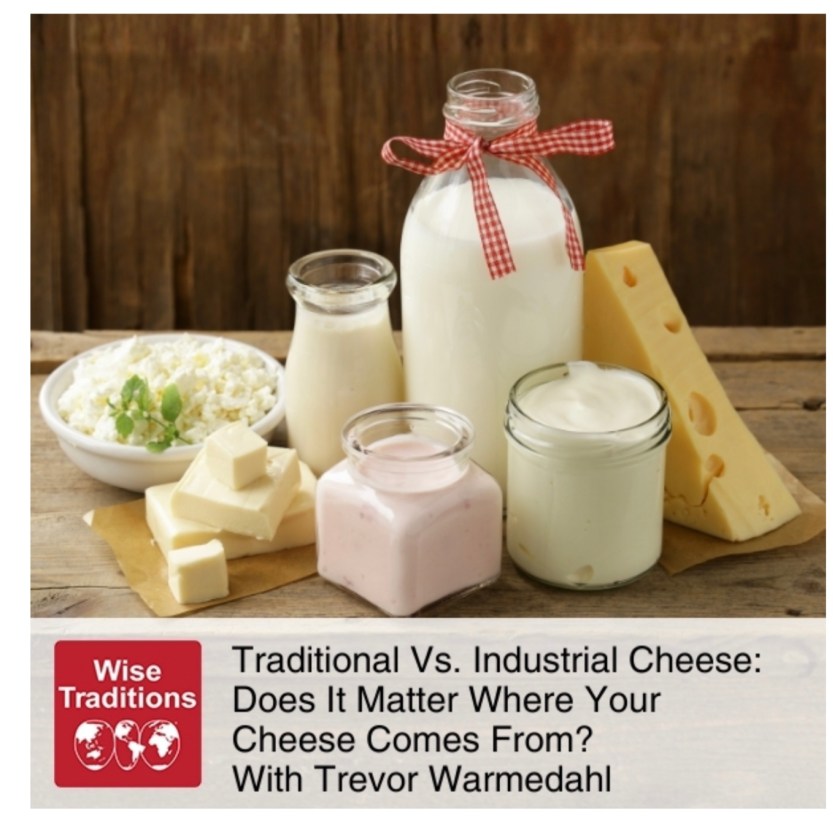
The interview summary and link for anyone interested in some fantastic cheese talk (he even talks about the maggot-ripened cheeses I’ve mentioned quite a few times on this blog!)
Traditional cheesemakers respect the process of cheesemaking. They honor the environment, the animal, its milk and traditional techniques – all of which lead to delicious, nutritious cheese. Industrial cheesemaking, in stark contrast, emphasizes sterile conditions, uniformity, and artificial inputs (including GMO-derived rennet). The cheese that results from the conventional approach is consistent… but misses a lot in terms of flavor profile and nutrients.
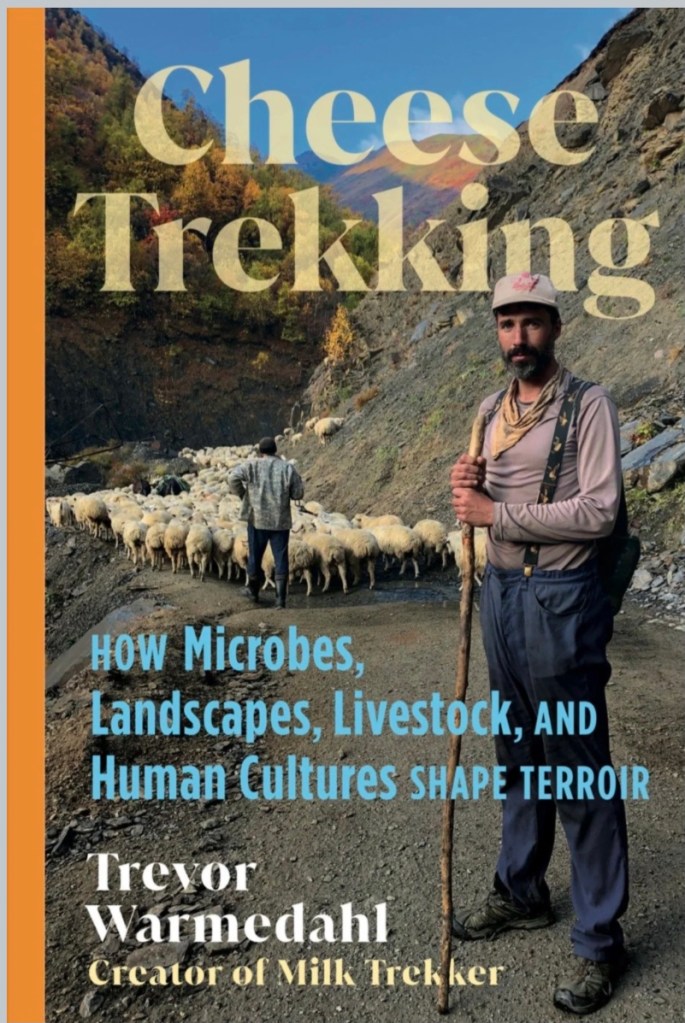
Trevor Warmedahl is a cheesemaker, fermentation educator and the author of Cheese Trekking. Today, he takes us on a cheese adventure, as we gain insight on traditional, artisanal cheesemaking. He gives us pause about what is in our fridge and where it comes from.
Trevor has trekked all over the world, working alongside artisanal cheesemakers, so he understands and shares the importance of working with (instead of against) microbes and nature. He describes cheeses you may have never heard of, along with unique approaches to making them. Trevor also helps us take stock of what has been lost in our modern approach to cheesemaking.
I have a dream that when asked where I sell my delicious locally-produced raw milk cheeses my response will be one of beaming pride instead of deflated frown.
Instead of–“Sorry, I can’t sell them, it’s illegal”–in my dream I reply instead:
“I have an assitant who delivers our homemade cheeses twice a week to the community Farmstead Store in town. You probably should call her and make arrangements because she always sells out by lunch. We have Farmstead Stores in every small town in our region who send out drivers to exchange with one another. Our free-range pork and our neighbor’s beef sell out even faster than the cheeses. They’ve also got year-round fresh produce there, eggs of course, honey, wine, kombucha–all sourced and produced from within 15 miles.”
Instead of my dream, in my reality I get asked, “Can’t you get a license?”
No! No, of course I cannot get a license! Instead of dream-speak I get the nightmare reality.
It’s not only impossible to get a license for a home cheesemaking operation, it just happens to also be against my philosophy.
“An agorist is one who applies the principles of libertarianism consistently through counter-economic practice. They aim, that is, to bring about the voluntaryist society not through political (in)action but through direct counter-economic action.”
No, I cannot get a license. Since we are in the South, I wonder if another appeal might be in order?
Imagine if instead of ‘philosophy’ I said ‘religion’. So my reply becomes:
“Appealing to State and Federal officials for what I, and my neighbors, choose to purchase for consumption is against a fundamental aspect of my religion which preaches the gospel that God chooses my food through my tastebuds.”
“This is not a trivial point. A free society is not merely an ideal society to be philosophically formulated, but a process to be enacted through conscious action. Thus, the idea of separating the free society from the actions that free human beings must (or must not) engage in is self-contradictory. What else defines a free society except for those actions?” James Corbett
“Furthermore,” I continue in my dream space, “I’m allergic to paperwork and authoritarian nincompoops and I refuse to spend what little time I have left on this spinning green insane asylum kissing the arses of Velvetta-eating officials mansplaining me what I must do to make safe cheese.”
Also from Corbett In “An Agorist Primer” Konkin explains: “We see that nearly every action is regulated, taxed, prohibited, or subsidized. Much of this Statism — for it is only the State that wields such power — is so contradictory that little ever gets done. If you cannot obey the (State’s) laws and charge less than [because of “Fair Trade” laws], more than [because of “Anti-Trust” laws], or the same as [because of laws against cartels] your competitor, what do you do? You go out of business or you break the law. Suppose paying your taxes would drive you out of business? You go out of business — or you break the law. Government laws have no intrinsic relationship with right and wrong or good and evil. Historically, most people knew that the royal edicts were for the king’s good, not theirs. People went along with the king because the alternative looked worse. [. . .] But everyone is a resister to the extent that he survives in a society where laws control everything and give contradictory orders. All (non-coercive) human action committed in defiance of the State constitutes the Counter-Economy.” In effect, Konkin takes the plight of the modern-day citizen, stuck in a web of ridiculous, contradictory, and impossible-to-follow laws, rules and regulations, and flips it on its head. It is not a source of shame to be acting against the arbitrary whims of the state, but a virtue. Economics is the realm of white markets: legal, licensed, sanctioned and regulated exchanges in the aboveground economy. Counter-economics is everything else: black market and gray market activity either specifically outlawed by the state or not licensed or approved by it. People tend to get squeamish when they hear “black market,” but we’re not just talking about gunrunning, counterfeit smuggling or drug dealing here. Any (non-violent) activity that doesn’t have the blessing of the state is counter-economic.
“Of course, individually, these actions seem unimportant, even trivial. But in combination they drain significant resources away from the clutches of the state and toward the people participating in the actual productive economy. It is estimated that 20% to 30% of Americans fail to report taxable income. In some parts of Latin America it’s closer to 80%. Can you imagine if it were 100%? A few isolated counter-economists acting in a disorganized haphazard faction is a minor inconvenience to the powers-that-shouldn’t-be. Millions of people acting in concert in a deliberate undermining of state authority is a revolution. This is the promise of counter-economics.”
The quotes that are not in my dream are taken from the following 2 articles by James Corbett, well worth the read.
About 5 or so years ago an old timer whose land borders our own gave me a brochure with an enthusiastic smile and said–“Y’all should do this, too!”
I grimaced as I took the materials he offered. As much as I respected this neighbor, bless his heart and rest his soul, as he has since passed, I just knew there had to be a con behind these legal conservation agreements property owners are signing in an effort at protecting their land for future generations.
He thought he’d done good, of course. While his property was entirely recreational, and his full-time home in Houston, he worked very hard on it for many decades. He has a beautiful 2-story cabin there he built himself, as well as fruit trees and grapes, and his children and many grandchildren filled the home on weekends and holidays, often practicing his favorite sport–shooting. He was a good man and he meant well.
No one in the family has been back to enjoy the cabin since his death, about 3 years ago. This is not unsual with inherited property, and our own property was another case in point. Siblings disagree, feelings get hurt, attorneys get hired, acreage gets split and the decades of hard work slowly go back to nature, if the internal conflict continues long enough.
This is a common enough scenario that it makes perfect sense an old patriarch would do all he can to avoid such mess. Now I can’t say if his family inheritors are aware of any potential issue with his decision to legally protect some of his land ‘forever’ or if that’s the reason they have not returned. Maybe a family feud alone is the issue there and the government hasn’t yet involved themselves.
Nature Preserves or Confiscation Scheme?
But that’s exactly the point I’m getting at. These ‘permanent conservation easements’ that are being created by well-meaning landowners are not without risk. And absentee landowners, or those embroiled in inheritance issues, are especially vulnerable.
Because the Globalists want the land, and if they can find a proverbial broken link in your private property chain, they will worm their way in, legally, through the fine print.
It’s all part of the Total Human Ecosystem (THE) scheme. From escapekey’s Substack:
“Conservation Easements as Confiscation: Across rural America, landowners are being offered attractive deals for ‘conservation easements‘ that sound like simple land protection agreements. But buried in the contracts are ecosystem performance requirements tied to financing. Miss the biodiversity targets and operational control transfers to environmental organisations. The land becomes theirs while you keep the tax liability.”
Long gone are the days when Americans could glibly repeat, “But that would never happen here. We have laws.”
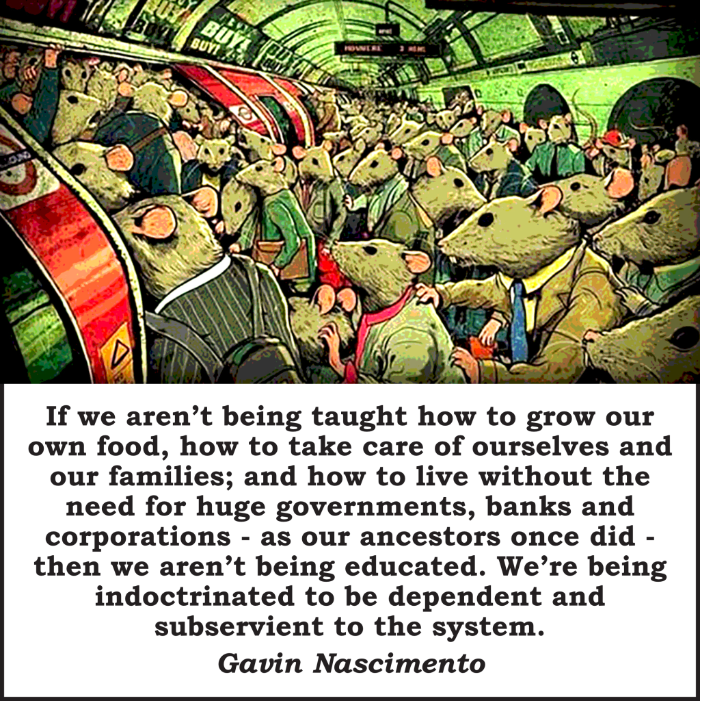
The ‘laws’ for every ‘country’ on Earth will be Uniform. This is the Agenda, and all private property is threatened. The very concept of private property will be demonized through the Government schools so thoroughly that children will be indoctrinated to be afraid of it.
“The Total Human Ecosystem framework treats private property as an outdated concept that threatens ecosystem integrity. Increasingly, local zoning laws incorporate ‘ecosystem service’ requirements that can trigger automatic seizure clauses. When satellite data shows your land use conflicts with ecosystem targets, your property can be transferred to ‘ecosystem management’ organisations. You might own the deed, but the ecosystem owns the seizure authority.”
Agricultural Land Seizure: Farmers are being offered attractive financing tied to ‘regenerative agriculture‘ and ‘carbon sequestration‘ targets. But when weather, pests, or market conditions make those targets impossible to hit, the financing agreements trigger land transfer clauses. Family farms that have operated for generations are being seized by international organisations through algorithmic enforcement of impossible environmental standards.
The Domestic Blueprint: What’s happening in Belize and Ecuador is the beta test for comprehensive land confiscation in developed countries. THE provides the philosophical justification (individual property rights threaten ecosystem health), the ecosystem approach provides the governance framework (decisions must be made at ‘appropriate’ ecosystem scales), and the financial instruments provide the seizure mechanism (miss your targets, lose your land).”
“Once you see this pattern, you cannot unsee it: every expansion of control comes wrapped in moral imperatives, every loss of freedom is packaged as virtuous necessity, every dissent is reframed as a moral failing. Healthcare workers fired for “ethics violations,” companies forced into ESG compliance, scientists silenced for challenging consensus—all manifestations of the same ethical control architecture that esc has systematically documented.”
“Yet appearances deceive. The result is a global Soviet: the Party is gone, but the apparatus remains — cloaked in sustainability, cooperation, and humanitarianism, with a web of NGOs functioning as the modern fronts for its operational machinery.
The ideologies of peace, sustainability, and rights have been merged with the infrastructure of surveillance, algorithmic governance, and moral programming. The old flags have been lowered — but the new system flies under a different banner: expertise, ethics, and emergency.”
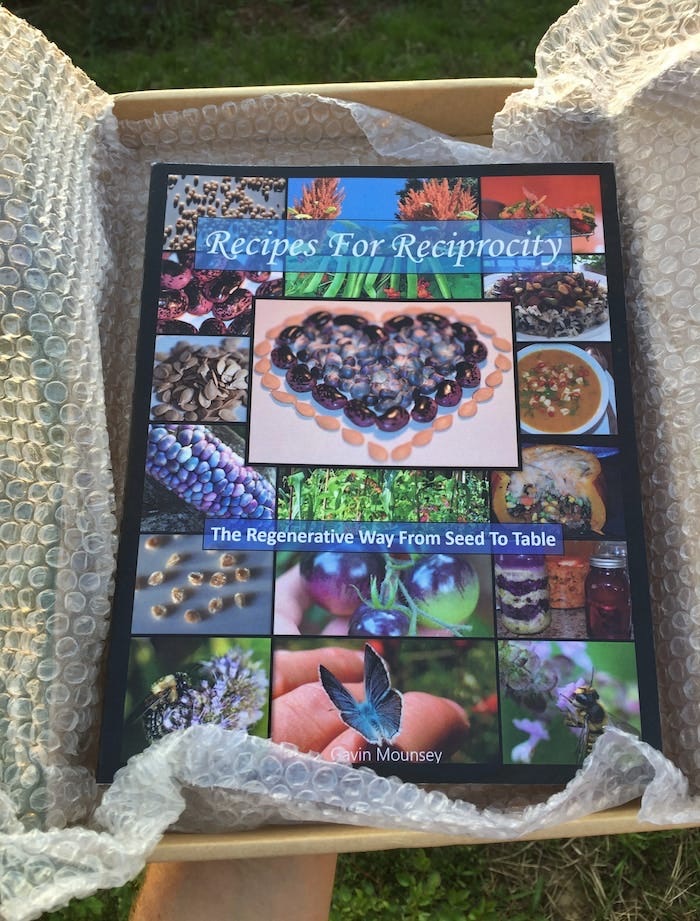
I’ve had a bit of challenge trying to simply label Gavin Mounsey’s book, “Recipes For Reciprocity: The Regnerative Way From Seed to Table” because it’s so much more than a cookbook. I have a great many cookbooks and my favorite type are what we might call ‘narrative cookbooks’ (though there may be an official sub-category name that I don’t know)–these are the kind where there’s a very present narrator telling you stories about the foods, and the places, and the people associated with the recipes and the author’s life. I might be inspired enough to write one of these myself someday.
Gavin’s book is not that, yet it is even more still. Rather than try to say it better myself, and fail, here’s an excellent description from the back cover: “This book is a magnificent achievement. It can help you learn pracical ways to grow and cook mouthwatering food-as-medicine, and build deeper and stronger community, but it is so much more than that. Gavin has written a love letter to humanity and the living world and a manifesto for workable hope, all with an unflinching honesty about the crises we face. Gavin uses the nuts and bolts skills in the garden and kitchen as a launchpad to reimagine our place in the world, and the result is a solid foundation in the chaos. His hope and love are infectious, and the applied knowledge shared in his book is encyclopedic. I highly recommend it to you.” ~ Jason Padyorac
Along with the two books, one I gave to a friend, Gavin sent lots of seeds, some I’m already growing, others I can’t wait to try.
Scarlet Runner Bean in early summer, now dead.
Full Texas sun, not a happy plant.Bit of afternoon cover and is looking good.
So far I’ve planted the Scarlet Runner Beans and the Black Hopi Sunflowers.
Gavin:
“These beans are among my all time favorites for their versatility in the kitchen and beauty as well as productivity in the garden. They are an amazing companion plant due to the plant’s roots having the ability to associate with rhizobia (nitrogen fixing bacteria) which not only allows this plant to fertilize itself by pulling plant food from the air, it also means this plant can help fertilize its meighboring plants with excess nitrogen. On top of that amazing benefit the scarlet runner bean has beautiful red flowers that attract pollinators such as ruby-throated hummingbirds and bumblebees.”
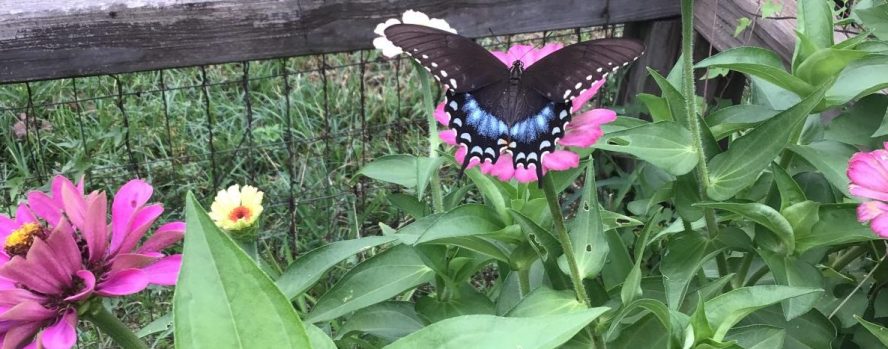
It is amazing to see how many fantastic plants can flourish in such varied climates. Because Gavin is in Canada and I’m in Texas I didn’t expect to find so many parallels in what we plant in our gardens, though certainly the timing and special needs vary quite a bit. The scarlet runner beans I’ve planted in full sun are perishing. But the others I planted which is shaded during the intense mid-day heat are hanging on. They’ve not produced yet, but I’m still hopeful and I like them anyway. I’m sure if there is any production and I can save the seed, it will acclimate to our area. Unfortunately, after a promising spring, the bumblebees and butterflies have been depressingly scarce in the garden lately.
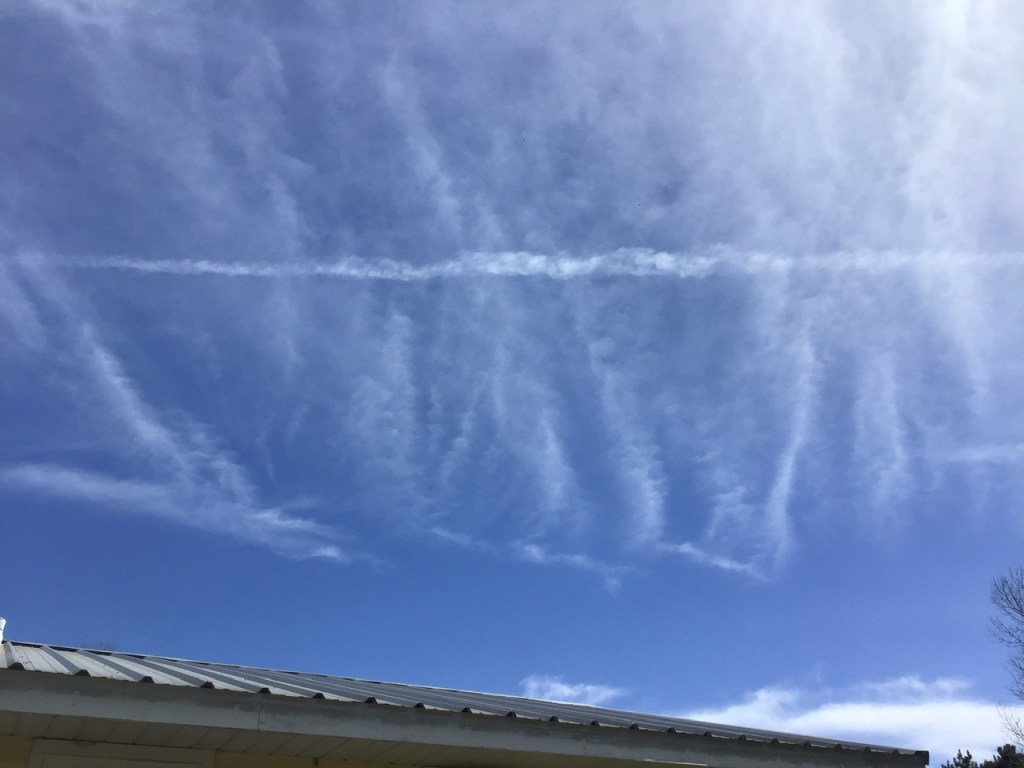
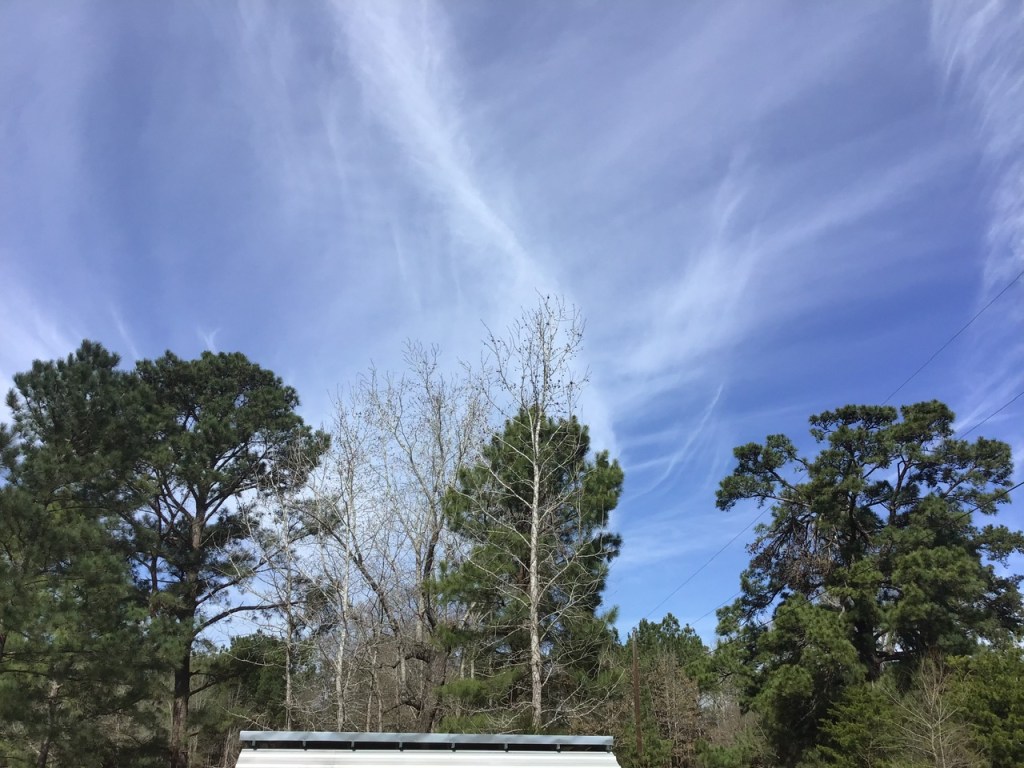
Gorgeous! Ugly pity for the chem-sky.
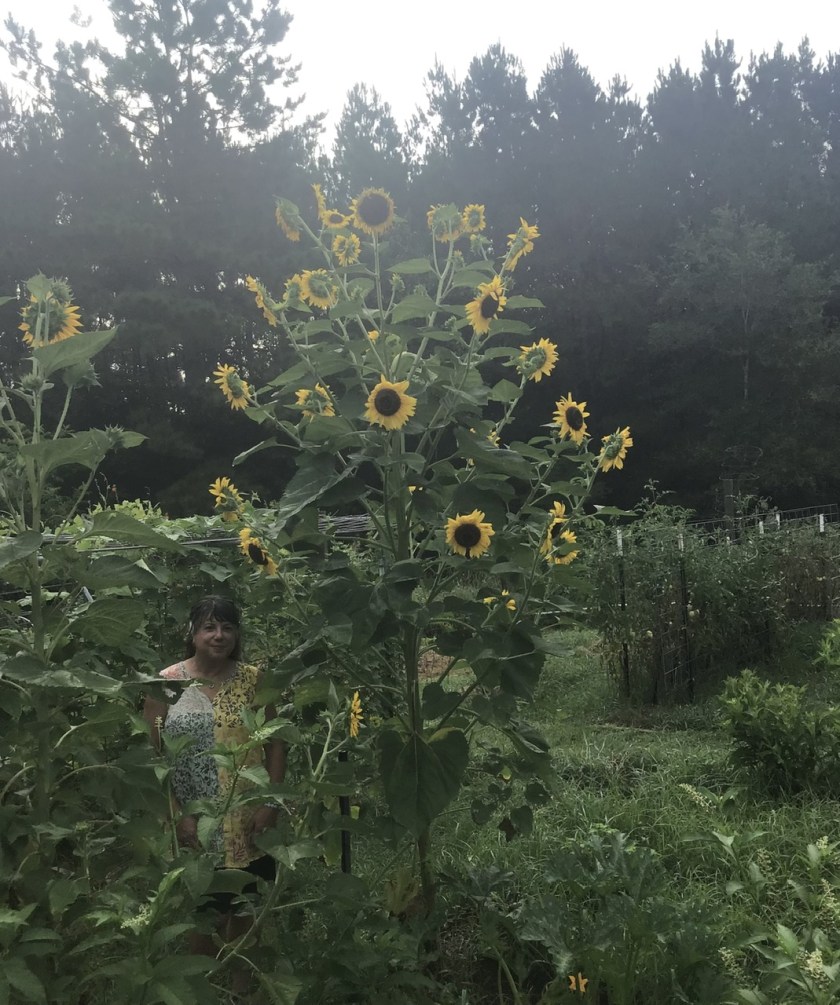
The Black Hopi sunflower has been the piece de resistance. It’s gorgeous and taller and fuller than any I’ve ever seen. I had several planted in several spots, and most of them got damaged in the high-wind storms we’ve had. But not this magnificent giant!
Gavin’s reciprocity in action is so inspiring, which is why I wanted to spend a couple of posts sharing about his book. Regular readers will probably remember I’ve shared some other of his work here in the past, especially in our Herbal Explorations pages, which come from his Substack newsletter.
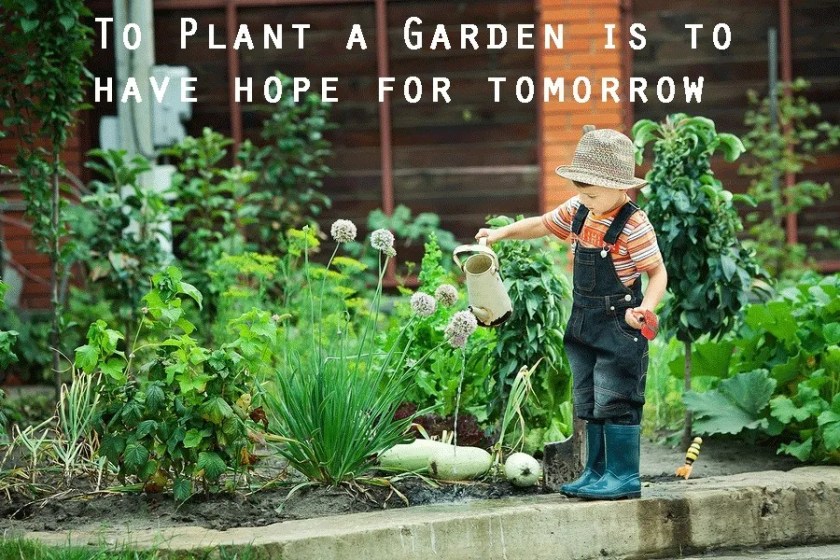
In another post I’ll dive into a few of the recipes, but for now I’d like to expand on a few quotes which so align with my own learning and experience growing a garden and cooking seasonally from scratch. It has absolutely been the most rewarding journey of my life, with plenty of hope remaining for more of the same in the future.
From the section: Reciprocity in Action “Choosing to give our attention to nature is also a form of giving back. Observing and paying attention to the cycles and living systems in nature involves giving our time and our thoughts. When we closely observe nature we inevitably come to perceive countless expressions of beauty through our perceptions of the form, color, sound, scent, textures, tastes and relationships that are all around us. This leads us to caring, feeling gratitude for and feeling compelled to protect the amazing gifts nature shares with us. From the place of gratitude we engage in one of the most meaningful and powerful acts of reciprocity. We open our hearts, we feel content . . . we practice self-restraint, we choose to live more consciously and aware of how our life choices impact the living planet that sustains us and showers us with endless gifts.”
Gavin most certainly has an eye for beauty, his photography is stunning.
I know how daunting it can seem to dive into a new hobby like gardening, or even cooking nowadays, but there’s so many smaller and easier things that take so little effort or knowledge that might be just the momentum for many to kickstart a healthier life and society.
Just observing. I couldn’t agree more. It really does start that small and simple and while I have read loads of books on gardening and cooking and many adjacent subjects, I’ve learned far more from observing. Taking notes helps too, but considering how bad I am at that, it must not be totally necessary.
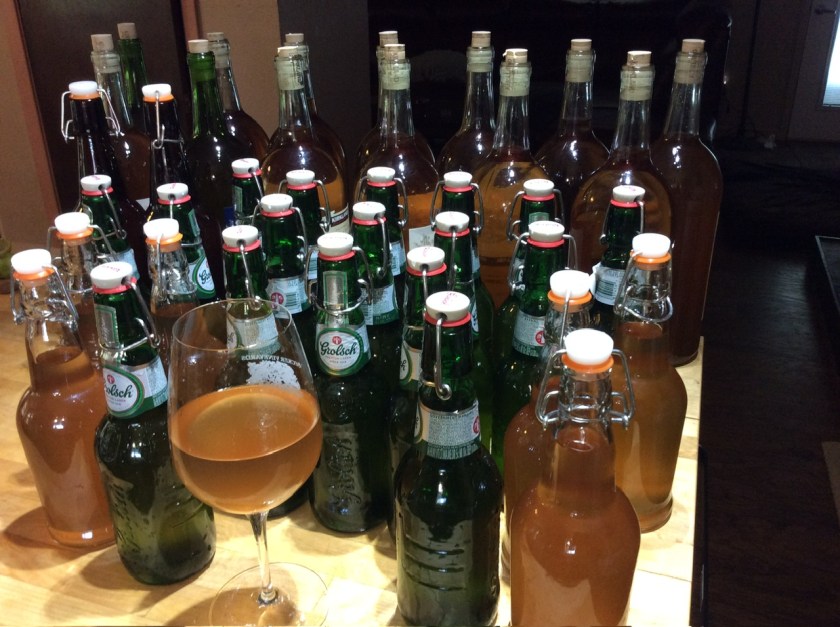
The other few very simple things that require no gardening and very little cooking is compost and ferments, both which Gavin discusses in the book.
Why those two, you might be wondering? Because in my experience, composting makes you far more conscious of waste, and fermenting shifts your attention to the weather and seasons. Both of these processes have enriched my life and health and outlook far more than I could’ve ever imagined.
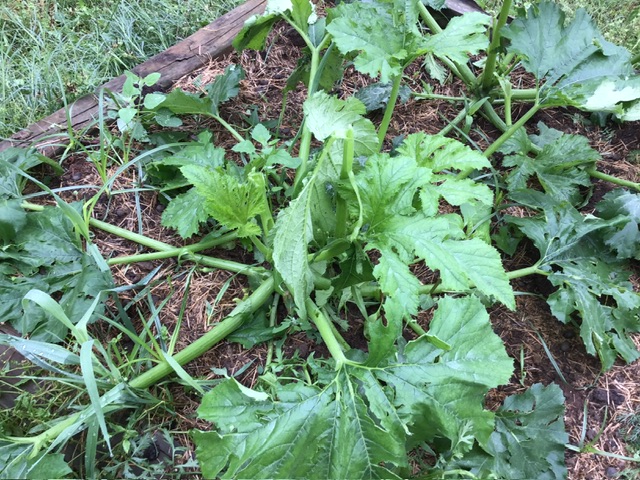
A window sill of herbs would be enough to use up the compost produced by the average small household. Or donate it to a friend who gardens if you have such a black thumb or really no space. And who knows, maybe she’ll reciprocate with a zuccinni or two.
I had no idea what eating seasonally meant. Really. Until I went to the farmer’s markets in France on a high school exchange program, I had zero clue produce even had seasons, and considering how much is grown indoors today, that’s probably become more normalized than ever.
Considering I grew up eating like the vast majority of Americans–fast, frozen, canned, bagged–I know what easy looks like, and this is pretty darn easy. The shift really is more in attitude and attention.
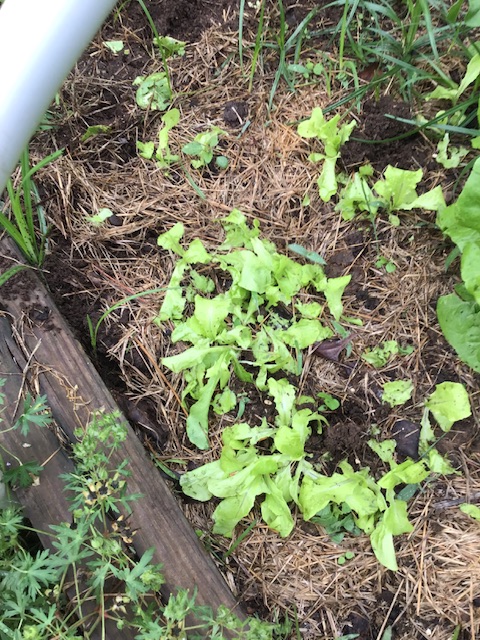
Now I long for cucumber season as I long for tomato season as I long for melon season as I long for radish and lettuce season. It’s become that nuanced and I love it. Sure, there’s some cross-over and we can and ferment to save the bounty. But that limited time window of bounty becomes a season within a season, with all that entails–a change in primary food and focus–all with their unique gifts and challenges.
Surplus requires work, work requires rest and creates reward. 😊
The ebb and flow of surplus and scarcity becomes natural again, each bringing its own unique gifts and challenges.
My influences growing up–that of media, education, environment–worked synergistically as detachment mechanism. Nature was that which we were being systematically detached from, and that trend has only exaccerbated, to the growing dis-ease of ourselves and our environment.
“Within the last century, healthy, natural, organic food has been made more difficult to produce because of the chemical pollution, at first, and genetic pollution, more recently. A handful of companies have spread these toxins across our planet diverting US$ 400 billion of public money to subsidize their high cost chemical commodities to make them artificially ‘cheap’. The costs of this ‘cheap’ food are astronomical in terms of the health of people, the ecological damge it causes and its exploitation of farmers. If the true costs of chemical food were taken into account it would be unaffordable. Insead of subsidizing chemical food and creating epidemics of food-related diseases, public money, used for nourishment and the protection of public health through organic food, would save us billions in health care. Denying people their right to healthy, poison-free food by manipulating laws, policy, science and the use of public money to impose a non-sustainable, unhealthy food is food-dictatorship.”
“We successfully got DVD hail!” He’s so excited! Is this guy working for the weather gods? The Texas Weather Modification Association perhaps? Or maybe Weather Modification, Inc.? A new startup with funding from the Gates Foundation?
I suppose they will soon be selling gardeners’ and homesteaders’ insurance. I’m really looking forward to the days I can list my squash on the future’s market so assholes like this can bet on it’s failure and cheer when he adds another 10 cents to his electronic wallet. I long for the new opportunity to fill out paperwork to get reimbursed 3 cents on the dollar, or rather, on the CBDCs: Was it crooked neck squash or zuccinni? Were the onions beyond the bulbing stage? Were the seeds purchased at a WEF-approved supplier? How much rainfall did the seeds receive in the initial 30-day growing period, so that we can deduct that from your refund?
Weather derivitives are already a big thing, so the insider trading when companies can boast about their crop and property destruction potential is bound to up the ante. But, it’s not war, don’t think of it as war.
It’s really about resilience and making communities stronger. And if the youth have a hoot while destroying their neighbors’ gardens, well, you know, boys will be boys!
What do you care about some lost work and produce when you can contribute to the future of science anyway? What are you, some kind of Luddite?!
Still, no time. I’ve lost a month, maybe two, in projects and to-do. Now I risk missing the whole spring to more of the same. And yet, in spring, it’s never all that bad.
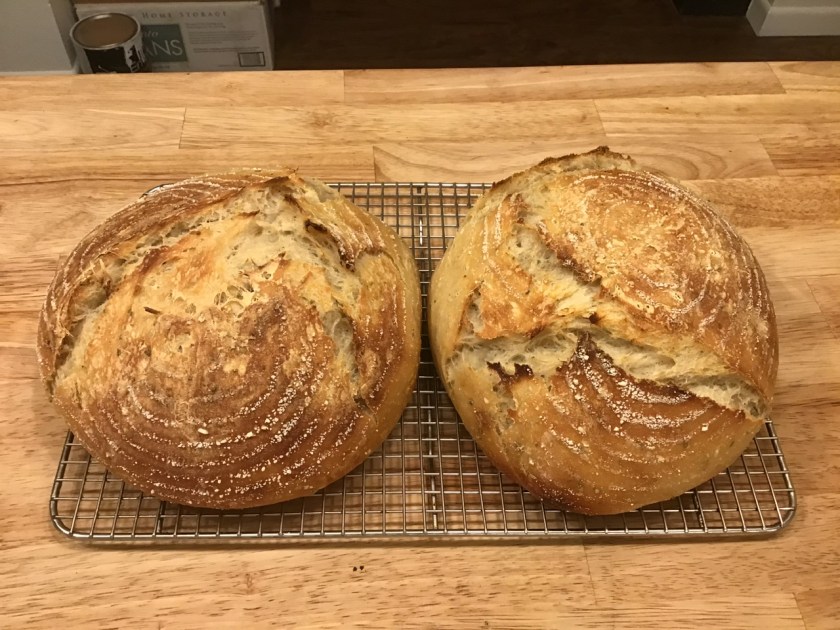
There will always be time for baking delicious bread, and making fabulous cheese. Even in the midst of kitchen face-lift chaos, the healthy food must go on.
Quinoa-rosemary sourdough made with potato water Fantastic!
Still, no time, but still want to share some quick happy snaps and briefest of updates, because I’d hate to be totally forgotten before even gone! 😊
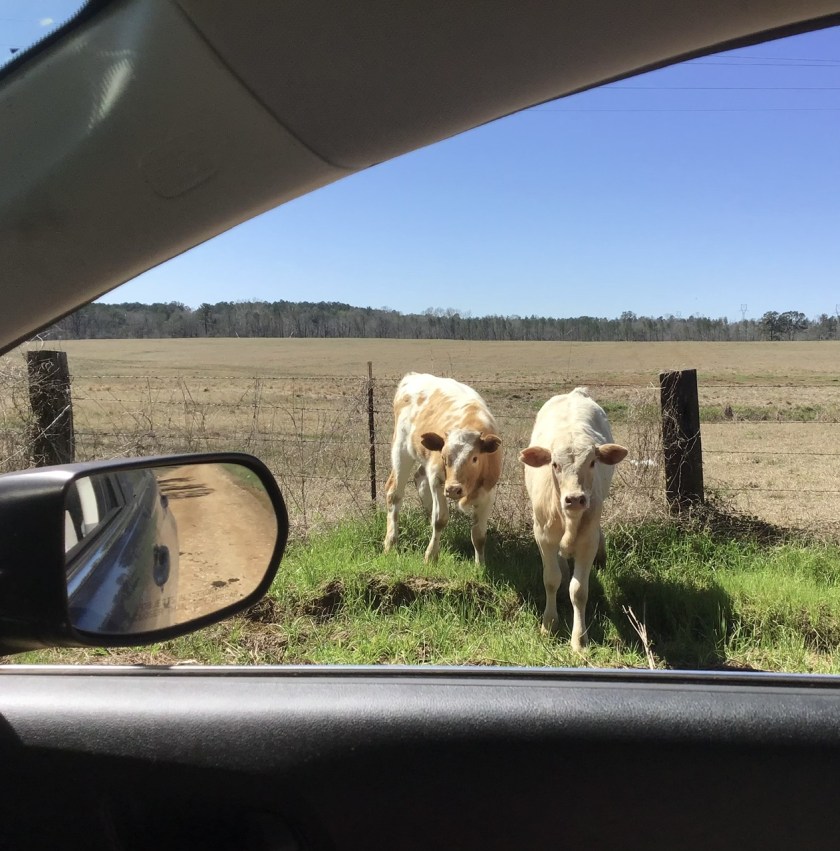
It was a beautiful day, so I decided to take the scenic route to the herdshare where I pick up one gallon of raw milk at the cost of $15, that’s about a 1 hour round-trip. On this day, it took more like 3, with multiple occasions for nearly getting stuck in the mud. But it was very scenic and an adventure to boot!
Excuse me, sir, might I pass?
Apparently they get much more rain than we do and the scenic route proved impassable.
But the cows didn’t seem to mind.
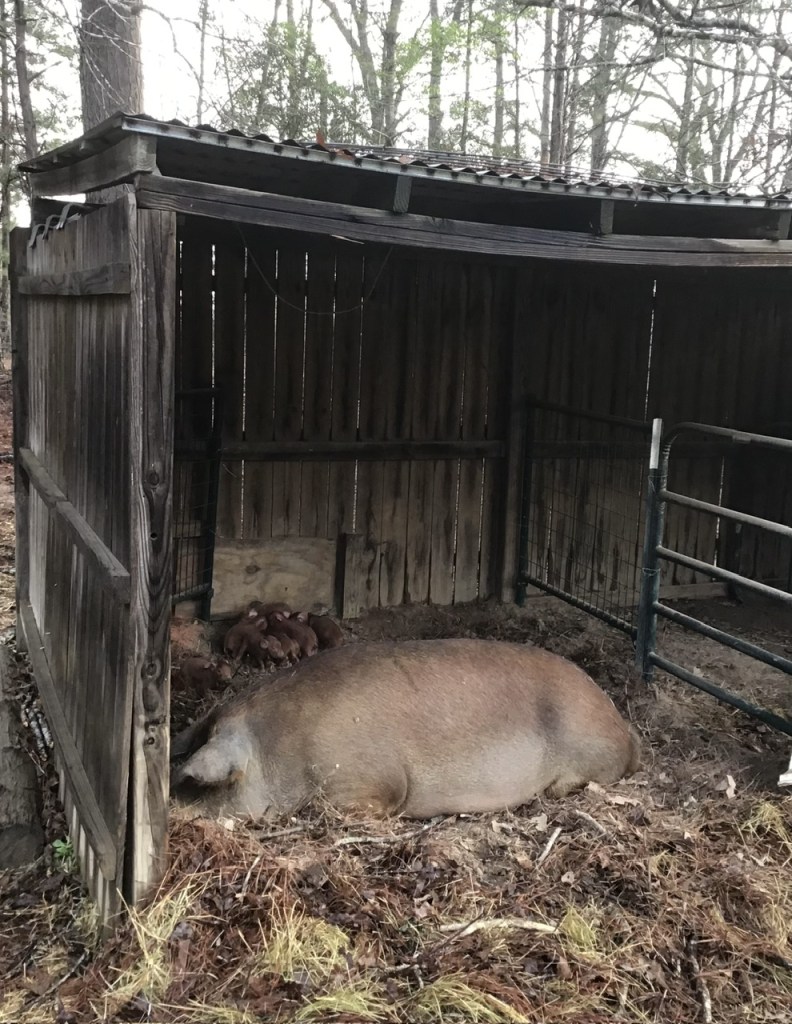
Meanwhile back on the wee homestead, Patty has had a big brood!
………….
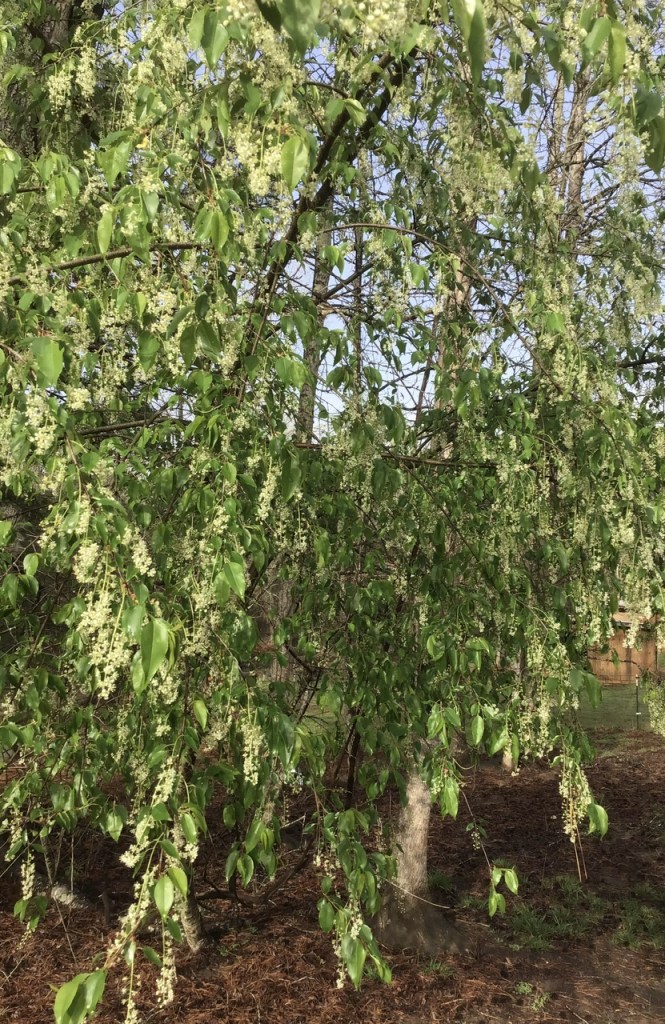
And the wild cherry has never looked so good! I wish I could get a better pic.
…………..
We’re spending so much on our interior face-lift the roosters are taking over, no time to reduce their numbers, the benefit being, no sleeping in.
………..
The garden is growing so fast, and the citrus and magnolias I planted last year are just now sprouting. But all that for another post, too much to do!
Hope all’s springing with y’all, thanks for stopping by!
Another fixer-upper on the route to my herdshare. Looks a bit over our pay grade.
How about this one, also on the route?
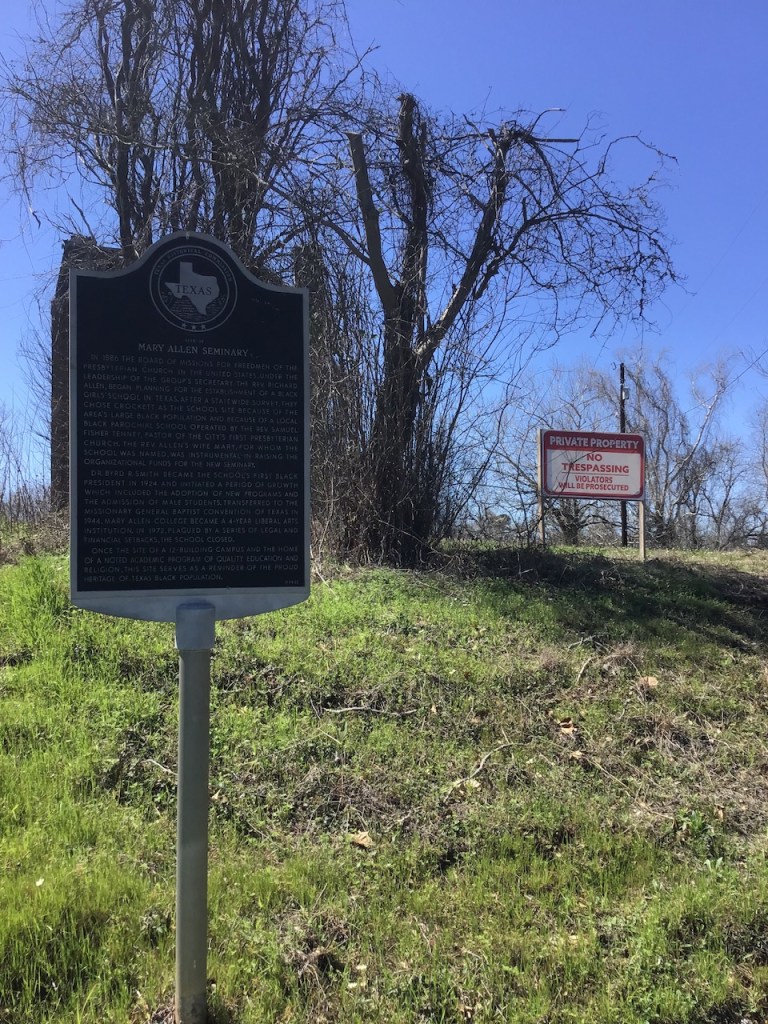
Destined to become a Black Heritage museum, so they say! 😆
What is the difference between Hope, and Hopium? There’s a fuzzy line and it’s very easy to misjudge, but it’s located somewhere between: “Yay, Trump will save us all from $11/dozen eggs!” And “We should start a chicken mega-ranch.”
If those two meet in the middle of the road, might creative minds find that they’ve absent-mindedly crossed with logic and conclude a few laying hens might be just the ticket? A bit of self-sufficiency, why not? After all, it’s not rocket science . . .
Joel Salatin exposes the WEF agenda! “Josh Sigurdson talks with Joel Salatin of Polyface Farms, an entrepreneur and farmer who for years has fought against Monsanto, factory farming and dependence pushing for people to homestead and/or farm and not be dependent on the system. We previously interviewed Joel in 2017 regarding Monsanto. Now, 8 years later, we delve into the massively expanded technocratic grid as more than ever, people are dependent on grocery stores, the grid and AI, weakened by design. The World Economic Forum agenda is to destroy self sustainability and make people weak slaves to technocracy. Eventually they want food rations and carbon credit scores. They’re already being rolled out to some degree and with the 2024 United Nations Pact For The Future, this problem is encroaching quicker than ever. The climate lobby attempting to bring down farms is more alive than ever. There are solutions however which Joel Salatin has spent decades teaching people. There is also a rumor circulating that Joel Salatin was picked to head the USDA. He explains this and more in this interview.”
Though it is the gateway livestock, and that’s official, I’ve even heard it repeated by the official fact-checkers at NASA.
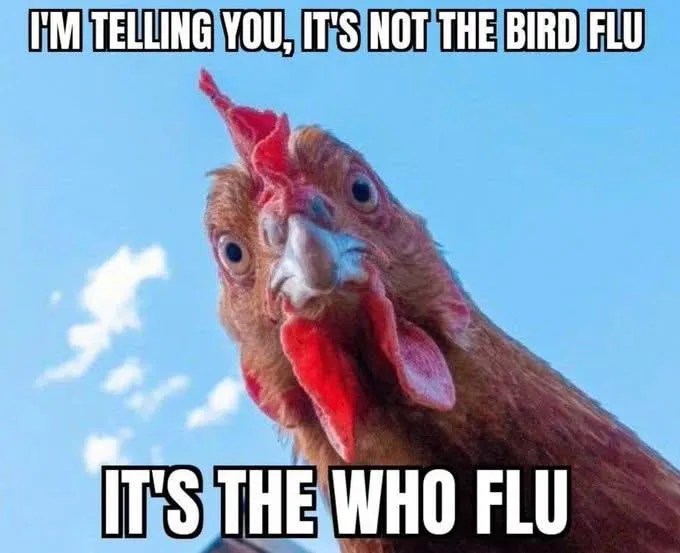
Don’t worry, more government will save us! They will VAXX this FLU away, similar to the way they spray on the weather!
Respiratory diseases? I can’t imagine how that might be happening! So baffling!
But as James Corbett points out, chickens are the simple solution, but not necessarily the Easy one.
Most folks will take the easy way out, drink the Kool-aid, puff the Hopium, and exclaim RFKJ is here to save the day. Cheap eggs and healthy injections on the way!
A few choice quotes from Juliette de Bairacli Levy who did not mince words about her views on modern medicine.
This excerpt is from 1952! It’s astounding to me that it’s only gotten worse in the last 70 years. They keep doubling-down, and the public keeps buying it up.
“The present-day farmer has been educated to consider disease as inevitable and the only scientific cure as being in the artificial remedies of the modern veterinary surgeon who through over-rigid orthodox training and himself under the influence of advertisement, is too often a mere vendor of the products of the vast and powerful chemical and serum manufacturers. For the vested interests in modern medicine are stupendous. Businessmen who have never owned an animal fatten like breeding toads upon the ailments of farm stock which need not know sickness at all if they had daily access to the herbs of the fields. The true farmer should cultivate his own medicines in his own fields, and he should not consider himself as being a farmer if he has to resort to outside help for keeping his animals in health, and healing them when in sickness. Science is providing the ruination of true farming; the only thing that I, and countless others, have noted as flourishing alongside science, is disease!—disease of the earth, disease of crops and disease of the animal and people who feed on the diseased produce.”
“Professor Szekely had declared emphatically, that the curing of the ailments of his patients is often a simple task in comparison with the freeing of their bodies from the accumulations of chemical drugs lodged in their tissues — the drugs derived from orthodox medical chemo-therapy, and from the poisons sprayed upon fruits and vegetables by the modern farmer, or placed in tinned and bottled foods as preservatives. Many of his patients are Americans, and in present-day America the chemist seems to be running amok, spraying and poisoning everything edible.” ~Juliette de Bairacli Levy, 1952, The Complete Herbal Handbook For Farm And Stable
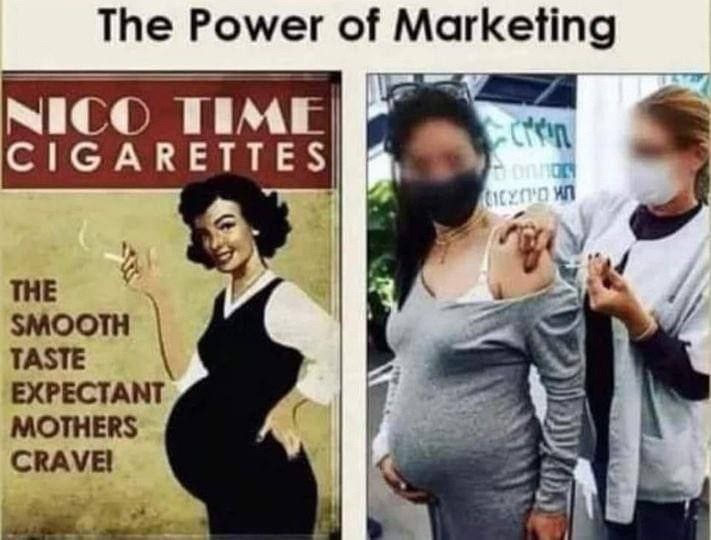
The influence of advertisement, you say? Naw, can’t be that!
I’ve been doing lots of research concerning the goats and so appreciate the kind help and suggestions from others.
It really is a quandary just like I went through with the bees. Treatment-free types are the anti-Vaxxers of the animal husbandry world, getting similar treatment from the established voices—that is cursed, mocked, belittled and silenced.
And that’s not the worse part, not for me anyway.
It’s far worse not being able to find honest, untainted information. The goat world, like the bee world, is dominated by the industry standards, which has penetrated into every conceivable space of our reality.
In the U.S. that means public-private partnerships that wholly infiltrate the information and therefor the society through the university system and popular organizations like the 4-H club.
Many of our best and brightest agriculture enthusiasts start very young, showing animals and winning awards based on criteria that then get distributed into general farming life. Very little attention is paid to the actual results of this process, not even the simple stuff—like considering whether purebreds are really the best option when stellar looks and trainability aren’t the owners’ top priorities.
Which got me thinking . . .
Might we make an analogy that it’s kinda like ZaZa Gabor playing a starring role in a film like Deliverance?
In other words, are we trying to raise the equivalent of thousand dollar racehorses in two-bit barns? Is that the problem? Or part of it?
“I get allergic smelling hay! I just adore a penthouse view, darlin’ I love ya, but give me Park Avenue!”
My goats hate the rain (makes for a bad hair day?), and would prefer all their meals to be served to them promptly, 3 meals plus snacks, in their communal space (breakfast in bed), with minimal foraging required (just enough to stretch their legs and ease any boredom) plus they need regular brushing (all natural boars hair brush) and their hooves trimmed (mani-pedi), and routine expensive toxic treatments (Botox).
We get frustrated, obviously, but whose fault is it really?
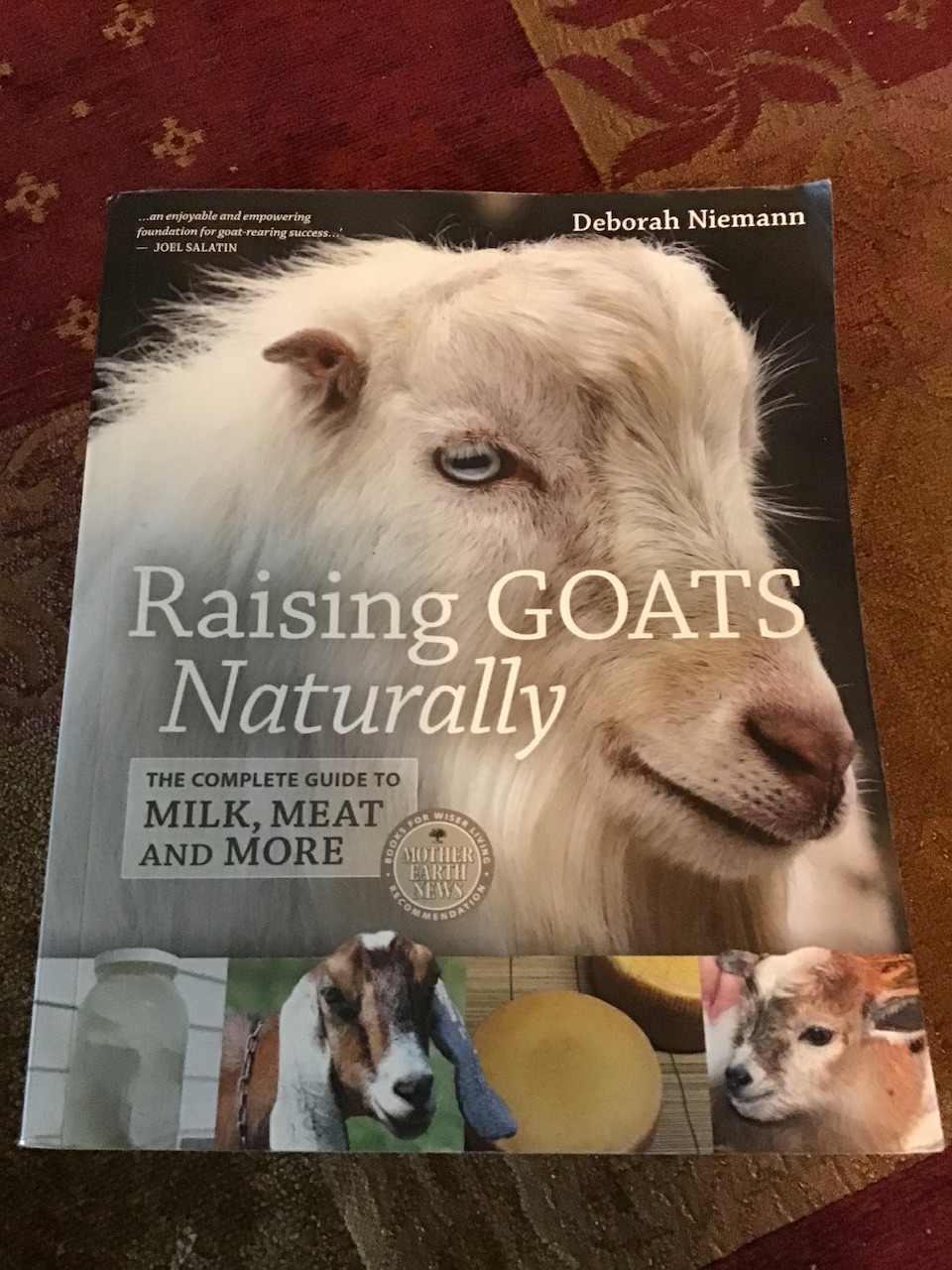
When I got into this I went for the most popular and trusted source who was calling her style ‘natural’.
That’s for me, I want natural!
The most popular ‘natural’ goat rearing book on the market and she has a YT channel.
I’m not saying this is a bad book, I’ve certainly learned a lot from it, but knowing what I know now, I don’t call it ‘natural’ anymore.
These farmers and breeders may be on the path less traveled, but they are most certainly not off the Big Pharma Ferris wheel. And personally, I find that poor word choice to be deceptive.
For example, they advise breeders to cull rather than to risk populating the community of farmers/homesteaders with genetically inferior animals, which sounds like the wise and conscientious choice to make. Right?
Clearly a diligent and conscientious goat farmer/breeder concerned about good health in humans and animals, yet still considering the most natural methods as including enormous amounts of processed inputs and Big Pharma treatments.
However, they’re advising culling the animals which are not responding to the poisoning protocol, not only the ones who are truly resistant to the parasites. And as for true resistance, could they really know which ones, since they’ve been dosed at birth through the milk or, even more likely, in utero?
Yes, the ‘natural’ methods they espouse still include dosing the goats with drugs, just not so indiscriminately, which they at least recognize has caused a huge issue of drug-resistance in the goat-rearing community. They still rely on highly processed feed, hay that’s been sprayed, and they recommend medicated feed for kids. Many of them also advise vaccination.
This is what passes for ‘natural’ now.
So, for the barber pole worm, the notorious sheep/goat killer, which was the most likely culprit in Bluebonnet’s demise, the issue is said to be that these awful worms cause anemia. But, listed on the side effects of the popular dewormers in use is also anemia.
Hmmm. Which came first, the chicken or the egg?
Ivermectin—the infamous horse dewormer both celebrated and cursed during the Convid—has a shockingly long list of potential side effects. Interestingly, in all the social media arguments back and forth among suggested protocols and what or whom was being censored and why, I don’t recall that list coming up anywhere.
These above-linked articles show studies proving its toxicity, but when it comes to the studies themselves, I don’t have much faith in them either. The kinds of studies I’d like to see are those that are appropriate to their environment, and no one does those kinds of studies. No one in farming is dosing their rabbits every single day with Ivermectin in a lab setting. What we need are multi-generational studies with real control groups in natural settings, as in real nature. Science doesn’t do that, yet somehow we accept they are ‘controlling’ inputs and outcomes, and that those results are remotely relevant to the average user, that is, those of us not living in a lab.
Besides Ivermectin, Safe-guard is another farm favorite in these parts.
The following comment comes from my dear friend Kath, a certified herbalist who was also previously a professional nurse in the UK.
Safe-guard:
“I can’t quite believe how bad this drug is! Taken from this article: https://www.ncbi.nlm.nih.gov/pmc/articles/PMC9413524/ ‘When fenbendazole was last reviewed (15 years ago), the literature supported the drug’s lack of toxic effects at therapeutic levels, yet various demonstrated physiologic effects have the potential to alter research outcomes. Although more recent reports continue to reflect an overall discordancy of results, several studies support the premise that fenbendazole affects the bone marrow and the immune system.’
‘. . .lengthy and expensive treatment regimens. including the use of fenbendazole and mechanical disinfection, that may fail due to inadequate ovicidal effects.’ (Ie: won’t kill the worm eggs)
So, step one: Kill a few worms. Weaken the animal. Don’t properly kill the worm eggs. Re-emergence of worms when these eggs hatch. Weakened animals can’t fight off new worms. More drugs. Vicious cycle.
So, companies which make & market this drug very conveniently refer to the old research which states no side effects expected & ignore the possibility & reality of new research showing significant risk. Hmm 🤔
Basically use of this drug this means causing ongoing serious depletion in overall resilience & significantly increased susceptibility to further parasite infestation & whatever-it-is that we used to call infections. Worse potential recovery from anything. And all from a drug whose stated purpose may fail!
So, what to do imo is to work to build resilience by nutrition, herbs & healthy living & maybe try to introduce some wild blood when freshening.
I think this drug is an agenda in itself – not only for animals but humans too. Heavily publicised on Google as an amazing off-label cancer cure. I’ve met people who have been persuaded to take it! That’s right – make their own chemo cocktail!
It’s an agenda because I know how heavily ptb come down on any complementary health practitioner making public statements about cancer cure. It’s literally against the law.
And they put it in animal feed too. It’s a very shortsighted & stupid approach.”
Short-sighted, I couldn’t agree more!
Another popular dewormer: Cydectin From Drugs.com
‘Not for use in female dairy cattle 20 months of age or older (including dry dairy cows), veal calves, and calves less than 8 weeks of age.
For Treatment of Infections and Infestations Due to Internal and External Parasites of Cattle.’
Kath: “This ‘who not to give it to’ suggests it’s toxic to humans & cattle/goats – they wouldn’t make a statement about veal calves if it was a safe thing for humans (or animals) to ingest. Funny how they can balance the illogic of ‘don’t give to babies’ & ‘dose babies by mother’s milk’.
The type of nerve receptor that are targeted by this drug are only found in invertebrates – creatures that don’t have a skeleton. So drug companies have jumped to the assumption that it will paralyse (& kill) only parasites/insects. However – & this is important – the target receptor in invertebrates is very similar to the mammalian – human & animal – receptor for glycine – an important neurotransmitter. Chances are that this drug & its family are at least partly responsible for human & animal depletion & neurological problems, perhaps even paralysis, in goats by direct dosing & in humans via eating meat& milk products/drinking milk from dosed animals.”
Seriously! And they have the nerve to call these treatments ‘natural’ and of course, that old reliable, safe and effective!
(Thank you so much Kath for your addition to this post and to Highlander in last post’s comments for your help and advice, I’m very grateful for your efforts and experiences!)
New marketing suggestion for the CDC:
Hey Moms! If your kids get all their shots on schedule, you’ll look just like Za Za!* 😆 *Results may vary. Consult your pediatrician. (Who, by the way, did a hell of a good job dressed as a pig at last year’s luau in Vegas at our promotional conference that counts as continuing education credits and gets billed to the State. Remember Rule #1: What happens in Vegas, stays in Vegas!) 😉 1
I don’t know when the breaking point will be, how it will come about, who will throw the first punch or the last. But, I’ve got some good quotes to share this post, of the variety that make me wonder if the public has finally had enough of the lies.
Or, was Bezmenov right? It’s hopeless at this point?
More false claims about raw milk, inspiring a good article from a wise woman, Sally Fallon of Weston A. Price. A few quotes:
“In a press release dated March 25, 2024,3 the U.S. Department of Agriculture (USDA), Food and Drug Administration (FDA) and Centers for Disease Control and Prevention (CDC), as well as state veterinary and public health officials, announced investigation of “an illness among primarily older dairy cows in Texas, Kansas, and New Mexico that is causing decreased lactation, low appetite, and other symptoms.”
“The agencies claim that samples of unpasteurized milk from sick cattle in Kansas and Texas have tested positive for “highly pathogenic avian influenza (HPAI).” Officials blame the outbreak on contact with “wild migratory birds” and possibly from transmission between cattle. The press release specifically warns against consumption of raw milk, a warning repeated in numerous publications and Internet postings.”
“The truth is that “viruses” serve as the whipping boy for environmental toxins, and in the confinement animal system, there are lots of them — hydrogen sulfide, carbon dioxide, methane and ammonia from excrement, for example. Then there are toxins in the feed, such as arsenic added to chicken feed, and mycotoxins, tropane and β-carboline alkaloids in soybean meal. By blaming nonexistent viruses, agriculture officials can avoid stepping on any big industry toes nor add to the increasing public disgust with the confinement animal system.”
“Nearly a decade ago we won the mandatory national Radio Frequency Animal Identification (RFID) regulation. It was pushed on the heels of the mad cow paranoia as a way to track and find diseases quickly.”
For you youngsters, it was a draconian measure that was incredibly prejudiced against small outfits. For example, a Tyson factory could register one RFID tag for a whole house of 20,000 chickens—one per flock. But an outfit like ours would have to RFID every single chicken. Costs ranged from $2 to $5 per tag.
Every time you moved animals from one addressed premise to another, you had to notify authorities. Thousands of farmers around the country attended the hearings and voiced their opposition. The backlash was severe and eventually the USDA pulled the plan. It’s been dormant for a long time and we thought it was dead.”
********
Moving on to an essay that hits close to the mark, I think.
“In an election year that follows more than a decade of rising populist dissatisfaction, high-skill but low-status rejects are coming to look like a formidable social class.
Increasingly, it’s not just obscure farmers or overtaxed truckers who feel cheated out of the respect they’ve earned: it’s also debt-ridden college kids, heterodox tech magnates and blacklisted intellectuals. It’s manual laborers whose wages get depressed by inflation and illegal immigration, but it’s also artists whose projects get passed over to make room for yet another adaptation of The Color Purple. This helps explain why Trump has mobilized young people, blue-collar workers, white evangelicals, law-abiding Hispanics and black business owners, all in unexpected numbers: those are people who feel, in one way or another, despised without cause.
But the bitter irony is that in trying to outdo the founders’ virtue, we have created an unnatural aristocracy far more hide-bound and unworthy than the old-world royalty they fled. Our self-styled betters have neither raised us up toward a more perfect meritocracy nor led us triumphantly into a classless paradise. They have simply replaced an imperfect class system with a grotesque and nonsensical one. They promised to cater to throngs of frustrated pariahs; instead, they created more of them, adding to their number daily from the exiles of the natural aristocracy. Whether or not it is desirable that the resulting coalition should once again find itself represented by Donald Trump — a profoundly suboptimal champion — it was inevitable. This presidential contest is shaping up into a face-off between the incompetent elect and the excellent outcasts. It may not be the most exhilarating choice to have to face. But it’s not a particularly difficult one, either.”
And closing with an appropriate poem that was posted in the comment’s section of the post by Salatin quoted above. An author I’m very familiar with, but the poem is new to me.
THE WRATH OF THE AWAKENED SAXON by Rudyard Kipling
It was not part of their blood, It came to them very late, With long arrears to make good, When the Saxon began to hate.
They were not easily moved, They were icy — willing to wait Till every count should be proved, Ere the Saxon began to hate.
Their voices were even and low. Their eyes were level and straight. There was neither sign nor show When the Saxon began to hate.
It was not preached to the crowd. It was not taught by the state. No man spoke it aloud When the Saxon began to hate.
It was not suddently bred. It will not swiftly abate. Through the chilled years ahead, When Time shall count from the date That the Saxon began to hate.