Myth, Fantasy, AI

Strange days, indeed. I saw this image on a Youtube channel I listen to just for background music while I’m working. Though I do quite like some of it, I suspect it’s all AI-driven. So, the music is not played by musicians, the image is not the real picture of a beautiful personal library that exists in the actual world, that would be my fantasy library, in my own dream home.

I never expected the strangeness of life to increase with age. I expected the exact opposite in fact. When I was a child watching TV after school–the Mickey Mouse Club, Zoom, Bugs Bunny and Friends–I knew, even as a small child, that what I saw on TV was a fantasy world. Similar to when kids are watching a puppet show, they see a performance in front of them on a stage while they sit in the audience. Clearly pretend, even to a child.

It was not the real world where Mom went to work and my sister and I went to school, where we were learning real things about the real world.

That’s what I thought. As I teen I read a lot, but I was not attracted to most pop fiction, and not to the sci-fi/fantasy genre at all. I feel lucky to have grown up with many avid readers in the family, though we rarely read the same things.

It was my pragmatic side perhaps that made me believe that fantasy was for the children’s world and once we left childhood those things would be left behind as life got more real.
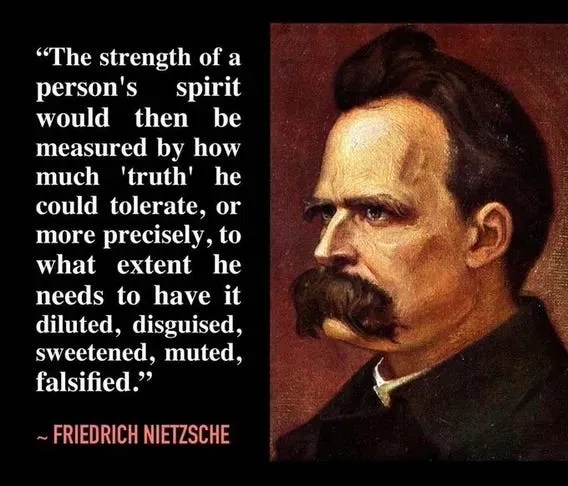
Of course I can witness now very clearly the error of my naive thinking, or lack of realistic foresight, or practical knowdedge of human nature, or the patterns of civilzations rises and falls, or whatever. I was wrong. Adults also prefer a fantasy-based reality, or have come to prefer one in the last generations.

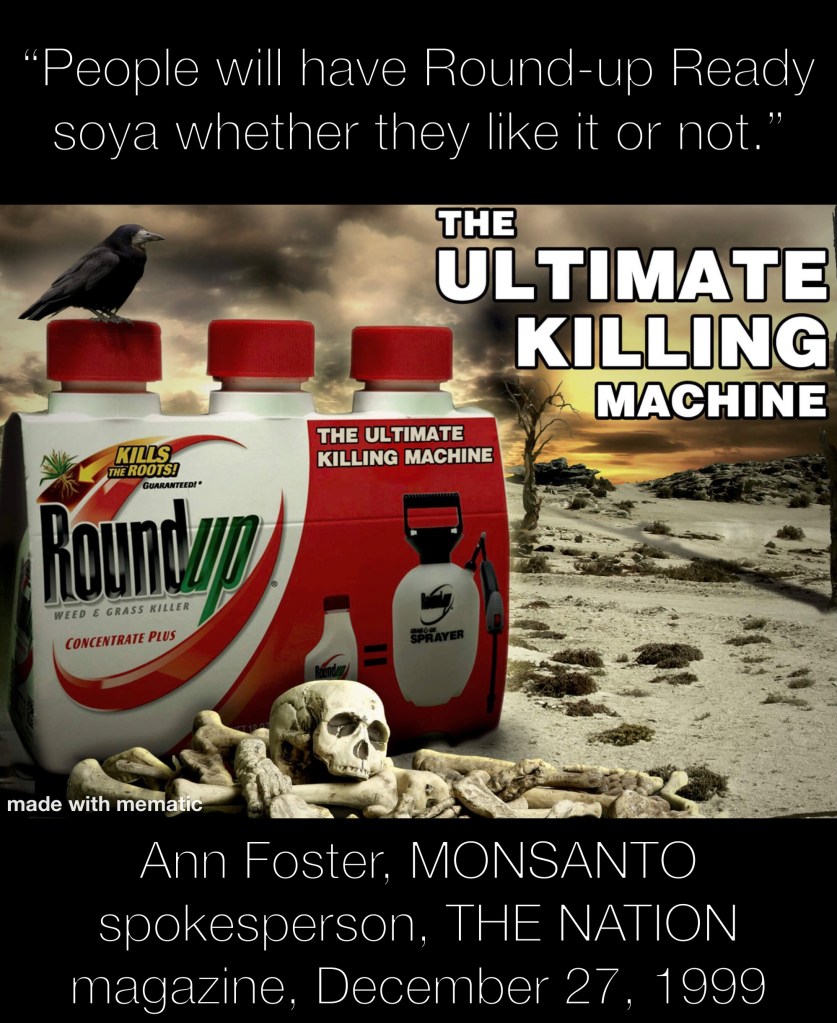
Where we used to play grown-up as kids, now we play kids as grown-ups. Our politics read like old B-movie plots. Our actors look like cyborgs. Our ‘elites’ want us ingesting lab-concocted chemicals so badly they inject them into everything imaginable, from seeds, to every manner of foods, to the air and water and soil.
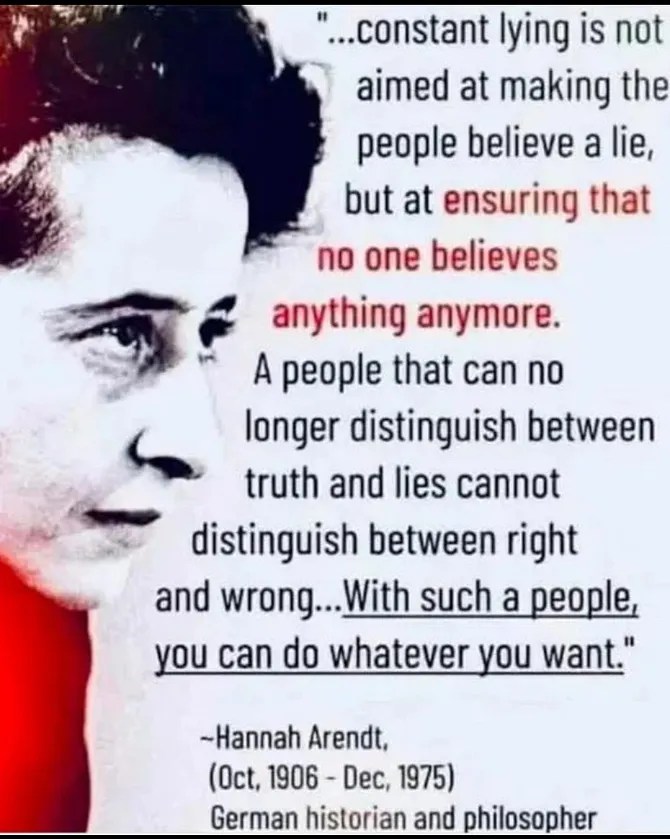
And now it seems the takeover of illusion over reality is nearly complete, as folks allow AI to conquer their minds. Engulfed in Total Immersive Illusion seems to be the end goal.

I had to ask Hubby if he thought the library in the image was AI generated. “Definitely AI” he replied after gazing at it for a split second.

I keep staring at it, imagining myself lounging on the couch. There are 4 or 5 little stacks of books around me, just 3 or 4 high each one, but I keep getting up to get another, and then another. So many books, so little time! The ladders to the upper stacks give me just enough exercise so my legs don’t cramp up and there’s an adjoining little breakfast nook, not visible here of course, where I have stashed a simple but elegant array of snacks–some pistachios and some smoked salmon and capers on crackers and a carafe of fruity, refreshing homemade sangria.

Back to the real world. It’s still right here. Here, where I have hundreds of books with no stacks for them. I got tired finally of the clutter of ugly book shelves in our tiny space and packed the vast majority of them into boxes where they sit stacked shoulder-height waiting . . .

Waiting perhaps for AI to come and build them a new home. Kind of like in the hugely popular TV program for adults of the 60s ‘I Dream of Jeannie’ who will rise out of the bottle and with the swing of her ponytail and nod of her head, grant us all our wishes.

Jeannie was so much better than AI though, she would never have used her powers for evil, that’s for sure. She was like the Mother Theresa of Genies. She was like the Easter Bunny who would sneak you chocolate eggs when you were in a Timeout because you pulled your sisters hair in order to be first to find the plastic egg, which was filled with coins, sometimes even a dollar. Not that you wouldn’t have found it first anyway, the hair pulling was just an extra bonus. Jeannie didn’t judge.
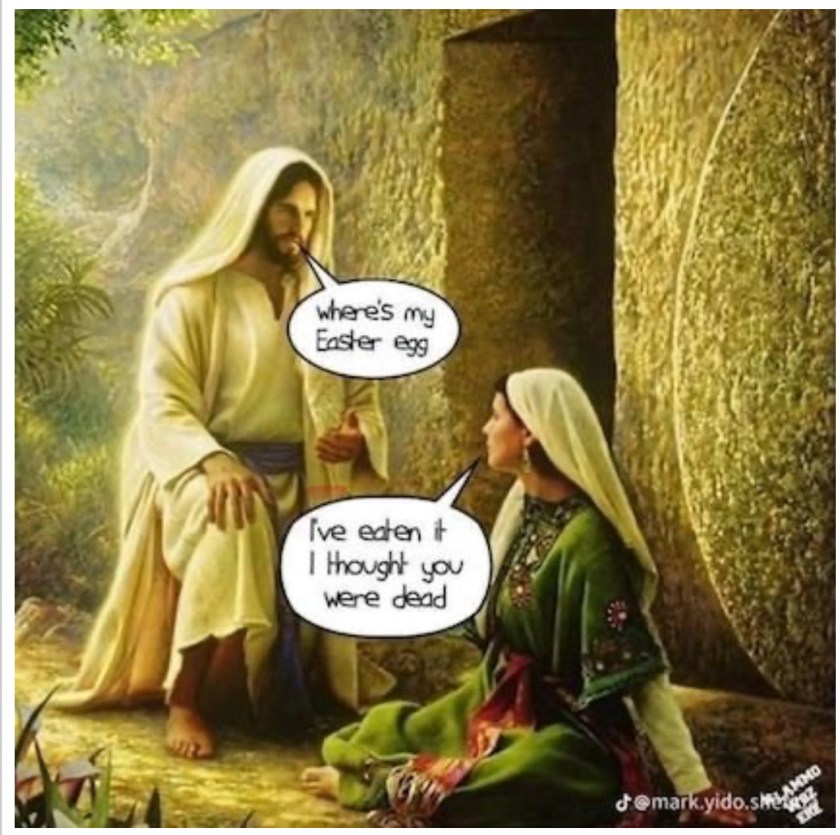
“Robot priests can recite prayers, perform funerals, and even comfort those experiencing a spiritual crisis.”

What do y’all think: Has the fantasy-based reality gone too far for your taste?
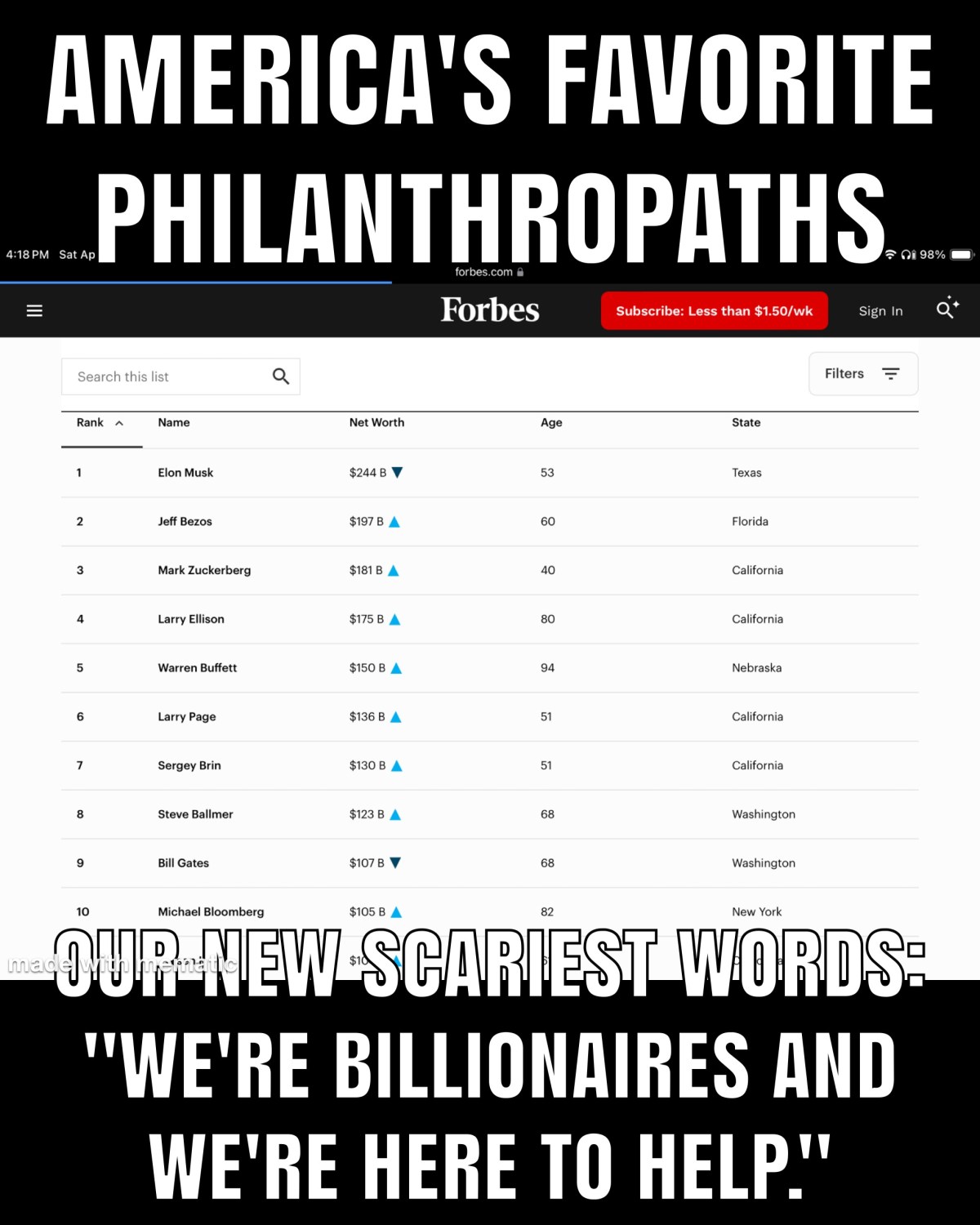
Art, Culture, Sponteneity Forced

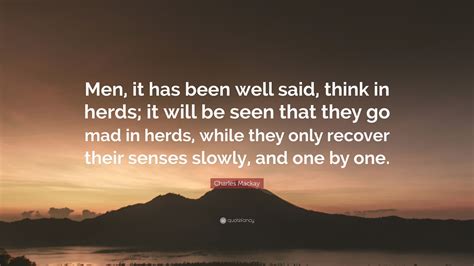
A flock, it is not.  There will never be a revolution in America.

More like, when I say jump . . .

Kinda like Bugs Bunny getting his feet shot at while Yosemite Sam demands he ‘Dance!’. . .

It’s a relationship.

Americans will never revolt. They will never rebel. I’m not talking our military here, I’m talking the people, the masses, who will gladly vote for war if they are commanded by their team, but who will never en masse lift a finger in inconvenience to support it. A placard, perhaps. But not a pinky finger otherwise.

Why?  This man nails it and it’s so spot on I fear reposting it.  Truth bombs this huge are usually dropped by assets.  Even listening can get you on a list, I’m sure.  Because, America is so damn free.

But this murdering convert to Islam is correct nonetheless.  Our guns can’t save us from, or in, this battle.  We have already lost.  We were conquered from within long before this current administration.  We do not have the heart to rebel because rebellion and revolution require artists, the kind of artists, and warriors, who cannot be bought.  We don’t have that, we haven’t had that for a long time now.  We have conformity, collusion, corruption and therefore we’ve got what we deserve.  Politics is downstream from culture.

Start at the 1:15 mark, it’s only about 10 minutes, and it’s brutal. Not for the feight of heart, I’m afraid, but absolutely the truth as I see it. Listen and weep, or not.

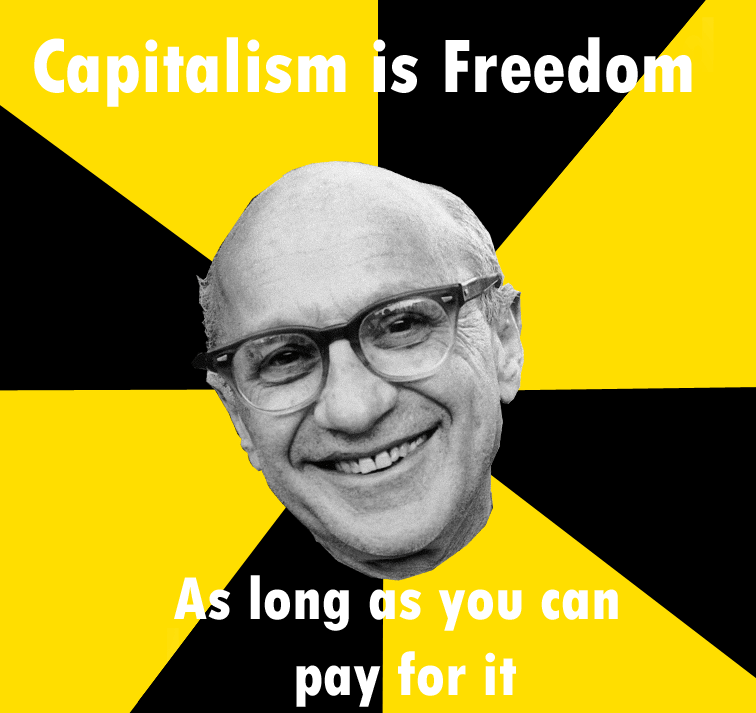
The Myth of ‘Market-Driven’

We were taught in Economics 101 that we live in a market-based economy in the USA. They sometimes threw around the word ‘free market’ as well.

We were also taught it was our prosperity that allowed for so many choices in our free country, which itself was thanks to our progress.

Wonderful words that sound magical together: Progress and Prosperity

And this could almost make sense, it’s not exactly a lie, so it could almost be true.*. Except, we were taught another thing at the same time: We were taught that it is the customers who drive the market.

Now the lie becomes recognizable, because we can easily point to thousands of examples as to how it is not the case that the consumer drives the market.

Here are some of my preferred examples. Feel free to add more in the comments.

The Illusion of Choice

It’s not just thousands of breakfast cereals made up of the same toxic ingredients, but most of the food products available to the average consumer these days.

How about the good ole landline? Soon to be gone the way of the pay phone.
We are told that folks just don’t want landlines anymore and so they will begin to discontinue them. California recently had a public backlash, but it won’t matter in the long run. Landlines will be discontinued for the plebs. That is those who haven’t already happily switched to a Smart surveillance system they carry everywhere.

In some cases, probably many, this will happen by forcing (coercing) customers into canceling their service. This is just ‘anecdotal evidence’ as they always say, whereas they have ‘the data’ which says the opposite.

It’s not that landline service has become increasingly poor over the last decade while the costs keep rising, as has happened to us and our neighbors. No, it’s market-driven scientific data that claims folks don’t want them anymore.

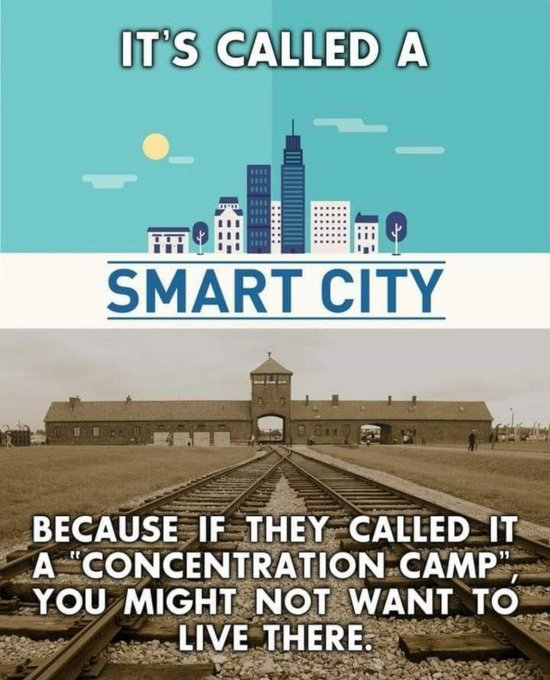
Lightbulbs. Low-flush toilets and low-flow shower heads. Wood-burning appliance restrictions and prohibitions. Gas can safety features. Smart washing machines. Electric cars. Sustainable Everything driving up energy costs. “Sin” taxes.

Your market-driven choice: Smart City or poverty

I have met very few folks who wanted any of these market-driven signs of our ever-improved Progress and Prosperity. But again, anecdotal.

Because they are ALL for the Environment, or our own good, of course. And the data says we want it.

Everything I want to do is illegal, like:

Sell raw milk Camembert at the Farmer’s Market (or anywhere else), distill our own whiskey, grow hemp, sell pork chops to our neighbors, refuse to pay taxes that fund wars and bail-out bankers or funds the research that floods our fields.

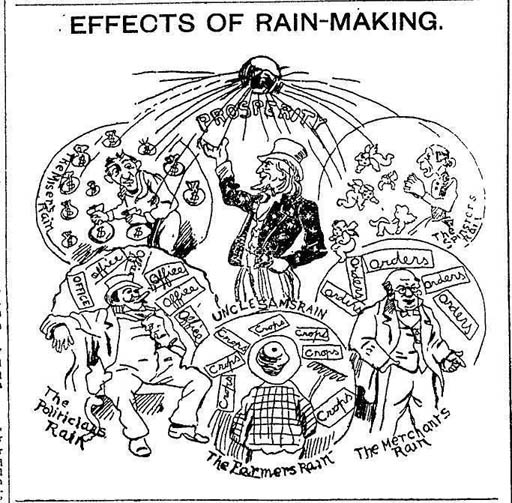
Behold the market-driven forces of weather modification!

But we are driven into Progress on the Big Bus of Bullshit called Prosperity (undefined term) by unseen forces (mostly unelected and completely unaccountable). Like magic!

Which brings me to my most obvious market-driven fantasy.

More like: Encyclopedia of Useless Myths


Out-of-print books

This one really aggravates me!  There are plenty of glaring examples of the deliberate dumbing down of our media and our educational content. Here’s just one perfect example because it’s fresh on my mind from just today.

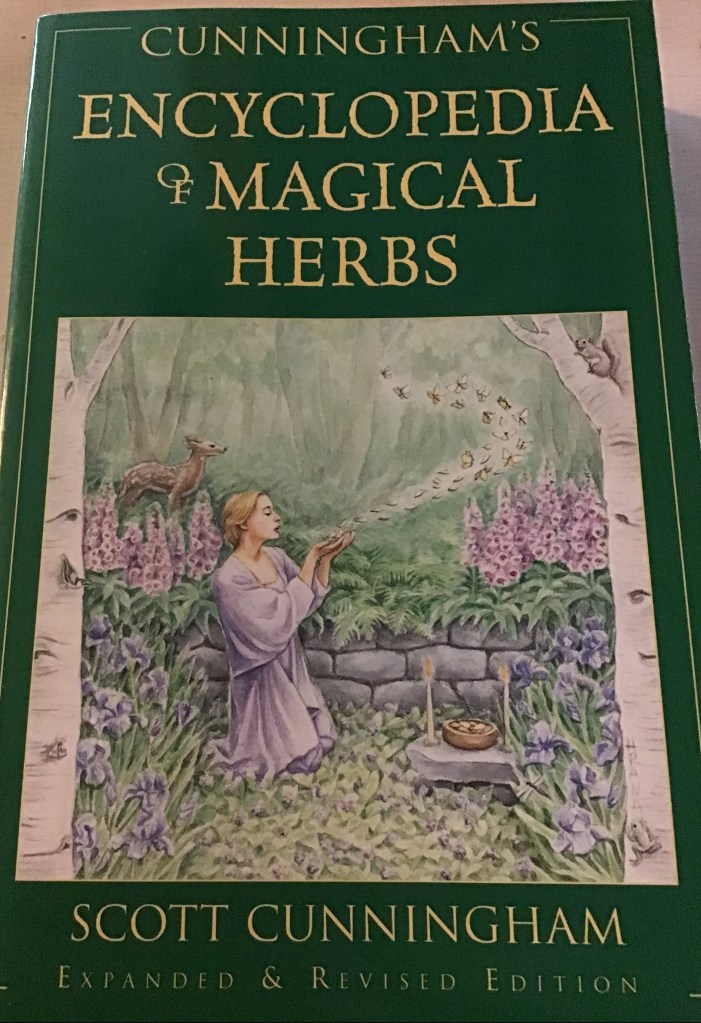
This book of utter herbal nonsense which I should probably burn on principle, is on its 22nd printing—Cunningham’s Encyclopedia of Magical Herbs.

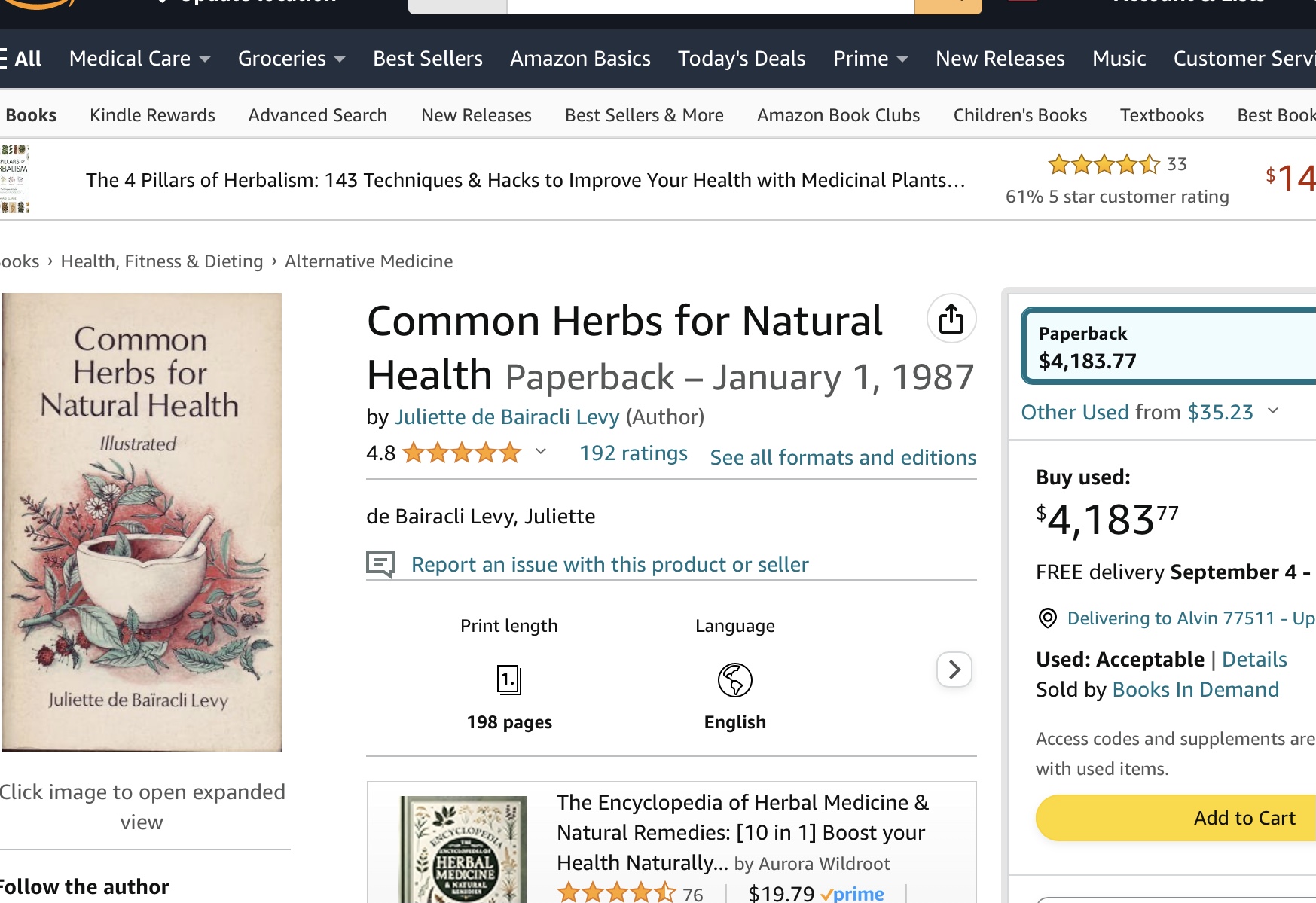
While Juliette de Bairacli Levy’s books of serious research and immense practical value are mostly out of print, or hard to find, in poor condition and/or expensive, or only available to read online (which I truly dislike, but there are no good public libraries around anymore and books are ridiculously over-priced and of course, I want to do my part for the trees. 😂)

A collector’s copy worth thousands proves there’s no interest whatsoever from the free market.

Why learn the practical magic of the actual benefits and remedies of the common Comfrey when it is demonized by Big Pharma and cajoled and belittled into its ‘fairy magic’ properties thanks to ‘trendy’ books dominating the marketplace, repeating drivel like:

Worn or carried, Comfrey protects and ensures safety during travel. Also, tuck some into your suitcases so that they aren’t lost or stolen.”

Ah brilliant, so helpful! Our ancestors must’ve been loading up those trunks and buggies with their comfrey leaves. Is Cunningham’s book really worthy of 22 continuous reprints?
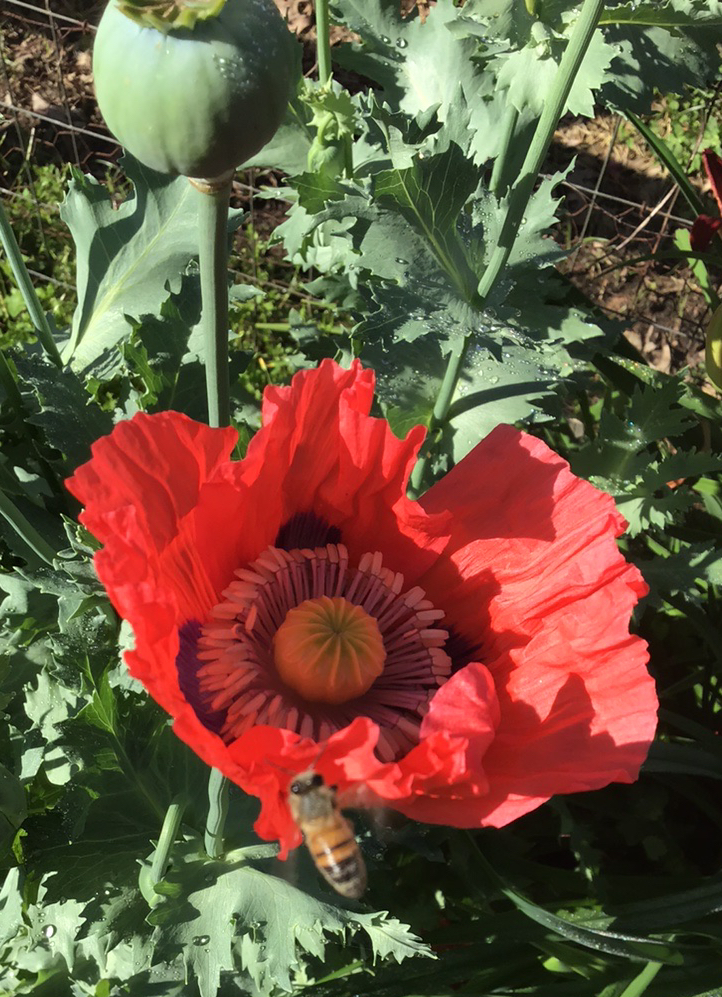
Or do folks buy this book for the same reason I did, because they were so desperate to learn practical wisdom about how our ancestors used herbs that they foolishly believed such a popular book must have something of value besides the pretty cover. Fool me once . . .

And in the meantime, arrest that old Amish man who fraudulently claimed his comfrey salve cures skin cancer (surely killing or maiming millions).

Samuel Girod Sentenced To 6 Years In Prison – Amish America

*Market-driven I’ve come to realize is a kind of Newspeak, because it has a double-meaning, similar to “stakeholder capitalism”—the market is not meant as in the agora, the market-place, you and I, but as in the stock market.

TMI!

Following is my personal opinion on: ‘Daily writing prompts’* and the personal lives of ‘Activists’.

It should be considered Rated R, Adult Content, Not Suitable for Work. And generally just bitchy.

(Furthermore, it may be considered as a Self-Righteous Rant and a Cowardly Non-Accusation aimed specifically at I know who but will not name, because these are the kinds of fuckers who will publicly come after me to berate a tiny fish in front of their very large audiences. As I’ve seen them do on numerous occasions to others who dare to ‘cross’ them, even privately.)

Today, among the political classes and the masses, we have victim groups, instead of individual victims. It’s a kind of class action diffusion. It’s like the old adage: 1 death is a tragedy, a million a statistic.

Maybe that’s why it’s become de rigeur for our ‘influencers’ to pile so much of their personal baggage into the public sphere. I’m not talking a time or two, or a personage or two, I’m talking a years-long pattern of ‘popular’ people spraying every issue with their personal odiferous and onerous and particularly cacophonous stench.

‘It’s not your work, Hannon – it’s your attitude.’

(And, I want to be very clear here, I’m not talking about all those folks with personal blogs. Blogging is by its nature a borderline media—somewhat public, certainly not private. Somewhat professional, sometimes, but mostly more like gathering at the cyberhood pub. Personal blogs sharing folks’ personal issues in their lives is a fine genre for generating support and camaraderie and insights and I enjoy and appreciate many of them.)

I’m talking about those who consider themselves, who are labeling themselves, as activists or influencers or journalists, specifically. Very public folks feeding their audiences on a regularly supply of their constantly distracting and dramatic personal conflicts and dramas.

Landing somewhere between a Mexican soap opera and politicians’ tawdry nightly news scandals, I find I’m being increasingly bombarded with the personal lives and conflicts of an increasing number of ‘advocates’ and ‘influencers’ and ‘activists’ and ‘philosophers’.

Who are these people and why are their personal lives weaved in so tightly with their public work?

From their personal lawsuits, to their family problems, to their health issues, to their constant bickering with the opposition—which really makes me wonder—are these activists in fact trying to replace the current Hollywood celebrities?

It’s like a version of reality TV for the ‘alternative’ or ‘conspiracy’ or ‘news’ buff. Who’s being censored this week? Who’s blocked whom? Who’s going bankrupt? Who’s getting divorced? Who’s going to rehab?

And then those very same activists claim their work is all about criticizing the SYSTEM, and it’s not about individuals.

Wait, what?

If this is about the system, why is your audience being constantly drawn to the dramas about YOU, an individual? And your relationships. And your endless conflicts. And your constant frustrations. And your family life. And your love life, or lack there of.

If it’s really not about you, then stop making it about you!

And, on, and on. Every fucking where they go they create conflict. And then ‘unpack’ it, for hours, for their audiences. How/why is this? Every damn month it’s some new drama with some poor new (or repeat) sap. All over the screens, unavoidable, poking their pathetic noses into my feeds on a regular basis.

How many collaborators must I block while still being subjected to your ‘news’? Your shifty, and forever shifting, views. Criticizing everyone while no one’s allowed to criticize you. Whining constantly how you are all about the ‘greater good’ while sucking the hearts out of your collaborators and supporters alike, for years.

Why bring your personal life to your work, and then demand your audience and collaborators focus solely on your work? Either bring your personal shit into the space, or leave it out. Don’t be that dumbass bitch who wears her teeny-tiny tank top on the city street and then whines when men gawk at her.

There’s a place for airing your dirty laundry in public—it’s located somewhere between the Red Light District and Don’t Ask Don’t Tell.

Please y’all, spare me, and park yourselves there, so I know how to better avoid you in future.

________

*Why include those innocent-seeming ‘daily writing prompts’ in my diatribe, like those shuffled out right here on WP, you might ask?

Because they are invasive and I believe a stepping stone onto the TMI stage. Diffusing your victimhood or childhood fears or daily dramas through writing is cathartic and can be healthy, within safe environments and safe people.

These platforms are not safe. A nameless/faceless/largely invisible audience is not safe. Being a public figure in general requires a certain level of risk. And, being courageous enough to publicly share your difficulties in order to help or educate or vent or encourage, or even criticize others is not the problem.

It’s the deliberate and repeated interference of the private sphere into the public forums that is collapsing healthy discourse and glueing the undiscerning public eye on the train wrecks of the characters speaking over the actual social issues in question.

If that’s not a deliberate diversionary tactic, it sure the hell looks like one from where I’m standing. These are ‘professional activists’ doing a grave disservice to public activity. And the platforms are encouraging it because it generates copious data and more eager audiences around otherwise rather dry topics.

It’s the ‘Clinton-Lewinsky Effect’ of the Activists’ Cult and when I see it happen 3 times with one activist I know they are a card-carrying member of this cult and that’s the sign it’s high time to step away from their addictions, distractions and shenanigans.

Devious vs Clever

Does narrative control our lives?

Do mere words, forever shifting on the barnyard wall, mold our collective behavior?

If a lie lands in the narrative, and no one knows it’s a lie, does it pass for the truth?

Enter, the Scapegoat:

“No, everything seems conditional now, contingent on proof of cognitive compliance. Their cancellation of me has been cemented into their own identities. The people who were once closest to me now exist in direct opposition to the person they imagine I’ve become. There is no way to dissuade them, to show them that I really am me, the same me I’ve always been. I realize the framing they’ve embraced since the lockdowns cannot shift without destabilizing the shaky narrative they’ve chosen to inhabit. I am the problem. I have to be the problem in order for their reality to remain steady.”
Alison McDowell

Oh how I know this role so very well! I was born into it—by chance, divine intervention, twist of fate—I have no idea.

Alison, having experienced life primarily as the golden child, here feeling it now so poignantly, perhaps for the first time, navigating as an outsider, has put words on my reality as I never could. Such poignant, touching, true words.

There is something about venturing into new territory and trying to map the landscape for yourself that highlights what is most special and unique about a particular place from a particular perspective. It’s a kind of magic I think. What has become invisible to the native through habituation has new meaning through new eyes and in turn brings new insights to the observers’ previous perspectives simultaneously.

It’s why I wanted to be a travel writer, why I thought I could be good at it, because if I could recognize that level of magic, surely I could learn to apply it myself.

But now I deal in inner worlds, instead of outer ones. So many of us find ourselves here in these times that we can hardly consider ourselves outsiders anymore. Can we?

“The Herculean effort to struggle to come to an understanding of something alone, without mature guidance and the fellowship of other stumbling souls is more than most can bear. This is what angers me about the glib soundbites in praise of the ‘freedom’ for individuals to simply learn alone via internet study.” Christine Jones

Withered Leaves & Spoiled Fruits meet Wrench in the Gears, if only here in my words. I hear you say the same thing, though you are physically and in so many other ways, so far away, from me and each other.

But, in ways that don’t seem to matter to me much these days.

That we are each middle aged women who have been cast off—by our own or divine, or others’ design—how delightful, still, to find sister castaways.

What I’ve come to learn lately navigating the inner worlds at the expense of the outer ones is that words matter much less. Labels hardly at all. That works out pretty well since language has forgone nuance words have become superfluous. (Spellcheck just tried to correct me from ‘become’ to ‘Beyoncé’, how apropos)

The inner world narrative is not man’s narrative. Words hardly fit. Words hardly fathom. The words sound ever-more more political the further in you journey. Falsity reigns and duplicity rains and you find that words only rein in reality. They don’t invent it, they don’t even represent it, not really. The map is not the territory.

In fact, it becomes more difficult to navigate the inner worlds the more you rely on the words.

What are thoughts but words yet expressed? What am I to rely on once words begin to lose their meaning to me? Me, who spent four decades devoted to the study of words. Who considered language to be the cornerstone of civilization and all that made it function.

What a shift, now to think in fact it is not words that craft the spells that create our cultures, but rather enclose them, like walled gardens or mazes, constructs that sometimes illuminate and sometimes obstruct. Sometimes nurture and sometimes confound.

Once upon a time “devious” and “clever” were not synonymous. To understand how they’ve become so confounded one must explore the inner world, beyond the words and into the being. There the answer lies.

Lies?

Perhaps the lies inherent in the words, inherited with the words, are driving us collectively mad? Everywhere I hear about the ‘clever’ machinations of the great powers. Clever?

Perhaps if we shake hard enough, like a soaked dog after his bath, the words will be cast off like water droplets, leaving the cleansed being behind.

A Case for Applied Bitterness

The Promise and The Fantasy: It is said Love is God’s weapon.

Revelation 21: 1-6
“Then I saw a new heaven and a new earth, for the first heaven and the first earth had passed away, and there was no longer any sea. I saw the Holy city, the new Jerusalem coming down out of heaven from God, prepared as a bride beautifully dressed for her husband. And I heard a loud voice from the throne saying, “Look! God’s dwelling place is now among the people, and he will dwell among them. They will be his people, and God himself will be with them and be their God. He will wipe every tear from their eyes. There will be no more death or mourning or crying or pain, for the old order of things has passed away. He who was seated on the throne said, ” I am making everything new!” Then he said, “Write this down for these words are trustworthy and true.” He said to me: “It is done. I am the Alpha and the Omega, the Beginning and the End. To the thirsty I will give water without cost from the spring of the water of life.”

The Promise and The Fantasy: An end to all pain, suffering, sacrifice.

“Man will oppose everything except a Hand Extended, … he will stand up in the face of every hazard except Lonely Time; that for the sake of his poorest and shakiest and screwiest principle he will lay down his life, endure pain, ridicule, and even sometimes, that most demeaning of American hardships, discomfort, but will relinquish his firmest stand for Love …
Love — or the fear of Not Having It, or the worry of Not having Enough of It, or the Terror of Losing It — certainly does conquer all.”
~Ken Kesey, Sometimes a Great Notion

Repeat after me: I believe in LOVE!

Repeat after me: I believe in LOVE!

The New Age Movement:
Love as weapon of coercion and behavior modification

Benjamin Creme (1922-2016), Aquarian Age conspiracist
From Wiki:

“Creme said that he was first contacted telepathically by his Master in January 1959, when Creme was asked to make tape recordings of his Master’s messages.[19] Creme first began to speak publicly of his mission on 30 May 1975, at the Friends Meeting House on Euston Road in London, England.[20][21] His central message announced the emergence of this group of enlightened spiritual teachers who would guide humanity forward into a new epoch, the Aquarian Age of peace and brotherhood, based on the principles of love and sharing. At the head of this group would be the one who occupies the office of the Christ, Maitreya, the World Teacher,[1] expected by all the major religions as their “Awaited One”: the Christ to the Christians; the Imam Mahdi to the Muslims; the Messiah for Jews; and the 5th Buddha (i.e., Maitreya) for Buddhists. As early as 1982, however, Creme emphasized that Maitreya would reveal himself fully only when Humanity began to live in right relationship to one another – most notably, by living in peace, and by beginning to share the world’s resources more equitably.[22][23]

Creme asserted that Maitreya was the World Teacher for the Age of Aquarius, and that during the transition of one astrological cycle to another humans undergo a quickening of their evolution, while experiencing crisis after crisis.[45]”

At the end of George Orwell’s 1984, broken, humiliated, every bit of his humanity smashed, Winston waits for the bullet in the back of the head and thinks, “He had won the victory over himself. He loved Big Brother.

Become the weakest, most vulnerable, most obedient and acquiescent version of yourself, and then the world will be peaceful.

Love one another blindly in a thick global stew of brotherly affection, and then the world will be free of war.

Lay down your weapons and your sour pusses, and then the world will be free of crime.

Give all your worldly goods away, and then the world will be free from exploitation.

Spread all your love all around everywhere all the time, give it all you’ve got—mind, body, soul—And then we will all live as One.

Technology & Sustainability

I’m critical of high-tech solutions and when I hear them in tandem with big claims of sustainability, especially at a global level, I automatically bristle.

Still, the first time someone called me a Luddite, I balked.

I know there are plenty of us—vocal advocates and quiet dissenters alike—bemoaning so much of the tech being shoved down our throats, most certainly when it comes to food. I’ve been vocally ‘anti-GMO’ and ‘anti-geoengineering’ and ‘anti-vaxx’ and ‘anti-surveillance’ which in their linguistic game really just amounts to PRO-nature.

Yet it is becoming more common, even among the homesteading ‘community’ and ‘off-griders’ to consider these two powerful forces as intrinsically intertwined. As if sustainability cannot be achieved without modern tech, forgetting we somehow made it all the way up to the industrial era with relatively little of it.

We often hear of technology being a Trojan Horse. But, that’s an understated analogy, considering in that story it was a “gift”—insinuating it was one that could’ve been rejected. There is no rejecting a good portion of this tech flooding into our lives today. You will not escape the digital prison, at least not completely. Those 5G towers are screaming their frequencies over your head day and night whether you like it or not. The weather modification is a thing, whether I like it or not. (NOT!)

We also hear of technology being as any other tool—to be used for good or ill. Yet, is that a fair assessment when these tools are largely invisible? And when they are overwhelmingly in the hands of very few, and when fewer still would be able to replicate them in any capacity?

What am I missing? Where is the healthy balance?
To explore these questions over the next few posts, I’m bringing in considerable help.

A young ‘homestead influencer’ I’ve heard about for years is about to release a new book and her attitude about the tech sounds pretty healthy. In the book she explores the question, “What are we leaving behind in our race toward progress?”

Old-Fashioned On Purpose by Jill Winger of The Prairie Homestead

The book is coming out soon, but she discusses it at length here:
https://thejoegardenershow.libsyn.com/326-an-introduction-to-modern-homesteading-with-jill-winger

Like most of us, she has zero intention of recreating a ‘Little House on the Prairie’ lifestyle. She has managed to incorporate the tech into her life on her terms. So far, it seems.

Many of us certainly feel as the diaspora—dispersed between cultures—natural and digital.

I can’t help but wonder, is losing our soil connected to losing our soul?

I have a cousin in Colorado with a farm I’d call pretty high-tech. He’s a permaculture/biodynamics guy and has been very successful and has the perfect background to enlighten me, I’m sure.

He worked all over the world before his current venture, which has recently gone on the market after 20 years of development and WOW, talk about a success story! To increase the value of a property by such an extraordinary measure is truly remarkable. And that’s only part of his success story.

He too seems to have managed the tech, rather than the tech managing him.

I was quite moved by his 2015 speech:

“I remember! 
These qualities of life giving wholeness that our ancestors knew deep in their bones have been drawn off, separated, reduced, modified, pasteurized, homogenized, radiated – their vitality degraded, their life giving forces mutilated beyond what our cells might recognize. We now consume what are at best facsimiles of food, laboratory concoctions, genetically mastered ingredients – simulacra that do not build our cellular health but create work for our bodies, that weaken our fortitude and break our spirits.  These laboratory wonders parade in full color down our grocery store isles.  -all screaming for our purchasing dollars.  More money is spent on the campaigns intended to seduce us than on the so-called food inside.  These products are combinations of ingredients that we can not pronounce, masquerading as food and covered up with contemporary Eco-socially correct overly-designed, brightly bannered sales pitches in suspect containers claiming to bring us momentary bliss – all hawking only slight variations of amber waves of commodities meant for one thing and one thing only  – to efficiently generate profit for a few, and from the most devastating chain of ecological rape and pillage the world has ever experienced – all leaving an accumulated insurmountable debt to future generations.”

Excerpt from a speech given by Brook LeVan at the 12th Annual Sustainable Settings Harvest Festival on September 20th, 2015:

The Movement — Videos

As little media as I consume, I read or hear such attitudes on a daily basis.

Just today in fact from The Naked Emperor:

“In the modern world, progress and innovation are often celebrated as unambiguously positive. New technologies, ideas, and ways of living are readily embraced with the assumption that they must be better than what came before. While it is true that certain advancements have brought undeniable benefits, such as improved hygiene, faster means of travel, effective medical treatments, and enhanced communication, it is crucial to critically examine the broader implications of modern progress. Often, the rapid pace of change leaves little room for reflection on whether newer solutions are truly superior to time-tested practices.
As society becomes more complex and interconnected, the allure of novel and convenient solutions can overshadow the wisdom of the ancestors. Practices that have served humanity for generations may be disregarded in favour of modern alternatives that promise quick results and ease. For example, the trend toward processed foods and sedentary lifestyles has led to health problems that were less prevalent in societies that followed more traditional dietary and physical activity patterns. Likewise, the reliance on fiat money and speculative investment has created economic instability compared to more sound financial practices.”

Sound financial practices? What will the future kids know of that when even homesteaders are encouraging others to go deep into debt to finance their ‘off-grid’ dream property as if that’s magically sustainable? We used to call that debt-slavery.

Curtis Stone is a popular YT homesteader, and I’m not really meaning to diss him here, because it’s quite possible if I were a young man in my prime I wouldn’t be having such reservations as I do.

Risky behavior is common in youth, yet do we not expect a mature individual, as a mature culture, to become less risk-tolerant with time?

Debt has alway been encouraged for farmers when all the fancy new equipment becomes de rigueur—and a great many lost their farms that way during the Great Depression.

I’m not the gambling type myself, yet I see the technological sphere permeated with these types. From my vantage point, they appear to be addicts.

As if The Tech is not sketchy enough to me, there’s also the obvious fact of The Money, because you can’t have one without the other. That’s where the rabbit hole starts to go very deep.

(17:53) Gambling on people’s lives. That’s where the tech is headed. Not a ‘Black Mirror’ episode. Reality. Our debt-creation machine riding squarely on the backs of every cyber-unit, that is, every man, woman, and child, every living thing, all resources all around the world. Internet of Things, Internet of Bodies.

Alison McDowell of WrenchintheGears has been doing deep dives on this topic for many years, her work is hefty and dense, expertly sourced, and crucial in this discussion.

All this data. All the electricity required to run all this tech. All the power to be had, when all that power is in the hands of so very few.

So, I suppose I am a bit of a Luddite.
I’ll be exploring this reality in the next few posts, I hope you’ll join me by adding your thoughts about the topic in the comments.

We SO Rock!

Times are tough, the mood around here is tight and demoralized. I won’t sugar coat it. Two months of 100+ degrees and no rain is bound to have emotional as well as physical consequences. We are victims and I refuse to pretend otherwise.

It’s one thing after another and because it’s so hot everything takes far greater effort. I’d go down the big list of all the things breaking down and all the things we can’t keep up with, but it’s way too long.

And no one likes a complainer, right? Don’t wallow in misery, right? Don’t bring others down?

If I had a dollar for every time I read or hear somewhere some version of—“Don’t play the victim”or “You’ve got to get out of the victim mentality” —I’d spit on it, wad it up in a tight ball, and shoot it out the barrel of a gun right between the eyes of every idiot who repeats such self-serving nonsense.

We ARE victims and there are a great many of us. Victims of medical experimentation, victims of weather warfare and disaster capitalism, victims of theft, victims of bullying and coercion, and that’s just those who are lucky enough not to be victims of far worse.

What is the ‘victim mentality’ exactly and who does it serve if we all bypass it? Who does it serve if we swallow our anger and resentment and bitterness?

Folks like to say it serves oneself, as in, then the dark emotions don’t haunt you and bring you down. They say we shouldn’t be vindictive, or hang on to past abuses and that hate will eat away at our souls and even cause cancer and other serious diseases.

In fact, it’s blind optimism and relentless positivity that keep folks stuck in denial and complacency, which can easily prove fatal, for the individual and the culture.

It is considered extremely ‘uncool’ to ‘play the victim’ even when you are a victim. Why is that? The media would have us believe everyone is playing the victim and that’s what’s wrong with our culture—so litigious, everyone looking for a handout, too many snowflakes.

While that may be partially true, and most certainly exploited, they leave out one very big piece of the social puzzle. Like, should we not be concerned that we have created a culture with so many victims, whether perceived or real?

I’ll leave y’all to ponder that question for a bit while I digress.

Because, we SO ROCK!

Sure, it really sucks at the moment. But at such times I take more notice of all the things we’ve done right. It’s not bypassing all that’s gone wrong, it’s holding both reality extremes in my mind at the same time.

We recently celebrated our 20th anniversary, and 15 of those years we’ve had this property, which we purchased, BASED ON BEING VICTIMS. After Hurricane Katrina, we saw first hand what the government response is to a crisis and we also saw how helpless most folks were. It was very eye-opening. We took action, to make sure we were not victims again.

We were victims again. And again. These are not ‘natural’ disasters, not one of them.

But for argument sake, even if the hurricanes and tornado were not manipulated by man (they were!) the consequences of those disasters were most definitely exacerbated by man.

These are disasters with perpetrators. Each time the (supposed) natural disasters were made far worse by people. We were robbed after the first one, as well as permanently losing my teaching contract at that time. The second time we were left paying 3 rents—one on the apartment we couldn’t live in, the mortgage on this property that had no finished home to live in yet, and the house to which we evacuated. The third time saw more grifters try to take advantage of our compromised and very stressful situation under the guise of helping.

Each time we’ve taken action based on that victim status to try to ameliorate it for the next time.

That’s why we rock. In the last 15 years we have carved out an awesome wee homestead. We cleared loads of land, just the two of us and a little old tractor. Built a cabin, 3 chicken coops, a corral, a large garden, a large orchard, remodeled our home, acquired many different kinds of livestock, have been learning beekeeping, foraging, cheesemaking, herbalism and LOADS of other life skills that were completely new to us, and have helped a few others on their journey to do the same.

As victims it is our duty to arm others (or at least try, especially for the next generations) with the tools they will need to bring down the perpetrators who currently evade us. It only serves the perpetrators to pretend there are no victims, or to micro-manage others’ victim status and behavior.

A victim mentality can be healthy, or it can be destructive. What most folks do is try to exploit it or minimize it.

They try to exploit it by using it as an excuse to do nothing—this is not a victim mentality—this is a grifter mentality. They try to minimize it because the folks around them are too lazy, indifferent, busy, selfish, adolescent, or cruel to listen to them and allow them to express their true feelings rather than those that are socially acceptable and make everyone else feel comfortable.

The guilt and shame should go squarely and solely on the shoulders of the abusers and those making excuses for the abuse. If victims of repeated abuses turn into individuals with a grifter mentality it could be because they’ve witnessed so often first-hand that this is the winning strategy in our culture. I seriously doubt telling such individuals to stop ‘playing the victim’ will do a damn bit of good. And, why should it?

So, all hail the victims! And more power to us. Not the corrupting brand of power that turns us into tyrants and perpetrators ourselves, but the inner-power it takes to hold that victimhood out for all to see, in order to enlighten, to righteously blame and accuse, and to give the next generation a better chance at identifying their abusers, holding them accountable, as well as in fortifying their own lives and livelihoods against further victimization.

Feast or Famine

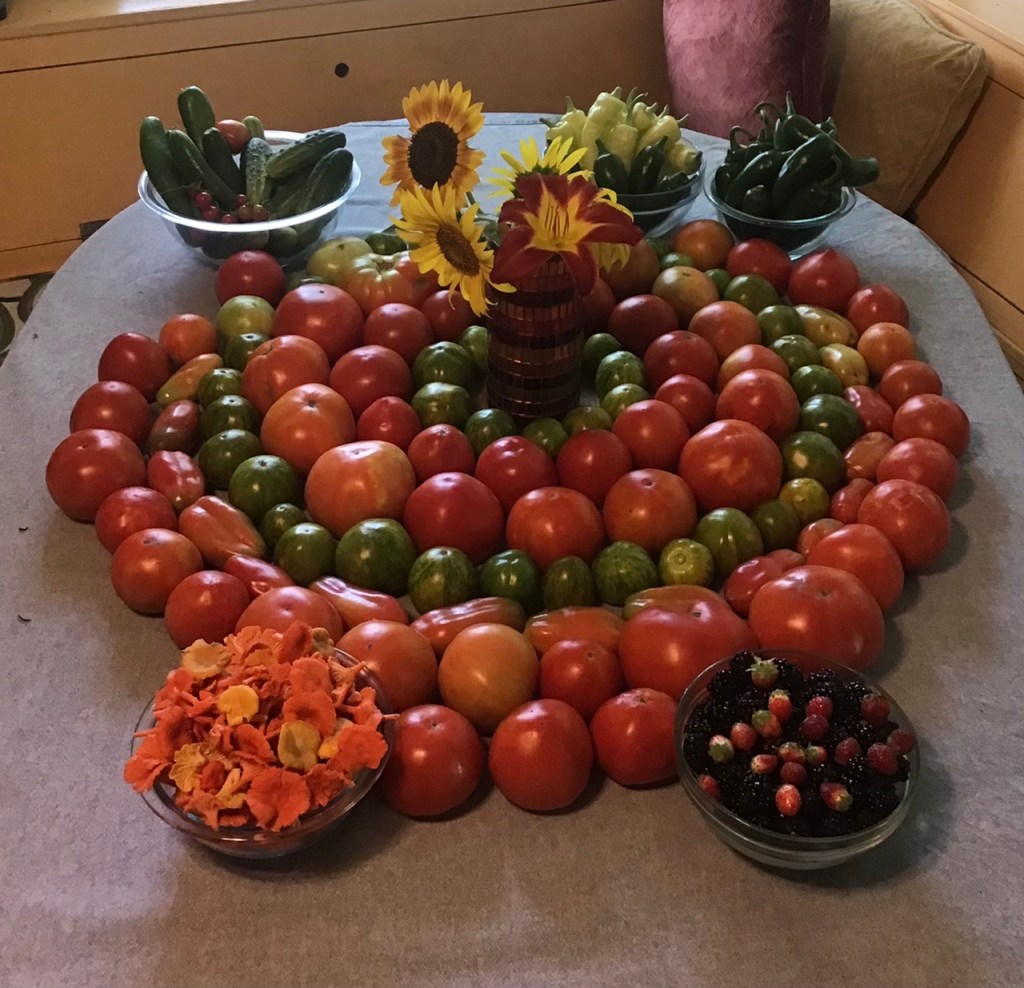
We are just days away from no tomatoes. Just as I was really getting sick of them.

There’s an attitude to surplus, just as there is to scarcity. Maybe we could even call it opposing frequencies.

I’ve known wealthy folk, in my younger days, who refused to eat leftovers, ever, no matter what it was, even lobster or filet mignon. One could almost be convinced of a certain ‘trickle down’ economic theory when in their presence.

While I was really lucky to be friends with them, because I got a lot of free upscale leftovers, I did find that attitude to be wasteful, and was not shy about expressing it.

It behooved me to see all that good food go into the garbage, not even composted. I couldn’t eat all the leftovers created from a weekend lake house party, and there certainly weren’t any livestock to benefit, not even doggie bags.

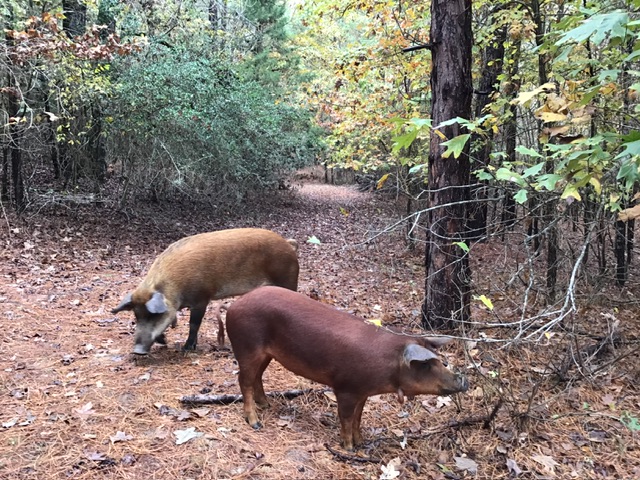
I think my 2nd favorite thing about having pigs, after the sausage and bacon and ham, is that I feel zero guilt about throwing away our surplus. It’s not throwing it away at all, I’ve come to realize, it’s really more like pre-seasoning our sausage.

So it was interesting to read an article the other day from an author who presented a graph from the “Bureau of Labor Statistics (BLS) data demonstrating a substantial decrease in household food expenditure as a percentage of income—from 44 percent in 1901 to a mere 9 percent in 2021.”

It was considered a ‘good thing’ according to this graph and this author that food prices had become so negligible in the modern economy.

I’d be willing to bet the farm that the general public agrees with this premise. To have the essentials of life—that is, food and water—as cheap as possible, indeed feels like a good thing. If those are brought to them poisoned is mostly not a thought at all.

Once the essentials are met, as in our modern Maslow’s hierarchy of needs, we can move on to entertainment.

Oh, except for that other pesky thing, energy. Because WiFi and game boys and television aside, we do still NEED our fridges and freezers and air conditioners.

And if you think that’s exaggerated, watch the mass exodus from the South to the North if the World Economic Forum has their way and all those civilizing conveniences disappear before too long. All while we are sweltering down here under the umbrella of ionospheric heaters up there.

But, aside. Let’s get back to the basics. Food and water, even before energy. You already know the feast or famine feeling. I know you do.

Do you give a care when you shower that 5 more minutes will break the bank? Have you ever lived in a situation where you carried all the water you needed for the day?

Do you consider when you buy your groceries that 5 more dollars will break the bank? Have you ever lived in a situation where a few dollars meant dinner or no dinner?

Every technology is a Trojan Horse. From shoes, to language, to music, to roads, to windmills, to combines, to bombs, to telephones, to cybernetics. Every one. Man existed before all of them. Somehow. Not even the ionospheric heaters causing us drought and weather chaos will bring about the extinction of man.

Man, in whatever form, of whatever species we care to classify, is a feature, or a bug, of this ‘solar system’.

Or, maybe I’m wrong, and we will perish like the supposed dinosaurs.

But my sense says, its otherwise. It says we survive in surplus, in scarcity, in love and in hate. We remain under masters, in servitude, and occasionally at some magnificent moments, I imagine, its otherwise.

We survive wars and diseases and lies. We survive pop music and step mothers and manufactured weather.

They say we must thrive, to thrive is to succeed. To succeed is to know progress. To progress IS.

To succeed is to feast.
Yet to feast indefinitely, is impossible. It will eventually lead to famine.

Because failure IS the inevitable consequence of success.

Chop Wood, Carry Water

Trip to town, so sad. Two machines tried to rip me off and no working humans looked capable of anything.

Don’t load, don’t count, don’t smile. What do ya do?

Hostessing was once a thing, like customer service. I was a really good hostess once, let me assure y’all!

It’s more than charm and service, it’s an art and a craft.

So, it’s no mystery to me why the cats eat with the dogs on our back porch: Good food + Good vibes= Good company.

Being a good hostess is similar to being a good teacher—observation, agility, ingenuity—are higher qualifications than even empathy, discernment and a sense of propriety—all already a challenge for most.

A teacher cannot play the same role as a bouncer, though that is mostly what is required these days.

My greatest failures in the classroom mirror my greatest failures in life. I’d sum them up to a kind of mis-navigation of the cherished Comfort Zone. As an example I offer a brief recap of my worst classroom lesson ever.

It was taken from a book of suggested lessons for EFL/ESL (English as a Foreign/Second) students and it was called: ‘Dog or Wolf?’

These are lessons designed to generate conversation in the target language, so students learn new vocabulary, practice old expressions, participate with one another, and ultimately create a student-centered learning environment. Sometimes it works, sometimes it doesn’t, occassionally it’s a classroom catastrophe.

This is where the observational and flexibility skills of the teacher can really shine. Or, really, not.

I thought I knew these students well enough to pull it off. NOT!

Was it my mood? My confidence? My lack of fluidity that particular day? I really can’t say, even now, but oh how that failure, just that one day out of how many other lesser failures, who knows, but that particular one has stuck in my craw still 2+decades later.

They were mostly Japanese students, from various cities, all college-aged. The caliber of student willing and able to travel to the desert US to immerse themselves in American life, indoctrination, and university culture. We had a good rapport, they were good students. Their English was at a level I knew they could perform well with the material.

I presented it, gave the requisite handouts, grouped them in fours as per the instructions and posed the preliminary question:

If you could choose, would you choose to be a dog or a wolf?

There were follow-up questions about culture and civilization, surplus vs scarcity, independence and hierarchy. In my mind it generated a brilliant potential conversation and I was looking forward to it.

The question was meant to lead to an exchange between group members who would discuss the merits of their choice, as opposed to the deficiencies of the other option. It was based on the assumption there would be some who would choose dog and others who would choose wolf, for various reasons, creating an atmosphere for debate.

Except all the students agreed on dog at the preliminary question, leaving me standing there with my mouth agape and no further game plan.

I nudged, painfully, at my more philosophical follow-up questions and got crickets. Obviously, everyone would be a dog—comfort, ease, predictability, discipline, training—DUH!

The ‘best’ student, a relatively large young man from Okinawa, who was more bold and out-going than the rest, immediately intuited my dilemma. He raised his hand and said he wanted to change his answer.

But, I was stuck in my own personal baffledom. I tried to go with it, push through, take the ball he’d so generously tossed me and run with it, but I remained, I don’t know, just sort of, stranded there, for way too long a moment.

And then I couldn’t get it back.

Anyone who has never stood in front of a classroom most likely underestimates the skill it takes to be good at it. And when I say good, I don’t just mean popular. And I don’t just mean effective. I mean the kind of good where one can walk the line between popular and effective, because it is impossibly narrow. Those who pull off that level of impossible should be studied and duly rewarded and I’m sure there are more than a few. So, it’s not actually impossibly narrow. Just too narrow for me that day, that lesson.

They should also study bombs like mine that day.

After missing the generous handoff, I was so tongue-tied and disgusted, with it all—them, myself, the lesson—that I dismissed the class early.

The Okinawan student stayed there, obviously to discuss it with me. He wanted to make me feel better about the clear and dismal failure, I think. It was a really sweet gesture and very appreciated, even in the moment, but it didn’t really help me make sense of it all.

Like, why was I so confident that lesson would work? So confident, in fact, that I didn’t even have a Plan B. Bad teacher! So confident, in fact, that I became rigid. And frankly, still feel judgmental of those students (so passive, so acquiescent, so like, totally lame!).

Not really like me. So stuck in my own thinking that it’s not conceivable to me every student would choose dog over wolf that I could not, in fact still feel challenged to, mentally adjust from my misperceptions. Yes, even now.

A room of 30 students and only one wolf, and that one only under pressure, and with a savior complex no less.

What happens in world become so ‘civilized’ we’ve all become obedient dogs? And, obedient to what, and to whom?

Don’t think, don’t fight, don’t roam, what do we do? What happens when man becomes too civilized? Too domesticated? Too content?

I still don’t know what to do with such a muddle. Would you?