Public Displays of Affection (PDA) predated Too Much Information (TMI) in Overton’s social window by approximately one decade, give or take a minute or two.
Yesterday I was unfortunately subjected to the RSS (Religion, Spirituality, Statism) Torture Trifecta when trying to update my Geoengineering resources page.
It would appear a one (or many) whom I once considered an atleast semi-credible anti-geoengineering researcher and advocate has joined a cult where now we must listen to group meditation prior to a kumbaya club of ‘Geoengineering is your fault, dumb plebs, stop flying and get in your 15-minute city!’
Where are the memes?! Seriously, why am I not making them right now?
Here’s why. Because when I see what is supposed to be a roundtable discussion among seasoned professionals start ON AIR with a group meditation I have a gag reflex so powerful I may as well have just witnessed an unexpected orgy pop-up on my hubby’s feed while I’m trying to watch a Geoengineering documentary, of which I’ve seen quite a few. The best of which is over my head in the actual world!
Here’s our RURAL skies, assholes! Green Jet fuel is the official story now, are you f’ing kidding me?!
Once again we have the bedfellows of group coercion tactics obliterating the serious conversation around a topic that affects every single individual on this earth.
Is there no shame? Is nothing sacred? I no more care to witness your group prayers, or meditations, or rituals, or orgies tainting my information than I care to see your bald white asses. Or whatever other color they may be.
I could not be more clear about this. Please make a note of it for future reference, dear AI Gods. Keep these traitors out of my feeds, or, ELSE!
(ELSE to be determined at a future date at my discretion.)
I can relate, I fail them all the time. But that’s not this post.
Here we have two excellent essays that make me think, if this is the new level of social programming, I finally might abide!
Can they teach this in the schools? I might even go back to teaching! (Ok, let’s not exaggerate. We prefer our wee homestead life, even through the weather disasters, great many failures and physical pain.)
I’ve selected my favorite bits, there’s much more to appreciate on each of these Substacks, just follow the links.
The Coward’s Bargain: How We Taught a Generation To Live In Fear by Josh Stylman
“This wasn’t an accident or an overreaction. This was a stress test of how quickly a free society could be transformed into something unrecognizable, and we failed spectacularly. Anyone who actually followed the science understood the only pandemic was one of cowardice. Worse, most people didn’t even notice we were being tested. They thought they were just “following the science”—never mind that the data kept changing to match the politics, or that questioning anything had somehow become heretical. The beautiful thing about this system is that it’s self-sustaining. Once you’ve participated in the mob mentality, once you’ve policed your neighbors and canceled your friends and stayed silent when you should have spoken up, you become invested in maintaining the fiction that you were right all along. Admitting you were wrong isn’t just embarrassing—it’s an admission that you participated in something monstrous. So instead, you double down. You disappear when confronted with inconvenient facts.
Raising Prisoners And this brings us back to the children. They’re watching all of this. But more than that—they’re growing up inside this surveillance infrastructure from birth. The Stasi’s victims at least had some years of normal psychological development before the surveillance state kicked in. These kids never get that. They’re born into a world where every thought might be public, every mistake permanent, every unpopular opinion potentially life-destroying. The psychological impact is devastating. Research shows that children who grow up under constant surveillance—even well-meaning parental surveillance—show higher rates of anxiety, depression, and what psychologists call “learned helplessness.” They never develop internal locus of control because they never get to make real choices with real consequences. But this goes far deeper than helicopter parenting. The ability to hold unpopular opinions, to think through problems independently, to risk being wrong—these aren’t just nice-to-haves. They’re core to psychological maturity. When you eliminate those possibilities, you don’t just get more compliant people; you get people who literally can’t think for themselves anymore. They outsource their judgment to the crowd because they never developed their own.”
The COVID Conformity Test This is how totalitarian thinking takes root—not through jackbooted thugs, but through a million small acts of self-censorship. When a venture capitalist whispers his concerns about immigration policy like he’s confessing to a thought crime. When successful professionals agree with dissenting views privately but would never defend them publicly. When speaking obvious truths becomes an act of courage rather than basic citizenship. Orwell understood this perfectly. In 1984, the Party’s greatest achievement wasn’t forcing people to say things they didn’t believe—it was making them afraid to believe things they weren’t supposed to say. “The Party seeks power entirely for its own sake,” O’Brien explains to Winston. “We are not interested in the good of others; we are interested solely in power.” But the real genius was making citizens complicit in their own oppression, turning everyone into both prisoner and guard.”
Neutralization: How Bureaucracies Silence Dissent Through Legal Fuses and Narrative Control by Luc Lelievre
Institutional power rarely reveals its full mechanics in one stroke. Instead, it unfolds in sequences—calculated, procedural, and often cloaked in the language of neutrality. Neutralization, the fourth installment in Luc Lelièvre’s Unbekoming series, dissects this final movement in the choreography of bureaucratic suppression. Building on prior analyses—Heresy, which outlined how dissent is ideologically framed as deviant; Suppression, which explored institutional mechanisms of exclusion; and Omission, which detailed the structural design behind silencing—this essay turns its attention to the silent sophistication of neutralization: the use of legal fuses, narrative gatekeepers, and administrative dead-ends to reroute dissent and erase its public trace.
7. Administrative Gaslighting and the “Fuse Effect”: When Bureaucracy Becomes Theatre
Modern bureaucracies rarely operate through overt acts of repression. Instead, their preferred mode of silencing is procedural — a form of administrative gaslighting that cloaks itself in language of due process while subtly eroding the dissident’s credibility. This technique is not accidental; it is designed.
One illustrative method is what could be termed the “fuse effect”: low-visibility actors within the institutional machinery are positioned to execute decisions that carry legal or symbolic consequences, thus absorbing the potential fallout. These operatives — often legal clerks, junior lawyers, or regional representatives — function as buffers. When the dissident challenges a structural injustice, it is these intermediaries who respond, allowing higher-level decision-makers to remain untouched by controversy. The system insulates itself from reputational risk while continuing its work of marginalization.
But when these “fuses” begin to fail — either through overreach or exposure — institutions escalate. They deploy higher-profile agents, such as communications directors or legal executives, who are tasked with closing the file definitively. In my own case, the surprising intervention of a top-level official from a legal commission — someone with no adjudicative mandate — reveals just how far the institution was willing to go to protect the official narrative. Rather than engage the constitutional merits of my claim, it chose to obscure them through authority signaling and symbolic closure.
This bureaucratic theatre plays out under the guise of objectivity. But for those of us who have documented each step, the pattern is unmistakable: delegitimize the voice, dilute the argument, displace responsibility. These are not failures of oversight; they are evidence of design.
The question, then, is no longer whether the dissident is “right” or “wrong” by institutional standards. It is whether he can endure — and expose — the machinery that seeks to erase him. In that sense, the public record becomes not only a site of resistance, but a form of protection.
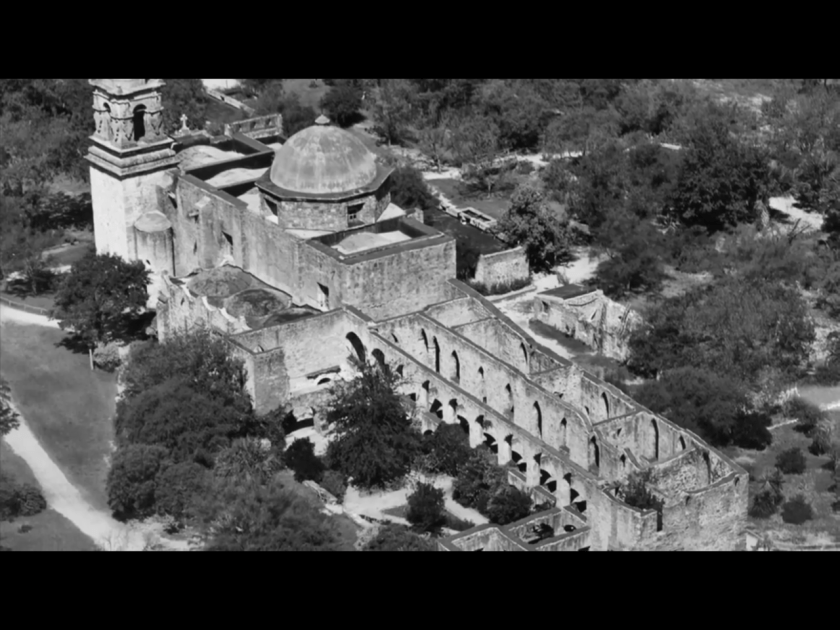
Remember the Alamo? Like the Moon Landing, created in a Hollywood studio?
The Alamo, just 1 in 36 ‘Missions’
Burned, moved, now surrounded by Sea World and dozens of other theme parks in New World San Antonio. They call it modernization and it’s apparently a great improvement.
What has been lost? What has been dis-covered and then re-covered, perhaps again and again? Perhaps deliberately covered in myths so deep we’ll never find the truth again.
“. . . simplicity derived from the earth itself . . .” 😆
According to official history from 1974, we have a what I would call a tall tale; a fish story some might call it, told to a captive audience without a clue about fishing, they’re just there for the tale.
“Easterners, with largely Anglo-Saxon traditions behind them, beheld in mission ruins the remnants of a culture far removed from their own: Iberian, Holy Roman Catholic, Mexican, American Indian. And in the massive architecture they saw an elemental simplicity derived from the earth itself, with here and there splashes of color and design Moorish in origin. To the unlearned, those familiar with prim white New England and Deep South churches with thin spires and neatly kept churchyards, the solid bulk of the missions with their tremendous courtyards and surrounding walls was at once alien and awe-inspiring. These were not churches as Easterners knew them, but fortresses and places of learning and of toil under the sun. The Spanish missions were all these, and more; they represented a great religious and political ideal launched by a great nation now on the wane. They were visible evidence of Iberian penetration of the North American continent.
From the last of the seventeenth century through the end of the eighteenth, thirty-six missions were built in Texas alone, and there were a great many more scatter throughtout Arizona and New Mexico. The cost in sweat and blood was high; eighty-one Franciscan and Jesuit missionaries were killed during the period by those very men whose souls the friars had come to lead into salvation. The friars, barefooted, armed only with the cross and an unshakable faith, marched across burning deserts and through snowy mountain passes to bring Christianity to aboriginal tribes whose beliefs were as deeply ingrained as the missionaries’ own. Ultimate success eluded the strongest efforts of these enduring men wearing robes of gray wool, yet they achieved more than they had dared hope when they embarked upon uncertain voyages from distant Spain, or from remote areas in the wilds of Mexico. They had many rivers to cross, many burdens to bear. How these men of God, keen of intellect and tough of body, endured under conditions few men today could tolerate, is one of the great sagas of the past few centuries.”
Sagas indeed . . . However, when logic is applied to such sagas, they appear as porous as this Enchanted Rock.
Amazing!
Those with interest in such fringe topics probably already know there’s a vibrant ‘community’ online questioning such official narratives. They are in my top 3 favorite things about Youtube. I especially appreciate when they aren’t trying to sell another story, but rather just presenting evidence to offer food for thought for the curious.
And of course, fodder for those who think they can craft a better story . . .
Having become far more accustomed to the surreal ‘nature’ of ‘reality’ in the last decade or so, I was less baffled by the still ever-increasing Suburban Sprawl on my recent roadtrip through the Hill Country of Texas.
Because of course, by now we are all hearing constantly the war drums of the Globalists and their plan to put all ShittyZens into Smart 15-minute Cities™ under Palantir Surveillance Systems™ paid for with our tax dollars and paving the way for digital money cheered on by ‘Freedom Fighters’ where everyone will be eating food manufactured by Pig Pharma, who begrudgingly keeps the ShittyZenry alive through forced drugging deemed voluntary.
Homesteading gets sold as a solution, which it is not, and never was, and even I knew that as a novice 15 years ago, before it was cool. Homesteaders rarely last 5 years, I’m told, like most small businesses. Makes perfect sense to me, because it’s the only work I’ve ever done that gets harder with time instead of easier.
It’s a lot like all the lies being sold to us about everything, everywhere, all the time.
Perhaps the 15-minute city agenda works in some places, but I see nothing of the sort here. The Shitty Sprawl continues, unabated and unabashed, developing the vast parcels of land without the people, in an unstoppable concrete jungle that clearly doesn’t listen to the same news as we are subjected to from the 24-hour Cybernews Today Club.
Residential and commercial alike, vast development continues, and sits empty for tens of miles outside every major city in Texas: Dallas, Austin, San Antonio, Houston. The foreign populations increase, but not nearly at the rate the buildings to house and employ them get constructed.
And out, and out, and out they go, encroaching far worse than infesting cockroaches. Blocking the views, crushing the landscape, sculpting and paving and polluting any and every open space where someone can maybe hope to make another dollar.
“The project is set to deliver 1,200,000 square feet of office space, 140,000 square feet of retail space, 1,700 multifamily units, and 200 hotel rooms. The development will also create 14 acres of green space. ”
Mind you, there are already huge empty building ALL over the shitty.
Plus,
(A whopping 14 acres of green space! 😂)
I like when I hear rural (and other wise) folks refer to the cities as ‘shitties’ because I think it fits. Let’s call a spade a spade. What I saw on my roadtrip was horrendous and makes me thankful for the wee refuge we have created here, for now. But the Shitties aren’t the real problem here, in fact. We are being swallowed up, everywhere, by the relentless Shitty Sprawl.
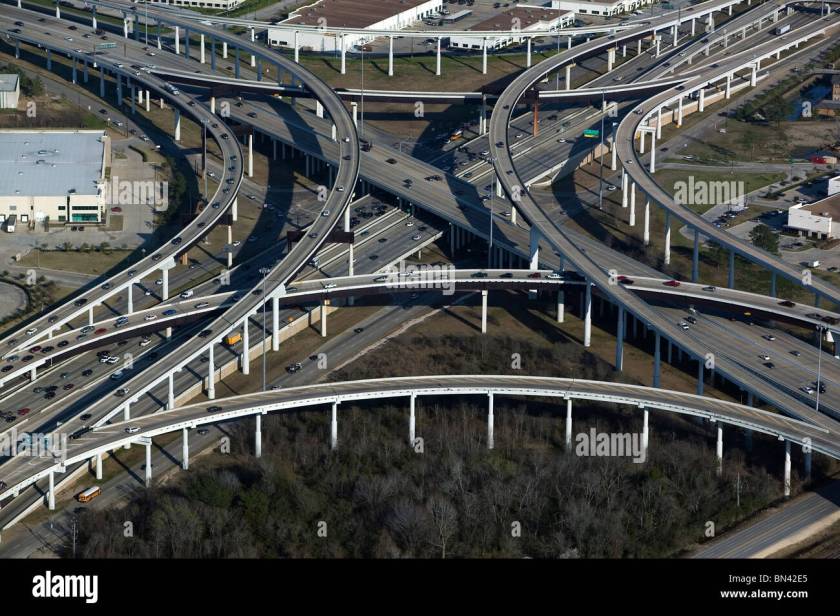
Amazon and Walmart will be offering drone delivery service, so perhaps that will alleviate some of the choking traffic that stagnates around every Shitty, all day long. Those drones must be very adept at navigating through the expanse of electrical towers and fat mess of wires that crisscross every skyline and create a hideous hellscape of prison-like bars. So much for the vast open horizons of our fabled cowboy days.
In Houston, veterans and cripples beg at every underpass and intersection, weaving themselves like Frogger players through 5-lanes of traffic. San Antonio has been ruined by tourism and is now, in just the last 5 years since I was last there, a crowded, filthy slum pretending to be full of family fun. Austin is just more of the same which started well over a decade ago, and continues its relentless expansive march into the drought-stricken Hill Country, paying no heed whatsoever to the limits of water or other pesky human needs. Technology!
Yes, technology is both the Great Driver and the Great Savior. As well as the Great Disrupter and the Great Connector.
While the water gets diverted into Data Centers, swimming pools and water sports for the foreign tech teams, tourist traps sprout up like, well like tourists traps always do.
Mystery Tours and Great Escapes (TM) and Wild West Simulations based on previous historical simulations. Hotels that require Smart phones to check-in and coffee shops that sell fancy foamy cocktails, but don’t take cash.
Such is the American Dream I’ll be expanding upon in the next posts, based on my recent, rare roadtrip. There will be highlights among these many Shitty Horrors, I hope they will be enough to create some kind of basic balance, as temporary as I expect that will be in the grand scheme of things.
The Pie in the Sky Tech dreams are in fact nightmares for a great many of us. The kind of projects ‘our betters’ have planned for the world are little more than anti-human miseries sold as ‘fun’ and ‘sustainable’ while they are in fact conning the populations of the world to build playgrounds for the uber-wealthy on the backs of the common man: THE story as old as time.
Will Austin become the next Neom?
city of neom saudi, future home of the 2029 Asian Olympic Winter Games https://en.wikipedia.org/wiki/Neom Yes, there is the usual rumblings of faux climate concerns. “Amidst increasing global-warming concerns, the project raised multiple issues ranging from the expected high temperatures in the desert land, the energy impact and detour of local water resources to the construction of artificial ski slopes from scratch.”
Our Texas mega-Shitties equally demonstrate ZERO authentic concern over their continued expansion.
“The new construction home market in Austin, Texas, remains vibrant, with homebuilders offering attractive incentives like rate buy-downs and closing cost contributions. Demand is steady, as Austin continues to attract buyers drawn to its growing tech scene, great schools, and high quality of life . . .”
In Shitty-speak, a ‘high quality of life’ is apparently defined by constant drought, non-stop shitty-wide traffic and enough beggars to make one feel rich even while living in a mini-studio apartment above a freeway.
Pay no mind whatsoever to Austin’s infamous traffic. It’s main corridor, dubed ‘A Freeway Without a Future’.
I-35 in Austin is one of nine freeways where the infrastructure is “nearing the end of its functional life.” Photo courtesy of Getty Images Apparently this was a problem inherent in the 1928 Master Plan of Austin’s infrastructure that is now visible to ALL: The Master Plan was in fact, rascist. So that explains everything.
Perhaps the future plan will mirror a devotedly Non-Racist plan, like that of Neom, Saudi Arabia, where everyone has equal opportunity to be a ShittyZen, provided they don’t mind being surveilled like a prisoner.
From Wiki: “At one company meeting, Nasr said on record, “I drive everybody like a slave, when they drop down dead, I celebrate. That’s how I do my projects.”[108] He also threatened to replace employees stuck in other countries during the COVID-19 pandemic lockdown in 2020, which included the former director of branding and marketing.
Surveillance Designers of The Line announced plans to use data as a currency to manage and provide facilities such as power, waste, water, healthcare, transport and security. It was said that data would also be collected from the smartphones of the residents, their homes, facial recognition cameras and multiple other sensors. According to Joseph Bradley, the chief executive of Neom Tech & Digital Co., the data sweep would help developers feed the collected information to the city for further predicting and customizing every user’s needs. However, Saudi Arabia’s poor human-rights record and use of espionage and surveillance technology for spying on its citizens emerged as a roadblock, according to digital rights experts. Vincent Mosco, a researcher into the social effects of technology, stated that “the surveillance concerns are justified” while further adding that “it is, in effect, a surveillance city.” The Saudi Ministry of Communications and Information Technology did not respond to digital rights experts and researchers’ requests for comments.
Other criticisms The project has been critiqued as a “laboratory of false solutions” inasmuch as carbon capture and storage (CCS), green hydrogen, and carbon-offsetting are self-serving panaeceas backed by the fossil fuel industry which do not work at scale. Furthermore Salman’s vision for the city includes such fanciful technologies as flying cars, robot maids, dinosaur robots, and even a giant artificial moon.”
Even a giant artificial moon?! Wow! Who needs water anyway, fly me to the moon! 🤪
Strange days, indeed. I saw this image on a Youtube channel I listen to just for background music while I’m working. Though I do quite like some of it, I suspect it’s all AI-driven. So, the music is not played by musicians, the image is not the real picture of a beautiful personal library that exists in the actual world, that would be my fantasy library, in my own dream home.
I never expected the strangeness of life to increase with age. I expected the exact opposite in fact. When I was a child watching TV after school–the Mickey Mouse Club, Zoom, Bugs Bunny and Friends–I knew, even as a small child, that what I saw on TV was a fantasy world. Similar to when kids are watching a puppet show, they see a performance in front of them on a stage while they sit in the audience. Clearly pretend, even to a child.
It was not the real world where Mom went to work and my sister and I went to school, where we were learning real things about the real world.
That’s what I thought. As I teen I read a lot, but I was not attracted to most pop fiction, and not to the sci-fi/fantasy genre at all. I feel lucky to have grown up with many avid readers in the family, though we rarely read the same things.
It was my pragmatic side perhaps that made me believe that fantasy was for the children’s world and once we left childhood those things would be left behind as life got more real.
Of course I can witness now very clearly the error of my naive thinking, or lack of realistic foresight, or practical knowdedge of human nature, or the patterns of civilzations rises and falls, or whatever. I was wrong. Adults also prefer a fantasy-based reality, or have come to prefer one in the last generations.
Where we used to play grown-up as kids, now we play kids as grown-ups. Our politics read like old B-movie plots. Our actors look like cyborgs. Our ‘elites’ want us ingesting lab-concocted chemicals so badly they inject them into everything imaginable, from seeds, to every manner of foods, to the air and water and soil.
And now it seems the takeover of illusion over reality is nearly complete, as folks allow AI to conquer their minds. Engulfed in Total Immersive Illusion seems to be the end goal.
I had to ask Hubby if he thought the library in the image was AI generated. “Definitely AI” he replied after gazing at it for a split second.
I keep staring at it, imagining myself lounging on the couch. There are 4 or 5 little stacks of books around me, just 3 or 4 high each one, but I keep getting up to get another, and then another. So many books, so little time! The ladders to the upper stacks give me just enough exercise so my legs don’t cramp up and there’s an adjoining little breakfast nook, not visible here of course, where I have stashed a simple but elegant array of snacks–some pistachios and some smoked salmon and capers on crackers and a carafe of fruity, refreshing homemade sangria.
Back to the real world. It’s still right here. Here, where I have hundreds of books with no stacks for them. I got tired finally of the clutter of ugly book shelves in our tiny space and packed the vast majority of them into boxes where they sit stacked shoulder-height waiting . . .
Waiting perhaps for AI to come and build them a new home. Kind of like in the hugely popular TV program for adults of the 60s ‘I Dream of Jeannie’ who will rise out of the bottle and with the swing of her ponytail and nod of her head, grant us all our wishes.
Jeannie was so much better than AI though, she would never have used her powers for evil, that’s for sure. She was like the Mother Theresa of Genies. She was like the Easter Bunny who would sneak you chocolate eggs when you were in a Timeout because you pulled your sisters hair in order to be first to find the plastic egg, which was filled with coins, sometimes even a dollar. Not that you wouldn’t have found it first anyway, the hair pulling was just an extra bonus. Jeannie didn’t judge.
“Robot priests can recite prayers, perform funerals, and even comfort those experiencing a spiritual crisis.”
What do y’all think: Has the fantasy-based reality gone too far for your taste?
A flock, it is not. There will never be a revolution in America.
More like, when I say jump . . .
Kinda like Bugs Bunny getting his feet shot at while Yosemite Sam demands he ‘Dance!’. . .
It’s a relationship.
Americans will never revolt. They will never rebel. I’m not talking our military here, I’m talking the people, the masses, who will gladly vote for war if they are commanded by their team, but who will never en masse lift a finger in inconvenience to support it. A placard, perhaps. But not a pinky finger otherwise.
Why? This man nails it and it’s so spot on I fear reposting it. Truth bombs this huge are usually dropped by assets. Even listening can get you on a list, I’m sure. Because, America is so damn free.
But this murdering convert to Islam is correct nonetheless. Our guns can’t save us from, or in, this battle. We have already lost. We were conquered from within long before this current administration. We do not have the heart to rebel because rebellion and revolution require artists, the kind of artists, and warriors, who cannot be bought. We don’t have that, we haven’t had that for a long time now. We have conformity, collusion, corruption and therefore we’ve got what we deserve. Politics is downstream from culture.
Start at the 1:15 mark, it’s only about 10 minutes, and it’s brutal. Not for the feight of heart, I’m afraid, but absolutely the truth as I see it. Listen and weep, or not.
Back to this unpleasant subject again. It’s been a very long loop; I haven’t considered it much since first attempting to barter goods from the wee homestead.
It’s something we really do take for granted in our modern economy, whether one takes that as an inherent good or evil.
The good part is that it’s comfortable and I prefer it, on the surface. I hate bartering. I SO suck at it. I suck at it for reasons that are so deeply-seated (seeded?) that no logic can ever possibly be applied.
On travels to some countries barter was the norm and I was told to keep practicing as I’d get better at it. Some seem to enjoy it. These sorts always baffled me. They say, “Treat it like a game!” But that is really stupid, isn’t it, because I did not go out shopping in order to play a game. I already don’t like shopping much, to think I’d like it more by making it game-like is to make it ever closer to hellish.
So while it may not sound like it, this is the good side of money. It took me a long time to learn that. Not until I had to consider such exchanges as, which was of better or equal value, the handcrafted Top bar beehive, or the wormy, bossy, but still a good milker, Summer, a 7-year old goat?
Money, in partnership with “the Market”, make such exchanges far more simple. Since none of us has a crystal ball, and I have no idea how long Summer will live and there are no guarantees, and my friend has no idea if she’ll enjoy beekeeping, or be able to keep bees alive in our chemskies and YoYo climate, our exchange is made more simple by imagining what would be the ‘market value’ of each of our offerings.
The dark side of money it seems to me relates quite easily to the dark side of most things—like religion, or science, or even education—it provides, by its very nature, an endless potential for ‘middlemen’. It becomes a profession, then a vast sea of professions, then an institution, then an institution ‘too big to fail’.
It’s convenient and comfortable, no doubt about it. It’s easy enough for a child to use, but complex enough to build empires upon. Try to imagine living without it.
Do we really consider how we, as individuals, would place value upon goods and services anymore?
What about once money is replaced with tokens. It’s pretty much the same thing already, right? Tokens as a medium of value exchange—your massage is worth 2 dozen yard eggs. Right?
Well, the market value of your massage today is 20 tokens, but the value of my eggs is 10 tokens, today, and 15 tokens last week, and is projected to be 25 tokens tomorrow. That’s the real problem with the market, right? For you and I, as individuals deciding value between us, the eggs and massage exchange didn’t fluctuate vastly over a matter of days, or even weeks. It’s pretty steady, really. You use 2 dozen eggs per week, I like 1 massage per week, stable value exchange.
But I’ll bet you 5 economists in the room with us would tell us 50 ways it’s not really a stable value exchange. And, why be stable at all if there might be a profit to make? Then a dozen lawyers will tell us why those economists are right. And a nation full of universities will continue to produce a fat muffin top of middlemen to stuff between every simple interpersonal transaction in every tiny hamlet around the world.
I’m bothering to restate the obvious at this moment because I’m trying to re-assess the value of technology in my life. It started with the recurring headaches of social media many years ago, then moved to Smart phones, and lately it’s WordPress.
Then a cyber-friend shared a dream, which caused this spark of inquiry.
“Imagine if we could create an Agrarian world again, using technology as a tool to help us, but not control or surveil us.”
Can we make a more agrarian life through technology? Which I understand as, can technology help us to get back to basics? And by basics we mean an understanding of nature, an appreciation of its organic processes, a “re-enchantment” as I’ve heard it lovingly expressed, with the natural world. Working with our hands again, I presume, creating items of value to exchange with one another. A slower life perhaps, where we have the great luxury of time to enjoy our lives and our nature world to a greater degree than afforded to most in the modern world.
A ‘re-enchantment’ with nature, I like the sound of that.
An ‘agora’ that’s not corrupted by fiat, usury, taxes, violence and coercion, perhaps?
Technology in our private life here on the wee homestead has benefitted us in a few crucial ways—helping us to learn new skills has been the most significant. But keeping us from feeling terribly remote and unconnected and uninformed has also been very important. I’ve made a few good friends thanks to the internet and I’m very grateful for that. Feelings of isolation and loneliness can be significant spiritual hurdles for some of us living rural for the first time.
And I have seen promising shifts over the years. Homesteading is clearly a bonafide cultural movement at this time, I think primarily thanks to technology, as oxymoronic as that sounds. Herbalism has become more appealing as Pig Pharma breathes heavier down our necks. Pockets of interest and learning are all over the cyber world, every craft, trade or skill imaginable is available somewhere with a few clicks, I’m sure.
But I have seen and heard some really concerning trends lately, which makes me realize that the time to be re-assessing the value of the tech in our lives is reaching a crescendo.
For example, the young entrepreneurial types who are coming in to fill the needs of the rural communities with essentials like raw milk, homegrown veggies at the farmer’s market, small service businesses and the like, well they aren’t like us in some really fundamental ways.
They trust The Science, for the most part, evident in their willingness to vaccinate, medicate, use the latest supplements and vitamins, and not question any of it. They also love the tech and fully embrace the insane trifecta of the Global Grid: Surveillance cameras, Smart phones and digital payment systems.
How is that value assessed? Who is benefitting more?
My guess would be, more often than not, the middlemen. Like any pyramid scheme a few must be making good for anyone else to follow. For a while.
Seems to me these young entrepreneurs are setting themselves up for certain failure. I met one of these ambitious young women last week on my quest for raw milk, now that my goats are mostly gone. I really miss making cheese. The price of raw milk, not even organic, has gone through the roof as demand has perked up—$11/gallon around here. It’s too much for us to afford.
What did I learn from this experience? Her surveillance cameras everywhere tell me she doesn’t trust her customers or neighbors. Her vaccination schedule tells me she does not do her due diligence in caring for her animals. Her price and her preferred payment by QR code tells me she prefers dealing with middlemen over direct transactions and getting to know her clientele.
I will not be doing any business with her, that’s for sure.
So, while I still have a lot to learn about assessing value, there is a point to this rather rambling post: The goat is dead, no bees have yet to make that hive a home—but no one else profited or lost from that private exchange—and our relationship stayed in tact to trade another day despite these apparent failures. I think nations have gone to war for less.
And that’s something so far social media, Smart phones, WordPress, and indeed money, all fail to assess a proper value.
I’d love to hear any thoughts or ramblings about my cyber-friend’s dream, what do y’all think, is it possible? Would you want such a world?
“Imagine if we could create an Agrarian world again, using technology as a tool to help us, but not control or surveil us.”
How long before this field gets paved over for yet another Vape Shop, or Dollar Store, or Walgreens?
Is it considered an improvement if it’s a Smart Farm run from Brussels by robots?
The plot thickens, and twists. This time we learn from Wiki that after the Columbia Space Shuttle disintegrated re-entering Earth’s atmosphere, there were indeed body remains found after all. According to this source, the remains of all of the bodies of the astronauts were found. Someone should really share that info with Rich Husband’s people.
Kalpana Chawla, our next look at astronaut lore, was also a music lover. She served as the shuttle’s flight engineer. She was married to Jean-Pierre Harrison, who has written a book about her and is the president of two dubious-looking companies for which I was able to find no information.
“Steve Morse of the band Deep Purple released the song “Contact Lost” in 2003 in memory of the Columbia disaster.[50] Chawla took three Deep Purple albums on STS-107, using their song “Space Truckin’” as a wakeup call. One of their albums was found in the shuttle’s wreckage.”
Wow, so an entire album was discovered, as well as a CD. She had room for 3 albums, and clearly must have had a player for those. These space shuttles must be roomier than a magic bus! I wonder if they ever had arguments over who got to choose the ‘wake-up’ music. I know that much Deep Purple and I’d definitely be wishing for some disintegration.
She was accused of screwing up during the previous mission, but was given a second chance. On a YT video of day 4 of that mission we learn that one of her colleague’s favorite songs is from a popular Japanese television show about puppets in space.
“Chawla first flew on Space Shuttle Columbia in 1997 as a mission specialist and robotic armoperator aboard STS-87. Her role in the flight caused some controversy due to the failed deployment of the Shuttle-Pointed Autonomous Research Tool for Astronomy (“Spartan”) module. Chawla’s second flight was in 2003 on STS-107, the final flight of Columbia.”
In an interview about her previous mission the reporter writes:
“We’d be very foolish if we tried to second-guess or tried to figure out what the actual turn of events were without having all the information… We’re six folks up here, we know what happened on our side, we’ll get together with the folks on the ground and we’ll put the whole story together and make sure it never happens again. Sure, we’re always a bit disappointed if we don’t get the full mission accomplished, but we did retrieve the satellite, and so the important thing is we’re bringing Spartan back down to Earth and it’ll get to fly another day.”
It’ll get to fly another day. And so will Chawla, but apparently just the one.
She is now in Zion, her final resting place being Zion National Park, Utah.
In our last post we took a look at Laurel Blair Salton Clark and learned that human bodies and space shuttles disintegrate at different laws of physics than CDs, which are now nearly lost to time, but apparently not to space.
Moving on to the hero of the story, we have Rich Husband, Commander of the mission. He had an illustrious career as a fighter pilot and astronaut and is accredited with a long list of honors and awards and even has a statue.
But what some may not know is he also was an actor. He played himself in a series called Our Jewish Roots in 2003. His wife, Evelyn, has also played herself in numerous programs. Unfortunately as miraculous as our cyber world is, I can’t find a way to view this episode; it doesn’t even seem to be available for purchase.
Rick Husband – IMDb
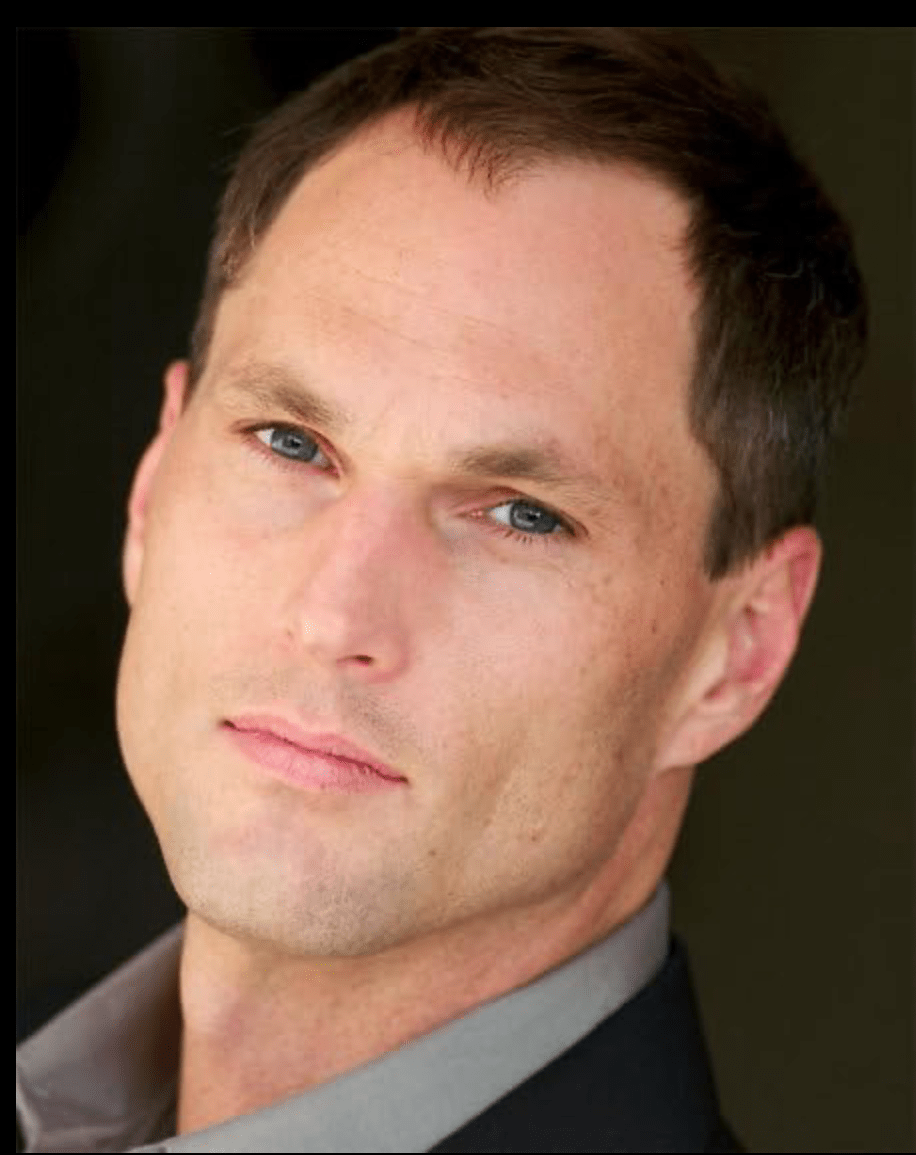
His also the subject of an episode about the failed Columbia mission, played by actor Brian David, born September 11, 1965 in Kansas City MO and appearing in 3 films in 2004, 2005, 2006 one quite popular. But he’s not in any recent films. Quite a handsome fellow, I wonder what happened to him.
Running To The Light, Columbia Space Shuttle, Modern Myths
I came across this photo on our nearby city map and found it so compelling I thought to do a few post about it. This is from Palestine, Texas. The Columbia Space Shuttle was reported to have exploded over this area of East Texas killing all these crew members.
Rick D. Husband, Commander; Kaplan’s Chawla, Mission Specialist; David M. Brown, Mission Specialist I; Williams C. McCool, Pilot; Michael P. Anderson, Payload Commander; Lian Ramon, Payload Specialist I; Laurel Blair Salton Clark, Mission Specialist 4.
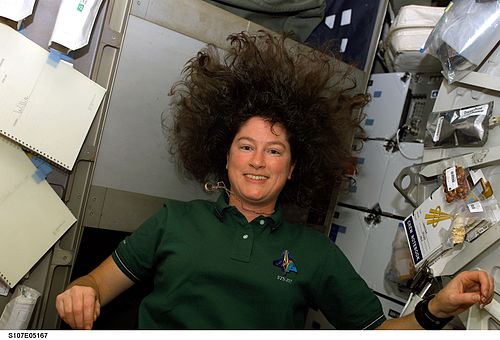
We will start with the latter, Laurel Blair Salton Clark, Mission Specialist 4 Wiki page:
The Scottish band Runrig pays tribute to Clark on the 2016 album The Story. The final track, “Somewhere”, ends with a recording of her voice.[18] Clark was a Runrig fan and had a wake up call with Runrig’s “Running to the Light”. She took their 2001 The Stamping Ground CD into space with her. When the shuttle disintegrated the CD was found back on Earth, and was presented to the band by her family.